There are two ways to be fooled. One is to believe what isn’t true; the other is to refuse to believe what is true. —Soren Kierkegaard. "…truth is true even if nobody believes it, and falsehood is false even if everybody believes it. That is why truth does not yield to opinion, fashion, numbers, office, or sincerity–it is simply true and that is the end of it" – Os Guinness, Time for Truth, pg.39. “He that takes truth for his guide, and duty for his end, may safely trust to God’s providence to lead him aright.” – Blaise Pascal. "There is but one straight course, and that is to seek truth and pursue it steadily" – George Washington letter to Edmund Randolph — 1795. We live in a “post-truth” world. According to the dictionary, “post-truth” means, “relating to or denoting circumstances in which objective facts are less influential in shaping public opinion than appeals to emotion and personal belief.” Simply put, we now live in a culture that seems to value experience and emotion more than truth. Truth will never go away no matter how hard one might wish. Going beyond the MSM idealogical opinion/bias and their low information tabloid reality show news with a distractional superficial focus on entertainment, sensationalism, emotionalism and activist reporting – this blogs goal is to, in some small way, put a plug in the broken dam of truth and save as many as possible from the consequences—temporal and eternal. "The further a society drifts from truth, the more it will hate those who speak it." – George Orwell “There are two ways to be fooled. One is to believe what isn’t true; the other is to refuse to believe what is true.” ― Soren Kierkegaard
“This is my commandment, that you love one another as I have loved you. Greater love has no one than this, that someone lay down his life for his friends. You are my friends if you do what I command you. No longer do I call you servants, for the servant does not know what his master is doing; but I have called you friends, for all that I have heard from my Father I have made known to you.”
Folk and pop singers often write songs about alienation because it produces such raw emotions. Paul Simon captured it well when he sang of building impenetrable walls in his life and becoming a “rock” and an “island,” rejecting love and laughter because “friendship causes pain.”[1]
But the truth that all of us know deep down is that friendship is vitally important for each and every one of us. God Almighty has wired us to care for one another. We long for relationships: to be known, to be loved. We know that even one genuine friend makes us truly rich in this world. We don’t want to be islands.
Yet while we may have true friends who are loyal, sensitive, and honest, we can only find ultimate friendship in Jesus. He alone is the friend who “is the same yesterday today and forever” (Hebrews 13:8). His brand of friendship extends far beyond the bounds of human friendship; He knew how to be a true friend even to tax collectors and sinners (Matthew 11:19; Luke 7:34). One of the reasons that some find friendship so difficult is because it demands vulnerability and openness. But Jesus is never in a bad mood, never lets us down, never treats us capriciously. And He wants to be friends with us—with you! As you come to Him in faith, the one through whom all things were created delights to call you His friend. Let that sink in a little.
Every friendship requires effort, and friendship with Jesus is no different! That’s why Jesus tells us, “You are my friends if you do what I command you.” When we receive Jesus as a friend, we also accept Him as our King.
Perhaps you have found human relationships to be hurtful or fleeting. Perhaps you are surrounded with friends, or perhaps you cannot count a single one. In any case, here is the most wonderful friend: the one who knows us completely and loves us all the same. With Him we can have the kind of friend that “sticks closer than a brother” (Proverbs 18:24).
Earthly friends may fail or leave us,
One day soothe, the next day grieve us;
But this Friend will ne’er deceive us:
Oh, how He loves! [2]
No good thing will he withhold from them that walk uprightly. (Psalm 84:11)
Many pleasing things the Lord may withhold but “no good thing.” He is the best judge of what is good for us. Some things are assuredly good, and these we may have for the asking through Jesus Christ our Lord.
Holiness is a good thing, and this He will work in us freely. Victory over evil tendencies, strong tempers, and evil habits He will gladly grant, and we ought not to remain without it.
Full assurance He will bestow, and near communion with Himself, and access into all truth, and boldness with prevalence at the mercy seat. If we have not these, it is from want of faith to receive and not from any unwillingness of God to give. A calm, a heavenly frame, great patience, and fervent love—all these will He give to holy diligence.
But note well that we must “walk uprightly.” There must be no cross purposes and crooked dealings; no hypocrisy nor deceit. If we walk foully God cannot give us favors, for that would be a premium upon sin. The way of uprightness is the way of heavenly wealth-wealth so large as to include every good thing.
What a promise to plead in prayer! Let us get to our knees.
Rahab’s faith was accompanied by fear and there is nothing wrong with that—“The fear of the Lord is the beginning of wisdom” (Psalm 111:10). In Rahab’s case, fear motivated her faith. She had heard powerful evidence of the Lord’s supremacy over Egypt. She understood that it was the Lord’s might—not sheer military skill—that triumphed over fearsome Amorite kings across the river. Hers was a healthy kind of fear. It convinced her that Israel’s God was indeed the one true God.
1. Take no time for margins in your life. Fill your life with so much activity that there is no room to “Be still, cease striving, and know that I am God” (Psalm 46:10). When we live in the tyranny of the urgent, we can be so busy that two-way conversation with God is not a priority.
2. Don’t admit that you have any needs. Be so self-sufficient that you don’t need a prayer base. We all need personal intercessors. Yet, as I ask most Christian leaders if they have a prayer base as a necessity of their life and ministry, they reply blankly, “Uh… no.”
3. Respond to every need as if you are the only one who can fix it. Jesus did not respond to every need. From our people-pleasing natures, it is not easy to see that every need is not our call. Our valid call is only from God, not from the pleading voices around us.
4. Don’t ask God any questions. People have questions, and they will look for the answers somewhere: psychics, self-help books, friends, talk-radio shows, the internet, etc. Only God is the source of eternal Truth. He is available for our questions, toll-free, unlimited access.
5. Be so exhausted that your physical, mental, and emotional fatigue cries out to be satisfied louder than the still, small voice of God. To hear from God, we must take adequate time off to get much-needed rest and refreshment. Burned out, we are no good to ourselves or anybody else, much less to God.
6. Completely ignore the Person and work of the Holy Spirit. The Holy Spirit speaks words of truth and comfort and enables us to grow in spiritual awareness. By slighting His work and failing to rely on Him, we short-change our ability to hear from God.
7. Insist that God must conform to your comfort zone. Be so comfortable that if God did speak, it would upset your status quo. Self-satisfaction kills our hunger to hear from God. So does lack of vision that there’s more beyond where we are. When we are busy perpetuating a personal agenda, we will not hear the voice of God, especially if it means change.
8. Be religious. “Religion” is characterized by tunnel vision that thinks it has all the answers. Religion does not deepen us in the grace of God. Look at the Pharisees. They were preoccupied with keeping every jot and tittle of the law. Jesus called them whited sepulchers, full of dead men’s bones. They kept a form of godliness and missed God walking among them. God calls us to cultivate a living relationship in intimacy with Him at all costs.
9. Be ignorant of the warfare. We must not see only the surface of things. We are not fighting flesh and blood but unseen spiritual battles (Ephesians 6:12-13). Paul instructed us not to wage war on the horizontal level as the world does. The informed and armed soldier overcomes everything that sets itself up against the righteousness, peace, and joy of the kingdom of God (2 Corinthians 10:3-5, Romans 14:17).
10.Tolerate unconfessed sin in your life. The psalmist said, “If I had cherished sin in my heart, the Lord would not have listened” (Psalm 66:18). Our sin and flesh must not be allowed to dominate so loudly that they drown out God. We must draw near God with a clean conscience (Hebrews 10:22).
Follow the example of Jesus, who often slipped away from the crowds to spend time with the quiet loving voice of his Father.
M6.1 earthquake hits Vanuatu at intermediate depth A strong earthquake registered by the USGS as M6.1 hit Vanuatu at 21:11 UTC on September 21, 2023. The agency is reporting a depth of 188 km (117 miles). EMSC is reporting the same magnitude and depth.
The Child Poverty Rate In The United States Has More Than Doubled If you take an honest look at the numbers, the obvious conclusion is that the U.S. economy is rapidly going in the wrong direction. Delinquency rates are soaring, sales of previously-owned homes have declined by more than 32 percent over the past two years, inflation is starting to rise at a frightening pace again, large companies all over America are laying off workers, and we just witnessed the largest decline in real median household income in more than a decade.
Biden Signs Executive Order to Establish ‘American Climate Corps’ to Fight ‘Global Warming’ …According to the White House, Biden’s initiative will mobilize “a new, diverse generation” of more than 20,000 Americans to fight climate change. Biden’s army of “woke” eco-warriors will be trained and put to work on conservation, clean energy, and “environmental justice” projects.
What Could Go Wrong When Governments Take Control of Food? In another episode of “Have We Learned Nothing from History?” two governments in the past couple of days have decided to take the high prices of food into their own hands. Justin Trudeau, the Prime Minister of Canada, wants to heap more taxes on grocery stores to punish them for high prices. And Chicago’s mayor, Brandon Johnson, has proposed city-owned grocery stores.
BRICS is part of the plan to reshape the world economy; it was launched decades ago by Goldman Sachs On the Unchartered Territory Podcast, Dan Astin-Gregory and Sam X discussed globalization, de-globalization, centralization, decentralization and localisation. They began by discussing the global shift that appears to be on the horizon with the formation of BRICS. BRICS may be something that we have become aware of in recent years as it has gained momentum, but it was started by Goldman Sachs decades ago to “reshape the global economy.”
“Feelings” & Chaos: How Leftism Uses Irrationality to Overturn Society Burning, Pyrrhic Leftism: It’s become increasingly clear that Leftism is committed to winning the political war by doubling down on chaos — so-called a pyrrhic victory, where both parties must end up destroyed. Why? First, because this is leadership by emotion, which breeds chaos. Second, liberals panic while observing how human nature inevitably turns towards logic and clarity, whenever possible, but especially during disasters.
“In the supposed state of nature, all men are equally bound by the laws of nature, or to speak more properly, the laws of the Creator.” —Samuel Adams (1794)
Fellow Patriots, on this day in 1776, Nathan Hale was hanged by the British in New York City. The teacher-turned-spy famously said, “I only regret that I have but one life to lose for my country.” Today’s news is packed with climate, guns, EVs, unions, and a president who doesn’t know where he is. —Mark Alexander
Joe Biden goes around Congress to create a group of climate cultists dedicated to browbeating the public into accepting the Left’s climate change narrative.
Thomas Gallatin
With a swipe of his pen, Joe Biden unilaterally (and unconstitutionally) created his so-called “American Climate Corps.”
Touting the Biden administration’s ongoing effort to indoctrinate the country into the climate change dogma, White House policy adviser Ali Azaida contended, “This is important because we’re not only opening up pathways to bold climate action, we’re not just opening up pathways to decarbonization, we’re opening up pathways to good paying careers, lifetimes of being involved in the work of making our communities more sustainable, more fair, more resilient in the face of a changing climate.”
In other words, Biden is acting to create an army of climate cult activists, 20,000 strong. Never mind the fact that, constitutionally speaking, he doesn’t have the authority to do so. That’s because Congress shot down this idea last year.
It harkens back to Franklin D. Roosevelt’s New Deal Civilian Conservation Corps, though notably that was established by Congress. Along with other ecofascists, Varshini Prakash, head of the environmental activist group Sunrise Movement, has been calling on Biden to declare climate change a national emergency. Of this move, Prakash gushed, “This climate corps will conserve our land and water, bolster community resilience, advance environmental justice and tackle the climate crisis.”
Except that it will do no such thing.
In truth the corps will exist to enlist a bunch of young leftists to browbeat the public into acquiescing to the radical Left’s anti-fossil fuel agenda. As the White House’s announcement states, the American Climate Corps would “train young people in clean energy, conservation and climate resilience related skills,” and “streamline pathways into civil service.”
Becoming proselytes of Gaia, this army of Greta Thunbergs will call for the public to increasingly sacrifice their living standards in the face of dire warnings of a global warming apocalypse should these instructions fail to be heeded.
Revealing that in truth this organization is ultimately all about empowering more government in order to advance greater wealth redistribution, the program will advance Biden’s “Justice40 Initiative.” That initiative is a plan to allocate 40% of “federal investment” to “disadvantaged communities that are marginalized, underserved, and overburdened by pollution.” In other words, it’s a race-based effort to use the climate change “emergency” as an excuse to implement socialism.
That has always been the goal of the “green” movement. It’s actually red.
At its root, Biden’s American Climate Corps is anti-capitalist, which is why it failed to pass muster with Congress. But never mind that. Biden and the rest of his Democrat colleagues constantly harangue the country over the nonexistent threat that “MAGA Republicans” pose to democracy, though they are more than willing to throw the democratic process aside in order to “save democracy.”
Ignoring the limits the Constitution sets upon the three branches of government in order create a favored program is the mark of a tyrant, not a democratically elected representative of the people whose power is constrained by the rule of law. The more Washington elites like Biden flout the rule of law, the more he encourages the rest of the country to do the same.
Just in time for election season, Joe Biden wants you to know that he’s doing something about “gun violence.”
Douglas Andrews
Ronald Reagan knew full well the damage that an unchecked government could do, which is why he once quipped that the nine most terrifying words in the English language are, “I’m from the government and I’m here to help.”
And yet not even the Gipper could’ve imagined the growth of government during the past 40 years, nor its increasing encroachments on our everyday lives, nor the latest Democrat depredation on our Second Amendment.
As the Democracy Dies in Darknessers at The Washington Post breathlessly report, “President Biden on Friday will announce the creation of a new office for gun violence prevention, an escalation of the administration’s efforts to tackle the issue amid stalled progress in Congress, according to four people briefed on the action who spoke on the condition of anonymity to discuss plans that were not yet public.”
The official announcement is expected this afternoon, and word is that the new agency will be called the Office of Gun Violence Prevention. After all, who could possibly be against such a thing as gun violence prevention?
With election season right around the corner, we figured it was only a matter of time before Barack Obama Joe Biden made a move to placate his gun-grabbing base. And this is certainly that. As the Post continues:
Greg Jackson, a gun violence survivor who is the executive director of the Community Justice Action Fund, and Rob Wilcox, the senior director for federal government affairs at Everytown for Gun Safety, are expected to have key roles in the office, the people said.
The new office will report up through Stefanie Feldman, the White House staff secretary and a longtime Biden policy aide who has worked on the firearms issue for years, the people said. Feldman previously worked on the Domestic Policy Council and still oversees the gun policy portfolio at the White House.
As you can imagine, the gun-grabbing groups are giddy. “If this announcement is, in fact, the creation of a single point of leadership on gun violence in the administration, it’s a very big deal for the movement,” said one such grabber, Shannon Watts, the founder of Moms Demand Action. Watts added: “For years, we’ve advocated for a centralized team responsible for coordinating federal and state resources and mobilizing movement partners. A governmental focal point dedicated to creating a framework for overseeing national policy, research and resources would be more than symbolic — it would be a significant turning point for the movement.”
It isn’t yet clear how the creation of this office will prevent gun violence, but we’re sure Joe Biden will spell it out with crystal clarity. If only he’d heeded our advice on gun control: Don’t just do something. Stand there.
Still, we can’t help but wonder what sorts of additional regulations might be foisted upon us by a new federal bureaucracy bent on restricting the Second Amendment rights of law-abiding Americans. Perhaps, say, some sort of mandatory minimum sentence for lying on a federal gun form? Or perhaps, instead of adding new restrictions and regulations, we could just focus on enforcing the laws that are already on the books? A far more likely scenario would be for him to use this agency to further encroach on the constitutional rights of gun owners. For starters, he might force those of us who simply want to sell a gun to another law-abiding American to first become a licensed gun dealer.
For some perspective, “According to the provisional CDC data, 48,117 people died by guns in 2022,” reports the Johns Hopkins Bloomberg School of Public Health. Of those, 19,592 were homicides and the rest suicides. Talk about important perspective. For some additional perspective, 42,795 people died in the U.S last year in motor vehicle accidents. That’s according to Wikipedia.
Strange, but we haven’t heard anything about a new agency to combat this scourge of motor vehicle deaths.
As our Mark Alexander has noted, the usual scapegoats of systemic racism, trigger-happy cops, evil Republicans, so-called assault weapons, and white supremacy are not the problem.
He writes: “The reality Demos would most like to avoid is that violence is not a ‘gun problem’ but in fact is highly correlated with their most loyal constituency, and is the direct result of a Demo-induced culture problem spawned primarily by generations of failed socialist policies — resulting most notably in the disintegration of families. That is particularly true given the common denominator that most violent offenders grew up in fatherless homes.”
Democrats, though, don’t want to address such cultural considerations. Nor do they want be bothered with facts and inconvenient truths. After all, they’re from the government and they’re here to help.
Dem Senator Bob Menendez indicted: Long-time New Jersey Democrat Senator Bob Menendez was indicted Friday on bribery charges. According to the indictment, Menendez and his wife Nadine are accused of engaging “in a corrupt relationship” with Fred Daibes, a New Jersey developer and former bank chairman, and two of Daibes’s associates, Wael Hana and Jose Uribe. The Menendezes allegedly accepted “hundreds of thousands of dollars of bribes in exchange for using Menendez’s power and influence as a senator to protect and enrich Hana, Uribe, and Daibes and to benefit the Arab Republic of Egypt.” The only remaining question is when will Joe Biden face impeachment for his bribery?
KJP blows off a border question: White House Press Secretary Karine Jean-Pierre attempted to continue the Biden administration lie that there is no illegal immigration crisis, that the southern border is secure. Yet there are countless images and stories in recent days showing massive numbers of migrants crossing into the U.S. illegally. Fox News’s Peter Doocy challenged KJP, asking, “What do you call it here at the White House when 10,000 people illegally cross the border in a single day?” Flustered, KJP sought to spin away from giving an answer by asking a question: “So, what do you call it, Peter, when [the] GOP puts forth a…” Doocy interjected that she wasn’t answering the question, so she shot back, “No, no, no,” claimed victim status for the interruption, and moved on to another question. To answer his question, we’d call it an intentional invasion.
DeSantis sinks to fifth in NH: A recent poll of likely Republican primary voters in New Hampshire conducted by CNN and the University of New Hampshire found that Donald Trump still leads the field in the Granite State, polling at 39%. The news is that Florida Governor Ron DeSantis has dropped from second with 23% back in a July poll to 10%. That puts DeSantis behind Vivek Ramaswamy at 13%, Nikki Haley at 12%, and Chris Christie at 11%. Does this spell doom for DeSantis? No, but it is a gut check. DeSantis has been focusing the lion’s share of his campaign efforts in Iowa with the aim of building on a strong opening. In any case, the only polling numbers that count are the votes tallied on (primary) election day. With months to go before any primary vote is cast, the media chatter surrounding Republican presidential candidates will continue, while the vast majority of Americans haven’t really begun paying attention.
Bin Salman interview: Fox News host Bret Baier conducted an exclusive and intriguing interview with Saudi Arabia’s Crown Prince Mohammed bin Salman Wednesday. Two highlights: Baier asked about the murder of Washington Post journalist Jamal Khashoggi back in 2018, a murder the CIA concluded was ordered by Salman after Khashoggi had published several stories critical of the crown prince. Salman claimed that the murder was “a mistake” and “painful,” and that those involved had been punished. Next, Salman spoke regarding Iran and its pursuit of a nuclear weapon. If Iran were to obtain a nuclear weapon, then Salman noted that Saudi Arabia would “have to get one, for security reasons, for balancing power.” That real consideration is one of many reasons Joe Biden’s coddling of Iran is so problematic.
McCarthy turns down Zelensky: While in the U.S. to meet with the UN, Ukraine President Volodymyr Zelensky requested a opportunity to deliver a public address to both chambers of Congress. Zelensky did so last December, but this time House Speaker Kevin McCarthy rejected the request. “Zelensky asked for a joint session, [but] we just didn’t have time. He’s already given a joint session,” McCarthy explained. “This is a little busy week. We’re dealing with the funding issue. I don’t know how we can slip that in at such a short time.” Zelensky has been plying lawmakers for more military aid. According to Senate Leader Chuck Schumer, who met with Zelenksy, his request boiled down to this: “If we don’t get the aid, we will lose the war.” Clearly, with McCarthy in the midst of a battle to get all House Republicans to come together to pass a spending stopgap, the last thing he wants to talk about is giving more money to Ukraine.
Fake news about “book bans”: The Leftmedia has gone to bat to promote the Rainbow Mafia’s false narrative regarding parental rights groups seeking to prevent the dissemination of graphic and sexually explicit books in school libraries. The Hill’s recent article — “Book bans jumped by 33 percent last year: report” — is the latest example of this false framing about “book banning.” The article highlights a recent report produced by the leftist PEN America, noting, “There were 3,362 book ban attempts in K-12 schools across the country last school year” that “resulted in the removal of 1,557 individual titles.” While the data is accurate, what is conspicuously absent from the report is the literal pornographic nature of these books. Instead, The Hill implies bigotry: “The most recent wave of book bans continues to target titles about racism or books with queer characters or characters of color.”
NYT “conservative” Brooks gets roasted: Waiting for a flight at Newark Airport, New York Times “conservative” columnist David Brooks made an effort to highlight the bad economy, posting on X an image of his dinner. “This meal just cost me $78 at Newark Airport,” he complained. “This is why Americans think the economy is terrible.” The picture showed that he had purchased a burger and fries, but it also included what appeared to be a glass of whiskey. Commenters were soon able to hunt down where he had eaten — the 1911 Smoke House BBQ, located in Newark’s Terminal A. When contacted by the New York Post, the restaurant owner thanked Brooks for the publicity and observed that he had ordered “a cheeseburger and a double whiskey.” The owner noted that a double whiskey cost between $28 and $29, which means with a bill of $78 Brooks likely ordered “two doubles.” Maybe that’s what it takes to cope with inflation.
Headlines
Poll: “Dread” tops list of Americans’ feelings about 2024 election (Yahoo)
House budget panel Republicans deliver plan to tackle $33T debt (Daily Signal)
Biden announces $325 million in Ukraine aid during Zelensky visit (Axios)
Consequences of “Defund the Police”: Big city police departments bleeding staff, unable to recruit (Just the News)
Chicago spends $30 million to hire firm and relocate immigrants to permanent camps (Washington Examiner)
Electric vehicles have fewer parts and require less labor to build, and that reality has driven a wedge between autoworkers and Democrats.
Brian Mark Weber
For decades, Democrats and autoworkers were joined at the hip. Which makes sense because Democrats and Big Labor were joined at the hip. But not anymore. Indeed, many of those rank-and-file workers are now at odds with the same party they’ve traditionally supported.
Why, it’s almost as if the Democrats are no longer the party of blue-collar America.
The effort by Joe Biden, Pete Buttigieg, and Gavin Newsom to ram unwanted electric vehicles down our throats threatens to end the cozy relationship between the politicians pushing EVs and the union workers tasked with building them.
The Biden administration’s Infrastructure Investment and Jobs Act and the Inflation Reduction Act provided “unprecedented levels of support for EVs, including at least $83 billion of loans, grants, and tax credits that could support the production of low or zero-emission vehicles, batteries, or chargers,” reports EV Hub. And just this month, Biden’s Department of Energy announced that it’s doling out another $15 billion in grants and loans.
With all that taxpayer money floating around, it’s no wonder that big automakers are tripping over themselves to lead the way with EVs. Unfortunately, they’re also abandoning the very men and women who’ve built those companies.
“The UAW strike entered its seventh day on Thursday,” reports Fox Business, “in what is the union’s first strike simultaneously targeting each of Detroit’s Big Three automakers — Ford, General Motors and Stellantis. About 12,700 workers at a trio of facilities operated by the Big Three went on strike last Friday in the initial wave of walkouts.”
The UAW is asking for a 46% pay raise over four years, a 32-hour work week while getting paid for 40, and the unionization of workers who build electric vehicles. But the biggest sticking point is that tens of billions of dollars being poured into EV infrastructure will take jobs away from autoworkers up and down the line.
As Business Insider reports: “Workers who assemble gasoline engines, transmissions, exhaust systems, and the myriad of other parts not needed in electric vehicles will likely bear the brunt of the transition. Moreover, electric motors and batteries are much simpler than traditional powertrains, allowing carmakers to maintain the same production output with fewer workers.”
The Big Three themselves are facing competition from Tesla, which is turning a profit on its EVs. On the other hand, Ford and other companies continue to lose billions on their EV production.
Ford last $3 billion last year on EVs and may lose another $4.5 billion this year. Yet according to to The New York Times, “If the union got all the increases in pay, pensions and other benefits it is seeking, the company said, its workers’ total compensation would be twice as much as Tesla’s employees.”
But it’s not all about short-term pay and benefits. Some union workers see a broader strategy to phase out gas-powered vehicles.
“In both public and private, union officials have made clear their belief that the auto industry is using the technological transition to mask a second, economic, transition,” reports The Atlantic. “They worry that the companies are using the shift from internal-combustion engines to carbon-free electric vehicles to simultaneously shift more of their operations from high-paying union jobs mostly in northern states to lower-paying, nonunion jobs mostly in southern states.”
And it turns out their fears are well-founded. Thanks to fewer regulations, lower electricity costs, and right-to-work laws, red states are benefitting from the EV transition. Hyundai, for example, plans to open a $4.6 billion EV factory in Georgia. And Ford is building a $5.6 billion battery and vehicle manufacturing campus in Tennessee called BlueOval City.
On the other hand, the transition from combustible engines to EVs is not only affecting future jobs in the auto industry; it also threatens to leave the U.S. even more dependent on China, which is the world’s leading producer of key elements needed in the production of EV battery cells. A future in which the majority of Americans own EVs is a future that China would be happy to supply.
It looks like the EV revolution is coming, but it won’t come without risks.
Democrats could lose support from the UAW and leave the U.S. even more energy dependent. And the precious environment that leftists claim to care about takes a big hit when renewable resources are mined. In the end, most Americans don’t want an EV and even fewer can afford one.
Biden and the Democrats won’t listen to the people, but a UAW strike may be just what’s needed to wake them up to the folly of electric vehicles.
How else to explain Joe Biden’s most recent gaffe — that of referring to the Congressional Hispanic Caucus as the Congressional Black Caucus?
Chronicling this president’s many missteps is a full-time job, and at times we feel like we’re punching defenseless hippies, if you’ll pardon the repetition. But this is Biden’s third doozy in just two days, and it’s significant because it comes at the expense of a voting bloc that has traditionally voted Democrat but is increasingly moving toward the Republicans.
“I know Sister Norma lives the lessons nuns taught me growing up,” he said. “Lessons based on the Gospel of Matthew: feed the hungry, care for the sick, welcome strangers. They echo what my dad taught me, and I mean this sincerely, my dad used to say, ‘Everyone, everyone is entitled to be treated with dignity and respect.’”
So far, so good, right?
But then: “The Congressional Black Caucus embodies all those values.”
If this gaffe were a one-off, we might just shrug and move on. But it happened a day after he achieved a rare trifecta of sorts during a joint Wednesday United Nations presser with Brazilian President Luiz Inácio Lula da Silva. First, Biden breached protocol by taking to the stage without his Brazilian counterpart. Second, he nearly tackled the large Brazilian flag as he fought his way to the lectern. And third, he exited the stage after shaking the hand of International Labor Organization Director-General Gilbert Huongbo, who offered some brief concluding remarks, but without so much as a handshake or even a nod toward the Brazilian president. See for yourself.
Notice how Lula makes a move toward Biden, then notices that the American president has no intention of reciprocating. He watches Biden give a weird and weak salute to the audience before turning to exit stage right, then he sweeps his right hand across his body in obvious disgust, before departing the stage in the opposite direction.
Biden couldn’t even figure out the little earpiece he’d been outfitted with for this ostensibly simple event. “Can you hear me, President Biden?” asked a frustrated da Silva as he took to the lectern to begin his remarks while watching Biden fumbling with his gear. “This is a historic moment for Brazil and for the US,” the Brazilian leader then said. When Biden didn’t respond, Lula again asked: “President Biden, can you hear me?”
The White House dutifully posted video of the 15-minute presser, during which Biden and his fellow leftist announced the launch of a “Partnership for Workers’ Rights.” But notice that the staffer who handles the POTUS Twitter account began the video with the president already at the lectern — which is to say, after he’d nearly fallen to the floor and taken the Brazilian flag with him.
This wasn’t the worst of it for the American president, though. This incident is certainly the latest in a series of international embarrassments, but another incident on Wednesday — in fairness, it must’ve been a busy day for Biden — was a far more serious indication of the president’s dementia. As The Washington Times reports:
President Biden repeated the same story twice, nearly word for word just moments apart while discussing his decision to run for the nation’s highest office during a campaign reception, according to a White House transcript released Thursday. Speaking at a reelection fundraiser hosted by billionaire heiress and author Amy Goldman Fowler on Wednesday night in New York, Mr. Biden talked about why he decided to run for president in 2020.
Then Biden trotted out the Charlottesville lie — the utterly debunked one in which Donald Trump supposedly praised white supremacists.
“You remember those folks walking out of the fields literally carrying torches, with Nazi swastikas, holding them forward, singing the same vicious, antisemitic bile — the same exact bile — bile that was sung in — in Germany in the early ‘30s. And a young woman was killed. A young woman was killed.”
A moment later, he said this:
“You know, you may remember that, you know, those folks from Charlottesville, as they came out of the fields and carrying those swastikas, and remember the ones with the torches and the Ku — accompanied by the Ku Klux Klan. And in addition to that, they had — there were white supremacists. Anyway, they were making the big case about how terrible this was. And a young woman was killed in the process.”
It’s all right there in the White House transcript.
And this brings us to the mainstream media’s responsibility — rather its complicity — in all this. By what bizarre standard the nation’s most important news organizations collectively refuse to report on the clear-as-day cognitive deterioration of the American president?
Remember these events next time you wonder to what lengths the mainstream media will go to shape the news, to further its agenda, and to protect those on the political Left.
It’s hard to overstate the impact the media mogul had on breaking up the Leftmedia’s monopoly.
Nate Jackson
At age 92, media mogul Rupert Murdoch is almost ready to call it a career. He announced Thursday that he has “decided to transition to the role of Chairman Emeritus at Fox and News [Corp.]” come November. To put it mildly, Murdoch has greatly shaped the media landscape for decades, and passing the torch is a big deal.
“For my entire professional life,” he wrote in a letter to colleagues, “I have been engaged daily with news and ideas, and that will not change. But the time is right for me to take on different roles, knowing that we have truly talented teams and a passionate, principled leader in [my son] Lachlan who will become sole Chairman of both companies. Neither excessive pride nor false humility are admirable qualities. But I am truly proud of what we have achieved collectively through the decades, and I owe much to my colleagues, whose contributions to our success have sometimes been unseen outside the company but are deeply appreciated by me.”
To make that clear, he continued: “Whether the truck drivers distributing our papers, the cleaners who toil when we have left the office, the assistants who support us or the skilled operators behind the cameras or the computer code, we would be less successful and have less positive impact on society without your day-after-day dedication.”
The world-wide corporate mergers and acquisitions over Murdoch’s length career are numerous, and Fox News has those details for anyone interested. It almost goes without saying that Murdoch’s media companies have sometimes endured controversy and made head-scratching decisions, and that conservatives are not uniformly happy with his products.
But when are conservatives uniform about anything?
More to our interest is what The Wall Street Journal editorial board said in an editorial saluting Murdoch. For one thing, he saved the paper through shrewd business management, including investing in digital news at a time when print was in steep decline. “Above all,” however, “Mr. Murdoch invested in journalism.”
That last point does indeed rise. Murdoch played an enormous role in upending the monopoly on public opinion held by the Leftmedia for decades. Ironically but also predictably, Leftmedia critics treat him and his employees like they do any other person — especially minorities and journalists — who thinks for himself and deviates from the leftist hive mind.
“In our personal experience over 16 years,” the Journal’s editors write, “the coverage by our media competitors of Mr. Murdoch as a Machiavelli telling his journalists what to write couldn’t be further from reality. He wants his journalists to be curious and energetic, but also to think for themselves.”
That’s such a foreign concept to Leftmedia talkingheads and scribes that, in their small minds, the only possible explanation for conservatism is that some sinister power broker is telling people what to think, say, and do.
Murdoch understood this, of course, telling employees on Thursday: “Self-serving bureaucracies are seeking to silence those who would question their provenance and purpose. Elites have open contempt for those who are not members of their rarefied class. Most of the media is in cahoots with those elites, peddling political narratives rather than pursuing the truth.”
Even in what we routinely describe as our humble shop, we feel a certain kinship with giants like Murdoch and the late great Rush Limbaugh. Both men revolutionized the media (Murdoch via newspapers and television, Limbaugh via radio), much as we were at the forefront of the conservative revolution on the web.
Back in 1996 when Mark Alexander took a gamble in launching this publication, the Left’s stranglehold on the media and public opinion was still largely in tact. 1996 happened to be the same year Fox News went on the air, following Limbaugh’s radio debut in 1988. Success was far from guaranteed.
Today, the political climate is certainly rancorous and media division is no doubt partly to blame, particularly because the Leftmedia doubled down on leftism in response to being challenged. But at least there are independent voices, and Murdoch did more than most to help them speak.
Murdoch assured everyone that he remains in good health, and that he will continue to be “involved every day in the contest of ideas.” Indeed, some of us just can’t help ourselves.
Spare Me Your EV Virtue Signaling — Energy Secretary Jennifer Granholm’s EV road-trip turned into a disaster and resulted in showing the public the tough reality of electric vehicles.
‘Wake Up, Open Your Eyes!’ — In remarks on the Senate floor Tuesday, Alabama Senator Tommy Tuberville spoke about the farm bill.
How Discomfort and Boredom Can Make You Healthier — Michael Eastman, a professor, adventurer, and author of The Comfort Crisis speaks about his 33-day trip off the grid in the arctic tundra and how he learned to embrace silence, boredom, and uncomfortableness.
The Truth About Brand — The Leftmedia and political figures are coordinating an effort to get him canceled from social media because of his politics.
“Part of making wise political and economic decisions is the ability to draw conclusions from history and from knowledge about human behavior. But ideology, indoctrination and cults of personality often obstruct rational decision-making.” —Laura Hollis
“I don’t know that I’ve ever seen such a disconnect between what a party structure is saying and what the mood seems to be among voters. You keep hearing this sense of, well, Trump’s going to be a real hindrance for Republicans, abortion is a very strong issue now with the overturning of Roe for Democrats. But the fact is, when you ask the voters in poll after poll, the most recent poll, two-thirds of Democrats say that they would prefer to see somebody else as the Democrat nominee.” —Chris Wallace
More Equal Than Others
“To me, equality is not electing Joni Ernst. Like, that’s not helping.” —Representative Katie Porter on why Republican women don’t count toward achieving equality
Irony
“With the massive influx of illegals from Venezuela, we see people fleeing a country devastated by socialism who will now be championed primarily by American politicians who are proponents of socialism.” —Buck Sexton
Tolerance
“Let me make one thing very clear: Transphobia, homophobia, and biphobia have no place in this country. We strongly condemn this hate and its manifestations, and we stand united in support of 2SLGBTQI+ Canadians across the country – you are valid and you are valued.” —Justin Trudeau
Convoluted
“From day one for our sanctions, this has always been exempt, being able to use money, including by Iran, for humanitarian purposes, it has always been exempt from our sanctions. They’ve actually been entitled to use the money all along, but for practical, technical reasons, they weren’t able to.” —Secretary of State Antony Blinken defending Joe Biden’s Iran hostage deal
Rebuttal
“I am always glad when Americans are released from captivity. However, this agreement will entice rogue regimes, like Iran, to take even more Americans hostage. The ayatollah and his henchmen are terrorists and truly represent a terrorist state.” —Senator Lindsey Graham
The BIG Lie
“I think it’s important to pay attention to the fact that prices need to come down in a number of areas, but we have been lowering the cost of living for so many people.” —Kamala Harris
“[Republicans] want to divide this country and make our government appear like it’s broken because that is when their broken political party thrives.” —Representative Jerry Nadler
Immigration Crisis
“If you’re going to leave your country, go somewhere else.” —New York Governor Kathy Hochul
This short video is produced by Prophecy Update and looks at current news and headlines from a biblical and prophetic perspective. Access the video at the link below or above
President Joe Biden spent Thursday night blaming Republicans for the immigration crisis, which continues to worsen as the number of migrants crossing the border reaches near-record levels.
President Joe Biden speaks in Washington, D.C., on Thursday. (Saul Loeb – AFP / Getty Images)
How bad are President Joe Biden’s diminishing cognitive returns? One prominent psychiatrist said she wouldn’t trust him to pass a basic mental evaluation.
In an interview on “Real America’s Voice” last week, Dr. Carole Lieberman — who has appeared on Oprah Winfrey, Dr. Phil, Fox News, CNN and many other venues, according to her website — said voters shouldn’t simply focus on the fact Biden is an octogenarian.
Lieberman said there is “talk about Biden being too old to run, which isn’t really the case.”
“It’s not about his being too old,” she said. “There are people a lot older who have their marbles and are very intelligent and know history and are able to know how to put this country in a good direction.
“So it’s not age. … It’s about his competency,” Lieberman continued. “If he took the test that I was offering him — this mini-mental status test, or some other kind of test of competency — there’s no way he would pass.”
She even said Biden wouldn’t be able to answer the question, “Who is the president of the United States?”
As for the test Lieberman was referring to, the mini-mental state exam is “an 11-question measure that tests five areas of cognitive function: orientation, registration, attention and calculation, recall, and language,” according to the Hartford Institute for Geriatric Nursing.
The full interview with Lieberman is here:
Now, as for why Lieberman doesn’t believe that Biden could pass the MMSE or a similar test — well, let’s work backwards, shall we?
Biden’s brain freezes during his UN speech: “The 21st century, 21st century results…” pic.twitter.com/hAJ1CiHH4U
BIDEN: “The Indian looks at John Wayne and points to the Union soldier and says, ‘He’s a lying, dog-faced pony soldier!’ Well, there’s a lot of lying, dog-faced pony soldiers out there about global warming!” pic.twitter.com/d98IdhKLRA
Joe Biden: “There’s a lot more Republicans out there taking credit for the new bridges and the bldhyindclapding than actually voted for it.” pic.twitter.com/8p2bXtVwU1
Naturally, Biden isn’t going to submit to any kind of mental evaluation and his administration is going to keep covering for him — doctoring official White House transcripts, ushering him away from reporters, ending news conferences early, those sorts of things.
And yet liberals will bring up Donald Trump’s age and mental fitness. After seeing Biden in action for this many years, however, the country can see that it’s not the number that counts. It’s how with it the person is.
Lieberman is right: With Biden, you might actually have to wait for him to remember who the president is. By the time he comes up with a response, one can only hope the answer has changed.
President Joe Biden has informed Ukrainian president Volodymyr Zelensky that Washington will provide Kyiv with ATACMS long-range missiles, NBC News reported on Friday, citing three U.S. officials and a congressional official.
I know, I know. So much easier to speak only about things like grace, and forgiveness, and love. And these are vital (an understatement). But the visible church has been and is being flooded with false teachers and teachings, with progressive “Christianity,” and hellish Bible versions, and pluralism, false television “Christs” and so much more.
People do not like to be warned. They do not like learning anything “negative” (even if true) especially if it’s about teachers or teachings they are enamored with.
Honor Christ and warn His people.
Help and warn those who are remaking, reshaping, or customizing a “Christ.”
The following is an article by Marsha West. She writes:
Like the Burger King Whopper, many people customize Jesus so that they can have Him their way. Nowadays the Jesus portrayed in the Bible is out! Passe! People who customize Jesus for whatever reason have no problem admitting that they do not hold to the infallibility of Holy Writ. Out with the Bible! The customizers have sculpted a modern-day culturally relevant man of the people Jesus who is fully onboard with their social justice agenda. Their Jesus would have no problem participating in a yoga class. In fact, he’d most likely lead the class. These customizers can imagine their Jesus beginning his class with the Hindu greeting: “Namaste (the divine in me bows to the divine in you).”
The person I described is “Have Him Your Way Jesus.” There is nothing biblical about him. Progressives believe that culturally relevant Jesus would march in an LGBTQIA+++ parade. He would also participate in a pro-abortion rally. …Continue reading article…
Becoming a Christian is personal, but our faith isn’t meant to be kept private. Study along with Truth For Life as Alistair Begg explains how our beliefs should impact the way we live as well as our response to the world’s turmoil and suffering. ***Download the series at https://tfl.org/habakkuk
Who is Jesus? Conflicting answers to this question have echoed through history. Ancient Gnostics taught that Jesus was a spirit who only appeared to be human. The Arian heresy said that He was a creation of God. Islam reduced Him to a mere human prophet. Much of medieval Roman Catholicism represented Him as an austere king, only approachable through mediators. If we fast forward to today, heresy and error have multiplied. Theological liberals claim that He is mainly a myth, while neo-pagans seek an affirming spirit guide, or now even an interdimensional alien. Popular songs seem to present Him as an imaginary friend who always guides us away from trials. Sadly, many others seem to know His name only as a curse word. To sweep these falsehoods away, we must to go back to the Bible. To know Jesus’ true identity, we must understand His name as it is revealed in the Word of God.
Who is Jesus? In ancient times, the names given to children had to do with the testimony their parents wanted them to have. In our culture, many think of baby names first being associated with the way they sound. But in Jewish antiquity, it was customary to give children meaningful names that testified to God’s character. In Matthew 1, an angel of the Lord brought a message to Joseph, who was Jesus’ earthly father:
An angel of the Lord appeared to him in a dream, saying, “Joseph, son of David, do not fear to take Mary as your wife, for that which is conceived in her is from the Holy Spirit. She will bear a son, and you shall call his name Jesus, for he will save his people from their sins.” All this took place to fulfill what the Lord had spoken by the prophet: “Behold, the virgin shall conceive and bear a son, and they shall call his name Immanuel” (which means, God with us). (Matt. 1:20–23)
The Greek name Jesus is a combination of the divine name Jehovah and the verb to save. He is “Jehovah saves.” In the Old Testament, Joshua is the Hebrew name with the same meaning. Joshua saved by conquering the promised land and providing rest. But notice what Jesus Christ saves from. The very foundation of His identity is to “save his people from their sins.” He saves not just from the symptoms of our problems, but He deals with the very root cause.
Many do not think that they need to be saved from sin. They want help with self-improvement or desire a shortcut to better spiritual experiences. They are looking for saviors that will prop up their own prideful identity. Some pick and choose from a mix of heresies and half-truths, developing their own “personal Jesus.” This is idolatry. We should not be surprised that false teachers would promote these ideas. The church has been warned again and again that they would arrive (Matt. 7:15; Acts 20:30; 2 Peter 2:1; 1 John 2:18).
Since Jesus saves His people from their sin, we must know ourselves if we are to truly know Jesus. In historical Reformed churches, they would say, “You must become a sinner.” They did not mean that we need to start sinning more, but that we need to recognize our identity as a sinner (Luke 18:13). The gritty history of the Bible lines up with our own experience: God’s people had to learn through stumbling, wandering, backsliding, slavery, exile, and denials that they could not save themselves from their sins. We are by nature rebels and enemies of God. The Holy Spirit convicts of sin, righteousness, and judgment (John 16:8). If we truly know that we are sinners, we know that we need the Savior who alone can rescue us from sin.
Only Jesus can save us because He is truly God and truly man. We are mere creatures. He is Creator (John 1:1–3). We are flawed and fallen images of God. He is the “express image of God” (Heb. 1:3). His title is Christ, which means “the anointed one.” He is the Spirit-anointed Prophet, Priest, and King. He perfectly declared the truth, paid the price for sin at the cross, and accomplished victory over sin and death in His resurrection. His glorious identity as “God with us” makes Him the only Savior who gives eternal life to those who trust in Him.
Matthew’s gospel refers to Isaiah 7:14 when it says, “‘They shall call his name Immanuel’ (which means, God with us)” (Matt. 1:20–23). Why this second name? Who calls Him Immanuel? We do. The redeemed church of all ages and places continues to fulfill this prophecy. Knowing ourselves to be sinners saved by grace and having the Word, we insist that He is “God-with-us.” The true identity of Jesus has been at the very heart of church history. It was heresy and error about Him that led to the councils, creeds, reformations, and confessions that restated this truth. When false teachings denied Him, sinners who had been saved by grace proclaimed: “Immanuel!” Though we may live in an age of errors, we live in an age of the same opportunity. Let us continue to boldly confess Jesus Christ as “God with us.”
To violate God’s commandments is not only immoral—it’s foolish. Today, R.C. Sproul teaches that true wisdom, happiness, and well-being come from listening regularly to the counsel of our Creator.
4 Behold, you are beautiful, my love, behold, you are beautiful! Your eyes are doves behind your veil. Your hair is like a flock of goats leaping down the slopes of Gilead. 2 Your teeth are like a flock of shorn ewes that have come up from the washing, all of which bear twins, and not one among them has lost its young. 3 Your lips are like a scarlet thread, and your mouth is lovely. Your cheeks are like halves of a pomegranate behind your veil. 4 Your neck is like the tower of David, built in rows of stone;1 on it hang a thousand shields, all of them shields of warriors. 5 Your two breasts are like two fawns, twins of a gazelle, that graze among the lilies. 6 Until the day breathes and the shadows flee, I will go away to the mountain of myrrh and the hill of frankincense. 7 You are altogether beautiful, my love; there is no flaw in you. 8 Come with me from Lebanon, my bride; come with me from Lebanon. Depart2 from the peak of Amana, from the peak of Senir and Hermon, from the dens of lions, from the mountains of leopards. 9 You have captivated my heart, my sister, my bride; you have captivated my heart with one glance of your eyes, with one jewel of your necklace. 10 How beautiful is your love, my sister, my bride! How much better is your love than wine, and the fragrance of your oils than any spice! 11 Your lips drip nectar, my bride; honey and milk are under your tongue; the fragrance of your garments is like the fragrance of Lebanon. 12 A garden locked is my sister, my bride, a spring locked, a fountain sealed. 13 Your shoots are an orchard of pomegranates with all choicest fruits, henna with nard, 14 nard and saffron, calamus and cinnamon, with all trees of frankincense, myrrh and aloes, with all choice spices— 15 a garden fountain, a well of living water, and flowing streams from Lebanon. 16 Awake, O north wind, and come, O south wind! Blow upon my garden, let its spices flow.
Together in the Garden of Love
She
Let my beloved come to his garden, and eat its choicest fruits.
He
5 I came to my garden, my sister, my bride, I gathered my myrrh with my spice, I ate my honeycomb with my honey, I drank my wine with my milk.
Others
Eat, friends, drink, and be drunk with love!
The Bride Searches for Her Beloved
She
2 I slept, but my heart was awake. A sound! My beloved is knocking. “Open to me, my sister, my love, my dove, my perfect one, for my head is wet with dew, my locks with the drops of the night.” 3 I had put off my garment; how could I put it on? I had bathed my feet; how could I soil them? 4 My beloved put his hand to the latch, and my heart was thrilled within me. 5 I arose to open to my beloved, and my hands dripped with myrrh, my fingers with liquid myrrh, on the handles of the bolt. 6 I opened to my beloved, but my beloved had turned and gone. My soul failed me when he spoke. I sought him, but found him not; I called him, but he gave no answer. 7 The watchmen found me as they went about in the city; they beat me, they bruised me, they took away my veil, those watchmen of the walls. 8 I adjure you, O daughters of Jerusalem, if you find my beloved, that you tell him I am sick with love.
Others
9 What is your beloved more than another beloved, O most beautiful among women? What is your beloved more than another beloved, that you thus adjure us?
The Bride Praises Her Beloved
She
10 My beloved is radiant and ruddy, distinguished among ten thousand. 11 His head is the finest gold; his locks are wavy, black as a raven. 12 His eyes are like doves beside streams of water, bathed in milk, sitting beside a full pool.3 13 His cheeks are like beds of spices, mounds of sweet-smelling herbs. His lips are lilies, dripping liquid myrrh. 14 His arms are rods of gold, set with jewels. His body is polished ivory,4 bedecked with sapphires.5 15 His legs are alabaster columns, set on bases of gold. His appearance is like Lebanon, choice as the cedars. 16 His mouth6 is most sweet, and he is altogether desirable. This is my beloved and this is my friend, O daughters of Jerusalem.
13 This is the third time I am coming to you. Every charge must be established by the evidence of two or three witnesses. 2 I warned those who sinned before and all the others, and I warn them now while absent, as I did when present on my second visit, that if I come again I will not spare them—3 since you seek proof that Christ is speaking in me. He is not weak in dealing with you, but is powerful among you. 4 For he was crucified in weakness, but lives by the power of God. For we also are weak in him, but in dealing with you we will live with him by the power of God.
5 Examine yourselves, to see whether you are in the faith. Test yourselves. Or do you not realize this about yourselves, that Jesus Christ is in you?—unless indeed you fail to meet the test! 6 I hope you will find out that we have not failed the test. 7 But we pray to God that you may not do wrong—not that we may appear to have met the test, but that you may do what is right, though we may seem to have failed. 8 For we cannot do anything against the truth, but only for the truth. 9 For we are glad when we are weak and you are strong. Your restoration is what we pray for. 10 For this reason I write these things while I am away from you, that when I come I may not have to be severe in my use of the authority that the Lord has given me for building up and not for tearing down.
Final Greetings
11 Finally, brothers,1 rejoice. Aim for restoration, comfort one another,2 agree with one another, live in peace; and the God of love and peace will be with you. 12 Greet one another with a holy kiss. 13 All the saints greet you.
14 The grace of the Lord Jesus Christ and the love of God and the fellowship of the Holy Spirit be with you all.
9:13 All three Synoptic Gospels (Matthew, Mark, and Luke) place the dinner at Matthew’s house immediately after the call of Matthew. But there is probably a significant time lapse between the two events, and they were placed together because they dealt with the same character. Mark and Luke placed these events and the healing of the paralytic before the exorcism at Gadara, while Matthew placed them after that event. All three Gospel writers placed the raising of Jairus’s daughter after Gadara. It is likely that a combination of literary and chronological concerns caused the writers to order the events as they did.[1]
9:13go and learn A common formula used by rabbis to direct their followers toward a particular passage in the Scriptures. Jesus’ use of this formula might be a subtle jab at the Pharisees, who are not His disciples and represent the learned of Jewish society. Because they have failed to properly understand the spirit of the law, Jesus treats these experts as beginners.
I want mercy and not sacrifice Jesus is quoting Hos 6:6, which critiques Israel for focusing on the letter of the law while ignoring its spirit. God desires His people’s faithfulness and steadfast love more than their ritual observances.
the righteous Refers to people who are perceived as being righteous. According to Jesus, true righteousness involves showing mercy toward outcasts.[2]
9:13I came not to call the righteous, but sinners. Jesus’ offer of salvation to sinners threatens the Pharisees’ way of life, yet it is at the heart of the gospel he came announcing. “I desire mercy, and not sacrifice” is a quotation from Hos. 6:6 (see note). “Sacrifice” summarized observance of religious rituals. More important to God was “mercy” (the Septuagint rendering of Hb. hesed, meaning “steadfast love”), which would have led the Pharisees to care for these sinners as Jesus did.[3]
9:13 go and learn what this means. This phrase was commonly used as a rebuke for those who did not know something they should have known. The verse Jesus cites is Hos 6:6 (cf. 1Sa 15:22; Mic 6:6–8), which emphasizes the absolute priority of the law’s moral standards over the ceremonial requirements. The Pharisees tended to focus on the outward, ritual, and ceremonial aspects of God’s law—to the neglect of its inward, eternal, and moral precepts. In doing so, they became harsh, judgmental, and self-righteously scornful of others. Jesus repeated this same criticism in 12:7.[4]
9:13 — “But go and learn what this means: ‘I desire mercy and not sacrifice.’ ”
Throughout the Bible, God wants our hearts, not merely our lips. He wants genuine devotion to Him that results in beneficial action toward others. Dutiful religious activity means nothing without devotion to God and a real concern for others.[5]
9:13 The Pharisees’ trouble was that although they followed the rituals of Judaism with great precision, their hearts were hard, cold, and merciless. So Jesus dismissed them with a challenge to learn the meaning of Jehovah’s words, “I desire mercy, and not sacrifice” (quoted from Hosea 6:6). Although God had instituted the sacrificial system, He did not want the rituals to become a substitute for inward righteousness. God is not a Ritualist, and He is not pleased with rituals divorced from personal godliness—precisely what the Pharisees had done. They observed the letter of the law but had no compassion for those who needed spiritual help. They associated only with self-righteous people like themselves.
In contrast, the Lord Jesus pointedly told them, “I did not come to call the righteous, but sinners.” He perfectly fulfilled God’s desire for mercy as well as sacrifice. In one sense, there are no righteous people in the world, so He came to call all men to repentance. But here the thought is that His call is only effective for those who acknowledge themselves to be sinners. He can dispense no healing to those who are proud, self-righteous, and unrepentant—like the Pharisees.[6]
9:13 “But go and learn what this means” This is a quote from Hosea 6:6 (as is Matt. 12:7). This verse began with an AORIST IMPERATIVE PHRASE which was an idiom that the rabbis used to tell their students to study a particular issue. Verse 13 is unique to Matthew’s Gospel.
“for I did not come to call the righteous, but sinners” Luke 5:32, which is the Synoptic parallel to this account, adds “to repentance.” Matthew’s account, although it does not specifically record this, implied it. The two necessary responses for people to be right with God were repentance and faith (cf. Mark 1:15; Acts 3:16, 19; 20:21). Jesus even asserted that unless people repent they shall perish (cf. Luke 13:5). Repentance basically is a turning from self, sin, and rebellion and turning to God’s will and way for one’s life. It is not so much an emotion as it is a change in priority and lifestyle. It is willingness to change.[7]
13. Go and learn what is meant by:
I desire mercy and not sacrifice.
Here, as once before (see on 2:15), we have a quotation from the prophecies of Hosea. This time, however, it is Jesus himself, not the evangelist, who quotes. The background and general outline of this Old Testament book have been presented in connection with the earlier quotation. Among the sins committed by the adulterous nation were, besides the transgressions against the first table of the law (Hos. 6:7; 7:10, 11, 14; 8:1–7, 14; etc.), such abominations as robbery and murder (6:9; 7:1, 7). It is easily understood that in such a context of iniquity bringing sacrifices amounted to sheer mockery. The manifestation of “goodness” with respect to both God and man was what God desired, rather than merely burnt-offerings. That is the essence of the Hosea passage (6:6) quoted here in Matt. 9:12. When without a genuine change of heart and conduct sacrifices were nevertheless brought, this amounted to dead ritualism, loathsome to the Lord (8:13, 14). “Religion” without goodness or kindness is worthless. Jesus tells the Pharisees to go and learn that lesson, that is, to reflect on it and take it to heart. Let them ponder and apply to themselves the lesson taught in Hos. 6:6; Amos 5:21–24; Mic. 6:8; cf. Matt. 23:23–26. A religion that tithes mint, dill, and cummin but leaves undone the weightier matters of the law: justice, mercy, and fidelity, is nothing but a sad distortion of the genuine article.
To this quotation from Hosea Jesus adds, For I did not come to call righteous people but sinners. Substantially this is the reading also in Mark and Luke, though “for” is found only in Matthew, and Luke ends the sentence with “to repentance.” The “for” may be called “explanatory” or “continuative.” In the present context it means something like: “In line with this fact that as a physician I came to answer need and to show mercy, the kind of mercy which you, Pharisees, should also show, is the fact that I did not come to call righteous people but sinners.” The fact that the calling is “to repentance,” though expressed only in Luke, is implied also in Matthew and Mark (see Matt. 3:2; 4:17; Mark 1:4, 15).
The calling to which there is reference in these Gospel passages (Matt. 5:13; Mark 2:17; Luke 5:32) is the earnest invitation extended to sinners to accept Jesus Christ as their Lord and Savior. That this calling is not always effectual is clear from Matt. 22:14, “For many are called, but few chosen.” In the epistles, on the other hand, calling is that act of the Holy Spirit whereby he savingly applies the gospel invitation to certain definite individuals among all those to whom, in the course of history, that invitation is extended (Rom. 4:17; 8:30; 9:11, 24; Gal. 1:6, 15; Eph. 1:18; 4:1, 4; Phil. 3:14; 1 Thess. 2:12; 4:7; 2 Thess. 1:11; 2 Tim. 1:9). Does this mean that the way of salvation proclaimed in the Gospels differs from that set forth in the epistles, so that, for example, in the former, salvation ultimately depends on the will of man, but in the latter on the grace of God? Not at all, the difference is only one of terminology. The doctrine is the same in both. According to the Gospels too it is only by the grace and power of God that sinners are able to accept the invitation and along with it the salvation held out to them by God; as is clear from Matt. 7:7; 19:25, 26; Luke 11:13; 12:32; 22:31, 32; John 3:3, 5; 6:44; 12:32; 15:5. With all this compare James 1:17, 18; 1 Cor. 4:7; Eph. 2:8; Phil. 2:12, 13; and 2 Thess. 2:13, 14.
Here in Matt. 9:13 the glorious purpose of Christ’s incarnation and mission receives beautiful expression. The passage makes clear that not to those who consider themselves worthy but rather to those who are in desperate need the invitation to salvation, full and free, is extended. It was sinners, the lost, the straying, the beggars, the burdened ones, the hungry and thirsty, whom Jesus came to save. See also Matt. 5:6; 11:28–30; 22:9, 10; Luke 14:21–23; ch. 15; 19:10; John 7:37, 38. This is in line with all of special revelation, both the Old Testament and the New (Isa. 1:18; 45:22; 55:1, 6, 7; Jer. 35:15; Ezek. 18:23; 33:11; Hos. 6:1; 11:8; Rom. 8:23, 24; 2 Cor. 5:20; 1 Tim. 1:15; Rev. 3:20; 22:17). It is a message full of comfort and “relevant” to every age![8]
Ver. 13. I will have mercy and not sacrifice.—
Mercy preferred to sacrifice:—God prefers it. I. Because it indicates more clearly man’s relation to Himself. Cannot judge of man’s character by outward ordinances, but when he struggles against sin. II. Because it is more serviceable to our neighbours, Religious exercises may do us good, a pure life useful to others as well. III. Because it brings the greatest happiness to us. (Seeds and Saplings.)
Instituted religion not intended to undermine natural:—
I. That natural religion is life foundation of all instituted and revealed religion. Our Lord owns that which the Pharisees objected, but purified it—1. By telling them that it was allowed to a physician no converse with the sick in order to their cure. 2. By endeavouring to convince them of the true nature of religion, and of the order of the several duties thereby required. Natural and moral duties more obligatory than ritual and positive; showing mercy is a prime instance of these moral duties; sacrifice is an instance of positive and ritual observances. 1. That the Jewish Scriptures everywhere speaks of these as the main duties the Jewish religion. 2. That no instituted service of God, no positive part of religion, was ever acceptable to Him, when these were neglected Isa. 1:11; Jer. 7:4, 5). 3. The great design of the Christian religion is to restore and reinforce the practice of the natural law (Titus 2:11, 12; James 1:27).
II. That no revealed religion was ever designed to take away the obligation of natural duties, but to establish them. 1. That all revealed religion calls men to the practice of natural duties. 2. The most perfect revelation that ever God made, furnishes helps for the performance of moral duties. 3. The positive rites of revealed religion are shown to be subordinate to them. (J. Tillotson, D.D.)
The Savour’s tenderness:—It is a characteristic of all false religions to make more of the outward sacrifices we could offer to God than of the infinite mercy He is willing to show to us.
I. The tenderness of the Saviour’s character. 1. In connection with what has been revealed to us concerning His mission and life and work. This harmonizes with all the prophetic intimations given of His character. The tenderness of His character has accompanied Him to heaven, a permanent condition of His nature.
II. View this compassionate attribute of our Lord in its bearing in some of the experiences of the Christian life. 1. How should we be comforted by it under our early convictions of sin, and doubts of the Divine forgiveness. 2. It should be comforting under the weakness of our failing hearts, when it is hard to grasp the promise, and faith is uncertain. 3. As it bears upon our slow progress in the Divine life, and fluctuations of religious feeling. 4. In adversity and temptation the Christian has a strong refuge in Christ’s tenderness. 5. In death he feels the Saviour’s tenderness. (D. Moore, M.A.)
The religion of tenderness:—A domestic illustration of this principle occurs to me. Suppose that when a father is engaged in earnest prayer for the salvation of the world, there rings through the house the cry of one of his children in pain, perhaps in danger, will he be doing right to spring to his feet and go to the little one’s help? Certainly he will. Let it be remembered that God is a Father, and there will be no two thoughts about that. And, as for the prayer for the world’s salvation, God can and will open His ear when you go again to speak to Him, and the salvation of mankind will be none the farther off, but somewhat nearer, because you succoured your little one. I will put it from the child’s point of view. What do you think would be his conception of God if he knew that God would not allow his father to come and help him when he was in trouble? I will put it, so to say, from God’s point of view. What would He think of those who supposed Him to be indifferent to a child’s cry? (J. P. Gledstone.) I came not to call the righteous.—The main object of Christ’s ministry, to call sinners to repentance—1. He calls sinners by making appeals to the conscience. 2. By preaching an all-sufficient atonement for sin. 3. By means of an offer of reconciliation. 4. By raising in their minds hopes of future glory. (R. Burgess, B.D.)
Christ not for the self-righteous:—A young man was recommended to Diogenes for a pupil; and his friends, thinking to give Diogenes a good impression concerning his intending disciple, were very lavish in his praises. “Is it so?” said the old philosopher; “if the youth is so well accomplished to my hands, and his good qualities are already so many, he has no need of my tuition.” As little are self-righteous people fit for Christ. (Toplady.)
Christ for the needy:—Suppose a man of learning, in company with two persons: the one really ignorant, but highly conceited of his knowledge, and consequently unteachable; the other ignorant too, but sensible of it, and therefore desirous of instruction. Suppose he should turn from the self-conceited creature, and carry on conversation with the other, who was likely to profit by it: and suppose the former should resent it, and say, “If he were indeed a scholar, as he pretends to be, he would not be fond of the society of such an ignorant dunce, but would rather choose me for a companion.” How properly might a teacher reply, “Oh, you are a wise man, and have no need of instruction—but this poor ignorant creature is sensible of his want of instruction, and therefore, it is most fit I should converse with him.” Such a reply has a peculiar pungency and mortifying force in it, and such Jesus used in the case before us. (President Davies.)
The sinner awakened:—Suppose some of you, who have come here to-day vigorous and healthy, should suddenly discover the spots of a plague broken out all over you, how it would strike you with surprise and horror! Such is the surprise and horror of the awakened sinner, thus he is alarmed and amazed. (Ibid.)[9]
13. Two further sayings reinforce this difference of perspective. The first is a quotation of Hosea 6:6, introduced by a typically Rabbinic formula, Go and learn what this means. It is a call to reflection, for Jesus is pointing not to the surface meaning of the text (the validity of sacrifice is not the point here or indeed anywhere in Jesus’ teaching; cf. 5:23–24) but to Hosea’s underlying concern, the danger of a religion which is all external, in which ritual demands have taken the place of love (mercy represents Heb. ḥesed, normally and appropriately translated ‘steadfast love’ by rsv). Jesus’ table-fellowship to which they object is in fact the supreme fulfilment of God’s desire, while in their censorious indifference is a rebirth of the superficial religion which Hosea deplored. The second saying returns more directly to the present situation, and has the same shocking effect as 8:11–12; those who are to be called (not only to this meal but to the Messianic banquet) should surely be the righteous, but Jesus reverses the standards of formal religion, and invites only the disqualified. Righteous is not entirely ironical: in their sense of the word they were ‘righteous’ (cf. Phil. 3:6), but it is precisely the adequacy of such righteousness that Jesus constantly calls in question (see on 5:20; also on 3:15; 5:6, 10). Sinners who ‘hunger and thirst for righteousness’ are closer to true righteousness than the self-satisfied.[10]
13. But rather go and learn. He dismisses and orders them to depart, because he saw that they were obstinate and unwilling to learn. Or rather he explains to them, that they are contending with God and the Prophet, when, in pride and cruelty, they are offended at relief which is given to the wretched, and at medicine which is administered to the sick. This quotation is made from Hosea 6:6: For I desired mercy, and not sacrifice; and the knowledge of God more than burnt-offerings. The subject of the prophet’s discourse had been the vengeance of God against the Jews. That they might not excuse themselves by saying that they were performing the outward worship of God, (as they were wont to boast in a careless manner about their ceremonies,) he declares that God has no delight in sacrifices, when their minds are destitute of piety, and when their conduct is at variance with uprightness and righteousness. That the statement, I desired not sacrifice, must be understood comparatively, is evident from the second clause, that the knowledge of God is better than burnt-offerings. By these words he does not absolutely reject burnt-offerings, but places them in a rank inferior to piety and faith. We ought to hold, that faith and spiritual worship are in themselves pleasing to God, and that charity and the duties of humanity towards our neighbours are in themselves required; but that sacrifices are but appendages, so to speak, which are of no value or estimation, where substantial truth is not found. On this subject I have treated more fully at the tenth chapter of the Epistle to the Hebrews. It ought to be observed that there is a synecdoche in the word mercy: for under one head the prophet embraces all the kindness which we owe to our brethren.
For I came not. Though this was spoken for the purpose of reproving the pride and hypocrisy of the scribes, yet it contains, in a general form, a very profitable doctrine. We are reminded that the grace of Christ is of no advantage to us, unless when, conscious of our sins, and groaning under their load, we approach to him with humility. There is also something here which is fitted to elevate weak consciences to a firm assurance: for we have no reason to fear that Christ will reject sinners, to call whom he descended from his heavenly glory. But we must also attend to the expression, to repentance: which is intended to inform us that pardon is granted to us, not to cherish our sins, but to recall us to the earnestness of a devout and holy life. He reconciles us to the Father on this condition, that, being redeemed by his blood, we may present ourselves true sacrifices, as Paul tells us: The grace of God, which bringeth salvation, hath appeared to all men, teaching us that, denying ungodliness and worldly lusts, we should live soberly, and righteously, and devoutly in this world, (Tit. 2:11, 12.)[11]
9:13I desire mercy, not sacrifice. Jesus draws from Hosea 6:6 in his response to Pharisees who question him (likewise at 12:7). In Hosea’s setting, Israel’s covenant unfaithfulness was condemned in spite of their seemingly appropriate worship practices (e.g., participating in sacrifices [Hosea 5:7; 6:6]). In Hosea, “I desire mercy, not sacrifice” prioritizes faithful living in relation to God and neighbor over participating in cultic (worship) practices while living disloyally. Yet neither Hosea nor Matthew drives a wedge between worship practices and other covenantal expectations. The statement in Hosea is a statement of priority, and Matthew uses the text for the same purpose of prioritization. Mercy, along with justice, faithfulness, and love, is at the center of the Torah; these four are the lens through which the rest of the Torah is understood and practiced (Matt. 12:7; 23:23; also 5:43–48; 22:34–40). Applied to the accusation that Jesus eats with “tax collectors and sinners,” the Hosea citation indicates that mercy toward those who need God’s restoration takes priority over purity required for Jewish worship. Purity parameters were important to Pharisees, whose more stringent purity practices mirrored those of priests at the temple (see 15:1–2), and made association at meals with some groups of people, including tax collectors, problematic.[12]
[1] Hultberg, A. (2017). Matthew. In T. Cabal (Ed.), CSB Apologetics Study Bible (p. 1183). Holman Bible Publishers.
[2] Barry, J. D., Mangum, D., Brown, D. R., Heiser, M. S., Custis, M., Ritzema, E., Whitehead, M. M., Grigoni, M. R., & Bomar, D. (2012, 2016). Faithlife Study Bible (Mt 9:13). Lexham Press.


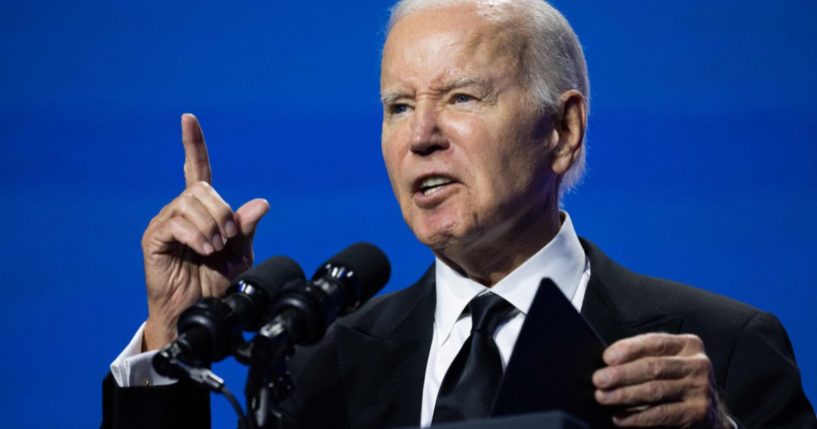


 Truth2Freedom's Blog