There are two ways to be fooled. One is to believe what isn’t true; the other is to refuse to believe what is true. —Soren Kierkegaard. "…truth is true even if nobody believes it, and falsehood is false even if everybody believes it. That is why truth does not yield to opinion, fashion, numbers, office, or sincerity–it is simply true and that is the end of it" – Os Guinness, Time for Truth, pg.39. “He that takes truth for his guide, and duty for his end, may safely trust to God’s providence to lead him aright.” – Blaise Pascal. "There is but one straight course, and that is to seek truth and pursue it steadily" – George Washington letter to Edmund Randolph — 1795. We live in a “post-truth” world. According to the dictionary, “post-truth” means, “relating to or denoting circumstances in which objective facts are less influential in shaping public opinion than appeals to emotion and personal belief.” Simply put, we now live in a culture that seems to value experience and emotion more than truth. Truth will never go away no matter how hard one might wish. Going beyond the MSM idealogical opinion/bias and their low information tabloid reality show news with a distractional superficial focus on entertainment, sensationalism, emotionalism and activist reporting – this blogs goal is to, in some small way, put a plug in the broken dam of truth and save as many as possible from the consequences—temporal and eternal. "The further a society drifts from truth, the more it will hate those who speak it." – George Orwell “There are two ways to be fooled. One is to believe what isn’t true; the other is to refuse to believe what is true.” ― Soren Kierkegaard
But why dost thou judge thy brother?… for we shall all stand before the judgment seat of Christ.
ROMANS 14:10
God in love and wisdom has given us in His Holy Spirit every gift and power and help that we need to serve Him. We do not have to look around for some other way! The most solemn aspect of this is our individual responsibility. The Bible teaches that a day is coming when we must all appear before the judgment seat of Christ; that everyone faces a review of the things done in the body, whether good or bad.
In that day we will be fully exposed and the things that we have done in our own strength and for our own glory will be quickly blown away, like worthless straw and stubble, forever separated from the kind of deeds and ministries which were wrought by the Spirit and which are described as eternal treasures in the sight of God, gold and silver and precious stones that the fire cannot harm.
In that day, all that is related to the work of the flesh will perish and pass away, and only that which has been wrought by the Spirit of God will remain and stand.
Do you dare to accept the fact that the sovereign God has designed to do all of His work through spiritually gifted men and women? Therefore, He does all of His work on earth through humble and faithful believers who are given spiritual gifts and abilities beyond their own capacities.
It was the promise of Christ that “you shall receive power”—through the ministry of the Holy Spirit—and along with power the bestowment of sweet graces and pleasant fruits of godliness when He is allowed to gain control of our persons!1
Mordecai was a true patriot, and therefore, being exalted to the highest position under Ahasuerus, he used his eminence to promote the prosperity of Israel. In this he was a type of Jesus, who, upon his throne of glory, seeks not his own, but spends his power for his people. It were well if every Christian would be a Mordecai to the church, striving according to his ability for its prosperity. Some are placed in stations of affluence and influence, let them honour their Lord in the high places of the earth, and testify for Jesus before great men. Others have what is far better, namely, close fellowship with the King of kings, let them be sure to plead daily for the weak of the Lord’s people, the doubting, the tempted, and the comfortless. It will redound to their honour if they make much intercession for those who are in darkness and dare not draw nigh unto the mercy seat. Instructed believers may serve their Master greatly if they lay out their talents for the general good, and impart their wealth of heavenly learning to others, by teaching them the things of God. The very least in our Israel may at least seek the welfare of his people; and his desire, if he can give no more, shall be acceptable. It is at once the most Christlike and the most happy course for a believer to cease from living to himself. He who blesses others cannot fail to be blessed himself. On the other hand, to seek our own personal greatness is a wicked and unhappy plan of life, its way will be grievous and its end will be fatal.
Here is the place to ask thee, my friend, whether thou art to the best of thy power seeking the wealth of the church in thy neighbourhood? I trust thou art not doing it mischief by bitterness and scandal, nor weakening it by thy neglect. Friend, unite with the Lord’s poor, bear their cross, do them all the good thou canst, and thou shalt not miss thy reward.1
THE Epistle to the Ephesians is a complete body of divinity, treating of doctrinal, experimental, and practical godliness, in the most full and instructive manner. Its peculiar quality is sublimity. To be truly understood it must be spiritually discerned. O Lord, enlighten us.
Ephesians 1
1 Paul, an apostle of Jesus Christ by the will of God, to the saints which are at Ephesus, and to the faithful in Christ Jesus:
2 Grace be to you, and peace, from God our Father, and from the Lord Jesus Christ.
Grace first, and peace as its consequence. That peace which does not come to us as the result of grace is false and dangerous. Note how he links the Father and the Lord Jesus together; for neither grace nor peace can come to us, except through God in Christ Jesus.
3, 4 Blessed be the God and Father of our Lord Jesus Christ, who hath blessed us with all spiritual blessings in heavenly places in Christ: According as he hath chosen us in him before the foundation of the world, that we should be holy and without blame before him in love: (All spiritual blessings come to us by the way of election, and have their fountain in eternal love; but we are not chosen that we may live in sin, God has chosen us to holiness.)
5, 6, Having predestinated us unto the adoption of children by Jesus Christ to himself, according to the good pleasure of his will, To the praise of the glory of his grace, wherein he hath made us accepted in the beloved.
Adoption and acceptance in Christ follow upon the divine choice. Do we possess these priceless blessings?
7–10 In whom we have redemption through his blood, the forgiveness of sins, according to the riches of his grace; Wherein he hath abounded toward us in all wisdom and prudence; Having made known unto us the mystery of his will, according to his good pleasure which he hath purposed in himself: That in the dispensation of the fulness of times he might gather together in one all things in Christ, both which are in heaven, and which are on earth; even in him: (Jesus is the centre as well as the channel of all blessedness; all the chosen in heaven and earth are to be gathered together in one in him.)
11 In whom also we have obtained an inheritance, (we have it even now in its price, in its first principle, and in the divine pledge and earnest of the Spirit,) being predestinated according to the purpose of him who worketh all things after the counsel of his own will:
12 That we should be to the praise of his glory, who first trusted in Christ.
13, 14 In whom ye also trusted, after that ye heard the word of truth, the gospel of your salvation: in whom also after that ye believed, ye were sealed with that holy Spirit of promise, Which is the earnest of our inheritance until the redemption of the purchased possession, unto the praise of his glory. (Have we the Holy Ghost? Then we have already a part of heaven; yea, the very soul, mainspring, and glory of its infinite delights.)
15–17 Wherefore I also, after I heard of your faith in the Lord Jesus, and love unto all the saints, Cease not to give thanks for you, making mention of you in my prayers; That the God of our Lord Jesus Christ, the Father of glory, may give unto you the spirit of wisdom and revelation in the knowledge of him:
Where there was much good, the apostle prayed for more. We all need still further to advance in divine things. To stand still is impossible.
18–23 The eyes of your understanding being enlightened; that ye may know what is the hope of his calling, and what the riches of the glory of his inheritance in the saints, And what is the exceeding greatness of his power to us-ward who believe, according to the working of his mighty power, Which he wrought in Christ, when he raised him from the dead, and set him at his own right hand in the heavenly places, Far above all principality, and power, and might, and dominion, and every name that is named, not only in this world, but also in that which is to come: And hath put all things under his feet, and gave him to be the head over all things to the church, Which is his body, the fulness of him that filleth all in all.
How enraptured the apostle is when he speaks of the glories of Jesus; and well he may be, for it is a theme far excelling every other. Let us muse upon it till our hearts burn with love and our souls bow in adoration at his feet.1
Daniel 7:1 — Nebuchadnezzar had dreams, and now Daniel has his own dream. Notice that this chapter is not in chronological order. According to Jimmy DeYoung:
The way to read through Daniel, chapter by chapter, is in the following order: 1-2-3-4-7-8-5-6-9-10-11-12. This is the chronological order for the book of Daniel.
The “lion with eagles wings” is the Babylonian Empire, verse 4. The “bear with three ribs in its mouth,” verse 5, is the Medo-Persian Empire. In verse 6, the “leopard with four wings and four heads” is the Grecian Empire.
The “dreadful beast” in verse 7 is the “Roman Empire” (see my audio series, “The Daniel Papers”). Notice the “ten horns” of the “dreadful beast” in verse 7 and in verse 8, the “little horn” that comes out of the “ten horns”. The “ten horns” represent the “Revived Roman Empire” and the “little horn” is one of twenty-seven names for the “Antichrist”.
Daniel 7:13-14 — Notice the “Son of Man” and the “Ancient of Days.” John MacArthur states that Daniel 7:14 is when the Son “receives the kingdom.” MacArthur lists five features of the Kingdom: authority, honor, monarchy, universal, eternal. Jesus identified himself as the Son of Man (Matthew 25:31-32), but in doing so identified Himself as the Lord GOD (Ezekiel 34:17).
Notice the themes throughout Scripture. Compare Daniel 7:14 (“dominion, glory, kingdom”) to 1 Peter 5:11 (“glory and dominion”) and Jude 1:25 (“glory and majesty, dominion and power”) to Revelation 1:6 (“glory and dominion”).
Daniel 7:24-25 — Meet the Antichrist:
rebuking the Most High
repressing the saints
redefining the times and laws
Daniel 7:28 — Scared by the Antichrist? So was Daniel!
1 John 1:1 — Notice the testimony of John: I heard it with my ears, saw it with my eyes, handled it with my hands, and I’m showing it to you so that your joy may be full (1 John 1:4).
1 John 1:5 — Follow John’s logical argument (a modus tollens, to be technical).
Friends may be unfaithful, but the Lord will not turn away from the gracious soul; on the contrary, He will hear all its desires. The prophet says, “Keep the doors of thy mouth from her that lieth in thy bosom. A man’s enemies are the men of his own house.” This is a wretched state of affairs; but even in such a case the Best Friend remains true, and we may tell Him all our grief.
Our wisdom is to look unto the Lord and not to quarrel with men or women. If our loving appeals are disregarded by our relatives, let us wait upon the God of our salvation, for He will hear us. He will hear us all the more because of the unkindness and oppression of others, and we shall soon have reason to cry, “Rejoice not against me, O mine enemy!”
Because God is the living God, He can hear; because He is a loving God, He will hear; because He is our covenant God, He has bound Him-self to hear us. If we can each one speak of Him as “My God,” we may with absolute certainty say, “My God will hear me.” Come, then, O bleeding heart, and let thy sorrows tell themselves out to the Lord thy God! I will bow the knee in secret and inwardly whisper, “My God will hear me.”
Jesus has made it clear that hell is no empty threat. Today, R.C. Sproul earnestly pleads with us to consider the state of our souls before a holy God.
A major symbol of Thanksgiving is the turkey, and each year, the White House celebrates the holiday with the President issuing a pardon — allowing a turkey to go free. You won’t be surprised to learn studies show most Americans gain unwanted weight between Thanksgiving and New Year’s Day. But you can avoid those extra pounds. Images of the first Thanksgiving include pilgrims wearing big buckles on their hats and belts and a big feast with a turkey at the center. Pilgrims are synonymous with thanksgiving. their lifestyle helped shape America’s constitution and government. Gratitude is something we should practice all year long and not just at Thanksgiving. Studies show an “Attitude of Gratitude” builds better relationships.
Thanksgiving is a time for family, food, and a lot of downtime, inevitably leading to spending more hours in front of a screen. That can be a good thing when you’re tuning in to classic holiday movies. Not only are they (mostly) devoid of the Leftist propaganda that’s taken over Hollywood lately, but they’re also a surefire way to put you in the holiday spirit during the most wonderful time of the year.
Just like with Christmas songs, there aren’t nearly as many Thanksgiving-themed movies. But there are some truly great options that capture the feeling of gratitude. From heartwarming classics to laugh-out-loud comedies, these are the best Thanksgiving movies to watch this holiday season.
Any best-of Thanksgiving movie list absolutely must include “A Charlie Brown Thanksgiving,” an animated classic that has warmed the hearts of both young and old since 1973. This beloved Peanuts special follows Charlie Brown’s well-intentioned but hilariously disastrous attempt to host Thanksgiving dinner for his friends after Peppermint Patty invites everyone to his house. Using a toaster and a ping-pong table, Charlie and Snoopy create a meal that becomes a memorable lesson in friendship and gratitude.
A Charlie Brown Thanksgiving (1973). IIMDB.
This heartwarming movie is only 25 minutes long, making it the perfect option to view between your turkey dinner and pumpkin pie. It’s also great for kids and adults to watch together.
“Planes, Trains, and Automobiles” (1987) is the quintessential Thanksgiving comedy, traditionally viewed on Thanksgiving Eve or Thanksgiving day. Steve Martin and John Candy star as two strangers, advertising executive Neal Page (Martin) and shower curtain ring salesman Del Griffith (Candy), who get stranded during holiday travel, often with over-the-top disastrous results. This John Hughes production was released to critical acclaim and still holds a 92% approval rating on Rotten Tomatoes.
The story is a comedy, but it also has a meaningful message at its heart.
“Home for the Holidays” (1995), directed by Jodie Foster, also explores family dynamics during Thanksgiving. The film features an ensemble cast that includes Holly Hunter and other celebrities, including Robert Downey Jr., Anne Bancroft, Charles Durning, Dylan McDermott, and others. This holiday option includes awkward moments and the often dysfunctional yet loving family dynamic present at many holiday gatherings. It’s a relatable film that captures real life so well.
“Grumpy Old Men” (1993) is about next-door neighbors John Gustafson (Jack Lemmon) and Max Goldman (Walter Matthau), who have a long-running rivalry. Everything comes to a head when a new neighbor named Ariel Truax (Ann-Margaret) moves in, leading to funny antics and romantic hijinks as they compete for her affection. Things really take a turn when they realize a mutual friend already had Thanksgiving dinner with the object of their affection.
Ann-Margret, Jack Lemmon, Walter Matthau. “Grumpy Old Men.” IMDB.
Finally, “Scent of a Woman” (1992), starring Al Pacino and Chris O’Donnell, is a drama about a prep school student who takes a short-term job around Thanksgiving to work as a companion and assistant to a blind retired Army lieutenant colonel who is depressed and abusing alcohol. For his performance, Pacino won the Academy Award for Best Actor, and the movie was nominated for Best Director, Best Picture, and Best Screenplay Based on Material Previously Produced or Published.
It’s Thanksgiving Day – settle back with a movie, digest your turkey, and enjoy.
This Thanksgiving, pray a prayer from the earliest days of the Christian church.
Crossway has just come out with an anthology prayers from throughout the history of the church, edited by Jonathan W. Arnold and Zachariah M. Carter: Cloud of Witnesses: A Treasury of Prayers and Petitions through the Ages. This one is from the Didache, perhaps the earliest non-Biblical document from the early church, from the second generation of Christians, some of whom may have known the Apostles. (For an online translation, go here.)
Holy Father, we thank you for your holy name, which you have caused to dwell in our hearts. And we thank you for the knowledge and faith and immortality that you have made known to us through Jesus, your servant. To you be glory forever. You, the Almighty Lord of all, created everything for the sake of your name.
You have given food and drink to humanity for their enjoyment so that they would give you thanks. But to us, you have given spiritual food and drink and eternal life through your servant. Above all, we give thanks to you because you are all powerful. To you be glory forever.
Remember, oh Lord, your church, to deliver her from all evil and to perfect her in your love. Gather her from the four winds once she has been sanctified for the kingdom you have prepared for her, for yours is the power and glory forever.
May grace arrive and let this world pass away. Hosanna to the God of David. If anyone is holy, let him come. If he is not, let him repent. Maranatha. Amen.
Note: This is a picture of the Christian woman who was buried here, in these catacombs. The image on the left shows her wedding, which was conducted by a bishop. The image on the right shows her with her baby. The central image shows her praying.
If we said there is a great deal of angst and bitter division in our nation these days, I think most Americans would agree. Thankfully, Thanksgiving has arrived, and perhaps we may get a momentary reprieve from the never-ending cultural quarrel that besets us. It has always been one of our favorite holidays, a day originally set aside to thank God for all His myriad blessings, nationally and personally. But for many, Thanksgiving today may be seen as little more than a day off work, at least for those not responsible for preparing “Thanksgiving dinner.” As with many American celebrations — originally called Holy Days but known in modern times as holidays — Thanksgiving has lost much of its initial holy intent. As we consider The First Thanksgiving we see that:
The English colonists we call Pilgrims celebrated days of thanksgiving as part of their religion. But these were days of prayer, not days of feasting.
The First Thanksgiving: The Thanksgiving Feast. The English colonists we call Pilgrims celebrated days of thanksgiving as part of their religion. … Our national holiday really stems from the feast held in the autumn of 1621 by the Pilgrims and the Wampanoag to celebrate the colony’s first successful harvest.
The trip across the ocean was very difficult. When they landed, winter was already setting in, and the end of the voyage certainly wasn’t the end of their trials. At the end of the first brutal winter, only fifty of the one hundred people who made the trip had survived. The small band celebrated with their benefactors, the Wampanoag Indians or “Eastern People.” Despite the hardships and losses the Pilgrims suffered, they viewed this first Thanksgiving as a time of celebration and appreciating the blessings of God’s protection and provision. They had endured constant reminders of the precarious nature of human life, and out of great loss, there was great joy and thanksgiving.
The Pilgrims had a decidedly different outlook on life than most of us do today. They expected life to be very hard and were not surprised when it was exactly that. They did not expect ease and comfort, in part because they had never known anything close to the comforts and conveniences we enjoy today. They had great difficulties establishing themselves in a new land but likely had known great difficulties in their homeland as well. Being deeply persuaded that this life was short and mean, while eternity was long and satisfying was how they made it through the hardships of life. And so, they were thankful for their deliverance. That’s not to say they were superhuman, floating through life without ever experiencing emotional despair, frustration, or deep sorrow, but they had an eternal perspective that kept them going.
As we consider the history of this day, we are mindful of all that we should be thankful for on this particular Thanksgiving Day. Just for beginners, we don’t have to go out in the cold to track and kill an animal for our upcoming feast. Most of us have no experience hunting — we do our “hunting” in a climate-controlled environment where our biggest challenge may be the hordes of shoppers in the checkout line, especially if we need to shop on Wednesday.
In that way and so many others, most of us do have a much easier life than people in past generations. However, we are not being Pollyannish. We experience loss and frustration and sometimes great sadness in our own lives, and we personally know many Christians who are right now experiencing terrible illness or great loss. We must work, as do all Christians, to keep an eternal perspective on the trials we go through and remember that God is in control of things that are completely out of our control.
And, as Christians, we need to be able to identify the forces we are compelled to fight in this life, forces that aim to destroy us and our faith and witness. Our battle is not against flesh and blood, but against spiritual forces of evil in the heavenly realms. (Ephesians 6:12) Those spiritual forces seem to become more brazenly apparent every day, which is the result of vast numbers of people turning further and further away from God, leaving a spiritual vacuum to be filled, and it is being filled.
No matter the appearance to the contrary, the true division that matters for eternity is not about being black or white, rich or poor, bikers or drivers, but is between those who are adopted children of God vs those that reject Him. As God’s children, we are thankful for God’s many material blessings. We are also very thankful to God’s people from times past — like the Pilgrims and so many others — who made it their business to share the faith and pass it down to our generation. Their spiritual resilience — their determination to live as Christians despite hardship — is our blessed heritage. We can certainly be thankful for that.
We are personally thankful for the opportunity to be in ministry, and to share the gospel with those that God puts in our path. Yes, life even today is difficult and may become more difficult as our nation and indeed the whole world drifts further and further from the true God, but like our Christian forebearers, we know and strive to remain mindful that this life is short and mean and eternity is long and satisfying.
The apostle Paul experienced a few minor difficulties in his life. He recounted some of these to the Corinthians:
Five times I received at the hands of the Jews the forty lashes less one. Three times I was beaten with rods. Once I was stoned. Three times I was shipwrecked; a night and a day I was adrift at sea; on frequent journeys, in danger from rivers, danger from robbers, danger from my own people, danger from Gentiles, danger in the city, danger in the wilderness, danger at sea, danger from false brothers; in toil and hardship, through many a sleepless night, in hunger and thirst, often without food, in cold and exposure. And, apart from other things, there is the daily pressure on me of my anxiety for all the churches. (2 Corinthians 11:24-28)
Sounds pretty brutal… Yet he is also the one who wrote:
Rejoice always, pray without ceasing, give thanks in all circumstances; for this is the will of God in Christ Jesus for you. (1 Thessalonians 5:16-18)
God’s will for us is to give thanks for our blessings, both spiritual and material, despite whatever hard or contrary circumstances we may find ourselves in. Why? Because He is bigger than our circumstances and will carry us through until the day we meet Him face to face. Perhaps one of the most popular Thanksgiving songs we have was penned by Henry Smith:
Give thanks with a grateful heart Give thanks to the Holy One Give thanks because He’s given Jesus Christ, His Son
And now let the weak say, “I am strong” Let the poor say, “I am rich Because of what the Lord has done for us”
Our hope is that every person reading this will experience an interlude of peace and gladness this Thanksgiving. Our prayer is that we will all as Christians remember to pause and thank God for all our blessings. We also ask Him to help us maintain the eternal perspective we all need to live out Christian holiness in our lives and pass on our faith to our children and others. Happy Thanksgiving with love and blessed celebration of the incarnation in a few weeks…Ω
Thanksgiving Day stands as one of the most cherished holidays in American history, uniquely interwoven with both religious devotion and civic celebration. Its origins trace back to the earliest days in the history of our nation, particularly the Pilgrims’ famous feast in 1621. Beyond its historical roots, Thanksgiving calls Christians to embody a life of gratitude with deep roots in biblical principles. As we consider the history of Thanksgiving in America and its rich Christian heritage, it’s likewise important to remember that gratitude is central to the Christian’s life.
The Historical Origins of Thanksgiving in America
The story of Thanksgiving begins with the arrival of the Pilgrims at Plymouth in 1620. In the fall of 1620, 102 colonists sailed for the New World on a well known sea vessel known as the Mayflower. These Separatist Christians, seeking religious freedom, exited the ship with chest boxes filled with personal property as they started a new life in a new land. These Christians who were influenced greatly by the Reformation would also bring with them the 1560 Geneva Bible.
Their first winter was harsh and they were massively unprepared. As they endured a harrowing first winter, nearly half of their number died. Yet, by the autumn of 1621, with the help of the Wampanoag (Native American Indians), the Pilgrims harvested their first crops. Governor William Bradford organized a feast to give thanks to God for His provision and protection. Attended by both the Pilgrims and their Native American allies, this meal is widely considered the first Thanksgiving.
While the exact menu is uncertain, accounts suggest it included venison, wild fowl (possibly turkey), corn, and other locally available foods. Unlike the modern Thanksgiving meal, it likely lacked pies and sweetened desserts, as sugar and flour were scarce.
This feast, however, was not intended as an annual event. The concept of Thanksgiving as a recurring celebration emerged later, tied to various religious and civic observances. In 1789, President George Washington proclaimed a national day of thanksgiving, emphasizing gratitude to God for the blessings of independence and constitutional government. Similarly, during the Civil War, President Abraham Lincoln issued a proclamation declaring Thanksgiving a national holiday in 1863. Lincoln’s proclamation explicitly acknowledged God’s providence, calling the nation to repentance and gratitude amidst the trials of war:
I do therefore invite my fellow citizens in every part of the United States, and also those who are at sea and those who are sojourning in foreign lands, to set apart and observe the last Thursday of November next, as a day of Thanksgiving and Praise to our beneficent Father who dwelleth in the Heavens.
Since then, Thanksgiving has been celebrated annually in November, with President Franklin D. Roosevelt formalizing its observance on the fourth Thursday of the month in 1941. To this very day, families gather around a table of celebration in an annual tradition deeply rooted in American history.
Biblical Foundations of Thanksgiving
The Christian faith is inherently a faith of thanksgiving. Scripture abounds with exhortations to gratitude, emphasizing a response to God’s grace that flows from a true heart of worship. The Psalms, often described as the hymnbook of Israel, are replete with calls to thanksgiving:
“Enter his gates with thanksgiving, and his courts with praise! Give thanks to him; bless his name!” (Psalm 100:4, ESV).
This verse portrays thanksgiving as the appropriate posture for approaching God, recognizing His goodness and steadfast love. Gratitude aligns the heart with God’s purposes which encourages a proper spirit of dependence and joy.
The New Testament echoes this same theme, with the apostle Paul frequently urging believers to give thanks. In 1 Thessalonians 5:18, Paul writes: “Give thanks in all circumstances; for this is the will of God in Christ Jesus for you.” Thanksgiving is not contingent on favorable conditions but flows from the unchanging reality of God’s sovereignty and love.
Similarly, in Colossians 3:17, Paul writes: “And whatever you do, in word or deed, do everything in the name of the Lord Jesus, giving thanks to God the Father through him.” Thanksgiving permeates every aspect of the Christian life, transforming ordinary actions into acts of worship.
The ultimate foundation for Christian gratitude lies in the gospel. Paul emphaszies this in 2 Corinthians 9:15 as we writes: “Thanks be to God for his inexpressible gift!” The gift of Christ’s atoning sacrifice and resurrection ensures eternal life for believers, providing a wellspring of gratitude that transcends temporal blessings.
Thanksgiving and Christian Theology
Theologically, thanksgiving is deeply tied to the doctrine of God’s providence. The Pilgrims understood this, attributing their survival and success not to chance but to God’s sovereign care. This perspective is evident in Governor Bradford’s writings, where he describes their journey as an act of faith, guided and sustained by God.
The most grateful and thankful people in the world should be the church of Jesus Christ. It is a great contradiction to see Christians filled with ingratitude and frowning in light of God’s amazing grace and kind provisions. Commenting on Psalm 61:8, Charles Spurgeon writes the following in his Treasury of David:
There should be a parallel between our supplications and our thanksgivings. We ought not to leap in prayer, and limp in praise.
Moreover, gratitude combats sin by redirecting the heart toward God. Paul identifies ingratitude as a root of idolatry, writing in Romans 1:21: “For although they knew God, they did not honor him as God or give thanks to him, but they became futile in their thinking, and their foolish hearts were darkened.” Thanksgiving, therefore, is not only a response to God’s grace but also a safeguard against spiritual decay.
The Relevance of Thanksgiving Today
In a culture increasingly characterized by entitlement and discontent, the discipline of thanksgiving stands as a countercultural witness. Thanksgiving reminds believers of their dependence on God and calls them to a life marked by humility and joy.
For Christians, Thanksgiving Day provides a unique opportunity to reflect on God’s blessings and proclaim His goodness to a watching world. Gathering with family and friends, sharing meals, and recounting testimonies of God’s faithfulness can transform a secular holiday into a spiritual celebration.
Thanksgiving has served as a reminder of God’s providence and a call to national and personal gratitude.
Additionally, Thanksgiving offers a chance to engage in acts of compassion, echoing the Pilgrims’ spirit of fellowship with the Wampanoag. Whether by serving needy people in your community as an outreach through your local church or opening homes to the lonely, Christians can model gratitude through generous hospitality.
The history of Thanksgiving in America is inseparable from its Christian roots. From the Pilgrims’ first feast to President Lincoln’s wartime proclamation, Thanksgiving has served as a reminder of God’s providence and a call to national and personal gratitude.
For Christians, the significance of Thanksgiving extends beyond a single day on the calendar. It is a reminder of the gospel’s transformative power, compelling believers to live lives of worship and service. As Paul exhorts in Colossians 2:6-7: “Therefore, as you received Christ Jesus the Lord, so walk in him, rooted and built up in him and established in the faith, just as you were taught, abounding in thanksgiving.”
No matter what your family traditions look like this Thanksgiving Day—make sure you remember to pause and give thanks to the God of all mercy, grace, and daily provision.
Thanksgiving is not merely an American tradition; it is a biblical imperative, a response to God’s grace that should define every Christian’s life. No matter what your family traditions look like this Thanksgiving Day—make sure you remember to pause and give thanks to the God of all mercy, grace, and daily provision. May this Thanksgiving, and every day thereafter, be marked by hearts overflowing with gratitude to the glory of God.
If you’re like most Americans, your Thanksgiving meal today will include oven-roasted turkey, stuffing, gravy, potatoes, green beans, cranberry sauce, and pumpkin or pecan pie. In previous generations, however, your table would have been laden with devilled turkey, oysters, boiled chestnuts, sweet potato balls, green bean pudding, vinegar pie, and cranberry wine.
While I’m partial to oysters, I’ll otherwise take our menu over theirs. At the same time, I’m not sure all progress is worthy of the name.
Dining rooms are disappearing, in large part due to the pandemic when such areas became classrooms, offices, and gyms. Since I’m terrible at balancing a plate on my knees, I’m glad our dining table is still available today.
More than half of those surveyed said they plan to eat out at a restaurant for their main holiday meal; 82 percent of those choosing to dine out do so to reduce the stress of preparing the meal. Since Janet does the cooking at our house (for culinary reasons and to protect the lives of our guests), I can’t speak to the latter fact. But I’m glad our family will have time together undistracted by a crowded restaurant.
More than a third of Americans will watch football today. While this sport-spectating tradition dates back to 1876, the game is more popular around the world than ever. I’m a lifelong football fan, but I’m glad Janet will make us pause the game for the family meal (especially if the Cowboys are losing).
Here’s another way I hope we’ll go back to our past: while Thanksgiving these days is all about food, football, and frenzied shopping, its antecedents were anything but.
“A profound and heartfelt gratitude to God”
Billy Graham writes:
The Pilgrim Fathers who landed at Plymouth to settle in what became the United States of America can teach us an important lesson about giving thanks.
During that first long winter, seven times as many graves were made for the dead as homes were made for the living. Seed, imported from England, failed to grow, and a ship that was to bring food and relief brought instead thirty-five more mouths to feed but no provisions. Some Pilgrims caught fish, and others hunted wildfowl and deer. They had a little English flour and some Indian corn.
Yet William Brewster, rising from a scanty dinner of clams and water, gave thanks to God “for the abundance of the sea and the treasure hid in the sand.”
According to today’s standards, the Pilgrims had almost nothing, but they possessed a profound and heartfelt gratitude to God for his love and mercy.
Their example reminds us that thanksgiving depends not on what we have but on being grateful for what we have. Not only are we called to “give thanks in all circumstances” (1 Thessalonians 5:18, my emphasis); we are also told to “give thanks for everything to God the Father” (Ephesians 5:20 NLT, my emphasis).
How can we be grateful “for everything”?
“When I fall, I shall rise”
On Monday, we focused on what Jesus did for us in the past by purchasing our salvation. In response to his sacrifice, we are called to “continually offer up a sacrifice of praise” to God (Hebrews 13:15).
On Tuesday, we explored what Jesus is doing for us in the present as he prays for us, heals us, guides us, and meets our needs by his grace. When we remember such provision, we are moved to present-tense gratitude even in the hardest places of life:
“The Lᴏʀᴅ is my rock and my fortress and my deliverer … I call upon the Lᴏʀᴅ, who is worthy to be praised, and I am saved from my enemies” (Psalm 18:2–3).
“The Lᴏʀᴅ is my light and my salvation—so why should I be afraid? The Lᴏʀᴅ is my fortress, protecting me from danger, so why should I tremble?” (Psalm 27:1 NLT).
“When I am afraid, I put my trust in you. In God, whose word I praise, in God I trust; I shall not be afraid. What can flesh do to me?” (Psalm 56:3–4).
Yesterday, we considered what Jesus will do for us in the future. He will take us to be with him in heaven one day (John 14:3); in the meantime, he will lead us into his “perfect” will (Romans 12:2) and redeem all he allows for his glory and our good (Romans 8:28).
We can therefore say with the prophet: “When I fall, I shall rise; when I sit in darkness, the Lᴏʀᴅ will be a light to me” (Micah 7:8). And we can pray with Henri Nouwen:
Even when it seems that things are not going my way, I know that they are going your way and that in the end your way is the best way for me. O Lord, strengthen my hope, especially when my many wishes are not fulfilled. Let me never forget that your name is Love.
“Thanksgiving is what you do”
Across this Thanksgiving week, I’ve been thinking about Tim Keller’s observation:
“It’s one thing to be grateful. It’s another to give thanks. Gratitude is what you feel. Thanksgiving is what you do.”
For all Christ has done, for all he is doing, and for all he will do, what will you “do” in response today?
NOTE: On this Thanksgiving Day, I want to express my gratitude to all who read the Daily Article and to all who partner with us financially to make our ministry possible. It is a wonderful privilege to share this calling with you each day. “I thank my God in all my remembrance of you” (Philippians 1:3).
finding no way to a city where they could settle.…
Some sat in darkness and the deepest gloom,
prisoners suffering in iron chains.…
Some became fools through their rebellious ways
and suffered affliction because of their iniquities.…
Others went out on the sea in ships;
they were merchants on the mighty waters.…
verses 1–23
It may seem strange to anyone who knows anything about the English Puritans to speak of Psalm 107 as “The Pilgrims’ Psalm,” not because they did not know, frequently read, and greatly cherish it, but because being people of the Book they loved and cherished the other psalms too. In fact, they cherished the entire Bible.
But that is not the whole story. As anyone who knows anything about the Pilgrims is aware, Psalm 107, more than any other portion of the Bible, aptly describes the many dangers, toils, and snares they experienced prior to, during, and after their courageous crossing of the Atlantic Ocean to found America’s Plymouth Colony. Did they recognize this description themselves? There is reason to think they did, since Governor William Bradford in his account of the founding of the Plymouth Plantation explicitly referred to Psalm 107 in his well-known summation of their achievement:
May not and ought not the children of these fathers rightly say: “Our fathers were Englishmen which came over this great ocean, and were ready to perish in this wilderness; but they cried unto the Lord, and he heard their voice and looked on their adversity,.… “Let them therefore praise the Lord, because he is good: and his mercies endure forever.” “Yes, let them which have been redeemed of the Lord, shew how he hath delivered them from the hand of the oppressor. When they wandered in the desert wilderness out of the way, and found no city to dwell in, both hungry and thirsty, their soul was overwhelmed in them. Let them confess before the Lord his loving kindness and his wonderful works before the sons of men.”
Those words are based on Psalm 107, which suggests that the psalm was often in the Pilgrims’ minds. Since the Pilgrims came ashore on Monday, December 11, 1620, after having spent the prior day worshiping God, it is even likely that Psalm 107 was the basis for that Sabbath’s meditation.
In its own setting Psalm 107 is a praise song of the regathered people of Israel after their Babylonian bondage. Thus Psalms 105, 106, and 107 form a trilogy. Psalm 105 recounts Israel’s experience from the time of God’s covenant with Abraham to the people’s entrance into the promised land; Psalm 106 tracks their unfaithfulness during that same time period and reflects the years of their exile to Babylon; and Psalm 107 thanks God for their deliverance from that exile. Still, the psalm was aptly used by the Pilgrims and may be loved by us as well, since the examples it gives of the perils from which the people of God are delivered are at once common, varied, and suggestive. We can see ourselves in each of these situations.
The psalm has three parts: an opening (vv. 1–3), the main body (vv. 4–32), and a closing grateful reflection on God’s sovereignty in human affairs (vv. 33–43, the subject of our next chapter).
A Call to Praise God
Charles Spurgeon wrote that the theme of the psalm is “thanksgiving and the motives for it.” Thanksgiving is the note struck in the opening verses as well as in the refrain of verses 8–9, 15–16, 21–22, and 31–32. The opening says,
Give thanks to the Lord, for he is good;
his love endures forever.
Let the redeemed of the Lord say this—
those he redeemed from the hand of the foe,
those he gathered from the lands,
from east and west, from north and south.
This call should cause us to ask a probing, personal question, namely, Am I among the redeemed? meaning, Am I one who has been delivered from sin and so been gathered from my aimless secular wanderings to be a part of God’s well-loved, well-grounded, and well-established covenant people? If you have been redeemed from your sin by the death of Jesus Christ, you should thank God for your deliverance and tell others that God is indeed “good” and that “his love endures forever,” as the psalm says. This is its first lesson. According to the first chapter of Romans, it is a mark of the unregenerate that “they neither [glorify God] as God nor [give] thanks to him” (v. 21).
Pictures of Peril
The main body of Psalm 107 is comprised of verses 4–32, which fall into four clearly marked sections. Each is a poetic picture of some deadly peril common to mankind but from which God regularly delivers his people. These pictures may be images of the Babylonian captivity or possibly even literal descriptions of the conditions from which the Jews of that time were rescued, but they also picture our own spiritual condition apart from Jesus Christ. In each of these sections, after describing our peril and God’s deliverance, the psalmist reminds us how much we should be thankful.
1. Homes for the homeless. Homelessness or perhaps just being lost in the wilderness is the first picture of peril (vv. 4–9). It is described in touching tones:
Some wandered in desert wastelands,
finding no way to a city where they could settle.
They were hungry and thirsty,
and their lives ebbed away.
Then they cried out to the Lord in their trouble,
and he delivered them from their distress (vv. 4–6).
It is easy to understand why these words would have appealed to our Pilgrim fathers as describing their experiences. These poor people had been driven from their homes and were virtually hounded from place to place, at one time escaping England for Holland, until at last they set sail for the American continent. According to William Bradford, they “were hunted and persecuted on every side.… Some were taken and clapped up in prison, others had their houses beset and watched night and day, and hardly escaped their [enemies’] hands; and the most were fain [constrained] to flee and leave their houses and habitations, and the means of their livelihood.”
These were the problems they faced in the early 1600s. So when they finally came to America and were settled in their own homes from 1620 on, however rustic these rude shelters may have been, the Pilgrims felt enormous gratitude to God. As the psalmist says,
Then they cried out to the Lord in their trouble,
and he delivered them from their distress.
He led them by a straight way
to a city where they could settle (vv. 6–7).
In our congregation at Tenth Presbyterian Church we have many people who have been homeless but who have cried out to the Lord and been given homes to live in. They are thankful for their homes. Even if you have never been homeless and have always had a home, should you not be even more grateful than those who have only been given homes recently? One of the greatest blessings of my life was the Christian home in which I was raised, where I was taught that Jesus is my Savior from sin, learned my first Bible verses, and was trained in such sound habits of Christian piety as prayer, regular church attendance, and joyful fellowship with God’s people. If you had a good home or have one now, then do what the psalm says:
Give thanks to the Lord for his unfailing love
and his wonderful deeds for men,
for he satisfies the thirsty
and fills the hungry with good things (vv. 8–9).
I have looked at this image as part of the Pilgrim’s experience and as our having literal homes today, but we are all homeless without God, who is our only true home. Apart from God we are like the prodigal son, who left his father’s home to squander his substance in a far country. Salvation began when he came to his senses, confessed his sin, and returned to his father. Have you returned to God, crying, “Father, I have sinned against you!”?
2. Freedom for captives. The second image of this central section of the psalm (vv. 10–16) describes the distress of prisoners. The Pilgrims’ leaders were often put in prison for dissenting from the established religion of the time, and when small groups tried to escape the persecution by sailing across the English Channel to Holland or elsewhere, they were frequently arrested on that account too.
Bradford tells of several such incidents. In one, the men were separated from their wives and children. “Pitiful it was to see the heavy case of these poor women in this distress; what weeping and crying on every side, some for their husbands that were carried away.… others not knowing what should become of them and their little ones; others again melting in tears, seeing their poor little ones hanging about them, crying for fear and quaking with cold. Being thus apprehended, they were hurried from one place to another and from one justice to another, till in the end they knew not what to do with them.” Bradford recounts how eventually they all nevertheless did manage to get to Holland, where they thanked God.
There are not many among us who can speak of being delivered from prison literally—though there are some—but all who are Christians can speak of being delivered from the prison house of sin. This prison is what Jesus seems to have had in mind in the synagogue at Nazareth when he spoke of having come “to proclaim freedom for the prisoners” (Luke 4:18; cf. Isa. 61:1–2). Jesus did not free anyone from a literal prison, as far as we know, but he has freed everyone who has ever believed on him from sin’s shackles. We have been slaves to sin, but by his atoning death we have been forever liberated.
Each of us can say that we have “rebelled against the words of God and despised the counsel of the Most High,” as the psalmist does in verse 11, and that God “brought [us] out of the darkness and the deepest gloom and broke away [our] chains,” as he does in verse 14. Shouldn’t we thank God for that deliverance? The refrain says (with appropriate variation from verses 8–9),
Let them give thanks to the Lord for his unfailing love
and his wonderful deeds for men,
for he breaks down gates of bronze
and cuts through bars of iron (vv. 15–16).
John Bunyan, the author of Pilgrim’s Progress and a Puritan, saw verse 16 as a description of Christ’s breaking through the bronze gates and iron bars of Bunyan’s tightly closed-up heart to save him. He resisted Jesus, but Jesus proved all-powerful. Has Jesus shown himself to be all-powerful for you? Shouldn’t you be thankful he is?
3. Healing for the sick. The third image (vv. 17–22) pictures people who “suffered affliction because of their iniquities” (v. 17). It describes illness so severe that it brought those afflicted “near the gates of death” (v. 18). This section describes the Pilgrim experience too. Four of the original small band of 102 passengers died before they even reached America, one just before the ship landed. Most terrible of all, half of the remainder died in that first cruel winter, which Bradford called “the starving time.” Only twelve of the original twenty-six heads of families and four of the original twelve unattached men or boys survived, and all but a few of the women perished. As for the rest, there was much sickness.
You may have experienced God’s deliverance from a serious illness, just as the psalmist describes and the Pilgrims experienced. The psalm is also depicting deliverance from spiritual sickness, since it refers to “affliction” caused by “their iniquities” and God’s “word” as the agent of our healing (v. 20).
God’s Word is the only thing that heals our spiritual sicknesses, for it is the only thing that has life. As the Bible pictures it, our condition apart from Christ is far worse than merely being sick. We are actually dead, so far as any ability to respond or come to God is concerned: “dead in [our] transgressions and sins” (Eph. 2:1). When God speaks his Word from the mouth of the preacher to our hearts, we experience a spiritual resurrection, just as Lazarus did when Jesus called him from the tomb (John 11:43–44). Using another image, Peter spoke of our being born again “not of perishable seed, but of imperishable, through the living and enduring word of God” (1 Peter 1:23).
If you are a Christian, God has saved you “from the grave” (v. 20) by that same life-giving Word. The psalm says you should be thankful for that salvation.
Let them give thanks to the Lord for his unfailing love
and his wonderful deeds for men.
Let them sacrifice thank offerings
and tell of his works with songs of joy (vv. 21–22).
4. Safety for those at sea. In the opinion of many commentators the most beautiful, most poetic, and certainly the most stirring section of Psalm 107 is the part that describes the peril of God’s people while at sea (vv. 23–32). Although it was not, it might have been written as a description of that difficult sixty-five-day, late-fall crossing of the turbulent North Atlantic by the Pilgrim fathers and their families.
Others went out on the sea in ships;
they were merchants on the mighty waters.
They saw the works of the Lord,
his wonderful deeds in the deep.
For he spoke and stirred up a tempest
that lifted high the waves.
They mounted up to the heavens and went down to the depths;
in their peril their courage melted away.
They reeled and staggered like drunken men;
they were at their wits’ end.
Then they cried out to the Lord in their trouble,
and he brought them out of their distress.
He stilled the storm to a whisper;
the waves of the sea were hushed.
They were glad when it grew calm,
and he guided them to their desired haven (vv. 23–30).
A person needs to have been on the ocean in a violent storm to appreciate how accurate those frightening words are.
Forget the ocean. Perhaps you have been in a situation of an entirely different nature but in which you have also been at your wits’ end and cried to the Lord and were delivered. Perhaps you were facing a serious financial problem, a personality conflict at work, or a battle within your family. If you were delivered, listen to what the psalm says.
Let them give thanks to the Lord for his unfailing love
and his wonderful deeds for men.
Let them exalt him in the assembly of the people
and praise him in the council of the elders (vv. 31–32).
There is nothing so becoming the children of God as public acknowledgment of his unmerited favors and unfathomable goodness to them.
Thanks, Exaltation, and True Praise
In the next chapter we are going to look at this psalm’s last section, in which the psalmist makes observations about God’s acts. Before we do so, let us consider the refrain ending each of the preceding sections as they deal with God’s rescue of the homeless, his deliverance of the prisoners, his healing of the sick, and his preservation of those who go to sea.
The refrain occurs four times. In each of these occurrences the first two lines are the same—“let them give thanks to the Lord for his unfailing love and his wonderful deeds for men”—but the next two lines vary. In the first two cases there are reasons for giving thanks to God: because God “satisfies the thirsty and fills the hungry with good things” (v. 9), and because “he breaks down gates of bronze and cuts through bars of iron” (v. 16)—that is, because of God’s salvation. The last two cases suggest ways we can give God thanks: by offering him “thank offerings” (v. 22), and by exalting “him in the assembly of the people and prais[ing] him in the council of the elders” (v. 32).
How can we sacrifice thank offerings to God today? The only possible answer is by offering God ourselves. The apostle Paul wrote, “Therefore, I urge you, brothers, in view of God’s mercy, to offer your bodies as living sacrifices, holy and pleasing to God—this is your spiritual act of worship” (Rom. 12:1). Nothing less than the offer of our complete selves is adequate. Nothing else is demanded. Having done that, we must then also speak about God’s mercies to other people, as the psalm commands.
Psalm 107
The Pilgrims’ Psalm: Part 2
Grace Has Led Us Home
He turned the rivers into a desert,
flowing springs into thirsty ground,
and fruitful land into a salt waste,
because of the wickedness of those who lived there.
He turned the desert into pools of water
and the parched ground into flowing springs;
there he brought the hungry to live,
and they founded a city where they could settle.
They sowed fields and planted vineyards
that yielded a fruitful harvest;
he blessed them, and their numbers greatly increased,
and he did not let their herds diminish.
Then their numbers decreased, and they were humbled
by oppression, calamity and sorrow;
he who pours contempt on nobles
made them wander in a trackless waste.
But he lifted the needy out of their affliction
and increased their families like flocks.
The upright see and rejoice,
but all the wicked shut their mouths.
Whoever is wise, let him heed these things
and consider the great love of the Lord.
verses 33–43
John Newton was a Puritan. He was also a pilgrim in one sense, though he lived a hundred years after the Pilgrims we have been talking about (in the previous chapter). In the third stanza of his best-known hymn, “Amazing Grace,” he has given a summary of the Pilgrims’ experience as well as an outline of the Pilgrims’ psalm.
Through many dangers, toils, and snares,
I have already come;
’tis grace has brought me safe thus far,
and grace will lead me home.
In the first two parts of Psalm 107, the introduction (vv. 1–3) and the overview of the diverse deliverances of God’s people (vv. 4–32), we have seen how God delivers his people from the many dangers, toils, and snares of this life. Now we will see how he also brings us home, anchoring our souls in a safe harbor at last.
Swiss psychiatrist Paul Tournier wrote a book entitled A Place to Be, which claims that a place to belong, a home, is what we all most deeply desire. Tournier says we long for it all our lives and are restless until we find it. Psalm 107 tells us that God provides just such a home for his people. We have a home in God here and now, a home enriched by our having Christian brothers and sisters. Even more important, we have the assurance of a happy, eternal heavenly home hereafter.
The Experience of the Pilgrims
The Pilgrims were dispossessed of their homes in England. They left their temporary homes in Holland. While making their perilous three-month crossing of the Atlantic Ocean they were without a home; even the Mayflower did not belong to them. When they reached the shores of Massachusetts Bay at what came to be called Plymouth Colony, they had a home of their own at last. During that first desperate winter they constructed rustic shelters for themselves and thus established the first permanent English settlement in North America.
They suffered terribly that winter, but in the spring the few healthy men planted crops, the sick recovered, and in the fall they gathered in their first harvest. What American does not know the story of that harvest and the first Thanksgiving? William Bradford tells of an abundance of fish and wild game that were added to the harvest celebration that November. It is not from Bradford that we learn the details of that thanksgiving celebration; they are found in a letter written by Edward Winslow to a friend in England in December 1621. Winslow tells of a three-day feast attended not only by the Pilgrims but also by the local Indians, the great chief Massasoit himself arriving for the feast with ninety men.
Well might these hearty survivors have said, “Let them give thanks to the Lord for his unfailing love and his wonderful deeds for men” (vv. 8, 15, 21, 31), for “there he brought the hungry to live, and they founded a city where they could settle” (v. 36). We also should always thank the Lord for similar blessings.
The Other Side of the Story
There is another side to this story: The good times were succeeded by hard times again. The Pilgrims suffered anxiety over divisions caused by new colonists from other places, distress at being cheated by ship captains, and fear of war with distant Indian tribes. Then the crops sometimes failed or did poorly, and sicknesses returned.
Have you noticed how Psalm 107 acknowledges this pattern? It is not talking about the Pilgrims, of course, but it tells how in other cases God gave a fruitful harvest and increased the numbers of the people and their livestock but then also allowed the harvests of these same people to fail and their numbers to decrease. In fact, it repeats this cycle twice in the last section: hard times (vv. 33–34), blessing (vv. 35–38), hard times again (vv. 39–40), and blessing again (vv. 41–42).
At verse 33 there is such an abrupt change in tone and even (to some extent) in subject matter that some of the more liberal writers imagine the psalm was put together from two otherwise unrelated poems. The first half of the psalm rejoices in the deliverances accomplished by God and calls on the people who were delivered to praise and thank God for it. The final section reflects in a distant, settled way on God’s sovereign workings by which his people are sometimes lifted up and sometimes brought low. The first few verses use images, noting how God “turned rivers into a desert” (v. 33) and “the desert into pools of water” (v. 35), “fruitful land into a salt waste” and “parched ground into flowing springs” (vv. 34–35). As far as the people were concerned, the psalm says God “blessed them, and their numbers greatly increased” but also that “their numbers decreased, and they were humbled by oppression, calamity and sorrow” (vv. 38–39).
The difference in tone and content is only a case of the psalmist’s honesty, depth, and spiritual sensitivity being greater than our own. He is acknowledging that not everything the people of God experience can be described as a deliverance and be received with utter joy. Life has its pain and tragedies, even for Christians. Yet in spite of them, we can and should praise God for his wisdom and goodness, as the Pilgrims did.
We can do this by seeing God’s wise, loving, and sovereign hand even in hardships. The psalm ends with a humble acknowledgment of God’s sovereignty over all things and all circumstances, reminding us that even the bad things of life are in God’s hands. The late Lutheran commentator H. C. Leupold calls this the psalm’s important general truth: “The up’s and down’s, the success and the failure, the prosperity and calamity in the lives of individuals and nations are entirely in the control of and brought about by the will of the Almighty. None are brought low or raised on high unless he wills it.”
Here are two biblical confessions of that truth.
King Nebuchadnezzar had been struggling against the claims of the sovereign God, refusing to recognize that even his own destiny was in God’s hands. When he took the glory of God to himself, claiming, as he looked out over the magnificent city of Babylon, “Is not this the great Babylon I have built as the royal residence, by my mighty power and for the glory of my majesty?” (Dan. 4:30), God punished him with insanity. He was driven from human company and lived among animals for seven years.
Later, when he acknowledged God to be “the Most High” God and had his sanity restored, Nebuchadnezzar praised God:
His dominion is an eternal dominion;
his kingdom endures from generation to generation.
All the peoples of the earth
are regarded as nothing.
He does as he pleases
with the powers of heaven
and the peoples of the earth.
No one can hold back his hand
or say to him: “What have you done?”
“Everything he does is right and all his ways are just. And those who walk in pride he is able to humble” (Dan. 4:34–35, 37). As I am fond of saying, not only is God able to humble people, he does humble them. In fact, Psalm 107 says this even of the righteous: “Then their numbers decreased, and they were humbled by oppression, calamity and sorrow” (v. 39).
The second biblical confession that none are brought low or raised on high unless God wills it is in the New Testament, in the psalm of the Virgin Mary that we know as the Magnificat.
He has brought down rulers from their thrones
but has lifted up the humble.
He has filled the hungry with good things
but has sent the rich away empty (Luke 1:52–53).
Probably Mary was thinking only of the lifting up of the righteous and the debasing of the wicked, but we learn from Psalm 107, as well as from other passages of Scripture, that the righteous are sometimes brought low also.
Uses of This Doctrine
Since we are talking about the Pilgrims, who were Puritans, I want to do what the Puritan preachers often did. If you read their sermons, you will find that often, after having stated what they call “the doctrine,” they give what they call “uses” of it. I suggest four uses of the doctrine that even for the righteous God sends sorrow as well as joy, hardship as well as material blessing—yet is not arbitrary.
1. Reverence for God. Since God’s ways are not our ways and his ultimate purposes in life are usually beyond our finding out, we must revere him and be humble.
The apostle Paul ended the third section of Romans by explaining God’s choice to bypass the majority of Jewish people in order to bring the gospel to the Gentiles but one day to work among the Jews again so that “all Israel will be saved” (Rom. 11:26). This is one of the most profound passages in the Bible, one that has proved difficult even for the most astute commentators. Paul seems to be probing the mind of God as only an inspired apostle could. Yet when he has finished his explanation of God’s sovereign purposes in history, he does not boast in his understanding, as if he were saying, “Look what I have figured out.” Instead he breaks into a doxology, writing,
Oh, the depth of the riches of the wisdom and knowledge of God!
How unsearchable his judgments,
and his paths beyond tracing out!
“Who has known the mind of the Lord?
Or who has been his counselor?”
“Who has ever given to God,
that God should repay him?”
For from him and through him and to him are all things.
To him be the glory forever! Amen (Rom. 11:33–36).
There is nothing wrong with trying to understand the judgments, paths, and mind of God. We are encouraged to do so. But we should never forget that God’s ways will always be beyond our full understanding and that many times we will simply have to clap our hands over our mouths and wait to see what God will himself do or say, if anything.
Habakkuk tried to understand why God was raising up the Babylonians to overthrow his people, but he could not. So he concluded,
I will stand at my watch
and station myself on the ramparts;
I will look to see what he will say to me,
and what answer I am to give to this complaint (Hab. 2:1).
When God did speak he gave Habakkuk one of the greatest revelations in the Bible—“the just shall live by his faith” (Hab. 2:4 kjv)—the words that meant so much to Martin Luther.
2. Looking for things that are eternal. Looking beyond the seen to the unseen and eternal is faith. Abraham is one example of those with faith. He was called out of his home city of Ur to go to a land that God would give him. He never actually owned that land, except for the small part he purchased as a burial plot for his wife, Sarah, and his life was not easy even when he was living where God had told him to go. There were famines, disagreements with his nephew Lot, danger from marauding desert tribes. Difficulty was all right with Abraham because he knew that the best blessings he was promised were not to be enjoyed in this life but in the life to come. Hence the author of Hebrews sums up Abraham’s lifetime walk of faith by saying, “He was looking forward to the city with foundations, whose architect and builder is God” (Heb. 11:10).
Although there are ups and downs in this life, the end of all things for God’s people is not down but up. We can know this and look for it because we know that God is both good and sovereign. God loves us, and because he does he comforts us, preserves us, and brings us through even the hardest experiences of life. Psalm 107 ends on this note, for it calls us to “heed these things and consider the great love of the Lord” (v. 43, italics added).
3. Calling sinners to repentance. Although the ways of God in this life are not always within our understanding, nevertheless we do discern some important patterns, and one of them is that arrogance, strife, self-love, greed, and other forms of wickedness are generally punished, while virtue is frequently rewarded. This fact enables us to argue that we inhabit a moral universe governed by a moral God and to warn sinners against persisting in behavior that will eventually result in their eternal condemnation by God. The psalm’s last verse is telling not only the righteous but also everyone to wise up and consider how things actually are.
4. Thanksgiving. Believers should thank God for being what he is and acting as he does—and not only when things are going our way or we have it easy.
The apostle Paul suffered enormous hardships in his efforts to take the gospel throughout the known Roman world, including an imprisonment at the end of which he was beheaded. But it was this very apostle who wrote, “I have learned the secret of being content in any and every situation, whether well fed or hungry, whether living in plenty or in want” (Phil. 4:12) and who told the Philippians, “Do not be anxious about anything, but in everything, by prayer and petition, with thanksgiving, present your requests to God. And the peace of God, which transcends all understanding, will guard your hearts and your minds in Christ Jesus” (vv. 6–7, italics added).
Heeding and Considering
Alexander Duff was an eloquent pastor and missionary pioneer, the first sent to India by the Presbyterian Church of Scotland. On October 14, 1829, he and his wife set out for the Indian subcontinent on a ship called the Lady Holland, and four months later, at midnight on the 13th of February 1830, the ship ran aground while attempting to navigate the Cape of Good Hope. The pounding surf soon destroyed the ship, washing everything it held away, but miraculously all the passengers and crew made it safely to land.
Nothing remained of their belongings, but as one sailor walked along the shore looking for food and fuel, he came upon two books, a Bible and the Scottish Psalm Book. He found the name of Alexander Duff in both of them, so he brought them to the missionary. Duff had been transporting eight hundred books to India, where he hoped to (and later did) establish a college, but of those eight hundred books only these two remained. In spite of this loss, Duff at once opened the Bible to Psalm 107 and read it to the other survivors, concluding with the words,
Whoever is wise, let him heed these things
and consider the great love of the Lord (v. 43).
Can you do that? What matters most in life is not the number or severity of the perils from which we are delivered, but whether we are actually in the hands of that greatly loving God. If we are in his hands, we can “heed these things,” “consider the great love of the Lord,” and then praise him as Psalm 107 does. By this praise it has been a blessing to God’s people throughout the ages.1
Psalm 107: A Call for the Redeemed to Praise the Lord
This psalm has no heading. Consistent with its placement at the beginning of Book Five of Psalms, this psalm focuses on, and hence introduces the main theme of the fifth book, about the ingathering of the people of Israel to the land of Israel. The design of the book of Psalms parallels the Pentateuch (see Introduction: Title, Structure, and Place in the Canon). Thus this fifth book of Psalms parallels Deuteronomy, the fifth book of the Pentateuch, and concerns the arrival of God’s people to the promised land (see v. 3) and their living under the perfect and intimate rule of their divine King. God revealed these truths to those who came out from Egypt. They are repeated in Deuteronomy for the subsequent generation born in the wilderness who did not witness them first hand. “Deuteronomy,” the name for the book in the LXX, means “repeated or reiterated Law.”
Book Five of Psalms often focuses on the ingathering of God’s people after the exile, with some references to the advent of God’s kingdom on earth. This theme is emphasized by the repetition of the key expression “Hallelujah,” (of which 20 of its 24 biblical occurrences are in Book Five, the other four being in Pss 104:35; 105:45; and 106:1, 48).
Ps 106 closed with a prayer for God to regather His people from the nations (see 106:47). Ps 107 contains an expression of thanks for God regathering the people after exile (107:1–3).
A. Praise the Lord for Restoring His People to Their Land (107:1–3)
107:1–3. This psalm opens with the call O give thanks to the Lord, for He is good. This call to give thanks is repeated throughout the psalm (cf. vv. 8, 15, 21, 31). The psalm emphasizes that God’s lovingkindness is everlasting (also repeated in vv. 1, 8, 15, 21, 31). This statement is the most repeated qualification of praise in the book of Psalms, occurring most often in this fifth book (see 118:1–4, 29; 136). God’s lovingkindness (chesed; cf. comments on 5:7) more than anything else is represented by His regathering of Israel to their land of Israel and the consequent fulfillment of all that He promised to do for them ultimately under the reign of King Messiah.
That this has in view the final fulfillment of all God’s promises (per the Abrahamic covenant) both to and through Israel is evident from: (1) the past tense (perfect) verbal forms has redeemed and [has] gathered (vv. 2–3), which indicates that these actions are viewed as completed (whereas from the time of the Babylonian exile to the present they are still ongoing); (2) the specific phraseology describing Israel’s regathering from all points of the compass, east/west/ north/south, using prophetic phraseology to describe Israel’s final regathering and redemption, not just the return from Babylon (cf. Is 43:5–6; 56:12; Ezk 11:17; 20:33ff.); and (3) the specific use (in v. 2) of the term redeemed, signifying (Is 35:9; 62:12), both spiritual and physical redemption.
B. Praise the Lord for Correcting His People for Their Sins (107:4–22)
107:4–9. This is an overview of Israel’s history of the exodus as they wandered in the wilderness yet when they cried out to the Lord … He delivered them out of their distresses (vv. 4, 6, cf. vv. 13, 28). Therefore Let them give thanks to the Lord for His lovingkindness (v. 8).
107:10–16. The reference to those who dwelt in darkness and in the shadow of death (cf. v. 14; 23:4) begins a graphic image of distress (cf. 18:28; Jb 36:8; Is 5:30; 8:22; 59:9; Jr 13:16; Lm 3:7). The reference to prisoners in misery and chains relates to Israel being taken away to captivity in Babylon (cf. 2Ch 36:6; Jr 52:12–30). They were judged because they rebelled against the words of God yet when they cried out to the Lord in their trouble (vv. 11, 13; cf. vv. 6, 28) He brought them out of darkness and the shadow of death (v. 14; cf. v. 10). Therefore the psalmist exhorted his people to give thanks to the Lord for His lovingkindness (v. 15; cf. vv. 9, 21) not only for redeeming them from the afflictions of those disciplines but also for bringing those corrections on them in the first place (cf. Pr 3:11–12; Heb 12:4–11).
107:17–22. These fools, people who had refused to believe in and follow the Lord (cf. 14:1; 53:1), were suffering physically for their iniquities. They had lost their appetites, abhorred all kinds of food, coming almost to the point of death (v. 18). When they cried out to the Lord in their trouble (v. 19; cf. vv. 6, 28) He healed them (v. 20). Therefore they were exhorted to give thanks to the Lord for His lovingkindness indicating the people will be back in the Land of Israel with a rebuilt temple, the place to offer sacrifices of thanksgiving with a heart of worship (vv. 21–22; cf. Lv 7:12–15; 22:29–30; Pss 50:7–15; 116:17).
C. Praise the Lord for Preserving His People through Their Distress (107:23–43)
107:23–38. In keeping with the overall theme of Book Five, the psalmist moved on from focusing on God’s lovingkindness as expressed in the process of correction throughout Israel’s history to focusing on God’s lovingkindness as expressed in God’s absolute dominion over nature. He is in control of the wonders in the oceans, the stormy wind and waves of the sea (vv. 24–25) as well as the rivers … springs … fruitful land … so people can establish an inhabited city … sow the fields because He blesses them (vv. 33–34; 36–38). Therefore, they should give thanks to the Lord for His lovingkindness (vv. 31–32; cf. 8, 15, 21).
107:39–43. Because of God’s dominion, He cannot be impeded either by events in nature nor from human agency (from political or social sources) in the process of restoring His people to their land. He set the needy securely on high … and makes his families like a flock (v. 41; cf. Ps 23 and comments there). The conclusion of this psalm is in the style of a proverb: The wise person will give heed (carefully watch/meditate upon) the instruction of this psalm and consider the lovingkindness of the Lord (v. 43).2
and He was left alone, and the woman, where she was, in the center of the court. Straightening up, Jesus said to her, “Woman, where are they? Did no one condemn you?” She said, “No one, Lord.” And Jesus said, “I do not condemn you, either. Go. From now on sin no more.” (8:9b–11)
After the departure of the scribes and Pharisees, Jesus was left alone with the woman, who remained standing where she was, in the center of the court. The text does not say whether the crowd that had been listening to Jesus’ teaching (v. 2) had also left. Whether they were still there or not, the focus of the narrative is on the Lord and the woman.
For the first time, someone addressed the woman. Straightening up from His posture of stooping to write, Jesus said to her, “Woman, where are they? Did no one condemn you?” The term woman was a polite, respectful form of address (cf. Matt. 15:28; Luke 13:12; 22:57), one with which Jesus addressed His mother (John 2:4; 19:26), the Samaritan woman at the well (4:21), and Mary Magdalene (20:13, 15). With her accusers gone, there was no one left to condemn her. Exercising His divine prerogative to forgive sin (Matt. 9:6; cf. John 3:17; 12:47), Jesus said, “I do not condemn you, either. Go. From now on sin no more.”
Forgiveness does not imply license to sin. Jesus did not condemn her, but He did command her to abandon her sinful lifestyle. Gerald L. Borchert writes,
Jesus’ verdict, “neither do I condemn,” however, was not rendered as a simple acquittal or a noncondemnation. The verdict was in fact a strict charge for her to live from this point on (apo tou nun) very differently—to sin no more (mēketi hamartane). The liberating work of Jesus did not mean the excusing of sin. Encountering Jesus always has demanded the transformation of life, the turning away from sin.… Sin was not treated lightly by Jesus, but sinners were offered the opportunity to start life anew. (John 1–11, The New American Commentary [Nashville: Broadman & Holman, 2002], 376)
As Paul wrote in Romans 6:1–2, “What shall we say then? Are we to continue in sin so that grace may increase? May it never be! How shall we who died to sin still live in it?”
This story is far more than a battleground for textual critics. It paints a marvelous picture of the Lord Jesus Christ, whose gracious humility, infinite wisdom, convicting speech, and tender forgiveness are its central themes. All Christians should be grateful to God for sovereignly preserving it.1
11 Jesus is not saying that the woman’s act of adultery is not worthy of condemnation but that he doesn’t intend to press charges. In no way does he condone her sin. Neither does he offer her divine forgiveness for what she has done. He simply tells her to “go, and never sin again” (Montgomery). We would hope that the guilty woman repented of her sin, but the text is silent about that. And of course there is room in the kingdom for every kind of sinner (including the adulteress) who turns from sin and embraces by faith the Lord Jesus.2
11 Jesus’ answer brings the incident to a fitting conclusion. He, too, will not condemn her. But that does not mean that he condones her sin; he tells her to sin no more. The form of the command implies a ceasing to continue an action already started: “Stop your sinful habit.” And “no more” (NIV paraphrases with “leave your life of sin”) points to the thought of no return. She is to make a clean break with sin. Jesus does not refer specifically to adultery (though there cannot be any doubt but that is primarily in mind). His words are perfectly general. He is calling the woman to amendment of life, the whole of life. It should not be overlooked that he says nothing about forgiveness. The guilty woman had as yet given no sign of repentance or of faith. What Jesus does is to show mercy and to call her to righteousness.3
11. Neither do I condemn thee. We are not told that Christ absolutely acquitted the woman, but that he allowed her to go at liberty. Nor is this wonderful, for he did not wish to undertake any thing that did not belong to his office. He had been sent by the Father to gather the lost sheep, (Matth. 10:6;) and, therefore, mindful of his calling, he exhorts the woman to repentance, and comforts her by a promise of grace. They who infer from this that adultery ought not to be punished with death, must, for the same reason, admit that inheritances ought not to be divided, because Christ refused to arbitrate in that matter between two brothers, (Luke 12:13.) Indeed, there will be no crime whatever that shall not be exempted from the penalties of the law, if adultery be not punished; for then the door will be thrown open for any kind of treachery, and for poisoning, and murder, and robbery. Besides, the adulteress, when she bears an unlawful child, not only robs the name of the family, but violently takes away the right of inheritance from the lawful offspring, and conveys it to strangers. But what is worst of all, the wife not only dishonours the husband to whom she had been united, but prostitutes herself to shameful wickedness, and likewise violates the sacred covenant of God, without which no holiness can continue to exist in the world.
Yet the Popish theology is, that in this passage Christ has brought to us the Law of grace, by which adulterers are freed from punishment. And though they endeavour, by every method, to efface from the minds of men the grace of God, such grace as is every where declared to us by the doctrine of the Gospel, yet in this passage alone they preach aloud the Law of grace. Why is this, but that they may pollute, with unbridled lust, almost every marriage-bed, and may escape unpunished? Truly, this is the fine fruit which we have reaped from the diabolical system of celibacy, that they who are not permitted to marry a lawful wife can commit fornication without restraint. But let us remember that, while Christ forgives the sins of men, he does not overturn political order, or reverse the sentences and punishments appointed by the laws.
Go, and sin no more. Hence we infer what is the design of the grace of Christ. It is, that the sinner, being reconciled to God, may honour the Author of his salvation by a good and holy life. In short, by the same word of God, when forgiveness is offered to us, we are likewise called to repentance. Besides, though this exhortation looks forward to the future, still it humbles sinners by recalling to remembrance their past life.4
11. She said, No one, Lord. Jesus in a tone of gentle reassurance and earnest admonition said to her: Neither do I condemn you. Go, and from now on sin no more. In thorough conformity with 3:17 and Luke 12:14 Jesus did not cast this woman aside or condemn her as unfit for the kingdom. For adulterers and adulteresses there is, indeed, a place in that kingdom, if they discontinue to live in adultery (Luke 7:47).5
1 MacArthur, J. F., Jr. (2006). John 1–11 (pp. 329–330). Moody Press.
2 Mounce, R. H. (2007). John. In T. Longman III & D. E. Garland (Eds.), The Expositor’s Bible Commentary: Luke–Acts (Revised Edition) (Vol. 10, p. 472). Zondervan.
A Christian worldview answers questions biblically. Acknowledging a worldview is exceptionally vital because your worldview is the foundation for what you believe, how you see the world, and which values and behaviors are essential to you. This means a worldview is comprehensive. It affects every area of life.
Believe it or not, many people do not have a true worldview; they may think they do or say they do, but in reality, what they have is a mutt—not a pure worldview. What I mean by this is that it is common for people to believe a little bit of what they were told, a little bit of what they have heard, a little bit of what others think, and a little bit of what Scripture says. When these views and beliefs are mixed together, they don’t always align. That’s why I say people do not commonly have a pure worldview, but they have what I call a mutt.
Conversation at the Table
For years, travel surveys have revealed that the Wednesday before Thanksgiving is the most traveled day of the year. For many airports across the country, this will be the busiest day of the calendar year. As people travel and gather with family and friends to enjoy a Thanksgiving meal of turkey or ham with all the fixings, what do you suppose will be the most talked-about item in their conversations?
Some may be reliving history and sharing the story of the pilgrims landing on the shore of America and reminding people why they had taken such a dangerous journey to reach a new land. Before they landed, their signing of the Mayflower document while on board the ship is historical proof of why they came to America. They wanted to preach the word of God freely and further the Kingdom of God.
Maybe others will say a family prayer, recognizing and giving thanks to the God of Abraham, Isaac, and Jacob. That will conclude their recognition of the spiritual roots of our land.
The Roots of Thanksgiving
What about those who come to America from other countries and need an understanding or appreciation of the roots of Thanksgiving? I have found that they are intrigued to know that the original Thanksgiving took place just before the second winter in the new land. The first winter saw forty percent of the pilgrims not survive, food had to be rationed, and some historians say each person was down to just five kernels of corn per day.
Then, after that first horrific winter, the second year brought an abundance of crops. So, in December of 1621, the Governor, William Bradford, called for a day of feasting and, more importantly, a day of giving thanks to God for His grace and provision. The focus and most important aspect of that December feast was not the many options of food or the gathering of friends and family, but the focus and purpose of that day was the recognizing and praising of God.
The Israelites Sang a Song of Thanksgiving
The Israelites sang a song of thanksgiving as they were delivered from Pharaoh’s army after crossing the Red Sea (Exodus 15). The disciples repeated this as they sang songs of praise and left the upper room after the Last Supper, unaware of what lay before them.
Maybe this Thanksgiving, we all can start a new tradition of singing songs of praise and thanking God for the deliverance He offers us. Remember the words of 1 Thessalonians 5, “Rejoice always; pray without ceasing; in everything give thanks; for this is God’s will for you in Christ Jesus.”
Just Around the Corner
I have a good friend who says that when you see the Christmas displays popping up in late August or September, you know the season is near. You know Thanksgiving is just around the corner. Remember, Thanksgiving comes before Christmas. Likewise, when you see the signs of the end times popping up when you know what season we are in, you know the Rapture is right around the corner. Remember, the Rapture comes before the Tribulation.
Todd Friel takes listeners to Georgia Tech and talks with students about faith, creation, and morality.
Segment 1:
• Design vs. Chance: Exploring whether the intricate design of the universe points to a Creator or random chance.
• Big Bang or Big Design?: Challenging the belief that the universe “just happened” by comparing it to a building needing an architect.
• What’s in it for Me?: A reason to see life as intentional and purposeful, not accidental.
Segment 2:
• Faith in Science or Creator?: A biomedical engineering student claims belief in science, yet can’t explain the origin of matter or order in the universe.
• Moral Law and Conscience: Confronting guilt through the lens of the Ten Commandments, exposing human imperfection.
• What’s in it for Me?: A deeper understanding of our flawed nature and the need for redemption.
Segment 3:
• Cultural Christianity: A young man raised in a Christian home admits he’s “still searching,” unsure about committing to faith.
• Gospel Clarity: The Bible’s message isn’t about being good—it’s about Jesus’ work to save sinners.
• What’s in it for Me?: Assurance of forgiveness and peace through faith, not striving.
Segment 4:
• Eternal Stakes: A Catholic student discusses salvation and the ultimate hope of heaven but struggles to articulate the core message.
• Goodness Redefined: Breaking down human misconceptions of goodness, highlighting the need for God’s grace.
• What’s in it for Me?: Eternal security and clarity on what truly saves—faith in Jesus, not works.
Todd Friel engages in a challenging conversation with a Muslim woman on salvation, tolerance, and judgment. As they discuss their differences, Todd emphasizes the gospel’s message of salvation through Christ, while she shares her views on tolerance and respecting diverse beliefs.
Don’t let the mass media, the retail stores, or our secular culture steal away the opportunity to gather with family and friends and reverently thank Almighty God for all His good gifts — especially the supreme gift He has given us in Jesus Christ.
Over the last few years, I’ve noticed a troubling trend in the festive habits of my fellow countrymen.
On November 1, Halloween decorations come down and Christmas lights go up. Pumpkins are immediately replaced with Christmas trees. Musical selections skip from the “Monster Mash” to “Have a Holly Jolly Christmas.”
I played some chess growing up, but right now I’m not searching for Bobby Fischer. I’m searching for our forgotten American holiday: Thanksgiving.
What’s happened? Why has this cultural amnesia set in, leading Americans to skip over one of our most important, and quintessentially American, holidays?
First, the near disappearance of Thanksgiving from our celebratory liturgies is, in large part, due to the commercialization of the competing holidays that bookend our dedicated day of gratitude. Sandwiched between the profitable sales “giants” of Halloween and Christmas, media and retail marketers have decided that giving thanks just doesn’t sell.
Walk into any major retail store, and the scene is the same. Overnight, end caps go from bursting with candy to being flooded with stocking stuffers. Halloween, with its costumes and candy, sets the stage for a month-long shopping frenzy that culminates in the gift-giving extravaganza of Christmas. Walmart, Target, Costco, you name it, barely allow the leaves to turn before decorations shift from pumpkins to reindeer, blurring the lines between these distinct holidays. This rapid-shift pours gas on the fire of year-end spending — and sidelines Thanksgiving.
Second, the gradual disappearance of Thanksgiving from its traditional prominence in American culture can also be attributed, in part, to the ongoing secularization of the nation. As the U.S. has moved towards a more secular society, where religious observances are less emphasized in the public sphere, the inherently religious roots of Thanksgiving have been overshadowed. This holiday, with its historical ties to giving thanks to Divine Providence, has seen its spiritual essence diluted by a society increasingly focused on inclusivity.
Finally, what little attention is paid to Thanksgiving these days is almost always focused on “Black Friday” shopping details. Quite ironic (and sad), isn’t it? The one holiday we have in America dedicated to giving thanks and expressing gratitude to God for all that we already have has been co-opted by a consumer product sales agenda with one goal in mind: Getting you to buy more stuff.
Given this unfortunate development, I have a modest proposal: It’s time to make Thanksgiving great again.
But how? Three suggestions.
Remember the Christian Origins of Thanksgiving
Thanksgiving began as an explicitly Christian holiday, rooted in the Protestant faith and practice of the early European settlers in America. The first Thanksgiving in 1621 was not just a communal feast but also a religious observance, where the Pilgrims, who were devout Separatists seeking religious freedom, gave thanks to God for their survival and successful harvest following a harsh winter. This event mirrored the Christian tradition of giving thanks found in the Bible, notably in the Psalms, where thanksgiving is expressed through prayer and communal celebration.
Over the years, national days of thanksgiving were proclaimed during times of significance, often with direct references to God’s providence and mercy. For instance, George Washington’s first Thanksgiving proclamation in 1789 explicitly acknowledged the “many signal favors of Almighty God,” setting a precedent for viewing Thanksgiving as a day to recognize Divine blessings.
In 1863, amidst the Civil War, when President Lincoln made Thanksgiving an official national holiday, his proclamation was imbued with Christian sentiment, calling upon Americans “to set apart and observe the last Thursday of November next, as a day of Thanksgiving and Praise to our beneficent Father who dwelleth in the Heavens.” He invited the nation to not only give thanks for the blessings of the year but also to pray with “humble penitence for our national perverseness and disobedience.”
From its inception, Thanksgiving was founded on the recognition that everything we have has been given to us as a gift from God and that our posture in celebration should be one of gratitude towards the Lord.
When you gather with your families tomorrow, remember that. Acknowledge it. Don’t just “be thankful” in general. Give thanks to God.
Resist the Siren Song of Holiday Commercialization
If you’re not careful, our culture will lead you right from Halloween to Christmas, papering over the importance of Thanksgiving with some football games and Amazon Prime deals. Don’t let that happen.
Rebel against the commercialization of our holiday season however you can. Some might object to this but consider waiting until after Thanksgiving to hang the lights and blast the Christmas music. Use the month of November to reflect upon all the good things that God has given you: family, home, church, a job, your friends — whatever it may be.
Don’t let the allure of cheap TVs draw your mind away from meditating on what you already have. Consider making a list, writing down one new thing each day in November, and thanking God in prayer for that blessing in your life.
Work to focus on the spiritual and communal essence of the holiday rather than the consumer-driven aspects that often dominate the season. For example, you can incorporate Scripture readings, prayers of gratitude, and hymns into your Thanksgiving celebration.
While our culture might change, God does not. James 1:17 reminds us that “Every good and perfect gift is from above, coming down from the Father of the heavenly lights, who does not change like shifting shadows.”
Honor Christ Above All
Finally, as you celebrate Thanksgiving, with the food, fun, and festivities that are appropriate to the day, remember and honor Jesus Christ.
I add this because, as Christians, we should always go one step further when it comes to “Thanking God” for His gifts. Yes, celebrate the Divine providence and blessings of God, but not in some detached or deistic manner.
God has not just given us homes, families, and full tables. He has given us eternal salvation, the forgiveness of sins, and life everlasting in His Son, our Savior, Jesus Christ.
Let every bite of turkey, every laugh shared with a friend or family member, every embrace from a relative you haven’t seen for years remind you to lift your eyes to the throne of Christ, who ever lives to intercede for us.
Recall the words of the Apostle Paul in Romans 8:32, who joyfully proclaimed the goodness of God when he reminded his readers that “He who did not spare his own Son, but gave him up for us all—how will he not also, along with him, graciously give us all things?”
Even if your celebration is more meager than you wish it would be, or if you’ve had a rough year and when asked to list what you’re thankful for have a hard time saying anything more than “I guess just to be here,” if you are in Christ, you have everything you need. It might not be everything you want, but it is everything you need.
If we want to make Thanksgiving great again, we need to remember the reason for our thanks in the first place. We must acknowledge the Source of all of our good gifts — Almighty God — and the supreme gift He has given us in Jesus Christ.
Conclusion
I hope that tomorrow when you gather with friends and family, your household becomes a little platoon in a larger rebellion against the disappearance of Thanksgiving in American life.
Thanksgiving is a Christian holiday. It’s an American holiday. It’s on our calendars for a reason, because once, in our country, we knew how important it was to slow down, remember, and give thanks to God for His blessings.
Don’t let the mass media or the retail stores steal that away from you, your family, or our nation.
So, let’s make Thanksgiving great again — because giving thanks to God is one of the greatest things we can ever do.


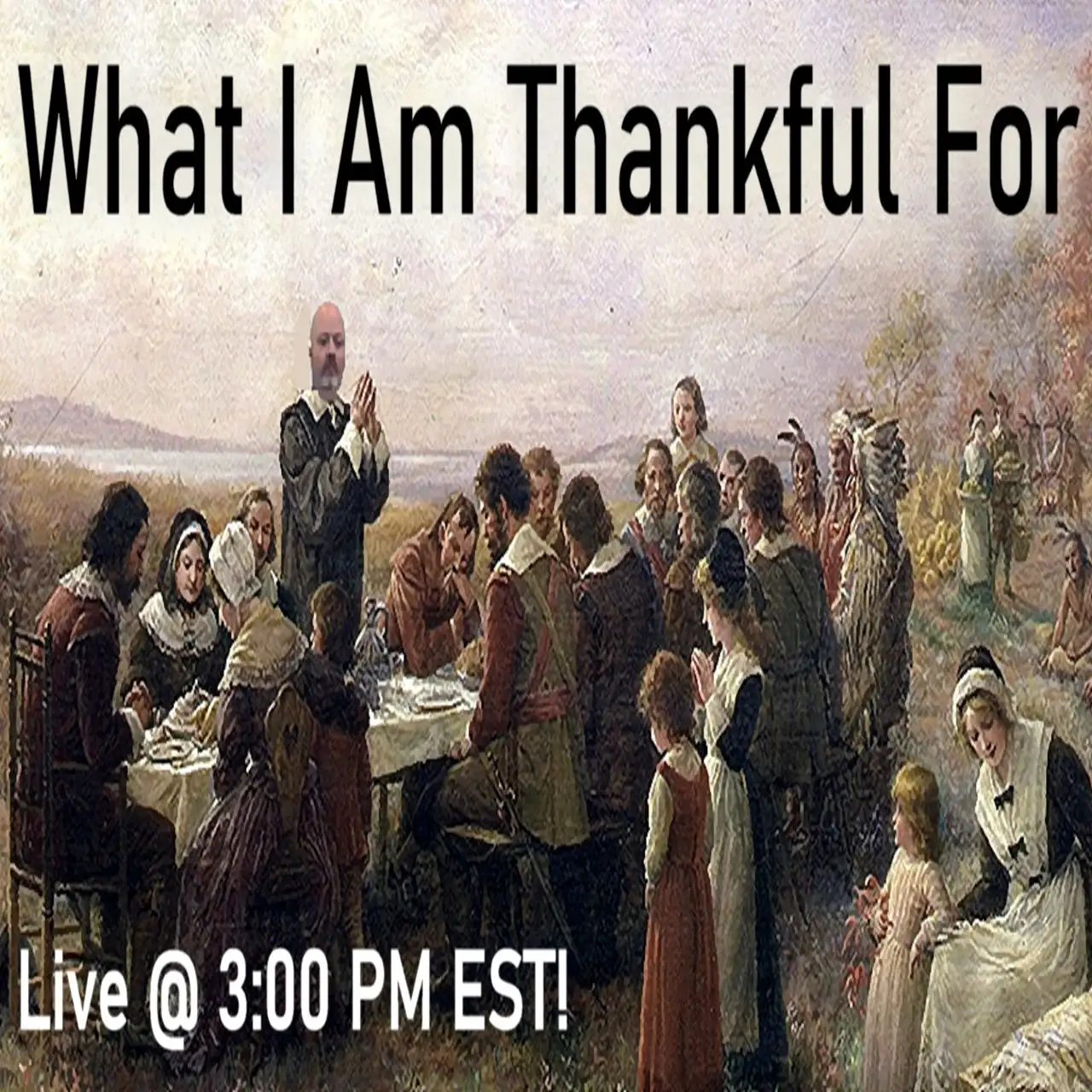
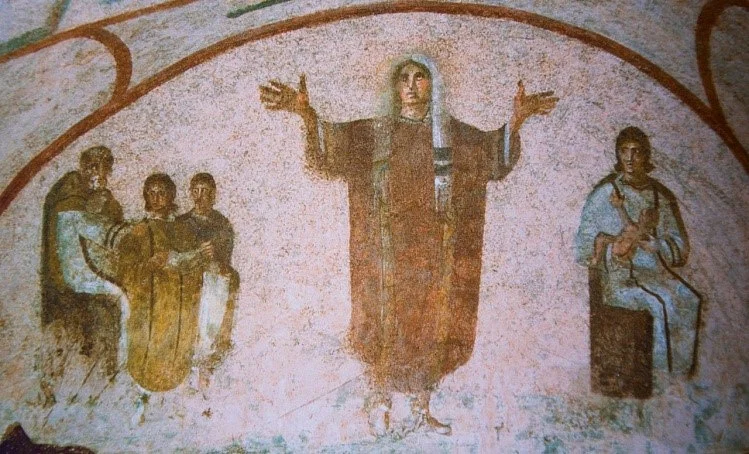




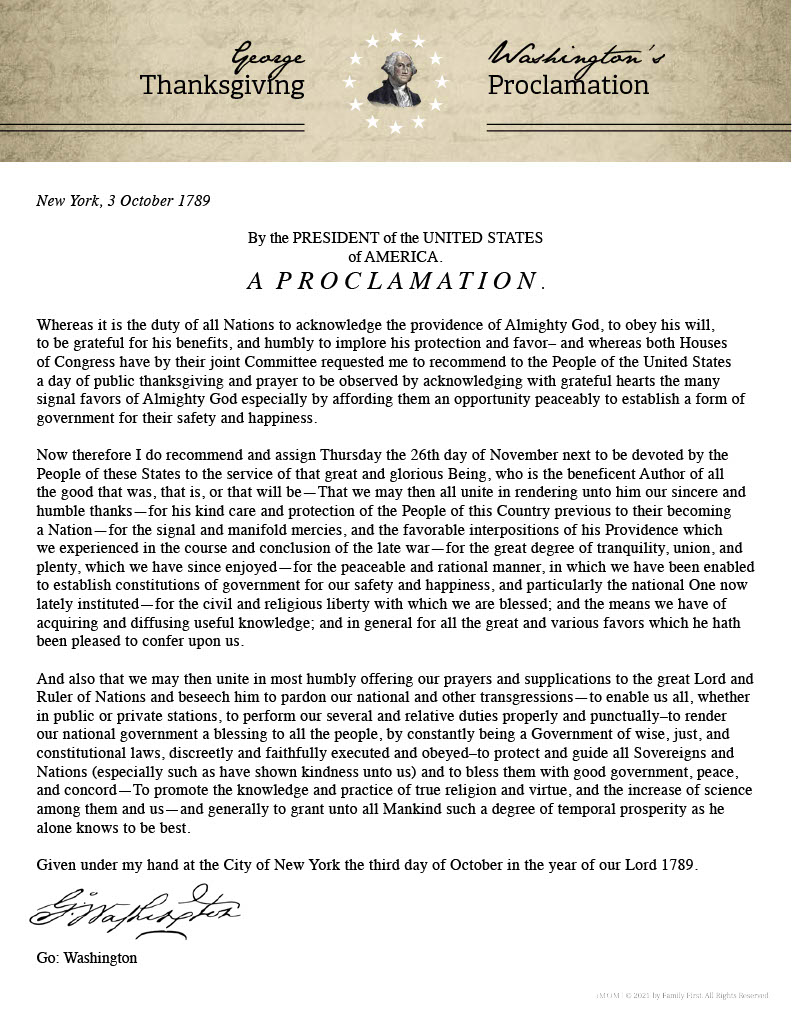


 Truth2Freedom's Blog