There are two ways to be fooled. One is to believe what isn’t true; the other is to refuse to believe what is true. —Soren Kierkegaard. "…truth is true even if nobody believes it, and falsehood is false even if everybody believes it. That is why truth does not yield to opinion, fashion, numbers, office, or sincerity–it is simply true and that is the end of it" – Os Guinness, Time for Truth, pg.39. “He that takes truth for his guide, and duty for his end, may safely trust to God’s providence to lead him aright.” – Blaise Pascal. "There is but one straight course, and that is to seek truth and pursue it steadily" – George Washington letter to Edmund Randolph — 1795. We live in a “post-truth” world. According to the dictionary, “post-truth” means, “relating to or denoting circumstances in which objective facts are less influential in shaping public opinion than appeals to emotion and personal belief.” Simply put, we now live in a culture that seems to value experience and emotion more than truth. Truth will never go away no matter how hard one might wish. Going beyond the MSM idealogical opinion/bias and their low information tabloid reality show news with a distractional superficial focus on entertainment, sensationalism, emotionalism and activist reporting – this blogs goal is to, in some small way, put a plug in the broken dam of truth and save as many as possible from the consequences—temporal and eternal. "The further a society drifts from truth, the more it will hate those who speak it." – George Orwell “There are two ways to be fooled. One is to believe what isn’t true; the other is to refuse to believe what is true.” ― Soren Kierkegaard
For the encouraging of our faith and the exciting of our fervency in this petition for the pardon of sin, we may plead with God:
The infinite goodness of his nature, his readiness to forgive sin, and his glorying in it.
You, Lord, are good and forgiving, abounding in steadfast love to all who call upon you. Psalm 86:5(ESV) You are a God gracious and full of compassion, longsuffering and plenteous in mercy and truth. Psalm 86:15(KJV)
You are a God ready to forgive, merciful, slow to anger, and abounding in steadfast love, Nehemiah 9:17(ESV) who does not always chide nor keep his anger forever. Psalm 103:9(ESV)
You, you are he who blots out my transgressions for your own sake, and will not remember my sins, which I am here to put you in remembrance of and to declare, in order to plead for mercy in Christ. Isaiah 43:25-26(KJV)
And now, please let the power of the Lord be great as you have promised, saying, “The LORD is slow to anger and abounding in steadfast love, forgiving iniquity and transgression.” Please pardon my iniquity and the iniquity of your people, according to the greatness of your steadfast love, just as you have forgiven us even until now. Numbers 14:17-19(ESV)
For who is a God like you, pardoning iniquity and passing over transgression for the remnant of your inheritance? You do not retain your anger forever, because you delight in steadfast love. O that you would have compassion upon me and tread my iniquities underfoot and cast all my sins into the depths of the sea. Micah 7:18-19(ESV)
Nehemiah 9:1-37 In this week’s study we see that sorrow for sin and repentance came in response to hearing God’s Word read and preached.
Theme
A Genuine Revival
During the presidency of Jimmy Carter, when the words “born again” had suddenly become common in popular speech, I was often asked in interviews whether America was undergoing a revival. George Gallup, Jr., the president of the American Institute of Public Opinion, had reported that fifty or sixty million Americans claimed to be born again, and the secular press was discovering that “born again Christians” might be a political force in the nation.
“Is something significant happening?” they asked. “Are we seeing a genuine religious revival?”
Whenever I have been asked that question my answer has always been, “No.” And the reason I say no is quite simple: there is no national consciousness of sin. In fact, there is hardly any personal consciousness of sin—very little in the churches and none at all in the world—and there has never been a revival without this essential element.
Are there fifty million real Christians in America? I do not know; there may be. I think there has been a great deal of effective personal evangelism in our time, particularly among the young who have been influenced by such evangelical student movements as InterVarsity Christian Fellowship, Navigators and Campus Crusade for Christ. That is good, but it is not the same thing as revival. When revival sweeps over a people the first evidence is a profound awareness of sin and sorrow for it. This was true of the Reformation and of the first revival in recorded history, the revival in Nineveh in response to the preaching of the prophet Jonah.
When revival came to that city, the people declared a fast and donned sackcloth, a sign of mourning. Even the king took part. Then the king issued a decree which said, “Do not let any man or beast, herd or flock, taste anything; do not let them eat or drink. But let man and beast be covered with sackcloth. Let everyone call urgently on God. Let them give up their evil ways and their violence. Who knows? God may yet relent and with compassion turn from his fierce anger so that we will not perish” (Jonah 3:7-9).
The first evidence of a true movement of the Holy Spirit is an awakened conscience, leading to genuine sorrow for sin in God’s people. It is only after this that revival comes.
This is what happened in Jerusalem in Nehemiah’s day, and it is why it is proper to speak of this as having been a true revival. There were three parts to this revival. We have already seen the first element, the prominence given to God’s Word. In this chapter we need to study its profound impact upon the people.
The working of sorrow for sin in the people as a result of the reading and teaching of God’s Word was observed in the last chapter, but there it was turned aside or held back by Nehemiah and the Levites. When Ezra read from the Law of Moses the people must have recognized how far they had fallen from its standards and how guilty they were in the sight of Almighty God. This had affected them even to the point of tears: “The people had been weeping as they listened to the words of the Law” (Neh. 8:9). But that day had been intended as a day of praise and thanksgiving, and for that reason Nehemiah rebuked the tears and sent the people away “to eat and drink, to send portions of food [to those without] and to celebrate with great joy” (v. 12). It was only after this—in fact, it was after the celebration of the Feast of Booths or Tabernacles from the fifteenth to the twenty-second of the month of Tishri—that the special day of penance described in Nehemiah 9 occurred.
Study Questions
What is the first evidence of genuine revival?
What element is necessary before such spiritual awakening comes?
Application
Prayer: Do you pray regularly for God to send a spiritual revival to our country?
Key Point: When revival sweeps over a people the first evidence is a profound awareness of sin and sorrow for it.
For Further Study: Download and listen for free to James Boice’s message, “A Psalm of Repentance.” (Discount will be applied at checkout.)
Can you trust you have the correct inference from evidence if you still have open, unanswered questions? This is an important issue for juries to consider and it’s also important to those who are considering the claims of Christianity.
To see more training videos with J. Warner Wallace, visit the YouTube playlist.
Dr. John Crotts explores why salvation depends entirely on God’s grace and nothing we’ve done or can do. Drawing from Scripture and the heart of Reformation-era principles, he explains that our faith itself is a divine gift. Discover why understanding your spiritual deadness makes grace so much more amazing.
Sanctify them in the truth; your word is truth.Read More
Sanctify them. The sanctification of Christians is a lifelong process. It involves both a relational component (separation from participating in and being influenced by evil) and a moral component (growth in holiness or moral purity in attitudes, thoughts, and actions). This occurs in the truth, that is, as Christians believe, think, and live according to “the truth” in relation to God, themselves, and the world. This truth comprises the entire Bible, for Jesus says, your word is truth. The Greek word is surprisingly not an adjective (meaning “your word is true”) but a noun (alētheia, “truth”). This implies that God’s Word does not simply conform to some other external standard of “truth,” but that it is truth itself; that is, it embodies truth and it therefore is the standard of truth against which everything else must be tested and compared.
2. John 14:6
Jesus said to him, “I am the way, and the truth, and the life. No one comes to the Father except through me.”Read More
Jesus as the one way to the Father fulfills the OT symbols and teachings that show the exclusiveness of God’s claim (see note on John 3:18), such as the curtain (Ex. 26:33) barring access to God’s presence from all except the Levitical high priest (Lev. 16), the rejection of human inventions as means to approach God (Lev. 10:2), and the choice of Aaron alone to represent Israel before God in his sanctuary (Num. 17:5). Jesus is the only “way” to God (Acts 4:12), and he alone can provide access to God. Jesus as the truth fulfills the teaching of the OT (John 1:17) and reveals the true God (John 1:14, 17; John 5:33; John 18:37; also John 8:40, 45–46; John 14:9). Jesus alone is the life who fulfills the OT promises of “life” given by God (John 11:25–26), having life in himself (John 1:4; John 5:26), and he is thus able to confer eternal life to all those who believe in him (e.g., John 3:16). This is another “I am” saying that makes a claim to deity (see note on John 6:35).
3. Psalm 25:5
Lead me in your truth and teach me, for you are the God of my salvation; for you I wait all the day long.Read More
Desire for Guidance. Those who trust in the Lord seek his guidance, i.e., they want to learn what manner of life (ways, paths) pleases him and how his commands apply to their specific circumstances. God’s guidance in the Bible is almost always concerned with the moral virtues he wants in his faithful people (cf. Ps. 25:8–10, 12); in light of these virtues they make their choices in the various circumstances of life. I wait. Cf. Ps. 25:3.
4. Ephesians 4:15
Rather, speaking the truth in love, we are to grow up in every way into him who is the head, into Christ . . . Read More
The truth must not be used as a club to bludgeon people into acceptance and obedience but must always be presented in love. The truth leads the Christian to maturity, which is defined here as growing up into Christ. As head, Christ leads, directs, and guides the body (see Eph. 5:23; 1 Cor. 11:3).
5. John 16:13
When the Spirit of truth comes, he will guide you into all the truth, for he will not speak on his own authority, but whatever he hears he will speak, and he will declare to you the things that are to come.Read More
The Spirit’s ministry of guiding Jesus’ followers into all the truth is a promise especially directed toward these 11 disciples, and it finds particular fulfillment in the subsequent work of these disciples in personally writing or overseeing the writing of the books of the NT. The promise, like the other things that Jesus says in these chapters, also has a broader application to all believers as the Holy Spirit leads and guides them (see Rom. 8:14; Gal. 5:18). The activity of the Holy Spirit in declaring the things that are to come suggests that he knows the future, something that is true of God alone; this gives evidence of the full deity of the Holy Spirit. The word declare (Gk. anangellō) occurs over 40 times in the Septuagint translation of Isaiah, where declaring things to come is said to be the exclusive domain of God (Isa. 48:14) and where God challenges anyone to declare the things that are to come (Isa. 42:9; Isa. 44:7; Isa. 46:10; cf. Isa. 41:21–29, esp. Isa. 41:22–23; Isa. 45:19).
6. Psalm 119:160
The sum of your word is truth, and every one of your righteous rules endures forever.Read More
To say that these commands are “true” (Ps. 119:160) is to confess that, with all their elements geared to a particular culture and phase of redemptive history, the principles that underlie them are founded on the very nature of things, and of God. This is why Christians can sing these words with the same yearning, trust, and dependence.
7. John 8:31–32
So Jesus said to the Jews who had believed him, “If you abide in my word, you are truly my disciples, and you will know the truth, and the truth will set you free.”Read More
Their “belief” is shown to be false in the course of the story (see John 8:33–47). To abide in Jesus’ word means to continue believing what Jesus has said and walking in obedience to him (see note on John 15:4; also John 6:56; 1 John 2:6, 28; 1 John 3:6). This verse shows that continuing to trust Jesus and obey him is one test of who are truly my disciples.
This verse is frequently quoted out of context, but the connection with v. 31 shows that Jesus is only talking about one way to know the truth, and that is by continuing to believe and obey his word. set you free. From the guilt and enslaving power of sinful patterns of conduct.
8. Ephesians 6:14–15
Stand therefore, having fastened on the belt of truth, and having put on the breastplate of righteousness, and, as shoes for your feet, having put on the readiness given by the gospel of peace.Read More
Standing Firm. Paul reiterates the charge to stand in the face of dreaded spiritual enemies because the Lord has not left his people defenseless. They have the complete armor of God from head to foot, which consists of the belt, breastplate, shoes, shield, helmet, and sword. These are metaphors for the spiritual resources given to them in Christ, namely, the truth, righteousness (Eph. 6:14), gospel (Eph. 6:15), faith (Eph. 6:16), salvation, and the Word of God (Eph. 6:17). As mentioned in the note on Ephesians 6:13, these are aspects of God’s and the Messiah’s own character and work (as depicted in Isaiah) with which Christians are now equipped. For example, the Lord saw no one to deliver his oppressed people, so he put on his own “breastplate [of righteousness]” and “helmet of salvation” (Isa. 59:17; cf. Eph. 6:14, 17) before coming in wrath against his enemies.
9. James 1:18
Of his own will he brought us forth by the word of truth, that we should be a kind of firstfruits of his creatures.Read More
Brought us forth by the word of truth speaks of spiritual salvation, with “us” meaning believers, the “word of truth” being the gospel, and “brought . . . forth” (that is, from the womb) being a metaphor for the new birth. The firstfruits of the harvest (cf. Ex. 23:16–19; Lev. 23:9–14) are pioneer believers, who are a prelude to further conversions yet to come (cf. Rom. 16:5; 1 Cor. 16:15).
10. 2 Thessalonians 2:13
But we ought always to give thanks to God for you, brothers beloved by the Lord, because God chose you as the firstfruits to be saved, through sanctification by the Spirit and belief in the truth.Read More
as the firstfruits. This indicates that the Thessalonians, as early Christians, are the firstfruits of the new humanity, or of Thessalonica. (On firstfruits offerings, see Ex. 23:19; 34:26.) However, as the ESV footnote indicates, some manuscripts read “from the beginning” (Gk. ap’ archēs) rather than “as firstfruits” (Gk. aparchēn). In that case, Paul’s point is that God’s choice was in eternity past. Either way, Christians were divinely elected to be saved, and this was to be the ultimate end of a journey marked by sanctification by the Spirit and belief in the truth, in contrast to the way of unbelievers, who are marked by unrighteousness and will believe the Antichrist’s lie (2 Thess. 2:10–12). Note the involvement of each person of the Trinity: the Father elects, the Son loves, and the Holy Spirit makes holy.
For by one offering He has perfected for all time those who are sanctified. (10:14)
The new sacrifice was effective because it gives believers eternal perfection. Again, it must be emphasized that perfection is eternal salvation. To make perfected here mean “spiritually matured” would not be consistent with the context. The death of Jesus Christ removes sin forever for those who belong to Him. We are totally secure in our Savior. We need cleansing when we fall into sin, but we need never fear God’s judgment on us because of our sin. As far as Christ’s sacrifice is concerned, we have already been sanctified and perfected—which is why He had to sacrifice Himself only once. Now where there is forgiveness of these things, there is no longer any offering for sin (10:18). The forgiveness is permanent because the sacrifice is permanent.
MacArthur, J. F., Jr. (1983). Hebrews (p. 256). Moody Press.
14 Once more the writer emphasizes that Christ has offered one offering that saves men. Clearly this is of the utmost importance for him. So he comes back to it again and again. The conjunction “because” introduces the reason for the statement in v. 13. As in v. 12, “one” is in an emphatic position; the perfecting of the saints came by one offering and by one alone. The writer does not say that Christ’s sacrifice perfects the people but that Christ does this. His salvation is essentially personal. We have seen a number of times that the author is fond of the idea of “perfecting.” He applies it to Christ (see comments on 2:10) and also to his people. The process of salvation takes people who are far from perfect and makes them fit to be in God’s presence forever. It is not temporary improvement he is speaking of but improvement that is never ending. As in v. 10, the author uses the concept of sanctifying, or making holy, to characterize the saved. The present tense (hagiazomenous, “those being made holy”) poses a small problem that has been solved in more than one way. Some see it as timeless; others think of it as indicating a continuing process of adding to the number of the saved, others again of those who in the present are experiencing the process of being made holy. The last-mentioned view is not likely to be correct because, as we have noticed, the idea of sanctification as a continuing process does not seem to appear in Hebrews. But either of the other two views is possible. Those Christ saves are set apart for the service of God and that forever. The writer, then, is contemplating a great salvation, brought about by one magnificent offering that cannot and need not be repeated—an offering that is eternal in its efficacy and that makes perfect the people it sanctifies.
Morris, L. (1981). Hebrews. In F. E. Gaebelein (Ed.), The Expositor’s Bible Commentary: Hebrews through Revelation (Vol. 12, p. 101). Zondervan Publishing House.
14 The terms used in v. 12 (“one sacrifice,” “forever”) are repeated again, but the tenses of the verbs suggestively reflect the tension just noted in vv. 12–13. On the one hand, he “has made perfect” (perfect tense, for an act completed, “a definitive consecration of man to God in the present” [Peterson, 153]), but on the other hand, the beneficiaries of his sacrifice are “those who are being made holy” (present tense, of an ongoing process). In v. 10 the author could declare that through Christ’s sacrifice we “have been made holy” in the sense that the vital transaction has been completed. But in our actual experience it remains to be fully implemented, just as Christ’s decisive victory still leaves room for a period of “waiting.” If this perspective seems logically untidy, it is pastorally essential; to focus (as some Christian groups have been prone to do) on the once-for-all “perfection” without recognizing the reality of our continuing struggle with sin is a recipe for frustration and disillusionment.
France, R. T. (2006). Hebrews. In T. Longman III & D. E. Garland (Eds.), The Expositor’s Bible Commentary: Hebrews–Revelation (Revised Edition) (Vol. 13, p. 131). Zondervan.
14 Christ, then, by his self-oblation has accomplished once for all what generations of Levitical sacrifices had never done. After hundreds of years those sacrifices were no nearer the attainment of their aim than they had been at the beginning. Nor can this contrast between them and the death of Christ be dismissed as an apt conceit of our author’s, elaborated here for apologetic purposes. Its force was tacitly acknowledged in Christian practice. Many, probably most, of the early converts to Christianity had been accustomed to a form of worship in which animal sacrifices played a part; this was so whether they had previously been Jews or Gentiles. That their new form of worship had no place for such sacrifices was in itself a recognition that they had been rendered forever obsolete by the death of Christ. “Those who looked upon this death as a sacrifice soon ceased to offer God any blood-sacrifice at all.” They might not all have used the language of the Epistle to the Hebrews, but the logic of its argument was implicit in their most elementary understanding of the gospel. The sacrifice of Christ has purified his people from the moral defilement of sin, and assured them of permanent maintenance in a right relation with God. “For by one offering he has perfected for all time those who are thus consecrated” (NEB). In v. 10 the statement that “we have been sanctified” is made in the perfect tense; here, as in 2:11, the present passive participle is used. In v. 10 the emphasis lay on the unrepeatable nature of the death of Christ as the sacrifice by which his people have been set apart for the worship and service of God; here their character as the people thus set apart is simply indicated in timeless terms, because emphasis is being laid on the fact that by that same sacrifice those who have been cleansed and “perfected” are now eternally constituted God’s holy people. Three outstanding effects are thus ascribed to the sacrifice of Christ: by it his people have had their conscience cleansed from guilt; by it they have been fitted to approach God as accepted worshipers; and by it they have experienced the fulfilment of what was promised in earlier days, being brought into the perfect relation to God which is involved in the new covenant.74
Bruce, F. F. (1990). The Epistle to the Hebrews (Rev. ed., pp. 246–247). Wm. B. Eerdmans Publishing Co.
14 “For” shows that this description of Christ’s offering is given to support the definitive nature of the seat he has taken at God’s right hand in anticipation of the final Judgment. Verse 11 affirmed that those ineffective, perpetually repeated offerings were “never able to take away sins.” Verse 12 says merely that Christ’s “one sacrifice” was “for sin.” The pastor does not abandon this part of his argument without making the significance of “for sin” clear. The better his hearers understand the efficacy of Christ’s sacrifice, the more confidence they will have in the position of supreme authority he now holds. However, by postponing this description of Christ’s sacrifice until now, the pastor is able to conclude this section with a definitive statement of the benefits available for the faithful through Christ. At the conclusion of the opening part of this sacrifice section the pastor announced the uselessness of animal sacrifices to deal with sin (10:4). At the conclusion of this third and final part he affirms the potency of Christ’s sacrifice to do all that is necessary in order to bring God’s people into his presence. The hearers know that Christ’s consecration through obedience to high priesthood at God’s right hand was his perfection as Savior (5:9–10; 7:28; cf. 2:10). Thus, it comes as no surprise that by that same obedience this heavenly High Priest “has perfected” his people by cleansing them from disobedience so that they might enter God’s presence. The obedience by which he was “perfected” as Savior, able to cleanse and sustain, also “perfected” them as the cleansed, able to obey through his sustenance. He enters heaven as their representative; they, as those for whom he has provided entrance. “He has perfected” is in emphatic contrast with the inability of the old sacrifices to deal with sin (10:1, 11). This expression describes from Christ’s point of view what “we have been made holy” (10:10) meant for the viewpoint of the faithful. Both expressions refer to a cleansing from the pollution of sin that enables people to come into God’s presence. The first may put emphasis on the privilege of access to God;17 the latter, on consecration to God through the removal of sin. The pastor has used the perfect tense with both of these expressions to put emphasis on the continuing effect of that past act of cleansing or perfection. When he used “forever” to qualify the aorist verb translated “he sat down,” it emphasized the definitive and unrepeatable nature of Christ’s session. When he uses that same expression here with the perfect, it denotes the continuing ultimate validity of the effect achieved by Christ’s perfecting his people. Christ’s own are a “perfected” or “cleansed” people. This “perfecting” is of such a quality that it will never need renewal or supplementation, any more than Christ’s session might need repetition. Nothing more need be done for God’s people to be delivered from sin and brought into God’s presence. It is for this reason that the pastor urgently exhorts his hearers to persevere in their identification with the faithful people of God. To fall away in apostasy is to separate oneself from this people whom Christ has “perfected” and thus to abandon the only cure for sin that brings access to God. The description of God’s people as “those who are being made holy” emphasizes this need for continual participation in the benefits available to Christ’s “perfected” and “cleansed” people. The sanctifying work of Christ is not only definitive (10:10), but continuous (2:10). Thus, the present tense of “being made holy” is not timeless, iterative, or progressive, but simply continuous. If the pastor wished to describe the state of his hearers, we would expect the verb “to be perfect.” There is nothing in the context that suggests the repeated entering of people into the state of holiness as they are converted.20 Nor has the pastor been discussing the progress of believers in moral perfection. He is describing the continuous reception of grace from Christ, “the one who makes holy” (2:11). Reception of this grace enables God’s people to receive necessary forgiveness and live a life of faithful obedience (4:14–16) so that they can continue in fellowship with the people of God once-for-all “perfected” by Christ. The pastor does not want his hearers to forget that their continued holiness, expressed in faithful obedience, is totally dependent on the benefits regularly and perpetually received from their High Priest seated at God’s right hand. Thus, his great concern is that his hearers “draw near” to receive these benefits from the Son enthroned with all authority for their succor. This final statement makes the benefits of the “high priest” we now “have at the right hand of the throne of the Majesty in heaven” (8:1) abundantly clear. Thus the pastor draws his grand symphony toward its conclusion. However, before its end he attests the all-sufficiency of this High Priest by a final reprise of Jeremiah’s New Covenant prophecy in vv. 15–18 below.
e. Covenant—“Where There Is Release” (10:15–18)
15 And the Holy Spirit bears witness to us. For after having said, 16 “This is the covenant that I will covenant with them after those days,” the Lord says: “I will put my laws upon their hearts, and upon their minds I will inscribe them; 17 and their sins and their lawless deeds I will no longer remember.” 18 And where there is release from these, there is no longer a sacrifice for sins.
In Heb 8:7–13, near the beginning of this symphony, the pastor referred to the New Covenant promise in Jer 31:31–34 from the vantage point of its time of issue. He concludes this great symphonic section on Christ’s high priesthood and sacrifice (8:1–10:18) by reexamining this promise in light of its fulfillment. The intervening sections have shown how Christ’s high-priestly work has made the provisions of Jeremiah’s promise a present reality. The very issuing of that promise in Jeremiah’s time indicated the imminent demise of the Mosaic system (8:13). That same promise, now fulfilled, is the ultimate attestation to the sufficiency of Christ’s sacrifice and high-priestly ministry. The inadequacy of the Old Covenant was confirmed by the way in which the persistent disobedience of God’s ancient people rendered it invalid, as described in the prophecy’s first two verses (Jer 31:31–32). Thus, the pastor need not cite those verses again. He is now interested in the description of the New Covenant blessings in the last half of the prophecy (vv. 33–34). These now-fulfilled blessings not only attest the adequacy of Christ, but clarify what he has done and is doing for his own. This concluding covenant section is meant to fix “once for all” the hearers’ trusting attention upon their all-sufficient High Priest at God’s right (8:1).
Cockerill, G. L. (2012). The Epistle to the Hebrews (pp. 450–454). William B. Eerdmans Publishing Company.
Ver. 14. Perfected for ever them that are sanctified.—
Perfection in faith:— I. THE CHILDREN OF GOD ARE HERE INTENDED, UNDER THE TERM “SANCTIFIED”; they are described as sanctified persons. There are two meanings to the term “sanctified.” One is, “set apart.” God has set apart His people from before the foundation of the world, to be His chosen and peculiar inheritance. We are sanctified by God the Father. There is a second signification, which implies not the decree of the Father, but the work of the Holy Spirit. But the word here, I think, includes both of these senses; and I must try to find a figure which will embrace them both. And what is the apostle speaking about? In the ninth chapter he is speaking about the tabernacle, and the candlestick, and the table, and the shewbread, and the sanctuary, and the golden censer, and the ark of the covenant overlaid with gold, and the pot of manna; he is talking about priests, and holy things; and he is declaring that all these things of which he speaks were sanctified things, but that though they were sanctified things, they wanted to be made perfect by the sprinkling of blood. Now I believe the sanctification of our text is to be understood in this sense. II. IN WHAT SENSE ARE WE TO UNDERSTAND THAT CHRIST HAS PERFECTED THESE THAT ARE SANCTIFIED? When the golden vessels were brought into the temple or into the sanctuary, they were sanctified the very first moment that they were dedicated to God. No one dared to employ them for anything but holy uses. But they were not perfect. What did they need, then, to make them perfect? Why, to have blood sprinkled on them; and, as soon as the blood was sprinkled on them, those golden vessels were perfect vessels, officially perfect. God accepted them as being holy and perfect things, and they stood in His sight as instruments of an acceptable worship. Just so was it with the Levites and the priests. As soon as ever they were set apart to their office; as soon as ever they were bern, in fact, they were consecrated, they belonged to God; they were His peculiar priesthood. But they were not perfect until they had passed through divers washings, and had the blood sprinkled upon them. Then God looked upon them in their official priestly character, as being perfect persons. Here is one sense of the text. The apostle says that we who are the priests of God have a right as priests to go to God’s mercy-seat that is within the veil; but it were to our death to go there unless we were perfect. But we are perfect, for the blood of Christ has been sprinkled on us, and, therefore, our standing before God is the standing of perfection. Our standing, in our own conscience, is imperfection, just as the character of the priest might be imperfect. But that has nothing to do with it. Our standing in the sight of God is a standing of perfection; and when He sees the blood, as of old the destroying angel passed over Israel, so this day, when He sees the blood, God passes over our sins, and accepts us at the throne of His mercy, as if we were perfect. Therefore, let us come boldly; let us “draw near with a true heart in full assurance of faith, having our hearts sprinkled from an evil conscience, and our bodies washed with pure water.” And now we will have one more thought, and then I shall have given you the full meaning of the text. In the seventh chapter, the nineteenth verse, there is a word that is a key to the meaning of my text, and that helped me all through it. “For the law made nothing perfect, but the bringing in of a better hope did, by the which we draw nigh unto God.” Then with this, compare the tenth chapter and first verse, “The law having a shadow of good things to come, and not the very image of the things, can never with those sacrifices which they offered year by year, continually make the comers thereunto perfect.” There is the word “perfect”; and we have it in the text; “for then,” says he, if they had been perfect, “would they not have ceased to be offered.” Why offer any more, if you are a perfect man? “If the sacrifice made is perfect, the worshippers, once purged, should have had no more conscience of sin.” Now mark. The Jewish sacrifice was never intended to make the Jew’s moral character any better, and it did not; it had no effect upon what we call his sanctification; all the sacrifice dealt with was his justification, and the perfection would be sought after; the perfection is not of sanctification, but of official standing, as he stood justified before God. Now that is the meaning of the word “perfect” here. It does not mean that the sacrifice did not make the man perfectly holy, and perfectly moral, and so forth; the sacrifice had no tendency to do that; it was quite another matter. It means that it did not perfectly make him justified in his own conscience and in the sight of God, because he had to come and offer again. But now behold the glory of Christ Jesus as revealed to us in our text. “Those sacrifices could not make the comers thereunto perfect.” They could not feel in their own conscience that they were perfectly justified, and they wanted fresh offerings; but I see the slaughtered Lamb on Calvary. Years ago I sought Him and I found Him. I do not want another Lamb; I do not want another sacrifice. I can still see that blood flowing, and I can feel continually that I have no more conscience of sin. (C. H. Spurgeon.) The one perfect offering:—1. The act is to perfect, which may be to a thing perfect; and seeing the end of Christ’s sacrifice is man’s full happiness, thererefore to perfect is to make us perfectly and fully happy. 2. The subject of this consecration are the sanctified. 3. The effect is glorious and most excellent, and includes regeneration, justification, reconciliation, adoption with the inferior degrees of them all, and also the resurrection and eternal glorification. And surely so rare an effect must have some excellent cause; and so it hath, and that is, that one offering of Christ. (G. Lawson.)
Perfected:—The word “perfected” falls with a strange sound on those who are experiencing daily their sad imperfections. But the Christian is a strange paradox. We are unknown, yet well known; chastened, yet not killed; dying, and, behold, we live; poor, yet making many rich; having nothing, yet possessing all things. Let me speak to you then of this twofold aspect of the Christian. You may be caught up into the third heaven, and yet the abundance of this revelation will not burn up the dross that is within you, or kill the old man, the flesh which warreth against the spirit. We have died once in Christ, and in Christ are accepted and perfect; but our old nature is not dead, the flesh in us is not annihilated, there is still within us that which has no pleasure in the will and ways of God. Painful this struggle will ever be, though God is with us, and our joy is greater than our pain. We have in us the death of Adam, and we have in us the resurrection of Jesus Christ. By the one we are broken and tormented through sin, and darkness, and sluggishness, and earthliness, and gloom; by Christ we are raised, and strengthened, and comforted. We sin, we fall, we carry about with us a mind resisting God’s will, criticising it, and rebelling; and we shall experience to the very last breath we draw on earth, that there is a conflict, and that we must strive and suffer in order to be faithful unto death. (A. Saphir.)
Importance of the death of Christ:—Speculate on it how we may, the death of the Lord Jesus Christ is presented to us in the New Testament as the everlasting reason of every happy relation between sinful man and the moral government of God. (R. W. Dale, LL.D.) By one offering:—As our burnt-offering, Christ became our righteousness in full consecration; as our peace-offering, our life; as our sin-offering, the expiation for our sins; as our guilt-offering, He made satisfaction and plenary reparation in our behalf to the God on whose inalienable rights in us, by our sins we had trespassed without measure. (S. H. Kellogg, D.D.)
Exell, J. S. (n.d.). The Biblical Illustrator: Hebrews (Vol. 2, pp. 98–100). James Nisbet & Co.
Yesterday’s promise secured us strength for what we have to do, but this guarantees us aid in cases where we cannot act alone. The Lord says, “I will help thee.” Strength within is supplemented by help without. God can raise us up allies in our warfare if so it seems good in His sight; and even if He does not send us human assistance, He Himself will be at our side, and this is better still. “Our August Ally” is better than legions of mortal helpers.
His help is timely: He is a very present help in time of trouble. His help is very wise: He knows how to give each man help meet and fit for him. His help is most effectual, though vain is the help of man. His help is more than help, for He bears all the burden and supplies all the need. “The Lord is my helper, I will not fear what man can do unto me.”
Because He has already been our help, we feel confidence in Him for the present and the future. Our prayer is, “Lord, be thou my helper”; our experience is, “The Spirit also helpeth our infirmities”; our expectation is, “I will lift up mine eyes unto the hills, whence cometh my help”; and our song soon will be, “Thou, Lord, hast holden me.”
Is God your cosmic butler? Do you just ring a bell to summon him so that he can give you whatever you want? Let’s see what the Bible teaches in the book of 1 Peter. Peter is writing to all the Christians who are spread out all over the place, trying to survive in a world that doesn’t care much about things that they think are meaningful.
Pay attention to these verses:
1 Peter 1: 3-7:
3 Praise be to the God and Father of our Lord Jesus Christ! In his great mercy he has given us new birth into a living hope through the resurrection of Jesus Christ from the dead,
4 and into an inheritance that can never perish, spoil or fade. This inheritance is kept in heaven for you,
5 who through faith are shielded by God’s power until the coming of the salvation that is ready to be revealed in the last time.
6 In all this you greatly rejoice, though now for a little while you may have had to suffer grief in all kinds of trials.
7 These have come so that the proven genuineness of your faith—of greater worth than gold, which perishes even though refined by fire—may result in praise, glory and honor when Jesus Christ is revealed.
Suffering is normal and expected.
1 Peter 2:6-8:
6 For in Scripture it says:
“See, I lay a stone in Zion, a chosen and precious cornerstone, and the one who trusts in him will never be put to shame.”
7 Now to you who believe, this stone is precious. But to those who do not believe,
“The stone the builders rejected has become the cornerstone,”
8 and,
“A stone that causes people to stumble and a rock that makes them fall.”
They stumble because they disobey the message—which is also what they were destined for.
Rejection by “those who do not believe” is normal and expected.
1 Peter 2:18-24:
18 Slaves, in reverent fear of God submit yourselves to your masters, not only to those who are good and considerate, but also to those who are harsh.
19 For it is commendable if someone bears up under the pain of unjust suffering because they are conscious of God.
20 But how is it to your credit if you receive a beating for doing wrong and endure it? But if you suffer for doing good and you endure it, this is commendable before God.
21 To this you were called, because Christ suffered for you, leaving you an example, that you should follow in his steps.
22 “He committed no sin, and no deceit was found in his mouth.”
23 When they hurled their insults at him, he did not retaliate; when he suffered, he made no threats. Instead, he entrusted himself to him who judges justly.
24 “He himself bore our sins” in his body on the cross, so that we might die to sins and live for righteousness; “by his wounds you have been healed.”
When people attack you personally for being a Christian, you don’t retaliate against them.
1 Peter 3:14-18:
14 But even if you should suffer for what is right, you are blessed. “Do not fear their threats; do not be frightened.”
15 But in your hearts revere Christ as Lord. Always be prepared to give an answer to everyone who asks you to give the reason for the hope that you have. But do this with gentleness and respect,
16 keeping a clear conscience, so that those who speak maliciously against your good behavior in Christ may be ashamed of their slander.
17 For it is better, if it is God’s will, to suffer for doing good than for doing evil.
18 For Christ also suffered once for sins, the righteous for the unrighteous, to bring you to God. He was put to death in the body but made alive in the Spirit.
Jesus sets the example for Christians of being willing to suffer for obedience to God.
1 Peter 4:1-5:
1Therefore, since Christ suffered in his body, arm yourselves also with the same attitude, because whoever suffers in the body is done with sin.
2 As a result, they do not live the rest of their earthly lives for evil human desires, but rather for the will of God.
3 For you have spent enough time in the past doing what pagans choose to do—living in debauchery, lust, drunkenness, orgies, carousing and detestable idolatry.
4 They are surprised that you do not join them in their reckless, wild living, and they heap abuse on you.
5 But they will have to give account to him who is ready to judge the living and the dead.
The normal Christian life involves some non-Christians heaping abuse on you, precisely because you don’t participate in their sins, or celebrate their sins. For example, attending or participating in a same-sex marriage ceremony.
1 Peter 4:12-19:
12 Dear friends, do not be surprised at the fiery ordeal that has come on you to test you, as though something strange were happening to you.
13 But rejoice inasmuch as you participate in the sufferings of Christ, so that you may be overjoyed when his glory is revealed.
14 If you are insulted because of the name of Christ, you are blessed, for the Spirit of glory and of God rests on you.
15 If you suffer, it should not be as a murderer or thief or any other kind of criminal, or even as a meddler.
16 However, if you suffer as a Christian, do not be ashamed, but praise God that you bear that name.
17 For it is time for judgment to begin with God’s household; and if it begins with us, what will the outcome be for those who do not obey the gospel of God?
18 And,
“If it is hard for the righteous to be saved, what will become of the ungodly and the sinner?”
19 So then, those who suffer according to God’s will should commit themselves to their faithful Creator and continue to do good.
Christians who experience shame and/or suffering at the hands of some non-Christians for obeying God, are imitating Christ. They should expect to be vindicated, just as Christ was vindicated through his resurrection.
1 Peter 5:5-6:
5 In the same way, you who are younger, submit yourselves to your elders. All of you, clothe yourselves with humility toward one another, because,
“God opposes the proud but shows favor to the humble.”
6 Humble yourselves, therefore, under God’s mighty hand, that he may lift you up in due time.
Authentic Christianity involves obeying God’s commandments, and defending God’s truth claims and moral values. It doesn’t mean virtue signaling to Christians, (or non-Christians, which seems very popular these days among pious Christian leaders). Humility means thinking of yourself less, and comparing yourself to others less. Just do your job as a Christian, and don’t think about what it says about you. To anyone. What people think of you doesn’t matter.
1 This, then, is how you ought to regard us: as servants of Christ and as those entrusted with the mysteries God has revealed.
2 Now it is required that those who have been given a trust must prove faithful.
3 I care very little if I am judged by you or by any human court; indeed, I do not even judge myself.
4 My conscience is clear, but that does not make me innocent. It is the Lord who judges me.
5 Therefore judge nothing before the appointed time; wait until the Lord comes. He will bring to light what is hidden in darkness and will expose the motives of the heart. At that time each will receive their praise from God.
Christianity isn’t there for you to use to make yourself happier, or to make other people like you. You’re not supposed to agree with non-Christians so that they like you. That’s missing the entire point of Jesus’ example. Jesus obeys God. Some non-Christians get mad at him. Some non-Christians shame Jesus, and make him suffer, for obeying God. God vindicates Jesus. That’s the plan. You’re supposed to follow that plan, not make up some other compromise and virtue signal plan!
By the way, in no way am I telling Christians to be impractical. You should be as smart as you can, work as hard as you can, and save as much money as you can, in order to make your shame and suffering bearable, without compromising your principles. For example, you could try to make a network of like-minded friends who can support one another when you become a target. You can donate to organizations like Alliance Defending Freedom, a legal group that defends Christians from persecution by the secular left.
But just understand that being rejected, and being mistreated, is part of the normal, authentic Christian life. You’re not supposed to agree with non-Christians, or celebrate them, or affirm them, in order to escape feeling shame, and suffering persecution. I don’t know how people can read the Bible and not understand what the life of Jesus means. We’re supposed to follow Jesus.
How can we learn to walk with God and not walk in the flesh?
The Walk
How can we learn to walk with God and not walk in the flesh? When we are walking in obedience to God’s Word, we’re walking in the Spirit or in the Holy Spirit’s will. Walking with God could be described as: Living in as much obedience as possible every day in life and the application of God’s laws to that life. This walk includes having a close, personal relationship, sharing, conversing, closeness, and having a loving response to God.
Walking with God
To walk can mean: the way you live, act, speak, work, serve & react every day to God and people – It is a consistent way of life. Enoch had a close, personal and obedient relationship with God. The Old Testament says that “Enoch walked with God; and he was not, for God took him” (Gen 5:24). In Genesis 6:9 it says, “These are the records of the generations of Noah. Noah was a righteous man, blameless in his generation. Noah walked with God.”
The Deadly Walk
The Apostle Paul wrote, “So I say this, and affirm in the Lord, that you are to no longer walk just as the Gentiles also walk, in the futility of their minds” (Eph 4:17). Futility means, meaningless…it leads to nowhere. Ephesians 2:1-2 states, “And you were dead in your offenses and sins, in which you previously walked according to the course of this world, according to the prince of the power of the air, of the spirit that is now working in the sons of disobedience.” You and I were dead men and dead women walking.
An Example Walk
Philippians 3:17-18 was a challenge to the church then and even now, as Paul wrote, “Brothers and sisters, join in following my example, and observe those who walk according to the pattern you have in us. For many walk, of whom I often told you, and now tell you even as I weep, that they are the enemies of the cross of Christ” (Phil 3:17-18). For those who have rejected Christ, Paul says, “it is because of these things that the wrath of God is coming upon the sons of disobedience, and in them you also once walked, when you were living in them. But now you also, rid yourselves of all of them: anger, wrath, malice, slander, and obscene speech from your mouth” (Col 3:6-7).
The Fleshly Walk
Rom 8:3-5 describes our walk in the flesh or in the Spirit, as Paul writes, “For what the Law could not do, weak as it was through the flesh, God did: sending His own Son in the likeness of sinful flesh and as an offering for sin, He condemned sin in the flesh, so that the requirement of the Law might be fulfilled in us who do not walk according to the flesh but according to the Spirit. For those who are in accord with the flesh set their minds on the things of the flesh, but those who are in accord with the Spirit, the things of the Spirit.” Don’t demand your rights, but rather, give no cause for offense, “For if because of food your brother or sister is hurt, you are no longer walking in accordance with love. Do not destroy with your choice of food that person for whom Christ died” (Rom 14:15).
The Talk in the Walk
Ephesians 4:29 is clear about our walk but also our talk, as Paul says, “Let no unwholesome word come out of your mouth, but if there is any good word for edification according to the need of the moment, say that, so that it will give grace to those who hear.”“Therefore be imitators of God, as beloved children; and walk in love, just as Christ also loved you and gave Himself up for us, an offering and a sacrifice to God as a fragrant aroma” (Eph 5:1-2).
The Fruitful Walk
Colossians 1:9-11 says a lot about our walk with God, like “For this reason we also, since the day we heard about it, have not ceased praying for you and asking that you may be filled with the knowledge of His will in all spiritual wisdom and understanding, so that you will walk in a manner worthy of the Lord, to please Him in all respects, bearing fruit in every good work and increasing in the knowledge of God; strengthened with all power, according to His glorious might, for the attaining of all perseverance and patience; joyously.” Just as you and I “have received Christ Jesus the Lord, so walk in Him, having been firmly rooted and now being built up in Him and established in your faith, just as you were instructed, and overflowing with gratitude” (Col 2:6-7). The fruit is that we “may walk in newness of life” (Rom 6:4c).
The Worthy Walk
First Thessalonians 2:11-12 has Paul stating, “just as you know how we were exhorting and encouraging and imploring each one of you as a father would his own children, so that you would walk in a manner worthy of the God who calls you into His own kingdom and glory.” The great Apostle Paul called himself, “the prisoner of the Lord, urge you to walk in a manner worthy of the calling with which you have been called, with all humility and gentleness, with patience, bearing with one another in love” (Eph 4:1-2). This is why Paul made this a “request and urge you in the Lord Jesus, that as you received instruction from us as to how you ought to walk and please God (just as you actually do walk), that you excel even more” (1 Thess 3:1).
Walking in the Light
First John 1:6-7 the Apostle John states that “If we say that we have fellowship with Him and yet walk in the darkness, we lie and do not practice the truth; but if we walk in the Light as He Himself is in the Light, we have fellowship with one another, and the blood of Jesus His Son cleanses us from all sin.” You can go into a hardware store and ask to buy a flashlight, but you can’t buy a flashdark! Why? Light always wins…light always overcomes darkness. This is why John “was overjoyed when brothers came and testified to your truth, that is, how you are walking in truth. I have no greater joy than this, to hear of my children walking in the truth and walking with God” (1 John 1:3-4). And “we walk by faith, not by sight” (2 Cor 5:7).
Conclusion
God urges all believers to “walk by the Spirit, and you will not carry out the desire of the flesh” (Gal 5:16). Most of all, I pray you have put your trust in our Lord and Savior, Jesus Christ. If that has not happened yet, my friend, you are in real danger of hell fire. And I mean, in immediate danger. You’re one breath, one heartbeat…one accident away from eternity when it will be too late to repent. Today is the best day to believe (2 Cor 6:2) since tomorrow is no guarantee. If Jesus Christ came today, here is your fate (Matt 7:21-23). This is why I plead with you as you read this, repent today…and I mean right now. Put your trust in Jesus Christ. If you do not, you will face God’s judgment after death guaranteed (Heb 9:27) or at Jesus Christ’s appearance (Rev 20:12-15), which could happen at any moment.
Resource – Scripture quotations are from The Holy Bible, English Standard Version® (ESV®), Crossway Bibles. (2007). ESV: Study Bible: English standard version. Wheaton, Ill: Crossway Bibles. Used by permission. All rights reserved.
In this lesson on the Attributes of God, Ethan Jago lays the foundation for a right understanding of who God is. Ethan introduces the doctrine of divine simplicity—the truth that God is not made up of parts but is pure essence. Every attribute of God (love, justice, mercy, power, holiness) is fully and perfectly who He is.
When He had taken the book, the four living creatures and the twenty-four elders fell down before the Lamb, each one holding a harp and golden bowls full of incense, which are the prayers of the saints. And they sang a new song, saying, “Worthy are You to take the book and to break its seals; for You were slain, and purchased for God with Your blood men from every tribe and tongue and people and nation. You have made them to be a kingdom and priests to our God; and they will reign upon the earth.” Then I looked, and I heard the voice of many angels around the throne and the living creatures and the elders; and the number of them was myriads of myriads, and thousands of thousands, saying with a loud voice, “Worthy is the Lamb that was slain to receive power and riches and wisdom and might and honor and glory and blessing.” And every created thing which is in heaven and on the earth and under the earth and on the sea, and all things in them, I heard saying, “To Him who sits on the throne, and to the Lamb, be blessing and honor and glory and dominion forever and ever.” And the four living creatures kept saying, “Amen.” And the elders fell down and worshiped. (5:8–14)
The appearance of the Lamb as He moves to take the scroll causes praise to break out from everywhere in the universe. The praise accelerates in an ascending crescendo of worship as the oratorio of redemption reaches its climax. To the two majestic doxologies of chapter 4 are added three more in chapter 5. The spontaneous outburst of worship results from the realization that the long-anticipated defeat of sin, death, and Satan is about to be accomplished and the Lord Jesus Christ will return to earth in triumph and establish His glorious millennial kingdom. The curse will be reversed, the believing remnant of Israel will be saved, and the church will be honored, exalted, and granted the privilege of reigning with Christ. All of the pent-up anticipation of millennia finally bursts out at the prospect of what is about to take place. As they began their song of praise and worship, the four living creatures and the twenty-four elders fell down before the Lamb. That they offer the same worship to Christ that they did to the Father in 4:10 offers convincing proof of Christ’s deity, since only God is to be worshiped (cf. 19:10; Matt. 4:10). After Jesus accomplished redemption by bearing sin on the cross, God raised Him from the dead and exalted Him to His right hand. Jesus received back the glory He had had in the Father’s presence before the world began (John 17:5). To the Ephesians Paul wrote of Christ, “[God] raised Him from the dead and seated Him at His right hand in the heavenly places, far above all rule and authority and power and dominion, and every name that is named, not only in this age but also in the one to come. And He put all things in subjection under His feet, and gave Him as head over all things to the church” (Eph. 1:20–22). But though exalted to the Father’s right hand, Jesus Christ is not yet fully reigning. Psalm 2:6–12 speaks of the future day when Christ rules on the earth:
But as for Me, I have installed My King upon Zion, My holy mountain. I will surely tell of the decree of the Lord: He said to Me, “You are My Son, today I have begotten You. Ask of Me, and I will surely give the nations as Your inheritance, and the very ends of the earth as Your possession. You shall break them with a rod of iron, You shall shatter them like earthenware.” Now therefore, O kings, show discernment; take warning, O judges of the earth. Worship the Lord with reverence and rejoice with trembling. Do homage to the Son, that He not become angry, and you perish in the way, for His wrath may soon be kindled.
Dr. Donald Gray Barnhouse once observed that there are four things out of place in the universe: the church, which should be in heaven; Israel, which should be living in peace occupying all the land promised to her; Satan, who belongs in the lake of fire; and Christ, who should be seated on His throne reigning. All four of those anomalies will be set right when Christ takes the scroll from His Father’s hand. But before He begins to unroll it in chapter 6 comes the song of praise in chapter 5. As they prostrated themselves before the Lamb in worship, John noticed that each one of the twenty-four elders was holding a harp and golden bowls full of incense, which are the prayers of the saints. (The grammatical structure of the Greek text seems to indicate that it was only the elders, not the living creatures, who held those two items.) Harps were frequently associated in the Old Testament with worship (e.g., 2 Sam. 6:5; 1 Chron. 15:16, 20, 28; 16:5; 2 Chron. 5:12; 29:25; Pss. 33:2; 71:22; 92:1–4; 144:9; 150:3; cf. Rev. 14:2; 15:2), but they were also closely linked to prophecy. In 1 Samuel 10:5 Samuel said to Saul, “Afterward you will come to the hill of God where the Philistine garrison is; and it shall be as soon as you have come there to the city, that you will meet a group of prophets coming down from the high place with harp, tambourine, flute, and a lyre before them, and they will be prophesying.” Similarly, when about to prophesy, Elisha said, “ ‘Now bring me a harpist.’ While the harpist was playing, the hand of the Lord came upon Elisha.” (2 Kings 3:15 NIV). First Chronicles 25:1 records that “David and the commanders of the army set apart for the service some of the sons of Asaph and of Heman and of Jeduthun, who were to prophesy with lyres, harps and cymbals” (cf. vv. 3, 6). The harps held by the elders probably symbolize all of prophecy, which culminates in the momentous events about to take place. In addition to the harps, the elders were also holding golden bowls full of incense. These wide-mouthed bowls were used in the tabernacle and the temple (1 Kings 7:40, 45, 50; 2 Kings 12:13–14; 1 Chron. 28:17; 2 Chron. 4:22; Jer. 52:19; Zech. 14:20), where they were connected with the altar. They symbolized the priestly work of intercession for the people. Scripture elsewhere associates the burning of incense with the prayers of the saints in Psalm 141:2; Luke 1:9–10; and Revelation 8:3–4 (cf. 6:9–10). The incense in these bowls represents the prayers of believers through the ages that God’s prophesied and promised redemption of the earth might come. Taken together, the harps and the bowls indicate that all that the prophets ever prophesied and all that God’s children ever prayed for is finally to be fulfilled. As the elders brought before God the desires and prayers of the saints, they sang a new song. Since (with the possible exception of Job 38:7) the Bible nowhere records angels singing, it is best to see only the elders as singing here. (Adopting the variant reading found in many manuscripts “You … have redeemed us to God,” as the New King James Version does, further reinforces that point, since the four living creatures are holy angels who have no need to be redeemed.) That is consistent with the rest of Scripture, which pictures the redeemed singing praise to God (cf. Judg. 5:3; 2 Chron. 5:13; Neh. 12:46; Pss. 7:17; 9:2; 61:8; 104:33; 146:2; Acts 16:25; Eph. 5:19) and angels speaking it (cf. Luke 2:13–14). Throughout Scripture the new song is a song of redemption (Pss. 33:3; 40:3; 96:1; 98:1; 144:9; 149:1; Isa. 42:10; Rev. 14:3). The song opens with a reaffirmation that Christ is worthy … to take the book and to break its seals. He is worthy because He is the Lamb, the Lion of the tribe of Judah, and the King of kings and Lord of lords. To break the book’s seals means to enact the judgments written in it. Then, further reinforcing Christ’s worthiness, the song continues, for You were slain, and purchased for God with Your blood men from every tribe and tongue and people and nation. That phrase elaborates on the statement of verse 6 that the Lamb had been slain, explaining the significance of His death. It was Christ’s substitutionary, sacrificial death that purchased for God … men from every tribe and tongue and people and nation. Purchased is from agorazō, a rich New Testament word for redemption that pictures slaves purchased in the marketplace and then set free. At the cross, the Lord Jesus Christ paid the purchase price (His own blood; 1 Pet. 1:18–19) to redeem men from every tribe (descent) and tongue (language) and people (race) and nation (culture) from the slave market of sin (cf. 1 Cor. 6:20; 7:23; Gal. 3:13). Those four terms appear together also in Revelation 7:9; 11:9; 13:7; and 14:6 and encompass all of humanity. It must have been a thrilling, exhilarating realization for John that the redeemed would one day include people from all over the world. In a day when the church was small, isolated, struggling, and sinful, John must have been concerned about its future—especially because five of the seven churches addressed in chapters 2–3 had such serious and potentially fatal problems. The knowledge that persecution and sin would not extinguish the spreading flame of Christianity must have brought joy and hope to the apostle’s heart. The song moves on to express the results of redemption: You have made them to be a kingdom and priests to our God; and they will reign upon the earth. The use of them instead of “us” indicates the vastness and comprehensiveness of redemption. The twenty-four elders move beyond themselves to sweep up all the saints of all the ages into their paean of praise and adoration. The redeemed are a part of God’s kingdom (cf. 1:6), a community of believers under God’s sovereign rule. They are also priests to our God (cf. 20:6), signifying their complete access to God’s presence for worship and service. The present priesthood of believers (1 Pet. 2:5, 9) foreshadows that future day when we will have total access to and perfect communion with God. During the millennial kingdom, believers will reign upon the earth with Christ (20:6; 2 Tim. 2:12). In verse 11 John says for the fourth time in the chapter that he saw something. As he looked, he heard the voice of many angels around the throne and the living creatures and the elders; and the number of them was myriads of myriads, and thousands of thousands (cf. Dan. 7:10). To the voices of the four living creatures and the twenty-four elders are now added those of innumerable angels. Myriad means “ten thousand,” apparently the highest number for which the Greeks had a word. The phrase myriads and myriads describes an uncountable host. Hebrews 12:1 also says that the number of holy angels cannot be counted. They number at least twice as many as the fallen angels (demons) according to Revelation 12:3–4. The vast host began saying with a loud voice (cf. Neh. 9:4; Pss. 33:3, “shout”; 98:4, “shout”) the familiar doxology, Worthy is the Lamb that was slain to receive power and riches and wisdom and might and honor and glory and blessing. Once again, the emphasis is on Christ’s death providing a perfect redemption, because of which He must be given worship, praise, and adoration. He is worthy to receive recognition because of His power and omnipotence. He is worthy to receive recognition because of the spiritual and material riches that He possesses—He owns everything (Ps. 50:10–12). He is worthy to receive recognition because of His wisdom and omniscience. For all those things and all His other absolute perfections, Jesus Christ is worthy of all honor and glory and blessing. As the great hymn of praise reaches a crescendo, every created thing which is in heaven and on the earth and under the earth and on the sea, and all things in them joins in. This all-inclusive statement is reminiscent of Psalm 69:34: “Let heaven and earth praise Him, the seas and everything that moves in them,” and the concluding verse of the Psalms, “Let everything that has breath praise the Lord. Praise the Lord!” (Ps. 150:6). This mighty chorus cries out, “To Him who sits on the throne, and to the Lamb, be blessing and honor and glory and dominion forever and ever.” Endless blessing, endless honor, endless praise, endless glory, and endless worship belong to God the Father and the Lord Jesus Christ. The creation is unable to contain its joy over its imminent redemption (cf. Rom. 8:19–22). Lost in wonder, love, and praise, the four living creatures could only keep saying, “Amen.” That solemn affirmation means “let it be,” “make it happen” (cf. 1:6–7). And the elders fell down once again and worshiped. Soon, this mighty host would march out of heaven to execute judgment, gather the elect, and return with Christ when He sets up His earthly kingdom. The stage is set.
MacArthur, J. F., Jr. (1999). Revelation 1–11 (pp. 169–173). Moody Press.
The saints’ rejoicing in the worthiness of the One (vv. 8–14)
In his capacity as the perfect Lamb, Jesus Christ did everything that was necessary to remove the obstacles to God’s plan. There on the cross he defeated Satan, he paid for the sins of his people and he removed the penalty of eternal death. That cross down through the centuries has been an object of ridicule, scorn and shame. Today, the blood of Christ is dismissed as a repugnant thing. To be saved by blood! Such a thing is, as far as many are concerned, utterly disgusting and revolting. How unsophisticated and barbaric! This attitude has brought enormous pressure upon the people of God to be ashamed of that cross, to put it into the background in order to accommodate the intellectual sophistication of the age. That pressure has always been there for the people of God. In John’s vision, however, the tides of time have broken on the shore of eternity and the people of God have in fruition what that cross was all about. Now they enjoy its fruits. Overwhelmed by it all, they break out into song—the song of the satisfied! They look upon God the Father who planned, they look upon God the Son who executed, they look upon God the Spirit who applied, and the testimony of their united hearts is ‘He has done all things well’. God’s purpose for the universe, then, is realized through Christ’s conquering, atoning death. What is that purpose? It’s right here in the swelling anthem of this massive choir. God’s purpose is to bring everything to this point of convergence: all creation joining together in acknowledgement that Jesus Christ is Lord of all. There is nothing grander than God’s plan of redemption. It is so grand and glorious that it will be the object of praise and worship in eternity. And eternity itself will not be sufficient to offer the praise that is due to the Christ who purchased it.
Ellsworth, R. (2013). Opening Up Revelation (pp. 54–55). Day One.
WORTHY IS THE LAMB
Revelation 5:8–14
And they sang a new song, saying, “Worthy are you to take the scroll and to open its seals, for you were slain, and by your blood you ransomed people for God from every tribe and language and people and nation.” (Rev. 5:9)
Some occasions are so momentous that they warrant a new song. As an example, the Russian composer Peter Tchaikovsky was approached in 1880 to write music for a number of events occurring in Moscow. These included the dedication of the Cathedral of Christ the Savior, the twenty-fifth anniversary of Tsar Alexander II’s coronation, and a commemoration of the Russian victory over Napoleon at Borodino. Tchaikovsky wrote the 1812 Overture, famed for the resounding cannons that conclude its score. New compositions mark other special occasions, such as weddings, funerals, inaugurations, and dedications. There has never been a more momentous event, however, than the one recorded in Revelation 5, which John said warranted a new song in heaven. This event was the ascension and enthronement of the Son of God after successfully completing his saving work. John watched as Christ approached God’s throne and took the scroll of the divine will. He wrote: “And when he had taken the scroll, the four living creatures and the twenty-four elders fell down before the Lamb.… And they sang a new song, saying, ‘Worthy are you to take the scroll and to open its seals, for you were slain, and by your blood you ransomed people for God from every tribe and language and people and nation’ ” (Rev. 5:8–9). The new song that John heard in heaven is the song of redemption, celebrating the death and resurrection of Jesus. In the vision of chapter 4, John heard the song of creation sung to God’s praise: “Worthy are you, our Lord and God, to receive glory and honor and power, for you created all things” (Rev. 4:11). This song is probably similar to the creation song that God spoke of in Job 38:7, when “the morning stars sang together and all the angels shouted for joy” (NIV). But with Christ’s redeeming work, there is a new cause for God’s praise. William Hendriksen writes: “They sing a new song … because never before had such a great and glorious deliverance been accomplished and never before had the Lamb received this great honor.”1 Revelation 5 adds to chapter 4, therefore, in the same way that Christ’s redemption adds to the glory of God in creation. The new song is offered to Jesus “because, having redeemed his people, he has taken the scroll which will determine the flow of future history, and that means that Jesus is controlling history in the interests of those he has redeemed.”
WORTHY TO BE WORSHIPED
The host of heaven sang a new song not only for the greatness of the occasion but also for the worthiness of the Savior who has ascended and taken up his reign. “Worthy are you to take the scroll and to open its seals” (Rev. 5:9). Christ’s worthiness is extolled not in the sense of his glorious divine person, but in light of his successful saving mission on earth. Hebrews 5:9 similarly asserts that Christ was “made perfect” by his obedient suffering as “the source of eternal salvation to all who obey him.” Christ was always perfect in his being, but now he has qualified himself to be the Savior of his people. In this sense he has become worthy to take the scroll and to be praised. Revelation 5:9–10 presents the third of five songs in the vision that began in chapter 4. It contains the praise given to Christ by the twenty-four elders, who represent the redeemed church. They sing the new song: “Worthy are you to take the scroll and to open its seals, for you were slain, and by your blood you ransomed people for God from every tribe and language and people and nation.” Christ is glorified for his sacrifice in death to redeem his people from their sins. First, Christ is praised for being “slain.” He did not die from an unavoidable tragedy, but died as a voluntary act of sacrificial love for his people. Ancient history lauded the philosopher Socrates, when he willingly submitted to unjust execution out of the principle of loyalty. American children extol the name of Nathan Hale, the Revolutionary War patriot who regretted that he had only one life to give to his country. Socrates died for a principle and Nathan Hale died for a cause. But the Christian has an even higher reason to love and adore God’s Son, Jesus Christ, since we can say, “He died for me.” He said, “I lay down my life for the sheep.… No one takes it from me, but I lay it down of my own accord” (John 10:15, 18). Therefore, when people ask who killed Jesus Christ, the best answer is that Jesus willed his own death, for the sake of the people he loves. Second, Christ is worthy because of what he achieved by his death: “By your blood you ransomed people for God” (Rev. 5:9). Different English translations render ransomed as “purchased” (NIV) or “redeemed” (NKJV). The Greek word (agorazo) has the general meaning of purchasing, but often had the specific connotation of ransoming a prisoner or slave out of bondage. Here we see the essence of what Jesus Christ accomplished on the cross: at the cost of his own blood, which evidenced his death, Jesus delivered his people from the bondage and condemnation of sin. Many writers, especially in the early church, envisioned Jesus as paying a ransom to Satan. This is a mistaken idea, however, since the devil never had the true right to possess God’s people. Rather, Jesus made payment to the justice of God, which demanded death as the penalty for sin (Gen. 2:17; Rom. 6:23). Jesus foretold that “the Son of Man came not to be served but to serve, and to give his life as a ransom for many” (Matt. 20:28). Paul therefore wrote, “In him we have redemption through his blood, the forgiveness of our trespasses” (Eph. 1:7). It is significant that the adoration of the church in heaven centers on the redemptive sacrifice of Christ’s cross. Similarly, when true Christians explain the substance of their faith, they always focus on his sacrificial death to purchase us from the debt of sin. In 1915, Benjamin B. Warfield made this point to incoming students at Princeton Theological Seminary, asserting that to Christ’s people his most precious title is “Redeemer.” The reason is, he said, that “it gives expression not merely to our sense that we have received salvation from [Jesus], but also to our appreciation of what it cost him to procure this salvation for us.” Warfield proved this claim not from the tomes of theology but from the volumes of the church’s hymnody, listing song after song extolling Christ as Redeemer: “O for a thousand tongues to sing my great Redeemer’s praise”; “All hail, Redeemer, hail, for thou hast died for me”; “I will sing of my Redeemer, and his wondrous love for me: on the cruel cross he suffered, from the curse to set me free.” Warfield listed twenty-eight such hymns, and twenty-five more that used the word ransom to celebrate Christ’s sacrifice. Warfield might have added the new song of the twenty-four elders to prove the centrality of redemption in believers’ worship of Christ. James Boice writes: “Isn’t that why the elders, who represent the people of God from both the Old and New Testament periods, praise Jesus as the one who ‘purchased’ them for God with his blood? Isn’t it because they are remembering that Jesus died to redeem them personally, and the greatness of the cost?” If the death of Christ to ransom us from sin is the center of heaven’s worship, it must also be at the center of the church’s witness on earth. Once when I was the new pastor of a church, I decided to preach a series of sermons about redemption. After several weeks, a member came up to me after the service to complain bitterly about my emphasis on sin and salvation through Christ’s blood. He protested, “If you keep preaching on sin and Christ’s blood, you are going to ruin this church!” I pointed out to him that according to the Bible, the single most important reason why Christ came to earth was to die as a ransom for his people’s sins. “Preaching about Christ’s blood may ruin your church,” I said, “but it will not ruin Christ’s church.” In fact, if we bear witness to the excellence of Jesus in many ways, yet neglect to proclaim the redemption of his cross, we fail to testify to the gospel, and our worship deviates from that in heaven. We should notice not only the emphasis of the elders on Christ’s redemption but also the kind of redemption they praised. We see this at the end of Revelation 5:9: “By your blood you ransomed people for God from every tribe and language and people and nation.” The question is asked regarding for whom Christ paid a ransom with his blood. Universalists reply that Jesus died for everyone, so that all are forgiven even if they refuse to believe in him. This is so utterly contrary to the Bible that no serious Christian can accept it. Others assert that Jesus died for all people equally, offering his blood for their salvation, yet only those who receive this gift in faith benefit from the cross so as to be saved. This view is called general redemption and is associated with Arminian theology. But this also conflicts with Revelation 5:9, along with other Bible verses on Christ’s redemption. The elders sing that Jesus actually “ransomed” those for whom he died, so that they no longer remain in bondage. This can describe only those who are saved. Moreover, they use a definite, not a general, term for the objects of Christ’s redeeming work. He did not die for “every tribe and language and people and nation,” but for “people for God from every tribe and language and people and nation” (5:9). In other words, Christ redeemed particular people from all over the world, that is, the elect. This affirms the Reformed doctrine of limited atonement, or particular redemption. This doctrine does not state that Christ died to make redemption possible for everyone, if only they will believe, but rather that Christ died particularly for his own people, foreknown and given to him by the Father in eternity past (John 17:2; Eph. 1:4), who are actually and effectually redeemed by the blood of Christ paid as their ransom. These same persons go on to believe because the Holy Spirit applies the benefit of their redemption through the gift of saving faith (Eph. 2:8–9). Revelation 5:9 teaches an effectual redemption and a ransom that successfully purchases people for God. This argues, therefore, not that Christians are redeemed because we have believed, but rather that we have believed in Christ because by his blood he ransomed us for God.
RESTORED TO OFFER WORSHIP
This emphasis on God’s sovereignty is continued in Revelation 5:10, where the elders go on praising Christ because “you have made them a kingdom and priests to our God, and they shall reign on the earth.” This emphasizes what we have been saved to and what Christ has made us to be: a kingdom and priests to God. The elders’ song teaches a salvation theology of restoration. Adam was placed into the garden to be king and priest in service to God, but lost this office through his fall into sin. Israel in the exodus was established by God to be “a kingdom of priests and a holy nation” (Ex. 19:6). Israel’s calling was to live out the rule of God in obedience to his Word and bear a priestly testimony of God to the nations. Instead, the Israelites turned from God’s Word to follow the idols of the nations around them. But whereas Adam and Israel failed, Jesus Christ triumphed. Jesus succeeded not only through his own ministry as King of kings and true High Priest, but also in making his church “a kingdom and priests to our God” (Rev. 5:10). How thrilling this message is when we remember that Christ’s kingdom consists completely of once-condemned sinners. The church acclaims Christ’s worthiness, not her own! But we celebrate that Christ cleanses and forgives prostitutes such as the woman who anointed his feet in Luke 7, murderers such as Moses and King David, and arrogant persecutors such as Paul. Paul notes the presence of others who were sexually immoral, idolaters, homosexuals, thieves, greedy, and drunkards. “But you were washed,” he exclaims, “you were sanctified, you were justified in the name of the Lord Jesus Christ and by the Spirit of our God” (1 Cor. 6:9–11). Douglas Kelly points out the invitation that this presents to every sinner: “Absolutely nothing we have done in our life that is wrong, unworthy, nasty, unclean or impure disqualifies us to apply to the blood of the Lamb. You are invited to sing the song that they sing.” It is noteworthy that in Revelation 5:10, “kingdom” is singular and “priests” is plural. Christ made a kingdom consisting of priests. The church is under the monarchy of Christ, so that his truth is to be taught, his commands are to be obeyed, and his saving grace is to be offered. The ancient church was not to bow to the demands of Caesar or to accommodate the tastes of pagan culture. Likewise, the Christian church today is not to affirm the edicts of Congress or of a president when they are contrary to Christ’s Word. Moreover, the church serves Christ’s kingdom in a priestly way. We see this in the description of Revelation 5:8: “When he had taken the scroll, the four living creatures and the twenty-four elders fell down before the Lamb, each holding a harp, and golden bowls full of incense, which are the prayers of the saints.” They are worshiping him with the new song of redemption, holding the kind of small harp described in the temple worship of the Old Testament (see Pss. 33:3; 40:3; 96:1; etc.) and offering their prayers before his throne. What a picture this presents of the church’s worship! As the twenty-four elders prostrated themselves before Christ, we, too, must worship “with reverence and awe” (Heb. 12:28). The playing of harps while singing the new song shows that true worship engages not merely the mind but also the emotions and the will. As the Jewish priests daily burned incense before God, so, too, are we to pray fervently. In Revelation 6, we will see that God’s judgments fall on the wicked in response to the petitions of his people (Rev. 6:10). Here in chapter 5, we should probably understand more generally the prayer lives of God’s people. We are reminded that prayer is not only petition but also worship: we honor God by thanking him and by praying for his intervention; as Jesus taught us, “Your kingdom come, your will be done, on earth as it is in heaven” (Matt. 6:10). The elders praise Christ not only for making them a kingdom and priests to God, but also because “they shall reign on the earth” (Rev. 5:10). Scholars debate when this reign takes place. Premillennialists assert that the reference is future, during a literal thousand-year period when the church reigns in power on the earth before a final rebellion and the ultimate defeat of Satan. They argue that it cannot seriously be said that Christians are reigning during this present evil age of the world. Amillennialists correctly point out, however, that the church is currently described as “a kingdom and priests” and therefore currently reigns in Christ’s name. Simon Kistemaker comments: “The text reads that the Lamb made them priests, that is, they are priests already and are in the kingdom now.… Through their prayers, they even now rule on the earth.” It is important, then, for Christians to realize what it means to reign on earth in Christ’s behalf. In response to an alarming moral decline, American Christians have sometimes sought to reign by gaining control of worldly authority structures. It is questionable whether this is even possible without a loss of spiritual integrity and legitimacy. More importantly, Christians should realize that our spiritual authority is always more potent than any worldly coercive power. We think of Polycarp of Smyrna, who inspired the early church by submitting to the fire rather than betray his Savior. We think of Martin Luther, who launched the Protestant Reformation from a pulpit, not from a princely throne. We think of Chinese house-church pastors such as Allen Yuan and Samuel Lamb, who were imprisoned in labor camps for over twenty years, but immediately resumed preaching about Jesus when they were released. “The more persecution, the more the church grows,” Lamb stated. Yuan said only a few years ago, “We have a saying in Beijing. If you dare to preach, people will believe.” These evangelists remind us that just as Christ said, “My kingdom is not of this world” (John 18:36), so also do Christians reign by the spiritual authority of biblical obedience and gospel proclamation. Derek Tidball comments: “The role of the church, then, is to be a faithful witness and to take an uncompromising stand for God, even to the extent of its members’ laying down their lives.” He cites the example of the Romanian pastor Joseph Tson, who was threatened with death by his Communist interrogator. Tson answered:
Sir, your supreme weapon is killing. My supreme weapon is dying. Sir, you know my sermons are all over the country on tapes now. If you kill me, I will be sprinkling them with my blood. Whoever listens to them after that will say, “I’d better listen. This man sealed it with his blood.” They will speak ten times louder than before. So, go on and kill me. I win the supreme victory then.
Before that spiritual power, Tson’s jailers quailed and the Communist regime fell, largely through Christians’ witness and prayers.
CREATION WELLING UP IN WORSHIP
Revelation 5 concludes with the entirety of creation responding to the adoration of the four living creatures and the twenty-four elders by welling up in worship to God and the Lamb. First, we are shown the innumerable host of the angels, who offer their song to Christ: “Then I looked, and I heard around the throne and the living creatures and the elders the voice of many angels, numbering myriads of myriads and thousands of thousands” (Rev. 5:11). In describing the angels as “myriads of myriads and thousands of thousands,” the point is to show the innumerability in the very millions of God’s heavenly servants. It is probably significant that they give their praise to Christ following after the twenty-four elders, for it is through the redemption of the church that the holy angels learn the glory of Christ’s saving work. Peter described the gospel doctrines as “things into which angels long to look” (1 Peter 1:12). Now that they have comprehended the glory of Christ’s saving work through the worship of the church, the angelic hosts offer their own praise: “Worthy is the Lamb who was slain, to receive power and wealth and wisdom and might and honor and glory and blessing!” (Rev. 5:12). This sevenfold list of praise to Christ seems to ascribe to him all the glorious possessions properly belonging to God himself. The fact that the Greek text provides a definite article only for the first item, “the power,” suggests that the whole list consists of a unified whole. Like that of the glorified church, the angels’ worship responds to Christ’s atoning death on the cross. Their testimony therefore shows that what once seemed like defeat for Jesus has been revealed as total victory. The cross was seen as weakness but was actually power; the cross displayed poverty but gained true riches; the cross was foolishness to the world but wisdom from God; the cross represented shame but earned the highest honor for Christ; the cross was a place of deep disgrace, yet revealed the very glory of God’s grace; and the cross stood for the curse of sin but achieved eternal blessing for those on whose behalf Jesus died. “Worthy is the Lamb who was slain,” the angels conclude, inviting us to enter their praise. Finally, the worship extends to the entire creation joined together in praise of God and the Lamb: “And I heard every creature in heaven and on earth and under the earth and in the sea, and all that is in them, saying, ‘To him who sits on the throne and to the Lamb be blessing and honor and glory and might forever and ever!’ ” (Rev. 5:13). Here we see the farthest extent of Christ’s redemptive domain. As the angels comprehend the Lamb’s glory in the worship of the church, so also Christ’s redemption of his people undoes the curse of sin on the entire created realm. The Creator and the Redeemer together are praised by the work of their hands, the twin works of the Godhead having achieved their designed end in universal doxology.
THE SOVEREIGN IS GOOD
As we return to the world of the apostle John in writing the book of Revelation, we can see what this worship scene would have meant to the weak and threatened churches of Asia. It is Christ who reigns, not Caesar, and Christ’s finished work of redemption has secured a destiny in which all things will work for the salvation of his people and the praise of God’s grace. The chapter concludes with the only proper response: “And the four living creatures said, ‘Amen!’ and the elders fell down and worshiped” (Rev. 5:14). That was how the beleaguered Christians were to respond: by adding their own amen of faith in Christ’s sovereign rule and by giving themselves over to joyful adoration, fulfilling their calling as a kingdom of priests. The situation is little different for Christians today. In the year 2000, James Montgomery Boice, the famous Bible expositor and pastor of Tenth Presbyterian Church in Philadelphia, was preaching through this very section of Revelation when he realized that something was wrong with his body. A doctor’s examination revealed that Boice was afflicted with a cancer that must take his life within a few short weeks. I vividly remember Dr. Boice’s calling me to his office and calmly telling me this news. Shortly thereafter he addressed the congregation he had served for thirty-two years on the subject. The disease had progressed so rapidly that Boice could no longer preach and could speak only briefly. After describing his condition and thanking them for their prayers, he noted that he had been preaching the sovereignty of God for so long and that now they wanted to know whether God was sovereign over his disease. Boice responded that his illness and impending death was not accidental but was God’s sovereign will for his life. Yet even that was not the point he really wanted to make. He went on: “It’s possible, isn’t it, to conceive of God as sovereign and yet indifferent? God’s in charge, but he doesn’t care. But it’s not that. God is not only the one who is in charge; God is also good. Everything he does is good.” That is the very point made in Revelation 5. It is good news that God is on the throne instead of Caesar. Yet not only is God sovereign over history, but when we see Jesus taking the scroll, we are assured that the Sovereign loves us so much as to die for our sins. We can trust him for whatever he brings into history and into our own lives. I mentioned James Boice’s farewell address to Tenth Presbyterian Church. I was seated directly behind him at the time, and when he finished speaking, we rose to sing the opening hymn of the worship service. Boice was not able to remain, so he set down his hymnal for the last time and walked to the door at the back of the chancel. As he approached the door, he passed in front of me as I was struggling with my emotions. Boice stopped, looked me in the eyes, grasped my arm, and, smiling, said, “Press on, brother. Fight the good fight.” That, too, is the message of Revelation 5. Christ is enthroned, having redeemed us by his blood. We are now a kingdom of priests to serve him on earth. Knowing that the Savior who loved us reigns over all, let us get on with the work he has given us and devote ourselves to the cause of his glory. Let us not be daunted by the winds of earthly change or the vain threats of evil powers against the gospel. Christ is sovereign, reigning over all things for our good. Let us press on in faith with the priestly work of worship, witness, and prayer for the sake of his kingdom of salvation here on earth.
Phillips, R. D. (2017). Revelation (R. D. Phillips, P. G. Ryken, & D. M. Doriani, Eds.; pp. 196–206). P&R Publishing.
Iran condemns ‘unjustifiable’ return of UN sanctions Iran on Sunday condemned as “unjustifiable” the reinstatement of United Nations sanctions over its nuclear programme, after the collapse of talks with Western powers and Israeli and US strikes on its nuclear sites. (watch)
US Gaza Plan: Trump declares ‘all are on board,’ signals optimism ahead of fateful meeting with PM Netanyahu U.S. President Donald Trump on Sunday signaled great optimism over the chance of success of his plan to end the war in Gaza, ahead of a meeting with Israel’s Prime Minister Benjamin Netanyahu that is set for Monday. The Trump administration’s 21-point plan was revealed this weekend, after the U.S. president and special envoy Steve Witkoff presented the proposal last week during a meeting with eight Arab and Muslim leaders. “We have a real chance for GREATNESS IN THE MIDDLE EAST. ALL ARE ON BOARD FOR SOMETHING SPECIAL,”
The Gospel is on the line – but not where you think While scrolling through Facebook the other day, I came across a photo on the Bethlehem Bible College website featuring Munther Isaac alongside one of his quotes: “The credibility of the gospel is on the line. Support for genocide cannot coexist with Christian faith.” The photo shows him inside the Church at the Crossroads conference in Chicago, Illinois. I agree that no Christian can support genocide, but I recognize that this quote is intended as an attack on Israel and on Christians who support it.
Israel shifts toward food self-reliance amid boycotts and global supply challenges Israel’s Agriculture and Food Security Ministry has established a national strategic system to monitor potential risks in food imports. The decision comes amid growing boycott calls against Israel and a growing recognition that the nation must reduce its reliance on imported food products. The effects of climate change have reportedly also been a factor in the creation of the monitoring system. While Israel has domestic food production, it remains heavily dependent on imports. For example, the country imports over 90% of its fish and grains, as well as about 80% of its legumes, peanuts, nuts, and oilseeds. Approximately 60% of all beef consumed in Israel is also imported.
Rabbi Mendel Kessin: “UN Declaring Palestinian State is Gog and Magog” “They did this on the eve of Rosh Hashanah, the day of judgement. This would mean the following,” Rabbi Kessin said. “The United Nations is Gog and Magog.” The rabbi noted that the gematria (Hebrew numerology) of ‘Gog and Magog’ (גוג ומגוג) is 70.
Hamas says it lost contact with two Israeli hostages while hinting at their location Hamas demanded that the IDF withdraw south of Street No. 8 and suspend air activity for 24 hours “so that attempts can be made to extract the captives.” The unusually precise reference to the hostages’ reported location marked a first for the terror group.
Satellite images show Iran restarting missile production sites The Iranian regime has begun rebuilding missile-production sites struck by Israel during the 12-day war in June, though the facilities still appear to lack the large mixers needed to produce solid fuel for the weapons, satellite images analyzed by the Associated Press show.
Drones smuggling thousands of illegal weapons from Egypt into Israel Since the start of 2024, Israeli security forces have seized over 1,200 illegal firearms linked to drone deliveries, along with 3.4 tons of narcotics and dozens of exotic animals—including monkeys and lion cubs—smuggled for black-market sale. Israel is facing an unprecedented wave of airborne smuggling operations as hundreds of drones ferry illegal weapons, drugs, and contraband across the southern border from Egypt into Israeli territory.
WATCH: IDF kills senior Nukhba terrorist, destroys terrorist infrastructure in Gaza City high rise The Israel Air Force killed Nukhba company commander Hasan Mahmoud Hasan Hussein in a strike in Gaza City on Sunday. The IDF stated that Hussein also took part in abducting Israeli citizens on October 7, 2023, and the massacre of several Israeli civilians when he threw a grenade into a bomb shelter in Re’im, near Route 232.
UN Arms Embargo, Other Sanctions Reimposed on Iran Over Nuclear Program The United Nations has reinstated an arms embargo and other sanctions on Iran over its nuclear program following a process triggered by European powers that Tehran has warned will be met with a harsh response. The end of the decade-long nuclear deal originally agreed by Iran, Britain, Germany, France, the United States, Russia and China is likely to exacerbate tensions in the Middle East, just months after Israel and the US bombed Iranian nuclear sites.
Katz: Hamas must free all hostages and disarm or ‘Gaza will be destroyed’ Israeli Defense Minister Israel Katz on Saturday night hailed intensifying military activity in the Gaza Strip, saying the “decisive phase” in the war against Hamas was advancing. More than 750,000 Palestinians had evacuated from Gaza City southward despite Hamas threats, he said, adding that the movement continues. “Terrorist towers in the city have been demolished and terrorist infrastructure has been destroyed,” he continued, noting that autonomous vehicles were being operated ahead of the forces to neutralize explosive devices.
IDF destroys tallest tower in Gaza City and attacks weapons depots in Lebanon | Watch In Gaza, the 16-story Mecca tower which the IDF said was used by Hamas was leveled; explosions from southern Lebanon were heard across northern Israel “The building contained military infrastructure belonging to Hamas, that was used to advance and carry out terrorist attacks against IDF troops in the area,” the IDF said. ”
Unless We Stop The Toxic Alliance Between Antifa And The Southern Poverty Law Center More Americans Will Be Targeted President Donald Trump issued an executive order declaring Antifa a “domestic terrorist organization,” directing federal agencies to investigate, disrupt, and dismantle its illegal operations. The order came in the wake of recent violence — including the assassination of Charlie Kirk, where the shooter left bullet casings engraved with Antifa-themed messages.
ICE arrests illegal alien employed as Iowa superintendent, caught with loaded gun, $3,000 in cash On Friday, ICE agents arrested Ian Andre Roberts, a Guyanese national employed as the Superintendent of Des Moines Public Schools, the agency confirmed to the Daily Caller News Foundation. At the time of his arrest, federal immigration agents found Roberts in possession of a loaded handgun, a fixed blade hunting knife and $3,000 in cash. “This should be a wake-up call for our communities to the great work that our officers are doing every day to remove public safety threats.” “How this illegal alien was hired without work authorization, a final order of removal, and a prior weapons charge is beyond comprehension and should alarm the parents of that school district,”
Four dead as severe floods trigger hazmat risk in Globe, Arizona Severe floods affecting Gila County and parts of central Arizona since September 25, 2025, left at least four people dead and created a major hazmat risk in Globe after around 1,000 propane tanks were washed into the downtown area. Multiple historic buildings in Globe sustained structural damage, prompting officials to declare the city center unsafe.
Drones shut down another airport in Denmark days after mystery sightings shocked European authorities An airport in Denmark shut down all flights after unidentified drones entered into controlled airspace — just days after a similar mystery sighting suspended traffic at a Copenhagen airport, according to officials. All inbound and outbound flights at Aalborg Airport were halted on Wednesday night when several unmanned aircraft were spotted hovering above the Danish runways, according to Flight Radar.
U.S. Preparing Possible Drone Strikes On Drug Cartels Inside Venezuela Weeks after U.S. officials told the New York Times that the real goal of the military buildup (read report) in the Caribbean, and the strategic strikes against drug boats in the region, was regime change, a new NBC News report citing four unnamed sources, including two U.S. officials, now says the U.S. could be nearing a strike phase targeting drug cartels inside Venezuela.
Oklahoma Overrun With Chinese-Operated Marijuana Farms Chinese gangs are taking advantage of loose marijuana rules in Oklahoma to grow and transport marijuana to other states for sale on the black market, authorities say. Oklahoma narcotics officials told Congress $153 billion worth of marijuana is unaccounted for and likely leaving the state for the black market in other states.
America’s “Epidemic Of Violence” Explodes, But This Is Only Just The Beginning “Political violence and mass shootings have become so common in the U.S. that a lot of us are numb to all of it by now. Day after day, there are more incidents in the news. In fact, the horrific acts of violence that I talked about a few days ago have already been drowned out by several new incidents that happened over the weekend. This is not normal. When I was a young boy, the churches that I attended did not have any security, and I never dreamed that someone would come in and start shooting. But now that sort of thing happens all the time. On Sunday, a 40-year-old man rammed his truck into a Mormon church in Michigan and opened fire on the hundreds of people that were gathered inside.”
France: 20-Year-Old Afghan Rapes to Death an 80-Year-Old Woman This latest atrocity is not an isolated crime — it is the direct result of reckless open-border policies that have flooded France and Europe with men from countries and cultures where violence against “unbelievers” is normalized, even sanctified. The threat is not random — it is imported. Yet no matter how many innocents die, our governments continue to throw open the gates, welcoming in those raised under doctrines that command hatred and death for non-Muslims. France is not being protected — it is being sacrificed. And unless this suicidal policy ends, more lives will be brutally destroyed under the banner of “tolerance.”
“A republic, by which I mean a government in which the scheme of representation takes place, opens a different prospect and promises the cure for which we are seeking.” —James Madison (1790)
Deadly attacks on Michigan LDS church, Texas casino: A man who has been identified as a former U.S. Marine rammed his pickup truck into the front door of a Grand Blanc Township, Michigan, Mormon church during services on Sunday. Two congregants were killed when the attacker opened fire, and two more were found dead after a conflagration was started by the attacker, with eight more wounded. The assailant was killed in a shootout with police, who responded rapidly. Another attacker has been taken into custody after opening fire in a casino in Eagle Pass, Texas. The man fled the scene and was taken into custody after police conducted a “precision immobilization technique” on his vehicle. Two casino-goers were killed, and several others were injured.
Adams is out: New York City Mayor Eric Adams ended his campaign on Sunday as the former Democrat, who was running as an independent, found his reelection chances quickly dwindling. He was running a distant fourth behind Democrat socialist front-runner Zohran Mamdani. “Despite all we have achieved, I cannot continue my reelection campaign,” Adams stated. “The constant media speculation about my future and the campaign finance board’s decision to withhold millions of dollars have undermined my ability to raise the funds needed for a serious campaign.” Adams, who fell out of favor with Democrats over a campaign funding scandal following his criticism of the Biden administration’s illegal immigration policy, was always a long shot. With just five weeks until election day, former New York Gov. Andrew Cuomo hopes to pick up Adams’s Democrat supporters, but given Mamdani’s lead in the polls, winning will be a tall order.
Netanyahu’s UN speech: On Friday, before a nearly empty United Nations General Assembly Hall, Israeli Prime Minister Benjamin Netanyahu delivered a fiery speech following a number of nations’ decision to recognize Palestinian statehood. “Free the hostages now or lose your lives,” he bluntly told Hamas, which has prolonged this war in an effort to push world opinion against Israel.“If you do, you will live. If you don’t, Israel will hunt you down.” Netanyahu also assured the remaining hostages that they have not been forgotten and promised “we will not falter and we will not rest until we bring all of you home.” He called the UN’s effort to recognize Palestinian statehood an appeasement to jihadis that sends the message that “Murdering Jews pays off.” Netanyahu concluded, “Your disgraceful decision will encourage terrorism against Jews and against innocent people everywhere. It will be a mark of shame on all of you.”
Oregon sues over National Guard in Portland: On Saturday, President Donald Trump announced that he was sending the National Guard into Portland, Oregon, to protect ICE facilities from antifa and other “domestic terrorists.” “At the request of Secretary of Homeland Security, Kristi Noem, I am directing Secretary of War, Pete Hegseth, to provide all necessary Troops to protect War ravaged Portland, and any of our ICE Facilities under siege from attack by Antifa, and other domestic terrorists,” Trump explained on Truth Social. “I am also authorizing Full Force, if necessary.” Predictably, Democrats objected to the action, calling Trump’s actions an “abuse of power” and “authoritarian.” On Sunday, Oregon’s Democrat leadership raised a lawsuit in an effort to block Trump’s action, claiming it’s unlawful.
Nationwide injunctions continue to haunt Trump even after SCOTUS ruling: When the Supreme Court ruled against nationwide injunctions and chided lower courts for their abuses of power in Trump v. CASA, it was hailed as a victory. Unfortunately, nationwide injunctions haven’t ended entirely, and a host of nearly identical alternatives have also sprung up. Class-action lawsuits and vacatur of federal rules have been especially used to ignore the CASA ruling. In 23 cases calling for large-scale relief examined by The Washington Times, only two judges limited their rulings because of CASA; 18 decisions delivered broad relief despite CASA. In cases involving allowing temporary immigrants to sign up for welfare and ending deportation amnesty for longtime refugees, judges simply ignored the Supreme Court and issued nationwide injunctions. The justices will need to show more leadership to control the judiciary.
Nexstar, Sinclair return Jimmy Kimmel to the air: It seems likely that Disney delivered an ultimatum along the lines of Air Jimmy Kimmel or lose all our programming.Nexstar and Sinclair, the broadcasting affiliates that preempted Jimmy Kimmel’s show over his despicable lie that Charlie Kirk’s killer was MAGA, decided Friday to end their boycott of his show. Despite their initial statement demanding an apology and a donation to Turning Point USA, they have allowed Kimmel to return without an apology of any kind. Media insiders predicted last week that the Kimmel boycott would end “sooner rather than later” and that programming like “Monday Night Football” might be cut off if he wasn’t returned. Ultimately, the media’s willingness to spread false narratives and carry water on behalf of the Left does not appear to have been curbed in any way.
15% higher church attendance: It’s being dubbed “The Charlie Kirk Effect.” Many Americans, especially younger ones, have been drawn to Christianity and are attending churches in search of answers. Calvary Chapel Chino Hills Pastor Jack Hibbs explained, “People are coming to us, and they are saying, ‘I want to know the meaning of life, the purpose. Why am I here?’” According to Matt Zerrusen, co-founder of Newman Ministry, a Catholic campus ministry organization, “I have not talked to anyone who has not seen an increase in Mass attendance. Some schools are reporting increases of 15%.” Indeed, Kirk himself was seeing a movement toward Christianity among young people, posting on X weeks before his death, “There is revival in the Christian church. Churches are growing. Young people are flocking to faith in God.”
Alvin Bragg drops case against pro-choice woman assaulting a woman on camera: Video is the gold standard of evidence and usually guarantees that some semblance of justice will be done. Not in Alvin Bragg’s Manhattan. Pro-life activist Savannah Craven Antao was peacefully interviewing pro-choice New Yorkers for a video when one interviewee, Brianna Rivers, sucker-punched Antao on camera after failing to defend her position with words. Once the case was brought to him, District Attorney Bragg downgraded the second-degree assault to a misdemeanor and then, once he thought no one was looking, dropped the case entirely. Antao’s attorneys at the Thomas More Society say they aren’t letting the story end there and intend to bring a civil case. Attorneys said they will see justice done “as a lesson to those who think they can respond to pro-life speech with violence.”
Headlines
Trump holds bipartisan meeting with congressional leaders as Wednesday shutdown looms (Fox News)
Prosecutors to present evidence against Tyler Robinson in Charlie Kirk shooting (NewsNation)
Ex-Soros fund manager Howard Rubin arrested on federal sex trafficking charges (Breitbart)
Delegates walk out of Netanyahu speech at UN (Newsweek)
The FBI has reportedly fired agents photographed kneeling during the George Floyd riots (Not the Bee)
FBI’s Most Wanted terrorist Assata Shakur dies in Havana after decades on the run (Fox News)
Deranged Park Avenue shooter Shane Tamura had CTE, medical examiner confirms (NY Post)
George Hardy, decorated Tuskegee Airman who served in three wars, dies at 100 (Fox News)
Humor: 7 ways to treat your headache without dangerous Tylenol (Babylon Bee)
Time was when Republican presidents were supposedly either stupid or evil. Ike and Reagan and W were stupid. Nixon and Trump were evil.
Those were the days — the days when Democrats restricted their petty and pathetic name-calling to either of two convenient categories. Donald Trump, though, has flummoxed the Democrats by defying that easy categorization.
Trump is worse than evil, their focus-group thinking went, and so are his supporters. So we need a new smear. It doesn’t need to be accurate or historically defensible. It just needs to roll off the tongue and conjure up the worst of all possible images. “Nazi” is good, but Trump hasn’t yet invaded Europe and rounded up all the Jews, so that might strain credulity even among our dim-witted minions. So it needs to be like “Nazi,” but not quite so Nazi-like. It needs to be … think, think, think … fascist! We’ll call them fascists!
The Trump-era Democrats had found their smear. Mind you, they haven’t found any good ideas to run on, nor have they managed to pull their historically awful polling numbers out of trial-lawyer territory, but they’ve got their smear, by golly.
Indeed, the Democrats have fallen for “fascist” like a late-‘70s teenager falling for that Farrah Fawcett pin-up. While at their keyboards during the day, they play around with the word in various font treatments. When they have trouble sleeping at night, they count fascist sheep.
But this fascist fetish is deadly serious stuff. Not even the political assassination of Charlie Kirk by one of their own — “Hey, fascist! Catch!” was written on one of the assassin’s shell casings — has knocked some decency into them.
Well, except for Pennsylvania’s John Fetterman. “Unchecked extreme rhetoric, like labels as Hitler or fascist, will foment more extreme outcomes,” he warned.
As for the rest of them, they’ve doubled down. Take, for example, a press conference last week at which the Democrats railed against the Trump administration’s assault on free speech in the wake of unfunny and unwatchable late-night host Jimmy Kimmel. (Never mind the fact that ABC, not Trump, suspended Kimmel. Democrats never let facts get in the way of a good narrative.)
“Fascism is not on the way. It is here,” said Democrat Congressman Maxwell Frost, the shame of the Free State of Florida. “The First Amendment is how generations of Americans, from civil rights activists to labor organizers, American workers, LGBTQ+ activists, have fought for progress, and it is our power.”
Not to be outdone, pasty-faced Connecticut Senator Chris Murphy lashed out at the same presser when a reporter had the nerve to ask him whether his party’s vile and incendiary rhetoric had anything to do with the political violence all around us. “Donald Trump is trying to” — wait for it! — “destroy our democracy,” said Murphy. “He is trying to silence free speech. He is acting in a way that is scarily similar to many would-be despots all across history. We have no obligation to sugarcoat the gravity of this moment. The only way we save this nation is if the people of this country rise up in peaceful protest, if they mobilize all across America.”
But the Democrats’ theatrics weren’t confined to hackneyed media events. There on Capitol Hill at a House Oversight Committee hearing was the Jew-hating Pride of Dearborn herself, Congresswoman Rashida Tlaib. “We need to stand up against this fascist takeover,” she said. “That’s not a bad word, it’s a fact.”
On the contrary, “fascist” is a very bad word when it’s improperly applied to an American president and his supporters. Why? Because Trump-deranged Democrats and their fellow leftists are too dull to know it’s a lie. Instead, they actually believe these demagogic Democrats, and they act on it — often with deadly consequences.
Democrats have so thoroughly succumbed to laziness brought by a lack of challenges from an honest media that they no longer even bother to defend their positions. All they can do is smear their political opponents and reflexively stake out the farthest of far-left territory. On the Democrat left, name-calling has replaced lawmaking.
Which is why today’s Democrat Party is about as popular as shingles.
Nate Jackson: Dems Opposed a Shutdown Before Trying to Cause One — The end of the fiscal year comes tomorrow at midnight, and our illustrious representatives in Congress are playing another game of chicken with a government shutdown looming.
Thomas Gallatin: Trump’s TikTok Deal — Months after the legal deadline, a consortium of Americans will take over significant ownership of the social media company; however, China will still get a 20% stake.
Roger Helle: Is Judgment at the Gate? (Part II) — God gave a pagan king a plan to conquer the city of Babylon, and King Belshazzar never saw it coming. Are we in danger of the same thing?
This Isn’t Science; It’s Ideology — Kathryn Porter, an independent energy consultant, explains why Net Zero is a terrible and untenable policy.
Humor: Introducing Tylenol: Autism Strength — This commercial from The Tylenol Company, founded by Bob Tylenol in 1798, unveils the exciting new Tylenol: Autism Strength. Now with more autism!
SHORT CUTS
The BIG Lies
“We should be clear about who Charlie Kirk was. A man who believed that the Civil Rights Act that granted black Americans the right to vote was a mistake.” —Rep. Alexandria Ocasio-Cortez
“There has been no reporting at all to suggest that [Tyler Robinson] was in any way left-wing.” —The Atlantic’s Jemele Hill
Shot/Chaser
“ICE agents held a 5-year-old autistic girl outside her Massachusetts home to pressure her father to surrender to authorities.” —NBC News
“Video shows ICE with 5-year-old girl while agents attempt to arrest her father. Correction: An earlier version of this article mischaracterized the activities of ICE agents in the video.” —NBC News
Re: The Left
“If you want to stop political violence, stop telling your supporters that everybody who disagrees with you is a Nazi.” —JD Vance
“An entire media and progressive infrastructure exists to assure the left violence is never their fault.” —Erick Erickson
“The half of America that takes its educational credentials as an imprimatur of moral superiority sees no need to understand the other half and resists acknowledging the violence wreaked by those on its side.” —Michael Barone
“The only mystery about the new obsessive-compulsive left is whether their vulgarity, violence, and crudity trickle top-down from the uncouth Democratic elite — or rise bottom-up from thuggish Antifa, BLM, and the rioters who attack ICE and Tesla dealerships, and disrupt Charlie Kirk’s funeral services.” —Victor Davis Hanson
“We live in stupid times. McDonald’s has to warn you that coffee is hot, Subway has to inform its customers that eating the wrapper is a bad idea, and pregnant women apparently need a Democrat to tell them not to kill themselves with Tylenol.” —David Strom
For the Record
“The wildly false accusations attacking this FBI for the politicization of law enforcement comes from the same bankrupt media that sold the world on Russia Gate — it’s hypocrisy on steroids. Their baseless objections tell us now, more than ever, that we are precisely over the target and will remain on mission until completion.” —FBI Director Kash Patel
“The only reason why France, the UK, Canada, and Australia are surrendering to Islamic terrorism is that they have allowed Islamo-fascism and terrorism into their countries.” —Allen West
Belly Laughs of the Day
“I met the head of Somalia. Did you know that? And I suggested that maybe he’d like to take [Ilhan Omar] back, and he said, ‘I don’t want her.’” —Donald Trump
“James Comey indicted on two counts of perjury. And the worst part is he heard about it from reading sea shells.” —Jimmy Failla
Upright
“I have struggled for over 60 years to forgive the man who killed my Dad. I will say those words now as I type: ‘I forgive the man who killed my father.’ Peace be with you all.” —actor Tim Allen
“You are going to hear a rumor one day that Voddie Baucham is no more. Don’t you believe it … because though I die, I will rise with Christ.” —pastor Voddie Baucham
ON THIS DAY in 1780, General Francis Marion struck again, attacking a loyalist militia camped on Black Mingo Creek in coastal South Carolina. It was one of many such guerrilla raids that led the British to dub Marion the Swamp Fox.
Please join us in prayer for our nation — that righteous leaders would rise and prevail and we would be united as Americans. Pray for the protection of our uniformed Military Patriots, Veterans, First Responders, and their families. Lift up your Patriot Post team and our mission to support and defend our legacy of American Liberty and our Republic’s Founding Principles, in order that the fires of freedom would be ignited in the hearts and minds of our countrymen.
A potential turning point: Trump, Netanyahu to meet at the White House today, where they will discuss Trump’s 21-point plan for after the war, parts of which could be a tough sell in Israel; many in Israel worried over President Trump’s statement that Israel cannot annex the Biblical lands of Judea and Samaria in the West Bank; Chris Mitchell talks about what Israelis hopes to see from the White House meeting, if Israel believes the 21- point plan is workable and if it trusts the Palestinian Authority to run Gaza, and what Israelis believe about the annexation of the West Bank; gunman attacks Mormon church in Michigan and sets a fire afterward; Christians in South Korea are worried about their religious freedoms after a pastor is arrested, which some say is a wakeup call for the church; and how Operation Blessing and other Christian relief organizations are still helping to rebuild a year after Hurricane Helene hit parts of North Carolina.
Embattled former CIA Director John Brennan boasted on MSNBC over the weekend that he investigated himself and found no wrongdoing.
Brennan made the claims on Saturday’s edition of The Weekend in response to legacy media reports falsely claiming that DNI Tulsi Gabbard may have hampered the criminal case against him after she revoked the security clearances of potential witnesses.
“I don’t see any case against me. I have looked back on all of my actions and decisions, and with John Durham, the special counsel, and others that have looked at what we did — they were certainly consistent with our legal authorities and with the law,” Brennan said.
His remarks quickly circulated online, with critics mocking him for seemingly acting as his own judge and jury. In a sarcastic X post that garnered more than one million views, popular page Western Lensman wrote, “Well, that settles it then.”
John Brennan says after a thorough review of his own actions, he’s concluded that “I just don’t see any case against me.”
Another account replied that Brennan “literally became the meme,” sharing an image captioned: “We’ve investigated ourselves and found we did nothing wrong.”
A third page added, “‘After careful consideration and examination of the evidence and lack thereof, I hereby find myself… Not guilty.’”
Brennan’s comments come as he faces a criminal investigation into his role in promoting the debunked conspiracy theory that President Donald Trump colluded with Russia to win the 2016 election.
The probe was opened at the referral of current CIA Director John Ratcliffe, who found that Brennan may have lied to Congress about the origins of the 2016 investigation into Russian meddling and the role the Steele Dossier played.
Brennan had long insisted the dossier played only a minor role, but newly declassified documents showed otherwise.
Files previously reported by Headline USA suggest the Obama administration systematically bypassed procedures in a rushed effort to paint Trump as a Russian asset following his election. According to Gabbard, this was carried out at the direction of then-President Barack Obama.
Legacy media haveclaimed that Gabbard’s actions may have stalled Brennan’s potential prosecution by making key witnesses less willing to participate. Those reports omit, however, that the DOJ can still compel their testimony through subpoenas.
Brennan himself acknowledged this during his MSNBC interview.
“Individuals who used to work in the government, even if their security clearances were revoked, they could be subpoenaed. They could be called to provide testimony in support of whatever allegations they have. I just – I don’t see a case there,” he stated.
Thoughts on Charlie Kirk. U.S. test scores hit new low. And AI-written books on Kirk’s murder go on sale hours after it happened.
We’re back from Ecuador! Thanks for making do with my old Table Talk columns. Actually, readership was up for those two weeks, so that’s gratifying. (In my opinion, some of my best writing took place in the years B.C.; that is, Before Computers. I have all kinds of stuff that I probably should preserve by putting it up online, though that would mean typing it by hand from yellowed pages in long-extinct publications. Maybe I’ll do that for the next time I need to step away from this blog for awhile.)
Anyway, our accreditation-related visit to a Lutheran school in Cuenca, Ecuador, far up in the Andes, was wonderful, fascinating, and inspiring. I’ll be telling you all about it. In the meantime, we’ll return to our regularly scheduled programming with our Monday Miscellany!
This week:
Thoughts on Charlie Kirk. U.S. test scores hit new low. And AI-written books on Kirk’s murder go on sale hours after it happened.
Thoughts on Charlie Kirk
In church in Ecuador, my junior-high Spanish couldn’t keep up with the sermon. But then the pastor mentioned “Charlie Kirk.” I couldn’t tell what the Ecuadorian pastor said about him, but he said the name in a sad, concerned way.
I was amazed that word of this young man’s assassination had reached all the way from far-off North America to the equatorial Andes and that it resonated with meaning even here. Why has this crime had such an impact?
I think many people see it as a major escalation of our political conflicts. It’s bad enough to assassinate or try to assassinate politicians or other governmental leaders. Now a private citizen is murdered because of his opinions. That puts all Americans in jeopardy. It also jeopardizes American liberties–freedom of speech, freedom of religion, freedom of assembly–and, in doing so, strikes at the ideals that define America.
Many people see Kirk as a martyr. After all, he was evidently killed because of his moral beliefs as defined by his Christian convictions–his opposition to transgenderism in particular, but he also didn’t approve of homosexuality, abortion, and other shibboleths of the cultural left. Do other Christians who believe the same way have to worry that some Americans think such opinions deserve the death penalty?
Some on the left made the ludicrous claim that the killer, Tyler Robinson, is an alt.right, MAGA-supporting Groyper, which is what late-night host Jimmy Kimmel said that got him temporarily suspended. In reality, Robinson, thinking of his transgender love interest, said that he killed Kirk because he “spread too much hate.” As if stating an opinion is more hateful than killing a man in cold blood.
Maybe this assassination will be, as in the title of his organization, a turning point. The public can see what the current madness leads to and back away from it. The words from Kirk’s wife Erika moved the angry crowd at the memorial service to applause and are resonating across the political spectrum. She says of her husband’s 22-year-old, internet obsessed, furry, gamer killer:
“My husband, Charlie. He wanted to save young men, just like the one who took his life. On the cross, Our Savior said, ‘Father, forgive them, for they know not what they do.’ That young man… I forgive him,” Kirk said. “I forgive him because it was what Christ did, and it’s what Charlie would do.”
“Students are taking their next steps in life with fewer skills and less knowledge in core academics than their predecessors a decade ago,” said Lesley Muldoon, executive director of the board that oversees the tests. “This is happening at a time when rapid advancements in technology and society demand more of future workers and citizens, not less.”
Why has this happened? The article blames the usual suspects: the COVID shutdown, social media, cellphones.
But isn’t this powerful evidence that contemporary educational theories and practices are just not working? That public school teachers–or, perhaps more to blame, the education departments in our universities that train teachers–are not doing their jobs?
What else could we expect when reading, math, and other academic subjects, are often not even taught, displaced by “Social and Emotional Learning” and the leftwing political indoctrination of “Critical Pedagogy“?
In contrast, test scores in classical Christian schools are way up, as are other measures in social and emotional well-being. What does that tell us?
AI-Written Books on Kirk’s Murder Go On Sale Hours after It Happened
Titles like The Charlie Kirk Shooting: A Nation on Edge by Casey D. Parisi and THE LEGACY OF CHARLIE KIRK: A Biography of His Rise, His Movement, and His Tragic Death by Andrew West could be bought on Kindle for $7.99.
One book even promised to discuss the shooter, even though no one had been arrested at that point.
These titles were, of course, generated by AI.
Amazon has a policy requiring that any book written by AI has to say so. These titles were soon taken down.
But the problem of AI-produced books goes beyond these instant news titles. As Ryan Zickgraf reports at Unherd,
Over the last year or two, Amazon’s Kindle store has been inundated with AI-written novels — so many that the Authors Guild and the Romance Writers of America have raised alarms about “spam farmers”. The YA-friendly “romantasy” genre, one of publishing’s few growth sectors, has been targeted with slapdash ChatGPT concoctions that mimic bestselling series.
In January, a prolific romance author writing under the pseudonym K.C. Crowne published a Russian mafia-romance novel called Dark Obsession. Soon, screenshots began circulating showing what appeared to be a raw AI prompt embedded in the middle of the book: “Certainly! Here’s an enhanced version of your passage, making Elena more relatable and injecting additional humor while providing a brief, sexy description of Grigori.” A ChatGPT help ticket found in the text of a bodice-ripper was a smoking gun that reveals just how seamlessly AI junk is creeping into the mainstream.
Music has fared no better. On Spotify, a fake AI band named Velvet Sundown racked up over a million plays before it was discovered that their music, promo photos, and backstory were all computer-generated.
Film is next. OpenAI this week unveiled its first animated feature, Critterz, to be released in 2026, an experiment in letting a text-to-video model churn out entire cinematic sequences for a massive discount.
We have been surrendering our ability to think, write, and learn to AI. Now we are surrendering our creativity to AI.
Human beings are reduced to being consumers of what AI produces, spending our money on what can only be conventional reiterations of highly conventional types of literature, music, and art.
Chinese communist-style digital tracking is coming to the UK with a new “right to work” scheme in the form of a universal ID called the “Brit Card”. British Prime Minister Keir Starmer, facing unprecedented backlash from native born citizens for his open border policies and two-tier justice system protecting migrants from prosecution, is attempting to exploit public anger to gain support for an Orwellian surveillance rollout.
The government says the mandatory ID, based on the UK One Login system, will help to stop “illegal” immigrants from crossing the channel by denying them access to work. The UK One system was introduced in 2023 and is built on biometric tracking; similar programs have been attempted for two decades in the UK but they have been consistently thwarted by public pressure.
The problem with the immigration claim is that it is a clearly baseless con.
Take note that Starmer distinguishes “illegal migrants” as the targets of the ID, but most immigrants coming to the UK are allowed in legally, aided by numerous subsidized programs and asylum policies. Starmer’s choice of words is very deliberate and highly disingenuous.
The growing protests in Britain complain about illegal and legal migration; the government has simply made most migrants legal with limited vetting. At no point has Starmer said he will end asylum policies or take real precautions to stop physical entry. In other words, the flow of migrants will continue and a digital ID would do nothing to stop the majority of them. The ID also would not solve the problem of the millions of third world migrants already allowed into the country.
To put this in perspective, nearly 1 million migrants entered the UK in 2024 alone (net migration is around 500,000 per year on average) – Only 40,000 of those migrants came by boat or were designated as “illegal”. The Brit Card is a fake out, a lie to placate the nationalist movement in the UK while simultaneously introducing more government power.
EU nations like France already have similar ID programs, but these rules have made no positive impact on immigration controls.
Just as the purpose of the Brexit vote (to stop mass migrations from Europe) was ignored, the status of migrants will be ignored under a digital ID. In fact, there is nothing to stop the British government from simply handing out Brit Cards to any migrants they wish, much like they have been handing drivers licenses to migrants.
Starmer also argues that the ID will prevent migrants from getting work on the “black market”, which makes little sense given that the black market is designed specifically to bypass government restrictions. If it can be controlled, it’s not a black market.
The leftist/globalist governments of the UK are scrambling to prevent a full blown rebellion in the face of rising populist anger. A digital “right to work” ID can just as easily be used as a weapon against native citizens; say the wrong thing or go to a protest and you might have your Brit Card revoked, making it nearly impossible to make a living.
The ID will primarily exist as an app downloaded to personal cell phones (much like the QR app used by the Chinese CCP to track citizens during the pandemic). Combined with the multi-layer tracking abilities of cell phones, a digital ID presents a dangerous tool for tyranny.
For now, the ID is only supposed to be used for employment and for social services, but the biometric tracking has endless possibilities for control. It could eventually be required for surfing the internet, buying food at the grocery store, using mass transportation, etc. With biometric data in hand, governments can track every movement a person makes, every purchase, every social media post, every personal interaction.
Most people will also recognize the hypocrisy of Starmer introducing digital tracking, punishing the citizenry for a problem he and other leftist officials (some posing as conservatives) created. These political elites have no intention of stopping mass immigration; the digital ID is only useful in controlling native Brits who fight back.
Former FBI Director James Comey is the first of the Obama-era officials indicted for charges stemming from Russiagate. FOX Business’ Maria Bartiromo with more.



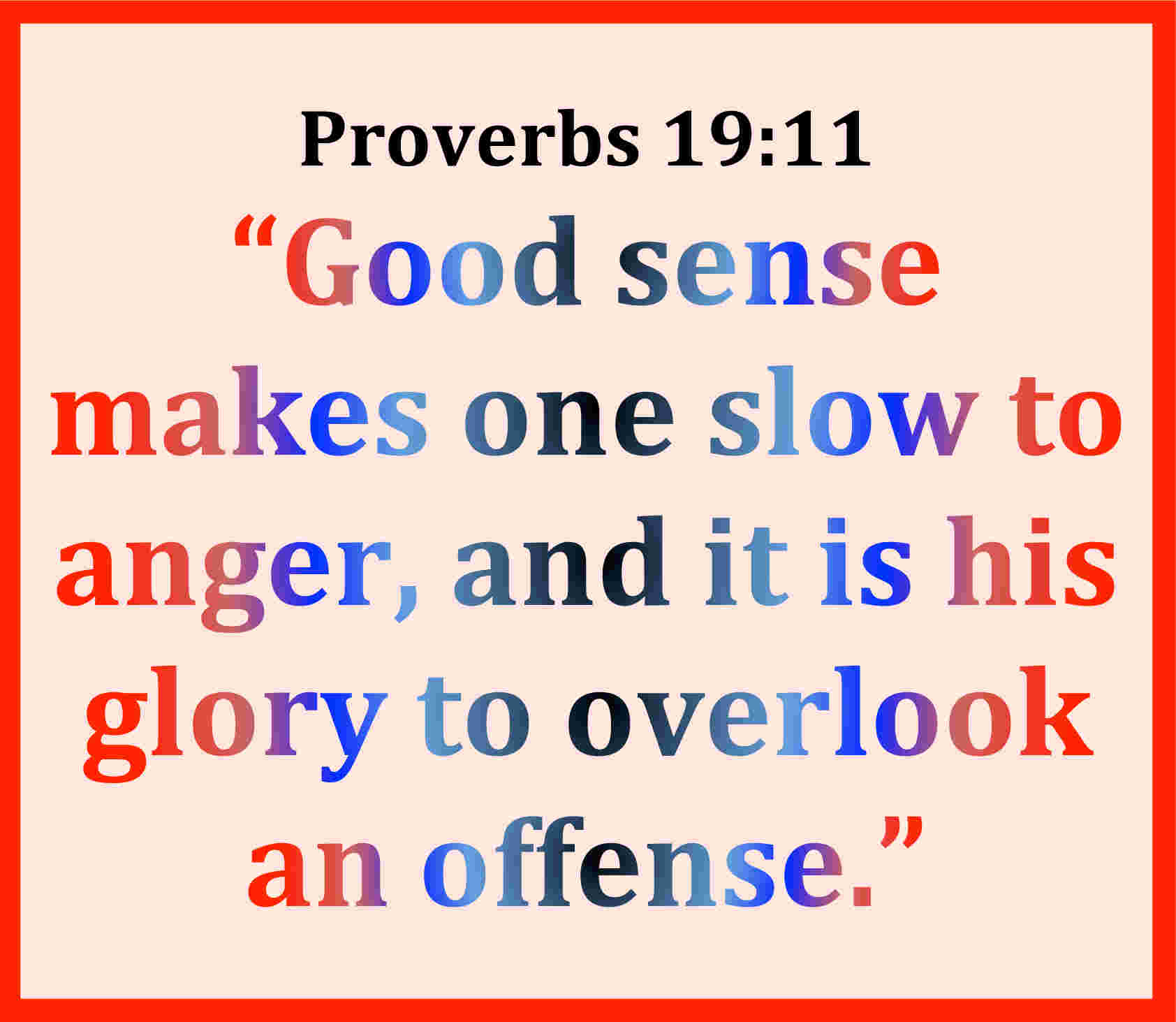
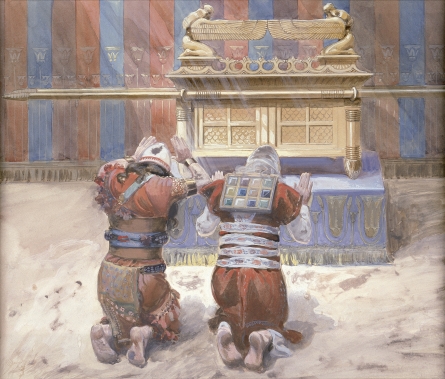






 Truth2Freedom's Blog
