There are two ways to be fooled. One is to believe what isn’t true; the other is to refuse to believe what is true. —Soren Kierkegaard. "…truth is true even if nobody believes it, and falsehood is false even if everybody believes it. That is why truth does not yield to opinion, fashion, numbers, office, or sincerity–it is simply true and that is the end of it" – Os Guinness, Time for Truth, pg.39. “He that takes truth for his guide, and duty for his end, may safely trust to God’s providence to lead him aright.” – Blaise Pascal. "There is but one straight course, and that is to seek truth and pursue it steadily" – George Washington letter to Edmund Randolph — 1795. We live in a “post-truth” world. According to the dictionary, “post-truth” means, “relating to or denoting circumstances in which objective facts are less influential in shaping public opinion than appeals to emotion and personal belief.” Simply put, we now live in a culture that seems to value experience and emotion more than truth. Truth will never go away no matter how hard one might wish. Going beyond the MSM idealogical opinion/bias and their low information tabloid reality show news with a distractional superficial focus on entertainment, sensationalism, emotionalism and activist reporting – this blogs goal is to, in some small way, put a plug in the broken dam of truth and save as many as possible from the consequences—temporal and eternal. "The further a society drifts from truth, the more it will hate those who speak it." – George Orwell “There are two ways to be fooled. One is to believe what isn’t true; the other is to refuse to believe what is true.” ― Soren Kierkegaard
We must pray for grace to make us wiser and better every day than another.
Lord, give me to grow with a growth that is from God; Colossians 2:19(ESV) to grow in the grace and knowledge of my Lord and Savior Jesus Christ; 2 Peter 3:18(ESV) to hold to my way; and, having clean hands, to grow stronger and stronger. Job 17:9(ESV)
Let my path be as the light of dawn, which shines brighter and brighter until full day. Proverbs 4:18(ESV)
I have not yet obtained, nor am I already perfect; Lord, grant that therefore, forgetting what lies behind, I may strain forward to what lies ahead, for the prize of the upward call of God in Christ Jesus. Philippians 3:12-14(ESV)
Be like the dew to me, that I may blossom like the lily and take root like the trees of Lebanon; that my shoots may spread out and my beauty may be like the olive. And let the sun of righteousness rise upon me with healing in its wings, that I may go out leaping like a calf from the stall. Malachi 4:2(ESV)
Nehemiah 13:1-31 In this week’s studies, we look at Nehemiah’s final reforms when he returned to Jerusalem and served as the governor a second time.
Theme
Four Leadership Characteristics
4. The family (vv. 23-28). The final abuse was an old one, going back to the people’s early days in the land: intermarriage with the nations roundabout, the very thing they had promised to avoid in chapter 10. Half of the children of these marriages did not even know how to speak the Jews’ language, according to Nehemiah, and the problem had extended upward into the families even of the leaders of the city. As Nehemiah explains in verse 28, a son of Eliashib the high priest had married a daughter of Sanballat the Horonite. In this case, Nehemiah did not act as radically as Ezra had done when he required the Jewish men to divorce their foreign wives earlier (Ezra 9-10). Nevertheless, he gave them a thorough dressing down and publicly humiliated some of them, extracting renewed promises that the people would abstain from damaging marriages with foreign peoples (v. 25). As for the son of Eliashib, Nehemiah simply drove him from the city.
Thus ended the last of these reforms.
Nehemiah closes with two more prayers: first, against those who corrupted the priesthood (“Remember them, O my God, because they have defiled the priestly office and the covenant of the priesthood and of the Levites,” v. 29) and, second, for himself (“Remember me with favor, O my God,” v. 31).
I am sure, Nehemiah’s prayer to the contrary, that God did not need to be urged to remember this great leader. He had obeyed God nobly, and for many centuries now has been enjoying his reward. It is rather ourselves who need to be urged to remember him. We need to remember his faith and his great leadership characteristics. Of the many we have seen, I have been most impressed with the following:
1. Nehemiah’s submission to God. Nehemiah had no other plans for his life than to do what God had for him. He could have said with Jesus, “Not as I will, but as you will” (Matt. 26:39).
2. Nehemiah’s ability to focus on the right goals. Nehemiah saw the ultimate goals and the objectives leading to them clearly. He never deviated from any of them, even for a moment.
3. Nehemiah’s wisdom in handling complex situations. The problems Nehemiah faced were all different, and the solution to one was not the solution to another. Nehemiah did not have rote answers. He handled each problem wisely with a wisdom that came from God.
4. Nehemiah’s courage to act decisively. Because he was serving God and not man, and because he knew that the purposes of God will always ultimately triumph, Nehemiah was not afraid to act boldly. His boldness left his enemies stammering, confounded and in awe. That is perseverance. It is a quality of all great leaders. Is it true of us? We should cultivate it until we can say with the apostle Paul, “I have fought the good fight, I have finished the race, I have kept the faith. Now there is in store for me the crown of righteousness which the Lord, the righteous Judge, will award to me on that day—and not only to me, but to all who have longed for his appearing” (2 Tim. 4:7-8).
“Remember me with favor, O my God.”
Study Questions
What problem regarding the family did Nehemiah have to deal with?
List the four significant leadership characteristics of Nehemiah. How did we see these demonstrated in the book?
Application
Application: How can you apply these leadership traits in your own life?
Prayer: Pray for the spiritual health of your church, your family and friends, and yourself. Ask the Lord to show you areas in your life where you need to submit fully to Him.
Key Point: Nehemiah had no other plans for his life than to do what God had for him. He could have said with Jesus, “Not as I will, but as you will” (Matt. 26:39).
Rev. Botrus Mansour, newly installed Secretary General and CEO of the World Evangelical Alliance, delivers his inaugural address at the General Assembly in Seoul, South Korea, Oct. 31, 2025, calling the global church to unity and gospel impact. Hudson Tsuei, Christian Daily International
The World Evangelical Alliance (WEA) concluded its General Assembly on Friday, Oct. 31, 2025, in Seoul, South Korea, following five days of worship, discussion, and reflection under the theme “The Gospel for Everyone by 2033.” The event gathered 850 participants from 124 nations, uniting evangelical leaders from across continents to chart the global movement’s direction for the next six years.
The General Assembly marked a historic transition in the 179-year-old alliance, with the election of a new International Council, the appointment of a new Chair, and the installation of a new Secretary General and CEO, Rev. Botrus Mansour of Nazareth, Israel.
During the final plenary session, the newly elected International Council, chaired by Godfrey Yogarajah of Sri Lanka, was formally presented to the delegates and prayed for.
In his remarks, Yogarajah expressed gratitude for the trust placed in him and the new Council, pledging to serve the global evangelical family with humility and unity. “We are called to strengthen the alliances and to establish new ones where they do not yet exist,” he said. “We want to serve together so that the whole body of Christ may be equipped and mobilized for the gospel.”
A new Secretary General from the Middle East
The installation of Rev. Adv. Botrus Mansour as WEA Secretary General and CEO marked one of the most significant moments of the Assembly. A Palestinian Christian from Nazareth, Mansour becomes the first leader from the Middle East to serve as WEA’s global head.
Mansour began his inaugural address by acknowledging the extraordinary significance of his appointment: “Asking someone like me, a Palestinian Christian from Israel, to be the Secretary General is something special — especially at a time when our region is praying for peace after years of conflict.”
He paid tribute to his parents and family, speaking of his 91-year-old father watching the ceremony from Nazareth, and his wife and children who had also joined the event. “They are my first partners in ministry,” he said.
Mansour outlined a threefold vision for the WEA’s new chapter: unity among believers, impacting the world with the gospel, and embodying a holistic witness of the kingdom of God.
📱 Get Breaking News on WhatsApp
Join our WhatsApp channel for instant updates on Christian news worldwide
“Vision is not something that comes out of the blue,” he said. “It is crystallized jointly after prayer and communication between those who serve together, and it must always be rooted in the Word of God.”
He drew on three biblical passages to anchor this vision: Jesus’ inaugural sermon in Luke 4, His high priestly prayer in John 17, and the Great Commission in Matthew 28.
“The first pillar of our vision is unity,” Mansour said. “We have one Spirit, one mission, one core of beliefs. Jesus prayed, ‘Let them be one, as we are one.’ Can we rise to the level of His prayer?”
He urged WEA’s global family to remain focused on the shared gospel mission rather than secondary divisions. “We are different people,” he said, “but we have one Spirit. Our diversity is not a weakness but a testimony of God’s creativity and grace.”
The second part of his vision, impacting the world with the gospel, calls the global church to renewed evangelistic passion, linked to the 2033 milestone marking 2,000 years since Christ’s resurrection. “It is a beautiful milestone — a goal to reach the world with the gospel within our lifetime,” he said. “What greater present could we give to the Lord than hearts surrendered to Him?”
Mansour added that this vision must be both evangelistic and holistic. “We want to impact the world with the gospel so that the kingdom of God — His mercy, justice, reconciliation, and truth — transforms every part of life,” he said. “The gospel is not only words we speak, but a life we live.”
He also highlighted the importance of strengthening WEA’s nine regional alliances and the 161 national alliances they serve, calling these the “backbone of our mission.”
“If we strengthen the regional alliances, they will strengthen the national alliances, which in turn will strengthen the churches,” he said. “Then believers in every church will be strong and willing to share and impact the world with the gospel.”
In closing his address, Mansour urged all WEA members to reclaim the term “evangelical” in its biblical sense. “The name has been politicized and misunderstood,” he said. “But its true meaning is simple — bearers of good news. We want to be bearers of good news again, to the whole world.”
The Assembly concluded with a communion service led by Pastor Rick Warren, founder of Saddleback Church and the Finishing The Task movement, who urged delegates to carry the message of Christ into a world in need of hope.
The WEA, which convenes its General Assembly every six years, is expected to hold its next global gathering in 2031.
Alan Charter, Facilitator of the Global Children’s Forum, speaks during the panel on “Celebrating the Gospel in Disciple Making” on the final day of the World Evangelical Alliance General Assembly in Seoul, South Korea, Oct. 31, 2025. Hudson Tsuei, Christian Daily International
The World Evangelical Alliance (WEA) concluded its morning program on the fourth and final day of the 2025 General Assembly in Seoul, Korea, with a compelling call for a global return to family-centered disciple making — challenging pastors, parents, and national church leaders to bridge the growing gap between pulpit and home.
Held on the morning of Oct. 31 under the theme “Celebrating the Gospel in Disciple Making,” the panel brought together four veteran leaders of global discipleship and family ministry: Gwen De Rozario, Executive Director of the Family & Children Commission of the Asia Evangelical Alliance; David Kornfield, Lead for Discipling and Pastoring of Pastors within the WEA; P.C. Mathew, Global Director of the WEA Family Challenge; and Alan Charter, Facilitator of the Global Children’s Forum.
The moderator introduced the discussion as the culmination of the Assembly’s week-long reflections on mission and renewal.
A four-level vision for disciple making
Opening the conversation, David Kornfield outlined what he described as the four interdependent levels of disciple-making movements — a framework he said is critical if the church is to withstand cultural shifts and generational decline.
“The first level, without which all the other levels will fail, is small-group, personal disciple making,” Kornfield said. “When you go back to your church, I challenge you to ask three questions. Ask people to raise their hands if they are disciples. Then ask them to raise their hands if they have a discipler — and you’ll see the numbers drop. Then ask how many are Christians. Why are the numbers so different?”
Without personal, relational discipleship, he said, even vibrant churches will falter. The second level is therefore a healthy disciple-making church, which fosters this culture collectively. The third level is a movement of disciple-making churches that can resist what he called “the tide of culture that is sweeping us away.”
Finally, Kornfield said, the fourth level — national disciple-making movements — depends on the leadership of national evangelical alliances. Calling alliance leaders in the room to stand, he told them, “If we do not get national movements of healthy disciple-making churches going, all the other levels will fail. That is where we, as leaders, are absolutely critical.”
He warned that declining church membership is a global reality. Referring to The Great Dechurching, a book documenting the loss of 40 million church members in the United States over 25 years, he estimated that “in Latin America, through COVID alone, we lost 39 million members in just two years.”
📱 Get Breaking News on WhatsApp
Join our WhatsApp channel for instant updates on Christian news worldwide
“Wake up, O sleeper,” he said, quoting Ephesians 5:14. “We as national alliances need to wake up and be building at all four of these levels.”
Family as the first mission field
Rev. Dr. P.C. Mathew followed with a strong appeal for restoring discipleship to its biblical starting point: the family. “From the very beginning, God’s plan to fill the world with his people was disrupted by the fall of the first family,” he said. “Yet in his mercy, God began a redemptive journey that culminated in the coming of Christ to give hope to the families of this world. Every family touched by his grace is called to reflect that missional family of the Godhead.”
Mathew warned that the church often measures spiritual success by public ministry, while neglecting spiritual formation at home. “Many are strong disciples in their ministry outside, yet weak in their ministry inside their own homes,” he said. “Sundays are sacred. Monday to Saturday is secret. This dichotomy has damaged the witness of the church and has caused generations to walk away from Christ.”
He emphasized that strong families are the foundation of strong churches, describing today’s global crisis in family life as a spiritual emergency. “Discipling the families is the need of the hour,” he said.
Mathew presented a three-phase plan for what he calls the Family Revival Movement, which begins with prayer in the home: families praying together for seven minutes a day, for seven days a week, over seven weeks. On the 50th day, families gather at church to celebrate what God has done.
Behind every revival, he said, is prayer. “The revival needs to start in many of our homes. Families need to be revived globally through repentance and prayer led by the leadership of the church and the power of the Spirit.”
In later remarks, he added that the movement’s second phase focuses on seven biblical pillars for family life — including fatherhood, marriage, and forgiveness — and the third on helping families become “missional lighthouses” in their communities.
He illustrated the impact with a story from his home country: “A young man returned from a father-son camp deeply convicted that he had neglected his fatherly role. He asked to speak to his pastor and called for every father in the 600-member church to take up his mission. That conversation sparked repentance, tears, and a wave of family prayer that grew into a revival movement.”
Restoring the home as the center of discipleship
Gwen De Rozario of Singapore expanded the discussion, urging churches to become intentional in equipping every believer to disciple their own home. “As we talk about the gospel for everyone, this must include everyone in our home,” she said. “We are advocating for the church to be intentional in equipping every member to disciple their home. Because discipleship pivots on relationship, and God’s original pattern was for this to happen in our homes.”
De Rozario, whose Asia Evangelical Alliance Family & Children Commission partners with the global D6 Movement (based on Deuteronomy 6), shared testimonies from pastors across Asia who have applied these principles. In one church, after an equipping conference, a pastor said he felt convicted to start praying with his wife; another said he would repent and ask his son for forgiveness.
In South Korea, she noted, many churches have synchronized sermons, small groups, and home life into a unified theme each week. “The word no longer stops at the pulpit — it comes alive at home,” she said. “Homes once marked by tension are now being marked by blessing as fathers learn to bless their families. Parents are moving from being perfectionists to being spiritually consistent.”
She warned that the erosion of biblical values in society — including the rise of abortion and gender confusion — is partly the result of a breakdown in family discipleship. “We wonder why things are changing,” she said. “The reality is, we are not discipling in our homes.”
Calling for a “discipleship reawakening” that links church and home, De Rozario urged leaders to “make families, not programs, the heartbeat of every discipleship effort.” She said seminaries must also begin to train pastors in family discipleship, because “if we trace back many of today’s crises, they often begin with the absence of discipleship at home.”
Children as active participants in mission
Alan Charter, representing the Global Children’s Forum, focused on the role of children in the Great Commission. He lamented that children’s and family ministry are often treated as secondary priorities within churches, despite research showing that a person’s faith is largely shaped before age 13.
“We are invited into this incredible generational adventure,” Charter said. “As the psalmist declares, we will tell the next generation the praiseworthy deeds of the Lord so that the next generation would know them — even the children yet to be born.”
He cited a recent survey by the Patmos Initiative indicating that 71% of respondents — both Christians and non-Christians — believe it is good for children to know Bible stories. “There is still cultural openness,” he said. “But we are called to a greater thing — to equip children as participants in mission, not just as recipients of it.”
Charter said churches must empower children as “fellow kingdom builders,” describing how children’s acts of generosity often serve as early expressions of faith. “I know a child who began bringing extra sandwiches to school to share with classmates who didn’t have lunch,” he said. “It was a simple act of generosity, but it became a witness that touched parents and teachers alike.”
He shared another story from the United Kingdom, where a teenager named Josh began meeting weekly with 17 of his football teammates to study the Bible. “We must never underestimate how God is at work through the lives of our children,” Charter said. “God has no grandchildren — we are all his children.”
He made Him who knew no sin to be sin on our behalf, so that we might become the righteousness of God in Him. (5:21)
It began with one of history’s earliest recorded instances of biological warfare. In 1347 a Mongol army besieging the Genoese trading post of Caffa in the Crimea (modern Ukraine) catapulted the bodies of bubonic plague victims over the town’s walls. The terrified defenders fled to Italy, carrying with them the deadly plague bacteria (and the rats and fleas that spread them). Over the next three years the plague spread throughout Europe in the massive epidemic now known as the Black Death. Before the epidemic ran its course an estimated twenty million people—approximately one-third to one-half of Europe’s population—perished. The coming centuries would see recurring outbreaks of the bubonic plague, which would remain a dangerous, unchecked killer until the development of antibiotics in the twentieth century. Though the Black Death is the most infamous epidemic in history, it was not the only one. The influenza epidemic of 1918–19 killed an estimated thirty to fifty million people, and several million more died at about that same time in an outbreak of typhus in eastern Europe. Other infectious diseases, such as malaria, yellow fever, and in more recent times AIDS, have also claimed uncounted millions of victims. But there is one plague that is more widespread and deadly than all others combined; it is, as the Puritan writer Ralph Venning called it, the “plague of plagues.” It affects every person who ever lived—and is 100 percent fatal. Unlike other plagues, which cause only physical death, this plague causes spiritual and eternal death as well. It is the plague of sin. Because Adam’s fall plunged the entire human race into sin (Rom. 5:12–21), all people are sinners from birth. “Behold, I was brought forth in iniquity,” lamented David, “and in sin my mother conceived me” (Ps. 51:5). In Psalm 58:3 he added, “The wicked are estranged from the womb; these who speak lies go astray from birth” (cf. Gen. 8:21; Isa. 48:8). Not only are all people sinners by nature, they are also sinners by action. To the Romans Paul wrote, “There is none righteous, not even one” (Rom. 3:10; cf. Pss. 14:1–3; 53:1–3). Later in that chapter he added, “For all have sinned and fall short of the glory of God” (Rom. 3:23); consequently, “there is no man who does not sin” (1 Kings 8:46), and no one can say, “I have cleansed my heart, I am pure from my sin” (Prov. 20:9). The inevitable outcome for all those infected by the sin plague is death. Ezekiel 18:20 states plainly, “The person who sins will die” (cf. v. 4). Adam’s tragic epitaph, “and he died” (Gen. 5:5) will be written for all his descendants (cf. vv. 8, 11, 14, 17, 20, 27, 31; 9:29). Nor is the prognosis any better in the spiritual realm. Sin produces two disastrous spiritual consequences: alienation from God in this life (Eph. 2:12; 4:18; Col. 1:21), and unrelenting punishment in hell in eternity (Matt. 25:41, 46; 2 Thess. 1:9; Rev. 14:9–11; 20:11–15). But the good news of the gospel is that there is a cure for the sinner infected by the deadly sin epidemic. God, in His mercy and love, provided a remedy for sin—the sacrifice of His Son. The Lord Jesus Christ “released us from our sins by His blood” (Rev. 1:5), “for by one offering He has perfected for all time those who are sanctified” (Heb. 10:14). Those who experience “redemption through His blood, the forgiveness of [their] trespasses, according to the riches of His grace” (Eph. 1:7) are cured from sin’s deadly spiritual effects. As a result, they have “passed out of death into life” (John 5:24; 1 John 3:14), and “are no longer strangers and aliens, but … are fellow citizens with the saints, and are of God’s household” (Eph. 2:19). How God made the cure possible is the theme of verses 18–20. In those three verses, Paul described the glorious truth of reconciliation—that the sin-severed relationship between holy God and unregenerate sinners can be restored “through” and “in” Christ. But reconciliation raises some profound questions. How can an absolutely and infinitely holy God be reconciled to sinners? How can His just and holy law, which demands the condemnation and punishment of all who violate it, be satisfied? How can those who deserve no mercy receive it? How can God uphold true righteousness and give grace? How can the demands of both justice and love be met? How can God be both “just and the justifier” (Rom. 3:26) of sinners? As hard as those questions seem, one brief verse answers them all and resolves the seeming paradox of redemption. With a conciseness and brevity reflective of the Holy Spirit, this one brief sentence, only fifteen words in the Greek text, resolves the dilemma of reconciliation. This sentence reveals the essence of the atonement, expresses the heart of the gospel message, and articulates the most glorious truth in Scripture—how fallen man’s sin-sundered relationship to God can be restored. Verse 21 is like a cache of rare jewels, each deserving of a careful, reverential examination under the magnifying glass of Scripture. It yields truths about the benefactor, the substitute, the beneficiaries, and the benefit.
THE BENEFACTOR
He made (5:21a)
The end of verse 20 reveals the antecedent of He to be God the Father, as seen in the previous chapter of this volume. Reconciliation is His plan, and it could not occur unless He initiated and applied it. Sinners cannot devise their own religious approach to God, because they are “dead in [their] trespasses and sins” (Eph. 2:1). The damning lie of false religion is that man can reconcile himself to God by his own efforts, but all attempts to do so are futile. Sinners’ “righteous deeds are like a filthy garment; and all of [them] wither like a leaf, and [their] iniquities, like the wind, take [them] away” (Isa. 64:6). As a result, “There is none righteous, not even one” (Rom. 3:10). Not even the “Israelites, to whom belongs the adoption as sons, and the glory and the covenants and the giving of the Law and the temple service and the promises, whose are the fathers, and from whom is the Christ according to the flesh” (Rom. 9:4–5) could devise a way to reconcile themselves to God by their own efforts. Romans 10:1–3, expressing Paul’s deep concern for them, reflects that truth:
Brethren, my heart’s desire and my prayer to God for them is for their salvation. For I testify about them that they have a zeal for God, but not in accordance with knowledge. For not knowing about God’s righteousness and seeking to establish their own, they did not subject themselves to the righteousness of God.
Despite their zeal for God, they had not achieved salvation, because they sought it through their own righteousness. The religion of human achievement, whether practiced by Jews or Gentiles, can never bring reconciliation with God. The only way reconciliation can take place is if God reached out to sinners; and He did by the sacrifice of His Son. Jesus therefore did not go to the cross because fickle people turned on Him, though they did. He did not go to the cross because demon-deceived false religious leaders plotted His death, though they did. He did not go to the cross because Judas betrayed Him, though he did. He did not die because an angry, unruly mob intimidated a Roman governor into sentencing Him to crucifixion, though they did. Jesus went to the cross as the outworking of God’s plan to reconcile sinners to Himself. In the first Christian sermon ever preached, Peter declared to the nation of Israel that Jesus was “delivered over [to death] by the predetermined plan and foreknowledge of God” (Acts 2:23; cf. 3:18; 13:27; Matt. 26:24; Luke 22:22; John 18:11; Heb. 10:5, 7). Only God could design an atonement for sin that would satisfy the demands of His justice, propitiate His wrath, and be consistent with His love, grace, and mercy. Only God could conceive the plan in which the second person of the Trinity would, “being found in appearance as a man, [humble] Himself by becoming obedient to the point of death, even death on a cross” (Phil. 2:8). Only God knew what it would take to rescue sinners “from the domain of darkness, and [transfer them] to the kingdom of His beloved Son” (Col. 1:13), making them “qualified … to share in the inheritance of the saints in Light” (Col. 1:12). Only God knew how to make sinners deserving of hell acceptable in His sight and fit to spend eternity in His presence. Therefore, only God could author and execute the plan of redemption and reconcile sinners to Himself. That plan is so utterly beyond the comprehension of the unregenerate that it seems foolishness to them (1 Cor. 1:18, 23; 2:14). No religion of human design has anything like it. Reconciliation flows out of God’s love; it was because He “so loved the world, that He gave His only begotten Son, that whoever believes in Him shall not perish, but have eternal life” (John 3:16). “God demonstrates His own love toward us,” wrote Paul, that while we were yet sinners, Christ died for us” (Rom. 5:8); though “we were enemies we were reconciled to God through the death of His Son” (Rom. 5:10). Because “God [is] rich in mercy, [and] because of His great love with which He loved us, even when we were dead in our transgressions, [He] made us alive together with Christ (Eph. 2:4–5). It is this emphasis on a loving God reaching out to sinners that sets Christianity apart from the false religions of the world. The gods of those religions are sometimes depicted as cruel, angry, and hostile and hence to be feared and appeased—even by such appalling means as child sacrifice (cf. 2 Kings 16:3; 23:10; Jer. 32:35; Ezek. 16:21; 23:37). Others are viewed as apathetic and indifferent to the worshipers who grovel before them, like Baal, whose followers Elijah mockingly challenged, “Call out with a loud voice, for he is a god; either he is occupied or gone aside, or is on a journey, or perhaps he is asleep and needs to be awakened” (1 Kings 18:27). Their devotees are often driven to desperate measures to get their attention (cf. 1 Kings 18:28). But Christianity proclaims the glorious, liberating truth that God is neither hostile nor indifferent but a loving Savior by nature. He does not need to be appeased (and indeed cannot be by any human means). Instead, He Himself has provided His own appeasement for justice and the means for sinners to become His beloved children through the sacrifice of His Son (Rom. 8:32; 1 John 4:10, 14), which fully propitiated His wrath. As a result, those who come to Him through faith are “justified as a gift by His grace through the redemption which is in Christ Jesus” (Rom. 3:24). Because Christ’s sacrifice perfectly satisified the demands of God’s righteousness and justice, God freely offers forgiveness and reconciliation: “Ho! Every one who thirsts, come to the waters; and you who have no money come, buy and eat. Come, buy wine and milk without money and without cost” (Isa. 55:1; cf. Rev. 22:17). Reconciliation required the death of God’s Son because “the wages of sin is death” (Rom 6:23) and therefore, “The person who sins will die” (Ezek. 18:20). The slaughter of countless millions of sacrificial animals under the Old Testament economy graphically illustrated that truth. Though unable to atone for sin, since “it is impossible for the blood of bulls and goats to take away sins” (Heb. 10:4), those sacrifices forcibly drove home the point that sin results in death, and death is required to satisfy the demands of God’s law when it is violated. They also made the people who incessantly offered them long for the final substitute to whom the sacrifices pointed (cf. Isa. 53). And when in accordance with the Father’s plan the final substitute came, He willingly laid down His life to bring the final satisfaction to God only pictured in the sacrificial ceremonies and ritual killings of animals (John 10:11, 18; Phil. 2:7–8).
THE SUBSTITUTE
Him who knew no sin to be sin (5:21b)
This designation points unmistakably to the only possible sacrifice for sin. It eliminates every human who ever lived, “for there is no man who does not sin” (1 Kings 8:46), since “all have sinned and fall short of the glory of God” (Rom. 3:23). Only one who knew no sin of his own could qualify to bear the full wrath of God against the sins of others. The perfect sacrifice for sin would have to be a human being, for only a man could die for other men. Yet he would also have to be God, for only God is sinless. That narrows the field to one, the God-man, Jesus Christ. In the design of God, the second person of the Trinity became a man (Gal. 4:4–5). The Bible makes it clear that though He had a human mother, the Lord Jesus Christ did not have a human father. Joseph is never referred to as His father, because He was conceived by the Holy Spirit (Matt. 1:18, 20; Luke 1:35). As the God-man, He was the perfect One to be the sacrifice for sin (John 1:29; 1 Peter 1:19), fulfilling the Old Testament picture of the unblemished sacrificial lamb (Ex. 12:5; Ezek 46:13). The impeccability (sinlessness) of Jesus Christ is universally affirmed in Scripture, by believers and unbelievers alike. In John 8:46 Jesus challenged His Jewish opponents, “Which one of you convicts Me of sin?” Before sentencing Him to death, Pilate repeatedly affirmed His innocence, declaring, “I find no guilt in this man” (Luke 23:4; cf. vv. 14, 22). The repentant thief on the cross said of Jesus, “This man has done nothing wrong” (Luke 23:41). Even the hardened, callous Roman centurion in charge of the execution detail admitted, “Certainly this man was innocent” (Luke 23:47). The apostles, those who most closely observed Jesus’ life during His earthly ministry, also testified to His sinlessness. Peter publicly proclaimed Him to be the “Holy and Righteous One” (Acts 3:14). In his first epistle he declared Jesus to be “unblemished and spotless” (1 Peter 1:19); one “who committed no sin” (2:22); and “just” (3:18). John also testified to His sinlessness, writing, “in Him there is no sin” (1 John 3:5). The inspired writer of Hebrews notes that “we do not have a high priest who cannot sympathize with our weaknesses, but One who has been tempted in all things as we are, yet without sin” (Heb. 4:15), because He is “holy, innocent, undefiled, separated from sinners and exalted above the heavens” (7:26). But the most powerful testimony concerning Christ’s sinlessness comes from God the Father. On two occasions He said of Christ, “This is My beloved Son, in whom I am well-pleased” (Matt. 3:17; 17:5). Jesus’ unbroken fellowship with the Father also testifies to His sinlessness; in John 10:30 He said simply, “I and the Father are one” (cf. 14:9). After presenting Jesus as the absolutely holy substitute for sinners, the text makes the remarkable statement that God made Him to be sin. That important phrase requires a careful understanding. It does not mean that Christ became a sinner; the above-mentioned verses establishing His utter sinlessness unequivocally rule out that possibility. As God in human flesh, He could not possibly have committed any sin or in any way violated God’s law. It is equally unthinkable that God, whose “eyes are too pure to approve evil” (Hab. 1:13; cf. James 1:13), would make anyone a sinner, let alone His own Holy Son. He was the unblemished Lamb while on the cross, personally guilty of no evil. Isaiah 53:4–6 describes the only sense in which Jesus could have been made sin:
     Surely our griefs He Himself bore,
     And our sorrows He carried;
     Yet we ourselves esteemed Him stricken,
     Smitten of God, and afflicted.
     But He was pierced through for our transgressions,
     He was crushed for our iniquities;
     The chastening for our well-being fell upon Him,
     And by His scourging we are healed.
     All of us like sheep have gone astray,
     Each of us has turned to his own way;
     But the Lord has caused the iniquity of us all
     To fall on Him.
Christ was not made a sinner, nor was He punished for any sin of His own. Instead, the Father treated him as if He were a sinner by charging to His account the sins of everyone who would ever believe. All those sins were charged against Him as if He had personally committed them, and He was punished with the penalty for them on the cross, experiencing the full fury of God’s wrath unleashed against them all. It was at that moment that “Jesus cried out with a loud voice, saying, … ‘My God, My God, why have You forsaken me?’ ” (Matt. 27:46). It is crucial, therefore, to understand that the only sense in which Jesus was made sin was by imputation. He was personally pure, yet officially culpable; personally holy, yet forensically guilty. But in dying on the cross Christ did not become evil like we are, nor do redeemed sinners become inherently as holy as He is. God credits believers’ sin to Christ’s account, and His righteousness to theirs. In Galatians 3:10, 13 Paul further explained the necessity of believers’ sins being imputed to Christ. In verse 10 he wrote that “as many as are of the works of the Law are under a curse; for it is written, ‘Cursed is everyone who does not abide by all things written in the book of the law, to perform them.’ ” There is no way for sinners to reconcile themselves to God, because no one is able to “abide by all things written in the book of the law to perform them.” Violating even one precept of the Law warrants eternal punishment in hell. Thus, the entire human race is cursed and unable to do anything to lift that curse. Therefore, the only reason believers can be reconciled to God is because “Christ redeemed us from the curse of the Law, having become a curse for us—for it is written, ‘Cursed is everyone who hangs on a tree’ ” (v. 13). Were it not for the fact that “while we were still helpless, at the right time Christ died for the ungodly” (Rom. 5:6), no one could be reconciled to God.
THE BENEFICIARIES
on our behalf, (5:21c)
The antecedent of our is the phrase “ambassadors for Christ” in verse 20; those to whom the “word of reconciliation” was committed (v. 19), who have been reconciled to God (v. 18), and are new creatures in Christ (v. 17). Christ’s substitutionary death was efficacious only for those who would believe (John 1:12; 3:16–18; Rom. 10:9–10); all those whom the Father gives Him and draws to Him (John 6:37, 65). (For further information on this point, see the discussion of verse 14 in chapter 14 of this volume.) That God raised Jesus from the dead is proof that He accepted His sacrifice on behalf of His people (Rom. 4:25).
THE BENEFIT
so that we might become the righteousness of God in Him. (5:21d)
The phrase so that reflects a purpose clause in the Greek text. The benefit of God’s imputing believers’ sins to Christ and His righteousness to them is that they become righteous before Him. They are “found in Him, not having a righteousness of [their] own derived from the Law, but that which is through faith in Christ, the righteousness which comes from God on the basis of faith” (Phil. 3:9). The very righteousness God requires before He can accept the sinner is the very righteousness He provides. Because Jesus paid the full penalty for believers’ sin, God no longer holds it against them. In Psalm 32:1 David wrote, “How blessed is he whose transgression is forgiven, whose sin is covered!” In Psalm 130:3–4 the psalmist added, “If You, Lord, should mark iniquities, O Lord, who could stand? But there is forgiveness with You, that You may be feared.” In metaphorical pictures of forgiveness, God is said to have removed believers’ sins as far from them as the east is from the west (Ps. 103:12); cast their sins behind His back (Isa. 38:17); promised never to remember them (Isa. 43:25); hidden them from His sight behind a thick cloud (Isa. 44:22); and cast them into the depths of the sea (Mic. 7:19). Believers experience the blessedness of forgiveness solely by faith in the complete redemption provided by Jesus Christ; “the righteousness of God [comes] through faith in Jesus Christ for all those who believe” (Rom. 3:22). They are “justified as a gift by His grace through the redemption which is in Christ Jesus” (Rom. 3:24); therefore, God is “the justifier of the one who has faith in Jesus” (Rom. 3:26). In Romans 3:28 Paul stated definitively, “For we maintain that a man is justified by faith apart from works of the Law” (cf. 4:5; 5:1; Gal. 2:16; 3:24). When repentant sinners acknowledge their sin (Ps. 32:5), affirm Jesus as Lord (Rom. 10:9), and trust solely in His completed work on their behalf (Acts 4:12; 16:31), God credits His righteousness to their account. On the cross God treated Jesus as if He had lived our lives with all our sin, so that God could then treat us as if we lived Christ’s life of pure holiness. Our iniquitous life was legally charged to Him on the cross, as if He had lived it, so that His righteous life could be credited to us, as if we lived it. That is the doctrine of justification by imputation—the high point of the gospel. That truth, expressed so concisely and powerfully in this text, is the only cure for the sin plague.
MacArthur, J. F., Jr. (2003). 2 Corinthians (pp. 209–217). Moody Publishers.
He made him who knew no sin to be sin on our behalf, so that we might become God’s righteousness in him. This is one of the epistle’s outstanding verses that summarizes God’s good news to sinners. It discloses the meaning of the word reconciliation, a word that until now Paul has not fully explained. In his discussion, the question always remained as to why God was willing to overcome his anger toward sin as he reached out to us in love and peace. Now the apostle explains that God took his sinless Son and made him the sinbearer in our place. God had his Son pay the death penalty for our sins, so that we might be set free and declared righteous in his sight. Christ redeemed us by taking upon himself the curse that rested on us (Gal. 3:13). a. Contrast. A cursory reading of this verse reveals that Paul writes a number of opposites. Viewing the verse in two parallel columns, we immediately see a comparison.
He made so that him we who knew no sin might become to be sin God’s righteousness on our behalf in him
The differences between Christ and us are obvious: sinlessness and sinfulness (implicit), sin and righteousness, substitution and source. Having created perfect human beings, God established a special relationship with Adam and Eve. When they fell into sin, they offended their creator God and caused alienation. As their judge, God called them to account for their disobedience and sentenced them (Gen. 3:8–19). An earthly judge does not bear any personal animosity toward a person who is accused, proven guilty, and sentenced. Nor does the judge establish a friendship with an offender. This is not so between God and the sinner, because at the dawn of human history God established a personal relationship with human beings. True, Adam and Eve and their descendants have offended God by their sins, but God continued his relationship with them by removing the curse of sin through his Son Jesus Christ. Through him, God imputed to his people righteousness, extended to them his friendship, and effected peace between himself and them. b. Significance. “[God] made him who knew no sin to be sin on our behalf.” Paul designates Christ as “him who knew no sin.” Even though Jesus’ sinlessness is implied throughout the New Testament, in only a few places do writers specifically refer to his purity. For instance, disputing with the religious establishment of his day, Jesus challenged the Jews to prove him guilty of sin (John 8:46; compare 7:18). The writer of Hebrews states that Jesus was identical to us but without sin (4:15; refer to 7:26; 9:14). Quoting Isaiah 53:9, Peter writes, “He committed no sin, and no deceit was found in his mouth” (1 Peter 2:22; see 3:18). And John confesses that Jesus “appeared so that he might take away our sins. And in him is no sin” (1 John 3:5). “[Jesus] knew no sin,” Paul writes. Yet Jesus must have been gravely offended and deeply grieved when he observed and continually experienced in himself the effects of human sin. He was “a man of sorrows, and familiar with suffering” (Isa. 53:3). During his earthly ministry, he was frequently confronted by Satan and his evil cohorts, yet he never succumbed to sin. Even though he appeared “in the likeness of sinful man” (Rom. 8:3), he kept himself free from sin by showing his constant love to God and humankind. Although Jesus was tempted by Satan, he did not become a sinner. When God made him sin by imputing to him our sin, he regarded him as the sinbearer, not as a sinner. True, as the Lamb of God, Christ removed the sin of the world by his sacrificial death on the cross (John 1:29; 3:14–15). But presently Paul portrays not a sacrificial offering but rather a courtroom scene in which a judge either sentences the guilty or releases the innocent. By imputing sin to Jesus Christ, God imputes righteousness to his people. Christ took our place as the head of redeemed humanity; he is our representative speaking to God in our defense (1 John 2:1). Also, Christ became our substitute by taking our place before God to receive the punishment that was due us. Standing before God, Jesus bore the greatest burden of sin ever. He paid for sin when he was spiritually severed from God and was physically dying on the cross (Matt. 27:46, 50). Jesus took upon himself our sins and through his atonement made us recipients of God’s righteousness. c. Effect. “So that we might become God’s righteousness in him.” The good news of Christ’s death is that our sin, which separated us from God, has been removed; he accepts us as if we had never sinned at all. Because of Christ’s death, God declares us innocent. He acquits us, drops all charges against us, and grants us the gift of righteousness. Sixteenth-century German theologian Zacharius Ursinus put this truth succinctly in these words:
God grants and credits to me
the perfect satisfaction, righteousness,
and holiness of Christ,
as if I had never sinned nor been a sinner,
as if I had been perfectly obedient
as Christ was obedient for me.
Let us briefly discuss the meaning of the phrase God’s righteousness. Is it righteousness that belongs to God (subjective genitive)? Or is it righteousness that he receives from us (objective genitive)? Or does righteousness originate with God and then is granted to us (genitive of origin)? The second of these three questions describes a circumstance that is improbable if not impossible. And the third question would expect the answer that we have received complete righteousness, but we can say only that our righteousness is in Christ. His righteousness is imputed to us in justification, which is a declaratory act of God. We do well to answer the first question and say that righteousness, akin to holiness, is an inherent characteristic that belongs to God. He expresses this attribute by judging sin as a violation of his holiness. The righteousness that God possesses must be understood in terms of judgment, justice, and grace. Through Christ Jesus, God has placed us within the context of that righteousness and has reconciled us to himself. Hence, reconciliation and righteousness are the proverbial two sides of the same coin.
Kistemaker, S. J., & Hendriksen, W. (1953–2001). Exposition of the Second Epistle to the Corinthians (Vol. 19, pp. 200–202). Baker Book House.
He will bless them that fear the Lord, both small and great.Psalm 115:13
This is a word of cheer to those who are of humble station and mean estate. Our God has a very gracious consideration for those of small property, small talent, small influence, small weight. God careth for the small things in creation and even regards sparrows in their lighting upon the ground. Nothing is small to God, for He makes use of insignificant agents for the accomplishment of His purposes. Let the least among men seek of God a blessing upon his littleness, and he shall find his contracted sphere to be a happy one.
Among those who fear the Lord there are little and great. Some are babes, and others are giants. But these are all blessed. Little faith is blessed faith. Trembling hope is blessed hope. Every grace of the Holy Spirit, even though it be only in the bud, bears a blessing within it. Moreover, the Lord Jesus bought both the small and the great with the same precious blood, and He has engaged to preserve the lambs as well as the full-grown sheep. No mother overlooks her child because it is little; nay, the smaller it is, the more tenderly does she nurse it. If there be any preference with the Lord, He does not arrange them as “great and small” but as “small and great.”
“For I am not ashamed of the gospel of Christ, for it is the power of God unto salvation to everyone that believes.” Romans 1:16–17
When Paul wrote to the Romans, he declared that the gospel is the power of God unto salvation, a phrase that stands at the center of Reformation history. It is no coincidence that when Martin Luther rediscovered the meaning of justification by faith alone, it was through these words: “The just shall live by faith.”
This truth turned a fearful monk into a man aflame with gospel conviction. And it is worth asking: How does the righteousness of God, revealed in the gospel, free from fear and call us to faithfulness?
Martin Luther was a sinner who wrestled with guilt, a scholar who often stumbled, and a priest who feared God. The Reformation was not the birth of a new religion; it was the recovery of an old truth. Through Luther’s life, we see not only the history of reformation, but the power of the gospel that reforms hearts.
Providence in a Storm Martin Luther was born in 1483 to Hans and Margaret Luther, a hardworking family in the copper industry of Germany. His father wanted him to become a lawyer, a respectable and lucrative profession in the rising middle class. And Luther, ever obedient, pursued that path with diligence. He was an average student at first, graduating thirtieth in his class. But through persistence and discipline, he rose to the top of his studies and seemed destined for success.
Returning from a visit home in 1505, Luther was caught in a violent storm. The lightning struck near him, and in terror he cried out:
“Saint Anne, help me! I will become a monk!”
When the storm passed, the vow was heavy upon his conscience. Against his father’s wishes, fifteen days later he knocked on the gate of the Augustinian monastery at Erfurt and entered monastic life.
Years later, Luther would look back on that vow and call it “a flagrant sin, not worth a farthing, made against my father and made out of fear.” Yet he added this beautiful reflection: “How much good the merciful Lord has allowed to come of it.”
Here already we see the doctrine of providence shining through. Even our fearful vows, even our mistaken choices, can become the instruments of divine mercy. God leads His servants through their blunders into the path of his will. Luther’s storm became the first gust of a coming Reformation wind.
The Fear of God and the Holiness That Crushes Inside the monastery, Luther threw himself into every discipline. He fasted, prayed, confessed, and studied with fanatical devotion. Older monks admired his zeal, but Luther was tormented by the holiness of God. His confessions lasted for hours; his conscience gave him no rest. He later said, “If ever a monk got to heaven by monkery, I was that monk.”
When he was ordained a priest in 1507 and celebrated his first mass, he trembled so violently that he nearly fled from the altar. The majesty of God overwhelmed him. In that trembling priest we see a man who grasped the holiness of God but not yet the grace of Christ. And yet, this holy fear would become a divine preparation. The man who trembled at the altar would one day stand before emperors without flinching. But that transformation would not come through courage; it would come through the Word.
Wittenberg and the Word God used a mentor to direct Luther’s path. Johann von Staupitz, his superior in the Augustinian order, recognized both Luther’s intellect and his turmoil. Through Staupitz’s influence, Luther was sent to teach at the newly founded University of Wittenberg, a humble school in Saxony, it was no Oxford, Rome, or Bologna! Yet it was precisely there that God planted the seed of reformation.
Luther was steeped in the Augustinian tradition. Augustine’s writings on sin, grace, and predestination would shape not only Luther’s theology but the entire Reformation that followed. God placed him among Augustinians so that, when grace broke upon him, it would be a grace that magnified divine sovereignty.
At first, Luther taught philosophy. He compared it to “waiting for the real thing.” When at last he was allowed to teach the Bible, he said he was “admitted to the Bible.” There, in the text of God’s Word, the restless monk would meet a merciful Savior.
Rome: Filth & Trash Before long, Luther was sent to Rome on monastery business. He went eagerly, expecting to find a holy city. Instead, he found corruption. The clergy lived in luxury, the poor were neglected, some priests joked their way through the mass. The spiritual rot of late-medieval religion shocked him. Rome was trash.
One moment especially marked his journey. Climbing the Scala Sancta, the holy staircase said to be from Pilate’s palace, Luther prayed the Lord’s Prayer on each step, seeking grace. But at the top he stopped, looked down, and asked himself, “Who knows if this is true?” He came to Rome seeking faith and left with doubt, doubt not in God, but in religion made in the image of man. The thunderstorm had frightened him into religion; Rome began to frighten him out of it.
The Tower Experience: Discovering Grace Back in Wittenberg, Luther turned to the Word. Between 1513 and 1517 he lectured through the Psalms, Romans, and Galatians. These were not mere academic exercises; they were the crucible of Reformation. As he studied Romans 1:17, “For therein is the righteousness of God revealed from faith to faith,”he wrestled with the justice of God that condemned him.
But then came the breakthrough. He realized that “the righteousness of God” was not the righteousness by which God punishes, but the righteousness by which God justifies sinners through faith in Christ. “Then,” Luther wrote, “I felt myself to be reborn and to have gone through open doors into paradise.” The Bible had not changed; his understanding had. The gospel was not a ladder of merit, it was a gift of grace. The just shall live by faith.
Here was the power of God unto salvation, not through indulgences, not through sacraments, not through striving, but through faith alone. And faith itself was the gift of God.
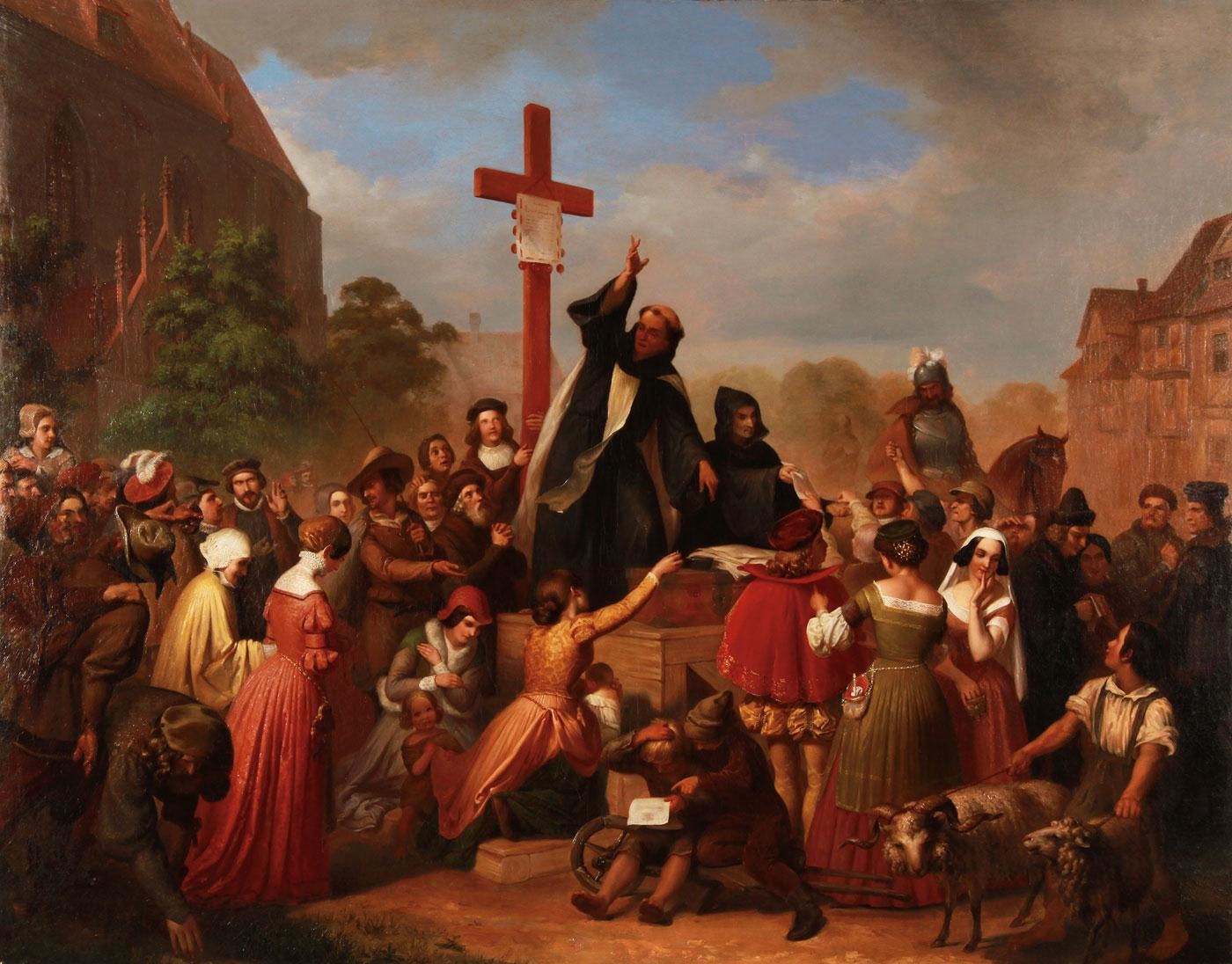
The Clash with Rome On October 31, 1517, he nailed his Ninety-Five Theses to the door of the Wittenberg church, not as a revolution, but as an academic debate. He wrote in Latin originally, yet within weeks the theses were translated into German, printed, and spread like wildfire across Europe. What Luther intended for the classroom became a cry for freedom.
The Church of Rome demanded silence. In 1520 Pope Leo X issued a papal bull condemning his writings and calling for his recantation. Luther responded by burning the bull in public. The following year he was summoned before the Diet of Worms, where Emperor Charles V presided. Surrounded by his books and threatened with death, Luther asked for a night to pray. When he returned, he spoke words that would echo through the centuries:
“Unless I am convinced by Scripture and by plain reason—for I do not accept the authority of popes and councils alone—my conscience is captive to the Word of God. Here I stand; I can do no other. God help me. Amen.”
It was not bravado. It was conviction.
The same man who once trembled before the mass now stood firm before the emperor. The gospel had made him free.
The German Bible After the Diet, where his life was threatened, Luther was “kidnapped” by his protector, Frederick the Wise, and hidden in Wartburg Castle. There, in exile, he began one of the most important works of the Reformation: translating the New Testament into German. For centuries the Bible had been locked away in Latin; now it would speak in the language of the people.
The Reformation truly took root not through political power or academic debate, but through the Word of God in the vernacular tongue. When the people could read the gospel for themselves, they discovered that justification came not by the authority of Rome but by the grace of Christ. As Luther later said, “The Word did it all.”
Preacher, Husband, and Churchman Luther’s life after Worms was not without struggle. He faced opposition from both radicals and reactionaries. Yet through it all, he remained first and foremost a preacher. “If I could today become king or emperor,” he once wrote, “I would not give up my office as preacher.” He believed that God’s ordinary means of grace, Word and sacrament, were the true instruments of reformation. Preaching was power. The same gospel that justified also sanctified and built the Church.
Luther was also a husband and father. In 1525 he married Katharina von Bora, a former nun. He said he did it “to spite the Pope”, and perhaps he did, but God used that marriage to humanize the reformer. Their home in Wittenberg became a lively center of hospitality and theological discussion. Up to forty students and guests might gather at their table on any given day. Katie managed the household, brewed beer, tended the gardens, and raised six children. Luther affectionately called her “Lord Katie.” Through laughter, hardship, and even the sorrow of losing children, the Luthers modeled the Christian family as a little church, where worship, work, and warmth intertwined.
As a churchman, Luther sought not to destroy the Church but to reform it. He rejected individualism and self-made religion. “Apart from the church,” he said, “there is no salvation.” His goal was always the renewal of the Church around the Word of God, not the birth of sects, but the restoration of the Bride of Christ.
Above all, Luther was a man of the Book. He once said, “If the Bible were a mighty tree and all its words were branches, I have tapped all the branches.” To him, the Scriptures were living, breathing truth. He warned Christians not to substitute the writings of the fathers (or even of reformers) for the Word itself: “We are like men who study signposts and never travel the road. The Scriptures alone are our vineyard, in which we ought to toil.”
That conviction remains the beating heart of the Reformation. When the Bible is opened and the gospel is preached, Christ reigns. When it is closed, superstition and self-righteousness return. We need the Word.
We Are Beggars In 1546, at age sixty-two, Luther traveled to his hometown of Eisleben to mediate a dispute over his family’s copper business. There he fell ill. Surrounded by friends, he prayed, “Into your hands I commend my spirit.” His final words still resonate:
“We are beggars, this is true.”
Luther’s final confession was one of humility. Before God, even the reformer was only a beggar at the door of eternity. And that is the true spirit of Reformation, not self-confidence, but dependence; not pride, but faith.
Lessons from Luther So what lessons can we draw from Luther’s life and the Reformation he sparked?
First, the centrality of the gospel. Justification by faith alone remains the power of God unto salvation. No human work, no religious ritual, no personal righteousness can substitute for Christ’s righteousness imputed to us.
Second, the providence of God. From thunderstorm to pulpit, from monastery to castle, every step of Luther’s life testifies that God’s hand leads His people even through their missteps.
Third, the primacy of the Word. The Reformation was born of Scripture. It calls every generation of believers to be people of the Word, reading it, hearing it preached, and conforming our lives to it.
Fourth, the beauty of ordinary faithfulness. Luther’s preaching, his family life with Katie, his table talks with students—these remind us that reformation begins not in grand gestures but in daily obedience.
And finally, the humility of grace. The man who once feared the wrath of God died resting in mercy. “We are beggars, this is true.” So are we all. But the gospel assures us that the hands we stretch out in faith are filled by the righteousness of Christ.
That is the Reformation’s lasting word: the just shall live by faith. And because of that faith, we can stand unashamed of the gospel—for it is still, today, the power of God unto salvation.
Here’s your Bible Gateway verse-of-the-day calendar for the month of November! Click each link below to read the verse in your preferred translation — or download the image (or PDF) of all verse references.
You can also subscribe to get Bible Gateway’s Verse of the Day right in your inbox every day — in your preferred translation (or multiple translations)!
Get the most out of your Bible reading — including each of the above verses — with a free trial of Bible Gateway Plus. Access dozens of Study Bibles, dictionaries, commentaries, and other resources to go deeper into every aspect of God’s Word. Try it today!
The case for the reliability of the New Testament Gospel eyewitness accounts is dependent on the trustworthiness of its authors. In cold-case criminal trials, eyewitness accounts are typically evaluated through the lens four critical questions: Were the witnesses really present at the time of the crime? Can the witnesses’ accounts be corroborated in some way? Have the witnesses changed their story over time? Do the witnesses have biases causing them to lie, exaggerate or misinterpret what was seen? We can examine the Gospels and their authors by asking similar questions:
Question One: Were the authors really present at the time of their claims? It’s much harder to tell an elaborate lie when people are still alive to test the claims. The best inference from evidence is that the New Testament claims about Jesus were penned early enough to have been cross-examined by those who were still alive and would have known if they were lies:
(a) The missing information in the Book of Acts (i.e. the destruction of the Temple, the siege of Jerusalem, the deaths of Peter, Paul and James) is best explained by dating Acts prior to 61AD
(b) Luke wrote his Gospel prior to the Book of Acts
(c) Paul’s referencing of Luke 10:6-7 (1 Timothy 5:17-18, written in 63-64AD) and Luke 22:19-20 (1 Corinthians 11:23-26, written in 53-57AD) is best explained by dating the Gospel of Luke prior to 53-57AD
(d) Luke’s reference to his Gospel as “orderly” in Luke 1:3 (as compared to Bishop Papias’ 1st Century description of Mark’s account as “not, indeed, in order”) and Luke’s repeated references of Mark’s Gospels are best explained by dating Mark’s Gospel prior to Luke’s (from 45-50AD).
Question Two: Can the Gospel accounts be corroborated in some way? The best inference from evidence is that the first century Gospel accounts are better corroborated than any other ancient historical account:
(a) Archaeology corroborates many people, locations and events described in the Gospels
(b) Ancient Jewish, Greek and Pagan accounts corroborate the outline of Jesus’ identity, life, death and resurrection
(c) The Gospel authors correctly identify minor, local geographic features and cities in the region of the accounts
(d) The Gospel authors correctly cite the ancient proper names used by people in the region of the accounts
(e) Mark’s repeated reference and familiarity with Peter corroborates Papias’ description of Mark’s authorship of the account
(f) The authors of the Gospels support one another unintentionally with details obscure details between the accounts
Question Three: Have the accounts been changed over time? The Gospels were cherished and treated as Scripture from the earliest of times. The best inference from evidence is that their content has been preserved accurately:
(a) A New Testament “Chain of Custody” can be reconstructed from the Gospel authors (through their subsequent students) to confirm the original content of the documents
(b) Much of the Gospels (and all the critical features of Jesus) can be confirmed in the writings of the Church Fathers
(c) The vast number of ancient copies of the Gospels can be compared to one another to identify and eliminate late additions and copyist variants within the text
(d) The earliest caretakers of the text considered it to be a precise, divinely inspired document worthy of careful preservation
Question Four: Were the Gospel authors selfishly motivated? The authors of the Gospels claimed to be eyewitnesses (or to have spoken to eyewitnesses), and these witnesses were transformed by what they observed. Upon careful investigation, the best inference from evidence is that these authors were not selfishly motivated:
(a) The authors were convinced on the basis of observation afterward, rather than biased beforehand
(b) The three motives driving bias were absent in the lives of the authors. They were not driven by financial gain, sexual (or relational) lust or the pursuit of power. They died without any of these advantages
(c) The testimony of the authors was attested by their willingness to die for what they claimed. There is no evidence any of them ever recanted their testimony.
The gospel authors were present during the life of Jesus and wrote their accounts early enough to be cross-examined by those who knew Jesus. Their accounts can be sufficiently corroborated and have been accurately delivered to us through the centuries. The authors lacked motive to lie to us about their observations and died rather than recant their testimony. Would the Gospels withstand the scrutiny of a cold-case investigation? Yes.
In 1527, Martin Luther wrote his most beloved hymn, “A Mighty Fortress Is Our God,” now a staple for Reformation Day services around the world. It is arguably one of the top ten hymns in church history. The first three words, “Ein Festa Berg,” appear on statues and churches in Germany and have even made it to such places as the fireplace mantel in Billy Graham’s former North Carolina home. The hymn is a masterclass in both hymnody and theology.
The hymn, however, was not composed in the comforts of Luther’s study. It was born in the trenches.
If a line from Henry Wadsworth Longfellow is correct, that “into each life some rain must fall,” then the year 1527 was a deluge for Luther. That year, the plague hit Wittenberg, causing Frederick the Wise to shut down the university and send his faculty and students away. Luther defied the order and, with his family, stayed to help. He watched neighbors die. Then tragedy came to Luther’s own house. He and Katie, a former nun turned Reformer’s wife, lost their own son, Hans, in infancy. Ten years had passed since the posting of the 95 Theses, and since then Luther had managed to amass a horde of enemies from all sides of the theological and political spectrum. Luther knew the sting of personal betrayal. On top of that, he was still reeling from the effects of the Peasants’ Revolt of 1524–1525, a popular uprising (partially inspired by Luther’s teachings) that left tens of thousands dead. Dark clouds covered Luther’s horizons most of that year.
Enter the castle-like line, “A mighty fortress is our God, a bulwark never failing,” which evokes Luther’s earlier stay at the Wartburg, the great castle overlooking Eisenach. With its clarion call to declare God’s power, our utter insufficiency, Satan’s relentless attacks, Christ’s total victory, and the confession (as the final lyric cascades) “his kingdom is forever,” this hymn is theology applied.
40:8 This is a glorious affirmation of the total sufficiency and eternal existence of God’s word. Regardless of the decay of nature, human frailty, and changing circumstances, God’s word is sure. He gives absolute promises which certainly will be accomplished. His word lives and breathes in the hearts of those who, through the ages, have been regenerated.
Criswell, W. A., Patterson, P., Clendenen, E. R., Akin, D. L., Chamberlin, M., Patterson, D. K., & Pogue, J., eds. (1991). Believer’s Study Bible (electronic ed., Is 40:8). Thomas Nelson.
40:8 will stand forever The impermanence of human life is contrasted with the permanence of God.
Barry, J. D., Mangum, D., Brown, D. R., Heiser, M. S., Custis, M., Ritzema, E., Whitehead, M. M., Grigoni, M. R., & Bomar, D. (2012, 2016). Faithlife Study Bible (Is 40:8). Lexham Press.
40:8 the word of our God stands forever. The permanence of God’s word guarantees against any deviation from the divine plan (55:11). He has promised Jerusalem’s deliverance (v. 2) through His coming (vv. 3–5), so it must happen that way (cf. Mt 5:18; Lk 16:17).
MacArthur, J. F., Jr. (2006). The MacArthur study Bible: New American Standard Bible. (Is 40:8). Thomas Nelson Publishers.
† 40:8 — “The grass withers, the flower fades, but the word of our God stands forever.” Critics have attacked the Bible for centuries, but it still stands. They die; it remains. Their works are forgotten; it still generates front page news. We can bank our lives on the trustworthy Word of God.
Stanley, C. F. (2005). The Charles F. Stanley life principles Bible: New King James Version (Is 40:8). Nelson Bibles.
Ver. 8. The grass withereth.—The decay of the material:— Viewed in its immediate relations to the context, the “flesh,” which is grass, is the vast population of the Babylonian empire. The “goodliness thereof,” which is the flower of the grass, is the pomp and pride of the Babylonian civilisation. The “Word of the Lord” is that prophetic word of the future glory of Israel and her Messiah-King which seems to have found a grave of oblivion beneath the overshadowing growth of Babylonian splendour. I. THE NECESSARY DECADENCE OF ALL THAT IS SIMPLY MATERIAL AND EARTHLY.
The world had never looked upon a more splendid civilisation than that which greeted the eye of the prophet as he looked down in vision upon the great empire of Nebuchadnezzar. For a thousand years Babylon had been the seat of empire, but under her present sovereign she had risen to a glory of which her founders had never dreamed. Nebuchadnezzar, following in the footsteps of Nabopolassar, his illustrious father, had extended his empire by conquest until he was in fact as well as in name, “King of men.” Northward, he held all Assyria in subjection, and reigned to the limits of the frozen zone. Southward, he had subjugated Egypt with its vast empire, and reigned to the limits of the equatorial belt. Tyre, with all her world-wide commerce, was his vassal, and so his fame had been carried to the remotest borders of the great west. This vast empire it was now the ambition of Nebuchadnezzar to consolidate and unify. For this purpose he had opened long lines of communication between its remotest parts. Canals, one of which was five hundred miles in length; highways across the great deserts connecting with the hills of Arabia and the Mediterranean Sea, with caravansaries, fortified garrisons, wells of water, &c., at all needed points; walled cities along the great thoroughfares as storehouses and resting-places for man and beast—these were amongst the wise provisions for bringing the people of various nationalities and races into the cordial relations of mutual interchange and commerce. But the purposes of the great conqueror went further than this. To give stability to his empire he sought to bring about an amalgamation of all the races and a unification of all the religions within his realm. This was the significance of the image of gold which was set up in the plain of Dura, and which all were required to worship on penalty of being thrown into the furnace of fire. And when, in obedience to the Divine voice, the prophet declared all this might and glory to be but as the evanescent and fading flower, you and I, if we had been present, would have looked upon him as some misanthropic churl. And yet, what were the real facts in the case? Within less than forty years from the time to which the prophet alludes, the city was captured and pillaged, the seat of government removed, and the empire distributed among the conquering allies.
We find ourselves to-day in the midst of a civilisation as much more splendid than that of Rome as the latter was superior to that of Chaldea. In all that constitutes true greatness; in all that is at once beneficent and beautiful; in liberty, in philanthropy, in literary and æsthetic culture, in adventure of science and perfection of art, there seems scarcely anything more to be desired. Humanity seems at last to have attained its goal. Culture is in its richest and most perfect flower. We are ready to say, “Surely this consummate civilisation of our race shall not wither like that of Babylon or Rome!” Has it any elements of durability that its forerunners had not? The answer to these questions will be found in the answer to another, namely, whether this civilisation shall root itself simply in that which is material, or shall be permeated by that which is spiritual and Divine? For amidst all the decadence of the past, there has been ever that which could not perish, which was not subject to change, and which had the power of communicating its own stability to all that came under its influence. II. THE STABILITY OF THAT WHICH IS SPIRITUAL AND DIVINE. “The Word of the Lord.” Other things undergo mutations, but it abides ever the same. It has also this marvellous property, that it communicates the elements of its own permanence to all that comes under its influence. It is thus like a seed cast into the soil, which takes up inert matter, incorporating it with itself, and thus imparting to it the life which is immanent in itself. Of this life-containing, life-imparting power of the Word of God we may find beautiful illustration in the history of the decline and fall of the empires to which we have referred. Look first at Babylon. Is there anything that shall survive the wreck of the imperial city? Yes, there is a captive people, despised, toiling as slaves in the erection of the splendid architectural monuments of Nebuchadnezzar’s reign. Few and feeble apparently they are, overshadowed by the countless hosts of Chaldea. But they are believers in the Word of the Lord. That Word has, as an incorruptible seed, found a lodgment in their hearts. It has imparted to them its own immortality. Babylon, that rejects this Word, shall perish; but Israel that believes it and lives upon it shall survive. That which we have seen to be true in this respect of Babylon was equally true of Rome. The eternal city was “laid on heaps,” but from the ruins came Christianity in all the beauty of undying youth. The Vandals that destroyed everything else had no power over it. Nay, in the breasts of the very slaves whom they bore to their northern homes, they carried this incorruptible seed. The religion of the slave conquered the master; and hence came that hardy type of Celtic and Saxon Christianity which made the north of Europe the seed-bed of the Reformation. There are preserving salts which, taken up into the pores of the frailest grass and the most delicate flower, do, as it were, transfigure them in their beauty and so preserve them for ever from decay. And thus the religion of Christ has power to give immortality to that which is most fleeting and evanescent. It lays its wand upon that frail flower of physical beauty which lasts but for a day, and it transforms it into the undecaying beauty of the resurrection. It enters into the pulses of youthful ardour and enthusiasm, and makes them beat high and warm in pursuits that can never be interrupted and from motives that never pall. It lifts ambition to a higher plane. It gives to all the activities of the soul their normal and healthful development. It brings the favour of God which is life, and His loving-kindness which is better than life. And what it does for individuals it does in a certain sense for nations also. Let the atheistic materialism, which is seeking to supplant Christianity, become the dominant influence in this country, and Ichabod is written upon all our institutions. The fate of Babylon and of Rome will be ours. The nation and kingdom that will not serve God shall perish. (T. D. Witherspoon, D.D.) The flower fadeth.—Progress in decay:— There are at least two sides to everything. To everything in morals there is a dark and a bright side. Every truth is a revelation of God—a Theophany—a Shechinah. And as the Divine pillar in the Exodus had sometimes an aspect of cloud, and sometimes of fire, so is it with all truth. Its appearance alters with our own changes of character or condition; to the eye of sense it may be a Shechinah of gloom, to the eye of faith a Shechinah of glory. Thus is it with our text. I. LET US CONTEMPLATE IT FIRST BY THE EYE OF SENSE. Let us sit solemnly together in the shadow of the Shechinah. How depressing seems the thought! What a tender and fragile growth is “the grass”! How short-lived all the goodliness of “the flower of the field”! Yet such is human life!
“The flower fadeth!” How impressive the truth when we think of others—the beloved of home and life! Where are the happy children who sat with you in the school, and went forth in your holiday?—the men and women who shared with you life’s heavier tasks and strangely saddened joys? How many of them do you meet to-day?
“The flower fadeth!” How impressive the truth when you think of yourselves! Where now is the bounding heart of your childhood? Where the unclouded hopefulness of youth? As the tide of time rolls on, first, youthful beauty fades like a flower. Then activity declines: the airy step of childhood flags into the slow measures of weary feet! Then strength decays: the right arm loses its cunning, the form bends under its load! Meanwhile, even the moral man seems to share the infirmities of the physical; the tender affections are chilled, the glorious intellect unhinged or exhausted. And it is all saddening—this withering of the human blossom, and the heart recoils from its emblem—a fading flower! Let us so live that it may be said of us truly, “His glorious beauty was a fading flower.” For the fading flower hath fulfilled well its ministry! Was its life long or short; was its beauty great or little; was its sphere wide or narrow; the flower had done well the special work God gave it to do. Richly varied and full of splendour was the flora of the now barren Palestine in the days when Isaiah swept from his harp this requiem to the withering flower! In nothing, perhaps, are there more notable differences than in the spheres and services of flowers. In the wild howling desert the stately palm waves its radiant flower-tuft, and many a lowly plant and shrub open fragrant blossoms. And amid Polar ice-fields and in the fissured lava of volcanoes come forth these sweet children of the summer in their ministry of beauty and of love. Meanwhile, earth’s fairer fields are beautified, like old Eden, with their blessed omnipresence. They are all of different classes and uses; but each, in its own season and sphere, makes its little life a blessing—and the air of heaven is sweeter, and insect-life is fed, and the heart of childhood is thrilled with joy, and the soul of wearied manhood is made happier and holier, because of the silent yet earnest ministries of the fading flower! II. TO THE EYE OF FAITH THE SHECHINAH IS GLORIOUS. Indeed, did these tides of time roll over a sinless world, every premonition even of our mortal decay would awaken only joyful anticipations and emotions. For what, after all, is a flower? Is it in itself a perfection—a consummation? No! far from it! It is, at most, a phenomenon of progress! And its decay is only the passing away of a good thing, giving place to a better! The great end and purpose of all vegetable life is the perfected seed! And analogous to this is the progress and development of man’s mortal life. Its earthly offices and uses are only for the strengthening within of the spiritual and immortal; our present life, with all its activities and enjoyments, is but the flower-form of a being whose fruit-form or seed-form is in an after and higher life! And death itself is no more than the falling of the petals from the well-set fruit. Therefore, as the wise husbandman grieves not when his orchards shower their gay blossoms, but rejoices, rather, because this is but a prophecy and promise of the golden wealth of autumn, so we should not grieve when, in the development of man, the mortal flower-leaves fall away from the swelling fruit of immortality!
It applies to individuals. Fruit is always of greater value than flowers. Therefore, the trained intellect, the calm judgment, the sanctified affections, the subdued passions, the strong, regnant conscience of the mature man, are worth incalculably more than the fiery impulses, the hot and headlong passions, and all the prodigal bloom and aroma of his younger and fairer life. It applies as well to communities or nations—to that organic life of the race which constitutes its oneness. Here, too, the fruit is worth more than the flowers.
The world has had its radiant spring-time and its gorgeous flora. In Rome, Greece, Persia, Egypt, Assyria, Judæa, human nature put forth splendid blossoms until the whole air was fragrant with intoxicating aroma. The old philosophy, the old mythology, the old arts and eloquence and poetry—the whole power and passion of the young imperial genius of old time gave to earth the seeming of a fairy palace filled with shapes and sounds of surpassing splendour. And verily that weird glory hath passed away! But have we lost by the decay? Are earth and life sadder than in those heroic times? Would you exchange your printing-press for all the pencils of old artists, and the tongues of old orators, and the harps of old minstrels? Would you barter railroad and telegraph and steamship for all the radiant dreams of the old idealists? Would you give up your simple Christian faith for the old gorgeous mythology?
We are considering the whole of earthly life as the flower-form, rudimental to the heavenly fruit-form; and the analogy between flower-life and man-life is manifold. (1) Flowers differ widely in their beauty and glory. Among species ranking as equals, how the lily differs from the rose; and both from the violet! And so is it of humanity. It has its roses, and lilies, and violets; and now and then a magnificent or monstrous aloe, and always its countless myriads of flowers of the grass. And although to the eye of sense the value of flowers is according to their outward manifestations; yet, true wisdom regards colour and aroma as only phenomenal of progress. Presently the petals, alike of the grand flower and the tiny blossom, will wither, and of both the value seems only in the accomplishment of their Maker’s purpose with the fruit or the seed. So God accounts of His children. The king, the conqueror, the man of imperial gifts and genius will die as fades the great aloe, and the humble pass away as the flower of grass. And then the search, as material for the Judgment, will be the fruit or seed of the developed character. (2) Flowers differ widely in their seasons and spheres of influence. Fair children die like snowdrops in the early spring. Then come the summer flora. Men in the meridian splendour of their powers passing away, as vineyards and orchards and meadows shower their prodigal blossoms. Nor is the human winter without its flowers of exquisite fragrance and beauty. We have them in our midst, men whose grey heads are our crowns of glory. And as in their seasons, so in their spheres, men, like flowers, differ. At the foot of the awful arctic glacier did our heroic Kane find blossoms of delicate beauty; and in the dreariest waste of Sahara the eye of the fainting explorer grew bright as it fell on a bursting flower. So is it of human influence. In the loneliness of obscurity, in the humiliation of poverty, in the dark chamber of patient, unpretending suffering, have saintly spirits wrought a gracious work. (3) Meantime, human life and flower-life are alike, mainly because both are phenomenal of progress. Earthly life is short, and we would not have it longer. The season of flowers is full of peril to the tender germ of fruit. Having perfected the seed, nature’s next care is to disperse or distribute them. Some are borne away on their own airy wings, and as they float up in the sunshine, freed of their heavy earthy beauty, the perfected seed, as a spiritualised blossom, seems fairer than all flowers! Some are borne across oceans, and take root in other continents. Such is the progress and development of that whose young life was born of a fading flower! Oh, to a prescient eye what possibilities, what colours of beauty, what forms of majesty, what felicities, what glorious hopes, what ineffable fruitions, are embosomed in a seed! And analogous to thus—but immeasurably more wonderful—are the embryonic powers, and shall be the development of the human soul in the after-state! (C. Wadsworth.) Summer blossoms:— We expect the leaves to fade and fall in October. They have had their full time of growth and unfolding, and their fair share of the beauty and blessedness of the world. But there is nothing to prepare us for the fading of the blossoms of early summer. When, therefore, we see the flowers fading on the ground and the blossoms falling from the tree, our feelings receive something like a shock. The contrast between the death of these fair creations and the bright overflowing fulness of life around fills us with a peculiar sadness. A premature fate, we feel, has overtaken them; they have not had their full share of the feast of life.
Looking exclusively at the fact itself, there is nothing but sadness in the fading of the flower. It seems a wanton destruction of so much life and beauty; and we are apt to ask, “To what purpose is this waste?”
But much as we mourn all these fading flowers, the human as well as the natural, we cannot wish them to abide for ever. It is the fading flower that is so wonderfully beautiful. Fix its beauty unchanged, and you make it an artificial flower, a dry mummy. It is the fleeting human blossom that is so tenderly dear. We love each other more devotedly owing to the shadow feared of man that falls upon and consecrates our love; because we must soon, we know not how soon, be parted. We should feel everlasting flowers to be utterly incongruous in a world of change and decay; their steadfast continuance, when there was no reason for their continuance, would weary and offend our minds.
But the truth of the fading flower has another and a brighter side. It is not all death and desolation. We shall pass at once out of the shadow into the sunshine when we consider the reason why the flower fades. The flower fades that the fruit may take its place. The fading of the flower, rightly viewed, is therefore a natural and necessary phenomenon of life. In itself it is joyous, and not grievous. In the unfallen Eden the fading flowers suggested no thought of gloom to Adam, but only of bright progress from life to fuller life, from a lower to a higher stage of development and perfection. Viewed, then, in the light of Him who hath brought life and immortality to light in His Gospel, and free from the cloud of sin, the fading of human-life and of flower-life is not in reality sad, but joyful. Man dies, but his life on earth is only for the formation of the eternal life. Every gift we receive is but a promise; every beauty we behold but a prophecy; every pleasure we enjoy but a foretaste. The Christian’s whole life is but the earnest of the inheritance that awaits him. We see by faith, although we are slow of heart to believe it, that our very losses and privations are ministering to a noble and goodly development pregnant with an everlasting promise. Death itself is the act of blossoming. It is a scientific fact that it is the dying plant alone that flowers. Blossoming is the highest point in plant life. When it has produced its blossom it perishes. In human life it is so likewise. Our existence here is but a daily dying, the continual production of a blossom, within whose petals as they wither is expanding the immortal fruit; and death is but the final falling of the sere petals from the fruit when it has set. It is not destruction, but development; the mortal not destroyed, but putting on immortality.
Then, consider that the blossom belongs to the plant itself, the fruit to the race. The blossom is the end of the selfish life; the fruit is the beginning of the unselfish.
Further still, the plant that flowers is confined to one spot; but when it fruits and seeds it gets wings, as it were, and can fly away from its natal place to long distances, as you have often seen the thistle-down or the fleecy parasol of the dandelion do, to make the wilderness and the solitary place to be glad, and the desert to rejoice and blossom as the rose. Is it not so in human life? That death which seems to bound our life, in reality gives us wings, and takes us out of this cramped and narrow sphere of change, and sorrow, and sin, into the freer air and larger sunshine of God’s everlasting kingdom. The fruition of life is not the limitation, but the freedom and enlargement of life. And who knows what life and beauty and blessedness to others may spring from seed dropped by our losses and death? Looking thus at this life as only the flower-form of our being, we see the reason of its brevity. The life of the blossom is short because it has to prepare the way for the fruit; and the season in which it is put forth is dangerous to the formation of the tender germ. We should welcome the growing infirmities and decays of life as signs that summer, the season of fleeting glories, is passing away, and that autumn, the season of enduring fruition, is drawing nigh. They proclaim to us that now our salvation is nearer than when we believed.
But I reserve the grandest thought connected with my theme to the last. The flower fades and falls off the plant, but it does not altogether vanish; it does not perish utterly. Some part of it, larger or smaller, according to the species, remains behind to form the nucleus of the fruit. In every case the lower part of the central and most important part of the blossom is left, and it is out of it that the fruit is formed. A good deal of the fleeting flower, indeed all that is essential in it, is thus made permanent in the enduring fruit; and the fruit itself may be looked upon as a more perfect and lasting blossom, retaining the colour, and fragrance, and grace of form that distinguished the blossom, but superadding qualities, such as nutritiousness and flavour, which the blossom lacked. Is not the analogy here very instructive and consoling? Not only do all our sanctified losses turn to gains, but the gains are largely composed of what we lost. We take up with us into every stage of our advancing progress what was best and most serviceable in the previous stage; and in the fruit of our achievements we can trace much of the fair blossoms of hope and aspiration which led to its formation. Nothing that is really good in human life ought to be thrown away as useless when we have outgrown it. The good of childhood ought to remain in manhood. The enthusiasm, the freshness of interest, the innocent simplicity, the spirit of hope, inquiry, and wonder which characterise our early years, ought to endure late in life, under the calmer and quieter outside of maturity. Let us not mourn, then, that so many fair and precious things pass away from us as we go on to our immortality; for nothing that is really essential to our well-being shall perish utterly, but shall be absorbed into our souls and become their eternal wealth. (H. Macmillan, LL.D.) The thought of death is not to be dwelt upon morbidly in the manner of Swift, who said, “I was forty-seven years old when I began to think of death, and the reflections upon it now begin when I wake in the morning and end when I am going to sleep.” But it is well for us to have the thought at hand. (W. R. Nicoll, LL.D.) The Word of our God shall stand for ever.—The higher criticism:— I. WHAT IS MEANT BY “THE WORD OF OUR GOD”? You answer, “The Bible.” I think not. At least, and certainly, to Isaiah it could not mean more of the Old Testament than he possessed—a mere fragment of the Book in our hands. Even to Peter it could not have meant all the records we have, seeing that some had not been written when he repeated the prophet’s statement. What, then, are we to understand by this phrase, “the Word of our God”? Simply, truth. Truth in its very widest sense, whether in the Bible or out of it, is “the Word of God.” II. Higher criticism proposes to solve for you and me, what we have neither the time nor ability to do for ourselves, TO WHAT EXTENT INTERPOLATION HAS GONE ON. It is a strictly honest, unbiassed, sincere scrutiny into the claims, history, authorship, date, and language of the books of the Bible. III. WHAT WILL BE THE RESULT? Only good. If we are honest we shall want only the truth; and after the examination is completed truth will stand more grandly than ever before us. IV. OUR ATTITUDE TOWARD HIGHER CRITICISM may well be for these reasons—
One of welcome. We rejoice in every honest and reverential inquiry for truth.
One of hope. The future of our faith looks all the brighter from the discussions and questionings of to-day. Men are beginning to think. An interest is awakening in the vast questions that relate to our higher life.
One of confidence. Are we wise in our fear for the safety of “the Word of our God”? Does “the Word of our God” need our defence? Is not He pledged to its security? That which cannot stand the test of criticism had better go; but truth, “the Word of our God, shall stand for ever.” (J. E. W. Cook.) The enduring Word:— “The Word of the Lord endureth for ever.” How do we know that? Certainly, not in the same way as we are sure of the universality of death. We know it to be true if we believe two things—
That God, the perfect moral being, exists.
That He has spoken to man. The Word of God, speaking in conscience, in revelation, is like God Himself—above the waterfloods of change; it lasts. (H. P. Liddon, D.D.) The passing and the abiding:— I. Since the Word of our God shall stand for ever, the BIBLE WILL REMAIN.
Think of the Bible as history. “The Old Testament is supported by the exhumed records of the kings of Egypt and Babylon and Nineveh and Moab. We are now shown in the Boulag Museum at Cairo the very body of the Egyptian king who oppressed Israel. At a hundred points confirmatory evidence has been dug out of the Assyrian ruins. In the day when the Bible was attacked by unbelief, there appeared out of the very ground hosts of defenders. God’s Providence supports His Book.”
Think of the Bible as to philosophy. John Stuart Mill will tell us, “It is impossible to find in the ideas of any philosophy, even the latest, a single point which is not anticipated and ennobled in Christianity.”
Think of the Bible as to science. It is true, as one has said wisely and wittily, that “the intention of Holy Scripture is to teach us to go to heaven, and not how the heavens go.” And yet the great astronomer Sir John Herschel will tell us: “All human discoveries seem to be made only for the purpose of confirming more and more strongly the truth contained in the Sacred Scriptures.”
Think of the Bible as to morals. Those words of James Russell Lowell, spoken so bravely at a dinner in London, before a company of sceptics, are well worth treasuring: “The worst kind of religion is no religion at all. And those men, living in ease and luxury, indulging themselves in the amusement of going without religion, may be thankful that they live in lands where the Gospel they neglect has tamed the beastliness and ferocity of the men who, but for Christianity, might long ago have eaten their carcasses like the South Sea Islanders, or cut off their heads and tanned their hides like the monsters of the French Revolution.” This Bible, the Word of God, which history substantiates, which philosophy cannot anticipate, which science reinforces, which is the source of all true morals and secure civilisation, is to abide. II. Since the Word of our God shall stand for ever, THE KINGDOM OF CHRIST IS TO ENDURE AND CONQUER. For the very heart and kernel of God’s Word is the revelation of the certainly vanquishing kingdom of our Lord and Saviour Jesus Christ. III. Since the Word of our God standeth for ever, HEAVEN WILL SHINE ON US AT THE LAST. (W. Hoyt, D.D.) “The Word of our God”:— All explanations can be reconciled by suffering the prophet to express his own ideas, without any adventitious limitation and admitting, as the only sure conclusion, that by “Word” he means neither promise, nor prophecy, nor Gospel merely, but “every word that proceedeth out of the mouth of God” (Deut. 8:3; Matt. 4:4). There is a tacit antithesis between the Word of God and man; what man says is uncertain and precarious, what God says cannot fail. Thus understood, it includes prediction, precept, promise, and the offer of salvation; and although the latter is not meant exclusively, the apostle makes a perfectly correct and most important application of the verse when, after quoting it, he adds, “and this is the Word which is preached (εὐαγγελισθέν) unto you”; that is to say, this prophetic declaration is emphatically true of the Gospel of Christ. (J. A. Alexander.) The Bible its own defence:— A well-known Presbyterian minister is reported to have said, “We must defend the Bible.” Must we? The Bible is badly off when it needs your defence or mine. I stood on the “Big Four” railway track the other day watching the Cincinnati and Cleveland express pass by. A young bee, called out by the warm April winds and bright spring sunshine, flew toward the train. Supposing I had rushed for a club or a rifle, and had run down toward the approaching express, crying aloud, “I must defend the cars from that bee’s attack,” would you not have said, “Get out of the way; let the train defend itself”? The Bible is its own best defence. (J. E. W. Cook.)
Exell, J. S. (n.d.). Isaiah (Vol. 2, pp. 183–189). Fleming H. Revell Company.
“If we move in mass, be it ever so circuitously, we shall attain our object; but if we break into squads, everyone pursuing the path he thinks most direct, we become an easy conquest to those who can now barely hold us in check.” —Thomas Jefferson (1811)
Trump wants to nuke the filibuster: With the Democrats’ government shutdown now in its fourth week, President Donald Trump’s patience has clearly worn out. On Thursday, he posted, “The one question that kept coming up [during my trip] was how did the Democrats SHUT DOWN the United States of America, and why did the powerful Republicans allow them to do it? The fact is, in flying back, I thought a great deal about that question, WHY?” After noting the negative impact the shutdown was having on Americans, Trump added, “Get rid of the Filibuster, and get rid of it, NOW!” Democrats under President Joe Biden unsuccessfully sought to do the same thing, though then-Democrat Sens. Joe Manchin and Kyrsten Sinema thankfully prevented it. The Senate’s 60-vote threshold has long frustrated the majority party, forcing legislative compromise. But it’s a feature, not a bug, that ensures the minority party has a voice.
DHS to investigate BLM: In 2020, in the wake of George Floyd’s death, the Black Lives Matter organization raked in over $90 million in donations. Yet in the years that followed, allegations surfaced claiming that several of BLM’s most prominent leaders effectively grifted off the support and personally pocketed much of the wealth. This week, it was learned that the U.S. Attorney’s Office for the Central District of California has launched an investigation into BLM’s leaders and other similar black-led “anti-racism” organizations to determine whether they improperly managed charitable funds. The BLM Global Network Foundation noted that it “is not a target of any federal criminal investigation,” promising “full transparency, accountability, and the responsible stewardship of resources dedicated to building a better future for Black communities.”
China approves TikTok transfer deal: “We finalized the TikTok agreement in terms of getting Chinese approval,” Treasury Secretary Scott Bessent announced yesterday. “And I would expect that would go forward in the coming weeks and months, and we’ll finally see a resolution to that.” An agreement is expected to be finalized soon. This comes weeks after Donald Trump signed an executive order authorizing a deal for an American entity acquiring the popular social media platform, stating at the time, “This is going to be American-operated all the way.” Trump has repeatedly put off Congress’s direction to ban it in the U.S. or get China divested from the platform. According to his administration, preserving TikTok as an American-owned platform would generate $178 billion in economic revenue over the next four years. When this deal will be finalized is still up in the air.
NJ gubernatorial race now a dead heat: Tuesday is election day in two gubernatorial races that have tightened up over the last few weeks. Of particular interest is the race in New Jersey, where Republican candidate Jack Ciattarelli has closed the gap with Democrat candidate Mikie Sherrill. Recent polling shows the race to be a dead heat, with the momentum clearly favoring Ciattarelli. This reality has been especially evident in the number of Democrat officials who have endorsed Ciattarelli — 12 so far, with the latest being Branchville Councilman Jeff Lewis, following Branchville Mayor Anthony Frato. Lewis explained that Sherrill “hasn’t done anything to enthuse me.” Should Ciattarelli pull off a Republican upset in New Jersey, it will only further sow discord among an increasingly divided Democrat Party.
Democrat says narco strikes are a pathway to MAGA getting bombed: In an “epic example” of “toning down the rhetoric,” Congressman Jim Himes of Connecticut warned that if Donald Trump wants to kill drug cartel members, perhaps President AOC might want to kill Republicans. “There will be a Democratic President someday,” he said. “All my MAGA friends who are cheering … need to imagine who gets killed when President Alexandria Ocasio-Cortez says that it doesn’t matter what the law says.” The implication is that in his book, law-abiding American citizens are the same as foreign narco terrorists. Sadly, we know from a host of other examples like Jay Jones and Jennifer Welch that they really do want us dead, and they are not ashamed to say it out loud. They actually are the party of hate and death, as evidenced by the number of ghoulish Charlie Kirk Halloween costumes.
Fewer troops on NATO’s eastern flank: Donald Trump has ordered scaling back U.S. troops from NATO’s eastern flank. Concerned that the move undermines deterrence amid the Russia-Ukraine war, Senate and House Armed Services Committee Chairs Sen. Roger Wicker and Rep. Mike Rogers responded, “The president is right that U.S. force posture in Europe needs to be updated as NATO shoulders additional burdens and the character of warfare changes. But that update must be coordinated widely both within the U.S. government and with NATO.” Clearly, this is part of Trump’s strategy to get European leaders to step into the gap, but it may also be part of backroom negotiations to end the war in Ukraine. To mitigate that U.S. reduction, it is crucial that the U.S. and NATO remain fully committed to the large NATO air base at Mihail, Romania, a major logistical hub for all NATO operations in the region.
41K WI voter registrations don’t match driver ID database: Wisconsin’s Institute for Law and Liberty (WILL) has obtained data from the Wisconsin Election Commission showing that 41,000 voter registrations in the state do not match the Department of Transportation’s records, including driver’s license numbers and identification card numbers. This is information required by the Help America Vote Act, but WILL was refused additional data to verify the discrepancies. The Washington Examiner reports, “They include 11,174 registrations without a driver’s license number, up from 4,885 in 2020, and 24,733 cases where a name does not fully match WisDOT information, up from 15,260 in 2020.” WILL has sent a follow-up letter to the U.S. Department of Justice requesting that it delve deeper into the issue. WILL has also asked the Wisconsin Election Commission to explain why it has different processes to vet online voter registrations vs. handwritten forms. Transparency and accuracy in our elections matter.
Judge blocks DOJ’s investigation of QueerDoc trans clinic: In yet another example of two-tiered justice, U.S. District Judge Jamal Whitehead, a Biden appointee in Washington State, has rejected the Justice Department’s subpoena of a QueerDoc who specializes in telemedicine for gender-confused people. Whitehead claimed the subpoena targeted the small firm “to rifle through thousands of patient records hoping to find something — anything — to justify its predetermined goal of ending gender-affirming care.” QueerDoc was one of more than 20 companies to receive such a subpoena this summer, when Attorney General Pam Bondi began investigating clinics and doctors performing “transgender medical procedures” on children. Bondi has made clear that the DOJ “will use every legal and law enforcement tool available to protect innocent children from being mutilated under the guise of ‘care.’” Unfortunately, it will be an uphill battle.
Headlines
Planned Halloween weekend terror attack thwarted in Michigan (NY Post)
Effort to fast-track permanent daylight saving time bill thwarted (NEXSTAR)
Mamdani forced to address unearthed video exposing vile NYPD comparison (Fox News)
Elon Musk’s SpaceX set to win $2 billion Pentagon satellite deal (WSJ)
King Charles strips Prince Andrew of all royal titles and honors amid ongoing scandals (Fox News)
Texas Supreme Court rules judges can refuse same-sex marriages (Newsweek)
Humor: Can you spot the differences between these Grokipedia and Wikipedia articles? (Babylon Bee)
Who knew that political pundit Tucker Carlson was a fanboy of the self-identified “ethno-nationalist,” Jew-hating, Hitler-praising, Stalin-admiring, TPUSA-bashing, female-disparaging Nick Fuentes?
Just months ago, Carlson called Fuentes an “angry gay kid” and a “child.” Yet when he interviewed Fuentes in his podcast released this week, Carlson struck a much different tone. He began with an apology to Fuentes for calling him gay.
And from there, the two-hour interview was one softball question after another. Carlson used to do journalism, but apparently, that only applies to those he doesn’t like.
Interestingly, this interview happened after Candace Owens interviewed Fuentes in early August. Carlson’s comments calling Fuentes “gay” and a “child” came following that interview, when Fuentes posted a video afterward claiming that the interview was a “FAILED Hit Job.”
Despite the apparent acrimony, Carlson reached out to interview Fuentes.
So, who is Fuentes? As noted above, he is a young man who has made a name for himself online by peddling racist white supremacist tropes. This got him kicked off Twitter, but his account was restored after Elon Musk purchased the social media platform. Since then, his following has grown.
“Blacks need to be imprisoned, for the most part,” Fuentes says.
“It’s not enough, being against trannies,” he argues, “You’ve got to be against women’s rights too, against women getting educated.”
To Jewish commentators like Mark Levin and Josh Hammer, he said, “You will NEVER be American. Why don’t you unlikable, despicable pieces of s**t get the f**k out of America and go to Israel?”
“Organized Jewry in America” is one of our biggest problems, insists Fuentes, and though not all Jews are the same, “Jewishness is the common denominator.”
He contends, “I think the Holocaust is exaggerated.”
On Christianity, Fuentes ridiculously asserts, “Protestantism is a Jewish psyop. It’s a subversion of Christianity. The Reformation was the original Jewish revolution against the Church.” (Today, by the way, is Reformation Day.)
He has praised Adolf Hitler, calling him “really f***ing cool” and saying, “I love Hitler,” but he has also commended Joseph Stalin for defeating Hitler and the Nazis. Of Stalin, he told Carlson, “I’m a fan” and “always an admirer.” Carlson said he’d “circle back to that” but never did.
Fuentes is clearly a provocateur who intentionally expresses extremist views. Whether he actually believes what he says or is merely motivated by the notoriety it brings him is difficult to ascertain.
It’s not surprising that Carlson didn’t question Fuentes about his Jew-hatred given Carlson’s own increasing criticism of Jews and obvious loathing of Israel. Maybe most troubling of all was Carlson’s own comments when Fuentes brought up his blame-the-Jews ideology. Carlson seemed to agree, while focusing his objection on Israel, saying that he “dislikes [Christian Zionists] more than anybody.” He says pro-Israel Christians have a “brain virus” and calls “Christian Zionism” a “Christian heresy.” How so? Well, the non-churchgoing Episcopalian never explained.
Yet Fuentes has also said some genuinely awful things about Carlson’s friend, Charlie Kirk, and his Turning Point USA organization, and Carlson didn’t take issue with that either. Before his death, Fuentes called Kirk a “little b***h” and a “coward” because Kirk had called out hatred of Jews. Fuentes further claimed to have “f***ed” TPUSA by filling its college chapters with his own acolytes. Even after Kirk’s death, Fuentes insulted his widow, Erika, claiming that she was “fake” and “looked happy” that he was dead.
One would have at least expected some pushback from Carlson in defense of both Kirk and TPUSA, with whom he has spoken at numerous events, and yet Carlson acted as if Fuentes had never made such vile comments.
If anything, it appeared that Carlson was, more often than not, agreeing with Fuentes, effectively seeking to normalize this man’s odious, socially toxic opinions. Carlson didn’t challenge any of Fuentes’s deranged ideas.
The trouble here is Carlson’s efforts to normalize, at best, an anti-Israel position. At worst, it’s an effort to normalize or conflate anti-Semitism — better called Jew-hatred — as legitimate social criticism. Sadly, it appears to be working, deceiving a growing number of young people into believing a wicked lie that Jews are the problem.
And rather than combating Nick Fuentes’s toxic and decidedly non-conservative ideas, Tucker Carlson mainstreamed them to his millions of listeners.
Nate Jackson: Trump’s Asian Tour de Force — The president’s weeklong trip to several Asian nations culminated in some deals with China’s Xi Jinping. It’s good news, even if he oversells it.
Douglas Andrews: Arctic Frost: A Serious Scandal — “Arctic Frost is Joe Biden’s Watergate. Merrick Garland was a fundamentally corrupt attorney general. Jack Smith was a fundamentally corrupt prosecutor.”
Emmy Griffin: Transing Kids Through Clandestine Medical Records — Medical providers and gender pathology activists are icing parents out of their children’s medical documents. It’s a recipe for social disaster.
Brian Mark Weber: Reagan vs. Trump on Tariffs — After the Canadians ran an ad featuring the Gipper talking about tariffs and trade, Trump responded by cutting off talks and raising tariffs.
Gary Bauer: Radical Left Lunatics — The connection to mental instability and violence is obvious. But when it comes to liberalism and mental illness, which comes first?
Mark Alexander: Profiles of Valor: Col Kim Campbell (USAF) — Her flight leader provided a visual damage report: Her plane had hundreds of holes in the right fuselage tail section and a large hole in her right horizontal stabilizer.
Ron Helle: Contrary Winds — Spiritually speaking, Jesus has us sailing into the storm. The winds are contrary, but our Captain controls the wind and the waves.
Vance at TPUSA — Vice President JD Vance debates students at a Charlie Kirk-style TPUSA event.
‘Vile’ NYPD Comparison Made by Mamdani — Rep. Josh Gottheimer discusses why he’s calling out New York City mayoral candidate Zohran Mamdani’s socialist agenda.
Black American Woman Shares Why She Called ICE — An American woman from Washington State expressed her frustration with McDonald’s workers who were unable to speak English as she was attempting to place an order.
American Exceptionalism — Mike Byron, a 1976 graduate of the United States Air Force Academy, shares what he’s learned about our country.
SHORT CUTS
Non Compos Mentis
“They may be drug runners — we don’t know that for sure — but just because you call somebody a terrorist … doesn’t mean that the military is authorized to go after them. … There will be a Democratic president someday, and all my MAGA friends who are cheering on these illegal killings need to imagine who gets killed when President Alexandria Ocasio-Cortez says that it doesn’t matter what the law says; she’s going to do what she’s going to do.” —Rep. Jim Himes
Projection
“[Republicans] are choosing to cut off food assistance and SNAP to 42 million Americans. They are going to let seniors, children, veterans, and millions of Americans starve.” —Rep. Melanie Stansbury
A Blind Squirrel Finds a Nut
“This is also a choice by Senate Democrats to not vote to open the government.” —CNN’s Jake Tapper
Belly Laugh of the Day
“If this government shutdown were a soap opera, I’d call it ‘As the Stomach Turns.’ It’s not going to end until enough senators decide to take their egos out back and shoot them.” —Sen. John Kennedy
For the Record
“The men who fought alongside George Washington for America’s independence would probably be speechless watching modern Americans risk jail time over a ‘free’ bag of chips and a soda rather than lift a finger to feed themselves. … Assistance is a bridge — not a destination.” —Samantha Koch
Upright
“I just want to say to any Democrat in the United States Senate: We are happy to talk about any policy issue … but not at the point of a gun. You do not get to take the American people’s government hostage and then demand that we give you everything you want in order to pay our air traffic controllers. It’s a ridiculous set of demands. Let’s reopen the government, and then let’s sit down and talk about how to compromise.” —JD Vance
“We cannot be afraid to do something because the Left might do it in the future. The Left is already going to do it regardless of whether we do it. That is the takeaway of the last 40 years.” —JD Vance
“You do not have to completely kick God out of the public square, which is what we’ve done in modern America. It’s not what the Founders wanted … and anybody who tells you it’s required by the Constitution is lying to you.” —JD Vance
Chilling Warning
“Mamdani winning New York City would be the biggest win for the Marxists, the socialists, in the history of this country.” —House Speaker Mike Johnson
Re: Leftist Lunatics
“For clarity … yes, I finished fifth in the nation at the Division I national championships, tying with a 6-foot-4 man who ranked 462nd in the men’s division the year prior. … And whose side does AOC and the rest of the Democratic Party take? They take the 6-foot-4 man who flashed his junk at women in the locker room — that’s whose side they take.” —Riley Gaines
ON THIS DAY in 1941, work on Mount Rushmore that began in 1927 was completed. It’s now a monument to history and a beautiful tourist spot. If only all Americans viewed our history as something worth preserving.
Please join us in prayer for our nation — that righteous leaders would rise and prevail and we would be united as Americans. Pray for the protection of our uniformed Military Patriots, Veterans, First Responders, and their families. Lift up your Patriot Post team and our mission to support and defend our legacy of American Liberty and our Republic’s Founding Principles, in order that the fires of freedom would be ignited in the hearts and minds of our countrymen.
Massive crowds of Jewish people blocked the entrance to Jerusalem for hours on Thursday. They were protesting a proposed law as 11deceased Israeli hostages now remain in Gaza. Millions of Americans stand to lose food benefits tomorrow as the government shutdown continues here in the United States. A JetBlue Flight from Cancun to New Jersey was diverted Thursday. The plane suddenly lost altitude forcing the Pilot to make an emergency landing in Tampa, Florida. We are following cleanup after Hurricane Melissa made landfall in Jamaica. The category 5 storm moved in with winds of 185 miles per hour. Security experts are concerned about cyber-attacks, misinformation, and even physical violence as we move closer to next week’s elections. CBN film’s latest release “Oracles of God: The story of the New Testament” presents evidence for the greatest story ever told.
On ‘The Daily Signal,’ Victor Davis Hanson discussed Democrats leadership concerns over the future of the Democrat Party. VDH states that the old guard of Democrat leadership is fearful of the new progressive radicals that are influential in primaries:
VICTOR DAVIS HANSON: The old guard of Chuck Schumer, Nancy Pelosi, are very worried about this young group of more radical, younger people who want to shut down the government. That was the impetus behind the shutdown. Do not cooperate whatsoever with Donald Trump.
Mr. Plattner in Maine, who wants to be the Democratic nominee for the Maine Senate, got the exact replica of the Totenkopf, Deathshead emblem of the 3rd SS Waffen Division in World War II tattooed on his body. A division that was made up of former death camp guards and special Einsatzgruppen group killers of Jews. It’s kind of ironic because no one in the Democratic Party has really criticized him.
Remember when Elon Musk did this, they said he was a Nazi. So we know that they were sensitive to it, but the reply of old guard is to ignore it because they’re terrified of them. Hello, this is Victor Davis Hanson for the Daily Signal.
The Democrats are in a quandary. The old guard of Chuck Schumer, Nancy Pelosi, are very worried about this young group of more radical, Jacobin, younger people who want to shut down the government. That was the impetus behind the shutdown.
Do not cooperate whatsoever with Donald Trump. And then take the House and the Senate. The problem that these people have is they are not in the mainstream of American politics.
And so they have said things in their past before they were candidates, sometimes during, that are incompatible with the majority of Americans’ views on what denotes proper behavior and conduct of a politician or an official. For example, Mr. Plattner in Maine, who wants to be the Democratic nominee for the Maine Senate and run against incumbent Susan Collins, has said some really atrocious things. He’s castigated black people.
He says that stereotypically they don’t tip. He said that white rural people are racist. He’s in a lot of trouble, though, because when he was in the Marine Corps, he went to a tattoo parlor and got a skull and crossbones tattoo.
Now, he would like us to believe that this was no big thing, that it was just, I don’t know, a skull and young people do stupid things, he said, but it was a long time ago. He’s had, I don’t know, 17, 18 years to get rid of it if it was something more than skull and crossbones. And it was something more than skull and crossbones because it was not just skull and crossbones.
It was the exact replica facsimile of the Totenkopf death’s head emblem of the 3rd SS Waffen Division in World War II, a division that was made up of former, at least in its 1939 to 1941 inception, former death camp guards and special Einsatzgruppen group killers of Jews. And so when he went to this parlor, he put on the official logo of the 3rd Waffen SS Panzer Division, and he’s had it on his chest, and he’s referred to it himself as a Totenkopf death’s head, the German word. So he knew what he was doing.
You can say, well, Victor, do you really believe he’s a Nazi? And I’m going to say, I don’t know what I believe, but from what he said and what is tattooed on his body, I think he’s reckless, indiscriminate, and can’t tell the truth. It’s kind of ironic because no one in the Democratic Party who is afraid of this base that he represents has really criticized him and said, you should drop out of the race.
Remember when Elon Musk did this and this? They said he was a Nazi until we found pictures of everybody from Heichem Jeffries to Barack Obama doing this. So it was, and I think even Elizabeth Warren did this, just to salute.
So we know that they were sensitive to it, but the problem is deeper, and that is if you’re going to go to your base to get statewide candidates or national candidates, or your old guard is going to emulate the ethos of the base, then you have certain, I don’t know, background checks. We have Jay Jones, remember, who’s running for Attorney General in Virginia. And it’s not that he just happened to say, I would like my Republican opponent to be killed, or I would like to go to his funeral.
When he was chastised in a text by a Republican counterpart not to say that, he doubled down. And he said, oh, I would not only like him dead, I would like his children dead and want them to be dead in his wife’s arms. And he hasn’t really explained.
He says that’s not him, but he didn’t really come forward until it was exposed in the way that Mr. Plattner didn’t come forward until it was exposed. And they can’t give adequate explanations of why they said it, or why he was tattooed. And they seemingly embarrass the old guard of Democrats, but they don’t, because the reply of the old guard is to ignore it because they’re terrified of them.
I think it goes beyond ignoring it. Gavin Newsom recently said that Kristi Noem was going to have a bad day. Thank you, America.
What is that? An implied threat that if she came into California with ICE, something bad would happen to her? He said that he wanted to hit Donald Trump in the mouth.
If a private citizen put that on social media, the FBI would be knocking on his door. He also said he wanted to hit them in the Republican opponents that were engaged, as he is, in redistricting congressional districts. And so we’ve had Mr. Prixer, who’s warned that he’s going to go after ICE agents if, in his view, he feels that they’re breaking the law. In his view. I don’t know if that means he’s going to arrest them or when the state government is going to investigate them and indict them, but it’s actually a violation of Article 6 of the Constitution. So what am I getting at is that the new Democratic Party is drawing on a base that is way out of the mainstream.
And they’re out of the mainstream on the issues of crime, on the border, on illegal immigration, on foreign policy, on energy, radical abortion, on demand, transgendered males competing in female sports. But more importantly, the way that they’re out of touch is one that’s on the record, their language, their threats, their promises of violence. And that’s not going to go away.
And the problem that we’re having now is this rhetoric is escalating, escalating, escalating. And the more that they are shut out of official power in the House, the Senate, the White House, the Supreme Court, and the more they realize that they have to double down in language and heat, because they have no light on the issues. In other words, the more they accept that the people do not have what they want to offer, the angrier they get.
And so they are controlling this new Democratic Party, the primary system and the base of the party, and the angrier and more violent they get, the more the old guard who’s on the way out, but does not want to go on the way out, will itself either tolerate it or double down on it. Where does this lead? At best, it leads to 20 years of the wilderness, that period, I don’t know, comparable to George McGovern’s catastrophic left-wing defeat in 1972, in which the Democratic Party committed suicide.
They had a little four-year blip with Jimmy Carter that only reminded people how bad they were, until Bill Clinton in 1992 came back for eight years. He never won the popular vote over 50%, but he acted as a moderate and he was able to win 49%, 43%, and the Electoral College on two occasions, and he saved the Democratic Party. That would be the best scenario for them.
The worst scenario is they take their rhetoric seriously and they really do want to escalate to violence and use state authority such as they have to challenge the federal government. That’s uncharted territory, but we know one thing, it’s not going to end well.
On Oct. 28, 2025, evangelist Stephen Tong preaches at the World Evangelical Alliance General Assembly in Seoul, South Korea. (Photo: Facebook/Gospel Herald)
World-renowned Indonesian pastor Stephen Tong, often referred to as the “Billy Graham of Asia,” rebuked pastors who commit sexual sin but continue to preach during his sermon at an international conference this week in Korea.
“Shame on this kind of servant of God,” Tong said. “I have seen so many pastors. They commit sin, but they every week, come up and preach. That is a kind of cheating preacher, a kind of a hypocrite leader of the church.”
President Trump in Oval Office after brokering Middle East peace deal (Trump War Room/X)
In the late October days between President Trump’s two majestic trips to Asia, President Trump posed for a series of iconic portraits featured in Time Magazine’s glowing cover story, “Trump’s World: How the Gaza Deal Got Done.”
President Trump bolstered his legacy, first brokering peace across the Middle East, and then supercharging U.S. relations with East Asia’s dominant powers.
Even in a darkened Oval Office, with President Trump’s current momentum, the light strikes the president alone.
President Trump’s social media channels celebrated the president’s jaw-dropping photos, likely to be enshrined among the greatest presidential portraits in history.
Technically speaking, President Trump could not be a more compelling photographic subject, and astoundingly, President Trump’s momentum seems only to be increasing at age 79.
The White House commemorated President Trump’s groundbreaking achievements toward international peace and stability with its own presidential portraits, catapulting President Trump to a new order of mystique.
In Asia, President Trump posted Chief White House Photographer Daniel Torok’s new portrait of the president commanding peace through strength from behind the Resolute Desk.
Donald J. Trump Truth Social Post 03:21 AM EST 10/27/25
In the Oval Office, getting ready to leave our imprint on the World. MAKE AMERICA GREAT AGAIN! pic.twitter.com/qvzw0IPtbO
— Commentary Donald J. Trump Posts From Truth Social (@TrumpDailyPosts) October 27, 2025
The world stage may never see another leader like President Trump. We are grateful.
One of the common questions that I get as a professor at Reformed Theological Seminary is, What does it mean to be Reformed anyway? Where does that word come from? As might well be known, it actually comes from the Protestant Reformation. The Reformation was a time when the church was reforming itself theologically and doctrinally and even morally, trying to recover some of the core Christian truths that it had always believed. The Reformation was not about creating new truth; it was about recovering truth that had always been there but had been lost.
How do you summarize the Reformation? The Reformers had a way of doing that, and that’s what we now know as the five solas. The word sola is Latin, of course, for the word alone, and there are five alones that Christians have embraced as to what it means to be Christian, what it means to be Reformed, what it means to be an Orthodox believer—particularly coming out of the time of the Reformation.
The first one was first for a reason, which was sola Scriptura, or Scripture alone, which is the belief that Scripture is the highest authority that a person can appeal to. It’s the highest and most ultimate authority in the Christian life, and everything goes back to what the Bible says. By the way, Scripture alone does not mean that Scripture is the only authority; it just simply means it’s the highest authority.
The second sola is faith alone, or sola fide. To say that you believe in faith alone means that justification, the right standing we have with God, does not come from our meritorious work. Righteousness does not come by our contribution to the cause by being a good person, but rather it means that we are justified through the mechanism, through the instrument, of faith alone. It means only faith is the means by which we get Christ, not our own good works.
A third part of the sola is Christ alone (sola Christus). Obviously, Christ is the center of the Reformation. He is, in one sense, the ultimate thing that we put our hope in. To say Christ alone means that his work is sufficient. We don’t need to add to it. We don’t need Christ plus something else. Christ, in all his activity as the God-man in his salvific role, completely achieved our salvation. We don’t need any other person to come alongside Christ to solve that for us, which is very much responding to a lot of the claims of Rome in the time of the Reformation.
A fourth sola is grace alone (sola gratia). This is, of course, central to what the Reformation was all about and central to what it means to be Reformed. When someone says they’re Reformed, some people understand that means that you really believe in what’s known as the doctrines of grace.
The Reformation was not about creating new truth; it was about recovering truth that had always been there but had been lost.
What does that mean? That means that we are saved by God’s own gracious disposition towards us, that he sought us, loved us, died for us while we were still sinners. So it’s not as if God says, “Once you get your act together, once you commit a lot of good meritorious works righteousness, then I’ll decide to love you.” But rather, God loves us on his own will and for his own purposes, and it’s his grace that changes us. God, by his grace, regenerates our hearts so that we might believe. One of the essences of the Reformation is that we don’t believe in order to have a new heart; we have a new heart in order that we might believe. And so we get a new heart so that we can have faith and trust in Jesus Christ. Where does that new heart come from? God’s gracious work through the Holy Spirit.
The last sola is for the glory of God alone, soli Deo gloria. This is the idea that all of the Christian life is set up not for our own glory and not for the glory of individuals or even the glory of the church, but ultimately for the glory of God. Whatever a Christian does, whether it’s something we would consider a religious activity or what we would consider a secular activity (although those categories are not categories the Bible really recognizes), that all our activities are ultimately for God’s ultimate glory.
Those five things are known as the five solas. That’s what it means to be Reformed. That’s what it means to have orthodox Protestant theology coming out of the time of the Reformation.
Michael J. Kruger (PhD, University of Edinburgh) is the Samuel C. Patterson Professor of New Testament and Early Christianity at Reformed Theological Seminary in Charlotte, North Carolina, and a leading scholar on the origins and development of the New Testament canon. He blogs regularly at michaeljkruger.com.
Union takes a central place in Reformed theology because of the way it effectively solves the puzzle of precisely how justification and sanctification relate to each other.
It’s not the metal band that gives the ring its worth. The value comes from the diamond the ring holds. In the same way, it’s not the strength or size of our faith that saves us.
Michael Kruger walks us through the history of the canon and responds to common questions and misconceptions people tend to have related to our Bibles, how they were formed, and what it means for our faith.
Happy Reformation Day, commemorating Luther’s posting of the 95 theses against the sale of indulgences on the door of Wittenberg’s Castle Church on October 31, 1517. In honor of that occasion, I am posting an excerpt from my recent book, Engaging Your Lutheran Identity.
This comes from Chapter 5, “Here I Stand,” after chapters on the early and medieval church, with which Lutherans claim to be continuous. (Later chapters go through the later history of Lutheranism to the present day.)
Earlier in this chapter, we discussed the theology of indulgences; tell about Albert of Brandenberg’s scheme with the pope to raise the bribery price for a second archbishopric with a special sale of indulgences; quote from a sermon by the indulgence salesman Tetzel in which he claimed that his hearers will spend 7 years in the fires of purgatory for each sin they’ve committed, including those that have been forgiven, unless they pay a week’s wages for an indulgence that will send them straight to Heaven; and tell about Luther’s 95 Theses against all of this, including my favorite 20.
What I tell about here is the aftermath of that challenge to debate, explaining how and why these theses became the catalyst for the Reformation of the church. In the book, I include questions designed for the contemplation of individual readers and for discussion when the book is being used as a group study, so those are set off here with italics. Here is that section, entitled Luther Gets in Trouble:
Luther naively sent a letter along with a copy of his theses to the archbishop who was over the regions where Tetzel was selling the indulgences. He just knew that the new Archbishop of Mainz, Albert of Brandenberg, would be horrified at these abuses and put a stop to them. Little did he know that young Albert was behind the whole scheme. Instead of answering Luther’s letter, Albert forwarded it, along with the theses, to the Pope.
But those two were not the only ones who were reading the theses. Luther, who might have been disappointed that no one took him up on his challenge to debate, did not realize that someone took a copy of what was on the church door and made use of a new media technology that preceded the Internet by some 500 years: the printing press.
A Wittenberg printer churned out hundreds of copies, which were snapped up by the public. Someone translated them from the original Latin, which aimed at an academic audience, into German, so the common people were able to read them too. Printers in neighboring cities noted the popularity and also printed hundreds of copies. Which then were picked up by larger cities which printed thousands. In two weeks, they were the talk of all Germany. Meanwhile, they had been translated into French, Italian, and English. They became the talk of those countries as well. As we would say today, Luther’s 95 Theses went viral.
5) Throughout the Middle Ages, reformers would speak out against the church’s abuses, but they were easily silenced. Burn them at the stake, and that would be the end of it. But with the advent of the printing press, silencing critics was not so easy. To be sure, information technology of itself is neutral and can be used in many different ways. Tetzel also used the printing press to mass produce certificates of indulgence, making him able to sell the things on a scale previously unknown. But, as we will continue to see, Luther would use the printing press as a powerful tool for recovering the Gospel.
How might today’s information technology be used as a powerful tool for recovering the Gospel?
It’s very hard to read through Luther’s 95 Theses and still believe in the sale of indulgences. As the theses continued to spread far and wide, the Pope knew that he had a problem.
Rome approached Luther through his monastic superiors, telling him to shut up. That didn’t work. Rome sent high level theologians to Germany to talk to Luther to persuade him to take back his complaints. Other high level theologians wrote defenses of indulgences in an effort to refute Luther’s theses. Luther responded by writing treatises of his own, answering his critics and going into more detail about what he saw as the need to reform the church. Before long, this went beyond the specific issue of selling indulgences.
This is because, in the course of the arguments back and forth, the theological issues escalated. Luther would point out that there is no basis for indulgences in the Bible. Rome would then point out that the authority for indulgences comes from the Pope. Luther would come back by saying that the Bible is a greater authority than the Pope. So you’re denying the authority of the Pope? That’s heresy!
The controversy over Luther’s 95 Theses raged for several years. During this time, Luther had his “justification by faith” moment. His new understanding of the Gospel sharpened his critique, both of indulgences and of Medieval Catholicism.
So the arguments went like this: Dr. Luther, if, as you say, there is no treasury of merit consisting of the extra good works of the saints, how can Christians escape the punishment their sins deserve? The infinite merit of Jesus Christ, whereby our sins are forgiven freely by the grace of God! So you don’t think we are saved by our own merits? Heresy!
How are we cleansed from our sin? The blood of Jesus cleanses us. What about the sins we commit after baptism? Baptism applies to our whole lives. How do we earn forgiveness? We don’t earn it. It’s a free gift. Heresy!
All the while, Luther’s writings on these subjects were being spread near and far by the printing press. Luther being a very talented and engaging writer, his books sold out as soon as they hit the street. (Luther refused to take money for his writings, but the printers made a fortune, another factor that led to his works being printed and reprinted throughout Europe.)
Finally, the Pope had enough. He issued what was called a “papal bull”—that is, an official document—condemning Luther and giving him 60 days to retract the 95 Theses and his other writings. If he didn’t, he would be excommunicated. When Luther got his copy, he publicly set it on fire.
So in the beginning of 1521, Luther was excommunicated. That meant far more than being denied communion. He was cast out of the church. In the Middle Ages, that also meant being cast out of society. Being a heretic was against the law. The church was not supposed to execute anyone, which was the expected punishment. So heretics were handed over to the secular rulers. In Luther’s case, that meant the Holy Roman Emperor, Charles V.
6) Luther is often blamed today for “breaking away from the church,” “splitting the church,” and “starting a new church.” Is that what really happened? Who was more to blame for splitting the church, Luther for wanting to reform it, or the Pope for throwing Luther out?
We then get into the Diet of Worms, which, as I explain was a sort of Senate consisting of all the nobles under the jurisdiction of the Emperor that was meeting in the German city of Worms, pronounced “Vorms.” As I say of Luther being brought before the Diet of Worms, “So now you know, that did not involve punishing him by making him eat earthworms.”
This would lead to the Augsburg Confession, which formulated the doctrinal beliefs of Luther and his supporters, and then to Luther’s translation of the Bible in the language of the people, which inspired other vernacular translations and also went viral. The rest is history.
To those who say we shouldn’t celebrate Reformation Day because we shouldn’t rejoice in the splitting of the church, I say that we should indeed rejoice that these issues were finally being dealt with because the church was in sore need of reformation.
The Catholic church has basically admitted this because Luther’s reformation provoked their own Counter-Reformation, which, while sadly doubling down on many of their errors, admitted that at least some of Luther’s criticisms were valid. For example, while keeping the doctrine of indulgences, the Counter-Reformation church forbade the sale of indulgences, which started the whole blowup. If only the pope had taken the 95 Theses to heart instead of excommunicating Luther in order to cover up his own financial corruption, perhaps the church could have reformed itself and stayed unified.

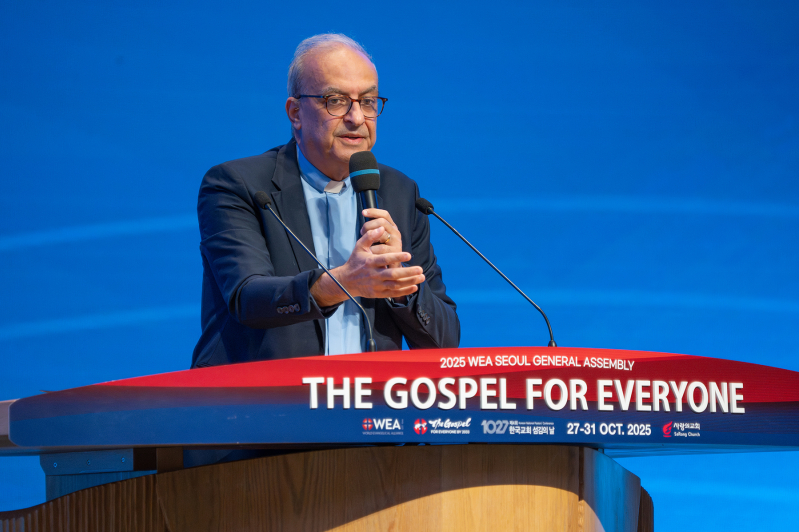
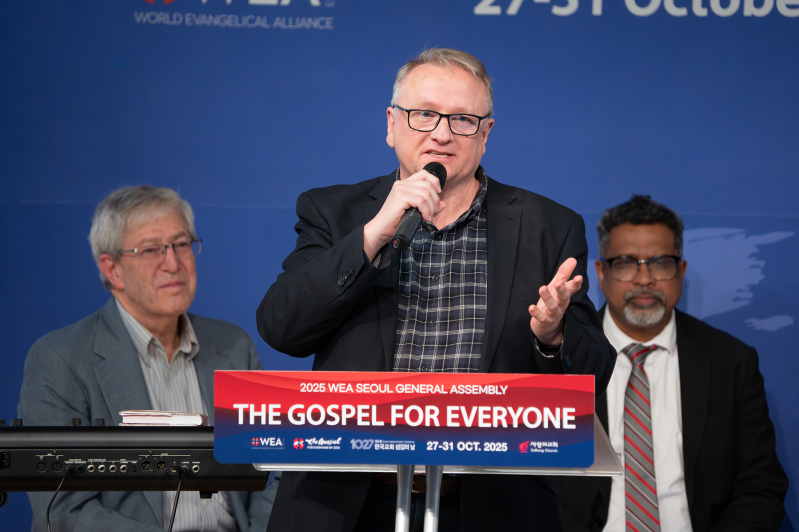


 Truth2Freedom's Blog