There are two ways to be fooled. One is to believe what isn’t true; the other is to refuse to believe what is true. —Soren Kierkegaard. "…truth is true even if nobody believes it, and falsehood is false even if everybody believes it. That is why truth does not yield to opinion, fashion, numbers, office, or sincerity–it is simply true and that is the end of it" – Os Guinness, Time for Truth, pg.39. “He that takes truth for his guide, and duty for his end, may safely trust to God’s providence to lead him aright.” – Blaise Pascal. "There is but one straight course, and that is to seek truth and pursue it steadily" – George Washington letter to Edmund Randolph — 1795. We live in a “post-truth” world. According to the dictionary, “post-truth” means, “relating to or denoting circumstances in which objective facts are less influential in shaping public opinion than appeals to emotion and personal belief.” Simply put, we now live in a culture that seems to value experience and emotion more than truth. Truth will never go away no matter how hard one might wish. Going beyond the MSM idealogical opinion/bias and their low information tabloid reality show news with a distractional superficial focus on entertainment, sensationalism, emotionalism and activist reporting – this blogs goal is to, in some small way, put a plug in the broken dam of truth and save as many as possible from the consequences—temporal and eternal. "The further a society drifts from truth, the more it will hate those who speak it." – George Orwell “There are two ways to be fooled. One is to believe what isn’t true; the other is to refuse to believe what is true.” ― Soren Kierkegaard
That we may have a well-grounded peace of conscience, a holy security and serenity of mind arising from a sense of our justification before God and a good work wrought in us.
The Lord of peace himself give me peace, all peace, at all times in every way: 2 Thessalonians 3:16(ESV) That peace which Jesus Christ has left with his people, which he gives to me; such a peace as the world can neither give nor take away; such a peace as that my heart may not be troubled or afraid. John 14:27(ESV)
Let the effect of righteousness in my soul be peace, and the result of righteousness, quietness and trust forever. Isaiah 32:17(ESV)
Speak peace to your people, to your saints, and let them not turn back to folly. Psalm 85:8(ESV)
O create the fruit of the lips, Peace, peace to those who are far off and to those who are near; and restore comfort to your mourners. Isaiah 57:18-19(ESV)
Where the sons of peace are, let your peace find them out and rest upon them. Luke 10:6(ESV)
Let the peace of God, which surpasses all understanding, guard my heart and my mind in Christ Jesus; Philippians 4:7(ESV) and let that peace rule in my heart, to which I have been called. Colossians 3:15(ESV)
May the God of hope fill me with all joy and peace in believing, so that by the power of the Holy Spirit I may abound in hope. Romans 15:13(ESV)
Nehemiah 9:38-10:39 In this week’s study, we look at the third stage of revival in Nehemiah, which is a formal commitment to change.
Theme
Two Characteristics of this Covenant
Change for the sake of mere change means nothing, of course. What matters is the direction of the change. So, before we examine the specifics of the covenant, it will be helpful to see its characteristics, which indicate where the people saw themselves to be heading. There are three of them. We will look at the first two today and the third tomorrow.
1. The authority of the Bible. Everything in this formal commitment by the people is in response to what they understood to be the demands of the Old Testament law. We see this in the promises made; each is in response to a specific Old Testament demand, most repeated in several settings throughout the Pentateuch. Again, the covenant also begins with two explicit references to the Law, one in verse 28 and one in verse 29. Verse 28 defines the signers of the covenant as those who had “separated themselves from the neighboring peoples for the sake of the Law of God.” Verse 29 tells how these same people bound themselves “with a curse and an oath to follow the Law of God given through Moses the servant of God and to obey carefully all the commands, regulations and decrees of the LORD our God.” This means that the people were responding to the authority of Scripture. There are other kinds of commitment, of course: commitment to a cause, to the demands of legal contract, to a person. But no level of commitment is higher or of greater importance than this, for the simple reason that nothing deserves a higher level of service or obedience from us than God, and God has expressed His will in Scripture.
This is what the so-called battle for the Bible in our day is all about. Some have ridiculed it as a crusade by ignorant, insecure people who think the universe is shaken whenever a detail of the Bible is challenged. But that is not it at all. The issue is whether the Bible is God’s book, rather than man’s, and whether God is going to be acknowledged as the sovereign Lord He is. If God is God, and if God has spoken to us in the Bible, as the Church has always confessed He has, then this book is supreme over us. We must be bound by it, and this means that we must order our lives accordingly.
The impressive thing about the covenant in Nehemiah 9 is that the people were concerned to do this. It showed that they were truly converted and that they wanted to go forward in their spiritual relationships.
2. The importance of the temple. Although the specific promises of verses 30-39 cover a wide spectrum of these ancient Jews’ lives, a surprising portion deals with the temple and the temple worship: the temple tax, the firstfruits of the crops and trees, the regular offerings and the tithe. The construction of the temple had been a first concern of the returning exiles years before. Their slowness in building it had been a burden of the minor prophet Haggai. Continuing provision for the temple concerned Ezra.
We might think that Nehemiah, the civil ruler, would not have been concerned for the temple since his efforts had been so strongly directed to rebuilding the city’s wall. But now we learn differently. We learn that Nehemiah was committed to the temple too. Why? Because he knew that the temple and the worship of God that went on there would alone bind the people into a self-conscious and cohesive nation. As Howard F. Vos says, “The temple . . . provided the religious and social cement to bind members of the community to each other, and preeminently to God and his service.”1 This cohesion would be hard to maintain. At the very end of Nehemiah as well as in the minor prophet Malachi, we find that later generations of Jews quite easily neglected their tithes and allowed the temple services to languish.
1Howard F. Vos, Bible Study Commentary: Ezra, Nehemiah, Esther (Grand Rapids, MI: Zondervan Publishing House, 1987), 125.
Study Questions
How do we see an emphasis on Scripture in the covenant?
What specific subjects pertain to the temple?
Application
Application: The temple and its maintenance was an important aspect of Israelite society. Do you place this kind of importance on your local church? Do you give sacrificially of yourself to it?
Key Point: If God is God, and if God has spoken to us in the Bible, as the Church has always confessed He has, then this book is supreme over us. We must be bound by it, and this means that we must order our lives accordingly.
For Further Study: Download for free and listen to Derek Thomas’ message, “The God of the Covenants.” (Discount will be applied at checkout.)
Pay Much Closer Attention – Pastor Patrick Hines Sermon (Hebrews 2:1-4) Starts @ approx 11 am EDT
[Hebrews 2:1-4 NASB20] 1 For this reason we must pay much closer attention to what we have heard, so that we do not drift away [from it.] 2 For if the word spoken through angels proved unalterable, and every violation and act of disobedience received a just punishment, 3 how will we escape if we neglect so great a salvation? After it was at first spoken through the Lord, it was confirmed to us by those who heard, 4 God also testifying with them, both by signs and wonders, and by various miracles and by gifts of the Holy Spirit according to His own will.
A still of an AI generated short video showing representations of Charlie Kirk with John F. Kennedy and Jesus TonightwithAI/YouTube
On Sunday September 14, Pastor Jack Graham of Prestonwood Baptist Church in Texas played an AI-generated audio clip of Charlie Kirk, the conservative activist who was assassinated days earlier. The clip, crafted entirely by generative artificial intelligence, featured Kirk’s cloned voice delivering a fictional message about faith, martyrdom, and spiritual warfare. Though Graham acknowledged it was AI-generated, the congregation responded with a standing ovation, many visibly moved as if Kirk himself were speaking from beyond the grave.
This wasn’t an isolated incident. At least two other megachurches, Dream City Church in Arizona and Awaken Church in California, played similar clips during their services. The videos, which have since gone viral, depict Kirk in heaven, embracing Jesus, meeting Christian martyrs, and even taking selfies with assassinated U.S. presidents like Lincoln and Kennedy.
It’s a profound distortion of grief, theology, and public discourse.
What’s happening here isn’t just technological novelty, it’s a profound distortion of grief, theology, and public discourse. It’s the fabrication of posthumous testimony, the emotional manipulation of congregants, and the sanctification of political ideology under the guise of spiritual truth. This moment demands more than critique—it calls for moral clarity.
Truth in exile: a prophetic lament
We live in a day of lies—a time when repetition masquerades as credibility, and the sheer volume of falsehoods threatens to drown out the still, small voice of truth. The Old Testament warned of such a time: “Truth has fallen in the streets, and equity cannot enter”(Isaiah 59:14). If ever there was a moment when this prophecy rings true, it is now.
There was a time, not long ago, when truth-telling was a virtue taught in homes, modeled in pulpits, and expected in public life. Parents urged their children to emulate those who spoke with integrity. Truth was not merely a moral ideal; it was a social glue, a sacred trust.
We find ourselves surrounded by serial liars in places of prominence.
Today, however, we find ourselves surrounded by serial liars in places of prominence, from the pulpit to the White House, whose words are venerated as if they were saints, even as their vitriol betrays any claim to spiritual authenticity. Scripture reminds us that “out of the abundance of the heart the mouth speaks”(Matthew 12:34). If the mouth is the gate of the soul, then what pours forth from it reveals the condition of the heart, and in many cases, the heart is sick.
📱 Get Breaking News on WhatsApp
Join our WhatsApp channel for instant updates on Christian news worldwide
One major turning point has been the collapse of gatekeeping in the age of digital technology. In previous generations, truth claims were filtered through institutions: editors, pastors, professors, and journalists, who bore the burden of credibility. These gatekeepers were not infallible, but they were accountable. They operated within systems that demanded rigor, verification, and ethical responsibility.
The internet has democratized voice, but it has not democratized wisdom.
Today, those systems have been dismantled. The internet has democratized voice, but it has not democratized wisdom. The word of a trained Ph.D. is now weighed equally (or even less) than the opinion of a charismatic influencer or a blue-collar worker with a camera and a platform. Expertise is no longer revered; it is resented. Truth is no longer objective; it is relative. The saying, “What is true to you” has become the dominant epistemology (way of knowing), spilling over into our churches, our politics, and our daily lives.
This relativism is not benign, it is corrosive. It undermines the very possibility of shared reality. When truth becomes a matter of personal preference, dialogue collapses into tribalism. We no longer debate ideas; we defend identities. We no longer seek understanding; we demand allegiance.
The rise of synthetic martyrdom
It blurs the line between reverence and propaganda.
Charlie Kirk’s death revealed a new and disturbing milestone in this cultural shift: the rise of synthetic martyrdom. AI-generated speech mimics the cadence, tone, and emotional resonance of a real person—without their consent, context, or lived experience. When used in sacred spaces, it blurs the line between reverence and propaganda. Congregants are moved not by truth, but by simulation. The emotional impact is real, but the source is artificial, synthetic.
Martyrdom is a sacred designation rooted in truth and sacrifice. It is not a branding exercise. When AI is used to fabricate declarations of faith, it risks turning spiritual conviction into performance art. The local church, which should be a bastion of discernment, becomes a stage for ideological theater.
The standing ovation that followed the AI-generated clip reveals how easily emotion can override discernment. If churches embrace synthetic narratives, what remains of their moral authority? If pastors become curators of digital illusion, who will speak the truth in love?
Theological and cultural fallout
1. Emotional manipulation through fictional testimony
They bypass critical thinking and exploit spiritual vulnerability.
AI-generated clips like the one played last Sunday are not harmless tributes. They are emotionally engineered experiences designed to evoke reverence, grief, and loyalty. They bypass critical thinking and exploit spiritual vulnerability.
2. Theological confusion and the commodification of faith
When fictionalized voices are used to deliver spiritual messages, the line between testimony and propaganda disappears. Faith becomes a product, and martyrdom becomes a marketing strategy.
3. The erosion of discernment and critical thinking
Churches must be places of truth-telling, not emotional manipulation.
Churches must be places of truth-telling, not emotional manipulation. When synthetic speech is treated as sacred, congregants lose the ability to distinguish between revelation and fabrication.
Reclaiming the gate: a call to courage
This moment demands more than critique calls for renewal. We must rebuild the cultural and spiritual infrastructure that supports truth-telling. That begins with courage.
1. Rebuilding epistemic trust
We need new models of authority that combine transparency, humility, and rigor. Truth- tellers must be both courageous and compassionate, willing to speak hard truths but also listen deeply. Institutions must earn trust not through power, but through integrity.
2. Cultivating intellectual virtue
We must teach epistemic humility, critical thinking, and moral imagination.
In classrooms, churches, and communities, we must teach epistemic humility, critical thinking, and moral imagination. Truth is not just a fact, it is a way of being. It requires discipline, discernment, and devotion.
3. Reclaiming the sacredness of speech
If the mouth is the gate of the soul, then every word is a moral act. We must recover the idea that language shapes reality, and that truth-telling is a form of worship. Churches must become again places where words are weighed, not weaponized.
A final word
To follow Christ is to follow truth.
We are living in a time when truth is not just under attack, it is being redefined, repackaged, and replaced. But truth is not a trend. It is not a brand. It is not a feeling. It is a person: “I am the way, the truth, and the life”(John 14:6). To follow Christ is to follow truth, even when it costs us comfort, popularity, or power.
If the Church is to remain a prophetic voice in the world, it must resist the temptation to sanctify simulation. It must speak truth in love, even when the truth is inconvenient. And it must remember that the power of the gospel lies not in emotional spectacle, but in the quiet, courageous witness of those who refuse to lie.
Dr. Michael A. Smith is a historian, author, and college professor whose work lives at the crossroads of American religious history, Christian fundamentalism, and the evolving landscape of Christian nationalism. Whether he’s unpacking the legacy of the Scopes Trial or challenging the misuse of scripture in modern culture wars, Dr. Smith brings clarity, courage, and compassion to every conversation. His book From Christian Fundamentalism to Christian Nationalism: A Primer Detailing the Danger to America has helped faith leaders and citizens alike understand the theological roots of political extremism.
The guys explore eternal security by contrasting views on the possibility of losing salvation. They affirm that true believers persevere, are sealed by God, and cannot fall away. If you hate sin and long for righteousness, you belong to Him. He who calls you is faithful—He will hold you firm.
This clip is from the Living Waters Podcast, hosted by Ray Comfort, Emeal “E.Z.” Zwayne, Mark Spence, and Oscar Navarro. Join us as we explore hot topics, Christian living, theology, and evangelism. You can listen to the full podcast on all major streaming platforms, and now you can also watch full episodes and stream all our content on Living Waters TV.
I have fought the good fight, I have finished the course, I have kept the faith; (4:7)
Paul next reflects on his life and service since salvation. It was a life in which he breathed every breath and lived every moment in service of his Lord, a life in which no sacrifice was too great and no commitment too demanding. Perhaps Theodore Roosevelt had that verse in mind when he wrote,
It is not the critic who counts; not the man who points out how the strong man stumbled or where the doer of deeds could have done better. The credit belongs to the man who is actually in the arena, whose face is marred by dust and sweat and blood, who strives valiantly; who errs, and comes short again and again, because there is no effort without error and shortcoming; who does actually try to do the deed; who knows the great enthusiasm, the great devotion, and spends himself in a worthy cause; who, at the worst, if he fails, at least fails while daring greatly. Far better is it to dare mighty things, to win glorious triumphs, even though checked by failure, than to rank with those poor spirits who neither enjoy nor suffer much because they live in a gray twilight that knows neither victory nor defeat. (From speech on the strenuous life, Hamilton Club, Chicago, April 10, 1899)
Paul lived his life doing great things in the power of God. As reflected in the English, have fought, have finished, and have kept (like “has come” at the end of v. 6) translate intensive perfect verbs, indicating completed action that has continuing results. Paul had no regret, no sense of unfulfillment or incompleteness. After the Lord took control, he truly had lived life to the fullest. Everything God had called and enabled him to do, he did. He left no unfinished symphony. There can be no greater satisfaction—and certainly no more glorious way to end the Christian life—than to know, as he did, that you have fully accomplished all that the Lord has called you to do. That is precisely what he was asking Timothy to do: “fulfill your ministry” (v. 5). We cannot help wondering how we too can live our lives in that way. How was Paul able to make such a claim? What was the motive of his astounding spiritual faithfulness and achievement? He himself gives the answer in the three short clauses of verse 7. Five principles are expressed or implied in this verse that were foundational to Paul’s life and service. First, he recognized that he was in a spiritual struggle. Have fought is from the verb agōnizomai and fight is from the related noun agōn. As one would guess, they are the source of our English “agonizing” and “agony.” In New Testament times, both words were commonly used in reference to athletic contests, in particular public games such as the famous Greek olympics, which had originated several centuries earlier. The words also were used of other types of struggles that involve great effort and energy, whether physical or spiritual. Paul had used the same basic phrase in his first letter to Timothy, admonishing him to “fight the good fight of faith” (6:12). He reminded Corinthian believers that “everyone who competes [agōnizomai] in the games exercises self-control in all things. They then do it to receive a perishable wreath, but we an imperishable” (1 Cor. 9:25). The same verb (italicized in the following references) was used by Jesus in calling men to “strive to enter by the narrow door” (Luke 13:24). In his letter to the church at Colossae, Paul testified that “for this purpose also I labor, striving according to His power, which mightily works within me” (1:29) and praised Epaphras, “one of your number, a bondslave of Jesus Christ, [who] sends you his greetings, always laboring earnestly for you in his prayers, that you may stand perfect and fully assured in all the will of God” (4:12). We are to “labor and strive,” he says, “because we have fixed our hope on the living God, who is the Savior of all men, especially of believers” (1 Tim. 4:10). The faithful and productive Christian life is nothing less than a fierce and relentless struggle “against the rulers, against the powers, against the world forces of this darkness, against the spiritual forces of wickedness in the heavenly places” (Eph. 6:12). Commenting on that verse, William Hendricksen writes,
It had been a fight against Satan; against the principalities and powers, the world-rulers of this darkness in the heavenlies; against Jewish and pagan vice and violence; against Judaism among the Galatians; against fanaticism among the Thessalonians; against contention, fornication, and litigation among the Corinthians; against incipient Gnosticism among the Ephesians and Colossians; against fightings without and fears within; and last but not least, against the law of sin and death operating within his own heart. (New Testament Commentary: Expositions of the Pastoral Epistles [Grand Rapids: Baker, 1965], 315)
The faithful Christian constantly battles his own flesh, his own sin, his own ignorance and laziness. He even has to battle temptation to do things that are perfectly good in themselves in place of other things that are immeasurably more important. Every day there are new fronts on which the struggle continues. Second, Paul recognized that the cause he pursued was noble. He had a tremendously elevated sense of dedication to the divine cause in which he was engaged. He was fighting the good fight. Kalos (good) refers to that which is intrinsically good, good in itself, without any qualification. It also was used of that which is inherently and genuinely beautiful and of things that fully conform to their basic nature and purpose. Elsewhere in the New Testament it is used of many such things. In Matthew it is used of good fruit (3:10), of a good tree (12:33), of good ground (13:8), and of good fish (13:48). Paul uses it of God’s law (Rom. 7:16) and of all His creatures (1 Tim. 4:4). The apostle was extremely perplexed that so many believers were seeking “after their own interests, not those of Christ Jesus” (Phil. 2:21). To the complete contrary, he considered his own impressive religious credentials to be rubbish (Phil. 3:4–7) and, in fact, counted “all things to be loss in view of the surpassing value of knowing Christ Jesus my Lord, for whom I have suffered the loss of all things, and count them but rubbish in order that I may gain Christ” (v. 8). Nothing mattered but the cause of Christ. It was a great satisfaction for the apostle to be able to say that Timothy “is doing the Lord’s work, as I also am” (1 Cor. 16:10). Despite his limitations, this younger co-laborer was following in the apostle’s footsteps, selflessly serving, expending himself in the cause of Christ, faithfully proclaiming the divine “word of reconciliation” (2 Cor. 5:19). Christians are not saved simply or even primarily for their own sakes. We are first of all saved for the glory of God and to fulfill His holy calling to be His witnesses to an unsaved world (Matt. 28:19–20; 2 Tim. 1:9; Heb. 3:1). That noblest of all callings to the noblest of all causes should inspire every believer to “seek first His kingdom and His righteousness” (Matt. 6:33). It should motivate us to yield every gift and talent, every hour and opportunity, every resource and all of our energy to lifelong service in the will and power of our Lord. Third, Paul recognized the need to avoid wandering, to have the self-discipline to stay on his divinely appointed course until it was finished. From spiritual birth until the time God calls us into His divine presence, that is our divine mission. Ted Williams, the famed baseball player, reportedly had such powers of concentration that, when he was standing at bat, he could not be distracted even by firecrackers thrown at his feet. He allowed nothing to interfere with his unusual concentration at that moment. That is the degree of self-discipline for which every child of God should yearn in serving Him. The writer of Proverbs wisely admonishes: “Let your eyes look directly ahead, and let your gaze be fixed straight in front of you. Watch the path of your feet, and all your ways will be established. Do not turn to the right nor to the left; turn your foot from evil” (Prov. 4:25–27). Course is from dromos, which literally refers to the running of a race and metaphorically was used of fulfilling a lifetime career, occupation, or military service. During his first sermon in the synagogue at Antioch of Pisidia, Paul spoke of John the Baptist, saying, “And while John was completing his course [dromos], he kept saying, ‘What do you suppose that I am? I am not He. But behold, one is coming after me the sandals of whose feet I am not worthy to untie’ ” (Acts 13:25). Using the same word to describe his own calling, the apostle some years later assured the elders from Ephesus, “I do not consider my life of any account as dear to myself, in order that I may finish my course [dromos], and the ministry which I received from the Lord Jesus, to testify solemnly of the gospel of the grace of God” (Acts 20:24). The writer of Hebrews warns of the two major hindrances that relentlessly threaten to deflect believers from their God-given course. “Therefore, since we have so great a cloud of witnesses surrounding us,” he says, “let us also lay aside every encumbrance, and the sin which so easily entangles us, and let us run with endurance the race that is set before us” (Heb. 12:1, emphasis added). Because the writer distinguishes encumbrances from sin, they obviously are not the same thing. An encumbrance is not evil in itself. Normally, it may be harmless or even worthwhile. The danger and harm come when such things hinder our service to Christ. They weigh us down as we are running, they distract our attention when we should be concentrating, they move our focus from the Lord’s work to something else, and they sap energy that should be dedicated entirely to Him. Anything unnecessary that we allow in our lives becomes a spiritual encumbrance. Paul called such things “wood, hay, straw” (1 Cor. 3:12). They are not bad but have very limited value. The second hindrance mentioned in Hebrews 12:1 is more obvious and much worse. Sin does not merely deflect us from the Lord’s work but often robs us of headway already gained. If the sin is unusually serious, the Lord Himself may pull us from the race, because our testimony and effectiveness have been undermined (cf. 1 Cor. 11:30; 1 John 5:16). The great apostle was very much aware of that potential threat to his own ministry. He had no fear of such things as “bonds and afflictions,” as long as he could “finish [his] course, and the ministry which [he] received from the Lord Jesus, to testify solemnly of the gospel of the grace of God” (Acts 20:23–24). But he had great concern that he might somehow do something or fail to do something for which the Lord would find him unworthy of his calling. “Therefore I run in such a way, as not without aim,” he said. “I box in such a way, as not beating the air; but I buffet my body and make it my slave, lest possibly, after I have preached to others, I myself should be disqualified” (1 Cor. 9:26–27). The writer of Hebrews goes on to point us to the only protection against encumbrances and sin, namely, fixing “our eyes on Jesus, the author and perfecter of faith, who for the joy set before Him endured the cross, despising the shame, and has sat down at the right hand of the throne of God” (12:2). Even after Jesus questioned Peter’s love and warned of his coming afflictions for the sake of the gospel, the disciple still did not have his eyes fixed on the Master. Instead he became curious about John, saying, “Lord, … what about this man?” and received another rebuke: “Jesus said to him, ‘If I want him to remain until I come, what is that to you? You follow Me!’ ” (John 21:22). In other words, if the Lord allowed John to live until the Second Coming, that was none of Peter’s concern. Peter’s concern should have been about his own faithfulness. Rudyard Kipling’s famous poem “If” is not Christian, but it captures the essence of the mature life, the life that keeps everything in its right perspective and priority.
  If you can keep your head when all about you
     Are losing theirs and blaming it on you;
  If you can trust yourself when all men doubt you,
     But make allowance for their doubting too;
  If you can wait and not be tired by waiting,
     Or being lied about, don’t deal in lies,
  Or being hated don’t give way to hating,
     And yet don’t look too good, nor talk too wise;

  If you can dream—and not make dreams your master;
     If you can think—and not make thoughts your aim;
  If you can meet with Triumph and Disaster
     And treat those two impostors just the same;
  If you can bear to hear the truth you’ve spoken
     Twisted by knaves to make a trap for fools,
  Or watch the things you gave your life to, broken,
     And stoop and build ’em up with worn-out tools; …

  If you can talk with crowds and keep your virtue,
     Or walk with Kings—nor lose the common touch;
  If neither foes nor loving friends can hurt you;
     If all men count with you, but none too much;
  If you can fill the unforgiving minute
     With sixty seconds’ worth of distance run—
  Yours is the Earth and everything that’s in it,
     And—which is more—you’ll be a Man, my son!
A fourth foundational principle of Paul’s life was recognizing the need to treasure time. We have only the time allotted by God, and none of us knows when it will run out. Every Christian life runs by His divine timetable and against His divine clock. We do not know how long He will hold open the door of a given opportunity or of our entire time of service. “Be careful how you walk,” Paul therefore counsels, “not as unwise men, but as wise, making the most of your time, because the days are evil” (Eph. 5:16). God gives us many things without limit—His love, His grace, and many others. But His gift of time is strictly measured. In 490 B.C., the Athenians won a crucial and decisive battle over the forces of King Darius I of Persia on a plain near the small Greek coastal village of Marathon. One of the Greek soldiers ran nonstop from the battlefield to Athens to carry the news of victory. But he ran with such unreserved effort that he fell dead at the feet of those to whom he delivered the message. The marathon races that are so popular today are named for that battlefield. They also are a tribute to that soldier, the length of the run being based on the approximate distance (just over 26 miles) he ran in his last maximum effort for his country. He had completed his course, and there is no nobler way for a man to die. A fifth foundational principle of Paul’s life and ministry was recognizing his sacred trust regarding the Word of God, the controlling element of everything he said and did. We should all want to be able to say with the apostle’s truthfulness and sincerity, I have kept the faith. Have kept is from tērēo, which carries the various ideas of watching over, heeding, or preserving. Jesus used the verb three times in His high priestly prayer. He lovingly asked His Father to “keep them [His people] in Thy name, the name which Thou hast given Me, that they may be one, even as We are,” remembering that “while I was with them, I was keeping them in Thy name which Thou hast given Me; and I guarded them, and not one of them perished.” A few verses later, He asked that the Father would “keep them from the evil one” (John 17:11–12, 15, emphasis added; cf. 1 John 5:18). Jude speaks of believers as those “who are the called, beloved in God the Father, and kept for Jesus Christ” (Jude 1:1, emphasis added). On our part, keeping the faith involves “being diligent to preserve the unity of the Spirit in the bond of peace” (Eph. 4:3; emphasis added) and keeping ourselves “free from sin” (1 Tim. 5:22). Using a different verb but giving the same admonition, Paul charged Timothy to guard the Word of God, which had been entrusted to him (1 Tim. 6:20; 2 Tim. 1:14). Regardless of the obstacles or cost, we are to preserve and proclaim the immeasurable treasure of the Word. The first requirement for keeping that treasure is to recognize that it is a treasure. A beautiful and touching story is told of a young French girl who had been born blind. After she learned to read by touch, a friend gave her a Braille copy of Mark’s gospel. She read it so much that her fingers became calloused and insensitive. In an effort to regain her feeling, she cut the skin from the ends of her fingers. Tragically, however, her callouses were replaced by permanent and even more insensitive scars. She sobbingly gave the book a good-bye kiss, saying, “Farewell, farewell, sweet word of my heavenly Father.” In doing so, she discovered that her lips were even more sensitive than her fingers had been, and she spent the rest of her life reading her great treasure with her lips. Would that every Christian had such an appetite for the Word of God! In 1904, William Borden, a member of the Borden dairy family, finished high school in Chicago and was given a world cruise as a graduation present. Particularly while traveling through the Near East and Far East, he became heavily burdened for the lost. After returning home, he spent seven years at Princeton University, the first four in undergraduate work and the last three in seminary. While in school, he penned these words in the back of his Bible: “No reserves.” Although his family pleaded with him to take control of the business, which was foundering, he insisted that God’s call to the mission field had priority. After disposing of his wealth, he added “No retreat” after “No reserves.” On his way to China to witness to Muslims there, he contracted cerebral meningitis in Egypt and died within a month. After his death, someone looking through his Bible discovered these final words: “No regrets.” He knew that the Lord does not require success, only faithfulness. We should be constantly aware that our lives are a spiritual struggle, because that is what God’s Word repeatedly teaches. We know we are engaged in the most noble of causes, because that is how the Word defines it. We are to labor with self-discipline, because that is what the Word requires. We know our time is precious and limited and we know our calling is a sacred trust, because that is what the Word declares to be true.
MacArthur, J. F., Jr. (1995). 2 Timothy (pp. 191–198). Moody Press.
When thou shalt make his soul an offering for sin, he shall see his seed.Isaiah 53:10
Our Lord Jesus has not died in vain. His death was sacrificial: He died as our substitute, because death was the penalty of our sins. Because His substitution was accepted of God, He has saved those for whom He made His soul a sacrifice. By death He became like the corn of wheat which bringeth forth much fruit. There must be a succession of children unto Jesus; He is “the Father of the everlasting age.” He shall say, “Behold, I and the children whom Thou hast given me.”
A man is honored in his sons, and Jesus hath His quiver full of these arrows of the mighty. A man is represented in his children, and so is the Christ in Christians. In his seed a man’s life seems to be prolonged and extended; and so is the life of Jesus continued in believers.
Jesus lives, for He sees His seed. He fixes His eye on us, He delights in us, He recognizes us as the fruit of His soul travail. Let us be glad that our Lord does not fail to enjoy the result of His dread sacrifice, and that He will never cease to feast His eyes upon the harvest of His death. Those eyes which once wept for us are now viewing us with pleasure. Yes, He looks upon those who are looking unto Him. Our eyes meet! What a joy is this!
And he said, Certainly I will be with thee.Exodus 3:12
Of course, if the Lord sent Moses on an errand, He would not let him go alone. The tremendous risk which it would involve and the great power it would require would render it ridiculous for God to send a poor lone Hebrew to confront the mightiest king in all the world and then leave him to himself. It could not be imagined that a wise God would match poor Moses with Pharaoh and the enormous forces of Egypt. Hence He says, “Certainly I will be with thee,” as if it were out of the question that He would send him alone.
In my case, also, the same rule will hold good. If I go upon the Lord’s errand with a simple reliance upon His power and a single eye to His glory, it is certain that He will be with me. His sending me binds Him to back me up. Is not this enough? What more can I want? If all the angels and arch-angels were with me. I might fail; but if He is with me, I must succeed. Only let me take care that I act worthily toward this promise. Let me not go timidly, halfheartedly, carelessly, presumptuously. What manner of person ought he to be who has God with him! In such company it behoveth me to play the man and, like Moses, go in unto Pharaoh without fear.
This is Ken Ham, inviting you to visit our full-size Noah’s Ark at the Ark Encounter.
Transcript
Many atheists get upset if you call their belief a religion. Why? Well, they don’t want it recognized as a religion because atheism is the religion being taught to millions of kids every day in public schools. But many atheists insist that schools aren’t supposed to teach religion, so they couldn’t teach evolution and naturalism if it were recognized as the religion it is!
Sadly, partly because of that teaching of atheism in schools, atheism is growing across our nation. But there aren’t any true atheists. Romans 1 tells us everyone knows there’s a God, but people suppress the truth. This nation needs the gospel!
Ken Ham is the Founder CEO of Answers in Genesis–US, the highly acclaimed Creation Museum, and the world-renowned Ark Encounter. Ken Ham is one of the most in-demand Christian speakers in North America.
A new study of the beliefs of evangelicals shows an alarming level of theological illiteracy.
Can you have faith without theology? Can you have a personal relationship with Christ without knowledge of God’s Word? Do evangelicals, however non-denominational they want to be, need some sort of theological framework?
A new study of the beliefs of evangelicals shows an alarming level of theological illiteracy.
Ligonier Ministries, founded by the late Reformed theologian R. C. Sproul, has partnered with the Southern Baptist research organization Lifeway to study the State of Theology among American evangelicals.
Keep in mind that this study is of evangelical Christians, which Lifeway defines as people who strongly agree with the following statements:
The Bible is the highest authority for what I believe.
It is very important for me personally to encourage non-Christians to trust Jesus Christ as their Savior.
Jesus Christ’s death on the cross is the only sacrifice that could remove the penalty of my sin.
Only those who trust in Jesus Christ alone as their Savior receive God’s free gift of eternal salvation.
Nevertheless, here is what the State of Theology study found. . . .
64% of evangelicals believe that “Everyone is born innocent in the eyes of God.”
53% affirm that “Everyone sins a little, but most people are good by nature.”
53% believe that the Holy Spirit is a force but is not a personal being.
47% believe that “God accepts the worship of all religions, including Christianity, Judaism, and Islam.”
There is, however, some good news:
100% agree that “the Bible is the highest authority for what I believe.”
98% believe that “There is one true God in three persons: God the Father, God the Son, and God the Holy Spirit.”
Then again, believing in the Bible is part of the definition of “evangelical” and is a criterion for participating in this survey. Clearly, though it’s good to believe in the Bible in general, it’s also important to believe in the specific things the Bible teaches, such as our sinful condition and that we can only approach God through Jesus Christ.
Believing in the Trinity is also important, and it’s good that evangelicals hold to this teaching about the nature of God. But over half of them hold to a heretical view of the Holy Spirit! This error was addressed in the Council of Constantinople in 381 A.D., which expanded the Nicene Creed to more fully account for the divinity of the Holy Spirit. (I wonder what percentage of evangelicals confess the Nicene Creed.)
The study also had some mixed news:
61% of respondents agree that “Every Christian has an obligation to join a local church.”
Good for the 61%! But that means that 39% do not think that Christians have an obligation to be part of a local church.
Also, the study had some news that, arguably, shows some theological confusion on the part of the researchers:
94% believe that “God loves all people the same way.” This belief the study presents as “a major understanding among evangelicals.”
I’m not sure what is meant by this question or how the respondents took it. It’s pretty clearly, though, an incursion of the Calvinist contention that Christ’s atonement extends only for the elect. Indeed, the report says nearly as much: “While there is a genuine sense in which God loves all people whom He has created, Scripture also clearly shows that He extends a special love to His elect.”
Never mind John 3:16-17 (my emphases): “For God so loved the world, that he gave his only Son, that whoever believes in him should not perish but have eternal life. For God did not send his Son into the world to condemn the world, but in order that the world might be saved through him.”
Or 1 John 2:2: “He is the propitiation for our sins, and not for ours only but also for the sins of the whole world.“
The point is that there are different theologies. These are important. But it’s also important to have a theology.
Nondenominational churches generally try to set the different theologies aside, as if they don’t matter. In effect, they also set aside all theologies, as if Christians can do without them. But we need theology to help us deal with problems and to give us direction in our Christian lives.
If you don’t believe you are a sinner, how can you turn to Jesus to forgive your sin? If you don’t believe the people around you are sinners, how can you share the Gospel with them? If you believe that other religions can lead their followers to God, why should you point them to Jesus, who said, “no one comes to the Father except through me” (John 14:6)? If you think the Holy Spirit is just a force, not a person, how can he be “the Lord and giver of life”?
The four points of Lifeway’s description of an evangelical is similar to the bare-bones Statements of Faith that many evangelical congregations find sufficient. But Christians need more than that.
To be fair, some nondenominational churches do teach a specific theology. Some are recognizably Reformed, others are Baptist, others are Pentecostal, etc.
But it’s a legitimate question to ask those who say they believe in the Bible to also say what they believe the Bible says. And it’s a legitimate question to ask those who say they believe in the Trinity what they believe about the Father, Son, and Holy Spirit.
Photo: Theology on Tap hosted by St. Mary’s Parish, Dedham, at Jake n Joe’s Sports Grille in Norwood, Massachusetts, by George Martell/The Pilot Media Groupvia Flickr, CC BY-ND 2.0
Are the Bible’s teachings about the afterlife, particularly the existence of the soul and the reality of Heaven, supported by evidence?
DALLAS — Are the Bible’s teachings about the afterlife, particularly the existence of the soul and the reality of Heaven, supported by evidence?
Lee Strobel, former atheist-turned-Christian apologist, posed that very question Sunday to the congregation of First Baptist Dallas, where he recounted his journey from skepticism to faith, sparked by a near-death experience that prompted him to investigate what happens after death.
Drawing from his book, The Case for Heaven, Strobel shared his message both as a sermon and during a Q&A panel with Robert Jeffress, senior pastor of First Baptist Dallas. Citing over 900 scholarly articles published in scientific journals over the past 50 years, Strobel highlighted near-death experiences (NDEs) as evidence for the soul’s survival beyond physical death.
He referenced a study by Dr. Michael Edgar, a 40-year professor of neurosurgery who personally conducted 7,000 brain surgeries in his life, which found 92% of out-of-body observations during NDEs were verified as accurate, such as a patient recalling a red sticker on a ceiling fan blade. “He concluded after his research into this area … verified near-death experiences are sufficient to confirm that we do indeed have a soul that survives our clinical death, just as the Bible describes,” Strobel said.
The resurrection of Jesus was a cornerstone of Strobel’s case, which he supported with historical evidence from ancient sources and a Journal of the American Medical Association report confirming Jesus’ death by crucifixion. Quoting renowned defense attorney Sir Lionel Laku, whose legal analysis of the resurrection evidence led him to affirm its historical reliability, Strobel said, “The evidence for the resurrection of Jesus Christ is so overwhelming that it compels acceptance by proof which leaves absolutely no room for doubt.”
That evidence is so overwhelming, he added, that we can reasonably accept by faith what the Bible states about the afterlife. “If this evidence is so strong that Jesus not only claimed to be the Son of God, but backed it up by returning from the dead, then His view of the afterlife is definitive,” he said. “And what does He say about it? ‘Everyone who looks to the Son and believes in Him shall have eternal life, and I will raise them up on the last day.’”
During the Q&A luncheon, which was opened with a prayer by Ryan Sadler, minister of evangelism, Strobel and Jeffress addressed audience questions, including how to comfort parents who have lost a child. Jeffress reassured one audience member, “When a child who is incapable of yet believing dies, they’re in Heaven … saved by God’s grace.”
In response to a question about why interest in Heaven is growing, Strobel attributed it to aging baby boomers and spiritual curiosity among Generation Z, all amplified by fears during the coronavirus pandemic.
“I think there’s probably two things that are driving it. Number one, the big bulge of demographics, of course, is the baby boom generation, of which I’m a member, and we’re all getting old,” he said. “The other thing is … we’re seeing a lot of spiritual interest among Generation Z … and what happened several years ago with Covid. It was a scary time for everybody.”
Addressing some common misconceptions about Heaven, Strobel and Jeffress described it as a tangible, renewed Earth rather than an ethereal realm. “Heaven is the complete renewal of our world, a very earthy physical place, not just for spirits or souls, but for resurrected bodies designed for the Kingdom of God,” Strobel explained.
“The two misconceptions people have about Heaven are, first of all, the location of Heaven,” said Jeffress. “They think when we die, we float up there someplace. … Our final destination is back on this Earth, recreated. [The Apostle] John says he saw a new Heaven and a new Earth.”
Jeffress added that individuals retain their personalities and gifts in Heaven, offering comfort that “we are not going to be off on some foreign planet somewhere.”
Strobel concluded the luncheon with an exhortation to follow the example of the late Luis Palau, an Argentine evangelist who died from lung cancer in 2021, who encouraged followers of Christ to always be ready to boldly share the Gospel.
“Look for opportunities and when God opens that door, do what Luis Palau said and be courageous,” he said. “Be courageous.”
Therefore even the first covenant was not inaugurated without blood. For when every commandment had been spoken by Moses to all the people according to the Law, he took the blood of the calves and the goats, with water and scarlet wool and hyssop, and sprinkled both the book itself and all the people, saying, “This is the blood of the covenant which God commanded you.” And in the same way he sprinkled both the tabernacle and all the vessels of the ministry with the blood. And according to the Law, one may almost say, all things are cleansed with blood, and without shedding of blood there is no forgiveness. (9:18–22)
The second reason for the death of Christ was that forgiveness demands blood. This truth is directly in line with the previous point, but with a different shade of meaning. Blood is a symbol of death, and therefore follows closely the idea of a testator’s having to die in order for a will to become effective. But blood also suggests the animal sacrifices that were marks of the Old Covenant, even, in fact, of the Abrahamic covenant. In the Old Covenant, the death of animals was typical and prophetic, looking forward to the death of Christ that would ratify the second covenant. Even before the old priestly sacrifices were begun, the covenant itself was inaugurated, or ratified, with blood. As explained in verse 19, Moses sprinkled blood on the altar and on the people (see Ex. 24:6–8). “Look at your great Moses,” the writer is saying, “He himself inaugurated the Old Covenant with blood.” It is hard for us today to understand how bloody and messy the old sacrificial system was. But among other things, the great amount of blood was a continual reminder of the penalty of sin, death. When He sat with the disciples on that last night before His death, Jesus picked up the cup and said, “This is My blood of the covenant, which is poured out for many for forgiveness of sins” (Matt. 26:28). He was to ratify the New Covenant through His own blood, just as the Old Covenant was ratified by Moses with the blood of animals. It is possible to become morbid about Christ’s sacrificial death and preoccupied with His suffering and shedding of blood. It is especially possible to become unbiblically preoccupied with the physical aspects of His death. It was not Jesus’ physical blood that saves us, but His dying on our behalf, which is symbolized by the shedding of His physical blood. If we could be saved by blood without death, the animals would have been bled, not killed, and it would have been the same with Jesus. Thus bloodshed was the symbol for death when Moses ratified the covenant on Sinai. Likewise, when the Tabernacle was inaugurated, Moses sprinkled the tabernacle and all the vessels of the ministry with the blood, again picturing the price to be paid for sin. The central lesson of the covenant was thus illustrated by the sprinkling of blood in the Tabernacle and Temple as long as that covenant stood. The purpose of the blood was to symbolize sacrifice for sin, which brought cleansing from sin. Therefore, without shedding of blood there is no forgiveness. Again, however, we need to keep in mind that the blood was a symbol. If Christ’s own physical blood, in itself, does not cleanse from sin, how much less did the physical blood of animals. It is not surprising, then, that the Old Covenant allowed a symbol for a symbol. A Jew who was too poor to bring even a small animal for a sacrifice was allowed to bring one-tenth of an ephah (about two quarts) of fine flour instead (Lev. 5:11). His sins were covered just as surely as those of the person who could afford to offer a lamb or goat or turtledove or pigeon (Lev. 5:6–7). This exception is clear proof that the old cleansing was symbolic. Just as the animal blood symbolized Christ’s true atoning blood, so the ephah of flour symbolized and represented the animal blood. This non-blood offering for sin was acceptable because the old sacrifice was entirely symbolic anyway. Yet this was the only exception. And even the exception represented a blood sacrifice. The basic symbol could not be changed because what it symbolized could not be changed. “For the life of the flesh is in the blood, and I have given it to you on the altar to make atonement for your souls; for it is the blood by reason of the life that makes atonement” (Lev. 17:11). Since the penalty for sin is death, nothing but death, symbolized by shedding of blood, can atone for sin. We cannot enter into God’s presence by self-effort to be righteous. If we, on our own, could be good, we would not need atonement. Nor can we enter His presence by being model citizens or even by being religious. We cannot enter His presence by reading the Bible, by going to church, by giving generously to the Lord’s work, or even by praying. We cannot enter His presence by thinking good thoughts about Him. The only way we can enter into God’s presence, the only way we can participate in the New Covenant, is through the atoning death of Jesus Christ, made effective for us when we trust in Him as saving Lord. God has set the rules. The soul that sins will die. The soul that is saved will be saved through the sacrifice of God’s Son. For this sacrifice there is no exception, no substitute, for this is the real thing. Because they were symbols, God provided a limited and strictly qualified exception (flour) to the old sacrifices. But there can be no exception for the real sacrifice, because it is the only way to God. Forgiveness is a costly, costly thing. But I often think to myself how lightly we can take the forgiveness of God. I have come to the end of a day and put my head on the pillow to say, “God, I did this and this today,” listing off the things I had done that I knew were not pleasing to Him. I know He knows about them, so there is no use trying to hide them. I also know He forgives them, because He has promised to forgive them, and I thank Him. I fall off to sleep in a few minutes, accepting but not fully appreciating the marvelous grace that made such assurance and peace so easily available to me. At other times, as I study the Word of God, and look more closely at the great cost that was paid for my salvation, I am overwhelmed. When I meditate on the infinite cost to God to forgive my sins, I realize how often I abuse my loving Father’s grace. Paul tells us that “where sin increased, grace abounded all the more” (Rom. 5:20). Then, anticipating how some might distort this truth, he goes on to say, “What shall we say then? Are we to continue in sin that grace might increase? May it never be! How shall we who died to sin still live in it?” (6:1). To realize and rejoice in God’s boundless grace is one thing; to presume on it by willfully sinning is quite another. How can we, as forgiven sinners, take lightly or presumptuously, the price paid for our forgiveness? We become so used to grace that we abuse it. In fact, we are so accustomed to grace that when God brings down just punishment we may think it unjust. God does not forgive sin by looking down and saying, “It’s all right. Since I love you so much, I’ll overlook your sin.” God’s righteousness and holiness will not allow Him to overlook sin. Sin demands payment by death. And the only death great enough to pay for all of mankind’s sins is the death of His Son. God’s great love for us will not lead Him to overlook our sin, but it has led Him to provide the payment for our sin, as John 3:16 so beautifully reminds us. God cannot ignore our sin; but He will forgive our sin if we trust in the death of His Son for that forgiveness.
MacArthur, J. F., Jr. (1983). Hebrews (pp. 236–239). Moody Press.
This is why even the first covenant was not put into effect without blood. 19. When Moses had proclaimed every commandment of the law to all the people, he took the blood of calves, together with water, scarlet wool and branches of hyssop, and sprinkled the scroll and all the people. 20. He said, “This is the blood of the covenant, which God has commanded you to keep.” 21. In the same way, he sprinkled with the blood both the tabernacle and everything used in its ceremonies. 22. In fact, the law requires that nearly everything be cleansed with blood, and without the shedding of blood there is no forgiveness. Two matters stand out: first, the expression first covenant relates to the same phrase in 9:15. Therefore the two intervening verses, given in the form of an analogy, may be placed within parentheses. Second, in verses 18–22 the word blood appears six times. Because of this repetition it receives emphasis in this section. We shall examine the term blood in the context of each verse in which it occurs. a. “Not put into effect without blood.” The institution of the first covenant is recorded in Exodus 24. Moses read the law of God to the people, presented burnt offerings and fellowship offerings to God, sprinkled the blood of young bulls (sacrificed in these offerings) on the altar and on the people, read the Book of the Covenant to the people, and said, “This is the blood of the covenant that the LORD has made with you in accordance with all these words” (Exod. 24:8). The writer of Hebrews observes that this first covenant was sealed with blood. And he notes the connection between the first and the second covenants: Christ shed his blood and thus sealed this new covenant with his blood. His death made the new covenant valid and effective. b. “The blood of calves.” If we compare the biblical account of the institution of the first covenant, recorded in Exodus 24, with the description in Hebrews 9:19, we must conclude that the writer of Hebrews relied on oral tradition, extrabiblical material, or the five books of Moses. Perhaps he gained his material from various passages of these books. The differences are pronounced:
Exodus 24:5–6, 8 Hebrews 9:19 Then [Moses] sent young Israelite men, and they offered burnt offerings and sacrificed young bulls as fellowship offerings to the LORD. Moses took half of the blood and put it in bowls, and the other half he sprinkled on the altar … [and] on the people. [Moses] took the blood of calves [and goats], together with water, scarlet wool and branches of hyssop, and sprinkled the scroll and all the people.
On the Day of Atonement the priests offered a young bull and a goat (Lev. 16:3–28). The author of Hebrews, therefore, could have combined the account of the sacrificial ceremony of the Day of Atonement with that of the institution of the first covenant. Also, he may have gleaned the phrase “scarlet wool and branches of hyssop” from the description of the ceremony of the cleansing of a person with an infectious skin disease (Lev. 14:4, 6). In these verses the expression scarlet yarn and hyssop occurs. Then, in the passage that describes the water of cleansing, hyssop, scarlet wool, and water are mentioned (Num. 19:6, 9, 18). According to the Exodus account, Moses sprinkled the blood of young bulls on the altar and on the people. He read to the people from the Book of the Covenant. We may assume that he sprinkled blood on this book, too. Philip Edgcumbe Hughes surmises that “on the day of solemn ratification of the former covenant, Moses would have sprinkled not only the altar he had built and the people but also the book he had written.” c. “The blood of the covenant.” From a New Testament perspective we immediately see a resemblance between the words of Moses cited by the author of Hebrews and the words spoken by Jesus when he instituted the Lord’s Supper. Moses said to the Israelites, “This is the blood of the covenant that the LORD has made with you in accordance with all these words” (Exod. 24:8). The writer of Hebrews has Moses say, “This is the blood of the covenant, which God has commanded you to keep” (Heb. 9:20). The variation of “the LORD has made with you” and “God has commanded you” is one of form, not of content. We would have expected the author of Hebrews to refer directly to the well-known words spoken by Jesus at the institution of the Lord’s Supper and repeated whenever this supper is celebrated. Jesus said, “This is my blood of the covenant, which is poured out for many” (Mark 14:24). The purpose for Christ’s shed blood is given more explicitly in Matthew’s Gospel: “for the forgiveness of sins” (Matt. 26:28). The connection between the words that Moses spoke when the first covenant was instituted and the words that Jesus uttered when he brought into practice the celebration of the Lord’s Supper is plain. Perhaps because of the self-evident link, the writer of Hebrews has left the missing details for the readers of his epistle to supply. d. “Sprinkled with the blood.” Once again we note a difference between the Old Testament account (Exod. 40:9–11) and the words of the author of Hebrews (9:21). When Moses set up the tabernacle, God told him to “take the anointing oil and anoint the tabernacle and everything in it; consecrate it and all its furnishings, and it will be holy” (Exod. 40:9). The writer of Hebrews, however, asserts that Moses “sprinkled with the blood both the tabernacle and everything used in its ceremonies” (9:21). In the account of the ordination of Aaron and his sons, we read that Moses killed a bull and with the blood purified the altar. Already he had consecrated the tabernacle and everything in it, including the altar, with oil; he even anointed Aaron with oil (Lev. 8:10–15). Because of this parallel account in the Book of Leviticus, we can safely assume that the writer with his intimate knowledge of the Old Testament Scriptures relied on the account of Leviticus more than that of Exodus. Josephus comments on the inaugural ceremonies of the tabernacle and the ordination of Aaron and his sons. He, too, speaks of purifying Aaron and his sons and their garments “as also the tabernacle and its vessels, both with oil that had been previously fumigated … and with the blood of bulls and goats.” Josephus, like the author of Hebrews, is fully acquainted with the biblical record in Leviticus 8. Yet both writers contend that Moses purified with the sprinkled blood the tabernacle and its vessels. That information is not found in Leviticus; most likely it had come to them by oral tradition. e. “Cleansed with blood.” The writer of Hebrews testifies that his constant emphasis on purification with blood is not his own idea. He bases it on the law of God. Says he, “In fact, the law requires that nearly everything be cleansed with blood” (9:22). That law is recorded in Leviticus 17:11 where God through Moses says to the Israelites: “For the life of a creature is in the blood, and I have given it to you to make atonement for yourselves on the altar; it is the blood that makes atonement for one’s life.” Note that the author writes, “The law requires that nearly everything be cleansed with blood” (italics added). The term nearly leaves room for exceptions, because some items might be cleansed by water or by fire (see Lev. 15:10 and Num. 31:22–24). f. “Shedding of blood.” The second part of Hebrews 9:22 is even more direct: “and without the shedding of blood there is no forgiveness.” These two—the pouring out of blood and the forgiveness of sin—go hand in hand. The one does not exist without the other. The first part of the verse implies that exceptions were permitted, for the author says that “nearly everything” needs to be cleansed with blood. But in the second half of the verse, the writer does not allow exceptions. He posits negatives: without the shedding of blood there is no forgiveness. The absolute demand for blood to secure remission of sin responds to the terms of the covenant. Transgression of the laws of the covenant that were agreed upon and ratified by the Israelites constitutes a serious offense. This sin can be removed only by death, that is, the substitutionary death of an animal whose blood is shed for the sinner. The new covenant, instituted by Christ on the eve of his death, is sealed in his blood that has been shed on Calvary’s cross for remission of sin. Jesus’ words, “This is my blood of the covenant, which is poured out for many for the forgiveness of sins” (Matt. 26:28), are clearly echoed in the second part of Hebrews 9:22.
Doctrinal Considerations in 9:16–22
When God promised Abraham that he would bless him and give him numerous descendants, he confirmed his promise with an oath. The oath that God swore made his promise unalterable (Gen. 22:16–17; Heb. 6:16–17). When God made a covenant with his people, he gave it to them as a last will and testament. To make this will valid for his people, God’s Son died. Upon Christ’s death, the will became effective, and its wording, unalterable. God made a covenant with sinful people. He instructed them to sacrifice animals whose shed blood would cleanse them from sin. But because the people of Israel did not remain faithful to the covenant God had made with them, through the prophet Jeremiah he announced that he would make a new covenant with people upon whose minds and hearts his law was written (Jer. 31:31–34; Heb. 8:8–12). Christ became the mediator of this new covenant, and through his faithfulness, he fulfilled its demands. For the sins of his people he shed not the blood of animals but his own. The writer of Hebrews posits God’s demand for restitution of a broken covenant agreement by saying, “Without the shedding of blood there is no forgiveness” (9:22). The counterpart of this statement is the Christian’s jubilation, “Because Christ shed his blood, I have been forgiven!”
Kistemaker, S. J., & Hendriksen, W. (1953–2001). Exposition of Hebrews (Vol. 15, pp. 257–260). Baker Book House.
“Let us recollect that peace or war will not always be left to our option; that however moderate or unambitious we may be, we cannot count upon the moderation, or hope to extinguish the ambition of others.” —Alexander Hamilton (1788)
October 7 anniversary: Two years ago, Hamas broke a ceasefire, crossed the border with Israel, and carried out the deadliest day for Jews since the Holocaust. In the two years since, Hamas, Hezbollah, the Houthis, and Iran itself have waged war under various guises against Israel, which has destroyed the leadership of its enemies several times over. In recent weeks, the UK, France, Canada, and Australia have rewarded Hamas for its evil by recognizing a Palestinian state. Donald Trump proposed a peace plan for the region that has been technically accepted by Israel and Hamas and should lead to the release of the remaining hostages, both living and dead. Hamas celebrated the anniversary of the attack, remembering it as “a glorious day,” while Israel mourned the brutally murdered victims.
The sanctuary showdown: Following the incident in Chicago in which ICE agents found their vehicle rammed and boxed in by 10 vehicles containing anti-ICE activists, and no Chicago police showed up to assist, Democrat Mayor Brandon Johnson has only doubled down. On Monday, Johnson announced that he was creating “ICE-free zones” around the city, and he couched this action as “reigning in this out-of-control administration.” Johnson explained that “city property and unwilling private businesses will no longer serve as staging grounds for these raids.” Chicago has a long history with the mob, but it would appear that the Windy City’s government is, for all intents and purposes, the mob. Johnson’s actions protect illegality and lawlessness. Chicago isn’t the only city taking anti-ICE action, as Democrat leaders in blue states across the country have engaged in similar actions to resist the Trump administration’s immigration enforcement.
Dems, media circle the wagons around Jay Jones: Virginia attorney general candidate Jay Jones’s vile comments about his desire to see a political opponent murdered should be enough to compel every lawmaker from both sides of the aisle to demand that he step aside. Instead, state Democrats and Leftmedia outlets have come rushing to defend him. A petition to stand with Jones has garnered the signatures of numerous Virginia Democrat lawmakers, and the Associated Press is framing the Republicans as disingenuously “seizing” on Jones’s violent rhetoric for political advantages before the election. Predictably, more has surfaced exposing his vile worldview. A fellow lawmaker notes that in 2020, in arguing over a bill to remove qualified immunity protection from law enforcement officers, Jones allegedly said, “Well, maybe if a few [police officers] died, that they would move on, not shooting people, not killing people.”
Spanberger and the Islamic Saudi Academy: Abigail Spanberger, the Democrat gubernatorial candidate in Virginia, is “proud” of her time teaching at the Saudi-run Islamic Saudi Academy (ISA) in Northern Virginia during the 2002-2003 school year. In 1998, of the 185 Islamic schools in the United States, only one was entirely funded by a foreign nation — the ISA. In 2002, recent graduates of the Academy were suspected of seeking to commit a suicide terror attack in Israel. Hatred of Jews and non-Muslims was in line with the ISA’s teachings, which included the statement that the Day of Judgment couldn’t come until Jesus returned and converted everyone to Islam and Muslims started attacking Jews. As the Virginia gubernatorial race comes to a close, perhaps Spanberger should be pressed about what exactly makes her “proud” about training up radical Muslims.
Waste, fraud, and abuse in the VA: The Department of Veterans Affairs, the healthcare system for the nation’s military service members, serves millions of America’s veterans, but it suffers from significant waste, fraud, and abuse. One particular concern is the VA’s disabled veterans compensation program, which shelled out some $193 billion to roughly 6.9 million disabled veterans last year alone. Millions of claims were related to relatively minor issues that rarely hinder employment. For example, issues like eczema, hemorrhoids, acne, and varicose veins. The crux of this problem is the VA itself, as it encourages veterans to file as many claims as possible to milk the system. There is also a growing problem of fraud, where the number of veterans filing multiple claims per person has increased significantly over the last two decades.
Bad Bunny on “Saturday Night Live”: Puerto Rican musician Benito Antonio Martínez Ocasio, a.k.a. “Bad Bunny,” appeared on “Saturday Night Live” after he was picked to perform the halftime show at the next Super Bowl. Ocasio delivered part of his monologue in Spanish despite SNL historically being an English-language broadcast, and he mocked the majority of the country that doesn’t speak Spanish with his follow-up: “And if you didn’t understand what I just said, you have four months to learn.” His Spanish remarks were a self-aggrandizing tripe about the significant contributions of Spanish-speaking individuals to the U.S., as if that justifies anti-Americanism.
Seattle schools dole out “gender-affirming supplies”: Seattle Public Schools (SPS) coordinated with Seattle Children’s Hospital this year to launch the Community Health Locker Project. The name sounds good, so what supplies were deemed necessary for a community health locker? As it turns out, these include makeup, Nair hair remover, chestbinders, TransTape, nipple guards, and tucking underwear. The student-led Garfield Gay-Straight Alliance group advised on the project, specifying which products would be necessary and in what quantities. Defending Education, an organization dedicated to preventing harmful activist agendas from infiltrating schools, obtained the emails planning the locker project in a Freedom of Information Act request. Also in the acquired emails was advice from the district’s LGBTQ+ support officer, priming the schools and the students to performatively “affirm” gender-confused students ahead of and after the holidays due to possible “non-accepting” families.
Editor fired for seeking climate debate fairness: Fairness is anathema when it comes to media outlets peddling leftist propaganda, an editor recently found out. Marty Rowland had been working as special editor at the American Journal of Economics and Sociology (AJES) until he was recently fired. Rowland’s offense was that he dared to publish a paper that refuted the popular view of carbon dioxide’s impact on the global climate. To be clear, Rowland was not advocating for the “climate denier” view; rather, he was interested in promoting the ideal of free and fair debate on the issue. But free and fair was apparently a bridge too far for AJES, which told Rowland that publishing a view that challenged the anthropogenic climate change position was “dangerous.” Never mind the fact that the Department of Energy recently released a view on the effects of carbon dioxide that is surprisingly balanced and not ideologically driven. You know, like how science is supposed to be practiced.
Headlines
CDC immunization schedule adopts individual-based decision-making for COVID (HHS)
State of Illinois, city of Chicago sue Trump over National Guard (NewsNation)
Gangbanger allegedly put bounty on Border Patrol chief (NY Post)
Illegal crossings along U.S.-Mexico border plummet to lowest annual level since 1970 (CBS News)
Two years ago today, Hamas carried out a pogrom against the Jewish nation of Israel. The jihadist group murdered more than 1,200 innocent people and kidnapped another 250, dozens of whom are still being held hostage. Yet thanks to anti-Israel propaganda on the political left, Hamas became the victim. Nevertheless, Israel has persevered and continues the fight to mitigate the threat that Hamas and other Iranian terror proxies like Hezbollah pose to its country and its people.
President Donald Trump is running out of patience with Hamas and recently gave the group a hard deadline on peace talks. The Gaza Strip is in ruins, and the Israel Defense Forces are systematically taking out jihadis. Hamas is even losing influence within Gaza itself.
One of the biggest victories at this juncture would be securing the release of the remaining hostages — the main stipulation in President Trump’s proposed 20-point peace plan. Israel believes there are 20 hostages who are still living and 25 who are deceased. These hostages have been used by Hamas as a bargaining chip in both previous ceasefires, and once the remaining few are released, Hamas will have no more leverage to remain in power.
On Friday, Hamas agreed to release the hostages, though it disingenuously asserts it may need more time to recover the hostages’ bodies that are buried under the rubble. However, Israeli Prime Minister Benjamin Netanyahu stated that the terrorists are “confined to a few days maximum” to comply with their part of the agreement.
Talks began yesterday in Cairo to iron out the final details of the peace plan. “Everyone has agreed, including Israel,” Secretary of State Marco Rubio explained, “that eventually, at some point here as this process plays out, Gaza will be governed by a Palestinian technocratic group that’s not Hamas, that are not terrorists, with the help and the assistance and the guidance of an international consortium like the board of peace.”
Trump is convinced that Israel is closer than ever to peace, reportedly even telling Netanyahu not to be “so f***ing negative” about what Hamas will or will not accept as part of the peace deal.
Yet Netanyahu has every reason to be skeptical. Even with Hamas out of power, Gaza will be extremely hard to de-radicalize. Many Palestinians believe it’s their duty to wipe Israel off the map, even raising their children to view murdering the Jews as a badge of honor. Many also celebrate October 7 as a glorious day of victory. It’s going to be a difficult road ahead, even if peace talks are successful.
Furthermore, there’s no guarantee this isn’t just another tugging of the chain to buy the terrorists more time.
With apologies to Kamala Harris, the passage of time has been Hamas’s friend. The longer this war drags on, the more people turn on Israel. The useful idiots in America are celebrating today. Canada, France, and the UK have gone so far as to declare a Palestinian state. In other words, they are reinforcing the incentive structure for terrorists worldwide to repeat this same formula.
“Hamas would parlay even a single remaining captive into concessions that help it retain power and keep millions of people trapped in its forever war on Israel,” warn The Wall Street Journal editors. “The claim that it can’t locate hostages proved hollow in the past and shouldn’t be credited today.”
Israel has a formidable military. In the event that Hamas leaders are foolish enough to keep toying with the Jewish state, the IDF will put an end to them.
“You’ve got to be strong in order to get the peace,” as Netanyahu put it. “From the pit of despair, we’ve become again the dominant power in the Middle East, perhaps stronger than we were before. That’s something that we can give thanks for.”
Douglas Andrews: Jack Smith’s Democrat Spy Ring — The party that for decades invoked Richard Nixon and Watergate at every turn has now become far worse than what it once decried.
Nate Jackson: Bringing The Free Press to CBS — Will a liberal lesbian be able to save American journalism? That’s the question confronting Free Press chief Bari Weiss as she takes the helm at CBS News.
Jack DeVine: Hegseth and the Generals — At crunch time (now, for example), nothing beats eyeball-to-eyeball communication, which is what the secretary of war did with the top military brass last week.
Michael Smith: The Trouble With Progressivism — The progressive mindset views history as a series of mistakes to be overcome rather than a source of insight, and they tear down every fence without knowing why it’s there.
Reader Comments
Editor’s Note: Each week we receive hundreds of comments and correspondences — and we read every one of them. Click here for a few thought-provoking comments about specific articles. The views expressed therein don’t necessarily reflect those of The Patriot Post.
‘Her Opinion Is Untethered, in Realty and the Law’ — Karoline Leavitt had a tense exchange with CNN’s Kaitlan Collins regarding Donald Trump’s decision to deploy the National Guard to Portland, Oregon.
Is It Over for the UK? — The UK government is tightening control over social media and even pushing for mandatory digital IDs, raising serious concerns about free speech and privacy.
“The criminal system has had a disparate impact on black and brown communities. … So when this person is committing six or seven crimes, I didn’t know his or her story. Maybe they were abused as a child. Maybe they’re hungry. … I have no desire to put them in jail.” —Seattle Mayor Bruce Harrell
Village Idiot
“It’s easier to talk [in Saudi Arabia] than it is in America.” —comedian Dave Chappelle
The BIG Lie
“It was the tightest, closest presidential election in the 21st century! He does not have a mandate! That is not a mandate! That is not a mandate!” —Kamala Harris
Braying Jennies
“Stop believing the lies that they are putting out there. … The only person that is harming you right now … is the old white nepo baby that is sitting in the White House that is causing all the destruction, pain, and problems that you are enduring.” —Rep. Jasmine Crockett
“I think the strengthening of ICE and the way in which their mandate right now is being carried out is literally terrorizing neighborhoods and it is creating a military state where your normal civil rights and civil liberties in this country are no longer protected.” —Rep. Ilhan Omar
Re: The Left
“The one thing you haven’t heard from Democrats in the midst of all their raving histrionics: telling their radical base to stop violently assaulting ICE agents.” —White House Deputy Chief of Staff for Policy Stephen Miller
“Not to go all Occam’s Razor but perhaps the reason every single Democrat is standing behind Virginia Democrat AG candidate Jay Jones, who fantasized about Republicans getting assassinated and their children dying, is because they more or less agree with him.” —Mollie Hemingway
“The Democrat candidate for AG in Virginia has been fantasizing about murdering his political opponents in private messages. I’m sure the people hyperventilating about sombrero memes will join me in calling for this very deranged person to drop out of the race.” —JD Vance
“The Left crossed the unprecedented bridge first. … They didn’t care if [Trump] spent every last day behind bars, and to bankrupt him and to humiliate him with the E. Jean Carroll thing. … If we don’t fight fire with fire, we’ll lose.” —Megyn Kelly
“The narrowness of the Congressional Democrats’ leadership during the Schumer shutdown is illustrated by where they live. Senate Democratic leader Schumer and House Democratic leader Jeffries both live in Brooklyn. … They are an eight minute drive, 1.1 miles, from each other. … A country of 3,800,000 square miles has a major party congressional leadership that lives in a barely one mile radius. … No wonder the Democrats seem isolated and out of touch with the country. They both live in a city about to elect a big government socialist with weird values. Maybe that explains the Schumer shutdown as a strategy.” —Newt Gingrich
And Last…
“Diversity is not your strength. Your strength is your unity of purpose, your shared mission, your love of country.” —Secretary of War Pete Hegseth
ON THIS DAY in 1780, the Patriots won what Thomas Jefferson called a “turn of the tide of success” at the Battle of Kings Mountain. The Overmountain Men of eastern Tennessee, western North Carolina, and southern Virginia didn’t take kindly to threats of harsh subjugation from the British, and they responded accordingly.
Please join us in prayer for our nation — that righteous leaders would rise and prevail and we would be united as Americans. Pray for the protection of our uniformed Military Patriots, Veterans, First Responders, and their families. Lift up your Patriot Post team and our mission to support and defend our legacy of American Liberty and our Republic’s Founding Principles, in order that the fires of freedom would be ignited in the hearts and minds of our countrymen.
People in Washington DC are starting to realize the full scale of the Obama surveillance system. All of the evidence and datapoints, those released and those yet to surface, flow in one direction. Even the professionally reluctant are starting to admit.
What Obama, Biden, Comey, Crossfire Hurricane, Robert Mueller, Arctic Frost and Jack Smith were doing, was using their offices -and govt systems- to watch their opposition, spy on them, then take action based on the results.
Friend of the Treehouse John Spiropoulos has put together a series of videos explaining how President Obama, FBI Director James Comey and CIA Director John Brennan constructed a coverup to hide their political surveillance operation. Today, the fourth segment in the series.
From the perspective of Obama, Comey and Brennan, expanding Hillary Clinton’s Trump-Russia collusion narrative was the key element to hide the activity of the administration prior to the November 2016 election. That’s the motive for the FBI and CIA to collaborate on the agenda after the shocking outcome of the 2016 election result; but pay close attention to the activity of the primary “at risk” official, James Comey.
The December ’16 Joint Analysis Report (JAR), and the January ’17 Intelligence Community Assessment (ICA), were fabricated to enhance a spying coverup. Spiropoulos has taken the time to put the deconstruction of the ICA into a simple to follow video format.
From a risk management perspective, initially the surveillance and spying operation was a low-risk endeavor. Obama held power and was going to hand off operations to Hillary. The Clinton administration would retain the officials who were doing the surveillance/spying, and no one would ever know.
Donald Trump was not expected to win the election. When he did, all of the participants were suddenly at risk. President Obama and every member of his cabinet involved in the spying operations, then used Clinton’s “Russiagate” smear to cover up Obama’s “Spygate” activity.
The IRS was used to identify targets 2010 through 2012, until discovered in April ’12. Suddenly, President Obama has a problem. President Obama then sends his Chief of Staff, Jack Lew, to run the IRS and block discoveries around the IRS weaponization.
From 2012 through April 2016, the Obama administration was spying on their political opposition using the FBI to conduct surveillance through their access to the NSA database.
In April 2016, NSA Admiral Mike Rogers was alerted by the NSA compliance officer who noted the uptick in database access activity by the FBI searching the Republican primary candidate field.
Post April 2016, the Obama administration had a problem. Enter FBI operation “Crossfire Hurricane,” July 2016, in an effort to remove the political risk.
October 2016, the FBI rushes a FISA application through the FISC, circumventing the missing ‘Woods File’, with the Chris Steele dossier as evidence.
October 2016, NSA Director Rogers sends the first official notification of the FBI using the NSA database to the oversight body, the FISA Court.
December 2016, worried about Trump now discovering the NSA database spying, the Obama administration wraps the Clinton smear into official policy, blaming the Russians and validating Crossfire Hurricane. That’s where the Intelligence Community Assessment becomes critical.
May 2017, needing to extend the coverup of the FBI activity, special counsel Robert Mueller then takes over Crossfire Hurricane. All FBI evidence and personnel transfers to Mueller.
April 2019, Robert Mueller operation wraps up, prior activity coverup shifts to Impeachment process.
July 2019, John Durham kicks in extending DOJ/FBI control through 2020 election.
Fall 2020, mail-in ballots triggered to facilitate 2020 election outcome.
January 2021, FBI triggers Operation Arctic Frost, targeting Trump supporters and 2020 election researchers. FBI again using NSA database search queries to identify targeting.
March 2021, FBI Arctic Frost results fed to J6 Committee and DHS. TSA trigger “Quiet Skies” targeting via results from Arctic Frost.
August 2022, FBI raid on Mar-a-Lago to retrieve any evidence Donald Trump might have of FBI spying and surveillance activity.
September 2023, Jack Smith targets congressional members who had contact with President Trump.
It’s one long continuum of coverup activity within Main Justice and the FBI, supported by all other various agencies who operate in support. What are they covering up? The 2012 through 2016 political spying operation within the Obama administration, as carried out by the same Main Justice and FBI operations.
Laura Ingraham, Jesse Watters and Sean Hannity bring Fox News viewers their fresh takes on the top news of the day. #foxnews #news #us #fox #usa #media #politics #government #chicago #portland #police #chicagopolice #ice #cbpolice #protest #jbpritzker #pritzker #trump #presidenttrump #donaldtrump #political #politicalnews
Many pastors feel generally confident in their discipleship strategies, but few are ensuring discipleship is taking place.
By Aaron Earls
Most pastors are confident their churches are helping people grow as Christians. Just don’t ask them how they know that.
In the second part of the State of Discipleship study from Lifeway Research, U.S. Protestant pastors describe their congregations’ discipleship approaches and reveal data behind some key spiritual growth metrics.
Half of pastors (52%) say they have an intentional plan for discipling individuals in their congregations and encouraging their spiritual growth. Similarly, 52% are satisfied with the state of discipleship in their church, including just 8% who strongly agree. Additionally, only 30% say their church has specific methods for measuring discipleship, even though 71% believe there are methods to track spiritual growth in a congregation.
“Churches have good intentions and efforts to help people grow spiritually; but without intentionality and evaluation, discipleship won’t be improved,” said Scott McConnell, executive director of Lifeway Research. “More than 9 in 10 pastors admit spiritual formation could improve in their congregation and that they won’t be completely satisfied with discipleship in their church until it does. They recognize the church flourishes when disciples are being formed.”
Effective evaluation
Around half of pastors feel generally confident in their discipleship strategy, but few are actually ensuring discipleship is taking place in their congregations.
Half (49%) believe their church discipleship strategy is effective, including only 7% who strongly agree. More than 2 in 5 (42%) disagree, 2% aren’t sure and 7% admit they don’t have a discipleship strategy in their church.
White pastors (48%) and African American pastors (45%) are less likely than Hispanic pastors (62%) and pastors of other ethnicities (72%) to say their strategy is effective. Additionally, pastors of churches with 250 or more in attendance (67%) and churches started since 2000 (71%) are among the most likely to believe in the effectiveness of their discipleship plans.
Despite half of pastors asserting they have an effective strategy, just 29% say they regularly evaluate the discipleship progress among their congregants. Two in 3 (66%) say they aren’t consistently evaluating churchgoers’ spiritual growth.
Many of the pastors who were most likely to say their strategies are effective have the evaluations to support their claims. Hispanic pastors (43%), pastors of other ethnicities (50%), those at churches with 250 or more in attendance (53%) and those at churches established in the past 25 years (45%) are among the most likely to say they regularly evaluate discipleship progress among churchgoers.
Among those who evaluate the discipleship progress, most say, as part of that, they track the number of people serving (59%) and the number of people at key stages in the process (58%). Slightly less than half (45%) track the number of new leaders. One in 5 (20%) survey the congregation, while 15% say they do something else and 7% aren’t sure.
“Effective discipleship includes intentionality,” said McConnell. “New churches tend to be intentional about what they do as they are forced to focus on essentials. It’s not surprising that they are more likely to have an intentional plan for discipleship and more likely to describe their strategies as effective.”
Congregational metrics
As pastors think about discipleship in their churches, they may not be tracking spiritual growth, but they know some key numbers within their congregations.
Half of U.S. Protestant churches are shrinking. Comparing worship service attendance in fall 2019 to fall 2024, 51% of pastors say their churches have declined by 10% or more. Around 1 in 6 (17%) have plateaued, staying within plus or minus 10% of their 2019 attendance. A third of churches (32%) have grown by at least 10% since 2019.
The lack of attendance growth is not from a lack of trying by many churches. According to pastors, 61% of congregations regularly invite people they meet to church. Still, the median congregation has seen four people indicate a new commitment to Jesus Christ as Savior through the church in the past 12 months. Around a quarter (26%) say 10 or more have made a new profession of faith, while 16% say they’ve had no new commitments in the last year.
“Jesus Christ commanded His followers to share who He is and what He did with everyone. He didn’t promise how many or how quickly people would respond to this good news, but the faithfulness of each believer and each congregation participating in sharing the gospel is a worthy metric,” said McConnell.
The average U.S. Protestant church has 46% of their weekend worship attendance also involved in a small group, Sunday School class or similar group. More than a third (37%) say at least half of churchgoers are also group participants.
Pastors say their churchgoers are almost twice as likely to be serving in the congregation as in the community.
In the average church, 41% of attendees have regular responsibilities, like teaching a class, serving in childcare or greeting people at entrances. A quarter of churches (26%) have 60% or more of churchgoers regularly serving in some way.
Meanwhile, 25% of congregants in the average church are involved in ministries or projects not affiliated with the church that serve people in the community. Around 1 in 10 churches (9%) say 60% or more are serving, while 44% say that’s the case for less than 20% of their people.
“Living as people who have been sent by Jesus Christ to share the gospel requires activity, so measuring these efforts tells an important part of the story. But there are harder things to measure, such as the extent to which we are genuinely loving the neighbors we share with or serve and the extent to which we are trusting God to transform people around us,” said McConnell.
Discipleship responsibilities
In 3 in 5 churches (61%), at least one person is responsible for the discipleship programs, including 14% who say multiple paid staff members, 20% one full-time staff member, 7% one part-time staff member and 20% an unpaid volunteer. Almost 2 in 5 pastors (38%) say no one at their church has this responsibility.
The smaller the church, the more likely they are to say they don’t have anyone responsible for discipleship programs. A quarter (24%) of pastors at churches with 250 or more in attendance say that is the case in their congregation, compared to 31% at churches with 100 to 249, 41% at churches with 50 to 99 and 50% of churches with fewer than 50 people in attendance.
Still, most pastors believe they are emphasizing important spiritual growth principles and creating a space where discipleship can happen.
More than 4 in 5 (84%) say their church emphasizes the discipleship principles each believer should live out, including 35% who strongly agree. Additionally, 3 in 4 (76%) believe their church creates environments that effectively encourage discipleship, including 24% who strongly agree.
This looks different, however, at churches on the extremes of worship service attendance. Pastors of churches with 250 or more are the most likely to say they emphasize spiritual growth principles that every believer should live out (95%) and to believe their church creates discipleship-encouraging environments (87%).
Meanwhile, pastors at the smallest churches, those with fewer than 50 in attendance, are the most likely to disagree they emphasize those principles (22%) and create environments that effectively encourage discipleship (33%).
“The Bible teaches many specific aspects that are part of following Jesus from things to believe, who we should be, and what we should do,” said McConnell. “Any church, regardless of their size or resources can be intentional about emphasizing key discipleship principles, but it’s hard to keep that a priority when there isn’t a leader with that focus.”
Lifeway Research studies can be used and referenced in news articles freely. This news release can also be republished in its entirety on other websites and in other publications without obtaining permission.
The survey of 2,620 Protestant pastors was conducted Sept. 10-30, 2024. Invitations were emailed to a probability sample of Protestant pastors who were recruited by phone using random samples selected from all Protestant churches. An oversample of Southern Baptist pastors was randomly selected from all SBC churches with a pastor and an email listed. The 2,176 Baptist responses were weighted down to reflect their correct proportion of Protestant churches. Each survey was completed by the senior pastor, minister or priest at the church. Responses were weighted by region, church size, and denominational category to more accurately reflect the population. The completed sample is 2,620 surveys. The sample provides 95% confidence that the sampling error does not exceed plus or minus 2.05%. This margin of error accounts for the effect of weighting. Margins of error are higher in sub-groups.
Read More The post appeared first on Lifeway Research .
Israel remembers the deadly Hamas terrorist attacks on October 7th, 2023, the impact on the country, how America and evangelical Christians supported them, Israel’s victories since that terrible day, the rise in antisemitism since then – including concerns about support for Israel in churches around the world, and what could lie ahead; Chris Mitchell talks about his experiences on October 7th, what the raw footage of the attack showed, how the attacks affected the Israeli people, how Hamas is celebrating this anniversary, the latest in the ceasefire talks, and more; Supreme Court to hear case today involving a Colorado law which forbids the use of a therapy for minors (called conversation therapy) that aims to reduce same-sex attraction; Donna Rice Hughes of Enough is Enough talks about the dangers online for children, including sexual exploitation, and what her organization is doing to protect kids; and how an app, Food Rescue Hero, is being used to cut back on food waste, and instead use that food to feed those in need.
Heritage Foundation Vice President for National Security Victoria Coates joins ‘Mornings with Maria’ to blast Biden-era corruption, back President Donald Trump’s Middle East peace push and praise Japan’s new ‘Iron Lady’ for standing up to China.

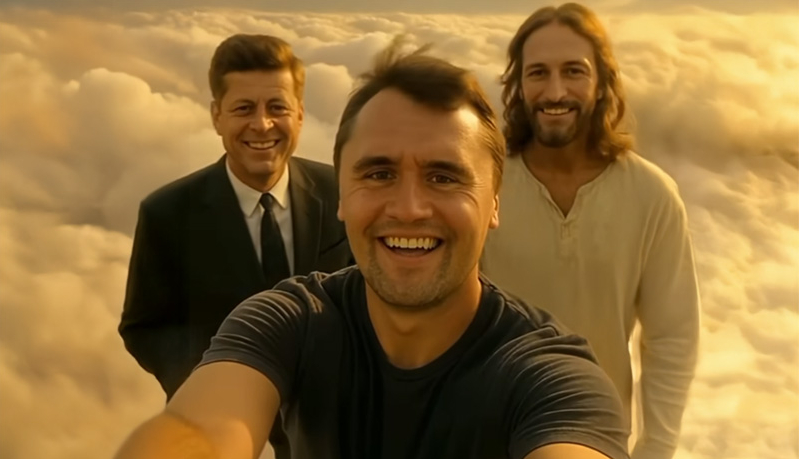


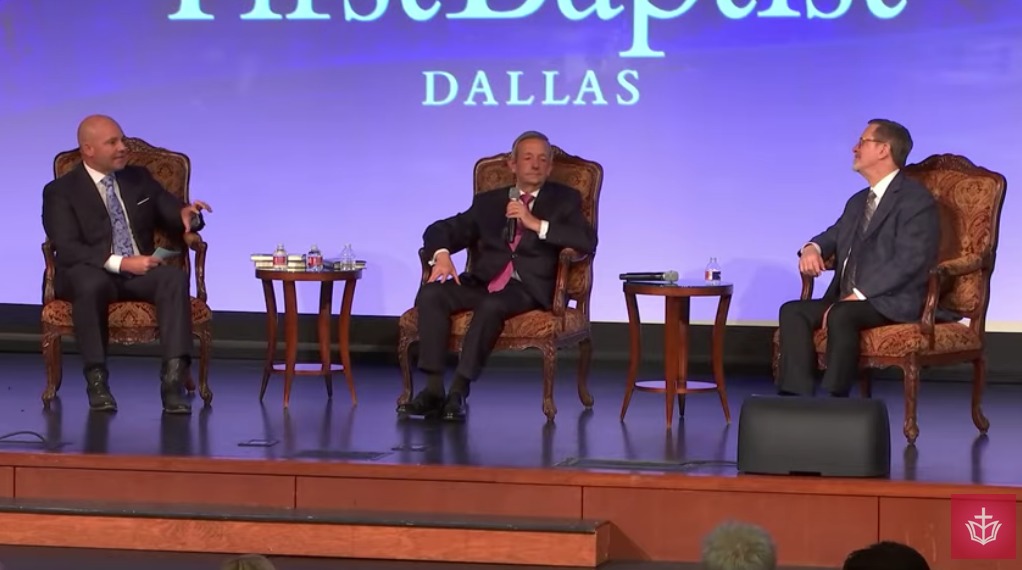


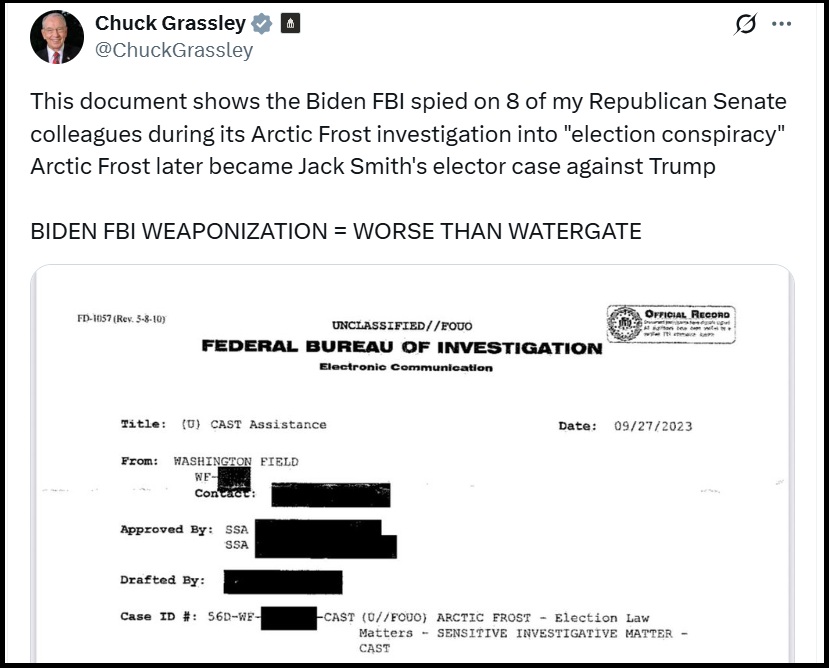


 Truth2Freedom's Blog