There are two ways to be fooled. One is to believe what isn’t true; the other is to refuse to believe what is true. —Soren Kierkegaard. "…truth is true even if nobody believes it, and falsehood is false even if everybody believes it. That is why truth does not yield to opinion, fashion, numbers, office, or sincerity–it is simply true and that is the end of it" – Os Guinness, Time for Truth, pg.39. “He that takes truth for his guide, and duty for his end, may safely trust to God’s providence to lead him aright.” – Blaise Pascal. "There is but one straight course, and that is to seek truth and pursue it steadily" – George Washington letter to Edmund Randolph — 1795. We live in a “post-truth” world. According to the dictionary, “post-truth” means, “relating to or denoting circumstances in which objective facts are less influential in shaping public opinion than appeals to emotion and personal belief.” Simply put, we now live in a culture that seems to value experience and emotion more than truth. Truth will never go away no matter how hard one might wish. Going beyond the MSM idealogical opinion/bias and their low information tabloid reality show news with a distractional superficial focus on entertainment, sensationalism, emotionalism and activist reporting – this blogs goal is to, in some small way, put a plug in the broken dam of truth and save as many as possible from the consequences—temporal and eternal. "The further a society drifts from truth, the more it will hate those who speak it." – George Orwell “There are two ways to be fooled. One is to believe what isn’t true; the other is to refuse to believe what is true.” ― Soren Kierkegaard
Lord, grant that I may not be as a child, tossed to and fro and carried about by every wind of doctrine, by human cunning; rather, speaking the truth in love, may I grow up in every way into Christ, who is the head. Ephesians 4:14-15(ESV)
Lord, give me so to do your will, as that I may know that the teaching is from God; John 7:17(ESV) and so to know the truth, as that the truth may set me free, John 8:32(ESV) may set me free indeed. John 8:36(ESV)
Enable me, I pray, to follow the pattern of sound words that I have heard in the faith and love that are in Christ Jesus, 2 Timothy 1:13(ESV) and to continue in what I have learned and have firmly believed. 2 Timothy 3:14(ESV)
9. Is God, then, not unjust by requiring in His law what man cannot perform?
No, for God so created man that he could perform it;1 but man, through the instigation of the devil,2 by willful disobedience3 robbed himself and all his descendants of this power.
1 Gen 1:31; 2 Gen 3:13; Jn 8:44; 1 Tim 2:13-14; 3 Gen 3:6; 4 Rom 5:12, 18-19
10. Will God allow such disobedience and apostasy to go unpunished?
By no means; but He is terribly displeased with our original sin as well as our actual sins, and will punish them in just judgment both now and eternally,1 as he has declared: Cursed is everyone who does not continue in all things which are written in the book of the law, to do them (Deut. 27:26).
1 Ex 34:7; Ps 5:4-6, 7:10; Nah 1:2; Rom 1:18, 5:12; Eph 5:6; Heb 9:27
11. Is then God not merciful?
God is indeed merciful,1 but He is also just;2 therefore His justice requires that sin, committed against the most high majesty of God, also be punished with extreme, that is, with everlasting punishment both of body and soul.3
Always Reforming: Fidelity to God’s Word in Every Generation
The Heart of Reformed Theology: 10 Core Truths That Shape the Christian Life
A Reformation Month feature highlighting ten biblical truths that define and direct the Reformed faith for God’s glory.
By Joel R. Beeke. Originally published at Crossway. Used with permission.
This article by Dr. Joel R. Beeke reminds us that Reformed theology is more than five points—it is a God-centered, Scripture-saturated vision that transforms how Christians think, worship, and live. As part of our Always Reforming series, it helps us see how faithfulness to God’s Word in every generation begins and ends with His glory.
1. Reformed theology celebrates the glory of God.
The heart and soul of Reformed theology is the glory of the triune God (Ps. 96:3; John 17:1). For this reason, it is often called “God-centered” theology. B. B. Warfield said, “The Calvinist, in a word, is the man who sees God. . . God in nature, God in history, God in grace. Everywhere he sees God in His mighty stepping, everywhere he feels the working of His mighty arm, the throbbing of His mighty heart.” The magnificent obsession of Reformed Christianity, and indeed the very purpose for which mankind exists, is “to glorify God, and to enjoy him forever,” as the Westminster Shorter Catechism says.
2. Reformed theology uses logic, but takes its stand on the Bible.
We must use logic to communicate clearly and coherently. Otherwise, we speak in empty riddles that darken people’s minds instead of bringing light. However, human wisdom cannot lead us to God (1 Cor. 1:21). God is so much greater than we are, and his ways so much higher than ours, that we can only know him truly as he makes himself known in his Word (Isa. 55:6–11). Therefore, Reformed theology builds all of its doctrines upon the study and interpretation of the Bible, the written Word of God (Isa. 8:20). John Owen said, “The student of theology must demonstrate by his life the absolute authority of the Scriptures, and show himself devoutly submitting his own will and judgment to the authority of the Bible in all matters.”
3. Reformed theology helps us to understand and apply all Scripture.
In Reformed exegesis and hermeneutics, context is king. The largest context is what the whole Bible teaches on the particular topic at hand. Since all Scripture is inspired or “breathed out” by God (2 Tim. 3:16), the Bible presents a coherent message on each point of its doctrine and ethics. Reformed theology helps us by providing a systematic presentation of biblical truth so that we can interpret Scripture with Scripture (“the analogy of Scripture”). The Westminster Confession of Faith says, “The infallible rule of interpretation of Scripture is the Scripture itself: and therefore, when there is a question about the true and full sense of any Scripture (which is not manifold, but one), it must be searched and known by other places that speak more clearly.”
4. Reformed theology is historical and confessional.
Tradition can be the bane or blessing of the church. Tradition hurts the church when we elevate it to divine authority (Matt. 15:6–9) but helps the church when each generation receives, examines, and passes on what our predecessors learned from the prophetic and apostolic word (2 Tim. 2:2). Innovation can be very helpful for technology, but in Christian doctrine we should seek the “old paths” (Jer. 6:16) in order to hold to “the faith which was once delivered unto the saints” (Jude 3). Reformed theology informs our faith with centuries-old Christian doctrinal standards such as the Belgic Confession, the Heidelberg Catechism, the Canons of Dort, the Westminster Confession and Catechisms, and the Second London Baptist Confession.
5. Reformed theology holds to ancient catholic orthodoxy.
Reformed theology does not depart from our ancient Christian heritage but affirms the catholic, orthodox doctrines of God and Christ that form the backbone of the great confessional tradition of worldwide Christianity. Though the Reformers were excommunicated by the Roman Catholic Church, they did not cast off the Trinitarian faith of the councils of Nicaea, Constantinople, Ephesus, and Chalcedon. They affirmed the doctrines that God is three persons in one divine nature (Matt. 3:16–17; 28:19), and that God the Son took a truly human nature without ceasing to be fully God—two natures in one incarnate person (John 1:1, 14). Reformed theologians have proven ardent defenders of the orthodox doctrines of God and Christ against heresies old and new because those doctrines are revealed in God’s Word.
6. Reformed theology exalts Jesus Christ as our only Mediator.
Christ is everything to believers (Col. 3:11). The Holy Scriptures teach us to “count all things but loss for the excellency of the knowledge of Christ Jesus my Lord” (Phil. 3:8). Earlier we noted that Reformed theology is God-centered; here we clarify that it is centered on the triune God who comes to us through the only Mediator, Jesus Christ. The Puritans portrayed the gospel as the greatest love story ever told—the Father’s heavenly match of his perfect Son with his fallen and sinful bride, the church. They traced in glowing detail his mediatorial office as the Prophet, Priest, and King of his people. The knowledge of Christ is a topic of immeasurable glory, “the unsearchable riches of Christ” (Eph. 3:8). John Flavel said, “The study of Jesus Christ is the most noble subject that ever a soul spent itself upon. . . God’s heart is opened to men in Christ.”
7. Reformed theology presents a comprehensive worldview—more than five points.
When people ask, “What is Reformed theology?” they often receive an answer couched in terms of “the five points of Calvinism,” the doctrines of total human depravity, unconditional divine election, Christ’s death for the elect, God’s sovereignty in saving them, and their final perseverance in grace to eternal life and glory. Or, they might hear the five sola (Latin for “alone”) principles: standing on Scripture alone, we are saved by grace alone, through faith alone, in Christ alone, to the glory of God alone.
However, a survey of a Reformed catechism or systematic theology shows that there is much more to Reformed theology than the doctrine of salvation. Reformed theology also includes the biblical doctrines of God’s eternal being and works of creation, providence, and government; of the origin of mankind, our nature, our fall into sin and its consequences; of Christ’s glorious person, natures, offices, incarnation, sufferings, and death, and the glory that followed; of the Spirit and his work in creation and redemption; of the church, its constitution, mission, and ordinances; of the Christian’s experience of grace, his life of thankful service in obedience to God’s law, and the ministry of prayer; and finally, the glorious things that are yet to come as God accomplishes all his holy will. Reformed theology is a proclamation of “the whole counsel of God” (Acts 20:27) insofar as God has revealed it for us to know (Deut. 29:29).
8. Reformed theology breathes a spirit of practical godliness.
God-centered teaching calls us to God-centered living. The Word aims to inculcate the wisdom of God’s Word through faith in Christ (2 Tim. 3:15), and the beginning of wisdom is the fear of the Lord (Prov. 9:10). Though it is possible to do theology in a spiritually arid, merely intellectual manner, Reformed theology has historically aimed at the same Paul had in his teaching: “love that issues from a pure heart and a good conscience and a sincere faith” (1 Tim. 1:5). Reformed divines often speak of “piety” as a synonym for “true religion.” John Calvin said, “Indeed, we shall not say that, properly speaking, God is known where there is no religion or piety. . . I call ‘piety’ that reverence joined with love of God which the knowledge of his benefits induces.” Although Reformed theology can be taught on a high academic level, it aims to expound the knowledge of God in such terms that children can practice it at home and adults, in their trades (Col. 3:20–25). Gisbertus Voetius, a renowned professor of Reformed theology, regularly gave his time to catechizing orphans. The English Puritans encouraged people with no more than a basic education to have family devotions so that God’s Word permeates all of life (Deut. 6:7). The men of Old Princeton held that “truth is in order to goodness.”
9. Reformed theology promotes evangelism and missions.
Reformed doctrine has been treasured by some of the greatest evangelists of all time, such as George Whitefield and Jonathan Edwards. The missionary expansion of the church came as God’s answer to the prayers of Reformed and Presbyterian churches, taught by the Westminster Directory for the Public Worship of God to intercede for “the propagation of the gospel and kingdom of Christ to all nations.” Reformed theology is a worldview of missionary optimism, because Christ shall surely save all whom the Father gave him, all the sheep for whom he died, as they hear his voice calling to them in the gospel (John 6:37–39; 10:11, 16, 26–29). Such Reformed optimism prompted William Carey to say that we must “expect great things” and “attempt great things” in our missionary endeavors. Furthermore, the God-centered perspective of Reformed Christianity offers the highest motive that can sustain an evangelist or missionary: “for his name’s sake they went forth” (3 John 7).
10. Reformed theology sustains faithful preaching and evokes continual praise.
The Reformers and Puritans theologized in their preaching and preached their theology. The Reformers and Puritans took their cue as preachers from the apostle Paul: “I believed, and therefore have I spoken” (2 Cor. 4:13). This was not merely a method they embraced, but the fruit of their encounter with the living God through the truths of his Word. Like Paul, they preached God’s Word as in God’s presence (2 Cor. 2:17; 2 Tim. 4:1–2). And like Paul, their theology overflowed in blazing doxology (Eph. 1:3–14). Thus, Reformed theology is a grand assertion that “of him, and through him, and to him, are all things: to whom be glory forever” (Rom. 11:36). Wilhelmus à Brakel said, “God possesses within Himself all glory and worthiness to be served,” and therefore, true godliness is “to live unto God at all times and in all things with all that he is and is capable of performing,” for “He is God and by virtue of His nature this is His worthy due.”
Glorious things of thee are spoken, Zion, city of our God! He, whose word cannot be broken, Formed thee for His own abode. On the Rock of Ages founded, What can shake thy sure repose? With salvation’s walls surrounded, Thou may’st smile at all thy foes.
See! the streams of living waters, Springing from eternal love; Well supply thy sons and daughters, And all fear of want remove: Who can faint while such a river Ever flows their thirst t’assuage? Grace, which like the Lord, the giver, Never fails from age to age.
Round each habitation hovering, See the cloud and fire appear! For a glory and a covering Showing that the Lord is near. Thus deriving from our banner Light by night and shade by day; Safe they feed upon the manna Which He gives them when they pray.
Blest inhabitants of Zion, Washed in the Redeemer’s blood! Jesus, whom their souls rely on, Makes them kings and priests to God. ’Tis His love His people raises, Over self to reign as kings, And as priests, His solemn praises Each for a thank offering brings.
Savior, if of Zion’s city, I through grace a member am, Let the world deride or pity, I will glory in Thy name: Fading is the worldling’s pleasure, All his boasted pomp and show; Solid joys and lasting treasure None but Zion’s children know.
The Lord intervenes in the lives of His elect to grant them saving grace. Does that mean He intervenes in the lives of the reprobate by causing them to sin? In this sermon, R.C. Sproul addresses God’s righteous dealings with sinful creatures.
for all those who believe; for there is no distinction; for all have sinned and fall short of the glory of God, (3:22b–23)
The provision of salvation and the righteousness it brings is granted for all those who believe. Anyone will be saved who believes in Jesus Christ as Lord and Savior, for there is no distinction. Preaching in the synagogue in Pisidian Antioch, Paul declared, “Through Him [Christ] everyone who believes is freed from all things, from which you could not be freed through the Law of Moses” (Acts 13:39). In his letter to the church at Galatia, the apostle said, “A man is not justified by the works of the Law but through faith in Christ Jesus” (Gal. 2:16). Jesus Himself said, “The one who comes to me I will certainly not cast out” (John 6:37). Anyone who believes in Jesus Christ—whether a murderer, prostitute, thief, rapist, homosexual, religious hypocrite, false teacher, pagan, or anything else—will be saved. Just as no one is good enough to be saved, no one is so evil that he cannot be saved. That is the wonderful point of Romans 3:22. All those who believe will be saved, because in God’s sight there is no distinction. Just as everyone apart from Christ is equally sinful and rejected by God, everyone who is in Christ is equally righteous and accepted by Him. Even the “foremost of all” sinners, as Paul called himself (1 Tim. 1:15), was not too wicked to be saved. There is no distinction among those who are saved, because there is no distinction among those who are lost, for all have sinned and fall short of the glory of God. Hustereō (fall short) has the basic meaning of being last or inferior. Every human being comes in last as far as the glory of God is concerned.
MacArthur, J. F., Jr. (1991). Romans (Vol. 1, pp. 207–208). Moody Press.
Righteousness Apart from Law
Romans 3:21–24
But now a righteousness from God, apart from law, has been made known, to which the Law and the Prophets testify. This righteousness from God comes through faith in Jesus Christ to all who believe. There is no difference, for all have sinned and fall short of the glory of God, and are justified freely by his grace through the redemption that came by Christ Jesus.
In Romans 3:21–31 we are dealing with themes that are the very heart, not only of Paul’s letter, but of the entire Bible and therefore of reality itself. In all life and history there is nothing more important than these teachings. But who today thinks this way? Who is willing to acknowledge this in an age when abstract thought—indeed, even thinking itself—is suspect? Who even among the masses of Christian people really appreciates what Paul is saying here? Ours is an age in which people are self-absorbed and focus on immediate gratification. We tend to evaluate any religious teaching according to its apparent relevance to our present “needs” and short-term goals. No one can have success teaching basic truths about man and the universe unless our closed ways of thinking are changed. But, then, this has always been the case. It was no easier for the apostle Paul to preach the message of salvation to a generation that was busy entertaining itself by sex and circuses than for today’s Christians to minister that same word to an age that has anesthetized itself through television. But we must try! We must try as Paul did! We must teach the Word of God, because it is by the Word alone that God speaks to us about what really matters.
Four Great Doctrines
We have already seen how Paul introduces this section of his letter—with the words “but now.” These words indicate that something of great importance has taken place, and that this is the substance of the good news being proclaimed by Paul and the other messengers of the gospel. Here is a simple outline of this teaching:
God has provided a righteousness of his own for men and women, a righteousness we do not possess ourselves. This is the very heart or theme of the Word of God. Although it is new in its fulfillment, it had nevertheless been fully prophesied in the Old Testament.
This righteousness is by grace. We do not deserve it. In fact, we are incapable ever of deserving it.
It is the work of the Lord Jesus Christ in dying for his people, redeeming them from their sin, that has made this grace on God’s part possible. This is the reason for the “now” in “but now.” It is because of Jesus’ death that there is a Christian gospel.
This righteousness that God has graciously provided becomes ours through simple faith. Believing and trusting God in regard to the work of Jesus is the only way anyone, whether Jew or Gentile, can be saved.
The importance of these teachings will become increasingly clear in our exposition of them. But we can see their importance even at this point by noticing that they are a nearly exact repetition of what Paul has already stated as the thesis of the letter. They were stated in his opening address, for example: “Paul, a servant of Christ Jesus, called to be an apostle and set apart for the gospel of God—the gospel he promised beforehand through his prophets in the Holy Scriptures regarding his Son, who as to his human nature was a descendant of David, and who through the Spirit of holiness was declared with power to be the Son of God by his resurrection from the dead: Jesus Christ our Lord. Through him and for his name’s sake, we received grace and apostleship to call people from among all the Gentiles to the obedience that comes from faith” (Rom. 1:1–5). The teachings of Romans 3:21–31 are all there. It is the same gospel. Again, it is also what we have found in the initial statement of Paul’s thesis in Romans 1:16–17: “I am not ashamed of the gospel, because it is the power of God for the salvation of everyone who believes: first for the Jew, then for the Gentile. For in the gospel a righteousness from God is revealed, a righteousness that is by faith from first to last, just as it is written: ‘The righteous will live by faith.’ ” So I repeat what I said at the beginning of this study: There is nothing in all life and history that is more important than these teachings. The issues of eternity hang on these truths, and we must be faithful to them regardless of the resistance or scorn of our contemporaries.
Objective and Subjective Genitives
We begin with the first of these four doctrines, namely, that “God has provided a righteousness of his own for men and women.” You will notice, if you read the text carefully, that in Romans 3:21 the New International Version speaks of “a righteousness from God,” while I have implied (echoing the King James Version) that this is the “righteousness of God,” that is, suggesting that it is God’s own righteousness. Which is correct? Is this a righteousness from God? Or is it the righteousness of God? And is there a difference? The variations in translations stem from the fact that the Greek text contains a simple genitive construction, which we usually translate in English by using the word “of.” But in Greek, as in English, this can be either what grammarians call a subjective genitive or an objective genitive. A subjective genitive is one in which the word following “of” is the subject or source of the idea. An example is “love of God.” The phrase usually means that this is God’s love. He is the source of the love and the subject of the action. A nonbiblical example is the “novels of Charles Dickens.” It means that Dickens is the author of the novels. He wrote them. It does not mean that they are about him. The other type of genitive is what grammarians call an objective genitive. It refers to a situation in which the word following “of” is the object of the first word. An example might be “world of misery.” This does not mean that misery is the source of the world or even the source of the world’s problems but rather that the world is characterized by misery. It is a miserable world. The word misery functions as an adjective in this construction. How, then, is the phrase “righteousness of God” to be interpreted? If this is a case of an objective genitive, it is a righteousness determined by God’s own nature. That is, as we can also say, it is his righteousness or divine righteousness. This is what the editors of the Scofield Bible seem to have thought, for they appended a note to Romans 3:21, which reads: “The righteousness of God is all that God demands and approves, and is ultimately found in Christ himself, who fully met in our stead every requirement of the law.” They support this interpretation by a reference to 1 Corinthians 1:30: “Christ … has become … our righteousness.” I find support for this idea in the text, because Paul’s chief point is that the righteousness of God has been disclosed in the person and work of Christ. Before, we did not have any truly adequate way of understanding what this righteousness is like. But now we do, since we can see it in the Savior. On the other hand, if this is a subjective genitive (rather than an objective genitive), we should then understand Paul to be teaching that God is the source of this righteousness and that it is in Jesus Christ that God makes it available to us. The translators of the New International Version seem to have preferred this idea, for they have written: “But now a righteousness from God … has been made known.” Surely this is a case where we do not have to choose between the two ideas, for both are correct. Righteousness is to be seen in the Lord Jesus Christ, but it is also his righteousness, rather than our own, that we need. Apart from him we might compare ourselves only with one another and thus have an utterly inadequate idea of what the holy God requires. This is what Paul himself had been doing prior to his encounter with Jesus on the road to Damascus. He had compared himself with other people, even the most moral people of his day, and had concluded that there was much he could boast about: “If anyone else thinks he has reasons to put confidence in the flesh, I have more” (Phil. 3:4). But when he saw Jesus in the Damascus road vision, for the first time he came to understand what true righteousness is and learned to reckon his own good deeds as worthless. “For [his] sake,” wrote Paul, “I have lost all things. I consider them rubbish, that I may gain Christ and be found in him, not having a righteousness of my own that comes from the law, but that which is through faith in Christ—the righteousness that comes from God and is by faith” (vv. 8b–9). At the same time—it is explicitly stated in the last of those three verses from Philippians—the righteousness of God, which is revealed in Christ, is also a righteousness that comes to us from God. For if God did not give it, there is no way any of us could possibly win it for ourselves. This is another way of saying that salvation is a gift. It is the ground on which the redeemed will ascribe all their praise to God for saving them.
Apart from the Law
These ideas need to be held together. And they need to be remembered in everything we say both about our inability to attain righteousness by ourselves and about the way God has provided it for us through the work of Jesus Christ. The phrase Paul uses in our text to state how the righteousness of God can not come to us is “apart from law.” This does not mean that the law has no value, of course. The very sentence reminds us of one of its values, for it says that “the Law and the Prophets” testified to the righteousness that would come (and eventually did come) in Jesus Christ. (In our last study we looked at some of the texts that do just that.) Again, at the very end of Romans 3, we find Paul returning to the subject of the law, saying, “Do we, then, nullify the law by this faith? Not at all! Rather, we uphold the law” (v. 31). The law clearly had value in the Old Testament period and continues to have value in the Christian era. Theologians usually speak of the function of God’s law in two areas: (1) to restrain evil, much as secular law is meant to do; and (2) to reveal man’s sin and thus point us to the need for Jesus Christ. These are important functions. But the one thing the law cannot do and was never meant to do was save a person by his or her observance of it. This is why Paul speaks of a righteousness of God “apart from law” and why this announcement is such good news, although hard for unsaved people to understand or accept. The law, as Paul will say later in Romans, is “holy, righteous and good” (Rom. 7:12). If we could be saved by law, the law of God would save us. But we cannot! And it cannot! We cannot keep God’s commandments. If the law is to have any benefit for us, it must be by enabling us to see our inability to satisfy the standards of God by our own efforts and thus turn us to Christ. That is why Paul says that “this righteousness from God comes [not by law but] through faith in Jesus Christ to all who believe …” (Rom. 3:22). Another way of putting this is to say that when the law was given to Israel on Mount Sinai, the very books that listed these unyielding commandments of the holy God also contained instructions for the sacrifice of the lamb on the Day of Atonement. God gave the commandments, but he also gave the altar and taught the principle of substitution. It is as if he were saying, “These are my commandments; you must keep them or be lost. But I know you cannot keep them. So, rather than trusting in your ability to do what you never will be able to do, I point you to my Son, who will die for you. It is on the basis of his future work that I am giving you a righteousness you could never achieve yourselves. Trust him.”
A Unique Religion
This idea is so important that I want to state it another way, showing the utter uniqueness of Christianity in this fundamental matter. Paul has said that this righteousness from God, which we need, is “apart from law,” by which he means primarily “apart from the law of God given to Israel.” He means, as John Murray has said in his commentary, that “in justification there is no contribution, preparatory, accessory or subsidiary, that is given by works of law.” But “law” also embraces all human effort to attain righteousness, and this means that the fundamental principle of this verse (as well as of the Bible as a whole) is that God’s righteousness is to be received apart from any human doing whatsoever. This is the point at which Christianity is distinguished categorically from every other human religion. All religions have their distinguishing points, of course. Some call God, the Supreme Being, by a different name. Some emphasize one path to God, some another. Some are mystical, some very ritualistic. But all, except for Christianity, suppose that there is something human beings can do for the Deity to convince him to save them. They teach a human way to achieve eternity, a man-made ladder to the bliss of the life to come. Only Christianity humbles man by insisting that there is nothing at all we can do to work out our salvation. Of course, once we are saved we have the obligation and privilege of doing much, since Jesus calls us to discipleship. But we are not saved by such doings. All our actions can bring upon us, even the best of our actions, is the judgment from God that we deserve. Therefore, it is vitally important to examine ourselves to see if we are really trusting in Jesus and what he has done, or whether we are trusting in what we suppose we can do. Commentator Donald Barnhouse has written:
Look into your own heart and see whether you are trusting, even in a small fraction, in something that you are doing for yourself or that you are doing for God, instead of finding in your heart that you have ceased from your works as God did from his and that you are resting on the work that was accomplished on the cross of Calvary. This is the secret of reality: Righteousness apart from law. Righteousness apart from human doing. Christianity is the faith that believes God’s Word about the work that is fully done, completely done.… Righteousness without law. Righteousness apart from human character. Righteousness without even a consideration of the nature of the being that is made righteous. Righteousness that comes from God upon an ungodly man. Righteousness that will save a thief on the cross. Righteousness that is prepared for you. Righteousness that you must choose by abandoning any hope of salvation from anything that is in yourself. And underline this—it is the only righteousness that can produce practical righteousness in you.
The Really Good News
When a person is first presented with this pure core of Christianity, the reaction is usually revulsion. We want to save ourselves, and anything that suggests that we cannot do so is abhorrent to us. We do not want a religion that demands that we throw ourselves entirely upon the grace and mercy of God. But Christianity is not only the religion we need so desperately. It is also the only religion worth having in the long run. Let me explain.
If salvation is by the gift of God, apart from human doing, then we can be saved now. We do not have to wait until we reach some high level of attainment or pass some undetermined future test. Many people think in these terms, because they know (if they are honest with themselves) that their lives and actions are far from what they should be now and they keep striving. But this means—I am sure you can see it—that salvation can never be a present experience but is something always in the future. It is something such persons hope to attain, though they are afraid they may not. It is only in Christianity that this future element moves into the present. And the reason it can is that salvation is not based on our ability to accumulate acceptable merits with God, but rather on what God has already done for us. When Jesus said on the cross, “It is finished,” he meant what he said. His finished work is the sole grounds for our being declared righteous by God. And since it is a past accomplishment, salvation can be ours now, solely by the application of Christ’s righteousness to us as God’s gift. This is why Paul can say, “Therefore, there is now no condemnation for those who are in Christ Jesus” (Rom. 8:1). It is also why he declared, “I tell you, now is the time of God’s favor, now is the day of salvation” (2 Cor. 6:2). It is why Joseph Hart, one of our great hymnwriters, wrote: Come, ye weary, heavy laden, Bruised and broken by the Fall; If you tarry till you’re better, You will never come at all: Not the righteous, not the righteous, Sinners Jesus came to call. Let not conscience make you linger, Nor of fitness fondly dream; All the fitness he requireth Is to feel your need of him: This he gives you; this he gives you; ’Tis the Spirit’s rising beam.
If salvation is by the gift of God, apart from human doing, then salvation is certain. If salvation is by human works, then human works (or a lack of them) can undo it. If I can save myself, I can unsave myself. I can ruin everything. But if salvation is of God from beginning to end, it is sure and unwavering simply because God is himself sure and unwavering. Since God knows the end from the beginning, nothing ever surprises him, and he never needs to alter his plans or change his mind. What he has begun he will continue, and we can be confident of that. Paul expressed this confidence in regard to the church at Philippi, saying that “he who began a good work in you will carry it on to completion until the day of Christ Jesus” (Phil. 1:6).
If salvation is by the gift of God, apart from human doing, then human boasting is excluded, and all the glory in salvation goes to God. I doubt any of us would want to be in a heaven populated by persons who got there, even in part, by their own efforts. The boasting of human beings is bad enough in this world, where all they have to boast of is their own good looks (for which they are not responsible), their money, their friends, or whatever. Imagine how offensive it would be if they were able to brag about having earned heaven: “Old Joe down there—he’s in the other place—just didn’t have what it takes, I suppose. He should have lived a good life, like me.” Even if the only thing that determines a person’s salvation is faith (thought of as something of which we are capable), it would still be intolerable for some people to boast of having believed, though others had refused to do so. But it is not going to be like that! Salvation is a gift. It is receiving God’s righteousness—apart from law, apart from human doing. It is, as Paul wrote to the Ephesians, “not by works, so that no one can boast” (Eph. 2:9). No one in heaven will be praising man. In heaven the glory will go to God only. Soli deo gloria! Thank God it is that way.
Amazing Grace
Romans 3:22–24
There is no difference, for all have sinned and fall short of the glory of God, and are justified freely by his grace through the redemption that came by Christ Jesus.
In the last study I introduced four doctrines found in Romans 3:21–31: (1) God has provided a righteousness of his own for men and women, a righteousness we do not possess ourselves; (2) this righteousness is by grace; (3) it is the work of the Lord Jesus Christ in dying for his people, redeeming them from their sin, that has made this grace on God’s part possible; and (4) this righteousness, which God has graciously provided, becomes ours through simple faith. We have already looked at the first of these four doctrines: the righteousness that God has made available to us apart from law. Now we will examine the second doctrine: that this righteousness becomes ours by the grace of God alone, apart from human merit. That is the meaning of grace, of course. It is God’s favor to us apart from human merit. Indeed, it is favor when we deserve the precise opposite. D. Martyn Lloyd-Jones has written, “There is no more wonderful word than ‘grace.’ It means unmerited favor or kindness shown to one who is utterly undeserving.… It is not merely a free gift, but a free gift to those who deserve the exact opposite, and it is given to us while we are ‘without hope and without God in the world.’ ” But how are we to do justice to this great concept today? We have too high an opinion of ourselves even to understand grace, let alone to appreciate it. We speak of it certainly. We sing, “Amazing grace—how sweet the sound—That saved a wretch like me!” But we do not think of ourselves as wretches needing to be saved. Rather, we think of ourselves as quite worthy. One teacher has said, “Amazing grace is no longer amazing to us.” In our view, it is not even grace.
There Is No Difference
This is why the idea expressed in Romans 3:23 is inserted at this point. For many years, whenever I came to this verse, I had a feeling that it was somehow in the wrong place. It was not that Romans 3:23 is untrue. Obviously it is, for that is what Romans 1:18–3:20 is all about. What bothered me is that the verse did not seem to belong here. I felt that the words “there is no difference, for all have sinned and fall short of the glory of God” belonged with that earlier section. The verse seemed somehow an intrusion here, because Romans 3:21–31 is not talking about sin but about the way of salvation. I think differently now, however. And the reason I think differently is that I now understand the connection between this verse and grace. The reason we do not appreciate grace is that we do not really believe Romans 3:23. Or, if we do, we believe it in a far lesser sense than Paul intended. Let me use a story to explain what I mean. In his classic little book All of Grace, Charles Haddon Spurgeon begins with the story of a preacher from the north of England who went to call on a poor woman. He knew that she needed help. So, with money from the church in his hand, he made his way through the poor section of the city to where she lived, climbed the four flights of stairs to her tiny attic apartment, and then knocked at the door. There was no answer. He knocked again. Still no answer. He went away. The next week he saw the woman in church and told her that he knew of her need and had been trying to help her. “I called at your room the other day, but you were not home,” he said. “At what time did you call, sir?” she asked. “About noon.” “Oh, dear,” she answered. “I was home, and I heard you knocking. But I did not answer. I thought it was the man calling for the rent.” This is a good illustration of grace and of our natural inability to appreciate it. But isn’t it true that, although most of us laugh at this story, we unfortunately also fail to identify with it? In fact, we may even be laughing at the poor woman rather than at the story, because we consider her to be in a quite different situation from ourselves. She was unable to pay the rent. We know people like that. We feel sorry for them. But we think that is not our condition. We can pay. We pay our bills here, and we suppose (even though we may officially deny it) that we will be able to pay something—a down payment even if not the full amount—on our outstanding balance in heaven. So we bar the door, not because we are afraid that God is coming to collect the rent, but because we fear he is coming with grace and we do not want a handout. We do not consider our situation to be desperate. But, you see, if the first chapters of Romans have meant anything to us, they have shown that spiritually “there is no difference” between us and even the most destitute of persons. As far as God’s requirements are concerned, there is no difference between us and the most desperate or disreputable character in history. I have in my library a fairly old book entitled Grace and Truth, written by the Scottish preacher W. P. Mackay. Wisely, in my judgment, the first chapter of the book begins with a study of “there is no difference.” I say “wisely,” because, as the author shows, until we know that in God’s sight there is no difference between us and even the wildest profligate, we cannot be saved. Nor can we appreciate the nature and extent of the grace needed to rescue us from our dilemma. Mackay illustrates this point with an anecdote. Someone was once speaking to a rich English lady, stressing that every human being is a sinner. She replied with some astonishment, “But ladies are not sinners!” “Then who are?” the person asked her. “Just young men in their foolish days,” was her reply. When the person explained the gospel further, insisting that if she was to be saved by Christ, she would have to be saved exactly as her footman needed to be saved—by the unmerited grace of God in Christ’s atonement—she retorted, “Well, then, I will not be saved!” That was her decision, of course, but it was tragic. If you want to be saved by God, you must approach grace on the basis of Romans 1:18–3:20—on the grounds of your utter ruin in sin—and not on the basis of any supposed merit in yourself.
Common Grace
It is astonishing that we should fail to understand grace, of course, because all human beings have experienced it in a general but nonsaving way, even if they are not saved or have not even the slightest familiarity with Christianity. We have experienced what theologians call “common grace,” the grace that God has shown to the whole of humanity. Jesus spoke of it when he reminded his listeners that God “causes his sun to rise on the evil and the good, and sends his rain on the righteous and the unrighteous” (Matt. 5:45b). When Adam and Eve sinned, the race came under judgment. No one deserved anything good. If God had taken Adam and Eve in that moment and cast them into the lake of fire, he would have been entirely just in doing so, and the angels could still have sung with great joy: “Holy, holy, holy is the Lord God Almighty, who was, and is, and is to come” (Rev. 4:8). Or, if God had spared Adam and Eve, allowing them to increase until there was a great mass of humanity in the world and then had brushed all people aside into everlasting torment, God would still have been just. God does not owe us anything. Consequently, the natural blessings we have are due not to our own righteousness or abilities but to common grace. Let me try to state this clearly once more. If you are not a believer in Jesus Christ, you are still a recipient of God’s common grace, whether you acknowledge it or not. If you are alive and not in hell at this moment, it is because of God’s common grace. If you are in good health and not wasting away in some ward of hopeless patients in a hospital, it is because of common grace. If you have a home and are not wandering about on city streets, it is because of God’s grace. If you have clothes to wear and food to eat, it is because of God’s grace. The list could be endless. There is no one living who has not been the recipient of God’s common grace in countless ways. So, if you think that it is not by grace but by your merits alone that you possess these blessings, you show your ignorance of spiritual matters and disclose how far you are from God’s kingdom.
Unmerited Grace
But it is not common grace that Paul is referring to in our Romans text, important as common grace is. It is the specific, saving grace of God in salvation, which is not “common” (in the sense that all persons experience it regardless of their relationship to God), but rather is a gift received only by some through faith in Jesus Christ, apart from merit. This is the point we need chiefly to stress, of course, for it takes us back to the story of the preacher’s visit to the poor woman and reminds us that the reason we do not appreciate grace is that we think we deserve it. We do not deserve it! If we did, it would not be grace. It would be our due, and we have already seen that the only thing rightly due us in our sinful condition is a full outpouring of God’s just wrath and condemnation. So I say again: Grace is apart from good works. Grace is apart from merit. We should be getting this by now, because each of the blessings enumerated in this great chapter of Romans is apart from works, law, or merit—which are only various ways of saying the same thing.
The righteousness of God, which is also from God, is apart from works.
Grace, which is the source of that righteousness, is apart from works.
Redemption, which makes grace possible, is apart from works.
Justification is apart from works.
Salvation from beginning to end is apart from works. In other words, it is free. This must have been the chief idea in Paul’s mind when he wrote these verses, for he emphasizes the matter by repeating it. He says that we are “justified freely by his grace through the redemption that came by Christ Jesus” (v. 24, italics mine). One of the most substantial works on grace that I have come across is by Lewis Sperry Chafer, the founder of Dallas Theological Seminary, and it goes by that title: Grace. In the very first chapter Chafer has a section captioned “Seven Fundamental Facts About Grace.” I am not happy with everything he says in this section, particularly the last two of these points. But I refer to him here because of what he says about grace and demerit:
1.      “Grace is not withheld because of demerit” and
2.      “Grace cannot be lessened because of demerit.”
These are important points, since they emphasize the bright side of what usually appears to us as undesirable teaching. Most of us resent the thought of “free” grace. We want to earn our own way, and we resent the suggestion that we are unable to scale the high walls of heaven by our own devices. We must be humbled before we will even give ear to the idea. But if we have been humbled—if God has humbled us—the doctrine of grace becomes a marvelous encouragement and comfort. It tells us that the grace of God will never be withheld because of anything we may have done, however evil it was, nor will it be lessened because of that or any other evil we may do. The self-righteous person imagines that God scoops grace out of a barrel, giving much to the person who has sinned much and needs much, but giving only a little to the person who has sinned little and needs little. That is one way of wrongly mixing grace with merit. But the person who is conscious of his or her sin often imagines something similar, though opposite in direction. Such people think of God’s withholding grace because of their great sin, or perhaps even putting grace back into his barrel when they sin badly. Thank God grace is not bestowed on this principle! As Chafer says:
God cannot propose to do less in grace for one who is sinful than he would have done had that one been less sinful. Grace is never exercised by him making up what may be lacking in the life and character of a sinner. In such a case, much sinfulness would call for much grace, and little sinfulness would call for little grace. [Instead] the sin question has been set aside forever, and equal exercise of grace is extended to all who believe. It never falls short of being the measureless saving grace of God. Thus, grace could not be increased, for it is the expression of his infinite love; it could not be diminished, for every limitation that human sin might impose on the action of a righteous God has, through the propitiation of the cross, been dismissed forever.
Grace humbles us, because it teaches that salvation is apart from human merit. At the same time, it encourages us to come to God for the grace we so evidently need. There is no sin too great either to turn God from us or to lessen the abundance of the grace he gives.
Abounding Grace
That word abundance leads to the final characteristic of grace to be included in this study. It is taught two chapters further on in a verse that became the life text of John Newton: Romans 5:20. Our version reads, “.… But where sin increased, grace increased all the more.” But the version Newton knew rendered this, “But where sin abounded, grace did much more abound,” (KJV.) John Newton was an English clergyman who lived from 1725 to 1807. He had a wide and effective ministry and has been called the second founder of the Church of England. He is best known to us for his hymns. Newton was raised in a Christian home in which he was taught many great verses of the Bible. But his mother died when he was only six years old, and he was sent to live with a relative who mocked Christianity. One day, at an early age, Newton left home and joined the British Navy as an apprenticed seaman. He was wild and dissolute in those years, and he became exceedingly immoral. He acquired a reputation of being able to swear for two hours without repeating himself. Eventually he deserted the navy off the coast of Africa. Why Africa? In his memoirs he wrote that he went to Africa for one reason only and that was “that I might sin my fill.” In Africa he fell in with a Portuguese slavetrader in whose home he was cruelly treated. This man often went away on slaving expeditions, and when he was gone the power in the home passed to the trader’s African wife, the chief woman of his harem. This woman hated all white men, and she took out her hatred on Newton. He tells us that for months he was forced to grovel in the dirt, eating his food from the ground like a dog and beaten unmercifully if he touched it with his hands. For a time he was actually placed in chains. At last, thin and emaciated, Newton made his way through the jungle, reached the sea, and there attracted a British merchant ship making its way up the coast to England. The captain of the ship took Newton aboard, thinking that he had ivory to sell. But when he learned that the young man knew something about navigation as a result of his time in the British Navy, he made him ship’s mate. Even then Newton fell into trouble. One day, when the captain was ashore, Newton broke out the ship’s supply of rum and got the crew drunk. He was so drunk himself that when the captain returned and struck him in the head, Newton fell overboard and would have drowned if one of the sailors had not grabbed him and hauled him back on deck in the nick of time. Near the end of the voyage, as they were approaching Scotland, the ship ran into bad weather and was blown off course. Water poured in, and she began to sink. The young profligate was sent down into the hold to pump water. The storm lasted for days. Newton was terrified, sure that the ship would sink and he would drown. But there in the hold of the ship, as he pumped water, desperately attempting to save his life, the God of grace, whom he had tried to forget but who had never forgotten him, brought to his mind Bible verses he had learned in his home as a child. Newton was convicted of his sin and of God’s righteousness. The way of salvation opened up to him. He was born again and transformed. Later, when the storm had passed and he was again in England, Newton began to study theology and eventually became a distinguished evangelist, preaching even before the queen. Of this storm William Cowper, the British poet who was a close friend of John Newton’s, wrote:
God moves in a mysterious way,
  His wonders to perform;
He plants his footsteps in the sea
  And rides upon the storm.
And Newton? Newton became a poet as well as a preacher, writing some of our best-known hymns. This former blasphemer wrote:
How sweet the Name of Jesus sounds
  In a believer’s ear!
It soothes his sorrows, heals his wounds,
  And drives away his fear.
He is known above all for “Amazing Grace”:
Amazing grace—how sweet the sound—
  That saved a wretch like me!
I once was lost, but now am found—
  Was blind, but now I see.

’Twas grace that taught my heart to fear,
  And grace my fears relieved;
How precious did that grace appear
  The hour I first believed.

Through many dangers, toils, and snares,
  I have already come;
’Tis grace has brought me safe thus far,
  And grace will lead me home.
Newton was a great preacher of grace. And no wonder! He had learned what all who have ever been saved have learned: namely, that grace is from God, apart from human merit. He deserved nothing. But he found grace through the work of Jesus.
Boice, J. M. (1991–). Romans: Justification by Faith (Vol. 1, pp. 347–362). Baker Book House.
The way is slippery and our feet are feeble, but the Lord will keep our feet. If we give ourselves up by obedient faith to be His holy ones, He will Himself be our guardian. Not only will He charge His angels to keep us, but He Himself will preserve our goings.
He will keep our feet from falling so that we do not defile our garments, wound our souls, and cause the enemy to blaspheme.
He will keep our feet from wandering so that we do not go into paths of error, or ways of folly, or courses of the world’s custom.
He will keep our feet from swelling through weariness, or blistering because of the roughness and length of the way.
He will keep our feet from wounding: our shoes shall be iron and brass so that even though we tread on the edge of the sword, or on deadly serpents, we shall not bleed or be poisoned.
He will also pluck our feet out of the net. We shall not be entangled by the deceit of our malicious and crafty foes.
With such a promise as this, let us run without weariness and walk without fear. He who keeps our feet will do it effectually.
He looketh upon men, and if any say, I have sinned, and perverted that which was right, and it profited me not; he will deliver his soul from going into the pit, and his life shall see the light.Job 33:27-28
This is a word of truth, gathered from the experience of a man of God, and it is tantamount to a promise. What the Lord has done, and is doing, He will continue to do while the world standeth. The Lord will receive into His bosom all who come to Him with a sincere confession of their sin; in fact, He is always on the lookout to discover any that are in trouble because of their faults.
Can we not endorse the language here used? Have we not sinned, sinned personally so as to say, “I have sinned”? Sinned willfully, having perverted that which is right? Sinned so as to discover that there is no profit in it but an eternal loss? Let us, then, go to God with this honest acknowledgment. He asks no more. We can do no less.
Let us plead His promise in the name of Jesus. He will deliver us from the pit of hell which yawns for us; He will grant us life and light. Why should we despair? Why should we even doubt? The Lord does not mock humble souls. He means what He says. The guilty can be forgiven. Those who deserve execution can receive free pardon. Lord, we confess, and we pray Thee to forgive!
One of the greatest challenges facing the Church today is the subtle invasion of postmodern thought. Postmodernity, at its core, denies the existence of absolute truth. Instead, it elevates subjectivity, personal experience, and cultural trends above divine revelation.
Unfortunately, this philosophical current has spilled over into the Church. When a congregation embraces postmodernism, it inevitably compromises the very Gospel it was called to proclaim.
Below are seven signs that you may be in a postmodern church.
1. They don’t preach the absolutes of salvation
The central message of Scripture is the unchanging Gospel of Jesus Christ: that salvation is found in Christ alone, by grace through faith, apart from works. Yet in many postmodern churches, this truth is watered down or ignored altogether.
Rather than proclaiming that humanity is under sin and needs redemption through the cross, messages are often framed in vague language about “spiritual journeys” or “discovering your best self.” The exclusivity of Christ (John 14:6; Acts 4:12) is either denied or downplayed, so as not to offend seekers. This shift robs the church of its prophetic edge and turns it into little more than a religious social club.
2. They have low standards of morality for volunteers and musicians
In historic Christianity, those who minister — whether from the pulpit or on the worship platform — were held to high biblical standards. Leaders and servants were expected to exemplify holiness, repentance, and a lifestyle consistent with Christ’s teachings.
But in a postmodern church, pragmatism often trumps purity. If someone can sing well, play guitar skillfully, or draw crowds, then their moral life is considered irrelevant. This attitude is directly opposed to the apostolic expectation that leaders be “above reproach” (1 Timothy 3:2). When churches lower the bar for leadership, they not only dishonor God’s Word but also confuse the congregation about what holiness actually means.
3. Sermons are self-help messages without any reference to sin and repentance
Another hallmark of postmodern churches is that sermons sound more like TED Talks than biblical expositions. The focus is on how to “cope with stress,” “find happiness,” or “unlock your potential.” While some of these topics may offer practical value, they become spiritually bankrupt when disconnected from the larger biblical framework.
True preaching must confront sin, point to the cross, and call people to repentance (Acts 2:38). Without this, a church becomes a motivational seminar sprinkled with Bible verses. Postmodern preaching caters to itching ears (2 Timothy 4:3) rather than calling people into radical discipleship.
4. Their view of societal ethics is relativistic
One of the clearest signs of postmodern infiltration is moral relativism in societal issues. Churches that affirm same-sex marriage, avoid addressing abortion, or remain silent on clear moral questions demonstrate that they are more concerned with cultural approval than biblical faithfulness.
The Word of God speaks clearly about God’s design for marriage (Genesis 2:24; Matthew 19:4–6) and about the sanctity of human life (Psalm 139:13–16). When a church refuses to declare these truths for fear of being labeled “intolerant,” it betrays its loyalty to Christ. Relativism replaces the prophetic witness of the church with a politically correct echo chamber.
5. Anyone can be a member without proper vetting regarding doctrine or salvific status
Membership in the body of Christ is not merely a matter of signing a card or joining a roster. Biblically, the church is a covenant community of those who confess Christ as Lord, have been baptized, and are walking in faith and repentance.
But in a postmodern church, barriers to membership are virtually nonexistent. Anyone who attends regularly, contributes financially, or simply expresses interest can be welcomed as a member—regardless of their actual beliefs or lifestyle. Such an open-door policy may seem inclusive, but it undermines the biblical picture of the church as a holy people (1 Peter 2:9) and exposes the congregation to doctrinal and moral confusion.
6. The focus is more on a worship experience than on theological depth in preaching
Music and worship can powerfully lead people into God’s presence, but in many postmodern churches, the worship “experience” becomes the primary goal. Lights, fog machines, and emotionally charged music take center stage, while theological depth and biblical exposition take a back seat.
When worship is divorced from truth, it becomes entertainment rather than adoration. Jesus said the Father seeks those who worship “in spirit and truth” (John 4:24). Without sound teaching, worship can drift into emotionalism — momentary highs that do not produce lasting discipleship. A healthy church balances passionate worship with doctrinally rich preaching.
7. Their main goal is to garner crowds — not to make disciples
Finally, perhaps the most telling sign of a postmodern church is its obsession with numbers. Success is measured by attendance, offerings, and social media engagement rather than by transformed lives.
Jesus never commanded us to draw crowds; He commanded us to “make disciples of all nations” (Matthew 28:19). Crowds can be fickle, as evidenced by those who shouted “Hosanna” one week (Palm Sunday) and “Crucify Him” the next. Discipleship, on the other hand, requires commitment, obedience, and endurance. When churches prioritize popularity over discipleship, they betray the very mission Christ entrusted to them.
Conclusion: The call to stand against postmodern drift
The infiltration of postmodernity into the church is not merely a philosophical debate — it is a spiritual crisis. If the church ceases to proclaim absolute truth, it loses its identity as “the pillar and foundation of the truth” (1 Timothy 3:15).
Every pastor, leader, and believer must ask: Is my church drifting into postmodern compromise? Are we preaching the absolutes of salvation? Are we holding leaders to biblical standards? Are we willing to confront sin, affirm God’s design for morality, and make disciples rather than consumers?
The Church of Jesus Christ cannot afford to mirror the culture’s relativism. Instead, we must hold fast to the truth once for all delivered to the saints (Jude 3), proclaim the unchanging Gospel with boldness, and build congregations rooted in holiness, repentance, and discipleship.
Only then will we resist the tide of postmodernity and remain faithful to the Lord who declared, “Heaven and earth will pass away, but My words will never pass away” (Matthew 24:35).
Dr. Joseph Mattera is renowned for addressing current events through the lens of Scripture by applying biblical truths and offering cogent defenses to today’s postmodern culture. To order his bestselling books or to join the many thousands who subscribe to his acclaimed newsletter, go to www.josephmattera.org.
Jesus’ climactic reply, “Truly, truly, I say to you, before Abraham was born, I am,” was nothing less than a claim to full deity. The Lord once again took for Himself the sacred name of God (see the discussion of 8:24 in chapter 29 of this volume). Obviously, as the eternal God (John 1:1–2), He existed before Abraham’s time. Homer Kent explains, “By using the timeless ‘I am’ rather than ‘I was,’ Jesus conveyed not only the idea of existence prior to Abraham, but timelessness—the very nature of God himself (Exod. 3:14)” (Light in the Darkness [Grand Rapids: Baker, 1974], 128–29).
MacArthur, J. F., Jr. (2006). John 1–11 (p. 384). Moody Press.
Is Jesus God?
John 8:57–59
“You are not yet fifty years old,” the Jews said to him, “and you have seen Abraham!” “I tell you the truth,” Jesus answered, “before Abraham was born, I am!” At this, they picked up stones to stone him, but Jesus hid himself, slipping away from the temple grounds.
Several years ago I heard a psychiatrist, who was also an existentialist, say, “There are only two great questions in this world: Who am I? and, Where am I going?” I heard the statement and agreed in part that these are great questions. But though I agreed in part, it was only in part. For, although these are great questions, they are not the greatest questions that should be asked and for which we should seek answers. One greater question forms the title of this study: Who is Jesus Christ? Is Jesus Christ God? On the answer to that question hangs our destiny.
A Timely Issue
Who is Jesus Christ? This is the question of questions in John’s Gospel. Indeed, as we have seen, the Gospel was written almost entirely to provide an answer to it. The Gospel begins with a full statement of Christ’s divinity—“In the beginning was the Word [that is, Jesus], and the Word was with God, and the Word was God” (1:1). It ends with the statement, “Jesus did many other miraculous signs in the presence of his disciples, which are not recorded in this book. But these are written that you may believe that Jesus is the Christ, the Son of God, and that by believing you may have life in his name” (20:30–31). In between these verses much evidence is given in support of Christ’s claim. What is the issue in this central portion of John’s Gospel? Is the issue the distinct nature of his teachings? Is it the sabbath question itself? Is it Christ’s good deeds or lack of them? It is none of these things. Rather, the issue is: Who is Jesus Christ? Is Jesus God? Is Jesus God? If he is not, then let us say so—but only after having considered the evidence. If he is God, then he has a right to our allegiance and loyalty. We must follow him. You cannot honestly be indifferent to Jesus Christ. He did not leave you that option. Thus, you must either follow him as your God and Lord, or you must seek to eradicate his presence from your life, as the religious leaders of his day did. Which will it be? This is the great question of John. It is the great question raised by Christianity. It is a question for you. Will it be Christ, God in the flesh? Or will you be your own “God”? It must be Christ if he is who he declared himself to be.
Christ’s Claim
The verse that we are going to study is one in which Jesus claimed to be God explicitly. He was not always so explicit; but he was in this case, and this produced startling consequences. The leaders of the people had been challenging everything he said, and they had just challenged his statement that Abraham had rejoiced to see his day and that he saw it and was glad. They said, “You are not yet fifty years old, and you have seen Abraham?” He replied, using his most solemn form of introducing a saying, “I tell you the truth, before Abraham was born, I am” (vv. 57–58). This so infuriated them that they immediately took up stones to stone him. To our way of thinking, at least at first sight, it is a bit hard to see why this particular saying would have provoked such a radical response. Stoning was the penalty for blasphemy, for making oneself out to be God. So this is what they understood him to be doing. But how does one get that from these words? And in what sense was he saying it? It is obvious from the saying itself that Jesus was claiming to have existed before Abraham was born. It also is obvious from the tense of the verb—“Before Abraham was born, I am”—that he was claiming an eternal preexistence. But this alone, we might think, would not be sufficient cause for stoning. The real reason for their violent reaction is found in the fact that when Jesus said, “I am,” he actually was using the divine name by which God had revealed himself to Moses at the burning bush. When Moses had asked, “Suppose I go to the Israelites and say to them, ‘The God of your fathers has sent me to you,’ and they ask me, ‘What is his name?’ Then what shall I tell them?” God said to Moses, “I am who I am. This is what you are to say to the Israelites: ‘I AM has sent me to you’ ” (Exod. 3:13–14). In Hebrew this is the word “Jehovah,” and it is this word that Jesus so easily takes to himself in this saying. He claimed to be Jehovah, using the very word “Jehovah.” So it was because of this that the Jews, who immediately recognized his claim for what it was, reached out to kill him.
Many Claims
We have said that this was an unusually direct and overpowering claim, and it was. But we must not overlook the fact that it was only one of many claims both direct and indirect by which Jesus declared himself to be God’s equal. Practically everything that Jesus had to say was an indirect claim to divinity. His first preaching is an example. When John the Baptist had come preaching the imminent arrival of God’s kingdom, he pointed to One who would himself embody that kingdom. Jesus came, and Jesus’ first preaching was the announcement of the kingdom’s arrival: “The time has come, … the kingdom of God is near. Repent and believe the good news!” (Mark 1:15). Later, speaking of himself, he said to the Pharisees, “The kingdom of God is within you” (Luke 17:21). This was a claim that the prophecies of the Old Testament were about him and were fulfilled in him. All Christ’s words about the Old Testament fall into this category also, for the summation of his teaching was, “Do not think that I have come to abolish the Law or the Prophets; I have not come to abolish them but to fulfill them” (Matt. 5:17). When he invited people to follow him—“Follow me, and I will make you fishers of men” (Matt 4:19)—he implied that he was of sufficient stature to be worth following. When he forgave sins, he did it knowing that he was doing what only God can do. Toward the end of his life he promised to send God’s Holy Spirit to be with the disciples after his departure, which again implies divinity. Remarkable among his claims was his unique reference to God as his Father. This was by no means a common form of expression in Judaism, as it is in the English language. No Jew ever spoke of God directly as “my Father.” Yet, not only was this the form of address that Jesus used, particularly in his prayers, it was also his only mode of addressing God and it referred to his relationship to the Father exclusively. Jesus said, “I and the Father are one” (John 10:30). He said, “Father, the time has come. Glorify your Son, that your Son may glorify you.… Righteous Father, though the world does not know you; I know you” (17:1, 25). Eventually Jesus taught his disciples to address God as Father also, as a result of their relationship to himself. But even in this case his relationship to God as Father and their relationship to God as Father were different. Thus, he spoke to Mary Magdalene, saying, “Go to my brothers and tell them I am returning to my Father and your Father, to my God and your God” (20:17). He did not say “to our Father” or “to our God.” “So close was His connection with God,” writes John Stott, “that he equated a man’s attitude to himself with his attitude to God. Thus, to know Him was to know God (John 8:19; 14:17); to see Him was to see God (John 12:45; 14:9); to believe in Him was to believe in God (John 12:44; 14:1); to receive Him was to receive God (Mark 9:37); to hate Him was to hate God (John 15:23); and to honor Him was to honor God (John 5:23).” Jesus’ “I am” sayings are worthy of special notice also, for he claimed to be all that men need for a full spiritual life. Only God can rightly make such claims. “I am the bread of life” (6:35). “I am the light of the world” (8:12; 9:5). “I am the gate” (10:7, 9). “I am the good shepherd” (10:11, 14). “I am the resurrection and the life” (11:25). “I am the way and the truth and the life” (14:6). “I am the true vine” (15:1, 5). One great and final example of Christ’s unique conception of himself occurred shortly after the resurrection on the day Jesus appeared among the disciples, Thomas being present. Jesus had appeared to the disciples earlier when Thomas was absent. But when Thomas was told about the appearance, he had replied, “Unless I see the nail marks in his hands and put my finger where the nails were, and put my hand into his side, I will not believe it” (20:25). Now the Lord appeared to them all once more, this time including Thomas, and he asked Thomas to make the test he had wanted to make: “Put your finger here … and reach out your hand” (v. 27). Thomas, who was overcome by Christ’s presence, immediately fell to the ground and worshiped him saying, “My Lord and my God” (v. 28). Think of it: “Lord and God!” Adonai! Elohim! Jehovah! And Jesus accepted the designation! He did not deny it! It is no wonder, in light of this testimony, that this is the story John chooses to end all but the postscript of his Gospel. These, then, are a few of Christ’s claims. Thus, whatever we may think of the claims themselves, there can at least be no doubt that Christ made them. Moreover, they remain unchanged. History has not eradicated Christ’s claim to be God. Time has not changed it. The Jesus who made the claim then is the same Jesus who is our living contemporary, and the Scriptures tell us that he is the same “yesterday and today and forever.” He calls on you to follow him. Will you do it, forsaking all else? If he is not God, then you can safely ignore him. But if he is God, then anything less than a total surrender to him is folly and any other loyalty is idolatrous.
The Rock of Ages
There are three parts to the verses we are considering. The first is the claim of Christ, (“Before Abraham was born, I am”). This has taken most of our space and is important, but the others deserve space also. The second is the reaction of the leaders to that claim (“At this, they picked up stones to stone him”). The third is the sad result (“Jesus hid himself, slipping away from the temple guards”). Stoning can mean different things, all the way from simple displeasure to the desire to have someone killed. As such it can stand for any degree of reaction to Christ by men and women who reject him. I remember, years ago when I was in Jordan and was trying to take a picture of a man who was winnowing grain, how the man picked up stones to stone me. He was not trying to kill me. But he did not like me to be trying to take his picture. He was showing displeasure in that way. Sometimes, as in the case of beggars or animals, stoning was used to drive a person or an animal away. At other times, as in this story, it was used as a means of execution. To put it in contemporary terms, then, some merely express displeasure at Jesus while others (expressing the same basic reaction) try to eliminate his presence from their lives. The strange thing about this is its folly. For Jesus Christ cannot be so easily gotten rid of. If he is God, he is eternal. He is the Ancient of Days. How can one eliminate the Ancient of Days from one’s days? He is the Lord of life. How can one exclude the Lord of life from one’s life? Imagine trying to dislodge the Rock of Ages with a handful of stones! The Lord Jesus Christ is the Rock of Ages yet, and you will not get rid of him by throwing things at him. He is inescapable. He is planted in life. Thus, you must either come to terms with him now, or you must do so on the day of judgment. You have one of two choices. You may destroy yourself by pounding yourself against him, just as you can destroy a piece of wood by pounding it upon an anvil. Or you may build upon him. Why not build upon him? The Rock of Ages makes a great foundation. Jesus said that the one who builds upon him will be like a house founded upon a rock upon which the rains descended and the floods came but which fell not. Why not try him? Why not put him to the test?
Jesus Hid Himself
Finally, the verses also indicate the sad result of the action of those who try to get rid of him. We read, “Jesus hid himself, slipping away from the temple guards” (v. 59). These are sad words, and they are doubly sad because in closing this section of the Gospel they have the added effect of permanence. What does it mean when we are told that Jesus hid himself? First, it means that although these men could not harm Jesus, nevertheless, they could not benefit from him either. It will be the same for you if you try to keep him out of your life. If you do not allow Jesus to be God in your life, you will not harm him. You cannot harm the invincible and omnipotent God. But you will not benefit from him either. The Lord Jesus Christ came to bring those divine benefits to you. He is the life. He came to give you life, abundant life. He is the light. He wants to shine upon you, to illuminate your darkness and guide you. He is the bread upon whom you may feed and grow. He is the living water who can quench your spiritual thirst. You forfeit these benefits if you refuse him his rightful place in your life. Second, the verse tells us that there are some from whom Jesus does slip away or “pass by” as the King James Version states it. We live in a day when men and women are won over to ego-tickling dogmas of universalism, the idea that all will be saved. But there is nothing in the Word of God to justify that conclusion. You say, “But why doesn’t God save all men?” I don’t know, but he doesn’t. And here is a case. Notice that throughout this entire conversation Jesus has not even been trying to convert these religious leaders. He has merely been exposing their sin. Moreover, we are told that Jesus eventually passed by and went his way. There are some people whom God gives up (Rom. 1:24, 26, 28). God gives up nations, if they will not live by righteous standards. God gives up churches, when they depart from their first love. God gives up individuals. Woe be to the person whom the Lord Jesus Christ passes by! Finally, the verse leads us to see that there are some whom God saves anyway. I say “anyway” because I recognize that all of us, even those who become Christians, deserve to be passed by. Notice this. In the King James text of John 8, the last words are “passed by.” It is a tragic note, a tragic end to the contacts of Christ with these religious leaders. But in the opening verse of the very next chapter, just four and five words later, the words occur again in a story that tells us that “as Jesus passed by, he saw a man who was blind from his birth” and saved him. Here was a man who in his blindness could not even see the Lord Jesus. Yet Jesus saw him and gave him both physical and spiritual sight. He could not seek Christ, yet he was found by him. How wonderful! What a great hope for the sinner! “Jesus passed by.” Yes. But “as he passed by” he saw this one and saved him. With people such as these he began to build his church. Are you such a one? Why should you not be? Why should you not be one who finds Jesus?
Boice, J. M. (2005). The Gospel of John: an expositional commentary (pp. 673–678). Baker Books.
54% of US Adults Think Religion Should Not Influence Political Decisions Last week, I wrote about some of the results of the 2025 State of Theology Survey published by Ligonier Ministries and Lifeway Research. The results were pretty appalling and showed a lack of biblical knowledge, discipleship, and consistency within the beliefs of supposed Evangelicals. But there was one statement on the survey, reworded from previous years, that I wanted to focus on here in a separate post—and it’s about politics. Survey respondents were asked to either strongly agree, somewhat agree, somewhat disagree, or strongly disagree with the following statement (or they could select “not sure”): Christians should not allow their religious beliefs to influence their political decisions.
Supporters of transgenderism are enabling sex offenders to prey on women and girls A leftist school board member in Arlington, Virginia, sympathized with a ‘transgender’ sex offender who wanted to use female bathrooms. He’s now facing 20 charges for exposing himself to women and young girls. The thing we were told can never happen has, once again, happened. From National Review:
Trump set to convene world leaders in Egypt for summit on Gaza next week the breakthrough came in Egypt when Jared Kushner and special envoy Steve Witkoff joined the negotiations. “Kushner and Witkoff arrived after realizing the technical teams had done all they could,” he said. “Within twenty hours, they sewed the deal together.” By early Thursday morning, Hamas had accepted that the hostages were a burden rather than leverage, allowing negotiators to divide the process into two phases—release of captives first, postwar arrangements second.
Socialist mayoral candidate Zohran Mamdani chased out of NYC park by protester shouting ‘antisemite’ Socialist mayoral candidate Zohran Mamdani was chased out of downtown Manhattan by an enraged protester who slammed him as an “antisemite” — and got into a shoving match with the politician’s staffer. The Democratic nominee was ushered by security into his car as the irate man followed, demanding Mamdani denounce Hezbollah and Sharia, video shows.
MIT’s “stealth” immune cells could change cancer treatment forever MIT and Harvard scientists have designed an advanced type of immune cell called a CAR-NK cell that can destroy cancer while avoiding attack from the body’s own immune defenses. This innovation could allow doctors to create “off-the-shelf” cancer treatments ready for use immediately after diagnosis, rather than waiting weeks for personalized cell therapies.
Israeli strike in Qatar helped force Hamas to say ‘yes’ to Trump deal, convinced terror leaders there were no more places to hide, Israeli ambassador tells ALL ISRAEL NEWS Israeli Prime Minister Benjamin Netanyahu’s highly controversial recent decision to order a missile strike against Hamas terror leaders in the wealthy Gulf state of Qatar turned out to be a great success. U.S. President Donald Trump is reportedly scheduling a summit with world leaders in Egypt this week to discuss Gaza, according to the Axios news outlet. The report … is based on four informed but unnamed sources. American sources confirmed that Trump will attend the summit in Egypt. Egyptian President Abdul Fattah el-Sisi will host the top meeting and has reportedly begun to invite leaders from the Arab world and various European countries.
Armed groups in Gaza rise up against Hamas Palestinian sources say Hamas regards the rebellious families as an existential threat to its grip on Gaza City. Hamas clashes with rival armed clans have plunged large parts of the Gaza Strip into renewed chaos, Palestinian sources say, as local families and armed groups fight open engagements with the terror group and each other. The violence flared in several locations. In Beit Lahia, gunmen tied to Ashraf al-Mansi exchanged fire with Hamas fighters. (terrorists).
Sinwar memo obtained by IDF reveals Hamas chief ordered ‘shocking’ violence on Oct. 7 A handwritten memo authored by late Hamas chief Yahya Sinwar shows the arch terrorist’s instructions to his men ahead of the October 7 attack included orders to target Israelis with acts of violence that would shock and destabilize the country. Sinwar specified that the violence should be filmed and broadcast, “Two or three operations, in which an entire neighborhood, kibbutz, or something similar will be burned, must be prepared,” the memo is quoted as saying. Many homes were set on fire in the southern Israeli communities devastated by Palestinian jihadists on October 7, and acts of barbaric violence were posted to social media and live-streamed.
All Gaza hostages to return home by 6 on Monday morning The 48 hostages still held in the Gaza Strip are expected to return home by 6 a.m. on Oct. 13, two years and one week after they were kidnapped by Hamas-led terrorists in the northwestern Negev on Oct. 7, 2023.
God Is Using Israel To Try To Get The Attention Of The World… Yet even Many Christians Are Not Listening I am amazed by how many Christians seem unsure of where they should stand on the topic of Israel. Others openly oppose it altogether. And yet, the God we serve—the God of Israel—is using the Jewish State to try to get the attention of the world. The nations should recognize and know the Lord because of the miraculous things that He is doing today concerning Israel. Unfortunately, they don’t!
Watch: MSM Puppets Receive “New Talking Point Directive” Amid Info War Establishment media puppets that align with the Deep State interests have received coordinated messaging directives this past week, scripted talking points designed to advance ongoing informational warfare against the American public to obscure or downplay the very existence and activities of radical left group Antifa, which has been formally designated a domestic terrorist organization due to its repeated attacks on federal personnel, facilities, and other government assets. “New talking point directive just issued,” journalist Tom Elliott wrote on X, accompanying a montage video showing leftist media puppets, from Jimmy Kimmel to Whoopi Goldberg, reading from what appears to be identical scripts in a coordinated misinformation and disinformation campaign. By now, the American people view the MSM not as news organizations but as a massive PR arm serving the interests of Deep State operatives.
Trump Suggests Dropping Spain From NATO Alliance Over Defense Spending Trump made the remarks during an Oval Office meeting with the leader of the defense alliance’s second-newest member, Finnish President Alexander Stubb, where the world leaders discussed NATO’s almost-universal pledge to increase defense expenditure. The U.S. president said to his Finnish counterpart: “Well, we had to do it, and you were great about it. Spain has not been. Spain is the one that didn’t do it. And so, I think you people are going to have to start speaking to Spain. The only one that didn’t do it, the only NATO country that didn’t do it is Spain, and you’ll figure what that’s all about, right?” “They have no excuse not to do this, but that’s all right. Maybe you should throw them out of NATO, frankly.”
Putin Skewers Nobel Committee, Praises Trump’s Gaza Efforts Russian President Vladimir Putin on Friday heaped praise on President Donald Trump’s efforts to broker a ceasefire in the Middle East and at the same time trashed the Nobel Committee. Putin said to reporters while in Tajikistan that Trump “is definitely making an effort and working on these issues – on achieving peace and resolving complex international affairs. The clearest example of that is the situation in the Middle East.” “Whether the current US president deserves the Nobel Prize or not, I don’t know. But he is truly doing a lot to resolve complex crises that have dragged on for years, even decades,” the Russian leader added.
Strong M6.0 earthquake hits Mindanao, Philippines A strong earthquake registered by the USGS as M6.0 struck near Aras-asan, Mindanao, Philippines, at 14:32 UTC (22:32 LT) on October 11, 2025. The agency is reporting a depth of 59.3 km (36.8 miles). EMSC is reporting the same magnitude at a depth of 59 km (36.7 miles). This earthquake is likely part of the ongoing aftershock sequence following the M7.4 event off eastern Mindanao on October 10, 2025, in which at least 9 people were killed and more than 900 were injured.
Severe flooding leaves 28 dead across central and southeastern Mexico Severe flooding triggered by days of heavy rainfall has left at least 28 people dead and caused widespread damage across central and southeastern Mexico as of October 11, 2025. Authorities report major impacts in Hidalgo, Puebla, Veracruz, and Querétaro, with continuing search-and-rescue operations under way.
Nor’easter threat prompts emergency declaration in New Jersey A nor’easter is forming off the southeastern U.S. coast and is expected to move north through Monday, October 13, 2025. The system will bring heavy rain, strong winds, and flooding risks to parts of the Mid-Atlantic and New England. New Jersey has declared a statewide emergency ahead of the storm.
Facial recognition will be used to unlock your digital identity; what has this got to do with climate change? Facial recognition will be used to unlock your digital identity; what has this got to do with climate change? “A recent announcement of a “mandatory” digital ID is not unique to the UK. New digital ID laws have been implemented across the world in recent months, suggesting a broader effort to establish a global system of control.”
US Deploys 200 Troops To Oversee Gaza Ceasefire Deal More American troops to the war-ravaged Levant… but this time it is for peace, at least if all goes according to plan. Up to 200 US troops already based in the Middle East will be deployed to Israel to help oversee the ceasefire in Gaza, US officials say.
ANTIFA’s Mask Slips: Trump’s Roundtable Sends Shadow NGO Network Behind “Riot Inc.” Into Panic …Bruner, GAI’s Director of Research, broke down the mechanics of this sprawling protest industrial complex. He traced the money, the messaging, and the movements, exposing how left-wing extremism has evolved from decentralized networks of anarchist collectives into a well-funded infrastructure with global ambitions. Among the various nodes and financiers, he named Neville Roy Singham — a tech billionaire currently under multiple congressional investigations for allegedly funneling money to American-based protest groups doing the bidding of the Chinese Communist Party.
In Order For Peace To Be Taken Away, A State Of Peace Must Exist First Has the stage been set for something really, really big to happen? After I posted my article about the end of the war in Gaza, I started reflecting on what it might mean in the grand scheme of things. Suddenly it dawned on me that in order for peace to be taken away, a state of peace must exist first. That may sound obvious to many of you, but that realization blew me away. I have been waiting for peace to be taken from the Middle East, but a state of peace did not exist until this week. War has been raging for years, but now things are finally calm. I shared this with Meranda, and she was blown away too. Once peace is taken from the Middle East, I expect several other conflicts to dramatically erupt as well. We really are living at a time of wars and rumors of wars, and the months ahead are going to be “interesting” to say the least.
U.S. Relations With China Just Went Down The Tubes, And So Brace Yourself For Much Higher Prices And Shortages Of Certain Items Did we just witness the economic trigger event that will cause the dramatic stock market crash that we were just warned about? On Friday, U.S. stock prices absolutely plummeted once President Trump announced that China’s new rare earth export restrictions would be countered by “a massive increase” in tariffs on Chinese imports into the United States. If tariff rates go above 100 percent, many Chinese-made goods that are currently filling our stores will no longer travel across the Pacific at all. In addition, whatever does come over from China will cost a lot more. For example, you may have noticed that many things that were priced at $1.25 at Dollar Tree are now priced at $1.50 or $1.75. Of course this is just the beginning. Once the new tariff rates on Chinese-made goods go into effect, we will see price shocks like we have never seen before.
Christianity Under Attack in the Netherlands: Couple Smashes Statue of Jesus Inside Church In the once-peaceful city of Utrecht, a man walked into the Majellakerk and smashed a statue of Jesus Christ — right inside a house of worship. He said nothing. He covered his face. He destroyed. And then he walked away. The beloved statue — cherished by parishioners for decades — was left with its arm broken off, a symbolic reflection of a nation whose spiritual foundations are being shattered piece by piece.
Twenty Years After the Muhammad Cartoons: Europe Chose Surrender Over Freedom Twenty years after the Muhammad cartoons, Europe stands as proof that while its artists were silenced, exiled, and buried in secret, Islam’s advance — and the West’s cowardice — have only deepened, leaving freedom of expression dead in the land that once dared to defend it.
Providence Baptist Church on RSBN featuring Pastor Dr Rusty Sowell live from Providence Baptist Church in Beauregard, AL Sunday Morning Worship 10/12/25
Among the many accolades showered upon him during his presidency, Barack Obama was lauded as a genius. Maybe the smartest president in U.S. history. Just a total whiz kid.
President Trump released a statement on Sunday, bringing renewed attention to the January 6, 2021 Fedsurrection and calling for his administration to “DO SOMETHING” about the FBI being weaponized against conservatives.
Just after midnight on Sunday, Trump wrote, “BIDEN FBI PLACED 274 AGENTS INTO THE CROWD ON JANUARY 6.”
” If this is so, which it is, a lot of very good people will be owed big apologies,” he continued, calling for something to be done about the scandal.
THE BIDEN FBI PLACED 274 AGENTS INTO THE CROWD ON JANUARY 6. If this is so, which it is, a lot of very good people will be owed big apologies. What a SCAM – DO SOMETHING!!! President DJT
As The Gateway Pundit reported, multiple subpoenas have been issued in an expanding federal investigation that targets Former FBI Director Christopher Wray, who led the FBI on January 6, 2021, and former CIA Director John Brennan.
Meanwhile, Rep. Marjorie Taylor Greene said on X on Friday that she had reviewed footage from January 6, and she believes that militants from the leftist Antifa group, which the Trump Administration has labeled a terrorist organization, were in the crowd. She said unequivocally, “There was Antifa in the crowd, just like I and many others, always said.”
“The @FBI has all the cell phone data and more and @FBIDirectorKash should match it with known Antifa members through arrest records from the BLM “summer of love”, Portland, and other riots,” she noted.
“If they could track down MAGA grandmas, they can track down Antifa members who incited the violence.”
I just reviewed footage from Jan 6th. There was Antifa in the crowd, just like I and many others, always said.
Eye witnesses in the crowd were literally calling them out.
The @FBI has all the cell phone data and more and @FBIDirectorKash should match it with known Antifa…
Only the word of God proclaimed will bring repentance to our pagan culture.
The left sets themselves against God because they cannot deny that “what can be known about God is plain to them” (Romans 1:19). Thus, they know their refusal to acknowledge who He is, ask for forgiveness, and submit to His Son Jesus Christ as Lord and Savior will lead them to “receiving in themselves the due penalty for their error” (Romans 1:27).
If anyone had doubts before Charlie Kirk’s assassination about whether the left or the right is responsible for most political violence in America today, the jury has now delivered its verdict.
A student at Texas state university mocked Charlie Kirk and reenacted his killing. A NOAA employer in Boulder, CO celebrated Kirk’s death. A supporter of U.S. Rep. Mikie Sherrill, who is running for the Democrat nomination for governor of New Jersey, held up a sign saying, “It’s a Turning Point. Sorry, Charlie.”
As John Daniel Davidson describes, this recent violence from the left is nothing new:
The 2017 mass shooting of Republican lawmakers during a congressional baseball practice was carried out by a left-wing Bernie Sanders supporter. In the 2020 BLM riots, at least a half-dozen people were killed and thousands more injured amid widespread violence and destruction. In June 2022, an armed would-be assassin was arrested outside the home of U.S. Supreme Court Justice Brett Kavanaugh.
These events, taken together, portray a pattern of political violence emanating from the left. Many of us didn’t need the reaction to Charlie Kirk’s murder to see this, but the fact that so many still fail to see it suggests we should take a closer look at what is driving the left toward violence against fellow humans.
At its heart, the most obvious driver of progressive violence is anger—often blunt, unreflective rage—directed against conservatives and Christians who defend traditional marriage, the created distinction of male and female, the protection of unborn babies, the use of science in medicine and energy, and racial unity. In progressive circles, opponents are sometimes cast in apocalyptic terms: their views are framed as “crimes against humanity” and existential threats to civilization.
At first glance, the left’s anger seems to be emanating from a very disparate group: white liberals, blacks, gays, the transgendered, multinational elites, rich, poor, and more. What is it, then, that brings together these people from all different walks of life, economic circumstances, and agendas? I believe the common denominator is their hatred of God and His people.
We’ve seen multiple public displays of this hatred in the mocking of God. For instance, the Los Angeles Dodgers giving a community heroes award to the Sisters of Perpetual Indulgence during a ball game at Dodger Stadium. Or the “fake last supper” during the 2024 Paris Olympics opening ceremony that mocked the last supper of Christ as portrayed in Leonardo da Vinci’s painting of the same name.
We also see the hatred of God and His people as a theme among many Charlie Kirk haters. “What’s Charlie Kirk’s ***** legacy!!!! The hate for everything not Christian and White!!,” was recently posted on X.
The head of a national crowd-for-hire firm is warning that America’s protest culture has become a target for exploitation — by paid agitators, profit-driven interest groups and even foreign actors seeking to fuel division.
Adam Swart, CEO of Crowds on Demand, told Fox News Digital that his company has witnessed firsthand how demonstrations can be co-opted by people “making money off chaos” rather than advancing genuine civic causes.
“My concern is that there are forces — some domestic, some maybe foreign — that actually want to pull America apart,” Swart said. “These aren’t left or right actors. They’re people making money off chaos.”
His remarks come as organizers prepare for the “No Kings” protest, a nationwide demonstration planned for Oct. 18 that is expected to denounce political elitism and government overreach.
Swart said his company was approached about the event but declined to participate, calling it “a dud in the making” — another example, he said, of political theater that risks being exploited rather than achieving real persuasion.
“It’s the same people saying the same things they’ve said every time — and getting the same results,” he said.
Organizers behind the “No Kings” movement pushed back on Swart’s characterization, saying the event is expected to draw turnout “comparable to or larger than” the first nationwide demonstration, which they claim attracted about 5 million participants.
A spokesperson told Fox News Digital the protest “has nothing to do with raising money or energizing voters,” describing it instead as an effort to “demonstrate and build the resistance to the authoritarian.”
The spokesperson said the movement is built around a commitment to nonviolence and employs extensive security and de-escalation training for volunteers.
“We’re monitoring what’s going on online in advance and being proactive against any identified threats,” the spokesperson said, calling No Kings “mindful, thoughtful, organized and centered on nonviolence.”
The spokesperson added that the first protest recorded “very few incidents” and described the movement as part of “a proud American tradition” of peaceful civic demonstrations.
While the movement has drawn support from some progressive groups, Swart said his concerns apply broadly — to any large-scale protest vulnerable to manipulation or infiltration.
Swart described what he calls a “protest industry” — an ecosystem of consultants, operatives and influencers who build brands and bankrolls from political outrage.
He said many movements, regardless of ideology, now operate less as grassroots expressions and more as “performative activism” built to attract funding, followers or online engagement.
“I’ve taken a pay cut to turn this into a company that advances common-sense causes,” he said. “I could make 10 times more if I said yes to everything. But I don’t want to be part of the noise.”
Swart said Crowds on Demand now declines contracts that he views as divisive or volatile, choosing instead to support peaceful, purposeful demonstrations.
“I want to elevate productive expression — not mob theatrics,” he said.
Swart cautioned that not all demonstrations are what they appear to be. In some cases, he said, interest groups or foreign entities can mirror legitimate advocacy networks — legally or otherwise — to obscure who is actually behind an event or campaign.
“I know how you’d structure a web of advocacy groups legally — and how someone could mirror that illegally,” he said. “I want to help the government figure out who’s funding the division and shut it down.”
Swart said growing political polarization has created fertile ground for opportunists — both domestic and foreign — who thrive on outrage and confusion.
“Every time there’s an incident, both sides start finger-pointing,” he said. “The real winners are the ones trying to divide us. They want Democrats and Republicans blaming each other instead of asking who’s profiting from it.”
Swart said he’s seen examples where the goal of protest activity was less about persuasion and more about generating viral conflict — an approach that, in his view, benefits those monetizing clicks, chaos and outrage.
His remarks echo recent U.S. intelligence warnings that foreign actors—particularly Russia, China and Iran—use disinformation to amplify divisive narratives in the U.S., and could try to spur unrest around major political events.
Swart also blamed major social-media platforms for monetizing outrage and accelerating polarization.
“They only make money when you’re doom-scrolling,” he said. “If people liked each other, Facebook and X would be a tenth of their size.”
He said the problem cuts across ideological lines and is driven by the economics of engagement rather than politics.
“People try to label Elon Musk and Mark Zuckerberg politically, but both make money off division,” Swart said. “It’s not about right or left — it’s about engagement.”
Swart said the exploitation of division has become a national security concern, warning that agitators and influence networks may be working to destabilize the country for profit or geopolitical gain.
“This is one of the greatest national security threats that we face — America coming apart,” he said. “The sources of it are not right or left. The sources are far more sinister than that.”
Swart emphasized that his warnings aren’t about any single protest or political movement but about a larger pattern — one where manipulation and misinformation can turn public expression into a tool for profit or chaos.
“The protest space has to be about purpose again,” he said. “If we don’t figure that out, we’re going to keep getting played by the people who thrive on conflict.”
Swart said he remains hopeful that awareness and transparency can help reduce the risks.
“Punch up, not down,” he said. “Let’s stop finger-pointing and start coalition-building.”
Steve Bannon on GETTR warns the deep state that judgment day is coming!
On Thursday, far left New York State Attorney General Letitia James was indicted by a federal grand jury in the Eastern District of Virginia. The charges for bank fraud and making false statements were filed by Trump Prosecutor Lindsey Halligan.
The Wall Street Journal reported that Halligan’s indictment Thursday of New York Attorney General Letitia James came faster than even some of her allies were expecting.
Halligan allegedly presented the case without informing Attorney General Pam Bondi or Deputy Attorney General Todd Blanche, people familiar with the matter said.
Obviously, Halligan is not wasting time like others in holding the deep state accountable.
The WSJ continued, saying Halligan “wanted to just get it done.”
Halligan is also likely to bring additional charges against James.
This is the same information that Joel Gilbert reported this week in his interviews with Steve Bannon and Greg Kelly on Newsmax.
Gilbert broke story after story on Letitia James and her mortgage fraud, bank fraud, and other alleged crimes.
Apparently, the DC elites are panicked. The indictments may just be starting.
The Washington Post has more on what to expect in the coming days and weeks.
Federal prosecutors are pursuing several other investigations on deep state operatives and crooked Democrat officials.
The list includes investigations into a sitting U.S. senator, Adam Schiff, former top leaders of the FBI (Chris Wray) and CIA (John Brennan) and Georgia prosecutor Fani Willis who charged Trump in a massive 2020 election conspiracy case hoping to send him to prison until his death.
According to the reports, the next set of charges could be coming quickly.
Federal prosecutors in Maryland are preparing to ask a grand jury to indict John Bolton, Trump’s first-term national security adviser, in a classified documents case. Charges against Bolton could come as soon as the coming week, according to people familiar with the investigation.
“My heart.” There is no writing like that dictated by the heart. Heartless hymns are insults to heaven. “Is inditing a good matter.” A good heart will only be content with good thoughts. Where the fountain is good good streams will flow forth. The learned tell us that the word may be read overfloweth, or as others, boileth or bubbleth up, denoting the warmth of the writer’s love, the fulness of his heart, and the consequent richness and glow of his utterance, as though it were the ebullition of his inmost soul, when most full of affection. We have here no single cold expression; the writer is not one who frigidly studies the elegancies and proprieties of poetry, his stanzas are the natural outburst of his soul, comparable to the boiling jets of the geysers of Hecla. As the corn offered in sacrifice was parched in the pan, so is this tribute of love hot with sincere devotion. It is a sad thing when the heart is cold with a good matter, and worse when it is warm with a bad matter, but incomparably well when a warm heart and a good matter meet together. O that we may often offer to God an acceptable minchah, a sweet oblation fresh from the pan of hearts warmed with gratitude and admiration. “I speak of the things which I have made touching the King.” This song has “the King” for its only subject, and for the King’s honour alone was it composed, well might its writer call it a good matter. The Psalmist did not write carelessly; he calls his poem his works, or things which he had made. We are not to offer to the Lord that which cost us nothing. Good material deserves good workmanship. We should well digest in our heart’s affections and our mind’s meditations any discourse or poem in which we speak of one so great and glorious as our Royal Lord. As our version reads it, the Psalmist wrote experimentally things which he had made his own, and personally tasted and handled concerning the King. “My tongue is the pen of a ready writer,” not so much for rapidity, for there the tongue always has the preference, but for exactness, elaboration, deliberation, and skilfulness of expression. Seldom are the excited utterances of the mouth equal in real weight and accuracy to the verba scripta of a thoughtful accomplished penman; but here the writer, though filled with enthusiasm, speaks as correctly as a practised writer; his utterances therefore are no ephemeral sentences, but such as fall from men who sit down calmly to write for eternity. It is not always that the best of men are in such a key, and when they are they should not restrain the gush of their hallowed feelings. Such a condition of heart in a gifted mind creates that auspicious hour in which poetry pours forth her tuneful numbers to enrich the service of song in the house of the Lord.
Spurgeon, C. H. (n.d.). The treasury of David: Psalms 27-57 (Vol. 2, pp. 315–316). Marshall Brothers.
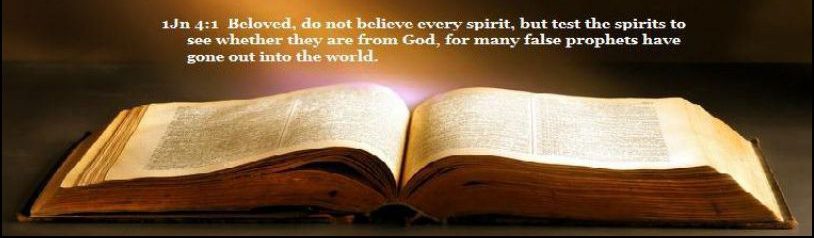


 Truth2Freedom's Blog