There are two ways to be fooled. One is to believe what isn’t true; the other is to refuse to believe what is true. —Soren Kierkegaard. "…truth is true even if nobody believes it, and falsehood is false even if everybody believes it. That is why truth does not yield to opinion, fashion, numbers, office, or sincerity–it is simply true and that is the end of it" – Os Guinness, Time for Truth, pg.39. “He that takes truth for his guide, and duty for his end, may safely trust to God’s providence to lead him aright.” – Blaise Pascal. "There is but one straight course, and that is to seek truth and pursue it steadily" – George Washington letter to Edmund Randolph — 1795. We live in a “post-truth” world. According to the dictionary, “post-truth” means, “relating to or denoting circumstances in which objective facts are less influential in shaping public opinion than appeals to emotion and personal belief.” Simply put, we now live in a culture that seems to value experience and emotion more than truth. Truth will never go away no matter how hard one might wish. Going beyond the MSM idealogical opinion/bias and their low information tabloid reality show news with a distractional superficial focus on entertainment, sensationalism, emotionalism and activist reporting – this blogs goal is to, in some small way, put a plug in the broken dam of truth and save as many as possible from the consequences—temporal and eternal. "The further a society drifts from truth, the more it will hate those who speak it." – George Orwell “There are two ways to be fooled. One is to believe what isn’t true; the other is to refuse to believe what is true.” ― Soren Kierkegaard
This I pray, that my love may abound more and more with knowledge and all discernment, so that I may discern things that differ and may approve what is excellent, and so be pure and blameless for the day of Christ, filled with the fruit of righteousness that comes through Jesus Christ, to the glory and praise of God. Philippians 1:9-11(ESV)
O that I may be filled with the knowledge of your will in all spiritual wisdom and understanding, so as to walk in a manner worthy of God, fully pleasing to him, bearing fruit in every good work and increasing in the knowledge of God. Colossians 1:9-10(ESV)
Teach me your way, O God, and lead me on a level path because of my observers. Psalm 27:11(ESV)
When I do not know what to do, my eyes are on you; 2 Chronicles 20:12(ESV) then let me hear the Lord behind me, saying, “This is the way, walk in it,” when I turn to the right or when I turn to the left. Isaiah 30:21(ESV)
Keep steady my steps according to your promise, and let no iniquity get dominion over me. Psalm 119:133(ESV)
Nehemiah 11:1-12:26 In this week’s study, we look at the importance of what it means to be a Christian in our neighborhoods, particularly in the great urban centers of the world.
Theme
Anatomy of a Plan
At first glance, the list of names and places in Nehemiah 11 seems even more tedious and uninteresting than the earlier lists in chapters 3, 7 and 10. But the list actually reflects a great strategy. It highlights several parts of Nehemiah’s plan.
1. Repopulation. The first and most obvious step in the renewal of Jerusalem was the city’s repopulation. The list of people in chapter 11 begins with the families of two tribes: Judah and Benjamin. This was appropriate since Jerusalem was in the tribal territory of Judah and bordered Benjamin which extended northward from it. Moreover, most of the people were from those tribes. They had been the chief tribes of the southern kingdom of Judah and were therefore the last to have been overthrown. Samaria, the capital of the northern kingdom of Israel, had been overthrown in 721 B.C. Jerusalem fell in 586 B.C. The text mentions two families of Judah (vv. 4-6) and three families of Benjamin (vv. 7-9).
After this there are lists of priests, Levites, gatekeepers, temple servants and a variety of city officers (vv. 10-24), followed by a list of cities outside Jerusalem where many of the people settled. Chapter 12 gives the ancestry of these leaders and families going back to those who had come to Jerusalem originally under Zerubbabel (12:1-26).
We can do some interesting calculations on the basis of the numbers provided. If the numbers of those said to have settled in Jerusalem are added up, the total of the adult males comes to 3,044. If we add women and children to that, the resulting population of Jerusalem at this time was probably about 10,000, conservatively estimated. Since this was intended to be one-tenth of the entire population, the total number of Jews in Judah would have been about 100,000.1
2. Organization. The second striking thing about this chapter is the obvious organization of the people. Certainly it is one thing Nehemiah intended to make clear when he composed it. This was no rabble of refugees merely settling down anywhere. These people knew their ancestry and their present family and religious leaders. Jerusalem had a government. Even the Jews who settled outside the city did not merely settle anywhere. The lists at the end of chapter 11 suggest that they tried to settle in their ancestral homes.
3. Participation. The third characteristic of this resettlement was the active participation of the people in what was going on. It may be a bit excessive to call this democracy. But it was not arbitrary action by Nehemiah either. Earlier, in chapter 7, Nehemiah did exercise his prerogatives as governor by appointing Hanani as the chief civil officer of Jerusalem and Hananiah as the military commander. But we do not have any suggestion of that here. The implication seems to be that each of the tribes and religious groupings selected its own leaders. Another indication of the participatory spirit that prevailed is the reference in verse 2 to those who “volunteered” to live in Jerusalem. It is hard to tell what this refers to. It seems to refer to those who were chosen by lot, according to verse 1, although this would be a strange thing to say in such circumstances. If it does refer to these people, it would mean that, although they were chosen by lot, they nevertheless relocated to the city willingly. On the other hand, it could refer to others who volunteered to accompany them. In either case, the picture is of an arrangement upon which the people as a whole agreed. It was not a case of forcible uprooting and migration. Rather, the people wanted the city to prosper and so willingly moved there.
1See Howard F. Vos, Bible Study Commentary: Ezra, Nehemiah, Esther (Grand Rapids, MI: Zondervan Publishing House, 1987), 127.
Study Questions
What do we learn about the repopulation of Jerusalem from the list of people in chapter 11?
How were the people organized?
How do we see the participation of the people in resettling?
Application
For Further Study: Download for free and listen to James Boice’s message, “A Christian World-View.” (Discount will be applied at checkout.)
Worship is not just for Sundays, but it seems easier to keep that focus on the first day of the week. How do we practically worship in everyday life?
First, let’s summarize the meaning of worship.
Wayne Grudem provides a helpful summary for worship: “Worship is the ascription of ultimate worthto God. It is the direct acknowledgment of God’s worth to God himself, expressing in words and actions the praise, adoration, and thanksgiving that are due to him.”1
Warren Wiersbe adds, “Worship is the believer’s response of all that they are–mind, emotions, will, and body–to what God is and says and does. This response has its mystical side in subjective experience and its practical side in objective obedience to God’s revealed will.”2
Worship includes both words and actions. It is more than a feeling, an experience, an environment, or a ritual. Worship is communicating through what we say and what we do that God is most important in our lives. How do we keep God first every day?
1. Start Every Day with God
Is there a better way to make God number one in your life than to spend time with Him first each day?
Jesus did this–He awoke “a great while before day” to pray (Mark 1:35).
David spoke of his personal worship habits: “My voice You shall hear in the morning, O Lord; In the morning I will direct it to You, And I will look up” (Psalm 5:3).
Later David writes, “O God, You are my God; Early will I seek You; My soul thirsts for You; My flesh longs for You In a dry and thirsty land Where there is no water” (Psalm 63:1).
Daniel had a habit of praying in the morning since early in his life (Daniel 6:10).
Some people are just not morning people. But why not begin the day with at least a short time alone with God even if your main time for Bible reading is later? Our habits in what we put first reveal what is most important to us.
2. Banish Addictions
If you habitually go to something other than God for comfort and peace, has that object or activity become an idol that you are worshiping? I am not just talking about addictions to alcohol, smoking, and weed. We may not realize that seemingly harmless habits could actually be a matter of misplaced worship. For example:
Consuming hours bowing over your mobile phone, even when the content is clean.
Allowing food to become an obsession rather than a daily necessity.
Watching nightly TV shows in your home more regularly than having family devotions.
Allowing loyalty to a sports team (as a fan or a player) to take precedent over faithfulness to God and His church.
Obsessing about body image to the point of excesses in exercise or eating habits.
Or even making the godliness of your attitude dependent upon whether you have had your coffee.
Each of these can become an object of worship to some degree if they distract us from the One who should be number one in our lives. We are to submit to Him above all and not be brought under the power of other things. The apostle Paul wrote, “All things are lawful for me, but all things are not helpful. All things are lawful for me, but I will not be brought under the power of any” (1 Corinthians 6:12). God is more important than food, sex, entertainment, sports, and, yes, even coffee. Put Him above all in your daily habits. When you do, this is worship in everyday life.
3. Talk Like God Is Number One
If you rarely talk about God, is He really that important to you? Our words often reveal what we value most. Jesus put it this way: “Out of the abundance of the heart his mouth speaks” (Luke 6:45). Do we talk like God is number one? If we did, what would we say?
We would praise God for who He is.
We would express thanks for God’s blessings.
We would share with others how to know such a great God.
We could not help but talk of Him because He is so central to our lives.
But if God were not number one in our hearts, how would our speech reflect this?
We would complain.
We would hesitate to witness, valuing the opinion of those around us more than pleasing God.
We might even sound like any other person in our neighborhood who does not know God.
If God is number one in our lives, what we say should show it. When it does, this is worship in everyday life.
4. Work for God Even When You Work for Your Boss
If you were to exclude the workplace from your worship, how much of your life would no longer put Jesus first? We spend at least 40 hours a week at work. That’s nearly 2,000 hours per year. If you work for forty years, then you have spent over 80,000 hours at the job site. If the job is number one, Jesus is off the throne of your life for a significant portion of your time on earth!
But God must be first, even at work. Our Lord sees no conflict between worshiping Him and working for your living. He commands, “And whatever you do, do it heartily, as to the Lord and not to men” (Colossians 3:23). Work for God even when you work for your boss. When you give your best for your company, you give your best for God. Let your work ethic, motivated by your love for God, be your testimony in the workplace. When you do all for His glory, this is worship in everyday life (1 Corinthians 10:31).3
5. Serve Christ by Serving Others
If you claim to put God first but you put others down, is this a life of worship? Sometimes we create a false dichotomy. We praise God and trash our neighbor. We speak holy words in prayer and hurtful words in conversation with our coworkers. Or we serve in church ministry, but we refuse to help out at home. We teach a Sunday School class but devote little time to discipling our own children. However, our relationship with God is affected by our relationships with others (1 John 4:20).
More positively, when we serve others, we serve Christ and live as He lived.
Matthew 25:37–40 tells us that when we help others–feeding the hungry, clothing the poor, visiting the sick or imprisoned–we serve Him. He says, “Inasmuch as you did it to one of the least of these My brethren, you did it to Me.”
Mark 10:45 states, “For even the Son of Man did not come to be served, but to serve.” When we serve others, we imitate Christ.
A life of worship not only looks up but also outward to those around us.
Conclusion: Worship As a Way of Life
Worship should radiate from Sundays to every day of the week. That God is first in our lives should be obvious to us and those around us. Our habits should shout this reality. Our attitudes should reflect it. The greatness of God should be naturally woven into our daily conversations at home and the workplace because God truly is first in our thinking and priorities. What we do and how we do it should point to the One who motivates us every day of the week.
True worship is never restricted to a time, place, or activity. When God is number one, worship overflows into every crevice of our lives.
Warren Wiersbe, The Bible Exposition Commentary, 26. ↩︎
The testimony of Mary Slessor of faithfulness in the mundane tasks is an excellent example of worship in everyday life. Read her story in my missions devotional, Daring Devotion. ↩︎
Times of relative peace for God’s people are always eventually broken by the hostility of evil forces and people who, one way or another, would prefer no trace of God’s presence and promises to exist. God’s people, until Jesus came, were more or less identified with the people of Israel. Now that Jesus has come, God’s people are defined in spiritual rather than ethnic terms (Philippians 3:3), yet as Christians we still owe ethnic Israel our respect and gratitude (Romans 3:2) and our love (Romans 11:28). When the wicked forces of barbarism attack, as happened on 7 October 2023, we recognise the ages-old struggle of evil against the word and work of God and we react with horror against the brutality and savagery inflicted on Jewish people simply for being Jews. We denounce the increasing incidence of appalling anti-Semitic attitudes and actual violence, even in the UK, as seen in the recent deadly attack at a Manchester synagogue. Many of the Psalms memorialise previous similar incidents in history and provide a framework for us to bear witness to the atrocity while appealing to God for help, both in the sense of bringing justice and deliverance from evil and also help to become more devoted to God and godliness. In the following updated extract from his commentary on the Psalms, the Covenanter David Dickson (who knew that Christians can also be the subjects of barbaric and unreasoned persecution) takes us through Psalm 74, a psalm of lamentation and appeal arising in the aftermath of enemy attack.
There are three parts to Psalm 74. The first is the pitiful lamentation presented to God because of the destruction of Jerusalem and the burning of the temple by the Chaldeans (v.1–11). Next is the strengthening of the faith and hope of God’s people, that God would send a deliverance (v.12–18). In the third, there are various petitions for the relief of His people, the restitution of His own work, and the suppression of His enemies (v.19–23).
Lamenting towards God
The psalm opens in v.1–2 with lamentation and prayer for relief in general. In all judgements, inflicted by whatsoever instruments, the Lord’s people must look first to God. Even when wrath, and fear of utter wrath, stare them in the face, they must make their appeal to God, however angry He seems to be.
The Lord does not want His people to yield to oppressive thoughts of being “cast off”. Instead, He allows us to question everything that might hint at this, and to debate that point with him, and not to endure it. We are permitted to say, “Why hast thou cast us off for ever?”
Although by our sins we have provoked the Lord to fall upon us, as if we were His enemies, yet we must not quit the least connection we have with Him, not even the external covenant. Instead we must make use of it for supporting of our faith in Him. Here, they call themselves “the sheep of thy pasture,” reminding Him that He has taken on the care of them, as a shepherd over his flock. Whatever the Lord does to His people, they must pray to Him, and make use of all the ties that bind Him and them. “Remember thy congregation,” they pray, “which thou hast purchased” by price and conquest, and “of old,” from a long time ago. He has measured them out, and they are His inheritance, not to dispose of or put away (“the rod of thine inheritance”). They remind Him that He has granted them deliverances out of terrible trouble before (“which thou hast redeemed”), and that He had taken up residence among them in His public ordinances (“this Mount Sion, wherein thou hast dwelt”).
The prosperity gospel promises health and wealth but delivers only empty hope. Pastor Costi Hinn joins Truths That Transform to expose its dangers and remind us that false worship is nothing more than idolatry. Then, Dr. Rob Pacienza continues our Ten Commandments series with a powerful sermon on the Second Commandment, showing why God’s truth brings real freedom.
All Scripture is inspired by God and profitable for teaching, for reproof, for correction, for training in righteousness; that the man of God may be adequate, equipped for every good work. (3:16–17)
Before we examine the sanctifying power of Scripture, this crucial statement by Paul must be considered. Some scholars suggest that All Scripture is inspired should be translated, “All Scripture inspired by God is …,” which would leave open the possibility that some Scripture is not inspired by Him. But that rendering would make the Bible worthless as a reliable guide to divine truth, because we would then have no way to determine which part of it is inspired by God and which is not. Men would be left to their own finite and sinful devices and understanding to discover what part of the Bible may be true and which may not, what part is God’s Word and what part is human conjecture. Paul’s thought is that the Scripture that gives salvation must therefore be inspired by God. The words of men could never transform the inner person (Ps. 19:7). In addition to the many other specific biblical references to the inspiration and authority of Scripture—some of which are mentioned below—it is important to note that similar Greek constructions in other parts of the New Testament (see, e.g., Rom. 7:12; 2 Cor. 10:10; 1 Tim. 1:15; 2:3; 4:4; Heb. 4:16) argue strongly from a grammatical perspective that all Scripture is inspired is the proper translation. Scripture is the revelation conveyed, inspiration is the means of that conveyance. In the words originally revealed and recorded, all Scripture is God’s inerrant Word. The first predicate adjective that describes Scripture, namely, its being inspired by God, focuses on the authority of His written Word. Theopneustos (inspired by God) literally means, “breathed out by God,” or simply, “God-breathed.” God sometimes breathed His words into the human writers to be recorded much as dictation. He said to Jeremiah: “Behold, I have put My words in your mouth” (Jer. 1:9). But, as clearly seen in Scripture itself, God’s divine truth more often flowed through the minds, souls, hearts, and emotions of His chosen human instruments. Yet, by whatever means, God divinely superintended the accurate recording of His divinely breathed truth by His divinely chosen men. In a supernatural way, He has provided His divine Word in human words that any person, even a child, can be led by His Holy Spirit to understand sufficiently to be saved. It is of utmost importance to understand that it is Scripture that is inspired by God, not the men divinely chosen to record it. When speaking or writing apart from God’s revelation, their thoughts, wisdom, and understanding were human and fallible. They were not inspired in the sense that we commonly use that term of people with extraordinary artistic, literary, or musical genius. Nor were they inspired in the sense of being personal repositories of divine truth which they could dispense at will. Many human authors of Scripture penned other documents, but none of those writings exist today, and, even if discovered, they would not carry the weight of Scripture. We know, for instance, that Paul wrote at least two other letters to the church at Corinth (1 Cor. 5:9; 2 Cor. 2:4), but no copies of those letters have ever been found. The letters doubtless were godly, spiritually insightful, and blessed of the Lord, but they were not Scripture. Many men who wrote Scripture, such as Moses and Paul, were highly trained in human knowledge and wisdom, but that learning was not the source of the divine truth they recorded. David was a highly gifted poet, and that gift doubtless is reflected in the beauty of his psalms, but it was not the source of the divine truths revealed in those psalms. Scripture first of all and above all is from God and about God, His self-revelation to fallen mankind. From Genesis through Revelation, God reveals His truth, His character, His attributes, and His divine plan for the redemption of man, whom He made in His own image. He even foretells the eventual redemption of the rest of His creation, which “also will be set free from its slavery to corruption into the freedom of the glory of the children of God” and which “groans and suffers the pains of childbirth together until now” (Rom. 8:21–22). The Bible is not a collection of the wisdom and insights of men, even of godly men. It is God’s truth, His own Word in His own words. The psalmist declared, “Forever, O Lord, Thy word is settled in heaven” (Ps. 119:89). God’s Word is divinely revealed to men on earth and divinely authenticated in heaven. Peter declares unequivocally, “Know this first of all, that no prophecy of Scripture is a matter of one’s own interpretation, for no prophecy was ever made by an act of human will, but men moved by the Holy Spirit spoke from God” (2 Peter 1:20–21). Those God-given, humanly recorded words became God’s written Word, inerrant and authoritative as originally given. Prophēteia (“prophecy”) is not used here in the sense of prediction but in its basic and broader meaning of speaking forth, of proclaiming a message. It carries the same inclusive idea as “the oracles of God,” with which ancient Israel had the marvelous privilege of being entrusted (Rom. 3:2). “Interpretation” (2 Peter 1:20b) translates epilusis, which refers to something that is released, sent out, or sent forth. In this verse the Greek noun is a genitive of source, indicating origin. In other words, no message of Scripture was originated and sent forth by men’s own wisdom and will. Rather, the godly men through whom Scripture was revealed and recorded were divinely instructed and carried along by the Holy Spirit. Within the Bible itself, “God” and “Scripture” are sometimes used almost interchangeably. Referring to words spoken directly by God to Abraham (Gen. 12:3), Paul wrote that “the Scripture, foreseeing that God would justify the Gentiles by faith, preached the gospel beforehand to Abraham, saying, ‘All the nations shall be blessed in you’ ” (Gal. 3:8). Later in that same chapter the apostle again personifies Scripture as God, declaring that “Scripture has shut up all men under sin, that the promise by faith in Jesus Christ might be given to those who believe” (v. 22). In his letter to the church at Rome, Paul wrote, “For the Scripture says to Pharaoh, ‘For this very purpose I raised you up, to demonstrate My power in you, and that My name might be proclaimed throughout the whole earth’ ” (Rom. 9:17). When he first preached in Galatia, many years before he wrote his epistle to the churches there, the apostle had declared,
And we preach to you the good news of the promise made to the fathers, that God has fulfilled this promise to our children in that He raised up Jesus, as it is also written in the second Psalm, “Thou art My Son; today I have begotten Thee.” And as for the fact that He raised Him up from the dead, no more to return to decay, He has spoken in this way: “I will give you the holy and sure blessings of David.” Therefore He also says in another Psalm, “Thou wilt not allow Thy Holy One to undergo decay.” (Acts 13:32–35)
THE INSPIRED AND INERRANT SCRIPTURE
Scripture is inspired and inerrant in both testaments. All Scripture refers to the New as well as to the Old Testament. As noted above, the hieros grammata (“sacred writings”) were the Hebrew Scriptures (the Old Testament), which Timothy had been taught from childhood (v. 15). Graphē (Scripture), on the other hand, was commonly used in the early church not only of the Old Testament but also of God’s newly revealed Word, in what came to be called the New Testament. During His earthly ministry, Jesus gave powerful and unambiguous testimony to the divine authority of both testaments. The four gospels contain the first divine revelation after that of the Old Testament prophets, which had ceased some four hundred years earlier. Jesus’ declaration that “Scripture [graphē] cannot be broken” (John 10:35) applied specifically to the Hebrew Scriptures but also, as will be seen, to the totality of Scripture, that is, to both testaments, which together compose God’s written Word. Early in His ministry, Jesus said of the Old Testament, “Do not think that I came to abolish the Law or the Prophets; I did not come to abolish, but to fulfill. For truly I say to you, until heaven and earth pass away, not the smallest letter or stroke shall pass away from the Law, until all is accomplished” (Matt. 5:17–18). Later He said, “It is easier for heaven and earth to pass away than for one stroke of a letter of the Law to fail” (Luke 16:17). Jesus repeatedly used divinely revealed truths from the Old Testament to affirm His messiahship. He declared, “He who believes in Me, as the Scripture said, ‘From his innermost being shall flow rivers of living water’ ” (John 7:38), and, “Has not the Scripture said that the Christ comes from the offspring of David, and from Bethlehem, the village where David was?” (John 7:42). As Jesus walked with the two disciples on the Emmaus road after His resurrection, “beginning with Moses and with all the prophets, He explained to them the things concerning Himself in all the Scriptures” (Luke 24:27). In addition to His teaching that “Scripture [graphē] cannot be broken” (John 10:35), Jesus said that “He who rejects Me, and does not receive My sayings has one who judges him; the word I spoke is what will judge him at the last day. For I did not speak on My own initiative, but the Father Himself who sent Me has given Me commandment, what to say, and what to speak. And I know that His commandment is eternal life; therefore the things I speak, I speak just as the Father has told Me” (John 12:48–50). The words of the incarnate Christ are the words of God the Father; therefore, to reject Jesus’ words is to reject God’s Word. The men whom God assigned to write the gospels would not have been able in their mere humanness to remember accurately everything Jesus said or did. For that reason Jesus promised that “the Helper, the Holy Spirit, whom the Father will send in My name, He will teach you all things, and bring to your remembrance all that I said to you” (John 14:26; cf. 15:26–27). The Lord would reveal additional truth after He returned to heaven. “I have many more things to say to you,” He said, “but you cannot bear them now. But when He, the Spirit of truth, comes, He will guide you into all the truth; for He will not speak on His own initiative, but whatever He hears, He will speak; and He will disclose to you what is to come. He shall glorify Me; for He shall take of Mine, and shall disclose it to you” (John 16:12–14). In 1 Timothy, Paul wrote, “The Scripture [graphē] says, ‘You shall not muzzle the ox while he is threshing,’ and ‘The laborer is worthy of his wages’ ” (1 Tim. 5:18). It is important to note that the first quotation is from the Old Testament (Deut. 25:4) and that the second is from Jesus’ own lips (Luke 10:7), that is, from the New Testament. The Pentateuch (the first five books of the Old Testament) contains at least 680 claims to divine inspiration. Such claims are found 418 times in the historical books, 195 times in the poetic books, and 1,307 times in the prophetic books. The New Testament contains more than 300 direct quotations and at least 1,000 indirect references from the Old Testament, almost all of them declaring or implying that they were God’s own Word. The book of Hebrews opens with the declaration “God, after He spoke long ago to the fathers in the prophets in many portions and in many ways, in these last days has spoken to us in His Son” (Heb. 1:1–2). The writer was speaking of both testaments, God’s speaking through “the prophets” representing the Old and His speaking through “His Son” representing the New. Many New Testament writers directly testified that they knew they were writing God’s Word. Paul reminded believers in Corinth of a truth he doubtless had taught them many times in person when he ministered there: “[These] things we also speak,” he said, “not in words taught by human wisdom, but in those taught by the Spirit, combining spiritual thoughts with spiritual words” (1 Cor. 2:13; cf. 16). In his next letter to them he defended his earnestness as well as his authority, saying, “We are not like many, peddling the word of God, but as from sincerity, but as from God, we speak in Christ in the sight of God” (2 Cor. 2:17). Paul assured the churches in Galatia: “I would have you know, brethren, that the gospel which was preached by me is not according to man. For I neither received it from man, nor was I taught it, but I received it through a revelation of Jesus Christ.… He who had set me apart, even from my mother’s womb, … called me through His grace, [and] was pleased to reveal His Son in me, that I might preach Him among the Gentiles” (Gal. 1:11–12, 15–16). He told the church in Colossae, “Of this church I was made a minister according to the stewardship from God bestowed on me for your benefit, that I might fully carry out the preaching of the word of God, that is, the mystery which has been hidden from the past ages and generations; but has now been manifested to His saints, to whom God willed to make known what is the riches of the glory of this mystery among the Gentiles, which is Christ in you, the hope of glory” (Col. 1:25–27). And to the church at Thessalonica he wrote, “For this reason we also constantly thank God that when you received from us the word of God’s message, you accepted it not as the word of men, but for what it really is, the word of God, which also performs its work in you who believe” (1 Thess. 2:13). Peter recognized that Paul, a fellow apostle, had been used by the Lord to write His Word. Referring to Paul’s letters, Peter wrote of “some things [in them that were] hard to understand, which the untaught and unstable distort, as they do also the rest of the Scriptures, to their own destruction” (2 Peter 3:16, emphasis added). Jude attests that “the words that were spoken beforehand by the apostles of our Lord Jesus Christ” carried the weight of Scripture, divinely warning that “in the last time there shall be mockers, following after their own ungodly lusts” (Jude 17–18). No New Testament writer had a greater awareness that he was recording God’s own Word than did the apostle John. That awareness is affirmed with particular certainty in the book of Revelation, which begins, “The Revelation of Jesus Christ, which God gave Him to show to His bond-servants, the things which must shortly take place; and He sent and communicated it by His angel to His bond-servant John, who bore witness to the word of God and to the testimony of Jesus Christ, even to all that he saw” (Rev. 1:1–2). A few verses later the apostle says, “I was in the Spirit on the Lord’s day, and I heard behind me a loud voice like the sound of a trumpet, saying, ‘Write in a book what you see, and send it to the seven churches’ ” (vv. 10–11). At or near the end of each message to those churches is the admonition “He who has an ear, let him hear what the Spirit says to the churches” (2:7, 11, 17, 29; 3:6, 13, 22). The apostle also makes clear in many other parts of that book that he is writing God’s explicitly revealed truth (see, e.g., 19:9; 21:5; 22:6). It is both remarkable and significant that, although most, if not all, of the human writers were aware they were recording Scripture and sometimes were overwhelmed by the truths God revealed to them, they exhibit a total lack of self-consciousness or apology, in the common sense of that word. Together, the biblical writers make some 4,000 claims to be writing God’s Word, yet they offer no defense for being employed by God in such an elevated function. Despite their realization of their own sinfulness and fallibility, they wrote with the utter confidence that they spoke infallibly for God and that His revelation itself is its own best and irrefutable defense. “For as the rain and the snow come down from heaven,” Isaiah proclaimed for God, “and do not return there without watering the earth, and making it bear and sprout, and furnishing seed to the sower and bread to the eater; so shall My word be which goes forth from My mouth; it shall not return to Me empty, without accomplishing what I desire, and without succeeding in the matter for which I sent it” (Isa. 55:10–11). Scripture is inspired and inerrant in its words. To deny that all of the Bible is inspired obviously is to deny that all of the words of Scripture are inspired. Just as obviously, such denial places man as judge over God’s Word, acknowledging as authentic and binding only those portions which correspond to one’s personal predispositions. Whether the human judgment about inspiration is made by a church council, church tradition, or individual preference, it is based on subjective, sin-tainted, and imperfect knowledge and understanding. When men decide for themselves what to recognize as true and worthwhile, as meaningful and relevant, they vitiate all authority of Scripture. Even when they concur with Scripture, the agreement is based on their own human wisdom. Unless the very words of Scripture are inspired and authoritative, man is left to his own resources to ferret out what seem to be underlying divine concepts and principles. But instead of discovering what has been called “the Word behind the words”—that is, the divine truth behind the human words—that approach leads to the very opposite. It presumptuously and self-deceptively “discovers” man’s word, as it were, behind God’s words, judging God’s divine truth by the standards of man’s sinful inclinations and distorted perceptions. As Paul said to Titus, the commandments of men turn people away from God’s truth (Titus 1:14). Even from a purely logical perspective, to discount the words of Scripture is to discount all meaning of Scripture. Not only is it impossible to write without using words but also is impossible, except in the most nebulous way, even to think without words. It is as meaningless to speak of thoughts and ideas without words as to speak of music without notes or mathematics without numbers. To repudiate the words of Scripture is to repudiate the truths of Scripture. It is true, of course, that both testaments contain revelations whose bare words God intentionally made cryptic. In some cases, as with Jesus’ parables, the purpose was to hide the meaning from willful unbelievers. When the disciples asked Jesus why He spoke to the multitudes in parables, “He answered and said to them, ‘To you it has been granted to know the mysteries of the kingdom of heaven, but to them it has not been granted’ ” (Matt. 13:10–11). In other cases, as with predictive prophecies, even the most godly believers, including the men to whom God revealed the prophecies, could not discern the full meaning. Peter explains, for example, that, “as to this salvation [through Jesus Christ], the prophets who prophesied of the grace that would come to you made careful search and inquiry, seeking to know what person or time the Spirit of Christ within them was indicating as He predicted the sufferings of Christ and the glories to follow. It was revealed to them that they were not serving themselves, but you, in these things which now have been announced to you through those who preached the gospel to you by the Holy Spirit sent from heaven—things into which angels long to look” (1 Peter 1:10–12). In other words, although Scripture never reveals truths apart from words, in some places it reveals words apart from their full truth. The point is this: The words of Scripture are always inerrant, whether or not they convey their full meaning to those who read them or can be fully understood by our limited comprehension. When Moses protested to God that he was not qualified to lead Israel because he had “never been eloquent” and was “slow of speech and slow of tongue, … the Lord said to him, ‘Who has made man’s mouth? Or who makes him dumb or deaf, or seeing or blind? Is it not I, the Lord? Now then go, and I, even I, will be with your mouth, and teach you what you are to say’ ” (Ex. 4:10–12). When Moses continued to object, “the anger of the Lord burned against Moses, and He said, ‘Is there not your brother Aaron the Levite? I know that he speaks fluently.… And you are to speak to him and put the words in his mouth; and I, even I, will be with your mouth and his mouth, and I will teach you what you are to do. Moreover, he shall speak for you to the people; and it shall come about that he shall be as a mouth for you, and you shall be as God to him’ ” (Ex. 4:14–16, emphasis added). In Psalm 147, the inseparable relationship between God’s Word and His words is clear. The Lord “sends forth His command to the earth; His word runs very swiftly. He gives snow like wool; He scatters the frost like ashes. He casts forth His ice as fragments; who can stand before His cold? He sends forth His word and melts them; He causes His wind to blow and the waters to flow. He declares His words to Jacob, His statutes and His ordinances to Israel” (Ps. 147:15–19, emphasis added). It is only through words that God has revealed His Word. Jeremiah testified: “The Lord stretched out His hand and touched my mouth, and the Lord said to me, ‘Behold, I have put My words in your mouth.’ … Therefore, thus says the Lord, the God of hosts, ‘Because you have spoken this word, behold, I am making My words in your mouth fire and this people wood, and it will consume them.’ … Thy words were found and I ate them,” the prophet responded, “and Thy words became for me a joy and the delight of my heart; for I have been called by Thy name, O Lord God of hosts” (Jer. 1:9; 5:14; 15:16, emphasis added). Ezekiel made a similar affirmation, saying, “Then [the Lord] said to me, ‘Son of man, I am sending you to the sons of Israel, to a rebellious people who have rebelled against Me.… But you shall speak My words to them whether they listen or not, for they are rebellious.’ … Moreover, He said to me, ‘Son of man, take into your heart all My words which I shall speak to you, and listen closely’ ” (Ezek. 2:3, 7; 3:10, emphasis added). In reply to Satan’s temptation to make bread from stones in order to satisfy His physical hunger, Jesus quoted from Deuteronomy 8:3, saying, “It is written, ‘Man shall not live on bread alone, but on every word that proceeds out of the mouth of God’ ” (Matt. 4:4, emphasis added). Man is fed spiritually by God’s “every word,” and every revealed word of God is found in His written Word, the Bible. In His last major public discourse, Jesus said, “Heaven and earth will pass away, but My words shall not pass away” (Matt. 24:35, emphasis added). Earlier in His ministry, Jesus proclaimed the essence of the gospel: “Truly, truly, I say to you, he who hears My word, and believes Him who sent Me, has eternal life, and does not come into judgment, but has passed out of death into life” (John 5:24, emphasis added). “It is the Spirit who gives life; the flesh profits nothing,” He said on another occasion. “The words that I have spoken to you are spirit and are life” (John 6:63, emphasis added). “For I did not speak on My own initiative,” our Lord again makes clear, “but the Father Himself who sent Me has given Me commandment, what to say, and what to speak. And I know that His commandment is eternal life; therefore the things I speak, I speak just as the Father has told Me” (12:49–50; cf. 14:24). Believing in the Father is believing in the Son, and the Son’s words are the Father’s words. Scripture is inspired and inerrant in everything it teaches and reports. Some scholars maintain that, because the Bible is not a textbook on such subjects as history, geography, and science, it is inerrant only when it speaks on spiritual and moral matters. But like those who claim to accept the underlying divine concepts and principles of Scripture but not its words, these interpreters also determine by their own resources what is divine and infallible and what is human and fallible. Again, man becomes the judge of Scripture. Through the centuries, some scholars have pointed to “mistakes” in the Bible, statements about people, places, and things that did not jibe with the accepted “facts” of history, archaeology, or modern science. Until Copernicus’s discovery in the sixteenth century, men assumed that the sun rotated around the earth, because that is how it appears from our earthly perspective. Because we now know that the earth rotates around the sun, many scholars charge the Bible with factual error in reporting that Joshua successfully commanded the sun to stand still and the moon to be stopped (Josh. 10:12–13), whereas it must have been the earth that stood still. But highly trained meteorologists still speak of sunrise and sunset, especially when communicating with the general public. Those phrases are firmly established figures of speech throughout the world, and no sensible person accuses someone of being inaccurate or unscientific for using them. Not only that, but if God created the universe, stopping the rotation of the earth, the sun, or the moon—or of all three—would have been equally simple. It is significant that most people who question the reality of such miraculous events also question many of the clear theological and moral teachings of Scripture as well. For many years some scholars charged the book of 2 Kings with error for reporting that “the king of Assyria required of Hezekiah king of Judah three hundred talents of silver and thirty talents of gold” (2 Kings 18:14). They based that judgment on an ancient Assyrian record of the transaction that gives the amount of silver as being 800 talents. But later archaeological findings have revealed that, although the Assyrian standard for a talent of gold was the same as that used by Judah and Syria, the standard for silver was considerably different. When adjusted for that difference, the biblical figure was found to be accurate. Not only is the Bible’s reporting of history unerring but so is its prediction of history. Ezekiel foretold in amazing detail the destruction of Tyre, first by Nebuchadnezzar, later by Alexander the Great (Ezek. 26:1–21; 29:18), and then by Egypt (30:10–26). In similar detail, Nahum predicted the devastation of Nineveh (Nahum 1:15–3:19; cf. Zeph. 2:13, 15), which was conquered and destroyed in 612 B.C. by the Medes and Chaldeans. Both Isaiah (Isa. 13–14; 21:1–10) and Jeremiah (Jer. 50–51) accurately predicted the ultimate destruction of Babylon, which would “never be inhabited or lived in from generation to generation” (Isa. 13:20). That great city was conquered first by Cyrus, founder of the Persian empire and the man whom God prophesied would free His people Israel from Babylonian captivity (Isa. 44:28; 45:1–14). That noble king not only allowed the Jews to return to Jerusalem, but, with an amazing awareness of his divine mission under the true God, charged them to rebuild the temple there and returned to them all the sacred and valuable temple objects pilfered by Nebuchadnezzar (Ezra 1). Other Assyrian and Persian kings successively conquered and plundered Babylon. Its final conquest was by Alexander the Great, who intended to rebuild the city but was prevented by his untimely death at the age of thirty-two. When the capital of the Syrian empire was moved from Babylon to Seleucia by Seleucus Nicator in 312 B.C., Babylon gradually died. By the time of Christ, the city was inhabited primarily by a small group of scholars, and bricks from its rubble were carried away to build houses and walls in surrounding towns. Today the almost barren site of ancient Babylon, located in the southern part of modern Iraq, is valued only for its archaeological significance. As noted in the first point, God’s divine Word, revealed through His divine words, is not itself the means or the power of salvation, but is the agency of it. Near the end of his gospel account, John explained that “these [things] have been written that you may believe that Jesus is the Christ, the Son of God; and that believing you may have life in His name” (John 20:31). As Peter declared to the Jewish leaders in Jerusalem soon after Pentecost, “Let it be known to all of you, and to all the people of Israel, that by the name of Jesus Christ the Nazarene, whom you crucified, … He is the stone which was rejected by you, the builders, but which became the very corner stone. And there is salvation in no one else; for there is no other name under heaven that has been given among men, by which we must be saved” (Acts 4:10–12). In his letter to the church at Rome, Paul echoes the words of Jesus: “If you confess with your mouth Jesus as Lord, and believe in your heart that God raised Him from the dead, you shall be saved; for with the heart man believes, resulting in righteousness, and with the mouth he confesses, resulting in salvation.… So faith comes from hearing, and hearing by the word of Christ” (Rom. 10:9–10, 17, emphasis added; cf. James 1:18). Christ also uses His Word to sanctify and cleanse His church from sin. In his letter to the church at Ephesus, Paul said: “Christ also loved the church and gave Himself up for her; that He might sanctify her, having cleansed her by the washing of water with the word” (Eph. 5:25–26, emphasis added). In his first letter to believers at Thessalonica he said, “And for this reason we also constantly thank God that when you received from us the word of God’s message, you accepted it not as the word of men, but for what it really is, the word of God, which also performs its work in you who believe” (1 Thess. 2:13, emphasis added; cf. Phil. 2:16). The second predicate adjective Paul uses to describe Scripture is profitable, which focuses on the sufficiency of God’s written Word. Profitable translates ōphelimos, which includes the ideas of beneficial, productive, and sufficient. Scripture is sufficient in being comprehensive. Paralleled in the Old Testament only by Psalm 119 and confirmed by Joshua 1:8, these verses supremely affirm the absolute sufficiency of Scripture to meet all the spiritual needs of God’s people. David understood the sufficiency of God’s Word, and in one of his most uplifting psalms he exulted:
The law of the Lord is perfect, restoring the soul; the testimony of the Lord is sure, making wise the simple. The precepts of the Lord are right, rejoicing the heart; the commandment of the Lord is pure, enlightening the eyes. The fear of the Lord is clean, enduring forever; the judgments of the Lord are true; they are righteous altogether. They are more desirable than gold, yes, than much fine gold; sweeter also than honey and the drippings of the honeycomb. Moreover, by them Thy servant is warned; in keeping them there is great reward. Who can discern his errors? Acquit me of hidden faults. Also keep back Thy servant from presumptuous sins; let them not rule over me; then I shall be blameless, and I shall be acquitted of great transgression. (Ps. 19:7–13)
In verses 7–9 David refers to God’s Word by six different titles: God’s law, testimony, precepts, commandment, fear (referring to worship), and judgments. In those same verses, he mentions six characteristics of that divine Word: It is perfect, sure, right, pure, clean, and true. Also included are six blessings that the Word brings in the believer’s life: It restores the soul, makes wise the simple, rejoices the heart, enlightens the eyes, endures forever, and produces complete righteousness. The remaining verses (10–13) extol the benefits of the work of the Word: It makes rich, delights, rewards, convicts, and protects. It is a marvelous mark of God’s loving grace that He has given us every truth, every principle, every standard, and every warning that we will ever need for living out our salvation according to His will. Scripture also is complete. Jude admonished his readers to “contend earnestly for the faith which was once for all delivered to the saints” (Jude 3). John closes the book of Revelation, as well as the entire Old and New Testaments, with this sobering warning from the Lord: “I testify to everyone who hears the words of the prophecy of this book: if anyone adds to them, God shall add to him the plagues which are written in this book; and if anyone takes away from the words of the book of this prophecy, God shall take away his part from the tree of life and from the holy city, which are written in this book” (Rev. 22:18–19). False religious systems that claim to be Christian invariably expose their falsehood by their view of Scripture. Mormonism considers The Book of Mormon to be as divinely inspired and authoritative as the Bible, in fact more so, because they view that book as being a latter-day, updated revelation from God. Christian Science views Science and Health, With a Key to the Scriptures in the same way. Some charismatics claim to have received special revelations from God, which, if genuine, would carry the same divine authority as the Bible. For most of the twentieth century, a large percentage of members and a higher percentage of clergymen in most major Protestant denominations have not recognized the Bible as being wholly revealed by God and inerrant. Those views and many others like them share the common heresy of considering Scripture to be incomplete or inadequate. It is because of such distorted and destructive views of Scripture within professing Christendom that biblical believers must, more than ever before, “contend earnestly for the faith which was once for all delivered to the saints” (Jude 3). As in the early church, the greatest danger to the church has always been from within. Paul warned the godly, mature church at Ephesus, pastored first by the apostle and then by Timothy, and led by godly elders, “I know that after my departure savage wolves will come in among you, not sparing the flock; and from among your own selves men will arise, speaking perverse things, to draw away the disciples after them” (Acts 20:29–30, emphasis added). In the remainder of verse 16, Paul declares that Scripture is profitable for believers in four important ways: for teaching, for reproof, for correction, for training in righteousness.
THE TEACHING SCRIPTURE
for teaching, (3:16b)
As mentioned in chapter 8 of this commentary in regard to verse 10, didaskalia does not refer to the process or method of teaching but to its content. In this context, as in most others in the New Testament, didaskalia refers specifically and exclusively to divine instruction, or doctrine, given to believers through God’s Word, which included not only the Hebrew Scriptures (Old Testament) and the teaching of Jesus during His incarnation but also the inspired teaching of the apostles and New Testament authors. “A natural man,” Paul explains, “does not accept the things of the Spirit of God; for they are foolishness to him, and he cannot understand them.” It is not that the unsaved person is intellectually inferior, but that such truths “are spiritually appraised. But he who is spiritual appraises all things, yet he himself is appraised by no man. For who has known the mind of the Lord, that he should instruct Him? But we have the mind of Christ” (1 Cor. 2:14–16). While warning believers about the dangerous teachings and work of antichrists, John assures his readers: “You have an anointing from the Holy One, and you all know.… As for you, let that abide in you which you heard from the beginning. If what you heard from the beginning abides in you, you also will abide in the Son and in the Father.… And as for you, the anointing which you received from Him abides in you, and you have no need for anyone to teach you; but as His anointing teaches you about all things, and is true and is not a lie, and just as it has taught you, you abide in Him” (1 John 2:20, 24, 27). When it comes to godly living and godly service, to growing in “the discipline and instruction of the Lord” (Eph. 6:4), God-breathed Scripture provides for us the comprehensive and complete body of divine truth necessary to live as our heavenly Father desires for us to live. The wisdom and guidance for fulfilling everything He commands us to believe, think, say, and do is found in His inerrant, authoritative, comprehensive, and completed Word. Even after conversion, trust in one’s own wisdom is a severe hindrance to correct understanding of Scripture and to full usefulness in the Lord’s service. The counsel to “trust in the Lord with all your heart, and do not lean on your own understanding” (Prov. 3:5) is every bit as valid for Christians as it was for Old Testament saints. Throughout church history, the Lord has uniquely and wonderfully sustained and blessed the spiritual lives and influence of believers who, because of imprisonment, illiteracy, isolation, or other restrictions beyond their control, could not study His Word. But the teaching of Scripture is the divine body of truth without which no believer who has access to it can live, minister, or witness effectively. Tragically, some of the most biblically illiterate believers in our day live in lands where God’s Word is readily available and where scriptural preaching, teaching, and literature are abundant. It goes without saying that it is impossible to believe, understand, and follow what you do not even know. It is completely futile, as well as foolish, to expect to live a spiritual life without knowing spiritual truth. Biblically untaught believers, especially those in biblically untaught churches, are easy prey for false teachers. They are spiritual “children, tossed here and there by waves, and carried about by every wind of doctrine, by the trickery of men, by craftiness in deceitful scheming” (Eph. 4:14). Throughout most of redemptive history, God could have said what He said in Hosea’s day: “My people are destroyed for lack of knowledge” (Hos. 4:6). It is for that reason, as well as for the even greater reason of honoring the Lord, that regular, systematic, and thorough study of the doctrine in God’s Word is imperative for God’s people. We not only are to guard what we know but sincerely seek to learn more of God’s inexhaustible truth. We should pray with Job, “Teach Thou me what I do not see” (Job 34:32). That dauntless man of God had lost his children, his servants, his flocks, his health, and even his reputation. He was wholly unable to see why God permitted those calamities to come upon him, and he therefore wanted the Lord to teach him whatever he needed to learn in order to endure his painful existence and to profit from it spiritually. Just before Jehovah’s covenant with Israel was ratified near Sinai, Moses “took the book of the covenant and read it in the hearing of the people; and they said, ‘All that the Lord has spoken we will do, and we will be obedient!’ ” (Ex. 24:7). Unfortunately, the people of Israel seldom again demonstrated such reverence for God’s Word. Shortly before they were to enter and take possession of the Promised Land, Moses reminded them again: “See, I have taught you statutes and judgments just as the Lord my God commanded me, that you should do thus in the land where you are entering to possess it.… And the Lord commanded me at that time to teach you statutes and judgments, that you might perform them in the land where you are going over to possess it” (Deut. 4:5, 14). God’s command to Joshua, Moses’ successor, applies to every believer: “Be strong and very courageous; be careful to do according to all the law which Moses My servant commanded you; do not turn from it to the right or to the left, so that you may have success wherever you go. This book of the law shall not depart from your mouth, but you shall meditate on it day and night, so that you may be careful to do according to all that is written in it; for then you will make your way prosperous, and then you will have success” (Josh. 1:7–8). When the young but godly King Josiah heard read to him “the words of the book of the law,” which had been discovered as the temple was being repaired, “he tore his clothes. Then the king commanded Hilkiah the priest, Ahikam the son of Shaphan, Achbor the son of Micaiah, Shaphan the scribe, and Asaiah the king’s servant saying, ‘Go, inquire of the Lord for me and the people and all Judah concerning the words of this book that has been found, for great is the wrath of the Lord that burns against us, because our fathers have not listened to the words of this book, to do according to all that is written concerning us’ ” (2 Kings 22:11–13). Although they did not believe their own words, the unbelieving and hypocritical Pharisees were completely correct when they said of Jesus, “You are truthful and teach the way of God in truth, and defer to no one; for You are not partial to any” (Matt. 22:16). It was because of His utter truthfulness and righteousness and His refusal to defer to anyone that those men, and others like them, put Jesus to death. Contrary to their godly forefather Josiah, they would not accept the teaching of God. On a trip from Greece back to Jerusalem, Paul reminded the Ephesian elders, many of whom had ministered both with him and with Timothy, “You yourselves know, from the first day that I set foot in Asia, … how I did not shrink from declaring to you anything that was profitable, and teaching you publicly and from house to house, solemnly testifying to both Jews and Greeks of repentance toward God and faith in our Lord Jesus Christ.… For I did not shrink from declaring to you the whole purpose of God” (Acts 20:18, 20–21, 27). Both the first and last pieces of spiritual armor that Paul mentions in his letter to believers at Ephesus pertain to Scripture. “Stand firm therefore,” he says, “having girded your loins with truth.” Then, after putting on the “breastplate of righteousness,” shodding our feet with “the gospel of peace, “taking up the shield of faith,” and donning “the helmet of salvation,” we are to equip ourselves with the only offensive implement mentioned here—“the sword of the Spirit, which is the word of God” (Eph. 6:14–17). Machaira (“sword”) refers to a short sword, or dagger, a weapon used in close combat that required skillful use in order to be effective. “Word” translates rhēma, which refers to a specific statement or wording, not to general truth, as does the more commonly used logos. Our “wielding” of Scripture, as it were, should be as precise, accurate, and appropriate as possible. No matter how good our intentions might be, to interpret or apply a passage thoughtlessly or to quote it out of context creates confusion and uncertainty. It does disservice to the Lord and to those we are attempting to instruct. In order to present ourselves “approved to God as a workman who does not need to be ashamed,” we must handle “accurately the word of truth” (2 Tim. 2:15). Careless use of Scripture, even by the Lord’s own people, can do great damage to the cause of Christ, as it often has done throughout church history. During His wilderness ordeal, Jesus responded to each of Satan’s temptations with an accurate and carefully chosen quotation from Scripture (see Matt. 4:3–10). Because He was the incarnate Son of God, anything He might have said would have carried the same divine weight as Scripture. But as an example for His followers, He chose to quote divine truth that already was recorded in the Hebrew Scriptures. Following the pattern of our gracious Lord, our weapon against the temptations and deceptions of the devil should always be a careful and precise use of God’s revealed Word. It then goes without saying that, in order to use Scripture in that effective way, we must thoroughly know it and understand it. Empowered by the Holy Spirit, we must “let the word of Christ richly dwell within [us], with all wisdom” (Col. 3:16). The truths of God’s Word are spiritual wealth that we should continually be depositing into our minds and hearts. Like deposits of money in our bank account, those deposits of divine truth become spiritual assets that we can draw on readily when confronting temptation, when making moral choices and when seeking God’s specific will and guidance for our lives.
THE REPROVING SCRIPTURE
for reproof, (3:16c)
A second work of the Word in the life of believers is that of reproof. Elegmos (reproof) carries the idea of rebuking in order to convict of misbehavior or false doctrine. As with teaching, Scripture’s work of reproof has to do with content, with equipping believers with accurate knowledge and understanding of divine truth, in this context divine truth that exposes falsehood and sin, erroneous belief, and ungodly conduct. Richard Trench, a noted nineteenth-century British theologian, comments that elegmos refers to rebuking “another with such effectual wielding of the victorious arm of the truth, as to bring him not always to a confession, yet at least to a conviction of his sin.” Regular and careful study of Scripture builds a foundation of truth that, among other things, exposes sin in a believer’s life with the purpose of bringing correction, confession, renunciation, and obedience. Using the same Greek word as Paul does in Ephesians 6:17, the writer of Hebrews speaks of the Bible as a divine sword that exposes sin in a believer’s life. “The word of God is living and active and sharper than any two-edged sword [machaira], and piercing as far as the division of soul and spirit, of both joints and marrow, and able to judge the thoughts and intentions of the heart. And there is no creature hidden from His sight, but all things are open and laid bare to the eyes of Him with whom we have to do” (Heb. 4:12–13). Scripture precisely and thoroughly penetrates the believer’s mind, soul, and heart. Every Christian who has been saved for any length of time has experienced times of being sharply and deeply convicted by reading a particular Bible passage or hearing it preached or taught. Every experienced Christian also knows that during times of disobedience he is strongly tempted to forsake Bible study and worship and finds that fellowship with faithful believers becomes less attractive and comfortable. Looked at from the opposite side, decreased desire to study God’s Word, to worship Him, and to be with His people is reliable evidence of unconfessed and unforsaken sin. It is for that reason that a Bible-teaching, Bible-believing, and Bible-obeying church is never a haven for persistent sinners. As Jesus explained the principle to Nicodemus, “Everyone who does evil hates the light, and does not come to the light, lest his deeds should be exposed” (John 3:20). Scripture has the negative ministry of tearing down and destroying that which is sinful and false as well as of building up and improving that which is righteous and true. Just as in medicine, infection and contamination must be excised before healing can begin. Paul told the Ephesian elders, “I testify to you this day, that I am innocent of the blood of all men.… Therefore be on the alert, remembering that night and day for a period of three years I did not cease to admonish each one with tears” (Acts 20:26, 31). Reproving the wrongdoing of his people is as much a pastor’s responsibility as helping build them up in righteousness. At the beginning of the next chapter of this letter, Paul wrote, “I solemnly charge you in the presence of God and of Christ Jesus, who is to judge the living and the dead, and by His appearing and His kingdom: preach the word; be ready in season and out of season; reprove, rebuke, exhort, with great patience and instruction” (2 Tim. 4:1–2). The first two of those three admonitions are negative, the first one being the verb form of elegmos (reproof). God’s minister, like God’s Word, must reprove sin and falsehood. Scripture is the divine plumb line by which every thought, principle, act, and belief is to be measured. Paul reminded the Corinthian church what he doubtless had taught them many times. “We are not like many,” he said, “peddling the word of God, but as from sincerity, as from God, we speak in Christ in the sight of God.… We have renounced the things hidden because of shame, not walking in craftiness or adulterating the word of God, but by the manifestation of truth commending ourselves to every man’s conscience in the sight of God” (2 Cor. 2:17; 4:2). Luke commended God-fearing Jews in Berea because they “were more noble-minded than those in Thessalonica, for they received the word with great eagerness, examining the Scriptures daily, to see whether these things were so” (Acts 17:11). As every preacher and teacher should be, Paul and Silas were not offended but were greatly pleased that everything they said was measured against God’s Word. “I have more insight than all my teachers,” the psalmist testified before the Lord, “for Thy testimonies are my meditation. I understand more than the aged, because I have observed Thy precepts” (Ps. 119:99–100). “From Thy precepts I get understanding,” he continues a few verses later; “therefore I hate every false way. Thy word is a lamp to my feet, and a light to my path” (vv. 104–105). God’s Word steers us away from sin and toward righteousness. Isaiah warned the people of Israel to “hate every false way.” “And when they say to you, ‘Consult the mediums and the spiritists who whisper and mutter,’ should not a people consult their God? Should they consult the dead on behalf of the living? To the law and to the testimony! If they do not speak according to this word, it is because they have no dawn [light]” (Isa. 8:19–20). When we are constrained by God’s Word to reprove a sinning brother or sister, we should do so in humility and love. That always was Paul’s practice. “I do not write these things to shame you,” he told immature and disobedient believers in Corinth, “but to admonish you as my beloved children” (1 Cor. 4:14). If the holy Lord obligates Himself to reprove and discipline His disobedient children in love (Heb. 12:5–11), how much more are His children obligated to reprove each other in love. It is just as important, although more difficult, to be gracious when we receive reproof, whether directly by God’s Word or from other believers who call us to biblical account. “For the commandment is a lamp, and the teaching is light,” an Old Testament saint professed, “and reproofs for discipline are the way of life” (Prov. 6:23). Like him, every believer should be as grateful for the reproving work of the Word as for its encouragement. It is impossible to genuinely seek righteousness and truth if we do not hate and renounce sin and falsehood.
THE CORRECTING SCRIPTURE
for correction, (3:16d)
Epanorthōsis (correction) is used only here in the New Testament and refers to the restoration of something to its original and proper condition. In secular Greek literature it was used of setting upright an object that had fallen down and of helping a person back on his feet after stumbling. After exposing and condemning false belief and sinful conduct in believers, Scripture then builds them up through its divine correction. Correction is Scripture’s positive provision for those who accept its negative reproof. “Therefore, putting aside all malice and all guile and hypocrisy and envy and all slander,” Peter admonishes, “like newborn babes, long for the pure milk of the word, that by it you may grow in respect to salvation” (1 Peter 2:1–2). Perhaps the most extensive praise of God’s Word in all of Scripture is found in Psalm 119. Among the many well-known verses in that beautiful tribute to God and His Word, the unknown psalmist wrote, “How can a young man keep his way pure? By keeping it according to Thy word. With all my heart I have sought Thee; do not let me wander from Thy commandments. Thy word I have treasured in my heart, that I may not sin against Thee” (Ps. 119:9–11). “If we confess our sins,” the Lord assures us through John, “He is faithful and righteous to forgive us our sins and to cleanse us from all unrighteousness” (1 John 1:9). “And now I commend you to God and to the word of His grace,” Paul told the Ephesian elders, “which is able to build you up and to give you the inheritance among all those who are sanctified” (Acts 20:32). When submitted to the Lord’s marvelous grace, our areas of greatest weakness can, through correction, become areas of greatest strength. Shortly before His arrest and crucifixion, Jesus told the disciples, “I am the true vine, and My Father is the vinedresser. Every branch in Me that does not bear fruit, He takes away; and every branch that bears fruit, He prunes it, that it may bear more fruit” (John 15:1–2). In order to make His people obedient, useful, and effective in His service, the Lord has to trim away not only things that are sinful but also things that are useless. He may take away things that are perfectly good in themselves, even things that seem necessary, but which He knows are a hindrance to our spiritual growth and service. They can sap time, attention, and effort from the work He has for us to do. Like His discipline, this process sometimes “for the moment seems not to be joyful, but sorrowful,” but also like discipline, “to those who have been trained by it” the Lord’s wise and gracious cropping of superfluous branches “afterwards … yields the peaceful fruit of righteousness” (Heb. 12:11). As with reproof, godly believers, especially pastors and teachers, are often the channel through which the Word brings correction. Earlier in this letter, Paul reminded Timothy that “the Lord’s bond-servant must not be quarrelsome, but be kind to all, able to teach, patient when wronged, with gentleness correcting those who are in opposition, if perhaps God may grant them repentance leading to the knowledge of the truth” (2 Tim. 2:25, emphasis added). In his letter to believers at Galatia, the apostle gives similar counsel: “Brethren, even if a man is caught in any trespass, you who are spiritual, restore such a one in a spirit of gentleness; each one looking to yourself, lest you too be tempted” (Gal. 6:1). Despite the dreadful calamities with which God allowed him to be afflicted, Job affirmed to his friend Eliphaz that “he who has clean hands shall grow stronger and stronger” (Job 17:9).
THE SCRIPTURE THAT TRAINS FOR RIGHTEOUSNESS
for training in righteousness; (3:16e)
Training translates paideia, which had the original meaning of bringing up and training a child (paidion), but it came to be used of any sort of training. It also is rendered “correcting” (2 Tim. 2:25) and “discipline” (Eph. 6:4; Heb. 12:5, 7, 11). In the context of verses 16–17, it clearly refers to training in the broader and probably more positive sense, since the negatives are covered by reproof. It is directed at the ideas of instruction and building up. Until the Lord takes us to be with Himself, His Word is to continue training us in righteousness. As with teaching, reproof, and correction, godly believers—especially leaders in the church—are instruments through which Scripture provides training for God’s people. After reminding Timothy that “everything created by God is good, and nothing is to be rejected, if it is received with gratitude; for it is sanctified by means of the word of God and prayer” (1 Tim. 4:4–5), Paul assured him that “in pointing out these things to the brethren, you will be a good servant of Christ Jesus, constantly nourished on the words of the faith and of the sound doctrine which you have been following” (v. 6, emphasis added). Peter gives similar counsel to believers: “You have been born again not of seed which is perishable but imperishable, that is, through the living and abiding word of God. For, ‘All flesh is like grass, and all its glory like the flower of grass. The grass withers, and the flower falls off, but the word of the Lord abides forever.’ And this is the word which was preached to you” (1 Peter 1:23–25). And just as milk nourishes a baby in ways it does not understand, so God’s Word nourishes us in ways we often do not understand. No matter how deep our understanding of Scripture may be, we still should be able to affirm with the psalmist, “As the deer pants for the water brooks, so my soul pants for Thee, O God” (Ps. 42:1). We should rejoice with Paul that “we all, with unveiled face beholding as in a mirror the glory of the Lord, are being transformed into the same image from glory to glory, just as from the Lord, the Spirit” (2 Cor. 3:18).
THE ENABLING SCRIPTURE
that the man of God may be adequate, equipped for every good work. (3:17)
The Bible can be of great value to an unbeliever. Most important, as discussed in the previous chapter, it will lead to salvation those who come to trust in the Savior and Lord it proclaims. But Paul is speaking here of Scripture’s special value for preachers, who are able, with the Spirit’s guidance, to understand and to proclaim the truths of God’s Word. The apostle is addressing the man of God, a technical phrase used only of Timothy in the New Testament. In the Old Testament it is frequently used as a title for one who proclaimed the Word of God. In this context, man of God refers most directly to Timothy and, by extension, to all preachers. Artios (adequate) refers to persons who are complete, capable, and proficient in everything they are called to be or do. In Christ “you have been made complete,” Paul tells Colossian believers (Col. 2:10). The preacher who carefully studies and sincerely believes and obeys the truths of Scripture will stand strong in living and defending the faith. Equipped for every good work could be paraphrased, “enabled to meet all demands of righteousness.” By his life he will affirm the power of the Word to lead men to salvation and to equip them for righteous living and for faithful service to the Lord. When the man of God is himself equipped by the Word, he can then equip the believers under his care. Just as “we are [the Lord’s] workmanship,” Paul explains, we also should be doing His work. We are “created in Christ Jesus for good works, which God prepared beforehand, that we should walk in them” (Eph. 2:10). Christ says to all those who belong to Him what He said to the Twelve: “We must work the works of Him who sent Me, as long as it is day; night is coming, when no man can work” (John 9:4). Whether our purpose is to lead men and women to saving faith in Jesus Christ, to teach God’s truth to believers, to refute error in the church, to correct and rebuild erring believers, or to train believers to live righteously, our supreme and sufficient resource is God’s Word. It not only gives us the information to teach but also shapes us into living examples of that truth. One cannot help wondering why so many evangelical pastors of our day, like many Christians throughout history, have lost sight of that foundational truth. Every church, everywhere and in every time, should be totally committed to preaching, teaching, and implementing the Word, thereby pleasing and exalting the gracious and sovereign God who has revealed it. Through the convincing and convicting power of the Holy Spirit, Scripture is God’s own provision for every spiritual truth and moral principle that men need to be saved, to be equipped to live righteously in this present life and to hear one day in the life to come, “Well done, good and faithful servant, … enter into the joy of your Master” (Matt. 25:21).
MacArthur, J. F., Jr. (1995). 2 Timothy (pp. 142–163). Moody Press.
And there shall ye remember your ways, and all your doings, wherein ye have been defiled; and ye shall loathe yourselves in your own sight for all your evils that ye have committed.Ezekiel 20:43
When we are accepted of the Lord and are standing in the place of favor, and peace, and safety, then we are led to repent of all our failures and miscarriages toward our gracious God. So precious is repentance that we may call it a diamond of the first water, and this is sweetly promised to the people of God as one most sanctifying result of salvation. He who accepts repentance also gives repentance; and He gives it not out of “the bitter box” but from among those “wafers made with honey” on which He feeds His people. A sense of blood-bought pardon and of undeserved mercy is the best means of dissolving a heart of stone. Are we feeling hard? Let us think of covenant love, and then we shall leave sin, lament sin, and loathe sin; yea, we shall loathe ourselves for sinning against such infinite love. Let us come to God with this promise of penitence and ask Him to help us to remember, and repent, and regret, and re-turn. Oh, that we could enjoy the meltings of holy sorrow! What a relief would a flood of tears be! Lord, smite the rock, or speak to the rock, and cause the waters to flow!
Prior to certain scientific discoveries, most people thought that the universe had always been here, and no need to ask who or what may have caused it. But today, that’s all changed. Today, the standard model of the origin of the universe is that all the matter and energy in the universe came into being in an event scientists call “The Big Bang”. At the creation event, space and time themselves began to exist, and there is no material reality that preceded them.
So a couple of quotes to show that.
An initial cosmological singularity… forms a past temporal extremity to the universe. We cannot continue physical reasoning, or even the concept of spacetime, through such an extremity… On this view the big bang represents the creation event; the creation not only of all the matter and energy in the universe, but also of spacetime itself.
Source: P. C. W. Davies, “Spacetime Singularities in Cosmology,” in The Study of Time III, ed. J. T. Fraser (Berlin: Springer Verlag ).
And another quote:
[A]lmost everyone now believes that the universe, and time itself, had a beginning at the big bang.
Source: Stephen Hawking and Roger Penrose, The Nature of Space and Time, The Isaac Newton Institute Series of Lectures (Princeton, N. J.: Princeton University Press, 1996), p. 20.
So, there are several scientific discoveries that led scientists to accept the creation event, and one of the most interesting and famous is the discovery of the cosmic microwave background radiation.
Bell Labs radio astronomers Arno Penzias and Robert Wilson were using a large horn antenna in 1964 and 1965 to map signals from the Milky Way, when they serendipitously discovered the CMB. As written in the citation, “This unexpected discovery, offering strong evidence that the universe began with the Big Bang, ushered in experimental cosmology.” Penzias and Wilson shared the Nobel Prize in Physics in 1978 in honor of their findings.
The CMB is “noise” leftover from the creation of the Universe. The microwave radiation is only 3 degrees above Absolute Zero or -270 degrees C,1 and is uniformly perceptible from all directions. Its presence demonstrates that that our universe began in an extremely hot and violent explosion, called the Big Bang, 13.7 billion years ago.
In 1960, Bell Labs built a 20-foot horn-shaped antenna in Holmdel, NJ to be used with an early satellite system called Echo. The intention was to collect and amplify radio signals to send them across long distances, but within a few years, another satellite was launched and Echo became obsolete.2
With the antenna no longer tied to commercial applications, it was now free for research. Penzias and Wilson jumped at the chance to use it to analyze radio signals from the spaces between galaxies.3 But when they began to employ it, they encountered a persistent “noise” of microwaves that came from every direction. If they were to conduct experiments with the antenna, they would have to find a way to remove the static.
Penzias and Wilson tested everything they could think of to rule out the source of the radiation racket. They knew it wasn’t radiation from the Milky Way or extraterrestrial radio sources. They pointed the antenna towards New York City to rule out “urban interference”, and did analysis to dismiss possible military testing from their list.4
Then they found droppings of pigeons nesting in the antenna. They cleaned out the mess and tried removing the birds and discouraging them from roosting, but they kept flying back. “To get rid of them, we finally found the most humane thing was to get a shot gun…and at very close range [we] just killed them instantly. It’s not something I’m happy about, but that seemed like the only way out of our dilemma,” said Penzias.5 “And so the pigeons left with a smaller bang, but the noise remained, coming from every direction.”6
At the same time, the two astronomers learned that Princeton University physicist Robert Dicke had predicted that if the Big Bang had occurred, there would be low level radiation found throughout the universe. Dicke was about to design an experiment to test this hypothesis when he was contacted by Penzias. Upon hearing of Penzias’ and Wilson’s discovery, Dicke turned to his laboratory colleagues and said “well boys, we’ve been scooped.”7
Although both groups published their results in Astrophysical Journal Letters, only Penzias and Wilson received the Nobel Prize for the discovery of the CMB.
The horn antenna was designated a National Historic Landmark in 1990. Its significance in fostering a new appreciation for the field of cosmology and a better understanding of our origins can be summed up by the following: “Scientists have labeled the discovery [of the CMB] the greatest scientific discovery of the 20th century.”8
It’s the greatest scientific discovery of the 20th century.
In the New York Times, Arno Penzias commented on his discovery – the greatest discovery of the 20th century – so:
The best data we have [concerning the Big Bang] are exactly what I would have predicted, had I nothing to go on but the five books of Moses, the Psalms, the bible as a whole.
Just one problem with the greatest scientific discovery of the 20th century: atheists don’t accept it. Why not?
Here’s a statement from the Secular Humanist Manifesto, which explains what atheists believe about the universe:
Religious humanists regard the universe as self-existing and not created.
For a couple of examples of how atheistic scientists respond to the evidence for a cosmic beginning, you can check out this post, where we get responses from cosmologist Lawrence Krauss, and physical chemist Peter Atkins.
You cannot have the creation of the universe be true AND a self-existing, eternal universe ALSO be true. Someone has to be wrong. Either the science is wrong, or the atheist manifesto is wrong. I know where I stand.
It’s useful to think of ways to concisely address a subject. That helps when we don’t have much time in a particular context or we’re looking for brief way to start a conversation on the topic, for example. In a post a few years ago, I summarized nine lines of evidence to consider when evaluating the papacy:
Regarding the evidence against the papacy outside of Matthew 16, think of the many contexts in which a papacy could have been mentioned early on, but wasn’t: there’s no reference to a title for a papal office (in contrast to “apostle”, “deacon”, etc.); the qualifications for holding other offices, like apostle and elder, are mentioned in places like Acts 1 and 1 Timothy 3, whereas there’s no such discussion of the qualifications for being a Pope; passages discussing the structure of the church, like 1 Corinthians 12 and Ephesians 4, say nothing of a papacy; the imagery used for the church in Ephesians 2 and elsewhere doesn’t make any effort to portray a papal office; the imagery used for the apostles in Matthew 19 and elsewhere (e.g., twelve thrones, twelve foundation stones) doesn’t make any effort to portray a papal office; in passages in which the apostles are anticipating their departure in some sense (Paul departing from the Ephesian elders in Acts 20, Paul and Peter anticipating their deaths in 2 Timothy and 2 Peter), there’s no reference to a papal office, looking to the bishop of Rome as the foundation of the church, looking to the bishop of Rome as the center of Christian unity, or anything like that; the earliest sources to comment on the Roman church and its importance (Paul in Romans, Luke at the end of Acts, Ignatius, Dionysius of Corinth, Irenaeus, etc.) give a variety of non-papal reasons for the Roman church’s significance; the early opponents of Christianity, including ones who addressed the religion at as much length as Trypho and Celsus did, showed no awareness of a papacy. Furthermore, passages like 1 Corinthians 12:28 (mentioning “apostles” as the first order in the church) and Galatians 2:9 (grouping Peter with other apostles and naming him second) make more sense if there was no early belief in a papacy than if there was a belief in it.
Some of the arguments don’t have enough significance to use in isolation. They should be part of a cumulative case instead. But some of them could be used in isolation. You could choose one or more to start with, then move on to others if warranted.
THE FRIENDS OF JESUS HAVE BEEN SPECIALLY CHOSEN BY HIM
You did not choose Me but I chose you, and appointed you that you would go and bear fruit, and that your fruit would remain, so that whatever you ask of the Father in My name He may give to you. (15:16)
In a reversal of the customary Jewish practice (normally would-be disciples approached a rabbi they wanted to follow), the disciples did not choose Jesus but He chose them. The knowledge that Jesus chose them (and by extension all believers) to salvation apart from any merit of their own (v. 19; John 6:44, 65; Acts 13:48; Rom. 8:28–30; Gal. 1:15; Eph. 1:4; 2 Thess. 2:13; 2 Tim. 1:9; 2:10; 1 Peter 1:1–2) eliminates any pretense of spiritual pride that Christians might otherwise feel (cf. Rom. 3:27; 4:2; 1 Cor. 1:26–31; Gal. 6:14; Eph. 2:9). Not only did Jesus choose the disciples for salvation, He also appointed them for service. The word translated appointed is a form of the verb tithēmi, which has here the connotation of being set apart or ordained for special service (cf. its similar usage in Acts 20:28; 1 Cor. 12:28; 1 Tim. 1:12; 2:7; 2 Tim. 1:11). Having chosen and trained the disciples, Jesus commanded them to go into the world, proclaim the good news about Him, and bear fruit. The Christian life is not a spectator sport; Jesus did not choose believers to stand idly by while the world continues on its way to hell. On the contrary, His explicit command is, “Go therefore and make disciples of all the nations, baptizing them in the name of the Father and the Son and the Holy Spirit, teaching them to observe all that I commanded you; and lo, I am with you always, even to the end of the age” (Matt. 28:19–20; cf. Luke 14:23). When believers proclaim the gospel, those who respond savingly to it become fruit that will remain forever (cf. 4:36; Luke 16:9). That the Lord repeated the promise of verse 7 (see the exposition of that verse in chapter 13 of this volume), whatever you ask of the Father in My name He will give to you, emphasizes the essential link between prayer and evangelism (cf. Luke 10:2; 2 Thess. 3:1). The privileges that characterize the friends of Jesus Christ carry with them corresponding responsibilities. It is their nature to love one another, yet the Bible commands them to “fervently love one another from the heart” (1 Peter 1:22). They know divine truth, yet they must study it diligently (2 Tim. 2:15). Jesus called His friends out of the world, so they must be careful not to love it (1 John 2:15). Those who have been granted the privilege of bearing fruit must submit to the Father’s pruning, so they can bear even more fruit (15:2). The Lord’s promise of answered prayer demands that believers pray effectively (James 5:16) and unceasingly (1 Thess. 5:17). In short, those who have been granted the inestimable privilege of being the friends of Jesus Christ must “walk in a manner worthy of the calling with which [they] have been called” (Eph. 4:1).
MacArthur, J. F., Jr. (2008). John 12–21 (pp. 162–163). Moody Publishers.
Fruit, More Fruit
John 15:15–17
“I no longer call you servants, because a servant does not know his master’s business. Instead, I have called you friends, for everything that I learned from my Father I have made known to you. You did not choose me, but I chose you and appointed you to go and bear fruit—fruit that will last. Then the Father will give you whatever you ask in my name. This is my command: Love each other.”
Apart from the fifteenth chapter of John’s Gospel, in which the Lord Jesus Christ calls his disciples friends, I do not know of any other characters in the Bible who are called friends of God except Abraham. But this one case is significant, because the nature of the relationship of God to Abraham is an illustration of the main point of Christ’s teaching here. Abraham is called “the friend of God” in James 2:23, and the reference in James is either to 2 Chronicles 20:7 (in which Abraham is called “your friend,” “your” being God) or Isaiah 41:8 (in which Abraham is called “my friend”) or both. The significance of the term is in the fact that God spoke freely to Abraham and thus repeatedly opened his mind to him. The classic example is God’s conversation with Abraham just before the destruction of Sodom and Gomorrah. In this conversation God said, “Shall I hide from Abraham what I am about to do?” (Gen. 18:17). The answer was no, for the story goes on to record how God revealed the coming destruction to Abraham and how Abraham, knowing that Lot was in Sodom, interceded for the righteous who lived in those cities. Communication is essential to friendship. Friends speak to one another. They bare their souls and tell their troubles. They share their aspirations. It is no surprise then that in the upper room, in the midst of those conversations in which Jesus calls his disciples friends, the Lord of glory shares his thoughts with them. Already he has done this in reference to his death and resurrection, heaven, the coming of the Holy Spirit after his ascension, and other doctrines. Now he does so in reference to his special calling of them to fruitful service. He declares that they are his friends because “everything that I learned from my Father I have made known to you” (v. 15).
Friends, Not Servants
One thing that characterizes our friendships is autonomy in the area of choosing whom we will befriend and whom we will not befriend. Generally speaking, that exercise of autonomy is mutual for the persons involved. For example, when we meet another, three reactions are possible so far as friendship is concerned. First, we may not like him or her, and he or she may not like us. In that case we try to be polite to the other person, but no friendship develops. Second, we may like the other person, but he or she may not like us, or vice versa. In that case also no friendship develops unless, of course, the one who dislikes the other changes his or her mind. Third, there may be a mutual attraction. It is only in this latter situation that the people involved become friends. This means that we have a choice in the matter, and so does the other person. We consider this essential to friendship. Yet, in striking contrast to our understanding of the matter, in these verses Jesus stresses that we have become his friends, not because we chose him (because we did not), but because he in his great mercy chose us. Do we think that we have chosen him? If we do, we have not sufficiently recognized the depth of our own depravity or the unmerited nature of God’s grace. The true situation is that we had not only failed to be his friends; we had actually become his enemies, having rejected his rightful rule over us and having spurned his love. The friendship is established only when God acts in Christ to remove the barrier. It is only after he has spoken of laying down his life for us that the Lord Jesus speaks of his disciples as friends. There is a second difference. It is seen in the purpose clause of verse 16 (“I chose you and appointed you to go and bear fruit”) and in the command that follows (“This is my command: Love each other”). Does it not seem strange from our conception of friendship that Jesus should speak of choosing his friends in order that they might do something and, which is perhaps even worse, immediately follow his declaration of friendship with a command? We would not think of choosing a friend for what he or she could do. That sounds calculating and ignoble. It is not worthy of friendship. Moreover, we would not think of commanding our friend to do something, at least not if we wished to retain him as our friend. How can Jesus do this? Is his friendship less than human friendships? Or is he teasing, that is, pretending to be our friend when actually he is not? The answer is in the nature of the friendship involved. For this, while true friendship, is nevertheless not a friendship between two equals but between sinful and limited human beings and God. Consequently, the full dimensions of that relationship (which always involve our sin, ignorance, and finitude as well as God’s holiness, omniscience, and total sovereignty) are involved. We are God’s friends—by grace. But that does not mean that we can approach God as his equal or dictate the terms of the friendship. It means that we must approach him in gratitude always bearing in mind that the friendship exists because he has stooped to our estate.
Fruitful Christians
Having placed the matter of friendship in its proper perspective the Lord goes on to disclose the privileges of that friendship in terms of a life of fruitful Christian service. Here, therefore, the purpose clause emerges, not as a qualification upon the nature of the friendship (though in one sense it is that) but rather as the glorious privilege and destiny of all whom the Lord Jesus Christ calls friends. “You did not choose me, but I chose you and appointed you to go and bear fruit—fruit that will last. Then the Father will give you whatever you ask in my name” (v. 16). This statement of purpose has two parts, each of which is introduced by the important Greek word hina (“in order that”): first, that they might be fruitful and, second, that their prayers might be answered. This is not the first time the word “fruit” has occurred in this chapter, but it carries the understanding of fruitfulness a step farther than any of the previous occurrences. In these verses there is a fourfold progression.
In the first part of verse 2 the Lord speaks merely of “fruit.” There are no qualifying adjectives. His teaching is that it is the purpose of the vine’s branches to bear fruit and that he is concerned that they do so. In studying this verse and (in chapter 14) the fruit of the Spirit, we saw that the fruit is primarily those aspects of character that it is the Spirit’s work to produce in the life of believers. The fifth chapter of Galatians describes it as “love, joy, peace, patience, kindness, goodness, faithfulness, gentleness, self-control” (vv. 22–23). In a secondary sense, the word “fruit” may also refer to good works, which flow from these characteristics, and to converts to Christianity.
In the second half of verse 2 the Lord adds a modifier to the word “fruit,” saying, “Every branch that does bear fruit he prunes so that it will bear even more fruit.” “More” is a searching word, as Andrew Murray has noted in his valuable devotional study The True Vine. The reason it is searching is that “as churches and individuals we are in danger of nothing so much as self-contentment. The secret spirit of Laodicea—we are rich and increased in goods, and have need of nothing—may prevail where it is not suspected. The divine warning—poor and wretched and miserable—finds little response just where it is most needed.” So let us not be content with little fruit. Regardless of past blessings, there is always more that God has for us in growth of Christian character, service, evangelism, and other blessings.
Seven verses farther, in verse 8, we have another modifier. This time the Lord says, “This is to my Father’s glory, that you bear much fruit, showing yourselves to be my disciples.” Christians often seem to want little to happen—perhaps because they consider “much” of anything to be worldly, including spiritual growth and successes. But whatever the reason, it is certain that Christ is thinking in different terms here, for here he speaks of “much fruit” and of the fact that “much fruit,” rather than merely “fruit” or “more fruit,” is to the glory of God. Do we believe him? Then we must strive to achieve much, knowing that little fruit brings but little glory either to the Father or the Son.
Finally, in the verse we are studying, we come to the last stage in this progression. It is “fruit that will last” (v. 16). Not all fruit does last. In fact, in purely agricultural terms no fruit really lasts. Pears perish. Apples become rotten. Berries, oranges, and grapefruit spoil. In human terms much that we do also belongs in this category. We work, but much of our work and the fruits of that work pass away. In time we will ourselves pass away. Does nothing remain? Does all pass? One thing remains, and that is the fruit produced in the life of the Christian by the Lord Jesus Christ. He is eternal. Therefore, his work is also eternal and will never perish. We come close to this in a bit of doggerel that says: Only one life! ’T’will soon be past. Only what’s done for Christ will last.
Is Christ at work in you? Or is it just you working? Here every Christian worker should pause and ask what he or she is accomplishing in the light of eternity. We should remember that it is possible to build great monuments out of wood, hay, and stubble. A haystack can be quite a large thing. But these will not last. Rather, we are to build with the gold, silver, and precious stones provided by God and assembled by the Lord Jesus Christ according to his blueprint.
Intercession
The second purpose of Christ’s calling of us to be friends is that “the Father will give you whatever you shall ask in my name.” I must admit that when I first looked at that clause, I found myself wondering why it is introduced here in what is apparently a repetitive way. The inducement to pray is not new. We have had it several times already (14:13–14; 15:7). It would be a sufficient answer to say that the promise is repeated simply because we need to hear it and because we are so lax in our life of prayer. But as I think about the context in which Jesus speaks of this new friendship and of his command that we love one another, it seems to me that he is probably thinking here of that particular type of prayer known as intercession. Intercession is prayer for others. What should be more natural for the one who along with others has been brought into this great brotherhood and sisterhood of Christianity than that he or she should pray earnestly for those others who are also Christ’s friends? If they are Christ’s friends, then they are our friends too. And we must pray for them, as indeed they also must pray for us. In this respect we must be like a towering vine, anchored upon earth but reaching up to that rarified and invigorating atmosphere of heaven in which we meet the Lord and have our requests met by him.
Love One Another
The last verse of this section returns to the theme with which verses 12–17 began, to “love one another.” It is not the first time that this command has been given, and if we are sensitive at this point, it is possible that we are just a bit irritated at Christ’s repetition. In John 13:34–35, Jesus said, “A new command I give you: Love one another. As I have loved you, so you must love one another. By this all men will know that you are my disciples, if you love one another.” In the next chapter Christ speaks frequently of our need to love him. Then, in chapter 15, we read, “My command is this: Love each other as I have loved you” (v. 12). Why this constant repetition? And why are we irritated? The answer to both questions is the same: we do not love one another. Therefore, we feel guilty about it and know that we need to be reminded. John himself learned this, for, in imitation of Jesus, he repeats the command in his first letter to the churches of Asia. “Love one another,” he says in 4:7. “Love one another,” he repeats just four verses later (v. 11). Then a third time, “Love one another” (v. 12). We are to love one another because of God’s great love toward us and because of Christ’s command. Do we? Do we love one another within that bond of friendship created by the Lord Jesus Christ and according to his own love and standards? Let me list some things that love within friendship does.
Love prays for the other. Job is a significant example. Job had lost all that he valued, including his family, health, and property. In his misery his “friends” had turned against him though pretending to give comfort. Truly, if anyone ever had a right to spurn friendship, it was Job. Yet at the end of the story, after God had intervened to disclose his true purposes and reveal his anger at the counsel of Job’s friends, we read that Job prayed and that God blessed Job greatly. For whom did Job pray? “After Job had prayed for his friends, the LORD made him prosperous again and gave him twice as much as he had before” (Job 42:10).
Love sticks close to the friend when the friend is in trouble. Solomon knew what it is to have a friend who sticks close, for he wrote: “A man of many companions may come to ruin, but there is a friend who sticks closer than a brother” (Prov. 18:24). He indicates the same thing a chapter earlier saying, “A friend loves at all times, and a brother is born for adversity” (Prov. 17:17).
Finally, love also gives and gets. This double activity is seen in Christ’s parable of the two friends, one of whom visited the other in the night to say, “Friend, lend me three loaves of bread, because a friend of mine on a journey has come to me, and I have nothing to set before him” (Luke 11:5–6). In the context of Christ’s parable the friend who is in bed is reluctant to get up to give to the one asking, yet eventually does, the point being the superior worth of the friendship of God, who gives to all men liberally and is not hard to be entreated. The parable ends, “Ask and it will be given to you; seek and you will find; knock and the door will be opened to you” (v. 9). I tell the story, however, not to stress the willingness of God to give (though that is a valuable lesson) but rather to show the nature of that friendship that goes out of its way to supply what another needs. We would not want to imply that we should spend time in prayer meetings when it is within our power to give to those who are in need. That is like dedicating a gift to God (corban) when parents are destitute. On the other hand, if we are thinking spiritually, we know that we have nothing to give of ourselves. We cannot meet the other’s spiritual need. Yet, by God’s grace, we have a friend who can meet those needs, even the Lord Jesus. “Friend, … a friend of mine on a journey has come to me, and I have nothing to set before him.” Can we think that if we pray that way, recognizing our own need, Jesus will not provide all that the friend of ours (who is, therefore, also a friend of his) lacks? Of course not. Therefore, we must love and give and pray. And we must be friends of Christ, as well as of one another.
Boice, J. M. (2005). The Gospel of John: an expositional commentary (pp. 1183–1188). Baker Books.
“It is error alone which needs the support of government. Truth can stand by itself. Subject opinion to coercion: whom will you make your inquisitors?” —Thomas Jefferson (1781)
Dems object to paying the troops: As the government shutdown drags into its third week because Democrat senators are still blocking a vote on a continuing resolution, Donald Trump directed Secretary of War Pete Hegseth “to use all available funds to get our troops paid on October 15th.” Trump added, “I will not allow the Democrats to hold our Military, and the entire Security of our Nation hostage with their dangerous government shutdown.” Unsurprisingly, Democrats objected, claiming that Trump’s move is likely illegal. Rep. Jim Himes (D-CT) said, “I think to pay the military during a shutdown would require legislation; the Speaker of the House has taken that off the table.” The truth is that it’s the Democrats who are preventing troops from getting paid, as they hope to leverage the shutdown to ensure that illegal aliens get Medicaid coverage, as well as make temporary COVID-introduced ObamaCare subsidies permanent.
Churches step in: As the government shutdown shows no signs of ending soon, some churches are stepping in to fill the services gap. Conservatives have long argued that many “nanny state” programs are rightly the place of the free market or the church, and it seems that some liberal churches are beginning to agree. Reverend Meredith Keseley of Abiding Presence Lutheran Church in Northern Virginia spoke about the workshops her church has begun to offer to furloughed federal workers. Keseley explained that as a church, she felt their first obligation to federal workers was to “affirm that the work that they’ve done matters.” She noted that they have added paid internship positions for college students that provide a place to “think about their faith.” Christians might quibble with Keseley’s priorities, but believers in small government should be thrilled that the private sector is taking over for the nanny state.
Thune’s lame Native American Day post: Senate Majority Leader John Thune should be focusing his complete energy on holding Senate Minority Leader Chuck Schumer’s feet to the fire over his continued government shutdown. Unfortunately, Thune took the occasion of Columbus Day not to honor Columbus but instead to celebrate “Native American Day” with a posting on X: “I’m proud to join South Dakotans in honoring the heritage and contributions of the Lakota, Dakota, and Nakota people.” The trouble is, Thune couldn’t even get woke right, as the usurpation of the day Columbus is honored is officially titled “Indigenous Peoples’ Day.” If South Dakota wants a day to recognize its native tribes, then choose a day other than Columbus Day; otherwise, this is just an invitation for controversy and claims of engaging in anti-American sentiment.
Republicans try to preserve Columbus Day: House Republicans celebrated Columbus Day by introducing legislation to prevent local and state governments from replacing it with Indigenous Peoples’ Day. “This is not about inclusion, it is about erasing the contributions of millions of Italian Americans who helped build this nation,” Rep. Mike Rulli (R-OH) explained. “Indigenous peoples deserve recognition, but this day was created to honor us. Italian Americans fought to be recognized as part of the American story, and we will not allow their memory or their day of honor to be erased.” The bill would prohibit federal funding for states and local governments that replace Columbus Day with Indigenous Peoples’ Day. Thus far, four states and 221 cities have replaced Columbus Day, with six other states adopting shared recognition of Indigenous Peoples’ Day or another holiday that recognizes Native Americans.
Newsom vetoes anti-free speech bill: On Monday, California Democrat Gov. Gavin Newsom vetoed Senate Bill 771, which would have allowed social media users to sue social media platforms that allowed “an intentional, knowing, or willful” use of the platform to express threatening speech against protected groups. The California legislature’s website observed that SB 771 addressed increases in “hate-motivated harm” like “anti-immigrant slurs,” “anti-LGBTQ+ disinformation,” anti-Semitism, and “anti-Islamic bias.” Newsom explained his veto by noting, “Our first step should be to determine if, and to what extent, existing civil rights laws are sufficient to address violations perpetrated through algorithms.” Indeed. Even Newsom knows the bill would have been a direct threat to free speech. California State Assembly Republican Caucus press secretary George Andrews noted, “Assembly Republicans opposed SB 771 because no government should get to decide what Californians are allowed to say online. You don’t protect rights by punishing speech.”
Hamas capitalizes on the ceasefire with Israel to suppress Palestinian dissent: Hamas terrorists in the Arrow Unit have climbed out of their terror tunnels to kill their fellow Palestinians. Hamas infiltrated the Doghmush compound using ambulances and lined up bound men in front of cheering crowds as they executed them. Hamas is calling on its rivals to lay down their arms within 48 hours. The Doghmush clan condemned the attack and called for a gathering of Gazan clans to confront Hamas. Donald Trump’s peace plan in Gaza calls for Hamas to leave power, but their actions show how unlikely that is.
NYC criminal not held in jail stomps man to death: David Mazariegos had five open cases in Manhattan and the Bronx for petty larceny, identity theft, criminal mischief, and assault, but soft-on-crime policies in New York meant that he was free to stomp a man to death in a subway station. Nicola Tanzi, 64, held an emergency door open for Mazariegos before the latter beat him to the ground and stomped on him long after he was unconscious and his body was fully limp. Tanzi died hours later after suffering skull fractures, a crushed nasal bone, and severe facial injuries. Mazareigos told police that Tanzi had looked at him the wrong way, so he “took his spirit.” Now, in addition to the charges that would’ve held him imprisoned in a society that valued law and order, Mazareigos also faces a first-degree murder charge.
Another “gun-free zone” hit by mass shooting: A gathering for graduates of a South Carolina high school ended tragically early Sunday morning. Shots rang out at a bar on St. Helena Island, where four people were killed and 20 more were injured. The bar’s owner, Willie Terrell, recounted that the venue was hosting an “alumni party” for Battery Creek High School and that it was one of many alumni parties scheduled for that weekend. Terrell described the bar as “packed,” that it was “mayhem” when the shooting began, and that it “sounded like machine gun fire.” A security officer was among those killed. The sheriff’s office said it is investigating “persons of interest” and requested that anyone with information regarding the shooting contact law enforcement. As of now, no arrests have been made in connection with the shooting, but early reports are that it was black-on-black crime.
Coral reefs hit “tipping point”: “Repent for the end is near,” say climate cultists at the University of Exeter. Their second “Global Tipping Points” report, unsurprisingly, found that warm-water coral reefs have passed their tipping point. They explain that the combined effects of rising ocean temperatures, acidification, overfishing, and pollution are causing coral bleaching and death. Similarly, the phase of the moon, the price of eggs in Norway, and a teething puppy can combine to destroy a nice pair of sandals. “We’re in a new climate reality,” says Tim Lenton, leader of the report. Lenton explained that 1.5°C of global warming is now a certainty, and that will lead to disaster after disaster, including more intense storms, strains on food production, and the dying of the Amazon rainforest. Lenton explained that ritual sacrifice of energy production may appease the climate gods.
Headlines
Trump to honor Charlie Kirk on what would have been his 32nd birthday (Fox News)
Israel decides on punitive measures as Hamas fails to release remaining killed hostages (Jerusalem Post)
Arson suspect in Pennsylvania governor’s mansion fire pleads guilty (Just the News)
Meta announces new PG-13 restrictions for teen Instagram users (National Review)
Boston street takeover suspects torched police cruiser in “hell-bent” attack on cops (Fox News)
Gavin Newsom vetoes “unnecessary” California reparations bill (Newsweek)
“Satire”: People who have been calling for a ceasefire for two years denounce ceasefire (Babylon Bee)
After President Donald Trump’s remarkable achievement with the ceasefire in Gaza and the release of the remaining living Israeli hostages, you’d think Democrats might celebrate and maybe even give him some credit for peace.
Not so much.
To be sure, a couple of them did. Yesterday, I noted that Hillary Clinton was among them, saying, “I really commend President Trump and his administration.” Her husband soon joined her. “I’m grateful that a ceasefire has taken hold, that the last 20 living hostages have been freed, and that desperately needed aid has begun to flow into Gaza,” said former President Bill Clinton. “President Trump and his administration, Qatar, and other regional actors deserve great credit for keeping everyone engaged until the agreement was reached.”
Senate Minority Leader Chuck “The Shutdown” Schumer also praised the achievement. “Today is a wonderful day,” he said. “I commend the enormous advocacy of the tireless hostage families, President Trump, his administration, and all who helped make this moment happen.”
Former President Barack Obama offered some “both sides” bromides about the end of “two years of unimaginable loss and suffering for Israeli families and the people of Gaza.”
House Minority Leader Hakeem “The Sombrero” Jeffries likewise cheered that “all 20 living Israeli hostages are home with their loved ones and that humanitarian assistance is being surged into Gaza for Palestinian civilians.”
I don’t mean to sound callous about the residents of Gaza, but they did “elect” Hamas and cheer the vile massacre perpetrated on October 7. They got what was coming, though it wasn’t anything like a “genocide” or “famine” as the Left falsely claims.
Someone tell that to Bernie Sanders. The Vermont senator has been calling for a ceasefire since practically the day after Hamas slaughtered 1,200 Israelis. Yesterday, he issued a statement applauding “the freeing of almost 2,000 Palestinians held in Israeli prisons.” He didn’t mention that the group includes hundreds of terrorists serving life sentences. He then slammed America. “The United States provided most of the weapons used for this horrendous destruction,” Sanders wrote. “The United States spent more than $23 billion in taxpayer dollars to support Netanyahu’s barbaric campaign.”
“This must never happen again,” he said, not of October 7, but of the response to it.
Former Vice President Kamala Harris sat for a book-selling interview with MSNBC’s Eugene Daniels and looked like she was chewing glass when she offered the mildest kind word for Trump’s peace deal. Worse, when Daniels asked her opinion of the fact that “a lot of folks in your party have called what’s happening in Gaza a genocide,” Harris basically agreed that, yes, it was a genocide. “It is a term of law that a court will decide,” she replied. “But I will tell you that when you look at the number of children that have been killed, the number of innocent civilians that have been killed, the refusal to give aid and support, we should all step back and ask this question and be honest about it. Yeah.”
How about being honest about numbers? The casualty figures from Hamas cannot and should not be trusted. “Even if we take the Hamas-run Gaza Health Ministry’s numbers at face value,” writes National Review’s Noah Rothman, “that would indicate that the vast majority of the 67,000 deaths over the last two years were legitimate targets.” To be so successful in minimizing civilian casualties is a historic achievement for Israel’s military.
To see so many well-nourished and even overweight Gazans celebrating the ceasefire illustrates that claims of “famine” are also false. It’s hardly a scene of liberation from Auschwitz or Buchenwald.
The media helped perpetuate these falsehoods. For example, veteran CNN reporter Christiane Amanpour opined that the Israeli hostages “have probably been treated better than the average Gazan because they are the pawns and the chips that Hamas had.”
An emaciated Evyatar David was pictured digging his own grave. I doubt he’d agree with her assessment. Neither would the hostages who were chained, caged, starved, electrocuted, sexually assaulted, or otherwise tortured. The scores who were brutally murdered likewise prove this to be a lie.
Amanpour later expressed “regret” for her “insensitive and wrong” comments.
As of this writing, some of the loudest voices for a ceasefire to save the people of Gaza — Ilhan Omar, Rashida Tlaib, Ayanna Pressley, and Alexandria Ocasio-Cortez, collectively known as The Squad — have either been silent or kept perpetuating lies. Omar and Pressley both expressed relief at the release of hostages and condemned the “genocide” supposedly committed by Israel. Tlaib is actually “Palestinian,” and she couldn’t be bothered to issue a statement yet.
“Now that there is [a ceasefire],” marveled Democrat strategist Jon Reinish, “I haven’t heard boo from them. It makes me wonder if it was really about a ceasefire all along.”
Indeed.
By the way, Hamas is currently publicly executing anyone deemed an opponent in Gaza.
And then there’s Team Biden. In a long thread on X, former Secretary of State Antony Blinken said, “It’s good that President Trump adopted and built on the plan the Biden Administration developed.” Sure thing — the Biden folks just had this one in the top drawer, waiting for the perfect moment that never seemed to arrive.
No, the credit goes to Trump. Prime Minister Benjamin Netanyahu knows this, saying, “When others were fearful, you were bold. When others abandoned us, you stood by our side.”
Who could he be thinking of? Whereas Biden, Harris, and the rest could hardly say anything positive about Israel, Trump has unequivocally had its back. If Hamas didn’t agree to his peace efforts, he warned that Israel “would have my full backing to finish the job of destroying the threat of Hamas.” Biden instead alienated the Saudis and emboldened the Iranians. Trump dropped bombs on and isolated the Iranians and repaired the relationship with the Saudis.
In short, Biden dithered. Trump won.
Now, he says, “It’s the start of a grand concord and lasting harmony for Israel and all the nations of what will soon be a truly magnificent region.” Here’s hoping he’s right, though Middle Eastern history says otherwise.
Here’s also hoping for unity among Israelis and comfort for the families who have a long road of recovery ahead — either from receiving back a tortured loved one or from knowing that they’ll never again hug a husband, wife, brother, sister, or child.
Douglas Andrews: Dem ‘Fact-Checkers’ Fail on ObamaCare Lie — Just as they’ve done from the very beginning, the Democrats are hanging their sombreros on a lie about illegal immigrants and “free” healthcare.
Gregory Lyakhov: Illegal Immigrants Are on Medicaid — Taxpayers Deserve the Truth — By siding with loopholes and manipulation over taxpayers, Democrats have made clear they would rather protect benefits for noncitizens than protect the program for Americans.
Jack DeVine: The Real Cost of Lawfare — The Democrats’ efforts to destroy Donald Trump’s 2020 election prospects failed — and left to the nation a very ugly price tag of rancor and division.
Reader Comments
Editor’s Note: Each week we receive hundreds of comments and correspondences — and we read every one of them. Click here for a few thought-provoking comments about specific articles. The views expressed therein don’t necessarily reflect those of The Patriot Post.
Israel’s Emotional Hostage Reunions — Watch the emotional reunions of the Israeli hostages with their families. After 738 days in the dungeons of Hamas, all the remaining living Israeli hostages returned home.
Michael Knowles Exposes Leftist Congressman in a Lie — It becomes clear that this liberal congressman has no idea what the Insurrection Act really is, but continues to pretend to, until it is finally exposed live on Piers Morgan.
NY AG Letitia James’s Pattern — In this video, we fully break down the Letitia James indictment over alleged mortgage misrepresentations.
“Those [European] explorers ushered in a wave of devastation for tribal nations, perpetrating violence, stealing land, and spreading disease. We must not shy away from this shameful past.” —Kamala Harris
Pot Calling the Kettle Black
“I’ve become increasingly concerned about the rising wave of authoritarianism sweeping the globe. We’re seeing politicians target civil society, undermine freedom of the press, weaponize the justice system. And no one is being spared.” —Barack Obama
Re: Peace in the Middle East
“Today the skies are calm. The guns are silent. The sirens are still. And the sun rises on a Holy Land that is finally at peace.” —Donald Trump
“It’s the moment of my life.” —Special Envoy Steve Witkoff when asked about what the Israel-Hamas peace deal means to him
For the Record
“It should now be clear to everyone throughout the region that decades of fomenting terrorism and extremism, jihadism and anti-Semitism, have not worked. … From Gaza to Iran, those bitter hatreds have delivered nothing but misery, suffering, failure, and death.” —Donald Trump
Inquiring Minds Want to Know
“Why aren’t all the people who spent two years demanding a Gaza ceasefire celebrating all over America and all around the world? Isn’t this exactly what they wanted? It’s almost as if they are all just liars who hate Jews and Israel.” —Clay Travis
Re: The Schumer Shutdown
“Chuck Schumer is incapable of telling the truth right now.” —House Speaker Mike Johnson
“I’m a very patient guy, but I have had it with these people. They are playing games with real people’s lives. [T]hey have a ‘Hate America’ rally that’s scheduled for October 18th on the National Mall. It’s all the pro-Hamas wing and the antifa people — they’re all coming out. Some of the House Democrats are selling T-shirts for the event. And it’s being told to us that they won’t be able to reopen the government until after that rally because they can’t face their rabid base. … I’m beyond words. I can’t believe they’re actually doing this.” —Speaker Mike Johnson
“My Democratic friends are trying to muddy the water to make it look deep — but this shutdown is entirely because of their unreasonable demands.” —Sen. John Kennedy
Re: The Left
“The contradiction at the heart of communism has always been this: it promises freedom from responsibility and consequence, which seduces the weak of mind and soul, but it can only be sustained through force, which crushes both freedom and conscience. When those two realities meet — seduction and coercion — they annihilate each other. What’s left is the gray, lifeless wreckage of a society that has traded liberty for equality and wound up with nothing but shared misery.” —Michael Smith
“If I can’t trust you not to put a boy in a teenage girl’s locker room, how will I ever listen to your plan for taxes and the economy? I will not, because I’ve already concluded you’re a lunatic.” —Scott Jennings
Belly Laughs of the Day
“Democrats saying your healthcare is too expensive is like Bill Cosby saying your drink is too strong.” —Jimmy Failla
“Trump: I should get the Nobel Peace Prize. Nobel Committee: We’re awarding it to someone else. Someone else: I dedicate this prize to Trump. You love to see it.” —Michael Knowles
And Last…
“Happy 32nd birthday, Charlie.” —Andrew Kolvet, executive producer of “The Charlie Kirk Show”
ON THIS DAY in 1947, Air Force test pilot Chuck Yeager became the first human to break the sound barrier in the X-1, which was specifically designed for the task. His valorous actions in World War II, including earning the Air Force Distinguished Service Medal, were already well known.
Please join us in prayer for our nation — that righteous leaders would rise and prevail and we would be united as Americans. Pray for the protection of our uniformed Military Patriots, Veterans, First Responders, and their families. Lift up your Patriot Post team and our mission to support and defend our legacy of American Liberty and our Republic’s Founding Principles, in order that the fires of freedom would be ignited in the hearts and minds of our countrymen.
Israelis rejoice as the surviving hostages come home, and President Trump joins other world leaders in Sharm El-Sheik in Egypt to sign the peace agreement which says it opens “a new chapter for the region,” as the President says the “prayers of millions have finally been answered;” but Hamas remains a threat in Gaza, publicly executing its opponents; Chris Mitchell talks about what Hamas is doing to establish control in Gaza, their position on disarming, what comes after Phase One of the peace plan, Israel’s dominant position in the Middle East after the war, and more; nearly 1,500 Christians from 7,100 nations showed their support for Israel by traveling to Jerusalem for the International Christian Embassy Jerusalem’s Feast of Tabernacles celebration; and Senator Tim Scott, author of “One Nation Always Under God: Profiles in Christian Courage,” offers a prescription for uniting a divided America with Judeo-Christian values.
President Trump slammed Time Magazine for using the worst photo “of All Time” of himself on its cover story about the release of Israeli hostages that were being held captive in Gaza.
Time magazine’s latest cover celebrating US President Donald Trump’s Middle East diplomacy sharply contrasts with the way it used to promote his Democratic predecessor, Joe Biden, Russian Foreign Ministry spokeswoman Maria Zakharova has said.
The magazine used a photo of Trump showing the president from a low angle, emphasizing his chin folds, for a cover story marking what it called his “triumph” in brokering a ceasefire between Israel and the Palestinian militant group Hamas. Trump himself described the image as “really weird,” though he called the accompanying article “relatively good.”
“Considering the complimentary photos of Biden that the same outlet used to print despite his fragility, this is Time exposing itself,” Zakharova commented on Telegram on Tuesday, adding that whoever selected the photo was likely “soaked with malice and hatred.”
During Biden’s presidency, sympathetic media allegedly worked to conceal signs of his physical and cognitive decline, repeating White House claims that clips showing him stumbling or appearing confused were deceptively edited “cheapfakes.” That narrative collapsed after Biden’s poor showing in a televised debate against Trump, which led Democratic Party leaders to pressure him to withdraw from the race.
The living Israeli hostages held in Gaza have been freed under the first phase of Donald Trump’s peace plan, alongside a Palestinian prisoner release. The deal may become a signature achievement of Trump’s second term, and it could mark a strategic turning point for the Middle… pic.twitter.com/0bZDABIDGj
Time printed Biden on its cover multiple times, including in June 2024 for a story titled ‘If He Wins’ detailing his ultimately-aborted presidential campaign. The then president was shown in a black-and-white photo in the Oval Office.
The latest Time feature praised the ceasefire agreement negotiated by the Trump administration, which is intended to end the violence triggered by Hamas’ October 2023 attack on southern Israel. The truce, endorsed at an international conference in Egypt, has been hailed by several Arab states as a diplomatic breakthrough.
Fox News’ Trey Yingst reports on the return of Hamas hostages to Israel and shares highlights from his exclusive interview with President Donald Trump in the Middle East, where he signed the Gaza ceasefire deal. ‘Fox & Friends’ co-hosts discuss Democrats’ response to Trump’s peace agreement. #foxnews #trump #middleeast #gaza #israel #hamas #hostages #ceasefire
Having repudiated God, our society is now repudiating humanity.
To adapt a phrase from Nietzsche, the problem in our modern world is that man is dead and we have killed him. The concept of human nature is no longer subject to any kind of consensus, with obvious and catastrophic implications for society. Man has been abolished. So what has led to this abolition? Four causes suggest themselves: Human nature has been dismantled, disenchanted, disembodied, and desecrated.
I’ll sum up what Trueman thinks happened.(1) Human Nature Has Been Dismantled. Christianity gave human beings a purpose. Trueman cites the Westminster Catechism: “What is the chief end of man? Man’s chief end is to glorify God and enjoy him forever.” (Lutherans would say something like “to love and serve God and your neighbor.”)
But the rise of naturalistic science–Trueman specifically cites the doctrine of evolution–eliminated any sense of final purpose. “When man has no God-given end, he has no stable or distinct nature,” says Trueman. “In killing God, we kill man.”
The point was made by Nietzsche in his critique of Kant. One could not murder God and then expect human nature to do the late God’s work for him. If God had died, so had the notion that human beings were made in his image.
In this way of thinking, human beings lost their exceptionalism. Today they are seen as merely “the hapless products of networks of discursive power relations, a view that now rings out from countless university seminar rooms and underpins the rhetoric of identity politics, left and right.”
(2) Human Nature Has Been Disenchanted. Human beings have become stripped of their mystery, depth, and dignity. Man became just another object, a thing. The Industrial Revolution turned human beings into commodities. And the sexual revolution went even further in reducing human beings into objects to be used.
The sexual revolution, that progressive watershed, has arguably done more than anything to turn people into things. And pornography, the most consistent iteration of the logic of the revolution, makes sex into a commodity, turning the actors on the screen into objects for consumers.
Then there is the transformation of abortion from an evil into a regrettable necessity and then into a right to be celebrated. Society’s moral imagination has been shaped by the logic of the sexual revolution, in which children are deemed accidental to sex; the humanity of the child in the womb has thus been stripped of its mysterious personhood.
(3) Human Beings Have Become Disembodied. The body has become “a hindrance to liberation of the self.” Feminism “has tended to treat women’s bodies and procreative functions as problems that must be solved if sexual equality is to be achieved.” And transgenderism “involves a psychologized view of identity that marginalizes the sexed nature of the body and also the belief that bodies are simply raw material.”
Meanwhile, our technology has diminished the importance of the body. “Never in human history has life required less actual, physical, interpersonal engagement.” “Today social media have universalized disembodied social interaction and perhaps made it normative for interpersonal engagement.” And AI threatens to take this disembodiment even further.
(4) Human Beings Have Become Desecrated. The world’s religions have always taught that sex is sacred. “To consider sex sacred makes sense, for in creating new life, it is the act that makes humans most like God. The sexual revolution did not simply make sex into recreation; it stripped it, and therefore the human nature of which it is a central part, of its sacredness.” Pornography desecrates both sex and humanity. Abortion desecrates life itself. “Current pro-abortion politics are the politics of transgression, specifically the transgression of what was once considered sacred.”
The same applies to death. Cultures have typically surrounded the end of life, no less than its beginning, with sacred significance. . . . And yet western societies are making great efforts to transform death from a mystery into a medical procedure—a procedure that governs not just late-stage terminal illness but old age in general, depression, indeed any condition that can be presented as burdensome to the individual, the family, or even the state.
Trueman laments the eclipse of religion, though the fact that many are returning to the church is evidence for him that a reaction might be brewing against the anti-human quality of so much of contemporary thought.
He calls for a new humanism that both believers and thoughtful non-believers might agree on. He admits, though, that the possibilities of such an alliance are limited, due to the lack of consensus in our secular society about the reality of God. “The response to the desecration of human nature must be its consecration, and consecration must occur in a religious context.”
Still, he hopes for a new consensus around the problem of the other three (dismantled, disenchanted, disembodied). We need a new humanism to dig ourselves out of the ditch we find ourselves in.
I don’t see it myself. Just as “desecration” can only be resolved by “consecration” (that is, the loss of sacredness being resolved by recovering the sacred), the loss of purpose (being “dismantled”) requires finding a purpose that only religion can bestow. Being “disenchanted” requires being “enchanted”; that is, recovering a sense of transcendent mystery that only religion can provide. Recovering from being “disembodied” requires appreciating being “embodied,” which requires a belief in God’s creation.
That the loss of God has brought on the loss of humanity only proves the foolishness of jettisoning God. If some secularists are starting to realize that, the better hope is that they will abandon their secularism. And, as Trueman himself notices, this is starting to happen.
The political left believes that enforcing basic laws is an act of “tyranny” as long as those laws are inconvenient to their agenda. And hypocritically, when they are in government power any notion of civil liberty goes out the window, as we witnessed during the Biden Administration’s widespread censorship of social media and Democrat efforts to prosecute their opponents for fabricated crimes.
Anyone with a sense of memory will find it difficult to muster an ounce of sympathy for the Dems after years of leftist oppression. Cancel culture was created by the progressives as a nuclear option against their political opponents. They used it without hesitation, and payback is a bitch.
To the credit of conservatives and moderates, efforts to exact “revenge” have been limited despite the endless list of trespasses by Democrats, not to mention the riots, mob intimidation and politically motivated murders committed by woke activists. There has been no mass vigilantism to punish them, at least not yet.
If Democrats were smart they would count themselves lucky, keep their heads down and stay out of the way as the Trump White House works to repair the damage done by Joe Biden and his handlers. Trump’s election victory with a stunning lead in the Electoral College and a clear popular majority was a message to Dems that their policies and ideals are not wanted by the public.
Alas, acceptance and peace is not the way of the political left. They claim to love “democracy”, but only if it works in their favor. They must double down and cause more problems; it’s all they know.
Case in point: Senator Chuck Schumer still can’t keep his big mouth shut when it comes to his repeated calls for activists to “rise up” and disrupt lawful White House policies. On MSNBC this week, Schumer discussed the government shutdown, as well as the indictments of Letitia James and John Bolton. Schumer once again called for a public uprising to stop Trump, which is likely in preparation for the “No Kings” protests scheduled for October 18th.
The New York Senator plays the usual rhetorical games of old politics, attempting to place the blame on Republicans for the shutdown even though Republicans have voted in favor of funding measures (ending the shutdown) seven times while Democrats have voted against funding seven times. Democrats specifically want ACA health benefits to extend to “documented migrants”, which includes millions of migrants who entered the US illegally during Biden’s term and claimed asylum.
The standoff over the shutdown hinges primarily on Dems refusing to accept any cuts to government subsidized healthcare, which has been an abject failure ever since Obamacare provisions were passed in 2010.
But the budget conflict is largely overshadowed by the ongoing battle over mass deportations of illegal migrants and the investigations into Democrat corruption. Schumer has consistently compared Trump’s deportation policies to “fascism”, even though most countries in the world enforce deportations of illegal migrants.
The deployment of National Guard troops has been mostly relegated to protecting ICE agents from Antifa violence. Activist groups funded by subversive leftist NGOs operate like an army of saboteurs without uniforms or rules of engagement, and Democrat leaders in blue cities protect them. It makes perfect sense for Trump to ensure the safety of the people trying to enforce lawful immigration rules. It should also be noted that the majority of Americans continue to support deportations.
Despite this fact, Democrats are hellbent on using their influence (and NGO cash) to rally activists in blue cities and disrupt immigration officials. Remember when leftists insisted that conservatives were “insurrectionists” over a single protest in Washington DC? The upcoming “No Kings” protests (which largely flopped the last time they were held) are meant to create an image of false consensus against deportations, but they are also meant to inspire further mob interference.
The incessant lies about “tyranny” and “fascism” have directly inspired numerous acts of leftist violence.
“Authoritarianism, it’s a cancer… We thought it couldn’t happen here… and now the disease is growing, metastasizing in America. But there is a cure — it requires you. On October 18, Americans will stand up, peacefully, for what makes America, America.” @OfTheBraveUSApic.twitter.com/JXBUlbNAtl
Oddly, it’s the investigations into establishment operatives like New York Attorney General Letitia James, former FBI Director James Comey and former National Security Advisor John Bolton that terrify Schumer the most.
Corruption among Democrats has been cancerous, but few if any politicians or middlemen ever seem to face consequences. For decades there has been an unspoken rule among both major parties that the legal system would be rarely if ever used against the opposing side. This all changed when Democrats tried to bury Trump with false charges and undermine the will of the voting public.
It would seem that Democrats are most fearful of being held personally accountable. Their calls for “No Kings” may simply be a strategy to distract from the exposure they face as their actions over the years are more closely scrutinized.
The Chinese Communist government launched its biggest crackdown on Christians in years over the weekend, detaining dozens of pastors from “house churches,” including Pastor Ezra Jin Mingri, the founder of one of China’s biggest evangelical churches. The post appeared first on Breitbart .
Now that the historic Trump-brokered ceasefire between Israel and Hamas has officially gone into effect, leading to the release of hostages and creating the potential for lasting peace in the Middle East, former President Joe Biden made sure to swoop in (well, as much as old Joe can “swoop” these days) to take at least some of the credit.
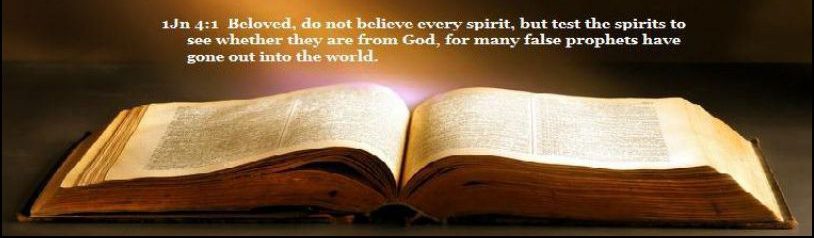






 Truth2Freedom's Blog
