For details about this sermon and for related resources, click here: https://www.gty.org/library/sermons/66-5
Source: The Vision of the Glorified Son, Part 2 (Revelation 1:17–19) | John MacArthur
For details about this sermon and for related resources, click here: https://www.gty.org/library/sermons/66-5
Source: The Vision of the Glorified Son, Part 2 (Revelation 1:17–19) | John MacArthur
Matthew Henry’s “Method For Prayer”
I must pray for faith.
Lord, let it be granted to me to believe; Philippians 1:29(ESV) for the faith by which I am saved is not my own doing, it is the gift of God. Ephesians 2:8(ESV)
Lord, increase my faith, Luke 17:5(ESV) and supply what is lacking in it, 1 Thessalonians 3:10(ESV) that I may grow strong in faith, as I give glory to God. Romans 4:20(ESV)
Lord, give me so to be crucified with Christ, as that the life I may now live in the flesh, I may live by faith in the Son of God, who loved me and gave himself for me; Galatians 2:20(ESV) and so to carry in me continually the death of Jesus, as that the life also of Jesus may be manifested in my mortal body. 2 Corinthians 4:10(ESV)
As I have received Christ Jesus the Lord, enable me so also to walk in him, rooted and built up in him and established in the faith, just as I was taught, abounding in thanksgiving. Colossians 2:6-7(ESV)
Let every word of yours benefit me, being united by faith, Hebrews 4:2(ESV) by which I receive your testimony and set my seal to this: that God is true. John 3:33(ESV)
I beg you, work in me that faith which is the assurance of things hoped for and the conviction of things not seen, Hebrews 11:1(ESV) by which I may look above the things that are seen, that are transient, and may look at the things that are unseen, that are eternal. 2 Corinthians 4:18(ESV)
Enable me by faith to set the LORD always before me, Psalm 16:8(ESV) and to have my eyes ever towards him, Psalm 25:15(ESV) that I may act in everything, as seeing him who is invisible, and may look to the reward. Hebrews 11:26-27(ESV)
Let my heart be cleansed by faith, Acts 15:9(ESV) and let it be my victory to overcome the world; 1 John 5:4(ESV) and let me be kept from fainting by believing that I shall look upon the goodness of the LORD in the land of the living. Psalm 27:13(ESV)
For details about this sermon and for related resources, click here: https://www.gty.org/library/sermons/66-4
Source: The Vision of the Glorified Son, Part 1 (Revelation 1:9–17a) | John MacArthur

Nehemiah 11:1-12:26 In this week’s study, we look at the importance of what it means to be a Christian in our neighborhoods, particularly in the great urban centers of the world.
Theme
Being a Christian Community
E. V. Hill tells of what happened in Los Angeles on one occasion. One man had been so put off by the captain of the block in which he lived—she was always inviting him to church and other religious meetings—that he decided to move. He decided to move the whole way across Los Angeles. The truck came. He loaded up his possessions. His block captain came out to say goodbye. The truck started off. But as soon as he was gone, his block captain went back into the house, got out the directory of Mount Zion block captains in Los Angeles, found the person in charge of the block to which her offended neighbor was moving. And when he got to his new area there was his new block captain standing on the street in front of his new home to welcome him and invite him to church.
His comment was a classic. He said, “My God, they’re everywhere.” That should be our goal—to be a visible presence everywhere in the cities.
2. We must be a community in the cities. It is not enough just to be in the cities, of course. We must also be together in the cities, which is to say, we must be a Christian community. It is only as a community that we can model what we are recommending. I think of the lines of the great twentieth century English poet T. S. Eliot from his poem, “Choruses from ‘The Rock’”:
When the Stranger says, “What is the meaning of this city?
Do you huddle close together because you love each other?”
What will you answer? “We all dwell together
To make money from each other?” or “This is a community”?
Anthony T. Evans is a successful black pastor in Dallas, Texas. He is an excellent Bible expositor, and his ministry goal is to have the population centers of America experience spiritual renewal. Evans publishes a monthly newsletter called “The Urban Alternative” in which, not long ago, there appeared an article entitled “10 Steps to Urban Renewal.” It mentioned sound Bible teaching, rejection of government dependence, use of spiritual gifts, the discipling of converts and other things. But one important requirement, according to Evans, is becoming a community. He wrote, “The church is first and foremost a spiritual family, a community. That’s why the Bible refers to the church as a ‘household of faith,’ ‘family of God’ and ‘brothers and sisters.’ It’s meant to function as a family, model family life, and care for the families it encompasses.”1
The church can do that as no other organization can—not businesses, not schools, not the centers of entertainment or social life, not government or city agencies. Only the church! Moreover, the church has an extraordinary opportunity to model community at a time when other forms of true community are breaking down. There is no better place than the fellowship of Christians for embracing those suffering from ruptured marriages, fractured homes and other forms of broken relationships.
If we can model attractive Christian community in a Christian or church setting, we can model it in other environments, as Christians in business show what it is to have a Christ-centered business, Christians in education show what it is educate in a Christian way, politicians act as Christian politicians, and so on in the other professions.
1Anthony T. Evans, “10 Steps to Urban Renewal,” The Urban Alternative, vol. 4, no. 2. September 1988.
Study Questions
Application
Application: What specific things can you do to practice and encourage Christian community where you live? How can your church promote such community that our society so desperately needs?
Key Point: There is no better place than the fellowship of Christians for embracing those suffering from ruptured marriages, fractured homes and other forms of broken relationships.
For Further Study: Download for free and listen to James Boice’s message, “A Christian World-View.” (Discount will be applied at checkout.)
https://www.thinkandactbiblically.org/thursday-being-a-christian-community/
For details about this sermon and for related resources, click here: https://www.gty.org/library/sermons/66-3
Source: The Certainty of the Second Coming (Revelation 1:7–8) John MacArthur
First published in 1560
We acknowledge and confess that this most wondrous conjunction between the Godhead and the manhood in Christ Jesus did proceed from the eternal and immutable decree of God, whence also our salvation springs and depends.Source: The Scottish Confession | Reformed Standards

Source: Scots Confession – Wikipedia
https://rchstudies.christian-heritage-news.com/2025/10/the-scottish-confession-why-it-behooved.html
For details about this sermon and for related resources, click here: https://www.gty.org/library/sermons/66-2
Source: Back to the Future, Part 2 (Revelation 1:1b–6) John MacArthur
This biblical wisdom about how to deal with evil spirits can help you protect yourself and others in even the most dangerous situations.

Evil spirits are often presented as entertainment for spooky thrills in movies and TV shows. But it’s important to take them seriously. Not only are evil spirits real, but they can significantly harm you if you’re not careful. It’s vital to be aware of how evil spirits work, and to rely on God’s help to overcome their power. What does the Bible say about evil spirits? This biblical wisdom about how to deal with evil spirits can help you protect yourself and others in even the most dangerous situations.
The Bible discusses evil spirits in many passages. Both the Old and New Testaments mention evil spirits, using a variety of terms for them, such as “demons,” “demonic spirits,” “impure spirits,” “unclean spirits,” “lying spirits,” or “deceiving spirits.” While the Bible doesn’t reveal the origin of evil spirits, it does make it clear that fallen angels are among them. Fallen angels, also known as demons, were originally created by God to be holy angels. But they fell away from relationships with God after one angel (known as Lucifer before the fall and Satan afterward) led them in a rebellion to try to grab God’s power for themselves (Isaiah 14:12-14). Most of the holy angels remained faithful to God (Revelation 5:11-12). But those angels who fell in the rebellion became corrupted by sin, so their natures are no longer good because they’re disconnected from God, who is the source of goodness.
Humans need to watch out for evil spirits in our world today, the Bible warns. 1 Peter 5:8 cautions: “Be alert and of sober mind. Your enemy, the devil, prowls around like a roaring lion looking for someone to devour.” The devil is another name for Satan, who leads the evil spirits. Don’t discount the power of evil spirits. They can deceive you, tempt you to sin, and harm you spiritually, mentally, emotionally, and physically. Ephesians 6:12 makes it clear that evil spirits are the source of our human struggles in this fallen world: “For our struggle is not against flesh and blood, but against the rulers, against the authorities, against the powers of this dark world and against the spiritual forces of evil in the heavenly realms.”
In his earthly ministry, Jesus helped many people break free of evil spirits. Jesus cast out evil spirits who had possessed the souls of humans, and healed those who had been made sick because of oppression from evil spirits. Examples include Jesus helping a large group of people (Matthew 4:4 and Matthew 8:16), a girl whose mother asked for help (Mark 7:24-30), and a man who lived among tombs (Mark 5:1-13). Jesus gave his disciples the spiritual authority to drive spirits out of people’s lives, as well. Matthew 10:1 records: “Jesus called his twelve disciples to him and gave them authority to drive out impure spirits and to heal every disease and sickness.”
So, while you need to beware evil spirits in our world today, you never need to be defeated by them. You can defend yourself against evil spirits by relying on God’s power working through you, as long as you’re connected to God through Jesus. Colossians 2:15 says of Jesus: “And having disarmed the powers and authorities [evil spirits], he made a public spectacle of them, triumphing over them by the cross.” Evil spirits are aware of Jesus’ power, and they know they will be judged by him at God’s appointed time (Matthew 8:29).
Thankfully, if you’re in a saving relationship with Jesus, you have the power to overcome any type of dangerous situation involving evil spirits. Even though evil spirits are extremely powerful, their power is no match for God’s power. As a Christian, you can always rely on God’s power working through you, because the Holy Spirit lives in your soul (1 Corinthians 6:19) and empowers you (Acts 1:8). There is no greater power than God’s power, which will flow through your life and make sure you’re victorious in the fight against evil spirits. James 4:7 advises: “Submit yourselves, then, to God. Resist the devil, and he will flee from you.”
Ephesians 6:10-13 reveals that spiritual warfare is happening around you, and calls you to fight with the power God gives you to win those battles: “Finally, be strong in the Lord and in his mighty power. Put on the full armor of God, so that you can take your stand against the devil’s schemes. For our struggle is not against flesh and blood, but against the rulers, against the authorities, against the powers of this dark world and against the spiritual forces of evil in the heavenly realms. Therefore put on the full armor of God, so that when the day of evil comes, you may be able to stand your ground, and after you have done everything, to stand.” Ephesians 6:13-17 describes the armor you should put on for the strength to win the unseen yet real spiritual battles around you: the belt of truth, the breastplate of righteousness, the Gospel of peace, the shield of faith, the helmet of salvation, and the sword of the spirit. You can do all of that by asking God to help you day by day.
You’ll be prepared to defend yourself and your loved ones against evil spirits when you’re wearing your spiritual armor – communicating with God and trusting him in faith – every day. Wearing that spiritual armor, you can follow the advice in Romans 12:21: “Do not be overcome by evil, but overcome evil with good.” You can be confident that Jesus will help you do so. He promises in Luke 10:19 that he has given believers the authority to “overcome all the power of the enemy; nothing will harm you.”

Photo Credit: ©GettyImages/Javier Art Photography
1. Don’t Contact Any Spirits Apart from God: Deuteronomy 18:10-12 forbids practices that involve contacting spirits – any souls, or any angels – on your own. Stay away from dangerous practices such as visiting mediums, going on ghost hunts, using Ouija boards, channeling, holding seances, and any other practices that involve reaching out to spirits apart from God. The only way you should ever communicate spiritually is directly with God, through prayer and meditation. If you contact spirits like souls or angels without going through God, you’re opening a door for evil spirits to manipulate you while disguised as good spirits. 2 Corinthians 11:14 says that Satan, who leads the fallen angels, “masquerades as an angel of light” and the angels who serve him “masquerade as servants of righteousness.” Only God has the ability to direct your communication properly. You can trust God to respond to your prayers with ultimate wisdom, and to help you in any situation.
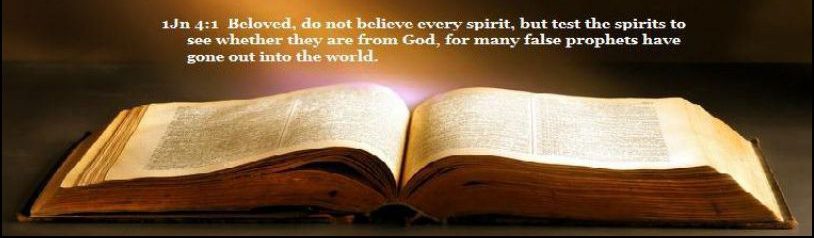
2. Test the Spirits: When you receive spiritual messages, don’t just accept them without evaluating them according to the Bible’s criteria for testing them. 1 John 4:1 urges: “Dear friends, do not believe every spirit, but test the spirits to see whether they are from God because many false prophets have gone out into the world.” Evil spirits may give you false prophecies. John 8:44 calls Satan “a liar and the father of lies.” So, beware of false messages. Test the spirits by evaluating their messages in light of 1 John 4:2: “This is how you can recognize the Spirit of God: Every spirit that acknowledges that Jesus Christ has come in the flesh is from God.”
3. Fear God Alone: Fearing evil spirits won’t help you defend yourself against them; it will only lead you to worry. Instead, fear God in the biblical sense of the word, where “fear” means reverence that comes from a sense of awe. You never need to be afraid of God. Fearing God means paying attention to the wonder of his work in your life – as my book Wake Up to Wonder shows you how to do – and letting the awe you feel as a result give you a sense of reverence for God. Then, you’ll be able to discern spiritual wisdom. Proverbs 9:10 declares: “The fear of the Lord is the beginning of wisdom, and knowledge of the Holy One is understanding.” Fearing God gives you the wisdom you need to overcome temptations from evil spirits to pull you into sin. Fearing God pulls you in the opposite direction – closer to God – as you’re inspired by awe. Center your life around your relationship with God, making decisions as God leads you. That will strengthen you spiritually, so you won’t need to fear evil spirits. You’ll discover that, with God’s help, you can win every spiritual battle. 1 John 4:4 promises that you can overcome evil spirits’ power with God’s power, which is greater: “You, dear children, are from God and have overcome them, because the one who is in you is greater than the one who is in the world.”
Evil spirits are a reality that you must deal with in this fallen world. They’re not to be taken lightly, for entertainment. You should take them seriously. Evil spirits can harm you and your loved ones significantly if you’re not careful. However, you never need to be afraid of evil spirits when you’re connected to God, whose power is far greater than any type of evil. Jesus has given those who trust him the power to overcome evil. In a relationship with Jesus, you can defend yourself and others successfully against evil spirits. You’ll stay spiritually safe if you stay close to God, day by day.
Photo Credit: ©iStock/Getty images Plus/mputsylo
Whitney Hopler helps people discover God’s wonder and experience awe. She is the author of several books, including the nonfiction books Wake Up to Wonder and Wonder Through the Year: A Daily Devotional for Every Year, and the young adult novel Dream Factory. Whitney has served as an editor at leading media organizations, including Crosswalk.com, The Salvation Army USA’s national publications, and Dotdash.com (where she produced a popular channel on angels and miracles). She currently leads the communications work at George Mason University’s Center for the Advancement of Well-Being. Connect with Whitney on her website at www.whitneyhopler.com and on her Facebook author page.
Originally published October 15, 2025.
https://www.crosswalk.com/faith/bible-study/what-does-the-bible-say-about-evil-spirits.html
For details about this sermon and for related resources, click here: https://www.gty.org/library/sermons/66-1
Source: Back to the Future, Part 1 (Revelation 1:1a) John MacArthur
In the last few pages of his book The Abolition of Man, C. S. Lewis compiles sayings from various world religions to highlight their near-universal agreement on which behaviors are encouraged and which are discouraged.
For example, virtually all religions are against lying. They hold that we’re not supposed to break our promises. We’re not supposed to rob or murder each other. Instead, they all say we should respect each other. We’re supposed to seek justice and equity. We’re supposed to be generous with our possessions. In short, we’re supposed to live by the Golden Rule — to treat everyone how we ourselves want to be treated.
All the religions that Lewis lists believe that this is the way we should live. And they also believe that the main reason for all the misery in the world is that we don’t live this way.
So this raises the question: What is it about the human condition that makes it possible — perhaps even inevitable — that despite knowing exactly how we should live and knowing the consequences of not doing so, we nevertheless fail to live by that standard over and over again?
No matter who our therapist is, which philosophy we believe, whether our government is liberal or conservative or fascist or democratic, we all keep failing to do the right thing, to live the right way. We know what we should do. But we don’t do it.
How can we explain that?
The Bible’s explanation is that human hearts are sinful. But more than that, the Bible tells us that we have become slaves to sin.
The Bible says sin is not just an action; it’s a power. Every sinful action has a destructive power on the faculty that chose that action. For example, when you sin with your mind, that sin shrivels your mind’s rationality. When you sin with your heart, that sin shrivels your heart’s emotions. When you sin with your will, that sin dissolves your willpower and self-control.
Sin is the suicidal action of the self harming the self. And no matter how we sin, doing so destroys our freedom and enslaves us. Look at the children of Israel in Numbers 11, for example. After God has delivered them from slavery, what is their attitude? We had a wonderful time in Egypt. Let’s go back.

Time and time again, the children of Israel crave the comforts of Egyptian civilization and want to go back even though doing so would mean returning to social, political, and economic slavery. Not only that, but returning to Egypt would result in them being treated worse than before, if not being flat-out annihilated.
Anyone today reading this passage can easily think, “What idiots! How in the world can they want fish so bad that they’d let themselves become slaves again? Who would want to get whipped and beaten just for onions and garlic?” To any contemporary reader, the obvious thing to do is stick with the manna, however unappetizing it may be, and go on to the promised land.
It’s so clear what needs to be done, yet the Israelites can’t do it. They won’t do it. They don’t do it. Why not? Because they are still slaves — not as they were in Egypt but slaves nonetheless: spiritual slaves.
To be a political slave or an economic slave means you have no power to do what’s best for yourself. For example, you might know the best thing for you is not to make bricks but rather to be a dancer. But if you’re a political or economic slave, you are powerless to pursue the best use of your gifts and talents. The children of Israel had been removed from this type of slavery, but they remained subjected to a pernicious form of slavery. They were spiritually powerless to do the right thing — unable to do what was best for them.
The Bible says every human being on the face of the earth is a spiritual slave in this same way. Paul puts it like this in Romans 7:18, 21 (NIV): “For I have the desire to do what is good, but I cannot carry it out. … So I find this law at work: When I want to do good, evil is right there with me.” He summarizes the issue in verse 14: “We know that the law is spiritual; but I am unspiritual, sold as a slave to sin.” Paul himself is telling us that the more he wants to do good, the less he is able to do it. He is powerless to do what is good. He is a slave.
Some people may read that and think, “That’s an overstatement, or at the very least it doesn’t apply to me. I’m not like Paul. I’ve never felt powerless to do what’s right.” But look at what Paul is saying: The more he tries, the higher he aspires to live, the more he is aware of his spiritual slavery, which means if we aren’t aware that we are spiritually enslaved, our moral ambition is too low.
For example, most everybody agrees with the Golden Rule. But if you think you have no problem living by that rule, I challenge you to try it for just twelve hours. For just one day, do unto others exactly as you would want to have people do to you. Half a day, in fact. Try to meet the needs of others with all the strength, joy, creativity, and speed with which you meet your own needs. Be as excited about their success as you would your own.
If you try this, within a few hours — maybe within a few minutes — you’ll find yourself thinking, “I see it now. The more I try to do good, the more I struggle to do it. The more I sense the powerlessness within me.” And then you’ll be able to say with Paul in verse 24, “What a wretched man I am! Who will rescue me from this body of death?”
We are spiritual slaves. We see what should be done, but we can’t do it. And anybody who thinks they can simply hasn’t tried very hard.

Adapted from What Is Wrong With the World? The Surprising, Hopeful Answer to the Question We Cannot Avoid by Timothy Keller.
Everywhere we look, we see brokenness — wars, cruelty, and heartache. We feel it in the world around us and in our own lives. How did it get to be this way?
In this book drawing from some of his most acclaimed sermons, beloved pastor and New York Times bestselling author Timothy Keller offers a hope-filled answer to the question beneath every devastating headline and personal loss: What is wrong with the world?
The post Slavery to Sin: Why We Struggle to Do What We Know Is Right appeared first on Bible Gateway News & Knowledge.

“Truly, truly, I say to you, he who does not enter by the door into the fold of the sheep, but climbs up some other way, he is a thief and a robber. But he who enters by the door is a shepherd of the sheep. To him the doorkeeper opens, and the sheep hear his voice, and he calls his own sheep by name and leads them out. When he puts forth all his own, he goes ahead of them, and the sheep follow him because they know his voice. A stranger they simply will not follow, but will flee from him, because they do not know the voice of strangers.” This figure of speech Jesus spoke to them, but they did not understand what those things were which He had been saying to them. (10:1–6)
As noted earlier in this volume (cf. the discussion of 8:34 in chapter 30), the phrase amēn, amēn (truly, truly) introduces a statement of notable importance. Jesus began this discourse by identifying Himself as the true Shepherd, in sharp contrast to all false shepherds. Each village in the sheepherding regions of Palestine had a fold where sheep were kept at night. The shepherds would graze their flocks in the surrounding countryside during the day, and then lead them back to the communal sheepfold in the evening. There the shepherds would stop each sheep at the entrance with their rods and carefully inspect it before allowing it to enter the fold (cf. Ezek. 20:37–38). Once in the fold, the sheep were in the care of the doorkeeper (a hired undershepherd; v. 12), who would keep watch over them during the night. He would give only the shepherds access to the sheepfold; therefore anyone who could not enter by the door into the fold of the sheep, but climbed up some other way, was a thief and a robber. Since the doorkeeper obviously would not let strangers in, would-be rustlers had to climb the wall of the sheepfold to get at the sheep. Only the one who entered by the door was a shepherd of the sheep.
Each of those common elements of everyday life had a symbolic meaning in the Lord’s metaphor. Though some argue that the sheepfold represents the church or heaven, the context (cf. v. 16) indicates that it represents Israel. In addition, it is hard to see how thieves could break into either the church or heaven and steal sheep (cf. vv. 27–29). The door is Jesus Himself (vv. 7, 9), who alone has the authority to lead out of Israel’s fold His own elect sheep. The thieves and robbers represent the self-appointed (cf. Matt. 23:2) Jewish religious leaders, who, doing the work of the devil, not God, climbed the walls of the sheepfold to spiritually fleece and slaughter the people.
Those leaders were the latest in a long line of false shepherds in Israel. Isaiah pictured such hypocrites in graphic terms as “mute dogs unable to bark, dreamers lying down, who love to slumber; … dogs [who] are greedy, [and] are not satisfied … shepherds who have no understanding; they have all turned to their own way, each one to his unjust gain, to the last one” (Isa. 56:10–11). “The shepherds have become stupid,” wrote Jeremiah, “and have not sought the Lord; therefore they have not prospered, and all their flock is scattered” (Jer. 10:21). In 12:10 the Lord said through Jeremiah, “Many shepherds have ruined My vineyard, they have trampled down My field; they have made My pleasant field a desolate wilderness.” “My people have become lost sheep,” God lamented in 50:6. “Their shepherds have led them astray. They have made them turn aside on the mountains; they have gone along from mountain to hill and have forgotten their resting place.”
But Israel’s false shepherds would not escape God’s judgment. In Jeremiah 23:1–2 God warned,
“Woe to the shepherds who are destroying and scattering the sheep of My pasture!” declares the Lord. Therefore thus says the Lord God of Israel concerning the shepherds who are tending My people: ‘You have scattered My flock and driven them away, and have not attended to them; behold, I am about to attend to you for the evil of your deeds,’ declares the Lord.”
In a devastating indictment of the false shepherds, and what may have been in our Lord’s mind and prompted His teaching, God declared through Ezekiel,
“Son of man, prophesy against the shepherds of Israel. Prophesy and say to those shepherds, ‘Thus says the Lord God, “Woe, shepherds of Israel who have been feeding themselves! Should not the shepherds feed the flock? You eat the fat and clothe yourselves with the wool, you slaughter the fat sheep without feeding the flock. Those who are sickly you have not strengthened, the diseased you have not healed, the broken you have not bound up, the scattered you have not brought back, nor have you sought for the lost; but with force and with severity you have dominated them. They were scattered for lack of a shepherd, and they became food for every beast of the field and were scattered. My flock wandered through all the mountains and on every high hill; My flock was scattered over all the surface of the earth, and there was no one to search or seek for them.” ’ ” Therefore, you shepherds, hear the word of the Lord: “As I live,” declares the Lord God, “surely because My flock has become a prey, My flock has even become food for all the beasts of the field for lack of a shepherd, and My shepherds did not search for My flock, but rather the shepherds fed themselves and did not feed My flock; therefore, you shepherds, hear the word of the Lord: ‘Thus says the Lord God, “Behold, I am against the shepherds, and I will demand My sheep from them and make them cease from feeding sheep. So the shepherds will not feed themselves anymore, but I will deliver My flock from their mouth, so that they will not be food for them.” ’ ” (Ezek. 34:2–10)
Lying prophets, often posing as true shepherds, also threatened the early church (as they still do today). Jesus cautioned, “Beware of the false prophets, who come to you in sheep’s clothing, but inwardly are ravenous wolves” (Matt. 7:15). Paul warned the elders of the Ephesian church, “I know that after my departure savage wolves will come in among you, not sparing the flock” (Acts 20:29). Peter wrote, “False prophets also arose among the people, just as there will also be false teachers among you, who will secretly introduce destructive heresies, even denying the Master who bought them, bringing swift destruction upon themselves” (2 Peter 2:1). In his first epistle John cautioned, “Beloved, do not believe every spirit, but test the spirits to see whether they are from God, because many false prophets have gone out into the world” (1 John 4:1). (For a further discussion of false teachers in the church, see 2 Peter and Jude, The MacArthur New Testament Commentary [Chicago: Moody, 2005], especially chapters 5–7, 11–13.)
Scripture also predicts the coming of the ultimate false shepherd, the final Antichrist. Zechariah 11:16–17 reveals that as part of His divine judgment on Israel (and the world), God is
going to raise up a shepherd in the land who will not care for the perishing, seek the scattered, heal the broken, or sustain the one standing, but will devour the flesh of the fat sheep and tear off their hoofs. Woe to the worthless shepherd who leaves the flock! A sword will be on his arm and on his right eye! His arm will be totally withered and his right eye will be blind. (cf. Dan. 11:36–45; 2 Thess. 2:3–10; Rev. 13:3–10)
Continuing with the figure of speech, Christ said that His sheep hear His voice when He calls them out of Israel and into His messianic fold. His imagery pictures the human response to the effectual, divine call to salvation (John 6:44, 65; 17:6, 9, 24; 18:9; Rom. 1:7; 8:28–30; 9:24; 1 Cor. 1:2, 23–24; Gal. 1:6, 15; Eph. 4:1, 4; Col. 3:15; 1 Thess. 4:7; 2 Thess. 2:13–14; 1 Tim. 6:12; 2 Tim. 1:9; 1 Peter 1:15; 2:9, 21; 5:10; 2 Peter 1:3; Jude 1). Jesus calls his own sheep by name, because they are His. Their names were “written from the foundation of the world in the book of life of the Lamb who has been slain” (Rev. 13:8; cf. 3:5; 17:8; 20:12, 15; 21:27; Phil. 4:3), and they have been given to Him by the Father (John 6:37).
After calling His sheep, Christ leads them out of the fold, puts them forth to pasture, goes ahead of them, and the sheep follow him. In the Near East the shepherd went ahead of his flock, alert to any potential dangers, making sure the trail was safe and passable, and leading the sheep to feed in the green pastures he had already scouted. So it is in salvation. Jesus savingly calls His sheep and leads them out of the fold where they were kept, taking them to the “green pastures” and “quiet waters” of God’s truth and blessing (Ps. 23:2).
The reason the sheep follow the Shepherd is because they know his voice. Actual sheep recognize the voice of their own shepherd, and will not respond to that of another. Philip Keller writes,
The relationship which rapidly develops between a shepherd and the sheep under his care is to a definite degree dependent upon the use of the shepherd’s voice. Sheep quickly become accustomed to their owner’s particular voice. They are acquainted with its unique tone. They know its peculiar sounds and inflections. They can distinguish it from that of any other person.
If a stranger should come among them, they would not recognize nor respond to his voice in the same way they would to that of the shepherd. Even if the visitor should use the same words and phrases as that of their rightful owner they would not react in the same way. It is a case of becoming actually conditioned to the familiar nuances and personal accent of their shepherd’s call. (A Shepherd Looks at the Good Shepherd and His Sheep [Grand Rapids: Zondervan, 1979], 39–40)
On the other hand, a stranger they simply will not follow, but will flee from him, because they do not know the voice of strangers. True believers will not abandon Christ, the Good Shepherd, to follow false shepherds. True believers recognize the truth revealed by God (8:31–32, 47, 51–52) and reject error. John expressed that truth in his first epistle:
Beloved, do not believe every spirit, but test the spirits to see whether they are from God, because many false prophets have gone out into the world. By this you know the Spirit of God: every spirit that confesses that Jesus Christ has come in the flesh is from God; and every spirit that does not confess Jesus is not from God; this is the spirit of the antichrist, of which you have heard that it is coming, and now it is already in the world. You are from God, little children, and have overcome them; because greater is He who is in you than he who is in the world. They are from the world; therefore they speak as from the world, and the world listens to them. We are from God; he who knows God listens to us; he who is not from God does not listen to us. By this we know the spirit of truth and the spirit of error. (1 John 4:1–6)
No one who is genuinely saved will finally and completely turn away from Jesus Christ. Jesus’ warning that “false Christs and false prophets will arise and will show great signs and wonders, so as to mislead, if possible, even the elect” (Matt. 24:24) clearly implies that such deception is impossible. Those who abandon their profession of faith in the truth prove that neither their faith nor their salvation was ever genuine. “They went out from us,” John wrote, “but they were not really of us; for if they had been of us, they would have remained with us; but they went out, so that it would be shown that they all are not of us” (1 John 2:19). John, then, contrasts such departure from the truth, the voice of the Shepherd, with faithfulness to His voice. He writes of the true sheep,
But you have an anointing from the Holy One, and you all know. I have not written to you because you do not know the truth, but because you do know it, and because no lie is of the truth. Who is the liar but the one who denies that Jesus is the Christ? This is the antichrist, the one who denies the Father and the Son. Whoever denies the Son does not have the Father; the one who confesses the Son has the Father also. As for you, let that abide in you which you heard from the beginning. If what you heard from the beginning abides in you, you also will abide in the Son and in the Father. (1 John 2:20–24)
Those who are Christ’s do not leave Him to follow those who deny the truth.
The apostle John concluded this first metaphor with a footnote: This figure of speech Jesus spoke to them, but they did not understand what those things were which He had been saying to them. The Greek word translated figure of speech (paroimia) describes veiled, enigmatic language that conceals a symbolic meaning. Though the figure of speech was presented plainly enough to the religious leaders, they failed to grasp its significance. So ingrained was their belief that as Abraham’s descendants they were part of God’s flock that they completely missed Jesus’ indictment of them when He stated that He was the true Shepherd and they were false shepherds to whom the sheep would not listen. Like His parables (Matt. 13:10–16), this figure of speech served a twofold purpose: It revealed spiritual truth to His followers, and concealed it from those who rejected Him.
MacArthur, J. F., Jr. (2006). John 1–11 (pp. 425–430). Moody Press.
John 10:1–6
“I tell you the truth, the man who does not enter the sheep pen by the gate, but climbs in by some other way, is a thief and a robber. The man who enters by the gate is the shepherd of his sheep. The watchman opens the gate for him, and the sheep listen to his voice. He calls his own sheep by name and leads them out. When he has brought out all his own, he goes on ahead of them, and his sheep follow him because they know his voice. But they will never follow a stranger; in fact, they will run away from him because they do not recognize a stranger’s voice.” Jesus used this figure of speech, but they did not understand what he was telling them.
John 10 is a wonderful chapter in this most wonderful of books, rightly beloved by Christians everywhere. The reason lies in its striking portrait of Jesus Christ as the Good Shepherd and of ourselves as his sheep.
That this portrait has been beloved by Christians from every culture and from every period of history is easy to demonstrate, for the evidence abounds in Christian art and literature. A number of years ago on one of my trips through Italy, I had opportunity to visit Ravenna and spend some time among the masterpieces of Byzantine art and architecture to be found there. I thought that one of these was particularly interesting. On one of the walls of the burial chamber of Galla Placidia, a sister of one of the early Byzantine emperors, there is a mosaic portraying Christ as the Good Shepherd. He is seated on a low outcropping of rock, holding a shepherd’s staff in the form of a cross, while the sheep gather around him. He strokes the head of one sheep. One sheep looks on. Another seems to be wandering away. In the background, water bursts from a rock in the midst of a verdant garden. The whole is composed of the softest shades of blue, green, yellow, and gold. No one who has seen that picture can miss the thought that the one who follows Christ will not lack any good thing. The artist seems to have been saying of him:
The LORD is my shepherd; I shall not be in want.
  he makes me lie down in green pastures,
he leads me beside quiet waters,
  he restores my soul.
Christ’s sheep will indeed be provided with all good things and will dwell in the house of the Lord forever.
It is not just in the Twenty-third Psalm that this image is found, however. It is found in many places throughout the Old and New Testaments. The psalmist wrote, “We are his people, the sheep of his pasture” (Ps. 100:3). Isaiah declared, “He tends his flock like a shepherd. He gathers the lambs in his arms and carries them close to his heart; he gently leads those that have young” (Isa. 40:11). Mark wrote that Jesus had pity upon the crowds because “they were like sheep without a shepherd” (Mark 6:34). Before his crucifixion Jesus referred to Isaiah’s prophecy of the suffering servant, saying, “You will all fall away, … for it is written: ‘I will strike the shepherd, and the sheep will be scattered’ ” (Mark 14:27). The author of Hebrews spoke of Jesus as the “great Shepherd” (Heb. 13:20). Peter saw him as the “Chief Shepherd” to whom the undershepherds are responsible (1 Peter 5:4).
From this rich mine of biblical imagery the parable of the Good Shepherd, which begins the tenth chapter of John’s Gospel, is taken. “I tell you the truth, the man who does not enter the sheep pen by the gate but climbs in by some other way, is a thief and a robber. The man who enters by the gate is the shepherd of his sheep. The watchman opens the gate for him and the sheep listen to his voice. He calls his sheep by name and leads them out. When he has brought out all his own, he goes ahead of them, and his sheep follow him because they know his voice. They will not follow a stranger; in fact, they will run away from him because they do not recognize a stranger’s voice” (John 10:1–5).
The image speaks to us of the underlying sympathy between the shepherd and his sheep and of the unfailing love and vigilance of the Great Shepherd.
Shepherds, Thieves, and Sheepfolds
In view of the wide use of the shepherd theme throughout the Bible one would think that the shepherd parable in John 10 would be easy to interpret. But this is not the case, if we are to judge by the various interpretations given to it. In one interpretation the sheepfold is the world. In another it is the church. In a third it is heaven. In one interpretation the sheep are all mankind, in another only the Jews. All would agree that the shepherd is Jesus. But who is the porter? Who are the thieves? And how can Jesus be both the shepherd and the door of the sheepfold at the same time?
I believe that these diverse views arise from a failure (1) to take the story in context and (2) to recognize that Jesus is playing upon various aspects of the shepherd imagery, much as a composer might develop variations upon a musical theme.
The greatest failure is to neglect to take the story in its context. It is to be found in the preceding chapter in the story of the man born blind and in his mistreatment by those who were the leaders of the people. This is obvious because of the absence of any transitional words at the beginning of chapter 10. When John indicates a transition either geographically or in time he usually says something like “after these things,” “after this,” “on the next day,” or “as Jesus passed by.” Here the words of Jesus flow on immediately after his comments about the Pharisees at the end of chapter 9 and therefore are related to them. This does not mean that they were necessarily spoken on the same occasion. They may have been spoken later; in fact, they probably were. But it does mean that Jesus had the incident of the blind man in view as he told the parable.
As soon as we recognize this, we recognize that the thieves and robbers must refer to the false shepherds of Israel (the Pharisees) and that the sheepfold represents Judaism. The ones who hear Christ’s voice and respond to his call are those of his own who are within Israel, of whom the man born blind is an example.
This understanding of the parable is further encouraged when we recognize the particular aspect of the shepherd imagery upon which Jesus is playing in these first verses—which, by the way, is not the same as that used later. In this chapter there are two kinds of sheepfolds. The first kind of sheepfold was that found in the countryside. It was nothing more than a circle of rocks into which the sheep could be driven. There was no door, just an opening across which the shepherd would place his body. This is the kind of sheepfold that Jesus is thinking about when he says, “I am the gate for the sheep,” just a verse or so later. The other kind of sheepfold was more substantial. This kind was found in the towns and villages and consisted of a room or enclosure with a regular gate or door. Into such an enclosure many shepherds together would drive their flocks when they returned to the village at night, and at such a place at night the sheep would be in the care of a porter. In the morning each shepherd would come to the fold, call his sheep by name—they, incidentally, literally knew his voice and would respond to his call—and then lead his own sheep out to pasture. This is the kind of sheepfold about which Christ is thinking in this parable.
What is the sheepfold then? It is not heaven, for thieves and robbers do not climb up into heaven. It is not the church, for the shepherd does not lead his flock out of that, as he does here. The sheepfold is Judaism, as we have already been led to suspect from the context of chapter 9; and the point is that Jesus presented himself to Judaism in order to call out from that body those whom God had given him. Later he says that he will soon call out sheep from other folds that there might be one great flock, the church, and one shepherd (v. 16). The porter—if we must identify him—is God, or God’s Holy Spirit, who opens to Christ and releases the sheep to Christ’s call.
The Shepherd and His Sheep
Having understood the parable of the sheepfold, sheep, porter, and thieves, we can now reflect upon it for what it teaches spiritually. What are the lessons of this parable?
First, the parable teaches that the Lord Jesus Christ knows his sheep and that it is a wonderful thing to be known by him. This truth is implied in verse 3 (“he calls his own sheep by name”). It is stated even more explicitly in verse 14 (“I am the good shepherd; I know my sheep and they know me”). Moreover, according to the further teaching of this chapter, the sheep are known to Christ because they have been given to him by the Father (v. 29), and it is for these and not for all sheep that the shepherd dies (vv. 14–15). What a wonderful collection of truths this is! God has given a certain number of individuals to Christ. Jesus knows who they are. And he dies for them in order that the way to heaven might be provided for them and that they might be safe.
Have you ever noticed that all this is done on behalf of God’s chosen ones, even though God knows they are sinners and do not deserve it? Jesus not only knows us; he knows us as we are, and yet he died for us. Here Paul’s words in Romans throw light on Christ’s teaching. In the wonderful section of Romans 5 in which Paul writes of the results of our justification, there is a parenthetical statement saying that Christ died for us even though we were sinners: “When we were still powerless, Christ died for the ungodly. Very rarely will anyone die for a righteous man, though for a good man someone might possibly dare to die. But God demonstrates his own love for us in this: While we were still sinners, Christ died for us” (Rom. 5:6–8). These verses are intended to help us to get our minds off ourselves and instead to rest in Christ’s love.
While we were sinners, Christ died for us. That is a great truth; for if it were otherwise—if Christ did not know us or does not now know that we are sinners—we might fear that some fresh revelation of sin in us might discourage him and weaken his love. “As it is,” says Bishop Brooke Foss Westcott, “nothing in his flock is hidden from him: their weaknesses, their failures, their temptations, their sins, the good which they have neglected when it was within reach, the evil which they have pursued when it lay afar. All is open before his eyes. He knows them … and he loves them still.”
Second, the parable teaches us that having known them, Jesus calls his sheep and that he does so by name (v. 3). This is the doctrine of election, which is so prominent in John’s Gospel. It is not liked. It is not often preached. But it is in Scripture and must be preached, above all by anyone who is serious about expounding this Gospel. For what is the central point of Christ’s parable? Election! That is the point. It is that God has given some sheep to the Lord Jesus and that Jesus comes to the door of the sheepfold and, knowing his sheep in advance, calls to them and leads them out. Not all people are saved. Jesus did not call the Pharisees. But all those are saved whom God has given to Jesus. Indeed, these shall never perish, never be taken from Jesus (v. 28).
This is not an impersonal, still less an arbitrary decree, however, though some have charged this. It is a very tender and personal thing, for Jesus says that the shepherd calls his own sheep by name. Being called by name, they follow him. In his commentary Arthur W. Pink points out a number of illustrations throughout the Gospels. “ ‘And as Jesus passed forth from thence, he saw a man, named Matthew, sitting at the receipt of custom; and he saith unto him, Follow me. And he arose, and followed him’ (Matt. 9:9). Here was a lone sheep of Christ. The Shepherd called him; he recognized His voice, and promptly followed Him.
“ ‘And when Jesus came to the place, he looked up, and saw him, and said unto him, Zacchaeus, make haste, and come down; for today I must abide at thy house’ (Luke 19:5). Here was one of the sheep, called by name. The response was prompt, for we are told, ‘And he made haste, and came down, and received him joyfully’ (v. 6).
“ ‘The day following Jesus would go forth into Galilee, and findeth Philip, and saith unto him, Follow me’ (John 1:43). This shows us the Shepherd seeking His sheep before He called him.
“John 11 supplies us with a still more striking example of the drawing power of the Shepherd’s voice as He calleth His own sheep. There we read of Lazarus, in the grave; but when Christ calls His sheep by name—‘Lazarus, come forth’—the sheep at once responded.
“As a touching example of the sheep knowing His voice we refer … to John 20. Mary Magdalene visited the Saviour’s sepulchre in the early morning hour. She finds the stone rolled away, and the body of the Lord gone. Disconsolate, she stands there weeping. Suddenly she sees the Lord Jesus standing by her, and ‘knew not that it was Jesus.’ He speaks to her, but she supposed Him to be the gardener. A moment later she identified Him, and says, ‘Rabboni.’ What had happened in the interval? What enabled her to identify Him? Just one word from him—‘Mary’! The moment He called His sheep by name she knew his voice!”
This is the way it has always been, and it is how the call comes today. It is how he calls you. He knows you, of course, as we have seen. He knows you with all your failures and sin. But he also knows what he is going to make of you. As Paul writes, “For those God foreknew he also predestined to be conformed to the likeness of his Son, that he might be the firstborn among many brothers. And those he predestined, he also called; those he called, he also justified; those he justified, he also glorified” (Rom. 8:29–30). This is what he intends to do—make you like himself, glorify you. For this end you are called. Mary! John! Peter! Susan! James! Do you hear his call? It is a wonderful thing to be known personally by the great God of the universe, the Lord Jesus Christ.
Finally, the parable teaches us that having known his own sheep and having called them, the Lord Jesus Christ leads them out (v. 3). To what does he lead them? To his own great flock, the church, and into green pastures. From what does he lead them? The answer is from anything that would keep them from his pasture. We have already seen one example in this story. Jesus led the man who had been born blind out of Judaism. But there are other examples. Later he will speak of other sheep and other folds, and he will state his intention to lead those sheep out of those lesser allegiances. The lesser allegiances can be many things. Jesus had led some out of paganism. He has led others out of western materialism. He has led some out of communism, some out of the worship of knowledge, some out of the rat race generated by our competitive society. These are our sheepfolds, whatever they may be, and it is from these that Christ calls us. Perhaps he is calling you from some lesser allegiance at this moment.
Hearing the Call
The story tells us that when Jesus told this parable the first time “they did not understand what he was telling them” (v. 6). But you have no reason not to understand. Moreover, if you are hearing Christ’s call, you should respond to him quickly. To hear Christ’s call is not the same thing as responding to emotional pressure in an evangelistic service. It is not the same as agreeing to become a member of a church. It is not agreeing to do anything. It is hearing, hearing Christ deep within your own spirit and personality. I will tell you what it is like. It is, above all, arriving at the conviction that what the Bible says regarding your need and the love of the Lord Jesus in answer to that need is true and that you should respond to it.
Have you been sensing that? Have you been saying, “Yes, what I am hearing is true. I have been waiting all my life for this. This is that for which I have been made”? If you have, do not make the mistake of being slow to answer Christ’s call. Respond immediately, as Zacchaeus did and many millions of others have done, and follow Jesus. He is the Great Shepherd. Those who follow him do not want for any good thing.
Boice, J. M. (2005). The Gospel of John: an expositional commentary (pp. 735–740). Baker Books.

Observe and hear all these words, which I command thee, that it may go well with thee, and with thy children after thee for ever, when thou doest that which is good and right in the sight of the Lord thy God.Deuteronomy 12:28
Though salvation is not by the works of the law, yet the blessings which are promised to obedience are not denied to the faithful servants of God. The curses our Lord took away when He was made a curse for us, but no clause of blessing has been abrogated.
We are to note and listen to the revealed will of the Lord, giving our attention not to portions of it but to “all these words.” There must be no picking and choosing but an impartial respect to all that God has commanded. This is the road of blessedness for the Father and for His children. The Lord’s blessing is upon His chosen to the third and fourth generation. If they walk uprightly before Him, He will make all men know that they are a seed which the Lord has blessed. No blessing can come to us or ours through dishonesty or double dealing. The ways of worldly conformity and unholiness cannot bring good to us or ours. It will go well with us when we go well before God. If integrity does not make us prosper, knavery will not. That which gives pleasure to God will bring pleasure to us.
https://www.vcy.org/charles-spurgeon/2025/10/16/obedience-brings-blessing/
And, behold, I am with thee, and will keep thee in all places whither thou goest.Genesis 28:15
Do we need journeying mercies? Here are choice ones—God’s presence and preservation, In all places we need both of these, and in all places we shall have them if we go at the call of duty, and not merely according to our own fancy. Why should we look upon removal to another country as a sorrowful necessity when it is laid upon us by the divine will? In all lands the believer is equally a pilgrim and a stranger; and yet in every region the Lord is His dwelling place, even as He has been to His saints in all generations. We may miss the protection of an earthly monarch, but when God says, “I will keep thee,” we are in no real danger. This is a blessed passport for a traveler and a heavenly escort for an emigrant.
Jacob had never left his father’s room before; he had been a mother’s boy and not an adventurer tike his brother. Yet he went abroad, and God went with him. He had little luggage and no attendants; yet no prince ever journeyed with a nobler bodyguard. Even while he slept in the open field, angels watched over him, and the Lord God spoke to him. If the Lord bids us go, let us say with our Lord Jesus, “Arise, let us go hence.”
Gavin Ortlund just put out a video that provides a good overview of a lot of the evidence against the papacy. He makes some points I didn’t make in my last post, and my post covers some things not included in his video. When you think of the evidence as a whole, notice that there’s such a large number and variety of contexts in which the papacy is absent among the early sources. In addition to being absent, the concept of a papacy is sometimes contradicted. I mentioned some examples in my last post. And keep in mind how important Catholics tell us the papacy is, how it’s allegedly the foundation of the church, the source of Christian unity, and so on. The First Vatican Council claimed that the papacy is a clear doctrine of scripture that’s always been understood by the church. In reality, the papacy isn’t in scripture or the earliest extrabiblical sources, and it’s sometimes contradicted by those sources.
http://triablogue.blogspot.com/2025/10/the-widespread-absence-of-early-papacy.html
By Elizabeth Prata
SYNOPSIS
In this essay, I explore how earthquakes unsettle people, prompting people to seek meaning and divine answers. I reflect on humanity’s attempts to categorize nature, and to control the climate. I discuss biblical prophecies of the Tribulation, highlighting a time of uncreation when the ‘natural order’ will be anything but natural. God has ultimate authority over the Earth and its ‘natural’ order.
Any time there is a large earthquake people are somehow more unsettled after an earthquake than most other natural disasters, and people flock to sites in search of the meaning of it all.
Personally I think quakes unsettle people because this is the very ground we walk on that is moving, splitting, and otherwise kicking up. If solidity isn’t solid, if the earth isn’t solid, then what is?
God of course.

But natural disasters such as earthquakes send people searching for what, where, why. God is creator. He made the earth and the stars and the heavens and the stars and everything in between. He made it…and He can UNmake it. He plans to unmake it, during the Tribulation.

Man assigns lists and categories to everything in the natural world, trying to organize it, in order to understand it. It feels natural to do that, I mean, God told Adam to name all the animals. That was an orderly thing to do. I remember in my 30s being very interested in the biological taxonomy of mollusks. Wikipedia explains taxonomy–
The establishment of universally accepted conventions for the naming of organisms was Linnaeus’ main contribution to taxonomy—his work marks the starting point of consistent use of binomial nomenclature. During the 18th century expansion of natural history knowledge, Linnaeus also developed what became known as the Linnaean taxonomy; the system of scientific classification now widely used in the biological sciences.
I bought plastic divided tackle boxes at Wal-Mart and collected shells from all the oceans I sailed on and all the beaches I walked on, and labeled them and placed them within a taxonomy … and it felt so good to organize the world. I felt that if I could organize it, and then I could understand it, and then I could control it. That’s what climate change is really all about, man’s thought that he can control the world and its natural happenings.

Of course that is a mistake in reasoning, no matter how fun it is to study natural history. But I wasn’t saved then and I didn’t know God.
The earth is not as solid as we think and the wind is not as constant as we think and the sun is not as active (or inactive) as we think. The Tribulation will be a time when all the cycles and taxonomies and orderliness of what has been a seeming normal will morph into a new normal: the horror of uncreation. Man wasn’t around when God created the stars and the earth but he will be around when He uncreates it.
For example, the wind won’t blow.
“After these things I saw four angels standing at the four corners of the earth, holding the four winds of
the earth, that the wind should not blow on the earth, on the sea, or on any tree” (Revelation 7:1).
The sun my be going through a periodic cooling cycle now but later it will turn hot, so hot it will burn men in an instant–
“The fourth angel poured out his vial upon the sun; and power was given unto him to scorch men with fire. And men were scorched with great heat, and blasphemed the name of God, which hath power over these plagues: and they repented not to give him glory” (Revelation 16:8-9)
Hail will be supersized, 100 lbs, and crush mens’ heads.
“And great hailstones, about one hundred pounds each, fell from heaven on people; and they cursed God for the plague of the hail, because the plague was so severe.” (Revelation 16:21)
The Tribulation will be a time when God will uncreate the earth, unspooling it from the seeming normalcy humanity has enjoyed, to when things are starting to go haywire, to the future when nothing will be normal. You notice in Revelation its orderly uncreation, when there will be no rain, hydrologic cycles fail, the ocean exceeds its boundaries, life in the ocean dies, vegetation withers, geologic upheavals even the sun goes dim and then dark- no light.
Spurgeon wrote that in the creation day, “The light which broke in upon the primeval darkness was of a very mysterious kind, and came not according to ordinary laws, for as yet neither sun nor moon had been set as lights in the firmament.“
All man’s attempts at orderliness, at “climate change” which is really climate control, being master of this garden, will fly from human hands and all delusions of our control will be stripped from our eyes.
MacArthur wrote of the uncreation of Revelation: “The present laws of thermodynamics, which state that matter can not be created nor destroyed, will no longer be in effect. As a result, “he universe “will be burned up,” it will be totally consumed. (2 Peter 3:10-13). The absolute reverse of creation will occur. It didn’t take eons of evolution to create the universe, nor will it take eons to uncreate it. The uncreation of the universe, like its creation, will take place by the word of God.” (source “Revelation 12-22 MacArthur New Testament Commentary By John F MacArthur”)
Nothing on earth will ‘work’ the way we have known it, not the sun, not growth, not rain, not the ocean, not the wind, not the animals…
All praise our holy God who creates, makes things orderly in their time, makes things disorderly in their time, and will dissolve the universe when it is time and create the New Earth when it is time! All is in His hands.
We all have desires for food, comfort, and even sex—but when do these normal human wants cross the line and become a dangerous, forbidden “lust of the flesh”? The Bible warns us that our battle against sin involves three massive foes: the lust of the flesh, the lust of the eyes, and the pride of life (1 John 2:16). But what exactly is the sinful “flesh,” and how does a basic desire for something like food turn into the sin of gluttony? Learn the truth about the powerful, rebellious nature we are born with, why pleasing this nature makes you an enemy of God, and the only way to truly defeat these “sinful lusts” so you can live for God’s glory and secure eternal life (1 John 2:17).
*** Source Article:
https://www.gotquestions.org/lust-of-the-flesh.html
*** Recommended Book:
Landmines in the Path of the Believer:
Avoiding the Hidden Dangers
by Charles F. Stanley
https://amzn.to/4lpMEv0
*** Related Got Questions Articles:
What is the lust of the eyes?
https://www.gotquestions.org/lust-of-the-eyes.html
What does the Bible say about ego?
https://www.gotquestions.org/Bible-ego.html
How should a Christian view self-esteem?
https://www.gotquestions.org/self-esteem.html
Is the sovereignty of God limited by our free will? Today, R.C. Sproul shows that this notion is not only wrong but it also poses great danger to our spiritual well-being.
Study Reformed theology with a free resource bundle from Ligonier Ministries: https://grow.ligonier.org/?utm_source=youtube&utm_medium=description&utm_campaign=get-started
Hear more from Ultimately with R.C. Sproul: https://www.youtube.com/playlist?list=PL30acyfm60fWxph9skWjvcCF41XqShypw
Source: Is God’s Sovereignty Limited by Human Freedom?: Ultimately with R.C. Sproul

In Part II of this devotion, we will examine a few additional examples of just how influential the Bible was in the lives of great scientists of yesteryear. Consider the following:
Lord Kelvin (1824-1907) was elected at the age of 22 as Glasgow University’s youngest professor ever. It was his habit to open every one of his lectures in prayer.
Samuel Morse (1791-1872) who invented the telegraph in 1844, used a quote from the Bible for his first message sent over his invention: “What has God wrought!” (Numbers 23:23)
Michael Faraday (1791-1867), who is without a doubt one of the greatest physicists of all time, was also a very humble man of God. At the age of 50 he became an elder in the Chapel Meeting House in Pauls Alley, London. He often preach there on Sunday’s. Near his death he was quoted as saying: “My worldly faculties are slipping away day by day. Happy it is for all of us that the true good does not lie in them. As they ebb, may they leave us as little children trusting in the Father of Mercies and accepting His unspeakable gift. I bow before Him who is Lord of all.”1
Isaac Newton (1642-1727), who many consider, along with Albert Einstein, to be one of the two greatest scientists who ever lived, is commonly known for sitting under a tree and having an apple fall on his head. This in turn led him to the discovery of the law of gravity. He was also credited with the development of calculus, formulating the three basic laws of motion, establishing the particle theory of light propagation, and many other monumental breakthroughs. This remarkable genius was also quoted as saying: “We account the Scriptures of God to be the most sublime philosophy. I find more sure marks of authenticity in the Bible than in any profane history whatsoever.”2
Another gentleman, Wernher von Braun (1912-1977), was a great German space scientist. Later in life, after he became a United States citizen, he directed the U.S. guided missile program and then became the Director of NASA. Always in the vanguard of the latest advances in space technology, von Braun once commended: “Manned space flight is an amazing achievement, but it has opened for mankind thus far only a tiny door for viewing the awesome reaches of space. An outlook through this peephole at the vast mysteries of the universe should only confirm our belief in the certainty of its Creator. I find it as difficult to understand a scientist who does not acknowledge the presence of a superior rationality behind the existence of the universe as it is to comprehend a theologian who would deny the advances of science.”3
Finally, Johann Kepler (1571-1630), the great German astronomer, summed it up best, as he was exploring the vast reaches of the universe, by saying that he was merely, “Thinking God’s thoughts after Him.”
It is important to note that a person’s personal convictions and beliefs are an integral part of his very being. These values, by their very nature, are carried by an individual into every area of his life – including his occupation. The scientists we have just listed, were men who literally changed the way our world is today. Their discoveries and breakthroughs are now legendary. These men, however, all had one common denominator – they believed in and read the Bible. They undoubtedly used the wisdom gained from these sacred pages to help them unlock the deep mysteries of our natural world, thereby changing the course of history forever.
We owe a great debt to these pioneers of yesteryear. The scientist of today, who still has problems in finding reading the Bible hard to reconcile with the precise, concrete, and rational realm of his discipline, would do well to consider the backgrounds of many of his past predecessors. For these were the very men who laid the foundations of the field of the research he is now engaged in! Perhaps if he realized how integral a role the Bible played in these geniuses’ lives and work; he just might reconsider reading this one very special book. Can a scientist believe in the Bible? History shows that not only can he, but he has! Genius, discovery, and the Bible have long been companions in the quest for knowledge.
The next time someone tries to tell you that modern science has made your old Bible obsolete, ask him if he has ever heard of Isaac Newton, Robert Boyle, Samuel Morse, Leonardo da Vinci, etc.
1 http://gochristianhelps.com/tracts/other/evolutio.htm
2 Henry M. Morris, Men of Science: Men of God (El Cajon, CA: Master Books, 1988), pp. 23, 26
3 Ibid., p. 85.
The post Can a Scientist really believe the Bible? – Part II appeared first on Bible Apologetics – A DAILY DEVOTIONAL.

For our struggle is not against flesh and blood, but against the rulers, against the powers, against the world forces of this darkness, against the spiritual forces of wickedness in the heavenly places. (6:12)
One of Satan’s most effective strategies, and therefore one of a believer’s greatest dangers, is the delusion that no seriously threatening conflict between good and evil is really raging in the invisible and supernatural realm. After all, it is argued, there appear to be many good things in the world today. Numerous ancient evils, such as slavery and race hatred, have disappeared or improved dramatically. People have never been so concerned about getting along together, understanding one another, and working with one another to improve individual lives and society as a whole. Not only that, but evangelicalism is riding a crest of popularity, growth, and influence unknown for over a century.
But that sort of thinking not only is naive but inevitably leads to lethargy, indifference, indolence, and spiritual stagnation. A biblical perspective on the situation and a clear perception of the direction things are really moving—especially in light of Scripture’s teaching about the end times—does not leave room for such delusion in the mind of any believer. The war between God and Satan has not diminished but intensified, and so has its front on this earth.
Palē (struggle) was used of hand-to-hand combat and especially of wrestling. As in our own day, wrestling was characterized by trickery and deception—with the difference that in fights in ancient Rome the conflict was real and often a matter of life for the winner and death for the loser. Though Satan and his minions know they are sentenced eternally to the bottomless pit prepared in hell for them, they seek desperately to change that fate if they can—warring ceaselessly to break the power of God and destroy the things of God, especially the church.
Paul here reminds his readers that the Christian’s struggle is not only against Satan himself but also against a host of his demon subordinates, a vast array of adversaries who, like the devil, are not flesh and blood. Our greatest enemy is not the world we see, corrupt and wicked as it is, but the world we cannot see.
Rulers, … powers, … world forces of this darkness, … and spiritual forces of wickedness describe the different strata and rankings of those demons and the evil, supernatural empire in which they operate. Human beings who promote paganism, the occult, and various other ungodly and immoral movements and programs are but dupes of Satan and his demons—trapped by sin into unwittingly helping to fulfill his schemes.
The mention of each of these supernatural powers is preceded by against, and each seems to represent a particular category of demon activity and level of authority. Satan’s forces of darkness are highly organized and structured for the most destructive warfare possible. Like the unfallen holy angels, demons do not procreate and their number is fixed. But they are a great and ancient multitude and constitute a formidable and highly experienced supernatural enemy.
The demonic categories are not explained, but rulers no doubt reflects a high order of demons (linked with “authorities” in Col. 2:15), powers are another rank (mentioned in 1 Pet. 3:22), and world forces of this darkness perhaps refers to demons who have infiltrated various political systems of the world, attempting to pattern them after Satan’s realm of darkness (see Dan. 10:13; Col. 1:13). Many stories are told of world-wide conspiracies, ranging from those mentioned in ancient Egyptian writings to supposed modern cabals. We have no way of absolutely identifying the networking of the various schemes of Satan and should be wary of those who claim to do so. But we can be certain that he is active behind the scenes of Christless human endeavors—both in the overt, obviously evil works of men as well as in the many covert and seemingly innocent and good works of humanistic endeavors.
The spiritual forces of wickedness are possibly those demons who are involved in the most wretched and vile immoralities—such as extremely perverse sexual practices, the occult, Satan worship, and the like.
Paul’s purpose, however, is not to explain the details of the demonic hierarchy but to give us some idea of its sophistication and power. We are pitted against an incredibly evil and potent enemy. But our need is not to specifically recognize every feature of our adversary but to turn to God, who is our powerful and trustworthy source of protection and victory.
Much today is being said about Christian exorcism of demons, although Scripture teaches no such practice. Rituals of exorcism are foreign to the Bible, which does not record a single instance of a demon being cast out of a believer, at any time or place by anyone. Nor does Scripture give any formula or method for such exorcism. Whenever Satan is confronted by Christians, the means of opposition is the strength of the Lord and the provision He has already made for all believers. Every believer has already experienced “the surpassing greatness of [God’s] power toward us who believe. These are in accordance with the working of the strength of His might which He brought about in Christ, when He raised Him from the dead, and seated Him at His right hand in the heavenly places” (Eph. 1:19–20). The power that raised Jesus from the dead and exalted Him in heaven is our power, bequeathed to us as joint heirs with Him.
Dealing with demons in one’s Christian life is not a matter of finding the technique to send them away, but of being committed to the spiritual means of grace that purifies the soul, so that there is no unclean place that demons could occupy or by which they might gain advantage. James gives the only formula for deliverance from the demons or the devil himself: “Resist the devil and he will flee from you” (James 4:7).
There is no believer who cannot deal with Satan on the terms of the resurrection power of Jesus Christ in which he participates as a Christian. Paul prayed for the Colossians that they would be “strengthened with all power, according to His glorious might, for the attaining of all steadfastness and patience; joyously giving thanks to the Father, who has qualified us to share in the inheritance of the saints in light. For He delivered us from the domain of darkness, and transferred us to the kingdom of His beloved Son” (Col. 1:11–13). No Christian is any longer in Satan’s domain, and every Christian has the resources of God’s own Holy Spirit within him to free himself from any demonic entanglement, no matter how severe. Where sin is confessed and put away, Satan and his demons are expelled.
On the other hand, it is dangerous to become presumptuous, thinking that we are free from any danger. “Therefore let him who thinks he stands take heed lest he fall,” Paul warned (1 Cor. 10:12). Imagining that one has mastered Scripture, or any part of it, or has become strong enough to live in personal power, renders such a person the weakest and most vulnerable. Only where trust is completely in the Lord’s power is there safety. As the apostle went on to say, “God is faithful, who will not allow you to be tempted beyond what you are able, but with the temptation will provide the way of escape also, that you may be able to endure it” (v. 13).
It is recognition of our weakness that makes us the strongest. “Most gladly, therefore, I will rather boast about my weaknesses,” Paul declared, “that the power of Christ may dwell in me.… For when I am weak, then I am strong” (2 Cor. 12:9–10).
A guard who sees the enemy approaching does not run out and start fighting. He reports the attack to his commanding officer, who then organizes the defense. When Satan attacks, it is foolish to try to do battle with him alone. Like the soldier on guard duty, we should simply report to the Commander and leave the defense in His hands. As the Lord assured King Jehoshaphat as his army faced the greatly superior forces of Moab and Ammon, “Do not fear or be dismayed because of this great multitude, for the battle is not yours but God’s” (2 Chron. 20:15).
My friend John Weldon, who has devoted many years of his life to the study of cults and false religions, warns believers:
God did not make us in such a way that we can function either safely or effectively in a demon environment. Even if it is neutral, which it clearly is not, who knows what demons can do in their own environment and what interrelationships exist or can be manufactured between their world and ours? We were not made to fly around in astral realms. Granted the existence of the demonic, one is playing in an astral pigpen filled with evil and hostility. We were not made with the intellectual capacities to separate the good from the evil, the true from the false, in the occult realm. For example, the prophet Daniel was a brilliant and godly young man; however, even he had to be given additional wisdom from God in a special way to be able to have discernment in occult matters. Thus involvement in such things will always produce faulty conclusions, because man as a fallen creature does not have the necessary equipment or ability to sort out demonic matters.
We know from God’s Word that Satan and his invisible demons are continually at work in the world and all around us. But we do not have the wisdom to discern exactly when they are present, how many there are, what kind they are, or what they are doing. Saints tread on dangerous ground when they try to deal with things for which Scripture gives no instruction or guidance. We are to put on God’s armor and report to Him, perfectly confident in the knowledge that “greater is He who is in [us] than he who is in the world” (1 John 4:4). The very “gates of Hades shall not overpower” Christ’s church (Matt. 16:18).
MacArthur, J. F., Jr. (1986). Ephesians (pp. 340–343). Moody Press.
Ephesians 6:12
For our struggle is not against flesh and blood, but against the rulers, against the authorities, against the powers of this dark world and against the spiritual forces of evil in the heavenly realms.
Dr. M. Scott Peck believes in an evil force—not the devil necessarily, based on my last reading, but at least in a concentration of spiritual evil that is beyond normal human experience. What convinced him was his participation in two exorcisms which he describes in his best-selling book People of the Lie.
Dr. Peck is a psychiatrist. He graduated from Harvard College in 1958, having earned a “high honors” degree. He then went to the Case Western Reserve University School of Medicine for medical training, graduating in 1963, and served in the United States Army as an assistant chief of psychiatry and a neurology consultant to the surgeon general until 1972. From that time he has practiced psychiatry in Connecticut, writing about his experiences, first, in The Road Less Traveled, which has sold 1.5 million copies, and now in People of the Lie, which is on its way to matching the earlier work’s success.
M. Scott Peck, M.D., is no lightweight, as the biographical details show. Yet he believes in an evil spiritual force, Satan, whom he calls “it.” In the first of his two books he had not yet reached this conviction, though he had by the second. It is an interesting (and possibly related fact) that between the first and second of these books Peck not only came to believe in a personal devil—he also became a Christian.
It is an interesting development. Not many years ago belief in Satan would have been a formula for career disaster for anyone but a priest. Yet today, in spite of the fact that ninety-nine percent of all psychiatrists and the majority of all ministers still do not believe in a devil, that is changing. Peck says that since his book came out he has heard of three other highly respected psychiatrists who have also participated in exorcisms, and he agrees with Malachi Martin, an expert on exorcisms, that more than a thousand exorcisms are conducted each year in the United States, without the church’s blessing. Many others are ready to discuss demonic possession.
What has produced this change? Peck would argue that it is the sheer reality of evil—viewed in a dramatic way in exorcisms but also to be seen in people who love evil and practice evil for its own sake.
Our Powerful Enemy
None of this is the least bit novel to a person well acquainted with the Bible. For whether we turn to the earliest pages of the Old Testament, the prophets, the writers of the four Gospels, the Epistles, or the book of Revelation—at every turn we are reminded of Satan’s existence and warned of his activities. This is what Paul is doing in Ephesians. He is describing the Christian’s warfare in this world and is showing that it is not merely a struggle against visible enemies. It is a struggle against the devil and those spiritual powers that stand behind the enemies we see. Paul writes, “Put on the full armor of God so that you can take your stand against the devil’s schemes. For our struggle is not against flesh and blood, but against the rulers, against the authorities, against the powers of this dark world, and against the spiritual forces of evil in the heavenly realms” (vv. 11–12).
In describing the spiritual forces of evil against whom we must contend Paul says three important things about the devil. First, he is a great and powerful foe. Paul indicates this by the words used to describe the devil’s agents—“rulers,” “authorities,” “powers,” and “forces”—and by the fact that he warns us to take arms against them.
When we talk about the devil being great and powerful we must be careful not to overstate the case. Because he is a spiritual rather than a material being, many people are inclined to think of Satan as more or less the equal of God. It is true that he is a counterpart to the greatest of the unfallen angels: Michael or Gabriel. But he is not a spiritual counterpart to God. God is God. Every other being has been created by God and is therefore limited for the simple reason that he or she has been created.
God is omnipotent; that is, he is all-powerful. The devil is not. God can do anything he wishes to do. The devil, like the rest of us, can do only what God permits him to do. This is God’s universe, not the devil’s. Not even hell is the devil’s. God has created hell as the place where he will one day confine Satan and his followers.
God is omnipresent; that is, God is everywhere at once. David said, “Where can I flee from your presence? If I go up to the heavens, you are there; if I make my bed in the depths, you are there. If I rise on the wings of the dawn, if I settle on the far side of the sea, even there your hand will guide me, your right hand will hold me fast” (Ps. 139:7–10). This cannot be said of Satan. Satan can only be in one place at one time. Consequently, he must either tempt one person in one place at one time, or he must extend his influence through one of the other spiritual beings that fell with him. The result is that, although the devil’s influence is widespread, it is probably the case that neither you nor anyone you know has ever been tempted by the devil directly. In fact, in all the Bible we know of only six individuals who were tempted by Satan himself: Eve (but not Adam), Job, Jesus Christ, Judas, Peter, and Ananias (but not his wife Sapphira). No doubt there have been many others, but these are the only ones the Bible tells us of specifically.
God is omniscient; that is, he knows everything. This is not true of Satan. Satan does not know everything. True, he knows a great deal, and he is undoubtedly a shrewd guesser. But the ways of God must constantly surprise him, and he certainly has no more certainty about what is going to happen in the future than we have.
Yet Satan is still a powerful enemy. It is not hard to demonstrate this. Reflect on the condition of Adam and Eve before the Fall. They were far more intelligent and much wiser than we can ever hope to be. They were more aware of spiritual issues than we are. They were closer to God. Indeed, there was nothing to separate them from God at all for they had not yet sinned. Yet they fell. And what is even more striking, the devil seems to have had very little trouble bringing their defection about. We are much more foolish than our first parents, as I said. We are spiritually insensitive. We are often far from God. And, as to the other side, the devil is undoubtedly a much better informed and wiser devil now than he was then.
So although Satan is not a spiritual counterpart to God—he is not omnipotent, omnipresent, or omniscient—he is nevertheless a very formidable foe, and a Christian is foolish if he thinks Satan can be resisted by human strength alone.
Our Wicked Enemy
The second thing Paul tells us about the devil is that he is wicked and destructive, for he stands behind the powers of “this dark world” and the forces “of evil” in the heavenly realms.
It is this that got Scott Peck interested in exorcisms. At the beginning, like most psychiatrists, he believed that destructive behavior merely needed to be redirected, which is what most psychotherapy or psychological counseling attempts to do. But his counseling brought him cases in which evil seemed to be existing for its own sake. The crucial case involved a woman he names Charlene. She had been coming to him two-to-four times a week for three years—421 sessions, to be exact—but she never got better, and that was because she did not want to. As Peck came to see it, she only wanted to toy with him.
Peck says, “Charlene’s desire to make a conquest of me, to toy with me, to utterly control our relationship, knew no bounds. It seemed to be a desire for power purely for its own sake. She did not want power in order to improve society, to care for a family, to make herself a more effective person, or in any way accomplish anything creative. Her thirst for power was unsubordinated to anything higher than herself.”
It was toward the end of his sessions with Charlene that Peck began to study exorcism.
Paul warns Christians not merely that they may encounter evil people, however, but rather that they are in a struggle against the evil behind such evil, whether they encounter evil people directly or not. If we are to overcome these powers, we must, as John R. W. Stott says, “bear in mind that they have no moral principles, no code of honor, no higher feelings. They recognize no Geneva Convention to restrict or partially civilize the weapons of their warfare. They are utterly unscrupulous, and ruthless in the pursuit of their malicious designs.”
Our Crafty Enemy
The third thing Paul says about Satan is that he is extremely sly and crafty. In the New International Version verse 11 warns us to take our stand against “the devil’s schemes.” Both the King James and the Revised versions say “wiles.” The New English Bible uses the word “devices.” What these words mean is that the devil does not always attack us directly or in the same way. On the contrary, he uses a variety of times and methods. Genesis 3 calls him “crafty” (v. 1) and shows how he beguiled Eve. In 2 Corinthians 2:11, Paul says, “We are not unaware of his schemes.”
What are these schemes? I think here of the work of William Gurnall, the Puritan divine who wrote more on these eleven verses than anybody else in any language. In his 1,200-page study of The Christian in Complete Armour, Gurnall exposes Satan’s craft in knowing both when and how to make his approaches. Satan attacks:
Having Done All, to Stand
Satan is indeed a terrible enemy. If it were not for God and the provision he has made for us for this warfare, we would be rightly downcast and discouraged, and we would despair. But we are not to do that. That is why this passage was written. It was written to tell us that, although we face a great and terrible enemy, the victory is not our enemy’s but God’s. And it is our victory, too, if we arm ourselves as we are told to arm ourselves and persevere to the end.
The conclusion is a simple one—the same conclusion we came to in the previous study. Do not trust yourself. If you trust yourself, as Peter did, you will fall as Peter did. Peter told Jesus, “Even if all fall away, I will not” (Mark 14:29). But that very night, Peter, who considered himself the strongest of all the apostles, denied his Lord three times, on the last occasion even with oaths and cursings (Mark 14:66–72). If we trust to ourselves, we will fall. But if we know our own weakness and therefore turn to God as our necessary defense against Satan, then we will be able to stand against the devil’s schemes. The Bible says, “Submit yourselves, then, to God. Resist the devil, and he will flee from you” (James 4:7).
Boice, J. M. (1988). Ephesians: an expositional commentary (pp. 229–235). Ministry Resources Library.
“From The Patriot Post (patriotpost.us)”.
“In all very numerous assemblies, of whatever character composed, passion never fails to wrest the sceptre from reason.” —James Madison (1788)
The Editors


For the Executive Summary archive, click here.
Nate Jackson

Here we are in 2025, and Democrats are still demanding “separate but equal” policies for minorities.
That’s the essence of their argument before the Supreme Court in the case regarding majority-minority congressional districts. Leftists argue that, somehow, minorities are disenfranchised if they aren’t drawn into separate but equal districts so they can choose a member of Congress who best represents the melanin level in their skin.
It’s race-based identity politics that artificially benefits Democrats.
The background in Louisiana v. Callais is a series of lawsuits over Louisiana’s congressional districts under the Voting Rights Act (VRA) of 1965, specifically Section 2. First, Louisiana’s map had only one majority-black district. Black voters sued, alleging that packing black voters into one district violated the VRA. After a lower court ruled in their favor, the state redrew the map in 2024 to include two majority-black districts. White voters sued, calling it “unlawful, intentional discrimination based on race.”
Louisiana initially defended the map at a Supreme Court hearing in March. The Court punted, asking for a second hearing this week. The state now alleges that the map is an unconstitutional racial gerrymander under the 14th Amendment’s Equal Protection Clause and the 15th Amendment’s right-to-vote provisions.
The conservative justices appeared poised to rule that way, which would open the door for significant shifts in election maps going forward.
Arguing for the state, Louisiana Solicitor General Ben Aguiñaga asserted that VRA standards “have placed states in impossible situations, where the only sure demand is more racial discrimination for more decades.” He believes there should be a sunset of sorts for certain VRA provisions, and several justices seemed to agree.
For example, Justice Brett Kavanaugh agreed that “race-based remedies are permissible” under the VRA, but that they “should not be indefinite and should have an endpoint.”
The facts bear that out. As Jason Riley notes in The Wall Street Journal, “In 1964, a year before the Voting Rights Act passed, black voter registration in Mississippi was less than 7%, the lowest in the region. Two years later, it was nearly 60%. Black voter registration in the South today is higher than it is in other parts of the country, and black voter registration nationwide has been rising for the past three decades.”
Obviously, the Left wants to perpetuate the segregation.
“If we take Louisiana as one example, every congressional member who is Black was elected from a Voting Rights Act-opportunity district,” argued NAACP attorney Janai Nelson. “We only have the diversity that we see across the south, for example, because of litigation that forced the creation of opportunity districts under the Voting Rights Act.”
Across the nation, just 15 of the 60 black members of Congress represent VRA districts.
Justice Ketanji Brown Jackson found a rather unique way to argue that states should continue counting by race when drawing congressional districts. She drew a long comparison with the Americans with Disabilities Act (ADA), saying that Congress passed it “against the backdrop of a world that was generally not accessible to people with disabilities, and so it was discriminatory in effect because these folks were not able to access these buildings.”
By comparison, she wondered, “We are responding to current-day manifestations of past and present decisions that disadvantage minorities and make it so that they don’t have equal access to the voting system, right? They’re disabled.”
That sounds remarkably similar to the Democrats’ effective argument against voter ID laws. Blacks and other minorities, Democrats assert, are somehow less capable of obtaining legitimate IDs than white people; ergo, it’s discrimination to require IDs.
What a profoundly racist argument in both cases. It’s beyond ironic that a black Supreme Court justice is the one making it.
Just as racist is the idea that all blacks, minorities, women, gender-confused, etc., must think alike and vote Democrat. Counsel for Louisiana made this point: the map assumes “a black voter, simply because he is black, must think like other black voters, share the same interests, and prefer the same political candidates.”
Even Justice Jackson agreed that Section 2 of the VRA does not require majority-minority districts. So what’s the problem here? Why won’t this be a 9-0 ruling?
I do not doubt that the justices are well aware of the political implications, which could indeed be significant. One estimate predicts that redistricting that eliminates majority-minority districts would cost Democrats 12 congressional seats. Another estimate puts it at 19.
Obviously, that would outrage Democrats. What angers me, by contrast, is that Democrats have built their political power by dividing Americans into competing interest groups.
It’s 2025. Let’s do away with segregation and the “separate but equal” doctrine, once and for all.
Follow Nate Jackson on X/Twitter.
Read The Demos’ Deviant Transnormalcy Agenda.
If you’d like to receive Alexander’s Column by email every Wednesday, update your subscription here.
Editor’s Note: Each week we receive hundreds of comments and correspondences — and we read every one of them. Click here for a few thought-provoking comments about specific articles. The views expressed therein don’t necessarily reflect those of The Patriot Post.
For more of today’s columns, visit Right Opinion.
| Latest PodcastPopCon #118: Why Leftist ‘Justice’ Fails the VictimA look at why “restorative justice” belies the Rule of Law and has counterproductive cultural results. |
Delusions of Grandeur
“Some people have actually said I was the most qualified candidate ever to run for president.” —Kamala Harris
Projection
“Republicans want to steal enough seats in Congress to rig the next election.” —Barack Obama
Race Bait
“The Republican Party in the past 10 years has moved down the road of racism. So it’s not surprising that you see their open embrace of Nazism, of anti-Semitism… The Republican Party under Donald Trump has doubled down on its racism.” —CNN panelist Keith Boykin
Non Compos Mentis
“I think transgender female athletes are women athletes and they should be able to compete.” —California gubernatorial candidate Betty Yee
Don’t Believe Your Lying Eyes
“Republican leaders are still trying to blame Democrats for the shutdown even though they control the House, the Senate, and the White House. It would be like Trump blaming January 6th on Joe Biden.” —Jimmy Kimmel
For the Record
“Today, if it weren’t for the bold leadership of President Trump … everyone needs to understand that 1.3 million active duty service members would be missing a paycheck.” —House Speaker Mike Johnson
“If Donald Trump were a king, there would be no court battles. There would be no government shutdown. The Senate Democrats wouldn’t be able to put roadblocks in Trump’s way. The courts wouldn’t be in a position to even delay, let alone deny a presidential diktat.” —David Strom
Re: The Left
“The fact is, the [Democrat] party has no leader now. It doesn’t control the presidency, the House of Representatives or the Senate, which means there is no individual Democrat with formidable institutional authority. That’s just a fact of life for parties completely out of power.” —Byron York
“[Jay Jones’s text messages are] far worse than anything said in a college group chat, and the guy who said it could become the AG of Virginia. I refuse to join the pearl-clutching when powerful people call for political violence.” —JD Vance
“Shame on the U.S. media for making the celebrations of Palestinian families welcoming their Jew-hating, terrorist sons home and Israeli families welcoming home their innocent loved ones as somehow equivalent.” —Gary Bauer
One Step Forward, Two Steps Back
“It would be hard to begrudge MAGA-minded Americans, or anyone else really, wondering how the same administration that earlier eliminated the U.S. Agency for International Development, which had an average annual budget of $23 billion, just spent close to that sum to purchase Argentinian pesos.” —Jim Geraghty
Food for Thought
“As part of this initial phase of Trump’s peace agreement, over 2,000 Palestinian prisoners have been released, and among them, individuals directly responsible for deadly terrorist attacks. … How many future Yahya Sinwars just walked free?” —Ian Haworth
Stranger Than Fiction
“Crazy time for HAMAS. They lose control of the hostages but they’re about to gain control of the New York City Mayor’s Office.” —Jimmy Failla
Straight From the Horse’s Mouth
“I inflicted this thing on the world, and I kind of regret it in some ways.” —Wikipedia co-founder Larry Sanger
“[Wikipedia] simply cannot be taken seriously as a neutral source.” —Larry Sanger

For more of today’s memes, visit the Memesters Union.
| ON THIS DAY in 1962, the Cuban Missile Crisis was triggered when President John F. Kennedy learned of Soviet missile bases in Cuba. For nearly two weeks, the world’s two superpowers teetered on the edge of war. |
Please join us in prayer for our nation — that righteous leaders would rise and prevail and we would be united as Americans. Pray for the protection of our uniformed Military Patriots, Veterans, First Responders, and their families. Lift up your Patriot Post team and our mission to support and defend our legacy of American Liberty and our Republic’s Founding Principles, in order that the fires of freedom would be ignited in the hearts and minds of our countrymen.
Thank you for supporting our nation’s premier journal of American Liberty.
Semper Vigilans Fortis Paratus et Fidelis
“From The Patriot Post (patriotpost.us)”.
 Truth2Freedom's Blog