Daily Archives: October 28, 2025

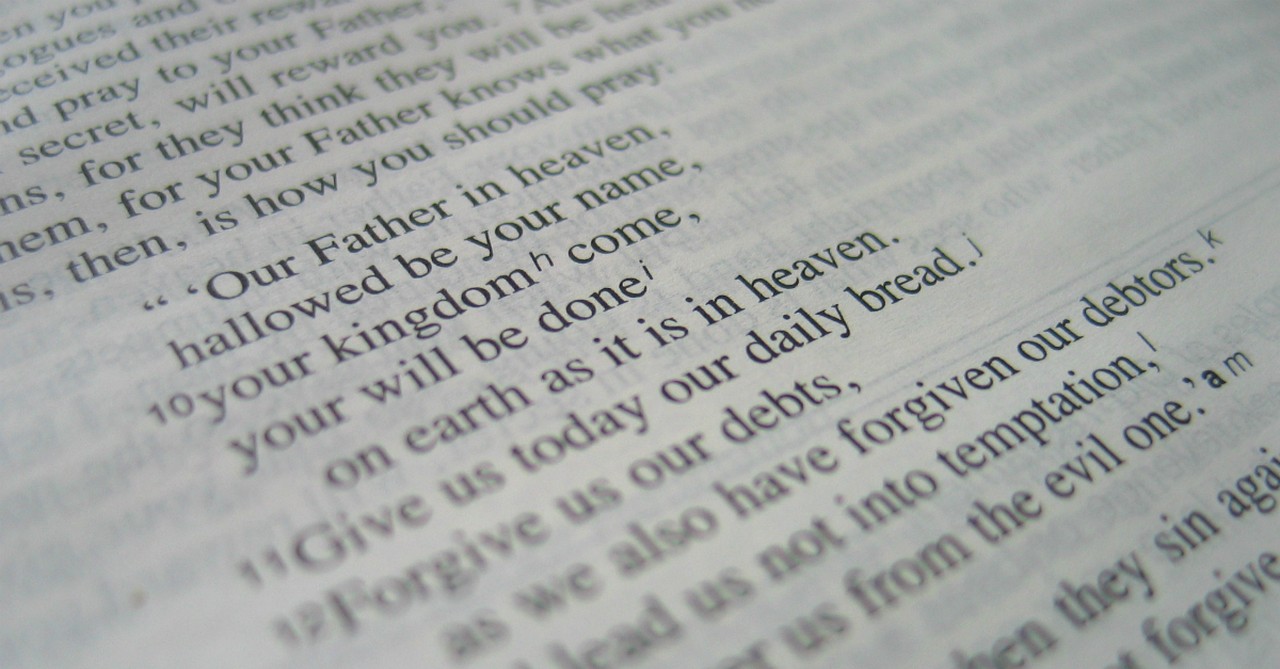
Pray for Grace to Assist you that you may be Cheerful in your Duty

Matthew Henry’s “Method For Prayer”

Petition 3.31 | ESV

That we may be pleasant and cheerful in our duty.

Lord, enable me to rejoice always, 1 Thessalonians 5:16(ESV) to rejoice in the Lord always, because he has again said to me, Rejoice; Philippians 4:4(ESV) that I may go on my way rejoicing, may eat my bread with joy and drink my wine with a merry heart, as I shall have reason to do if God has already approved what I do. Ecclesiastes 9:7(ESV)

Give me grace to serve you, the LORD my God, with joyfulness and gladness of heart in the abundance of all things; Deuteronomy 28:47(ESV) and to sing of the ways of the LORD, for great is the glory of my God. Psalm 138:5(ESV)

Let me have that cheerfulness of heart which is like good medicine, Proverbs 17:22(ESV) and deliver me from that anxiety which weighs down the heart, Proverbs 12:25(ESV) and that worldly grief which produces death. 2 Corinthians 7:10(ESV)

Devotional for October 28, 2025 | Tuesday: The Same Old Problems

Nehemiah's Final Reforms

Nehemiah 13:1-31 In this week’s studies, we look at Nehemiah’s final reforms when he returned to Jerusalem and served as the governor a second time.

Theme

The Same Old Problems

But it is not just that Nehemiah had to continue his struggles into old age that is significant. It is also that he had to deal with exactly the same problems he had dealt with earlier. In the last chapter we looked at the climactic celebration in which Nehemiah, together with Ezra the priest, dedicated the wall of the newly encircled city. At the very end of that study we saw something interesting, namely, two sections dealing with: 1) the provisions made for the temple service (Neh. 12:44-47); and 2) the purification of the people by excluding from their official number all who were of foreign descent (Neh. 13:1-3). Some commentators have called these sections parenthetical. But that is not how Nehemiah viewed them. He links these sections to the dedication by using the words “at that time” and “on that day,” though what they describe was probably spread out over a period of weeks or months. It is his way of saying that the purity of the people and the religious life of the nation were the ultimate goal and the very heart of what he was striving to accomplish. 

These were the problems he faced when he returned to the city some seven or twelve years later. His second governorship did not deal with a new set of problems but with the old problems. Have you ever had an experience like that, having to deal with the same old problems again and again? It is enough to grind even the best of leaders down. And there is this too. Do you remember the covenant made by the people at the time of the religious revival under Ezra, recorded in Nehemiah 10? The revival had three parts. There was a reading and exposition of the Law of God, which led to the conviction of sin (chapter 8). There was national repentance for wrongs done (chapter 9). Finally, there was a covenant in which the people promised to obey the commands of God faithfully (chapter 10). Do you remember what they covenanted to do? 

There were six items: 

1. The family. The people promised not to intermarry with the people of the nations about them. This was not racial snobbery or prejudice, as I pointed out earlier. It was a desire to preserve their religion and the unique quality of the spiritual life that flowed from it.  

2. The Sabbath. The people promised to abstain from all commercial activity on this day, preserving it as a day to worship God and remember His blessings. 

3. The temple tax. The people promised to pay the tax required of them by Exodus 30:11-16. They took it as an annual obligation. 

4. Additional provisions for the temple. The people were not content merely with paying the tax for the temple but also promised to provide the temple with wood for the altar and the firstfruits of their crops and trees. 

5. Dedication of the first born. This was a matter of priorities. It was a way of acknowledging that all we are and have is a gift from God and is owed to him. 

6. The tithe. The final thing the people promised was to be faithful in paying tithes to God. This was the way the people provided for the temple service. 

But it was exactly this that Nehemiah found to have been neglected when he returned for his second period as governor in 425 or 420 B.C. In fact, of the six items solemnly covenanted in chapter 10, the only one that does not recur in chapter 13 is the obligation to dedicate the first born to God, and that is probably because it is subsumed under the greater problem of the family and intermarriages with foreign peoples dealt with extensively in verses 22-28. How pious the people were in promising these things in the revival! How solemnly they declared: “We will not neglect the house of our God” (Neh. 10:39). But they did neglect it. 

During the years of Nehemiah’s absence from Jerusalem, God sent Malachi, the last of the Old Testament prophets, to inveigh against these very abuses. Since Malachi had been calling for reform and a return to God in these very areas, it is reasonable to think that Nehemiah faced problems not only of a backslidden people but of hardened hearts as well. 

Study Questions

  1. What same problems is Nehemiah still dealing with when he returns to Jerusalem?
  2. List the three parts of the revival under Ezra.
  3. What did the people covenant to do?

Application

Reflection: Are there areas in your Christian life that you need to change? What do you need to repent of and do differently?

For Further Study: Download for free and listen to Philip Ryken’s message, “What the Church Needs Now Is Reformation.” (Discount will be applied at checkout.)

For Further Study: If you have been blessed by these studies in Nehemiah, or if you know someone who could profit by this series, this week the Alliance of Confessing Evangelicals is still offering James Boice’s paperback book, Nehemiah, at the special price of 30% off.

https://www.thinkandactbiblically.org/tuesday-the-same-old-problems/

Modern Paganism a Growing Threat to American Youth (Part 2) | Mission: America

Part 2 of Excerpts from Linda Harvey’s book

The following is Part 2 of a two-part series, a very condensed version of Linda Harvey’s book, Not My Child: Contemporary Paganism and the New Spirituality. For more information about the original book, go here. To read Part 1, go here.

Chapter 4

Outreach: How, Why and Where Paganism Connects with Kids

Now the Spirit expressly says that in latter times some will depart from the faith, giving heed to deceiving spirits and doctrines of demons.    1 Timothy 4:1

America’s youth are the most privileged, comfortable, and healthy generation in the history of humanity. Why in the world would something dark and pointless like sorcery appeal to them?

If we ascribe to the humanist principle that each person is fundamentally good, this at first makes no sense. With opportunity, money and physical security, all the potential in each person should be free to develop to its maximum, and adventures into the spooky and weird just shouldn’t be an issue. There would be too much fulfillment with the material world to be tempted by the murkiness of the supernatural.

But wait! What if a “nice” version of paganism and witchcraft was available, one that fits with our world’s apparent enlightenment and progress? It’s not “black” magic, but “white” witchcraft. It’s Glenda the Good Witch, not the Wicked Witch of the West. Surely, this couldn’t be harmful, and those who decry it are uninformed alarmists. Right?

There is a problem. The biblical view of humans depicts us as creatures who, without God, will always drift or race toward self-destruction, especially when destruction looks like paradise. From this view, the puzzle pieces form a very different picture. As America becomes increasingly paganized and stripped of Christian underpinnings, the essence of what can make one content is changing also. Without the taming and softening effect of the Gospel, humans descend into mindless self- indulgence, even savagery. The teens of Columbine, Jonesboro, Paducah, Sandy Hook and Parkland weren’t desperate inner-city street kids, but middle-class students from small towns or suburbs. What would make comfortable American kids murder fellow classmates?

The heart of a beast is already standard equipment in our offspring. Ask parents who are honest and they will admit that toddlers naturally show a viciousness and defiance that cries out for discipline. Kindness and sacrifice do not come naturally to them or to us adults, and are virtues that must be learned. So predictably, if we begin to tell children that they are their own authorities, they will readily embrace this vision and act accordingly. The supervision of parents or teachers, the authority of the state, and finally the boundaries of God will all be put to the test as each attempts to become his/her own “god.”

The Purchase of Power

Like most other areas of life, money buys freedom. Our emancipated kids, first and foremost, have cash and know how to spend it. American teens spend around $159 billion a year.   Most teens and many pre-teens have their own smart phones.  This creates a whole world of influences that are increasingly beyond parental control. The publishing industry’s preoccupation with the occult in young adult titles, for example, instead of earlier teen themes of sports, pets and dating, are driven by a market that is no longer totally accountable to Christian parents. It is responsive first to youth themselves and their interest in the sensational, and second, to the current parental majority which seems to be willing to trust marketplace values, failing to demand that the marketplace adhere to traditional ideals.

Some parents are alarmed at the new level of freedom for their offspring, but don’t know what to do about it. Others aren’t that concerned, having been indoctrinated to believe  humans will gravitate toward what is positive if given an array of options. Creativity and spontaneity are valued above hard work, guidance from authorities, and discipline over one’s shadier impulses. So, letting a child’s eye roam the culture is accepted as “safe,” and constant vigilance and screening is to be avoided because they connote “censorship.” Only the ignorant, unenlightened and fearful stoop to such methods.

So it’s no wonder that many families today, having built their parenting upon this erroneous foundation, collapse in confusion at the inevitable child-rearing crises. How does one fix the child who won’t listen, insists on his own way, will only behave when entertained every minute, and is unhappy unless granted the trendiest toy, game, book or fashion? Children are not best aided by unsupervised exploration, but by parents who assume there are bad things out there, and that children will be tempted by them and can be harmed by them.

In addition, just the constant act of acquiring develops in kids a habit of greed and self-indulgence as well, not to mention the potential for abuse. One doesn’t need to take care of or cherish anything if there’s always a replacement toy or a more current electronic gadget available tomorrow. That goes for relationships and people, too, who begin to be seen as disposable.

So how can we encourage in children noble virtues, those that not coincidentally arise from the work of the Holy Spirit in one’s life? As described in Galatians 5:22-23, the fruits of the Spirit are “love, joy, peace, long-suffering, kindness, goodness, faithfulness, gentleness, self-control.”  But pagan ethics lead us directly away from these qualities, encouraging children to pursue their immediate desires, i.e., to read, buy, listen to, watch, and experience as much as possible, no matter how outlandish.

Schooled in Fantasy

How have such ideas taken hold in our schools? Fantasy now dominates most popular youth fiction, TV shows, computer games and movies, so it’s no wonder the schools have jumped on board.

Part of the appeal is one of reconstructing reality. If you aren’t living out all your desires, all you have to do is envision a different situation. Hollywood dreams can change Anytown, USA. It might be one reason why Halloween with its costumes and carnival is emerging as our most popular holiday, right behind Christmas. It may also be no accident that Halloween—or Samhain, as witches call it— is the most important annual pagan celebration.

The American social preoccupation with illusion and make-believe brings up serious questions. There is no known precedent of a culture in history where the populace spent a major portion of its time immersed in the imaginary. Yet when one adds up the time most Americans spend in front of a television show, movie, or at an Internet site, it totals about 20–40% of our available waking hours. Much of the content is fiction. Throw in our consumption of novels and it means we are living lives where fantasy is a major player.

As adults this certainly has an impact, but one can only speculate what this does to the developing minds and characters of our children. Might one of the results be a decreasing ability to recognize truth, or even to want it?

U.S. education has wholeheartedly embraced the philosophy that the best story wins. Facts and data are increasingly irrelevant. From the whole-language reading method to advocacy-group versions of history, children embrace the imaginary as truth, including their own reflections. Biological and physical science instruction has been transformed by narrow, politically correct notions of environmentalism, with its population control/climate change subtext and gloom and doom projections for a revered “Mother Earth.” We’ll explore this in more detail below.

Literature selections are frequently thinly disguised propaganda as students read stories with an “agenda” that showcase minorities, variant gender roles, deviant behavior, and non-Western spirituality. Much of school-endorsed fiction is composed of graphic stream of consciousness ramblings that seem more like the author’s therapy than anything else. And composition exercises from elementary school onward continue the focus on self with a heavy emphasis on journaling. Personal opinion is valued over objective discovery. Journaling may assist writing skills, but often students are given no constructive feedback about content. Virtually every thought and feeling instead is validated.

History classes now dwell disproportionately on oppression, real or imagined, of special interest groups; or their subjective utopian dreams: what should be or should have been, from the viewpoint of women, Native Americans, or minorities. While some of this is valid, it often serves another purpose: that of spotlighting for special antagonism Western, Christian leadership and values. Our founding fathers are less often heroes to emulate, but instead come off as hypocritical buffoons. The most important “fact” many students learn about Thomas Jefferson is that he supposedly hid a sexual relationship with a slave woman.

Re-Imagining Western Civilization

Key historic incidents are now added or dropped as political correctness reigns. Recently, schools in Britain dropped teaching about the Holocaust and about the Crusades because of offense to Islamic students. In the United States, an increasingly disproportionate amount of class time is spent on subjects that distort history. The 1692 Salem witch trials in Massachusetts are a prime example.

While studying early American history, today’s grade school student will likely read Tituba of Salem Village by Ann Petry, about the Caribbean slave girl implicated in the mayhem in Salem. For many students, a unit on Salem will appear again in middle school. Then in high school, Salem will likely be the focus once more as students read or perform Arthur Miller’s play, The Crucible.

Virtually all the material used contains withering portrayals of Christian “fundamentalists” who might dare to believe that Satan exists. The accusers are depicted as irrational, ignorant hypocrites with their own twisted agendas. Tituba and the young Salem girls are often positioned as unwitting victims of bigoted community values that repressed their natural creative gifts and thirst for knowledge.

The takeaway for students is that they have much more to fear from biblical Christianity than from fortune-telling and sorcery, when the reality of the Salem episode is a much more complex illustration of exactly the subject of this book. Satan will use any human weakness to create confusion, to destroy hope in Christ, and to foment dissension, even among believers.

For instance, in the Salem trials, the discerning position of Congregational minister Rev. Increase Mather—that “spectral evidence “ was not supported by Scripture—would have changed  the outcome had his advice been heeded. Instead, officials gave credence to the testimonies of accusers who said they had witnessed acts of sorcery by the “spirits” of the accused. The Bible’s standard for discipline is the testimony of two or more reliable (and living) humans. Faithful adherence to Scripture, rather than being a problem, would have brought sense to the table.

The lesson of Salem is not that Satan and sorcery do not exist. It is that, even in the midst of the confusion Satan delights in, humans owe their allegiance to God and must prayerfully seek careful direction from Him through the Scriptures.

What’s the attraction of all this stuff? To kids raised on adrenalin, rebellion spiked with mysticism is the natural next potion. The promise that “something” supernatural and mysterious might be within a person’s grasp breaks the boundaries of youth restraint. You can change the world, right from your own bedroom.

And sometimes, parents are otherwise occupied. Christian families suffer unfortunately from the same traumas and dysfunction as the whole culture. Fathers leave the home or are consumed by work or swallowed up in alcohol, drug or gambling addictions. Mothers suffer depression, are expected to carry full-time jobs to keep up with the demands of indulgence, or are trapped in their own self-directed sins. It’s no wonder children are lonely, sometimes neglected and insecure.

When self-respect is missing from a child’s life, alternate spirituality appears to offer a solution. Fantasy weds authority, and even an eleven- year- old orphan nerd like Harry Potter is revealed as a powerful wizard who can excel at sports and take revenge on his enemies. In the lost American child’s life, it doesn’t get any better than that.

If Satan existed—and if his major goal was to mess with people’s minds and spirits to the point where they self-destruct, dismissing the offer of salvation from a merciful Savior—this is exactly how we adults and then our children would be manipulated. Hmmm. . . .

“Whoever causes one of these little ones who believe in Me to sin, it would be better for him if a millstone were hung around his neck and he were drowned in the depth of the sea.”

Jesus, quoted in Matthew 18: 6

Chapter 5: The Dangers of Living a Pagan Lifestyle

“In this book, we will examine one image of the goddess that is found in many cultures: the young goddess. She is not necessarily a Maiden or virgin, for she may have engaged in sexual activity, by her own initiative or without her consent. Her age varies: sometimes she is ten, sometimes fifteen, sometimes, twenty. She usually lives with her family, but sometimes she is alone in the wilderness. . . ”    Wild Girls: The Path of the Young Goddess, xv

———————————————–

A letter to Cassie from her best friend Mona (not her real name) opened with several lines of unprintable sex talk and ninth grade gossip, and went on to discuss a teacher. . . . .”Want to help me murder her? She called my parents and told them about my F.” The letter ended with a reminder about a ‘neat spell,’ drawings of knives and vampire teeth, mushrooms, and a caricature of Mrs. R. lying in a pool of blood. . .

Columbine victim Cassie Bernall’s mom, Misty, writing about her daughter’s earlier dabbling in witchcraft, in She Said Yes, 38

——————

The spiritual deception of paganism leads humans into mistakes of a more earthly kind. The Bible says that there is a blindness that accompanies unbelief, especially heightened when the dark powers of evil are involved. “But even if our gospel is veiled, it is veiled to those who are perishing, whose minds the god of this age has blinded. . . “(2 Corinthians 4:3–4).

It’s not surprising, then, to find that people involved in paganism are often drawn to lifestyles that are worldly, unproductive, even destructive. What is amazing is the extent to which neopagans not only participate in hedonism and rebellion, but celebrate and embrace it, ignoring or perhaps unable to see the hazards. Yet over and over history is littered with lives wrecked by these lifestyles that ultimately bring brokenness and despair.

Fuzzy Brains

One of the first things I noticed about becoming a Christian was the new clarity of thought faith bestowed upon me. Things I had not understood before suddenly came into focus. I also found myself freer from worries and anxieties than in the past. The verse in 2 Timothy 1: 7 turned out to have a deep and abiding meaning for me: “For God has not given us a spirit of fear, but of power and of love and of a sound mind.”

By contrast, discussions with pagans young and old reveal hostile prejudices, rigid responses and circular arguments—even as they believe themselves to be open-minded. Sadly, they seem trapped in futile emotional and ideological patterns. In them, I often see my pre-Christian self, wearily swimming upstream emotionally and mentally without understanding I was doing so.

So today’s young neopagan has been brainwashed into trusting misleading information combined with gut feelings and desires. Truth and logic are to be distrusted as part of a patriarchal power play. Recoiling at any suggestion that paganism and its anarchist affinities might be less than beneficial, the pagan gets defensive when confronted with facts, dismissed as irrelevant or an attack. This denial is frustrating and makes no sense until one understands that spiritually dark powers combined with human sinfulness keep young pagans swirling in blindness and confusion.

One’s instincts, without the discipline of the mind of Christ, with its truth, patience, light, charity and self-control, usually lead into treacherous territory. Impulsively diving into sensual and irrational experiences is a hallmark of tribal cultures, but also characterizes twenty-first century affluent American youth.

Young, Dark, and Damaged

Judeo-Christian morality, our offspring are being told, is repressive. Freedom is what one deserves, and that only comes by listening to one’s “heart.” The anatomy of today’s youth is such that the “heart” shifts frequently from the stomach, to the eyes, to the adrenal glands, and finally, to the genitals.

It’s true that many of the children and teens who gravitate toward neopaganism are those who are hurting and vulnerable. These are often the students with family struggles, poor peer relationships, low scholastic achievement. But the attraction of outlaw spirituality isn’t always the result of misfortune. Perhaps just as frequently, the culprit is just plain old boredom or bad influences. And bad influences are everywhere in today’s America.

The explosion in “body modification” exemplifies the trend.  Not every person who pierces or scars himself embraces sorcery, but those involved in the occult have driven the fashion trend. What makes beautiful, healthy young people do such things to themselves, believing not only that it’s not abnormal, but that it’s a positive experience and an attractive look?

The book She Said Yes contains a mother’s bittersweet memories of both the bad and good times in her teen daughter’s life. Cassie Bernall was the 17-year-old who, when asked by one of the Columbine killers if she believed in God, answered affirmatively. She paid for that answer with her life when he pointed a gun at her head and fired at close range.

Misty Bernall writes about Cassie’s strong faith in Christ, her poetry celebrating a relationship with Him, and the precious Bible she always carried. But Cassie’s life hadn’t always centered around hope in God. Her early teen years, her mother writes, were dark and disturbing. Under the sway of wayward friends, she had dabbled in witchcraft, Satanism, substance abuse, and had even considered violent acts against her parents and teachers.

When they realized the gravity of the situation, Misty and her husband transferred Cassie to another school and severed the questionable friendships. They insisted she attend a Christian youth group, and her response was initially sullen and rebellious. But little by little the message penetrated Cassie’s heart and they saw amazing changes in her life.

Cassie wrote later in a journal reflecting on her earlier struggles.

…I cannot explain in words how much I hurt. I didn’t know how to deal with this hurt, so I physically hurt myself. . . Thoughts of suicide obsessed me for days, but I was too frightened to actually do it, so I “compromised” by scratching my hands and wrists with a sharp metal file until I bled . . .I still have scars.

The Sexuality Dimension

In the world of the young pagan, the sexual sub-text is everywhere. Premarital sex is wedded in an unholy alliance to an alluring, if false, faith. Acceptance of “LGBTQ” behavior  is a given; even kinky sexual practices surface from time to time. And the “safe sex” and pro-abortion sympathies are taken for granted. There is truly no other viewpoint.

Today, wherever you find pagan beliefs, you will find kids being sexualized early, and wherever you find kids being sexualized early, you will likely find paganism. You won’t find graphic sex advice columns on a Christian site, because Christians deal with the truth of what’s best for teens, and that means abstinence until marriage.

Sex divorced from fertility is the platform for sex education classes, and it’s at the foundation of paganism as expressed by most of its leaders. Not that babies and children aren’t celebrated and appreciated at times. But they are clearly incidental to the vastly more important goal of satisfying one’s desires, and they are never to “control” one’s destiny.

Paganism marries sex to religious faith and ritual practice. One of the most obvious symptoms of the apostasy of current mainline Christianity is the extent to which outright pagan sexual “values” are quickly being incorporated into church life and beliefs.

The young person interested in paganism will not have to wonder long about what sexual ethics pagans espouse. A quick visit to numerous high-traffic web sites of pagan leaders and groups reveals the permissive nature of pagan sexual practices and the kinds of role models they will emulate.

The pagan ethic of hedonistic sexuality is neatly packaged and sold to youth in today’s social engineering agendas of “reproductive choice” and “ lesbian, gay, bisexual and transgendered (LGBTQ) rights.” The primary targets have been teens and college students but now younger children are recipients of this propaganda as well.

The closer one examines the sexual messages to kids by the paganized spirit of our time, the worse it gets. Some believe the problem is simply an “anti-family” agenda of getting kids to accept heterosexual sex before marriage, or homosexuality. There’s an even more foundational message aimed at youth, one that threatens their very selfhood.

The real issue is that young people are being awakened sexually at younger and younger ages, continuously exposed to stimulating images, and offered “choices” of fluid sexual behaviors, including homosexual activity. Then they are told that even male and female roles, dress, mannerisms and biology are changeable if one desires. In short, our kids are growing up to accept and seriously consider an ideal of androgyny, a blurring of masculinity and femininity—carried out under a smorgasbord of erotic practices that some call “pansexuality.”

Outlaw Sex as a Pagan Right

Among pagans, youth are often told that sexual expression even as a young person is a basic human right and closely aligned with spiritual enlightenment.

As we discussed in Chapter 3, the Holy Spirit provides appropriate boundaries for sexual pleasure. Pagan spirits, by contrast, dissolve safe and secure venues, ultimately undermining relationships and ironically, diminishing pleasure as well.

Sexual activity apart from procreation—trying mostly to avoid it—is a crucial cornerstone of this new lifestyle. The emphasis is on “outercourse,” i.e., all the various activities that bring sexual stimulation other than intercourse. Those behaviors, our children are taught, can be done alone, or with a peer of the same or opposite sex, even before puberty. At times, it is hinted that they can choose to engage in these activities with an adult.

The boundary-smashing messages of both pansexuality and paganism are everywhere in mainstream youth culture, starting in pre-school and elementary grades. One book for young children who are studying “diversity” is The Duke Who Outlawed Jellybeans. In this supposed collection of fairy tales, pagan spirituality, homosexuality and gender variance abounds. In one story, a little boy named Peter lives with two lesbians, his mother and his mother’s friend, who is a sorcerer.

There is a unique connection between sorcerers and “cross-dressers” or transsexuals (those who have sex change hormones or surgery). A tribal tradition which pops up around the globe in both current and past times is the cross- dressing witch doctor/ shaman, called a berdache among American Indians. Biologically a male but dressing and living as a female, this was often a person considered to have special powers and supernatural gifts.

Today’s pagan youth who suffers from a gender identity disorder may summon this image when trying to glamorize or justify this path, yet it remains one of confusion and turmoil. And he or she may be reinforced in some schools where the “two-spirit” concept has been introduced during Native American/multicultural studies, even as part of lessons leading up to Thanksgiving.

The Violent Rainbow’s End

There’s yet another more sinister aspect of this belief system. Despite the protestations of many teens who’ve written me e-mails, there can be little dispute that paganism has a core of wildness that can quickly unleash anger and violence, and aberrant sexuality fuels these feelings. Not only is this tolerated, it is at times encouraged and celebrated.

There is only the pagan’s conscience to limit her/his use of spiritual “empowerment.” Unlike Christianity, there is not an unchanging ethical system that forbids killing, stealing, lying, coveting or committing adultery to guide one’s behavior. Nor is there an ultimate omnipotent authority like Almighty God. The human is the authority.

Chapter 6: Conclusion

Managing Pandora: What Can Parents Do?

It’s difficult enough to raise children when our only concerns are the age-old matters of their health, safety, Sunday school training, career path, and marriage. To add the worry that they might be entrapped by deadly spiritual forces, is almost too much. But the world we inhabit today calls for a new type of parenting.

There’s great hope. Remember Who we have on our side.

Practically speaking, though, how do we navigate the dangers, short of locking each child in a room and saying, “Stay there, honey. You can come out when you’re 21”?

Roll Up Your Sleeves…

Just like any other avenue of parenting, there’s one bottom line issue: it’s hard work. And for those who like easy answers and quick fixes, the product (the child) will suffer. This is true in all aspects of parenting, but spiritual vigilance is needed more than ever, and that takes time, sweat, research, courage and prayer.

To grow a bountiful crop, one must prepare the soil. So step one: the first plot of land is ourselves.

Huh? I have to work on me first? Well, of course. That’s where it all starts.

Too many parents have called their pastors, friends, and counselors after the fact with horror stories that could have been prevented if the parents themselves had done some soul-searching and priority-checking early on. Then they might have known what they were dealing with, and done the hard work needed ahead of time. We’re always telling our kids to do their homework, but the same applies to us.

How can a parent know about spiritual danger and take precautions? How can parents develop that all-important quality of spiritual discernment on behalf of their children?

Preparing the Home Soil

Here are the absolute first steps we must take.

1. Know Christ as your own Lord and Savior. Does this need to be said? Perhaps it does, because some parents who have picked up this book may not be on solid ground with Jesus. If you have not confessed your own sins, repented and asked Christ into your heart, perhaps now is the time to do that.

2. Know what the Word of God says. There’s no better tutor on spiritual matters than the Bible. In Scripture you learn about the character of God, why Christ came, what He stands for, how humans relate to God and the nature of the Holy Spirit vs. the fallen angels of the spiritual world.

3. Study and pray. Read, and read again what Scripture says.  Get involved in one or more Bible studies. And set aside a daily private prayer time with God. God’s work in your mind and heart will begin to make changes from the inside out, and you will develop the eyes and mind of discernment.

4. Lead your child to Christ. Make sure your child believes in Jesus Christ. This question needs to be directed personally and specifically (and also gently and happily) to your son or daughter at the appropriate age, after they have heard the salvation message of the Gospel. It’s not enough that they have attended classes at your church, or have been through confirmation or another traditional group activity. Many kids leave Christianity because the whole process never got down to them, personally. As the saying goes, God doesn’t have grandchildren – just children. We are each responsible for making that faith decision ourselves.

Preparing the Home Soil, part 2

So let’s say you, your spouse and your child are all Christians. Praise the Lord! So that’s all there is to it, right?

Well, as you read earlier, not necessarily. Satan will mount fierce spiritual attacks against Christians to test their faith, to throw trials and stumbling blocks in their paths, with the goal of drawing them away from Christ if possible, or to distract and discourage them so they fail to bring others to know the Lord.  But do not be discouraged. There is tremendous hope.

You and your family will be ready if you set up a framework for your child that will minimize exposure to spiritual danger in the first place. Some background preparation will need to be done by you.

1. Choose an educational climate that maximizes Christian faith and minimizes deception and danger. It cannot be said strongly enough: get your children out of the public schools and non-religious private schools if you can. The core philosophies, curricular materials, and permissive environments are hostile to Christianity and detrimental to strong character development. They are also under the sway of unproven fads and special interest groups, and often provide only a marginal education.

There’s much more available on this subject, so we won’t go into great depth here. But second to bringing your child to Christ, this is the next most important thing you can do. Enroll your children in Christian schools or home school them. Children from these backgrounds are markedly different from public school children: happier, more secure, better educated, less aggressive, more hopeful in outlook, able to get along with people of all ages, and more sound in their faith.

2. Limit TV viewing and Internet use. If you think this will be tough, you are correct. It will also mean a possible change of habits for you and your spouse. It will be absolutely worth it, though, because your kids will avoid adopting the vulgarity and spiritual misdirection of cultural habits and values.

You’ll get a child as a result who is more creative and resourceful, more settled in spirit, and less in need of constant, artificial stimulation. By all means, never allow a child or teen to have his/her own TV or Internet access in their room, away from parental supervision. Such access is a recipe for disaster.

One very positive alternative is to listen to Christian music in your home. Whether it’s your own CDs or a favorite FM station, there are some great tunes out there that will appeal to kids and penetrate their spirits in a God -honoring way.

3. Get them involved in sound Christian youth activities. We want to emphasize the term “sound” here, and this is where parents will need to do homework. There are many great youth groups, but also some that do little to build and strengthen a budding faith. Not that fun can’t be part of youth activities, but too many youth groups offer little but hay rides or field trips to concerts or video game parlors (a problem in itself). Others as we’ve mentioned above dive into flagrantly un-Christian pursuits such as meditation and other aspects of mysticism.

Ideally, a child might attend both a Sunday school class grounded in Scripture as well as a youth “bonding” group that builds on biblical knowledge. Occasional group activities like service projects, field trips and pizza parties are okay, as long as they are not the main focus.

4. Encourage healthy friendships and discourage iffy ones. As a parent, your instincts are usually right. If something about one of your child’s friends makes you uncomfortable, trust your gut. Try to steer your child away early on, rather than waiting.

It should not need to be said after the chapters above, but let’s make it explicit: your child’s closest friends should not be self-avowed pagans, wiccans, homosexuals, gender changers, or drug or alcohol users. Kids are drawn into shady activities and beliefs by peers. Children do not need to carry the burden of evangelizing the lost, except at arms- length. The close-in work of bringing the lost to Him is the job of adults.

We are told not to be unequally yoked with unbelievers (2 Corinthians 6:14). This does not mean kids can’t be acquaintances, and can’t witness—quite the contrary, we are supposed to witness to the lost. Yet our close friendships and relationships are to be with believers.

There are special challenges when the pagan or bisexual is a relative. You and your spouse will need to make decisions about how a pagan uncle, for example, interacts with your kids. Openly pagan, homosexual, bisexual, adulterous, or cross-dressing relatives should not be invited into your home, in my opinion, and this needs to be explained to them in advance of holidays or visits as tactfully and lovingly as possible. Just shutting the door suddenly in someone’s face would be hurtful.

Yet the standard of godly behavior needs to be upheld within the walls of the home. To not do so, is to invite all kinds of compromised situations into your midst, as your children are watching and learning.

Outings and visits by your children away from your home to the relative in question are also highly risky, unless you are present. If your whole family is invited to the wedding of your niece, for instance, whose brother is a wiccan, well, of course everyone should go and interact with him in that environment. But attending his wedding to another wiccan with your kids is not a great idea.

Learn To Say No

My husband taught me many valuable lessons along the way about raising kids. One was that it’s easier to say “no” up front than to deal with the damage later.

It takes eyes of discernment to foresee the kinds of damage that may result, and turning to Scripture is an invaluable tool. So books, music and movies that are dark, steeped in pagan practices, not to mention graphic sexuality or violence, should not be a big question mark for parents. Just say “no.”

Remember, this culture is built on money and profit. Most of what is available to our kids is out there for that motive alone—not because of intrinsic noble benefits, but solely to sell, satisfying America’s unquenchable desire for entertainment. Yet there’s really not a lot of priority on “entertainment” in Scripture, and especially not the kinds that most people today embrace.

Kids are designed to play and explore. But it’s important to guide them in that natural curiosity toward constructive, God- created options. Friends and relatives, everyday activities, and the beauty of the world can be their “toys.” If we steer them toward these choices early on, instead of planting them in front of the TV or plugging them into earphones, they will have a natural curiosity and wonder about daily routines, people, nature. And when reading age arrives, put in front of them stories about wholesome, constructive, rational and godly topics.

How do daisies grow? What are all the parts of a butterfly’s wing? How can I build a doghouse, sew a skirt, or make a pizza? How can I learn to play the guitar? Kids can have positive interests that take advantage of the abundant resources all around them.

Find within yourself your top priority, which as a Christian is to please God. I often imagine the scenario as we stand before the Lord one day and our deeds are rolled out for examination. Even though we know Christ will stand with believers to make atonement for our sins—as He did at the cross—still, Scripture tells us the books will be opened and everything will be known.

We need to think bigger and extract our vision from the current culture. Life doesn’t begin and end here, and some “phases” kids are going through end up tragically as they reject Christ altogether, sometimes permanently. Most parents, when they search their hearts, realize they don’t want to take that chance.

This is not to say that parents can’t overact, which can also be very counter-productive. For instance, if a parent suspects something is spiritually awry with a child, and then discovers candles and spell books in her room, what’s the best way to handle this? It would not be to scream and lock her in her room, although the danger is very real.

I have a friend who discovered something along these lines. After abject prayer and crying out to the lord in private, my friend and her husband calmed down, then talked with their daughter, showing her the problem by revealing what Scripture teaches. It is very hard to maintain one’s cool in these situations, but self-control is critically important.

A parent should ask the child to pray together. Some new restrictions then need to be placed on friendships, and the occult material tossed out, but only after a discussion so the child understands why. If there’s been any lapse in church or youth group attendance with this child, these need to be reinstated as a routine. As long as he or she lives under your roof, the child should honor your beliefs and live under the godly framework of your home. And it’s important to tell the child, and repeat again, that the reasons are:

“I love you.”

“God loves you.”

“In our house, we love God, and we honor Him.”

The Importance of Dad

The distraught phone calls and e-mails I get are more often from mothers than fathers. When moms contact me, somewhere in the conversation, I’ll ask, “What does your husband think about this?” Virtually every time the answer goes something like this: “Well, my husband isn’t as convicted about this as I am. He thinks our daughter (son) is just going through a phase, and he remembers what he did when he was a teenager, and he’s just not worried.”

Many of our kids’ problems would be solved tomorrow if dads were more concerned. The philosophy above breaks down when one considers these reasons:

1. Today’s dangers are worse than those of twenty or thirty years ago. I’m not saying that pagan practices, drugs, sexual issues were non-existent in the past. They are just seriously heightened on every dimension today. There were books on spells then; they are now available on kids’ smart phones. There were a few witches then; they are now their teachers. There were a few kids having sex in middle school then; now, bisexual Goths are having group oral sex parties at age 13.

The media’s all-pervasive reach into kids’ minds and hearts (to the extent that parents  allow it) cannot be over-estimated. We literally have no idea what kind of people we are producing in the Internet/smart phone age. How bad can the damage be? We will find out in the future, but as it pertains to your child, don’t assume that the past gives you any security. This is truly a different age. Barbarians, indeed, are in the making. Don’t let one of them be your child.

2. We were raised in a traditional culture; our kids are not. Virtually all of us who are now adults were raised by parents who were more traditional than we are, and in an era when certain Christian norms were still assumed. Now, anti-Christian hostility and smashing all moral and spiritual boundaries is becoming the norm. You can’t simply turn your child loose in the world without some clear boundaries.

3. How well did Dad turn out? A laissez-faire attitude presupposes that “Dad” has turned out great. Upon objective examination, that may not hold up. Virtually everyone has some baggage they wish did not exist, and the truly humble person will have regrets about the past. So—if drugs were a part of your youth, and you struggled to overcome them, imagine your child having both drugs and demonic influence to overcome. Everything you did, they will do worse. The end can truly be horrifying as our kids’ issues turn out to be much more than a phase. You may have fathered an illegitimate child; your daughter may bear three kids out of wedlock in the commune with two Druid boyfriends.

And some parents, especially fathers, think that kids need to be “toughened up” to be ready to “face reality.” Today’s reality for your child may mean friends who cut themselves, and kids who chant to goddesses at sleepovers. Is this really what you want your kid to face?

4. Don’t worry about so-called hypocrisy. Many parents, especially fathers, have bought the idea that if you made a certain mistake when you were young, you have no grounds upon which to forbid that same action in your child’s life. It’s time to stop and think about how irrational this is. Why do parents teach our kids not to touch a hot stove? Because we once touched one, and it hurt.  If our past experience, all of it, can’t be used for our child’s benefit, then we are pretty much useless to our kids.

5. Dad is responsible to God for the care-taking of children. Every father will have to stand before God and defend his fathering actions or non-actions, because he is the head of the family God has given him. Think about this, before shrugging at your son’s “God is dead” tattoo.

The Power of Prayer

How do we contend against the spiritual forces of darkness that would keep us and our children away from God? Scripture gives us clear direction. Christ himself told his disciples that powerful faith, prayer and fasting can overcome powerful demonic forces (Matthew 17:21).

Constant prayer for our children is not simply an aid, it is our responsibility as parents. Fasting may need to be added to the daily habit of prayer in times of intense challenges. And lifelong Bible study is the foundation upon which all our actions should rest.

Sometimes Christians will say, “I’m waiting for God to tell me what to do.” Although that can be the right course of action in some situations, often God will remain silent. It may be because He has already told us in His word.  He has already said that parents are to be the teachers and trainers of their children; that divination (fortune-telling) is wrong; praying to anyone but Him is a violation of the first commandment; and so on.

The cherished gift of Scripture is an invaluable resource for parents as we go through the difficult days of parenting. And the answers are not always easy, the results not always immediate.

The Star in the East

There is hope even in this wicked trend. The Gospel shines brighter in contrast to the darkness of sorcery.

In the darkest hours, remember that if we are faithful and obedient, the glorious fruit will, in His good time, ripen on the tree.

“Come to Me, all you who labor and are heavy laden, and I will give you rest.” (Matthew 11:28)

“Yet in all these things we are more than conquerors through Him who loved us. For I am persuaded that neither death nor life, nor angels nor principalities, nor powers, nor things present nor things to come, nor height nor depth, nor any other created thing, shall be able to separate us from the love of God which is in Christ Jesus our Lord.” (Romans 8:37–39)

Source: Modern Paganism a Growing Threat to American Youth (Part 2)

Modern Paganism a Growing Threat to American Youth (Part 1) | Mission: America

Excerpts from Linda Harvey’s book

The following is Part 1 of a two-part series, a very condensed version of Linda Harvey’s book, Not My Child: Contemporary Paganism and the New Spirituality. For more information about the original book, go here.

Introduction

The Faith That Now Dares to Speak Its Name

It seemed harmless to my friend and me–a wooden board painted with the alphabet and numbers. It had been around for decades and I had never met anyone, my parents included, who believed there was a problem.

In the 1890’s, a man named William Fuld introduced a novelty called the Ouija board into the recreational world of America. It was picked up for mass production by Parker Brothers in the 1960’s, and soon several million units were in the hands of American kids. Like me at age fourteen.

Anne and I giggled as we read the directions. “What makes this thing move?” I asked. We decided it must be our nerve endings, but each of us secretly believed the other one was pushing the little pointer used to highlight the numbers and letters. But as we asked it questions, each resting our fingertips lightly on one side, the little plastic device raced along, spelling out an answer. Often the response was gibberish, but sometimes it wasn’t. It told me, in answer to the question on every girl’s mind, that I was going to marry a guy named Phil.

I never married a Phil, and Anne and I soon put the board away and went on to other teen girl interests. Yet this episode remained at the hazy edge of memory, unexplained, until I became a Christian as an adult.

Traditional faith provides clear instruction about this sort of thing, but my teenaged mind had danced past it. It wasn’t as if I had no exposure to the Gospel message. Between the 11:00 a.m. services, Sunday school, vacation Bible school and confirmation classes, I spent a lot of time at our Episcopal church. But never to my recollection were we warned about certain practices like divination (fortune-telling) that are called “abominations” in Deuteronomy 18. In fact, a serious adherence to Scripture would have been way too fundamentalist and anti-intellectual in the Anglican faith climate.

So there was no reason to hesitate when, in my later teens and in college, I became fascinated by what is called “parapsychology.” I read about experiments at Duke University and other institutions, and all about Edgar Cayce, past lives and reincarnation.

As a young adult, I faithfully followed my horoscope and even bought Tarot cards, although they were soon collecting dust in the back of a drawer. By God’s grace, I never became immersed in occult practices, ultimately finding the star charts and card-reading too silly, overly complicated and weird to bring real meaning into a busy secular life. So I, like most of my generation, slithered out of sorcery’s grasp.

The decades of my adolescence were transitional ones, where an America in flux nevertheless retained a national ethic steeped in Protestant, biblical mores, and those of us raised in the 50’s, 60’s and 70’s still benefit from immunities obtained then. Marriage, respect for God, virginity, honesty—all were the cultural norm as even those with flimsy faith got a free ride on the coattails of the Holy Spirit. Sure, a few of my counterculture peers dove into the Age of Aquarius head first, with all its meditation, trances, and channeling. Still, the gross numbers of converts remained relatively small.

With our kids, that is rapidly changing.

Today’s American child is a product of casual “spirituality,” “separation of church and state,” no prayer in school, abortion and “LGBTQ” rights. In their world, it’s going out on a limb just to say “God bless America.”  So is it any wonder that so many are falling under the spell of the “ancient ways”?

Resistance will only be as strong as each child’s nonsense detector. Our self-indulged offspring are learning that they can and should construct designer gods to be what they need. They presume the supernatural is benevolent, ready to affirm one’s self-esteem, and they exclude the notion of spiritual evil as absurd and primitive.

Their amorphous deities can be manipulated at will to become one’s untapped mental abilities, a creative muse, an Amazon goddess, or a lover of Dionysian pleasures. Frequently these new gods are dressed in Christian garb with an altered “Jesus” who is no longer a savior, but can morph into a sentimental sap or a receiver of self-focused prayer as needed—or conveniently vanish in the light of the world’s temptations, freeing one to partake as guiltlessly as necessary. These squishy spiritual beliefs allow the self to be the real boss.

But no firm foundation can be laid with Jello and many wonder if this is a spirituality that has “a form of godliness but denying its power.”( 2 Timothy 3:5) Without the omnipotent power of the Holy Spirit, who is one with our Savior, Jesus Christ, malevolent spiritual forces are free to step in. So the faith that for several thousand years of history dared not speak its name in the Western world, does so boldly now.

Essentially, it’s paganism.

Get rid of your fears, youth are told everywhere. Fear is taboo, unnecessary and irrelevant because you can always find power to slay your own vampires, or satisfy even the most remote desire. This power is within each of us, kids are taught, just waiting to be harnessed. That’s the only discipline anyone needs. But what would unbridled spiritual power be like in the hands of adolescents? What about curses or hexes? Such practices violate the ethics of “real” witches, according to many in the craft. And adults are evidently supposed to trust kids to stick to the “good” stuff.

Often it’s positioned as “white magic” as opposed to “black magic.”  In Charlotte, NC in 1999, three middle school girls were suspected of casting death spells on their classmates,  so school officials confiscated their books on witchcraft. The officials made the decision after several students approached school counselors, some upset and crying. The whole situation was creating too much disruption, the administrators said. But the mother of one of the girls, a seventh grader, said her daughter only practiced “good witchcraft.”

What‘s behind the rash of behavioral problems American children now experience? Childhood depression, hyperactivity, panic attacks, eating disorders, suicide, substance abuse, gender identity disorders, violent child criminals, early sexual experimentation, teen pregnancies, abortions, rage against authority—the list goes on. America’s youth are the most privileged, comfortable, and healthy generation in the history of humanity. Why in the world would something dark and pointless like sorcery appeal to them?

Because we have opened the gates of hell for them to peek into, believing it’s the Garden of Eden, our children are learning to welcome and embrace the darkness. Why do we not realize this will have drastic implications for their spiritual lives?

God has given us so much, and yet we thumb our nose at Him, bowing down instead to the goddess of American pop culture. One vision of judgment is fire and brimstone. Yet in reality, our end may come as we gently, peacefully get what we wish for. Our over-indulged offspring are spiritually starving. Can’t we offer them something besides the empty plate of sorcery?

Chapter 1

The Framework of Today’s Paganism

“I am a 16- year- old high school junior, and I am a natural Wiccan. This is the religion chosen for me by my parents on the day of my birth. I am also a bisexual, and am open with such a fact each day in my Catholic high school…”

E-mail message to author

—————————————————–

“Train up a child in the way he should go, and when he is old he will not depart from it.”

Proverbs 22:6

First, a preliminary definition is needed. Paganism, witchcraft and sorcery involve a number of practices by which practitioners seek to contact supernatural forces and use them for their own purposes. And, most importantly, these forces are, through ignorance or deliberate rebellion, not the Christian God of the Bible. We will go more deeply into a description in chapter 2.

Some call it the fastest-growing religion in America. The number of adherents is difficult to determine, but estimates are that over 1.5 million pagans and witches exist in America, and the number is rising each year. Those are the adults. Today’s primary growth is among youth.

Several broad cultural changes have facilitated the pagan incursion among youth:

  • The empowerment of youth outside the bounds of the family
  • The decline of respect for biblical Christianity
  • An intense focus on nature and environmentalism
  • “Human rights” agendas that overturn tradition, particularly feminism and “LGBTQ” rights
  • Popularity among youth of intense anti-Americanism
  • Renewed interest in alternative religious practices—even in nominal Christian churches

These aren’t solo influences but rather interlocking choruses making strident, incessant noise that it’s impossible to tune out.

Dissing the Past

How do we prepare the soil for the new spirituality? First we have to clear out the field, and that means sweeping away all that has gone before. Christianity, got to go. American patriotism, out of here. Male leadership, forget it. Traditional methods of parenting and instruction, hit the road.

Parents meantime are trying to cope with the social implosion, most without realizing that worse is coming, or in some cases is already here. It’s one thing to deal with a daughter who hates males but can debate with you about the issue; it’s quite another to deal with a child who is hearing voices telling her to do something violent about the male “problem.”

To make matters worse, new educational and parenting philosophies along with weak  Christian role models have created an impression among youth that they can and should leave the past behind, that the old ways have no convincing truths and new “progressive” ideas about social roles as well as spirituality are superior. With few adequate defenses of past heritage, they see simple solutions: more women in charge, more respect for Hindus, Buddhists, Muslims, and fewer remnants of Western culture, which is (children learn everywhere) responsible for vast, mostly unspecified evil.

Diversity and multiculturalism dominate elementary and middle school social studies curricula, as well as high school literature required reading lists. Yet of late the themes are less often racial, religious or cultural harmony, and more about acceptance of any idea or behavior, no matter how bizarre, high-risk, or downright phony. The unique and outlandish is in. One must have no committed beliefs at all, lest one be too exclusive or even “hateful.” This unjustly isolates and depicts biblically-faithful Christians as being backward, even inhumane.

In fact, the all-pervasive anti-bias curricula today generally have a three- pronged focus: teaching tolerance on the basis of race, religion and “LGBTQ” identities. But often, the new “tolerance” actually foments more divisiveness. The religious component of many of these programs present garbled messages that leave kids with the impression that fervent Christian faith equals rabid racism.

The Dark Side of Entertainment

When we allow kids total freedom to explore the media world of today, all hell, literally, can break loose. The Internet greatly reduces the ability of parents to monitor a child’s spiritual (and other) influences. Here’s how quickly kids can get off into strange territory.

At school, a fourth grade class may read a book about “native American spirituality” as part of multicultural education. They’ll read about dreamcatchers, worshipping “Raven” and “Bear,” the revered status of medicine men, etc. So your curious child decides to search for more information on the Internet. Quickly he may learn about current practices among Native Americans, which is likely to involve nature-based rituals and shamanism (which is a type of sorcery).

Or let’s say your daughter’s eighth grade class is studying the Salem witch trials. As she decides to look up material for a school report, guess what pops up? Spells, real wiccans, and more.

And then, consider books for youth. The categories of fantasy and science fiction are wildly popular among pre-teens and teens, as are the “manga” graphic novels, which have taken off as a result of the influence of popular Japanese “anime” cartoons. In all these categories, the level of occult practices used in story lines has ratcheted up enormously in recent years. In a general sense, it isn’t our purpose to recommend keeping kids away from all fantasy/science fiction and other imaginative material. But a lot more monitoring is needed because there are some real dangers out there, simply because of the domination of these themes. Where can kids go to just read about pets and sports anymore?

Taking Christ out of Christianity

Reinforcing the idea that the past and parents must be left behind is the growing disenchantment with and even outright antagonism toward traditional Christianity. We’ve already mentioned that this attitude prevails throughout the public school system, but amazingly, this approach dominates some Christian circles as well, and our youth are listening.

Three decades ago, a fledgling movement called “feminist spirituality” grew in intellectual circles and on university campuses, championed by feminists primarily from mainline Christian denominations who were taking “consciousness raising” to a new level. The movement sought to discard biblical standards of sin and atonement as well as God the Father in favor of a feminized deity with Eastern, pagan and Native American religious elements. Many adherents remained in their congregations with the goal of revolution from the inside out, and have subsequently introduced feminist theology and its heresy into “Christian” churches.

When I attended a seminary of the Evangelical Lutheran Church in America in 1993, I had to sign an agreement to adhere to a policy of “inclusive language.” I didn’t realize this would mean that I and other students would be chastised in class if we referred to God as “He.” I was stunned the first time this happened to me. ( Read more HERE.) This oppressive climate of political correctness has become common in mainline Christianity, shutting out the true light of authentic faith.

So your daughter Kristin, who goes to her youth group at the local United Methodist or Presbyterian USA church, may hear things that would curl your hair. Being inclusive may be the least of it. Taking the Bible seriously may be ridiculed, along with believing Christ is the only way to salvation. She may hear that humans aren’t really sinful at all, or if so, only when we fail to love ourselves enough by following our own desires and dreams.

Even honoring a goddess won’t shock most of our children now. Kids are being drilled at church camps and at youth group meetings, reinforcing what they are told at school, that we are to honor the Earth as a divine or semi-divine entity. One Sunday in April is set aside in many mainline congregations to celebrate Earth Day.

Concepts of “eco-justice,” “sustainable” living, and animal rights and of course, “climate change,” abound in church youth group curricula, many of which agree with the principles of the United Nations’ Earth Charter, affirming the rights of indigenous people to their “spiritual well-being.”

Worship of an idea of a “goddess” is a belief among many pagans, but how it is understood is important for parents to discern. Donna Steichen, in her book Ungodly Rage: The Hidden Face of Catholic Feminism, explains that most followers of witchcraft “…prefer a feminine deity, revealed only in human experience; they encounter her in their own impulses and worship her by obeying them ( p. 74).”

This is why paganism appeals to today’s spoiled American youth. It finds a spiritual rationale for doing just about anything one wishes. “What a great religion,” the uninformed, unchurched adolescent will think.

The American left has been anxious to silence orthodox Christian voices, with carefully crafted nonsense that appeals to spiritually undiscerning youth and their uncritical parents. In coming years, the ACLU will achieve increasing successes as they defend the expression of alternate spirituality in American culture while restricting religious freedom for Christians. Under such a culture, Christians are becoming increasingly marginalized.

To the mainstream media, being a witch has little shock value anymore. Even many “Christian” parents regard the practice with little concern. Open practitioners of witchcraft and uncensored discussion have created a flood of new and casual initiates. The barriers are down because Christians have failed to preserve their influence in the culture, and are themselves suppressing any alarm bells that may be going off.

There’s an element of testing here, I believe, about where our priorities and loyalties really lie. What does our Christian gut instinct tell us, the moment we hear the words “pagan” or “witchcraft” in connection with our kids? We hand them the Bible with reverence, and they learn Scripture passages such as the First Commandment, that we are to worship no entity but God. They also read that “witchcraft is rebellion” (1 Samuel 15:23), and read about practices like sorcery and divination (trying to foresee the future) being abominations to God, as stated in Deuteronomy 18.

Then, with those same parental hands, we turn around and buy for them books packed with sorcery, fortune-telling and “magick.” Now multiply these books, with their Christless plots and flirtation with the occult, times twenty or more, as your avid-reading child traverses his/her pre-teen and teen years. Does anyone doubt this will have an impact on this child’s spirituality? But these practices can’t be all that offensive to God, our children may well think, if my parents are okay with it.

Why aren’t more parents willing to say no? One reason is that Christians—those who should know better—are much more influenced than we should be by political correctness and the desire to avoid the “fundamentalist” label. We don’t want to be one of those despised members of the religious right going out on the much-feared “witch hunt.”

The task before us is to get out priorities straight and courageously and show our kids the value of truth and the Christian worldview. We must teach them how to be discerning about spiritual evil, and to question the growing cacophony of voices that would lead them away from Christ.

The bottom line is both faith and the ability to practice it freely in America. If some form of paganism becomes the preferred spiritual practice, there will be no room for an “exclusive” belief in one Savior. Worshipping Christ openly in a church might become a vague memory of an idyllic past.

There’s only so far one can retreat from Satan. As the sworn enemy of Christ, his main objective is to separate humans from the love of Christ through any means possible. He has never left the Lord’s followers alone, but strikes when defenses are down. To assure  the faith of our children and grandchildren, and their ability to practice it openly, we must teach them to recognize the devices of the enemy and how to turn them to his disadvantage. Some of these challenges can become fodder for deeper faith and opportunities to share the hope of Christ.

Chapter 2

Do What You Will: The Core Tenets of the New Spirituality

“For such are false apostles, deceitful workers, transforming themselves into apostles of Christ. And no wonder! For Satan himself transforms himself into an angel of light.”     2 Corinthians 11:13–14

Our children can now be tutored in pagan practices through their growing acceptability in a fearless culture. It’s no wonder most American kids today don’t recoil in horror, as their parents once did, when a friend says he or she is a witch. Clueless about Christian doctrine and with more and more self-proclaimed pagans in their classrooms, churches and neighborhoods, few kids feel any trepidation about such beliefs.

Yet Scripture could not be more stern in its condemnation of pagan practices:

“I am the Lord your God, who brought you out of the land of Egypt, out of the house of bondage. You shall have no other gods before me. You shall not make for yourself a carved image –any likeness of anything that is in heaven above, or that is in the earth beneath, or that is in the water under the earth; you shall not bow down to them nor serve them” (Exodus 20:2–4).

“There shall not be found among you anyone who makes his son or daughter pass through the fire, or one who practices witchcraft, or a soothsayer, or one who interprets omens, or a sorcerer, or one who conjures spells, or a medium, or a spiritist, or one who calls up the dead. For all who do these things are an abomination to the lord” (Deuteronomy 18:10–12).

The Invisible Battle

In our material, Western world, many people have trouble with the idea of a real spiritual realm. Yet not only do most other cultures in the world accept this as fact, but Scripture clearly describes this reality. The Holy Spirit, after all, is the Spirit of our Christian deity. If one believes He exists, why not heed the rest of Scripture as it paints a picture for us about the whole universe of supernatural beings?

Accepting this model of the unseen world, though, has huge implications for mystics, pagans and wiccans and what they believe, because it would point toward an enormous lie. No one wants to face the crumbling edifice of a false faith.

Yet there is a deliberate and unrelenting battle to deceive people. We are told in Scripture that Satan and an army of fallen (demonic) spirits is real. Satan is a “roaring lion, seeking whom he may devour” (1 Peter 5:8). Jesus told us the devvil is also a murderer and a liar (John 8:44). But in everyday terms, how does this work?

The best way to describe it is in terms of a battle of ideas and feelings. We are told that our primary struggle is not against flesh and blood, but it is against “spiritual hosts of wickedness in the heavenly places” (Ephesians 6:12).

Satan’s goals are to separate people forever from God. How does this happen? At some level of thoughts and spiritual input, this enemy uses one’s own tendency to sin and amplifies it. Satan and his army of fallen angels do have influence on one’s thought life, particularly upon unbelievers or those who are not walking closely with God.

So, in a battle, a clever foe will use whatever works. Satan’s tactics fall into several categories:

  • Deception
  • Dissension
  • Distraction
  • Destruction

What is a Pagan?

In this context, current neopagan trends need to be seen for what they are. They are not “progressive” new spiritual insights, but as old as humanity. It should not be a surprise that Satan is especially interested in misleading young people.

In defining paganism and current witchcraft, considerable disagreement exists among today’s practitioners about what a “pagan” or “witch” is. Among the e-mails I receive, many argue vehemently that “wicca” is this or it’s not that. “You don’t understand our beliefs at all!” is a frequent refrain.

What is really meant is that I don’t see it from their viewpoint, and that’s of course true. From a pagan worldview, a person is free to construct a faith shaped however they wish, and then they operate as if it’s real. But from the Christian viewpoint, there is a big gap between these beliefs and truth itself.

Those involved in sorcery often don’t grasp what it is they are doing and why it’s a problem. A few pagans do understand and have made their choice anyway for their own purposes. Yet deliberate rebellion versus default rebellion through ignorance may serve to describe the state of one’s heart, but in biblical terms, each person is still responsible. Rebellion is still rebellion.

Paganism and witchcraft didn’t make much sense until I became a Christian. Then the patterns, practices and ultimate error of paganism came into sharp focus through its contrast with Christian principles. Like a knock-off designer dress hung next to a genuine, the distinctions become obvious and glaring.

Because of this, I define paganism as the practice of attempting to harness the power of the supernatural for one’s own purposes, and the power being sought is deliberately, sometimes defiantly Christ-less, with no room for “inclusion” of our Almighty God.

The “pagan worldview” is appealing for reasons other than its truthfulness. This postmodern generation doesn’t often like hard facts or believe they matter. Being a pagan appears to allow one to be in charge and change the rulebook at will. It offers the tantalizing promise of mysticism; it guarantees sexual self-determination. You don’t have to worry about “evangelizing,” so one can totally focus on what’s in it for oneself. For feminists, it claims to be egalitarian. And it revels in sensual experience, allegedly glorifying the erotic, the beautiful in nature and in oneself. On the face of it, there’s seems no reason to resist. It sounds too good to be true.

And, of course, it is. Ultimate lies and traps are buried here, the primary one being the illusion that you are in charge. If the God of the Bible exists, with Christ as Savior, then goddess worshippers and sorcerers are in real trouble.

Many parents and adults believe correctly that it is possible for a teen to be involved in these activities but not make contact with a “spirit” at all. Since it has a growing favorable reputation, particularly in more liberal circles, there are many “bubble – gum” witches out there, young teens who are trying on paganism as today’s current costuming. However, this does not mean it’s harmless. The teen who just downloads a couple of spells from a web site, tosses together a few herbs and lights a candle in her room, still faces spiritual accountability, starting with not worshipping God Almighty, which happens to be the First Commandment.

It is clear that some seekers do make spiritual contact, and this is the ever-present danger, as is the rebellious attitude toward God that prompts this exploration in the first place.

The Source of Pagan Power

There are several primary ideas among pagans about where they think power originates. The individual pagan, with others in a coven or circle, or as a sole practitioner, can call upon this power and then direct it to a specific use. The power as they envision it may emanate from one or more presumed deities (goddesses and/or gods), or a more generalized all-powerful deity. Again, in the witch’s mind, none of these deities will resemble the Christian Almighty God, nor is there any place among these deities for a Savior like Christ.

Of course, a few pagans will call on “God” or “Jesus,” but it soon becomes clear that they have a completely different “Jesus” in mind than the King of Kings.

Some pagans or witches may also ascribe to the Hindu concept of a universal force connecting a polytheistic realm, with higher and higher degrees of possible spiritual achievement. It’s very common for pagans to believe in reincarnation.

The non-specific Great God may also resemble the primary deity of many Native Americans. There is a whole American arm of witchcraft that follows the image of the female shaman, or “medicine woman.”

Another common view is that the power comes from within oneself, and is really part of an untapped energy source—a “higher order thinking,” or the unused portions of one’s brain. The prolific witch writer Starhawk (a.k.a., Miriam Simos) says this energy resembles what the Chinese call “chi.” It “flows in certain patterns throughout the human body, and can be raised, stored, shaped, and sent.” This recalls elements of Jungian psychology with its “collective unconscious” and archetypal myths. The irony is that believing one is a god was the original sin of Adam and Eve. Such profound implications still fail to move many pagans who brazenly plunge ahead into the current iteration of ancient heresy.

A combination of these two viewpoints (external vs. internal source) is common among witches, the internal power usually linked with a female deity (“the goddess in you”).Or, an unnamed force may reside in all things, stored in animals, plants, rocks, trees, pyramids, amulets, and even one’s computer or clothing.

And usually witches maintain that power can be “good” or “evil,” the idea of “white” witchcraft vs. black magic. Modern witchcraft has a saying, probably developed by Gerald Gardner in the 1950’s  even though it sounds medieval, “An ye harm none, do what you will.” As we will see, the authority on what constitutes “harm” is the individual sorcerer, whose decisions can accommodate various needs and situations.

Peter Jones, Ph.D. has written several profoundly insightful books about the American and global descent into paganism. He believes the contemporary interest in witchcraft is the latest manifestation of alternate spirituality, fueled by popular feminist political goals. In his book Gospel Truth/ Pagan Lies, he summarizes the five principles of Gnostic/pagan belief, which he calls monism:

  • All is one and one is all—the universe is God
  • Humanity is one, all connected
  • All religions are one
  • One real problem—good vs. evil, male vs. female, should be resolved by unification, or blurring of absolutes
  • One solution: we save ourselves, through meditation or recognition of our own divinity

The flexibility of this belief system resonates with today’s youth, especially in America. Though structurally unsound, it allows the appearance of religious faith while retaining the option to binge on the blessings of affluence, peace and prosperity. Since the biblical foundation of American life and our nation’s fruitfulness are intertwined, as individuals feed on rotten spiritual nourishment, their well-being may deteriorate along with that of the nation.

The central issue is reality. The Christian faith is based on historical and spiritual truth and teaches principles that are in direct opposition to the neopagan view. This precludes blending the two faiths. Christians would say that sadly, the “power” felt by the pagan is the person’s own sinfulness in contact with the demonic spiritual realm. These demonic spirits can disguises themselves as necessary to gain entry into one’s life (as described in 2 Corinthians 11:14). They can be your dead Uncle Harry, Alexander the Great, one’s own personal spirit guide, a beloved saint, or even a false “Jesus.”

Very few pagans acknowledge anything like this, and will emphatically state that they do not worship Satan. Christians would maintain that in essence, it is Satan’s army of demonic spirits that ritualists may contact, even if they do not realize it.

The actual practice of sorcery is what today’s neopagans call “magick” or “ritual,” and these are really terms for spells. This is not like Christian prayer for many reasons. One is that various props like herbs, candles, wands, and incense are utilized. The activity is performed in a sequence. Such spells vary greatly, and pagans can invent their own spells.

The objective is to make a change—get a desired job, lover, grade on a test, date for the prom, money in one’s bank account, etc. The idea of prayer to Almighty God and trusting Him with whatever outcome He decides is not at all compatible with the mind-set of the pagan practitioner. The pagan wants, therefore has to make it happen on his/her timetable. It gets down to an issue of control directed by the self, through the ritual actions and intentions.

Words or numbers can carry a lot of power and significance, the pagan believes. So the number 3 that repeats itself during one day and again in a person’s dream, can be interpreted as a message from the divine. Language that is “negative” or that doesn’t express what the pagan likes is not to be mentioned, because to say something gives it power. I’ve had pagans write to me and say that they don’t acknowledge Satan, because to do so would give him power.

This is classic superstitious thinking that can become bondage for the person who is constantly looking for, and then responding to, certain symbols, words, and messages. By contrast, Christianity frees the individual from such confusion.

Disinformation and Delusion

In order to be seduced into paganism, a child’s mind must be vulnerable to adopting its worldview. The concepts that shape this worldview can be summarized as follows:

  • Focus on self, will and pride
  • Focus on immediate gratification
  • Preference for sensual pleasure over virtue and idealism
  • Fascination with the mysterious and dangerous
  • A bias against Christianity

The youth who has been propped up with inflated self-esteem, indulged from birth, provided shortcuts to avoid learning patience and diligence, and tantalized with sensational entertainment will naturally gravitate toward paganism. What seals the bargain is to prevent this child from seriously evaluating the claims of Christianity, which could bring truth, light, goodness and humility to his/her life.

Chapter 3

The Real Jesus Christ

Beloved, do not believe every spirit, but test the spirits, whether they are of God; because many false prophets have gone out into the world.      1 John 4: 1

Most false faiths carry some seeds of truth, but the test is to ask where they lead. Like any journey, it’s wise to know the destination before one starts, and in faith, that’s where the genuine becomes distinct from the counterfeit.

There is no other model on earth of a faith that has a God like Christianity. Jesus Christ is identified in Scripture as God in the flesh on earth. He was still fully human yet without sin. He voluntarily, humbly and yet powerfully sacrificed Himself for His own creatures, then overcame death to demonstrate what really constitutes power, faithfulness, truth and love.

The tangible, practical evidence to support Christianity is throughout the world—in places, traditions, archaeology, language, and the sacrifices of countless Christians. The most compelling evidence is Christ Himself and how and why He came to earth. Rather than God continuing to be separate and unseen from His creatures, Christ’s birth, death and resurrection demonstrate through historical fact and in historical time the reality of God’s promises to Israel and then to the rest of humanity. As a pivotal spot on the timeline of human history, there is no comparison to the event splitting “B.C.” from “A.D.”

Christ was the Light of the World (John 8:12), the Good Shepherd (John 10:11), the Bread of Life (John 6:35).  He declared to the Jews in the temple (John 8:54–58) and told the woman at the well (John 4:26) that He was the Messiah. He also told Peter and some of the disciples (Mark 8:27–30), the blind man to whom He gave sight (John 9:35–37), and did not deny Martha when she stated as much (John 11:25–27). He was most emphatically not simply a “good teacher” but was the Creator and Savior of all humanity.

As deity, Christ was “in the beginning… with God” (John 1:1–2). All things came to existence through the creative agency of Christ (John 1:3; Ephesians 3:9; Colossians 1:16).  So Christ was not simply a wise man, or just a prophet. He was fully able to set the parameters of sin in His eternal law, then forgive and save us from sin, since He was and is God. After granting humans total free will starting in the Garden of Eden, God also graciously provided a way for us to be reconciled to Him, through the personhood of Christ.

Christ was and is the beginning of all real love (Ephesians 3:18–19). He commanded believers to seek peace and love (Colossians 3:12–15). Yet He was also one tough customer, with justice, truth and virtue as His goal. His primary message was, “Repent, for the kingdom of heaven is at hand” (Matthew 4:17). He accused the leaders of Judaism, the scribes and Pharisees, of being hypocrites (Matthew 23) and declared them a brood of vipers (Matthew 12:34). He condemned in advance any community that would refuse to hear the preaching of the gospel by His disciples, saying it would “be more tolerable for Sodom and Gomorrah in the day of judgment than for that city” (Matthew 10:14–15; Mark 6:11).

He will ultimately be each person’s judge (John 5:21–22). Christ Himself defined the “exclusivity” of the Christian faith, when He said, “I am the way, the truth and the life. No one comes to the Father except through Me” (John 14:6). Yet no one who chooses to confess sin, repent and believe in this Savior is excluded from access to Him (John 3:16).

Christ said that His true followers would not always be honored but would be “hated by all nations for My name’s sake” (Matthew 24:9). He said that the world “hates Me because I testify of it that its works are evil” (John 7: 7).

Since Christ has been since “the beginning,” He was fully present as part of the divine Godhead in the Garden of Eden at the fall of mankind. “Let us make man in Our image,” notes Genesis 1:26, referring to the Trinitarian nature of God. Christ fully understood that humans are not basically good, but that we always gravitate toward selfishness and sin without God (Jeremiah 17:9; Psalm 14:1; Romans 3:23). He also knew that, unlike what modern psychology would later claim, humans do not need more self-esteem, but more humility and that in fact, the only real peace and security comes from acknowledging our sinfulness before God and inviting Christ into our lives. This decision cannot be forced, but the free will to choose Christ—-or reject Him—is given by God to every person. Yet it is the duty of every Christian to tell people about the Gospel so as many as possible know about this option (Matthew 28:18–20).

As part of the Trinity, Christ witnessed the giving of the Ten Commandments and other laws in the Old Testament. This includes the First Commandment: “I am the Lord your God…You shall have no other gods before Me” (Exodus 20:2–3). Forbidden were the practices of false faith: witchcraft, sorcery, divination (fortune-telling), consulting mediums, calling on the dead, and worshipping or praying to false gods and idols (Deuteronomy 18:10–12; Exodus 22:18; Leviticus 19:26, 31; Leviticus 20:6; 1 Samuel 15:23; 2 Kings 21). These same prohibitions are echoed in the New Testament (Acts 16: 16–18; Acts 19:11–20; 1 Corinthians 10:19-21; Galatians 5:19: 1 Timothy 4:1; Rev.9:20–21; Rev. 21:8 and Rev. 22:15).

He was fully present when the ancient nation of Israel, after being led by God out of Egyptian slavery into the promised land of Canaan, deliberately turned to the worship of false gods and goddesses (Isaiah 2; Isaiah 44:9–20; Isaiah 45:20; 1 Kings 14; 2 Kings 17; 2 Kings 21;  Jeremiah 7) as well as to sorcery, astrology, and nature worship (Isaiah 2:6; Isaiah 47:9–13; Jeremiah 8:2; 2 Kings 21;2 Chronicles 33). Ignoring many divine warnings delivered through the prophets over several hundred years about the consequences of this spiritual unfaithfulness, the Hebrews were eventually conquered by the pagan nations of Assyria and Babylon.

Christ was well aware of the nature of the spirit world, for He is One with the supreme spirit, the Holy Spirit. The work of the Holy Spirit guided the Old Testament prophets as well as Christ’s direct confrontations with Satan (Matthew 4; Mark 1:12–13; Luke 4:1–13). The Holy Spirit has been present and accessible to all true believers in Christ since Christ ascended to heaven, and is our spiritual Teacher and Helper, as well as the Spirit of Truth (John 14:16–17). The Holy Spirit embodies the wisdom of God (1 Corinthians 2: 10–13), and indwells those who have been “born again” through belief in Christ (John 3:3-5, 1 Peter 1:3).

Christ, together with God the Father and the Holy Spirit, has power over all things, including Satan (Mark 1:27; Philippians 2:9–11;1 John 4:4).

The demon world is answerable to God (Job 2) and demons tremble before Him (James 2:19).Yet God allows Satan and his army of demons to exist for now, as humans continue to accept his deceptive ideas and temptations, a process started in the Garden of Eden with the choices made by Adam and Eve. Satan saw his own eventual destruction at Christ’s resurrection. Still, he is committed to a fierce struggle to take as many souls with him as possible (Luke 8:12; Ephesians 6:11–12; 1 Peter 5:8). All who do not believe in Christ will join Satan in hell for eternity (Matthew 13:31–43; John 3:16). This is a choice people make themselves, by rejecting the free gift of salvation through Christ.

The Reality of the Spiritual Realm

Most church-goers in America as well as the other Western nations are basically secular in their approach to faith, operating as if Christianity is simply a code of values. They have trouble grasping the concept of the omnipotent, present power of God and the existence of an unseen spiritual world, even if they give lip service to it. Or rather, it’s easy to accept the good spirits—like angels and of course, the Holy Spirit—but Satan and demons belong to the category of folklore and myth.

The West is unique in this denial. John P. Newport makes this point in his book, The New Age Movement and the Biblical Worldview:  “The field of anthropology reveals that throughout Asia, Africa, the Pacific islands, among folk Muslims –virtually anywhere that the Western worldview has not permeated – the idea of evil spirits is an integral part of the worldview of many groups.”

Christian missionaries have encountered difficulties, Newport notes, because often they have become so secularized that they do not understand how to operate in the spirit realm. In such cases, the casting out of evil spirits ironically continues to be done by local shamans. A truly multi-cultural approach would investigate what these other cultures may understand that Western culture doesn’t.

Rejecting the dark side of spiritual forces is an arbitrary decision. Of course we would all like to believe that only “good” spirits exist, but what does the evidence show? Christians in particular err in choosing to ignore this aspect of Scripture. We counted thirty–two references in the Gospels alone (Matthew, Mark, Luke and John) where Satan or demons are encountered or their activities described.

One doesn’t have to become obsessed with exorcism or blame every human ill on demons, to accept the truth of spiritual evil as presented in the Bible. C.S. Lewis makes this point eloquently in the preface to The Screwtape Letters, when he states that there are two typical approaches to the idea of Satan and demons—either to be overly preoccupied with them, or to disbelieve they exist. Both are biblically unsound attitudes.

Christ casts out demons not through ritual, dance, mindless meditation, shouting, wailing, chanting, drumming, praying over certain territories, or other questionable practices that often accompany human endeavors. He exerted authority over them with simple verbal commands (Matthew 8:28–33; Mark 1:27; Luke 4:41).  His encounter with Satan in the wilderness (Matthew 4, Mark 1, Luke 4) involved a battle of ideas. Satan verbally assaulted Christ with twisted versions of Scripture, and the incarnate Deity resisted fleshly temptation while correcting Satan’s deception, finally calling a halt by reminding him that, ”It has been said, ‘You shall not tempt the lord your God’”(Luke 4:12).

Christ’s authority and the truth of His word are the essential weapons against the demonic army. Believers are told to pray fervently and arm ourselves with the “full armor of God” (Ephesians 6:10–18). This armor includes righteousness, knowledge of God’s word, our salvation promises, a peaceful attitude, and strong faith.

In dealing with the immaterial, certain pagans may have the advantage over many self-labeled Christians. If one has already encountered the spiritual realm, it may be easier to accept the saving faith of Christ and quickly grasp the power of the Holy Spirit.

Our youth dive into witchcraft often believing it will be their “salvation” from the evils of Western patriarchal culture. How cruel it will be to learn too late that this view was false and had steered them not into paradise, but off a cliff. If it’s true that Jesus Christ was the savior of the world, then the consequences of dismissing Him are enormous and eternal.

One wiccan wrote that she might consider returning to a Christian church  “when Christianity decides to reflect Jesus, a man who was very unlike the men of his time.” What is meant by this? Yes, he supported women—but not to wreck their families, distort their femininity, or blaspheme the Almighty. As with many other postmodernists, she diminishes the totality of who Christ was. If she understood, she would realize why He opposed witchcraft as well as other false belief—and why this is a good thing for all humanity.

The Tactics of a Formidable Enemy

As said previously, not all people who practice witchcraft will encounter spiritual forces.  God is merciful in allowing many who dabble in the occult to fail to make contact with enemy spirits. But any spiritual encounter that is made during spell-casting or rituals will not be from the good side of the spirit world—i.e., God and/or angelic beings. Since the practitioner is violating God’s prohibition against sorcery, any contact made will be with demonic spirits. This is true regardless of whether the witch understands this, or whether the spiritual force, if communicating, identifies itself as such.

Classic demonic activity is evident in American life today especially among “superstar” New Age personalities, many of whom have been embraced in mainline Christian denominations. Mediums who have contact with “spirit guides” or who channel communications from spirits have published best-selling books with their messages. Some masquerade as “Christian” messages. A Course in Miracles by psychologist Helen Schucman was published in 1975, and has served as the basis for instruction in many Christian churches. It has also been featured on PBS and has over a million copies in circulation. Schucman said this material was dictated to her by an inner voice which identified itself as “Jesus” and said, “This is a course in miracles. Please take notes.”

Course is a rambling nonsensical presentation which uses Christian terminology, even the name of Christ and the Holy Spirit, but radically contradicts scriptural precepts in its ideas. Only a few points are even coherent, and they are the same diabolical message usually conveyed: we humans are gods ( or we and God have the same mind).There is really not good and evil—these are only false perceptions. The only sin is a lack of the all- encompassing universal “love.” Forgiving oneself is the starting point. There is no punishment—only the correction of this mistake in perception. All of this is “special” secret knowledge that only a few enlightened people will grasp. If you do, you are obviously one of the gifted.

Like many counterfeit messages, it has a comforting and simple appeal at first, because it would simply allow a person to do exactly what they wish and justify it. Hurting others would only be a mistaken impression.

All people have souls that will live eternally either in heaven or hell, depending on our belief (or not) in Christ, rather than our love of worldliness and evil (John 3:18-21). We are responsible for the sins we commit (James 1:12-15) even if demonic forces influence our lives, because we are fully able to resist Satan through the power we can call on in the name of Christ (James 4:7-10).

The primary goal of Satan is to separate human souls eternally from God. As the master of pride( Isaiah 14: 12-15), he abandoned allegiance to God because of his belief in his own abilities (Ezekiel 28: 12-19).Winning souls to his side is part of his contention with the Almighty.

The tactics of Satan can be low key, if that’s all it takes to keep someone from God, or they can be strong and overwhelming. They take the form of deception, distraction, or destruction. Satan is the father of lies and murder (John 8:44) and tempted Eve and Adam in the Garden through appeals to their pride, when they believed the lie that they could be like God (Ezekiel 28:13; Genesis 3:4-5).

The secular narcissism of America culture and its delusion that Satan doesn’t exist has been exploited by dark powers to the hilt. Satan hides “in plain sight” while evidence of demonic influence is everywhere, from increased psychiatric visits and anxiety disorders, to youth rebellion, to moral and civil chaos on many fronts. Yet most of the intellectual, political and even religious elite discount the biblical model describing the spirit world.

The seduction of Satan can be disguised as something beautiful, noble or intensely exciting. “For Satan himself transforms himself into an angel of light,” 2 Corinthians 11:14 tell us. Elizabeth Hillstrom notes in Testing the Spirits that the current New Age spiritualism:

“….acknowledges the existence of other spirit beings…and tacitly assumes these beings are good and have our best interests at heart. In strong contradiction to the Bible (see Deut.18:9-13), it assumes that contacting these spirits, interacting with them and heeding their advice is a beneficial thing to do.”

Yet nothing is beneficial from the demonic realm, and Scripture tells us to use God’s wisdom and protective measures to discern deceiving spirits and overcome them. This is why we are told to “test the spirits.” The test is as follows: “By this you know the Spirit of God: Every spirit that confesses that Jesus Christ has come in the flesh is of God and every spirit that does not confess that Jesus Christ has come in the flesh is not of God.” (1 John 4: 1-3) Acknowledging the reality of Christ on earth is a critical element separating false from real faith.

If the mind is engaged and dwells on truth, it will likely gravitate toward Christ, who is the cornerstone of all truth. Many people know the familiar verse, “You shall know the truth and the truth shall make you free. (John 8:32) But the verses before and after tell us how Christ defines truth: “If you abide in my word, you are my disciples indeed. Then you shall know the truth and the truth shall make you free.” (John 8:31-32) He goes on to tell us what “free” means: it means free from the bondage of sin. He talks about slavery and that “whoever commits sin is a slave of sin.” (John 8: 34) It is, again, Christ (not the individual human) who defines what sin is through His law– the commandments.

Because Christ embodies truth and has authority over deceiving spirits, He is the One who is feared and resisted by followers of false faith, even if they do not understand this is their motivation.

One Christian precept builds upon another, and together they make a very solid and truly enlightening faith, one that transforms the mind. Once that happens, God can effect in each of us seemingly impossible alterations( Romans 12:2). But they are made by the Creator Himself, so why would we expect anything less?

The Confusion of Religious Syncretism

When a person takes on witchcraft, they embrace the world in ethereal form. Seemingly progressive yet elemental and primitive, the beliefs and practices appeal to fantasy, vanity, beauty and desire. The goddess promises unlimited exploration of spiritual and human power, relationships, and sensuality. By contrast, the way of Christ appears dull and limiting.

Appearances are often deceiving. “I am the Bread of Life. He who comes to Me shall never hunger, and he who believes in Me shall never thirst.” (John 6:35)  Even those who choose other roads sense Christ’s real power and life-giving qualities. The danger in Christian America is syncretism, thinking one can have it both ways. This “value-added” package is being sold to many youth today who do not realize the real cost.

In reality, witchcraft is totally incompatible with Christianity. As a belief system, it justifies violating many if not all of the Ten Commandments of the Bible, beginning with Number 1: “You shall have no other gods before Me.” (Exodus 20:3)

In addition to these pillars of the Christian faith, the detailed directives supporting the Ten Commandments are also routinely and enthusiastically smashed through witchcraft practices. As mentioned earlier, the Old Testament is full of warnings against all the creative ways humans devised to violate the First Commandment. Pagan worship of false gods included practicing sorcery (contacting spirits through ritual, trance, etc.); attempts to foresee the future (divination), such as astrology; or attempting to manipulate one’s future (charms, potions, etc.); and attempting to contact the “dead” through séances or possession by a spirit. Actually, demons pose as dead relatives or famous personages to deceive the unwary.

These practices are forbidden because God doesn’t interact with His followers using these methods. Prophets of God do foretell the future, but the visions, dreams and messages are always initiated by God and not the prophet, and authentic contact from God will never communicate anything that violates what He has already communicated in His word (Scripture) and His commandments. There is no need to conduct any ritual as such to get God’s attention. It’s a good bet that many of God’s chosen prophets many times wished God would leave them alone, for the path of following Him and delivering His messages was usually a solitary and difficult one.

Another reason these practices are forbidden is that they arise from the person’s need to know something now. The ungodly, pagan mind has a frenzied desire to control situations rather than trusting God to reveal His plans on His timetable under His direction. Since God doesn’t use such methods, any attempt to make supernatural contact along these lines will not put one in touch with God, but instead one or more demons will mimic whatever the human wants. Demons have personalities and can take on human qualities; they can vary voices, languages and accents; and they can even have some limited knowledge about future events. All combine to fool the person into believing he/she has contacted “God;” an “Ascended Master,” (an occult spirit identity); the deceased Eleanor Roosevelt; one’s Uncle Albert; or even a self-named “Jesus” who will deliver very un-Jesus -like messages.

By contrast, true believers in Christ do have instant access supernaturally to God through Christian prayer. Just to clarify, the term “prayer” is tossed about casually today, and much praying that is undertaken may not reach the ears of the Almighty. If one prays and has in mind a deity that has qualities other than Jesus Christ or Almighty God as described in Scripture, there’s an excellent chance it is falling on deaf ears. For instance, the young witch who has been incorrectly told that she can pray to a feminine version of the Christian God will probably not get much response from the true Almighty. There is a possibility that the demonic may do whatever possible to accomplish such a prayer request, just to confuse the issue and continue the deception, but in general terms, access to the real Father is not achieved this way. The prophet Isaiah mentions false prayer by the person of compromised faith:

Hear the word of the Lord…

“To what purpose is the multitude of your sacrifices to Me?”

Says the Lord…

“When you come to appear before Me,

Who has required this from your hand,

To trample My courts?…

Your New Moons and appointed feasts

My soul hates;

They are a trouble to Me,

I am weary of bearing them.

When you spread out your hands,

I will hide My eyes from you;

Even though you make many prayers,

I will not hear.

Your hands are full of blood.”

Isaiah 1:10-15

The New Testament is just as unyielding as the Old Testament in its condemnation of sorcery. In Ephesus, after hearing the preaching of Christ’s disciples, “…many who believed came confessing and telling their deeds. Also, many of those who had practiced magic brought their books together and burned them in the sight of all.”(Acts 19: 18-19) In Galatians, Paul lists the “works of the flesh” as “…adultery, fornication, uncleanness, lewdness, idolatry, sorcery, hatred, contentions, jealousies, outbursts of wrath, selfish ambitions, dissensions, heresies, envy, murders, drunkenness, revelries, and the like, of which I tell you…that those who practice such things will not inherit the kingdom of God.” (5:19-21) By contrast, “.. the fruit of the Spirit [the Holy Spirit] is love, joy, peace, longsuffering, kindness, goodness, faithfulness, gentleness, self-control.” (5:22-23)

The element of “self-control” does not mean repression, but instead Christians under the internal direction of the Holy Spirit have knowledge to do what is authentically right, and have the liberty to make those choices with this full knowledge. One of Satan’s tricks is deception, making sin seem appealing. Believers by contrast can know the whole truth. So they have foresight to understand the consequences, for instance, of adultery—all the people who will be hurt, how ultimately unsatisfying it will be—and because of that, are armed with increased information, along with heightened wisdom and good judgment. The Holy Spirit equips each believer, and the extent of knowledge depends on how much the individual deepens his faith through study of Scripture and prayer.

Witchcraft is named in 1 Samuel 15:23 as “rebellion” and idolatry is “stubbornness.” Scripture forbids us to make up our own version of truth, but to keep our focus on the revealed truth of God:

“For the weapons of our warfare are not carnal but mighty in pulling down strongholds, casting down arguments and every high thing that exalts itself against the knowledge of God, bringing every thought into captivity to the obedience of Christ…”  2 Corinthians 10:4-5

One of Satan’s hallmarks is to plant misleading information in the human mind about who God and Jesus Christ are. He works diligently to hide the truly attractive qualities about the freedom and life-affirming qualities of a real relationship with Christ, while disguising the bondage that embodies spells, ritual and invocation of demons. The young life that casts aside the Savior and takes up sorcery has traded a “pearl of great price” (Matthew 13:46) for a worthless amulet.

( For Part 2, go HERE)
Source: Modern Paganism a Growing Threat to American Youth (Part 2)

Occult Apps are a Dangerous Trend | IFA

Apps are everywhere and can be used for almost anything. While many can be extremely useful, some can also be deceptive and downright dangerous. The plethora of apps for beginner, intermediate, and advanced witches is a prime example of how these convenient and extremely accessible programs can lead users down a very dark road.

Become a Monthly Ministry Partner today.


In the old days, most knowledge of the dark arts was passed down through covens, families, secret groups, and ancient books. Nowadays, however, it’s as easy as downloading an app. Spells, curses, and potions are right at one’s fingertips through the phone or computer.

Pagan Apps are Available to Kids and Teens

The sheer number of apps available that could guide someone through occult rituals and practices is staggering. Some of these apps have age limits of 16+, while others allow children as young as ten to chat with a spirit, learn about astrology, or dabble with potions. A disturbing number of apps allow children ages 13 and up to participate in tarot readings, moon worship, occult meditation, and more.

Some might believe that using apps which promote paganism/witchcraft is nothing more than harmless dabbling, but this is far from the truth. In fact, many apps offer specific information for how to write spells, participate in shadow work, conjure mischief, contact the dead, and connect with beings from “other realms.” Sifting through these apps is enough to make the hair on the back of one’s neck stand up, and using them can open doors to the demonic.

Research into witchcraft and pagan apps reveals content that is alarming, persuasive, and very accessible. For example, the Wicca Witchcraft and Spells app can be downloaded by kids as young as 12. The description of the app sounds convincing to curious users who are looking to take control of their lives. “Wicca is your gateway to harnessing the energies of the universe and casting powerful spells.” The key features listed for the app include wiccan spells, where one can “explore a vast collection of meticulously crafted spells for love, prosperity, healing, and more. From simple rituals to complex incantations, our app guides you step-by-step in performing powerful spells to manifest your desires.”

That’s not all, however, because the app also shows curious witches how to use magical herbs, candles, crystals, and all the earth elements. There’s even an AI-powered practitioner that “provides personalized guidance based on your interests and intentions.”

While this particular app requires a subscription, there are plenty of free ones available, or others that offer limited access. This means practically anyone can take these occult practices out for a spin and see if it’s something they would explore further.

Tarot, Spells, and Covens

Labyrinthos Tarot Reading is another popular app rated ages 13 and up that will allow users to access as many as 78 tarot cards, guiding them through all the symbolic meanings. Interactive lessons teach anyone how to build a solid foundation in tarot reading. The Book of Shadow app is also accessible to all ages (rated E for Everyone) and contains hundreds of spells, occult prayers, and incantations.

The Witchy Coven app, marketed to ages 17 and up, is described as a tool to “unlock the way to your higher self.” Inside the app are “daily unlocks” where one can “embark on a step-by-step exploration of esoteric wisdom,” and be guided “through sacred practices and teachings.” It provides connections with a “vibrant community of witches,” where one can share spells, rituals, and learn about everything from candle magic and runes to tarot and enchantment.

The Darkness of Shadow Work

It’s important to note that when it comes to apps that present more advanced magical content, users are often asked to complete a week or more of shadow work, which is where a witch confronts their own inner darkness. The goal is to affirm, embrace, connect, and even bond with the very things that lead to sin or cause trauma. Instead of turning from the darkness, hopeful witches are asked to normalize and even work with it, so it becomes part of their identity. Actually, there are plenty of apps on the market that focus solely on shadow work.

Black Magic Apps

The apps already described are just the tip of the iceberg, but there are many darker apps out there if one wants to find them. A warning is issued for these “higher level” programs, such as “if you’re seeking apps that delve into the more advanced, or darker aspects of witchcraft, it’s essential to approach them with discernment and respect for the practices they represent.” In the world of black magic, users are taught how to harm, curse, manipulate, or control. App developers warn that black magic can “invite negative spirits and energies” into one’s life. Thus, it’s suggested that these apps aren’t for dabblers, or anyone who is simply “exploring.”

Talking to the Dead

Those who are interested in witchcraft are often curious about spirits and communicating with the dead. With apps like Necrophone (Rated Everyone) and Spirit Box Communicator (Rated Teen), curious kids or adults can attempt to contact spirits by using EVP (Electronic Voice Phenomenon), or their own voices. Users are given instructions for contacting spirits, as well as strategies for avoiding “negative” energies. Necrophone records and saves the responses of these energies/spirits so they can be analyzed at a later time.

If someone wants to go beyond apps, it’s also easy to link up with free witch communities found on platforms such as Pagans and Witches Amino, Wicca and Paganism Community App, Reddit Witchcraft, and various Discord servers where one can chat in real-time with other witches. On these platforms, it’s simple to exchange spells, discuss occult experiences, and swap ideas.

ChatGPT and the Occult

Witchcraft and other pagan practices are easy to access with an app, but perhaps one of the quickest ways to get information is with ChatGPT. Simply ask this generative language model to write a spell, and it will be done in a matter of seconds. ChatGPT will tailor the spell based on your intention (what you want to accomplish) and correspondences (props such as candles, herbs, moon phases, crystals, etc). It will also provide ritual actions, symbols, or gestures, and a “safe” way to release the energy after the spell (known as grounding).

ChatGPT will offer more than spells and incantations. When asked, it will also give step-by-step directions on how to become a witch. Its “quick starter checklist” includes things like “practice meditations daily, build a small altar or sacred space, or learn to ground and center.” It even offers to provide a 30-day beginner plan, which reveals the resources, supplies, books, and tools needed to jump into the witchcraft world.

ChatGPT offering instructions for practicing witchcraft is alarming, but the truth is that it has also provided step-by-step instructions for self-harm, devil worship, ritual bloodletting, and even sacrifices to Molech. Not only will ChatGPT give instructions, it will also offer encouragement. Additionally, AstroGPT uses OpenAI’s GPT model to give astrological readings, daily horoscopes, tarot readings, and interpret birth charts.

It is painfully clear that the world we live in is saturated with AI and technology that can be used to pursue the occult. How do we protect ourselves and our children from the demonic influence of apps and computer programs that make witchcraft and other pagan practices so easily accessible?

Know the Dangers and Educate Others

Certainly, we must educate our children, family, friends, and community members about these apps. It’s important they understand that even just a little dabbling or exploring into the occult opens dangerous doors to the dark realm. Currently, lawmakers are not taking up this issue regarding age limits on the apps because the content is not construed as dangerous. In fact, books, movies, and video games promoting witchcraft and the occult have been marketed to young people for many years, well before apps made their debut. Thus, the content is not viewed as harmful.

Of course, we know this type of content is sinister, and this is why we must pray.

  1. Pray that pagan strongholds in our society would be torn down and replaced by the truth of the gospel.
  2. Pray that the money behind these apps would dry up and, instead, more apps would be offered that help people live biblically.
  3. Pray for parents to be on high alert when it comes to what their kids are downloading onto their phones and computers. Pray they would stay involved and protect their children from demonic content.
  4. As AI continues to grow and develop at an exponential rate, pray for God’s mighty hand to intervene. It’s easy to see how AI could be used as “Antichrist Intelligence.”

Lord Jesus, we need Your discernment and protection in the world of AI. Whether it’s an app or the latest technological breakthrough, help us reject those things that are harmful and deceptive.

The rise of occult apps is disturbing. How can we pray about this very serious issue?

Angela Rodriguez is an author, blogger, and former teacher who studies the signs of the times, as well as the historical and biblical connections between Israel and the United States. You can visit her blogs at 67owls.com and 100trumpets.com. She is also the author of Psalm 91: Under the Wings of Jesus and Hallelujah’s Great RidePhoto Credit: Gilles Lambert on Unsplash.

Source: Occult Apps are a Dangerous Trend

October 28 Evening Verse of the Day

THE URGENCY OF REST

Let us therefore be diligent to enter that rest, lest anyone fall through following the same example of disobedience. For the word of God is living and active and sharper than any two-edged sword, and piercing as far as the division of soul and spirit, of both joints and marrow, and able to judge the thoughts and intentions of the heart. And there is no creature hidden from His sight, but all things are open and laid bare to the eyes of Him with whom we have to do. (4:11–13)

The need for God’s rest is urgent. A person should diligently, with intense purpose and concern, secure it. It is not that he can work his way to salvation, but that he should diligently seek to enter God’s rest by faith—lest he, like the Israelites in the wilderness, lose the opportunity.
God cannot be trifled with. For the word of God is living and active and sharper than any two-edged sword, … and able to judge the thoughts and intentions of the heart. In the immediate context this verse means that the readers who are hesitating in trusting Christ, who are even considering falling back into Judaism, had better be urgent and diligent in seeking to enter God’s rest, because the Word of God is alive. It is not static, but active—constantly active. It can pierce right down into the innermost part of the heart to see if belief is real or not.
So the Word of God is not only saving and comforting and nourishing and healing, it is also a tool of judgment and execution. In the day of the great judgment His Word is going to penetrate and lay bare all hearts who have not trusted in Him. The sham and hypocrisy will be revealed and no profession of faith, no matter how orthodox, and no list of good works, no matter how sacrificial, will count for anything before Him. Only the thoughts and intentions of the heart will count. God’s Word is the perfect discerner, the perfect kritikos (from which we get “critic”). It not only analyzes all the facts perfectly, but all motives, and intentions, and beliefs as well, which even the wisest of human judges or critics cannot do. The sword of His Word will make no mistakes in judgment or execution. All disguises will be ripped off and only the real person will be seen.
The word translated open had two distinct uses in ancient times. It was used of a wrestler taking his opponent by the throat. In this position the two men were unavoidably face to face. The other use was in regard to a criminal trial. A sharp dagger would be bound to the neck of the accused, with the point just below his chin, so that he could not bow his head, but had to face the court. Both uses had to do with grave face-to-face situations. When an unbeliever comes under the scrutiny of God’s Word, he will be unavoidably face-to-face with the perfect truth about God and about himself.
In light of such certain and perfect judgment and of such beautiful and wonderful rest, why will any person harden his heart to God?

MacArthur, J. F., Jr. (1983). Hebrews (pp. 104–105). Moody Press.


12a. The word of God is living and active.
The writer reminds the reader that God’s Word cannot be taken lightly; for if the reader does not wish to listen, he faces no one less than God himself (see Heb. 10:31; 12:29). The Bible is not a collection of religious writings from the ancient past, but a book that speaks to all people everywhere in nearly all the languages of the world. The Bible demands a response, because God does not tolerate indifference and disobedience.
In their interpretation of verse 12a, some scholars assert that the phrase Word of God is a reference to Jesus. This view is difficult to maintain, even though such a reference exists in Revelation 19:13 (where the rider on the white horse is called the Word of God). The phrase Word of God occurs at least thirty-nine times in the New Testament and almost exclusively is the designation for the spoken or written Word of God rather than the Son of God. In the introductory verses of the Epistle to the Hebrews, the writer clearly states that God spoke to the forefathers in the past, and in the present he spoke to us in his Son (Heb. 1:1–2). In Hebrews Jesus is called the Son of God, but never the Word of God.
In the original Greek, the participle living stands first in the sentence and therefore receives all the emphasis. This participle describes the first characteristic of God’s spoken and written Word: that Word is alive! For example, Stephen, reciting Israel’s history in the desert, says that Moses at Mount Sinai “received living words” (Acts 7:38), and Peter tells the recipients of his first epistle that they “have been born again … through the living and enduring word of God” (1 Peter 1:23).
A second characteristic is that the Word of God is active. That is, it is effective and powerful. (The original Greek uses a word from which we have derived the term energy.) God’s Word, then, is energizing in its effect. No one can escape that living and active Word. Just as God’s spoken Word brought forth his beautiful creation, so his Word recreates man dead in transgressions and sins (Eph. 2:1–5). As in the wilderness some Israelites refused to listen to God’s Word while others showed obedience, so today we see that “the message of the cross is foolishness to those who are perishing, but to us who are being saved it is the power of God” (1 Cor. 1:18).
The Bible is not a dead letter, comparable to a law that is no longer enforced. Those people who choose to ignore the message of Scripture will experience not merely the power of God’s Word but its keen edge as well.
12b. Sharper than any double-edged sword.
In the ancient world, the double-edged sword was the sharpest weapon available in any arsenal. And in verse 12b, the author of Hebrews likens the Word of God to this weapon. (In a similar passage [Rev. 1:16] we read about the “sharp double-edged sword” coming out of the mouth of Jesus as John saw him on the island of Patmos. Whether this means that the tongue resembles a dagger is an open question.) The symbolism conveys the message that God’s judgment is stern, righteous, and awful. God has the ultimate power over his creatures; those who refuse to listen to his Word face judgment and death, while those who obey enter God’s rest and have life eternal. Let no one take the spoken and written Word for granted; let no one ignore it; let no one willfully oppose it. That Word cuts and divides, much as the scalpel of a surgeon uncovers the most delicate nerves of the human body.
However, the Word of God also provides protection. Paul in his Epistle to the Ephesians equates the Word with the sword of the Spirit—that is, part of the Christian’s spiritual armor (6:17).
12c. It penetrates even to dividing soul and spirit, joints and marrow; it judges the thoughts and attitudes of the heart.
I do not think that the writer of Hebrews is teaching the doctrine that man consists of body, soul, and spirit (1 Thess. 5:23). Of course, we can make a distinction between soul and spirit by saying that the soul relates to man’s physical existence; and the spirit, to God. But the author does not make distinctions in this verse. He speaks in terms of that which is not done and in a sense cannot be done.
Who is able to divide soul and spirit or joints and marrow? And what judge can know the thoughts and attitudes of the heart? The author uses symbolism to say that what man ordinarily does not divide, God’s Word separates thoroughly. Nothing remains untouched by Scripture, for it addresses every aspect of man’s life. The Word continues to divide the spiritual existence of man and even his physical being. All the recesses of body and soul—including the thoughts and attitudes—face the sharp edge of God’s dividing sword. Whereas man’s thoughts remain hidden from his neighbor’s probing eye, God’s Word uncovers them.
God’s Word is called a discerner of man’s thoughts and intentions. In the Psalter David says:

O LORD, you have searched me
  and you know me.
You know when I sit and when I rise;
  you perceive my thoughts from afar.
You discern my going out and my lying down;
  you are familiar with all my ways. [Ps. 139:1–3]

And Jesus utters these words:

As for the person who hears my words but does not keep them, I do not judge him. For I did not come to judge the world, but to save it. There is a judge for the one who rejects me and does not accept my words; that very word which I spoke will condemn him at the last day. [John 12:47–48]

The Lord with his Word exposes the motives hidden in a man’s heart. In his epistle the author stresses the act of God’s speaking to man. For instance, the introductory verses (Heb. 1:1–2) illustrate this fact clearly. And repeatedly, when quoting the Old Testament Scriptures, the writer uses this formula: God, Jesus, or the Holy Spirit says (consult the many quotations, for example, in the first four chapters). The Word is not a written document of past centuries. It is alive and current; it is powerful and effective; and it is undivided and unchanged. Written in times and cultures from which we are far removed, the Word of God nevertheless touches man today. God addresses man in the totality of his existence, and man is unable to escape the impact of God’s Word.

Kistemaker, S. J., & Hendriksen, W. (1953–2001). Exposition of Hebrews (Vol. 15, pp. 115–118). Baker Book House.


GOD’S LIVING WORD

Hebrews 4:12–13

For the word of God is living and active, sharper than any two-edged sword, piercing to the division of soul and of spirit, of joints and of marrow, and discerning the thoughts and intentions of the heart. (Heb. 4:12)

One of the great reformations in the Old Testament began quite by accident. Josiah, the young king of Judah, had ordered Hilkiah the high priest to make repairs on the dilapidated temple in Jerusalem. Josiah seems to have been motivated by sincere religious devotion, and he was surely bothered by the way the run-down state of the building symbolized the spiritual malaise of the nation. Sprucing up the building, however, could offer only surface improvements, but inside the temple workers found something that promised to do much more. Hilkiah informed Josiah’s secretary of momentous news from the construction site: “I have found the Book of the Law in the house of the LORD” (2 Kings 22:8).
Although this seemed to happen by accident, there was obviously a great providence at work. Josiah had sought to bless God by fixing the temple, and God blessed Josiah in return by placing in his hands the most powerful force in the world for reformation and revival, for hope and joy, for peace and salvation. The Lord had returned to Jerusalem that which had been lost, the very Word of God, which Hebrews tells us “is living and active, sharper than any two-edged sword, piercing to the division of soul and of spirit, of joints and of marrow” (Heb. 4:12).
Josiah began reading the Bible the workers had found, and soon he tore his clothes to lament what had been absent from Israel’s life for so long. He gathered the most godly people around God’s Word to study it. Then they put into practice the things they read in the Scriptures, and the result was a renewal of the covenant with God and the restoration of the blessings that come through faith in him. What Josiah and Jerusalem learned so many years ago is something the godly have been learning ever since. It is what the apostle Peter wrote about in his first epistle: “You have been born again, not of perishable seed but of imperishable, through the living and abiding word of God; for ‘All flesh is like grass and all its glory like the flower of grass. The grass withers, and the flower falls, but the word of the Lord remains forever’ ” (1 Peter 1:23–25).

GOD’S LIVING WORD

This view of the Scriptures features prominently in the Letter to the Hebrews. In the long exhortation that runs through chapters 3 and 4, the writer implores his readers to hold fast to their faith under hardship. He boldly insists that a failure to believe the message of Jesus Christ is to forfeit the great salvation rest that God has offered. Consistently, he backs up such statements with the authority of the Word of God. All through this exhortation he has grounded his arguments on citations from the Old Testament, specifically from Psalm 95.
This psalm was written by King David about one thousand years before the writing of Hebrews. David was also interested in exhorting his readers, and he did so by reflecting on the unbelief of the exodus generation, which had led to their destruction some four hundred years earlier. Drawing on that example, David wrote, “Today, if you hear his voice, do not harden your hearts, as at Meribah, as on the day at Massah in the wilderness, when your fathers put me to the test” (Ps. 95:7–9). It is these words that the writer of Hebrews applies to his own generation. In doing so he assumes—indeed, he boldly asserts—that the words written by David not only have relevance, but also have authority over those who read them in his own time.
These readers were experiencing the beginnings of persecution; perhaps they were losing their jobs or even their property because of their faith in Christ. His argument to them is this: “Why should you sacrifice your labor, your worldly goods, and even your lives for the sake of Jesus? Because those words spoken by David are not just old news, irrelevant spiritual musings. They are the very Word of God, living and active even today, and in them your own destiny is bound up through either belief or unbelief.” That is the point being summed up by the opening words from Hebrews 4:12: “For the word of God is living and active.”
How can this be? How can David’s words, which after all are the words of a man, be living and active? The reason is seen all through this book: because they are also the words of God. We saw this emphasis in the very first verse of this letter, in which the writer described the whole revelatory process with these words: “God spoke … by the prophets.” This is what makes the Bible the Word of God. All through Hebrews the writer introduces Old Testament citations with “as God has said,” or “as the Holy Spirit says.” In verse 7 of chapter 4 he writes: “Again [God] appoints a certain day, ‘Today,’ saying through David so long afterward.” The words spoken through the man David and written down on paper with some sort of writing implement, are not first and foremost to be thought of as David’s own words, the words of man, but as the Word of God.
Here we need to be very careful not to deemphasize or even deny the human authorship of the Bible. The Bible was composed by some forty different human authors. They were real men; these were their real thoughts; these books deal with their actual circumstances and are colored by their own experiences and interests. To lose sight of this would be to lose much of their value.
How, then, is the Bible the Word of God? That question was important to the apostles, for they regarded the Old Testament writers as authoritative for their own readers. Perhaps the best-known statement is the one Paul made in his second letter to Timothy: “All Scripture is breathed out by God and profitable for teaching, for reproof, for correction, and for training in righteousness, that the man of God may be competent, equipped for every good work” (2 Tim. 3:16–17). The words of the Bible are not the inspired words of men, arising from their own spiritual insight, but they are expired, out-breathed words from God’s very mouth given through them.
This is what makes the Bible so profitable to us, as Paul emphasizes. Through his Word God himself teaches us, rebukes and corrects us, trains us in righteousness and equips us for every good work. When you come to God’s Word in faith—when you open up your heart and mind to the teachings of the Bible, either as it is preached or in your own reading of it—that Word comes alive within you because it is sent by God himself for that purpose. He lives and acts in you through his living and active Word. Therefore, as Martin Luther said, “Let the man who would hear God speak read Holy Scripture.” The Puritan Thomas Watson adds, “By reading other books the heart may be warmed, but by reading this book it is transformed.”
Paul gives us a very clear description; he tells us that Scripture is God’s out-breathed Word, but he doesn’t tell us how this is so. Fortunately, Peter gives us more insight: “No prophecy of Scripture comes from someone’s own interpretation. For no prophecy was ever produced by the will of man, but men spoke from God as they were carried along by the Holy Spirit” (2 Peter 1:20–21).
By prophecy, Peter does not merely mean future prediction, but the whole prophetic revelation of God’s teaching. The first thing he says is that prophecy does not reflect the prophet’s own ideas. It is not his own interpretation that is written, nor did the thoughts originate with him, but with God. The key statement is in verse 21: “Men spoke from God as they were carried along by the Holy Spirit.” Yes, it was men who spoke and wrote, but what they said came from God as the Holy Spirit carried them along in their work.
This is why we can say that the Word of God is “living and active.” While there are differences in our cultural, social, and historical settings, compared to the original readers, and our understanding of a particular passage may and should reflect those differences, nonetheless we should read the Bible as God’s Word to us. It is not merely relevant, but authoritative and binding on us as it was on them. It is timeless and living precisely because it is the Word of the eternal and living God. Therefore, Peter writes of the Bible: “You will do well to pay attention as to a lamp shining in a dark place” (2 Peter 1:19).

GOD’S LIFE-IMPARTING WORD

Another great evidence that the Bible is living and active has to do with its content and purpose. The Bible does not merely relate interesting facts and beliefs from our religious tradition. No, the Bible has one overarching theme: God’s work in history for the salvation of sinful people. This is what the Bible records—what God has done to forgive our sins, so that we who are dead in trespasses might be brought to life in Christ. As Paul wrote to young Timothy, the purpose of the Bible is “to make you wise for salvation through faith in Christ Jesus” (2 Tim. 3:15). The Bible’s message is God’s work of salvation through Jesus Christ, and its purpose is actually to bring that salvation to individuals who receive that message and believe.
God’s Word is living and active in the same way that Jesus’ words were living and actives when he stood before the tomb of his dead friend and cried, “Lazarus, come out!” (John 11:43). At Jesus’ word the dead man came to life and took off his graveclothes. So also for the Word of God as we have it in the Bible; not only is it alive but it is active in imparting life to us. It makes alive those who are spiritually dead.
The Christian apologist Ravi Zacharias tells the story of a drive he took with an evangelist in the nation of Lebanon. Lebanon was then occupied by the Syrian army, and their control was quite repressive. He and the pastor were driving in a van that was loaded with boxes of Bibles that they were transporting to another city where an effort was being made to reach lost sinners. Zacharias tells of his great anxiety as they stopped at a military checkpoint and a Syrian soldier stuck his rifle in their faces. “What is in this van?” the soldier demanded. Zacharias was horrified when the evangelist replied, “Oh, nothing but boxes of dynamite!” Then, handing the shocked soldier one of the Bibles, the bold pastor explained. “Here is what I am talking about. Read this and it will break into your life with God’s own power.” And so it does! The Word of God is living and active—spiritual dynamite sent by God into a world of darkness with power to overcome every stronghold of sin and human opposition.

GOD’S PENETRATING WORD

The writer of Hebrews has more to tell us about God’s Word, continuing with an explanation of how it does its work. The Word of God is “sharper than any two-edged sword, piercing to the division of soul and of spirit, of joints and of marrow, and discerning the thoughts and intentions of the heart” (Heb. 4:12).
The image of the Word as a sword is often found in Scripture. In his description of the armor of God, Paul speaks of “the sword of the Spirit, which is the word of God” (Eph. 6:17). In his vision of the exalted Lord Jesus Christ, John tells us, “from his mouth came a sharp two-edged sword” (Rev. 1:16). As the ensuing letters to the seven churches illustrate, that sword is obviously his Word. Furthermore, it is a double-edged sword, equally fit to save or to judge.
What this image describes is the penetrating or piercing power of God’s Word: “piercing to the division of soul and of spirit, of joints and of marrow” (Heb. 4:12). The point is not that a separation takes place between a man’s physical and his spiritual natures. As Philip Hughes explains, “Our author is not concerned to provide here a psychological or anatomical analysis of the human constitution, but rather to describe in graphic terms the penetration of God’s word to the innermost depth of man’s personality.” The Word penetrates against all opposition so as to grip the whole man and not just any one aspect of his person.
Furthermore, we are told what the Word does once it gets inside: “discerning the thoughts and intentions of the heart” (Heb. 4:12). How often people think they are judging the Bible when just the opposite is true! The Word of God penetrates within, and its presence makes clear our true thoughts and attitudes. Many people affect to be good and even religious, but when the Word of God comes to them, they respond with hostility and repulsion. Their attitude to the Bible shows their true attitude toward God.
God’s Word comes into us and it discerns, assessing our attitude toward the one who sent it. But when accompanied by the regenerating work of the Holy Spirit, it does more: it convicts us of our rebellion against God and subdues us; it leads us as sheep to the Good Shepherd. This is how we are born again. We hear God speaking, we read in Scripture of the perfect demands of the law as well as God’s sure judgment, we realize our peril, we surrender ourselves and fall before the Lord in conviction of sin. Then in the Bible we learn of a Savior who has taken our sins away by dying on a cross for us, and we rejoice, we race forward to embrace him, we worship him and follow him.
John Newton was a man who was penetrated and captured by the Word of God. Raised in a Christian home in the mid-eighteenth century, he left home and joined the British navy. There he entered deeply into the ways of sin, and eventually he deserted to live in Africa. He chose that place because there his lusts could have the most opportunity for satisfaction. In the years that followed he became a slave trader, but was also abused by those who gained power over him and was even kept in chains. Physically wrecked, he escaped toward the sea and found his way aboard a British merchant vessel. Due to his knowledge of navigation he became a ship’s mate. However, when the captain showed trust in him, he broke into the ship’s supply of rum and became drunk—so drunk that when the captain returned and struck him on the head he fell overboard. If one of the crew had not rescued him, he would have drowned.
As the ship was nearing Scotland on the way home, it ran into a storm and was blown off course. For days the storm blew and water came into the floundering vessel. Newton spent countless hours down in the hold working the pumps, in desperate fear for his life. There his mind turned to Bible verses his mother had taught him before she died when he was six years old. The Word of God came alive within him, convicted his thoughts and attitudes, and brought him to repentance, and he cast himself on Jesus Christ for forgiveness and salvation.
The ship ultimately did make it safely to port, and Newton entered into the study of theology and became a notable Puritan minister. We know him best for his hymns, especially “Amazing Grace!”

Amazing grace!—how sweet the sound—
  that saved a wretch like me!
I once was lost, but now am found,
  was blind, but now I see.

That is what God does through his Word—he saves wretches, he finds the lost, he takes those who are blind and makes them to see. God’s Word is living and active, it pierces and discerns and judges, all for the great work of salvation that is its message and its purpose.
Newton’s is a great example, but our own time is filled with other great ones. In the most unlikely ways, hardened sinners come to hear the Word of God, and it brings them to spiritual life through faith in Christ. Recent years have brought all sorts of amazing stories of new life for those who were lost: KGB officers once steeped in the ways of terror; Muslims locked deep within the lands of Islam; wealthy movie stars or media personalities ensnared by godless humanism. High and low, educated and dull, east and west, they are reached by the living and active Word of God.
Someone might object, saying, “I have encountered God’s Word, but it has not affected me. I have not trusted Jesus Christ, I have not given my allegiance to God.” Those things are, of course, precisely what the rebel wants to avoid; he sets up every conceivable roadblock, he turns away from the Word and pushes it away from himself. He avoids Christian teaching if at all he can; if his radio dial lands on a station with gospel preaching he cannot reach out fast enough to turn the dial.
But what these verses say is still true. God’s living Word has found you, it has penetrated, it has discerned your thoughts and attitudes, and you stand judged by it. It is a double-edged sword, standing above you not with the blade that gives life, but with the blade that renders condemnation unto death. It tells you now to repent, to confess and surrender yourself to the God who freely forgives. Jesus came not to condemn the world but to save it. And yet he said, “The one who rejects me and does not receive my words has a judge; the word that I have spoken will judge him on the last day” (John 12:48).

GOD’S ALL-SUFFICIENT WORD

We have seen how God’s Word is living and active, as well as its penetrating power to bring our thoughts and attitudes into judgment so that we surrender to him. The final point we learn here is the sufficiency of God’s Word for our every need in the things of faith and godliness.
We see this in verse 12, where a comparison is made between God’s Word and worldly weapons. It is “sharper than any two-edged sword.” Not only is God’s Word a sword, but when compared with other weapons, it is sharper. Philip Hughes observes, “As the instrument of God’s mighty acts it is more powerful and penetrating than the keenest instrument devised by man.” Since God’s Word is “living and active,” it is effective in a way no other weapon can be.
Another evidence God’s Word is sufficient for our needs is found in verse 13: “No creature is hidden from his sight, but all are naked and exposed to the eyes of him to whom we must give account.” God’s Word is living and active, it penetrates and probes, and furthermore nothing can escape it. Interestingly, the writer of Hebrews here compares God’s Word to God’s eyes. It uncovers every heart, every act, every intention, every thought and desire and brings them before the penetrating gaze of the living God.
Yet we are living in a time when many Christians, even evangelicals who once were singularly known and even derided for their devotion to the Word, are losing confidence in the Bible’s effectiveness. Yes, it is inspired; yes, it is useful; but it must be augmented by human means or wisdom or methods. Our evangelism now relies on manipulative psychological ploys, our spiritual growth depends on techniques and programs and store-bought gimmicks, our worship reflects the glitter of Hollywood entertainment. Far different is the message of the writer of Hebrews, who says that nothing is able to escape the revealing, energetic Word of God. Therefore, it alone is sufficient for our every need.
This was also the teaching of the apostle Paul. Do we need worldly methods and devices to do the work of the church? Paul wrote, “For though we walk in the flesh, we are not waging war according to the flesh. For the weapons of our warfare are not of the flesh but have divine power to destroy strongholds. We destroy arguments and every lofty opinion raised against the knowledge of God, and take every thought captive to obey Christ” (2 Cor. 10:3–5).
Consider what power is made available to us by the Word of God, and what an incentive this is to use it in our witness and in our own lives. It is sufficient for our every need. What better thing could we possibly do for the salvation of souls than to proclaim and explain God’s Word? It alone conveys God’s own power to convict and to save, to cut away the heart of stone and bring to life a new heart of flesh.
Consider the matter of our sanctification, that is, our own growth in holiness. What could be more effective than to shine the light of God’s Word upon our lives, into our minds and hearts? This is what Paul emphasized, saying in Romans 12:2, “Do not be conformed to this world, but be transformed by the renewal of your mind.” This is how Jesus prayed for our holiness, in John 17:17: “Sanctify them in the truth; your word is truth.” Our passage says God’s Word “discerns the thoughts and intentions of the heart.” What a blessing it is to have that happen now: to be taught by him, rebuked and inspired by him, to be molded in obedience to God during this life, knowing that in the life to come he is the one, as verse 13 concludes, “to whom we must give account.”
Consider the matter of Christian comfort. Do you sorrow or suffer? Are you tempted and tried? Do you want assurance of salvation and the peace that comes with it? Then turn to the Bible, which speaks of a God who is totally sufficient for your salvation, who is able and willing to save you and to keep you. “He who did not spare his own Son,” it tells us, “but gave him up for us all, how will he not also with him graciously give us all things?” (Rom. 8:32).
Finally, let me ask you this: do you want to make a difference in this life? Then commit yourself to the Word of God, bring yourself into its life-changing light, and share it with the world by every means you can. This is what godly men and women have done all through history, people like King Josiah who recovered God’s Word and restored a whole nation through it. For to his Word God has assigned great promises:

For as the rain and the snow come down from heaven and do not return there but water the earth, making it bring forth and sprout, giving seed to the sower and bread to the eater, so shall my word be that goes out from my mouth; it shall not return to me empty, but it shall accomplish that which I purpose, and shall succeed in the thing for which I sent it. (Isa. 55:10–11)

Therefore any work that relies on God’s Word may be sure to have his blessing, to achieve his purpose, and to bring him glory even as it brings his power for salvation.

Phillips, R. D. (2006). Hebrews (R. D. Phillips, P. G. Ryken, & D. M. Doriani, Eds.; pp. 133–143). P&R Publishing.

God Will Answer | VCY

He will fulfill the desire of them that fear him: he also will hear their cry, and will save them.Psalm 145:19

His own Spirit has wrought this desire in us, and therefore He will answer it. It is His own life within which prompts the cry, and therefore He will hear it. Those who fear Him are men under the holiest influence, and, therefore, their desire is to glorify God and enjoy Him forever. Like Daniel, they are men of desires, and the Lord will cause them to realize their aspirations.

Holy desires are grace in the blade, and the heavenly Husbandman will cultivate them till they come to the full corn in the ear. God-fearing men desire to be holy, to be useful, to be a blessing to others, and so to honor their Lord. They desire supplies for their need, help under burdens, guidance in perplexity, deliverance in distress; and sometimes this desire is so strong and their case so pressing that they cry out in agony like little children in pain, and then the Lord works most comprehensively and does all that is needful according to this Word—”and will save them.”

Yes, if we fear God, we have nothing else to fear; if we cry to the Lord, our salvation is certain.

Let the reader lay this text on his tongue and keep it in his mouth all the day, and it will be to him as “a wafer made with honey.”

https://www.vcy.org/charles-spurgeon/2025/10/28/god-will-answer/

God Can Make You Strong | VCY

Be ye strong therefore, and let not your hands be weak: for your work shall be rewarded.2 Chronicles 15:7

God had done great things for King Asa and Judah, but yet they were a feeble folk. Their feet were very tottering in the ways of the Lord, and their hearts very hesitating, so that they had to be warned that the Lord would be with them while they were with Him, but that if they forsook Him He would leave them. They were also reminded of the sister kingdom, how ill it fared in its rebellion and how the Lord was gracious to it when repentance was shown. The Lord’s design was to confirm them in His way and make them strong in righteousness. So ought it to be with us. God deserves to be served with all the energy of which we are capable.

If the service of God is worth anything, it is worth everything. We shall find our best reward in the Lord’s work if we do it with determined diligence. Our labor is not in vain in the Lord, and we know it. Halfhearted work will bring no reward; but when we throw our whole soul into the cause, we shall see prosperity. This text was sent to the author of these notes in a day of terrible storm, and it suggested to him to put on all steam, with the assurance of reaching port in safety with a glorious freight.

https://www.vcy.org/charles-spurgeon/2025/10/28/god-can-make-you-strong/

A child’s view of the Christian life | Morning Studies

Posted at Reformation Scotland:

Parents want to bring up their children to understand the ways of the Lord, but where can we start? As well as telling them who God is and what Jesus did, we also want them to learn the patterns and rhythms of the Christian life. According to Thomas Wilson, a preacher in Maidstone who was a member of the Westminster Assembly, this includes the things we practice in a community of others of the Lord’s people — a Christian church. These concepts are not to be seen as beyond children and young people’s ability to grasp, but rather things it is entirely expected for them to be familiarised with. Thomas Wilson drew up a set of questions and answers to help our young theologians understand the Christian faith and life. He called it “The Child’s Trade” and described it as the basics of the doctrine of Christ, by which “babies may have milk, children may have bread, and those who are in darkness may have a candle.” In his catechism he introduced the key teachings of theology in brief and accessible terms, including, in the following updated extract, how godliness is to be practiced both in our own personal devotions and in a churchly way.

What may the godly look for in their way?
Many afflictions (Acts 14:22).

What is our comfort in afflictions?
All is working for good (Rom. 8:28).

What is our help against Satan?
God will tread him down (Rom. 16:20).

What is our help against sin?
God’s grace will be sufficient (2 Cor. 12:9).

What is our support when people reproach us?
The great reward in heaven (Matt. 5:12).

What is our supply in infirmities?
God will be sparing (Mal. 3:17).

Where there is true grace, what should be done?
Grace should increase more and more (1 Thess. 4:1).

Continue here…

https://rchstudies.christian-heritage-news.com/2025/10/a-childs-view-of-christian-life.html

A Verse-by-Verse Explanation of The Lord’s Prayer | Crosswalk.com

A Verse-by-Verse Explanation of The Lord’s Prayer

The Lord’s Prayer is one of the most well-known and loved prayers in the Bible. Jesus taught it to his disciples as a model of how to pray. You can find it in Matthew 6:9-13. These verses reveal how you can approach God with reverence, depend on him daily, seek his will, receive his forgiveness, and trust his protection. Too often, people recite this prayer without truly considering its meaning in conversations with God. When you wonder what to say to the Creator of the universe, Jesus gives you this wonderful guidance. Jesus teaches how to approach God, what to prioritize, and what to ask for.

The Lord’s Prayer reorients your perspective, lifting your focus from your own immediate concerns to the eternal majesty of God, and then gently bringing you back to your daily needs for provision, forgiveness, and guidance. Here’s a verse-by-verse explanation of The Lord’s Prayer to help you discover ways to apply each part to your own life and strengthen your relationship with God. 

Photo Credit: ©GettyImages/Matthew Maude 

“Our Father in heaven, hallowed be your name.” – Matthew 6:9

sun bursting through clouds looking like heaven 1200 x 627

“Our Father in heaven, hallowed be your name.” – Matthew 6:9

SLIDE 1 OF 5

Jesus begins by teaching you to call God “Our Father.” This is personal. Instead of approaching a distant ruler, you’re approaching a loving Heavenly Father who knows you completely and loves you unconditionally. Calling God “Father” highlights how you’re one of God’s beloved children, who are valued and welcomed. Yet, God is also “in heaven,” which reminds you of God’s majesty and authority over all creation. This balance of closeness and reverence sets the tone for prayer. By teaching you to pray this way, Jesus invites you into the same close relationship he has with the Father.

The word “Our” reminds you that you’re part of a larger family. You don’t just pray “My Father,” but “Our Father,” because you’re part of a global community of believers who share the same heavenly parent. The phrase “in heaven” establishes God’s wondrous majesty and sovereignty. While God is our close Father, he is also the transcendent Creator who reigns over all. God is near enough to hear your whispers, but also powerful enough to command the universe. Think back to a time when you felt misunderstood by others but found comfort in simply being heard by someone who cared. That’s what it’s like to come before God as Father. You don’t need perfect words to speak; all you need is an honest heart.

When you start prayer by honoring God’s name, you can focus your prayers well. Instead of focusing on your problems, you can focus on God’s presence with you. Honoring God’s name also means reflecting God’s character. If God’s name is holy, then your life as God’s child should reflect that holiness. So, it’s important to do your best to live a holy life. Every time you make holy choices – like choosing kindness instead of criticism, honesty instead of lies, or faith instead of worry, you’re living a life that honors your Father’s holiness. How does thinking of God as “Father” change the way you pray? In what ways can you honor God’s name in your words and actions today? 

Photo Credit: ©GettyImages/ArtyFree 

“Your kingdom come, your will be done, on earth as it is in heaven.” – Matthew 6:10

Woman with hand on heart

“Your kingdom come, your will be done, on earth as it is in heaven.” – Matthew 6:10

SLIDE 2 OF 5

God’s kingdom can come to all of creation, but in this fallen world, you need to use your free will to choose it. When you pray “your kingdom come,” you’re asking for that heavenly reality to break into our earthly reality. Praying “your will be done” involves lining up your desires with God’s desires, so you can fulfill God’s purposes in your life and in this world, just as God fulfills his purposes in heaven.

When you pray, “Your kingdom come,” you’re asking God to reign not only in the world but also in your own heart and mind. It’s a prayer of trust, where you acknowledge that God’s plans are better than your own. God’s kingdom is wherever God’s will is done – where God’s love and truth prevail. Reflect on an experience when your own plans fell apart, yet something better came from it. Maybe you lost an opportunity but later found a path that brought greater peace or purpose. Experiences like these teach you that God’s will always lines up with his wisdom for what’s best for you.

Praying for God’s will also means being willing to act as God leads you. It may involve choosing to forgive someone who has hurt you, generously giving your time or money to an important cause, stepping forward in courage to use your God-given talents for good work, or anything else God leads you to do. As you say “yes” to God, he will work through your life to extend his kingdom here on Earth. What part of your life – like a habit or a relationship – is hardest for you to surrender to God’s will? Trust that area to God. Ask God to make you an agent of his kingdom right here and now, and ask the Holy Spirit to help you do so. You become an answer to your own prayer when you live out God’s will! How can you do God’s will during your day today? 

Photo Credit: ©iStock/Getty Images Plus/fotostorm 

“Give us today our daily bread.” – Matthew 6:11

names of god, jehovah-jireh

“Give us today our daily bread.” – Matthew 6:11

SLIDE 3 OF 5

Here, Jesus turns your attention to the importance of relying on God to meet your needs. “Daily bread” represents all of your needs – both for your body and for your soul. Jesus called himself the “bread of life” (John 6:35). When you pray for your daily bread, you’re asking God to sustain you with his presence and give you everything you need to live, like food, shelter, strength, and peace. It’s a humble request that teaches you to trust God one day at a time. God invites you to trust his timing and to rely on his fresh provision every single day.

Consider someone you know who’s facing uncertainty, like a serious health struggle or a time of unemployment, but who chooses to trust God for strength each morning. He or she may not know what tomorrow holds, but that person still finds peace in knowing the God who holds tomorrow. The heart of praying for daily bread is releasing your worries about tomorrow and embracing the grace God offers you today.

The more you pray this part of the Lord’s Prayer, the more you can develop a positive and thankful mindset. Instead of focusing on what’s missing from your life, you can notice the many small yet significant blessings that God is constantly pouring into your life, such as a friend’s encouragement, a good meal, or even the breath in your lungs. What worries can you turn into prayers and rely on God to help you with those situations? How can you thank God for the “daily bread” that’s already in your life? 

Photo Credit: Thinkstock/EwaPix 

“And forgive us our debts, as we also have forgiven our debtors.” – Matthew 6:12

holding hands forgive forgiveness prayer

“And forgive us our debts, as we also have forgiven our debtors.” – Matthew 6:12

SLIDE 4 OF 5

Sin creates a debt. So, when you ask God to forgive your debts, you’re being honest with God about how you sometimes make mistakes like all people do, and you need God’s mercy and help to learn and grow. This part of the prayer invites you to confess your sins and seek God’s forgiveness. When you do so, God won’t condemn you; he’ll help you by cleansing and renewing your soul. In this verse, Jesus connects receiving forgiveness with offering it. Forgiving the people who have hurt you isn’t easy. You may carry a lot of pain from hurtful words, broken trust, or other kinds of mistreatment. Holding onto bitterness can feel like it’s protecting you from being hurt again, but in reality, it keeps you in pain. Since God has forgiven you for your sins, be willing to forgive others for theirs, with God’s help.

When you pray this part of the Lord’s Prayer, you may need to pause and ask God to help you release a grudge you’ve been holding on to. Doing so doesn’t mean what happened was okay. It just means releasing the person who hurt you from the “debt” they owe you and trusting God to bring justice into the situation. Forgiveness frees you to fully experience the freedom God wants you to enjoy. Choosing to forgive heals you even more than it heals the people who have hurt you, because it unblocks your heart from God’s love flowing freely there. Nothing is more important spiritually than letting God’s love flow through your life!

As you pray this verse, you can examine your relationships. Is there someone you need to forgive, or someone from whom you need to seek forgiveness? How does remembering God’s mercy toward you help you offer mercy to others?

Photo Credit: ©GettyImages/PeopleImages 

A person praying, how to pray for teachers and students

https://www.crosswalk.com/faith/prayer/a-verse-by-verse-explanation-of-the-lords-prayer.html

Lessons Learned from Peter’s Denial of Christ | G3 Ministries

One of the most important lessons that we learn from Peter’s denial of Jesus is that the greatest saints, no matter how seemingly holy and how much they appear to walk closely with Jesus, have the potential to fall at any moment. None of us should think more highly of ourselves than we ought, but always with sober judgment (Rom 12:3). We cannot carefully and attentively read the gospel accounts of Peter’s denial of Christ without seeing the warning to keep watch over ourselves and take heed lest we fall. But, at the same time, we cannot leave these accounts without a greater sense of the amazing love, care, and tenderness that our Lord offers to each repentant sinner who returns to him.

When we consider the familiar words in the gospel accounts about Peter’s denial of Jesus, we can’t help but find them surprising. Peter, after all, is portrayed as one of Jesus’s closest disciples. In fact, we know from Luke’s writing, especially, that Peter will go on to be a sort of leader among equals for the disciples. Some of the greatest confessions come from Peter’s mouth. It is Peter who stood on the day of Pentecost and delivered the sermon that led to over 3,000 souls being saved.  And it is Peter who confessed that Jesus is “the Christ of God!” It is no coincidence that right after Peter professes these words that Jesus immediately foretells of his coming death, and then says:

And he said to all, “If anyone would come after me, let him deny himself and take up his cross daily and follow me. For whoever would save his life will lose it, but whoever loses his life for my sake will save it. For what does it profit a man if he gains the whole world and loses or forfeits himself? For whoever is ashamed of me and of my words, of him will the Son of Man be ashamed when he comes in his glory and the glory of the Father and of the holy angels (Luke 9:23–26).

These words become particularly pointed when considered on the night that Peter betrays Jesus. Of all people we would expect Peter to be the one who stayed with Jesus. But he doesn’t. Peter denies Jesus, despite the many warnings, despite the way that Jesus has kept him close and shown him so much. And if Peter so easily fell, despite his place of special privilege with Jesus, how much more should we heed the lessons we learn from this account? There are six lessons that we can learn and apply that teach us not just how to not deny our Savior, but in a general sense, how we can live lives in pursuit of holiness.

Self-Confidence

After Jesus was arrested, we are told that Peter followed at a distance (Luke 22:54). We are somewhat hopeful for Peter with these words. As Jesus is led away to the high priest’s house, Peter follows them, showing some courage and trying to be a man of his word. Just a short time before this scene Peter said: “Lord, I am ready to go with you both to prison and to death” (Luke 22:33). So, he tries to keep his word. And this is the first lesson we need to learn from Peter’s denial: Beware of self-confidence. It is a great snare! 

It’s probably true that the way we feel about Peter may also be the way he felt about himself. He should be the strongest and able to withstand the temptations more than any of the other disciples because of the boldness we have seen in him before. But notice, even in Luke’s subtle words, we already see his confidence beginning to waver, because he “followed at a distance.”

Self-confidence is always rooted in pride. It is antithetical to the gospel. We can never trust ourselves. It is also no coincidence that right before Peter’s confident assertion that he was ready to go to prison and die with Jesus, despite Jesus’s warning that Satan demanded to have him, he was arguing with the other apostles about who was the greatest. Our pride knows no limits!

Self-confidence is always rooted in pride. It is antithetical to the gospel. We can never trust ourselves.

Failure to Pray

Self-confidence and pride are the root sins. And, for Peter, they are the cause of his other problems. The second lesson we learn from Peter was that his self-confident pride caused him to fail to pray. Remember what happened just before Jesus was arrested. The disciples were in the garden of Gethsemane with Jesus. He went to pray as was his custom! And he left them with instructions to do the same. If the Son of God needed to continuously pray, how much more do we need to constantly pray? But remember what Jesus told them: “Pray that you may not enter into temptation. . . . The spirit is indeed willing, but the flesh is weak” (Matt 26:41).

The purpose for Jesus’s instruction to them was so that they might keep watch over themselves. But Peter and the others could not pray, or at least would not. They kept falling asleep for sorrow. There were likely many reasons for their sorrow, but could one of those reasons possibly have been rooted in self-pity—just another form of pride? And Peter was confident that he was ready to go all the way to death with Jesus. So he did not feel a great need for dependence on his Master.

Let us not be like Peter and fail to see our constant need for prayer and dependence on Jesus because of our self-confidence or because of self-pity.

Mingling with Bad Company

As we keep moving through the story, we see how Peter’s self-confidence and failure then play out. Peter goes to the courtyard where a crowd of hostile opposers of Christ had gathered while he was being detained, and he sits down with them around a fire (Luke 22:55). At face value this does seem brave. But what Peter was really hoping was that he could find out what was going on without being noticed. He thought that he could be in the midst of this crowd of evil-doers and that it would not affect him. Here, yet again, is another display of his overt self-confidence. And it is the next warning that we should take from Peter’s actions. None of us can mingle with bad company and go unharmed (See 1 Cor 15:33; Gal 5:9). None of us can withstand the strong pull of peer pressure when we go into the world unarmed and self-confident.

Crumbling Under Pressure

Peter’s self-confident, prayerlessness, when put in the wrong environment caused him to crumble under the slightest pressure, that’s the fourth lesson. As Peter is warming himself by the fire, a young servant girl recognizes and questions him as one of Jesus’s companions.

We can’t miss the irony and contrast here. Jesus, who has now been taken into custody, is before the most powerful men in Jerusalem. All the while, Peter is safely down in the courtyard, sitting at a fire keeping himself warm from the slight discomfort of the cool night air, when he is questioned by a harmless young girl. And how does he respond? He immediately becomes defensive and denies even knowing Jesus.

With one short sentence all of Peter’s self-confidence and artificial courage are exposed. He immediately caves when the smallest amount of pressure is placed upon him. Peter had not yet learned how bad he really was, and how desperately he needed to abide in his Savior.

Quick Downward Spiral

Then, the final lesson of warning we learn from Peter’s denial is this: Once we give into temptation, we will spiral quickly downward and out of control if we do not turn quickly in repentance! Within a short time period, Peter goes on, just as Jesus predicted, to deny him two more times, each with greater insistence (Luke 22:58–60). And this is the way of sin. Once we put our foot in the door of temptation and sin, it becomes increasingly difficult to turn around. Sin will take hold of us and consume us more quickly than we can imagine! And this all because we try to rely on ourselves.

Once we give into temptation, we will spiral quickly downward and out of control if we do not turn quickly in repentance!

The Sovereign and Loving Care of Our Savior

The final lesson we learn from Peter’s Denial is the greatest and most important of all. After the third denial, the rooster crowed just as Jesus predicted. And in that moment, all the words of Jesus came to Peter’s mind. But Luke doesn’t just tell us that the rooster crowed. When it did, Jesus looked at Peter, and it was the look of Jesus that cut Peter to the heart.

In that look, Peter is given the gift of repentance. Even though Satan had demanded to have Peter, it was impossible. Jesus wouldn’t allow it. But it wasn’t because of Peter’s self-worth or his amazing abilities. Satan’s demand was impossible because Jesus prayed for Peter, that his faith would not fail. And even in his moments of great agony, Jesus displays his divine compassion by looking at his disciple. This causes Peter to remember everything, and having been given the gift of godly sorrow, he goes away and weeps bitterly.

Not Self-Confidence, but Christ-Confidence

In just a few short weeks after his denial, Peter will be given another opportunity to acknowledge Christ before men. And this time he will do it with great boldness and power, empowered by the Spirit of God. Not only will he not deny Jesus, but he will boldly proclaim the gospel among thousands who are listening on the streets of Jerusalem. Because of his interceding work, such boldness is where the sovereign care of our loving Savior led Peter. In that one look, Peter is cut to the heart, and he simultaneously realizes his great weakness and great need. We learn so many lessons from this account of Peter’s denial of Christ. But there is one overarching lesson that we should hide in our hearts: Those who rely on self-confidence and their own power and strength will crumble like a stale cookie whenever we face the slightest pressure, but when we keep our eyes fixed on Jesus and our feet planted knowing that he is our Confidence, we will be steadfast and immovable!

Source: Lessons Learned from Peter’s Denial of Christ

October 28 Afternoon Verse of the Day

WARNING

Beware of the false prophets, who come to you in sheep’s clothing, but inwardly are ravenous wolves. (7:15)

False prophets were not new to Israel. As long as God has had true prophets, Satan has had false ones. They are seen from the earliest times of redemptive history. Moses warned,

If a prophet or a dreamer of dreams arises among you and gives you a sign or a wonder, and the sign or the wonder comes true, concerning which he spoke to you, saying, “Let us go after other gods (whom you have not known) and let us serve them,” you shall not listen to the words of that prophet or that dreamer of dreams; for the Lord your God is testing you to find out if you love the Lord your God with all your heart and with all your soul. You shall follow the Lord your God and fear Him; and you shall keep His commandments, listen to His voice, serve Him, and cling to Him. But that prophet or that dreamer of dreams shall be put to death, because he has counseled rebellion against the Lord your God. (Deut. 13:1–5)

False prophets always find a hearing and often are encouraged by those who are displeased with God’s ways. “For this is a rebellious people,” Isaiah said of Israel, “false sons, sons who refuse to listen to the instruction of the Lord; who say to the seers, ‘You must not see visions’; and to the prophets, ‘You must not prophesy to us what is right, speak to us pleasant words, prophesy illusions’ ” (Isa. 30:9–10). From chapter 5 through chapter 23 of Jeremiah we see that man of God repeatedly against the false prophets by whom his people were being so terribly misled.
As Jesus sat on the Mount of Olives shortly before the last Passover week, His disciples asked, “Tell us, when will these things be, and what will be the sign of Your coming, and of the end of the age?” He replied, “See to it that no one misleads you. For many will come in My name, saying, ‘I am the Christ,’ and will mislead many.… For false Christs and false prophets will arise and will show great signs and wonders, so as to mislead, if possible, even the elect” (Matt. 24:3–5, 24). John warns against the same problem, pointing out that “many deceivers have gone out into the world” (2 John 7).
Paul warned the Roman believers, “Now I urge you, brethren, keep your eye on those who cause dissensions and hindrances contrary to the teaching which you learned, and turn away from them. For such men are slaves, not of our Lord Christ but of their own appetites; and by their smooth and flattering speech they deceive the hearts of the unsuspecting” (Rom. 16:17–18). In other parts of the New Testament false prophets are spoken of as “deceitful spirits” who advocate “doctrines of demons” (1 Tim. 4:1) and as those “who will secretly introduce destructive heresies, even denying the Master who bought them” (2 Pet. 2:1).
They are called false brothers (2 Cor. 11:26), false apostles (2 Cor. 11:13), false teachers (2 Pet. 2:1), false speakers, that is, liars (1 Tim. 4:2), false witnesses (Matt. 26:60), and false Christs (Matt. 24:24). The apostle John tells us, therefore, “Beloved, do not believe every spirit, but test the spirits to see whether they are from God; because many false prophets have gone out into the world” (1 John 4:1).
Paul’s last words to the Ephesian elders, when he met with them for a farewell on the beach near Miletus, included a somber warning about inevitable false teachers. “I know that after my departure savage wolves will come in among you, not sparing the flock; and from among your own selves men will arise, speaking perverse things, to draw away the disciples after them. Therefore be on the alert” (Acts 20:29–31).
There has always been a large market for false prophets, because most people do not want to hear the truth. They prefer to hear what is pleasant and flattering, even if it is false and dangerous, over what is unpleasant and unflattering, even if it is true and helpful.

THE DEFINITION OF A FALSE PROPHET

From the beginning of God’s redemptive work on behalf of fallen mankind, His true representatives have been marked by two things: they are divinely commissioned, and they present a divine message. They are called by God, and they declare the message of God and only that message. A true prophet is God’s voice to men.

When Moses was called he said, “ ‘Please, Lord, I have never been eloquent, neither recently nor in time past, nor since Thou hast spoken to Thy servant; for I am slow of speech and slow of tongue.’ And the Lord said to him, ‘Who has made man’s mouth? Or who makes him dumb or deaf, or seeing or blind? Is it not I, the Lord? Now then go, and I, even I, will be with your mouth, and teach you what you are to say’ ” (Ex. 4:10–12).
The most dangerous characteristic of false prophets, however, is that they, too, claim to be from God and to speak on His behalf. “An appalling and horrible thing has happened in the land,” God told Jeremiah. “The prophets prophesy falsely, and the priests rule on their own authority; and My people love it so!” (Jer. 5:30–31). Again He said, “The prophets are prophesying falsehood in My name. I have neither sent them nor commanded them nor spoken to them; they are prophesying to you a false vision, divination, futility and the deception of their own minds” (14:14). And still again He said,

“Also among the prophets of Jerusalem I have seen a horrible thing: the committing of adultery and walking in falsehood; and they strengthen the hands of evildoers, so that no one has turned back from his wickedness.” … Thus says the Lord of hosts, “Do not listen to the words of the prophets who are prophesying to you. They are leading you into futility; they speak a vision of their own imagination, not from the mouth of the Lord.… I did not send these prophets, but they ran. I did not speak to them, but they prophesied.” (23:14, 16, 21)

In a promise of judgment the Lord told Zechariah, “For behold, I am going to raise up a shepherd in the land who will not care for the perishing, seek the scattered, heal the broken, or sustain the one standing, but will devour the flesh of the fat sheep and tear off their hoofs” (Zech. 11:16). Such a shepherd is a greater danger to the flock than wild animals, because he comes among them as their protector. Under the guise of the one who is supposed to feed and care for them, he instead slaughters and eats them himself. That is a picture of the antichrist, who is the prototype of all false prophets.
One of the most frightening discoveries about the People’s Temple Christian Church was that a large majority of its members had been raised in Christian homes of one sort or another. Most of those who joined that church did so in the belief that it offered a higher and more genuine experience of Christian fellowship and service. Yet the church dissolved overnight when its leader, Jim Jones, and nearly a thousand of his most loyal followers committed mass suicide at Jonestown, a remote church settlement in the jungles of Guyana, South America.
In his book Deceived, Mel White tries to determine why so many people could be so fatally misled. Among the reasons he suggests are:

He [Jim Jones] knew how to inspire hope. He was committed to people in need; he counseled prisoners and juvenile delinquents. He started a job placement center; he opened rest homes and homes for the retarded; he had a health clinic; he organized a vocational training center; he provided free legal aid; he founded a community center; he preached about God. He even claimed to cast out demons, do miracles and heal.
But on the other hand we find all the marks of a false prophet. He promoted himself through the use of celebrities, a very common vehicle for false prophets to gain credibility. He manipulated the press; he wanted certain favorable stories; he was big on playing the press.… And he used the language and the forms of faith to gain his power.

Jim Jones created a warm, purportedly Christian community. But he replaced Jesus Christ as the authority and more and more garnered loyalty to himself. He began demanding money for every service he offered and was preoccupied with sex, in both its normal and deviant forms. He would lie convincingly about anything in order to gain an advantage or make a desired impression. Before his bizarre death he had managed to gain the admiration and praises of countless church leaders, governors, senators, congressmen, and even the president of the United States.
The greatest tragedy of Jonestown was not that nearly a thousand people died, but that they died believing they were serving God. In truth, of course, they were serving Satan, and were on their way to hell if they did not know Christ. Any believers who may have been among them incurred great loss of reward.
“For false Christs and false prophets will arise,” Jesus warned, “and will show great signs and wonders, so as to mislead, if possible, even the elect” (Matt. 24:24). Jude declares that “Certain persons have crept in unnoticed, those who were long beforehand marked out for this condemnation, ungodly persons who turn the grace of our God into licentiousness and deny our only Master and Lord, Jesus Christ” (Jude 4).
The scribes and Pharisees were classic examples of false shepherds. In the name of leading and caring for God’s people they instead led them further and further from His ways. Posing as God’s spokesmen they used the people to feather their own ecclesiastical nests, and cared nothing for the people or for God. They were rapaciously self-seeking and self-serving. When Jesus completely unmasked their deceit and hypocrisy (see Matt. 23) it is no wonder they crucified Him.
The scribes and Pharisees, and those who followed their pernicious teachings, did not accept Jesus’ teaching because they were dedicated to falsehood rather than the truth. On one occasion Jesus said to them,

Why do you not understand what I am saying? It is because you cannot hear My word. You are of your father the devil, and you want to do the desires of your father. He was a murderer from the beginning, and does not stand in the truth, because there is no truth in him. Whenever he speaks a lie, he speaks from his own nature; for he is a liar, and the father of lies. But because I speak the truth, you do not believe Me.… He who is of God hears the words of God; for this reason you do not hear them, because you are not of God. (John 8:43–45, 47)

“Let no one deceive you with empty words,” Paul warns the Ephesians; “for because of these things the wrath of God comes upon the sons of disobedience. Therefore do not be partakers with them” (Eph. 5:6). To the Colossians he says, “See to it that no one takes you captive through philosophy and empty deception, according to the tradition of men, according to the elementary principles of the world, rather than according to Christ” (Col. 2:8).

THE DANGER OF FALSE PROPHETS

Beware always warns of danger. It is not a call simply to notice or sense something, but to be on guard against it because it is so harmful. The word conveys the idea of holding the mind away. False prophets are more than wrong; they are dangerous, and we should not expose our minds to them. They pervert thinking and poison the soul. They are more dangerous than a cobra or a tiger, because those animals can only harm the body. False prophets are spiritual beasts and are immeasurably more deadly than the physical ones. Both Peter and Jude call them “unreasoning animals.” Peter goes on to warn that they “deceive unstable souls, luring them into their jaws through the lust of flesh” (2 Pet. 2:12; cf. Jude 10).
In Palestine, wolves were the most common natural enemy of sheep. They roamed the hills and valleys, looking for a sheep that strayed away from the flock or lagged behind. When a wolf found such a sheep it quickly attacked and tore it to pieces. Even a grown, healthy sheep was utterly defenseless against a wolf.
Wolves are known for being merciless and ferocious (cf. Ezek. 22:27). Harpax (ravenous) is also translated “swindler” (Luke 18:11; 1 Cor. 5:10–11; 6:10), referring metaphorically to those who deceitfully and mercilessly ravage a person of his money and possessions. False prophets and wolves are clever and wily, and are always on the lookout for new victims.
Jude gives a strong warning against false prophets and tells how believers are to respond to them. He writes, “Keep yourselves in the love of God, waiting anxiously for the mercy of our Lord Jesus Christ to eternal life” (v. 21). Our first need is to get ourselves right with the Lord, to make sure we are in the place of divine fellowship, blessing, and power. Then we will be prepared to “have mercy on some, who are doubting; save others, snatching them out of the fire; and on some have mercy with fear, hating even the garment polluted by the flesh” (vv. 22–23).
The first group Jude mentions is composed of believers who have been tempted to doubt their faith, and who need comfort and assurance. The second group is composed of unbelievers who are on their way to hell and who need to be grabbed, as it were, and held back. The third group, however, is composed of those who are confirmed in false religion and who are extremely dangerous, even to the most mature Christian. We must witness to such people with special care and in special dependence on the Lord for wisdom and protection, lest we ourselves become spiritually contaminated by their polluted views and ways.
False prophets and those who follow false prophets are as dangerous to God’s people as ravenous wolves are to sheep.

THE DECEPTION OF FALSE PROPHETS

The danger of false prophets is greatly increased because of their deception. When an enemy is seen for what he is, we are alerted and can be prepared to defend ourselves. But when an enemy poses as a friend, our defenses are down. The dogs and swine of verse 6 are much more easily recognized because of their open sinfulness and rejection of God.
In Old Testament times prophets were often recognizable by what they wore. Like Elijah, they often wore rough, hairy, uncomfortable clothing as a symbol of their foregoing the normal comforts of life for the cause of God. John the Baptist, as the last prophet of the Old Covenant, wore a camel’s hair coat and ate locusts and wild honey. There were exceptions, but prophets generally could be identified by their plain, coarse clothing. For that reason, a person who wanted to impersonate a prophet would sometimes wear such clothing. Zechariah speaks of such men who “put on a hairy robe in order to deceive” (Zech. 13:4).
Similarly, shepherds invariably wore woolen clothing, made from the wool of the sheep they tended. That is the sheep’s clothing of which Jesus here speaks. False prophets do not deceive the flock by impersonating sheep but by impersonating the shepherd, who wears sheep’s clothing in the form of his wool garments. Just as the ancient false prophets often wore the garments of the true prophet, so false shepherds often disguise themselves as true shepherds. Satan’s man goes under the guise of God’s man, claiming to teach the truth in order to deceive, mislead, and, if possible, destroy God’s people.
Scripture speaks of three basic kinds of false teachers: heretics, apostates, and deceivers. Heretics are those who openly reject the word of God and teach that which is contrary to divine truth. Apostate teachers are those who once followed the true faith but have turned away from it, rejected it, and are trying to lead others away. Those two kinds of false teachers at least have the virtue of a certain honesty. They do not claim to represent orthodox, biblical Christianity.
The false shepherd (the deceiver), on the other hand, gives the appearance of orthodoxy, frequently with great declarations and fanfare. He is not a liberal or a cultist but one who speaks favorably of Christ, the cross, the Bible, the Holy Spirit, and so on, and who associates with true believers. He may go out of his way to appear orthodox, fundamental, and evangelical. From his looks, vocabulary, and associations he gives considerable evidence of genuine belief. But he is not genuine; he is a fake and a deceiver. He has the speech of orthodoxy, but is a living lie.
“For such men are false apostles, deceitful workers, disguising themselves as apostles of Christ. And no wonder,” Paul goes on to explain, “for even Satan disguises himself as an angel of light. Therefore it is not surprising if his servants also disguise themselves as servants of righteousness” (2 Cor. 11:13–15). These false prophets are especially dangerous because they masquerade as true prophets and therefore are able to creep into Christian circles unnoticed (Jude 4; cf. Acts 20:28–32).
False prophets are almost always pleasant and positive. They like to be with Christians, to talk like Christians, and to be identified as Christians. They know and use biblical terminology and often appear highly knowledgeable about Scripture. The doctrines they affirm are seemingly biblical.
Many false prophets also appear to be sincere, and because of that sincerity they can more easily mislead others. Paul warns that “evil men and impostors will proceed from bad to worse, deceiving and being deceived” (2 Tim. 3:13). Being themselves deceived by the ultimate deceiver, such people can be thoroughly convinced in their own minds that their perverted beliefs are true. They have become so deeply devoted to falsehood that darkness seems to be light, and black seems to be white.
If they are so deceptive, how then can they be identified? Most frequently they show their true colors by what they do not affirm. In other words, they are identified not so much by what they say as by what they do not say. They usually do not openly deny Jesus’ divinity, His substitutionary atonement, the depravity and lostness of man, the reality and penalty of sin, the destiny of hell for unbelievers, the need for repentance, humility, and submission to God, and other such “negative” and uncomfortable truths. They simply ignore them.
In order to carry out their deceit effectively, these spurious leaders live moral and upright lives on the surface. The great commentator John Broadus wrote that many of the false prophets have come from traditional religious training, and because of the ingraining of early traditional Christian moral values they find it difficult to overtly overcome the restrictions on their minds by their early training. (Matthew [Valley Forge, Pa.: Judson, 1886], p. 167). Outward morality helps give the impression of spiritual genuineness and therefore helps perpetuate the deceit. But the truth is they are energized by “deceitful spirits and doctrines of demons” and have become “liars seared in their own conscience as with a branding iron” (1 Tim. 4:1–2). They are motivated by the desire for “sordid gain” (1 Pet. 5:2). Their false faith cannot restrain their unregenerate flesh, so the true sensuality of those “slaves of corruption” (2 Pet. 2:19) often becomes known, and it is evident that “in their greed” they exploit people “with false words” (2:3). They also have “eyes full of adultery” and “never cease from sin,” possessing a “heart trained in greed” (2:14).
In The Didache, one of the earliest Christian writings after New Testament times, we find a section devoted to dealing with false prophets. The term used to describe them is Christemporos, which means “Christ merchants.” False prophets use Jesus Christ and His gospel and church as means for serving their own ends. They use the things of God as mere merchandise to promote and dispense to their own advantage.
The Didache gives several means for distinguishing true prophets from false. One was that a true prophet would not remain as a house guest more than two days, because he would need to be up and about his work. A false prophet, however, would willingly stay indefinitely, since he had no real mission to accomplish except serving his own interests. The second test was in regard to asking for money. The true prophet, said The Didache, would ask for bread and water, but nothing more—that is, only for necessities to keep himself going. A false prophet, on the other hand, is not the least averse to asking for or even demanding money. A third test was in the area of life-style. A person who does not lead a life that corresponds to the standards he teaches is clearly not a man of God. Still another test was in regard to willingness to work. If a person wanted to live off others and would not work for his own keep, he was a Christ trafficker.
A false prophet is always in church work for himself, to pad his own pockets, to satisfy his own greed, ego, and prestige and to gain power, influence, and recognition for himself.
Our day has more than its share of Christ merchants. Through books, radio, television, recordings, in churches, conferences, seminars, crusades, and by various other means they package and sell the gospel in much the same way that Madison Avenue sells cars and soap. They are insincere peddlers of the Word of God who corrupt it for their own ends (2 Cor. 2:17).

THE DAMNATION OF FALSE PROPHETS

The destiny of false prophets is only implied in verse 19, but it is made explicit in both the preceding and following passages. Because they enter by the wide gate and travel the broad way, their end is destruction (v. 13). And when they come before Jesus in the day of judgment and say “Lord, Lord, did we not prophesy in Your name, and in Your name cast out demons, and in Your name perform many miracles?” He will respond, “I never knew you; depart from Me, you who practice lawlessness” (vv. 22–23).
Peter tells us that, along with the heretics and apostate false teachers, “their judgment from long ago is not idle, and their destruction is not asleep,” that they will be kept “under punishment for the day of judgment,” that like wild beasts they will “also be destroyed,” and that “black darkness has been reserved” for them (2 Pet. 2:3, 9, 12, 17; cf. Jude 13).

MacArthur, J. F., Jr. (1985–1989). Matthew (Vol. 1, pp. 460–467). Moody Press.

Mid-Day Digest · October 28, 2025

“From The Patriot Post (patriotpost.us)”

THE FOUNDATION

“It is the manners and spirit of a people which preserve a republic in vigor. A degeneracy in these is a canker which soon eats to the heart of its laws and constitution.” —Thomas Jefferson (1781)

IN TODAY’S DIGEST

EXECUTIVE NEWS SUMMARY

The Editors

  • Speaker Johnson says Trump admin can’t tap contingency fund for SNAP: The $5 billion SNAP contingency fund cannot legally be used to fund SNAP during a government shutdown. The contingency fund exists to cover funding gaps when an appropriation falls short of a situation’s needs, specifically when a natural disaster increases the nutrition assistance a region needs. The fund cannot be used when no appropriation has been made for SNAP, as in this case, because the Democrats refused to pass a continuing resolution. House Minority Leader Hakeem Jeffries has incorrectly stated that the fund can be used. When presented with the legal issues, Jeffries argued that Republicans have found money for foreign policy, so they can find money for SNAP. House Speaker Mike Johnson has pointed out that Democrats can still secure SNAP funding by ending the shutdown.
  • Autopen report: Republicans on the House Oversight Committee released their 100-page report detailing Joe Biden’s prolific use of the autopen, accusing his White House of using it to cover up Biden’s mental decline. The report states, “Faced with the cognitive decline of President Joe Biden, White House aides — at the direction of the inner circle — hid the truth about the former president’s condition and fitness for office.” The report argues that many of his supposed decisions should not carry the force of law, and it calls on the Justice Department to open an investigation. Biden’s White House physician, Dr. Kevin O’Connor, who invoked the Fifth Amendment for all questions during his sworn deposition, came under significant criticism in the report. Committee Chair James Comer called for an investigation into O’Connor by the DC Health Board of Medicine, with the possibility of yanking his medical license.
  • Woke artist mutilates Stonewall Jackson statue: While Democrats are going apoplectic over Donald Trump’s renovation of the White House’s East Wing with the addition of a large ballroom, condemning his actions as destroying history, they ignore the actual vandalization of American historical monuments. Case in point is a Stonewall Jackson monument in Charlottesville, Virginia. The bronze statue of the Confederate general astride his horse was taken down, chopped up, and reconfigured into a new “sculpture” by artist Kara Walker to fight racism. What it looks like now is best described as a twisted metal monstrosity of man and horse. It displays no beauty, craftsmanship, or higher inspiration. But the Left sees this as “justice.” In truth, it’s neither art nor historical commentary. It’s just an ugly display of deluded, self-righteous, self-indulgent vandalism.

  • Eric Swalwell comes down with Ballroom Derangement Syndrome: Democrat Rep. Eric Swalwell is not a shining example of a congressman at the best of times, but demanding the next Democrat president destroy the new ballroom is pushing the envelope. Swalwell posted on X, “Don’t even think of seeking the Democratic nomination for president unless you pledge to take a wrecking ball to the Trump Ballroom on DAY ONE.” The hysteria over Trump’s White House construction has reached a fever pitch, apparently outranking even other Democrat shibboleths like universal healthcare. The Leftmedia has left no stone unturned in its attempt to generate outrage over the construction, even mourning the destruction of a tree dedicated to Warren G. Harding. Even former Biden staffers are struggling to maintain the proper level of outrage, with a former Jill Biden spokesman saying the takedown of the East Wing is sad but “probably needed.”
  • Maine Nazi tattoo candidate’s second campaign manager quits: After just three days on the job, Maine Senate candidate Graham Planter of Nazi tattoo infamy had his second campaign manager quit. Planter’s first campaign manager, Genevieve McDonald, quit following revelations of the candidate’s past racist and anti-cop social media posts. Planter’s second campaign manager was longtime friend Kevin Brown, who explained his decision to suddenly leave the position after learning on Friday that he had a baby on the way and that he needed to take time to focus on his family. Planter, whom Sen. Bernie Sanders has endorsed, is in a tight race with Gov. Janet Mills for the Democrat nomination to take on Republican incumbent Sen. Susan Collins.
  • Newsom blasts Trump admin over decision to send election monitors to CA: The Department of Justice is sending federal election monitors to polling sites in key elections — news at six. It seems like a non-issue to have monitors present at a polling site to ensure election integrity. Still, for some reason, Gov. Gavin Newsom is having a meltdown over the DOJ’s decision to send federal monitors to five key California counties and one in New Jersey ahead of important November elections. Newsom says the move is voter intimidation and “a bridge too far.” It’s hard to imagine why this is an issue if election law is being followed.

  • Trump signs rare-earth deal with Japan: President Donald Trump and Japan’s first female Prime Minister Sanae Takaichi met on Tuesday and signed an agreement outlining a plan for joint U.S.-Japanese investment in rare earth minerals. Rare earths are critical for the manufacturing of high-tech products from computer chips to EVs. The agreement states that the two nations will identify and invest in new rare-earth mining projects in their respective countries. The nations will also work to reduce onerous and time-consuming regulations that have hindered the development of rare-earth industries. China is the current world leader in rare earths, from mining to manufacturing, but the U.S. and Japan say they plan to coordinate with “like-minded partners” such as Australia and the EU to break the Chinese near-monopoly.
  • Musk launches Wikipedia competitor: Given Wikipedia’s blatant leftist bias, a reality documented by the platform’s co-creator, Larry Sanger, it comes as little surprise that a wealthy truth seeker and free speech advocate like Elon Musk would want to do something about it. In that vein, on Monday, Musk announced the launch of his online AI encyclopedia, Grokipedia, as a less biased alternative to Wikipedia. Grokipedia, which in design looks similar to Wikipedia, will harness its AI tech to deliver more factually accurate information. For example, the Grokipedia entry on gender states, “Gender refers to the binary classification of humans as male or female based on biological sex….” By contrast, Wikipedia states, “Gender is the range of social, psychological, cultural, and behavioral aspects of being a man (or boy), woman (or girl), or third gender.”
  • K-12 smartphone ban sees students’ test scores improve: Early reports show that smartphone bans in public schools are improving performance and student participation. Imagine — getting rid of a massive distraction helps students concentrate better. The Washington Times reports, “A working paper published this month by the National Bureau of Economic Research found that, starting in 2023, Florida students who were required to put away their phones during instructional time showed ‘significant positive effects’ on standardized test scores.” This paper builds on many teacher surveys demonstrating similar results, especially in states that have implemented smartphone bans for the entire school day. More than half of states have restricted phone use. This is becoming a bipartisan issue with left-leaning teachers unions endorsing bell-to-bell bans. In a 2024 survey, the NEA found that 83% of teachers favored banning student phones all day, while 90% supported banning them at least during instructional time.
  • Bill Gates is slowly backing away from climate cultism: The upcoming COP UN climate summit is usually an excuse for climate cultists to drive hysteria about global disaster, but that movement might be losing steam. Even billionaire Bill Gates is now urging a shift away from disasterism and toward improving lives in the present. In a letter published Tuesday, Gates urged a pivot to issues that have the “greatest impact on human welfare.” Perhaps he’s finally admitting that anti-growth, anti-energy policies are among the most self-destructive actions wealthy nations have ever taken. Or maybe he just noticed that even Greta Thunberg has shifted away from climate change and wants to flee a sinking ship.

Headlines

  • Anarchist arrested for alleged $45,000 hit on Pam Bondi (NY Post)
  • College fires staffer who said ICE agents should be “wiped out” (PJ Media)
  • U.S. Navy Sea Hawk helicopter, F/A-18F Super Hornet fighter jet go down in separate South China Sea incidents (Fox News)
  • New musical mocks wokeness by reimagining Anne Frank as “pansexual Latina with non-binary lover and neurodiverse family” (Not the Bee)
  • Humor: Nine historical objects Trump destroyed in the East Wing (Babylon Bee)

For the Executive Summary archive, click here.

Comment | Share

FEATURED ANALYSIS

Dems Are ‘Not the Crazy Ones’?

Nate Jackson

Think back to the 1990s for a moment. Bill Clinton was president, and the GOP controlled Congress for the first time in 40 years. There were sometimes ugly partisan battles, and the Clintons famously railed against “the politics of personal destruction” while engaging in it themselves. But there was a balanced budget and welfare reform. Looking back now, it’s like an age of tranquility and harmony compared to the acrimony and hatred of today’s political scene.

We should all take a moment to reflect on our part in the degradation of political discourse and endeavor to do better.

However.

Again, thinking back 30 years, the Overton window — a ‘90s invention to measure commonalities and mainstream policy ideas — showed a fair bit of overlap between the political parties. Outside that window are the fringe ideas, the ones that shock normal people because they’re so bizarre.

The Defense of Marriage Act was bipartisan and signed by a Democrat president. The Clintons wanted abortion to remain “safe, legal, and rare.” There was general agreement on the fact that border security was important and illegal aliens should not be allowed to stay. Various Democrats even talked about a border wall. Nobody thought political violence was good.

Since then, one party has moved a long way down the political spectrum, and the other hasn’t. Since then, one party has embraced radical and sometimes downright insane ideas and declared itself on the “right side of history” for doing so, while yelling at the other side for bigotry and intolerance because that side remained in the same place it was in the 1990s.

Now, consider this statement from Democrat Alexandria Ocasio-Cortez at a rally for Muslim socialist Zohran Mamdani: “We are not the crazy ones! … They want us to think we are crazy! We are sane!”

Methinks the lady doth protest too much.

At times, a wild-eyed AOC was literally screaming as she railed for 15 minutes about how evil Republicans are and how much New York City needs a mayor like Mamdani, who wants to tax rich white people to redistribute “free” stuff to minorities.

Mamdani is a man who, over the weekend, told us with tears in his eyes that his saddest memory after Islamofascists murdered nearly 3,000 Americans on 9/11 was that his aunt “stopped taking the subway after September 11th because she did not feel safe in her hijab.” He later admitted it’s not even his aunt; it’s his father’s cousin. And she wasn’t even in America at the time; she was in Africa. But he wants to lead the city that was attacked.

To AOC, “sane” is this statement: “To demand an affordable and decent housing, a decent wage, the right to healthcare that we pay to care for our people instead of the flattening of Palestinians and oppressed people abroad is not a radical act. It is basic and core humanity. That is why the election of Zohran is as important as our cause today. Child care, buses, rent, and our rights!”

One of those things is not like the others, but to an increasing number of Democrats, it’s all part of their oppressor/oppressed Marxist worldview. If you don’t want what they deem “a decent wage,” you probably want dead Palestinians and maybe “trans” people, too.

She called Donald Trump “a despot in a house built by enslaved people,” but she also decried his “demolition of the White House.” Well, which is it? Either contention is not exactly 1990s Overton window stuff.

My next point: Democrats have slandered Republicans as Nazis for decades, but that has ramped up against Trump. It’s primarily because they have no idea what a fascist actually is.

But when they have a Senate candidate in Maine with a literal Nazi tattoo on his chest, their response isn’t to condemn him or to push him out of the race. Instead, it’s to circle the wagons around him. “He sounds like a human being to me,” opined Democrat Senator Chris Murphy. “A human being who made mistakes, recognizes them, and is very open about it.” Actually, he lied about it, but whatever.

“I am not a secret Nazi,” protested Graham Platner.

“We are not the crazy ones!” shrieked AOC.

I’m not a campaign manager, but neither of those statements strikes me as the sort of thing you want on a candidate’s yard sign. Maybe that’s why Platner’s campaign manager quit last week, and then her replacement quit this week after three days on the job.

So, what’s the point here?

I fully understand that most of my neighbors and yours are completely normal people. They don’t scream about bigotry, they don’t have Nazi tattoos, and they don’t think the biggest problem with 9/11 is that some Muslims felt uncomfortable. I’d guess that the vast majority of Americans actually could have rational and cordial conversations with people around us, even about politics — even despite the taboo feeling that can sometimes have.

But make no mistake: The Democrat Party as an official entity stands for things now that are crazy:

  • Illegals should come from anywhere for any reason, and they should be given taxpayer-funded benefits like healthcare (despite Democrat denials that it’s happening).
  • Marriage is no longer a man-woman union that is the foundational building block of society, but a politicized arrangement between any two adults.
  • Abortion should be legal on demand for any reason at any stage of pregnancy.
  • Gender mutilation of kids, boys on girls’ sports teams and in their locker rooms, pornographic books in school libraries, reading time with men in gaudy dresses, and forced nationwide celebration on a calendar full of liturgical days are all part of the enlightened sex cult.
  • Christian husband and father Charlie Kirk got what was coming to him for being such a “hater” because he … had conversations on college campuses.

I’m not even covering the whole gamut, but these are radical, crazy, and, in some cases, evil things and ideas. It’s hard to find common ground with people who no longer even know what a woman is, and that if you object too often, don’t be surprised if you die of a bullet to the neck.

I don’t want to be unkind or strident. I want to honor my Lord and Savior with every word I write. But Jesus didn’t shy away from calling people “whitewashed tombs” for their hypocrisy. He said, “Whoever causes one of these little ones who believe in me to sin, it would be better for him to have a great millstone fastened around his neck and to be drowned in the depth of the sea.”

I can’t see into people’s hearts like Jesus can, but I know crazy when I see it. And AOC and quite a few elected Democrats are just plain insane.

Follow Nate Jackson on X.

Comment | Share

MORE ANALYSIS

  • Emmy Griffin: Who Are the Moms for Liberty? — A dive into a movement empowering parents to stand up for their rights and for their kids.
  • Sophie Starkova: When ‘Helping’ the Homeless Is Harmful — A new report reveals that much of the money spent helping people living on the streets actually ends up funding a left-wing “Homeless Industrial Complex.”
  • Douglas Andrews: The ‘Bright Side’ of a Mamdani Win — If New York City elects a neophyte commie as its next mayor, the entire country will get a serious lesson in why Republican governance is better than Democrat governance.
  • Michael Smith: Into Mordor — Like Frodo in “The Lord of the Rings,” we may not always want to confront the challenges of our time, but the choice we face is what to do with those trials.
  • Jack DeVine: Sixty Years Later — Every now and then, even in these tumultuous times, something happens that makes us feel that all will turn out OK. For me, it just did.
  • Gary Bauer: The Left Ramps Up Hate Rhetoric — Democrats are begging for even more violence. They are preparing their unhinged base for revolution and civil war.

Reader Comments

Editor’s Note: Each week we receive hundreds of comments and correspondences — and we read every one of them. Click here for a few thought-provoking comments about specific articles. The views expressed therein don’t necessarily reflect those of The Patriot Post.

BEST OF RIGHT OPINION

For more of today’s columns, visit Right Opinion.

BEST OF VIDEOS

SHORT CUTS

Non Compos Mentis

“Don’t even think of seeking the Democratic nomination for president unless you pledge to take a wrecking ball to the Trump Ballroom on DAY ONE.” —Rep. Eric Swalwell (“If Swalwell somehow became president, I have no doubt he would be on that ballroom floor dancing with his communist Chinese honeypot.” —Gary Bauer)

Denialism

“We are not the crazy ones, New York City. We are not the outlandish ones, New York City. They want us to think we are crazy. We are sane.” —Rep. Alexandria Ocasio-Cortez

Weird Flex

“I woke up every day as a black woman who is queer who had never — no one had ever seen someone like me at that podium standing behind that lectern. It was an honor and a privilege to have that job. And I did it to the best of my abilities.” —Karine Jean-Pierre on whether she had any regrets about her time as Biden’s press secretary

Old Man Yells at Cloud

“Friends, I can’t sugarcoat any of this. These are dark days.” —Joe Biden

Credit Where It’s Due

“I am always going to vote country over my party, and if I pay a price within my base, that’s something I’m willing to do.” —Sen. John Fetterman refusing to support the Schumer Shutdown

“That kind of extreme … rhetoric makes it easier for … extreme kinds of actions, even like what happened to poor Charlie Kirk. … I refuse to be a part of it and comparing people to Hitler and those things because … if that’s what’s required to win, then I refuse to. … If somebody wants to primary me or the party wants to vote me out, I’m going to go down being honest and telling you that this is wrong.” —Sen. John Fetterman refusing to support incendiary leftist rhetoric

Reality Check

“1 in 5 New Yorkers can’t speak the English language. 40 percent weren’t born in this country. New York is not an American city anymore.” —Matt Walsh

Observations

“Once a relatively marginal phenomenon, sports betting is now part of the American mainstream, and we haven’t seen the last of the scandals.” —Rich Lowry

“The Supreme Court’s job is not to preserve every precedent in amber; it is to decide cases according to the Constitution. When a majority of justices conclude that a previous ruling — even one many decades old — was wrongly reasoned or inconsistent with the Constitution, overruling it is not a breach of integrity; it is the court’s duty.” —Jeff Jacoby

“Let’s be clear: there will be no enduring peace in the Middle East so long as those who deny Israel’s right to exist are allowed to operate within her borders — harboring the illusion that terrorism and agitation will eventually yield them a state carved from the heart of Israel.” —Tony Perkins

Comment | Share

TODAY’S MEME

Share

For more of today’s memes, visit the Memesters Union.

ON THIS DAY in 1886, President Grover Cleveland dedicated the Statue of Liberty, saying, “We will not forget that Liberty has here made her home; nor shall her chosen altar be neglected.” The statue was constructed in France beginning in 1875, then shipped in 350 pieces to the U.S. for reassembly.

Please join us in prayer for our nation — that righteous leaders would rise and prevail and we would be united as Americans. Pray for the protection of our uniformed Military Patriots, Veterans, First Responders, and their families. Lift up your Patriot Post team and our mission to support and defend our legacy of American Liberty and our Republic’s Founding Principles, in order that the fires of freedom would be ignited in the hearts and minds of our countrymen.

Thank you for supporting our nation’s premier journal of American Liberty.

Semper Vigilans Fortis Paratus et Fidelis

“From The Patriot Post (patriotpost.us)”

Deadly Palestinian ‘Pay to Slay’ Terrorist Program | CBN NewsWatch – October 28, 2025

The Palestinian Authority is reportedly still continuing its “Pay to Slay” program – which pays salaries to Palestinian terrorists; Israel says latest hostage remains were actually those of a previously returned hostage; Israel, US and even some Gulf Arab states oppose Turkish leader Erdogan’s push for a role in the Gaza international peacekeeping force- as some worry it would strengthen rather than disarm Hamas; Chris Mitchell talks about the Pay to Slay program, why it’s important that the Palestinian Authority has continued this program, Israel’s opposition to Turkish forces in Gaza as part of an international peacekeeping force, and the latest on hostage remains; millions of Americans may lose food assistance as the government shutdown continues; a South Korean church’s early morning tradition is drawing tens of thousands to seek God in fervent prayer before dawn; and, as many Christians suffer from anxiety and depression, author Justin Earley explains how Biblical wisdom, combined with modern neuroscience, can provide the keys to peace.

Want more news from a Christian Perspective? Choose to support CBN: https://go.cbn.com/ugWBn

CBN News. Because Truth Matters

Source: Deadly Palestinian ‘Pay to Slay’ Terrorist Program | CBN NewsWatch – October 28, 2025

Obamacare’s ‘Free’ Preventive Care Is A Total Failure – And A Major Source Of Fraud

Obamacare’s mandate to cover preventive care is leading to phantom enrollees bilking the system.

Source: Obamacare’s ‘Free’ Preventive Care Is A Total Failure – And A Major Source Of Fraud

One-Quarter Of Young Americans Cut Off Their Parents And Call It ‘Boundaries’

Few of us can see that the choices we are making at 30 may well lead to spending Christmas alone at 60.

Source: One-Quarter Of Young Americans Cut Off Their Parents And Call It ‘Boundaries’

Big Eva Butts vs Gig Eva Engagement | Evangelical Dark Web

Carl Truman’s article, coining the phrase “Gig Eva,” is a laughable notion that has since backfired on social media. But it’s worth zooming in on one of the biggest absurdities of the article which is lauding the merit by which members of Big Eva gained their acclaim.

This is the choice paragraph of Carl Truman that is simply ahistorical.

There are some obvious differences between the Big and the Gig. Even in the world of Big Eva, the headline acts were generally men and women who had first established their reputations through service of local churches or talented writing for established publishers. They had a certain authority that predated their rise to Big Eva influence. In Gig Eva, anyone with the time to spend living online can become a celebrity without having proved himself beforehand in any real service to any church. But there are also similarities, such as in the matter of accountability. Big Eva gurus were accountable only to each other. Their heirs in Gig Eva are accountable to nobody. To put it another way, both tend to marginalize the actual church by making their own platforms and declarations the source of all wisdom, but Gig Eva has only intensified the problem that led me to coin the term “Big Eva.”

And while my colleague, pointed out that the Christian media and publishing industries routinely cater to DEI, this is far from the only lack of meritocracy that characterizes Big Eva.

The path to Big Eva is rather simplistic, although difficult in its own right. The surest way to be welcomed into Big Eva was to be a megachurch pastor. And the surest way to be a megachurch pastor was to put out corporate slop messages that play well to wide audiences. Thus most megachurch pastors, and their aspiring counterparts, water down the gospel and biblical teaching to put butts in seats.

Rick Warren’s purpose driven drivel, Andy Stanley’s shallowness and emaciation, and Tim Keller’s new city seeker sensitivity, are all examples of watering down the gospel to become like the world around them. After all, JD Greear doesn’t have abortion clinic workers, whose intentions he lauds, at his church by way of preaching the whole counsel of God. Most of Big Eva got their by way of following the example of Joel Osteen and those who came before him.

Alternative to the megachurch pathway is outlandish, novel theology. John Piper is perhaps the clearest, noneschatological example of this, whereby he invented Christian Hedonism. David Platt, who also came from a megachurch background, conjured “Radical” theology.

Many players in Big Eva are ladder climbers, like Al Mohler, but these men are minorities in the guild of Big Eva. A subcategory of this are the nepobabies.

In stark contrast, so-called Gig Eva arose through online channels, such as social media, podcasts, and videos. But a failure of Carl Truman is that most of Gig Eva are local pastors. Team Evangelical Dark Web is a minority in this respect, as none of us are pastors.

Nevertheless, social media provides a purer meritocracy than what the traditional Big Eva pathways did. A Christian with a Bible knows more than a seminarian, a fact made clear on X every day. Social media is the public square, where ideas are debated. Big Eva can astroturf and gaslight their audiences, but ultimately, they get crushed on social media regularly.

Gaining prominence on social media does not require watering down the gospel. In fact, leaning in to the more culturally transgressive teachings of Christianity is rewarded on social media. Taking courageous stances, naming names, and pithy messaging are rewarded on social media. Compared to butts in seats, this is a marked improvement in meritocracy.

Social media roots out many frauds, Patriarchy Hannah being a recent higher-profile example of a fraud exposed. Accountability is more rife on social media than it ever was in Big Eva whereby wokeness went overwhelmingly unpunished. A Big Eva pastor would have to cheat on their wife or get arrested to get canceled. A Gig Eva figure needs only to crash out, doubling down on bad ideas and descend into lolcow status.

The idea that in Big Eva, there is accountability is laughable, as only Alistair Begg was promptly held accountable for his teaching, the only pastor in recent years. The rest of Big Eva only falls by scandal, and sometimes, as is the case with JD Greear and David Platt, no amount of evidence of corruption will get Big Eva to hold them accountable.

Gig Eva is an improvement upon Big Eva in every conceivable way, and understandably, there will be a lot of butthurt over the next few years as the shakeout unfolds. Elites are always going to exist, even in Christianity, and it’s better that social media vet them than seminaries, publishers, and NGOs, as we have seen how this plays out.

Support the Evangelical Dark Web

By becoming a member of Evangelical Dark Web, you get access to more content, help drive the direction of our research, and support the operations of the ministry.

Source: Big Eva Butts vs Gig Eva Engagement

WATCH: Speaker Mike Johnson Holds Government Shutdown Presser – 10/28/25


Source: WATCH: Speaker Mike Johnson Holds Government Shutdown Presser – 10/28/25

WATCH: President Trump Attends a Bilateral Lunch with the Prime Minister of Japan – 10/28/25


Source: WATCH: President Trump Attends a Bilateral Lunch with the Prime Minister of Japan – 10/28/25

WATCH: President Trump Signs Agreement with the Prime Minister of Japan – 10/28/25


Source: WATCH: President Trump Signs Agreement with the Prime Minister of Japan – 10/28/25