There are two ways to be fooled. One is to believe what isn’t true; the other is to refuse to believe what is true. —Soren Kierkegaard. "…truth is true even if nobody believes it, and falsehood is false even if everybody believes it. That is why truth does not yield to opinion, fashion, numbers, office, or sincerity–it is simply true and that is the end of it" – Os Guinness, Time for Truth, pg.39. “He that takes truth for his guide, and duty for his end, may safely trust to God’s providence to lead him aright.” – Blaise Pascal. "There is but one straight course, and that is to seek truth and pursue it steadily" – George Washington letter to Edmund Randolph — 1795. We live in a “post-truth” world. According to the dictionary, “post-truth” means, “relating to or denoting circumstances in which objective facts are less influential in shaping public opinion than appeals to emotion and personal belief.” Simply put, we now live in a culture that seems to value experience and emotion more than truth. Truth will never go away no matter how hard one might wish. Going beyond the MSM idealogical opinion/bias and their low information tabloid reality show news with a distractional superficial focus on entertainment, sensationalism, emotionalism and activist reporting – this blogs goal is to, in some small way, put a plug in the broken dam of truth and save as many as possible from the consequences—temporal and eternal. "The further a society drifts from truth, the more it will hate those who speak it." – George Orwell “There are two ways to be fooled. One is to believe what isn’t true; the other is to refuse to believe what is true.” ― Soren Kierkegaard
We must pray for grace to fit us for heaven, and that we may at length be put in possession of eternal life.
Lord, qualify me to share in the inheritance of the saints in light; Colossians 1:12(ESV) let God himself prepare me for this very thing, and give me the Spirit as a guarantee in my heart. 2 Corinthians 5:5(ESV)
O that I may know that my citizenship is in heaven, and that from there, with comfort, I await a Savior, the Lord Jesus, who shall transform my lowly body to be like his glorious body. Philippians 3:20-21(ESV)
O that I may set my mind on things that are above, and that my life may be hidden with Christ in God; that when Christ, who is my life, shall appear, I also may appear with him in glory; Colossians 3:2-4(ESV) that when he shall appear, I may be like him, may see him as he is, 1 John 3:2(ESV) may behold his face in righteousness, and when I awake, may be satisfied with his likeness. Psalm 17:15(ESV)
When I fail, let me be received into the eternal dwellings, Luke 16:9(KJV) in the city that has foundations, whose designer and builder is God; Hebrews 11:10(ESV) that I may always be together with the Lord, 1 Thessalonians 4:17(ESV) to see as I am seen and know as I have been fully known; 1 Corinthians 13:12(ESV) and, in the meantime, help me to encourage myself and others with these words. 1 Thessalonians 4:18(ESV) And hoping in Christ, may I purify myself as he is pure. 1 John 3:3(ESV)
And now, may my Lord Jesus Christ himself, and God my Father, who loved me and gave me eternal comfort and good hope through grace, comfort my heart and establish it in every good work and word. 2 Thessalonians 2:16-17(ESV)
Isaiah 53 This week’s lessons explain how Isaiah 53 clearly points to the coming of the Lord Jesus Christ as the Suffering Servant who would accomplish salvation for His people.
Theme
Jesus’ Humble Origins
Many of the phrases in verses 1–3 speak of the Messiah’s humble origins, but the one that strikes me particularly is in verse 2: “He grew up before him like a tender shoot, and like a root out of dry ground.” That is an unusual expression, is it not? A root out of dry ground! Growing up like a tender plant! That is not what one might expect to find. We have a lot of dry ground in the pots in our house, and I can tell you that the things that come up out of them are not growing. They look dead. Dry ground does not produce very fruitful plants. So if something springs up out of dry ground, that is a very unusual situation. But that is what Isaiah says was to be the case with the Messiah. He would be God’s plant. He would prosper, but it would be out of dry ground.
When we look at Jesus’ ancestry we can point out, quite rightly, that He was of the tribe of David. He was a descendant of that great king. But when we look at the circumstances of His nation and family at the time of His birth, dry ground is a very apt term to describe it. He was of the family of David, all right. But His father was a simple carpenter. His mother was a humble maid from Nazareth. They were very poor people. The great family of David had sunk very low indeed. And as that was true of the family, so was it also true of the nation. Israel was subject to the Roman authorities. Looking at her you would have to say that the ground was not only dried out but was impoverished too. It was also impoverished spiritually. What blindness there was in Israel at the time of Christ’s coming! What hardness of heart! What legalism! What lack of faith! Yet it was out of just such soil that Jesus came. His birth was the work of God. It was a miracle.
The text says a number of things that may be related to that dry ground. “He had no beauty or majesty to attract us to him, nothing in his appearance that we should desire him.” Some commentators, who know Hebrew better than I do, say that this refers largely to His unattractive past, not his manner. So far as Christ’s manner was concerned, there was much that was attractive in Him. People took to Him naturally. He was a friend of publicans and sinners. They clustered around Him. It was only when He began to teach things they did not like that they dropped away. It is not that Jesus was austere or unlikable. It is rather that nothing in His ancestry, origins, or family would make Him naturally attractive as a leader of men. As a matter of fact, when people considered His origins they said, “Isn’t this the carpenter’s Son? Isn’t his mother’s name Mary, and aren’t his brothers James, Joseph, Simon, and Judas? Aren’t all his sisters with us” (Matt. 13:55-56)? So they despised Him, which is what the verses say: “He was despised and rejected by men, a man of sorrows, and familiar with suffering” (v. 3).
We might think that Isaiah should be talking of an exalted being coming from God to descend upon the throne of David. But he begins by saying, “A root out of dry ground . . . a man of sorrows and familiar with suffering.” And that is precisely the way in which the Messiah came. This is a portrait of Jesus of Nazareth.
Study Questions
In what ways does Jesus fulfill Isaiah’s prophecy of being a root out of dry ground?
How does Jesus fit Isaiah’s description that the Servant would be “a man of sorrows and familiar with suffering”?
Application
Application: In what ways are Christians called to demonstrate humility? How can you apply this first point to your own life?
For Further Study: Download for free and listen to James Boice’s message, “God’s Purpose in Human Suffering.” (Discount will be applied at checkout.)
Although we should all be encouraging each other in the life of holiness, sometimes the Lord’s people are hindered and weakened by the sins and questionable behaviour of others. If things get very serious, we need to “mark and avoid” the people responsible, but plenty of incidents and activities do not justify this level of response. In his pastoral capacity James Durham was aware of believers who were so bothered by the problematic things in the lives of their fellow church members that they wondered whether it was even right to sit together with them at the Lord’s supper? Seeing that, at least in their perception, those individuals did not meet the criteria for participating in this ordinance, these believers were concerned that it would spoil or “pollute” the Lord’s supper — so much so, that perhaps they themselves should avoid taking communion with them. In the following updated extract, James Durham explains from multiple angles why this is the wrong conclusion. We can be too fastidious. (Note that in his discussion, the term “scandalous” does not mean “outrageous, shockingly immoral” but rather has the slightly technical sense of “causing some form of spiritual harm to other people, and/or bringing reproach on the name of Christ.”)Does admitting scandalous persons to the Lord’s supper pollute the communion? Is it sinful to receive the Lord’s supper alongside such persons, or, are fellow communicants defiled by doing so? Let us, for answer, consider “pollution” distinctly, with reference to four different things.
The Lord’s supper itself
Firstly, there are two possible ways in which the sacraments could be polluted. The first is intrinsic, relating to the essence of the sacrament. By corrupting the institution of Christ, the sacrament could be turned into no sacrament (as it is in the Roman mass), or made into something hurtful (as when significant ceremonies, sinfully devised by men, are mixed and added, besides and contrary to Christ’s institution). The first everts the nature of the sacrament, so that it is henceforth not a sacrament at all any more. The second poisons it, so that it is impossible to receive the sacrament without actively partaking of that sin.
Another way of polluting the sacrament is extrinsic, relating to the circumstances, rather than the essence — how we make use of it, or when it is applied beyond Christ’s warrant (such as when it is administered to someone who Christ does not permit). In that case it is not a sacrament to that person, yet it remains a sacrament in itself. This is pollution in the sense of making the sacrament “profane,” or common, to us.
For example, when the word of promise is applied generally in a congregation, without distinguishing, in application, between “the precious and the vile,” this is a profaning of the Word (for the word of promise should not be made common any more than the sacrament) (see Ezekiel 22:26). Yet, even in that case, the Word does not cease to be God’s Word, although it is misused in this way.
As a pearl cast before a sow is puddled and abused, yet it still remains a pearl, so it is here in the Word and sacraments; they are misused when misapplied, yet they are still the ordinances of God. The temple was said to be profaned when it was made more common in its use than was allowed, yet it was still the temple of the Lord.
Admitting scandalous persons to the sacraments may in this sense be called polluting the sacraments, but the sacraments essentially in themselves are not affected.
Or maybe I answered your question already? Check out my article The Mailbag: Top 10 FAQs to see if your question has been answered and to get some helpful resources.
Thank you for this biblical truth: “Jesus taught us to…love our enemies, do good to those who hate us, bless those who curse us, pray for people who abuse us, turn the other cheek, give to those who want to take from us, treat others the way we want to be treated”. Are boundaries biblical then? Do we stick around when someone is pouring out non-stop criticism and verbally abusing us or talking behind our back? Family members can be the worst. People who are not following Jesus and who are consumed with darkness, hate people who are walking in the Light. I understand not taking offense, but in my experience, when I turn the other cheek to abusers, they keep abusing and hate you more. It is not good to allow them to sin against us because when their sin flows freely, it not only harms me but it harms them too. Thoughts?
Great question! It’s one Amy Spreeman and I have received numerous times over the past few years, so we’ve recorded a podcast mini-series on it!
Beautiful Biblical Boundaries- part 1 deals with the Scriptures and biblical precepts addressing boundaries. We discuss how and when to erect boundaries (and how and when not to). This episode is currently scheduled to drop next Wednesday, November 12.
In Beautiful Biblical Boundaries- part 2, we’ll answer listeners’ questions about boundaries in their own lives and relationships. This episode is currently scheduled to drop in about two weeks, onWednesday, November 19.
Please note that the links above will not work until the dates specified.
This article pertains to normal, relatively healthy, Christian marriages. In other words, not abusive marriages. If you are being abused, get yourself and your children to a safe place, and call the police, your pastor, or a loved one for help.
Of course, I agree that we should be subject to our husbands. However, are we not to call them out gently on their sin when they are acting like “an ungodly jerk” according to various verses such as Proverbs 27:5, Luke 17:3, Matthew 18:15, and Galatians 6:1? I guess I’m just confused because both commands seem to contradict each other.
This is another super question! The short answer is, “Yes,” but as Ecclesiastes 3:1,7 tells us, “there is a time for every matter under heaven…a time to be silent and a time to speak,” and in the moment when your husband is acting like “an ungodly jerk,” he’s apt to respond poorly to his sin being exposed and corrected, which just compounds his sin. (And frankly, we wives usually respond just as poorly in that moment when the shoe is on the other foot.)
In that moment, generally speaking, it’s usually a time to be silent, and, assuming he’s not asking you to sin, do whatever it is he’s gruffly or impatiently asking you to do with a gracious, kind, willing, and loving attitude and demeanor, as opposed to pouting and feeling sorry for yourself – which is the theme of the article (and also why #7 focuses on the “a time to keep silent” aspect of submission rather than the “a time to speak” aspect of addressing your husband’s sin).
Have you ever heard the phrase “killing someone with kindness”? God has an amazing way of taking our example of godly obedience, kindness, and refusing to retaliate, and using that to convict the other person of his sin. He does that Himself with us:
Or do you think lightly of the riches of His kindness and forbearance and patience, not knowing that the kindness of God leads you to repentance?Romans 2:4
What makes you confident in your ability to determine who is a true or false teacher of the Bible? Are you a theologian or do you have background in studying theology and the Bible? Just curious.
(I’ve distilled this question down from a much longer laundry list of complaints from a follower about a Facebook post in which I warned against false teacher Priscilla Shirer. It’s hard to tell from the wording in the brief excerpt above, but this was not a genuine, good faith question from someone desiring to grow in her discernment skills. It was tossed out in a snarky, accusatory, “Who do you think you are?” tone. My tone below, per Proverbs 26:5, is a biblically appropriate response to hers.)
The Bible makes me confident in my ability to determine who is a true or false teacher of the Bible. And if you’re a genuinely regenerated Christian, it should make you confident too.
Our authority as Christians comes from God’s Word, not from a seminary. You don’t have to go to seminary to be a discerning Christian (in fact, many seminaries are so rife with false doctrine that you’d better be discerning before you get there). If you think about it, none of the people who wrote the Bible’s teachings on false teachers and false prophets ever went to seminary, including the Bereans, whom God praised for their discernment.
Scripture tells us:
Beloved, do not believe every spirit, but test the spirits to see whether they are from God, because many false prophets have gone out into the world.1 John 4:1
Examining teachers and comparing their teaching and behavior with Scripture is a command from God for Christians, not an option, and certainly not something for Christians to criticize and scorn other Christians for doing (as long as they’re doing it biblically, which I am).
So the question here is not why am I obeying God’s Word, testing this spirit against Scripture, and when she’s found to be a false teacher, warning other Christians about her. The question is, if you’re a Christian, why aren’t you? Why aren’t you studying your Bible so that you understand it, and can see how Shirer’s words and actions conflict with it? Why aren’t you warning others against her? I would be very concerned about that for my own spiritual life if I were you.
I hope this resource will answer any other objections to the Bible’s command for discernment that you may have.
I later added these remarks (slightly edited here) to the remainder of the commenters on that post:
I would encourage you younger ladies (especially those who have been commenting in the “Where do you get off?!?!” vein to me) to consider this:
“When one becomes so familiar with His Word you can spot a false teacher a mile away – I told my girls that when you walk close to God and His WORD you become sensitive to the clanging gong of false teachers.”
This quote is from a 70+ year old “Titus 2:3-5 woman” who has been walking with the Lord and a passionate student of God’s Word for over 50 years. And she’s right. And as a younger woman (I’m 56), I’m very thankful for the wisdom she just spoke into my life.
As I said, I’m 56. I have been a faithful member of decent churches since 9 months before I was born. I’ve been saved since I was 12. That means I’ve been walking with the Lord and studying His Word at church, a Christian high school and college, in other Christian organizations, and on my own for 44 years. Longer than many of you have been alive. Furthermore, I’ve been blogging and “doing discernment ministry” for over 17 years.
If you had a doctor with 44 years of training and 17 years of diagnostic experience and he gave you a diagnosis you didn’t like, would you immediately throw it back in his face with a sassy, disrespectful, “What qualifies YOU to say so?” or “What makes you so sure you’re right? MY opinion is…”. I doubt it. You might respectfully ask him some questions or request some resources to help you understand. You might even politely seek a second or third opinion, but you would not be so brash and arrogant to immediately assume he has no idea what he’s talking about and is just being mean to you, and you know better than he does.
I’m not saying this to toot my own horn or “look down on anyone’s youth” (that would be out of context, anyway), and I’m certainly not saying I’m without sin or never make mistakes. I’m saying there’s a reasonTitus 2:3-5 specifies that older women are to train younger women. (Which implies that younger women should listen to older women instead of immediately dismissing us out of hand when we say something you don’t like – especially when it’s backed up with rightly handled Scripture and other mature, doctrinally sound Christians corroborate it.) Younger women do not have the same spiritual maturity, life experience, wisdom, and biblical training that older women have who have been walking with the Lord for decades. (I definitely didn’t have it when I was a younger woman!)
By all means, get a second opinion from rightly handled, in context Scripture. Politely ask questions. Do the research on your own. But stop being so reactionary and lashing out every time you hear something biblical that you don’t like. All you’re doing is showcasing your spiritual immaturity and ignorance of Scripture and your lack of self control. Or, worst case scenario, you’re bearing the fruit of someone who isn’t saved.
I’m far from perfect, but I didn’t just fall off the turnip truck and start slinging the label of “false teacher” around willy nilly. By God’s incredible grace, mercy, wisdom, and sanctification, I’ve been doing this a long time, and I know what I’m talking about – all glory to Him.
If you have a question about: a Bible passage, an aspect of theology, a current issue in Christianity, or how to biblically handle a family, life, or church situation, comment below (I’ll hold all questions in queue {unpublished} for a future edition of The Mailbag) or send me an e-mail or private message. If your question is chosen for publication, your anonymity will be protected.
SYNOPSIS I reflect on Jeremiah’s account of Israel’s idolatry, especially worship of the “Queen of Heaven,” noting how whole families participated. Drawing parallels to today, I warn that modern Christians similarly drift into false practices when men are passive and women exceed biblical roles, disrupting God’s intended balance.
I finished reading through Isaiah, and the next Old Testament passage in my daily Bible is Jeremiah. Another tough book. But as with all books of the Bible, another good one.
The situation is that the Jews were enduring siege and famine because they were, according to the word of God through Jeremiah the prophet, burning sacrifices and worshiping other gods.
The men said “we will not listen to you”, Jeremiah, because when they did burn sacrifices to the queen of heaven, things were going great. It was only when they stopped sacrificing to other gods then they found themselves under the sword and under famine.
Matthew Henry says of their breathtaking arrogance and stupidity,
We have here the people’s obstinate refusal to submit to the power of the word of God in the mouth of Jeremiah. We have scarcely such an instance of downright daring contradiction to God himself as this, or such an avowed rebellion of the carnal mind.
Who exactly was sacrificing to the Queen of Heaven? Everybody. It was a family affair.
“They plead that, though the women were most forward and active in their idolatries, yet they did it with the consent and approbation of their husbands; the women were busy to make cakes for meat-offerings to the queen of heaven and to prepare and pour out the drink-offerings, v. 19.”
It wasn’t just the women. It was both husbands and wives. How can we know that the husbands were complicit in this idolatry of worship to ‘The Queen of Heaven’? That the entire family was involved? Jeremiah 7:18 says-
The children gather wood, the fathers kindle the fire, and the women knead dough to make sacrificial cakes for the queen of heaven; and they pour out drink offerings to other gods in order to provoke Me to anger.(Jeremiah 7:18)
Matthew Henry commentary continues, “We find that the women had been more guilty of idolatry and superstition than the men, not because the men stuck closer to the true God and the true religion than the women, but, I fear, because they were generally atheists, and were for no God and no religion at all, and therefore could easily allow their wives to be of a false religion, and to worship false gods.” end M.Henry commentary.
It’s that way today. The women slowly, incrementally drift off to other Christian-ish sounding concepts, follow false teachers, and perform practices from other religions that are labeled with a Christian overlay, such as contemplative prayer, ‘Christian’ yoga, wellness ideologies, New Age stuff. This happens partly because the husband is a functional atheist, his passivity contributes to the wife’s problem.
It IS sad that a husband and wife devolve to do evil rather than the highest good for heaven and to glorify God. When both marital partners are enticed by their flesh, the world, or each other, it is a devolving situation. It began in the garden with Eve succumbing to temptation and then enticing passive, ‘whatever’ Adam “who was with her.” (Genesis 3:6).
There is a discussion on social media right now about weak men and the women taking charge either at the limit of proper biblical boundaries or beyond them. It is good to have these discussions (if you can sort through the trolls and intentionally incendiary posts). People are pointing to women with big platforms or huge influence as the root cause of the downward spiral of this nation and/or the church. But ever since the man and the woman transgressed in the Garden, the problem has always been when both abdicate their roles.
It’s still hard, but a bit easier if only one of a spouse does. Abigail was married to Nabal, a brute of a husband, which was widely known and understood. Yet in humility and intelligence with wisdom (1 Samuel 25:3) she persuaded David to leave off his dangerous path. She didn’t leave off her proper worship and behavior just because Nabal was a “worthless man” (1 Samuel 25:17).
Esther was married to an immature, impulsive king, but she managed to do the same with Xerxes. Immature deceiver Jacob was married to two women but had eyes only for Rachel. But Leah loved Jacob and did her best to withstand the hatred and petulance of her sister Rachel. In the end it was Leah, not Rachel, who bore Judah through the line the Saviour came.
Stay godly, women. Stay behind the boundaries of God-ordained roles in the home and in church. If your husband leads well, great. But even if he doesn’t.
Some have said on twitter/X that it’s women who have been ‘accelerating the gas pedal to the destruction of our nation’ because, feminism. No and yes. Since the roles are complementary, and since the marital couple are ‘one flesh,’ doesn’t it stand to reason that when one goes astray, quite often the other does too? Each in their own way. Women would not usurp if the men didn’t step out of the way. Nature abhors a vacuum. When men aren’t strong, women will take the lead.
God made the women the helper suitable for the man. The two are complementary. Man being alone is not good, and women need to help. When both operate within their God-ordained roles, the balance is kept. When they don’t, that’s when things get out of hand. (Genesis 3:16b).
Let’s finish with a good scripture passage:
Ephesians 5:22-33, Marriage like Christ and the Church
22Wives, subject yourselves to your own husbands, as to the Lord. 23For the husband is the head of the wife, as Christ also is the head of the church, He Himself being the Savior of the body. 24But as the church is subject to Christ, so also the wives ought to be to their husbands in everything.
25Husbands, love your wives, just as Christ also loved the church and gave Himself up for her, 26so that He might sanctify her, having cleansed her by the washing of water with the word, 27that He might present to Himself the church in all her glory, having no spot or wrinkle or any such thing; but that she would be holy and blameless. 28So husbands also ought to love their own wives as their own bodies. He who loves his own wife loves himself; 29for no one ever hated his own flesh, but nourishes and cherishes it, just as Christ also does the church, 30because we are parts of His body. 31FOR THIS REASON A MAN SHALL LEAVE HIS FATHER AND HIS MOTHER AND BE JOINED TO HIS WIFE, AND THE TWO SHALL BECOME ONE FLESH. 32This mystery is great; but I am speaking with reference to Christ and the church. 33Nevertheless, as for you individually, each husband is to love his own wife the same as himself, and the wife must see to it that she respects her husband.
For Christ also died for sins once for all, the just for the unjust, so that He might bring us to God, (3:18a)
The conjunctions also and for point Peter’s readers back to the previous passage (3:13–17) and remind them that they ought not to be surprised or discouraged by suffering, since Christ triumphed in His suffering even though He died an excruciating death, and that of the most horrific kind—crucifixion. In contrast, the author of the letter to the Hebrews reminded his readers who suffered that they had “not yet resisted to the point of shedding blood” (12:4). Most believers will not die as martyrs, but even when they do, that death is the wages of their sin (Rom. 6:23). All people die because they are sinful, which makes even a death for righteousness’ sake a just death, in a sense. Man deserves to die; Jesus did not. Some translations (e.g., KJV, NKJV) of this verse render died as “suffered,” a reading based on variant Greek manuscripts. But the different translations do not change the meaning: Christ suffered in that He died for sins. Sin caused the sinless Christ’s death. This is the supreme example of suffering for righteousness’ sake (v. 18), and He willingly endured it on behalf of sinners (Isa. 53:4–6, 8–12; Matt. 26:26–28; John 1:29; 10:11, 15; Rom. 5:8–11; 8:32; 1 Cor. 15:3; 2 Cor. 5:15, 18–19; Gal. 1:4; Eph. 2:13–16; Col. 1:20–22; 1 Thess. 1:10; 1 Tim. 2:5–6; Heb. 2:9, 17; 7:27; 9:12, 24–28; 10:10; 13:12; 1 John 1:7; 2:2; 4:10; Rev. 1:5; 5:9). Earlier in this letter, Peter asserted that Christ “committed no sin” (2:22). He never had a single thought, word, or action that did not fully please God; rather His behavior in every respect was perfectly holy (Isa. 53:11; Luke 1:35; 2 Cor. 5:21; Heb. 4:15; 7:26; cf. John 5:30; Heb. 1:9). So Jesus died for sins in that He was “offered once to bear the sins of many” (Heb. 9:28; cf. Rom. 8:3; Heb. 10:5–10). In the Old Testament economy, God required animal sacrifices to symbolize the need to atone for sin by the death of an innocent substitute (Ex. 29:31–33, 36; Lev. 1:4–5; 8:34; 16:2–16; 17:11; 23:26–27; Num. 15:25; 1 Chron. 6:49); the New Testament presents Christ as that perfect sacrifice who fulfilled all the symbols in the reality of atoning for all sinners who would ever believe (John 3:14–15; Rom. 5:6–11; 1 Cor. 5:7; Heb. 9:11–14, 24, 28; 12:24; 13:11–12). The phrase once for all translates the word hapax, which means “of perpetual validity, not requiring repetition.” For the Jews so familiar with their sacrificial system, that was a new concept. To atone for sin, they had slaughtered millions of animals over the centuries. During their annual Passover celebration, as many as a quarter million sheep would be sacrificed. But Jesus Christ’s one sacrificial death ended that insufficient parade of animals to the altar and was sufficient for all and for all time (Heb. 1:3; 7:26–27; 9:24–28; 10:10–12), as He took the punishment due the elect and bore it for them, thus fully satisfying God’s righteous judgment. Thus, in Christ’s substitutionary death, He suffered the just for the unjust. As the perfect offering for sin, He willingly (John 10:15–18) and in accord with the Father’s redemptive purpose from before the foundation of the world (Acts 2:23; 4:27–28; 13:27–29; cf. 2 Tim. 1:9; Rev. 13:8) took upon Himself the entire penalty due the unrighteous (2:24). No text says it more concisely than 2 Corinthians 5:21, “He made Him who knew no sin to be sin on our behalf, so that we might become the righteousness of God in Him.” Much more can be said about sin and imputation, as is elsewhere (cf. Rom. 3–6), but here Peter directs his statements at the practical, referring to the substitutionary suffering of Jesus as an illustration of how the most extreme affliction and injustice resulted in the singularly supreme triumph of salvation. This should be eminently encouraging to believers who suffer unjustly. The triumph in Christ’s death is expressed in the phrase that He might bring [believers] to God. The divine tearing of the temple veil from top to bottom (Matt. 27:51) symbolically demonstrated the reality that He had opened the way to God. The heavenly Holy of Holies, the “throne of grace” (Heb. 4:16), was made available for immediate access by all true believers. As royal priests (2:9), all believers are welcomed into God’s presence (Heb. 4:16; 10:19–22). The verb translated He might bring (prosagō) expresses the specific purpose of Jesus’ actions. It often describes someone’s being introduced or given access to another. In classical Greek the noun form refers to the one making the introduction. In ancient courts certain officials controlled access to the king. They verified someone’s right to see him and then introduced that person to the monarch. Christ now performs that function for believers. Hebrews 6:20 says concerning the inner court of heaven that He “has entered as a forerunner for [believers], having become a high priest forever.” Christ entered to bring the elect into communion with God (cf. Ps. 110:4; Heb. 2:17–18; 3:1–2; 4:14–15; 5:4–6; 7:17, 21–22, 25; 8:1–2, 6; 9:13–14).
CHRIST’S TRIUMPHANT SERMON
having been put to death in the flesh, but made alive in the spirit; in which also He went and made proclamation to the spirits now in prison, who once were disobedient, (3:18b–20a)
Some critics have disputed Christ’s resurrection from the dead by claiming He never died in the first place. According to such skeptical reasoning, He merely fainted into a semi-coma on the cross, was revived in the coolness of the tomb, unwrapped Himself, and walked out. But the phrase having been put to death in the flesh leaves no doubt that on the cross Jesus’ physical life ceased. To hasten the deaths of the two thieves at Calvary crucified on either side of Christ, the Roman executioners broke their legs (John 19:31–32). (Crucifixion victims postponed their deaths as long as possible by pushing themselves up on their legs, which allowed them to gasp for another breath.) However, the soldiers did not bother to break Christ’s legs because they could see He was already dead. Confirming that reality, one of them pierced His side with a spear, causing blood and water to flow out, a physiological sign He was certainly dead (19:33–37). The phrase made alive in the spirit is a reference to Jesus’ eternal inner person. The Greek text omits the definite article, which suggests Peter was not referring to the Holy Spirit, but that the Lord was spiritually alive, contrasting the condition of Christ’s flesh (body) with that of His spirit. His eternal spirit has always been alive, although His earthly body was then dead; but three days later His body was resurrected in a transformed and eternal state. Some interpreters think the aforementioned phrase describes Jesus’ resurrection. But if the apostle had intended to make such a reference he would have used an expression such as, “He was put to death in the flesh but made alive in the flesh.” The resurrection was not merely a spiritual reality—it was physical (cf. Luke 24:39; John 20:20, 27). Thus Peter’s point here must be that though Jesus’ body was dead, He remained alive in His spirit (cf. Luke 23:46). Although Christ is the One who is eternal life itself (1 John 5:20), He did experience a kind of spiritual death—defined not as cessation of existence but an experience of separation from God. While on the cross, Jesus was fully conscious as He cried out, “My God, My God, why have You forsaken Me?” (Matt. 27:46). That utterance reflected His temporary and humanly incomprehensible sense of alienation from the Father while God’s full wrath and the burden of sinners’ iniquities were placed on Him and judged (cf. 2 Cor. 5:21; Gal. 3:10–13; Heb. 9:28). For that brief time, Christ’s experience paralleled the condition of unbelievers who live, paradoxically, in spiritual death (separation from God) in this life and face divine judgment in physical death (cf. Dan. 12:2; Matt. 25:41, 46; Mark 9:43–48; John 3:36; Rev. 20:15). In His death for sin and resurrection to eternal glory, Christ conquered death; however, unregenerate sinners die their own deaths for their unrepented sins and go to eternal shame and punishment. In which also refers to what occurred with His living spirit while His dead physical body lay in the tomb (concerning His burial, see Matt. 27:57–60; John 19:38–42). He went (poreuomai) denotes going from one place to another (see also v. 22, where the word is used concerning the ascension). When the text says Christ made proclamation to the spirits now in prison, it is indicating that He purposefully went to an actual place to make a triumphant announcement to captive beings before He arose on the third day. The verb rendered made proclamation (kērussō) means that Christ “preached” or “heralded” His triumph. In the ancient world, heralds would come to town as representatives of the rulers to make public announcements or precede generals and kings in the processions celebrating military triumphs, announcing victories won in battle. This verb is not saying that Jesus went to preach the gospel, otherwise Peter would likely have used a form of the verb euangelizō (“to evangelize”). Christ went to proclaim His victory to the enemy by announcing His triumph over sin (cf. Rom. 5:18–19; 6:5–6), death (cf. Rom. 6:9–10; 1 Cor. 15:54–55), hell, demons, and Satan (cf. Gen. 3:15; Col. 2:15; Heb. 2:14; 1 John 3:8). Christ directed His proclamation to the spirits, not human beings, otherwise he would have used psuchai (“souls”) instead of pneumasin, a word the New Testament never uses to refer to people except when qualified by a genitive (e.g., Heb. 12:23; “the spirits of the righteous”). Ever since the fall of Satan and his demons, there has been an ongoing cosmic conflict between the angelic forces of good and evil (cf. Job 1–2; Dan. 10:13; Zech. 3:1; Eph. 6:16; Rev. 12:3–4; 16:12–14). After the devil’s apparent victory in inducing Adam and Eve (and consequently all their descendants) to fall into sin (Gen. 3:1–7; Rom. 5:12–14), God promised to the Evil One himself eventual destruction by Messiah, who would triumph with a crushing victory over him, despite suffering a minor wound from him (Gen. 3:15). Satan therefore sought to prevent this by the genocide of the Jews (cf. Est. 3:1–4:3) and the destruction of the Messianic line itself during the time of Joash (2 Chron. 22:10–12; cf. 23:3, 12–21). When all that failed, he attempted to kill the infant Messiah (Matt. 2:16–18). Thwarted at that, he tried to tempt Christ Himself to abandon His mission (Matt. 4:1–11; Luke 4:1–13). Later, Satan incited the Jewish leaders and their followers to mob action that resulted in the Lord’s crucifixion (Mark 15:6–15). The diabolical Jewish leaders even saw to it that Jesus’ tomb was guarded lest He exit the grave (Matt. 27:63–66). The demons may have been celebrating their seeming victory in the wake of Christ’s death and burial—but only to soon be profoundly and permanently disappointed when the living Christ Himself arrived. The angelic spirits Christ was to address were now in prison (phulakē; an actual place of imprisonment, not merely a condition). At the present time believers must struggle against the powers of the unbound demon forces as those forces influence them through the corrupt world system over which Satan has rule. The apostle Paul told the Ephesian church, “Our struggle is not against flesh and blood, but against the rulers, against the powers, against the world forces of this darkness, against the spiritual forces of wickedness in the heavenly places” (Eph. 6:12), which clearly says that the demonic hierarchy is actively and freely conducting its evil work in the world. It was not to such unbound spirits, but to the bound demons that Christ went to announce His triumph. The book of Revelation calls this prison the “bottomless pit,” literally the “pit of the abyss.” Some analysis of Revelation 9:1–2 provides further understanding of the prison and its captive subjects.
With his theater of operations now restricted to the earth, and his time running out (cf. 12:12), Satan will now seek to marshal all of his demonic hosts—those already on earth, those cast to earth with him, and those incarcerated in the bottomless pit (literally “the pit of the abyss”). Abussos (bottomless) appears seven times in Revelation, always in reference to the abode of incarcerated demons (cf. 9:2, 11; 11:7; 17:8). Satan himself will be held prisoner there during the Millennium, chained and locked up with the other demonic prisoners (20:1, 3). Scripture teaches that God has sovereignly chosen to incarcerate certain demons in that pit of punishment. Second Peter 2:4 says that “God did not spare angels when then sinned, but cast them into hell and committed them to pits of darkness, reserved for judgment.” The phrase “cast them into hell” is a participle derived from the Greek noun Tartarus. Just as Jesus used a term for hell derived from the Jewish vernacular (Gehenna; cf. Matt. 5:22), so Peter chose a term from Greek mythology with which his readers would be familiar. Tartarus was the name used in Greek literature for the place where the worst sinners, those who had offended the gods personally, went after death and were punished. The place where God keeps demons imprisoned is actually different from the imaginary place of Greek mythology. Yet the use of the term Tartarus does seem to convey the idea that because of the heinousness of their sin, God has imprisoned certain fallen angels in such a place of severest torment and isolation. They remain in that place, awaiting their sentencing to final punishment in the eternal lake of fire (Rev. 20:10, 13–14). The demons incarcerated in the abyss are undoubtedly the most wicked, vile, and perverted of all the fallen angels. Jude describes some of them as “angels who did not keep their own domain, but abandoned their proper abode,” noting that God “has kept [them] in eternal bonds under darkness for the judgment of the great day, just as Sodom and Gomorrah and the cities around them, since they in the same way as these indulged in gross immorality and went after strange flesh, are exhibited as an example in undergoing the punishment of eternal fire” (Jude 6–7). That passage describes certain fallen angels who left the angelic domain to indulge in sexual sin with humans, just as the men of Sodom and Gomorrah attempted to engage in perverted sex with angels (Gen. 19:1, 4–5). Peter reveals when this angelic sin occurred:
For Christ also died for sins once for all, the just for the unjust, so that He might bring us to God, having been put to death in the flesh, but made alive in the spirit; in which also He went and made proclamation to the spirits now in prison, who once were disobedient, when the patience of God kept waiting in the days of Noah, during the construction of the ark, in which a few, that is, eight persons, were brought safely through the water. (1 Peter 3:18–20).
The “spirits now in prison” in the abyss are those “who once were disobedient … in the days of Noah.” They are the demons who cohabited with human women in Satan’s failed attempt to corrupt the human race … (Gen. 6:1–4). That demons still fear being sent to the abyss is evident from the fact that some pled with Jesus not to send them there (Luke 8:31). That suggests that other demons have been incarcerated there since the events of Genesis 6. The demons released by Satan at the fifth trumpet may not include those who sinned in Noah’s day (cf. Jude 6), since they are said to be in “eternal bonds” (Jude 6) until the final day when they are sent to the eternal lake of fire (20:10; Jude 7). Other demons imprisoned in the abyss may be the ones released. So the pit is the preliminary place of incarceration for demons from which some are to be released under this judgment. (John MacArthur, Revelation 1–11, MacArthur New Testament Commentary [Chicago: Moody, 1999], 257–58)
Peter further identifies the demons to whom Christ preached His triumphant sermon as those who once were disobedient. As the reason that God bound them permanently in the place of imprisonment, that disobedience is specifically related to something that happened in the time of Noah. What was that disobedience that had such severe and permanent results? Peter’s readers must have been familiar with the specific sin committed by the imprisoned demons because the apostle did not elaborate on it. Genesis 6:1–4 gives the account of this demonic disobedience:
Now it came about, when men began to multiply on the face of the land, and daughters were born to them, that the sons of God saw that the daughters of men were beautiful; and they took wives for themselves, whomever they chose. Then the Lord said, “My Spirit shall not strive with man forever, because he also is flesh; nevertheless his days shall be one hundred and twenty years.” The Nephilim were on the earth in those days, and also afterward, when the sons of God came in to the daughters of men, and they bore children to them. Those were the mighty men who were of old, men of renown.
Satan and his angels had already rebelled and been thrown out of heaven and eternally fixed in a state of unmixed wickedness. Satan had been successful in the Garden and his demonic force had been at work motivating corruption in the world. The Genesis 6 account was perhaps the most heinous effort they made related to the God-ordained provision of marriage (v. 1). The demons mounted an attack on marriage and procreation that wickedly influenced subsequent generations. “The sons of God” are juxtaposed against “the daughters of men.” The contrast is between supernatural beings and women. “Sons of God” cannot be men, or they would be called “sons of men.” Neither can they be righteous men of a righteous line of people, or Sethites (as some suggest), because that does not contrast with “daughters of men,” as if all women were unrighteous or all righteous “sons of God” were men only. The oldest interpretation, the traditional Jewish view of ancient rabbis and modern Jewish commentators, as well as of the church fathers, is that “the sons of God” were demons, or fallen angels. The context of judgment in the Flood precludes holy angels from being in view (see Gordon J. Wenham, Genesis 1–15, Word Biblical Commentary [Waco, Tex.: Word, 1987), 1:139). The phrase “sons of God” (Heb., bene haelohim) always refers to angels in its other Old Testament uses (cf. Job 1:6; 2:1; 38:7; Pss. 29:1; 89:6). The term is always used of those brought directly into being by God—not those who are procreated through human birth, such as Sethites, nobles, kings, or aristocracy. Heavenly spirits are being contrasted with earthly women. These, then, are fallen angels who acted perversely, overstepping the boundaries of their realm. They defied God by leaving their spirit world to enter the human realm (as Satan had entered the animal world in Eden). This is the first biblical record of demon-possession, demons indwelling people. Those wicked spirits were drawn to females, whom they saw as “beautiful” in some perverse and lascivious way. They are “the daughters” mentioned in 6:1 (not a special class of women), whom the demons took for wives. The Hebrew is Laqach, which describes marriage transactions (Gen. 4:19; 11:29; 12:19; 20:2–3; 25:1), not rape or fornication. That certainly raises the question: How can spirit beings marry women? It is possible only if they dwell in human bodies, as angels can and have done (cf. Gen. 18:1–2, 8; 19:1, 5; Heb. 13:2). Those demons entered men’s bodies (a phenomenon frequently encountered by Christ and the apostles in the Gospel record), as is clear from the children who were born from those unions (Gen. 6:4). Though the children were human, there was a pervasive influence on them from the demons.
Then the Lord saw that the wickedness of man was great on the earth, and that every intent of the thoughts of his heart was only evil continually. The Lord was sorry that He had made man on the earth, and He was grieved in His heart. The Lord said, “I will blot out man whom I have created from the face of the land, from man to animals to creeping things and to birds of the sky; for I am sorry that I have made them.” (Gen. 6:5–7)
That the people were open to demons shows the evil of man at the time. Those wicked, demon-possessed men then produced a generation that was nothing but corrupt inside and out, needing to be destroyed.
Now the earth was corrupt in the sight of God, and the earth was filled with violence. God looked on the earth, and behold, it was corrupt; for all flesh had corrupted their way upon the earth. Then God said to Noah, “The end of all flesh has come before Me; for the earth is filled with violence because of them; and behold, I am about to destroy them with the earth. (Gen. 6:11–13)
The original temptation in the Garden may help explain the demonic strategy:
Now the serpent was more crafty than any beast of the field which the Lord God had made. And he said to the woman, “Indeed, has God said, ‘You shall not eat from any tree of the garden’?” The woman said to the serpent, “From the fruit of the trees of the garden we may eat; but from the fruit of the tree which is in the middle of the garden, God has said, ‘You shall not eat from it or touch it, or you will die.’ ” The serpent said to the woman, “You surely will not die! For God knows that in the day you eat from it your eyes will be opened, and you will be like God, knowing good and evil.” When the woman saw that the tree was good for food, and that it was a delight to the eyes, and that the tree was desirable to make one wise, she took from its fruit and ate; and she gave also to her husband with her, and he ate. (Gen. 3:1–6)
Satan’s plan in Eden was to convince Eve that she could become like God. She and Adam could be exalted to a higher life, escaping even the few limitations they experienced. If that was attractive—becoming more “supernatural”—before sin and death reigned, how attractive would it be after? Genesis 4 and 5 record that death reigned through all of creation and, with it, pain and sorrow (eight times in chapter 5 the phrase “he died” appears). It would be consistent with Satan’s strategy to promise a supernatural elevation, a transcendent experience, communion with the spirits, and even victory over death and eternal life, through a perverse marital union. Satan has always promised that if man is open to the spirit world, he can circumvent judgment and gain immortality. That insidious promise has a familiar ring to it. Certain false religions since then, beginning as early as the Babylonian mystery religions with their pagan fertility rites, have promised some magical way for humans to attain a higher level of existence (immortality or even godhood), with out-of-the-ordinary sexual relations playing a key part in the process. But in spite of Satan’s involvement and promise, the offspring of the Genesis 6 unions, though demonized, were only human beings and therefore targets for the divine judgment about to occur. When God drowned the world 120 years later, they would all perish because they were all “flesh” (Gen. 6:3). They were nothing other than depraved, demon-dominated people. Genesis 6:4 adds: “The Nephilim were on the earth in those days, and also afterward, when the sons of God came in to the daughters of men, and they bore children to them. Those were the mighty men who were of old, men of renown.” “Nephilim” transliterates a Hebrew word meaning “the falling ones” or those of great power that crushes people. The text says they were on the earth already when the embodied demons went after the women. The term is used in one other place, Numbers 13:30–33, where it describes not a race of people, since none survived the Flood, but people in the land of Canaan who were powerful conquerors threatening Israel. When the faithless spies who went into Canaan wanted to stop Israel from going to battle, they described the people as Nephilim, borrowing the ancient transliteration to make their point, because the word was familiarly used to describe frightening enemies. The phrase “and also afterward” makes the purpose of the Nephilim’s mention clear. After the “sons of God” and “daughters of men” married, they proliferated children who were like the Nephilim—“mighty men who were of old, men of renown.” Out of those unions came an abundance of infamous, powerful warriors, who like the Nephilim were heroes in a dangerous way—attaining power, reputation, and inducing fear in ancient times by being fierce and deadly. All of those offspring, along with the earlier Nephilim, were drowned, with the rest of the world (Genesis 7:23–24). What seals this interpretation is the text here by Peter. The Lord proclaimed His triumph over Satan, sin, death and hell to the very worst of demons, who disobeyed God in the worst manner in the days of Noah before the Flood. The fallen angels’ long effort to demonize people, hinder the redemptive purpose of God, and prevent the “seed” of the woman (Gen. 3:15) from crushing Satan’s head and sending the demons into the lake of fire (Matt. 25:41; Rev. 19:20; 20:10, 14, 15) was ultimately foiled at the Cross. In his second letter, Peter also briefly refers to the bound demons’ sin:
For if God did not spare angels when they sinned, but cast them into hell and committed them to pits of darkness, reserved for judgment; and did not spare the ancient world, but preserved Noah, a preacher of righteousness, with seven others, when He brought a flood upon the world of the ungodly; and if He condemned the cities of Sodom and Gomorrah to destruction by reducing them to ashes, having made them an example to those who would live ungodly lives thereafter. (2 Peter 2:4–6)
The perversion that brought the Flood is linked to the perversion that brought the fire and brimstone on Sodom and Gomorrah (Gen. 18–19). Jude makes the same parallel:
And angels who did not keep their own domain, but abandoned their proper abode, He has kept in eternal bonds under darkness for the judgment of the great day, just as Sodom and Gomorrah and the cities around them, since they in the same way as these indulged in gross immorality and went after strange flesh, are exhibited as an example in undergoing the punishment of eternal fire. (vv. 6–7)
Those wicked spirits were sent to the abyss because they overstepped the boundaries of God’s tolerance. They filled the earth with their wretchedness to such an extent that not even 120 years of Noah’s preaching convinced anyone beyond his family to repent, believe in God, and escape His judgment. Since that time, the demons who committed such heinous sins had been bound and imprisoned when Jesus died at Calvary. Perhaps by then they thought He had lost the upper hand over them, but such was not the case. Instead He appeared in their midst and proclaimed His triumph. Colossians 2:15 declares, “When [God] had disarmed the rulers and authorities, He made a public display of them, having triumphed over them through [Christ].” Peter’s point is riveting and dramatic—believers will suffer “for the sake of righteousness” (3:14), for doing what is right (v. 17). All suffering believers can be encouraged that such is not a disaster but rather the path to spiritual victory. The unequalled example of such triumph is the Lord Himself, who suffered unjustly and through that suffering conquered sin and the demons of hell (v. 22). God indeed uses unjust persecution mightily for His holy purposes.
MacArthur, J. F., Jr. (2004). 1 Peter (pp. 206–216). Moody Publishers.
Death and Life
3:18
From verse 18 to the end of the chapter Peter writes about Christ’s death, his preaching to the spirits in prison, the water of baptism that symbolizes the salvation of the believer, and last, the resurrection and ascension of Jesus. Indeed, this passage is one of the most difficult to interpret. Some scholars see in verses 18 and 19 fragments of a hymn or a creed used in the early Christian community. Other scholars express their reservations because they claim that “sheer guesswork” in this matter is of little help.44 Even if we adopt the theory that Peter borrowed a fragment from existing hymns or creeds circulating in the church, we still must maintain that Peter wrote his own account of Christ’s redemptive work. Apart from this question, the difficulties of interpreting the next few verses remain.
For Christ died for sins once for all, the righteous for the unrighteous, to bring you to God. He was put to death in the body but made alive by the Spirit. Mark the following points:
a. Suffering
The first word for links verse 18 to the preceding passage in which Peter extols the merits of suffering for doing good. In an earlier section, he draws a parallel between his commendation of slaves who suffered unjustly (2:20b) and Christ who suffered for them (2:21). Now once again he places the Christian’s suffering next to that of Christ. However, in this case we cannot speak of Christ as serving as an example to the believer, for Christ’s suffering is unique. Most translations have the reading Christ died for sins. The translation Christ suffered for sins46 has the support of reliable Greek manuscripts. Within the context of verses 14–17, the translation suffer fits in naturally. But the introduction of the word died in verse 18 causes a definite break with the preceding section. In addition to its use in verse 18, the verb to suffer occurs eleven times in this epistle and seems to be a favorite expression of the author, whereas the verb to die “occurs nowhere else in the epistle.” Furthermore, in the early church, the words Christ died for sins constituted a theological statement “of first importance” (1 Cor. 15:3), which Paul received and passed on to the church. The possibility is not remote that this creedal declaration gained preference to the reading Christ suffered for sins. Although the teaching of verse 18 remains the same whatever reading we adopt, the word suffered presents a broader historical perspective than the term died. Within the church Peter taught the doctrine that Christ suffered for sins once for all. As the high priest entered the Most Holy Place once a year to sprinkle blood as an atonement for the sins of the people (Lev. 16:3–34; Heb. 9:7, 25), so Jesus suffered for the sins of his people once for all (Heb. 7:27; 9:26, 28; 10:10, 14).
b. Justice
Christ, who is righteous, took upon himself the sins of unrighteous people. Peter already mentioned the concept suffering unjustly in previous verses (see 2:20–24; 3:14, 17). Now he states that Christ suffered not for the righteous but for the unrighteous. Note that in Peter’s sermon at the temple in Jerusalem he refers to Jesus as “the Holy and Righteous One” (Acts 3:14; also see 7:52; 22:14; 1 John 2:1, 29). Jesus is righteous, that is, without sin. Thus, Paul writes, “God made him who had no sin to be sin for us, so that in him we might become the righteousness of God” (2 Cor. 5:21). Jesus fulfilled God’s demand for justice, paid the penalty that was ours, and offered himself as a sacrifice “to take away the sins of many people” (Heb. 9:28).
c. Entrance
The effect of Jesus’ sacrificial death is to enable us to enter God’s presence. Jesus opens the way to the throne of God, introduces us to the Father, and reestablishes for us an intimate relationship with the Father. By removing sin as the cause of our alienation from God, Jesus provides access to God and makes us acceptable in his sight. In the Greek, the noun access or approach occurs three times in the New Testament (Rom. 5:2; Eph. 2:18; 3:12) and connotes a “friendly relation with God whereby we are acceptable to him and have assurance that he is favorably disposed toward us.”
d. Death and resurrection
Peter writes that Jesus “was put to death in the body but made alive by the Spirit.” He presents the contrast in two parallel clauses. The question is whether the term spirit in the second clause should be capitalized. See the differences in a few representative translations:
“Put to death in the flesh but made alive in the spirit” (RSV, and with variations, NEB, ASV, NASB, JB).
“Put to death in the body but made alive by the Spirit” (NIV; with variations, KJV, NKJV, MLB).
The first clause presents no problem because the words describe the verdict pronounced on Jesus and his subsequent death on the cross. In respect to the second part of the sentence, commentators agree that the contrast is not between the human and divine natures of Christ. The spirit is immortal and therefore does not have to be made alive. Scholars are of the opinion that the word body signifies Jesus’ earthly life so the word spirit refers to his resurrected life. The term spirit, then, relates to the spiritual sphere of Christ’s postresurrection existence. Indeed, this is a plausible interpretation of a difficult sentence. At the same time, a reference to the work of the Holy Spirit cannot be ruled out. The resurrection of Jesus is the work of the Triune God, for Jesus himself declared that he possessed the power to lay down his life and to take it up again (John 10:18; see also John 2:19–21; 11:25). Paul teaches that the Father raised Jesus from the dead (Rom. 6:4; Gal. 1:1; Eph. 1:20; also see Acts 2:32). And in Romans 8:11, he mentions that the Holy Spirit was involved in Jesus’ resurrection. Commentators note that to achieve balance in the sentence, “Put to death in the body [flesh] but made alive in the spirit,” the two clauses must have the same preposition: “in the flesh” and “in the spirit.” However, we do not have to abide by strict logic. If this were the case the translation of 1 Timothy 3:16, “He appeared in a body, was vindicated by the Spirit,” would also require the same preposition to achieve two perfectly balanced clauses in translation. In the Greek, however, the same preposition occurs in both clauses, but in these two clauses many translations have the reading in a body and by the Spirit. Consequently, the translation made alive by the Spirit has merit and cannot be dismissed simply in the interest of making parallel clauses in translation. Last, the verb forms put to death and made alive are in the passive voice. From this we could infer that an agent (someone or something) put Christ to death and made him alive. For the first verb form Peter does not indicate an agent, but for the second he does: the person of the Holy Spirit.
Kistemaker, S. J., & Hendriksen, W. (1953–2001). Exposition of the Epistles of Peter and the Epistle of Jude (Vol. 16, pp. 137–140). Baker Book House.
He shall not be afraid of evil tidings; his heart is fixed, trusting in the Lord.Psalm 112:7
Suspense is dreadful. When we have no news from home, we are apt to grow anxious, and we cannot be persuaded that “no news is good news.” Faith is the cure for this condition of sadness; the Lord by His Spirit settles the mind in holy serenity, and all fear is gone as to the future as well as the present.
The fixedness of heart spoken of by the psalmist is to be diligently sought after. It is not believing this or that promise of the Lord, but the general condition of unstaggering trustfulness in our God, the confidence which we have in Him that He will neither do us ill Himself nor suffer anyone else to harm us. This constant confidence meets the unknown as well as the known of life. Let the morrow be what it may, our God is the God of tomorrow. Whatever events may have happened, which to us are unknown, our Jehovah is God of the unknown as well as of the known. We are determined to trust the Lord, come what may. If the very worst should happen, our God is still the greatest and best. Therefore will we not fear though the postman’s knock should startle us or a telegram wake us at midnight. The Lord liveth, and what can His children fear?
In recent years, many gatherings have been labeled revivals, social media fills with excitement, crowds swell, emotions run high. How can we tell if something is truly a work of the Holy Spirit, or simply human enthusiasm?
“Beware of false prophets, who come to you in sheep’s clothing, but inwardly are ravenous wolves. You will recognize them by their fruits.”
True revival produces lasting, godly fruit, hype fades when the spotlight moves on. To discern well, we test every movement by its doctrine, its focus on Christ, and its fruit in holiness.
Revival Is Rooted in Truth, Not Emotion
Emotions are part of how God designed us, in revival they may run deep, but emotion alone is not proof of the Spirit’s work. Revival is never driven by atmosphere, music, or charisma, it is driven by truth.
Jesus said the Spirit is the Spirit of truth (John 16:13). Wherever God is truly at work, His Word is opened, sin is confronted, the gospel is proclaimed clearly. False revival often prioritizes experiences or manifestations over sound doctrine.
Hype stirs temporary feelings, truth transforms hearts.
Revival Produces Holiness, Not Celebrity
The fruit reveals the root. Jesus taught that every healthy tree bears good fruit, the diseased tree bears bad fruit (Matthew 7:17).
True revival leads to holiness, humility, love for God’s people. It produces repentance, restored marriages, reconciled relationships, and renewed commitment to the local church. Hype often revolves around personalities, leaders who seek attention, fame, influence, rather than the glory of God.
If a movement exalts men more than Christ, it is not revival.
Revival Builds the Church, Not a Platform
In Acts, revival does not occur in isolation from the church, it strengthens it. At Pentecost, believers devoted themselves to the apostles’ teaching, fellowship, and prayer (Acts 2:42-47).
Hype pulls people away from the ordinary means of grace, preaching, prayer, the sacraments, and replaces them with spectacles. Genuine awakening deepens love for the Word, the church, and the mission of God.
Revival does not need marketing, it needs faithful men and women walking in obedience to Scripture.
Revival Bears Enduring Fruit
The greatest evidence of true revival is endurance. Hype burns hot and fast, true revival endures. When the initial excitement fades, or are people still seeking Christ, are churches stronger, more biblically sound, more mission minded.
Jesus said, you will recognize them by their fruits (Matthew 7:20). The test of any revival is not what happens on stage, it is what remains years later in the hearts of God’s people.
Conclusion
True revival is marked by truth, holiness, humility, endurance. False revival, or hype, is shallow, short lived, and centered on man. As believers, we test everything by the Word of God, because only the gospel produces lasting fruit.
May we long not for hype, but for holiness, not for crowds, but for Christ. The Spirit of God never needs a show, He works through His Word to glorify the Son.
For more from Contending for the Word Q&A please visit our page at Servants of Grace or at our YouTube.
BRENTWOOD, Tenn. — Jesus told His disciples to make disciples, but for many churches, discipleship ranks toward the bottom of their priorities.
The third and final part of Lifeway Research’s State of Discipleship study examining the experiences and perspectives of U.S. Protestant pastors finds that other church functions often receive more attention. Additional discipleship research, focused on churchgoers, will release over the first half of 2026.
Since only 8% of U.S. Protestant pastors are extremely satisfied with discipleship in their church, it’s not surprising only 11% of pastors believe their church does discipleship better than other functions.
“The thread we’ve seen throughout this survey is that pastors are not seeing the results they want when it comes to discipleship. While there are a lot of discipleship activities taking place, many pastors indicate there is room for more effort and intentionality,” said Scott McConnell, executive director of Lifeway Research.
What churches do best
Asked to choose which of six aspects of church life their congregations do best, pastors were least likely to say discipleship. Around 1 in 10 ranked discipleship as the church function they did better than all others.
U.S. Protestant pastors are most likely to say corporate worship was their best aspect (30%). Similar numbers of pastors report their church is best at building community (16%), serving others (15%), outreach and evangelism (14%) and prayer (13%). Discipleship (11%) is the church function least likely to be chosen as what a congregation does best.
Older pastors, those 65 and older, are the least likely to say their church does outreach and evangelism best (8%). Pastors at churches with attendance of fewer than 50 are the least likely to say they do corporate worship best (25%).
African American pastors are the most likely to say their churches are best at prayer (48%). Pastors with graduate degrees are most likely to select building community (19%), while those with no college degree are most likely to say discipleship (19%).
When asked to rank the six functions, with one being what they do the best and six being what needs the most improvement, corporate worship tops the list again with an average score of 3.07. Serving others (3.31), prayer (3.33) and building community (3.43) were also highly ranked by most pastors. Compared to its likelihood of being chosen as what the congregation does best, discipleship (3.69) moved up a spot in average ranking. Outreach and evangelism (4.17) was at the bottom of the list.
“As compared to other biblical functions of a local church, on average pastors say evangelism and discipleship need the most improvement,” said McConnell. “Improving discipleship and outreach will take significantly more effort and attention than these Great Commission mandates have received recently.”
Pastors were also given a list of 12 aspects of church ministry and asked which three their congregations put the most time and effort into. Three in 4 (74%) place corporate worship in their top three, by far the most likely choice. Discipleship falls in the middle of the pack.
Around a third rank serving others (32%) and weekly small group Bible studies (32%) highly. Close to 3 in 10 choose building community (30%) and prayer (28%), while a quarter point to kids ministry (26%) and discipleship (24%).
Other aspects are less likely to fall in pastors’ top three, including outreach and evangelism (13%), student ministry (12%) and women’s ministry (11%). Far fewer place a priority on men’s ministry (4%) and mentoring or micro groups (3%). Less than 1% say they aren’t sure.
Younger pastors, those 18-34 (31%), are more likely than those 50-64 (23%) and pastors 65 and older (21%) to say their churches put the most time and effort into discipleship. Hispanic Protestant pastors (46%) and pastors at churches founded since 2000 (36%) are the most likely to prioritize discipleship. Pastors in the Midwest are the least likely to say discipleship receives the most time and effort in their congregations (18%).
Discipleship roadblocks
While few pastors say discipleship is what their churches put the most effort into, they point to numerous obstacles that may be holding their congregations back from making disciples.
Almost 3 in 4 U.S. Protestant pastors (72%) say people not making it a priority in their life is a roadblock to their church’s discipleship efforts, while almost 2 in 3 (63%) say people being complacent about their discipleship is also a hindrance.
According to pastors, other factors that hurt or slow a church’s efforts in making disciples include not enough disciple-makers (44%), not enough people interested in discipleship (39%), being busy with other church priorities (27%), not enough or ineffective training for disciple-makers (26%), difficulty casting a vision for discipleship (20%) and not enough time for discipleship (18%).
Few pastors say they don’t know where discipleship is lacking (7%), none of these is a roadblock (6%) or they aren’t sure (2%).
“The biggest obstacle to discipleship in local churches is motivation among members. This is not a new challenge, but it must be addressed,” said McConnell. “Setting clear biblical expectations for what following Christ includes and emphasizing this is something we do together are vital to help believers embrace it.”
Younger pastors, those 18-34, are among the most likely to say a discipleship roadblock in their church is not enough disciple-makers (50%), being busy with other church priorities (47%), not enough or ineffective training for disciple-makers (42%) and not having enough time for discipleship (35%).
Pastors 65 and older are among the most likely to say their church is hindered by not enough people interested in discipleship (44%).
Pastors at churches with attendance of 250 or more (37%) and 100-249 (32%) are more likely to say they face a roadblock of not enough or ineffective training for disciple-makers.
Those leading churches with 250 or more in attendance are the least likely to say they’re hindered by not enough people interested in discipleship (19%) or difficulty in casting a vision for discipleship (11%).
Aaron Earls is the senior writer for Lifeway Research.
Methodology
The survey of 2,620 Protestant pastors was conducted Sept. 10-30, 2024. Invitations were emailed to a probability sample of Protestant pastors who were recruited by phone using random samples selected from all Protestant churches. An oversample of Southern Baptist pastors was randomly selected from all SBC churches with a pastor and an email listed. The 2,176 Baptist responses were weighted down to reflect their correct proportion of Protestant churches. Each survey was completed by the senior pastor, minister or priest at the church. Responses were weighted by region, church size, and denominational category to more accurately reflect the population. The completed sample is 2,620 surveys. The sample provides 95% confidence that the sampling error does not exceed plus or minus 2.05%. This margin of error accounts for the effect of weighting. Margins of error are higher in sub-groups.
What is the most famous sermon ever preached? Without question, it is Jesus’s Sermon on the Mount. It is one of the most influential messages across countless cultures throughout history. It contains many of the most well-known sayings of Jesus. Among its most memorable sayings are the following:
“Blessed are the peacemakers.”
“You are the light of the world.”
“Turn the other cheek.”
“Our Father in heaven, hallowed be your name.”
“Judge not, that you be not judged.”
“Love your enemies.”
“Whatever you wish that others would do to you, do also to them.”
“Enter by the narrow gate.”
Jesus did not give these as a bullet-point list of disconnected sayings. He did not link them together like colorful beads on a bracelet. These are so powerful because they are part of a carefully structured vision for true human flourishing.
What was it like for those who first heard it? Jesus had just begun his ministry, which Matthew summarizes with two features: preaching the good news of the kingdom and healing all who came to him (Matt. 4:24). Very soon crowds from far-away regions streamed to him (Matt. 4:25). When he saw these crowds come near, he went up a mountain, sat down, and began teaching his disciples (Matt. 5:1). The crowds also gathered to hear his message (Matt. 7:28). Matthew’s account likely condenses Jesus’s broader teaching into a concise summary of his teaching.
One reason why this sermon is so appealing and powerful is due to its brilliant organization. The whole sermon is saturated with triads. It has three main parts: an introduction, a main body, and a conclusion. Each of those three parts also contains three parts, with multiples of three embedded throughout. This pattern of threes creates a thoughtful progression and serves to aid memorization. Jesus gives a carefully crafted, comprehensive vision for flourishing as members of his new community. Each of the sections makes its own unique contribution to its lasting impact.
The first part of Jesus’s sermon captures our imagination with a portrait of life in his kingdom. His nine beatitudes (a multiple of three) announce hope for the poor, comfort to the grieving, and blessing to the persecuted. As he spoke to disciples and crowds who likely felt as though they made no difference in the world, he gave them a dignified calling as salt and light. Those who live under his rule will be like a city on a hill, shining light on the rest of the world.
The second part gives a beautiful moral vision of life in his kingdom. The two key words in this whole section are “fulfill” and “righteousness.” The main body of the sermon is bracketed with notes on how Jesus fulfills the law and the prophets. He first clarifies that he is bringing the whole Old Testament to its fulfillment. He did not come to abolish the law and the prophets, “but to fulfill them” (Matt. 5:17). This means he brings the entirety of the Scriptures to their appointed goal. The Old Testament is a storyline waiting for completion, an arrow soaring toward a target, a train steaming toward a station. Jesus is that destination. One way he brings it to fulfillment is by launching the kingdom of God into the midst of this broken world. All of Jesus’s ethical teaching in the sermon flows from this reality. Jesus is essentially saying, “I am bringing the long-awaited kingdom, which includes new hearts and the gift of the Holy Spirit, so that you can live radically whole lives of true righteousness.” His righteousness fulfills the Old Testament expectations, and it surpasses the traditional Jewish teaching and external-only righteousness of the Pharisees. This is how God’s renewed humanity will live–with true, radical, heart-rooted righteousness.
The Old Testament is a storyline waiting for completion, an arrow soaring toward a target, a train steaming toward a station. Jesus is that destination.
This leads to six examples (another multiple of three) of what this righteousness looks like in practice. He gives penetrating and profound instruction on anger, lust, divorce, oaths, retaliation, and love (Matt. 5:21–48). Then he gives three examples of how his people’s piety must transcend that of the Pharisees—with sincere, Godward generosity and with prayer and fasting (Matt. 6:1–18). His teaching on prayer is the literary center and heart of his teaching. If we envision the sermon as a mountain, this is its summit. Jesus teaches on a mountain, and he leads us to the highest point of his teaching—the place where humanity connects with the Father, where heaven and earth meet, where we request that, as the center of the prayer says, God’s will be done “on earth as it is in heaven” (Matt. 6:10).
As if his sermon was not penetrating enough thus far, Jesus directly addresses our heart idol of wealth. He commands us to lay up treasures in heaven, not be anxious about anything, and to serve God rather than money. This all culminates with the golden rule, which brilliantly circles back to the beginning of this section as the fulfillment of the law and prophets: “whatever you wish that others would do to you, do also to them, for this is the Law and the Prophets” (Matt. 7:12).
Perhaps one of the most underappreciated reasons why this sermon has had such a lasting impact is its three-part conclusion (Matt. 7:13–27). This is a call to decisiveness. He does not offer his wisdom as a take-it-or-leave-it collection, as if we can simply pick whichever bits we like best. Instead, he presents his teaching as a whole package, and he calls us to decisively come under his authority. There are only two ways—the way of life or death. Only two trees—good or bad. Only two foundations on which to build—rock or sand. This conclusion leads us to come fully under his gracious and authoritative rule.
The crowds who first heard this sermon “were astonished at his teaching” (Matt. 7:28). It was unlike anything they had ever heard, for he taught with direct, divine authority. This is wisdom from above. This is true righteousness.
Nearly 2,000 years later, this astonishment of that mountain-top teaching still transforms us, because the Sermon on the Mount reveals the life we were always created to live—under the gracious rule of the true King.
Drew Hunter (MA, Wheaton College) is the teaching pastor at Zionsville Fellowship in Zionsville, Indiana. He is the author of Made for Friendship and the Isaiah and Matthew volumes in the Knowing the Bible series. Drew and his wife, Christina, live in Zionsville, Indiana, and have four children.
Was Jesus a rather ordinary teacher with brilliant students who selflessly credited him with their great ideas? Or was Jesus a very smart teacher with smart disciples, and therefore the credit should be shared?
Series: New Age to Christ with Doreen Virtue • Presented by: Servants of Grace • Date: November 5, 2025
In this week’s New Age to Christ show, Doreen reflects on the comfort and stability we have in Jesus Christ, our unshakable foundation. Drawing from Psalm 62:6 and Hebrews 13:8, she contrasts the true biblical Jesus with the false “New Thought Jesus,” and encourages believers to stand firm on God’s promises, pray for unsaved loved ones, and rest in the Lord’s steady care in every season.
4 Stand in awe, and sin not: commune with your own heart upon your bed, and be still. Selah.
“Tremble and sin not.” How many reverse this counsel and sin but tremble not. O that men would take the advice of this verse and commune with their own hearts. Surely a want of thought must be one reason why men are so mad as to despite Christ and hate their own mercies. O that for once their passions would be quiet and let them be still, that so in solemn silence they might review the past, and meditate upon their inevitable doom. Surely a thinking man might have enough sense to discover the vanity of sin and the worthlessness of the world. Stay, rash sinner, stay ere thou take the last leap. Go to thy bed and think upon thy ways. Ask counsel of thy pillow, and let the quietude of night instruct thee! Throw not away thy soul for nought! Let reason speak! Let the clamorous world be still awhile, and let thy poor soul plead with thee to bethink thyself before thou seal its fate, and ruin it for ever! Selah. O sinner! pause while I question thee awhile in the words of a sacred poet,—
  “Sinner, is thy heart at rest?
     Is thy bosom void of fear?
  Art thou not by guilt oppress’d?
     Speaks not conscience in thine ear?

  Can this world afford thee bliss!
     Can it chase away thy gloom?
  Flattering, false, and vain it is;
     Tremble at the worldling’s doom!

  Think. O sinner, on thy end,
     See the judgment-day appear,
  Thither must thy spirit wend,
     There thy righteous sentence hear.

  Wretched, ruin’d, helpless soul,
     To a Saviour’s blood apply;
  He alone can make thee whole,
     Fly to Jesus, sinner, fly!”
5 Offer the sacrifices of righteousness, and put your trust in the LORD.
Provided that the rebels had obeyed the voice of the last verse, they would now be crying,—“What shall we do to be saved?” And in the present verse, they are pointed to the sacrifice, and exhorted to trust in the Lord. When the Jew offered sacrifice righteously, that is, in a spiritual manner, he thereby set forth the Redeemer, the great sin-atoning Lamb; there is, therefore, the full gospel in this exhortation of the Psalmist. O sinners, flee ye to the sacrifices of Calvary, and there put your whole confidence and trust, for he who died for men is the LORD JEHOVAH.
Spurgeon, C. H. (n.d.). The treasury of David: Psalms 1-26 (Vol. 1, pp. 35–36). Marshall Brothers.
The enemies are then encouraged to consider their evil deeds. In your anger do not sin; when you are on your beds, search your hearts and be silent (v. 4). The Hebrew verb rendered by ‘in your anger’ conveys the idea of trembling. David wants his enemies to be deeply moved before the LORD, and not to continue in their sin. Rather, they should heed his words and in the quietness of the night reflect upon their ways. Paul uses this verse in Ephesians 4:26, following exactly the LXX rendering. He is urging the ‘new man’ (Eph. 4:24) not to sin if anger is present. Selah adds emphasis to this call. Offer right sacrifices and trust in the LORD (v. 5). They need to be like the righteous and put their trust in the LORD. Those who do that will also bring the proper and appropriate offerings to the sanctuary. The phrase ‘right sacrifices’ is first used in Deuteronomy 33:19, and here it probably notes that they would need to make an offering for their past sin.
Harman, A. (2011). Psalms: A Mentor Commentary (Vols. 1–2, pp. 114–115). Mentor.
Schumer Shutdown ties a record: After midnight tonight, the current government shutdown will reach 36 days, the longest on record. Negotiations to pass the legislation needed to reopen the government still seem nonexistent, though that may change after today’s elections in Virginia and New Jersey. Senate Majority Leader John Thune says that the body is considering new legislation to fund the government, as the bill that has now failed to pass the Senate 13 times would only renew funding through the 21st of this month. The president has lost patience and is now calling for Senate Republicans to terminate their filibuster rules that require a 60-vote threshold for legislation. Judicial activists have secured SNAP funding via emergency funds; recipients will get 50% of their regular payments. Taxpayers may be left baffled that welfare is being paid while air traffic controllers are not.
Obama equivocates with Mamdani: As voters go to the polls today to choose New York City’s next mayor, polling suggests that Democrat Socialist Zohran Mamdani will defeat former governor Andrew Cuomo. Barack Obama, who has stumped for and endorsed Democrats in the New Jersey and Virginia gubernatorial races, has not done the same for Mamdani. While Obama recently called Mamdani to offer his private support, he has conspicuously avoided any public endorsement. Mamdani’s campaign manager, Patrick Gaspard, erroneously claimed that Obama “doesn’t endorse in local races,” when, for example, Obama endorsed former NYC Mayor Bill de Blasio. It appears that Obama is strategically avoiding endorsing Mamdani publicly as he aims to help Democrats in tough midterm contests across the country next year. As Republican strategist Rob Ryan observed, “Obama is trying to protect other Democrats from the stain of supporting a communist for mayor in America’s greatest city.”
CA Prop 50 will severely impact midterms: Will California voters give Democrats even more power in their state and potentially the nation? That is the question voters in the Golden State are weighing with Proposition 50. The special election issue was raised by Gov. Gavin Newsom in response to Republicans in Texas redrawing redistricting maps in their favor. Prop. 50 would give Democrats the authority to redraw the state’s redistricting map and, in doing so, flip five Republican congressional seats. Under California’s current system, a bipartisan commission, not the Democrat-controlled legislature, is responsible for creating district maps. Prop. 50 would give the state legislature authority to redraw the maps for the 2026, 2028, and 2030 elections. If the measure passes, it would have a significant impact on next year’s midterms, making it much more difficult for Republicans to retain control of the House.
Pelosi expected to announce retirement: Nancy Pelosi, the former speaker of the House and one of the staples of the American political landscape, is expected to announce her retirement following elections today. California voters will vote today on Proposition 50, a redistricting effort aimed at eliminating as much Republican representation as possible. That would provide Pelosi a high note on which to announce her retirement. Scott Weiner, a radical leftist, is expected to make a play for Pelosi’s House seat, possibly providing an incentive for her retirement. Pelosi entered office on June 2, 1987, so her retirement would end her career just shy of 40 years.
Heritage president’s chief of staff resigns: In the continuing wake of Tucker Carlson’s softball and apparent supportive interview of the white-nationalist, anti-Semitic social media influencer Nick Fuentes, conservatives have struggled to find a cogent response. This includes Kevin Roberts, the president of the Heritage Foundation, who last Thursday offered a defense of Carlson and blasted a “venomous coalition” for condemning him. That clearly didn’t sit well among Heritage Foundation’s staff, and it resulted in Roberts’s chief of staff, Ryan Neuhaus, resigning over the weekend. According to a Heritage Foundation spokesman, “[Neuhaus] was not fired. He offered his resignation, which was accepted.” The spokesman added, “Ryan is a good man, we appreciate his service, and we have no doubt he will serve the movement in another capacity.”
American troops in Mexico? The Trump administration is reportedly drawing up plans for sending U.S. troops and intelligence officers into Mexico to help combat drug cartels. This is part of a broader Trump administration effort that includes strikes against drug-smuggling boats in the Caribbean and the sending of the USS Gerald R. Ford carrier strike force toward Venezuela. Back in August, Mexican President Claudia Sheinbaum rejected U.S. military intervention in Mexico: “We cooperate, we collaborate, but there is not going to be an invasion.” Meanwhile, Sheinbaum has been increasing efforts to stem the flow of illicit drugs across the border. War Secretary Pete Hegseth warned last week that “the Western Hemisphere is no longer a safe haven for narco-terrorists bringing drugs to our shores to poison Americans. The Department of War will continue to hunt them down and eliminate them wherever they operate.”
Economy defies tariff alarmism: Cautious optimism may be the order of the day, with Donald Trump’s sweeping tariffs failing to drive increasing costs and inflation while seeming to achieve the underlying goal of reorienting global trade. Annual inflation was still 3% in September, which is well above the Federal Reserves 2% goal, but tariffs haven’t driven an increase. Prices on some items have increased, with companies passing on 50%-70% of tariff prices to consumers, but loopholes and lower-than-expected tariffs mean this affects less of the market than expected. Many companies have avoided tariffs by building up inventories ahead of their implementation or relocating production from high-tariff nations like China to lower-tariff nations like Vietnam, Mexico, and Turkey — likely Trump’s goal all along. Many companies have seen profit margins increase enough since COVID that they can take the tariff hit and still see 2010-era profits.
Harrison Ford bashes Trump: Hollywood stars really should stick to their day jobs. Harrison Ford is one of the most famous actors in history. His character in “Air Force One” won in a poll of fictional presidents for the 2024 election, serving as a reminder that fiction is not reality. The actor is less impressive than his roles, however, buying into the climate change hoax that even Bill Gates is dropping. Ford says Donald Trump’s disdain for wind turbines stems from having “not seen a gold one.” Ford berated Trump over his “drill, baby drill” policies and bafflingly suggested, “I don’t know of a greater criminal in history.” When Americans turn to Hollywood, they want Han Solo or Indiana Jones; Harrison Ford is best kept to the credit reel.
Stonehenge ecofascists acquitted: The UK is upside down. The courts there have decided that destructive actions are “free speech.” In 2024, three Just Stop Oil activists sprayed Stonehenge with orange powder, causing £620 in damage. According to a UK judge, however, they have the “right to peaceful protest” and have been acquitted. So, in the backward world of the UK, you can get jailed for a joke, but desecrating a timeless historical site is not only acceptable but justified. As the judge falsely reasons, “There are times when protecting the right to freedom of speech and freedom to protest can mean that activity that would otherwise be unlawful would be regarded as lawful by the court to protect those rights.” In other words, it’s lawful if we agree with it, but it’s unlawful if we disagree with it. The real crime in the UK is speaking uncomfortable truths.
Headlines
Texas governor warns any New Yorkers trying to flee south after Mamdani’s win will be slapped with 100% tariff (Daily Mail)
Trump says no tomahawks for Ukraine, for now (Reuters)
Michigan terror suspects plotted Paris-style attack on bars, nightclubs (NY Post)
New Mexico becomes first state to offer free universal child care (Just the News)
Transgender athletes still welcome at junior colleges despite NCAA, NAIA restrictions (Washington Times)
Supreme Court of Canada overturns mandatory one-year jail terms for possession of child porn (Not the Bee)
Indonesia, Azerbaijan chosen to lead post-Hamas Gaza peacekeepers (Washington Stand)
The boss gave me my choice of topics this morning. I chose Dick Cheney, and I’m grateful for it. Somehow, nothing else in today’s headlines — not election day in New York and California, not the record-long Schumer Shutdown, not the Democrat-driven outrage of free healthcare for illegal aliens, not the unhinged rantings of Nancy Pelosi — moves me and interests me in the way that the death of this 84-year-old former vice president does.
How about you? Say this about our nation’s 46th vice president: He doesn’t cause us to shrug our shoulders. We have our strongly held opinions, and we have them in spades.
First, let’s acknowledge what a productive and spectacularly consequential life he lived. He served five terms in the House, and he was Richard Nixon’s chief of staff at age 34. Think about that for a moment. Think about what you were doing at age 34. He was also elected as a member of the Republican House leadership as a freshman congressman. That’s how much his colleagues thought of him.
Here’s his former boss, former President George W. Bush, on the death of his faithful two-term vice president at 84: “The death of Richard B. Cheney is a loss to the nation and a sorrow to his friends. Laura and I will remember Dick Cheney for the decent, honorable man that he was. History will remember him as among the finest public servants of his generation — a patriot who brought integrity, high Intelligence, and seriousness of purpose to every position he held.”
As defense secretary under George H.W. Bush, Cheney oversaw Operation Desert Storm, the resoundingly one-sided war that booted Saddam Hussein out of Kuwait while at the same time helping the world’s most powerful nation shake off its Vietnam Syndrome. At the time, a famously reticent Cheney allowed himself a rare opportunity to spike the football: “Saddam Hussein promised that he would conduct the Mother of All Battles. Obviously, it looks like what’s happened is that the Mother of All Battles has turned into the Mother of All Retreats.”
At the time, a vocal minority of folks said we should’ve gone all the way to Baghdad and rid the world of Saddam once and for all. But that wasn’t part of the mission statement. And that omission changed the trajectory of Dick Cheney’s life because it left open the possibility of going back into Iraq. Which we did, with disastrous results.
Heart troubles plagued Cheney all his adult life. He suffered the first of five heart attacks at age 37. Many of us, given that grim reality, would’ve found something less stressful to do than work within the highest corridors of geopolitical power. But not Cheney. He wanted, as Teddy Roosevelt put it, to be in the arena.
The defining moment of Cheney’s political life isn’t hard to pinpoint: It’s 9/11. Think about the days after the attack. And now think about how reassured you were to know that Dick Cheney was there, right next to an untested former Texas governor.
History wasn’t kind to Cheney in his prosecution of the War on Terror. Here’s how The Washington Post broke the news: “Former vice president Dick Cheney, who became chief architect of a post-9/11 war on terrorism that involved bypassing restrictions against torture and domestic espionage, died Monday night.”
That’s an all-too predictable swipe about “bypassing restrictions against torture and domestic espionage,” isn’t it? But those are the hard decisions that someone has to make when the overriding goal is to keep the homeland and the citizenry safe. It’s the old ticking time-bomb argument, and I know what side of it I’m on. And I have a pretty good idea what side Donald Trump is on, too.
Cheney is famous for many things, one of them being his having shared the stage during one of the all-time great political hot-mic moments. It was during the 2000 political campaign, in Naperville, Illinois, on September 4, 2000, that presidential candidate George W. Bush leaned over to his running mate and said, “There’s Adam Clymer, Major League a**hole from The New York Times.” To which Cheney replied, Oh, yeah, he is. Big time.“
Cheney was a public servant for half a century. Think of the skill, the brains, and the temperament required to have been in the arena for that long. Think about having been selected as the presidential chief of staff at age 34. For Gerald R. Ford. At an indescribably tough time for our country, the post-Vietnam and post-Watergate years.
Said former White House Deputy Chief of Staff and Bush strategist Karl Rove, “He was a great and good man, and served our country with great dedication for years. … He was made a member of the Republican House leadership as a freshman Republican, there was such enormous respect for him.”
Interestingly, Rove was against George W. Bush naming Cheney as his running mate. Very much so. And, as Rove told it on Fox News this morning, Bush invited him to the Texas governor’s mansion to make the case against Cheney. “You don’t need to worry about Wyoming,” Rove said, “the guy had his first heart attack at 37. … We’ve worked really hard to develop the image of you as your own man, not Mini Me to your dad. … The guy [is] the leader of the largest oilfield service company [Halliburton] in the world.”
After a vigorous back-and-forth, the then-governor told Rove he’d made “a really good case,” then Bush turned to the guy sitting next to him and said, “Dick, got any questions for Karl?”
Cheney had been in the room the whole time, on the receiving end of all the reasons why he shouldn’t be selected as Bush’s running mate. And to his credit, says Rove, Cheney said afterward, “I agree with some of what you had to say.”
In the end, Bush wanted someone who would tell him what he needed to hear, not what he wanted to hear. And that was Dick Cheney. As for whether Cheney was running the White House behind the scenes, Rove says it was utter bunk. He said Cheney knew exactly who the president was, and he encouraged competing opinions from all around him.
Bush, said Rove, wanted to surround himself with people who would give him their input “with the bark off.” And that was Cheney.
In the post-Obama years, Cheney’s life turned dramatically. There’s no nice way to say it, so I’ll just say it: He went berserk with Trump Derangement Syndrome, and he poisoned an otherwise deeply patriotic legacy, which culminated in a vote for Kamala Harris in the 2024 presidential election. Still, Dick Cheney was perhaps the most influential vice president in American history, and certainly the most influential in our lifetimes.
For a moment, think about Dick Cheney’s life in totality. Think about that second plane, as Martin Amis put it, “sharking in low,” and then smearing itself into the South Tower. Think about how horrific that moment was. And then think about your thoughts in the aftermath, as the ruins of the World Trade Center and the Pentagon smoldered for days. Think about that massive crater in that field in Shanksville. And remember how relieved you felt that Dick Cheney was there advising the untested son of George H.W. Bush.
Dick Cheney was The Dark Knight during those eight years. He was Jack Nicholson’s Colonel Jessup in “A Few Good Men,” sneering at the liberal media, and the Democrats, and telling them that deep down in places they don’t want to talk about, they wanted him on that wall. That was Dick Cheney.
And that’s the Cheney I’ll choose to remember — not the guy who helped oversee an absolutely ruinous war in Iraq rather than going in, wrecking the regime, turning over Saddam to the Iraqi people, and getting the hell out. Not the Trump-deranged lunatic of his later years, the one who cast a spectacularly idiotic vote for Kamala Harris in the 2024 election, but the highly accomplished and deeply patriotic American who stood on that wall for us during one of our nation’s darkest hours.
Today, I’ll remember the former Dick Cheney — the great American Patriot.
Emmy Griffin: Michelle Obama Still Has a Chip on Her Shoulder — The former first lady is selling yet another book while bitterly claiming, “We didn’t get the grace that I think some other families have gotten.”
Jack DeVine: Bill Gates’s Climate Epiphany — An influential public figure just changed his mind on a controversial topic — and had the courage to admit it. How refreshing is that?!
Michael Smith: Will TDS Ever Subside? — President Trump’s actions are directed toward the Jeffersonian concept of righting ourselves by abolishing the shadow autocracy to which we have become accustomed.
Reader Comments
Editor’s Note: Each week we receive hundreds of comments and correspondences — and we read every one of them. Click here for a few thought-provoking comments about specific articles. The views expressed therein don’t necessarily reflect those of The Patriot Post.
Tucker Carlson Sabotages America — Ben Shapiro discusses the most important thing happening in the country — the purposeful fragmentation of the Right.
They’re Charging Everybody Now — Anti-ICE activists just outside of Chicago are finally finding out. But why are so many of them Democrats running for office?
“He’s just a vile creature, the worst thing on the face of the earth. … Because he’s the president of the United States, and he does not honor the Constitution of the United States.” —Rep. Nancy Pelosi on Donald Trump (Always entertaining to hear a Democrat talk about “honoring the Constitution”!)
Village Idiot
“I don’t know of a greater criminal in history.” —actor Harrison Ford on Donald Trump
Projection
“The question is, why are Republicans continuing to keep the government shut down?” —House Minority Leader Hakeem Jeffries
For the Record
“The Democrats have become kamikaze politicians who are so focused on winning some kind of political game that they’ve justified blowing up everything in their wake, including the livelihoods of their own constituents.” —House Majority Whip Tom Emmer
“We’re not paying our military personnel, who are fulfilling one of the few specifically enumerated powers of the Constitution, because Democrats want to take your money and give it to someone else for unconstitutional expenditures like food and health insurance. … It seems to me that if a district judge can order the government to pay for food stamps because of … reasons … then the government shouldn’t be permitted to close at all. What is the limiting principle here?” —Nate Jackson
Demagogue
“We’ve got masked ICE agents pulling up in unmarked vans and grabbing people, including U.S. citizens, off the streets on the suspicion that they don’t look like real Americans.” —Barack Obama
“I worry about a Supreme Court that, so far at least, has shown no willingness to check this administration’s excesses, even when those actions break legal precedent and seem to defy the bedrock principle that no one is above the law.” —Barack Obama
“It’s like every day is Halloween. Except it’s all tricks and no treats.” —Barack Obama
World’s Smallest Violin
“We didn’t get the grace that I think some other families have gotten.” —Michelle Obama
Lack of Self-Awareness Award
“Nothing I dislike more than the politician that sits there and lies to you.” —California Gov. Gavin Newsom
Race Bait
“This is a white man’s document and it looks like it.” —The Nation justice correspondent Elie Mystal on the U.S. Constitution
Credit Where It’s Due
“Reading [Trump’s announcement about Nigeria] made me feel a deep sense of gratitude. We live in a country where we can freely worship God. No group should ever be persecuted for practicing their religion. … Thank you to the President & his team for taking this seriously. God bless every persecuted Christian. Let’s remember to lift them up in prayer.” —songwriter Nicki Minaj
Israel invites Christian journalists to a media summit as the Israeli government works to get its side of the story out to global audiences on important issues, including the Biblical lands of Judea and Samaria (West Bank); Chris Mitchell talks about the importance of media coverage to Israel, bias against Israel in media reporting, the importance of Judea and Samaria, the Israeli response to US Senator Lindsey Graham saying Israelis annexation of the West Bank could cost US support and that his belief in the need for a Palestinian state; the government shutdown ties the record for the longest ever, but some hope it could end soon; former Vice-President Dick Cheney dies at 84; a look at ancient Biblical texts on display at the Museum of the Bible, and what they meant to the early church; and Catherine Renfro, author of “Hope, Hurt, and Healing: Experiencing Jesus in the Wake of Suicide,” talks to CBN’s Healthy Living about how she fell into despair after her brother took her own life, and how Jesus lifted her out of the darkness.
Constitutional law attorney Jonathan Turley breaks down the Trump administration’s efforts to send out partial SNAP payments as the government shutdown continues on ‘America Reports.’ #fox #media #us #usa #new #news #foxnews #snap #benefits #government #shutdown #politics #political #politicalnews #immigration #migrants #border #corruption #economy #washingtondc #washington #dc #reform #agricultu
A total of 55% of likely voters said it is likely that, while Biden was president, his White House staff used the autopen to sign documents without his knowledge or approval
•
NEWS: A stunning new poll suggests nearly one million New Yorkers could flee the city if socialist candidate Zohran Mamdani wins the mayor’s race — potentially triggering the largest population flight in U.S. history.
•
•
FOCUS STORY: A victory for religious freedom in Texas — judges who refuse to perform same-sex weddings on faith grounds will not face punishment.
•
•
MAIN THING: President Trump has placed Nigeria back on the list of “Countries of Particular Concern” for religious persecution. Joel Veldkamp from Christian Solidarity International joins Billy Hallowell to discuss what this means for Christians under attack and what work still needs to be done.
•
•
LAST THING: Matthew 19:4-6 — “At the beginning the Creator ‘made them male and female,’ and said, ‘For this reason a man will leave his father and mother and be united to his wife.’”
California expects to spend 28 times more on health benefits for illegal aliens than on state police in the 2025-2026 budget period.
Democratic California Gov. Gavin Newsom’s final budget allocates $348 million to law enforcement while the state’s own budget experts in an October report estimate the tab for giving full health benefits for illegal aliens amounts to $10 billion. The new report by the state’s Legislative Analyst’s Office (LAO) reveals a 35% higher figure than the $7.4 billion cost Newsom estimated in his January 2025 budget proposal.
California’s joint state-federal Medicaid program, Medi-Cal, provides comprehensive coverage for doctor’s visits, medications, and dental and vision care for 1.7 million illegal aliens, who represent 11% of the program’s enrollees, according to the LAO report. Illegal immigrants’ health benefits will consume a fourth of the Medi-Cal money flowing from state coffers.
“The Governor is committed to effective crime reduction, which is why California’s crime rate has been rapidly declining in recent years,” said Diana Crofts-Pelayo, a spokesperson for Newsom, said in a statement to the Daily Caller News Foundation.
“Like other states, law enforcement budgets in California are funded primarily through local funding,” Crofts-Pelayo added, pointing to a February 2025 report on city and county spending on police.
But amid a battle in Congress over health spending for illegal immigrants and in the courts over President Donald Trump’s National Guard deployments to Los Angeles and other cities to protect Immigration and Custom Enforcement (ICE) facilities amid a surge in threats, the statistic provides another illustration of the blue state’s priorities.
Newsom, a frequent Trump critic who has hinted at 2028 presidential aspirations, has championed the policy, making California the first state to provide all immigrants meeting income requirements access to Medicaid in 2022. Newsom touted the move as achieving “universal access to health coverage” — even as he backed off promises of a completely state-subsidized single-payer model.
He recently touted “universal health care” as among his accomplishments in an October CNN interview.
Newsom also criticized Trump’s National Guard deployments to protect Immigration and Customs Enforcement (ICE) facilities in an Oct. 20 amicus brief dated as an affront to “states’ sovereign rights to handle any public safety matters,” even as public safety received a short shrift under Newsom compared to health benefits for illegal aliens.
Expansions of the policy to include illegal aliens of any age on Medi-Cal drove spending on the program skyward to more than double the initial estimates, LAO’s report says.
While on paper the state must only use its own funds for illegal immigrants, in practice, California obtains federal Medicaid dollars for its pet priorities through complex accounting.
California exploited a loophole in Centers for Medicare and Medicaid Services (CMS) rules to obtain extra Medicaid matching dollars, Niklas Kleinworth, a policy analyst at Paragon Health Institute, told the DCNF. Even former President Joe Biden’s CMS said California’s policy was not in keeping with “the intended design” of their rules, per Paragon, a non-partisan policy research institute founded by Brian Blase, former economic policy advisor to Trump.
“What they did was technically legal, so you can’t call it defrauding the government, but it really was an abuse of the intent of the policy,” Kleinworth told the DCNF. “They got very crafty.”
Trump’s signature One Big Beautiful Bill signed into law in July scaled back states’ ability to obtain Medicaid dollars this way, leaving California scrambling for new revenue streams, the LAO report shows. Newsom also negotiated with legislative Democrats throughout the final two quarters of the 2024-2025 budget period on changes to stop the bleeding.
California Democrats finalized their plans in June: In January 2026 the state will implement a freeze on all illegal adult enrollment, with the revocation of dental coverage and a reduction in certain clinic payments to follow.
In July 2027, the state will introduce a $30 monthly premium — a cost 96% lower than the average $650 that Californians with employer-sponsored plans pay.
The LAO report proposes a tax on the uninsured of $900 or more to make up the shortfall while maintaining programs like the Medicaid expansion for illegal immigrants.
Plans with premiums that cheap are “unicorn policies” for most Americans, Kleinworth told the DCNF.
“The only way a $30 premium exists is through the heavily subsidized Obamacare plans,” said Kleinworth.
In order to qualify for such a plan, an American household could earn no more than 150% of the poverty level, or $23,475 per year for a single adult, far less than the state’s $76,190 median income.
Newsom dismissed criticism of California policy priorities as the product of “California derangement syndrome” in an October Bloomberg interview.
All content created by the Daily Caller News Foundation, an independent and nonpartisan newswire service, is available without charge to any legitimate news publisher that can provide a large audience. All republished articles must include our logo, our reporter’s byline and their DCNF affiliation. For any questions about our guidelines or partnering with us, please contact licensing@dailycallernewsfoundation.org.
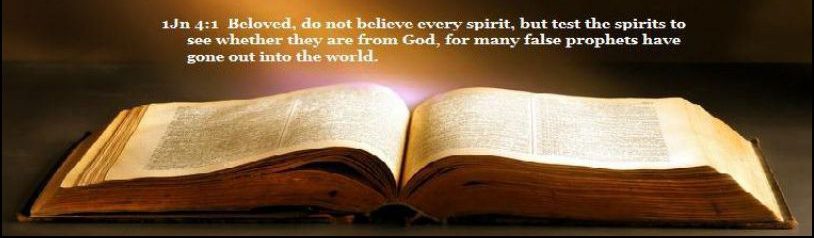


 Truth2Freedom's Blog