There are two ways to be fooled. One is to believe what isn’t true; the other is to refuse to believe what is true. —Soren Kierkegaard. "…truth is true even if nobody believes it, and falsehood is false even if everybody believes it. That is why truth does not yield to opinion, fashion, numbers, office, or sincerity–it is simply true and that is the end of it" – Os Guinness, Time for Truth, pg.39. “He that takes truth for his guide, and duty for his end, may safely trust to God’s providence to lead him aright.” – Blaise Pascal. "There is but one straight course, and that is to seek truth and pursue it steadily" – George Washington letter to Edmund Randolph — 1795. We live in a “post-truth” world. According to the dictionary, “post-truth” means, “relating to or denoting circumstances in which objective facts are less influential in shaping public opinion than appeals to emotion and personal belief.” Simply put, we now live in a culture that seems to value experience and emotion more than truth. Truth will never go away no matter how hard one might wish. Going beyond the MSM idealogical opinion/bias and their low information tabloid reality show news with a distractional superficial focus on entertainment, sensationalism, emotionalism and activist reporting – this blogs goal is to, in some small way, put a plug in the broken dam of truth and save as many as possible from the consequences—temporal and eternal. "The further a society drifts from truth, the more it will hate those who speak it." – George Orwell “There are two ways to be fooled. One is to believe what isn’t true; the other is to refuse to believe what is true.” ― Soren Kierkegaard
Secondly, With reference to ourselves in particular.
We must give thanks that he has made us reasonable creatures, capable of knowing, loving, serving, and enjoying him, and that he has not made us like the beasts that perish.
We praise you, for we are fearfully and wonderfully made; and that our souls, our nobler part, know very well; Psalm 139:14(ESV) for no man knows a person’s thoughts except the spirit of that person, which is in him. 1 Corinthians 2:11(ESV)
You have made us of that rank of beings which is a little lower than the heavenly beings and is crowned with glory and honor; Psalm 8:5(ESV) for it is the spirit in man, the breath of the Almighty, that makes him understand; Job 32:8(ESV) and the spirit of a man is the lamp of the LORD. Proverbs 20:27(ESV)
Our bodies are capable of being the temples of the Holy Spirit, 1 Corinthians 6:19(ESV) and our souls of having the Spirit of God dwell in them; 1 Corinthians 3:16(ESV) we therefore glorify you with our bodies and with our spirits, which are both yours. 1 Corinthians 6:20(KJV)
You, Lord, have formed us for yourself, that we might declare your praise. Isaiah 43:21(ESV)
Psalm 23 This week’s lessons focus on how God acts as a shepherd toward His sheep, and what we are to do in response to Him.
Theme
Our Faithful Guide
I said earlier that the Christian life also has activity, and that is what comes next. The next portion of the psalm stresses guidance: “He leads me beside quiet waters, he restores my soul. He guides me in paths of righteousness for his name’s sake.” Guidance is the proper way to approach this matter because activity itself is not everything. This is because a person can be active in a wrong cause as well as in a right one. As you know, in the Christian life there are areas that seem ambiguous. We do not know which way to go. We do not know the right road to take. We do not know the proper direction to turn. We need a guide. We need somebody who knows the way, who has been over this course before. In fact, we need somebody who knows us and knows what he wants to do with us. That is precisely the kind of guide we have in Jesus Christ. He guides us in paths of righteousness.
It is worth talking about the principles of guidance which we have in the Word of God, because of all the questions that ministers are asked, I suppose the greatest number are on knowing the will of God. How can I know the will of God for my life? How can I receive the guidance that Psalm 23 tells me God has already provided? There are principles in the Word of God that help us with those questions. First, there is the principle of being willing to go in the direction the good shepherd leads, even before we know what that direction is. The Lord spoke of that in John 7:17, where He said, “If anyone chooses to do God’s will, he will find out whether my teaching comes from God or whether I speak on my own.”
Jesus was speaking of His teaching. That was the particular application of what He was saying. But the principle is a general one. If you determine to do the will of God, then you will know what it is. Our problem is that we do not approach it that way. We say, “God, I’ve got a great life ahead of me, and I’m not sure which direction I’m going to go. I’d like you to tell me what you want me to do. Then, when you’ve told me what you want me to do, I will weigh that over against the other things that I think I might also want to do. Then I’ll decide whether I want to go your way or not.”
God does not play the game that way. We play that game with other people, but God does not do that. God says, “No. You determine to go my way first. Then I’ll tell you the direction in which you should go.” That is what Jesus was talking about, and that is by far the first and greatest principle of knowing the will of God. In other words, you must say, “I want the good Shepherd to be my guide, and I determine to follow Him, wherever He leads.” When you get that sorted out, then God will step in and deal with more specific matters.
The second principle is that God speaks in Scripture. God does not rearrange the stars in heaven to spell out what you should do. He does not say, “John, Mary, Sally . . . I want you to do so and so.” God does not do that. God gives principles in Scripture. So there is a certain sense in which we are only going to know the will of God as we feed upon the Word of God. The better we know the Word of God the more these principles become part of our thinking and the way we go about our daily lives and, thus, the better we know the will of God where specific circumstances are concerned.
The third principle is that we need to get into the habit of seeking God’s face on a regular basis. We are a bit like horses with blinders. We get pointed in one direction, and that is the direction we go. We cannot see anything else. So if God is going to direct us in a different way than the way we are going, He has to turn our eye. Psalm 32:8 says, “I will instruct thee and teach thee in the way which thou shalt go; I will guide thee with mine eye” (KJV).
If God is going to catch our eye, we will have to look to Him on a regular basis. That is why we must have something like a quiet time every day. We must take the Word of God, study it and pray, “Lord Jesus Christ, I am your sheep and I am in this world to do your will. But if I am to do that, I need to be led in the way I should go. I know you are willing to lead me. Show me what I need to live in a way that is going to honor you today.” When we get in the habit of doing that, we will find that the Holy Spirit speaks in ways so direct and specific that we can hardly believe that is what He is doing.
Study Questions
What are the three principles for guidance given in the study?
Can you think of any others that would go along with these?
Application
Application: If you find yourself unsettled in life’s circumstances, and do not know which direction to take, how can you apply these principles this week to help you discern the will of your faithful Shepherd?
For Further Study: Download for free and listen to James Boice’s message, “Frailty Anchored in Eternity.” (Discount will be applied at checkout.)
Who spoke to Moses from the burning bush? Who called to Abraham on Mount Moriah? Who withstood Balaam on his way to curse the Israelites? Who met Hagar and Ishmael when Sarah drove them into the wilderness? If you answered, “The Lord,” you would be right. And if you answered, “The Angel of the Lord,” you would also be correct. The Angel of the Lord is a figure that appears at these points in the Pentateuch, the first five books of the Bible, and elsewhere throughout the canon of Scripture.
The problem these appearances pose to the faithful reader of Scripture is that the Angel is at one and the same time identified with and distinguished from the Lord. Take, for example, Moses’ encounter at the burning bush:
And the angel of the LORD appeared unto him in a flame of fire out of the midst of a bush: and he looked, and behold, the bush burned with fire, and the bush was not consumed. And Moses said, I will now turn aside, and see this great sight, why the bush is not burnt. And when the LORD saw that he turned aside to see, God called unto him out of the midst of the bush, and said, Moses, Moses. And he said, Here am I. And he said, Draw not nigh hither: put off thy shoes from off thy feet, for the place whereon thou standest is holy ground. Moreover he said, I am the God of thy father, the God of Abraham, the God of Isaac, and the God of Jacob. (Exo 3:2–6)
Here the angel of the Lord is presented as the Lord, the God of Moses’ ancestors. And yet, in his encounter with Hagar, he speaks of God: “The Lord hath heard thy affliction” (Gen 16:11), but also as God: “I will multiply thy seed exceedingly.” (Gen 16:10)
So, which is it? Is the angel a messenger speaking for God, or is he God? May we permit ourselves the simple answer, “yes”? In light of a fully developed theology of Christ and the Holy Trinity, in which we have three persons in one God and two natures in one Christ, this may not seem particularly difficult. Christ is fully God in nature and distinct from the Father and the Spirit in person. And yet what would the original readers of these accounts make of them before they had the Trinitarian recipe spelled out in the Nicene and Athanasian Creeds, before they even had the Trinitarian ingredients laid out in the accounts of the four Gospels and the apostolic letters?
Geerhardus Vos offers us a characteristically profound answer in his Biblical Theology.[i] He suggests that as much as we can see the Trinity in hindsight when looking at these accounts of the Angel of the Lord, they were likely not meant to carry the full weight of Trinitarian doctrine to their original audience. So, what significance do they carry? Vos identifies it as twofold: what he calls “the sacramental intent” and “the spiritualizing intent”. Vos finds the sacramental intent in the Angel being God, showing God’s desire “to approach closely to His people, to assure them in the most manifest way of His interest in and His presence with them.” The spiritualizing intent, Vos finds in the Angel speaking for God as if to guard against the wrong conclusion that God’s nature is bodily and limited like ours. In other words, the Angel is divine and walks among humanity, showing God’s desire to be with us. At the same time, the Angel speaks for God, indicating that “the visible, physical form of meeting this need is not due to the nature of God.”
Vos concludes his thoughts in this vein where we ought to let our reflections on the Angel of the Lord lead us: “In the incarnation of our Lord we have the supreme expression of this fundamental arrangement.” That is, God in Christ condescends to humanity in its need, and at the same time he becomes fully human, he remains fully God in order that his Might may save us. When we encounter the Angel of the Lord in Scripture, it should lead us to the incarnate Christ, the true Sacrament of God dwelling with us.
[i] Geerhardus Vos, Biblical Theology: Old and New Testaments (Carlisle, PA: The Banner of Truth Trust, 1975), 72-74.
J. Warner Wallace examines the classic problem of evil and offers a cumulative case response. In this final of four related broadcasts, J. Warner examines the role our limited, finite knowledge plays in inhibiting our ability to understand why God might allow evil. J. Warner also discusses the need for a righteous, objective standard of “good” by which we could judge something to be “evil”. Is evil an exculpating evidence or does evil necessitate the existence of God? For more information about the cumulative case for the existence of God and the problem of evil, see J. Warner’s book, God’s Crime Scene.
In addition, here is the audio podcast (the Cold-Case Christianity Weekly Podcast is located on iTunes or our RSS Feed):
My last post discussed some of the problems with demanding “extraordinary” evidence before considering the possibility that an extraordinary event – like the Resurrection of Jesus – actually did occur. Setting artificial standards for evidence, I argued, does little to advance the goal of determining the truth.
Skeptics often respond by insisting that nothing short of the miraculous will convince them of the existence of God. After all, they reason, if God did exist, would he not expect us to use the mind he gave us to come to our own conclusions about reality, conclusions based not on what others tell us but upon evidence and reason? Would he not expect us to work to separate fact from fantasy, and not just accept what someone else believes?
When pressed, the skeptic will often provide examples for the kinds of proof that would cause them to shift their thinking, such as:
God appearing to everyone, everywhere at the same time
Finding microscopic writing on every living cell identifying God as the maker
Present day miracles such as amputees regrowing limbs through prayer
Alien life coming to earth and proclaiming Christ as savior
Finding large etchings on Mars authored by Yahweh.
These examples of “adequate” proof all share the quality of being “extraordinary.” Faced with such evidence, many more – though I would submit not all – would have a conversion experience. Since God performed such extraordinary acts in antiquity, the skeptic wonders whether it is asking too much that he perform these same types of acts for all people at all times in all places.
The first step in assessing this challenge is to consider whether God has an adequate reason for not addressing each of us in a direct and unambiguous way. Why doesn’t God write us an email each day that makes his will known? The answer, I suspect, has to do with the Fall – as a result of which God removed himself from direct contact with us – and from the fact that he actually does intend us to use our intellect to move towards him. To better know, and experience and understand him requires not a one-sentence tag line – “You should take that job. /s/ God” – but a conscious effort of the will to solve the puzzles of life, of revelation, of awareness of God in our lives. That this is achievable requires little more than perusing a book on the lives of the saints.
But at a deeper level, the skeptic who insists on such direct communication is betraying the very commitment to rationality that he pretends to have. The skeptic insists he cannot just believe “on faith” and that he expects that a God who gave us a mind would expect that we use it. Christians agree. In fact, many passages in Scripture reaffirm Jesus’ admonition that we are to love God with all of our minds. In placing trust in the Biblical account of reality, Christians use a rational process known as abduction – reasoning from inferences to a logical conclusion – piecing together dozens of bits of information to see where they lead. This process is an example of how rationality works.
By contrast, despite their asserted reliance on rational thinking, skeptics insist 1) that the evidence be “extraordinary” (whatever that means) and 2) that nothing short of a direct contact by God would suffice. Do they not realize that the intellect isn’t necessary if one’s expectations are set to that level? Even the person of below normal intelligence would be able to conclude “God Is” with such evidence and without any use of rational thinking. Reasoning from evidence to a conclusion would simply not be necessary.
The skeptic’s position is like that of a juror who refuses to convict the murderer because there was no confession, or no video of the killing as it took place. But killers always leave some evidence behind, and piecing together the bits and pieces of that trail allows for a thoughtful, rational person to find guilt regardless of the killer’s silence. Now, the skeptic may object that God should not try to hide, the way the killer does. No matter. Use a different example. Many of the greatest discoveries of science – for instance, unlocking the secrets of the atom – required effort to uncover the reality that lies beneath the surface. If scientists waited for an instruction manual to appear written into the canals of Mars, or printed on the cell, we would still be lighting fires to illuminate our caves. In any other pursuit of knowledge and understanding, the thoughtful person understands that the answers will not always be clear, and that reasoning to best conclusions is a viable way of attaining knowledge. Why should it be any different when it comes to knowledge of God? What is too easily obtained is often too little valued.
The skeptic sets impossible standards because he is trying to find reasons to reject what is patently obvious to most people who ever lived – created things require a Creator. Christians take this knowledge to a deeper level, placing confidence in their conclusion that this Creator revealed himself in the pages of the Bible. In so doing, Christians rely on reason.
It is the skeptic, with his impossibly high demands, that refuses to.
Recommended Resources:
I Don’t Have Enough Faith to Be an Atheist (Paperback), and (Sermon) by Norman Geisler and Frank Turek
How Philosophy Can Help Your Theology by Richard Howe (DVD Set, Mp3, and Mp4)
Science Doesn’t Say Anything, Scientists Do by Dr. Frank Turek (DVD, Mp3 and Mp4)
Al Serrato earned his law degree from the University of California at Berkeley in 1985. He began his career as an FBI special agent before becoming a prosecutor in California, where he worked for 33 years. An introduction to CS Lewis’ works sparked his interest in Apologetics, which he has pursued for the past three decades. He got his start writing Apologetics with J. Warner Wallace and Pleaseconvinceme.com.
Therefore Pilate entered again into the Praetorium, and summoned Jesus and said to Him, “Are You the King of the Jews?” Jesus answered, “Are you saying this on your own initiative, or did others tell you about Me?” Pilate answered, “I am not a Jew, am I? Your own nation and the chief priests delivered You to me; what have You done?” Jesus answered, “My kingdom is not of this world. If My kingdom were of this world, then My servants would be fighting so that I would not be handed over to the Jews; but as it is, My kingdom is not of this realm.” Therefore Pilate said to Him, “So You are a king?” Jesus answered, “You say correctly that I am a king. For this I have been born, and for this I have come into the world, to testify to the truth. Everyone who is of the truth hears My voice.” Pilate said to Him, “What is truth?” (18:33–38a)
Leaving the Jewish leaders standing outside, Pilate entered again into the Praetorium, and summoned Jesus. Luke 23:2 provides the background to his question, “Are You the King of the Jews?” Realizing that they had to come up with a charge that would impress a Roman judge, the Jewish leaders “began to accuse [Jesus], saying, ‘We found this man misleading our nation and forbidding to pay taxes to Caesar, and saying that He Himself is Christ, a King.’ ” The charges, of course, were completely false; Jesus had actually said the opposite: “Render to Caesar the things that are Caesar’s; and to God the things that are God’s” (Matt. 22:21). Their goal was to portray Him as an insurrectionist, bent on overthrowing Roman rule and establishing His own. Pilate could not overlook such a threat to Roman power. His question, “Are You the King of the Jews?” was in effect asking Jesus whether He was pleading guilty or not guilty to the charge of insurrection. “Pilate’s question seeks to determine whether or not Jesus constituted a political threat to Roman imperial power” (Andreas J. Köstenberger, John, Baker Exegetical Commentary on the New Testament [Grand Rapids: Baker, 2004], 527). In all four gospel accounts this is the first question Pilate asks Jesus, and in all four the pronoun “You” is emphatic. The Greek text literally reads, “You, are You the King of the Jews?” Pilate was incredulous; from a human perspective, Jesus did not look like a king. And if He was a king, where were His followers and His army? And how was He a threat to Rome? Jesus could not answer Pilate’s question with an unqualified “Yes” or “No” without first defining exactly what His kingship entails. His counterquestion, “Are you saying this on your own initiative, or did others tell you about Me?” was intended to clarify the issue. If Pilate was saying this on his own initiative, he would be asking if Jesus was a king in the political sense (and hence a threat to Rome). Jesus’ answer in that case would be no; He was not a king in the sense of a military or political leader. He had earlier rejected the crowd’s attempt to make Him such a king (6:15). But neither could the Lord deny that as the Messiah He was Israel’s true king. Pilate’s sharp retort, “I am not a Jew, am I?” reflects both his disdain for the Jewish people, and his growing exasperation with the frustrating, puzzling ethnic case set before him. His further elaboration, Your own nation and the chief priests delivered You to me, makes it clear that the governor was merely repeating the charge leveled against Jesus by the Jewish leaders; the accusation was theirs, not Rome’s. Exactly why they had done so still eluded Pilate. He knew perfectly well that the Jews would not have handed over to him someone hostile to Rome unless they stood to gain from doing so. Attempting once again to get to the bottom of things, Pilate asked the question that he should have asked at the outset: what have You done? Unlike Jewish practice (see the discussion of 18:19 in the previous chapter of this volume), Roman legal procedure allowed the accused to be questioned in detail (Köstenberger, John, 527). Pilate understood that the Jewish leaders had handed Jesus over to him because of envy (Matt. 27:18). What he still did not understand was what Jesus had done to provoke such vehement hostility from them and what, if any, crime He had committed. Since it was now clear that Pilate was merely repeating the charge of the Jewish leaders, Jesus answered his question. He was a king, but not a political ruler intent on challenging Rome’s rule. “My kingdom is not of (Greek ek; “out from the midst of”) this world,” He declared. Its source was not the world system, nor did Jesus derive His authority from any human source. As noted earlier, He had rejected the crowd’s attempt to crown Him king. He also passed up an opportunity to proclaim Himself king at the triumphal entry, when He rode into Jerusalem at the head of tens of thousands of frenzied hopefuls. To reinforce His point, Jesus noted that if His kingdom were of this world, then His servants would be fighting so that He would not be handed over to the Jews. No earthly king would have allowed himself to have been captured so easily. But when one of His followers (Peter) attempted to defend Him, Jesus rebuked him. The messianic kingdom does not originate from human effort, but through the Son of Man’s conquering of sin in the lives of those who belong to His spiritual kingdom. Christ’s kingdom is spiritually active in the world today, and one day He will return to physically reign on the earth in millennial glory (Rev. 11:15; 20:6). But until then His Kingdom exists in the hearts of believers, where He is undisputed King and sovereign Lord. He was absolutely no threat either to the national identity of Israel, or to the political and military identity of Rome. That the Lord spoke of being handed over to the Jews is significant. Far from leading them in a revolt against Rome, Jesus spoke of the Jews (especially the leaders) as His enemies. He was a king, but since He disavowed the use of force and fighting, He was clearly no threat to Rome’s interests. The Lord’s statement rendered the Jews’ charge that He was a revolutionary bent on overthrowing Rome absurd. Jesus’ description of His kingdom had left Pilate somewhat confused. If His kingdom was not an earthly one, then was Jesus really a king at all? Seeking to clarify the issue, Pilate said to Him, “So You are a king?” Jesus’ answer was clear and unambiguous: “You say correctly that I am a king.” The Lord boldly “testified the good confession before Pontius Pilate” (1 Tim. 6:13). Unlike earthly kings, however, Jesus was not crowned a king by any human agency. For this I have been born, He declared, and for this I have come into the world. Jesus had not only been born like all other human beings, but also had come into the world from another realm—heaven (cf. 3:13, 31; 6:33; 8:23; 17:5). Taken together, the two phrases are an unmistakable reference to the preexistence and incarnation of the Son of God. Jesus’ mission was not political but spiritual. It was to testify to the truth by “proclaiming the gospel of the kingdom” (Matt. 4:23). Christ proclaimed the truth about God, men, sin, judgment, holiness, love, eternal life, in short, “everything pertaining to life and godliness” (2 Peter 1:3). What people do with the message of truth Jesus proclaimed determines their eternal destiny; as He went on to declare, “Everyone who is of the truth hears (the Greek word includes the concept of obedience; cf. Luke 9:35) My voice.” Jesus is “the way, and the truth, and the life; no one comes to the Father but through [Him]” (14:6). In 10:27 He added, “My sheep hear My voice and I know them, and they follow Me.” Only those who continue in His Word are truly His disciples; only those who are truly His disciples will know and be set free by the truth (8:31–32). Jesus’ words were an implied invitation to Pilate to hear and obey the truth about Him. But they were lost on the governor, who abruptly ended his interrogation of Christ with the cynical, pessimistic remark, “What is truth?” Like skeptics of all ages, including contemporary postmodernists, Pilate despaired of finding universal truth. This is the tragedy of fallen man’s rejection of God. Without God, there cannot be any absolutes; without absolutes, there can be no objective, universal, normative truths. Truth becomes subjective, relative, pragmatic; objectivity gives way to subjectivity; timeless universal principles become mere personal or cultural preferences. All fallen mankind has accomplished by forsaking God, “the fountain of living waters,” is “to hew for themselves cisterns, broken cisterns that can hold no water” (Jer. 2:13). Pilate’s flippant retort proved that he was not one of those given by the Father to the Son, who hear and obey Christ’s voice.
THE ADJUDICATION
And when he had said this, he went out again to the Jews and said to them, “I find no guilt in Him.” (18:38b)
Having finished interrogating Jesus, Pilate pronounced his verdict. He went out again to the Jews and said to them, “I find no guilt in Him.” He understood enough to realize that Jesus posed no threat to Roman rule. He made it clear that Jesus was innocent of the charges of sedition and insurrection leveled against Him by the Jewish leaders (Luke 23:2). No valid indictment of Him at the beginning; no conviction of Him at the end. The Lord of glory was maligned, hated, and falsely accused, but nevertheless found to be perfect, faultless, and innocent.
MacArthur, J. F., Jr. (2008). John 12–21 (pp. 328–332). Moody Publishers.
Christ’s Kingdom Not of This World
John 18:36–37
Jesus said, “My kingdom is not of this world. If it were, my servants would fight to prevent my arrest by the Jews. But now my kingdom is from another place.” “You are a king, then!” said Pilate. Jesus answered, “You are right in saying I am a king. In fact, for this reason I was born, and for this I came into the world, to testify to the truth. Everyone on the side of truth listens to me.”
In the first of his two great letters to Timothy, the apostle Paul tells us that Jesus Christ “while testifying before Pontius Pilate made the good confession” (1 Tim. 6:13). That good confession is not found in the synoptic Gospels—Matthew, Mark, or Luke—for they contain only a five-word response from Jesus. When Jesus was asked if he were the king of the Jews, they report him as answering, “It is as you say” (Matt. 27:11; Mark 15:2; Luke 23:3), after which he said nothing. It is only in John that the good confession of Jesus before Pilate is reported to us fully. We can be glad that John recorded it. For one thing, it teaches us what a “good confession” is. This confession is good as to the manner in which it is given. It was not rude or brusque or condescending or veiled in mysteries, as our confessions often are. It was simple, kind, direct, and helpful. Though Christ was soon to be condemned by Pilate, he did not despise him but rather treated him with the respect due him because of his office. Again, the confession of our Lord was good as to its matter, for here, before one who was rightly concerned with earthly sovereignty, Christ spoke of divine versus human affairs and of God’s sovereignty. This teaches us how we should speak of spiritual things and what we should say. A second reason why we should be glad that John has included these words is that they contain a definition of the nature of Christ’s kingdom in the very words of Jesus and at a most important moment. Those who have studied the meaning of the kingdom of God in the Old and New Testaments know that this is a very complex subject, the reason being that the phrase is used in so many different ways. Sometimes it seems to refer in an abstract way to the reign or rule of God. At other times it refers to a coming future rule of Christ or God upon earth. In one key text (Luke 17:21, and parallels) the kingdom of God is said to be “among” or “in the midst” of this world, presumably in the person of Christ and his disciples. In a fourth series of passages the kingdom is something into which men and women enter. This is confusing, and it is compounded by the fact that, according to one writer at least, “Jesus nowhere defined what he meant by the phrase.” Well, it may be true that Jesus nowhere gives a careful theological definition of “the kingdom of God.” There are not many terms he did do this with. But still these verses in John’s Gospel may be brought forward as something very closely approaching it.
Christ, a King
The jumping-off point for Christ’s definition of his kingdom is with the confession that he is indeed a king, whatever the appearances may be to the contrary. He did not look like a king. He was bound and beaten (Luke 22:63–65). He was to be beaten further still. Yet no king, seated upon a throne at the pinnacle of world power, was more entitled to be called a king than he. This fact is important, for what is true of the king is no less true of his kingdom. Charles Haddon Spurgeon wrote of this more than a hundred years ago: “To this day, pure Christianity, in its outward appearances, is an equally unattractive object, and wears upon its surface few royal tokens. It is without form or comeliness, and when men see it, there is no beauty that they should desire it. True, there is a nominal Christianity which is accepted and approved of men, but the pure gospel is still despised and rejected. The real Christ of today, among men, is unknown and unrecognized as much as he was among his own nation eighteen hundred years ago.… Christ chanted in cathedrals, Christ personified in lordly prelates, Christ surrounded by such as are in kings’ houses, he is well enough; but Christ honestly obeyed, followed, and worshiped in simplicity, without pomp or form, they will not allow to reign over them.… “We are satisfied that Christ is the king still where he was wont to be king, and that is not among the great ones of the earth, nor among the mighty and the learned, but amongst the base things of the world and the things which are not, which shall bring to nought the things that are, for these hath God from the beginning chosen to be his own.”
A Spiritual Kingdom
Jesus says his kingdom is “not of this world.” That says a great deal in itself and also by implication. So far as the statement itself is concerned, it is a denial of the importance for Christ of those things that usually concern earthly monarchs. One concern is for geography. Kings rule a certain carefully defined territory. They protect that territory from others. When they fight, it is usually over this or other territory they wish to annex. But this is not Christ’s concern. His kingdom is not of this world. Another concern of this world’s rulers is with taxes. There has never been a kingdom without taxes. Taxes pay for the government, army, public works, and of course for the army of bureaucrats who collect the taxes and do a host of other things. But Christ’s concern is not with taxes. His kingdom is not of this world. This world’s princes are concerned with pomp and ceremony, prestige and privileges, acclaim. Not so Christ. It is of his kingdom as the hymn states:
  For not with swords’ loud clashing,
  Nor roll of stirring drums—
  With deeds of love and mercy
  The heav’nly kingdom comes.
It is not only in a negative way that this definition of the kingdom of God speaks to us, however. It also speaks by implication. Christ has said that his kingdom is not of this world. But if that is true, from whence does it come? If his kingship is not of this world, it is either from hell or from heaven. There is a kingdom which is the kingdom of hell. We do not mean by this that somewhere in the universe there is a geographic territory known as hell over which Satan presides, along the lines John Milton painted in Paradise Lost. There is a geographical hell, just as there is a geographical heaven. But Satan does not rule there. God rules hell. That is what makes hell so horrible. On the other hand, this does not mean that there is not a satanic, hellish kingdom. On the contrary, there is; and it is this we are speaking about. It is of this kingdom that Jesus spoke when he referred to a kingdom being divided against itself and therefore being unable to stand (Mark 3:23–26). It is a “spiritual” kingdom founded on hate, pride, jealousy, anger, and cunning. It is the opposite of Christ’s kingdom at every point. Is this Christ’s source? Is this the source of his kingdom? We recall that the Pharisees thought so. Just before Christ’s words about Satan’s kingdom being divided against itself, they had said, “He is possessed by Beelzebub! By the prince of demons he is driving out demons” (Mark 3:22). This is one logical explanation of the authority and kingship Christ so obviously possessed and demonstrated. But is it an adequate explanation? Can it explain the nature of Christ and the qualities of his rule? If it cannot—and who can seriously maintain that Christ’s character and ministry were demonic—then the source must be heaven and Christ must be the Son of God. Sheer logic forces any honest person to that position. The same logic applies to Christ’s person. After you have disposed of the one truly impossible explanation of who Jesus is (that he is “a good man”), there are only three things that can be said of him. One, he is God, as he claimed. Two, he was crazy, for he mistakenly claimed to be God when he was not. Or three, he was a deceiver, for he knew he was not God, yet claimed to be God in order to gain a following through such deception. There are no other possibilities. The one who would face Christ honestly must decide among them. Is the Christ who has been proclaimed by so many throughout so many thousands of years of human history insane, a deceiver, or God? He cannot be put off with any nonsense about being a good teacher or a good man. This was the dilemma Jesus put before everyone when in the Roman hall of judgment he said, “My kingdom is not of this world.” Rule out this world, where deception is all too universal and obvious, and there are only two possibilities left: hell or heaven. If you cannot say, “He is from hell,” then he is from heaven, and his kingdom is too. And whatever your opinion of it may be or whatever your wishes may be, you are his subject, and you are obliged to fall before him and confess him to be your Lord and your God. When Jesus says, “My kingdom is not of this world,” many utter a sigh of relief and say, “Well, thank God that Jesus’ kingdom has nothing to do with us. It is a spiritual kingdom. Hallelujah! We can keep on as we have been and do as we please.” Nothing is farther from the truth, for when we say that Christ’s kingdom is not of this world, what we are really saying is that Christ’s kingdom is of heaven and therefore has an even greater claim over us than do the earthly kingdoms we know so well. There is real sovereignty in an earthly kingdom. There is genuine authority which we may not flout. But over these is Christ, and we flout his kingship not merely at the peril of our fortune and lives but at the peril of our eternal souls. Why risk such loss? Why not come to this king and confess his lordship? He has promised to rule in justice and with mercy, and he has assured us that his yoke is easy and his burden is light.
Two Kingdoms
There is a third area where Christ’s words about his kingdom apply, and that is in their relationship to earthly powers, of which Pilate and the Roman Empire were examples. In modern American history there has been a tendency so to stress the legitimate principle of the separation of church and state that we have almost come to the point of saying that the church and state are not related to each other at all. This is wrong. Jesus deals with it not only in these verses, which speak of the nature of his kingdom, but also in the continuation of the discourse in chapter 19, in which the responsibility of Pilate over against the heavenly kingdom is stressed. In these later verses Pilate had begun to quiz Jesus again, and Jesus gave him no answer. Pilate said, “Do you refuse to speak to me? Don’t you realize I have power either to free you or to crucify you?” Jesus replied, “You would have no power over me if it were not given to you from above. Therefore the one who handed me over to you is guilty of a greater sin” (19:10–11). This reply speaks directly to the church/state problem. While it is true that the church and state each have their legitimate spheres of authority, and while it is also true that the church and state should have separate organizations, neither possessing the right to appoint officers or authorities in the other—nevertheless, it is not true that they are totally unrelated, for in many areas they have the same concerns, and both are responsible to the same divine sovereign. Some have said, for example, that the Christian community should be so separated from the secular sphere that Christians should not go into politics, that believers in general should not vote in elections, that we should withdraw from the culture as much as possible, live in distinct communities, have Christians as friends exclusively, work for Christian companies, and so on. But Jesus refutes this when he says that his kingdom is not “of” the world. The key word is “of.” If he had said “in,” we would separate. But he said “of” and therefore means that we are to be actively “in” the world though not “of” it in terms of its values and goals. To turn to the other side, some have said that the state has nothing to do with the concerns of Christian people; that it is not in business to “regulate morality,” for example. But again this is wrong; for when Jesus reminded Pilate that his authority came from God, he was also reminding him that it was to be exercised in accord with the character of that one whose authority it is. When the state develops and enforces laws against homicide, what is that but the legislation of morality? It is the state’s way of saying, “We agree that life is precious and that it is wrong to take it away. In this we support the sixth of God’s Ten Commandments.” Again, when the state makes laws against larceny and burglary, what is it doing but enforcing the eighth commandment? The same is true of its requirement of legal marriages, contracts, labor negotiations, and similar formalities in a hundred different areas. In each of these areas the state is dealing with morality. Jesus emphasized in his words to Pilate that the state is responsible for this before God, just as the church is responsible. This is the significance of Christ’s mention of sin: “Therefore, the one who handed me over to you is guilty of a greater sin.” Sin is a transgression of the law of God and is therefore punishable by God and will be punished by him. So Jesus was telling Pilate, “Your sin may not be as great as those who have hated me and turned me over to you. But their sin does not excuse your sin. You are still a sinner, and you will be judged for it.”
Entering Christ’s Kingdom
The final point Jesus made about his kingdom is that it is not entered into by secular means. The heavenly kingdom and the earthly kingdom overlap at some points, but not here. The same person may be in both; the emperor can also be a Christian. In some areas they have corresponding concerns. But they are nevertheless different kingdoms and are entered differently. Jesus spelled this out in two ways. In one of the beatitudes of the Sermon on the Mount he indicated the manner in which we must enter, saying, “Blessed are the poor in spirit, for theirs is the kingdom of heaven” (Matt. 5:3). This does not mean, “Blessed are the poor-spirited” or “Blessed are failures.” To be poor in spirit is the opposite of being rich in pride. It means to be humble. So Christ’s first requirement for entering his kingdom is to humble yourself and take up the position of a suppliant before him. It is to pray with the publican, “God be merciful to me, a sinner.” Second, in his words before Pilate Jesus shows that this also has a positive dimension in the area of our response to his truth. Humility is a prerequisite, but it does not produce salvation in and of itself. Rather, we must also respond to that truth that Jesus came to earth to communicate. It consists in this: that Jesus is God, that he died on our behalf, and that those who have nothing to present to God in terms of their own merit nevertheless can come boldly to God on the merit of Jesus.
Boice, J. M. (2005). The Gospel of John: an expositional commentary (pp. 1433–1438). Baker Books.
He has done it. Remember Joseph, Israel in Egypt, Manasseh, Jeremiah, Peter, and many others. He can do it still. He breaks the bars of brass with a word and snaps the fetters of iron with a look. He is doing it. In a thousand places troubled ones are coming forth to light and enlargement. Jesus still proclaims the opening of the prison to them that are bound. At this moment doors are flying back and fetters are dropping to the ground.
He will delight to set you free, dear friend, if at this time you are mourning because of sorrow, doubt, and fear. It will be joy to Jesus to give you liberty. It will give Him as great a pleasure to loose you as it will be a pleasure to you to be loosed. No, you have not to snap the iron hand: the Lord Himself will do it. Only trust Him, and He will be your Emancipator. Believe in Him in spite of the stone walls or the manacles of iron. Satan cannot hold you, sin cannot enchain you, even despair cannot bind you if you will now believe in the Lord Jesus, in the freeness of His grace, and the fullness of His power to save.
Defy the enemy, and let the word now before you be your song of deliverance; “Jehovah looseth the prisoners.”
If your heart feels heavy under the weight of holiday demands, you’re not alone. These five gentle, Scripture-rooted reminders can help you trade stress for peace and put Christ at the center again.
The holidays are fast approaching, and for many, they are already feeling overwhelmed, knowing there is so much to be completed and so many relational dynamics that need to be navigated during this season. The task list alone for most parents around the holidays is endless. There are pictures to plan, cards to send out, gifts to gather for teachers and coaches, presents to gather for our expectant children, parties to plan and host, meals to create, experiences to curate, and extended family members to appease. There is so muchto be done. If we are honest, it’s hard not to let the weight of it all steal the magic of the season.
Every year, I start prepping earlier, swearing I will do less, but somehow, as my kids are aging, we are doing more and more, and each year I battle waves of anxiety over how it’s all going to come together. A coming-to-Jesus talk is required every holiday season, so I don’t allow my anxiety and compulsive need to plan to ruin the holidays. Here are the basics of my prayer and inner monologue that help me stay focused on what matters over the Christmas season!
Remember The Reason for the Season
You’ve probably heard this catchy phrase a million times over this time of year: “Remember the reason for the season!” And while it’s easy to blaze past this simple statement, I propose we make these words central to how we approach our holidays, because doing for doing’s sake is a waste of our time and money.
Our efforts, traditions, and time spent with those we love are all part of a long-standing tradition that began with the simplest yet most remarkable gifts the world has ever been given. Baby Jesus, God incarnate, came and lived to die for our sins. When we center our thoughts around this ancient and powerful truth, it’s easier to push past all the noise and fluff that often distracts or is unnecessary in our culture.
When you feel overwhelmed about how you will get it all done, bring those feelings to the Lord and replace them with worship and gratitude for the chance to remember and show His love to others in so many special ways during November and December. If your mental checklist is leading you to do things that don’t feel loving and kind, then I suggest asking God to show you if this tradition is a good way to remember Him in this season, or if it needs to be removed from your plans altogether. Keep Jesus at the center of the season.
BONUS: Want to remind yourself of this every time you open your phone? Download a free phone wallpaper by clicking here or on the image below!
Keep it Simple
Americans have so overcomplicated the holiday season. We’ve gone way over the top, and the expectations set for what your family should be doing together over the next few months are truly insane. We all need to do all we can to simplify the holidays. It’s truly all just a bit too much.
I am preaching to the choir because if I started to share the number of dinners, trips, gatherings, traditions, gift exchanges, donations, church services, and more we have on the calendar for the next two months, you’d probably be horrified. Even worse, so many of these plans come with pressure to buy more stuff. The consumerism of the holidays is oppressive.
Resist the pressure to do it all. Say no more, so you have more opportunities to share quiet winter evenings at home with your people. Read some verses, light a candle, enjoy a beverage together, and let a rhythm of prayer and reflection be the central thread that makes this season so meaningful. Don’t be afraid to miss some of those magical moments of going, spending, and doing, because it’s also possible to create magical memories just by being home, remembering, praying, and abiding.
Embrace Holiday Boundaries
It can feel like everyone wants a piece of you, but remember, love is best expressed when accompanied by healthy boundaries. If there are traditions you dread, people you feel obligated to be around but know will bring you down, or gifts you simply don’t have the resources to provide, embrace boundaries around these obligations. Plainly stated: it’s okay to say no.
1 Corinthians 9:24 reminds us, “Do you not know that in a race all the runners run, but only one receives the prize? So run that you may obtain it.”
We cannot run the race of loving our neighbors, family, and friends well without discipline. Discipline helps to bring peace to the chaos. If you are feeling like things are too chaotic at home right now, it’s time to set some discipline in place. Start to determine which things trigger you and how you can change your interaction with them. Keep your heart healthy by finding productive ways to engage with the many people and obligations that come with the holidays.
Slow Down
The truth is, the holiday season seems to descend upon us like a whirlwind, and it passes so quickly that we can barely process all that we did! Choose to slow down. Take a pause between events and tasks to remember that this time is precious. We only get to experience Christmas this year once!
Each year, it feels like time is moving just a bit faster, and if we spend that precious time stressed out, we will miss the magic. Breathe and be present in the moments you can share with those you love. End the days with gratitude, pausing to give thanks for the special moments the holiday offers.
James 1:17 tells us, “Every good gift and every perfect gift is from above, coming down from the Father of lights, with whom there is no variation or shadow due to change.” God desires for us to enjoy his good gifts this time of year. We are invited to remember his goodness and mercy. Pause to reflect on what God has given you and what he wants you to bring into the new year.
Share the Load
You don’t have to produce all the magic of the holidays on your own. Share the task list with your spouse, friends, family members, and more. Delegate tasks such as meal planning, event planning, or purchasing gifts to others. Find ways to share the load!
Opt for easy shared meals with family, such as charcuterie, appetizers, or potluck-style meals. Limit the number of people you agree to exchange gifts with so you are not overwhelmed by excessive shopping and obligation. Get your spouse involved in the gift-giving so that the mental load of providing thoughtful gestures for the people you care about does not rest solely on one person’s shoulders.
1 Peter 5:7 states, “Casting all your anxieties on him, because he cares for you.” Remember God cares about you. He sees all your efforts as you work to show your family and friends love as the year comes to a close. You can cast your cares upon the Lord. He loves you and desires you to enjoy his many blessings this Christmas. Remember to draw near to him through this sacred time of the year.
Related: How God Views Grumbling and Complaining & How to Cultivate a Grateful Heart
In this episode of Your Hope-Filled Perspective, my co-host Rev. Jessica Van Roekel joins me to explore the heart issue behind grumbling and complaining and how it reflects a lack of trust in God’s provision and plan. Grumbling is self-focused and rooted in unmet expectations, comparison, stress, and a scarcity mindset, leading to drained joy, strained relationships, and a disconnection from God’s presence. In contrast, lament allows us to honestly share our pain with God while trusting His sovereignty.
Together, we discuss practical ways to combat a grumbling spirit, such as focusing on blessings, practicing gratitude, and seeking accountability. By shifting our perspective from what we lack to what we have in Christ, we can experience renewed joy, peace, and a deeper dependence on God, even in life’s challenges. Join us for How God Views Grumbling and Complaining & How to Cultivate a Grateful Heart. If you like what you hear, subscribe to Your Hope-Filled Perspective on Apple orSpotifyso you never miss an episode!
If you are new to Christianity, you may have never heard of the term “legalistic.” However, over the last 20 years this word has been synonymous to a profane word of the faith. No one wants to be known as a legalistic church or person. This term is meant to signify a person or entity that has a heavy focus on God’s law and works rather than His grace and mercy. Often, those associated with being legalistic are known to add additional human standards to God has slated as truth. Before long, more time is focused on judging others, outward appearance, and keep up with the Old Testament law rather than sharing God’s love. Although Christians should always seek to serve the commands of God, we have to be careful that we don’t neglect to build a relationship with the Lord. Whenever, rules take precedence over true worship, legalism may be present.
With this in mind, here are 5 signs your church may be legalistic.
1. A heavy focus on rules that may or may not reflect biblical truth.
1. A heavy focus on rules that may or may not reflect biblical truth.
SLIDE 1 OF 5
Legalism may look different for different churches. For some, legalism may come in the form of dictating dress codes, for others it may be not allowing tattoos, or requiring members to run all personal decisions by the pastor for approval. Years ago, I went to a church like this as well. Women who wore pants, had earrings, makeup, and did not have their heads covered were openly called, “Jezebels” and looked down upon. Thus, rather than going to church ready to hear God’s word and fellowship with others, I would be worried about not looking the right way and being ostracized. Pastor R.C. Sproul described attributing human law as divine to be the “deadliest form” of legalism. In his article, “Three Types of Legalism,” he writes,
“For example, the Bible doesn’t say that we can’t play cards or have a glass of wine with dinner. We can’t make these matters the external test of authentic Christianity. That would be a deadly violation of the gospel because it would substitute human tradition for the real fruits of the Spirit.”
Legalistic churches often see works as the focus of salvation. Those who are saved are often concerned about losing their salvation for failure to do good works. Although we should actively seek to do things that display our heart for the Lord, like feeding the homeless, going to church, giving financially to help ministries, they can never become the measuring stick for how much of a Christian we are.
“For by grace you have been saved through faith; and that not of yourselves, it is the gift of God” (Ephesians 2:8)
The truth is, no amount of works could ever earn us a place in heaven. Salvation is a free gift for anyone willing to accept Jesus. When we start to equate our abilities with our salvation, we diminish the work of the cross itself. It’s by His goodness that we get to enjoy the benefits of being a child of God. Like the Apostle Paul says,
“It is because of Him that you are in Christ Jesus, who has become for us wisdom from God: our righteousness, holiness, and redemption. Therefore, as it is written: ‘Let him who boasts boast in the Lord.’” (1 Corinthians 1:31)
Grace and mercy are a central part of the gospel. Yet, in churches that are legalistic, grace isn’t offered as much as it should be. Instead, those who miss the mark or fall into temptation are outcasted or even asked to leave the church. Author Laura Petherbridge states that one sign a church may be legalistic is that “There’s talk about the church extending ‘too much grace’ when it comes to a less-than-desirable person in the pew.” We must remember that grace is also a gift from the Lord. In many ways, choosing to withhold grace from the same people that the Lord has forgiven is a sign of arrogance, ignorance of God’s word and a judgmental spirit.
“He has saved us and called us to a holy life—not because of anything we have done but because of his own purpose and grace. This grace was given us in Christ Jesus before the beginning of time,” (2 Timothy 1:9)
4. Only those who are a part of the denomination or church are true believers.
4. Only those who are a part of the denomination or church are true believers.
SLIDE 4 OF 5
Another sign of a legalistic church is the idea that only their denomination truly reflects Christ. In these situations, those within the churches see themselves as the true “church” that knows the truth of God’s word. Anyone else with a different conviction about topics such as the role of women in the church, if drinking alcohol is acceptable, or even the style of preaching, could be the cause for a legalistic church to see themselves as closer to God and superior. Yet, the Lord never makes such distinctions amongst believers. Instead, He encourages us to come together, despite the differences, and worship Him alone.
Whenever we decide that our way is the way and condemn all others to hell, we place ourselves in the position of God. I believe the Lord is less interested in whether you are affiliated with being a Baptist, Pentecostal, or a part of the Holiness Church. We have to remember that God’s desire is that the church be in one accord. Although there may be differences in how we worship, we must remember that such distinctions are man-made and can become a distraction and stumbling block to some.
“There is one body and one Spirit, just as you were called to one hope when you were called; one Lord, one faith, one baptism; 6one God and Father of all, who is over all and through all and in all” (Ephesians 4:4-6)
Next to Easter and Christmas, there’s no better holiday that Christians could celebrate than Thanksgiving. Scripture reminds us over and over that we have a precious Savior and innumerable blessings to thank God for. Here are ten of my favorite Bible verses about giving thanks. Feel free to share them around on social media or print them out to use in your Thanksgiving decor…
As place cards at the dinner table.
As tags on goody bags
Print out two copies of each, scramble them up face down, and let the kids play “Concentration” or “Memory” with them. (Each player takes turns flipping over two at a time until they find two that match.)
Have one person read part of his verse and see who can finish it. Or read the whole verse and see who can guess the reference.
J. R. R. Tolkien loved to create stories about places he called “perilous,” places where we come into contact with a kind of power that, if rightly respected, leads us to unexpected joy and, if taken too lightly, leads to overwhelming misery. The “level place” where Jesus delivered his famous Sermon on the Plain is such a place. As Jesus says, “everyone when he is fully trained will be like his teacher” (Luke 6:40). If we will trust Jesus to reshape our hearts to reflect all that he is and all that he offers, we are on a path that leads to perfect and permanent happiness: “Blessed are you . . . .” If we choose any other path, it will lead to misery and ruin: “But woe to you . . . .”
One peril we encounter as we hear this sermon is the danger of dismissing it as second best. After all, Matthew’s Sermon on the Mount is three times as long and is more widely known. Details of the Gospel texts allow for two possibilities: Matthew and Luke may recount two distinct moments in Jesus’s teaching ministry, or they may give accounts of the same event. Either way, a fully trained disciple will give full attention to all of Jesus’s teaching. When we hear the Sermon on the Plain on its own terms, key themes for the training of our hearts emerge.
First, we notice that what happens in this perilous place is more than a sermon. Somewhere near Capernaum (Luke 7:1; Luke 5:17), Jesus had spent a night praying in the hills surrounding the Sea of Galilee (Luke 6:12; Luke 5:1). As day broke, he called a group of disciples and chose twelve of them as apostles. He then comes down to stand on “a level place” (Luke 6:17)—the detail that gives rise to the title, Sermon on the Plain, referring either to flat ground at the foot of a steep hill or to a level terrace on a hillside. Here Jesus is joined by another “great crowd” of his disciples and by a “great multitude” of others who have come to hear him and to be healed. While power is going out of Jesus to heal many in the crowd, he lifts up his eyes “on his disciples” and begins to speak. What happens on the Plain is therefore an encounter with Jesus’s powerful deeds, which can restore the body, and his powerful words, which reshape the heart. Luke wants us to see Jesus as a Teacher who both says and does. A fully formed disciple will therefore never speak empty words. We will not only call him “Lord” but will also put into practice everything Jesus says (Luke 6:46–47). Hearing is perilous, because it confronts us with a choice: are we attracted to Jesus’s power, willing to hear what he says? Or will deeper commitment make us willing to hear and obey? Whether we are among the disciples to whom Jesus speaks most directly or among the crowds in whose “hearing” as he speaks (Luke 7:1), we must choose.
Second, the setting of this sermon in Jesus’s unfolding ministry speaks to another kind of peril: being trained as disciples of Jesus will expose us to controversy, conflict, and criticism. In Matthew, the Sermon on the Mount begins before we read of any opposition to Jesus’s public ministry. By contrast, Luke lets us see that in addition to early successes, Jesus faces opposition, whether murderous rage (Luke 4:28–29), suspicion of blasphemy (Luke 5:21), objection to his association with “tax collectors and sinners” (Luke 5:30), or criticism of his lax practices regarding fasting and sabbath rest ( Luke5:33; Luke 6:2). The Pharisees and scribes, looking for reasons “to accuse him,” are “filled with fury” when they find one (Luke 6:7, 11). Against this backdrop, the Sermon on the Plain issues a challenge. It warns us that being a religious person who is committed to knowing the Scriptures and serious about applying them to life is not enough. Many teachers matching that description also reject Jesus. They are blind guides (Luke 6:39). Only Jesus’s approach to understanding and applying the Scriptures will lead to joy in the end. But with this challenge comes a promise: Jesus offers grace to sustain us when following him is costly. If we are hated now because of our commitment to him, we are on the path to a future of infinite joy (Luke 6:22–23). When floodwaters rise against us, he is strong enough to keep us safe (Luke 6:48). Being near to Jesus is a perilous place, multiplying both hardship and grace.
Being near to Jesus is a perilous place, multiplying both hardship and grace.
Finally, as the two previous themes have hinted, the Sermon on the Plain has a relentlessly Christological, or Jesus-centered, focus. While this could be said of all of Jesus’s teaching (in fact, of every part of Scripture!), this sermon sharpens the focus in a very specific way. Verses 39–40 (whose near equivalents in Matthew are found outside the Sermon on the Mount) stress two facts: negatively, a disciple cannot rise above the limitations of the teacher; positively, a fully formed disciple will “be like his teacher.” We could take this to mean that Jesus is only a great teacher and a good role model. But neither Jesus nor Luke leaves us this option. Luke invites us to marvel at the unique authority of Jesus’s teaching (Luke 4:32, “his word possessed authority”). As the miracle following the sermon shows us, when we embrace this authority, we aren’t simply obeying commands but putting faith in the Lord who speaks them (Luke 7:7-10). Jesus underscores the point as he opens the sermon. He speaks words of blessing and woe as the Son of Man, declaring who will and won’t enter the kingdom of God (Luke 6:20–26). Jesus goes on to answer the question raised by controversies with scribes and Pharisees: Whose approach to Scripture is best? “But I say to you . . . Love your enemies” (Luke 6:27) is Jesus’s way of saying that his approach to knowing God through the word is best, for two reasons. First, Jesus is not only a student of the word but its definitive interpreter (Luke 6:5, “Lord of the Sabbath”), its fulfillment (Luke 24:44, “everything written about me”), and even the source of revelation (“I say”). Second, divine perfection lets Jesus lead us to places no other teacher could safely go. He can call us to love our enemies because his love is always perfect, as the cross will supremely show. He can tell us that the Father’s infinite mercy and generous forgiveness set the standard for our lives because he himself embodies these things (Luke 6:36-38). Jesus’s life shows not a hint of hypocrisy (Luke 6:42) and it produces no bad fruit, because the “treasure of his heart” is completely good (Luke 6:43–45).
All of this magnifies a subtle signal Luke sends as he introduces the Sermon on the Plain, using an emphatic pronoun to stress the fact that it is Jesus who speaks: “And he himself. . . began saying . . . ” (Luke 6:20). What is most significant about this sermon is not its content, says Luke, but its preacher. This is what makes the “level place” so perilous. How could we overestimate the joy of trusting—or the misery of refusing—the One who offers to train us in the ways of perfect spiritual integrity, divine mercy toward those who least deserve it, and everlasting blessing for any who will receive it as a gift?
C. D. “Jimmy” Agan III (PhD, Aberdeen University) is professor of New Testament and director of homiletics at Covenant Theological Seminary in St. Louis, Missouri. He is the author of The Imitation of Christ in the Gospel of Luke: Growing in Christlike Love for God and Neighbor.
The four Gospels present Jesus as true Israel and the divine Son of God who lived a faithful life, died for sins of his people, and rose from the dead, but each evangelist retells this story a bit differently.
And the Word became flesh, and dwelt among us, and we saw His glory, glory as of the only begotten from the Father, full of grace and truth. (1:14)
Verse 14 is the most concise biblical statement of the Incarnation, and therefore one of Scripture’s most significant verses. The four words with which it begins, the Word became flesh, express the reality that in the Incarnation God took on humanity; the infinite became finite; eternity entered time; the invisible became visible (cf. Col. 1:15); the Creator entered His creation. God revealed Himself to man in the creation (Rom. 1:18–21), the Old Testament Scriptures (2 Tim. 3:16; 2 Peter 1:20–21), and, supremely and most clearly, in Jesus Christ (Heb. 1:1–2). The record of His life and work, and its application and significance for the past, present, and future, is in the New Testament. As noted in the discussion of 1:1 in chapter 1 of this volume, the concept of the Word was one rich in meaning for both Greeks and Jews. John here clearly stated what he implied earlier in the prologue: Jesus Christ, God’s final Word to mankind (Heb. 1:1–2), became flesh. Sarx (flesh) does not have here the negative moral connotation that it sometimes carries (e.g., Rom. 8:3–9; 13:14; Gal. 5:13, 16–17, 19; Eph. 2:3), but refers to man’s physical being (cf. Matt. 16:17; Rom. 1:3; 1 Cor. 1:26; 2 Cor. 5:16; Gal. 1:16; Eph. 5:29; Phil. 1:22). That He actually became flesh affirms Jesus’ full humanity. Ginomai (became) does not mean that Christ ceased being the eternal Word when He became a man. Though God is immutable, pure eternal “being” and not “becoming” as all His creatures are, in the Incarnation the unchangeable (Heb. 13:8) God did become fully man, yet remained fully God. He entered the realm of those who are time and space creatures and experienced life as it is for those He created. In the words of the fifth-century church father Cyril of Alexandria,
We do not … assert that there was any change in the nature of the Word when it became flesh, or that it was transformed into an entire man, consisting of soul and body; but we say that the Word, in a manner indescribable and inconceivable, united personally … to himself flesh animated with a reasonable soul, and thus became man and was called the Son of man.… The natures which were brought together to form a true unity were different; but out of both is one Christ and one Son. We do not mean that the difference of the natures is annihilated by reason of this union; but rather that the Deity and Manhood, by their inexpressible and inexplicable concurrence into unity, have produced for us the one Lord and Son Jesus Christ. (cited in Bettenson, Documents, 47)
No wonder Paul wrote of the Incarnation,
By common confession, great is the mystery of godliness:
He who was revealed in the flesh,
Was vindicated in the Spirit,
Seen by angels,
Proclaimed among the nations,
Believed on in the world,
Taken up in glory. (1 Tim. 3:16)
Charles Wesley also captured the wonder of the Incarnation in his majestic hymn “Hark! the Herald Angels Sing”:
Veiled in flesh the Godhead see,
Hail th’ incarnate Deity!
Pleased as man with men to dwell,
Jesus, our Emmanuel.
Some found the Incarnation so utterly beyond human reason to comprehend that they refused to accept it. The heretical group known as the Docetists (from dokeō; “to seem,” or “to appear”), accepting the dualism of matter and spirit so prevalent in Greek philosophy at that time, held that matter was evil, and spirit was good. Accordingly, they argued that Christ could not have had a material (and hence evil) body. They taught instead either that His body was a phantom, or an apparition, or that the divine Christ spirit descended upon the mere man Jesus at His baptism, then left Him before His crucifixion. Cerinthus, John’s opponent at Ephesus, was a Docetist. John strongly opposed Docetism, which undermines not only the incarnation of Christ, but also His resurrection and substitutionary atonement. As noted earlier in this chapter, in his first epistle he warned,
Beloved, do not believe every spirit, but test the spirits to see whether they are from God, because many false prophets have gone out into the world. By this you know the Spirit of God: every spirit that confesses that Jesus Christ has come in the flesh is from God; and every spirit that does not confess Jesus is not from God; this is the spirit of the antichrist, of which you have heard that it is coming, and now it is already in the world. (1 John 4:1–3)
John was so horrified by Cerinthus’s heresy that, as the early church historian Eusebius records,
John the apostle once entered a bath to wash; but ascertaining Cerinthus was within, he leaped out of the place, and fled from the door, not enduring to enter under the same roof with him, and exhorted those with him to do the same, saying, “let us flee, lest the bath fall in, as long as Cerinthus, that enemy of the truth, is within.” (Ecclesiastical History, book III, chap. XXVIII)
The eternal Son not only became man; He also dwelt among men for thirty-three years. Dwelt translates a form of the verb skēnoō, which literally means “to live in a tent.” Jesus Christ’s humanity was not a mere appearance. He took on all the essential attributes of humanity and was “made in the likeness of men” (Phil. 2:7), “since the children share in flesh and blood, He Himself likewise also partook of the same, that through death He might render powerless him who had the power of death, that is, the devil” (Heb. 2:14). As the writer of Hebrews goes on to explain, “He had to be made like His brethren in all things, so that He might become a merciful and faithful high priest in things pertaining to God, to make propitiation for the sins of the people” (Heb. 2:17). And He pitched His tent among us. In the Old Testament, God tented with Israel through His glorious presence in the tabernacle (Ex. 40:34–35) and later in the temple (1 Kings 8:10–11), and revealed Himself in some pre-incarnate appearances of Christ (e.g., Gen. 16:7–14; Ex. 3:2; Josh. 5:13–15; Judg. 2:1–4; 6:11–24; 13:3–23; Dan. 3:25; 10:5–6; Zech. 1:11–21). Throughout eternity, God will again tent with His redeemed and glorified people:
And I heard a loud voice from the throne, saying, “Behold, the tabernacle of God is among men, and He will dwell [skēnoō] among them, and they shall be His people, and God Himself will be among them, and He will wipe away every tear from their eyes; and there will no longer be any death; there will no longer be any mourning, or crying, or pain; the first things have passed away.” (Rev. 21:3–4; cf. 12:12; 13:6)
Though Jesus manifested God’s divine glory during His earthly life with a clarity never before seen, it was still veiled by His human flesh. Peter, James, and John saw a physical manifestation of Jesus’ heavenly glory at the transfiguration, when “His face shone like the sun, and His garments became as white as light” (Matt. 17:2; cf. 2 Peter 1:16–18). That was a preview of the unveiled glory to be seen at His return (Matt. 24:29–30; 25:31; Rev. 19:11–16) and the fullness of His heavenly glory as the only Light of the New Jerusalem (Rev. 21:23). But the disciples saw Jesus manifest God’s holy nature primarily by displaying divine attributes, such as truth, wisdom, love, grace, knowledge, power, and holiness. Jesus manifested the same essential glory as the Father, because as God they possess the same nature (10:30). Despite the claims of false teachers through the centuries, monogenēs (only begotten) does not imply that Jesus was created by God and thus not eternal. The term does not refer to a person’s origin, but describes him as unique, the only one of his kind. Thus Isaac could properly be called Abraham’s monogenēs (Heb. 11:17) even though Abraham had other sons, because Isaac alone was the son of the covenant. Monogenēs distinguishes Christ as the unique Son of God from believers, who are God’s sons in a different sense (1 John 3:2). B. F. Westcott writes, “Christ is the One and only Son, the One to whom the title belongs in a sense completely unique and singular, as distinguished from that in which there are many children of God (vv. 12f.)” (The Gospel According to St. John [Reprint; Grand Rapids: Eerdmans, 1978], 12). Jesus’ unique relationship to the Father is a major theme of John’s gospel (cf. 1:18; 3:35; 5:17–23, 26, 36–37; 6:27, 46, 57; 8:16, 18–19, 28, 38, 42, 54; 10:15, 17, 30, 36–38; 12:49–50; 14:6–13, 20–21, 23, 31; 15:9, 15, 23–24; 16:3, 15, 27–28, 32; 17:5, 21, 24–25; 20:21). Jesus’ manifestation of the divine attributes revealed His essential glory as God’s Son, “for in Him all the fullness of Deity dwells in bodily form” (Col. 2:9). The two attributes most closely connected with salvation are grace and truth. Scripture teaches that salvation is wholly by believing God’s truth in the gospel, by which one receives His saving grace. The Jerusalem Council declared, “But we believe that we [Jewish believers] are saved through the grace of the Lord Jesus, in the same way as they [Gentiles] also are” (Acts 15:11). Apollos “greatly helped those who had believed through grace” (Acts 18:27). Paul described the message he preached as “the gospel of the grace of God” (Acts 20:24). In Romans 3:24 he wrote that believers are “justified as a gift by His grace through the redemption which is in Christ Jesus,” while in Ephesians 1:7 he added, “In Him we have redemption through His blood, the forgiveness of our trespasses, according to the riches of His grace.” Later in that same letter, Paul wrote, “For by grace you have been saved through faith; and that not of yourselves, it is the gift of God; not as a result of works, so that no one may boast” (Eph. 2:8–9). He reminded Timothy that God “has saved us and called us with a holy calling, not according to our works, but according to His own purpose and grace which was granted us in Christ Jesus from all eternity” (2 Tim. 1:9). That same “grace of God has appeared, bringing salvation to all men” (Titus 2:11), with the result that believers “being justified by His grace … would be made heirs according to the hope of eternal life” (Titus 3:7). There is no salvation grace except to those who believe the truth of the gospel message. Paul reminded the Ephesians, “In Him, you also, after listening to the message of truth, the gospel of your salvation—having also believed, you were sealed in Him with the Holy Spirit of promise” (Eph. 1:13). In Colossians 1:5 he defined the gospel as the “word of truth” (cf. James 1:18). Paul expressed to the Thessalonians his thankfulness that “God ha[d] chosen [them] from the beginning for salvation through sanctification by the Spirit and faith in the truth” (2 Thess. 2:13). People are saved when they “come to the knowledge of the truth” (1 Tim. 2:4; cf. 2 Tim. 2:25). On the other hand, “those who perish” will do so “because they did not receive the love of the truth so as to be saved” (2 Thess. 2:10). Everyone will “be judged who did not believe the truth, but took pleasure in wickedness” (2 Thess. 2:12). Jesus Christ was the full expression of God’s grace. All the necessary truth to save is available in Him. He was the full expression of God’s truth, which was only partially revealed in the Old Testament (cf. Col. 2:16–17). What was foreshadowed through prophecy, types, and pictures became substance realized in the person of Christ (cf. Heb. 1:1–2). Therefore He could declare, “I am the way, and the truth, and the life.… If you continue in My word, then you are truly disciples of Mine; and you will know the truth, and the truth will make you free” (John 14:6; 8:31–32). A vague belief in God apart from the truth about Christ will not result in salvation. As Jesus Himself warned, “Unless you believe that I am He, you will die in your sins” (John 8:24). Those who think they are worshiping God, but are ignorant of or reject the fullness of the New Testament teaching about Christ, are deceived, because “he who does not honor the Son does not honor the Father who sent Him” (John 5:23; cf. 15:23). In his first epistle John affirmed that “whoever denies the Son does not have the Father; the one who confesses the Son has the Father also” (1 John 2:23; cf. 2 John 9). Those who reject God’s full revelation of Himself in Jesus Christ will be eternally lost. Summarizing the magnificence of this verse, Gerald L. Borchert writes,
In analyzing this crucial verse of the Prologue it becomes quickly apparent that this verse is like a great jewel with many facets that spreads it rays of implication into the various dimensions of Christology—the theology of Christ. As a summary of this verse it may be said that the evangelist recognized and bore witness to the fact that the characteristics ascribed only to God by the Old Testament were present in the incarnate Logos, God’s unique messenger to the world, who not only epitomized in person the awesome sense of God’s presence in their midst as a pilgrim people but also evidenced those stabilizing divine qualities God’s people had experienced repeatedly. (John 1–11, The New American Commentary [Nashville: Broadman & Holman, 2002], 121–22. Italics in original.)
MacArthur, J. F., Jr. (2006). John 1–11 (pp. 39–43). Moody Press.
Jesus Christ Is Man
John 1:1, 14
In the beginning was the Word, and the Word was with God, and the Word was God. The Word became flesh and made his dwelling among us. We have seen his glory, the glory of the One and Only, who came from the Father, full of grace and truth.
The last study looked at the first two verses of John’s Gospel, the verses that declare so unequivocably that Jesus is God. We now want to skip ahead to the verse that goes with them and that says in equally certain terms that Jesus is man. That verse is John 1:14. “The Word became flesh and made his dwelling among us. We have seen his glory, the glory of the One and Only, who came from the Father, full of grace and truth.” Jesus is God. Jesus is man. Properly understood, these are the two most important truths to be made about Christ’s person.
A Biblical Doctrine
It is not only in John’s Gospel that we encounter such teaching, of course. These themes are found throughout Scripture. What is more, although they are very profound they are taught in the most natural way and in a totally artless manner. Take the three places where God the Father describes the Son’s nature by means of two complementary verbs. In the Old Testament prophecy of Isaiah, in a verse that is always much quoted at Christmastime, we read, “For to us a child is born, to us a son is given, and the government will be on his shoulders. And he will be called Wonderful Counselor, Mighty God, Everlasting Father, Prince of Peace” (Isa. 9:6). This verse teaches that the Messiah was to be One who was always God’s Son but who would become man at a particular point in history. Hence, as a child he is born, but as a Son he is given. In Romans 1:3–4 the same teaching occurs. There the apostle Paul writes, “… regarding his Son, who as to his human nature was a descendant of David, and who through the Spirit of holiness was declared with power to be the Son of God by his resurrection from the dead.” Jesus was made the seed of David, according to the flesh. But he was declared always to have been God’s Son. Finally, in Galatians 4:4–5 we read, “But when the time had fully come, God sent his Son, born of a woman, born under law, to redeem those under law, that we might receive the full rights of sons.” As a son, Jesus Christ was sent. Hence, he was always God. Nevertheless, he was made under the law. He became man. The Bible is never hesitant to put the twin truths of the full deity and the true humanity of Jesus Christ together. What we have taught didactically in these verses is also taught by illustration in various events in Christ’s ministry. For instance, in the next chapter of John’s Gospel we find the Lord Jesus Christ at a wedding (John 2:1–11). Few things could be more truly human than that. Yet, when the wine is exhausted and the family about to be embarrassed, Jesus makes new and better wine of the water that had been standing around in the great stone waterpots that were used for the Jewish washings and purifications. Nothing in the whole chapter is more clearly divine. On another occasion the disciples were crossing the Sea of Galilee from Capernaum to the land of the Gadarenes while Jesus, who was exhausted from the day’s activities, was asleep in the boat. A storm arose that was so intense it frightened even these seasoned fishermen. They awoke Jesus, saying, “Lord, save us! We’re going to drown!” And Jesus stilled the storm. What could be more human than our Lord’s total exhaustion in the boat? But what could be more divine than his stilling of the winds and waves, so that the disciples came to worship him saying, “What kind of man is this? Even the winds and the waves obey him!” (Matt. 8:23–27)? The same twofold nature of the Lord Jesus Christ is illustrated throughout the Gospels right down to the accounts of his death and resurrection. Nothing could be more human than his death by crucifixion. Nothing could be more divine than the darkening of the sky, the tearing of the veil of the temple, the opening of the graves of the saints buried near Jerusalem, and the final triumphant rending of the tomb on that first Easter morning. We must not make the mistake of thinking of Jesus as being merely a divine man or, on the other hand, of being merely a human God. Jesus is the God-man; and this means that he is fully and uniquely God as well as being perfectly man. He is God with us, God for us, God in us. As man he is the One who has experienced all the trials, joys, sufferings, losses, gains, temptations, and vicissitudes of this life. All this is involved in these two important verses of John 1.
Able to Die
Why are these truths important? Or, more particularly, since we discussed the divinity of Jesus Christ in our previous study, why is the humanity of Jesus Christ important? There are several reasons. First, the incarnation made it possible for Jesus Christ to die. This is easy to see. It is what the author of Hebrews is thinking of when he writes, “Because it is impossible for the blood of bulls and goats to take away sins. Therefore, when Christ came into the world, he said: ‘Sacrifice and offering you did not desire, but a body you prepared for me; with burnt offerings and sin offerings you were not pleased. Then I said, “Here I am—it is written about me in the scroll—I have come to do your will, O God” ’ ” (Heb. 10:4–7). A body made it possible for Jesus Christ to die. It is always difficult to find an adequate illustration of the incarnation itself. But it is not so hard to find an illustration of this aspect of it. A body was the vehicle of Christ’s earthly ministry. Take a man who is called by God to do medical missionary work in a distant corner of Africa. His person and his willingness are one thing. But his training is another. Thus, the man will submit to years of training, gaining medical knowledge and at times even a bit of seminary training, so that to his person and original intention he adds that which is necessary for him to do the work. It is exactly what Jesus Christ did. In the beginning, in the eternal counsels of God, before there was a world or a lost race of men, Jesus foresaw all human history and knew that he was to redeem the race. Thus, in the fullness of time, in the days of Herod, he assumed a body so that he could offer up that body as the perfect sacrifice for man’s sin. This is what we find throughout Scripture. The very name “Jesus” looks forward to an act of saving significance. For the angel said of Mary, “She will give birth to a son, and you are to give him the name Jesus, because he will save his people from their sins” (Matt. 1:21). Jesus himself spoke of the suffering that was to come (Mark 8:31; 9:31), linking the success of his mission to the crucifixion: “But I, when I am lifted up from the earth, will draw all men to myself” (John 12:32). At several places in John’s Gospel the crucifixion is spoken of as that vital “time” for which Christ came and to which his ministry inflexibly proceeded (John 2:4; 7:30; 8:20; 13:1; 17:1). Moreover, the death of Jesus is in a real sense the theme of the Old Testament also. The Old Testament sacrifices prefigure Christ’s suffering, and the prophets explicitly foretell it. Paul teaches that Abraham was saved by faith in Christ (Gal. 3:8, 16). Jesus taught the downcast Emmaus disciples that the Old Testament foretold his death and resurrection: “And beginning with Moses and all the Prophets, he explained to them what was said in all the Scriptures concerning himself” (Luke 24:27). In the light of these texts it is not wrong to say that the most important reason for the incarnation of Jesus is that it made it possible for him to die. This death was the focal point of world and biblical history.
Able to Understand
There is also a second reason why it was important for the eternal Son of God to become man. The fact that Jesus Christ took upon himself all that men are and know and experience also made it possible for him to be touched with the feelings of our infirmities, as the author of Hebrews says. “For we do not have a high priest who is unable to sympathize with our weaknesses, but we have one who has been tempted in every way, just as we are—yet was without sin. Let us then approach the throne of grace with confidence, so that we may receive mercy and find grace to help us in our time of need” (Heb. 4:15–16). Jesus knew and experienced (in a way that we can understand) what it meant to be man. J. B. Phillips, the translator who stands behind one of the modern paraphrases of the New Testament and some of the Old Testament books, tells how he was impressed with the deeply human nature of Christ’s sufferings as he went about his task of translating the Gospels. He says, “The record of the behaviour of Jesus on the way to the cross and of the crucifixion itself is almost unbearable, chiefly because it is so intensely human. If, as I believe, this was indeed God focused in a human being, we can see for ourselves that here is no play acting; this is the real thing. There are no supernatural advantages for this man. No celestial rescue party delivered Him from the power of evil men, and His agony was not mitigated by any superhuman anaesthetic. We can only guess what frightful anguish of mind and spirit wrung from him the terrible words ‘My God, my God, why hast thou forsaken me?’ But the cry ‘It is finished!’ cannot be one of despair. It does not even mean ‘It is all over.’ It means ‘It has been completed’—and the terrifying task of doing God’s will to the bitter end had been fully and finally accomplished.” It is this suffering that enables us to know that Jesus experienced all that we experience—the weariness, disappointments, misunderstandings, and the pain of this life—and so is able to understand and help all those who are his own and are so tempted.
Our Example
Third, by becoming man Jesus has also provided us with an example of how the life that is fully pleasing to the Father should be lived. Being what we are, this is most important. I often have been asked by people who are concerned with the state of the church today why it is that so many of the young men who go to seminary (even a good seminary, for that matter) come out of it without much of a message and without much of an ability to lead the churches they eventually serve. This is good questioning. As I have thought about it, I have come to feel that one of the main reasons is that they lack an adequate example of what the Christian ministry can be. They have never had contact with a strong church or with an intelligent preaching ministry that is Bible-centered and faithful to the great themes of the gospel. So, lacking an example, they wander about in their approach and fail to provide strong leadership. Now, what is true for the ministry is true for other fields also—business, law, medicine, scholarship, and so on—and it is true spiritually. Thus, Jesus became man in order to go through all sorts of situations with all sorts of people in order that we might be provided with a pattern upon which our Christian life can be constructed. Do you remember ever having seen a sampler? I mean those patterns of needlework containing the alphabet by which children of a generation or two ago used to learn to read and write. That is what Christ is for us. He is our sampler, our example. We are to pattern our attempts to write out the Christian life on him. I find it interesting that Peter uses the word for “sampler” or “copybook” when he says, “To this you were called, because Christ suffered for you, leaving you an example, that you should follow in his steps” (1 Peter 2:21). In other words, by means of Jesus Christ’s becoming man God wrote the characters of love and righteousness large so that we by his grace might copy them.
The Value of Life
The fourth reason why the incarnation was important is that through it God sanctified the value of human life in a way that had not been done previously. Before the coming of Jesus Christ, life in the ancient world was cheap; and it seems that, with the departure from biblical values and biblical principles that we see about us, life is becoming increasingly cheap today. What makes life cheap? War makes it cheap. There is plenty of war today. The continuing reports of battle deaths numb us as to the destiny of the individual. The same thing is true of traffic deaths or deaths as the result of crime. Moreover, I personally believe that the laws that have legalized abortion have also had this effect and will have it increasingly in years ahead. What will offset this cheapening of human life? Only the values that Christianity brings! Christianity values life, first, because God gave it and, second, because the Lord Jesus Christ sanctified it by assuming a full human nature by means of the incarnation. Jesus Christ became like you. Does that mean anything to you personally? It should make you thankful. It should lead you to bow down before the Lord Jesus Christ and worship him deeply as your Savior. Martin Luther was a great expositor of John’s Gospel, as I mentioned in the opening chapter, and at this point in his commentary he tells a story from folklore that illustrates this principle. He says that there was once a stubborn and unspiritual man—Luther called him “a coarse and brutal lout”—who showed absolutely no reverence for any of the great truths of Christianity. When the words “And was made man” were sung in church, this man neither crossed himself nor removed his hat, both of which were common practice in the Roman church of that day. When the creeds were recited the man would not kneel. Luther says, “Then the devil stepped up to him and hit him so hard it made his head spin. He [the devil] cursed him gruesomely and said: ‘May hell consume you.… If God had become an angel like me and the congregation sang: “God was made an angel,” I would bend not only my knees but my whole body to the ground!… And you vile human creature, you stand there like a stick or a stone. You hear that God did not become an angel but a man like you, and you just stand there like a stick of wood!’ ” The story is fictional, of course. Yet it does make the point. Apart from the grace of God we all stand before the most tremendous truths of God’s Word as impervious blocks of stone. Yet we should respond to them. Do we respond? Do you? You should lift up your heart and also your voice in praise of a God who can come from the infinite distance and glories of heaven down to a world such as ours in order that he might redeem us and lead us back to himself. The incarnation is the second greatest truth in the Bible. The greatest is that this God who became man could also love us enough to go to the cross and die for us personally.
Boice, J. M. (2005). The Gospel of John: an expositional commentary (pp. 26–31). Baker Books.
1:14. The glory of the Word at the incarnation is the theme of 1:14–18. The fact recorded in verse 14 is not later in time than what has been described in the preceding verses. Rather, it is greater in love. The incarnation—and the realization of its purpose, the crucifixion—is the climax of God’s condescending grace. This is clear from the context; note verses 10, 11: “In the world he was … but the world did not acknowledge him. To his own home he came, but his own people did not welcome him.” And yet in the midst of this ungrateful world he manifested his supreme love. From the infinite sweep of eternal delight in the very presence of his Father, the Word was willing to descend into this realm of misery, to pitch his tent for a while among sinful men: “Veiled in flesh the godhead see.”
And the Word became flesh. (See also 1 John 4:2; Rom. 1:3; 8:3; 2 Cor. 8:9; Gal. 4:4; Phil. 2:5–11; 1 Tim. 3:16; and Heb. 2:14. See on 1:1 for comments on “the Word.”) The verb became has a very special meaning here. Not “became” in the sense of ceasing to be what he was before. When the wife of Lot becomes a pillar of salt, she ceases to be the wife of Lot. But when Lot becomes the father of Moab and Ammon, he remains Lot. So also here: the Word becomes flesh but remains the Word, even God (see verses 1, 18). The second Person of the Trinity assumes the human nature, without laying aside the divine. John everywhere insists—over against heretics (see p. 33)—that the divine and the human nature of Christ became fully united without being fused. The true human nature of Jesus is taught throughout this Gospel (4:6, 7; 6:53; 8:40; 11:33, 35; 12:27; 13:21; 19:28). The relation of the two natures to one another will forever remain a mystery, far above our comprehension; but a better formulation than that which is found in the Symbol of Chalcedon will probably never be found: “We, then, following the holy Fathers, all with one consent, teach men to confess one and the same Son, our Lord Jesus Christ, the same perfect in Godhead and also perfect in manhood … to be acknowledged in two natures inconfusedly, unchangeably, indivisibly, inseparably (ἀσυγχύτως, ἀτρέπτως, ἀδιαιρέτως, ἀχωρίστως); the distinction of natures being by no means taken away by the union, but rather the property of each nature being preserved, and concurring in one Person and one Subsistence, not parted or divided into two persons, but one and the same Son, and only begotten, God the Word, the Lord Jesus Christ; as the prophets from the beginning have declared concerning him, and the Lord Jesus Christ himself has taught us, and the Creed of the holy fathers has handed down to us.” The term flesh (σάρξ) has various meanings in the New Testament. In our passage it has reference to human nature, considered not as sinful (8:46), yet for a while with the curse due to sin resting upon it, so that until the ransom had been paid it is subject to weariness, pain, misery, death (4:6, 7; 11:33, 35; 12:27; 13:21; 19:30). It was that kind of “flesh” which the Word assumed in his incomprehensible, condescending love.
And dwelt among us as in a tent. These words (και ἐσκήνωσιν ἐν ἡμῖν) must not be regarded as a mere repetition of that which immediately precedes (“and the Word became flesh”). The idea is rather that the eternal Word which assumed the human nature permanently—though not permanently in its weakened condition—pitched his tent for a while among men, lived among them. During that same period we—i.e., the evangelist and other eye-witnesses—beheld his glory. The verb beheld (ἐθεασάμεθα) indicates careful and deliberate vision which seeks to interpret its object. It refers, indeed, to physical sight; yet, it always includes a plus, the plus of calm scrutiny, contemplation, or even wonderment. It describes the act of one who does not stare absent-mindedly nor merely look quickly nor necessarily perceive comprehensively. On the contrary, this individual regards an object and reflects upon it. He scans it, examining it with care. He studies it, viewing and considering it thoughtfully (1:32; 4:35; 11:45; Acts 1:11). Thus, while Jesus was walking among them, the eye and mind of the evangelist and of other witnesses had rested on the Incarnate Word, until to some extent they had penetrated the mystery; i.e., they had seen his glory: the radiance of his grace and the majesty of his truth manifested in all his works and words (cf. 2:11), the attributes of deity shining through the veil of his human nature.
A glory as of the only begotten from the Father, full of grace and truth. These words of verse 14 lend themselves to various interpretations. The most natural meaning would seem to be that the glory which the eye-witnesses saw in Jesus was what could be expected with respect to One who is the only begotten from the Father. And this same Person—i.e. the only begotten from the Father—is full of grace and truth. The fact that the evangelist is actually thinking of the fulness of Christ is very clearly stated in verse 16: for of his fulness we all received grace upon grace. Thus, by reading on and on we arrive at the true meaning. We favor this interpretation for the following reasons: (1) Jesus repeatedly declares that he came forth from God (παρὰ τοῦ θεοῦ). See 6:46; 7:29; 16:27; 17:8. (2) Unless there are sufficient reasons to do otherwise—and, indeed, there sometimes are!—it is a good thing to link a phrase with the substantive that stands closest to it. Hence, we construe from the Father as a modifier of the only begotten. And for the same reason we consider the words full of grace and truth to modify the only begotten from the Father. (Cf. Acts 6:3, 8; 7:55; 11:24.) As already pointed out, it is the fulness of this only begotten Son which receives further elaboration in verses 16 and 17, the context. (Objections against this interpretation are answered in a note. Other explanations are discussed in another note.35) Accordingly, the glory on which John and others had fixed their adoring gaze is the proper and natural possession of the One whose name is the only begotten from the Father. The question has often been asked: To what sonship does the term the only begotten from the Father refer? Is it the purely religious sonship, so that Jesus is here considered to have been a child of God in the same sense in which all believers are God’s children? This can be dismissed at once, for in that case the modifier “only begotten” would have no meaning. Is it, then, the Messianic sonship? But even those who maintain that the word μονογενής has nothing to do with the verb γεννάω and merely signifies that Christ was the “only” Son (the only, μόνος, member of a kin, γένος from γίνομαι), and being the only one, was therefore the beloved one, will have to admit that according to the context (see especially 1:1, 18) the sonship here indicated was present from eternity; hence, can have no reference to the Messianic office which was assumed in time. (On the question whether μονογενής should be connected with γίνομαι, to be born [Dutch: Eeniggeboren Zoon] or with γεννάω, to beget [English: only begotten Son] see G. Vos, The Self-Disclosure of Jesus, New York, 1926, pp. 218, 219.) Is it, perhaps, the nativistic sonship that is discussed in this passage? If so, then the meaning would be that Christ’s human nature is here ascribed to the supernatural paternity of God. But in that case the evangelist would be thinking of one kind of sonship here in verse 14 and of another in verse 18, which is not probable. (See under verse 18.) We conclude that the reference must be to Christ’s trinitarian sonship, i.e., to the fact that he is the Son of God from all eternity. This is favored by the context (1:1, 18) and by such passages as 3:16, 18, which prove that the Son was already the only begotten before his incarnation. On this subject H. Bavinck states: “But the name Son of God when ascribed to Christ has a far deeper meaning than the theocratic: he was not a mere king of Israel who in time became an adopted Son of God; neither was he called Son of God because of his supernatural birth, as the Socinians and Hofman held; neither is he Son of God merely in an ethical sense, as others suppose; neither did he receive the title Son of God as a new name in connection with his atoning work and resurrection, an interpretation in support of which John 10:34–36; Acts 13:32, 33; and Rom. 1:4 are cited; but he is Son of God in a metaphysical sense: by nature and from eternity. He is exalted high above angels and prophets, Matt. 13:32; 21:27; 22:2; and sustains a very special relation to God, Matt. 11:7. He is the beloved Son in whom the Father is well pleased, Matt. 3:17; 17:5; Mark 1:11; 9:7; Luke 3:22; 9:35; the only begotten Son, John 1:18; 3:16; 1 John 4:9 ff.; God’s own Son, Rom. 8:32; the eternal Son, John 17:5, 24; Heb. 1:5; 5:5; to whom the Father gave to have life in himself, John 5:26; equal to the Father in knowledge, Matt. 11:27; in honor, John 5:23; in creative and redemptive power, John 1:3; 5:21, 27; in work, John 10:30; and in dominion, Matt. 11:27; Luke 10:22; 22:29; John 16:15; 17:10; and because of this Sonship he was condemned to death, John 10:33; Matt. 26:63 ff.” (The Doctrine of God, Grand Rapids, Mich., 1951, p. 270). Now, with reference to this only begotten One we read that he is full of grace and truth. Of grace, for when he spoke, his messages were filled with unmerited favor for the guilty (e.g., for publicans and sinners), and the same attributes were revealed in his miracles of healing, yea, in his entire life and death, considered as an atoning sacrifice whose very purpose was to merit for his people the grace of God. Of truth, for he himself was the final reality in contrast with the shadows that had preceded him. Great, indeed, was the glory of the only begotten!
Hendriksen, W., & Kistemaker, S. J. (1953–2001). Exposition of the Gospel According to John (Vol. 1, pp. 83–88). Baker Book House.
“If Congress can do whatever in their discretion can be done by money, and will promote the General Welfare, the Government is no longer a limited one, possessing enumerated powers, but an indefinite one, subject to particular exceptions.” —James Madison (1792)
Schumer Shutdown update: For the first time since the Schumer Shutdown began on October 1, the ball is in House Speaker Mike Johnson’s court. The Senate has passed the slightly amended continuing resolution; now, the House will vote on the funding extension. The House Rules Committee worked past midnight to pass the bill to a general rules vote, which will be held today. Democrats attempted and failed to force votes on amendments related to their pet ObamaCare subsidies. Interestingly, while Senate Republicans promised Democrats a vote on those subsidies in early December, House Republicans have made no such promise. If the CR passes the rules vote, as expected, it will then be open to debate before being put to a final vote tonight, advancing the legislation to President Donald Trump’s desk.
Leftmedia comes clean: With the Senate Democrats finally ending their record-long government shutdown, the Big Three legacy media networks — ABC, CBS, and NBC — suddenly changed their tune. Having misinformed the American public by primarily blaming Republicans for the shutdown, the networks finally admitted the shutdown was the Democrats’ doing. A despondent NBC’s “Today” reported that “the reason Democrats had pushed for the shutdown in the first place” failed and that seven Democrat senators “decided it was time to bring the shutdown to an end.” CBS anchor Tony Dokoupil observed that Democrats chose to “drive the country into a shutdown,” and their base is now angry. ABC’s Rachel Scott reported that “it was Senate Democrats who backed away from what they’ve been demanding all along.” Maybe this shutdown would have been much shorter if these networks had accurately reported that Democrats were responsible for it in the first place.
SNAP fight reaches SCOTUS: Lawsuits attempting to force the Department of Agriculture to find funding for Supplemental Nutrition Assistance Program payments that go out to nearly one in eight Americans were successful last week before the Supreme Court answered an emergency request on Friday to freeze some lower-court orders. The initial freeze offered by Justice Ketanji Brown Jackson would have expired on Tuesday if the Court had not extended it to Thursday at 11:59 p.m., this time against Justice Jackson’s wishes. The Supreme Court did not explain its decision, which is not unusual for emergency requests. However, given the recent movement on the CR to fund the government, it’s likely that the Court hopes Congress will provide funding through ordinary means, thereby rendering the question moot.
UK sides with narco-terrorists: Apparently, the current leadership of the United Kingdom would rather see illicit drugs flow into the U.S. than see them stopped. That is effectively the message that was sent after the UK said it was suspending the sharing of some intel with the U.S. over the Trump administration’s recent strikes taking out cartel drug boats. Reportedly, the UK prefers not to be complicit in “illegal” U.S. military strikes. So, America’s closest ally doesn’t want to share intel because it thinks attacking drug-smuggling terrorists is illegal. Based upon what? Evidently, past practices, when those criminals ferrying illicit drugs, responsible for the deaths of tens of thousands of Americans annually, were simply detained and had their illicit cargo seized. In war, killing the enemy ends the enemy’s war efforts.
Antifa vs. TPUSA: The Turning Point USA tour that Charlie Kirk began on his last day on earth in Utah ended on Monday at UC Berkeley, where Antifa thugs tried to stop the event. One arrest for battery occurred before the event even started, and one TPUSA supporter was seen on video being assaulted and trying to flee Antifa. Police later detained that man with blood pouring down his face before identifying him as a victim. At one point, a car backfired with a sound like gunshots, and it was greeted with raucous cheers. Andy Ngo reported that the protest was organized by a group called By Any Means Necessary. TPUSA noted that inside the police barricade, the event went off without a hitch. Assistant Attorney General Harmeet Dhillon suggested that the DOJ will investigate possible First and Fourteenth Amendment violations, and UC Berkeley has promised to cooperate.
Hochul shuts down Mamdani’s free child care promise: In his successful bid to become New York City’s next mayor, Zohran Mamdani promised a litany of freebies, including free child care. The estimated annual cost of providing “free” child care to NYC residents is roughly $6 billion, equal to the NYPD’s entire budget. Mamdani’s answer to that massive cost is higher taxes, but here’s the catch: taxes fall under the purview of the state government, and Governor Kathy Hochul is in no mood to sign off on such a significant tax increase. Hochul is facing a significant election challenge from popular Republican Rep. Elise Stefanik. The last thing Hochul wants to do is alienate New York voters outside of NYC who are already paying some of the highest taxes in the country.
CFPB to run out of money as DOJ rules its funding is illegal: The Consumer Financial Protection Bureau, an independent and arguably unconstitutional executive agency established during the Obama presidency, will run out of money next year. The CFPB, intentionally designed to avoid accountability, draws its funding directly from the Federal Reserve rather than from Congress. However, the Justice Department’s Office of Legal Counsel has determined that money can flow to the CFPB only when the Federal Reserve’s balance sheet shows a profit, which has not occurred since 2022. Given this reality, the CFPB’s funding will run out in early 2026, effectively shutting down the agency. CFPB could go to Congress with hat in hand and ask for a direct appropriation of cash, but this will likely fall on deaf ears given that Republicans control the legislature.
The frontrunner for Nancy Pelosi’s seat makes it clear where he stands: California State Senator Scott Wiener had a chance to engage with concerned voters on Monday, during which he made his priorities abundantly clear. The man who is poised to succeed one of the most influential American female politicians of all time was forthright: he stands with men — that is, “trans women” — over women. Tish Hyman, who gained national attention last week for objecting to a man undressing in her locker room at Gold’s Gym, asked Wiener about how he’d ensure women would “be protected from men.” Wiener responded with leftist dogma: “trans women are women.” For those who ply in identity politics, crossdressing men are more important than women.
DHS says surging number of terror suspects at border is good news: Despite DHS closing out the 2025 fiscal year with the best border numbers in five decades, one category did not show a significant drop — the number of terrorist suspects nabbed crossing the border. The number increased nearly 30-fold — from several dozen a month to more than 950 in September alone. According to the DHS, that’s a good thing. Since the Trump administration has classified certain drug cartels like MS-13 and Tren de Aragua as terrorist organizations, the numbers have skyrocketed — not because more of them are crossing into the U.S., but because they are actually being flagged via the terrorism watch list. “The elevated number of TSDS matches is not a surge in new threats,” said U.S. CBP Commissioner Rodney Scott. “It’s the result of properly identifying the dangerous actors who were always there.”
Headlines
Epstein: Trump “asked Ghislaine Maxwell to stop” recruiting girls from Mar-a-Lago spa (NY Post)
Jeffries, Democrats will offer three-year extension of ObamaCare subsidies (The Hill)
“Operation Dirtbag” sees over 150 illegal migrant sexual predators nabbed in Florida (NY Post)
U.S. to mint its last penny as Treasury halts production (Fox Business)
California illegally issued 17,000 commercial driver’s licenses (Transportation.gov)
Virginia redistricting push leader used campaign funds on family business, daughter’s campaign, steaks (Washington Examiner)
Google lawsuit accuses China-based cybercriminals of massive text-message phishing scams (CBS News)
Humor: Congress prepares to pivot from doing nothing because of the shutdown to doing nothing because they’re Congress (Babylon Bee)
The word of the year might be “affordability.” How the two political parties address that issue will, in large measure, determine who wins the 2026 midterm elections.
President Donald Trump says, “I don’t want to hear about the affordability,” dismissing it as a “dead” issue, which doesn’t seem like a good start. Still, as usual, Trump’s brash New Yorker style can mask the fact that he makes some good points:
“It was a con job, affordability,” he argued recently regarding Democrat wins in the off-year elections. “It was a con job by the Democrats. The Democrats are good at a few things — cheating on elections and conning people with facts that aren’t true. We are much better than [former President Joe] Biden and all of them now, just so you understand. Do you remember that the Biden administration had the highest inflation in 48 years? The reason I don’t want to talk about affordability is because everybody knows that it’s far less expensive under Trump than it was under sleepy Joe Biden.”
First, he’s absolutely correct that inflation is at a far better annual rate now than it was under Biden and the Democrats, whose American Rescue Plan plunged the nation into a battle with inflation that hit generational highs and persists nearly five years later. Trump won in 2024 because voters were fed up with Bidenomics.
Second, he’s wrong to dismiss affordability. Prices are cumulatively almost 25% higher now than when Trump left office in 2021.
I don’t know about you, but every time I buy something, I have at least a momentary flare of aggravation that stuff is so darn expensive now. Just for starters, that fast-food meal you could get for $7 in 2020 is now almost twice that much. That ain’t “3% inflation.” Gas prices may be back down, and a Thanksgiving meal might cost a little less than last year, but the latter is only because beef (up 15% since last year) isn’t usually on the menu.
Want to buy a house? Prices are up 56% since 2020. Over the same stretch, thanks to rising interest rates and other factors like insurance and property taxes, monthly payments are up 80%. The median age of the first-time homebuyer has reached an all-time high of 40 — up from 33 in 2021. Young people no longer feel like owning a home is even remotely within reach.
The bottom line is that Americans simply feel poorer, and telling them they shouldn’t feel that way — as Democrats and the Leftmedia tried in 2024 — is not a recipe for winning.
Trump’s larger point might be that it’s frustrating that this issue hasn’t sunk the Democrat Party. Democrats — with zero Republican votes — “rescued” America by causing rampant inflation. Their Inflation Reduction Act a year later was a scam to pass as much of the Green New Deal as possible. Even Joe Biden later admitted it had nothing to do with reducing inflation. The Schumer Shutdown charade over ObamaCare is another unaffordability crisis entirely of Democrats’ making.
Why is anyone even talking about affordability? Because Democrats make stuff unaffordable!
Unfortunately, Democrats have the Leftmedia at their disposal, so millions of Americans will hear the message that Democrats care more about affordability than Republicans do. Democrats want to “lower the cost” of your health insurance. Democrats want to raise the minimum wage, feed the hungry, pay for child care, and give away tax dollars on any number of other income redistribution schemes aimed at pulling heartstrings and winning votes with “free” stuff.
As for the GOP, National Review’s Mark Antonio Wright issues a warning: “The issue of affordability — high prices, high interest rates, inflation, sluggish wage growth — will be everything next year. If Republicans don’t figure out a way to address that priority, no amount of complaining about Zohran Mamdani and the rise of socialism is going to save them.”
At some level, President Trump understands that his party has to address affordability. The bad news is that he’s doing it by behaving like a Democrat.
Whether he uses the word affordability or not, his two big proposals in recent days are aimed directly at people feeling the pinch of rising expenses. In a tacit admission that tariffs are a tax on American consumers, Trump has been pushing $2,000 rebate checks for every American (“not including high income people!”). He boasts that the U.S. is bringing in so much revenue from tariffs that the American people should reap the benefits. In reality, such rebate checks could end up being inflationary, just like the direct transfer payments made under both his and Biden’s administrations during COVID. It also won’t help pay down the national debt, which he promised to do with that revenue.
The other proposal is a 50-year mortgage option. This idea may be worth its own analysis, but suffice it to say that stretching a mortgage out that long might save a few bucks in monthly payments, but it will rob homeowners of equity and cost them a pretty penny in higher interest rates. You’d be better off renting than “owning” a house by making payments that last a lifetime. It will also cause prices to rise even further.
On a related note, Trump has been pushing for lower interest rates for months. While all of us would love for mortgage rates to drop, reducing rates too soon is not helping tamp down persistent inflation.
The good news is that many of Trump’s other policies are exactly what the economy needs. His focus on energy development, domestic manufacturing, foreign investment, and rare earths will all boost the American economy. Making his 2017 tax cuts permanent has helped Americans at almost every economic level. Those are the things he and every Republican should tout, all while reminding voters just how expensive “free” stuff ends up being.
Emmy Griffin: Pelosi’s Likely Successor Dwarfs Her Radicalism — Scott Wiener, a kink-festival-loving state senator, wants to make a big splash on the national stage by codifying his extremist policies for all of America.
Sophie Starkova: Sports Integrity at the Olympics — The International Olympic Committee hasn’t banned men pretending to be women yet, but it’s heading in that direction.
Michael Swartz: The Continuing Decline — and Hypocrisy — of Joe Biden — The former president — Hunter Biden’s “Big Guy” — trotted out recently to give a lecture about how the Trumps are supposedly getting rich off the presidency.
Thomas Gallatin: Are Offshore Wind Farms a Threat to Human Life? — HHS Secretary RFK Jr. has directed the CDC’s National Institute for Occupational Safety and Health to study and report on the impact of offshore wind farms on humans.
Confronting Conservative Antisemitism — Victor Davis Hanson explains how conservative icons like William F. Buckley once handled extremists, contrasts that with today’s platforms, and explores why some on the Right are now flirting with the same rhetoric on Israel that echoes left-wing sentiments.
‘Are You REALLY Spending Money on Christmas?’ — Liberal women are asking questions of those on the political right. Is this a genuine attempt at understanding, or just another tactic to further the divide?
“The last 41 days have exposed the depths of Trump’s cruelty. He shut the government down longer than any president in American history. He took innocent kids, veterans, and federal workers as political hostages — all because he refuses to fix the healthcare crisis.” —Senate Minority Leader Chuck Schumer
“We have waged a battle on behalf of the American people. First of all, Donald Trump and Republicans are the ones who shut the government down.” —House Minority Leader Hakeem Jeffries
Delusions of Grandeur
“I certainly believe that … the overwhelming majority of Senate Democrats, led by Chuck Schumer, have waged a valiant fight over the last seven weeks.” —Rep. Hakeem Jeffries
Village Idiot
“You cannot put on the American people that Democrats were the one that were hurting people, making this plight.” —actor Dylan Douglas
For the Record
“One thing that came out of this entire fight is that … ObamaCare has been exposed as a complete and utter failure. We all know it now. Everybody admits it. The other thing that came out is that Democrats are willing to make people suffer.” —Scott Jennings
Helpful Hints
“You don’t act as if ending a shutdown is a cave, a defeat, and a disaster if you believed that the shutdown was causing terrible harm and you wanted it to end. It was all a lie.” —Dan McLaughlin
“PRO TIP: if you’re gonna call it ‘the Republican Shutdown’ you’re not supposed to get mad that it’s ending.” —Jimmy Failla
“Hello, Gavin? It’s the High-Speed Rail Calling”
“There’s not one goal the state of California has ever set that we haven’t achieved and did so early.” —California Gov. Gavin Newsom
Theater of the Absurd
“They killed the Corporation for Public Broadcasting. Incredibly shortsighted. It’ll hurt mostly rural communities. Maybe that’s their intention. There’ll be news deserts.” —documentary filmmaker Ken Burns
Belly Laugh of the Day
“I was aware of [Donald Trump’s] strategy. … I understood the game that was being played. And I made a decision that I wasn’t gonna get played. … Three-dimensional chess!” —Kamala Harris
Observations
“A CNN exit poll found that Mamdani beat Andrew Cuomo among those with a bachelor’s degree or higher by nearly 20 percentage points. They voted for Mamdani for mayor, but what they really want is a miracle worker. They’re desperate for someone to wipe away the money and years they’ve wasted. What they miss is how leftism steered them wrong to begin with.” —Victor Joecks
“Trump loves this country and wants to maintain its foundations. He’s a builder, after all. Mamdani, on the other hand, wants to tear it all down, and rebuild a Workers Utopia, where immigrants are not the victims of ICE but are, at the other extreme, the rulers of the Earth.” —Christine Flowers
“A half-century mortgage would turn homebuyers into something closer to renters, with their banks as their landlords — only maintenance and home repairs won’t be the landlord’s responsibility, they’ll be the mortgagor’s. That’s not the American dream. That’s 21st-century serfdom: laboring for a lifetime without owning property of your own free and clear. … Financial finagling, whether in the form of 50-year mortgages or tariff stimulus checks, isn’t the answer — a rebirth of industry, enabled by American energy, is what the nation needs.” —Daniel McCarthy
“In the modern political imagination, the subsidy is the government’s magic wand — a painless way to make life’s necessities affordable. … From Washington’s perspective, affordability is merely a problem of distribution: if prices are too high, just inject more money.” —Michael Smith
Persona Non Grata
“Give Candace Owens this: It takes considerable talent to take an open-and-shut murder case and turn it into a whodunit and you’ve-got-to-listen-to-every-episode true-crime mystery.” —Rich Lowry
Upright
“The most important war-fighting technology is not a new airplane. The most important war-fighting technology is not artificial intelligence or anything on a computer. The most important war-fighting technology is a well-trained and well-armed United States Marine.” —JD Vance
And Last…
“Gavin Newsom is flying 5,372 miles to Brazil for the #COP30UN climate conference. A 5,372 mile round trip flight emits roughly 3.4 tonnes of CO2 per passenger. If the climate crisis was real, Newsom would’ve attended the conference via Zoom.” —Power the Future Executive Director Daniel Turner
ON THIS DAY in 1954, Ellis Island closed as an immigration processing center. Opened in 1892, the New York Harbor facility welcomed more than 12 million legal immigrants.
Hezbollah warns Israel that its ongoing attacks “cannot continue,” even as Hezbollah refuses to disarm; French President Macron and Palestinian President Abbas move forward on a plan for a Palestinian state, and the US and Israel reach an agreement to free and deport some 200 Hamas terrorists trapped in Gaza tunnels – but no country will take the terrorists in; Chris Mitchell talks about the reaction in Israel to the latest push for a Palestinian state, if a Palestinian state can exist without Israeli support, Hezbollah’s warning to Israel and if Israel will keep attacking Hezbollah until it disarms, along with the Hamas terrorists; an amended anti-conversion law in India is making it harder for religious minorities, specifically Christians, to share their faith, including online and through their phones; and our Studio 5 conversation with multi-Grammy award winner Lecrae about his new album “Reconstruction,” his film on his music label’s journey, and more.
The emerging scandal has reportedly forced a former associate of the Ukrainian leader to flee the country
A probe by a Western-backed anti-corruption agency, that Vladimir Zelensky unsuccessfully tried to take control of, has forced the resignation of his justice and energy ministers.
On Wednesday, Justice Minister German Galushchenko tendered his resignation, followed by Energy Minister Svetlana Grinchuk hours later, with Ukrainian Prime Minister Yulia Sviridenko confirming the officials’ decisions.
The resignations followed a probe by the National Anti-Corruption Bureau of Ukraine (NABU) targeting a “high-level criminal organization” allegedly headed by a former business associate of Zelensky, Timur Mindich.
KYIV — Ukraine was roiled this week by the most damaging corruption scandal of Volodymyr Zelenskyy’s presidency.
Ukrainian anti-corruption agencies revealed Monday that some of Zelenskyy’s close associates were allegedly involved in a plot to skim around $100 million from Ukraine’s energy sector.
The scandal erupted as Ukrainians suffer blackouts caused by Russian bombing. The state said it had spent tens of millions of euros to protect energy infrastructure from drones and missiles.
“Any effective action against corruption is very necessary,” Zelenskyy warned Monday night. “The inevitability of punishment is necessary.”
We explain below what’s at stake as the corruption probe snowballs to implicate key allies of Zelenskyy.
Who cracked the case?
Ukraine’s state anti-corruption watchdogs — the National Anti-Corruption Bureau of Ukraine, or NABU, and the Special Anti-Corruption Prosecutor’s Office, or SAP — dismantled an alleged criminal organization that consisted of current and former energy officials, a noted businessman, government ministers and a former deputy prime minister.
The probe, which lasted 15 months and was called “Operation Midas,” involved 1,000 hours of wiretapping and resulted in the seizure of bags of cash.
The agency said five of the seven alleged participants in the scheme have been detained. The group is accused of manipulating contracts at Energoatom, Ukraine’s state nuclear energy company, to extract kickbacks worth 10-15 percent of contract values. Investigators say the network laundered roughly $100 million through a secret Kyiv-based office.
Who’s in the frame?
Over the last few days, some names of high-profile suspects were revealed to the public during online court sessions.
Businessman Timur Mindich, a close ally of Zelenskyy, might be the most interesting name in the crosshairs of prosecutors — but more on him later.
The most prominent is current Justice Minister German Galushchenko, who was suspended from his post Wednesday morning. He was energy minister until July before Zelenskyy reshuffled his government.
Prosecutors said Galushchenko assisted Mindich in his money-laundering schemes and was influenced by the businessman. Although he has not been charged, the accusations triggered his suspension. Galushchenko said he supports the suspension, but added he will defend himself in court if needed.
Oleksiy Chernyshov, former deputy prime minister of Ukraine and a close ally of Zelenskyy, was identified in NABU recordings under the codename “Che Guevara.” NABU charged him with illicit enrichment, alleging he received about $1.2 million and nearly €100,000 through the money-laundering network.
Chernyshov, who has been under investigation in a separate corruption case since the summer, could not be reached for comment. He has largely stayed out of the public eye after being recalled from a work trip abroad earlier this year to face questioning.
Another top official named was Ihor Myroniuk, an ex-adviser to Galushchenko and former deputy head of the State Property Fund. Myroniuk’s lawyer called accusations that his client illicitly enriched himself and was a member of criminal organization baseless.
Dmytro Basov, former head of the Energoatom security department and identified as “Tenor” on the tapes, was also named. Basov’s lawyer said his client did not cause any financial harm to the state and that investigators have no case. Basov denied any wrongdoing during a court session Wednesday.
Is there just a single investigation?
NABU and SAP actually have at least two major probes underway.
The new one, as noted above, focuses on the state nuclear power company, Energoatom.
But there’s also another ongoing investigation into alleged graft involving inflated military procurement contracts, and more NABU raids on the defense ministry are expected in the coming days.
According to prosecutors, Rustem Umerov, former defense minister and current secretary of Ukraine’s State Security and Defense Council, was pressured to agree to buy cheaply made Chinese bulletproof vests for inflated prices in another case investigated by NABU. The state did not pay for the vests after poor performance in military testing. Umerov has not been charged and said he is innocent of any wrongdoing.
Umerov admitted in a Facebook post that he met Mindich (yep, him again) to discuss the body armor contract, but it was terminated due to the product’s failure to meet requirements, no items were ever delivered, and he denied any pressure.
“Any attempts to link my work at the ministry of defense with the ‘influence’ of certain individuals are unfounded,” Umerov added.
Tell me more about Zelenskyy’s business partner.
According to NABU, the alleged ringleader in the purported energy sector kickbacks plot is Mindich, a co-owner of the president’s Kvartal 95 film production company.
Since Zelenskyy was elected in 2019 as president, Mindich has developed financial interests in several industries.
The 46-year-old is from the city of Dnipro and was a former business partner of Ukrainian oligarch Ihor Kolomoisky, who helped fund Zelenskyy’s successful presidential election campaign.
Mindich introduced Zelenskyy to Kolomoisky, who’s now in jail in Kyiv awaiting trial on embezzlement and fraud charges after being arrested by the Security Service of Ukraine in 2023.
According to NABU, Mindich was tipped off and fled to Israel prior to being charged in the energy case. The agency is now investigating who might have alerted him.
Mindich could not be reached for comment.
Is Zelenskyy implicated?
Not directly.
Zelenskyy welcomed the latest probes this week, saying in his regular nightly address to the nation that action against corruption is good.
In the summer, Zelenskyy’s office and the parliament in Kyiv tried to strip the independence of NABU and SAP and place them under the supervision of Ukraine’s prosecutor general, a political appointee.
The move, which coincided with signs that the watchdogs were probing presidential insiders, prompted the first major anti-government street protests since Russia’s full-scale invasion began in 2022.
With the EU also urging a rethink, Zelenskyy reversed course.
In the current case, Zelenskyy called for maximum transparency in the energy sector, and said he fully supports every investigation. He also called Wednesday for the current energy and justice ministers, featured on the NABU tapes, to resign.
Zelenskyy added he is planning to impose sanctions against “two businessmen” featured in NABU’s investigation, although did not name Mindich.
“It is extremely difficult for everyone in Ukraine right now. Going through power outages, Russian strikes, losses. It is absolutely abnormal that there are still some schemes in the energy sector … Now we all need to protect Ukraine,” he said in a statement to the nation.
United States Department of Transportation (DOT) Secretary Sean Duffy has revoked thousands of commercial licenses (CDLs) issued to foreign nationals in California.
California has illegally issued thousands of commercial trucking licenses to foreign-born applicants, according to the Department of Transportation.
Transportation Secretary Sean Duffy announced on Wednesday that California has admitted that it issued 17,000 non-domiciled Commercial Driver’s Licenses to “dangerous foreign drivers,” according to a Transportation Department press release.
“After weeks of claiming they did nothing wrong, Gavin Newsom and California have been caught red-handed. Now that we’ve exposed their lies, 17,000 illegally issued trucking licenses are being revoked,” said Duffy in a statement. “This is just the tip of [the] iceberg. My team will continue to force California to prove they have removed every illegal immigrant from behind the wheel of semitrucks and school buses.”
All holders of illegal CDLs from California have received notices that their licenses will expire in 60 days, according to the Transportation Department. Duffy’s department will also monitor and review California’s audit of its CDL system to “verify that every illegally issued license has been revoked and that the failures that allowed these licenses to be issued are corrected.”
Duffy moved to crack down on illegal CDLs after an Indian national made an illegal U-turn in Florida, causing a wreck that killed three Americans. Authorities arrested 28-year-old Harjinder Singh in August over the crash. Singh is in the United States illegally and obtained his trucking permit from California.
Florida responded to the crash last month by filing a lawsuit against California for illegally issuing Singh’s CDL.
“Here in Florida, we can do everything right, we can back the blue, we can enforce the law, we can combat illegal immigration, but we still suffer when Gavin Newsom and liberals on the West Coast allow these illegals in, encourage them, enable them to get these driver’s licenses and then they cross the country and ultimately take lives,” Florida Attorney General James Uthmeier said at the time.
Thousands of illegal CDLs have been issued in the United States, allowing thousands of illegal commercial trucking drivers to carry cargo across the country. The problem has been fueled by states that do not follow federal rules for issuing commercial licenses, such as allowing driver’s tests to be conducted in a language other than English.
Fox News contributor Joe Concha joined ‘Fox & Friends First’ to discuss Pennsylvania Sen. John Fetterman’s appearance on ‘The View’ and the possibility of Texas Rep. Jasmine Crockett running for U.S. Senate. #foxnews #politics #us #news #congress
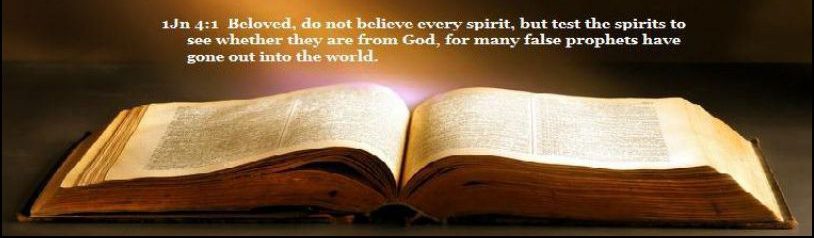













 Truth2Freedom's Blog