There are two ways to be fooled. One is to believe what isn’t true; the other is to refuse to believe what is true. —Soren Kierkegaard. "…truth is true even if nobody believes it, and falsehood is false even if everybody believes it. That is why truth does not yield to opinion, fashion, numbers, office, or sincerity–it is simply true and that is the end of it" – Os Guinness, Time for Truth, pg.39. “He that takes truth for his guide, and duty for his end, may safely trust to God’s providence to lead him aright.” – Blaise Pascal. "There is but one straight course, and that is to seek truth and pursue it steadily" – George Washington letter to Edmund Randolph — 1795. We live in a “post-truth” world. According to the dictionary, “post-truth” means, “relating to or denoting circumstances in which objective facts are less influential in shaping public opinion than appeals to emotion and personal belief.” Simply put, we now live in a culture that seems to value experience and emotion more than truth. Truth will never go away no matter how hard one might wish. Going beyond the MSM idealogical opinion/bias and their low information tabloid reality show news with a distractional superficial focus on entertainment, sensationalism, emotionalism and activist reporting – this blogs goal is to, in some small way, put a plug in the broken dam of truth and save as many as possible from the consequences—temporal and eternal. "The further a society drifts from truth, the more it will hate those who speak it." – George Orwell “There are two ways to be fooled. One is to believe what isn’t true; the other is to refuse to believe what is true.” ― Soren Kierkegaard
For our own share in the public plenty, peace, and tranquility.
When I have eaten and am full, I have reason to bless you for the good land that you have given me, Deuteronomy 8:10(ESV) a land which the eyes of the LORD my God are always upon, from the beginning of the year to the end of the year. Deuteronomy 11:12(ESV)
You make peace in my borders and fill me with the finest of the wheat: Psalm 147:14(ESV) I am delivered from the sound of archers at the watering places; there, therefore, will I repeat the righteous triumphs of the LORD, the righteous triumphs of his villagers in Israel. Judges 5:11(ESV)
I thank you that the powers that are set over me are servants of God for my good; Romans 13:4(ESV) that they seek the welfare of your people and speak peace to all your people. Esther 10:3(ESV)
Luke 2 In these lessons on the birth of Christ we focus on its paradoxes, and how these show that Jesus’ coming is for all who will receive Him.
Theme
The Most Important Birthday of All
Birthdays are usually very happy times. For that reason we generally try to remember the birthdays of close friends. We who have children cannot forget birthdays; the children will remind us. When we get older we are supposed to be too sophisticated to remind people that our birthday is coming, but we are always pleased when they remember.
Of all the birthdays that are remembered there is no birthday that has been remembered more faithfully by more people over a longer period of time than the birthday of Jesus Christ. The birth of Christ is not only remembered by Christian people. We would expect that of Christians. The birth of Christ is also remembered by many non-Christian people, and these even have a kind of sentimental attachment to the Christmas story. When we watch the television shows at Christmas we see a great deal that is easy to forget. But sometimes, even on the worst of programs, there will be a segment in which people get serious and talk about the birth of Jesus. Occasionally they will even read a portion of the chapter which is to occupy us now.
What is there about this story that so claims the attention of our contemporaries and will continue to claim the attention of many who come after us? Some would point to “the sentimental nature of the story.” Some would say, “It’s a religious story and maybe one of the best. People are kind of religious, that’s all.”
I think there is more to it than that. The story is a magnificent one. But above all it is a story of compelling paradoxes. It is a tale of purity surrounding an unwed mother. Under normal circumstances this would be the kind of thing men joke about, but there is no breath of low humor in the story. There is an aura of holiness over all of it. It is a tale of joy in what could well have been a tragedy. In Judaism at this time, to commit fornication and have evidence of it in the arrival of a child was a crime, punishable in some instances by stoning. Perhaps this is what Joseph was afraid of when he did not want to make Mary’s condition public, but wanted to put her away privately. Yet God worked in the story in such a way that Mary, who is faced with the problem, rejoiced in the Lord. When she saw Elizabeth she broke forth into that joyful hymn we know as “The Magnificat.”
Study Questions
What two paradoxes are mentioned?
Locate the biblical passages that mention each of these paradoxes. How are they described? What do you learn about both God and Christ?
Application
Reflection: How do non-Christians tend to respond to the real meaning of Christmas? How are their celebrations characterized? Are there any ways in which the Church has lost her focus and has fallen into some of the same practices or misplaced emphases?
For Further Study: To learn more about how we are to reflect Christ’s humility, download for free and listen to Donald Barnhouse’s message, “The Disposition of Christ.” (Discount will be applied at checkout.)
I discuss Ezekiel 13’s severe judgments against false prophets, especially women who claimed divine authority to speak in His name. I warn that modern figures who say “God told me” repeat this danger. I urge believers to avoid such teachers, to trust Scripture, and to rely on the Holy Spirit for truth.
In reading Ezekiel 13 I am once again struck by the majesty, sovereignty, and power of God. In this chapter God soundly condemns prophets who speak in His name things He has not said, nor did He send them.
The false prophets are condemned with promises of judgments, especially woman prophets, beginning in verse 17. He pronounces breathtaking woes upon them! It’s a fierce chapter.
After I read it, I was pondering why false teachers today feel so free to speak words God never said? I know they are not unaware of these passages in the Bible. I know they read them. Maybe not focus on these woes too long, but they know. So why? Do they believe this will not happen to them? That they are somehow special, and can escape? Or that they can convice God they should not be punished?
Here are just a few sections of the chapter. I’d urge you to read the entire chapter to get the flavor of it. It is really quite astounding.
Then the word of the LORD came to me, saying, “Son of man, prophesy against the prophets of Israel who prophesy, and say to those who prophesy from their own inspiration, ‘Listen to the word of the LORD! This is what the Lord GOD says: “Woe to the foolish prophets who are following their own spirit and have seen nothing!” (Ezekiel 13:1-3).
They are following their own spirit, did you catch that? And we know the unsaved person’s spirit is full of sin and depravity. God calls them foolish and pronounces woes. Woe is serious.
Woe: Hoy!!! is an interjection. It is a short utterance, usually only one word that more or less comes forth with great force. It expresses great emotion and can be an interjection of warning or distress. It represents a thought transformed into a feeling and expressed in a word—hoy, “woe!” The word can also be translated “alas, ah,” or even “ha!” Hoy is used regularly in lamentations, songs, and poems written to remember or commemorate a tragic personal or national event (Jer. 22:18). Source: Holman treasury of key Bible words.
The women prophets fare no better:
“Now you, son of man, set your face against the daughters of your people who are talking like prophets from their own imagination. Prophesy against them 18and say, ‘This is what the Lord GOD says: “Woe to the women who sew magic bands on all wrists and make veils for the heads of persons of every stature to capture souls! Will you capture the souls of My people, but keep the souls of others alive for yourselves? 19For handfuls of barley and pieces of bread, you have profaned Me to My people, to put to death some who should not die, and to keep others alive who should not live, by your lying to My people who listen to lies.”” (Ezekiel 13: 17-19).
The people should have known better. God rarely bestowed prophetic ability on women. Deborah, Huldah, Miriam were briefly endowed with the ability to prophesy. Otherwise, such instances were rare. The Jamieson, R., Fausset, A. R., & Brown, D. Commentary explains-
daughters—the false prophetesses; alluded to only here; elsewhere the guilt specified in the women is the active share they took in maintaining idolatry (Ez 8:14). It was only in extraordinary emergencies that God bestowed prophecy on women, for example on Miriam, Deborah, Huldah (Ex 15:20; Jdg 4:4; 2 Ki 22:14); and in the last days to come (Joe 2:28). The rareness of such instances enhanced their guilt in pretending inspiration.
Key phrase here: “The rareness of such instances enhanced their guilt in pretending inspiration.” So when you see these women today running around saying God told me, like Beth Moore has done for years, or Sarah Young writing all those ‘devotionals’ allegedly directly from God, if any of these older ladies or younger Bible teaching women say ‘God told me’, RUN. If you have been feeling left out because it seems everyone hears directly from God but you don’t, and you wonder what you’re doing wrong, DON’T. Praise the Spirit for protecting you from these woes that will surely come upon these Old Testament, New Testament and today’s false prophetesses.
Remember, it’s not just an Old Testament problem. Revelation 2:20 promises punishment upon the false prophetess ‘Jezebel’ who “calls herself a prophetess”, meaning, God did not call this woman to speak for Him, she adopted the prophetic mantle herself. Always a bad move. Doing so profanes God and causes woe for one’s self.
Many of these women today who carelessly utter ‘God told me’ statements and prophecies, would never call themselves a prophetess. They couch their prophecies and utterances in humble sounding verbiage and platitudes such as ‘check the scriptures yourself”. But how can I check the Bible to determine of their statement is correct when it comes from outside the Bible? Do not be fooled. The end will come for these Jezebels and it won’t be pretty. Stay far away or you will become collateral damage, as Jesus promises will happen to ‘Jezebel’s followers in Revelation 2:23.
Read your Bible and ask the Holy Spirit to illuminate it to your mind. Listen to your pastor and ask the Spirit to apply his words to your heart. Watch videos or audio from old timey preachers and be encouraged. There is no need to listen to vain women pronounce lies from their lips pretending they are God’s words. Stay on the narrow path and be blessed to receive His promise to be standing on Jesus’ right hand on Judgment Day.
J. Warner explores why traditional teaching methods in church are failing, emphasizing the necessity of moving from passive instruction to active training that includes testing, raising expectations, and real-world engagement. Through his practical TRAIN model, he shares strategies for parents, leaders, and students to develop resilient, well-equipped faith in today’s challenging cultural landscape.
Dr. John Crotts tackles tough questions from the latest theology survey, including abortion, sexuality, and divine election. He highlights how Scripture—not culture or opinion—must guide our understanding. This video helps believers think biblically and live with courage in a morally confused world.
The Triumph of Christ’s Suffering (1 Peter 3:18–22)
For Christ also died for sins once for all, the just for the unjust, so that He might bring us to God, having been put to death in the flesh, but made alive in the spirit; in which also He went and made proclamation to the spirits now in prison, who once were disobedient, when the patience of God kept waiting in the days of Noah, during the construction of the ark, in which a few, that is, eight persons, were brought safely through the water. Corresponding to that, baptism now saves you—not the removal of dirt from the flesh, but an appeal to God for a good conscience—through the resurrection of Jesus Christ, who is at the right hand of God, having gone into heaven, after angels and authorities and powers had been subjected to Him. (3:18–22)
Peter culminates his section on the unjust suffering of believers with the example of how Christ’s unjust suffering achieved God’s triumphant purpose. At the heart of the gospel is the fact that Jesus Christ, who was perfectly righteous, died for the utterly unrighteous. He triumphed through that undeserved suffering by, as God had predetermined, providing redemption for the world. In that one event, God had His intentions fulfilled and evil men also had their intentions fulfilled (Acts 2:23–24; 4:27–28; cf. Gen. 50:19–20). The mystery of divine providence is that God is absolutely sovereign, but His rule and predetermination is never apart from human responsibility. And the evil of man never reduces Him to a secondary cause. God is primary in providentially accomplishing every feature of His eternal will and plan. Christ’s perfect example of suffering unjustly and through that accomplishing the glorious saving purpose of God should give believers hope and confidence for the triumph of God’s purpose in the midst of their own suffering (cf. Rom. 8:17; 2 Cor. 2:14; Phil. 1:29). To give them a richer understanding of the blessed outcome of the cross’s injustice, Peter urged his readers to consider four elements of the Lord’s victory: His triumphant sin-bearing, His triumphant sermon, His triumphant salvation, and His triumphant supremacy.
HIS TRIUMPHANT SIN-BEARING
For Christ also died for sins once for all, the just for the unjust, so that He might bring us to God, (3:18a)
The conjunctions also and for point Peter’s readers back to the previous passage (3:13–17) and remind them that they ought not to be surprised or discouraged by suffering, since Christ triumphed in His suffering even though He died an excruciating death, and that of the most horrific kind—crucifixion. In contrast, the author of the letter to the Hebrews reminded his readers who suffered that they had “not yet resisted to the point of shedding blood” (12:4). Most believers will not die as martyrs, but even when they do, that death is the wages of their sin (Rom. 6:23). All people die because they are sinful, which makes even a death for righteousness’ sake a just death, in a sense. Man deserves to die; Jesus did not. Some translations (e.g., KJV, NKJV) of this verse render died as “suffered,” a reading based on variant Greek manuscripts. But the different translations do not change the meaning: Christ suffered in that He died for sins. Sin caused the sinless Christ’s death. This is the supreme example of suffering for righteousness’ sake (v. 18), and He willingly endured it on behalf of sinners (Isa. 53:4–6, 8–12; Matt. 26:26–28; John 1:29; 10:11, 15; Rom. 5:8–11; 8:32; 1 Cor. 15:3; 2 Cor. 5:15, 18–19; Gal. 1:4; Eph. 2:13–16; Col. 1:20–22; 1 Thess. 1:10; 1 Tim. 2:5–6; Heb. 2:9, 17; 7:27; 9:12, 24–28; 10:10; 13:12; 1 John 1:7; 2:2; 4:10; Rev. 1:5; 5:9). Earlier in this letter, Peter asserted that Christ “committed no sin” (2:22). He never had a single thought, word, or action that did not fully please God; rather His behavior in every respect was perfectly holy (Isa. 53:11; Luke 1:35; 2 Cor. 5:21; Heb. 4:15; 7:26; cf. John 5:30; Heb. 1:9). So Jesus died for sins in that He was “offered once to bear the sins of many” (Heb. 9:28; cf. Rom. 8:3; Heb. 10:5–10). In the Old Testament economy, God required animal sacrifices to symbolize the need to atone for sin by the death of an innocent substitute (Ex. 29:31–33, 36; Lev. 1:4–5; 8:34; 16:2–16; 17:11; 23:26–27; Num. 15:25; 1 Chron. 6:49); the New Testament presents Christ as that perfect sacrifice who fulfilled all the symbols in the reality of atoning for all sinners who would ever believe (John 3:14–15; Rom. 5:6–11; 1 Cor. 5:7; Heb. 9:11–14, 24, 28; 12:24; 13:11–12). The phrase once for all translates the word hapax, which means “of perpetual validity, not requiring repetition.” For the Jews so familiar with their sacrificial system, that was a new concept. To atone for sin, they had slaughtered millions of animals over the centuries. During their annual Passover celebration, as many as a quarter million sheep would be sacrificed. But Jesus Christ’s one sacrificial death ended that insufficient parade of animals to the altar and was sufficient for all and for all time (Heb. 1:3; 7:26–27; 9:24–28; 10:10–12), as He took the punishment due the elect and bore it for them, thus fully satisfying God’s righteous judgment. Thus, in Christ’s substitutionary death, He suffered the just for the unjust. As the perfect offering for sin, He willingly (John 10:15–18) and in accord with the Father’s redemptive purpose from before the foundation of the world (Acts 2:23; 4:27–28; 13:27–29; cf. 2 Tim. 1:9; Rev. 13:8) took upon Himself the entire penalty due the unrighteous (2:24). No text says it more concisely than 2 Corinthians 5:21, “He made Him who knew no sin to be sin on our behalf, so that we might become the righteousness of God in Him.” Much more can be said about sin and imputation, as is elsewhere (cf. Rom. 3–6), but here Peter directs his statements at the practical, referring to the substitutionary suffering of Jesus as an illustration of how the most extreme affliction and injustice resulted in the singularly supreme triumph of salvation. This should be eminently encouraging to believers who suffer unjustly. The triumph in Christ’s death is expressed in the phrase that He might bring [believers] to God. The divine tearing of the temple veil from top to bottom (Matt. 27:51) symbolically demonstrated the reality that He had opened the way to God. The heavenly Holy of Holies, the “throne of grace” (Heb. 4:16), was made available for immediate access by all true believers. As royal priests (2:9), all believers are welcomed into God’s presence (Heb. 4:16; 10:19–22). The verb translated He might bring (prosagō) expresses the specific purpose of Jesus’ actions. It often describes someone’s being introduced or given access to another. In classical Greek the noun form refers to the one making the introduction. In ancient courts certain officials controlled access to the king. They verified someone’s right to see him and then introduced that person to the monarch. Christ now performs that function for believers. Hebrews 6:20 says concerning the inner court of heaven that He “has entered as a forerunner for [believers], having become a high priest forever.” Christ entered to bring the elect into communion with God (cf. Ps. 110:4; Heb. 2:17–18; 3:1–2; 4:14–15; 5:4–6; 7:17, 21–22, 25; 8:1–2, 6; 9:13–14).
CHRIST’S TRIUMPHANT SERMON
having been put to death in the flesh, but made alive in the spirit; in which also He went and made proclamation to the spirits now in prison, who once were disobedient, (3:18b–20a)
Some critics have disputed Christ’s resurrection from the dead by claiming He never died in the first place. According to such skeptical reasoning, He merely fainted into a semi-coma on the cross, was revived in the coolness of the tomb, unwrapped Himself, and walked out. But the phrase having been put to death in the flesh leaves no doubt that on the cross Jesus’ physical life ceased. To hasten the deaths of the two thieves at Calvary crucified on either side of Christ, the Roman executioners broke their legs (John 19:31–32). (Crucifixion victims postponed their deaths as long as possible by pushing themselves up on their legs, which allowed them to gasp for another breath.) However, the soldiers did not bother to break Christ’s legs because they could see He was already dead. Confirming that reality, one of them pierced His side with a spear, causing blood and water to flow out, a physiological sign He was certainly dead (19:33–37). The phrase made alive in the spirit is a reference to Jesus’ eternal inner person. The Greek text omits the definite article, which suggests Peter was not referring to the Holy Spirit, but that the Lord was spiritually alive, contrasting the condition of Christ’s flesh (body) with that of His spirit. His eternal spirit has always been alive, although His earthly body was then dead; but three days later His body was resurrected in a transformed and eternal state. Some interpreters think the aforementioned phrase describes Jesus’ resurrection. But if the apostle had intended to make such a reference he would have used an expression such as, “He was put to death in the flesh but made alive in the flesh.” The resurrection was not merely a spiritual reality—it was physical (cf. Luke 24:39; John 20:20, 27). Thus Peter’s point here must be that though Jesus’ body was dead, He remained alive in His spirit (cf. Luke 23:46). Although Christ is the One who is eternal life itself (1 John 5:20), He did experience a kind of spiritual death—defined not as cessation of existence but an experience of separation from God. While on the cross, Jesus was fully conscious as He cried out, “My God, My God, why have You forsaken Me?” (Matt. 27:46). That utterance reflected His temporary and humanly incomprehensible sense of alienation from the Father while God’s full wrath and the burden of sinners’ iniquities were placed on Him and judged (cf. 2 Cor. 5:21; Gal. 3:10–13; Heb. 9:28). For that brief time, Christ’s experience paralleled the condition of unbelievers who live, paradoxically, in spiritual death (separation from God) in this life and face divine judgment in physical death (cf. Dan. 12:2; Matt. 25:41, 46; Mark 9:43–48; John 3:36; Rev. 20:15). In His death for sin and resurrection to eternal glory, Christ conquered death; however, unregenerate sinners die their own deaths for their unrepented sins and go to eternal shame and punishment. In which also refers to what occurred with His living spirit while His dead physical body lay in the tomb (concerning His burial, see Matt. 27:57–60; John 19:38–42). He went (poreuomai) denotes going from one place to another (see also v. 22, where the word is used concerning the ascension). When the text says Christ made proclamation to the spirits now in prison, it is indicating that He purposefully went to an actual place to make a triumphant announcement to captive beings before He arose on the third day. The verb rendered made proclamation (kērussō) means that Christ “preached” or “heralded” His triumph. In the ancient world, heralds would come to town as representatives of the rulers to make public announcements or precede generals and kings in the processions celebrating military triumphs, announcing victories won in battle. This verb is not saying that Jesus went to preach the gospel, otherwise Peter would likely have used a form of the verb euangelizō (“to evangelize”). Christ went to proclaim His victory to the enemy by announcing His triumph over sin (cf. Rom. 5:18–19; 6:5–6), death (cf. Rom. 6:9–10; 1 Cor. 15:54–55), hell, demons, and Satan (cf. Gen. 3:15; Col. 2:15; Heb. 2:14; 1 John 3:8). Christ directed His proclamation to the spirits, not human beings, otherwise he would have used psuchai (“souls”) instead of pneumasin, a word the New Testament never uses to refer to people except when qualified by a genitive (e.g., Heb. 12:23; “the spirits of the righteous”). Ever since the fall of Satan and his demons, there has been an ongoing cosmic conflict between the angelic forces of good and evil (cf. Job 1–2; Dan. 10:13; Zech. 3:1; Eph. 6:16; Rev. 12:3–4; 16:12–14). After the devil’s apparent victory in inducing Adam and Eve (and consequently all their descendants) to fall into sin (Gen. 3:1–7; Rom. 5:12–14), God promised to the Evil One himself eventual destruction by Messiah, who would triumph with a crushing victory over him, despite suffering a minor wound from him (Gen. 3:15). Satan therefore sought to prevent this by the genocide of the Jews (cf. Est. 3:1–4:3) and the destruction of the Messianic line itself during the time of Joash (2 Chron. 22:10–12; cf. 23:3, 12–21). When all that failed, he attempted to kill the infant Messiah (Matt. 2:16–18). Thwarted at that, he tried to tempt Christ Himself to abandon His mission (Matt. 4:1–11; Luke 4:1–13). Later, Satan incited the Jewish leaders and their followers to mob action that resulted in the Lord’s crucifixion (Mark 15:6–15). The diabolical Jewish leaders even saw to it that Jesus’ tomb was guarded lest He exit the grave (Matt. 27:63–66). The demons may have been celebrating their seeming victory in the wake of Christ’s death and burial—but only to soon be profoundly and permanently disappointed when the living Christ Himself arrived. The angelic spirits Christ was to address were now in prison (phulakē; an actual place of imprisonment, not merely a condition). At the present time believers must struggle against the powers of the unbound demon forces as those forces influence them through the corrupt world system over which Satan has rule. The apostle Paul told the Ephesian church, “Our struggle is not against flesh and blood, but against the rulers, against the powers, against the world forces of this darkness, against the spiritual forces of wickedness in the heavenly places” (Eph. 6:12), which clearly says that the demonic hierarchy is actively and freely conducting its evil work in the world. It was not to such unbound spirits, but to the bound demons that Christ went to announce His triumph. The book of Revelation calls this prison the “bottomless pit,” literally the “pit of the abyss.” Some analysis of Revelation 9:1–2 provides further understanding of the prison and its captive subjects.
With his theater of operations now restricted to the earth, and his time running out (cf. 12:12), Satan will now seek to marshal all of his demonic hosts—those already on earth, those cast to earth with him, and those incarcerated in the bottomless pit (literally “the pit of the abyss”). Abussos (bottomless) appears seven times in Revelation, always in reference to the abode of incarcerated demons (cf. 9:2, 11; 11:7; 17:8). Satan himself will be held prisoner there during the Millennium, chained and locked up with the other demonic prisoners (20:1, 3). Scripture teaches that God has sovereignly chosen to incarcerate certain demons in that pit of punishment. Second Peter 2:4 says that “God did not spare angels when then sinned, but cast them into hell and committed them to pits of darkness, reserved for judgment.” The phrase “cast them into hell” is a participle derived from the Greek noun Tartarus. Just as Jesus used a term for hell derived from the Jewish vernacular (Gehenna; cf. Matt. 5:22), so Peter chose a term from Greek mythology with which his readers would be familiar. Tartarus was the name used in Greek literature for the place where the worst sinners, those who had offended the gods personally, went after death and were punished. The place where God keeps demons imprisoned is actually different from the imaginary place of Greek mythology. Yet the use of the term Tartarus does seem to convey the idea that because of the heinousness of their sin, God has imprisoned certain fallen angels in such a place of severest torment and isolation. They remain in that place, awaiting their sentencing to final punishment in the eternal lake of fire (Rev. 20:10, 13–14). The demons incarcerated in the abyss are undoubtedly the most wicked, vile, and perverted of all the fallen angels. Jude describes some of them as “angels who did not keep their own domain, but abandoned their proper abode,” noting that God “has kept [them] in eternal bonds under darkness for the judgment of the great day, just as Sodom and Gomorrah and the cities around them, since they in the same way as these indulged in gross immorality and went after strange flesh, are exhibited as an example in undergoing the punishment of eternal fire” (Jude 6–7). That passage describes certain fallen angels who left the angelic domain to indulge in sexual sin with humans, just as the men of Sodom and Gomorrah attempted to engage in perverted sex with angels (Gen. 19:1, 4–5). Peter reveals when this angelic sin occurred:
For Christ also died for sins once for all, the just for the unjust, so that He might bring us to God, having been put to death in the flesh, but made alive in the spirit; in which also He went and made proclamation to the spirits now in prison, who once were disobedient, when the patience of God kept waiting in the days of Noah, during the construction of the ark, in which a few, that is, eight persons, were brought safely through the water. (1 Peter 3:18–20).
The “spirits now in prison” in the abyss are those “who once were disobedient … in the days of Noah.” They are the demons who cohabited with human women in Satan’s failed attempt to corrupt the human race … (Gen. 6:1–4). That demons still fear being sent to the abyss is evident from the fact that some pled with Jesus not to send them there (Luke 8:31). That suggests that other demons have been incarcerated there since the events of Genesis 6. The demons released by Satan at the fifth trumpet may not include those who sinned in Noah’s day (cf. Jude 6), since they are said to be in “eternal bonds” (Jude 6) until the final day when they are sent to the eternal lake of fire (20:10; Jude 7). Other demons imprisoned in the abyss may be the ones released. So the pit is the preliminary place of incarceration for demons from which some are to be released under this judgment. (John MacArthur, Revelation 1–11, MacArthur New Testament Commentary [Chicago: Moody, 1999], 257–58)
Peter further identifies the demons to whom Christ preached His triumphant sermon as those who once were disobedient. As the reason that God bound them permanently in the place of imprisonment, that disobedience is specifically related to something that happened in the time of Noah. What was that disobedience that had such severe and permanent results? Peter’s readers must have been familiar with the specific sin committed by the imprisoned demons because the apostle did not elaborate on it. Genesis 6:1–4 gives the account of this demonic disobedience:
Now it came about, when men began to multiply on the face of the land, and daughters were born to them, that the sons of God saw that the daughters of men were beautiful; and they took wives for themselves, whomever they chose. Then the Lord said, “My Spirit shall not strive with man forever, because he also is flesh; nevertheless his days shall be one hundred and twenty years.” The Nephilim were on the earth in those days, and also afterward, when the sons of God came in to the daughters of men, and they bore children to them. Those were the mighty men who were of old, men of renown.
Satan and his angels had already rebelled and been thrown out of heaven and eternally fixed in a state of unmixed wickedness. Satan had been successful in the Garden and his demonic force had been at work motivating corruption in the world. The Genesis 6 account was perhaps the most heinous effort they made related to the God-ordained provision of marriage (v. 1). The demons mounted an attack on marriage and procreation that wickedly influenced subsequent generations. “The sons of God” are juxtaposed against “the daughters of men.” The contrast is between supernatural beings and women. “Sons of God” cannot be men, or they would be called “sons of men.” Neither can they be righteous men of a righteous line of people, or Sethites (as some suggest), because that does not contrast with “daughters of men,” as if all women were unrighteous or all righteous “sons of God” were men only. The oldest interpretation, the traditional Jewish view of ancient rabbis and modern Jewish commentators, as well as of the church fathers, is that “the sons of God” were demons, or fallen angels. The context of judgment in the Flood precludes holy angels from being in view (see Gordon J. Wenham, Genesis 1–15, Word Biblical Commentary [Waco, Tex.: Word, 1987), 1:139). The phrase “sons of God” (Heb., bene haelohim) always refers to angels in its other Old Testament uses (cf. Job 1:6; 2:1; 38:7; Pss. 29:1; 89:6). The term is always used of those brought directly into being by God—not those who are procreated through human birth, such as Sethites, nobles, kings, or aristocracy. Heavenly spirits are being contrasted with earthly women. These, then, are fallen angels who acted perversely, overstepping the boundaries of their realm. They defied God by leaving their spirit world to enter the human realm (as Satan had entered the animal world in Eden). This is the first biblical record of demon-possession, demons indwelling people. Those wicked spirits were drawn to females, whom they saw as “beautiful” in some perverse and lascivious way. They are “the daughters” mentioned in 6:1 (not a special class of women), whom the demons took for wives. The Hebrew is Laqach, which describes marriage transactions (Gen. 4:19; 11:29; 12:19; 20:2–3; 25:1), not rape or fornication. That certainly raises the question: How can spirit beings marry women? It is possible only if they dwell in human bodies, as angels can and have done (cf. Gen. 18:1–2, 8; 19:1, 5; Heb. 13:2). Those demons entered men’s bodies (a phenomenon frequently encountered by Christ and the apostles in the Gospel record), as is clear from the children who were born from those unions (Gen. 6:4). Though the children were human, there was a pervasive influence on them from the demons.
Then the Lord saw that the wickedness of man was great on the earth, and that every intent of the thoughts of his heart was only evil continually. The Lord was sorry that He had made man on the earth, and He was grieved in His heart. The Lord said, “I will blot out man whom I have created from the face of the land, from man to animals to creeping things and to birds of the sky; for I am sorry that I have made them.” (Gen. 6:5–7)
That the people were open to demons shows the evil of man at the time. Those wicked, demon-possessed men then produced a generation that was nothing but corrupt inside and out, needing to be destroyed.
Now the earth was corrupt in the sight of God, and the earth was filled with violence. God looked on the earth, and behold, it was corrupt; for all flesh had corrupted their way upon the earth. Then God said to Noah, “The end of all flesh has come before Me; for the earth is filled with violence because of them; and behold, I am about to destroy them with the earth. (Gen. 6:11–13)
The original temptation in the Garden may help explain the demonic strategy:
Now the serpent was more crafty than any beast of the field which the Lord God had made. And he said to the woman, “Indeed, has God said, ‘You shall not eat from any tree of the garden’?” The woman said to the serpent, “From the fruit of the trees of the garden we may eat; but from the fruit of the tree which is in the middle of the garden, God has said, ‘You shall not eat from it or touch it, or you will die.’ ” The serpent said to the woman, “You surely will not die! For God knows that in the day you eat from it your eyes will be opened, and you will be like God, knowing good and evil.” When the woman saw that the tree was good for food, and that it was a delight to the eyes, and that the tree was desirable to make one wise, she took from its fruit and ate; and she gave also to her husband with her, and he ate. (Gen. 3:1–6)
Satan’s plan in Eden was to convince Eve that she could become like God. She and Adam could be exalted to a higher life, escaping even the few limitations they experienced. If that was attractive—becoming more “supernatural”—before sin and death reigned, how attractive would it be after? Genesis 4 and 5 record that death reigned through all of creation and, with it, pain and sorrow (eight times in chapter 5 the phrase “he died” appears). It would be consistent with Satan’s strategy to promise a supernatural elevation, a transcendent experience, communion with the spirits, and even victory over death and eternal life, through a perverse marital union. Satan has always promised that if man is open to the spirit world, he can circumvent judgment and gain immortality. That insidious promise has a familiar ring to it. Certain false religions since then, beginning as early as the Babylonian mystery religions with their pagan fertility rites, have promised some magical way for humans to attain a higher level of existence (immortality or even godhood), with out-of-the-ordinary sexual relations playing a key part in the process. But in spite of Satan’s involvement and promise, the offspring of the Genesis 6 unions, though demonized, were only human beings and therefore targets for the divine judgment about to occur. When God drowned the world 120 years later, they would all perish because they were all “flesh” (Gen. 6:3). They were nothing other than depraved, demon-dominated people. Genesis 6:4 adds: “The Nephilim were on the earth in those days, and also afterward, when the sons of God came in to the daughters of men, and they bore children to them. Those were the mighty men who were of old, men of renown.” “Nephilim” transliterates a Hebrew word meaning “the falling ones” or those of great power that crushes people. The text says they were on the earth already when the embodied demons went after the women. The term is used in one other place, Numbers 13:30–33, where it describes not a race of people, since none survived the Flood, but people in the land of Canaan who were powerful conquerors threatening Israel. When the faithless spies who went into Canaan wanted to stop Israel from going to battle, they described the people as Nephilim, borrowing the ancient transliteration to make their point, because the word was familiarly used to describe frightening enemies. The phrase “and also afterward” makes the purpose of the Nephilim’s mention clear. After the “sons of God” and “daughters of men” married, they proliferated children who were like the Nephilim—“mighty men who were of old, men of renown.” Out of those unions came an abundance of infamous, powerful warriors, who like the Nephilim were heroes in a dangerous way—attaining power, reputation, and inducing fear in ancient times by being fierce and deadly. All of those offspring, along with the earlier Nephilim, were drowned, with the rest of the world (Genesis 7:23–24). What seals this interpretation is the text here by Peter. The Lord proclaimed His triumph over Satan, sin, death and hell to the very worst of demons, who disobeyed God in the worst manner in the days of Noah before the Flood. The fallen angels’ long effort to demonize people, hinder the redemptive purpose of God, and prevent the “seed” of the woman (Gen. 3:15) from crushing Satan’s head and sending the demons into the lake of fire (Matt. 25:41; Rev. 19:20; 20:10, 14, 15) was ultimately foiled at the Cross. In his second letter, Peter also briefly refers to the bound demons’ sin:
For if God did not spare angels when they sinned, but cast them into hell and committed them to pits of darkness, reserved for judgment; and did not spare the ancient world, but preserved Noah, a preacher of righteousness, with seven others, when He brought a flood upon the world of the ungodly; and if He condemned the cities of Sodom and Gomorrah to destruction by reducing them to ashes, having made them an example to those who would live ungodly lives thereafter. (2 Peter 2:4–6)
The perversion that brought the Flood is linked to the perversion that brought the fire and brimstone on Sodom and Gomorrah (Gen. 18–19). Jude makes the same parallel:
And angels who did not keep their own domain, but abandoned their proper abode, He has kept in eternal bonds under darkness for the judgment of the great day, just as Sodom and Gomorrah and the cities around them, since they in the same way as these indulged in gross immorality and went after strange flesh, are exhibited as an example in undergoing the punishment of eternal fire. (vv. 6–7)
Those wicked spirits were sent to the abyss because they overstepped the boundaries of God’s tolerance. They filled the earth with their wretchedness to such an extent that not even 120 years of Noah’s preaching convinced anyone beyond his family to repent, believe in God, and escape His judgment. Since that time, the demons who committed such heinous sins had been bound and imprisoned when Jesus died at Calvary. Perhaps by then they thought He had lost the upper hand over them, but such was not the case. Instead He appeared in their midst and proclaimed His triumph. Colossians 2:15 declares, “When [God] had disarmed the rulers and authorities, He made a public display of them, having triumphed over them through [Christ].” Peter’s point is riveting and dramatic—believers will suffer “for the sake of righteousness” (3:14), for doing what is right (v. 17). All suffering believers can be encouraged that such is not a disaster but rather the path to spiritual victory. The unequalled example of such triumph is the Lord Himself, who suffered unjustly and through that suffering conquered sin and the demons of hell (v. 22). God indeed uses unjust persecution mightily for His holy purposes.
HIS TRIUMPHANT SALVATION
when the patience of God kept waiting in the days of Noah, during the construction of the ark, in which a few, that is, eight persons, were brought safely through the water. Corresponding to that, baptism now saves you—not the removal of dirt from the flesh, but an appeal to God for a good conscience—through the resurrection of Jesus Christ, (3:20b–21)
The biblical account of when the patience of God kept waiting in the days of Noah, before sending the Flood, Peter saw as an analogy for the triumphant salvation provided through Jesus Christ. God was patient with the corrupt world, as Genesis 6:3 states: “My Spirit shall not strive with man forever, because he also is flesh; nevertheless his days shall be one hundred and twenty years.” During that 120-year grace period Noah was “a preacher of righteousness” (2 Peter 2:5) who announced judgment but also offered the way of deliverance. The members of Noah’s family were the only eight persons on earth to heed the divine warning and escape the coming catastrophe of a worldwide flood. Hence only Noah, his wife, his three sons, and their wives were brought safely through the water while the rest of mankind was drowned in God’s act of judgment (Gen. 6:9–8:22). During the grace period, people witnessed the construction of the ark by Noah and his sons. While its purpose was to rescue Noah and his family from the Flood, the ark also was a vivid object lesson to unbelievers of God’s impending judgment on the world. The lack of responsiveness to the “sermon of the ark” reveals the profound wickedness in Noah’s day: “Then the Lord saw that the wickedness of man was great on the earth, and that every intent of the thoughts of his heart was only evil continually” (Gen. 6:5). Peter used corresponding to that, a phrase containing the word antitupon, which means “copy,” “counterpart,” or “figure pointing to” to make the transition to the salvation in Christ. That word yielded the theological term antitype, which in the New Testament describes an earthly expression of a heavenly reality—a symbol or analogy of a spiritual truth (cf. John 3:14–16; Heb. 4:1–10; 8:2, 5). The preservation in the ark of those who believed God is analogous to the salvation believers have in Christ. Some commentators believe the Flood is the antitype because antitupon (v. 21) and hudatos (water, v. 20) are both neuter nouns. But it is better to view the antitype in the broader sense of Noah and his family’s total experience with the ark. God preserved them from the flood waters while the rest of mankind perished. Noah and his children are a genuine type of the salvation in Jesus Christ, which preserves believers safely through God’s judgment on sinners. Certain theological traditions misinterpret Peter’s statement baptism now saves you to refer to spiritual salvation by water baptism (i.e., baptismal regeneration). But baptism (from baptizō) simply means “to immerse,” and not just in water. Peter here uses baptism to refer to a figurative immersion into Christ as the ark of safety that will sail over the holocaust of judgment on the wicked. Noah and his family were immersed not just in water, but in the world under divine judgment. All the while they were protected by being in the ark. God preserved them in the midst of His judgment, which is what He also does for all those who trust in Christ. God’s final judgment will bring fire and fury on the world, destroying the entire universe (cf. 2 Peter 3:10–12); but the people of God will be protected and taken into the eternal new heavens and new earth (v. 13). Peter made clear that he did not want readers to think he was referring to water baptism when he specifically said not the removal of dirt from the flesh. (For a more complete discussion of baptism and regeneration, see John MacArthur, Acts 1–12, MacArthur New Testament Commentary [Chicago: Moody, 1994], 73–75.) That he was actually referring to a spiritual reality when he wrote baptism now saves is also clear from the phrase, an appeal to God for a good conscience—through the resurrection of Jesus Christ. The only baptism that saves people is dry—the spiritual one into the death as well as the resurrection of Christ—of those who appeal to God to place them into the spiritual ark of salvation safety (cf. Rom. 10:9–10). Just as the Flood immersed all people in the judgment of God, yet some passed through safely, so also His final judgment will involve everyone, but those who are in Christ will pass through securely. The experience of Noah’s family in the Flood is also analogous to the experience of everyone who receives salvation. Just as they died to their previous world when they entered the ark and subsequently experienced a resurrection of sorts when they exited the ark to a new post-Flood world, so all Christians die to their old world when they enter the body of Christ (Rom. 7:4–6; Gal. 2:19–20; Eph. 4:20–24). They subsequently enjoy newness of life that culminates one day with the resurrection to eternal life. Paul instructed the Romans:
Or do you not know that all of us who have been baptized into Christ Jesus have been baptized into His death? Therefore we have been buried with Him through baptism into death, so that as Christ was raised from the dead through the glory of the Father, so we too might walk in newness of life. (Rom. 6:3–4; cf. 1 Cor. 6:17; 10:2; 12:13; Gal. 3:27; Eph. 4:5)
Therefore, God provides salvation because a sinner, by faith, is immersed into Christ’s death and resurrection and becomes His own through that spiritual union. Salvation does not occur by means of any rite, including water baptism (the removal of dirt from the flesh), but by an appeal to God for a good conscience. Appeal (eperōtēma) is a technical term that was used in making contracts. Here it refers to agreeing to meet certain divinely-required conditions before God places one into the ark of safety (Christ). Anyone who would be saved must first come to God with a desire to obtain a good (cleansed) conscience and a willingness to meet the conditions (repentance and faith) necessary to obtain it. By appealing to God for a good conscience, that is, a conscience free from accusation and condemnation (cf. Rom. 2:15), the unregenerate show that they are tired of the sin that dominates them and desire to be delivered from its burden of guilt and the threat of hell (cf. Luke 18:13–14; Acts 2:37–38). They crave the spiritual cleansing that comes through Christ’s shed blood (3:18; cf. 1:18–19; 2:24; Heb. 9:14; 10:22). Therefore they repent of their sins and plead for God’s forgiveness and the removal of the guilt that plagues their consciences, all of which is available through trusting in the atoning sacrifice of Christ. Water baptism does not save; it is the Holy Spirit’s baptizing the sinner safely into Jesus Christ—the elect’s only ark of salvation—that forever rescues the sinner from hell and brings him securely to heaven. This is the ultimate triumph of Christ’s suffering for them, and the pledge of triumph in their own unjust suffering.
HIS TRIUMPHANT SUPREMACY
who is at the right hand of God, having gone into heaven, after angels and authorities and powers had been subjected to Him. (3:22)
Peter concludes this passage with a glorious final note concerning Jesus Christ’s triumphant suffering. Both the Old and New Testaments affirm the right hand as a place of prestige and power (Gen. 48:18; 1 Chron. 6:39; Pss. 16:8; 45:9; 80:17; 110:1; Mark 16:19; Acts 2:33; 5:31; Rom. 8:34; Eph. 1:20; Heb. 12:2). The right hand of God is the preeminent place of honor and authority for all eternity (Ex. 15:6; Deut. 33:2; Pss. 16:11; 18:35; 45:4; 48:10; 89:13; 98:1; 118:15–16; Matt. 26:64; Acts 7:55–56; Col. 3:1; Heb. 1:3; 8:1; Rev. 5:7; cf. Rev. 2:1). That is where Christ went after He finished His work of redemption, and that is where He rules from today. After describing Jesus’ humility, suffering, and death, the apostle Paul confidently asserted:
For this reason also, God highly exalted Him, and bestowed on Him the name which is above every name, so that at the name of Jesus every knee will bow, of those who are in heaven and on earth and under the earth, and that every tongue will confess that Jesus Christ is Lord, to the glory of God the Father. (Phil. 2:9–11)
The author of Hebrews referred to Christ’s position of supremacy several times, beginning early in the letter:
And He is the radiance of His glory and the exact representation of His nature, and upholds all things by the word of His power. When He had made purification of sins, He sat down at the right hand of the Majesty on high, having become as much better than the angels, as He has inherited a more excellent name than they. For to which of the angels did He ever say, “You are My Son, today I have begotten You”? And again, “I will be a Father to Him and He shall be a Son to Me”? And when He again brings the firstborn into the world, He says, “And let all the angels of God worship Him.” (Heb. 1:3–6; cf. Acts 5:31; 7:55–56; Rom. 8:34; Heb. 10:12; 12:2)
Having gone into heaven is a reference to Christ’s ascension, which Luke describes in the opening chapter of Acts:
He was lifted up while they were looking on, and a cloud received Him out of their sight. And as they were gazing intently into the sky while He was going, behold, two men in white clothing stood beside them. They also said, “Men of Galilee, why do you stand looking into the sky? This Jesus, who has been taken up from you into heaven, will come in just the same way as you have watched Him go into heaven.” (Acts 1:9–11)
When He ascended to heaven, “Jesus … entered as a forerunner for [believers], having become a high priest forever according to the order of Melchizedek” (Heb. 6:20). From that position as heavenly high priest, Christ continuously intercedes for believers (Heb. 7:25; 9:24). Christ assumed His position of supremacy over angels and authorities and powers (angelic beings, including Satan and his demons; see Gen. 19:1; 28:12; Pss. 78:49; 148:2; Matt. 4:11; 13:41; 25:31; Luke 2:15; 15:10; Rom. 8:38; Eph. 3:10; 6:12; Col. 1:16; 2:18; Jude 6; Rev. 5:11; 8:2) after they had been subjected to Him by the Cross, which fact He proclaimed to the demons in prison. It shows again that He was not preaching to demons a message of salvation, since demons cannot be saved, but are damned forever: “For assuredly He does not give help to angels, but He gives help to the descendant of Abraham” (Heb. 2:16). Peter’s concluding statement to this passage and chapter emphasizes again that the Cross and the Resurrection are what subjected the fallen and rebellious angelic hosts to Jesus Christ, and saved souls from eternal judgment—the greatest triumph ever of the suffering of a righteous person. It also echoes Paul’s words to the Ephesians:
In accordance with the working of the strength of [God’s] might which He brought about in Christ, when He raised Him from the dead and seated Him at His right hand in the heavenly places, far above all rule and authority and power and dominion, and every name that is named, not only in this age but also in the one to come. (Eph. 1:19–21; emphases added)
The word rendered had been subjected (from hupotassō, “to line up in rank under”) describes the present status of all spiritual beings in relation to Christ. He is supreme over all (Phil. 2:9–11). Christ’s substitutionary death for sinners was an act of grace (Acts 15:11; Rom. 5:15, 17; Eph. 1:7; 2:5, 8–9; Titus 2:11; 3:7; Heb. 2:9)—triumphant, sovereign grace extended to depraved, wicked men and women who actually deserved nothing but eternal judgment from God. In his hymn “And Can It Be,” Charles Wesley wrote,
         ’Tis mystery all! Th’ Immortal dies!
         Who can explore His strange design?
         In vain the first born seraph tries
         To sound the depths of love Divine!
         ’Tis mercy all! Let earth adore,
         Let angel minds inquire no more.
It was lost human beings for whom Christ died—the lost angels could only listen in dismay to Christ’s proclamation of victory. Even the elect angels can only marvel at what they cannot fully understand (cf. 1:12). Believers should be grateful that “while [they] were still helpless, at the right time Christ died for the ungodly” (Rom. 5:6). Again, how mightily does the Lord God bring triumph out of the persecution of the Savior. And saints can be confident He will do the same in their persecutions. “But thanks be to God, who always leads us in triumph in Christ, and manifests through us the sweet aroma of the knowledge of Him in every place” (2 Cor. 2:14). Eventually they will be at God’s right hand in heaven (Rev. 3:21), even ruling over the angels (1 Cor. 6:3). Believers not only look to Christ as an example of triumph in unjust suffering, they also join fully and forever in that triumph.
MacArthur, J. F., Jr. (2004). 1 Peter (pp. 205–221). Moody Publishers.
3:18–22. No better illustration of unjust suffering exists than Jesus (v. 18), who suffered concerning sins once for all that were not His. He is the just One who died for the unjust to bring people to God. That He was put to death in the flesh suggests violence, but He was made alive in the spirit, possibly implying that the Holy Spirit played a part in the resurrection (see the comments on Rm 1:4; 8:11), or the reference might be to Jesus’ human spirit. Although both views are possible, the reference is probably to the role of the Holy Spirit in the resurrection of Jesus (Jesus’ spirit did not die and thus did not have to be made alive). The cooperation of the three persons of the Godhead in all of Jesus’ works is thus emphasized. Here Peter begins a long digression, possibly the most difficult NT passage to interpret. Through the agency of the Spirit, Jesus went and made proclamation to the spirits now in prison, who are explained in verse 20. They were people who were alive during the 100 years it took Noah to build the ark (cf. Gn 5:32; 7:6). Jesus, with the cooperation of the Holy Spirit, was preaching through Noah, but the testimony was rejected and those people drowned. Now they are spirits (disembodied souls) imprisoned awaiting final judgment. The deliverance of Noah’s family is seen as a figure of the gospel. Those entering the ark by faith experienced deliverance. Those who today enter Christ by faith find salvation (see 1Pt 1:5, 9). The phrase Corresponding to that is often overlooked by those who insist wrongly that baptism is necessary for salvation. Noah and his family correspond to the believers to whom Peter is writing. The waters of the flood in Noah’s day manifested God’s judgment. They correspond to the waters of baptism, but just as the flood waters saved no one, neither do the waters of baptism (Noah was brought safely through the water, v. 20, but was not saved by it). Baptism is a profound figure of escaping God’s judgment by being united with Christ in His death and resurrection (see the comments on Rm 6:1–10). By faith Noah entered the ark and the ark rose above the waters of judgment. Peter’s believing audience are in Christ by faith (cf. 1:5, 9) and are saved because of His resurrection (cf. the mention of resurrection in 1:3, in context with faith in 1:5, 9). Just as Noah was saved by being in the ark, so believers are saved by being in Christ, not by baptismal waters. Peter indicates more directly that baptism does not save. The means of salvation is not the removal of dirt from the flesh at the moment of baptism, but an appeal to God for a good conscience. The appeal meant “a pledge,” probably the testimony one gives before he is baptized in water. But baptism also pictures resurrection, for the believer in Christ has been raised (cf. Rm 6:4). Peter continues Jesus’ history beyond resurrection to His return to heaven. The God-man now sits at the right hand of God, where angels and authorities are subject to His control.
Barbieri, L. A. (2014). 1 Peter. In M. A. Rydelnik & M. Vanlaningham (Eds.), The moody bible commentary (p. 1963). Moody Publishers.
The victory of Christ’s suffering (3:18–22)
Again Peter returns to the cross. Our willingness to suffer for the sake of Christ is grounded in the wonder of Christ’s willingness to suffer death for our sake. This passage stands in close relation to 2:21–24. There, too, we read of Christ’s atoning death as our substitute. There, too, the merciful purpose of Christ’s suffering is declared (that we might die to sins, live for righteousness, and be healed, 2:24). Yet Peter now presents the suffering Christ as the Victor. He adds to his teaching about the saving power of Christ’s death a fresh emphasis on the saving power of his resurrection. In the earlier passage, Peter points us to the example of Christ’s meekness in suffering. We are called to imitate him as we suffer for his sake. In this second passage, Peter tells us that Christ who suffered and died was made alive again, has gone into heaven and is at God’s right hand. He is the Conqueror; we share his triumph. Persecuted and suffering Christians need to remember both the humiliation and the exaltation of Christ. His patient suffering will show them meekness when they are interrogated. His glorious triumph will give them courage to face their accusers. Undergirding both the meekness and the boldness of the Christian is the saving work of Christ. Christ died for sins once for all. Christ’s saving victory flows from the fact that his sacrifice was perfect, final, and therefore not to be repeated in history or in symbol. If Christ’s sacrifice were not complete, it would have to be offered again, as the Old Testament sacrifices were. But, as the author of Hebrews teaches us, Christ’s sacrifice was of a different order. If he had offered no better sacrifice than the priests, and had entered no better sanctuary than they, then he would have had to ‘suffer many times since the creation of the world’. But he is the Son of God, his royal priesthood is heavenly, his sacrifice is his offering of his own blood. ‘But now he has appeared once for all at the end of the ages to do away with sin by the sacrifice of himself.’ When the Protestant Reformers understood this, they could no longer participate in the mass, for the mass is celebrated as a bloodless sacrifice in which Christ is again offered for sin.2 Christ suffered and died to pay the price for sins, fully and finally. The phrase ‘for sin’ appears in the phrase for the sin-offering in the Greek Old Testament.2 He who was righteous and without sin took the place of unrighteous sinners. His purpose, Peter tells the Christian ‘pilgrims and strangers’, was to bring you to God. Apart from Christ’s saving work they were without hope and without God. The judgment of God against their sins separated them from fellowship with him. But now those who were far off are brought near. They may approach God in worship and fellowship, for he has claimed them as his own. On earth they are journeying pilgrims; Christ, their shepherd, is leading them home. By his death Christ won life for his own. His resurrection brings triumph after suffering, a triumph that is the hope of suffering Christians. Notice the credal or confessional content of this section (a form that resembles the credal hymn of 1 Timothy 3:16): For Christ died for sins once for all … He was put to death in the body but made alive by the Spirit … has gone into heaven and is at God’s right hand—with angels, authorities and powers in submission to him. That Peter is describing Christ’s triumph is clear. His death was not defeat, but the once-for-all sacrifice that atoned for sin. It was followed by the resurrection and the ascension. In that context, Peter writes about Christ’s preaching to spirits in prison. His words were no doubt clear to those who first heard them, but they have been hard for later generations to understand. Martin Luther writes in his commentary: ‘A wonderful text is this, and a more obscure passage perhaps than any other in the New Testament, so that I do not know for a certainty just what Peter means.’ Study of the passage may have progressed since Luther’s day, but his confession still warns us against over-confidence! Three major interpretations have been given to Peter’s words, each with various modifications. According to the first, Jesus descended into hell and preached to the spirits of those who perished in the flood in the time of Noah. Some who hold this view also think that what Jesus proclaimed to the dead was the gospel, offering them a further opportunity to repent. Others would have Christ preaching to the righteous dead, proclaiming their release from the prison where they awaited his coming. Still others would understand his preaching to be the heralding of the doom of the wicked dead. The second major interpretation was presented by Augustine, who objected to the first view as presented by Origen and others. Augustine held that Christ’s preaching was done in the Spirit through Noah. Peter says that it was the Spirit of Christ who preached through the Old Testament prophets (1:11); Christ’s preaching through Noah would be a case in point. Those to whom Noah preached were not in prison literally, but they could be described as in prison spiritually. (Or, it might be said that those to whom Noah once preached are now spirits in prison.) A third interpretation would understand spirits in prison to refer to fallen angels rather than to human beings. Jesus proclaims to them his victory and their doom. This is seen by some as taking place after his resurrection. As he ascends into heaven, Jesus confronts the principalities and powers, showing his victory and power over them. None of these explanations is free of difficulty; to weigh them we must answer several key questions. First, when did Christ preach to the spirits in prison? Was it long before the incarnation, in the time of Noah? Was it after his death, but before his resurrection? Or was it after his resurrection (either before he appeared to the disciples, or in the course of his ascension)? To answer the question we must understand the words, ‘having been put to death with respect to the flesh, but made alive with respect to the spirit’ (3:18). Martin Luther explains these words as expressing the same distinction that Paul makes in 1 Corinthians 15:45, 49. Paul contrasts our present ‘natural’ bodies with the ‘spiritual’ bodies that we shall receive at the resurrection. It is Christ’s resurrection that is the source of the spiritual: ‘The first man Adam became a living soul. The last Adam became a life-giving spirit’.2 Peter is not saying that Christ’s body died but that his spirit continued to live. He is saying that Christ died as to the natural, physical sphere of existence, and that Christ was given life as to the spiritual sphere of existence. If Peter were distinguishing between the death of the body and the continuing life of the soul, he would not have said that Christ was made alive. ‘Thus the second phrase does not refer to Christ disembodied, but to Christ risen to life on a new plane.’ This explanation would also help us understand somewhat similar language in 1 Peter 4:6. There Peter speaks of those to whom the gospel was preached so that they might indeed have been judged ‘according to men with respect to the flesh’, but might live ‘according to God with respect to the spirit’ (my translation). If those spoken of are the Christian dead, then the life that they receive through the gospel should not be thought of as the continued existence of the soul, but as the resurrection life of Christ they receive. The phrase ‘he was raised as to the spirit’ rules out the thought of an underworld descent by the disembodied soul of Christ in the time between his death and resurrection. It does not settle the question, however, as to the time of Christ’s preaching. Christ’s death was physical, but his resurrection was in the realm of the spiritual, that is, in the power of the Holy Spirit. The NIV translation, made alive by the Spirit, may well capture Peter’s meaning. It allows for Augustine’s interpretation: Christ who rose ‘spiritually’ also preached ‘spiritually’ through Noah. What, then, is the connection between Christ’s death and resurrection and his proclamation to the spirits in prison? There are two possibilities. The Greek phrase which the NIV renders through whom (3:19) means ‘in which’. It may refer directly to the word ‘spirit’ or it may be more indefinite, ‘in which time’. If it is the latter, the preaching spoken of must have taken place after the resurrection. It could then have been before Christ appeared to the women, as Luther an interpreters have held. It could also have been during the forty days, or in the course of Christ’s ascension. If, however, ‘in which’ refers to ‘spirit’, then the preaching of the Spirit of Christ through Noah remains a possibility.3 The next key question is: To whom did Christ make proclamation? Who are the spirits in prison? The phrase ‘spirits in prison’, taken by itself, could refer to fallen angels. In 2 Peter 2:4–5 fallen angels are described as imprisoned; the passage then goes on to speak of Noah and the judgment of the flood:
For if God did not spare angels when they sinned, but sent them to hell [literally, ‘Tartarus’], putting them into gloomy dungeons [literally, ‘pits of darkness’] to be held for judgment; if he did not spare the ancient world when he brought the flood on its ungodly people, but protected Noah, a preacher of righteousness, and seven others …
In the letter of Jude similar language is found:
And the angels who did not keep their domain, but abandoned their own dwelling, he has kept in everlasting chains, under darkness, for judgment on the great Day.
Both the term spirits and the reference to prison fit well with these passages that describe the doom of fallen angels. But could angels be described as spirits who disobeyed long ago … in the days of Noah? A case can be made for this by taking account of Jewish traditions and writings that were current when Peter wrote, especially the book of Enoch. (A prophecy of Enoch contained in this book is quoted in Jude 14–15.) In Genesis 5:24 are the striking words, ‘Enoch walked with God; then he was no more, because God took him away.’ These words contrast with the concluding formula of the Genesis genealogies, ‘and then he died’. Enoch’s walk with God links with the righteousness of his descendant Noah, and contrasts with the wickedness that abounded on earth before the flood. What happened to Enoch when the Lord took him? Where did he go? Jewish traditions and writings speculated about this. In the version now designated as 1 Enoch, we are told of Enoch’s travels as he was shown the secrets of the universe. In particular, he went to the place where the fallen angels were kept under judgment. In 1 Enoch and in some other Jewish traditions, it is assumed that the ‘sons of God’ in Genesis 6:2 were angels who took wives as they pleased from the ‘daughters of men’. Their progeny, the ‘Nephilim’, were thought to be demons. The angels who had disobeyed and had left their place were imprisoned in a ‘burning valley’. Enoch describes the place:
‘Beyond that abyss I saw a place which had no firmament of the heaven above, and no firmly founded earth beneath it; there was no water upon it, and no birds, but it was a waste and horrible place.’
This is supplemented by a further description of ‘another place, which was still more horrible than the former’, a place cleft as far as the abyss, having descending columns of fire. ‘This place is the prison of the angels, and here they will be imprisoned forever.’ In 1 Enoch this prison for fallen angels is distinguished from the places where the souls of men await judgment. Another writing, 2 Enoch, locates the place of detention for the fallen angels in the second heaven. It would be a great mistake to read into 1 Peter the fanciful descriptions of 1 Enoch. But the use of 1 Enoch in Jude 14–15 and the passage about the doom of fallen angels in 2 Peter 2:4 show us that the language of the ‘Enoch’ literature could help us to understand the terms used in 1 Peter. Since the disobedient angels and their offspring were viewed as instigators of lawlessness in the antediluvian world, it might be possible to speak of them as those who disobeyed long ago when God waited patiently in the days of Noah (3:20). On this understanding, Peter is claiming for Christ a mission that far transcends the journey that tradition ascribed to Enoch. Enoch was sent by God to pronounce doom upon the rebellious angels. They asked Enoch to present a petition to God to cancel their sentence. Enoch did so, but God sent him back with the same message.5 Peter’s word for preached (3:19) means ‘heralded’ or ‘proclaimed’. It could carry the meaning of announcing judgment rather than offering salvation. In view of the description of Christ’s victory in 3:22, that meaning is possible here. Christ’s ‘preaching’ to the spirits in prison would then be his proclamation to the ‘angels, authorities and powers’ of his resurrection victory and their doom. Christ is the true Enoch: he walks with God and is taken up to be with his heavenly Father. Not Enoch, but Christ, is the one who confronts the angelic and demonic forces of evil. Yet, attractive as this explanation may be, it is not completely satisfying. To speak of those who disobeyed long ago … in the days of Noah recalls at once the generation that perished in the flood. In 1 Enoch the disobedient angels are said to have sinned, not in the days of Noah, but in the days of Jared, the father of Noah. Even if angelic disobedience were thought of as continuing in the days before the flood, why would it be described as taking place while God was waiting patiently during the building of the ark? God’s patience during the time before the flood is obviously like the patience he now shows in postponing judgment: ‘The Lord is not slow in keeping his promise, as some understand slowness. He is patient with you, not wanting anyone to perish, but everyone to come to repentance’ (2 Pet. 3:9). While the ark was being built, the possibility of escape from judgment existed for human beings, not for fallen angels. The patience of God was directed to the sinners of Noah’s generation, those to whom Noah preached righteousness (2 Pet. 2:5). This refers so clearly to human beings, not angels, that some who favour the reference to angels have concluded that human beings must also be included. Further, if angels were in view, it would seem strange that Peter should use the word that he does for disobeyed. It is a term that describes the disobedience of unbelief. Yet another consideration supports the view that the ‘spirits in prison’ are the sinners of Noah’s generation. A recent commentator has pointed to a better translation of 1 Peter 3:19–20: ‘He went and preached to those who are now spirits in prison when they disobeyed formerly when God’s patience was waiting in the days of Noah.’ This preferred translation shows that the disobedience was going on along with the preaching. It is a perfectly natural expression if Peter is thinking of Christ’s preaching through Noah, and does much to relieve the usual objection to referring the preaching to the days of Noah. In the time that the ark was being built, it is true, the people of that generation were not in prison. (Augustine’s explanation that they were spiritually imprisoned is unconvincing.) But the shift in translation underscores the fact that we are to understand that the spirits are now in prison. These sinners, now under condemnation, were those who were disobedient when the Spirit of Christ preached to them long ago through Noah (3:20; 1:11). This understanding gives the same interpretation to in prison that is given to ‘dead’ in 1 Peter 4:6. In both cases Peter is referring to people in terms of their present state. (The NIV translates 1 Peter 4:5 ‘to those who are now dead’, adding the word to convey the meaning.) An objection to this understanding of the text appeals to the word went in verse 19. The same verb is used in verse 22 (has gone) to describe Christ’s going to heaven in the ascension. ‘How,’ it is asked, ‘can Christ’s preaching through Noah be described as his “going” in the Spirit?’ This is not a compelling objection. God’s interventions in Old Testament revelation are often described in terms of his going or coming.2 The verb went may also be used with little or no emphasis, as in colloquial English speech: ‘He went and told him.’ The strong case for regarding the ‘spirits in prison’ as the spirits of those who were disobedient to the preaching of Noah can settle the question as to what was preached. On this assumption, what was preached is identified in 2 Peter 2:5, where the same word-stem is used in the phrase ‘Noah, a preacher of righteousness’. It is the proclamation of God’s righteousness, and therefore of the need for repentance. That message was addressed through Noah to those disobedient sinners during their lifetime. The passage describes no second chance for repentance after death. Even less does it promise universal salvation. In this whole passage Peter continues to give reassurance to Christians who must endure suffering and persecution. Christ has conquered by the power of his resurrection. He has prevailed to bring them to God. The devil may still be on the prowl like a roaring lion (5:7), but he cannot destroy those whose refuge is the Lord. Peter reminds suffering Christians of the period before the flood. The power of evil might then have been greater, the number of the elect even fewer. But God was in control. He withheld judgment, then as now, only to display his longsuffering grace. But his judgment did come: Noah and his family were delivered from that evil age by the judgment, the waters of the flood. Yet the judgment of the flood was only provisional, and the deliverance of Noah but a prefiguring, or ‘type’, of the final and full salvation of Jesus Christ. The doom of death in the flood pictures the doom that Christ suffered for us. He was put to death in the flesh. But he was made alive in the power of the Spirit. It was in that power that he preached through Noah to those whose disobedience brought eternal condemnation. It is in that same power that he now saves us. Those who reject the gospel put themselves under the judgment that will come when Christ comes. But those who are united to Christ are saved by the same promise that delivered Noah and his family. Peter continues to relate the time of Noah to that of the church by appealing to typology. The inspired authors of the New Testament find in the Old Testament history not merely instances of God’s saving power, but also anticipations of his final salvation in Christ. By providing the ark, God saved Noah and his family from the judgment of the flood. That deliverance, however, did not in itself give eternal life to the eight persons that were spared. Like the exodus liberation, it was a symbol of God’s final salvation from all sin and death. Peter uses the term ‘antitype’ to describe the relation of the new to the old (3:21; NIV’s verb symbolises translates the Greek noun antitypos). This use of ‘type’ and ‘antitype’ is itself figurative, drawn from the striking of coins or the impression of seals. ‘Type’ describes either a matrix from which an impression is made, or the image created. In the letter to the Hebrews, the typology is vertical. That is, the heavenly realities are called the ‘type’ and the earthly symbols the ‘antitype’. The tabernacle in the wilderness was therefore the antitype of the heavenly sanctuary.2 In Paul’s letters and here in 1 Peter, the typology is horizontal in history: the Old Testament symbol is the type, and therefore Christ’s fulfilment is the antitype. What is the ‘antitype’ to which Peter refers? Apparently it is baptism, although the construction of the passage is difficult. (The antitype could be you: that is, Noah and his family were types of Christians: they were saved through water, and Christians are also saved through the water of baptism.) In any case, Peter would have us understand that the God who delivered Noah will also deliver us, and that ours is the final salvation. That full and final salvation is sealed to us in Christian baptism. It may seem strange that Peter finds the fulfilment of Old Testament symbolism in New Testament symbolism. The symbol of the type points us to the symbol of the sacrament. Indeed, to prevent misunderstanding, Peter at once adds that he is not speaking of the outward application of water, the removal of dirt from the body. Rather, he is speaking of the new existence that we have through the resurrection of Jesus Christ. Baptism as an outward sign marks the putting off of the pollution of sin, and the beginning of new life in Christ. Yet Peter also calls our attention to an analogy between the type and the sacrament. Both involve water in the context of gaining life out of death. The eight persons in the ark were saved ‘by’ or through water. ‘By’ would be the more usual translation of the preposition. We might think of the water of the flood as the means by which Noah’s family was delivered from the threatening wickedness of their generation. But the verb for saved has the same preposition attached to it; there it must mean ‘through’. Noah and his family, then, were saved ‘through’ water. Why does Peter not say ‘saved from water’? Perhaps because the water that destroyed the wicked also bore up the ark. But more probably Peter is already pointing forward to the analogy that he has in mind. Meredith Kline has pointed out that covenants in the ancient Middle East, and in the Scriptures, are sealed by an oath. A powerful example is the oath that God himself takes in Genesis 15. There the divided parts of the animals symbolize the malediction that God calls down upon himself if he should not be faithful to his pledge. So, too, the blood shed in circumcision implies not only cleansing, but an oath involving one’s descendants. In baptism, Kline reasons, the same element remains. When baptism is compared to the waters of the flood or to the waters of the Red Sea, the threatening symbolism of water is brought into view.4 Israel was brought through the waters of the sea and of the Jordan; Noah was brought through the waters of the flood. Christians are brought through the waters of death, the flood of destruction, in order that they might be established upon the rock, secure in the resurrection life of Christ. It is significant that Peter goes on to speak of the pledge made in baptism, the pledge of a good conscience towards God. The word for pledge implies an undertaking made in reponse to formal questions. Peter underscores the solemnity of the commitment made by these new Christians. They pledge the life of a good conscience. (Or, they make the pledge of baptism sincerely, out of a good conscience.) In that pledge Christians agree with God’s judgment on sin, and on their own sinful past (4:3). They acknowledge that to turn from their commitment would be to bring upon themselves God’s just judgment. Yet Peter’s words stress the wonder of the sacrament even more than its solemnity. As Noah was delivered by the grace of God, although only in symbol, so have they been delivered in fact. Christ has saved them, for he died for their sins and gave them life through his resurrection (3:18, 21). Like circumcision, baptism does symbolize cleansing. Indeed, when Peter says that we are not saved by the ‘putting off’ (NIV removal) of impurity, he uses language that seems even more appropriate to circumcision than to baptism. But baptism means much more. It means union with Jesus Christ in his death and resurrection. Christians have set apart Jesus Christ as Lord; they have been participants in his victory over death and all the powers of darkness. Christians need never fear their enemies; their concern must rather be to live in good conscience toward God. Christ’s conclusive death for our sins was accomplished to bring us to God (3:18). The victory of his atoning death is seen in his resurrection, and in his triumphant ascension to the right hand of God. He died to bring us where he now is. Peter has called Christians to lives of submission for Christ’s sake, following the example of his humiliation (2:21). Yet the submission of Christians is not that of defeated captives, brought into hopeless slavery. It is the willing and joyful service of those who know that they are victors with Christ. Once he submitted himself, but now all the angels are in submission to him (3:22). So, too, Christians are called to submit themselves, but in the sign of baptism they are already participants in Christ’s resurrection victory. Peter had witnessed the ascension of Christ; he had proclaimed from Psalm 110 the seating of Christ at the Father’s right hand. Here in his letter he stresses the authority that Jesus has over all the powers of creation. Christians need not fear the sword of Roman magistrates or the fury of Satan. They belong to the Lord in glory.
Clowney, E. P. (1988). The message of 1 Peter: the way of the cross (pp. 154–168). InterVarsity Press.
And of Zebulun he said, Rejoice, Zebulun, in thy going out. (Deuteronomy 33:18)
The blessings of the tribes are ours; for we are the true Israel who worship God in the spirit and have no confidence in the flesh. Zebulun is to rejoice because Jehovah will bless his “going out”; we also see a promise for ourselves lying latent in this benediction. When we go out we will look out for occasions of joy.
We go out to travel, and the providence of God is our convoy. We go out to emigrate, and the Lord is with us both on land and sea. We go out as missionaries, and Jesus saith, “Lo, I am with you unto the end of the world.” We go out day by day to labor, and we may do so with pleasure, for God will be with us from morn till eve.
A fear sometimes creeps over us when starting, for we know not what we may meet with; but this blessing may serve us right well as a word of good cheer. As we pack up for moving, let us put this verse into our traveling trunk; let us drop it into our hearts and keep it there; yea, let us lay it on our tongue to make us sing. Let us weigh anchor with a song, or jump into the carriage with a psalm. Let us belong to the rejoicing tribe and in our every movement praise the Lord with joyful hearts.
Does this promise guarantee our physical healing from sickness and disease? Or does the context of 1 Peter 2:24, which says “by His wounds you have been healed,” point to a much deeper spiritual healing? We examine the agonizing punishment Jesus Christ suffered as He “bore our sins in His body on the tree,” allowing us to “die to sins and live for righteousness.” Before you claim this verse, you must see what the Bible says about being healed from our transgressions and the high price He paid for our iniquities.
Original airdate: 6/5/25 Mary welcomes new guest Judge Phil Ginn of Southern Evangelical Seminary to discuss the critical need for apologetics – understanding it, and using what we learn. It can be like a foreign language, if you don’t use it you just might lose it. Hiding God’s Word in our hearts is critical to the articulation of biblical apologetics. We will talk about their upcoming National Apologetics Conference. Then we look at the quagmire parents have found themselves in when trying to assert their rights and opt out of perverted DEI type indoctrination. The public schools don’t want to deal with those messes, because hey, that means their students aren’t learning to be oh so tolerant of diversity and inclusion. Well, that’s on them, the schools – and parents are fighting back. Finally, we look at our government and why Trump has to deal with the O’Biden judiciary mess via activist judges. How did we get to the point that our duly elected President has his agenda hijacked at every turn? An enlightening hour with the president of SES, a former judge and very sharp regarding the Christian worldview.
Every age in church history has faced its own enemies. Some have been loud, obvious, and violent; others have crept in quietly and done far more damage by rotting faith from the inside. Today, one of the most destructive sins silently weakening Christ’s Church is pornography.
This is not a problem “out there in the world.” It has settled into the pews and, at times, even into pulpits. Many sincere Christians, who love their Bibles and believe sound doctrine, are fighting private battles that are draining their strength and dulling their joy. Shame silences them. Fear isolates them. Sin thrives in that silence and secrecy.
Pornography has stolen confidence in prayer. It has strained marriages, robbed men of spiritual backbone, weighed down women with insecurity and bitterness, and choked the spiritual vitality of homes. It has taken courage from fathers, tenderness from husbands, leadership from elders, and peace from families. Worse, many believers feel they cannot speak about it without being crushed by shame, so they suffer alone.
As pastors, elders, husbands, and fathers, we do not have permission to look away. Christ calls His people to holiness in public and in private. He commands His Church to expose and destroy hidden sin, not normalize or ignore it. The Reformed tradition has never treated sexual sin lightly, and neither has Scripture. The God who justifies also sanctifies. The Spirit who saves also purifies. And Christ, who bought His bride with His own blood, intends for her to walk in light.
This article is not written to condemn repentant sinners, but to remind us who we are in Christ and the life He has commanded us to pursue. Scripture is our final authority, and it speaks clearly here. Our Reformed fathers understood that truth and wrote with clarity and courage on this matter. We follow Scripture first and gladly listen to the confessions where they faithfully echo it. What follows is a return to that clarity. We will look to the Word of God and the historic witness of the Church, so that we may reject the world’s lies, embrace holiness, and fight for purity together.
THE WESTMINSTER LARGER ON LUST
The Westminster divines did not treat the Seventh Commandment as a fence around one sin. They saw it as God’s call to a disciplined life, where purity is guarded long before the body falls. The Larger Catechism requires “chastity in body, mind, affections, words, and behavior,” and commands “watchfulness over the eyes and all the senses” and “the preservation of chastity in ourselves and others.” Westminster does not allow Christians to imagine that holiness is something that simply happens to them. It demands vigilance, labor, and self-denial.
Lust does not begin when a man opens pornography at 1:00 a.m. It begins when he lets his eyes linger on a woman at the gym whose leggings cling so tightly that every curve of her body is exposed. It begins when he watches a show that parades fornication as romance and treats adultery as excitement, and tells himself he can “filter it out.” It begins when he scrolls through TikTok and Instagram, watching women dance in ways designed to stir sexual desire, and dismisses his hunger as curiosity or stress relief. It begins when he sees a woman in a crop top or low-cut blouse that deliberately displays her breasts and chooses to look again. It begins in every moment he feeds imagination instead of mortifying it.
And lust does not belong to men alone. Westminster binds women to holiness with the same seriousness. A woman who chooses leggings that reveal every contour of her thighs, hips, and backside is not practicing Christian modesty; she is dressing for attention. A woman who wears a dress cut low over her breasts and then pretends she is unaware of the effect is lying to herself and sinning against her brothers. A woman who posts photos online with angles meant to accentuate her figure, or who dances in a way that moves her body as sexual bait, is not free—she is helping stir lust in men and dishonoring Christ. “I have the right to wear what I want” is not the voice of Christian liberty, but the voice of feminism catechizing the church.
The Catechism forbids “unchaste looks,” “immodest apparel,” “lascivious songs,” and “wanton looks.” In our day, that means you cannot claim to love purity while watching shows where actors remove their clothes for the camera, even if “everyone says it’s a great story.” You cannot claim purity while listening to music that celebrates fornication, mocks marital faithfulness, and turns women into bodies instead of souls. You cannot claim purity while participating in dancing that presses bodies together and simulates sexual rhythm outside of marriage. You cannot claim purity while laughing at crude jokes, following sexualized creators, or consuming entertainment that treats sin as humor or pleasure.
The Westminster divines were not prudes. They were not embarrassed by the human body or afraid of desire. They simply understood Scripture: temptation thrives where discipline dies. Imagination collapses before the body falls. Men and women fall into great sin because they first refused to fight small ones. They did not toy with sin or see how close they could get. They drew lines, guarded senses, restrained impulses, and built habits of obedience. They believed that holiness does not happen by accident, and compromise does not stay small.
Today, Christians excuse the very behaviors Westminster condemns. They binge-watch sexual content and call it “entertainment.” They scroll lust-bait and call it “social media.” They dress provocatively and call it “confidence.” They play with fire and then weep when they are burned. But God is not mocked. When the eyes are undisciplined, the heart will follow. When clothing becomes bait, lust becomes a harvest. When the entertainment diet is filth, the imagination rots.
Westminster leaves no room for neutrality here. Purity demands active obedience, not passive hope. It demands effort, restraint, maturity, and accountability. It demands that Christians reject the world’s norms, refuse to imitate its styles, and take responsibility for how they look, how they look at others, and what they consume.
If we call ourselves Reformed, then we do not admire the courage of our fathers and then cower before Netflix, leggings culture, and TikTok. We obey Christ, we mortify the flesh, we dress with dignity, we look away from temptation, we choose holy entertainment, and we stand guard over our imagination. The command is clear. The question is whether we will bow to it.
THE CONTINENTAL CHORUS
Westminster is not a lone voice crying in the wilderness. Sexual purity is not an eccentric strain of Presbyterianism or a Puritan hang-up from a bygone era. It is the settled conviction of the entire Reformation, shouted from pulpits in Wittenberg, Geneva, Edinburgh, London, Zurich, and La Rochelle. Across languages and lands, the Reformers taught that sexual sin is not a private indulgence—it is spiritual rot, covenant treason, and a cancer that spreads until it consumes the soul and poisons the church.
The Augsburg Confession (1530) condemns “horrible vices and scandalous unchastity,” warning that unchecked sensuality corrupts both clergy and people. Luther’s friends saw what happens when leaders wink at sensuality: a church becomes effeminate, cowardly, and worldly. If Luther preached today, he would not overlook men who linger in DMs with women who are not their wives, or Christian couples who travel together overnight before marriage and pretend it’s harmless. He would not call it “struggle”—he would call it sin.
The Thirty-Nine Articles (1571) defend marriage for ministers so they might “serve better to godliness.” The English Reformers had seen monks take vows with their lips and break them with their bodies. They would not bless ministers who “counsel purity” while privately consuming sexualized influencers, responding to flirty texts, keeping “harmless” private friendships with women, or offering pastoral care that conveniently turns into emotional intimacy. They would not tolerate pulpits guarded by men who lock their phones, hide their messages, or “accountability-app their way” around repentance.
Calvin’s Geneva Catechism (1545) condemns “wanton looks” and “incentives to impurity.” Calvin would not smile at Christian women posting “tasteful thirst traps” in fitted dresses for the likes and comments of strangers. He would not excuse the man who doesn’t watch porn but watches fitness vloggers in sports bras, or the married woman with a “work husband” she shares private jokes and emotional secrets with. He would call those things what Scripture calls them: seeds of adultery.
Luther’s Large Catechism (1529) warns fathers that tolerating sensuality in their homes invites satanic destruction. Luther would not tolerate a Christian father handing his teenage son a smartphone without guardrails or curiosity about who he follows online. He would not excuse Christian parents who let daughters dress for online validation, or send sons to co-ed overnight retreats with no thought to temptation. Luther thundered because he knew the devil does not wait for adulthood to corrupt a soul.
The Second Helvetic Confession (1566) condemns “shameful lust” and upholds marriage as God’s guard against sin. Bullinger would not shrug at Christians binge-watching reality dating shows that turn intimacy into entertainment. He would not deem it harmless to watch men and women share beds on screen “for drama,” or to follow celebrities whose entire brand is sexual temptation. He would say plainly that those who feast on filth will reap decay.
The Scots Confession (1560) treats sexual sin as a matter for church discipline. Knox and his session did not use vague language like “accountability partner.” They confronted sin and expected repentance. They would not be impressed by a husband who claims to be “fighting lust” while watching late-night streaming alone, nor a wife who seeks emotional comfort from a male coworker while cold to her husband. They would call such things communion-table issues.
The French Confession (1559) teaches that violating God’s design for male and female is rebellion against creation. The Huguenots died rather than imitate the world, and they would not placate a Christian who says, “It’s just fashion; it’s just humor; it’s just art.” They would not bless men who consume erotic novels “instead of porn,” nor wives who indulge in romantic fantasies about fictional men who are not their husbands. They would call it what it is: spiritual adultery.
The Irish Articles (1615) bind doctrine and life together: true faith produces obedience. The Irish divines would not accept a man who boasts Reformed theology while flirting in comment threads, consuming sexual humor, or “liking” posts that parade sensuality. They would not accept a woman deeply versed in catechisms who uses her social media to garner male attention, post provocative vacation photos, or celebrate the world’s standards of beauty while claiming modesty is “cultural.”
Across the Reformation, one truth stands unmoved: where the gospel is embraced, sexual holiness is demanded.
They did not separate doctrine and purity. They did not wink at “private struggles.” They did not redefine immodesty as empowerment, or lust as trauma, or accountability as spiritual life support for men who refuse to amputate sin. They would have looked at a church that tolerates sexual entertainment, emotional adultery, digital flirtation, sensual self-display, and secret online indulgence—and called it compromised, cowardly, and in need of repentance.
A church with Calvin’s Institutes on the shelf and sexual sin in the pews is not Reformed—it is rotten.
CONCLUSION
The Christ who saves us does not tolerate our sin. He does not wink at lust, excuse compromise, or negotiate with impurity. He is a jealous Bridegroom, and His jealousy is not insecurity—it is covenant love. He poured His blood out to purchase a holy bride, not a worldly one. He does not share His people with the gods of pornography, emotional adultery, sensual entertainment, and vanity dressed as “self-expression.”
But this same Christ is also gentle to the broken. He does not shame the repentant; He cleanses them. He does not crush the trembling believer; He restores him. He does not despise the man who finally confesses after years of darkness; He runs to him with the mercy purchased at Calvary. He does not taunt the woman who feels trapped in comparison, insecurity, or attention-seeking; He clothes her in beauty that does not fade.
Christ does not heal sin by hiding it. He heals by exposure, confession, and grace. So the way forward is not secrecy—it is repentance. It is going to God first, and then to your elders, your spouse, and your brothers or sisters in Christ. It is deleting the apps, severing the relationships, replacing the playlists, reordering the wardrobe, canceling the subscriptions, and tearing out the roots that feed the rot. It is learning to hate what once delighted you, because you now love the One who has loved you unto death.
The call of Christ is not “try harder and hope.” It is: Put sin to death. Walk in the light. Live as the redeemed.
Our forefathers believed in victory because they believed in a victorious Savior. They did not build churches on compromise. They built them on Scripture, prayer, discipline, confession, fellowship, and sacrificial obedience. And they believed that where Christ reigns, lust dies. Slowly sometimes, painfully often, but certainly.
The world offers counterfeit freedom: unrestrained desire, endless stimulation, and a hollow soul. Christ offers real freedom: a clean conscience, a steady mind, a faithful marriage bed, sons and daughters who grow up unpolluted by filth, and a church radiant with holiness instead of hiding in shame.
So let us repent—not with despair, but with confidence. Let us fight—not with self-trust, but with Spirit-wrought resolve. Let us raise sons who will not bow to screens and daughters who will not bow to vanity. Let us build marriages immune to secrecy because they are saturated with truth. Let us cultivate churches where men confess early, women encourage purity, and sin cannot thrive in the shadows because the light is too bright.
Christ is sanctifying His bride. He will finish what He started. He breaks chains. He restores dignity. He gives purity where there once was filth. He gives men back their courage. He gives women back their peace. He gives households back their honor. He gives the church back her beauty. So rise. Confess. Cut off sin before it kills you. And stand up like someone blood-bought and Spirit-filled, because you are. Christ did not redeem you to leave you enslaved. He redeemed you to make you holy.
Theme: Testing the Spirits, True and False Revival
As we continue examining biblical discernment and true revival, we are reminded of a sobering warning from Scripture, not everyone who speaks comfort speaks truth. In every generation, God’s people must guard against voices that soothe the conscience instead of calling sinners to repentance.
Throughout Scripture, false prophets promised ease, peace, and spiritual blessing without obedience, conviction, or holiness. Their words sounded gentle, but they led souls to destruction.
Why Christians Must Beware of Flattering Messages
The question: Why must Christians beware of smooth, flattering messages that avoid repentance?
The answer lies at the heart of biblical discernment. True revival never comes through comfort that excuses sin, it comes through truth that convicts and transforms.
When Comfort Replaces Truth
“They have healed the wound of my people lightly, saying, ‘Peace, peace,’ when there is no peace.”
False prophets comforted people without confronting sin. They offered spiritual bandages over spiritual cancer. They dismissed judgment, minimized holiness, and promised blessing without obedience.
When the Word is diluted, sin is excused. When truth is softened, souls are hardened. When repentance is removed, revival becomes counterfeit.
Flattery is not grace. Silence about sin is not love. Comfort without truth is cruelty.
Characteristics of Smooth Messages
Avoids repentance and conviction
Reduces Christianity to inspiration and positivity
Affirms feelings rather than confronting sin
Speaks much of blessing and little of holiness
Exalts self rather than Christ
Soothes the conscience while neglecting the soul
True grace offers mercy through Christ and transformation by the Spirit. False comfort leaves people unchanged and unprepared to meet God.
The True Gospel Calls Us to Repent
The gospel is not soft on sin because God is not indifferent toward sin. Christ did not die to affirm sinners, He died to redeem them, cleanse them, and make them new.
Where the Spirit brings revival, He first brings repentance. Repentance is not punishment. Repentance is the path to joy, assurance, and peace with God.
Call to Faithfulness
Christian, do not be seduced by smooth voices. Discern messages not by how they make you feel, but by whether they align with Scripture. Seek the Word that heals deeply, not the words that heal lightly.
True revival comes not through flattery, but through truth. God revives His people by exposing sin, exalting Christ, and renewing hearts in holiness and joy.
And you know the way where I am going.” Thomas said to Him, “Lord, we do not know where You are going, how do we know the way?” Jesus said to him, “I am the way, and the truth, and the life; no one comes to the Father but through Me.” (14:4–6)
Since He had already told them that He was returning to the Father (e.g., 7:33; 13:1, 3), Jesus expected the disciples to know the way where He was going. But by this time their minds were so rattled (cf. the discussion of v. 1 above) that they were not sure of anything. Thomas vocalized their perplexity when he said to Him, “Lord, we do not know where You are going, how do we know the way?” (cf. Peter’s similar question in 13:36). By now they understood that Jesus was going to die. But their knowledge stopped at death; they had no firsthand experience of what lay beyond the grave. Furthermore, Jesus Himself had told them that at this time they could not go where He was going (13:33, 36). If they did not know where the Lord was going, how could they know the way to get there? Jesus’ reply, “I am the way, and the truth, and the life; no one comes to the Father but through Me,” is the sixth “I AM” statement in John’s gospel (cf. 6:35; 8:12; 10:7, 9, 11, 14; 11:25; the seventh comes in 15:1, 5). Jesus alone is the way to God (10:7–9; Acts 4:12) because He alone is the truth (John 1:14, 17; 18:37; Rev. 3:7; 19:11) about God and He alone possesses the life of God (John 1:4; 5:26; 11:25; 1 John 1:1; 5:20). The purpose of this gospel is to make those things known, so they are repeated throughout the book so as to lead people to faith and salvation (20:31). The Bible teaches that God may be approached exclusively through His only-begotten Son. Jesus alone is the “door of the sheep” (10:7); all others are “thieves and robbers” (v. 8), and it is only the one who “enters through [Him who] will be saved” (v. 9). The way of salvation is a narrow path entered through a small, narrow gate, and few find it (Matt. 7:13–14; cf. Luke 13:24). “There is salvation in no one else,” Peter boldly affirmed, “for there is no other name under heaven that has been given among men by which we must be saved” (Acts 4:12). Thus, it is “he who believes in the Son [who] has eternal life; but he who does not obey the Son will not see life, but the wrath of God abides on him” (John 3:36), and “no man can lay a foundation other than the one which is laid, which is Jesus Christ” (1 Cor. 3:11), because “there is one God, and one mediator also between God and men, the man Christ Jesus” (1 Tim. 2:5). The postmodern belief that there are many paths to religious truth is a satanic lie. F. F. Bruce writes,
He [Jesus] is, in fact, the only way by which men and women may come to the Father; there is no other way. If this seems offensively exclusive, let it be borne in mind that the one who makes this claim is the incarnate Word, the revealer of the Father. If God has no avenue of communication with mankind apart from his Word … mankind has no avenue of approach to God apart from that same Word, who became flesh and dwelt among us in order to supply such an avenue of approach. (The Gospel of John [Grand Rapids: Eerdmans, 1983], 298)
Jesus alone reveals God (John 1:18; cf. 3:13; 10:30–38; 12:45; 14:9; Col. 1:15, 19; 2:9; Heb. 1:3), and no one who rejects His proclamation of the truth can legitimately claim to know God (John 5:23; 8:42–45; 15:23; Matt. 11:27; 1 John 2:23; 2 John 9). It was because the early Christians taught that Jesus Christ is the only way to salvation that Christianity became known as “The Way” (Acts 9:2; 19:9, 23; 22:4; 24:14, 22).
MacArthur, J. F., Jr. (2008). John 12–21 (pp. 102–103). Moody Publishers.
The Only Way Home
John 14:6
Jesus answered, “I am the way and the truth and the life. No one comes to the Father except through me.”
The exclusive claim of the Lord Jesus Christ to be “the way and the truth and the life” is wrapped up in three phrases. He claims to be the way to God, indeed, the only way; he claims to be the truth about God, himself the truth; and he claims to be spiritual life, not merely the way to life. We would think, as we read that phrase, that it has said all that needs to be said. Yet, as we read the Lord’s own words, we find that immediately after saying, “I am the way and the truth and the life,” he says the whole thing over again in different words, lest we misunderstand it. He says, “No one comes to the Father except through me.” If the Lord stated this a second time, lest we misunderstand it, then we should look at it a second time also.
Only through Jesus
Taken together, these phrases mean that Christianity makes an exclusive claim. People sometimes suggest that we are narrow-minded as Christians when we say that Christ is the only way to God, and we have to confess that this is precisely what we are at this point. We are as narrow as the Lord Jesus Christ. The Lord said—this is the emphasis of the verse—that he is the only way to God. There is no other way. So while it would be nice for us to equivocate on this point and say, in order to win friends and influence people, that other ways have some value—though we would like to say this, we are nevertheless unable to do so. Rather, we find ourselves affirming with the Lord Jesus Christ and with all the biblical writers that there is no salvation apart from Jesus. Many verses teach it: 1 Corinthians 3:11—“No one can lay any foundation other than the one already laid, which is Jesus Christ”; Acts 4:12—“Salvation is found in no one else, for there is no other name under heaven given to men, by which we must be saved”; 1 Timothy 2:5—“For there is one God and one mediator between God and men, the man Christ Jesus.” If you are one who is rejecting all this, if you are one who perhaps is interested in Christianity but not exclusively, if you think that perhaps Jesus Christ is a way to God but not the way to God, I want to stress that, according to his teaching, he is the only way and that any attempt to find another way is folly, is bound to produce despair, and is perverse. The tragedy is that apart from the grace of God folly, despair, and perversity characterize each one of us. We are fools because we seek another way. We despair because there is no other way to be found. We are perverse because God has told us that there is only one way. Therefore, in turning from him to try to find another way we dishonor him.
The Fool Has Said
First, there is the folly of trying to find another way. Why is it folly? It is folly because, if a way to God has been provided, it is nonsense to look for another. Who would seek for a second cure for cancer if a perfect cure had been found? Yet this is the folly of the human heart in spiritual things. Jesus told about it in a parable that concerned a rich man. This man thought the way to life was through material possessions, so he spent a lifetime accumulating worldly goods. He was a farmer. He had produce. His wealth was in the storage of his barn. When the barn became too small for what he was accumulating, he said, “I’ll tear down my old barn and build a bigger one that can hold my possessions.” The Lord’s comment on that man’s life was: “You fool! This very night your life will be demanded from you. Then who will get what you have prepared for yourself?” (Luke 12:20). It is not the preacher who calls the unbeliever a fool. If that were the case, it would mean little indeed. The unbeliever could simply say to the preacher, “You are the fool for believing as you do.” No, God is the one who calls men fools, fools for refusing to come to him in the way he has provided. If we explore a bit deeper to find out why this is so, we find that it is because we are determined to provide for ourselves. During World War II, my father served as a doctor in the air force in the southern part of the United States. When he was released from military service he and the family began to drive northward to the family home in western Pennsylvania. It was only a few days before Christmas. So it was no surprise that on the way we ran into an early blizzard in the mountains of Tennessee. The storm got worse and worse and eventually halted our progress. At one point, however, before we had stopped for the night and as we were going uphill in a little mountain area with a dangerous precipice at our right, a car up ahead stopped. My father realized that, if the car ahead stopped, he would have to stop and, if he stopped, he would immediately begin to slide over the precipice. So he grabbed a blanket, jumped out of the car, ran around to the back wheels and stuck the blanket under one of them to stop our descent. We were stopped. But there we were, stranded in the blizzard on the mountainside. My father was an Irishman, and at this point two things characterized him: first, pride in his achievement and, second, determination to bring off another. He had saved us from going over the precipice. Now he was going to get us up the mountain. So he began to work, shoveling snow and placing boards and blankets under the tires. He worked for about an hour, but without much success. All the time my two sisters and I, my mother, and my aunt were in the car, getting colder and colder. We were very depressed. Suddenly a truck with wonderful traction came by. This truck moved ahead of us and stopped. It was obvious that the driver knew he could get going again. He got out, came back to my father and said, “I have a chain. Would you like me to hitch onto your car and take you up the mountain?” Do you know what my father said? He said, “No, thanks. We’re doing fine.” And he did do fine! But it was about sixty cold and gloomy minutes later! God says that we are exactly like this spiritually, except for the fact that it does not matter whether we spend an hour, two hours, a year, or a lifetime. We are never going to get ourselves going up the road to salvation. So Jesus says, “Look, I’ve come to provide the way to salvation. I am the way. Don’t be so foolish that you turn your back on me out of pride.”
No Exit
Second, you are not only foolish, you are also on a trip to despair. If Jesus is right when he says, “I am the way … no one comes to the Father except through me,” then no other way can be found. The Father is the source of all spiritual blessings. The way to the Father is through Jesus. If you are trying to find another way, you are never going to get those spiritual blessings. To go in any other way is to embark upon a road that has no exits and no destination. Paul spells it out in the Book of Romans, pointing to the different ways men and women try to reach God. There are three categories. First, there is the way of natural theology. This is the way of the man who goes out into the field at night and says, “I am going to commune with God in nature.” It is the man who says, “I worship God on Sunday afternoon in my golf cart.” Paul says that this is a dead end, because you cannot find God in nature. No man has ever found God in nature. You can find things about God in nature, but these condemn you. Romans says that nature reveals two things about God. It reveals the “Godhead” of God, that is, his existence, and it reveals his “power,” because obviously something or someone of considerable power stands behind what we observe. That is all that can be known of God in nature. So if you think you are going to find God in nature, you are destined to emptiness in your search. You cannot worship an eternal power; you cannot worship a supreme being; you cannot worship a law of nature. Moreover, says Paul, “You don’t even try!” Because when you say to yourself, “I’m going to worship God in nature,” what you are really doing is using nature as an excuse to avoid God. Actually you do not want to be with Christian people, nor do you wish to be under the preaching of the Word. You find it disturbing. What you are really trying to do is to escape from God into nature. If you worship anything at all, it is nature you worship; and the worship of nature is idolatry. Some years ago, after I had given a message along these lines, a woman said, “I found that to be true in my work with the beach crowd in California.” I asked, “What do you mean?” “Well,” she said, “we used to have meetings on the beach, and I used to witness to the surfers. When I would speak to them about God, they would reply that they worshiped God in nature. At first I didn’t know what to say, but after a while I caught on. I learned to ask, ‘And what is God?’ They would reply, ‘My surfboard is my god.’ ” At least that is honest, but it is paganism and idolatry. Second, there are people who try to find God in the way of human morality. They say, “God certainly likes good men and women; therefore, I’ll be good, and I’ll get to him that way.” Paul says that this line will lead you to despair also. Why? We see the answer when we reason as follows. If God loves good people—and it is true that he does—how good do they have to be? The answer is that they have to be absolutely good, perfect, because God can settle for nothing less. But no one is perfect. So Paul says, “When you start like that, when you start thinking that you are going to please God by getting better and better, you fail to see that even if you could achieve the maximum goodness possible to anyone in this world, you would never get to God in that way because it would not be good enough. We have a strange situation in the church today. The church has a message to proclaim; it begins with the total depravity of man. But this is offensive to most people. So the church gets cold feet at this point—ministers do, of course—and it backs off from preaching these things. Ministers say, “We admit that the Bible does say that all are sinners; it does say that all are dead in trespasses and sins; but it does not really mean that. It is hyperbole. What it really means is that we just need a little help. People are really pretty good underneath. So if we just appeal to their natural goodness, they’ll come and be Christians. Besides, they’ll join our churches and give us money.” Does the world congratulate the church for congratulating the world? Not at all! The world knows that this is not true. So you have people like Jean Paul Sartre and other existentialists leaping to their feet to say, “If the church is not going to tell the truth, we are going to tell the truth! We know that when you scratch beneath the veneer of mankind, when you get rid of the social conventions, when you get rid of the desire to be acceptable with other people by matching up to certain preestablished patterns of behavior, what you find beneath the surface is garbage. You find a sewer of corruption.” The existentialist does not have the answer. The despair of the existentialist is proof of what lies at the end of his road. But at least he speaks out; he is not silent. Then, in Romans 2:17–29, Paul says that there is a third way that people try; it is the way of religion, a sort of formalism. This person says, “If I cannot be righteous, at least I can do things that God likes. I’ll be baptized. I’ll be confirmed. I’ll go to communion.” Paul says that this leads to despair also. Why? Because it is based on a false conception of God. It suggests that God will settle for externals. Does he? No! People may settle for externals, but not God; he looks on the heart. God sees that although you can go through the rite of baptism, it does not mean a thing if your heart is not cleansed. He sees that although you may come to communion, it does not mean a thing unless you have first fed on Jesus Christ by faith and have drunk at that stream that he provides.
An Insult to God
To say that one is a fool for looking in another direction than Christ sounds insulting. To say that it leads to despair sounds grim. But there is worse to come. For seeking a way other than Jesus is not only foolish and leads to despair, it is perverse. It is insulting to God. How is it insulting? It is insulting because Jesus said, “I am the way and the truth and the life; no one comes to the Father except through me.” So if you go another way, it is not merely that you are doing something for yourself, and it is certainly not the case that you are doing something praiseworthy. What you are really doing is saying to the Lord Jesus Christ, “Lord Jesus Christ, you are a liar!” Do you think that God is going to be proud of you for trying to find your own way? Do you think that God is going to admire you for that, love you for that, praise you for that? God is going to regard this for what it is, an insult to the Lord Jesus Christ his Son, because that is the equivalent of saying, “You, Lord Jesus Christ, you in whom the Father is well pleased, cannot be trusted.” Furthermore, to seek another way is not only an insult to Christ, it is an insult to the love of God who planned the way of salvation out of his great love for the sinner. What the Lord Jesus Christ did was in fulfillment of the desires of his Father. He said, “I come (in the volume of the book it is written of me) to do your will, O God” (Heb. 10:7). It was God’s will that Jesus Christ, his Son, should die in your place. So it is an insult to God to ignore it. Do you think that it was easy for God to send Jesus Christ to die for you? I am asking you fathers: Would it be easy for you to give up your son or your daughter, to see that son or daughter killed, in order that someone else might be saved? I ask you mothers: Would it be easy for you to have a son or daughter killed in your sight, to turn your back when you could save that son or daughter, in order to have someone else saved? Of course not! You who are brothers: Would you give up a sister? You who are sisters: Would you give up a brother? If it is not easy for you, why should you think that it would be easy for God? Yet that is what God did for you. Do you think it was easy for the Lord Jesus Christ to stand with his disciples on the verge of his crucifixion and say, “I am the way”? He knew what it meant to be the way. It meant that he had to go to the cross; he had to die; he had to suffer; he had to have the Father turn his back on him while he was made sin for us; he had to have the wrath of God poured out upon him. That is what it meant when the Lord Jesus Christ said, “I am the way … no one comes to the Father except through me.” Yet he said it.
Come … Come
So I ask: Is it anything but sinful, obstinate perversity for someone to say, “That is all very nice, but I am going to go another way”? To go another way is to condemn yourself to hell! For there is no other way. “There is one God and one mediator between God and men, the man Christ Jesus” (1 Tim. 2:5). How foolish it would be, how much despair is involved, how perverse on your part to go away, saying, “Well, that is all very interesting, of course; but I’m going to look a bit farther.” Today is the day of salvation! This may be the last opportunity you will ever have! I cannot promise that you will ever hear the gospel again. I cannot promise that the Holy Spirit will ever speak to your heart again, if he is speaking at this moment. Heed the invitation and come! The Bible says, “The Spirit and the bride say, ‘Come!’ And let him who hears say, ‘Come’ Whoever is thirsty, let him come; and whoever wishes, let him take the free gift of the water of life” (Rev. 22:17).
Boice, J. M. (2005). The Gospel of John: an expositional commentary (pp. 1081–1086). Baker Books.
“Let me now take a more comprehensive view, and warn you in the most solemn manner against the baneful effects of the Spirit of Party generally. … A fire not to be quenched, it demands a uniform vigilance to prevent its bursting into a flame, lest, instead of warming, it should consume.” —George Washington (1796)
Trump lowers some grocery tariffs: President Donald Trump’s “Liberation Day” tariffs are being rolled back on some products. On Friday, the administration announced that certain imported grocery items, including coffee, beef, tomatoes, and specific spices, will no longer be subject to tariffs. Many of the tariffed items, like coffee, cannot be produced in the U.S. in sufficient quantities to meet demand. Framework trade agreements have recently been reached with Ecuador, Guatemala, El Salvador, and Argentina, which produce many of the tariffed items, possibly influencing Trump’s decision to drop them. Even the president was forced to admit that his tariffs likely increased the domestic price of these items, although he maintains that tariffs have been “borne by other countries” to a large extent. Democrats and the Leftmedia were quick to use the rollbacks to declare victory, though Trump supporters might say the tariffs served their purpose.
Trump backs Epstein resolution: For months, Team Trump has played coy with the Jeffrey Epstein files, going from a promised big reveal by Attorney General Pam Bondi that revealed no new information to the Kash Patel-led FBI saying there are effectively no relevant files to Trump objecting to a Democrat House-led “hoax” to get all the remaining files publicly released. However, now that Democrats have gained the last vote needed to pass the petition, Trump has suddenly changed his tune. “House Republicans should vote to release the Epstein files, because we have nothing to hide, and it’s time to move on from this Democrat Hoax,” Trump posted on social media over the weekend. It appears he may be engaged in a bit of rope-a-dope with the Democrats, getting them to back a move that may ultimately benefit himself.
House attempting to repeal Arctic Frost provision: Contained in the Senate’s continuing resolution to end the government shutdown was a controversial measure that would allow Republican senators targeted in Special Counsel Jack Smith’s Arctic Frost investigation to sue the federal government for up to $500,000. When the House voted to pass the Senate’s new funding deal, Speaker Mike Johnson promised to fast-track a vote to repeal that measure after he and other House lawmakers raised objections. While a number of House Republicans agree with their Senate counterparts’ motivation to sue, they do not support doing so at the expense of taxpayers. Meanwhile, most of the eight GOP senators targeted by Arctic Frost did not know the provision would be included; furthermore, they do not plan to sue, including Tennessee Sen. Marsha Blackburn, who said she “will support the effort to reverse it.”
Immigration crackdown in Charlotte: Charlotte, North Carolina, was the latest Democrat-run city to be the focus of an immigration crackdown on Saturday. Department of Homeland Security Secretary Tricia McLaughlin explained that violent criminal illegal aliens were the focus and that DHS law enforcement was surging to the Charlotte area. Mayor Vi Lyles said in a statement that the city stands with residents “who simply want to go about their lives.” The city is home to more than 150,000 immigrant residents. Nearly 100 arrests were made on Saturday, with the enforcement surge continuing. The next target for a DHS surge is likely to be New Orleans, Louisiana, in what may be called operation “Catahoula Crunch.”
Trump administration ramps up pressure on Venezuela: Another drug boat carrying three narco-terrorists was destroyed on Saturday, with more than 20 such vessels now having been struck. On Sunday, Secretary of State Marco Rubio announced that the Cartel de los Soles, which Rubio claims is headed by Venezuelan President Nicolas Maduro, will be designated a Foreign Terrorist Organization. President Trump commented, “We may be having some discussions with Maduro,” adding, “They would like to talk.” If Maduro needs an incentive to talk, the massive force the U.S. has assembled in the Caribbean, including the largest and most advanced aircraft carrier ever built, the USS Gerald R. Ford, may provide it. Maduro does seem to be feeling the pressure, as evidenced by him bizarrely singing John Lennon’s “Imagine” at a rally on Sunday.
Exits from The Heritage Foundation grow: On Friday, another member of The Heritage Foundation cut ties with the conservative think tank over the ongoing fallout from Heritage President Kevin Roberts’s defense of Tucker Carlson and his having labeled conservatives critical of Carlson as a “venomous coalition.” Adam Mossoff, a law professor at George Mason University, resigned his six-year-long visiting fellowship at Heritage’s Edwin Meese III Center for Legal and Judicial Studies. In his resignation letter, Mossoff wrote, “Instead of the truth, you have chosen a false friend of the American ideals that Heritage has represented.” Roberts has rebuffed calls to step down, even as the number of individuals and organizations cutting ties with Heritage continues to grow. The list includes longtime fellow Chris DeMuth, economist Stephen Moore, author David Bernstein, former Rep. Michele Bachmann, and seven member organizations of Heritage’s anti-Semitism task force.
UVA’s woke land acknowledgment: The University of Virginia (UVA) removed a statue of Revolutionary War General George Rogers Clark in 2021. Brother to the famous William Clark of the Lewis and Clark expedition, George Rogers was nicknamed the “Conqueror of the Northwest” and played a pivotal role in securing the territory that later became Ohio, Indiana, Illinois, Michigan, Wisconsin, and a significant portion of Minnesota. Now, the park that will occupy the space formerly given to his statue will celebrate “indigenous stewardship practices,” the university has announced. Essentially, the park will serve as a “land acknowledgement” to the Monacan Indian tribe. UVA bowed to DOJ pressure in October and ended its race-based admissions policies, leading Americans to hope the historic university was done bowing to woke leftism. Apparently not.
Princeton hit with data breach: A week after the University of Pennsylvania acknowledged that it had been hit by a cyberattack that gained access to its “vast, wonderfully wealthy donor database,” Princeton University confirmed that it too had been hit with a data breach. The Ivy League school noted that the exposed database “does not generally contain” sensitive information such as Social Security Numbers, passwords, or financial information, but it does contain personal information such as email addresses, phone numbers, names, donation histories, and home addresses. “The database does not contain detailed student records covered by federal privacy laws or data about staff employees unless they are donors,” the school added. Princeton doesn’t know what information within the database was viewed or accessed. In UPenn’s cyberattack, hackers sent an email from the school’s account to roughly 700,000 recipients, criticizing the university and urging recipients to stop donating.
An “Arsenal of Freedom”: Revolutionizing military contracting could be one of the biggest achievements of President Trump’s second term, if War Secretary Pete Hegseth can pull it off. Hegseth aims to “rebuild the arsenal of freedom,” noting the problems of overregulation, diffused accountability, and insufficient competition. “Every process, every board, and every review must justify its existence,” the secretary said. The Pentagon seeks to make faster, more flexible contracting the norm rather than the exception, and to give private companies priority in solving military problems. Hegseth admitted that part of the problem is the Pentagon’s unpredictable buying behavior, stating, “We will stabilize demand signals. We will award companies bigger, longer contracts for proven systems.” This will assure companies that expanding production lines will pay off. If this capitalizes on the recent influx of venture capital into the industry while also making the Pentagon more efficient, it’s a win-win.
The circular firing squad isn’t going to be pretty for Republicans, but the GOP has to figure out what it stands for and how. The Right is facing some significant challenges of late, and by the end of last week, several Leftmedia stories highlighted a supposed divide between President Donald Trump and his MAGA movement.
Speaking of MAGA, we aren’t the only ones asking questions about a particular Republican representative from North Georgia. “Is Marjorie Taylor Greene a closet Democrat?” wondered our Thomas Gallatin earlier this month. Greene has “lost her way,” Trump said last week. “She has gone Far Left,” he posted in a blistering Truth Social rant Friday night.
“I am withdrawing my support and Endorsement” of Greene, he began before totally unloading:
Over the past few weeks, despite my creating Record Achievements for our Country including, a Total and Complete Victory on the Shutdown, Closed Borders, Low Taxes, No Men in Women’s Sports or Transgender for Everyone, ending DEI, stopping Biden’s Record Setting Inflation, Biggest Regulation Cuts in History, stopping EIGHT WARS, rebuilding our Military, being RESPECTED by every Country in the World (as opposed to being the laughingstock that we were just 12 months ago!), having Trillions of Dollars (Record Setting!) INVESTED in the U.S.A., and having created the “HOTTEST” Country anywhere in the World from being a DEAD Country just 12 months ago (and so much more!), all I see “Wacky” Marjorie do is COMPLAIN, COMPLAIN, COMPLAIN! It seemed to all begin when I sent her a Poll stating that she should not run for Senator, or Governor, she was at 12%, and didn’t have a chance (unless, of course, she had my Endorsement — which she wasn’t about to get!). She has told many people that she is upset that I don’t return her phone calls anymore, but with 219 Congressmen/women, 53 U.S. Senators, 24 Cabinet Members, almost 200 Countries, and an otherwise normal life to lead, I can’t take a ranting Lunatic’s call every day. I understand that wonderful, Conservative people are thinking about primarying Marjorie in her District of Georgia, that they too are fed up with her and her antics and, if the right person runs, they will have my Complete and Unyielding Support. She has gone Far Left, even doing The View, with their Low IQ Republican hating Anchors. Thank you for your attention to this matter. MAKE AMERICA GREAT AGAIN!
Tell us how you really feel, Mr. President.
In a post on X, Greene responded, “President Trump just attacked me and lied about me.” She claimed that “what sent him over the edge” was her dogged push to release all of the Jeffrey Epstein files. “And of course he’s coming after me hard to make an example to scare all the other Republicans before next weeks vote to release the Epstein files. It’s astonishing really how hard he’s fighting to stop the Epstein files from coming out that he actually goes to this level.”
Recently, Democrats have taken the lead on the Epstein files. Thanks to that and his spat with MTG, over the weekend, Trump suddenly declared his backing for a House resolution on the Epstein files. Now that Democrats are fully invested, he joins them. Hilarious!
Anyway, back to MTG, the GOP’s AOC. Her spat with Trump didn’t stop there, although Greene realized she was in a hole and tried to put down the shovel.
“I would like to say, humbly, I am sorry for taking part in the toxic politics,” she told CNN’s Dana Bash. “It’s very bad for our country.” She added, “I am committed … to put down the knives in politics. I really just want to see people be kind to one another.”
Boy, that’s off-brand.
As for President Trump, “I certainly hope that we can make up,” Greene said, though she claims his opposition “puts a target on my back and puts my life in danger.”
Trump is famous for fighting and making up, but he’s not ready for the latter just yet. On Saturday morning, he called Greene a “lightweight” who had “betrayed the entire Republican Party when she turned Left.” Late Sunday night, he posted this:
Wacky Marjorie “Traitor” Brown (Remember, Green turns to Brown where there is ROT involved!) is working overtime to try and portray herself as a victim when, in actuality, she is the cause of all of her own problems. The fact is, nobody cares about this Traitor to our Country!
As is often the case, Trump’s post is juvenile, but he’s not really wrong, either. Earlier this month, House Minority Leader Hakeem Jeffries was asked if he’d found any Republican allies amidst the Schumer Shutdown battle. “Three words — Marjorie Taylor Greene,” he replied. “She’s been very clear that this healthcare crisis is not made up, it’s real, Republicans have no healthcare plan, and that Democrats are correct in fighting to extend the Affordable Care Act tax credits.”
Bipartisanship is one of those things that many Americans say they would like to see, but MTG is famous for her routine condemnations of the Washington “Uniparty,” and helping the Democrats swindle Americans on ObamaCare is decidedly not MAGA.
MTG has clearly gotten on Trump’s bad side, and it remains to be seen how this tussle will resolve. But it’s a key fight within the MAGA movement, and that resolution matters for the entire GOP agenda.
Douglas Andrews: Snapping Shut the Food Stamps Purse — Finally, after the Schumer Shutdown fiasco, a presidential administration has seen fit to reform our nation’s wildly popular food-stamp program.
Emmy Griffin: The 50-Year-Mortgage Boondoggle — One can comprehend why the Trump administration is suggesting it. But adding yet another regressive debt burden is not sustainable.
Thomas Gallatin: A New Ice Age? — As if we’ve entered a time warp to the 1970s, the latest instance of climate alarmism claims a new ice age could soon be upon us.
Roger Helle: What Makes You Tick? — There are many opportunities for us to serve our Savior. But do we listen when the Holy Spirit tells us to do something that takes us out of our comfort zone?
Just Ban Grocery Stores From Closing — Seattle’s socialist mayor-elect pledges to end the city’s “food deserts” by simply banning grocery stores from closing.
MTG Gives Groveling Apology on CNN — Georgia Rep. Marjorie Taylor Greene delivered a stunning apology on CNN when confronted about toxic political rhetoric.
Bigger Homes, Better Cars, Longer Lives: The Truth About Today — Nostalgic memes are all over the internet, spreading false messages like this: “Once upon a time, a family could own a home, a car & send their kids to college, all on one income.” But it’s just a myth.
“That attitude that you can make a president or a party unsuccessful, no matter what damage it might do to the country, because it’s good politics — we have to get past that ruinous idea. … We have to figure out a way to stop viewing each other as our enemy.” —Sen. Adam Schiff (D-CA), who led the Russia collusion hoax
Pot Calling the Kettle Black
“There’s no ethics in … someone as horrendously ugly as Miranda Devine — physically and in terms of her ethics.” —Hunter “Crackpipe” Biden
What Could Possible Go Wrong?
“We cannot allow giant grocery chains to stomp all over our communities, close stores at will, and leave behind food deserts.” —Seattle Socialist Mayor-elect Katie Wilson three months ago
Friendly Fire
“Democrats must recognize that Zohran Mamdani is the future of the party — unfortunately, it’s the Republican Party.” —Democrat political pundit Bill Maher
Braying Jenny
“Let me explain something to white people. Our hair comes out of our head naturally in a curly pattern, so when we’re straightening it to follow your beauty standards, we are trapped by the straightness. … Braids are for y’all so we can work harder and focus on the work. … Don’t tell me how to wear my hair. Don’t wonder about it. Don’t touch it.” —Michelle Obama
“As we saw in this past election, sadly, we ain’t ready [for a woman president]. That’s why I’m like, don’t even look at me about running because you all are lying. You’re not ready for a woman. You are not. You know, we’ve got a lot of growing up to do, and there’s still, sadly, a lot of men who do not feel like they can be led by a woman, and we saw it.” —Michelle Obama
Leftist Projection
“When I see the Riley Gaines of the world … I think you are a walking, talking advertisement on why not to be a Christian. I mean, there’s no empathy. There’s no room that maybe not everybody’s the same.” —podcaster Jennifer Welch
Trump Derangement Syndrome
“I had one patient who said she couldn’t enjoy a vacation because anytime she saw Trump in the news or on her device, she felt triggered. So this is a profound pathology, and I would even go so far as to call it the defining pathology of our time.” —psychotherapist Jonathan Alpert
For the Record
“The Democrats are doing everything in their withering power to push the Epstein hoax again… Epstein was a democrat, and he is the Democrats’ problem.” —Donald Trump
“Here’s what the Democrats actually accomplished. They caused a lot of stress for our troops. They made our air traffic controllers not get paid. They caused a lot of flight cancellations. They had a lot of people thinking they weren’t going to get their food benefits. All for literally nothing.” —JD Vance
Then and Now
“Three generations ago, a smaller, poorer, but wiser America properly solved its immigration problem at Ellis Island — welcoming in immigrants orderly and legally with health and background screenings. In contrast, during the Biden years, we, in our arrogance and affluence, engaged in a great experiment — or rather misadventure. Never in our history has the U.S. been home to roughly 53 million foreign-born residents.” —Victor Davis Hanson
Belly Laughs of the Day
“My experience with her is if you scratch the surface, you just get more surface.” —Sen. John Kennedy (R-LA) on Rep. Alexandria Ocasio-Cortez (D-NY)
“I think his testicles are on back order from China.” —Sen. John Kennedy roasting Senate Minority Leader Chuck Schumer (D-NY)
United Nations Security Council expected to vote today on Trump Administration’s international stabilization plan, which opens a pathway for a Palestinian state; Israeli Prime Minister Benajmin Netanyahu makes it clear again he opposes a Palestinian state, and Hamas is against the plan as well; tribute held in Israel for the late Charlie Kirk, as he’s honored for his support for Israel with even orthodox Jews showing their love for him; Chris Mitchell talks about Israeli opposition to a Palestinian state and concerns over dividing God’s land, what could happen if the UN goes ahead and approves the stabilization plan anyway, the tribute to Charlie Kirk, the Q&A session that he moderated, and Kirk’s support for Israel; President Trump reverses course, now supports release of the Epstein files; the small island nation of Trinidad and Tobago in the Caribbean is caught in middle as the US Navy strikes ships suspected of carrying drugs; and the surprising reason why childhood peanut allergies have dropped by nearly half.
The shutdown has ended, Democrats have released their hostages, and we’ve slid right into the next round of political nonsense.
There’s always one constant in the chaos: Monday. It just keeps on coming. It’s relentless. It’s the Eric Swalwell of weekdays: harmless in the grand scheme of things, but as irritating as fiberglass insulation underwear each time you experience it.
We don’t let Monday win around here, though! We fight back with the best memes, jokes, and clips we found on Twitter/X this week … and there were a LOT of memes.
To those of you who say ‘funny videos are not memes’, you’re right, of course. We still love anything that makes us laugh, but it’s your lucky day! The algorithm blessed us with mostly memes this week, and for some reason, most of the videos in our feed were of women in their underwear (IYKYN).
You didn’t think we’d let you off with NO video clips at all, did you? 😂
Thank you! At least we’re not the only ones who thought it was weird she would just walk into someone’s house, eat their food, and sleep in their beds.
For our classic comedy this week, we give you this clip from Groundhog Day.
Groundhog Day (1993) is airtight comedy writing. Every line is a setup or a payoff, nothing wasted, the whole script loops as cleanly as its premise. pic.twitter.com/WMP100TrWPhttps://t.co/sNercpQTcp
A movie classic, to be sure. We laugh every time we watch it.
Well, that’s one way to deal with Monday. We hope you don’t have to resort to that.
However you choose to get through the day, we’ll be right back here next week with the medicine you need to get the week off to a good start. We can’t wait to see you!
A new historical analysis is challenging the central premise that has guided trade policy, inflation forecasting, and Federal Reserve decision-making for decades. According to the study from the Federal Reserve Bank of San Francisco spanning 150 years of tariff changes across three major Western economies, higher tariffs consistently lower inflation and raise unemployment – directly contradicting longstanding economic orthodoxy.
The authors, Régis Barnichon and Aayush Singh, examined tariff shifts between 1870 and 2020 in the United States, the United Kingdom, and France – and came to the conclusion that the conventional view of tariffs causing inflation does not survive empirical scrutiny.
“We find that a tariff hike raises unemployment and lowers inflation,” they write. “This goes against the predictions of standard models, whereby CPI inflation should go up in response to higher tariffs.”
The distinction is subtle but crucial. The authors are not claiming that tariff hikes reduce the price level, only that they consistently reduce CPI inflation – the rate at which prices rise – in the short run, and that the effect is sizable. If the historical evidence is correct, policymakers may have been responding to a threat that did not exist.
If this sounds familiar, SOMEONE noted this in June of 2024…
Again, there is nothing controversial about this view: it is the definition of conventional wisdom. But what is conventional wisdom is once again dead wrong as it has been for much of the past 15 years?
That is the hypothesis of none other than one of the most outspoken and contrarian Wall Street strategists, BofA’s Michael Hartnett, who in his latest Flow Show writes that far from inflationary, any new trade war launched by Trump will be a substantially deflationary event. –Hartnett via ZH, June 2024
A Political Divide Becomes an Economic Experiment
The study’s central methodological insight comes from American political history. For much of the period between Reconstruction and the Great Depression, Republicans and Democrats took sharply different positions on tariff policy. Republicans, aligned with industrial interests, favored higher tariffs; Democrats, representing agricultural regions, opposed them.
Because recessions did not systematically favor one party or the other, tariff changes often occurred for political – not economic – reasons. That allowed the authors to treat these shifts as a quasi-random policy experiment. When unemployment rose, Republicans often raised tariffs and Democrats often cut them, but not because of an underlying macroeconomic theory.
“Since recessions did not favor one party over another, there was no general relation between the direction of tariff changes and the state of the economy,” the authors explain.
The researchers also examined eight major tariff reforms driven by long-term political considerations – including the McKinley Tariff of 1890 and the Trump tariffs of 2018 – and found similar effects.
A Counterintuitive Relationship
The central finding is stark: a roughly four-percentage-point increase in average tariffs lowered inflation by about two percentage points and raised unemployment by roughly one percentage point. The relationship held across eras, from the pre-1913 globalization wave to the postwar period.
This pattern runs directly counter to standard economic theory, which holds that tariffs raise costs, push up consumer prices, and depress economic output. Instead, the historical record shows tariffs acting more like anegative demand shock – simultaneously tightening financial conditions and suppressing inflation.
“These findings point towards tariff shocks acting through an aggregate demand channel,” the authors conclude.
What exactly drives that channel remains unclear. The researchers note that tariff announcements often coincide with falling stock prices and spikes in market volatility, suggesting a possible link between uncertainty and weaker economic sentiment. Tariffs may also depress asset prices or alter wage bargaining dynamics. But the paper stops short of identifying the mechanism definitively.
The authors also found that:
Stock prices tend to fall after tariff hikes.
Market volatility tends to rise.
Tariff announcements may tighten financial conditions or depress household wealth.
A Blow to the Economic Establishment
The implications are far-reaching. For decades, opponents of tariffs have argued that they operate as a regressive “tax on consumers.” During the 2024 presidential campaign, Kamala Harris frequently described Trump’s proposed tariffs as a national sales tax that would raise prices for American families.
The new evidence does not support that claim.
Instead, the study suggests the core inflation argument against tariffs – long treated as dispositive in policy debates – was never empirically grounded. Barnichon and Singh note that surprisingly little macroeconomic research has been conducted on tariff effects, and that much of the conventional wisdom rested on theoretical assumptions rather than historical evidence.
The authors are careful not to endorse any political position, and do not evaluate Trump’s trade policy directly. But their findings significantly weaken the strongest criticisms leveled against Trump’s tariff program: that it would intensify inflation.
Did the Fed Misread Tariffs?
The findings also raise uncomfortable questions for the Federal Reserve.
Throughout 2025, several Fed officials warned that tariff hikes risked fueling inflation, and the central bank slowed the pace of rate cuts in part because of those concerns. But if tariffs historically lower inflation, then a textbook monetary response would have been to ease, not hold firm.
While the authors acknowledge that evidence from the modern era is less precise, their overall thesis (which will probably be buried) is clear: higher tariffs correlate with lower inflation and weaker economic activity.
What emerges is a fundamentally revised picture of tariff dynamics – which poses a challenge to models used by economists and central bankers that have underpinned inflation forecasts for rate decisions.
Just when you thought Trump would run and hide from all this Epstein stuff (see Epstein’s 2018 email about Trump and Bubba), he’s going all-in on releasing the files.
President Donald Trump has again hinted at plans to replace the Affordable Care Act, teasing a possible Republican alternative during a recent interview with Fox News host Laura Ingraham.
“The establishment spent years gaslighting Americans. They told the public to ignore common sense. They mocked anyone who dared say the virus came from a lab, even though the evidence pointed straight toward Wuhan. Now the truth trickles out in slow, frustrating drips, and millions of Americans shrug because the lie has calcified—just like how millions of leftists still believe that Trump colluded with Russia.”
(Matt Margolis – PJ Media) FBI Director Kash Patel dropped a bombshell during a recent interview with Glenn Beck, and anyone who has watched the federal bureaucracy sabotage President Trump at every turn will recognize the pattern instantly. Patel walked through how the Trump administration evaluated intelligence about the virus in the early days and how that assessment collided with a coordinated effort inside the bureaucracy and the media to protect China, shield Anthony Fauci, and deny Trump credit for getting it right.
Patel reminded Beck that the team briefed Trump based on the intelligence they had. Trump listened, weighed the facts, and acted. Then the usual suspects stepped in: “Then enter Fauci and the media. ‘No, no, no. The Chinese would never do this. It’s not about… No, no, it didn’t come from that.’ Then the wet bat thing came out and some other goofy whatever.” View article →
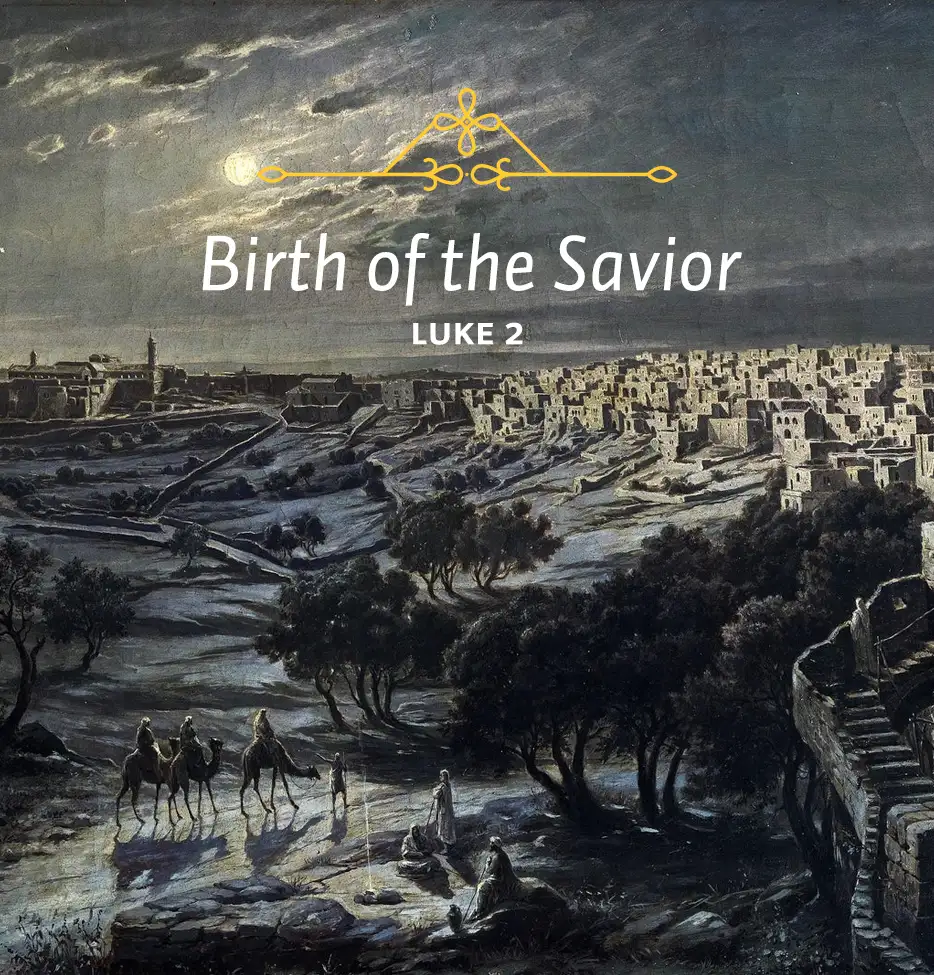


 Truth2Freedom's Blog