There are two ways to be fooled. One is to believe what isn’t true; the other is to refuse to believe what is true. —Soren Kierkegaard. "…truth is true even if nobody believes it, and falsehood is false even if everybody believes it. That is why truth does not yield to opinion, fashion, numbers, office, or sincerity–it is simply true and that is the end of it" – Os Guinness, Time for Truth, pg.39. “He that takes truth for his guide, and duty for his end, may safely trust to God’s providence to lead him aright.” – Blaise Pascal. "There is but one straight course, and that is to seek truth and pursue it steadily" – George Washington letter to Edmund Randolph — 1795. We live in a “post-truth” world. According to the dictionary, “post-truth” means, “relating to or denoting circumstances in which objective facts are less influential in shaping public opinion than appeals to emotion and personal belief.” Simply put, we now live in a culture that seems to value experience and emotion more than truth. Truth will never go away no matter how hard one might wish. Going beyond the MSM idealogical opinion/bias and their low information tabloid reality show news with a distractional superficial focus on entertainment, sensationalism, emotionalism and activist reporting – this blogs goal is to, in some small way, put a plug in the broken dam of truth and save as many as possible from the consequences—temporal and eternal. "The further a society drifts from truth, the more it will hate those who speak it." – George Orwell “There are two ways to be fooled. One is to believe what isn’t true; the other is to refuse to believe what is true.” ― Soren Kierkegaard
For the eternal purposes and counsels of God concerning man’s redemption.
We ought always to give thanks to you, O God, because you have chosen some to salvation through sanctification by the Spirit: 2 Thessalonians 2:13(ESV) That there is a remnant, chosen by grace,Romans 11:5(ESV) whom God has chosen in Christ before the foundation of the world, that they should be holy and blameless before you in love, having predestined them for adoption as sons through Jesus Christ to yourself, according to the purpose of your will, to the praise of your glorious grace. Ephesians 1:4-6(ESV)
Yours they were, and you gave them to Christ; John 17:6(ESV) and this is your will: that you should lose nothing of all that you have given him, but raise it up on the last day. John 6:39(ESV)
Luke 2 In these lessons on the birth of Christ we focus on its paradoxes, and how these show that Jesus’ coming is for all who will receive Him.
Theme
No Room in the Inn
Another related paradox comes in at this point: When Joseph and Mary came to Bethlehem, there was no place for them to stay. As a matter of fact, there was no room even in the inn. When Luke says there was no room in the inn we have to understand him to mean there was no room for them anywhere. If there had been a place, they would have gone there. When they could not even get into the inn, they ended up in the stable, and that is almost to say there was no place for them at all.
This is worth thinking about. It means that there was no room for this couple in the places of the mighty. There was no room for the Christ in Caesar’s palace. Caesar did not even know of the birth. And if he had, he certainly would not have taken the family in. There was no room for this family with Quirinius, the governor. He would not have bothered. There was no room among any of the important people.
There was no room among the philosophers either. If this family had been in Greece and had appeared in the Agora where the wise men met, the philosophers would not have taken them in.
You may say, “Well, surely the Jews would have done better if they had known.” But as a matter of fact, they did not do better. There were families of means in Bethlehem. Joseph was of the house and lineage of David. His ancestral home was Bethlehem. Would not some of these good families have taken him in? No! Good families take care of good families. The rich take care of the rich. Usually, they do not take care of poor families, which was the case here. So when we read that there was no room for them in the inn, this really means there was no room for them anywhere—not with the mighty or wise, not with the rich or poor, not with Gentile or Jew.
We are inclined to say, “Well, that was then. Certainly if Jesus were around now people would make room for Him.” But no, as a matter of fact, He would receive the same reception today as He received nearly 2,000 years ago. It is true that He was an infant then and there was a slightly different connotation to His being rejected. It was a simple case of insensitivity to an expectant mother and her need. But our insensitivity is even worse today, because we know what Jesus Christ stands for. Jesus Christ comes as the Son of God. He comes as the one who by His very presence exposes and condemns our sin. He comes as the Savior saying, “Come unto me that you may have life.” He says, “I am the way to the Father.” That is good news, but people do not want that message today any more than they wanted the message in that earlier day. We become sentimental at Christmas and are inclined to say, “Oh, yes, we would certainly receive Christ.” But, as a matter of fact, we do not, unless God by His grace opens our hearts to receive Him.
Study Questions
What is another paradox related to Jesus’ humble beginnings?
How do you see people today treat the Lord Jesus Christ in the same way as He was at His birth?
Application
Reflection: Think back to the time when you left behind a merely sentimental appreciation for the Christ of Christmas, and came to know Him in a saving way. Praise God for His grace in revealing the truth of the Gospel to you.
For Further Study: To learn more about how we are to reflect Christ’s humility, download for free and listen to Donald Barnhouse’s message, “The Disposition of Christ.” (Discount will be applied at checkout.)
From the moment the first humans fell, Scripture begins to sing a song of promise. In the protoevangelium of Genesis 3:15, God declares enmity between the serpent and the woman, between their offspring, and pledges that the woman’s seed will crush the serpent’s head. John Calvin called this “the first hope of salvation” because it fixes the eyes of faith upon a Redeemer who would destroy evil at its root (Calvin 1847, Gen. 3:15). This initial word of grace frames the entire biblical story as the unfolding of covenant promises that anticipate and culminate in Christ. The rest of redemptive history simply develops the identity of this promised Seed.
The First Promise and the Pattern of Expectation
The earliest covenant promise already contains the essence of the gospel. Edward J. Young notes that the “seed of the woman” introduces a line of faithful expectation in which every new act of divine revelation adds contour to the same hope (Young 1965, 1:99). God’s covenants are therefore not detached agreements but successive unveilings of His redemptive purpose in Christ. The Adamic promise sets the typological pattern: covenantal grace extended to sinners through a representative head whose obedience secures life for his people.
Promise Focused in Abraham’s Seed
When the Lord called Abram, He intensified the promise: “In you all the families of the earth shall be blessed” (Gen 12:3). Paul later interprets this promise with inspired precision: “It does not say, ‘and to offsprings,’ referring to many, but referring to one, ‘and to your offspring,’ who is Christ” (Gal 3:16 ESV). Calvin’s Commentary on Galatians emphasizes that Paul interprets the covenant historically and sees its spiritual fulfillment concentrated in the singular Seed, Christ Himself (Calvin 1849, Gal. 3:16). J. Mark Beach argues that this Pauline logic reveals a “dual aspect of covenant membership,” where the external administration points to, but cannot substitute for, the internal reality of union with the promised Seed (Beach 2004, 112). The Abrahamic covenant, then, secures the promise by faith and anticipates its universal scope through the nations’ inclusion in Christ.
Royal Consolidation in David
The covenant trajectory narrows further in the Davidic line. Through Nathan the prophet, God promises David a perpetual house and an everlasting throne (2 Sam 7:12–16). Dale Ralph Davis observes that this covenant “transforms the hope of a people from land and lineage to a living Lord who will reign forever” (Davis 2000, 128). The Psalms celebrate this oath: the Lord swears and will not change His mind that David’s Son will sit enthroned forever (Ps 110:4). Edward Young traces this royal expectation through Isaiah’s vision of a child who will bear the government upon His shoulders (Isa 9:6-7), showing that prophetic revelation turns the Davidic line into a messianic horizon (Young 1965, 2:306). Each covenantal layer thus adds new depth to the same divine promise: God’s kingdom will be established through His anointed Son.
Oath-Secured Fulfillment in Christ
Meredith Kline’s study of “Oath and Ordeal Signs” clarifies why the fulfillment of covenant promise can never fail, since God binds Himself by oath and invokes curse sanctions that Christ ultimately bears (Kline 1965, 17-19). The covenant’s legal certainty depends not on human fidelity but on divine self-obligation. The cross, therefore, is both the judgment-ordeal and the ratification oath of the new covenant. By absorbing the curse, Christ guarantees the inviolability of the promise. As the apostle declares, “All the promises of God find their Yes in Him” (2 Cor 1:20). The resurrection vindicates that oath; the Mediator of the new covenant stands as living proof that God’s sworn word cannot be broken.
The Covenant Fulfilled and Extended
Geerhardus Vos summarizes this whole drama by saying that in Reformed theology “the covenant of grace is nothing other than the unfolding of the Mediator’s person and work in history” (Vos 1980, 246). Each covenant administration, including Adamic, Noahic, Abrahamic, Mosaic, and Davidic, serves as a stage in that unfolding. O. Palmer Robertson aptly concludes that all covenants converge on Christ as their organizing center: He is the “Covenant-Keeper” who embodies God’s steadfast love and secures His people’s obedience (Robertson 1980, 254). The new covenant does not abolish the old but consummates it, transforming promise into possession through the Spirit who unites believers to the risen Lord.
Pastoral Payoff: Promises for Pilgrims
For the church, this covenantal continuity provides deep assurance. The believer’s confidence rests not on fluctuating experience but on a divine oath sealed in blood. Because Christ is the fulfillment of every covenant promise, He is also the anchor of every pastoral hope. The missionary and the sufferer alike can labor and weep in faith, knowing that God’s sworn word has already been accomplished in the Son and will be completed at His return. As Kline reminds us, the covenant’s oath “transfers the risk of failure entirely to God’s side” (Kline 1965, 23). Such grace transforms theology into doxology: the God who promised is faithful, and His promises are as certain as Christ who came and who will come again.
J. Warner Wallace examines the impact that Christian believers have had on our world and the impact that theistic faith has on culture. While many “new atheists” argue that belief in God is “not good” for our society, the truth is just the opposite. Believers have contributed to our culture in ways that are often taken for granted and our country was founded in Christian principles held by theistic believers. J. Warner describes four central Christian beliefs that have helped to shape our society in a positive way.
At the thrift store, I got this book called “Bizarre Birds”, a youth Peterson Bird guide. It lists 20 birds that have an unusual quality: such as feeding, migration, looks, call and so on. I am pleased that I’ve seen 10 of them!
Puffin. Seen off Canadian coast at Seal Island. EPrata photo
“Did you know? A flamingo’s bill is unlike any other bird’s. It contains rows of bony plates that act like filters. A flamingo finds food by dipping its head into the bottom of saltwater bays. It sucks up the ooze and uses its tongue to force the mud out through these bony filters, leaving a rich meal of tiny crustaceans in its mouth. A flamingo feeds with its head upside down. Unlike the jaws of other birds, the flamingo’s upper jaw moves up and down instead of its lower jaw.”
Cool. This couldn’t have evolved. The first flamingo to try eating like that would drown. God is amazing in His creative abilities! I also learned that the Arctic Tern migrates from the North Pole to the South Pole and back every year. That’s 22,000 miles round trip, and mostly over ocean!
FLamingoes. Seen in The Everglades of Florida. EPrata photo
Think on Him as Creator for a moment. He made all the birds of the air in one day, on Day 5 of Creation Week. Each bird uniquely suited to its habitat. Each bird delightfully different in plumage. God’s creative ability is so infinite my finite mind can barely even comprehend how He even made all the birds of the world in one day! Along with other animals, too. Wow.
Let’s pause for a moment and praise Him.
Then God said, “Let the waters teem with swarms of living creatures, and let birds fly above the earth in the open expanse of the heavens.” 21And God created the great sea creatures and every living creature that moves, with which the waters swarmed, according to their kind, and every winged bird according to its kind; and God saw that it was good. 22God blessed them, saying, “Be fruitful and multiply, and fill the waters in the seas, and let birds multiply on the earth.” 23And there was evening and there was morning, a fifth day.
For God has not given us a spirit of timidity, but of power and love and discipline. (1:7)
A second means for guarding against being ashamed of Christ is to consider our divine resources. The Greek verb (didōmi) behind has not given is in the aorist active indicative tense, showing past completed action. God already has provided for us the resources. The Lord may withhold special help until we have special need. Jesus told the Twelve, “When they deliver you up, do not become anxious about how or what you will speak; for it shall be given you in that hour what you are to speak. For it is not you who speak, but it is the Spirit of your Father who speaks in you” (Matt. 10:19–20). But God provided everything we need for everyday faithful living and service when we first believed. From a negative perspective, we can be sure that any spirit of timidity we might have is not from God. Both testaments speak of a fitting and proper fear of God, in the sense of awe and reverence. But deilia is a timid, cowardly, shameful fear that is generated by weak, selfish character. The Lord is never responsible for our cowardice, our lack of confidence, or our being shameful of Him. The noun deilia (timidity) is used only here in the New Testament and, unlike the more common term for fear (phobos), carries a generally negative meaning. The resources we have from our heavenly Father are power and love and discipline. When we are vacillating and apprehensive, we can be sure it is because our focus is on ourselves and our own human resources rather than on the Lord and His available divine resources. Dunamis (power) denotes great force, or energy, and is the term from which we get dynamic and dynamite. It also carries the connotation of effective, productive energy, rather than that which is raw and unbridled. God provides us with His power in order for us to be effective in His service. Paul did not pray that believers in Ephesus might be given divine power but that they might be aware of the divine power they already possessed. “I pray that the eyes of your heart may be enlightened,” he wrote, “so that you may know what is the hope of His calling, what are the riches of the glory of His inheritance in the saints, and what is the surpassing greatness of His power toward us who believe. These are in accordance with the working of the strength of His might which He brought about in Christ, when He raised Him from the dead, and seated Him at His right hand in the heavenly places” (Eph. 1:18–20). Through Christ we have the resource of God’s own supernatural power, the very power He used to raise Christ from the dead. Although Old Testament saints were not indwelt by the Holy Spirit in the same degree of fullness that New Testament believers are (cf. John 14:17), they did have the resource of God’s Spirit providing divine help as they lived and served Him. They understood, as Zechariah declared to Zerubbabel, that their strength was not by human “ ‘might nor … power, but by My Spirit,’ says the Lord of hosts” (Zech. 4:6). It is of utmost importance to understand that God does not provide His power for us to misappropriate for our own purposes. He provides His power to accomplish His purposes through us. When our trust is only in Him, and our desire is only to serve Him, He is both willing and “able to do exceeding abundantly beyond all that we ask or think, according to the power that works within us” (Eph. 3:20). God also has given every believer the resource of His own divine love, which, like His power, we received at the time of our new birth. In his letter to the church at Rome, Paul exulted, “The love of God has been poured out within our hearts through the Holy Spirit who was given to us” (Rom. 5:5). The love we have from God is agapē, the volitional and selfless love that desires and works for the best interests of the one loved. It is not emotional and conditional, as philos love often is, and has nothing in common with erōs love, which is sensual and selfish. The love we have from God is constant. It does not share the ebb and flow or the unpredictability of those other loves. It is a self-denying grace that says to others, in effect, “I will give myself away on your behalf.” Directed back to God, from whom it came, it says, “I will give my life and everything I have to serve you.” It is the believer’s “love in the Spirit” (Col. 1:8), the divinely-bestowed love of the one who will “lay down his life for his friends” (John 15:13). It is the “sincere love of the brethren” by which we “fervently love one another from the heart” (1 Peter 1:22), the “perfect love [that] casts out fear” (1 John 4:18). It is the love that affirms without reservation or hesitation: “If we live, we live for the Lord, or if we die, we die for the Lord; therefore whether we live or die, we are the Lord’s” (Rom. 14:8). Above all, it is “the love of Christ which surpasses knowledge” (Eph. 3:19). Our spiritual lives are measured accurately by our love. If our first love is for self, our life will center on seeking our own welfare, our own objectives, our own comfort and success. We will not sacrifice ourselves for others or even for the Lord. But if we love with the love God provides, our life will center on pleasing Him and on seeking the welfare of others, especially other Christians. Godly love is the first fruit of the Spirit, and it is manifested when we “live by the Spirit [and] … walk by the Spirit” (Gal. 5:22, 25). Sōphronismos (discipline) has the literal meaning of a secure and sound mind, but it also carries the additional idea of a self-controlled, disciplined, and properly prioritized mind. God-given discipline allows believers to control every element of their lives, whether positive or negative. It allows them to experience success without becoming proud and to suffer failure without becoming bitter or hopeless. The disciplined life is the divinely ordered life, in which godly wisdom is applied to every situation. In his letter to the church at Rome, Paul uses the verb form of the term, admonishing, “I say to every man among you not to think more highly of himself than he ought to think; but to think so as to have sound judgment [sōphrone], as God has allotted to each a measure of faith” (Rom. 12:3). In his first letter to Timothy (3:2) and in his letter to Titus (1:8; cf. 2:2), he used the adjective form to describe a key quality that should characterize overseers, namely, that of being prudent and sensible. When we live by the godly discipline that our gracious Lord supplies, our priorities are placed in the right order, and every aspect of our lives is devoted to advancing the cause of Christ. Because of his Spirit-empowered discipline, Paul could say, “I run in such a way, as not without aim; I box in such a way, as not beating the air; but I buffet my body and make it my slave, lest possibly, after I have preached to others, I myself should be disqualified” (1 Cor. 9:26–27). The great spiritual triumvirate of power, love, and discipline belong to every believer. These are not natural endowments. We are not born with them, and they cannot be learned in a classroom or developed from experience. They are not the result of heritage or environment or instruction. But all believers possess these marvelous, God-given endowments: power, to be effective in His service; love, to have the right attitude toward Him and others; and discipline, to focus and apply every part of our lives according to His will. When those endowments are all present, marvelous results occur. No better statement affirming this reality can be found than in Paul’s letter to the church at Ephesus, to whom he said,
For this reason, I bow my knees before the Father, from whom every family in heaven and on earth derives its name, that He would grant you, according to the riches of His glory, to be strengthened with power through His Spirit in the inner man; so that Christ may dwell in your hearts through faith; and that you, being rooted and grounded in love, may be able to comprehend with all the saints what is the breadth and length and height and depth, and to know the love of Christ which surpasses knowledge, that you may be filled up to all the fullness of God. Now to Him who is able to do exceeding abundantly beyond all that we ask or think, according to the power that works within us, to Him be the glory in the church and in Christ Jesus to all generations forever and ever. Amen. (Eph. 3:14–21; emphasis added)
MacArthur, J. F., Jr. (1995). 2 Timothy (pp. 17–20). Moody Press.
Ver. 7. For God hath not given us the spirit of fear, but of power, and of love, and of a sound mind.—
Energy within right limits:—The first characteristic stands opposed to faint-heartedness: the two other qualities are added, apparently, by the apostle, so that it may be distinctly manifest that he recommends no wild, rough exhibitions of force, but only such as were confined within legal limits. The ἀγαπή renders us capable for the offering of the greatest sacrifice for the cause of the Lord; the σωφρονισμός is that Christian self-control which imparts power to a wise bearing in action, and in all things knows how to keep within true bounds. (Dr. Van Oosterzee.)
Self-control:—A sound mind, rather self-control, which keeps “a constant rein on all the passions and desires” (Trench), and would thus keep in check timidity and undue despondency. Some take “sound mind” to signify here “correction” of others, Church discipline, a meaning which the word will bear, but which is out of harmony with the other two elements of the special gift here enumerated, both of which are personal graces, not official powers. (Speaker’s Commentary.)
Self-mastery:—The Spirit of God, by supplying us with power and love, launches within us forces which are capable, if they are not well adjusted, of producing either arrogance or laxity; and which need, therefore, the central controlling energy of true self-mastery to harmonise them and save them from mutual destruction. We do not desiderate a neutral, colourless result, but a higher perfection, one in which both these forces have full play. (H. R. Reynolds, D.D.)
The spirit of discipline:—If it be asked whether the discipline be that which Timothy is to enforce in ruling others, or that which he is to practice in schooling himself, we may answer “Both.” The termination of the word which is here used (σωφρονισμός) seems to require a transitive meaning; and slackness in correcting others may easily have been one of the ways in which the despondency of Timothy showed itself. On the other hand the whole context here speaks of Timothy’s treatment of himself. To take a more lively interest in the conduct of others would be discipline for himself and for them also. There may be as much pride as humility in indulging the thought that the lives of other people are so utterly bad that it is quite out of the power of such persons as ourselves to effect a reformation. This is a subtle way of shirking responsibility. Strong in the spirit of power, glowing with the spirit of love, we can turn the faults of others, together with all the troubles which may befall us in this life into instruments of discipline. (A. Plummer, D.D.)
Christian courage:—These words, though originally addressed to a bishop, and with reference to the ministerial office, yet need not be limited in their application. For of all who are duly baptized into the faith of the Lord Jesus, it is unquestionably required that they manfully fight under His banner against sin, the world, and the devil, and continue His faithful soldiers and servants unto their lives’ end; wherein is implied, to say the least, that we strive earnestly and habitually to get rid of all mean cowardly fears, and go on in the path marked out for us by our Heavenly Guide, with all energy of conduct, and charity of heart, with such caution, too, and self-possession, as become persons who know what they are about. “First of all,” says St. Paul, “God has not given us the spirit of cowardice”—for that is the proper meaning of the word, which in the original is not the same with that which is generally translated “fear,” but quite different. It is used also, in a few other places, in the New Testament; as, e.g. (St. Mark 4:40), when, after repeated demonstrations of the Almighty power and infinite compassion of the holy Jesus, His disciples were still weak and wavering, and alarmed at apparent danger, His gentle yet solemn rebuke was, “Why are ye so fearful [cowardly]? how is it that ye have no faith?” Whence we learn that this spirit of cowardice is so inconsistent with the character, as even to prove a want of faith, so far as it influences the heart. Again, on another occasion (John 14:27), when our blessed Lord was encouraging and cheering the fainting spirits of His disciples, perplexed and alarmed at the prospect of His leaving them: “Let not your heart be troubled,” said He to them; “neither let it be afraid” (cowardly).—“Ye believe in God, believe also in Me.” And again, in the description of those who shall be judged liable to the second death, the first-mentioned are (in our translation “fearful,” but originally) the cowardly, and then next, the unbelieving (Rev. 21:8). These are all the places where the word is used in the New Testament. The spirit of cowardice, then, is opposed to the spirit of faith. But, says the inspired apostle, God hath not given us—us Christians—this spirit of cowardice—this base unworthy disposition is not from Him, nor among the fruits of His blessed Spirit. Rather we are taught to expect from that heavenly source a spirit most opposite to that of cowardice—a spirit of energy, charity, prudence; enabling us to proceed and go forward in our Christian course under every circumstance, to serve the Lord without distraction, to oppose men’s errors without enmity to their persons, to walk warily as in days of danger and perplexity. That the word here translated “power” has this meaning, viz., of inspired energy and courage, we may know as from other passages in the New Testament, so from these two. In Acts 6 it is said of the holy martyr—“Stephen, full of faith and power”—as far as possible from any distrust or apprehension as to the holy cause of the gospel which he had undertaken. And in the Revelation of St. John, the Divine message to the Bishop of the Philadelphian Church, was, “Thou hast a little strength, and hast kept My word, and hast not denied My name;” a little strength, energy, or power—as not having like some others, altogether fallen away through indolence, or faint-hearted cowardly fear. Hence, we infer, that the spirit by which the faithful Christian is actuated is one of energy, resolution, and steady perseverance; and inferring this, we are bound to put it closely to our consciences, as follows:—Whether our life is one of diligence and activity, and this diligence and activity, not limited to this world, but actually in the cause and service of Almighty God. Whether we avoid, as much as possible, mixing in idle company, reading vain and trifling books, or other publications, indulging in useless, idle, unprofitable thoughts. Whether we try to know, and feel, the value of our precious, irreparable time. Whether we endeavour, from day to day, in that state of life to which it has pleased God to call us, to do our duty—i.e., what in God’s sight is expected of us; for very often much less will satisfy the world, and our own easy consciences. Whether we pray habitually, to be enabled to accomplish these our respective duties with resolution, steadiness, and perseverance; neither alarmed by danger, if it should happen, nor moved by scorn and contempt; but expecting such trials as part of God’s discipline, to bring our hearts into a fit state for our admission into the everlasting habitations. We may further observe that the mean spirit of cowardice is always found in effect (in whatever way it is to be accounted for), a great hindrance to the growth of true charity, love for God and man. “The fear of man bringeth a snare”—even so great a snare as to withdraw the heart from loving and trusting Almighty God. Cowardice is a selfish feeling, makes men think only of themselves, their own present interests and comforts—a state of mind quite repulsive of true charity and love. Hence (says St. Paul), “God gives not His servants the spirit of cowardice, but of power, and also of love,” leads them both to be zealous and earnest in fulfilling their high duties, and at the same time tempers their zeal with meekness and love. If we would then know, whether we are such in heart and life as Christians ought to be, we must ask ourselves, not merely whether we are earnest in our religion, but also whether “all our things are done with charity,” love to God and man. Again, you will observe that St. Paul intimates to us in the passage now considered, that it is not enough for the Christian to be zealous in his duty, even though his zeal be tempered and guided by love; unless also he be cautious and on his guard, so as in every emergency to retain his presence of mind, and always (as every person should who has any important matter in hand) to know what he is about. This, I say, is the spirit and disposition which as Christians we are still to labour and pray for, nor shall we seek it in vain—for to His faithful servants God gives, not only the spirit of power, and of love, but also of a sound mind; whilst by His grace He enables them to be harmless as doves, He would have them also wise as serpents, ever on their guard; on their guard, i.e., not so much against their earthly as their spiritual foes. (Plain Sermons by Contributors to “Tracts for the Times.”)
The threefold gift:—Our text presents to our view a striking contrast between that which constitutes the religion of a worldling, and that which constitutes the religion of a Christian. The religion of a worldling is a religion of slavish fear, but the religion of a Christian consists of a threefold gift, as specified in the language of my text. If you go to Pagan lands you will find all the Pagan tribes in possession of a religion of slavish fear; they fear their priests, and therefore they bow down to them as if they were a superior race of beings to themselves. They fear the devil, and, therefore, they worship him lest he should do them hurt, for theirs is a religion of slavish fear altogether. There are three words, or three features, of our subject, so distinctly marked that I want your attention to them separately. “God hath given us the spirit of power”—there is efficiency. “God hath given us the spirit of love”—there is attraction. “God hath given us the spirit of a sound mind”—that is a treasure in our vessels of infinite value. I. “God hath given us the spirit of POWER.” I would have every person who is moved with the idea that God sends him to preach, “tarry at Jerusalem, until he has been endued with power from on high.” II. Now a word or two about the attraction in the “SPIRIT OF LOVE.” You will recollect reading that all the law is said by our blessed Lawgiver to be couched in this one word, “love”; and sure I am that all the gospel is couched in it, for “God is love.” Hence it is the grand principle insisted on all through the New Testament. III. Now glance at the treasure in possession in earthen vessels, called A SOUND MIND. It is one of the rarest things in existence—c sound mind. I can meet with puerile minds, I can meet with frantic minds, I can meet with enthusiastic minds, I can meet with fickle and varying minds, not a few, and some of these bad and sad qualities even among Christians; I lament over them. A sound mind—what is it! There is not a child of Adam that possesses it until he gets it from above; it must be inspired. I grant that there are many men who have sound minds in temporal things; sound minds to judge rightly and consistently of worldly matters, so as seldom to make a mistake in matters of business; a sound mind to rule their house properly, to manage things with keenness and propriety, and with success; but, mark, I make a distinction between a sound mind, as the gift of God in a spiritual point of view, and a sound mind as existing in nature. A sound mind, as existing in nature, only regards natural things, and can rise no higher than its own level. I never knew a man of sound mind in spiritual things, until the Holy Ghost inspired it. (Jos. Irons.) Christianity: what it is not and what it is:— I. WHAT GENUINE CHRISTIANITY IS NOT. It is not a “spirit of fear.” The spirit of fear is that of a criminal and a slave. It haunts the minds of the guilty, and is only a prelude to those awful feelings which harrow up the soul that dies in a state of final impenitence. Such is not the spirit by which Christians are actuated. The great end for which our Saviour came into the world was to deliver men from their awful situation of exposure to the Divine wrath, and the fear consequent upon a knowledge of this state. But how are we to reconcile this passage with others, in which the spirit of fear is highly spoken of? Such as, “Blessed is the man that feareth always”; “I will put My fear in their hearts,” &c. They are to be reconciled in this way. That spirit of fear which is not given to the people of God is a fear arising from a sense of guilt, a conviction that God is their enemy. But that fear which is implanted in the hearts of His people is a filial fear—a holy jealousy, lest by sin they should provoke the Lord to anger. II. WHAT IS THE NATURE OF GENUINE CHRISTIANITY? 1. Genuine Christianity is powerful and efficacious. “God hath given us the spirit of power.” In 1 Cor. 4:20 this apostle says, “The kingdom of God is not in word, but in power”—it is not in anything external, but in the experience of all the powerful effects of the gospel. The gospel is powerful to the salvation of all that believe. 2. Genuine Christianity is benevolent and kind. “God hath given us the spirit of love.” This enters most essentially into the system of Divine truth, and also into the experience of every child of God. This spirit is not natural to man. Whatever obtains the name of love is only a selfish principle. But by grace it is overcome, and a contrary spirit is bestowed. “We love Him, because He first loved us.” Where this love is felt in the heart, it is impossible but a reciprocal feeling of love to God must spring up within us. And not only love to God, but to all that bear His image—our brethren in Christ. But the love of the Christian is not confined to his brethren in the Lord; it extends to all mankind. 3. Genuine Christianity is in the highest degree rational, and peculiarly suited to the exigencies and circumstances of mankind. When a sinner is called out of darkness into light, he often becomes an object of derision; he is represented as an enthusiast, and beside himself. This was the case with Paul; but with respect and justice he repelled the charge; and this every child of God may do; for He has conferred upon him “the spirit of a sound mind.” What is enthusiasm? It is the power given to the mind by some sublime conceptions which have broken in upon it. We praise this in many things—we praise it in the artist; and one once said, when fault was found with him for having employed so much of his time, “Art is a jealous thing, and requires the whole man.” And is not eternity, is not religion a jealous thing? Does it not require the whole man? That the Christian is acting a most rational part is evident, if we consider what are the principles by which the prudent men of the world are guided; they are the same as those by which the Christian is guided, only changing the motives and the ends. These are indemnity for the past, enjoyment of the present, security and provision for the future. (J. Henderson, D.D.)
The spiritual endowment of the Christian Church:— I. THE CHURCH OF CHRIST IS ENDOWED WITH THE SPIRIT OF COURAGE. 1. In being a disciple at all courage was demanded. 2. In proclaiming the gospel of God courage was manifested. 3. In enduring hardness courage was developed. II. THE CHURCH OF CHRIST IS ENDOWED WITH THE SPIRIT OF POWER. 1. The power of holy utterance is a spiritual gift. 2. The power of Christian legislation is a spiritual gift. 3. The power of righteous resolute volition is a spiritual gift. III. THE CHURCH OF CHRIST IS ENDOWED WITH THE SPIRIT OF LOVE. 1. Love of kindred is a spiritual gift of the Inspirer. 2. Love of country—patriotism—is a Divine spiritual gift. 3. The love of Christ and of God is an endowment of the Spirit of God. IV. THE CHURCH OF CHRIST IS ENDOWED WITH THE SPIRIT OF SOUNDNESS OF MIND OR OF HEALTH. 1. The capacity and consequent appetite for knowledge are spiritual endowments. 2. The energy of habitual holy action is a spiritual endowment. 3. The restoring power of a righteous life is a spiritual endowment. (W. R. Percival.)
The great purpose of Christianity:—Why was Christianity given? Why did Christ seal it with His blood? Why is it to be preached? What is the great happiness it confers? I read the answer to them in the text. There I learn the great good which God confers through Jesus Christ. “He hath given us, not the spirit of fear, but of power and of love and of a sound mind.” The glory of Christianity is, the pure and lofty action which it communicates to the human mind. It does not breathe a timid, abject spirit. If it did, it would deserve no praise. It gives power, energy, courage, constancy to the will; love, disinterestedness, enlarged affection to the heart; soundness, clearness, and vigour to the understanding. It rescues him who receives it from sin, from the sway of the passions; gives him the full and free use of his best powers; brings out and brightens the Divine image in which he was created; and in this way not only bestows the promise, but the beginning of heaven. This is the excellence of Christianity. In reading the New Testament I everywhere learn that Christ lived, taught, died, and rose again, to exert a purifying and ennobling influence on the human character; to make us victorious over sin, over ourselves, over peril and pain; to join us to God by filial love, and above all, by likeness of nature, by participation of His Spirit. This is plainly laid down in the New Testament as the supreme end of Christ. In the prophecies concerning Him in the Old Testament, no characteristic is so frequently named as that He should spread the knowledge of the true God. Now I ask, what constitutes the importance of such a revelation? Why has the Creator sent His Son to make Himself known? I answer, God is most worthy to be known, because He is the most quickening, purifying, and ennobling object for the mind; and His great purpose in revealing Himself is, that He may exalt and perfect human nature. God, as He is manifested by Christ, is another name for intellectual and moral excellence; and in the knowledge of Him our intellectual and moral powers find their element, nutriment, strength, expansion, and happiness. To know God is to attain to the sublimest conception in the universe. To love God is to bind oneself to a Being who is fitted, as no other being is, to penetrate and move our whole hearts; in loving whom we exalt ourselves; in loving whom we love the great, the good, the beautiful, and the infinite; and under whose influence the soul unfolds itself as a perennial plant under the cherishing sun. This constitutes the chief glory of religion. It ennobles the soul. In this its unrivalled dignity and happiness consist. I fear that the world at large think religion a very different thing from what has been now set forth. Too many think it a depressing, rather than an elevating service, that it breaks rather than ennobles the spirit, that it teaches us to cower before an almighty and irresistible being; and I must confess that religion, as it has been generally taught, is anything but an elevating principle. It has been used to scare the child and appal the adult. The main ground of the obligation of being religious, I fear, is not understood among the multitude of Christians. Ask them, why they must know and worship God? and, I fear, that were the heart to speak, the answer would be, because He can do with us what He will, and consequently our first concern is to secure His favour. Religion is a calculation of interest, a means of safety. God is worshipped too often on the same principle on which flattering and personal attentions are lavished on human superiors, and the worshipper cares not how abjectly he bows, if he may win to his side the power which he cannot resist. I look with deep sorrow on this common perversion of the highest principle of the soul. I have endeavoured to show the great purpose of the Christian doctrine respecting God, or in what its importance and glory consist. Had I time, I might show that every other doctrine of our religion has the same end. I might particularly show how wonderfully fitted are the character, example, life, death, resurrection, and all the offices of Christ to cleanse the mind from moral evil, to quicken, soften, elevate, and transform it into the Divine image; and I might show that these are the influences which true faith derives from Him and through which He works out our salvation. Let me only say that I see everywhere in Christianity this great design of liberating and raising the human mind. (W. E. Channing, D.D.) A Whit-Sunday Sermon:—Many readers of this passage, I doubt not, place the emphasis on the word us. They suppose St. Paul to say, “An ordinary man, who occupied the position which you occupy, the overseer of a society which is composed of various and contradictory elements, in which strange doctrines are appearing, which is exposed to all the influences of a commercial and corrupt city, would fear and tremble. It is your privilege to be as free from fightings and terrors as I, your spiritual father, am.” What encouragement, then, could he give to Timothy? Precisely that which he had found necessary in his own case, precisely that to which he had been driven by the experience he has described to us. His spirit might be palsied with fear; but there was a Spirit near him and with him which was not a spirit of fear, to which he could turn as the Deliverer from fear, the Restorer of energy, the Quickener of hope. That Spirit had been given not to him (Paul), but to the Family of which he was a member;—if in any special sense to him, to him only because he was a servant of that Family, because he needed powers that were not his own, to make his ministries for it effectual. I. I suppose we have all felt tempted, at times, to use language which is just the reverse of the apostle’s. We have read in records of the past—we have known on a larger or smaller scale among our contemporaries—such instances of strange panic and cowardice, of counsel and heart failing just when the need for them was the greatest, that we have been ready to exclaim, “Surely there is something Divine in this! We cannot attribute such a loss of nerve and energy to the pressure of outward circumstances; these often evoke the greatest courage when they are most appalling. We cannot attribute it merely to a natural want of courage; those same men, or bodies of men, at other crises, showed that they were capable of manly effort. Their fear is surely supernatural. God has given them this spirit of fear.” Such a mode of speaking is not uncommon; it is not without strong excuse. But I think also that our consciences will tell us that we pervert such passages of Scripture if we set them in opposition to the doctrine of St. Paul in the one now before us. We need not study the records of the past, or the actions of our fellow-men, to learn what the spirit of fear or cowardice is. Each has, perhaps, known something of that cowardice which springs from self-distrust, from the apprehension of lions in his path, from doubtfulness, which of several paths he should choose, from the foretaste of coming evils. II. The Spirit of God is said to be a Spirit of POWER. Consider the different kinds of power before which men bow, and those which they covet most to exercise. There is none more familiar or more wonderful than that of the orator. There is another power mixed frequently with this, but yet different in its direction and its nature, which also can be limited to no country, or circumstances, or stage of cultivation. The physician, the healer, is welcomed in all lands by different titles, but always for this reason, that he can in some way act on the life of men, can oppose the powers that are threatening life. In some regions his functions are hardly distinguished from those of the priest, because he too is conversant about life and death, a life or death that may continue when the resources of the ordinary physician are exhausted. The most simple, naked exhibition of human power is in that royal Will, which obtains supremacy by claiming it—which compels individuals and nations, they know not how, to own that it is meant to rule them, and that they must needs obey. That such a force as this exists, it is as idle to deny as to deny the force of sea or wind. We are certain that the most settled, organised tyranny is still a rebellion, and must end as rebellions end. What is the warrant for this conviction? Whit-Sunday says it is this, that the highest power, the all-ruling Will, was manifested in One who took upon Him the form of a Servant. It says that His noblest gift to men is His own Spirit of Power. It says that to that Spirit all spirits must at last bow; that any will which is mere arbitrary will—which does not seek to deliver and to raise those whom it rules—must be broken in pieces; that the only effectual power will be proved at last to be that which can give up itself. III. If the world was to be instructed that all power of speech, of imparting life and wisdom to men, of governing societies, is of God, and is His gift to His creatures, certainly no teachers could be so suitable as those Galileans. And yet I know not whether there was not something even more wonderful in the selection of these men to show that all Love is of God; that His Spirit is the author of whatever love men are able to exhibit in acts or to feel within. For as Jews they had learnt to despise and hate all the uncircumcised; as Galileans they must often have been jealous of that more favoured part of their own race, which looked down upon them. They had been chosen, indeed, by a Teacher who bore all their narrowness and ignorance; who educated them by a careful and gracious discipline for the work to which He had destined them. Their affection had been drawn out towards Him; that affection had been a bond to each other, though interrupted by continual desires in each of them to be the chief in His kingdom. But their affection had been tried, and had broken down. It had failed towards the Master; what strength could there be in it towards any of their fellows? If love was their own, or had its springs in them, it must be utterly dried up. Then reflect how it burst forth, how it poured itself out first upon Jews, who scorned them; next upon Gentiles, whom it had been part of their religion to scorn; to see what it could endure. So they were trained to understand that there must be about them and with them a Spirit of ever-living, long-suffering love, the heights and depths of which they could never measure—of which they could only say, It is the Spirit of Him who died upon the Cross, and who in that death manifested the very nature of His eternal Father and His purposes to men. What is the original falsehood of all who speak of their love to God and man? This: they take credit to themselves for a love which is moving them to noble thoughts and good deeds, but which has another source than their hearts; which is Divine, not earthly; universal, not partial. IV. Finally, this Spirit is said to be the Spirit of a SOUND MIND. You cannot make any estimate or guess of the wildness and madness into which man may be led. And therefore you cannot provide the remedy for this wildness and madness, or any adequate protection against it. Do you think you know of some adequate remedy or protection? Perhaps you will say it lies in the Church. May not this be, after all, the one security against these excesses? May not the Spirit of God keep better watch over those minds which He has taken into His guardianship, than you can keep? A Spirit who knows how all are tempted—who knows what temptation is strongest for each—who is seeking to unite them in a common fellowship—who is guiding them to the same haven—who will suffer none who would act rightly to be without the necessary aids to action, none that would seek truth to be lost in falsehood; who will continually assist the desire to do right in those who are conscious of the inclination to wrong—who will for ever kindle afresh the zeal for truth in those who feel that they are beginning to acquiesce in plausible lies? To tell men that such a guiding Spirit of Power, of Love, of a Sound Mind, has been given them, and is with them—this is not dangerous, but safe. (F. D. Maurice, M.A.)
On soundness of mind in religion:—The expression, sobriety, or soundness of mind, is used in the Scriptures in various senses. Sometimes it is opposed to madness; as where the demoniac was found sitting at the feet of Jesus, clothed and in his right mind. Madness disposes men to act irregularly, furiously, and extravagantly. Soundness of mind, therefore, implies recollection, calmness, and discretion, the guidance and control of reason. In other places, soundness of mind is opposed to levity and impropriety, as where women are required to adorn themselves in modest apparel, with sobriety; or to intemperance and sensuality, as where young men are exhorted to be sober minded, and, denying ungodliness and worldly lusts, to live soberly. Sometimes it is contrasted with pride and self-conceit: thus the apostle forbids the Romans to think extravagantly of themselves, instead of thinking soberly, as they ought to do. In my text the same expression is used in a more general and comprehensive sense. The general characteristic of all unsoundness of mind may be said to be false perceptions. He whose mind is in this state dares not see things as they really are; they appear to him extravagantly magnified or diminished, distorted, or confounded with different objects. A sound mind, on the contrary, forms a just view of the subjects presented to it; it estimates correctly the relative value and importance of different subjects, and is not governed by prejudice, caprice, or idle imaginations. I. Soundness of mind is opposed to CREDULITY. Credulity arises from a misapprehension of the nature and value of evidence. The credulous man believes on insufficient authority. He does not perceive the proportion which different kinds of evidence bear to each other. How many in the Church at this day receive the doctrines of Christianity, not on account of the evidence by which they are supported, nor because they are plainly delivered in Scripture, but because this or that particular man has held them! A man of sound mind will not indeed despise human authority, and, in the spirit of innovation, doubt a tenet because it has been generally maintained; but he will be very careful to found his faith upon the truth of Scripture rather than upon the opinions of men. II. Soundness of mind is opposed to SUPERSTITION. A person in the dark sees nothing distinctly, and is therefore very apt to form confused and erroneous ideas of every object around him, his imagination giving to them what form and colour it pleases. Such is the situation of a superstitious man with respect to all objects of a spiritual or religious kind—he sees nothing in its proper form and proportion. A frequent and dangerous superstition is that which lays an undue stress on mere external religious observances. A man, therefore, of a sound mind, while he attributes to forms and ceremonies their true value, will not substitute them for more substantial good. He will manifest the soundness of his mind by preferring the substance to the form, and by endeavouring to possess the spirit of religion rather than the mere shadow of it. III. Soundness of mind is opposed to ENTHUSIASM. Enthusiasm consists in unwarranted ideas of the nature of the relation between us and our Creator. A man of sound mind will cherish no extravagant notions of Divine communications. An enthusiast entertains lofty notions of himself, and degrading conceptions of the Deity; he conceives that the course of nature is to be regulated with a view to his interest. The ordinary rules, even of morality, must yield to his convenience. He and his immediate connections have a peculiar dispensation: they are the particular favourites of God, and all things are to minister to their exclusive good. IV. Soundness of mind is opposed to SCEPTICISM OR INFIDELITY. I am well aware that infidels arrogate to themselves the distinction of being the only sound reasoners, and charge believers with credulity and superficial views. But the charge may justly be retorted on themselves: they do not possess a sound mind; for the body of evidence by which Christianity is established is incomparably superior to that by which any historical fact, or any other tenets whatever, have been supported. V. Soundness of mind is opposed to INSENSIBILITY, OR INDIFFERENCE TO THE GREAT OBJECTS OF RELIGION. If you saw a man bartering his estate for a childish toy, or labouring to accomplish some object in its nature evidently unattainable, or using the greatest exertions and the most powerful means to effect some frivolous or contemptible purpose; or, on the other hand, struggling to accomplish some end really important by means wholly inadequate, you would say, without hesitation, that such a man had not a sound mind. The great doctrines which religion teaches must be either false, or doubtful, or true. That they are false can never be positively proved. “Surely,” says Pascal, “in a doubtful point of this most tremendous consequence, it is the duty of every rational person to endeavour, if possible, to obtain a solution of his doubts, and to remain no longer in suspense about a question of such immense consequence, in comparison of which all the sorrows or happiness of this life will not bear so much as a single moment’s comparison. Yet we see persons, professing, too, to be wise, and raised above the vulgar herd, who not only doubt upon these points, but appear to be easy and composed, nay, declare their doubts with perfect indifference, and perhaps gratify their vanity in professing them. What words can be found to fix a name for such unaccountable folly? Yet you see the same persons quite other men in all other respects. They fear the smallest inconveniences: they see them if they approach, and feel them if they arrive. They pass whole days and nights in chagrin and despair for the loss of their property, or for some imaginary blemish in their honour; and yet these very same persons suppose they may lose all by death, and remain without disquiet or emotion. This wonderful insensibility with respect to things of the most fatal consequence, and that, too, in a heart so nicely sensible of the meanest trifles, is an astonishing prodigy, an unintelligible enchantment, a supernatural blindness and infatuation.” You believe the Scriptures; you believe that there is a future life, in comparison of which this is a mere point; sit down and contemplate the duration of it. Yet, O strange absurdity I we see everything reversed: persons not at all interested about these fleeting moments, on account of their relation to eternity, but very anxious about them in themselves! The Bible informs us of our danger, and must be our only guide how to escape it. Here, then, is folly and unsoundness of mind in the highest degree, that men will not search the Scriptures and be guided by the Word of God. (J. Venn, M.A.)
Power in the Christian:—And here is condemned those, both preachers and people, who have it not themselves, neither can endure it in others. We commend the deep-mouthed hound, the shrill sound of the trumpet, the loud report of the piece; yet cannot away with, care not for the spirit of power and resolution in a Christian. Is not power appropriated to God? Did not Christ speak with authority and power, and not as the Scribes? For can a soldier be too strong? a traveller over-well limbed? then may a Christian be too well fenced, armed. Must he not wrestle with principalities and powers? combat with the sons of Anak? tread upon the lion and the ape? And who can tell what weight may be put on his shoulders for time to come? Will we not provander our beast for a long journey? rig our ships for a rough passage? build them strong for a long voyage? bead our staff before we leap? And shall we never fortify the inner man, repair the battered bark of our souls, nor try the truth of that stilt which must help us to heaven? Wherefore, gather spiritual greatness, strive for this strength, and purchase this power by all means possible, and that thou mayest do these things. (J. Barlow, D.D.)
Sinful fear of God:—One of our poets gives a grim picture of a traveller on a lonesome road, who has caught a glimpse of a frightful shape close behind him—
“And having once turned round walks on,
And turns no more his head.”
The dreadful thing is there on his very heels, its breath hot on his cheek; he feels it though he does not see, but he dare not face round to it; he puts a strong compulsion on himself, and, with rigidly fixed face, strides on his way, a sickening horror busy with his heart. An awful image that, but a true one with regard to what many men do with their thoughts of God! They know that that thought is there, close behind them. They feel sometimes as if its hand were just coming out to be laid on their shoulders, and to stop them. And they will not turn their heads to see the Face that should be the love, the blessedness, the life of their spirits, but is—because they love it not—the terror and freezing dread of their souls. (A. Maclaren, D.D.)
A sound mind:—Dr. Arnold, of Rugby, gives, in one of his letters, an account of a saintly sister. For twenty years, through some disease, she was confined to a kind of crib; never once could she change her position for all that time. “And yet,” said Dr. Arnold, and I think his words are very beautiful, “I never saw a more perfect instance of the power of love and of a sound mind. Intense love, almost to annihilation of selfishness; a daily martyrdom for twenty years, during which she adhered to her early-formed resolution of never talking about herself; thoughtful about the very pins and ribbons of my wife’s dress, about the making of a doll’s cap for a child, but of herself—save as regarded her improvement in all goodness—wholly thoughtless; enjoying everything lovely, graceful, beautiful, high-minded, whether in God’s works or man’s, with the keenest relish: inheriting the earth to the fulness of the promise; and preserved through the valley of the shadow of death from all fear of impatience, and from every cloud of impaired reason which might mar the beauty of Christ’s glorious work. May God grant that I might come within one hundred degrees of her place in glory!” Such a life was true and beautiful. But the radiance of such a light never cheered this world by chance. A sunny patience, a bright-hearted self-forgetfulness, a sweet and winning interest in the little things of family intercourse, the Divine lustre of a Christian peace, are not fortuitous weeds carelessly flowering out of the life-garden. It is the internal which makes the external. It is the force residing in the atoms which shapes the pyramid. It is the beautiful soul which forms the crystal of the beautiful life without.
Latent power in churches:—It is impossible to over estimate, or rather to estimate, the power that lies latent in our churches. We talk of the power that was latent in steam—latent till Watt evoked its spirit from the waters, and set the giant to turn the iron arms of machinery. We talk of the power that was latent in the skies till science climbed their heights, and, seizing the spirit of the thunder, chained it to our surface, abolishing distance, outstripping the wings of time, and flashing our thoughts across rolling seas to distant continents. Yet what are these to the moral power that lies asleep in the congregations of our country and of the Christian world? (T. Guthrie, D.D.)
True fearlessness:—When young Nelson came home from a birds’-nesting expedition, his aunt chided him for being out so far into the night, and remarked, “I wonder fear did not make you come home.” “Fear,” said Nelson, “I don’t know him.” Fit speech for a believer when working for God. “Fear? I do not know it! What does it mean?” The Lord is on our side? Whom shall we fear? “If God be for us, who can be against us?” (C. H. Spurgeon.)
Unwarrantable fearlessness:—When William Rufus heard of a rebellion at Le Mans, he flung himself, at the news of it, into the first boat, and crossed the channel in the teeth of a storm. When his followers remonstrated with him, he contemptuously replied, “Kings never drown.” (H. O. Mackey.)
Christian courage:—Some of the Indian chiefs having become the open enemies of the gospel, Mr. Elliot—sometimes called the Apostle of the American Indians—when in the wilderness, without the company of any other Englishman, was at various times treated in a threatening and barbarous manner by some of those men; yet his Almighty Protector inspired him with such resolution, that he said, “I am about the work of the great God, anal may God is with me; so that I fear neither you nor all the sachims [or chiefs] in the country. I will go on, and do you touch me if you dare.” They heard him and shrank away. (W. Baxendale.)
Intellectual virtues:—1. Intelligence, which is that act of reason whereby we understand every particular concerning everything. 2. Science, which is that act of reason whereby we know all truth in all things. 3. Sapience, which is that act of reason whereby we understand and perceive what will follow from everything. 4. Prudence, which is that act of reason whereby we observe the fittest opportunities for the effecting of all things. 5. Art or skill, which is that act of reason whereby we know how to effect everything most skilfully. (J. Barlow, D.D.)
A sound mind not easily attained:—We may perceive that sound minds are not easily come by, whatsoever the world may judge. Some think themselves wise with a little wit, as others do themselves rich with no great wealth. (Ibid.)
Power, love, and a sound mind are of absolute necessity for a resolute Christian, preacher, or private person:—For power without love can work, but will not. Love without power would work, but cannot. And power and love can and will, but a sound mind is requisite to guide both. (Ibid.)
Contagion of fear:—Speaking of his experiences in battle, a soldier-writer says, “How infectious fear is; how it grows when yielded to; and how, when once you begin to run, it soon seems impossible to run fast enough; whereas, if you can manage to stand your ground, the alarm lessens, and sometimes disappears.” (H. O. Mackey.)
Needless fear:—A lady was wakened up one morning by a strange noise of pecking at the window, and when she got up she saw a butterfly flying backwards and forwards inside the window in a great fright, because outside there was a sparrow pecking at the glass, wanting to reach the butterfly. The butterfly did not see the glass, but it saw the sparrow, and evidently expected every moment to be caught. Neither did the sparrow see the glass, though it saw the butterfly, and made sure of catching it. Yet all the while the butterfly, because of that thin, invisible sheet of glass, was actually as safe as if it had been miles away from the sparrow.” It is when we forget our Protector that our hearts fail us. Elisha’s servant was in great fear when he awoke in the morning and saw the city of Dothan encompassed with horses and chariots and a great host; but when his eyes were opened at the prayer of the prophet, his fears vanished, for he beheld the mountains full of horses and chariots of fire. “Thou wilt keep him in perfect peace whose mind is stayed on Thee, because he trusteth in Thee.” “The Lord shall preserve thy going out and thy coming in from this time forth and for evermore.” (Jas. Inglis.)
Love casting out fear:—The love of God casts out all other fear! Every affection makes him who cherishes it in some degree braver than he would have been without it. It is not degrading to this subject to remind you of what we see away far down in the scale of living beings. Look at that strange maternal instinct that in the lowest animals out of weakness makes them strong, and causes them to forget all terror of the most terrible at the bidding of the mighty and conquering affection. Look at the same thing on the higher level of our own human life. It is not self-reliance that makes the hero. It is having the heart filled with passionate enthusiasm born of love for some person or for some thing. Love is gentle, but it is omnipotent, victor over all. It is the true hero, and martyr if need be, in the human heart! And when we rise to the highest form of it—namely, the love which is fixed upon God—oh I how that should, and if it be right, will, strengthen and brace, and make every man in whom it dwells frank, fearless, careless of personal consequences. (A. Maclaren, D.D.)
Power of love:—Some time ago a poor fellow, who had been in penal servitude many years, came back to Manchester. He called on an old friend, a teacher of a ragged school, and in course of conversation said, “Can you tell me where Mr. Wright lives?” The teacher replied, “Did you know Mr. Wright?” The man answered “Yes; after I was sent to prison I was hardened; I cursed God, and the judge and jury; I cursed myself, and I cursed the prison; and in my rage I tried to commit suicide; but that day Mr. Wright came into my cell, and knelt down and prayed for me. I would not kneel at first; but when I saw the old gentleman kneel down, and saw his tears trickling down his cheeks, I could not help myself, and I also knelt down and prayed; and that day I gave God my heart. When I came out of prison, I made up my mind to seek him and thank him for his kindness to me.” The teacher said, “Ah, my friend, Mr. Wright has been dead a long time.” The converted thief exclaimed, “Dead! Mr. Wright dead!” The teacher said, “Yes, he is dead; but the same Spirit which prompted him to kneel down in your cell is in a Person whom I know, who can bless you in every time of need.” He exclaimed, “Please tell me his name?” The teacher said, “His name is Jesus Christ.” (W. Birch.)
Exell, J. S. (n.d.). The Biblical Illustrator: Second Timothy–Titus, Philemon (Vol. 1, pp. 22–31). Fleming H. Revell Company.
Therefore say, Thus saith the Lord God; Although I have cast them far off among the heathen, and although I have scattered them among the countries, yet will I be to them as a little sanctuary in the countries where they shall come. (Ezekiel 11:16)
Banished from the public means of grace, we are not removed from the grace of the means. The Lord who places His people where they feel as exiles will Himself be with them and be to them all that they could have had at home, in the place of their solemn assemblies. Take this to yourselves, O ye who are called to wander!
God is to His people a place of refuge. They find sanctuary with Him from every adversary, He is their place of worship, too. He is with them as with Jacob when he slept in the open field, and rising, said, “Surely God was in this place,” To them also He will be a sanctuary of quite, like the Holy of Holies, which was the noiseless abode of the Eternal. They shall be quiet from fear of evil.
God Himself, in Christ Jesus, is the sanctuary of mercy. The Ark of the Covenant is the Lord Jesus, and Aaron’s rod, the pot of manna, the tables of the law, all are in Christ our sanctuary. In God we find the shrine of holiness and of communion. What more do we need? O Lord, fulfill this promise and be ever to us as a little sanctuary!
In a changing and uncertain world, God’s promises give us hope.
Each of the three Synoptic Gospels records Jesus’s Speech on the Mount of Olives (Matt. 24–25; Mark 13; Luke 21). This was his last extended word to his disciples before he faced his death, and it is full of promises designed to give us hope. The speech comes after Jesus’s final entry to Jerusalem on a donkey, and after his interactions with Jerusalem’s leaders in the temple (Matt. 21–23; Mark 11–12; Luke 19–20). It comes immediately before his celebration of the last supper, his betrayal by Judas, his arrest in Gethsemane, his trials before the Sanhedrin and Pilate, and his crucifixion (Matt. 26–27; Mark 14–15; Luke 22–23). The speech is often called “the Olivet Discourse” because Jesus “sat on the Mount of Olives” when he spoke these words (Matt. 24:3; Mark 13:3). Knowing that his death, resurrection, and ascension are near (Matt. 16:21; Mark 8:31; Luke 9:22), Jesus prepares his disciples for the end. He most immediately addresses those first disciples, and Mark specifies that he speaks privately to Peter, James, John, and Andrew (Mark 13:3). But our Lord knew that change and uncertainty would cause fear and confusion in every generation, and so he also speaks into the future—to every generation, including our own. At the end of the speech he makes this clear, “what I say to you I say to all” (13:37).
The immediate context for the speech is Jesus’s prophecy that the temple will be destroyed (Mark 13:1–3; cf. Matt. 24:1–2; Luke 21:5–6). His disciples then ask him, “when will these things be, what will be the sign when all these things are about to be accomplished?” (Mark 13:4; cf. Matt. 24:3; Luke 21:7). Some interpreters see the whole speech referring to events in the first century (the “preterist” interpretation). Others hold that the whole speech refers to events that even now remain in the future (the “futurist” interpretation). The most common interpretation, however, and the best, understands that Jesus speaks of both the immediate and the ultimate future. He speaks about “these things”—events that will occur within a generation. Beyond that, he also speaks of the whole church age and of his own return in glory at the end. In this speech, therefore, our Lord teaches his first disciples—and us—how to live faithfully in the period between his resurrection and return.
There are differences between the three synoptic accounts, but Jesus’s speech has the same basic structure in each of them. Recognizing this structure helps to unlock its meaning. In the Gospel of Mark, we find that Jesus teaches his disciples to expect first God’s judgment on Jerusalem (13:5–23), and then his final coming as the Son of Man (13:24–27). “All these things” relating to God’s judgment of Jerusalem, he says, will occur within a generation (13:28–31; cf. 13:4), but “that day and hour”—the day and hour of his return—will come at an unknown future point (13:32–37). This gives Jesus’s speech an A B A1 B1 pattern. He first addresses the question of what to expect, in two parts (A 13:5–23; B 13:24–27), and then the question of when the prophesied events will occur, also in two parts (A1: 13:28–21; B1: 13:32–37). We can lay this out as follows:
Introduction
Mark 13:1–4
Jesus’s prophecy and the disciples’ question
A
Mark 13:5–23
What? “These things” concerning the temple’s destruction
B
Mark 13:24–27
What? The “coming” of “the Son of Man”
A1
Mark 13:28–31
When? “These things” within a generation
B1
Mark 13:32–37
When? “That day” unknown
By structuring his speech this way, Jesus teaches that the two climactic events are theologically related but chronologically distinct. They are theologically related because they both manifest God’s judgment—first on Jerusalem, and then on all the nations. They are chronologically distinct because there will be a significant period between the destruction of Jerusalem and the end itself (13:20, 24; cf. Luke 21:24).
This significant period between the destruction of Jerusalem and the end itself opens space for the church’s life and mission until Jesus’s returns. Jesus’s speech therefore includes warnings that apply to the whole church age. The whole period will be characterized by wars, earthquakes, famines, persecutions, divisions, and deceptions (13:5b–13, 21–23). These things are not yet “the end” (13:7, 13). They are only “the beginning of the birth pains”—signs that God’s new world is on the way (13:8). We should not be alarmed (13:7). But we must be on our guard, so we are not led astray (13:5b, 9, 21–23). Jesus’s speech also includes commands and promises that apply to the whole church age. The gospel must be proclaimed to all nations (13:10). The Holy Spirit will enable us to bear witness to Christ (13:11). The one who endures to the end will be saved (13:13).
In the midst of these general instructions, Jesus warns his disciples that within their own lifetimes “the abomination of desolation” will be found “standing where he ought not to be” (13:14). He draws this image from the prophet Daniel, who links “the abomination” to the “desolation” of the Jerusalem temple (Dan. 8:13; 9:27; 11:31; 12:11). Jesus thus prophesies that Jerusalem itself will be destroyed, as the Gospel of Luke makes clear (Luke 21:20). This prophecy was fulfilled in AD70 when God sent the Roman armies to besiege and destroy the city. It was God’s judgment on his faithless people, on the city that rejected his Son. Jesus therefore warns his disciples to flee from the city at that time (13:14). He also promises that God himself will “cut short the days” so that the gospel will go out to the nations and all of God’s “elect”—believing Jews and Gentiles together—will be saved (13:14–20).
Ultimately, this final day—when Jesus comes to judge the world—will be a day of joy for all of those who are waiting for him.
At the climax of the speech, Jesus lifts our eyes to the end. In Mark 13:24 he says “but in those days, after that tribulation …” The strong contrast indicates that he now speaks of a new period of time. Jesus underlines the distinction by explaining that while the disciples will see the destruction of Jerusalem—“when you see …” (13:14), the whole world will see the climactic events of the end—“then they will see …” (13:26). What the world will see is Jesus himself, “the Son of Man, coming in clouds with great power and glory” (13:26). This is the glorious final day of Jesus’s return to judge the world. He speaks of himself as “the Son of Man”—the glorious figure from Daniel’s vision who comes on the clouds to establish God’s kingdom over all the earth (Dan. 7:13–14). It is true that in his first coming, “the Son of Man came not to be served but to serve and to give his life as a ransom for many” (Mark 10:45). But in his second coming, he will come from heaven in power and glory to judge and to reign over all the earth. Every eye will see him coming (cf. Rev. 1:7). And then he will send out his angels to gather his elect from the ends of the earth (13:27).
This final coming of Jesus will be nothing less than the final coming of God. Like the coming of God announced in the prophets, Jesus’s coming will convulse the cosmos (Mark 13:24–25; cf. Isa. 13:10; 34:4; Joel 2:10; 3:14–15). In the Gospel of Matthew, Jesus adds that—like the coming of God at Sinai—his coming will be announced by a “loud trumpet call” (Matt. 24:31; cf. Ex. 19:16–17; Isa. 27:12–13; Zech. 9:14–17). It will light up the sky “like lightening” (Matt. 24:27; cf. Ex. 19:16; Ps. 18:14; Zech. 9:14). Jesus further expands this picture to make it clear that when he comes, he will come to judge and to reign. He will be seated as “King” on his royal “throne” (Matt. 25:31, 34). All the nations will be gathered before him to receive his blessing or his curse (25:31, 34, 41). His faithful servants will hear his voice saying “well done good and faithful servant” (25:21, 23). They will “inherit the kingdom prepared” for them “from the foundation of the world” (25:34). But the wicked, who rejected him, will be cast out of his presence and suffer eternal punishment (25:41, 46). And so God’s kingdom will come in all its fullness.
These are weighty realities, and so Jesus urges his disciples—and us—to be ready for that great final day. Unlike “all these things” relating to the destruction of Jerusalem, which occurred within a generation (Mark 13:29–30; cf. 13:4), the final “day” and “hour” are unknown (13:32). Faithful disciples must, therefore, “be on guard” and “keep awake,” ever ready for the Lord’s return (13:33). To be ready for the coming King we must, fundamentally, repent of our sins, and embrace him as our Savior. We must avoid being weighed down with sin and pray for his strength to persevere in faith (Luke 21:34–36). We must serve him with the gifts and talents he provides (Matt. 25:14–30). We must care for the least of these his brothers (25:35–40) and play our part in taking the gospel to the nations (24:14). Ultimately, this final day—when Jesus comes to judge the world—will be a day of joy for all of those who are waiting for him. The apostle Peter, who was there on the mountain when Jesus gave this speech, encourages us: “set your hope fully on the grace that will be brought to you at the revelation of Jesus Christ” (1 Pet. 1:13). In a changing and uncertain world, this promise of yet more grace is what we need to give us hope.
Murray J. Smith (PhD, Macquarie University) is lecturer in biblical theology and exegesis at Christ College, Sydney. He is the author of several books and articles. Murray serves as general editor for New Testament of the Reformed Exegetical and Theological Commentary on Scripture, as coeditor of the series We Believe: Studies in Reformed Biblical Doctrine, and as cohost of the Down Under Theology podcast.
Some have said that the most popular verse in the Bible is Jesus’s command to his followers not to judge. How are we to understand Jesus’s teaching on judgment?
What is the most famous sermon ever preached? Without question, it is Jesus’s Sermon on the Mount. It is one of the most influential messages across countless cultures throughout history.
J. R. R. Tolkien loved to write stories about places he called “perilous,” where we come into contact with power that, if rightly respected, leads us to joy and, if taken too lightly, leads to misery.
Wes Huff (screengrab via YouTube / 100 Huntley Clips)
In an interview on “100 Huntley Street,” apologist Wes Huff discussed what he believes has contributed to the recent wave of faith deconstruction stories.
“100 Huntley Street” is a Canadian television show that “tells the amazing stories of people who have had life-changing encounters with God,” according to its website.
Wes Huff is the vice president of Apologetics Canada. He is currently working on a Ph.D. in New Testament at the University of Toronto’s Wycliffe College, and he regularly posts YouTube videos discussing theology and apologetics.
Faith deconstruction has been a subject of conversation among evangelicals for several years, as a number of high-profile Christian influencers have shared about changes in their faith. Some, including YouTubers Rhett and Link and pastor and author Josh Harris, have left the Christian faith entirely.
“If we’re talking about what I think are probably the legitimate issues with a lot of people who go through ‘deconstruction,’” Huff told host Lara Watson, “I’m not sure that they were given the proper nutrients and foundation and soil quality to be able to grow roots that actually gave them subsistence, so that when those things did happen, it was somewhat too late already.”
“What I would want to encourage people [with] is that the point of deconstruction is reconstruction,” he continued. “Because if you deconstruct something and you don’t reconstruct it, it’s just demolition. Your worldview perspective shouldn’t be a movement of demolition.”
Huff added, “Doubt is not a problem, but it’s just not the destination.”
“If we see doubt as the destination and we get fixated with that, we’re not actually getting to the answers that we should be pursuing in a lot of those things,” Huff argued. “And unfortunately, I think that’s what I see a lot, is that people are kind of taking doubt and putting it in…the final place where the answer should come from.”
“And they’re pushing into their questions but without actually trying to seek answers. And in that sense a lot of people become cynics rather than skeptics,” he said.
Huff expressed that he considers himself a skeptic in the sense that he “will reserve judgment on a particular topic until I feel like I have sufficient answers for any said topic.”
“But a cynic, I think, is doing so because the questions are the end point for them,” Huff said. “And that’s where I think we should be honest and self-reflective and say, ‘Maybe there are actually answers that provide sufficient groundwork to actually reconstruct the deconstruction that we’ve been putting ourselves through.’”
Huff indicated that he believes many people are “open” to faith but are “disenfranchised with a superficial religiosity that they experienced if they did grow up in the church.”
Reflecting on his own experiences with church in the early 2000s, Huff said, “There was just kind of a lot of superficiality, seeker sensitivity that I think had the right motivation but the wrong method by which to go about that.”
“They genuinely saw that they wanted to get people through the doors of the church, which is a good goal to have. But in doing so, what they were trying to win them with is what they won them to,” Huff continued. “And so because it was very superficial, it was very kind of on the surface, it didn’t have any substantial depth, when the winds and the rains of trial and suffering [and] hurt did eventually come, there was no root system to be able to ground them.”
and then the sign of the Son of Man will appear in the sky, and then all the tribes of the earth will mourn, and they will see the Son of Man coming on the clouds of the sky (24:30a)
Next Jesus describes the supreme sign of His “coming, and of the end of the age,” about which the disciples had asked a few moments earlier (v. 3). He had already mentioned a number of lesser, though astounding, signs that would precede His coming, including the sign of the abomination of desolation that would precipitate them (vv. 4–15). But the sign of signs will be the Son of Man Himself, who will appear in the sky. Many of the early church Fathers, such as Chrysostom, Cyril of Jerusalem, and Origen, imagined that this sign would be an enormous blazing cross, visible to the entire world, that would pierce the total darkness then shrouding the world. Other interpreters have suggested it will be the Shekinah glory of the Lord’s presence returning to earth. It is likely that the Shekinah glory will be involved, as the unveiled Christ Jesus makes His appearance. But the sign is not just His glory; it is Christ Himself, the Son of Man, who will appear in the sky. The sign of should be translated as a Greek subjective genitive, indicating that the sign will not simply relate to or point to the Son of Man (as with an objective genitive) but will indeed be the Son of Man. In other words, Jesus Himself will be the supreme and final sign of His coming. In the midst of the world’s unrelieved blackness-physical, emotional, and spiritual—Jesus Christ will manifest Himself in His infinite and undiminished glory and righteousness. Just as the destructive catastrophes of the Great Tribulation will be utterly unparalleled (v. 21), so will be this manifestation of the glory and power of Christ. The sight of Him in blazing glory will be so unbearably fearful that rebellious mankind will cry out for the mountains and rocks to fall on them to hide them “from the presence of Him who sits on the throne” (Rev. 6:16). But instead of being driven to the Lord in reverent repentance, they will flee from Him in continued rejection, cursing and blaspheming His name (16:9). Some people, however, will be brought to their knees in brokenness, acknowledging their need of God’s forgiveness and redemption. When they see the Son of Man in His glory and righteousness, they will finally confess their own wickedness and unrighteousness. There will be some from all the tribes of the earth who will mourn over their rebellion against God and their rejection of His Son. Having heard the gospel proclaimed (v. 14; Rev. 14:6), those people will turn from and mourn over their sin and receive Christ as Lord and Savior. Among the repentant will be many Jews. Through Zechariah the Lord promised His people: “And I will pour out on the house of David and on the inhabitants of Jerusalem, the Spirit of grace and of supplication, so that they will look on Me whom they have pierced; and they will mourn for Him, as one mourns for an only son, and they will weep bitterly over Him, like the bitter weeping over a first-born. In that day there will be great mourning in Jerusalem” (Zech. 12:10–11). Having realized that they have rejected their Messiah, they will turn to Him in faith, casting themselves on His mercy. At that time the “fulness of the Gentiles [will have] come in; and thus all Israel will be saved; just as it is written, ‘The Deliverer will come from Zion, He will remove ungodliness from Jacob’ ” (Rom. 11:25–26; cf. Isa. 59:20). Just as Jesus ascended to heaven in the clouds, He will also return “in just the same way” (Acts 1:11). When He appears at His second coming, the Son of Man will come on the clouds of the sky (cf. Matt. 26:64; Mark 13:26; Luke 21:27). In his night visions Daniel beheld “with the clouds of heaven One like a Son of Man … coming, and He came up to the Ancient of Days and was presented before Him. And to Him was given dominion, glory and a kingdom, that all the peoples, nations, and men of every language might serve Him” (Dan. 7:13–14). In his vision on Patmos, John also saw Jesus “coming with the clouds.” Then, he said, “every eye will see Him, even those who pierced Him; and all the tribes of the earth will mourn over Him” (Rev. 1:7). The clouds into which Jesus ascended and on which He will return seem to be distinctive. The psalmist wrote of God’s using clouds as His chariot (Ps. 104:3), and Isaiah pictures “the Lord … riding on a swift cloud” (Isa. 19:1). But whether the clouds of the sky on which Jesus appears are natural or supernatural, His use of them at that time will be extraordinary and unique. In the midst of black chaos, He will use those clouds to manifest Himself in His complete divine majesty. Speaking of the end time, Zechariah wrote, “And it will come about in that day that there will be no light; the luminaries will dwindle. For it will be a unique day which is known to the Lord, neither day nor night, but it will come about that at evening time there will be light” (Zech. 14:6–7; cf. Jer. 30:7). At the end of that insufferable period of darkness and anguish, the light will come, not by the reillumination of the sun, moon, and stars but by the brilliance of Christ’s own divine glory, which will later light the eternal new heaven and new earth. In that day there will be “no need of the sun or of the moon to shine upon [the new Jerusalem], for the glory of God [will] illumine it, and its lamp [will be] the Lamb” (Rev. 21:23), “and there shall no longer be any night; and they shall not have need of the light of a lamp nor the light of the sun, because the Lord God shall illumine them” (22:5). Although all believers before the Tribulation will have died or been raptured (1 Thess. 1:10; Rev. 3:10), they will witness Christ’s glorious appearance on earth. They will, in fact, “be revealed with Him in glory” (Col. 3:4), having already been wondrously and appropriately clothed as the bride of Christ for the marriage supper of the Lamb “in fine linen, bright and clean,” which is “the righteous acts of the saints” (Rev. 19:8). When the church is taken into the presence of the Lord just before the Tribulation, she will fellowship with Him at that supper during the seven-year cataclysm on earth. Also present will be the Old Testament saints, “those who are invited to the marriage supper of the Lamb” (v. 9). As Christ’s bride, the church will not need an invitation to the wedding feast; but everyone who believed in God before Christ’s incarnation will be graciously invited to participate. It seems that the church, and perhaps the Old Testament believers as well, will probably be included in “the armies which are in heaven, clothed in fine linen, white and clean,” which follow Christ “on white horses” (Rev. 19:14). Instead of looking up to the sky as Christ appears, as everyone on earth will be doing, the saints of all ages will be looking down from the sky as they return to earth with Him. While unbelievers on earth are dying from fright, disease, or from the Antichrist’s carnage, those who are coming to salvation and who escape being killed during the Tribulation will have great reason to rejoice at Christ’s appearing. In his account of the Olivet discourse Luke reports that Jesus says to those surviving saints: “When these things begin to take place, straighten up and lift up your heads, because your redemption is drawing near” (Luke 21:28).
THE STRENGTH AND GLORY OF THE LORD
with power and great glory. (24:30b)
As already seen in the cataclysmic events that will shake the heavens and earth at the end time, Christ’s return will be accompanied by incredible demonstrations of His divine power over the universe, including Satan and his demons. He will demonstrate His power to protect His chosen people, His power to redeem the elect, His power to restore the devastated earth, and His power to establish His rule on earth. In His great power the Lord will conquer and destroy all His enemies, including ungodly men who followed and worshiped the beast, by casting them into the lake of fire (Rev. 19:20). He will also “make an end of sin, to make atonement for iniquity, to bring in everlasting righteousness” (Dan. 9:24). In the restored and purified earth the destructive nature and instincts of wild animals will be radically reversed to make them docile and harmless. No animal will attack or molest another animal or any human being, and the carnivorous will become vegetarian.
The wolf will dwell with the lamb, and the leopard will lie down with the kid, and the calf and the young lion and the fatling together; and a little boy will lead them. Also the cow and the bear will graze; their young will lie down together; and the lion will eat straw like the ox. And the nursing child will play by the hole of the cobra, and the weaned child will put his hand on the viper’s den. They will not hurt or destroy in all My holy mountain, for the earth will be full of the knowledge of the Lord as the waters cover the sea. (Isa. 11:6–9)
By His power Christ will eliminate drought, floods, crop failures, and starvation. “And it will come about in that day,” declared Zechariah, “that living waters will flow out of Jerusalem, half of them toward the eastern sea and the other half toward the western sea; it will be in summer as well as in winter” (Zech. 14:8). Along with those overwhelming demonstrations of Christ’s divine power will be equally spectacular manifestations of His great glory. “When the Son of Man comes in His glory, and all the angels with Him, then He will sit on His glorious throne” (Matt. 25:31). Adam and Eve had a glimpse of God’s glory as they walked and talked with Him in the Garden of Eden. The children of Israel had glimpses of it in the pillar of fire that led them through the wilderness, and Isaiah had a glimpse of it in his heavenly vision. Peter, James, and John had a glimpse of Christ’s glory on the mount of transfiguration, when “His face shone like the sun, and His garments became as white as light” (Matt. 17:2). Many years later, Peter was still awed by that experience, declaring, “We were eyewitnesses of His majesty. For when He received honor and glory from God the Father, such an utterance as this was made to Him by the Majestic Glory, ‘This is My beloved Son with whom I am well-pleased’—and we ourselves heard this utterance made from heaven when we were with Him on the holy mountain” (2 Pet. 1:16–18). But no human being has yet seen the full unveiled glory of God in Christ, and no one will ever see it until Jesus appears at His second coming and all mankind sees Him at once. At that time no one will have to ask who He is, for He will be perfectly recognized by every human being on earth. There will be no mistaking His identity then as there was when He came in His incarnation. All mankind will see the Son of Man in His full glory and immediately recognize Him as God—though all will not honor Him as God.
MacArthur, J. F., Jr. (1985–1989). Matthew (Vol. 4, pp. 53–57). Moody Press.
“The ordaining of laws in favor of one part of the nation, to the prejudice and oppression of another, is certainly the most erroneous and mistaken policy. An equal dispensation of protection, rights, privileges, and advantages, is what every part is entitled to, and ought to enjoy.” —Benjamin Franklin (1774)
Saudi Crown Prince hosted at the White House: Mohammed bin Salman became the latest world leader to visit the White House yesterday. U.S.-Saudi relations had been strained by the murder of journalist Jamal Khashoggi, but this visit was friendly. Bin Salman upped his nation’s promised investment of $600 billion in the U.S. to $1 trillion at President Donald Trump’s prompting. Trump has eyed Saudi Arabia as a potential jewel of the Abraham Accords. “We want to be part of the Abraham Accords,” bin Salman said of the agreement that has begun normalizing Israeli-Muslim relations in the Middle East. A Saudi entry into the accords is not set in stone, but Trump’s friendly overtures and designation of the country as a “major non-NATO ally” are a step in that direction.
Federal court blocks TX congressional map: Texas’s redrawn congressional district map, which the state legislature passed into law and favors Republicans, has been blocked by a panel of federal judges. According to Judge Jeffrey Brown, who wrote the ruling, “The public perception of this case is that it’s about politics. To be sure, politics played a role in drawing the 2025 Map. But it was much more than just politics. Substantial evidence shows that Texas racially gerrymandered the 2025 Map.” Brown further determined that the new map violated the Voting Rights Act because it broke up non-white majority districts. Gov. Greg Abbott blasted the court’s ruling, arguing that “any claim that these maps are discriminatory is absurd.” He said the “clearly erroneous” decision “undermines the authority the U.S. Constitution assigns to the Texas Legislature.” Abbott promised to “swiftly appeal to the United States Supreme Court.”
Trump downplays ObamaCare subsidy extension: Some $35 billion of ObamaCare funds are on the brink of expiring come December 31. These funds were first passed during the COVID pandemic to subsidize insurance payments, capping premiums for a “benchmark” plan at 8.5% of income. While Republicans like Jen Kiggans, a swing district representative, are attempting to extend the subsidies for one year, Trump and other Republicans have increased their attacks, making it clear they won’t allow an extension in its current form. “The only healthcare I will support or approve is sending the money directly back to the people,” Trump declared. Republican leaders have designated committee members to draft alternative options that would give the funds directly to Americans, perhaps through HSAs, FSAs, or even direct cash payments. Can they craft a plan that gets 60 Senate votes before time runs out?
Texas governor homes in on the Muslim Brotherhood, CAIR: Gov. Greg Abbott designated the Muslim Brotherhood and the Council on American-Islamic Relations (CAIR) as foreign terrorist organizations on Tuesday. The step prohibits the organizations from purchasing or acquiring land in Texas and allows the state’s attorney general to sue to shut them down. The move comes amid a startling rise in the number of mosques in the state, with almost 50 being built since 2023. CAIR has also recently been exposed for paying $1,000 to college students on the Harvard, Columbia, and UPenn campuses who were punished for anti-Semitic protests.
House rebukes retiring Dem lawmaker: The House voted to officially rebuke four-term Illinois Democrat Rep. Jesús “Chuy” García on Tuesday after Washington Democrat Rep. Maria Gluesenkamp Perez accused him of “subverting an election.” García announced his retirement after the state’s election filing deadline, effectively ensuring that his chief of staff, Patty Garcia (no relation), would win his seat in the solidly blue district. The vote fell largely along party lines, though 22 Democrats joined Republicans to pass the motion 236-183. The rebuke carries no actual consequences beyond public embarrassment, but it allowed Perez to officially scold García and her own party. “If you’re not going to run, you don’t get to choose your successor, no matter how noble the work you have done beforehand,” she stated, adding, “This is not who we are as a country. People bled and died for the right to elect their own representative.”
Dem lawmakers urge U.S. military members to defy “illegal orders” from Trump: Michigan Sen. Elissa Slotkin, Arizona Sen. Mark Kelly, and several other Democrat lawmakers posted a video on Tuesday urging service members to defy “illegal orders” from the commander-in-chief. The judicial ping-pong matches Americans have seen this year on all sorts of issues could provide ample grounds to argue that any particular order is illegal at any given moment. Democrats urged service members to “protect and defend this Constitution” and even mentioned threats “from right here at home.” White House Deputy Chief of Staff for Policy Stephen Miller said Democrats are “openly calling for insurrection.” Secretary of War Pete Hegseth commented that those in the video suffer from “Stage 4 TDS.” Veterans on X were quick to point out that Democrats looked far less favorably on service members refusing orders when it came to the COVID vaccine mandates.
Ed Dept. offloads grant programs: In the latest move to effectively gut the Department of Education, Trump administration officials announced on Tuesday that the department was offloading billions in grant programs and transferring them to other federal agencies to administer. Education Secretary Linda McMahon explained, “The Trump administration is taking bold action to break up the federal education bureaucracy and return education to the states.” These educational grant programs will now be administered by four agencies: the Labor Department, the State Department, the Interior Department, and the Department of Health and Human Services. President Trump campaigned on eliminating the Education Department; however, doing so requires congressional approval, which he currently lacks the votes to secure. In lieu of that, his administration has worked to shrink the department’s size as much as possible.
AI-generated music? AI-generated songs have topped music charts in what is likely to be an increasingly common sight. “Walk My Walk” and “Livin’ on Borrowed Time” by the “artist” Breaking Rust reached the top of Spotify’s “Viral 50” songs. A Dutch anti-migration anthem, “We Say No, No, No to an Asylum Center,” reached the top of Spotify’s global chart of viral songs. Streaming app Deezer suggests that the sheer volume of AI-generated songs is contributing to the success of a few; more than 50,000 AI-generated songs are uploaded to the app each day. The app also surveyed 9,000 people and found that 97% could not distinguish AI-generated music from human creations. So far, AI songs are not reaching the top of traditional charts like Billboard’s “Hot Country Songs,” but the rise of AI music has begun.
Academy voters now “required” to watch films: Over recent years, it has been regularly noted how woke Hollywood has become, and nothing has exemplified this more than the Academy Awards and its growing set of woke rules. However, the Academy has issued a new rule for the Oscars that is so self-evident that it is surprising it needed to be codified. The new rule requires Academy members to have actually seen all the films they are voting on, or they will not be eligible to cast a vote. Apparently, the wokification of Hollywood has made many of the movies it produces unwatchable, even for the radical leftists who make up the guild. However, whether an Academy member has actually seen the movies in question will be determined entirely by the honor system. No actual evidence, such as ticket receipts, is required. In other words, it’s all just for show.
Headlines
Larry Summers to step back from public commitments after Epstein emails (WSJ) | Harvard to open new inquiry (NY Post)
Stacey Plaskett avoids censure over Epstein texts (Roll Call)
Democrat staffer fired after tricking DHS into releasing illegal alien (Newsweek)
Loyola New Orleans student court overturns previous decision barring Turning Point chapter (Fox News)
Perhaps President Donald Trump truly changed his mind on releasing the Jeffrey Epstein files because he realized he could no longer corral his own party — especially after his campaign promises to release the files. Or maybe he dragged his feet, brilliantly waiting to make his 3D chess move until Democrats were heavily invested in publicizing those records before “caving” and giving them exactly what they may soon regret.
Either way, Trump’s about-face is welcome. After the president gave his blessing a few days ago, Congress acted quicker than you can say “sex trafficking” to pass the Epstein Files Transparency Act.
The House voted 427-1 (Republican Clay Higgins was the sole “no” vote), and the Senate soon approved it by unanimous consent. The bill now heads to Trump’s desk, where he’ll likely sign it. Then, Attorney General Pam Bondi would be directed to declassify and release all documents related to Epstein and his girlfriend, Ghislaine Maxwell, who is currently serving a 20-year sentence for trafficking. Redactions can be made to protect victims.
The information released so far has been frustratingly sparse. The much-ballyhooed February release of Justice Department binders to a group of right-wing social media influencers was a total dud and an embarrassment for Bondi. The media’s scoop on Epstein’s 50th birthday book, which contained a sketch allegedly drawn by Trump, was similarly an eye-roller.
Unfortunately, Trump’s transparently political demand that Bondi “investigate” various Democrat associates of Epstein simply in retaliation for the “hoax” they’ve perpetrated on him is not how the Justice Department should be run. His statement and Bondi’s obedience undermine the Rule of Law.
Still, the whole reason so many Americans on both sides are demanding actual information about Epstein and his “clients” is that there’s plenty of reason to believe that he wasn’t the only one abusing teenage girls. Powerful people are likely guilty of statutory rape, and the public wants to see justice done rather than two-tiered “justice” in which the rich and influential get away with it. Many, many young women have had to live with the shame of being exploited. One of them — Virginia Giuffre, a victim of the UK’s Prince Andrew — committed suicide earlier this year.
The Trump DOJ has said there’s no “client list,” which is likely true, but that doesn’t mean there’s no incriminating information among those in Epstein’s wide-ranging social network.
The trouble will happen if there aren’t convictions. “How will we know if this bill has been successful?” Representative Thomas Massie asked on the House floor. “We will know when there are rich men in handcuffs being perp-walked to the jail.”
The first embarrassed person (thanks to the trove of Epstein emails released last week) was former Harvard University President Larry Summers. He was also the treasury secretary under President Bill Clinton, another known pal of Epstein, and a chief economic adviser to President Barack Obama. Summers continued communicating with Epstein well after his crimes were known. Summers now says he’s “deeply ashamed,” has resigned from the OpenAI board, and is “stepping back from public commitments.” Harvard says it is “conducting a review of information concerning individuals at Harvard.”
As for the idea that Trump is implicated in any wrongdoing, which Democrats hope with every fiber of their being, Trump responded, “Nobody cared about Jeffrey Epstein when he was alive and, if the Democrats had anything, they would have released it before our Landslide Election Victory.” He’s right.
Heck, Epstein himself would have released it to help his own defense case — especially given his resentment after Trump dumped him as a friend when he discovered some of what was going on. “That island was an absolute cesspool, there’s no question about it,” Trump said in 2015. “Just ask Prince Andrew. He’ll tell you about it. The island was an absolute cesspool.”
In 2014, journalist Michael Wolff wrote an unpublished profile of Epstein. That, notes veteran columnist Byron York, was “when Epstein was alive and active” and yet “Trump wasn’t part of the picture.” At least until he ran for president, when Wolff tried to get Epstein to extract a “debt” from Trump via blackmail. The dirt never materialized. Why not?
Meanwhile, there’s Senate Minority Leader Chuck Schumer. Asked why Joe Biden didn’t release the Epstein files when he ran the Justice Department for four years, Schumer spluttered, “That’s the question every American is asking. … What the hell is he hiding!?”
Uh, what?
As for other Democrats, the maxim “be careful what you wish for” comes to mind. As a White House statement noted:
Why aren’t Democrats talking about the fact that Del. Stacey Plaskett (D-U.S. Virgin Islands) solicited (and was given) $30,000 from Epstein for the DCCC after he was already a convicted sex offender? Or the fact that Plaskett herself accepted maxed out donations from Epstein for her own campaign? Or the fact that the wife of the former Democrat governor of the U.S. Virgin Islands told Epstein “we would have a friend in Stacey” if he made said donations? Or the fact that Plaskett was literally texting Epstein during a committee hearing?
Why aren’t Democrats talking about the fact that former President Bill Clinton traveled on Epstein’s aircraft 26 times? Or the fact that one of Epstein’s victims wrote that she saw Clinton on Epstein’s island with two young women? Or the fact that Clinton’s visit to the island was corroborated by one of his former top aides?
There’s also a fundraising connection between Epstein and House Minority Leader Hakeem Jeffries in 2013, years after Epstein’s initial conviction. Congressman James Comer said, “Hakeem Jeffries’s campaign solicited money from Jeffrey Epstein.”
This sordid story is a long way from over. A lot of Washington’s politicos are using it for political advantage at the moment. Some of them may end up regretting that decision.
Emmy Griffin: Hollywood’s Complacency and Decline — The film industry’s strategy of “survive until 2025” is backfiring spectacularly, as movies are failing to draw much of an audience.
Sophie Starkova: The Feminine Mistake — The fact that modern young women are increasingly eschewing marriage has its roots in the wokeness of the feminist movement.
Michael Swartz: Cash Where Credit Is Due? — As credit card giants rake in processing fees, there’s a movement and even legal settlements urging consumers to stop swiping the plastic for every purchase.
Thomas Gallatin: Zeldin Cleans Up the WOTUS — The EPA has proposed an update to the Waters of the United States rule, which the Obama administration ludicrously expanded and the Supreme Court subsequently ordered revised.
Dems Start Stepping Down as They Get Exposed — Congress voted overwhelmingly in favor of a bill on Tuesday to force the Justice Department to publicly release its files on Jeffrey Epstein.
What Should the Right Want? — How do we get beyond just what the Right is opposed to and actually provide a coherent direction of where the Right wants to go?
Property Tax Bonfire — Chicago’s black and brown neighborhoods protest insane property tax hikes with a bonfire.
“We have a broken healthcare system, and unfortunately, Republicans have decided to break it even further.” —House Minority Leader Hakeem Jeffries (D-NY)
Friendly Fire
“It’s hard to see how the government shutdown and reopening is anything other than a defeat for the Democrats. … The shutdown reinforced the image of the Democrats as feckless. They promise wonderful-sounding new programs — free child care, for example — but in fact preside over bloated bureaucracies and inept execution. If America has an affordability crisis, it tends to be in places Democrats govern, like New York, Illinois and California, which all feature high taxes, soaring housing costs and stagnant outcomes in basic areas like education and infrastructure.” —CNN’s Fareed Zakaria getting it right
What?
“I feel painful about families of 9/11 in America, but you know we have to focus on reality. Reality based on CIA documents … that Osama bin Laden used Saudi people in that event for one main purpose, [which was] to destroy this relation, to destroy the American-Saudi relation. That’s the purpose of 9/11. … He knew that strong relation between America and Saudi Arabia, it’s bad for extremism, it’s bad for terrorism.” —Saudi Crown Prince Mohammed bin Salman
Enemies Within
“This is a city of international law, and being a city of international law means looking to uphold international law. And that means upholding the warrants from the International Criminal Court, whether they’re for Benjamin Netanyahu or Vladimir Putin.” —New York City Mayor-elect Zohran Mamdani (“This is one of the most insane things I’ve ever heard a politician say. … Last time I checked, I was pretty sure New York is an American city under U.S. law.” —Greg Price)
If the Shoe Fits
“I say this is a party that’s got room for Marjorie Taylor Greene if she wants to come over.” —Rep. Jamie Raskin (D-MD)
Spin Doctor
“Biden and his officials were pointing to actual data that did indeed seem to paint a relatively positive picture of the economy. Trump and company, by contrast, are simply lying.” —economist Paul Krugman
Shot/Chaser
“The Left certainly stayed scientific.” —actor Patton Oswalt
“Parents should ask babies for ‘consent’ before changing their diapers: experts.” —New York Post headline
Belly Laugh of the Day
“I’m honored to stand before you as the very first former McDonald’s fry cook ever to become president of the United States.” —Donald Trump
Inquiring Minds Want to Know
“If [Democrats] were so concerned about the Epstein files and protecting the victims, why didn’t you do a darn thing about it for the four years of the Biden administration?” —House Speaker Mike Johnson (R-LA)
“Since Epstein had Stacey Plaskett’s ear someone needs to ask what other Democrat members of Congress was he controlling?” —Rep. Tim Burchett (R-TN)
And Last…
“How will we know if this [Epstein] bill has been successful? We will know when there are rich men in handcuffs being perp-walked to the jail.” —Rep. Thomas Massie (R-KY)
ON THIS DAY in 1863, President Abraham Lincoln delivered the Gettysburg Address, a few months after a significant battle was fought there in Pennsylvania. There are five known copies of the address, each in Lincoln’s handwriting, but with slight differences depending on the recipient. The Bliss copy is engraved on the south wall of the Lincoln Memorial in Washington, DC.
President Trump and Saudi Crown Prince Mohammed Bin Salman discuss critical Middle East issues in the Oval Office, including the Saudis possibly joining the Abraham Accords- but they want a clear path to a Palestinian state, which Israeli Prime Minister Benjamin Netanyahu opposes; US officials to meet with a senior Hamas delegation today, as Hamas refuses to disarm; Chris Mitchell discusses the possibility Israel could strike Hamas again if it won’t lay down its weapons, whether or not Israel will accept a Palestinian state, what Saudi Arabia got during the Crown Prince’s visit, if Saudi Arabia joining the Abraham Accords would isolate Iran from the Middle East, and what the father of the terrorist said to the media after a terrorist attack in Israel Tuesday; the political fallout and reaction after both the House and Senate vote quickly to push for the release of the Epstein files; with more and more people turning to the Bible, the YouVersion Bible app crosses a massive milestone; and our Studio 5 conversation about Jimmy Carter’s Sunday School lessons with Andrew Greer, author of “More than a President: Sundays with Jimmy Carter.”
Kiev’s establishment is burning to the ground in the Energoatom Mafia scandal, while the media and think tanks keep insisting this is fine
In Ukraine, the front lines are crumbling and so is the Zelensky regime. While Kupyansk and Pokrovsk are falling, the shockwaves of the Energoatom Mafia scandal keep reverberating, internationally and at home in Kiev.
At this point, two ministers have resigned. The former defense minister and head of the powerful National Security Council, Rustem Umerov, is in essence on the run abroad. According to the usually well-informed journalist Anatoly Shariy, Umerov is offering the FBI in the US to turn – protected – witness. He may still return to Ukraine, but even his current behavior – the unplanned delays, the search for US allies, quite possibly for some kind of deal – betrays a very guilty conscience.
Likewise, Prime Minister Yulia Sviridenko has declared her readiness to cooperate with Ukraine’s own anti-corruption prosecutors at NABU, which is in reality a branch of the FBI implanted in Ukraine. Clearly, Sviridenko is also looking for a deal, letting it be known that she is ready to talk and name names, as long as they let her get away with the absurd claim that she knew it all but wasn’t part of it.
Zelensky’s most intimate companion, chief consigliere, autocratic enforcer, and overbearing eminence grise, Andrey Yermak, is also deeply – and unsurprisingly – implicated, under the gangster slang name ‘Ali Baba’, in the Energoatom Mafia scandal, and his head is clearly on the political chopping block.
Details could be multiplied ad nauseam. Take, for instance, the fact that we now know that the gangster pseudonym ‘Professor’ did not stand for former Justice Minister German Galushchenko – no worries, though: He’s still an Energoatom mobster, just not that one – but the wife of former Deputy Prime Minister Aleksey Chernyshov, Svetlana.
While her husband features as ‘Che Guevara’ in the Energoatom scandal, ‘Professor’ Svetlana – in real life (or pretend?) an academic at Kiev’s prestigious Taras Shevchenko University – happens to be very close besties with Elena Zelenskaya. Yes, that would be Vladimir Zelensky’s spouse (when his intense schedule with Yermak leaves time for her). According to Shariy, Svetlana-bestie-of-Elena is implicated in shady deals around the habit of Kiev’s elites of building themselves palaces, and she also received a cool $500,000 (in cash) from ‘Sugarman’, aka Aleksandr Tsukerman, another key Energoatom player on the run.
In short, if they think they have a swamp in Washington, they haven’t seen Kiev yet. But of course, they have. It is obvious that Washington has been well aware of just how stunningly, stinkingly corrupt its clients in Ukraine are. Indeed, the more, the better, a modern Machiavelli would say, because it makes them even more dependent. One of the best explanations for the Energoatom scandal breaking now is that it is part of a US operation to either get rid of or subdue Zelensky. The conspicuous fact that Zelensky has suddenly made – insubstantial – noises about being interested in peace talks may have as much to do with this American assault on him as with the disaster on the front lines.
This is the context that also explains a recent trend in Western spin-for-Ukraine. Absurd as it is, the claim that the Energoatom mess is really a good sign if you only look close enough is spreading as if on cue. The underlying logic is not only daft but simple. Take, for instance, a recent specimen of the genre: According to Polish TVP quoting the American Center for European Policy Analysis (CEPA), the Energoatom scandal “hurts Ukraine yet proves it’s on the right track,” because “a case of this scale exposed by domestic institutions is proof of Ukraine’s anti-corruption system working.”
Where to even begin? Let’s just break it down in order of appearance: ‘A case’ – as in one case – only proves that there is much more to come. In Ukraine, there is widespread consensus that what happened at Energoatom is peanuts compared to what has been going on in the defense sector, bloated with literally hundreds of billions of euros and dollars from the West. This is exactly why ex-Defense Minister Umerov is running scared. The first evidence of his personal involvement in corruption is emerging already. Energoatom is merely the crack in the dam. When the dam breaks, so will the system, all of it.
‘Domestic institutions’? That one is genuinely funny. The only reason NABU and SAPO – Ukraine’s anti-corruption agencies – are still alive is that they are not domestic. In reality, for those who don’t believe in Santa Claus, they are US implants – in the case of NABU, explicitly so. They survived Zelensky’s attempt to raze them this summer only due to Western support.
‘Proof’? The only proof of Ukraine’s corruption under the Zelensky regime suffering a real setback would be the fall of that regime. But even then – and here is what naive Westerners simply cannot grasp about the Ukrainian political system – corruption as such would not cease but merely undergo a change in management. How do we know? Because this law of Kiev politics has been tested again and again. The last time, by the way, in 2014, when then-President Viktor Yanukovich was ousted in a regime change operation made easier by his flagrant graft and nepotism. And yet, here we are again.
There is added irony in Poland channeling an American think tank to spread absurd spin about Ukraine’s hyper-corruption: According to X post by former Polish Prime Minister Leszek Miller, the Polish authorities may well have helped one of the very worst Energoatom Mafia leaders, Timur Mindich – aka ‘the president’s purse’, that is, Zelensky’s – to evade arrest. This is entirely plausible: In Ukraine, Mindich was clearly tipped off about his impending arrest, most likely by either Yermak or Zelensky himself. Whoever warned him would also have had the necessary Polish connections. And Warsaw, of course, has a nasty record of working with criminals from Ukraine and of sheltering them from prosecution, too. Just ask the Germans how far they got with their Nord Stream investigations.
Ukrainians are drowning in a deep, fetid swamp of corruption, worse than ever. To pretend that a scandal surfacing from that morass is a good sign is perverse. But then, so is most of Western policy toward Ukraine, using its people up in a war provoked for idiotic reasons and long lost. Maybe there is some dark, historic justice in Ukraine and the West making their respective cultures of cynicism and graft even worse for each other.
The bid to form a “unity government” comes amid reported unrest inside Zelensky’s own faction
Ukrainian opposition parties shut down proceedings in the Verkhovna Rada on Wednesday morning by blockading the speaker’s podium, escalating their bid to replace the cabinet with a coalition government.
The disruption was the second in as many days and was led by the faction of former President Pyotr Poroshenko. He and fellow opposition party leader Yulia Timoshenko were stalling a vote to dismiss two ministers tied to a sweeping corruption investigation, insisting that Prime Minister Yulia Sviridenko must first deliver a report to parliament.
Later during the session, MPs voted to fire Justice Minister German Galushchenko, previously energy minister, and his successor, Svetlana Grinchuk, who have been linked to businessman Timur Mindich. The long-time associate of Vladimir Zelensky was charged by the Western-backed National Anti-Corruption Bureau (NABU) over an alleged $100 million kickback scheme at state-owned nuclear operator Energoatom.
“We have to admit that monopoly on power caused all this… a virtual monopoly on all decisions and control,” Timoshenko said, urging the formation of a “coalition government of unity” to prevent further national decline.
Poroshenko’s European Solidarity and Timoshenko’s Motherland parties have joined forces to demand a full cabinet dismissal. They argue that they can gather the necessary 150 signatures by rallying members of other factions and gain the support of some MPs from Zelensky’s Servant of the People party, which won an outright majority in 2019.
Attendance in the Rada has been dwindling during the conflict with Russia, and Zelensky’s faction has increasingly struggled to pass legislation. Media reports suggest that open rebellion is brewing within the party ranks in the wake of the Mindich case.
Mindich was charged by the same agency that Zelensky attempted to strip of independence earlier this year, prompting sharp backlash from Western donors. The Ukrainian leader subsequently disavowed responsibility, blaming MPs who approved the legislation.
According to RBK Ukraine, discontented lawmakers feel they are being made scapegoats and accuse Zelensky’s team of violating the informal ‘contract within the elites’ – that the faction would back decisions handed down from above, and in return, those in power would keep their own conduct in check.
Well you’d be right according to ex-Pfizer executive Dr. Michael Yeadon. Again these aren’t my words, although I agree with him, these are are the words of ex-Pfizer Dr. Michael Yeadon. He says “There was no pandemic, and the lie was maintained in order to inject… 5.5 billion people with an intentionally dangerous substance, 17 million of whom have died so far.” after being injected.
When one party and their media is continually dishonest, at what point do its members, listeners, and customers finally admit they’ve been duped and realize they’ve been hating for all the wrong reasons?
Vladimir Zelensky’s closest circle is the target of anger and questioning over a $100 million racket allegedly run by his former business partner, who is said to have fled to Israel
The $100 million energy sector extortion racket reportedly run by Vladimir Zelensky’s former business partner is taking down key figures in his government and exposing his closest inner circle to extreme public anger.
The graft scandal kicked off last week, after the Western-backed National Anti-Corruption Bureau of Ukraine (NABU) announced a probe into a “high-level criminal organization” allegedly led by Zelensky’s former business associate, Timur Mindich, who immediately fled the country. The affair has hit the country’s energy sector, prompting Justice Minister German Galushchenko and Energy Minister Svetlana Grinchuk to resign.
Bill Clinton’s Administration was infested with creeps who reportedly visited Epstein Island.
President Trump is right. It is time to investigate the Clintons and the entire Democrat Party for their connections to Jeffrey Epstein.
Bill Clinton
We know that the Clintons are closely tied to Jeffrey Epstein.
We reported in 2019 that investigative reporter Conchita Sarnoff, the author of “Trafficking” on the Jeffrey Epstein case, joined Shannon Bream and said Bill Clinton flew on Epstein’s plane 27 times and ALMOST EVERY TIME that Clinton was on the plane there were underage girls on the plane.
Sarnoff also said Bill Clinton was lying about his flights with Jeffrey Epstein.
We also learned in 2019 after a release of files from the first Epstein case that one woman claimed Al Gore was at Epstein’s Island.
A woman who claims she was a sex slave for billionaire pedophile Jeffrey Epstein says she met former vice president Al Gore, according to documents unsealed on Friday.
The documents were made public Friday after a U.S. Court of Appeals upheld a lower court decision to make public more than 2,000 pages of court filings in a since-settled 2015 defamation case brought by Virginia Roberts against Epstein confidant and aide Ghislaine Maxwell.
Larry Summers
We uncovered in 2019 that Larry Summers, the creepy former President of Harvard and President Clinton’s Secretary of Treasury, flew numerous times on Jeffrey Epstein’s jet and even flew to Epstein’s so called ‘Orgy Island’.
Flight logs from the previous Epstein trial show that Larry Summers flew a couple times on the ‘Epstein Express’ to Epstein’s now infamous ‘Orgy Island’! According to flight records released from the Epstein case, Summers took four trips on Epstein’s Jet. On one trip he took his newlywed second wife, Elisa New, to Epstein’s Island for their Honeymoon in 2005.
(Note that Summers was Senior U.S. Treasury Department official throughout President Clinton’s administration (ultimately Treasury Secretary, 1999–2001) and former Director of the National Economic Council for President Obama (2009–2010). He is a former President of Harvard University (2001–2006)…}
Ten days after Larry and Elisa Summers were Married, on December 21, 2005, Larry and Lisa Summers flew from Bedford, MA to Epstein’s Island. They were accompanied on this flight by ‘GM’ – Epstein’s close confidant Ghislaine Maxwell.
The flight logs show from BED (Laurence G Hanscom Fld – Bedford, MA) to TIST (Cyril E King Airport, St Thomas, US Virgin Islands).
Sandy Berger
Flight logs from the previous Epstein trial show that Larry Summers flew a couple times on the ‘Epstein Express’ to Epstein’s now infamous ‘Orgy Island’! According to flight records released from the Epstein case, Summers took four trips on Epstein’s Jet. On one trip he took his newlywed second wife, Elisa New, to Epstein’s Island for their Honeymoon in 2005.
…the same flight records show that President Bill Clinton’s National Security Advisor, Sandy Berger, flew on Epstein’s jet from his ‘Orgy Island’ as well.
Berger was also famous for being charged with stealing documents from the National Archives but stuffing them in his clothes to protect President Clinton and himself from actions related to Osama Bin Ladin. US News reported about Berger –
It’s been almost eight years since Clinton-era national security adviser Sandy Berger smuggled classified documents out of the National Archives that detailed his boss’s efforts to thwart terrorist threats to the millennium celebrations. The crime cost Berger $50,000, 100 hours of community service, his security clearance, and his law license. But the agents who went after him haven’t forgotten. “It weighs on you,” says Archives Inspector General Paul Brachfeld.
And now they’ve made Berger the poster boy for a new anti-theft initiative. The outreach to archivists includes a slide show that pictures Berger and three other smugglers under the headline: “To Catch a Thief.” What’s more, Brachfeld now has an archival recovery team assigned to work theft cases. “Those acts I don’t think can be re-created today,” he tells our Caitlin Huey-Burns.
…On September 24, 2005, Berger flew from TIST (Cyril E King Airport, St Thomas, US Virgin Islands) to TEB (Teterboro Airport, Bergen, NJ).
The Clinton Administration was full of corruption and crime.
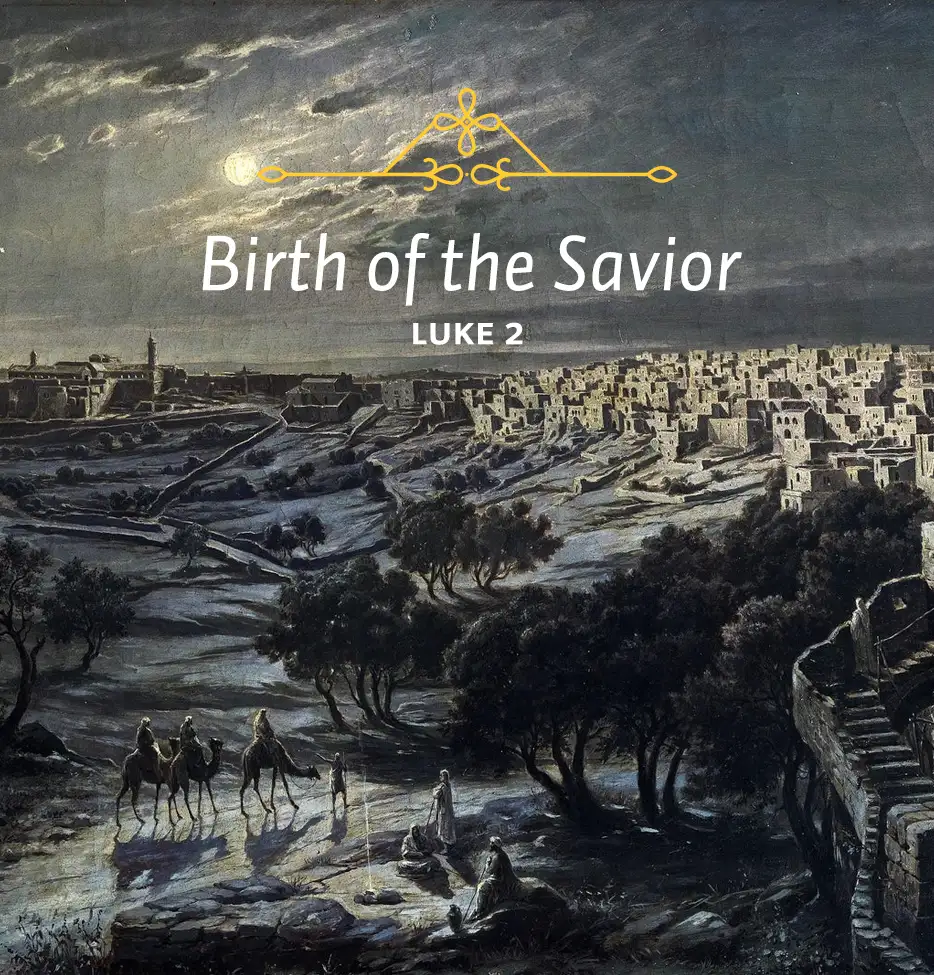






 Truth2Freedom's Blog