There are two ways to be fooled. One is to believe what isn’t true; the other is to refuse to believe what is true. —Soren Kierkegaard. "…truth is true even if nobody believes it, and falsehood is false even if everybody believes it. That is why truth does not yield to opinion, fashion, numbers, office, or sincerity–it is simply true and that is the end of it" – Os Guinness, Time for Truth, pg.39. “He that takes truth for his guide, and duty for his end, may safely trust to God’s providence to lead him aright.” – Blaise Pascal. "There is but one straight course, and that is to seek truth and pursue it steadily" – George Washington letter to Edmund Randolph — 1795. We live in a “post-truth” world. According to the dictionary, “post-truth” means, “relating to or denoting circumstances in which objective facts are less influential in shaping public opinion than appeals to emotion and personal belief.” Simply put, we now live in a culture that seems to value experience and emotion more than truth. Truth will never go away no matter how hard one might wish. Going beyond the MSM idealogical opinion/bias and their low information tabloid reality show news with a distractional superficial focus on entertainment, sensationalism, emotionalism and activist reporting – this blogs goal is to, in some small way, put a plug in the broken dam of truth and save as many as possible from the consequences—temporal and eternal. "The further a society drifts from truth, the more it will hate those who speak it." – George Orwell “There are two ways to be fooled. One is to believe what isn’t true; the other is to refuse to believe what is true.” ― Soren Kierkegaard
For the appointing of the Redeemer and God’s gracious condescension to deal with men upon new terms, receding from the demands of the broken covenant of innocency.
I bless you that when sacrifices and offerings you did not desire, and in them took no pleasure, that then the eternal Son of God said, “Behold, I have come to do your will, O God, and a body have you prepared for me.” Hebrews 10:5-7(ESV) And that, as in the scroll of the book it was written of him, he did delight to do your will, O God; yes, your law was within his heart. Psalm 40:7-8(ESV)
You have granted help to one who is mighty, one chosen from the people: You have found David, your servant; with your holy oil you have anointed him, Psalm 89:19-20(ESV) even with the oil of gladness beyond his companions; Psalm 45:7(ESV) and you did promise that your hand should be established with him and your arm should strengthen him, Psalm 89:21(ESV) and that you would make him the firstborn, the highest of the kings of the earth. Psalm 89:27(ESV)
I bless you that the Father now judges no one, but has given all judgment to the Son; John 5:22(ESV) that as he has life in himself, so he has granted the Son also to have life in himself, and has given him authority to execute judgment, because he is the Son of Man; John 5:26-27(ESV) that the Father loves the Son and has given all things into his hand; John 3:35(ESV) and that the counsel of peace is between them both. Zechariah 6:13(ESV)
That he is your servant, whom you uphold, your chosen in whom your soul delights; Isaiah 42:1(ESV) your beloved Son, with whom you are well pleased; Matthew 17:5(ESV) that you have given him as a covenant to the people; Isaiah 49:8(ESV) and that through him I am not under law but under grace. Romans 6:14(ESV)
That God so loved the world, as to give his only begotten Son, that whoever believes in him should not perish but have eternal life. John 3:16(ESV)
Luke 2 In these lessons on the birth of Christ we focus on its paradoxes, and how these show that Jesus’ coming is for all who will receive Him.
Theme
Angels and Shepherds
We talk about there being no room in the inn. But the first great question of the story is not: “What is your theology of the person of Christ?” or “What is your theology of God?” or “What is your theology of the atonement?” It is rather: “Do you have room for Jesus?” “Is there room in your heart for the Savior?” His claims can be crowded out by your conception of yourself. You can say, “Well, I am like I am, and I want to do what I want to do. If Jesus has some other idea, He will just have to do without me, because I am here to do my own thing.” Jesus can be crowded out by your preoccupation with things. Americans are especially guilty of this, and at no time are we guiltier than at Christmas. There are so many things we want. Our hearts are filled with things, and Jesus gets pushed aside.
Is there room in your heart for Jesus? If Jesus is God’s great gift to humanity, you could never have anything greater in your life than Jesus. The source of all blessing begins with receiving Him. But notice! If you do have room in your heart for Jesus, then the world is not going to have room for you. When I read this passage, it does not say there was no room for Him in the inn, meaning Jesus. It says there was no room for them. In other words, there was no room for Joseph or Mary either. If you draw close to Christ, you will become like Him and will experience the same kind of rejection that Jesus experienced. You will not fit in with the crowd. You will not be one of the boys or one of the girls. There will be something a little bit different about you. You may try. You may be like Peter, standing by the fire of the high priest trying to swear and pretend that he was one of the guys. But you will have been with Jesus, and, like Peter, you will not quite be able to pull it off. They knew there was a difference with Peter. They said, “Surely, he is one of them.”
If you have opened your heart to Christ, you will know something of His rejection. But although the world will not have room for you, Jesus will. He said, “I am going . . . to prepare a place for you. And if I go and prepare a place for you, I will come back and take you to be with me that you also may be where I am” (John 14:3).
A passage like this confronts us with the decision we all will have to face sooner or later. Either we are going to go God’s way and suffer whatever worldly consequences there may be, knowing that the blessing of God rests upon that decision and that we will spend eternity with Him, regardless of the persecution. Or we are going to go the world’s way and turn our backs on spiritual blessings. It would be a wonderful thing if, especially at Christmastime, some who have been indecisive would say, “Enough of this double-mindedness! Enough of this divided way of life! I am going to go with Christ regardless of the consequences.” That would be the greatest decision you could ever make. It would be the beginning of the greatest adventure that you could have. It is the first thing this chapter asks us to consider.
There is another paradox in these verses: the announcement of the birth of Christ to shepherds. Why shepherds? I do not have an answer to that, except that they were insignificant people. Shepherds were very poorly regarded. They were so poorly regarded that under Jewish law they could not even give testimony in court. Everybody assumed that people like that would lie. There was nothing glorious about shepherds. Yet it was to shepherds that the announcement of Christ’s birth was made. And by whom? By angels! By the heralds of heaven!
We might think that if angels came to earth to speak to anybody, it ought to have been Caesar or Quirinius. Or perhaps to the Jewish authorities—priests, holy men, or prophets. But that is not what God did. God gave this glorious announcement to men who were in the fields with their sheep. Oh, it is true that an angel appeared to Joseph to tell him what to name the child. An angel had also appeared to Mary earlier. But I do not read anywhere that either Mary or Joseph heard the angels sing. They did not hear the great announcement: “Today in the town of David a Savior has been born to you; he is Christ the Lord” (v. 11). They did not hear: “Glory to God in the highest, and on earth peace to men on whom his favor rests” (v. 14). But the shepherds did!
I conclude that if God made the good news of the Gospel known to the shepherds, who were at the absolute bottom of the heap socially, then God is making that announcement known to everybody. So this Gospel is for you, whoever you may be or whatever you may have done. It is for those who are lost in sin, in order that by the grace of God they might be lifted up from sin and made like Jesus Christ.
Study Questions
What paradox is mentioned in this lesson? Why is it a paradox at all?
What does the angelic announcement to the shepherds tell us about the “good news”?
Application
Application: How have you experienced rejection from the world because of your commitment to Christ? Ask the Lord to use such persecution to further motivate you to perseverance and faithfulness.
Key Point: A passage like this confronts us with the decision we all will have to face sooner or later. Either we are going to go God’s way and suffer whatever worldly consequences there may be, knowing that the blessing of God rests upon that decision and that we will spend eternity with Him, regardless of the persecution. Or we are going to go the world’s way and turn our backs on spiritual blessings.
For Further Study: To learn more about how we are to reflect Christ’s humility, download for free and listen to Donald Barnhouse’s message, “The Disposition of Christ.” (Discount will be applied at checkout.)
I will put enmity between you and the woman, and between your seed and her seed; He shall bruise your head, and you shall bruise His heel (Genesis 3:15).
Genesis 3:15 is a key verse of the whole Bible. The rest of the Bible is, in fact, an outworking of this one verse. The verse is set against the dark background of Satan, sin and the Fall. The verse has been well describes as the first gospel promise – the proto euangellion – for the verse is a promise of redemption. And this redemption would be wrought by a Redeemer. In due course a Redeemer – a descendant of Eve – would come, God promised. And this Redeemer would reverse the bad and sad consequences of the Fall. He would crush Satan’s head. He would redeem for the judgment which Satan brought upon the world by enticing our first ancestors to sin against God. He would bring redemption. Yet the redemption wrought would not be without a cost and great pain to Himself. ‘He shall bruise your head, and you shall bruise His heel.’ Nevertheless, through the Redeemer’s pain, salvation would be procured. Satan’s work would be undone. The alienated sinner would be reconciled to God, and eventually all creation would be restored to its former glory. In a nutshell, Paradise Lost would be Paradise Regained.
With the benefit of our New Testament hindsight, we can see that this first gospel promise was wonderfully fulfilled – and will yet be fulfilled completely – in the Lord Jesus Christ. God keeps His promises. Little by little, in Old Testament times, He revealed more and more about the coming Redeemer. The promises were unfulfilled, and then! The Redeemer came. He was sent by God – sent to execute the plan of salvation that God had both foreordained and foretold. ‘But when the time had fully come, God sent forth His Son, born of woman, born under the law, to redeem those who were under the law, so that we might receive adoption as sons’ (Galatians 4:4,5). The Old and New Testaments therefore are two parts of a single story.
It is this thread of promise and fulfilment which ties together the Old and New Testaments – which ties together the whole Bible. And it is the Lord Jesus Christ who is the key to unlock the whole Bible. The Old Testament foretold and prophesied His coming. The New Testament tells how He came in fulfilment of God’s promises. And the New Testament unfolds the saving consequences of His coming for the believer. Genesis 3:15 then – the first gospel promises – is a key verse of the Bible. It finds its fulfilment in the Christ who come in the fullness of time. ‘For all the promises of God find their Yes in Him. That is why we utter the Amen through Him, to the glory of God’ (2 Corinthians 1:20).
So what was the purpose of Christ’s coming? He came as the great Serpent crusher. Or as 1 John 3:8 puts it: ‘The reason the Son of God appeared was to destroy the works of the devil.’ Yet in the process of crushing the Serpent’s head, we note that the promised Redeemer Himself would not be unscathed. ‘He shall bruise your head and you shall bruise His heel.’ This takes us to the cross of Calvary, where redemption was actually wrought through the Redeemer’s suffering – suffering in the place of the sinner; suffering in the place of those He came to redeem. ‘It was the will of the Lord to bruise Him, He has put Him to grief; when He makes Himself an offering for sin’ (Isaiah 53:10). ‘But He was wounded for our transgressions He was bruised for our iniquities; upon Him was the chastisement that made us whole and with His stripes we are healed’ (Isaiah 53:5).
The question is sometimes asked, ‘Were our first ancestors saved?’ The answer is: ‘Yes they were.’ How? By the Christ to come – just as we are saved by the Christ who has come. They were saved because they heard and believed the promise of God.
Although the work of redemption was not actually wrought by Christ till after His incarnation, yet the virtue, efficacy and benefits thereof were communicated unto the elect, in all ages successively from the beginning of the world, in and by those promises, types and sacrifices, wherever He was revealed, and signified to be the seed of the woman which should bruise the serpent’s head; and the Lamb slain from the beginning of the world; being yesterday and today the same, and for ever (Westminster Confession of Faith).
So the first gospel promise. It was made in Eden. It was fulfilled in Christ. Specifically, it was fulfilled in the cross of Christ, for it is by the cross of Christ that sinners are restored to fellowship with God. The promise though actually has a double fulfilment. Satan received a mortal blow at Calvary. And Satan will be fully, finally and forever crushed when Jesus comes again. At the end of the age, Revelation 20:10 foretells how ‘the devil who had deceived them was thrown into the lake of fire and sulphur where the beast and false prophet were, and they will be tormented day and night for ever and ever. The time is soon coming. The Bible tells us so. ‘The God of peace will soon crush Satan under your feet. The grace of our Lord Jesus Christ be with you’ (Revelation 16:20).
If you’ve ever read a passage of the Bible and said, “huh?” then you probably know the level of shame or embarrassment that comes along with not understanding the Bible. I get it — it’s a big book with lots of things going on. Most of the time we don’t want a history lesson, we just want God to meet us today and empower us for the struggles we face.
We know we are supposed to love the Bible and feast on it — but if we are being honest, most days we struggle to enjoy it. After all, who wants to come home from work and study Leviticus when Netflix and Facebook are much easier to scroll? We open up the Bible saying “God speak to me! I need to hear from you!” and read, “Do not mate two different kinds of animals. Do not plant your field with two different kinds of seed” (Lev. 19:19, NLT) and wonder what that means for our lives today.
In 2 Timothy 2:15 we read, “Do your best to present yourself to God as one approved, a worker who does not need to be ashamed and who correctly handles the word of truth” (NIV). In this verse Paul challenges Timothy to do his best to do the “work” of correctly handling the “word of truth” … yet most of us struggle to even open it up.
‘Word of Truth’
The challenge comes when we think about truth. If the Bible is true, then it is worth reading. If the Bible is true, then it is worth struggling through the historical, complicated spots. You see, I believe the Enemy takes away our sword for battle (Ephesians 6:17) by convincing us it’s not worth wielding.
But friends, no swordsman would say his sword is too heavy or long to carry around. It is his weapon! We, however, have dusty Bibles on our nightstands.
There is a disconnect between our doctrines and our practices when it comes to reading and enjoying the Bible. We struggle to live out Paul’s instructions because we aren’t even reading our Bibles.
Why do we avoid it?
I believe it is because too many of us don’t enjoy it. We don’t enjoy it because we don’t understand it. We don’t understand it because we were never taught the basics of hermeneutics.
What Are Hermeneutics?
Hermeneutics is a fancy word that simply means the study of how we read, interpret, and eventually apply scripture to our lives. It’s the study of why we read the Psalms as poetic songs and Genesis as direct narrative.
Hermeneutics is what makes sense of the Bible. It’s the study of who wrote a text and why. It’s also the study of how we find the meaning of the text (exegesis).
Now, this all may sound like too much “study” for you. I get it! But, I think studying Scripture is much different than studying anything else. Why? Because it is the Word of life (John 6:63).
The Bible in One Sentence
It’s time I come clean to you: I have fallen in love with the Word through studying it. And it’s not as complicated of a study as you might think. For example: here’s one little tip that will transform your reading of the Bible:
The Bible can be summarized as the story of God redeeming His people for His glory.
So, no matter where you are in the Bible, it’s always a small part of that story of God redeeming. That also means God is the main character in all the stories — so we need to look more for God and less for ourselves in the text!
Putting Hermeneutics in Practice in the Book of Jonah
Now before you click away, convinced I’m trying to ruin your Bible studies — stick with me for a second and consider Jonah. Famous for running away from God, Jonah was a prophet called to prophesy to a people he hated. (We’d probably hate them too. They were the worst.)
So, logically, after receiving the call to go to Nineveh, Jonah sails in the opposite direction. But then a storm comes, and he immediately interprets it as God’s judgment on him. Instead of repenting, Jonah becomes so depressed that he tells the sailors, “Throw me overboard!” (He’d rather die than head to Nineveh.) A large fish swallows him, he’s inside the fish for a couple of days, and then he repents and goes to Nineveh after the fish spits him out. (Yes, he was brought so low he was fish vomit!)
While many simplify the book of Jonah down to the general lesson of “Don’t disobey God,” there is so much more going on in the text. Jonah never really seems to learn his lesson because when he does prophesy to the Ninevites, they miraculously repent — and he throws a fit!
You see, the book isn’t to be read as some kind of “be like repentant Jonah and go to your Nineveh!” lesson. At the end of the book, Jonah is still just as depressed and belligerent as he was at the beginning, and we are left wondering, “Did he ever learn?”
Actually, the book of Jonah is all about God. It begins with the Word of the Lord calling Jonah (Jon. 1:1) and ends with God’s speech (Jon. 4:9–11). Even when Jonah runs away, it’s always in reference to God’s presence (see Jon. 1:3). Additionally, the book continually shows us God’s actions “appointing” a storm, a fish, and a plant (Jon. 1:4, 1:17, 2:10, 4:6–8). Even when Jonah tries to throw a fit and verbally attack God, he says, “I knew you were gracious and merciful, slow to anger, and abounding in steadfast love!” (Jon. 4:2). Is that really supposed to be some sort of insult, Jonah?
The book of Jonah is so much richer than just “Don’t run away from God.” After looking at Jonah a little deeper, we see it is the story of how God worked in, through, and despite Jonah.
But reading Jonah knowing that it’s about God and not us does not mean it doesn’t change us or transform our hearts.
Rather, reading Jonah knowing that it’s about God, frees us up to see Christ.
Both spent three days in a lowly place — Jonah in the belly of a fish and Jesus in a tomb (Jonah 1:17; Matt. 12:40).
Finally, both were called to prophesy truth. One did it begrudgingly, suicidal at the thought of Ninevite repentance and God’s mercy (Jonah 4:3), while the other did so willingly. Jesus was perfectly obedient to the will of the Father (John 6:38), laying down his life for our ransom (1 John 3:16) while Jonah threw a fit over Nineveh’s repentance.
The book of Jonah shows us God’s nature of love and kindness despite Jonah’s seemingly rightful hatred, and it also shows us how Jesus is the greater, perfect prophet.
Jesus came not just to be a mouthpiece of God but also to model true, pure love. He genuinely desires the salvation of the undeserving, which is us. We are the undeserving. We are the unfit Ninevites whom Jesus went to great lengths to reach. This is the difference that reading the Bible in this framework — a story about God redeeming us for His glory — makes.
Our Nineveh
Hopefully you see that Bible study is actually not boring at all. Taking your Bible study deeper also doesn’t take much work either; sometimes it’s just a small reframing to have our eyes on Christ, not ourselves.
Maybe we are a little like Jonah, only our Nineveh is Scripture itself. Maybe all we need to do is have our eyes on God.
Take this framework and apply it to any piece of Scripture. The Bible is the story of God redeeming His people for His glory. Not only will it transform the way you view that passage of the Bible, but it may also transform you.
The Bible can feel overwhelming, but studying it is easier and more exciting than you think. It’s time to free yourself from the guilt of not “getting it.” With No More Boring Bible Study, Faith Womack will help you make your Bible study exciting again!
Is your family getting ready for Advent? Loosely defined, Advent is the period of time leading up to Christmas when we commemorate Christ’s first coming and anticipate His second coming. And what better way to do so than by making Bible study and worship part of your family tradition? Here are some awesome Advent resources1 for young and old alike. Most of them are free, but the ones that aren’t, I’ve marked with a 💰.
December Advent!– Here’s an advent calendar, craft, and devotional all rolled into one! Naomi’s Table is a women’s Bible study resource that I highly recommend for sound doctrine and right handling of God’s Word. Have a listen to their daily Advent podcasts and make the Advent calendar that goes with them!
Need a good Advent playlist? I’ve created one on YouTube. Your favorite Advent (not Christmas) song isn’t included? Leave a comment and I’ll add it if appropriate.
From the Realms of Endless Day by Dr. Tom Ascol. “This little book is meant to be used as a daily devotional guide throughout the Christmas season. It is broken into five sections of five devotions. Each section focuses on one passage of Scripture that is considered verse-by-verse.” Designed for family or individual use, with Scripture memory passages in each section and study questions at the end of each of the 25 lessons. Encouraging Christmas poetry from Dr. Tom Nettles is also sprinkled throughout the book.💰
The Promise of Christmas by John MacArthur. “…What would it have been like to be in Bethlehem for the very first Christmas? Would you have been waiting for Jesus? What would you have been anticipating? Would you have expected the Savior, King, and deliverer promised in Scripture to arrive unheralded by men—born in a lowly stable, surrounded by animals and society’s outcasts?…In The Promise of Christmas, John MacArthur answers those questions and more as he takes you back in time to first-century Israel.” A series of six sermons.
Is observing Advent new for your family? Children are often “hands on” learners, and this Advent wreath craft could be a great way to explain the significance of Advent, the wreath, and each candle as they create it. Follow the step-by-step instructions here, using your own design, or subscribe to the email list to download the free printables.
The Gospel According to Christmas by Allen Nelson. In a world where Christmas is often reduced to twinkling lights and fleeting sentiments, The Gospel According to Christmas is a clarion call to rediscover the holiday’s true heartbeat: the gospel of Jesus Christ. With pastoral warmth, Allen Nelson IV guides readers through 1 Peter 2:24 to unveil the staggering reality of Christ’s incarnation and sacrifice…Read it, share it, and let it rekindle your love for the Christ of Christmas. Reflection questions in each chapter make this book a perfect fit for group study or family devotions.”💰
The Jesse Tree– A charming precursor to the Advent calendar, the Jesse tree traces the story of Jesus from Creation to His birth. Using your Christmas tree or a crafted tree, hang an ornament each day that represents the Bible story for that day. This site has a free Jesse Tree tool kit with ideas for making your own Jesse Tree, the Scripture references for each day, and printable ornaments. (They also offer a family devotional and a individual devotional. If you’re considering using them, please do so carefully and discerningly. I read several of the family devotions and they seemed OK, but the Reformed Church in America {which sponsors this site} appears to have struggled with progressivism in their theology.)
Manger in Danger– This charming family devotional and game centering on the incarnation of Christ was created by Pastor Grant Castleberry and his wife, GraceAnna. “Manger in Danger is a fun, interactive family tradition that brings the Christmas story from the Bible to life in 25 days of family devotionals!”💰
I thought this was a cute idea – an Advent Countdown Candle. Just grab a taper, make 25 marks down the side of it, and each night burn away one more day. Simple! You might even like to read one of these Advent Scriptures…
…every night by candlelight. Or use my Advent playlist above, and sing one of the hymns there as each day burns away.
How about combining Advent and prayer with an Advent Prayer Calendar? Choose from dozens of designs, print out the one you like best, and color, decorate, or fancy it up any way you like. Each day, simply fill in the name of the person or ministry you’re praying for and spend a few minutes interceding for them. It’s a great way to start a habit of family prayer and count down to Christmas at the same time!
(This is a site1 where you’ll want to grab only the printable and leave everything else behind.)
Christmas Messages by R.C. Sproul- “In this set of Christmas sermons, Dr. R.C. Sproul examines the account of the Magi in the gospel according to Matthew and the relationship of David and Saul in order to unfold the significance of Christmas and the incarnation of Christ. With theological insight and attention to scriptural detail, Dr. Sproul demonstrates how these events and relationships contribute to our understanding of the person and role of Christ.”
Waiting for the Promise from Answers in Genesis. “As you reflect through this devotional on the promises of God for 4,000 years before the birth of Christ, be reminded of his great love for you that he would send his only Son to offer salvation for sinners!”💰(Free sample chapters available)
What’s your favorite Advent resource?
1I do not endorse anything on any of these sites nor any of these creators who deviate from Scripture or conflict with my beliefs as outlined in the “Welcome” or “Statement of Faith” tabs at the top of this page.
Jesus answered them, “I told you, and you do not believe; the works that I do in My Father’s name, these testify of Me. But you do not believe because you are not of My sheep. My sheep hear My voice, and I know them, and they follow Me; and I give eternal life to them, and they will never perish; and no one will snatch them out of My hand. My Father, who has given them to Me, is greater than all; and no one is able to snatch them out of the Father’s hand. I and the Father are one.” The Jews picked up stones again to stone Him. (10:25–31)
But Jesus already had told them plainly who He was (cf. 5:17ff.; 8:12, 24, 58); in fact, He had spent the last three years doing so. Not only that, the works that He did in the Father’s name also demonstrated that He was the Messiah; the Son of God; God in human flesh (cf. vv. 32, 38; 3:2; 5:36; 7:31; 11:47; 14:11; Acts 2:22). The Lord’s twice-repeated declaration, you do not believe, indicates that the problem was not due to any ambiguity in the revelation of the truth, but rather to their spiritual blindness. They lacked understanding, not because they lacked information, but because they lacked repentance and faith. Their unbelief was not due to insufficient exposure to the truth, but to their hatred of the truth and love of sin and lies (John 3:19–21). Anyone who willingly seeks the truth will find it (7:17), but Jesus refused to commit Himself to those who willfully rejected the truth. Had He again given them the plain answer they were demanding, they would not have believed Him anyway (cf. 8:43; Matt. 26:63–65; Luke 22:66–67). From the perspective of human responsibility, the hostile Jews did not believe because they had deliberately rejected the truth. But from the standpoint of divine sovereignty, they did not believe because they were not of the Lord’s sheep, which were given Him by the Father (v. 29; 6:37; 17:2, 6, 9). A full understanding of exactly how those two realities, human responsibility and divine sovereignty, work together lies beyond human comprehension; but there is no difficulty with them in the infinite mind of God. Significantly, the Bible does not attempt to harmonize them, nor does it apologize for the logical tension between them. For example, speaking of Judas Iscariot’s treachery, Jesus said in Luke 22:22, “The Son of Man is going [to be betrayed] as it has been determined.” In other words, Judas’s betrayal of Christ was in accord with God’s eternal purpose. But then Jesus added, “Woe to that man by whom He is betrayed!” That Judas’s betrayal was part of God’s plan did not relieve him of the responsibility for his crime. In Acts 2:23 Peter said that Jesus was “delivered over [to the cross] by the predetermined plan and foreknowledge of God.” Yet he also charged Israel with responsibility for having “nailed [Jesus] to a cross by the hands of godless men and put Him to death.” God’s sovereignty never excuses human sin. (For a more complete discussion of the interplay of divine sovereignty and human responsibility, see the exposition of 6:35–40 in chapter 20 of this volume.) Repeating what He said in His discourse on the Good Shepherd (see the exposition of vv. 3–5 in the previous chapter of this volume), Jesus said, “My sheep hear My voice, and I know them, and they follow Me.” The elect will heed Christ’s call to salvation and continue in faith and obedience to eternal glory (cf. Rom. 8:29–30). The Lord continued by articulating the wonderful truth that those who are His sheep need never fear being lost. “I give eternal life to them,” Jesus declared, “and they will never perish; and no one will snatch them out of My hand. My Father, who has given them to Me, is greater than all; and no one is able to snatch them out of the Father’s hand.” Nowhere in Scripture is there a stronger affirmation of the absolute eternal security of all true Christians. Jesus plainly taught that the security of the believer in salvation does not depend on human effort, but is grounded in the gracious, sovereign election, promise, and power of God. Christ’s words reveal seven realities that bind every true Christian forever to God. First, believers are His sheep, and it is the duty of the Good Shepherd to protect His flock. “This is the will of Him who sent Me,” Jesus said, “that of all that He has given Me I lose nothing, but raise it up on the last day” (6:39). To insist that a true Christian can somehow be lost is to deny the truth of that statement. It is also to defame the character of the Lord Jesus Christ—making Him out to be an incompetent shepherd, unable to hold on to those entrusted to Him by the Father. Second, Christ’s sheep hear only His voice and follow only Him. Since they will not listen to or follow a stranger (10:5), they could not possibly wander away from Him and be eternally lost. Third, Christ’s sheep have eternal life. To speak of eternal life ending is a contradiction in terms. Fourth, Christ gives eternal life to His sheep. Since they did nothing to earn it, they can do nothing to lose it. Fifth, Christ promised that His sheep will never perish. Were even one to do so, it would make Him a liar. Sixth, no one—not false shepherds (the thieves and robbers of v. 1), or false prophets (symbolized by the wolf of v. 12), nor even the Devil himself—is powerful enough to snatch Christ’s sheep out of His hand. Finally, Christ’s sheep are held not only in His hand, but also in the hand of the Father, who is greater than all; and thus no one is able to snatch them out of His hand either. Infinitely secure, the believer’s “life is hidden with Christ in God” (Col. 3:3). The Father and the Son jointly guarantee the eternal security of believers because, as Jesus declared, “I and the Father are one” (the Greek word one is neuter, not masculine; it speaks of “one substance,” not “one person”). Thus their unity of purpose and action in safeguarding believers is undergirded by their unity of nature and essence. The whole matter of security is summarized in our Lord’s own words in John 6:39–40:
This is the will of Him who sent Me, that of all that He has given Me I lose nothing, but raise it up on the last day. For this is the will of My Father, that everyone who beholds the Son and believes in Him will have eternal life, and I Myself will raise him up on the last day.
Incensed by what they accurately and unmistakably perceived as another blasphemous claim to deity by Jesus, the Jews, self-righteously exploding in a fit of passion, picked up stones again to stone Him—the fourth time in John’s gospel that they had attempted to kill Him (5:16–18; 7:1; 8:59). Though the Romans had withheld the right of capital punishment from the Jews (18:31), this angry lynch mob was ready to take matters into its own hands.
MacArthur, J. F., Jr. (2006). John 1–11 (pp. 441–443). Moody Press.
Christ, the Calvinist
John 10:27–29
“My sheep listen to my voice; I know them, and they follow me. I give them eternal life, and they shall never perish; no one can snatch them out of my hand. My Father, who has given them to me, is greater than all; no one can snatch them out of my Father’s hand.”
One time, after I had preached a sermon from John touching on some of the main points of the Reformed faith, I found a copy of that week’s bulletin on which someone had scribbled his opinion of the message: “I’m sick of Calvinism in every sermon.” The message did not particularly bother me. Notes like that seldom do. But I found it surprising that the person who wrote the note somehow regarded Calvinism as a system of thought that could well be dispensed with while, nevertheless, as he assumed, still preserving Christianity. In other words, this person, like many others, somehow regarded the doctrines that go by the name of Calvinism as at best an addition to the pure gospel and at the worst a system that is opposed to it. Is this true? Are the doctrines of grace wrong? One proof that they are not is seen in the verses to which we come in this chapter.
Historic Calvinism
The verses I have in mind are those in which the Lord Jesus Christ spoke plainly to his enemies, saying that those who do not believe on him do not believe because they are not his sheep, that those who are his sheep believe and follow, that this is true because they are given to him by the Father, that these who are given to him by the Father inevitably come to him and, finally, that these who come will never be lost. This is a message of man’s complete ruin in sin and God’s perfect remedy in Christ, and it can be expressed in the distinctive points of Calvinistic theology. Before we look at these points in detail, however, we should see that far from being an aberration or addition to the gospel, these truths have always belonged to the core of the Christian proclamation and have been characteristic of the church at its greatest periods. To begin with, the doctrines of grace that have become known as Calvinism were most certainly not invented by Calvin, nor were they characteristic of his thought alone during the Reformation period. As we shall see, these are the truths taught by Jesus and confirmed for us in Scripture by the apostle Paul. Augustine argued for the same truths over against the denials of Pelagius and those who followed him. Luther was a Calvinist. So was Zwingli. That is, they believed what Calvin believed and what he later systematized in his influential Institutes of the Christian Religion. The Puritans were also Calvinists; it was through them and their teaching that both England and Scotland experienced the greatest and most pervasive national revivals the world has ever seen. In that number were the heirs of John Knox: Thomas Cartwright, Richard Sibbes, Richard Baxter, Matthew Henry, John Owen, and others. In America, thousands were influenced by Jonathan Edwards, Cotton Mather, and George Whitefield, all of whom were Calvinists. In more recent times the modern missionary movement received nearly all its direction and initial impetus from those in the Calvinistic and Puritan tradition. The list includes such men as William Carey, John Ryland, Henry Martyn, Robert Moffat, David Livingstone, John G. Paton, John R. Mott, and many others. For all these the doctrines of grace were not an appendage to Christian thought but were rather that which was central and which most fired and gave form to their preaching and missionary efforts. This, of course, is precisely why I am reviewing this history—to show that the doctrines known as Calvinism are not something that emerged late in church history but rather are that which takes its origins in the teachings of Jesus, which has been found throughout the church in many periods, and which has always been characteristic of the church at its greatest periods of faith and expansion. It follows from this that the church of Jesus Christ will again see great days when these truths are widely proclaimed, and proclaimed fearlessly. Jesus is our example. We sometimes think of these doctrines as household doctrines; that is, as truths to be proclaimed only to those who already believe. But this was not Jesus’ procedure. He taught them also to his enemies. In this case, they had come to him with the implication that he was responsible for their failure to believe; they had said, “If you are the Christ, tell us plainly.” He answered this, not so much with a statement concerning his identity as the Messiah (although he did say that his words and works authenticated him), but much more importantly by a full statement of man’s utter inability to choose God and of the necessity for divine grace in each step of salvation. Did they want it told plainly? Well, this is the truth told plainly: “You do not believe because you are not my sheep.… My sheep listen to my voice; I know them, and they follow me. I give them eternal life, and they shall never perish; no one can snatch them out of my hand. My Father, who has given them to me, is greater than all, and no one can snatch them out of my Father’s hand” (vv. 26–29).
State of the Lost
First of all, Christ’s words reflect the desperate state of the lost; that is, the state of all men as they are apart from Christ. The teachings on this point are not so much direct as indirect. Still they underlie the positive points made in this passage. In reference to man’s desperate state apart from Christ, these verses show that he has lost spiritual life; otherwise it would not be necessary for Christ to speak of it as a gift. Originally, man had life. When the first man and woman were created by God they were created with that life that shows itself in communion with him. Consequently, we learn that they communed with God in the Garden in the cool of the day. When they sinned, this life was lost, a fact evidenced by their hiding from God. This has been the state of people ever since. Consequently, when the gospel is preached, those who hear it turn away unless God intervenes to do a supernatural work of regeneration in their hearts. Moreover, the desperate state of people apart from Christ is suggested by the fact that no one can recover this life except as a free gift from God. Jesus calls it a gift, for it is undeserved and unearned. If it were earned, it would be wages; if it were merited, it would be a reward. But eternal life is neither of these. It is a gift, which means that it originates solely in God’s good will toward men. As a last thought on this subject, it is also true, is it not, that men and women will perish except for this gift. Jesus says of those to whom he gives life that “they shall never perish.” But since he makes this promise, it must be because we will perish if he does not intervene. We are sinners. Sin makes us heirs of God’s wrath. If God does not intervene, we stand under divine judgment, without hope, facing the punishment due us for our own sins. According to these verses, we cannot even come to Christ, for we are not of his sheep and so lack the ability to hear his voice and turn to him.
Grace
This brings us to the next thought. For while it is true that in ourselves we cannot come to Christ and so lie under God’s just condemnation, the main point of these verses is that God has nevertheless acted in grace toward some. Earlier this was expressed by saying that Christ died for the sheep; in other words, by the doctrine of a particular redemption (v. 11). In this section we are told that Jesus has given eternal life to the same people (v. 28), and that these are those whom God has given him (v. 29). You cannot trace the origins of our salvation farther back than that. In this, as in all things, the origins are to be found in God. Some say, “But surely God called them because he foresaw that some would believe.” But it does not say that. Others say, “He chose them because he knew in advance that they would merit salvation.” It does not say that either. What it does say is that the initiative in salvation lies with God and that this is found, on the one hand, in God’s electing grace whereby he chooses some for salvation entirely apart from any merit on their own part (which, of course, they do not have) and, on the other hand, in Christ’s very particular atonement by which he bore the penalty for the sins of these people. I need to say also, however, that there are aspects of the death of Christ that apply to the world at large. I am not denying that. The death of the Lord Jesus Christ is a revelation of the nature of God. It is a revelation of his hatred of sin in that Christ died for it. It is most certainly a revelation of God’s love, for love lay behind it. It is an example to the race. These things are true. But in addition to these there is also a sense in which the Lord Jesus Christ died particularly and exclusively for his own, so that he literally bore the penalty for their particular sins, that they might be forgiven. These truths do not make us proud, as some charge. Rather they increase our love for God who out of pure grace saves some when none deserve it.
An Effective Call
The third of the reformed doctrines presented by Jesus is the effective call: that is, that God’s call of his people is accompanied by such power that those whom he calls necessarily come to him, believing on Christ and embracing Christ for salvation. Jesus expresses this by saying: “My sheep listen to my voice; I know them, and they follow me” (v. 27). It is a mark of the sheep that they both hear and follow their shepherd. In the Puritan era it was the habit of many preachers to play on these two characteristics, calling them the marks of Christ’s sheep. In days when there were many flocks of sheep it was necessary to mark the sheep to distinguish them. In our day, at least on cattle, this is done by branding. On sheep it was often done by cutting a small mark into the ear. “Well,” said the Puritans, “each of Christ’s sheep has a double mark—on his ear and on his foot. The mark on his ear is that he hears Christ. The mark on his foot is that he follows him.” This is true, of course. It leads us to ask, “Do we hear? Do we follow?” How many of those who come to church on a typical Sunday morning really hear the voice of Christ or have ever heard it? They hear the voice of the preacher; they hear the voices of the members of the choir. But do they hear Christ? If they do, why are they so critical of what they hear? Why are their comments afterward so much more about the Lord’s servant than the Lord? Those who are Christ’s hear Christ. And they follow him. But how many who come to church are really following? Most seem to make good leaders—in their own cause—but they are poor followers. They make good critics—of the Bible and of Christ’s people—but they are poor disciples. They make respectable wolves, for they ravage the flock, but they do not have the traits of the sheep and would even be contemptuous of them if they had an understanding of what those traits are. Do not presume on your relationship to Christ. You are not his unless you hear his voice and follow him. Jesus said, “If you love me, keep my commandments” (John 14:15). He said, “He who has an ear, let him hear what the Spirit says to the churches” (Rev. 2:7).
Never Lost
Finally, notice that these verses also speak at length of God’s perseverance with his saints. That is, they teach us that none whom God has called to faith in Christ will be lost. Indeed, how can they be, if God is responsible for their salvation? Jesus says, “I give them eternal life, and they shall never perish; no one can snatch them out of my hand” (v. 28). “But,” says someone, “suppose they jump out of their own accord?” “They shall never perish,” says the Lord. “Never?” “No, never,” says Jesus. “They shall never perish; no one can snatch them out of my hand.” This does not mean that there will not be dangers, of course. In fact, it implies them; for if Jesus promises that no one will succeed in plucking us from his hands, it must be because he knows that there are some who will try. The Christian will always face dangers—dangers without, from enemies, and dangers within. Still the promise is that those who have believed in Jesus will never be lost. We may add that the Christian may well be deprived of things. He may lose his job, his friends, his good reputation. Still he will not be lost. The promise is not that the ship will not go to the bottom, but that the passengers will all reach shore. It is not that the house will not burn down, but that the people will escape safely. Do you believe this promise, that you are safe in Jesus’ hands, that you will never be lost? Are you able to trust God for this as you have for other truths? I suppose there is a way of explaining away almost everything, but I must say that I do not see how the opponents of eternal security can explain away this text. Am I Christ’s? Then it is he who has promised that neither I nor any who belong to him shall perish. If I do perish, then Jesus has not kept his word, he is not sinless, the atonement was not adequate, and no one in any place can enter into salvation. I wish that all God’s children might come to know and love these truths. I wish that many might be saved by them. We live in a day that is so weak in its proclamation of Christian doctrine that even many Christians cannot see why such truths should be preached or how they can be used of the Lord to save sinners. This was not always so. It was not always the case that these truths were unused by God in saving sinners. Did you know that it was these doctrines, particularly the doctrine of God’s perseverance with his people, that God used to save Charles Haddon Spurgeon, one of the greatest preachers who ever lived? Spurgeon was saved when he was only fifteen years old, but before that time he had already noticed how friends of his, who had begun life well, made shipwreck of their lives by falling into gross vice. Spurgeon was appalled by such things. He feared that he himself might fall into them. He reasoned like this: “Whatever good resolutions I might make, the probabilities are that they will be good for nothing when temptation [assails] me. I [will] be like those of whom it has been said, ‘They see the devil’s hook and yet cannot help nibbling at his bait.’ I [will] disgrace myself.” It was then that he heard of the truth that Christ will keep his saints from falling. It had a particular charm for him and he found himself saying, “If I go to Jesus and get from him a new heart and a right spirit, I shall be secured against these temptations into which others have fallen. I shall be preserved by Him.” It was this truth along with others that brought Spurgeon to the Savior. I wish it might be the same with you! I do not preach a gospel that has a shaky foundation. I do not proclaim a religion of percentages and probabilities. I proclaim the message of Christ, Paul, Augustine, Luther, Calvin, and all others who have found God to be their pure hope and salvation. It is the message of man’s complete ruin in sin and of God’s perfect remedy in Christ, expressed in his election of a people to himself and his final preservation of them. God grant that you might believe it wholeheartedly.
Boice, J. M. (2005). The Gospel of John: an expositional commentary (pp. 777–782). Baker Books.
27, 28. My sheep listen to my voice, and I know them, and they follow me, and I give them everlasting life, and they shall certainly never perish, and no one shall snatch them out of my hand. Looking at this sublime sentence from a merely formal point of view we notice six parts, arranged in beautiful reciprocal relationship. This may be represented as follows:
My sheep I
listen to my voice &
know them;
follow me &
give them everlasting life;
shall certainly never perish &
will take care that no one shall snatch them out of my hand.
However, it must be stressed that this is true only from a formal point of view. It is certainly not fair to base wrong doctrinal conclusions upon this rhetorical arrangement, and to say, for example, that in actual fact, the six elements are all simultaneous. Very clearly, people cannot make themselves sheep (6:39, 44; 10:29); sheep do not hear a voice unless that voice has gone forth first of all; and sheep do not follow unless the shepherd has first pushed them out of the fold and has gone on ahead of them (10:3, 4). Again, it is because the good shepherd gives to the sheep everlasting life that they never perish and that no one snatches them out of his hand. The sheep are not passive. Indeed not! They listen; they follow. But the action results from the gift. They themselves are the gift of the Father to the Son. That thought is stressed in this very context (verse 29). With slight variation all of these six elements have been mentioned before. Hence, for the explanation we simply refer to the passages where the same truths were expressed previously. Kindly turn to the indicated references:
My sheep listen to my voice. See on 10:3, 8, 16.
And I know them. See on 10:3, 14.
And they follow me. See on 10:4, 5.
And I give them everlasting life. See on 10:10 and on 3:16.
And they shall certainly never perish. See on 3:16.
And no one shall snatch them out of my hand. See on 10:12.
What is stated here, accordingly, amounts in brief to this: “My sheep—having become such because they were given to me by my Father (10:29)—put forth an effort to catch the sound of my voice. They do this constantly. They eagerly obey me, placing their full confidence in me. I know them, acknowledging them as my very own. They follow me, but turn away from strangers. I give to them here and now (as well as in the future) that life which is rooted in God and which pertains to the future age, to the realm of glory. In principle it becomes their possession even before they reach the shores of heaven. That life is salvation full and free, and manifests itself in fellowship with God in Christ (17:3); in partaking of the love of God (5:43), of his peace (16:33) and of his joy (17:13). Hence, it differs in quality from the life which characterizes the present age, being its very opposite. And it never ends. The sheep shall certainly never perish; i.e., they shall never enter the state of wrath, the condition of being banished forever from the presence of the God of love. And no one shall snatch them out of my hand (symbolizing my power).” Some commentators insist that when Jesus states, “They shall certainly never perish, and no one shall snatch them out of my hand,” he does not really mean this. They are so sure that believers may, after all, be lost, that they are unwilling to do justice even to the plain sense of Scripture. But it must be borne in mind, as has been shown previously (see Vol. I, p. 46; see also on 4:4; 6:39, 44) that in the Fourth Gospel the idea of predestination (and at times also its corollary: the perseverance of the saints, their being guarded by the power of God, so that they keep clinging to him to the very end) is constantly stressed (see 2:4; 4:34; 5:30; 6:37, 39, 44, 64; 7:6, 30; 8:20; 13:1; 18:37; 19:28). Hence, it is utterly futile to deny this or to seek refuge in a passage which, considered merely on the surface, may seem to be in conflict with this consistent teaching. Thus, 15:6 is often pressed into service by those who deny what John so clearly emphasizes; but see on that verse. The basis of man’s salvation rests forever in God, not in man! That point is not grasped by those who teach that man is able, after all, to tear himself loose from the power of God. Thus, in essence, God is dethroned, and the comfort of the assurance of salvation is lost.
Hendriksen, W., & Kistemaker, S. J. (1953–2001). Exposition of the Gospel According to John (Vol. 2, pp. 122–123). Baker Book House.
Be not afraid of their faces: for I am with thee to deliver thee, saith the Lord. (Jeremiah 1:8)
Whenever fear comes in and makes us falter, we are in danger of falling into sin. Conceit is to be dreaded, but so is cowardice. “Dare to be a Daniel.” Our great Captain should be served by brave soldiers.
What a reason for bravery is here! God is with those who are with Him. God will never be away when the hour of struggle comes. Do they threaten you? Who are you that you should be afraid of a man that shall die? Will you lose your situation? Your God whom you serve will find bread and water for His servants. Can you not trust Him? Do they pour ridicule upon you? Will this break your bones or your heart? Bear it for Christ’s sake, and even rejoice because of it.
God is with the true, the just, the holy, to deliver them; and He will deliver you. Remember how Daniel came out of the lions’ den and the three holy children out of the furnace. Yours is not so desperate a case as theirs; but if it were, the Lord would bear you through and make you more than a conqueror. Fear to fear. Be afraid to be afraid. Your worst enemy is within your own bosom. Get to your knees and cry for help, and then rise up saying, “I will trust, and not be afraid.”
As I discussed in another post, we find baptismal regeneration contradicted in a large number and variety of ways in the extrabiblical sources before the Reformation. Sometimes an exclusion of baptism as a means of justification is implicit rather than explicit.
And people will often object to the use of implicit evidence. But we all rely on it. For example, we depend on implicit evidence when deciding how to translate a word in a document, basing our conclusion on what the surrounding context seems to imply. Christians have often said, rightly, that it’s unreasonable for a Muslim to ask us for a passage in the gospels in which Jesus says “I am God. Worship me.” or some equivalent. A term like “Trinity” doesn’t have to appear in the Bible for Trinitarianism to be Biblical. Roman Catholics often use arguments from typology that aren’t explicit. And so on. Advocates of baptismal regeneration rely on implicit argumentation in the context of supporting that doctrine. The appeal to alleged references to baptism in terms like “water” in John 3:5 and “washing” in Titus 3:5 relies on implicit argumentation, so does their reasoning that baptismal regeneration has been in effect during certain circumstances and not in others (e.g., not being applicable during the Old Testament era and some portion or all of Jesus’ public ministry), etc. Since proponents of baptismal regeneration rely on implicit argumentation in their reasoning about the subject, they’re not in a position to object to their opponents’ use of implicit argumentation. The fact that we prefer explicit evidence doesn’t mean that implicit evidence has no value. Something can be less valuable, yet still have value to some extent. The nature of life is such that evidence comes in both implicit and explicit forms, with people sometimes disagreeing about whether something is implicit or explicit, and we have to take all of the evidence into account.
Part of my post linked above is about implicit evidence against baptismal regeneration in the early extrabiblical literature. What I want to do in this post is list several categories of that sort of evidence that we should look for. I’m not trying to be exhaustive.
– Baptism isn’t mentioned when the means of justification is described. The absence of baptism becomes increasingly significant the more often it’s left out. For example, Ignatius wrote seven letters and discussed justification several times in the process, repeatedly mentioning faith as the means of obtaining justification without mentioning baptism. He does discuss baptism at times, but not as a means of obtaining justification. See my post on Ignatius here for more.
– Works are excluded. As I’ve discussed elsewhere (here, for example), the earliest Christian sources repeatedly define works in ways that seem to go beyond the Mosaic law, the ceremonial aspects of the Mosaic law, and such, and baptism seems to meet the standards laid out for a work. An exclusion of works most naturally suggests an exclusion of baptism.
– The means by which we’re justified is paralleled to how unbaptized individuals were justified. Some of the early sources, like Clement of Rome, say that God has always justified individuals the same way they’re justified in this New Testament era. You could add a qualifier to his comments, so that there’s only partial continuity between the Old Testament and New Testament eras, with baptism later being added as a requirement, but that sort of qualification isn’t suggested by the text or context and is a more complicated and less likely interpretation.
– The means of justification is compared to something that seems to exclude baptism. See my post on some Christians described by Celsus, for example. Celsus parallels the means of justification in Christianity to fideism. As I explain in that post, the parallel makes the most sense if faith is alone, not accompanied by baptism.
– The view of justification in question is paralleled to the view of some other individual or group who contradicted baptismal regeneration. My Celsus post linked above provides an example. Tertullian discusses some opponents of baptismal regeneration in his day who seem to be either part of the same group Celsus referred to or part of a similar group. There isn’t much of a parallel, so this particular form of the argument doesn’t have much strength, but my point is that the paralleling of two or more sources can have this kind of evidential significance, even though some parallels are less significant than others.
– The context of a person’s justification excludes baptism. Just as we conclude that the context of the thief on the cross (and the tax collector in Luke 18:9-14, etc.) likely excludes baptism, the same principle is applicable in extrabiblical contexts. See my discussion of Caecilius here, for example.
– The audience of the document implies the exclusion of baptism. A pagan audience, for example, wouldn’t be assuming the inclusion of baptism where it isn’t mentioned. The best explanation for why sources like Aristides and The Letter To Diognetus only mention repentance or faith without mentioning baptism when presenting Christian soteriology to a pagan audience is that the authors didn’t believe in baptismal regeneration.
Some sources include more than one of the characteristics discussed above (e.g., Clement of Rome, First Clement 32-33). There’s a cumulative effect. To use the example I just cited, it’s unlikely that Clement believed in baptismal regeneration, yet never referred to it when discussing how we’re justified and, instead, expressed his view in a few different ways that seem to contradict baptismal regeneration. And it’s not enough to respond by saying that he might have believed in baptismal regeneration anyway, since the issue is what’s the best interpretation of his comments, not just a possible interpretation. When a source like Clement has so many of the characteristics under consideration, an advocate of baptismal regeneration might appeal to a larger context, such as the alleged popularity of baptismal regeneration in other sources around the time of Clement, to justify concluding that he probably held that view. For an explanation of why that sort of appeal to a larger context doesn’t work, as well as why I think it instead adds further weight to the argument against baptismal regeneration in a context like Clement’s (because of his earliness, relational closeness to the apostles, etc.), see my comments about Polycarp in a post I linked earlier.
Even though 2.6 billion people claim to be Christian, the New Testament predicts false Christians will be many, true Christians will be few, and the world will increase in wickedness.
Matthew 7:13-14 True Christians are few, and sinners are many.
Matthew 7:21-23 False Christians say Jesus is their Lord, lead churches, and are “many.”
Matthew 10:22 True Christians are few when compared to all the world which will hate them.
Matthew 13:3-23 Three soils represent sinners and false believers; one soil represents true believers.
Matthew 13:24-30 False Christians are a tool of Satan.
Matthew 15:8 False Christians speak Christian words, but they do not love Him.
Matthew 18:15-17 False Christians are exposed by church discipline.
Matthew 21:30-31 False Christians are revealed by their disobedience.
Matthew 22:14 Few are chosen to be saved in comparison to the many that we evangelize.
Matthew 23 Jesus exposes false Christians at length with very harsh words just before He died.
Matthew 24:5, 10, 11, and 12 False Christians are called “many” 6 times.
Matthew 24:24 False teachers will be very persuasive with the masses.
Matthew 25:1-12 False Christians are a large number, not just 1 in 10.
Matthew 25:14-30 False Christians are so common that Jesus warned about this in 5 parables (Soils, Tares, Sons, 10 Virgins, Talents) even during the last week of His life.
Luke 12:32 True Christians might be afraid because their group is a little flock in an evil world.
Luke 13:23-24 The disciples think that only a few will be saved, and Jesus confirms that only a few will be able to enter the gate.
Luke 17:17-19 Only 1 of 10 lepers believed.
Luke 17:26-30 True Christians will be few when Jesus comes again, just as the majority were lost in the days of Noah and Lot.
Luke 18:8 True Christians will be rare when Jesus comes back
John 2:23 Many people believed in Jesus, but He did not quickly accept them.
John 6:66 Thousands of His followers left Jesus after one sermon.
John 6:70 There was a fake Christian even in the 12 disciples.
John 15:2-6 The night before He dies, after Judas left, Jesus stills warns the believers about being false Christians.
John 15:18 True Christians are a small proportion of the world.
Acts 15:24 False Christians were in the new churches from the first missionary journey.
Acts 20:30 False Christians were in the new churches from the second missionary journey.
Romans 16:17-18 False Christians were in the new church in Rome that Paul did not plant.
2 Corinthians 11:13 False apostles are in the church.
2 Corinthians 11:26 False Christians hinder the missionary.
2 Corinthians 13:5 Church members should be testing themselves to see if they are false Christians.
Galatians 2:4 False Christians hide their motives, sneak into churches, and spy on believers.
Philippians 3:18-19 Many start out as Christians, but after time they prove to be enemies of the Cross.
2 Thessalonians 1:4-7; 1:8-9; 2:3-12 Persecution, injustice, deception, and false religion will increase until Christ returns.
2 Thessalonians 2:2 False Christians will even write or speak words as if they came from God.
1 Timothy 4:1 New pastors like Timothy need to be warned about false Christians.
2 Timothy 3:5 In the last days, men will pretend to be Christian without real conversion.
Titus 1:16 False Christians talk about God, but they do not live for God.
Hebrews 2:3; 3:6; 6:4-6; 10:39; 12:15 Five times, the danger of false Christians is raised in this letter.
James 1:22-26 Every Christian needs to see if he is deceiving himself and holding to a worthless religion.
James 2:14 False Christians have words, but no works.
2 Peter 2:2 The churches of false teachers will attract many false Christians.
2 Peter 2:20 Some will make a good start and then fall back again.
1 John 2:4 False Christians give a testimony, but they do not give obedience.
1 John 2:18 Many false Christians will appear in the last days.
1 John 2:19 False Christians leave the church because they are not true Christians.
1 John 4:1 The world has many false prophets.
1 John 5:19 Satan controls the majority of the world, and he is not bound from working with those who are his children. Also, 1 Pet. 5:8; 2 Cor. 4:4
2 John 7 Many false Christians take the name but are not converted.
Jude 4ff This whole letter is a warning to men who claim to be Christian without being regenerated.
Revelation 2:2, 9, 14, 20; 3:9 Within 5 of the 7 churches there were false Christians.
The NT has 9 examples of false Christians mentioned by name: Judas, Simon, Hymenaeus, Alexander, Phygelus, Hermogenes, Philetus, Demas, and Diotrephes.
23 of 27 NT books warn about the danger of false teaching which could produce false Christians.
“More terrifying than going to Hell, is to hear Him say, ‘Depart from me,’ after you had lived a life thinking all the while that you were going to Heaven.”
How should a Christian use this information?
Recognize that false Christianity is a tool of Satan. Matt. 13:25
Look into your own heart to see if you are a false Christian. 2 Cor. 13:5
Devote your life to spiritual fruit. Matt. 13:23; John 15:5-6
Confess your sin every day. This is the most effective path to true Christianity. Matt. 5:4; James 4:6
Look to Christ. Count His works. Think of what He does. Imagine seeing Him on the cross, on the White Horse and on the Throne.
Pray the prayers of the Bible.
Prepare to live for Christ as if you would stand alone or with only a few other believers. Matt. 22:14; 18:20; 1 Cor. 2:5
Wake up the sleepers who are false Christians. Jesus did this in the Sermon on the Mount especially in Matthew 7.
In the present day, Christianity is called the largest religion in the world. But that cannot possibly be true seeing that Catholicism is counted Christian as are theologically liberal denominations, and cults such as the Mormons and Jehovah’s Witnesses. When our Lord spoke, however, he warned men about false conversion. What could be more terrifying than going to Hell? A pastor who took me evangelizing many years ago told me, “More terrifying than going to Hell, is to hear Him say, ‘Depart from me,’ after you had lived a life thinking all the while that you were going to Heaven.”
This article was first published by Seth Meyers on Son of Carey.
Those things, which ye have both learned, and received, and heard, and seen in me, do: and the God of peace shall be with you. (Philippians 4:9)
It is well when a man can with advantage be so minutely copied as Paul might have been. Oh, for grace to imitate him this day and every day!
Should we, through divine grace, carry into practice the Pauline teaching, we may claim the promise which is now open before us; and what a promise it is! God, who loves peace, makes peace, and breathes peace, will be with us. “Peace be with you” is a sweet benediction; but for the God of peace to be with us is far more. Thus we have the fountain as well as the streams, the sun as well as his beams. If the God of peace be with us, we shall enjoy the peace of God which passeth all understanding, even though outward circumstances should threaten to disturb. If men quarrel, we shall be sure to be peacemakers, if the Maker of peace be with us.
It is in the way of truth that real peace is found. If we quit the faith or leave the path of righteousness under the notion of promoting peace, we shall be greatly mistaken. First pure, then peaceable, is the order of wisdom and of fact. Let us keep to Paul’s line, and we shall have the God of peace with us as He was with the apostle.
Does evil disprove God? If not, what is God’s purpose for evil? Why would a good God allow evil that seems to have no purpose, like the recent m*rder of Charlie Kirk? What is God’s ultimate solution to evil? Join Dr. Frank Turek in this LIVE presentation of, ‘If God, Why Evil?’ delivered at Boise State Univ. on THURS. 11/20 at 7:00 PM MT in the Student Union Building Jordan Ballroom followed by Q&A which will take place to honor the life and legacy of Charlie. Thanks to our generous donors, this event is FREE and open to the public
3:5–6. These verses represent the heart of the exhortations. The son is admonished to trust in the LORD with all his heart (v. 5a). Such trust completely believes what God says, including accepting His words of wisdom while rejecting the way of folly, obeying His commands, and embracing His promises. Trust also involves resting secure in God’s loving, protective care and relying completely on His resources. Thus the trusting one will not lean on his own understanding (v. 5b). “In acknowledging one’s own lack of resources, one becomes open to God’s power and wisdom, which is a better guide to life” (Longman, Proverbs, 133). The one who trusts God and not his own wisdom will also acknowledge God in all his ways (v. 6a). To acknowledge God is to know Him personally and to be in fellowship with Him (Kidner, Proverbs, 63–64). The trusting one thus pursues his relationship with the Lord in everything he does (cf. 1Co 10:31). The result of trusting and pursuing the Lord is that He will make your paths straight (Pr 3:6b). As the lifestyle of the wicked is crooked in both a moral sense (they live corruptly) and a pragmatic sense (they face difficulties of their own making) (see 2:15), so the lifestyle of the righteous is straight in both senses. His way of life is straight morally (i.e., he lives in a God-honoring way) and smooth pragmatically (i.e., he faces fewer obstacles to a successful, joyful life).
Finkbeiner, D. (2014). Proverbs. In M. A. Rydelnik & M. Vanlaningham (Eds.), The moody bible commentary (p. 896). Moody Publishers.
5–6 Several specific instructions comprise this general admonition to be faithful. The first is to trust in the Lord and not in oneself, because he grants success. In other words, the teaching is valid because God will bless it. Bāṭaḥ (“trust”; GK 1053) carries the force of relying on someone for security; the confidence is to be in the Lord and not in human understanding. Here the object of faith is what the Lord has said through the wise teaching of the father. The call is for a trust characterized by total commitment—“with all your heart,” “in all your ways.” Bînâ (“understanding”) is now cast in a sinful mode (cf. 1:2, 6), so there is to be a difference between the bînâ that wisdom brings and the natural bînâ that undermines faith. The traditional rendering “acknowledge him” (v. 6) needs to be refined, for the expression suggests “confess him.” But the verb is “know him,” and it reflects the intimate experience of a personal relationship. The sequence of the lines may also suggest their communication of a promise: by trusting him fully you will know him. What these beautiful expressions call for is “absolute obedience and surrender in every realm of life” (Fritsch, IB, 4:799). When obedient faith is present, the Lord will guide the believer along life’s paths in spite of difficulties and hindrances. The idea of “straight” contrasts to the crooked and perverse ways of the wicked.
Ross, A. P. (2008). Proverbs. In T. Longman III, Garland David E. (Eds.), The Expositor’s Bible Commentary: Proverbs–Isaiah (Revised Edition) (Vol. 6, pp. 64–65). Zondervan.
3:5. Trust in the LORD with all your heart, And do not lean on your own understanding. We come now to perhaps the most familiar and best loved verses in all of Proverbs. Here, too, we encounter an exhortation (vv. 5–6a) and, then, a promised reward (v. 6b). Like the last exhortation/ reward, the exhortation here is given in three lines. The first line calls us to ‘trust’ in the Lord with all our hearts. This ‘trust’ is the sense of security and safety that comes from being under the care of another more competent than ourselves. This trust is to be total: ‘with all your heart’ (cf. ‘in all your ways,’ v. 6). The heart represents the totality of one’s inner being: mind, emotions and will. Everything we are and all we have must be rested upon the Lord as our security. The second part of the exhortation is cast negatively: we are not to ‘lean’ on our own understanding. The root of the verb means to support yourself on something, to lean with your entire weight upon something.9 We are not to take our ‘own understanding’ as buttressing support. ‘Understanding’ is a word that is generally given a positive spin by Solomon (cf. Prov. 1:2; 2:3), but here is seen negatively. Here it is that human wisdom worked up from our natural selves as compared to the divine wisdom that God gives to those who seek Him (cf. James 3:15–18). This does not mean to imply that there is nothing to be trusted in ‘common sense,’ but simply that you don’t use it as your sole, or even primary, support in life. Rather, we should bank our all on God and the wisdom of His ways. His ways are above ours (Isa. 55:8–9; Rom. 11:33–34), and must be chosen when they seem to contradict our earthly, human wisdom.
3:6. In all your ways acknowledge Him, And He will make your paths straight. The third line of the exhortation is found here: ‘In all your ways acknowledge Him.’ The verb ‘acknowledge’ means simply ‘to know.’ Such knowledge is more than acquainting yourself with God, but describes a deep experiential knowledge. The fact that this is to be ‘in all your ways’ (cf. ‘with all your heart,’ v. 5) drives deeper still the level of intimacy intended. Finally, the reward is stated: ‘And He will make your paths straight.’ The straight paths of the wise contrast with the crooked or perverse ways of the wicked (Prov. 2:13, 15; 3:17; 10:9). The reward is more than the promise of simple guidance. It includes the removal of obstacles (Isa. 40:3; 45:13) from the path of the wise and the surety of arriving at one’s destination. When you abandon yourself to God in trusting obedience, finding your entire support in Him and striving in every avenue of your life to know Him more intimately, He guarantees that the path before you will be clearer and smoother than otherwise it would have been, and that He will keep you in His will.
Kitchen, J. A. (2006). Proverbs: A Mentor Commentary (pp. 76–77). Mentor.
Trust in the LORD (vv. 5–6)
Trust God entirely, ‘with all your heart’ (v. 5a). God demands an undivided commitment to himself. Too often Israel had a loyalty divided between the LORD and the false gods of the nations. We can be tempted to trust the wisdom of the world rather than rely upon divine revelation. The psalmist says, ‘I hate those who are double-minded’ (Ps. 119:113). Jesus said, ‘No one can serve two masters’ (Matt. 6:24a), and he taught that the greatest commandment is to ‘love the LORD your God with all your heart, and with all your soul, and with all your mind, and with all your strength’ (Mark 12:30). Trust God exclusively, and ‘do not lean on your own understanding’ (v. 5b). By nature we are inclined to foolishly rely upon our own inclinations and desires: ‘All of us like sheep have gone astray, each of us has turned to his own way’ (Isa. 53:6). Many people make crucial life decisions in areas such as marriage, finances, and vocation not based upon God’s revealed Word but their feelings. Proverbs tells us that our feelings are unreliable: ‘There is a way which seems right to a man, but its end is the way of death’ (14:12); ‘he who trusts in his own heart is a fool’ (28:26a). A man may feel that he would be happier if he were to divorce his wife. A mother may not feel like using the rod of discipline on her children. In their quest to grow, churches may be tempted to resort to worldly methodologies that compromise biblical principles. The wise man does not lean on his own understanding but trusts that God’s way is best. The one who chooses his own way arrogantly claims that he knows better than God. Proverbs also warns us against being improperly influenced by other people: ‘The fear of man brings a snare, but he who trusts in the LORD will be exalted’ (29:25). We must evaluate the counsel and influence of friends, family members, and worldly experts against the Word of God, and we must have the courage to risk their disapproval when Scripture directs us otherwise. The command to trust God also brings to mind the way of salvation. Conversion takes place when we repent of trusting in our own goodness and wisdom and put our faith in what God has done for us in Christ (Eph. 2:8–9). Trust God extensively: ‘In all your ways acknowledge Him’ (v. 6a). We are not merely to acknowledge God’s lordship over our religious life; we are to bring God’s truth to bear on every aspect of life. We trust him in how we run our families, our education, our careers, our finances, and our friendships. He is Lord of all! Abraham Kuyper said, ‘In the total expanse of human life there is not a single square inch of which the Christ, who alone is sovereign, does not declare, “That is mine!” ’ The wise person is characterized by continuous contemplation of God and a ready observance of his will, not only in the great issues of life but also in day-to-day routine. No matter is too small for God’s attention. To paraphrase one commentator, it is self-idolatry to think we can carry on even the most ordinary matters without his counsel.8 God blesses those who trust him: ‘He will make your paths straight’ (v. 6b). The person who trusts God entirely, exclusively, and extensively will enjoy success in life.
Newheiser, J. (2008). Opening up Proverbs (pp. 59–61). Day One Publications.
3:5–6. To trust in the LORD wholeheartedly means one should not rely (lean) on his understanding, for human insights are never enough. God’s ways are incomprehensible (Isa. 55:8–9; Rom. 11:33–34); yet He is trustworthy. All the wisdom a person may acquire can never replace the need for full trust in God’s superior ways. Heart in Hebrew refers to one’s emotions (Prov. 12:25; 13:12; 14:10, 13) but more often to his intellect (such as understanding, 10:8; discernment, 15:14; reflection, 15:28), or will (5:12). As a person trusts in the Lord and acknowledges Him (this is not a nod of recognition but an intimate knowledge of God) in all his ways (cf. all your heart, 3:5), he finds that God makes his paths straight. This means more than guidance; it means God removes the obstacles, making a smooth path or way of life, or perhaps better, bringing one to the appointed goal. (On ways and paths, cf. v. 17 and see comments on 2:13, 15.) Proverbs teaches that those who follow wisdom have an easier, less problematic life (e.g., 3:10, 16, 24–25).
Buzzell, S. S. (1985). Proverbs. In J. F. Walvoord & R. B. Zuck (Eds.), The Bible Knowledge Commentary: An Exposition of the Scriptures (Vol. 1, p. 911). Victor Books.
3:5 First, there must be a full commitment of ourselves—spirit, soul, and body—to the LORD. We must trust Him not only for the salvation of our souls but also for the direction of our lives. It must be a commitment without reserve. Next, there must be a healthy distrust of self, an acknowledgment that we do not know what is best for us, that we are not capable of guiding ourselves. Jeremiah expressed it pointedly: “O Lord, I know the way of man is not in himself; it is not in man who walks to direct his own steps” (Jer. 10:23). 3:6 Finally, there must be an acknowledgment of the Lordship of Christ: “In all your ways acknowledge Him.” Every area of our lives must be turned over to His control. We must have no will of our own, only a single pure desire to know His will and to do it. If these conditions are met, the promise is that God shall direct our paths. He may do it through the Bible, through the advice of godly Christians, through the marvelous converging of circumstances, through the inward peace of the Spirit, or through a combination of these. But if we wait, He will make the guidance so clear that to refuse would be positive disobedience.
MacDonald, W. (1995). Believer’s Bible Commentary: Old and New Testaments (A. Farstad, Ed.; p. 798). Thomas Nelson.
September jobs numbers: A delayed September jobs report shows that significantly more jobs were added than expected. The Bureau of Labor Statistics reports that 119,000 jobs were added in September, far more than the 50,000 the Dow Jones consensus had estimated. Meanwhile, the headline unemployment rate ticked up slightly to 4.4%, the highest since October 2021. Average hourly earnings increased 0.2% in September, up 3.8% from a year ago. The BLS report was delayed due to the record 43-day government shutdown. Glassdoor chief economist Daniel Zhao observed, “September’s jobs report shows the labor market still had resilience before the shutdown, beating payroll expectations, but the picture remains muddy with August jobs revised to a job loss and the unemployment rate increasing.” He added, “These numbers are a snapshot from two months ago, and they don’t reflect where we stand now in November.”
Trump signs Epstein legislation: President Donald Trump posted on Truth Social Wednesday evening that he had signed legislation directing the Justice Department to release the remaining files related to Jeffrey Epstein. Much of the unreleased information has been sealed from public view by a court order, so it’s unclear what the new releases will include. Revelations of unknown criminal history are unlikely, though the likelihood of embarrassing information about public figures is high. If Rep. Thomas Massie measures the success of the legislation by the number of billionaires led away in handcuffs, he is likely to be disappointed.
Crockett’s faux pas: Texas Democrat Rep. Jasmine Crockett embarrassed herself on the floor of the House yesterday when she revealed a number of Republicans who had received money from “somebody named Jeffrey Epstein.” Crockett’s list included Mitt Romney, Lee Zeldin, and George Bush. “I just want to be clear,” she stated, “if this is the standard that we gonna make just know we gonna expose it all and just know that the FEC filings they are available for everybody to review.” Crockett’s “big reveal” has just one major problem: the “Jeffrey Epstein” associated with these prominent Republicans is not the same one as the convicted pedophile financier. Apparently, it never occurred to Crockett that there might be other people who share the same name but have absolutely no other connection.
Dem congresswoman’s FEMA scheme: Florida Democrat Rep. Sheila Cherfilus-McCormick was indicted by a grand jury on Wednesday, as she was charged with stealing upwards of $5 million in FEMA disaster relief funds and funneling it to her 2021 congressional campaign. Her brother was also charged. Cherfilus-McCormick, who served as CEO of her family-owned healthcare company, allegedly submitted 17 fraudulent invoices to the Florida Department of Emergency Management to acquire millions in COVID-related relief funds. “Using disaster relief funds for self-enrichment is a particularly selfish, cynical crime,” Attorney General Pam Bondi stated. “No one is above the law, least of all powerful people who rob taxpayers for personal gain. We will follow the facts in this case and deliver justice.” If found guilty, Cherfilus-McCormick faces up to 53 years in prison.
More Comey fallout: Lindsey Halligan, the interim U.S. attorney bringing the case against former FBI Director James Comey, has made a “shocking admission,” as the headlines would have it. On Wednesday, Halligan confirmed that the full grand jury never saw the final version of the charges against Comey. The grand jury foreman saw the final version, which differed only by removing the unapproved first count from the list of charges, and signed off on it. The DOJ argues that adjusting the indictment to include only the approved charges was “neither unusual nor improper.” Legal experts will need to weigh in, but the fact that the changes to the document neither altered nor broadened the offenses seems to contradict the “shocking” nature of Halligan’s admission.
Arctic Frost provision update: In a clear rebuke of Senate Republicans including a provision within the continuing resolution that allows GOP senators to sue the U.S. government over former Special Counsel Jack Smith’s targeting of their phone records, the House yesterday voted unanimously to repeal the measure. As House Appropriations Committee Chairman Tom Cole explained, the provision “had been added in the Senate without our knowledge. It was a real trust factor. … I mean, all of a sudden, this pops up in the bill, and we’re confronted with either: leave this in here, or we pull it out, we have to go to conference, and the government doesn’t get reopened.” Senate Majority Leader John Thune included the provision in the CR at the request of Lindsey Graham and Ted Cruz.
Ukraine “peace” plan: The new 28-point “peace” plan for Ukraine, the result of U.S.-Russia talks, doesn’t resemble the Gaza peace plan recently adopted by the UN Security Council, despite headlines comparing the two. Secretary of State Marco Rubio, special envoy Steve Witkoff, and Jared Kushner built the proposal in meetings with Putin cutout Kirill Dmitriev, who reported that “the Russian position is really being heard.” Indeed, the Russian position seems to be the only one that was heard. The proposal calls for Ukraine to surrender even unconquered parts of the Donbas and downsize its military; orders European partners to withdraw any military aircraft from the nation; and rejects the idea of placing a European peacekeeping force in the remaining Ukrainian territory. The Russian concession, if it can be called that, would apparently be limited to ending the war without the complete annexation of Ukraine.
Woke woman to lead Christianity Today: The onetime premier magazine of mainstream Protestant evangelical culture, Christianity Today, continues to slide further and further from its conservative Christian foundation. CT’s board of directors recently announced that they unanimously elected a woke “Christian” as the new president and CEO of the magazine. Dr. Nicole Martin may tout an academically impressive résumé, but she also espouses a clearly leftist worldview. For example, following Donald Trump’s election, she wrote an article titled “God Is Faithful in Triumph and Despair” in which she talked of voting for who she believed to be the “best-qualified president of the United States, Vice President Kamala Harris.” In her book Nailing It, she espouses the false woke claim of systemic racism against blacks by police in modern America. At this rate, one wonders if CT should drop “Christianity” and rebrand itself as “Woke Today.”
30K trafficked children rescued: The Biden administration allowed 450,000 children to be illegally smuggled into the country and then lost track of 300,000 of them. Border Czar Tom Homan, talking to Fox News’s Jesse Watters this week, announced that the Trump administration has already found nearly 30,000 of the missing children. Homan hammered the violent anti-ICE protesters in North Carolina and other states for pretending to be full of compassion for illegal aliens and yet actively trying to interfere with the federal officers who are saving kids and bringing traffickers to justice. Unsurprisingly, the party that supports the killing of preborn babies is the same party that couldn’t care less that hundreds of thousands of children were smuggled into the country, and many of them are still held hostage by their abusers. The activists have no compassion for the lives of federal officers, American citizens, or trafficked victims. Thankfully, Homan has promised, “We’re going to keep working until we find every one of these kids.”
Congressional Republicans finally fight against bogus 2020 census: Rep. Chip Roy led the charge on Wednesday in finally addressing the egregious issues with the 2020 census. Roy called it the “sanctuary census” since it counted illegal aliens, which shifted 10-12 House seats toward the Democrats. The lack of a citizenship question on the census, despite doing so for more than 150 years until the mid-20th century, is hardly the only issue. The Census Bureau admitted in an after-action report that six states, mostly Republican, were undercounted, and eight states, mostly Democrat, were overcounted. Yet another issue was the use of the “differential privacy” data tool that witnesses say distorted every number below the state level. In 2010 in Virginia, this same tool inflated one town’s population by 87% and deflated another’s by 43%!
Headlines
Larry Summers goes on leave at Harvard as university investigates ties to Epstein (The Hill)
House Republicans save Cory Mills from censure threat (Daily Caller)
Judge moves ahead with contempt investigation into Trump administration (Daily Signal)
BLS says full October jobs data won’t be released, available figures to be included in next report (CNBC)
Toyota CEO goes full MAGA at NASCAR event (NY Post)
Lesbian pleads guilty to lying about her ex committing “first crime in space” (Not the Bee)
The Kessler twins die together by assisted suicide (CBS News)
Humor: Scholars now believe number of the Beast is actually 67 (Babylon Bee)
As your Patriot Post team continues to stand on the front lines of the battle against the suppression of conservative voices, we humbly ask that you please support our efforts today. While our annual budget is a mere fraction of the bloated Beltway media expenditures, our outreach certainly is not. Countless grassroots and grasstops conservatives rely on The Patriot Post as their primary resource for Liberty. Please take a moment to sustain our mission today. We are 100% supported by Patriots like you!
Where are the arrests? Where are the show trials? Where’s the congressional dog and pony show? I mean, isn’t this coordinated effort to weaken our commander-in-chief and eat away at the cohesion within our military and our intelligence services an act of insurrection or — dare we say it? — treason?
Two can play at this Democrat game, right?
At issue is a brief and melodramatic video posted on Tuesday by Michigan Senator and 2028 presidential hopeful Elissa Slotkin. The video enlists the help of five other Democrat lawmakers — fellow Senator Mark Kelly, and Representatives Chris Deluzio, Maggie Goodlander, Chrissy Houlahan, and Jason Crow — and it all but encourages insubordination among our warriors and our intelligence services by repeatedly telling them to “refuse illegal orders” and ominously warning them that “the threats to our Constitution are coming from right here at home,” all without having the guts or the decency to even name any of these threats.
The video also claims, again without evidence, “This administration is pitting our uniform military and intelligence community professionals against American citizens.” This is despicable. And clearly, it isn’t just directed toward the lonely leftist holdovers still embedded within our nation’s defense and national security apparatus. It’s also a message of general incitement to those already in the throes of Trump Derangement Syndrome.
Just what are these “threats to our Constitution” that Slotkin and company are shrieking about without evidence? We don’t know, because all they do is traffic in innuendo — which is standard fare for the Party of Russian Collusion, the Party of Phony Impeachments, the Party of No Kings.
Perhaps President Trump’s innovative efforts to choke off the supply of lethal and otherwise life-wrecking drugs heading into our country from Latin America is what concerns the Scummy Six. Perhaps, for example, Trump’s ongoing show of force toward the narcoterrorist state of Venezuela and its illegitimate president, Nicolás Maduro, is what concerns them. Let’s unpack that, shall we?
Nothing defines “Big Government” better than our nation’s multi-generational failure in the War on Drugs, which has for decades been both spectacularly costly and spectacularly ineffective. Perhaps the Scummy Six would simply prefer this failed status quo to Trump’s dropping the gloves and taking the fight to the cartels in an all-new way. Perhaps they’d prefer artsy public service announcements to a declaration by Secretary of State Marco Rubio that Maduro’s own organization, Cartel de los Soles, is a Foreign Terrorist Organization.
Late last month, in an interview with The Detroit News, Slotkin denounced Trump’s “secret war” in Latin America against these narcoterrorist cartels, claiming that it’s unprecedented for the U.S. to strike shadowy targets such as these and warning that — wait for it! — Trump’s enemies at home could be next. “America deserves to know who we’re in armed conflict against,” Slotkin said. “No secret wars against secret groups.”
Gimme a break. Gunboat diplomacy is as old as our nation. And it’s effective. If it weren’t effective, tough-guy Maduro wouldn’t have been reduced to singing John Lennon’s “Imagine.”
As we noted in yesterday’s Executive Summary, Secretary of War Pete Hegseth dismissed the purveyors of the video as suffering from “Stage 4 TDS.” Seriously, though: Where were these gravely concerned lawmakers when our warriors were being drummed out of the service for refusing to take an experimental and ineffective — and, as it turns out, potentially harmful — COVID vaccine? The crickets and the tumbleweeds want to know.
What this Scummy Six are doing is talking to the deep-staters, the Obama- and Biden-era holdovers, the Alexander Vindmans and the Eric Ciaramellas of the military and intelligence apparatus, the ones who are now getting nervous about all the patriots around them, getting nervous about the likelihood of being caught and prosecuted if they try to pull any of the crap that they did under those anti-American administrations.
Here again, Slotkin and company are whispering to their fellow travelers. “But whether you’re serving in the CIA, the Army, the Navy, the Air Force, your vigilance is critical. And know that we have your back” — meaning, they’ll protect them if they’re prosecuted for their surreptitious activities.
Notice, too, how they specifically mentioned the Army, Navy, and Air Force, but they didn’t mention the Marines. That was wise of them. No disrespect intended to my brothers and sisters in those other branches, but traitors and trannies and snitches and saboteurs and snowflakes tend to gravitate toward their ranks more so than my beloved Corps.
In any case, the deep-staters who are encouraged by this video had better brush up on 18 USC 2383, which covers rebellion and insurrection: “Whoever incites, sets on foot, assists, or engages in any rebellion or insurrection against the authority of the United States or the laws thereof, or gives aid or comfort thereto, shall be fined under this title or imprisoned not more than ten years, or both; and shall be incapable of holding any office under the United States.”
More likely, what we have here is a psyop being led by a U.S. senator and Democrat presidential hopeful who just so happens to be a former CIA operative. And a desperate one at that. When Slotkin was asked for a specific example of this unconstitutional behavior that she and her colleagues are intoning about, she had to go back to Trump’s offhand comment about quelling the George Floyd riots by shooting rioters in the legs rather than using lethal force.
Really? That’s the best she can do?
So at a time when the Democrat Party is being overrun by socialists and communists, at a time when that once-proud party could most use some backbone from its dwindling moderate and centrist ranks, we get a sleazy, scummy, Trump-deranged psyop from those folks instead.
Sophie Starkova: Working With the Saudis Is Crucial — By hosting Saudi Crown Prince Mohammed bin Salman, President Trump secured greater investment in the U.S. and cooperation on key Middle East initiatives.
Thomas Gallatin: Redistricting Battle Heats Up — In yet another judicial roadblock for Donald Trump and Republicans, a federal court blocks Texas’s new congressional map, citing racial discrimination.
Samantha Koch: Therapist Says Growing Number of Patients Suffer From TDS — TDS may not be a recognized disorder, but its presence in therapy sessions, commentary, and proposed policy suggests that the emotional toll on society is significant.
Emmy Griffin: Texas and the Islamification Problem — Islamists are trying to mess with Texas. So the Lone Star State, led by Governor Greg Abbott and Attorney General Ken Paxton, is fighting back.
Patrick Hampton: The Blackout Boycott Hypocrisy — How can advocates for economic equality rely on government support while simultaneously protesting the very systems that provide it?
If you’d like to receive Alexander’s Column by email every Wednesday, update your subscription here.
Reader Comments
Editor’s Note: Each week we receive hundreds of comments and correspondences — and we read every one of them. Click here for a few thought-provoking comments about specific articles. The views expressed therein don’t necessarily reflect those of The Patriot Post.
They’ve Finally Lost It — Democrat lawmakers advocate treason by calling on U.S. military personnel to defy the Trump administration and refuse to obey orders.
A Veteran’s Viral Warning — A WWII veteran delivered a powerful warning on “Good Morning Britain” about the state of the UK and the freedoms he fought to protect.
“If I saw a penis in the ladies’ locker room, I would freak out too.” —Joy Reid admitting that perhaps “trans women” aren’t women after all
Friendly Fire
“What use is it to win an election at all costs — even your own integrity — if, in that process, you’re destroying Americans’ confidence in government?” —Rep. Marie Gluesenkamp Perez (D-WA) on Rep. Jesús “Chuy” García (D-IL) undemocratically choosing his successor
For the Record
“Democrat fundraisers invited Epstein to an event or to meet privately with Hakeem Jeffries… So Hakeem Jeffries’s campaign solicited money from Jeffrey Epstein.” —Rep. James Comer (R-KY)
“The truth is, the biggest proponents of this discharge petition were never actually interested in transparency or ensuring justice or protecting victims of this unspeakable tragedy, the Epstein evils. And how do we know that? Because the Democrats had every one of the Epstein files in their possession for the four long years of the Biden Administration. The Biden Department of Justice had the files the entire time, and not a single one of the people who were so loud and animated right now ever said anything about it for all those four years.” —House Speaker Mike Johnson (R-LA)
Socialist Takeover
“[Zohran] Mamdani isn’t waiting. He’s building, he’s embedding, he’s institutionalizing his anti-American worldview, through a deliberate, generational effort to seize the institutions that define our cities, states or our nation in order to remake them in a way that will long outlast any single elected official.” —Ian Haworth
Re: The Left
“The siren song of the welfare state culture is [that] the problem does not lie with individual behavior but getting others to foot the bill.” —Star Parker
“If there is one thing that the 40+ days of the Democrat shutdown evidenced, it is that inflicting hurt and pain on the American people is a modus operandi for the party of mean girls and weak, petulant boys.” —Allen West
“Mrs. Obama complained in an interview with Stephen Colbert that the country carried this false impression that she was an ‘angry, bitter black woman.’ Fact check: She often sounds angry and bitter, and like she’s making a face at the white people.” —Tim Graham
Political Futures
“What came within a hair’s breadth of winning a majority of Hispanics for the Republican presidential ticket last year wasn’t running a Hispanic candidate. It was running a candidate who stood firmly for both immigration restriction and working-class opportunity — Donald Trump.” —Daniel McCarthy
And Last…
“Churches have been burned, families have been torn apart, and entire communities live in fear constantly simply because of how they pray. Sadly, this problem is not only a growing problem in Nigeria but also in so many other countries across the world, and it demands urgent action.” —singer-songwriter Nicki Minaj speaking to the UN
Israel strikes back after Hamas attacks Israeli soldiers in Gaza, as Israel warns Hamas is trying to blow up the ceasefire; Israeli intelligence says it has uncovered a Hamas terror network in Europe, leading to a wave of arrests; new report says Palestinian textbooks still packed with antisemitism; Chris Mitchell talks about the possibility of more fighting between Israel & Hamas, Israel’s preparation for possible attacks from Hamas and Hezbollah, the role of Iran in helping Hamas and Hezbollah rebuild, how Israel is coordinating with European countries against possible Hamas attacks, and the Palestinian textbooks teaching anti-Jewish views; Bob Fu of China Aid tells CBN’s “The Global Lane” that China’s arrest and charges against 18 pastors and co-workers of Beijing’s Zion Church is a “shocking milestone” in the Chinese Communist Party’s “full-scale war against Christianity in China;” two faith-based organization are providing wheelchairs – along with the Gospel – for those in need around the world; and a move of God during a Gospel outreach on the Utah Valley University campus, where Charlie Kirk was assassinated two months ago.
Violent crime rose sharply in America’s cities during the Biden years, despite repeated claims of historic reductions. National Crime Victimization Survey data shows that while suburban and rural crime remained nearly unchanged, violent crime in urban areas surged by 61 percent between 2019 and 2024.
The rate is now 46 percent higher than the national average and more than double the rural rate, with property crime showing similar gaps. Because most violent crimes go unreported, these increases never appeared in FBI figures, allowing the Biden administration to push a misleading narrative. In many Democrat-run cities, persistently high crime has become normalized as enforcement remains weak.
Most Americans view crime as a major issue, and a majority approve of President Trump’s response, which includes deploying federal troops and strengthening local policing. Democrats are now shifting their messaging by acknowledging rising crime and promoting gun control as their solution ahead of the 2026 midterms. A private poll commissioned by Giffords and an allied Democratic nonprofit found that voters overwhelmingly prioritize safety but trust Republicans far more on crime and violent crime control.
The discrepancy between Biden administration claims and Americans’ lived experiences stems from a massive reporting gap that began in 2021. When the FBI mandated a transition to the National Incident-Based Reporting System, participation collapsed. Major cities including New York, Los Angeles, and Chicago failed to report complete data for 2021, and nearly 40 percent of all police agencies, covering 35 percent of the U.S. population, were missing from that year’s statistics. Even in 2022, only 8 percent of Florida agencies and 9 percent of Pennsylvania agencies submitted crime data, leaving critical information absent from federal reporting.
The National Crime Victimization Survey shows that less than half of all violent crimes, roughly 41 to 48 percent, are reported to police, meaning the FBI’s numbers miss most criminal activity. The 2024 survey found that violent crime in urban areas reached 40.5 victimizations per 1,000 residents, compared to 19.0 in suburban areas and 15.0 in rural areas, demonstrating the 61 percent surge since 2019.
In September 2024, the FBI quietly revised its 2022 crime data: an initially reported 2.1 percent decrease became a 4.5 percent increase, adding thousands of uncounted murders, rapes, robberies, and aggravated assaults. The agency did not acknowledge these revisions in any press release. Milwaukee police reported a 7 percent rise in robberies while the FBI claimed a 13 percent drop, and in Nashville, local data recorded 6,900 aggravated assaults in 2023, but the FBI counted only 5,941, leaving nearly 1,000 violent crimes missing from federal statistics.
In 2022, only 21.4 percent of rape and sexual assault cases and 36.8 percent of simple assaults were reported to law enforcement. This underreporting helps explain why NCVS data shows far higher crime rates than the FBI, especially in urban areas where distrust of law enforcement has grown under liberal prosecutors and defund-the-police policies.
Chicago illustrates how manipulated data, low reporting rates, and plea bargaining mask the true scale of violence in heavily minority neighborhoods. FBI data still excludes 23 percent of the population, leaving tens of millions uncounted, including several million residents of major urban areas. This gap may conceal more than 50,000 violent crimes in communities similar to Chicago’s South and West Sides.
Plea bargaining hides even more crime. Up to 40 percent of felonies are pleaded down nationwide, meaning thousands of Chicago’s violent felonies never appear as such in federal statistics. Because 97 percent of Chicago’s murder victims are Black or Hispanic, the undercount falls hardest on minority residents.
When combined with plea deals and non-prosecution policies, Chicago’s actual violent crime rate in Black and Hispanic neighborhoods may be 30 to 45 percent higher than official numbers. National data shows a nominal decline in violent crime, but Chicago’s high homicide levels and low clearance rates show that minority communities face far greater danger than national averages imply.
Chicago’s experience reflects a broader national pattern in which underreporting, overwhelmed courts, and progressive policies produce misleadingly optimistic crime statistics. Without transparency and solutions aimed at poverty, distrust, and lack of opportunity, the cycle of violence documented in the city’s 2025 data will continue.
Liberal prosecutors in major cities have further weakened accountability. In Chicago, police recovered about 12,000 illegal guns in 2023, yet only 40 percent of felony gun possession arrests resulted in convictions, and plea bargaining reduced 25 to 40 percent of felonies to misdemeanors, meaning only 19 to 24 percent of gun recoveries led to felony convictions. The city’s homicide clearance rate is just 45 percent, and in predominantly Black neighborhoods the 2021 clearance rate by prosecution was only 21.7 percent.
Manhattan District Attorney Alvin Bragg increased declined prosecutions by 35 percent in 2022 compared to 2019, while misdemeanor prosecutions resulting in jail time fell 78 percent. Chicago’s Kim Foxx dropped 25,000 cases, including felony murder and rape, and Los Angeles under George Gascon saw only 1.4 percent of violent sex crimes end in conviction from 2018 to 2024.
In Chicago, arrests were made in only about one in seven violent crimes in 2024, continuing a twenty-year decline. These liberal prosecutors, eliminated cash bail, refused to prosecute misdemeanors, and routinely downgraded felonies, creating conditions under which violent crime flourishes unchecked.
As always, the cities with the strictest gun laws had the most crime, even according to revised-down statistics. The cities experiencing the sharpest crime surges share a common trait: some of the nation’s strictest gun control regimes. Illinois, which includes Chicago, received an A-minus grade from the Giffords Law Center in 2021 and ranked eighth nationally for gun law strength.
New York City enforces the most restrictive gun laws in the country, with licensing rules and firearm limits stricter than those in Los Angeles, Chicago, or Philadelphia. California, home to Los Angeles, consistently ranks among the top states for gun control strictness. Cook County maintains bans on assault weapons and large-capacity magazines, and Chicago has kept strict regulations even after the Supreme Court struck down its handgun ban in 2010.
More than 30,000 missing illegal immigrant children have been located by the Trump administration, border czar Tom Homan said in a Fox News interview clip published on Nov. 18.
Chicago Mayor Brandon Johnson had recently said the Trump administration’s policies were similar to restarting the Civil War. Responding to the accusation, Homan said that Immigration and Customs Enforcement (ICE) “is out there enforcing the law. We’re taking really bad guys off the street.”
He said the left wants “to attack ICE. They want to throw all these false narratives.”
“Where were they when half a million children were smuggled into this country, and they lost track of 300,000? You know what President [Donald] Trump has done? I was with HHS today. We’ve already found over 30,000 of these kids. Three weeks ago, we were at 24,000. Now, we’re over 30,000. And we’re gonna keep working till we find every one of these kids,” he said, referring to the Department of Health and Human Services.
JUST IN: Tom Homan says over 30,000 missing migrant children have been found under the Trump administration.
“We already found over 30,000 of these kids. You know, about three weeks ago, we were at 24,000.”
Under Trump, America has seen the “most secure border” in the country’s history, Homan said.
According to a Nov. 5 statement from the Department of Homeland Security (DHS), border encounters nationwide in October were 30,561, the lowest for the month in history and the “lowest start to a fiscal year” ever recorded by the Customs and Border Protection.
In his interview, Homan said there is now “less fentanyl killing Americans, less sex trafficking of women and children. And we’re finding children that Biden administration wasn’t even looking for. And we’re the bad guys? It’s disgusting.”
Democrats have criticized the Trump administration’s policies on handling illegal immigrant children.
On Sept. 29, a group of lawmakers led by Rep. Delia C. Ramirez (D-Ill.) wrote a letter to DHS Secretary Kristi Noem expressing “deep concern” over reports that the department was allowing illegal, unaccompanied children aged 14 and above to self-deport back to their home nations.
Such actions go against requirements of the bipartisan Trafficking Victims Protection Reauthorization Act of 2008, under which DHS is obliged to transfer illegal immigrant children into the custody of the Office of Refugee Resettlement, and place them into proceedings before immigration courts, the lawmakers said.
“We expect that DHS’s new policy will deprive children of due process and place them in grave danger of trafficking and other harm,” said the letter.
On Oct. 3, HHS informed migrant shelters that some of the illegal, unaccompanied children aged 14 and older who are in federal custody have expressed interest in leaving the United States, according to a letter obtained by The Associated Press.
The DHS “will provide a one-time resettlement support stipend of $2,500 … to unaccompanied alien children, 14 years of age and older, who have elected to voluntarily depart the United States as of the date of this notice and moving forward,” the letter said.
The payments are aimed at supporting “reintegration efforts following departure,” it said.
ICE spokesperson Emily Covington said in a statement that the offer would initially apply to children aged 17 years. Moreover, the payment would only be approved once an immigration judge approves the child’s voluntary departure and the individual arrives in their home nation, she said.
“Many of these UACs [unaccompanied alien children] had no choice when they were dangerously smuggled into this country,” she said.
“ICE and the Office of Refugee and Resettlement at HHS are offering a strictly voluntary option to return home to their families. This voluntary option gives UACs a choice and allows them to make an informed decision about their future.”
Meanwhile, Homan’s comments on rescuing missing illegal immigrant children follow ICE’s launch of an initiative last week aimed at protecting unaccompanied children illegally smuggled into the United States and placed in the care of unvetted sponsors during the Biden administration.
The key focus of the initiative is to conduct welfare checks on the children to ensure they live a safe life, free from any exploitation, DHS said.
The department blamed the open border policies of the Biden administration for having “empowered” human traffickers and sex traffickers. The Trump administration is taking a “sledgehammer” on such trafficking activities, it said.
The off-year elections held earlier this month have raised concerns that socialism may be ascendant within the Democratic Party’s mainstream, following the election of self-described socialists Zohran Mamdani as New York City’s mayor and Katie Wilson as Seattle’s.
Mamdani, in particular, was the recipient of numerous endorsements, not just from the Democratic Party’s more vocal progressive wing, but from mainstream Democrats like House Minority Leader Hakeem Jeffries (D-N.Y.) and Governor Kathy Hochul (D-N.Y.) — although some, like Senate Minority Leader Chuck Schumer (D-N.Y.), refused to add their names to the socialist’s endorsement list. Now, a new survey is revealing that a majority of Democrats actually hold a favorable view of socialism. The only question is, “What is socialism?”
An Economist/YouGov poll conducted earlier this month (November 7-10) found that most Americans (44%) hold an unfavorable view of socialism, while only a third (33%) view it favorably. Nearly a quarter (23%) said that they weren’t sure of their views on socialism. Among Republicans, a predictable 70% hold an unfavorable view of socialism (including 62% with a “very unfavorable” view of the ideology), while a plurality (44%) of Independent voters also view socialism unfavorably, compared to only 27% who view socialism favorably. Among Democrats, however, a staggering 62% reported that they view socialism favorably, including 14% with a “very favorable” and 47% with a “somewhat favorable” view of the Marxist-originated ideology. Only 16% of Democrats hold an unfavorable view of socialism — only 5% hold a “very unfavorable” view.
But Americans hold differing and wide-ranging views on what exactly socialism is. Throughout works such as “The Communist Manifesto,” “Das Kapital,” “Critique of the Gotha Program,” and other writings, Marxist visionaries Karl Marx and Friedrich Engels, the progenitors of communism, defined socialism as the “lower phase” of communism, when the revolutionary communist society has just emerged from capitalism. The clearest definition Marx offers is found in his 1875 “Critique of the Gotha Program”:
“What we have to deal with here is a communist society, not as it has developed on its own foundations, but, on the contrary, just as it emerges from capitalist society; which is thus in every respect, economically, morally, and intellectually, still stamped with the birthmarks of the old society from whose womb it emerges. Accordingly, the individual producer receives back from society — after the deductions have been made — exactly what he gives to it… The same amount of labor which he has given to society in one form, he receives back in another. Here obviously the same principle prevails as that which regulates the exchange of commodities… Hence, equal right here is still — in principle — a bourgeois right…”
Later Marxists, including Bolshevik revolutionary Vladimir Lenin, would explicitly refer to this initial stage of communism, immediately following revolution against the capitalist system, as “socialism.” Marx and Engels never refer to socialism as an entirely different ideology from communism but instead treat it as the early transition between capitalism and communism. The principle of communism, according to the duo, is “from each according to his ability, to each according to his needs,” while socialism at least still meters out benefits on the basis of contribution to the state.
According to a Cygnal survey published this month, only 16% of Americans understand socialism similarly to how Marx and Engels defined it: “a system where the means of production are publicly controlled for the social welfare and equal distribution.” Nearly 40% define socialism as “universal access to services,” while 37% define it as “overbearing government control.” While Cygnal found that 45% of Americans wanted the nation to back away from socialism, 38% wanted the nation to “embrace” socialist policies, including 58% of Democrats.
Similarly, in the 2025 American College Student Freedom, Progress, and Flourishing Survey, American college students were asked to agree with two different definitions of socialism: “redistribution and active government” and “central planning and the collective ownership of property.” Most students (48%) defined socialism as “redistribution and active government,” while only about a third (34%) defined socialism as “central planning and the collective ownership of property,” the definition more aligned with Marx’s and Engels’s writings. However, only 25% of students professed to hold a positive view of socialism.
Some liberal Christian spokesmen have tried to defend Socialism on the grounds that the early Church in Jerusalem practiced Socialism as described in Acts 2:44-45: “And all those who had believed were together, and had all things in common; and they began selling their property and possessions and were sharing them with all, as anyone might have need.”
Yes, the early Christians, who were severely persecuted, banded together in communal groups to help defend and support each other, but that is a far cry from Socialism. The key here is that they shared their goods of their own free will. No one forced them to do so. They were practicing benevolence, not Socialism.
In like manner, today, I give a lot of my income to many ministries, churches, and social welfare organizations that provide food, clothing, and even lodging to poor people. But I do so willingly as an expression of my love of Jesus. No one forces me to do so.
Again, the Socialists utilize the power of the State to force people to give to others through policies that result in a forced redistribution of income. And that is theft, pure and simple. Their desire is to make people dependent on the State because such dependence, in turn, will provide the Socialists with ever greater power over people’s lives.
One interesting thing in this regard that I have noticed over the years is that when Socialist politicians are forced to reveal their income tax returns, they never show any significant donations to help the poor. No, these “compassionate” liberals want to help the poor with your money and mine—not theirs.
The bloc should “choose common sense” and stop bankrolling a “war that cannot be won,” the Hungarian PM has said
The EU must stop prolonging the Ukraine conflict by funding the “corrupt war mafia” in Kiev and instead focus its efforts on peace, Hungarian Prime Minister Viktor Orban has said.
The prime minister made the remarks on Tuesday amid a massive graft scandal that continues to rock Ukraine. Last week, the Western-backed National Anti-Corruption Bureau of Ukraine (NABU) announced a probe into a “high-level criminal organization” allegedly led by Timur Mindich, a former business associate of Vladimir Zelensky. The criminal ring allegedly siphoned around $100 million in kickbacks from state-owned nuclear operator Energoatom.
Scraping together more money for Ukraine is aimed only at prolonging the hostilities between Russia and Ukraine, Orban wrote on X.
”Let’s choose common sense. Let’s stop funding a war that cannot be won, alongside the corrupt Ukrainian war mafia, and focus our strength on establishing peace,” the prime minister said.
Brussels is seeking to “scrape” together €135 billion ($156 billion) to prop up Kiev, but it doesn’t have the money, Orban wrote. The bloc’s leadership has three proposals on the table regarding how to get it, and all of them lead to the same “Brusselian dead end,” he argued.
The first proposal involves member states chipping in “willingly and cheerfully, from their own budgets,” and the second is Brussels’ favorite “magic trick” – joint borrowing, Orban said. “There’s no money for the war today, so our grandchildren will pay the bill. Absurd.”
The last option is seizing frozen Russian assets, which could be regarded as a “convenient solution,” but involves unpredictable risks for the entire eurozone, he warned.
Russia has warned that it considers attempts to tamper with its frozen assets as “theft,” threatening retaliation. A potential “sort-of-confiscation” is strongly opposed by Belgium, home to the Euroclear clearinghouse which holds the majority of the frozen assets. The country has argued that it would be exposed to immense legal and financial risks and has demanded that fellow EU members share them.
Laura Ingraham, Jesse Watters, Sean Hannity and Greg Gutfeld bring Fox News viewers their fresh takes on the top news of the day. #foxnews #news #us #fox #usa #breakingnews #breaking #usnews #gregutfeld #lauraingraham #jessewatters #seanhannity #mashup #montage #highlights #recap #primetime #donaldtrump #trump #gutfeld! #world #usa #breaking #new #monologue
Over the last few months, MAGA has got itself into a pickle with many believing that Israel is the enemy. While our attention has been on placing every public MAGA/Republican/Conservative into a pro- or anti-Israel camp, Islam continues to expand and entrench and influence. We are being played.
This distraction isn’t accidental. As debates rage over U.S. support for Israel amid ongoing Middle East tensions, the subtle but steady growth of Islamic institutions and communities within America goes largely unnoticed. It’s a tale of two faiths: one rooted in survival and introspection, the other in outreach and dominion.
Judaism has never sought to convert the world—it asks only to be left in peace. Islam, by contrast, is inherently missionary, driven by a theological imperative to spread its message far and wide. While American Jews huddle in their historic enclaves, facing resurgent antisemitism, Muslim populations are surging, building mosques at a clip that outpaces synagogues, and embedding halal economies into everyday life. This isn’t mere demographics; it’s a clash of histories and ideologies, where one people has endured millennia of exile and slaughter, and the other has forged empires through conquest.
And in the treatment of outsiders the contrast is stark: Judaism extends decency to all, while Islamic doctrine has long imposed taxes and second-class status on non-believers. Israel, a vibrant democracy, stands as a beacon of freedoms that are stifled or absent in nearly every Muslim-majority nation. As Republicans splinter over Israel, the real story is how Islam is quietly reshaping America from within.
Judaism’s Solitude vs. Islam’s Imperative At its core, Judaism is not a missionary religion. It lacks any doctrinal call to proselytize or expand beyond its own people. The Torah and rabbinic tradition emphasize the covenant between God and the Jewish nation—a private pact, not a universal sales pitch. Conversion to Judaism is possible but rare, arduous, and discouraged; rabbis often turn away potential converts three times to test their resolve.
Jews have historically sought isolation from persecution, not conquest of neighbors. “Be a light unto the nations,” the prophet Isaiah urged, but this meant ethical example, not forced adherence. In America, Jewish communities focus inward: education, charity, and cultural preservation, with little effort to “win souls” from the outside . Islam, however, is built for expansion. The Quran commands believers to “invite to the way of your Lord with wisdom and good instruction” (16:125), a duty known as da’wah—active invitation to convert. This isn’t optional; it’s a pillar of faith, blending persuasion with, historically, the sword. Muhammad’s own life exemplifies this: from Medina’s constitution protecting non-Muslims to later conquests that subdued Arabia. Post-Muhammad, the faith exploded not just through trade and pilgrimage but via military campaigns that toppled empires. Today, this manifests in organized outreach: Islamic centers host open houses, free Quran classes, and interfaith dialogues laced with conversion goals. While Judaism whispers “leave us alone,” Islam proclaims “join us or prepare.”
Footprints on the Ground: A Demographic and Institutional Surge Numbers don’t lie, and neither do buildings. Jewish Americans, despite their outsized cultural influence, remain a small, stable minority. As of 2025, the U.S. Jewish population hovers around 7.5 million—about 2.2% of the total populace. This includes everyone from Orthodox in Brooklyn to secular Jews in Los Angeles, but growth is flat or declining due to low birth rates and assimilation.
Muslims, meanwhile, are the fastest-growing religious group in America, fueled by immigration, higher fertility, and conversions. Estimates for 2025 peg the number at roughly 4 million—1.2% of the population—but projections show it doubling by 2050. From Somali refugees in Minnesota to Pakistani professionals in Texas, this community is young and dynamic.
The infrastructure tells the real story of entrenchment. Synagogues number around 3,500-4,000 nationwide, many aging and facing membership drops. Mosques? They’ve ballooned to nearly 4,000 by late 2025, up over 30% since 2010, with new builds in every state. Texas alone has seen the number of Musques increase by 47% in the last 5 years.These aren’t just prayer halls; they’re community hubs offering schools, gyms, and political organizing.
Even food economies reflect this. Kosher markets serve a niche:about 19,000 certified products in U.S. supermarkets, catering to 12 million consumers (many non-Jewish for health reasons) generating $12bn in sales. This is dwarfed by the halal food industry in the US which is projected to surge from US$ 100.11 billion in 2024 to US$ 226 billion by 2033, with thousands of stores, butchers, and chains like Halal Guys popping up in urban cores. Walk through Dearborn, Michigan, or parts of Queens, and halal signs outnumber kosher 10-to-1.
Scars of Survival vs. Swords of Supremacy Jewish history is a litany of blood and banishment, a 3,000-year odyssey of being hunted for existing. It began in 597 BCE with Babylonian exile, where King Nebuchadnezzar razed Jerusalem and enslaved its people. Roman legions sacked the Temple in 70 CE, scattering Jews in the Diaspora.
Medieval Europe brought blood libels, expulsions (England 1290, Spain 1492), and pogroms that left rivers red. The Black Death? Jews were scapegoated, burned alive in Strasbourg (1349). The 20th century peaked in horror: six million murdered in the Holocaust, a systematic genocide that reduced Europe’s Jews by two-thirds. Persecution forged resilience, not aggression—Jews adapted, innovated, begged for scraps of tolerance.
Islam’s story is very different? One relentless advance. From Muhammad’s Hijra in 622 CE, it surged through conquest: the Rashidun Caliphs toppled Persia and Byzantium by 651, carving an empire from Spain to India. The Umayyads and Abbasids followed, blending faith with fire—jihad as holy war subjugated Copts in Egypt, Berbers in North Africa, Hindus in Sindh. By 750 CE, Islam ruled 29% of the world’s population, often at swordpoint: convert, pay, or die. Trade and Sufi mystics softened edges later, but the blueprint was force: Ottoman sieges of Vienna, Mughal invasions of India. Where Jews fled inquisitions, Muslims built caliphates on conquered bones.
Outsiders in the Fold: Taxes, Toleration, and the Price of Pluralism Judaism’s ethic toward non-Jews is straightforward: decency without dominion. The Torah mandates “love the stranger” (Deut. 10:19), extending charity, justice, and even burial to gentiles—no taxes or punishment. No forced conversions; no humiliation. In Israel, Arab citizens (21% of the population) vote, serve in the Knesset, and enjoy equal legal rights.
Islam’s framework for non-Muslims—dhimmi status—is more conditional. The Quran (9:29) prescribes jizya, a poll tax on “People of the Book” (Jews, Christians) for protection and military exemption. It wasn’t always crushing—sometimes lower than Muslim zakat—but it symbolized subordination: public payment rituals could involve humiliation. Non-Muslims faced dress codes, bans on proselytizing, and vulnerability to mob violence if rulers faltered. In practice, it bred oppression: Coptic Christians taxed into poverty, Yazidis enslaved by ISIS as modern jizya echoes.
Today Israel shines for freedom: a multiparty democracy with press freedom , and judicial independence, scoring 74/100 on Freedom House’s 2025 index. Muslim-majority states lag: Saudi Arabia (8/100), Iran (12/100), even “moderate” Tunisia (51/100). Women drive in Riyadh now, but apostasy means death in 13 countries; blasphemy silences dissent. Israel debates in the Knesset; its neighbors flog in the streets.
As Islam plants roots in America—mosques rising, halal aisles lengthening—its history of expansion whispers a question: Will tolerance be reciprocal, or will the jizya follow?
Republicans, look up from the Israel brawl. The real battleline is the ISlamisation of America.
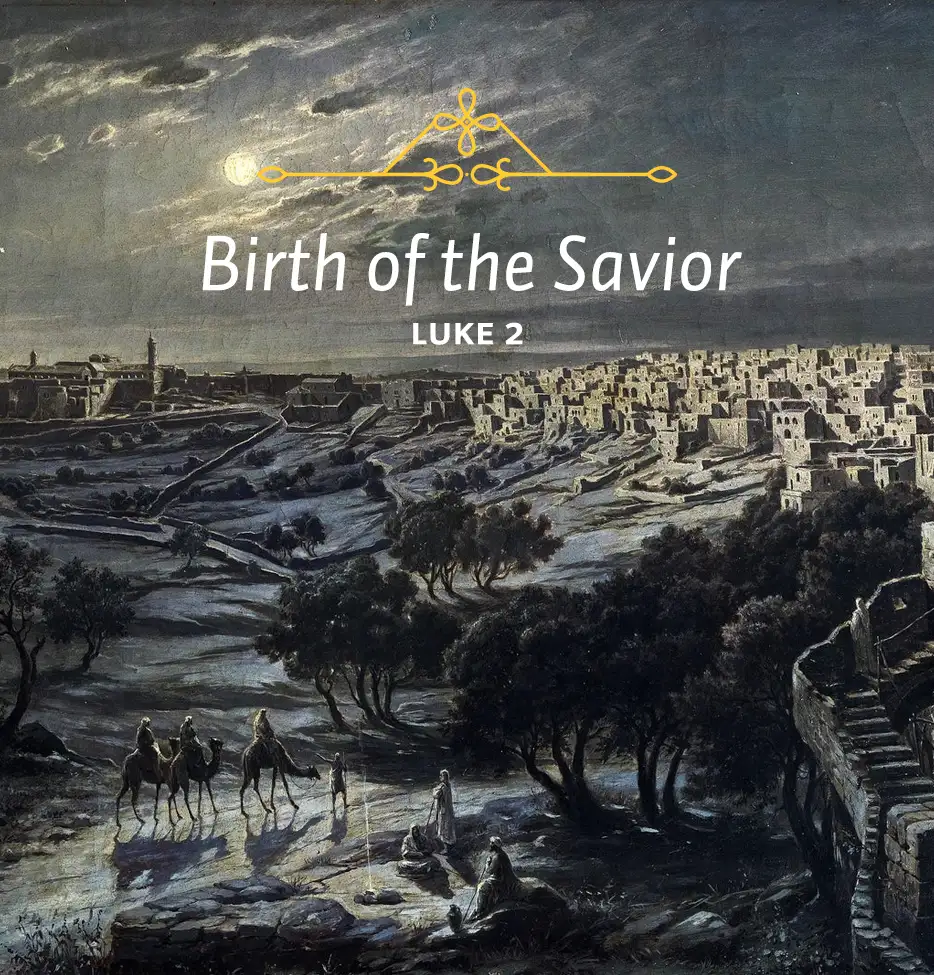



 Truth2Freedom's Blog