There are two ways to be fooled. One is to believe what isn’t true; the other is to refuse to believe what is true. —Soren Kierkegaard. "…truth is true even if nobody believes it, and falsehood is false even if everybody believes it. That is why truth does not yield to opinion, fashion, numbers, office, or sincerity–it is simply true and that is the end of it" – Os Guinness, Time for Truth, pg.39. “He that takes truth for his guide, and duty for his end, may safely trust to God’s providence to lead him aright.” – Blaise Pascal. "There is but one straight course, and that is to seek truth and pursue it steadily" – George Washington letter to Edmund Randolph — 1795. We live in a “post-truth” world. According to the dictionary, “post-truth” means, “relating to or denoting circumstances in which objective facts are less influential in shaping public opinion than appeals to emotion and personal belief.” Simply put, we now live in a culture that seems to value experience and emotion more than truth. Truth will never go away no matter how hard one might wish. Going beyond the MSM idealogical opinion/bias and their low information tabloid reality show news with a distractional superficial focus on entertainment, sensationalism, emotionalism and activist reporting – this blogs goal is to, in some small way, put a plug in the broken dam of truth and save as many as possible from the consequences—temporal and eternal. "The further a society drifts from truth, the more it will hate those who speak it." – George Orwell “There are two ways to be fooled. One is to believe what isn’t true; the other is to refuse to believe what is true.” ― Soren Kierkegaard
For the early and ancient indication of the gracious design concerning fallen man.
I bless you that as soon as man had sinned, it was graciously promised that the seed of the woman should break the serpent’s head; Genesis 3:15(ESV) and that in the Old Testament sacrifices, Jesus Christ was the lamb slain from the foundation of the world. Revelation 13:8(ESV)
And that by faith the people of old, though they did not receive what was promised, Hebrews 11:39(ESV) yet received their commendation; Hebrews 11:2(ESV) for they were commended as righteous. Hebrews 11:4(ESV)
I bless you for the promise made to Abraham, that in his seed all the families of the earth should be blessed; Genesis 12:3(ESV) and to Jacob, that the Shiloh should come, and to him should be the obedience of the peoples; Genesis 49:10(ESV) and that the Patriarchs rejoiced to see Christ’s day, and they saw it and were glad. John 8:56(ESV)
Luke 2 In these lessons on the birth of Christ we focus on its paradoxes, and how these show that Jesus’ coming is for all who will receive Him.
Theme
How to Celebrate Christmas
I notice something else at the end of the story. It is what I would call instructions on how to celebrate Christmas, the birth of Christ. First, we are told that “when they [the shepherds] had seen him, they spread the word concerning what had been told them about this child” (v. 17). The best way to celebrate Christmas is to make this marvelous story known, which the shepherds did. They spoke to the world about what had happened. It was a lost world. It was a confused world. It did not know what the truth was or the way to find it. It was a dying world. Some would say, in spite of the great glory of the empire of Augustus, that the world was on its last legs. The shepherds had been told about Jesus, and they were anxious to have others learn about His birth and coming ministry.
Second, the passage says that “all who heard it were amazed at what the shepherds said to them” (v. 18). The older Authorized Version says that they “wondered” at these things. There are different kinds of wonder. There is a wonder that we call a seven-day wonder. It is here today, and everybody is talking about it. But then, suddenly, it is gone and nobody thinks about it again. The birth of Jesus was not that kind of wonder. It was a deep wonder so that those who heard about it were amazed. Christmas is wonderful. That is one reason why Christmas is so appropriately oriented to children. Children wonder at what they see. Christmas and Christ’s birth are marvelous things to them. As we get older, we cease to wonder, but we are losers for it. Let us learn to wonder again. Where we need to wonder most of all is at the gift of Jesus Christ.
The third thing we see is that Mary “treasured up all these things and pondered them in her heart” (v. 19). It is possible to be amazed at something that does not have much meaningful content, but this was not the case with Mary. Mary heard these wonderful things—what the angel had told her, what the shepherds reported and, later, what the wise men said— and she took all these things and began to mull them over in her heart.
Hers is a great way to celebrate Christmas: to meditate by asking yourself what the Christmas story means, not only in history but for you personally. This involves hard work. In Mary’s case, it involved memory, because she “treasured up” all these things. That means she remembered them. She did not want to forget them. It involved her affections, because she treasured them up “in her heart.” This was not some abstract kind of experience for Mary. It was something that touched her deeply. It also involved her intellect, because she “pondered them.” That is, she tried to figure these things out.
Fourth, we read that “the shepherds returned, glorifying and praising God for all the things they had heard and seen” (v. 20). You see, they did not only speak to men; they spoke to God too. They praised and glorified Him. They said, “O God, what a great God you are to come to us in such a way! How wonderful you are for being a God like that!”
That is what we should do. If you are having trouble with these things, the place to begin is not with point number one—speaking to others—but with point two (amazement), point three (pondering), and point four (praising and glorifying God). Only after you have done that and God and His marvelous Gospel have taken a proper hold upon your heart will you be able to talk to others and thus spread the Good News about what God has done.
The Christmas story is a great story. It is filled with paradoxes, but the paradoxes all come down to this: God has entered human life at a low level so that nobody, no matter how low or how sinful, how high or self-righteous, need be excluded. Jesus Christ is for you, whoever you are. He is the Son of God. He is the Savior. He invites you to receive Him into your heart. Won’t you do that? This is the time. It would be a pity to go through another Christmas and not receive Him.
Study Questions
What four instructions for celebrating Christmas can we gain from this chapter?
Which three have to happen first?
Application
Application: Think of someone you know who does not show evidence of salvation. Make it a point to pray for them daily, and then move from there to actually talk to them about the person and work of Christ.
For Further Study: To learn more about how we are to reflect Christ’s humility, download for free and listen to Donald Barnhouse’s message, “The Disposition of Christ.” (Discount will be applied at checkout.)
Preserve me, O God: for in thee do I put my trust.
O my soul, thou hast said unto the Lord, Thou art my Lord: my goodness extendeth not to thee;
But to the saints that are in the earth, and to the excellent, in whom is all my delight.
Their sorrows shall be multiplied that hasten after another god: their drink offerings of blood will I not offer, nor take up their names into my lips.
The Lord is the portion of mine inheritance and of my cup: thou maintainest my lot.
The lines are fallen unto me in pleasant places; yea, I have a goodly heritage.
I will bless the Lord, who hath given me counsel: my reins also instruct me in the night seasons.
I have set the Lord always before me: because he is at my right hand, I shall not be moved.
Therefore my heart is glad, and my glory rejoiceth: my flesh also shall rest in hope.
For thou wilt not leave my soul in hell; neither wilt thou suffer thine Holy One to see corruption.
Thou wilt shew me the path of life: in thy presence is fulness of joy; at thy right hand there are pleasures for evermore.
When it comes to conversations about science and faith, many Christians feel intimidated—especially when the other person has formal scientific training. I get it. Maybe your cousin is a physicist or a biologist, and you’re thinking, “How could I possibly speak meaningfully about cosmology or biology when I don’t have a science degree?” But here’s something to remember: every meaningful examination of evidence—whether in a courtroom or a scientific lab—relies not simply on expertise, but on reason. And reason belongs to everyone.
In my work as a detective, I call expert witnesses all the time. DNA analysts, medical examiners, chemists—people with specialized knowledge that helps us understand the evidence. But when the trial begins, experts don’t get to vote. The people who decide the truth of a case are lay jurors—non-experts who are reasonable and willing to examine competing claims. Experts present their arguments, often in direct opposition to one another, and the jurors must determine which explanation best fits the evidence.
When a trial begins, experts don’t get to vote. The people who decide the truth of a case are lay jurors—non-experts who are reasonable and willing to examine competing claims. Share on X
That’s a powerful picture for how we, as everyday believers, can approach discussions about science and faith. You don’t have to be a cosmologist to evaluate the claims of cosmologists. You just have to be reasonable, open-minded, and willing to follow the evidence. In fact, sometimes expertise can even become a liability when it carries a built-in philosophical bias. Many scientists today embrace naturalism—the belief that only material causes exist. But if you begin your search by excluding nonmaterial (and therefore non-natural) causes, you’ve already limited what conclusions you’re allowed to reach.
Imagine if I ran an investigation and decided ahead of time that I would never consider a person—a “who”—as a suspect. If all I asked were the what, when, where, why, and how questions, I’d never solve a single case. Yet that’s precisely what some scientists do when they refuse to ask whether a “who” might be behind the universe’s origin. If you’re willing to consider that possibility, you’ll see that the best and most reasonable inference from the evidence might indeed point to a personal cause.
So how do you engage a conversation about science when you don’t have a science background? You ask good questions—the same way detectives do. Greg Koukl calls them “Columbo questions”: What do you mean by that? Why do you think that’s true? Have you considered an alternative? Those three questions are powerful tools that help reveal assumptions, clarify definitions, and open doors for thoughtful discussion.
For example, if someone says, “There’s not enough evidence to believe God exists,” ask, “What do you mean by evidence?” As an investigator, I can tell you there are multiple kinds of evidence—direct and indirect, testimonial and physical. All are legitimate when making a case. Often, skeptics operate with a very narrow, self-defined view of evidence, one that rules out certain conclusions before the investigation even begins. When we challenge that assumption, we can move the conversation toward what really matters: following the evidence wherever it leads.
Even in cosmology—the study of the universe’s origin—you can engage thoughtfully without being an astrophysicist. Start with what’s known: if all space, time, and matter came into existence from nothing, then the cause of those things cannot itself be spatial, temporal, or material. That’s simple logic, not astrophysics. Something—or rather, someone—outside of space, time, and matter must be responsible. If your friend disagrees, invite them to explain why. Let them teach you. Stay open, but stay reasonable.
In the end, this isn’t about competing credentials—it’s about honest inquiry. The truth is not reserved for the academy; it’s accessible to anyone willing to pursue it. You don’t need a formal education in physics to see design in the universe, or in biology, or within the moral fabric of humanity. What you need is the courage to ask questions and the humility to examine both sides.
So when someone tells you that faith and science can’t coexist unless you’re a professional scientist, remember the courtroom. Experts may argue, but the verdict rests in the hands of fair-minded people who seek the truth. That’s you and me. The case for God is built not on blind belief, but on reasonable inference from evidence—and anyone who’s willing to think carefully can make that case.
Pastor Josh and Ken talk with Pastor Jack Hibbs. The wolves are showing their faces and trying to cause division even among believers. The team discusses the wreckage being done by Tucker Carlson and others who understand no theology yet are influencing millions. How must the body respond? Find Hibbs’ book in our online store. Extended version begins at 29:07.
But someone may well say, “You have faith and I have works; show me your faith without the works, and I will show you my faith by my works.” You believe that God is one. You do well; the demons also believe, and shudder. But are you willing to recognize, you foolish fellow, that faith without works is useless? (2:18–20)
A third characteristic of dead faith is shallow conviction, a recognition of certain facts about God and His Word without submission to either. It seems most likely that someone refers to James himself, speaking of himself using the third person out of humility. He was not boasting, trying to prove that his own Christian life was more exemplary than another’s. He was not speaking primarily about faithfulness in the faith but about faith itself. He was saying, in effect, to anyone opposing the truth he was declaring about true salvation, “You claim to have faith and that nothing else is necessary, that your faith can stand by itself before God and bring salvation. But the truth is, you cannot show me your faith without the works, without any practical evidence or outworking of it, because true faith always gives practical evidence. You cannot demonstrate your kind of faith because you have nothing to demonstrate it with.” As just stated in the previous verse, “Even so faith, if it has no works, is dead, being by itself.” Such faith is not really faith at all, certainly not saving faith. As noted above, living faith produces good fruit, for that is its nature and its purpose. Dead faith does not because it cannot. It is for that reason that a remembered experience of giving one’s life to Jesus Christ, even with a specific date and place, is not in itself proof of salvation. The only certain proof is the life lived after such a profession was made. Jesus repeatedly warned against false confidence of salvation. “Why do you call Me, ‘Lord, Lord,’ and do not do what I say?” He asked.
Everyone who comes to Me and hears My words and acts on them, I will show you whom he is like: he is like a man building a house, who dug deep and laid a foundation on the rock; and when a flood occurred, the torrent burst against that house and could not shake it, because it had been well built. But the one who has heard and has not acted accordingly, is like a man who built a house on the ground without any foundation; and the torrent burst against it and immediately it collapsed, and the ruin of that house was great. (Luke 6:46–49)
On another occasion, He said, “You call Me Teacher and Lord; and you are right, for so I am. If I then, the Lord and the Teacher, washed your feet, you also ought to wash one another’s feet. For I gave you an example that you also should do as I did to you. Truly, truly, I say to you, a slave is not greater than his master, neither is one who is sent greater than the one who sent him. If you know these things, you are blessed if you do them” (John 13:13–17). Perhaps His sternest warning is found in the Sermon on the Mount: “Not everyone who says to Me, ‘Lord, Lord,’ will enter the kingdom of heaven, but he who does the will of My Father who is in heaven will enter. Many will say to Me on that day, ‘Lord, Lord, did we not prophesy in Your name, and in Your name cast out demons, and in Your name perform many miracles?’ And then I will declare to them, ‘I never knew you; depart from me, you who practice lawlessness’” (Matt. 7:21–23, emphasis added). Paul declares that “in Christ Jesus neither circumcision nor uncircumcision means anything, but faith working through love” (Gal. 5:6, emphasis added). Peter says:
His divine power has granted to us everything pertaining to life and godliness, through the true knowledge of Him who called us by His own glory and excellence. For by these He has granted to us His precious and magnificent promises, so that by them you may become partakers of the divine nature, having escaped the corruption that is in the world by lust. Now for this very reason also, applying all diligence, in your faith supply moral excellence, and in your moral excellence, knowledge, and in your knowledge, self-control, and in your self-control, perseverance, and in your perseverance, godliness, and in your godliness, brotherly kindness, and in your brotherly kindness, love. For if these qualities are yours and are increasing, they render you neither useless nor unfruitful in the true knowledge of our Lord Jesus Christ. For he who lacks these qualities is blind or short-sighted, having forgotten his purification from his former sins. Therefore, brethren, be all the more diligent to make certain about His calling and choosing you; for as long as you practice these things, you will never stumble; for in this way the entrance into the eternal kingdom of our Lord and Savior Jesus Christ will be abundantly supplied to you. (2 Pet. 1:3–11)
John assures us that
the one who says, “I have come to know Him,” and does not keep His commandments, is a liar, and the truth is not in him; but whoever keeps His word, in him the love of God has truly been perfected. By this we know that we are in Him: the one who says he abides in Him ought himself to walk in the same manner as He walked. Beloved, I am not writing a new commandment to you, but an old commandment which you have had from the beginning; the old commandment is the word which you have heard. On the other hand, I am writing a new commandment to you, which is true in Him and in you, because the darkness is passing away and the true Light is already shining. The one who says he is in the Light and yet hates his brother is in the darkness until now. The one who loves his brother abides in the Light and there is no cause for stumbling in him. But the one who hates his brother is in the darkness and walks in the darkness, and does not know where he is going because the darkness has blinded his eyes. (1 John 2:4–11)
John was here writing of what Jesus called the second greatest commandment: “You shall love your neighbor as yourself” (Matt. 22:39). Every true Christian has times of unfaithfulness, sin, and barrenness. It is during those times that he is in danger of losing assurance of salvation, for the blessing of peace and confidence from the Spirit is forfeited. Security of salvation is eternal and permanent, being based on the Lord’s sovereign power to keep those who belong to Him. But assurance of salvation is temporal and can fluctuate, for it is a blessing granted to those who are obedient to the Lord. You believe that God is one, James goes on to say. You do well; the demons also believe, and shudder. You do well carries a touch of sarcasm, cast against an imaginary, but universally common, orthodoxy that is devoid of saving faith. Orthodox doctrine is no guarantee of salvation, James insists. Even the demons are orthodox in the sense of knowing and acknowledging truth about God. Jewish orthodoxy was always centered in belief in the one true God, stated succinctly in the Shema: “Hear, O Israel! The Lord is our God, the Lord is one!” (Deut. 6:4). Where most Jews fell short was in not obeying the following verse, which commands, “You shall love the Lord your God with all your heart and with all your soul and with all your might” (v. 5). James’s point, as it were, is that belief in the truth of Deuteronomy 6:4 without obedience to 6:5 is a worthless kind of belief like that possessed by demons. As far as factual doctrine is concerned, demons are monotheists, all of whom know and believe there is one true God. They also are very much aware that Scripture is God’s Word, that Jesus Christ is God’s Son, that salvation is by grace through faith, that Jesus died, was buried, and raised to atone for the sins of the world, and that He ascended to heaven and is now seated at His Father’s right hand. They know quite well that there is a literal heaven and a literal hell. They doubtless have a clearer knowledge of the millennium and its related truths than does even the most devoted Bible scholar. But all of that orthodox knowledge, divinely and eternally significant as it is, cannot save them. They know the truth about God, Christ, and the Spirit, but hate it and them. Orthodox doctrine is immeasurably better than heresy, of course, for it is true and points toward God and the way of salvation. But mere assent to it as true cannot bring a person to God and to salvation. Phrissō (shudder) means to bristle and tremble and was commonly used of the trembling associated with great fear. Demons at least have the sense to shudder at God’s truth in a state of fear, for they know that eternal torment awaits them in hell (Matt. 8:29–31; Mark 5:7; Luke 4:41; Acts 19:15). In that regard, they are much more realistic and sensible than those with false faith who think they will escape God’s judgment by their shallow and superficial faith. The Puritan theologian Thomas Manton described non-saving faith in forceful terms:
[It is] a simple and naked assent to such things as are propounded in the Word of God, and maketh men more knowing but not better, not more holy or heavenly. They that have it may believe the promises, the doctrines, the precepts as well as the histories.… but yet, lively saving faith it is not, for he who hath that findeth his heart engaged to Christ and doth so believe the promises of the gospel concerning pardon of sin and life eternal that he seeth after them as his happiness. And doth so believe the mysteries of our redemption by Christ as that all his hope and peace and confidence is drawn from thence and doth so believe the threatenings, whether of temporal plagues or eternal damnation as that in comparison of them all the frightful things of the world are as nothing. (The Complete Works of Thomas Manton [London: James Nisbet, 1874], 17:113–14)
He goes on to speak of a somewhat deeper kind of faith, which, because it is nearer to genuine, complete faith, is all the more deceptive and dangerous.
[This sort of faith] is distinguished from temporary faith, which is an assent to scriptural or gospel truth, accompanied with a slight and insufficient touch upon the heart, called “a taste of the heavenly gift, and of the good word of God, and the powers of the world to come,” Heb. 6:4–6. By this kind of faith, the mind is not only enlightened, but the heart affected with some joy, and the life in some measure reformed, at least, from grosser sins, called, “[escaping] the pollutions of the world,” 2 Peter 2:20; but the impression is not deep enough, nor is the joy and delight rooted enough to encounter all temptations to the contrary. Therefore this sense of religion may be choked, or worn off, either by the cares of this world, or by voluptuous living, or by great and bitter persecutions and troubles for righteousness’ sake. It is a common deceit: many are persuaded that Jesus is the Christ, the only Son of God, and so are moved to embrace his person, and in some measure to obey his precepts, and to depend upon his promises, and fear his threatenings, and so by consequence to have their hearts loosened from the world in part, and seem to prefer Christ and their duty to him above worldly things, as long as no temptations do assault their resolutions, or sensual objects stand not up in any considerable strength to entice them; but at length, when they find his laws so strict and spiritual, and contrary either to the bent of their affections or worldly interests, they fall off, and lose all their taste and relish of the hopes of the gospel, and so declare plainly that they were not rooted and grounded in the faith and hope thereof. (Ibid., 114)
Further, James asks, But are you willing to recognize, you foolish fellow, that faith without works is useless? Foolish has the idea of “empty” or “defective” and identifies anyone who opposes the truth that true saving faith produces works of righteousness. Argos (useless) carries the idea of fruitlessness, lack of productivity. “Every tree that does not bear good fruit,” Jesus said, “is cut down and thrown into the fire” (Matt. 7:19). A fruitless life is certain proof that it does not belong to God and is unacceptable to God, because it does not have His divine life within. Luke reports that a number of people in Samaria, including a magician named Simon, “believed Philip preaching the good news about the kingdom of God and the name of Jesus Christ, [and] were being baptized, men and women alike” (Acts 8:12; cf. vv. 9, 13). But after witnessing various miracles and seeing
that the Spirit was bestowed through the laying on of the apostles’ hands, [Simon] offered them money, saying, “Give this authority to me as well, so that everyone on whom I lay my hands may receive the Holy Spirit.” But Peter said to him, “May your silver perish with you, because you thought you could obtain the gift of God with money! You have no part or portion in this matter, for your heart is not right before God. Therefore repent of this wickedness of yours, and pray the Lord that, if possible, the intention of your heart may be forgiven you.” (vv. 18–22)
Simon’s belief obviously was not to salvation, but was merely a recognition that what Philip preached was true. His knowledge about God was correct, but Peter warned him that his “heart [was] not right before God” and that he therefore had no part in the working of the Spirit he had witnessed and acclaimed. His faith was dead and worthless.
MacArthur, J. F., Jr. (1998). James (pp. 129–133). Moody Press.
Faith, Deeds, and Creed 2:18–19
James carefully builds his presentation of faith and deeds. He begins with an illustration of a needy brother or sister (vv. 15–17). Next, he interacts with a person who says that he has deeds and holds to the creed (vv. 18–19). And last, James presents proof that historically faith and actions always go together (vv. 20–26).
But someone will say, “You have faith; I have deeds.” Show me your faith without deeds, and I will show you my faith by what I do. 19. You believe that there is one God. Good! Even the demons believe that—and shudder. We divide this section into three parts:
a. Contention
Whether James debates a real or an imaginary person need not concern us at the moment. James develops his argument as follows: Someone says, “You have faith; I have deeds.” He does not mean to say that James has faith and he himself has deeds. The speaker refers to one person who claims to have faith but does not have deeds, and to another person who insists that he possesses deeds but lacks faith. He separates faith from works. Suppose that one person has only faith and another only deeds. Then, possibly, the one who claims to have faith comes to God more readily than the one whose record shows only deeds. And because of his faith he considers himself to be superior to the person who lacks faith but has deeds.
b. Challenge
James refuses to accept a division between faith and works. True faith cannot exist separately from works, and works acceptable in the sight of God cannot be performed without true faith. James challenges the speaker: “Show me your faith without deeds, and I will show you my faith by what I do.” That is, James wants to see what kind of faith the speaker possesses. If faith is not rooted in a believing heart, then that faith amounts to nothing more than empty words—it is worthless. Its opposite is true faith which is inseparably joined to deeds of love. Paul summarizes this point succinctly when he says, “The only thing that counts is faith expressing itself through love” (Gal. 5:6). Presenting an additional argument, the speaker claims that faith is not necessary. He champions the cause of practical Christianity. He argues that doing good deeds is more important than believing a particular doctrine. He does not realize that his so-called works of charity have nothing in common with deeds of gratitude that originate in the thankful heart of a believer.
c. Correction
James addresses all those who wish to separate faith from works. He challenges them to show him true faith without deeds or works apart from faith. And James tells them that he will show them his faith by his conduct. That is, in everything he does, faith is the main ingredient. Just as a motor produces power because an electrical current flows into it, so a Christian produces good deeds because true faith empowers him. We hear the echo of Jesus’ teaching that we know a tree by its fruit; a tree without “good fruit is cut down and thrown into the fire” (Matt. 7:19). Those who speak but fail to act will hear Jesus say, “I never knew you. Away from me, you evildoers!” (v. 23). Faith without works is dead. In this chapter James refers to two kinds of faith: true faith and pretense. The first kind is characteristic of the true believer who shows faith “by deeds done in the humility that comes from wisdom” (James 3:13). The second kind is a demonstration of dead orthodoxy that is nothing more than a series of doctrinal statements accurately reflecting the teachings of Scripture. For instance, the Jews recite their creed: “Hear, O Israel: The LORD our God, the LORD is one” (Deut. 6:4). But if faith is merely a reciting of the familiar words of this creed—although the words are thoroughly scriptural—it has become a cold intellectual exercise that has nothing to do with a faith flowing from the heart. James gets to the point of his illustration. He says, “You believe that there is one God. Good! Even the demons believe that—and shudder.” However, no fallen angel can claim salvation because of that factual faith. In a similar fashion, the man who gives only his intellectual assent to a scriptural truth, without displaying adherence to the God he professes, is devoid of true faith. His faith, which is nothing more than make-believe, is dead. If a person has only knowledge that God is one and has no living faith in God through Jesus Christ, he is worse than demons. Demons, says James, believe and shudder. The implication is that even among the demons doctrinal truth prevails. They confessed the name of Christ during Jesus’ ministry (see Mark 1:24; 5:7; Luke 4:34). Their knowledge of the Son of God made them shudder, but that knowledge could not save them. Knowledge without faith is worthless.
Additional Remarks
The quotation. Translators differ on the length of the statement in quotation marks in verse 18. The translators of the New American Standard Bible, for instance, take all of verse 18 as the word spoken by the opponent of James: “You have faith, and I have works; show me your faith without the works, and I will show you my faith by my works.” The question, of course, relates to interpreting the pronouns you and I in this verse. Unfortunately, ancient manuscripts have no punctuation or quotation marks, and therefore, every translator and interpreter has to make his own decision. Consider the remark, “You have faith; I have deeds.” Is the person who makes the remark saying, “You, James, have faith; but I, by contrast, have deeds”? Does he continue the remark with the challenge, “Show me your faith without deeds, and I will show you my faith by what I do”? Hardly. The two remarks contradict each other if they come from the same person. Apparently, the contrast in verse 18a—”You have faith; I have deeds”—is not so much between James and the speaker as between the concepts faith and deeds exemplified in one or another person. Martin Dibelius concludes, “The main point of the opponent in [verse] 18a is not the distribution of faith and works to ‘you’ and ‘me,’ but rather the total separation of faith and works in general.” For this reason, many translators and commentators have adopted a reading exemplified in the Good News Bible, “But someone will say, ‘One person has faith, another has actions.’ ” This translation removes the ambiguity of the pronouns I and you. The objection, however, is that if James had wished to say so, he could have expressed himself much more clearly by using the terms one and another. Instead James employs the personal pronouns in verses 18 and 19. Although difficulties cling to any interpretation of this passage, the suggestion to understand verse 18a in terms of “one” and “another” meets general approval. Verses 18b and 19 are the response James makes to the speaker. The speaker. Who is the speaker? Some interpreters see the person who speaks the words of verse 18a as a Christian who is favorably disposed toward James. He is the person who wants to mediate between two parties, one of whom stresses faith and the other works. “This kindly person, who does not wish to be too harsh on anyone, suggests that there is room for both the man who emphasizes faith and the one who insists on works.” This means that the first word in verse 18 cannot be but, which is too adversative. Many interpreters prefer the term yes. However, considering the characteristics of the Epistle of James, we have difficulty accepting the argument that not James but another speaker is addressing parties who are at odds with one another over the question of faith and works. Throughout his epistle James is the one who enters into a debate with his readers. He addresses them, corrects them, and encourages them. And in view of his reference to the creed, “Hear, O Israel: The LORD our God, the LORD is one” (Deut. 6:4), the speaker whom James addresses must be a Jewish Christian. Finally, in my opinion we are well advised to refrain from dogmatism in an area where interpretations and solutions to problems abound. Therefore, as long as the last word has not been spoken or written, explanations can be only tentative.
Kistemaker, S. J., & Hendriksen, W. (1953–2001). Exposition of James and the Epistles of John (Vol. 14, pp. 91–94). Baker Book House.
The prayer of the upright is his delight. (Proverbs 15:8)
This is as good as a promise, for it declares a present fact, which will be the same throughout all ages. God takes great pleasure in the prayers of upright men; He even calls them His delight. Our first concern is to be upright. Neither bending this way nor that, continue upright; not crooked with policy, nor prostrate by yielding to evil, be you upright in strict integrity and straightforwardness. If we begin to shuffle and shift, we shall be left to shift for ourselves. If we try crooked ways, we shall find that we cannot pray, and if we pretend to do so, we shall find our prayers shut out of heaven.
Are we acting in a straight line and thus following out the Lord’s revealed will? Then let us pray much and pray in faith. If our prayer is God’s delight, let us not stint Him in that which gives Him pleasure. He does not consider the grammar of it, nor the metaphysics of it, nor the rhetoric of it; in all these men might despise it. He, as a Father, takes pleasure in the lispings of His own babes, the stammerings of His newborn sons and daughters. Should we not delight in prayer since the Lord delights in it? Let us make errands to the throne. The Lord finds us enough reasons for prayer, and we ought to thank Him that it is so.
We often dismiss questionable humor, foul language, or sexual innuendo by saying, “I was only joking!” but Proverbs 26:19 has a strong warning for those who use that excuse. Ephesians 5:4 commands that there be no “foolish talk or coarse joking, which are out of place,” listing them as “improper for God’s holy people.” This video examines why this type of speech has no place in the life of a follower of Christ, why we must bridle the tongue, and how our mouths, once dedicated to sin, must become “instruments of righteousness” for God’s glory.
Now these things happened to them as an example, and they were written for our instruction, upon whom the ends of the ages have come. Therefore let him who thinks he stands take heed lest he fall. No temptation has overtaken you but such as is common to man; and God is faithful, who will not allow you to be tempted beyond what you are able, but with the temptation will provide the way of escape also, that you may be able to endure it. (10:11–13)
The punishments that came upon the disobedient Israelites not only were an example to their fellow Hebrews but also to believers in every age since. More than that they were given for our instruction, for the benefit of Christians, those upon whom the ends of the ages have come. Instruction (nouthesia) is more than ordinary teaching. It means admonition and carries the connotation of warning. It is counsel given to persuade a person to change behavior in light of judgment. The ends of the ages refers to the time of Messiah, the time of redemption, the last days of world history before the messianic kingdom comes. We are living in a greatly different age from that of the Hebrews in the wilderness under Moses, but we can learn a valuable lesson from their experience. Like them we can forfeit our blessing, reward, and effectiveness in the Lord’s service if, in overconfidence and presumption, we take our liberties too far and fall into disobedience and sin. We will not lose our salvation, but we can easily lose our virtue and usefulness, and become disqualified in the race of the Christian life. Every believer, especially when he becomes self-confident in his Christian liberty and spiritual maturity, should take heed lest he fall. Paul expresses a timeless principle, articulated in Proverbs as “Pride goes before destruction, and a haughty spirit before stumbling” (16:18). It is easy to substitute confidence in ourselves for confidence in the Lord—accepting His guidance and blessing and then taking credit for the work He does through us. It is also easy to become so enamored of our freedom in Christ that we forget we are His, bought with a price and called to obedience to His Word and to His service. When I visited Israel several years ago I was shown the place at the Golan Heights where, in 1967, the Israelis penetrated the Syrian defenses and secured that strategic area for themselves. From those heights Syrian guns overlooked most of the Galilee region of northern Israel and were a constant threat. The entire Golan area was closely guarded by the Syrians, except for one spot where the cliffs were so high and sheer that they seemed perfectly safe from attack. One night, however, Israeli bulldozers cut out the cliffs enough to push tanks up to the top. By morning a large contingent of tanks, followed by infantry and supported by fighter planes, completely overran the Syrian positions and secured an area that extended ten miles inland. The spot the Syrians thought to be the safest turned out to be the most vulnerable. The Bible is filled with examples of the dangers of overconfidence. The book of Esther centers around the plan of a proud and overconfident man who saw his plan backfire. King Ahasuerus of Persia promoted Haman to be his second in command, with instructions for the people to bow before Haman as they would the king. Mordecai, however, would not bow to him, and when the proud and arrogant Haman was told that Mordecai was a Jew he persuaded Ahasuerus to declare an edict that would give him revenge on all Jews in the land by having them destroyed. Through the intercession of Queen Esther, also a Jew and the niece of Mordecai, the king issued a far different edict, which allowed and even encouraged the Jews to defend themselves—which they did with great success. Haman was hanged on the gallows he had prepared for Mordecai, who was given all of Haman’s possessions and the royal honor Haman had expected for himself. Sennacherib, king of Assyria, taunted Israel with the boast that her God could no more save her than the gods of other lands had saved them. A short time later, “the angel of the Lord went out, and struck 185,000 in the camp of the Assyrians; and when men arose early in the morning, behold, all of these were dead.” A few days after the defeated king returned to Assyria, he was assassinated by two of his own sons and succeeded on the throne by a third (Isa. 37:36–38). Peter discovered that where he thought he was strongest and most dependable he actually was the weakest. He assured Jesus, “Lord, with You I am ready to go both to prison and to death!” But, as Jesus then predicted, before dawn Peter three times denied even knowing Jesus (Luke 22:33–34, 54–62). The church at Sardis was proud of her reputation for being spiritually alive, but the Lord warned her that she was really dead and needed to repent (Rev. 3:1–2). If she did not He would come upon her like a thief (v. 3)—just as one night enemy soldiers under Cyrus had sneaked into the seemingly impregnable acropolis at Sardis by way of an unguarded footpath. A handful of soldiers crept up the path and opened the gates to the rest of the army. Overconfidence led to carelessness, and carelessness led to defeat. The self-confident believers at Laodicea thought they were “wealthy” and in “need of nothing,” but were told by the Lord that they were really “wretched and miserable and poor and blind and naked” (3:17). Christians who become self-confident become less dependent on God’s Word and God’s Spirit and become careless in their living. As carelessness increases, openness to temptation increases and resistance to sin decreases. When we feel most secure in ourselves—when we think our spiritual life is the strongest, our doctrine the soundest, and our morals the purest—we should be most on our guard and most dependent on the Lord. After the strong warning about self-confidence and pride, Paul gives a strong word of encouragement about God’s help when we are tempted (v. 13). First he assures us that none of us has temptations that are unique. Then he assures us that we can also resist and overcome every temptation if we rely on God. By this time the Corinthians were no doubt wondering how they could possibly avoid all the pitfalls Paul had just described and illustrated. “How do we keep from craving evil things as Israel did (cf. v. 6)? How do we keep from falling into idolatry in our hearts? How can we live righteous lives when the society around us is so wicked? How can we avoid trying the Lord and how can we keep from grumbling?” Paul’s answer is that a Christian should recognize that victory is always available, because a believer can never get into temptation that he cannot get out of. For one thing, Paul explains, No temptation has overtaken you but such as is common to man. The basic meaning of temptation (peirasmos) is simply to test or prove, and has no negative connotation. Whether it becomes a proof of righteousness or an inducement to evil depends on our response. If we resist it in God’s power, it is a test that proves our faithfulness. If we do not resist, it becomes a solicitation to sin. The Bible uses the term in both ways, and I believe that Paul has both meanings in mind here. When “Jesus was led up by the Spirit into the wilderness to be tempted by the devil” (Matt. 4:1) it is clear that both God and Satan participated in the testing. God intended the test to prove His Son’s righteousness, but Satan intended it to induce Jesus to misuse His divine powers and to give His allegiance to Satan. Job was tested in much the same way. God allowed Job to be afflicted in order to prove His servant was an “upright man, fearing God and turning away from evil” (Job 1:8). Satan’s purpose was the opposite: to prove that Job was faithful only because of the blessings and prosperity the Lord had given him and that, if those things were taken away, Job would “surely curse Thee to Thy face” (v. 11). God’s tests are never a solicitation to evil, and James strongly corrects those who suggest such a thing. “Let no one say when he is tempted, ‘I am being tempted by God’; for God cannot be tempted by evil, and He Himself does not tempt anyone” (James 1:13). “By evil” is the key to the difference between the two types of temptation. In the wilderness God tested Jesus by righteousness, whereas Satan tested Him by evil. A temptation becomes an inducement to evil only when a person “is carried away and enticed by his own lust. Then when lust has conceived, it gives birth to sin” (James 1:14–15). Earlier in his letter James wrote, “Consider it all joy, my brethren, when you encounter various trials” (1:2). The nouns trials (see also verse 12) and testing (v. 3) are from the same Greek root as the verb tempted in verses 13–14. The context indicates which sense is meant. God often brings circumstances into our lives to test us. Like Job we usually do not at the time recognize them as tests, certainly not from God. But our response to them proves our faithfulness or unfaithfulness. How we react to financial difficulty, school problems, health trouble, or business setbacks will always test our faith, our reliance on our heavenly Father. If we do not turn to Him, however, the same circumstances can make us bitter, resentful, and angry. Rather than thanking God for the test, as James advises, we may even accuse Him. An opportunity to cheat on our income tax or take unfair advantage in a business deal will either prove our righteousness or prove our weakness. The circumstance or the opportunity is only a test, neither good nor evil in itself. Whether it results in good or evil, spiritual growth or spiritual decline, depends entirely on our response. In the Lord’s Prayer Jesus says that we should ask God not to “lead us into temptation, but deliver us from evil” (Matt. 6:13). “Evil” is better translated “the evil one,” referring to Satan. In other words we should pray that God will not allow tests to become temptations, in the sense of inducement to evil. The idea is, “Lord, stop us before Satan can turn your test into his temptation.” Common to man is one word (anthrōpinos) in Greek and simply means “that which is human, characteristic of or belonging to mankind.” In other words, Paul says there is no such thing as a superhuman or supernatural temptation. Temptations are human experiences. The term also carries the idea of usual or typical, as indicated by common. Temptations are never unique experiences to us. We can never have a temptation that has not been experienced by millions of other people. Circumstances differ but basic temptations do not. Even the Son of God was “tempted in all things as we are” (Heb. 4:15), and because of that “He is able to come to the aid of those who are tempted” (2:18). And because temptations are common to us all we are able to “confess [our] sins to one another” (James 5:16) and to “bear one another’s burdens” (Gal. 6:2). We are all in the same boat. Not only are temptations common to men but God is faithful, who will not allow you to be tempted beyond what you are able. No believer can claim that he was overwhelmed by temptation or that “the devil made me do it.” No one, not even Satan, can make us sin. He cannot even make an unbeliever sin. No temptation is inherently stronger than our spiritual resources. People sin because they willingly sin. The Christian, however, has his heavenly Father’s help in resisting temptation. God is faithful. He remains true to His own. “From six troubles He will deliver you, even in seven evil will not touch you” (Job 5:19). When our faithfulness is tested we have God’s own faithfulness as our resource. We can be absolutely certain that He will not allow [us] to be tempted beyond what [we] are able. That is God’s response when we pray, “do not lead us into temptation, but deliver us from evil” (Matt. 6:13). He will not let us experience any test we are not able to meet. When the soldiers came to arrest Jesus in the Garden of Gethsemane, He asked them twice whom they had come for, who was designated on their arrest order. After they answered for the second time, “Jesus the Nazarene,” He said, “If therefore you seek Me, let these go their way” (John 18:4–9). John explains that Jesus prevented the disciples from being arrested with Him in order “that the word might be fulfilled which He spoke, ‘Of those whom Thou hast given Me I lost not one’ ” (v. 9). The disciples were not yet ready for such a test. Had they been arrested, they would have been devastated, and Jesus would not permit it. As best we know from church history, most of those eleven disciples died a martyr’s death. The other, John, was exiled for life on the island of Patmos. All of them went through persecution, imprisonment, and countless hardships for the sake of the gospel. But they did not go through those things until they were ready to handle them. But with the temptation will provide the way of escape also, that you may be able to endure it. The phrase the way is formed by the definite article and a singular noun. In other words, there is only one way. The way of escape from every temptation, no matter what it is, is the same: it is through. Whether we have a test by God to prove our righteousness or a test by Satan to induce to sin, there is only one way we can pass the test. We escape temptation not by getting out of it but by passing through it. God does not take us out; He sees us through by making us able to endure it. God’s own Spirit led Jesus into the wilderness to be tempted. It was the Father’s will that the Son be there, and Jesus did not leave until all three temptations were over. He met the temptations head-on. He “escaped” the temptations by enduring them in His Father’s power. God provides three ways for us to endure temptation: prayer, trust, and focusing on Jesus Christ. “Keep watching and praying, that you may not come into temptation,” Jesus told His disciples (Mark 14:38). If we do not pray, we can be sure a test will turn into temptation. Our first defense in a test or a trial is to pray, to turn to our heavenly Father and put the matter in His hands. Second, we must trust. When we pray we must pray believing that the Lord will answer and help us. We also trust that, whatever the origin of the trial, God has allowed it to come for our good, to prove our faithfulness. God has a purpose for everything that comes to His children, and when we are tested or tempted we should gladly endure it in His power—for the sake of His glory and of our spiritual growth. Third, we should focus on our Lord Jesus Christ. “For consider Him who has endured such hostility by sinners against Himself, so that you may not grow weary and lose heart. You have not yet resisted to the point of shedding blood in your striving against sin” (Heb. 12:3–4). Christ endured more than we could ever be called on to endure. He understands our trials and He is able to take us through them. In John Bunyan’s Pilgrim’s Progress Christian and Hopeful fall asleep in a field belonging to giant Despair. The giant finds them and takes them into Doubting Castle, where he puts them in a dark and stinking dungeon, without food or water. On his wife’s advice, the giant first beats them mercilessly and then suggests they commit suicide. After the giant leaves, the two companions discuss what they should do. Finally Christian remembers the key in his pocket. “I have a key in my bosom called Promise, that will, I am persuaded, open any lock in Doubting Castle.” Sure enough, it opened all the doors in the castle and even the gate. “Then they went on, and came to the King’s highway again.”
MacArthur, J. F., Jr. (1984). 1 Corinthians (pp. 225–230). Moody Press.
No temptation has overtaken you except that which is common to everyone. But God is faithful, who will not allow you to be tempted beyond that which you are able to bear; however, with the temptation he also will provide the way of escape that you may be able to endure it. a. “No temptation has overtaken you.” What an encouragement to every believer! What a relief to know that God has set limits! Paul is taking time out from his argument, so to speak, to reassure his discouraged readers with a pastoral word. As a corollary to his directive to stand firm and not to fall (v. 12), he encourages them to view their life realistically. In truth, Paul addresses every person who has come to grips with the daily problems of life. As is true of all languages, Greek has words that have several meanings. The expression temptation is one of them, for it can also denote “trial.” In his epistle James says, “God does not tempt anyone” (1:13). True, yet Jesus teaches his disciples the sixth petition of the Lord’s Prayer, “And lead us not into temptation, but deliver us from the evil one” (Matt. 6:13). He leaves the origin of temptation an open question; a succinct distinction is that temptations are from Satan but trials are from God. Does Paul intend to say “temptation” or “trial” in verse 13? Perhaps he wishes to convey both meanings. To illustrate, Satan appears before God in heaven, and God allows him to tempt Job, to put his faith on trial. But God uses Satan to demonstrate that Job is able to endure his trials, for in the end Job’s faith triumphs (Job 1, 2, and 42). b. “No temptation has overtaken you except that which is common to everyone.” The main verb in this sentence is in the perfect tense and connotes a lasting condition. It also conveys that tempting or testing takes possession of people. The degree and extent of any temptation is limited by what is common to everyone. By contrast, at both the beginning and the end of his earthly ministry, Jesus withstood Satan’s temptations beyond what is common to everyone. The hellish agony which Jesus withstood in Gethsemane and at Calvary no ordinary human would ever be able to endure. No believer will have to be subjected to the same experiences. We ought not to ask to which temptations the Corinthians were subjected. Paul gives no details but only speaks a general word of encouragement that is valid for all Christians. c. “But God is faithful, who will not allow you to be tempted beyond that which you are able to bear.” God’s faithfulness to his people is perfect, even though man’s faithfulness to him is imperfect. Scripture proves that not God but man is a covenant breaker. Biblical writers extol the divine attribute of God’s faithfulness that reaches to the sky. With variations, the theme God is faithful is a recurring refrain in Paul’s epistles and elsewhere in Scripture. How does God demonstrate his faithfulness to believers? God promises that he will not permit anyone to be tempted beyond the point of human endurance. Even if believers knowingly place themselves in circumstances where temptations are rampant and inevitable, God demonstrates his faithfulness by coming to their rescue. Take Lot as an example. He took up residence in Sodom and had to put up with “the dirty lives of evil people,” yet God helped him and rescued him from sudden destruction (2 Peter 2:7, NCV).33 In brief, as a faithful shepherd rescues his wandering sheep, so God watches his people and delivers them from predicaments which they encounter. Paul implies that God sets the limits for man’s temptation in accordance with what he can bear. d. “However, with the temptation he also will provide the way of escape that you may be able to endure it.” The adversative however is influenced and strengthened by the word also. God sets limits to human temptations and he himself comes to help his people during their trials. He encourages believers to persist and eventually overcome. He becomes personally involved in the trial by opening a way of escape for those who are tempted and tried. In the Greek, Paul writes the definite article the in the phrase the way of escape. That is, for every trial God prepares a way out. A period of temptation and testing may be compared with a ship approaching a rocky shore and facing inevitable shipwreck. But, “suddenly and, to the inexperienced landsman, unexpectedly, [it] slips through a gap on the inhospitable coast into security and peace.”35 The purpose for the way of escape is “that you may endure [the temptation].” The main verb which Paul uses conveys the meaning to bear up under the temptation. Believers’ endurance prevents them from falling and makes them stand firm in the faith. God’s abiding faithfulness sees his people through their trials and causes them to triumph.
Kistemaker, S. J., & Hendriksen, W. (1953–2001). Exposition of the First Epistle to the Corinthians (Vol. 18, pp. 335–337). Baker Book House.
“The same prudence which in private life would forbid our paying our own money for unexplained projects, forbids it in the dispensation of the public moneys.” —Thomas Jefferson (1808)
Judge rules Trump’s DC National Guard deployment was illegal: Yesterday, Federal Judge Jia Cobb ruled that the Trump administration’s deployment of National Guard troops to the District of Columbia was illegal. This ruling comes in response to a lawsuit raised by DC Attorney General Brian Schwalb, who called Donald Trump’s action an “involuntary military occupation” and praised Cobb’s decision as a victory for DC’s home rule. Cobb ruled that Trump overstepped his authority, noting that the Constitution gives Congress oversight authority of DC. White House spokesperson Abigail Jackson responded to the ruling, stating, “President Trump is well within his lawful authority to deploy the National Guard in Washington, D.C., to protect federal assets and assist law enforcement with specific tasks. This lawsuit is nothing more than another attempt — at the detriment of D.C. residents — to undermine the president’s highly successful operations to stop violent crime in D.C.” The Trump administration pledged to appeal.
Air traffic control bonuses: One aspect of good leadership is rewarding exceptional service. Some 776 air traffic controllers out of 10,000 never missed a single day despite working without pay during the government shutdown. Those 776 who went “above and beyond” will receive a $10,000 bonus in addition to back pay. The more than 9,000 controllers who had a less-than-perfect attendance record will not receive a bonus. President Trump suggested the bonus idea, along with docked pay for those who skipped shifts, but there are no plans to dock pay at this time. The National Air Traffic Controllers Association reports that only 311 of its members will receive the bonus, meaning some managers must be included in the total figure.
Flying with dignity: “Let’s bring civility and manners back,” urges Transportation Secretary Sean Duffy in a new ad bemoaning the unruly state of air travel in America. The ad begins with images of air travel in a bygone era, when travelers wore suits, shook hands, and greeted one another with a smile. It then takes a sharp turn, showing the fistfights, arguments over reclining seats, and pajama-clad travelers that have become all too common today. Duffy asks travelers if they’re helping pregnant women with their luggage, dressing with respect, keeping control of their children, or saying “please” and “thank you.” “It’s not your imagination,” Duffy remarked on X, “traveling has become more uncivilized!” Indeed, the FAA has reported a 400% increase in outbursts on airplanes since 2019. Let’s hope Secretary Duffy can jumpstart a new “golden age” of air travel with polite, well-dressed passengers.
The CDC’s vaccine-autism amendment: The Centers for Disease Control and Prevention has rescinded its language on childhood vaccines and autism. Prior to Wednesday, the CDC’s statement on the subject read: “Studies have shown that there is no link between receiving vaccines and developing autism spectrum disorder (ASD). No links have been found between any vaccine ingredients and ASD.” That language has been replaced with the following: “The claim ‘vaccines do not cause autism’ is not an evidence-based claim because studies have not ruled out the possibility that infant vaccines cause autism.” It further adds key points, stating, “Studies supporting a link have been ignored by health authorities. HHS has launched a comprehensive assessment of the causes of autism, including investigations on plausible biologic mechanisms and potential causal links.” This is quite the reversal for the CDC, which will likely fuel more claims of politicization and public distrust of the agency.
Arctic Frost update: The investigation into Jack Smith’s Arctic Frost probe continues to heat up. House Judiciary Chairman Jim Jordan revealed yesterday that his phone records from January 2020 through April 2022 were improperly subpoenaed. Verizon claims to have uncovered its own compliance with the subpoena as part of its investigation and handed it over to Jordan at the first opportunity. Verizon’s explanation may not survive scrutiny, as the company has already taken flak for simply complying with the subpoena without even attempting to push back as AT&T did.
Iran nukes IAEA deal: Iran announced that it has ended an agreement with the International Atomic Energy Agency it signed in September that would have allowed the nuclear watchdog to relaunch inspections of the nation’s nuclear facilities. Tehran said that it distrusts the IAEA’s “credibility and independence.” Iran took this action in response to the IAEA’s request that Tehran provide it with accurate data on its nuclear materials and facilities “without delay.” Since President Trump green-lighted the bombing of Iran’s nuclear development facilities in June, Iran has rebuffed outside efforts to assess the state of its nuclear development efforts. Foreign Minister Abbas Araghchi stated that Iran was interested in making a “fair and balanced” deal and was ready for negotiations. Trump acknowledged this sentiment this week, claiming that Iran “very badly wants to make a deal,” which he would be open to considering.
Pollaganda predicts a blue-wave midterm: Polls are very often propaganda, e.g., the 2024 Des Moines Register poll that showed Kamala Harris ahead in Iowa by three points. However, polls can be useful measures of the electorate when carefully examined. An NPR poll released this week shows Democrats securing 55% of the vote in a generic congressional race. It’s the largest lead Democrats have seen in a poll since 2017. However, other results in the poll seemingly contradict that lead — Democrats take the majority of the blame for the government shutdown, for instance. President Trump’s approval rating is at its lowest point this term, which political pundit Ben Shapiro attributes to two factors: affordability and the Epstein files. Epstein seems unlikely to be a swing issue a year from now, but affordability fits strategist James Carville’s famous maxim, “It’s the economy, stupid!” Republicans should focus on affordability if they want to win in 2026.
Global warming sets COP30 ablaze: On Thursday, a blaze broke out at the UN’s annual climate conference being held in Belém, Brazil. The fire engulfed the pavilion roof of a section of the COP30 conference facilities known as the “Blue Zone.” Firefighters quickly contained it, and no injuries were reported. The incident is being investigated. According to reports, UN officials had instructed Brazilian authorities to address several concerns at the conference facility, including the unbearable heat and an insufficient number of security personnel. COP30’s “Blue Zone” was described as an area “for official negotiations, the Leaders’ Summit, and national pavilions.” Apparently, all that focused talk of global warming was enough to ignite an actual fire.
“Quiet. Quiet, piggy”: After President Trump’s first election in 2017, we pleaded with him to adopt our editorial policy when dealing with obnoxious people: “Don’t swap spit with a jackass.” We hoped he would curb his penchant for petulant insults, which become distractions from his agenda. Now, some insults are earned and clever, but most back then were just juvenile. But since taking office in 2025, a very different Trump has emerged, and the petulant insults have almost disappeared. Almost. Last Friday, in a noisy Air Force One exchange with Bloomberg’s Catherine Lucey, amid serious questions about serious matters, she rudely pressed Trump on a 2019 Jeffrey Epstein email that the Left claims implies Trump “knew about the girls.” What Trump knew was that Epstein was trying to recruit women from Mar-a-Lago, and Trump expelled Epstein from the club in 2007, describing him as “creepy.” The two hated each other from then on. Responding to Lucey’s question, Trump said, “Quiet. Quiet, piggy.” The Leftmedia have now elevated “Piggy” to front-page news. Press Secretary Karoline Leavitt responded, “He calls out fake news when he sees it. He gets frustrated with reporters when you lie about him, when you spread fake news about him and his administration.” Another White House official said, “This reporter behaved in an inappropriate and unprofessional way towards her colleagues on the plane.” Of the insult, Rep. Maria Elvira Salazar concluded as do many: “President Trump is a very picturesque and difficult and different type of politician. But I always say that I look at his policies and not at his personality.” Bottom line: The appropriate response to Lucey, as Trump says to other leftist reporters, is “Fake news!”
Déjà vu: Chicago woman set on fire by career criminal In another preventable attack, a 26-year-old woman riding a Chicago train got into an argument with a 50-year-old man who then proceeded to pour liquid on her and set her on fire. The man was caught on video saying, “Burn alive, b***h!” The perpetrator, who was taken into custody, has a lengthy arrest history and was previously freed by a judge after he assaulted a social worker. “The person of interest,” according to Fox News, “has 22 prior arrests since 2016 and 53 criminal cases in Cook County dating back to 1993, including nine felonies that led to guilty pleas — though only two resulted in jail time, CWB Chicago reported.” The woman is in critical condition with severe burns. This follows Gov. JB Pritzker’s claims that Chicago is “safe” and “doesn’t need the National Guard.” These horrific crimes will continue until the judges who release criminals back onto the streets are held accountable for the violations that are perpetrated on law-abiding citizens.
Catholic schools in Nigeria raided by suspected Muslim terrorists: The Christian Association of Nigeria and the Catholic Diocese of Kontagora condemned an early Friday morning attack on two Catholic schools where armed men kidnapped children, teachers, and a security guard. This comes after Nigeria has been officially labeled as a Country of Particular Concern due to Christian persecution, as well as after President Trump threatened to pull aid from the country if it didn’t start protecting its citizens from the multiple Muslim attacks and killings that have been plaguing the country. It’s time to stop threatening and act before more lives are destroyed and lost.
Headlines
Ukraine agrees to enter negotiations on U.S.-backed plan to end war with Russia (Daily Signal)
Eric Swalwell running for California governor (CBS News)
Former GOP aide allegedly stages Jussie Smollet-style hoax (Not the Bee)
House Ethics Committee investigating Cory Mills (Daily Signal)
U.S. banks shelve $20 billion bailout plan for Argentina (WSJ)
Judge Boasberg rules Meta does not have monopoly power in social media (Breitbart)
Scientists okay HHS report that found almost nothing to support “gender-affirming care” for kids (NY Post)
Federal judge separates male inmates from female prison population (National Review)
Humor: Do you have what it takes to be a professional journalist? Here are nine qualifications (Babylon Bee)
Most Americans can’t find Somalia on a map, but we can certainly find Minnesota, right? Land of 10,000 lakes, land of 10 trillion mosquitoes, land of 3M and Spam and those great Duluth Trading Company ads, home of the Vikings and the Mall of America and the not-so-great Walter Mondale, right?
Minnesota, though, is also a stubbornly and mystifyingly blue state, which explains why it’s also home to one of the most generous welfare programs in the country. Minnesota Nice, right? But giving away free stuff has its flip side, and it’s for this reason, this generosity, that it’s also home to a section of Minneapolis called “Little Mogadishu” and to a large and ever-growing Somali community that’s literally changing the look of the state.
What began in Somalia in the early ‘90s with famine, civil war, and societal collapse evolved into Blackhawk Down in 1993, followed by an ostensibly well-intentioned federal effort to resettle desperate Somalis in Minnesota in the mid-’90s. Chain migration, er, family reunification followed, and now the state’s largest city, Minneapolis, resoundingly calls its Muslims to prayer five times a day and is represented in Congress by a Jew-hating Muslim leftist who may have married her brother to skirt our nation’s immigration laws.
If I can mix my metaphors: No good deed on the well-paved Road to Hell goes unpunished. But I wonder: Did Minnesotans ever vote on this?
My guess is no, they never voted on this. Didn’t vote on their taxpayer funds going to free stuff for immigrants. Didn’t vote for the chain migration that allowed a tiny Somali community to blow up and take over their biggest city in a relative heartbeat.
Nor did Minnesotans vote on the sorry state of their financial affairs. As Ryan Thorpe and Chris Rufo write in City Journal: “Minnesota is drowning in fraud. Billions in taxpayer dollars have been stolen during the administration of Governor Tim Walz alone. Democratic state officials, overseeing one of the most generous welfare regimes in the country, are asleep at the switch. And the media, duty-bound by progressive pieties, refuse to connect the dots.”
If Minnesota were merely debt-ridden and fraud-fraught, it’d be largely indistinguishable from a lot of other blue states. But what makes Minnesota special is the type of fraud it’s fostering. I’ll let Thorpe and Rufo explain:
If you were to design a welfare program to facilitate fraud, it would probably look a lot like Minnesota’s Medicaid Housing Stabilization Services program. The HSS program, the first of its kind in the country, was launched with a noble goal: to help seniors, addicts, the disabled, and the mentally ill secure housing. It was designed with “low barriers to entry” and “minimal requirements for reimbursement.” Nonetheless, before the program went live in 2020, officials pegged its annual estimated price tag at $2.6 million. …
On September 18, [Acting U.S. Attorney Joseph] Thompson announced criminal indictments for HSS fraud against Moktar Hassan Aden, Mustafa Dayib Ali, Khalid Ahmed Dayib, Abdifitah Mohamud Mohamed, Christopher Adesoji Falade, Emmanuel Oluwademilade Falade, Asad Ahmed Adow, and Anwar Ahmed Adow — six of whom, according a U.S. Attorney’s Office spokesperson, are members of Minnesota’s Somali community. Thompson made clear that this is just the first round of charges for HSS fraud that his office will be prosecuting.
Got that? It’s only the beginning. But here’s the “best” part: “According to multiple law-enforcement sources, Minnesota’s Somali community has sent untold millions through a network of … informal clan-based money-traders that have wound up in the coffers of Al-Shabaab,” which is an al-Qaeda-linked terrorist organization.
How, exactly, are they doing it? By fraudulently diagnosing their kids with autism, then taking that taxpayer-funded Medicaid money and sending some of it to terrorists. Nice.
I can hear you saying, good reader, that I’m getting a bit carried away here with a tiny criminal minority of Minnesota’s glorious Somali diaspora. And perhaps I am. I mean, diversity is our strength, right? And immigrants make our country stronger and more prosperous, right?
Or do they? I mean, if that were really the case, why wouldn’t they have simply stayed put and made their own country stronger and more prosperous? Same with all those Mexicans and Guatemalans and Venezuelans and Dearbornistanians, right? For some reason, no one ever seems to ask this question of the open-borders Democrats.
On the one hand, Minnesotans did elect an incompetent commie-symp, jazz-handsy, valor-stealingdeployment-dodging beta male as their governor. But the Somali-immigrant horse had left the barn long before Tim Walz took office.
Still, as De Maistre put it centuries ago, every people gets the government they deserve. And Minnesotans are now getting it good and hard.
Thomas Gallatin: Artificial Intelligence Threatens White-Collar Jobs — Economists and developers are warning of a rapidly approaching jobs crisis, as AI is poised to eliminate thousands of entry-level white-collar jobs.
Emmy Griffin: A Dystopian AI Grandmother Isn’t Progress — Modern-day spiritualism looks a lot like a creepy AI-generated avatar of your dead grandmother talking to your kids.
Brian Mark Weber: Getting the GOP Back on Track — What voters see right now is Republicans acting more like the minority party and sleeping on the job. Let’s hope the new year brings a renewed sense of urgency.
Gary Bauer: It’s Not Just Epstein — Yes, Jeffrey Epstein was an evil man. But what Democrats are doing to our children every day is an ongoing evil — and they do it under the force of law.
Mark Alexander: Profiles of Valor: PFC Carlos Lozada — “PFC Lozada remained in an exposed position and continued to pour deadly fire upon the enemy despite the urgent pleas of his comrades to withdraw.”
Ron Helle: Googled! — As Christians, we need God’s search engine. Why? Because “The heart is deceitful above all things, and desperately sick; who can understand it?”
How Tradwives Realized the Feminist Dream — Tradwives don’t want domestic servitude. They want the roles of wife, mother, and homemaker to count as respectable options for the 21st-century woman.
“Because of my lived experience as an Afro-Latina, I’m able to look at this world with a different prism, and I’m able to tell this country and tell this audience and tell my fellow co-hosts some uncomfortable truths. This is a country based on racism and slavery and founded in it. There is systemic racism and misogyny.” —”The View” co-host Sunny Hostin
“I think it’s ridiculous that people don’t see what this country was founded on and what this country still is sickened with.” —Sunny Hostin
Spin Doctor
“We have never before seen in this country a blatant use of criminal justice to achieve political ends.” —defense attorney Michael Dreeben referring not to the spurious court cases brought against Donald Trump but the indictment of former FBI Director James Comey for lying under oath
Re: The Left
“If this were Republican members of Congress who were encouraging members of the military and members of our U.S. government to defy orders from the president … this entire room would be up in arms.” —White House Press Secretary Karoline Leavitt
“When we say that Democrats are communists, we don’t just mean that, ‘Well, they believe in the state control of property.’ We mean they’ve adopted a method of thinking in which any use of force is justified for their end state of power and control.” —White House Deputy Chief of Staff for Policy Stephen Miller
Straight Shooter
“Everybody talks about this place being a dadgum swamp. It’s not a swamp. A swamp is something cool God created. It filters water; animal life lives and flourishes around it. This is a sewer. This is created by man, and it needs to stop.” —Rep. Tim Burchett (R-TN) fed up with insider trading in Congress
For the Record
“In my 37 years on the federal bench, this is the most outrageous conduct by a judge that I have ever encountered in a case in which I have been involved.” —Judge Jerry Smith’s dissent in the ruling blocking Texas’s redistricting map
Political Futures
“It’s clear that the hubbub surrounding Epstein is far less about Epstein than about targeting Trump. And Trump ought to take note.” —Ben Shapiro
“Disagreement, when handled well, strengthens a movement. It forces reflection. It sharpens arguments. It prevents blind spots. In a party that is trying to build a durable ‘America First’ agenda with real policy depth, suppressing dissent is a recipe for stagnation.” —Armstrong Williams
The Bottom Line
“Any ‘peace’ agreement between Ukraine and Russia which weakens Ukraine’s ability to defend itself is in fact a surrender agreement.” —former House Speaker Newt Gingrich
ON THIS DAY in 1620, the Pilgrims crafted the Mayflower Compact after arriving from England a few days earlier. It was November 11 by the Old Style calendar and November 21 by the current one.
President’s Trump’s 20-point peace plan continues to be met with defiance in Gaza. New reports show Hamas is not disarming–it’s re-arming. The U.S. government recently emerged from the longest shutdown in U.S. history. In January, we might go through it again. In Texas, the 10 commandments are now required to be displayed in public schools. The new law is sparking a range of strong reaction from teachers, parents, and students. Nashville is the home of country music and is now a hub for industries like health care and hi-tech. It’s also drawing many Christian ministries.
A vote to condemn the “horrors of socialism” passed on a mostly party-line vote Friday, with 98 Democrats voting against it and 199 Republicans voting for it.
The bill passed 285-98. No Republicans voted against the bill, although 20 Republicans did not vote.
On the Democrat side, it was far from unanimous, with 86 members voting in favor, and 98 against. Two Democrats voted “present” and 27 did not vote.
The Daily Signal depends on the support of readers like you. Donate now
The resolution, sponsored by Rep. Maria Elvira Salazar, R-Fla., reads “socialism has repeatedly led to famine and mass murders, and the killing of over 100,000,000 people worldwide,” and recognizes “many of the greatest crimes in history were committed by socialist ideologues.”
The resolution culminates in the commitment “that Congress denounces socialism in all its forms, and opposes the implementation of socialist policies in the United States.”
“Socialism has never produced freedom or prosperity, only suffering and authoritarian control. Those of us in South Florida understand this better than most,” Salazar said of the resolution in a post on X. “With this failed ideology gaining ground in the United States and throughout the hemisphere, I’m proud to lead this resolution and call out its dangers without hesitation.”
After the vote, Rep. Andy Biggs, R-Ariz., wrote on X, “100 Democrats just refused to condemn the horrors of socialism. There were no poison pills in this resolution. There are 100+ socialism sympathizers in the United States House of Representatives. Despicable.”
The same resolution passed the House comfortably in 2023 by a 328-86 vote, with Democrats split roughly evenly on the resolution. It was not considered in the Senate.
Ahead of the vote, Rep. French Hill, R-Ark., and House rules committee ranking member Rep. Jim McGovern, D-Mass., had a dispute over the meaning of the resolution.
McGovern said the bill “doesn’t have a definition of socialism,” and questioned Hill on whether Medicare could be considered socialist.
“Yes, some people could consider it a too much state control, that’s right,” Hill responded.
Sen. Rick Scott, R-Fla., introduced the Senate version of the resolution.
“Time and time again, socialism has led to the same, inevitable outcomes: misery, poverty, and oppression,” Scott said in a statement this September.
“It’s despicable to see far-left radicals villainizing capitalism – a system that has helped billions of American achieve their dreams – and try to tear down our country and rebuild it in their woke, radical image through socialist policies.”
This is a breaking news story and it may be updated.
Diversity, Equity, and Inclusion (DEI) is a euphemism for a rigid racialist theology.
It deductively postulates that a large percentage of the population is oppressed by racism and sexism, mostly by white males.
DEI makes no allowance for the class or wealth of the alleged victims or their supposed victimizers.
So once that rigid party line is set, it cannot account for tens of millions of affluent and privileged non-white Americans or like numbers of poor and non-privileged whites.
Absurdities and ridicule must then follow.
One example is the spectacle of former First Lady Michelle Obama on her current book tour.
Mrs. Obama cannot finish an interview without whining about the racism she allegedly encountered as the once most influential and powerful woman in the United States.
According to Michelle, she was not given the exemptions that other white first ladies received.
She did not get enough free stuff for the First Family.
She had to hire three stylists daily to straighten her hair to meet “white” expectations — as if also Asians and Hispanics do not have straight hair, or many whites do not have hard-to-comb curly hair.
Because her DEI creed ignores class and wealth, Michelle has no idea how absurd she sounds.
She and husband, former President Barack Obama, own three estates in addition to their former Chicago home, together valued somewhere around $40 million.
MARTHA’S VINEYARD, MASSACHUSETTS – AUGUST 09: Michelle Obama and Craig Robinson attend Higher Ground’s “IMO with Michelle Obama & Craig Robinson” podcast during 2025 Martha’s Vineyard African American Film Festival at Martha’s Vineyard Performing Arts Center on August 09, 2025 in Martha’s Vineyard, Massachusetts. (Photo by Arturo Holmes/Getty Images)
Their net worth is estimated at between $70 and $100 million. They fly private, surrounded by a throng of Secret Service guardians.
The more Michelle clings to the fossilized dogma of unchanging racial victimization, the more she becomes ridiculous or offensive.
Trump Derangement Syndrome is another rigid ideology that deductively mandates that Trump is evil and thus must be exposed as such by any means necessary.
Sometimes, such Pavlovian hatred so blinds the left to evidence that it becomes oblivious to its own suicidal choices.
Take the “Epstein files.”
For four years, the Biden administration had no desire to release any names that appeared in the thousands of the infamous Jeffrey Epstein’s emails and text messages under its control.
To the extent that Trump’s name leaked out of the files, most had agreed on the mostly innocuous circumstances of the references.
There was not just a lack of evidence that Trump was ever entrapped by the spider-like Epstein’s blackmail webs.
Had he been compromised, the Democrats — who raided the Trump home, tried to de-ballot him, and used lawfare to drag him into five different local, state, and federal courtrooms — would have released the files in a nanosecond.
So when Trump continued the prior Biden policy of keeping the files private, the left mindlessly shouted that the hated Trump must be hiding his own culpability.
They shrilly demanded that he release all the files — without a second thought about the reasons why their fellow Democrats had previously kept them private.
So a compliant but cagey Trump has begun releasing the trove of documents.
The evidence does not reveal any new Trump bombshells. Instead, there are lots of new references to the Democrats, like the former Harvard President Larry Summers.
A Democratic member of Congress, Delegate Stacey Plaskett of the U.S. Virgin Islands, is exposed in the files as a partisan, compliant tool of the predator Epstein.
In her hatred of Trump, the files show Plaskett texting for live prompts from the odious Epstein as he tutors her on how best to coax a congressional witness to demonize none other than Trump.
Was there not a single cool Democratic head who could have seen where the party’s obsessions with Trump were headed?
Climate change religion exposes Democratic grandees like the shore-residing Obamas, the jet-setting Al Gore and John Kerry, and the multi-estate-owning Nancy Pelosi.
All fly on private jets. They heat and cool with fossil fuels their various energy-guzzling huge homes — while demanding hoi polloi turn down their air conditioners or give up their diesel pickups.
But even green guru billionaire Bill Gates has become conflicted and a climate apostate. Why?
Wind and solar “renewables” will never supply left-wing techies like Gates the additional 100 gigawatts of electrical generation per year that they need to fulfill their lucrative artificial intelligence dreams.
Nor does climate orthodoxy make allowances for vastly more U.S. oil and gas production to supply a left-wing, but energy-short Europe, or to flood the world with cheap energy to bankrupt Vladimir Putin’s oil and gas exporting Russia.
The problem with a party line is that it is deductive, not inductive.
Ideology makes facts fit dogmas, rather than evidence leading empirically to conclusions.
So inflexible cults like climate-change orthodoxy, DEI, and Trump Derangement Syndrome make their adherents look utterly ridiculous.
Victor Davis Hanson is a distinguished fellow of the Center for American Greatness. He is a classicist and historian at the Hoover Institution, Stanford University, and the author of “The Second World Wars: How the First Global Conflict Was Fought and Won,” from Basic Books.
Rep. James Comer (R-Ky.) has ordered Bill and Hillary Clinton to appear for depositions next month amid the House Oversight Committee’s probe of Jeffrey Epstein.
– Dept. of Transportation says nearly 800 air traffic controllers and technicians will get a $10,000 shutdown bonus.
– President Trump is scheduled to meet with NYC Mayor-elect Zohran Mamdani today.
– Greg Kelly talks about how President Trump is targeted by the left.
– Bob Brooks addresses criminal activity in the city of Chicago.
– Sen. Marsha Blackburn speaks about Democrats releasing a message calling for military members to defy illegal orders.
– Judge Andrew Napolitano says Democrat lawmakers who publicly urged U.S. troops to refuse unlawful orders from their commander in chief did not commit sedition.
A point on auditing foreign aid was reportedly replaced with wording on a broad amnesty
Ukraine removed a key anti-corruption clause from the US-drafted peace proposal by eliminating an audit of international aid, the Wall Street Journal reported on Thursday, citing a senior US official.
The reported 28-point draft agreement on the conflict with Russia would require Ukraine to leave the parts of Donbass still under its control, cut its armed forces by at least half, hand over certain weapons, and drop its NATO bid. Kiev on Thursday confirmed receiving the document, with Vladimir Zelensky saying he hopes to discuss it with US President Donald Trump “in the coming days.”
According to the Wall Street Journal, the original text required that “Ukraine will conduct a comprehensive review of all assistance received and will establish a legal mechanism to address discovered violations and punish those who benefited illegally from the war.” The new version instead grants “full amnesty for all actions committed during the war,” replacing the accountability clause. The official reportedly said Ukraine requested the change.
The reported draft plan has faced pushback from Ukraine’s EU backers, who insisted any deal must align with both EU and Ukrainian positions and argued the US proposal included “no concessions” from Russia.
The Kremlin said it “remains open” to talks but claimed Kiev aims to prolong the fighting with EU backing.
The WSJ report comes as a major corruption scandal continues to roil Ukraine. Last week, the National Anti-Corruption Bureau of Ukraine (NABU) announced an investigation into what it called a “high-level criminal organization” allegedly led by Timur Mindich, a former business associate of Zelensky. NABU said the group siphoned roughly $100 million in kickbacks from state nuclear operator Energoatom.
Ukrainian media earlier published what they said was an official NABU charging document naming several officials allegedly influenced by Mindich. The leaked text says Mindich urged former Ukrainian Defense Minister Rustem Umerov – now secretary of the National Security and Defense Council – to bypass quality checks on body armour in which he had a financial stake, warning that “big money” was at risk. It also states that Mindich relied on his “friendly relations” with Zelensky, with former the energy and justice minister, German Galushchenko, allegedly promoting his interests before resigning after charges were filed.
The House of Representatives overwhelmingly voted in favor of a resolution condemning socialism Friday morning, with several Democrats crossing the aisle to rebuke “socialist policies” in the U.S. following Zohran Mamdani’s recent election as the mayor-elect of New York City.
Eighty-six Democrats joined Republicans in supporting the measure in a 285-98 vote. Two members, Rep. Deborah Ross, D-Pa., and Rep. Janelle Bynum, D-Ore., voted present.
Notably, House Minority Leader Hakeem Jeffries, D-N.Y. — who endorsed Mamdani just days before the mayoral election — also voted in favor of the measure.
The resolution, introduced by Rep. Maria Salazar, R-Fla., highlights a list of the economic system’s failures and serves as a rebuke of political forces inching toward more socialist platforms. Among other items, it asserts that socialism has led to famine and mass murder under the Cuban Castro regime, the Chinese rule of Mao Zedong, the ongoing Venezuelan regime of Nicolás Maduro and others.
“Resolved by the House of Representatives that Congress denounces socialism in all its forms and opposes the implementation of socialist policies in the United States,” the text reads.
While the resolution itself isn’t binding, the congressional rebuke comes as socialism — and its political momentum — have taken up a larger share of the national spotlight in recent months.
Progressive candidates like Bernie Sanders, I-Vt., Alexandria Ocasio-Cortez, D-N.Y., and others have continued to push for an increased government role in public services like healthcare and education. That’s dovetailed with new champions of progressive policies like Mamdani, a self-described socialist.
The resolution also comes as Mamdani is set to meet with President Donald Trump on Friday.
Rep. Byron Donalds, R-Fla., said he believes socialism is incompatible with the American ideal of freedom. He applauded the resolution on Friday morning.
“It always leads to a destruction of liberties for people,” Donalds said of socialism.
He noted that socialism requires a top-down structure of authority to manage the distribution of resources. That, he believes, is a trait shared by other forms of oppressive government.
“We have a responsibility to defend the American core of capitalism, free markets and liberty [against] socialism, democratic socialism, communism, authoritarianism, fascism,” Donalds said.
While increasingly progressive wings of the Democratic Party have enjoyed momentum in recent months at a time when the party has struggled to unite behind a cohesive brand, not all Democrat lawmakers view socialism’s emergence as something the party should embrace.
Rep. Tom Suozzi, D-N.Y., one of the members who voted for the disapproval resolution on Friday, has opposed overtly socialist platforms, urging his Democrat colleagues to return to a more centrist path.
“I talk about being a new kind of old-fashioned Democrat and giving policy prescriptions about what we need to do to address people’s concerns about the economy and affordability and the cost of living and wages,” Suozzi wrote on X earlier this month. “The answer is not the populism of Donald Trump or Zohran Mamdani — it’s about giving specific policy prescriptions.”
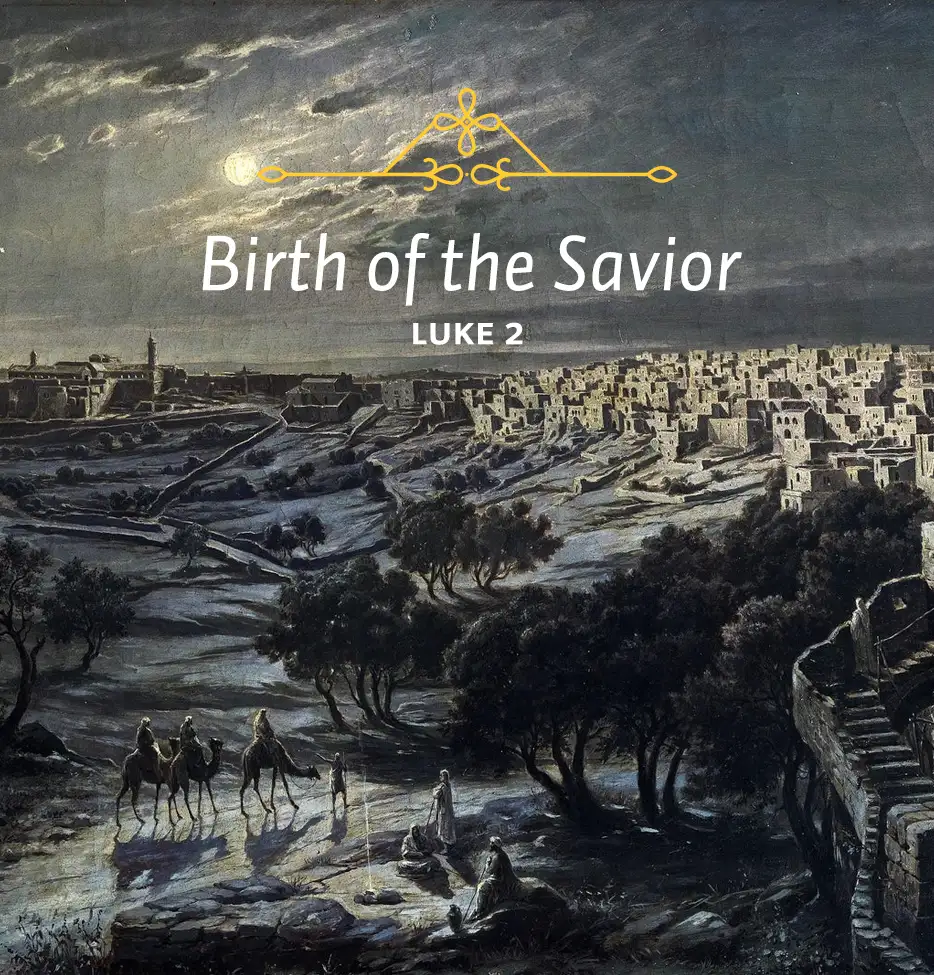


 Truth2Freedom's Blog