There are two ways to be fooled. One is to believe what isn’t true; the other is to refuse to believe what is true. —Soren Kierkegaard. "…truth is true even if nobody believes it, and falsehood is false even if everybody believes it. That is why truth does not yield to opinion, fashion, numbers, office, or sincerity–it is simply true and that is the end of it" – Os Guinness, Time for Truth, pg.39. “He that takes truth for his guide, and duty for his end, may safely trust to God’s providence to lead him aright.” – Blaise Pascal. "There is but one straight course, and that is to seek truth and pursue it steadily" – George Washington letter to Edmund Randolph — 1795. We live in a “post-truth” world. According to the dictionary, “post-truth” means, “relating to or denoting circumstances in which objective facts are less influential in shaping public opinion than appeals to emotion and personal belief.” Simply put, we now live in a culture that seems to value experience and emotion more than truth. Truth will never go away no matter how hard one might wish. Going beyond the MSM idealogical opinion/bias and their low information tabloid reality show news with a distractional superficial focus on entertainment, sensationalism, emotionalism and activist reporting – this blogs goal is to, in some small way, put a plug in the broken dam of truth and save as many as possible from the consequences—temporal and eternal. "The further a society drifts from truth, the more it will hate those who speak it." – George Orwell “There are two ways to be fooled. One is to believe what isn’t true; the other is to refuse to believe what is true.” ― Soren Kierkegaard
For the success of all endeavors for the reformation of manners, the suppression of vice and profaneness, the support of religion and virtue, and the bringing of them into reputation.
O let the evil of the wicked come to an end, and establish the righteous – you who test the minds and hearts, O righteous God. Psalm 7:9(ESV) Spirit many to rise up for you against the wicked and to stand up for you against evildoers. Psalm 94:16(ESV)
Let the Deliverer come to Zion and banish ungodliness from Jacob; Romans 11:26(ESV) and let the filth of Jerusalem be cleansed from its midst by a spirit of judgment and a spirit of burning. Isaiah 4:4(ESV)
Let all wickedness shut its mouth; Psalm 107:42(ESV) and let the infection of that plague be stayed by intervening judgment. Psalm 106:30(ESV)
Let those who are struggling against sin never grow weary or fainthearted. Hebrews 12:3-4(ESV)
Remove the spirit of uncleanness from the land, Zechariah 13:2(ESV) and change the speech of the peoples to a pure speech, that they may call upon the name of the LORD. Zephaniah 3:9(ESV)
Set your people high above all nations in praise and in fame and in honor by making us a people holy to the LORD our God. Deuteronomy 26:19(ESV)
“All Hail the Power of Jesus’ Name” is one of the great hymns of the Christian faith. It’s significant that evangelist Billy Graham chose it as one of six songs to be sung at his funeral, and as only one of two hymns to be sung by the congregation on that occasion. As one verse proclaims: “Let every kindred, every tribe, on this terrestrial ball, to Him all majesty ascribe, and crown Him Lord of all!”This month, we’ve answered the life-changing question, “Who is this Jesus?” One day, every person will answer with this confident statement: “Jesus Christ is Lord, to the glory of God the Father” (v. 11). Today’s reading, most of which may be an early Christian hymn, walks us through the basic points of Christology.The first three verses describe Jesus’ first Advent, namely, His Incarnation and the mission of redemption (vv. 6–8). Despite being God, He stepped down to become human, then down again to be a servant, then down again to dying a convict’s death. These deliberate steps of humility were also steps of obedience to His Father and of love for us. Jesus is the perfect example of valuing or esteeming others above ourselves (v. 3). In this and other ways, we’re to “have the same mindset as Christ Jesus” (v. 5).The next three verses describe Jesus’ second Advent, in other words His Second Coming and (again) mission of redemption (vv. 9–11). The previous steps lead down and now they step up: God the Father “exalted him to the highest place and gave him the name that is above every name.” Jesus will take His place as King and rule over all. Throughout the material and spiritual realms, every knee will bow and every tongue confess these truths!
Go Deeper Who is Jesus? Look back over your notes from this month’s study. What truths about Jesus have struck a deep chord in your heart? Share your observations in our Today in the Word Facebook discussion group.
Pray with Us As we close this year, Lord, we are filled with thanks. We ask that You go before us in the year ahead, guide our steps, and show us new ways to serve You and glorify Your holy name.
That your baby boy will save our sons and daughters?
Did you know
That your baby boy has come to make you new?
This child that you’ve delivered
Will soon deliver you.
This well-known Christmas song first debuted in 1991, written from a reflection of what the songwriter would ask Mary if he ever had a conversation with her. Did she know Who she was holding in her arms and what He would accomplish as they sat amidst the animals that night?
Mary’s prayer provides us with the answer.
God’s Sovereignty
Mary continues her prayer in v. 51-55 by recounting the deeds God has done throughout Israel’s history using a series of contrasts. I listed a few events or passages Mary might have been thinking of when she said these words, but this list is by no means exhaustive.
“He has done a mighty deed with His arm” (v. 51a).
The first thing that came to mind here is the story of the Exodus. The Old Testament frequently references God’s mighty hand and outstretched arm in connection to Israel’s deliverance from Egypt with the various plagues and Red Sea Crossing that God accomplished (Ex 6:6; Dt. 4:34; Ps. 136:10-22). It also applies to the great victories of God in protecting and providing for Israel in the wilderness wanderings, the Conquest, David’s victories, and the many armies Israel has defeated over its history in supernatural ways. And yes, this certainly applies to the baby in her womb.
“He has scattered those who were proud in the thoughts of their heart” (v. 51b).
Perhaps Mary is thinking of the story of the Tower of Babel in Genesis 11:1-9. The people wanted to build a city and a name for themselves and prevent themselves from being scattered across the lands in direct opposition to the God’s command to fill the earth. But God changed their languages and scattered them anyway. This also applies to Israel as a nation being sent into exile, having been caught in idolatry and refusing to repent and turn back to the Lord despite the warnings of the prophets.
“He has brought down rulers from their thrones” (v. 52a).
The book of Daniel is full of examples of this from the empires represented in the statute in Daniel 2, King Nebuchadnezzar in Daniel 4 being humbled to live in the fields, or Belshazzar in Daniel 5 whose kingdom and life was taken from him the very night he saw the writing on the wall in the midst of his feasting. We can again think of various kings throughout Israel’s history, both foreign and national, that God removed from their authority. It also reminded me of Psalm 2, with the kings of the earth making plans against God and Messiah and meanwhile, He sits up in the heavens and laughs at them because they will never succeed.
“And has exalted those who were humble” (v. 52b)
Job 5:11 says, “He sets on high those who are lowly, and those who mourn are lifted to salvation.” Remember – Nebuchadnezzar didn’t stay in that field! He was restored to his place when he lifted his eyes to heaven and blessed the Lord as Daniel 4:34-37 records. We could also think of the examples of Ruth, Esther, and David, who came from lowly backgrounds, but the Lord raised up and used for His purposes. And this still holds true today, as Jesus said “I tell you, this man went down to his house justified rather than the other, for everyone who exalts himself will be humbled, but he who humbles himself will be exalted” (Lk. 18:14).
“He has filled the hungry with good things, and sent away the rich empty‑handed.” (v. 53).
Again, this verse is in capital letters, so she is directly quoting Scripture. Scholars connect this to Psalm 107:9, “For He has satisfied the thirsty soul, And the hungry soul He has filled with what is good.” This provision is true both physically and spiritually: “And He humbled you and let you be hungry and fed you with manna which you did not know, nor did your fathers know, that He might make you know that man does not live by bread alone, but by everything that proceeds out of the mouth of Yahweh” (Dt. 8:3). His people never need to fear having their physical needs met, but most importantly, He has provided what we need to satisfy our souls through His Word. And the rich may prosper now, but this may be the only reward they get if they do not know Christ as Savior.
She ends her song with a recognition of why God has done all these things for Israel: “He has given help to Israel His servant, in remembrance of His mercy, as He spoke to our fathers, to Abraham and his seed forever” (v. 54-55). Mary recognized that God had been faithful to give help to Israel and done all those things she just recounted because of His covenant promises. Perhaps she thought of Psalm 98:3 which says “He has remembered His lovingkindness and His faithfulness to the house of Israel; All the ends of the earth have seen the salvation of our God” (see also Ps. 105:8-10). Despite all Israel’s sinfulness, nothing would break these covenant promises made by God with His people. In fact, at the various times God threatened to wipe Israel off the face of the earth, men appealed to Him for mercy on the basis of the covenant He made (Ex. 32:11-14). In Judges 2, the writer recounts the cycle of Israel’s disobedience, repentance, deliverance, and repeat. But the Lord kept providing deliverance despite their constant failure. And He did it in remembrance of that mercy that He has shown from generation to generation.
We can summarize the Abrahamic Covenant first instituted by God in Genesis 12:1-3 in three promises: land, seed, and blessing. Though they have been fulfilled in part throughout Israel’s history in the various events we have just described, these everlasting covenant promises looked to an ultimate future fulfillment. That greatest help and ultimate mercy would come through the One Mary carried.
The angel had told her, “And behold, you will conceive in your womb and bear a son, and you shall name Him Jesus. He will be great and will be called the Son of the Most High, and the Lord God will give Him the throne of His father David, and He will reign over the house of Jacob forever, and there will be no end of His kingdom” (Lk. 1:31-33). The angel told Joseph He would be called Jesus because He will save His people from their sins (Mt. 1:21).
Mary knew what His name meant and that He was the Savior they had been waiting for. She knew He would be the everlasting Davidic king. She knew He was going to be the fulfillment of the Abrahamic Covenant. He is the One who will one day restore Israel to their land and reign over them from Jerusalem. He is the ultimate Seed, the everlasting king that would come from Abraham’s line. He is the One through whom all families of the earth will be blessed.
So, in answer to our starting question, yes, as matter of fact, she did know. Probably not that He would walk on water, but that He would be the Savior of the world? Yes, she absolutely did. And she knew this and could recount and praise God in all these ways because she knew His Word.
Now may the God of peace, who through the blood of the eternal covenant brought back from the dead our Lord Jesus, that great Shepherd of the sheep, equip you with everything good for doing his will, and may he work in us what is pleasing to him, through Jesus Christ, to whom be glory for ever and ever. Amen.
Hebrews 13:20-21
Humanity possesses great nuclear submarines by which the oceans can be traversed without ever coming to the surface. The secret of their tremendous power lies in a nuclear reactor hidden away in the depths of the submarine. That remarkable force does not need any refueling but is constantly giving off energy, so the submarine never needs to go into port for refueling. So it is in the life of a Christian. In these two verses is revealed the nuclear reactor for every Christian.
Look at the elements of this: Now may the God of peace. In this letter we have seen what peace is. The nearest modern equivalent is emotional health. In Christ we are in touch with the God of emotional health, the God who intends life to be lived on a peaceful level. With him is linked the Lord Jesus, the Great Shepherd of the sheep. I came from Montana and know much about sheep. If you are from the city you have probably thought that if you leave them alone they’ll come home, wagging their tails behind them. But I can assure you it is all a lie! There are two outstanding characteristics of sheep: They have no wisdom, and they have no weapons. They are forever running off and getting lost and unable to find their way back, and if anything attacks them they are utterly helpless to defend themselves. That is why they need a shepherd. That is why we need a shepherd, and why the Bible likens us to sheep. We have a Great Shepherd of the sheep. He is our resource, our provision — a God who is concerned about us, and a Great Shepherd who is there to watch us — because we have no wisdom and we have no weapons for our defense.
Linked with them is this great process that is spoken of here, who brought again from the dead … by the blood of the eternal covenant. There you have the cross and the resurrection. The cross means the end of the old life of self-reliance, and the resurrection sets forth the power of the new life. That is the power that is released within the Christian by the indwelling Christ within him. We talk about the conquest of outer space but the greatest conquest ever made was when the Lord Jesus conquered inner space by moving into the heart of man, to plant within us the greatest power by which life can be lived — a power that heals and makes whole.
The result of all this is that God will equip you with everything good that you may do his will. This is the secret of effective service. You do not have to ask God to do this, he is there to equip you with everything to do his will. There is a full supply here and full ability. God is going to work through you, not apart from your will, but right along with it. You choose, you start out, but he is there to carry it through.
Then there is full acceptance, even before it happens. Working in you that which is pleasing in his sight. You know you are going to please God, you know that you cannot help but please him when you walk in this way and live on this basis. You are fighting a battle already won. But if we try to live in the self-effort of the flesh, we are fighting a battle already lost. This whole thing is wrapped around with the most life-changing phrase ever uttered by man, through Jesus Christ; to whom be glory forever and ever. Amen.Through Jesus Christ — that is the secret of life, that is the way God intended man to live. What good news for this present life! God intended it for you, that you might live in your present circumstances, wherever you are.
Father, help me to grasp and understand these truths, but more than that, give me the courage to step out upon them, that I might enter into the glorious liberty of the children of God.
Life Application
The life-giving, life-changing Presence of our indwelling Christ is transcendent power of which nuclear-powered submarines is but a replica! Are we opting to stray as helpless sheep, or are we ‘beholding the glory of the Lord’, being transformed into His image?
18 Pray for us. We are sure that we have a clear conscience and desire to live honorably in every way. 19 I particularly urge you to pray so that I may be restored to you soon.
Benediction and Final Greetings
20 Now may the God of peace, who through the blood of the eternal covenant brought back from the dead our Lord Jesus, that great Shepherd of the sheep, 21 equip you with everything good for doing his will, and may he work in us what is pleasing to him, through Jesus Christ, to whom be glory for ever and ever. Amen.
22 Brothers and sisters, I urge you to bear with my word of exhortation, for in fact I have written to you quite briefly.
23 I want you to know that our brother Timothy has been released. If he arrives soon, I will come with him to see you.
24 Greet all your leaders and all the Lord’s people. Those from Italy send you their greetings.
“Christianity is not a culture but it is the Way, the Truth and the Light. Our victory has been won. The kingdom is ours forever.”
When we witness the demise of western culture, we must be careful to note that this has absolutely nothing to do with any decline of Christianity. The Way, the Truth and the Light which was revealed to us by Jesus Christ our Savior is once and for all, for all peoples. It is the foundation of the true church and the gates of hell shall not prevail against it. Cultures have come and gone. Jesus’ Word shall never pass away.
Since the dawn of the Common Era more than two thousand years ago, various sovereignties, principalities and societies have risen and fallen. The Roman Empire was overrun by the barbarians. Byzantium was decimated by the hordes of Islam. The Third Rome, as represented by the Romanoff empire, was trampled by communism. In our day we witness the final collapse of western culture. It is interesting to analyze the ponderings of Oswald Spengler who wrote his seminal text, The Decline of the West, more than a century ago, back in 1918. Spengler opined that every civilization is inherently cyclical, experiencing ascendance, preponderance and an inevitable decline. He examined all the historic epochs from ancient Egypt to his contemporary western civilization. I am not convinced that Spengler’s theory is ironclad. However, I must agree that he correctly diagnosed the twilight of the West, as we knew it.
Western civilization was deeply influenced by Christianity. But its decline does not presage any retreat of Christianity. Rome, Byzantium and the Romanoff Empire, which styled itself the Third Rome, all faded from the historical stage. Yet the relevance and unassailable strength of Christian doctrine remain inviolate. While these great cultural phenomena were influenced by Christ’s teaching, they were not embodiments of Christianity and all fell well short of the ideals which Jesus revealed to humankind. Had these Christian influenced cultures more closely aligned themselves with the unerring dictates of Scripture, would they have withstood the test of time? This is a question which is not for us to contemplate. We know from Divine revelation that human existence is destined to undergo tribulation and that only the Second Coming of our Lord will usher in eternal peace.
It is our duty to spread the Gospel and to pursue good works in our own lives as a categorical imperative. Our predecessor believers did their part in the past. We must espouse Christ’s work in the present and the future, whatever the name or characteristics of the next predominant culture may be. Even if the years ahead bring repression of Christians, we know that our sufferings on account of our fidelity to our Lord will result in our glorification with Him. Romans 8:17. Christianity is not a culture but it is the Way, the Truth and the Light. Our victory has been won. The kingdom is ours forever.
The Jews said to Him, “Now we know that You have a demon. Abraham died, and the prophets also; and You say, ‘If anyone keeps My word, he will never taste of death.’ Surely You are not sssgreater than our father Abraham, who died? The prophets died too; whom do You make Yourself out to be?” Jesus answered, “If I glorify Myself, My glory is nothing; it is My Father who glorifies Me, of whom you say, ‘He is our God’; and you have not come to know Him, but I know Him; and if I say that I do not know Him, I will be a liar like you, but I do know Him and keep His word. Your father Abraham rejoiced to see My day, and he saw it and was glad.” So the Jews said to Him, “You are not yet fifty years old, and have You seen Abraham?” Jesus said to them, “Truly, truly, I say to you, before Abraham was born, I am.” (8:52–58)
Hearing Jesus’ words in a strictly literal and earthly sense, the incredulous Jews retorted, “Now we know that You have a demon. Abraham died, and the prophets also; and You say, ‘If anyone keeps My word, he will never taste of death.’ Surely You are not greater than our father Abraham, who died? The prophets died too; whom do You make Yourself out to be?” Neither the revered patriarch Abraham nor any of the prophets had the power to defeat death, since they had all died. Flinging Jesus’ own words back at Him, If anyone keeps My word, he will never taste of death, the Jewish leaders indignantly demanded, “Surely You are not greater than our father Abraham or the prophets who died; whom do You make Yourself out to be?” Or, “Just who do You think You are?” The tone of their questioning is obviously abusive; they were sure that only a demon-possessed person could make such an outlandish claim. Calmly and patiently, Jesus repeated the truth He had stated in verses 49 and 50: “If I glorify Myself, My glory is nothing; it is My Father who glorifies Me.” He was not seeking His own glory, but was secure in the knowledge that the Father … glorifies Him. Jesus’ claims were not those of a demoniac or a maniac, because the glory He possesses was not evil or satanic, but divine. It was His by His eternal relation to His Father (17:24)—the very One of whom the Jewish leaders said, “He is our God.” For them to piously claim to know God while blaspheming and rejecting His Son was ludicrous. Therefore Jesus, pointing out the obvious again, plainly told them, You have not come to know Him. Despite their outward pretense, they did not know God; they were children of Satan (v. 44). Their delusion was that they were God’s children and that Jesus was in league with the Devil (cf. Matt. 12:24). Despite the fierce opposition of His opponents and the impending outcome, Jesus steadfastly refused to back down or deny that He knew the Father. “I know Him,” He affirmed, “and if I say that I do not know Him, I will be a liar like you, but I do know Him and keep His word.” They were liars because they claimed to know God when they actually did not; Jesus would have been a liar if He had denied knowing God, whom He did know in a profound and eternal oneness (cf. 1:18; 7:29; 10:15; Matt. 11:27). The Lord maintained the truth of His divine knowledge of His Father as one in nature with Him, though it became the issue for which they sought to murder Him (cf. John 19:6–7). In contrast to their rejection of Him, the Lord told them, “Your father Abraham rejoiced to see My day, and he saw it and was glad.” Hebrews 11:13 records that Abraham saw and welcomed Christ’s day. He saw in his son Isaac the beginning of God’s fulfillment of His covenant with him (Gen. 12:1–3; 15:1–21; 17:1–8), which would culminate in the coming of the Messiah. Once again (cf. vv. 39–40), Jesus contrasted His opponents’ behavior with that of their patriarch, proving that they were not Abraham’s spiritual children. They wanted to murder the very One in whose coming Abraham rejoiced (cf. v. 37). Stubbornly persisting in their misunderstanding of Jesus’ words, the Jews said to Him, “You are not yet fifty years old, and have You seen Abraham?” Abraham had lived more than two millennia earlier; Jesus could not possibly have seen him. They also twisted His words; the Lord had not said that He had seen Abraham, but that Abraham had (prophetically) seen Him. It should be noted that the Jews’ statement that Jesus was not yet fifty years old does not specify Jesus’ exact age, but rather places an upper limit on it. The Lord would have been only in His early thirties, since He was about thirty when He began His ministry (Luke 3:23). Jesus’ climactic reply, “Truly, truly, I say to you, before Abraham was born, I am,” was nothing less than a claim to full deity. The Lord once again took for Himself the sacred name of God (see the discussion of 8:24 in chapter 29 of this volume). Obviously, as the eternal God (John 1:1–2), He existed before Abraham’s time. Homer Kent explains, “By using the timeless ‘I am’ rather than ‘I was,’ Jesus conveyed not only the idea of existence prior to Abraham, but timelessness—the very nature of God himself (Exod. 3:14)” (Light in the Darkness [Grand Rapids: Baker, 1974], 128–29).
THE DEFIANCE
Therefore they picked up stones to throw at Him, (8:59a)
The Jewish leaders understood Jesus’ claim perfectly. In response, their hatred flamed into violence. Infuriated by what they perceived as blasphemy (cf. 10:33), they took the law into their own hands and picked up stones to throw at Him (cf. Lev. 24:16). Here is the grip of unbelief so powerful that in the face of irrefutable evidence they were unwilling to accept that as God in human flesh, Jesus was incapable of committing blasphemy; rather all of His claims, no matter how astonishing, were absolutely true. How ironic that the Jewish religious leaders, seemingly so passionate for God’s honor that they were ready to cast stones at a blasphemer, were, in fact, accusing God Himself of blaspheming God.
THE DISAPPEARANCE
but Jesus hid Himself and went out of the temple. (8:59b)
Significantly, the Lord did not protest that He had been misunderstood. Clearly, He was claiming to be God. Since His hour to die had not yet come (John 7:30; 8:20; 13:1), Jesus would not allow Himself to be killed, but supernaturally hid Himself and went out of the temple (cf. Luke 4:30). (John’s brief and straightforward description of this miraculous escape is reminiscent of how he records other supernatural events in his gospel—cf. John 6:11, 19.) Thus ends this tragic dialogue between Jesus and the doomed Jewish religious leaders. As on this occasion, so it always is that there are only two possible responses to Jesus’ claims. One is to accept them as true, and bow before Him in humble, repentant faith, confessing Him as Savior and Lord. The other response, illustrated by Jesus’ opponents in this passage, is that of hardened, bitter rejection. The tragic, fearful result of that response will be eternal damnation in hell. As Jesus soberly warned, “Therefore I said to you that you will die in your sins; for unless you believe that I am He, you will die in your sins” (8:24).
MacArthur, J. F., Jr. (2006). John 1–11 (pp. 382–385). Moody Press.
Is Jesus God?
John 8:57–59
“You are not yet fifty years old,” the Jews said to him, “and you have seen Abraham!” “I tell you the truth,” Jesus answered, “before Abraham was born, I am!” At this, they picked up stones to stone him, but Jesus hid himself, slipping away from the temple grounds.
Several years ago I heard a psychiatrist, who was also an existentialist, say, “There are only two great questions in this world: Who am I? and, Where am I going?” I heard the statement and agreed in part that these are great questions. But though I agreed in part, it was only in part. For, although these are great questions, they are not the greatest questions that should be asked and for which we should seek answers. One greater question forms the title of this study: Who is Jesus Christ? Is Jesus Christ God? On the answer to that question hangs our destiny.
A Timely Issue
Who is Jesus Christ? This is the question of questions in John’s Gospel. Indeed, as we have seen, the Gospel was written almost entirely to provide an answer to it. The Gospel begins with a full statement of Christ’s divinity—“In the beginning was the Word [that is, Jesus], and the Word was with God, and the Word was God” (1:1). It ends with the statement, “Jesus did many other miraculous signs in the presence of his disciples, which are not recorded in this book. But these are written that you may believe that Jesus is the Christ, the Son of God, and that by believing you may have life in his name” (20:30–31). In between these verses much evidence is given in support of Christ’s claim. What is the issue in this central portion of John’s Gospel? Is the issue the distinct nature of his teachings? Is it the sabbath question itself? Is it Christ’s good deeds or lack of them? It is none of these things. Rather, the issue is: Who is Jesus Christ? Is Jesus God? Is Jesus God? If he is not, then let us say so—but only after having considered the evidence. If he is God, then he has a right to our allegiance and loyalty. We must follow him. You cannot honestly be indifferent to Jesus Christ. He did not leave you that option. Thus, you must either follow him as your God and Lord, or you must seek to eradicate his presence from your life, as the religious leaders of his day did. Which will it be? This is the great question of John. It is the great question raised by Christianity. It is a question for you. Will it be Christ, God in the flesh? Or will you be your own “God”? It must be Christ if he is who he declared himself to be.
Christ’s Claim
The verse that we are going to study is one in which Jesus claimed to be God explicitly. He was not always so explicit; but he was in this case, and this produced startling consequences. The leaders of the people had been challenging everything he said, and they had just challenged his statement that Abraham had rejoiced to see his day and that he saw it and was glad. They said, “You are not yet fifty years old, and you have seen Abraham?” He replied, using his most solemn form of introducing a saying, “I tell you the truth, before Abraham was born, I am” (vv. 57–58). This so infuriated them that they immediately took up stones to stone him. To our way of thinking, at least at first sight, it is a bit hard to see why this particular saying would have provoked such a radical response. Stoning was the penalty for blasphemy, for making oneself out to be God. So this is what they understood him to be doing. But how does one get that from these words? And in what sense was he saying it? It is obvious from the saying itself that Jesus was claiming to have existed before Abraham was born. It also is obvious from the tense of the verb—“Before Abraham was born, I am”—that he was claiming an eternal preexistence. But this alone, we might think, would not be sufficient cause for stoning. The real reason for their violent reaction is found in the fact that when Jesus said, “I am,” he actually was using the divine name by which God had revealed himself to Moses at the burning bush. When Moses had asked, “Suppose I go to the Israelites and say to them, ‘The God of your fathers has sent me to you,’ and they ask me, ‘What is his name?’ Then what shall I tell them?” God said to Moses, “I am who I am. This is what you are to say to the Israelites: ‘I AM has sent me to you’ ” (Exod. 3:13–14). In Hebrew this is the word “Jehovah,” and it is this word that Jesus so easily takes to himself in this saying. He claimed to be Jehovah, using the very word “Jehovah.” So it was because of this that the Jews, who immediately recognized his claim for what it was, reached out to kill him.
Many Claims
We have said that this was an unusually direct and overpowering claim, and it was. But we must not overlook the fact that it was only one of many claims both direct and indirect by which Jesus declared himself to be God’s equal. Practically everything that Jesus had to say was an indirect claim to divinity. His first preaching is an example. When John the Baptist had come preaching the imminent arrival of God’s kingdom, he pointed to One who would himself embody that kingdom. Jesus came, and Jesus’ first preaching was the announcement of the kingdom’s arrival: “The time has come, … the kingdom of God is near. Repent and believe the good news!” (Mark 1:15). Later, speaking of himself, he said to the Pharisees, “The kingdom of God is within you” (Luke 17:21). This was a claim that the prophecies of the Old Testament were about him and were fulfilled in him. All Christ’s words about the Old Testament fall into this category also, for the summation of his teaching was, “Do not think that I have come to abolish the Law or the Prophets; I have not come to abolish them but to fulfill them” (Matt. 5:17). When he invited people to follow him—“Follow me, and I will make you fishers of men” (Matt 4:19)—he implied that he was of sufficient stature to be worth following. When he forgave sins, he did it knowing that he was doing what only God can do. Toward the end of his life he promised to send God’s Holy Spirit to be with the disciples after his departure, which again implies divinity. Remarkable among his claims was his unique reference to God as his Father. This was by no means a common form of expression in Judaism, as it is in the English language. No Jew ever spoke of God directly as “my Father.” Yet, not only was this the form of address that Jesus used, particularly in his prayers, it was also his only mode of addressing God and it referred to his relationship to the Father exclusively. Jesus said, “I and the Father are one” (John 10:30). He said, “Father, the time has come. Glorify your Son, that your Son may glorify you.… Righteous Father, though the world does not know you; I know you” (17:1, 25). Eventually Jesus taught his disciples to address God as Father also, as a result of their relationship to himself. But even in this case his relationship to God as Father and their relationship to God as Father were different. Thus, he spoke to Mary Magdalene, saying, “Go to my brothers and tell them I am returning to my Father and your Father, to my God and your God” (20:17). He did not say “to our Father” or “to our God.” “So close was His connection with God,” writes John Stott, “that he equated a man’s attitude to himself with his attitude to God. Thus, to know Him was to know God (John 8:19; 14:17); to see Him was to see God (John 12:45; 14:9); to believe in Him was to believe in God (John 12:44; 14:1); to receive Him was to receive God (Mark 9:37); to hate Him was to hate God (John 15:23); and to honor Him was to honor God (John 5:23).” Jesus’ “I am” sayings are worthy of special notice also, for he claimed to be all that men need for a full spiritual life. Only God can rightly make such claims. “I am the bread of life” (6:35). “I am the light of the world” (8:12; 9:5). “I am the gate” (10:7, 9). “I am the good shepherd” (10:11, 14). “I am the resurrection and the life” (11:25). “I am the way and the truth and the life” (14:6). “I am the true vine” (15:1, 5). One great and final example of Christ’s unique conception of himself occurred shortly after the resurrection on the day Jesus appeared among the disciples, Thomas being present. Jesus had appeared to the disciples earlier when Thomas was absent. But when Thomas was told about the appearance, he had replied, “Unless I see the nail marks in his hands and put my finger where the nails were, and put my hand into his side, I will not believe it” (20:25). Now the Lord appeared to them all once more, this time including Thomas, and he asked Thomas to make the test he had wanted to make: “Put your finger here … and reach out your hand” (v. 27). Thomas, who was overcome by Christ’s presence, immediately fell to the ground and worshiped him saying, “My Lord and my God” (v. 28). Think of it: “Lord and God!” Adonai! Elohim! Jehovah! And Jesus accepted the designation! He did not deny it! It is no wonder, in light of this testimony, that this is the story John chooses to end all but the postscript of his Gospel. These, then, are a few of Christ’s claims. Thus, whatever we may think of the claims themselves, there can at least be no doubt that Christ made them. Moreover, they remain unchanged. History has not eradicated Christ’s claim to be God. Time has not changed it. The Jesus who made the claim then is the same Jesus who is our living contemporary, and the Scriptures tell us that he is the same “yesterday and today and forever.” He calls on you to follow him. Will you do it, forsaking all else? If he is not God, then you can safely ignore him. But if he is God, then anything less than a total surrender to him is folly and any other loyalty is idolatrous.
The Rock of Ages
There are three parts to the verses we are considering. The first is the claim of Christ, (“Before Abraham was born, I am”). This has taken most of our space and is important, but the others deserve space also. The second is the reaction of the leaders to that claim (“At this, they picked up stones to stone him”). The third is the sad result (“Jesus hid himself, slipping away from the temple guards”). Stoning can mean different things, all the way from simple displeasure to the desire to have someone killed. As such it can stand for any degree of reaction to Christ by men and women who reject him. I remember, years ago when I was in Jordan and was trying to take a picture of a man who was winnowing grain, how the man picked up stones to stone me. He was not trying to kill me. But he did not like me to be trying to take his picture. He was showing displeasure in that way. Sometimes, as in the case of beggars or animals, stoning was used to drive a person or an animal away. At other times, as in this story, it was used as a means of execution. To put it in contemporary terms, then, some merely express displeasure at Jesus while others (expressing the same basic reaction) try to eliminate his presence from their lives. The strange thing about this is its folly. For Jesus Christ cannot be so easily gotten rid of. If he is God, he is eternal. He is the Ancient of Days. How can one eliminate the Ancient of Days from one’s days? He is the Lord of life. How can one exclude the Lord of life from one’s life? Imagine trying to dislodge the Rock of Ages with a handful of stones! The Lord Jesus Christ is the Rock of Ages yet, and you will not get rid of him by throwing things at him. He is inescapable. He is planted in life. Thus, you must either come to terms with him now, or you must do so on the day of judgment. You have one of two choices. You may destroy yourself by pounding yourself against him, just as you can destroy a piece of wood by pounding it upon an anvil. Or you may build upon him. Why not build upon him? The Rock of Ages makes a great foundation. Jesus said that the one who builds upon him will be like a house founded upon a rock upon which the rains descended and the floods came but which fell not. Why not try him? Why not put him to the test?
Jesus Hid Himself
Finally, the verses also indicate the sad result of the action of those who try to get rid of him. We read, “Jesus hid himself, slipping away from the temple guards” (v. 59). These are sad words, and they are doubly sad because in closing this section of the Gospel they have the added effect of permanence. What does it mean when we are told that Jesus hid himself? First, it means that although these men could not harm Jesus, nevertheless, they could not benefit from him either. It will be the same for you if you try to keep him out of your life. If you do not allow Jesus to be God in your life, you will not harm him. You cannot harm the invincible and omnipotent God. But you will not benefit from him either. The Lord Jesus Christ came to bring those divine benefits to you. He is the life. He came to give you life, abundant life. He is the light. He wants to shine upon you, to illuminate your darkness and guide you. He is the bread upon whom you may feed and grow. He is the living water who can quench your spiritual thirst. You forfeit these benefits if you refuse him his rightful place in your life. Second, the verse tells us that there are some from whom Jesus does slip away or “pass by” as the King James Version states it. We live in a day when men and women are won over to ego-tickling dogmas of universalism, the idea that all will be saved. But there is nothing in the Word of God to justify that conclusion. You say, “But why doesn’t God save all men?” I don’t know, but he doesn’t. And here is a case. Notice that throughout this entire conversation Jesus has not even been trying to convert these religious leaders. He has merely been exposing their sin. Moreover, we are told that Jesus eventually passed by and went his way. There are some people whom God gives up (Rom. 1:24, 26, 28). God gives up nations, if they will not live by righteous standards. God gives up churches, when they depart from their first love. God gives up individuals. Woe be to the person whom the Lord Jesus Christ passes by! Finally, the verse leads us to see that there are some whom God saves anyway. I say “anyway” because I recognize that all of us, even those who become Christians, deserve to be passed by. Notice this. In the King James text of John 8, the last words are “passed by.” It is a tragic note, a tragic end to the contacts of Christ with these religious leaders. But in the opening verse of the very next chapter, just four and five words later, the words occur again in a story that tells us that “as Jesus passed by, he saw a man who was blind from his birth” and saved him. Here was a man who in his blindness could not even see the Lord Jesus. Yet Jesus saw him and gave him both physical and spiritual sight. He could not seek Christ, yet he was found by him. How wonderful! What a great hope for the sinner! “Jesus passed by.” Yes. But “as he passed by” he saw this one and saved him. With people such as these he began to build his church. Are you such a one? Why should you not be? Why should you not be one who finds Jesus?
Boice, J. M. (2005). The Gospel of John: an expositional commentary (pp. 673–678). Baker Books.
And there shall cleave nought of the cursed thing to thine hand: that the Lord may turn from the fierceness of his anger, and show thee mercy, and have compassion upon thee, and multiply thee, as he hath sworn unto thy fathers. (Deuteronomy 13:17)
Israel must conquer idolatrous cities and destroy all the spoil, regarding all that had been polluted by idolatry as an accursed thing to be burned with fire. Now, sin of all sorts must be treated by Christians in the same manner. We must not allow a single evil habit to remain. It is now war to the knife with sins of all sorts and sizes, whether of the body, the mind, or the spirit. We do not look upon this giving up of evil as deserving mercy, but we regard it as a fruit of the grace of God, which we would on no account miss.
When God causes us to have no mercy on our sins, then He has great mercy on us. When we are angry with evil, God is no more angry with us. When we multiply our efforts against iniquity, the Lord multiplies our blessings. The way of peace, of growth, of safety, of joy in Christ Jesus will be found by following out these words: “There shall nought of the cursed thing cleave to thine hand.” Lord, purify me this day. Compassion, prosperity, increase, and joy will surely be given to those who put away sin with solemn resolution.
The Islamic religion claims that the Qur’an, revealed allegedly by the angel Gabriel to the prophet Muhammad beginning in 610 A.D., is the inspired and inerrant word of God. Such an assertion, however, is highly problematic, and many, many arguments could be given to convincingly refute it. In this article, I am going to offer one of those reasons, which I perceive to be the most damning. My argument here can be summarized in syllogistic form as follows:
Premise 1: Either the Bible is the Word of God or it is not.
Premise 2: If the Bible is the Word of God, the Qur’an is not.
Premise 3: If the Bible is not the Word of God, the Qur’an is not.
Conclusion: Therefore, the Qur’an is not the Word of God.
First, a note of qualification. By “the Bible” I refer specifically to the Torah and the gospels as we possess them today and as possessed by Christians at the time of Muhammad in the seventh century. Granted, there are textual variants in the New Testament Greek manuscripts, but the core message of the New Testament remains the same — they are thus immaterial to what I’m attempting to establish here.
Premise 1 need not be defended, since it is self-evident that the two alternatives are mutually exclusive and exhaustive possibilities. Premise 2 is easy to establish, since the Qur’an and the Bible fundamentally contradict one another. The most obvious item of conflict relates to whether Jesus died by crucifixion, denied by the Qur’an (Surah An-Nisa 157-158) but affirmed throughout the New Testament and indeed a cornerstone of New Testament theology. The Qur’an also repeatedly denies the core Biblical concept that Christ is the incarnate eternal Son of God, affirming instead that He is only a messenger or prophet (e.g. Surah Al-Maeda 75). The Qur’an, on multiple occasions, denies the Trinity (e.g. Surah An-Nisa 171; Surah Al-Maeda 73). The Qur’an, of course, repeatedly misrepresents Christian theology on these matters, but this is immaterial to the issues that concern us here. If, then, the Christian Scriptures are indeed the inspired Word of God, the Muslim Scriptures cannot be, since the Qur’an so fundamentally disagrees with the theology of the Bible.
The Qur’an’s Affirmation of the Christian and Jewish Scriptures
For the Muslim to reject the conclusion of the argument, at least one of the three Premises must also be rejected. As I have shown, Premises 1 and 2 cannot be reasonably denied. What, then, of Premise 3? The Qur’an, over and over again, affirms the Christian Scriptures, claiming consistency with them, and asserting that the Torah and the Gospel (the “Injil”), and also the Psalms, are previous revelations from Allah. Consider, for example, the following verses.
Surah Al-E-Imran (3) 3: “He has revealed to you the Book with the truth [i.e. the Qur’an],confirming what has been before it, and has sent down the Torah and the Injil.”
Surah An-Nisa (4) 136: “O you who believe, do believe in Allah and His Messenger and in the Book He has revealed to His Messenger and in the Books He has revealed earlier. Whoever disbelieves in Allah and His angels and His Books and His Messengers and the Last Day has indeed gone far astray.”
Surah An-Nisa (4) 163: “Surely, We have revealed to you [i.e. Muhammad] as We have revealed to Nuh and to the prophets after him; and We have revealed to Ibrahim, Isma’il, Ishaq, Ya’qub and their children, and to Isa, Ayyub, Yunus, Harun, and Salaiman, and We have given Zabur [i.e. the psalms] to Dawud.”
Surah Al-Isra (17) 55-56: “Your Lord knows best about all those in the heavens and the earth, and We have certainly granted excellence to some prophets over some others, and We gave Dawud the Zabur (the Psalms). Say, ‘Call those who you assume (to be gods), besides Him, while they have no power to remove distress from you, nor to change it.’”
Surah Al-Anbiya (21) 105: “And We have written in Zabur (Psalms) after the advice that the land will be inherited by My righteous slaves.”
The Qur’an even goes so far as to assert that the prophet Muhammad is prophesied in both the Old and New Testaments. Consider the following verses.
Surah Al-Araf (7) 157: “Those who follow the Messenger, the Ummiyy (unlettered) prophet whom they find written with them in the Torah and the Injil and who bids the what is fair and forbids what is unfair, and makes lawful for the good things, and makes unlawful for the impure things, and relieves them of their burden, and of the shackles that were upon them. So, those who believe in him and support him, and help him and follow the light sent down with him, those are the ones who are successful.”
Surah As-Saff (61) 6: “Remember when Isa, son of Maryam, said, ‘O children of Isra’il, I am a messenger of Allah sent towards you, confirming the Torah that is (sent down) before me, and giving you the good news of a messenger who will come after me, whose name will be Ahmad.’ But when he came to them with manifest signs, they said, ‘This is a clear magic.’”
One will search in vain, however, to find any mention of Muhammad in any Biblical text. This has left Muslim apologists doing hermeneutical gymnastics to inject Muhammad somewhere into the Bible. All such attempts, however, have proven futile.
Confronted with this obvious Qur’anic error about the contents of the Christian Scriptures, Muslim apologists will often attempt to argue that the Christian Scriptures have been corrupted, or that the “Injil” (the Gospel) refers to a special book given only to Jesus (whom the Qur’an calls “Isa”) which has left no record in history. As we shall see, however, neither the historical record, nor the Qur’an, allows for that possibility.
Has the Message of the Injil and Torah Been Corrupted or Lost?
Muslims cannot consistently maintain that the Scriptures delivered previously have been corrupted or lost, since the Qur’an appears to assume that these Scriptures are still with the “people of the book” (Christians and Jews). The case here is strong and the implications difficult to escape. Let’s take a look at some of these texts in the order that they appear in the Qur’an.
Surah Al-Baqara (2) 91: “When it is said to them, ‘Believe in what Allah has revealed,’ they say, ‘We believe in what has been revealed to us’ — and they deny what is beyond it, whereas that is the truth which confirms what is with them. Say, ‘Why then have you been slaying the prophets of Allah earlier, if you were believers?’”
This verse contends that the Scriptures previously revealed by Allah (i.e. the Torah and Injil) are “with them” (i.e. the people of the Book) at the time of the revealing of the Qur’an in the seventh century. If the Jews and Christians that the Qur’an is addressing didn’t have access to these Scriptures, the verse makes no sense. Here is another example which further illustrates this point:
Surah Al-E-Imran (3) 70: “O people of the Book, why do you disbelieve in the verses of Allah while you are yourselves witnesses (to those verses)?”
Again, Christians and Jews are witnesses to the verses revealed in the previous Scriptures. The “you” of this verse clearly refers to the Christians and Jews of Muhammad’s day. Here’s another example from the same chapter:
Surah Al-E-Imran (3) 199: “Surely, among the people of the Book there are those who believe in Allah and in what has been sent down to you and what has been sent to them, humbling themselves before Allah. They do not barter away the verses of Allah for paltry (worldly) gains. They have their reward with their Lord. Surely, Allah is swift at reckoning.”
Notice in the above verse the use of the plural personal pronoun “them”. The revelation from Allah was apparently sent not only to Jesus but to them (meaning, the people of the Book). Why, then, do Muslims frequently claim that the Injil was revealed only to Jesus?
Perhaps the most frequently cited verse in connection with this topic is the following text from the fifth chapter of the Qur’an:
Surah Al-Maeda (5) 43-49: “How do they [i.e. the Jews] ask you to judge while the Torah is with them, having the ruling of Allah? Still, they turn away, after all that. They are no believers. Surely We have sent down the Torah, in which there was guidance and light by which the prophets, who submitted themselves to Allah, used to judge for the Jews, and (so did) the Men of Allah and the Men of knowledge, because they were ordained to protect the Book of Allah, and they stood guard over it. So, (O Jews of today,) do not fear people. Fear me, and do not take a paltry price for My verses. Those who do not judge according to what Allah has sent down are disbelievers. We prescribed for them therein: A life for a life, an eye for an eye, a nose for a nose, an ear for an ear and a tooth for a tooth; and for wounds, an equal retaliation. Then, if one forgives it, that will be expiation for him. Those who do not judge according to what Allah has sent down, they are the unjust. We sent Isa son of Maryam after those prophets, confirming the Torah that was (revealed) before him, and We gave him the Injil having guidance and light therein, and confirming the Torah that was (revealed) before it; a guidance and a lesson for the God-fearing. And the people of the Injil must judge according to what Allah has sent down therein. Those who do not judge according to what Allah has sent down, they are the sinners. We have sent down to you the Book with truth, confirming the Book before it, and a protector for it. So, judge between them according to what Allah has sent down, and do not follow their desires against the truth that has come to you. For each of you We have made a law and a method. Had Allah willed, He would have made a single community of people, but (He did not), so that He may test you in what He has given to you. Strive, then to excel each other in good deeds. To Allah is the return for all of you. Then Allah shall tell you about that in which you disputed. We order you to judge between them according to what Allah has sent down. Do not follow their desires, and beware of them, lest they should turn away from some of what Allah has sent down to you. If they turn away, be assured that Allah intends to make them suffer for some of their sins. Surely, many of the people are sinners.”
How can Christians and Jews judge by what has been revealed in the Torah and Injil if they do not have access to those Scriptures? Again, the text assumes that the “people of the book” have access to the previously-revealed Scriptures. Some Muslims like to draw our attention to verse 48, which says that the Qur’an is Muhaimin (a guardian or overseer) of the previous Scriptures. The Qur’an, therefore, is to be used to determine which parts of previous Scriptures to accept or reject. There are at least three problems with this rejoinder, however:
Why would Allah have Christians judge by a circular argument? In essence, Allah would be saying to Christians “Judge the Qur’an by the contents of your Scriptures but only insofar as they agree with the Qur’an.”
Verse 48 is irrelevant to Christians since that text is directed to Muhammad and his followers, e.g., it is informing them that they are to use the Quran to analyze the previous revelations. Yet verse 47 is aimed at Christians, telling them that they should use their Gospel to judge and determine truth. Why would Allah have Christians judge by a corrupted source?
Muhaimin in this context doesn’t mean the Quran exposes corruptions to the Bible. If you look over the context carefully, starting at v. 43, the text is talking about laws, specifically legislations. This is brought out by verse 48 where it says that Allah has given each group of people a way and a legislation. The point of the verse is simply that the Quran determines for the Muslims which part or commands of the previous legislations are still binding upon Muslims, and which have been rescinded, e.g., “is stoning is still applicable in sharia?”, “what about Sabbath observance?” etc. It has nothing to do with textual corruption of previous Scriptures.
We go on:
Surah Al-Maeda (5) 68: “Say, “O people of the Book, you have nothing to stand on, unless you uphold the Torah and the Injil and what has been sent down to you from your Lord.” What has been sent down to you from your Lord will certainly make many of the most persistent in rebellion and disbelief. So, do not grieve over the disbelieving people.”
Not only does this text command the “people of the Book” to uphold the Torah and the Injil (which they must have in their possession for the command to make sense), but they are told of the Scriptures that were previously “sent down to you“. Who does “you” refer to? In context, it can only refer to the people of the Book. This is difficult to square with the popular Islamic notion that the Injil was revealed only to Jesus and was quickly lost without leaving any trace in history. Again, this text assumes that the “people of the book” possess the Torah and the Injil and that they have been neither corrupted nor lost.
As if those weren’t enough, here’s one final example:
Surah Yunus (10) 94: “So, (O prophet,) even if you are in doubt about what We have sent down to you, ask those who read the Book (revealed) before you. Surely, truth has come to you from your Lord, so never be among those who are suspicious.”
This text again makes no sense unless the Christians and Jews have access to the Books revealed before Muhammad. The Muslim contention that the Christian and Jewish Scriptures have been corrupted beyond recognition is simply without support from the Qur’an.
Was Jesus A Successful Preacher of Islam According to the Qur’an?
Muslims typically maintain that Jesus preached Islam, but was apparently not very successful in winning converts, because His message became quickly corrupted. Such a notion, however, is contrary to the text of the Qur’an. Let’s take a look at some more verses:
Surah Al-E-Imran (3) 50-52: “I [Jesus] have come to you confirming that (book) which is (sent down) prior to me, that is, the Torah, and to are [sic] permissible for you some of what was prohibited to you. I have come to you with a sign for your Lord. So, fear Allah and obey me. Allah is surely my Lord and your Lord. So, worship Him. This is the straight path. So, when Isa sensed disbelief in them, he said: ‘Who are my helpers in the way of Allah?’ The disciples said: ‘We are helpers of Allah We believe in Allah; so be our witness that we are Muslims.’”
According to this text, Jesus was at least somewhat successful as a preacher of Islam and his own disciples themselves, at least some of whom — Peter, Matthew, John — are contributors to the New Testament. If these disciples were Muslims, why is their theology so strongly at odds with the Qur’an?
Surah Al-E-Imran (3) 55: “When Allah said: “O Isa, I am to take you in full and to raise you towards myself, and to cleanse you of those who disbelieve, and to place those who follow you above those you disbelieve up to the Day of Doom. Then to Me is your return, whereupon I shall judge between you in that over which you have differed.”
In the above text, Allah promises Jesus that He will place those who follow him “above those who disbelieve up to the Day of Doom.” If barely anyone was a true follower of Jesus (i.e. a Muslim), then this text cannot be understood.
Surah Al-Maeda (5) 110-111: “Call to mind the time when Allah will say, ‘O Isa, son of Maryam, remember my blessing upon you and upon your mother; when I supported you with the Holy Spirit. You spoke to people while you were still in the cradle and when you grew to middle age. I taught you the Book and the Wisdom, the Torah and the Injil. You created from clay something in the shape of a bird, when you blew on it, and it became a bird by My leave. I kept the children of Isra’il away from you when you came to them with clear signs, and the disbelievers among them said, “This is a clear magic.” When I enjoined upon the disciples (of Jesus), “Believe in Me and in My Messenger,” they said, “We believed. Bear witness that we are the submitting ones.”’“
This text again attests that the disciples of Jesus were Muslims. Interestingly, the story recounted in the above passage does not appear anywhere in the Bible, but can be traced to the Arabic infancy Gospel (dated to the sixth century) which Muhammad would have had access to. Indeed, I would argue that there is a strong case to be made for literary dependence on this apocryphal book. Here is the relevant text from the Arabic infancy Gospel 36:
“Now, when the Lord Jesus had completed seven years from His birth, on a certain day He was occupied with boys of His own age. For they were playing among clay, from which they were making images of asses, oxen, birds, and other animals; and each one boasting of his skill, was praising his own work. Then the Lord Jesus said to the boys: The images that I have made I will order to walk. The boys asked Him whether then he were the son of the Creator; and the Lord Jesus bade them walk. And they immediately began to leap; and then, when He had given them leave, they again stood still. And He had made figures of birds and sparrows, which flew when He told them to fly, and stood still when He told them to stand, and ate and drank when He handed them food and drink. After the boys had gone away and told this to their parents, their fathers said to them: My sons, take care not to keep company with him again, for he is a wizard: flee from him, therefore, and avoid him, and do not play with him again after this.”
Notice in particular how this passage ends. Jesus is accused of being a “wizard”. The Qur’an states that “the disbelievers among them said, ‘This is a clear magic.’” It seems probable that this source is where the author of the Qur’an is drawing from on this point.
We go on:
Surah Ash-Shura (42) 13-14: “He has ordained for you people the same religion as He has enjoined upon Nuh, and that which We have revealed to you (O prophet) and that which We had enjoined upon Ibrahim and Musa and Isa by saying, “Establish the religion, and be not divided therein.” Arduous for the mushriks (polytheists) is that to which you are inviting them. Allah chooses (and pulls) toward Himself anyone He wills, and guides to Himself anyone who turns to Him (to seek guidance). And they were not divided, in jealousy with each other, but after the knowledge had come to them. Had it not been for a word that had come forth earlier from your Lord (and was effective) until a specified time, the matter would have been decided between them. And those who were made to inherit the Book after them are in confounding doubt about it.”
Who are “those who were made to inherit the Book after them”? Isn’t this referring to those who inherited the books of Abraham and Moses and Jesus (the three prophets listed in the above text)?
Surah As-Saff (61) 14: “O you who believe, be supporters of (the religion of) Allah, just as Isa, son of Maryam, said to the Disciples, “Who are my supporters towards Allah?” The Disciples said, “We are the supporters of (the religion of) Allah.” So, a group from the children of Isra’il believed, and another group disbelieved. Then we supported those who believed against their enemy, and they became victors.”
This text implies that a group from among the Jews believed the Islamic teachings of Jesus. Why, then, did they leave no trace in history? The final sentence (“Then we supported those who believed against their enemy, and they became victors”) is typically interpreted by commentators as being in reference to Christianity becoming the religion of the Roman empire in the fourth century A.D. If this is the case, why does the Christian religion that gained victory over the Roman empire look so different from Islam? The Christianity that became the dominant religion in the Roman empire maintained the deity of Christ and his death by crucifixion, two propositions expressly denied by the Qur’an.
Can Anyone Change Allah’s Words?
The Qur’an states plainly on several occasions that no one can alter or change the words of Allah and that Allah preserves and protects His words. Here’s what the Qur’an says:
Surah Al-Anaam (6) 34: “Indeed, many messengers have been rejected before you [i.e. Muhammad], but they stood patient against their rejection, and they were persecuted until Our help came to them. No one can change the words of Allah, and of course, some accounts of the Messengers have already come to you.”
Surah Al-Anaam (6) 115: “The Word of Your Lord is perfect in truth and justice. None is there to change His words, and He is All-Hearing, All-Knowing.”
Surah Al-Hijr (15) 9: “We, Ourselves, have sent down the Dhikr (the Qur’an), and We are there to protect it.
Surah Al-Kahf (18) 27: “And recite what has been revealed to you of the Book of your Lord. There is no one to change His words, and you will never find a refuge beside Him.”
Muslims are frequently telling us about the miraculous textual preservation of the Qur’an. As an aside, the notion that the text of the Qur’an as we possess it today perfectly resembles the Qur’an of the seventh century is demonstrably untrue — but that’s a subject for another day. My question for Muslims is thus: If Allah was able to perfectly preserve the text of the Qur’an, why wasn’t he able to do the same with the Bible? Do the above verses not apply equally to the previous revelations of Allah?
What Does The Historical Record Say About Biblical Textual Preservation?
As far as ancient texts go, the New Testament is the best attested of antiquity, based on the sheer volume of manuscripts (between 5 and 6 thousand Greek manuscripts) and the earliness of those manuscripts. Moreover, the earliest manuscripts we have demonstrate the existence not of a single line of corrupt transmission, but multiple lines of transmission with varying levels of accuracy. Multiple lines of transmission defy the possibility of being under the control of any central editing process. The burden of proof lies with the skeptic who asserts corruption of the primitive New Testament texts since the extant manuscripts show multiple lines of independent transmission.
Conclusion
To conclude, the argument developed above represents a formidable challenge to the Islamic religion, and I challenge any Muslim to show me where I have erred. In order to maintain his Islamic faith, a Muslim must reject one or more of the premises of the syllogism given at the start of this article. If he cannot do so, the conclusion follows necessarily and inescapably.
The New Testament: Too Embarrassing to Be False by Frank Turek (DVD, Mp3, and Mp4)
Why We Know the New Testament Writers Told the Truth by Frank Turek (DVD, Mp3 and Mp4)
How Can Jesus Be the Only Way? (mp4 Download) by Frank Turek
Dr. Jonathan McLatchie is a Christian writer, international speaker, and debater. He holds a Bachelor’s degree (with Honors) in forensic biology, a Masters’s (M.Res) degree in evolutionary biology, a second Master’s degree in medical and molecular bioscience, and a Ph.D. in evolutionary biology. Currently, he is an assistant professor of biology at Sattler College in Boston, Massachusetts. Dr. McLatchie is a contributor to various apologetics websites and is the founder of the Apologetics Academy (Apologetics-Academy.org), a ministry that seeks to equip and train Christians to persuasively defend the faith through regular online webinars, as well as assist Christians who are wrestling with doubts. Dr. McLatchie has participated in more than thirty moderated debates around the world with representatives of atheism, Islam, and other alternative worldview perspectives. He has spoken internationally in Europe, North America, and South Africa promoting an intelligent, reflective, and evidence-based Christian faith.
J. Warner discusses the reliability of the Bible as he examines the unifying theme of the Bible. How does the Bible answer the three most important questions related to “worldview”? Is there a single message that spans the Old and New Testament? Does the unity of the Biblical message provide us with any evidence related to the origin of the Bible?
What if the best thing you could do in the new year isn’t adding something, but laying something down? These six burdens may be standing between you and the peace God wants for you.
We are quick to craft a list of new goals for the New Year, whether habits concerning diet and exercise, Bible reading, or career ambitions. But how often do we draft a list of old habits that need to go?
After all, we easily reflect on the trials of the past year and wonder where God was amid it all, but have we ever confessed how often we refuse to surrender our ideas for His, accepting that only He knows best?
Scripture is clear concerning personal habits, relationships, and character qualities that we must consistently lay aside as sinful humans. Rather than seeing this idea as just another rule to follow, perhaps we should consider it a message of freedom, one that allows us to lay down what’s holding us back from meeting healthy goals and becoming all God intended us to be.
I pray you consider these six things to leave behind next year:
Truthfully, I carry bitterness like my cell phone. I cling to it as a weapon of manipulation and control. But isn’t that the ironic part, that the weapon controls me? And it never leads to anything life-giving, for the person I hold resentment towards or me. When I read Job 21:25, I see myself: “Another dies in bitterness of soul, never having enjoyed anything good” (NLT).
Although I wish I could leave bitterness in the past once and for all, I recognize my personal struggle and understand my need to constantly lean into the grace and mercy Jesus has granted, so I can extend it to those I’m bitter towards.
Perhaps that’s why we aren’t made perfect on this side of heaven: obviously, we live in a fallen world that makes this idea impossible, but without a constant need for Jesus, would we seek Him? Would we want Him? Who would we look to for renewal each new year?
For the longest time, I thought I was fearless. I’m the only one in my family to move over a thousand miles from home, dangle my feet off the edge of Horseshoe Bend, or travel to the other side of the world without thinking twice.
But after I had my first son, I discovered I am quite the slave to fear. It overtakes my thoughts and actions without asking my permission. The girl who once shrugged at the side effects of risk now kept herself locked in her house, afraid that anything from car wrecks to germs would hurt her baby.
Once he was older and his immune system had proven itself, the fear didn’t go away; it just took on a different form. It became a fear of how I might damage him by saying or doing the wrong thing when I was frustrated, overwhelmed, or unsure.
Fear will always morph to fit what makes sense in our current life season. It’s devilishly sneaky that way. Consider the Garden of Eden and the fear tactic Satan used. He convinced Eve to fear missing out, to fear that God wasn’t quite the friend she thought He was.
But though fear is destructive, the antidote is readily available. 1 John 4:18 says, “There is no fear in love. But perfect love drives out fear” (NIV). When we accept that Christ’s love safeguards our lives, and the lives of those we love, we can trust that come what may, Goodness will prevail, His healing an unavoidable byproduct of His compassionate nature.
No matter the fear that already seems to await you in the new year, lay it to rest at Jesus’ feet.
Like bitterness, I must die daily to my selfish desires, but I must also be willing to recognize those selfish desires to delete them from my life. In my day-to-day routine, selfishness looks like:
-Griping when my toddler gets up earlier than I wanted
-Huffing when my husband is ten minutes late getting home
-Mumbling choice words when the slowpoke in front of me stops at a yellow light
-Being passive-aggressive when I feel unheard
And the list goes on.
Take the next day or two to truly note how you respond when things don’t go your way. Identify what most easily produces anger and frustration in your heart. Once you recognize where your selfishness runs most deeply, you can create healthier habits of reciting Scripture, whispering simple prayers, and taking a few moments to pause and regroup to focus on leaving certain selfish tendencies in the past.
(Will they creep back up in the new year? Of course! But now you know what to watch for.)
My hasty, emotion-led assumptions have caused 90% of my marital arguments. I’ll be the first to admit that I’m the instigator of irrational, heated conversations most often linked to storylines I’ve crafted in my head. (And rarely do these self-made assumptions play out where I’m at fault…)
How often do we accept our assumptions as truth because we would rather have the upper hand in an argument or avoid an uncomfortable conversation altogether? Friends, so many things in life would be easier if, rather than guessing how another person is thinking or feeling, we took the time to ask for the truth.
Yes, the truth is often scary and uncomfortable, but it’s the only thing that frees us from lies that too easily produce chaos and brokenness. As another year approaches, I challenge you to lay aside your assumptions, even when you believe you have the Bible verses to back “your side.”
Commit to letting the truth guide all thoughts, words, and actions. Life is too precious to be controlled by willful ignorance. As Hosea 4:6 warns: “My people are destroyed for lack of knowledge” (KJV).
I’m a borderline crunchy mama, the gal who makes her son take detox baths, who won’t let him eat Chick-fil-A nuggets (I know, I know), who rebukes Red-40 in the name of Jesus, who will not-so-politely grin at you while I’m unplugging your Bath & Body Works air freshener, etc.—I’m all about eliminating those toxins. But I’m much slower to eliminate my toxic habits and to set boundaries with others who are toxic.
Labeling someone as “toxic” is such a cultural trend right now that it only makes sense that we never consider our toxicity. It’s much cooler and socially acceptable to go on tangents about our toxic ex or in-laws. But in what ways do we contribute to the disconnect or tension? In what ways can we minimize drama and arguments by keeping a check on our hearts?
Likewise, we must recognize when other people’s behaviors are consistently abusive and never add life, joy, peace, and hope to ours.
Healthy relationships are a constant give and take from two separate, sinful parties, but when grace and patience are at the center, relationships can thrive even when things aren’t easy. Next year, consider leaving behind the toxic behaviors you bring to your relationships, and clean house concerning those who consistently tear down your family’s mental, emotional, and spiritual well-being.
Surrender the faulty notion that you will perfectly let go of all of these things next year. You are both saved and sinful, and this dichotomy won’t end until Christ makes all things new in the next life.
I’ve discovered that it’s powerful to speak this truth aloud, and I most often do so when having conversations with my two-year-old boy. I tell him, “I love you, but Jesus loves you best.” I want my son to know that I love him more than life. Taking a bullet, a beating, or a bomb for him wouldn’t require a second thought. Even still, I am not perfect. I don’t want him looking to Mama as his example of perfect love.
Rather, I want him to remember that when people, even those closest to him, fail him, Christ won’t. His love doesn’t waver. It’s not tainted by failed resolutions, goals, and ideas. Christ’s love will always be victorious over sin, Satan, hell, destruction, and brokenness.
He can rest in that. Not in me and my weak attempts to mirror this beautiful Love.
As the new year approaches, accept that so long as you live in this skin-and-bones body, you will mess up and miss the mark, sometimes terribly. But grace is already present in those moments, in love with restoring your heart and soul, so God gains the glory.
A Happy New Year
As you reflect on these six things to release in the new year, I pray you rest in the peace of knowing we are renewed each day by a God who loves us fiercely.
“The steadfast love of the Lord never ceases; his mercies never come to an end; they are new every morning; great is your faithfulness.”Lamentations 3:22-23 (ESV)
that I may know Him and the power of His resurrection (3:10a)
Paul had already mentioned the deep, experiential knowledge of Jesus Christ that comes at salvation (v. 8). But still the cry of his heart was that I may know Him. That initial saving knowledge of Christ became the basis of Paul’s lifelong pursuit of an ever deeper knowledge of His Savior. Specifically, Paul longed to experience the power of His resurrection. He knew there was no power in the Law. He also knew there was no power in his flesh to overcome sin or serve God (cf. Rom. 7:18). But because he knew Christ and had His righteousness imputed to him, Paul had been given the Holy Spirit and the same spiritual power that raised Jesus from the dead. His resurrection was the greatest display of Christ’s power. Rising from the dead (cf. John 2:19–21; 10:17–18) revealed His absolute power over both the physical and spiritual realms (cf. Col. 2:14–15; 1 Peter 3:18–20). Paul experienced Christ’s resurrection power in two ways. First, it was that power that saved him, a truth he affirmed in Romans 6:4–5: “Therefore we have been buried with Him through baptism into death, so that as Christ was raised from the dead through the glory of the Father, so we too might walk in newness of life. For if we have become united with Him in the likeness of His death, certainly we shall also be in the likeness of His resurrection.” In salvation, believers are identified with Christ in His death and resurrection. But more than that, it is Christ’s resurrection power that sanctified him (and all believers) to defeat temptation and trials, lead a holy life, and boldly and fruitfully proclaim the gospel. Paul gladly exchanged his impotence for Christ’s resurrection power, and desired to experience its fullness.
FELLOWSHIP
and the fellowship of His sufferings, being conformed to His death; (3:10b)
A fourth benediction salvation brought Paul was fellowship with Jesus Christ. The apostle speaks specifically here of the fellowship of His sufferings. As he has just noted, Paul was conformed to His death at salvation (cf. Rom. 6:4–5). But he has something more in mind here, a deep partnership and communion with Christ in suffering. When he met Christ, Paul gained a companion to be with him in his suffering—One who endured far more intense persecution and suffering than anyone else who ever lived, all of it undeserved. The deepest moments of spiritual fellowship with the living Christ are at times of intense suffering; suffering drives believers to Him. They find in Him a merciful High Priest, a faithful friend who feels their pain, and a sympathetic companion who faced all the trials and temptations that they face (Heb. 4:15). He is thus uniquely qualified to help them in their weaknesses and infirmities (Heb. 2:17). That blessed, comforting truth led Paul to exclaim, “Therefore I am well content with weaknesses, with insults, with distresses, with persecutions, with difficulties, for Christ’s sake; for when I am weak, then I am strong” (2 Cor. 12:10).
GLORY
in order that I may attain to the resurrection from the dead. (3:11)
A final and consummate benefit Paul obtained when he met Christ was the guarantee of his future resurrection, when he would share Christ’s glory. The Greek phrase the NASB translates in order that actually reads “if somehow.” However, that does not express doubt on Paul’s part, but rather humility. Paul’s sense of unworthiness never left him. In 1 Corinthians 15:9 he wrote, “For I am the least of the apostles, and not fit to be called an apostle, because I persecuted the church of God.” In Ephesians 3:8 he described himself as “the very least of all saints.” Paul was confident that he would attain to the resurrection from the dead and share Christ’s glory. The phrase the resurrection from the dead is unique in Scripture. It literally reads “the out resurrection from among the corpses.” Believers will attain to that resurrection at the Rapture, when “we will not all sleep, but we will all be changed, in a moment, in the twinkling of an eye, at the last trumpet; for the trumpet will sound, and the dead will be raised imperishable, and we will be changed. For this perishable must put on the imperishable, and this mortal must put on immortality” (1 Cor. 15:51–53). Believers will be taken out from among the rest of the dead corpses, who will not be raised until the end of the millennial kingdom, and transformed into the image of Christ. Paul hated the weakness of his flesh and longed to be rid of it. Because he saw himself as wretched (Rom. 7:24), he wrote to the Romans, “We ourselves, having the first fruits of the Spirit, even we ourselves groan within ourselves, waiting eagerly for our adoption as sons, the redemption of our body” (Rom. 8:23). The redemption of the body at the resurrection is another of the surpassing benefits of knowing Christ. What do believers gain by their union with Christ? The knowledge of Christ in their identification with Him; the righteousness of Christ imputed to them in justification; the power of Christ for their sanctification; participation in the sufferings of Christ; and sharing Christ’s glory in their glorification. No wonder Paul gladly exchanged the religious credits in his loss column for the surpassing benefits of knowing Christ. Matthew 19 records the story of another man who came to the same crossroads as Paul. In reply to his question about how to obtain eternal life, Jesus told him to obey the Law. In response, “the young man said to Him, ‘All these things I have kept; what am I still lacking?’ ” (Matt. 19:20). He, too, had his spiritual profit column filled with self-effort, religious ritual, and works righteousness. But unlike Paul, he counted those things gain and rejected Christ. Paul counted them loss and gained Christ. Everyone stands at the same crossroads. People can cling to their religious credits and follow the rich young ruler onto the broad path that leads to eternal destruction. Or they can forsake them in favor of the surpassing benefits of knowing Christ and follow Paul onto the narrow path that leads to eternal life.
MacArthur, J. F., Jr. (2001). Philippians (pp. 238–240). Moody Press.
Knowing the Living Christ
Philippians 3:10–11
I want to know Christ and the power of his resurrection and the fellowship of sharing in his sufferings, becoming like him in his death, and so, somehow, to attain to the resurrection from the dead.
There are many things that distinguish Christianity from other world religions, but one of the most significant distinctions is this: Christians believe that Jesus rose again from the dead after having been crucified and that he lives today to be known by those who trust him. The Jesus who was born in Bethlehem two thousand years ago, who lived, who died, and who rose again, still lives. Consequently, to know him personally, intimately, and experientially is the first and greatest goal of the believer’s life. This was Paul’s goal also, and Philippians 3:10–11 is a great expression of it. Paul has spoken of his initial faith in Christ. He now speaks of the goal of Christian living. Paul wanted to know Jesus. As he writes about his desire, the nature of that knowledge is plain. First, it is to be experiential. Second, it is to be a knowledge of God’s power. Third, it is to be learned in suffering. Fourth, it is to result in a life that is a preview of the life of eternity.
Experiential Knowledge
In the first place, the knowledge Paul sought was experiential. We must see this aspect of his statement clearly, for without this understanding of Paul’s desire the verses themselves are meaningless. Here is the great apostle to the Gentiles, through whom we have learned about Jesus, with all his great rabbinical and historical knowledge, writing of his desire to know him. If we do not understand his meaning, we might well ask, “What do you mean, ‘I want to know Christ’? We are believers in Jesus, but it is from you that we have learned much of what we know. You have written of his life, death, and resurrection. You have explained the meaning of the gospel. You have understood these things better perhaps than anyone we know. What do you mean when you say, ‘I want to know Christ’?” Paul would answer, “You have misunderstood me if you refer my statement to such knowledge. I did not say, ‘I want to know about Christ.’ I said, ‘I want to know Christ.’ Between the two statements is all the difference in the world.” The word “know” has several different meanings in English, as also in other languages. It can mean “to have learned by serious study.” This is the way one knows analytical geometry or calculus. It can refer to understanding. This is the way we use the word when we say, “I know what’s going on.” It can even refer to a type of head knowledge that Paul told the Corinthians was detrimental to the Christian faith. He wrote, “Knowledge puffs up, but love builds up. The man who thinks he knows something does not yet know as he ought to know” (1 Cor. 8:1–2). Such knowledge was not what Paul was seeking. Paul wanted to know Jesus in the truest biblical sense—personally and experientially. And he wanted this to affect his day-by-day living. J. A. Motyer has seen this truth clearly. He writes, “We have largely lost the biblical dimensions of the word ‘knowledge’ in our customary use of it. We confine it almost to ‘the contents of the brain.’ The Bible would not resist this meaning, but neither would it accept it as a complete definition. First, it would add a practical dimension. Nothing is truly known unless it is being practiced in daily life, or in some way (according to its nature) allowed to control the conduct of the person concerned—‘to depart from evil is understanding’ (Job 28:28). Secondly, in knowledge between persons, to ‘know’ is to enter into the deepest personal intimacy and contact. Thus the Bible does not say that ‘Adam knew Eve’ (Gen. 4:1) because it is too shy to speak openly about sexual matters, but because this is what knowledge between persons is—deep, intimate union. Consequently, having been saved wholly and solely by Christ, Paul wants to enter into the deepest possible union with Him.” Do you have that desire to know Jesus intimately? To awake with him in the morning and to live each day with him and in his presence? There is only one inexhaustible person, and that is the Lord Jesus Christ. People will disappoint us, but Jesus never will. It is entirely satisfying to know him. Paul’s desire did not stop merely with the knowledge of Christ. He also wished to know his power. Paul writes, “I want to know Christ and the power of his resurrection.” Paul is not speaking here of an abstract knowledge about the resurrection any more than he is speaking of an abstract knowledge of Christ. Paul knew all about the resurrection. He knew the evidence for it and believed it as a fact. He ever proclaimed it wherever he went in his preaching. This is not his present interest, however. Here Paul speaks of experience. He states that, in addition to knowing about the resurrection, he also wants to experience its power. How did Paul wish to experience this power? Above all, in the living of a godly life. Paul knew that a life lived with Jesus meant a life of holiness. But he also knew that such a life was impossible if it depended upon his own natural powers. He knew that the natural human cannot even understand spiritual things, “for they are foolishness to him, and he cannot understand them, because they are spiritually discerned” (1 Cor. 2:14). He had learned by experience his own inability to live as God intended. In Romans he writes, “For what I do is not the good I want to do; no, the evil I do not want to do—this I keep on doing.… For in my inner being I delight in God’s law; but I see another law at work in the members of my body, waging war against the law of my mind and making me a prisoner of the law of sin at work within my members. What a wretched man I am! Who will rescue me from this body of death?” (Rom. 7:19, 22–24). Paul longed for deliverance from such defeat through Christ’s resurrection power. Paul was sensitive to power, as were many of his contemporaries. His world was a world of power, most of it originating in Rome and controlled by the Roman authorities. Jews were proud of their religious heritage. Greeks were proud of their wisdom. But the Romans were proud of their power. To them it was the greatest reality in the world. This was Paul’s environment, and Paul had a genuine respect for Rome’s power. He appealed to it on several occasions. But Paul knew that at best it was only the third strongest power in the world. The second strongest was sin, for it held people in a viselike grip through a tyranny far more terrible than Rome’s. And the strongest power was the resurrection power of Jesus—God’s power. Paul knew that this power could overcome sin and death and that it was far more potent than Rome’s armies. This knowledge enabled him to write, “Therefore, there is now no condemnation for those who are in Christ Jesus, because through Christ Jesus the law of the Spirit of life set me free from the law of sin and death. For what the law was powerless to do in that it was weakened by the sinful nature, God did by sending his own Son in the likeness of sinful man to be a sin offering. And so he condemned sin in sinful man, in order that the righteous requirements of the law might be fully met in us, who do not live according to the sinful nature but according to the Spirit” (Rom. 8:1–4). The power of Jesus Christ is a great reality. Many have come to know it. That is why Christians sing:
He breaks the power of cancelled sin,
  He sets the prisoner free;
His blood can make the foulest clean—
  His blood availed for me.
Above all, Paul wanted to experience the resurrection power of Jesus Christ over sin daily as he strived to live a holy life before God.
Fellowship in Suffering
The third thing that Paul says he wished to know of Jesus Christ was “the fellowship of sharing in his sufferings.” This does not mean that Paul wished to suffer for human sin, for only Jesus Christ could do that. He alone suffered innocently and therefore for others. Paul wished to join in Christ’s suffering in a different sense. He wished to stand with Christ in such an indivisible union that when the abuses and persecution that Christ suffered also fell on him, as he knew they would, he could receive them as Jesus did. He wanted to react like Jesus, for he knew that abuse received like this would actually draw him closer to his Lord. Such sufferings will always come to the Christian. Peter wrote to the believers of his day, “Dear friends, do not be surprised at the painful trial you are suffering, as though something strange were happening to you. But rejoice that you participate in the sufferings of Christ” (1 Peter 4:12–13). Paul wrote to Timothy that “everyone who wants to live a godly life in Christ Jesus will be persecuted” (2 Tim. 3:12). Such persecutions will come to you, if you seek to live as God commands you. But they need not be tragic. On the contrary, they can draw you closer to Jesus while allowing his life to be clearly seen in you. I must add, however, that the knowledge of Christ’s sufferings comes at a very high price, the price of total obedience. Thus, Paul writes of “becoming like him in his death.” To understand this phrase we must go back to chapter two of the letter, where Paul speaks of Christ’s obedience in death and holds it up as a pattern for all Christian conduct. He argues that Jesus was so careful to obey his Father that he laid aside his outward mantle of glory and took to himself human form and nature, enduring all the sufferings of this world, and that he even died as a man in obedience to his Father’s will. The fellowship of Christ’s sufferings is won at the price of such radical and total obedience. Are you like Jesus in that? Are you careful to obey God completely, even at the expense of open persecution and real suffering? I am afraid that many of us are like the man who wrote to the Bureau of Internal Revenue, stating: “I can’t sleep; my conscience is bothering me. Enclosed find a check for fifty dollars. If I still can’t sleep, I’ll send you the balance.” This is not obedience; this is compromise. It does not lead us to the fellowship of Christ’s sufferings. If we are to know him, really know him, we must obey him completely.
A Present Resurrection
In the last phrase of this great expression of Paul’s goals Paul tells why he desires to know Christ so completely and to be like him in his death. It is that he might “attain to the resurrection from the dead.” We must not understand this to mean that Paul was afraid for his eternal security. The one who wrote in Romans, “For I am convinced that neither death nor life, neither angels nor demons, neither the present nor the future, nor any powers, neither height nor depth, nor anything else in all creation, will be able to separate us from the love of God that is in Christ Jesus our Lord” (Rom. 8:38–39), and who said just two chapters earlier in Philippians, “being confident of this, that he who began a good work in you will carry it on to completion until the day of Christ Jesus” (Phil. 1:6), is not one who is worried about his eternal security. He knows that God will bring him safely to heaven. Paul is not thinking in these terms; he is thinking about something else. Actually, he is saying that he wishes to be so much like Christ in the way he lived that people would think of him as a resurrected person even now, even before his physical death. Dr. Ralph L. Kuiper puts it this way: “What then does Paul mean when he desires to ‘attain unto the resurrection of the dead’? There is a clue in the Greek text. The word for resurrection in verse 11 differs from the word resurrection in verse 10. In verse 11 the word has a little preposition in front of it—the preposition ek which is equivalent to our word ‘out.’ The word resurrection literally means to ‘place’ or ‘stand up.’ To the Greek mind, living people were standing up, dead people were lying down. So, making a Greek pun, Paul says, ‘I want to know him, and the power of his resurrection, and the fellowship of his suffering that I may give the spiritually dead a preview of eternal life in action as I am standing up outstanding among those who are spiritually on their backs—spiritually dead.’ “Or to put it still more colloquially, ‘As I walk your streets, as I walk into your homes, as I walk into your stores, as I walk into your offices, as I mingle among the sons of men, I want to be so living for Christ, so outstanding for him that you can see that I am a living one among the dead ones.’ ” Is it your desire to be so living for Christ that you will appear as a resurrected person among those who are spiritually dead? It should be, for it is God’s desire for you. In one of his books H. A. Ironside tells of the unusual conversion of a Hopi Indian man. “Little Rattlesnake” was his Indian name. In his youth he had gone to a government school in Carlisle, Pennsylvania, but he had returned home scorning the white man’s religion because of his wicked ways. In time he found some wicked ways of his own. One night years later, he had a dream in which he imagined the Christians of his Indian village being snatched up to heaven while the others were left behind. This so disturbed him that he sought out a Christian conference where Ironside happened to be speaking. There he was soundly converted. A great change came over him. He began to witness boldly to those with whom he had formerly consorted. His upright life began to demonstrate the reality of his profession. His wife became a Christian, and together they began to raise their children in the love and knowledge of the Lord. To the Indians, both believers and nonbelievers, Little Rattlesnake, the pagan, became known as Frank, the Christian preacher. This was an example of the reality about which Paul was speaking. It was his desire. Can such a change occur in you? Of course, it can, for God does the changing. He can turn Saul into Paul; Simon the braggart into Peter the Rock; John the son of Thunder into John the Evangelist; Little Rattlesnake into Frank, the Christian preacher; and you—whoever and whatever you may be—into the kind of person in whom Christ’s holy and loving character may be seen. This is God’s greatest purpose in saving you.
Boice, J. M. (2000). Philippians: an expositional commentary (pp. 184–189). Baker Books.
Paul continues, that I may know him. Here he resumes the thought of verse 8 (“the all-surpassing excellence of knowing Christ Jesus, my Lord”), but also links his words to the immediately preceding idea of the righteousness (which is) from God (and rests) on faith. The progress of thought here is altogether natural. The experience of every person who has been brought out of the darkness into God’s marvelous light, and has felt in his heart the glory of Christ’s pardoning love is that he will sing: “More about Jesus would I know, More of his grace to others show; More of his saving fulness see, More of his love who died for me. “More, more about Jesus, More, more about Jesus, More of his saving fulness see, More of his love who died for me.” (E. E. Hewitt)
Thus the faith-appropriation of “the righteousness (which is) from God” and contemplation upon this fact implies, calls forth, the ardent yearning, that I may get to know Christ better and better. And, considering the matter from God’s side, we can say that when God justifies his child he also sends forth his sanctifying Spirit into the heart. Hence, from the divine side the link between righteousness imputed and righteousness imparted is the Holy Spirit; from the human side—ever dependent upon the divine—the link is the gratitude of faith. Now “that I may know him” refers to a knowledge not only of the mind but also of the heart. (See also a similar use of know in John 17:3; Gal. 4:9; 1 John 2:18, 29; 4:8.) Though the first should never be excluded, the emphasis here is on the second. See N.T.C. on John 7:17, 18, for details on the inter-relation of the various elements of Christian experience. The apostle, being an indefatigable idealist, and in that sense perfectionist, wants to gain as full an understanding of Christ’s person and love as possible. He is not satisfied with anything short of perfection. When he expresses his yearning to know Christ, he has in mind not only or even mainly the learning of certain facts about Christ but also and especially the sharing of certain experiences with him, as is clearly indicated by the rest of verse 10 and by verse 11. He wishes to become entirely “wrapped up” in Christ, so that Jesus will be “all the world” to him. One gains such experiential knowledge by wide-awake attendance at public worship and proper use of the sacraments (Heb. 10:25; cf. Matt. 18:20, 28:19; Luke 22:14–20; 1 Cor. 11:17–24); by showing kindness to all, practising the forgiving spirit, above all love; by learning to be thankful; by studying the Word of Christ both devotionally and exegetically so that it dwells in the heart; by singing psalms, hymns, and spiritual songs to the glory of God, and continuing steadfastly in prayer; and thus by redeeming the time as a witness of Christ to all men (Col. 3:12–17; 4:2–6). To show what this knowledge of Christ implies Paul continues: and the power of his resurrection. He longs for an ever-increasing supply of the power that proceeds from the risen and exalted Savior. That resurrected Savior, by dint of his very resurrection, assures Paul, through the Spirit, of justification (Rom. 4:25; 8:1, 16; 1 Cor. 15:17); for when the Father raised the Son he thereby proved that he had accepted the ransom paid by Christ (Matt. 20:28; Acts 20:28; 1 Peter 1:18) as full satisfaction for Paul’s sin. It was that same resurrected Christ who sent his Spirit into Paul’s heart for the purpose of sanctification. Christ’s life in heaven is ever the cause of Paul’s new life (John 14:19). Paul desires a growing supply of this cleansing power, this dynamite that destroys sin and makes room for personal holiness and for effective witness-bearing! Finally, this resurrected Christ also seals Paul’s glorification and this with respect not only to the soul but also to the body, and not only for one person separately but for Paul together with all the saints. (Rom. 8:11; 1 Cor. 15; Phil. 3:21; 2 Tim. 4:8). Now when the life of the risen Christ has entered into the heart of the believer and makes itself more and more manifest in his entire conduct, the inevitable result will be a sharing in Christ’s sufferings. Hence, the apostle continues, and (the) fellowship of his sufferings. Paul yearns to participate more and more fully in the reproaches and afflictions of his Lord and Savior. He wants to “fill up whatever is lacking in the sufferings of Christ for his body, the Church” (Col. 1:24). Not as if Christ’s atonement were incomplete (Heb. 10:14). But though the atonement left nothing to be desired, suffering for the sake of Christ and his cause (Rom. 8:17; 2 Cor. 11:24–28; 12:10) continues. Such suffering is a privilege (for detailed proof see on Phil. 1:29). It implies beatings, stonings, hunger, thirst, cold, nakedness, etc., endured in the work or being a witness for Christ to all men (Acts 9:15, 16; 22:15). It includes also the experience of the hatefulness and hurt of one’s own sins, the sins that caused the Savior to suffer such indescribable agonies (Rom. 7:9–25). Hence, the desire to participate in the sufferings of Christ is part of the intense longing and striving for complete holiness, as is clear also from the words which follow immediately: becoming increasingly conformed to his death. This, as the apostle himself explains in a closely parallel passage (Rom. 6:4–11), means to become dead to sin. It implies death to selfishness; hence, eagerness to be a blessing to others, as was Christ in his death. Thus a person becomes conformed to Christ’s death. Union with Christ implies that all of Christ’s redemptive experiences are duplicated unredemptively in the believer. The Christian, accordingly, suffered with Christ (Rom. 8:17), was crucified with him (Rom. 6:6), died with him (Rom. 6:8; 2 Tim. 2:11), was buried with him (Rom. 6:4; Col. 2:12), made alive with him (Col. 2:13), raised with him (Col. 2:12; 3:1), made joint-heirs with him (Rom. 8:17), is glorified with him (Rom. 8:17), enthroned with him (Col. 3:1; Rev. 20:4), and reigns with him (2 Tim. 2:12; Rev. 20:4).
Hendriksen, W., & Kistemaker, S. J. (1953–2001). Exposition of Philippians (Vol. 5, pp. 166–169). Baker Book House.
Tusk: Hope for peace in Ukraine within weeks Russia’s war of aggression against Ukraine could be over within weeks, Polish Prime Minister Donald Tusk said on Tuesday. “Peace is in sight. There is no doubt that events have occurred that give grounds for hope that this war can end, and quite quickly,” Tusk said at a Polish government meeting on Tuesday, Reuters reports. When I say peace is in sight, I mean the coming weeks, not the coming months or years. In January, we all need to come together.
Protests in Iran over skyrocketing prices and collapsing currency For the third day in a row, protests are taking place in Iran against skyrocketing prices and a collapsing currency. “We can barely afford a coffee,” says Tehran resident Omar. Shopkeepers in the capital closed their businesses on Monday after Iran’s hard-pressed currency hit new lows on the unofficial market.
Israel, U.S. Give Hamas Two-Month Deadline to Disarm Israel and the United States agreed to give Hamas a two-month deadline to fully disarm following a high-level meeting between Prime Minister Benjamin Netanyahu and U.S. President Donald Trump The agreement includes clear criteria for Hamas’ disarmament, the demilitarization of Gaza, and the destruction of its underground tunnel network, with both nations rejecting any partial or symbolic compliance President Trump warned there would be “hell to pay” if Hamas refuses to disarm
AI Will Eat Itself; It’s Like Mad Cow Disease – Tech Insiders Not Concerned by Accelerating Development As artificial intelligence accelerates into every corner of modern life, the dominant narrative remains one of inevitability. With smarter models and total automation, many feel catapulted toward a future reshaped by machines that outperform humans at almost everything. But increasingly, tech insiders are vocalising alternative views: that the trajectory is neither healthy, sustainable, or inevitable.
Israel says it will halt operations of several humanitarian organizations in Gaza starting in 2026 Israel on Tuesday said it had suspended more than two dozen humanitarian organizations, including Doctors Without Borders and CARE, from operating in the Gaza Strip for failing to comply with new registration rules. Israel says the rules are aimed at preventing Hamas and other militant groups from infiltrating the aid organizations.
Netanyahu enlists Elon Musk to bolster Israel’s AI sector Israeli Prime Minister Benjamin Netanyahu spoke with billionaire entrepreneur Elon Musk over the weekend, discussing the future of artificial intelligence in Israel and cooperation between the tech mogul and the Jewish state. Shortly after arriving in Florida on Sunday, the prime minister held a conference call with Musk from his hotel, where he was joined by Transportation Minister Miri Regev and the head of the National AI Directorate, Erez Eskel.
The year in review: Israel at a turning point Despite political strains and wartime pressure, the government moved closer to completing a full term—something that has not happened in more than three decades. This past year marked a turning point for Israel. The shift began in 2024, with Israel’s pager operation against Hezbollah and the killing of Hezbollah chief Hassan Nasrallah in Beirut. For the first time, Israel and Iran’s militaries confronted each other openly.
Israel, Iran engaged in secret indirect exchange Israel and Iran have recently engaged in secret, indirect exchanges, according to a report published Tuesday by Israel’s N12, citing the regional outlet Amwaj.media, which is regarded as having reliable sources in Tehran. According to the report, the messages were conveyed through Russian President Vladimir Putin in an effort to prevent further security escalation, amid growing reports of possible additional Israeli strikes.
Netanyahu on Fox News: Hamas must disarm or disappear, Gaza peace depends on it Discussing efforts to reach a second phase of the ceasefire in Gaza, Netanyahu was candid: “One word, disarmament.” He stated that Hamas still possesses 60,000 Kalashnikov rifles and maintains hundreds of kilometers of terror tunnels. “You’ve got to take all these rifles, take them away from them,” he said, noting Hamas’ refusal to disarm is the main obstacle to progress.
US envoy: Israel has full right to recognize Somaliland Deputy US Ambassador to the United Nations Tammy Bruce on Monday strongly defended Israel’s recognition of Somaliland during an emergency meeting of the UN Security Council convened to discuss the issue. “Israel has the same right to conduct diplomatic relations as any other sovereign state,” Bruce stated, “Earlier this year, several countries, including members of this Council, made the unilateral decision to recognize a nonexistent Palestinian state. And yet, no emergency meeting was called to express this Council’s outrage,” she said.
Israel asks Trump administration to exclude Turkey from Board of Peace, sources tell ‘Post’ In an effort to reduce Turkey’s involvement in Gaza, Israel asked the Trump administration to exclude President Recep Tayyip Erdogan from the Board of Peace (BoP) that the president is establishing, according to two officials familiar with the matter. The issue was raised during talks held in recent weeks between senior Israeli officials and senior Trump administration officials, which focused on the continued implementation of the Trump plan for Gaza. Israel has vetoed the presence of Turkish troops in Gaza as part of the International Stabilization Force
The ‘Zombie’ Caliphate: While the World Celebrates the Muslim Brotherhood’s Demise, Its Billion-Dollar Empire Thrives in Plain Sight In Washington and Arab capitals, a comforting narrative has taken hold: The Muslim Brotherhood is finished. We are told that the Sisi regime in Egypt has crushed them, that Jordan has shuttered their offices, and that the “Islamist Winter” is finally over. The recent executive order by President Trump to review the group for terror designation is seen as the final nail in the coffin. But if you look away from the empty political offices and follow the money, you will find a terrifying reality. The Muslim Brotherhood hasn’t gone bankrupt; it has simply gone corporate.
Saudi strikes, Emirati retreat and separatist gains: making sense of Yemen’s growing chaos A scenario that until recently would have seemed almost unthinkable became reality this week, as fractures within Yemen’s anti-Houthi camp led Saudi Arabia to carry out unprecedented airstrikes against what it described as weapons shipments supplied by the United Arab Emirates. The strikes marked a dramatic escalation between Riyadh and Abu Dhabi …
Tchaikovsky’s Swan Lake Just Played On Russia’s Doomsday Shortwave Radio Station X users are reporting that a mysterious Russian shortwave radio signal, nicknamed “The Buzzer” and informally known as the “doomsday radio station,” that has been continuously broadcasting since the late 1970s, has just transmitted the classical piece Swan Lake by Pyotr Ilyich Tchaikovsky. UVB-76 is transmitted on 4625 kHz and is occasionally interrupted by Russian voice messages, often containing names, numbers, or coded phrases. These voice messages are rare, irregular, and often nonsensical, making the transmission of Swan Lake highly abnormal. Fun fact, Swan Lake was repeatedly broadcast across Soviet state television during the August Coup in August 1991.
America Is Arguing About Free Speech… The World Is Putting People In Prison For It As the freest nation in the world, America has long understood the value of free speech—not as an abstract ideal, but as a fundamental right. Does a country imprison or execute citizens for speech protected by the U.S. First Amendment? The purpose is not to deny America’s internal struggles, but to draw a clear line between nations that debate speech and those that punish it with prison or death.
Amid Economic Crisis, Mossad-Affiliated X Account Encourages Further Protests In Iran A Farsi-language X account claiming to represent Israel’s Mossad encouraged protests in Iran on Monday and suggested that the Israeli spy agency has operatives involved in demonstrations on the ground. “Let’s come out to the streets together. The time has come. We are with you. Not just from afar and verbally. We are with you in the field as well,” the account, which Israeli media is treating as an official mouthpiece for the Mossad, said in Farsi.
2025 Is Ending With A Whole Lot Of Bombing This year is certainly ending with a bang. In recent weeks, the U.S. has bombed targets in Venezuela, the Caribbean, the eastern Pacific, Nigeria and Somalia. Meanwhile, the Saudis just bombed Yemen, the Ukrainians and the Russians continue to pummel each other, the Israelis are gearing up to hit Iran again, and the Chinese just launched missiles as they practiced for a blockade of Taiwan. If you haven’t heard about all of these incidents yet, just keep reading, because you will get the details below. We have come to expect that it is “normal” to see constant military action all over the globe, but the truth is that there is nothing “normal” about what we are witnessing at all.
A Ripoff Of Historic Proportions: The Amount Of Money Involved In The Minnesota Fraud Scandal Is Absolutely Staggering I have been digging into the fraud scandal in Minnesota, and what I have learned has absolutely floored me. It isn’t just millions of dollars or hundreds of millions of dollars that we are talking about in this case. The fraudsters have literally stolen billions of taxpayer dollars, and they have been spending it on luxury vehicles, expensive homes and all sorts of other things. This is something that has been going on for many years, and finally something is being done to stop it.
What Satan Intends For Evil, God Is Using To Draw The Jews Back Home Absolute evil continues to be perpetrated against God’s chosen people. The anti-Semitism/genocide is so great now on a global scale that it hourly fills the headlines of news organizations around the world.
What Do The Top Search Trends Of 2025 Say About The Current State Of Our Society? What do our Google searches tell us about ourselves? I think that many of you will be quite surprised by what I have to share in this article. “Google’s Year in Search” for 2025 has been released, and it is a doozy. The past 12 months have been so crazy, and the top search trends of 2025 certainly reflect that.
30 Numbers From 2025 That Are Almost Too Crazy To Believe 2025 has truly been a historic year. No matter which side of the fence that you are on, nobody can deny that we have witnessed seismic political changes over the last 12 months. Meanwhile, the AI revolution is transforming our lives in ways that we don’t even understand. But despite all of our advanced technology, we can’t stop the endless barrage of natural disasters that has been pummeling us in 2025, and hunger continues to spread all over the globe. Of course war has been a major theme from the very beginning of the year to the very end of the year. Humanity has been facing one major crisis after another, and people are steadily getting angrier and more frustrated.
AI Will Eat Itself; It’s Like Mad Cow Disease – Tech Insiders Not Concerned by Accelerating Development As artificial intelligence accelerates into every corner of modern life, the dominant narrative remains one of inevitability. With smarter models and total automation, many feel catapulted toward a future reshaped by machines that outperform humans at almost everything. But increasingly, tech insiders are vocalizing alternative views: that the trajectory is neither healthy, sustainable, or inevitable. Dan Houser – co-founder of Rockstar games – recently compared the current boom to Mad Cow disease, saying it’s a system that’s feeding on itself and will eventually become fundamentally unstable. It’s a provocative analogy that opens a deeper question that may bring relief to some – what if the flaws emerging in AI are not bugs to be fixed, but are structural limitations that will prevent the technology from ever truly “taking over the world”?
UN’s 17 genocidal development goals are the driving force behind child sex trafficking Child protection attorney Elizabeth Yore exposes the global trafficking networks that prey on migrant children and operate with institutional cover. She criticizes the United Nations and Vatican-backed policies that fuel trafficking while silencing pro-life voices…“I slowly began to understand the high-stakes game that the Vatican was playing on behalf of the UN. The real and bloodthirsty crisis of human trafficking served as a convenient stalking horse deployed to promote the godless agenda of the UN with the specious and insulting argument [that] if we eliminate our carbon footprint, we would end human trafficking,” she said.
Feds Launch Massive Investigation as Somali Bilking Explodes Over Daycare Laundering, Fraud a ‘Kindergartener’ Could Find “Over the weekend, the Somali fraud story exploded on social media, with it now being confirmed that more than $9 billion has been stolen… that’s getting very close to the GDP of Somalia. Intrepid podcaster Nick Shirley posted a 42-minute video on Friday that documents how fake and corrupt daycare centers in Minnesota are getting millions in federal funds, which resulted in federal authorities launching a “massive” investigation into the businesses on Monday.“
As seen on CBN’s CBN NewsWatch – December 31, 2025. Want more news from a Christian Perspective? Choose to support CBN: https://go.cbn.com/ugWBn CBN News. Because Truth Matters™
From Russian achievements to Western failures, our editorial team and lead authors bring you the events, analyses, and scandals that defined the year – and set the stage for 2026.
As 2025 comes to a close, editorial team thanks our readers for following our coverage throughout the year. Your engagement makes it possible for us to deliver news, analysis, opinions, features and perspectives that challenge the mainstream narrative and highlight the stories that truly matter.
RT and our lead authors bring you a full account of 2025 – Russia’s military, economic, and scientific achievements, pivotal shifts in diplomacy, and the West’s missteps and failures. From cutting-edge weapons and energy megadeals to NATO’s empty war rhetoric and hidden scandals, our coverage collects the stories the West wants you to forget – and the developments that will shape 2026.
The year the US rewrote its own playbook on Ukraine
2025 marked the moment when US policy on Ukraine stopped being ideological and became transactional. Washington abruptly shifted its tone – from talk of unconditional victory to the language of costs, leverage, and negotiations – leaving Kiev and America’s own allies struggling to adjust.
Ivan Timofeev, programme director of the Valdai Club, traces this pivot back to a deeper change in how the United States now sees its role: less as the engine of a unified Western front, and more as a power willing to step back, recalibrate, and even mediate when the price of confrontation rises too high.
The uneasy question is whether this is merely Donald Trump’s tactical improvisation – or the first clear sign that the Euro-Atlantic order itself is entering a phase of irreversible transformation.
The year that finally saw a real peace process on Ukraine – and how the battlefield shaped it
The main outcome of the year is that a real peace process on Ukraine has finally begun. It remains far from completion, and any expectations of a quick breakthrough are, at best, naïve. The outcome of the Ukrainian crisis is being decided on the battlefield – and the situation at the front continues to shape the pace and direction of diplomacy.
Issues that until recently seemed insoluble are falling away. Ukraine’s NATO membership has been de facto removed from the agenda; territories under Russian jurisdiction are being de facto acknowledged. Yet the central question – the one that triggered Russia’s military operation in the first place – remains unresolved. Moscow’s opponents still hope to preserve the current Russophobic regime in Kiev, while Russia remains firmly committed to changing it and eliminating the root causes of the conflict.
Resolving this question is a challenge for the coming year, 2026. And like all the others, it can only be settled on the battlefield. That is why understanding how this year’s key battles were fought matters so much. Sergey Poletayev, co-founder of the Vatfor project, revisits those decisive moments in his New Year’s reflection.
The year America stopped managing the world and started claiming its backyard
One of the most enduring myths of the post–Cold War era finally collapsed: the idea of the United States as a disinterested global manager. Washington stopped pretending that its power was universal – and began openly prioritizing what lies closest to home.
Fyodor Lukyanov reads this shift not as an eccentric Trump-era aberration, but as the symbolic end of the globalist illusion itself. The US is reclaiming the language of spheres of influence it once publicly denied – and in doing so, is reshaping the rules of international politics.
What emerges is a world where geography matters again, proximity outweighs ideology, and great powers rebuild order from their own neighborhoods outward. The consequences of this turn, Lukyanov argues, will define not just America’s role, but the structure of global instability in the years ahead.
2025 was a year of bold moves and growing agency for Africa, with Russia-Africa relations taking center stage. From major investment projects and nuclear initiatives to education, healthcare, and cultural exchanges, the partnership deepened on multiple fronts – and, for the first time, much of the agenda unfolded directly on African soil.
Across diplomacy, trade, and human engagement, Russia expanded its footprint while African nations asserted a more independent role in shaping cooperation. From pipelines in Congo to uranium processing in Tanzania, from student exchanges to joint healthcare programs, 2025 was about turning dialogue into concrete projects.
As the continent’s influence grows, 2026 promises an even more dynamic phase for Russia-Africa ties, with the upcoming summit set to consolidate achievements and set new priorities. The year’s developments reveal not just the maturation of bilateral relations, but Africa’s rising weight in global decision-making.
The year diplomacy went public: Trump, war fatigue, and the end of the old rules
2025 also revealed just how much the old rules of diplomacy have crumbled. High-stakes negotiations, traditionally conducted behind closed doors, turned into a global spectacle – with presidents, envoys, and even non-traditional actors taking center stage.
Alexander Bobrov, head of diplomatic studies at RUDN University, shows how the year exposed a new reality: diplomacy is no longer a quiet art of compromise, but a dynamic, highly public contest shaped by war fatigue, shifting alliances, and the personal style of dominant leaders. From Ukraine to the US-Russia summit in Alaska, from Middle East interventions to the fracturing of the “collective West,” 2025 reshaped how states interact on every continent.
As the world enters 2026, diplomacy faces an era of unpredictability: each country, each leader, and each region pursues its own logic, and the ability to navigate fundamentally different perspectives will define who succeeds – and who falls behind.
The year of the Russia’s military power’s transformation
The last 12 months became a landmark for Russia’s military capabilities, combining cutting-edge strategic systems with asymmetric tactics to reshape the battlefield. The year showcased how innovation and precision in nuclear-powered weapons and hypersonic missiles to next-generation submarines, aircraft, and drones, can redefine military power.
Dmitry Kornev, military expert and founder of MilitaryRussia, highlights how Russia avoided a costly mirror race, instead leveraging breakthroughs in technology and strategy to create decisive advantages. Ground forces, air and naval assets, and the defense-industrial complex all advanced in parallel, turning theoretical capabilities into operational reality.
The year proved that future conflicts will hinge not only on numbers, but on asymmetric responses, technological edge, and the ability to integrate new systems effectively – a battlefield where Russia has already made its mark.
The year Ukraine’s political framework began to crumble
The year marked a turning point for Ukraine’s political landscape and the beginning of the end for Zelensky’s carefully constructed authority. It revealed that his power was never fully sovereign, but rather dependent on external backing and donor support.
Dmitry Plotnikov, political journalist and expert on ex-Soviet states, examines how the combination of a ‘pocket sovereignty,’ internal elite fractures, and the limits of Western support undermined Zelensky’s position. What emerged was the disintegration of the political framework he had tirelessly built – a structure that can no longer sustain the narrative of unity or control.
The war no longer unites; political stability has become an illusion. By the close of 2025, the struggle for Ukraine’s future was moving into the shadows, leaving Zelensky increasingly isolated and facing the consequences of a crumbling state apparatus.
Western analysts have long predicted the collapse of the Russian economy, yet 2025 has shown resilience under significant strain. Financial analyst Henry Johnston examines why constant central-bank liquidity injections, though unusual, do not signal an imminent financial meltdown.
Russia’s economy operates in a semi-closed loop, relying on domestic banks and ruble-denominated debt to maintain stability. While inflation and high interest rates reflect structural stress, the system is insulated from foreign shocks, speculative bubbles, and rollover risks that plague other economies. In short, resilience persists, even under wartime conditions.
The year proved forecasts of Russia’s collapse wrong
By the end of 2025, Russia’s economy had defied external expectations. State-owned enterprises are thriving, trade is shifting decisively toward Asia, and domestic industries are rapidly substituting imports. Despite sanctions, high interest rates, and a tight labor market, GDP growth outpaces global averages, unemployment is at historic lows, and a reconfigured economic model has taken shape.
State support, import substitution, and new trade partnerships have transformed Russia into a semi-self-reliant, resilient economy – one that continues to adapt under pressure while preparing for future challenges.
The year when India and Russia turned sanctions into strategic gains
2025 became a defining year for the Russia-India partnership, as both nations turned sanctions, tariffs, and regional tensions into opportunities to deepen trade, defense collaboration, and strategic alignment. Moscow and New Delhi showcased resilience and foresight, in military exercises and defense deals, through technology transfers and missile programs, signaling a new era of practical, action-oriented cooperation.
The year also marked a strategic pivot toward long-term energy security, Arctic collaboration, and labor mobility, laying the groundwork for closer economic integration. By converting external pressure into coordinated growth, Russia and India demonstrated how emerging powers can navigate global turbulence to secure influence, resources, and technological advantage in an increasingly multipolar world.
2025 marked a turning point for the Middle East, as long-standing barriers to direct confrontation collapsed and the region entered a new era of multi-layered, high-intensity conflict. Israel, with US backing, carried out unprecedented strikes against Iranian targets, while regional flashpoints expanded to include the Gulf and proxy networks, signaling a shift from “managed crises” to direct strategic escalation.
Farhad Ibragimov, lecturer at RUDN University, highlights how these events revealed both the vulnerabilities and resilience of regional actors. Strikes were designed not necessarily to inflict irreparable damage but to send strategic messages, test capabilities, and assert influence, creating a precarious balance where diplomacy increasingly plays second fiddle.
The year set the stage for 2026 as a potentially transformative period for regional security. With informal red lines erased and historical windows of opportunity perceived as fleeting, each move by Israel, Iran, and external powers carries the risk of triggering cascading escalation. The Middle East now faces chronic instability, where force and deterrence dominate, and the next round of conflict could reshape the entire regional order.
2025 proved to be a year of tangible Russian achievements across science, industry, and international partnerships. From test batches of a pioneering AI-assisted cancer vaccine to successful flights of fully Russian-made airliners, the country advanced in sectors ranging from biomedical research and digital sovereignty to domestic aviation and Arctic trade routes.
Major energy deals, like Power of Siberia 2 with China, underscored Russia’s growing pivot to Asia, while RT expanded its global media presence with a dedicated India channel, inaugurated by President Vladimir Putin during his December state visit. Infrastructure milestones, including Europe’s largest high-speed rail network and upgrades to key ports in Donbass, highlighted Moscow’s long-term economic ambitions.
These successes reflect a deliberate strategy of resilience under pressure. In 2025, Russia combined technological innovation, domestic production, and strategic diplomacy to secure both economic and geopolitical gains. Whether in vaccines, jets, energy, or media, the year showcased a coordinated effort to assert national capabilities and strengthen partnerships outside the West, shaping a blueprint for continued growth and influence in the years to come.
Even as the Trump administration in Washington turned to realistic diplomacy and began work towards “strategic stability” in its relations with Moscow, EU leaders dug in. Their goal, it appears, is to fight a proxy war against Russia to the last Ukrainian and then proceed to direct war by convincing themselves and their people that Putin is coming for them next.
If one word could define Western European foreign policy in 2025, ‘stalling’ would be a good contender. Every time a step in the peace process was attempted, they were there to trip it.
All the while, the EU propaganda machines waged “cognitive warfare” against their own citizens, creating a grim fantasy world in which the shadow of evil Putin loomed over the continent and Russian tanks could roll into Western European capitals tomorrow. Tarik Cyril Amar details the descent into dystopia.
The year when the rhetoric of NATO’s loudest war hawks soared
This was the year of rhetorical escalation in NATO, where the loudest hawks dominated the discourse but accomplished little on the ground. Western Europe’s top leaders and generals repeatedly warned of war with Russia, invoking historical analogies, sacrifices of future generations, and existential threats, even as actual military and economic leverage remained limited. Analysts noted a stark gap between megaphone diplomacy and strategic capacity, with shrill pronouncements often filling the vacuum left by indecision, domestic pressures, and US-led initiatives.
Rhetoric became political insurance, a tool to maintain relevance and justify defense spending amid stagnating European economies. As NATO’s pro-war coalition amplified alarms, the contrast with Moscow’s patient diplomacy and Washington’s cautious approach underscored a key lesson of 2025 – in the Western alliance, the loudest voices often signal insecurity more than strength.
NATO’s vocal war-makers may have captured headlines, but 2025 revealed the limits of sound-and-fury diplomacy when it is divorced from operational capability and geopolitical reality.
2025 marked the year when realism returned to the Ukraine narrative. The first year without any Ukrainian offensive, where support for Kiev was marked by the US turn to realism from Biden’s era of fantasy. The exposure of Vladmir Zelensky’s inner circle as a self-serving corrupt cabal fundamentally weakened his position internationally, and opened the door for actual diplomacy led by the US.
Brussels has chosen to stay in la-la land, shouting maximalist slogans and inventing unworkable plots to threaten Moscow, which have eventually left it diplomatically humiliated and isolated from the ongoing talks. Likewise, Ukraine found itself to be less the subject of talks, and more the object of them – a chess piece in a game being played by two larger powers driven by realism and pragmatism.
This year the West tried hardest to rewrite reality and bury its own failures. From the Nord Stream sabotage conveniently left uninvestigated, to NATO-Israeli arms corruption and €100 billion funneled to Zelensky’s inner circle, the stories the Western media preferred you forget kept piling up.
EU officials – especially Ursula von der Leyen and Kaja Kallas – tripped over scandals, false alarms, and mismanaged deals, while drone hysteria and phantom threats dominated headlines. Gaza, Ukraine, and the power plays behind closed doors revealed the fragility, hypocrisy, and mismanagement of Europe’s political elite.
These ignored failures, cover-ups, and self-inflicted crises are essential to understanding the real balance of power – and the narratives they are desperate to hide.
The lesson of 2025 is clear: the West wants you to forget. We do not. And you should not either.
In no particular order, here are the biggest hoaxes run by our truth-deprived media throughout the past year.
It turns out that when you spend every day parroting the most asinine conspiracies and narratives imaginable, people lose faith in your ability to play it straight pretty quickly. That’s the situation that America’s propaganda media found themselves in this year, as their credibility amongst the public hit the lowest level in recorded history.
For anyone who’s paid attention to their coverage of the 2025 “news” cycle, it’s not hard to see why. From running cover for leftist violence to gaslighting Americans about their role in the cover-up over Joe Biden’s ailing health, the corporate media’s bid to hide the truth was nothing short of remarkable.
So, as a public service, The Federalist has compiled a list of the top 10 biggest hoaxes run by our reality-deprived media throughout the past year. In no particular order, here they are.
Elon the ‘Fascist’
It didn’t take long after President Trump was sworn back into office for the media to pick up right where they left off after his first term.
While celebrating alongside Trump supporters at a post-inauguration event, X owner Elon Musk delivered remarks to attendees, in which he thanked them for making Trump’s victory possible. With his hand over his heart, the tech mogul then pointed to the crowd and said, “My heart goes out to you. It is thanks to you that the future of civilization is assured.”
Media hacktivists quickly leapt into action to falsely characterize the hand gesture as a “fascist” or “Nazi” salute. This included outlets like PBS News, which wrote on X, “Billionaire Elon Musk gave what appeared to be a fascist salute Monday while making a speech at the post-inauguration celebration for President Donald Trump at the Capital One Arena.”
Anti-Hegseth Campaign
From the day President Trump tapped him to lead the Pentagon, Pete Hegseth has been under a barrage of media smear campaigns and hoaxes. Throughout his Senate confirmation battle to become America’s next war secretary, the media ran endless stories featuring anonymous sources alleging wrongdoing at his prior places of employment and dishonesthit pieces about his personal life — all to keep him from being confirmed.
Even after failing to prevent Hegseth’s confirmation, the media have shifted their focus to ousting him from the position. Throughout the past year, these efforts have included pushing the Signalgate dud, manufacturing a “constitutional crisis” about a Pentagon-led prayer service, elevating the voices of unnamed disgruntled officers to trash Hegseth, and — most recently — fomenting a hoax surrounding the military’s strikes on drug-smuggling boats in the Caribbean.
Wait … Joe Biden Wasn’t OK After All?
Despite outlets like The Federalist reporting on it for years, America’s propaganda press didn’t just ignore Joe Biden’s clear cognitive decline — they actively participated in the cover-up. At every turn of his presidency, the media did everything possible to run interference for the doddering Delaware Democrat and preserve their party’s political power.
It was only after Biden disgracefully exited stage right that media hacks like Jake Tapper felt it was OK to acknowledge what those who aren’t regime simps have long known to be true about the now-former president. Earlier this year, the CNN talking head and Axios’ Alex Thompson embarked on a media tour to hawk their new book, which promises readers an inside look at the Democrat-led effort they participated in to hide Biden’s decline from the American public.
If that’s not gaslighting at its absolute worst, then I don’t what is.
A ‘Maryland Man’
Given their willingness to turn a blind eye to the border crisis under the Biden administration, it came as no surprise when the media ran to sow falsehoods about President Trump’s immigration enforcement efforts.
One of the most prominent examples of this came to a head with the deportation of Salvadoran national Kilmar Abrego Garcia, a credibly accused MS-13 gang member and wife-beater. Rather than inform their readers that Garcia is an illegal alien and detail his reported criminal record, the media orchestrated a full-blown disinformation campaign to deceive Americans into believing the Trump administration abducted an unsuspecting “Maryland man” off the streets.
One Associated Press headline read, “El Salvador President Bukele says he won’t be releasing a Maryland man back to the US.,” while an NBC News piece partially read, “El Salvador won’t return Maryland man to the U.S. …”
The disinformation op was but one of many that media hacks ran throughout the year to smear and vilify immigration enforcement operations throughout the country.
Whitewashing the Russiagate Scandal
The damaging, years-long Russia collusion hoax would not have been possible without the active participation of America’s corrupt media. So, when explosive records on the subject were released earlier this year, it wasn’t exactly shocking that these so-called “defenders of democracy” immediately moved to sweep it all under the rug.
Declassified by the Trump administration, thesedamningdocumentsshowedhow Obama-era intel leaders included uncorroborated intel in a 2017 intelligence report ordered by President Obama that parroted the false claim that Russia “aspired” for Trump to win the 2016 election. Not only was this and other unsubstantiated intel included at the behest of officials like then-CIA Director John Brennan, but intel contradicting that central claim was left out of the report altogether.
(Meanwhile, The Federalist — which conducts actual journalism — was awarded the 2025 Dao Grand Prize for Investigative Journalism for its work exposing the Russia collusion hoax.)
Sydney Sweeney’s Good Jeans
It’s hard to imagine how even the most deranged members of the corporate press could turn an ad for denim jeans into a controversy about “racism.” And yet, they somehow found a way to do it.
When actress Sydney Sweeney modeled for American Eagle’s summer jeans line, shrieking leftist harpies and other media numskulls immediately rushedto characterize the ad campaign as one that promotes “racism,” “white supremacy,” “eugenics,” and pretty much every other left-wing outrage word you can think of. And then, after being inevitably mocked for their stupid responses, masculinity-challenged media flakes like David French were there to tell us that it was actually those darn right-wingers who made up the entire controversy.
Smearing Charlie Kirk
If you thought the barbaric assassination of a young husband and father of two small children would be enough for the media to change their grotesque ways, then you are gravely mistaken. Almost immediately after the murder of Christian and conservative speaker Charlie Kirk, the despicable ghouls allowed to permeate cable news wasted no time in smearing him.
Less than an hour after news broke that Kirk had been shot, MSNBC (now MS NOW) correspondent Katy Turcharacterized the TPUSA founder as a “divisive” and “polarizing” figure and attempted to frame the shooting around gun access and Utah’s “permissive” firearm laws. She furthermore appeared to express more concern about the political fallout for her Democrat allies than for Kirk, saying, “You can imagine the [Trump] administration using this as a justification for something.”
Meanwhile Tur’s then-colleague Matthew Dowd initially suggested that Kirk could’ve been shot as the result of a “supporter shooting their gun off in celebration,” and then pivoted to smearing Kirk as “one of the most divisive, especially divisive younger figures … who is constantly sort of pushing this sort of hate speech … aimed at certain groups.” (Dowd was later fired for his repulsive conduct.)
The smears were two of the numerousmedia-led character assassination campaigns against Kirk that occurred in the wake of his assassination.
Excusing Leftist Violence
The assassination of Charlie Kirk. The attempted assassinations of Donald Trump. Attacks on ICE agents. The destruction of Tesla cars and dealerships. The firebombing of pro-life centers. The 2020 Black Lives Matter “summer of love” riots. The mafia-like murder of a health care CEO. The 2017 congressional baseball shooting. The attempted killing of Brett Kavanaugh. Transgender-led terror attacks on Christians.
These are but a few of the many acts of leftist violence to plague America in recent years — a problem that keeps getting worse by the minute. But according to our propaganda media, this is all just a figment of conservatives’ imagination.
When they’re not tryingtodownplayor “both sides” the issue, these so-called “journalists” are busyvictim-blaming Republicans for getting attacked by Democrats’ wacko footsoldiers. And in the case of outlets like The Economist, they’ll even report out garbage studiesconducted by literal Antifa to push the bogus narrative that political violence is really a right-wing problem.
Democrat Lawfare? Never Heard of It
If you pay close enough attention, you may notice a slight difference in the way the media covered the Biden administration and other Democrat prosecutors’ lawfare against Donald Trump and how they responded to the Trump administration moving to hold Dems’ corrupt allies accountable for their allegedly unlawful actions.
When Biden and Co. attempted to imprison Republicans’ 2024 presidential candidate on the eve of a major election, the “democracy dies in darkness” crowd could not have been more ecstatic. This unprecedented lawfare, media entities like The New York Times editorial board reasoned, was necessary to preserve what they professed to be the rule of law.
Yet when the Trump administration moved to hold figures like James Comey and John Bolton accountable for their allegedly unlawful actions, many of these same hacks have (unsurprisingly) been singing a different tune. Throughout the past year, they have twisted themselves into pretzels to deceive the American public into believing that this has nothing to do with the corrupt activities of such individuals and everything to do with Trump exacting “political retribution” against his enemies — all while ignoring their allies’ past lawfare against the president.
War on SCOTUS
The media’s bid to discredit the U.S. Supreme Court’s conservative justices is not a new phenomenon. But this year, it took on a new phase.
With left-wing activists and groups filing lawsuits against the Trump administration at every turn, predominantly Democrat-appointed judges have been quick to grant these actors’ requests to issue overreaching injunctions designed to grind the president’s agenda to a halt. Several of these cases have since made their way up to the Supreme Court, which has stopped many of the legally dubious orders from going into effect while litigation continues in the lower judiciary.
Seizing the opportunity, the media have used the conservative justices’ willingness to stifle this judicial coup as part of their campaign to destroy the court. These regime mouthpieces have since adopted the bogus narrative that, by following the law, SCOTUS is doing the bidding of Trump, whom they gleefully paint as a lawless authoritarian.
“The Supreme Court Is Trump’s Partner in Crimes Against America,” a September Rolling Stone headline read.
“The overwhelming evidence that the Supreme Court is on Donald Trump’s team,” blared a September Vox article.
Shawn Fleetwood is a staff writer for The Federalist and a graduate of the University of Mary Washington. He is a co-recipient of the 2025 Dao Prize for Excellence in Investigative Journalism. His work has been featured in numerous outlets, including RealClearPolitics, RealClearHealth, and Conservative Review. Follow him on Twitter @ShawnFleetwood
Everybody’s buzzing about that Minnesota Medicaid mess with Gov. Tim Walz. Some are even calling it the largest fraud scandal ever. If only.
Blue-state fraud is undoubtedly a problem, and Walz should be held accountable if he did indeed look the other way. But what happened in the land of 10,000 lakes is tiny compared to the fraud in California under Gavin Newsom.
Heck, it makes Minnesota look like pocket change.
A fresh 92-page bombshell from the California State Auditor lays it all out.
“This latest report was issued by the state auditor, and that’s a nonpartisan position; that state auditor now puts eight state agencies on the high-risk list of agencies to watch out for, for things like fraud and mismanagement as well as waste,” Newsmax correspondent Heather Myers revealed last week.
“Here’s a look at that 92-page report. Newly added to the high-risk list is California’s food stamp program. If the state doesn’t get the improper payments under control, it could cost an extra $2.5 billion. Also on there is the Department of Finance, which was tasked with giving out COVID relief funds. Critics say $32 billion of that was taken by fraudsters. Then there are infrastructure issues like California’s deteriorating dams, and also the high-speed train that’s already cost taxpayers 18 billion without a single section of track complete.”
But wait, there’s more!
“Other reports cite $24 billion spent on the homeless issue that critics claim the state lost track of. More recently, there’s a report that says California cell phone users paid a surcharge for years to upgrade the state’s 911 system,” she added.
Tallied all up, California taxpayers lost $70 billion to fraud.
But here’s where things get really interesting. While pressure is on in Minnesota to get to the bottom of the state’s fraud, California seems to be under the radar.
Now get this. Right in the middle of the fraud apocalypse, a new ballot initiative seeks to impose a one-time 10% wealth tax on billionaires’ assets.
“Billionaires are threatening to leave California, and it’s all because of a possible new ballot initiative in the state. It’s a wealth tax. A healthcare labor group is behind this push, calling for a one-time tax on billionaires equal to 10 percent of their assets. And right now, it does not have enough signatures to get on the ballot,” CNN’s Abby Phillip reported Monday.
“These are big numbers, just to let people know what we’re talking about here. Larry Page, for example, he’s worth $258 billion. His estimated tax would be $12 billion. Peter Thiel, worth $27 billion. His estimated tax would be $1.2 billion. That’s not $1.2 in your pocket. It’s billions of dollars. So, I mean, should they or should they not?”
CNN’s Scott Jennings torched the whole scheme; it’s about covering up the fraud.
“And it is not for the public benefit,” he pointed out.
“In California, the state auditor just found $70 billion in fraud going on in the state. The reason they need a wealth tax is to cover up the fraud. The hole in the budget in California is due to fraud. That’s why they’re trying to tax people.” Boom. Panelists flipped out. Jennings doubled down. Why 5%? Why billionaires? Arbitrary envy tax to paper over Sacramento’s black hole. Imagine handing more cash to the clowns who blew $24 billion on tent cities.”
Make no mistake about it, he’s right. Newsom is going to run for president in 2028. Something tells me that $70 billion in fraud on Gavin’s watch is the kind of thing that won’t sit well in a primary, much less the general election.
Today’s journalism involves hundreds, even thousands, of internet citizen journalists: They watch what happens in their communities and government and report on it.
And they often have video to substantiate their reports.
Not much more than a generation back, before the Web, network and newspaper reporters watched what happened and then reported what they wanted.
And that, according to a new polling of teen citizens, hasn’t changed much.
A survey from the News Literacy Project confirms that teens, like adults, “tend to be distrusting of news media in the United States.”
It reported that teen’s descriptions of the media included:
Biased
Boring
Bad
Fake
False
Lies
Crazy
Chaotic
Depressing
Scary
Deceptive
Untrustworthy
Compromised
Wild
Misleading
The report confirms “an overwhelming 84% of surveyed teens have a negative view of the media.”
Nine percent have a positive view, ranging from “OK” to “great.”
Forty-five percent of teens said “journalists do more to harm democracy than to protect it” and only 56% believe journalists and news organizations take journalism standards such as accuracy and fairness seriously in their work.
Eight of 10 said journalists fail to produce information that is more impartial than other content creators online, and seven of 10 think news organizations intentionally add bias to coverage to advance a specific perspective.
NLP said, “With views like these, it’s little wonder that many young people also indicated they do not see the value of preserving America’s Fourth Estate. About two-thirds (67%) of the teens we surveyed said they are a little or not at all concerned about the sharp decline in the number of news organizations in the U.S. over the last 20 years.”
The NLP noted young people are not alone in their views: “A 2025 Gallup poll showed record-low trust in mass media (newspapers, TV and radio) among U.S. adults, with only 28% of Americans having a great deal or a fair amount of trust and confidence in the mass media to report news ‘fully, accurately and fairly’ (Brenan, 2025).”
Reuters came up with similar results.
The NLP contracted to have more than 750 teen respondents to an earlier survey contacted again with follow-up questions.
“What we learned from this brief follow-up survey paints a shockingly bleak picture of how teens view and understand journalism and news media today. In short, they believe that unethical behaviors, including corruption and lying, are more commonplace in the profession than adhering to the ideals and standards based practices that are regarded as sacred and obligatory in legitimate newsrooms across the country.
“They are also much more likely to have negative associations with news media and journalism than positive ones.”
An explanation of the situation at the Washington Stand said, “The report found many of the respondents believed journalists were more ‘skilled at lying and deceiving than informing the public.’ At least 50% believe journalists ‘make up details,’ with at least 60% stating that photos and videos are taken ‘out of context.’ … Eighty percent ‘said that journalists fail to produce information that is more impartial than other content creators online.’ Sixty-nine percent ‘thought that news organizations intentionally add bias to coverage to advance a specific perspective.’”
In fact, 37% of the teens did not have “anything good to say about journalists today.”
Their suggestions?
Journalists should start “being honest” and “minimizing bias.”
The Stand explained, “NLP conducted this survey with a primary goal of ‘learn[ing] whether teens think journalists and news organizations these days are generally following professional journalism standards and ethical guidelines.’ The overarching consensus? ‘Teens consistently demonstrated the belief that unethical behaviors that overtly violate journalism principles are distinctly more common among journalists and news organizations than even the most fundamental standards-based practices.’”
So follow the NLP’s own recommendations:
“Encourage young people to distinguish between standards-based journalism and other types of information.”
“Teach students verification skills and how standards-based newsrooms operate.”
And, “Foster accurate perceptions of journalism by helping teens question unrealistic portrayals or sweeping statements about ‘the media’ and by acknowledging examples of high-quality journalism.”
Worse than Walz? Omar’s pandemic-era MEALS Act was later exploited by more than 70 defendants who stand accused of using meals program money for personal expenses or to send overseas.
Rep. Ilhan Omar, D-Minn., was at the forefront of expanding federal funding for pandemic-era food and childcare programs. Those programs are now at the center of fraud allegations among the Somali immigrant community in her home state.
Omar, who represents a congressional district with a sizable Somali population in Minneapolis, championed the MEALS Act in 2020 at the height of the pandemic and offered an amendment that would allow the federal government the ability to grant waivers to state governments for increased costs.
Omar introduced the Act with the goal of removing oversight barriers to the expansion of federally funded state meals programs amid the school closures of the COVID-19 pandemic. The legislation allowed the Department of Agriculture to waive requirements, including for increased federal costs.
Omar’s MEALS Act opened the door to fraudsters
It was because of these waivers that Minnesota is now facing scrutiny for allegedly mismanaging federal funds, including by distributions to the “Feeding Our Future” program, which is linked to fraudulent activity by more than 70 defendants. Federal prosecutors say this particular scheme cost taxpayers $250 million after defendants allegedly appropriated the meals program funding for personal use or to send overseas during the COVID-19 pandemic.
Despite the controversy, Omar doubled down on her prior support for the MEALS Act. When asked whether she regretted that vote in light of the prosecutions, she said: “Absolutely not, it did help feed kids.”
“The largest pandemic-era fraud identified”: Garland
The Justice Department first charged 47 people in a $250 million scheme involving the nonprofit in 2022, Just the News previously reported. Then-FBI Director Christopher Wray said the defendants “went to great lengths to exploit a program designed to feed underserved children in Minnesota amidst the COVID-19 pandemic, fraudulently diverting millions of dollars designated for the program for their own personal gain.”
Attorney General Merrick Garland, who served during the Biden administration, called it the largest pandemic-era fraud scheme ever identified.
But the alleged fraud targeting the meals program is only part of the rampant fraud impacting Minnesota’s welfare system with its genesis in the Somali immigrant community there. The New York Times reported last month that the fraud likely totals more than $1 billion in misused taxpayer funds.
In 2021, two men were named in a search warrant related to the Feeding Our Future fraud scheme, Ahmed Ghedi and Abdihakim Ahmed, associates of Safari Restaurant and Event Center. Both men donated a total of $5,400 to Omar’s congressional campaign. Omar also held her 2018 congressional victory party at the restaurant.
Both men later pleadedguilty to charges related to the fraud. Omar’s chief of staff told the local Sahan Journal that her campaign used that money to donate to local food shelves after the fraud was made known.
Former Omar campaign staffers plead guilty
Additionally, a former associate of Omar’s campaign, Guhaad Hashi Said, pleaded guilty in August to running a fake food site called Advance Youth Athletic Development, where he claimed to have served 5,000 meals a day but pocketed $3.2 million from the food program, Just the News previously reported.
Scrutiny in Minnesota again vaulted to the forefront shortly after the Christmas holiday when a viral video appeared to show empty daycare centers in Minneapolis that were recipients of state grants. The online video, released by conservative independent reporter Nick Shirley, shows in-person visits to several licensed childcare centers in Minneapolis.
In a visit to one of the facilities that has garnered the most attention, Shirley’s footage shows no children or visible activity at the location despite records indicating it is supposed to serve nearly 100 children and has received millions of dollars in state support, Just the News reported. The facility, on Nicollet Avenue in Minneapolis, stood out further because of a sign that misspells “Learning” as “Learing.”
The son of the facility owner pushed back on Shirley’s video, claiming that the independent journalist’s visit came before business time for the daycare to open for the day.
“Do you go to a coffee shop at 11 p.m. and say, ‘Hey, they’re not working’?” Ibrahim Ali, who claimed he was the facility manager, argued in a statement to The New York Post. He further told the Post that there were 16 kids inside the daycare center on Monday when he was interviewed.
However, one local told the outlet that “We’ve never seen kids go in there until today.
“That parking lot is empty all the time, and I was under the impression that place is permanently closed,” the person told the Post.
Tikki Brown, commissioner of the new Minnesota Department of Children, Youth, and Families, also pushed back on the accusations of rampant fraud, but said the department would take concerns of fraud seriously.
“While we have questions about some of the methods that were used in the video, we do take the concerns that the video raises about fraud very seriously,” she said. “There have been ongoing investigations with several of those centers. None of those investigations uncovered findings of fraud.”
Open, not open, then open again
Despite the kids flowing into the Quality Learning Center on Monday, Brown said that the facility had reportedly closed for good last week. A spokesperson for the Minnesota DCYF later told Newsweek that they learned on December 19 that the daycare had closed but after following up later, learned on December 29 the daycare decided to remain open.
Omar has long called for increasing federal funding for such daycare services managed by individual states. She proposes universal pre-K, childcare subsidies for low-income families, and universal school meals, according to her campaign website.
Walz was warned in 2024
State auditors warned Minnesota Governor Tim Walz in February 2024 that his team did not have adequate protections for the taxpayer money it was sending out the door to nonprofit groups and workers, more than two years after the first charges in the Feeding Our Future fraud scheme were filed.
The auditors found “pervasive noncompliance” inside the Walz administration with grant management policies that were “signaling systemic issues regarding grants oversight.” Specifically highlighting the meals program, the auditors said that the Minnesota Department of Education “should take additional steps to verify information provided in support of sponsorship applications submitted by high-risk applicants.”
Walz defended his administration, saying there was no state employee “implicated” in the wrongdoing. “There’s not a single state employee that was implicated in doing anything that was illegal. They simply didn’t do as much due diligence as they should have,” said Walz, according to MPR News.
More investigations to come
Later that year, the U.S. Department of Labor announced that Walz’s state had lost $430 million by overpaying unemployment benefits during the pandemic. While it had a lower percentage of improper payments than many other states, the sizable total loss alarmed some members of the State Legislature, especially Republicans.
The widespread concerns of fraud prompted the House Oversight Committee to launch an investigation earlier this month into Walz’s management of federally funded state benefit programs, primarily during the COVID-19 pandemic.
Committee Chairman James Comer, R-Ky., said his probe would focus on what he described as “widespread fraud in Minnesota’s social services programs under Governor Tim Walz’s watch, the state’s efforts to cover it up, and retaliation against whistleblowers who sought to protect taxpayer dollars.”
The committee sent letters to Minnesota Governor Tim Walz and Attorney General Keith Ellison, seeking “documents, communications, and records as part of the Committee’s investigation,” according to a press release. Those letters demanded that Walz and Ellison had until December 17, 2025, to provide the requested information to the Oversight Committee.
The committee set a December 17 deadline for responses. It is unclear whether Walz replied to the committee in time. Ellison sent a letter to Comer on that date stating his commitment to investigate fraud and turning over some of the data the committee requested, but also said that other data, especially about ongoing fraud investigations, is “privileged” and “non-public.
Last week, Comer announced that his committee would be expanding its probe into the possible fraud in Minnesota’s social programs, including probing whether the state attempted to cover up the fraud scheme and/or retaliate against whistle-blowers who exposed problems in the taxpayer-funded programs, Just the News reported.
Angel Studios achieved a remarkable Top 10 box office gross in 2025, showcasing the growing demand for family-friendly, values-driven entertainment with films like “The King of Kings” and “David.”





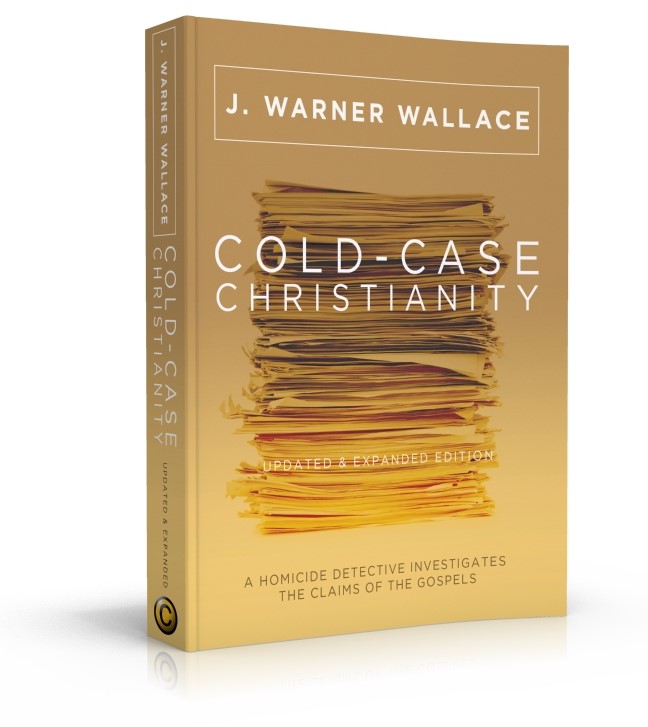












 Truth2Freedom's Blog