There are two ways to be fooled. One is to believe what isn’t true; the other is to refuse to believe what is true. —Soren Kierkegaard. "…truth is true even if nobody believes it, and falsehood is false even if everybody believes it. That is why truth does not yield to opinion, fashion, numbers, office, or sincerity–it is simply true and that is the end of it" – Os Guinness, Time for Truth, pg.39. “He that takes truth for his guide, and duty for his end, may safely trust to God’s providence to lead him aright.” – Blaise Pascal. "There is but one straight course, and that is to seek truth and pursue it steadily" – George Washington letter to Edmund Randolph — 1795. We live in a “post-truth” world. According to the dictionary, “post-truth” means, “relating to or denoting circumstances in which objective facts are less influential in shaping public opinion than appeals to emotion and personal belief.” Simply put, we now live in a culture that seems to value experience and emotion more than truth. Truth will never go away no matter how hard one might wish. Going beyond the MSM idealogical opinion/bias and their low information tabloid reality show news with a distractional superficial focus on entertainment, sensationalism, emotionalism and activist reporting – this blogs goal is to, in some small way, put a plug in the broken dam of truth and save as many as possible from the consequences—temporal and eternal. "The further a society drifts from truth, the more it will hate those who speak it." – George Orwell “There are two ways to be fooled. One is to believe what isn’t true; the other is to refuse to believe what is true.” ― Soren Kierkegaard
For the dominion and sovereignty to which the Redeemer has been exalted.
I thank you that because the Lord Jesus humbled himself by becoming obedient to the point of death, even death on a cross, therefore God has highly exalted him and bestowed on him the name that is above every name, so that at the name of JESUS every knee should bow and every tongue confess (as I do at this time) that Jesus Christ is Lord, to the glory of God the Father. Philippians 2:8-11(ESV)
That all authority has been given to him both in heaven and on earth; Matthew 28:18(ESV) that you have set him over the works of your hands and have put everything in subjection under his feet, and so have crowned him with glory and honor. Hebrews 2:7-9(ESV)
That he is King of kings and Lord of lords; Revelation 19:16(ESV) that the Ancient of days has given him dominion and glory and a kingdom, an everlasting dominion and a kingdom that shall not be destroyed. Daniel 7:13-14(ESV)
That the government is upon his shoulders, and that his name is called Wonderful, Counselor, Mighty God, Everlasting Father, and Prince of Peace; and of the increase of his government and of peace there will be no end. Isaiah 9:6-7(ESV)
Romans 3 From this week’s lessons we learn that Romans 3 can be considered the heart of the Bible because of the clear and comprehensive way it shows us the depth of our sin, and what the Lord Jesus Christ has done to save us from it.
Theme
Man’s Ruin in Sin: The Moral Dimension
Verses 10 and 11 capsulize Paul’s whole theology on this subject when he writes, “There is no one righteous, not even one; there is no one who understands, no one who seeks God.” When Paul says there is no one righteous, he is talking about the moral dimensions of our being. When he says there is no one who understands, he is talking about the intellectual dimension of our being. When he says there is no one who seeks God, he is talking about the volitional dimension of our being. Together these mean that things are so desperate that our state is actually hopeless unless God intervenes to do what needs to be done.
The problem with the moral dimension is not how good or bad we may look in the eyes of other people but how bad we look in the eyes of God. In His eyes there is no one righteous, not even one. I have often used an illustration for this, imagining that in the last war there were American soldiers who were captured and placed in a prisoner-of-war camp. At some point in their imprisonment somebody sends them a care package, and in the care package there is a game of Monopoly. They are not interested in the game, but they are very interested in the money. If they divide up the money, it gives them a currency by which they can buy or sell the few luxuries they possess. When they want to acquire a package of cigarettes or extra food from another prisoner, they now have a means of doing it. They use the Monopoly money.
In any group of Americans there is always a born capitalist—maybe more than one. And in this particular group of soldiers there is one such individual. He knows how to buy low and sell high, and he does this over a period of months. At length he acquires all the Monopoly money. He can get just about anything he wants. Just when he has made his fortune, there is an exchange of prisoners. A helicopter is flown in, and within an hour he finds himself in Da Nang. Within a few more hours he is in Hawaii. Then he is back on the west coast of the United States. On the first day he is free on his own he goes to downtown San Francisco to the First National Bank and starts to open up an account. He tells the teller, “I’ve just returned from Viet Nam. I’d like to open an account.”
She says, “That’s great! We like to help returning servicemen. How much would you like to deposit?”
“Nine hundred thirty-eight thousand, three hundred forty-two dollars.”
“Wow!” she exclaims. “Where did you get all that money?”
“In Viet Nam,” he answers. Then he begins to push his Monopoly money across the counter. The teller pushes her little button, thinking, “This soldier’s been away too long!”
Monopoly money might be very good in the prisoner-of-war camp, but it is no good in the United States. Here you need dollars.
That is precisely the situation that prevails when we talk about human goodness and God’s goodness. On the human level, there is value to being pretty good, and we ought to strive for that kind of goodness. But when we talk about the kind of righteousness that pleases God, righteousness that reflects His own character and is characterized by a holiness which is utterly without sin of any kind, it is like playing with Monopoly money in the real world. God says you have to forget about the fact that the whole world operates on the basis of a play currency and come to grips with the fact that there is no one righteous, as God measures righteousness.
Study Questions
What is the moral dimension as the Bible defines it? How does this view differ from people’s understanding of morality today?
Based on the culture’s beliefs about morality, what do they reveal about our society’s views of God and their relationship to Him?
Application
Application: In our study Dr. Boice likened relying on human goodness to please God with trying to use Monopoly money in the real world. What examples of “Monopoly money” do people use today in an effort to have a right relationship with God.
For Further Study: At the center of God’s gracious action in the Gospel is the person and work of the Lord Jesus Christ. Download for free and listen to James Boice’s message, “God’s Greatest Gift.” (Discount will be applied at checkout.)
Douglas Adams opened his second book in The Hitchhiker’s Guide to the Galaxy series, Restaurant at the End of the Universe, with that famous line, “”In the beginning the Universe was created. This has made a lot of people very angry and been widely regarded as a bad move.” Indeed, many people seem quite angry over their very existence and filled with rage towards their Creator. They see sin, death, pain, suffering, and hardship, and ask the question, “Is it really supposed to be this way?”
Some, of course, will suggest that this is just the way things have always been, and things always will be this way. But this is what we call the “Is-Ought Fallacy,” which suggests that just because something is a particular way currently, it ought to be that way forever. Scripture, however, paints a remarkably different picture within the Pentateuch, and especially within the opening chapters of Genesis.
The Law and Grace Motif of Creation
The very act of God creating the cosmos was itself an act of divine love and grace. He did not need to create anything. He was sufficiently satisfied within Himself as the Triune God. The Father, Son, and Spirit needed nothing and no one else. Yet, as church fathers like Augustine pointed out, the love of the Triune God overflowed in such a way that, in order to glorify Himself and permit others to “taste and see that the Lord is good” (Ps. 34:8), God graciously created humanity. Yet, He does not merely create mankind and say, “Best of luck. Figure it out.” No, we instead see that God carefully constructs a world for mankind to inhabit, brimming with light, life, and beauty. The first five days of Creation prepare the earth to receive the man who will rule over her.
While we see indelible marks of God’s grace in the Creation account, we also see Law. When God creates Adam, He gives the first man a list of commandments to carry out. 1. Work (take dominion of) the earth; 2. Keep (defend and protect) it; 3. Do not eat of the Tree of the Knowledge of Good and Evil (Gen. 2:15-17). If the man would fail to do this, the Lord promised he would surely die.
Thus, God’s Law was solidified, even as His grace was made known. So, after Adam and Eve sinned, God did not abandon mankind to a hopeless death. Rather, God extended grace once more and promised, in Genesis 3:15, that a seed would come who would crush the devil beneath His feet and put an end to the curse of sin and death. While mankind would now experience hardship, suffering, and death because Adam as our representative and federal head before God had sinned and brought condemnation upon us all, God would graciously provide a way of salvation. A Savior would come.
A Pattern of Law and Grace in the Mosaic Covenant
Perhaps the most stunning place that we see God’s Law and God’s grace meet in the Pentateuch is at the very moment that the Lord gives the Ten Commandments to the Israelites. While many Christians learn the Ten Commandments in Exodus 20 rather early on in their walk with Christ (and even earlier still if they are raised within the Church), Exodus 19:5-6 really deserves special attention as well, for it states, “Now therefore, if you will indeed obey my voice and keep my covenant, you shall be my treasured possession among all peoples, for all the earth is mine; and you shall be to me a kingdom of priests and a holy nation.’ These are the words that you shall speak to the people of Israel.”
Our God is a God of covenants; of this, there can be little doubt. Whether He was making a Covenant of Works with Adam (which Adam failed to uphold), or establishing a Covenant of Grace in Genesis 3:15, we see that God continually makes specific covenants with His people as administrations (or, dare I say, dispensations) of the Covenant of Grace. Thus, we have in the Pentateuch alone the Noahic Covenant, the Abrahamic Covenant, and the Mosaic Covenant.
The Mosaic Covenant is interesting, however. It is an obvious administration of the Covenant of Grace but attached to it is a precondition for the Israelites to keep God’s laws in order to receive God’s blessings. In fact, God specifically told the Israelites through Moses that they would be His treasured possession, a kingdom of priests, and a holy nation before Him if they would obey His voice and keep His covenant. Thus, some might be inclined to argue that the Mosaic Covenant is purely Law, and that hardly any grace is present at all.
In fact, when the Mosaic Covenant is renewed in Deuteronomy 26:16, the language of Law-keeping is made even stronger: “This day the Lord your God commands you to do these statutes and rules. You shall therefore be careful to do them with all your heart and with all your soul.” And as the Covenant is renewed at Moab, God tells the Israelites something shocking in Deuteronomy 29:4: “But to this day the Lord has not given you a heart to understand or eyes to see or ears to hear.”
How could this be? How could God give the Israelites rules and commandments and laws to obey in order to receive covenant blessings, and then tell them that they cannot do it?
Well, God tells the people exactly what will happen. They will try to keep the Law, but they will fail to do so, because no one can live up to God’s righteous and holy standards, except God Himself. Thus, God promises to do what we cannot do for ourselves in Deuteronomy 30:6: “And the Lord your God will circumcise your heart and the heart of your offspring, so that you will love the Lord your God with all your heart and with all your soul, that you may live.”
This is the language of the New Covenant, and it is directly tied to the Law of God. Through the Law, God will reveal our sin. Through obedience to the Law, God will fulfill all righteousness on our behalf. And by His grace, God will not only save us, but He will give us totally new hearts that love Him and, in a surprising twist, are finally able to obey Him in a way we never could have dreamed of before.
This theme is picked up later in Scripture in Ezekiel 36:22-27 and Jeremiah 31:31-34. Because we cannot keep the Law and our hearts are riddled with sin, God promises to transform our hearts. He promises to send His only Son, who will save us by keeping the Law perfectly and then paying our sin debt in full. Thus, the Cross of Christ is the place where Law and grace fully unite.
Here is the real beauty of it all, though. These Mosaic Covenantal blessings now belong to the Christian, according to God’s grace, because Christ fulfilled the Law of God perfectly, merited these eternal blessings, and we are now His heirs: “You are a chosen race, a royal priesthood, a holy nation, a people for his own possession, that you may proclaim the excellencies of him who called you out of darkness into his marvelous light. Once you were not a people, but now you are God’s people; once you had not received mercy, but now you have received mercy” (1 Pet. 2:9-10).
This beginning part of my Advent series is a presentation of 11 verses overlaid on photos depicting the life of Jesus from prophecy to birth and boyhood. There are additional links at the end of each day’s topic leading the reader to credible ministries to further explore the topic of the day.
The next section (#12-16) will feature verses about the Son as an adult God-Man.
From #17-26 we will survey the Preeminence of the Son, His attributes, and His ministry.
From #27-36 we’ll look at His Resurrection, Ascension, & Return. Yes we go over 30 days into a postlude that ends before the new year.
All photos are by EPrata unless otherwise noted.
There is no better refreshment for the soul than to meditate on Him. Enjoy!
I will meditate on your precepts and fix my eyes on your ways. (Psalm 119:15).
Today’s verse: now that Jesus has been born, and the angels had announced His arrival to the Shepherds, who went to see with all haste this thing the angels had spoken of, now Jesus must flee. So we see from the first moments of His life, hatred against Jesus for who He is and what He has come to do. And so it will be for anyone IN Christ, as well. But His flight to Egypt did not happen before others made great efforts to come and see the Babe- namely the Magi from the East. It was their gift of gold which enabled the poverty-stricken Joseph and Mary to fund their flight to Egypt. God’s providence is perfect, and so is His timing.
This picture—at once austere and tender—belongs to a series of seven showing the life of Christ. The masterly depiction of the stable, which is viewed from slightly below, and the columnar solidity of the figures are typical of Giotto, the founder of European painting. The impetuous action of the kneeling king, who picks up the Christ Child, and Mary’s expression of concern translate the biblical account into deeply human terms. Though we know from scripture that the Magi did not arrive the night Jesus was born in the stable, but saw ‘the child’ likely at a house, the act depicted of the King from the East kneeling is representative of Jesus’ stature as King of Kings, even as a baby.
GotQuestions: What Does the Bible say about the Three Wise Men (Magi)? It is a common misconception that the wise men visited Jesus at the stable on the night of His birth. In fact, the wise men came days, months, or possibly even years later. That is why Matthew 2:11 says the wise men visited and worshiped Jesus in a house, not at the stable.
Answers in Genesis: We Three Kings The original meaning of mάgoi is likely in view here—wise men who interpreted special signs. There are at least three reasons for this identification. First, they acknowledged that they were interested in signs in the heavens.
Grace To You: Who Were the Wise Men? Vincent, who has written some very helpful word studies, says in regard to this, “Many absurd traditions and guesses respecting these visitors to our Lord’s cradle have found their way into popular belief and into Christian art. They were said to be kings and three in number. They were said to be representatives of three families of Shem, Ham, and Japheth and, therefore, one of them is pictured as an Ethiopian. Their names are given as Caspar, Balthazar, and Melchior.”
With the Old Testament and historical background in place in previous articles, it’s time to examine Mark 7:1–13 in more detail. In other words, it’s time to start comparing our lives to Scripture. God is holy, and he deserves a holy people. Mark 7 makes it clear that in our quest to be holy, the trap of idolatry lies close at hand. Indeed, the Pharisees were the conservatives. They were also idolaters. Are you a conservative? Are you liable to the same rebuke?
We saw in previous articles that the Pharisees were trying to give God the honoured place he deserved as a holy God. “They honour me with their lips” (Mark 7:6). This much Jesus gives them. By their externals (lips and handwashings), they were trying to honour God. By showing God’s worth, greatness, holiness, and distinctness, they thought they were engaged in worship. How many conservative Christians are engaged in just such a pursuit in their conservatism? “We serve a holy God, and our lives must reflect that.”
Yet, Jesus faults the Pharisees, calling them hypocrites. To understand his rebuke, we must examine the shape of Mark 7. Jesus’ conversation with the Pharisees runs from vs. 1–13. Verse 14 marks a change of audience and the end of the conversation. The conversation is split in half by vs. 6–7. In these verses, Jesus quotes Isaiah 29:13. Thus, the conversation is structured in two halves that centre on a quotation from Isaiah.
The Second Half of the Conversation: Human Tradition Voided God’s Word
The final line of the Isaiah quotation distinguishes between “doctrines” (of God) and “commandments of men.” One has substituted for the other. Verse 8 shows Jesus faulting the Pharisees for doing exactly that. They leave the commandment of God and hold to human tradition. Verse 9 centres on the same idea: “rejecting the commandment of God in order to establish your tradition.” This verse introduces an example of how they do this. Verses 10–12 show how the elders’ tradition nullified the requirements of God’s law in the fifth commandment.
The elders’ tradition exempted one who had devoted all he owned to God from the requirement of caring for parents with his possessions. These possessions remained in one’s power until the day of his death, when they would be transferred to the ownership of the temple to support the worship of God. This tradition evacuated the fifth commandment of any binding authority. Any who devoted their estates to the temple were exempted from caring for parents in their old age. The provisions of human tradition set aside God’s commandment to honour parents. Human tradition made void God’s word. Thus, verses 8–13 engage and expand on the final line of the Isaiah quotation.
The First Half of the Conversation: Washings and Defilement
That’s the second half of the conversation. What is the first side of the conversation about?
The first half of the conversation focuses on washings and defilement. The elders’ tradition claims that the washing of hands, an external practice, staves off defilement. Externalism is what the first line of the Isaiah quotation also focuses on. Honouring God with one’s lips is an external matter. The focus of the quotation’s first line is clearly on the external because, in contrast, the second line of the Isaiah quotation speaks about the internal matter of the heart.
Jesus points out a disparity between the external act and the heart. This is what was true of the Pharisees, and Jesus says the Isaiah quotation fits them perfectly (cf. “Well,” vs. 6). The Pharisees are hypocrites, a word used to speak of an actor whose external, masked persona differed from his actual identity. What’s under the mask does not match what the external shows itself to be. Externally, the Pharisees worshipped God. Under the mask, their hearts are far from him. The internal and the external do not match. This is what the first line of the Isaiah quotation and the first half of the conversation both focus on.
The Essence of the Controversy
How do the two sides of this conversation fit together? Is there any connection between the two? What is the essence of the controversy that can explain both sides of the conversation? Or are these two equal faults Jesus holds up before Pharisees?
It’s clear that the conversation breaks across the Isaiah quotation, and it’s equally clear that the Isaiah quotation collocates the two halves of the conversation. That suggests that Isaiah (and God) would have viewed the matters for which Jesus faults the Pharisees as stemming from one essential fault. Locating that fault reveals the essential difference between Jesus and the Pharisees, allowing us to compare ourselves and assess how we measure up, in light of Isaiah’s statement. It would allow us to determine whether the Isaiah quotation also prophesies “well” of us.
What is the essential matter for which Jesus faults the Pharisees?
The Isaiah quotation consists of four lines. We have already discovered that the first line looks back to the first half of the conversation. The last line looks forward to the upcoming conversation. The quotation then does divide the conversation into two parts. That means that the entire passage pivots over lines two and three. These lines embody the essential fault Christ lays at the Pharisees’ door.
“In vain do they worship me”
Both halves of the conversation focus on human tradition. In the second half, the Pharisees had replaced God’s commands with human tradition. In the first half, the Pharisees were concerned that Jesus’ disciples did not follow human tradition when they ate with unwashed/defiled hands. Jesus says that, for all the intention, such external honouring of God is vain worship. It reflects hearts that are far from God. How can Jesus make such a statement?
No supernatural powers are necessary to see that the first line of the Isaiah quotation applies “well” to the Pharisees. Jesus can see the washings, the concern over the disciples’ actions, the external religious worship, and the incessant comings and goings at the temple. He can see the external honouring of God with lips and hands.
When Christ says that their hearts are far from God, I think most Christians conclude that he makes his assessment because he can see their hearts, too. He’s God, right? He does have X-ray vision. Of course, he can see their hearts. He’s telling us what we wouldn’t have known if he hadn’t told us.
Yet, I don’t think that’s the way we should go here.
X-ray Vision or Scripture?
Instead, Jesus knows that their hearts are far from God because ofwhat the Isaiah quotation says. He is making his assessment of them based on Scripture, not his X-ray vision. He knows their hearts are far away from God and that their worship is vain because of what Isaiah said. He knows it because the fourth line of the Isaiah quotation applies to them just as well as does the first line. The second half of the conversation shows this. Because the fourth line applies to them “well,” all the rest of the lines also apply to them. On that basis, Jesus can use the Isaiah quotation to reinterpret all the external worship and honouring of God. How they integrate their tradition with the fifth commandment reveals something about the foundation of their tradition, which betrays something about their hearts. The first and fourth lines reveal the symptoms that indicate the true state of things. Their hearts are far from God, and their worship is vain.
It’s interesting to me that the first line of verse 7, “In vain do they worship me,” does not even occur in the Old Testament text of Isaiah. The Hebrew reads like this: “This people honours me with their lips, but their heart is far from me. They teach as doctrine the commandments of men.” So, why is “in vain do they worship me” included? It’s there because the scholars who translated the Hebrew Bible into Greek inserted the phrase to help the reader understand Isaiah’s point. In this case, Jesus picks up the inserted phrase, quotes it to the Pharisees, and says, “That’s exactly what Isaiah meant.” The inserted explanatory note is correct. Such worship is empty.
Traditional (Conservative) Idolatry
How do we put this together? Here it is in a single sentence. When human traditions replace the Word of God in an effort to honour God, all the external motions of worship that the traditions direct become idolatry. Who really was the centre of the Pharisees’ worship? It was not God. It was them, their traditions, their actions, their self-defined path to holiness, and their power to achieve it. They could bring God’s presence down. They could cleanse their own defilement in water.
God-focused externals coupled with human-focused hearts equal hypocrisy. Peering beneath the mask of the externals, we find that the essence of their acts of worship to God was idolatry.
In the next and final article, I’ll unpack what this looks like today among Christians. But we must note now that this passage is for people who honour God with their lips and practice the externals of religion. They do things like gathering at churches, reading Scriptures, praying, and seeking to honour God as holy. The Pharisees were the conservatives. This passage, then, is for people like us. What it says to people like us is what we will examine.
All Scripture quotations are from the ESV unless otherwise noted.
It is a trustworthy statement, deserving full acceptance, that Christ Jesus came into the world to save sinners, among whom I am foremost of all. And yet for this reason I found mercy, in order that in me as the foremost, Jesus Christ might demonstrate His perfect patience, as an example for those who would believe in Him for eternal life. (1:15–16)
The phrase it is a trustworthy statement is unique to the Pastoral Epistles, appearing five times (cf. 3:1; 4:9; 2 Tim. 2:11; Titus 3:8). These statements were familiar, recognized summaries of key doctrines. That they were common in the church by the time of the writing of the Pastoral Epistles indicates that a well-articulated theology had developed. Paul indeed quotes them as if they were common knowledge. This one and the one in 1 Timothy 4:9 have the phrase deserving full acceptance appended for added emphasis. The trustworthy statement in 1:15 acts as a condensed articulation of the gospel. In only eight Greek words is found a marvelous summation of the gospel message. Each word is chosen carefully. Christ Jesus is the word order preferred by Paul in the Pastoral Epistles. He uses it twenty-five times compared to six uses of “Jesus Christ.” Bound up in those two words is all that He is. Christ is the anointed King who came to redeem, and became the earthly Jesus at the Incarnation. That He came into the world implies not only His incarnation but His preexistence. Note carefully that it does not say that He came into existence, or that He was created. He existed somewhere else before coming into the world. This phraseology is used frequently by John, who often speaks of Christ’s coming into the world (cf. John 1:9; 3:19; 6:14; 11:27; 12:46; 16:28; 18:37). The world refers to the world of humanity, blind, lost, and condemned to hell because of its hostility to God (cf. 1 John 5:19). It is into that world of sinners, of darkness and unbelief, that Jesus came. John 3:17 says, “God did not send the Son into the world to judge the world, but that the world should be saved through Him” (cf. John 12:46–47). Christ’s purpose in coming into this fallen world was to save sinners. Before his birth the angel told Joseph “it is He who will save His people from their sins” (Matt. 1:21). In Luke 19:10 our Lord stated the purpose of His coming into the world: “For the Son of Man has come to seek and to save that which was lost.” To save is to deliver from death and darkness, from sin, hell, and judgment. Sinners was a term used by the Jews to describe Gentiles (cf. Gal. 2:15), but our Lord used it to refer to all of fallen mankind (cf. Matt. 9:13). It denotes man’s constant violation of God’s law; men are sinners by nature. In the realm of sinners, Paul saw himself as foremost of all (cf. 1 Cor. 15:9; Eph. 3:8). Many in our day would hasten to correct Paul’s self-image and restore his self-esteem. But that was a healthy self-view for Paul because it was accurate. It’s hard to imagine anyone worse than a blasphemer of God and persecutor of His church. Such a view of himself also served to keep Paul humble and grateful. It was for this reason that Paul found mercy. God didn’t save him merely to get him out of hell or into heaven. Nor did He save him to preach the gospel or write the epistles; God could have had others do that. The purpose of salvation, whether Paul’s or ours, is to display God’s grace, power, and patience and produce a true worshiper of God (John 4:21–24). It is for His glory primarily, our benefit is secondary. It was through saving Paul that Jesus Christ could most clearly demonstrate His perfect patience. Makrothumia (patience) means to be patient with people. Paul’s point is that if the Lord was patient with the worst of sinners, no one is beyond the reach of His grace. As an example for those who would believe in Him for eternal life, Paul was living proof that God can save any sinner. He was the hupotupōsis, the model, type, or pattern. Those who fear that God cannot save them would do well to consider the case of Paul.
MacArthur, J. F., Jr. (1995). 1 Timothy (pp. 32–33). Moody Press.
Moreover, what holds for Paul holds for all saved sinners. Hence, there is first the statement of a truth applicable to all sinners whom Christ came to save. This is followed immediately by a clause of personal appropriation. Reliable (is) the saying, and worthy of full acceptance, that Christ Jesus came into the world sinners to save, foremost of whom am I. Paul’s saying with respect to the glorious purpose of Christ’s first coming, this is the theme of the marvelous declaration which may be regarded as the very core of the gospel, its sum and substance. (It is comparable to John 3:16, on which see N.T.C.). The saying is viewed from three aspects: 1. its reliability, 2. its contents, and 3. its personal appropriation.
Its reliability
Simple and great, like a granite rock, stands the word reliable, at the head of the sentence, without any connecting particle. It indicates that the proposition which it introduces has sustained the very crucial, fiery test of experience. It is not a mere formula but a considered judgment. It has been passed from mouth to mouth, as such sayings have the habit of doing, and, having embedded itself in the heart of the Christian community, where all the fears, hopes, struggles, and joys of these early Christians played around it, has survived gloriously. It has, in fact, become a sparkling epigram, a pithy, current commonplace, demanding and receiving the immediate, spontaneous, and enthusiastic assent and endorsement of all believers who hear it. The saying is the testimony of Christian experience, and is now also the utterance of the Holy Spirit. The Pastorals contain five of these reliable sayings: 1 Tim. 1:15; 3:1; 4:8, 9; 2 Tim. 2:11–13; Titus 3:4–8. Although the clause, “Reliable is the saying,” occurs only in these five passages of the Pastorals, and exactly in that form nowhere in the other ten epistles, this does not give anyone the right to conclude that Paul cannot have written the Pastorals. Surely no reason can be shown why the one who wrote, “Reliable (is) God,” (1 Cor. 1:9) and “Reliable (is) the One who calls you,” (1 Thess. 5:24) could not have written the grammatically exactly similar statement, “Reliable (is) the saying.” The famous saying, having been subjected to the flames of persecution and ridicule of Satan, had emerged from this crucible more sparkling and glorious than ever. Though not even four decades had elapsed since the death of the Savior, it had become even at this early date an unshakable conviction, “worthy of full acceptance,” that is, entitled to wholehearted and universal personal appropriation with no reservations of any kind (or as we say colloquially “with no strings attached”).
Its contents
The saying is, “That Christ Jesus came into the world sinners to save.” Something should be said, first, about the form of this statement; then, about its meaning. As to the form, it is asserted by several commentators that the saying is distinctly Johannine, since only John speaks of the Savior as “coming into the world.” Some, even among those who regard Paul as the author of the Pastorals, proceed farther, and do not hesitate to connect this Johannine character of the language with the fact that the destination of 1 Timothy and 2 Timothy was Ephesus (where Timothy was carrying on his work as Paul’s special envoy), the very headquarters of John! Accordingly, it is maintained that Timothy and the membership of the Ephesian church (on the assumption that the epistle was also read to the church), having become used to John’s style, through his labors in their city, would appreciate such phraseology more than would believers who lived elsewhere. However, this representation is open to the following objections: a. The name “Christ Jesus” is Pauline rather than Johannine (it is never found in John’s writings, often in Paul’s). b. It would seem altogether probable that the apostle John did not reach Ephesus until after Paul’s death, hence also after the date of composition of 1 Timothy. The fact that Peter had received his “inheritance” in the heavens, and Paul his “crown” may have induced John to take charge of the orphan churches of Asia Minor. When we surmise that John reached Ephesus in the year 67 or 68, we cannot be far amiss (see also N.T.C. on John, vol. I, p. 29). But Paul wrote 1 Timothy in the year 63 or 64! c. To a considerable extent the phraseology is, indeed, Johannine, but only in this sense that John has preserved and transmitted it. He did not coin it! It was Jesus himself who, according to the Fourth Gospel, again and again referred to himself as having “come into the world” (John 3:19; 9:39; 12:46; 16:28; 18:37). His earliest disciples learned it from him and copied it. Hence, it is not surprising that “the disciple whom Jesus loved” began to use it (John 1:11); and so did others, for example, Martha (John 11:27). Accordingly, here in 1 Tim. 1:15 Paul is simply making use of the Savior’s own way of speaking about himself, and is employing language which, having been adopted from his lips by the earliest disciples, had been spread far and wide. It is only natural—in view, for example, of the close contact between Jerusalem and Ephesus, and of the “scattering” of the disciples due to persecution—that the saying had also reached Ephesus. And in this connection it is not at all improbable that the great apostle John, before leaving Palestine, had contributed his share toward perpetuating it. As to the meaning of the expression, the combination “Christ Jesus” has already been explained (see N.T.C. on 1 Thess. 1:1, and footnote in the present Commentary). The fact that this divinely anointed Savior “came into the world” indicates not merely a change of location, a “descent” from one place to another (from heaven to earth), but a change of state and of moral and spiritual environment. Hence, it implies the supreme sacrifice, the climax of condescending grace. From the infinite sweep of eternal delight in the very presence of his Father, Christ was willing to descend deeper and deeper into the realm of sin and misery. (The “coming into the world” includes incarnation, suffering, death.) In the original the word sinners immediately follows the word world; hence, not as most versions have it, “… came into the world to save sinners,” but “… came into the world sinners to save.” The juxtaposition of world and sinners shows that world is an ethical concept. For the meaning of world see also N.T.C. on John 1:10, 11, including footnote 26. The Lord of glory, so pure and holy that before his presence even the most consecrated men fall down as though dead (Rev. 1:17; cf. Is. 6:1–5), voluntarily entered the sphere to which he does not seem to belong, namely, the sphere in which the curse reigns. The reason for his entrance into this realm of sin is given in the words “sinners to save.” This shows that the paradoxical coming was, after all, fully justified and gloriously motivated. It took a former Pharisee to pour full and terrible meaning into that word sinners. As Pharisees saw it, even to eat with sinners was scandalous (Mark 2:16; Luke 5:30; 15:1, 2). With a sinner a prophet was not supposed to have any dealings (Luke 7:39). When the Pharisees wanted to heap insults upon Jesus, they would call him “a glutton, a drinker, a friend of (tax-collectors and) sinners” (Luke 7:34). They divided mankind into two groups: “the righteous,” which was tantamount to saying, “ourselves,” and “sinners,” that is, “everybody else,” “the riffraff,” “the scum,” “the people of the soil,” “those who do not know the law.” The Holy Spirit through Paul takes this opprobrious epithet “sinners,” and applies it to all persons who are brought under conviction through the proper use of God’s law. For them, for them alone, Christ Jesus came (Matt. 9:13; Luke 15:7; 19:10):
“Come, ye sinners, poor and needy,
  Weak and wounded, sick and sore;
Jesus ready stands to save you,
  Full of pity, love, and power;
He is able, He is able,
  He is willing, doubt no more;
He is able, He is able,
  He is willing, doubt no more.

“Come, ye weary, heavy-laden,
  Bruised and mangled by the fall;
If you tarry till you’re better,
  You will never come at all;
Not the righteous, not the righteous,
  Sinners Jesus came to call.
Not the righteous, not the righteous,
  Sinners Jesus came to call.”
       (Joseph Hart)
If those in Ephesus who were using the law unlawfully were ever going to be saved, they would have to experience a fundamental change. These “righteous” persons would have to become “sinners” before God. Thus it is seen that verse 15 stands in close connection with everything that precedes (not only with verses 12–14 but also with verses 3–11). It was to save sinners that Christ Jesus came into the world. He did not come to help them save themselves, nor to induce them to save themselves, nor even to enable them to save themselves. He came to save them! In Paul’s writings the expression to save means: NEGATIVELY POSITIVELY to rescue men from sin’s: to bring men into the state of: a guilt (Eph. 1:7; Col. 1:14) b slavery (Rom. 7:24, 25; Gal. 5:1) and c punishment: a righteousness (Rom. 3:21–26; 5:1) b freedom (Gal. 5:1; 2 Cor. 3:17) and c blessedness: (1) alienation from God (Eph. 2:12) (2) the wrath of God (Eph. 2:3) (3) everlasting death (Eph. 2:5, 6) (1) fellowship with God (Eph. 2:13) (2) the love of God “shed abroad” in the heart (Rom. 5:5) (3) everlasting life (Eph. 2:1, 5; Col. 3:1–4).
Note that over against each evil stands a corresponding blessing. To be saved, then, means to be emancipated from the greatest evil, and to be placed in possession of the greatest good. The state of salvation is opposed to the state of “perishing” or being “lost.” Cf. Luke 19:10; John 3:16.
Its personal appropriation
“… Christ Jesus came into the world sinners to save, foremost of whom am I.” This final clause (beginning with the word “foremost”) has caused a wider variety of interpretation than almost any other in Paul’s writings. The difficulty is this: it does not seem right that one who himself declares that before his conversion to the Christian faith he had lived according to the strictest sect of his religion as a Pharisee (Acts 26:5), should now call himself “chief of sinners.” For various interpretations which I reject, and the reasons why I reject them, see the footnote. Complete objectivity in exegesis demands that we state that the immediate context would seem to leave room for only one explanation, and that this explanation is the very one which the ordinary student of Scripture in reading his Bible, in quiet meditation, and also in song, generally gives to it. When the apostle, his heart troubled by the vivid recollection of the gruesome deeds of the past, gives written expression to the deeply rooted conviction and the poignant sorrow of his inner soul, and states, “Christ Jesus came into the world sinners to save, foremost of whom am I,” he must have meant, “Of all sinners whom Christ Jesus came into the world to save, I am the greatest.” In fact, he not only states but emphasizes that no one else than he himself is “the chief of sinners.” In the original he reserves for the first personal pronoun singular a place at the very end of the clause. I can see no good reason for radically changing this word-order. The translation should be, “of whom foremost am I,” or “foremost of whom am I.” Paul fixes the attention upon himself as a clear illustration of the depth of human sin, in order that in verse 16 he may return to that wonderful theme on which he has just dwelt (see verses 12–14), namely, the exaltation of the power of divine grace, mercy and longsuffering. This interpretation of the disputed clause not only suits the context but is also in line with what Paul says about himself elsewhere: “For I am the least of the apostles, not fit to be called an apostle, because I persecuted the church of God” (1 Cor. 15:9). “To me, the very least of all saints, was this grace given, to preach to the Gentiles the unsearchable riches of Christ” (Eph. 3:8). In both these cases, just as here in 1 Tim. 1:15, the apostle is making a comparison between himself and other people whom Christ came to save (whether they were destined to become apostles or believers not clothed with any special office), and he makes the humble confession that he is the least of all saints, the foremost (or “chief”) of sinners whom Christ came to save. Taken in that sense and as a description of what Paul felt, the words of the familiar hymn are entirely correct:
“Chief of sinners though I be,
Jesus shed his blood for me;
Died that I might live on high;
Lives that I may never die.”
       (William McComb)
That the apostle, who certainly knew his own past, was able in all sincerity to describe himself as being “of sinners foremost” is less difficult to grasp if the following facts are borne in mind: When, years before this, Paul for the first time heard the good tidings of salvation in Christ, he disbelieved. This disbelief he shared with many. Had his attitude to the Christian faith remained on this level, namely, one of unbelief, he would probably never have called himself, “of sinners foremost.” However, he became a persecutor, and not only “a” persecutor but the most bitter persecutor of all! His entire soul was wrapped up in the work of annihilating the church. He breathed threats and slaughter (Acts 9:1). Ruthlessly he bound and imprisoned both men and women. He did not confine his efforts to Jerusalem but was bent on uprooting the new religion wherever it was found, even if this would necessitate a trip all the way to Damascus. He was busy persecuting God’s people “unto death,” as he himself subsequently declared (Acts 22:4, 5). Had his plan succeeded, the church would have been smothered in its very birth; God’s eternal decree would have been annulled; and Satan would have triumphed. Indeed, so very great was his sin that, had it not been done in ignorance (see on verse 13), it would have been unpardonable. Accordingly, when the apostle now says, “… sinners to save, foremost of whom am I,” we must not begin to attenuate the meaning of “foremost.” We should permit this glorious confession to stand within its own context, without either adding to it or subtracting anything from it. Paul writes “am I,” not “was I.” This indicates that even now, years after his conversion, he deeply regrets his past. Besides, even a fully pardoned sinner is a sinner.
Hendriksen, W., & Kistemaker, S. J. (1953–2001). Exposition of the Pastoral Epistles (Vol. 4, pp. 75–82). Baker Book House.
Be not afraid of sudden fear, neither of the desolation of the wicked, when it cometh. For the Lord shall be thy confidence, and shall keep thy foot from being taken. (Proverbs 3:25-26)
When God is abroad in judgments, He would not have His people alarmed. He has not come forth to harm but to defend the righteous.
He would have them manifest courage. We who enjoy the presence of God ought to display presence of mind. Since the Lord Himself may suddenly come, we ought not to be surprised at anything sudden. Serenity under the rush and roar of unexpected evils is a precious gift of divine love.
The Lord would have His chosen display discrimination so that they may see that the desolation of the wicked is not a real calamity to the universe. Sin alone is evil; the punishment which follows thereupon is as a preserving salt to keep society from putrefying. We should be far more shocked at the sin which deserves hell than at the hell which comes out of sin.
So, too, should the Lord’s people exhibit great quietness of spirit. Satan and his serpent seed are full of all subtlety; but those who walk with God shall not be taken in their deceitful snares. Go on, believer in Jesus, and let the Lord be thy confidence.
Bad theology undermines our comfort, assurance, peace, and joy in Christ. Bad theology leads to dark places. Wrong thinking and wrongdoing alike can destroy our lives or at least diminish our intimacy with God and our faithfulness. God intends our thinking to align with His Word, and from it our feeling and doing as well. Obedience to God is the fruit of the Spirit through faith, so it is very important what we believe. Some professing Christians think, “The Bible alone is my theology,” and in one sense that’s true, but what does the Bible mean? And the moment anyone begins to explain what the Bible means, they are expressing some theological hermeneutic or framework. But is their hermeneutic or framework a good one?
First Timothy 1:8–11 is thought-provoking. Paul lists various sins including murder, sexual immorality, homosexuality, and lying, and adds, “and whatever else is contrary to sound doctrine.” Think about that. Sin is contrary to sound doctrine. The choices we make and the things we do cannot be detached from our doctrine. When we sin, we are not thinking clearly about God. We are acting according to bad doctrine and discernment. It is also true that when we have bad doctrine, it will inevitably manifest in some type of bad living.
Every two years, Ligonier Ministry and LifeWay Research team up to do a State of Theology survey. [1] This survey reveals doctrinal trends of Americans in general, but also Evangelical Christians in America, and every year there are considerably troubling results. According to the 2025 survey results, for professing Christians with evangelical beliefs:
28% believe Jesus was a good teacher, but he is not God.
47% believe God accepts the worship of all religions, including Christianity, Judaism, and Islam.
94% believe God loves all people the same way.
53% believe the Holy Spirit is a force but is not a personal being.
53% believe everyone sins a little, but most people are good by nature.
64% believe everyone is born innocent in the eyes of God.
44% believe worshipping alone or with one’s family is a valid replacement for regularly attending church.
There are many significantly confused professing Christians sitting in pews (or not attending church and thinking it’s okay) all across America, and their bad theology is damaging their lives and greatly destabilizing their comfort, assurance, peace, and joy in the gospel.
There are various reasons why many Evangelical Christians have unsound doctrine and discernment, but I think one of them is they spend time reading the latest and most popular Christian books, blogs, and music, and they fill their minds with unsound theology and old heresies repackaged. Essentially, they follow the current of contemporary culture. Of course, there are wonderful new books, blogs, and songs, but many Christians don’t realize that much “Christian” content derives from historically bad theological frameworks, frameworks that subtly undermine their confidence in God and His Word. Many professing Christians are unaware.
How can we guard against this? How can we ensure that our doctrine and discernment are healthy? One great way is to read old theological works, works that Christians have believed for centuries, works that are time-tested. What I mean is, don’t read and study alone. Instead, read and study with the Church of ages past. It should matter to you what Christians have believed and written centuries before you. But who has time to research all of that? Few of us.
So, as a housewife, plumber, teenager, or salesman, how can you grow healthier in your doctrine and discernment? Where would one begin to build a solid doctrinal framework? And the answer is simple. But with the noise of social media and Christian marketing, it is also simple to disregard. It’s not a sexy or flashy answer, but it is a simple, helpful, and doable answer. Baby steps, right? The answer begins with good counsel from Martin Luther. Luther said:
The number of theological books should . . . be reduced, and a selection should be made of the best of them; for many books do not make men learned, nor does much reading. But reading something good, and reading it frequently, however little it may be, is the practice that makes men learned in the Scripture and makes them pious besides. [2]
That is a profound and helpful statement. Luther recognized that the Bible is the primary source text – so please read your Bible – but he also believed in reading a few good theology books.
But where do you start to build a solid theological framework which helps you understand what the Bible teaches? Many Evangelical Christians are not conscious of their theological framework (they do have one), nor are they aware that it’s not a good framework, so they’re all over the place in what they believe the Bible says. They are prime examples of Ephesians 4:14. Additionally, many good theology books are fat and intimidating.
Here’s what I recommend you do. I think you’ll be surprised at how beneficial this will be in your life. Make yourself familiar with the historic Reformed confessions and catechisms. Start with the Heidelberg Catechism. It is clear, concise, simple, and one of the most helpful theological works ever written. It will teach you how to hear and understand the Bible, and it will instill in you a sound doctrinal framework.
You may also want to spend time in some other clear and concise theological works which address other important doctrinal points. Go to the Belgic Confession. Dig into the Westminster Standards. There are others, but these are a great place to start. Start working through these brief resources (not that fat) at a pace that works for you. When you come to something challenging, discuss it with your elders who love you.
Many Evangelical Christians have anemic doctrine and discernment. There are plenty of reasons for that. But if you take Luther’s advice and dig deeply into one or two good historic Christian confessions or catechisms, you will develop much healthier doctrine and discernment which will fuel your intimacy with God and holiness, as well as boost your comfort, assurance, peace, and joy in Christ. Oh, and make sure you’re in a good church where you hear this kind of substantial theology from the pulpit and get much encouragement from godly shepherds.
Paul, a servant of Christ Jesus, called to be an apostle, set apart for the gospel of God, which he promised beforehand through his prophets in the holy Scriptures, concerning his Son, who was descended from David according to the flesh and was declared to be the Son of God in power according to the Spirit of holiness by his resurrection from the dead, Jesus Christ our Lord . . . —Romans 1:1–4
It’s really easy, when you’re reading the first few verses of one of Paul’s letters, to think it’s perfunctory; it’s a formality; it’s just, “Hi, Paul here. This is what I’m going to talk to you about.” It can seem like it’s sort of like a handshake. But the truth is, the openings of Paul’s letters are really very helpful in understanding the contents of the letter. They frame it beautifully. They’re like a good introduction to an essay, where you preview what’s going to happen in the rest of the document.
And that’s what we get in these verses. It’s a brilliant summary of Paul’s gospel. We don’t have many summaries of Paul’s gospel in his letters. Perhaps 1 Corinthians 15 is the most famous: “I have delivered to you as of first importance what I also received, that Christ died for our sins according to the Scriptures . . . .” But here in Romans, we get Paul introducing himself, and immediately, he describes himself as one “set apart for the gospel of God.” Now, the gospel of God could be the gospel about God, or it could be God’s gospel—the source of the gospel is God. It doesn’t really matter which it is, but I think our best understanding is to say that this is God, as the author of the gospel message. And what we have here in the summary is very important because it tells us the contents of the gospel. If you boil down the gospel, what you find is that it’s about Jesus Christ. So, the content of the gospel is Jesus Christ. And we see that he says this in verse 3, “This gospel concerns God’s Son.”
It’s important with these summaries, though, to realize that they are just summaries. There’s not much in this little gospel summary at the beginning of the letter which tells us about the need for the gospel (it’s not about human sin), the benefits of the gospel, and there’s not even anything about the death of Jesus. We get something about the resurrection, but nonetheless, it’s a beautiful little summary of what the gospel is about. So the contents of the gospel is Jesus Christ, and the function of the gospel, we learn from other passages, is salvation, and the means of the gospel is faith. So, that’s really a broad brushstroke understanding of the gospel, and we get a lot of it here in these opening verses.
If we take a closer look at some of the aspects of the gospel that Paul gives us here, we could start with verse 2 where he says this gospel was “promised beforehand through his prophets in the holy Scriptures.” Paul doesn’t refer to what we call the Old Testament as the Old Testament; he calls it “the holy Scriptures.” “Holy” meaning they’re God’s special possession. They have this status as being set apart by God. What’s really interesting for us is that in our day, we think that everything that’s new and novel is terrific—the latest iPhone, the latest movie that comes out. But in the ancient world, they had something called the “argument from antiquity.” The really true and important things were the things that had a long backstory and history. And the gospel of the Lord Jesus has this magnificent backstory. Really, if you want to understand the gospel, the first thing to do is to read the Old Testament. And that’s what Paul is telling us here, that it was promised beforehand by his prophets in the holy Scriptures. In the rest of Romans, he quotes the Old Testament, as we call it, on numerous occasions. Genesis 15:6: “Abraham believed God, and it was credited to him as righteousness.” Habakkuk 2:4: “The just shall live by faith.” He also takes from Deuteronomy and Isaiah. So Paul grounds his gospel—and he tells us that’s what he’s doing—in the Old Testament Scriptures. It’s the backstory, if you like. Imagine if you started with the fourth volume of Harry Potter. It would be fine, but the best way to read it in order to get a full-color, surround sound version is to read the first three volumes. And that’s what you’ve got to do to really grasp the depths of Paul’s gospel, and that’s what he does for us in the rest of Romans.
The gospel can strengthen us and give us power to live the Christian life.
If we read on, it says two things about Jesus that are of fundamental importance. He was “descended from David.” Just that little word “David” tells us a great deal about Paul’s gospel, because what he’s alluding to is the Davidic Covenant in 2 Samuel 7. It’s a wonderful passage. David comes along and says to God, “I’m going to build you a house.” And God, who seems to be fond of plays on words, says, “No, I’m not going to let you build me a house. Your son, Solomon, can do that. I’m going to build you a house. Not a physical house, but a dynasty.” Even in English we get that beautiful ambiguity. “House” can mean a building, or it can mean a dynasty. And God promises in 2 Samuel 7 that a descendant of David will reign on his throne forever. And the Lord Jesus is a fulfillment of that prophecy.
He then goes on to say “according to the flesh.” He’s a human being. This is where we get some Christology about the person of Christ. We learn that he was descended from David, meaning he was a human being (“according to the flesh”). He “was declared to the Son of God in power according to the Spirit of holiness by his resurrection from the dead.” So he’s not just a human being; he’s also God. That’s what is hinted at in this passage.
You might wonder if it means he became the Son of God at the resurrection. Was he not the Son of God until he rose from the dead? That’s a little bit of a puzzle there. I think the answer is the little phrase “in power.” Before the resurrection, Jesus was the Son of God in meekness, or in weakness, if you like. But after the resurrection, he’s the Son of God in power. And power ends up being a really important concept in the book of Romans because the gospel is “the power of God for salvation.” The gospel can strengthen us and give us power to live the Christian life.
It continues, “in power according to the Spirit of holiness by his resurrection from the dead, Jesus Christ our Lord.” Those three words are really helpful for understanding the person of Jesus. Jesus, which means Savior. He’s our Savior. Christ, which means he’s the Jewish Messiah, the Anointed One and coming King. And Lord is an indication that he’s more than just a human being; he’s our master. And the word lord, of course, in Old Testament usage on many occasions is a reference to God himself.
One final thing about this passage that I really love is the Trinitarian thread that runs through it. We learn in verse 1 that it’s the gospel that comes from God—presumably, God the Father. The content of the gospel is God’s Son, Jesus Christ our Lord, and he’s declared to be the powerful Son of God by the Spirit. So all three persons of the Trinity are there. It’s not explicit. It doesn’t give us any indication that all three persons are one God. Later theological reflection puts these pieces together. But in many passages in Paul’s letters, you get this Trinitarian thought almost unconsciously woven through the passage. It’s usually for a practical purpose. In this case, it’s about our salvation, it’s about the gospel, it’s about God’s Son, and it’s about the Spirit’s work in bringing him to life and bringing us life in him.
Brian Rosner (PhD, Cambridge) was principal at Ridley College in Melbourne, Australia from 2012–2024, where he now lectures in New Testament. He previously taught at the University of Aberdeen and Moore Theological College. Rosner is the author or editor of many books, including How to Find Yourself: Why Looking Inward Is Not the Answer. He is married to Natalie and has four children.
If then, you have been raised with Christ, seek the things that are above where Christ is seated at the right hand of God. Set your minds on things that are above, not on things that are on earth. . .
We hear at just about every turn in our world that you are your own. You make your own decisions about your body, but the apostle Paul says you’re not your own.
THE FRIENDS OF JESUS HAVE BEEN SPECIALLY CHOSEN BY HIM
You did not choose Me but I chose you, and appointed you that you would go and bear fruit, and that your fruit would remain, so that whatever you ask of the Father in My name He may give to you. (15:16)
In a reversal of the customary Jewish practice (normally would-be disciples approached a rabbi they wanted to follow), the disciples did not choose Jesus but He chose them. The knowledge that Jesus chose them (and by extension all believers) to salvation apart from any merit of their own (v. 19; John 6:44, 65; Acts 13:48; Rom. 8:28–30; Gal. 1:15; Eph. 1:4; 2 Thess. 2:13; 2 Tim. 1:9; 2:10; 1 Peter 1:1–2) eliminates any pretense of spiritual pride that Christians might otherwise feel (cf. Rom. 3:27; 4:2; 1 Cor. 1:26–31; Gal. 6:14; Eph. 2:9). Not only did Jesus choose the disciples for salvation, He also appointed them for service. The word translated appointed is a form of the verb tithēmi, which has here the connotation of being set apart or ordained for special service (cf. its similar usage in Acts 20:28; 1 Cor. 12:28; 1 Tim. 1:12; 2:7; 2 Tim. 1:11). Having chosen and trained the disciples, Jesus commanded them to go into the world, proclaim the good news about Him, and bear fruit. The Christian life is not a spectator sport; Jesus did not choose believers to stand idly by while the world continues on its way to hell. On the contrary, His explicit command is, “Go therefore and make disciples of all the nations, baptizing them in the name of the Father and the Son and the Holy Spirit, teaching them to observe all that I commanded you; and lo, I am with you always, even to the end of the age” (Matt. 28:19–20; cf. Luke 14:23). When believers proclaim the gospel, those who respond savingly to it become fruit that will remain forever (cf. 4:36; Luke 16:9). That the Lord repeated the promise of verse 7 (see the exposition of that verse in chapter 13 of this volume), whatever you ask of the Father in My name He will give to you, emphasizes the essential link between prayer and evangelism (cf. Luke 10:2; 2 Thess. 3:1). The privileges that characterize the friends of Jesus Christ carry with them corresponding responsibilities. It is their nature to love one another, yet the Bible commands them to “fervently love one another from the heart” (1 Peter 1:22). They know divine truth, yet they must study it diligently (2 Tim. 2:15). Jesus called His friends out of the world, so they must be careful not to love it (1 John 2:15). Those who have been granted the privilege of bearing fruit must submit to the Father’s pruning, so they can bear even more fruit (15:2). The Lord’s promise of answered prayer demands that believers pray effectively (James 5:16) and unceasingly (1 Thess. 5:17). In short, those who have been granted the inestimable privilege of being the friends of Jesus Christ must “walk in a manner worthy of the calling with which [they] have been called” (Eph. 4:1).
MacArthur, J. F., Jr. (2008). John 12–21 (pp. 162–163). Moody Publishers.
you did not choose me, but I chose you and appointed you that you should go and bear fruit and that your fruit should abide so that whatever you ask the Father in my name, he may give it to you. Though the disciples are Christ’s friends, this does not mean that they are on an equal footing with him. On earth friends generally choose each other, but the friendship of which Jesus speaks is different. It is one-sided in its origin. It was not brought about by gradual approach from both sides, as is often the case among men, but by Jesus alone! The words, “You did not choose me, but I chose you,” emphasize the free, independent, and spontaneous character of Christ’s love. The ground of God’s love for us never lies in us, always in himself, for even apart from his love for us God is love. In his very essence he is love. The unconditional and sovereign nature of this divine love is shown also by such passages as the following: “Jehovah did not set his love upon you, nor choose you, because you were more in number than any people; for you were the fewest of all peoples, but because Jehovah loves you … he has brought you out with a mighty hand” (Deut. 7:7, 8). “For mine own sake, for mine own sake will I do it” (Is. 48:11). “O Lord, hear; O Lord, forgive; O Lord, hearken and do; defer not, for thine own sake, O my God, because thy city and thy people are called by thy name” (Dan. 9:19). “I will heal their backsliding; I will love them freely” (Hos. 14:4). “But God commends his own love toward us, in that, while we were yet sinners, Christ died for us” (Rom. 5:8). “He chose us in him before the foundation of the world, in order that we should be holy” (not: “because he foresaw that we were going to be holy,” Eph. 1:4). “Herein is love, not that we loved God, but that he loved us, and sent his Son to be the propitiation for our sins” (1 John 4:10). “We love, because he first loved us” (1 John 4:19). It was Christ who had elected these men for himself out of a world of darkness (see on verse 19), in order that they might be his followers and as such might bear fruit, and this not merely for a time or by spurts but abidingly. Unto that purpose he had also appointed them; that is, he had set them apart from the world and had promised to give them the required qualification. As has been indicated before, fruit-bearing refers to the bringing forth of such products of divine grace as those mentioned in Gal. 5:22—love, joy, peace, patience, kindness, goodness, faithfulness, gentleness, self-control—; Eph. 5:9; Col. 1:6; Heb. 12:11; and James 3:18. But in view of 4:36 and 12:24, passages in which the term “fruits” indicates souls saved for eternity, it is certainly not amiss to point out that the good works of which Jesus is thinking are mentioned not as an end in themselves but as a means unto the conversion of others, and thus unto the glory of God, via the avenue indicated in Matt. 5:16 (“that they may see your good works, and glorify your Father who is in heaven”). We agree entirely with Dr. F. W. Grosheide that the election of which the present passage speaks is not that unto office but that which pertains to every Christian. All believers are chosen out of the world (verse 19) to bear fruit (verses 2, 4, 5, 8). Though this is an act which takes place in time, it has its basis in election “before the foundation of the world” (Eph. 1:4; cf. John 17:24). Abiding in Christ is rewarded by fruitbearing, and via fruitbearing, also by answered prayer. A true disciple prays for fruits, for these fruits are pleasing to God. He asks God to give whatever is in accordance with his will. He asks this, not as if he (the disciple) himself had any merit, but solely on the basis of Christ’s merits and in complete harmony with his revelation (hence, in Christ’s name). Accordingly, verse 16 concludes with the words: so that whatever you ask the Father in my name, he may give it to you. Here the thought of 15:7 recurs; see on that verse. In verse 16, however, we do not find the impersonal “it shall be done for you,” but the very personal, “He … gives it.” The Father loves the Son; hence, he loves those who do the Son’s bidding.
Hendriksen, W., & Kistemaker, S. J. (1953–2001). Exposition of the Gospel According to John (Vol. 2, pp. 307–308). Baker Book House.
The Mysterious Interstellar Object Appears to Be Pulsing in a “Heartbeat Pattern” The mysterious interstellar object 3I/ATLAS is just weeks away from reaching its closest point to Earth: it’s expected to pass within just 170 million miles of our home planet on December 19, giving astronomers an unprecedented opportunity to take a closer look as it whizzes past. “This heartbeat pattern should have been apparent in a series of well-calibrated snapshots of the coma over several days but none was systematically studied in the published literature,”
Media: Trump demanded Maduro’s resignation President Donald Trump has given Venezuelan leader Nicolás Maduro an ultimatum: Resign immediately and be freed from the country – or risk attack, the Miami Herald reports. Maduro’s counter-demands angered Washington and led to the severing of ties. Maduro, his wife Cilia Flores and his son would be allowed to leave Venezuela, but only if he immediately decided to resign. Maduro responded by demanding “global amnesty for every crime committed by him and his closest associates – which was rejected,”
Zelenskyy: The war must end as soon as possible Zelenskyy expects to have a conversation with his American counterpart Donald Trump on “key issues” such as security guarantees and territory. The Ukrainian leader said this together with French President Emmanuel Macron at a press conference in Paris. At the same time, Zelenskyy emphasizes that the war “must” end as soon as possible.
Robot Walks for Three Days Straight, Hotswapping Its Battery Over and Over in New World Record An AgiBot A2 unit, developed by Chinese firm Zhiyuan Robotics, recently completed a 66-mile pilgrimage from Jinji Lake in Suzhou to Shanghai. The whole trek lasted three straight days, and set a new Guinness world record for “longest journey walked by a humanoid robot,” the company said the AgiBot “navigated varied surfaces… all while adhering to traffic regulations.” Though the AgiBot only has a max standing battery life of three hours, a novel hot-swap battery system meant the robot could continue its long march without ever powering down.
California’s Death Valley Breaks 115-Year-Old Rainfall Record Death Valley broke a 115-year record after the driest place in North America was hit by more than 1.75 inches of rain in November, making it the rainiest November on record, The rainfall record comes after a strong atmospheric river hit Southern California in mid-November.
Islamic Jihad leader who infiltrated Nahal Oz on 10/7 eliminated The IDF eliminated the Nuhkba leader of the Islamic Jihad terrorist organization in the Gaza City Brigade who participated in the October 7 massacre in Kibbutz Nahal Oz. After an intelligence assessment, the IDF confirms that during one of the strikes, the terrorist Alaa al-Din Abd al-Nasser Hasan Khudari, who served as the Nukhba commander within the Islamic Jihad Gaza City Brigade, was eliminated.
Senior commander: Israel reached breakthrough in detecting enemy drones Brig. Gen. Benny Aminov, … that ”drone challenges at Israel’s borders are moving toward a solution – we have achieved a technological breakthrough in enemy drone detection.” “we are now working on interception solutions using drone-based systems that enable response to swarm scenarios while accelerating the development of new directed-energy weapons.”
Son of senior Hamas official Ghazi Hamad killed fleeing Rafah tunnel Hamas terrorist Abdullah Hamad, the son of senior Hamas official Ghazi Hamad, was killed in Rafah on Sunday, according to social media posts by the family and reports in local Palestinian media. Hamad was one of the terrorists killed by the IDF while trying to flee from a tunnel in Rafah on Sunday, the Hamas-affiliated Quds News Network reported. Sources within the Hamad family also reportedly confirmed the death to The Palestinian Information Center.
Iran’s Water Crisis Deepens as Experts Say Extreme Drought Is Worst in At Least 40 Years Iran’s water crisis has continued to deteriorate, with the country experiencing a severe drought which has prompted calls to evacuate the capital of Tehran, whose metropolitan area is home to approximately 15 million people. From Sept. 23 to Nov. 28, Iran averaged 3.9 millimeters of rain, a staggering drop of 88.3 percent compared to the longterm average of 33.5 millimeters, according to Iran’s meteorology authorities. “Nature is now imposing hard limits,” Amir AghaKouchak, … Iran has reached a state of “water bankruptcy,” according to Kaveh Madani,
Canadian Activists Call For Child Euthanisia, Including Without Parental Consent For Older Minors In 2016, Canada legalized euthanasia “for people whose natural death was ‘reasonably foreseeable’ and wanted to end their lives.” Less than a decade later, that definition has radically expanded—so much so that 1 in 20 deaths in Canada in 2023 were from euthanasia—and activists want it broadened still further to even include children as young as 12 years old! As we have warned, once the door is opened a crack, it will then be opened wider and wider.
Russia Proclaims Final Victory Over Key City Of Pokrovsk On Eve Of Putin-Witkoff Peace Plan Meeting Russia finally and formally announced Monday its forces have captured the city of Pokrovsk in eastern Ukraine, the long fought-over strategic military logistics hub, as well as the city of Vovchansk in the northeast. Pokrovsk has long been seen as military gateway for control over the whole east, and if there were any doubts about Russia’s military dominance along the frontlines – the overrunning of Pokrovsk has laid these doubts to rest.
Canadian Activists Call For Child Euthanisia, Including Without Parental Consent For Older Minors In 2016, Canada legalized euthanasia “for people whose natural death was ‘reasonably foreseeable’ and wanted to end their lives.” Less than a decade later, that definition has radically expanded—so much so that 1 in 20 deaths in Canada in 2023 were from euthanasia—and activists want it broadened still further to even include children as young as 12 years old! As we have warned, once the door is opened a crack, it will then be opened wider and wider.
Ukraine peace talks productive as ex-government official says country rethinking ‘uncompromising’ stance Official peace talks between the U.S. and Ukraine on ending the Ukraine war moved to a productive phase Sunday – but only after President Zelenskyy sent a new-look team to Florida, according to a former Ukrainian government official. With Rustem Umerov now leading Zelenskyy’s team and longtime adviser and chief of staff Andriy Yermak out, the source claimed the move signaled Kyiv was reassessing its “uncompromising” stance.
Trump speaks to Netanyahu, invites him to visit, warns Israel not to ‘interfere’ in Syria “It is very important that Israel maintain a strong and true dialogue with Syria, and that nothing takes place that will interfere with Syria’s evolution into a prosperous State,” Trump wrote on his Truth Social platform, days after a deadly operation by Israeli forces in the south of the country.
“If we desire to avoid insult, we must be able to repel it; if we desire to secure peace, one of the most powerful instruments of our rising prosperity, it must be known, that we are at all times ready for War.” —George Washington (1793)
U.S. military presence in Caribbean grows: As Donald Trump has been ratcheting up pressure on Venezuelan strongman Nicolás Maduro in media statements, he’s followed it up with increased military presence in the region. Eleven U.S. warships, led by the carrier USS Gerald R. Ford, are steaming into the Caribbean. Trump has also deployed a Marine Expeditionary Unit capable of conducting a land assault. “Drugs kill more Americans than we’ve ever lost in wars,” Navy Secretary John Phelan explained. “So I think at the end of the day, the president has correctly identified this as an attack on the country.” This military buildup in the Caribbean is part of Trump’s Operation Southern Spear, whose aim is to stop the flow of illicit drugs into the U.S. Furthermore, Trump is reestablishing the Monroe Doctrine due to the increasing menace from China in the region.
Nashville-hating Democrat on the ballot in TN special election: Tennessee is holding a special election today to replace former Congressman Mark Green, who resigned in July. Republican Matt Van Epps, a decorated veteran and helicopter pilot who has been endorsed by President Trump and Gov. Bill Lee, might be expected to cruise to victory over a Democrat described as “our very own AOC of TN” in a district where Trump won 60% of the vote. However, Republican turnout in elections without Trump on the ballot has been very weak in recent years, and Democrats have poured over $1 million into Democrat Aftyn Behn’s campaign. Trump weighed in on Behn, calling her “a woman who hates Christianity,” using on-tape comments to pin her as anti-2A, pro-trans, and a hater of country music. Polls will close at 7 p.m. Central Time.
Good news: National Guardsman awake after DC Islamic attack: Guardsman Andrew Wolfe, who was shot by an Islamist ahead of Thanksgiving, has clung to life and now can respond to nurses with a thumbs up and by wiggling his toes. U.S. Army Specialist Sarah Beckstrom, who was also a target of the Muslim attack, died of her wounds on Thanksgiving Day. In another era, an Afghan attacker who shouted “Allahu Akbar” before shooting National Guard members in our nation’s capital would be seen for what it is — Islamic terrorism. However, the Leftmedia struggles to use the words “terror,” “Muslim,” or “Islam” these days, or even to quote the attacker’s battle cry. Despite the horror, Staff Sgt. Wolfe’s continuing recovery is cause for thanksgiving and celebration by all Americans.
Noem calls for travel ban: Following last week’s deadly attack in DC, DHS Secretary Kristi Noem on Monday called for a “full travel ban” to the U.S. from dozens of countries. Noem argued that these nations have “been flooding our nation with killers, leeches, and entitlement junkies.” She added in a post on X, “Our forefathers built this nation on blood, sweat, and the unyielding love of freedom — not for foreign invaders to slaughter our heroes, suck dry our hard-earned tax dollars, or snatch the benefits owed to AMERICANS. WE DON’T WANT THEM. NOT ONE.” Noem has already acted to pause asylum claims from 19 countries in the wake of the attack. She also accused the Biden administration of “completely” abandoning the vetting process when it allowed people into the country.
Trump MRI comes back clean: The media and politicians who refused to admit they had even the slightest worries about non compos mentis Joe Biden’s mental state are happy to invent health woes out of whole cloth for Donald Trump. Trump revealed that he underwent an MRI scan in October, and lefties jumped on it as their newest angle of attack. When Trump outlined the tremendous ongoing fraud in Minnesota and called Gov. Tim Walz “seriously retarded,” adding that he was doing nothing about it, Walz responded simply, “Release the MRI results.” Well, yesterday, White House Press Secretary Karoline Leavitt did just that, going over the results with the press pool and handing out physical copies. According to the MRI, Trump’s cardiovascular imaging was “perfectly normal” and shows “excellent health.” The president is 79, so health checks are essential, but so far, there are no signs of concern.
Mamdani’s radical transition team: New York City Mayor-elect Zohran Mamdani has been putting together his transition team, and predictably, it is filled with radical leftists who share his own Marxist ideology. For example, Mamdani named Alex Vitale, an anti-cop Brooklyn College sociology professor, to staff his Committee on Community Safety. Vitale even published a book titled The End of Policing in which he decried the proven “broken windows” policing strategy as reinforcing racism and inequality. The book also contains a chapter titled “The Police Are Not Here to Protect You.” Vitale is one of a basket of leftist radicals in Mamdani’s team, which also includes one “Abby” Stein, a male rabbi who identifies as a “trans-woman” who is on his Health Committee.
Rampant Minnesota Somali fraud aided by Tim Walz: Fourteen Medicare-funded programs in Minnesota were paused on October 31 due to fears of fraud. The New York Times reports that 59 people have already been convicted, and in three investigated cases so far, over $1 billion in state and federal taxpayer dollars have been stolen. The fraud may have been ignored due to fears of causing “political backlash among the Somali community,” says Kayseh Magan, a Somali-American fraud investigator. Ryan Pacyga, a lawyer defending an accused fraudster, adds, “It was like someone was stealing money from the cookie jar, and they kept refilling it.” Pacyga says some of the fraudsters were convinced the state agencies were tacitly allowing the fraud. As it turns out, Governor Tim Walz may have been doing exactly that. Nearly 500 Minnesota DHS employees are now calling out Walz for his knowledge and complicity in the fraud.
Appeals court disqualifies Trump’s U.S. attorney in NJ: A three-judge panel of the Third Circuit Court of Appeals ruled on Monday that Donald Trump’s installation of Alina Habba as U.S. Attorney of New Jersey was improper and therefore disqualified her from continuing prosecutions. The court, however, did not toss out the cases Habba was prosecuting. Habba, who has served as Trump’s personal lawyer, was nominated by Trump for the position, and eventually she moved to “first assistant U.S. attorney” when the clock ran out. Judge D. Michael Fisher wrote that the Trump administration’s “efforts to elevate its preferred candidate … to the role of Acting U.S. attorney demonstrate the difficulties it has faced — yet the citizens of New Jersey and the loyal employees in the U.S. Attorney’s Office deserve some clarity and stability.”
Canada joins EU defense fund, distancing itself from U.S.: In an effort to diversify its military spending away from the United States, Canada has joined a major European Defense fund called Security Action for Europe (SAFE). Canada is the first non-EU country to acquire access to the group. Prime Minister Mark Carney announced, “Canada’s participation in SAFE will fill key capability gaps, expand markets for Canadian suppliers, and attract European defense investment into Canada.” The plan gives Canadian defense companies access to a €150 billion ($170 billion) EU loan program, enabling them to secure cheap, EU-backed loans to procure military equipment. Carney said that the potential for more production in Canada is a factor in this decision, while also allowing him to make good on his promise that no longer will over 70 cents of every dollar of Canadian military spending go to the U.S.
Headlines
TSA to start charging travelers $45 if they don’t have Real ID (CBS News)
Democrats begin congressional probe of Kash Patel’s use of FBI Gulfstream jet (CBS News)
Social Security has less than eight years left (Hot Air)
Universities aren’t disclosing foreign funding — here’s what Trump plans to do about it (Daily Signal)
Humor: Tim Walz offers journalists free tampons to stop talking about fraud Scandal (Babylon Bee)
When The Washington Post headlined that Secretary of War Pete Hegseth had given a “kill them all” order on the first Caribbean boat strike against Venezuelan drug cartels, the rest of the media launched nearly ubiquitous coverage of the supposed scandal. We opted for a wait-and-see approach because Leftmedia “scoops” like that have a way of being revised as time goes on.
The Post’s report, it admitted, “is based on interviews with and accounts from seven people with knowledge of the Sept. 2 strike and the overall operation.” In other words, anonymous sources who were not directly involved. Take that for what it’s worth. You can also consider the fact that the Post’s report comes not long after six Democrats posted an inciteful video urging Armed Forces personnel to disregard illegal or unconstitutional orders. Right on cue?
The Post essentially accused Hegseth and a Special Operations commander of a war crime — killing “two survivors [who] were clinging to the smoldering wreck.” The rest of the Leftmedia dutifully jumped aboard the same boat.
Democrat Senator Mark Kelly, one of the six Democrats in that video, agreed that the strike “seems to” constitute a war crime, though he was wily enough not to repeat the words “war crime” used by CNN’s Dana Bash.
Now, let’s back up a minute.
On this day in 1823, President James Monroe established what became known as the Monroe Doctrine — that the United States, not Europe, would be the driving force in the Western Hemisphere.
President Donald Trump has embraced that policy. For instance, he has homed in on the drug cartels as being responsible for the deaths of hundreds of thousands of Americans over the years, as well as facilitating what he has called an “invasion” of illegal aliens. The cartels traffic drugs and people across our borders, and Trump has escalated the U.S. response from border security and widespread deportations to the military level — 11 warships and 15,000 troops are now in the Caribbean. The administration has taken out at least 23 drug boats since September, killing more than 80.
The administration is also posturing toward regime change in Venezuela. Illegitimate strongman President Nicolás Maduro, the Trump administration argues, effectively runs foreign terrorist organizations like TdA (Tren de Aragua), Sinaloa, and Cartel de los Soles (Cartel of the Suns). Team Trump says those FTOs represent a real threat to U.S. national security, justifying a military response.
Now, back to the kill order.
To be fair, The Washington Post did extensively report various angles, such as this nugget in the 25th paragraph: Joint Special Operations Command, or JSOC, explained that “the ‘double-tap,’ or follow-on strike, was intended to sink the boat and remove a navigation hazard to other vessels — not to kill survivors.” But as intended, the Post’s “kill them all” headline got all of the attention.
“Mark my words,” warned Massachusetts Democrat Representative Seth Moulton, “It may take some time, but Americans will be prosecuted for this, either as a war crime or outright murder.” Translation: If Democrats win in 2026, stay tuned for Impeachment 3.0.
Hegseth responded to the Post’s report, “As usual, the fake news is delivering more fabricated, inflammatory, and derogatory reporting to discredit our incredible warriors fighting to protect the homeland. As we’ve said from the beginning, and in every statement, these highly effective strikes are specifically intended to be ‘lethal, kinetic strikes.’ The declared intent is to stop lethal drugs, destroy narco-boats, and kill the narco-terrorists who are poisoning the American people. Every trafficker we kill is affiliated with a Designated Terrorist Organization.”
Asked about the story, Trump initially responded on Sunday, “We’ll look into it, but no, I wouldn’t have wanted that — a second strike.” Trump, the White House, and the Pentagon have all said Hegseth did not specifically order the second strike to kill those two survivors, only the initial lethal strike. Admiral Frank M. “Mitch” Bradley was the Special Operations commander overseeing the attack, and Hegseth called him “an American hero” who “has my 100% support.” Still, Hegseth’s defense — basically that “it was always our intention to kill them” — doesn’t really suffice.
Shooting the wounded is what the Japanese did to American sailors in World War II, and that was during an actual declared war. Killing combatants who are hors de combat (i.e., no longer in the fight) runs afoul of the U.S. Law of War Manual, as well as the Geneva Conventions. If that is what happened, there are accountability questions.
Representatives Mike Rogers (R-AL), chairman of the House Armed Services Committee, and Adam Smith (D-WA), the panel’s ranking Democrat, agree. “We take seriously the reports of follow-on strikes on boats alleged to be ferrying narcotics in the SOUTHCOM region and are taking bipartisan action to gather a full accounting of the operation in question,” the pair said in a statement.
Furthermore, though the administration has (sort of) laid out its strategy with Venezuela and the cartels, the legality of the whole enterprise is debatable. Essentially, it boils down to this: Congress has specifically defined both terrorist activity and drug trafficking, and there’s no significant intersection in those definitions. Though the administration certainly claims the authority to conduct such strikes, Congress has never chosen Trump’s combined “narco-terrorist” definition.
As for the strikes, two comparisons come to mind. Barack Obama conducted numerous drone strikes overseas, some of which killed four American citizens. Team Obama essentially said “Oops” and moved on. More than a decade later, in retaliation for 13 Americans killed during Joe Biden’s disgraceful surrender and retreat from Afghanistan, he ordered a diversionary drone strike that killed a longtime U.S. aid worker and nine Afghan civilians, seven of whom were children. Joint Chiefs Chairman Gen. Mark Milley called it “a righteous strike.”
I’m not making a “well, they did it first” argument. I’m saying that, as with many other issues in Trump’s second term, the president is arguably following bad precedents set by his predecessors, and that is not the ideal way to govern. Maybe, as Trump’s most arduous supporters would say, I just need to remember “what time it is.” In other words, things are so bad that Trump has no choice but to govern by pushing the bounds of power in whatever direction he deems necessary.
Trump definitely deserves a bit of latitude in his governance, but as we approach the 250th anniversary of our Declaration of Independence, we should be looking to its principles as intently as ever. That is the source of my concern, regardless of which party is in the White House.
Emmy Griffin: Third World Immigration and Somalia — As part of a broader effort to undo the damage done by Joe Biden, Donald Trump is addressing legal immigration granted to America-hating immigrants.
Douglas Andrews: Wajahat Warns Whitey — A bomb-throwing racist podcaster let loose with a string of insults directed toward white European Americans and their culture, but was anybody listening?
Jack DeVine: Midterm Elections, Dead Ahead! — Get ready, American voters — NOW is the time to make sure that next November’s elections don’t unravel a year of major achievements.
Michael Smith: The Republic at 250: A Crisis of Civic Memory — America’s fading understanding of constitutional liberty is opening the door to rival ideologies eager to fill the void.
Gary Bauer: The Walz Standard for Corruption — More than 400 Minnesota public employees warned about the corruption in the Somali community. But instead of stopping the fraud, Governor Walz enabled it.
Reader Comments
Editor’s Note: Each week we receive hundreds of comments and correspondences — and we read every one of them. Click here for a few thought-provoking comments about specific articles. The views expressed therein don’t necessarily reflect those of The Patriot Post.
A Dude Was Crowned the World’s Strongest Woman — The internet erupted when a man was named the world’s strongest woman. Officials eventually corrected the mix-up, leading to an ending far more positive than expected.
Leftist Women Are ‘Reparenting’ Themselves… And Filming It — “Reparenting” is a new trend of people talking to themselves as children and posting it on the internet in an effort to heal childhood trauma from their parents’ mistakes. Yes, it’s as weird as it sounds.
Is South Africa Doomed? — Entrepreneur Rob Hersov discusses the situation in South Africa and what can be done to turn things around.
SHORT CUTS
Non Compos Mentis
“This is also the party that supposedly is about Christianity, and I just imagine what they would have done to a little baby Jesus.” —Rep. Jasmine Crockett (D-TX) on the GOP
Village Idiot
“[Donald Trump’s] our dictator. … It’s like 18 times the worst behavior one has witnessed ever anywhere. It’s worse. Think of the worst thing that you’ve ever seen humans accomplish. This is so much worse.” —former late-night host David Letterman
Behind the Mask
“The mistake that you made is you let us in in the first place. The best thing about brown people, and I’m going to say this as a brown person: There’s a lot of us. Like, a lot. … I want [Americans] to realize this: You have lost. … Your story is a s****y story filled with misery.” —Daily Beast columnist Wajahat Ali, a child of Pakistani immigrants
Stranger Than Fiction
“Somalian gangs are roving the streets looking for ‘prey’ as our wonderful people stay locked in their apartments and houses hoping against hope that they will be left alone. The seriously retarded Governor of Minnesota, Tim Walz, does nothing, either through fear, incompetence, or both.” —President Donald Trump
Re: The Leftmedia
“The Washington Compost provided NO FACTS and NO SUBSTANTIATION. They literally just printed what some unnamed random person said and reported it as fact. This is the same playbook they used during the first term. The difference is that nobody trusts outlets like WaPo anymore.” —White House Director of Communications Stephen Cheung
Observations
“In the contention over the U.S. peace plan for Ukraine, the Europeans are in their accustomed role — carping from the sidelines. … It’s gotten so bad that some European analysts speak of a potential ‘scramble for Europe,’ or attempts by richer, more powerful outside countries to influence the course of Europe.” —Rich Lowry
“Kids growing up without married parents — which in contemporary society most often means being raised by a single mother — lose much more than the presence of a father. They lose the father’s family network as an active force in their lives, with all the gifts of love and memory, protection and sustenance, the network might have provided.” —Jeff Jacoby
Good News
“US gas prices drop below $3 a gallon for the first time since May 2021, according to AAA. The milestone marks a bright spot in America’s affordability crisis and represents major improvement from the spike to $5 a gallon in 2022.” —CNN’s Matt Egan
And Last…
“Gratitude is more than a fleeting feeling. It’s more than a simple day on the calendar. It’s a choice to see life through the lens of God’s grace.” —Tony Perkins
ON THIS DAY in 1823, President James Monroe established what became known as the Monroe Doctrine — that the United States, not Europe, would be the driving force in the Western Hemisphere.
Amid the controversy over Israeli Prime Minister Benjamin Netanyahu’s request for a pardon from his corruption charges, President Trump invites him to the White House again, with both discussing demilitarizing Gaza and disarming Hamas, as Trump pushes Israel to pursue a constructive relationship with the new government of Syria; Chris Mitchell talks about the significance of Netanyahu being invited to the White House at this particular time, if Hamas will disarm, Israel’s view of the Syrian government, Israel’s new steps in fighting the ‘information war’ in the media; Congress raising questions about a Trump Administration military strike on a suspected drug boat, which reportedly killed two people; Supreme Court to hear case on a local Mississippi law which could have a national effect on free speech and freedom of religion; and how to handle grief during the holidays when you’ve lost a loved one.
New York City mayor-elect Zohran Mamdani speaks in front of the Unisphere in the Queens borough of New York, Wednesday, Nov. 5, 2025. (AP Photo/Heather Khalifa) **FILE** New York City mayor-elect Zohran Mamdani … more >
A socialist revolution is brewing inside the Democratic Party as young progressives reject their aging leaders.
In just a few short weeks, a Border Patrol-led task force arrested more than 400 illegal aliens in Charlotte, North Carolina. According to Border Patrol Commander Greg K. Bovino, illegal aliens targeted and arrested during “Operation Charlotte’s Web” were found to be in the company of others who also had a significant criminal history in more than 50 percent of all cases.
The House Committee on Small Business holds a hearing examining the cost of high crime on small businesses in America on Tuesday, December 2. The post appeared first on Breitbart .
“In other developing news, I broke out in hives after praising the New York Times.”
(Stephen Green – PJ Media) You remember last week’s Washington Post report, the one with two anonymous administration sources claiming that in September, Secretary of War Pete Hegseth ordered a second missile strike on a drug boat to ensure that any survivors were killed, “EVEN IF THEY’RE BABIES OR PUPPIES!”
I might have made up that last part, but according to a New York Times investigation, WaPo might have made up the whole thing.
To be clear, the New York Times report did not directly accuse the Washington Post of lying. But the New York paper did sic no fewer than four DC-based reporters on the story and failed to find even one anonymous source to back up WaPo’s claim. View article →
Homeland Security Secretary Kristi Noem urged President Donald Trump to stop allowing the United States to be a dumping ground for unvetted armies of foreign nationals who drain public resources […] The post appeared first on The Western Journal .
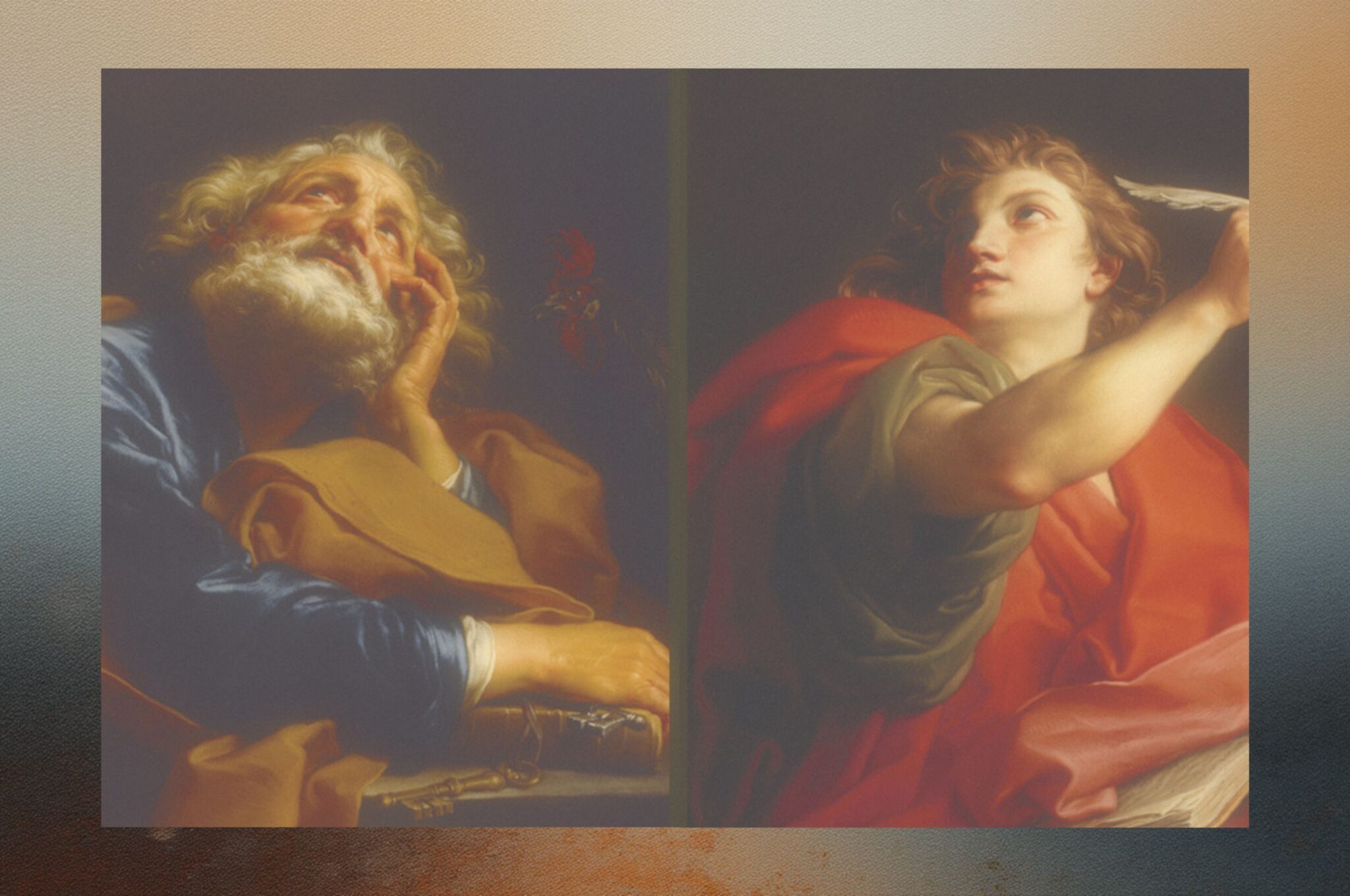


 Truth2Freedom's Blog