There are two ways to be fooled. One is to believe what isn’t true; the other is to refuse to believe what is true. —Soren Kierkegaard. "…truth is true even if nobody believes it, and falsehood is false even if everybody believes it. That is why truth does not yield to opinion, fashion, numbers, office, or sincerity–it is simply true and that is the end of it" – Os Guinness, Time for Truth, pg.39. “He that takes truth for his guide, and duty for his end, may safely trust to God’s providence to lead him aright.” – Blaise Pascal. "There is but one straight course, and that is to seek truth and pursue it steadily" – George Washington letter to Edmund Randolph — 1795. We live in a “post-truth” world. According to the dictionary, “post-truth” means, “relating to or denoting circumstances in which objective facts are less influential in shaping public opinion than appeals to emotion and personal belief.” Simply put, we now live in a culture that seems to value experience and emotion more than truth. Truth will never go away no matter how hard one might wish. Going beyond the MSM idealogical opinion/bias and their low information tabloid reality show news with a distractional superficial focus on entertainment, sensationalism, emotionalism and activist reporting – this blogs goal is to, in some small way, put a plug in the broken dam of truth and save as many as possible from the consequences—temporal and eternal. "The further a society drifts from truth, the more it will hate those who speak it." – George Orwell “There are two ways to be fooled. One is to believe what isn’t true; the other is to refuse to believe what is true.” ― Soren Kierkegaard
For the assurance we have of his second coming to judge the world.
I bless you that you have fixed a day on which you will judge the world in righteousness by a man whom you have appointed; and of this you have given assurance to all by raising him from the dead. Acts 17:31(ESV)
That in that day the Lord Jesus will be revealed from heaven with his mighty angels in flaming fire, inflicting vengeance on those who do not know God and on those who do not obey the gospel of the Lord Jesus: 2 Thessalonians 1:7-8(ESV) And he will come to be glorified in his saints and to be marveled at among all who have believed; 2 Thessalonians 1:10(ESV) for, through Jesus, God will bring with him those who have fallen asleep. 1 Thessalonians 4:14(ESV)
That he shall then send his angels to gather out of his kingdom all causes of sin and all law-breakers, Matthew 13:41(ESV) and to gather his elect from the four winds; Matthew 24:31(ESV) and then the righteous will shine like the sun in the kingdom of their Father. Matthew 13:43(ESV)
And I then, according to your promise, am waiting for new heavens and a new earth in which righteousness dwells: Lord, grant that, since I am waiting for these, I may be diligent to be found by him without spot or blemish, and at peace; 2 Peter 3:13-14(ESV) and then Come Lord Jesus! Come soon! Revelation 22:20(ESV)
Romans 3 From this week’s lessons we learn that Romans 3 can be considered the heart of the Bible because of the clear and comprehensive way it shows us the depth of our sin, and what the Lord Jesus Christ has done to save us from it.
Theme
Man’s Ruin in Sin: The Intellectual and Volitional Dimensions
The intellectual dimension involves understanding, and the same principles apply. If we are thinking humanly, there are differences of understanding between people. Some understand a good bit, others not so much. Some can even understand a good bit about theological subjects. There are unbelievers who write theological textbooks. Some of the great studies of the Old and New Testaments are by men who, I would say, are not true believers in Jesus Christ. They have understanding at the human level, but Paul is talking about the kind of understanding that allows us to see ourselves as we really are before God and which turns us to Christ. On that level we have no understanding at all unless God provides it.
Finally Paul says that there is “no one who seeks God.” This is the volitional dimension. We do not seek God. As a matter of fact, we do precisely the opposite, as the text goes on to say: “All have turned away, they have together become worthless; there is no one who does good, not even one” (v. 12).
We need to see how desperate our situation is, because it is only when we see this that we can begin to appreciate the magnitude of the grace of God. So long as we think that at the worst we only have a few flaws, we believe that insofar as salvation is concerned all we need is for God to make up the deficit, plug the hole in the dike, or rub off the rough edges. But that is not the situation. What we need to understand—and only the Holy Spirit can provide that understanding—is that things are so desperate that we are actually dead in our sins, spiritually speaking. We need a resurrection.
At this point Paul begins to talk about the Gospel. Earlier he said he was going to write about the revelation of God’s righteousness in the Gospel, but instead he said, “The wrath of God is being revealed” (Rom. 1:18). For the remainder of chapter 1, and all of chapter 2 and chapter 3, up to the point to which we have just come, he has been talking about God’s wrath. Yet now, having shown how bad things really are, he gets back to what he said he was going to talk about at the beginning, namely, the righteousness of God which is revealed from heaven in the Gospel:
But now a righteousness from God, apart from law, has been made known, to which the Law and the Prophets testify. [That is, the Gospel was prophesied in the Old Testament, and it has now come.] This righteousness from God comes through faith in Jesus Christ to all who believe. There is no difference, for all have sinned and fall short of the glory of God, and, are justified freely by his grace through the redemption that came by Christ Jesus. God presented him as a sacrifice of atonement, through faith in his blood. He did this to demonstrate his justice, because in his forbearance he had left the sins committed beforehand unpunished—he did it to demonstrate his justice at the present time, so as to be just and the one who justifies the man who has faith in Jesus (Rom. 3:21-26).
In these few verses Paul explains the Gospel in a magnificent way. He uses great terms. He talks about “a sacrifice of atonement.” The word is actually propitiation, a difficult term but a good one. He talks about justification and redemption. Those three terms explain what Jesus Christ and God the Father did to achieve our salvation.
Study Questions
What is the biblical meaning of the intellectual component?
What is meant by the volitional dimension? Why do people, even Christians, sometimes struggle to understand this?
Application
Key Point: We need to see how desperate our situation is, because it is only when we see this that we can begin to appreciate the magnitude of the grace of God.
Application: Pray for opportunities this week to share the Gospel with someone you know needs to learn the truth of the depth of his or her sin, and the need for God’s grace in Christ.
For Further Study: At the center of God’s gracious action in the Gospel is the person and work of the Lord Jesus Christ. Download for free and listen to James Boice’s message, “God’s Greatest Gift.” (Discount will be applied at checkout.)
In Galatians Paul wrote that the Law served as a “tutor to lead us to Christ, so that we may be justified by faith” (Gal. 3:24). Even though Paul was specifically referring to the Mosaic Law, the same could be said concerning the Old Testament as a whole. The Messiah, His person, His work, and His ministry were anticipated through allusion and imagery, not the least of which was the establishment of a theology concerning substitutionary atonement. This laid the groundwork for understanding our need for a Messiah because it explained how we came to be the wretched beings that we are, why God’s moral righteousness means our situation is so dire, and what must be done to reconcile us back to the loving relationship with God we were created for.
Beyond providing a general framework of anticipation for “the Lamb of God that takes away the sin of the world” (John 1:29), the Old Testament also makes very specific predictions concerning the Messiah. When the first few disciples encountered Jesus after He had been baptized by John, they exclaimed, “We have found Him of whom Moses in the Law and also the prophets wrote – Jesus of Nazareth, the son of Joseph” (John 1:45). The purpose of this article is to consider several of these specific predictions and show how Jesus of Nazareth fulfilled them.
General Prophecies
Many Messianic prophecies are general in nature and could be argued to be so to such a degree that they lack strong evidential value. For example, many Christian theologians believe that the first reference in Scripture to a coming Messiah was given shortly after Adam and Eve sinned in the Garden of Eden.[1] As part of God’s punishment on the serpent for his involvement in the Fall, God said to him, “I will put enmity between you and the woman, and between your seed and her seed; he shall bruise you on the head, and you shall bruise him on the heel” (Gen. 3:15).
Considering that the rest of this indictment dealt with the serpent’s physical form, and especially since he was cursed to crawl on his belly as opposed to ostensibly walking upright, some, including John Calvin, have wondered if this enmity should be taken more literally. Namely, that the descendants of the woman, being humans in general, would be at odds with the descendants of the serpent, or snakes in general. Since they have been banished to the lowly position of crawling on the ground, the discord between the two descendants could simply be that snakes will bite people on the foot and they in turn will step on their heads. In other words, some believe this should be taken literally instead of spiritualizing it as referring to a future Messiah.
Paul does seem to allude to this as a Messianic prophecy in the New Testament when he writes, “The God of peace will soon crush Satan under your feet” (Rom. 16:20). However, here it is the church, the followers of Christ, who will crush Satan. Another possibility is that it has a literal fulfillment in terms of humans with snakes and a spiritual fulfillment in terms of Christ and Satan. Many Old Testament prophecies have similar near-term fulfillments in addition to far-term fulfillments. For example, in Genesis 12:3 and Genesis 22:18, God promised Abraham that through one of his descendants all the families of the earth shall be blessed. This was fulfilled in the near term when “the people of all the earth came to Egypt to buy grain from Joseph, because the famine was severe in all the earth” (Gen. 41:57) in addition to being fulfilled in the long term by the Messiah when he provided salvation to the world (Gal. 3:8).
More Specific Prophecies
If the prophecies thus far discussed seem too nebulous, Daniel’s prediction concerning the precise time Messiah would arise should alleviate any qualms. Daniel was told by the angel Gabriel that “from the issuing of a decree to restore and rebuild Jerusalem until Messiah the Prince there will be seven weeks and sixty-two weeks” (Dan. 9:25). This decree was given by Artaxerxes to Nehemiah in 445 B.C. (Neh. 2:1-8); hence, this is the starting point of Daniel’s prophetic timetable.
After the beginning of the seventy weeks is established, we can dial the clock forward from there to discover exactly when the time of Messiah was supposed to have taken place. From Daniel’s perspective this was obviously a prophecy of coming events, but we can look back in history and see its fulfillment. After the decree is issued to restore and rebuild Jerusalem, there will be seven weeks, which is forty-nine years, and then sixty-two weeks, which is 434 more years, for a total of 483 years until Messiah.[2]
The term Messiah is an adjective that means anointed. Specifically, Daniel refers to Him as Messiah the Prince. This is not a fairy tale prince as we think of it but instead is the ruler or leader of a people, much like a king. It is at Jesus’ triumphal entry when He, in fulfillment of Zech. 9:9, is presented to the nation Israel as their anointed King (cf. Matt. 21:1-11). Since we began our starting point at 445 B.C., it would at first seem the only thing left to do is to come forward 483 years. Doing so brings us to AD 38 but unfortunately this is after the crucifixion of Christ.
However, it’s important to consider how the Jews calculated their calendar years. Walvoord explained that “it is customary for the Jews to have twelve months of 360 days each and then to insert a thirteenth month occasionally when necessary to correct the calendar. The use of the 360-day year is confirmed by the forty-two months of the great tribulation (Rev. 11:2; Rev. 13:5) being equated with 1,260 days (Rev. 12:6; Rev. 11:3).”[3] Robert Anderson has used such a methodology to determine that the 483 years culminated “in A.D. 32 on the very day of Christ’s triumphal entry into Jerusalem shortly before His crucifixion.”[4] There is some controversy over Anderson’s calculations, but “the plausibility of a literal interpretation, which begins the period in 445 B.C and culminates just before the death of Christ, makes this view very attractive.”[5]
It seems to me that this prophecy is incredibly impressive. It even predicts that the Messiah would arrive sometime in the AD 30s. After all, Daniel’s prophecy isn’t about days but seven-year periods (what Daniel calls ‘weeks’). In other words, if someone predicted a meteor would fall from the sky and break my arm next month, I would be impressed whether that happened at the beginning of next month or the end of next month. Similarly, since the time period Daniel’s prophecy uses is seven-year periods, I would be impressed as long as the Messiah appeared within the seven-year period in which He was predicted to arrive.
Daniel’s prophecy continued by stating that after the sixty-two weeks (Dan. 9:26) the Messiah will be cut off and have nothing. After the second of the first two periods are over with, so after 483 years from when the seventy weeks begins, it is said that the Messiah just introduced in verse 25 will be cut off. This term is most often used to refer to cutting something down but is also used to mean “killed” in the Old Testament. It also says he will “have nothing” (Dan 9:26), possibly in the sense that what was entitled to him as Messiah he will, in fact, not receive. How could the Messiah accomplish all of these things listed in Daniel 9:24 by being cut off, i.e., killed? Another remarkable Old Testament prophecy, Isaiah 53, explains how this will happen. Therefore, I agree with Walvoord when he wrote that the “natural interpretation of verse 26 is that it refers to the death of Jesus Christ upon the cross.”[6] (For a more detailed explanation of the prophecy of “seventy weeks of years” in Daniel 9, refer to “Seventy Weeks of Years: A Commentary on Daniel 9:24-27.”)
Unfulfilled Prophecies
It should also be noted that there are numerous Messianic prophecies that the historic Jesus of Nazareth did not fulfill literally. For example, many of the prophets said the Messiah would be “given dominion, glory and a kingdom, that all the peoples, nations and men of every language might serve Him” (Dan. 7:14) and that He would rule over a “kingdom which will never be destroyed” (Dan. 2:44). Among those who believe the Old Testament is God’s inerrant Word, there have historically been three ways to interpret this situation.
First, some have concluded from this that Jesus of Nazareth was not the true Messiah and are still looking for His arrival. Orthodox Jews today would obviously fall in this category. Second, some have affirmed Jesus as the Messiah and claim He fulfilled these types of prophecies not literally but spiritually. For example, some Christians, such as preterist theologians and some covenant theologians, hold that with the kingdom prophecies, the “the inference is to a spiritual kingdom, not an earthly one.”[7] In other words, Jesus spiritually rules today as the King of people’s hearts. They refer to other various New Testament texts such as Col. 1:13, Mark 1:14-15, John 18:36, and Rev. 1:9 to support the idea that the Messiah’s kingdom is only spiritual. Third, some believe that Jesus qualifies as the Messiah because of all the literal prophecies which He did fulfill and then look still to the future for Him to fulfill the others literally as well. These Christians, such as dispensational theologians, believe that someday Jesus of Nazareth will return and rule the world from David’s throne in Jerusalem.
An important question in this disagreement between Christian theologians is this: are there any precedents in Biblical prophecy for two events being described as seemingly taking place simultaneously, or continuously, but that we know from their fulfillment actually occurred at different times with a chronological gap in between? Jesus Himself seems to propose this understanding of Isaiah 61:1-3 where the first half of the sentence concerns the proclamation of good news and freedom and the second half discusses God’s day of vengeance. Jesus read the first half of this section in the synagogue and explained He was the fulfillment (cf. Luke 4:18-19), but He ended the quote before it talked about vengeance. Therefore, it seems at least reasonable to expect that Jesus will eventually fulfill all the Old Testament prophecies concerning the Messiah in a literal sense.
References:
[1] Norman Geisler, Baker Encyclopedia of Christian Apologetics (Grand Rapids, MI: Baker Publishing Group, 2006), 610.
[2] [Editor’s Note: The word translated as ‘weeks’ is actually “sevens.” So, seven “sevens” would be forty-nine sevens, and sixty-two “sevens” would be 434 years. Together those equal 483 years.]
[3] John F. Walvoord, Daniel: The Key to Prophetic Revelation (Chicago: Moody Publishers, 1989), 228.
Adam Lloyd Johnson has served as the president of Convincing Proof Ministries since 2023. Prior to that, Adam was a university campus missionary with Ratio Christi at the University of Nebraska–Lincoln. He has also taught classes for Midwestern Baptist Theological Seminary and has spent time living and teaching at Rhineland Theological Seminary in Wölmersen, Germany. Adam received his PhD in Theological Studies with an emphasis in Philosophy of Religion from Southeastern Baptist Theological Seminary in 2020. Adam grew up in Nebraska and became a Christian as a teenager in 1994. He graduated from the University of Nebraska–Lincoln and then worked in the field of actuarial science for ten years in Lincoln, Nebraska. While in his twenties, he went through a crisis of faith: are there good reasons and evidence to believe God exists and that the Bible is really from Him? His search for answers led him to apologetics and propelled him into ministry with a passion to serve others by equipping Christians and encouraging non-Christians to trust in Christ. Adam served as a Southern Baptist pastor for eight years (2009-2017) but stepped down from the pastorate to serve others full-time in the area of apologetics. He’s been married to his wife Kristin since 1996, and they have four children – Caroline, Will, Xander, and Ray. Adam has presented his work at the National Apologetics Conference, the Society of Christian Philosophers, the Evangelical Philosophical Society, the International Society of Christian Apologetics, the Canadian Centre for Scholarship and the Christian Faith, the American Academy of Religion, and the Evangelical Theological Society. His work has been published in the Journal of the International Society of Christian Apologetics, Philosophia Christi, the Westminster Theological Journal, the Canadian Journal for Scholarship and the Christian Faith, the journal Eleutheria, and the journal Religions. Adam has spoken at numerous churches and conferences in America and around the world – Los Angeles, Chicago, Charlotte, Boston, Orlando, Denver, San Antonio, Canada, Germany, the United Kingdom, and Switzerland. He is the editor and co-author of the book A Debate on God and Morality: What is the Best Account of Objective Moral Values and Duties? published in 2020 by Routledge and co-authored with William Lane Craig, Erik Wielenberg, J. P. Moreland, and others. He is most recently the author of the book Divine Love Theory: How the Trinity is the Source and Foundation of Morality published by Kregel Academic in 2023.
J. Warner Wallace examines the case for the Resurrection of Jesus using “abductive reasoning” to determine the most reasonable explanation for the first century evidence described in the New Testament. Is the Resurrection reasonable, and if so, what keeps everyone from accepting the claims of the Biblical authors? J. Warner offers a key reason skeptics reject the Resurrection of Jesus.
In addition, here is the audio podcast (the Cold-Case Christianity Weekly Podcast is located on iTunes or our RSS Feed):
There are few things that matter to the Christian life more than prayer. It is how we communicate with God. The place where we present our requests. The posture of the Christian heart. The Bible tells us to do it incessantly. Jesus does it as much as anything else in Scripture. It could be argued that the best litmus test of one’s spiritual life is to ask about prayer.
There is a challenge to praying well. If we are honest, Christians will admit they sometimes struggle with knowing what to say, “feeling” the Holy Spirit, or the nagging sensation we are just going through the motions.
Sound familiar? In order to really transform your prayer life requires new perspectives. A better way of thinking about prayer. The practical steps have more staying power when they are rooted in perspectives that align with God’s design for prayer.
for all those who believe; for there is no distinction; for all have sinned and fall short of the glory of God, (3:22b–23)
The provision of salvation and the righteousness it brings is granted for all those who believe. Anyone will be saved who believes in Jesus Christ as Lord and Savior, for there is no distinction. Preaching in the synagogue in Pisidian Antioch, Paul declared, “Through Him [Christ] everyone who believes is freed from all things, from which you could not be freed through the Law of Moses” (Acts 13:39). In his letter to the church at Galatia, the apostle said, “A man is not justified by the works of the Law but through faith in Christ Jesus” (Gal. 2:16). Jesus Himself said, “The one who comes to me I will certainly not cast out” (John 6:37). Anyone who believes in Jesus Christ—whether a murderer, prostitute, thief, rapist, homosexual, religious hypocrite, false teacher, pagan, or anything else—will be saved. Just as no one is good enough to be saved, no one is so evil that he cannot be saved. That is the wonderful point of Romans 3:22. All those who believe will be saved, because in God’s sight there is no distinction. Just as everyone apart from Christ is equally sinful and rejected by God, everyone who is in Christ is equally righteous and accepted by Him. Even the “foremost of all” sinners, as Paul called himself (1 Tim. 1:15), was not too wicked to be saved. There is no distinction among those who are saved, because there is no distinction among those who are lost, for all have sinned and fall short of the glory of God. Hustereō (fall short) has the basic meaning of being last or inferior. Every human being comes in last as far as the glory of God is concerned.
MacArthur, J. F., Jr. (1991). Romans (Vol. 1, pp. 207–208). Moody Press.
Righteousness Apart from Law
Romans 3:21–24
But now a righteousness from God, apart from law, has been made known, to which the Law and the Prophets testify. This righteousness from God comes through faith in Jesus Christ to all who believe. There is no difference, for all have sinned and fall short of the glory of God, and are justified freely by his grace through the redemption that came by Christ Jesus.
In Romans 3:21–31 we are dealing with themes that are the very heart, not only of Paul’s letter, but of the entire Bible and therefore of reality itself. In all life and history there is nothing more important than these teachings. But who today thinks this way? Who is willing to acknowledge this in an age when abstract thought—indeed, even thinking itself—is suspect? Who even among the masses of Christian people really appreciates what Paul is saying here? Ours is an age in which people are self-absorbed and focus on immediate gratification. We tend to evaluate any religious teaching according to its apparent relevance to our present “needs” and short-term goals. No one can have success teaching basic truths about man and the universe unless our closed ways of thinking are changed. But, then, this has always been the case. It was no easier for the apostle Paul to preach the message of salvation to a generation that was busy entertaining itself by sex and circuses than for today’s Christians to minister that same word to an age that has anesthetized itself through television. But we must try! We must try as Paul did! We must teach the Word of God, because it is by the Word alone that God speaks to us about what really matters.
Four Great Doctrines
We have already seen how Paul introduces this section of his letter—with the words “but now.” These words indicate that something of great importance has taken place, and that this is the substance of the good news being proclaimed by Paul and the other messengers of the gospel. Here is a simple outline of this teaching:
God has provided a righteousness of his own for men and women, a righteousness we do not possess ourselves. This is the very heart or theme of the Word of God. Although it is new in its fulfillment, it had nevertheless been fully prophesied in the Old Testament.
This righteousness is by grace. We do not deserve it. In fact, we are incapable ever of deserving it.
It is the work of the Lord Jesus Christ in dying for his people, redeeming them from their sin, that has made this grace on God’s part possible. This is the reason for the “now” in “but now.” It is because of Jesus’ death that there is a Christian gospel.
This righteousness that God has graciously provided becomes ours through simple faith. Believing and trusting God in regard to the work of Jesus is the only way anyone, whether Jew or Gentile, can be saved.
The importance of these teachings will become increasingly clear in our exposition of them. But we can see their importance even at this point by noticing that they are a nearly exact repetition of what Paul has already stated as the thesis of the letter. They were stated in his opening address, for example: “Paul, a servant of Christ Jesus, called to be an apostle and set apart for the gospel of God—the gospel he promised beforehand through his prophets in the Holy Scriptures regarding his Son, who as to his human nature was a descendant of David, and who through the Spirit of holiness was declared with power to be the Son of God by his resurrection from the dead: Jesus Christ our Lord. Through him and for his name’s sake, we received grace and apostleship to call people from among all the Gentiles to the obedience that comes from faith” (Rom. 1:1–5). The teachings of Romans 3:21–31 are all there. It is the same gospel. Again, it is also what we have found in the initial statement of Paul’s thesis in Romans 1:16–17: “I am not ashamed of the gospel, because it is the power of God for the salvation of everyone who believes: first for the Jew, then for the Gentile. For in the gospel a righteousness from God is revealed, a righteousness that is by faith from first to last, just as it is written: ‘The righteous will live by faith.’ ” So I repeat what I said at the beginning of this study: There is nothing in all life and history that is more important than these teachings. The issues of eternity hang on these truths, and we must be faithful to them regardless of the resistance or scorn of our contemporaries.
Objective and Subjective Genitives
We begin with the first of these four doctrines, namely, that “God has provided a righteousness of his own for men and women.” You will notice, if you read the text carefully, that in Romans 3:21 the New International Version speaks of “a righteousness from God,” while I have implied (echoing the King James Version) that this is the “righteousness of God,” that is, suggesting that it is God’s own righteousness. Which is correct? Is this a righteousness from God? Or is it the righteousness of God? And is there a difference? The variations in translations stem from the fact that the Greek text contains a simple genitive construction, which we usually translate in English by using the word “of.” But in Greek, as in English, this can be either what grammarians call a subjective genitive or an objective genitive. A subjective genitive is one in which the word following “of” is the subject or source of the idea. An example is “love of God.” The phrase usually means that this is God’s love. He is the source of the love and the subject of the action. A nonbiblical example is the “novels of Charles Dickens.” It means that Dickens is the author of the novels. He wrote them. It does not mean that they are about him. The other type of genitive is what grammarians call an objective genitive. It refers to a situation in which the word following “of” is the object of the first word. An example might be “world of misery.” This does not mean that misery is the source of the world or even the source of the world’s problems but rather that the world is characterized by misery. It is a miserable world. The word misery functions as an adjective in this construction. How, then, is the phrase “righteousness of God” to be interpreted? If this is a case of an objective genitive, it is a righteousness determined by God’s own nature. That is, as we can also say, it is his righteousness or divine righteousness. This is what the editors of the Scofield Bible seem to have thought, for they appended a note to Romans 3:21, which reads: “The righteousness of God is all that God demands and approves, and is ultimately found in Christ himself, who fully met in our stead every requirement of the law.” They support this interpretation by a reference to 1 Corinthians 1:30: “Christ … has become … our righteousness.” I find support for this idea in the text, because Paul’s chief point is that the righteousness of God has been disclosed in the person and work of Christ. Before, we did not have any truly adequate way of understanding what this righteousness is like. But now we do, since we can see it in the Savior. On the other hand, if this is a subjective genitive (rather than an objective genitive), we should then understand Paul to be teaching that God is the source of this righteousness and that it is in Jesus Christ that God makes it available to us. The translators of the New International Version seem to have preferred this idea, for they have written: “But now a righteousness from God … has been made known.” Surely this is a case where we do not have to choose between the two ideas, for both are correct. Righteousness is to be seen in the Lord Jesus Christ, but it is also his righteousness, rather than our own, that we need. Apart from him we might compare ourselves only with one another and thus have an utterly inadequate idea of what the holy God requires. This is what Paul himself had been doing prior to his encounter with Jesus on the road to Damascus. He had compared himself with other people, even the most moral people of his day, and had concluded that there was much he could boast about: “If anyone else thinks he has reasons to put confidence in the flesh, I have more” (Phil. 3:4). But when he saw Jesus in the Damascus road vision, for the first time he came to understand what true righteousness is and learned to reckon his own good deeds as worthless. “For [his] sake,” wrote Paul, “I have lost all things. I consider them rubbish, that I may gain Christ and be found in him, not having a righteousness of my own that comes from the law, but that which is through faith in Christ—the righteousness that comes from God and is by faith” (vv. 8b–9). At the same time—it is explicitly stated in the last of those three verses from Philippians—the righteousness of God, which is revealed in Christ, is also a righteousness that comes to us from God. For if God did not give it, there is no way any of us could possibly win it for ourselves. This is another way of saying that salvation is a gift. It is the ground on which the redeemed will ascribe all their praise to God for saving them.
Apart from the Law
These ideas need to be held together. And they need to be remembered in everything we say both about our inability to attain righteousness by ourselves and about the way God has provided it for us through the work of Jesus Christ. The phrase Paul uses in our text to state how the righteousness of God can not come to us is “apart from law.” This does not mean that the law has no value, of course. The very sentence reminds us of one of its values, for it says that “the Law and the Prophets” testified to the righteousness that would come (and eventually did come) in Jesus Christ. (In our last study we looked at some of the texts that do just that.) Again, at the very end of Romans 3, we find Paul returning to the subject of the law, saying, “Do we, then, nullify the law by this faith? Not at all! Rather, we uphold the law” (v. 31). The law clearly had value in the Old Testament period and continues to have value in the Christian era. Theologians usually speak of the function of God’s law in two areas: (1) to restrain evil, much as secular law is meant to do; and (2) to reveal man’s sin and thus point us to the need for Jesus Christ. These are important functions. But the one thing the law cannot do and was never meant to do was save a person by his or her observance of it. This is why Paul speaks of a righteousness of God “apart from law” and why this announcement is such good news, although hard for unsaved people to understand or accept. The law, as Paul will say later in Romans, is “holy, righteous and good” (Rom. 7:12). If we could be saved by law, the law of God would save us. But we cannot! And it cannot! We cannot keep God’s commandments. If the law is to have any benefit for us, it must be by enabling us to see our inability to satisfy the standards of God by our own efforts and thus turn us to Christ. That is why Paul says that “this righteousness from God comes [not by law but] through faith in Jesus Christ to all who believe …” (Rom. 3:22). Another way of putting this is to say that when the law was given to Israel on Mount Sinai, the very books that listed these unyielding commandments of the holy God also contained instructions for the sacrifice of the lamb on the Day of Atonement. God gave the commandments, but he also gave the altar and taught the principle of substitution. It is as if he were saying, “These are my commandments; you must keep them or be lost. But I know you cannot keep them. So, rather than trusting in your ability to do what you never will be able to do, I point you to my Son, who will die for you. It is on the basis of his future work that I am giving you a righteousness you could never achieve yourselves. Trust him.”
A Unique Religion
This idea is so important that I want to state it another way, showing the utter uniqueness of Christianity in this fundamental matter. Paul has said that this righteousness from God, which we need, is “apart from law,” by which he means primarily “apart from the law of God given to Israel.” He means, as John Murray has said in his commentary, that “in justification there is no contribution, preparatory, accessory or subsidiary, that is given by works of law.” But “law” also embraces all human effort to attain righteousness, and this means that the fundamental principle of this verse (as well as of the Bible as a whole) is that God’s righteousness is to be received apart from any human doing whatsoever. This is the point at which Christianity is distinguished categorically from every other human religion. All religions have their distinguishing points, of course. Some call God, the Supreme Being, by a different name. Some emphasize one path to God, some another. Some are mystical, some very ritualistic. But all, except for Christianity, suppose that there is something human beings can do for the Deity to convince him to save them. They teach a human way to achieve eternity, a man-made ladder to the bliss of the life to come. Only Christianity humbles man by insisting that there is nothing at all we can do to work out our salvation. Of course, once we are saved we have the obligation and privilege of doing much, since Jesus calls us to discipleship. But we are not saved by such doings. All our actions can bring upon us, even the best of our actions, is the judgment from God that we deserve. Therefore, it is vitally important to examine ourselves to see if we are really trusting in Jesus and what he has done, or whether we are trusting in what we suppose we can do. Commentator Donald Barnhouse has written:
Look into your own heart and see whether you are trusting, even in a small fraction, in something that you are doing for yourself or that you are doing for God, instead of finding in your heart that you have ceased from your works as God did from his and that you are resting on the work that was accomplished on the cross of Calvary. This is the secret of reality: Righteousness apart from law. Righteousness apart from human doing. Christianity is the faith that believes God’s Word about the work that is fully done, completely done.… Righteousness without law. Righteousness apart from human character. Righteousness without even a consideration of the nature of the being that is made righteous. Righteousness that comes from God upon an ungodly man. Righteousness that will save a thief on the cross. Righteousness that is prepared for you. Righteousness that you must choose by abandoning any hope of salvation from anything that is in yourself. And underline this—it is the only righteousness that can produce practical righteousness in you.
The Really Good News
When a person is first presented with this pure core of Christianity, the reaction is usually revulsion. We want to save ourselves, and anything that suggests that we cannot do so is abhorrent to us. We do not want a religion that demands that we throw ourselves entirely upon the grace and mercy of God. But Christianity is not only the religion we need so desperately. It is also the only religion worth having in the long run. Let me explain.
If salvation is by the gift of God, apart from human doing, then we can be saved now. We do not have to wait until we reach some high level of attainment or pass some undetermined future test. Many people think in these terms, because they know (if they are honest with themselves) that their lives and actions are far from what they should be now and they keep striving. But this means—I am sure you can see it—that salvation can never be a present experience but is something always in the future. It is something such persons hope to attain, though they are afraid they may not. It is only in Christianity that this future element moves into the present. And the reason it can is that salvation is not based on our ability to accumulate acceptable merits with God, but rather on what God has already done for us. When Jesus said on the cross, “It is finished,” he meant what he said. His finished work is the sole grounds for our being declared righteous by God. And since it is a past accomplishment, salvation can be ours now, solely by the application of Christ’s righteousness to us as God’s gift. This is why Paul can say, “Therefore, there is now no condemnation for those who are in Christ Jesus” (Rom. 8:1). It is also why he declared, “I tell you, now is the time of God’s favor, now is the day of salvation” (2 Cor. 6:2). It is why Joseph Hart, one of our great hymnwriters, wrote: Come, ye weary, heavy laden, Bruised and broken by the Fall; If you tarry till you’re better, You will never come at all: Not the righteous, not the righteous, Sinners Jesus came to call. Let not conscience make you linger, Nor of fitness fondly dream; All the fitness he requireth Is to feel your need of him: This he gives you; this he gives you; ’Tis the Spirit’s rising beam.
If salvation is by the gift of God, apart from human doing, then salvation is certain. If salvation is by human works, then human works (or a lack of them) can undo it. If I can save myself, I can unsave myself. I can ruin everything. But if salvation is of God from beginning to end, it is sure and unwavering simply because God is himself sure and unwavering. Since God knows the end from the beginning, nothing ever surprises him, and he never needs to alter his plans or change his mind. What he has begun he will continue, and we can be confident of that. Paul expressed this confidence in regard to the church at Philippi, saying that “he who began a good work in you will carry it on to completion until the day of Christ Jesus” (Phil. 1:6).
If salvation is by the gift of God, apart from human doing, then human boasting is excluded, and all the glory in salvation goes to God. I doubt any of us would want to be in a heaven populated by persons who got there, even in part, by their own efforts. The boasting of human beings is bad enough in this world, where all they have to boast of is their own good looks (for which they are not responsible), their money, their friends, or whatever. Imagine how offensive it would be if they were able to brag about having earned heaven: “Old Joe down there—he’s in the other place—just didn’t have what it takes, I suppose. He should have lived a good life, like me.” Even if the only thing that determines a person’s salvation is faith (thought of as something of which we are capable), it would still be intolerable for some people to boast of having believed, though others had refused to do so. But it is not going to be like that! Salvation is a gift. It is receiving God’s righteousness—apart from law, apart from human doing. It is, as Paul wrote to the Ephesians, “not by works, so that no one can boast” (Eph. 2:9). No one in heaven will be praising man. In heaven the glory will go to God only. Soli deo gloria! Thank God it is that way.
Amazing Grace
Romans 3:22–24
There is no difference, for all have sinned and fall short of the glory of God, and are justified freely by his grace through the redemption that came by Christ Jesus.
In the last study I introduced four doctrines found in Romans 3:21–31: (1) God has provided a righteousness of his own for men and women, a righteousness we do not possess ourselves; (2) this righteousness is by grace; (3) it is the work of the Lord Jesus Christ in dying for his people, redeeming them from their sin, that has made this grace on God’s part possible; and (4) this righteousness, which God has graciously provided, becomes ours through simple faith. We have already looked at the first of these four doctrines: the righteousness that God has made available to us apart from law. Now we will examine the second doctrine: that this righteousness becomes ours by the grace of God alone, apart from human merit. That is the meaning of grace, of course. It is God’s favor to us apart from human merit. Indeed, it is favor when we deserve the precise opposite. D. Martyn Lloyd-Jones has written, “There is no more wonderful word than ‘grace.’ It means unmerited favor or kindness shown to one who is utterly undeserving.… It is not merely a free gift, but a free gift to those who deserve the exact opposite, and it is given to us while we are ‘without hope and without God in the world.’ ” But how are we to do justice to this great concept today? We have too high an opinion of ourselves even to understand grace, let alone to appreciate it. We speak of it certainly. We sing, “Amazing grace—how sweet the sound—That saved a wretch like me!” But we do not think of ourselves as wretches needing to be saved. Rather, we think of ourselves as quite worthy. One teacher has said, “Amazing grace is no longer amazing to us.” In our view, it is not even grace.
There Is No Difference
This is why the idea expressed in Romans 3:23 is inserted at this point. For many years, whenever I came to this verse, I had a feeling that it was somehow in the wrong place. It was not that Romans 3:23 is untrue. Obviously it is, for that is what Romans 1:18–3:20 is all about. What bothered me is that the verse did not seem to belong here. I felt that the words “there is no difference, for all have sinned and fall short of the glory of God” belonged with that earlier section. The verse seemed somehow an intrusion here, because Romans 3:21–31 is not talking about sin but about the way of salvation. I think differently now, however. And the reason I think differently is that I now understand the connection between this verse and grace. The reason we do not appreciate grace is that we do not really believe Romans 3:23. Or, if we do, we believe it in a far lesser sense than Paul intended. Let me use a story to explain what I mean. In his classic little book All of Grace, Charles Haddon Spurgeon begins with the story of a preacher from the north of England who went to call on a poor woman. He knew that she needed help. So, with money from the church in his hand, he made his way through the poor section of the city to where she lived, climbed the four flights of stairs to her tiny attic apartment, and then knocked at the door. There was no answer. He knocked again. Still no answer. He went away. The next week he saw the woman in church and told her that he knew of her need and had been trying to help her. “I called at your room the other day, but you were not home,” he said. “At what time did you call, sir?” she asked. “About noon.” “Oh, dear,” she answered. “I was home, and I heard you knocking. But I did not answer. I thought it was the man calling for the rent.” This is a good illustration of grace and of our natural inability to appreciate it. But isn’t it true that, although most of us laugh at this story, we unfortunately also fail to identify with it? In fact, we may even be laughing at the poor woman rather than at the story, because we consider her to be in a quite different situation from ourselves. She was unable to pay the rent. We know people like that. We feel sorry for them. But we think that is not our condition. We can pay. We pay our bills here, and we suppose (even though we may officially deny it) that we will be able to pay something—a down payment even if not the full amount—on our outstanding balance in heaven. So we bar the door, not because we are afraid that God is coming to collect the rent, but because we fear he is coming with grace and we do not want a handout. We do not consider our situation to be desperate. But, you see, if the first chapters of Romans have meant anything to us, they have shown that spiritually “there is no difference” between us and even the most destitute of persons. As far as God’s requirements are concerned, there is no difference between us and the most desperate or disreputable character in history. I have in my library a fairly old book entitled Grace and Truth, written by the Scottish preacher W. P. Mackay. Wisely, in my judgment, the first chapter of the book begins with a study of “there is no difference.” I say “wisely,” because, as the author shows, until we know that in God’s sight there is no difference between us and even the wildest profligate, we cannot be saved. Nor can we appreciate the nature and extent of the grace needed to rescue us from our dilemma. Mackay illustrates this point with an anecdote. Someone was once speaking to a rich English lady, stressing that every human being is a sinner. She replied with some astonishment, “But ladies are not sinners!” “Then who are?” the person asked her. “Just young men in their foolish days,” was her reply. When the person explained the gospel further, insisting that if she was to be saved by Christ, she would have to be saved exactly as her footman needed to be saved—by the unmerited grace of God in Christ’s atonement—she retorted, “Well, then, I will not be saved!” That was her decision, of course, but it was tragic. If you want to be saved by God, you must approach grace on the basis of Romans 1:18–3:20—on the grounds of your utter ruin in sin—and not on the basis of any supposed merit in yourself.
Common Grace
It is astonishing that we should fail to understand grace, of course, because all human beings have experienced it in a general but nonsaving way, even if they are not saved or have not even the slightest familiarity with Christianity. We have experienced what theologians call “common grace,” the grace that God has shown to the whole of humanity. Jesus spoke of it when he reminded his listeners that God “causes his sun to rise on the evil and the good, and sends his rain on the righteous and the unrighteous” (Matt. 5:45b). When Adam and Eve sinned, the race came under judgment. No one deserved anything good. If God had taken Adam and Eve in that moment and cast them into the lake of fire, he would have been entirely just in doing so, and the angels could still have sung with great joy: “Holy, holy, holy is the Lord God Almighty, who was, and is, and is to come” (Rev. 4:8). Or, if God had spared Adam and Eve, allowing them to increase until there was a great mass of humanity in the world and then had brushed all people aside into everlasting torment, God would still have been just. God does not owe us anything. Consequently, the natural blessings we have are due not to our own righteousness or abilities but to common grace. Let me try to state this clearly once more. If you are not a believer in Jesus Christ, you are still a recipient of God’s common grace, whether you acknowledge it or not. If you are alive and not in hell at this moment, it is because of God’s common grace. If you are in good health and not wasting away in some ward of hopeless patients in a hospital, it is because of common grace. If you have a home and are not wandering about on city streets, it is because of God’s grace. If you have clothes to wear and food to eat, it is because of God’s grace. The list could be endless. There is no one living who has not been the recipient of God’s common grace in countless ways. So, if you think that it is not by grace but by your merits alone that you possess these blessings, you show your ignorance of spiritual matters and disclose how far you are from God’s kingdom.
Unmerited Grace
But it is not common grace that Paul is referring to in our Romans text, important as common grace is. It is the specific, saving grace of God in salvation, which is not “common” (in the sense that all persons experience it regardless of their relationship to God), but rather is a gift received only by some through faith in Jesus Christ, apart from merit. This is the point we need chiefly to stress, of course, for it takes us back to the story of the preacher’s visit to the poor woman and reminds us that the reason we do not appreciate grace is that we think we deserve it. We do not deserve it! If we did, it would not be grace. It would be our due, and we have already seen that the only thing rightly due us in our sinful condition is a full outpouring of God’s just wrath and condemnation. So I say again: Grace is apart from good works. Grace is apart from merit. We should be getting this by now, because each of the blessings enumerated in this great chapter of Romans is apart from works, law, or merit—which are only various ways of saying the same thing.
The righteousness of God, which is also from God, is apart from works.
Grace, which is the source of that righteousness, is apart from works.
Redemption, which makes grace possible, is apart from works.
Justification is apart from works.
Salvation from beginning to end is apart from works. In other words, it is free. This must have been the chief idea in Paul’s mind when he wrote these verses, for he emphasizes the matter by repeating it. He says that we are “justified freely by his grace through the redemption that came by Christ Jesus” (v. 24, italics mine). One of the most substantial works on grace that I have come across is by Lewis Sperry Chafer, the founder of Dallas Theological Seminary, and it goes by that title: Grace. In the very first chapter Chafer has a section captioned “Seven Fundamental Facts About Grace.” I am not happy with everything he says in this section, particularly the last two of these points. But I refer to him here because of what he says about grace and demerit:
1.      “Grace is not withheld because of demerit” and
2.      “Grace cannot be lessened because of demerit.”
These are important points, since they emphasize the bright side of what usually appears to us as undesirable teaching. Most of us resent the thought of “free” grace. We want to earn our own way, and we resent the suggestion that we are unable to scale the high walls of heaven by our own devices. We must be humbled before we will even give ear to the idea. But if we have been humbled—if God has humbled us—the doctrine of grace becomes a marvelous encouragement and comfort. It tells us that the grace of God will never be withheld because of anything we may have done, however evil it was, nor will it be lessened because of that or any other evil we may do. The self-righteous person imagines that God scoops grace out of a barrel, giving much to the person who has sinned much and needs much, but giving only a little to the person who has sinned little and needs little. That is one way of wrongly mixing grace with merit. But the person who is conscious of his or her sin often imagines something similar, though opposite in direction. Such people think of God’s withholding grace because of their great sin, or perhaps even putting grace back into his barrel when they sin badly. Thank God grace is not bestowed on this principle! As Chafer says:
God cannot propose to do less in grace for one who is sinful than he would have done had that one been less sinful. Grace is never exercised by him making up what may be lacking in the life and character of a sinner. In such a case, much sinfulness would call for much grace, and little sinfulness would call for little grace. [Instead] the sin question has been set aside forever, and equal exercise of grace is extended to all who believe. It never falls short of being the measureless saving grace of God. Thus, grace could not be increased, for it is the expression of his infinite love; it could not be diminished, for every limitation that human sin might impose on the action of a righteous God has, through the propitiation of the cross, been dismissed forever.
Grace humbles us, because it teaches that salvation is apart from human merit. At the same time, it encourages us to come to God for the grace we so evidently need. There is no sin too great either to turn God from us or to lessen the abundance of the grace he gives.
Abounding Grace
That word abundance leads to the final characteristic of grace to be included in this study. It is taught two chapters further on in a verse that became the life text of John Newton: Romans 5:20. Our version reads, “.… But where sin increased, grace increased all the more.” But the version Newton knew rendered this, “But where sin abounded, grace did much more abound,” (KJV.) John Newton was an English clergyman who lived from 1725 to 1807. He had a wide and effective ministry and has been called the second founder of the Church of England. He is best known to us for his hymns. Newton was raised in a Christian home in which he was taught many great verses of the Bible. But his mother died when he was only six years old, and he was sent to live with a relative who mocked Christianity. One day, at an early age, Newton left home and joined the British Navy as an apprenticed seaman. He was wild and dissolute in those years, and he became exceedingly immoral. He acquired a reputation of being able to swear for two hours without repeating himself. Eventually he deserted the navy off the coast of Africa. Why Africa? In his memoirs he wrote that he went to Africa for one reason only and that was “that I might sin my fill.” In Africa he fell in with a Portuguese slavetrader in whose home he was cruelly treated. This man often went away on slaving expeditions, and when he was gone the power in the home passed to the trader’s African wife, the chief woman of his harem. This woman hated all white men, and she took out her hatred on Newton. He tells us that for months he was forced to grovel in the dirt, eating his food from the ground like a dog and beaten unmercifully if he touched it with his hands. For a time he was actually placed in chains. At last, thin and emaciated, Newton made his way through the jungle, reached the sea, and there attracted a British merchant ship making its way up the coast to England. The captain of the ship took Newton aboard, thinking that he had ivory to sell. But when he learned that the young man knew something about navigation as a result of his time in the British Navy, he made him ship’s mate. Even then Newton fell into trouble. One day, when the captain was ashore, Newton broke out the ship’s supply of rum and got the crew drunk. He was so drunk himself that when the captain returned and struck him in the head, Newton fell overboard and would have drowned if one of the sailors had not grabbed him and hauled him back on deck in the nick of time. Near the end of the voyage, as they were approaching Scotland, the ship ran into bad weather and was blown off course. Water poured in, and she began to sink. The young profligate was sent down into the hold to pump water. The storm lasted for days. Newton was terrified, sure that the ship would sink and he would drown. But there in the hold of the ship, as he pumped water, desperately attempting to save his life, the God of grace, whom he had tried to forget but who had never forgotten him, brought to his mind Bible verses he had learned in his home as a child. Newton was convicted of his sin and of God’s righteousness. The way of salvation opened up to him. He was born again and transformed. Later, when the storm had passed and he was again in England, Newton began to study theology and eventually became a distinguished evangelist, preaching even before the queen. Of this storm William Cowper, the British poet who was a close friend of John Newton’s, wrote:
God moves in a mysterious way,
  His wonders to perform;
He plants his footsteps in the sea
  And rides upon the storm.
And Newton? Newton became a poet as well as a preacher, writing some of our best-known hymns. This former blasphemer wrote:
How sweet the Name of Jesus sounds
  In a believer’s ear!
It soothes his sorrows, heals his wounds,
  And drives away his fear.
He is known above all for “Amazing Grace”:
Amazing grace—how sweet the sound—
  That saved a wretch like me!
I once was lost, but now am found—
  Was blind, but now I see.

’Twas grace that taught my heart to fear,
  And grace my fears relieved;
How precious did that grace appear
  The hour I first believed.

Through many dangers, toils, and snares,
  I have already come;
’Tis grace has brought me safe thus far,
  And grace will lead me home.
Newton was a great preacher of grace. And no wonder! He had learned what all who have ever been saved have learned: namely, that grace is from God, apart from human merit. He deserved nothing. But he found grace through the work of Jesus.
Boice, J. M. (1991–). Romans: Justification by Faith (Vol. 1, pp. 347–362). Baker Book House.
Meditate upon these things; give thyself wholly to them, that thy profiting may appear to all. (1 Timothy 4:15)
This is, practically, a promise that, by diligent meditation and the giving up of our whole mind to our work for the Lord we shall make a progress which all can see. Not by hasty reading but by deep meditation we profit by the Word of God. Not by doing a great deal of work in a slovenly manner, but by giving our best thought to what we attempt, we shall get real profit. “In all labor there is profit” but not in fuss and hurry without true heart-energy.
If we divide ourselves between God and mammon, or Christ and self, we shall make no progress. We must give ourselves wholly to holy things, or else we shall be poor traders in heavenly business, and at our stocktaking no profit will be shown.
Am I a minister? Let me be a minister wholly and not spend my energies upon secondary concerns. What have I to do with party politics or vain amusements? Am I a Christian? Let me make my service of Jesus my occupation, my lifework, my one pursuit. We must be in-and-in with Jesus, and then out-and-out for Jesus, or else we shall make neither progress nor profit, and neither the church nor the world will feel the forceful influence which the Lord would have us exercise.
Many people worshiped Jesus during His earthly ministry. They bowed before Him and called Him the Messiah, Son of God, or other titles indicating they knew they were worshiping the one True God. Some people worshiped extravagantly. We think of Mary with her bottle of expensive nard, or Joseph of Arimathea lavishly preparing His body with the most expensive ointments. Or from the OT, David worshiping God with all his might before the ark processional.
No one came farther or brought more expensive tokens of worship than the Magi, known as the Wise Men from the East. Their journey of about 900 miles was difficult, fraught with danger, and took months. Their gifts of gold and frankincense and myrrh were expensive. But that was nothing to them. They journeyed, they found the child, they knelt before Him in humble worship. Though they themselves were considered rulers of sorts, when they saw His place they rejoiced exceedingly with great joy. (Matthew 2:9). They knelt before a little child and presented their gifts of adoration.
During this Advent, let us do the same. We do not have the blessing of an incarnated Messiah in front of us to bow to, that will happen later, but we can rejoice today with exceeding joy and present to him our precious gift: our bodies as a living and holy sacrifice. (Romans 12:1).
Further Reading:
Grace To You: What the Magi Mean To Christmas Just exactly who are they and why are they there? Well, the question as to why they’re there is answered in the text, and that is to worship Him. They came to worship. That becomes absolutely clear. In chapter 2 and verse 2, they say, “We have come to worship Him.” That is their point. Herod even acknowledges this in verse 8 and says, “Come back and tell me when you find Him, that I too may come and worship Him.” Answers in Genesis: We Three Kings The Magi Arrive These magi followed the star, which moved ahead of them, bringing expensive gifts of gold, frankincense, and myrrh to Jesus—who was now a young child living in a house (Matthew 2:9–11).5 They worshipped the Christ Child (Matthew 2:11). Jesus is called a “young child” (paidion, Matthew 2) instead of babe (brephos, Luke 2:16) at the time that the magi arrived. Brephos specifically refers to a baby, whether born or unborn, while paidion refers to an immature child, possibly an infant (Matthew 2:11), so we should not be dogmatic about His age. Love Worth Finding: The Gifts of the Wise Men and Our Gifts to Jesus It’s that time of year again…time for gift-buying, gift-wrapping, and gift-exchanging. What are the gifts we could bring Jesus this Christmas? One way we can discover that is to look at Matthew 2:1-12, which tells of the gifts the wise men brought Him on the night when God became flesh and dwelt among us.
I’m doing prep work for a possible episode of the Knight and Rose Show. This time, I’ve been looking into Dr. Brian Miller’s argument about thermodynamics and the origin of life. So, the first thing I did was read his chapter in “The Mystery of Life’s Origin”, which is available online for free. Then I listened to a recent episode that he did with Dr. James Tour, on The Science & Faith Podcast.
First, here is the podcast:
I actually made a transcript of the episode using TurboScribe AI, so I could read along while I listened. You can also grab just the audio from that transcript page, too.
Just keep in mind that the video is BETTER than just the audio, because Brian shows SLIDES in the video, with quotes and diagrams.
Here are the main points in their discussion:
Brian’s personal testimony, going from atheism to Christianity
Brian’s thermodynamic argument against a naturalistic origin of life
The minimum requirements of a simple living system
Can natural selection be invoked to explain the origin of life naturalistically?
The role of experimenter interference in origin of life experiments
Evidence for engineering in biological systems
The requirement for a minimum level of information just to maintain the basic functions of the cell
The problem of the origin of biological information present in the first living system
Implications for theories about life emerging on other planets
Additional evidence for biological big bangs in the fossil record
If you’re looking for something to read, and send to your friends who also like to read, you can send them Brian’s chapter – chapter #14 – from the new second edition of “The Mystery of Life’s Origin“.
Here is what it is about:
The thermodynamic barriers to the origin of life have become decidedly more well defined since this book’s first publication. The initial challenges described in the original edition still stand. Namely, spontaneous natural processes always tend toward states of greater entropy, lower energy, or both. The change of entropy and energy are often combined into the change of free energy, and all spontaneous processes move toward lower free energy. However, the generation of a minimally functional cell on the ancient Earth required a local system of molecules to transition into a state of both lower entropy and higher energy. Therefore, it must move toward dramatically higher free energy. The chance of a system accomplishing this feat near equilibrium is astronomically small.
Many origin-of-life researchers have responded to this challenge by arguing that a system driven far from equilibrium could self-organize into a functional cell through processes that are connected to such monikers as complex systems, emergence, synergetics, or nonequilibrium dissipative systems. The basic hope is that some new physical principles could overcome the barriers to life’s origin mandated by classical thermodynamics. However, advances in nonequilibrium thermodynamics have proven that the odds of a system driven far from equilibrium generating an autonomous cell are no greater than the odds for one near equilibrium.
Others have proposed that “natural engines” on the early Earth converted one form of energy into another that could drive a local system to sufficiently high free energy. These approaches have proven equally disappointing. The only plausible explanation for the origin of life is intelligent agency.
He seems to be saying that a living system exhibits low entropy, and high free energy. And that there is no known naturalistic mechanism that can produce a result like that, without an intelligent agent to guide it. I wonder if I will have to add this to my list of arguments against naturalism.
Then it would grow to:
origin of the universe
cosmic fine-tuning
origin of life (specified complexity)
Cambrian explosion (and other explosions)
galactic, stellar and planetary habitability
molecular machines
non-material mind, e.g. – split brain surgery
the waiting time problem
origin of life (thermodynamics)
I wish we had one more to make it 10 arguments. We need the scholars to make MORE progress in science, so I can have an even 10 arguments in my list.
In Galatians Paul wrote that the Law served as a “tutor to lead us to Christ, so that we may be justified by faith” (Gal. 3:24). Even though Paul was specifically referring to the Mosaic Law, the same could be said concerning the Old Testament as a whole. The Messiah, His person, His work, and His ministry were anticipated through allusion and imagery, not the least of which was the establishment of a theology concerning substitutionary atonement. This laid the groundwork for understanding our need for a Messiah because it explained how we came to be the wretched beings that we are, why God’s moral righteousness means our situation is so dire, and what must be done to reconcile us back to the loving relationship with God we were created for.
Beyond providing a general framework of anticipation for “the Lamb of God that takes away the sin of the world” (John 1:29), the Old Testament also makes very specific predictions concerning the Messiah. When the first few disciples encountered Jesus after He had been baptized by John, they exclaimed, “We have found Him of whom Moses in the Law and also the prophets wrote – Jesus of Nazareth, the son of Joseph” (John 1:45). The purpose of this article is to consider several of these specific predictions and show how Jesus of Nazareth fulfilled them.
General Prophecies
Many Messianic prophecies are general in nature and could be argued to be so to such a degree that they lack strong evidential value. For example, many Christian theologians believe that the first reference in Scripture to a coming Messiah was given shortly after Adam and Eve sinned in the Garden of Eden.[1] As part of God’s punishment on the serpent for his involvement in the Fall, God said to him, “I will put enmity between you and the woman, and between your seed and her seed; he shall bruise you on the head, and you shall bruise him on the heel” (Gen. 3:15).
Considering that the rest of this indictment dealt with the serpent’s physical form, and especially since he was cursed to crawl on his belly as opposed to ostensibly walking upright, some, including John Calvin, have wondered if this enmity should be taken more literally. Namely, that the descendants of the woman, being humans in general, would be at odds with the descendants of the serpent, or snakes in general. Since they have been banished to the lowly position of crawling on the ground, the discord between the two descendants could simply be that snakes will bite people on the foot and they in turn will step on their heads. In other words, some believe this should be taken literally instead of spiritualizing it as referring to a future Messiah.
Paul does seem to allude to this as a Messianic prophecy in the New Testament when he writes, “The God of peace will soon crush Satan under your feet” (Rom. 16:20). However, here it is the church, the followers of Christ, who will crush Satan. Another possibility is that it has a literal fulfillment in terms of humans with snakes and a spiritual fulfillment in terms of Christ and Satan. Many Old Testament prophecies have similar near-term fulfillments in addition to far-term fulfillments. For example, in Genesis 12:3 and Genesis 22:18, God promised Abraham that through one of his descendants all the families of the earth shall be blessed. This was fulfilled in the near term when “the people of all the earth came to Egypt to buy grain from Joseph, because the famine was severe in all the earth” (Gen. 41:57) in addition to being fulfilled in the long term by the Messiah when he provided salvation to the world (Gal. 3:8).
More Specific Prophecies
If the prophecies thus far discussed seem too nebulous, Daniel’s prediction concerning the precise time Messiah would arise should alleviate any qualms. Daniel was told by the angel Gabriel that “from the issuing of a decree to restore and rebuild Jerusalem until Messiah the Prince there will be seven weeks and sixty-two weeks” (Dan. 9:25). This decree was given by Artaxerxes to Nehemiah in 445 B.C. (Neh. 2:1-8); hence, this is the starting point of Daniel’s prophetic timetable.
After the beginning of the seventy weeks is established, we can dial the clock forward from there to discover exactly when the time of Messiah was supposed to have taken place. From Daniel’s perspective this was obviously a prophecy of coming events, but we can look back in history and see its fulfillment. After the decree is issued to restore and rebuild Jerusalem, there will be seven weeks, which is forty-nine years, and then sixty-two weeks, which is 434 more years, for a total of 483 years until Messiah.[2]
The term Messiah is an adjective that means anointed. Specifically, Daniel refers to Him as Messiah the Prince. This is not a fairy tale prince as we think of it but instead is the ruler or leader of a people, much like a king. It is at Jesus’ triumphal entry when He, in fulfillment of Zech. 9:9, is presented to the nation Israel as their anointed King (cf. Matt. 21:1-11). Since we began our starting point at 445 B.C., it would at first seem the only thing left to do is to come forward 483 years. Doing so brings us to AD 38 but unfortunately this is after the crucifixion of Christ.
However, it’s important to consider how the Jews calculated their calendar years. Walvoord explained that “it is customary for the Jews to have twelve months of 360 days each and then to insert a thirteenth month occasionally when necessary to correct the calendar. The use of the 360-day year is confirmed by the forty-two months of the great tribulation (Rev. 11:2; Rev. 13:5) being equated with 1,260 days (Rev. 12:6; Rev. 11:3).”[3] Robert Anderson has used such a methodology to determine that the 483 years culminated “in A.D. 32 on the very day of Christ’s triumphal entry into Jerusalem shortly before His crucifixion.”[4] There is some controversy over Anderson’s calculations, but “the plausibility of a literal interpretation, which begins the period in 445 B.C and culminates just before the death of Christ, makes this view very attractive.”[5]
It seems to me that this prophecy is incredibly impressive. It even predicts that the Messiah would arrive sometime in the AD 30s. After all, Daniel’s prophecy isn’t about days but seven-year periods (what Daniel calls ‘weeks’). In other words, if someone predicted a meteor would fall from the sky and break my arm next month, I would be impressed whether that happened at the beginning of next month or the end of next month. Similarly, since the time period Daniel’s prophecy uses is seven-year periods, I would be impressed as long as the Messiah appeared within the seven-year period in which He was predicted to arrive.
Daniel’s prophecy continued by stating that after the sixty-two weeks (Dan. 9:26) the Messiah will be cut off and have nothing. After the second of the first two periods are over with, so after 483 years from when the seventy weeks begins, it is said that the Messiah just introduced in verse 25 will be cut off. This term is most often used to refer to cutting something down but is also used to mean “killed” in the Old Testament. It also says he will “have nothing” (Dan 9:26), possibly in the sense that what was entitled to him as Messiah he will, in fact, not receive. How could the Messiah accomplish all of these things listed in Daniel 9:24 by being cut off, i.e., killed? Another remarkable Old Testament prophecy, Isaiah 53, explains how this will happen. Therefore, I agree with Walvoord when he wrote that the “natural interpretation of verse 26 is that it refers to the death of Jesus Christ upon the cross.”[6] (For a more detailed explanation of the prophecy of “seventy weeks of years” in Daniel 9, refer to “Seventy Weeks of Years: A Commentary on Daniel 9:24-27.”)
Unfulfilled Prophecies
It should also be noted that there are numerous Messianic prophecies that the historic Jesus of Nazareth did not fulfill literally. For example, many of the prophets said the Messiah would be “given dominion, glory and a kingdom, that all the peoples, nations and men of every language might serve Him” (Dan. 7:14) and that He would rule over a “kingdom which will never be destroyed” (Dan. 2:44). Among those who believe the Old Testament is God’s inerrant Word, there have historically been three ways to interpret this situation.
First, some have concluded from this that Jesus of Nazareth was not the true Messiah and are still looking for His arrival. Orthodox Jews today would obviously fall in this category. Second, some have affirmed Jesus as the Messiah and claim He fulfilled these types of prophecies not literally but spiritually. For example, some Christians, such as preterist theologians and some covenant theologians, hold that with the kingdom prophecies, the “the inference is to a spiritual kingdom, not an earthly one.”[7] In other words, Jesus spiritually rules today as the King of people’s hearts. They refer to other various New Testament texts such as Col. 1:13, Mark 1:14-15, John 18:36, and Rev. 1:9 to support the idea that the Messiah’s kingdom is only spiritual. Third, some believe that Jesus qualifies as the Messiah because of all the literal prophecies which He did fulfill and then look still to the future for Him to fulfill the others literally as well. These Christians, such as dispensational theologians, believe that someday Jesus of Nazareth will return and rule the world from David’s throne in Jerusalem.
An important question in this disagreement between Christian theologians is this: are there any precedents in Biblical prophecy for two events being described as seemingly taking place simultaneously, or continuously, but that we know from their fulfillment actually occurred at different times with a chronological gap in between? Jesus Himself seems to propose this understanding of Isaiah 61:1-3 where the first half of the sentence concerns the proclamation of good news and freedom and the second half discusses God’s day of vengeance. Jesus read the first half of this section in the synagogue and explained He was the fulfillment (cf. Luke 4:18-19), but He ended the quote before it talked about vengeance. Therefore, it seems at least reasonable to expect that Jesus will eventually fulfill all the Old Testament prophecies concerning the Messiah in a literal sense.
References:
[1] Norman Geisler, Baker Encyclopedia of Christian Apologetics (Grand Rapids, MI: Baker Publishing Group, 2006), 610.
[2] [Editor’s Note: The word translated as ‘weeks’ is actually “sevens.” So, seven “sevens” would be forty-nine sevens, and sixty-two “sevens” would be 434 years. Together those equal 483 years.]
[3] John F. Walvoord, Daniel: The Key to Prophetic Revelation (Chicago: Moody Publishers, 1989), 228.
Adam Lloyd Johnson has served as the president of Convincing Proof Ministries since 2023. Prior to that, Adam was a university campus missionary with Ratio Christi at the University of Nebraska–Lincoln. He has also taught classes for Midwestern Baptist Theological Seminary and has spent time living and teaching at Rhineland Theological Seminary in Wölmersen, Germany. Adam received his PhD in Theological Studies with an emphasis in Philosophy of Religion from Southeastern Baptist Theological Seminary in 2020. Adam grew up in Nebraska and became a Christian as a teenager in 1994. He graduated from the University of Nebraska–Lincoln and then worked in the field of actuarial science for ten years in Lincoln, Nebraska. While in his twenties, he went through a crisis of faith: are there good reasons and evidence to believe God exists and that the Bible is really from Him? His search for answers led him to apologetics and propelled him into ministry with a passion to serve others by equipping Christians and encouraging non-Christians to trust in Christ. Adam served as a Southern Baptist pastor for eight years (2009-2017) but stepped down from the pastorate to serve others full-time in the area of apologetics. He’s been married to his wife Kristin since 1996, and they have four children – Caroline, Will, Xander, and Ray. Adam has presented his work at the National Apologetics Conference, the Society of Christian Philosophers, the Evangelical Philosophical Society, the International Society of Christian Apologetics, the Canadian Centre for Scholarship and the Christian Faith, the American Academy of Religion, and the Evangelical Theological Society. His work has been published in the Journal of the International Society of Christian Apologetics, Philosophia Christi, the Westminster Theological Journal, the Canadian Journal for Scholarship and the Christian Faith, the journal Eleutheria, and the journal Religions. Adam has spoken at numerous churches and conferences in America and around the world – Los Angeles, Chicago, Charlotte, Boston, Orlando, Denver, San Antonio, Canada, Germany, the United Kingdom, and Switzerland. He is the editor and co-author of the book A Debate on God and Morality: What is the Best Account of Objective Moral Values and Duties? published in 2020 by Routledge and co-authored with William Lane Craig, Erik Wielenberg, J. P. Moreland, and others. He is most recently the author of the book Divine Love Theory: How the Trinity is the Source and Foundation of Morality published by Kregel Academic in 2023.
In the 14th century, a crisis emerged in the church when three different men claimed to be the true pope. In this message, W. Robert Godfrey explores how this situation resulted in a struggle between the authority of popes and councils.
Blessed are those who have been persecuted for the sake of righteousness, for theirs is the kingdom of heaven. Blessed are you when men cast insults at you, and persecute you, and say all kinds of evil against you falsely, on account of Me. Rejoice, and be glad, for your reward in heaven is great, for so they persecuted the prophets who were before you.” (5:10–12)
Of all the beatitudes, this last one seems the most contrary to human thinking and experience. The world does not associate happiness with humility, mourning over sin, gentleness, righteousness, mercy, purity of heart, or peacemaking holiness. Even less does it associate happiness with persecution. Some years ago a popular national magazine took a survey to determine the things that make people happy. According to the responses they received, happy people enjoy other people but are not self-sacrificing; they refuse to participate in any negative feelings or emotions; and they have a sense of accomplishment based on their own self-sufficiency. The person described by those principles is completely contrary to the kind of person the Lord says will be authentically happy. Jesus says a blessed person is not one who is self-sufficient but one who recognizes his own emptiness and need, who comes to God as a beggar, knowing he has no resources in himself. He is not confident in his own ability but is very much aware of his own inability. Such a person, Jesus says, is not at all positive about himself but mourns over his own sinfulness and isolation from a holy God. To be genuinely content, a person must not be self-serving but self-sacrificing. He must be gentle, merciful, pure in heart, yearn for righteousness, and seek to make peace on God’s terms—even if those attitudes cause him to suffer. The Lord’s opening thrust in the Sermon on the Mount climaxes with this great and sobering truth: those who faithfully live according to the first seven beatitudes are guaranteed at some point to experience the eighth. Those who live righteously will inevitably be persecuted for it. Godliness generates hostility and antagonism from the world. The crowning feature of the happy person is persecution! Kingdom people are rejected people. Holy people are singularly blessed, but they pay a price for it. The last beatitude is really two in one, a single beatitude repeated and expanded. Blessed is mentioned twice (vv. 10, 11), but only one characteristic (persecuted) is given, although it is mentioned three times, and only one result (for theirs is the kingdom of heaven) is promised. Blessed apparently is repeated to emphasize the generous blessing given by God to those who are persecuted. “Double-blessed are those who are persecuted,” Jesus seems to be saying. Three distinct aspects of kingdom faithfulness are spoken of in this beatitude: the persecution, the promise, and the posture.
THE PERSECUTION
Those who have been persecuted are the citizens of the kingdom, those who live out the previous seven beatitudes. To the degree that they fulfill the first seven they may experience the eighth. “All who desire to live godly in Christ Jesus will be persecuted” (2 Tim. 3:12). Before writing those words Paul had just mentioned some of his own “persecutions, and suffering, such as happened to me at Antioch, at Iconium and at Lystra” (v. 11). As one who lived the kingdom life he had been persecuted, and all others who live the kingdom life can expect similar treatment. What was true in ancient Israel is true today and will remain true until the Lord returns. “As at that time he who was born according to the flesh persecuted him who was born according to the Spirit, so it is now also” (Gal. 4:29). Imagine a man who accepted a new job in which he had to work with especially profane people. When at the end of the first day his wife asked him how he had managed, he said, “Terrific! They never guessed I was a Christian.” As long as people have no reason to believe that we are Christians, at least obedient and righteous Christians, we need not worry about persecution. But as we manifest the standards of Christ we will share the reproach of Christ. Those born only of the flesh will persecute those born of the Spirit. To live for Christ is to live in opposition to Satan in his world and in his system. Christlikeness in us will produce the same results as Christlikeness did in the apostles, in the rest of the early church, and in believers throughout history. Christ living in His people today produces the same reaction from the world that Christ Himself produced when He lived on earth as a man. Righteousness is confrontational, and even when it is not preached in so many words, it confronts wickedness by its very contrast. Abel did not preach to Cain, but Abel’s righteous life, typified by his proper sacrifice to the Lord, was a constant rebuke to his wicked brother—who in a rage finally slew him. When Moses chose to identify with his own despised Hebrew people rather than compromise himself in the pleasures of pagan Egyptian society, he paid a great price. But he considered “the reproach of Christ greater riches than the treasures of Egypt” (Heb. 11:26). The Puritan writer Thomas Watson said of Christians: “Though they be never so meek, merciful, pure in heart, their piety will not shield them from sufferings. They must hang their harp on the willows and take the cross. The way to heaven is by way of thorns and blood.… Set it down as a maxim, if you will follow Christ you must see the swords and staves” (The Beatitudes [Edinburgh: Banner of Truth Trust, 1971], pp. 259–60). Savonarola was one of the greatest reformers in the history of the church. In his powerful condemnation of personal sin and ecclesiastical corruption, that Italian preacher paved the way for the Protestant Reformation, which began a few years after his death. “His preaching was a voice of thunder,” writes one biographer, “and his denunciation of sin was so terrible that the people who listened to him went about the streets half-dazed, bewildered and speechless. His congregations were so often in tears that the whole building resounded with their sobs and their weeping.” But the people and the church could not long abide such a witness, and for preaching uncompromised righteousness Savonarola was convicted of “heresy,” he was hanged, and his body was burned. Persecution is one of the surest and most tangible evidences of salvation. Persecution is not incidental to faithful Christian living but is certain evidence of it. Paul encouraged the Thessalonians by sending them Timothy, “so that no man may be disturbed by these afflictions; for you yourselves know that we have been destined for this. For indeed when we were with you, we kept telling you in advance that we were going to suffer affliction; and so it came to pass, as you know” (1 Thess. 3:3–4). Suffering persecution is part of the normal Christian life (cf. Rom. 8:16–17). And if we never experience ridicule, criticism, or rejection because of our faith, we have reason to examine the genuineness of it. “For to you it has been granted for Christ’s sake,” Paul says, “not only to believe in Him, but also to suffer for His sake, experiencing the same conflict which you saw in me, and now hear to be in me” (Phil. 1:29–30). Persecution for Christ’s sake is a sign of our own salvation just as it is a sign of damnation for those who do the persecuting (v. 28). Whether Christians live in a relatively protected and tolerant society or whether they live under a godless, totalitarian regime, the world will find ways to persecute Christ’s church. To live a redeemed life to its fullest is to invite and to expect resentment and reaction from the world. The fact that many professed believers are popular and praised by the world does not indicate that the world has raised its standards but that many who call themselves by Christ’s name have lowered theirs. As the time for Christ’s appearing grows closer we can expect opposition from the world to increase, not decrease. When Christians are not persecuted in some way by society it means that they are reflecting rather than confronting that society. And when we please the world we can be sure that we grieve the Lord (cf. James 4:4; 1 John 2:15–17). When (hotan) can also mean whenever. The idea conveyed in the term is not that believers will be in a constant state of opposition, ridicule, or persecution, but that, whenever those things come to us because of our faith, we should not be surprised or resentful. Jesus was not constantly opposed and ridiculed, nor were the apostles. There were times of peace and even popularity. But every faithful believer will at times have some resistance and ridicule from the world, while others, for God’s own purposes, will endure more extreme suffering. But whenever and however affliction comes to the child of God, his heavenly Father will be there with him to encourage and to bless. Our responsibility is not to seek out persecution, but to be willing to endure whatever trouble our faithfulness to Jesus Christ may bring, and to see it as a confirmation of true salvation. The way to avoid persecution is obvious and easy. To live like the world, or at least to “live and let live,” will cost us nothing. To mimic the world’s standards, or never to criticize them, will cost us nothing. To keep quiet about the gospel, especially the truth that apart from its saving power men remain in their sins and are destined for hell, will cost us nothing. To go along with the world, to laugh at its jokes, to enjoy its entertainment, to smile when it mocks God and takes His name in vain, and to be ashamed to take a stand for Christ will not bring persecution. Those are the habits of sham Christians. Jesus does not take faithlessness lightly. “For whoever is ashamed of Me and My words, of him will the Son of Man be ashamed when He comes in His glory, and the glory of the Father and of the holy angels” (Luke 9:26). If we are ashamed of Christ, He will be ashamed of us. Christ also warned, “Woe to you when all men speak well of you, for in the same way their fathers used to treat the false prophets” (Luke 6:26). To be popular with everyone is either to have compromised the faith or not to have true faith at all. Though it was early in His ministry, by the time Jesus preached the Sermon on the Mount He had already faced opposition. After He healed the man on the Sabbath, “the Pharisees went out and immediately began taking counsel with the Herodians against Him, as to how they might destroy Him” (Mark 3:6). We learn from Luke that they were actually hoping Jesus would heal on the Sabbath “in order that they might find reason to accuse Him” (Luke 6:7). They already hated His teaching and wanted Him to commit an act serious enough to warrant His arrest. Our Lord made it clear from His earliest teaching, and His opponents made it clear from their earliest reactions, that following Him was costly. Those who entered His kingdom would suffer for Him before they would reign with Him. That is the hard honesty that every preacher, evangelist, and witness of Christ should exemplify. We do the Lord no honor and those to whom we witness no benefit by hiding or minimizing the cost of following Him. The cost of discipleship is billed to believers in many different ways. A Christian stonemason in Ephesus in Paul’s day might have been asked to help build a pagan temple or shrine. Because he could not do that in good conscience, his faith would cost him the work and possibly his job and career. A believer today might be expected to hedge on the quality of his work in order to increase company profits. To follow His conscience in obedience to the Lord could also cost his job or at least a promotion. A Christian housewife who refuses to listen to gossip or to laugh at the crude jokes of her neighbors may find herself ostracized. Some costs will be known in advance and some will surprise us. Some costs will be great and some will be slight. But by the Lord’s and the apostles’ repeated promises, faithfulness always has a cost, which true Christians are willing to pay (contrast Matt. 13:20–21). The second-century Christian leader Tertullian was once approached by a man who said, “I have come to Christ, but I don’t know what to do. I have a job that I don’t think is consistent with what Scripture teaches. What can I do? I must live.” To that Tertullian replied, “Must you?” Loyalty to Christ is the Christian’s only true choice. To be prepared for kingdom life is to be prepared for loneliness, misunderstanding, ridicule, rejection, and unfair treatment of every sort. In the early days of the church the price paid was often the ultimate. To choose Christ might mean choosing death by stoning, by being covered with pitch and used as a human torch for Nero, or by being wrapped in animal skins and thrown to vicious hunting dogs. To choose Christ could mean torture by any number of excessively cruel and painful ways. That was the very thing Christ had in mind when He identified His followers as those willing to bear their crosses. That has no reference to mystical devotion, but is a call to be ready to die, if need be, for the cause of the Lord (see Matt. 10:35–39; 16:24–25). In resentment against the gospel the Romans invented charges against Christians, such as accusing them of being cannibals because in the Lord’s Supper they spoke of eating Jesus’ body and drinking His blood. They accused them of having sexual orgies at their love feasts and even of setting fire to Rome. They branded believers as revolutionaries because they called Jesus Lord and King and spoke of God’s destroying the earth by fire. By the end of the first century, Rome had expanded almost to the outer limits of the known world, and unity became more and more of a problem. Because only the emperor personified the entire empire, the caesars came to be deified, and their worship was demanded as a unifying and cohesive influence. It became compulsory to give a verbal oath of allegiance to caesar once a year, for which a person would be given a verifying certificate, called a libellus. After publicly proclaiming, “Caesar is Lord,” the person was free to worship any other gods he chose. Because faithful Christians refused to declare such an allegiance to anyone but Christ, they were considered traitors—for which they suffered confiscation of property, loss of work, imprisonment, and often death. One Roman poet spoke of them as “the panting, huddling flock whose only crime was Christ.” In the last beatitude Jesus speaks of three specific types of affliction endured for Christ’s sake: physical persecution, verbal insult, and false accusation.
PHYSICAL PERSECUTION
First, Jesus says, we can expect physical persecution. Have been persecuted (v. 10), persecute (v. 11), and persecuted (v. 12) are from diōkō, which has the basic meaning of chasing, driving away, or pursuing. From that meaning developed the connotations of physical persecution, harassment, abuse, and other unjust treatment. All of the other beatitudes have to do with inner qualities, attitudes, and spiritual character. The eighth beatitude speaks of external things that happen to believers, but the teaching behind these results also has to do with attitude. The believer who has the qualities required in the previous beatitudes will also have the quality of willingness to face persecution for the sake of righteousness. He will have the attitude of self-sacrifice for the sake of Christ. It is the lack of fear and shame and the presence of courage and boldness that says, “I will be in this world what Christ would have me be. I will say in this world what Christ will have me say. Whatever it costs, I will be and say those things.” The Greek verb is a passive perfect participle, and could be translated “allow themselves to be persecuted.” The perfect form indicates continuousness, in this case a continuous willingness to endure persecution if it is the price of godly living. This beatitude speaks of a constant attitude of accepting whatever faithfulness to Christ may bring. It is in the demands of this beatitude that many Christians break down in their obedience to the Lord, because here is where the genuineness of their response to the other beatitudes is most strongly tested. It is here where we are most tempted to compromise the righteousness we have hungered and thirsted for. It is here where we find it convenient to lower God’s standards to accommodate the world and thereby avoid conflicts and problems that we know obedience will bring. But God does not want His gospel altered under pretense of its being less demanding, less righteous, or less truthful than it is. He does not want witnesses who lead the unsaved into thinking that the Christ life costs nothing. A synthetic gospel, a man-made seed, produces no real fruit.
VERBAL INSULTS
Second, Jesus promises that kingdom citizens are blessed … when men cast insults at them. Oneidizō carries the idea of reviling, upbraiding, or seriously insulting, and literally means to cast in one’s teeth. To cast insults is to throw abusive words in the face of an opponent, to mock viciously. To be an obedient citizen of the kingdom is to court verbal abuse and reviling. As He stood before the Sanhedrin after His arrest in the Garden of Gethsemane, Jesus was spat upon, beaten, and taunted with the words “Prophesy to us, You Christ; who is the one who hit You?” (Matt. 26:67–68). As He was being sentenced to crucifixion by Pilate, Jesus was again beaten, spit upon, and mocked, this time by the Roman soldiers (Mark 15:19–20). Faithfulness to Christ may even cause friends and loved ones to say things that cut and hurt deeply. Several years ago I received a letter from a woman who told of a friend who had decided to divorce her husband for no just cause. The friend was a professed Christian, but when she was confronted with the truth that what she was doing was scripturally wrong, she became defensive and hostile. She was reminded of God’s love and grace, of His power to mend whatever problems she and her husband were having, and of the Bible’s standards for marriage and divorce. But she replied that she did not believe the Bible was really God’s Word but was simply a collection of men’s ideas about God that each person had to accept, reject, or interpret for himself. When her friend wanted to read some specific Bible passages to her, she refused to listen. She had made up her mind and would not give heed to Scripture or to reason. With hate in her eyes she accused the other woman of luring her into her house in order to ridicule and embarrass her, saying she could not possibly love her by questioning her right to get a divorce. As she left, she slammed the door behind her. The woman who wrote the letter concluded by saying, “I love her, and it is with a heavy heart that I realize the extent of her rejection of Christ. Painful as this has been, I thank God. For the first time in my life I know what it is to be separate from the world.” Paul told the Corinthian church, whose members had such a difficult time separating themselves from the world, “For, I think, God has exhibited us apostles last of all, as men condemned to death; because we have become a spectacle to the world, both to angels and to men” (1 Cor. 4:9). Paul drew the expression “become a spectacle” from the practice of Roman generals to parade their captives through the street of the city, making a spectacle of them as trophies of war who were doomed to die once the general had used them to serve his proud and arrogant purposes. That is the way the world is inclined to treat those who are faithful to Christ. In a note of strong sarcasm to enforce his point, Paul continues, “We are fools for Christ’s sake, but you are prudent in Christ; we are weak, but you are strong; you are distinguished, but we are without honor” (v. 10). Many in the Corinthian church suffered none of the ridicule and conflict the apostle suffered because they prized their standing before the world more than their standing before the Lord. In the world’s eyes they were prudent, strong, and distinguished—because they were still so much like the world. God does not call His people to be sanctified celebrities, using their worldly reputations in a self-styled effort to bring Him glory, using their power to supplement His power and their wisdom to enhance His gospel. We can mark it down as a cardinal principle that to the extent the world embraces a Christian cause or person—or that a Christian cause or person embraces the world—to that extent that cause or person has compromised the gospel and scriptural standards. If Paul had capitalized on his human credentials he could have drawn greater crowds and certainly have received greater welcome wherever he went. His credentials were impressive. “If anyone else has a mind to put confidence in the flesh, I far more,” he says. He was “circumcised the eighth day, of the nation of Israel, of the tribe of Benjamin, a Hebrew of Hebrews; as to the Law, a Pharisee” (Phil. 3:4–5). He had been “caught up to the third heaven, … into Paradise” (2 Cor. 12:2, 4) and had spoken in tongues more than anyone else (1 Cor. 14:18). He had studied under the famous rabbi Gamaliel and was even a free-born Roman citizen (Acts 22:3, 29). But all those things the apostle “counted as loss for the sake of Christ, … but rubbish in order that I may gain Christ” (Phil. 3:7–8). He refused to use worldly means to try to achieve spiritual purposes, because he knew they would fail. The marks of authenticity Paul carried as an apostle and minister of Jesus Christ were his credentials as a servant and a sufferer, “in far more labors, in far more imprisonments, beaten times without number, often in danger of death. Five times I received from the Jews thirty-nine lashes. Three times I was beaten with rods, once I was stoned, three times I was shipwrecked, a night and a day I have spent in the deep. I have been on frequent journeys, in dangers from rivers, dangers from robbers, dangers from my countrymen, dangers from the Gentiles, dangers in the city, dangers in the wilderness, dangers on the sea, dangers among false brethren; I have been in labor and hardship, through many sleepless nights, in hunger and thirst, often without food, in cold and exposure” (2 Cor. 11:23–27). The only thing of which he would boast was his weakness (12:5), and when he preached he was careful not to rely on “superiority of speech or of wisdom” (1 Cor. 2:1), which he could easily have done. “For I determined to know nothing among you except Jesus Christ, and Him crucified,” he told the Corinthians. “And I was with you in weakness and in fear and in much trembling. And my message and my preaching were not in persuasive words of wisdom, but in demonstration of the Spirit and of power, that your faith should not rest on the wisdom of men, but on the power of God” (vv. 2–5). We live in a day when the church, more than ever before, is engaged in self-glorification and an attempt to gain worldly recognition that must be repulsive to God. When the church tries to use the things of the world to do the work of heaven, it only succeeds in hiding heaven from the world. And when the world is pleased with the church, we can be sure that God is not. We can be equally sure that when we are pleasing to God, we will not be pleasing to the system of Satan.
FALSE ACCUSATION
Third, faithfulness to Christ will bring enemies of the gospel to say all kinds of evil against [us] falsely. Whereas insults are abusive words said to our faces, these evil things are primarily abusive words said behind our backs. Jesus’ critics said of Him, “Behold, a gluttonous man and a drunkard, a friend of tax-gatherers and sinners” (Matt. 11:19). If the world said that of the sinless Christ, what things can His followers expect to be called and accused of? Slander behind our backs is harder to take partly because it is harder to defend against than direct accusation. It has opportunity to spread and be believed before we have a chance to correct it. Much harm to our reputations can be done even before we are aware someone has slandered us. We cannot help regretting slander, but we should not grieve about it. We should count ourselves blessed, as our Lord assures us we shall be when the slander is on account of Me. Arthur Pink comments that “it is a strong proof of human depravity that men’s curses and Christ’s blessings should meet on the same persons” (An Exposition of the Sermon on the Mount [Grand Rapids: Baker, 1950], p. 39). We have no surer evidence of the Lord’s blessing than to be cursed for His sake. It should not seriously bother us when men’s curses fall on the head that Christ has eternally blessed. The central theme of the Beatitudes is righteousness. The first two have to do with recognizing our own unrighteousness, and the next five have to do with our seeking and reflecting righteousness. The last beatitude has to do with our suffering for the sake of righteousness. The same truth is expressed in the second part of the beatitude as on account of Me. Jesus is not speaking of every hardship, problem, or conflict believers may face, but those that the world brings on us because of our faithfulness to the Lord. It is clear again that the hallmark of the blessed person is righteousness. Holy living is what provokes persecution of God’s people. Such persecution because of a righteous life is joyous. Peter identifies such experience as a happy honor.
And who is there to harm you if you prove zealous for what is good? But even if you should suffer for the sake of righteousness, you are blessed. And do not fear their intimidation, and do not be troubled, but sanctify Christ as Lord in your hearts, always being ready to make a defense to everyone who asks you to give an account for the hope that is in you, yet with gentleness and reverence; and keep a good conscience so that in the thing in which you are slandered, those who revile your good behavior in Christ may be put to shame. For it is better, if God should will it so, that you suffer for doing what is right rather than for doing what is wrong. For Christ also died for sins once for all, the just for the unjust, in order that He might bring us to God, having been put to death in the flesh, but made alive in the spirit.” (1 Pet. 3:13–18)
With those words, the apostle extols the privilege of suffering for holiness, and thus of sharing in a small way in the same type of suffering Christ endured. In the next chapter, Peter emphasizes the same thing.
Beloved, do not be surprised at the fiery ordeal among you, which comes upon you for your testing, as though some strange thing were happening to you; but to the degree that you share the sufferings of Christ, keep on rejoicing; so that also at the revelation of His glory, you may rejoice with exultation. If you are reviled for the name of Christ, you are blessed, because the Spirit of glory and of God rests upon you.… If anyone suffers as a Christian, let him not feel ashamed, but in that name let him glorify God.… Therefore, let those also who suffer according to the will of God entrust their souls to a faithful Creator in doing what is right.” (4:12–14, 16, 19)
When we are hated, maligned, or afflicted as Christians, the real animosity is not against us but against Christ. Satan’s great enemy is Christ, and he opposes us because we belong to Jesus Christ, because He is in us. When we are despised and attacked by the world, the real target is the righteousness for which we stand and which we exemplify. That is why it is easy to escape persecution. Whether under pagan Rome, atheistic Communism, or simply a worldly boss, it is usually easy to be accepted if we will denounce or compromise our beliefs and standards. The world will accept us if we are willing to put some distance between ourselves and the Lord’s righteousness. In the closing days of His ministry Jesus repeatedly and plainly warned His disciples of that truth. “If the world hates you,” He said, “you know that it has hated Me before it hated you. If you were of the world, the world would love its own; but because you are not of the world, but I chose you out of the world, therefore the world hates you. Remember the word that I said to you, ‘A slave is not greater than his master.’ If they persecuted Me, they will also persecute you; if they kept My word, they will keep yours also. But all these things they will do to you for My name’s sake, because they do not know the One who sent Me” (John 15:18–21). The world went along for thousands of years before it ever saw a perfect man. Until Christ came, every person, even God’s best, were sinful and flawed. All had feet of clay. To see God’s people fail and sin is often taken as an encouragement by the wicked. They point a finger and say, “He claims to be righteous and good, but look at what he did.” It is easy to feel smug and secure in one’s sinfulness when everyone else is also sinful and imperfect. But when Christ came, the world finally saw the perfect Man, and all excuse for smugness and self-confidence vanished. And instead of rejoicing in the sinless Man, sinful men resented the rebuke that His teaching and His life brought against them. They crucified Him for His very perfection, for His very righteousness. Aristides the Just was banished from ancient Athens. When a stranger asked an Athenian why Aristides was voted out of citizenship he replied, “Because we became tired of his always being just.” A people who prided themselves in civility and justice chafed when something or someone was too just. Because they refused to compromise the gospel either in their teaching or in their lives, most of the apostles suffered a martyr’s death. According to tradition, Andrew was fastened by cords to a cross in order to prolong and intensify his agony. We are told that Peter, by his own request, was crucified head down, because he felt unworthy to die in the same manner as Jesus. Paul presumably was beheaded by Nero. Though John escaped a violent death, he died in exile on Patmos.
THE PROMISE
But compared to what is gained, even a martyr’s price is small. Each beatitude begins with blessed and, as already suggested, Jesus pronounces a double blessing on those who are persecuted for the sake of righteousness, which is for His own sake. The specific blessing promised to those who are so persecuted is that theirs is the kingdom of heaven. The citizens of the kingdom are going to inherit the kingdom. Paul expresses a similar thought in 2 Thessalonians 1:5–7—“This a plain indication of God’s righteous judgment so that you may be considered worthy of the kingdom of God, for which indeed you are suffering. For after all it is only just for God to repay with affliction those who afflict you, and to give relief to you who are afflicted and to us as well when the Lord Jesus shall be revealed from heaven with His mighty angels in flaming fire.” I believe that the blessings of the kingdom are threefold: present, millennial, and eternal. Jesus said, “Truly I say to you, there is no one who has left house or brothers or sisters or mother or father or children or farms, for My sake and for the gospel’s sake, but that he shall receive a hundred times as much now in the present age, houses and brothers and sisters and mothers and children and farms, along with persecutions; and in the age to come, eternal life” (Mark 10:29–30). First, we are promised blessings here and now. Joseph was sold into slavery by his brothers, was falsely accused by Potiphar’s wife, and was imprisoned. But the Lord raised him to be the prime minister of Egypt and used him to save His chosen people from starvation and extinction. Daniel was thrown into a den of lions because of his refusal to stop worshiping the Lord. Not only was his life spared, but he was restored to his high position as the most valued commissioner of King Darius, and the king made a declaration that “in all the dominion of my kingdom men are to fear and tremble before the God of Daniel; for He is the living God and enduring forever” (Dan. 6:26). Not every believer is rewarded in this life with the things of this life. But every believer is rewarded in this life with the comfort, strength, and joy of His indwelling Lord. He is also blessed with the assurance that no service or sacrifice for the Lord will be in vain. As a sequel to his book Peace Child, Don Richardson has written Lords of the Earth (Glendale, Calif.: Regal, 1977). He tells the story of Stan Dale, another missionary to Irian Jaya, Indonesia, who ministered to the Yali tribe in the Snow Mountains. The Yali had one of the strictest known religions in the world. For a tribe member even to question, much less disobey, one of its tenets brought instant death. There could never be any change or modification. The Yali had many sacred spots scattered throughout their territory. If even a small child were to crawl onto one of those sacred pieces of ground, he was considered defiled and cursed. To keep the whole village from being involved in that curse, the child would be thrown into the rushing Heluk River to drown and be washed downstream. When Stan Dale came with his wife and four children to that cannibalistic people he was not long tolerated. He was attacked one night and miraculously survived being shot with five arrows. After treatment in a hospital he immediately returned to the Yali. He worked unsuccessfully for several years, and the resentment and hatred of the tribal priests increased. One day as he, another missionary named Phil Masters, and a Dani tribesman named Yemu were facing what they knew was an imminent attack, the Yali suddenly came upon them. As the others ran for safety, Stan and Yemu remained back, hoping somehow to dissuade the Yali from their murderous plans. As Stan confronted his attackers, they shot him with dozens of arrows. As the arrows entered his flesh he would pull them out and break them in two. Eventually he no longer had the strength to pull the arrows out, but he remained standing. Yemu ran back to where Phil was standing, and Phil persuaded him to keep running. With his eyes fixed on Stan, who was still standing with some fifty arrows in his body, Phil remained where he was and was himself soon surrounded by warriors. The attack had begun with hilarity, but it turned to fear and desperation when they saw that Stan did not fall. Their fear increased when it took nearly as many arrows to down Phil as it had Stan. They dismembered the bodies and scattered them about the forest in an attempt to prevent the resurrection of which they had heard the missionaries speak. But the back of their “unbreakable” pagan system was broken, and through the witness of the two men who were not afraid to die in order to bring the gospel to this lost and violent people, the Yali tribe and many others in the surrounding territory came to Jesus Christ. Even Stan’s fifth child, a baby at the time of this incident, was saved reading the book about his father. Stan and Phil were not rewarded in this life with the things of this life. But they seem to have been double-blessed with the comfort, strength, and joy of their indwelling Lord—and the absolute confidence that their sacrifice for Him would not be in vain. There is also a millennial aspect to the kingdom blessing. When Christ establishes His thousand-year reign on earth, we will be co-regents with Him over that wonderful, renewed earth (Rev. 20:4). Finally, there is the reward of the eternal kingdom, the blessing of all blessings of living forever in our Lord’s kingdom enjoying His very presence. The ultimate fruit of kingdom life is eternal life. Even if the world takes from us every possession, every freedom, every comfort, every satisfaction of physical life, it can take nothing from our spiritual life, either now or throughout eternity. The Beatitudes begin and end with the promise of the kingdom of heaven (cf. v. 3). The major promise of the Beatitudes is that in Christ we become kingdom citizens now and forever. No matter what the world does to us, it cannot affect our possession of Christ’s kingdom.
THE POSTURE
Rejoice, and be glad, for your reward in heaven is great, for so they persecuted the prophets who were before you. (5:12)
The believer’s response to persecution and affliction should not be to retreat and hide. To escape from the world is to escape responsibility. Because we belong to Christ, we are no longer of this world, but He has sent us into this world to serve just as He Himself came into this world to serve (John 17:14–18). His followers are “the salt of the earth” and the “light of the world” (Matt. 5:13–14). For our salt to flavor the earth and our light to lighten the world we must be active in the world. The gospel is not given to be hidden but to enlighten. “Let your light shine before men in such a way that they may see your good works, and glorify your Father who is in heaven” (vv. 15–16). When we become Christ’s salt and Christ’s light, our salt will sting the world’s open wounds of sin and our light will irritate its eyes that are used to darkness. But even when our salt and light are resented, rejected, and thrown back in our face, we should rejoice, and be glad. Be glad is from agalliaō, which means to exult, to rejoice greatly, to be overjoyed, as is clear in the King James Version, “be exceeding glad.” The literal meaning is to skip and jump with happy excitement. Jesus uses the imperative mood, which makes His words more than a suggestion. We are commanded to be glad. Not to be glad when we suffer for Christ’s sake is to be untrusting and disobedient. The world can take away a great deal from God’s people, but it cannot take away their joy and their happiness. We know that nothing the world can do to us is permanent. When people attack us for Christ’s sake, they are really attacking Him (cf. Gal. 6:17; Col. 1:24). And their attacks can do us no more permanent damage than they can do Him. Jesus gives two reasons for our rejoicing and being glad when we are persecuted for His sake. First, He says, your reward in heaven is great. Our present life is no more than “a vapor that appears for a little while and then vanishes away” (James 4:14); but heaven is forever. Small wonder that Jesus tells us not to lay up treasures for ourselves here on earth, “where moth and rust destroy, and where thieves break in and steal. But lay up for yourselves treasures in heaven, where neither moth nor rust destroys, and where thieves do not break in or steal” (Matt. 6:19–20). Whatever we do for the Lord now, including suffering for Him—in fact, especially suffering for Him—reaps eternal dividends. God’s dividends are not ordinary dividends. They are not only eternal but are also great. If God “is able to do exceedingly abundantly beyond all that we ask or think” (Eph. 3:20), how much more abundantly is He able to grant what He Himself promises to us? We often hear, and perhaps are tempted to think, that it is unspiritual and crass to serve God for the sake of rewards. But that is one of the motives that God Himself gives for serving Him. We first of all serve and obey Christ because we love Him, just as on earth He loved and obeyed the Father because He loved Him. But it was also because of “the joy set before Him” that Christ Himself “endured the cross, despising the shame” (Heb. 12:2). It is neither selfish nor unspiritual to do the Lord’s work for a motive that He Himself gives and has followed. Second, we are to rejoice because the world persecuted the prophets who were before us in the same way that it persecutes us. When we suffer for Christ’s sake, we are in the best possible company. To be afflicted for righteousness’s sake is to stand in the ranks of the prophets. Persecution is a mark of our faithfulness just as it was a mark of the prophets’ faithfulness. When we suffer for Christ’s sake we know beyond a doubt that we belong to God, because we are experiencing the same reaction from the world that the prophets experienced. When we suffer for our Lord we join with the prophets and the other saints of old who “experienced mockings and scourgings, yes, also chains and imprisonment. They were stoned, they were sawn in two, they were tempted, they were put to death with the sword; they went about in sheepskins, in goatskins, being destitute, afflicted, ill-treated (men of whom the world was not worthy), wandering in deserts and mountains and caves and holes in the ground” (Heb. 11:36–38). Though the world is not worthy of their company, every persecuted believer is. To be persecuted verities that we belong to the line of the righteous. Our assurance of salvation does not come from knowing we made a decision somewhere in the past. Rather, our assurance that the decision was a true decision for Jesus Christ is found in the life of righteousness that results in suffering for the sake of Christ. Many will claim to have preached Christ, cast out demons, and done mighty works for His sake, but will be refused heaven (Matt. 7:21–23). But none who have suffered righteously for Him will be left out. The world cannot handle the righteous life that characterizes kingdom living. It is not understandable and acceptable to them, and they cannot stomach it even in others. Poverty of spirit runs counter to the pride of the unbelieving heart. The repentant, contrite disposition that mourns over sin is never appreciated by the callous, indifferent, unsympathetic world. The meek and quiet spirit that takes wrong and does not strike back is regarded as pusillanimous, and it rasps against the militant, vengeful spirit characteristic of the world. To long after righteousness is repugnant to those whose fleshly cravings are rebuked by it, as is a merciful spirit to those whose hearts are hard and cruel. Purity of heart is a painful light that exposes hypocrisy and corruption, and peacemaking is a virtue praised by the contentious, self-seeking world in words but not in heart. John Chrysostom, a godly leader in the fourth-century church preached so strongly against sin that he offended the unscrupulous Empress Eudoxia as well as many church officials. When summoned before Emperor Arcadius, Chrysostom was threatened with banishment if he did not cease his uncompromising preaching. His response was, “Sire, you cannot banish me, for the world is my Father’s house.” “Then I will slay you,” Arcadius said. “Nay, but you cannot, for my life is hid with Christ in God,” came the answer. “Your treasures will be confiscated” was the next threat, to which John replied, “Sire, that cannot be, either. My treasures are in heaven, where none can break through and steal.” “Then I will drive you from man, and you will have no friends left!” was the final, desperate warning. “That you cannot do, either,” answered John, “for I have a Friend in heaven who has said, ‘I will never leave you or forsake you.’ ” Chrysostom was indeed banished, first to Armenia and then farther away to Pityus on the Back Sea, to which he never arrived because he died on the way. But neither his banishment nor his death disproved or diminished his claims. The things that he valued most highly not even an emperor could take from him.
MacArthur, J. F., Jr. (1985–1989). Matthew (Vol. 1, pp. 219–233). Moody Press.
Persecuted for Christ
Matthew 5:10–12
The Bible says, in many different passages, that true disciples of Jesus Christ will be persecuted. It is inevitable, a natural consequence of exhibiting true Christian character. And yet, any honest assessment of the Christian church in America must point up that although the country itself is far from being Christian and is ungodly, nevertheless there is very little persecution of Christians today. Undoubtedly there is racial persecution for some. There is persecution in politics and sometimes, I suppose, in business. But there is very little persecution for most Christians, at least openly. What is wrong? Is it possible that the Bible is wrong? Or are Christians today simply not showing forth the type of righteous character that Jesus said results in persecution? Once, on the Bible Study Hour, I asked Dr. Harold Voelkel, a missionary for many years in Korea, about persecution in this country as contrasted with the terrible persecution of Christians that he had observed overseas. He answered, “Well, I see no persecution here at all.” For most Christians this is true, and this is true in spite of the clear implications of the Beatitudes that persecution will come to one who lives as Christ has indicated. Jesus said, “Blessed are those who are persecuted because of righteousness, for theirs is the kingdom of heaven. Blessed are you when people insult you, persecute you and falsely say all kinds of evil against you because of me. Rejoice and be glad, because great is your reward in heaven, for in the same way they persecuted the prophets who were before you” (Matt. 5:10–12).
Persecution Inevitable
Some person will object that those verses do not actually teach that persecution is inevitable. I agree that they do not teach that you as a Christian as the result of everything you do, will be reviled and suffer every day for righteousness’ sake. On the other hand, the verses do conclude the list of statements that delineate the Christian’s character, and the natural implication is that the one who lives like this will be persecuted. It is an amazing and provocative statement. And yet, it is as much a description of the Christian as the words: poor in spirit, they that mourn, the meek, the pure in heart, and the peacemakers. Moreover, this is exactly the way in which the disciples of the Lord received the statement. Peter, who heard the Lord give this sermon, later quotes the beatitude twice in his first epistle: once in 3:14 (“But even if you should suffer for what is right, you are blessed”), and once in 4:14 (“If you are insulted because of the name of Christ, you are blessed, for the Spirit of glory and of God rests on you”). And it is this epistle that most stresses the inevitability of suffering. Peter writes, “Dear friends, do not be surprised at the painful trial you are suffering, as though something strange were happening to you. But rejoice that you participate in the sufferings of Christ” (4:12–13). Paul, who had himself endured much persecution, says the same. To Timothy he wrote, “In fact, everyone who wants to live a godly life in Christ Jesus will be persecuted” (2 Tim. 3:12). In Philippians he says, “For it has been granted to you on behalf of Christ not only to believe on him, but also to suffer for him” (1:29). He wrote to the Christians at Thessalonica, after a period of persecution in that Macedonian city, “so that no one would be unsettled by these trials. You know quite well that we were destined for them. In fact, when we were with you, we kept telling you that we would be persecuted. And it turned out that way, as you well know” (1 Thess. 3:3–4). All these writers would have agreed in an instant that even in the most tolerant country the cross would never cease to be a symbol for derision and intense hostility, and they would have urged that the absence of persecution (as well as its presence) should drive a believer quickly to his knees.
For Righteousness’ Sake
Now at no point in the entire list of beatitudes is it more necessary to be careful to indicate exactly what is meant by Christ’s statement, for there is no beatitude which has been more often misunderstood and misapplied than this one. For what is the Christian persecuted? That is the heart of the teaching. The answer lies in the phrase “because of righteousness,” and in the parallel phrase in the following verse, “because of me.” It does not say, “Blessed are those who are persecuted,” as though the Lord Jesus Christ was sanctifying any persecution that might occur at any time and at any point in history. It says, “Blessed are those who are persecuted because of righteousness.” This means, “Blessed are they who are persecuted because, by God’s grace, they are determined to live as I live.” This means that there is no promise of happiness for those who are persecuted for being a nuisance, for Christians who have shown themselves to be objectionable, difficult, foolish, and insulting to their non-Christian friends. This is not the thing about which Christ was speaking. A humorous example of this nonsanctified type of persecution is given by Joseph Bayly in an imaginary story about Christian witnessing called The Gospel Blimp. It is a satire, of course. It is wildly exaggerated. But, unfortunately, in many of the attitudes represented it is all too true of much so-called Christian activity. The believers in an imaginary town conceive the idea of witnessing by means of a blimp which is to fly over the town trailing gospel signs and dropping tracts and leaflets called “bombs.” It is a silly idea; no one is ever converted by it. But for a while at least the town is tolerant. Tolerance changes to hostility, however, when the promoters of the project add sound equipment to the blimp and begin bombarding their neighbors with gospel services broadcast from the air. At this point, according to Bayly, the “persecution” begins. And the town newspaper prints an editorial that reads:
For some weeks now our metropolis has been treated to the spectacle of a blimp with an advertising sign attached at the rear. This sign does not plug cigarettes or a bottled beverage, but the religious beliefs of a particular group in our midst. The people of our city are notably broad-minded, and they have good-naturedly submitted to this attempt to proselyte. But last night a new refinement (some would say debasement) was introduced. We refer, of course, to the air-borne sound truck, that invader of our privacy, that raucous destroyer of communal peace.…
That night the sound equipment of the blimp is sabotaged, and the Christians call it persecution. Well, it is not persecution. That is Mr. Bayly’s point. It is a provoked response to an unjustified invasion of privacy. And, similarly, it is not persecution today when Christians are snubbed for pushing tracts onto people who do not want them, insulting them in the midst of a religious argument, poking into their affairs when they are not invited, and so on. Christ was speaking of the persecution of those who are abused for the sake of his righteousness. Moreover, the beatitude does not mean, “Blessed are those who are persecuted for wrongdoing.” This should almost go without saying. But it cannot be left unsaid for the simple reason that most persons (including Christians) will always attempt to justify a wrong act by loud cries of unjustified persecution or prejudice. Peter wrote, “If you suffer, it should not be as a murderer or thief or any other kind of criminal, or even as a meddler” (1 Peter 4:15), for he knew that Jesus was speaking of a persecution for the sake of righteousness. Then, too, it is not persecution for being fanatical. When the Jewish court in Jerusalem tried Michael Roban for attempting to burn down the Mosque of Al Aqsa in the temple enclosure of the city, it was not persecuting him. His act was a fanatical act, and it was not performed for the cause of Christ’s righteousness or for the sake of conformity to him. Finally, the persecution about which Jesus spoke is not persecution evoked by following a cause, even—and you must understand me rightly here—for following Christianity. Dr. D. Martyn Lloyd-Jones has written correctly on this point, “I say that there is a difference between being persecuted for righteousness’ sake and being persecuted for a cause. I know that the two things often become one, and many of the great martyrs and confessors were at one and the same time suffering for righteousness’ sake and for a cause. But it does not follow that the two are always identical.… I think that in the last twenty years there have been men, some of them very well known, who have suffered, and have even been put into prisons and concentration camps, for religion. But they have not been suffering for righteousness’ sake.… This is not the thing about which our Lord is talking.” Well, then, if the verse does not mean being persecuted for being objectionable, or doing wrong, or being fanatical, or endorsing a cause, what does it mean? What does it mean to be persecuted for righteousness’ sake, for Christ’s sake? Simply put, it means to be persecuted for being like the Lord Jesus Christ himself. Jesus said that those who are persecuted for being like him will be happy. And what is more, those who are like him will always be persecuted. When Jesus came into the world in his righteousness he exposed the evil of the world, and men hated him for it. Before he came men could get away with hypocrisy, lying, dishonesty, selfishness, greed, and a long list of other vices. They could excuse themselves by pointing out that other men were like themselves and that they were better in some of these respects than others. After he came, all these vices were revealed for what they were, just as the filth of a sewer is revealed by thrusting a strong light into one of its openings. Men hated the exposure of their inner hearts and natures, and they killed Christ for exposing them. In a similar way, they will hate any exposure of their evil nature that comes from the evidences of the righteousness of Christ in his followers. That is why Jesus said, “No servant is greater than his master. If they persecuted me, they will persecute you also. If they obeyed my teaching, they will obey yours also.… If I had not come and spoken to them, they would not be guilty of sin. Now, however, they have no excuse for their sin. He who hates me hates my Father as well” (John 15:20–23). Is there anything in your conduct that reveals Christ’s righteousness? Is Jesus Christ seen in your character? It is true that we live in a country that has adopted many Christian values, tolerance being among them, and so has risen to a level where persecutions are not likely to be what they were in the early Christian centuries. But it is also true that much of our Christianity has sunk to a level where it is hardly noticed. The world has become tolerant of us. But we have become far more tolerant of the world. There is sometimes precious little true Christian character visible. Have you ever put the principles of Christ’s righteousness into action in your home, your job, or your business? You might reply, “I am up against a situation in my factory that is so rotten and has been going on for so long that if I did the righteous thing I’d be fired.” A man came to Tertullian once with the same problem. His business interests had been conflicting with his loyalty to Jesus Christ. He told of the problem. He ended by saying, “What can I do? I must live.” “Must you?” asked Tertullian. Even in Tertullian’s day the believer’s choice between righteousness and a livelihood was to be righteous.
Happiness through Persecution
Now this beatitude not only describes the nature of the Christian’s persecution, persecution for the sake of righteousness, it also promises happiness to the one who is so persecuted. How can persecution add to a Christian’s happiness? Let me suggest two ways in which it is possible. First, persecution is evidence that the believer is united to Jesus Christ. Jesus said, “If you belonged to the world, it would love you as its own. As it is, you do not belong to the world, but I have chosen you out of the world. That is why the world hates you” (John 15:19). If we are persecuted for Christ’s sake, we can be happy in this proof that we are his and are united to him forever. Second, if we are persecuted for righteousness’ sake, we can be certain that the Holy Spirit has been at work in our hearts, turning us from our sin and our sinful ways to Christ’s way, and is making progress in molding us into his sinless image. We can be happy in that. If you have known examples in your life of the persecution about which we have been talking—by taking an honest path at work, by refusing to compromise on quality or service, by remaining pure when friends and acquaintances are profligate—you can rejoice at this evidence of God’s gracious and supernatural working.
The Little People
This brings us to the end of our exposition of this eighth and last beatitude. We should add a word now for those who are not and who never will be great martyrs for the sake of the Lord Jesus Christ. That includes most of us. What about us? Well, we may be certain that God sees the little martyrs as well as the great ones, and that he is as pleased—sometimes more pleased—with the small sacrifices and small insults patiently borne for his sake as he is with the far more spectacular persecutions. Think of the persecutions of Job—not the loss of his family and possessions by a series of calamities caused by Satan, this was not persecution—but the persecution he suffered from his friends who accused him of sinning greatly because of his sudden and tragic losses. What historian would ever have mentioned Job? None! No ancient historian would have thought twice about him. You can be certain that if Job had risen to wealth in New York City and had later died in poverty in Harlem, his name would not even have made the obituary columns of the New York newspapers. Yet the struggles of Job in his persecutions were viewed by God and angels. It may take more grace and it may be a greater victory for a man to spend forty years of his life at the same desk in the same office watching other men being promoted over him because he will not do some of the things that are demanded of officers in his company than it would take for a John Hus to be burned at the stake for his testimony. And it may be more of a victory for a housewife to stay at home, raising her family in the things of the Lord while her nit-picking neighbors laugh at her for being humdrum and unglamorous, than it would be for a Joan of Arc to die at Rouen. We may all take comfort in this, and turn to Christ for the victory. If we have not known persecution, even in little ways, let us search our hearts before him. And let us ask for that righteousness of character that will either repel men or draw them to our blessed Savior.
Boice, J. M. (2002). The Sermon on the Mount: an expositional commentary (pp. 49–54). Baker Books.
Assaults Against ICE Up 1,153% in 11 Months Assaults against U.S. Immigration and Customs Enforcement officers are up 1,153% in 11 months, according to the U.S. Department of Homeland Security. As ICE officers continue to arrest the most violent criminals nationwide, U.S. citizens have increasingly obstructed their efforts, including physically attacking them and threatening to kill them, according to multiple reports nationwide. The most recent death-threat-related arrests were of a Virginia high school assistant principal and his brother. At the same time, the number of death threats made against ICE officers has increased by 8,000%, The Center Square reported.
Hegseth on the deadly boat attacks: “Just begun” no stop to the attacks is expected, Pete Hegseth announced at a cabinet meeting on Tuesday evening Swedish time. “We have only just begun our crackdown on drug boats and drug terrorists, who should be sunk to the bottom of the ocean because they are poisoning the American people,” he said.
NASA Responds to Russia Accidentally Blowing Up Its Only Astronaut Launch Facility The launch pad of Russia’s Baikonur Cosmodrome spaceport in Kazakhstan sustained significant damage following a botched Soyuz launch last week. While the Soyuz MS-28 crew on board the rocket, including cosmonauts Sergey Kud-Sverchkov and Sergey Mikayev, as well as NASA astronaut Christopher Williams, safely made it to the International Space Station, the launch pad was heavily damaged
Two-state solution the ‘only’ way to resolve Israeli-Palestinian conflict, Pope Leo XIV says during Middle East visit Pope draws rare rebuke from across Israel’s political spectrum. Pope Leo XIV strongly endorsed the two-state solution as he continued his visit to the Middle East on Monday, traveling from Turkey to Lebanon. While speaking to reporters on the papal plane, the first American-born pope said, “For years now, the Holy See has publicly supported the proposal for a two-state solution.” He noted that “We all know that Israel does not yet accept this proposal,”
Pope Leo vs. God’s Word In a showdown between Pope Leo and God’s Word, no one has to second-guess which has the greater authority, because that’s clear! Nonetheless, Pope Leo XIV, the 267th spiritual leader of the Roman Catholic Church has pitted himself in a match against the scriptures, inspired by the Almighty, suggesting that he knows better than God when it comes to the nation of Israel, bequeathed to the Jewish people.
Terrorists deserve justice, not flattering ‘NPR’ profiles Many killers of U.S. citizens walk freely in territories controlled by the Palestinian Authority or nations that America considers allies, such as Egypt and Jordan. After the terrorist attack by an Afghan national on two members of the West Virginia National Guard in Washington, U.S. President Donald Trump labeled the murderer a “savage monster” and an “animal.” He also said about Rahmanullah Lakanwal: “We will bring the perpetrator of this barbaric attack to swift and certain justice.”
Mom charged with killing pregnant biological daughter in rural Michigan woods Authorities charged a woman and her husband with murder Tuesday in the death of her pregnant biological daughter whose body was found in a Michigan forest three weeks after she disappeared. Rebecca Park, 22, was in the final days of her pregnancy when she was last seen Nov. 3. The baby had been cut out of her when her remains were discovered last week, prosecutor Johanna Carey said in court. “This is, frankly, evil personified,” Carey said.
‘Hezbollah disarms or Israel acts’: Netanyahu, Ortagus meet as Israel-Lebanon tensions flare Prime Minister Benjamin Netanyahu on Tuesday met with US President Donald Trump’s envoy for Lebanon affairs, Morgan Ortagus, in Israel as border tensions with Lebanon intensify, according to Israeli officials. Defense Minister Israel Katz and IDF Intelligence Chief Maj. Gen. Shlomi Binder joined the meeting. The talks come one year after a ceasefire between Israel and Hezbollah, which Israeli officials say is eroding. “If there is no dramatic change by the end of the agreement period, another round of fighting in the north is almost inevitable, a security official told The Jerusalem Post.
Kremlin after talks with US envoy: We are no closer to peace in Ukraine Russian President Vladimir Putin’s meeting with United States President Donald Trump’s special envoy Steve Witkoff and son-in-law Jared Kushner in the Kremlin has concluded, the Kremlin press service said on Wednesday. The US and Russia did not clinch a compromise over peace in Ukraine, and peace is no closer to but also no further away, Kremlin aide Yuri Ushakov said.
Turkey Pushes for Closer Ties With Iran Despite Mounting Sanctions as Both Countries Pursue Regional Ambitions Despite the recent reimposition of UN sanctions on Iran, Turkey has called for closer diplomatic and trade relations with the Iranian regime, as both countries seek to bolster their influence in the Middle East while openly targeting Israel. Turkey’s Ambassador to Iran, Hicabi Kırlangıç, said Ankara was working to expand bilateral cooperation with Tehran by leveraging existing capabilities to increase economic ties between the two countries.
IDF kills three terrorists breaching Gaza ceasefire yellow line The Israeli Air Force eliminated the terrorists in separate incidents in both northern and southern Gaza… after they crossed a designated buffer zone and approached Israeli troops in separate incidents in northern and southern Gaza,
In a ‘Post Truth’ World, What Do Pastors Appeal To As Their Final Authority? Post-truth. It’s a term some have heard. Essentially, it means objectivity has lost its footing to subjectivity; feelings and opinion are preferred over facts. my concern is what the church thinks and does. What do churches (and especially pastors) appeal to as their final authority? Do they regard the Bible as God’s unchanging Word? His timeless, transcendent truth? Or is the Bible weighed along with societal norms and public sentiment? Jesus saw the Scriptures as unbreakable divine authority, as objective and universal truth.
Alabama Zoning Commission Rejects Proposal For Muslim School After Town Erupts In Fury A Hoover, Alabama zoning commission unanimously rejected a rezoning request Monday that would have allowed a Muslim K-12 academy to relocate to an office building in the Birmingham suburb, capping a contentious public hearing that packed roughly 170 residents into the room and erupted with heated testimony over concerns of growing Islamification of the area,
New Jersey counties under State of Emergency as Nor’easter brings heavy snow to the U.S. Northeast The season’s first Nor’easter began impacting the Mid-Atlantic and Northeast overnight, prompting a State of Emergency in parts of New Jersey and school closures across multiple states. The storm is forecast to rapidly intensify, possibly dropping up to 30 cm (12 inches) of snow across parts of the interior Northeast through Tuesday, December 2, 2025.
US NatGas Hits Three-Year High As Forecasts Point To “Long, Cold Winter” U.S. natural gas futures spiked to their highest levels in nearly three years as models now show a frigid first half of December across the Lower 48. Several forecasters are also warning of a potential polar-vortex-driven Arctic blast event later this month, which could drive temperatures even lower.
Oklahoma Student Says Transgender Instructor Failed Her for Quoting Bible in Essay on Gender A University of Oklahoma student said her psychology instructor gave her a failing grade on an essay in which she cited the Bible, in violation of her First Amendment rights. The school now says it has placed the instructor, a man who claims to be a woman, on administrative leave while it investigates the matter.
Chinese, Japanese Boats In Tense Standoff Near Disputed Islands As Taiwan-Related Feud Escalates The severe diplomatic standoff which was triggered by last month’s words of Japanese Prime Minister Sanae Takaichi wherein she suggested Japan would militarily aid in Taiwan’s defense in the event of a Chinese invasion is increasingly becoming a potential military standoff. We earlier detailed that Japan has even deployed medium-range missiles to a remote Japanese island not far from China.
People Are Turning to AI for Therapy, Grief & Love – And It’s a BIG Problem More people than ever are asking AI chatbots to talk them off the ledge, help them say goodbye to loved ones, and find life partners. It feels private, always available, and cheaper than human alternatives. But when the mediator is software optimised for engagement, we hand over the parts of life that define us.
The Gathering Storm While many Americans are searching for the best online holiday deals and figuring out what to watch on Netflix tonight, a storm is gathering. Decisions that are being made right now could radically alter the course of human history, but most of the population is so self-occupied that they don’t even realize what is happening. We could soon find ourselves involved in multiple global wars simultaneously, and once we reach that stage, there will be no turning back.
Extreme Carnage! Crypto Investors Lose $800,000,000,000 In Just 1 Month As Forced Liquidations Reset The Market It’s a bloodbath out there right now. On Monday alone, crypto investors lost about $200,000,000,000 in just 24 hours. Overall, crypto investors have lost about $800,000,000,000 over the last month. In this article, I want to try to explain why this is happening and what is coming next. You see, the truth is that the era of easy money is ending. For a long time, investors could borrow yen at ultra-low interest rates and use that money to purchase cryptocurrency and make amazing returns. But now Japanese bond yields are going nuts and all variations of the “yen carry trade” are starting to unwind…
“A remedy must be obtained from the people, who can by the elections of more faithful representatives, annul the acts of the usurpers.” —James Madison (1788)
Washington Post anti-Hegseth story is biased with bad sourcing; news at 6: War Secretary Pete Hegseth did not say “kill them all” upon seeing shipwrecked drug smugglers clinging to the wreckage of their decimated speedboat, but readers of The Washington Compost were meant to think he did. Hegseth says he did order the initial “lethal kinetic strike” against the speedboat in question on September 2, but the order for a follow-up strike — intended to clear wreckage from the waterways, not to kill survivors — was given by Admiral Frank M. “Mitch” Bradley. Even The New York Times was unwilling to play along with WaPo’s story, going so far as to exonerate Hegseth of the second strike. Two details should have made it clear to all Americans that this story was fraudulent: it came from The Washington Post, and it relied on anonymous sources.
Tennessee’s special election tea leaves: In recent weeks, a special election in Tennessee’s 7th Congressional District garnered increasing national attention as polling indicated that a radical leftist Democrat was seeing surprising support in a deep-red state. The seat was vacated by former Rep. Mark Green this summer. Tuesday’s election results show that Tennessee remains strongly red, as Republican Matt Van Epps easily defeated Democrat Aftyn Behn nearly 54% to 45%. Van Epps’s margin of victory is less than Green’s in 2024, which raises concerns among some Republicans that this is an omen for the GOP’s prospects in next year’s midterms. However, there is an important caveat: This was a special election, which generally sees lower voter turnout than national elections.
House investigates Walz: There is growing criticism of Minnesota Democrat Gov. Tim Walz’s abysmal handling of a massive fraud scandal involving the state’s Somali migrant community. The House Oversight Committee announced it has opened an investigation. “[Governor] Walz was warned about massive fraud in a pandemic food-aid program for children, yet he failed to act,” Chairman James Comer explained. “Instead, whistleblowers who raised concerns faced retaliation,” he added. “Because of Governor Walz’s negligence, criminals — including Somali terrorists — stole nearly $1 billion from the program while children suffered.” The Treasury Department also announced it has opened its own investigation into the scandal to determine whether any of these taxpayer funds went to the terrorist organization al-Shabaab.
Trump warns of land strikes on drug cartels: It’s not just drug-trafficker boats in the Caribbean Sea that are targets for potential U.S. military strikes. On Tuesday, Donald Trump warned that “very soon,” U.S. missile strikes will target drug-trafficking operations on land in some South American countries. “We’re going to start doing those strikes on land too,” Trump explained. “The land is much easier, much easier, and we know the routes they take. We know everything about them. We know where they live. We know where the bad ones live, and we are going to start doing that very soon.” While not going into any detail, Trump added, “Anybody that’s doing that and selling it into our country is subject to attack, not necessarily just Venezuela. I hear Colombia is making cocaine. They have cocaine manufacturing plants, and they sell us cocaine.” Rather than backing off following dubious claims of “war crimes” after a recent boat strike, Trump is doubling down, sending the message that he will give no quarter to drug cartels.
Illegal immigrant on a California CDL kills American newlyweds: William Micah Carter and his new wife, Jennifer Lynn Lower, were killed in late November in Oregon after Indian national Rajinder Kumar jackknifed his 18-wheeler and blocked both lanes of the highway. Tom Lower, father of the bride, said the couple had been married for 16 days. Kumar entered the country in 2022 by crossing the unsecured southern border in Arizona. That same year, the Biden administration sued the state of Arizona to stop it from using shipping containers to fill gaps in its border wall. Gov. Gavin Newsom’s California gave Kumar work authorization and a commercial driver’s license in 2023. Today, Kumar has been charged with criminally negligent homicide and is being held in an Oregon jail. ICE has placed a detainer for Kumar with the local jail, which is unlikely to be honored due to Oregon’s sanctuary policies.
Afghan migrant charged with threatening suicide bombing in TX: Mohammad Dawood Alokozay has been charged by the Justice Department for a TikTok video in which he threatened to bomb the Dallas area, ranted against “infidels,” and revealed that the Taliban was dear to him. Alokozay, an Afghan immigrant, admitted that he was the man in the video. When another TikTok user asked Alokozay why he had come to the United States, he said it was to carry out a suicide attack on Americans. Attorney General Pam Bondi reported that Alokozay was admitted to the U.S. under the Biden administration. The Islamic attack on National Guardsmen by an Afghan migrant last week has renewed public attention on the issue of unvetted migrants. Tuesday night, a Delaware undergrad student, Luqmaan Khan, was arrested on accusations of a premeditated attack on the University of Delaware Police Department.
Trump doesn’t want Somalis: In response to the growing scandal involving Somali immigrants in Minnesota defrauding taxpayers via government services, Donald Trump criticized Gov. Tim Walz but focused on Somalia, calling it “barely a country” where “they just run around killing each other.” He also blasted Minnesota Rep. Ilhan Omar, observing, “For years, I’ve watched her complain about our Constitution.” Expanding on the issue, Trump stated, “Ilhan Omar is garbage. She’s garbage. Her friends are garbage.” He added, “These aren’t people that work. These aren’t people that say, ‘Let’s go, come on. Let’s make this place great.’ These are people that do nothing but complain. I don’t want them in our country, I’ll be honest with you.” Furthermore, “Somebody said, ‘Oh, that’s not politically correct.’ I don’t care. I don’t want them in our country. Their country is no good for a reason. Their country stinks.”
Dells donate money for Trump accounts: Building on the Invest America Act platform, Michael and Susan Dell are contributing $6.25 billion from their charitable funds to invest in 25 million American children 10 and under. Dell’s contribution adds $250 per child to Trump’s plan, approved by Congress earlier this year, of $1,000 each in an investment account. To be eligible, families must live in zip codes where the median income is less than $150,000, which should cover 80% of kids 10 and under. Another bonus to these accounts is that anyone can donate to them: parents, grandparents, friends, etc. If you start an account for a two-year-old now and annually add $250 until they turn 18, they’ll end up with about $8,000, assuming a 7% annual return. If you leave the money in the account for the person’s whole life until they’re 65 without contributing a dime, they’ll have $3,500,000.
Judge orders ICE to stop warrantless arrests in DC: Obama-appointed Judge Beryl Howell issued a stern decision on Tuesday, telling the Trump administration to stop the warrantless arrests of illegals that she says is a practice in the District of Columbia, despite the administration’s claims to the contrary. Howell’s 88-page opinion explains that the term “alien criminals” is not PC because being in the country illegally is not a crime but a civil violation. Howell’s injunction stops the administration from arresting alien criminals without a warrant unless escape is believed likely. Howell also took issue with Homeland Security’s policy of making arrests on “reasonable suspicion,” insisting that illegals can only be arrested by the legal standard of probable cause. Once again, Democrat-appointed judges seem much more concerned with the legal rights of illegal aliens than the welfare of American citizens.
Headlines
Holiday shopping turnout jumps to 202.9 million people during Thanksgiving weekend (CNBC)
Trump doubles down on voiding Biden autopen actions (Fox News)
Trump admin to withhold SNAP funding from 21 blue states if they don’t provide data (Washington Examiner)
Over 90% of college students think “words can be violence” after Kirk assassination (Christian Post)
Canada euthanized a record 16,499 people last year (PJ Media)
Humor: MRI confirms President Trump has incurable advanced-stage patriotism (Babylon Bee)
No Paywall? To reach the largest audience possible, The Patriot Post’s content has never required a subscription fee. Our mission to provide the Right perspective has been 100% grassroots supported for the last 30 years!
If you can, we humbly ask that you make your gift today to help us meet our critical Year-End Campaign goal that directly funds our daily operations.
“The stage is set, and I do believe that Tennesseans are determined to claw back decency, self-respect, and common sense from the most corrupt and dangerous president in American history.” That’s according to Albert Arnold Gore, former sidekick to traitor John Kerry, and now apparently the self-appointed arbiter of “decency, self-respect, and common sense.”
Gore was among the high-profile leftists that Demos rolled out in Tennessee to rally mostly urban Nashville constituents in Tuesday’s special congressional election.
He and other Demos have been promoting that strategy in Tennessee’s 7th Congressional District for weeks.
The 7th District election was to fill the seat of my friend Mark Green, who resigned to pursue a business opportunity in what has been a very conservative district.
The Republican candidate was Matt Van Epps, a state commissioner who is a distinguished West Point graduate and former SpecOps combat helicopter pilot and Air Mission Commander. His opponent was an unaccomplished leftist, Aftyn Behn, a Tennessee state rep and professional “community organizer” from Nashville — a city she previously declared she “hates” in a state she claims is “racist.”
Behn is the archetypal “emotionally incontinent idiot” Demos field to rally their core constituency of emotionally incontinent idiots. She advocates gender confusion and supports men competing in women’s sports.
For weeks, Democrats and their Leftmedia publicists have churned the headlines that this special election was going to be “razor thin” and their leftist candidate would prevail.
For some district background, in November 2024, with Donald Trump on the ballot, Mark Green defeated his Democrat congressional opponent — the disgraced former mayor of Nashville, Megan Barry — with 60% of the vote. In November 2022, Mark also defeated Democrat nominee Odessa Kelly with 60% of the vote.
Clearly, in recent-year regular election cycles, this has been a 60-40 district. But part of that district is in Nashville, where Demos like Gore effectively rallied their disgruntled base.
The result was an Epps victory margin of nine points, six points less than Green’s recent victories. However, while a point nine election spread would constitute the “razor thin” margin Demos predicted, a nine point spread is not that.
Democrats threw everybody and everything they had to turn this district, but they still lost big.
Today, some leftist publications are still promoting the GOP jitters after the election, as if it were a point nine spread. Indeed, there are lessons here, including the fact that Trump has a lot of cleanup to do on the “affordability” issue.
Michael Swartz: The Inflationary Bite of Electric Bills — Regardless of which factor gets the most blame, the reality is that high electricity prices are here to stay unless the underlying issues are addressed.
Emmy Griffin: College, or Expensive Elementary School? — UC San Diego is admitting students who don’t have a basic understanding of math. Young adults are literally paying for courses they should have mastered already.
Tim Walz Covered Up Billion-Dollar Somali Fraud Scheme? — Gov. Walz’s administration stands accused of ignoring red flags, retaliating against whistleblowers, and allowing taxpayer dollars to vanish into fraudulent operations.
Connecting the Dots Between Islam and Evil Actions — Larry Alex Taunton delves into the reasons behind the Western scholarly community’s difficulty in understanding the intrinsic connections between Islam and violent actions perpetrated in its name.
“If Europe suddenly wants to fight us and starts the war, we’re ready right now.” —Russian President Vladimir Putin
You’ll Own Nothing and Be Happy
“Why you may not want lower prices as much as you think you do.” —Washington Post headline
Belly Laugh of the Day
“I actually think that the mainstream news still does a very good job of just presenting facts.” —Barack Obama
Who Wants to Tell Them?
“Democrats want to lower healthcare costs for families. We want to make healthcare cheaper, more effective, more accessible. … Republicans, meanwhile, are a total mess when it comes to healthcare.” —Senate Minority Leader Chuck Schumer (D-NY)
“Time has run out on Republican inaction. They have done nothing over the last 60 days but stumble, fumble, and bumble as it relates to addressing the healthcare crisis that they’ve created.” —House Minority Leader Hakeem Jeffries (D-NY)
For the Record
“They want Pete Hegseth prosecuted for war crimes because he’s defending the homeland from narco terrorists but didn’t even call on anyone in the Biden admin to resign when they droned eight innocent Afghani children.” —Greg Price
“We’ve been told for decades the US military must go everywhere and do the impossible all over the world. But the red line for permanent Washington is using the military to destroy narco terrorists in our own hemisphere.” —Vice President JD Vance
Shot/Chaser
“Don’t blame the entire Somali community for the deeds of some bad actors.” —Minnesota Star Tribune headline
“But I bet you blame all whites for the 1.4% of the U.S. population were who were slave owners.” —Ann Coulter
Re: The Left
“Is it too much to ask that immigrants love America and its system of government? That’s a question that President Trump has been asking, with an especially high level of vitriol, in the wake of the horrific shooting of members of the National Guard in Washington, D.C., the day before Thanksgiving.” —Rich Lowry
“It speaks to how depraved the Democrat Party has become that they are more angry at President Trump for deploying the National Guard … than they are at the foreign national terrorist from Afghanistan.” —White House Press Secretary Karoline Leavitt
“There is a direct connection to the constant demonization of our men and women in uniform and in law enforcement and the assassination of one National Guardsman and the grievous wounding of another who is clinging to life by a thread.” —Gary Bauer
“Critical race theory proponents lump people into groups based on their skin tone. They claim that black people are the victims, while white people are the oppressors. Yes, their worldview requires believing that the woman who was set on fire [in Chicago] was the oppressor. It’s easier to ignore this story than explain that absurdity.” —Victor Joecks
Makes You Think
“You can get a plumber to your house in the middle of the night within an hour. But if you go to the ER, you could wait six hours. Why? The federal government never tried to make plumbing affordable and accessible.” —Bert Kellerman
ON THIS DAY in 1805, William Clark, Meriwether Lewis, and their intrepid band of about 30 explorers reached the Pacific Ocean. They left the St. Louis area in May 1804, charged by President Thomas Jefferson to explore and document the American continent.
Israel warns the ceasefire with Hezbollah is unraveling, as one official says that without significant changes. “another round of fighting in the North is almost inevitable;” Israeli Prime Minister Benjamin Netanyahu repeats his goal of expanding a demilitarized buffer zone along the border with Syria; Israel stepping up its efforts to win the “information war;” Chris Mitchell talks about the possibility of more Israel-Hezbollah fighting, the reaction of Israelis who live in the North and could be affected by more fighting with Hezbollah, Syria’s role in the situation between Israel and Hezbollah, the importance of Israel’s efforts to win the “information war” and countering false stories in the media; as the number of Americans reading the Bible is going up, belief in what the Bible teaches is going down, and the church is tracking these trends, and helping people develop spiritually; and our Studio 5 conversation with recording artist, songwriter and pastor Bryan Andrew Wilson about his return to his musical journey.
A family gathers around the Christmas tree while a young girl opens her present.Mike Kurtz/Getty Images
Families have long decked out their homes for the holidays.
Some decor, such as tinsel, stayed in style for decades, even as materials changed.
Innovations, such as colorful electric lights and mass-produced flocked trees, modernized displays.
With Thanksgiving behind us and the holiday season in full swing, many families are decking the halls.
While some common holiday decorations like tinsel, ceramic Christmas trees, and colorful stockings might feel more nostalgic, they are back in style, as people look for comfort and connection that more modern elements can’t always conjure.
Many resurgent decorating trends, from cranberry or orange garlands to vintage Christmas villages, can either be made at home or found in thrift stores — good news for the 85% of people who said they plan to spend the same amount or less on the holidays this year compared to 2024, WalletHub reported.
Take a look back at how people decorated their homes for the holidays in years past.
By the 1920s, some families were decorating their Christmas trees with electric lights.
A family with a Christmas tree, between 1921 and 1924.Universal History Archive/Getty Images
An associate of Thomas Edison thought up the idea of electric lights for Christmas trees back in 1882, History.com reported, replacing the long-held tradition of attaching lit candles to branches.
By the 1930s and ’40s, families were decorating their Christmas trees with festive candy canes and strands of tinsel.
A young girl helps to decorate a Christmas tree in Newton, Massachusetts, in December 1939.Archive Photos/Getty Images
Tinsel has gone through various iterations. Initially made from silver, which indicated wealth, it was switched for cheaper metals that didn’t sully so easily, such as copper and tin, The BBC reported.
However, a copper shortage in World War I gave way to aluminum and lead tinsel, which in turn led to concerns over fires and poisoning, The BBC reported. Eventually, PVC was used.
History.com reported that candy canes got their start in Germany in the 17th century, and were brought to the US by a German-Swedish immigrant in the 1800s. The mint flavor was first introduced in the 20th century.
Wartime shortages in the 1940s meant families had to use handmade or natural ornaments.
A family looking at a Christmas tree in 1948.Harold M. Lambert/Getty Images
In place of tinsel and metallic ornaments, items like pinecones and nuts adorned families’ trees, The National WWII Museum reported.
There was even a shortage of real Christmas trees around that time because there were fewer people to cut them down and fewer train lines with space to transport them. Instead, American families turned to artificial trees.
Christmas stockings were typically made of red or green felt and trimmed with bells.
A girl hangs a stocking on a fireplace in 1951.Harold M. Lambert/Getty Images
People still use similar stockings today, hung by the fireside with care.
By the mid-1950s, tinsel and other elaborate decorations were back in full swing.
A boy and his sister decorate a Christmas tree with tinsel in 1955.Orlando/Three Lions/Getty Images
There were tinsel garlands or long strands of metallic tinsel called icicles, like on the tree shown above.
Hanukkah tables were often decorated with ornate tablecloths.
A table setting for Hanukkah in Los Angeles, California, mid 1950s.Underwood Archives/Getty Images
Menorahs could also be simple or ornate to match the tablescape.
In the 1950s, ornaments became more uniform, and colored lights were firmly in fashion.
American actress Jayne Mansfield decorates a Christmas tree, circa 1960.Silver Screen Collection/Getty Images
By the 1920s, 40 years after the invention of the electric Christmas light, colorful versions were on the market. By the 1950s, they had become more widespread.
For holiday meals, families would break out a red tablecloth and festive-colored taper candles.
A mother bringing a large turkey to the table for Christmas dinner, circa 1965.L. Willinger/FPG/Hulton Archive/Getty Images
Taper candles are still commonly used in holiday table settings.
Strands of pearlescent beads were used to decorate Christmas trees in the 1960s.
Children looking at a Christmas tree in 1965.Bettmann/Getty Images
“Silver and Gold,” a famous Christmas song performed by Burl Ives in the 1964 film “Rudolph the Red-Nosed Reindeer,” embodied the Christmas tree-decorating trends of the time.
Some families, like President Lyndon B. Johnson and his wife, Lady Bird, adorned their trees with strands of popcorn, colorful flowers, and mismatched ornaments.
Mrs. Lyndon Johnson, on the eve of her 55th birthday, standing in front of the White House Christmas tree in 1967.Bettmann/Getty Images
“Flocked” trees covered in fake snow were also trendy in the 1960s.
People stand in front of a flocked tree in 1963.Denver Post/Getty Images
Flocked trees date back to the 19th century, when people first used flour and other materials to give the impression of snowy branches.
By the 1960s, the trees were being mass-produced, but some people DIY-ed the look by dipping their tree branches in laundry starch, an approach now discouraged due to fire hazards.
Lawn ornaments like snowmen and reindeer also grew in popularity.
A residential street decorated for Christmas in 1962.William Gottlieb/CORBIS/Corbis/Getty Images
Inflatable versions of these vintage-looking lawn ornaments are still commonly seen today.
Families in the 1970s embraced colorful decorations with tinsel garlands and knit stockings.
A family sits by a fireplace and a Christmas tree in 1975.Photo Media/ClassicStock/Getty Images)
Some holiday decorating trends never go out of style.
One popular decoration was the light-up ceramic Christmas tree.
Vintage tabletop glazed ceramic bisque Christmas tree with multicolored lights in dark.Joseph Connors/Getty Images
The trees are popular again today and can be found at stores including Aldi, Target, Pottery Barn, and Home Depot.
Christmas villages were also popular, and people would collect different scenes to create a miniature town for their mantel.
Crispin la valiente/Getty Images
People would often add cotton wool or sparkly white felt to create a snowy environment for their miniature Christmas villages. This decorating trend is still popular today, either new or secondhand.
Many trends have remained the same throughout the years.
A house decorated with Christmas lights in the early 2000s.J. Irwin/Classicstock/Getty Images
However, elaborate light displays are one trend that probably would have seemed out of place 100 years ago.
U.S. Secretary of Agriculture Brooke Rollins says she will be moving to stop federal funding to 21 non-compliant states that have refused to provide data […] Source
If you listen to those generals and military class that are paid to go on Fox News or CNN you’d likely learn that Russia is collapsing or losing badly on the battlefield… running out of weapons, running out of fuel, running out of time.
Eight left-wing immigration judges in “sanctuary city” New York were fired Monday as part of President Donald Trump’s purge of activist judges who refuse to enforce federal immigration laws. The […] The post appeared first on The Western Journal .
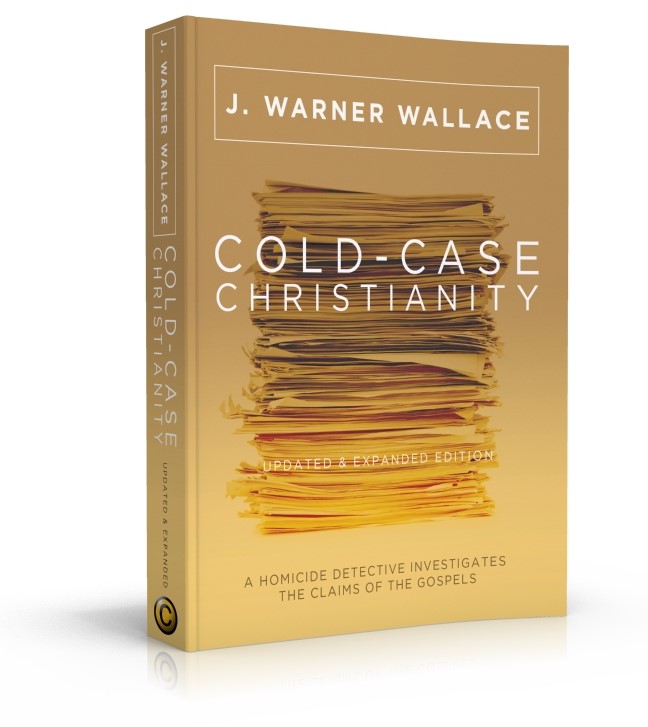



 Truth2Freedom's Blog