There are two ways to be fooled. One is to believe what isn’t true; the other is to refuse to believe what is true. —Soren Kierkegaard. "…truth is true even if nobody believes it, and falsehood is false even if everybody believes it. That is why truth does not yield to opinion, fashion, numbers, office, or sincerity–it is simply true and that is the end of it" – Os Guinness, Time for Truth, pg.39. “He that takes truth for his guide, and duty for his end, may safely trust to God’s providence to lead him aright.” – Blaise Pascal. "There is but one straight course, and that is to seek truth and pursue it steadily" – George Washington letter to Edmund Randolph — 1795. We live in a “post-truth” world. According to the dictionary, “post-truth” means, “relating to or denoting circumstances in which objective facts are less influential in shaping public opinion than appeals to emotion and personal belief.” Simply put, we now live in a culture that seems to value experience and emotion more than truth. Truth will never go away no matter how hard one might wish. Going beyond the MSM idealogical opinion/bias and their low information tabloid reality show news with a distractional superficial focus on entertainment, sensationalism, emotionalism and activist reporting – this blogs goal is to, in some small way, put a plug in the broken dam of truth and save as many as possible from the consequences—temporal and eternal. "The further a society drifts from truth, the more it will hate those who speak it." – George Orwell “There are two ways to be fooled. One is to believe what isn’t true; the other is to refuse to believe what is true.” ― Soren Kierkegaard
For the martyrs and confessors, the lights of the church, and the good examples of those who have gone before us to heaven.
I bless you for all those who have been enabled to commend themselves to God by great endurance, in afflictions and calamities; 2 Corinthians 6:4(ESV) who when they have been brought before kings and governors for Christ’s sake, it has turned to them for an opportunity to bear witness, Luke 21:12-13(ESV) and you have given them a mouth and wisdom, which none of their adversaries were able to withstand or contradict. Luke 21:15(ESV)
That those who for Christ’s sake were killed all the day long and regarded as sheep to be slaughtered, were yet in all these things more than conquerors through him who loved them. Romans 8:36-37(ESV)
That they conquered the accuser of the brothers by the blood of the Lamb and by the word of their testimony, for they loved not their lives even unto death. Revelation 12:10-11(ESV)
Romans 8 This week’s lessons show that because we are united with Christ in His death and resurrection, we no longer stand under condemnation, and are therefore assured of an eternity in the presence of the Lord where sin will be no more.
Theme
No Defeat
But how can that be that condemnation does not come to us? There should be condemnation for us because we are sinners. I think that in the days before Christ’s crucifixion no one really understood how that could be. Certainly the men who set out to trap the woman did not understand it. Earlier they had been trying to trap Jesus in foolish ways. They quizzed Him about a woman who had seven husbands and asked whose wife she would be in the resurrection. Just before that they had asked Him about paying taxes. Jesus dealt with these problems easily.
But the matter of the woman caught in adultery was not like these because it really did hit upon the fundamental problem in which the mercy and justice of God seem in conflict. God is a judge. If the judge of all the earth does right, sin must be condemned and we must die. Jesus did not condemn the woman. But if there had been anybody left to question Him, they might have asked, “You have certainly shown your mercy, and we do not fault you on that; but on what possible basis have you done it? Where is the justice? Where is faithfulness to God’s law?”
What they did not know is that Jesus forgave the woman on the basis of what He was going to do. Just as Adam, Moses, David, and all the Old Testament figures were saved, though they were sinners, so did Christ save the woman, knowing that the time was coming when He would die upon the cross to pay the just punishment, not only for her sin, but for all whom the Holy Spirit should draw to faith in Him, ourselves included.
Romans 8:1 says, “Therefore, there is now no condemnation for those who are in Christ Jesus.” That is, there is freedom from judgment for those for whom Jesus died. Think of all the problems we deal with today: nuclear war, disarmament, guerrilla insurrections, hijackings, hostages, problems of the economy. These are great problems. But they are next to nothing compared with the problem of human sin and the love of God. How does God save the sinner? The marvelous answer is: through Jesus Christ. For those who are in Christ there is, therefore, now no condemnation.
At this point Romans 8 goes on to speak of something else. Not only is there now no condemnation; there is also no defeat. This is important, because you and I could easily say, “Well, it is wonderful, of course, that there is no condemnation. God is not going to judge me. I am not going to be sent to hell for what I do. Jesus Christ has borne the penalty of my sin. But, you know, I still have to live here. I still have to live with sin and temptations day by day. What I want to know is: Can I have any victory on that level?”
Paul shows that, being united to Jesus Christ in saving faith, the Holy Spirit dwells within us. So because of His presence there is victory over sin as well.
There are several reasons we might worry about being defeated. Paul lists three. First, beginning with verse 3 through verse 17, he talks about our sinful natures. When we look at our hearts (even after we have been led to faith by the Holy Spirit) we say, “Yes, but glorious as that may be, there is still a nature of sin within me.” We find ourselves talking as Paul himself does in Romans 7. We say, “I really want to serve Jesus. I want to live for him, to have a holy life. But I do not have a holy life. I sin daily, in thought, word, and deed. Isn’t it going to be the case, since I possess this sinful nature, that somehow this sinful nature will get hold of me and overpower me, and in the end I will be lost?”
Study Questions
When the religious leaders brought the case of the adulterous woman to trap Jesus, how did this example differ from other times they tried to attack Him?
From the lesson, in addition to escaping condemnation, what else do Christians not experience?
What is the first reason why we might feel defeated?
Application
Application: When you sense your sinful nature trying to prevent you from doing what you know is right, what steps will you take to combat that sinful inclination?
For Further Study: Listen to a free download of James Boice’s message, “The Woman Taken in Adultery.” (Discount will be applied at checkout.)
[Editor’s note: in Part 1 of this two-part series, Jonathan explained this method of historical argument known as “Undesigned Coincidences.” These are lines of evidence that emerge when one part of Scripture explains, resolves, or entails, unplanned detail from elsewhere in Scripture and the the wider historical record. Jonathan focuses on the evidence from four books of Paul – Romans, 1st and 2nd Corinthians, and Galatians – comparing them with narrative details in the book of Acts.]
Paul in Macedonia Paul indicates that he is writing 2 Corinthians from Macedonia while on route to Corinth (2 Cor 9:1-5). This would place it very shortly following the riot in Ephesus, hence at approximately Acts 20:1. This appears to have been on Paul’s mind in 2 Corinthians 1:8-10: “For we do not want you to be unaware, brothers, of the affliction we experienced in Asia. For we were so utterly burdened beyond our strength that we despaired of life itself. Indeed, we felt that we had received the sentence of death. But that was to make us rely not on ourselves but on God who raises the dead. He delivered us from such a deadly peril, and he will deliver us. On him we have set our hope that he will deliver us again.”
A Door of Opportunity We have already established that Paul wrote 1 Corinthians from Ephesus. This is indicated by Paul’s statement that “I will stay in Ephesus until Pentecost,” (1 Cor 16:8) together with other clues such as the fact that he sends greetings from Aquila and Priscilla, who are known to have been in Ephesus at this time.[1] We have also previously connected the composition of this letter to Acts 19:22 at the time when he sent Timothy and Erastus through Macedonia while Paul remained behind in Asia Minor.
In 1 Corinthians 16:9, Paul explains that the reason he will remain in Ephesus is that “a wide door for effective work has opened to me.” This corresponds to the narrative in Acts 19:20: “So the word of the Lord continued to increase and prevail mightily.” Moreover, Demetrius the silversmith, in his complaint against Paul to the other workmen, states, “And you see and hear that not only in Ephesus but in almost all of Asia this Paul has persuaded and turned away a great many people, saying that gods made with hands are not gods,” (Acts 19:26).
Many Adversaries 1 Corinthians 16:9 indicates that not only had a wide door for effective work opened for Paul in Ephesus, but that “there are many adversaries.” This again comports with Luke’s statement that “when some became stubborn and continued in unbelief, speaking evil of the Way before the congregation, he withdrew from them and took the disciples with him, reasoning daily in the hall of Tyrannus,” (Acts 19:9).
Priscilla and Aquila In 1 Corinthians 16:19, Paul writes, “The churches of Asia send you greetings. Aquila and Prisca, together with the church in their house, send you hearty greetings in the Lord.” Since 1 Corinthians was composed in Ephesus (1 Cor 16:8), this indicates that Aquila and Priscilla were in Ephesus with Paul at the time of his writing. In Romans 16:3-5, Paul writes, “Greet Prisca and Aquila, my fellow workers in Christ Jesus, who risked their necks for my life, to whom not only I give thanks but all the churches of the Gentiles give thanks as well. Greet also the church in their house.” By the time Paul wrote Romans, he evidently believed that Aquila and Priscilla had made it to Rome. The reference to Priscilla and Aquila risking their necks for Paul’s life suggests that Acts and Romans are independent of one another, since there is no account of this episode in Acts.
In Romans 15:25, Paul writes,
At present, however, I am going to Jerusalem bringing aid to the saints. For Macedonia and Achaia have been pleased to make some contribution for the poor among the saints at Jerusalem. For they were pleased to do it, and indeed they owe it to them. For if the Gentiles have come to share in their spiritual blessings, they ought also to be of service to them in material blessings.
Since Paul had apparently finished collecting money for the relief of the saints in Jerusalem (which was still in process at the time of his writing 1 Corinthians), this indicates that Romans must have been written after 1 Corinthians. And Paul’s language suggests that he is about to set off for Jerusalem to take the collection there. Thus, we can infer that, between the composition of 1 Corinthians and completing the collection for the relief of the Jerusalem saints (and the writing of Romans), Priscilla and Aquila left Ephesus and returned to Rome, from which they had previously been expelled by degree of the emperor Claudius (Acts 18:2). We can also surmise that there had to have been sufficient time for Paul to have learned of their arrival in Rome and that they were hosting a house church there.
Turning to Acts, we may surmise that Aquila and Priscilla were in Corinth around 50-51 C.E., when Paul first arrived. Claudius’ expulsion of the Jews from Rome is typically dated to 49 C.E. (Suetonius, Claudius 25). Acts 18:18-19 indicates that they left Corinth with Paul and settled in Ephesus. They were apparently still there during Paul’s third missionary journey (52-55 C.E). This is confirmed by 1 Corinthians 16:19, which was written from Ephesus. The epistle to the Romans was written from Corinth, around 57 C.E., close to the end of Paul’s third journey, just prior to his trip to Jerusalem. By this time, Romans 16:3-4 greets Priscilla and Aquila as being back in Rome. There is a gap of about two years between the writing of 1 Corinthians and Romans. Travel between Ephesus and Rome by sea would only take a few weeks. This means that there would have been ample time for Priscilla and Aquila to leave Ephesus following Paul’s stay there, and relocate to Rome following the death of Claudius (54 C.E.) and establish a church in their home by the time of the composition of Romans. This approximately two-year window between the composition of 1 Corinthians and Romans easily accommodates their return to Rome. McGrew explains, “Acts does not introduce them into the story too late for them to be referred to in the greetings in I Corinthians, and it places them in Ephesus at approximately the right time.”[2] The fact that Acts makes no reference to their return to Rome following the lifting of the decree also supports the independence of Acts and Romans. Further evidence for independence comes from the variant spelling of the name Πρίσκα / Πρίσκιλλα between the Pauline letters and Acts.
Journeying to Jerusalem In Romans 15:30-32, Paul writes,
I appeal to you, brothers, by our Lord Jesus Christ and by the love of the Spirit, to strive together with me in your prayers to God on my behalf, that I may be delivered from the unbelievers in Judea, and that my service for Jerusalem may be acceptable to the saints, so that by God’s will I may come to you with joy and be refreshed in your company.
Compare this to Acts 20:22-24: And now, behold, I am going to Jerusalem, constrained by the Spirit, not knowing what will happen to me there, except that the Holy Spirit testifies to me in every city that imprisonment and afflictions await me. But I do not account my life of any value nor as precious to myself, if only I may finish my course and the ministry that I received from the Lord Jesus, to testify to the gospel of the grace of God.” Both passages represent a similar state of Pauls mind concerning his upcoming journey to Jerusalem. Paley comments,
Let it be remarked, that it is the same journey to Jerusalem which is spoken of in these two passages; that the epistle was written immediately before St. Paul set forwards upon this journey from Achaia; that the words in the Acts were uttered by him when he had proceeded in that journey as far as Miletus, in Lesser Asia. This being remembered, I observe that the two passages, without any resemblance between them that could induce us to suspect that they were borrowed from one another, represent the state of St. Paul’s mind, with respect to the event of the journey, in terms of substantial agreement. They both express his sense of danger in the approaching visit to Jerusalem: they both express the doubt which dwelt upon his thoughts concerning what might there befall him. [3]
The only difference here is that in Acts Paul is evidently more inclined towards despondency than he is in his epistle to the Romans, in which he retains the hope “that by God’s will I may come to you with joy and be refreshed in your company,” (Rom 15:32). Compare this with Acts 20:23, in which Paul states, a few months after writing his epistle to the Romans, that “the Holy Spirit testifies to me in every city that imprisonment and afflictions await me.” This also points to independence — if Acts was based on Romans (or vice versa), this difference in Paul’s optimism is difficult to account for.
Paul’s Two Visits to Corinth 1 Corinthians 2:1-2 indicates that Paul had already visited Corinth prior to writing the epistle: “And I, when I came to you, brothers, did not come proclaiming to you the testimony of God with lofty speech or wisdom. For I decided to know nothing among you except Jesus Christ and him crucified.” Paul also states his intention to visit Corinth a second time: “But I will come to you soon, if the Lord wills, and I will find out not the talk of these arrogant people but their power,” (1 Cor 4:19). Paley observes,
Now the history relates that Saint Paul did in fact visit Corinth twice; once as recorded at length in the eighteenth, and a second time as mentioned briefly in the twentieth chapter of the Acts. The same history also informs us, (Acts 20:1,) that it was from Ephesus Saint Paul proceeded upon his second journey into Greece. Therefore, as the epistle purports to have been written a short time preceding that journey; and as Saint Paul, the history tells us, had resided more than two years at Ephesus, before he set out upon it, it follows that it must have been from Ephesus, to be consistent with the history, that the epistle was written; and every note of place in the epistle agrees with this supposition.[4]
Given our determination that 1 Corinthians was composed around Acts 19:22 (which is inferred on entirely different grounds), these allusions accord with the book of Acts, since Paul had in fact visited Corinth one time prior to this time (in chapter 18) and would go on to visit Corinth a second time in chapter 20. Moreover, the account in Acts 19:21 indicates that “after these events Paul resolved in the Spirit to pass through Macedonia and Achaia and go to Jerusalem.” This confirms that the intention to go to Achaia (where Corinth was the capital) was on Paul’s mind at the time of writing 1 Corinthians. These observations, once again, confirm the historicity of Acts.
An apparent discrepancy with Acts is created by Paul’s statement that “This is the third time I am coming to you (Τρίτον τοῦτο ἔρχομαι πρὸς ὑμᾶς),” (2 Cor 13:1). If, as I have argued previously, Paul had only visited the Corinthians one time prior to the composition of this letter, the epistle is at odds with the history in Acts. An acceptable rendering of Paul’s language in 2 Corinthians 13:1 is that this was the third time he was prepared or ready to come to them. There are internal clues that suggest the plausibility of this reading. For one thing, Paul discusses a previously aborted visit to Corinth earlier in the epistle: “Because I was sure of this, I wanted to come to you first, so that you might have a second experience of grace. I wanted to visit you on my way to Macedonia, and to come back to you from Macedonia and have you send me on my way to Judea. Was I vacillating when I wanted to do this? Do I make my plans according to the flesh, ready to say ‘Yes, yes’ and ‘No, no’ at the same time?” (2 Cor 1:15-17). Paul also alludes to this issue in 2 Corinthians 2:1-2: “For I made up my mind not to make another painful visit to you. For if I cause you pain, who is there to make me glad but the one whom I have pained?” Apparently Paul had resolved not to come prematurely in a manner that would make the encounter grievous. In view of this cancelled visit, Paul could legitimately assert that this was the “third time” he was coming.
This interpretation is also supported by additional clues. Paul writes in 2 Corinthians 13:2, “as if I were present the second time … if I come again, I will not spare.” This indicates that Paul’s subsequent visit would be only his second appearance in Corinth. Moreover, 2 Corinthians 1:15 refers to giving the Corinthians a “second benefit,” again confirming only a single prior visit. Finally, 2 Corinthians 12:14 employs the parallel phrase, “Behold the third time I am ready to come to you” (Ἰδοὺ τρίτον τοῦτο ἑτοίμως ἔχω ἐλθεῖν πρὸς ὑμᾶς). This clarifies Paul’s meaning in 2 Corinthians 13:1. Paley contends that this reconciled variation, provides positive evidence of truth — though this is more relevant to the Pauline authorship of 2 Corinthians than it is to the historicity of Acts [13]:
Now, in historical researches, a reconciled inconsistency becomes a positive argument. First, because an impostor generally guards against the appearance of inconsistency; and secondly, because, when apparent inconsistencies are found, it is seldom that any thing but truth renders them capable of reconciliation. The existence of the difficulty proves the want or absence of that caution, which usually accompanies the consciousness of fraud; and the solution proves, that it is not the collusion of fortuitous propositions which we have to deal with, but that a thread of truth winds through the whole, which preserves every circumstance in its place.[5]
A Change of Plans As discussed previously, Paul explains that he had initially intended to visit Corinth before going through Macedonia (2 Cor 1:15-16) and explains the reason for his change in plan (2 Cor 1:23-2:4). Referring to his earlier rebuke of the incestuous relationship (cf. 1 Cor 5), Paul writes, “For I made up my mind not to make another painful visit to you. For if I cause you pain, who is there to make me glad but the one whom I have pained? And I wrote as I did, so that when I came I might not suffer pain from those who should have made me rejoice, for I felt sure of all of you, that my joy would be the joy of you all. For I wrote to you out of much affliction and anguish of heart and with many tears, not to cause you pain but to let you know the abundant love that I have for you,” (2 Cor 2:1-4). This implies that his decision to delay his visit to Corinth (by going through Macedonia first) was made prior to writing 1 Corinthians. This is further supported by Paul’s statement in 1 Corinthians 16:5, “I will visit you after passing through Macedonia, for I intend to pass through Macedonia.” Paley comments, “The supplemental sentence, ‘for I do pass through Macedonia,’ imports that there had been some previous communication upon the subject of the journey; and also that there had been some vacillation and indecisiveness in the apostle’s plan: both which we now perceive to have been the case.”[6]
These indications in the Corinthian epistles align with Acts 19:21, in which Paul resolves to pass through Macedonia first before visiting Achaia, and sends Timothy and Erastus ahead into Macedonia. This plan is brought to fruition in Acts 20:1-2. Since, as discussed previously, Timothy was already sent prior to the writing of 1 Corinthians (1 Cor 4:17), this entails that the change of plans must have occurred before Paul wrote this letter. It is striking that Acts mentions Paul’s resolve to pass through Macedonia followed by Achaia, right as he was composing 1 Corinthians, just as one might expect from those indicators in 2 Corinthians. But Acts does not connect Paul’s resolve to the incestuous relationship in Corinth, nor to the writing of 1 Corinthians (nor does it, for that matter, so much as mention Paul writing a letter). This incidental dovetailing between Acts and the Corinthian epistles supports the credibility of Acts.
Working with Our Own Hands In 1 Corinthians 4:11-12, Paul says that “To the present hour we hunger and thirst, we are poorly dressed and buffeted and homeless, and we labor, working with our own hands.” This indicates that, right up to the present time of his writing (from Ephesus), Paul was working manually to support himself with his own hands. When Acts narrates Paul’s stay in Ephesus (Acts 19), there is no reference to his working with his hands. However, when Paul later addresses the Ephesian elders at Miletus, he reminds them that “You yourselves know that these hands ministered to my necessities and to those who were with me.” Consistent with the epistle, this indicates that Paul did in fact continue his manual labor at Ephesus (the city from which he wrote 1 Corinthians). Observe that Acts confirms Paul’s manual labor in Ephesus indirectly and retrospectively. It is completely unmentioned in the direct narrative of Paul’s time in Ephesus, but is alluded to in Paul’s farewell speech that was delivered later. If the author of Acts used 1 Corinthians as a source, it seems more likely that this detail would have been featured in the main account of Ephesus, rather than obliquely in a later reference. This supports the historicity of Acts.
Corinth as the Limit of Paul’s Progress In 2 Corinthians 10:14-16, Paul says, “For we are not overextending ourselves, as though we did not reach you. For we were the first to come all the way to you with the gospel of Christ. We do not boast beyond limit in the labors of others. But our hope is that as your faith increases, our area of influence among you may be greatly enlarged, so that we may preach the gospel in lands beyond you…” This implies that Corinth was, up to this point, the boundary of Paul’s travels. The account in Acts 16-18 depicts Paul’s travels as taking him along the Macedonian coast (Amphipolis, Apollonia, Thessalonica, Berea) followed by Athens and finally Corinth, where he remained for a year and a half prior to returning to Asia Minor. Consistent with the epistle, Corinth was indeed Paul’s last stop and therefore the natural boundary of his progress at that time. Paley comments, “He could not have said the same thing, viz. ‘I hope hereafter to visit the regions beyond you,’ in an epistle to the Philippians, or in an epistle to the Thessalonians, inasmuch as he must be deemed to have already visited the regions beyond them, having proceeded from those cities to other parts of Greece. But from Corinth he returned home: every part therefore beyond that city might properly be said, as it is said in the passage before us, to be unvisited. Yet is this propriety the spontaneous effect of truth, and produced without meditation or design.”
Becoming as a Jew to win Jews In 1 Corinthians 9:20-22, Paul writes, “To the Jews I became as a Jew, in order to win Jews. To those under the law I became as one under the law (though not being myself under the law) that I might win those under the law. To those outside the law I became as one outside the law (not being outside the law of God but under the law of Christ) that I might win those outside the law. To the weak I became weak, that I might win the weak. I have become all things to all people, that by all means I might save some.” That this was Paul’s principle is confirmed by two historical examples recounted in Acts. The first of those (which happened prior to the composition of the epistle) is the circumcision of Timothy: “Paul wanted Timothy to accompany him, and he took him and circumcised him because of the Jews who were in those places, for they all knew that his father was a Greek,” (Acts 16:3). The second of those instances is Paul’s joining in of the purification rites at Jerusalem, an event that took place after the composition of the epistle (Acts 21:23-26).
It seems quite unlikely that the author of Acts fabricated these narratives merely to illustrate the principle Paul developed in the epistle. The agreement between the general description int he letter and the particular events in the history, without signs of contrivance, supports their mutual credibility.
Paul’s Long Stay in Ephesus 1 Corinthians 5:7-8 suggests that the epistle was composed around the feast of Passover: “Cleanse out the old leaven that you may be a new lump, as you really are unleavened. For Christ, our Passover lamb, has been sacrificed. Let us therefore celebrate the festival, not with the old leaven, the leaven of malice and evil, but with the unleavened bread of sincerity and truth.” The epistle was clearly composed sometime prior to Pentecost (i.e., fifty days after Passover), since Paul indicates that “I will stay in Ephesus until Pentecost…” (1 Cor 16:8). Moreover, Paul indicates that he intends to spend the coming winter with the Corinthians (1 Cor 16:6). These scattered remarks indicate that the letter was written in the springtime, during Paul’s stay in Ephesus. Acts independently places Paul in Ephesus for an extended time (according to Acts 19:10, Paul remained there for “two years”) but does not make any reference to Passover, Pentecost, or Paul’s planning for the upcoming winter. This supports the historicity of Acts.
The Riot in Ephesus We have already established that Paul composed 2 Corinthians from Macedonia, at a time corresponding to Acts 20:1-2. Thus, 2 Corinthians was written very shortly following the uproar in Ephesus that was instigated by Demetrius the silversmith along with other craftsmen, of which we read in Acts 19:23-41. The riot was instigated by Demetrius’ stated concern that Paul’s message was a threat to their trade in idols. In verses 23-34, we read,
When they heard this they were enraged and were crying out, “Great is Artemis of the Ephesians!” 29 So the city was filled with the confusion, and they rushed together into the theater, dragging with them Gaius and Aristarchus, Macedonians who were Paul’s companions in travel. 30 But when Paul wished to go in among the crowd, the disciples would not let him. 31 And even some of the Asiarchs, who were friends of his, sent to him and were urging him not to venture into the theater. 32 Now some cried out one thing, some another, for the assembly was in confusion, and most of them did not know why they had come together. 33 Some of the crowd prompted Alexander, whom the Jews had put forward. And Alexander, motioning with his hand, wanted to make a defense to the crowd. 34 But when they recognized that he was a Jew, for about two hours they all cried out with one voice, “Great is Artemis of the Ephesians!”
It appears that the riot presented a credible threat to Paul’s life. The uproar was ultimately quieted by the town clerk (Acts 20:35-41). In Acts 20:1, we read, “After the uproar ceased, Paul sent for the disciples, and after encouraging them, he said farewell and departed for Macedonia.” It is at this point (as we have gleaned previously on entirely independent grounds) that Paul wrote his second epistle to the Corinthians. In 2 Corinthians 1:8-10, Paul writes,
8 For we do not want you to be unaware, brothers, of the affliction we experienced in Asia. For we were so utterly burdened beyond our strength that we despaired of life itself. 9 Indeed, we felt that we had received the sentence of death. But that was to make us rely not on ourselves but on God who raises the dead. 10 He delivered us from such a deadly peril, and he will deliver us. On him we have set our hope that he will deliver us again.
Paley remarks,
Nothing could be more expressive of the circumstances in which the history describes St. Paul to have been, at the time when the epistle purports to be written; or rather, nothing could be more expressive of the sensations arising from these circumstances, than this passage. It is the calm recollection of a mind emerged from the confusion of instant danger.[7]
Thus, once again, 2 Corinthians indirectly confirms the historicity of Acts. This undesigned coincidence is rendered all the more striking by the very strong evidence that Acts is not literarily dependent upon 2 Corinthians (nor vice versa).
Misunderstanding Paul’s Attitude Towards the Law For reasons discussed previously, we can nail down the composition of Romans to the three-month period that Paul spent in Corinth in Acts 20:3. This is immediately prior to Paul’s visit to Jerusalem (Acts 21). In Acts 21:20-25, Paul is instructed by the leaders in Jerusalem,
You see, brother, how many thousands there are among the Jews of those who have believed. They are all zealous for the law, 21 and they have been told about you that you teach all the Jews who are among the Gentiles to forsake Moses, telling them not to circumcise their children or walk according to our customs. 22 What then is to be done? They will certainly hear that you have come. 23 Do therefore what we tell you. We have four men who are under a vow; 24 take these men and purify yourself along with them and pay their expenses, so that they may shave their heads. Thus all will know that there is nothing in what they have been told about you, but that you yourself also live in observance of the law. 25 But as for the Gentiles who have believed, we have sent a letter with our judgment that they should abstain from what has been sacrificed to idols, and from blood, and from what has been strangled, and from sexual immorality.
Given that Paul had just written the epistle to the Romans shortly before this episode, it is not difficult to see how various statements in the epistle may have led to this misunderstanding about Paul’s teaching. For instance, “we hold that one is justified by faith apart from works of the law,” (Rom 3:28); “For sin will have no dominion over you, since you are not under law but under grace” (Rom 6:14); “But now we are released from the law, having died to that which held us captive…” (Rom 7:6). On circumcision, Paul states that “circumcision is a matter of the heart, by the Spirit, not by the letter.” Moreover, his statement in Romans 4:9-12 that Abraham was justified by faith prior to circumcision could easily be heard as saying that circumcision is unnecessary, even for Jews. Given the various textual and thematic parallels between Romans and Galatians, I also deem it likely that the epistle to the Galatians was composed around the same time — a letter that contains many similar statements concerning Paul’s attitude towards the law and circumcision as those found in Romans. Paul’s teaching in those epistles also most likely reflects his preaching at the time.
Paul of the Tribe of Benjamin A detail supplied only by Acts is that Paul was also known as Saul, which was his Hebrew name (e.g. Acts 9:4, 13:9). Paul’s letters inform us of a detail not mentioned by Acts — that Paul was of the tribe of Benjamin (Rom 11:1; Phil 3:5). This makes a lot of sense of why his Hebrew name is Saul — the first King of Israel, Saul, was the most famous Benjaminite (1 Samuel 9:1-2) and one whom one would expect someone of the tribe of Benjamin to be named after, particularly since naming children after notable tribal ancestors was common in Jewish culture.
Returned Again to Damascus In Galatians 1:11-17, Paul writes,
11 For I would have you know, brothers, that the gospel that was preached by me is not man’s gospel. 12 For I did not receive it from any man, nor was I taught it, but I received it through a revelation of Jesus Christ. 13 For you have heard of my former life in Judaism, how I persecuted the church of God violently and tried to destroy it. 14 And I was advancing in Judaism beyond many of my own age among my people, so extremely zealous was I for the traditions of my fathers. 15 But when he who had set me apart before I was born, and who called me by his grace, 16 was pleased to reveal his Son to me, in order that I might preach him among the Gentiles, I did not immediately consult with anyone; 17 nor did I go up to Jerusalem to those who were apostles before me, but I went away into Arabia, and returned again to Damascus.
Take note of Paul’s words in verse 17 — “nor did I go up to Jerusalem to those who were apostles before me, but I went away into Arabia, and returned again to Damascus.” Paul does not take the time to explain to his readers why Damascus was the place to which he returned from Arabia. It is taken for granted that they already know the connection to Damascus — this is where he went immediately upon his conversion (Acts 9:8). William Paley remarks,
In this quotation from the epistle, I desire it to be remarked how incidentally it appears, that the affair passed at Damascus. In what may be called the direct part of the account, no mention is made of the place of his conversion at all: a casual expression at the end, and an expression brought in for a different purpose, alone fixes it to have been at Damascus; “I returned again to Damascus.” Nothing can be more like simplicity and undesignedness than this is.[8]
This casual connection between Galatians and Acts is all the more striking when we consider that these two sources appear to be independent of one another — that is, the author of Acts did not use Galatians as a source, nor vice versa. I refer readers to the earlier discussion for the argument for this conclusion. The internal evidence of independence between Acts and Galatians, together with the convergence of details relating to Paul’s conversion (particularly the reference to returning to Damascus) suggest that the accounts in Acts concerning Paul’s conversion are in alignment with Paul’s own testimony.
Paul’s Brief Visit to Jerusalem It is also of note that, in Galatians 1:18-19, Paul indicates that his visit to Jerusalem was quite brief. One wonders why Paul’s visit to Jerusalem was cut short such that he only remained there fifteen days and reportedly saw none of the other apostles besides Cephas (Simon Peter) and James the Lord’s brother. Acts 9:29 indicates that there was an assassination plot against Paul by the Hellenists such that he needed to leave Jerusalem in haste. This explains the account in Galatians in an undesigned way, such that it serves to corroborate the historicity of both accounts. This further supports that the testimony in Acts concerning Paul’s conversion and the events shortly thereafter reflect Paul’s own testimony. We also read in Acts 22:17 Paul’s statement that “When I had returned to Jerusalem and was praying in the temple, I fell into a trance and saw him saying to me, ‘Make haste and get out of Jerusalem quickly, because they will not accept your testimony about me.’” Paley remarks, “Here we have the general terms of one text so explained by a distant text in the same book, as to bring an indeterminate expression into a close conformity with a specification delivered in another book: a species of consistency not, I think, usually found in fabulous relations.”[9]
“I came into the regions of Syria and Cilicia.” A further point, relating to our text in Galatians 1:18-19, is that Paul some verses later indicates that “afterwards I came into the regions of Syria and Cilicia,” (Gal 1:21). The account in Acts 9 indicates that, when the brothers learned of the plot against Paul’s life, “they brought him down to Caesarea and sent him off to Tarsus,” (v. 30). Paley observes that, “if he took his journey by land, it would carry him through Syria into Cilicia; and he would come, after his visit at Jerusalem, ‘into the regions of Syria and Cilicia,’ in the very order in which he mentions them in the epistle.” [18] Caesarea, of course, was a major port city, and so it is plausible that he made at least part of the journey by sea, before perhaps continuing on land. It is also of note that Paul indicates immediately following this statement in Galatians that “I was still unknown in person to the churches of Judea that are in Christ. They only were hearing it said, ‘He who used to persecute us is now preaching the faith he once tried to destroy,” (Galatians 1:22-23). Paley observes,
Upon which passage I observe, first, that what is here said of the churches of Judea, is spoken in connection with his journey into the regions of Syria and Cilicia. Secondly, that the passage itself has little significancy, and that the connection is inexplicable, unless St. Paul went through Judea (though probably by a hasty journey) at the time that he came into the regions of Syria and Cilicia. Suppose him to have passed by land from Cæsarea to Tarsus, all this, as hath been observed, would be precisely true. [10]
Paul’s Escape from Damascus Paul’s own account of the plot against his life in Damascus, in 2 Corinthians 11:32-33, dovetails with the account in Acts 9:23-25. Paul writes, “At Damascus, the governor under King Aretas was guarding the city of Damascus in order to seize me, but I was let down in a basket through a window in the wall and escaped his hands.” Compare this with the account in Acts 9:23-25: “When many days had passed, the Jews plotted to kill him, but their plot became known to Saul. They were watching the gates day and night in order to kill him, but his disciples took him by night and let him down through an opening in the wall, lowering him in a basket.” Notice that the account in Acts emphasizes the involvement of the Jews, whereas Paul, in 2 Corinthians, emphasizes the involvement of Aretas IV, the king of the Nabateans (who reigned from 9 B.C. to 40 C.E.). These are not mutually exclusive (presumably, there was a conspiracy involving both parties). Nonetheless, the discrepancy between Acts and 2 Corinthians points to independence, which renders the points of convergence of significant evidential value. Why might Aretas IV be involved in the conspiracy against Paul in Damascus? Aretas IV had significant political influence and authority in the region. Around the time of Paul’s conversion, Aretas IV was ruling Damascus, likely through a governor or ethnarch who was in charge of the Jewish community there. This authority over Damascus was granted to Aretas by the emperor Gaius Caligula. The event in Acts probably occurred around 37 C.E., based on evidence of Nabatean rule in Damascus commencing that year.
Visiting Troas In 2 Corinthians 2:12-13, Paul writes, “When I came to Troas to preach the gospel of Christ, even though a door was opened for me in the Lord, my spirit was not at rest because I did not find my brother Titus there. So I took leave of them and went on to Macedonia.” This stop at Troas on the outward journey from Ephesus to Macedonia is not mentioned by Acts. However, Acts does record a later return journey where Paul did pass through Troas, found disciples there with whom he gathered to break bread, and preached at length (Acts 20:5-7). The epistle thus indicates that Paul had an “open door” for ministry previously in Troas, even though this visit was cut short due to his not finding Titus there. On the other hand, in the narrative in Acts concerning the return journey, it is revealed that there was in fact a functioning body of disciples in Troas on the later journey, which is consistent with Paul’s statement in his letter concerning his earlier opportunity for ministry there. But if the author of Acts were using 2 Corinthians as a source, he would be more likely to mention the visit to Troas, and the presence of Paul’s contacts there, during the outward trip, rather than on the return trip.
“Once I was Stoned” As discussed earlier in this article, there is ample reason to think that Acts and 2 Corinthians are independent of one another. Among those lines of evidence is the fact that Paul’s laundry list of sufferings in 2 Corinthians 11 (all of which must have happened to him prior to Acts 20:1-2 when he wrote this epistle) cannot be readily correlated with Acts.
This presents no problem for Acts, for reasons given previously. Yet, strikingly, this account of the persecutions endured by Paul does not contradict Acts at any point, though it very well could have done so. For example, when Paul indicates that he was beaten with rods three times, Acts only reports one beating with rods (which happened in Philippi — Acts 16:22-23). This is consistent with the account in 2 Corinthians. But if Acts had mentioned four beatings with rods, we would have a very real contradiction between Acts and 2 Corinthians. More striking is Paul’s statement that “once I was stoned.” Acts also mentions exactly one time that Paul was stoned (which happened in Lystra in Lycaonia) (Acts 14:19-23). If, however, Acts had mentioned even one further instance of Paul being stoned, there would be an actual contradiction between Acts and the epistle. Consider too that there had been previously an intent to stone Paul in Iconium, though this plot failed: “But the people of the city were divided; some sided with the Jews and some with the apostles. When an attempt was made by both Gentiles and Jews, with their rulers, to mistreat them and to stone them, they learned of it and fled to Lystra and Derbe, cities of Lycaonia, and to the surrounding country, and there they continued to preach the gospel,” (Acts 14:4-7). Had Luke reported that this plot was successful, he would have contradicted 2 Corinthians. Paley remarks, “Truth is necessarily consistent: but it is scarcely possible that independent accounts, not having truth to guide them, should thus advance to the very brink of contradiction without falling into it.”[11]
The Church in Jerusalem As we have previously discussed, there are strong reasons to think that Acts and Galatians are independent of one another. I shall not repeat those arguments here. In view of this independence, the points of convergence between Acts and Galatians are quite striking. Among those is the fact that both Acts and Galatians indicate a prominent role of James the brother of Jesus, together with Simon Peter and John the son of Zebedee, in the Jerusalem church. Paul mentions that “after three years I went up to Jerusalem to visit Cephas [i.e., Simon Peter] and remained with him fifteen days. But I saw none of the other apostles except James the Lord’s brother,” (Gal 1:18-19). Moreover, Paul discusses his visit to Jerusalem after fourteen years where he presented the gospel that he had been proclaiming to the gentiles to the leaders in the Jerusalem church, to ensure the gospel he had been preaching was in alignment with theirs. Paul indicates that “when James and Cephas and John, who seemed to be pillars, perceived the grace that was given to me, they gave the right hand of fellowship to Barnabas and me, that we should go to the Gentiles and they to the circumcised.” Consistent with this, Acts 15:7,13 indicates the leadership role of Peter and James at the Jerusalem council. In Acts 21:17-18, we read, “When we had come to Jerusalem, the brothers received us gladly. On the following day Paul went in with us to James, and all the elders were present.” This again indicates James’ leadership role in Jerusalem. The leadership role of John is also implied elsewhere. In Acts 3:1-11 and 4:13-22, John appears alongside Peter as one of the main leaders, healing the lame man at the temple and subsequently being arrested and examined by the Sanhedrin.
Barnabas with Paul at Antioch In Galatians 1:11-13, we read, “But when Cephas came to Antioch, I opposed him to his face, because he stood condemned. For before certain men came from James, he was eating with the Gentiles; but when they came he drew back and separated himself, fearing the circumcision party. And the rest of the Jews acted hypocritically along with him, so that even Barnabas was led astray by their hypocrisy.” Thus, Paul incidentally refers to Barnabas’ presence during his time in Antioch. Barnabas’ involvement in Antioch is mentioned very casually, in the context of his being led astray by the behavior of others. Acts indicates that Barnabas was present with Paul in Antioch on two occasions. In Acts 11:22-26, Barnabas is sent by the Jerusalem church to Antioch, where he then seeks out Paul in Tarsus and brings him back to Antioch. In Acts 15:35, Luke says that “Paul and Barnabas remained in Antioch, teaching and preaching the word of the Lord, with many others also.” Which of these one identifies as the most likely occasion of the confrontation of Peter will depend largely on whether one subscribes to an early or late Galatian theory (I am personally inclined to think that Galatians was written after, rather than before, the Jerusalem council). Either way, the history thus places Barnabas in Antioch in an uncontrived way, which supports the credibility of the account in Acts.
Building Teaching on Authority vs. Argument The epistle to the Galatians and to the Romans both address the same issue of justification, but Paul’s approach differs depending upon his relationship to the recipients of his letter. He had founded the church in Galatia, and thus appeals to his personal authority. For example, in Galatians 1:6-8, Paul writes,
I am astonished that you are so quickly deserting him who called you in the grace of Christ and are turning to a different gospel— not that there is another one, but there are some who trouble you and want to distort the gospel of Christ. But even if we or an angel from heaven should preach to you a gospel contrary to the one we preached to you, let him be accursed.
Moreover, “I would have you know, brothers, that the gospel that was preached by me is not man’s gospel. For I did not receive it from any man, nor was I taught it, but I received it through a revelation of Jesus Christ,” (Gal 1:11-12). Paul further writes in Galatians 4:11-12,19-20
I am afraid I may have labored over you in vain. Brothers, I entreat you, become as I am, for I also have become as you are…my little children, for whom I am again in the anguish of childbirth until Christ is formed in you! I wish I could be present with you now and change my tone, for I am perplexed about you.
In Galatians 5:2-3, Paul declares, “Look: I, Paul, say to you that if you accept circumcision, Christ will be of no advantage to you. I testify again to every man who accepts circumcision that he is obligated to keep the whole law.” Contrast this with Paul’s approach in his letter to the Romans, a church that Paul had never visited and had no established authority. In this epistle, Paul relies instead on reasoned argument. This contrast fits the historical situation.
Jewish-Instigated Persecution In multiple texts in his epistle to the Galatians, Paul indicates that the chief persecution against him came at the hands of the Jews. This is implied by the following statements:
Galatians 4:29: But just as at that time he who was born according to the flesh persecuted him who was born according to the Spirit, so also it is now.
Galatians 5:11: But if I, brothers, still preach circumcision, why am I still being persecuted? In that case the offense of the cross has been removed.
Galatians 6:17: From now on let no one cause me trouble, for I bear on my body the marks of Jesus.
Compare these statements to the following episodes recounted in Acts:
Antioch in Pisidia (Acts 13:50): Jews stir up leading citizens against Paul and Barnabas.
Iconium (Acts 14:1–2): Unbelieving Jews incite Gentiles against them.
Lystra (Acts 14:19): Jews from Antioch and Iconium persuade the crowd to stone Paul.
Thessalonica (Acts 17:4–5): Jews incite a mob and attack Jason’s house.
Berea (Acts 17:13): Jews from Thessalonica follow Paul and stir up more trouble.
Corinth (Acts 18:12): Jews bring Paul before Gallio’s tribunal.
By contrast, persecution that was purely instigated by gentiles occurred on only two occasions, and in both instances this was prompted by economic interests — in particular, the masters of the slave girl in Philippi who had lost profit as a result of Paul’s exorcism (Acts 16:19) and Demetrius and the silversmiths in Ephesus since Paul’s preaching was a threat to their trade in idols.
Addressing the Ephesian Elders In Acts 20:18-35, Paul delivers his farewell speech to the Ephesian elders:
You yourselves know how I lived among you the whole time from the first day that I set foot in Asia, 19 serving the Lord with all humility and with tears and with trials that happened to me through the plots of the Jews; 20 how I did not shrink from declaring to you anything that was profitable, and teaching you in public and from house to house, 21 testifying both to Jews and to Greeks of repentance toward God and of faith in our Lord Jesus Christ. 22 And now, behold, I am going to Jerusalem, constrained by the Spirit, not knowing what will happen to me there, 23 except that the Holy Spirit testifies to me in every city that imprisonment and afflictions await me. 24 But I do not account my life of any value nor as precious to myself, if only I may finish my course and the ministry that I received from the Lord Jesus, to testify to the gospel of the grace of God. 25 And now, behold, I know that none of you among whom I have gone about proclaiming the kingdom will see my face again. 26 Therefore I testify to you this day that I am innocent of the blood of all, 27 for I did not shrink from declaring to you the whole counsel of God. 28 Pay careful attention to yourselves and to all the flock, in which the Holy Spirit has made you overseers, to care for the church of God, which he obtained with his own blood. 29 I know that after my departure fierce wolves will come in among you, not sparing the flock; 30 and from among your own selves will arise men speaking twisted things, to draw away the disciples after them. 31 Therefore be alert, remembering that for three years I did not cease night or day to admonish every one with tears. 32 And now I commend you to God and to the word of his grace, which is able to build you up and to give you the inheritance among all those who are sanctified. 33 I coveted no one’s silver or gold or apparel. 34 You yourselves know that these hands ministered to my necessities and to those who were with me. 35 In all things I have shown you that by working hard in this way we must help the weak and remember the words of the Lord Jesus, how he himself said, ‘It is more blessed to give than to receive.’
There are multiple features of this speech that resemble subtle aspects of Paul’s personality and emphases as represented by his letters. This indicates that the same Paul lies behind this speech (as reported by Luke) and the epistles. Lydia McGrew explains,
The speech breathes the personality of the author of the epistles, including both his genuine love and warm-heartedness and what one might less charitably be inclined to call his emotional manipulativeness and self-dramatization. The same Paul who brings the elders of Miletus to tears with his references to his own trials and tears (Acts 20.19) and his prediction of never seeing them again (Acts 20.25, 36–38) is the Paul who attempts, probably successfully, to induce Philemon to free the slave Onesimus by telling him that he “owes him his own life” (Philem vv 17–19). He is the same Paul who says so much about his own trials and distresses in I Corinthians and reminds his readers that he is their spiritual father (I Cor 4.8–14). The same Paul who launches, at this intimate moment of farewell to his dear friends, into a spirited defense of his own blamelessness in financial matters (Acts 20.33–35) is the Paul who harps on this theme repeatedly in the epistles…and who is almost painfully defensive about his apostleship in II Corinthians 11–12. The same Paul who urges the Corinthians to be imitators of himself (I Cor 4.16), who says that the “care of all the churches” comes upon him daily (II Cor 11.28), and who earnestly uses his apostolic authority, his love, and the sheer force of his personality to dissuade the Galatians from yielding to the demand of circumcision (Gal 4.16–20) is the Apostle Paul who tells the elders in Acts 20.29–32 that after his departure they will be assailed by false teachers and should resist, remembering how he himself “admonished them with tears” during his ministry.[12]
The artless similarity of this speech delivered by Paul, recounted in Acts, and Paul’s letters is indicative of the historical credibility of Acts’ recounting of Paul’s address to the Ephesian elders. These parallels are even more striking given the independence of Acts from the epistles (the case for which has been laid out previously).
The Book of Acts as High-Resolution Reportage
In sum, the cumulative force of the incidental agreements between Acts and these four epistles (particularly when one factors in the case for Acts being independent of the letters) strongly supports the conclusion that Acts is high-resolution historical reportage. Taken cumulatively, the undesigned coincidences surveyed provide powerful evidence for the reliability of Acts as an historical account and confirm that its author, Luke, was well informed, close up to the facts, and habitually scrupulous. This profile comports well with Luke’s own claim to have been Paul’s travelling companion for much of his journeys. This, in turn, carries implications for the credibility of Christianity. If Acts can be trusted as an account composed by someone in proximity to Paul, and someone who is habitually scrupulous, then Luke’s testimony concerning Paul’s conversion and miracles most likely represents the testimony of Paul himself. Luke also attests to Paul’s unwavering willingness to suffer toil and hardship, even imprisonment and death, for the sake of the gospel. Moreover, Luke’s proximity to the Jerusalem apostles gives us reason to think that he accurately represents the testimony of the apostles concerning the phenomenology of the appearances of Jesus to the disciples after his death, as well as the adverse circumstances of their public ministry. Thus, our case for the historical credibility of Acts bears in no small measure on the broader case for the truth of the gospel.
References:
[1] Scripture references are to the ESV unless otherwise noted.
[2] Lydia McGrew, Hidden In Plain View: Undesigned Coincidences in the Gospels and Acts (DeWard Publishing Company, 2017), 152-153.
[3] William Paley, Horae Paulinae, or the Truth of the Scripture History of St. Paul Evinced (London: R. Faulder, 1791).
The New Testament: Too Embarrassing to Be False by Frank Turek (DVD, Mp3, and Mp4)
Why We Know the New Testament Writers Told the Truth by Frank Turek (DVD, Mp3 and Mp4)
Early Evidence for the Resurrection by Dr. Gary Habermas (DVD), (Mp3) and (Mp4)
The Footsteps of the Apostle Paul (mp4 Download), (DVD) by Dr. Frank Turek
Dr. Jonathan McLatchie is a Christian writer, international speaker, and debater. He holds a Bachelor’s degree (with Honors) in forensic biology, a Masters’s (M.Res) degree in evolutionary biology, a second Master’s degree in medical and molecular bioscience, and a Ph.D. in evolutionary biology. Currently, he is an assistant professor of biology at Sattler College in Boston, Massachusetts. Dr. McLatchie is a contributor to various apologetics websites and is the founder of the Apologetics Academy (Apologetics-Academy.org), a ministry that seeks to equip and train Christians to persuasively defend the faith through regular online webinars, as well as assist Christians who are wrestling with doubts. Dr. McLatchie has participated in more than thirty moderated debates around the world with representatives of atheism, Islam, and other alternative worldview perspectives. He has spoken internationally in Europe, North America, and South Africa promoting an intelligent, reflective, and evidence-based Christian faith.
From donkeys to wise men, we’ve added a lot to the Nativity that just isn’t in the Bible. Ready to find out what’s fact and what’s fiction?
Christmas. This word brings to mind thoughts of snowflakes, peppermint mochas, evergreen trees, baking, parties, and lots and lots of lights. Most of all, Christmas reminds us of Jesus because He is what Christmas is all about.
The beauty of our December celebration outshines any other holiday observance. Each year, the decorating activities begin earlier than the year before. (Although I can do without leftover Halloween skeletons wearing Santa suits!) In some stores, glittery decor is on the shelves along with the back-to-school supplies.
Travel is at an all-time high during the holiday season. Our family customs are part of what makes these times special. Recipes handed down from grandmas, heirloom ornaments, favorite shows, and even look-alike pajamas. But what about the traditions we have adopted from decades of made-up beliefs that aren’t biblical?
Movies, cards, plays, and songs have given us images about the Nativity based on assumptions or wrong interpretations of the scriptures. These presumptions create nice stories, but if we want the truth about Jesus’ birth, we need to examine the record with open eyes.
Here are 10 traditions we believe about Christmas that aren’t accurate according to the biblical account.
Photo Credit: Unsplash/Jonathan Meyer
1. Mary rode a donkey.
1. Mary rode a donkey.
SLIDE 1 OF 6
Hollywood scenes create the drama of Mary and Joseph on the way to Bethlehem, with Mary sitting on a donkey that Joseph leads. Maybe she did ride an animal, but the Bible doesn’t indicate any mode of travel. They could have walked or been given aid from other travelers who shared wagons and offered rides to women who may have accompanied their husbands.
Anytime we see this silhouette on display, our minds immediately connect it to Mary and Joseph. There’s nothing wrong with thinking about Mary riding on a donkey. But this picture just tells us it’s an assumption derived from old ideas.
The idea probably stems from the Protoevangelium of James. This writing is not considered scripture as much of it disagrees with what the Word of God has already declared.
So Joseph also went up from the town of Nazareth in Galilee to Judea, to Bethlehem the town of David, because he belonged to the house and line of David. (Luke 2:4 NIV)
2. Mary traveled alone to visit Elizabeth.
Scenes from some films indicate Mary steps out the door and takes off walking on her own. No one, especially a young girl, would take a trip without protection. She would have traveled with a group of people for safety. Without the modern vehicles we have today, a journey of sixty-five miles or more would require stopping to rest for the night. People who were alone were prey for criminals. Remember the story of the Good Samaritan. He got hijacked by robbers and beaten.
At that time Mary got ready and hurried to a town in the hill country of Judea, where she entered Zechariah’s home and greeted Elizabeth. (Luke 1:39-40 NIV)
Another dramatic image from the entertainment industry is Mary bent over in labor pains while riding the donkey. When they finally arrive in Bethlehem, poor, frantic Joseph goes from door to door seeking shelter for his pregnant wife, who is about to give birth.
While they were there, the time came for the baby to be born. (Luke 2:6 NIV, emphasis mine)
This scripture tells us Jesus was born while they were there, not the day they arrived. This could have been a few days or even weeks after they settled in Bethlehem. We also see Joseph portrayed as delivering the baby. Men in ancient culture didn’t attend childbirth. He would have most certainly gone to find a midwife.
4. Joseph created and repaired things out of wood.
The Bible refers to Joseph’s occupation as a carpenter. This brings to mind pictures of a man creating or repairing items and furniture out of wood. Other than olive and sycamore trees, there wasn’t a lot of material for woodworking in those days. Solomon sought cedars from Lebanon to build the temple because this is where the best lumber could be obtained.
The word that was translated carpenter in the New Testament comes from the Greek tekton, which means any craftsman or builder. Joseph, more than likely, was a stone mason.
Isn’t this the carpenter? Isn’t this Mary’s son and the brother of James, Joseph, Judas and Simon? Aren’t his sisters here with us? And they took offense at him. (Mark 6:3 NIV)
Joseph also may have used wood, but most of his work could have been from stone, and he probably worked in the city of Sepphoris, close to Nazareth. Rocks, stones, and caves cover the land of Israel. This material would give any artisan plenty of supplies for their given trade.
The word translated as inn makes us think of a hotel with certain amenities for guests. The word katalyma just means guest chamber. In the Middle Eastern culture, hospitality was a way of life. Travelers were often put up in people’s homes, especially relatives. Joseph’s lineage was from Bethlehem, and some of his family line could have remained in the village. By the time the couple arrived, all these rooms were filled. That’s why there was no more space in the extra rooms.
Theories vary as to the location of Jesus’ birth. Sometimes animal dwellings were attached to homes where people placed their livestock at night to keep them safe, and this could be where the couple found lodging. Also, shepherd’s caves gave wandering pilgrims shelter. The historical location is marked by the Church of the Nativity in Bethlehem. Either place outfitted for animals would have contained a manger.
And she gave birth to her firstborn, a son. She wrapped him in cloths and placed him in a manger, because there was no guest room available for them. (Luke 2:7 NIV)
6. The manger was a wooden box of hay.
Again, we have the conventional view of Jesus lying in a box of hay. As shepherds brought their flocks in for the night, they provided water for them. They could have also provided some type of grain for the animals, but the flocks mostly ate from the fields during the day. Water was provided in a trough, or manger, carved from some type of stone. This was Jesus’ baby bed.
This will be a sign to you: You will find a baby wrapped in cloths and lying in a manger. (Luke 2:12 NIV)
Most theologians suggest that the Magi were Zoroastrian priests, possibly from the land of Babylon, where Daniel and his three friends were enslaved by Nebuchadnezzar. The song “We Three Kings” has embedded the image of three men wearing crowns coming to see Jesus with their gifts. They were probably astrologers who studied the sky. God used a miraculous light to lead men who didn’t know Him to worship the King of the Jews.
The term wise men is derived from the Greek magos, which is where we get the word Magi (short for magician).
After Jesus was born in Bethlehem in Judea, during the time of King Herod, Magi from the east came to Jerusalem. (Matthew 2:1 NIV)
8. There were three wise men.
Because three gifts are mentioned in Matthew’s account of Jesus’ birth, stories have grown about three men traveling to see the Christ Child. Some movies have even given these men names, but the Bible never does. The scripture mentions these offerings, but doesn’t indicate the number of worshippers who brought gifts. Because the word men is used, we can know there was more than one.
Then they opened their treasures and presented him with gifts of gold, frankincense, and myrrh. (Matthew 2:11b)
Nativity scenes usually depict the wise men kneeling before Jesus as He lies in His manger bed. Shepherds surround the family with gifts of lambs.
Because Herod killed baby boys two years of age and under, we assume Jesus was close to two years old at the appearance of the Magi. Mary and Joseph took Jesus to the temple when he was forty days old to dedicate Him to the Lord according to the Law of Moses. After this was accomplished, they went home to Nazareth.
When Joseph and Mary had done everything required by the Law of the Lord, they returned to Galilee to their own town of Nazareth. (Luke 2:39)
For the wise men to have visited Jesus in Bethlehem, they had to be there when He was a month old or less. Matthew 2:11 tells us they saw the child in a house.
10. Mary was an unwed mother.
It’s assumed Mary faced a scandal due to her pregnancy. Different words are used in various translations for the state of Mary and Joseph’s relationship, such as espoused or betrothed. But these words meant something different in biblical times than what we think about an engagement. In our day, engagements can be broken, but betrothals were binding agreements. Betrothed couples were considered married; they just didn’t live together for a year.
The verses in Matthew tell us that when Joseph found out about Mary’s condition, he thought about divorcing her. You don’t get a divorce unless you are married. The King James Version states, “put her away.” One of the definitions of Strong’s G630 is to release from bonds, to divorce.
Then Joseph, her husband, being a just man, and not willing to make her a public example, was minded to put her away privily. (Matthew 1:19 KJV, emphasis mine)
We don’t know the time that Gabriel appeared to Mary with the news of Jesus’ impending birth. The message could have come to her shortly before she and Joseph would have finalized their marriage agreement by living together. In this way, the public would assume Joseph was the father of her baby (John 6:42). Before Jesus’ birth, they went to Bethlehem to obey Caesar’s edict. The sequence of events could have prevented the scandal usually associated with Mary’s condition. Since Mary and Joseph’s betrothal contract meant they were married, she was not an unwed mother.
For in it the righteousness of God is revealed from faith to faith; as it is written, “But the righteous man shall live by faith.” (1:17)
The fourth key word Paul uses here regarding the gospel is righteousness, a term he uses over thirty-five times in the book of Romans alone. Faith activates the divine power that brings salvation, and in that sovereign act the righteousness of God is revealed. A better rendering is from God, indicating that He imparts His own righteousness to those who believe. It is thereby not only revealed but reckoned to those who believe in Christ (Rom. 4:5). Paul confessed to the Philippians, “I count all things to be loss in view of the surpassing value of knowing Christ Jesus my Lord, for whom I have suffered the loss of all things, and count them but rubbish in order that I may gain Christ, and may be found in Him, not having a righteousness of my own derived from the Law, but that which is through faith in Christ, the righteousness which comes from God on the basis of faith” (Phil. 3:8–9). “But now apart from the Law the righteousness of God has been manifested, being witnessed by the Law and the Prophets, even the righteousness of God through faith in Jesus Christ for all those who believe; for there is no distinction; for all have sinned and fall short of the glory of God, being justified as a gift by His grace through the redemption which is in Christ Jesus” (Rom. 3:21–24). The German pietist Count Zinzendorf wrote, in a profound hymn,
     Jesus, Thy blood and righteousness
     My beauty are, my glorious dress;
     ’Midst flaming worlds, in these arrayed,
     With joy shall I lift up my head.

     Bold shall I stand in Thy great day,
     For who aught to my charge shall lay?
     Fully absolved through these I am,
     From sin and fear, from guilt and shame.
From faith to faith seems to parallel “everyone who believes” in the previous verse. If so, the idea is “from faith to faith to faith to faith,” as if Paul were singling out the faith of each individual believer. Salvation by His grace working through man’s faith was always God’s plan, as Paul here implies in quoting from Habakkuk 2:4, as it is written, “But the righteous man shall live by faith.” Abraham, the father of the faithful, believed, and it was reckoned to him as righteousness (Rom. 4:3), just as every person’s genuine faith, before and after Abraham, has been reckoned to him as righteousness (see Heb. 11:4–40). There is emphasis here on the continuity of faith. It is not a one-time act, but a way of life. The true believer made righteous will live in faith all his life. Theologians have called this “the perseverance of the saints” (cf. Col. 1:22–23; Heb. 3:12–14).
MacArthur, J. F., Jr. (1991). Romans (Vol. 1, pp. 56–57). Moody Press.
Martin Luther’s Text
Romans 1:17
For in the gospel a righteousness from God is revealed, a righteousness that is by faith from first to last, just as it is written: “The righteous will live by faith.”
In the year 1920 an English preacher by the name of Frank W. Boreham published a book of sermons on great Bible texts, in each case linking his text to the spiritual history of a great Christian man or woman. He called his book Texts That Made History. There was David Livingstone’s text: Matthew 28:20 (“Surely I will be with you always, to the very end of the age”). There was John Wesley’s text: Zechariah 3:2 (“Is not this man a burning stick snatched from the fire?”). There were twenty-three sermons in this book, and Boreham published four more similar books in his lifetime. Of all the texts that are associated with the lives of great Christians, none is so clearly one man’s text or so obviously a driving, molding force in that man’s life as Roman 1:17. And, of course, the man whose text it was is Martin Luther. I propose that we study Romans 1:17 from the standpoint of Luther’s life. Already we have seen that Romans 1:16–17 are the theme verses of this important Bible book. We have studied them from two perspectives. The first study focused on the chief idea: that there is a righteousness from God, which God freely offers human beings and which alone is the basis of their justification before him. It is received by faith. The second study worked through these verses in detail, showing eight reasons why Paul could say (and all true believers today can continue to say) that they are not ashamed of God’s gospel. In this study we want to see the outworking of that gospel in the life of just one man, Martin Luther.
In the Convent at Erfurt
Martin Luther began his academic life by studying law, which was his father’s desire for him. But although he excelled in his studies and gave every promise of becoming successful in his profession, Luther was troubled in soul and greatly agitated at the thought that one day he would have to meet God and give an account before him. In his boyhood days he had looked at the frowning face of Jesus in the stained-glass window of the parish church at Mansfeld and had trembled. When friends died, as during his college days two of his closest friends did, Luther trembled more. One day he would die—he knew not when—and he knew that Jesus would judge him. On August 17, 1505, Luther suddenly left the university and entered the monastery of the Augustinian hermits at Erfurt. He was twenty-one years old, and he entered the convent, as he later said, not to study theology but to save his soul. In those days in the monastic orders there were ways by which the seeking soul was directed to find God, and Luther, with the determination and force that characterized his entire life, gave himself rigorously to the Augustinian plan. He fasted and prayed. He devoted himself to menial tasks. Above all he adhered to the sacrament of penance, confessing even the most trivial sins, for hours on end, until his superiors wearied of his exercise and ordered him to cease confession until he had committed some sin worth confessing. Luther’s piety gained him a reputation of being the most exemplary of monks. Later he wrote to the Duke of Saxony:
I was indeed a pious monk and followed the rules of my order more strictly than I can express. If ever a monk could obtain heaven by his monkish works, I should certainly have been entitled to it. Of this all the friars who have known me can testify. If it had continued much longer, I should have carried my mortification even to death, by means of my watchings, prayers, reading and other labors.
Still, Luther found no peace through these exercises. The monkish wisdom of the day instructed him to satisfy God’s demand for righteousness by doing good works. “But what works?” thought Luther. “What works can come from a heart like mine? How can I stand before the holiness of my Judge with works polluted in their very source?” In Luther’s agony of soul, God sent him a wise spiritual father by the name of John Staupitz, the vicar-general of the congregation. Staupitz tried to uncover Luther’s difficulties. “Why are you so sad, brother Martin?” Staupitz asked one day. “I do not know what will become of me,” replied Luther with a deep sigh. “More than a thousand times have I sworn to our holy God to live piously, and I have never kept my vows,” said Staupitz. “Now I swear no longer, for I know that I cannot keep my solemn promises. If God will not be merciful towards me for the love of Christ and grant me a happy departure when I must quit this world, I shall never with the aid of all my vows and all my good works stand before him. I must perish.” The thought of divine justice terrified Luther, and he opened up his fears to the vicar-general. Staupitz knew where he himself had found peace and pointed it out to the young man: “Why do you torment yourself with all these speculations and these high thoughts?… Look at the wounds of Jesus Christ, to the blood that he has shed for you; it is there that the grace of God will appear to you. Instead of torturing yourself on account of your sins, throw yourself into the Redeemer’s arms. Trust in him—in the righteousness of his life—in the atonement of his death. Do not shrink back. God is not angry with you; it is you who are angry with God. Listen to the Son of God.” But how could Luther do that? Where could he hear the Son of God speak to him as Staupitz said he would? “In the Bible,” said the vicar-general. It was thus that Luther, who had only first seen a Bible in his college days shortly before entering the cloister, began to study Scripture. He studied Romans, and as he pondered over the words of our text the truth began to dawn on him. The righteousness we need in order to stand before the holy God is not a righteousness we can attain. In fact, it is not human righteousness at all. It is divine righteousness, and it becomes ours as a result of God’s free giving. Our part is merely to receive it by faith and to live by faith in God’s promise. Guided by this new light, Luther began to compare Scripture with Scripture, and as he did he found that the passages of the Bible that formerly alarmed him now brought comfort. In his sermon on Luther’s text, Boreham describes a famous painting that represents Luther at this stage of his pilgrimage. The setting is early morning in the convent library at Erfurt, and the artist shows Luther as a young monk in his early twenties, poring over a copy of the Bible from which a bit of broken chain is hanging. The dawn is stealing through the lattice, illuminating both the open Bible and the face of its eager reader. On the page the young monk is so carefully studying are the words: “The just shall live by faith.”
The Road to Rome
In 1510, five years after he had become a monk and two years after he had begun to teach the Bible at the new University of Wittenberg, Luther was sent by his order to Rome. On the way, while being entertained at the Benedictine monastery at Bologna, Luther fell dangerously ill and relapsed into the gloomy dejection over spiritual matters that was so natural to him. “To die thus, far from Germany, in a foreign land—what a sad fate!” D’Aubigné wrote, “… the distress of mind that he had felt at Erfurt returned with renewed force. The sense of his sinfulness troubled him; the prospect of God’s judgment filled him once more with dread. But at the very moment that these terrors had reached their highest pitch, the words of St. Paul, ‘The just shall live by faith,’ recurred forcibly to his memory and enlightened his soul like a ray from heaven.” Luther was learning to live by faith, which was what the text was teaching. Comforted and eventually restored to health, he resumed his journey across the hot Italian plains to Rome.
“Thou Holy Rome, Thrice Holy”
Luther had been sent to Rome on church business. But, in spite of this, he approached the ancient imperial city as a pilgrim. When he first caught sight of Rome on his way south he raised his hands in ecstasy, exclaiming, “I greet thee, thou holy Rome, thrice holy from the blood of the martyrs.” When he arrived, he began his rounds of the relics, shrines, and churches. He listened to the superstitious tales that were told him. At one chapel, when told of the benefits of saying Mass there, he thought that he could almost wish his parents were dead, because he could then have assured them against purgatory by his actions. Yet Rome was not the center of light and piety Luther had imagined. At this time, the Mass—at which the body and blood of Jesus were thought to be offered up by the priests as a sacrifice for sins—was the center of Luther’s devotion, and he often said Mass at Rome. Luther performed the ceremony with the solemnity and dignity it seemed to him to require. But not the Roman priests! They laughed at the simplicity of the rustic German monk. Once, while he was repeating one Mass, the priests at an adjoining altar rushed through seven of them, calling out in Latin to Luther, “Quick, quick, send our Lady back her Son.” On another occasion, Luther had only reached the gospel portion of the Mass when the priest administering beside him terminated his. “Passa, passa,” he cried to Luther. “Have done with it at once.” Luther was invited to meetings of distinguished ecclesiastics. There the priests often ridiculed and mocked Christian rites. Laughing and with apparent pride, they told how, when they were standing at the altar repeating the words that were to transform the bread and wine into the body and blood of the Lord, they said instead (no doubt with solemn intonation), “Panis es, et panis manebis; vinum es, et vinum manebis” (“Bread you are, and bread you will remain; wine you are, and wine you will remain”). Luther could hardly believe his ears. Later he wrote, “No one can imagine what sins and infamous actions are committed in Rome; they must be seen and heard to be believed. Thus, they are in the habit of saying, ‘If there is a Hell, Rome is built over it; it is an abyss whence issues every kind of sin.’ ” He concluded, “The nearer we approach Rome, the greater number of bad Christians we meet with.” Then there occurred the famous incident told many years later by Luther’s son, Dr. Paul Luther, and preserved in a manuscript in the library of Rudolfstadt. In the Church of St. John Lateran in Rome there is a set of medieval stone stairs said to have originally been the stairs leading up to Pilate’s house in Jerusalem, once trod upon by the Lord. For this reason they were called the Scala Sancta or “Holy Stairs.” It was the custom for pilgrims, like Luther, to ascend these steps on their knees, praying as they went. At certain intervals there were stains said to have been caused by the bleeding wounds of Christ. The worshiper would bend over and kiss these steps, praying a long time before ascending painfully to the next ones. Remission of years of punishment in purgatory was promised to all who would perform this pious exercise. Luther began as the others had. But, as he ascended the staircase, the words of our text came forcefully to his mind: “The just shall live by faith.” They seemed to echo over and over again, growing louder with each repetition: “The just shall live by faith,” “The just shall live by faith.” But Luther was not living by faith. He was living by fear. The old superstitious doctrines and the new biblical theology wrestled within him. “By fear,” said Luther. “By faith!” said St. Paul. “By fear,” said the scholastic fathers of medieval Catholicism. “By faith!” said the Scriptures. “By fear,” said those who agonized beside him on the staircase. “By faith!” said God the Father. At last Luther rose in amazement from the steps up which he had been dragging himself and shuddered at his superstition and folly. Now he realized that God had saved him by the righteousness of Christ, received by faith; he was to exercise that faith, receive that righteousness, and live by trusting God. He had not been doing it. Slowly he turned on Pilate’s staircase and returned to the bottom. He went back to Wittenberg, and in time, as Paul Luther said, “He took ‘The just shall live by faith’ as the foundation of all his doctrine.” This was the real beginning of the Reformation, for the reformation of Luther necessarily preceded the reformation of Christendom. The later began on October 31, 1517, with the posting of his “Ninety-Five Theses” on the door of the Castle Church at Wittenberg. J. H. Merle D’Aubigné, the great nineteenth-century historian of the Reformation, wrote:
This powerful text had a mysterious influence on the life of Luther. It was a creative sentence both for the reformer and for the Reformation. It was in these words God then said, “Let there be light! and there was light.” … When Luther rose from his knees on Pilate’s Staircase, in agitation and amazement at those words which Paul had addressed fifteen centuries before to the inhabitants of that same metropolis—Truth, till then a melancholy captive, fettered in the church, rose also to fall no more.
“Here I Stand”
When Luther rose from his knees on the steps of the Scala Sancta, the high point of his long career—his refusal to recant his faith before the imperial diet at Worms—was still eleven years away. But Luther was already prepared for this challenge. He would be ready to defend his position, because he now saw that a man or woman is not enabled to stand before God by his or her own accomplishments, however devout, still less by the pronouncements of ecclesiastical councils or popes, however vigorously enforced, but by the grace and power of Almighty God alone. And if a person can stand before God by grace, he can certainly stand before men. Luther was summoned before the diet by the newly elected emperor, Charles V. But it was really the Roman See that had summoned him, and the champions of Rome were present to secure his condemnation. Upon his arrival at the town hall assembly room at four o’clock on the afternoon of April 17, Luther was asked to acknowledge as his writings a large stack of books that had been gathered and placed in the room. He was also asked whether he would retract their contents, which called for reform of abuses rampant in the church, asserted the right of the individual Christian to be emancipated from priestly bondage, and reaffirmed the fundamental doctrine of justification by faith. Luther asked that the titles might be read out. Then he responded, “Most gracious emperor! Gracious princes and lords! His imperial majesty has asked me two questions. As to the first, I acknowledge as mine the books that have just been named. I cannot deny them. As to the second, seeing that it is a question which concerns faith and the salvation of souls, and in which the Word of God, the greatest and most precious treasure either in heaven or earth, is interested, I should act imprudently were I to reply without reflection.… For this reason I entreat your imperial majesty, with all humility, to allow me time, that I may answer without offending against the Word of God.” It was a proper request in so grave a matter. Besides, by taking reasonable time to reflect on his answer, Luther would give stronger proof of the firmness of his stand when he made it. There was debate concerning this request, but at last Luther was given twenty-four hours to consider his response. When he appeared the next day, the demand was the same: “Will you defend your books as a whole, or are you ready to disavow some of them?” Luther replied by making distinctions between his writings, trying to draw the council into debate and thus have an opportunity to present the true gospel. Some of his books treated the Christian faith in language acceptable to all men. To repudiate these would be a denial of Jesus Christ. A second category attacked the errors and tyranny of the papacy. To deny these would lend additional strength to this tyranny, and thus be a sin against the German people. A third class of books concerned individuals and their teachings. Here Luther confessed that he may have spoken harshly or unwisely. But if so, it was necessary for his adversaries to bear witness of the evil done. Luther said he would be the first to throw his books into the fire if it could be proved that he had erred in these or any others of his writings. “But you have not answered the question put to you,” said the moderator. “Will you, or will you not, retract?” Upon this, Luther replied without hesitation: “Since your most serene majesty and your high mightiness require from me a clear, simple, and precise answer, I will give you one, and it is this: I cannot submit my faith either to the pope or to the councils, because it is clear to me as the day that they have frequently erred and contradicted each other. Unless therefore I am convinced by the testimony of Scripture, or by the clearest reasoning—unless I am persuaded by means of the passages I have quoted—and unless they thus render my conscience bound by the Word of God, I cannot and I will not retract, for it is unsafe for a Christian to speak against his conscience.” Then looking around at those who held his life in their hands, Luther said: “Here I stand. I can do no other. May God help me. Amen.” Thus did the German monk utter the words that still thrill our hearts after four and a half centuries.
The Master of All Doctrines
Later in life Luther was to write many things about the doctrine of justification by faith, which he had learned from Romans 1:17. He would call it “the chief article from which all our other doctrines have flowed.” He called it “the master and prince, the lord, the ruler and the judge over all kinds of doctrines.” He said, “If the article of justification is lost, all Christian doctrine is lost at the same time.” He argued, “It alone begets, nourishes, builds, preserves, and defends the church of God, and without it the church of God cannot exist for one hour.” What a heritage! What a rebuke against the weak state of present-day Christianity! If justification by faith is the doctrine by which the church stands or falls, our contemporary declines are no doubt due to our failure to understand, appreciate, and live by this doctrine. The church of our day does not stand tall before the world. It bows to it. Christians are not fearless before ridicule. We flee from it. Is the reason not that we have never truly learned to stand before God in his righteousness? Is it not because we have never learned the truth: “If God is for us, who can be against us?” (Rom. 8:31b)? The church will never be strong unless it is united around faithful men and women who firmly hold this conviction.
Boice, J. M. (1991–). Romans: Justification by Faith (Vol. 1, pp. 119–126). Baker Book House.
And they shall teach no more every man his neighbor, and every man his brother, saying, Know the Lord: for they shall all know me, from the least of them unto the greatest of them, saith the Lord. (Jeremiah 31:34)
Truly, whatever else we do not know, we know the Lord. This day is this promise true in our experience, and it is not a little one. The least believer among us knows God in Christ Jesus. Not as fully as we desire; but yet truly and really we know the Lord. We not only know doctrines about Him, but we know Him. He is our Father and our Friend. We are acquainted with Him personally. We can say, “My Lord, and my God.” We are on terms of close fellowship with God, and many a happy season do we spend in His holy company. We are no more strangers to our God, but the secret of the Lord is with us.
This is more than nature could have taught us. Flesh and blood has not revealed God to us. Christ Jesus had made known the Father to our hearts. If, then, the Lord has made us know Himself, is not this the fountain of all saving knowledge? To know God is eternal life. So soon as we come to acquaintance with God we have the evidence of being quickened into newness of life. O my soul, rejoice in this knowledge, and bless thy God all this day!
The earthly road to the cross began in Eden. There, in a garden with the sounds of judgment still ringing in the air, the Lord God made a promise. The serpent was the recipient of the words, but God’s image bearers would be the beneficiaries. God told the vile and manipulative creature, “I will put enmity between you and the woman, and between your offspring and her offspring; he shall bruise your head, and you shall bruise his heel” (Gen 3:15).
Charles Simeon is right: “Now, as the oak with all its luxuriant branches is contained in the acorn, so was the whole of salvation, however copiously unfolded in subsequent revelations, comprehended in this one prophecy; which is, in fact, the sum and summary of the whole Bible.”[1]
A Scripture-Shaping Hope
Sometimes the promise in Genesis 3:15 is called the protoevangelium, a term which means “first gospel.” From the giving of that promise in Genesis 3:15, the rest of the biblical storyline shows God’s faithfulness to keep those words. A line of descent unfolded unto the Serpent-Crusher, the Curse-Reverser, the Messiah. The Lord Jesus was the promised seed of the woman, and Genesis 3:15 was the fountainhead of messianic prophecy which prepared his way. Even though the words “Messiah” and “messianic” are not used in Genesis 3:15, the continuity of biblical revelation ensures that the hope for a promised son (which begins in Gen 3:15) is deepened and clarified as the Old Testament unfolds.
According to Jim Hamilton, “The Old Testament is a messianic document, written from a messianic perspective, to sustain a messianic hope.”[2] The Old Testament “is a messianic document” (singular), though it consists of 39 books (plural). These books are about many different people and events, yet they serve collectively as a messianic document because of their content. The hope for a deliverer is why the Old Testament exists. The Old Testament is about many things, but none is more significant than messianic hope.
Genesis 3:15 is a fountainhead for waters of hope that strengthen and surge in the Old Testament writings. Throughout the unfolding of Old Testament revelation, the biblical authors do not ignore or forget what transpired previously. They advance messianic hope. Their writings sustain what God promised.
A Son to be Born
From Genesis and Numbers
What can we notice about the promised deliverer when we pay attention to the words of Genesis 3:15? The future victor would be human because the “offspring”—the “seed”—is from Eve, and this human would be a son because of the pronouns. He would bruise, and he would be bruised.
This hope did not remain in the garden. When Adam and Eve left Eden, they took this hope-filled promise with them, and the “first gospel” promise was known in subsequent generations. As evidence of this transference, notice the words of Noah’s father Lamech when his son was born. Lamech had hoped that his son would be the promised victor. He named his son Noah, saying, “Out of the ground that the LORD has cursed, this one shall bring us relief from our work and from the painful toil of our hands” (Gen 5:29). Lamech’s words confirmed the awareness and embrace of the hope reported in Genesis 3:15. Someone was coming, and victory would follow. In Genesis 3:15, the promised son would defeat the serpent, and in Genesis 5:29, this victory would have ramifications in a world marked by sin and toil and death (see 3:17–19). He would come to make his blessings flow as far as the curse is found.
As the storyline advances in Genesis, we meet a man named Abraham, and God makes promises to him. In particular, Abraham learned that his offspring—his seed—would “possess the gate of his enemies, and in your offspring shall all the nations of the earth be blessed” (Gen 22:17–18). Blessing upon the nations through Abraham’s offspring is an allusion to Genesis 12:3. The seed of Abraham would not just be a string of descendants (plural). The seed would ultimately be a son (singular), and the apostle Paul said that this offspring is Christ Jesus (Gal 3:16). This son would be triumphant over his enemies. And by the end of Genesis, we learn that this promised son would be from Judah’s tribe. He would possess the ruler’s staff, and he would receive obedience from the peoples (Gen 49:10).
Balaam’s words in Numbers 24:17–19 confirm what we learn from Genesis. The coming king would rise from Israel and defeat his enemies. In fact, focusing on Balaam’s phrasing, the future king would “crush the forehead of Moab.” Striking the head reminds us of Genesis 3:15. A thread was forming across the biblical storyline, and the subject of this thread was the serpent-crusher and curse-reverser. He would be a king from the line of Abraham, arising from the people of Israel and descending from the tribe of Judah.
From 2 Samuel and Psalms
A thousand years after Abraham, more specificity is given to the promise of a victor. During the reign of David (who reigned from approximately 1010 to 970 BC), Israel’s king received a covenant promise. David learned in 2 Samuel 7 that his royal line would lead to a king whose reign would never end. David would have a son, and this Son of David would be upon the throne forever.
God told David, “When your days are fulfilled and you lie down with your fathers, I will raise up your offspring after you, who shall come from your body, and I will establish his kingdom. He shall build a house for my name, and I will establish the throne of his kingdom forever” (2 Sam 7:12–13). A ruler was coming—a son. And this son was not only from Judah’s tribe (Gen 49:10), but he would be from David’s line.
The Psalms hold forth hope for such a figure. The Son of David would be the Son of God, and he would inherit the nations and reign with a rod of iron (Ps 2:8–9). Since Israel’s kings were anointed, this future king was an Anointed One—the Messiah. He would be enthroned over heaven and earth and would make his enemies his footstool (Ps 110:1). According to the New Testament, Jesus is the Messiah promised in 2 Samuel 7 and the Psalms. Jesus was the Davidic descendant, and God made him both Lord and Christ (Acts 2:30–31, 36).
From Micah and Daniel
In 1 Samuel 16, we learn that David was from Bethlehem (1 Sam 16:4–13). It was to this village that Samuel went to anoint the king who was from Judah’s tribe. The hometown of David would feature in a prophecy centuries later during Micah’s ministry. Micah said, “But you, O Bethlehem Ephrathah, who are too little to be among the clans of Judah, from you shall come forth for me one who is to be ruler in Israel, whose coming forth is from of old, from ancient days” (Mic 5:2). The future Son of David would be born in the town of David (see Matt 2:3–6).
The Messiah’s birth in Bethlehem would occur during a particular historical empire. According to the book of Daniel, the promised son—or stone—would come during the reign of the fourth empire, a number counting from the days of the prophet Daniel (Dan 2:31–45). The first empire was Babylon, the second would be Persia, the third would be Greece, and the fourth would be Rome.
During the days of the Roman emperor Caesar Augustus, the Christ was born in the town of Bethlehem (Luke 2:1–7).
A Son Who Would Strike and Be Struck
Victory through Suffering
According to the promise in Genesis 3:15, the future son of Eve was born to achieve victory—but victory at a cost. God told the serpent, “He shall bruise your head, and you shall bruise his heel.” The imagery corresponds to a serpent whose head will be crushed and whose mouth will strike at the crushing foot.
The verb “bruise” is used for the actions committed toward the serpent and toward the son. In each case, the blow is deadly. We should not imagine a harmless snake. We should picture a venomous bite, like those bites that ended the lives of many Israelites in Numbers 21:4–9.[3] When the Lord told the serpent, “You shall bruise his heel,” the action is described from the vantage point of a snake. The snake strikes from the ground at the accessible heel, and the bite is deadly.
The deliverer’s foot is involved in two ways: It is doing the striking, and at the same time, it is being struck. When a foot comes down on a snake’s head, the snake has been defeated. The image of head-crushing is about conquering. But this is a victory through suffering. Indeed, the language in Genesis 3:15 suggests that the promised son achieves victory through his own suffering and death.
The Old Rugged Cross
The seed of the woman would come in the fullness of time, born in Bethlehem and laid in a lowly manger. After Jesus grew up and began his public ministry, he taught his disciples what would happen to him in Jerusalem: “The Son of Man must suffer many things and be rejected by the elders and the chief priests and the scribes and be killed, and after three days rise again” (Mark 8:31).
In the wisdom and mystery of God’s redemptive plan, the old rugged cross displayed the death of the Son of God, but this death was not his defeat. His death had been the plan all along. The seed of the woman would be lifted up on a cross. And as the Romans raised the cross, they thereby raised his feet as well. The grim and sorrowful scene was prophetically perfect because a raised foot is exactly what you need when you are going to crush a serpent’s head.
Through his death, he would satisfy the justice of God on our behalf, he would defeat that ancient serpent who wrought such havoc in Eden, and he would rise to everlasting bodily life. The victory on the cross is made clear by his vindication—his resurrection on the third day.
Conclusion
By the time we reach the end of the Old Testament, the Messiah had not yet come. We must keep reading. The road of messianic hope is long and winding, but the destination is certain, because God does not make promises he does not keep.
When we follow the road from Eden to the Place of the Skull outside Jerusalem, we see the fulfillment of a divine promise that traveled and developed through the writings of the biblical authors. The prophesied victor would be a son from Abraham’s family, from the people of Israel, from the tribe of Judah, and from the family of David. He would be born in Bethlehem during the days of the Roman Empire. He would bear our iniquities after being rejected and betrayed, he would be delivered from the grave, and he would reverse the curse of sin and death. He acted on our behalf as our representative and substitute. The first Adam heard the promise that the last Adam fulfilled. At the appointed time, the appointed Son accomplished the appointed work. On Good Friday, a holy heel took aim with all the power of heaven.
[1] Charles Simeon, Horae Homileticae, vol. 1, Genesis to Leviticus (London: Holdsworth and Ball, 1832), 36.
In the winter of 2019, I took my first sabbatical in ministry. For a few days I stayed alone at Lake Tahoe, hoping for rest and renewal. I had been there once before, but this trip was different. I found myself stunned by the majesty of God’s creation. The Sierra Nevada Mountains rose into the crisp blue sky before plunging into the clear waters of the lake. Tahoe is one of the deepest lakes in the United States—1,645 feet, more than five football fields stacked end to end. Standing on the shore, looking into water so clear it seemed bottomless, I couldn’t shake the sense of its vastness.
And then Habakkuk’s words came to mind: “For the earth will be filled with the knowledge of the glory of the LORD as the waters cover the sea” (Hab 2:14). He spoke those words to a devastated people. Their kingdom was in ruins. Exile loomed. They wondered: What is God doing? Is judgment the end of our story? Where is this heading? The prophet answers: No. History is not spiraling into chaos. It is moving toward a day when God’s glory will fill the whole earth—like waters cover the sea, like Tahoe’s endless depths. That is where everything is headed. That is the future. And that is the foundation of deep discipleship.
The Why Behind the What
Before we discuss ministry strategies, programs, or best practices, we need to remember the why behind the what. The heart of discipleship is not a plan or a philosophy—it is the glory of God.
Our aim in discipleship is not to build bigger ministries but to know and enjoy God himself. Deep discipleship is about pointing ourselves and those we lead toward the inexhaustible beauty of the triune God. Success is not found in busier calendars or flashier events, but in forming disciples who love the Lord with all their heart, soul, mind, and strength (Luke 10:27).
Habakkuk shows us that the knowledge of God’s glory is both the goal and the fuel of discipleship. It is the goal, because the whole world is moving toward it. And it is the fuel, because God’s presence alone will carry us there. Programs won’t sustain us. Strategies won’t satisfy us. Only God will.
This is why discipleship matters. It is not ultimately about curriculum or classrooms. Those are tools. The goal and the fuel of discipleship is God himself. As Herman Bavinck put it, “God, and God alone, is man’s highest good.”[1] Discipleship is about the next fifty trillion years in the presence of God, not just the next fifty in ministry. If we lose this vision, even our best practices will leave us hollow. A ministry not oriented to God’s presence is dead. Ministry fueled by his presence is alive.
The Goal of Discipleship
In John 17:3, Jesus prayed, “This is eternal life, that they know you, the only true God, and Jesus Christ whom you have sent.” Eternal life is not simply about heaven someday. It is about knowing God now. The Great Commandment presses the same point: love the Lord your God with all your heart, all your soul, all your mind (Matt 22:37). The repeated “with all” is intentional. Nothing deserves our whole selves but God alone.
That is why discipleship cannot be reduced to counting small group participation or Bible study completions. True discipleship is measured by whether people are being reoriented to God himself—whether their loves, desires, and imaginations are increasingly centered on him.
John Calvin once wrote, “The final goal of the blessed life rests in the knowledge of God.”[2] Discipleship is about growing in that knowledge—not simply information about God, but fellowship with the Triune God who reveals himself in Christ.
To make that point clearer, Calvin uses an image. He says true wisdom is made up of the knowledge of God and the knowledge of ourselves. But this is not a call to self-focus. Think of a jeweler who places a diamond against a black backdrop. The diamond’s brilliance stands out more clearly because of the contrast. God is the diamond. We are the backdrop. Our role is not to magnify ourselves but to magnify him.
This is why discipleship must be deep. The good life is not found in self-discovery, career success, or personal fulfillment. The good life is knowing God. Depth is required not because we are ambitious, but because God is inexhaustible. Our people don’t need more of themselves. They need more of Christ. Not more than Jesus, but more of Jesus.
The Challenges We Face
So why do so many churches settle for shallow discipleship? Because two subtle but deadly counterfeits have taken root: self-centered discipleship and spiritual apathy. Both look appealing on the surface. Both can even masquerade as genuine discipleship. But both lead us away from Christ.
Self-Centered Discipleship
We live in a cultural moment obsessed with the autonomous self. From every angle, we hear the same message: Be true to yourself. Salvation, we are told, is not found in knowing God but in discovering yourself.
This is not a new problem. From Genesis 3 onward, humanity has been tempted to grasp for identity apart from God, to believe that self, not God, is a bottomless well of beauty. Our first parents reached for wisdom apart from God, and ever since then, the lie has lingered: true flourishing comes through self-rule, not surrender.
The danger is that the church has often baptized this cultural mantra. Instead of calling people to deny themselves, we sometimes market discipleship as a way to improve themselves. We reinforce the lie that following Christ will simply make you a better version of who you already are. But Jesus could not have been clearer: “If anyone would come after me, let him deny himself and take up his cross and follow me” (Matt 16:24). Even Peter had to learn this. When Jesus told his disciples he would suffer and die, Peter rebuked him. For Peter, discipleship meant ruling with Jesus, not following him to a cross. But Jesus corrected him: You do not find your life by clinging to it—you find it by losing it for his sake.
John Calvin once wrote that true wisdom consists of “the knowledge of God and of ourselves.”[3] But this was never a license for self-focus. Calvin’s point was that God is the diamond, and we are the black backdrop. The brilliance of God shines most clearly when our own self-sufficiency fades into the background. When discipleship is reduced to self-help, the results are predictable. People know their Enneagram number better than the attributes of God. They can quote political talking points but not the Apostles’ Creed. They are shaped more by digital habits than spiritual disciplines. They may be religious consumers, but they are not deep disciples.
True discipleship turns us away from ourselves and toward Christ. He must increase, and we must decrease (John 3:30).
Spiritual Apathy
If self-centered discipleship is one danger, spiritual apathy is another. Many churches are satisfied if people are not bored with church, even if they are bored with Christ. We measure engagement by activity rather than awe. But boredom with Jesus is impossible. If people are yawning at Christ, it means they have never truly seen him.
The Colossian church faced this very temptation. They were not abandoning the faith outright, but they were distracted by other fascinations—angels, rulers, powers. So, Paul reminded them of Christ’s supremacy: “He is the image of the invisible God . . . that in everything he might be preeminent” (Col 1:15–18). Paul’s cure for apathy was not novelty. It was awe. He held Christ before them until they saw again that everything—visible and invisible—was created by him, through him, and for him.
We face the same challenge today. Our churches are often marked by a version of cultural Christianity that leaves people busy but bored. Cultural Christianity says that God is good to us—he gives us gifts, blessings, and benefits. Biblical Christianity says that God is good for us; he is the gift, the blessing, and the benefit. Cultural Christianity says we should seek God to get his things. Biblical Christianity says we should seek God to get God.
Do you see the difference? A church can have excellent music, a strong budget, and polished programs—and still fail if Christ is not central. Satan doesn’t need people to renounce their faith to make them ineffective. He only needs them to grow indifferent. A domesticated Jesus will never produce deep disciples. The only cure for apathy is awe. The church must show people Christ again and again until they see him as he truly is Creator, Sustainer, Redeemer, Lord.
The Invitation
If we want to make whole disciples of Jesus, we must recover a God-centered vision of discipleship. That means refusing to define success by numbers alone. It means resisting the temptation to cater to the self or entertain the apathetic. It means calling people to the one reality that never fails, never bores, never runs dry: the glory of God.
Paul ends Romans 11 with a doxology: “Oh, the depth of the riches and wisdom and knowledge of God! How unsearchable are his judgments and how inscrutable his ways!” (Rom 11:33). That is the cry of deep discipleship.
I. Packer once asked two questions: What were we made for? What aim should we set ourselves in life? His answer was simple and profound: to know God[4]. That is the heartbeat of discipleship. We cannot settle for a vision that makes the church central but leaves Christ on the margins. We cannot settle for strategies that merely keep people comfortable but fail to captivate them.
The foundation of discipleship is not new ideas or clever strategies. The foundation is God himself. He is the goal, and he is the means. He is where we are going, and he is how we will get there. Whether standing on the shore of Lake Tahoe or standing at the edge of eternity, disciples know what they want: not more than Jesus, but more of Jesus.
This is the call before us. Raise the bar, not lower it. Invite people into the bottomless depths of God’s glory. Show them that discipleship should be deep because God is inexhaustible. That is our task. That is our joy. And that is our future.
______________
[1] Herman Bavinck, The Wonderful Works of God (Glenside, PA: Westminster Seminary Press, 2020), 1.
[2] John Calvin, Institutes of the Christian Religion, trans. Ford Lewis Battles, vol. 1 (Louisville: Westminster John Knox, 2001), 51.
[3] Calvin, Institutes of the Christian Religion, 1:35.
[4] J. I. Packer, Knowing God, 20th anniv. ed. (Downers Grove, IL: IVP Books, 1993), 33.
If our reading of Scripture does not lead us to love God and love our neighbor, then we have not truly understood it. Augustine made this claim over 1,500 years ago, and it still speaks with piercing relevance.[1] In one of his sermons, he compares the Scriptures to a road that leads to our true home. If we study the map endlessly but never start walking, we have missed the point. For Augustine, the goal was always clear: Our engagement with the Bible must move us toward love, for that is the very life of God in us.
This is not a minor point—it strikes at the heart of what the Bible is for. We live in a time when Christians have more access to biblical tools than ever before. With a few clicks, we can consult multiple translations, read centuries of commentary, and parse Greek verbs with digital precision. All of this can be a gift, but it can also subtly distort our aim. We begin to think of “application” as a secondary step, something that comes after the “real work” of exegesis. Transformation becomes an optional add-on, as if God’s Word were given primarily for information rather than for life.
But Scripture will not let us make that separation. From beginning to end, the Bible presents itself not as a static record of God’s past words but as His living speech to His people. It addresses us. It calls us. It comforts and confronts us. Reading is never merely an act of observation; it is an act of following. To read is to take up our cross again and again, to submit ourselves to the living God who speaks, and to be reshaped into the likeness of His Son.
The Goal of Reading Scripture: Transformation into Christlikeness
Paul’s words to Timothy are as direct as they are profound: “All Scripture is God-breathed and profitable for teaching, for reproof, for correction, and for training in righteousness, so that the man of God may be complete, equipped for every good work” (2 Tim 3:16–17). Notice the movement here: Scripture comes from God, it works on us through multiple channels, and it produces a certain kind of life. The end goal is not simply that we would know more, but that we would be more, that we would become complete, mature, and ready to live faithfully in every circumstance.
This truth is not unique to Paul’s pastoral letters. The Psalms open with this same vision. Psalm 1 paints the portrait of the blessed person who delights in the law of the Lord and meditates on it day and night. The result is not merely an expanded storehouse of theological facts but a deeply rooted life—stable in trials, fruitful in season, and enduring through drought. The image is of a tree planted by streams of water, its life continually renewed by God’s truth.
James picks up this theme with equal force. He warns us not to be hearers of the Word only, deceiving ourselves. The Word is like a mirror, revealing who we are. But if we walk away unchanged, the mirror has not failed—we have. To truly hear is to respond, to let the implanted Word take root and bear fruit in obedience.
The early church instinctively read the Scriptures this way. They saw them as God’s living voice to His people, intended to heal, train, and transform. Pastors like John Chrysostom did not simply explain the meaning of the text; they pressed their hearers to act on it, to embody its truth in their daily lives. Scripture, they believed, was meant to move from the page to the heart and then out into the world.
The Posture of Reading: Openness to Change
If the goal of Scripture is transformation into Christlikeness, then how we come to the text matters just as much as what we take from it. Transformation is not a mechanical process that happens automatically whenever words are read. It requires a posture, a way of approaching the Bible that is humble, prayerful, and ready to be reshaped.
The great teachers of the church have always warned that knowledge without virtue is dangerous. Gregory the Great observed that interpretation which fails to produce holy living is “not worthy of God.”[2] In other words, if our study of Scripture leaves our character untouched, we are not reading it as God intends. Theological precision without Christlike humility is not merely incomplete; it is a distortion.
A true posture of discipleship is one that comes to the Bible expecting to be confronted and changed. It is an openness to hear God’s voice even when His words challenge our assumptions, unsettle our comfort, or call us to repent. It is the recognition that we are not masters of the text but servants before it, kneeling to receive what God gives.
Imagine a believer reading Jesus’s words in Matthew 11: “Come to me, all who labor and are heavy laden, and I will give you rest.” In an academic mode, this might lead to a word study on “rest” or a cross-reference to Old Testament Sabbath themes—both valuable exercises. But in a posture of openness, those same words are heard as an invitation from the living Christ to lay down our burdens now. They become a doorway into prayer, confession, and renewed trust.
This is the difference between reading as an observer and reading as a disciple. The former seeks mastery over the text; the latter seeks to be mastered by it. Only the second leads to the kind of transformation the Scriptures are meant to bring.
It is possible to study the Bible deeply, to master its languages, to map its theology—and yet to miss its purpose entirely. Knowledge alone is not the goal. If the truth we learn does not take root in our lives as wisdom, then it remains incomplete.
Wisdom is more than the accumulation of facts; it is truth embodied in faithful living. It is the ability to navigate the complexity of life in obedience to God, to act in ways that reflect His character and purposes. In biblical terms, wisdom is inseparable from righteousness. It is the fruit of knowing God and walking in His ways.
Paul models this movement from knowledge to wisdom at the hinge between Romans 11 and 12. After plumbing the depths of God’s saving purposes—Jew and Gentile united in Christ, God’s mercy revealed through inscrutable providence—Paul does not end with a chart or a conclusion. He ends in worship: “Oh, the depth of the riches and wisdom and knowledge of God! How unsearchable are his judgments and how inscrutable his ways!” (Rom 11:33).
And from that place of awe, he moves immediately to a call for transformed living: “I appeal to you therefore, brothers, by the mercies of God, to present your bodies as a living sacrifice. . . . Do not be conformed to this world but be transformed by the renewal of your mind” (Rom 12:1–2). Theology leads to doxology, and doxology leads to obedience.
This is the journey of reading Scripture as discipleship: from study to worship to offering ourselves to God in renewed, wise living. The Bible is not content to fill our minds; it aims to form our hearts, shape our loves, and direct our steps in the path of Christ.
Bounded Pluriformity
If Scripture is God’s Word to His people, then it speaks a unified message. From Genesis to Revelation, the Bible tells a single, coherent story—the story of God redeeming the world in Jesus Christ. That message does not shift with the times, and it is not subject to our personal preferences. Yet this one truth, when it is lived out, takes on a rich diversity of expressions in the lives of God’s people.
This is the reality of what can be called “bounded pluriformity.” The “bounded” part matters: The truth of Scripture is not infinitely elastic. God has entrusted His people with clear boundaries—what Jude calls “the faith that was once for all delivered to the saints” (Jude 1:3) These boundaries are not arbitrary; they are marked out by the creeds, confessions, and statements of faith that the church has produced, the guardrails that keep us in the path of the gospel. Within those bounds, however, the life of faith can take many faithful shapes.
Take the parable of the Good Samaritan. The meaning is unmistakable: love your neighbor without limit, even across barriers of culture, religion, or social standing. Yet the way that truth works itself out will look different in different settings. For a church in a suburban American neighborhood, it may mean opening its homes to refugee families. For a small congregation in rural Africa, it might involve sharing scarce resources with a struggling church in a neighboring village. For a Christian working in a secular corporate office, it could mean extending patience and kindness to a colleague who has been openly hostile to the faith.
The unity of truth and the diversity of application are not in tension; they are part of the beauty of God’s Word. The same gospel that formed the early church in Jerusalem also took root in Antioch, Philippi, and Rome—each with its own culture, struggles, and opportunities for obedience. What bound them together was not identical practice in every detail but a shared allegiance to Christ and fidelity to the apostolic gospel.
Reading Scripture with this in mind keeps us from two opposite errors. On one hand, it guards against a rigid uniformity that demands every believer’s obedience look exactly the same in every context. On the other hand, it protects us from an unbounded relativism that treats the Bible as a mirror reflecting only our own desires. Bounded pluriformity affirms that the truth is fixed, but the Spirit applies that truth in ways that are perfectly fitted to our lives, our communities, and our callings.
When we read this way—faithful to the boundaries, open to the Spirit’s particular work—we join the ongoing conversation of the global and historic church. We learn from believers in other times and places, and we contribute our own stories of how God’s Word is shaping us. In this way, transformation is never only personal; it is part of the Spirit’s work in forming a people, united in truth and alive to the many ways that truth can be lived.
Conclusion: Reading as Discipleship
Reading Scripture is never meant to be a detached exercise in religious curiosity. It is the daily, deliberate act of following Jesus. Every time we open the Bible, we are stepping into the presence of the living God, placing ourselves before His voice, and inviting His Word to search us and change us.
This is why the question we must ask after reading is not only, “Do I understand what this means?” but, “Am I becoming the kind of person this Word describes?” If the truth of Scripture remains at arm’s length—neatly outlined in our notes but untouched in our hearts—we have not yet read as disciples.
When we read as disciples, the Bible becomes what God intends it to be: a means of grace. It renews our minds, orders our loves, stirs our affections, and strengthens our wills to obey. It draws us into deeper communion with God and equips us to live faithfully in the ordinary and the extraordinary alike.
And as this transformation takes root, it does not remain hidden. Like the tree in Psalm 1, our lives begin to bear fruit that nourishes others. Our speech changes. Our priorities shift. Our compassion deepens. The very patterns of our thinking and feeling begin to align with the mind of Christ.
Biblical theology, then, is not an abstract discipline reserved for scholars. It is the Christian’s way of reading, thinking, and living under the Word of God. It is the conviction that every page of Scripture is meant to shape us—mind, heart, and body—until we reflect the One to whom it all points.
So let us come to the Scriptures with open hands and open hearts. Let us read not only to know, but to follow. Let us measure our engagement not by how much we can recall but by how much we have been remade. For the goal of reading is not information, but transformation—hearing the Word, loving the Son, and walking in the Spirit until the day when faith becomes sight.
_____________
[1] Augustine, On Christian Doctrine, trans. D. W. Robertson Jr. (Upper Saddle River, NJ: Prentice Hall, 1997), 27.
[2] Gregory the Great, Pastoral Care, trans. Henry Davis, Ancient Christian Writers 11 (New York: Newman Press, 1950), 74.
Then Jesus again spoke to them, saying, “I am the Light of the world; he who follows Me will not walk in the darkness, but will have the Light of life.” (8:12)
As noted in the previous chapter of this volume, the word again appears to link this passage with 7:37–52, rather than 7:53–8:11, likely not in the original. More important, this is the second of seven “I am” statements in John’s gospel that reveal different facets of Christ’s nature as God and His work as Savior (cf. the discussion of 6:35 in chapter 20 of this volume). John had already used the metaphor of light to describe Jesus (1:4, 8–9; cf. Rev. 21:23), and it was one rich in Old Testament allusions (cf. Ex. 13:21–22; 14:19–20; Neh. 9:12, 19; Pss. 27:1; 36:9; 43:3; 44:3; 104:2; 119:105, 130; Prov. 6:23; Isa. 60:19–20; Ezek. 1:4, 13, 26–28; Mic. 7:8; Hab. 3:3–4; Zech. 14:5b–7). By claiming to be the Light of the world Jesus was clearly claiming to be God (cf. Ps. 27:1; Isa. 60:19; 1 John 1:5) and to be Israel’s Messiah, sent by God as the “light to the nations” (Isa. 42:6; cf. 49:6; Mal. 4:2). Jesus Christ alone brings the light of salvation to a sin-cursed world. To the darkness of falsehood He is the light of truth; to the darkness of ignorance He is the light of wisdom; to the darkness of sin He is the light of holiness; to the darkness of sorrow He is the light of joy; and to the darkness of death He is the light of life. The analogy of light, as with Jesus’ earlier use of the metaphor of living water (7:37–39), was particularly relevant to the Feast of Tabernacles. The daily water-pouring ceremony had its nightly counterpart in a lamp-lighting ceremony. In the very Court of the Women where Jesus was speaking, four huge candelabra were lit, pushing light up into the night sky like a searchlight. So brilliant was their light that one ancient Jewish source declared, “There was not a courtyard in Jerusalem that did not reflect [their] light” (cited in F. F. Bruce, The Gospel of John [Grand Rapids: Eerdmans, 1983], 206 n. 1). They served as a reminder of the pillar of fire by which God had guided Israel in the wilderness (Ex. 13:21–22). The people—even the most dignified leaders—danced exuberantly around the candelabra through the night, holding blazing torches in their hands and singing songs of praise. It was against the backdrop of that ceremony that Jesus made the stunning announcement that He is the true Light of the world. But unlike the temporary and stationary candelabra, Jesus is a light that never goes out and a light to be followed. Just as Israel followed the pillar of fire in the wilderness (Ex. 40:36–38), so Jesus called men to follow Him (John 1:43; 10:4, 27; 12:26; 21:19, 22; Matt. 4:19; 8:22; 9:9; 10:38; 16:24; 19:21). The one who follows Him, Jesus promised, will not walk in the darkness of sin, the world, and Satan, but will have the Light that produces spiritual life (cf. 1:4; Pss. 27:1; 36:9; Isa. 49:6; Acts 13:47; 2 Cor. 4:4–6; Eph. 5:14; 1 John 1:7). Having been illumined by Jesus, believers reflect His light in the dark world (Matt. 5:14; Eph. 5:8; Phil. 2:15; 1 Thess. 5:5); “They, having kindled their torches at His bright flame, show to the world something of His light” (Leon Morris, The Gospel According to John, The New International Commentary on the New Testament [Grand Rapids: Eerdmans, 1979], 438). Akoloutheō (follows) is sometimes used in a general sense to speak of the crowds who followed Jesus (e.g., 6:2; Matt. 4:25; 8:1; 12:15; Mark 2:15; 3:7; Luke 7:9; 9:11). But it can also refer, more specifically, to following Him as a true disciple (e.g., 1:43; 10:4, 27; 12:26; Matt. 4:20, 22; 9:9; 10:38; 16:24; 19:27; Mark 9:38). In that context, it has the connotation of complete submission to Jesus as Lord. God does not accept a half-hearted following of Christ—of receiving Him as Savior, but not following Him as Lord. The person who comes to Jesus comes to Him on His terms, or he does not come at all—a truth Jesus illustrated in Matthew 8:18–22:
Now when Jesus saw a crowd around Him, He gave orders to depart to the other side of the sea. Then a scribe came and said to Him, “Teacher, I will follow You wherever You go.” Jesus said to him, “The foxes have holes and the birds of the air have nests, but the Son of Man has nowhere to lay His head.” Another of the disciples said to Him, “Lord, permit me first to go and bury my father.” But Jesus said to him, “Follow Me, and allow the dead to bury their own dead.”
An even more striking illustration of that principle is found in Jesus’ dialogue with the rich young ruler:
A ruler questioned Him, saying, “Good Teacher, what shall I do to inherit eternal life?” And Jesus said to him, “Why do you call Me good? No one is good except God alone. You know the commandments, ‘Do not commit adultery, do not murder, do not steal, do not bear false witness, honor your father and mother.’ ” And he said, “All these things I have kept from my youth.” When Jesus heard this, He said to him, “One thing you still lack; sell all that you possess and distribute it to the poor, and you shall have treasure in heaven; and come, follow Me.” But when he had heard these things, he became very sad, for he was extremely rich. And Jesus looked at him and said, “How hard it is for those who are wealthy to enter the kingdom of God! For it is easier for a camel to go through the eye of a needle than for a rich man to enter the kingdom of God.” They who heard it said, “Then who can be saved?” But He said, “The things that are impossible with people are possible with God.” (Luke 18:18–27)
In a shocking contradiction of contemporary evangelistic principles, Jesus actually turned away an eager prospect. But the Lord was not interested in making salvation artificially easy for people, but genuine. He wanted their absolute allegiance, obedience, and submission. In Luke 9:23–24 He said, “If anyone wishes to come after Me, he must deny himself, and take up his cross daily and follow Me. For whoever wishes to save his life will lose it, but whoever loses his life for My sake, he is the one who will save it.” (For a discussion of the biblical view of the lordship of Christ, see John MacArthur, The Gospel According to Jesus, rev. ed. [Grand Rapids: Zondervan, 1994], and The Gospel According to the Apostles [Nashville: Thomas Nelson, 1993.) Following Christ is not burdensome, as walking in the light illustrates. It is far easier than stumbling around in the dark (cf. Jer. 13:16).
MacArthur, J. F., Jr. (2006). John 1–11 (pp. 333–336). Moody Press.
“I Am the Light of the World”
John 8:12
When Jesus spoke again to the people, he said, “I am the light of the world. Whoever follows me will never walk in darkness, but will have the light of life.”
It is not an accident that the claim of the Lord Jesus Christ to be the light of the world occurs immediately after the story of the woman taken in adultery, the story that introduces the eighth chapter of John’s Gospel. The story of the woman taken in adultery may not have been in the original text of John’s Gospel, that is, in the first copy of the book as John wrote it. But whether it was there initially or not, few can doubt that the place where it finally was put was well chosen; for it follows well on the failure of an original plan by the rulers of Israel to arrest Jesus, and leads naturally into Christ’s statement about being the light of the world. The story of the woman and her accusers is a greater revelation of the dark nature of sin than anything yet recorded in John’s Gospel, and in it the purity and brightness of Jesus shine through abundantly. It is appropriate to turn from the story itself to hear the Lord say, “I am the light of the world. Whoever follows me will never walk in darkness, but will have the light of life” (8:12). Jesus already has been described as light in John’s Gospel. In the opening chapter John wrote, “In him was life, and that life was the light of men” (v. 4). He spoke of the light six times in that context. In chapter 3 there is a similar reference. John said, “This is the verdict: Light has come into the world, but men loved darkness instead of light because their deeds were evil” (v. 19). This verse and those immediately following refer to light five times in reference to Jesus. In each of these cases the image is in John’s words only, however. So we read these verses and, if we have not read further, we find ourselves asking, “But why does John refer to Jesus in this way? Where did he get this image? How did he develop this idea?” It is only when we get to our present text that we discover the answer. John refers to Jesus as the light because Jesus referred to himself as the light. Indeed, John obviously remembered this and so developed the images even further in this Gospel and in 1 John. Jesus’ claim to be the world’s light is the second of the seven great “I am” sayings that are a unique feature of this book. The others are: “I am the bread of life” (6:35), “I am the gate” (10:7, 9), “I am the good shepherd” (10:11, 14), “I am the resurrection and the life” (11:25), “I am the way and the truth and the life” (14:6), and “I am the true vine” (15:1, 5).
The Cloud in the Desert
If we are to understand the full import of what Jesus was claiming when he claimed to be the light of the world, we must understand this verse in terms of that to which Jesus was undoubtedly referring. This is particularly important because it is not what we would most naturally think. We read this verse—“I am the light of the world”—and we think of the sun. Indeed, we are encouraged to do that by uses of this image elsewhere, as in Malachi where the coming Messiah is spoken of as the “sun of righteousness … with healing in its wings.” This is not a bad thing to do. There is even much to be learned from it. But it is not the image Jesus is using in John 8:12. To understand what Jesus had in mind as he spoke to the people we must remember that these words were spoken shortly after the Feast of Tabernacles in the courtyard of the temple area (v. 20) where the ceremonies that were a part of that feast were conducted. We already have noted one of these ceremonies. On each morning of the eight-day feast the priests of Israel joined in a procession to the pool of Siloam from which they drew water in golden pitchers. Then, returning to the temple area, they poured this water upon the altar of sacrifice. As they did this the people, many of whom accompanied the priests, sang and chanted. One verse used was Isaiah 12:3: “With joy you will draw water from the wells of salvation.” Another was Psalm 114:7–8: “Tremble, O earth, at the presence of the Lord, at the presence of the God of Jacob, who turned the rock into a pool, the hard rock into springs of water.” The use of Psalm 114 shows that the ceremony was conceived primarily as a remembrance of God’s provision of water for the people of Israel during the years of their wilderness wandering, though it also pointed forward to the spiritual water that men would draw from God in the day of God’s future visitation. It was probably at the high point of this ceremony that Jesus broke into the festivities by crying, “If anyone is thirsty, let him come to me and drink. Whoever believes in me, as the Scripture has said, streams of living water will flow from within him” (John 7:37–38). The second ceremony was similar. On the first night of the feast, and probably on succeeding nights also, after the sun had set, two great lamps were lighted in the courts of the temple. These were said to have cast their light over every quarter of the city. The lamps were meant to recall the pillar of cloud and fire that had accompanied the people in their wanderings in the desert. This was the cloud that had appeared on the day when the people left Egypt and had stood between the Israelites and the pursuing armies of the Egyptians the night before the crossing of the Red Sea. It kept the Jewish people from being attacked. Later it guided the people through the wilderness. It also spread out over them to give shade by day and light and warmth by night. I believe that it was in clear reference to the ceremony of lighting the lamps and naturally, therefore, also to the miraculous cloud itself that Jesus referred when he claimed to be this world’s light. This conclusion is supported by the fact that if it is so, then we have a striking succession of three great wilderness images in chapters 6; 7, and 8 of John’s Gospel. In 6, Jesus is the new manna sent down from heaven. In 7, he is the water miraculously provided from the rock. In 8, he is the cloud. We therefore turn to the cloud itself and to its functions in order to determine the full meaning of this second of the “I am” sayings in John’s Gospel.
God’s Presence
Why was the cloud important? The most obvious way in which the cloud was important was that it symbolized God’s presence with the people. This would be obvious from the fact that the cloud gave off light. For in an age that did not know an abundance of artificial light, light would always suggest God’s presence. Besides, the cloud was so huge and so striking that this in itself would suggest a theophany. We see this in the texts that refer to this unique phenomenon. For instance, the first reference to the cloud in the Old Testament clearly identifies the presence of the Lord with it. “By day the LORD went ahead of them in a pillar of cloud to guide them on their way and by night in a pillar of fire to give them light, so that they could travel by day or night” (Exod. 13:21–22). Other passages tell us that God spoke from the cloud and that he sometimes broke forth from it in judgment upon the sins of the people. In one striking passage the cloud is even addressed as God, for God is said to have raised himself up when the cloud rose and to have descended when the cloud descended. “Whenever the ark set out, Moses said, ‘Rise up, O LORD! May your enemies be scattered; may your foes flee before you.’ Whenever it came to rest, he said, ‘Return, O LORD, to the countless thousands of Israel’ ” (Num. 10:35–36). At no time in their wandering were the people of Israel able to forget that the presence of God went with them and overshadowed them in all they did. Apply this now to the claim of the Lord Jesus Christ. Long years before, the cloud of God’s glory had departed from Israel. It once had filled the Holy of Holies of the temple before which Christ was standing. Now the innermost shrine was empty, and even the lamps that commemorated the departed cloud had gone out. In this context and against this background Jesus cried, “I am the light of the world. I am the cloud. I am God with you.” Here was God once again with his people. Have you found God in Jesus? Is Jesus, God with you? There is no other place in which you may find him. Come to him if you have never done so, and learn to say with John and the believers of all ages: “The Word became flesh and made his dwelling among us. We have seen his glory, the glory of the One and Only, who came from the Father, full of grace and truth” (John 1:14).
Protection
Second, the cloud was important in that it was the primary means by which God protected the people. Without it the people would have perished many years before they entered Canaan, either from their human enemies like Pharoah and his armies or from the natural dangers of the desert. We must remember at this point that when the people of Israel left Egypt there were probably about two million of them. The Bible says that there were 600,000 men, but, of course, wives and children need to be added to that number. This vast company of people was being led out into a desert region that, as anyone who has ever been there can tell you, is one of the most inhospitable regions on earth. In the daytime the temperature can easily reach 140 or 150 degrees, and at night it can fall below freezing. To survive in such a region the vast host of Israel needed water and a shelter from the sun. The rock, which Moses was instructed to smite with his rod, provided water. Shelter was provided by the cloud, which spread out over the camp of the people to give them protection. Without this special and miraculous provision the people would have died. We sing about God’s protection of the people in one of our hymns, a hymn that many who sing it probably do not understand.
Round each habitation hov’ring,
See the cloud and fire appear
For a glory and a cov’ring,
Showing that the Lord is near!
Thus, deriving from their banner
Light by night and shade by day,
Safe they feed upon the manna
Which he gives them when they pray.
In the same way the Lord Jesus Christ is a protector for all who come to him and follow him.
The Moving of the Cloud
Third, the cloud was important because it was the primary means by which God guided the people while they were in the desert. There were few, if any, landmarks in the desert, and the people would not have recognized landmarks even if they had seen them. Besides, the heat of the desert produces mirages, distorts distances, and makes most terrains indistinguishable. How were the people to find their way? How were they to avoid wandering into hostile territory or around in circles? The answer God gave was the cloud. When the cloud moved they were to move; indeed, they had to move, for if they had remained where they were they would soon have died from the heat of the desert by day or from the cold at night. When the cloud remained in one place, they remained. One long passage in Numbers makes this particularly clear. “Whenever the cloud lifted from above the Tent, the Israelites set out; wherever the cloud settled, the Israelites encamped. At the LORD’s command the Israelites set out, and at his command they encamped. As long as the cloud stayed over the tabernacle, they remained in camp. When the cloud remained over the tabernacle a long time, the Israelites obeyed the LORD’s order and did not set out. Sometimes the cloud was over the tabernacle only a few days; at the LORD’s command they would encamp, and then at his command they would set out. Sometimes the cloud stayed only from evening till morning, and when it lifted in the morning, they set out. Whether by day or by night, whenever the cloud lifted, they set out. Whether the cloud stayed over the tabernacle for two days or a month or a year, the Israelites would remain in camp and not set out; but when it lifted, they would set out. At the LORD’s command they encamped, and at the LORD’s command they set out. They obeyed the LORD’s order, in accordance with his command through Moses” (Num. 9:17–23). We can easily see how this applies to Christ’s statement. For when he claimed to be the light of the world in clear reference to the cloud of Israel’s wandering, he was claiming not only that he was God with his people, or that he was the one who would protect them, but also that he is the one who gives guidance. Thus, when Jesus moves before us we are to move. When he abides in one place we, too, are to remain there. Moreover, we are to avoid two errors. The first error is to be overly hasty in following him; that is, to follow so closely upon the moving of the cloud that we mistake its moving and find ourselves going in another direction. If we tend to make this mistake, we must remember that there was to be a clear space between the guiding ark over which the cloud rose and the people—about “two thousand cubits” (three-fifths of a mile)—that there be no mistakes about the road. Alexander Maclaren, who writes on this theme, observes, “It is neither reverent nor wise to be treading on the heels of our Guide in our eager confidence that we know where He wants us to go.” On the other hand, we are not to be slow either. For, as Maclaren states, we are not to “let the warmth by the camp-fire, or the pleasantness of the shady place where [our] tent is pitched, keep [us] there when the cloud lifts.” The only place of true blessing is under the shadow of God’s presence.
Will You Follow?
To summarize: When the Lord Jesus Christ claimed to be the light of the world he was claiming to be these three things for his people—God with them, the source of protection, and the One who guides. These are great claims. But we must not overlook the fact that they are only for those who follow him. He said, “Whoever follows me will never walk in darkness, but will have the light of life.” To follow Christ is almost synonymous with believing in Christ; for in another, parallel passage Jesus uses the same image in declaring, “I have come into the world as a light, so that no one who believes in me should stay in darkness” (John 12:46). Faith in Christ is following Christ, or at least leads to following Christ. And following Christ is possible only for those who have faith in him. Do you have faith in Christ? Are you following him? You should; for if you are, you have Christ’s promise that you will no longer be walking in darkness but will possess the light of life. The last phrase is another way of saying that you will possess Christ himself, who thereafter will become all things to you. The Bible says that he is made unto us “righteousness, holiness, and redemption,” and that it is a joy to follow him (1 Cor. 1:30).
Boice, J. M. (2005). The Gospel of John: an expositional commentary (pp. 613–618). Baker Books.
8:12. Again, therefore, Jesus spoke to them saying, I am the light of the world. According to many this is the continuation of 7:37–52. It must be granted that such a connection is, indeed, possible. One might reason as follows: he who according to 7:37, 38 represents himself as being living water for the thirsty one, reveals himself here (in 8:12) as light for those who sit in darkness. So rich and glorious is he that not a single name can describe him, and not a single metaphor can do justice to his greatness. He is life, light, bread, water, etc. Others, however, see a very close connection between the story of the adulteress (7:53–8:11) and the present paragraph (8:12 ff.). They reason that Jesus, by dispelling the moral darkness which reigned in the heart of this woman (if, indeed, it was dispelled!), gave an illustration of his work as the light of the world. We do not have sufficient information to make a definite choice between these alternatives. The decision would depend on the authenticity of 7:53–8:11, which has been discussed. Jesus is again addressing the people in the temple. To them he says, “I am the light of the world.” This is the second of the seven great “I Am’s.” For the entire list see Vol. 1, p. 37. This second “I Am” is similar in grammatical structure to the first (see our explanation of 6:35). Hence, also in this case subject and predicate (the latter preceded by the article) are interchangeable. Jesus is the light of the world; the light of the world is Jesus. He himself in person is that light. He—no one else beside him—is that light, for it is only in and through him that God’s glorious attributes shine forth most brilliantly in the midst of the world. The meaning of Christ as light has been set forth in connection with 1:4 and 1:9. That Jesus represents himself (here in 8:12) as the light of the world indicates that in the midst of sin-laden mankind, exposed to the judgment and in need of salvation, mankind in all its phases (both Jew and Gentile, young and old, male and female, rich and poor, free and slave), he stands forth as the source of men’s illumination regarding spiritual matters and of the everlasting salvation of God’s children. To all who come within hearing he proclaims the Gospel of deliverance from sin and never-ending peace. On the concept world (κόσμος) see the explanation of 1:10. Jesus is the light of the world; i.e., to the ignorant he proclaims wisdom; to the impure, holiness; to those in sadness, gladness. Moreover, to those who by sovereign grace are drawn (6:44) to the light and follow its guidance he not only proclaims but actually imparts these blessings. But not all follow where the light leads. There is a separation, a parting of the ways, an absolute antithesis, as is clear from the words, “He who follows me will not walk in the darkness, but will have the light of life.” Some follow the light; many do not. Many are called; few are chosen. To follow the light, Christ, means to trust and obey him. It means to believe in him and out of gratitude to keep his commandments. Man must follow where the light leads: he is not permitted to map out his own course through the desert of this life. In the wilderness the forefathers had followed the pillar of light. The symbolism of the feast of Tabernacles (now in progress or just ended) reminded the audience of this light which the ancestors had enjoyed as a guide. Those who had followed it and had not rebelled against its guidance had reached Canaan. The others had died in the desert. So it is here: the true followers not only will not walk in the darkness of moral and spiritual ignorance, of impurity, and of gloom, but will reach the land of light. Nay more: they will have the light! The Antitype is ever richer than the type. Physical light—for example, that of the pillar of light in the desert or that of the candelabra in the Court of the Women—imparts outward illumination. This light, Jesus Christ as the object of our faith, becomes our inner possession: we have him, and this abidingly; cf. 4:14. He is, moreover, the light of life (τὸ φῶς τῆς ζωῆς). In harmony with what was said in connection with 1:4b we regard this as a genitive of apposition: the light is itself the life, when the latter is made manifest.
Hendriksen, W., & Kistemaker, S. J. (1953–2001). Exposition of the Gospel According to John (Vol. 2, pp. 40–42). Baker Book House.
The US is identified as part of the threat picture in Denmark For the first time, the United States is being identified as part of the threat picture against Denmark. This is what the newspaper Berlingske writes the day before Denmark’s military intelligence service releases its annual threat image report. We now see that the three major military powers, the US, Russia and China, in their different ways do not support that world order, he tells the newspaper.
Zelensky: Ready to present peace proposal to the US Ukraine and its allies plan to present a new, revised peace proposal to the United States soon – perhaps on Wednesday – according to President Volodymyr Zelensky. “The Ukrainian and European parts are now more developed, and we are ready to present them to our partners in the United States,”
Star Tribune — published by former Walz cabinet member — prints misinformation to downplay fraud When the Star Tribune announced that a sitting member of the state governor’s cabinet would be taking over as its publisher in February 2023, there was disappointment among those who expect the newspaper with the largest circulation in Minnesota to speak truth to power. In June last year, these fears were confirmed. The Minnesota Reformer reported that the publisher in question, Steve Grove, former Commissioner of Walz’s Department of Employment and Economic Development, had been working with the Walz administration while publisher of the state’s biggest newspaper
Trump: Sweden has become “a completely different country” Sweden was known as the safest country in Europe, Trump says in an interview with Politico. “If you look at Sweden, Sweden was known as the safest country in Europe, one of the safest countries in the world. Now it’s known as a very unsafe, well, quite unsafe country. It’s hard to believe that’s true, it’s a completely different country,” Trump said. I’m not bashing Sweden, I love Sweden. I love the Swedish people, but it has gone from being a country free of crime to a country that now has a lot of crime, the president says.
Archaeologists uncover huge Hasmonean-era wall in Jerusalem as Hanukkah approaches The Tower of David Museum has recently undergone comprehensive renovation work and in the process, an astonishing archaeological discovery has been unearthed. Just in time for the Hanukkah holiday, when we remember how the Hasmonean Maccabees fought and gained victory over their Greek oppressors 162 years before the birth of Yeshua (Jesus), a huge section of ancient wall from the Hasmonean era has been found underground.
Trump’s strategy shocks Europe: “Hair-raising” In a speech in Brussels, Costa states that the United States no longer believes in multilateralism, a rules-based world order, or climate change – and that it is necessary to realize that the relationship with a long-standing ally has changed. The rules-based world order, which European leaders believe the United States and its President Donald Trump are about to abandon, is sometimes called the Western, liberal world order. It is based on certain values, norms, institutions and regulatory frameworks created to govern the actions of states globally.
IDF strikes Hezbollah training compounds deep within Lebanon, Smotrich says new escalation is ‘likely’ The Israel Defense Forces (IDF) conducted another wave of airstrikes on Hezbollah targets in Lebanon on Monday night, as Finance Minister Bezalel Smotrich estimated that Israel would “likely” have to intensify its operations against the terror group again. The strikes followed shortly after Israel conveyed to the Lebanese government that it won’t stop striking Hezbollah despite the recent first civilian-level meeting between the countries’ representatives. Lebanese gov’t says Hezbollah disarmament in southern Lebanon to be completed by end of year
UN protests after Israel Police raids UNRWA Jerusalem HQ, seizes equipment & raises Israeli flag United Nations Secretary-General António Guterres and UNRWA chief Philippe Lazzarini strongly condemned Israel on Monday, after Jerusalem police and municipality forces raided the organization’s headquarter in East Jerusalem. In October 2024, the Israeli Knesset banned UNRWA, the UN agency for Palestinian refugees and their descendants, from operating on Israeli territory. Throughout the more than two years of war, Israel revealed numerous instances of cooperation between UNRWA and terror groups like Hamas.
Former CNN producer now works as Qatar Foundation foreign agent The Qatar Foundation has paid RF Binder at least $460,000 since Plocienniczak registered as its agent, according to the firm’s semi-annual statements. A veteran producer at CNN now serves as a registered foreign agent for the Qatar Foundation working to “elevate and promote” the regime-led nonprofit “within U.S. media,” federal disclosures reviewed by the Washington Free Beacon show.
US official to ‘Post’: International Stabilization Force to be deployed at beginning of 2026 The International Stabilization Force (ISF) will be deployed in the Gaza Strip at the beginning of 2026, a US official told The Jerusalem Post on Tuesday night. The official noted that the ISF will initially include only personnel from one or two countries, with more countries potentially joining in the future. The ISF “will not be deployed in areas controlled by Hamas in the Gaza Strip,” the official added.
Hamas Expands European Reach, Posing ‘High Likelihood’ of Terror Attack in Next Six Months, Intel Report Warns Hamas operatives have pushed far beyond Gaza, embedding themselves across Europe — and now posing a growing threat inside the United Kingdom, where covert arms caches and active attack plots have put intelligence services on high alert, according to a new report. Even though Hamas has traditionally focused its operations in Israel, Gaza, and the West Bank, the Palestinian terrorist group has been steadily cultivating foreign attack capabilities —
Jerusalem-Based Policy Center Seeks to Forge Inroads With US Lawmakers to Safeguard Israel’s Capital Amid increasing uncertainty over the future of the US-Israel relationship, a Jerusalem-based organization committed to safeguarding Israel’s capital city has decamped to Washington, DC in an attempt to make inroads with federal lawmakers in the US. The Jerusalem Center for Applied Policy (JCAP), a research and policy center, aims to help protect and bolster the security, sovereignty, economy, and international standing of “Israel’s indivisible capital” in the face of “existential challenges,” according to its website.
DOJ Sues Blue States for Blocking Voter Roll Audits In short, the liberal establishment in this country has actively created an election integrity crisis by refusing to comply with federal law and then calling conservatives conspiracy theorists for noticing. This problem has become so rampant that the Department of Justice (DOJ) has been forced to file lawsuits against 14 Democrat-dominated states pursuant to persistent violations of the National Voter Registration Act
JMA issues advisory of elevated megathrust earthquake risk along Japan Trench after December 8 M7.6 Sanriku quake Following the M7.6 Sanriku offshore earthquake on December 8, 2025, the Japan Meteorological Agency (JMA) warned that the likelihood of a new large-scale earthquake of Mw8 or higher occurring along the Japan Trench–Kuril Trench has increased relative to normal. While the probability remains low, JMA urged residents of Hokkaido and Tohoku’s Pacific coast to review disaster preparedness and evacuation plans.
Study Finds 41% Of Netflix Kids Shows Include LGBT Themes It’s not in your imagination: children’s television has been overrun with LGBT themes, and Netflix is leading the charge, waving the rainbow flag right into your living room.
London Primary school teacher is banned from working with children for telling a Muslim pupil that Britain is a Christian country A primary school teacher in London was banned from working with children after telling a Muslim pupil that “Britain is still a Christian state.” The incident, which occurred after the teacher reprimanded students for washing their feet in the boys’ lavatory sinks, led to a referral to the local safeguarding board and a police hate crime investigation, although the latter was later dropped.
British government plans to introduce cameras that detect emotions The British government is planning to expand surveillance measures by implementing cameras capable of “analyzing” movements and emotions in public spaces. This initiative is claimed to help prevent crime and suicides. However, it raises concerns about privacy and the extent of government oversight.
AI initiatives fail 95% of the time – we’re about to face a crisis no one is talking about …The study found that despite $30 – 40 billion of investment into GenAI, a surprising 95% of organisations are getting zero return. Generative AI (“GenAI”) is a type of artificial intelligence (“AI”) that creates new content – such as text, images, music, or code – by learning patterns from existing data. It powers tools like ChatGPT, DALL·E and Google Gemini.
How Starmer Rose to Power Thanks to Secret Campaign Throttling Free Speech The political apparatus that enabled Keir Starmer to rise to power is said to have also incubated a covert campaign choking opposition media outlets, quelling free speech by abusing “misinformation” and “fake news” labels. The project ran under the banner Stop Funding Fake News (SFFN), was resourced inside the Labour-aligned think tank Labour Together, and later developed into the Center for Countering Digital Hate (CCDH).
The U.S. Could Potentially End Up Fighting Venezuela, Colombia, Mexico, Russia And China All At The Same Time We have reached one of the most critical turning points in modern history, but most people don’t seem to understand this. Without a doubt, 2025 has been a year of war. There has been war in Ukraine, war in Iran, war in Gaza, and lots of other regional conflicts as well. But as I have been warning my readers, 2026 could potentially be far worse. Decisions that world leaders make during the months ahead will determine which way things go. Let us hope that they make their choices wisely.
“If we can prevent the government from wasting the labors of the people, under the pretence of taking care of them, they must become happy.” —Thomas Jefferson (1802)
Trump kicks off affordability tour: On Tuesday, President Donald Trump spoke in Mount Pocono, Pennsylvania, to a crowd that extended into overflow viewing rooms. The message for Trump’s new tour was emblazoned on a banner behind him as he spoke, “LOWER PRICES,” “BIGGER PAYCHECKS.” Trump’s message is the economy, stating that he created 60,000 new jobs in Pennsylvania since taking office, including 4,000 manufacturing jobs that “the Democrats gave up on.” He strayed off message by calling the term “affordability” a Democrat “hoax”; his point was that Democrats created high prices, and now affordability is “the only word they say.” If the goal of this tour is to boost Republicans’ midterm election odds, Trump would do better to refrain from denying that voters are concerned about prices that have not been coming down.
Court backs Trump’s military trans ban: On Tuesday, Donald Trump got another win when the DC Circuit Court of Appeals stayed a lower court’s injunction against the Trump administration’s ban on “transgender” military service. White House spokesman Anna Kelly called the ruling a “great win for the security of the American people,” adding that “as commander in chief, President Trump has the executive authority to ensure that our Department of War prioritizes military readiness over woke gender ideology.” In its ruling, the court noted that the U.S. military has long enforced strict medical standards, which until recently included barring individuals with gender dysphoria. Given this reality, the court wrote, “The [lower] court afforded insufficient deference to the Secretary’s [Pete Hegseth] considered judgment.” The case will return to the lower district court for a decision and will likely continue to proceed up the courts, possibly ending up before the Supreme Court.
Dem wins Miami for first time in three decades: Following a runoff election, Democrat Eileen Higgins won the Miami mayoral race yesterday, becoming the first Democrat to hold the office in nearly 30 years. Higgins, a former Miami-Dade County commissioner, defeated former city manager and businessman Republican Emilio González by a margin of 59% to 41%. While Florida and Miami-Dade County have increasingly become more Republican, Kamala Harris narrowly carried the city of Miami last year. The primary focus of both campaigns was housing affordability, with Higgins touting her former role as a county commissioner while painting González as a Donald Trump stooge. González, for his part, did not align himself with Trump, but instead with Gov. Ron DeSantis, touting his plan to eliminate property taxes. National Democrats are touting this victory as more evidence that the American public is swinging their way.
A GOP ObamaCare subsidy extension: With Joe Biden’s expanded ObamaCare subsidies set to expire in a couple of weeks, a small contingent of lawmakers led by swing-district Republican Rep. Brian Fitzpatrick (PA) has launched a bipartisan bid to extend the subsidies for another two years. “When the stakes are this high, responsible governance means securing 80 percent of what families need today rather than risking 100 percent of nothing tomorrow,” Fitzpatrick argued. The measure would also include elements of Donald Trump’s health savings account plan, allowing people to use their HSA funds to pay insurance premiums and other healthcare costs. Thus far, just four Republicans and four Democrats are backing the measure. In the Senate, Republican leaders are coalescing around a plan from Senators Bill Cassidy and Mike Crapo that does not extend the subsidies but instead funds people’s HSAs.
GA Dem Johnson calls America “the Great Satan”: As Donald Trump might have said, “When the Democrats send their people, they’re not sending their best.” Such a comment would have been appropriate to describe Georgia Rep. Hank Johnson, who recently echoed Iranian propaganda about the United States. “America is indeed … the great hand of Satan,” Johnson said on a radio show with leftist Dean Obeidallah. Johnson once suggested that the island of Guam might tip over if too many military service personnel were stationed there. Now, he says the U.S. is “the world’s number one bully,” so it must be true.
Florida sues medical associations for promoting “gender-affirming care” for minors: On Tuesday, Florida Attorney General James Uthmeier filed a lawsuit against the World Professional Association for Transgender Health, the Endocrine Society, and the American Academy of Pediatrics for pushing “gender affirming care” on minors. “Some parents were told that if they didn’t put their kids through … double mastectomies and castrations, that their child would commit suicide,” said Uthmeier, and it’s a charge that demands justice. In Great Britain, the 2024 “Cass Review” found that the guidance on gender-affirming care was “methodologically bankrupt,” meaning it was a lie. The lawsuit asks the court to impose a $10,000 penalty for each false and misleading claim, when those claims led to the permanent mutilation and medicalization of children, $10,000 seems like a paltry figure.
Charlotte city council spends millions on PR following train stabbings: The late, great Rush Limbaugh often observed that Democrats prize symbolism over substance. A recent decision by the Democrat-dominated Charlotte City Council proves, yet again, that Rush’s insight was correct. Following two widely publicized stabbings on Charlotte’s train system, highlighted by the brutal murder of a Ukrainian refugee, Iryna Zarutska, people are viewing Charlotte’s public transportation system as unsafe. To solve this problem, rather than focusing on increasing security in the train system, the council voted to spend $3.4 million in taxpayer funds on a PR firm to counter the public transportation’s reputation as being dangerous. Republican North Carolina Rep. Mark Harris observed of the “pro-crime Democrats in Charlotte” that rather than choosing to “invest in REAL safety to prevent another tragedy like Iryna Zarutska’s brutal murder,” they are spending taxpayer money to run “misleading ads.”
More on Oklahoma University’s viewpoint discrimination scandal: In the latest development regarding the Oklahoma University student who was flunked due to her Biblical beliefs on gender by a teacher’s assistant who uses she/they pronouns, the teacher has been removed from the classroom. Adding to the drama, however, another teaching assistant professor has been accused of viewpoint discrimination stemming from a protest organized to call for the man’s return to the classroom. The professor granted excused absences to students who wished to join the protest in favor of his reinstatement, but denied them to TPUSA’s chapter president, who wanted to participate in a counter-protest at the same event. A school director responded to and “told students in class today and by email that the lecturer’s actions were inappropriate and wrong, and that the university classroom exists to teach students how to think, not what to think.”
Headlines
U.S. military flies two fighter jets near Venezuela (Washington Times)
Trump threatens Mexico with additional tariffs over failure to fulfill water agreement (Daily Signal)
Trans-identifying Biden official outraged Trump HHS changed his nameplate (Daily Wire)
Maryland sixth-graders shown video with “tips for being non-binary,” “advice for coming out” (Not the Bee)
MI father files suit after daughter forced to compete against trans male athlete (National Review)
The Energy Department announced a plan to issue low-interest loans for up to 10 new nuclear plants in an effort to provide more electricity and lower prices.
Nate Jackson
You may have heard that the price of electricity is rising. If you didn’t already know it from looking at your monthly bill, the Leftmedia keeps churning the story to hurt President Donald Trump and Republicans, even though Joe Biden and Democrats created the problem.
Fun times.
To be sure, Trump did make campaign promises about reducing electric bills. That hasn’t happened yet, and Democrats blame him for the fact that the One Big Beautiful Bill Act reduced subsidies for renewable energy. A far more likely culprit is the explosion of artificial intelligence and the data-center-driven rise in demand for electricity.
Meanwhile, Trump kicked off his affordability tour yesterday by (unwisely) dismissing the issue as a Democrat “hoax” before walking that back a bit but still making a false claim.
“I can’t say affordability is a hoax because I agree the prices were too high. So I can’t go to call it a hoax because they’ll misconstrue that,” he said. “But they use the word affordability. … And everyone says, ‘Oh, that must mean Trump has high prices.’ No. Our prices are coming down tremendously from the highest prices in the history of our country.”
That’s the same fall-flat deceptive messaging of the Joe Biden and then Kamala Harris campaigns. What they meant and what Trump means now is that the rate of inflation is falling. Actually, it’s gone up again in recent months, so even that’s no longer true. Regardless of the “don’t believe your lyin’ eyes” talk, Americans know that we’re all paying more for everything from groceries to electricity.
Fortunately, Trump may go off on boastful tangents in his stump speeches, but his administration is doing things to reduce prices.
In this case, Trump’s Energy Department just announced a new initiative to finance 10 new nuclear power plants.
A government operating within constitutional bounds wouldn’t be interfering with any industry, but the government has already been interfering with energy for a long time. And strategically, expanding nuclear power is in the national security interest of the United States, so there’s another arguable case.
“We want things built by and risk capital coming from the private marketplace, and most everything we’re doing is dominantly going to be funded by private capital,” noted Energy Secretary Chris Wright. “But the government smothered the nuclear industry for 40-plus years. We’ve got to get it back up on its feet again.”
What does that look like? “We are going to use our loan program office at the Department of Energy for credit-worthy hyperscalers that are putting equity capital in front of us,” he explained. “We’re going to back that up with low-interest loans. We’ll supply it to maybe the first 10 reactors that get built. That’ll incentivize people to move fast.”
Last month, the Energy Department finalized a $1 billion loan for restarting the Three Mile Island nuclear power plant. (Our Jack DeVine was there for the 1979 meltdown — you can read his story here.) Rebooting it is a good start, but there must be more.
The nation’s electrical grid may depend on nuclear power to stabilize it. Windmills and Chinese-made solar panels aren’t going to save us, despite laughable headlines like Bloomberg’s paywalled doozy: “Nuclear and Fossil Fuels Join Forces to Undermine Renewables.”
Please.
“We don’t need a little more energy, we need a lot more energy,” Wright said. “We want to get the huge benefits from AI. We want to reshore manufacturing in this country. We want to do things we never dreamed of before. All of those take massively more energy. If you’re serious about better energizing the world, you also should be all in on natural gas and nuclear.”
Yet building nuclear power plants is expensive and time-consuming. As The Washington Free Beacon reports, “Just two reactors, both located at the same plant in Georgia, have been licensed and constructed in the 21st century. Those reactors were also completed only after years of delays and billion-dollar cost overruns.”
If we’re going to, as Trump asserted several months ago, quadruple America’s nuclear capacity, that must change.
That’s where Wright’s intention to reform the Nuclear Regulatory Commission comes in. Our readers won’t be the least bit surprised to know that bureaucracy and red tape don’t help things move fast.
Again, Trump may be muddling the messaging on affordability, but he and his administration are actually making a lot of good moves to reawaken the nuclear giant.
As Wright put it in a statement, “Thanks to President Trump’s leadership, the Energy Department is aligning its operations to restore commonsense to energy policy, lower costs for American families and businesses, and ensure the responsible stewardship of taxpayer dollars. These changes will help us better execute the DOE mission of delivering affordable, reliable and secure American energy for the American people.”
Thomas Gallatin: Trump Reveals His ‘Donroe Doctrine’ — The White House released President Trump’s National Security Strategy, and one point of emphasis is resurrecting and emphasizing the old Monroe Doctrine.
Emmy Griffin: Australia’s Intriguing Ban of Social Media for Teens — The Australians are putting their children’s mental health and safety first and doing what it takes to protect them from social media harm.
Sophie Starkova: ObamaCare Fraud and the Way Forward — Those generous subsidies Democrats fought so hard to create, extend, and then make permanent are rife with fraud and abuse.
Michael Swartz: Trump EO Addresses Food Prices — With a Task Force — “Affordability” is the word of the moment, as more Americans grow tired of the inflation Democrats created. President Trump best have an answer.
Caleb Nunes: The SNAP ‘Starvation’ Hoax — The lack of reason, casual disregard for definitions, and confidence with which factually shaky claims are delivered all stem from the lack of confrontation by the media, peers, or professors.
Trump’s Birthright Citizenship Fight at the Supreme Court — Immigration expert Mark Krikorian explains why America’s birthright citizenship rules have become unsustainable in an era of mass illegal immigration and organized birth tourism.
Unhinged Dems — Democrat lawmakers are losing their minds over terrorists’ boats getting blown up.
Waymo Driverless Cars Issue Recall After Dangerous Incidents — In a proactive move to enhance road safety, Alphabet-owned Waymo announced on December 5 that it will file a voluntary software recall with the National Highway Traffic Safety Administration.
Cinnabon Situation Keeps Getting Worse — America is getting more divided by the day. But crowdfunding is showing an alarming escalation. What can we do to fix this?
This Is What’s Really Behind Trump’s Venezuela Warning — Exploring the geopolitical stakes, the influence of China and Russia in South America, the Venezuelan crisis, and how the Monroe Doctrine fits into today’s global landscape.
How Wikipedia Got Captured — Wikipedia was once great. But now, it’s manipulated by leftists. That’s a big problem because its bad information corrupts AI and search results.
SHORT CUTS
Constitutional Branches
“What kind of supervision can a president — any president — exercise if he can’t fire officials who ignore his commands or take policy positions opposite those of his own administration?” —Hans Von Spakovsky on the case before the Supreme Court
Braying Jenny
“What we need is for me to have a bigger voice.” —Representative Jasmine Crockett
A Blind Squirrel Finds a Nut
“We don’t seem to be able to even take on these tough issues in the Democratic party.” —Democrat Rep. Seth Moulton on gender ideology
Too Little, Too Late
“How Biden Ignored Warnings and Lost Americans’ Faith in Immigration” —New York Times headline, December 7, 2025
Read the Room
“I think all of us need to wake up every morning, look in the mirror and say: What are we doing, what am I doing … to make all of our immigrants feel more welcome.” —Republican Senator John Curtis
Stranger than Fiction
“Our police officers will not coordinate with ICE or any federal agency around immigration law enforcement.” —Minneapolis Mayor Jacob Frey
Village Idiot
“No, I don’t think we got anything wrong.” —Adam Schiff, who got virtually everything wrong on the Russiagate hoax
Plain and Simple
“There is no constitutional right for illegal aliens to cross the border, have a child, and give that child U.S. citizenship.” —Tom Cotton
Good Question
“The real billion-dollar question, I suppose, is how much money has Candace Owens made milking the assassination of Charlie Kirk?” —Tim Pool
American Spirit
“I want to see people that contribute. I don’t want to see Somalia. I don’t want to see a woman that y’know marries her brother to get in and then becomes a congressman and does nothing but complain. All she does is complain, complain, complain.” —Donald Trump on who he wants to see coming into the U.S.
For the Record
“Importing Somalis to America didn’t give them American values. They brought their pre-existing values to America and ripped off taxpayers for billions. They brought clan rivalries from Somalia along with them as well.” —Victor Joecks
Belly Laugh of the Day
“It turns out the hottest gift this holiday season is a one-way ticket to Venezuela.” —Jimmy Failla
ON THIS DAY in 1987, John Philip Sousa’s “Stars and Stripes Forever” was designated as the national march. It was the last thing he conducted before he died in 1932, and he would be honored to know that the U.S. Marine Band that he led for many years still plays it today.
Israel says Hamas is breaking the ceasefire agreement, and Hamas says Israel is ‘violating’ the deal, so it cannot move into phase two, which includes deploying an international military force in Gaza and Hamas disarming, which it refuses to do; Israeli Prime Minister Benjamin Netanyahu plans to visit New York City later this month, despite threats of arrest from incoming mayor Zohran Mamdani; and the pastors and ministry leaders who visited Israel last week for the Friends of Zion summit have faced a barrage of online attacks, apparently from bots, not real people; Chris Mitchell talks about the possibility of more war between Israel and Hamas, a New York Post report that a Palestinian anti-Hamas activist says Hamas hid tons of baby formula to damage Israel with claims of starvation, Israel possibly stepping up operations in Lebanon against Hezbollah, the online attacks against the Christian leaders who visited Israel, and the Israeli Foreign Minister saying evangelical support for Israel is “more vital than ever;” here at home, President Trump goes on the road to take on the ‘affordability’ issue; and our Studio 5 conversation with Grammy-winning singer and songwriter Victory Boyd, who talks about her first holiday music project, called “Christmas Hymns.”
Trump administration senior advisor Stephen Miller makes the case that post-1965 mass immigration to the U.S. has been “the single largest experiment on a civilization ever conducted in human history,” and the result has been to “replicate the conditions that they left over and over and over again. “
STEPHEN MILLER: During the civil rights era, and this is the simplest way I can put it, there was a thought in effect. If you go back –and you can read the transcripts of the debate at the time– of applying civil rights to immigration policy for the globe, and to create a civil right for people from every part of the world to come to America in ever-growing numbers.
So a system that for years, as you mentioned, had been tightly restricted, suddenly established this global ability of people from every part of the world to come to America, to bring their family to America, and eventually empty out their entire towns and villages to the United States of America.
So what you saw between 1965 and today was the single largest experiment on a society, on a civilization, ever conducted in human history. Not just the 76 million immigrants that were brought in largely from the third world, but their descendants, too.
So you see with a lot of these immigrant groups, not only is the first generation unsuccessful (again Somalia is a clear example here), not only is the first generation unsuccessful. But you see persistent issues every subsequent generation. So you see consistent high rates of welfare use, consistent higher rates of criminal activity, consistent failures to assimilate.
But this shouldn’t be a surprise. It’s just common sense. If Somalians cannot make Somalia successful, why would we think that the track will be any different in the United States?
Go third-world country by third-world country. No one is saying — look, there are people all over the world that are great people, but you look at the society. If Libya keeps failing, if the Central African Republic keeps failing, if Somalia keeps failing, right? If these societies all over the world continue to fail, you have to ask yourself: If you bring those societies into our country and then give them unlimited free welfare, what do we think is going to happen? You’re gonna replicate the conditions that they left over and over and over again.
We mask the impact of immigration in every public policy issue we discuss. We talk about test scores. Will, if you subtract immigration from test scores, all of a sudden our test scores skyrocket. If you subtract immigration out of health care, all a sudden, we don’t have nearly the size of healthcare challenges our country faces. If you subtract immigration out of public safety, all of a sudden, we don’t have violent crime in so many of our cities.
On issue after issue, we talk about these things “just happen to us.” The schools just suddenly fail, violent crime just suddenly explodes, the deficit just suddenly skyrockets; these are a result of social policy choices we made through immigration.




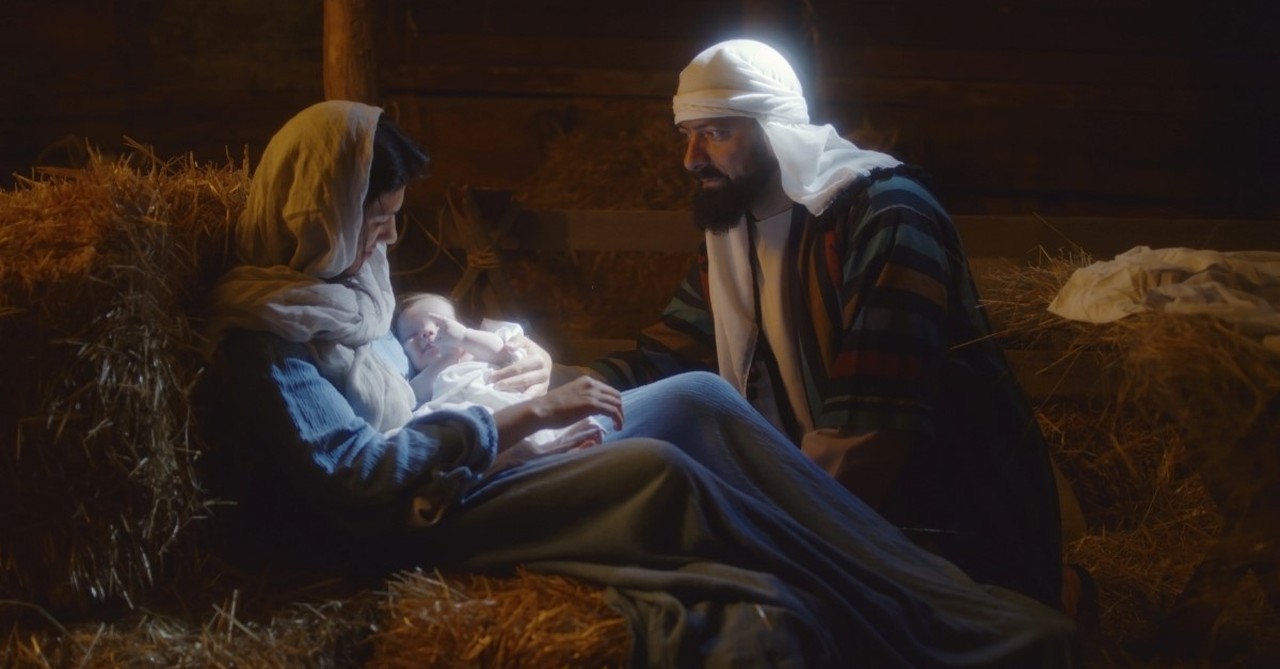
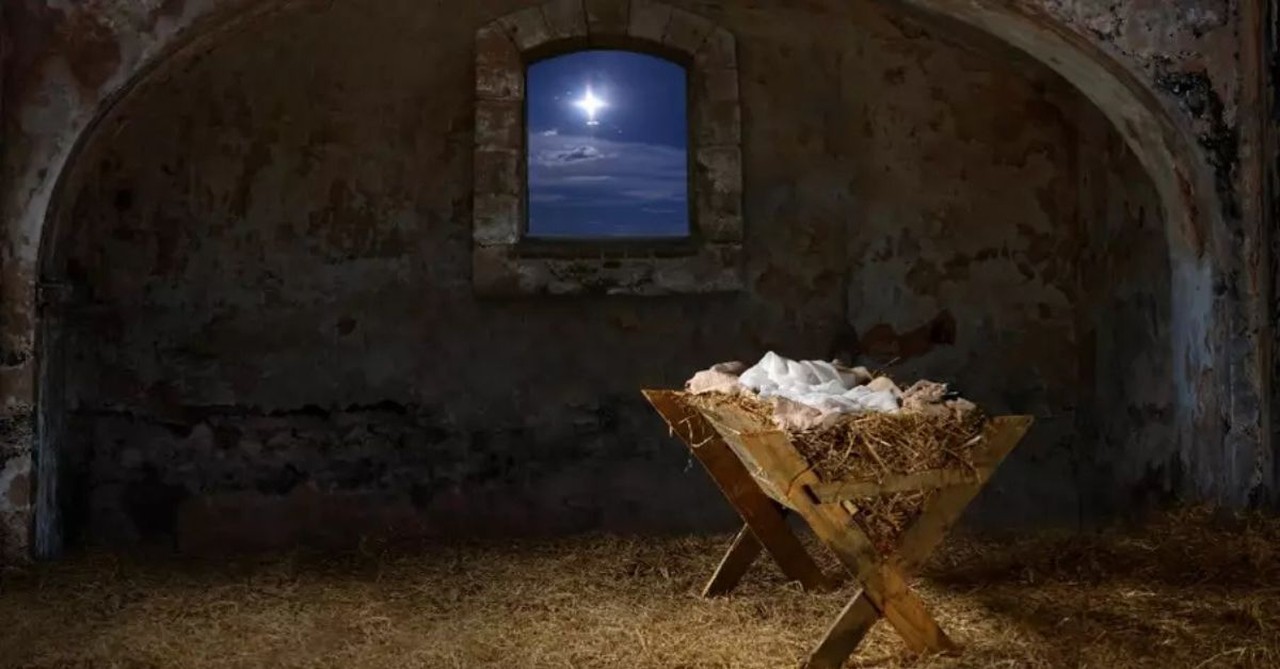

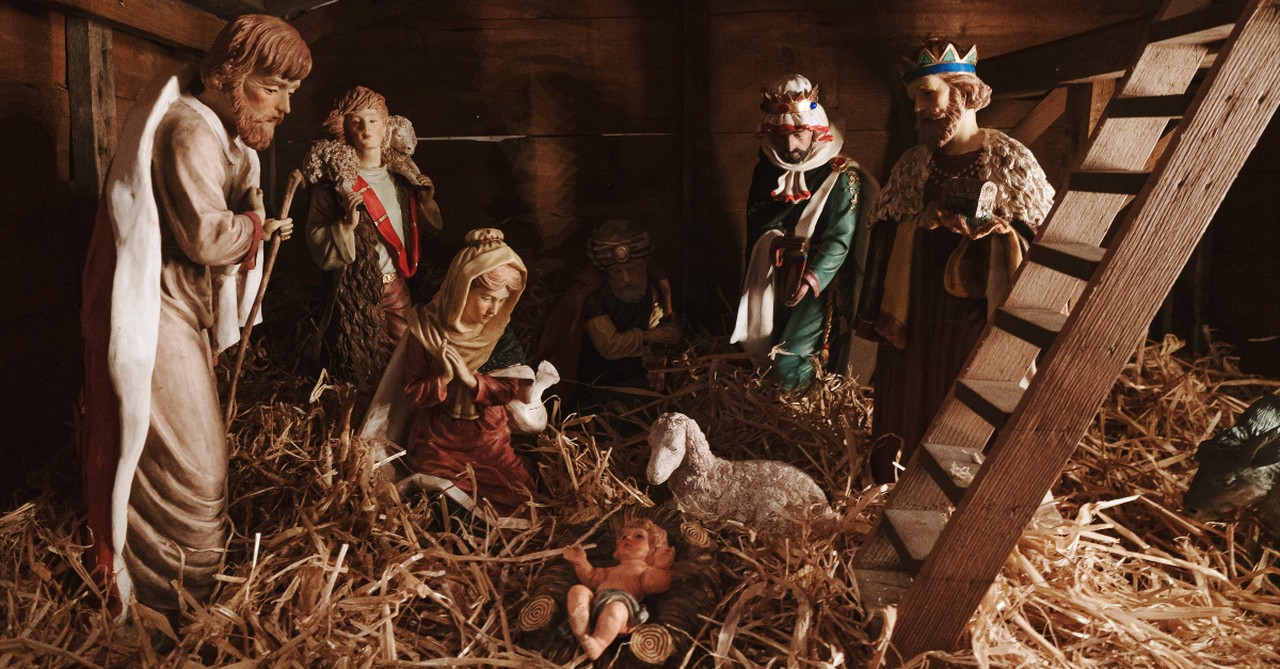



 Truth2Freedom's Blog