There are two ways to be fooled. One is to believe what isn’t true; the other is to refuse to believe what is true. —Soren Kierkegaard. "…truth is true even if nobody believes it, and falsehood is false even if everybody believes it. That is why truth does not yield to opinion, fashion, numbers, office, or sincerity–it is simply true and that is the end of it" – Os Guinness, Time for Truth, pg.39. “He that takes truth for his guide, and duty for his end, may safely trust to God’s providence to lead him aright.” – Blaise Pascal. "There is but one straight course, and that is to seek truth and pursue it steadily" – George Washington letter to Edmund Randolph — 1795. We live in a “post-truth” world. According to the dictionary, “post-truth” means, “relating to or denoting circumstances in which objective facts are less influential in shaping public opinion than appeals to emotion and personal belief.” Simply put, we now live in a culture that seems to value experience and emotion more than truth. Truth will never go away no matter how hard one might wish. Going beyond the MSM idealogical opinion/bias and their low information tabloid reality show news with a distractional superficial focus on entertainment, sensationalism, emotionalism and activist reporting – this blogs goal is to, in some small way, put a plug in the broken dam of truth and save as many as possible from the consequences—temporal and eternal. "The further a society drifts from truth, the more it will hate those who speak it." – George Orwell “There are two ways to be fooled. One is to believe what isn’t true; the other is to refuse to believe what is true.” ― Soren Kierkegaard
For all orders and degrees of men among us, and all we stand in any relation to.
For our Head of State, that God will protect his person, preserve his health, and continue his life and government long a public blessing.
Give our ruler your justice, O God, and your righteousness, Psalm 72:1(ESV) that he may defend the cause of the poor of the people, give deliverance to the children of the needy, and crush the oppressor. Psalm 72:4(ESV)
Let his rule be established with righteousness, Proverbs 25:5(ESV) and upheld with steadfast love. Proverbs 20:28(ESV) Give him long life and length of days forever and ever, and let his glory be great through your salvation. Make him glad with the joy of your presence: through the steadfast love of the Most High let him not be moved. Psalm 21:4-7(ESV)
Clothe his enemies with shame, but let him shine; Psalm 132:18(ESV) and continue him long, very long, as a foster father to your Israel. Isaiah 49:23(ESV)
John 14 In these lessons we look at some of the final instructions Jesus passed on to His disciples, and see how they are also given to us for living godly lives even in the midst of difficulty.
Theme
Prayer and Peace
In verses 13 and 14 Jesus talks about prayer, saying that prayer is effective. Notice the way He puts it: “I will do whatever you ask in my name, so that the Son may bring glory to the Father. You may ask me for anything in my name, and I will do it.”
I find that very comforting. Jesus did not say, “I want to recommend prayer to you as a spiritual discipline because it is good, periodically, to quiet your mind and heart and meditate on spiritual things. You will find that it will do you good. If it doesn’t, try yoga!” Jesus did not say that about prayer. He said, “Prayer is communicating with God; and when you pray, if you pray in my name, you will receive what you ask!”
In other words, prayer is effective. Prayer works. When you find yourself in the midst of trouble and pray for peace, God will give you peace. When you find yourself in the midst of difficulties and pray for a solution, God will work through the difficulties to bring a solution. If we feed upon the Scriptures so that the character of Christ is before our minds, and if we are trying to please Him so that what we pray for is for the glory of God (which was His aim in life), then when we pray, God will do what we ask.
One of the great texts on prayer is 1 John 3:21-22, where John the evangelist says categorically, “We have confidence before God and receive from him anything we ask.”
“Anything, John?”
“Yes, anything.”
Then he explains why. “Because,” he says, “we obey his commands and do what pleases him.” That is the formula for having your prayers answered! Obey all the written commandments of Jesus Christ, which is the way in which you demonstrate your love for Him. (As He said in John 14:15, “If you love me, you will keep my commandments.”) Then pray for those things which, so far as you know, will please God. When you do that, God will do those things and prayer will be as effective for you as Jesus Christ says it will be.
In the rest of the chapter Jesus talks about the Holy Spirit who, He says, will be with us forever (v. 16). What does it mean to have the Holy Spirit with us? We must understand that when we talk about the Holy Spirit, we are, first of all, talking about a personality, the third person of the Godhead, and not a power. That makes all the difference in the world. If the Holy Spirit is merely a power, like electricity or dynamite, then we must want as much of it as we can get—so we can use it. But since the Holy Spirit is a personality, then it is not a matter of our getting it, but of Him getting us. And when the Holy Spirit has us, He uses us to the glory of Jesus Christ.
The second thing we need to understand about the Holy Spirit is that we are talking about a divine personality and not a creature. You can manipulate a creature. You can bargain with a creature. You can say, “I will do this for you if you will do this for me.” But you cannot do that with God. Therefore, the work of the Holy Spirit in us has to be on God’s terms.
The chief work of the Holy Spirit is to glorify Jesus. He does this by regeneration, as He draws men and women to Christ in salvation. He does it by sanctification, as He molds us day by day into the image of Jesus Christ. He does it by glorification, as He perfects this work in the day of our death or at the coming of Christ.
When our Lord gets to the end of this chapter, He says in v. 27, “Peace I leave with you; my peace I give you. I do not give to you as the world gives. Do not let your hearts be troubled and do not be afraid.” Do you see how this comes back to the beginning? What did Jesus say in verse 1? He said, “Do not let your hearts be troubled.” Then, when He gets to the end, He says, “I give you my peace. And because of this you do not need to be troubled.” Jesus did not promise that life will be free of difficulties, but He did promise the means of living in the midst of our difficulties.
Study Questions
What is to characterize our prayers, and our lives, so that they are effective?
What is the chief work of the Holy Spirit? How does He accomplish this?
Application
Reflection: How has the Lord given you peace during troubled times? What lessons did He teach you? How did you glorify Him in ways that you perhaps could not have done if the difficulty had never come?
Key Point: When you find yourself in the midst of trouble and pray for peace, God will give you peace. When you find yourself in the midst of difficulties and pray for a solution, God will work through the difficulties to bring a solution.
For Further Study: Download and listen for free to James Boice’s message, “The House on the Rock.” (Discount will be applied at checkout.)
As Jesus was coming up out of the water, he saw heaven being torn open and the Spirit descending on him like a dove.
Mark 1:10
There is no greater need that we have as individuals than to receive the gift of the Holy Spirit. It is by the Holy Spirit that we are able to live as we long to live and are able to overcome the power of sin and guilt and fear within us. Therefore, the primary, elementary, most fundamental need of guilty people is the gift of the Holy Spirit. Thus, when Jesus began to take our place, there was immediately given to Him the gift of the Holy Spirit.
This is not the first time Jesus had the Spirit. It is recorded of John the Baptist that he was filled with the Holy Spirit from his mother’s womb. And certainly if that was true of John, it was also true of Jesus. He lived by the Spirit during those quiet years in Nazareth. He submitted Himself to His parents, grew up in a carpenter’s shop, and learned the trade. And through those uneventful days, Jesus lived by the power of the Spirit in His life.
Then what is happening now, when the Spirit comes upon Him like a dove? The answer is that He is given a new manifestation of the Spirit, especially in terms of power. To use the language of Scripture, Jesus was anointed by the Spirit at this point. In Old Testament times kings and priests were anointed by pouring oil upon their heads, committing them to the function and office in which they were to serve. This is the picture of what is now occurring in Jesus’ life. He is being anointed by God through the Spirit with power—power to meet the demands of the ministry upon which He is about to launch.
Do not think of this as something remote from us. All these things that happened to Jesus can happen and, indeed, must happen to us. That is the whole thrust of this teaching. He was taking our place; therefore, what happened to Him must happen to us. That is why Jesus, standing with His disciples after the resurrection, said to them, But you will receive power when the Holy Spirit comes on you (Acts 1:8). The Spirit of God must come upon us.
This is not so that we can perform dramatic acts, but, rather, so that we can have a new quality of life that is beautiful and resistless, yet quiet and gentle. Notice the symbol of the kind of power that is given here—it is a dove. Athletic teams sometimes use birds as emblems, signs of their power and ability. We have the Falcons and the Eagles—even the Ducks. But did you ever hear of a team called the Doves? No team would ever use a dove as a symbol of its power. A dove is a gentle, non-threatening bird, one that does not fight back and yet is irresistible.
This is the power that Jesus is describing—the power of love, of course—love that can be beaten and battered down and put to death and yet can rise again, until it wins the day—that amazing love Jesus released. The greatest force in the world today, without a doubt, is love. And yet it is the kind of power that does not threaten or break apart or destroy; it gathers and heals. It is rejected, turned aside, and beaten down; yet it rises again and again. So the dove is an apt symbol of the new life our Lord came to teach.
Lord, fill me with the Holy Spirit. May the Spirit Manifest through me the power of love.
Have you ever used the “pinch and open” method to zoom in on a picture on your cell phone? Today, we will zoom in on one man, Abram, and his relationship with the God of creation.In Genesis 12, God made Abram a promise. He told this man, older and childless, that he would have many descendants who would inherit the land of Canaan. More importantly, God promised that Abram would be a source of blessing to the whole world. And Abram believed Him!Often students of the Bible use the word covenant to describe a promise made by God to a specific person or people. While the idea of such a promise, or agreement, is not unique to God (people make covenants with each other too), God’s covenant is special because His character is perfect. He will never change His mind, change the deal, or go back on His word. The covenant God made with Abraham involved promises that would have long reaching implications.To Abram, a man without children into his 90s, and his wife Sarai, the promise of many children sounded preposterous. Yet their descendants, the Jewish people, would become the focus of God’s plan of redemption. Inheriting the land of Canaan was also difficult to imagine as they had spent their entire lives in tents without a land of their own. Yet in due time their descendants would move into Canaan and settle there. Finally, the idea that the whole world would be blessed by one of his descendants was incredible. When the time was right, God brought Jesus into the world, a son of Abraham, to save the world (Matt. 1:1). The Abrahamic covenant is a foundation of our faith!
Go Deeper What promise did God give to Abram? Do you trust that the God of the Bible will fulfill the promises He has made to you in His Word? If you trust in Jesus, you are a beneficiary of the promise to Abram.
Pray with Us Dear God, thank You for Your promises to Abraham, and thank You that we are the beneficiaries of these promises in Christ. Teach us how to follow You with courage and conviction. Give us the faith of Abraham!
Blessed is the man who walks not in the counsel of the wicked, nor stands in the way of sinners, nor sits in the seat of scoffers; but his delight is in the law of the LORD, and on his law he meditates day and night (PSALM 1:1-2 ESV).
When Psalm 1:1 talks about the man who is “blessed,” the Hebrew word literally means “to be happy.” Perhaps the Hebrews’ title for this song was, “How to Be Happy.” Contrary to what some people think, God is not some cosmic killjoy who loves it when we are miserable. God wants you to be happy, but he wants you to be happy his way. He wants you to be happy internally, externally, and eternally. The psalmist shows us that the key to a happy life is living a God-centered life…The truly happy person is a person who is living a rooted life, a life of purpose, a life that makes an impact on others. Real happiness is found in favoring the right people, following the right principles, and fulfilling God’s purpose. Do you want to be miserable? Live a you-centered life. Do you want to be happy? Live a God-centered life. This is how you live a high-def life. 52 Weeks Through the Psalms
Happiness begins internally as we make God the Lord of our life. But why then do so many of us try to find happiness through external means? This exotic vacation, that new wardrobe, the Corvette, the climb up the corporate ladder…all these and more seem to promise us the happiness that only a God-centered life can bring. God wants us to be happy, and he has provided us all we need to live out that happiness, that blessedness. And that provision is him: knowing him, loving him, serving him, worshiping him. This is the high-def life.
Merritt, J. (2019). 52 Weeks Through the Psalms Devotional: A One-Year Journey of Prayer and Praise. Harvest House Publishers.
But you, why do you judge your brother? Or you again, why do you regard your brother with contempt? For we shall all stand before the judgment seat of God. For it is written, “As I live, says the Lord, every knee shall bow to Me, and every tongue shall give praise to God.” So then each one of us shall give account of himself to God. (14:10–12)
The fourth reason Paul gives for every Christian’s accepting every other Christian is that the Lord alone will judge each believer. If each believer belongs to the Lord alone, and if “Christ died and lived again, that He might be Lord both of the dead and of the living” (vv. 8–9), Paul asks, why do you (the weak, see v. 3b) judge your brother? Or you again, why do you (the strong, see v. 3a) regard your brother with contempt? It is a terrible thing for men “to play God,” as it is often phrased. It is particularly inexcusable for God’s own people to intimate that presumption by judging and despising each other. The work of Christians is to serve the Lord, not to usurp His lordship by self-righteously judging fellow believers. Our concern, rather, should be for being judged ourselves by the Lord, For we shall all stand before the judgment seat of God. When we, along with all other believers, stand before the Lord on His judgment seat, His divine bēma, “each man’s work will become evident, for the day will show it, because it is to be revealed with fire; and the fire itself will test the quality of each man’s work. If any man’s work which he has built upon it remains, he shall receive a reward. If any man’s work is burned up, he shall suffer loss; but he himself shall be saved, yet so as through fire” (1 Cor. 3:13–15). As cited earlier, the apostle said of himself,
Let a man regard us in this manner, as servants of Christ, and stewards of the mysteries of God. In this case, moreover, it is required of stewards that one be found trustworthy. But to me it is a very small thing that I should be examined by you, or by any human court; in fact, I do not even examine myself. For I am conscious of nothing against myself, yet I am not by this acquitted; but the one who examines me is the Lord. Therefore do not go on passing judgment before the time, but wait until the Lord comes who will both bring to light the things hidden in the darkness and disclose the motives of men’s hearts; and then each man’s praise will come to him from God. (1 Cor. 4:1–5)
Reinforcing his argument for believer’s judgment with a quotation from Isaiah 45:23, Paul reminds his readers that it is written, “As I live, says the Lord, every knee shall bow to Me, and every tongue shall give praise to God” (cf. Phil. 2:10–11). Our responsibility is not to judge, to despise, to criticize, or in any way to belittle our brothers and sisters in Christ. We will not be called on by our Lord to give an account of the sins and shortcomings of others, but rather each one of us shall give account of himself to God.
MacArthur, J. F., Jr. (1991). Romans (Vol. 2, pp. 284–285). Moody Press.
Answerable to God
Romans 14:10–12
You, then, why do you judge your brother? Or why do you look down on your brother? For we shall all stand before God’s judgment seat. It is written:
“ ‘As surely as I live,’ says the Lord,
‘Every knee will bow before me;
  every tongue will confess to God.’ ”
So then, each of us will give an account of himself to God.
In the fourteenth chapter of Romans Paul has been explaining why Christians must not be judgmental where the conduct of other believers is concerned, and one of the reasons he has given is that none of us exists in isolation. We belong to each other and need each other. Moreover, being Christians, we belong to God. So we must not spend our time putting the other Christian down but rather we must accept as brothers and sisters those who are also trying to serve the Lord as best they know how and try earnestly to build up those other persons. Paul argued that “none of us lives to himself alone and none of us dies to himself alone” (Rom. 14:7). In the last study I cited John Donne’s “No Man Is an Island” to make that point. But there is one situation in which a man or woman is isolated, and that is when he or she stands before the judgment seat of God, as we each must do. On that day there will be no pleading someone else’s responsibility for what we have done or blaming another person for our faults or taking another’s credit for our own. As Paul writes to the Corinthians, “We must all appear before the judgment seat of Christ, that each one may receive what is due him for the things done while in the body, whether good or bad” (2 Cor. 5:10). If nothing else is able to get us thinking about our conduct rather than someone else’s, it should be this extremely serious, awesome, and inescapable moment of personal accountability.
Christians Must Give an Accounting
Our text is referring to Christians when it says, “For we will all stand before God’s judgment seat” (v. 10). It is true that unbelievers will also be judged at the final judgment, but that is not what Paul is writing about here. In this chapter he is reminding his readers that Christians will also be judged, since all must appear before God and give an accounting. I am sure this does not seem right to many Christians, because they understand rightly that because they have trusted Jesus Christ as their Savior they have passed from a state of being under judgment or condemnation to one of being justified before God. Even more, they remember how Jesus said, “Whoever hears my word and believes him who sent me has eternal life and will not be condemned [the King James Version said, ‘shall not come into condemnation’]; he has crossed over from death to life” (John 5:24). If that is true, how can a Christian possibly be judged? Or to think about Paul’s words in Romans 14, how can the apostle say, speaking specifically of Christians, “We will all stand before God’s judgment seat”? The answer, of course, is that there are various judgments spoken of in the Bible and that the word judge is used in various ways. Whenever we speak of the judgments mentioned in the Bible we are moving into the area of Bible prophecy, and this is an area in which Christians have very different views. (It is another area in which we need to be unusually understanding and accepting of one another.) However, as I read the Bible it seems to me that at least seven different judgments are mentioned: (1) a judgment of believers at the judgment seat of Christ (Rom. 14:10–12; 1 Cor. 3:11–15; 2 Cor. 5:10); (2) a series of judgments on the earth (Rev. 6–11; 15–16); (3) a judgment of the beast and the false prophet, at which time the devil will be imprisoned (Rev. 19:20; 20:1–3); (4) a judgment of the Gentile nations (Ps. 2); (5) a judgment of Israel (Ezek. 20:32–38); (6) the final judgment of Satan (Rev. 20:1–10); and (7) the final judgment of unbelievers at the Great White Throne (Rev. 20:11–15). All these judgments except the first are judicial judgments: They involve God’s punishments of individuals or nations for those peoples’ specific sins. The punishments involve spiritual or eternal death and hell suffering. The first of these judgments stands apart from the rest, because it is a judgment of believers, which means that it is not for sin and does not involve spiritual death or suffering. Nevertheless, it is still a real judgment in which the followers of Christ are to give an accounting for what they have done in this life and are either rewarded or disapproved by God on that basis. It helps to get a picture of what this involves by realizing that the phrases in Romans 14:10 rendered “God’s judgment seat” and in 2 Corinthians 5:10 rendered “the judgment seat of Christ” each contain the Greek word bêma, which refers not to the judge’s seat in a court of law but to the bench upon which the referees or judges sat at an athletic contest. It was the place from which those who did well in the contest and triumphed were rewarded with a laurel wreath and from which those who broke the rules were disqualified or disapproved. This was a well-known concept for the ancient Greeks and Romans, and Paul drew on it more than once in his writings. Thus, although Romans 14:10 and 2 Corinthians 5:10 are the only two verses in which the word bêma actually is used, we find Paul alluding to this idea elsewhere as well:
1.      1 Corinthians 9:25–27. “Everyone who competes in the games goes into strict training. They do it to get a crown that will not last; but we do it to get a crown that will last forever. Therefore I do not run like a man running aimlessly; I do not fight like a man beating the air. No, I beat my body and make it my slave so that after I have preached to others, I myself will not be disqualified for the prize.”
2.      Philippians 3:12–14. “I press on to take hold of that for which Christ Jesus took hold of me. Brothers, I do not consider myself yet to have taken hold of it. But one thing I do: Forgetting what is behind and straining toward what is ahead, I press on toward the goal to win the prize for which God has called me heavenward in Christ Jesus.”
3.      2 Timothy 4:7–8. “I have fought the good fight, I have finished the race, I have kept the faith. Now there is in store for me the crown of righteousness, which the Lord, the righteous Judge, will award to me on that day—and not only to me, but also to all who have longed for his appearing.”
The man who wrote Romans 8:38–39 (“For I am convinced that neither death nor life, neither angels nor demons, neither the present nor the future, nor any powers, neither height nor depth, nor anything else in all creation, will be able to separate us from the love of God that is in Christ Jesus our Lord”) is not worrying about his eternal salvation. He is not afraid that he may be sent to hell. But he is aware that he is going to have to give an account to God of every word he has spoken and everything he has done. And he is taking that moment of personal accountability very, very seriously.
You Must Give an Accounting
We can see how seriously he takes this by the way he writes about it in Romans 14:10–12. Notice three things. First, he emphasizes the word you by putting it in an emphatic position and repeating it twice. This is more obvious in the Greek text than in the English translations, but the New International Version tries to capture the idea by asking in verse 10, “You, then, why do you judge your brother?” Paul is referring both to the one whom he called weak earlier and to the one he called strong. That is, he is writing to you, whoever you may be. Second, Paul brings in a quotation from the Old Testament, which he often does when he comes to the end of an argument:
It is written:
“ ‘As surely as I live,’ says the Lord,
‘Every knee will bow before me;
  every tongue will confess to God.’ ”
This quotation is taken somewhat loosely from Isaiah 49:23 (see Isa. 49:18), and it is a solemn reminder of how God has said that every person who has ever lived will appear before him for judgment. So we must not think that just because we are Christians, somehow we are going to get off without an accounting. Third, Paul repeats his point in different words but with emphasis in verse 12: “So then, each of us will give an account of himself to God.” This includes you and me.
Accountable for All Things
But for what will we be held accountable? This is a serious and very practical matter, so let’s look at some of the verses that tell exactly what we are accountable for.
We are accountable for every word we have spoken. There are many verses in the Bible that tell us this. For example, Jesus spoke about how words come from the heart, a good heart producing good words and a bad heart producing bad words. He said, “I tell you that men will have to give account on the day of judgment for every careless word they have spoken. For by your words you will be acquitted, and by your words you will be condemned” (Matt. 12:36–37). In the letter to the Ephesians Paul wrote, “Do not let any unwholesome talk come out of your mouths, but only what is helpful for building others up according to their needs” (Eph. 4:29) and “Nor should there be obscenity, foolish talk or coarse joking, which are out of place, but rather thanksgiving” (Eph. 5:4). This does not mean that a Christian can never laugh or tell jokes. We do not have to be serious all the time. But it does mean that there should be a certain gravity about us as befits those who are aware of the gospel of the grace of God and of the fact that many are perishing because they will not turn from their sins and believe on Jesus Christ. And even if we laugh and tell jokes, which we will at times, we will not be telling dirty jokes. On the contrary, we will try to edify others even by our humor. We will pay attention to the words we hear and read too. Donald Grey Barnhouse had some useful thoughts on this in his study of Romans: I think it is fair and logical to conclude that if the believer must account for every careless word, this applies not only to what he says, but to what he allows himself to hear and read. If you spend several hours a week watching television, you can be almost certain that the thing has mastery over you; but if you watch it only occasionally and in order to relax after a long period of work or study, that is a different matter. I know people who are better acquainted with the comic strips than they are with the Bible. They say that they are too busy for Bible study, but they have at least fifteen minutes a day for the comics and another fifteen to listen to news broadcasts. I read some magazines from back to front, just to laugh at the cartoons, and throw them down without reading any of their articles or stories. However, I am not your judge, and you may not be mine. We are each answerable to the Lord.
There is a positive side to this, however. Although our idle words will be condemned, our public confessions of Jesus Christ and words that are spoken in praise of God to bring him glory will also be remembered forever. For the text in Matthew also says, “By your words you will be acquitted” (Matt. 12:37). I have always been encouraged by what is said concerning the people of God who lived in the time of Malachi: “Then those who feared the Lord talked with each other, and the Lord listened and heard. A scroll of remembrance was written in his presence concerning those who feared the Lord and honored his name” (Mal. 3:16). This means that God hears our good, faithful, and true words too, and that he remembers them forever. I believe that no word spoken for Jesus or in Jesus’ name will ever be wasted or fail of its reward.
We are accountable for the talents that have been given to us. We should remember the parable Jesus told in various forms in which a king or owner of an estate left cities to be managed by his servants or gave varying numbers of talents to them, returning later to demand an accounting. In one of these, he dismissed the manager, saying, “What is this I hear about you? Give an account of your management, because you cannot be manager any longer” (Luke 16:2). In another he condemned the faithless steward for being “wicked” and “lazy” (Matt. 25:26) but praised the faithful servants, saying, “Well done, good and faithful servant! You have been faithful with a few things; I will put you in charge of many things. Come and share your master’s happiness” (Matt. 25:21, 23). Have you ever taken stock of the talents God has given you? I do not mean just your particularly strong points or strong skills, but everything you are. Have you ever done a complete inventory of who you are so that you may give it all to God for his service and glory? I am a fifty-five-year-old white male whom God called to the ministry at an early age so I would be able to direct every stage of my education to that end. I was raised in a Christian home, taught the Bible from childhood onward, was influenced by strong men and women of God, and was placed in Philadelphia in a strong city church to teach the Bible to the people God sends to serve there. We are called to model city ministry at Tenth Presbyterian Church, and we have done it. Everything that is good in me has come from God, and my responsibility is to take those good gifts and offer them up to God in his service, making them count for him in every way I can. That is my inventory. It is that for which I must give an accounting. Your case is different. You have an entirely different background and entirely different training. You may have been called to be a teacher or a doctor or a secretary or the CEO of some company. You may be black or white or some other color. You may have a high IQ or a low IQ. Whatever you have, it has been given to you by God, and you are responsible to God for how you use it. Are you using it for him? If you do not know the answer to that question, you need to sit down quietly, take personal inventory, and ask God to show you what you can do that will make a difference for him in this life and for eternity.
We are accountable for how we use our money. Nothing in life so mirrors our values and priorities as what we do with our money, which is why someone has said, “Let me look at your checkbook, and I will tell you what you are.” What you do with your money tells volumes about you. This is why the Bible has so much to say about money. It is why Jesus spoke about it. Jesus said: Do not store up for yourselves treasures on earth, where moth and rust destroy, and where thieves break in and steal. But store up for yourselves treasures in heaven, where moth and rust do not destroy, and where thieves do not break in and steal. For where your treasure is, there your heart will be also.… No one can serve two masters. Either he will hate the one and love the other, or he will be devoted to the one and despise the other. You cannot serve God and Money.
Matthew 6:19–21, 24
What would I discover if I were to examine your checkbook? You would have payments on the house, checks for the heating and electricity, money for food, hospital and doctors’ bills, perhaps education bills—and taxes, of course, lots of taxes. But what beyond that? Would I find more money being spent on a second home, a luxury car, the country club, or entertainment than for Christian work? What percentage of your income would I find given to the support of your local church? Or to missions? Or to help people you know who are in serious financial need? If you give anything to your church or charitable causes, you probably consider yourself to be very generous, a great philanthropist. But would that judgment hold up to a really objective scrutiny? Would God be satisfied with your priorities? Earlier I mentioned Donald Grey Barnhouse. In his study he refers to a cartoon in which a farmer is sitting at a table with nine giant potatoes in front of him and a tenth potato, his tithe to God, sitting off by itself. The isolated potato is marked “The Lord’s portion,” and the caption expresses the words of the farmer who is saying, “I don’t see how any fellow could be mean enough to give less.” True enough. The caption is meant to commend the farmer as a man with a surrendered heart. But I find myself thinking, “Nine for me and one for God? Is even that a strong enough priority? When we have been given so much and have such abundance, is that all we can do, should do, or would do if we really loved the Lord with all our hearts and minds and souls and were aware that one day we will have to give an accounting of how we have spent our money?”
We are accountable for how we have used our time. Finally, you will have to give an accounting for your time. How are you using your time? Do you waste long hours watching television? Or if you work all the time, are you working for yourself only, or do you work for others and share your time with your family, or with others you could help? Do you invest some of your time in Bible study, witnessing, or some type of Christian work?
What You Do Now Counts
Let’s close by returning to the points Paul is making.
Stop judging your neighbor. Most of us are guilty of this, and it is one of the most harmful things that takes place in Christian churches. We think that because there are standards to be maintained we must be snooping out the shortcomings of others. We are not called to do this. If you are worried about standards, make sure you live up to them yourself. Or let the people God has appointed to deal with them—the elders in a local church—do the shepherding work.
Take inventory of your own actions and behavior. Unless you are perfect or nearly perfect, which I doubt you are, that will be enough to keep you busy for a very long time, and we will all be better off. Besides, you will help others better that way, because people are always helped more by a loving example of what should be done than by moral nitpicking or outright condemnation.
Do what you can to build up the body. Being judgmental tears down. Modeling builds up, and that is what we most need. And remember that it is spiritual work that will last. Most of what you have been spending your time on will pass with the passing of this world and be gone forever. Accountability is always a sobering message. But it is also encouraging, because it means that what you do really counts.
Boice, J. M. (1991–). Romans: The New Humanity (Vol. 4, pp. 1755–1762). Baker Book House.
10–12. But you, why do you pass judgment on your brother? Or why do you look down on your brother? For we shall all stand before the judgment seat of God. For it is written,
“ ‘As surely as I live,’ says the Lord,
‘Before me will every knee bow down,
And every tongue will acclaim God.’ ”
So then each of us will give an account of himself to God. In verse 3 Paul had warned the strong not to look down on the weak, and the weak not to condemn the strong. That this was nevertheless actually occurring and is an inexcusable sin he makes clear in verse 10, where, in reverse order (now referring to the weak first of all) the apostle accusingly asks why one church member is sinning against another. These critics should bear in mind that the one whom they condemn or despise is, after all, a brother. Note how this term of endearment, which has not been used since 12:1, indicates the seriousness of the sin that was being committed. See further on pp. 52, 214, 215. Also, those who are passing judgment, or are looking down on a brother, must remember that not they are lords, but Christ is the Lord; and accordingly, that not they are the legitimate judges, but Christ is the Judge. They are therefore arrogating to themselves a prerogative that belongs to Christ and to God alone. Says Paul, “We shall all stand before the judgment seat of God.” In confirmation of this fact he quotes from the Old Testament. As happens frequently, so also here, the quotation is composite: the first part, “ ‘As surely as I live,’ says the Lord,” may be regarded as taken from Isa. 49:18 (cf. Num. 14:28; Deut. 32:40; Ezek. 33:11); the rest of the quotation, “Before me will every knee bow down, and every tongue will acclaim God,” is from Isa. 45:23, according to the LXX text, with transposition of two words, but without change in meaning. The quoted words do indeed confirm the thought Paul has expressed, namely, that in the end every person, without exception, will pay homage to God (cf. Phil. 2:10, 11), recognizing him as Sovereign over all, and acclaiming him as being the righteous Judge of all. That there will indeed be a universal judgment is the teaching of Scripture (Eccl. 12:14; Eph. 6:8; Rev. 20:11–15). That believers as well as unbelievers will stand before the throne of judgment is also clear from Acts 10:42; 1 Cor. 3:8–15; 4:5; 2 Cor. 5:10, and from the teaching of Jesus (Matt. 16:27; 25:31–46). That it is, indeed, God who through Christ will judge is taught in Matt. 16:27; 25:31–46; John 5:22; Acts 10:42; 1 Cor. 4:5; 2 Cor. 5:10. It is as stated in Rom. 2:16 (see pp. 98, 99), “God, through Jesus Christ, will judge men’s secrets.” Repeating the thought of verse 10 (“For we shall all stand before the judgment seat of God”), Paul concludes his reflection on this theme by stating, “So then each of us will give an account of himself to God.” Note: each of us! Not a single one will be exempted. Also, the account will have to be given not to men but to God, the Omniscient, the Holy and Righteous One, who is also the God of Love.
Hendriksen, W., & Kistemaker, S. J. (1953–2001). Exposition of Paul’s Epistle to the Romans (Vols. 12–13, pp. 460–461). Baker Book House.
For our heart shall rejoice in him, because we have trusted in his holy name. (Psalm 33:21)
The root of faith produces the flower of heart-joy. We may not at the first rejoice, but it comes in due time. We trust the Lord when we are sad, and in due season He so answers our confidence that our faith turns to fruition, and we rejoice in the Lord. Doubt breeds distress, but trust means joy in the long run.
The assurance expressed by the psalmist in this verse is really a promise held out in the hands of holy confidence. Oh, for grace to appropriate it. If we do not rejoice at this moment, yet we shall do so, as surely as David’s God is our God.
Let us meditate upon the Lord’s holy name that we may trust Him the better and rejoice the more readily. He is in character holy, just, true, gracious, faithful, and unchanging. Is not such a God to be trusted? He is all wise, almighty, and everywhere present; can we not cheerfully rely upon Him? Yes, we will do so at once and do so without reserve. Jehovah-Jireh will provide; Jehovah-Shalom will send peace; Jehovah-Tsidkenu will justify; Jehovah-Shammah will be forever near; and in Jehovah-Nissi we will conquer every foe. They that know Thy name will trust Thee; and they that trust Thee will rejoice in Thee, O Lord.
Published January 1, 2025In a troubling trend, police in Minnesota, Ohio, Florida, Arizona, and Louisiana have arrested a number of church leaders in separate cases for failing to report alleged child abuse.
The wave of cases, which have arisen in the last month, raises questions about church and ministry accountability and their legal and moral obligations to protect children in their care, specifically by alerting civil authorities when leaders suspect abuse.
This basic duty has been a fixture of American law for well over half a century. Since 1967, every state has enacted some form of mandatory child-abuse reporting law.
But in nearly 60 years, there have been changes, and what has changed most is not whether the laws exist, but the scope of those laws: who must report, what they must report, the penalties for failing to do so, and understanding exemptions.
Because of these factors (which have changed across states and denominations as much as over time), many church leaders are unaware or uncertain about their own reporting responsibilities within these laws.
Trust in the gospel accounts, despite their Christian authorship, is a topic that comes up often in conversations about the reliability of the New Testament. As a detective who has spent years evaluating eyewitness testimony, it’s not surprising that people ask me, “How can the gospels be trusted if Christians wrote them?” The assumption seems to be: if you want anything truly credible about Jesus, it can only come from a non-Christian source. But let’s unpack why that line of reasoning falls short and why, in fact, Christian authorship can enhance—not diminish—the reliability of these accounts.
If you’ve ever spent time in a courtroom, you’ll know that trusting a witness out-of-hand is never wise. I’ve learned that personally by being burned during cross-examinations and investigation broadcasts. It’s a risky thing to place confidence in a witness before carefully vetting their story. So, in my work as a detective, I don’t merely accept what witnesses say—I rigorously test them. There’s a standard template we apply to every eyewitness account: Were they truly present to witness what they describe? Can their story be corroborated by evidence or other witnesses? Has their narrative remained consistent over time? Do they possess any biases that would tempt them to misrepresent the truth? These are the same four areas I employ when I evaluate the gospel authors.
Once a witness has been evaluated across these dimensions and they pass the tests, the judge instructs the jury to trust their testimony. Importantly, testing—rather than dismissing—the witness on account of their perspective or experiences is the gold standard for truth-seeking. The same method applies when looking at Matthew, Mark, Luke, and John. Some object, saying, “Christians are biased.” But there’s an obvious oversight here. Yes, Matthew ultimately became a Christian, but look closely at his background. He started out as a tax collector named Levi—not a member of John the Baptist’s group, not a friend of Peter or Andrew, not one who grew up expecting a Messiah. He encountered Jesus, witnessed miracles, listened to teaching, and after observing all these things firsthand, became a follower. Don’t hold his subsequent transformation against him as if it poisons the well. The fact that someone who wasn’t predisposed to belief chose to follow Christ after seeing what he saw lends real weight to the testimony.
This same logic applies broadly. If one were to insist on testimony only from those entirely indifferent or hostile to the subject, that standard would disqualify nearly every historical source we trust in any field. In my experience, the most powerful testimony often comes from those who once had no connection, or even had some bias against, the truth they later defended. Matthew’s transformation wasn’t the result of a preset agenda; it was the natural outcome of encountering the evidence. Likewise, the gospel writers did not begin as Christian evangelists. Their conversion followed the events they witnessed—after the fact, not before. Dismissing their testimony because of their later convictions misses the point of investigative work and the nature of eyewitness reliability.
If one were to insist on testimony only from those entirely indifferent or hostile to the subject, that standard would disqualify nearly every historical source we trust in any field. Share on X
In reality, authentic eyewitness accounts are not weakened by the personal convictions the witnesses develop because of what they’ve seen. They’re strengthened by the lived experience that led to those convictions. No honest investigator disqualifies a witness solely on the basis that their experience transformed them. Rather, the investigator looks for evidence of truthfulness, opportunity, supportive facts, and integrity over time. That’s how I’ve approached the gospel accounts—and why I find them trustworthy. Don’t blame the gospel authors for becoming Christians after what they saw. Instead, recognize that their transformation is a testament to the power and reality of what they witnessed. That’s the kind of testimony I look for, and it’s why, as both a detective and a Christian, I find the gospel accounts entirely credible.
When facing the impossible or navigating something difficult, it’s natural for your mind to start calculating. You begin running all the scenarios, weighing the chances of success or failure, and trying to figure out what combination of effort, timing, and circumstances will produce the outcome you want. It becomes almost like solving an equation in your head, which can look like:
10 Hours of Studying + Going to office hours = Passing the exam
More networking + a perfect résumé = Getting the job
Therapy + Time = Overcoming anxiety
Consistent date nights + Better communication = Saving the marriage
Working harder + Befriending the right people = Opening the right doors
Wouldn’t it be nice if life was so simple? Yet, the reason why we worry and ruminate is because our desired outcomes are never guaranteed, no matter how hard we try to perfectly line up the variables. The world does not abide by our calculations, and God does not operate by our equations. This is why, when Joshua and Israel were facing the impossible task to leave the wilderness and claim the Promised Land, God said, “Haven’t I commanded you: be strong and courageous? Do not be afraid or discouraged, for the Lord your God is with you wherever you go” (Joshua 1:9 CSB).
God did not ask Joshua to calculate his odds of accomplishing this gargantuan feat. If he did, he likely wouldn’t have tried to leave the wilderness and cross the Jordan River. Just a generation before, the Israelites were slaves in Egypt, not a great nation with military prowess. How were they to cross unfamiliar terrain, break unbreakable walls, and defeat impenetrable armies?
And yet, God made His commands clear. Be strong and courageous. Don’t ruminate, overthink, or control. Don’t quit because the odds are against you. Don’t lean on your own understanding. Don’t assume just because the optics look bleak. In giving this command, the Lord wasn’t insinuating that Joshua must ignore the gravity of the challenge ahead. Rather, He was asking Joshua to trust the variable that changes everything: the Presence of God. The deciding factor in their victory was not going to be who Israel were, but rather, whose they were.
The Variable That Changes Everything
God’s command in Joshua 1:9 comes with an invitation to trust His Presence. If Joshua and the Israelites only went by the calculations of what they saw and heard about the land ahead, they would have stayed put. They would have made plans to bypass the inevitable risk of faith and do what they could do by their own abilities.
Today, that can look like avoiding change because it makes more logistical sense than to take the step toward a missional assignment that God has placed on your heart. It can look like refusing a leadership position offered to you by the community because you feel like your life is managed just perfectly at the moment. Perhaps you feel called to give generously to someone in need,, but you end up refusing to take the chance on your well-thought-out budget. Everyone wants a blessing until they actually have to step out in faith with the One who blesses.
Strength and courage weren’t virtues that Joshua had to conjure up on his own. You aren’t disobedient if you tremble before a leap of faith. You aren’t lacking faith just because your heart races before facing the unknown. Strength and courage are the fruits of continually, tenaciously, and unapologetically following a God that is good, able, and near.
This isn’t about being the perfect Christian that valiantly leaps over every challenge. It’s about obeying Him even after you fail, following Him through the fire, and trusting Him amidst lack.
Why?
Because the loyal company of our Savior changes everything. It’s the variable that guarantees the grace to do what we cannot accomplish on our own. It allows us to draw confidence from God’s wisdom and power.
Obeying the Lord Is Both Possible and Worth It
Now, does this mean that we have the assurance to boldly do whatever we want? No, when God commanded Joshua to be strong and courageous, it was a command to choose wholehearted obedience into the Promised Land. Although the Israelites were created for the Promised Land, they were not created to live for it. Instead, they were created to love and follow God. Joshua 1:9 is not an inspirational hurrah for you to go grab a hold of the things you want. Instead, it is an assurance that obeying Him is both possible and worth it. After all, the battle belonged to the Lord long before Joshua ever lifted a sword.
The same is true for any of us who struggle to believe that obeying God will help us get through our mess. Maybe you are tempted to make compromises to alleviate your worries. Maybe you want to skip out on the Bible study and prayer time because it feels pointless. Anxiety and rumination can feel like wise friends when we are faced with unprecedented battles. However, when God told Joshua to be “strong and courageous,” it wasn’t a gentle suggestion. It was a command, and that command came with a promise: the Lord your God is with you wherever you go.
Strength and courage do not come from perfect planning, airtight strategies, and favorable circumstances. They come from the empowering Presence of God Himself. This changes everything! Now you know that divine strength and courage are no longer something you earn, but instead, it’s something you step into with obedience.
You don’t have to wait until you feel ready, capable, or confident to do the difficult things. What are God’s marching orders for you today? What does the battle ahead look like for you? Be strong and courageous. He’ll be with you.
Step into courage, faith, and victory by studying the Book of Joshua.
Are you ready to leave behind fear, doubt, and uncertainty to embrace the promises God has for your life? In Joshua: Be Strong and Courageous, Faith Eury Cho leads you through this powerful Old Testament book, equipping you to navigate life’s challenges with unwavering trust in God.
for the wishing is present in me, but the doing of the good is not. For the good that I wish, I do not do; but I practice the very evil that I do not wish. (7:18b–19)
Paul had a deep desire to do only good. The wishing to do God’s will was very much present within his redeemed being. The me used here does not correspond to the me of the first half of this verse but to the I in verse 17. Unfortunately, however, the perfect doing of the good that his heart wished for was not present in his life. Slightly rephrasing the same truth, he says, For the good that I wish, I do not do. As noted in regard to verse 15, Paul is not saying that he was totally incapable of doing anything that was good and acceptable. He is saying that he was incapable of completely fulfilling the requirements of God’s holy law. “Not that I have … already become perfect,” he explained to the Philippian church, “but I press on in order that I may lay hold of that for which also I was laid hold of by Christ Jesus. Brethren, I do not regard myself as having laid hold of it yet; but one thing I do: forgetting what lies behind and reaching forward to what lies ahead, I press on toward the goal for the prize of the upward call of God in Christ Jesus” (Phil. 3:12–14). As a believer grows in his spiritual life, he inevitably will have both an increased hatred of sin and an increased love for righteousness. As desire for holiness increases, so will sensitivity to and antipathy toward sin. The other side of the predicament, Paul says, is that I practice the very evil that I do not wish. Again, it is important to understand that this great inner struggle with sin is not experienced by the undeveloped and childish believer but by the mature man of God. David was a man after God’s own heart (1 Sam. 13:14) and was honored by having the Messiah named the Son of David. Yet no Old Testament saint seems a worse sinner or was more conscious of his own sin. Particularly in the great penitential psalms 32, 38, and 51, but in many other psalms as well, David agonized over and confessed his sin before God. He was so near to the heart of God that the least sin in his life loomed before his eyes as a great offense.
MacArthur, J. F., Jr. (1991). Romans (Vol. 1, p. 388). Moody Press.
Who is the “Man” of Romans 7?
Romans 7:14–20
We know that the law is spiritual; but I am unspiritual, sold as a slave to sin. I do not understand what I do. For what I want to do I do not do, but what I hate I do. And if I do what I do not want to do, I agree that the law is good. As it is, it is no longer I myself who do it, but it is sin living in me. I know that nothing good lives in me, that is, in my sinful nature. For I have the desire to do what is good, but I cannot carry it out. For what I do is not the good I want to do; no, the evil I do not want to do—this I keep on doing. Now if I do what I do not want to do, it is no longer I who do it, but it is sin living in me that does it.
There are few passages in the Bible over which competent Bible students have divided more radically than the last half of Romans 7, beginning with verse 14. This is a section of the letter in which Paul is speaking of himself, describing a fierce internal struggle with sin. And the question is: Of what stage in his life is he speaking? Is he speaking of the present, that is, of the time of his writing the letter—when he was a mature Christian, indeed an apostle? Or is he speaking of himself as he was in the past, before his conversion? Or is the true answer somewhere in between? Who is the “man” of Romans 7? This question has divided Bible students from the earliest days of the church and continues to divide them today. It is a serious question, too. Some problems of Bible interpretation may be of limited importance, the specifics of prophecy, for instance. But this is a section of Romans in which Paul is discussing the Christian life. He seems to be answering two related questions: How can I live a triumphant Christian life? How can I achieve victory over sin? Any true Christian wants the answer to those questions. So, unlike differing opinions concerning other, less practical parts of Scripture, we all instinctively take seriously the discussion of any diverse interpretations of this passage. How should we proceed? In this study I want to present four main interpretations of these verses and evaluate each one.
The “Man” of Romans 7 Is Unsaved
The first view is that the “man” of Romans 7 is the apostle Paul as he was while unregenerate, that is, when he was not yet a Christian. This seems to have been the dominant view in the early church. In fact, the great Saint Augustine held it at first, though later, as a result of his maturing study of the Bible, he came to believe that what is said here is true of the regenerate person, too. According to this view, Paul could not say the things he says here if he were truly a Christian. What things? Well, that he is “a slave to sin,” for example (v. 14). This claim is particularly troublesome because Paul has previously said, “But thanks be to God that, though you used to be slaves to sin, you wholeheartedly obeyed the form of teaching to which you were entrusted. You have been set free from sin and have become slaves to righteousness” (Rom. 6:17–18). If Paul is speaking as a Christian, how can he say that Christians have been freed from sin’s slavery in chapter 6 and then say that he is himself “a slave to sin” in chapter 7? Paul also says, “Nothing good lives in me” (v. 18). True, he qualifies that at once by adding, “that is, in my sinful nature.” But even so, can a believer really speak in these terms, knowing that God dwells within him and is working “to will and to act according to his good purpose” (Phil. 2:13)? A bit further on Paul cries, “What a wretched man I am! Who will rescue me from this body of death?” (v. 24). Doesn’t he know that he has been rescued by Christ? How can any true Christian make that statement? In spite of the appeal of this interpretation, which is considerable, the view has several major flaws which in our day have caused most commentators to abandon it. Let me suggest a few.
What Paul says of himself in Romans 7:14–24 is not what Paul says of his pre-Christian state in other passages. Paul is distressed over his inability to fulfill the law’s just demands. He is wretched as a result of his failure. He is calling out for deliverance by someone outside himself. But what unbeliever ever thinks like that? What Paul thought of himself before his conversion is summarized in Philippians 3, where he claims to have been “faultless” as far as “legalistic righteousness” is concerned (v. 6). The unbeliever is not distressed by his failure to keep God’s law. On the contrary, he is satisfied with his performance. He is self-righteous and self-confident. He does not even know he needs to be saved. Here is the problem in a nutshell: In Romans 7:18, Paul says, “I have the desire to do what is good, but I cannot carry it out.” But when he was an unbeliever he would have said, “I have the desire to do what is good, and I am doing it.”
Paul’s delight in God’s law, expressed in this passage, cannot be found in unbelievers. What he says in Romans 7 is that “the law is good” and that “in my inner being I delight in God’s law” (vv. 16, 22). Is that the attitude of the unbeliever? Not according to Paul’s teaching elsewhere in Romans. Just before these verses, Paul has spoken of the effects of the law on sinners, saying that it exposes sin and provokes all kinds of evil desires, that is, rebellion against its demands. In the following section, in Romans 8, Paul argues that “the sinful mind is hostile to God. It does not submit to God’s law, nor can it do so” (v. 7). The “man” of Romans 7 is one who has moved beyond the hostility to God’s law exercised by the unregenerate person.
The present tense is used throughout the second half of Romans 7, and this is an apparently meaningful contrast with the past tense employed earlier. In verses 7–13, the verbs are in the aorist tense: “Once I was alive apart from law; but when the commandment came, sin sprang to life and I died” (v. 9); “sin … put me to death” (v. 11); “sin … produced death in me through what was good” (v. 13). Those sentences (to which I have added italics) are written of a past experience. In verses 14–24, the present tense is used: “I am unspiritual” (v. 14); “I do not understand what I do” (v. 15); “I agree that the law is good” (v. 16), and so on. It is hard to deny that this is speaking of Paul’s present, and therefore a truly Christian, experience. As J. I. Packer says, “Paul’s shift from the past tense to the present in verse 14 has no natural explanation save that he now moves on from talking about his experience with God’s law in his pre-Christian days to talking about his experience as it was at the time of writing.”
The “Man” of Romans 7 Is a “Carnal Christian”
The second view is a very popular one today. It is best known by the phrase “the carnal Christian.” It holds that Paul is indeed speaking of himself as a Christian (for some of the reasons outlined above) but that he is speaking of himself (or of himself theoretically) as being in an immature or unsurrendered state. Defenders of this view observe that the “man” of Romans 7 is defeated and that this should not be true of the mature Christian. They observe how strongly the focus is on the self—the word “I” occurs twenty-six times in verses 14–24, and the words “me,” “my” or “myself” twelve times more. The Holy Spirit, the secret to victory in the Christian life, is not mentioned in this chapter at all. This view sees an enormous contrast between Romans 7, which is thought of as a chapter of defeat, and Romans 8, which is thought of as a chapter of victory through the Holy Spirit’s power. Sometimes a Christian is told that the secret to victory is to get “self” off the throne of one’s life and allow the Spirit to take control—to stop living in Romans 7 and get on to Romans 8. Is this view valid? Is this what these verses are all about? This is not my understanding, as I pointed out in a previous study. But let me begin by saying something positive. The truths in “the carnal Christian” theology are that Christians do indeed have a sinful nature and that they are not able to have victory in their lives apart from the Holy Spirit. This is the evident movement from chapter 7 to chapter 8. The victory that we are to have is not our doing. It is “through Jesus Christ our Lord” (v. 25) and by the Holy Spirit (Rom. 8). Nevertheless, the weaknesses of this view (and I must add also the errors and dangers) far outweigh the truths. The chief weakness is the doctrine of “the carnal Christian” itself. This view postulates a two-stage Christian experience in which, in stage one, a person accepts Jesus as Savior only, without accepting him as Lord of his or her life, and then later, in stage two, goes on to receive him as Lord. This is just not biblical. Above all, it is not what Paul is saying or has been saying in Romans. One rule of interpretation is that the meaning of any word or phrase must be determined by its context, and if this is applied to Paul’s use of the word carnal, or fleshly (NIV translates “sinful nature”), in these chapters, the result is something quite different from “the carnal Christian” theology. If we look at Romans 8:5–8, we see that these verses contrast an individual controlled by the carnal, or sinful, nature with one controlled by the Spirit. But the contrast is not between worldly Christians and those who have “progressed” to the point of taking Jesus Christ as Lord. The contrast is between those who are Christians and those who are not Christians at all. Paul declares that “the mind of sinful man is death, but the mind controlled by the Spirit is life and peace; the sinful mind is hostile to God. It does not submit to God’s law, nor can it do so” (vv. 6–7). Does this mean, then, that when Paul uses the word carnal (or fleshly) of himself in Romans 7, he is speaking of himself as an unbeliever, the first of the views discussed? No, we have already seen reasons why that is not correct. What does it mean then? It means that the struggle Paul is describing is between himself as a new creature in Christ, the new man, and that old, sinful, un-Christian nature that he nevertheless retains in some measure. The struggle is part of what it means to be a Christian in an as-yet unperfected state. It does not mean that there is a first or early stage in the Christian life that may be described as “carnal.” We must remember that the flow of Romans 5 through 8 is from justification by faith to glorification and that chapters 6 and 7 are parentheses, inserted between chapters 5 and 8 in order to deal with Antinomianism (chap. 6) and the purpose and limits of the law (chap. 7). There is no two-stage doctrine of Christianity here at all.
The “Man” of Romans 7 Is Under Conviction
A third view has been advanced by D. Martyn Lloyd-Jones, following, it would seem, a suggestion made a century ago, though briefly, by Frederick Godet. This approach takes everything that has been said thus far with full seriousness, drawing the apparently paradoxical conclusion that what Paul says here can be said of neither the unregenerate nor the regenerate man. The unsaved person cannot speak of the law as Paul does. He does not understand its good and spiritual character. He is in rebellion against it. On the other hand, the saved person cannot speak in such a defeated manner. He cannot cry out for deliverance, because he knows he has already been delivered from the power of sin through the work of Christ. The “man” of Romans 7 is therefore one who does not yet know who can deliver him. But where does that leave us? If Paul is not speaking of a regenerate or an unregenerate person, of whom is he speaking? Lloyd-Jones answers that he is speaking of one who has been awakened to his personal lawlessness and spiritual inability by the Holy Spirit but who has not yet been made a participator in the new life of Jesus Christ. He is one who, in the language of the American revivals of the eighteenth century, may be said to have been “awakened” to the truth of his condition but who is not yet “revived.” The work has been started, but it has not yet come to fruition. Here is how Godet put it: “The apostle is speaking here neither of the natural man in his state of voluntary ignorance and sin, nor of the child of God, born anew, set free by grace, and animated by the spirit of Christ; but of the man whose conscience, awakened by the law, has entered sincerely, with fear and trembling, but still in his own strength, into the desperate struggle against evil.” What shall we say of this interpretation? It sounds reasonable, certainly. It is an attempt to take the data seriously, and it is advanced by sound scholars, particularly Martyn Lloyd-Jones, who examines each phrase carefully. Still, it has problems.
It does not account for the change from the past tense of the verbs in verses 1–13 to the present tense, beginning with verse 14. According to this view, what Paul says in verses 14–24 is of the past. It concerns the time of his own spiritual awakening, perhaps associated with his role in the martyrdom of Stephen when he began to “kick against the goads” (Acts 26:14). There would be no reason for the present tense at all. The only way Lloyd-Jones can deal with this is to say that the change is of no real importance.
It is not true that the “man” of Romans 7 does not yet know who can deliver him. Paul is writing of a struggle we all feel at times, wanting to do what is right while being unable in himself to do it. But as soon as he cries out, “What a wretched man I am! Who will deliver me from this body of death?” he has the answer: “Thanks be to God—through Jesus Christ our Lord!” (vv. 24, 25). There is no reason to separate the problem from the answer temporally, as if Paul somehow passes from a state of conviction to a state of grace between the last two verses of the chapter.
The “Man” of Romans 7 Is a Mature Christian
The final view, which is that of most Reformed commentators from the time of the later Augustine forward, including Luther, Calvin, and the Puritans, is that Paul is writing of himself as a mature Christian, describing the Christian’s continuing conflict with sin, which we all experience, and teaching that there is no victory in such struggles apart from the Holy Spirit. To put it in other words, since Romans 7 is discussing the function and limits of the law, Paul is saying that just as the law of God is unable to justify a person (justification is made possible by the work of Christ), so also is the law unable to sanctify a person. Sanctification must be accomplished in us by the Holy Spirit. Here is how Packer summarizes these verses:
Alive in Christ, his heart delights in the law, and he wants to do what is good and right and thus keep it perfectly.… But he finds that he cannot achieve the total compliance at which he aims. Whenever he measures what he has done, he finds that he has fallen short (v. 23). From this he perceives that the anti-God urge called sin, though dethroned in his heart, still dwells in his own flawed nature.… Thus the Christian’s moral experience (for Paul would not be telling his own experience to make theological points, did he not think it typical) is that his reach persistently exceeds his grasp and that his desire for perfection is frustrated by the discomposing and distracting energies of indwelling sin. Stating this sad fact about himself, renews Paul’s distress at it, and in the cry of verses 24, 25 he voices his grief at not being able to glorify God more: “Wretched man that I am! Who will deliver me from this body of death?” Then at once he answers his own question: “Thanks be to God through Jesus Christ our Lord!…” The question was asked in the future tense, so the verb to be supplied in the answer should be in the future tense too: “Thank God! He will deliver me through Jesus Christ!” Paul here proclaims that his present involuntary imperfection, summed up in the latter part of verse 25, will one day be made a thing of the past through the redemption of the body referred to in chapter 8:23.… For that future redemption we must long and wait, maintaining always the two-world, homeward-traveling, hoping-for-glory perspective that pervades the whole New Testament.
This is the point at which, in the next study, we are going to pick up the story of the continuing struggle of the Christian against indwelling sin. But even here we must make a few observations. First, when Paul writes of “this body of death” in verse 24, which bemoans his wretched state, he is saying exactly what he said in Romans 6. (Notice the words I have italicized.) Paul spoke of our being crucified with Christ so that “the body of sin might be rendered powerless [done away with], that we should no longer be slaves of sin” (v. 6); several verses later, he wrote, “Therefore do not let sin reign in your mortal body so that you obey its evil desires. Do not offer the parts of your body to sin, as instruments of wickedness, but rather offer yourselves to God …” (vv. 12–13). In Romans 6, Paul discussed the deliverance that is ours through our having been crucified and raised with Christ. But he also acknowledged the continuing presence of sin in us through our bodies and reminded us that we must struggle against it. It is the same in Romans 7, though here Paul is emphasizing the futility of the struggle if it is in our own strength. Second, although stated in extreme terms in Romans 7, an honest acknowledgment of the hopelessly sinful nature of man apart from the Holy Spirit (which is what we find here), even after a person has become a Christian, is the first step to true holiness. In other words, to say, “I have passed out of Romans 7 into Romans 8,” is not the mark of a mature Christian but of an immature one. The mature Christian knows that he is always in Romans 7 apart from the Holy Spirit. Moreover, he knows that dependence on the Holy Spirit is not something that is attained once for all but is the result of a daily struggle and a constantly renewed commitment. What is sanctification? Is it an awareness of how good we are becoming? Or is it a growing sense of how sinful we really are, so we will constantly turn to and depend upon Jesus Christ? If we are mature in Christ, we know it is the latter.
Boice, J. M. (1991–). Romans: The Reign of Grace (Vol. 2, pp. 755–762). Baker Book House.
17–20. But, this being so, then it is not I who accomplish it, but it is sin dwelling in me. For I know that nothing good dwells in me, that is, in my flesh. For I have the desire to do what is good, but I cannot accomplish it. For what I do is not the good I want to do; no, it is the evil I do not want to do, this I practice. But if I am doing the very thing I do not want to do, it is no longer I who am doing it, but it is sin dwelling in me. The logical deduction—note the words “this being so”—derived from the situation as described in verse 16 is that, since Paul himself does not want to act contrary to God’s will, the sins committed should be basically ascribed not to him but to sin. It is sinful nature, here and elsewhere called the flesh, which is the real culprit, the actual offender. It is that wicked squatter, dwelling with Paul in the latter’s own house (his soul) who is at the bottom of all this iniquity. It is that intruder who so often makes it impossible for Paul to do the good he wants to do. It may seem as if Paul, by means of this line of reasoning, is disavowing responsibility for his own sins. That, however, is not actually the case. Two facts remain true: (a) even the squatter is not a total stranger but is Paul’s own sinful nature; and (b) a wicked intruder, an illegal squatter, must not be allowed to remain! The latter part of verse 18 and the entire verse 19 are similar in meaning to the thought expressed in verse 15. Verse 20 substantially repeats verses 16a, 17.
So I discover this law: When I want to do good, evil lies close at hand. The word “So” shows that the apostle here summarizes the contents of the preceding verses (14–20). It is immediately clear that when he here uses the word “law,” he is not thinking of the Ten Commandments. “Law,” as here used, must mean something like operating rule or governing principle. For more on this see verse 23. The inflexible “law” to which reference is here made, and which the author of this epistle—as well as every believer—is constantly discovering, is this: “When I want to do good, evil lies close at hand.” In view of the fact that, according to verses 17, 20, sinful human nature has established its residence in Paul’s own house (his soul), and has done this with a wicked purpose, the statement “evil lies close at hand,” is indeed very logical. This “evil,” here personified, may be lying down, but is certainly not sleeping. It is pictured as if it were watching the apostle to see whether he is about to carry out a good intention. Whenever such a noble thought or suggestion enters Paul’s heart, evil immediately interrupts in order to turn the good deed into its opposite.
Hendriksen, W., & Kistemaker, S. J. (1953–2001). Exposition of Paul’s Epistle to the Romans (Vols. 12–13, pp. 233–234). Baker Book House.
Six killed in protests in Iran Six people have been killed in connection with the protests in Iran that broke out last week, state media reports.
Republican lawmakers call on Walz to resign in wake of Minnesota’s massive fraud problem A group of Republican state lawmakers from both the Minnesota House of Representatives and the Minnesota Senate have called on Gov. Tim Walz to resign. The announcement comes as Minnesota’s years-long fraud saga has become a major, national story. Earlier this month, First Assistant U.S. Attorney Joe Thompson said he suspects more than $9 billion spent on 14 state-run, Medicaid-funded programs could be fraudulent. Federal authorities are in the process of unraveling fraud schemes that reportedly bilked those programs for years.
Congresswoman Miller-Meeks introduces ‘WALZ Act’ to crack down on fraud “The WALZ Act is named for a reason, to ensure this level of negligence can never be repeated anywhere else in America. Our bill puts hard safeguards in place to protect taxpayer dollars, shut the door on scam artists, and bring real accountability back to government programs,” added Miller-Meeks. “What we’re seeing in Minnesota is a jaw-dropping failure of leadership, nearly $9 billion lost to fraud under Gov. Tim Walz’s watch.
What we know about the Saudi-led air strikes on ships in Yemen https://www.france24.com/en/middle-east/20251231-strike-ships-yemen-saudi-arabia-uae Images of the air strike on Yemen’s port of Mukalla on Tuesday, December 30, 2025, have circulated widely across global media, including flames burning along the shoreline and a column of black smoke rising over the port. The Saudi-led military coalition that carried out the strike claimed the bombardment targeted “weapons and combat vehicles” unloaded from two ships arriving from the port of Fujairah in the United Arab Emirates.
Joseph Kosinski Says His Upcoming UFO Movie is “Science Fact” Not “Science Fiction” As for the UFO project, Kosinski is adamant that it isn’t “science fiction,” but rather “science fact.” When asked whether the still-untitled film falls under the sci-fi genre, Kosinski pushed back on the label, suggesting the story is less about speculative fantasy and more about realities we’re only now beginning to confront.
For the First Time Ever, NASA Telescope Spots Asteroids Violently Colliding In a scientific first, astronomers have witnessed two objects violently colliding in space, the impact generating a dusty debris cloud reminiscent of cosmic fireworks. The collision occurred 25 light-years from Earth around a star known as Fomalhaut. Younger, brighter and more massive than the sun, Fomalhaut sits at the center of a system much like our own solar system. Scientists have watched Fomalhaut since discovering a dust belt around the star in 2004 “This is the first time we have seen a point of light appear out of nowhere in a planetary system,” The point of light revealed a collision between asteroids,
SpaceX shatters its rocket launch record yet again — 165 orbital flights in 2025 That’s a launch almost every other day, a staggering cadence that leaves other companies — and entire nations — in the dust. Indeed, SpaceX launched nearly twice as many orbital missions as China did this year, and the company’s 2025 output represented about 85% of the United States’ total tally.
Iran protesters torch Qassem Soleimani statue Protesters in Iran on Thursday set fire to a statue of former Iranian Revolutionary Guards Corps (IRGC) Quds Force commander Qassem Soleimani, footage obtained by Iran International shows. The website reported that the incident took place in the city of Lali in Khuzestan, located in southwestern Iran. It comes on the eve of the anniversary of the elimination of Soleimani in a US drone attack in Iraq, on January 3, 2020.
Four years since Yehuda Dimentman’s murder: family demands death penalty for the terrorist A sentencing hearing was held today at the Samaria military court for one of the terrorists who murdered Yehuda Dimentman near Homesh about four years ago. The family demanded the death penalty. “Tonight marks four years since Yehuda’s murder. We hope the court will see justice and carry out the Bible’s command to ‘purge the evil from among you
Ben-Gvir proposes using crocodiles to prevent imprisoned terrorists from escaping The concept draws inspiration from a Florida prison facility cited by President Donald Trump, where the surrounding wetlands and alligators serve as a natural deterrent to escape. Israel Prison Service officials have begun examining an unconventional detention concept after senior officers toured a crocodile farm in northern Israel to evaluate whether reptiles could serve as a natural security barrier for a future prison holding terrorists.
Editor’s Notes: Iranian people use VPNs to fight the regime with internet connectivity Iran’s latest wave of unrest began with the kind of trigger that regimes fear because it spreads through every class: money. Shopkeepers in Tehran’s large mobile phone market shuttered their stores, and the anger pulled in students and more cities as the rial kept sliding and prices kept climbing. The protests did not reach the scale of the 2022 uprising, yet the tone shifted quickly, and the content online sharpened.
‘Javid Shah!’ Why Iranians are calling for the return of the Pahlavis and their monarchy As protesters took to the streets of Iran this week, amid chants of anger against Supreme Leader Ayatollah Ali Khamenei and fury over an economy in free fall, a slogan once considered politically unutterable returned, and the sounds of crowds chanting it filled the air. “Javid Shah” – Long Live the Shah.
First look: massive Hamas tunnel revealed by storms near Gaza border The Israel Defense Forces has released the first documentation from inside a large Hamas tunnel uncovered near the Gaza border opposite Kibbutz Kissufim, after part of the ground collapsed during recent severe weather. Golani Brigade troops had suspected the presence of an undiscovered tunnel in the area and began scanning the sector last week. They identified a suspicious ground collapse, likely caused by heavy rains. Initially believed to be a rain-related sinkhole, further inspection raised concerns that it was part of a terror tunnel.
Understanding The Land, The People, And The Messiah: Are You Prepared To Defend Israel In 2026? Looking forward to 2026, one wonders if the focus will remain on Israel. Truly, there is no reason why it will not, and, in fact, everything seems to indicate that Israel will be even more of a focal point in the coming year. The real question is: Will it be a focal point or a thorn in the flesh? This all depends on your worldview. There are three major elements comprising Israel in 2026: The land, the people, and the Messiah.
Shallow M6.0 earthquake hits southeast Indian Ridge A shallow earthquake registered by the USGS as M6.0 struck the southeast Indian Ridge at 01:53 UTC on January 1, 2026. The agency is reporting a depth of 10 km (6.2 miles). EMSC is reporting the same magnitude and depth.
Regime Change Here? Protesters Call For The Death Of Ayatollah Khamenei As Violence Erupts All Over Iran Is this the end for the tyrannical regime of Ayatollah Khamenei and his minions? During the fifth day of protests in Iran, violence erupted in multiple major cities, and protesters were shouting for Khamenei to be killed. But I wouldn’t get too excited yet. Demanding regime change is easy. Bringing it about is something else altogether. Khamenei and his minions have a lot more guns than the protesters do, and the current regime will never step aside willingly. So those that are desperately hoping for regime change in Iran should not count their chickens before they hatch.
10 Very Important Trends To Watch As We Enter 2026 Are we on the brink of a worldwide nightmare? Many have described what we are currently experiencing as a “perfect storm”. We have been getting hit with one crisis after another as global events have greatly accelerated in recent months. But now it feels like the next chapter that we are entering is going to take things to an entirely different level.
Putting Plants Before People Prompted Palisades Fire, Plaintiffs and Papers Postulate The 2025 Palisades Fire, which killed 12 people and destroyed 7,000 structures in southern California, might not have happened if state and local officials had been more concerned about endangered people than about endangered plants, documents and court testimony revealed.
California State Parks officials worked with Los Angeles Fire Department (LAFD) officials to ensure that firefighters didn’t damage “federally endangered plants” and “culturally sensitive” areas while putting out the turn-of-the-year Lachman Fire, the Los Angeles Times reported Saturday. Then the LAFD packed up its hoses and left while these “avoidance areas” smoldered. Days later, the smoldering brush erupted into the Palisades Fire.
“If men through fear, fraud or mistake, should in terms renounce and give up any essential natural right, the eternal law of reason and the great end of society, would absolutely vacate such renunciation; the right to freedom being the gift of God Almighty, it is not in the power of Man to alienate this gift, and voluntarily become a slave.” —Samuel Adams (1772)
The Mamdani revolution begins: Socialist and Muslim Zohran Mamdani became the first New York City mayor to be sworn in on a Quran yesterday in a ceremony in which he promised to replace “rugged individualism with the warmth of collectivism.” Some 10,000 of Zohran’s fans invited to the block party by Mamdani’s staff were left disappointed by the lack of food, bathrooms, and music, and by the freezing cold. The new mayor appointed as his chief counsel Ramzi Kassem, who served as defense for al-Qaida following 9/11 and once accepted CAIR’s “Defender of Truth” Award. Florida and Texas have declared CAIR a terrorist organization. NYC’s new fire chief is Lillian Bonsignore, whom Mamdani celebrated as the first gay person to hold the position.
ObamaCare enhanced subsidies end: The Biden-era temporary enhanced subsidies for ObamaCare, over which Democrat lawmakers shut down the federal government in a failed bid to have the subsidies extended indefinitely, have ended. This will result in premium increases for several million people on ObamaCare, rising by an average of 26%. House Republicans passed a healthcare plan before leaving for the Christmas break, though Senate Democrats will likely seek to block its passage. Healthcare affordability will be a significant campaign issue heading into this year’s midterms.
Trump designates record number of terrorist groups: Before Donald Trump’s second term, no president had added more than six groups to the State Department’s Foreign Terrorist Organization list. In the last year, however, Trump has added 25. Fifteen of the newly designated groups are in the Western Hemisphere, including MS-13, Tren de Aragua, and the Cartel de los Soles. Some worry that the addition of so many drug cartels, which are motivated more by profit than spreading terrorism, could dilute the impact of the nearly 30-year-old list, but the administration insists that the threat these groups represent justifies their additions. Since the additions were made, the number of flagged individuals attempting to cross the southern border has grown from dozens to 1,000 a month, since dangerous suspects are now being correctly flagged.
Sheila Cherfilus-McCormick ripped for editing out fraudulent ring: Indicted Democrat Congresswoman Sheila Cherfilus-McCormick got called out on X for a Christmas post that edited out a $100,000 ring she is accused of purchasing with stolen COVID funds. Sheila and others, including her brother Edwin, are charged with stealing $5 million in FEMA funds that were paid to their family healthcare company in July 2021. In September 2021, Sheila purchased the $109,000, 3.14-carat ring in question, which was included in the congresswoman’s official photo. Over Christmas, the same image was shared on X with the ring photoshopped out. Sheila’s spokesman said her staff made the edit without her signing off on it.
San Fran reparations: Theoretically, black residents in San Francisco could be receiving up to $5 million following the board of supervisors’ passage of an ordinance last month, signed by Mayor Daniel Lurie two days before Christmas, to create a framework for a “Reparations Fund.” However, there’s one big problem: the city is currently running a $1 billion deficit. In other words, there is no money to pay for this radical leftist virtue signal. Furthermore, the ordinance does not allocate or guarantee payments, and no taxpayer funds will be funneled to this blatantly racist program. It is therefore unlikely that any black San Francisco resident will see even a single red cent.
U.S. murder rate plummets: 2025 saw a record drop in the nation’s murder rate, which decreased by roughly 20% across more than 550 law enforcement agencies from 2024 numbers. Donald Trump took aggressive action on fighting violent crime, beginning in August with his sending in of the National Guard to Washington, DC, which resulted in homicides there dropping to their lowest number in eight years. Trump’s crackdown on illegal immigration and ICE’s actions targeting criminal illegal aliens certainly had a positive impact on crime as well. Chicago saw homicides drop by 30%, and the historically crime-ridden Baltimore saw its homicide numbers hit a 50-year low.
California trans secrecy law blocked: Federal Judge Roger Benitez recently made permanent his 2023 preliminary injunction blocking California’s school secrecy law, which prevents teachers from alerting parents of their students’ declared “gender identity.” “Parents have a right to receive gender information,” Benitez ruled, “and teachers have a right to provide to parents accurate information about a child’s gender identity.” Benitez’s initial ruling followed a lawsuit brought by two Christian teachers challenging the rule. The state had since dropped the requirement, replacing it with AB 1955, which bans school districts from adopting policies that require alerting parents to their children’s gender identity. Benitez wrote, “The state bases its legal position on a derogation of the parents’ federal constitutional right to care for and raise their children and an unwarranted aggrandizing of a student’s state-created right to privacy. … They misapprehend the supremacy of federal constitutional rights.”
California hits the brakes on canceling illegal truckers’ CDLs: Roughly 17,000 illegal aliens were set to have their improperly issued commercial driver’s licenses canceled on January 5 before the California DMV delayed the action by 60 days. The Trump administration has been cracking down on illegals with CDLs who don’t meet the English language requirement after illegals caused several deadly crashes in 2025. California has already said it will not follow the Trump administration’s updated requirement. California DMV Director Steve Gordon says supply chains will stop moving if the state does not “promptly resume issuance of nondomiciled commercial driver’s licenses.”
Iran protests grow, Trump warns of U.S. intervention: Iran is embroiled in protests as its rial currency collapses. The protests are now in their sixth day and have become the largest in Iran since the 2022 uprisings. At least seven people have been killed so far in the violence surrounding the demonstrations, which, despite being sparked by economic issues, have increasingly become anti-government. President Trump warned Iran that if it “violently kills peaceful protesters,” the U.S. “will come to their rescue.” Iranian officials fired back that any American involvement would only stoke chaos in the region and invite destruction of U.S. interests. “Though the grievances that fuel these and past protests are due to the Iranian government’s own policies, they are likely to use President Trump’s statement as proof that the unrest is driven by external actors,” said Naysan Rafati, an analyst at the International Crisis Group.
Headlines
Trump slams “rigged” polling data, claims “real” approval is over 60% (Washington Examiner)
DOGE at one year: Efficiency department sparks lasting changes in federal spending habits (Washington Times)
Trump administration delays tariff increases on furniture and kitchen cabinets by a year (CBS News)
Oklahoma teaching assistant fired after uproar over flunking Christian student who referenced Bible in essay (Fox News)
The day after Christmas, a YouTuber named Nick Shirley posted a 42-minute video about daycare fraud in Minnesota. We knew about the Somali Medicaid fraud operation in Minnesota. We didn’t know until last week that many Somalis were also ripping off taxpayers for apparently phony childcare facilities.
The Somali fraud may reach a total of $9 billion, nearly equal to Somalia’s entire GDP.
In short, Shirley and a co-investigator allege that the fraudsters set up daycare operations that took tons of taxpayer money but had no children enrolled. One example was the “Quality Learing [sic] Center,” which claimed 99 kids, though Shirley said it had zero, and yet it received $4 million in taxpayer dollars. Multiply that many times throughout the state, and voila, you have immense fraud. The kicker? The Somalis receiving the fraudulent funds would then lavish gifts on Somali politicians and even foreign terrorists.
For the record, The Washington Post says, “Minnesota state regulators visited the centers within the past 10 months and saw children, according to state officials and records, undermining claims that they are fraudulent businesses.” Nothing to see here; move along.
So, did Democrat Governor Tim Walz have any inkling of what was going on in the state he’s run for nearly seven years, or was he too busy making girls’ facilities safe for boys?
According to a spokesperson, yes, he was aware, and he did his best to address it — which was apparently a colossal failure. “The governor has worked for years to crack down on fraud and ask the state legislature for more authority to take aggressive action,” the spokesperson said. “He has strengthened oversight — including launching investigations into these specific facilities, one of which was already closed.” He also “hired an outside firm to audit payments.”
That ought to qualify Walz for that third term he’s seeking, right? As The Wall Street Journal’s James Freeman quips, “Taxpayers must be thrilled to learn that, having paid the Minnesota governor and state employees for years while frauds proliferated, they must now pay even more in the hope that contractors hired by the same government will be able to prevent such scams.”
The Department of Health and Human Services has frozen childcare funding. Deputy Secretary of HHS Jim O’Neill said, “Funds will be released only when states prove they are being spent legitimately.” That sounds like the way it should have been from the beginning.
The FBI is aware of recent social media reports in Minnesota. However, even before the public conversation escalated online, the FBI had surged personnel and investigative resources to Minnesota to dismantle large-scale fraud schemes exploiting federal programs. Fraud that steals from taxpayers and robs vulnerable children will remain a top FBI priority in Minnesota and nationwide.
He’ll have plenty of material. For example, back in 2023, the Associated Press reported on $200 billion in COVID fraud, which dwarfs the Minnesota operation.
That’s to say nothing of the expenditure of billions on federal programs that are essentially fraudulent because they produce no discernible benefit. Take Head Start, which has cost $240 billion over the last 60 years — to be sure, a drop in the bucket of overall expenses during that time — yet has had virtually no effect on kids’ learning. On top of that, perhaps a third of enrollees should not have been eligible.
As for the criminal Somalis, Patel says they might be eligible for denaturalization and deportation. That, of course, leads to Leftmedia stories like this one from MS NOW: “Trump’s targeting of Somali Americans is having an effect in Minneapolis.” Trump did recently refer to Somalis as “garbage.”
So, this all seems pretty bad. Where’s the silver lining I noted in my title?
It may seem odd to put it this way, but it’s the discovery of the fraud. For decades, Democrats have pushed constitutionally dubious income redistribution schemes. Those programs invite exactly this kind of fraud because when there is a lot of cash ripe for the taking, people who shouldn’t receive it will find ways to benefit. That’s doubly so for immigrants from cultures like the one in Somalia, which doesn’t see this so much as criminal fraud as justifiably enriching the right tribe.
At the risk of sounding Pollyannaish, discoveries of massive fraud could yield better immigration policies and more robust oversight of programs. DOGE saw to much of that. Heck, it might even lead to election reforms that choke off the opportunities for ballot fraud, even in states that currently do next to nothing to even check who’s voting. At least those are things the Trump administration and Republicans nationwide should redouble their efforts to do. A growing mindset for many Americans is that our welfare state has grown too big and too welcoming of foreigners who take too much. If the GOP works to correct those things — I know, that’s a big IF — then it could be a real win for minimally respectable governance.
Emmy Griffin: Mike Pence Is Enlisting Heritage Vets — The Heritage Foundation has been hit hard in the conservative civil war. Can it weather the wave that is threatening to capsize it?
Ron Helle: Ebenezer — Looking Back and Looking Ahead — There is nothing wrong with looking back. But as we stand on the threshold of a new year, it is important that we look forward as well.
Dems Panic Over Trump Defunding MN Fraud — A Somali-run day care in Minneapolis is claiming somebody broke in and stole “important documents,” but cops say the facility didn’t report anything was actually taken.
He’s Next… — Nick Shirley went to Minneapolis to verify where over $110,000,000 of tax funds went — only to discover what everybody already thought.
The Problem With Feminizing Society — Helen Andrews is an American conservative writer, commentator, and author known for her cultural criticism.
SHORT CUTS
Chilling Warning
“We’ll replace the frigidity of rugged individualism with the warmth of collectivism.” —New York City Mayor Zohran Mamdani in his inaugural speech
Village Idiot
“RFK Jr. needs to … stay out of trans lives. … Trans kids, we will never stop fighting for your life-affirming care.” —comedian Margaret Cho
Non Sequitur
“You cannot talk about any achievement that the city of Boston has had in safety, jobs, in economic development, in education without talking about the Somali community.” —Boston Mayor Michelle Wu
Well… Yeah
“The administration considers anyone who crosses the border illegally to be a criminal.” —”60 Minutes”
Friendly Fire
“I think one of the failures [of the Biden presidency] was the way in which they executed the withdrawal from Afghanistan. I think it was an obvious f***ing failure. I think 13 Marines are dead. I think that there was a better way to do it.” —Hunter Biden excoriating his father for the disastrous surrender and retreat from Afghanistan
Political Futures
“We have a massive armada formed. … He can do whatever he wants. … If he plays tough, it’ll be the last time he’s ever able to play tough.” —President Donald Trump on whether Venezuelan President Nicolás Maduro will do as the U.S. wants and step down
What Is an American?
“America’s heritage is something to which all citizens are heir, regardless of how recently they arrived. Honoring that heritage is a moral duty of good citizenship. That doesn’t mean overlooking the sins of America’s past or present — but it does mean expressing gratitude and loyalty to the memory of our national forefathers. And that, in turn, means being careful about accepting too much immigration or demanding too little in terms of assimilation.” —Daniel McCarthy
“Enough of cowering before claims of racism. Solutions to problems can only be found by identifying it. Now, it is obvious that illegal immigration has imposed significant costs on Americans in lives, blood, pain, and treasure. Immigrants must come to live as Americans. It is essential to preserving American culture that only those immigrants who wish to assimilate be allowed in.” —Mark Fowler
For the Record
“The fundamental moral flaw of the left is empathy for criminals, NOT for victims. There’s been immense judicial overreach — unconstitutional. It’s undermining people’s faith in the legal system. Needs to stop. It’s gone TOO FAR.” —Elon Musk
“Intolerance may not promote progress, but it can promote survival. An intolerant Islamic world may outlast the Western world that seems ready to tolerate anything, including the undermining of its own fundamental values and threats to its continued existence.” —Thomas Sowell
“Either there will be an 11th-hour Western intolerance of antisemitism, a limit of student visas and immigration from the illiberal nations of the Middle East, a return to melting pot assimilation, an end to DEI tribalism, and a reform of the weaponized university curricula, or we will see more images of gunmen shooting Jews as if they were mere animals.” —Victor Davis Hanson
And Last…
“At the start of 2025, we had a regime change in Washington. In Donald Trump we have a president whose common-sense economic, education, energy, environment and financial policies have worked. … It’s amazing what a difference a president who puts America first can make.” —Stephen Moore
ON THIS DAY in 1974, Richard Nixon signed legislation setting a federal highway speed limit of 55 mph to conserve gas. Congress repealed it in 1995, but drivers have never really quit ignoring speed limits.
Iranian protests over the economy are spreading as Iran is reportedly developing chemical and biological missile warheads. Zoran Mamdani is now the first Muslim ever elected to lead New York, America’s largest city. The southern front has become a hunting ground for Russian drone operators. They brag online about targeting civilians. Jen Lilley is an actress, producer, and singer. She is also the author of a new devotional. It’s called “Wake up your Faith: 365 Daily Encounters with Jesus”.
It’s not just in Minnesota — we’re seeing fraud happen around the country. Did you know that in Washington State, roughly 10% of childcare centers eligible for state subsidies are Somali-run, even though Somalis make up an estimated 0.2% of the state’s population.
Epidemiologist Nicolas Hulscher joins Ask Dr. Drew to expose the largest unacknowledged catastrophe in modern history—and the steps now underway to stop it.
Join 142K+ Substack readers and 1.9 million 𝕏 users following Vigilant Fox. Get critical news and exclusive stories the media won’t cover — all in one place. Subscribe today.
I joined Ask Dr. Drew on New Year’s Eve to discuss the largest unacknowledged catastrophe in modern history. We examined the latest evidence linking COVID-19 mRNA injections to wartime-level excess mortality, alongside peer-reviewed data documenting severe genetic disruption and long-term biological harm. We also discussed our ongoing work with state legislatures to stop the deaths, end the mRNA experiment, and force accountability in 2026 as the Make America Healthy Again (MAHA) movement advances.
The Largest Unacknowledged Catastrophe in Modern History
A recently leaked internal FDA memo acknowledges 10 pediatric deaths linked to COVID-19 mRNA injections. This admission—delayed by years and revealed only through a leak—does not reflect transparency or accountability. It represents the microscopic tip of the iceberg.
When broader data sources are examined, three independent mortality estimation approaches converge on a catastrophic conclusion: 470,000–840,000 American COVID-19 “vaccine” deaths.
Every search begins with a question. And questions–especially the ones asked in private–reveal far more than public statements ever could.
The top search trends of 2025 are not merely a record of curiosity; they are a cultural confession. They expose what people fear, what they no longer trust, and what they are desperately trying to understand in a world that feels increasingly unstable. When stripped of entertainment and distraction, the year’s most persistent search themes reveal a society wrestling with authority, truth, identity, and God.
In many ways, the modern search bar has replaced the town square–and for some, even the prayer closet.
Fox News contributor Joe Concha discusses The Washington Post editorial board’s calls for reforms to social services across the country in the wake of Minnesota’s alleged fraud scandal and President Donald Trump’s criticism of George Clooney. #foxnews #usnews #minnesota #timwalz #washingtonpost
Mark Goldfeder, director of the National Jewish Advocacy Center, wrote to Zohran Mamdani on the latter’s inauguration day as mayor of New York City, informing him that he was violating city records law by deleting posts from his predecessor about Israel and about Jew-hatred.
“At a moment of unprecedented antisemitic intimidation, violence and exclusion in the city, the decision to erase official statements affirming the safety and protection of Jews is not merely tone-deaf; it is shameful,” Goldfeder wrote on Jan. 1.
After the official mayoral account transitioned from Mamdani’s predecessor, Eric Adams, screenshots circulated showing Mamdani’s name appearing over Adams-era posts supporting Israel and condemning antisemitism. These posts were later deleted from the account.
Goldfeder noted that posts from the mayor’s official social media account “are not personal commentary, they are official City records,” adding that, under New York law, “public records may not be destroyed or otherwise disposed of except pursuant to an approved records-retention schedule.”
He called on the mayor to affirm the city’s commitment “to protecting Jewish New Yorkers, not as a favor, but as a fundamental obligation of office.”
“Your first days in office will define your administration,” Goldfeder wrote. “This is not how that definition should begin.”
U.S. Assistant Attorney General Harmeet Dhillon wrote in response to Goldfeder’s letter that the attorney general’s office “will be extremely vigilant as to any and all violations of religious liberties in NYC.”
“We will investigate, sue, and indict as needed,” she stated.
Along with the deletions, one of Mamdani’s first actions in office was to revoke all executive orders issued since Sept. 26, 2024, which included the city’s formal adoption of the International Holocaust Remembrance Alliance working definition of antisemitism and an order barring the city from participating in boycotts of Israel.



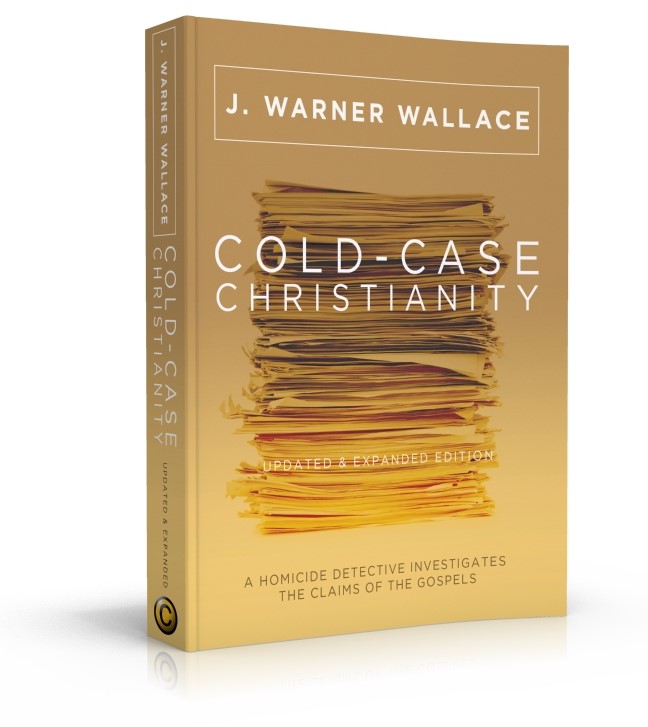


 Truth2Freedom's Blog