Monthly Archives: January 2026

What The Left Worships: Democrats Have An Industry Of Making Saints Out Of Violent Criminals | Harbingers Daily » Feed by Daniel Cohen

Daniel Cohen

The story that the legacy media would have us believe about Alex Pretti is that he was a peaceful protester, an observer, a caring nurse incapable of hurting a fly. New video now proves that all of what the media has been telling you isn’t true.

Verified video footage taken eleven days prior to the deadly confrontation with Pretti shows him screaming, spitting, angrily attacking, and ticking out the taillight of a law enforcement vehicle, sparking an altercation with officers.

We take no pleasure in the death of Alex Pretti. It was avoidable. He is made in the image of God. However, the newly released video spoke volumes. He was looking for a provocation days before he brought a loaded weapon and obstructed a federal law enforcement operation.

Massachusetts Senator Elizabeth Warren was quick to praise Pretti, stating, “Caring for people was at the core of who he was. He was incapable of causing harm. Alex carried patience, compassion, and calm as a steady light within him. Even at the very end, that light was there. I recognized his familiar stillness and signature calm composure.”

The video evidence and facts show a very different story.

Pretti was not the angel that the left and the media would have you believe. Should he be dead? No, but he should not have been inserting himself in a federal law enforcement operation in the first place.

Yet, listening to how the media and the left have been speaking about Alex Pretti, you would think he was a saint, not a criminal.

Georgia Senator Raphael Warnock described Pretti’s vigil site this way: “There really are no words. It was a deeply moving experience. As I said, I felt like I was standing on holy ground. Alex Pretti’s blood cries out to us. We are better than this.”

Holy ground? Astonishingly, Senator Warnock is also a “Reverend.”

In Exodus, the God of Abraham, Isaac, and Jacob commands Moses at the burning bush: “Do not draw near this place. Take your sandals off your feet, for the place where you stand is holy ground” (Exodus 3:5).

If you are a believer and you read the Bible, you know that this is an absurd comparison that Warnock just made. But to the left, they idolize Alex Pretti—and Renee Good.

We also take no joy in the fact that Renee Good is dead. But what was she doing inserting herself into a federal law enforcement operation? What was she doing driving her vehicle into officers? Good’s partner, after she was shot, said, “Why were there bullets in the gun?” The answer should be obvious: Law enforcement officers have a right to go home to their families. Of course, it is necessary that the weapons they carry have bullets in them. They need to be able to protect themselves.

Senator Elizabeth Warren and the left want you to believe that even if Alex Pretti did terrible things, it doesn’t justify what happened to him. An investigation is being conducted. There is still a lot we don’t know about the sequence of events. But before anyone jumps to murder, shouldn’t we wait until we have all the information?

We don’t rejoice in anyone’s death. But we also don’t pretend violent criminals are martyrs. The left has made an industry of making saints out of people who don’t deserve sainthood.


Daniel Cohen is an award-winning anchor, the Israel Correspondent and News Director of the Real Life Network, and a Contributor to Harbinger’s Daily.

Source: What The Left Worships: Democrats Have An Industry Of Making Saints Out Of Violent Criminals

Ilhan Omar Claims She Owns a $5 Million California Winery… But No One Can Find It and It May Not Exist! | The Gateway Pundit

Ilhan Omar and her husband, (not the brother husband – the third husband) appear to be in hot water.

This time it’s not just about her immigration fraud or her brother-husband.

According to FOX Business Network, Ilhan and her husband Tim Mynett, announced that they own a $5 million winery… But no one can find it! That’s odd.

And here we thought Muslims did not drink alcohol!

FBN host Elizabeth MacDonald invited Steve Forbes on to discuss Ilhan’s peculiar investment portfolio.

Via Wall Street Apes:

Elizabeth MacDonald:  Okay, that was for our left Congresswoman, Ilhan Omar, claiming the Justice Department and Congress probing her sudden skyrocketing wealth to $30 million in just one year, that they have a problem with her living the American dream. You heard her say the goddamn United States of America. We’ve got new questions on where she and her husband got all that money.

Joining us now, Forbes Media Chair, Editor-in-Chief Steve Forbes. Steve, new information coming in in Forbes magazine, your magazine has a report of this, too. That the state of Delaware and Washington, DC, canceled the registrations for Omar’s husband’s investment firm, Rose Lake, for not paying its back taxes. We saw it owed more than $400,000 to Delaware and nearly $1,800 to DC. She’s claiming it’s worth $25 million from less than a grand a year before. How can his investment firm not afford to pay taxes? It’s supposedly worth an estimated 75 million to 150 million. This is really weird stuff.

Steve Forbes:  Well, weird is not the word for it. There’s another word for it called crooked, and that’s why we have to have an investigation into this. As you know, the Biden administration started to examine her finances and that of her husband. And surprise, surprise, that investigation went nowhere. But it’s amazing how people can go into Congress and then become these entrepreneurial investing geniuses…

…She had under $1,000 of net worth, and her husband didn’t have much, and suddenly now they’re multimillionaires. Is there a money laundering operation here? And in terms of the firms themselves, they have a sketchy background, that winery in California that she and her husband own. Where did that come from? Where’s the wine there? And nobody can seem to find it. So there’s a lot of smelly stuff here. And that’s why in the American dream, her version of the American dream is the Al Capone version of the American dream, Tony Soprano version of the American Dream, and that is steal it, steal it from the taxpayers. And so there’s a lot of stuff here. And so when somebody cloaks themselves in the, Oh, the American dream… And, so you have numbers like this from minus $1,000 to $30, $40 million, you know something is not right.

Elizabeth MacDonald:  There’s no evidence, public evidence, there’s even a winery. She valued it at five million. His investment firm is real. Well, it’s supposedly real. It’s DC headquarters appear to share office space at a WeWork, Steve. There’s no track record of his firm managing money, doing M&A deals, no clients we see, investment deals or any work that’s been done. They say they do work in 80 nations they’re operating in. There’s no SEC registrations from them as investment advisors. What is going on here? This increasingly looks sketchy, both the winery and his investment firm.

Steve Forbes:  …Suddenly, all that 30 million, I think you’re going to find, I’ll make a speculation or prediction, that 30 million came from sources that are illegal, period.

The post Ilhan Omar Claims She Owns a $5 Million California Winery… But No One Can Find It and It May Not Exist! appeared first on The Gateway Pundit.

Megyn Kelly enters the debate about ‘mass deportations’ — Can we all just be honest here. At full speed, we are only deporting 1,000 illegals per day. That will be 1.5 million in 4 years, possibly 2 million and we have at least 30 million total noncitizens here

Experts Warn Arresting Journalists Could Be Slippery Slope To Arresting Politicians And Other People Who Deserve It | Babylon Bee

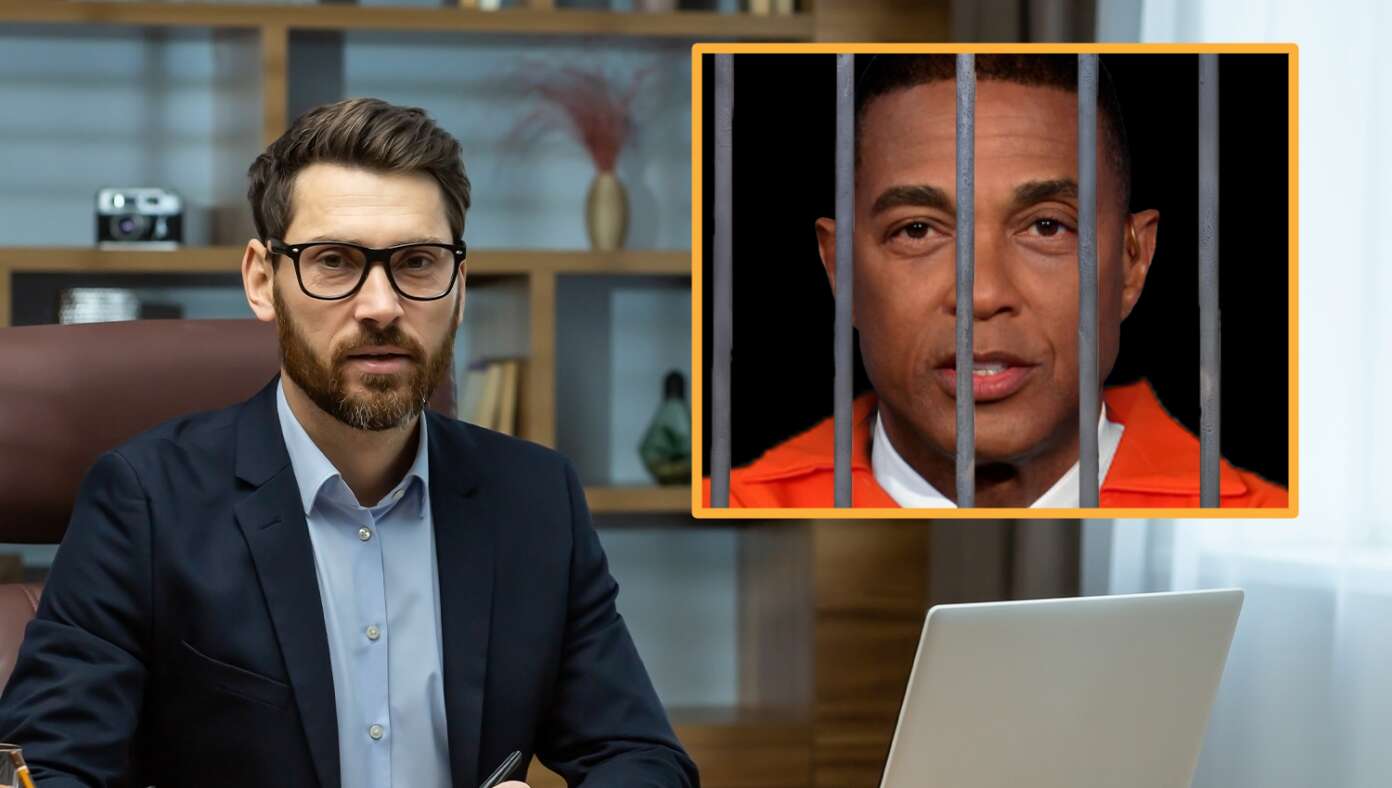
Image for article: Experts Warn Arresting Journalists Could Be Slippery Slope To Arresting Politicians And Other People Who Deserve It

U.S. — Self-proclaimed journalist Don Lemon was arrested on Friday for allegedly raiding a church service and intimidating its congregation, prompting experts to warn that such actions taken by the DOJ could be a slippery slope that leads to arresting politicians and other people who deserve it.

“This is an outrage,” sociological analyst Kelvin Grimp said. “If we start enforcing laws, elected officials and other criminals could be in really big trouble.”

According to sources, approximately 99% of the U.S. Congress and up to half of the nation’s governors would be behind bars if America were to continue down this slippery slope of enforcing laws and prosecuting criminals. Republicans and Democrats alike have criticized the Trump administration for perpetuating the myth that well-connected people can be arrested just for breaking the law.

“What’s next? We start rounding up undocumented migrants or arresting people for murder and rape?” Congresswoman Alexandria Ocasio-Cortez said. “Welcome to Trump’s America!”

In response to the current unrest in the country, former Secretary of State and First Lady Hillary Rodham Clinton published an op-ed in the New York Times discrediting all laws she doesn’t like. “I have long held that no one is above the law except for me,” she wrote, “but that might be changing, and it’s an utter disgrace. It’s not what our founders intended.”

At publishing time, experts had also issued an urgent warning that holding people in prominent positions accountable could lead to people in prominent positions being held accountable.


Minnesota is the place to be!

https://babylonbee.com/news/experts-warn-arresting-journalists-could-be-slippery-slope-to-arresting-politicians-and-other-people-who-deserve-it/

January 31 Morning Verse of the Day

NEGATIVE PROOF FROM THE OLD TESTAMENT

For as many as are of the works of the Law are under a curse; for it is written, “Cursed is everyone who does not abide by all things written in the book of the law, to perform them.” Now that no one is justified by the Law before God is evident; for, “The righteous man shall live by faith.” However, the Law is not of faith; on the contrary, “He who practices them shall live by them.” (3:10–12)

The Judaizers also strongly advocated the necessity of keeping the Mosaic Law in order to be saved. But here again, simply the sequence of Old Testament events should have shown them the foolishness of that belief. Abraham not only was declared righteous about 14 years before he was commanded to be circumcised, but more than 500 years before God revealed His law to Moses at Sinai. Isaac, Jacob, Joseph, and countless other Hebrew believers lived and died long before the written law was given by God.
Just as the Judaizers and their Galatian victims should have known that justification is by faith and not circumcision, they should also have known it is not by the Law. Therefore after showing what faith can do, Paul now shows what works cannot do. As in verses 6–9, his argument is based on the Old Testament.
In his defense before King Agrippa in Caesarea, Paul states the scriptural foundation of all his preaching and teaching: “Having obtained help from God, I stand to this day testifying both to small and great, stating nothing but what the Prophets and Moses said was going to take place; that the Christ was to suffer, and that by reason of His resurrection from the dead He should be the first to proclaim light both to the Jewish people and to the Gentiles” (Acts 26:22–23).
The ancient rabbis were so absolutely convinced that salvation could only be earned through keeping the law that they tried to prove God had somehow revealed His law even to the patriarchs and other saints who lived before Moses and that those people found favor with Him because they kept His law. Because they could not bring themselves to consider limiting the supremacy of the law, the rabbis sought instead to reconstruct history and the clear teaching of God’s Word.
But Paul turns the tables on them again. “Don’t you realize,” he says, “that as many as are of the works of the Law are under a curse?” That question would have utterly perplexed the Judaizers, who would have responded vehemently, “We know no such thing. How can you speak such foolishness?” “Have you forgotten Deuteronomy, the last book of the Law?” Paul asks, in effect; “for it is written, ‘Cursed is everyone who does not abide by all things written in the book of the law, to perform them’ ” (see Deut. 27:26). A curse is a divine judgment that brings the sentence of condemnation.
The apostle’s emphasis in the quotation was on the requirement to abide by all things. In other words, the fact that those who trust in the works of the Law are obligated to keep all things in the law, without exception, places them inevitably under a curse, because no one had the ability to abide by everything the divine and perfect law of God demands. Paul confessed his inability to keep the law even as a devout Pharisee. He testified that “this commandment which was to result in life, proved to result in death for me” (Rom. 7:10). Even as a believer he said, “I myself with my mind am serving the law of God, but on the other, with my flesh the law of sin” (Rom. 7:25) If men proudly insist on living by the law, it will curse them, not save them, because they cannot possibly live up to it.
The legalistic Jews had “a zeal for God, but not in accordance with knowledge. For not knowing about God’s righteousness, and seeking to establish their own, they did not subject themselves to the righteousness of God. For Christ is the end of the law for righteousness to everyone who believes” (Rom. 10:2–4). Consequently, they unwittingly placed themselves under God’s wrath rather than His blessing, because they could not live up to His law and they would not submit to His grace.
Paul reminds his readers again of more teaching concerning God’s way of justification: Now that no one is justified by the Law before God is evident; for, “The righteous man shall live by faith,” quoting this time from Habakkuk 2:4. The passage from Deuteronomy proves justification cannot be by the Law, and the passage from Habakkuk proves it must be by faith. The ways of law and faith are mutually exclusive. To live by law is to live by self-effort and leads inevitably to failure, condemnation, and death. To live by faith is to respond to God’s grace and leads to justification and eternal life.
Quoting another Old Testament text (Lev. 18:5), Paul again turns Scripture against the Judaizers by showing them that salvation by works and salvation by believing are mutually exclusive: However, the Law is not of faith; on the contrary, “He who practices them shall live by them.” God’s written law itself marks the danger of trying to live up to its standard, which is perfection. If you are relying on works of the law as your means of salvation, then you have to live by them perfectly.
Pointing up that same truth in the Sermon on the Mount, Jesus destroyed the very foundation of legalistic Judaism. Because God’s standard is perfection, He said; “You are to be perfect, as your heavenly Father is perfect” (Matt. 5:48). And He had already made clear that God’s standard of perfection is inner virtue and perfection, not simply outwardly respectable behavior. To those who piously asserted they had never committed murder, He said, “Everyone who is angry with his brother shall be guilty before the court; and whoever shall say to his brother, ‘Raca,’ shall be guilty before the supreme court; and whoever shall say, ‘You fool,’ shall be guilty enough to go into the fiery hell” (Matt. 5:22). And to those who claimed they had never committed adultery, He said, “Everyone who looks on a woman to lust for her has committed adultery with her already in his heart” (v. 28).
Whether consulting the texts in Deuteronomy, Habakkuk, or Leviticus, the message is the same: perfection allows no exceptions, no failure of the smallest sort. To break the law in one place is to break it all, “for whoever keeps the whole law and yet stumbles in one point, he has become guilty of all” (James 2:10). No wonder the Holy Spirit inspired Paul to write that “by the deeds of the law there shall no flesh be justified in His sight” (Rom. 3:20, KJV).
A ship that is moored to a dock by a chain is only as secure as the weakest link in that chain. If a severe storm comes and causes even one link to break, the entire ship breaks away. So it is for those who try to come to God by their own perfection. They will be lost and forever wrecked.

MacArthur, J. F., Jr. (1983). Galatians (pp. 76–78). Moody Press.


11 One must not think that the law did nothing but condemn during all the centuries between the giving of the law through Moses and the coming of Jesus. On the contrary, the law itself showed the way of salvation. Paul proves this by a quotation of Habakkuk 2:4—“The righteous will live by faith”—one of the few OT verses in which faith is presented as the means of salvation. It has been argued that Paul misrepresents Habakkuk’s meaning. But if “the righteous” in Habakkuk 2:4 means those who are standing in a right relationship to God rather than those who are literally righteous before the law, as there is every reason to believe, then Habakkuk’s view is certainly in accord with Paul’s position here. Habakkuk is thinking of the temporal ills resulting from the Chaldean invasion. Paul is thinking in a more general spiritual context. Yet the basic position is the same. It is by faith that a man stands in a right relationship to God and lives before him.

Boice, J. M. (1976). Galatians. In F. E. Gaebelein (Ed.), The Expositor’s Bible Commentary: Romans through Galatians (Vol. 10, p. 459). Zondervan Publishing House.


  1. The fact that the opponents were diverting the law from its true purpose and that this attempt was bound to result in tragic failure is brought out clearly, as Paul continues: Now it is evident that by law no one is justified before God, for “The righteous shall live by faith.” The law has no power to subdue man’s sinful tendencies. It cannot destroy the power of sin within man (Rom. 8:3). How then can a sinner ever attain to the ultimate blessing of being righteous in the sight of God? How can that true, rich, full life in which man is at peace with his Maker, and abides in sweet communion with him, ever be reached? The answer, which holds for both dispensations, the old and the new, and for people of every race or nationality, whether Gentile or Jew, is this: “The righteous shall live by faith.” It is the man who has placed his entire confidence in God, trusting him implicitly, and accepting with gladness of heart the gracious provision which that merciful Father has made for his salvation, it is he, he alone, who shall live. This living consists in such things as: a. enjoying the peace of God which passes all understanding (Phil. 4:7), in the knowledge that in the sight of God’s holy majesty the believer is righteous (Rom. 5:1; 8:15); b. having fellowship with God “in Christ” (John 17:3); c. “rejoicing greatly with joy unspeakable and full of glory” (1 Peter 1:8); d. “being transformed into the image of the Lord from glory to glory” (2 Cor. 3:18); and e., last but not least, striving to be a spiritual blessing to others to the glory of God (1 Thess. 3:8).
    Now if the Judaizers had only paid more attention to the Word of God and had accepted it, they would have known that not by trusting in his own reasoning or in his own accomplishments but “by faith” the righteous man attains to this bliss of “living.” This had been clearly stated by Habakkuk the prophet (Hab. 2:4). That man of God appeared upon the scene of history during the reign of wicked Jehoiakim (608–597 B.C.). The words “The righteous shall live by his faith” may even be considered the theme of Habakkuk’s prophecy. The divisions then would be: I. Faith tested: the prophet’s questions and Jehovah’s answers (chapters 1 and 2), and II. Faith strengthened by a vision shown in answer to the prophet’s prayer. What bothered Habakkuk was that it seemed as if wicked men were getting away with their wickedness. Jehovah apparently tolerated such evils as the exploitation of the needy, strife, contention, violence, etc. So the prophet begins to ask questions. He addresses these questions to Jehovah. He complains, objects, and waits for an answer. Habakkuk’s first question amounted to this, “Why does Jehovah allow the wicked in Judah to oppress the righteous?” Jehovah answers, “Evil-doers will be punished. The Chaldeans (Babylonians) are coming.” But this answer does not quite satisfy the prophet. So he asks another one, which was tantamount to this: “Why does Jehovah allow the Chaldeans to punish the Jews, who, at least are more righteous than these foreigners?” The prophet stations himself upon his watch-tower and awaits an answer. The answer arrives: “The Chaldeans, too, will be punished. In fact all sinners will be punished … but the righteous shall live by his faith.” It is his duty and privilege to trust, and to do this even then when he is not able to “figure out” the justice of Jehovah’s doings. In this humble trust and quiet confidence he shall truly live.
    But Jehovah does more than merely tell the prophet that he must exercise faith. He also strengthens that faith by means of a marvelous, progressive vision. Habakkuk sees the symbol of Jehovah’s presence, descending from Mt. Paran. Having descended he stands firm and shakes the earth. The tent-hangings of Cushan and Midian are trembling and are being torn to shreds. One question worries the prophet: “Upon whom is Jehovah’s wrath going to fall? Merely upon the realm of nature? Upon Judah perhaps?” Finally, the answer arrives: Jehovah destroys the Chaldeans and delivers his people.
    So fearful and terrifying had been the appearance of Jehovah, so alarming the sound of the tempest, of crumbling mountains, etc., that the prophet is trembling in every part of his body. Nevertheless, having witnessed that Jehovah had descended for the defense of his own people, Habakkuk no longer questions the ways of God’s providence. From now on he “waits quietly.” He expresses his feelings in a beautiful Psalm of Trust: “For though the fig-tree shall not flourish.… Yet I will rejoice in Jehovah, I will joy in the God of my salvation.”
    In this case, too, as with the quotation from the story of Abraham (Gen. 15:6; cf. Gal. 3:6), I beg to differ from those who think that Paul’s appeal to an Old Testament passage in his battle with the Judaizers is far-fetched. These interpreters seem to see little if any connection between “the faith versus law-works controversy” of Paul’s day and the “faith versus Chaldean self-confidence contrast” described in Habakkuk’s prophecy. It is an error, however, to restrict the latter contrast so narrowly. A rapid review of the contents of the Old testament book has certainly shown that the quiet confidence which Jehovah so patiently teaches his servant is contrasted also—perhaps especially—with the prophet’s own tendency to question the ways of God’s providence. Fact is that the sinner is beset with enemies: the accusing voice of conscience, the doubting mind, etc. He must have peace. How will he obtain it? The Judaizers answer: “by trusting in his own works (circumcision, etc.).” Habakkuk, before he had fully learned the lesson which God was teaching him, gives evidence of answering: “by trusting in his own reason.” That is why it was so difficult for him to harmonize the events that were happening in Judah with the existence of a holy God. That is why he had asked so many questions. But Habakkuk learned his lesson. When he sat down to write his prophecy he had learned it thoroughly, and gave an account of the experience through which he had passed. But whether a person trusts in his own works or in his own reason, in either case is he not trusting in “flesh”? As I see it, therefore, to clinch his argument Paul could not have chosen a better prophecy from which to quote than that of Habakkuk. The passage fits the situation exactly! In every age it remains true that “The righteous shall live by faith.” “In quietness and confidence shall be your strength” (Isa. 30:15).

Hendriksen, W., & Kistemaker, S. J. (1953–2001). Exposition of Galatians (Vol. 8, pp. 127–129). Baker Book House.

Ashes to Ashes, Dust to Dust | Key Life


The phrase “Ashes to ashes, dust to dust” is weird. The words feel anachronistic, as if they do not belong in our 21st-century Western world. Honestly, aside from Ash Wednesday, the only time I hear them is when I am watching a British crime drama and the vicar solemnly recites them at a graveside while the murderer lurks in the background.  Why would anyone think it would be a good idea to say them in any other context, including while they smudge ashes on my forehead?

      Yet on this day in many churches, the remains of last year’s Palm Sunday branches are smeared on skin in the form of a cross. The branches that were once waved while hosannas were sung have been burned to ash. Words are spoken that I need to hear, though they are jarring: “Remember you are dust and to dust you shall return.” Ashes to ashes. Dust to dust. Or this Latin phrase, Memento mori: remember your death.

      All day, every day, I pretty much live as though I am not made of dust. Is it like that for you? Sure, I recognize that I am made of earthy elements like water, muscle, and bone, but though I admit to feeling my age now, I still assume I will just go on like this forever. Well, of course, maybe not forever, but for a good while longer. Surely it is not necessary to be so gloomy, is it? I mean, why would I need to remember my death? Why would you need to?

      And while we are talking about those ashes, I confess to being concerned about how that cross will look on my forehead. Will it be pretty? Or will people think I failed to wash my face properly? Yes, even there in the recognition of my ultimate death, I remain concerned about my life, how I look. I do like appearing pious. I do not like looking dirty.

      But that just underlines how much I need to hear it: Elyse, remember your death. God’s word says we are dust. However many technological breakthroughs the human race makes, however many medical advances we achieve, that will not change. We are not here forever. Life will end. To use another biblical metaphor,  “You don’t know the first thing about tomorrow. You’re nothing but a wisp of fog, catching a brief bit of sun before disappearing” (James 4:14, MSG). A wisp of fog? Dust that blows away? Last year’s ashes? That’s me. And that feels weird to think about.

     As Lent begins, here is an encouragement: Remember who you are, and remember who he is. Remember that your life is short and that living in line with reality means living in a way that shows you are aware that you too are walking toward a tomb, just as the Lord Jesus did. If you forget—if you let your skewed expectations take up all the space in your heart—you will fail to see him, and you will struggle to grasp what he has done and is doing and will do for you. But when you forget, remember that he still sees you, and that he died for your forgetfulness. It is only as you remember your death that you will learn to glory in his.

This is a lightly edited extract from Friend of Sinners by Elyse Fitzpatrick, used with the permission of The Good Book Company.  Elyse is a certified biblical counselor and has written more than 25 books on daily living and the Christian life, including Because He Loves Meand Give Them Grace. She is a frequent speaker at national conferences and lives in Southern California with her husband of over 50 years. They have three adult children and six grandchildren.

Listen (or Watch) our Interview with Elyse Fitzpatrick on SBE here!

The post Ashes to Ashes, Dust to Dust appeared first on Key Life.

January 31 – Delighting in confessing our only comfort | Reformed Perspective

“Oh, give thanks to the Lord, for He is good! For His mercy endures forever.” – Psalm 136:1

Scripture reading: 2 Corinthians 1:1-11

For a month now we have been briefly considering the Christian’s only comfort as we travel from this world to the next. And how wonderful that the testimony of the believer rests in Christ. The Father of mercies is the God of Comfort. Christ secures our comfort. The Holy Spirit has been given to guide us in the Truth of Comfort (John 14:26; John 16:13). The Holy Spirit points us to the supernatural revelation of all truth. That truth is secured in Christ and by Christ for the glory of the Father. And in this we are comforted. Oh, what a rich blessing to belong to Jesus!

The spiritual vacuum in this world can only be filled by God’s forgiveness and transformational grace. That grace (God’s Riches At Christ’s Expense) ultimately rests in belonging to Jesus Christ. Let us fight hard that the most holy faith does not become commonplace amongst us. Let us be on guard, praying that the LORD will keep us from drifting.

“O the deep, unbounded riches of God deserve our praise! How unsearchable His judgments, how marvelous His ways! For who His thoughts has fathomed, or counsel to Him giv’n? And who could make a debtor of God, the Lord of heav’n? For from and through and to Him are all things, now and then, To Him be all the glory forevermore. AMEN” (TPH 226).

Faith receives Christ, and Christ alone, as the whole of our righteousness before God.” – John Owen

Suggestions for prayer

Pray that the chorus of Hallelujah never be far from your lips and heart. And pray that we focus on our purpose:  Man’s chief end is to glorify God, and to enjoy Him forever. (Westminster Shorter Catechism A 1).

Rev. Vellenga is presently serving as a ‘here and there’ preacher who preaches across several Reformed denominational/federational lines. Peter and his wife Judith reside in Delaware, Ontario and are blessed with eight children and a growing quiver of grandchildren. Get this devotional delivered directly to your phone each day via our RP App. This devotional is made available by the Nearer To God Devotional team, who also make available in print, for purchase, at NTGDevotional.com.

Source: January 31 – Delighting in confessing our only comfort

Are We in Danger of Living Like the Rich Fool? | EPM

Jesus said, “Watch out! Be on your guard against all kinds of greed; life does not consist in an abundance of possessions” (Luke 12:15, NIV).

The last portion of this verse is rendered this way in different translations:

Your true life is not made up of the things you own. (GNT)

Life is not measured by how much you own. (NLT)

Even if a man has much more than he needs, it cannot give him life. (WE)

Jesus immediately followed this statement with the parable of the rich fool:

There was a rich man who had some land, which grew a good crop. He thought to himself, “What will I do? I have no place to keep all my crops.” Then he said, “This is what I will do: I will tear down my barns and build bigger ones, and there I will store all my grain and other goods. Then I can say to myself, ‘I have enough good things stored to last for many years. Rest, eat, drink, and enjoy life!’” (Luke 12:16-19, NCV)

So far, doesn’t this story sound great? Store up lots of money for yourself, retire early, and live large!

These different translations of verse 19 capture the rich man’s philosophy, which sounds remarkably like the American dream:

Live it up! Eat, drink, and enjoy yourself. (CEV)

Take your ease, eat, drink, be merry. (RSV)

Relax! Eat, drink and have a good time! (Phillips)

You’ve got it made and can now retire. Take it easy and have the time of your life! (MSG)

Jesus didn’t accuse the man of dishonesty, theft, or injustice. For all we know, he might have faithfully attended synagogue. He was living the life others dreamed of. What’s wrong with that?

Then comes the big surprise: “But God said to him, ‘You fool! Tonight you will die. Then who will get what you have stored up?’” (Luke 12:20, CEV).

What derailed the rich man’s attempts to live what he believed was the good life? First, death. Second, God’s judgment on his now irreversible life. In the predigital age, a high school photography teacher taught me how to develop photos by immersing photo paper in solutions. As long as the photograph remains in the developing solution, it can change. But once it’s dropped into the stop bath, it’s permanently fixed. Likewise, when we die and enter eternity, our lives on Earth will be permanently fixed, never again to be altered or revised. “People are destined to die once, and after that to face judgment” (Hebrews 9:27, NIV).

The rich man wasn’t merely a fool like the kind described in the book of Proverbs, who still had an opportunity to repent and choose wisdom (see, for example, Proverbs 26). God’s appraisal of us after we die is final. There’s no reset button, no do-overs. If at the end of your life God calls you a fool, you’ll be a fool forever.

This parable serves as a warning to all of us. Jesus applies the rich fool’s experience to that of others: “So is the one who lays up treasure for himself and is not rich toward God” (Luke 12:21). To lay up treasures for ourselves and not be rich toward God means clinging to our riches instead of honoring God by helping those who are physically and spiritually needy.

What Makes Someone a Fool?

In Christ’s story of the rich fool, the word translated “fool” literally means “unthinking one.” Mindless. Senseless. The rich fool was out of touch with eternal realities. Despite death’s inevitability, he failed to prepare for it—and failed to remember that he would give an account to God (Romans 14:12).

The rich fool stored up treasures for himself on Earth as if he were the center of the universe and as if this world was where he’d live forever. The man was a fool to imagine his silver, gold, crops, land, and barns were actually his. He was a fool to ignore God’s claims on him and his possessions:

The earth is the Lord’s, and everything in it, the world, and all who live in it. (Psalm 24:1, NIV)

“The silver is mine and the gold is mine,” declares the Lord Almighty. (Haggai 2:8, NIV)

A wise person will regularly ask, “Lord, what do you want me to do with all you have put in my hands?” God reveals Himself to us in the living Word—Jesus—and the written Word—Scripture. That means we don’t have to wait until we die to discover how we should have lived. God’s Word tells us exactly how to prepare now for the afterlife. Though our culture and even some of our Christian friends may encourage us to do so, we don’t have to live like fools!

In the world’s eyes, the rich fool was a great success. Today he would be admired, and he might even be placed on a church or ministry board. But in the end, all his success counted for nothing. D. L. Moody said, “Our greatest fear should not be of failure, but of succeeding at something that doesn’t really matter.”

Had the rich fool acknowledged God as his Creator and Redeemer, and as the ultimate owner of everything he possessed, he would have been rich toward God and stored up treasures in Heaven. Instead, he stored up for himself treasures on Earth and was suddenly and eternally parted from them at death.

The most troubling aspect of this parable is that if we met this man, most of us would commend him for his foresight. Yet foresight is exactly what he lacked. He may have planned twenty years ahead, but he failed to plan twenty million years ahead. And as it turned out, he didn’t even have twenty years before facing God in judgment. He had closer to twenty minutes.

Trusting in Riches Is an Illusion

When it comes to how we view money and possessions and what we do with them, what’s right is also smart, and what’s wrong is also stupid. In the end, this man’s “good life” turned out to be an illusion. Notice he isn’t called the rich sinner, but the rich fool.

God graciously gives us money and possessions to meet real needs, both our own needs and the needs of others. He wants us to enjoy life, but He doesn’t entrust excess to us so we can indulge excessive wants. Money and possessions are not life giving. They are utterly incapable of imparting to us the identity, purpose, significance, and security we crave.

Let’s determine not to be rich fools disguised as disciples. Instead, let’s commit ourselves to learning to boldly put all our resources at God’s disposal, as He has put all His resources at ours.

Source: Are We in Danger of Living Like the Rich Fool?

Is It Possible to Make a Case for Christianity Without the Bible? | Cold Case Christianity by J. Warner Wallace

It’s a question worth pondering: can we really make a compelling case for Christianity without ever opening the Bible? That’s something I’ve wrestled with for years, especially as someone who started my journey convinced there had to be a creator—a designer behind all we see. There’s something about the world, the intricacies of biology, the fine-tuning evident in the universe, that simply points to intelligence rather than accident. In the realm of pure observation and science, these features form the backbone of any case for God’s existence. But here’s the thing: that kind of argument is as useful to a Christian as it is to adherents of other forms of theism. It gets you to the door of a Creator, but it doesn’t get you inside the house of Christian faith.

Over the years, I’ve written extensively about the evidence for God in the universe. The signs of design—from molecular machinery to the parameters underpinning the cosmos—don’t call out just “Christianity”; they call out “theism.” They could fit a multitude of conceptions about God, stretching from classic Western monotheism to many flavors of world religion. The big question, then, is not, “Does God exist?” but rather, “Who is this God?” That’s where the evidence takes a turn, away from broad theism and directly toward the claims of Christianity. And it pivots, not on what we see in the scientific lab, but on a collection of sometimes neglected, always controversial, ancient documents—the Gospels of the New Testament.

As Christians, we recognize that the ultimate argument for our faith rests on the advent of Jesus in history, and, most crucially, on the events surrounding his resurrection. It’s no stretch to say that the resurrection is the hinge upon which Christian conviction swings. If the resurrection occurred, the case for Christianity becomes unique and unparalleled—no other religious leader or founder has conquered death. It’s the defining moment that sets the claims of Christian faith apart from all other worldviews. If Jesus of Nazareth rose from the grave, defeating death because he was God incarnate, then every other claim he made, from statements about the nature of God to declarations about creation and moral truth, demands our full attention. Resurrection would confer upon Jesus a singular status, distinguishing him from every other philosopher, prophet, and sage in the annals of history.


As Christians, we recognize that the ultimate argument for our faith rests on the advent of Jesus in history, and, most crucially, on the events surrounding his resurrection.
Share on X


So, can someone argue for Christianity without the Bible? Not really—not if “Christianity” means belief in the resurrected Christ and all that follows. You can get as far as theism and intelligent design by way of scientific and philosophical arguments. But it’s the eyewitness testimony found in the Gospels that turns the evidence into a distinctly Christian case. Only there do we encounter the unique, unparalleled event in history: the resurrection. And only then can we reasonably conclude that the God behind the universe—the intelligent designer—is the Christian God revealed in Jesus.

Here’s why it matters: the evidence for intelligent design, compelling though it may be, leaves unanswered the question of identity. Who is this designer? What does He desire for us? These questions linger until history speaks—specifically, until the events recorded by those who witnessed Jesus’ life, death, and resurrection. When we examine that evidence and determine that the resurrection occurred, the fog lifts. We gain clarity, not just about there being a God, but about who that God is. In the end, the resurrection stands as the bridge between general theism and belief in Christianity. On that bridge, we cross from mere possibility to certainty about the identity of the Creator, whose fingerprints are all over creation. And the journey starts—not in the lab, but in the pages of the New Testament. That’s where the case for Christianity truly begins and where it finds its final, decisive verdict.

For more information about the impact Jesus and His followers had on science, read Person of Interest: Why Jesus Still Matters in a World That Rejects the Bible. This unique and innovative book makes a case for the historicity and Deity of Jesus from history alone, without relying on the New Testament manuscripts. It contains over 400 illustrations and is accompanied by a ten-session Person of Interest DVD Set (and Investigator’s Guide) to help individuals or small groups examine the evidence and make the case.

The post Is It Possible to Make a Case for Christianity Without the Bible? appeared first on Cold Case Christianity.

Source: Is It Possible to Make a Case for Christianity Without the Bible?

Why did Jesus choose Peter, James, and John to be His inner circle? | GotQuestions.org

Out of 12 , only 3 disciples witnessed Jesus’ greatest moments of glory and His darkest trials, but why were Peter, James, and John chosen for this exclusive inner circle? From the dazzling Transfiguration to the agony of the Garden of Gethsemane, these men experienced a level of intimacy that went far beyond simple friendship. Examine the deliberate leadership strategy behind Jesus’ choice and how He strategically prepared “The Rock” and the “Sons of Thunder” to become pillars of the early church. Watch to understand how transforming these simple fishermen into “fishers of men” through a focus on depth rather than popularity secured a long-term impact for the gospel.

*** Source Article:
https://www.gotquestions.org/jesus-inner-circle.html

*** Recommended Book:
Twelve Ordinary Men: How the Master Shaped His Disciples for Greatness, and What He Wants to Do with You
by John MacArthur
https://amzn.to/4lAfSan

*** Related Got Questions Articles:
Who were the twelve (12) disciples / apostles of Jesus Christ?
https://www.gotquestions.org/twelve-apostles-disciples-12.html

How old were Jesus’ disciples?
https://www.gotquestions.org/how-old-were-Jesus-disciples.html

What is an apostle?
https://www.gotquestions.org/what-is-an-apostle.html

Source: Why did Jesus choose Peter, James, and John to be His inner circle? | GotQuestions.org

10 Key Bible Verses on Hell | Crossway

This article is part of the Key Bible Verses series.

All commentary notes adapted from the ESV Study Bible and the ESV Expository Commentary.

1. Numbers 16:30–33

”But if the LORD creates something new, and the ground opens its mouth and swallows them up with all that belongs to them, and they go down alive into Sheol, then you shall know that these men have despised the LORD.” And as soon as he had finished speaking all these words, the ground under them split apart. And the earth opened its mouth and swallowed them up, with their households and all the people who belonged to Korah and all their goods. So they and all that belonged to them went down alive into Sheol, and the earth closed over them, and they perished from the midst of the assembly. Read More

Sheol is the proper name in Hebrew for the place where people go after death; sometimes it serves as a poetic name for the grave, to which all go (e.g., 141:7), and other times it names the dim destination to which the wicked go but not the faithful (e.g., 49:14–15).

and the earth closed over them. The judgment from God was swift and absolute. The form in which the judgment occurred also may have given a symbolic hint of their future condition, away from the presence of the Lord.

2. Psalm 16:10

For you will not abandon my soul to Sheol,
or let your holy one see corruption. Read More

Sheol. See note above. Here it is likely the abode of the wicked. Likewise, corruption probably describes the experience of being far from God forever. These are not likely terms for the grave, since everyone singing these words would know that his body would one day die and rot.

3. Psalm 49:13–15

This is the path of those who have foolish confidence;
yet after them people approve of their boasts. Selah
Like sheep they are appointed for Sheol;
death shall be their shepherd,
and the upright shall rule over them in the morning.
Their form shall be consumed in Sheol, with no place to dwell.
But God will ransom my soul from the power of Sheol,
for he will receive me. Selah. Read More

The unfaithful are like sheep . . . appointed for Sheol, while God will ransom the faithful person’s soul from the power of Sheol (Ps. 49:14–15). Since the impious go to Sheol, and the pious do not, here it represents the grim place of destruction for the wicked, and not simply the grave (see note on Ps. 6:5).

Quite often in the Bible, “soul” describes the life principle that animates the body, or the person’s inner self, and can simply be another way of saying “the self.” At other times, however, it can describe that inner self as something that survives the death of the body, as it does here, where my soul is parallel to me, the self that after death will not go to Sheol. In the larger picture of the Bible, the separation of body and soul is unnatural, a product of sin (Gen. 3:19), and will be healed with their reunion at the resurrection (Dan. 12:2–3; cf. 2 Cor. 5:1–4).

4. Hosea 13:14

I shall ransom them from the power of Sheol;
I shall redeem them from Death.
O Death, where are your plagues?
O Sheol, where is your sting?
Compassion is hidden from my eyes. Read More

I shall ransom them from the power of Sheol. In the OT, “Sheol” is a proper name and can be a poetic personification of the grave (e.g., 1 Kings 2:6; Ps. 141:7). But it can also designate the grim destination of the wicked after death (e.g., Ps. 49:14–15). The parallel wording with Ps. 49:15 suggests that Hosea sees Ephraim’s “death” as leading to Sheol in the second sense, i.e., as damnation. Yet God promises to rescue Ephraim from such consequences. O Death, where are your plagues? If the Lord is their strong deliverer, then not even death will be able to terrify them or harm them. In 1 Cor. 15:55 Paul cites part of Hos. 13:14. In that context, he is viewing the general resurrection as God’s triumph over not only bodily death but also eternal judgment, for the faithful. Sadly, in Hosea’s time Israel is rejecting the only power that can save her. Thus compassion is hidden from God’s eyes, and Israel will perish miserably (Hos. 13:15–16).

5. Matthew 13:40–42

Just as the weeds are gathered and burned with fire, so will it be at the end of the age. The Son of Man will send his angels, and they will gather out of his kingdom all causes of sin and all law-breakers, and throw them into the fiery furnace. In that place there will be weeping and gnashing of teeth. Read More

harvest. The judgment that will follow the Son of Man’s return at the end of the age to establish his kingdom in its fully realized form.

fiery furnace . . . weeping and gnashing of teeth. Jesus’ typical description of eternal judgment in Matthew’s Gospel (cf. Matt. 8:12; Matt. 13:50; Matt. 22:13; Matt. 24:51; Matt. 25:30).

6. Mark 9:43–45

And if your hand causes you to sin, cut it off. It is better for you to enter life crippled than with two hands to go to hell, to the unquenchable fire. And if your foot causes you to sin, cut it off. It is better for you to enter life lame than with two feet to be thrown into hell. Read More

Jesus uses hyperbole (intentional overstatement) to show the seriousness of sin and the fact that nothing, even things of greatest importance to humans such as a handfoot, or eye, can be more important than God. “Hand,” “foot,” and “eye” probably also serve as metonymies (where one thing stands for something related to it) for sins that can be committed with these body parts. (E.g., the “hand” may represent theft or murder done by the hand; the “foot” may represent going somewhere to undertake a sinful act; the “eye” may represent coveting, lust, or adultery, as in Matt. 5:27–30.) Of course, Jesus does not mean that people should literally cut off those body parts, for the literal removal of them cannot remove the root of sin in the heart (see Mark 7:20–23; 9:45). Jesus’ words serve as a sober warning concerning the severity of sin, which can lead to hell (Gk. gehenna; see Isa. 66:24) and fire that is not quenched (Mark 8:35–37; 9:47–48).

7. Luke 12:5

But I will warn you whom to fear: fear him who, after he has killed, has authority to cast into hell. Yes, I tell you, fear him! Read More

The second fear refers to God (him), who at the final judgment has authority to cast into hell. Repetition (fear him) gives this command additional emphasis.

One should fear eternal death rather than physical death since the latter is temporary whereas the former is forever. The verse functions as an argument against annihilationism as well (the view that those consigned to hell will eventually cease entirely to exist), for if the final judgment simply ended existence, then it would be of the same nature as physical death. Jesus calls upon disciples to live authentically before God because eternal life and eternal death are at stake, and it is far better to be killed by human beings than to suffer loss eternally in hell.

8. James 3:6

And the tongue is a fire, a world of unrighteousness. The tongue is set among our members, staining the whole body, setting on fire the entire course of life, and set on fire by hell. Read More

a world of unrighteousness. The tongue represents and puts into expression all the wickedness of the world. The entire course of life (lit., “the cycle of existence”) likely means the “ups and downs” of life. The tongue turns upside down every aspect of life in the community as well as in the individual. set on fire by hell. Evil speech destroys because it comes from Satan himself.

We should probably understand the reference to “the world of unrighteousness” as James’s metaphorical assertion that all of the various dimensions of sinfulness we find in this rebellious world (all of which deserve the judgment of hell) find expression in the human tongue.

9. 2 Peter 2:4–10a

For if God did not spare angels when they sinned, but cast them into hell and committed them to chains of gloomy darkness to be kept until the judgment; if he did not spare the ancient world, but preserved Noah, a herald of righteousness, with seven others, when he brought a flood upon the world of the ungodly; if by turning the cities of Sodom and Gomorrah to ashes he condemned them to extinction, making them an example of what is going to happen to the ungodly; and if he rescued righteous Lot, greatly distressed by the sensual conduct of the wicked (for as that righteous man lived among them day after day, he was tormenting his righteous soul over their lawless deeds that he saw and heard); then the Lord knows how to rescue the godly from trials, and to keep the unrighteous under punishment until the day of judgment, and especially those who indulge in the lust of defiling passion and despise authority. Read More

False prophets have been active throughout redemptive history, so it should come as no surprise that in these last days false teachers will arise to lead people astray through their greed and sexual immorality (2 Pet. 2:1–3a). But OT history makes it abundantly clear that God will both judge those who transgress his appointed boundaries and rescue the godly from their trials (2:3b–10a).

Peter makes a detailed argument proving God’s certain judgment on the false teachers. He uses a rabbinic form of proof that moves from minor premise to major premise (if A is true, how much more is B also true), and his analogies in vv. 4–8 amount to minor premises leading to the major premise of vv. 9–10a.

First minor premise: if God did not spare angels. If (A) God has eternally condemned the sinful angels, then (B) how much more certainly will he condemn the false teachers and their followers (major premise, vv. 9b–10a).

Second minor premise: if (A) he did not spare the ancient world, but preserved Noah . . . with seven others, then (B) will he not even more certainly judge the false teachers (major premise, vv. 9b–10a) while at the same time preserving the godly (major premise, v. 9a). Christians may be a small minority, but God will protect them.

Third minor premise: Peter sees the judgment of Sodom and Gomorrah as a “type” (a divine foreshadowing) of judgment by fire on the last day (3:10–12), an event that will be denied by false teachers (2:4). If (A) God condemned Sodom and Gomorrah, then (B) how much more certain it is that the same thing will happen to the ungodly who reject the gospel.

Fourth minor premise: if (A) God rescued righteous Lot, who was greatly distressed and even tormented by the conduct of the wicked in Sodom (v. 6), then (B) how much more will he “rescue the godly” (major premise, v. 9a).

Having stated his minor premises, Peter moves now to his major premise (see note on vv. 4–10a): “If” vv. 4–8 are true, then how much more true are vv. 9–10a. God indeed knows how to rescue the godly from trials. In the case of Peter’s audience, this would have evoked hope of divine deliverance from the false teachers and their influence. God also will certainly keep the unrighteous under punishment until the day of judgment. He will punish them in a partial, preliminary way before the final day of judgment (cf. Luke 16:23–24; Heb. 9:27). This applies especially to those who engage in defiling passion and who despise authority—probably a reference to false teachers (cf. 2 Pet. 2:12, 18; 3:3; Jude 8, 16, 18).

10. Revelation 20:13–15

And the sea gave up the dead who were in it, Death and Hades gave up the dead who were in them, and they were judged, each one of them, according to what they had done. Then Death and Hades were thrown into the lake of fire. This is the second death, the lake of fire. And if anyone’s name was not found written in the book of life, he was thrown into the lake of fire. Read More

The sea, Death, and Hades (the realm of the dead, cf. Rev. 6:8) will give up their dead as all people return to bodily existence to be judged (2 Cor. 5:10) by Jesus (Matt. 16:27; John 5:28–29; Acts 17:31). they were judged . . . according to what they had done. Unbelievers will be rightly condemned for their sins (cf. Rom. 3:23; Rev. 20:15). Believers, whose names are in the “book of life” (vv. Rev. 20:12, 15), will enter into “a new heaven and a new earth” (Rev. 21:1) because the names in that book are of those who have been redeemed by “the Lamb who was slain” (Rev. 13:8; cf. Rev. 21:27) for their sins (Rev. 1:5). Their recorded deeds attest to their trust in Christ and are also the basis for determining their rewards (cf. notes on 1 Cor. 3:14–15; 2 Cor. 5:10; Rev. 22:12–16).

Death, the last enemy, will be destroyed when Christ returns and raises believers (1 Cor. 15:23–26). Therefore Death and Hades will be the last to be thrown into the lake of fire, the second death, where they will join the beast and the false prophet (Rev. 19:20) and the devil (Rev. 20:10).

All whose names are not found written in the book of life will be condemned for the record of their deeds and thrown into the lake of fire. Those enrolled in the Lamb’s book of life enter the new Jerusalem (Rev. 21:27).


Popular Articles in This Series

View All

10 Key Bible Verses on Prayer


March 11, 2020


We can learn what and how to pray to God from his very Word—even from the example of his own Son.

Source: 10 Key Bible Verses on Hell

Christian Nationalism, TPUSA Faith, and the Danger of Ecumenical Syncretism | Servants of Grace

By Amy Spreeman  |  Servants of Grace


Editor’s Note

The following article by Amy Spreeman examines the growing influence of Christian Nationalism and its increasing ties
to ecumenical syncretism, dominion theology, and political activism. While Christians are called to engage culture wisely
and vote with biblical conviction, Scripture warns against compromising the Gospel through alliances that blur doctrinal truth. This article calls believers to careful discernment, faithfulness to Scripture, and clarity about the Church’s true mission.


Key Takeaways

  • Christian engagement in society must never replace the Church’s Gospel mission.
  • Ecumenical syncretism blurs biblical doctrine by prioritizing political unity over theological truth.
  • Dominion and Kingdom Now language can shift Christians toward power-centered activism.
  • Scripture calls believers to discernment and separation from those who preach “another gospel.”


I recently wrote about what is often presented as a newer expression within the visible Church titled, Christian Nationalism: Why You Should Ask Questions, a movement which has been forming some religious affiliations and partnerships that the Bible warns us ought not be. Christian Nationalism is often described as falling along a spectrum, but when defined by its own leaders and theological advocates, it takes the focus off the mission of the Bride of Christ and places it elsewhere. It’s a specific identity as well as a theological and political ideology that seeks to ‘bring the Kingdom of God to earth’ — language commonly used within dominionist and Kingdom Now circles —through coercive laws and cultural dominance to bring about a so-called Golden Age of Christian dominance before or (in a growing normalcy of cases)
so that” – Christ can return. Bringing Christ back as king of our political cause is the Dominionism’s end game. 

This is NOT about patriotism, or voting and standing up for what’s right and against what’s wrong. We all should do this in obedience to God. Christian Nationalism is about control and coercion, which is opposite from spreading the Good News of the Gospel.

Ecumenical Syncretism: Pursuing Unity through Theological Compromise

Religious syncretism is the blending of theological beliefs and practices. Ecumenicism, or ecumenicalism (both terms are commonly used), is about people and organizations. It refers to efforts aimed at visible unity across Christian traditions. However, in its modern expressions —particularly in political and cultural movements — it often extends beyond Christianity itself, blending believers with non-Christians, adherents of other religions, and even false teachers within the visible church. All with the intention of promoting the need to gather under a single banner of faith for the purpose of unity around a political or moral cause rather than shared biblical doctrine.

Religious syncretism and ecumenicism are simply not compatible with true Christianity. In fact, any modification to our biblical mission for the sake of a “better” outcome is not just a dangerous path. It is spiritual adultery. That may sound like divisive rhetoric, but Scripture itself uses this language, not as an insult, but as a warning meant to call God’s people back to faithfulness.

2 Kings 17:35-36 warned the Israelites, “You shall not fear other gods or bow yourselves to them or serve them or sacrifice to them, but you shall fear the Lord, who brought you out of the land of Egypt with great power and with an outstretched arm. You shall bow yourselves to him, and to him you shall sacrifice. And the statutes and the rules and the law and the commandment that he wrote for you, you shall always be careful to do.”

Deuteronomy 12:29-31 says, “When the Lord your God cuts off before you the nations whom you go in to dispossess, and you dispossess them and dwell in their land, take care that you be not ensnared to follow them, after they have been destroyed before you, and that you do not inquire about their gods, saying, ‘How did these nations serve their gods? — that
I also may do the same.’ You shall not worship the Lord your God in that way, for every abominable thing that the Lord hates they have done for their gods, for they even burn their sons and their daughters in the fire to their gods.”

Keep in mind that the Roman Empire famously tolerated a wide array of cults and mystery religions, provided they did not challenge imperial authority. Christianity was not left unscathed. The Apostles and the earliest generations of believers not only spread the Gospel but also labored diligently to guard its doctrinal integrity against syncretism and compromise.

The temptation and threat of syncretism is still with the church today. Non-Christian philosophies and movements — such as Marxism, existentialism, New Age spirituality, Word of Faith teaching, the New Apostolic Reformation (NAR), and others — have repeatedly sought to harness the moral authority and cultural power of Christianity in order to advance agendas foreign to the Gospel. Ecumenical Syncretism continues to be a powerful tool to separate God from His people by redefining faithfulness as unity, obedience as activism, and truth as consensus. And right now we are seeing this happen among certain groups aligned with Christian Nationalism who are joining hands with leaders and organizations in order to gather in faith under the banner of Christian unity to take back our nation and our world for Christ. And as great as that might
sound to our ears, this is not our biblical mission.

The Kirk Effect

These alliances have been forming for decades, but they have accelerated dramatically in the period following the assassination of Charlie Kirk. Charlie was the founder of Turning Point USA, or TPUSA, which many discernment ministries and critics have identified as operating within a Christian Nationalist framework focused on political issues and advocacy. It also has a religious arm called TPUSA Faith. This organization has exploded with new chapters and conferences not only in the United States, but also around the world.

One positive outcome is that in the weeks and months since Charlie was killed, many people who’ve never committed to attending church before are now very interested in learning about Jesus and seeking out churches to attend – and that is a good thing. Praise God that He has drawn so many to hear the Gospel. In the media, this has been referred to as the “Charlie Kirk Effect.” There’s no way to verify the numbers of new attendees filling the pews, but you can see the swell of participation in the TPUSA events – especially at the memorial service late last year. The organization says it has more than doubled in size since last September after Charlie was killed. 4,000 new churches have joined their network and 200,000 individual people have signed up to join TPUSA Faith.

Many are calling this phenomenon a revival. True revival is accompanied by belief in Christ for the forgiveness of sins, and repentance. The fruit of that faith takes some time to develop, and we do want to be careful about labelling any event a revival. But God can and does use tragic events for His good purposes, and we want to – in all humility – thank Him for loving humanity while we were still sinners, and saving His children for His own. Our faith is rooted in the proclamation of the Gospel, the teachings of Scripture as 100 percent true, and personal transformation through the indwelling of the Holy Spirit.

Many sincere Christians support TPUSA believing they are defending truth and liberty. However, beneath the surface of its political messaging are theological influences and patterns that deserve careful scrutiny — specifically Dominion theology, New Apostolic Reformation or NAR influence, and a growing ecumenical blurring of doctrine.

The concern I have is the ecumenical nature of TPUSA’s events, tours, and partnerships, which often feature speakers and collaborators from diverse religious backgrounds and prioritize conservative political alignment over theological agreement. We’ve seen this on display at major gatherings such as AmFest 2025, the Courage Tour (promising a Third Great Awakening), pastors’ summits, the upcoming Make Heaven Crowded tour, and similar events.

This willingness to partner with false teachers, as defined by Scripture rather than political alignment, and join hands with speakers who are not people Christians should be listening to, all in the name of a political win or a cultural victory, is hugely concerning.

When political activism masquerades as a kingdom mission, when political success becomes framed as obedience to God, Christians are quietly lulled away from the Gospel and toward a humanistic power-centered Christianity – which is no Christianity at all.

TP USA Faith

Turning Point USA added a new chapter in 2021 called Faith. Its mission is to “equip the faith community to be culturally and civically engaged like never before, by inspiring and empowering pastors and their congregations to stand for the biblical values that our nation was founded upon” (TPUSA Faith mission statement). TPUSA Faith’s political goals have increasingly been framed in spiritual and prophetic terms, TPUSA Faith leaders have used language such as, “Taking back the nation,” “Spiritual warfare for America,” and “God’s mandate for cultural control.” While these phrases may appear patriotic, this language does not come from the Bible — it comes from dominionist, Kingdom Now theology within the NAR. And it is being normalized thanks to this growing organizational network of powerful voices and platforms.

The Book of Revelation gives us a prophetic warning about the rise of a one-world religious system in the last days, symbolized by the harlot in Revelation 17. This system represents a false, apostate religion that deceives the world and aligns itself with political powers, having the power to lead millions to forsake the Gospel truths and follow deceiving spirits. It warns that there will come a time when the world gives up the true exclusive Gospel of Jesus Christ for another gospel, a more inclusive gospel suited for the one-world religion. While Christians can debate the specifics of end-times events, Scripture clearly teaches that any religious system aligning with political powers at the expense of the Gospel risks deceiving millions.

When Turning Point USA announced its 2025 tour schedule, discerning Christians began to notice the list of influential guest speakers with a diversity of faith values. Catholics, Mormons, Hindus, a host of NAR leaders, and even agnostics were all joining together in the name of religious unity. While participation in political events alone does not imply wrongdoing, the blending of these speakers on the same platform under the banner of a common unity in faith can blur theological distinctions that Scripture calls Christians to uphold.

The term Unity is biblical — but it only applies to unity grounded in the truth of Scripture! Unfortunately, Christians are increasingly being urged to set aside doctrinal differences and unite across theological lines for political or cultural goals. They’ll begin to treat discernment as “division.” As a result, many Christians react strongly — sometimes with protest — when church leaders or discernment ministries warn against ecumenical syncretism.

In the wake of Charlie’s death, TPUSA’s ecumenical Christian Nationalist efforts have accelerated, and I worry for the many young people who are not grounded in the Word of God, that they will fall into the trap of a false religion. Without solid biblical teaching, they may be drawn into movements that compromise the exclusivity of the Gospel. What makes this appealing is that many of the causes these faith organizations champion—such as opposing lawlessness and immorality — align with concerns many Christians, including me, share. It is important to speak out and vote accordingly. But the people and the organizations Christians partner with to do this matters. It matters to God that we not link arms with anyone who brings a different Gospel, even for causes we consider morally good — because God calls us to faithfulness first and foremost.
This is pragmatism: attempting to achieve what we believe is the best outcome, rather than faithfully obeying Scripture and leaving the results in God’s hands.

Examples of TPUSA’s ecumenical partnerships (illustrative, not exhaustive)

The Roman Catholic Church, and leaders who identify as Roman Catholic. In a nutshell: Roman Catholicism disagrees that our authority about God’s nature and character come from Sola Scriptura (Scripture Alone), and they add the Pope along with church traditions as having equal authority. They also hold doctrinal positions such as veneration of and prayer to Mary and other church leaders who have died, purgatory, works-based righteousness, and the belief that the Eucharist becomes the actual body of Christ. All this to say that the Roman Catholic presence at TPUSA’s faith-based events is a serious concern. Mixing faith and political zeal almost always leads to compromising the Gospel. Some of the Catholic speakers and panelists who have appeared at TPUSA events include: Father Will Schmidt; Kelsey Reinhardt, President & CEO of CatholicVote; Cindy Ketcherside from the Catholic Action Network; and Jack Posobik, a Catholic speaker at several events.

We’ve also seen media personalities bring their platforms to the stage, like Michael Knowles and Megyn Kelly. And they are also bringing elements of worship and prayer, as if everyone on stage prays to the same God of the Bible.
Jack Prosobiec even entered the AMFest stage holding up a rosary and leading Latin prayers.

There was also a eucharistic adoration ceremony at one of the breakout sessions. And as a side note, Charlie Kirk baffled his followers last year when he tweeted that he hoped the new pope would bring about a golden age: “I pray the new Pope will help usher in a new Golden Age of Christianity. If the new Pope defends the faith, defends the West, defends biology and eternal truths, I will be his biggest fan.”


Christian Nationalism, TPUSA Faith, and the Danger of Ecumenical Syncretism 3

And it was just one week before his murder that Charlie Kirk reportedly confessed to a Catholic Bishop that he was an admirer of the Catholic church, and responded to speculation that he was contemplating converting to Catholicism,
saying, “I’m this close.” There is also his podcast in which he said that evangelicals don’t venerate Mary
enough. So yes, there has been a muddying of the waters for a long time now, and it is confusing.

If AmFest and all these other events were just about politics and political activism – fine, but these gatherings do have a faith purpose, and the fact that TPUSA is doing this under the banner of Jesus Christ —seems to me like they are using Jesus for power and clout.

Other ecumenical partnerships

TPUSA has partnered with several prominent Mormons (LDS), including Glenn Beck, Senator Mike Lee, Governor Spencer Cox, Representative Andy Bigg, and former Representative Jason Chaffetz. Charlie Kirk publicly praised Mormonism, stating in interviews that America needs a “strong Mormon church” for its moral values, despite theological differences. TPUSA’s alliances with Mormons are often justified as shared conservatism, but they extend to joint political rallies and faith-based initiatives. TPUSA events have also featured speakers from non-Christian faiths, including Vivek Ramaswamy (Hindu), Ben Shapiro (Jewish), and a rabbi leading a Shabbat dinner at AmFest.

7 Mountains of Dominance

There’s also a significant NAR influence at these events. Many NAR leaders at TPUSA events promote the Seven Mountain Mandate, one of the Hallmarks of the New Apostolic Reformation. The mandate claims that God wants Christians to take control of 7 areas of influence in our culture: The Economy, Government, Media, Arts/Entertainment, Education, Family, and the Church. Not to be merely an influence, but to control and reclaim those areas by force for Christ, as mentioned earlier. The Seven Mountain Mandate sounds compelling because it promises that your career, your influence, even your position can have eternal impact.

It feels ambitious and spiritual, like you’re high up in God’s grand, kingdom-level plan. But here’s the danger: it shifts the church’s focus from surrendering to Christ to human control of an earthly kingdom, from obedience to ambition.
Success becomes cultural influence, not faithfulness to the Gospel.

One more thing: keep your eye on a man named Rob McCoy. He is the Co-Founder and Co-Chair of TPUSA Faith, and is widely recognized for teaching the Seven Mountain Mandate and promoting dominionist perspectives within the NAR.
He has been influential in encouraging TPUSA’s integration of Christian faith with social conservatism and political activism.

TPUSA Faith’s Biblical Citizenship classes encourage churches to engage politically, often partnering with NAR figures like Lance Wallnau, who is recognized as one of the key founders of the modern Seven Mountain Mandate teaching. Additionally, events like the Courage Tour blend revival-style worship with political speeches, featuring eclectic mixes of Protestants, Catholics, and Charismatics. And its affiliations with platforms like FlashPoint are tied to Kenneth Copeland’s Word of Faith ministry.

Our ultimate goal should be the glorification of God’s holy name. And, that cannot be done by partnering with groups whose beliefs or practices diverge from Scripture. We should be cautious of any group that compromises in this manner just so they can achieve a worldly goal.

Why is this a problem?

Ecumenical Syncretism compromises on core doctrines by watering down the exclusivity of Christ as the only way to salvation. When you partner with groups like Catholics or Mormons or Hindus, it implies theological equivalence – as in we are all the same. But we are not the same. This just undermines Sola Fide (faith alone) and Sola Scriptura (Scripture alone).

Scripture warns against alliances with unbelievers or false teachers, and as 2 Corinthians 6:14 reminds us, “What fellowship has light with darkness?”. Platforming anyone with a different gospel risks apostasy. 2 Timothy 4:3-4 warns that, “a time is coming when people will not endure sound teaching, but having itching ears they will accumulate for themselves teachers to suit their own passions, and will turn away from listening to the truth and wander off into myths.”

Many ecumenical movements start with noble intentions, such as seeking to protect or improve society, but history shows that compromising core doctrines often leads to unintended doctrinal drift and – in some cases – a deconstruction of faith entirely. Christians must continually test all partnerships and initiatives against God’s Word to ensure faithfulness and avoid compromise.

I recently wrote about what is often presented as a newer expression within the visible Church titled, Christian Nationalism: Why You Should Ask Questions, a movement which has been forming some religious affiliations and partnerships that the Bible warns us ought not be.

Christian Nationalism is often described as falling along a spectrum, but when defined by its own leaders and theological advocates, it takes the focus off the mission of the Bride of Christ and places it elsewhere. It’s a specific identity as well as a theological and political ideology that seeks to ‘bring the Kingdom of God to earth’ — language commonly used within dominionist and Kingdom Now circles — through coercive laws and cultural dominance to bring about a so-called Golden Age of Christian dominance before or (in a growing normalcy of cases) “so that” – Christ can return. Bringing Christ back as king of our political cause is the Dominionism’s end game.

This is NOT about patriotism, or voting and standing up for what’s right and against what’s wrong. We all should do this in obedience to God. Christian Nationalism is about control and coercion, which is opposite from spreading the Good News of the Gospel.

Ecumenical Syncretism: Pursuing Unity through Theological Compromise

Religious syncretism is the blending of theological beliefs and practices. Ecumenicism, or ecumenicalism (both terms are commonly used), is about people and organizations. It refers to efforts aimed at visible unity across Christian traditions. However, in its modern expressions — particularly in political and cultural movements — it often extends beyond Christianity itself, blending believers with non-Christians, adherents of other religions, and even false teachers within the visible church. All with the intention of promoting the need to gather under a single banner of faith for the purpose of unity around a political or moral cause rather than shared biblical doctrine.

Religious syncretism and ecumenicism are simply not compatible with true Christianity. In fact, any modification to our biblical mission for the sake of a “better” outcome is not just a dangerous path. It is spiritual adultery. That may sound like divisive rhetoric, but Scripture itself uses this language, not as an insult, but as a warning meant to call God’s people back to faithfulness.

2 Kings 17:35-36 warned the Israelites, “You shall not fear other gods or bow yourselves to them or serve them or sacrifice to them, but you shall fear the Lord, who brought you out of the land of Egypt with great power and with an outstretched arm. You shall bow yourselves to him, and to him you shall sacrifice. And the statutes and the rules and the law and the commandment that he wrote for you, you shall always be careful to do.”

Deuteronomy 12:29-31 says, “When the Lord your God cuts off before you the nations whom you go in to dispossess, and you dispossess them and dwell in their land, take care that you be not ensnared to follow them, after they have been destroyed before you, and that you do not inquire about their gods, saying, ‘How did these nations serve their gods? — that I also may do the same.’ You shall not worship the Lord your God in that way, for every abominable thing that the Lord hates they have done for their gods, for they even burn their sons and their daughters in the fire to their gods. “

Keep in mind that the Roman Empire famously tolerated a wide array of cults and mystery religions, provided they did not challenge imperial authority. Christianity was not left unscathed. The Apostles and the earliest generations of believers not only spread the Gospel but also labored diligently to guard its doctrinal integrity against syncretism and compromise.

The temptation and threat of syncretism is still with the church today. Non-Christian philosophies and movements — such as Marxism, existentialism, New Age spirituality, Word of Faith teaching, the New Apostolic Reformation (NAR), and others — have repeatedly sought to harness the moral authority and cultural power of Christianity in order to advance agendas foreign to the Gospel. Ecumenical Syncretism continues to be a powerful tool to separate God from His people by redefining faithfulness as unity, obedience as activism, and truth as consensus. And right now we are seeing this happen among certain groups aligned with Christian Nationalism who are joining hands with leaders and organizations in order to gather in faith under the banner of Christian unity to take back our nation and our world for Christ. And as great as that might sound to our ears, this is not our biblical mission.

The Kirk Effect

These alliances have been forming for decades, but they have accelerated dramatically in the period following the assassination of Charlie Kirk. Charlie was the founder of Turning Point USA, or TPUSA, which many discernment ministries and critics have identified as operating within a Christian Nationalist framework focused on political issues and advocacy. It also has a religious arm called TPUSA Faith. This organization has exploded with new chapters and conferences not only in the United States, but also around the world.

One positive outcome is that in the weeks and months since Charlie was killed, many people who’ve never committed to attending church before are now very interested in learning about Jesus and seeking out churches to attend – and that is a good thing. Praise God that He has drawn so many to hear the Gospel. In the media, this has been referred to as the “Charlie Kirk Effect.” There’s no way to verify the numbers of new attendees filling the pews, but you can see the swell of participation in the TPUSA events – especially at the memorial service late last year. The organization says it has more than doubled in size since last September after Charlie was killed. 4,000 new churches have joined their network and 200,000 individual people have signed up to join TPUSA Faith.

Many are calling this phenomenon a revival. True revival is accompanied by belief in Christ for the forgiveness of sins, and repentance. The fruit of that faith takes some time to develop, and we do want to be careful about labelling any event a revival. But God can and does use tragic events for His good purposes, and we want to – in all humility – thank Him for loving humanity while we were still sinners, and saving His children for His own. Our faith is rooted in the proclamation of the Gospel, the teachings of Scripture as 100 percent true, and personal transformation through the indwelling of the Holy Spirit.

Many sincere Christians support TPUSA believing they are defending truth and liberty. However, beneath the surface of its political messaging are theological influences and patterns that deserve careful scrutiny — specifically Dominion theology, New Apostolic Reformation or NAR influence, and a growing ecumenical blurring of doctrine.

The concern I have is the ecumenical nature of TPUSA’s events, tours, and partnerships, which often feature speakers and collaborators from diverse religious backgrounds and prioritize conservative political alignment over theological agreement. We’ve seen this on display at major gatherings such as AmFest 2025, the Courage Tour (promising a Third Great Awakening), pastors’ summits, the upcoming Make Heaven Crowded tour, and similar events.

This willingness to partner with false teachers, as defined by Scripture rather than political alignment, and join hands with speakers who are not people Christians should be listening to, all in the name of a political win or a cultural victory, is hugely concerning.

When political activism masquerades as a kingdom mission, when political success becomes framed as obedience to God, Christians are quietly lulled away from the Gospel and toward a humanistic power-centered Christianity – which is no Christianity at all.


TP USA Faith

Turning Point USA added a new chapter in 2021 called Faith. Its mission is to “equip the faith community to be culturally and civically engaged like never before, by inspiring and empowering pastors and their congregations to stand for the biblical values that our nation was founded upon” (TPUSA Faith mission statement). TPUSA Faith’s political goals have increasingly been framed in spiritual and prophetic terms, TPUSA Faith leaders have used language such as, “Taking back the nation,” “Spiritual warfare for America,” and “God’s mandate for cultural control.” While these phrases may appear patriotic, this language does not come from the Bible — it comes from dominionist, Kingdom Now theology within the NAR. And it is being normalized thanks to this growing organizational network of powerful voices and platforms.

The Book of Revelation gives us a prophetic warning about the rise of a one-world religious system in the last days, symbolized by the harlot in Revelation 17. This system represents a false, apostate religion that deceives the world and aligns itself with political powers, having the power to lead millions to forsake the Gospel truths and follow deceiving spirits. It warns that there will come a time when the world gives up the true exclusive Gospel of Jesus Christ for another gospel, a more inclusive gospel suited for the one-world religion. While Christians can debate the specifics of end-times events, Scripture clearly teaches that any religious system aligning with political powers at the expense of the Gospel risks deceiving millions.

When Turning Point USA announced its 2025 tour schedule, discerning Christians began to notice the list of influential guest speakers with a diversity of faith values. Catholics, Mormons, Hindus, a host of NAR leaders, and even agnostics were all joining together in the name of religious unity.

While participation in political events alone does not imply wrongdoing, the blending of these speakers on the same platform under the banner of a common unity in faith can blur theological distinctions that Scripture calls Christians to uphold.

The term Unity is biblical — but it only applies to unity grounded in the truth of Scripture! Unfortunately, Christians are increasingly being urged to set aside doctrinal differences and unite across theological lines for political or cultural goals. They’ll begin to treat discernment as “division.” As a result, many Christians react strongly — sometimes with protest — when church leaders or discernment ministries warn against ecumenical syncretism.

In the wake of Charlie’s death, TPUSA’s ecumenical Christian Nationalist efforts have accelerated, and I worry for the many young people who are not grounded in the Word of God, that they will fall into the trap of a false religion. Without solid biblical teaching, they may be drawn into movements that compromise the exclusivity of the Gospel. What makes this appealing is that many of the causes these faith organizations champion—such as opposing lawlessness and immorality — align with concerns many Christians, including me, share.  It is important to speak out and vote accordingly. But the people and the organizations Christians partner with to do this matters. It matters to God that we not link arms with anyone who brings a different Gospel, even for causes we consider morally good — because God calls us to faithfulness first and foremost. This is pragmatism: attempting to achieve what we believe is the best outcome, rather than faithfully obeying Scripture and leaving the results in God’s hands.

Examples of TPUSA’s ecumenical partnerships (illustrative, not exhaustive)  

The Roman Catholic Church, and leaders who identify as Roman Catholic. In a nutshell: Roman Catholicism disagrees that our authority about God’s nature and character come from Sola Scriptura (Scripture Alone), and they add the Pope along with church traditions as having equal authority. They also hold doctrinal positions such as veneration of and prayer to Mary and other church leaders who have died, purgatory, works-based righteousness, and the belief that the Eucharist becomes the actual body of Christ. All this to say that the Roman Catholic presence at TPUSA’s faith-based events is a serious concern. Mixing faith and political zeal almost always leads to compromising the Gospel

Some of the Catholic speakers and panelists who have appeared at TPUSA events include: Father Will Schmidt; Kelsey Reinhardt, President & CEO of CatholicVote; Cindy Ketcherside from the Catholic Action Network; and Jack Posobik, a Catholic speaker at several events.

We’ve also seen media personalities bring their platforms to the stage, like Michael Knowles and Megyn Kelly.
And they are also bringing elements of worship and prayer, as if everyone on stage prays to the same God of the Bible. Jack Prosobiec even entered the AMFest stage holding up a rosary and leading Latin prayers.

There was also a eucharistic adoration ceremony at one of the breakout sessions. And as a side note, Charlie Kirk baffled his followers last year when he tweeted that he hoped the new pope would bring about a golden age: “I pray the new Pope will help usher in a new Golden Age of Christianity. If the new Pope defends the faith, defends the West, defends biology and eternal truths, I will be his biggest fan.”

Christian Nationalism, TPUSA Faith, and the Danger of Ecumenical Syncretism 4

And it was just one week before his murder that Charlie Kirk reportedly confessed to a Catholic Bishop that he was an admirer of the Catholic church, and responded to speculation that he was contemplating converting to Catholicism, saying, “I’m this close.” There is also his podcast in which he said that evangelicals don’t venerate Mary enough. So yes, there has been a muddying of the waters for a long time now, and it is confusing.

If AmFest and all these other events were just about politics and political activism – fine, but these gatherings do have a faith purpose, and the fact that TPUSA is doing this under the banner of Jesus Christ — seems to me like they are using Jesus for power and clout.

Other ecumenical partnerships

TPUSA has partnered with several prominent Mormons (LDS), including Glenn Beck, Senator Mike Lee, Governor Spencer Cox, Representative Andy Bigg, and former Representative Jason Chaffetz. Charlie Kirk publicly praised Mormonism, stating in interviews that America needs a “strong Mormon church” for its moral values, despite theological differences. TPUSA’s alliances with Mormons are often justified as shared conservatism, but they extend to joint political rallies and faith-based initiatives.

TPUSA events have also featured speakers from non-Christian faiths, including Vivek Ramaswamy (Hindu), Ben Shapiro (Jewish), and a rabbi leading a Shabbat dinner at AmFest.

7 Mountains of Dominance

There’s also a significant NAR influence at these events. Many NAR leaders at TPUSA events promote the Seven Mountain Mandate, one of the Hallmarks of the New Apostolic Reformation. The mandate claims that God wants Christians to take control of 7 areas of influence in our culture: The Economy, Government, Media, Arts/Entertainment, Education, Family, and the Church. Not to be merely an influence, but to control and reclaim those areas by force for Christ, as mentioned earlier. The Seven Mountain Mandate sounds compelling because it promises that your career, your influence, even your position can have eternal impact. It feels ambitious and spiritual, like you’re high up in God’s grand, kingdom-level plan. But here’s the danger: it shifts the church’s focus from surrendering to Christ to human control of an earthly kingdom, from obedience to ambition. Success becomes cultural influence, not faithfulness to the Gospel.

One more thing: keep your eye on a man named Rob McCoy. He is the Co-Founder and Co-Chair of TPUSA Faith, and is widely recognized for teaching the Seven Mountain Mandate and promoting dominionist perspectives within the NAR. He has been influential in encouraging TPUSA’s integration of Christian faith with social conservatism and political activism.

TPUSA Faith’s Biblical Citizenship classes encourage churches to engage politically, often partnering with NAR figures like Lance Wallnau, who is recognized as one of the key founders of the modern Seven Mountain Mandate teaching. Additionally, events like the Courage Tour blend revival-style worship with political speeches, featuring eclectic mixes of Protestants, Catholics, and Charismatics. And its affiliations with platforms like FlashPoint are tied to Kenneth Copeland’s Word of Faith ministry.

Our ultimate goal should be the glorification of God’s holy name. And, that cannot be done by partnering with groups whose beliefs or practices diverge from Scripture. We should be cautious of any group that compromises in this manner just so they can achieve a worldly goal.

Whether TPUSA is knowingly acting with hidden agendas disguised as patriotism, or simply advancing its mission under the guise of patriotism, this raises serious concerns for Christians seeking to maintain doctrinal integrity. The blending of political activism with faith-based initiatives has created a complex situation requiring careful discernment.

Why is this a problem?

Ecumenical Syncretism compromises on core doctrines by watering down the exclusivity of Christ as the only way to salvation. When you partner with groups like Catholics or Mormons or Hindus, it implies theological equivalence – as in we are all the same. But we are not the same. This just undermines Sola Fide (faith alone) and Sola Scriptura (Scripture alone).

Scripture warns against alliances with unbelievers or false teachers, and as 2 Corinthians 6:14 reminds us, “What fellowship has light with darkness?”. Platforming anyone with a different gospel risks apostasy. 2 Timothy 4:3-4 warns that, “a time is coming when people will not endure sound teaching, but having itching ears they will accumulate for themselves teachers to suit their own passions, and will turn away from listening to the truth and wander off into myths.”

Many ecumenical movements start with noble intentions, such as seeking to protect or improve society, but history shows that compromising core doctrines often leads to unintended doctrinal drift and – in some cases – a deconstruction of faith entirely. Christians must continually test all partnerships and initiatives against God’s Word to ensure faithfulness and avoid compromise.

For more from Amy please visit her page at Servants of Grace or at our YouTube.

This article first appeared at Amy’s website and is posted here with her permission.
Source: Christian Nationalism, TPUSA Faith, and the Danger of Ecumenical Syncretism

Discernment Is Not Optional: Why the Church Must Test What It Hears | Servants of Grace

Show: The Weekly Watch (Contending for the Word) | Host: Dave Jenkins

Show Summary

Discernment is not a niche concern. It is a biblical responsibility for every Christian. In this Weekly Watch episode, Dave Jenkins concludes January’s focus on Discerning Truth in a Deceptive Age by explaining why Scripture requires discernment, why it is often resisted today, and why the local church is essential for growing in truth and stability.

https://www.sermonaudio.com/sermons/1202618255612

Key Scriptures

Episode Notes

1) Why Scripture Requires Discernment

  • God commands believers to test the spirits and examine what they hear (1 John 4:1).
  • False teaching is not hypothetical; Scripture repeatedly warns the church about it.
  • Discernment is part of faithful obedience and spiritual maturity.

2) Why Discernment Feels Uncomfortable Today

  • Discernment is often treated as unloving, but Scripture joins truth and love (Phil. 1:9Eph. 4:15).
  • Experience and emotion are treated as authority, but God calls us to evaluate by His Word.

3) How the Digital Age Has Made Discernment Harder

  • The challenge is not access; it is volume without evaluation.
  • Short clips can sound biblical until they are tested carefully.
  • Christians can be shaped by algorithms more than Scripture if they are not grounded.

4) What Discernment Is (and Is Not)

  • Discernment is not cynicism, suspicion, or nitpicking.
  • It is humble, careful evaluation under the authority of God’s Word (Acts 17:11).
  • Biblical literacy is essential to biblical discernment.

5) The Cost of Neglecting Discernment

  • Confusion replaces clarity; truth becomes negotiable.
  • False teaching rarely denies the gospel outright—it edits and reshapes it.
  • Discernment is protection, not paranoia; it guards the gospel and cares for souls.

6) Why the Local Church Matters

  • Online content is a supplement, not a substitute for the local church.
  • No podcast can shepherd you the way Christ designed the church to do (Eph. 5).
  • Discernment is strengthened through faithful preaching, discipleship, and accountability.

Takeaways / Reflection

  • What voices are shaping you most: Scripture and your local church, or online content?
  • Do you evaluate teaching by biblical fidelity or by emotional impact and popularity?
  • What step can you take this week to grow in biblical literacy and careful discernment?

Call to Action

If this episode helped you think more clearly and biblically, please subscribe, share thoughtfully, and explore more discernment resources at Servants of Grace.

Stay anchored in the Word. Stay connected to the local church. Test what you hear carefully. Hold fast to what is true. For more from Contending for the Word please visit our page or our YouTube .

Source: Discernment Is Not Optional: Why the Church Must Test What It Hears

Mailbag Friday: Women Leading Worship, General Revelation Enough to Save, And Harmful Marriages | Wretched Radio with Todd Friel

download(size: 52 MB )

SEGMENT 1

• Our church is currently without any qualified men to lead worship. Is it sinful for a woman to step into the role of worship leader? – Austin

SEGMENT 2

• When Jesus taught in parables, was he teaching allegorically? – Chuck

• Would you recommend Tim Challies’ book “Season of Sorrow” to a family who is grieving a loss but are not believers? – Matt

• Paul makes clear in Romans that everyone, deep down, has knowledge that God exists. When there are, for example, unreached Amazonian tribes that worship a sun-god, will they be punished for worshiping the wrong god, although they acknowledge that a god exists? – Steven

SEGMENT 3

• Are Christians obligated to stay in, or return to, a marriage where physical abuse has occurred? – Anonymous

SEGMENT 4

• The pastor of a church we are interested in joining doesn’t seem very interested in evangelism or growing the church body. What should we do? – Michael

Source: Mailbag Friday: Women Leading Worship, General Revelation Enough to Save, And Harmful Marriages

Weekly Roundup 1/25/1/31/2025 | Servants of Grace

Servants of Grace Weekly Roundup for 1/25/1/31/2026

1/25/2026

Contending for the Word Q&A Podcast: Guarding the Church from False Unity https://servantsofgrace.org/guarding-the-church-from-false-unity/

Reading the Bible Daily with Dave Podcast: Job 23 — When God Feels Hidden, Yet He Knows Our Way  https://servantsofgrace.org/job-23-when-god-feels-hidden-he-knows-our-way/

1/26/2026

The Dangers of Following a False Jesus by Doreen Virtue https://servantsofgrace.org/dangers-of-following-a-false-jesus/

Christ Cares for You: Finding Hope in His Compassion by Dave Jenkins https://servantsofgrace.org/christ-cares-for-you/

Equipping You in Grace Podcast: Suffering Is Not Wasted: God’s Purpose in Trials  https://servantsofgrace.org/suffering-is-not-wasted/

Reading the Bible Daily with Dave Podcast: When Justice Seems Delayed: Trusting God in Job 24 https://servantsofgrace.org/when-justice-seems-delayed-job-24/

Contending for the Word Q&A Podcast: Church Discipline as an Act of Love https://servantsofgrace.org/church-discipline-as-an-act-of-love/

1/27/2026

Reading the Bible Daily with Dave Podcast: Job 25: God’s Holiness, Human Smallness, and the Grace That Restores https://servantsofgrace.org/job-25-gods-holiness-human-smallness-grace/

Warriors of Grace Podcast: Loving Leadership in the Home, Men of Resolve https://servantsofgrace.org/loving-leadership-in-the-home-men-of-resolve/

Contending for the Word Podcast: Testing the Spirits: Biblical Discernment in a Deceptive Age  https://servantsofgrace.org/testing-the-spirits-biblical-discernment/

Contending for the Word Q&A Podcast: Handling Disagreement Biblically in the Local Church https://servantsofgrace.org/handling-disagreement-biblically/

How Deep Are Your Thoughts on Christ? Cultivating a Life of Holy Meditation by Drew Von Neida https://servantsofgrace.org/deep-thoughts-on-christ-holy-meditation/

1/28/2026

The Sin of Cynicism: Rooting Out Distrust and Restoring God-Centered Faith  by David Steele  https://servantsofgrace.org/sin-of-cynicism-rooting-out-distrust/

Reading the Bible Daily with Dave Podcast: Job 26: The God Who Rules the Storm and Sustains His People https://servantsofgrace.org/job-26-god-who-rules-the-storm/

Contending for the Word Q&A Podcast: Why Sound Doctrine Matters in the Life of the Church https://servantsofgrace.org/why-sound-doctrine-matters/

New Age to Christ with Doreen Virtue: Jesus the Cornerstone: Stability in Christ Alone  https://servantsofgrace.org/jesus-the-cornerstone-stability-in-christ/

Equipping You in Grace Podcast: Living Anchored for a Lifetime: Growing in Grace by Abiding in Christ https://servantsofgrace.org/living-anchored-for-a-lifetime/

1/29/2026

Fear of Man vs. Fear of God by Dave Jenkins  https://servantsofgrace.org/fear-of-man-vs-fear-of-god/

Contending for the Word Q&A Podcast: Standing Firm in Truth with Grace in a Hostile Culture https://servantsofgrace.org/standing-firm-in-truth-with-grace/

Anchored in the Word with Dave Jenkins Podcast: Navigating Cultural Challenges with Biblical Clarity https://servantsofgrace.org/navigating-cultural-challenges-biblical/

NAR to Christ Podcast with Dawn Hill: Testing a 2025 Prophetic Word: A Biblical Evaluation of Modern Prophecy https://servantsofgrace.org/testing-2025-prophetic-word/

Reading the Bible Daily with Dave Podcast: Job 27: Holding Fast to Integrity When Life Doesn’t Make Sense https://servantsofgrace.org/job-27-holding-fast-to-integrity/

1/30/2026

Set a Guard Over My Mouth: A Prayer for Holy Speech by Drew Von Neida https://servantsofgrace.org/set-a-guard-over-my-mouth/

Servants of Grace Podcast: Psalm 128: God’s Blessing in Work, Home, and Future https://servantsofgrace.org/psalm-128-gods-blessing-work-home-future/

Contending for the Word Q&A Podcast: Speaking the Truth in Love https://servantsofgrace.org/speaking-the-truth-in-love/

Reading the Bible Daily with Dave Podcast: Job 28: Where True Wisdom Is Found https://servantsofgrace.org/job-28-where-is-wisdom-found/

1/31/2026

Contending for the Word, the Weekly Watch Podcast: Discernment Is Not Optional: Why the Church Must Test What It Hears https://servantsofgrace.org/discernment-is-not-optional/

Reading the Bible Daily with Dave Podcast: Remembering Past Blessings While Trusting God Today (Job 29)  https://servantsofgrace.org/remembering-past-blessings-job-29/

Contending for the Word Q&A Podcast: Standing Firm in Faith When the World Opposes Us  https://servantsofgrace.org/standing-firm-in-faith-when-opposed/

Christian Nationalism, TPUSA, and the Danger of Ecumenical Syncretism by Amy Spreeman https://servantsofgrace.org/christian-nationalism-tpusa-faith-syncretism/

Source: Weekly Roundup 1/25/1/31/2025

Why Creation Matters | Truths That Transform

In this episode of Truths That Transform, Dr. Rob Pacienza discusses the foundational importance of biblical Creation with Tom DeRosa, former evolutionist and director of the Creation Studies Institute at Coral Ridge Ministries. Drawing on his scientific background and biblical conviction, DeRosa explains why Genesis is essential to the gospel, human dignity, and a coherent Christian worldview — and why everything begins to unravel when Creation is denied.

Source: Why Creation Matters | Truths That Transform

Deconstructionism, Apostasy, and the Christian Response

Many people share a deconstruction story, but few talk about what actually went wrong. This video breaks down the biblical difference between true faith and false conversion, why belief alone is not saving faith, and how modern evangelism often produces emotional decisions without repentance. If you have questions about deconstruction, falling away, or what genuine Christianity really looks like, this conversation cuts through the confusion.

Source: Deconstructionism, Apostasy, and the Christian Response

Five Troubling Trends That Have Taken Today’s Churches Captive | Harbingers Daily » Feed by Jonathan Brentner

Jonathan Brentner

I feel like an outsider in churches today. This is in spite of the fact that I began attending church immediately after birth and grew up attending services three times a week. After graduating from seminary, I pastored two churches.

Yet something has changed during my lifetime.

I see at least five troubling trends in churches today. They are not new, but have become more pronounced in the past two or three decades. What follows are my observations based upon what I see, what others tell me, and what I read in the many emails that come my way.

1. A Kingdom Mentality

All of the troubling trends I mention in this article find their root in the kingdom mentality of our day. Most churches today believe that they are God’s kingdom on the earth, or perhaps “an outpost of it.” Many pastors believe that the Church has absorbed all of God’s many kingdom promises to Israel, albeit spiritually.

A kingdom, however, operates on a far different plane than a body of believers, which is how the New Testament describes the Church. During the Middle Ages, the Catholic Church took its kingdom identity to an extreme with its assumption of political power and forced conversions. It proclaimed a false gospel and killed a great many Christians who opposed its tyrannical rule.

Today, the kingdom mentality manifests itself in an obsession with numbers, a far more peaceful approach. Of course, we want people to come to saving faith in Jesus. But the seeker-friendly emphasis of the past decades has added numbers to church rolls at the expense of adding depth to the faith of the new believers. As a result, false teachers have drawn multitudes of saints away from solid Bible-based beliefs (see Hebrews 5:11-14).

The numbers approach to ministry impacts how pastors see themselves. Proverbs 14:28 aptly sums up the related leadership problem when numbers become the primary focus, “In a multitude of people is the glory of a king, but without people a prince is ruined.” On the other hand, numbers don’t make or break one who leads as a servant, which brings me to the next closely related matter.

2. Elders Rule Rather Than Shepherd the Flock

Please know I believe elder leadership is biblical, but in many cases, how it’s practiced is not. Based on what I have seen and heard, many times the pastoral staff and elder board rule churches with an assumption of power that goes far beyond that of an overseer. They make all the decisions while those in the pews quietly go along with them.

My experience growing up was that of churches where the congregation decided everything. I remember long business meetings where the members voted on even the smallest matters. I’m not saying that was good or biblical, but perhaps there’s a balance between these two extremes where elders act act as the servant leaders that Jesus talked about in Mark 10:42-45: “And Jesus called them to him and said to them, ‘You know that those who are considered rulers of the Gentiles lord it over them, and their great ones exercise authority over them. But it shall not be so among you. But whoever would be great among you must be your servant, and whoever would be first among you must be slave of all. For even the Son of Man came not to be served but to serve, and to give his life as a ransom for many.’”

The pattern Jesus set was that of servant leadership, which differs greatly from what we far too often see today, where the elders “lord it over” silent and subdued sheep. I believe the Apostle Peter may have been thinking of Jesus’ words when he wrote 1 Peter 5:1-3 portraying the role of an elder as a shepherd: “So I exhort the elders among you, as a fellow elder and a witness of the sufferings of Christ, as well as a partaker in the glory that is going to be revealed: shepherd the flock of God that is among you, exercising oversight, not under compulsion, but willingly, as God would have you; not for shameful gain, but eagerly; not domineering over those in your charge, but being examples to the flock.” (emphasis added)

The primary role of an elder is to minister to those under his care in a way that matches what Paul wrote about body life in Romans 12:3-5: “For by the grace given to me I say to everyone among you not to think of himself more highly than he ought to think, but to think with sober judgment, each according to the measure of faith that God has assigned. For as in one body we have many members, and the members do not all have the same function, so we, though many, are one body in Christ, and individually members one of another.

Most Bible-believing churches affirm the apostle’s description of body life in Romans 12:3-8, but what I have experienced in recent years differs radically from the words in this passage. Its leaders far too often see themselves as superior to those whom the Lord calls them to shepherd.

3. It’s All About This Life

Another disturbing pattern I have noticed is that the words “eternal life” have all but disappeared from presentations of the Gospel.

It’s wonderful that people understand that Jesus died to pay the penalty for their sins so that they can find forgiveness for them through His blood. But from what I have observed, many Gospel presentations stop with an invitation to trust the Savior as the One who paid the debt for their sins. I have heard pastors only include the words “eternal life” in their closing prayers, but by that time, people are already thinking about where to eat or what to cook for lunch. (Yes, that is a confession of how my mind wanders).

Jesus, however, frequently talked about “eternal life.” He was not at all silent about the subject. The books of 1 and 2 Thessalonians reveal that, despite Paul’s brief stay in Thessalonica, he instructed the new believers in many matters pertaining to eternity. His readers knew all about the Rapture as well as the behavior of the antichrist during the Tribulation; to name just a few things, the apostle taught them.

I sense that many pastors avoid the matter of eternity out of caution so as to stay far, far away from mentioning the Rapture. However, regardless of what one believes about saying the word “Rapture,” it is our “blessed hope,” which by the way, was among the topics Paul instructed Titus to “declare” in his ministry (Titus 2:11-15).

The problem is that the silence regarding the hereafter leads to an undue emphasis on this life. The avoidance of mentioning anything to do with “eternal life” results in believers who make plans for the future with no thought of Paul’s words in 2 Corinthians 4:17-18, that of regarding eternal realities as more important than those that are temporal. If the kingdom is now, so also is one’s hope.

4. Human Wisdom Trumps the Words of Scripture

Today’s prevalent kingdom mentality comes from applying human reason to the words of Scripture rather than interpreting them as the authors intended. The false assumption that God has replaced Israel with the Church dismisses a great multitude of clear prophetic texts as allegory, symbolic of another reality. Such interpretations find their basis in human wisdom, that which someone brings to Scripture rather than letting the words speak for themselves.

If human reasoning trumps the originally intended meaning of Bible prophecy texts, can it not also happen with other passages of Scripture? For example, many interpret Paul’s clear assertion in Romans 11:1-2, where he states that God has not rejected Israel, to mean that He has rejected Israel. Does that not open the door for others to find “alternative” interpretations of the apostle’s words on other matters? Does this not lead to a ripple effect that negates the clear meaning of other Bible passages?

Of course, not every church that rejects the Lord’s promise of a future kingdom restoration to Israel goes down this path. However, many have done so with the sad result of fully adopting the LGBTQ+ agenda and promoting abortion.

5. Misplaced Hope and Identity

Although I have never placed my hope in the church as God’s earthly kingdom that will overcome today’s evil and bring millennial conditions to the earth, I have made a similar mistake. Far too often, my hope for the future of the U.S. has rested on the outcomes of elections or in my expectation that the right President will solve the woes that I see.

I believe we should vote, pray, and become involved to the degree that the Lord leads. However, problems arise when we place our confidence in flawed humans because such hopes surely lead to great disappointment. I know this from experience.

Jesus’ imminent appearing to take us home to glory is our only sure hope for what lies ahead. We must keep our allegiance to Him totally separate from any other hope so that others see that we only trust Him for what happens next in our world.

It’s crucial that our hope and identity rest solely in Jesus. For instance, should things go seriously awry in our world before His appearing to take us to glory, if our confidence is in a political party or politician, people won’t ask us about the reason for our hope (see 1 Peter 3:15) because it will have dissipated by then. But if we are clutching to Jesus alone during the storm, others will see and ask us why we don’t share their alarm and dismay.

These five trends are based upon what I have experienced and observed. Perhaps my past has colored my reflections; there are exceptions, of course. I believe the Lord led me down this path, and I pray that my words will encourage others who also feel like outcasts in the churches they attend.


Jonathan Brentner is an author, a writer, a Bible Teacher with a passion for encouraging believers with a sound biblical worldview and the nearness of Jesus’ appearing, and a Contributor to Harbinger’s Daily.

Source: Five Troubling Trends That Have Taken Today’s Churches Captive

Discern, Discernment, Discerner, Prove

2 But He answered them saying, “When evening has come you say, ‘Fair weather, for the sky is fiery red.’ 3 And in the morning, ‘Today stormy weather, for the sky, being overcast, is fiery red.’ Do you know how to discern the appearance of the sky, but not the signs of the times? (Matthew 16:2-3 translated from the NA28 Greek text to English)

The lack of spiritual discernment is a plague in the visible Church in our time. We see this in so-called “church leaders” going after every form of “entertainment” in order to increase numbers in their “churches.” We see this in calls from so-called “church leaders” attempting to reconcile historically protestant denominations with the Roman Catholic Church….

We see this with deliberate attempts to cause confusion about Sola Scriptura, the Sovereignty of God, the Holy Trinity, election, you name it. If a doctrine of the Church is used by God to bless His people and draw them into a holy and growing relationship with Him then it is under attack by the enemies of the truth and those with little to no discernment become confused. This has been going on for quite a bit longer than most believe. <Continue reading post>

Americans Want More Faith in Movies and TV, New Survey Finds

A groundbreaking survey reveals that 92% of Americans desire more faith-based content in movies and TV, with even atheists and agnostics acknowledging its broad appeal.

Source: Americans Want More Faith in Movies and TV, New Survey Finds