There are two ways to be fooled. One is to believe what isn’t true; the other is to refuse to believe what is true. —Soren Kierkegaard. "…truth is true even if nobody believes it, and falsehood is false even if everybody believes it. That is why truth does not yield to opinion, fashion, numbers, office, or sincerity–it is simply true and that is the end of it" – Os Guinness, Time for Truth, pg.39. “He that takes truth for his guide, and duty for his end, may safely trust to God’s providence to lead him aright.” – Blaise Pascal. "There is but one straight course, and that is to seek truth and pursue it steadily" – George Washington letter to Edmund Randolph — 1795. We live in a “post-truth” world. According to the dictionary, “post-truth” means, “relating to or denoting circumstances in which objective facts are less influential in shaping public opinion than appeals to emotion and personal belief.” Simply put, we now live in a culture that seems to value experience and emotion more than truth. Truth will never go away no matter how hard one might wish. Going beyond the MSM idealogical opinion/bias and their low information tabloid reality show news with a distractional superficial focus on entertainment, sensationalism, emotionalism and activist reporting – this blogs goal is to, in some small way, put a plug in the broken dam of truth and save as many as possible from the consequences—temporal and eternal. "The further a society drifts from truth, the more it will hate those who speak it." – George Orwell “There are two ways to be fooled. One is to believe what isn’t true; the other is to refuse to believe what is true.” ― Soren Kierkegaard
The Christian life was never meant to be comfortable. Scripture uses vivid pictures to reveal what faithful obedience actually requires. If your spiritual growth feels stalled, distracted, or exhausting, the problem may not be your effort — but your focus. Dr. John Crotts covers biblical images that expose what true discipleship really demands.
I find more bitter than death the woman who is a snare, whose heart is a trap and whose hands are chains. The man who pleases God will escape her, but the sinner she will ensnare.
Ecclesiastes 7:26
Verse 26 states a remarkable revelation of what a keenly intelligent and resourceful man found out about life. We must remember, Solomon is honestly recording his own experience.
He found that he was trapped by sexual seductions. Many men or women can echo what he is saying; He went looking for love and thought he would find it in a relationship with a woman. He went looking for that which would support him, strengthen him, and make him feel life was worth living, but what he found was nothing but a fleeting thrill. He found himself involved with a woman who did not give him what he was looking for at all; he still felt the same empty loneliness as before.
I read an article by a young woman who told about how she sought the answer to the hungers of her life in one relationship after another with men. She said she woke up one morning lying in bed with a man she had met just the night before. As she looked at this male sleeping beside her, she said she felt the most intense loneliness she had ever experienced. She realized then that her lifestyle was compounding, not solving, the emptiness and loneliness of her life. She went on to talk about how she found a relationship with God through the Lord Jesus and became a Christian and testified to the fullness she found in that relationship. What a confirmation her record is of what we have here in this passage.
The Searcher also honestly records the way of escape: The man who pleases God will escape her, but the sinner she will ensnare (Ecclesiastes 7:26b). We must remember that this is the man who had seven hundred wives and three hundred concubines; he was involved with one thousand women. In all that experience, he found nothing to satisfy the searchings of his heart. But he did come to realize that the person who fears God, who understands God, whose eyes are opened and whose heart is taught by the Word of God, would escape this.
One of the most important lessons we must learn about life is that sex outside of marriage arrests the mutual process of discovery. I have seen this happen many times with young couples who were obviously growing in the Lord, who began to know one another, to love one another, to discover things they liked and disliked, and then suddenly the relationship soured, a weirdness set in, things went wrong, and they began to quarrel and fight. Invariably it turned out that they gave way to their temptations, canceling out every attempt to discover who the other one was.
Lord You know how easy it is for me to search for love in places that I have no business being. Teach me to heed Your warnings and keep my heart pure.
Life Application
The billion dollar industry of internet pornography is a snare today for many. Devoid of any relationship, it takes one away from the only relationship that truly satisfies.
23 All this I tested by wisdom and I said, “I am determined to be wise”— but this was beyond me.
24 Whatever wisdom may be, it is far off and most profound— who can discover it?
25 So I turned my mind to understand, to investigate and to search out wisdom and the scheme of things and to understand the stupidity of wickedness and the madness of folly.
26 I find more bitter than death the woman who is a snare, whose heart is a trap and whose hands are chains. The man who pleases God will escape her, but the sinner she will ensnare.
27 “Look,” says the Teacher, “this is what I have discovered: “Adding one thing to another to discover the scheme of things-
28 while I was still searching but not finding— I found one upright man among a thousand, but not one upright woman among them all.
Our uncharitableness towards our brethren, and unpeaceableness with our relations, neighbors, and friends, and perhaps injustice towards them.
I have been very guilty concerning my brother; Genesis 42:21(ESV) for I have not pursued what makes for peace or for mutual upbuilding. Romans 14:19(ESV)
I have been ready to judge my brother and to despise him, forgetting that I must shortly stand before the judgment seat of God. Romans 14:10(ESV)
Contrary to the royal law of love, I have boasted and been arrogant, have been rude and insisted on my own way; I have been irritable, have rejoiced at wrongdoing, 1 Corinthians 13:4-6(ESV) and been secretly glad at calamities. Proverbs 17:5(ESV)
I have been conceited, provoking others, envying others, Galatians 5:26(ESV) when I should have considered how to stir up others to love and good works. Hebrews 10:24(ESV)
And if in anything I have transgressed and wronged my brother, 1 Thessalonians 4:6(ESV) if I have walked with falsehood, and my foot has hastened to deceit, Job 31:5(ESV) and if any spot has stuck to my hands, Job 31:7(ESV) Lord, discover it to me, that if I have done iniquity, I may do it no more. Job 34:32(ESV)
Matthew 27:65-66 In this week’s lessons we note the futility of those who tried to keep shut the tomb that was soon going to be empty, and of the need for everyone to submit to the risen Lord Jesus Christ.
Theme
Securing the Tomb
Usually the Bible is not a funny book. The issues with which it deals are too grave. But the Bible is an honest book, and when it reports situations in life which are naturally funny it reflects them honestly and therefore with an appropriate sense of humor.
There is a situation like this in Matthew’s account of the death and burial of Jesus Christ, preceding His resurrection. For months the chief priests and Pharisees, who were the rulers of Israel, had been stalking Jesus, and they had at last attained His execution at the hands of Pilate, the Roman governor. Jesus had died on the day before the Passover and had been quickly buried. For anyone else or in any other situation this should have been the story’s end. But the leaders remembered that Jesus had foretold His resurrection, and therefore they came to Pilate with the request that he make Jesus’ tomb secure. “Otherwise,” they said, “his disciples may come and steal the body and tell the people that he has been raised from the dead. This last deception will be worse than the first.”
Pilate replied—I am sure it must have been in jest—“Take a guard. Go, make the tomb as secure as you know how.” So they secured the tomb by putting a seal on it and posting a guard (Matt. 27:62-66). What did Pilate have in mind when he told these leaders, “Go, make the tomb as secure as you know how”? It must have been one of two things, as Matthew Henry, one of the great old biblical expositors, suggests. Either Pilate was laughing at the priests for their folly—imagine setting a guard to watch a dead man—or, which is more likely, he was mocking them for their fears. It was as though he were saying, “Do your worst, try your wit and strength to the utmost; but if he be of God, he will rise in spite of you and all your guards.”1 This is what Charles Haddon Spurgeon, the great Baptist preacher of the nineteenth century, thought the text meant, and he almost laughs as he describes the chief priests begging “Pilate to do what he could to prevent the rising of their victim.”2
When the chief priests and Pharisees came to the Roman governor they explained their request by reference to an anticipated intervention of the disciples: “Otherwise, his disciples may come and steal the body and tell the people that he has been raised from the dead” (v. 64). But I wonder if this is truly what they feared. For one thing, the disciples were not worth fearing. Doubt on that score had been settled at the time of Christ’s arrest in the garden when these “stouthearted companions” forsook their Master and fled back over the Mount of Olives to Bethany. Apparently, only Peter and John even made it to Jerusalem to witness the crucifixion. But neither of these was any good. Peter denied his Lord. Again, if the chief priests and Pharisees had really feared the disciples, it would have been an easy matter to have arrested them at the same time they arrested Jesus or at least to have rounded them up shortly afterward. That they did not do this indicates that they had no fears on their account.
1Matthew Henry, Matthew Henry’s Commentary on the Whole Bible, Vol. 5, Matthew to John (New York: Revell Company, n.d.), 436.
2Charles Haddon Spurgeon, The Gospel of the Kingdom: A Popular Exposition of the Gospel According to Matthew (Pasadena, TX: Pilgrim, 1974), 253.
Study Questions
Why did the religious leaders want Jesus’ tomb secured?
From the study, what was Pilate thinking when he told the men to go and make the tomb secure?
Application
For Further Study: To look deeper into how religion can actually keep you from truly knowing God, download for free and listen to James Boice’s message from the book of Amos, “How God Views Religion.” (Discount will be applied at checkout.)
Shame is a powerful emotion. In most cultures, people work very hard to avoid shaming others or bringing shame upon themselves or their families. But shame can be a motivator. Feelings of shame might prevent us from doing bad things. On the other hand, feeling ashamed might cause us to stop doing something we should be doing!Paul, once again imprisoned for preaching the gospel, took time to write a second letter to his spiritual son Timothy. He knew that his time on earth was coming to an end, so he wanted to impart wisdom to someone he loved dearly. Using the metaphor of fanning a fire, he challenged Timothy not to let what God was doing in his life die out, but rather to grow in strength (v. 6). God’s gift was not a fearful spirit but a powerful one, full of love and self-control (v. 7).We can be sure that Timothy needed this reminder because living a gospel-centered life comes with risk of rejection, suffering, and shame. But because the spirit of God gives power, Timothy did not need to be ashamed or fearful. Even his association with Paul, a prisoner, wasn’t a cause for embarrassment because God is the one who empowers!Paul understood that there were times when people should be ashamed of their sinful behavior (2 Thess. 3:14). There are also times, however, when people should not be ashamed. For example, Paul understood that his work for the gospel brought about suffering, but this was not a cause for shame because he was following Christ’s instructions. Paul had no need to be ashamed because he was obeying the One who defeated death and gave him eternal life (v. 10)! With confidence he would tell Timothy: Do not be ashamed of the gospel (v. 8).
Go Deeper As one who follows Christ, you have no need to be ashamed of the gospel or about obeying the One who has given you eternal life. Have courage! Extended Reading:2 Timothy
Pray with Us Jesus, we need Your reminder to cherish the work You are doing in our lives and to be courageous warriors for the gospel. Thank You for giving us a Spirit of “power, love and self-discipline” (2 Timothy 1:7).
PROPHECY, KNOWLEDGE, AND FAITH WITHOUT LOVE ARE NOTHING
And if I have the gift of prophecy, and know all mysteries and all knowledge; and if I have all faith, so as to remove mountains, but do not have love, I am nothing. (13:2)
PROPHECY WITHOUT LOVE
In the beginning of the next chapter Paul speaks of prophecy as the greatest of the spiritual gifts because the prophet proclaims God’s truth to people so they can know and understand it (14:1–5). The apostle was himself a prophet (Acts 13:1) and had the highest regard both for the office of prophet and the gift of prophecy. Continuing his hyperbole, however, Paul says that even the great gift of prophecy must be ministered in love. The most gifted man of God is not exempt from ministering in love. If anything, he is the most obligated to minister in love. “From everyone who has been given much shall much be required” (Luke 12:48). Of all persons, the prophet should speak the truth in love (Eph. 4:15). Balaam was a prophet of God. He knew the true God and he knew God’s truth, but he had no love for God’s people. With little hesitation he agreed to curse the Israelites in return for a generous payment by Balak, king of Moab. Because God could not convince his prophet not to do that terrible thing, He sent an angel to stop the prophet’s donkey (Num. 22:16–34). Several other times Balaam would have cursed Israel had he not been prevented by God. But what the prophet failed to do through cursing Israel he accomplished by misleading them. Because he led Israel into idolatry and immorality, Balaam was put to death (Num. 31:8, 16). The prophet knew God’s Word, spoke God’s Word, and feared God in a self-protecting way, but he had no love for God and no love for God’s people. Some years ago a young Sunday school teacher came to me and said, “I thought I really loved the girls in my class. I prepared my lesson carefully and tried to make everyone feel a part of the class. But I have never made any personal sacrifice for those girls.” She sensed that, with all her study of the Bible, her careful preparation of lessons, and her nice feelings about the class members, she still lacked the key ingredient of agapē love, love that is self-giving and self-sacrificing. The power behind what we say and what we do is our motive. If our motive is self-interest, praise, promotion, or advantage of any sort, our influence for the Lord will be undercut to that extent—no matter how orthodox, persuasive, and relevant our words are or how helpful our service seems superficially to be. Without the motivation of love, in God’s sight we are only causing a lot of commotion. Jeremiah’s ministry was in stark contrast to Balaam’s. He was the weeping prophet, not because of his own problems, which were great, but because of the wickedness of his people, because of their refusal to turn to the Lord, and because of the punishment he had to prophesy against them. He wept over them much as Jesus later wept over Jerusalem (Luke 19:41–44). Early in his ministry Jeremiah was so moved by the spiritual plight of his people that he cried out, “My sorrow is beyond healing, my heart is faint within me!… For the brokenness of the daughter of my people I am broken; I mourn, dismay has taken hold of me.… Oh, that my head were waters, and my eyes a fountain of tears, that I might weep day and night for the slain of the daughter of my people!” (Jer. 8:18, 21; 9:1). Jeremiah was a prophet with a broken heart, a loving heart, a spiritual heart. Paul also often ministered with tears, frequently for fellow Jews who would not accept Jesus Christ. It was they who caused him most of his trials, but it was their turning against the gospel, not their turning against him, that caused him to minister “with tears” (Acts 20:19). In Romans he gives the touching testimony, “I am telling the truth in Christ, I am not lying, my conscience bearing me witness in the Holy Spirit, that I have great sorrow and unceasing grief in my heart. For I could wish that I myself were accursed, separated from Christ for the sake of my brethren, my kinsmen according to the flesh” (9:1–3). Paul ministered with great power in large measure because he ministered with great love. To proclaim the truth of God without love is not simply to be less than you should be, it is to be nothing.
KNOWLEDGE WITHOUT LOVE
Just as prophecy without love is nothing, so is the understanding of all mysteries and all knowledge. Paul uses that comprehensive phrase to picture ultimate human understanding. Mysteries may represent divine spiritual understanding and knowledge may represent factual human understanding. In Scripture the term mystery always signifies divine truth that God has hidden from men at some time. Most often it refers to truths hidden to Old Testament saints that have been revealed in the New Testament (cf. Eph. 3:3–5). If he could perfectly understand all unrevealed divine mysteries, along with all the mysteries that are revealed, Paul insists that he could still be nothing. That spiritual understanding would count for nothing without the supreme spiritual fruit of love. This indicates the great importance of love; without it, we can know as God knows and still be nothing. Adding all knowledge would not help. One could fathom all the observable, knowable facts of the created universe, be virtually omniscient, and he would still be nothing without love. In other words, if somehow he could comprehend all of the Creator and all of the creation, he would be zero without love. If all of that would amount to nothing without love, how much less do our very limited intellectual accomplishments, including biblical and theological knowledge and insights, amount to without love? They are less than nothing. That sort of knowledge without love is worse than mere ignorance. It produces spiritual snobbery, pride, and arrogance. It is Pharisaic and ugly. Spiritual knowledge is good, beautiful, and fruitful in the Lord’s work when it is held in humility and ministered in love. But it is ugly and unproductive when love is missing. Mere knowledge, even of God’s truths, “makes arrogant”; love is the absolutely essential ingredient for edification (1 Cor. 8:1). Paul did not depreciate knowledge, especially knowledge of God’s Word. To the Philippians he wrote, “And this I pray, that your love may abound still more and more in real knowledge and all discernment” (1:9). We cannot be edified by or obey what we do not know. But we can know and not obey and not be strengthened. Only love brings “real knowledge and all discernment.” We can know and not be edified. Love is the divine edifier.
FAITH WITHOUT LOVE
If Paul did not depreciate knowledge, even less did he depreciate faith. No one preached the necessity for faith, especially saving faith, more strongly than he. But he is not speaking here of saving faith but of the faith of confidence and expectancy in the Lord. He is addressing believers, who already have saving faith. All faith, so as to remove mountains refers to trusting God to do mighty things in behalf of His children. It especially refers to believers who have the gift of faith. Even with this wonderful gift from God—of making the impossible possible—Paul says a Christian is nothing if he does not have love. It is not by coincidence that the apostle uses the same figure used on one occasion by Jesus. After His disciples failed to heal the demon-possessed boy, Jesus told them, “Truly I say to you, if you have faith as a mustard seed, you shall say to this mountain, ‘Move from here to there,’ and it shall move” (Matt. 17:20). Jesus was speaking in hyperbole just as Paul is in 1 Corinthians 13:1–3. The Lord’s point to His disciples was that, by trusting Him completely, nothing in their ministry would “be impossible.” Paul’s point is that, even if a person had that great degree of prayerful trust in the Lord, but was unloving, he would be nothing. Jonah had great faith. It was because of his great belief in the effectiveness of God’s Word that he resisted preaching to Nineveh. He was not afraid of failure but of success. He had great faith in the power of God’s Word. His problem was that he did not want the wicked Ninevites to be saved. He had no love for them, not even after they repented. He did not want them saved and was resentful of the Lord’s saving them. As the direct result of the prophet’s preaching, everyone in the city from the king down repented. Even the animals were covered with sackloth as a symbol of repentance. God miraculously spared Nineveh, just as Jonah knew he would. Then we read of one of the strangest and most hardhearted prayers in all Scripture: “But it greatly displeased Jonah, and he became angry. And he prayed to the Lord and said, ‘Please Lord, was not this what I said while I was still in my own country? Therefore, in order to forestall this I fled to Tarshish, for I knew that Thou art a gracious and compassionate God, slow to anger and abundant in lovingkindness, and one who relents concerning calamity. Therefore now, O Lord, please take my life from me, for death is better to me than life’ ” (Jonah 4:1–3). Everything Jonah acknowledged the Lord to be, the prophet himself was not and did not want to be. A more loveless man of God is hard to imagine. His faith told him that a great success would come in Nineveh, but the prophet was a great failure. The preaching wrought a great miracle, as he believed it would, but the preacher was a nothing.
MacArthur, J. F., Jr. (1984). 1 Corinthians (pp. 331–334). Moody Press.
And if I have [the gift of] prophecy and understand all mysteries and all knowledge, and if I have all faith so as to remove mountains but have not love, I am nothing. a. Prophecy. The next gift that is mentioned in verses 1–3 is prophecy, or as a literal translation would read, “I have prophecy.” This means more than “to prophesy,” for it signifies that a person has become a prophet. In the preceding list of gifts (12:28), prophecy is second and tongues last. But here Paul begins with tongue-speaking and then introduces prophecy. Paul exalts the gift of prophecy, because a prophet, in contrast with the tongue-speaker, strengthens and edifies the church (14:1–5). The prophet can be effective in his ministry as long as his prophecies are true. But, says Paul, a prophecy spoken outside the context of love amounts to nothing. The Old Testament provides striking examples of prophets who in love brought God’s message to the people of Israel. Moses was God’s prophet par excellence, for he regularly stood between God and his people to convey God’s word to them (see Deut. 5:5). Considered a very humble man as he served the people, Moses received God’s revelation in visions and dreams; God spoke to him face to face. Moses demonstrated his faithfulness in God’s house, that is, among the people (Num. 12:3, 6–7; Heb. 3:5–6). He watched over God’s people, loved them, and prayed for them. However, a false prophet speaks words not out of love for God’s people but for personal gain. A prophet who speaks presumptously in God’s name or in the name of other gods must be put to death, says the Lord God. b. Mysteries and knowledge. Once again Paul speaks hypothetically by saying that even if he understood all mysteries and all knowledge, but had no love, it would be of no avail to him. Some scholars take this saying as an explanation of the word prophecy. They read, “If I have prophecy, that is, know all mysteries and all knowledge … but do not have love I am nothing.” This interpretation has merit, because both the terms mysteries and knowledge depend on the verb to understand and are thus intimately connected. And another passage links prophecy and mystery (Rev. 10:7). Moreover, mysteries are truths which God has hidden from his people. If God’s people want to understand these mysteries, they need divine wisdom. A true prophet receives insight into God’s mysteries and explains them to the people. In an earlier passage about knowledge Paul says, “We speak God’s wisdom in a mystery” (2:7), for he and his co-workers are “stewards of God’s mysteries” (4:1). In the present passage, Paul refers to all mysteries; the term all mysteries may be a synonym for wisdom that receives a place next to knowledge (see 12:8). But even if Paul should possess the ability to understand all mysteries and all knowledge, without love everything would be in vain. c. Faith. “And if I have all faith so as to remove mountains but have not love, I am nothing.” Faith is God’s gift to man, a gift which the recipient must constantly exercise, strengthen, and amplify (see 12:9). When faith lies dormant, it disappears, while unbelief and disobedience take its place. For example, Jesus’ disciples were unable to cast out a demon from a boy who suffered from epileptic fits. But when Jesus came, he told the demon to come out of the boy and never to enter him again (Mark 9:25). In private the disciples asked Jesus why they had failed. Jesus said, “Because you have so little faith. I tell you the truth, if you have faith as small as a mustard seed, you can say to this mountain, ‘Move from here to there’ and it will move. Nothing will be impossible for you” (Matt. 17:20; compare 21:21). The remark on moving mountains is a Jewish proverbial saying that conveyed the idea of making the impossible possible. It attests to the intensity of exercising one’s faith to remove insurmountable barriers. Both Jesus and Paul, in their respective contexts, allude to this proverb. Whenever a person is able in faith to do the impossible, he or she is highly respected and greatly admired within the Christian community. But faith ought to be exerted in harmony with love. Otherwise it is useless. The brevity of Paul’s conclusion, “I am nothing,” is forthright and to the point, for indeed, faith without love is ineffectual.
Kistemaker, S. J., & Hendriksen, W. (1953–2001). Exposition of the First Epistle to the Corinthians (Vol. 18, pp. 453–455). Baker Book House.
And whosoever liveth and believeth in me shall never die. Believeth thou this? (John 11:26)
Yes, Lord, we believe it; we shall never die. Our soul may be separated from our body, and this is death of a kind; but our soul shall never be separated from God, which is the true death—the death which was threatened to sin—the death penalty which is the worst that can happen. We believe this most assuredly, for who shall separate us from the love of God which is in Christ Jesus our Lord? We are members of the Body of Christ; will Christ lose parts of His Body? We are married to Jesus; will He be bereaved and widowed? It is not possible. There is a life within us which is not capable of being divided from God: yea, and the Holy Spirit dwells within us, and how then can we die? Jesus, Himself, is our life, and therefore there is no dying for us, for He cannot die again, In Him we died unto sin once, and the capital sentence cannot a second time be executed. Now we live, and live forever. The reward of righteousness is life everlasting, and we have nothing less than the righteousness of God, and therefore can claim the very highest reward.
Living and believing, we believe that we shall live and enjoy. Wherefore we press forward with full assurance that our life is secure in our living Head.
LAYERS OF DANGER DUE TO THE INCREASING RELIANCE OF PASTORS & CHRISTIANS ON ARTIFICIAL INTELLIGENCE REMAIN HIDDEN -AS WARNINGS GO UNHEEDED.
Rev Thomas Littleton 2/13/2026
Multiple concerns exist with Christian Faith and A.I. as it invades our faith, pulpits and Christians worldviews. Many people have been warning of the concerns and outright dangers but few appear to be heeding those warnings. Key globalist figures are boasting of the use of it in controlling all religions including Christianity. Meanwhile Christians appear to be using it as a “trusted resource” on Christian teaching and the BIBLE. Pastors in particular admit to having grown heavily dependent on A.I. for sermon prep placing the problematic TECH TOOL of the left and Global Goals worldview activist directly inside the churches.
SOME FACTS
THE BOAST GLOBALIST AT WORLD ECONOMIC FORUM AND ELSEWHERE
At Davos 2026, WEF blasphemer in residence Yuval Noah Harari said (AI) is “poised” to “take over” religion as it is becoming the ultimate authority on “sacred texts, language, and narrative construction”. Harari asserts that all religions like Christianity, Islam, and Judaism which are founded on books, fall under AI’s ability to “master, analyze, and interpret these vast bodies of text could allow machines to become the dominant creators of religious narrative.” Harari questioned “what happens to a religion of a book” when the “greatest expert on that book is a machine rather than a human?” asserting that AI could create new, more socially acceptable “holy books” or religious teachings.
TECH BOAST OF DIGITAL IDOL GOD’S OF “SUPER INTELLIGENCE”
Even Elon musk has warnned about Google co-founder Larry Page’s ambition to build a “digital god” or super-intelligence. “I would talk to him late into the night about AI safety, and at least my perception was that Larry was not taking AI safety seriously enough,” Musk said, adding that Page wanted a “digital super-intelligence, basically a digital god, if you will, as soon as possible.”
EASY PEASY PREACHING PREP !
(NOTE- A VERY LIMITED USE OF A I AS A SERMON AID IS NOT THE ISSUE HERE -BUT FULL SERVICE SERMON SOURCING AND PREPERATION VIA AI IS A DEADLY TREND. )
A MUCH GREATER DANGER IS ALREADY FIRMLY EMBEDDED IN PASTOR’S STUDIES AND CHURCH PULPITS.
HERE ARE SOME EXAMPLES.
NOTE- AS YOU READ THESE EXAMPLES ASK YOURSELF:
IS THIS WHAT WE ARE PAYING OUR PASTORS TO DO?
IS THIS SEEKING GOD FOR FRESH MANNA AND THE HOLY SPIRIT’S LEADING?
HOW MUCH TIME IS MY PASTOR SPENDING ON THE GOLF COURSE AFTER RELYING ON THESE TOOLS TO SHORTCUT TO READING SERMONS TO THE CONGREGATION?
WHY DID YOU GO TO SEMINARY IF YOU WERE GOING TO RELY ON FAKE INTELLIGENCE FOR READING SERMONS?
DOES ANYONE VET THE SOURCES BEHIND THE SOURCES WITH A.I. SERMONS?
WHY DO CHRISTIANS NEED TO GO TO CHURCH AND PAY TITHES WHEN THEY WAS GET THESE RESOURCE ONLINE AT HOME?
WHO IS CHECKING FOR DISINFORMATION AND BAD THEOLOGICAL INFLUENCES IN THE SITES PASTORS ARE USING FOR SERMONS?
A.I. SERMONS – THE BIG EASY
IS THIS REALLY WHAT PEOPLE BOTHER WITH GOING TO CHURCH TO HEAR?
IS THIS YOUR PASTOR’S BRAIN ON Artificial intelligence ?
NOTE – CHAT GTP ,WHICH OWNED BY SAN FRANCISCO BASED OPEN A I & MICRO SOFT – IS SAID TO BE THE MOST POPULAR A I SITE USED BY PASTORS (SEE FROM SOURCES BELOW ). THE SITE QUOTED JUST BELOW IS ONE OF MANY – ONLINE A.I. SERMON PREPERATION RESOURCES AVAILABLE TO PASTORS.
“SERMONGATE” IN THE SBC
FIRST SOME QUICK HISTORY ON PLAGIARISM IN THE PULPITS.
As a reminder -by 2021 a SERIOUS issue arose over PLAGIARISM with sermons between two Southern Baptist Convention Presidents. The outgoing Preseident JD Greear and the incoming President Ed Litton were found to have supposedly used each others sermon on homosexuality from a “Book of Romans” preaching series. Not only was its weak and unbiblical assertion that “God Whispers about Homosexuality” in Romans chapter 1 (called by LGBTQ activist “the clobber verse because of its intense condemnation of it) BUT the entire series had been full of plagiarized content. This included sermon and bible choice of passages, stories, personal illustrations from “teenage memories” as their own AND jokes… yes the very same stupid jokes. The scandal was found to be going on as far back as 2013 between just these two preacehrs in the SBC.
SEE THE STORY FROM JUNE 2021 IN THIRTYPIECESOF SILVER ARCHIVES-
Also pastoral use of “Sermon preperation” / ao called canned sermon sites like “Docent Research Group- Sermon Central and Ministry Pass came to the surface during “Sermongate” . In 2022 an SBC Resolution was submitted for vote during the SBC annual meetings in June but it was killed in the Resolutions Committee.To date nothing has been done to address sermon plagiarism or sermon cheating via such websites and practices nor has any more than lip service been offered to RESTORE PULPIT INTEGRITY.
Edicational institutions have at least put anti- plagiarism systems into place to detect and prevent the use of plagiarism in education. So must we assume liberal academia cares more about integrity or research and sources than Christian denominations and movements. NOW ENTER A I INTO THE REALM OF SERMON PREP. A fast growing -serious and damning concern for the pulpits.
A I SERMON SOURCES- “QUICK- EASY- DEADLY?”
THE CEO OF THIS ONE DESCRIBES HIMSELF AS:
“Your Wingman for Smooth, No-Hassle Preaching!
Empowering pastors to create impactful sermons with ease and precision.”
HE HAS NO DOCTRINAL /THEOLOGICAL BACKGROUND OR QUALIFICATIONS LISTED ON HIS BIO.
“Sermon AI is proudly owned by HotCiti LLC, a company renowned for helping people find the best towns in the United States to relocate to based on their preferences.”
BELOW IS THE SERMON AI PITCH FROM IT’S WEBSITE-
“Simple.
Built for pastors, not programmers. No tech learning curve—just open and start studying.”
“Powerful.
Unlike traditional digital libraries—though we offer a vast free one as well—SermonAi connects you to trillions of curated data points across Scripture, theology, language, history, and more, all filtered through a biblical lens to keep every insight faithful and true.”
“Affordable.
No massive library costs. No upgrade fees. No usage limits. Every pastor deserves world-class tools without a world-class price tag.”
“Biblical.
SermonAi removes the secular noise of standard AI. We specialize in curating and refining data specifically for Christian pastors, ensuring every insight is faithful, focused, and grounded in Scripture.”
“You focus on preaching God’s Word….
We’ll handle everything that stands in the way.”
“Every feature of SermonAi exists to remove distraction, restore focus, and help pastors hear from God clearly as they prepare His Word.”
“Writing Assistant”
“From Notes to Sermon, Seamlessly.
Beat the blank page blues with SermonAi’s AI-infused writing tool. Choose from 50+ templates—including exegetical, topical, and expository formats—or write from scratch and even train templates on your favorite pastors’ styles. Work in Block or Classic mode, and when finished, convert your sermon into youth messages, outlines, studies, and more with one click. It doesn’t write for you—it writes with you.”
“Preaching Mode”
“Step Into the Pulpit Prepared.
Perfect for iPad or tablet, Preaching Mode gives you a clean, read-only version of your sermon that’s accessible anywhere through the SermonAi Cloud. Record your message with the built-in MP3 recorder, use auto-scroll for hands-free delivery, and insert Bible passages or notes as you preach. A built-in timer helps you stay on track—set your preach time, and the screen shifts from yellow to red as you near your conclusion.”
NOTE SOME DISTURBING FACTS ABOUT PASTORS AND A.I. USAGE
In 2024 only 19% of pastors admitted to using A.I. and 44% said they had “never used it”
NOW in 2025 – “61% of pastors use AI weekly or daily, with 25% are using it EVERY DAY.”
“Nearly two-thirds (64%) of pastors who preach use AI for sermon preparation, including research, outlining, and, in some cases, drafting.” ( AI SOURCED TO MAKE A POINT)
ACCORDING TO “CYBER NEWS DECEMBER 2025 ARTICLE
“Holy slop: most pastors now use AI to write sermons..”
“ChatGPT is the most popular AI tool among clergymen, used by 26% of church leaders for sermon preparation, research, and crafting church communications”
Also in December 2025 Christian Post brought out these same stats and concerns
on the growing use of AI by pastors in just the last 18 to 24 months.
“Majority of pastors now using AI to prepare sermons amid rapid embrace of technology: study”
“A majority of pastors are now using artificial intelligence to prepare their sermons, with ChatGPT and Grammarly reported as the top two AI tools, new survey data shows.
“ChatGPT is the most visible generative AI tool that can engage in human-like conversations and assist with a wide range of tasks, from answering questions to generating content,” researchers wrote in “The 2025 State of AI in the Church Survey Report” prepared by AiForChurchLeaders.com and Exponential AI NEXT”
CONCLUSION
As Pastors increasingly rely on A.I. for their go-to resource on sermons and Christians do the same for the Bible study and Christian doctrine – the ease with which A.I. will fulfill the demonic prophetic boast of WEF’s gay athiest Yuval Noah Harari will prove seamless and virtually unnoticed. VAST opportunities for intentional deception and misleading interpretations of Biblical teaching, the life and words of Jesus and history of the Bible will increase rapidly and go unchecked. Over time it is possible that little or no mainstream alternative will be available to stem this growing tide of deception. How long would this take? Not long at all based on the present advance of A.I. into Christian realms.
Truth will indeed lay “FALLEN IN THE STREETS” and mass deception will be the inescapable norm for many. A great division of sheep from goats will no doubt result from those who are taken in by the new “digital diety” authority and the quazi self styled A I Jesus each “believer” will allow technology to erect in their hearts. The Bible will be even more disreguarded over time in favor of more “suitable images of god portrayed in the latest A I versions. The A I Jesus will no longer need to offend anyone or call sinners to repent ,pick up the cross and follow Jesus. No unreasonable demands for discipleship will need to be allowed and no call to holiness and sacrifice will echo from pulpits steeped in A I and manned by prophets numbed out and dumbed down by it. As for them- they can “Easily” carry on without too much time invested in their miserable task of preaching lifeless sermons. The best that could happen to these men is for their churches to empty out and- while leaving – some of those lost sheep and wandering souls may stumble on a vintage bible. Like Hilkiah and those servants of Josiah found the neglected Word of God in 2 Kings 22-23, 2 Chronicles 34. Revival resulted from that event. Can it happen again?
Hirelings look for “Ease” in the pulpit and false prophets long for voices outside the prayer closet and the Word of the Living God. True prophetic Shepherds lay down their lives for the sheep …like their Great Shepherd …and they enter pulpits (with fear and trembling) as Sacred Ground. Though such men are difficult to find even now- let us hope that they will be around and their voices easily identified in the noise and empty clamor of A. I. generated sermons.
[Original airdate 2/13/25] In today’s Stand Up for the Truth, Dave Wager and Jeremy Lundgren, president of Nicolet Bible Institute, discuss the impact of higher education on young people’s faith and direction. Lundgren shares his journey from studying construction to earning a Ph.D. in theology, emphasizing that education isn’t just about career paths but personal growth and faith formation. They challenge the fear of “wasting time” in college, encouraging students to focus on learning, responsibility, and trusting God’s guidance. Whether choosing a Christian or secular school, they stress the importance of knowing why you believe what you believe and surrounding yourself with mentors who will strengthen your faith.
Imagine your son or daughter sitting at the lunch table with friends at school. The conversation moves from the weekend movie release to first-period health class to religion. One kid is an atheist who says he believes in science. Two kids admit they’re not sure what they believe. Two more admit they go to church but have little more to say. One girl is into meditation and crystals. Then, the atheist kid turns to your child and asks, “What do you believe?” Eyes shift from tater tots to your child. Your child’s heart races. In that moment of opportunity, does your child know what they believe? Can they articulate it? Are they ready for follow-up questions?
There are over 31,000 verses in the Bible. It’s pretty difficult to summarize all that on the fly and sufficiently hit the most important points, especially for those who haven’t been taught how. Despite the sizeable amount of Bible heard in countless Sunday schools, worship services, youth groups, and VBSs, many children (and even their parents) can’t give an organized and competent summary of what they believe. They lack a good blueprint for a good answer.
As parents, we need to ensure our kids understand the basics of the Christian faith and how to articulate them. This is more than throwing Bible verses at them. We need to teach them how the essential doctrines of Scripture fit together in a unified whole. And this brings us to our second essential gift to give our kids. The first gift was our prioritization of their discipleship. The second gift is this: we need to teach them a basic theological framework through catechization.
What do I mean by a basic theological framework? Think in terms of building a house. The basic truths of the Christian faith are like the wood framing of a house. Like two-by-fours, basic truths are nailed together to form a framework that gives shape, strength, and stability to the faith of our kids. The problem is, many Christian parents simply throw two-by-fours at their kids. They make sure their kids hear God’s Word, but they don’t help their kids assemble the two-by-fours into a framework. Therefore, many kids from Christian homes have a lot of two-by-fours lying around, few of which are nailed together.
Many children lack theological structure which leaves them confused and uncertain. Sure, they know some Bible stories and truths but not really how those stories and truths fit together. Without a theological framework, kids are left confused about the Bible and how it applies to them and everything else in the world. But when kids have a solidly constructed theological framework, they will better see how the truths of Scripture connect to everything. Additionally, they will be positioned for increasing strength, comfort, and joy in Christ as they grow in knowledge and experience God more. As parents, we must construct a basic theological framework for our kids early in their lives through catechization. Catechization is a time-tested blueprint for building a strong theological framework. As a parent, are you building from a good blueprint?
Catechization is a fancy word for teaching students through questions and answers. A teacher asks her kindergarten class, “Name all the vowels in the alphabet?” The students respond, “A-E-I-O-U, Mrs. Leatherman.” That’s catechization.
As Christian parents, we use catechization to teach our kids the answers to the most important questions of the Christian faith. Who is God? What does God’s law require? What is sin? What is the gospel exactly? How are people right with God? What is faith? What is conversion? What are good works? We need to teach our kids the most important questions, then give them clear and concise answers. Do you know the most important questions to ask your children? Do you know the answers to those questions? Don’t simply chuck Bible two-by-fours at them expecting them to build a house. You need to help them build those truths into a strong framework upon which they can build more.
How do you do it? How do you ensure that when your child turns 18, they have a clear, concise, and compelling theological framework and way of hearing and understanding the Bible. I hope these four easy steps help you. I strongly recommend you do each step. They’re not complicated, but they are effective.
STEP ONE:Buy a copy of the Heidelberg Catechism (HC) for everyone in your family. The HC is the blueprint. It shows how the Bible two-by-fours are nailed together. The HC is a short, beautiful, time-tested, comforting, and practical Biblical-theological blueprint for you and your kids.
STEP TWO: Teach your kids the structure of the HC, namely guilt, grace, gratitude. Questions and answers 1-2 summarize the entire catechism. Learn them well. Questions and answers 3-11 explain our guilt under the law; 12-85 explain the grace of God in Jesus Christ; 86-129 explain how to express gratitude for God’s grace through joyful obedience. Behind the words guilt, grace, and gratitude are tremendous Biblical truths, and the HC explains them. Learning what guilt, grace, and gratitude mean and how they apply to every situation in life will be extremely helpful to your children.
STEP THREE: Begin to learn through the HC as a family. I say “learn through” instead of “read through” because it’s more than reading, it’s comprehending and applying. The HC is helpfully organized into 52 sections or Lord’s Days for the 52 Sundays throughout the year. Each week, your family can focus on the questions and answers for that week. I recommend you start at the beginning. Review that week’s questions and answers throughout the week during meal times, car rides, and bedtime routines. Use family worship time to learn the HC. We’ll get to this in another episode. Each of the 52 Lord’s Days will help solidify the most important doctrines of the Christian faith into the minds and hearts of you and your children. This is the most important step.
STEP FOUR: As you learn through the HC as a family, commit three things to memory: the Ten Commandments, the Apostles’ Creed, and the Lord’s Prayer. The HC is organized around these. The Ten Commandments do two helpful things for your children. One, they define sin and help expose your kids’ sinfulness and need of Christ. They constantly drive your children to Christ for his mercy, grace, and forgiveness. Two, the Ten define righteousness for your kids; they tell them how to love and obey God by the Spirit. The Apostles’ Creed is a historical summary of the gospel. It gives your children the major points they must believe to be a Christian. They must know each part, each doctrine, well. Prayer is the most important part of our gratitude to God, and Christ taught us how to pray in the Lord’s Prayer. The Lord’s Prayer is a God-given outline to help you and your kids pray thoughtful prayers. The HC unpacks each of these basics.
There are other good blueprints (e.g. the Westminster Standards). I’m not sure there’s one better than the HC. Keep it simple. Start with the HC. It’s the fourth most distributed book of history behind only the Bible, The Imitation of Christ, and Pilgrim’s Progress. [1] Historian Dr. N. R. Needham commented:
Marked by a moderate but lucid expression of Reformed theology and a warm evangelical spirit, the Heidelberg Catechism became arguably the most important of all Reformed confessions, gaining acceptance across the entire Reformed world . . . [2]
The more your children learn the HC, the more equipped they will be to hear, comprehend, and be comforted by Scripture, and the better their lunch table answer will be. This second gift connects with the last three, so stay tuned to better understand how to do it. The Spirit will help us.
[1] Joel R. Beeke and Sinclair Ferguson, eds., Reformed Confessions Harmonized with an Annotated Bibliography of Reformed Doctrinal Works (Grand Rapids: Baker, 1999), x.
[2] Dr. N. R. Needham, 2,000 Years of Christ’s Power – Part Three: Renaissance and Reformation (London, England: Grace Publications Trust), 341.
Do you often forget the gospel during life’s daily struggles leaving you feeling disheartened? Small Town Theologian provides Reformed content to help you remember the riches of God’s grace, so you live (and die) in the gospel’s comfort. LEARN MORE ABOUT SMALLTOWN THEOLOGIAN AT smalltowntheologian.org.
The Jews said to Him, “Now we know that You have a demon. Abraham died, and the prophets also; and You say, ‘If anyone keeps My word, he will never taste of death.’ Surely You are not sssgreater than our father Abraham, who died? The prophets died too; whom do You make Yourself out to be?” Jesus answered, “If I glorify Myself, My glory is nothing; it is My Father who glorifies Me, of whom you say, ‘He is our God’; and you have not come to know Him, but I know Him; and if I say that I do not know Him, I will be a liar like you, but I do know Him and keep His word. Your father Abraham rejoiced to see My day, and he saw it and was glad.” So the Jews said to Him, “You are not yet fifty years old, and have You seen Abraham?” Jesus said to them, “Truly, truly, I say to you, before Abraham was born, I am.” (8:52–58)
Hearing Jesus’ words in a strictly literal and earthly sense, the incredulous Jews retorted, “Now we know that You have a demon. Abraham died, and the prophets also; and You say, ‘If anyone keeps My word, he will never taste of death.’ Surely You are not greater than our father Abraham, who died? The prophets died too; whom do You make Yourself out to be?” Neither the revered patriarch Abraham nor any of the prophets had the power to defeat death, since they had all died. Flinging Jesus’ own words back at Him, If anyone keeps My word, he will never taste of death, the Jewish leaders indignantly demanded, “Surely You are not greater than our father Abraham or the prophets who died; whom do You make Yourself out to be?” Or, “Just who do You think You are?” The tone of their questioning is obviously abusive; they were sure that only a demon-possessed person could make such an outlandish claim. Calmly and patiently, Jesus repeated the truth He had stated in verses 49 and 50: “If I glorify Myself, My glory is nothing; it is My Father who glorifies Me.” He was not seeking His own glory, but was secure in the knowledge that the Father … glorifies Him. Jesus’ claims were not those of a demoniac or a maniac, because the glory He possesses was not evil or satanic, but divine. It was His by His eternal relation to His Father (17:24)—the very One of whom the Jewish leaders said, “He is our God.” For them to piously claim to know God while blaspheming and rejecting His Son was ludicrous. Therefore Jesus, pointing out the obvious again, plainly told them, You have not come to know Him. Despite their outward pretense, they did not know God; they were children of Satan (v. 44). Their delusion was that they were God’s children and that Jesus was in league with the Devil (cf. Matt. 12:24). Despite the fierce opposition of His opponents and the impending outcome, Jesus steadfastly refused to back down or deny that He knew the Father. “I know Him,” He affirmed, “and if I say that I do not know Him, I will be a liar like you, but I do know Him and keep His word.” They were liars because they claimed to know God when they actually did not; Jesus would have been a liar if He had denied knowing God, whom He did know in a profound and eternal oneness (cf. 1:18; 7:29; 10:15; Matt. 11:27). The Lord maintained the truth of His divine knowledge of His Father as one in nature with Him, though it became the issue for which they sought to murder Him (cf. John 19:6–7). In contrast to their rejection of Him, the Lord told them, “Your father Abraham rejoiced to see My day, and he saw it and was glad.” Hebrews 11:13 records that Abraham saw and welcomed Christ’s day. He saw in his son Isaac the beginning of God’s fulfillment of His covenant with him (Gen. 12:1–3; 15:1–21; 17:1–8), which would culminate in the coming of the Messiah. Once again (cf. vv. 39–40), Jesus contrasted His opponents’ behavior with that of their patriarch, proving that they were not Abraham’s spiritual children. They wanted to murder the very One in whose coming Abraham rejoiced (cf. v. 37). Stubbornly persisting in their misunderstanding of Jesus’ words, the Jews said to Him, “You are not yet fifty years old, and have You seen Abraham?” Abraham had lived more than two millennia earlier; Jesus could not possibly have seen him. They also twisted His words; the Lord had not said that He had seen Abraham, but that Abraham had (prophetically) seen Him. It should be noted that the Jews’ statement that Jesus was not yet fifty years old does not specify Jesus’ exact age, but rather places an upper limit on it. The Lord would have been only in His early thirties, since He was about thirty when He began His ministry (Luke 3:23). Jesus’ climactic reply, “Truly, truly, I say to you, before Abraham was born, I am,” was nothing less than a claim to full deity. The Lord once again took for Himself the sacred name of God (see the discussion of 8:24 in chapter 29 of this volume). Obviously, as the eternal God (John 1:1–2), He existed before Abraham’s time. Homer Kent explains, “By using the timeless ‘I am’ rather than ‘I was,’ Jesus conveyed not only the idea of existence prior to Abraham, but timelessness—the very nature of God himself (Exod. 3:14)” (Light in the Darkness [Grand Rapids: Baker, 1974], 128–29).
MacArthur, J. F., Jr. (2006). John 1–11 (pp. 382–384). Moody Press.
Is Jesus God?
John 8:57–59
“You are not yet fifty years old,” the Jews said to him, “and you have seen Abraham!” “I tell you the truth,” Jesus answered, “before Abraham was born, I am!” At this, they picked up stones to stone him, but Jesus hid himself, slipping away from the temple grounds.
Several years ago I heard a psychiatrist, who was also an existentialist, say, “There are only two great questions in this world: Who am I? and, Where am I going?” I heard the statement and agreed in part that these are great questions. But though I agreed in part, it was only in part. For, although these are great questions, they are not the greatest questions that should be asked and for which we should seek answers. One greater question forms the title of this study: Who is Jesus Christ? Is Jesus Christ God? On the answer to that question hangs our destiny.
A Timely Issue
Who is Jesus Christ? This is the question of questions in John’s Gospel. Indeed, as we have seen, the Gospel was written almost entirely to provide an answer to it. The Gospel begins with a full statement of Christ’s divinity—“In the beginning was the Word [that is, Jesus], and the Word was with God, and the Word was God” (1:1). It ends with the statement, “Jesus did many other miraculous signs in the presence of his disciples, which are not recorded in this book. But these are written that you may believe that Jesus is the Christ, the Son of God, and that by believing you may have life in his name” (20:30–31). In between these verses much evidence is given in support of Christ’s claim. What is the issue in this central portion of John’s Gospel? Is the issue the distinct nature of his teachings? Is it the sabbath question itself? Is it Christ’s good deeds or lack of them? It is none of these things. Rather, the issue is: Who is Jesus Christ? Is Jesus God? Is Jesus God? If he is not, then let us say so—but only after having considered the evidence. If he is God, then he has a right to our allegiance and loyalty. We must follow him. You cannot honestly be indifferent to Jesus Christ. He did not leave you that option. Thus, you must either follow him as your God and Lord, or you must seek to eradicate his presence from your life, as the religious leaders of his day did. Which will it be? This is the great question of John. It is the great question raised by Christianity. It is a question for you. Will it be Christ, God in the flesh? Or will you be your own “God”? It must be Christ if he is who he declared himself to be.
Christ’s Claim
The verse that we are going to study is one in which Jesus claimed to be God explicitly. He was not always so explicit; but he was in this case, and this produced startling consequences. The leaders of the people had been challenging everything he said, and they had just challenged his statement that Abraham had rejoiced to see his day and that he saw it and was glad. They said, “You are not yet fifty years old, and you have seen Abraham?” He replied, using his most solemn form of introducing a saying, “I tell you the truth, before Abraham was born, I am” (vv. 57–58). This so infuriated them that they immediately took up stones to stone him. To our way of thinking, at least at first sight, it is a bit hard to see why this particular saying would have provoked such a radical response. Stoning was the penalty for blasphemy, for making oneself out to be God. So this is what they understood him to be doing. But how does one get that from these words? And in what sense was he saying it? It is obvious from the saying itself that Jesus was claiming to have existed before Abraham was born. It also is obvious from the tense of the verb—“Before Abraham was born, I am”—that he was claiming an eternal preexistence. But this alone, we might think, would not be sufficient cause for stoning. The real reason for their violent reaction is found in the fact that when Jesus said, “I am,” he actually was using the divine name by which God had revealed himself to Moses at the burning bush. When Moses had asked, “Suppose I go to the Israelites and say to them, ‘The God of your fathers has sent me to you,’ and they ask me, ‘What is his name?’ Then what shall I tell them?” God said to Moses, “I am who I am. This is what you are to say to the Israelites: ‘I AM has sent me to you’ ” (Exod. 3:13–14). In Hebrew this is the word “Jehovah,” and it is this word that Jesus so easily takes to himself in this saying. He claimed to be Jehovah, using the very word “Jehovah.” So it was because of this that the Jews, who immediately recognized his claim for what it was, reached out to kill him.
Many Claims
We have said that this was an unusually direct and overpowering claim, and it was. But we must not overlook the fact that it was only one of many claims both direct and indirect by which Jesus declared himself to be God’s equal. Practically everything that Jesus had to say was an indirect claim to divinity. His first preaching is an example. When John the Baptist had come preaching the imminent arrival of God’s kingdom, he pointed to One who would himself embody that kingdom. Jesus came, and Jesus’ first preaching was the announcement of the kingdom’s arrival: “The time has come, … the kingdom of God is near. Repent and believe the good news!” (Mark 1:15). Later, speaking of himself, he said to the Pharisees, “The kingdom of God is within you” (Luke 17:21). This was a claim that the prophecies of the Old Testament were about him and were fulfilled in him. All Christ’s words about the Old Testament fall into this category also, for the summation of his teaching was, “Do not think that I have come to abolish the Law or the Prophets; I have not come to abolish them but to fulfill them” (Matt. 5:17). When he invited people to follow him—“Follow me, and I will make you fishers of men” (Matt 4:19)—he implied that he was of sufficient stature to be worth following. When he forgave sins, he did it knowing that he was doing what only God can do. Toward the end of his life he promised to send God’s Holy Spirit to be with the disciples after his departure, which again implies divinity. Remarkable among his claims was his unique reference to God as his Father. This was by no means a common form of expression in Judaism, as it is in the English language. No Jew ever spoke of God directly as “my Father.” Yet, not only was this the form of address that Jesus used, particularly in his prayers, it was also his only mode of addressing God and it referred to his relationship to the Father exclusively. Jesus said, “I and the Father are one” (John 10:30). He said, “Father, the time has come. Glorify your Son, that your Son may glorify you.… Righteous Father, though the world does not know you; I know you” (17:1, 25). Eventually Jesus taught his disciples to address God as Father also, as a result of their relationship to himself. But even in this case his relationship to God as Father and their relationship to God as Father were different. Thus, he spoke to Mary Magdalene, saying, “Go to my brothers and tell them I am returning to my Father and your Father, to my God and your God” (20:17). He did not say “to our Father” or “to our God.” “So close was His connection with God,” writes John Stott, “that he equated a man’s attitude to himself with his attitude to God. Thus, to know Him was to know God (John 8:19; 14:17); to see Him was to see God (John 12:45; 14:9); to believe in Him was to believe in God (John 12:44; 14:1); to receive Him was to receive God (Mark 9:37); to hate Him was to hate God (John 15:23); and to honor Him was to honor God (John 5:23).” Jesus’ “I am” sayings are worthy of special notice also, for he claimed to be all that men need for a full spiritual life. Only God can rightly make such claims. “I am the bread of life” (6:35). “I am the light of the world” (8:12; 9:5). “I am the gate” (10:7, 9). “I am the good shepherd” (10:11, 14). “I am the resurrection and the life” (11:25). “I am the way and the truth and the life” (14:6). “I am the true vine” (15:1, 5). One great and final example of Christ’s unique conception of himself occurred shortly after the resurrection on the day Jesus appeared among the disciples, Thomas being present. Jesus had appeared to the disciples earlier when Thomas was absent. But when Thomas was told about the appearance, he had replied, “Unless I see the nail marks in his hands and put my finger where the nails were, and put my hand into his side, I will not believe it” (20:25). Now the Lord appeared to them all once more, this time including Thomas, and he asked Thomas to make the test he had wanted to make: “Put your finger here … and reach out your hand” (v. 27). Thomas, who was overcome by Christ’s presence, immediately fell to the ground and worshiped him saying, “My Lord and my God” (v. 28). Think of it: “Lord and God!” Adonai! Elohim! Jehovah! And Jesus accepted the designation! He did not deny it! It is no wonder, in light of this testimony, that this is the story John chooses to end all but the postscript of his Gospel. These, then, are a few of Christ’s claims. Thus, whatever we may think of the claims themselves, there can at least be no doubt that Christ made them. Moreover, they remain unchanged. History has not eradicated Christ’s claim to be God. Time has not changed it. The Jesus who made the claim then is the same Jesus who is our living contemporary, and the Scriptures tell us that he is the same “yesterday and today and forever.” He calls on you to follow him. Will you do it, forsaking all else? If he is not God, then you can safely ignore him. But if he is God, then anything less than a total surrender to him is folly and any other loyalty is idolatrous.
The Rock of Ages
There are three parts to the verses we are considering. The first is the claim of Christ, (“Before Abraham was born, I am”). This has taken most of our space and is important, but the others deserve space also. The second is the reaction of the leaders to that claim (“At this, they picked up stones to stone him”). The third is the sad result (“Jesus hid himself, slipping away from the temple guards”). Stoning can mean different things, all the way from simple displeasure to the desire to have someone killed. As such it can stand for any degree of reaction to Christ by men and women who reject him. I remember, years ago when I was in Jordan and was trying to take a picture of a man who was winnowing grain, how the man picked up stones to stone me. He was not trying to kill me. But he did not like me to be trying to take his picture. He was showing displeasure in that way. Sometimes, as in the case of beggars or animals, stoning was used to drive a person or an animal away. At other times, as in this story, it was used as a means of execution. To put it in contemporary terms, then, some merely express displeasure at Jesus while others (expressing the same basic reaction) try to eliminate his presence from their lives. The strange thing about this is its folly. For Jesus Christ cannot be so easily gotten rid of. If he is God, he is eternal. He is the Ancient of Days. How can one eliminate the Ancient of Days from one’s days? He is the Lord of life. How can one exclude the Lord of life from one’s life? Imagine trying to dislodge the Rock of Ages with a handful of stones! The Lord Jesus Christ is the Rock of Ages yet, and you will not get rid of him by throwing things at him. He is inescapable. He is planted in life. Thus, you must either come to terms with him now, or you must do so on the day of judgment. You have one of two choices. You may destroy yourself by pounding yourself against him, just as you can destroy a piece of wood by pounding it upon an anvil. Or you may build upon him. Why not build upon him? The Rock of Ages makes a great foundation. Jesus said that the one who builds upon him will be like a house founded upon a rock upon which the rains descended and the floods came but which fell not. Why not try him? Why not put him to the test?
Jesus Hid Himself
Finally, the verses also indicate the sad result of the action of those who try to get rid of him. We read, “Jesus hid himself, slipping away from the temple guards” (v. 59). These are sad words, and they are doubly sad because in closing this section of the Gospel they have the added effect of permanence. What does it mean when we are told that Jesus hid himself? First, it means that although these men could not harm Jesus, nevertheless, they could not benefit from him either. It will be the same for you if you try to keep him out of your life. If you do not allow Jesus to be God in your life, you will not harm him. You cannot harm the invincible and omnipotent God. But you will not benefit from him either. The Lord Jesus Christ came to bring those divine benefits to you. He is the life. He came to give you life, abundant life. He is the light. He wants to shine upon you, to illuminate your darkness and guide you. He is the bread upon whom you may feed and grow. He is the living water who can quench your spiritual thirst. You forfeit these benefits if you refuse him his rightful place in your life. Second, the verse tells us that there are some from whom Jesus does slip away or “pass by” as the King James Version states it. We live in a day when men and women are won over to ego-tickling dogmas of universalism, the idea that all will be saved. But there is nothing in the Word of God to justify that conclusion. You say, “But why doesn’t God save all men?” I don’t know, but he doesn’t. And here is a case. Notice that throughout this entire conversation Jesus has not even been trying to convert these religious leaders. He has merely been exposing their sin. Moreover, we are told that Jesus eventually passed by and went his way. There are some people whom God gives up (Rom. 1:24, 26, 28). God gives up nations, if they will not live by righteous standards. God gives up churches, when they depart from their first love. God gives up individuals. Woe be to the person whom the Lord Jesus Christ passes by! Finally, the verse leads us to see that there are some whom God saves anyway. I say “anyway” because I recognize that all of us, even those who become Christians, deserve to be passed by. Notice this. In the King James text of John 8, the last words are “passed by.” It is a tragic note, a tragic end to the contacts of Christ with these religious leaders. But in the opening verse of the very next chapter, just four and five words later, the words occur again in a story that tells us that “as Jesus passed by, he saw a man who was blind from his birth” and saved him. Here was a man who in his blindness could not even see the Lord Jesus. Yet Jesus saw him and gave him both physical and spiritual sight. He could not seek Christ, yet he was found by him. How wonderful! What a great hope for the sinner! “Jesus passed by.” Yes. But “as he passed by” he saw this one and saved him. With people such as these he began to build his church. Are you such a one? Why should you not be? Why should you not be one who finds Jesus?
Boice, J. M. (2005). The Gospel of John: an expositional commentary (pp. 673–678). Baker Books.
“But if we are to be told by a foreign Power … what we shall do, and what we shall not do, we have Independence yet to seek, and have contended hitherto for very little.” —George Washington (1796)
Dems refuse to negotiate on DHS: The Department of Homeland Security entered a partial shutdown on Saturday after lawmakers failed to reach a funding compromise. Democrats have made several demands, including barring ICE agents from wearing masks to protect their identities from nefarious actors. Senate Minority Leader Chuck Schumer disingenuously labeled his party’s demands as “common sense” while smearing ICE as “a rogue force … almost trained … to be nasty and mean and cruel.” Republican Senator Katie Britt countered that Americans voted for “securing our border and making sure that we actually do interior enforcement.” She also blasted Democrats for shutting down DHS, saying, “They are putting illegal immigrants in front of American citizens.” Border Czar Tom Homan also observed, “When it comes to masks, I don’t know of another law enforcement agency in the country that has an 8,000% increase in threats.”
Federal agents suspended for lying: Something about a Minnesota traffic stop that turned into a violent struggle and left one illegal immigrant with a gunshot wound isn’t adding up. Acting ICE Director Todd Lyons said, “Video evidence has revealed that sworn testimony provided by two separate officers appears to have made untruthful statements.” In light of those unidentified untruthful statements, the two agents involved have been suspended while they are investigated. DHS spokeswoman Tricia McLaughlin confirmed that the investigation may result in the firing of these two agents. Details regarding what lies were told are still to come. In the meantime, Minnesota’s top federal prosecutor has successfully had charges against the two illegal immigrants who were believed to have assaulted immigration officers dismissed with prejudice. When ICE agents lie or do shoddy work, it makes it harder, not easier, for illegal immigrants to be deported.
Virginia gerrymandering ballot approved by state high court: Democrats in Virginia got a win from the state Supreme Court after it greenlighted their ballot measure to gerrymander a new redistricting map. The court said the referendum, scheduled for April 21, will proceed, allowing Virginia voters to weigh in on the Democrats’ power-grab plan. Democrats have drawn a redistricting map that would likely swing four seats their way, leaving Republicans with just one of the state’s 11 congressional seats. However, the court did not rule on the merits of the Republican challenge to the legality of the Democrats’ redistricting gambit, which could upend the Dems’ whole effort. Democrats have framed their gerrymandering effort as ensuring fairness, ignoring the fact that roughly half of Virginians vote Republican.
Meritocracy in piloting: Transportation Secretary Sean Duffy is concerned about the state of piloting in the U.S. A new Operations Specification will require airlines to certify that pilots are selected based on aptitude and experience, rather than other criteria such as representation or equity. Much of the new guidance and program cuts from Duffy seem aimed at his disastrous predecessor, DEI hire Pete Buttigieg. While Buttigieg touted spending more than $80 billion on DEI initiatives, Duffy is focused on keeping Americans safe when they fly. “The safety of passengers is our number one priority,” said FAA Administrator Bryan Bedford. “Someone’s race, sex, or creed has nothing to do with their ability to fly and land aircraft safely.”
DOJ sues Harvard: Harvard is again in hot water with the Department of Justice, as the university has still not produced the documents regarding its admissions data requested on September 8 and 12. The DOJ agreed to extensions for the October 10 and 17 deadlines, but Harvard has still failed to comply. Therefore, the DOJ has filed a lawsuit alleging that administrators are withholding information necessary for the DOJ to determine whether racial discrimination exists in the admissions process. Because Harvard receives not only government funding but also DOJ funding, the feds retain the right to investigate and verify that Harvard is not violating Title VI of the Civil Rights Act. “At every turn, Harvard has thwarted the Department’s efforts to investigate potential discrimination,” accuses the lawsuit. “It has slow-walked the pace of production and refused to provide pertinent documents relating to applicant-level admissions decisions.”
Bill Maher is clueless about science: HBO host Bill Maher has been called “one of the sane ones” on the Left due largely to his opposition to woke nonsense and willingness to call out his own side. Unfortunately, Maher has his blind spots. Over the weekend, he took issue with Interior Secretary Doug Burgum’s correct suggestion that CO2 is not a pollutant and that “when we breathe we emit CO2.” Maher suggested that Burgum sit in a closed garage with the car running to see whether carbon is a problem. Of course, the gas at issue in a closed garage is carbon monoxide, not carbon dioxide. The bigger issue with Maher’s worldview is that all life is carbon-based; carbon exchange is essential to both animal and plant life. Any worldview that makes carbon the enemy is making life itself the enemy.
U.S. captures another sanctioned tanker: Another oil tanker in Venezuela’s “shadow fleet” has been intercepted. Some 16 tankers are believed to have fled Venezuela after the fall of Nicolás Maduro; since then, seven have been intercepted. Overnight on Saturday, the Veronica III was intercepted and boarded in the Indian Ocean after being pursued from the Caribbean. Another ship, the Aquila II, was also intercepted. Both ships were falsely flying Panamanian flags and had spent much of the last year “running dark” with their tracking transponders disabled. The Department of War informed any other tankers in the shadow fleet, “Distance does not protect you. … International waters are not sanctuary. By land, air, or sea, we will find you and deliver justice.”
Russian opposition leader likely killed with frog poison: In February 2024, Alexei Navalny died suddenly in a Siberian prison, a day after the 47-year-old appeared to be in good health. The longtime critic of Russian President Vladimir Putin and leader of an opposition party was imprisoned because he was a threat to Putin’s power. Unsurprisingly, Russia declared Navalny died of natural causes. However, a report from five European countries rejects that claim, noting that a toxin from the poison dart frog was found in his system. No such frogs exist naturally in Russia. The report concluded. “There is no innocent explanation for its presence in Navalny’s body.” Navalny had survived a previous poisoning attempt, presumably done by Putin’s men, which only adds credibility to the conclusion that he was poisoned. Navalny’s widow responded, “I was certain from the first day that my husband had been poisoned, but now there is proof.”
Headlines
Department of Education opens investigation into alleged sexual assault by “trans” wrestler (OutKick)
Trump pardons five former NFL stars for wide-ranging crimes (Fox Sports)
Puerto Rico now recognizes babies as human beings from the moment of conception (Not the Bee)
Switzerland will vote on a population cap (Morning Brew)
The Executive News Summary is compiled daily by Jordan Candler, Thomas Gallatin, Sterling Henry, and Sophie Starkova. For the archive, click here.
Secretary of State Marco Rubio went to Munich, Germany, over the weekend and proved once again that he is President Donald Trump’s most impressive cabinet member.
New York Post columnist Miranda Devine summed it up: “Rubio drew a standing ovation from the assembled European heads of state, intelligence chiefs, and military leaders for a speech that was no less forceful or frank than VP JD Vance’s address that jarred the same forum last year, but was delivered with a mellifluous voice and calm humility that disarmed even the most arch Euro-socialist.”
Rubio didn’t allow any daylight between him and Vance, though, saying, “I think it’s the same message.”
What was that message? America and Europe are inextricably bound together. Or, as Rubio put it, “Our destiny is and will always be intertwined with yours.” We share the same heritage and have made many of the same mistakes — which need correcting.
Most importantly, Rubio’s thesis was this: “We in America have no interest in being polite and orderly caretakers of the West’s managed decline.”
In this speech, the editors of The Wall Street Journal rightly note, “Rubio is drawing directly from Ronald Reagan’s playbook of ‘conservative internationalism’ — unapologetic about U.S. leadership and the superiority of freedom; anchored by threats to the American people and their interests; wary that diplomacy and commerce by themselves can resolve the world’s differences.”
Here, I’ll quote a chunk of Rubio’s speech because of how he brilliantly laid out our history and where left-wing choices have led us:
That infamous wall that had cleaved this nation into two came down, and with it an evil empire, and the East and West became one again. But the euphoria of this triumph led us to a dangerous delusion: that we had entered, quote, “the end of history;” that every nation would now be a liberal democracy; that the ties formed by trade and by commerce alone would now replace nationhood; that the rules-based global order — an overused term — would now replace the national interest; and that we would now live in a world without borders where everyone became a citizen of the world.
This was a foolish idea that ignored both human nature and it ignored the lessons of over 5,000 years of recorded human history. And it has cost us dearly. In this delusion, we embraced a dogmatic vision of free and unfettered trade, even as some nations protected their economies and subsidized their companies to systematically undercut ours — shuttering our plants, resulting in large parts of our societies being deindustrialized, shipping millions of working and middle-class jobs overseas, and handing control of our critical supply chains to both adversaries and rivals.
We increasingly outsourced our sovereignty to international institutions while many nations invested in massive welfare states at the cost of maintaining the ability to defend themselves. This, even as other countries have invested in the most rapid military buildup in all of human history and have not hesitated to use hard power to pursue their own interests. To appease a climate cult, we have imposed energy policies on ourselves that are impoverishing our people, even as our competitors exploit oil and coal and natural gas and anything else — not just to power their economies, but to use as leverage against our own.
And in a pursuit of a world without borders, we opened our doors to an unprecedented wave of mass migration that threatens the cohesion of our societies, the continuity of our culture, and the future of our people.
We made these mistakes together, and now, together, we owe it to our people to face those facts and to move forward, to rebuild.
That is precisely the point of the Trump administration: to reverse major mistakes of previous administrations and even of allies.
What made Rubio’s speech so warmly received by European leaders — though we’ll see if that leads to any actual changes — was that he gave tough love with a path forward. He reassured Europe that American interests don’t end on our own coastline. In fact, he made the case that the Trump administration’s America First policies and preference for our Christian heritage are due to sharing those features with our European ancestors and allies.
“We are part of one civilization — Western civilization,” he said. “We are bound to one another by the deepest bonds that nations could share, forged by centuries of shared history, Christian faith, culture, heritage, language, ancestry, and the sacrifices our forefathers made together for the common civilization to which we have fallen heir.”
It was as if Rubio were saying, Remember who we are.
We can’t do that if we eliminate borders and allow Europe to become a colony of the Middle East, or if we gut our own industries in favor of the Far East.
“I am here today,” Rubio told them, “to leave it clear that America is charting the path for a new century of prosperity, and that once again we want to do it together with you, our cherished allies and our oldest friends.”
It’s clear that much of Europe is antagonistic toward America and Trump in particular. But overtures like Rubio’s are part of what it will take to chart the path forward.
Douglas Andrews: Duffy Gets Rid of Deadly DEI — The Trump administration continues to focus on merit, this time in an industry that has suffered deadly consequences from its fetish for Diversity, Equity, and Inclusion.
Emmy Griffin: A Hopeful Transgender Malpractice Lawsuit in Texas — The pro-transgenderism cult that needlessly mutilates young people’s bodies is reaping the consequences of promoting a destructive ideology.
Thomas Gallatin: Andy Beshear’s Gender-Bending Defense Is Heresy — The Democrat governor of Kentucky claimed that his “faith” guided him to veto legislation that would have protected children from gender mutilation.
Roger Helle: The Valley of the Shadow of Death — My valley of death in Vietnam was real, but most of the time fear is in our minds and irrational. God really wants us to know He can keep us from fearing.
Days of National Recognition: Washington’s Birthday vs. Presidents’ Day — To call the day “Presidents’ Day” diminishes George Washington, the first and greatest president.
“Are you one of nearly 70 million American women who changed their names when they got married? Republicans in Congress want to make it harder for you to vote.” —Hillary Clinton
Non Compos Mentis
“At the end of the day, transphobia, homophobia, misogyny, and sexism are all rooted in the same prejudice. … And it’s why threats toward trans people are threats toward all women.” —Congressman “Sarah” (Tim) McBride
Dezinformatsiya
“I know Tom Homan has been big on this ‘lost children’ thing. But the idea that these children were lost or missing has never been true. … His characterization of them as being lost has never been accurate.” —CNN’s Abby Phillip
Lack of Self-Awareness Awards
“When I was president of the United States, I suppose I could have simply unilaterally ordered the military to go into some red state and harass and intimidate a governor there or cut off funding for states that didn’t vote for me. … But that is contrary to how I think our democracy is supposed to work.” —Barack “Sue the Nuns” Obama
“The other side does the mean, angry, exclusive, us/them, divisive politics. That’s their home court. Our court is coming together.” —Barack “Bitter Clingers” Obama
Hot Air
“Doug Burgum, he’s the interior secretary. Listen to this. … He said CO2, carbon, was never a pollutant. He said when we breathe, we emit CO2. Okay, Doug, you know what? Let’s try this little experiment. Tonight, when you get home, go in the garage, close the door, turn the car on, and let’s see if carbon is a pollutant, okay?” —political pundit Bill Maher conflating carbon dioxide, upon which life and nature depend, and carbon monoxide, which will literally kill you
“This climate crisis is continuing to get much worse. … Mother Nature is staging an intervention. … We don’t have much time left to wake up and start taking action. … Our very civilization is at stake.” —former Vice President Al Gore, who wrongly predicted that sea ice would be gone by now
Village Idiot
“Is it not obvious to everyone by now that Trump is acting on Putin’s orders, and that this is a form [of] treachery towards the United States?” —actor John Cleese
Cause for Celebration
“ICE here in this state [Minnesota] have located 3,364 missing unaccompanied alien children — children that the last administration lost and weren’t even looking for.” —Border Czar Tom Homan
Re: The Left
“I just think it’s nuts that we protect our beer more than our ballots in jurisdictions across this country.” —Rep. Bryan Steil (R-WI)
“If the vote in the House of Representatives broke down according to the widely shared view of the American people, the SAVE America Act would pass 361 to 74. Instead, it just barely passed 218 to 213 because every House Democrat except one voted against it.” —Gary Bauer
“The American public are broadly in support of showing voter ID. It’s a north of 80% issue for the American public. You’ve got to ask yourself, who are the Democrats in the Senate representing? Over 70% of Democrats want this, yet we won’t have a single Democrat that will support it. Why is that?” —Sen. Bill Hagerty (R-TN)
“How can Demos claim the SAVE Act disenfranchises women when they can’t even define ‘woman’?” —Mark Alexander
“Back in 1999, 26% of Democrats self-identified as conservative. Just 5% said that they were very liberal. … Now we’re talking about a fifth of Democrats, 21%, say they’re very liberal. … The far-Left, which used to just be a smidgen within the Democratic Party, has gained considerable power.” —CNN’s Harry Enten
For the Record
“I’ve noticed that almost all the people publicly torturing Charlie Kirk’s grieving widow also really hate Israel. An interesting connection worth exploring.” —Joel Berry
From the “Gender Confusion” Files
“The transgender cult ideology not only destroys the lives of gender-confused kids, but some of those kids then become a threat to all of us.” —Mark Alexander
“Kudos to The Telegraph, a British media outlet, for having the courage to ask, ‘Are Cross-Sex Drugs Driving Trans Shooters To Kill?’ Every American news organization should be asking the same thing.” —Gary Bauer
Upright
“Legal systems of free speech do not exist to bestow legitimacy on the idiosyncratic musings of any individual. … Rather, as was historically understood as far back as Plato’s Academy in ancient Athens, we maintain systems of free speech and free questioning because we believe it is helpful in pursuing The Truth. In bilateral or multilateral colloquy, it is the truth of the matter with which are primarily interested — not in ensuring that any individual feels heard or seen.” —Josh Hammer
And Last…
“We in America have no interest in being polite and orderly caretakers of the West’s managed decline.” —Secretary of State Marco Rubio
ON THIS DAY in 1804, Lt. Stephen Decatur and a small band of U.S. Marines conducted a daring naval raid into Tripoli harbor. The USS Philadelphia, part of President Thomas Jefferson’s military actions against the Barbary pirates, had run aground and fallen into the hands of our adversaries. Decatur made sure it was of no use to them by burning it. That’s why the Marine Hymn contains the phrase “to the shores of Tripoli.”
On Presidents Day, officially known as Washington’s Birthday, Americans celebrate the life of George Washington. Here are some facts about George Washington that you might not know.
The Only Unanimously Elected President
To this day, Washington is the only president to receive all the votes from the Electoral College—and he did it twice.
Washington won the electoral votes of all ten states that participated in the first election in the winter of 1788 and 1789, with North Carolina, New York, and Rhode Island not taking part for various reasons.
In 1792, Washington would carry the electoral votes of all 15 states. Washington set a two-term precedent which was codified by the 22nd Amendment to the Constitution in 1951.
Real Estate Magnate?
Like America’s current president, Washington has a background in real estate. He was a major landowner, owning over 50,000 acres of land at the time of his death.
His various properties stretched across the areas that are now Ohio, West Virginia, Pennsylvania, Virginia, Maryland, the District of Columbia, and Kentucky.
Before becoming President of the United States, Washington was also the head of the Patowmack Company, which attempted to connect trade between the Ohio River Valley and the Atlantic seaboard via a network of canals.
Led An Army as President
A president personally leading troops toward a potential military engagement is unheard of in modern times.
In 1794, as president, Washington personally organized a militia and lead it toward western Pennsylvania to suppress the Whiskey Rebellion, a violent uprising against a federal tax on whiskey.
The militia did not engage in battle upon arriving in western Pennsylvania, but Washington did play a hands-on role in putting together a military response to the rebellion.
His Only Trip Abroad
Although his half-brothers received an education in England, Washington never travelled abroad except for one visit to Barbados.
The 19-year-old Washington joined his half-brother Lawrence, who had tuberculosis, in a trip to Barbados in September of 1751 in an attempt to help Lawrence’s health.
By RT newsroom, a team of multi-lingual journalists with over a decade of experience in Russian and international reporting, delivering original research and insights often missing from mainstream coverage
If this year’s Munich Security Conference proved one thing, it’s that nobody involved has done any reflection on the lessons of last year. The Americans continued to berate their European ‘allies’, while the Europeans resorted to comic-book catchphrases to defend a dying world order.
Running from Friday through Sunday, this year’s conference was always going to center on the widening gulf between the US and EU. Conference Foundation President Wolfgang Ischinger spelled this out in a report published before the summit, accusing US President Donald Trump of taking a “wrecking ball” to the post-WWII liberal order. As such, he wrote, “the United States’ evolving view of the international order” would be the focus of almost every discussion in Munich.
Rubio doubles down
“We in America have no interest in being polite and orderly caretakers of the West’s managed decline,” US Secretary of State Marco Rubio declared in his keynote speech on Saturday. Over the next 20 minutes, Rubio laid out a vision of the US and EU uniting to rebuild the empires of old, unconstrained by climate policy, “anti-colonial” sentiment, and “mass migration that threatens the cohesion of our societies.”
“We are heirs to the same great and noble civilization,” he told the Europeans, calling on them to join the US in seizing critical mineral supply chains, dominating markets in the Global South, and foregoing UN resolutions for direct intervention around the world.
European leaders, who spent the year leading up to the conference condemning the US aggressively self-interested foreign policy, now applauded as Rubio reminded them that it was the US – and not the UN – that bombed Iran and kidnapped Venezuelan President Nicolas Maduro.
The US does not want an alliance “paralyzed into inaction by fear – fear of climate change, fear of war, fear of technology,” he told them. “We want an alliance…that does not allow its power to be outsourced, constrained, or subordinated.”
The Kaja Kallas calamity continues
As the EU’s chief diplomat, Kaja Kallas delivered the closest thing to an official response to Rubio. “Contrary to what some may say, woke, decadent Europe is not facing civilizational erasure,” she offered in her closing statement on Sunday. Europeans, she claimed, are “dusting off our capes, pulling on our boots, revving up our engines” to meet three goals: expanding the EU, fighting so-called “Russian imperialism,” and securing new trade deals.
Over the weekend, Kallas called on the EU to defend the “rules-based international order” that the US apparently has no interest in preserving. However, while Rubio could back up his statements with hard power, Kallas could only rely on catchphrases. During a discussion on Israel’s ceasefire violations in Gaza, for instance, she called for a system of rules in which “if you are breaching these rules, you should be held accountable,” without explaining how this could happen
One statement in particular showcased the divide between Rubio’s hard-nosed realism and Kallas’ world of fantasy narratives: “Europeans, assemble!” she said from the podium on Sunday, borrowing the phrase from Marvel’s ‘Avengers’.
A nuclear Europe
German Chancellor Friedrich Merz took a darker tone than Kallas. “The international order based on rights and rules…no longer exists,” he said on Friday. Faced with this reality, he called for a remilitarization of the EU, in which the German military is the “strongest conventional army in Europe.” This remilitarization is aimed squarely at Russia, he said, vowing to keep backing Ukraine in its “brave resistance against Russian imperialism.”
French President Emmanuel Macron delivered a similar message, declaring that “Europe has to become a geopolitical power,” strengthening its forces and its military industrial complex to “increase pressure on Russia.”
Merz and Macron both referenced nuclear weapons, with Macron announcing that he had been in talks with Merz and a “few other European leaders” on developing a joint nuclear doctrine. The French president said that he would reveal more details “in a few weeks’ time.”
Both Macron and Merz did not much more than pay lip service to the idea of peace talks with Moscow. Macron urged European leaders to draw up a set of post-conflict “rules of co-existence” with Russia, but while France has opened technical diplomatic channels with Moscow, Kremlin spokesman Dmitry Peskov has stressed that nobody in Paris has reached out for high-level talks.
Zelensky lowers the tone
Vladimir Zelensky’s speech offered few surprises: the Ukrainian leader compared Russian President Vladimir Putin to Adolf Hitler, adding that he views any territorial concessions to Russia as a form of appeasement. He also demanded more weapons from the Europeans, more sanctions on Moscow, and claimed that his military is preventing the fall of “an independent Poland and the free Baltic states.”
Zelensky took multiple jabs at Hungarian Prime Minister Viktor Orban, whose opposition to funding the conflict with Russia has made him the target of repeated attacks from the Ukrainian leader. “Viktor,” he said during his speech, only thinks “about how to grow his belly – not how to grow his army to stop Russian tanks from returning to the streets of Budapest.”
Dear Volodimir @ZelenskyyUa,Thank you for yet another campaign speech in support of Ukraine’s accession to the European Union. It will greatly help Hungarians see the situation more clearly.There is, however, something you misunderstand: this debate is not about me and it is… https://t.co/2xixBgMcnu
In follow-up remarks thanking Ukraine’s European donors, he again called out Orban, saying that he has “forgotten the word ‘shame’.”
Orban responded on X, saying Zelensky’s comments demonstrate why Ukraine “cannot become a member of the European Union.” He added that the Ukrainian leader’s rhetoric will “greatly help Hungarians see the situation more clearly.”
The bottom line
Change comes slowly at the Munich Security Conference. In the year since US Vice President JD Vance told the Europeans that they shouldn’t count on American support if they keep censoring their citizens and opening the floodgates to mass immigration, both sides have hardened their positions. Rubio’s speech demonstrated that the US will pursue its objectives with or without European help, while Kallas continued to appeal to a system that even European leaders like Merz and Macron are now pronouncing dead.
The rest of the world looks on in exasperation. Putin used the platform of Munich in 2007 to condemn the so-called “rules-based international order” as a “pernicious” system that would ignite conflict across the world before “destroy[ing] itself from within.” This year, Saudi Arabian Foreign Minister Faisal bin Farhan Al Saud interrupted an argument between Kallas and US ambassador to the UN Mike Waltz to point this out.
”The fact that this conversation is now finally at the forefront is certainly a reflection of a Eurocentric view,” he said. “Many of us have seen the breakdown of that rules-based order and the reality that might makes right well before. It’s something that a lot of us have believed for well over a decade.”
A discussion between David Desrosiers and investigative journalist Susan Crabtree centered on how California Gov. Gavin Newsom’s background has been characterized in recent accounts.
Desrosiers asked whether a description of Newsom as a technocratic, detail-oriented figure aligned with Crabtree’s understanding of him.
“Does this accounting of Governor Newsom as this technocratic details German guy fit with your own understanding of the man?” Desrosiers asked.
Crabtree rejected that portrayal and pointed to what she described as a more complicated personal history.
“Absolutely not. I don’t think you’ll be surprised by my my commentary, the line that I we the line that I was focused in on was that this author says he was raised by a single mom who’d hold down two or three jobs, and he had to be the man of the house, in a way, and people assume Newsom comes from money he doesn’t access. Yes privilege, yes, money, no. Nothing could be further from the truth.”
Crabtree said her conclusions were based on research conducted for a book project.
“From my the year I spent researching this book with Peter Schweitzer’s top research director as well.”
She acknowledged that Newsom was raised by a single mother but said additional context is often overlooked.
“There’s this story about that he was raised by a single mom. Now that is true, that part of the sentence is true, but he his dad was fired from a tech company, but he was put on that tech company by the Gettys. And the Gettys, of course, J Paul Getty was one of the richest men in the world in his time, and we’re talking big oil money.”
Crabtree argued that Newsom’s early connections and business background complicate the narrative about his upbringing.
“So it’s very ironic too, because you know, all of this cap and trade, all of these limits on emissions in California fly in the face of where Gavin Newsom got his start and all of his money in his wine business.”
She also referenced Newsom’s father’s career and political ties.
“So his dad was appointed by a judge to a judgeship by by Jerry Brown senior, the governor. There’s two, of course, Jerry Brown’s the senior and the junior. He was appointed by the senior, who was friends with his father.”
Crabtree questioned aspects of the financial narrative surrounding Newsom’s childhood.
“And so was he not making child support payments, or did his mother have to choose to live in a very expensive house in San Francisco that she couldn’t afford with the child care payments, and that’s why they had to take in the foster kids.”
She said additional reporting raised further questions about Newsom’s background and access to resources.
“But I have a recent story out that shows that he had both, he had a Rolodex, and he was running around in a Porsche at Santa Clara on in a very interesting way that he got into that school on a so called baseball scholarship.”
Crabtree encouraged readers to consult her book for further details.
“It’s all in my book. So I would, you know, I would love for you to check it out Fool’s Gold, but yeah, this story has so many holes in it, and they just bought it hook, line and sinker.”
A discussion between Jon Glasgow and Marc Morano centered on President Trump’s environmental policy changes, including the rollback of Obama-era regulations and renewed support for coal production.
“Joining us now for more is Executive Editor and Chief Correspondent for climate depot.com and author of green fraud. Mark Morano, great to have you here,” Glasgow began.
He then asked, “What impact do you think that this is going to have?” Referring to the administration undoing Obama-era environmental rules, he added, “This is going to have a trickle down effect for American families and businesses.” Glasgow pressed further: “But to my last point, there is this short term, or is this long term?”
Morano responded that the impact is not temporary. “Well, this is very long term,” he said.
He pointed to what he described as permanence.
“If this is successful, there’s a level of permanence here that never existed in Trump’s first term.”
He called it “a one two punch to save Americans and be the greatest economic boost.”
Morano said the first step occurred in January.
“President Trump pulled the US out of the 1992 UN summit, Earth Summit treaty signed by then President George H W Bush,” he said.
He described the treaty as “the international climate issue” that “got us involved in sustainable development issues,” “the UN climate summits,” “net zero,” and “the UN Paris agreement.”
He added, “We are out of that,” and said experts believe “it requires Senate ratification and a new President signing it to get us back in.”
He then turned to domestic policy.
“Secondly, domestically, with this endangerment finding beginning just with cars,” Morano said.
He clarified, “This announcement is only dealing with cars at the moment,” but added it is “going to eventually be expanded to include the power plants and all the other regulations on the economy.”
Morano predicted legal challenges. “It’s going to be a court battle. Big court battle,” he said.
He argued that if upheld, it would make it “incredibly difficult for the next future Gavin Newsom presidency, or President AOC, to get us right back in.”
He added, “This will save untold trillions of dollars,” noting, “Trump estimating 1000s per car in the shorter term.”
Glasgow then shifted to coal policy. “President Trump wants to do with coal,” he said, referencing an executive order directing the Department of War to purchase power from coal-fired facilities.
He noted it also calls on the Department of Energy to help keep certain coal plants online.
“Here’s Trump,” Glasgow said. “Your reaction on the other side, sir.”
In a video clip, President Trump criticized the prior administration.
“Under four years of the Biden administration, sleepy Joe, not a single permit was approved for a new coal mining project,” Trump said.
“Think of it four years. Not one permit.”
He added, “They were all being disapproved, actually.” Trump contrasted that with his record.
“In one year of Trump, we’ve already approved over 70 permits,” he said, describing them as “very big, very powerful minds that are going to be with us for many, many years.”
Glasgow observed that coal once powered the nation’s economy. “Everyone thinks coal is bad,” he said.
“But really this is something that built our economy to begin with.”
He added, “What’s old is new again.”
Morano defended the strategy. “Coal is a very nationally security strategic asset,” he said.
He argued that if a country has “plenty of coal,” it can ensure “cheap, plentiful energy.”
He described the United States as “the Saudi Arabia of coal.” He also pointed to improvements in technology.
“The coal plants of today are like 90 plus percent cleaner, more efficient,” he said.
Morano called Trump’s approach “a novel strategy,” particularly involving Pentagon contracts to support coal facilities. He then referenced past Democratic policy.
“Make no mistake, Obama Biden had a war on coal,” he said.
He cited former EPA Administrator Gina McCarthy.
“She said there’s no war on coal,” he noted, adding that “she had a sign behind her about the war on coal hanging in her office.”
Morano argued that prior policies sought to limit American energy production.
“They’ve been trying to destroy American energy,” he said.
He added, “They want it rationed. They want it higher because that’s their vision of the world.”
He concluded by referencing former climate envoy John Kerry.
“You can zero out US emissions, as John Kerry said repeatedly,” Morano stated, arguing it “wouldn’t even matter” due to emissions from other countries.
Glasgow closed the segment by saying, “And Trump is working to change that.”


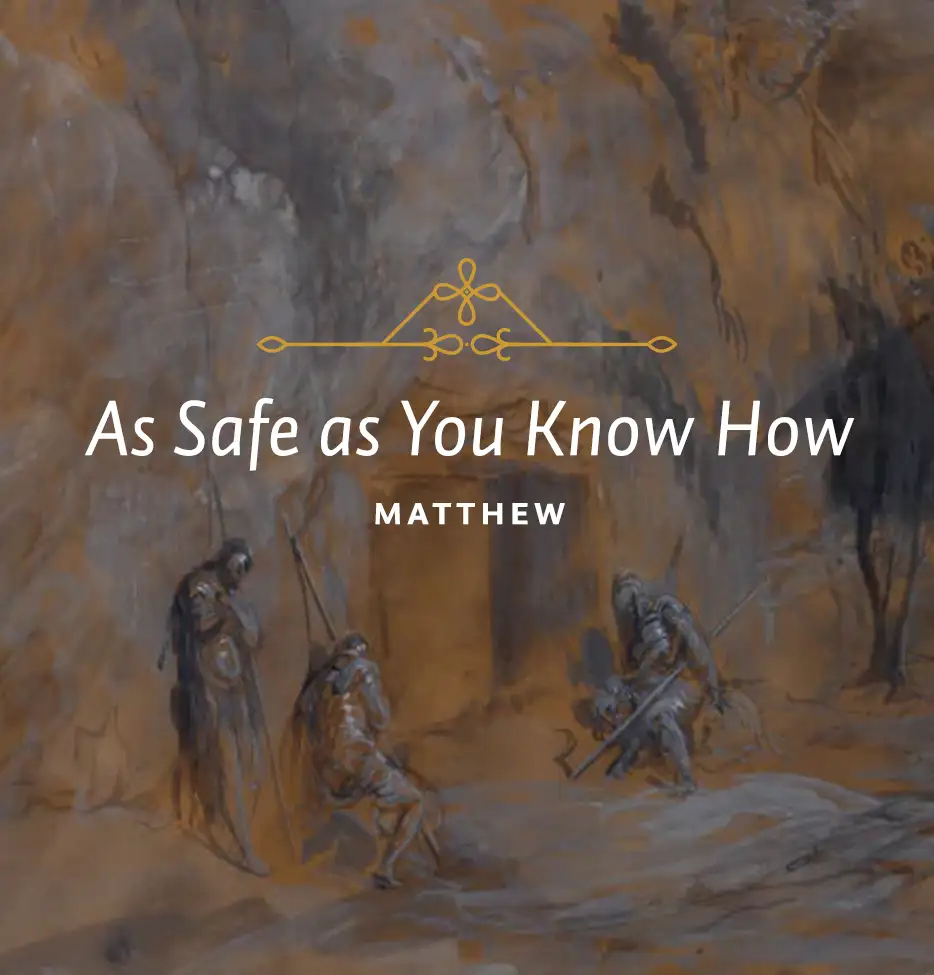


 Truth2Freedom's Blog