There are two ways to be fooled. One is to believe what isn’t true; the other is to refuse to believe what is true. —Soren Kierkegaard. "…truth is true even if nobody believes it, and falsehood is false even if everybody believes it. That is why truth does not yield to opinion, fashion, numbers, office, or sincerity–it is simply true and that is the end of it" – Os Guinness, Time for Truth, pg.39. “He that takes truth for his guide, and duty for his end, may safely trust to God’s providence to lead him aright.” – Blaise Pascal. "There is but one straight course, and that is to seek truth and pursue it steadily" – George Washington letter to Edmund Randolph — 1795. We live in a “post-truth” world. According to the dictionary, “post-truth” means, “relating to or denoting circumstances in which objective facts are less influential in shaping public opinion than appeals to emotion and personal belief.” Simply put, we now live in a culture that seems to value experience and emotion more than truth. Truth will never go away no matter how hard one might wish. Going beyond the MSM idealogical opinion/bias and their low information tabloid reality show news with a distractional superficial focus on entertainment, sensationalism, emotionalism and activist reporting – this blogs goal is to, in some small way, put a plug in the broken dam of truth and save as many as possible from the consequences—temporal and eternal. "The further a society drifts from truth, the more it will hate those who speak it." – George Orwell “There are two ways to be fooled. One is to believe what isn’t true; the other is to refuse to believe what is true.” ― Soren Kierkegaard
Discernment is biblical; the way we’ve professionalized it is not. When correction detaches from shepherding, exposure replaces formation, and platforms become rival authorities. Discernment belongs in the local church, aimed at gospel proclamation and Christian formation.
I’ve watched how quickly certainty forms online.
Something breaks. A clip circulates. Within minutes, believers are confident they know what just happened, who’s compromised, and what faithfulness requires next. The speed isn’t what unsettles me. It’s how little weight anyone seems to carry for the people involved. No one is asking who is actually responsible to shepherd here. No one is asking what repentance would even look like. The verdict comes first. The Church shows up later, if at all.
Moments like this keep replaying for me. Not because error doesn’t matter, but because discernment has become detached from the places God actually appointed to deal with error.
There is no such thing in Scripture as a “discernment ministry.”Subscribe
That category doesn’t exist in the New Testament. What exists is the Church, with shepherds tasked with guarding doctrine, protecting the flock, and training believers in truth. Discernment isn’t a parallel vocation. It’s a responsibility embedded in the ordinary life of the Church.
Many voices operating in this space have helped expose real errors and defend the gospel. That fruit is real. My concern is not with that work, but with the way exposure, over time, has been reshaped into a permanent ministry that displaces the formation God designed for the local Church. I’m not writing about any one man or ministry. I’m describing a posture that forms over time when discernment is untethered from shepherding.
In the New Testament, discernment is always tethered to shepherding. Elders are charged with guarding doctrine. Teachers answer for what they teach. Congregations are trained to test what they hear against Scripture (1 John 4:1; Acts 17:11). Correction happens within relationships, under authority, and for the sake of building up the Body. The point is not simply to identify error but to form people who love the truth and learn how to live in it together.
Scripture frames correction toward repentance and restoration, not perpetual suspicion (Galatians 6:1).
When discernment becomes a primary identity rather than a fruit of formation, it reshapes instincts. People learn to spot errors before they learn to love the truth. They are quick to render verdicts and slow to show patience. They begin to relate to the Church more as an object of analysis. Over time, believers learn whose voice carries real weight. When platforms shape reflexes more than pastors do, shepherds are left trying to disciple people whose instincts were trained elsewhere. Content creators become the teachers people trust most. Pastors become background voices. The Church becomes a recurring problem to manage rather than a Body to bear with.
While we accurately diagnose moral decay, we speak more like auditors than witnesses. The result is that believers see the world through the lens of a courtroom instead of a mission field. When discernment becomes the dominant language, gospel proclamation becomes marginalized. The result is a posture that can clearly identify sin but often forgets the truth of “such were some of you,” which reminds us that we were once among those who needed the gospel.
None of this requires bad motives. Much of it grows naturally in platform-driven ministry. Speed is rewarded. Certainty spreads faster than care. Strong conclusions travel farther than careful ones. Over time, those incentives begin to shape instincts. As warning becomes the central focus, the focus shifts. And when a ministry is built on finding error, it slowly begins to need error to survive. Outrage becomes oxygen. The work reshapes the worker.
I know this pull firsthand. I’ve found my footing in bitter critique more times than I care to admit. Cultural analysis matters. Paying attention to the words of politicians, pastors, pulpiteers, and other leaders matters. We’re called to test what we hear and to measure claims against truth. We’re meant to think carefully about the times we live in. However, in the absence of clear biblical categories, our good instincts become ineffective. The language shifts. The Church must judge with righteous judgment. The danger is when judgment becomes a platform habit rather than a church responsibility, aimed at exposure more than restoration.
I believe we need men who help us discern truth from error. I’m not saying that these men and their resources are required to operate solely in the four walls of a local church.
My concern is not with the medium or reach of anyone’s ministry. My concern lies in the long-term development of a discernment posture that becomes increasingly disconnected from the local church. My concern is for believers who consume this content apart from Elders who shepherd souls. When exposure becomes a steady diet, believers can grow adept at identifying error while losing the reflex to grieve for the lost. At this point, theology can become merely a badge of identity, and distance becomes a virtue. And when Christians grow fluent in condemnation and thin in compassion, discernment has begun to miss its mark.
My concern isn’t about lowering standards. It’s about whether our habits of discernment are forming hearts that still ache for repentance and faith.
At its core, the issue is an ecclesiology problem.
When the doctrine of Scripture is strong but the doctrine of the Church is thin, Christians drift toward lone-watchman instincts. That position doesn’t grow out of rebellion. It grows out of distance. It forms when believers are trained to relate to error primarily through platforms rather than through pastors, membership, discipline, and restoration. Over time, digital voices begin to carry more practical authority than local shepherds and reflex forms before reflection ever has a chance.
The corrective is not to abandon discernment. The corrective is to put discernment back where Scripture places it.
Discernment exists to protect the root of the gospel, not to fixate on fruit in ways that replace gospel proclamation and formation. Scripture calls us to examine fruit, but fruit inspection is meant to serve repentance and faith in Christ, not to replace the work of gospel proclamation for content analysis.
Discernment is biblical. A discernment industry is not.
The Church does not need more people trained to scan for wolves. She needs shepherds who feed sheep, guard the fold, and correct error without turning the flock into spectators of accusation.
Even More Questions about the book of Exodus: What questions are people asking and why? How can I understand some of the difficult issues in the book of Exodus?
I have found by experience that we don’t need to offer exhaustive answers to the questions of unbelievers. When it comes to the issue of suffering or the existence of God, there are short answers that can satisfy the questioner while remaining true to Scripture.
Here are the top ten most common objections:
“There is no evidence for God.”
It is scientifically impossible for a building to build itself, and it is scientifically impossible for nature to have created itself. The Scriptures say, “For every house is built by someone, but He who built all things is God” (Hebrews 3:4). In reality, there’s no such thing as an atheist. This is because everyone intuitively knows God exists: “For since the creation of the world His invisible attributes are clearly seen, being understood by the things that are made, even His eternal power and Godhead, so that they are without excuse” (Romans 1:20). So we need not spend too much time arguing with an atheist. His problem isn’t a lack of evidence for God but rather a love for sin. That’s why we need to do what Jesus did and direct our attention to his conscience using the Ten Commandments (see Mark 10:17-19).
“The Bible is full of contradictions.”
When studied in context, the Bible is harmonious. Apparent contradictions arise from misinterpretations or lack of full information. It’s important to realize that Jesus didn’t say to go into all the world and try and convince them that the Bible is the Word of God. The early Church didn’t have a Bible as we know it. The New Testament hadn’t been compiled. There was no such thing as the printing press, and not many could read. Their agenda was to proclaim the gospel—because the gospel is the power of God unto salvation (Romans 1:16).
“When it comes to the issue of suffering or the existence of God, there are short answers that can satisfy the questioner while remaining true to Scripture.”
If we read the Gospels with an open and honest heart, we are not left with the option that Jesus was a good teacher. He was either God in human form, was completely insane, or He was a blatant liar. This is because He claimed to be God, performed miracles, forgave sins, and many times said He would rise from the dead. He said, “He who has seen Me has seen the Father” (John 14:9).
“A loving God wouldn’t send people to Hell.”
God doesn’t send anyone to Hell—in the same way that a judge doesn’t send a criminal to prison. Their sins will send them to Hell, just like a criminal’s crimes send them to prison. The judge merely carries out justice.
“Christianity is just one of many religions.”
The claim of Christianity is one of exclusivity. Jesus said, “I am the way, the truth, and the life. No one comes to the Father except through Me” (John 14:6). In Christ, God provided a Savior for the whole of humanity. When anyone trusts in Jesus, they have forgiveness of sins. No religion promises that. The Christian gospel is good news for Muslims, Buddhists, Hindus, agnostics, and atheists—that everlasting life can’t be earned by anything we do. It is the gift of God.
“The Church is full of hypocrites.”
A hypocrite is not a Christian. He is a pretender. The Scriptures tell us that the sheep (Christians) and goats (hypocrites) will dwell together in the church until they are sorted out on the Day of Judgment. Those who don’t like hypocrites won’t want to spend eternity with them in Hell.
“Science disproves the Bible.”
Scripture tells us to avoid “profane and vain babblings, and oppositions of science falsely so called” (1 Timothy 6:20, KJV). Many of today’s “scientific” theories are not true science. However, genuine science and the Bible are not in conflict. The Scriptures are filled with scientific facts, stated thousands of years before man discovered them. See our book Scientific Facts in the Bible.
“If God is love, why is there suffering?”
Every time we see suffering, we are seeing the tragic result of the fall of humanity. The Bible tells us we live in a fallen creation that is in rebellion to God, and this is evident in the existence of disease, pain, suffering, and death. Suffering should be seen not as a reason to reject the Bible but as a very real reason to accept the testimony of Scripture.
“The Bible supports slavery.”
The “slavery” in the Bible was different from modern slavery. In Israel, a slave wasn’t someone who had been kidnapped and sold into slavery. Rather, it was someone who found themselves in debt and submitted to being a slave (a servant) to pay off the debt rather than be thrown into debtors’ prison, as often happens in contemporary society. In times of war, Israel took slaves from a defeated enemy, as did the United States and Britain during and after the Second World War.
“Religion has caused more wars than anything in history.”
According to the Encyclopedia of Wars, only 9% of wars were religions wars. And most of the 9% were caused by Islam. That means that 91% of the wars down through history were political wars—such as the First World War, the Second World War, the Korean War, the Vietnam war, etc.
See The Evidence Study Bible for 200 of the most commonly asked questions of the Christian faith.
6 Proper training of a child will endure throughout his life. The parallelism is formal; the second clause provides the consequence of the first. The imperative is “train” (ḥanōḵ); the verb includes the idea of “dedicate,” and so the training should be with purpose. The “child” (naʿar) presumably is in the youngest years, although the Talmud would place him between sixteen and twenty-four. The NEB captures the point of early instruction: “Start a boy on the right road.” The right road is expressed “in the way he should go” (ʿal-pî ḏarkô). The way the verse has been translated shows that there is a standard of life to which he should go. Of course, he would have to be young enough when change for the better was still possible. The consequence is that when he is old (yazqîn), he will not depart from it. Whybray notes that the sages were confident of the character-forming quality of their teaching (Book of Proverbs, p. 125). In recent years it has become popular to interpret this verse to mean that the training should be according to the child’s way. The view is not new; over a thousand years ago Saadia suggested that one should train the child in accordance with his ability and potential. The wise parent will discern the natural bent of the individual child and train it accordingly. Kidner acknowledges that the wording implies respect for the child’s individuality but not his self-will; he reminds us that the emphasis is still on the parental duty of training (Proverbs, p. 147). Training in accordance with a child’s natural bent may be a practical and useful idea, but it is not likely what this proverb had in mind. In the Book of Proverbs there are only two “ways” a child can go, the way of the wise and the righteous or the way of the fool and the wicked. Moreover, it is hard to explain why a natural bent needs training. Ralbag, in fact, offered a satirical interpretation: “Train the child according to his evil inclinations (let him have his will) and he will continue in his evil way throughout life” (cited in Greenstone, p. 234). Toy summarizes the ways that one might take “according to his way”: “not exactly ‘in the path of industry and piety’ (which would require in the right way), nor “according to the bodily and mental development of the child’ (which does not agree with the second cl.), but “in accordance with the manner of life to which he is destined, ‘the implication being that the manner of life will not be morally bad” (p. 415). McKane agrees that “according to his way” must mean the way he ought to go; he says, “There is only one right way—the way of life—and the educational discipline which directs young men along this way is uniform” (p. 564).
Ross, A. P. (1991). Proverbs. In F. E. Gaebelein (Ed.), The Expositor’s Bible Commentary: Psalms, Proverbs, Ecclesiastes, Song of Songs (Vol. 5, pp. 1061–1062). Zondervan Publishing House.
22:6. Train up a child in the way he should go, Even when he is old he will not depart from it. This is among the best-known, as well as most quoted and controversial, of all the proverbs. The first line sets forth, via an imperative, the proper conduct of parents; the second line then presents the consequence that follows upon that conduct. The verbal command ‘Train up a child’ comes from a Hebrew word that most frequently refers to beginning, initiating or inaugurating something. The Temple was dedicated (1 Kings 8:63), as could be a person’s house (Deut. 20:5). Such a dedication of a structure referred to its initial use for its intended purpose. This may have included a formal dedication ceremony. Some scholars see in this a cognate to an Egyptian word which means to consecrate something to divine service or to give something to the gods. If this is the case, then the point would be that parents are to absolutely consecrate their children (and, thus, their parenting) to God and begin early to channel all their efforts and resources into training that child for the service of God. It is never too early to begin to teach and train our children in the truths and ways of God. The particular direction of this training is ‘in the way he should go.’ This phrase has been the center of the most speculation and controversy in recent years. The phrase in Hebrew is literally ‘on the mouth of his way.’ Does this refer to the way the child ought to go (i.e. the way of righteousness and wisdom) or does it refer to the child’s natural bent and personality (i.e. his natural inclinations, gifts and talents)? The cryptic expression ‘on the mouth of’ is a Hebrew idiom meaning ‘according to the measure of’ or ‘in accordance with.’ The key, then, remains to determine just what is meant by ‘his way.’ The Hebrew word for ‘way’ is used nearly seventy times in the book of Proverbs. It describes the choices and direction one takes in life. It forms one of the key themes of the book, particularly the first nine chapters. That theme develops clearly and without ambiguity—we are to choose the way of God, wisdom and righteousness and we are to shun the way of evil, folly and sin. The ‘way’ here in verse 6, also, then, describes the way one ought to go, the right way, the divine way, the wise and righteous way. That this is ‘his’ (the child’s) way may mean no more than that this is the way God has laid out before him as His appointed way for his life. To find here warrant for the contemporary notion of non-directive parenting, dictated by the whims and wants of the child, is to rip the verse from its context and to read it for what we want it to say, rather than what it, in fact, does say. That having been said, there is wisdom in understanding the individuality and personality of each child and, thus, adapting discipline and training (within the Scriptural instruction, Prov. 13:24; 19:18; 22:15; 23:13–14; 29:17) to best reach the divinely appointed goal. Every child is different and learns differently. This is true, but it is not the major point being made in this proverb. So, one dedicates his child to God and begins early to teach, train and guide him on the path God would have him to walk. What can one expect will happen, if this course is consistently taken? The second line tells us, ‘Even when he [the child] is old he [the child] will not depart from it [the way that has been set before him].’ Here it is not the grammatical, syntactical and lexical matters that complicate our understanding. What makes this second line hard is the question as to whether this is a promise and guarantee. Does this dogmatically demand that, if proper parenting is employed, all children in the household will walk with God obediently? Personal examples abound that seem to contradict such a view. This takes us back to the nature of an ancient proverb. The ancient proverb was never designed to be an absolute guarantee of what will always be true, in every case, without exception, but rather as an accurate observation of the basic laws of life. More often than not, children who have been reared by loving parents, who have patiently and consistently taught them God’s truth and ways through instruction, discipline, and modeling, will grow up to walk obediently with God. This is the general case. Yet, because of the mysterious interplay of human will and divine sovereignty, this is never absolutely assured to us. We are not computers to be programmed, but living beings to be trained, loved, wooed, and won. Such a process is as heartbreaking in some lives as it is rewarding in others. Every parent who truly loves God and his child will give himself to the service of God in so raising his child, with the prayerful hope that, when he is called to take his hands off and release his child into the world as an adult, the child will indeed ‘not depart from’ his God and His ways (Eph. 6:4).
Kitchen, J. A. (2006). Proverbs: A Mentor Commentary (pp. 495–497). Mentor.
Ver. 6. Train up a child in the way he should go: and when he is old, he will not depart from it.—On the education of youth:— A strict and virtuous education of youth is absolutely necessary to a man’s attainment of that inestimable blessing, that unspeakable felicity, of being serviceable to his God, easy to himself and useful to others in the whole course of his following life. To the proof of this, lay down six propositions.
That in the present state of nature there is in every man a certain propensity to vices, or a corrupt principle more or less disposing him to evil, which principle is sometimes called the flesh, sometimes concupiscence, sometimes sensuality, and makes one part of that which we call original sin.
That the forementioned propensity of the sensual part, or principle, to vice, being left to itself, will certainly proceed to work, and to exert itself in action; and if not hindered and counteracted will continue to do so, till practice passes into custom and habit, and so by use and frequency comes to acquire a domineering strength in a man’s conversation.
That all the disorders of the world, and the confusions that disturb persons, families, and whole societies or corporations, proceed from this natural propensity to vice in particular persons, which being thus heightened by habitual practice, runs forth into those several sorts of vice which corrupt and spoil the manners of men.
That when the corruption of man’s manners by the habitual improvements of this vicious principle comes from personal to be general and universal, so as to diffuse and spread itself over a whole community, it naturally and directly tends to the ruin and subversion of the government where it so prevails.
That this ill principle is to be altered and corrected only by discipline, and the infusion of such principles into the rational and spiritual part of man as may powerfully sway his will and affections, by convincing his understanding that the practice of virtue is preferable to that of vice; and that there is a real happiness and honesty in the one, and a real misery, as well as a turpitude, in the other; there being no mending or working upon the sensual part, but by well-principling the intellectual.
This discipline and infusion of good principles into the mind, which only can and must work this great happy change upon a man’s morals, by counter-working that other sensual and vicious principle, which would corrupt them, can never operate so kindly, so efficaciously, and by consequence, so successfully, as when applied to him in his minority, while his mind is ductile and tender, and so ready for any good impressions. For when he comes once to be in years, and his mind, having been prepossessed with ill-principles, and afterwards hardened with ill practices, grows callous, and scarce penetrable, his case will be then very different, and the success of such applications is very doubtful, if not desperate. It is necessary that the minds of youth should be formed and seasoned with a strict and virtuous and early and preventing education. On three sorts of persons this trust rests— (1) Parents. (2) Schoolmasters. (3) The clergy. (R. South.) The education of children:— The careful, prudent, and religious education of children hath for the most part a very good influence upon the whole course of their lives. I. WHEREIN DOTH THE GOOD EDUCATION OF CHILDREN CONSIST?
In the tender and careful nursing of them.
In bringing them to be baptized.
In a due care to inform and instruct them in the whole compass of their duty to God and to their neighbour.
In a prudent and diligent care to form their lives and manners to religion and virtue.
In giving them good example.
In wise restraints from that which is evil, by seasonable reproof and correction.
In bringing them to be publicly catechised.
In bringing them to be confirmed. II. MORE PARTICULAR DIRECTIONS FOR THE MANAGEMENT OF THIS WORK. The young have to be trained in the exercise of the following graces and virtues: Obedience, modesty, diligence, sincerity, tenderness, pity, good government of their passions, and of their tongues, to speak truth and to hate lying; to piety and devotion towards God, sobriety and chastity with regard to themselves, and to justice and charity towards all men. Endeavour to discover the particular temper and disposition of children, that you may suit and apply yourself to it. Endeavour to plant those principles of religion and virtue which are most substantial and likely to have the best influence on the future government of their lives. Check and discourage in them the first beginnings of sin and vice: as soon as ever they appear pluck them up by the roots. Take great heed that the children be not habituated and accustomed to any evil course. Bring them, as soon as they are capable of it, to the public worship of God. Put them upon the exercise and practice of religion and virtue, in such instances as their understanding and age are capable of. Add constant and earnest prayer to God on behalf of your children. III. SOME OF THE MORE COMMON MISCARRIAGES IN THE PERFORMANCE OF THIS DUTY. These may be found in relation to instruction, example, and reproof. There often is too great rigour and severity; at other times too great laxity. It is always mischievous to punish while under the influence of passion. IV. SHOW HOW GOOD EDUCATION COMES TO BE OF SO GREAT ADVANTAGE. It gives religion and virtue the advantage of the first possession, and the further advantage of habit and custom. V. STIR UP THOSE WHOSE DUTY THIS IS TO DISCHARGE IT WITH GREAT CARE AND CONSCIENCE. Good education is the very best inheritance you can leave your children. In this way you promote your own comfort and happiness. The surest foundation of the public welfare and happiness is laid in the good education of children. Consider the great evils consequent on the neglect of this duty. (T. Tillotson, D.D.) Training up children to the primary virtues:— Habits of virtue are of the same nature with dexterity in the mechanical or other arts. Would we acquire this dexterity, we must exercise ourselves early and constantly whether in the virtues or the arts. It is necessary for us to train up children to virtue with all possible care from their earliest infancy, and continually to exercise them in it, if we would have them truly virtuous persons. To do this we should find out their temperament, and conduct ourselves accordingly: we should habituate them to act from principle and design; we should teach them to be attentive to the consequences of their actions; we should strive to make their duty their pleasure. Further rules are—
Inure them from their earliest infancy to obedience and submission.
Inspire them with a predominant love for truth, for sincerity and frankness.
Train them to diligence, to method, and to industry in their affairs.
Be very careful to bring them up to humility and modesty.
Endeavour to inspire them with a sincere affection and hearty good-will towards all mankind, without distinction of rank, of religion, of country, or of outward fortune.
Neglect not to train them to compassion and benevolence.
Train them to patience in sufferings, to fortitude and courage in misfortune, to a steady and intrepid behaviour in all situations. These qualities and virtues are indispensably necessary to us in our present state. We must learn first to practise them in trivial matters if we would do so afterwards in riper years and more important emergencies. (G. J. Zollikofer.) Child-training:— Introduction:
Mobility needed in subject of training; therefore man is born “a child.” Yet be aware, flexibility passes, tendency to solidify soon creeps in.
Parents here granted right of loving dogmatism: “in the way they should go.” I. TRUE TRAINING EMBRACES CARE AND SYSTEM.
These should touch each part of child-nature: flesh and blood. Evolution of full manhood only reached thus. Bodies are fed and “trained.” Mystery is, the soul often neglected. No animal neglects its young as man does. “Every home should be its own Sabbath-school.”
Can’t train without a line to go on—a faith that can be taught—a system. Trained child not found where father’s mind is dark or chaotic. You like your child to choose its faith when it can think for itself? No child is mentally or spiritually free from bias. Child has all to learn. Has no standard of selection. First trainer has greatest power, whether good or evil. Mark this: if you don’t bias it for good a thousand tutors outside your home will bias it to its hurt. II. TRAIN CHILD TO DECIDE MORAL QUESTIONS BY PRINCIPLE, NOT BY FEELING.
A child is composed of appetites and moral sense. These all glow. But appetites get two or three years’ start of moral sense. You must be swift in training, or you won’t get moral sense to overtake appetite.
Every day of life offer times for moral decision. Think of George Eliot’s Arthur Donnithorne; sweet temper, weak moral sense, strong animal tastes; so a standing peril to himself and others.
The one grand deciding principle for all souls is: “What does Christ love, that is the thing to be done.” It is sure: it carries child to right issues. It is safe: it imperils nothing in its whole being. It is rapid: under it souls grow holy fast. III. TRAIN CHILD TO JUDGE CHRISTIANITY BY BEST RESULTS. Much of training given unwittingly. Soul-suction always going on in “a child.” Five senses are five avenues to soul. Crowds of motley ideas go up them—each idea a teacher. In your home they hear your views of men and actions. Beware! if you condemn Christianity, because of its sullied specimens, you harm the child. Put religion in its highest light. For its sake ask: “What are its finest results?” Show them spiritual splendours. Show them John, Paul, Augustine, Luther, Newton, Hale, Wesley. Christian gallery not wanting in fine portraits. Show them Christ. Moral longing will awaken them; they will hunger and be filled (Matt. 5:6). Conclusion:
All details come under these principles.
Thus you will train “a godly seed.” (British Weekly.) On religious education:— I. AN EXHORTATION TO THE DISCHARGE OF AN IMPORTANT DUTY. The wisdom and propriety of the exhortation are founded on certain qualities inherent in man.
Man is remarkably prone to imitation. In private families every action of the parent is imitated by the child. So it happens in the aggregate life of the nation. The cast of general manners depends upon the leaders of society.
Children in their infant years contend obstinately for the gratification of their own humour. The principle of self-will is not in cases to be reprehended. When it makes us resolute in spurning compliance with mean conditions, with base proposals, and wicked instigations, it is generous and manly, and should be cherished. But reasonable accommodation of our own inclinations and our own sentiments to the dispositions and opinions of others is absolutely necessary for the transacting of human concerns, and consequently for the existence of civil society. It should therefore be taught to children, because they are inexperienced; and enforced on young persons, because their passions are turbulent. The training of children in the way of subjection to discreet and moderate control is an act of judicious kindness in every parent.
When we are born we bring with us minds already furnished with methodical principles; but through the sole gift of God we are endowed with capacity either for the inventing or the learning of arts and sciences. The extent to which this capacity becomes advantageous depends in a great measure on the degree and manner of culture with which it is improved.
In the generality of men there is an active spirit which is impatient of rest, and which will find itself employment. Children therefore need training in the proper methods of spending energy in labour and in recreation.
There is in man a most unhappy tendency to do evil. Man finds it more easy to indulge his appetites than to raise his soul to higher objects. The best friend of the child is he who begins with the first dawn of understanding to impress on the mind of his child that there is a God everywhere present in power and knowledge, and another state of existence, where goodness shall terminate in happiness, but vice be productive of misery. II. THE EFFECT WHICH WILL ENSUE FROM EARLY CARE EMPLOYED IN EDUCATION. The mental faculties most distinguishable in our first years are memory and imagination. If the proper effects of right instruction are not so visible as might be wished at every period of our age, let no one hastily conclude that therefore the elements of education are totally obliterated. Good principle may for some years lie dormant in the mind. Unless in cases of extreme depravity, the good principle, like the good seed, will at last find its way to shoot up, and give a tenfold measure of increase after its own kind. The training, then, of children in the way they should go is from the nature of man indispensably necessary. (G. J. Huntingford, D.D.) Of the duty which parents owe to their children:— I. THE HEINOUS NATURE AND FATAL CONSEQUENCES OF THE NEGLECT OF PARENTAL DUTY.
As it appears in the sight of God.
As it affects the children.
As it affects parents themselves. II. HOW PARENTS SHOULD EDUCATE THEIR CHILDREN.
Train your children to revere you.
Train them to implicit submission to your authority. Insubordination in youth is the certain inlet to all that is disorderly in riper years.
In order to train your children to moderation in pleasure, lead them, as early as possible, to mark the imposture of passion, and guard them from all intimacy with the loose and the dissipated, and interdict them of all loose and licentious reading.
Train them to industry and frugality. Unremitting application and assiduity are the only means by which pre-eminence among men can be attained.
Train your children to virtue and candour, and justice and humanity.
Train your children to piety. True views of the benignity of the Ruler of nature will impress their susceptible breast with the feelings of genuine piety, and lead them to love the Lord their God with all their heart and strength and mind. (W. Thorburn.) The formation of the minds of children:—
Repress not their curiosity or their inquisitiveness. It is in itself no fault. It is rather a strong impulse and an excellent means to become intelligent and wise.
Accustom your children or your pupils to the use of their senses; teach them to apprehend justly.
Beware of giving them false or not sufficiently precise ideas of any matter, though of never so trifling import.
Set them to learn nothing which, either on account of their tender age or from the want of other kinds of knowledge necessary to that purpose, they cannot comprehend. Measure not their capacities by yours.
Endeavour not only to increase and extend their knowledge, but likewise to render it solid and sure. It is far better for them to know a few things thoroughly than to have only a superficial acquaintance with many.
Guard them from being hasty in forming conclusions, and avail yourself of all opportunities for leading them, by observations, to circumspection and precision in their inferences and judgments. (G. J. Zollikofer.) The formation of the hearts of children:— To form the hearts of children means to direct their appetites and affections to the worthiest objects, to inspire them with a predominant love for all that is true and right and proper, and thereby to render the performance of their duty easy and pleasant to them.
Study to find out their temperament, and conduct yourself according to it. The temperament is, as it were, the soil that is to be cultivated, and the diversity of this soil is not so great but it may soon be discovered. More or less vivacity and quickness of apprehension, more or less sensibility to good and evil, to pleasure and pain, more or less vehemence in the affections, more or less disposition to rest or to activity—in these consist the principal diversity in what may be called the temperament of children. All these various temperaments may equally lead either to the virtues or to the vices.
Accustom them to act from principle and design, and not by blind impulse or mere self-will.
But be not satisfied with teaching them to act from reason, as rational creatures; but teach them to act upon the noblest principles, and in pure and beneficent views. Beware of setting only their ambition in motion, and of inciting them to application and duty from no other motive than the idea of the judgment that others pass on them.
Teach them, further, to attend to the consequences of their actions or of their behaviour. Teach them duly to prize that inward peace, the satisfaction, the cheerfulness of mind, the health and strength of body, and the other advantages which they have derived from honest and proper conduct.
Strive to make their duty a pleasure to them.
For facilitating all this to them, for teaching them to act upon principle, to act from the best motives, and to be attentive to the consequences of their actions, you should accustom them betimes to self-examination, which is the most excellent means for constantly becoming more wise and virtuous.
Teach them, in like manner, to reap benefit from the conduct of other persons.
Finally, to this end call history likewise to your aid. (Ibid.) Advantages of good training:— They who are well educated generally behave well for the following reasons:
Early impressions are deep.
Habit is strong.
Early piety is acceptable to God. The first love of an innocent heart is a sacrifice of a sweet savour. (S. Charters.) Religious training:— A child may be said to be taught when in words we clearly convey to his mind any truth or enjoin upon his conscience any precept. He is trained when we ourselves so pass before him, in practical illustration of the truth and precept, that he is drawn along after us in the same way. The principle applies peculiarly to moral and religious instruction. Suppose you wish to instruct a child in benevolence or charity. You tell him what it inclines one to do for the needy and suffering; you dilate upon the beautiful sentiments which the exercise of it incites in one’s own breast; you refer to distinguished examples of it that have blessed the world. All this is teaching. But now, again, you take your child by the hand, and lead him with you into some abode of poverty and want; you let him see with you the necessitous situation of the inmates of that cold and ill-provided dwelling; he marks the yearning of your heart towards them, and his heart swells in sympathy; the satisfaction that exhilarates your soul he shares as you freely give the needed aid; he witnesses the whole reciprocal action of a living bounty on your part and a returning gratitude on the spot. And this is training. One such scene will avail more than many lectures to make your child charitable. Or suppose, again, you would instruct your child in devotion, prayer to God. But to what purpose if the child is not moreover trained to pray?—to what purpose if the very house he lives in is a prayerless house? Would you instruct your child in that cardinal excellence of truth? You insist often, in words, on its importance. But, more than this, train it to do so. You rebuke deception. It is well. But practise not in any way what you rebuke. Would we instruct our children to be kind and gentle? How? by a command? Not so only, but more powerfully by the affectionate and pleasant bearing and tone of our own speech and person. Parents and friends often wonder that, after all the pains taken with children, the frequent counsels and admonitions, they should yet afterwards go astray. But was the child who has disappointed you trained as well as taught? Did you uniformly go before to beckon and lead him after in the way you first pointed out? But in the majority of cases the rule will hold good: your child will keep on as he has been trained. The soldier in his age might as soon forget the drill of his early discipline, or the sailor the first calculations by which, under the rolling planets, he made his way over the uncertain waves, as your child the practical guidance to which you have actually used him through a series of years. He will keep on, if you have been his leader and forerunner, when your feet stumble on the dark mountains, and will run the race after very much as you have run it before. The chief significance of the grave where you lie down will be to fix the direction in which you trained and the point at which you left your child. Your bark will disappear as it sails on over the misty horizon; but his bark shall hold the same course. Whither, whither shall it be? (C. A. Bartol.) The education of the young:— I. AN INTERESTING OBJECT. “A child.”
Its personal powers (Job 32:8), the faculties of the mind.
Its social importance.
Its possible elevation.
Its total depravity. Socrates confessed of himself that his natural inclinations were exceedingly bad, but by philosophy he overruled them.
Its immortal duration. II. AN IMPORTANT DUTY. “Train up.”
Let him be taught useful learning.
Let him be instructed in religious knowledge.
Let him be impressed by a consistent example.
Let him be guided into proper habits.
Let him be sanctified by earnest prayer. III. AN ENCOURAGING PROSPECT.
From the Divine appointment (Deut. 4:10; 31:13; Eph. 6:4).
From the Divine procedure. (Studies for the Pulpit.) The religious instruction of the young:—
See to it that we present the Divine character in a manner calculated to encourage young hearts.
Distinguish between the way in which death affects the body and the way in which it affects the spirit.
Make it clear that the religion of Christ is in harmony with all innocent recreation and enjoyment.
Do all in our power to interest the young in the services of the sanctuary.
See that you offer to the young the truth which God has revealed to you, and of which you have felt the power.
Avoid all treatment of the young that is calculated to dispirit and discourage. Be careful not to exact too much from them.
Be varied in your teaching, and do not be depressed if the attainment of your object is delayed. (S. D. Hillman.) The necessity of a wise and wholesome discipline:—
As soon as children are capable of reflection endeavour to make them acquainted with some of the leading truths of the gospel.
Explain the duties of practical religion as well as the articles of belief.
Be careful to set before your children an example worthy of imitation, for instructions and exhortations will be invalidated by inconsistency.
Discipline, reproof, and correction are necessary in the family as well as in the Church and State.
Let correction and reproof be accompanied with fervent and importunate prayer.
Keep a watchful eye over them to see what may be the fruit of your labour. To rightly perform parental duties we must begin betimes; secure the affection of the children; keep them out of the way of temptation; and instruct them with gentleness. (B. Beddome.) Godly training:— The various branches of godly training may be thus enumerated:
Instruction in right principles—the principles of God’s Word.
The inculcation of right practice—the practice of God’s will.
Salutary admonition and restraint, and correction.
The careful avoidance of exposure to evil company and evil example.
The exhibition before them of a good example in ourselves.
Constant, believing, and earnest prayer. (R. Wardlaw, D.D.) Education:— I. WHOM SHOULD WE EDUCATE? The material. “A child.” The world teems with analogies both real and obvious, whereby the moralist may enforce the duty of educating in the comparatively pliable period of youth. II. THE PROCESS OF EDUCATION. “Train up.” Note the distinction between teaching and training. There may be teaching without training. Moral training according to a Divine standard, with the view of moulding the human being while yet young and tender into right principles and habits of action, is the only education worthy of the name. The oldest training-school is the best—the school at home; sisters and brothers are the best class-fellows, and parents the best masters. But formidable obstacles, both intrinsic and extrinsic, prevent or impede parental training. III. THE AIM AND END OF EDUCATION. “In the way he should go.” Wisdom in choosing the proper time, and skill in adopting the best method, would be of no avail if false principles were thereby instilled into the mind and evil habits ingrafted on the life. If we do not train the children in truth and righteousness it would be better that we should not train them at all. (W. Arnot, D.D.) The training of children:— There are many qualifications necessary for carrying out this important duty. I. SANCTIFIED LOVE. This is not mere instinctive fondness which is common to man and animals, but—
A perception of the true beauty of childhood.
A realisation of the purity of childhood.
A consciousness of the guileless simplicity of childhood. II. FELT RESPONSIBILTY.
Children are not our own.
Children are the future inhabitants of the world. Hence the world will be, to a certain extent, what we make the children.
Children have immortal souls. III. INDIRECT INFLUENCE. To obtain this we must—
Subdue our own passion. No passionate parent can possibly influence his child for good.
Set a godly example.
Cultivate confidence and win affection. IV. PATIENT WAITING AND EARNEST PRAYER. (Homilist.) Childhood innocence a dream:— Here is an assertion, but is not experience frequently at variance with it? The statement of the text is unqualified. Adherence to the right path is given as the invariable result of having been trained up in the right path. Can this be established by facts? With what restrictions are the words of the wise man to be understood? It is implied in the text that there is no tendency in a child to walk in the right way, and if we leave him to himself he will be sure to walk in the wrong. Almost from the moment of the child’s birth can be discovered in the infant the elements of the proud, revengeful, self-willed man. There is hereditary guilt where there cannot be absolute. The innocency of childhood is a dream and delusion. In dealing with children we have not to deal with unoccupied soil, but soil already impregnated with every seed of moral evil. In what manner may the precept of the text be best obeyed? The great secret of training lies in regarding the child as immortal. (H. Melvill, B.D.) Teach the youngest:— Dr. Chalmers, in a letter to his sister, Mrs. Morton, says: “You cannot begin too early. God should be spoken of to the very youngest, and the name of Jesus Christ familiarised to them; and every association of reverence and love that the tone and style of the parents can attach to the business of religion should be established in them. Their consciences are wonderfully soon at work.” Childhood injured:— Childhood is like a mirror catching and reflecting images all around it. Remember that an impious thought uttered by a parent’s lip may operate upon a young heart like a careless spray of water thrown upon polished steel, staining it with rust which no after-scouring can efface. Teaching and training:— It is a very important thing to get hold of the distinction between teaching and training, or, as the margin reads it, catechising. Train up a child, not merely lead a child. There is a New Testament text which brings out the same thoughts where parents are taught to bring up their children in the nurture and admonition of the Lord. Observe the distinction between nurture and admonition. Admonition means teaching, and nurture means training—two very remote things. Eli was a capital admonisher, but no trainer. Eli admonished his sons very often. If mere talking would have answered, he would have done well. He should have been like Abraham, who commanded his house after him. Do you think you could ever make good marksmen by giving lectures on the science of projectiles? Would that make men good shots? If you are to be good shots you must handle the rifle and actually shoot. (S. Coley.) The training of a child:— Human society is now hard enough, and needs more sympathy in it than one always sees; but what it would become if the hearts of men were not kept in some degree of softness and tenderness by the affections which are raised and developed by family life it is difficult fully to conceive. This text corrects the terrible and mischievous misconception that a child’s future is altogether a thing of chance. It can be controlled. All life can be trained. It can be made to take a course different from that which it otherwise would take. The training is within certain limits. Children will be trained in spite of us. How they are trained depends largely on us. We rely on this same principle of training in every other relation which the child sustains. The laws of religious life are not capricious and incalculable laws. Duty has to be learned like a business, or a science, or a profession. The training of a child consists in—
Teaching.
Example.
Discipline.
Prayer. Show me a child well instructed in the truths of the gospel, living day by day in the presence of consistent and winning examples, and surrounded with prayers, and I do not say that such an one may not through a strange self-will break his way through all these blessed influences and become a wreck and a castaway, but it will be a wonder if he comes to such a melancholy end, and it is easier to believe that in such a case the training has been faulty than that there has been a failure in the Divine promise which connects the spring and the autumn. (Enoch Mellor, D.D.) The training of children:— The whole human family has descended from the loins of Adam, and is necessarily tainted with his impurity. “By one man’s disobedience many were made sinners.” We are all under the power of sin. This tendency to sin is often exhibited in the child long before the dawn of consciousness. It is constitutionally a sinner, and the uninterrupted development of its nature will necessarily be a growth in sin. I. THE TEXT DOES NOT MEAN THAT THIS SINFUL NATURE IS TO BE TRAINED IN THE HOPE OF PRODUCING BLESSED RESULTS, BUT SOMETHING HIGHER AND BETTER IS TO BE SUPPLIED FROM WITHOUT. Life and grace and power have been brought into the service of humanity in the person of our Lord and Saviour Jesus Christ, and are to be made over to us by the operation of the Holy Ghost. But this Divine life is here only in germ, and must be developed in the midst of certain conditions, and here is a duty that God requires at the hands of parents. “I know Abraham, that he will command his children and his household after him, and that they shall keep the way of the Lord to do justice and judgment; that the Lord may bring upon Abraham that which He had spoken of him.” Here it is expressly stated that Abraham was to do his part in order that the Lord might verify to him the blessings guaranteed in the covenant. II. THIS TRAINING SHOULD BEGIN AT THE VERY DAWN OF THE CHILD’S EXISTENCE. When we are told to “train up a child in the way that he should go,” it is meant that we should do this; not let it first grow up in sin and then try to reclaim it afterward by extraordinary effort. To do that is to give the world, the flesh, and the devil all the advantage. The child will not grow up a Christian without the influence and teaching of the parent. The receptive faculties of the child must be trained and sustained, and then the Holy Ghost will sanctify the life and make it fruitful in holiness. During its earliest life the child absorbs impressions and is completely under parental influence and direction. Parents are also invested with authority over the child, and it will need discipline, but this must be exercised in love. For the lack of this spirit corrections administered are often of no avail. Correction administered in a wrong spirit will do harm and not good. It must be evident, therefore, that properly to train our children we must not only teach them Christian doctrine, but we must live the life of a Christian. III. IF A CHILD IS THUS NURTURED AND TRAINED IN THE DIVINE LIFE WE NEED NOT SUPPOSE THAT A TECHNICAL EXPERIENCE OR SUDDEN TRANSITION IS NECESSARY TO CONSTITUTE IT A CHRISTIAN. The neglect of parental training cannot be made up in any other way. There is no danger of claiming too much for our holy religion. The whole being of man is to be sanctified by it. The chief end of our existence is to glorify God. How often it is said of a man who dies owning no property that “he left nothing to his family”! But every child is an heir, and his inheritance is indefeasible. First of all are his memories of his parents and his home. The man who has no property to devise should not be unhappy. “I give and bequeath to my children a good name, a Christian example, and a faithful training.” Is not that a good start for a last will? These are legacies over which no heirs quarrel and that require no probate outside of the sanctuary of the heart. (E. R. Eschbech, D.D.)
Exell, J. S. (n.d.). Proverbs (pp. 540–546). Fleming H. Revell Company.
“There exists in the economy and course of nature, an indissoluble union between virtue and happiness; between duty and advantage; between the genuine maxims of an honest and magnanimous policy, and the solid rewards of public prosperity and felicity.” —George Washington (1789)
Trump awards two MOH during SOTU: For the first time in the history of a president’s State of the Union Address, Donald Trump awarded the Medal of Honor to two American heroes. Trump honored 100-year-old Korean War veteran Navy Capt. E. Royce Williams for valor in combat. In 1952, Williams shot down four Soviet MiG fighter jets off the Korean coast during a half-hour-long dogfight. His actions weren’t publicly recognized for decades because his mission was secret. Trump also awarded the Medal of Honor to Army Chief Warrant Officer Eric Slover for extraordinary heroism. Slover, a Chinook helicopter pilot, was wounded during the mission to extract Nicolás Maduro from his Venezuelan compound. “Despite the fact that the use of his legs was vital to successful helicopter flight,” Trump noted, “to deliver the many commandos who would capture and detain Maduro was the only thing Eric was thinking about.”
SOTU honorees: Last night, President Trump honored various Patriots for their contributions to their country. Team USA’s Men’s Hockey team was greeted with raucous shouts of “USA” and applause from Republicans and Democrats alike. Goalie Connor Hellebuyck was singled out for the highest civilian honor, the Presidential Medal of Freedom, for his fantastic goalkeeping. In a more somber moment, the family of Spc. Sarah Beckstrom, who was ambushed and killed outside the White House last November, received a Purple Heart, as did Air Force Staff Sgt. Andrew Wolf, who survived the ambush and appeared with his mother. For his heroism following the devastating flood of a Texas summer camp last July, Petty Officer 2nd Class Scott Ruskan was awarded the Legion of Merit as he stood next to the first of dozens of girls he saved.
Senate Dems block DHS funding again, blame GOP: For the second time this month, Senate Democrats voted to block funding for the Department of Homeland Security, ensuring that the shutdown of the agency, which has been ongoing now for 12 days, continues. Senate Minority Leader Chuck Schumer blamed Republicans and the White House, saying, “So far they have not budged on the key issues, like masks, like warrants, like oversight from state authorities.” In truth, it’s the Democrats who have refused to bend on their demands — demands that include the banning of masks for ICE officers and the requirement to obtain judicial warrants to enter homes of suspected illegal aliens. As Senate Majority Leader John Thune observed, “There’s room for compromise here, but only if both sides give room. Democrats aren’t doing that.”
Trump administration may require banks to collect citizenship info: In an effort to continue making it more difficult for illegal aliens to remain in the U.S., the federal government is considering a new policy requiring banks to collect citizenship information. The possible executive order is still under discussion, and its scope has yet to be decided. One document that could be used to prove citizenship status would be a passport, which around half of Americans do not have. Currently, it is not unlawful for illegal aliens to open bank accounts, and this EO may not change that. Whether banks would merely be required to note the lack of citizenship documentation or to actively close accounts without them is an open question.
Republicans will introduce bill banning illegals from becoming armed police: Today, a group of Republican lawmakers is introducing legislation dubbed the Stop Illegal Alien Cops Act. The aim of the bill is to prevent illegal aliens from obtaining a firearm via a loophole in federal law — law enforcement. “Illegal aliens have no Second Amendment rights,” Sen. Tedd Budd explained. “It is irresponsible for police departments to arm illegal aliens who have blatantly ignored our immigration laws with firearms and ammunition, let alone on the taxpayers’ dime.” House cosponsor Mary Miller observed, “Law enforcement authority must be reserved for those who respect and uphold our laws, not those who are in violation of them.” While the law would not stop state and local police departments from hiring illegal aliens, it would prevent them from being armed.
Idaho anti-ICE attack: Sarah Elizabeth George of Boise, Idaho, has been arrested for an attempted arson attack. Last week, George stole an ambulance, loaded it with filled gas cans, and crashed into a building that was leasing space to the Department of Homeland Security. When law enforcement arrived on the scene, she fled on foot and was prevented from igniting the gas she had been pouring onto the lobby floor. There is not yet an official motive for her terror attack, but a quick look at her social media sheds some light on her state of mind. The FBI affidavit shows a look at her Facebook page, which features a rainbow flag with all the trimmings and a video about authoritarian misinformation. She also shared a post of the White House burning, with the message that anything that can be destroyed by the “truth” should be destroyed.
The collective warmth of a NYC snowball attack: “Kids throwing snowballs at NYPD officers” — that’s what the socialist Muslim mayor of New York City saw. On Monday, uniformed officers were targeted and pelted relentlessly by snow and ice as they performed their duties. Now, a friendly snowball fight with snow flying in all directions is about as good and clean as fun can get. But when a small group is a persistent target of a howling, chanting mob lined up on either side of them, or is hounding their footsteps, it becomes a different thing entirely. That’s what police in Mamdani’s New York faced. To them, the “warmth of collectivism” probably felt rather frigid. NYPD Commissioner Jessica Tisch said the behavior was criminal and that detectives are investigating.
San Fran grifting: Californians have paid billions in taxes to tackle the state’s growing homelessness crisis. But despite all that spending, the problem has only gotten worse. One reason comes courtesy of a fraud scandal involving a homeless nonprofit in San Francisco. Former United Council of Human Services CEO Gwendolyn Westbrook has been accused of pocketing over $1 million in public funding. The nonprofit received tens of millions in taxpayer funding over two decades. According to San Francisco city attorney David Chiu, “Westbrook enriched herself and misappropriated millions of dollars in public funding meant to benefit the community.” A 2022 audit of the nonprofit found that, despite receiving nearly $28 million in public funding from the city, it failed to place homeless individuals in appropriate housing, quoted inaccurate rent prices, and ignored required hiring rules.
Panama spikes canal deal with China: In light of renewed American interest in the Panama Canal, Panama gave the Chinese quite the bad day on Monday. The Panamanian Supreme Court decided that the 1997 law that gave the Chinese “Panama Ports Company” concessions to run the ports of Cristobal and Balboa on either side of the canal was unconstitutional. The court also declared the 25-year extension signed in 2021 unconstitutional. The government of Panama immediately moved to “occupy” both operations and take control of the equipment to keep canal operations running smoothly while compensation for the Chinese is determined. The future status of those ports and companies that will maintain and operate them is still in the air, but it seems clear that the Chinese will play no part.
Headlines
U.S. Attorney’s Office drops effort to indict six Democrat lawmakers who posted video on illegal orders (CBS News)
EU postpones vote on U.S. trade deal after Trump’s latest tariff threat (CNBC)
Newsom press team blasts reporter over dyslexia question (Just the News)
Girl attacked in middle school locker room for allegedly supporting Trump, ICE (PM)
Washington State stabbing rampage leaves four dead (Fox News)
The Executive News Summary is compiled daily by Jordan Candler, Thomas Gallatin, Sterling Henry, and Sophie Starkova. For the archive, click here.
President Donald Trump stepped to the dais to deliver last night’s State of the Union Address (transcript), and his mission was simple: help Republicans hold the House and Senate in November’s midterm elections. To do that, he didn’t so much give a speech as put on a show, telling Americans about the success of his policies and making sure to catch Democrats sitting on their hands while he talked about 80-20 issues. They hate him so much that they couldn’t even applaud, much less stand, for his line about protecting American citizens instead of illegal aliens.
Do Democrats hate only Donald Trump, or do they hate America and Americans? Every voter should ponder that long and hard.
The president clearly loves America and puts America First. Trump bookended his record-setting one-hour and 47-minute speech with a celebration of America’s 250th anniversary. He began:
Less than five months from now, our country will celebrate an epic milestone in American history, the 250th anniversary of our glorious American independence. This July 4th, we will mark two and a half centuries of liberty and triumph, progress and freedom, in the most incredible and exceptional nation ever to exist on the face of the Earth. And you’ve seen nothing yet. We’re going to do better and better and better. This is the golden age of America.
He ended:
Two of the gentlemen we met in the gallery this evening took their first breaths one century ago. One hundred years before that, on July 4th, 1826, the author of the Declaration of Independence, brilliant Thomas Jefferson, drew his last breath. Just a single long human lifespan separates the giants who declared and won our independence from the heroes who stand among us tonight. Everything our nation has done, everything we have achieved has been the work of those few great lifetimes. In those brief chapters, Americans built this nation from 13 humble colonies into the pinnacle of human civilization and human freedom, the strongest, wealthiest, most powerful, most successful nation in all of history. …
There is no challenge Americans cannot overcome, no frontier too vast for us to conquer, no dream too bold for us to chase, no horizon too distant for us to claim. For our destiny is written by the hand of Providence, and these first 250 years were just the beginning. …
The revolution that began in 1776 has not ended; it still continues because the flame of Liberty and independence still burns in the heart of every American Patriot. And our future will be bigger, better, brighter, bolder, and more glorious than ever before. Thank you. God bless you, and God bless America.
You can tell that Trump isn’t just reading those words from a teleprompter. He feels them in his bones because, again, he loves this country so very much.
In between those soaring bits of prose, Trump seemed like he was largely riffing as he does on the campaign trail. He must have been given cues, but most of his remarks seemed extemporaneous. Democrats made his job incredibly easy with their glares and palpable hostility.
At least the ones who were there — dozens of them boycotted the address, choosing to stay home or go elsewhere rather than come sit on their hands, scowl, heckle, and wear obscene lapel buttons.
It was a study in contrasts. Trump gave a litany of things to cheer, and Democrats could only act like pouting toddlers. Things he touted include low gas and egg prices leading the way on lower inflation, a healthy economy, huge tax cuts, tariffs, a closed border, necessary deportations, reduced crime (especially in DC), the successful Venezuela operation, ceasefires in wars, and so on. Most Democrats could only glower with contempt.
Trump was ready for that, of course, and the White House has a full list of things “Democrats refused to applaud.”
They did applaud some things, of course, which actually makes their selected refusals all the more galling. For example, Trump introduced the gold medal-winning U.S. Men’s Hockey team to raucous applause. “That’s the first time I’ve ever seen them get up,” he joked about the Democrats. “And actually not all of them did get up.”
To me, the particularly enlightening contrasts came on taxes, crime, voter ID, saving kids from gender mutilation, and protecting Americans.
“Last year,” Trump noted, “I urged this Congress to begin the mission by passing the largest tax cuts in American history, and our Republican majorities delivered so beautifully. Thank you, Republicans. All Democrats, every single one of them, voted against these really important and very necessary massive tax cuts. They wanted large-scale tax increases to hurt the people instead.”
No applause from the Left, of course.
PJ Media’s Catherine Salgado summed up the crime stories: “Democrats refused to stand for Lizbeth Medina, the 16-year-old American high school cheerleader in Texas who was stabbed to death by an illegal alien, or for Iryna Zarutska, the beautiful Ukrainian girl who fled here to escape war only to be murdered on the Charlotte subway by a serial criminal released by soft-on-crime Democrats.”
“How do you not stand?” Trump asked Democrats.
Trump invited Sage Blair and her mother, Michelle, to tell the story of how, at age 14, Sage was socially transitioned by school officials without her parents’ permission. She was eventually sent to an all-boys’ home by a left-wing judge. “But today,” Trump said, “all of that is behind them because Sage is a proud and wonderful young woman with a full-ride scholarship to Liberty University.”
“Who can believe that we’re even speaking about things like this?” Trump asked. “But surely we can all agree no state can be allowed to rip children from their parents’ arms and transition them to a new gender against the parents, well, who would believe that were even talking about? We must ban it, and we must ban it immediately.”
As the camera panned to Tim “Sarah” McBride, the man dressed as a woman from Delaware, the Democrats sat on their hands again.
“These people are crazy,” Trump marveled while gesturing at Democrats. “I’m telling you, they’re crazy.”
As for elections, Trump touted the SAVE America Act “to stop illegal aliens and others who are unpermitted persons from voting in our sacred American elections.” In short, “all voters must show voter ID.” The polling for that approaches 90% support (he claimed 89%), but Democrats refused to assent, for which Trump accused them of wanting to cheat.
The most powerful moment, however, was when Trump said this:
One of the great things about the State of the Union is how it gives Americans the chance to see clearly what their representatives really believe. So, tonight, I’m inviting every legislator to join with my administration in reaffirming a fundamental principle. If you agree with this statement, then stand up and show your support: The first duty of the American government is to protect American citizens, not illegal aliens.
For nearly two minutes, thunderous applause emanated from every standing Republican, while Democrats blankly stared, furrowed their brows, or screamed at Trump (here’s looking at you, Ilhan Omar and Rashida Tlaib).
“Isn’t that a shame?” Trump said after a few moments. “You should be ashamed of yourself, not standing up.”
On a final note, Trump the showman had a fantastic roster of guests last night. I’ve already mentioned some of them, but other notables included Erika Kirk, widow of the great Patriot Charlie Kirk; Buddy Taggart, the 100-year-old Purple Heart and Bronze Star recipient World War II vet who was born on July 4, 1926; 11-year-old Millie Kate McClelland, a victim of the Texas flooding, and her rescuer, Coast Guard rescue swimmer Scott Ruskin; Delilah Coleman, the young girl who barely survived a car accident caused by an illegal alien; and U.S. Air Force Staff Sergeant Andrew Wolfe, who was shot in the head and survived in DC last November and to whom President Trump presented a Purple Heart.
In one great moment, Trump awarded U.S. Men’s Hockey goaltender Connor Hellebuyck the Presidential Medal of Freedom.
Yet the two most honored guests were U.S. Army Chief Warrant Officer 5 Eric Slover and U.S. Navy fighter pilot Royce Williams.
Slover piloted a helicopter during Operation Absolute Resolve in Venezuela. Trump spent several minutes recounting how he was critically wounded by several gunshot wounds, but said something to his comrades “only after safely landing the helicopter with all the warriors aboard in the exact right spot.” He told his copilot, “I’m about ready to pass out.”
“So we have a surprise for Eric and Amy,” Trump said to the soldier and his wife in the gallery. “In recognition of Eric’s actions above and beyond the call of duty, I would now like to ask General Jonathan Braga to present Chief Warrant Officer Slover with our nation’s highest military award, the Congressional Medal of Honor.”
Next up was the same honor for Williams, who Trump noted “served in World War II, Korea, Vietnam, flying more than 220 missions.” Our Mark Alexander profiled Captain Williams in 2023, explaining that one particularly valiant mission in 1952 over Korea was a 35-minute dogfight with seven Soviet MiGs — a dogfight that then-Lieutenant Williams somehow won, shooting down four MiGs, despite having 263 bullet holes in his Panther. “The engagement with the Soviet-piloted MiGs was classified shortly after the incident,” Alexander explained, “as the Soviet Union was not an ‘official’ combatant in the Korean War, and if the dogfight was acknowledged, intelligence and defense analysts believed that might draw the USSR further into the conflict.”
Trump recounted that as well, adding, “Tonight, at 100 years old, this brave Navy captain is finally getting the recognition he deserves. He was a legend long before this evening. Royce, please stand up, and I will ask the first lady of the United States to present Captain Royce Williams with his Congressional Medal of Honor.”
Of those Medal of Honor awards, Mark Alexander, who regularly authors Profiles of Valor on recipients, said, “The heroic recipients of these Medals of Honor received high-profile recognition at a high-profile event by a president who has restored integrity, mission, and morale to our Armed Forces. Presenting the awards on behalf of Congress at a State of the Union address is a fitting venue before a proud nation.”
Indeed, it was a very patriotic part of the show whose point was to illustrate as vividly as possible that Donald Trump and the Republican Party love America. And Democrats hate them for it.
Sophie Starkova: Spanberger’s Dour SOTU Rebuttal — In contrast to President Trump’s upbeat and illustrative address, the Virginia governor tried to rain on the parade.
Thomas Gallatin: Gavin Newsom Plays Dumb — Almost beyond parody, the California governor panders to black and working-class voters by claiming that he’s as dumb as they are.
Emmy Griffin: Genital Mutilation of Somali Women in Minnesota — The Somali population unquestionably performs FGM in a state where it is illegal, yet the cases aren’t being prosecuted by Democrats.
John J. Bastiat: Supremes Get the Right Answer to the Wrong Question — The question should have been, “Can the president impose tariffs as a basic instrument of foreign power and policy against other nations?”
Michael Smith: Not in Kansas Anymore — When feelings replace biology and dissent becomes harm, freedom quietly gives way to compulsion.
Linda Moss Mines: America 250: European Thought Influences Colonies — Current citizens often falsely assume that the revolutionary generation in the colonies was unlearned and uninformed. Neither is true.
“I would rather stick forks in my eyes than … listen to Donald Trump talk about the State of the Union.” —Rep. Angie Craig (D-MN)
For the Record
“They have nothing to offer. Nothing but their TDS agenda … and it’s on full display. All they can tell you about is how they oppose President Trump. … It’s the same tired playbook that they’ve run for a decade now.” —House Speaker Mike Johnson (R-LA) on the Democrats’ petulant boycott of the State of the Union
Demagogue
“Americans deserve accountability for the militarization of ICE, terrorization of our communities and killing of American citizens.” —Rep. Mike Thompson (D-CA)
2028 Posturing
“No doubt that the Democratic Party needs to be, dare I say, more culturally normal. … Less prone to spending [a] disproportionate amount time on pronouns, identity politics.” —California Gov. Gavin Newsom, who is anything but culturally normal
Political Futures
“Will the 2028 election come down to which party offends its own voters more? The Democrats are off to an impressive start with Newsom’s backhanded attempt at being ‘relatable’ and the party’s fear of releasing its own analysis of how it lost last time. As rough as this year’s midterms might be, Republicans are well-positioned for 2028 — if only they avoid going to war with themselves.” —Daniel McCarthy
Fact-Check: False Fives Times Over
“Trump: has never had a child.” —author Stephen King
Race Bait
“Please ask for the science-based regimens, not … whole milk white supremacy dog whistling that’s happening right now.” —Rep. Maxine Dexter (D-OR)
Sexism Bait
“Hey, US Men’s Hockey Team, you may not realize this, but you just won the gold medal. Not just in ice hockey, but in misogyny.” —author John Pavlovitz eviscerating the team for having a friendly conversation with their president
American Spirit
“It was an honor — you know, it really is — hearing from the president of the United States, hearing that he was supporting us. … We’re definitely honored to represent him and the hundreds of millions across the country and bring the gold medal back.” —Olympian hockey player Matthew Tkachuk
The Art of the Deal
“You can see how things have changed. The Gulf of Mexico is now the Gulf of America. The border wall is being built again. President Trump is blowing up cartel drug boats. The recalcitrant Marxist president of Mexico feels she must cooperate because who knows what Trump might do next?” —Gary Bauer on the Mexican government’s killing of drug kingpin El Mencho
Re: The Left
“Whenever I hear somebody talk negatively about border security, what I hear is somebody who’s actually supporting sex trafficking, child exploitation, [and] drug trafficking.” —Wayne County (NY) Sheriff Robert Milby
Re: Judicial Activism
“Just because someone is wearing a black robe doesn’t mean they’re upholding the rule of law. … Since Democrats in Congress can’t stop President Donald Trump, leftist judges are actively working to thwart his agenda. They aren’t neutrally applying a coherent judicial philosophy. They don’t have one. This violates the separation of powers. It’s poison to the rule of law. It’s the result of the left’s embrace of critical theory worldview, which holds that truth is relative. Adherents believe that power, not principle, is all that matters.” —Victor Joecks
ON THIS DAY in 1836, Samuel Colt received a patent on his famous “revolving gun.” The new six-shot cylinder revolutionized handgun design, moving it away from single-shot pistols. It soon became an adage that “God created men, Col. Colt made them equal.”
It appears that not a single congressional Democrat at the State of the Union agreed that the United States government is meant to serve Americans, not illegal aliens. Speaking to the American people, President Donald Trump offered an opportunity for legislators on both sides to acknowledge that the “first duty of American government is to […]
I’m not sure what I love most: The elevator music, the cameraman getting feisty with the shaky-cam zoom effects, or the sheer joy communists get when they use my tax dollars for illegals.
President Trump. Photo courtesy of the White House.
As the midterms draw nearer, every evaluation of President Trump is viewed as a predictor of how people will vote. Claims that Trump has only a 39 percent approval rating are concerning because they suggest Republicans could lose their congressional majority.
Historically, the 50 percent approval mark has acted as a break-even point. Presidents below 50 percent have seen their party lose an average of 37 House seats in the midterms, while presidents above that mark still usually lose seats, but by a much smaller margin, roughly 14 seats.
Since World War II, only two presidents saw their party gain House seats during a midterm election, Bill Clinton in 1998 and George W. Bush in 2002, and both had approval ratings above 60 percent.
However, many major polls are conducted by mainstream media outlets and think tanks that are biased against Trump. Just as in his two upset presidential victories, the reality at the ballot box may not match polling results.
A Washington Post–ABC News–Ipsos poll of more than 2,300 Americans asked respondents to name the best and worst things President Trump has done since January 2025.
About 39 percent approved of his job performance and were asked to cite his best actions, while 60 percent who disapproved were asked to name his worst actions.
The results of this poll should be taken with caution and likely do not represent the true percentage of the electorate that approve or disapprove of President Trump. Nor does it predict the outcome of the midterms.
As with any poll, respondents react to questions framed by pollsters and select from limited options.
When it comes to voting in the midterms, however, they will choose between specific candidates, neither of whom will be Trump.
Asking whether people are satisfied with Trump’s performance is not the same as asking whether they would choose Kamala over Trump for president or a Democrat over a Republican in a congressional race.
Even Trump supporters may be unhappy with a soft job market or the fact that although inflation has receded and gas prices are lower than they were, they are not as low as during the first three years of Trump’s first term. That does not mean they believe Democrats would do a better job.
All polling data is imperfect, and given what many see as anti-Trump bias in parts of the media, there are several reasons the numbers may not tell the full story. No poll is exact.
The Washington Post–ABC News–Ipsos poll carries a margin of error of about plus or minus two to three percentage points, meaning a reported 39 percent approval rating could statistically be as high as 42 percent.
That figure is closer to other published data, including the RealClearPolitics average at 42.5 percent approval, Ballotpedia at 42.0 percent, and the Napolitan News Service at 49 percent.
Mainstream media outlets often emphasize the poll with the most dramatic headline, while aggregate averages tend to show a slightly higher and more stable number.
It is also important to distinguish between surveys of all adults and those of registered or likely voters. The ABC poll surveyed 2,300 U.S. adults, but approval ratings are often higher among registered or likely voters.
Historically, Republicans tend to perform better among those who actually turn out to vote than among the broader adult population.
Another factor is a trust gap visible in February 2026 polling. While some respondents say they disapprove of President Trump’s overall job performance, they still trust him more than Democrats on specific issues.
For example, even with a 39 percent overall approval rating, 38 percent say they trust Trump on immigration compared to 34 percent for Democrats.
On the cost of living, he remains in a statistical dead heat with the opposition, 32 percent to 31 percent. This suggests that disapproval does not necessarily mean voters prefer the other side.
There is also a long-standing debate about partisan weighting and the so-called shy voter effect.
If a survey sample includes slightly more Democrats than exist in the actual electorate, or fewer independents who lean Republican, the results can skew lower. Some Trump supporters may also be less likely to engage with pollsters from organizations they view as hostile.
Pew Research data from 2025–2026 shows that 69 percent of Democrats trust national news organizations, compared to a much smaller share of Republicans.
Because Republicans are less likely to trust or engage with mainstream media, they may be less inclined to answer surveys from outlets such as ABC News or The Washington Post. This is commonly referred to as non-response bias.
The ABC poll showed that among Trump supporters, immigration dominated the responses. Seventy-nine percent cited border security or deportations as his best action.
The economy ranked second at 45 percent, including general economic management, tariffs, and inflation. Smaller numbers mentioned tax cuts and the One Big Beautiful Bill, cuts to federal spending and the workforce, and international peace efforts.
Among Trump’s opponents, immigration also topped the list as his worst action. Fifty-seven percent cited deportations or border enforcement negatively.
The economy followed at 33 percent, with most specifically criticizing tariffs. Twenty-two percent cited corruption, constitutional violations, or politicization of the Justice Department, while others mentioned poor international relations, the Epstein files, racism, agency mismanagement, or military actions.
The poll found sharp ideological divides. Very conservative and somewhat conservative Trump supporters were far more likely than moderates to praise immigration policy.
Among critics, very liberal respondents were most likely to condemn it. Younger Americans who disapproved of Trump were especially likely to cite immigration as his worst action.
Overall, Trump’s approval on immigration declined over the past year, falling from 50 percent to 40 percent.
The survey was conducted Feb. 12–17, 2026, among a nationally representative panel, with margins of error ranging from about 2.7 to 3.4 percentage points depending on subgroup.
On many issues, those who disapprove are not evaluating Trump’s performance. For example, his performance on immigration has been stellar, better than any president in history.
However, people disapprove for ideological reasons and because they hate Trump.
The economy is an area where there can be debate, with arguments for and against strong performance, but Trump Derangement Syndrome is real, and for some people, no matter how good Trump’s policies are, if he cured cancer, they would still disapprove.
Another issue is media framing. Much coverage of his policies is negative and downplays, dismisses, or ignores successes.
People who rely only on mainstream media and do not do their own research may be unaware of the successes Trump has brought to the nation, including record foreign direct investment, record sales of U.S. Treasuries, record tariff revenue, dramatically improved inflation and gasoline prices, reduced external financial commitments to NATO, the EU, and transnational organizations, and a secure border.
Fox News host Sean Hannity recaps the top moments from President Donald Trump’s longest-ever State of the Union on ‘Hannity.’ #fox #media #breakingnews #us #usa #new #news #breaking #foxnews #hannity #trump #donaldtrump #seanhannity #politics #political #politicalnews #government #congress #whitehouse #speech #leadership #america
One of the most glaring optics during last night’s State of the Union speech was the Democrats repeated refusal to stand or even applaud for things that in a sane political world shouldn’t even be controversial. The Dems are so far gone that they couldn’t even bring themselves to admit who they work for:
Moment of the night: Democrats refusing to stand to affirm their allegiance to American citizens over illegal aliens. Will be signature moment of this speech. Trump nailed them.
The defining issue of our country, powerfully visualized in 20 seconds:
“If you agree with this statement, then stand up and show your support: The first duty of the American government is to protect American citizens not illegal aliens.”
That’s because basic common sense is the enemy of the current Democratic Party.
The Dems also didn’t like it when Trump pointed out how nuts they are after refusing to acknowledge their job is to prioritize American citizens over illegals and foreigners:
🚨 Trump to Democrats: “these people are crazy. I’m telling you. They’re crazy.”
Trump press secretary Karoline Leavitt posted a big list of all the things the Democrats didn’t deem worthy of applause (or most of them anyway). This is something else:
Here’s what the Democrats in Congress refused to stand for during the State of the Union:
Iowa Sen. Joni Ernst discussed President Trump’s State of the Union address on Wednesday’s “National Report,” and called out the behavior of Democrats during the speech.
Here are seven highlights from President Donald Trump’s State of the Union address, which included an insistence that “our destiny is written by the hand of Providence” and the recognition of several people, both living and deceased, with honors including the Purple Heart and the Congressional Medal of Honor.
There were very few moments that led to bipartisan standing on Tuesday night, and one of them was President Donald Trump’s call to stop insider trading in Congress. It got […] The post appeared first on The Western Journal .
If you thought the Democrats were crazy inside President Donald Trump’s Tuesday State of the Union address, you should have seen what happened with the ones who decided to skip […] The post appeared first on The Western Journal .
Across the world, free speech is under attack. Censorship is on the rise in Europe, and nations like Iran and China have long since controlled what their citizens are allowed to know. A new effort from the Trump administration, however, seeks to change that.
In response to what the Trump administration says is a rising tide of censorship in Europe, the State Department is launching a new app that will give users worldwide access to content that has been censored in other countries.
This includes not only Europe but also China and Iran. The platform, called Freedom.gov, will go live over the next several weeks, according to the State Department, and will be operable on iOS and Android devices.
“Freedom.gov is the latest in a long line of efforts by the State Department to protect and promote fundamental freedoms, both online and offline,” the State Department stated in an email to The Epoch Times. “The project will be global in its scope, but distinctly American in its mission: commemorating our commitment to free expression as we approach our 250th birthday.
Free speech is under attack in Europe. Recent laws like the Digital Services Act were written to combat “hate speech,” “harmful speech,” and “misinformation.” Though these may have been written with good intentions, critics note that speech codes in Europe have become increasingly draconian, according to the Times.
In Finland, a member of parliament was charged for quoting Bible verses online that are critical of gay marriage. In the UK, protestors praying silently outside of abortion clinics have been arrested. And shockingly, according to the Times, illegal speech in Germany has come to include insulting government officials. Thus far, the First Amendment has protected Americans from these sorts of authoritarian laws. However, around the world, governments are putting the speech of their constituents under increased scrutiny.
Freedom.gov promised to “protect and promote fundamental freedoms.” Let’s pray that this new initiative protects free speech, both at home and abroad!
Share your prayers for the protection of free speech below.
(Excerpt from The Epoch Times. Photo Credit: Official White House Photo by Joyce N. Boghosian)
President Donald Trump blasted Democrats in Congress who sat stone-faced and refused to stand during his State of the Union address as he honored Anna Zarutska, the sobbing mother of Iryna Zarutska, the 23-year-old Ukrainian refugee brutally stabbed to death on a Charlotte light rail train last year.
The shocking display of indifference came as Trump pointed out the tragic consequences of soft-on-crime policies in Democrat-run cities, where repeat offenders like Zarutska’s killer are repeatedly set free to prey on innocent people.
Zarutska fled war-torn Ukraine only to be fatally stabbed from behind on a Charlotte light rail train in August by Decarlos Brown Jr., who had already been arrested and released 14 times.
The murder was captured on horrific surveillance footage and released to the public.
During Tuesday night’s speech, Trump recounted the horrific details of Zarutska’s murder while her mother looked on, and Republicans rose in applause to honor her.
Democrats, shamefully, remained seated and looked away.
“How do you not stand?” Trump demanded, turning directly to the Democrats.
WATCH:
Democrats refused to stand and honor the Mom of the young woman, Iryna Zarutska, who was brutally murdered on a bus last year by a violent felon.
The man was only able to kill her because Democrats continued to free him despite his criminal record. Absolutely soulless and evil. pic.twitter.com/XkIwDKp0Ij
“Democrats refused to stand and honor the Mom of the young woman, Iryna Zarutska, who was brutally murdered on a bus last year by a violent felon,” Robby Starbuck posted. “The man was only able to kill her because Democrats continued to free him despite his criminal record. Absolutely soulless and evil.”
They are wearing Ukraine pins but won’t stand to honor murdered Ukrainian refugee Iryna Zarutska, who’s death was caused by lax Democrat crime policies in Charlotte.
“They are wearing Ukraine pins but won’t stand to honor murdered Ukrainian refugee Iryna Zarutska, who’s death was caused by lax Democrat crime policies in Charlotte,” one commentor wrote on X.
“Imagine wearing a Ukrainian Flag pin and your entire Democrat Party won’t stand up for Iryna who was murdered in cold blood,” TPUSA’s Tyler Bowyer wrote.
The White House published a post on X honoring Anna and Iryna during the speech.
Anna Zarutska, mother of Iryna Zarutska, a 23-year-old Ukrainian refugee who was stabbed three times and killed on August 22, 2025, while commuting on a Charlotte light rail train in North Carolina.
Iryna had come to the U.S. seeking safety and a new life, only for her life to… pic.twitter.com/yoNUDnVFd8
Anna Zarutska, mother of Iryna Zarutska, a 23-year-old Ukrainian refugee who was stabbed three times and killed on August 22, 2025, while commuting on a Charlotte light rail train in North Carolina.
Iryna had come to the U.S. seeking safety and a new life, only for her life to be cut short. Her killer had been in and out of prison since 2011, with charges ranging from making threats to felony larceny, and was released from jail by former Governor Roy Cooper.
In North Carolina, the killing prompted the passage of House Bill 307, “Iryna’s Law,” which set out various criminal law reforms.
Several Democrats have brought anti-Immigration and Customs Enforcement (ICE) activists, as well as illegal aliens and the family members of [READ MORE]
“Is the president working to make life more affordable for you and your family?” Virginia Gov. Abigail Spanberger asked Americans during the Democrat response to President Donald Trump’s State of the Union Address. It’s a familiar line of questioning from Spanberger — though it wasn’t prompted by anything Trump has said or done. Trump’s address […]
While President Donald Trump was on Capitol Hill on Tuesday night delivering a powerful, commanding State of the Union address that laid out a vision for a prosperous and secure America, the radical Left was busy hosting what can only be described as a fever-dream circus at the National Press Club.
While the adults were discussing policy, the “State of the Swamp” counter-event, hosted by the anti-Trump group Defiance.org, descended into a literal “Animal House” scenario.
The optics weren’t just bad; they were humiliating.
The event, hosted by the anti-Trump group Defiance.org, featured a “who’s who” of people the American electorate rejected or tuned out years ago.
Robert De Niro: The actor, who seems unable to speak without veering into a scripted rage, called the President a “lunatic” and claimed the country is “imploding.”
The Media Gaslighters: Jim Acosta, Don Lemon, and Mehdi Hasan were all in attendance, presumably to console each other over their plummeting relevance.
The ‘Lawfare’ Brigade: George Conway and Glenn Kirschner showed up to continue their endless, failed predictions of the President’s “imminent” demise.
According to The Guardian, the seating area was filled with green, frog-themed swag.
The display was a tribute to the so-called “Portland Frog Brigade,” a group that wore inflatable frog costumes during last year’s demonstrations against federal immigration agents.
WATCH:
WATCH: People in frog costumes are dancing at liberal activists' "State of the Swamp" protest. pic.twitter.com/CbZQY1SaBa
Oregon Representative Maxine Dexter actually took the stage with the dancing frogs behind her.
Maxine Dexter: “I’m a mother. I’m a physician, and I have a flag. I am the proud representative for Oregon’s third Congressional district… And tonight, I defy Trump and his authoritarian project by standing in joyful, radical, peaceful resistance with the Portland Frog Brigade.”
WATCH:
The “entertainment” didn’t stop at frogs. The Left reached into the bottom of the barrel to bring out Louis Robert Potylo, a “performance artist” known as “Robby Roadsteamer.”
Potylo, who has built a career out of being detained by ICE during unhinged protests in Portland and Minnesota, took to the stage in a giraffe costume while bragging about his arrests.
WATCH:
Political commentator JoJoFromJerz said additional commentary from inside the venue, recounting an interaction backstage:
“Hi, guys. I walked into the area back here and I was on the phone with my 16-year-old son and there was this suitcase full of dildos. And I was like, ‘What kind of party is this, exactly?’”
WATCH:
This is the modern Democrat party. They have no platform, no solutions, and apparently, no dignity. Did Trump really break the Democrats this badly?
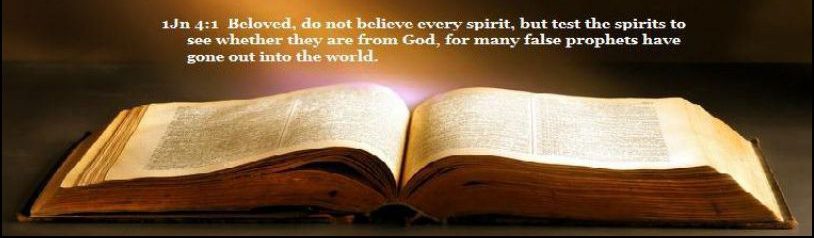



 Truth2Freedom's Blog