
Source: Understanding God’s Peace
Understanding God’s Peace | In Touch Ministries Daily Devotions
Leave a reply
Source: The Olive Tree


Discover how God is the ultimate source of your spiritual growth, cultivating you in grace, unity, righteousness, holiness, kindness, and compassion. Explore practical insights and prayers to deepen your faith and maturity as you surrender to His divine cultivation.
Source: Our True Source of Growth

In a world brimming with distractions, learn to regain focus and align your priorities with divine purpose. Discover five essential areas to cultivate spiritual growth and enrich your life as spring approaches.
Source: 5 Things to Focus on This Spring
Numbers 33-36
The promised land awaited the Hebrews. They had wandered in the wilderness for decades, and soon they would finally be in the land. God’s instruction to them at that point was clear and dramatic. They were to “drive out all the inhabitants of the land before you, destroy all their stone images and cast images, and demolish all their high places” (Num 33:52). The Hebrews were not only to dispossess the current inhabitants of the land, but they were also to destroy anything related to their false religion. God had given them the land, and they were to take it according to His plan.
Should they not keep God’s word, though, the inhabitants of the land would become “barbs for your eyes and thorns for your sides” (Num 33:55). Quite tragically, this is exactly what happened. Because the Hebrews did not drive everyone out, the Canaanites became a thorn in their side—and their false religion became a snare for the Hebrews. They would then suffer exactly what God said: He would drive the Hebrews out of the land just as He said should happen regarding the Canaanites.
I am reminded today of the importance of eradicating any element of sin and disobedience in my life. No stronghold of sin began as a stronghold; it began by our allowing a little bit of sin to remain in our life.
RESPONSE: Drive out any ongoing sin in your life.
Source: 02/26/26 Driving Out Sin

Photo Credit: FatCamera / iStock.com
Disclosure: This post may contain affiliate links, meaning Beautiful Christian Life LLC may get a commission if you decide to make a purchase through its links, at no cost to you.
This week’s picks explore freedom, the state of our hearts, justice, faithfulness, the sanctity of life, and what it means to live eternally debt-free.
In this must-read Substack post, pastor Campbell Markham reflects on Paul’s call in Galatians to stand firm in the freedom Christ has secured for us. He warns against drifting back into subtle forms of bondage—whether legalism, ritualism, or materialism—and gently urges believers to live each day in the liberty of faith. Markham reminds us that the gospel doesn’t just free us once but instead teaches us to remain free. Read it here →
After Tuesday’s State of the Union address, many in the United States are evaluating the state of our nation. Scripture, however, calls us to examine something closer to home: the state of our own hearts. In this Ligonier Ministries devotional, pastor Steffen Mueller reflects on Jesus’ teaching in Matthew 12:33–35 and the connection between what we communicate and our innermost thoughts. The solution isn’t better speaking techniques but a new heart in Christ. Read it here →
In this Modern Reformation piece, pastor Chuck Tedrick turns to Philippians 4:8 to offer a quiet but powerful antidote to modern anxiety. Instead of rehearsing everything that unsettles us, he invites us to dwell on what is true, honorable, and praiseworthy. In a restless age, his reflection reorients our thoughts toward Christ, who alone steadies anxious hearts. Read it here →
In this helpful piece for Reformed Theological Seminary, Dr. Scott Redd reminds us that while Scripture doesn’t hand nations a detailed immigration policy, it does give guiding principles—God’s concern for the sojourner, the call to justice, and the need for ordered compassion. It’s a thoughtful, biblically grounded approach to one of our nation’s most divisive issues. Read it here →
In this Breakpoint commentary, Biola University professor and author Thaddeus Williams unabashedly directs our attention to the unborn. Reflecting on what he calls the “12 holocausts of 2025,” he underscores the staggering global reality of abortion and its profound moral weight. His sobering analysis urges Christians to resist cultural amnesia and remain steadfast in defending the dignity of every human life. (Many thanks to The Aquila Report for bringing this article to our attention.) Read it here →
With headlines regularly tracking America’s mounting national debt—far higher now than when this essay first appeared—Allen C. Guelzo’s reflection in Modern Reformation feels especially relevant. Drawing on Paul’s language in Colossians 2, he reminds us that beyond economic anxieties lies a far deeper ledger. His meditation redirects our concern from national deficits to the spiritual debt only Christ can settle. Read it here →
In this Reformation21 article, Reuben Bredenhof encourages pastors not to despise what he calls a “ministry of small things,” reminding them that much of faithful shepherding happens in ordinary, often unnoticed acts. His reflection honors steady, patient service over platform-driven impact. Though written for pastors, the principle extends to all believers: The quiet, everyday ways we serve God and neighbor matter more than we often realize. Read it here →
The post BCL Online Picks — February 26, 2026 appeared first on Beautiful Christian Life.

Most Christians understand the importance of context for properly interpreting Scripture. We realize that the books of Scripture were written thousands of years ago in cultures very different from ours and in languages we do not grow up speaking. Those things that were simply given, everyday realities for the original human authors and their audiences are things we have to study and learn about. We know that if we are studying the Old Testament, we have to learn Hebrew and Aramaic (or trust the translators who learned those languages). We have to learn about ancient Near Eastern history, geography, culture, and practices in order to understand what the biblical authors are talking about. If we are studying the New Testament, we have to learn Greek. We have to learn about the first century world under the Roman Empire. All of this is simply part of the nature of grammatical-historical interpretation.
Context is also important if we are to properly understand Reformed theology. Reformed theology was a fruit of the sixteenth century Protestant Reformation, and that Reformation took place in a particular historical and cultural context. The authors writing at that time wrote within a particular philosophical and theological context. Having a grasp of these various contexts is important for understanding Reformed theology. I want to briefly mention three such contexts: the historical, philosophical, and theological contexts.
The Protestant Reformation did not occur one afternoon because a bunch of Roman Catholic monks got bored and decided to throw a party that got out of hand. The Protestant Reformation was the culmination of numerous historical events that reached back over the course of many centuries. Conflicts between the church and various political entities (imperial as well as more local) in addition to various conflicts among the political entities themselves played a role. Conflicts within the church itself resulting from corruption and numerous reforming attempts played a role. Cultural changes, including economic changes and technological changes, played a role.
We can see the direct relevance of the historical context when, for example, we read Martin Luther’s To the Christian Nobility of the German Nation or his Babylonian Captivity of the Church, two of the most important Protestant writings of the early Reformation. We can see the relevance when we read John Calvin’s “Prefatory Address to King Francis I of France” at the beginning of his Institutes. That preface is important context for understanding the content of the Institutes.
In addition, many of the Reformed confessions address issues that assume specific historical conditions or that are responding to specific historical conditions. The clearest example of the impact of historical context on the content of Reformed theology can be seen in the difference between the original Westminster Confession of Faith and the American revision of the same Confession on the subject of the civil magistrate and the relation between church and state. We have to understand that historical context is important for understanding Reformed theology. If a believer desires to have a better grasp of Reformed theology, he or she should take some time to study the history of the fourteenth and fifteenth centuries—the two hundred years immediately preceding the Reformation—and then study the history of the sixteenth and seventeenth centuries themselves. Theology does not exist in a historical vacuum.
In order to understand the importance of the philosophical context of Reformed theology, it is necessary to remember the historical timeframe of the Reformation. The Protestant Reformation began in the early sixteenth century with the work of Martin Luther. The first Latin edition of John Calvin’s Institutes was published in 1536 and the final Latin edition in 1559. The major writings of Reformed theologians such as Zwingli, Musculus, Vermigli, Bullinger, Beza, Zanchius, and Ursinus were published in the sixteenth century. All of the works of the Reformed scholastic theologians in the period of Early Orthodoxy and the majority of the works published in the period of High Orthodoxy were published before the end of the seventeenth century. This includes the works of Reformed theologians such as Polanus, Ames, Wollebius, Maccovius, Witsius, Turretin, and Mastricht.
All the major Reformed confessions and catechisms were also published in these two centuries. For example, the Tetrapolitan Confession (1530), the First Helvetic Confession (1536), the French Confession (1559), the Scots Confession (1560), the Belgic Confession (1561), the Heidelberg Catechism (1563), the Second Helvetic Confession (1566), the Canons of Dordt (1618–19), the Westminster Confession of Faith (1646), the Westminster Larger Catechism (1647), and the Westminster Shorter Catechism (1647) were written in the sixteenth century and the first half of the seventeenth century.
This is important because it means that the great theological works of the classical Reformed theologians and the Reformed confessions that they produced were all published in the last days of a pre-Enlightenment philosophical context. In other words, these theologians were writing before the Enlightenment’s “turn to the subject.” Remember that the so-called father of modern philosophy, René Descartes, was born in 1596, at the very end of the sixteenth century. His most significant philosophical works were not written until the late 1630s and early 1640s, well into the seventeenth century, and it took time for the influence of those works to be felt in the universities and among theologians.
This does not mean that the pre-Enlightenment philosophical context was monolithic. It also does not mean that there were no philosophical precursors to what became modern philosophy. There were, for example, in the philosophy of nominalism as well as in the ancient Greek skepticism that was rediscovered during the Renaissance. What it does mean is that the philosophical presuppositions of classic Reformed theology have much more in common with the general philosophical presuppositions of medieval theologians than with anything in the post-Cartesian era. In general, they worked within a context that did not question the existence of an external world independent of human minds or our ability to have true knowledge of that world through the use of our God-given sensory and rational faculties. Furthermore, they worked within a philosophical context that, with some exceptions (e.g., nominalism), granted that things have real natures.
This general philosophical context of Reformed theology was gradually lost as Enlightenment views finally filtered down and began impacting the thinking of the theologians. It had a catastrophic impact on Reformed theology. As Richard Muller explains (using the phrase “Christian Aristotelianism” to describe pre-Enlightenment philosophy):
The decline of Protestant orthodoxy, then, coincides with the decline of the interrelated intellectual phenomena of scholastic method and Christian Aristotelianism. Rationalist philosophy was ultimately incapable of becoming a suitable ancilla and, instead, demanded that it and not theology be considered queen of the sciences. Without a philosophical structure to complement its doctrines and to cohere with its scholastic method, Protestant orthodoxy came to an end.1
In other words, if we want to know why there are so many Reformed theological giants in the sixteenth and seventeenth centuries and comparatively few afterwards, a large part of it has to do with the later theologians adopting various forms of Enlightenment philosophy and rejecting the pre-Enlightenment philosophical context. When Reformed theology is adapted to Enlightenment philosophical presuppositions, it withers and dies.
Our philosophical presuppositions affect our understanding of the most basic principles of reality and knowledge. Most readers of Reformed theology today have grown up imbibing post-Enlightenment philosophical principles without even being aware of it because it’s the very intellectual air we breathe. This easily leads to a misunderstanding of traditional Reformed doctrines if we read those doctrines through post-Enlightenment lenses. More seriously, many contemporary Reformed theologians have consciously or unconsciously adopted one version or another of post-Enlightenment philosophy. Post-Enlightenment philosophy has an enormous impact on our understanding of God, man, sin, everything.
When a contemporary Reformed theologian who has adopted one form or another of post-Enlightenment philosophy also subscribes to a Reformed confession, all of which were written by theologians who thought within a pre-Enlightenment philosophical context, there will inevitably be internal conflict. The temptation to radically revise or reject the confessional teaching will be ever-present. Such radical revision and rejection of confessionally Reformed doctrine has already begun to occur. We see this most clearly in the writings of contemporary Reformed theologians who reject the doctrine of God taught in the Reformed confessions (e.g., WCF, ch. 2).
If someone desires to study the theology of the Canons of Dordt, we generally understand that it’s necessary to have some grasp of the Arminian controversy and the theology of the Remonstrants because the Canons of Dordt are responding to the specific doctrines of the Remonstrants/Arminians. The same principle is true also of classic Reformed theology in general. Reformed theology is responding to and re-forming something that already existed—namely, late medieval Roman Catholic theology.
This assumed theological context can be seen throughout the writings of the early Reformed theologians and throughout our Reformed confessions. Over and over again, we see the Reformed theologians and the Reformed confessions responding to various specific Roman Catholic doctrines and practices. Sometimes they correct those doctrines and practices. Sometimes they completely reject those doctrines and practices. Unless we have some understanding of those Roman Catholic doctrines and practices, it can be very difficult to understand what our Reformed theologians and confessions are getting at.
The Reformed theologians of the sixteenth and seventeenth centuries understood the theology of late medieval Catholicism, and they could assume that most of their readers (other theologians and pastors) would have some understanding of it as well. Many, if not most, contemporary readers of Reformed theology do not have the same basic knowledge of Roman Catholic doctrine and practice that the early Reformed theologians and their readers had. They do not have the same grasp of the overarching ecclesio-sacerdotal-soteriological system of Roman Catholic theology. They may have heard isolated bits and pieces regarding things such as justification or the relation between Scripture and tradition, but most do not understand the all-encompassing nature of the entire Roman Catholic theological system and how each piece relates to all the others.
This puts contemporary readers of Reformed theology in something like the position of a reader of the Canons of Dordt who does not understand the Arminian theology to which those Canons are responding. We can get some understanding of Reformed theology without that knowledge, but without the theological context it is very easy for that limited understanding to slide into misunderstanding. How many Reformed Christians, for example, understand how significant Rome’s understanding of Adam’s pre-fall constitution and the relation of nature and grace at that point in time is for Rome’s understanding of sin, grace, and justification? That knowledge is an important context for understanding the Reformed theology of sin, grace, and justification.
Classic Reformed theology did not fall out of the sky without any context. It was developed within real human history with real historical, cultural, political, philosophical, and theological contexts. We are five hundred years removed from those contexts. Our twenty-first century historical, philosophical, and theological context is very different from that of the sixteenth and seventeenth centuries. If we are not aware that there are differences, it can be very easy to read our contemporary context back into the writings of those centuries. If we are aware that there are differences but remain ignorant of the sixteenth and seventeenth century contexts, we can easily miss the true import of some of their teachings. In short, the same kind of effort that we put into learning the context of the biblical writings ought to be put into learning the context of classical Reformed theology.
Editor’s Note: This article was originally published on April 11, 2022.
Source: Important Contexts for Understanding Reformed Theology
The title of this article is certainly provocative. Why is it provocative? Where do we begin? The universe, of course. The world would say it’s common sense that the sheer size of the universe HAS to have life on other planets, DUH!
There are billions and trillions of stars and galaxies throughout the universe. To think we are the only ones here seems ludicrous, almost laughable to the world. That’s the way you think when you do not recognize there is a Creator God. They deny the Supernatural and try to force everything to be natural, including the universe through the Big Bang.
So, let’s examine the universe. The Bible tells us Creator God created it. The world says it created itself through the Big Bang and that all life finally began after trillions of years. Let’s stop right here and bring up two things that are so IMPOSSIBLE in the natural that no one can honestly deny them.
One, it is impossible for something to come from nothing, period. It takes something to create something else. Everything “visible” was created by a creator, whether it is the universe or a chair.
Two, it is impossible for nonlife to create life. The universe is composed almost completely of dark energy, dark matter, and ordinary matter, all of which are nonlife. The world has to go out on a mighty long limb to think the Big Bang came from “nothing” and that a nonlife universe can create “all life” – especially human beings who have body, soul, spirit and a past, present and future.
The true common-sense answer of how the universe came into being is by a Supernatural Creator God versus a natural universe on its own. Creator God has always existed, no matter how difficult it is for us to understand that. He not only created the universe but also created all LIFE in the universe.
This article is about biblical verification that there is no alien life in the universe. The world thinks otherwise, and there is a pretty good reason for that. For the past several decades, there has been an ever-increasing number of UFO sightings, now called UAP sightings – unidentified aerial phenomena. There have been hundreds of books, movies and TV shows all about aliens throughout the universe.
The most logical explanation for many of these sightings has to be they are aliens from other planets. However, assuming they exist, a more reasonable explanation is that they are beings from a different dimension, a spiritual dimension, versus another planet.
Genesis 6 tells us about some fallen angels who somehow were allowed to come to Earth and actually mate with women. They produced hybrid human beings known as the Nephilim or “giants.”
The Bible indicates they were so pervasive on Earth that they polluted the bloodline of the human race. Because of this corruption, God brought the flood to start over again with Noah and his family who had not been polluted with the fallen angels’ bloodline.
I bring this up to show these “beings” were here during the days of Noah, and Jesus says in Matthew 24:37-51 NIV, “But as the days of Noah were, so shall also the coming of the Son of man be. [Jesus’ Second coming] For as in the days that were before the flood they were eating and drinking, marrying and giving in marriage, until the day that Noah entered the ark, and knew not until the flood came, and took them all away; so shall also the coming of the Son of man be.”
Jesus is saying that similar to what was going on in the days of Noah, so it shall also be in our day right before His Second coming.
It’s interesting that most of us know that we are living in the last of the last days. Many people feel that the rapture, tribulation and Jesus’ Second coming are very near. Over the past few decades, we have seen a proliferation of these UAP sightings. Spiritual beings make more sense than aliens from other planets.
To understand why the Bible shows there are no aliens on other planets, we first need to set the stage. Establishing a proper context helps clarify the answer.
To understand the mystery of the universe, we have to know ONE THING – WHY did God create the universe in the first place? The good news is God gives us that answer in His Word of God Bible.
Genesis 1:1 NIV says, “In the beginning God created the heavens and the earth.” It also tells us that God’s first creation was His angels. Lucifer, who was God’s highest angel, wanted to be worshipped like God and rejected what God had established. One-third of the angels chose to rebel alongside him and fell as well.
God is eternal and dwells inside eternity. God has no beginning or end. Eternity has no beginning or end. GOD DID NOT CREATE ETERNITY. This means God and eternity are “linked together.” You could also say God “is” eternity through this connection.
There is no sin in God’s eternity. There is no death. Because there is no death, there is no “atonement” for the fallen angels where a sinless life could die to pay the price for their sin.
What happens in eternity stays in eternity. This explains why there is no redemption for the fallen angels. For those of you who follow near death experiences, one of the common comments from many of them is there is a “barrier” they could not go beyond or else they would not be able to return. That barrier is eternity. There is no revolving door between God’s eternity and the universe.
The Bible shows following the fall of one-third of God’s angels, God decided to create the human race. Now we are beginning to understand why God had to create the universe.
Because God knows the future, He knew what would happen after creating the human race through Adam and Eve. He knew they would disobey Him and sin by eating the forbidden fruit of the tree of the knowledge of good and evil in the Garden of Eden. The Bible shows us that God’s plan is to spend eternity on EARTH with us human beings, beginning with Adam and Eve. Eve blamed the serpent Satan for deceiving her and causing her to eat the fruit. Adam blamed Eve for giving him the fruit. They played the blame game.
God then had a conversation with Satan in Genesis 3:15 NCSB, where He said, “I will put hostility between you and the woman, and between your seed and her seed. He will strike your head, and you will strike His heel.”
This is where our sin nature comes from. There are only two seeds needed to create a human being – the seed from the man and the seed from the woman. God just told Satan He is going to come between YOUR SEED (Satan’s) and her seed (woman’s). God has just said that man’s seed has become Satan’s seed following Adam’s sin, which explains why we are born with a sin nature from “only” Adam’s seed, not woman’s seed. Adam was God’s “original creation,” and thus, He alone is responsible for the original sin. God made Eve from Adam.
This also explains why Jesus could not have a biological sinful human father or He, too, would have been born with a sin nature like everyone else. But with the Holy Spirit God as His biological Father, He could be born from a woman with a sin nature and still be born without sin due to God being His biological Father.
So, God knowing all of this in advance, brings us back to His creation of the universe. Remember, God dwells in “sinless” eternity, and there is no way He could ever allow human beings who are born with a sin nature to be born “inside” eternity or we would all be lost forever with our sin nature inside eternity at birth. Don’t forget, what happens in eternity stays in eternity.
So God does something He’s never done before. He creates the universe. Why? Solely for us human beings. God now needs to create a “place” outside of eternity that can “accommodate sin” as well as life and death, good and evil, etc. Think of the vast universe as a small bubble outside of eternity. One of the main purposes of the universe is to create TIME as well as life and death. God knew that He needed a “place” where His Son, God Jesus, could come to and actually die to save the human race.
God also knew that human beings would need TIME after birth to come to know Him. He understood that they would need the opportunity to enter into a personal and intimate relationship with Him. This relationship would be made possible through Jesus, who sacrificed His life on the cross to pay the price for the sins of mankind. Jesus loves everyone. Those who love Him in return – by repenting of their sins and inviting Him to be their Lord and Savior – are saved. He paid the price for all their sins – past, present, and future.
Remember, only no sin is allowed into God’s eternity in heaven. At death, those who belong to Jesus enter eternity free from sin. Those who do not belong to Jesus enter eternity still in sin, which separates them from God. They will spend eternity in hell, a place of torment.
Knowing all of these things the Word of God Bible tells us, it should start to bring about a new understanding of how the universe is designed to fit into God’s plan for the human race.
So, how does this prove there is no alien life anywhere else? Does the Bible say there is no alien life anywhere else? Maybe God created life in other parts of the universe and simply did not tell us about it in the Bible. IF there was life on – say one thousand other planets – it would have to be life that God created. Would that mean Jesus would have to go to those one thousand planets and die on a cross for them, too? Is that possible? NO, it is not possible for a couple of good reasons, which the Bible directly and indirectly shows us.
First, the Bible DIRECTLY tells us that God’s plan is to spend eternity on Earth with us humans alone and not aliens from other planets. Many believe His plan is delayed for around 7,000 years due to the sin of Adam. The Bible tells us that following Jesus’ Second coming and His one-thousand-year millennial reign, the human race will come to an end following God’s great white throne judgment, and there will be no more human beings and no more sin.
It is at this point that God will create ANOTHER new heavens and earth with NO SIN. God then no longer needs a universe that can accommodate sin, and this is why He creates a new heavens and earth without sin.
We now get to the INDIRECT reason there are no aliens in the universe. Since God is going to destroy our current universe and earth in the future, if there was alien life elsewhere throughout the universe, that would mean they all would be destroyed when God destroys this universe. Does that sound like something God would do? That is a rhetorical question.
Of course, all of these answers come from God’s Word of God’s Bible, which the world at large rejects. The Bible has proven and verified itself as the only book ever written by God. It contains hundreds, if not thousands, of prophecies written in advance of future events. Yet the world largely ignores and rejects these prophecies, doing so at their own peril.
I personally think God created the universe to seem infinitely vast, as it is to show beyond a shadow of a doubt He exists and there is NO excuse for not knowing Him. Scripture verifies this. Romans 1:20 NIV says, “For since the creation of the world God’s invisible qualities – His eternal power and divine nature – have been clearly seen, being understood from what has been made, so that people are without excuse.”
God’s whole plan is to connect us to Himself through the Holy Spirit. The goal is for us to become His bride as we await Jesus. Soon, in the rapture, He will take us back to heaven for our wedding celebration and feast.
***
This information and much more is covered in my book – God’s Plan for Heaven, Eternity and the Universe Explained – Conversational Style. It is available on Amazon and Barnes & Noble. Google it for reviews. Thank you.
Maranatha, Lord Jesus!
David Cogburn
Source: Biblical Verification: No Alien Life in the Universe

According to David, the greatest thing we can ask of God is to gaze upon His beauty: “One thing I have asked from Yahweh, that I shall seek: that I may dwell in the house of Yahweh all the days of my life, to behold the beauty of Yahweh and to inquire in His temple” (Psalm 27:4, LSB).
The new heavens and earth will provide the eternal answer to David’s prayer. There will be no temple there, because we will always have direct access to God. To see God will be to know Him, and then to see ourselves, and all other people and events, through His eyes.
As I share in this video, we will spend all of eternity learning more about our magnificent God:
Jesus said to His disciples, “Learn from me” (Matthew 11:29). On the New Earth, we’ll have the privilege of sitting at Jesus’ feet as Mary did, walking with Him over the countryside as His disciples did, always learning from Him. In Heaven we’ll continually learn new things about God, going ever deeper in our understanding.
Consider the Greek words ginosko and epiginosko, translated “know” in 1 Corinthians 13:12, used of our present knowledge on Earth and our future knowledge in Heaven: “For now we see in a mirror dimly, but then face to face. Now I know in part; then I shall know fully, even as I have been fully known.” Ginosko often means “to come to know,” and therefore “to learn” (Matthew 10:26; John 12:9; Acts 17:19; Philippians 2:19). Epiginosko also means “to learn” (Luke 7:37; 23:7; Acts 9:30; 22:29). That we will one day “know fully” could well be understood as “we will always keep on learning.”
Consider Ephesians 2:6-7: “God raised us up with Christ and seated us with him in the heavenly realms in Christ Jesus, in order that in the coming ages he might show the incomparable riches of his grace.” The word show means “to reveal.” The phrase in the coming ages clearly indicates this will be a progressive, ongoing revelation, in which we learn more and more about God’s grace.
We will spend eternity worshipping, exploring and serving our great God, seeing His breathtaking beauty in everything and everyone around us!
Adoration
Praise the Lord!
For it is good to sing praises to our God,
Because praise is pleasant and beautiful. (Psalm 147:1)
Blessed be the name of God for ever and ever,
For wisdom and power belong to Him.
He changes the times and the seasons;
He raises up kings and deposes them.
He gives wisdom to the wise
And knowledge to those who have understanding.
He reveals deep and hidden things;
He knows what is in the darkness,
And light dwells with Him. (Daniel 2:20–22)
O God, You are my God;
Earnestly I seek You;
My soul thirsts for You;
My body longs for You,
In a dry and weary land
Where there is no water.
I have seen You in the sanctuary
And beheld Your power and Your glory.
Because Your lovingkindness is better than life,
My lips will praise You.
So I will bless You as long as I live;
I will lift up my hands in Your name.
My soul will be satisfied as with the richest of foods,
And my mouth will praise You with joyful lips.
When I remember You on my bed,
I meditate on You through the watches of the night.
Because You have been my help,
I will rejoice in the shadow of Your wings.
My soul clings to You;
Your right hand upholds me. (Psalm 63:1–8)
The Lord lives! Blessed be my Rock!
Exalted be God, the Rock of my salvation! (2 Samuel 22:47; Psalm 18:46)
Pause to express your thoughts of praise and worship.
Confession
O Lord, do not rebuke me in Your anger
Or chasten me in Your wrath.
Be merciful to me, Lord, for I am weak;
O Lord, heal me, for my bones are in distress.
My soul also is greatly troubled;
But You, O Lord, how long? (Psalm 6:1–3)
Woe to me, for I am undone!
Because I am a man of unclean lips,
And I live among a people of unclean lips;
For my eyes have seen the King,
The Lord of hosts. (Isaiah 6:5)
There is not a righteous man on earth who continually does good
And never sins. (Ecclesiastes 7:20)
Truly I have sinned against the Lord, the God of Israel. (Joshua 7:20)
If I claim to be without sin, I deceive myself, and the truth is not in me. If I confess my sins, He is faithful and just and will forgive me my sins and purify me from all unrighteousness. If I claim I have not sinned, I make Him a liar and His word is not in me. (1 John 1:8–10)
Ask the Spirit to search your heart and reveal any areas of unconfessed sin. Acknowledge these to the Lord and thank Him for His forgiveness.
I will sing praises to the Lord
And give thanks at the remembrance of His holy name.
For His anger lasts only a moment,
But His favor is for a lifetime;
Weeping may endure for a night,
But joy comes in the morning. (Psalm 30:4–5)
Renewal
Lord, renew me by Your Spirit as I offer these prayers to You:
May I love the Lord my God, obey His voice, and hold fast to Him. For the Lord is my life and the length of my days. (Deuteronomy 30:20)
May I be holy to You, for You the Lord are holy, and You have set me apart to be Your own. (Leviticus 20:26)
I have been born again, not of perishable seed, but of imperishable, through the living and abiding word of God. Therefore, may I put away all malice and all guile and hypocrisy and envy and all slander. (1 Peter 1:23; 2:1)
Since I call on the Father who judges each man’s work impartially, may I conduct myself in fear during the time of my sojourn on earth. (1 Peter 1:17)
Pause to add your own prayers for personal renewal.
Petition
Father, using Your word as a guide, I offer You my prayers concerning these practical exhortations.
May the God of my Lord Jesus Christ, the Father of glory, give me a spirit of wisdom and of revelation in the full knowledge of Him, and may the eyes of my heart be enlightened, in order that I may know what is the hope of His calling, what are the riches of His glorious inheritance in the saints, and what is the incomparable greatness of His power toward us who believe. God’s power is according to the working of His mighty strength, which He exerted in Christ when He raised Him from the dead and seated Him at His right hand in the heavenly realms, far above all rule and authority, power and dominion, and every title that can be given, not only in the present age but also in the one to come. (Ephesians 1:17–21)
May I rejoice always, pray without ceasing, and give thanks in all circumstances, for this is God’s will for me in Christ Jesus. May I examine all things, hold fast to the good, and abstain from every form of evil. (1 Thessalonians 5:16–18, 21–22)
I will consider it all joy whenever I fall into various trials, knowing that the testing of my faith produces endurance. And I will let endurance finish its work, so that I may be mature and complete, lacking in nothing. If I lack wisdom, may I ask of God, who gives generously to all without reproach, and it will be given to me. (James 1:2–5)
May I be steadfast, immovable, abounding in the work of the Lord, knowing that my labor in the Lord is not in vain. (1 Corinthians 15:58)
May I be strong in the Lord and in His mighty power as I put on the full armor of God, so that I will be able to stand against the schemes of the devil. (Ephesians 6:10–11)
May I prepare my mind for action and be self-controlled, setting my hope fully on the grace to be brought to me at the revelation of Jesus Christ. As an obedient child, may I not conform myself to the former lusts I had when I lived in ignorance, but as He who called me is holy, so may I be holy in all my conduct, because it is written: “You shall be holy, for I am holy.” (1 Peter 1:13–16)
May I be anxious for nothing, but in everything by prayer and petition with thanksgiving, let my requests be known to God. And the peace of God, which transcends all understanding, will guard my heart and my mind in Christ Jesus. (Philippians 4:6–7)
Whatever is true, whatever is noble, whatever is right, whatever is pure, whatever is lovely, whatever is of good report—if anything is excellent or praiseworthy—may I think about such things. (Philippians 4:8)
Pause here to express any additional personal requests, especially concerning faithfulness as a steward:Of time Of talents Of treasure Of truth Of relationships
My activities for this day
Special concerns
Intercession
Lord, I now prepare my heart for intercessory prayer for government.
We should offer petitions, prayers, intercessions, and thanksgivings on behalf of all men, for kings and all those who are in authority, that we may live peaceful and quiet lives in all godliness and reverence. This is good and acceptable in the sight of God our Savior, who desires all men to be saved and to come to the knowledge of the truth. (1 Timothy 2:1–4)
In the spirit of this passage, I pray for:Spiritual revival Local government State government National government Current events and concerns
Affirmation
Feed my mind and heart, O Lord, as I affirm these truths from Your word concerning the Scriptures:
All Scripture is God-breathed and is useful for teaching, for reproof, for correction, for training in righteousness, that the man of God may be thoroughly equipped for every good work. (2 Timothy 3:16–17)
The word of God is living and active and sharper than any double-edged sword, piercing even to the dividing of soul and spirit and of joints and marrow, and it judges the thoughts and attitudes of the heart. And there is no creature hidden from His sight, but everything is uncovered and laid bare before the eyes of Him to whom we must give account. (Hebrews 4:12–13)
Your word is a lamp to my feet
And a light to my path. (Psalm 119:105)
Like Ezra, I want to set my heart to study the word of the Lord, and to do it, and to teach it to others. (Ezra 7:10)
I delight to do Your will, O my God,
And Your law is within my heart. (Psalm 40:8)
Pause to reflect upon these biblical affirmations.
Thanksgiving
For who You are and for what You have done, accept my thanks, O Lord:
The Lord is great and greatly to be praised;
He is to be feared above all gods.
For all the gods of the nations are idols,
But the Lord made the heavens.
Splendor and majesty are before Him;
Strength and joy are in His place.
I will ascribe to the Lord glory and strength.
I will ascribe to the Lord the glory due His name
And worship the Lord in the beauty of holiness. (1 Chronicles 16:25–29)
Through Jesus, I will continually offer to God a sacrifice of praise, that is, the fruit of lips that give thanks to His name. (Hebrews 13:15)
God is my refuge and strength,
An ever-present help in trouble. (Psalm 46:1)
My heart rejoices in the Lord;
My horn is exalted in the Lord.
My mouth boasts over my enemies,
For I delight in Your salvation.
There is no one holy like the Lord;
There is no one besides You;
Nor is there any Rock like our God. (1 Samuel 2:1–2)
Pause to offer your own expressions of thanksgiving.
Closing Prayer
The Lord will keep me from all evil;
He will preserve my soul.
The Lord will watch over my coming and going
From this time forth and forever. (Psalm 121:7–8)
The Lord bless you and keep you;
The Lord make His face shine upon you
And be gracious to you;
The Lord turn His face toward you
And give you peace. (Numbers 6:24–26)
The God of hope will fill me with all joy and peace as I trust in Him, so that I may overflow with hope by the power of the Holy Spirit. (Romans 15:13)
Boa, K. (1993). Handbook to prayer: praying scripture back to God. Atlanta: Trinity House.

Cast your bread upon the waters, for after many days you will find it again.
Ecclesiastes 11:1
The idea expressed here is one of openhanded generosity. Give freely, wisely, and generously to the needs of those about. This phrase, Cast your bread upon the waters,
was a proverb in Israel for what looked like wasteful expenditure. No one would take good bread and throw it in the river. But here we are enjoined to do that very thing. This is not encouraging us to be spendthrifts, to thoughtlessly and carelessly give away our money, spending it like a drunken sailor. What is meant is, be willing to take a chance where a real need is evident.
When you see people in need, though you do not know how they are going to use your money–it may not be apparent that they will even use it wisely–nevertheless, be generous. Cast your bread upon the waters,
for in the wisdom and purpose of God it may very well return to you some day when you are in need of help. I could relate several stories of people who helped strangers; then, at some later time when they found themselves in serious trouble, that person or that deed reappeared in such a way as to help them in their time of need.
Also, give as widely as possible: Give portions to seven, yes to eight, for you do not know what disaster may come upon the land
(Ecclesiastes 11:2). That is not limiting us to how many we should have on our help list. This Hebrew idiom, Give portions to seven, yes to eight,
was a way of saying, Give to as many as you can, and then some.
Be generous. You do not know what evil may be averted by your gift.
There follow reasons for this kind of generosity in verse 3: If clouds are full of water, they pour rain upon the earth. Whether a tree falls to the south or to the north, in the place where it falls, there will it lie.
First, we are to give generously because it is the natural outflow of a full life, like clouds that are filled with rain and empty themselves again and again upon the earth. A life that is full of the blessing and grace of God ought to shower others with that blessing. Remember the words of Jesus, Freely you have received, freely give
(Matthew 10:8). We are to give because it is the natural outflow of a life that is already filled with the blessings of God, not only physically but also spiritually and emotionally as well.
The second parable about the tree falling to the south or north is somewhat more difficult, but I saw a motto in someone’s kitchen that captures exactly what this idiom is saying; it was the slogan Bloom where you are planted.
That is, it is God who controls the fall of the tree out in the forest; whether it falls to the south or the north is within the scope of divine providence to determine, but where it falls, that is where it is to be. This is Solomon’s way of saying to us, Where God has put you, in your present circumstances, that is where you are to give. Meet the needs around you.
That does not always mean geographically. You may be in touch with someone halfway around the world whose needs you are aware of, but God has brought that to your knowledge so that you can meet that need.
Thank You, Lord, for all that I have. Help me to cast my bread upon the waters, to give boldly and in faith that needs will be met, and blessing will come in Your way and in Your time.
https://www.raystedman.org/daily-devotions/ecclesiastes/live-generously
Matthew Henry’s “Method For Prayer”
We must give to God the glory of his patience and long-suffering towards us and his willingness to be reconciled.
O the riches of the patience and forbearance of God! Romans 2:4(ESV) How patient he is toward me, not wishing that any should perish, but that all should reach repentance. 2 Peter 3:9(ESV)
You have not dealt with me according to my sins, nor repaid me according to my iniquities, Psalm 103:10(ESV) but you wait to be gracious to me. Isaiah 30:18(ESV)
Sentence against my evil deeds has not been executed speedily, Ecclesiastes 8:11(ESV) but you have given me time to repent and make my peace with you, Revelation 2:21(ESV) and call even a faithless son such as myself to return to you, and have promised to heal my faithlessness; and therefore, behold, I come to you, for you are the LORD my God. Jeremiah 3:22(ESV)
Surely the patience of my Lord is counted as salvation; 2 Peter 3:15(ESV) and if the LORD had meant to kill me, he would not now have shown me such things as these. Judges 13:23(ESV)
And O that this kindness of God might lead me to repentance! Romans 2:4(ESV) For though I have broken faith with my God, yet now there is hope for me in Israel in spite of this. Ezra 10:2(ESV)
You have said it and have confirmed it with an oath, that you have no pleasure in the death of sinners like me, but rather desire that I should turn and live. Ezekiel 33:11(ESV) Therefore will I rend my heart, and not my garment, and return to the LORD my God; for he is gracious and merciful, slow to anger and abounding in steadfast love. Who knows whether he will not turn and relent, and leave a blessing behind him? Joel 2:13-14(ESV)
Matthew 28:11-15 In this week’s studies, we note the contrast between Jesus’ enemies and friends concerning the resurrection, and the price worth paying to be a witness to Christ.
Theme
A Bizarre Idea
Let me give another example of where unbelief is rewarded, this one more recent. A number of years ago, a British scholar by the name of Hugh Schonfield published a book with the title, The Passover Plot. That title really embraces the whole idea of the book, which was that Jesus of Nazareth was only a man, and He was aware of the Old Testament prophecies that concerned the Messiah. As He understood the prophecies, they predicted His death by crucifixion and a following resurrection. Therefore, in order to fulfill those prophecies, Jesus set out to manipulate people as well as events to bring these prophecies about.
Strangely enough, according to Schonfield, Jesus didn’t confide in His disciples. Instead, He told just a few people, including Joseph of Arimathea. The plot was this: Jesus would manipulate events in such a way during this Passover week that He would be crucified—that was easy enough to achieve considering the hatred of the religious leaders for Him. But then these conspirators were to give Him a drug that would enable Him to feign death. This drug was administered on the sponge that was held up for Him to drink while He was on the cross. And then, having feigned death, He would be taken down from the cross, placed in Joseph of Arimathea’s tomb at Joseph’s request to Pilate, and then be revived. Then, after He was revived, he would go forth and pretend that He had been resurrected from the dead.
The only difficulty with this plot, according to Schonfield, was that it failed. The reason it failed is that the soldier thrust his spear into Christ’s side unexpectedly. They hadn’t counted on that. Schonfield said that what seemed probable is that as those involved in the plot brought Jesus out of the tomb during the darkness of Saturday night, He regained consciousness temporarily but finally succumbed.
At this point, it was much too risky to take the body back to the tomb, replace the bandages left there, and roll the stone back over the opening—all with the idea of giving the impression that everything was as it had been when He was buried on Friday. So what they decided to do was to bury Jesus somewhere else, and leave the puzzle of the empty tomb. Schonfield explained the resurrection appearances as cases of mistaken identity.
Now, at the very least that’s a bizarre theory. It’s the kind of theory that is so bizarre that you would hardly expect it to be taken seriously. Indeed, it was not treated seriously by the scholarly community—even by men, strikingly enough, who don’t believe in the resurrection. The surprising thing is that it did, however, gain a great deal of attention in the secular press, and also, unfortunately, in many so-called Christian communities.
It was extravagantly praised by some who should have seen it for what it really was and rejected it. Harold Blake Walker, who was a Presbyterian pastor, wrote a complimentary review for the Chicago Tribune. He called the book “fascinating, lucidly written, carefully documented, a valuable addition.” A British publication said, “The Passover Plot may well be the most important book published in this decade.” Saturday Review wrote, “Sensational, bound to stir readers. For all the audacity of its central thesis, this book is always scholarly, buttressed with research.” William Barclay, the well-known author of the Daily Study Bible, called it “a book of enormous learning and erudition, meticulously documented. It demands to be read.” Daniel Pauling, the editor of the Christian Herald, said, “The author reveals himself as a more careful student of the New Testament than many Christians who read it devotionally.”
Here’s a case, which like so many others, shows us a man who proposes a theory to explain away the reality of the resurrection. And instead of being rebuffed or forgotten, as Schofield and his book should have been, he is rewarded. It’s a case of rewards instead of punishments.
Study Questions
Application
Reflection: Can you think of other ways people try to disprove Jesus’ resurrection?
For Further Study: Download for free and listen to James Boice’s message from Ephesians 2, “Risen with Christ.” (Discount will be applied at checkout.)
https://www.thinkandactbiblically.org/wednesday-a-bizarre-idea-3/
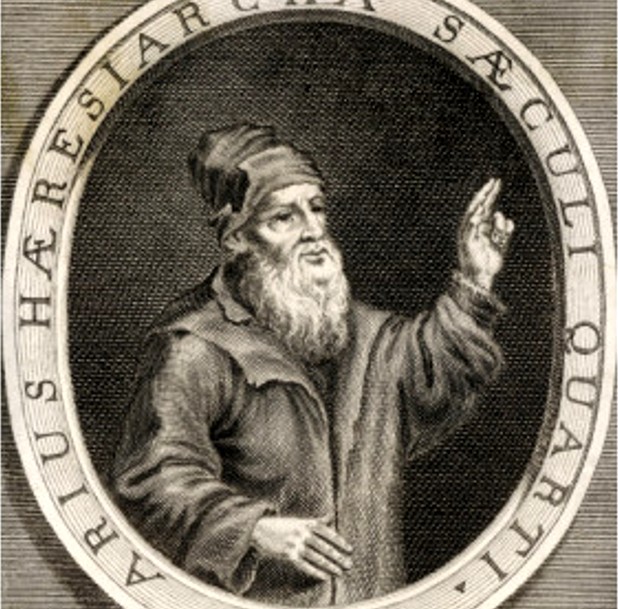
We are all too familiar with rioting and unrest in our streets. But riots over theology? Over one letter of the Greek alphabet–literally one iota? Yet the Arian controversy of the fourth century was a decisive juncture for the Church. Would she continue to recognize Jesus of Nazareth as truly, really, and fully God, or would she conclude that he was somehow lesser than God the Father? In AD 318, adherents of orthodoxy took to the streets, confronting Arius’ followers who chanted, “There was a time when Christ was not!”[1]
Since their earliest recorded history, Christians always worshipped Jesus as God. Historian Jaroslav Pelikan summarizes the data: the “oldest surviving sermon of the Christian church after the New Testament,” the “oldest surviving account of the death of a martyr,” the “oldest surviving pagan report about the church,” and the “oldest surviving liturgical prayer of the church.” All testify to the Church’s active and emphatic faith in Jesus as God.[2]
A long string of controversies over how to define this conviction followed. The first difficulty the Church faced was how Jesus could be the infinite, eternal, and unchangeable God and at the same time be born, grow as a man, suffer, and die on the Cross. The second was how God could be one, yet Father, Son, and Spirit all acknowledged as God.[3]
Arius (AD 256-356) arrived on the scene, a presbyter of eminent learning, to offer a “reasonable” account. God is absolute, without beginning: the source of all reality. The Son, he proposed, must be a creature. The first and most exalted of creatures through which the world was formed, but still a creature. “Begotten,” in this scheme, was a metaphor for the Son’s creation. Divinity cannot be divided. So, “God” for Jesus was only an honorary title.
J. N. D. Kelly summarizes Arius’ four main propositions:
- “First, the Son must be a creature;”
- “Secondly, as a creature the Son must have had a beginning;”
- “Thirdly, the Son can have no communion with, and indeed no direct knowledge of, His Father”–he must know only what God reveals to him;
- “Fourthly, the Son must be liable to change and even sin.” Conveniently, he was providentially preserved from sin, but the Son’s potential fallibility must remain real within Arianism.[4]
Arius’ first main opponent was Alexander, Bishop of Alexandria. He recognized Arius’ position not as a progression in Christian theology, but a digression from the Apostolic faith. When Emperor Constantine called for the matter to be settled, the church council of Nicaea (AD 325) convened. The council confessed the Son homoousious (“one substance”) with the Father, and deposed Arius. But Arianism continued to assert itself, pushing to add an iota to the Creed, calling the Son homoiousious (“of like substance”) with the Father. The Empire wavered back and forth.
Athanasius (c. AD 328–373), successor to Alexander both as Bishop and defender of orthodoxy, suffered five exiles for his defense of the Faith. He knew that any compromise with Arianism was a denial of Jesus’ Divinity. His primary contention was that without Jesus being God, he could never save us. In AD 381, the Council of Constantinople sounded the bell of orthodoxy a second time, producing what we now call the Nicene Creed.[5]
What can the struggle with Arianism teach us? The most obvious lesson is to resist its errors wherever they surface, whether in aberrant sects like the Jehovah’s Witnesses, modern theologies that subordinate the Son, or declensions of faith among self-professed “evangelicals” who agree, “Jesus is not fully God”.[6]
But further lessons follow:
- Politics and a desire for peace can temporarily derail the church’s witness.
- Subtleties in theology can sometimes be cosmically significant.
- The struggle for orthodoxy can be long and drawn out, represented at times by a seeming minority, calling for the courage and conviction of an Athanasius, Contra Mundum (“against the world”).
What ultimately was at stake in the struggle against Arianism, that we should maintain as doggedly today, is the identity of God’s Son, our Savior, Jesus Christ: “very God of very God, begotten, not made, being of one substance with the Father.”[7]
[1] Justin S. Holcomb, Know the Heretics (Grand Rapids, MI: Zondervan, 2014), 87.
[2] Jaroslav Pelikan, The Emergence of the Catholic Tradition (100-600), vol. 1 of The Christian Tradition: The History of the Development of Doctrine (Chicago: University of Chicago Press, 1971), 173.
[3] Holcomb, Know the Heretics, 89.
[4] J. N. D. Kelly, Early Christian Doctrines, 5th, Rev. Ed. (London: Bloomsbury, 1977), 227-228.
[5] Holcomb, Know the Heretics, 91-95.
[6] “America’s Vanishing Church, with Ryan Burge,” Episode 134 in The Trinity Forum Podcast, accessed online February 9, 2026 < https://ttf.org/podcasts/episode-134-americas-vanishing-church-with-ryan-burge/>.
[7] Quoted in Philip Schaff, The Creeds of Christendom (New York: Harper & Brothers Publishers, 1878), 1: 27–28.
https://placefortruth.org/early-heresies-arianism-vs-orthodoxy

| Wednesday, February 25 | 3 John 1 On the Go? Listen Now! |
| Christian fellowship is an amazing thing to behold. There is nothing quite like the experience of meeting a total stranger and finding out they are a believer in Christ. There is a bond between Christians that the Bible describes using familial language. When you meet someone who knows the Lord, you are meeting a brother or sister. Salvation unites us as a family.In a world where Christians left their homes to preach the gospel, it was necessary for them to depend on the hospitality and welcome of other Christians. But hospitality came at a cost, and from time to time, Christians needed encouragement to be hospitable (Rom. 12:13). John wrote this letter to his friend, Gaius, encouraging him to keep up the good work. Gaius had a habit of serving brothers and sisters in Christ, even if they were strangers to him (v. 5). These men and women went on to tell others about his kindness, described by John as love (v. 6).Recognizing that guests sometimes overstay their welcome, John encourages his friend to bid them farewell, when the time comes, in a God-honoring way (v. 6). Did John sense that showing hospitality was becoming wearisome? That’s why he reminds Gaius that these visitors went on the road for God’s Name (v. 7). They left at risk to themselves, taking no money from unbelievers, whom John describes as “pagans” (v. 7). As a result, they needed help from the family of God. Rather than call these travelers irresponsible, John reminds Gaius that it was right to help them. They are on a mission for the gospel.As a final encouragement he reveals that when Gaius helped them, he was joining in their efforts for the gospel; he was working with them! Christians can partner with the gospel efforts of other believers by showing hospitality when necessary. |
| Go Deeper How can you show hospitality within the family of believers? Think of ways you can improve this area of your life, even in the next month! Extended Reading: 3 John |
| Pray with Us Dear God, thank You for the reminder from the apostle John that when we show hospitality to our fellow Christians, we show love. It’s Your love that’s speaking through us. Help us to be generous and kind. |


and bring the fattened calf, kill it, and let us eat and celebrate; for this son of mine was dead and has come to life again; he was lost and has been found.’ And they began to celebrate. (15:23–24)
Overjoyed at his son’s return, the father ordered his servants to prepare an extravagant celebration, dwarfing those of the shepherd who found his lost sheep (v. 6) and the woman who found her lost coin (v. 9). The fattened, grain-fed calf was reserved for events of utmost significance, such as the wedding of the firstborn son (cf. Matt. 22:2–4), or the visit of an important person (cf. 1 Sam. 28:24). By ordering his servants to prepare it so that the guests could eat and celebrate, the father revealed how important his son had become. Since a fattened calf could feed up to two hundred people, the entire village would have been invited. The shepherd had found an animal, the woman an inanimate object, and they celebrated with a few of their friends. But the father had found his son, who was dead and had come to life again; who was lost, but now had been found, and the entire village began to celebrate with him. All three celebrations reflect heaven’s joy at the divine recovery of lost sinners (see the discussion of that truth in the previous chapter of this volume). And this party, like the first two, in reality honored not the one found, but the finder, who sought his son and gave him full reconciliation through his merciful forgiveness and gracious love.
MacArthur, J. (2013). Luke 11–17 (p. 317). Moody Publishers.
23–24 The calf was apparently being “fattened” for some special occasion, for people in first-century Palestine did not regularly eat meat. Note the parallel between “dead” and “alive” and “lost” and “found” (v. 24)—terms that also apply to one’s state before and after conversion to Christ (Eph 2:1–5). As in the parables of the lost sheep and the lost coin, it was time to “celebrate.” This act of celebration, in a context where one finds salvation and restoration, should be considered together with the other feeding stories in Luke that celebrate the dawning of God’s kingdom.
Liefeld, W. L., & Pao, D. W. (2007). Luke. In T. Longman III & D. E. Garland (Eds.), The Expositor’s Bible Commentary: Luke–Acts (Revised Edition) (Vol. 10, p. 254). Zondervan.
Vers. 23, 24.—And bring hither the fatted calf. There was a custom in the large Palestinian farms that always a calf should be fattening ready for festal occasions. And let us eat … And they began to be merry. Who are intended by these plurals, us and they? We must not forget that the parable-story under the mortal imagery is telling of heavenly as well as of earthly things. The sharers in their joy over the lost, the servants of the prodigal’s father on earth, are doubtless the angels of whom we hear (vers. 7, 10), in the two former parables of the lost sheep and of the lost drachma, as rejoicing over the recovery of a lost soul.
Spence-Jones, H. D. M., ed. (1909). St Luke (Vol. 2, p. 44). Funk & Wagnalls Company.

And it shall be at that day, saith the Lord, that thou shalt call me Ishi; and shalt call me no more Baali; for I will take away the names of Baalim out of her mouth, and they shall no more be remembered by their name. (Hosea 2:16-17)
That day has come. We view our God no more as Baal, our tyrant lord and mighty master, for we are not under law but under grace. We now think of Jehovah, our God, as our Ishi, our beloved husband, our lord in love, our next-of-kin in bonds of sacred relationship. We do not serve Him less obediently, but we serve Him for a higher and more endearing reason. We no longer tremble under His lash but rejoice in His love. The slave is changed into a child and the task into a pleasure.
Is it so with thee, dear reader? Has grace cast out slavish fear and implanted filial love? How happy are we in such an experience! Now we call the Lord’s day a delight, and worship is never a weariness. Prayer is now a privilege, and praise is a holiday. To obey is heaven; to give to the cause of God is a banquet. Thus have all things become new. Our mouth is filled with singing and our heart with music. Blessed be our heavenly Ishi forever and ever.
My favorite Ratio Christi person of all is Eric Chabot. He works at Ohio State University. He is the best, because can teach on many topics, he gets the best speakers to lecture, and mentors the most promising Christian students. I could tell you so many stories about his achievements as a Christian. Anyway, he has a new substack, and I decided to check it out to see what he’s writing about. I was not disappointed.
Here is his latest article, where he talks about what works best in real conversations with Muslim students:
Over the last several years, I have had many opportunities to engage in spiritual discussions with Muslims in our campus ministry in Columbus, Ohio. On several occasions, I have told Muslims that I will never become a Muslim because of their position on the death of Jesus. For Christians, the death and resurrection of Jesus are central to the Gospel message. After all, the kerygma in the Book of Acts is that the Messiah was crucified according to the plan of God (Acts 2:23), that He was raised from the dead, and that He appeared to His disciples (Acts 2:24, 31–32; 3:15–26; 10:40–41; 17:31; 26:23).
Muslims, however, believe that Jesus did not die. Instead, they believe the early disciples were deceived and that Allah delivered Jesus. The Qur’an says in Sura 4:157:
“And [for] their saying, ‘Indeed, we have killed the Messiah, Jesus, the son of Mary, the messenger of Allah.’ And they did not kill him, nor did they crucify him; but another was made to resemble him to them. And indeed, those who differ over it are in doubt about it. They have no knowledge of it except the following of assumption. And they did not kill him, for certain.”
From this passage, most Muslim scholars conclude the following:
- Jesus was not actually killed on the cross.
- Someone else may have been made to look like Him, or the event was made to appear that way.
- God rescued Jesus and raised Him to heaven.
Across both Sunni and Shia traditions, it is commonly believed that:
Now, my podcast partner Rose is an expert in Islam, and she loves to use this argument with Muslims, along with the The Islamic Dilemma. Why is this argument so good? It’s so good because you have a clear case of two historical sources asserting two mutually contradictory points. Christianity teaches that Jesus did die on the cross. Islam teaches that Jesus did not die on the cross. Only one can be right. It’s the perfect point to bring up with Muslims, because it’s a clear disagreement, and one that can be settled by the ordinary methods of historical analysis. The right answer depends on which sources come first – who is in contact with the eyewitnesses at the time when history was recorded?
Eric writes:
[T]he Qur’an was written roughly six hundred years after the life of Jesus, making it a much later source of information than the New Testament. The evidence suggests that the core historical content of the Gospel—the death and resurrection of Jesus—was circulating very early within the Christian community. As mentioned earlier, historians look for records that are closest in time to the events they describe. Given the early date of 1 Corinthians 15:3–8, along with other sources, it is evident that this material is historically earlier than the Qur’an.
If you don’t know about the early creed from 1 Corinthians 15:3-8, you really should listen to episode 1 of the Knight and Rose Show. We quoted the writings of a famous atheist German New Testament scholar and atheist (formerly professor at the University of Göttingen). He dates the elements of the creed in 1 Corinthians 15:3-7 (or more broadly 15:3-8) very early. You can find his own statement in his book “The Resurrection of Jesus” (1994), where he states:
“the elements in the tradition are to be dated to the first two years after the crucifixion of Jesus…not later than three years… the formation of the appearance traditions mentioned in I Cor.15.3-8 falls into the time between 30 and 33 CE.”
So, this is very, very early evidence for the crucifixion of Jesus. And the crucifixion is of course echoed by other non-Biblical sources, e.g. – Tacitus, Flavius Josephus, The Babylonian Talmud and Lucian of Samosata.
Eric notes that it’s not just early sources that matter. The number of sources matters too. He has a list of dozens of sources going from the event itself right up to the late sixth century.
My podcast partner Rose talked about the implications of Allah allowing people to believe in mistakes for 6 centuries before Mohammed finally shows up to correct them in episode 11 of the Knight and Rose Show.
Eric makes the same point:
Consider the implication of the Islamic claim. According to Islam, Allah allowed the first-century disciples to be deceived into believing that Jesus literally died on a cross. Not only that, but this supposed deception continued for roughly six centuries until Muhammad received a revelation through the angel Gabriel.
His article is great. It’s something that everyone should know how to do. I think most Christians think of Christianity as “our tradition”. It’s what Westerners believe. It’s our family tradition, our community tradition. Then, when they encounter Islam, they think of it as just “Middle East Christianity”. That’s just their tradition, on the same historical footing as our tradition.
Certainly, it’s easy to think that all religions are the same, and many Christians do. And unfortunately, there’s not much apologetics being taught in church. Pastors don’t do much to teach their flocks how to test a religion for truth. Instead, pastors teach Christians to share their testimony. And when Muslims share their testimony, Christians aren’t equipped to have a truth-focused discussion where evidence is weighed.
Well, I think that what Eric has written there is about the best you can do as a lay Christian. So, read his article closely. Notice how he quotes non-Christian scholars to make his points. Don’t let yourself get tricked into discussions about which book is more holy. If you stick with the historical evidence, then the discussion doesn’t get heated. On the contrary, you will be shedding light on the subject, when you explain your views and how you arrived at them. My mom’s side of the family is all Muslim, and none of them ever got mad at me when I explained this argument to them. It just works.

 Truth2Freedom's Blog