There are two ways to be fooled. One is to believe what isn’t true; the other is to refuse to believe what is true. —Soren Kierkegaard. "…truth is true even if nobody believes it, and falsehood is false even if everybody believes it. That is why truth does not yield to opinion, fashion, numbers, office, or sincerity–it is simply true and that is the end of it" – Os Guinness, Time for Truth, pg.39. “He that takes truth for his guide, and duty for his end, may safely trust to God’s providence to lead him aright.” – Blaise Pascal. "There is but one straight course, and that is to seek truth and pursue it steadily" – George Washington letter to Edmund Randolph — 1795. We live in a “post-truth” world. According to the dictionary, “post-truth” means, “relating to or denoting circumstances in which objective facts are less influential in shaping public opinion than appeals to emotion and personal belief.” Simply put, we now live in a culture that seems to value experience and emotion more than truth. Truth will never go away no matter how hard one might wish. Going beyond the MSM idealogical opinion/bias and their low information tabloid reality show news with a distractional superficial focus on entertainment, sensationalism, emotionalism and activist reporting – this blogs goal is to, in some small way, put a plug in the broken dam of truth and save as many as possible from the consequences—temporal and eternal. "The further a society drifts from truth, the more it will hate those who speak it." – George Orwell “There are two ways to be fooled. One is to believe what isn’t true; the other is to refuse to believe what is true.” ― Soren Kierkegaard
Praise be to the God and Father of our Lord Jesus Christ, who has blessed us in the heavenly realms.
Ephesians 1:3
Remember that all these blessings are available to us in the realm that Paul calls the heavenlies. He is not referring to heaven here; he does not mean going to heaven when you die. We get such distorted concepts of heaven! Heaven, as most people envision it, is not an attractive place to me—damp, rainy clouds; unstrung harps out of tune; and white robes. A good travel brochure could make west Texas look preferable to heaven. And yet most people think that this is what Paul is talking about when he speaks of the heavenlies.
No, in the heavenly realms is a reference to the invisible realities of our life now. These realities certainly reach on into eternity, but they are something to be experienced now in your inner life—your thought life, where you feel conflict and pressure, struggle and disaster—that is part of the heavenlies. It is where we are exposed to the attack of the principalities and powers that are mentioned in chapter 6, those dark spirits in high places who get to us and depress us and frighten us and make us anxious or hostile. The heavenlies is not only the realm of conflict but also where God can release us and deliver us, where the Spirit of God reaches us at the seat of our intellect, emotions, and our will. It is the realm of those deep, surging urges that rise within us and create either a restlessness or a sense of peace, depending on the source from which they come. So don’t read this as though it were something out in space somewhere. These blessings are yours in your inner experience now if you are in Jesus Christ.
Obviously, all of this comes to us in one great package in Christ. If you are not a Christian, you cannot possibly claim these benefits, because they are not yours—there is no way you can appropriate them unless you are in Christ. But if you are in Christ, there is nothing to keep you from having all of them, every moment of every day. That is why it is so important that we discover what they are.
These are much more than mere theological ideas. They are facts, foundational truths that undergird us in every moment of our life. And unless you understand those facts, you can’t utilize or benefit from them. In that way they are like natural laws. The laws of nature operate regardless of how we feel—they are impersonal in that respect.
In my experience of doing electrical work in an addition to my home, I’ve discovered that electricity follows a pattern of its own and takes no notice of how I feel at the moment. That can be a shocking experience! It is not in the slightest degree impressed with my position as a pastor. It doesn’t hesitate to retaliate for any violation of its laws that I commit. It is up to me to discover how it works and then to respect it if I want to utilize it. The same thing is true of these great facts. They will not do you a particle of good if you don’t discover what they are and believe them enough to operate on the basis of them.
Father, thank You for these vast truths. I pray that my understanding may be made equal to them. I can’t grasp them properly apart from the work of Your Spirit, and I pray that You will open my eyes and help me to see that these things are true indeed.
Life Application
There are foundational truths that undergird us every moment of our life. Have we moved past mere theological ideas to appropriate the Life we were designed to live?
3Praise be to the God and Father of our Lord Jesus Christ, who has blessed us in the heavenly realms with every spiritual blessing in Christ. 4For he chose us in him before the creation of the world to be holy and blameless in his sight. In love 5he predestined us to be adopted as his sons through Jesus Christ, in accordance with his pleasure and will— 6to the praise of his glorious grace, which he has freely given us in the One he loves. 7In him we have redemption through his blood, the forgiveness of sins, in accordance with the riches of God’s grace 8that he lavished on us with all wisdom and understanding. 9And he made known to us the mystery of his will according to his good pleasure, which he purposed in Christ, 10to be put into effect when the times will have reached their fulfillment—to bring all things in heaven and on earth together under one head, even Christ.
11In him we were also chosen, having been predestined according to the plan of him who works out everything in conformity with the purpose of his will, 12in order that we, who were the first to hope in Christ, might be for the praise of his glory. 13And you also were included in Christ when you heard the word of truth, the gospel of your salvation. Having believed, you were marked in him with a seal, the promised Holy Spirit, 14who is a deposit guaranteeing our inheritance until the redemption of those who are God’s possession—to the praise of his glory.
The merit and righteousness of our Lord Jesus Christ, which we rely upon as our main plea in our petition for the pardon of sin.
I know that as you are gracious and merciful, so you are the righteous God who loves righteous deeds, Psalm 11:7(ESV) and will by no means clear the guilty. Exodus 34:7(ESV) I cannot say, “Have patience with me, and I will pay you everything,” Matthew 18:26(ESV) for I am like one who is unclean, and all my righteous deeds are like a polluted garment. Isaiah 64:6(ESV) But Jesus Christ has become to me righteousness from God; 1 Corinthians 1:30(ESV) being made to be sin, though he knew no sin, so that in him I might become the righteousness of God. 2 Corinthians 5:21(ESV)
I have sinned, but I have an advocate with the Father, Jesus Christ the righteous, who is the propitiation for my sins, and not for mine only but also for the sins of the whole world. 1 John 2:1-2(ESV)
It is God who justifies, who is to condemn? Christ Jesus is the one who died – more than that, who was raised – who is at the right hand of God, who indeed is interceding for me, Romans 8:33-34(ESV) and whose blood speaks a better word than the blood of Abel. Hebrews 12:24(ESV)
I desire to count everything as loss for the sake of Christ, and as rubbish, in order that I may gain Christ and be found in him, not having any righteousness of my own, but that which comes through faith in Christ. Philippians 3:7-9(ESV)
This is the name whereby I, with your people, will call him, THE LORD IS OUR RIGHTEOUSNESS. Jeremiah 23:6(ESV) In him, Lord, I believe; help my unbelief. Mark 9:24(ESV)
Remember, O LORD, in David’s favor, all the hardships he endured; Psalm 132:1(ESV) the Son of David, remember all his offerings and regard with favor his burnt sacrifices; Psalm 20:3(ESV) and do not turn away the face of your Anointed One, 2 Chronicles 6:42(ESV) who by his own blood has entered into heaven itself, now to appear in the presence of God on my behalf. Hebrews 9:24(ESV)
Have you not yourself put forward your Son, Christ Jesus, as a propitiation for sin by his blood, to be received by faith; to show God’s righteousness for the remission of sins, to show your righteousness at the present time, so that you might be just and the justifier of the one who has faith in Jesus? Romans 3:25-26(KJV) And so, I now receive reconciliation. Romans 5:11(ESV)
John 20:1-10 In this week’s lessons we look at the resurrection of the Lord Jesus Christ by considering what still remained in the tomb after Jesus had risen, and note how it led to saving faith.
Theme
Events of Easter Morning
One of the great historical evidences of the resurrection of Jesus Christ is the fact of the empty tomb. But the remarkable and quite startling fact is that when Peter and John arrived at the tomb on the first Easter morning it was not quite empty. That’s right, the tomb on Easter morning was not quite empty. The body of Jesus was gone, but something was still there. The graveclothes remained behind. And the Bible suggests that there was something about them so striking that John at least saw them and believed in Jesus’ resurrection.
This is quite significant, for it marks the first time there was any indication of belief by one of the disciples. During the last century, a well-known French critic of the gospels, Ernest Renan, argued that Christian faith in the resurrection was the result of the rumors spread by Mary Magdalene who had suffered a hallucination, thinking she had seen Jesus.
But this could not be. Mary suffered no hallucination. The last thing in the world she ever expected was the resurrection of her Lord. Moreover, John testifies that he believed some time before Mary even returned to the tomb and had her meeting with Jesus in the garden.
Let us look at the sequence of events.
Now the time element is of great interest here. For it is valuable background to the experiences of Peter and John at the tomb. Critics have made much of the so-called discrepancies in the gospel accounts, but there are no discrepancies when the accounts are correctly understood. And it is no trouble at all to reconcile them.
Jesus had been crucified either on Friday (as the Church has generally believed) or else on Thursday (which is less widely held but which seems to fit the evidence). At all events, Jesus lay in the tomb until the resurrection which certainly took place long before dawn on Sunday morning. At this point the women came to the tomb from Jerusalem bearing spices to anoint His body.
There were at least four women and probably more. Matthew says that the group included Mary Magdalene and the other Mary; that is, Mary the mother of James. Mark adds that Salome was present. Luke says that Joanna was also along, and others. These women started out while it was still dark and arrived at the tomb in the early dawn while it was still difficult to distinguish objects.
On reaching the tomb the women were astonished to find the stone removed from the entrance. We must imagine them standing about, afraid to go too close, wondering what had happened. Who has moved the stone? Has the tomb been pilfered? Has the body of Jesus been stolen? Has Joseph of Arimatheia removed it to another place? What were they to do? At last they decided that the disciples of Jesus must be told, and Mary was dispatched to find them. Not one of them imagined that Jesus had been raised from the dead.
After a while it began to grow lighter, and the women grew bolder. They decided to look into the tomb. There they saw the angels. The women were afraid. But an angel said, “Do not be afraid; for I know that you seek Jesus who was crucified. He is not here; for he has risen, as he said. Come, see the place where he lay. Then go quickly and tell his disciples.”
Study Questions
In what way was the tomb not empty? What happened as a result of this, and why is it significant?
What did Ernest Renan claim was the reason for the early Christians’ belief in the resurrection? Why is this explanation incorrect?
Application
Review: Review the sequence of events that took place, beginning with when the women went to Jesus’ tomb with their spices.
For Further Study: Download for free and listen to Philip Ryken’s message, “Proof Positive.” (Discount will be applied at checkout.)
The author of Revelation, John, was one of the original twelve disciples called by Jesus. John and his brother James, along with Peter and Andrew, were fishermen whom Jesus invited to follow Him—“I will send you out to fish for people” (Matt. 4:18–22). John became “the disciple whom Jesus loved” (John 21:20) and wrote a Gospel as well as three epistles.John had been walking with Jesus for nearly a lifetime by the time he wrote Revelation (v. 4). That’s why there is great spiritual depth even in his simple greeting in today’s reading. He offers “grace and peace” from the entire Trinity: God the Father, God the Holy Spirit (v. 4), and God the Son (v. 5). As the NIV note attests, “seven spirits” can be rendered “sevenfold Spirit,” which makes more sense. The number seven, here and throughout the book—it appears 54 times!—represents divine perfection.The focus is on God the Son, Jesus Christ. He is the “faithful witness” who died to save us, the “firstborn from among the dead” who conquered death and rose again (Col. 1:18), and the sovereign “ruler of the kings of the earth.” John cannot help breaking into a doxology of praise here for Christ’s love and redemptive sacrifice and for how He has made us “to be a kingdom and priests” (vv. 5–6; Ex. 19:6; 1 Peter 2:9). Worship will be a major theme in this book.The key theme and message, though, is Christ’s Second Coming (vv. 7–8). Christ is the telos or purpose of history, the “hinge” of God’s entire plan of redemption. The prophecies of Revelation are continuous with Old Testament prophecies: Jesus will return “with the clouds of heaven” (Dan. 7:13; 1 Thess. 4:16–17). “They will mourn for him” (Zech. 12:10; Matt. 24:30), the One they had pierced (Isa. 53:5).
Go Deeper What has been your previous experience with the book of Revelation? What did you learn today that gives this study context?
Pray with Us God, we thank You for the inspired Word that tells us about who You are. Open our eyes to see that You are worthy to be praised! We worship You.
Therefore Pilate entered again into the Praetorium, and summoned Jesus and said to Him, “Are You the King of the Jews?” Jesus answered, “Are you saying this on your own initiative, or did others tell you about Me?” Pilate answered, “I am not a Jew, am I? Your own nation and the chief priests delivered You to me; what have You done?” Jesus answered, “My kingdom is not of this world. If My kingdom were of this world, then My servants would be fighting so that I would not be handed over to the Jews; but as it is, My kingdom is not of this realm.” Therefore Pilate said to Him, “So You are a king?” Jesus answered, “You say correctly that I am a king. For this I have been born, and for this I have come into the world, to testify to the truth. Everyone who is of the truth hears My voice.” Pilate said to Him, “What is truth?” (18:33–38a)
Leaving the Jewish leaders standing outside, Pilate entered again into the Praetorium, and summoned Jesus. Luke 23:2 provides the background to his question, “Are You the King of the Jews?” Realizing that they had to come up with a charge that would impress a Roman judge, the Jewish leaders “began to accuse [Jesus], saying, ‘We found this man misleading our nation and forbidding to pay taxes to Caesar, and saying that He Himself is Christ, a King.’ ” The charges, of course, were completely false; Jesus had actually said the opposite: “Render to Caesar the things that are Caesar’s; and to God the things that are God’s” (Matt. 22:21). Their goal was to portray Him as an insurrectionist, bent on overthrowing Roman rule and establishing His own. Pilate could not overlook such a threat to Roman power. His question, “Are You the King of the Jews?” was in effect asking Jesus whether He was pleading guilty or not guilty to the charge of insurrection. “Pilate’s question seeks to determine whether or not Jesus constituted a political threat to Roman imperial power” (Andreas J. Köstenberger, John, Baker Exegetical Commentary on the New Testament [Grand Rapids: Baker, 2004], 527). In all four gospel accounts this is the first question Pilate asks Jesus, and in all four the pronoun “You” is emphatic. The Greek text literally reads, “You, are You the King of the Jews?” Pilate was incredulous; from a human perspective, Jesus did not look like a king. And if He was a king, where were His followers and His army? And how was He a threat to Rome? Jesus could not answer Pilate’s question with an unqualified “Yes” or “No” without first defining exactly what His kingship entails. His counterquestion, “Are you saying this on your own initiative, or did others tell you about Me?” was intended to clarify the issue. If Pilate was saying this on his own initiative, he would be asking if Jesus was a king in the political sense (and hence a threat to Rome). Jesus’ answer in that case would be no; He was not a king in the sense of a military or political leader. He had earlier rejected the crowd’s attempt to make Him such a king (6:15). But neither could the Lord deny that as the Messiah He was Israel’s true king. Pilate’s sharp retort, “I am not a Jew, am I?” reflects both his disdain for the Jewish people, and his growing exasperation with the frustrating, puzzling ethnic case set before him. His further elaboration, Your own nation and the chief priests delivered You to me, makes it clear that the governor was merely repeating the charge leveled against Jesus by the Jewish leaders; the accusation was theirs, not Rome’s. Exactly why they had done so still eluded Pilate. He knew perfectly well that the Jews would not have handed over to him someone hostile to Rome unless they stood to gain from doing so. Attempting once again to get to the bottom of things, Pilate asked the question that he should have asked at the outset: what have You done? Unlike Jewish practice (see the discussion of 18:19 in the previous chapter of this volume), Roman legal procedure allowed the accused to be questioned in detail (Köstenberger, John, 527). Pilate understood that the Jewish leaders had handed Jesus over to him because of envy (Matt. 27:18). What he still did not understand was what Jesus had done to provoke such vehement hostility from them and what, if any, crime He had committed. Since it was now clear that Pilate was merely repeating the charge of the Jewish leaders, Jesus answered his question. He was a king, but not a political ruler intent on challenging Rome’s rule. “My kingdom is not of (Greek ek; “out from the midst of”) this world,” He declared. Its source was not the world system, nor did Jesus derive His authority from any human source. As noted earlier, He had rejected the crowd’s attempt to crown Him king. He also passed up an opportunity to proclaim Himself king at the triumphal entry, when He rode into Jerusalem at the head of tens of thousands of frenzied hopefuls. To reinforce His point, Jesus noted that if His kingdom were of this world, then His servants would be fighting so that He would not be handed over to the Jews. No earthly king would have allowed himself to have been captured so easily. But when one of His followers (Peter) attempted to defend Him, Jesus rebuked him. The messianic kingdom does not originate from human effort, but through the Son of Man’s conquering of sin in the lives of those who belong to His spiritual kingdom. Christ’s kingdom is spiritually active in the world today, and one day He will return to physically reign on the earth in millennial glory (Rev. 11:15; 20:6). But until then His Kingdom exists in the hearts of believers, where He is undisputed King and sovereign Lord. He was absolutely no threat either to the national identity of Israel, or to the political and military identity of Rome. That the Lord spoke of being handed over to the Jews is significant. Far from leading them in a revolt against Rome, Jesus spoke of the Jews (especially the leaders) as His enemies. He was a king, but since He disavowed the use of force and fighting, He was clearly no threat to Rome’s interests. The Lord’s statement rendered the Jews’ charge that He was a revolutionary bent on overthrowing Rome absurd. Jesus’ description of His kingdom had left Pilate somewhat confused. If His kingdom was not an earthly one, then was Jesus really a king at all? Seeking to clarify the issue, Pilate said to Him, “So You are a king?” Jesus’ answer was clear and unambiguous: “You say correctly that I am a king.” The Lord boldly “testified the good confession before Pontius Pilate” (1 Tim. 6:13). Unlike earthly kings, however, Jesus was not crowned a king by any human agency. For this I have been born, He declared, and for this I have come into the world. Jesus had not only been born like all other human beings, but also had come into the world from another realm—heaven (cf. 3:13, 31; 6:33; 8:23; 17:5). Taken together, the two phrases are an unmistakable reference to the preexistence and incarnation of the Son of God. Jesus’ mission was not political but spiritual. It was to testify to the truth by “proclaiming the gospel of the kingdom” (Matt. 4:23). Christ proclaimed the truth about God, men, sin, judgment, holiness, love, eternal life, in short, “everything pertaining to life and godliness” (2 Peter 1:3). What people do with the message of truth Jesus proclaimed determines their eternal destiny; as He went on to declare, “Everyone who is of the truth hears (the Greek word includes the concept of obedience; cf. Luke 9:35) My voice.” Jesus is “the way, and the truth, and the life; no one comes to the Father but through [Him]” (14:6). In 10:27 He added, “My sheep hear My voice and I know them, and they follow Me.” Only those who continue in His Word are truly His disciples; only those who are truly His disciples will know and be set free by the truth (8:31–32). Jesus’ words were an implied invitation to Pilate to hear and obey the truth about Him. But they were lost on the governor, who abruptly ended his interrogation of Christ with the cynical, pessimistic remark, “What is truth?” Like skeptics of all ages, including contemporary postmodernists, Pilate despaired of finding universal truth. This is the tragedy of fallen man’s rejection of God. Without God, there cannot be any absolutes; without absolutes, there can be no objective, universal, normative truths. Truth becomes subjective, relative, pragmatic; objectivity gives way to subjectivity; timeless universal principles become mere personal or cultural preferences. All fallen mankind has accomplished by forsaking God, “the fountain of living waters,” is “to hew for themselves cisterns, broken cisterns that can hold no water” (Jer. 2:13). Pilate’s flippant retort proved that he was not one of those given by the Father to the Son, who hear and obey Christ’s voice.
MacArthur, J. F., Jr. (2008). John 12–21 (pp. 328–331). Moody Publishers.
Jesus before Pilate
John 18:33–38
Pilate then went back inside the palace, summoned Jesus and asked him, “Are you the king of the Jews?” “Is that your own idea,” Jesus asked, “or did others talk to you about me?” “Am I a Jew?” Pilate replied. “It was your people and your chief priests who handed you over to me. What is it you have done?” Jesus said, “My kingdom is not of this world. If it were, my servants would fight to prevent my arrest by the Jews. But now my kingdom is from another place.” “You are a king, then!” said Pilate. Jesus answered, “You are right in saying I am a king. In fact, for this reason I was born, and for this I came into the world, to testify to the truth. Everyone on the side of truth listens to me.” “What is truth?” Pilate asked. With this he went out again to the Jews and said, “I find no basis for a charge against him.”
The previous study dealt with two puzzling aspects of the Roman trial: one, the contrast between what we know from secular sources regarding Pilate’s character—insensitive, impetuous, rude—and the way the four Gospels indicate he actually conducted the trial; the second, that Pilate pronounced Christ innocent and yet condemned him to be crucified. These elements make a study of the Roman trial quite difficult and suggest levels of mystery that are possibly unfathomable. There is one aspect of the Roman trial that is not the least bit mysterious, however. It is the tendency of human nature meticulously to go through all the external forms required by a situation while at the same time denying the very reality the forms stand for. There are two examples of this in the second segment of Christ’s trial. On the one hand, there is the example of the Jewish rulers who, we are told, “to avoid ceremonial uncleanness the Jews did not enter the palace; they wanted to be able to eat the Passover” (John 18:28). Here were men engaged in a most vile act, the judicial murder of Jesus; yet they were concerned about being ceremonially defiled. They had convicted an innocent man of crimes worthy of death, breaking scores of their own laws in the process. They were about to seek a parallel conviction from Pilate by illegally and unconscionably changing the nature of the accusation made against their prisoner. Yet they were concerned about a ritual purification. The other example of this human tendency is Pilate, who made a great show of justice while actually allowing mob action to force his acquiescence in the death of a man whom he knew was innocent.
The Formal Indictment
Some students of the Roman trial of Jesus have insisted that the real trial was before the Jewish Sanhedrin and that this was merely an informal hearing. But their argument overlooks the actual stages of the trial as they are recorded for us by the New Testament authors. A Roman trial had four essential elements: the indictment, the examination, the defense, and the verdict. Each of these is present in Christ’s trial. The official nature of the proceedings is indicated by Pilate’s opening words: “What charges are you bringing against this man?” (v. 29). As Chandler observes, “This question is very keenly indicative of the presence of the judge and of the beginning of a solemn judicial proceeding. Every word rings with Roman authority and strongly suggests administrative action.” Pilate’s question seems to have caught the Jewish leaders by surprise, however. For instead of replying with a formal indictment, as they should have been prepared to do, they attempted to evade the question by answering: “If he were not a criminal, we would not have handed him over to you” (v. 30). At the very least, the reply of the leaders suggests that the priests and scribes regarded their own trial as sufficient and were coming to Pilate merely to secure a formal signature to effect the execution. They were saying, “You should accept the judgment that he is worthy of death merely because we say so.” On the other hand, there may be more to it than this, as was argued in our earlier treatment of the Jewish trial. As we saw in that study, we can hardly suppose that the Jewish Sanhedrin launched into the trial of Jesus at this relatively late hour in Passover week without some understanding with Pilate that he would hear the case and concur in their verdict early on this particular morning. It is clear that the Jews expected a perfunctory endorsement of the verdict already arrived at by their own court. When Pilate surprised them by apparently intending to open the case anew and conduct a formal hearing, they were temporarily caught off guard and replied with this evasion. Pilate said that if they were unwilling to make a formal accusation, they obviously did not need him and therefore should prosecute the case according to their own laws and inflict whatever penalties they were legally entitled to impose. It is possible that at this point Pilate did not understand that the Jews were seeking the death penalty in Jesus’ case, but it is far more likely that he understood this all too well and was speaking as he did merely to remind the priests that they were under the rule of Rome and would have to conform to Rome’s rules if they wished to have Christ executed. In a later incident involving the apostle Paul, the same principle was stated: “It is not the Roman custom to hand over any man before he has faced his accusers and has had an opportunity to defend himself against their charges” (Acts 25:16). The unanticipated stubbornness of Pilate clearly thwarted the Jews in their designs. But they were resourceful and, therefore, produced an accusation on the spur of the moment. John does not record it; he passes instead to the heart of the accusation and Pilate’s examination of Jesus on this point. But Luke gives the accusation in full. It has three parts. “We have found this man subverting our nation. He opposes payment of taxes to Caesar and claims to be the Christ” (Luke 23:2). This is not the crime of which Jesus had been convicted in their own court. Chandler writes, “In the passage from the Sanhedrin to the Praetorium, the indictment had completely changed. Jesus had not been condemned on any of the charges recorded in this sentence of St. Luke. He had been convicted on the charge of blasphemy. But before Pilate he is now charged with high treason.… Why? Because blasphemy was not an offense against Roman law, and Roman judges would generally assume cognizance of no such charges. “The Jews understood perfectly well at the trial before Pilate the principle of Roman procedure so admirably expressed a few years later by Gallio, proconsul of Achaia, and brother of Seneca: ‘If it were a matter of wrong or wicked lewdness, O ye Jews, reason would that I should bear with you: but if it be a question of words and names, and of your law, look ye to it; for I will be no judge of such matters.’ This attitude of Roman governors toward offenses of a religious nature perfectly explains the Jewish change of front in the matter of the accusation against Jesus. They merely wanted to get themselves into a Roman court on charges that a Roman judge would consent to try. In the threefold accusation recorded by the third Evangelist, they fully accomplished this result.” The first charge was that Christ was “perverting the nation.” This was indefinite. Had Pilate taken it seriously, it would have had to have been supported by specific examples of sedition. Still, it was a real offense. It was, in fact, the precise charge that the Jewish court had tried to prove against Jesus in reference to his claim to be able to tear down the temple and rebuild it in three days. The Jews had been unable to prove this in their court because of the contradictory testimony of their witnesses. The second charge was also serious. In fact, it was more serious than the first in that it was a specific treasonable act under Roman law governing a captive state. The only problem with this charge is that it was clearly false. On an earlier occasion the nation’s leaders had attempted to trap Jesus on this very issue, but he had acquitted himself admirably. They had come to him with a trick question, asking, “What is your opinion? Is it right to pay taxes to Caesar or not?” (Matt. 22:17). They reasoned that if he said yes, they could denounce him to the people, saying, “What kind of Messiah is this who counsels abject subservience to Rome?” On the other hand, if he replied no, they could denounce him to Rome, saying “You have an insurrectionist on your hands.” But what did Christ answer? He asked for a coin and demanded of his questioners, “Whose portrait is this? And whose inscription?” (v. 20). When they replied, “Caesar’s,” he gave that ruling that has become the classical biblical statement of the separation of church and state, involving the proper responsibilities of and to each. He said, “Give to Caesar what is Caesar’s, and to God what is God’s” (v. 21). In this charge the leaders were therefore guilty of the most flagrant and malicious of lies. The third charge was the greatest and most serious of the three, that Jesus had claimed to be “Christ, a king.” It was serious because it was true. It was also serious because it was the claim about which Rome was most sensitive and against which she was most on her guard. When Pilate heard this charge he gathered his robes about him, motioned for Jesus to follow him, made his way back into the palace (which John alone records) and began the examination, the second part of every Roman trial. Not content with receiving the formal accusation alone, Pilate now sought to determine whether the charges preferred against Jesus were true.
The Examination
Each of the Gospel writers records the question with which Pilate began his interrogation. It is simply, “Are you the King of the Jews?” (Matt. 27:11; Mark 15:2; Luke 23:3; John 18:33). With this question Pilate, it would appear, impatiently brushed aside the two lesser charges as unworthy of serious consideration and proceeded at once to examine Jesus on that charge which, if true, would unmistakably brand him Caesar’s enemy. John records Christ’s full reply. As we read it, it seems like an evasion—“Is that your own idea or did others talk to you about me?” (v. 34)—but actually Jesus’ reply is much to the point. For having heard the charge first from the lips of the Jews and now from Pilate himself, Jesus wishes to know first of all in what sense the question is being put to him. What was the nature of the charge? If the question were being asked from a Roman point of view, one answer would be given; for Christ was not a king from Rome’s perspective. On the other hand, if the question were being asked from a Jewish perspective, quite another answer would be given; for Jesus was the Jews’ Messiah. Pilate’s reply, while abrupt, is nevertheless also directly to the point at this stage in the examination. He asks, “Am I a Jew? It was your people and your chief priests who handed you over to me. What is it you have done?” (v. 35). This means, “I am no Jew. I ask my question as a Roman administrator and, as such, purely religious questions have no interest for me. What I want to know is: What have you done that might affect the sovereignty of Caesar?”
The Defense
At this point, although the interrogation continues, Jesus begins his defense by introducing what in modern law would be called a plea of confession and avoidance. This is a plea which admits, either in words or in effect, the truth of the accusation but which nevertheless introduces some new matter to avoid the guilt which normally would follow. For example, we may imagine a case in which a man is on trial for murder. The judge asks, “Did you shoot and kill John Smith on the date in question?” The defendant might answer, “Yes, I did, your Honor; but you should know that I discovered him in my dining room near an open window trying to steal my silver chest and that when I discovered him he came at me with a knife. My plea is justified homicide and self-defense.” Here the defendant admits to the killing but pleads extenuating circumstances. In the same way, the Lord now admits to the charge of having claimed to be a king but describes his kingship in such a way that it is seen to be no threat to the legitimate claims of Caesar. Jesus first explains the nature of his kingdom negatively: “My kingdom is not of this world. If it were, my servants would fight to prevent my arrest by the Jews. But now my kingdom is from another place” (v. 36). We do not know whether Pilate understood what Jesus was saying in this reply, but one phrase immediately caught his attention, the phrase “my kingdom.” Jesus seemed to be saying that this was not an earthly kingdom, but Pilate could take no chances on this crucial issue. He therefore picked up on this phrase and (probably) advanced on Christ threateningly to demand sternly, “You are a king, then!” (v. 37). This time Jesus replies to the question with a positive affirmation: “You are right in saying that I am a king. In fact, for this reason I was born, and for this I came into the world, to testify to the truth. Everyone on the side of truth listens to me” (v. 37). Jesus’ defense has two parts. One is a negative definition of his kingdom. It is “not of this world.” The proof is that his disciples did not fight to prevent his arrest by the Jewish authorities. The other is a positive definition of the kingdom. It is of “the truth.” That is, it is a kingdom ruling over people’s minds and aspirations. Chandler writes, “His was not an empire of matter, but a realm of truth. His kingdom differed widely from that of Caesar. Caesar’s empire was over the bodies of men; Christ’s over their souls. The strength of Caesar’s kingdom was in citadels, armies, navies, the towering Alps, the all-engirding seas. The strength of the kingdom of Christ was and is and will ever be in sentiments, principles, ideas, and the saving power of a divine word.” Pilate could not fully appreciate this instruction. “Truth?” he asked. “What is truth?” Then he turned away, convinced at last that whatever Jesus’ peculiar ideas, he was certainly no worse than any other religious fanatic and was, at least from Rome’s point of view, perfectly innocent of any capital offenses.
The Verdict
The last phase of the Roman trial followed immediately upon Pilate’s examination of Jesus and Jesus’ defense. John tells us that, having concluded this examination, “he went out again to the Jews, and said, ‘I find no basis for a charge against him’ ” (v. 38). Absolvo! Non fecisse videtur! Standing alone these phrases indicate the close of the trial and mark it as being an official court proceeding. Pilate had tried and acquitted Jesus. Why then did he not release him or, if need be, place him in protective custody as a later Roman ruler did with the apostle Paul when his life was threatened (Acts 21:31–33; 23:12–24)? This is the question that the human race has asked of Pontius Pilate for nearly two thousand years. Pilate was guilty of nothing at all up to this point. In fact, he had conducted the trial with precision, wisdom, and dispatch. He had reached the right verdict. But now, in spite of his calling as a Roman governor and judge, the high example of many thousands of Roman administrators before him, and the power of the legions in Palestine, he failed to do the right thing by immediately setting Christ free. The mood of the crowd forestalled him. Then he settled down into a series of irregular and illegal proceedings that eventually ended in the prisoner’s execution. Pilate was a coward. This is the only proper analysis of his character and the ultimate explanation of why he failed to do right in this situation. What does this mean? It means that in the true, eternal issues of the case it is Pilate who was judged by the Lord and found wanting. I have titled this chapter “Jesus before Pilate,” but we must never forget that in another and far more important sense it is also “Pilate before Jesus.” In the former Jesus was tried and found innocent. Rightly so. In the latter Pilate was tried and found guilty. So are all who stand before Christ. He is the only perfect person who ever lived. His standard for us is perfection. We all fall short, each one. For “there is no one righteous, not even one; there is no one who understands, no one who seeks God. All have turned away, they have together become worthless; there is no one who does good, not even one” (Rom. 3:10–12). We stand condemned. But it is for such condemned men and women that Christ died. He died to bear the punishment for their sin and thereby free them from God’s righteous judgment and curse. Has he done that for you? He has if you are a subject of his kingdom, which you have entered (if you have entered it) by a believing response to his truth and person. That response entails the belief that Jesus is who he says he is (the Son of God) and did what he said he would do (die for your sin), coupled with a personal commitment to follow him as your Savior and Lord.
Christ’s Kingdom Not of This World
John 18:36–37
Jesus said, “My kingdom is not of this world. If it were, my servants would fight to prevent my arrest by the Jews. But now my kingdom is from another place.” “You are a king, then!” said Pilate. Jesus answered, “You are right in saying I am a king. In fact, for this reason I was born, and for this I came into the world, to testify to the truth. Everyone on the side of truth listens to me.”
In the first of his two great letters to Timothy, the apostle Paul tells us that Jesus Christ “while testifying before Pontius Pilate made the good confession” (1 Tim. 6:13). That good confession is not found in the synoptic Gospels—Matthew, Mark, or Luke—for they contain only a five-word response from Jesus. When Jesus was asked if he were the king of the Jews, they report him as answering, “It is as you say” (Matt. 27:11; Mark 15:2; Luke 23:3), after which he said nothing. It is only in John that the good confession of Jesus before Pilate is reported to us fully. We can be glad that John recorded it. For one thing, it teaches us what a “good confession” is. This confession is good as to the manner in which it is given. It was not rude or brusque or condescending or veiled in mysteries, as our confessions often are. It was simple, kind, direct, and helpful. Though Christ was soon to be condemned by Pilate, he did not despise him but rather treated him with the respect due him because of his office. Again, the confession of our Lord was good as to its matter, for here, before one who was rightly concerned with earthly sovereignty, Christ spoke of divine versus human affairs and of God’s sovereignty. This teaches us how we should speak of spiritual things and what we should say. A second reason why we should be glad that John has included these words is that they contain a definition of the nature of Christ’s kingdom in the very words of Jesus and at a most important moment. Those who have studied the meaning of the kingdom of God in the Old and New Testaments know that this is a very complex subject, the reason being that the phrase is used in so many different ways. Sometimes it seems to refer in an abstract way to the reign or rule of God. At other times it refers to a coming future rule of Christ or God upon earth. In one key text (Luke 17:21, and parallels) the kingdom of God is said to be “among” or “in the midst” of this world, presumably in the person of Christ and his disciples. In a fourth series of passages the kingdom is something into which men and women enter. This is confusing, and it is compounded by the fact that, according to one writer at least, “Jesus nowhere defined what he meant by the phrase.” Well, it may be true that Jesus nowhere gives a careful theological definition of “the kingdom of God.” There are not many terms he did do this with. But still these verses in John’s Gospel may be brought forward as something very closely approaching it.
Christ, a King
The jumping-off point for Christ’s definition of his kingdom is with the confession that he is indeed a king, whatever the appearances may be to the contrary. He did not look like a king. He was bound and beaten (Luke 22:63–65). He was to be beaten further still. Yet no king, seated upon a throne at the pinnacle of world power, was more entitled to be called a king than he. This fact is important, for what is true of the king is no less true of his kingdom. Charles Haddon Spurgeon wrote of this more than a hundred years ago: “To this day, pure Christianity, in its outward appearances, is an equally unattractive object, and wears upon its surface few royal tokens. It is without form or comeliness, and when men see it, there is no beauty that they should desire it. True, there is a nominal Christianity which is accepted and approved of men, but the pure gospel is still despised and rejected. The real Christ of today, among men, is unknown and unrecognized as much as he was among his own nation eighteen hundred years ago.… Christ chanted in cathedrals, Christ personified in lordly prelates, Christ surrounded by such as are in kings’ houses, he is well enough; but Christ honestly obeyed, followed, and worshiped in simplicity, without pomp or form, they will not allow to reign over them.… “We are satisfied that Christ is the king still where he was wont to be king, and that is not among the great ones of the earth, nor among the mighty and the learned, but amongst the base things of the world and the things which are not, which shall bring to nought the things that are, for these hath God from the beginning chosen to be his own.”
A Spiritual Kingdom
Jesus says his kingdom is “not of this world.” That says a great deal in itself and also by implication. So far as the statement itself is concerned, it is a denial of the importance for Christ of those things that usually concern earthly monarchs. One concern is for geography. Kings rule a certain carefully defined territory. They protect that territory from others. When they fight, it is usually over this or other territory they wish to annex. But this is not Christ’s concern. His kingdom is not of this world. Another concern of this world’s rulers is with taxes. There has never been a kingdom without taxes. Taxes pay for the government, army, public works, and of course for the army of bureaucrats who collect the taxes and do a host of other things. But Christ’s concern is not with taxes. His kingdom is not of this world. This world’s princes are concerned with pomp and ceremony, prestige and privileges, acclaim. Not so Christ. It is of his kingdom as the hymn states:
  For not with swords’ loud clashing,
  Nor roll of stirring drums—
  With deeds of love and mercy
  The heav’nly kingdom comes.
It is not only in a negative way that this definition of the kingdom of God speaks to us, however. It also speaks by implication. Christ has said that his kingdom is not of this world. But if that is true, from whence does it come? If his kingship is not of this world, it is either from hell or from heaven. There is a kingdom which is the kingdom of hell. We do not mean by this that somewhere in the universe there is a geographic territory known as hell over which Satan presides, along the lines John Milton painted in Paradise Lost. There is a geographical hell, just as there is a geographical heaven. But Satan does not rule there. God rules hell. That is what makes hell so horrible. On the other hand, this does not mean that there is not a satanic, hellish kingdom. On the contrary, there is; and it is this we are speaking about. It is of this kingdom that Jesus spoke when he referred to a kingdom being divided against itself and therefore being unable to stand (Mark 3:23–26). It is a “spiritual” kingdom founded on hate, pride, jealousy, anger, and cunning. It is the opposite of Christ’s kingdom at every point. Is this Christ’s source? Is this the source of his kingdom? We recall that the Pharisees thought so. Just before Christ’s words about Satan’s kingdom being divided against itself, they had said, “He is possessed by Beelzebub! By the prince of demons he is driving out demons” (Mark 3:22). This is one logical explanation of the authority and kingship Christ so obviously possessed and demonstrated. But is it an adequate explanation? Can it explain the nature of Christ and the qualities of his rule? If it cannot—and who can seriously maintain that Christ’s character and ministry were demonic—then the source must be heaven and Christ must be the Son of God. Sheer logic forces any honest person to that position. The same logic applies to Christ’s person. After you have disposed of the one truly impossible explanation of who Jesus is (that he is “a good man”), there are only three things that can be said of him. One, he is God, as he claimed. Two, he was crazy, for he mistakenly claimed to be God when he was not. Or three, he was a deceiver, for he knew he was not God, yet claimed to be God in order to gain a following through such deception. There are no other possibilities. The one who would face Christ honestly must decide among them. Is the Christ who has been proclaimed by so many throughout so many thousands of years of human history insane, a deceiver, or God? He cannot be put off with any nonsense about being a good teacher or a good man. This was the dilemma Jesus put before everyone when in the Roman hall of judgment he said, “My kingdom is not of this world.” Rule out this world, where deception is all too universal and obvious, and there are only two possibilities left: hell or heaven. If you cannot say, “He is from hell,” then he is from heaven, and his kingdom is too. And whatever your opinion of it may be or whatever your wishes may be, you are his subject, and you are obliged to fall before him and confess him to be your Lord and your God. When Jesus says, “My kingdom is not of this world,” many utter a sigh of relief and say, “Well, thank God that Jesus’ kingdom has nothing to do with us. It is a spiritual kingdom. Hallelujah! We can keep on as we have been and do as we please.” Nothing is farther from the truth, for when we say that Christ’s kingdom is not of this world, what we are really saying is that Christ’s kingdom is of heaven and therefore has an even greater claim over us than do the earthly kingdoms we know so well. There is real sovereignty in an earthly kingdom. There is genuine authority which we may not flout. But over these is Christ, and we flout his kingship not merely at the peril of our fortune and lives but at the peril of our eternal souls. Why risk such loss? Why not come to this king and confess his lordship? He has promised to rule in justice and with mercy, and he has assured us that his yoke is easy and his burden is light.
Two Kingdoms
There is a third area where Christ’s words about his kingdom apply, and that is in their relationship to earthly powers, of which Pilate and the Roman Empire were examples. In modern American history there has been a tendency so to stress the legitimate principle of the separation of church and state that we have almost come to the point of saying that the church and state are not related to each other at all. This is wrong. Jesus deals with it not only in these verses, which speak of the nature of his kingdom, but also in the continuation of the discourse in chapter 19, in which the responsibility of Pilate over against the heavenly kingdom is stressed. In these later verses Pilate had begun to quiz Jesus again, and Jesus gave him no answer. Pilate said, “Do you refuse to speak to me? Don’t you realize I have power either to free you or to crucify you?” Jesus replied, “You would have no power over me if it were not given to you from above. Therefore the one who handed me over to you is guilty of a greater sin” (19:10–11). This reply speaks directly to the church/state problem. While it is true that the church and state each have their legitimate spheres of authority, and while it is also true that the church and state should have separate organizations, neither possessing the right to appoint officers or authorities in the other—nevertheless, it is not true that they are totally unrelated, for in many areas they have the same concerns, and both are responsible to the same divine sovereign. Some have said, for example, that the Christian community should be so separated from the secular sphere that Christians should not go into politics, that believers in general should not vote in elections, that we should withdraw from the culture as much as possible, live in distinct communities, have Christians as friends exclusively, work for Christian companies, and so on. But Jesus refutes this when he says that his kingdom is not “of” the world. The key word is “of.” If he had said “in,” we would separate. But he said “of” and therefore means that we are to be actively “in” the world though not “of” it in terms of its values and goals. To turn to the other side, some have said that the state has nothing to do with the concerns of Christian people; that it is not in business to “regulate morality,” for example. But again this is wrong; for when Jesus reminded Pilate that his authority came from God, he was also reminding him that it was to be exercised in accord with the character of that one whose authority it is. When the state develops and enforces laws against homicide, what is that but the legislation of morality? It is the state’s way of saying, “We agree that life is precious and that it is wrong to take it away. In this we support the sixth of God’s Ten Commandments.” Again, when the state makes laws against larceny and burglary, what is it doing but enforcing the eighth commandment? The same is true of its requirement of legal marriages, contracts, labor negotiations, and similar formalities in a hundred different areas. In each of these areas the state is dealing with morality. Jesus emphasized in his words to Pilate that the state is responsible for this before God, just as the church is responsible. This is the significance of Christ’s mention of sin: “Therefore, the one who handed me over to you is guilty of a greater sin.” Sin is a transgression of the law of God and is therefore punishable by God and will be punished by him. So Jesus was telling Pilate, “Your sin may not be as great as those who have hated me and turned me over to you. But their sin does not excuse your sin. You are still a sinner, and you will be judged for it.”
Entering Christ’s Kingdom
The final point Jesus made about his kingdom is that it is not entered into by secular means. The heavenly kingdom and the earthly kingdom overlap at some points, but not here. The same person may be in both; the emperor can also be a Christian. In some areas they have corresponding concerns. But they are nevertheless different kingdoms and are entered differently. Jesus spelled this out in two ways. In one of the beatitudes of the Sermon on the Mount he indicated the manner in which we must enter, saying, “Blessed are the poor in spirit, for theirs is the kingdom of heaven” (Matt. 5:3). This does not mean, “Blessed are the poor-spirited” or “Blessed are failures.” To be poor in spirit is the opposite of being rich in pride. It means to be humble. So Christ’s first requirement for entering his kingdom is to humble yourself and take up the position of a suppliant before him. It is to pray with the publican, “God be merciful to me, a sinner.” Second, in his words before Pilate Jesus shows that this also has a positive dimension in the area of our response to his truth. Humility is a prerequisite, but it does not produce salvation in and of itself. Rather, we must also respond to that truth that Jesus came to earth to communicate. It consists in this: that Jesus is God, that he died on our behalf, and that those who have nothing to present to God in terms of their own merit nevertheless can come boldly to God on the merit of Jesus.
Boice, J. M. (2005). The Gospel of John: an expositional commentary (pp. 1426–1438). Baker Books.
Jesus answered, My kingship is not of this world. If my kingship were of this world, my attendants would have been fighting in order to keep me from being handed over to the Jews, but now my kingship does not spring from that source. The question, “What have you done?” Jesus does not answer. Let Pilate enter into the charges that have been preferred against this prisoner. Anything in addition to this is surely “out of order.” In his answer, therefore, Jesus goes back to Pilate’s question recorded in verse 33: “Are you the king of the Jews?” The way has been paved so that all is now clear for the answer to this question. Pilate has indicated that not he but the Jewish nation and the Sanhedrin charged Jesus with political conspiracy. It is now up to Jesus to explain the nature of his kingship. The answer which Jesus gives is threefold: First, he shows that he realizes that back of the question, “Are you the king of the Jews?” there lies another, still more fundamental, namely, “Are you a king in any sense whatever?” The answer to this question is implied in verse 36, for when Jesus now says, “My kingship is not of this world,” he implies, of course, that he is a king! The same answer is expressed in verse 37: “You say that I am a king.” Secondly, Jesus indicates what his kingship is not, namely, it is not of this world (verse 36). Thirdly, he shows what his kingship is, namely, it is a kingship in the hearts and lives of all those who listen to the truth (verse 37). To begin with the first: “My kingship,” says Jesus, with emphasis on my. He is a king, then. That the term here means kingship, not kingdom, is clear from the fact that according to verse 37 it consists of Christ’s rule in the hearts of those who obey him. We are dealing, therefore, with a spiritual-dominion concept. For the use of the word in that “abstract” sense see also Luke 1:33; 22:29; Rev. 12:10. The term in the sense of kingship, rule, has its root in the Old Testament (Ps. 103:19; 145:13; Dan. 4:3, 25; also—a different word—Ps. 22:28; Obad. 21; and again a different term in 1 Chron. 29:11). However, here in 18:36, 37 it does not have reference to God’s dominion (hence, also the dominion of the second person of the Trinity) over all his creatures, but distinctly to Christ’s spiritual kingship in the hearts and lives of his followers. Secondly, then, the kingship of Jesus is not like an earthly kingship. It does not spring from the earth: it was not given to him by any earthly power, and it is totally different in character. Thus, for example, it does not employ earthly means. If Christ’s kingship had been earthly in origin and character, he would have had officers (“underlings”)—just like the Sanhedrin, for instance, which had its police-force, and just like Pilate, who had his Roman guards—, and these would have been fighting, so that he would not have been handed over to … here we probably expect “the Romans,” but Jesus says, “the Jews!” Far from trying to lead the Jews in a revolt against the Romans, Jesus considers these Jews his opponents. Have they not delivered him up to Pilate? Had Christ’s kingship been of an earthly kind, his attendants would have been fighting, under his own command, so that in Gethsemane he would not have been handed over to the Jews and their wicked Sanhedrin! But instead of ordering them to fight in his defence, he had done the exact opposite (see on 18:10, 11).
Hendriksen, W., & Kistemaker, S. J. (1953–2001). Exposition of the Gospel According to John (Vol. 2, pp. 408–409). Baker Book House.
And call upon me in the day of trouble: I will deliver thee, and thou shalt glorify me. (Psalm 50:15)
This is a promise indeed!
Here is an urgent occasion—”the day of trouble.” It is dark at noon on such a day, and every hour seems blacker than the one which came before it. Then is this promise in season: it is written for the cloudy day.
Here is condescending advice, “Call upon me.” We ought not to need the exhortation: it should be our constant habit all the day and every day. What a mercy to have liberty to call upon God! What wisdom to make good use of it! How foolish to go running about to men! The Lord invites us to lay our case before Him, and surely we will not hesitate to do so.
Here is reassuring encouragement: “I will deliver thee.” Whatever the trouble may be, the Lord makes no exceptions but promises full, sure, happy deliverance. He will Himself work out our deliverance by His own hand. We believe it, and the Lord honors faith.
Here is an ultimate result: “Thou shalt glorify me.” Ah, that we will do most abundantly. When He has delivered us we will loudly praise Him; and as He is sure to do it, let us begin to glorify Him at once.
Note from Randy: We all know that one of the ways we fail each other in the body of Christ is by our judgmental and self-righteous attitudes. What we don’t seem to realize is how often we fail each other by looking the other way and not going to each other to give warning and wisdom, exhortation and edification.
For example, a pastor ends up leaving his wife and kids for his secretary, and dozens of church people, including leaders, say, “I knew they were involved, or headed that way; I could just see it coming.” Well, it wasn’t grace and non-judgmentalism that kept them from speaking up—it was indifference or cowardice or the lie that we are not our brother’s keeper, that we don’t have a responsibility to each other and to God.
There are times we think we’re being nonjudgmental and gracious with our brothers and sisters in Christ by not kindly sharing the truth with them. In fact, we are being neglectful or cowardly. We fall for the lie that sin can be in someone’s true best interests. It can’t be. It never is. Matthew 7 doesn’t tell us not to help remove the splinters from our brother’s eye. It tells us to first remove the log from our own eye, so we can see more clearly to remove the splinter from our brother’s eye. We owe it to each other to do what Scripture commands: “Speak the truth in love” (Ephesians 4:15).
This is an important message from Desiring God’s Scott Hubbard on Hebrews 3:13 and exhortation, and it’s well written. May we take his words to heart, and not be afraid to speak up when God calls us to do so.
Who Needs to Hear Your Hard Words?
By Scott Hubbard
Exhort one another every day, as long as it is called “today,” that none of you may be hardened by the deceitfulness of sin. (Hebrews 3:13)
You know the experience. Someone in your church or among your friends says something distasteful, does something concerning. A little alarm bell goes off inside you, but you decide not to say anything. Surely it’s an anomaly.
But then it happens again — and maybe again. Another gossipy comment. Another Sunday gathering missed with a weak excuse. Another snap at her husband or jab at his wife. Another apparent compromise with sin.
Now you’re pretty sure you should say something. But you’re also busy. Or you think someone else might be in a better position to bring it up. Or you hate uncomfortable conversations. (Or all of the above.) So you convince yourself to stay quiet.
Meanwhile, however, your brother’s or sister’s sin does not stay quiet. It goes on speaking and tempting, alluring and deceiving. And ever so slowly, your friend’s heart becomes harder.
Anatomy of an Exhortation
I know the experience. As I think back on my years as a Christian, I remember too many concerns unspoken. Too many hard words held back. Too many times when I stayed quiet from comfort instead of heeding the words of Hebrews:
Exhort one another every day, as long as it is called “today,” that none of you may be hardened by the deceitfulness of sin. (Hebrews 3:13)
That verse, familiar to many of us, repays careful observation. “Exhort one another,” it tells us. What does that mean?
The word suggests speech that rouses and stirs. When we exhort, we urge others to action — sometimes away from sin (Hebrews 3:13), sometimes toward good works (Hebrews 10:24–25), always nearer to God. “Pay much closer attention” (Hebrews 2:1). “Lift your drooping hands” (Hebrews 12:12). “Do not refuse him who is speaking” (Hebrews 12:25). Such is the language of exhortation.
If we take our bearings from Hebrews as a whole — which the author calls a “word of exhortation” (Hebrews 13:22) — the anatomy of an exhortation becomes even clearer. Exhortations deal with the specifics of a person’s sins and temptations. They rely on God’s word as their authority. They wisely weave comforts, promises, and warnings together. They hold sin as the enemy and God-pleasing obedience as the aim.
Most importantly, exhortations set forth the supremacy of Jesus. “He’s better,” Hebrews says, over and over again (see Hebrews 7:19, 22; 8:6; 9:23; 10:34; 11:16; 12:24). And that’s what we echo to one another. “Brother, he’s better”; “Sister, he’s better” — better than gossip and slander, better than anger and lust, better than anything we need to give up.
Power to Protect
A well-offered exhortation holds tremendous spiritual power. But many of us still hesitate, finding any number of reasons not to exhort. So along with the what of exhortation, Hebrews also presses upon us the who, when, and why.
WHO
Exhort one another . . . that none of you may be hardened.
Later in Hebrews, the author will sound the same sweeping note: “See to it that no one fails to obtain the grace of God” (Hebrews 12:15). Hebrews casts a vision for Christian community where everyone is ready to exhort anyone so that no one falls away. We are our brother’s keeper — and we have many brothers.
True, some Christians (like those in our family or small group) lie more immediately within our sphere of responsibility. But if we see a Christian we know wandering, and if we see no one else going after him, then we know who should take the first step: us.
WHEN
Exhort one another every day, as long as it is called “today.”
The “today” in this verse (quoted from Psalm 95:7) refers to all our days on this side of heaven’s rest (Hebrews 4:1). Like pilgrims in the wilderness, we haven’t yet reached our promised land; we haven’t yet crossed our Jordan. And until we do, we live embattled lives.
If we were already home, if we were already out of our enemy’s reach, then warnings and exhortations would be odd. But dangerous lands still lie between us and our Father’s house; as John Bunyan puts it, we “are not yet out of the gun-shot of the devil” (Pilgrim’s Progress, 101). We need exhortations, then, if we’re going to avoid making an early grave in the wilderness. And we need to give them.
The more we grasp our present endangered position, the more normal exhortations will seem, and the more we will realize why Jesus and the apostles so regularly spoke this way. On this side of heaven, exhortations are not strange; they are everyday.
WHY
Exhort one another every day . . . that none of you may be hardened by the deceitfulness of sin.
Under God, the loving, wise, courageous words of a fellow Christian protect our hearts against hardness. They are one of the main ways God helps us hold fast till heaven.
Do you see the potential that God has placed in your words? Your brother may seem entrenched in disobedience. But by God’s design and the Spirit’s power, your words can break the spell of sin’s deceit. Your words can humble destructive pride, dispel lustful passion, keep a heart soft amid suffering. And in some situations, your words may be the main means God intends to use in a person’s life. As the apostle James said about prayer (“You have not because you ask not”; see James 4:2), so we might say about some exhortations: That person changes not because you speak not.
Dear brother or sister, God means to use you to keep others from falling away.
Who Needs to Hear?
So think for a minute about the Christians in your church or among your friends. Whose sin have you been avoiding? Whose heart seems harder than it once was? Who needs to hear your exhortation?
By all means, pray and consider the best approach to take. Ponder how to apply God’s word wisely and how to set forth Jesus as better. Plan a good time to talk. And then, in the actual conversation, perhaps ask questions about what you’ve observed — why he’s been acting like this, why she’s said words like those.
But then open your mouth and speak. Name the sin you notice. Honestly share your concern. Commend the Christ who satisfies. And see if God doesn’t take your words and use them to melt the hardness from this brother’s or sister’s heart.
The article originally appeared on Desiring God, and is used with permission of the author.
[Editor’s Note: in November 2025, at the Evangelical Philosophical Society meeting in Boston Massachusetts, Tim Stratton and Phil Kallberg presented a coauthored essay, “Is Divine Determinism a Different Gospel?”. You can see it here or listen to here. The provocative essay – critiquing a major brand of historic Christian thought: Calvinism – evoked some controversy. Phil responds here to one of the critiques.]
I’m inspired to write this both for the accusations of “straw manning” that came from Tim’s and my essay at the 2025 EPS, and due to examples that I have seen. While no one accused me of this directly (all the interactions I had with people in relation to the essay were positive, even when they were pushing back), I heard through the grapevine that some people were complaining that Tim and I were straw manning Calvinists and other divine determinists. Additionally, I did see examples of people straw manning Calvinists in response to Tim and my essay. I’m pretty confident that Tim and I didn’t do this, but some other people have. And further “straw manning,” is one of those accusations that gets tossed around pretty liberally these days so this whole thing will be instructive and useful elsewhere. So let me explain.
What is the Straw Man Fallacy?
The straw man fallacy is when you deliberately misrepresent your opponent’s position to make it easier to argue against. It’s why from time to time you hear internet atheists complain that people believe in the “sky daddy” instead of critiquing the Kalam Cosmological argument. If you want some good non-philosophical examples of this just watch any Democrat and/or Republican talk about the other side. The reason for the name is that it’s obviously easier to attack a man made of straw than it is a real man. Now it’s important to notice what this is not. The straw man fallacy is not when you are ignorant of your opponent’s position and/or just get something wrong. Nor is it when there is a disagreement about what the entailments of that view are, i.e., “I think physicalism and naturalism necessarily lead to an amoral universe.” There are physicalists and naturalists who disagree and argue for a real objective morality. I think they are being inconsistent and will argue as such. They disagree and will argue against me. I’m not “straw manning” them by arguing “this is what follows from your view.” I’m only doing that if I claim that they are moral nihilists. I don’t claim that they are, rather my claim is that they should be moral nihilists or else they are inconsistent.
An Example in Atheism
So, to carry the example further, suppose I’m arguing against an atheist who argues that morality is just an illusion caused by evolutionary adaptation, like the late Micheal Ruse. An atheist who believes in objective morality (they do exist) might want to accuse me of straw manning him as “You claimed atheists don’t believe in morality, but I do.” But this is a misunderstanding of the straw man fallacy. If I’m arguing against Micheal Ruse, and he really did think that (he did), then there is no straw man here. The other atheist is free to disagree with Ruse and then he and I can discuss and argue about what he actually does think, and if a belief in objective morality is a reasonable, plausible, or even a possible outlook on atheism (it is on some variants and not on others). The point here is that if I can cite someone in group B who really does claim X, then it’s not straw manning if I argue against X, even if other people in group B reject X. At that point I should just be happy that those other people in the group have seen the light by rejecting X and they should be happy that they have an ally in arguing against X. At the worst my criticisms just don’t apply to those other people.
Now it is possible (but it’s unlikely) for someone to do the above in a very dishonest way where the error becomes something like straw manning. I could claim that all atheists follow the philosophy of Nietzsche and Marx (I wouldn’t. This is obviously wrong but just go with it for the example). Then I offer critiques of Marx and Nietzsche and claim that I have defeated atheism. An atheist who rejects Marx and Nietzsche would rightly take offense. If I knowingly do this that is straw manning. If I do this out of ignorance (I’m naive enough to think that Marx and Nietzsche are the authority on all things atheism) then that is a problem, but it’s not straw manning. It’s me not knowing what I’m talking about.
An Example from Politics
Or for a political analogy, I might argue, “You shouldn’t vote for a Democrat as they support trans-surgery for minors and that’s wrong.” It is true that there are Democrats who support this. But not all Democrats do, so if you are one of the Democrats who don’t support such things did I straw man you with that argument? Since I can point to Democrats who do support such things this is not a straw man, but the moment I start claiming that you have that view then it is. It’s still a poor argument as it’s uncareful and doesn’t appreciate the nuance that many Democrats think and support different things, but it’s not a straw man.
And of course, it’s possible for people to make arguments like that in bad faith wherein they attribute minority and/or fringe views of the group to the whole. I suspect if we could ask all the self-described Democrats, “Do you support sex-change operations for 8-year-olds?” the majority of them would say no. So given this, if the above exchange happens, and you tell me, “well I’m a Democrat and I think such things are barbaric” then my response should be something like, “Good I’m glad you are with me on this.” If at that point I insist that since you are a Democrat you must support sex change operations for 8-year-olds, then I am straw manning you (and I’m being an obstinate fool).
So, straw manning is when you deliberately misrepresent someone or something to make it easier to argue against it. It is not when you misrepresent things due to ignorance or a mistake. Nor is it when you have a disagreement about the entailments of the viewpoint. If you make a mistake or speak out of ignorance and are given correction but continue in the initial error, then that becomes straw manning.
What about Calvinism?
So, if you call yourself a Calvinist or some other type of divine determinist and also don’t think that God determines everything then it’s pretty likely that Tim and my criticisms just don’t apply to you. I strongly suspect that if you and I sat down to hash it all out I’d end up claiming that you are, in some way, being inconsistent as it seems to me Calvinism and other variants of divine determinism just naturally lead to the problems that Tim and I point to. But if you reject those problems then I say, “Great!” We agree on that point and I’m happy to have any ally in claiming things like it’s ridiculous to believe that God demonstrates love for people by condemning them to hell (for example). If you and I disagree about what is entailed by your theological and philosophical system and we are both being honest (or at least trying to be) then no one is straw manning anyone. We just have a philosophical or theological disagreement.
This is an area where I saw the “anti-Calvinists” (for lack of a better name) commit this fallacy. A significant amount of them claimed things like Calvinists don’t believe in the Bible. Now this is plainly not what any Calvinist claims. Further it’s the opposite of what every single one that I’ve read and talked to claims. When I attempted to drill down where those “anti-Calvinists” were getting this from it turned out that they thought that the theological system of Calvinism undermines the Scriptures and our ability to know and trust them (this argument sounds awfully familiar). I agree with that critique, but that’s an implication of the view, not the view itself. Hence those “anti-Calvinists” are straw manning Calvinists as they are attributing to them a view that is flatly denied. Now I think that is denied on pain of a contradiction or inconsistency, but we still need to give Calvinists credit for denying the claim that they don’t believe in the Bible. It’s not reasonable, fair, or good practice to do otherwise.
Naturally this has many implications in a lot of other areas as “straw manning” is one of those phrases that just gets constantly thrown around now. And some people do indeed do this in a malicious way. But I’ve found that much of the time people are simply confusing a disagreement about what logically follows from a view with straw manning. For now, I’ll just avoid getting into specific examples of people who do straw man in a malicious way. It’s not worth the time it would take, as it would probably just alienate people.
So, the point here is if someone is knowingly and maliciously misrepresenting you, that is straw manning. It’s not only a logical fallacy, it’s a moral wrong. But if someone is just ignorant of what you think, genuinely doesn’t understand your view, or disagrees with you on the implications of your view, that’s not straw manning.
Phil Kallberg Host of “The Examined Life” podcast is a proud follower of Christ, Phil Kallberg has an MA in Philosophy from Holy Apostles College and Seminary where he wrote a thesis on the Modal Ontological Argument for God’s existence. He greatly enjoys a good story, follows politics far more than is warranted, and makes use of a PlayStation for breaks from all the work of raising children and doing philosophy. Before studying philosophy Phil spent time in the military, worked several jobs in different fields, and thanks to his love of stories got a bachelor’s degree in English. Phil lives in Missouri with his wife, son and daughter. He may be reached for comment at theexaminedlifewithphil@gmail.com
There is so much to worry about in this world and in our lives, so how can we have peace and rid ourselves of all our troubles and anxieties?
Step One
To start with, you cannot cast your troubles onto Christ if you don’t trust in Christ, so unless you come to Christ, having repented and put your trust in Him (Mark 1:15), you cannot be saved or come to Him. You are stuck with your own heavy laden, burdens. Only after believing in the Son of God is there no more condemnation (Rom 8:1) The only reason there is no more condemnation is because“we have been justified by faith, we have peace with God through our Lord Jesus Christ”(Rom 5:1). So step one in casting all your anxieties away is to trust in Christ. This is why He says,“Come to me, all who labor and are heavy laden, and I will give you rest”(Matt 11:28). You must come to Him first, confessing your sins, repenting and trusting in Christ’s finished work on the cross. That is the only way to find true rest. You and I were heavy laden and under unbearable labors before salvation, but we learned that only Jesus Christ can give us true rest. When we trust in Him, we can come to Him, and as the Apostle Peter says we should be“casting all your anxieties on him, because he cares for you”(1 Pet 5:7).
Step Two
When animals plowed fields in the ancient days, they either used plow horses, mules or, the best of them all, oxen. These beasts of burden were meant…they were created to carry heavy loads and burdens that their owners couldn’t. When they were yoked together, they found they could do even more work than one alone. Why? Because a burden shared is halved. That is, the burden is split in half or shared…and it makes it easier for both of the ox. This makes sense in light of Jesus statement for us to“Take my yoke upon you, and learn from me, for I am gentle and lowly in heart, and you will find rest for your souls”(Matt 11:29). Rest comes after the load is unloaded upon God’s broad shoulders. Hey, nothing is too heavy for God, is it? We are to take His yoke upon us and not some other human device that is supposed to make our lives easier. These could be alcohol, drugs, over-indulging, shopping, working, etc. So step two is to take His yoke upon us…depend on God to take over when things happen that we can’t control. That takes some learning…so we must learn from Him, take our burdens to Jesus, and then and only then will you“find rest for your souls.”
A yoke is an implement that is used to harness animals together to pull a load or a plow.
Step Three
Once you learn to come to Him and are able to rest, that is, resting because He’s sharing the load with you with His yoke, and you are resting in Christ’s finished works (1 Cor 15:1-5), then we can learn, as Jesus said,“my yoke is easy, and my burden is light”(Matt 11:30). You don’t know what something feels like till you wear it, and Jesus’ yoke lightens everything! To be yoked to something means to share the load and to walk in step with one another. Mules and oxen don’t plow together because it’s too hard on them and they are less productive…but when oxen are yoked together, they can get more done because two are better than one (Eccl 4:9-12). They are sharing the load.
Come to Christ
“And Jesus said unto them, I am the bread of life: he that cometh to me shall never hunger; and he that believeth on me shall never thirst.” John 6.35
Feel weary and heavy laden? Then come to Christ.“Jesus said to them, “I am the bread of life; whoever comes to me shall not hunger, and whoever believes in me shall never thirst”(John 6:35). He fills not only the spiritual thirst but the hunger too, and we shall never hunger or thirst again for He is totally sufficient for us. Have we strayed like sheep from the Lord? Then the Good Shepherd beckons us,“Return, O my soul, to your rest; for the LORD has dealt bountifully with you”(Psalm116:7). You can’t be any more burdened than the Apostle Paul was who said“there is the daily pressure on me of my anxiety for all the churches”(2 Cor 11:28), but even Paul knew that when he was weak, the Lord would show Himself strong.
Summary
Why would Paul boast about His weakness and his inability to go on at times, where he even despaired of life (2 Cor 1:8)? It was to boast of the power of God Who uses weak, broken, clay vessels (that’s us!), so that He alone receives the glory. God didn’t tell Paul to grow his faith first in order to make it on his own, but rather, God would use Paul’s weakness to show how strong God was. This is why God told Paul,“My grace is sufficient for you, for my power is made perfect in weakness.” Therefore I will boast all the more gladly of my weaknesses, so that the power of Christ may rest upon me”(2 Cor 12:9). Who wouldn’t want“the power of Christ”to“rest upon”them!?
Conclusion
I pray you have put your trust in our Lord and Savior, Jesus Christ. If that has not happened yet, my friend, you are in real danger of hell fire. And I mean, in immediate danger. You’re one breath, one heartbeat…one accident away from eternity when it will be too late to repent. Today is the best day to believe (2 Cor 6:2) since tomorrow is no guarantee. If Jesus Christ came today, here is your fate (Matt 7:21-23). This is why I plead with you as you read this, repent today…and I mean right now. Put your trust in Jesus Christ. If you do not, you will face God’s judgment after death guaranteed (Heb 9:27) or at Jesus Christ’s appearance (Rev 20:12-15), which could happen at any moment.
Resource – Scripture quotations are from The Holy Bible, English Standard Version®(ESV®), Crossway Bibles. (2007). ESV: Study Bible: English standard version. Wheaton, Ill: Crossway Bibles. Used by permission. All rights reserved.
My work here involves encouragement, theology, and discernment. I have not done any discernment work on the NAR, an acronym which stands for New Apostolic Reformation. I have not felt the pull of the Holy Spirit to do so. I can’t cover everything.
However, the NAR is a deadly false movement, with sub-topics within it containing their own dangers, which demand attention and discernment from us to avoid. To that end, Amy Spreeman and Michelle Lesley have done a ton of work to alert us ladies to the errors of this movement, and I want to highlight their work on this topic since it is making such inroads to the faith.
Amy Spreeman of Berean Research collected testimonies from people who have left a NAR church. She wrote that the spiritual abuse is real, and it lingers in the heart and mind long after their church departure:
“The New Apostolic Reformation (NAR) is a dominionist movement which asserts that God is restoring the lost offices of church governance, namely the offices of Prophet and Apostle. Leading figures in this seemingly loosely organized movement claim that these prophets and apostles alone have the power and authority to execute God’s plans and purposes on earth. They believe they are laying the foundation for a global church, governed by them.“
At Michelle Lesley’s site we have “What is the New Apostolic Reformation?”
The Podcast A Word Fitly Spoken hosted by Amy Spreeman and Michelle Lesley featured Dawn Hill recently, who spoke about a growing subset of the NAR- ‘Deliverance Ministries’. It is an interesting and informative discussion-
“There’s a growing movement within the charismatic and New Apostolic Reformation camp that we’re hearing more and more about these days: deliverance ministry. If you’ve ever seen a video of someone practicing deliverance, or if you have a friend who’s dabbling in deliverance, you might wonder if it’s biblical, and if it’s OK for Christians to take part in. Our friend, Dawn Hill, joins us to explore what the Bible has to say about deliverance ministry.“
Both women have many more resources at their sites for you to explore on this important topic. I hope this helps you if you decide to research this important topic.
Not everyone who says to Me, “Lord, Lord,” will enter the kingdom of heaven; but he who does the will of My Father who is in heaven. Many will say to Me on that day, “Lord, Lord, did we not prophesy in Your name, and in Your name cast out demons, and in Your name perform many miracles?” And then I will declare to them, “I never knew you; depart from Me, you who practice lawlessness.” (7:21–23)
A Jew could use the term lord simply as a title of respect and honor, given to any political, military, or religious leader, including teachers. But for those people to say, Lord, Lord, suggests much more than human respect, as their following comments make clear. That they claimed to have prophesied, cast out demons, and performed miracles in Jesus’ name indicates they acknowledged Him as Lord in a supernatural way. Lord was a common Jewish substitute title for Jehovah, or Yahweh, which name they considered too holy to utter. Therefore to address Jesus as Lord was to address Him as the one true God. To address Him as Lord, Lord was to add a spirit of intense zeal to demonstrate strength of devotion and dedication. In verse 22, the three references to your name are emphatic and convey the significance of who He is. Jesus is therefore talking about those who make a profession of faith in Him. These people claim to be followers of the God of Israel, the Creator and Lord of all earth. Not only that, but they acknowledge Jesus Himself to be divine, because they will say to Me [that is, to Jesus] on that day, “Lord, Lord.” And the fact that they have claimed so many outstanding works in His name tells us they are especially fervent religious workers. The final judgment, on that day, is presented here in general, without reference to the distinction between the separate tribunals for believers (2 Cor. 5:10) and for unbelievers (Rev. 20:11–15). That day is a frequently used reference to the era of divine judgment known throughout Scripture as “the day of the Lord” (Isa. 2:12; Joel 2:1; Mal. 4:5; 1 Thess. 5:2; 2 Pet. 3:10; etc.). Matthew uses that day here and in 24:36, where it refers to the second coming of the Savior. It is noteworthy that the second coming parable of the ten virgins (Matt. 25:1–13) makes reference to those virgins who are shut out of the kingdom as crying out, “Lord, Lord,” to which He also replies, “I do not know you” (vv. 11–12). These few passages together reveal that Matthew has in mind the unspecified season of judgment that will accompany the return of Jesus Christ. That some of the ones Jesus is talking about here are true believers is shown by His saying, Not everyone and many. The same many who entered the wide gate (v. 13) are now at the end of the broad way facing the Judge. For some people, however, the claim Lord, Lord will be legitimate, because Jesus will have indeed been their Lord on earth and they will have served Him genuinely. If Jesus is speaking about the great white throne judgment, many professing believers who are not genuine will already have spent centuries in hell awaiting their final judgment (see Luke 16:23–26; Acts 1:25). Because they were so zealous and active and diligent in religious work—in the Lord’s own name—they are incredulous that they are even standing before Christ to be judged. Even at that time they will address Christ as Lord and speak to Him in desperation with the greatest respect and sincerity. Their words and their works will seem impressive to them, but their lives will not support the claim of their lips. In Luke 6:46 Jesus said, “Why do you call Me, ‘Lord, Lord,’ and do not do what I say?” It is not the one who simply claims the Lord, but the one who does the will of My Father who is in heaven who is saved. The issue is obedience to the Word of God. “If you abide in My Word, then you are truly disciples of Mine,” Jesus said (John 8:31; cf. 6:66–69; Matt. 24:13; Col. 1:22–23; 1 Tim. 4:16; Heb. 3:14; 10:38–39; 1 John 2:19). Salvation and obedience to the will of God are inseparable, as the writer of Hebrews makes clear: “He became to all those who obey Him the source of eternal salvation” (5:9; cf. Rom. 1:5; 6:16; 15:18; 16:19, 26; 1 Pet. 1:2, 22). Jesus’ word to the disobedient claimers will be, I never knew you; depart from Me, you who practice lawlessness. All their words of respect and honor and all their works of dedication and devotion will be declared empty and worthless. They may have had God’s name in their mouths, but rebellion was in their hearts. His saying, I never knew you, does not, of course, mean that Jesus was unaware of their identity. He knows quite well who these persons are; they are deceived professing Christians whose lives were spent in the practice [of] lawlessness. “To know” was a Hebrew idiom that represented intimate relations. It was frequently used of marital intimacy (see Gen. 4:1, 17; etc.; where “had relations” is literally “knew,” as in the KJV). It was also used of God’s special intimacy with His chosen people Israel and with all of those who trust in Him. In a unique and beautiful way the Lord “knows those who take refuge in Him” (Nah. 1:7). The Good Shepherd knows His sheep intimately (John 10:1–14). Jesus therefore will say to those who claim Him but never trusted in Him, I never knew you. “I have never known you as My disciples, and you have never known Me as your Lord and Savior. We have no intimate part of each other. You chose your kingdom, and it was not My kingdom.” Depart from Me is the resulting final sentence to hell, and is identical in thought to the judgment of Matthew 25:41 at the Lord’s return: “Depart from Me, accursed ones, into the eternal fire which has been prepared for the devil and his angels.” The lake of fire awaits all false professors (Rev. 20:15). Practice lawlessness is a present participle in the Greek, indicating continuous, regular action, and identifies the unforgiven sin and unrighteous life patterns of those claimers of salvation. You continually and habitually practice lawlessness is the idea. Profession of Christ and practice of lawlessness are totally incompatible. A good tree cannot bear that sort of fruit (Matt. 7:18; John 3:4–10). A good tree not only can but will bear good fruit, and a life that professes to be Christian, but in no way reflects Christ’s righteousness, has no part in Him. That kind of profession comes from the kind of faith that has no works and is dead (James 2:17). It is the demon faith James refers to (James 2:19), which is orthodox and accurate, but unholy. In the ultimate and most tragic sense such a false profession is to take the Lord’s name in vain. “The blasphemy of the sanctuary,” G. Campbell Morgan observed, “is far more awful than the blasphemy of the slum” (The Gospel According to Matthew [New York: Revell, 1929], p. 79). Mere professed devotion to Christ is but another Judas kiss. The Lord knows well that even His most faithful disciples will fail, stumble, and fall into sin. Otherwise He would not have told us to pray, “Forgive us our debts” (Matt. 6:12). And when “we confess our sins, He is faithful and righteous to forgive us our sins and to cleanse us from all unrighteousness” (1 John 1:9). No Christian is sinless, but the fact that we continually confess our sins, seek the Lord’s forgiveness, and long for righteousness (Matt. 5:6) is evidence that we belong to Him. God’s will may not be the perfection of the true believer’s life, but it is the direction of it. Those who continually practice lawlessness, however, give evidence that they do not belong to Christ. They do not recognize or confess their sins or hunger for righteousness, because they have no part of Christ. All religious activity, no matter how orthodox and fervent, that does not result from obedience to the lordship of Christ and the pursuit of His glory is rebellion against the law of God, which demands heart conformity. This passage is all the more amazing when one considers the impressive works that those professing believers claim to have accomplished. They tell the Lord, Did we not prophesy in Your name, and in Your name cast out demons, and in Your name perform many miracles? As already mentioned, we know from verse 21 (not everyone) that some of these claims will be made by genuine believers. And because Jesus does not question the factualness of the claims, it is possible that actual prophecies were made, demons cast out, and some kind of miracles performed even by those who were not genuine believers. There are three possible explanations for the claim of the false believers. It may be that they were allowed to do those amazing works by God’s power. God put words in Balaam’s mouth, even though that prophet was false and wicked (Num. 23:5). King Saul, after he became apostate had the “Spirit of God [come] upon him mightily, so that he prophesied” (1 Sam. 10:10). The wicked high priest Caiaphas unwittingly and unintentionally “prophesied that Jesus was going to die for the nation” (John 11:51). A second possibility is that those amazing acts were accomplished by Satan’s power. Jesus predicted that “false Christs and false prophets will arise and will show great signs and wonders, so as to mislead, if possible, even the elect” (Matt. 24:24). The unbelieving sons of Sceva, for example, were Jewish exorcists, who made their living casting out demons (Acts 19:13–14). Mark 9:38–40 tells of someone outside the apostles casting out demons. Paul promises false signs in the last days, lying wonders of Satan (2 Thess. 2:8–10). Acts 8:11 describes the work of a satanic sorcerer. Today there are miracle workers, healers, and exorcists who claim to work for Jesus Christ but are satanic deceivers. A third possibility is that some of the claims were simply false. The prophecies, exorcisms, and miracles were fake and contrived. No doubt all three will be represented. But whether the works themselves were done in God’s power or not, the people who did them did not belong to Him and did not truly recognize Him as Lord, despite their profession. They had no part in His kingdom or its righteousness, and those works, whether genuine or false, divine or Satanic, would stand them in no good stead before the judgment seat of Christ. The words of an engraving from the cathedral of Lübeck, Germany, beautifully reflect our Lord’s teaching here:
Thus speaketh Christ our Lord to us, You call Me master and obey Me not, you call Me light and see Me not, you call Me the way and walk Me not, you call Me life and live Me not, you call Me wise and follow Me not, you call Me fair and love Me not, you call Me rich and ask Me not, you call Me eternal and seek Me not, if I condemn thee, blame Me not.
MacArthur, J. F., Jr. (1985–1989). Matthew (Vol. 1, pp. 477–480). Moody Press.
The first paragraph begins as follows: 21–23. Not everyone who says to me, Lord, Lord, will enter the kingdom of heaven, but the one who puts into practice the will of my Father who (is) in heaven. Many will say to me in that day, Lord, Lord, in thy name did we not prophesy, and in thy name did we not cast out demons, and in thy name did we not perform many mighty works? That there is a connection between these words and the immediately preceding warning against false prophets (verses 15–20) is clear. Jesus had told his audience to be on guard against false prophets, those who, while telling lies, pretended to be speaking the truth. Did this mean that if a man proclaims the truth he thereby proves himself to be a true prophet? “Not necessarily,” says Jesus as it were. A man who speaks the truth but acts the lie is also in a sense a false prophet. Let every person therefore examine not only his neighbor but also himself. As has already been shown, the “fruit” that indicates whether a man is reliable or untrustworthy relates not only to doctrine but also to life. Thus with tremendous force the message is driven home to every heart. The people whom Jesus condemns are branded as false because in their case life and lip had not been in harmony. Their exclamation “Lord, Lord” had been deceitful. By means of it they also now, on this day of the Great Assize, present themselves as Christ’s loyal servants; yet in their previous life they by their actions had constantly been claiming lordship for themselves (Mal. 1:6 ff.; Luke 6:46). But on this day of the last judgment they discover that, whatever may have been their previous success in deceiving others, and perhaps while on earth even themselves, they cannot fool the Judge. From the kingdom in its final phase they are excluded.—The lesson is clear: let everyone examine himself! What makes introspection important is that there will be many “sayers” who have not been “doers.” Jesus says they have not practiced the will of “my Father.…” See p. 215. As in Matt. 25:34–46 so also here (7:22, 23) what happens on the judgment day is represented under the figure of a dialogue between those who have refused to carry out the will of the Father, on the one hand, and Jesus the Judge, on the other. Even before the verdict is pronounced those about to be doomed realize, as is clear from their words, that it is not going to be in their favor. In this connection it must be remembered that with respect to their souls the great majority of these people have already spent some time in hell. Cf. Ps. 73:12–19; Luke 16:23, 26; Acts 1:25. So now that with soul and body they are arraigned before the Judge what else but further doom can they expect? Besides, the very manner in which their ranks, in sharp contrast with those of the righteous, have been arranged before the Great Tribunal confirms their fears (25:32, 33). Nevertheless they argue with the Judge. They address him as “Lord, Lord.” Trembling with fear they pronounce this title with awe and reverence, pouring into it far more meaning than they had ever done before the arrival of this crisis of deepest despair. Cf. Ps. 66:3; Mic. 7:17; Phil. 2:11. Three times, and in each case at the very beginning of the clause, as is clear from the original and from my translation, they appeal to the name of Jesus (“in thy name”), as if genuinely intimate union with Christ had been the conscious source both of their preaching and of their miracle-working power. Actually they had degraded that very name, having used it merely as a kind of magic formula. But now they appeal to their former use of it, desperately hoping that it may still prove the God-glorifying character of their former words and deeds and may even now secure for them a place in the kingdom of heaven. Cf. 25:11, 12. In their appeal these false prophets state that in the name of Jesus they had prophesied, driven out demons, and performed many mighty works. Jesus does not deny the claim that they had indeed represented themselves as his ambassadors and that in connection with the invocation of his name they had indeed performed astounding deeds. The question that divides commentators is, “Were these deeds genuine products of supernatural power or were they fraudulent?” 2 Thess. 2:9, 10 teaches that in connection with the coming of “the lawless one” there will be a mighty display of power, signs, and wonders, all of them false. Acts 19:13, 14 shows that when the seven sons of Sceva, a Jew, tried to imitate Paul’s exercise of miraculous power their attempt at exorcism failed miserably. There was also the similar failure of Egypt’s magicians to reproduce the third plague, which failure, as many see it, sheds doubt on the genuine character of their earlier “successes” (Exod. 7:22, 8:7, 18, 19). Does not all this point to the possibility that also the demon expulsions and other mighty works of which the false prophets of Matt. 7:22 boast had been nothing but sham? Have not investigations proved again and again that among false prophets illusions, trickery, sleight of hand, etc., abound, and that what is presented as genuine is very often nothing but deception? Populus vult decipi (“The people wish to be deceived”). All this, however, must not blind us to the fact that by God’s permission Satan at times exerts influence upon the physical (as well as upon the moral-spiritual) realm, as is clear from the book of Job (1:12; 2:6, 7). Is it not possible that, by God’s power and/or permission, Egypt’s magicians had been enabled to change rods into serpents (Exod. 7:11, 12a)? Note, however, that in each case—the one recorded in the book of Job and the one described in Exodus—the end result was a victory for the Lord and for his people (Exod. 7:12b; Job 19:23–27; 42:5, 6). It is unnecessary to exclude the possibility that among the feats of which the false prophets are now boasting there had been some that were accomplished by the aid of supernatural power, whether divine or Satanic. Similarly, it is entirely possible—probable even—that the men whom Jesus condemns had actually spoken many a true word when they prophesied in the name of Jesus. Is it not true that the Lord at times makes use of the wicked to proclaim marvelous truths (Num. 23:8–10, 18–24; 24:5–9, 17; Rev. 2:14; Acts 16:16, 17)? Demas may have preached many a fine sermon (Col. 4:14; 2 Tim. 4:10). And was not even Judas Iscariot among those who were commissioned to heal the sick and to cast out demons (Matt. 10:1)? The reason why the men described here in Matt. 7:22 are condemned is not that their preaching had been wrong and/or their miracles spurious but that they had not practiced what they preached! It is for that reason that the Lord continues: And then will I say to them openly, “Never have I known you; go away from me, you law despisers!” “Never,” that is, not a single moment. Just what does Jesus mean when he says, “Never have I known you”? There is a knowledge of the mind. That according to his divine nature Jesus possessed this knowledge in unlimited degree is clear from John 1:47, 49; 2:24, 25; 21:17. It was exactly because he knew the false prophets so thoroughly that he was so completely justified in condemning them. There is, however, also a knowledge of the heart, that is, of electing love, acknowledgment, friendship, and fellowship (Amos 3:2; Nah. 1:7; John 10:14; 1 Cor. 8:3; Gal. 4:9; and 2 Tim. 2:19). The connection makes plain that it is this knowledge that is referred to in our passage. The false prophets speak as if Jesus had been their friend. Jesus replies, as it were, “Not for a single moment have I acknowledged you as my own, or known you to be my friends.” When he now forever expels the law-despisers (literally “workers of lawlessness”), he is dooming them to eternal destruction, in body and soul, away from his loving presence (Matt. 25:46; Luke 13:27, 28; 2 Thess. 1:9). Before leaving this little paragraph (verses 21–23) attention should be called to the honors to which Jesus here lays claim. He is Lord of the universe and all it contains, the sovereign ruler of all men and of all things (cf. 11:27; 28:18; Phil. 2:11; Rev. 17:14). Though, to be sure, it would be wrong to attach to the title “Lord, Lord,” uttered by the false prophets during the days of Christ’s sojourn on earth (verse 21), the same exalted significance which they attach to it on the day of the final judgment (verse 22), nevertheless even in the former case it must have implied paying lip service to the fact that Jesus was their superior, the One to whom they owed honor and obedience. Again, though during Christ’s sojourn on earth the term kurios (Lord) with reference to him can hardly have attained to the fulness of meaning which it reached when applied by loyal disciples to the One exalted at the Father’s right hand in glory (1 Cor. 12:3), yet even when this appellative was used by the men described in 7:21 it must have meant more than simply “Sir” (the meaning which the vocative of this title has in John 12:21, with reference to Philip). When used by true disciples it meant no less than that Jesus was regarded, in an ever ascending measure, as the object of their faith, love, and devotion. Jesus also claims to be the One who is coming to judge all men. Note: “Many will say to me in that day.… Then will I say to them.” Cf. 25:31, 32; 26:64; 28:18; John 5:22, 27; Phil 2:9, 10. God through the Lamb, Jesus Christ, will be the Judge (Rev. 20:11–15). Already here in 5:21, 22—hence, rather early in Christ’s ministry—we have a clear testimony to the effect that Jesus laid claim to nothing less than being the One to whom the entire world, believing and unbelieving, would be answerable. In a far more detailed manner this tremendous fact will be set forth in 25:31 ff. Finally, Jesus claims to be in a unique sense “God’s Son.” He says “my Father” (verse 21). Just what does he mean when he says this? In which sense does he call himself, by inference, the Son of God? In the sense in which believers can all say, “Our Father”? Answer: The very fact that he never includes himself when he uses the term “our Father,” and, of course, never includes any others when he says “my Father” or “my own Father,” shows that he viewed himself as Son of God in a very special sense. He enjoys community of essence with the Father. See John 10:30; also Matt. 11:25–28; 14:33 (Jesus accepted the testimony of the disciples); John 1:18 (“the only begotten God,” according to the best reading); 3:16; 5:18 (Jesus called God “his own Father”); etc. Now if, as has been proved, Jesus was conscious of his natural, essential, divine, trinitarian sonship, then is it not reasonable to believe that whenever he used the term “my Father,” a reference, direct or indirect, to this divine sonship is never wholly excluded? See the following passages: Matt. 7:21; 10:32; 12:50; 15:13; 16:17; 18:10, 19; 20:23; 25:34; 26:39, 42, 53; Luke 10:22; 22:29; 24:49; John 5:17, 43; 6:32; 8:19, 49, 54; 10:18, 29, 37; 14:7, 12, 20, 21, 28; 15:1, 8, 10, 15, 23, 24; 16:10; 18:11; and 20:17. To be sure, Jesus was God’s Son in a fourfold sense: a. ethical sonship, being “a child of God”; b. official sonship, being the Messiah; c. nativistic sonship, being virgin-born, so that God is the Father of his human nature; and d. trinitarian sonship, being eternally begotten by the Father, and partaking of the divine essence equally with the Father and the Holy Spirit. But these four are not separate. Do not the first three relationships rest upon the fourth? On “Father in heaven” see pp. 287, 326.
Hendriksen, W., & Kistemaker, S. J. (1953–2001). Exposition of the Gospel According to Matthew (Vol. 9, pp. 375–378). Baker Book House.
“Let us recollect that peace or war will not always be left to our option; that however moderate or unambitious we may be, we cannot count upon the moderation, or hope to extinguish the ambition of others.” —Alexander Hamilton (1788)
Khamenei and Ahmadinejad are dead: Iranian Supreme Leader Ayatollah Ali Khamenei is dead. He was killed in Operation Epic Fury, the U.S.-Israel joint operation against the Iranian regime. Khamenei had ruled Iran since 1989, directing that country in its decades of global terrorism, primarily targeting Israel and the U.S. He was responsible for thousands of American deaths and infamously led chants of “Death to Israel” and “Death to America.” At least 40 of the regime’s leadership were also killed in the strikes, including former hardline President Mahmoud Ahmadinejad, who pushed hard for Iran’s nuclear weapons program. A Holocaust denier, Ahmadinejad focused much of his ire on Israel, mirroring the language of Khamenei.
Four U.S. service members killed in action: After the U.S. announced military action against Iran, retaliatory missiles from the Iranian government struck the surrounding nations haphazardly. Unfortunately, one missile managed to impact a U.S. tactical operations center in Kuwait, killing three and seriously wounding five more. One of those wounded later succumbed to injuries. President Donald Trump proclaimed, “As one nation, we grieve for the true American patriots who have made the ultimate sacrifice.” Details on the strike and the identities of the four fallen service members are being withheld until 24 hours after notification of next-of-kin.
Islamic terrorism in Austin: A Senegalize naturalized American citizen carried out a terror attack in Austin, Texas, in the wee hours of Sunday morning. Ndiaga Diagne parked his truck outside the Buford’s Backyard Beer Garden and opened fire on patrons before turning his weapon on pedestrians walking down the street. Two victims are dead, and 14 wounded were rushed to the hospital, with three in critical condition. Police responded within 60 seconds of the first gunshot and heroically ended the threat, killing the assailant. Diagne had a lengthy rap sheet, and the attack seems to have been revenge for U.S. strikes on Iran. He was wearing a “Property of Allah” shirt and a Quran was found in his vehicle.
Congress will tackle war powers: The U.S. Congress is attempting to exercise its constitutionally mandated authority over declaration of war in the face of Operation Epic Fury. A bipartisan group led by Democrats is attempting to force a vote on the president’s war powers. Senators Tim Kaine (D-VA) and Rand Paul (R-KY), along with House members Thomas Massie (R-KY) and Ro Khanna (D-CA), are expected to bring forward war powers resolutions for a vote this week. Kaine explicitly stated his goal of ending Operation Epic Fury. Currently, the 1973 War Powers Resolution requires the president to report to Congress within 48 hours of deployment and caps any engagement not authorized by Congress at 60 days. Both chambers will be briefed by top administration officials today, and the president has said that he expects the operation to conclude within four weeks.
Pahlavi incoming? Iranian Prince Reza Pahlavi, son of the late Shah, has been living outside of Iran since the 1979 Islamic Revolution. Now, Pahlavi believes the regime could fall. He also believes there can be peace with Israel and agrees that Iran’s nuclear program should be completely dismantled. He laid out the core principles for rebuilding Iran: “Number one is Iran’s territorial integrity. Number two is a clear separation of religion from state, which is a prerequisite to democracy.” The prince highlighted the importance of “equality of all citizens under the law and individual liberties” as the third pillar, and concluded that the democratic process of allowing “the people to elect and decide what the future system of governance should be” was of utmost importance. Pahlavi said he’s not running for office but wants to be the “bridge” to a free Iran.
Oil prices rise: Following Operation Epic Fury, stock markets across the globe have initially slumped. Meanwhile, oil prices have jumped by roughly 7%. In the U.S., the price of a barrel of oil rose 8% to $72.70. The last time oil prices jumped was last summer during the U.S.-Israel strike against Iran’s nuclear facilities. President Trump has said this operation will last several weeks, which means oil prices may continue rising. This will likely lead to higher pump prices across the country. Natural gas prices also rose by 6%.
Pakistan and Afghanistan go to war: On Friday, growing tensions between Afghanistan and Pakistan ignited into war, as Pakistan bombed Kabul and other areas across Afghanistan. The bombing was in retaliation for Taliban-controlled Afghanistan’s launching of a border offensive into Pakistan targeting military bases. No casualty numbers are yet known. While border skirmishes have repeatedly occurred over the last few years, this scale of attack has not been seen. The UN has called for a ceasefire, as has China, which is on friendly terms with both countries. Pakistan has accused the Taliban of supporting anti-Pakistan terrorists following a number of suicide attacks within Pakistan, including one within a mosque in Islamabad.
Medal of Honor ceremony: President Trump awarded the Medal of Honor to three U.S. Army Soldiers today: Master Sergeant Roderick (Roddie) W. Edmonds (posthumous), Staff Sergeant Michael H. Ollis (posthumous), and Command Sergeant Major Terry P. Richardson (Retired). Edmonds received the Medal for his courageous and sacrificial acts as a prisoner of war from January 27, 1945, to March 30, 1945, saving 1,200 American POW lives. Ollis was awarded for going above and beyond the call of duty as an Infantryman with Company B, 2d Battalion, 22d Infantry Regiment at Forward Operating Base Ghazni, Afghanistan, by, among other brave actions, inserting himself between a suicide bomber and an officer. Richardson demonstrated his mettle while serving as the Lima Platoon Leader with Company A, 1st Battalion, 28th Infantry Regiment, 1st Infantry Division in the vicinity of Loc Ninh, Republic of Vietnam, where his selfless actions saved 85 soldiers’ lives.
Republican DAs are better: “We find that narrow election of a Republican prosecutor reduces all-cause mortality rates among young men ages 20-29 by 6.6%.” So says a study published by Panka Benecsik of Vanderbilt University and Tyler Giles of Wellesley College. The study explains that electing a Republican DA leads to a large reduction in firearm homicide in black men and a smaller reduction in firearm suicide in white men. Conservatives may not be surprised that electing Soros-backed district attorneys who routinely downgrade charges and release violent criminals back onto the streets leads to more violence and death. This study is another example confirming the obvious: stopping crime can be as simple as putting criminals in jail.
DOJ charges 30 more in MN church disruption: On Friday, Attorney General Pam Bondi announced that the Justice Department has charged an additional 30 individuals in connection with the Minneapolis church disruption by anti-ICE activists in January. More than two dozen have been arrested, Bondi noted, with more to come. Thus far, nine charged defendants have pleaded not guilty, including Don Lemon. The indictment states, “Forced to terminate the church’s worship service, congregants fled the church building out of fear for their safety, other congregants took steps to implement an emergency plan, and young children were left to wonder, as one child put it, if their parents were going to die.” If found guilty, defendants face up to a year in prison and up to a $10,000 fine.
Headlines
State of the Union viewership down 3.4 million from last year (Daily Signal)
DHS releasing some illegal border crossers into U.S. despite claims of “zero” releases (Washington Examiner)
Illegal alien charged with rape while training to be corrections officer; prison released him (Not the Bee)
Mother stabbed to death at Virginia bus stop by illegal alien with over 30 prior arrests (NY Post)
The Executive News Summary is compiled daily by Jordan Candler, Thomas Gallatin, Sterling Henry, and Sophie Starkova. For the archive, click here.
At our Friday meeting of the National Medal of Honor Sustaining Fund last week, a colleague casually asked what I thought were Donald Trump’s strategic and tactical options in Iran. He was surprised when I responded to Part A and Part B of his question with one word: “Decapitation.”
None of the last six presidents, other than Trump, has been willing to confront Iran with regime-destabilizing kinetic action.
In what amounts to a textbook case of a foreign adversary anticipating the consequences of a powerful American president, on 20 January 1981, as President Ronald Reagan was 10 minutes into his 20-minute inaugural address, the Iranian regime under the tyrannical leadership of Ayatollah Ruhollah Khomeini announced that all of the American hostages were being released.
No president since could conjure up the political will to take on Khomeini, or his Shia cleric successor, the second Supreme Leader of Iran, Ayatollah Ali Khamenei, until this week. Since Khamenei’s rise in 1989, Iran has been the perennial disruptor of Middle East peace as the region’s primary state sponsor of Islamic terror proxies.
Republican presidents, including Reagan’s successor George H.W. Bush and his son George W. Bush, drew lines in the sand, including Bush 41’s Desert Shield/Storm offensive to remove Saddam Hussein from Kuwait. But he did not have the resolve to decapitate Saddam, prompting Reagan’s contemporary, Margaret Thatcher, to protest, “Don’t go wobbly on us, George.”
Regarding Iran, Bush 43’s successor, Barack Obama, became Khamenei’s great appeaser, not only codifying the Iran nuke deal, effectively paving the way for the Islamic Bomb, but in 2016, just before Trump’s first term, Obama even shipped $400 million in palletized cash to Khamenei, and another $1.3 billion shortly thereafter.
In 2017, Trump took on Iran and largely held the line in defense of Israel.
But Iran’s state-terror-sponsor status surged back in 2021, when the feckless appeasers Joe Biden and Kamala Harris took office.
Biden empowered the 2023 Hamas (read: “Iranian”) attack on Israel, leaving Israel to defend itself alone.
Enter President Trump for a second term.
As Israel endeavored to contain the threat from Hamas, confident of America’s support under Trump, in June 2025, Israeli Prime Minister Benjamin Netanyahu launched Operation Rising Lion, a 12-day war against Iran to protect the civilized world from that rogue nation’s development of nuclear weapons. Eleven days later, President Trump launched Operation Midnight Hammer, destroying Iran’s processed uranium and enrichment capabilities to further incapacitate its construction of nuclear weapons.
In the eight months since Rising Lion and Midnight Hammer, Israel and the U.S. have attempted to negotiate a peace settlement with Khamenei and President/Dictator Masoud Pezeshkian, but to no avail.
Despite Trump’s launch of Operation Absolute Resolve to capture Venezuela’s narco-trafficking dictator, Nicolás Maduro, Khamenei and Pezeshkian failed to understand the implications for their regime.
Ali Khamenei did not get the memo, and his role in any further negotiations ended abruptly on Saturday.
At 0230 on 28FEB, President Trump announced our nation’s collaboration with Israel in Operation Epic Fury. The attack was launched on the 35th anniversary of the end of Operation Desert Storm in 1991.
According to Trump: “A short time ago, the United States military began major combat operations in Iran. Our objective is to defend the American people by eliminating imminent threats from the Iranian regime — a vicious group of very hard, terrible people. Its menacing activities directly endanger the United States, our troops, our bases overseas, and our allies throughout the world.”
Trump made clear: “We’re going to destroy their missiles and raze their missile industry to the ground. It will be, again, totally obliterated. We’re going to annihilate their navy. … And we will ensure that Iran does not obtain a nuclear weapon. … We’re doing this not for now. We’re doing this for the future. And it is a noble mission.”
He spoke directly to “the great, proud people of Iran,” telling them, “The hour of your freedom is at hand.”
The UK, France, and Germany all backed Israel’s action. But as anticipated, hedging British bets because of the sheer number of Islamic terrorists they have allowed into their respective nations, UK Prime Minister Keir Starmer made clear, “The United Kingdom played no role in these strikes.”
Shortly after Epic Fury began, we confirmed that, once again, Israel’s HaMossad, in coordination with opponents of the Iranian regime, had very good intelligence. The IDF targeted and killed Ali Khamenei, and almost 50 of his key regime leaders were also killed.
Of the Ayatollah’s demise, Trump said: “Khamenei, one of the most evil people in history, is dead. … He was unable to avoid our Intelligence and Highly Sophisticated Tracking Systems and, working closely with Israel, there was not a thing he, or the other leaders that have been killed along with him, could do.”
I presume the fact that Masoud Pezeshkian survived the attack was a strategic decision.
It will take some days to determine how effective the decapitation has been — but the old adage that the best laid plans go out the window when the first shot is fired has certainly been challenged by Absolute Resolve and now Epic Fury.
As our military analyst, GEN B.B. Bell (USA Ret.), concluded: “This is a stunning achievement by Israel and the United States and will positively impact the region and the world for years to come. Thank God we have a President who is not afraid to wield military power when U.S. national interests are at risk!”
There have been American casualties, including four American service personnel killed Saturday in an Iranian missile attack against Kuwait, wounding four others. There have also been three U.S. F-15E Strike Eagles shot down in a “friendly fire” incident over Kuwait. U.S. Central Command reports that all six Air Force pilots and WSOs ejected safely and are in stable condition.
According to Secretary Pete Hegseth: “We didn’t start this war, but under President Trump, we are finishing it. Their war on Americans has become our retribution against their ayatollah and his death cult. … This is not Iraq. This is not endless. No stupid rules of engagement, no nation-building quagmire, no democracy-building exercise, no politically correct wars. We fight to win, and we don’t waste time or lives.”
Of the casualties and those anticipated, Hegseth said to military families, “We grieve with you, and we will never forget you.”
Sen. Tim Kaine (D-VA), who called the attack “tragic,” is prepping a war powers resolution to halt further action against Iran.
That nonsense prompted seasoned political analyst Brit Hume to conclude: “Democrats are trapped because they exist in a party that overwhelmingly despises Donald Trump — it’s called Trump Derangement Syndrome, and there’s something to that. And the result is that these Democrats … oppose this because they feel they must … galvanize resistance to Trump almost no matter what he does. One thing you can say about this president, he’s nothing if not bold.”
Hume added a cautionary note: “The thing about regime change is that the consequences are not foreseeable; all kinds of things can happen. I think the odds are that this will work well, but they’re not guaranteed.”
In the coming weeks, we will get a better picture of the direction Iran’s 90 million citizens will take their country.
In the meantime, please continue to pray for all our Armed Forces involved in Epic Fury and operations in the coming months.
It is a dangerous world, particularly after years of reckless foreign policy ineptitude and military atrophy under Joe Biden. We are about to find out if the FBI and CIA missed any of the Iranian terrorists who came across our southern and northern borders on Biden’s watch.
Finally, memo to Cuban dictator Miguel Diaz-Canel…
Douglas Andrews: Why the Paramount-Warner Merger Is a BIG Deal — If this massive media deal goes through, the American media landscape just might be in for an ideological rebalancing.
Thomas Gallatin: Trump’s New Retirement Plan — In a nutshell, President Trump wants to expand the government employee retirement plan to all American workers.
Gary Bauer: The DHS Deep State — “A few DHS staff had installed spying software on the phones and computers of myself and other political hires,” Kristi Noem has revealed.
Roger Helle: How to Be a Giant-Killer — If you haven’t had to face a few giants in your life, maybe you’ve been keeping a low profile so as not to draw attention to yourself.
Iranians Celebrate Attack on the Regime — The joint U.S.-Israel strikes on Iran sparked notable positive reactions from segments of the Iranian population and diaspora.
SHORT CUTS
Yellow Journalism
“With his bushy white beard and easy smile, Ayatollah Khamenei cut a more avuncular figure in public than his perpetually scowling but much more revered mentor, and he was known to be fond of Persian poetry and classic Western novels.” —The Washington Post’s William Branigin (“That is a bit narrow. He also had an avuncular predilection for mass killings, suppression of women, and the torture of dissidents…” —constitutional scholar Jonathan Turley)
Non Compos Mentis
“I criticized Iran’s Supreme Leader Ali Khamenei a thousand times. He was oppressing his own people and preventing democracy. But there’s one thing you can’t take away from him, he died on his own two feet, instead of kneeling to Israel. That took courage. He didn’t bow.” —”The Young Turks” host Cenk Uygur
Demagogues
“Donald Trump is dragging the United States into a war the American people do not want. Let me be clear: I am opposed to a regime-change war in Iran, and our troops are being put in harm’s way for the sake of Trump’s war of choice.” —Kamala Harris
“Today’s military strikes on Iran — carried out by the United States and Israel — mark a catastrophic escalation in an illegal war of aggression. Bombing cities. Killing civilians. Opening a new theater of war. Americans do not want this. They do not want another war in pursuit of regime change.” —NYC Democrat Mayor Zohran Mamdani
“President Trump’s decision to initiate military hostilities into Iran starts another unnecessary war which endangers our servicemembers and destabilizes an already fragile region.” —Rep. Nancy Pelosi (D-CA)
“Trump has launched an illegal regime change war. As someone who has survived the horrors of war, I know military strikes will not make us safer; they will inflame tensions and push the region further into chaos. When we abandon diplomacy, we choose destruction.” —Rep. Ilhan Omar (D-MN) (“Any chance for regime change in Minneapolis?” —Larry Elder)
“Iraq was attacked by the US during Ramadan and it sickening to know that the US is again going to attack Iran during Ramadan. The US apparently loves to strike Muslim countries during Ramadan and I am convinced it isn’t what these countries have done to violate international law but about who they worship.” —Ilhan Omar (“The Iraq invasion began on March 20, 2003 and major combat operations were declared over on May 1, months before Ramadan that year. Surveys also show that in Iran only about 37% of the population identifies as Muslim, while nearly half describe themselves as non-religious.” —Community Note on X)
“Both the U.S. and genocidal Israel doesn’t care about the laws. This is who they are.” —Rep. Rashida Tlaib (D-MI)
“You cannot ‘free’ people by killing them and destroying their country.” —Rashida Tlaib
Credit Where It’s Due
“Iran massacred 30,000 of their own people… This war is not about the Iranian people. It’s about this poisonous regime. … I might be a Democrat, but in this specific case, the president is absolutely correct to do these kinds of actions.” —Sen. John Fetterman (D-PA)
For the Record
“The Hezbollah pager operation was incredible. The strike on the nuclear reactors was flawless. The Maduro operation was out of a Hollywood action movie. How can you even describe the Khomeini-leadership decapitation operation?” —Buck Sexton
“It’s more and more clear that October 7 was for Islamic radicals what Pearl Harbor was for the Japanese — a brilliant tactical success that carried within it the seeds of catastrophic strategic failure.” —Rich Lowry
“Save me your outrage. Obama bombed 8 countries without Congress approval and Clinton bombed an aspirin factory to cover up his affair.” —Rep. Tim Burchett (R-TN)
“We’re not trying to start a war in Iran. The president is trying to end the war in Iran.” —Sen. John Kennedy (R-LA)
“If Kamala were in office, we’d be sending Iran more pallets of cash.” —Tim Young
ON THIS DAY in 1807, Congress passed an act to “prohibit the importation of slaves into any port or place within the jurisdiction of the United States.” It would be another 58 years before slavery was abolished entirely
NEW YORK, NY — After U.S. military action against the Ayatollah, New York City Mayor Zohran Mamdani was reportedly getting nervous that President Donald Trump keeps assassinating Muslim dictators.
The radical extremist now ruling as the leader of an oppressive Islamic regime in the Big Apple was overheard asking his closest advisors for plans to take cover to avoid Trump’s ongoing campaign to wipe out all Muslim dictators who threaten the security of the United States.
“There aren’t many of us left,” Mamdani reportedly told one aide. “Trump keeps taking out all of our best guys. Every radical Muslim dictator is now in danger, including me. If I don’t want to be next, I need to hide somewhere. What are our options?
After being briefed on all available security and evacuation measures, Mamdani reportedly notified is Islamic regime to prepare for conflict with the United States. “It’s inevitable,” he said. “The Trump administration has made it clear that the days of Islamic dictatorships that take aggressive stances against the U.S. are numbered. That means us. If Trump keeps eliminating America-hating Muslim leaders, I know it’ll eventually be my turn.”
According to insiders, Mamdani then ordered all members of his staff to their battle stations to await further orders while he took refuge in a subterranean bunker in his mayoral headquarters underneath a major children’s hospital.
At publishing time, Mamdani had ordered retaliatory snowball strikes against strategic U.S. targets within New York City.
What Rubio’s speech gets right—and what a Christian worldview must add.
Civilizations do not collapse first because of enemies. They collapse because of misplaced loves. A renewed West without repentance would be a harder civilization, not a healed one. Strength without righteousness produces tyranny, not renewal. If armies fight for a way of life, the deeper question remains: What kind of people is the Church fighting to form right now?
Marco Rubio’s speech before European leaders was serious, centered, and right. He spoke in the language of civilization at a moment when the West had largely forgotten how to speak that way at all. Rubio named what many sense but hesitate to say. Civilizations require memory. Borders and national sovereignty exist for a reason. Inheritance carries obligation. Armies fight for a people and a way of life, not abstractions. Deindustrialization, strategic paralysis, and border collapse were choices, not accidents.
The reaction to the speech revealed more than disagreement over policy. It revealed discomfort with moral language. The modern West prefers to speak in systems and procedures—policy stripped of moral language. Rubio spoke about heritage, duty, and continuity. This contrast unsettled elites because it revealed our growing discomfort with the idea that a civilization possesses a moral center.
Christians should welcome that clarity. Naming decay matters. But clarity about decline is not the same as healing the cause of decline.
What Scripture Has Shown Us Before
This moment has a biblical echo.
When Israel asked the prophet Samuel for a king “like the other nations,” the request revealed something deeper than political preference. The people wanted order, security, and strength. God named the root: they were rejecting Him as their King (1 Samuel 8). The problem was not the desire for stability. The problem was disordered worship.
The prophets exposed the same problem with Judah. The people kept the forms of public life while their loves drifted. “This people honors Me with their lips, but their heart is far from Me” (Isaiah 29:13). The temple still stood. The institutions still functioned. The heart of the people had already turned.
Rubio named the civilizational symptoms well. Scripture teaches us to name the spiritual disease beneath them.
The Deeper Diagnosis
The collapse of the West did not begin with trade policy, naive diplomacy, or open borders. Those are downstream failures. The deeper crisis is spiritual.
The battle raging at home is disordered worship. Misordered love calls destruction compassion and decay mercy.
When love loses its order, empathy loses its aim. Compassion is redirected toward what corrodes culture.
Fox News contributor Kellyanne Conway joins ‘Mornings with Maria’ to weigh in on President Donald Trump’s Iran strike, Democratic backlash over the War Powers Resolution and what it means for the midterms.
Special Reporter anchor Bret Baier just got off the phone with President Trump: “He is very pleased with how things are going. Obviously, he is disheartened by the loss of life, and there may be more, he said, along the way. But as far as the progress, he said, they are ahead of… pic.twitter.com/dLdNjbt5sH
Footage circulating on social media early Monday appeared to show the first operational use of the new Iron Beam laser air-defense system against rockets and drones launched by Hezbollah from southern Lebanon.
The now-viral clip, first posted by Israel War Room on X, reportedly shows the high-energy laser system intercepting and destroying an incoming Hezbollah drone overnight along Israel’s northern frontier.
If officially confirmed by the Israel Defense Forces (IDF), this would mark the first known combat deployment of Iron Beam as part of Israel’s active air defense network since the system was delivered to the Israeli Air Force in late December 2025.
The Iron Beam has been under active development for more than a decade since its initial unveiling in 2014 and officially entered service with Israeli forces on December 28, 2025, following years of live-fire testing against rockets, mortars, and UAVs across southern Israel.
Israel War Room wrote on X:
“HISTORIC: For the first time ever, Israel used the Iron Beam to intercept rockets fired by Hezbollah.”
⚡HISTORIC: For the first time ever, Israel used the Iron Beam to intercept rockets fired by Hezbollah. pic.twitter.com/DU63REU22k
Israel’s Iron Beam, developed by Rafael Advanced Defense Systems in cooperation with Elbit Systems, represents a paradigm shift in counter-rocket, artillery, mortar (C-RAM), and UAV defense architecture.
Unlike kinetic interceptor systems such as Iron Dome, the Iron Beam utilizes a high-energy directed laser capable of destroying aerial threats at the speed of light by superheating structural components mid-flight.
U.S. Ambassador to Israel Mike Huckabee retweeted the Iron Beam footage with a message lauding Israel’s technological innovation and defensive resolve.
His caption read:
“Hezbollah gives IDF an opportunity to successfully test their new laser Iron Beam technology. Been in shelter twice in last hour. Grateful for Israeli innovation this morning.”
Hezbollah gives @IDF an opportunity to successfully test their new laser Iron Beam technology. Been in shelter twice in last hour. Grateful for Israeli innovation this morning. https://t.co/BQCyltFhDV
— Ambassador Mike Huckabee (@GovMikeHuckabee) March 2, 2026
According to Andrey Marochko, Kiev lost around 16,300 drones and 1,400 tanks and other armored vehicles in combat operations between December and February


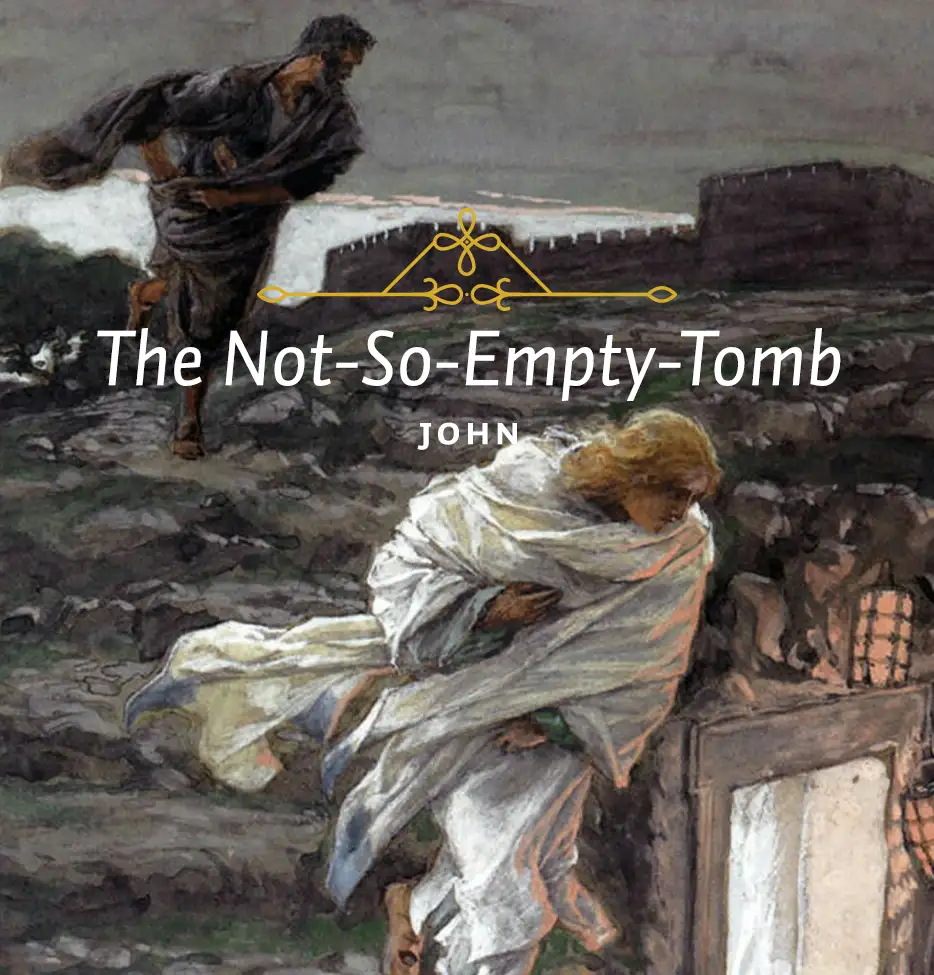









 Truth2Freedom's Blog