There are two ways to be fooled. One is to believe what isn’t true; the other is to refuse to believe what is true. —Soren Kierkegaard. "…truth is true even if nobody believes it, and falsehood is false even if everybody believes it. That is why truth does not yield to opinion, fashion, numbers, office, or sincerity–it is simply true and that is the end of it" – Os Guinness, Time for Truth, pg.39. “He that takes truth for his guide, and duty for his end, may safely trust to God’s providence to lead him aright.” – Blaise Pascal. "There is but one straight course, and that is to seek truth and pursue it steadily" – George Washington letter to Edmund Randolph — 1795. We live in a “post-truth” world. According to the dictionary, “post-truth” means, “relating to or denoting circumstances in which objective facts are less influential in shaping public opinion than appeals to emotion and personal belief.” Simply put, we now live in a culture that seems to value experience and emotion more than truth. Truth will never go away no matter how hard one might wish. Going beyond the MSM idealogical opinion/bias and their low information tabloid reality show news with a distractional superficial focus on entertainment, sensationalism, emotionalism and activist reporting – this blogs goal is to, in some small way, put a plug in the broken dam of truth and save as many as possible from the consequences—temporal and eternal. "The further a society drifts from truth, the more it will hate those who speak it." – George Orwell “There are two ways to be fooled. One is to believe what isn’t true; the other is to refuse to believe what is true.” ― Soren Kierkegaard
A nationwide survey shows no significant rise in Christian revival among Americans following the assassination of conservative activist Charlie Kirk.
Charlie Kirk, founder of Turning Point USA, was fatally shot on Sept. 10, 2025, during a speaking event at Utah Valley University. He was 31.
Arizona Christian University’s Cultural Research Center, led by veteran researcher George Barna, announced on March 3 the results of the seventh American Worldview Inventory 2026.
Responses from American adults showed that any increased interest in the Christian faith has not translated into measurable growth in a biblical worldview, despite widespread discussion about whether the tragedy might spark spiritual renewal or revival in the American Church.
Barna himself expressed concern about the loss of faith among his fellow Americans. Yet he noted that historical research shows that worldviews develop in early life and continue through young adulthood.
“A quarter century ago, 12% of the adult population held a biblical worldview,” Barna said.
“Since then, we have seen a steady reduction in that incidence. We reached a low point—4%—in 2023.
“The fact that we have not plumbed new depths since then hopefully suggests that we have bottomed out and are in line to experience positive growth in biblical thought and action.”
Although 12% of American adults had a biblical worldview in 1994, that number was halved to 6% by 2020, dropped to 4% in 2023 and remains 4% in 2026, according to the latest research.
Barna said further decline is not inevitable or irreversible. He referred to the experience of students at Arizona Christian University (ACU).
The researcher said there has been an 833% increase in the number of students developing a biblical worldview between their freshman year and graduation. This is based on research begun in 2020 by Barna.
That means the typical ACU graduate is 28 times more likely than a typical 21 to 24-year-old in the U.S. to live as an “Integrated Disciple” with a full biblical worldview, according to the cultural center.
Barna attributes that transformation to the “immersive biblical worldview environment” at the university, where every class, every extracurricular activity, and even the relational atmosphere on campus is intentionally designed to facilitate worldview development.
However, the AWVI 2026 research indicates a lack of integrated disciples in American culture.
Barna urged parents, churches, and Christian schools to “get serious” about the worldview development of young people.
“Make no mistake about it, we are losing American society and all that it has historically represented because we have succumbed to the influence of the culture instead of the exhortations and promises of God,” he said.
“Entertainment and media messages, as well as public policies and errant public education, have distorted the thinking and behavior of our young people,” Barna added.
“It is time to reclaim the culture for Christ, who died for each of us. With just 1% of Gen Z exhibiting a biblical worldview, the ways of Christ are facing extinction in America unless we act today,” he said.
“The ACU discipleship model persuasively shows a turnaround is very possible—but it must be intentional and strategic, and requires an immersive, multi-year commitment.”
According to Barna, the situation remains urgent. He said the very fate of the American nation “hangs in the balance.”
“The national divide is an indication of the spiritual battle for the soul of America,” said Barna.
“Jesus commanded us to make disciples. A disciple is one who imitates Christ, reflecting his beliefs and behaviors.
“You cannot become a genuine disciple of Jesus without having a biblical worldview, since that outlook on life is the outlook that Jesus had. And because you do what you believe, if you do not think like Jesus, you will not act like Jesus.
“Parents, grandparents, teachers, and pastors need to get on top of this now. If we lose another generation to secular humanism, postmodernism, Eastern mysticism, Marxism and all of the other unbiblical philosophies of life, we will lose America itself.”
The latest survey also found that only 10% of American adults qualify as “Emergent Followers,” defined as “individuals who possess a substantial number of beliefs and behaviors consistent with biblical principles, but not enough to be considered integrated disciples.” This number declined from 25% in 2020 and 14% in 2023.
Meanwhile, 85% of U.S. adults fall into the “World Citizen” category. This means they may embrace some biblical principles but generally believe and behave in ways that conflict with biblical teaching. That segment has grown 16% from the 69% measured in 2020.
The cultural center conducted the latest research in January among a nationally representative sample of 2,000 adults under the guidance of Barna himself.
Some 53 worldview questions were answered about beliefs and behavior. The research remains the only nationally representative annual tracking study of the worldview of American adults, according to the cultural research center.
Other findings included a decline in adherents with a biblical worldview attending evangelical churches, from 21% in 2020 to 11% in 2026.
Religious leaders gather around President Donald Trump in the Oval Office on Thursday, March 5, 2026.
In what has become an annual ritual, evangelical leaders gathered around President Donald Trump in the Oval Office March 5 and prayed over him and for U.S. success in the war against Iran.
The photo-op prayer time was organized by Paula White Cain, head of the White House Office on Faith and a health-and-wealth televangelist known for her controversial fundraising approaches.
A video released by the White House and shared by others across social media Thursday shows 20 people gathered around Trump, who is seated behind the Resolute Desk. Not all those in the prayer circle can be identified but the group includes Cain; Robert Jeffress of First Baptist Church of Dallas; Ralph Reed of Faith and Freedom Coalition; and Gary Bauer of Family Research Council.
Tom Mullins of Palm Beach Gardens, Fla., led the spoken prayer. He is founding pastor of Christ Fellowship, a multi‐site church of 30,000 people meeting on 15 campuses around South Florida.
Praying to God on behalf of Trump, Mullins said: “I pray for your grace and your protection over him. I pray for your grace and your protection over our troops and all of our men and women serving in our armed forces. And father we just pray you continue to give our president the strength that he needs to lead our nation as we come back to one nation under God.”
Nate Schatzline, a member of the Texas House of Representative and leader at Mercy Culture Church in Fort Worth, Texas, also was among those present. He posted on X: “What an honor to pray over President @realdonaldtrump in the Oval Office today as faith leaders from across America commit to mobilize the Church to bring Revival & Reformation to America! President Trump has done more for the faith community, for the unborn, for the next generation, & for religious liberty than any other President in U.S. history! We stand with you President Trump!”
He also thanked White “for faithfully leading the White House Faith Office and fighting for religious liberty every day!”
Ralph Reed of Faith and Freedom Coalition portrayed the prayer session as also asking God’s support for U.S. troops in their attacks on Iran: “I am grateful to President Trump for his courageous decision to strike the terrorist regime in Iran. I am honored to pray for him & our armed forces at the White House. May God grant victory & freedom for the Iranian people.”
Samuel Rodriguez, president of the National Hispanic Christian Leadership Conference, also was present. He wrote on X: “I had the privilege of joining a group of faith leaders in the Oval Office to pray with and over the president of the United States during a moment of significant responsibility for our nation and the world. … We prayed for wisdom, protection and God’s guidance as he leads during a consequential moment in global affairs.
“What made the moment especially meaningful was the context in which it occurred. As the president continues to serve as commander-in-chief during Operation Epic Fury, with U.S. forces targeting Iranian Regime infrastructure and missile capabilities, the Oval Office was opened for prayer. Even in the midst of global conflict and immense responsibility, we paused to seek God’s wisdom and covering. Leadership at the highest level requires humility, discernment and dependence upon God.
“We prayed for the president, for the United States, for our military personnel and for peace through strength in this critical hour. Moments like this serve as a powerful reminder that faith still has a place in the highest rooms of leadership and that prayer remains one of the most meaningful acts we can offer on behalf of our nation.”
The prayer service happened just hours after Trump fired Kristi Noem as secretary of Homeland Security and nominated Sen. Markwayne Mullin of Oklahoma to replace her. According to multiple reports, the final straw for Noem was her recent testimony before a congressional committee that went badly awry.
Mullin is a devout Pentecostal who is loved by Trump’s evangelical base.
The most pressing question we face today is that of the Psalmist: “What is man?” So urgent is the question of man that the question of God has re-emerged among our intellectual and cultural leaders. Ayaan Hirsi Ali, Niall Ferguson, Paul Kingsnorth, and Russell Brand have all recently professed faith. Tom Holland and Elon Musk have commented on the importance of Christianity to culture. Most surprisingly, Richard Dawkins has claimed the mantle of “cultural Christian,” though he subsequently assured the world that reports of his spiritual evolution had been greatly exaggerated.
This development is not unprecedented. In 1950, Partisan Review ran a series titled “Religion and the Intellectuals.” The authors included Hannah Arendt, W. H. Auden, I. A. Richards, John Dewey, Robert Graves, A. J. Ayer, Sidney Hook, and Paul Tillich. The editors’ introduction could describe our own moment:
One of the most significant tendencies of our time, especially in this decade, has been the new turn toward religion among intellectuals and the growing disfavor with which secular attitudes and perspectives are now regarded in not a few circles that lay claim to the leadership of culture. There is no doubt that the number of intellectuals professing religious sympathies, beliefs, or doctrines is greater now than it was ten or twenty years ago, and that this number is continually increasing or becoming more articulate. If we seek to relate our period to the recent past, the first decades of this century begin to look like decades of triumphant naturalism; and if the present tendency continues, the mid-century years may go down in history as the years of conversion and return.
That last claim now looks wide of the mark. As significant as that revival of elite sympathy for religion might then have seemed, it did not initiate a long-term change in the overall direction of the West or the cultural fortunes of Christianity.
It is too early to know whether today’s revival will prove more than a fad. But like the earlier one, it indicates something about its context. Today, as in the aftermath of World War II, what it means to be human is contested. Those who perceive this are seeking a stable foundation for an answer, and they are seeking it in religion. The turn to theological matters is one response to an anthropological problem.
It was likewise in 1950, as the world emerged from the slaughter of war, facing the realities of the Holocaust and the spread of communism. Technology, too, posed new challenges. As Sartre commented, the advent of atomic weapons placed human beings in an unprecedented situation: They had to decide to continue to exist. Today the question of what it means to be human is, if anything, more vexed. Yet the shift in the rhetoric surrounding religion offers a glimmer of cultural and political hope.
To adapt a phrase from Nietzsche, the problem in our modern world is that man is dead and we have killed him. The concept of human nature is no longer subject to any kind of consensus, with obvious and catastrophic implications for society. Man has been abolished. So what has led to this abolition? Four causes suggest themselves: Human nature has been dismantled, disenchanted, disembodied, and desecrated.
The dismantling has various causes. The Christianity that shaped western societies’ anthropology was teleological, exemplified by the thought of Thomas Aquinas and summarized in the first question-and-answer of the Westminster Shorter Catechism: “What is the chief end of man? Man’s chief end is to glorify God and enjoy him forever.” Humanity was defined by a purpose that transcended the desires of any individual. Man had ends that defined him, some natural, some supernatural. But teleology has been rare in western thinking for generations. As science restricted its consideration of causes to the efficient and the material, understandings of the significance of the world, and therefore of human nature, were transformed. The most obvious examples are theories of evolution that eschew final causality. As they have shaped the modern cultural mindset, they have dismantled the notion of human exceptionalism. When man has no God-given end, he has no stable or distinct nature. In killing God, we kill man.
The point was made by Nietzsche in his critique of Kant. One could not murder God and then expect human nature to do the late God’s work for him. If God had died, so had the notion that human beings were made in his image. Nietzsche’s program was pursued with vigor in the twentieth century by Michel Foucault, who dismantled the notion of human beings as self-constituting, rational agents. He saw them as the hapless products of networks of discursive power relations, a view that now rings out from countless university seminar rooms and underpins the rhetoric of identity politics, left and right.
The irony is that man’s very brilliance—instanced by his intellectual curiosity, analytical abilities, and technological achievements—is what enables him to assert his unexceptional status. Confusion over the question “What is a woman?” has generated headlines in recent years, but it is the result of deeper confusion over the question “What does it mean to be human?” The answer seems to be: “We don’t know whether it means anything at all. Man is a directionless clump of animated cells, drifting through time and space.”
The disenchantment of human nature has many causes and takes many forms. Georg Lukács’s concept of reification points to some of them. The industrialized society and the bureaucratized state treat people as commodities, interchangeable with one another, lacking intrinsic value as individual persons. Industrialization detached labor from community significance. But blaming industrial capitalism alone is tendentious Marxism. The ideologies of the left have also played a role. The sexual revolution, that progressive watershed, has arguably done more than anything to turn people into things. And pornography, the most consistent iteration of the logic of the revolution, makes sex into a commodity, turning the actors on the screen into objects for consumers.
Then there is the transformation of abortion from an evil into a regrettable necessity and then into a right to be celebrated. Society’s moral imagination has been shaped by the logic of the sexual revolution, in which children are deemed accidental to sex; the humanity of the child in the womb has thus been stripped of its mysterious personhood. Much the same is accomplished by reproductive technologies such as in vitro fertilization (IVF) and surrogacy. Though these phenomena witness to the good, indeed very human, desire to have children, they also propose children as things, as consumer items made to order, not begotten in mystery. Motherhood too is transformed, with egg donation and surrogacy turning women into service providers or reproductive machines.
Recent reports that the United Kingdom is on the verge of being able to manufacture sperms and eggs in the laboratory are a harbinger of what is to come. Gene editing, embryo screening, and the commercialization of fertility all tend to the disenchantment and commodification of human life. The term “designer babies” reflects a plausible concept. Human beings, once begotten through the sexual union of two persons, are set to become consumer products. Persons have become things.
The third element of our culture of dehumanization is that of disembodiment. Radical feminism since de Beauvoir has tended to treat women’s bodies and procreative functions as problems that must be solved if sexual equality is to be achieved. This has been reinforced by technologies that subvert natural bodily ends, treating them as bugs rather than features. The body is a hindrance to liberation of the self.
Disembodiment is not restricted to sexual matters. The more our interactions are mediated by technology, whether Uber apps or social media sites, the less important our bodies become. Never in human history has life required less actual, physical, interpersonal engagement. The ascendancy of chatbots, AI, and robotics will only compound this. I can order a meal, ride in a taxi, even have a romantic conversation without ever having to engage another person.
The convenience hides the cost. George Orwell once sent an angry note to a publisher, denouncing Stephen Spender for his homosexuality. Eight months later, he wrote to Spender to apologize. Spender wondered what had led to this change of heart. The answer was that in the interim, Orwell had encountered Spender in person. He explained:
Even if when I met you I had not happened to like you, I should have been bound to change my attitude, because when you meet anyone in the flesh you realise immediately that he is a human being and not a sort of caricature embodying certain ideas.
Meeting Spender in real life humanized him. He became a person, not simply an idea. We might add that it also humanized Orwell. Bodily interaction is key here: Looking into the eyes of another person involves a degree of communion; it reveals that person as a human being, such as we are ourselves. Bone of our bone and flesh of our flesh, to borrow biblical language.
Today social media have universalized disembodied social interaction and perhaps made it normative for interpersonal engagement. Disembodied interaction often reduces interlocutors to the sum of the opinions they express and thereby turns them from real persons into aggregates of ideological fragments. No wonder social media can prove to be a cesspool.
The consequences are not restricted to social media. Part of what makes surrogacy plausible is the assumption that the experience of pregnancy is of little importance to the relationship of mother and child—that the maternal bond occurs postpartum. One might object that adoption assumes the same, but the cases are not parallel. In adoption, a couple takes the place of biological parents who should be there but for some reason are not. It presents itself not as a normative model for parenting, but as compensation for a privation. Surrogacy introduces a new model of what a parent is—a model in which gestation is accidental. And it reinforces the transformation of the body into a commodity.
The transgender issue is also pertinent, given that it involves a psychologized view of identity that marginalizes the sexed nature of the body and also the belief that bodies are simply raw material. Such ideas are plausible partly because of the way in which society’s intuitions about embodiment have been shaped by technology.
And then, once again, there is pornography. I noted above its role in disenchanting human nature. It also serves to disembody it—perhaps a counter-intuitive claim, given the central role of bodies in pornography. But pornography separates sex from relationships, indeed from physical contact with another person. Consumers enjoy that quintessentially embodied form of human behavior in a manner that detaches them from any of the ordinary concomitants of sex, from personal hygiene to the effort involved in romantic relationships, not to mention marriage.
Pornography also points to the fourth element of the modern assault on human nature: Human nature has been desecrated. Sex has historically been regarded as having sacred connotations. The Torah deals with sexual matters in terms of cleanness and uncleanness. The Qur’an prescribes postcoital washings. Paul in the New Testament sees sex as a matter of great importance, such that a man’s use of a prostitute involves a fundamental disruption of his humanity and his relationship to the church. To consider sex sacred makes sense, for in creating new life, it is the act that makes humans most like God. The sexual revolution did not simply make sex into recreation; it stripped it, and therefore the human nature of which it is a central part, of its sacredness.
The concept of desecration helps to clarify the delight some people take in the dismantling, disenchanting, and disembodiment of human nature, which those categories in themselves cannot explain. To wish abortion to be “safe, legal, and rare” is to hold a disenchanted view of human nature. But to glory in it as a “reproductive right” bespeaks an exhilaration that only transgression can deliver. Current pro-abortion politics are the politics of transgression, specifically the transgression of what was once considered sacred.
The same applies to death. Cultures have typically surrounded the end of life, no less than its beginning, with sacred significance. The Torah’s approach to sex and cleanness has parallels in its regulation of the treatment of dead bodies. Even today, our laws against the abuse of corpses often use the language of desecration. And yet western societies are making great efforts to transform death from a mystery into a medical procedure—a procedure that governs not just late-stage terminal illness but old age in general, depression, indeed any condition that can be presented as burdensome to the individual, the family, or even the state.
Human nature has been demolished, disenchanted, disembodied, and desecrated. The results are the cause of much of the moral chaos that characterizes contemporary Western societies. The Psalmist’s question “What is man?” was originally meant to express wonder at his undeserved status before God. In our mouths, it expresses our nothingness.
This brings us to the continuity between orthodox Christians and cultural Christians: a shared desire to respond to the chaos on the basis of a stable anthropology, a retrieval of what it means to be human. How can this be done? The question is difficult, because of at least two challenges, which I note here merely as matter for future discussion. First, there is the fact that, whatever its theoretical origins in nineteenth- and twentieth-century thought, as a practical matter the abolition of man has been accomplished by means of technological developments on which we all now depend. The concept of human nature has become negotiable because it seems inseparable from, and largely subject to, the technologies by which we relate to the world and to each other. Nor can we simply withdraw from this technological context. Modern-day anchorites might call us to do so, but it is worth remembering that Simon Stylites could stand at the top of his pole only because other, lesser mortals produced and supplied the food that kept him alive. We must find ways to recover human nature that do not present an unrealistic romanticism as normative for the majority of people.
Second, there is the fact that a lack of social consensus on the existence of God, let alone on religious dogma and practice, precludes consensus on any view of human nature grounded in the divine image. This lack of consensus is a problem, since the response to the desecration of human nature must be its consecration, and consecration must occur in a religious context. Given the secularity of our contemporary context, Christians must be modest about what we can achieve.
Nonetheless, some progress can be made on the first three elements of the anthropological crisis. The Christian distinction between natural and supernatural ends is helpful here. The two cannot be absolutely separated in Christian theology, but evidence suggests that on at least some natural ends, consensus between the religious and the nonreligious can be reached. The revival of interest in religion among intellectuals, even where it is pragmatic rather than dogmatic, witnesses to a shared intuition that our cultural problems arise from anthropological confusion. That fact should encourage us. It may not amount to a return to Christian civilization, if ever there truly was such a thing. But it may mark an era in which discussion of a new humanism can be pursued by both the religious and the nonreligious.
It is no surprise to Christians that attempts to deny human nature end up either in confusion or subject to a dialectical transformation into the opposite of what was intended. Those confusions and transformations are visible to many secular thinkers, too. Therefore, pointing out the failure of secular policies to deliver on their promises is useful in building a humanist alliance and in putting anti-humanists on the defensive. Such immanent critique is a way of making space for genuine dialogue and constructive policy formulation.
Transgender ideology is a good example. At its heart lies an obvious contradiction: It authorizes disembodiment in its denial of the relevance of sexed physiology to gender identity; yet it insists on the transformation of the body, if an individual is to be authentically who he or she really is. The body is simultaneously of no importance and of overwhelming importance. Further, allowing psychological states to determine identity risks incoherence. Why cannot a man be a wolf, for example, if he is convinced that that is what he is? Yet can a human being self-consciously be a wolf, when one attribute of wolfness is unconsciousness of one’s wolfish essence?
The trans issue also exacerbates a strange contradiction within the culture of death. In at least two cases in Canada, depressed individuals have been refused medically assisted deaths after having undergone gender transition surgery. The surgeries had left these individuals in physical and mental pain, but their requests for medically assisted death were refused. We thus note the contradiction generated by progressivism’s commitment both to trans ideology and assisted suicide, for to grant medically assisted death in these cases would be to acknowledge that gender transition does not always resolve gender dysphoria. It would seem that in our progressive Animal Farm, some causes of suffering are more equal than others.
The issue of biological men competing in women’s sports has gripped the public imagination, since its focus on fairness circumvents the issue that makes trans ideology plausible to so many: its foundation in psychologized selfhood and happiness. The sports issue thus offers the opportunity for highlighting the importance of embodiment. Which is more plausible—the prose of a Judith Butler, the libertarianism of the ACLU, or that picture of Riley Gaines standing on a podium beside a man posing as a woman? The case for a new humanism is there made incarnate.
The transgender issue is connected to IVF. President Trump’s actions regarding transgenderism are most welcome, but his promotion of IVF suggests that these policies are not driven by a coherent anthropology. The Trump administration is not wrestling with the broader question: What status should we grant biological limitations in an era of Promethean technology? Disappointing as the inconsistency is, it offers a chance for serious discussion about why these policy decisions are inconsistent.
The sexual revolution is also ripe for critique. Its intention was to liberate, but it has ended up turning everyone into objects. Easy access to the pill was sold as good news for women, but men have gained, too, from the promiscuity it enabled. And, despite the claims of some feminists, pornography is bad news for women, with its exploitative labor practices and transformation of the sexual expectations of its users.
Much of this has recently been pointed out by Mary Harrington and Louise Perry, writers who use secular arguments and evidence. Their work protests both the disembodiment of human nature and its disenchantment, seeing in the sexual revolution a prime example of promises betrayed and humans dehumanized. Likewise, when Jonathan Haidt warns of the effects of social media on young people, he speaks not in religious terms, but from an understanding that human nature is not infinitely pliable. There is the work of David Berlinski, an avowedly secular thinker. There is support across traditional political divides for anti-pornography initiatives. Many parents are becoming skeptical of the role of screens and smartphones in the lives of children. Combine these developments with the renewed interest among intellectuals in Christianity and its cultural influence, and the moment may have arrived for a new humanism. We need not wait for consensus on religious premises before starting these discussions. We need only point to the internal contradictions and the catastrophic consequences of our modern anti-humanist ways.
None of this is to say that a new humanism will certainly emerge in this earthly city. We may not win the day, and one who puts on his armor should not boast as one who takes it off. But there are signs that the anti-humanism of our age is overreaching by pressing the dismantling, disenchantment, and disembodiment of human nature to extremes. Many are realizing that we can fight human nature for only so long. It remains to be seen whether we will self-destruct or a new consensus on what it means to be human will shape our political discourse, our social policies, and our communities. The struggle for our cultural and political future is not best understood as a struggle between right and left, conservative and progressive, but as one between humanists and anti-humanists. And given the lateness of the day, I submit that the hour for advocating a new humanism is upon us.
This essay was delivered as the 2025 D.C. Lecture.
The communist regime in Cuba may soon face a reckoning as President Donald Trump signals that the island’s leadership is quietly scrambling for negotiations after America’s recent displays of strength abroad.
During an appearance with the championship Inter Miami CF organization, Trump delivered a striking message while addressing team co-owner Jose Mas, whose family emigrated from Cuba.
The president suggested that one day Cuban exiles may soon be able to freely return to their homeland, without restrictions from Washington.
Trump suggested that a historic moment could soon arrive for Cuban exiles.
“Congratulations as well to co-owners Jorge and José Mas. Who came from Cuba, right? Originally from Cuba? Your parents came. You’re going to go back. And you won’t need my approval. You just fly back in. I can just see that. It’s going to be a great day, right?” Trump said.
The president continued, hinting that dramatic developments involving the communist island may be just weeks away.
“We’re going to celebrate that separately. I just wanted to wait a couple of weeks… but we’ll be together again soon, I suspect, celebrating what’s going on in Cuba. They want to make a deal so badly. You have no idea.”
WATCH:
The comments come amid rapidly escalating geopolitical pressure on authoritarian regimes aligned against the United States.
Earlier in the day, Trump made headlines when he told reporters that Cuba could be next to collapse following recent U.S. operations targeting hostile regimes in the Western Hemisphere and the Middle East.
“Cuba’s going to fall, too,” Trump told Politico while discussing the growing pressure on Havana.
“We cut off all oil, all money, or we cut off everything coming in from Venezuela, which was the sole source. And they want to make a deal,” he said.
Asked whether the United States was playing a role in the Cuban government’s demise, Trump responded: “Well, what do you think? For 50 years, that’s icing on the cake. Venezuela is doing fantastically. [Delcy Rodríguez] is doing a fantastic job. The relationship with them is great.”
Trump also confirmed the United States is in touch with Cuba’s communist leadership as instability on the island intensifies following the capture of Venezuelan leader Nicolás Maduro.
“They need help. We are talking to Cuba,” Trump said.
And he suggested the island’s worsening situation is partly the result of U.S. pressure, including cutting off the Venezuelan oil supplies that once sustained Havana.
“Well, it’s because of my intervention, intervention that is happening,” Trump said. “Obviously, otherwise they wouldn’t have this problem. We cut off all oil, all money, … everything coming in from Venezuela, which was the sole source.”
“How long have you been hearing about Cuba — Cuba, Cuba — for 50 years?” Trump added. “And that’s one of the small ones for me.”
According to the president, the Cuban government is now in a desperate position after losing crucial economic lifelines and facing mounting internal instability.
Trump has previously revealed that Secretary of State Marco Rubio, himself the son of Cuban immigrants, is already handling the situation at the highest levels.
“Marco Rubio is dealing with Cuba at a very high level,” Trump said, suggesting negotiations with Havana are underway.
WATCH:
🚨President Trump just declared: “CUBA’S going to fall, too!”
Senator John Fetterman of Pennsylvania appeared on Watters’ World this week and slammed his own party for failing to support Trump’s strikes on Iran, suggesting that they’re basically too afraid to agree with him about anything.
Fetterman notes that all of the Democrats have been saying for years that Iran could not be allowed to develop nuclear weapons.
Now, I remember the Iranian generals were saying that our ships were going to end at the bottom of the ocean, and that’s theirs. Like, look at that again. It’s on the screen right now. Boom! You know, like, I love it, you know what I mean? And so I don’t know why we can’t be on and just celebrate that, but I guarantee you, every single member of the Congress that you just had there said we can never allow Iran to acquire a nuclear bomb. And now, now that that’s happened now, and now it’s made that impossible right now, and then we all agree. They all now say, well, we won’t — we won’t grieve, you know that the Ayatollah is gone.”
“So you know, when someone did that and made sure that possible, why can’t we, as a Democrat, just say, hey, I think that’s a good thing. I think that the world’s safer,” he continued. “I think it’s more just. And then I do think we have a possible path for real, true, enduring peace in the region. You know, I will say that.
I will acknowledge that, you know, because why they can’t, because they’ve seen that too, and they all know that we can never have — allow them to have a nuclear bomb, and that really, it’s better that he’s been killed. But you know, because they’re — as a Democrat, they’re afraid to just agree with Trump on anything, anything at this point.
Here’s the clip:
🚨 NEW: Senator John Fetterman just SLAMMED Democrats for not BACKING the War against Iran 🚨
“It's better that the Ayatollah’s been killed. But Democrats are afraid to just agree with Trump on ANYTHING.” 🔥
Democrats are so simple right now. You can easily predict where they will land on any issue. They will take the anti-Trump position, no matter what it is, even if it is something that they have claimed to agree with for years.
Last night, the Pentagon released the last two names of the six US soldiers killed in a Kuwait attack a day after the US and Israel launched Operation Epic Fury. The other four Americans had earlier been identified. A military official said of the soldiers, “We honor our fallen Heroes, who served fearlessly and selflessly in defense of our nation. Their sacrifice, and the sacrifices of their families, will never be forgotten.”
If Iran has its way, they will be only the first of many American deaths to come.
As the New York Times reports, “The Islamic Republic of Iran’s first priority is to survive. To do that, its leaders will want to drive up the cost of the war for President Trump—in terms of American casualties, energy costs, and inflation—to try to persuade him to declare victory and go home.”
The reason the Iranian regime wants to survive this war at all costs is not just personal, as selfish as it was for them to massacre thousands of civilians who protested against them. Their larger agenda is ideological.
Until we understand it, we will be unequipped to win this war in ways that will matter long after it is over.
Around 85 percent of Muslims are Sunnis; around 15 percent are Shiites. The latter are the majority in Iran, Iraq, Azerbaijan, and Bahrain, though sizable populations also live in Lebanon, Pakistan, Saudi Arabia, Yemen, Afghanistan, and Kuwait.
We can think of the two groups somewhat like Catholic and Protestant “denominations,” with historic and significant differences but still part of the larger faith. Their divergence goes back to the death of the Prophet Muhammad in AD 632. Sunnis (from sunna, “habit” or “usual practice”) believe that the caliphs (“leaders”) who followed Muhammad were his proper successors. Shiites (“partisans” or “party of Ali”) disagree, claiming that Muhammad’s son-in-law Ali, the fourth caliph, was his rightful heir.
Approximately 80 percent of Shiites are “Twelvers.” They believe that the twelfth imam (the Shiites’ supreme spiritual leader), Abu al-Qasim Muhammad, was hidden by God in AD 872 and then transported to a transcendent realm in AD 934 (this event is called the “occultation”). In their theology, this “twelfth imam” is still alive and waiting to reappear at the end of history as the Mahdi (“the guided one”), a kind of Muslim messiah. Many Shiites voice and write prayers to him daily.
Many Twelvers also believe that a time of great chaos will precede the coming of the Mahdi. According to the Iranian Revolutionary Guard Corps (the military that dominates Iranian politics and society), Israel must be destroyed before the Mahdi will reappear. This is why the possibility of Iran obtaining nuclear weapons is an existential threat to Israel and the West. This also explains why negotiations to prevent Iran from permanently acquiring such weapons have never succeeded.
We should add that for many jihadists, dying in a jihad (“holy war”) is their only certain guarantee of a place in paradise. Now that senior clerics in Iran have declared this conflict to be a jihad, this element should not be overlooked.
What Iran needs most
This ideology explains why, following the Islamic Revolution of 1979, Iran has been the world’s leading state sponsor of terrorism. It has supported proxies such as Hamas and Hezbollah in their atrocities against Israel and repeatedly incited violence against the West.
Their purpose is not geographical—Iran does not seek to “conquer” the land of Israel in the way Putin seeks to conquer Ukraine and Hitler tried to conquer Europe. Rather, it is ideological: they believe that their theological worldview is the only proper version of Islam and want to export it across the Muslim world. And, as we have seen, their even “higher” purpose is to prepare for the arrival of the Mahdi, who will then dominate the world for Islam.
The Iranian regime believes that it exists in the service of these agendas and that it is serving Allah in so doing. Accordingly, Israel and the US are encouraging a regime change by which the Iranian people revolt against their leaders and take control of their country.
However, what Iran needs most is a spiritual regime change. Its population has become dramatically more secularized in recent years (only 15 percent agree that “the hijab should be mandatory in public,” for example). As the Christian population in Iran grows exponentially, this is a crucial time for the gospel in this historic country.
The ancient land of Persia (as Iran was called prior to 1935) is mentioned some thirty times in the Bible. For example, the Persian King Cyrus liberated the Jews from their Babylonian captivity, enabled them to return to their homeland (2 Chronicles 36:22–23), and helped them rebuild their temple (Ezra 6:3–5). Many historians believe the Magi who worshipped the infant Christ were Persians as well (Matthew 2:1–12).
“If we don’t believe that the end is near”
Christians can therefore stand with this ancient people by praying for a transforming spiritual awakening to sweep their land. The more Iranians and their leaders turn to Christ, the more they will seek peaceful relations with other nations (cf. Hebrews 12:14) and the more they will help to advance such transformation across the world to the glory of God.
There is enormous urgency in our spiritual response to this spiritual conflict. Not just for the sake of those for whom we intercede, but for ourselves as well. In his famous sermon “Learning in War-Time,” C. S. Lewis, himself a veteran of World War I, observed:
War makes death real to us, and that would have been regarded as one of its blessings by most of the great Christians of the past. They thought it good for us to be always aware of our mortality. I am inclined to think they were right.
Br. James Koester of the Society of St. John the Evangelist in Boston, therefore, notes:
If we don’t believe that the end is near, then it doesn’t matter how we live. After all, whatever messes we have made, we can clean them up tomorrow, or whenever, as the case may be. But if the end is coming, if it is near, then how we live, and the mess we have made in our own lives, and in the lives of others, needs to be cleaned up, not whenever, or tomorrow, or even later today, but right now.
Do you have some “clean up” to do today?
Quote for the day:
“The only reason we don’t have revival is because we are willing to live without it.” —Leonard Ravenhill
Screenshot of Bill O’Reilly via News Nation YouTube Channel
Bill O’Reilly appeared on NewsNation with Chris Cuomo last night and blasted the liberal media coverage of the Iran strikes, claiming that the media is ‘rooting for Iran, not the people of Iran, but the regime.
He cited coverage from ABC News, which he watched and claimed was entirely negative.
The point he is making is solid. The media knows that if things go sideways in Iran, they can use it as a weapon against Trump, which they would absolutely love to do.
A federal judge on Wednesday ordered the Trump Administration to refund $130 billion in tariffs.
The US Supreme Court recently struck down President Trump’s tariffs in a 6-3 decision.
The Supreme Court said President Trump does not have the authority to impose the tariffs under the International Emergency Economic Powers Act (IEEPA).
The high court’s decision only invalidates Trump’s tariffs under the IEEPA.
Chief Justices Roberts, Amy Coney Barrett, and Neil Gorsuch sided with the three liberal justices.
Conservative Justices Alito, Clarence Thomas, and Brett Kavanaugh sided with President Trump.
In his dissent, Kavanaugh warned that refunding the tariffs would be a ‘mess.’
The Trump Administration asked for a 90-day delay in refunding the tariffs, but the Federal Circuit Court of Appeals denied the request on Monday.
The Federal Circuit Court of Appeals on Monday rejected the Trump Administration’s request to delay the Supreme Court’s ruling on tariffs.
On Wednesday, Judge Richard Eaton, a Clinton appointee, said the Trump Administration to begin refunding $130 billion in tariffs.
A federal judge ordered the Trump administration on Wednesday to begin the drawn-out task of refunding billions of dollars to companies that paid tariffs the Supreme Court recently invalidated.
Judge Richard Eaton, an appointee of former President Bill Clinton, laid out the estimated $130 billion refund process in a three-page order, saying it would begin with U.S. Customs and Border Protection calculating what importers would have paid without the now-invalid tariffs. Eaton also made clear he had sole jurisdiction over the refunds, which more than 1,000 companies have sued over in the U.S. Court of International Trade.
“The Chief Judge has indicated that I am the only judge who will hear cases pertaining to the refund of [International Emergency Economic Powers Act] duties,” Eaton wrote. “So there is no danger that another Judge, even one in this Court, will reach any contrary conclusions.”
The case in question was brought by Atmus Filtration, Inc., a company that paid President Donald Trump’s tariffs, which Trump imposed on nearly every country on an emergency basis under IEEPA last year.
FLORIDA ALERT: Principal of Muslim Brotherhood-Linked School Scrubbed Terror Ties from Bio after RAIR Exposé This school, with an unsuspecting captive audience of “more than 830 students”, was co-founded by Magda Elkadi Saleh in 1992. Elkadi Saleh has been pivotal in the creation and administration of multiple Islamic schools in Florida. It cannot be overstated how deeply Magda Elkadi Saleh is tied to the Muslim Brotherhood, not just in America but from it’s founding in 1928 in Egypt. Her father Ahmed Elkadi was the “General Mas’ul”, or national leader, of the U.S. Muslim Brotherhood during the 1980s.
Trump says he wants to be involved in choosing Iran’s next leader “The U.S. president wants a hand in choosing Iran’s next leader. Khamenei’s son is unacceptable to me. We want someone who can create harmony and peace in Iran,” Donald Trump said in an interview with Axios. “They’re wasting their time. Khamenei’s son is a lightweight.
Finnish government wants to lift nuclear weapons ban The Finnish government wants the current ban on nuclear weapons in the country to be lifted “as soon as possible,” Minister of Defense Antti Häkkänen says. Finland must maximize its security, he says. Finland’s current legislation makes it impossible to transport or store nuclear weapons on Finnish territory, but the Finnish government wants to change that. Our current legislation does not meet Finland’s needs as a NATO member, says the country’s Minister of Defense Antti Häkkänen at a press conference, Swedish Yle reports.
Islamist attack on military base in Borno State, Nigeria kills at least 18 At least 18 people were killed, including seven soldiers, when an Islamist extremist group attacked a military base in Borno State in Nigeria. A community near the military base was also attacked in the raid, which is believed to have been carried out by the terrorist group Boko Haram or affiliated subgroups.
The End of Greenpeace? $345 Million Fine Set to Bankrupt Climate Activists A North Dakota judge has announced he will order Greenpeace to pay an estimated $345 million in damages tied to its role in protests against the Dakota Access Pipeline, a ruling that could financially cripple the environmental organisation. The decision stems from litigation brought by Energy Transfer, the pipeline’s developer, which accused Greenpeace entities of unlawful obstruction, defamation, and coordinating disruptive protest activity during the demonstrations near Standing Rock in 2016 and 2017.
Expert warns radical Islamist networks could shift West after Iran regime shakeup Radical Islamist networks pushed out of the Middle East amid Operation Epic Fury could soon attempt to regroup in the West, Hudson Institute research fellow Ayaan Hirsi Ali warned Thursday. where will they go? They will try and come to the West,” she told “Fox & Friends.” “They’ll try to come to America. They’ll come to Europe.” “In America, we have an administration that has closed the borders. Thank you, Donald Trump, for that, and I think as we get into the next phase of this, we’re going to start to look at networks all across the United States of America of subversion through Islamists, whether it’s the Muslim Brotherhood or the Shia branches of that.” Ali issued a stark warning to European leaders, arguing that liberal open-border policies have created prime conditions for radical Islamists to gain influence and possess “enormous clout” politically and financially.
APOCALYPTIC ISLAMISTS: Iran’s ayatollahs are ‘religious Nazis’ ready to build 11 nuclear bombs, Sen. Lindsey Graham tells ALL ISRAEL NEWS — they must be stopped Few people in the American capital have studied the Iranian leadership more closely or carefully than U.S. Senator Lindsey Graham. That’s why the South Carolina Republican says the terrorists in Tehran must be stopped before they can carry out their genocidal mission of destroying the United States, Israel, and Judeo-Christian civilization as we know it. Graham was intrigued with … books, and columns exposing the genocidal nature of the Supreme Leader Ali Khamenei’s End Times theology.
Killing the ‘Great Satan’ The United States, Israel, and Qatar have now attacked the Islamic Republic of Iran along with several other countries providing defensive coordination. As an Iranian-born American who was arrested and sentenced to death by hanging because of my faith in Jesus, let me assure you it is not only justified but necessary. I spent most of my life living under the brutal misogynist regime that has killed tens of thousands of Iranians in the past two months alone, let alone the hundreds of thousands slaughtered in the name of their demonic god in Iran and around the world in the past 47 years. This war is not only justified, it’s long overdue. Iranians over nearly five decades, were indoctrinated to chant “Death to America” at every occasion. It’s not just a cute chant like at a pep-rally. It’s a literal goal of this demonic regime.
Trump fires Homeland Security Secretary Noem after mounting criticism over her leadership President Donald Trump on Thursday fired his embattled Homeland Security Secretary Kristi Noem, after mounting criticism over her leadership of the department, including the handling of the administration’s immigration crackdown and disaster response. Trump, who said he would nominate Oklahoma Republican Sen. Markwayne Mullin in her place, made the announcement on social media after Noem faced a two-day grilling on Capitol Hill this week from GOP members as well as Democrats.
The Latest: US closes its embassy in Kuwait as Iran war escalates The U.S. Embassy in Kuwait shut down after retaliatory Iranian strikes on the country, becoming the second American diplomatic mission to fully halt work as the war in Iran escalates. Kuwait is also where six American soldiers were killed by an Iranian drone Sunday. Israel on Thursday warned its citizens traveling abroad that the ongoing hostilities could make them targets of attacks or otherwise endanger them. The country’s Government Press Office said in a statement that “several attempts to carry out terrorist attacks against Israelis have been thwarted and disrupted.” It urged Israelis to conceal Jewish identifiers, avoid traveling through the United Arab Emirates, refrain from sharing personal information on social media and remain vigilant or avoid visiting Jewish sites.
Trump: US will ensure Iran cannot threaten America or Israel “As soon as they set off a missile, within four minutes the launcher gets hit,” he said, adding that the strikes eliminated a large portion of Iran’s offensive launch infrastructure. “Missiles are gone, launchers are gone – about 60% and 64% respectively.” Despite the damage inflicted during the operation, Trump said Iranian leadership remains confrontational. “They are tough and they want to fight,” he stated, though he also indicated that Iranian officials have begun reaching out about negotiations. Trump said the US action was necessary to prevent an imminent threat. “We really had no choice. They were going to hit us if we didn’t hit them because they are crazy.”
Missile with cluster warhead launched toward central Israel Sirens were sounded on Thursday evening in central Israel, the Sharon and Samaria regions, after missile launches were detected from Iran. Magen David Adom reported that interception debris fell in the areas of Elad, Bareket, and Beit Aryeh. As of now, no injuries have been reported. It is being examined whether a missile with a cluster warhead was launched from Iran. A cluster missile releases 22 small submunitions at an altitude of about 7 kilometers above the target area, which then disperse over a range of roughly 8 kilometers without distinction.
Mount of Olives reclaimed in historic events In major events in Jerusalem on February 16 and 17, the State of Israel and world Jewry celebrated the reclamation of the 3,000-year-old Mount of Olives, the historic burial site of more than 150,000 Jews over the ages; among them prophets, many great rabbis, and notable modern Israeli leaders. The events were sponsored by the International Committee for Har Hazeitim ICHH in conjunction with the Israeli government and Municipality of Jerusalem.
Trump urges Iranian diplomats to seek asylum, vows total defeat of regime US President Donald Trump urged Iranian diplomats to seek asylum during an address at the East Room of the White House as part of a ceremony hosting Inter Miami CF on Thursday night. We “urge Iranian diplomats around the world to request asylum and to help us shape a new and better Iran,” he said.”
IDF launches new phase of Iran war, confirms death of major Hezbollah operative “We are now transitioning to the next phase of the campaign, in which we will intensify strikes against the regime’s foundations and military capabilities,” Zamir said, explaining that within the first 24 hours of Operation Roaring Lion, the IAF had “paved the way to Tehran.” “We have additional surprise moves at our disposal that I do not intend to reveal,” Zamir stated. Approximately 80% of Iran’s air defense systems, and more than 60% of its ballistic missile launchers, have been destroyed since the start of the operation,
Israeli Government Report Reveals a ‘Significant Penetration of Muslim Brotherhood Ideology’ Across Europe “The Muslim Brotherhood operates in Europe through deceptive methods that project an outward appearance of moderation and pragmatism,” said Avi Cohen-Scali, director general of the ministry. “This front is used to advance dangerous ideological goals. Despite its external ‘moderation,’ the movement consistently rejects liberal democratic principles and Western values, which conflict with its radical aspirations — including efforts to Islamize Europe.”
US Commission Exposes Severe Religious Freedom Abuses In 29 Countries, Urges Trump Admin To Hold Perpetrators Accountable The U.S. Commission on International Religious Freedom (USCIRF) released its sobering 2026 Annual Report on Wednesday documenting the worsening global crisis in freedom of religion or belief throughout 2025. The bipartisan commission, mandated by Congress under the International Religious Freedom Act, cataloged egregious violations — including state-sponsored repression, extremist violence, attacks on houses of worship, forced conversions, and transnational repression — that spanned across 29 countries. The report, far from being purely analytical, painted a picture of escalating persecution that demands urgent U.S. action. And at the heart of USCIRF’s report was its recommendations:
Onlookers And Bad Actors: How The War In Iran Is Setting The Stage For A Future Prophetic Battle There are several geopolitical and prophetic implications of the current war in Iran. One major impact is that it is surfacing and strengthening the alliances that are presented in the Bible in Ezekiel chapter 38. Who are the two nations raising the strongest objections to the US-Israeli operation in Iran? Russia and Turkey. “Of all the regional actors watching Tehran this weekend, Turkey stands apart,” they wrote. “No other state has the same depth of contact with what remains inside Iran.” Not only is the alliance of Ezekiel 38’s invading force strengthening, so too are the ‘onlookers’ detailed in this prophecy.
GOP lawmakers introduce impeachment articles against Walz, Ellison Minnesota Republican lawmakers on Monday introduced two House resolutions for the impeachment of Governor Tim Walz and Attorney General Keith Ellison. The resolutions point to alleged “corrupt conduct” by both Walz and Ellison. The resolution stated on the House floor also accused Ellison of “crimes and misdemeanors.”
Heavy snowfall damages orchards and raises concerns for Japan’s 2026 apple harvest Heavy snowfall since late January has left at least 46 people dead and over 550 injured while causing widespread agricultural damage across Tohoku region and Niigata Prefecture. Snowfall reached 148 cm (58 inches) in Aomori Prefecture in January, breaking branches in apple orchards, collapsing greenhouses, and burying farm roads still inaccessible in some areas.
Indian Court Rules Christians Can Hold Home Prayer Meetings A pastor in a remote village in India’s largest state of Uttar Pradesh remembers the Sunday in March 2023 when persecution became real to him. He was leading a group of 13 people in worship as they sat cross-legged on a mat covering the cement floor in his home. In time with the music, he shook a tambourine while parishioners clapped loudly.
Are You Prepared For The Worst Global Oil Crisis In More Than 50 Years? If you have not already done so, I would recommend filling up your vehicle, because it looks like gasoline prices are going to go much higher. At the very beginning of this war with Iran, the price of oil didn’t rise much because many investors were anticipating a quick victory. But it’s clear there’ll be no quick victory, and the price of oil is spiking dramatically.
Congressman Andy Ogles Introduces Muslim Ban Bill in Wake of Austin Jihad Terror Attack The Tennessee Congressman introduced the Halt Immigration from Countries with Inadequate Verification Capabilities Act on March 5—a revived & expanded Muslim travel ban targeting 6 high-risk nations—in response to Austin’s terror attack, declaring America & Islam incompatible and calling to halt mass Islamic immigration to protect the nation’s Christian heritage.
Inside the Classroom: A Veteran Teacher’s Warning About the Sexualization of Children in America’s Public Schools “Veteran teacher Ramona Bessinger exposes how public schools have quietly replaced education with explicit sexual and gender indoctrination—punishing any educator who dares protect children from it.” For years, parents were assured that claims of sexualized content in public schools were exaggerations, rumors, or “moral panics.” Those assurances were false.
Antisemitism Is Satanic, And No One Bears More Responsibility In The Fight Than The Church In the year following the Oct. 7, 2023, attack on Israel by Hamas, over 10,000 antisemitic incidents were recorded in the U.S.—an increase of 140% over the previous year—and the most ever since the Anti-Defamation League began tracking antisemitic acts in 1979. On college campuses, among “influencers,” and some church cirles, etc., antisemitism raises its ugly head.
FLORIDA ALERT: Principal of Muslim Brotherhood-Linked School Scrubbed Terror Ties from Bio after RAIR Exposé Eman Elkholy, Principal of the Universal Academy of Florida – top-ranked Islamic private school co-founded by a Muslim Brotherhood-linked figure – removed a paragraph from her bio highlighting extensive involvement with AlMaghrib Institute and studies under controversial scholars, following exposure by RAIR Foundation USA of these ties to terror-linked networks.
Mark Carney’s budget with millions in abortion, pro-LGBT funding passes House Prime Minister Mark Carney’s Liberal government’s 2025/2026 budget, which will include millions more in taxpayer money for “SLGBTQI+ communities” and “gender” equality, as well as abortion funding, has passed the House of Commons.
While they were perplexed about this, behold, two men suddenly stood near them in dazzling clothing; and as the women were terrified and bowed their faces to the ground, the men said to them, “Why do you seek the living One among the dead? He is not here, but He has risen. Remember how He spoke to you while He was still in Galilee, saying that the Son of Man must be delivered into the hands of sinful men, and be crucified, and the third day rise again.” (24:4–7)
The women were standing in or just outside the tomb, shocked and perplexed because the body of Jesus was gone. Suddenly, they went from being puzzled to being terrified. As they stood there in the light of dawn trying to figure out what could have happened to the corpse, two men suddenly stood near them in dazzling clothing. Matthew (28:2) and John (20:12) identify them as angels, appearing in human form (cf. Gen. 18:2; 19:1–5; Dan. 10:16). Although there were two of them (perhaps as witnesses; cf. Deut. 19:15), only one spoke. Similarly, although there were two demon-possessed men at Gerasa (Matt. 8:28), only one spoke (Mark 5:2, 7; Luke 8:27–28), and while there were two blind men healed on the road near Jericho (Matt. 20:30), Mark (10:46) and Luke (18:35) mention only the one who spoke. Their dazzling clothing (cf. Matt. 17:2; Acts 1:10; Rev. 19:14) identified them as divine messengers. Understandably, the women were terrified and bowed their faces to the ground (cf. Luke 1:12; 2:9; Dan. 8:15–18; 10:9; Matt. 28:2–4; Acts 10:3–4; Rev. 22:8). In a mild rebuke the men said to them, “Why do you seek the living One, the one who is the resurrection and the life (John 11:25), the one over whom death no longer is master (Rom. 6:9), the one who was dead, but now is alive forevermore (Rev. 1:18) among the dead?” This angelic question is the first announcement that Jesus was alive. The angels went on to say, “He is not here, but He has risen” (lit., “been raised”; the Greek verb is in the passive voice [cf. Acts 2:24, 32; 3:15, 26; 4:10; 5:30; 10:40; 13:30, 33, 34, 37; Rom. 4:24–25; 6:4, 9; 7:4; 8:11, 34; 10:9; 1 Cor. 6:14; 15:4, 12–20; 2 Cor. 4:14; Gal. 1:1; Eph. 1:20; Col. 2:12; 1 Thess. 1:10; 1 Peter 1:21]). “Remember how He spoke to you while He was still in Galilee, saying that the Son of Man must be delivered into the hands of sinful men, and be crucified, and the third day rise again” (Matt. 16:21; 17:22–23; 20:17–19; 26:2; 27:63). Since Jesus had predicted His resurrection, they should have been expecting it. But they obviously did not, since they brought spices with which to anoint His dead body.
MacArthur, J. (2014). Luke 18–24 (pp. 410–411). Moody Publishers.
4–7 The designation of Jesus as Lord in v 3 is available to Luke’s audience, but not to the women, who then are lacking in interpretive resources. Expecting a corpse to anoint, they can only respond to its absence with bewilderment. Resolution for the puzzle with which they are faced comes in the form of an angelophany, to which they respond, typically, with fear and reverence.4 The angels address the women as though the latter were persons on a quest—though, in comparison with other quest stories in the Third Gospel, this one is unusual. In such stories generally, persons approach Jesus in the hope of human restoration (e.g., 5:17–26; 7:1–10; 17:12–19; 19:1–10). These women come looking for Jesus, but they want to minister to him, and, as they quickly discover, because they lack understanding, they are looking in the wrong place. The angels first admonish them, employing language that is reminiscent of Jesus’ rejoinder to the Sadducees in 20:38: God is not the God of the dead but of the living! That is, in spite of their devout intentions in coming to anoint Jesus’ body, these women have failed to grasp Jesus’ message about the resurrection and, thus, have not taken with appropriate gravity the power of God. The antidote for this miscalculation is remembrance. The women are addressed as persons who had themselves received Jesus’ teaching in Galilee, and the angel’s message fuses Jesus’ predictions during the Galilean phase of his ministry (9:22, 44). Thus they are reminded that the career of the Son of Man blends the two motifs of suffering and vindication, and that in doing so he fulfills the divine will. Two innovations in this Son of Man saying indicate the different narrative placements of the Galilean sayings and of this one. First, the term “crucified” is used, rather than “killed,” reflecting the actual form of execution. Second, those responsible for Jesus’ death are labeled as “sinners”; from the heavenly perspective, the repudiation and killing of Jesus was an evil act. Importantly, the women are given no commission, but are themselves treated as recipients of Jesus’ words and summoned simply to authentic understanding. Their reception of the resurrection message “… confirms their discipleship and the instruction they have received as disciples.”
Green, J. B. (1997). The Gospel of Luke (pp. 837–838). Wm. B. Eerdmans Publishing Co.
“A dog barks when his master is attacked. I would be a coward if I saw that God’s truth is attacked and yet would remain silent.” – John Calvin1
“If the whole church goes off into deception, that will in no way excuse us for not following Christ.” – Leonard Ravenhill
“A minister, without boldness, is like a smooth file, a knife without an edge, a sentinel that is afraid to let off his gun. If men will be bold in sin, ministers must be bold to reprove.” – William Gurnall
“Can we be casual in the work of God — casual when the house is on fire, and people in danger of being burned?” – Duncan Campbell
“We should not ask, ‘What is wrong with the world?’ for that diagnosis has already been given. Rather, we should ask, ‘What has happened to the salt and light?’” – John Stott
“Nothing is so intolerable to man as being fully at rest, without a passion, without business, without entertainment, without care.” – Blaise Pascal
“My fear is not that our great movement, known as the Methodists, will eventually cease to exist or one day die from the earth. My fear is that our people will become content to live without the fire, the power, the excitement, the supernatural element that makes us great.” – John Wesley
“If the church marries herself to the spirit of the times, she will find herself a widow in the next generation.” – Charles Stanley
“Never adopt an attitude of indifference, for if you do you will suffer for it. The weight will grow heavier and heavier.” – Watchman Nee
“If you seek to please men you can never be a servant of the Lord.” – Zac Poonen
“Revival brings back a holy shock to apathy and carelessness.” – Winkie Pratney
“A different world cannot be built by indifferent people.” – Peter Marshall
“Christian Youth, I need to ask why you sit in the padded pews of your fathers while all around the darkness takes your cities and your friends.” – Andrew Strom
“The man who has nothing more than a kind of Sunday religion — whose Christianity is like his Sunday clothes put on once a week, and then laid aside — such a man cannot, of course, be expected to care about growth in grace.” – J. C. Ryle
“It is since Christians have largely ceased to think of the other world that they have become so ineffective in this.” – C. S. Lewis
“He who runs from God in the morning will scarcely find Him the rest of the day.” – John Bunyan
“Many come to bring their clothes to church rather than themselves.” – Thomas Fuller
“The average person who claims to believe in God (as does the vast majority in America) is too preoccupied with himself to give God much time or serious thought.” – Dave Hunt
“It is a shame for a person to have been a Christian for years but not to have advanced beyond the knowledge of his salvation.” – Theodore Epp
“When we become too glib in prayer we are most surely talking to ourselves.” – A. W. Tozer
“The world never burned a casual Christian at the stake.” – John R. Rice
“How can you pull down strongholds of Satan if you don’t even have the strength to turn off your TV?” – Leonard Ravenhill
“There is a kind of gospel being proclaimed today which conveniently accommodates itself to the spirit of the age, and makes no demand for godliness.” – Duncan Campbell
“Apathy is the acceptance of the unacceptable.” – John Stott
“God has no place for undercover agents.” – Woodrow Kroll
In a recent devotion I shared a wonderful quote by the late theologian, J. I. Packer on how to become a healthy Christian. In today’s devotion may the following insightful quote by Packer serve as our starting point on how to obtain divine wisdom: “Not until we have become humble and teachable, standing in awe of God’s holiness and sovereignty, acknowledging our own littleness, distrusting our own thoughts, and willing to have our minds turned upside down, can divine wisdom become ours.”1
Before we discuss how to obtain divine wisdom it is important to distinguish the fact that there are two types of wisdom described in the Bible – God’s wisdom and human wisdom. According to the website biblehub.com:
“God’s wisdom is a central theme throughout the Bible, characterized by its divine origin, infallibility, and eternal nature. Unlike human wisdom, which is often limited and flawed, God’s wisdom is perfect and unsearchable. The Bible frequently emphasizes that true wisdom begins with the fear of the Lord. Proverbs 9:10 states, ‘The fear of the LORD is the beginning of wisdom, and knowledge of the Holy One is understanding.’ This verse underscores the foundational role that reverence for God plays in acquiring true wisdom.”[1]
In addition, God’s wisdom is described as being beyond human comprehension while human wisdom, in contrast, is often depicted in the Bible as limited and often in disagreement with the wisdom of God.
According to Packer, there are four “not until” statements that we must meet before we can claim to acquire divine wisdom.
(1) Not until we have become humble and teachable
A humble heart realizes that our human wisdom often falls way short of God’s wisdom. A humble heart has a great reverence for God. And a humble heart cries out to be taught by God. No wonder being humble and teachable is the starting point on the pathway towards obtaining divine wisdom.
(2) Not until we stand in awe of God’s holiness and sovereignty
“The fear of the Lord is the beginning of wisdom…” (Proverbs 9:10), tells me that without standing in awe of God and reverencing His holiness and absolute sovereignty, we will never be able to obtain God’s wisdom that transcends human understanding. Since God is omnipotent, omniscient, and omnipresent it stands to reason that His divine wisdom is simply unobtainable unless God grants it to us. When we bow down with humbleness of heart and stand in awe of our Creator we are well on our way to receiving this special wisdom.
(3) Not until we acknowledge our own littleness, distrusting our own thoughts
Since God created the entire universe by just speaking it into existence, it becomes us to accept the realization that we are just a tiny speck in God’s immense creation. Our minds, while amazingly complex and capable of doing incredible thinking, are infinitely inferior to the mind of God. And without acknowledging our total inability to grasp the wisdom of an infinite being we will never be able to be in a position to distrust our own thoughts and thereby be ready to receive this divine wisdom. Not until we tell God that we are incapable of understanding divine wisdom unless God chooses to give it to us will we ever be able to receive it.
(4) Not until we are willing to have our minds turned upside down
Our minds are not capable of understanding the infinite mind of God. It’s kind of like asking an ant to understand the Wall Street Journal. It doesn’t have the facility in its tiny ant brain to comprehend this feat. And so it is with us. When we come before our God we need to let Him turn our minds upside down and completely empty them of our pride and foolishness of having any hope of understanding His wisdom unless He reveals it to us.
So if you want divine wisdom, first, let Jesus be the Lord of your life. Second, come to him with a humble, and may I add a broken and contrite heart. Third, acknowledge just how holy and sovereign He is. Fourth, realize that we can’t trust our own worldly thoughts. And fifth, ask God for a complete reprogramming of the tape decks in our minds from human to Christlike. Once we have taken these five steps get excited for you will receive divine wisdom from above!
Since the moment the war in Iran began, Christians have been looking for any biblical or prophetic context that might be connected with it. CBN News spoke with prophecy expert Pastor Jack Hibbs to get his perspective, and he pointed to several specific biblical prophecies.
What are the most common questions about the book of Leviticus: What questions are people asking and why? How can I understand some of the difficult issues in the book of Leviticus?
(Don & Joy Veinot – Midwest Christian Outreach) As human beings, we cannot know the heart of another. We certainly do not know someone’s spiritual condition as it relates to the Lord. However, determining whether individual Progressives are Christian is a completely different question than determining if Progressive Christianity is Christian. This is hardly a new issue. In his excellent 1923 book, Christianity and Liberalism, J. Gresham Machen compared and contrasted historic Christian teachings with those of theological liberals. At times he would say liberals are religious but not Christian. He didn’t speak to individual salvation but rather the overall doctrines in essential areas. In the Introduction he commented on why these sorts of questions are important,
In the sphere of religion, in particular, the present time is a time of conflict; the great redemptive religion which has always been known as Christianity is battling against a totally diverse type of religious belief, which is only the more destructive of the Christian faith because it makes use of traditional Christian terminology.
His book was so important because of this “dictionary problem.” Liberals of his time and today were using the same vocabulary as traditional Christianity but providing different definitions to the biblical terms, thus deceiving others. Liberals in Machen’s day were focused on social issues, not eternal redemption. Machen comments: View article →
CRN has compiled a list of false teachers and several other professing Christians we’ve warned you about over the years. The list also contains those we must keep an eye on plus movements, organizations and “frauds, phonies and money-grubbing religious quacks” to mark and avoid as per Romans 16:17-18
Many of us quietly build our entire identity on things that can be taken away—career, ministry, marriage, health, influence, even our trauma. In this honest conversation, J. Warner Wallace shares how retiring from decades as a detective exposed just how deeply he had rooted his identity in his work, and why that identity shift felt so traumatic. He explains the powerful connection between identity and trauma: trauma reshapes how we see ourselves, but identity shifts themselves are also traumatic.
You’ll hear why putting your identity in “shiftable” things (job, platform, relationships, politics, even pain) guarantees future crises, and why the only way to suffer less long-term trauma is to anchor who you are in something immutable, unchanging, and eternal—Christ Himself. J. Warner then gets practical: how to diagnose where your real identity is right now by asking where your disposable time, money, attention, anger, and sense of “untouchable” priorities are going.
Key ideas in this video:
• How even “good” ministry or career can quietly become your true identity
• Why losing a role (detective, athlete, spouse, etc.) feels like losing yourself
• The two-way relationship between trauma and identity—and why staying “stuck” in trauma can start to feel like a strange kind of safety
• How false worship shows up in where you spend your money, time, emotional energy, and outrage
• Why Scripture calls us to be “transformed by the renewing of your mind,” not to live forever conformed to our wounds
• First steps to move your identity out of fragile, shifting things and into Christ
If you’re exhausted from chasing roles, approval, or from living under the weight of your own story, this conversation will challenge you to ask hard questions about who you really are—and invite you to start aiming at the right thing.
In Philippians 4, Paul calls the anxious to prayer as well as to ponder and practice certain things.
We have peace with God through Christ Jesus, He is guarding our hearts and minds. Furthermore, not only do we have peace with God, but the God of peace Himself is with us. What can separate us from the love of God in Christ Jesus? Nothing! Ponder these things my friends.
Anxious, Angry, and Annoyed. These are common responses to the question, “how are you today?” Perhaps the frustration is with the constant barrage of numbers and images tallying up the tragic loss of life. Perhaps the conflicting information and overwhelming amount of data about the latest crisis leaves you overwhelmed and bewildered. Maybe the anger comes from the conspiracy theories being peddled with respect to who is doing ABC or who is not doing XYZ—and why? Perchance the Deja-vu (Ground Hog’s Day) experience of today being like yesterday, like last Thursday, or like five Tuesdays ago is driving you and others in your household a bit loopy. Possibly you are bored. I am still haunted and humbled by my granddad’s corrective to me as young boy, “Chuck, only boring people get bored…how can you be bored with so much to see, so much to do, so much to read, so much to explore?” I will leave it to your good judgment to ponder and process grandpa’s words and wisdom.
In Philippians 4 Paul calls the anxious, attacked, and annoyed church to prayer, as well as to ponder and practice certain things. Let us take a few moments and ponder what the Apostle calls us to ponder. Paul writes, “Finally, brothers, whatever is true, whatever is honorable, whatever is just, whatever is pure, whatever is lovely, whatever is commendable, if there is any excellence, if there is anything worthy of praise, think about these things” (Philippians 4:8—ESV)
May I ask how many of our daily data diets consist of the ingredients mentioned in this list? Some—not all, but some—of our anxiety, anger, and annoyance is due, I suggest, to an imbalance in our information and entertainment consumption. Refocusing our attention and affections may just help to calm some of our anxieties, rebalance our emotional scales, and reorient our hope.
The repetitive nature of Paul’s ‘whatever’ invites us to ponder the known universe. Seriously, the known universe. Paul’s list is not meant to be exhaustive, but exemplary. Search the universe to find these things, these excellencies. These things are not exclusive to Christians or ‘Christian’ resources. Sadly, sometimes there is a lack of truth, beauty, and excellence in things labeled ‘Christian.’ Paul is calling us to a much broader exploration. We are called, gifted, and equipped to consider truth, beauty, purity, and love wherever they may be found. Certainly, our explorations are to be shaped, guided, and informed by the Scriptures, but that is not the whole realm of our pondering. We may find these things in the realm of nature, revelation, relationship, music, athletics, science, literature, film, culinary arts (the list goes on)—whatever is…
This is really a call to wisdom, discernment, contemplation, and exploration. Ponder these things! It reminds us of the Sage in wisdom literature imploring us to ponder the ant, the sluggard, or the drunkard. Certainly, there is something to learn and gain by pondering and then acting upon these reflections. Or ponder Wisdom in the flesh, Jesus, calling upon his disciples to consider the lilies of the field, the sparrow, or the wise and foolish builders. What does our Lord want us take away from this wondering I wonder? Let us not simply read the passages, but practice the exhortation. We can do this on a walk, through reading a book, by watching a movie / program, by dialoguing with others and more. Take your time and ponder the ant, sluggard, lilies, bird in flight, the constellation Orion, the Orca etc. Sometimes we will find a sober and sad end to our ponderings, sometimes we will be delighted with laughter, sometimes we will be awestruck by beauty, sometimes we will be perplexed. However, my guess, hope, and prayer is that we will be less anxious, less angry, less annoyed, and less bored by the immediate.



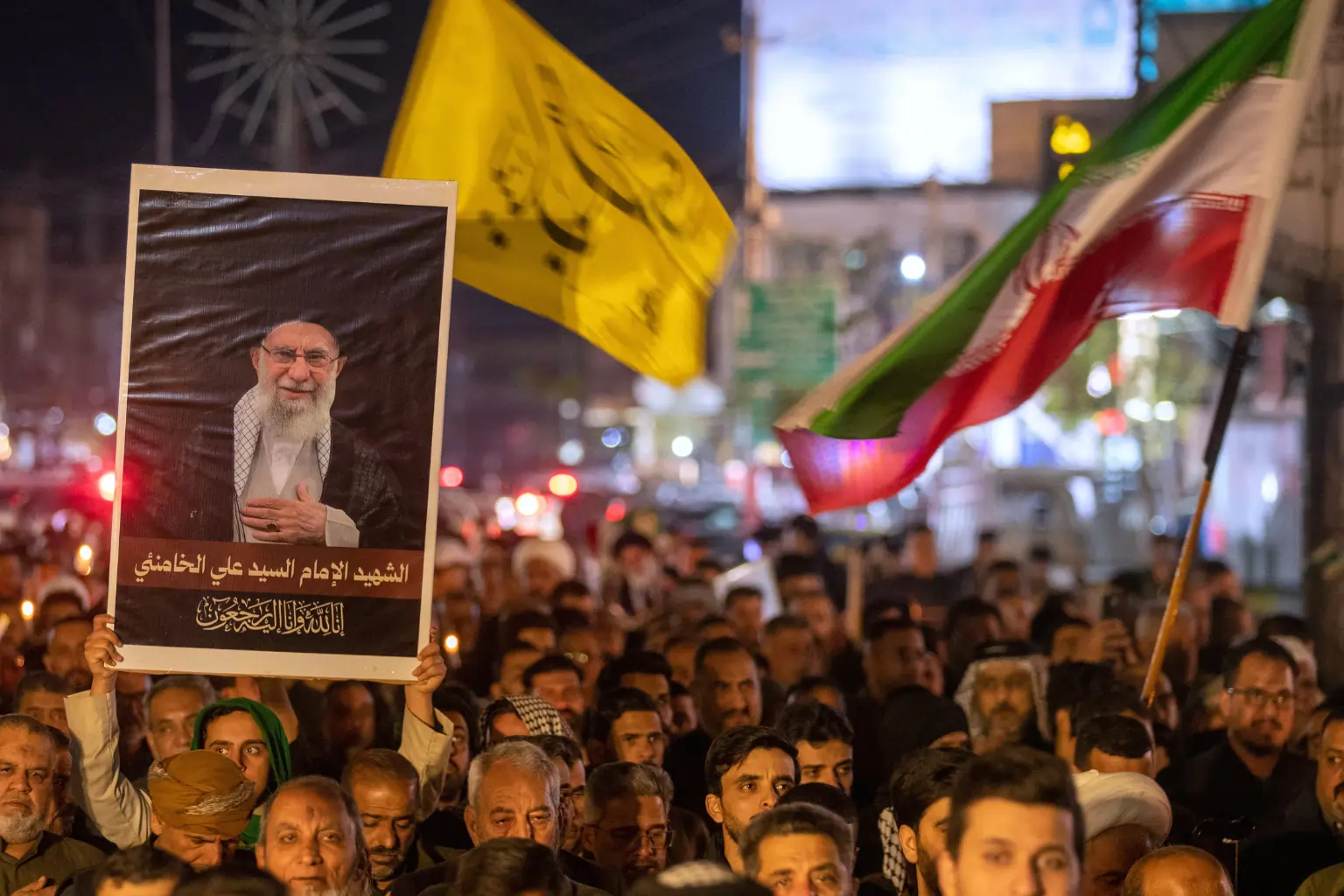


 Truth2Freedom's Blog