There are two ways to be fooled. One is to believe what isn’t true; the other is to refuse to believe what is true. —Soren Kierkegaard. "…truth is true even if nobody believes it, and falsehood is false even if everybody believes it. That is why truth does not yield to opinion, fashion, numbers, office, or sincerity–it is simply true and that is the end of it" – Os Guinness, Time for Truth, pg.39. “He that takes truth for his guide, and duty for his end, may safely trust to God’s providence to lead him aright.” – Blaise Pascal. "There is but one straight course, and that is to seek truth and pursue it steadily" – George Washington letter to Edmund Randolph — 1795. We live in a “post-truth” world. According to the dictionary, “post-truth” means, “relating to or denoting circumstances in which objective facts are less influential in shaping public opinion than appeals to emotion and personal belief.” Simply put, we now live in a culture that seems to value experience and emotion more than truth. Truth will never go away no matter how hard one might wish. Going beyond the MSM idealogical opinion/bias and their low information tabloid reality show news with a distractional superficial focus on entertainment, sensationalism, emotionalism and activist reporting – this blogs goal is to, in some small way, put a plug in the broken dam of truth and save as many as possible from the consequences—temporal and eternal. "The further a society drifts from truth, the more it will hate those who speak it." – George Orwell “There are two ways to be fooled. One is to believe what isn’t true; the other is to refuse to believe what is true.” ― Soren Kierkegaard
I don’t think that most people in the western world fully grasp the importance of what has just transpired. Ayatollah Ali Khamenei was not just the supreme leader of Iran. He was a direct descendant of the Muhammad, and that gave him the right to wear the black turban. For Shiite Muslims, the direct descendants of Muhammad are considered to be the only legitimate spiritual and political successors to Muhammad. They are believed to possess divine knowledge and authority, and killing such an individual is considered to be unthinkable. There are statues and photographs of Ayatollah Ali Khamenei literally everywhere you go in Iran, and now that he is dead there are 200 million Shiite Muslims all over the world that are extremely angry.
Of course it isn’t just Ayatollah Ali Khamenei that is dead.
The strike that killed him also killed his daughter, his grandchild, his daughter-in-law and his son-in-law…
Iran has confirmed that Ayatollah Ali Khamenei died in joint US and Israeli strikes.
The Supreme Leader’s daughter, grandchild, daughter-in-law and son-in-law were also killed in the bombardment on his home in Tehran in the early hours of Saturday.
The family deaths were reported by state media on Sunday, just hours before Iran’s military made a promise to lead its most ferocious counterattacks on the US and Israel in history.
That would have been enough to unleash an unprecedented wave of revenge.
But there are dozens of other Iranian leaders that have also been eliminated.
In fact, President Trump is claiming that 48 top Iranian leaders are now dead…
President Donald Trump boasted on Sunday that 48 Iranian leaders had been wiped out ‘in one shot’ after confirming to the world Saturday that Iran’s Supreme Leader Ayatollah Ali Khamenei was dead.
He also said in a Truth Social post that US forces ‘destroyed and sunk’ nine Iranian Navy ships.
‘We are going after the rest – They will soon be floating at the bottom of the sea, also! In a different attack, we largely destroyed their Naval Headquarters. Other than that, their Navy is doing very well!’ Trump wrote.
These Iranian leaders slaughtered tens of thousands of their own people.
So their deaths are being greatly celebrated all over the globe.
But for Shiite Muslims, a day of vengeance is here.
Following the death of its Supreme Leader Ayatollah Ali Khamenei, Iran has raised the red flag of revenge above the Jamkaran Mosque in the city of Qom.
According to several media reports, a red banner, which symbolises justice and revenge in Shiite tradition, was seen atop the Jamkaran Mosque.
Iran’s Islamic Revolutionary Guard Corps vows to punish the “murderers” of Supreme Leader Ali Khamenei, after his death is confirmed by state television, promising what it says will be the “most ferocious offensive operation in history” against US bases and Israel.
“The hand of revenge of the Iranian nation for a severe, decisive and regrettable punishment for the murderers of the Imam of the Ummah will not let go of them,” the IRGC says in a statement.
“The Islamic Revolutionary Guard Corps, the Armed Forces of the Islamic Republic of Iran, and what it called the vast popular Basij forces will powerfully continue the path of their leader in defending his legacy, standing firm against internal and external plots and delivering what it described as a lesson-giving punishment to aggressors against the Islamic homeland,” it says.
As expected, the Iranians have been viciously striking the land of Israel.
Nine people were killed and more than 40 were injured in Beit Shemesh, near Jerusalem, on Sunday afternoon by a direct Iranian ballistic missile impact.
The missile struck a residential area in the city, destroying a synagogue and causing extensive damage to a public bomb shelter beneath it and surrounding homes.
The Magen David Adom ambulance service said it declared the deaths of eight victims at the scene and took 28 others to hospitals, two in serious condition. The death of the ninth victim was declared a short time later.
Following Israel and the Untied States’ initiation of a coordinated large-scale military assault against Iran, the Iranian Islamic Revolutionary Guard Corps has conducted large scale ballistic missile attacks against Israel, and also targeted U.S. military bases in the Gulf region including in facilities Bahrain, Kuwait, Qatar, Saudi Arabia and the United Arab Emirates. Footage from countries across the region have shown explosions at the targeted bases, although the extent of the damage remains unknown. The United States has maintained a large military footprint across the Gulf region since 1990, when it first established bases in Saudi Arabia to stage a military buildup against Iraq, which paved the way to a full scale U.S.-led invasion of the country in 2003.
Sadly, it appears that the Iranian strikes have caused at least some American casualties.
U.S. Central Command is telling us that three service members have died and five others have been seriously wounded…
Three American service members were killed in action amid the ongoing conflict with Iran, U.S. military officials confirmed, one day after the United States and Israel launched airstrikes and Tehran quickly hit back.
Five others were seriously wounded, according to U.S. Central Command, which didn’t provide further details. The service members were not immediately identified.
Needless to say, this is probably just the beginning.
The FBI has issued a chilling warning to Americans as fears grow Iran will strike the US through its terrorist proxies.
FBI counterterrorism and counterintelligence teams are on elevated alert across the country, according to an agency official.
Terrorism fears are surging in the wake of Donald Trump’s military strikes on Iran, as reports circulate that the Islamic regime’s supreme leader was killed.
There are approximately 2.5 million Shiite Muslims living in the United States, and one of them just walked into a Texas bar and opened fire…
A gunman wearing a ‘Property of Allah’ shirt who opened fire on a Texas bar may have been an Islamic terrorist motivated by the US strikes on Iran, police have said.
Two people were shot dead and 14 more were wounded at a packed-out bar in Austin during the early hours of Sunday, before officers killed the attacker in return fire.
A law enforcement source identified the shooter to the Daily Mail as Ndiaga Diagne, 53, an ex-New York City resident and US citizen originally from Senegal.
It is impossible to predict where something like this may happen.
Authorities are telling us that this man had a Quran in his vehicle, and it is being reported that he “was possibly wearing an undershirt or t-shirt that had an Iranian flag or Iranian representations on it”…
He was found to have a Quran in his car, wore ‘Islamic’ clothing when he opened fire on the bar, and may have been motivated by US strikes in Iran.
Diagne was wearing a shirt reading ‘Property of Allah’, and according to Fox News he was possibly wearing an undershirt or t-shirt that had an Iranian flag or Iranian representations on it.
There have already been multiple instances where violent protesters tried to commit acts of terror at U.S. consulates, and as a result at least 22 people have died so far…
At least 22 people were killed and more than 120 wounded in clashes with police on Sunday in Pakistan after protesters supporting Iran tried to storm the U.S. Consulate and United Nations offices.
In the port city of Karachi, fire was set at the U.S. Consulate entrance gate during a rally to condemn the killing of Iran’s Supreme Leader Ayatollah Ali Khamenei by the U.S. and Israeli military.
In Iraq, violent protesters attempted to breach the U.S. embassy in Baghdad, and things got very messy…
Things are also popping off outside high-secured Baghdad’s Green Zone, where Iraqis are trying to breach the US embassy, with hundreds seen rioting and even bringing bulldozing equipment to the site. The mob threw stones and clashed with Iraqi security forces, which responded with tear gas. “Their attempts had been thwarted so far, but they keep trying,” an official told AFP. Iraq is a Shia majority country with heavy loyalty to the Shia religious establishment in Iran.
If this war drags on, this will be just the beginning of the terror.
For many Shiite Muslims, there is no limit as to what they would be willing to do to get revenge.
They will never forgive, and they will never forget.
Yes, Ayatollah Ali Khamenei is gone, but his legacy will be with us for a long time to come.
How Many Children Questioning Their Gender Are On Psychiatric Drug “Treatments?” Republished with permission from AbleChild. AbleChild can’t help but wonder why transgender individuals commit a disproportionate share of mass … Read more
With so many people now closely following the situation in Iran, considering the possible fallout and aftermath of it, many might be feeling all rather shaken at the moment. Add to this all the other worries and trials of life, and lots of people – including Christians – can feel very fearful and quite concerned.
But the believer knows that the unshakeable and unchangeable God can use ‘a whole lotta shaking going on’ to achieve his purposes. They would include: to wean his people away from things that offer false security; to strip away our false gods and idols; and to get our focus, trust and attention fully on him.
So there are good purposes indeed in all this shaking that God allows or brings upon us. In his book Mere Christendom, Douglas Wilson had a useful thing to say about this:
We cannot pray for the purification of the silver, and then despair when we begin to approach the furnace that removes the dross. The church in America is shot through with corruptions. If we want that corruption removed, then we must also want God’s appointed instruments for removing it. When God wants to reveal what cannot be shaken, He does so by shaking. That is where we are right now, and it should be a great encouragement to us. That is, it should be a great encouragement for those whose ministries are not chaff, dross, or loose unmortared stones.
Such divine shaking can come in many forms to individuals, but there is also a bigger picture here. Scripture often speaks of the shaking of God which also includes the heavens and the earth. There is the ongoing work of God’s judgment and/or discipline now, but there is also an eschatological shaking that God has promised. Consider a few of these passages.
In Isaiah 2:19-21 we read this:
People will flee to caves in the rocks and to holes in the ground from the fearful presence of the Lord and the splendor of his majesty, when he rises to shake the earth. In that day people will throw away to the moles and bats their idols of silver and idols of gold, which they made to worship. They will flee to caverns in the rocks and to the overhanging crags from the fearful presence of the Lord and the splendor of his majesty, when he rises to shake the earth.
Later in Isaiah (13:13) there is found this strong word:
Therefore I will make the heavens tremble, and the earth will be shaken out of its place, at the wrath of the Lord of hosts in the day of his fierce anger.
Haggai 2:6-7 says similar things:
For thus says the Lord of hosts: Yet once more, in a little while, I will shake the heavens and the earth and the sea and the dry land. And I will shake all nations, so that the treasures of all nations shall come in, and I will fill this house with glory, says the Lord of hosts.
And in Hebrews 12:18-29 we read about a kingdom that cannot be shaken. Here is what it says in verses 25-29:
See that you do not refuse him who is speaking. For if they did not escape when they refused him who warned them on earth, much less will we escape if we reject him who warns from heaven. At that time his voice shook the earth, but now he has promised, “Yet once more I will shake not only the earth but also the heavens.” This phrase, “Yet once more,” indicates the removal of things that are shaken—that is, things that have been made—in order that the things that cannot be shaken may remain. Therefore let us be grateful for receiving a kingdom that cannot be shaken, and thus let us offer to God acceptable worship, with reverence and awe, for our God is a consuming fire.
Hebrews: An Anchor for the Soul (Preaching the Word Commentary): An Anchor for the Soul (2 Volumes in 1) by Hughes, R. Kent (Author)
Plenty of helpful commentary can be appealed to here, but one writer I have quoted before on this is R. Kent Hughes. He titles his 2015 expository commentary An Anchor for the Soul. In a world that is shaking and quaking, we certainly do need a solid anchor.
Hughes offers these helpful words:
The initial historical event where God’s voice shook the earth was at Mt Sinai when he verbally spelled out the Ten Commandments with a thunderous voice. Imagine how terrifying it was to have the ground under one’s feet tremble in response to God’s audible word. There were no sleepers in the congregation at Sinai!
But there is an infinitely greater shaking coming, an eschatological cosmic shaking of the whole universe, and it too will be triggered by God’s word. Here the writer has quoted God’s promise from Haggai 2:6 – “Once more I will shake not only the earth but also the heavens” (v. 26b) – indicating that every created thing will be shaken to utter disintegration. This is in accord with what the Scriptures teach us about the power of God’s Word. Genesis says that he created everything by his Word as He spoke the universe into existence. Therefore, one “little word” from him can and will fell creation!
The Psalmist tells us that creation is transitory. “Of old you laid the foundations of the earth, and the heavens are the work of Your hands. They will perish, but you remain; they will all wear out like a garment” (Psalm 102:25, 26; cf. Hebrews 1:10-12). Isaiah says of the future, “Therefore I will make the heavens tremble; and the earth will be shaken out of its place, at the wrath of the Lord of hosts in the day of his fierce anger” (Isaiah 13:13). And Peter identifies it with the day of the Lord: “But the day of the Lord will come like a thief, and then the heavens will disappear with a roar, and the heavenly bodies will be burned up and dissolved, and the earth and the works that are done on it will be exposed” (2 Peter 3:10). Think of it! All one hundred thousand million galaxies—each containing at least that many stars—each galaxy one hundred light-years across—will hear the word and shake out of existence! Just a little word from God, and it is done.
The reason for this is clearly spelled out: “in order that the things that cannot be shaken may remain” (v. 27b). The people of God, as a part of the order of things which are unshakable, will survive. But everything else in the universe will be shaken and therefore purged. Everything that is wrong will be eradicated. No sin, no imperfection will remain. Then there will be a blessed reconstruction— “Then I saw a new heaven and a new earth, for the first heaven and the first earth had passed away” (Revelation 21:1).
To those who are obedient this is good news. And the preacher means it to be a powerful encouragement to the beleaguered little church to which he writes, in which some feel as though their lives are being shaken to pieces by Rome. “Stand firm amidst the Roman tremors,” he seems to be saying, “because the ultimate shaking is coming when Rome and indeed the entire present evil order, will shake to oblivion. And you, as part of the new order, will survive. Take heart!” On the other hand, to those who are ignoring God’s Word and drifting further away, this was a disquieting revelation and challenge to obedience.
Quite so. In Revelation 3:2 where Christ speaks to the church in Sardis, he says this: “Wake up, and strengthen the things that remain”. Bob Dylan famously picked up this phrase in his song “When You Gonna Wake Up” from his 1979 album, Slow Train Coming. The song begins:
God don’t make promises that He don’t keep You got some big dreams baby, but in order to dream you gotta still be asleep.
When you gonna wake up, when you gonna wake up When you gonna wake up strengthen the things that remain?
Counterfeited philosophies have polluted all of your thoughts Karl Marx has got ya by the throat, Henry Kissinger’s got you tied up in knots.
When you gonna wake up, when you gonna wake up When you gonna wake up strengthen the things that remain?
The closing verses are these:
You can’t take it with you and you know that it’s too worthless to be sold They tell you, “Time is money,” as if your life was worth its weight in gold
When you gonna wake up, when you gonna wake up When you gonna wake up and strengthen the things that remain?
There’s a Man up on a cross and He’s been crucified Do you have any idea why or for who He died?
When you gonna wake up, when you gonna wake up When you gonna wake up and strengthen the things that remain?
In this world very little that exists will remain. That is why we must cling to that which will forever remain, to that which can NOT be shaken. As we do that, we can handle all the shaking that we see happening all around us, be it wars in the Middle East or any other worrying events and circumstances.
The war with Iran that we have been waiting for is officially here. The U.S. and Israel are absolutely pummeling Iranian military targets, and in return the Iranians are striking targets all over the Middle East. As you will see below, even a British military base in Cyprus has just been hit. I think that the Iranians were hoping that the unexpected nations that they are targeting would be so traumatized that they would beg the United States to stop the conflict, but instead it seems like almost everyone is uniting against Iran. There is a growing consensus that there is no way that the regime in Iran can remain in place after this, and that means that this war could go on for an extended period of time.
Needless to say, this is not going to be good news for the global economy at all.
Our entire way of life depends upon cheap energy, and nearly a third of all oil that travels by sea must go through the Strait of Hormuz…
Positioned between Oman and Iran, the strait serves as a critical transit route – and potential chokepoint – for global crude, with about 13 million barrels per day moving through it in 2025, equal to approximately 31% of all seaborne oil flows, Kpler data showed.
It links major Gulf producers including Saudi Arabia, Iran, Iraq and the United Arab Emirates to the Gulf of Oman and the Arabian Sea.
Everyone agrees that the closure of the Strait of Hormuz would be a really big deal.
Unfortunately, it appears that the Iranians have already decided to pull the trigger.
It is being reported that the IRGC is warning vessels that the the Strait of Hormuz is now closed…
A European Union naval mission official told Reuters that vessels in the region are receiving marine radio warnings from Iran’s Revolutionary Guard instructing ships not to pass through the Strait of Hormuz.
Apparently there were some tankers that chose not to heed the warnings from the IRGC, and so they got attacked.
The first attack against a ship in the Strait of Hormuz occurred on Sunday morning.
Oman’s Maritime Security Centre announced that an oil tanker named Skylight, flying the flag of the Republic of Palau, was targeted around five nautical miles (9.26km) north of Khasab Port.
In a statement shared on X, Oman authorities confirmed that there were 20 crew members on board, including 15 holding Indian nationality and 5 of Iranian nationality, and they were all evacuated.
THREE British and US oil tankers have been hit in the Gulf and the Strait of Hormuz, Iran has claimed, as Donald Trump claims to have sunk nine of its regime’s warships.
Iran has launched a new round of ship strikes in a brazen retaliation for the US’ devastating “Epic Fury” military operation.
I don’t think that we are going to see much oil get through the Strait of Hormuz for the foreseeable future.
As a result, the price of oil is likely to go much higher.
As I write this article, it has smashed through the $70 barrier, but this is probably just the beginning.
A former White House energy advisor named Bob McNally is warning that if the Strait of Hormuz is closed for an extended period of time it will mean “a guaranteed global recession”…
More than 14 million barrels per day flowed through the Strait in 2025, or a third of the world’s total seaborne crude exports, according to data from energy consulting firm Kpler. About three-quarters of those barrels went to China, India, Japan and South Korea. China, the world’s second-largest economy, receives half of its crude imports from the Strait.
“A prolonged closure of the Strait of Hormuz is a guaranteed global recession,” McNally said.
I believe that he is correct.
The Iranians have large numbers of anti-ship missile launchers dug deep into the cliffs that overlook the Strait.
I am not sure that there will be an easy way to take out those launchers.
“Tankers are starting to build by the Strait of Hormuz, but nothing seems to be going through at the moment – tankers are definitely spooked,” said Matt Smith, oil analyst at energy consulting firm Kpler.
If the price of oil rises above 100 dollars a barrel, that will be a real problem.
Unfortunately, some analysts are convinced that is precisely what could happen. Here is one example…
Should Iran succeed in closing the Strait, the implications for the global oil markets could be severe.
“This could present a scenario three times the severity of the Arab oil embargo and Iranian revolution in the 1970s, and drive oil prices into the triple digits, while LNG prices retest the record highs of 2022,” Kavonic noted.
If access through the strait is limited for an extended period, prices could go “materially above $100/barrel,” said analysts at TD Securities in a March 1 note.
On the other hand, if access through the strait is guaranteed and hostilities cease, the added costs to account for extra risk could evaporate in a matter of weeks, the TD team wrote.
If the war ends quickly, the disruption that we will experience will be fairly minimal.
If oil rises and stays there, drivers will feel it quickly at the pump. The national average gasoline price is about $2.98 a gallon but oil at $100 for a few months would drive that up.
The impact would not stop at the gas station. Oil is needed for transportation, shipping, manufacturing, packaging and agriculture. Higher crude prices raise costs for trucking groceries, flying passengers, producing plastics and moving goods around the country.
Theoretically, one of the oil-exporting nations that would be hurt the most by the closure of the Strait of Hormuz would be Saudi Arabia.
But the Washington Post is reporting that Saudi Arabia has been secretly encouraging President Trump to attack Iran…
President Donald Trump launched Saturday’s wide-ranging attack on Iran after a weeks-long lobbying effort by an unusual pair of U.S. allies in the Middle East — Israel and Saudi Arabia — according to four people familiar with the matter, as Israeli and U.S. forces teamed to topple Iranian Supreme Leader Ali Khamenei after nearly four decades in power.
Saudi Crown Prince Mohammed bin Salman made multiple private phone calls to Trump over the past month advocating a U.S. attack, despite his public support for a diplomatic solution, the four people said. Israeli Prime Minister Benjamin Netanyahu, meanwhile, continued his long-running public campaign for U.S. strikes against what he views as an existential enemy of his country.
The combined effort helped lead Trump to order a massive aerial campaign against Iran’s leadership and military, which in its initial hour led to the death of Khamenei and several other senior Iranian officials.
Why would Saudi Arabia do this?
The Saudis know that the closure of the Strait of Hormuz is just temporary.
But their problems with Iran have been going on for a very long time.
Saudi Arabia is the global epicenter for Sunni Islam, and Iran is the global epicenter for Shia Islam.
The Saudis are convinced that Sunni Islam will someday dominate the entire world, and the Iranians are convinced that Shia Islam will someday dominate the entire world.
Most people living in the western world do not realize this.
The global struggle between Sunni Islam and Shia Islam stretches back for many centuries, and now Saudi Arabia senses an opportunity to strike a decisive blow to their mortal enemy.
This also helps to explain why the Iranians have been launching missiles at many of their Sunni neighbors.
The Iranians are not stupid. They can see what is going on and they are very upset about it.
So I can understand why the Iranians have been targeting Sunni countries, but I have no idea why they thought it would be a good idea to hit Cyprus…
The United Kingdom’s Akrotiri air force base in Cyprus has been hit by a drone, the Cyprus Mail learned in the early hours of Monday morning.
Personnel on the bases were informed that a “small drone” had “impacted the airfield” and that the bases’ authorities were responding.
Does Iran actually want to draw as many countries into this war as possible?
It kind of seems as if that is their goal.
Interestingly, multiple rockets were fired into Israel from southern Lebanon just a little while ago.
Many are suggesting that this means that Hezbollah has joined the war.
In response, the IDF is now conducting airstrikes in Lebanon.
We were warned that a conflict with Iran could become a major regional war, and it appears that this is now becoming a reality.
So buckle up and hold on tight, because I think that we are just in the early moments of a really wild ride.
A lifelong Democrat and Iranian-American activist absolutely DEMOLISHED her own party live on air for their endless, obsessive hatred of President Donald Trump.
This comes amid Trump’s bold and decisive strikes against the Iranian regime’s terror networks.
Moj Mahdara, co-founder of the Iranian Diaspora Collective and a self-proclaimed “huge Democrat,” didn’t hold back during her appearance on CNN.
She blasted the Democrats for putting their Trump Derangement Syndrome ahead of America’s national security and the liberation of the Iranian people from decades of oppressive rule.
According to Mahdara, Democrats have enthusiastically backed efforts to end the war in Ukraine, yet balk at taking decisive steps against the Iranian regime, which the United States itself has long designated as a state sponsor of terrorism due to its support for militant groups such as Hezbollah, Hamas, and Palestinian Islamic Jihad.
She argued that confronting Tehran’s leadership would not merely be a regional geopolitical shift, but a once-in-a-generation global turning point.
“This will be like ending the Soviet Union, the Berlin Wall,” Mahdara said, adding, “This is a transformational moment for humankind — for security. And as an American, this is in our interest to complete it.”
Moj Mahdara: “I think that it is imperative the Democratic Party wake up and get past their dislike of Donald Trump—President Trump—and their feelings about the international conflicts going on. This is about national security.
This is about what is possible in the Middle East. This is about being a good partner to the Gulf States and what their aspirations are. This is about supporting the people of Venezuela. This is about dismembering our relationship with—or not dismembering—but resetting our relationship with China.
Right now, 55% of the oil production that Iran produces goes to China, despite sanctions. You want to support the people of Ukraine. You want to end that war.
There is no getting around dismembering this Islamic Republic. It is non-negotiable. It is not a want-to-have; it is a have-to-have. It’s not just for the Iranian people. I think you have to trust the Iranian people. We know this government better than anyone else.
When you dismember and decapitate this regime, you are going to see a change in the Middle East, in Venezuela, in China, and in Ukraine. And I think, quite frankly, their ideology has really caused a lot of problems for us worldwide.
We need to take it seriously. And I think, at this point, we have a tremendous opportunity. This will be like ending the Soviet Union—the Berlin Wall. This is a transformational moment for humankind, for security. And as an American, this is in our interest to complete it.
So, I am a Democrat. I have been a huge Democrat. I am incredibly disappointed with my party. I do not see myself in them in this moment.”
And judging by the stunned silence that followed on-air, it’s safe to say the network wasn’t expecting one of their own guests to deliver such a devastating critique
Department of War officials hold a press briefing to address domestic and foreign national security threats as the fighting in Iran continues.#fox #media #br…
Iran Blowback: At Least 22 Killed Trying to Storm US Consulate in Pakistan Mass anti-American protests have broken out in areas of the Middle East, especially with large Shia Muslim populations. This is happening in parts of Pakistan, but also across Iraq, the majority of which is Shia and shares deep sympathies with Iran’s religious establishment. Security forces opened fire to scatter protesters as they tried to breach the US compound.
Operation Epic Fury: Trump Says Could Last Four Weeks as Chaos Breaking Loose in Mideast President Trump says that Operation Epic Fury has “destroyed and sunk 9 Iranian Naval Ships, some of them relatively large and important,” and that “We are going after the rest,” which will “soon be floating at the bottom of the sea.” Trump also announced that a separate attack “largely destroyed their Naval Headquarters.”
CANADA: Massive Protests in Favour of USA-Israeli Strikes on the Islamic Republic of Iran In Montreal and Ottawa and elsewhere across the Western World, the Iranian-Persian diaspora celebrated what appears to be the end of the brutal and objectively evil Mullah regime of the Islamic Republic of Iran. Many people had American and Israeli flags from the Persian diaspora as they marched downtown on both Ottawa and Montreal streets.
As Day Two of Strikes Continues, Cornered Iran Lashes Out at Gulf Neighbors While Operation Epic Fury entered day two, Israeli and American forces continued to bombard all infrastructure of the Iranian regime. Iran continued to attack its Gulf neighbors, hitting everything from residential buildings to airports, and even their own oil tanker. Sadly, three service members were killed, and five others were injured in relation to Operation Epic Fury.
DEVELOPING: Israel Bombs Tehran and Lebanon in New Round of Strikes Israel unleashed a new round of strikes on Iran’s capital of Tehran on Sunday evening (Monday morning local time). Iran retaliated after the US and Israel eliminated the country’s Supreme Leader this weekend. Israel responded by bombing Tehran on Saturday evening. Israel also bombed Beirut, Lebanon, early Monday morning local time.
Iran Raises the Red Flag of Revenge Over the Jamkaran Mosque as Shiite Muslims All Over the Globe Start to Commit Acts of Terror The war with Iran we’ve been waiting for is officially here. The U.S. and Israel are pummeling Iranian military targets, and in return, Iranians are striking targets all over the Middle East. Even a British military base in Cyprus has been hit. It seems almost everyone is uniting against Iran. There is a growing consensus that there’s no way the regime in Iran can remain after this.
Confidential Report Warns Against $10 Trillion Global Collapse If China Takes Taiwan A US gov’t assessment from 2022 warned that the sudden disruption of semiconductor production in Taiwan could reduce American economic output, translating into losses of $2.5 trillion, with global economic damage exceeding $10 trillion. Those figures reflect the degree to which the global economy depends on a narrow segment of advanced chip manufacturing.
For whom He foreknew, He also predestined … and whom He predestined, these He also called; and whom He called, these He also justified; and whom He justified, these He also glorified. (8:29a–b, 30)
In delineating the progress of God’s plan of salvation, Paul here briefly states what may be called its five major elements: foreknowledge, predestination, calling, justification, and glorification. It is essential to realize that these five links in the chain of God’s saving work are unbreakable. With the repetition of the connecting phrase He also, Paul accentuates that unity by linking each element to the previous one. No one whom God foreknows will fail to be predestined, called, justified, and glorified by Him. It is also significant to note the tense in which the apostle states each element of God’s saving work. Paul is speaking here of the Lord’s redemptive work from eternity past to eternity future. What he says is true of all believers of all times. Security in Christ is so absolute and unalterable that even the salvation of believers not yet born can be expressed in the past tense, as if it had already occurred. Because God is not bound by time as we are, there is a sense in which the elements not only are sequential but simultaneous. Thus, from His view they are distinct and in another sense are indistinguishable. God has made each of them an indispensable part of the unity of our salvation.
FOREKNOWLEDGE
For whom He foreknew, (8:29a)
Redemption began with God’s foreknowledge. A believer is first of all someone whom He [God] foreknew. Salvation is not initiated by a person’s decision to receive Jesus Christ as Lord and Savior. Scripture is clear that repentant faith is essential to salvation and is the first step that we take in response to God, but repentant faith does not initiate salvation. Because Paul is here depicting the plan of salvation from God’s perspective, faith is not even mentioned in these two verses. In His omniscience God is certainly able to look to the end of history and beyond and to know in advance the minutest detail of the most insignificant occurrences. But it is both unbiblical and illogical to argue from that truth that the Lord simply looked ahead to see who would believe and then chose those particular individuals for salvation. If that were true, salvation not only would begin with man’s faith but would make God obligated to grant it. In such a scheme, God’s initiative would be eliminated and His grace would be vitiated. That idea also prompts such questions as, “Why then does God create unbelievers if He knows in advance they are going to reject Him?” and “Why doesn’t He create only believers?” Another unanswerable question would be, “If God based salvation on His advance knowledge of those who would believe, where did their saving faith come from?” It could not arise from their fallen natures, because the natural, sinful person is at enmity with God (Rom. 5:10; 8:7; Eph. 2:3; Col. 1:21). There is absolutely nothing in man’s carnal nature to prompt him to trust in the God against whom he is rebelling. The unsaved person is blind and dead to the things of God. He has absolutely no source of saving faith within himself. “A natural man does not accept the things of the Spirit of God,” Paul declares; “for they are foolishness to him, and he cannot understand them, because they are spiritually appraised” (1 Cor. 2:14). “The god of this world has blinded the minds of the unbelieving, that they might not see the light of the gospel of the glory of Christ, who is the image of God” (2 Cor. 4:4). The full truth about God’s omniscience cannot be comprehended even by believers. No matter how much we may love God and study His Word, we cannot fathom such mysteries. We can only believe what the Bible clearly says—that God does indeed foresee the faith of every person who is saved. We also believe God’s revelation that, although men cannot be saved apart from the faithful action of their wills, saving faith, just as every other part of salvation, originates with and is empowered by God alone. While He was preaching in Galilee early in His ministry, Jesus said, “All that the Father gives Me shall come to Me, and the one who comes to Me I will certainly not cast out” (John 6:37). But lest that statement be interpreted as leaving open the possibility of coming to Him apart from the Father’s sending, Jesus later declared categorically that “No one can come to Me, unless the Father who sent Me draws him” (v. 44). New life through the blood of Christ does not come from “the will of the flesh, nor of the will of man, but of God” (John 1:13). Paul also explains that even faith does not originate with the believer but with God. “For by grace you have been saved through faith; and that not of yourselves, it is the gift of God; not as a result of works, that no one should boast” (Eph. 2:8–9). God’s foreknowledge is not a reference to His omniscient foresight but to His foreordination. He not only sees faith in advance but ordains it in advance. Peter had the same reality in mind when he wrote of Christians as those “who are chosen according to the foreknowledge of God the Father” (1 Pet. 1:1–2). Peter used the same word “foreknowledge” when he wrote that Christ “was foreknown before the foundation of the world” (1 Pet. 1:20). The term means the same thing in both places. Believers were foreknown in the same way Christ was foreknown. That cannot mean foreseen, but must refer to a predetermined choice by God. It is the knowing of predetermined intimate relationship, as when God said to Jeremiah, “Before I formed you in the womb I knew you” (Jer. 1:5). Jesus spoke of the same kind of knowing when He said, “I am the good shepherd; and I know My own” (John 10:14). Because saving faith is foreordained by God, it would have to be that the way of salvation was foreordained, as indeed it was. During his sermon at Pentecost, Peter declared of Christ: “This Man, delivered up by the predetermined plan and foreknowledge of God, you nailed to a cross by the hands of godless men and put Him to death” (Acts 2:23). “Predetermined” is from horizō, from which we get the English horizon, which designates the outer limits of the earth that we can see from a given vantage point. The basic idea of the Greek term refers to the setting of any boundaries or limits. “Plan” is from boulē, a term used in classical Greek to designate an officially convened, decision-making counsel. Both words include the idea of willful intention. “Foreknowledge” is from the noun form of the verb translated foreknew in our text. According to what Greek scholars refer to as Granville Sharp’s rule, if two nouns of the same case (in this instance, “plan” and “foreknowledge”) are connected by kai (“and”) and have the definite article (the) before the first noun but not before the second, the nouns refer to the same thing (H. E. Dana and Julius R. Mantey, A Manual Grammar of the Greek New Testament [New York: Macmillan, 1927], p. 147). In other words, Peter equates God’s predetermined plan, or foreordination, and His foreknowledge. In addition to the idea of foreordination, the term foreknowledge also connotes forelove. God has a predetermined divine love for those He plans to save. Foreknew is from proginōskō, a compound word with meaning beyond that of simply knowing beforehand. In Scripture, “to know” often carries the idea of special intimacy and is frequently used of a love relationship. In the statement “Cain had relations with his wife and she conceived” (Gen. 4:17), the word behind “had relations with” is the normal Hebrew verb for knowing. It is the same word translated “chosen” in Amos 3:2, where the Lord says to Israel, “You only have I chosen among all the families of the earth.” God “knew” Israel in the unique sense of having predetermined that she would be His chosen people. In Matthew’s account of Jesus’ birth, “kept her a virgin” (NASB) translates a Greek phrase meaning literally, “did not know her” (Matt. 1:25). Jesus used the same word when He warned, “Then I will declare to them, ‘I never knew you; depart from Me, you who practice lawlessness’ ” (Matt. 7:23). He was not saying that He had never heard of those unbelievers but that He had no intimate relationship with them as their Savior and Lord. But of believers, Paul says, “The Lord knows those who are His” (2 Tim. 2:19).
PREDESTINATION
He also predestined (8:29b)
From foreknowledge, which looks at the beginning of God’s purpose in His act of choosing, God’s plan of redemption moves to His predestination, which looks at the end of God’s purpose in His act of choosing. Proorizō (predestined) means literally to mark out, appoint, or determine beforehand. The Lord has predetermined the destiny of every person who will believe in Him. Just as Jesus was crucified “by the predetermined plan and foreknowledge of God” (Acts 2:23), so God also has predestined every believer to salvation through the means of that atoning sacrifice. In their prayer of gratitude for the deliverance of Peter and John, a group of believers in Jerusalem praised God for His sovereign power, declaring, “For truly in this city there were gathered together against Thy holy servant Jesus, whom Thou didst anoint, both Herod and Pontius Pilate, along with the Gentiles and the peoples of Israel, to do whatever Thy hand and Thy purpose predestined to occur” (Acts 4:27–28). In other words, the evil and powerful men who nailed Jesus to the cross could not have so much as laid a finger on Him were that not according to God’s predetermined plan. In the opening of his letter to the Ephesian believers, Paul encouraged them with the glorious truth that God “chose us in Him before the foundation of the world, that we should be holy and blameless before Him. In love He predestined us to adoption as sons through Jesus Christ to Himself, according to the kind intention of His will” (Eph. 1:4–5). Much contemporary evangelism gives the impression that salvation is predicated on a person’s decision for Christ. But we are not Christians first of all because of what we decided about Christ but because of what God decided about us before the foundation of the world. We were able to choose Him only because He had first chosen us, “according to the kind intention of His will.” Paul expresses the same truth a few verses later when he says, “In Him we have redemption through His blood, the forgiveness of our trespasses, according to the riches of His grace, which He lavished upon us. In all wisdom and insight He made known to us the mystery of His will, according to His kind intention which He purposed in Him” (Eph. 1:7–9, emphasis added). He then says that “we have obtained an inheritance, having been predestined according to His purpose who works all things after the counsel of His will” (v. 11).
CALLING
and whom He predestined, these He also called; (8:30a)
In God’s divine plan of redemption, predestination leads to calling. Although God’s calling is also completely by His initiative, it is here that His eternal plan directly intersects our lives in time. Those who are called are those in whose hearts the Holy Spirit works to lead them to saving faith in Christ. As noted under the discussion of verse 28, Paul is speaking in this passage about God’s inward call, not the outward call that comes from the proclamation of the gospel. The outward call is essential, because “How shall they believe in Him whom they have not heard?” (Rom. 10:14), but that outward call cannot be responded to in faith apart from God’s already having inwardly called the person through His Spirit. The Lord’s sovereign calling of believers gives still further confirmation that we are eternally secure in Christ. We were saved because God “called us with a holy calling, not according to our works, but according to His own purpose and grace which was granted us in Christ Jesus from all eternity” (2 Tim. 1:9). Emphasizing the same truths of the Lord’s sovereign purpose in His calling of believers, Paul assured the Thessalonians that “God has chosen you from the beginning for salvation through sanctification by the Spirit and faith in the truth. And it was for this He called you through our gospel, that you may gain the glory of our Lord Jesus Christ” (2 Thess. 2:13–14). From beginning to end, our salvation is God’s work, not our own. Consequently, we cannot humanly undo what He has divinely done. That is the basis of our security. It should be strongly emphasized, however, that Scripture nowhere teaches that God chooses unbelievers for condemnation. To our finite minds, that what would seem to be the corollary of God’s calling believers to salvation. But in the divine scheme of things, which far surpasses our understanding, God predestines believers to eternal life, but Scripture does not say that He predestines unbelievers to eternal damnation. Although those two truths seem paradoxical to us, we can be sure that they are in perfect divine harmony. Scripture teaches many truths that seem paradoxical and contradictory. It teaches plainly that God is one, but just as plainly that there are three persons—the Father, the Son, and the Holy Spirit—in the single Godhead. With equal unambiguity the Bible teaches that Jesus Christ is both fully God and fully man. Our finite minds cannot reconcile such seemingly irreconcilable truths, yet they are foundational truths of God’s Word. If a person goes to hell, it is because He rejects God and His way of salvation. “He who believes in Him [Christ] is not judged; he who does not believe has been judged already, because he has not believed in the name of the only begotten Son of God” (John 3:18). As John has declared earlier in his gospel, believers are saved and made children of God “not of blood, nor of the will of the flesh, nor of the will of man, but of God” (John 1:13). But he makes no corresponding statement in regard to unbelievers, nor does any other part of Scripture. Unbelievers are condemned by their own unbelief, not by God’s predestination. Peter makes plain that God does not desire “for any to perish but for all to come to repentance” (2 Pet. 3:9). Paul declares with equal clarity: “God our Savior … desires all men to be saved and to come to the knowledge of the truth” (1 Tim. 2:3–4). Every believer is indebted solely to God’s grace for his eternal salvation, but every unbeliever is himself solely responsible for his eternal damnation. God does not choose believers for salvation on the basis of who they are or of what they have done but on the basis of His sovereign grace. For His own reasons alone, God chose Jacob above Esau (Rom. 9:13). For His own reasons alone, He chose Israel to be His covenant people (Deut. 7:7–8). We cannot understand God’s choosing us for salvation but can only thank and glorify Him for “His grace, which He freely bestowed on us in the Beloved” (Eph. 1:6). We can only believe and be forever grateful that we were called “by the grace of Christ” (Gal. 1:6) and that “the gifts and the calling of God are irrevocable” (Rom. 11:29).
JUSTIFICATION
and whom He called, these He also justified; (8:30b)
The next element of God’s saving work is justification of those who believe. After they are called by God, they are also justified by Him. And just as foreknowledge, predestination, and calling are the exclusive work of God, so is justification. Because justification is discussed in considerable detail in chapters 17–18 of this volume, it is necessary here simply to point out that justified refers to a believer’s being made right with God by God. Because “all have sinned and fall short of the glory of God,” men can only be “justified as a gift by [God’s] grace through the redemption which is in Christ Jesus” (Rom. 3:24).
GLORIFICATION
and whom He justified, these He also glorified. (8:30c)
As with foreknowledge, predestination, calling, and justification, glorification is inseparable from the other elements and is exclusively a work of God. In saying that those whom He justified, these He also glorified, Paul again emphasizes the believer’s eternal security. As noted above, no one whom God foreknows will fail to be predestined, called, justified, and ultimately glorified. As believers, we know with absolute certainty that awaiting us is “an eternal weight of glory far beyond all comparison” (2 Cor. 4:17). Ultimate glory has been a recurring theme throughout Paul’s epistle to the Romans. In 5:2 he wrote, “We exult in hope of the glory of God.” In 8:18 he said, “I consider that the sufferings of this present time are not worthy to be compared with the glory that is to be revealed to us.” He anticipated that marvelous day when “creation itself also will be set free from its slavery to corruption into the freedom of the glory of the children of God” (8:21). To the Thessalonians Paul wrote that our ultimate glorification is the very purpose for which we are redeemed: “It was for this He called you through our gospel, that you may gain the glory of our Lord Jesus Christ” (2 Thess. 2:14). This promise of final glory was no uncertain hope as far as Paul was concerned. By putting the phrase these He also glorified in the past tense, the apostle demonstrated his own conviction that everyone whom He justified is eternally secure. Those who “obtain the salvation which is in Christ Jesus [receive] with it eternal glory” (2 Tim. 2:10). That is God’s own guarantee.
MacArthur, J. F., Jr. (1991). Romans (Vol. 1, pp. 494–500). Moody Press.
God’s Effectual Call
Romans 8:30
And those he predestined, he also called.…
My wife Linda and I have many different personality traits, which is a natural thing for husbands and wives, and one of them is the way we respond to someone’s call. If we are walking down the street and someone calls out so that we can hear the voice but cannot quite distinguish the words, my wife assumes that the person is calling her and turns around. I assume that the person is calling someone else and keep on going. The same thing is true if a driver of a car blows the horn. I ignore it; it must be for someone else. Linda thinks someone is trying to get her attention. I do not know what that says about the two of us, perhaps only that Linda is more “people oriented” than I am and that I am more “task oriented” than she is. But it is an interesting observation in view of the word we need to look at in this study. The word is “called,” and it occurs in the statement that “those he [that is, God] predestined, he also called …” (Rom. 8:30). This word is the next link in the great golden chain of salvation by which God reaches down from eternity into time to save sinners. The point of this word, the third link, is that, unlike myself but like Linda, those whom God calls not only hear his call but actually respond to it by turning around and by believing on Jesus Christ or committing their lives to him.
Calling: External and Internal
But we need to back up at this point and review a distinction I made two studies ago, when I first introduced the golden chain. It is the difference between a call of men and women that is merely external, general, and (in itself) ineffective for salvation, and a call that is internal, specific, and regenerating. The first call is an open invitation to all persons to repent of their sin and turn to Jesus. As I have mentioned, it was spoken by Jesus himself in many places. For example, he said in Matthew 11:28, “Come to me, all you who are weary and burdened, and I will give you rest.” In Matthew 16:24 he explained, “If anyone would come after me, he must deny himself and take up his cross and follow me.” He said in John 7:37, “If anyone is thirsty, let him come to me and drink.” This last invitation was spoken in Jerusalem on the last day of the Feast of Tabernacles, when people from many lands and nationalities were assembled. There were Jews from every part of Palestine as well as from many regions of the Roman Empire. There were also Gentiles, some who had become Jewish proselytes but also some who, no doubt, were merely interested bystanders. We get a feeling of what this audience must have been like by remembering the composition of the crowd that had assembled at Pentecost when Peter preached the first sermon of the Christian era, likewise extending a general call to all to believe on Jesus. We are told that on that occasion Jerusalem was filled with “Parthians, Medes and Elamites; residents of Mesopotamia, Judea and Cappadocia, Pontus and Asia, Phrygia and Pamphylia, Egypt and the parts of Libya near Cyrene; visitors from Rome (both Jews and converts to Judaism), Cretans and Arabs …” (Acts 2:9–11). When Jesus (and later Peter) called such people to faith, the call was universal. It was (and is) for everyone. Anyone who wishes can come to Jesus Christ and be saved. Today that same call flows from every true Christian pulpit and from all who bear witness to Jesus Christ as Lord and Savior in every land. The difficulty with this external, universal, and (in itself) ineffectual call, however, is that if people are left to themselves, no one ever actually responds to it. People hear the gospel and may even understand it up to a point. But the God who issues the invitation is undesirable to them, and so they turn away. Jesus told a story about a man who had prepared a great banquet and invited many guests (Luke 14:15–24). When the feast was prepared he sent servants with the invitation: “Come, for everything is now ready.” But the guests all began to make excuses. “I have just bought a field, and I must go and see it,” said one. “I have just bought five yoke of oxen, and I’m on my way to try them out,” said another. A third replied, “I just got married, so I can’t come.” That is the way it truly is, since Jesus was not making up this story out of thin air. That was the way the people of his day responded to his general call. They would not accept his invitation. They rejected it, preferring to go their own ways and about their own business. One of the great newspaper organizations in this country is the Howard organization, and if you are acquainted with it, you may also be aware of the Howard Company logo. It is a lighthouse beneath which are the words: “Give the people the light, and they will find their way.” The idea is that people make foolish mistakes and bad decisions because they do not know the right way. Show it to them and they will follow it, is what the motto means. But that is not the way the Bible describes our condition spiritually. When Jesus was in the world he was the world’s light. The light was shining. But the men of his day did not respond to Jesus by walking in the right path. Instead they hated the light and tried to put it out. They crucified the lighthouse. This is how people still respond to the universal invitation. It is why Jesus said, “This is the verdict: Light has come into the world, but men loved darkness instead of light because their deeds were evil” (John 3:19). It is why Paul wrote, “There is no one who understands, no one who seeks God” (Rom. 3:11). And it is why Jesus declared, “No one can come to me unless the Father who sent me draws him …” (John 6:44). But this is where the second kind of call comes in, the kind that is actually spoken of in Romans 8:30. Unlike the first call, which was external, universal, and (in itself) ineffective, this second call is internal, specific, and entirely effective. In other words, it effectively saves those—and all those—to whom it is spoken. The best discussion of the effectual call I know is in John Murray’s small classic, Redemption Accomplished and Applied, where he begins by making the distinction I have just made, showing that there is such a thing as a general or universal call and that there are examples of it in the Bible. But then he points out rightly that “in the New Testament the terms for calling, when used with reference to salvation, are almost uniformly applied, not to the universal call of the gospel, but to the call that ushers men into a state of salvation and is therefore effectual. There is scarcely an instance where the terms are used to designate the indiscriminate overture of grace in the gospel of Jesus Christ.” Here are some examples: Romans 1:6–7—“And you also are among those who are called to belong to Jesus Christ.… called to be saints.” Romans 11:29—“For God’s gifts and his call are irrevocable.” First Corinthians 1:9—“God, who has called you into fellowship with his Son Jesus Christ our Lord, is faithful.” Ephesians 4:1—“As a prisoner for the Lord, then, I urge you to live a life worthy of the calling you have received.” Second Timothy 1:8–9—“So do not be ashamed to testify about our Lord, or ashamed of me his prisoner. But join with me in suffering for the gospel, by the power of God, who has saved us and called us to a holy life.…” Second Peter 1:10—“Therefore, my brothers, be all the more eager to make your calling and election sure.…” In each of these texts and many others, including our text in Romans 8:30, the call of God is one that effectively saves those to whom it is addressed. Putting the above texts together, it is a call that unites us to Jesus Christ, bringing us into fellowship with him, and sets before us a holy life in which we will be sure to walk if we have truly been called. Putting the call into the context of Romans 8, it is the point at which the eternal foreknowledge and predestination of God pass over into time and start the process by which the individual is drawn from sin to faith in Jesus Christ, is justified through that faith, and is then kept in Christ until his or her final glorification. Effectual calling is the central and key point in this great golden chain of five links.
The Power of God’s Call
Now that we have distinguished between the external and internal calls, we need to ask why it is that the internal or specific call is so effective. Why does it bring those who hear it to salvation? The answer is not at all difficult to find. The reason the effective call is effective is that it is God’s call. It issues from his mouth, and all that issues from the mouth of God accomplishes precisely that for which he sent it. This is what Isaiah 55:10–11 teaches us, when it records God as saying:
“As the rain and the snow come down from heaven,
and do not return to it without watering the earth
and making it bud and flourish,
so that it yields seed for the sower and bread for the eater,
so is my word that goes out from my mouth:
It will not return to me empty,
but will accomplish what I desire
and achieve the purpose for which I sent it.”
God’s words are always effective. They accomplish their purpose. But to be faithful to our text we need to point out that what we are dealing with in Romans 8:30, in terms of God’s calling of sinners, is a call to salvation rather than another purpose. So we need to ask exactly how the effective call of God works in the achieving of this goal. The chief thing the effective call of God in salvation does is to cause the regeneration, or rebirth, of the one thus summoned. In the study by John Murray that I referred to earlier, Redemption Accomplished and Applied, Murray says that it does not make much difference whether we put regeneration before effectual calling, or effectual calling before regeneration, since the critical determining act is God’s in any case. But when the relevant texts are carefully considered, the order nevertheless seems to be as I have indicated. That is, God calls the individual with a specific and effective call, and the call itself produces new spiritual life in the one who hears it, on the basis of which he or she is enabled to respond to the gospel. In my judgment, the best illustration of how this works is that of the raising of Lazarus from the dead recounted in John 11, the illustration I introduced in the earlier, introductory study of these terms. We are encouraged to take it as an illustration, because it is in the midst of this story and in obvious reference to it that Jesus utters the well-known words, “I am the resurrection and the life. He who believes in me will live, even though he dies; and whoever lives and believes in me will never die …” (vv. 25–26). What happens in this story? Jesus comes to the tomb of Lazarus and calls out to this dead man, “Lazarus, come out!” and Lazarus does. Clearly the call of Jesus created life in the formerly dead corpse, as a result of which Lazarus responded to Jesus by emerging from the tomb. That is what happens when God calls us to salvation. His call creates spiritual life in the one called, and the proof that spiritual life is there is that we respond to him. How do we respond? We respond by turning from sin—the theological word is repentance—and by believing on Jesus Christ. In other words, the call of God produces life in the sinner, just as the word of God brought the heavens and earth into existence at the very beginning of creation. The first evidences of that new life are repentance from sin and faith in Jesus. A moment ago I said that, according to John Murray, it makes little practical difference whether we put regeneration before calling, or calling before regeneration, and that is probably true, though the correct biblical picture seems to be calling first, then regeneration. However, this is not the case in regard to regeneration or calling, on the one hand, and faith and repentance on the other. In this case, the calling of God necessarily comes before the fruit of that calling. It is only after God calls and regenerates that one repents of sin and believes the gospel. Which comes first, faith or life? The person who knows the Bible answers, “Life.” Otherwise, salvation would depend on ourselves and our own ability, and none of the certainties that Paul is speaking about in Romans 8 would be possible.
Some Important Observations
There are a few important qualifications and observations on what I have been saying, and it would be a mistake to overlook them. Let me list three briefly.
Two responses. I said earlier that the trouble with the general call is that men and women do not naturally respond to it, meaning that they do not become Christians by this call alone. But I need to balance this by adding that, although they do not respond to the call of God unto salvation, they nevertheless can respond superficially by such outward things as coming forward at a religious meeting, making outward profession of faith, or even joining a church. And not only can they, many do. That is why Peter says in the text quoted earlier, “Therefore, my brothers, be all the more eager to make your calling and election sure …” (2 Peter 1:10). He means that we must be sure that we really have been called by God and are truly born again, and have not merely been called by the preacher. Donald Grey Barnhouse, one of my predecessors as minister of Tenth Presbyterian Church in Philadelphia (1927–1960), wrote: If men heed no more than the outward call, they become members of the visible church. If the inward call is heard in our hearts, we become members of the invisible church. The first call unites us merely to a group of professing members; but the inward call unites us to Christ himself, and to all that have been born again. The outward call may bring with it a certain intellectual knowledge of the truth; the inward call brings us the faith of the heart, the hope which anchors us forever to Christ and the love which must ever draw us back to him who first loved us. The one can end in formalism, the other in true life. The outward call may curb the tendencies of the old nature and keep a soul in outward morality; the inward call will cure the plague that is in us and bring us on to triumph in Christ.
The importance of the general call. My second qualification concerns the importance of the general call. Everything I have said thus far has stressed the necessity of the special, or internal, call of the individual to salvation by God. I have said that no one naturally responds to God on the basis of the general call alone. But now I need to add that although that is true, it is nevertheless also true that the general call is necessary, since it is through the general, or universal, call that God calls specifically. Let me say it this way: The effectual or specific call comes through the general call. That is, it is through the preaching of the Word by God’s evangelists and ministers and through the telling of the Good News of the gospel by Christians everywhere that God calls sinners. He does not call everyone we Christians call. We sow the seed broadly; some of it falls on stony or shallow soil, just as some of it also falls on good soil. But when the seed falls on the soil God has previously prepared and when God, the giver of life, blesses the work of sowing—so that the seed takes root in the good soil and grows—the result is a spiritual harvest. People are saved, and they do pass into that great chain of God’s saving acts, including foreknowledge, predestination, calling, justification, and glorification, that is outlined in the eighth chapter of Romans. Let me put it still another way. If God calls effectively through the general call, it is as necessary that there be a general call if some are to be saved as it is that there be a specific and effectual call. Our call does not regenerate. God alone is the author of the new birth. All must be born “from above.” Nevertheless, the way God does that is through the sowing of the seed of his Word, which is entrusted to us. Nobody but God could invent this way of saving human beings. If it were left to us, we would say that either (1) God has to do it; we can do nothing, or (2) we have to do it; God can do nothing. As it is, the work of effectively calling people to Christ is of God, yet using human beings.
Am I elect? There is this last qualification. Sometimes people get bogged down by the subject of God’s foreknowledge and predestination, and they end up saying, “Well, if God is going to elect me to salvation, he will just have to do it. There is nothing I can do.” Or else they get hung up on knowing whether or not they are elect. They say, “How can I know I am elect? If I am not, there is no hope for me,” and they despair. This question bothered John Bunyan, the author of The Pilgrim’s Progress, for a long time and caused extraordinary despair in him. But there is no reason for either such passivity or such despair. How do you know whether or not you are elect? The answer lies in another question: Have you responded to the gospel? In other words, have you answered God’s call? How do we know that the patriarch Abraham was an elect man? It is because, when God called to him to leave Ur of the Chaldeans and go to a land that he would afterward inherit, Abraham “obeyed and went, even though he did not know where he was going” (Heb. 11:8), and because he persevered in that obedience to the very end of his life. How do we know that Moses was predestined to be saved? It is because, though raised in the lap of Egyptian luxury, when he had grown up he “refused to be known as the son of Pharaoh’s daughter,” choosing “to be mistreated along with the people of God rather than to enjoy the pleasures of sin for a short time” (Heb. 11:24–25). He sided with God’s people. How do we know that Paul was elected to salvation? It is because, though breathing out hatred against God’s people and trying to kill some of them, when Jesus appeared to him on the road to Damascus, calling, “Saul, Saul, why do you persecute me?” the future apostle to the Gentiles was transformed. He saw his sin and turned from it. He saw the righteousness of Christ and believed on Jesus. He obeyed and served God from that time on. Moreover, when he wrote about salvation later, as he did in the letter to the Romans, he showed beyond any doubt that it was not he who chose God, but rather God who chose him and called him to be Christ’s follower. How do you know if you are among the elect? There is only one way, and it is not by trying to peer into the eternal counsels of God, stripping the cover from the book of his divine foreknowledge and predestination. The only way you will ever know if you are among the elect is if you respond to the gospel. We are told in the Bible: “Believe in the Lord Jesus Christ, and you will be saved …” (Acts 16:31). Do it. Then you can know that God has set his electing love on you and that, having loved you, he will continue to love you and keep you to the end. Will you believe? It would be a delight if God would use this study of the effectual call to call you effectually.
Justification and Glorification
Romans 8:30
… those he called, he also justified; those he justified, he also glorified.
Anyone who is involved in a business of any size knows the necessity of a long-range plan. There are one-year plans, five-year plans, and even ten-year plans. The longer these plans are the more often they need to be reviewed, revised, and updated. An executive who can create an accurate long-range plan, foreseeing most of the contingencies that will affect the company in future years, and then keep on top of it, is an extremely valuable asset to his or her organization. We have been studying a long-range plan, in fact, the longest-range plan that has ever been devised or could be devised. It is a plan that has had its origins in eternity past and will find its consummation in eternity future. It is all-embracing. Everything that has ever happened or ever will happen in history is part of it. And it is utterly certain. So detailed is this plan and so wisely is it drafted that nothing will ever arise to upset it or even cause an alternative plan to be necessary. Of course, I am speaking of the plan of God outlined for us in Romans 8:28–30. This plan begins with God’s foreknowledge and predestination, expresses itself in time in the calling of individuals to faith in Jesus Christ as Lord and Savior, includes justification, and ends in glorification, when these foreknown and predestined persons are made entirely like Jesus. We are to look at the last two steps of the plan in this study.
Justification by Faith
The first term we need to look at is justification, but we do not need to study it in detail here, since it was the chief focus of our study in volume one and has been mentioned many times since. Justification is the opposite of condemnation. When a person is in a wrong relationship to the law and is condemned or pronounced guilty by the judge, condemnation does not make the person guilty. The person is only declared to be so. In the same way, in justification a person is declared by God to be in a right relationship to his law, but not made righteous. In a human court a person can be declared righteous or “innocent” on the basis of his or her own righteousness. But in God’s court, since we humans have no righteousness of our own and are therefore not innocent, believers are declared righteous on the ground of Christ’s atonement. It helps to realize that the full New Testament doctrine is not merely justification alone, though this is the only word Paul uses in his abbreviated listing of it in Romans 8, but justification by grace through faith in Jesus Christ. That definition has four parts.
The source of our justification is the grace of God (Rom. 3:24). Since “there is no one righteous, not even one” (Rom. 3:10), it is clear that no one can make or declare himself or herself “righteous” (v. 20). How, then, is salvation possible? It is possible only if God does the work for us—which is what “grace” means, since we do not deserve God’s working. Paul frequently emphasizes this by adding the words free or freely to “grace,” which is redundant but nevertheless strong writing.
The ground of our justification is the work of Christ (Rom 3:25). We saw this in volume one in our discussion of the word propitiation. It is because this work has been done that God has been able to justify us justly. “Justification,” writes John R. W. Stott, “is not a synonym for amnesty, which strictly is pardon without principle, a forgiveness which overlooks—even forgets (amnēstia is ‘forgetfulness’)—wrongdoing and declines to bring it to justice. No, justification is an act of justice, of gracious justice.… When God justifies sinners, he is not declaring bad people to be good, or saying that they are not sinners after all; he is pronouncing them legally righteous, free from any liability to the broken law, because he himself in his Son has born the penalty of their law-breaking.… In other words, we are ‘justified by his blood.’ ”
The means of our justification is faith (Rom. 3:25–26). Faith is the channel by which justification becomes ours. This is not mentioned in the chain of God’s saving actions listed in Romans 8:29–30, but it is the fruit of God’s effectual calling and its result, which is regeneration. When we are born again we show it by repenting of sin and turning to Jesus Christ in faith, believing that he is our Savior. Two things should be said about faith. First, faith is not a good work. It is necessary, essential. But it is not a good work. In fact, it is not a work at all. Faith is God’s gift, as Paul makes clear in Ephesians 2:8–9: “For it is by grace you have been saved, through faith—and this not from yourselves, it is the gift of God—not by works, so that no one can boast.” Second, although faith is the means of our justification, it is also the only means. Luther expressed this by the words sola fide (“by faith alone”), thus adding a word not present in the text of Scripture but by it nevertheless catching the essence of the idea. Clearly, if faith is not a good work but only receiving what God has done for us and freely offers to us, then it is by faith alone that we can be justified, all other acts or works being excluded by definition. The only means by which any person can ever be justified is by believing God and receiving what he offers.
The effect of our justification is union with Christ. This idea was developed fully in Romans 5 and in an earlier section of chapter 8. It is the ground of the benefits of our salvation unfolded in Romans 5:1–11 and of our victory over sin elaborated in Romans 5:12–8:17. Stott explains it this way: To say that we are justified “through Christ” points to his historical death; to say that we are justified “in Christ” points to the personal relationship with him which by faith we now enjoy. This simple fact makes it impossible for us to think of justification as a purely external transaction; it cannot be isolated from our union with Christ and all the benefits which this brings. The first is membership of the Messianic community of Jesus. If we are in Christ and therefore justified, we are also the children of God and the true (spiritual) descendants of Abraham.… Secondly, this new community, to create which Christ gave himself on the cross, is to be “eager to do what is good,” and its members are to devote themselves to good works.… To be sure, we can say with Paul that the law condemned us. But “there is now no condemnation for those who are in Christ Jesus.”
Hope of Glory
Glorification, the fifth and final term of Romans 8:29–30, is also a word we have studied earlier. In fact, we met the term as early as Romans 5:2 (which anticipates Rom. 8:28–30), where Paul spoke of Christians as rejoicing “in the hope of the glory of God.” What does Romans 5:2 mean? It means that we know that one day we will be glorified and that we rejoice in this certainty. That is, we know that we will be like Jesus. He is God and is therefore like God in all respects; we will be like him. We will not become God, of course. But we will become like him in his communicable attributes: love, joy, peace, mercy, wisdom, faithfulness, grace, goodness, self-control and other such things (see Gal. 5:22–23). In that day sin will no longer trouble us, and we will enjoy the complete fullness and eternal favor of God’s presence. When does glorification take place? There is a sense in which much of it takes place when we die, for then we will be freed from sin, which has taken up residence in our bodies, and will be like Christ. As John wrote, “… we shall be like him, for we shall see him as he is” (1 John 3:2). Yet I am sure John Murray is right when he insists in his treatment of this word that, in its fullest sense, glorification awaits the return of Jesus Christ and the resurrection of our bodies. In fact, the text in 1 John, which I have just quoted, says this. It does not say simply that “we shall be like him.” It says, “When he appears, we shall be like him, for we shall see him as he is.” Here is how Murray puts it:
Glorification is associated and bound up with the coming of Christ in glory.… So indispensable is the coming of the Lord to the hope of glory that glorification for the believer has no meaning without the manifestation of Christ’s glory. Glorification is glorification with Christ. Remove the latter and we have robbed the glorification of believers of the one thing that enables them to look forward to this event with confidence.…
The glorification of believers is associated and bound up with the renewal of creation. [This is the teaching of Romans 8:19–22, which we studied earlier. In those verses the glorification of our bodies, which means their resurrection, and the renewal of creation are placed together.] When we think of glorification, then, it is no narrow perspective that we entertain. It is a renewed cosmos, new heavens and new earth, that we must think of as the context of the believers’ glory, a cosmos delivered from all the consequences of sin, in which there will be no more curse but in which righteousness will have complete possession and undisturbed habitation. “And there shall in no wise enter into it anything that defileth, neither whatsoever worketh abomination, or maketh a lie: but they which are written in the Lamb’s book of life” (Rev. 21:27). “And there shall be no more curse: but the throne of God and of the Lamb shall be in it; and his servants shall serve him: and they shall see his face; and his name shall be on their foreheads” (Rev. 22:3, 4).
Past Tense, Future Blessing
The most striking feature of Paul’s mention of glorification in Romans 8:30 is that it is in the past (aorist) tense, a fact noted when I first introduced this chain of words three studies back. Since glorification is clearly future from our perspective, this requires explanation. Some commentators think that here Paul departs from strict accuracy or logic in order to stress the absolute certainty of this future event. That is, it is so assured that it can be spoken of as if it were past. D. Martyn Lloyd-Jones says this, writing, “The Apostle’s argument is that, as we know most certainly that we have been called and justified, we can be equally certain of our glorification. Nothing can prevent it because it is a part of God’s purpose for us.” Likewise Leon Morris: “So certain is it that it can be spoken of as already accomplished. It is in the plan of God, and that means that it is as good as here.” Other scholars call this use of the past tense an aorist of anticipation or a prophetic aorist, which is almost the same thing. Since God has decreed it, it will happen and can be considered as having happened. Charles Hodge inclines to this explanation when he says, “God … sees the end from the beginning … so that in predestinating us, he at the same time, in effect, called, justified and glorified us, as all these were included in his purpose.” F. Godet is also helpful, though to my way of thinking his explanation is probably not quite what Paul has in mind here. He reminds us that there is a sense in which we have been glorified. That is, our federal head Jesus Christ has been glorified, and we are glorified in him. If this is the case, the verse would be matched by Ephesians 2:6, where Paul teaches that “God raised us up with Christ and seated us with him in the heavenly realms in Christ Jesus.” This does not mean merely that taking our place in heaven is a future certainty but that we have actually already been seated in heaven in the person of Christ. The only reason I say that in my judgment this is not what Paul has in mind here is because in Romans there seems to be a flow from eternity past to eternity future, the middle portion of which dips into time. Paul seems to be describing something that began in the past, has affected us in the present, and will carry us into the future. If we must make a choice among these three interpretations, I would side with either or both of the first two. Yet it may be—I think I prefer this—that the chain simply moves back into eternity at this point. We have seen that it begins in eternity and then dips down into time. The flow of the verses would be most satisfying if the chain simply moved back into God’s timeless eternity once again, glorification being spoken of as past because it is indeed past (or eternally present) in the mind of God.
What About Sanctification?
As I close my detailed discussion of these specific terms, I want to ask a question that is also raised by Lloyd-Jones in his exposition—wisely, I think. It concerns the one obvious omission in this list: sanctification. Why is sanctification not included, particularly when it is supposed by many to be the central theme of Romans 5 through 8? I have already addressed myself to the latter part of this question, namely, whether Paul is discussing sanctification in these chapters. I did that at the beginning of this volume, arguing that it is not Paul’s purpose to discuss sanctification at all, though much of what he says necessarily touches on it. He is arguing the case for perseverance or eternal security, which is why he introduces the phrase “hope of glory” as early as Romans 5:2. That is the central and important theme, and it comes back at the end, in Romans 8, which is what we are studying now. But that is not a full answer to the question. Why not? Well, Paul has not been discussing foreknowledge, predestination, or effectual calling in these chapters either, yet he mentions those terms here. If they are included, why not sanctification? Again, the apostle is unfolding the flow of salvation from the decrees of God in the past to our glorification in eternity future. Isn’t sanctification an indispensable part of that flow? Isn’t it as necessary and certain as the other items? Why, then, is sanctification omitted? Here are the reasons Martyn Lloyd-Jones offers.
Sanctification is not part of the argument Paul has in mind at this point. Paul is focusing on the acts of God for our salvation, and his point is that our salvation is certain because it is God who is thus acting. Our security depends upon what he has done, not on what we may or may not be able to do. To put it in other words, our security in Christ does not depend upon our sanctification. Eternal security is not the anticipated outcome of some process. Sanctification is a process while these other items are divine acts. From the point of view of Paul’s argument in Romans 8, these are entirely different things.
Sanctification is an inevitable consequence of justification. Therefore, Paul does not need to mention it. As soon as a person is called by God and is justified, in that same moment sanctification begins. This is because of regeneration or the imparting of a new nature to the saved person. There is no justification without regeneration just as there is no regeneration without justification. So the one who is justified, who now also possesses a new nature, will inevitably show that new nature by beginning to live a new life. That is why we can say that a claim to justification apart from growth in holiness is presumption.
Sanctification is inevitable also from the standpoint of our glorification. Indeed, it is a preparation for it. To go back to the text I cited toward the beginning of this study, I note that when John, writing of glorification, says “We know that when he appears, we shall be like him, for we shall see him as he is,” he immediately adds, “Everyone who has this hope in him purifies himself, just as he is pure” (1 John 3:2–3). In other words, it is the assurance of our glorification that spurs on our sanctification. What the great Welsh preacher gets out of this (rightly, in my opinion) is that the proper way to teach sanctification is not by concentrating on “me,” “my feelings,” or certain steps to “personal holiness,” but rather on what God has done for us. That is, the proper approach to sanctification is to fix our eyes on God and our minds on the great biblical doctrines. How do most people teach sanctification today? Either it is by methods (“These are the steps; do this, and you will become holy”), or it is by experience (“What you need is a special filling of the Holy Spirit [or tongues or whatever]”). This is not the biblical pattern. As Lloyd-Jones says: The way to preach holiness is not to preach about “me” and “my feelings” and to propound various theories as to how I can be delivered; it is, rather, to preach justification and glorification. By so doing you will include sanctification. Such is the Apostle’s method—“whom he justified, them he also glorified.” It is because certain people do not know the truth about justification and glorification as they ought that they are defective in their teaching about sanctification. A man who has his eye on his future state of glorification will spend his time in preparing himself for it.
Suppose you are invited to a party by the President of the United States. If you are normal, you would take some time to get ready, choosing a special dress or suit and making whatever other special preparations might be necessary. In the same way, the fact that we are going to be with Jesus Christ and be like him should influence our behavior and life choices. When I was teaching on Romans 6:2 and 11, explaining how it is that we have “died to sin,” I said that we have died to it in the sense that we have died to the past. And I developed a slogan: You cannot go back; there is no place for you to go but forward. That is absolutely true, of course. We cannot go back. The eternal purpose of God in saving us, unfolded in the five great acts of God described in Romans 8:29–30, makes that plain. But just as it is important to say that we cannot go back, so is it also important to say that we are going forward. God’s foreknowledge of us is followed by his predestination of us to be conformed to the image of Jesus Christ. His predestination of us to be made like Jesus is followed by our being called to saving faith. Our calling is followed by our justification. Our justification is followed by our glorification. Therefore, it is as certain that one day we will be with Jesus, and be completely like Jesus, as it is that God exists and that his long-range plan is realistic, effective, and unchangeable. This is God’s great plan. So let’s get on with our part in it and be thankful that his grace has drawn us in.
The Perseverance of the Saints
Romans 8:30
… those he justified, he also glorified.
We are all familiar with the saying about people who can’t see the forest for the trees, and you must know people like that. You probably even know Bible teachers like that. I do not want this to be true of our study of Romans 8. So, at this point of our studies, having examined each of the five great terms of verses 28–30 in detail, I want to step back and look at the great doctrine of which they are all only individual parts. It is not at all hard to recognize what that doctrine is, for we have been mentioning it in one way or another ever since we began the chapter. It is the perseverance of the saints, or eternal security. Or, as some say colloquially, “once saved, always saved.” It is the truth that those who have been truly brought to faith in Jesus Christ—having been foreknown and predestined to faith by God from eternity past, having been called, regenerated, and justified in this life, and having been so set on the road to ultimate glorification that this culminating glorification can even be spoken of in the past tense—that these persons will never and can never be lost. Perseverance is implied in each of the terms we have studied, but this is the place to go back and look at the entire forest.
The Biblical Doctrine
Yet we do not want to distort the doctrine by oversimplification, as some do. We want to understand it as it is taught in Scripture—as Paul teaches it in Romans 8, for instance. Therefore, we need to begin our overview by excluding some common misunderstandings about perseverance. First, perseverance does not mean that Christians are exempted from all spiritual danger, just because they are Christians. On the contrary, the opposite is true. They are in even greater danger, because now that they are Christians the world and the devil will be doggedly set against them and will try to destroy them—and would, if that were possible. We do not need to go very far in Romans to see this fact, for in the next section of this chapter Paul lists some of the hostile forces believers face. He will speak of trouble, hardship, persecution, famine, nakedness, danger, and sword, concluding, “For your sake we face death all day long; we are considered as sheep to be slaughtered” (v. 36, quoting Ps. 44:22). It is because we really do face many spiritual dangers that the doctrine of perseverance is so important. Second, the doctrine of perseverance does not mean that Christians are always kept from falling into sin, just because they are Christians. Sadly, Christians do sin. Noah fell into drunkenness. Abraham lied about his wife Sarah, saying she was his sister rather than his wife, thinking to protect his own life. David committed adultery with Bathsheba and then arranged for the murder of Uriah, her husband. Peter denied the Lord. Perseverance does not mean that Christians will not fall, only that they will not fall away. Jesus predicted Peter’s denial. But he added, “I have prayed for you, Simon, that your faith may not fail. And when you have turned back, strengthen your brothers” (Luke 22:31). Third, perseverance does not mean that those who merely profess Christ without actually being born again are secure. This truth explains the many warnings that appear in Scripture to the effect that we should give diligent attention “to make [our] calling and election sure” (2 Peter 1:10). In this area Jesus’ statements are among the most direct. He said, for example, “All men will hate you because of me, but he who stands firm to the end will be saved” (Matt. 10:22). We are able to stand firm only because God perseveres with us. But it is also true that we must stand firm. In fact, the final perseverance of believers is the only ultimate proof that they have been chosen by God and have truly been born again. The Christian doctrine of perseverance does not lead to a false assurance or presumption, though some who claim to be saved do presume on God by their sinful lifestyles and willful disobedience. Perseverance does not make us lazy. Perseverance does not make us proud. No, the real doctrine of perseverance is precisely what Paul declares it to be in Romans 8: that those whom God has foreknown and predestinated to be conformed to the likeness of his Son will indeed come to that great consummation. They will be harassed and frequently tempted. Often they will fall. Nevertheless, in the end they will be with Jesus and will be like him, because this is the destiny that God in his sovereign and inexplicable love has predetermined for them.
The Problem Passages
However, it is not possible to present this doctrine, even in the context of an exposition of Romans 8, without dealing with some of the biblical passages that seem to contradict it. These passages trouble some Christians and are often in their minds when they hear the security of the believer mentioned. Perhaps they trouble you. Consider, for example, Hebrews 6:4–6, which says, “It is impossible for those who have once been enlightened, who have tasted the heavenly gift, who have shared in the Holy Spirit, who have tasted the goodness of the word of God and the powers of the coming age, if they fall away, to be brought back to repentance.…” Doesn’t that imply that those who are saved can be lost? Or what about 2 Peter 2:1–2? “But there were also false prophets among the people, just as there will be false teachers among you. They will secretly introduce destructive heresies, even denying the sovereign Lord who bought them—bringing swift destruction on themselves. Many will follow their shameful ways.…” Doesn’t that say that people who have been redeemed by Christ can later deny him and thus fall away and perish? Or what about Paul’s words in 1 Corinthians 9:27? “I beat my body and make it my slave so that after I have preached to others, I myself will not be disqualified for the prize.” Are believers subject to “disqualification”? Or what about the four kinds of soil in Jesus’ parable in Matthew 13? Some of the seed springs up quickly, but later it is scorched by the sun or else is choked by weeds. It perishes. Or what about the five foolish virgins of Matthew 25? They are waiting for the bridegroom’s coming, but because they went away to get oil and were not actually there when he came they were excluded from the wedding banquet. I am sure you can add your own “problem” texts to these suggestions. It is important to wrestle with these passages, of course, and not merely dismiss them with some glib statement of “once saved, always saved.” Otherwise we will indeed be presuming, and we will miss the very important warnings the texts convey. However, a careful examination of these passages will show that although they can be said to put a proper hedge around perseverance, lest we presume upon it or take it lightly, they do not contradict the doctrine.
Three Categories
How do we approach these difficulties? Martyn Lloyd-Jones does it at great length in more than one hundred pages of careful argument in the second of two volumes on Romans 8. I do not want to take that much space to do the identical thing here. Those who want to examine the matter in greater detail can use the Welsh preacher’s work. However, Lloyd-Jones is helpful for us in that he puts the problem texts I have been introducing into a few manageable categories and treats them in that way. In a much briefer manner, I want to follow his procedure.
Category 1: Passages that seem to suggest that we can “fall away” from grace. This category contains the most difficult and most frequently cited passages. Therefore, it is the one we need to explore at greatest length. The first passage is the one in which the phrase “fallen away from grace” occurs, Galatians 5:4. An examination of the context shows that what Paul is addressing is the problem of false teaching that had been introduced into the Galatian churches by a party of legalistic Jews who were insisting that circumcision and other Jewish practices had to be followed if the believers in Galatia were truly to be saved. Here the contrast with grace is law, and the apostle is saying that if the believers should allow themselves to be seduced by this false teaching, they will have been led away from grace into legalism. This is not the same thing as saying that they will have lost their salvation, though the doctrine of the legalists was indeed a false doctrine by which nobody could be saved. Paul’s argument is that the Galatian Christians should “stand firm” in the liberty Christ had given them and not become “burdened again by a yoke of slavery” (Gal. 5:1). The parable of the four kinds of soil also falls into this category of problem texts. Does it teach that it is possible for a person to be genuinely born again and then fall away and be lost, either because of the world’s scorching persecutions or its materialistic entanglements? The image we have of young plants suggests this, since the plants in the story obviously do have life. But if we examine Jesus’ own explanation of the story, we will see that he makes a distinction between a person who only “hears” the word and a person who “hears the word and understands it” (Matt. 13:19, 23). The one who merely hears may receive the word he does not actually understand “with joy” and thus seem to be saved. But “he has no root” in him, which he proves by lasting “only a short time.” Those who understand and thus have the root of genuine life in them show it by their endurance and fruit. Jesus’ point, since the parable concerns the preaching of the gospel in this age, is that not all preaching of the word will be blessed by God to the saving of those who hear it. Only some will be converted. Another passage that falls in this category of problem texts is the story of the five wise and five foolish virgins. This is a disturbing parable because it teaches that there will be people within the visible church who have been invited to the marriage supper, profess Jesus as their Lord and Savior, and actually seem to be waiting for his promised return, but who are nevertheless lost at the end. It is meant to be disturbing. But if we compare it with the other parables in the same chapter—the parable of the talents and the parable of the sheep and the goats—it is clear that Jesus is saying only that in the church many who are not genuinely born again will pass for believers, until the end. It is only at the final judgment, when the Lord returns, that those who are truly saved and those who only profess to be saved will be differentiated. The most difficult of the passages that seem to suggest that believers can fall away from grace is 2 Peter 2:1–2, which refers to people “denying the sovereign Lord who bought them.” This sounds as if Peter is describing people who, having been redeemed by Jesus and having believed in him, later deny him and fall away. We should be warned against this misunderstanding by the way the chapter continues. Then we see that Peter is actually speaking of people who have learned about Jesus Christ and have even escaped a considerable amount of the external pollution of the world by having the high standards of the Christian life taught to them, but who have repudiated this teaching in order to return to the world’s corruption, which they actually love. Peter rather crudely compares them to “a dog” [that] returns to its vomit” and “a sow that is washed” but nevertheless goes back to “her wallowing in the mud” (v. 22). The reason they do this is because their inner nature is unchanged. They may have been cleaned up externally, but like the Pharisees, their insides are still full of corruption. These are the people who deny the Lord who bought them. But how can Peter say that Jesus “bought” them? As I say, this is a difficult text and has proved so for many commentators. But the answer seems to be that Peter is also thinking of an external purchase or deliverance here. Since he begins by speaking of those who were false prophets among the people of Israel, what he seems to be saying is that just as they were beneficiaries of the deliverance of the nation from Egypt but were nevertheless not true followers of God, so there will be people like this within the churches. They will seem to have been purchased by Christ and will show outward signs of such deliverance, but they will still be false prophets and false professors. None of these passages teach that salvation can be lost. They are either referring to something else, like falling from grace into legalism, or they are teaching that those who merely make an external profession of faith, however orthodox or holy they may seem, will fall away. As John writes in his first letter, “They went out from us, but they did not really belong to us. For if they had belonged to us, they would have remained with us; but their going showed that none of them belonged to us” (1 John 2:19).
Category 2: Passages that seem to suggest that our salvation is uncertain. There are a large number of verses in this category, but they are much alike and therefore do not each require separate treatment. For example, there is Philippians 2:12: “… continue to work out your salvation with fear and trembling.” And 2 Peter 1:10: “Therefore, my brothers, be all the more eager to make your calling and election sure. For if you do these things, you will never fail.” And also Hebrews 6:4–6, “It is impossible for those who have once been enlightened, who have tasted the heavenly gift, who have shared in the Holy Spirit, who have tasted the goodness of the word of God and the powers of the coming age, if they fall away, to be brought back to repentance.” This last passage, which I have already mentioned, is particularly troubling to many. So let me begin with it. One observation is that even if the text does indirectly teach that a Christian can fall away and be lost, its specific teaching would be that such a person could thereafter never be saved a second time “because [they would be] crucifying the Son of God all over again” (v. 6). Few would want to accept that. So even those who do not believe in eternal security need to find another, better interpretation. In this case, the answer is in the entire thrust of Hebrews, which was written to Jews who had been exposed to Christianity and had even seemed to accept it somewhat, to go on to full faith and not to draw back again into Judaism. Everything in the book points in this direction. So this “problem” passage is actually talking about people who might have had a taste of Christianity but who fall away without ever actually becoming true Christians. If this has happened, they cannot come back, because in a certain sense they have been inoculated against Christianity. However, the real situation emerges in verse 9, where the author of the book writes, “Even though we speak like this, dear friends, we are confident of better things in your case—things that accompany salvation.” In other words, the author considered his readers to be genuine believers, which meant that, in his opinion, they would not draw back but would go on to embrace the fullness of the doctrines of the faith, as he is urging them to do. The other verses—Philippians 2:12 and 2 Peter 1:10—are not nearly so difficult. They merely remind us of what I said earlier: that the fact of God’s perseverance with us does not suggest that somehow we do not have to persevere, too. We do. In fact, it is because God is persevering with us that we will persevere. Remember that Philippians 2:12, which tells us to “work out” our salvation, is immediately followed by verse 13, which says, “for it is God who works in you to will and to act according to his good purpose.” That is, God gives us the desire and then enables us to achieve what he desires.
Category 3: Warning passages. The final category of problem passages contains warnings, like Romans 11:20–21: “… Do not be arrogant, but be afraid. For if God did not spare the natural branches, he will not spare you either.” Or Hebrews 2:1–3, which urges us to “pay more careful attention … to what we have heard” and ends with “How shall we escape if we ignore such a great salvation?” Or 1 Corinthians 9:27, where Paul issues a warning to himself: “… so that after I have preached to others, I myself will not be disqualified for the prize.” The reason for these passages is that we need warnings from God in order to persevere. Or, to put it in other language, they are one of the ways God has to ensure our perseverance. The proof of this is seen in the different ways unbelievers and believers react to them. Do the problem verses I have cited as “warnings” trouble unbelievers? Not at all. Either they regard them as mere foolishness and something hardly to be noticed, or they take them in a straightforward manner but assume that their lives are all right and that the verses therefore do not concern them. It is only believers who are troubled, because they are concerned about their relationships with God and do not want to presume that all is well with their souls when it may not be. These passages provoke us to higher levels of commitment and greater godliness, which is what they are given for. And even this should encourage us. As Martyn Lloyd-Jones says, “To be concerned and troubled about the state of our soul when we read passages such as these is in and of itself evidence that we are sensitive to God’s Word and to his Spirit, that we have spiritual life in us.”
God’s Plan and God’s Glory
As I said at the beginning of this study, I have taken a great deal of time to discuss these “problem passages” because I know that they loom large in the minds of Christian people whenever the doctrine of perseverance is discussed. And rightly so. We need to consider them carefully. But there is a danger in such close examination, for then we may give the impression that the related texts are all on the problem side and that there are very few passages that teach eternal security. That is not true, of course, even though in this study I will not balance my treatment of the problems with an equal number of passages on the positive side. There are many such texts. I am sure you know some of them. There are two in the words of the Lord himself: “My sheep listen to my voice; I know them, and they follow me. I give them eternal life, and they shall never perish; no one can snatch them out of my hand” (John 10:27–28). “And this is the will of him who sent me, that I shall lose none of all that he has given me, but raise them up at the last day” (John 6:39). There are also the confident words of Paul that “he who began a good work in you will carry it on to completion until the day of Jesus Christ” (Phil. 1:6). And, of course, Romans 8:31–39, the end of the chapter:
What, then, shall we say in response to this? If God is for us, who can be against us? He who did not spare his own Son, but gave him up for us all—how will he not also, along with him, graciously give us all things? Who will bring any charge against those whom God has chosen? It is God who justifies. Who is he that condemns? Christ Jesus, who died—more than that, who was raised to life—is at the right hand of God and is also interceding for us. Who shall separate us from the love of Christ? Shall trouble or hardship or persecution or famine or nakedness or danger or sword? As it is written:
“For your sake we face death all day long;
we are considered as sheep to be slaughtered.”
No, in all these things we are more than conquerors through him who loved us. For I am convinced that neither death nor life, neither angels nor demons, neither the present nor the future, nor any powers, neither height nor depth, nor anything else in all creation, will be able to separate us from the love of God that is in Christ Jesus our Lord.
Why will we persevere? We will persevere because this is God’s plan for us, and the end of it all will be God’s glory.
Boice, J. M. (1991–). Romans: The Reign of Grace (Vol. 2, pp. 927–950). Baker Book House.
Big Idea: Remember who you are now: someone who, with Jesus, has been brought from death to life, and live like it.
Let me ask you two true/false questions:
When you became a Christian, your sins were forgiven. True or false?
When you became a Christian, you were freed from the power of sin. True or false?
The first question comes easily. True. Romans 8:1 declares, “There is therefore now no condemnation for those who are in Christ Jesus.” Our sins—past, present, and future—are forgiven. It’s finished. Nothing can separate us from God’s love in Christ.
The second question? Not so easy. You hesitate because you don’t see clear evidence of freedom from sin in your life or others’. Perhaps you struggle with arrogance, jealousy, or a critical spirit. Maybe an explosive temper, bondage to pornography, or selfishness that keeps you from loving others.
Here’s the good news Romans 6 brings this morning: Freedom is possible. You can break the patterns of sin that hold you back.
That’s what this passage is all about.
Two Profound Realities
This chapter is profound. The great writer Thomas Chalmers said that this chapter is the “passage of greatest interest in the Bible—as that in which the greatest quantity of spiritual light is thrown” on how our justification leads to obedience. It really is a profound chapter.
According to this passage, two profound realities are true of you right now if you are in Christ Jesus. Here’s the first:
You are dead to sin’s power (6:1-2)
Look at the question in verse 1: “What shall we say then? Are we to continue in sin that grace may abound?”
Where does this come from? Two verses earlier, in Romans 5:20, Paul said, “Where sin increased, grace abounded all the more.” The more sin, the more grace. If that’s true, wouldn’t sinning more produce even more grace?
Paul’s answer in verse 2 is immediate and forceful: “By no means! How can we who died to sin still live in it? Do you not know that all of us who have been baptized into Christ Jesus were baptized into his death?”
Read that again. Paul says you have died to sin. You are dead to sin’s power.
The word “died” refers to a single completed action in the past. This already happened the moment you were united to Christ. Paul isn’t telling us to strive to become dead to sin; he’s announcing what’s already true.
What This Doesn’t Mean
This doesn’t mean Christians become sinless or stop facing temptation. “If we say we have no sin, we are deceiving ourselves” (1 John 1:8). Romans 6 shows believers still make daily choices whether to present themselves to sin or to righteousness. Romans 7 will address this continuing battle.
Every Christian still feels the pull of the old nature. If we had completely died to sin’s presence, Paul wouldn’t need to command us not to let sin reign in our mortal bodies.
What This Does Mean
When you came to Christ, your old relationship to sin ended decisively. You didn’t get an upgrade; you died. Sin’s ruling power over you is broken. Dead people don’t respond to commands—they can’t. You no longer live under sin’s authority. You can still be tempted and choose to sin, but you’re no longer obligated to obey. You’ve moved from sin’s dominion into the realm of grace.
John Stott explains it this way: sin has not become extinct, but it has been defeated; not annihilated, but deprived of power. It may tempt you, but it no longer owns you.
This changes how you face temptation today. When that familiar sin comes knocking—lust, anger, gossip, pride—you don’t have to answer the door. You can say, “I don’t belong to you anymore.” You’re not mustering up willpower; you’re living out who you already are in Christ.
The next time you’re tempted, pause and remember: you died to sin’s power. It can’t force you to obey. You’re free to choose obedience because grace, not sin, is your master now.
You’re dead to sin. That’s a bold claim. It’s a gospel reality, but it doesn’t always feel like it, which is why we need the second reality:
You are united to Christ (6:3-10)
If you think the first reality—that you’re dead to sin’s power—is hard to believe, the second one will stretch you even further. Yet it’s one of the most profound truths of the Christian life. As John Piper says, “If we can grasp what union with Christ means, we will be a very happy and holy people.”
Here’s the reality: If you’re a believer in Jesus Christ, you are united to him so completely that what happened to Christ is counted by God as happening to you. Jesus’ past is now your past. Jesus’ present is your present. Jesus’ future is your future.
You share in his death, his resurrection, and his present reign in heaven. His story is your story. His victory is your victory. You didn’t just get inspired by Jesus or receive his teachings. You are joined to him—in Christ—and what is true of him has become true of you.
Think about marriage. When you marry, everything that is your spouse’s becomes yours. That’s what happens when you come to Jesus.
Paul highlights two ways we have been united to Jesus:
We Have Died with Christ:
Paul says it five different ways: we were baptized into his death (v. 3), buried with him (v. 4), united with him in his death (v. 5), our old self was crucified with him (v. 6), and we have died with Christ (v. 8). When you were baptized, you attended your own funeral. The old you died—the old you enslaved to sin’s power is dead.
The reason you are dead to sin’s power is that when Jesus died, you died. This doesn’t mean you no longer feel tempted or that you’ve reached sinless perfection. It means that in your truest identity—your union with Christ—you are completely dead to sin, both its guilt and its power. This is decisive, unrepeatable, and unchangeable.
This is the foundation for all your warfare against sin and all your progress in holiness.
We Now Live a New Life:
Paul also says it five different ways: we walk in newness of life (v. 4), are united with him in a resurrection like his (v. 5), are set free from sin (v. 7), will also live with him (v. 8), and live to God (v. 10). You are alive in Christ—not only in your future resurrection, but right now. You share in Jesus’ resurrection life today. As Galatians 2:20 says, “I have been crucified with Christ. It is no longer I who live, but Christ who lives in me.”
Jesus’ resurrection means he conquered sin and death. They could not hold him. Because you are united to Jesus in his resurrection, the same is true for you. The same glorious power that raised Christ from the dead has raised you. This is not something that will happen—it has happened. You are at this moment in newness of life.
Whatever happened to Christ has happened to you through union with him. Your old self died once and for all with Christ. You are now alive to God, sharing in Christ’s indestructible life.
You died with Christ and rose with him—sin’s authority over you is broken. You now live in resurrection power, where grace, not sin, is your master.
One Application (6:11-14)
All of this leads to the first application in the entire book: “So you also must consider yourselves dead to sin and alive to God in Christ Jesus” (6:11).
This is the first command in the book of Romans! Every other religion begins with the imperative: what you must do to gain God’s favor. Christianity begins with the indicative: what God has done becomes the basis for what you do. The first command in Romans isn’t a call to action; it’s a call to reach a conclusion.
Here’s what Paul says: you are dead to sin and alive to God in Christ. Now live like it. Consider yourself to be who God actually says you are. Believe the gospel is true, and live accordingly. You can’t just hold the doctrine; you have to live it. The key to holiness is fully grasping your personal union with Jesus Christ. What you believe about yourself shapes how you live. Think of yourself as a new creature in Christ. Remember who you are! Paul isn’t telling you to pretend or believe something false. If you are in Christ, this is already true of you, regardless of how you feel. Continually ponder the reality of your union with Christ.
What does this look like? Read verses 12-14:
Let not sin therefore reign in your mortal body, to make you obey its passions. Do not present your members to sin as instruments for unrighteousness, but present yourselves to God as those who have been brought from death to life, and your members to God as instruments for righteousness. For sin will have no dominion over you, since you are not under law but under grace.
We’re going to look at this more next week, but here’s what Paul is saying.
You are engaged in a holy war against sin. Sin is striving to control you through your fleshly appetites. Don’t put your body parts at the disposal of the enemy. Don’t yield an inch.
Instead, devote yourself to God. Sanctification isn’t merely avoiding sin but actively promoting goodness. Use your members as weapons of righteousness.
Victory is assured because you’re not under law but under grace. The law is powerless to make you holy. Grace makes you holy by setting you free from sin’s dominion and empowering you to do good.
Sin has no power over you, so don’t give it any! You’re free from its dominion, but not from its presence or influence, so don’t give it any room. Instead, give everything—your eyes, ears, hands, feet, mouth, and mind—to the Lord.
Remember who you are now: someone who, with Jesus, has been brought from death to life, and live like it.
I often quote Dr. Martyn Lloyd-Jones, the great preacher in London from the 1900s. He was once asked, “When are you going to preach a series of expository messages on the Epistle to the Romans?” He answered immediately, “When I have really understood chapter 6.”
It took him a decade, but eventually he preached it, and he said that understanding Romans 6 to be “one of the most liberating experiences in my Christian life.”
I agree, and it can be your experience too. You died with Christ and rose with him; sin’s authority over you is broken. You now live in resurrection power, where grace, not sin, is your master. Now live like it.
You will battle sin this week, maybe today. Sometimes it feels hopeless. When temptation hits, preach the truth to yourself: “I am dead to this sin’s power. I am alive to God in Christ.” Then act accordingly. Live out the freedom you already have. You’ve been brought from death to life with Jesus. This isn’t wishful thinking; it’s gospel truth.
Remember who you are now: someone who, with Jesus, has been brought from death to life, and live like it.
Entertainment disguised as worship isn’t worship. It’s idolatry. Ignorant worship is not worship at all. The ultimate authority on worship is Jesus, and He explained Himself very clearly in John 4. Let’s consider it.
Situation
Jesus is in Samaria by choice. The Jews did not have dealings with the Samaritans. The Samaritans were the remaining vestiges of the Israelites who remained in the land of Israel during the Babylonian exile. They had intermarried with the occupying nations and were considered half-breeds and outcasts by the Jews who returned from the exile. They had continued the Samaritan form of worship begun by Jeroboam when he rebelled against Rehoboam after the death of Solomon. One significant aspect of the deviant worship of Jeroboam was the new location of worship. Jesus is next to a historical site. It is Jacob’s well. A well built by the patriarch Jacob, a common ancestor to the Jews and Samaritans.
Jesus waited for the disciples to return from the city with food. While He waited, a woman of the city comes to draw water. This is not a significant issue except that it was midday, the wrong time of day for the women to draw water. She was asocial outcast because of her many sins. When Jesus began to talk with the lady, she was at first startled, then intrigued by His words. He began to reveal Himself to her. The woman then brings up the subject of worship.
Nature of the question
With her question she drew from our Lord one of the most significant statements on worship found in Scripture. Of this passage, Hodges says,
Her expectation was not disappointed. She had raised the subject of worship, and the Savior’s reply was as pregnant a statement on this theme as had ever escaped the lips of man. Indeed, once He had uttered it, it would be impossible thereafter for any man intelligently to ponder this theme without returning to consider those priceless words. As an utterance on worship they were timeless and absolutely definitive (Zane Hodges, The Hungry Inherit, 1980, p. 18).
She brings up a contradiction between the Samaritan teachings on worship and the Jewish teachings. The contradiction is over the proper place of worship. She wants to know which is the proper location for worship, where her fathers told her, here in Samaria, or on the temple mount in Jerusalem. Whether or not her question is sincere is beside the point. It is Jesus’ answer that astounds.
Jesus’ Answer
Jesus said to her, “Woman, believe Me, the hour is coming when you will neither on this mountain, nor in Jerusalem, worship the Father. You worship what you do not know; we know what we worship, for salvation is of the Jews. But the hour is coming, and now is, when the true worshippers will worship the Father in spirit and truth; for the Father is seeking such to worship Him. God is Spirit, and those who worship Him must worship in spirit and truth.” (John 4:21-24).
True worship is not bound by location. The Old Testament problem of Jeroboam was not one of location, but of rebellion. The Jews worshiped all over the wilderness in a moveable tabernacle. So the argument of here or there does not matter. It is not an issue of location but of heart. But what is worship from the heart? The heresy of the Samaritans was that they selectively incorporated Judaism into their worship.
The heresy of Samaritanism — the practice of picking out what we like to worship and rejecting what we do not like — is widespread. ( A.W. Tozer, Whatever Happened to Worship, 1985 p. 42).
True worship must be intelligent. Jesus said, “Ye worship ye know not what.” (John 4:22) The Jews were right. They understood the true God. The Samaritans had lost the doctrine that provided the foundation for true worship.
The Samaritans worshipped in ignorance, he said. The Samaritans accepted only the Pentateuch, the first five books of the Old Testament. They rejected all the rest of the Old Testament. They had therefore rejected all the great messages of the prophets and all the supreme devotion of the Psalms. They had a truncated religion because they had a truncated Bible; they had rejected the knowledge that was open to them and that they might have had. Further, the Jewish Rabbis had always accused the Samaritans with a merely superstitious worship of the true God. They always said that the Samaritan worship was founded not on love and knowledge, but on ignorance and fear (W. Barclay, The Gospel According to John, Vol. 1, 1975, p. 159).
They had no concept of who God was or what they were doing when they worshiped. Jesus pointed out that the problem with the Samaritans was that they did not know what they worshiped. Their knowledge of God was poor. This was clear in the Old Testament when Israel fell so quickly into golden calf worship after Jeroboam (I Kings 12:28-33).
Ritual becomes empty without meaning or understanding. One great danger of any worship style is the use of forms without understanding. That is why constant preaching and teaching is an essential part of worship. Church goers sing the same hymn for years, memorize the words after years of repetition, yet have no concept of its meaning. In other forms, the emotional queues of the music, and the catchy phrases of the lyrics produce an shallow response devoid of any true theological impulse.
True worship is spiritual. Jesus said that worshippers must worship “in spirit” (John 4:22-23). God is a spiritual being, not a physical being. Worship is where man seeks to come before God, into His presence. It does not seek to lower God to man’s presence. Worship must be performed with the spiritual part of man. The idea of the word “spirit” in this verse is not the Holy Spirit. It is the spirit of the man that is worshipping. Worship is not simply an outward form or exercise. Martin interprets this verse, ” worship in spirit and reality” (Ralph Martin, The Worship of God, 1983, p. 173). The concept of the word “truth” has to do with genuineness of heart rather than the revealed truth of Scripture. It has been already demonstrated that didactic truth is essential to proper worship, but so is genuineness of heart. Jesus is not saying that worship does not include the physical, but rather, worship that is not in genuineness of spirit, is not worship at all. Bodily actions or words without heart do not count for worship.
True worship must be focused upon God. “True worshippers shall worship the Father. . .” (John 4:23). The nature of worship is dictated by the nature of God. It is not a place or a process that is most important, it is a person. As soon as worship makes celebrities of the worshippers or worship leaders, it ceases to be worship. Jesus takes the emphasis off men and places it upon God. There is then, a danger, even in this study. If a simple process is delineated whereby a church can “improve” its worship, the focus can easily shift to a process of worship. Worship is and must be person oriented, and that person must be God.
God is actively seeking worshippers. “But the hour cometh, and now is, when the true worshippers shall worship the Father in spirit and in truth: for the Father seeketh such to worship him” (John 4:23). This is the prime motivation for evangelism: they become true worshippers of God and finally bring glory to God. Any other reason is a secondary benefit. God is now desiring His children to worship Him, and that they reproduce themselves in others who will worship Him in truth.
True worship is made complete in Christ. “The woman saith unto him, I know that Messias cometh, which is called Christ: when he is come, he will tell us all things. Jesus saith unto her, I that speak unto thee am he” (John 4:25-26). The woman could not understand completely. She looked to the Messiah to understand. When Christ revealed Himself as Messiah, she responded with faith. There is a mystery about God that can only be revealed in Jesus. The fact of Christ’s deity allows us to worship Christ and still be worshipping God.
We must return to simple, intelligent, reverent, worship.
The spectacle of worship—whether in the smoke and lights of contemporary garb, or the smoke and incense of ancient liturgy—is a distraction that Jesus condemned. We have to focus our worship on a correct and deep theological understanding of who God is and what He has done for us, and when we do that the gratitude and emotions that pour from our hearts will be a sweet savor before God.
Disclosure: This post may contain affiliate links, meaning Beautiful Christian Life LLC may get a commission if you decide to make a purchase through its links, at no cost to you.
What does it mean for Christians to have peace? Sometimes we don’t feel all that peaceful because of various concerns, trials, and anxieties we experience in this world.
It’s critically important for believers to recognize that they are declared righteous in Christ and always have objective peace with God that can never be taken away from them. While our subjective feelings of peace can ebb and flow, these feelings never change our status before God. Here are 25 Bible passages about peace in Christ (all Scripture quotations from the English Standard Version):
Believers can feel anxious under various trials and lack a sense of peace.
1. I say to God, my rock:
“Why have you forgotten me?
Why do I go mourning
because of the oppression of the enemy?” (Ps. 42:9)
2. Save me, O God!
For the waters have come up to my neck.
I sink in deep mire,
where there is no foothold;
I have come into deep waters,
and the flood sweeps over me.
I am weary with my crying out;
my throat is parched.
My eyes grow dim
with waiting for my God. (Ps. 69:1-3)
Believers are no longer under condemnation but rather are declared righteous in Jesus Christ because of his perfect obedience and single sacrifice for sin that are imputed (counted) to them.
3. “Peace I leave with you; my peace I give to you. Not as the world gives do I give to you. Let not your hearts be troubled, neither let them be afraid.” (John 14:27)
4. Therefore, since we have been justified by faith, we have peace with God through our Lord Jesus Christ. (Rom. 5:1)
5. For as by the one man’s disobedience the many were made sinners, so by the one man’s obedience the many will be made righteous. (Rom. 5:19)
6. There is therefore now no condemnation for those who are in Christ Jesus. For the law of the Spirit of life has set you free in Christ Jesus from the law of sin and death. (Rom. 8:1-2)
7. For our sake he made him to be sin who knew no sin, so that in him we might become the righteousness of God. (2 Cor. 5:21)
8. Indeed, I count everything as loss because of the surpassing worth of knowing Christ Jesus my Lord. For his sake I have suffered the loss of all things and count them as rubbish, in order that I may gain Christ and be found in him, not having a righteousness of my own that comes from the law, but that which comes through faith in Christ, the righteousness from God that depends on faith. (Phil. 3:8-9)
9. But when Christ had offered for all time a single sacrifice for sins, he sat down at the right hand of God, waiting from that time until his enemies should be made a footstool for his feet. For by a single offering he has perfected for all time those who are being sanctified. (Heb. 10:12-14)
10. He himself bore our sins in his body on the tree, that we might die to sin and live to righteousness. By his wounds you have been healed. (1 Pet. 2:24)
Believers are a new creation in Christ, and the Spirit of God dwells in them.
11. Jesus answered, “Truly, truly, I say to you, unless one is born of water and the Spirit, he cannot enter the kingdom of God. That which is born of the flesh is flesh, and that which is born of the Spirit is spirit. Do not marvel that I said to you, ‘You must be born again.’” (John 3:5-6)
12. Do you not know that you are God’s temple and that God’s Spirit dwells in you? (1 Cor. 3:16)
13. Or do you not know that your body is a temple of the Holy Spirit within you, whom you have from God? You are not your own. (1 Cor. 6:19)
14. Therefore, if anyone is in Christ, he is a new creation. The old has passed away; behold, the new has come. (2 Cor. 5:17)
15. Since you have been born again, not of perishable seed but of imperishable, through the living and abiding word of God. (1 Pet. 1:23)
Believers can have a greater sense of peace by focusing their hearts and minds on God.
16. You keep him in perfect peace whose mind is stayed on you, because he trusts in you. (Isa. 26:3)
17. Do not be anxious about anything, but in everything by prayer and supplication with thanksgiving let your requests be made known to God. And the peace of God, which surpasses all understanding, will guard your hearts and your minds in Christ Jesus. (Phil. 4:6-7)
18. But the wisdom from above is first pure, then peaceable, gentle, open to reason, full of mercy and good fruits, impartial and sincere. (James 3:17)
19. Humble yourselves, therefore, under the mighty hand of God so that at the proper time he may exalt you,casting all your anxieties on him, because he cares for you. (1 Pet. 5:6-7)
Even though believers can get discouraged by the struggles of this world, they can be confident that they will be sanctified completely upon Christ’s return and live forever in glory with God.
20. “And this is the will of him who sent me, that I should lose nothing of all that he has given me, but raise it up on the last day. For this is the will of my Father, that everyone who looks on the Son and believes in him should have eternal life, and I will raise him up on the last day.” (John 6:39-40)
21. For those whom he foreknew he also predestined to be conformed to the image of his Son, in order that he might be the firstborn among many brothers. And those whom he predestined he also called, and those whom he called he also justified, and those whom he justified he also glorified. (Rom. 8:29-30)
22. Now may the God of peace himself sanctify you completely, and may your whole spirit and soul and body be kept blameless at the coming of our Lord Jesus Christ. (1 Thess. 5:23)
23. May grace and peace be multiplied to you in the knowledge of God and of Jesus our Lord. His divine power has granted to us all things that pertain to life and godliness, through the knowledge of him who called us to his own glory and excellence, by which he has granted to us his precious and very great promises, so that through them you may become partakers of the divine nature, having escaped from the corruption that is in the world because of sinful desire. (2 Pet. 2:1-4)
24. Looking to Jesus, the founder and perfecter of our faith, who for the joy that was set before him endured the cross, despising the shame, and is seated at the right hand of the throne of God. (Heb. 12:2)
25. And I heard a loud voice from the throne saying, “Behold, the dwelling place of God is with man. He will dwell with them, and they will be his people, and God himself will be with them as their God. He will wipe away every tear from their eyes, and death shall be no more, neither shall there be mourning, nor crying, nor pain anymore, for the former things have passed away.” And he who was seated on the throne said, “Behold, I am making all things new.” (Rev. 21:3-5)
This article was originally published on March 11, 2019.
Each season has a lesson for us according to God’s design. Winter represents a period of rest as hidden growth takes place beneath the surface. Spring reveals renewal, long-awaited hope sprouting in our hearts once again.
If you’re winter weary, in need of rejuvenation, here are 4 spiritual lessons spring reveals about renewal.
1. It’s Time to Sow Righteousness
“Sow righteousness for yourselves, reap the fruit of unfailing love, and break up your unplowed ground; for it is time to seek the Lord, until he comes and showers his righteousness on you.” (Hosea 10:12)
Hosea 10:12 is one of those verses tucked in the middle of a passage that speaks of hard times. It offers a glimpse of renewal and gives specific actions to take:
-Sow in righteousness
-Reap the fruit of unfailing love
-Break up unplowed ground
-Seek the Lord
Those who garden know that the ground must first be turned over and debris removed before anything can be planted. Nutrients must be added to enrich the soil for growth. Only then will seeds sprout, take root, and produce fruit.
Spiritually, we are renewed by:
-Seeking first the kingdom of God and His righteousness
-Breaking up the fallow ground of poor habits and unhealthy routines
-Removing distractions such as social media and fruitless entertainment
-Adding nutrients to the soil of our minds through worship and the Word
-Planting the Scriptures in our hearts through repetition and memory
-Reaping the fruit of God’s unfailing love and sharing it with the world
Spring parallels our Christian walk, offering lessons in diligence, patience, and perseverance. Isn’t it time to seek the Lord in hard places? To break up the unplowed ground of our hearts to prepare for growth? Let’s continue to seek Him until He comes and showers righteousness on us.
“So we do not lose heart. Though our outer self is wasting away, our inner self is being renewed day by day.” (2 Corinthians 4:16)
I recently heard a social media influencer say she would do everything she could to stop the aging process. She mentioned Botox, surgeries, creams, and supplements, determined to find the fountain of youth.
However, we know how this story ends. We still grow old, our bodies wear down, and the fountain of youth remains a myth. The true fountain of youth is found only in the inner workings of the Holy Spirit, who renews our hearts and minds in Christ Jesus.
Our bodies eventually waste away, but our inner selves are renewed day by day. As Paul said to the Corinthians, “For this light momentary affliction is preparing for us an eternal weight of glory beyond all comparison, as we look not to the things that are seen but to the things that are unseen. For the things that are seen are transient, but the things that are unseen are eternal.” (2 Corinthians 4:17-18 ESV)
Before we see new life springing from the earth, many processes take place beneath the surface. But if we’re too focused on the visible, we might inadvertently destroy the hidden parts of growth. It’s wise for us to heed the lessons of spring, ensuring the deeper parts of us are cultivated more than outward appearance.
Here are a few Scriptures highlighting the importance of inner renewal:
“But the Lord said to Samuel, ‘Do not look on his appearance or on the height of his stature, because I have rejected him. For the Lord sees not as man sees: man looks on the outward appearance, but the Lord looks on the heart.’” (1 Samuel 16:7 ESV)
“Do not let your adornment be merely outward—arranging the hair, wearing gold, or putting on fine apparel—rather let it be the hidden person of the heart, with the incorruptible beauty of a gentle and quiet spirit, which is very precious in the sight of God.” (1 Peter 3:3-4 NKJV)
“Charm is deceptive, and beauty is fleeting; but a woman who fears the Lord is to be praised.” (Proverbs 31:30)
Prayer: Lord, my spirit yearns for renewal day by day. Please fill me anew and strengthen the inner parts of me. In Jesus’ name, amen.
“Do not conform to the pattern of this world, but be transformed by the renewing of your mind. Then you will be able to test and approve what God’s will is—his good, pleasing and perfect will.” (Romans 12:2)
During the winter months, some of us slip into a dormant state of mind, causing us to feel listless and depressed. Our thoughts spiral into negative cycles, often perpetuated by what we see in the world.
Paul warned the Christians in Rome not to conform to the patterns of the world, but instead, be transformed by the renewing of their minds. Though they weren’t lured by social media or the entertainment industry, they were tempted by cultural norms just as we are.
The lesson here is to refocus our attention on what matters most: God’s good, pleasing, and perfect will. Here are some questions to consider:
-What is God’s will for my life?
-With what has He gifted me to share with the world?
In every area of life, God has a plan, and it’s a perfect one. But often, we’re too distracted to determine what His will is. This spring, refocus your attention on what God desires. Spend time inquiring of Him. Ask: Where should I go? What should I do? What is Your purpose for me in this season? Recenter your attention on what matters most and find the renewal you seek.
Prayer: Lord, please forgive me for all the distractions that have captured my focus. I choose to silence them now and realign my heart with Your will. Speak, Lord, for I am listening. In Jesus’ name, amen.
Have you ever thought about how prone we are to put sin into categories? For instance . . . thinking that sinful thoughts aren’t as bad as sinful actions? But is sin bad only if it’s out in the open . . . only if other people can see it?
Guests Joni Eareckson Tada and Dr. Michael Easley are no strangers to pain and suffering. Joni has spent nearly 50 years in a wheelchair, while Michael has endured numerous back surgeries and lives with chronic pain. In Where is God When Life Hurts?, Joni and Michael explain how they have learned to trust God in the midst of their suffering and how they continue to believe in Him as a good and loving Father.
Romans 11:16-22 — Can Christians lose their salvation? There are few more contested and more important theological questions in Christianity. Many believers are plagued by doubts because they fear that they may fail to work out their own salvation and be eternally lost in hell. In this sermon on Romans 11:16–22 titled “Final Perseverance,” Dr. Martyn Lloyd-Jones offers solace to any fearful Christians. He says that the Bible never teaches that true believers can lose salvation. This is for the simple reason that it is God through His Son Jesus Christ who saves. Christians are not even saved by faith, first and foremost, but ultimately by Christ who grants them their faith. Jesus loves His people and He is both able and willing to guard them from ever falling away. What about those passages that speak of the need to persevere? The Holy Spirit uses many means to build up Christians in faith and joy and these passages that warn Christians not to fall away are one of these means that God uses to preserve those He loves. What about people who say they are Christians and stop believing? There are many who are self-deceived and think that they are saved, but their life shows that this is not a true work of God. The glorious truth of the gospel is that Jesus saves all those that He loves and He will lose no one.
When anxiety whispers that nothing will change, it can feel impossible to believe better days are ahead. Be reminded that the same God who carried you before is still holding you now.

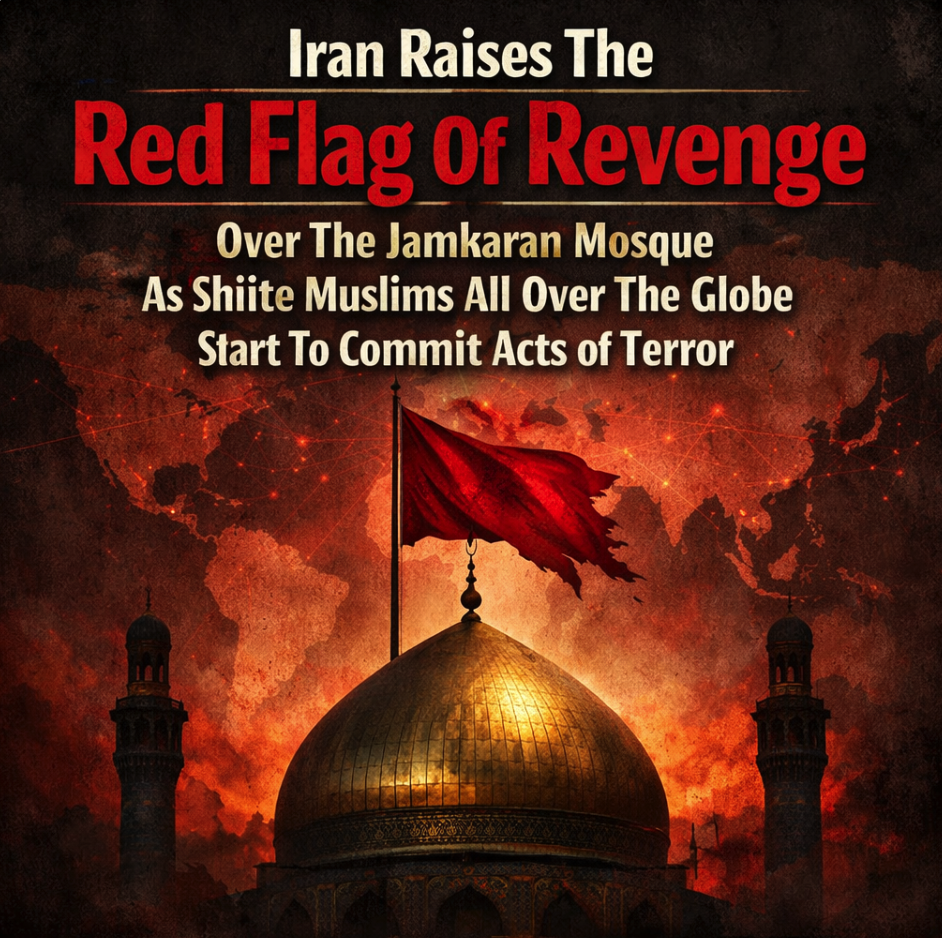


 Truth2Freedom's Blog