There are two ways to be fooled. One is to believe what isn’t true; the other is to refuse to believe what is true. —Soren Kierkegaard. "…truth is true even if nobody believes it, and falsehood is false even if everybody believes it. That is why truth does not yield to opinion, fashion, numbers, office, or sincerity–it is simply true and that is the end of it" – Os Guinness, Time for Truth, pg.39. “He that takes truth for his guide, and duty for his end, may safely trust to God’s providence to lead him aright.” – Blaise Pascal. "There is but one straight course, and that is to seek truth and pursue it steadily" – George Washington letter to Edmund Randolph — 1795. We live in a “post-truth” world. According to the dictionary, “post-truth” means, “relating to or denoting circumstances in which objective facts are less influential in shaping public opinion than appeals to emotion and personal belief.” Simply put, we now live in a culture that seems to value experience and emotion more than truth. Truth will never go away no matter how hard one might wish. Going beyond the MSM idealogical opinion/bias and their low information tabloid reality show news with a distractional superficial focus on entertainment, sensationalism, emotionalism and activist reporting – this blogs goal is to, in some small way, put a plug in the broken dam of truth and save as many as possible from the consequences—temporal and eternal. "The further a society drifts from truth, the more it will hate those who speak it." – George Orwell “There are two ways to be fooled. One is to believe what isn’t true; the other is to refuse to believe what is true.” ― Soren Kierkegaard
The crime rate has collapsed. Pastoral burn-out is decreasing. And the rest of the world will try free trade.
The Crime Rate Has Collapsed
According to figures released by the Council on Criminal Justice, the murder rate in 2025 dropped 21%, a figure being described as “astonishing.” That is the biggest single-year reduction on record. Murders are at the lowest level since 1900!
In the 1960s, 1970s, 1980s, and 1990s, out of every 100,000 people, from 8 to 10 were murdered. The rate has been declining in the 2000s except for a spike during the COVID shutdown. This year that number fell to 4. Still too many, but the only years close to that low were the 1950s.
As for other crimes, carjackings are down 61%. Robberies are down 23%. Assault is down 10%. Shoplifting is down 10%.
What’s the explanation? No one can say exactly. The Trump vibe shift? Better policing, with the help of technology? The higher incarceration rate? Lower unemployment and a better economy? One possible reason being offered is that crime is a young man’s game, and America is getting older. Do you have any theories?
For the last five years, Barna has been surveying Protestant ministers, asking “Have you given real, serious consideration to quitting being in full-time ministry within the last year?”
In 2021, the percentage saying “yes” was 38%. In 2022, that high number went up even more, to a heart-rending 42%. In 2023, the number dropped to 33%. In 2024, it dropped some more to 31%. But last year, in 2025, the number dropped considerably to 24%.
Why were so many pastors thinking about giving up in the ministry? The highest rates, reaching over 2 out of 5 pastors, were during the COVID shutdown. That put an enormous strain on congregations and their pastors.
But the burnout had started before COVID and that was not the only factor. Says the Barna report,
Barna’s research has documented rising pressure on pastors. Early in the pandemic, pastors were forced to navigate church closures, rapid shifts in ministry models, health concerns and political division—often all at once and with limited support. Emotional exhaustion intensified during the COVID-19 years, ministry demands multiplied and leaders faced heightened conflict and polarization within their congregations.
Why the improvement?
As churches stabilize, many pastors report recalibrating expectations—gaining greater clarity around what is sustainable and where boundaries are necessary. Congregations are also rediscovering rhythms of worship and community that were disrupted for years, reducing the constant sense of emergency leadership.
It’s still sad that 24%–one out of four–pastors are considering leaving the ministry. We laypeople need to give our pastors the support they need. Barna has also researched that:
Barna’s broader research in The Relationships of Today’s Pastors, reinforces an important insight: pastors who experience stronger relational support are significantly less likely to consider leaving ministry. Retention, in other words, is not simply about personal resilience. It is shaped by culture, systems and shared responsibility within the church.
The Rest of the World Will Try Free Trade
President Trump’s threat to punish countries for opposing his designs on Greenland by raising the already high tariffs on their products has faded. But Trump’s policy of walling off America from world trade has led other countries to look for more reliable markets.
This is true especially of the European Union. According to EU figures,
The European Union and the United States have the largest bilateral trade and investment relationship and the most integrated economic relationship in the world.
Together, they represent almost 30% of global trade in goods and services and 43% of global GDP.
In 2024, transatlantic trade in goods and services reached over €1.68 trillion [$1,94 trillion]. Both the EU and US are top trading partners in goods for each other.
According to U.S. government figures, 18% of American exports go to the EU, amounting to some $664.5 billion in goods and services.
Now, though, the EU has made what it is calling “the mother of all deals”: a free trade agreement with India, the largest nation in the world by population, with 1.45 billion people. Said EU president Ursula von der Leyen, the agreement “created a free trade zone of two billion people, with both sides set to benefit.” Indian Prime Minister Narendra Modi hailed the deal as a huge win for India’s manufacturers and farmers.
And that isn’t all. Ten days earlier, the EU signed a free trade agreement with South America. “Supported by South America’s cattle-raising countries and European industrial interests, the accord will gradually eliminate more than 90% of tariffs on goods ranging from Argentine beef to German cars, creating one of the world’s largest free trade zones and making shopping cheaper for more than 700 million consumers.”
And that’s not all either. The Wall Street Journal published an article entitled Stung by Trump, America’s Top Trading Partners Shift Gaze to China, with the deck, “Some U.S. allies are weighing closer ties to Beijing as they seek alternative markets.” The article mentioned trade initiatives by the UK, Germany, Finland, South Korea, and even Canada. Though these deals focus on specific products rather than adopting free trade for everything, they undermine U.S. efforts to counter China’s growing power.
Free trade historically has meant big economic advantages for all parties, but the U.S. is cutting itself out. It isn’t surprising that if America is putting up obstacles to world trade, the rest of the world will just trade with each other.
BRENTWOOD, Tenn. — If discipleship were a test, the average churchgoer would pass—but not by much.
In the second half of the State of Discipleship study, Lifeway Research studied churchgoers’ levels of discipleship by asking dozens of questions related to Christian doctrine and practice. Analysis of their answers reveals eight characteristics that are consistently present in the lives of believers who are progressing in their spiritual maturity.
Churchgoers were given a score from 0-100 overall for each of the eight characteristics of discipleship. The average total score is 68.1, with some factors topping near 80 while others languish in the 50s.
Pastors recognize the need for improvement among those attending their churches. Earlier, as part of the State of Discipleship study, Lifeway Research asked U.S. Protestant pastors their perspectives on helping their congregants grow in their faith. Half of pastors (52%) are satisfied with discipleship and spiritual formation in their churches, but only 8% strongly agree.
“Pastors know their congregations can follow Christ more closely, but they often don’t know the specifics of what areas of people’s lives don’t align with what the Bible calls us to,” said Scott McConnell, executive director of Lifeway Research. “This research provides a national snapshot of these details.”
Signposts scores
Analysis of churchgoer research finds eight key signposts that measure spiritual maturity—Bible engagement, obeying God and denying self, serving God and others, sharing Christ, exercising faith, seeking God, building relationships and living unashamed.
The average churchgoer scores the highest in seeking God (78.5), followed by obeying God and denying self (75.1), serving God and others (73.1), exercising faith (71.6), Bible engagement (69.8), building relationships (64.0) and living unashamed (61.0). The lowest score is in sharing Christ, where the average churchgoer reaches 54.8.
“Scripture is clear that all fall short of the glory of God (Romans 3:23), and objective spiritual measures will always show that,” said McConnell. “But the Bible also says members of the body of Christ will be ‘growing into maturity with a stature measured by Christ’s fullness,’ (Ephesians 4:13b CSB). These biblical questions set up healthy conversations around how local churches can promote growth in each of these areas.”
Additional Lifeway Research releases throughout 2026 will further explore each signpost and other aspects of the State of Discipleship among churchgoers.
Average churchgoer
The average U.S. Protestant churchgoer who says they have accepted Jesus Christ as Savior says they made the decision before age 20. Three in 10 (29%) say they did so by the age of 12. Almost a quarter (23%) say the decision happened during their teen years, while 14% place it in their 20s and 7% in their 30s. Another 10% say the decision occurred after they turned 40, and 17% aren’t sure.
Most churchgoers (54%) have been regularly attending church services for more than 20 years. The average churchgoer has attended 30 years total and 12 years at their current congregation.
In a typical month, the average churchgoer attends a worship service at their church more than four times (4.9). More than 2 in 5 (43%) say they attend four times, while 25% say they attend five or more services.
Around 3 in 10 (29%) say they are currently involved in ministries or projects that serve people in the community not affiliated with their church, while 33% have regular responsibilities at their church.
Of those with church duties, half (50%) say that includes teaching or facilitating a Bible study, and 46% say it includes leading a ministry such as youth, worship or a food pantry. Overall, 16% of all Protestant churchgoers teach a Bible study group and 15% lead a ministry.
On average, churchgoers say they give 9% of their annual income to their local church and 4% to other non-profit charitable causes or organizations. Only 15% say they don’t give any to their congregation, while 39% decline donations to other non-profits.
“Church leaders may be able to observe these types of churchgoer participation—at least collectively. And these can be helpful progress markers to encourage serving and reaching the next generation. But the State of Discipleship will also reveal insights into many aspects of following Christ that require self-evaluation from individuals,” said McConnell.
Aaron Earls is the senior writer for Lifeway Research.
Methodology
The online survey of 2,130 Protestant churchgoers was conducted March 19–26, 2025, using a national pre-recruited panel. Respondents were screened to include those who identified as Protestant/non-denominational and attend religious services at least once a month. Respondents could complete the survey in English or Spanish. Quotas and slight weights were used to balance gender, age, region, ethnicity, education, and denominational affiliation. The completed sample is 2,130 surveys. The sample provides 95% confidence that the sampling error from the panel does not exceed plus or minus 2.21%. This margin of error accounts for the effect of weighting. Margins of error are higher in sub-groups.
Modern Christian conferences have increasingly become large-scale spectacles marked by celebrity culture, political influence, and sensory excess, often eclipsing biblical discernment and local church life. The author urges believers to resist “bigger is better,” guard their spiritual intake, and pursue humble, Scripture-centered worship over show-driven faith.
A reader emailed me, asking: “Is it just my perception, or have Christian programs, content and speakers (many pastors on the roster) becoming showstopping events? With John MacArthur and Voddie gone, it is difficult to get hold of the real thing these days. It’s a good thing, in that it sends us, me, to His Word more. Could this be the point?”
I replied, It’s not your imagination, there are increasing issues on a number of fronts regarding Christian conferences. Issue: they have become quasi-political. Issue: they have become multi-multi-day spectacles. Issue: they increasingly overlook discernment and hire speakers who are not worth the air they breathe. Issue: many of these conferences have a roster of speakers so large it is impossible for the layman to properly vet them.
Her question reminded me of Tony Reinke’s book, Competing Spectacles. In this case, Reinke is using the word spectacle not as eye glasses, but as a showstopping event. Super Bowl is a spectacle. A million man march is a spectacle. Spectacle as in large-scale event to which myriads of people attend, or see (as on TV). The riot at Ephesus was a spectacle. The stadium there was one of the largest in the ancient world. The entire colosseum in Ephesus was filled with 25,000 people as they shouted for about two hours, “Great is Artemis of the Ephesians!” (Acts 19:34).
Here is a review of Reinke’s short book if you care to delve more-
In the United States we have been raised to believe ‘bigger is better’. For centuries we have led the world in finance, trade, building, military and so on. We westward expanded, making our nation bigger and thus, ‘better’. We are no micro-state, we are a world superpower!
That sense of bigness and betterness followed into the church world. We have megachurches. Often, the first question some pastors ask each other when they meet isn’t ‘how many souls saved?’ but “How big is your church?”
We are awed by the big. Soaring spires in centuries-old cathedrals. Soaring skyscrapers in a huge and bustling city. Boasting that our stadium is bigger than the next city’s. Blockbuster Broadway shows or television programs with ‘huge ratings’ capture our attention. We always want bigger. But is that the best thing for us?
And now we have mega-conferences.
I remember attending the G3 conference several times. The first time about 5000 attendees, the second, 6000 attendees, the third time, almost 8000 attended. It was a thrill and a joy to be among so many people who claimed to love the Lord. Singing in a throng of nearly 8000 people was a treasured moment I’ll never forget.
But the 3-day conference was overwhelming too. Hunting for a parking space with 8000 other people, endlessly walking the cavernous space to find our breakout room, standing in long lines to get food, overstimulated by meeting and greeting so many people- it wore me down. FOMO was real, with so many speakers we wanted to hear and learn from, we split up and agreed to meet and reteach the main points to each other when we got back to the hotel room.
One of the speakers was so popular the room was overfilled from capacity and I ended up sitting on the metal top step of the ministage for an hour, my back against the wall and my knees touching the ladies in front of me sitting on the lower steps. Other women were just on the floor.
A simple pulpit. EPrata photo
I recollected my very first conference I’d attended as a relatively new Christian. I was brought to a Living Proof Live event led by Beth Moore, in 2011. She was at heights of popularity then and her Living Proof Live events filled stadiums. The one I attended held about 20,000 people. Some of it was closed off so about 12,000 were in attendance, the largest audience I’d ever attended for anything. In my multi-part review of the event, I had described the opening musical numbers in detail, its light show and decibels, the huge band and the thunderous floor shaking. Then I wrote,
I wondered to myself if 12,000 women from 34 states and Canada would still drive 12 hours and spend hundreds of dollars to come to a place where there would be one guy singing The Old Rugged Cross on acoustic guitar, and one woman standing behind a podium speaking only Bible truths. No light show. No concert. No personal testimony of Beth Moore’s life, no jokes about bad hair days, no sweet stories about the husband or the dog, but only hymns and Bible.
These things grow, they get out of hand. I heard one woman near me muse that in ‘the old days’ Travis Cottrell had only one or two accompanists but now he has a whole band and several singers. That’s how it goes. These things only ever get bigger. And somewhere along the way, plain Bible and plain music gets lost in an overwhelming flood of extras, extras that are then used to manipulate and distract…
And that was 2011, fourteen years ago.
My musings on that score have not changed but only solidified as I’ve watched Christian events grow larger and larger over the subsequent years.
“Artistic excellence” or fleshly ingenuity? As one pastor muses on this question regarding church worship, he wrote,
“Spectacle can draw our attention away from the transcendence of God, instead making us marvel at human ingenuity. Of course, some people mocked the cheesiness of it all. But others saw it as deeply symptomatic of the way American Christians have baptized the jubilant, technicolor liturgy of secular concerts designed to entertain people rather than lead them into worship of the one true God.” (Source).
Christian Conferences as spectacle
I’ve seen church worship grow from a simple worship session to a lights and sound extravaganza, which in turn merged into conference culture where bigger is better with more lights and sound…and attendance, to now a merging of politics and worship conflated so no one quite knows which is which, but it’s OK as long as it’s BIG.
I am sure that as Christians we are familiar with the Roman attitude toward spectacle. The Colosseum in Rome is a marvel of engineering. Did you know that the Roman Colosseum had about 100 water fountains on every level, ensuring that its 50,000-plus attendees could evacuate within 10-15 minutes? That the building had advanced sewage and a retractable awning for comfort under the Mediterranean sun? The building is a showcase for engineering of large crowds and is studied to this day.
The Romans also had a ardent love of skill games. When the gladitorial combats began, they were truly impressive in featuring men of valor displaying courage and skill, qualities admired in Roman life. But the flesh is the flesh. It always wants more. This past summer as I was reading a non-fiction book recounting the history of the gladiators, I had to stop, because only a third of the way into the book it had become pornographically depraved. The Roman spectacle that passed for entertainment over the decades had slowly grown horrific in the extreme and showed a society’s seared conscience that had zero regard for life.
Romans 1:30 concludes a section describing stages of individuals and societies’ descent into sin. It says that they invent new ways to be evil. Our sin nature combined with our creativity for inventing new ways to perform evil means we all must be aware of how modern-day spectacles are influencing us. And they are. We are on our own way to descending into despicable spectacle, even in the church.
Roman Colosseum. EPrata photo
Christian conference now a quasi-political event
We have seen large-scale Christian conferences and their culture taint the church. How? They compete with and undermine the local church, even as they tout local churches and the importance of connection with them. People who attend may indeed become dissatisfied with their little no-name pastor’s preaching after hearing days worth of top tier expositors, or musicians.
Another taint comes from the celebrity culture that sprouts up around large conferences, with some of the speakers not even attached as member of a local church but living a supposedly Christian life out from under accountability from elders. Or if they do have connection with a local church whether as pastor or member, pride enters in and some fine day they are outed as a liar and a hypocrite, and adulterer or a plagiarist, or their financial impropriety comes to light. The list goes on. Needless to say, large-scale anything, whether megachurches, conferences, concerts, etc are fraught with temptations for the organizers and the attendees because of our desire for spectacle.
Here, Pat Finlow poses some good thoughts on the next level of large-scale conference is becoming. “The ARC conference conflates religion and politics. And that’s a dangerous game“, she writes. “Judeo-Christian values are good – but they are not an umbrella term to be used to support your own politics, says Pat Finlow. The gospel stands alone, and crosses all political boundaries. …
Quite right. Finlow again,
“So, I began to consider the implications of passively listening to presentations on these important topics, realising it would be easy to unthinkingly absorb their perspectives, especially if they are wrapped in Judeo-Christian packaging. Have I the time, inclination or theological confidence to discern whether their views and policy ideas are truly commensurate with Jesus’ teaching?”
We are being affected every day by what we see and hear, whether it’s passive absorption or deliberate input. Tony Reinke’s definition of a spectacle is- “a moment of time, of varying length, in which collective gaze is fixed on some specific image, event, or moment. A spectacle is something that captures human attention, an instant when our eyes and brains focus and fixate on something projected at us.” (p.14).
In this day and age, with input like no other coming from all directions, surrounding us almost every moment (have you let go of your phone for 10 minutes lately?), we must be aware of our visual and auditory diet. Remember, behind every conference, concert, or workshop, is marketing. Someone needs to pay for all of it and hopefully make a profit too. Have you unwarily become a guided leaf absorbed in their economic slipstream? Have you absorbed unthinkingly some Christian-ese sounding platitudes unhitched from the Bible? Are you seeking truth and comparing it to the Bible daily? Thinking of noble things? Are you happy with the state of your soul?
I don’t mean to be holier-than-thou. I consume a lot of TV when I am on school break. These questions are for me as well. But I am concerned with the spectacle that large-scale conferences have become, and worse, infusing secular politics into them. Why? Because I have seen many of them become bastions of false teaching which attendees return to home churches to infect. I have seen many of them succumb to celebrity culture and then fall into some disqualifying sin. I have seen the discontent they infuse. I have seen the weariness of organizers whose lives have become one of a hamster wheel as the rapidity of the conference life diverts their attention from being simply moms at home loving and raising their children.
I’m not advocating for a severely stripped down worship with no instruments and no art. God wanted beauty in his worship and instructed the tabernacle builders on how to create it. We want beauty, we want enhancements ot worship. We want learning, even if it is apart from our own churches sometimes. It can be good. The biblical visionary prophets that were given a glimpse of the throne room in described unutterable beauty and much worshipful activity. What I am advising is to watch the encroachment of secular doctrines and practices into large-scale events that have a Christian name attached. Especially if it is mixed with politics.
May the Lord come soon and give us a pure worship.
For this is what the high and exalted One Who lives forever, whose name is Holy, says: “I dwell in a high and holy place, And also with the contrite and lowly of spirit In order to revive the spirit of the lowly And to revive the heart of the contrite.” (Isaiah 57:15).
Over the past several weeks, a curious narrative has been circulating on X: that 9Marks—Mark Dever, Jonathan Leeman, and their network—was never woke. According to defenders, claims to the contrary are slander, exaggerations, or selective memory. They insist that while 9Marks may have expressed some empathy or pastoral sensitivity, they certainly never promoted the social-justice ideology that swept through evangelicalism in the mid-2010s.
But the internet has a long memory, and the church has an even longer one.
Newly unearthed audio (much of it from a pastor’s meeting in May 2015) demonstrates that 9Marks has been advocating for and adopting woke presuppositions (standpoint epistemology, racialized systemic injustice) for over a decade.
The proof isn’t hidden in anonymous rumors or Foggy Memories™. The receipts are public, recorded, published, transcribed, and in some cases proudly promoted by 9Marks itself. From pastor meetings, to interviews, to recommended reading lists, to COVID political activism, the ministry consistently imported CRT-infused assumptions into its pastoral theology and exported those assumptions into thousands of pulpits.
This isn’t an opinion. This is the record.
And the record is overwhelmingly clear: 9Marks was super-woke—one of the most influential pipelines of social-justice theology into conservative evangelicalism. Their own words, teachings, and pastoral training materials prove it.
The Current Denials Are Historically Absurd
The revisionism began in earnest in October–November 2025, when calls for an honest accounting of the record were met with incredulous denial:
Recently appointed 9Marks President Jonathan Leeman went further on Sean DeMars’ Room for Nuance podcast (which is apparently the clearing house of choice for historical revisionism on the last decade of evangelical wokeness), suggesting critics were applying a racial “One Drop Rule”—claiming that any minor expression of empathy was unfairly construed as wokeness:
But Phil Johnson, who was inside the Shepherds Conference Q&A discussions that ignited this entire debate back in 2019, was having none of it, reminding DeMars:
“His aggressive promotion of Divided by Faith was hardly ‘one drop.’ It was more like a fire hose.”
Megan Basham summarized the situation:
“We did witness what we definitely did witness… The constant insistence that we did not is dishonest and discrediting.”
Exactly.
The revisionist strategy depends on collective amnesia. And that strategy collapses immediately as soon as you revisit what 9Marks was actually teaching.
As recently as 2019, Mark Dever was openly claiming that “single-issue voting” (abortion) has been one of the greatest banes to racial unity in the United States,” and that because pro-life presidents have not ended abortion, black voters should be free to vote pro-choice if they believe the candidate will “help my people and my community.”
Of course, Roe was overturned a mere three years later, disproving Dever’s entire premise, and likely led to Jonathan Leeman expressing open regret for advocating the same position.
Nine Devastating Marks from the 2015 9Marks Pastors’ Meeting
A recently re-surfaced audio recording from a 9Marks pastors’ meeting provides the clearest possible window into the ministry’s internal worldview as it relates to the woke issues of the past ten years.
If one wanted evidence that wokeness was discipled into pastors through supposedly “faithful ecclesiology,” the extended remarks from multiple 9Marks-affiliated pastors remove all doubt.
Here are nine key themes, in their own words. Note: The transcribed videos may contain minor spelling or transcription errors.
I. Systemic Racism as Established Fact, Not Debate
Pastors were repeatedly urged to acknowledge, teach, and apply systemic racism as a present-day pastoral reality, as encouraged by Brian Davis:
“Our history shapes who we are today… systemic issues are real.”
“White people have had the freedom to pretend racial injustice is a non-category.”
The implication was unmistakable: denying systemic racism is itself pastoral negligence.
II. Race-Based Pastoral Care
Pastors were instructed to engage in ministry according to racial category:
“You must understand what it means for him to be black.”
“Ask your black members: What has life been like for you as an African American male?”
This was not a call to treat all believers as one in Christ. It was a call to treat black members as fundamentally other, requiring unique pastoral strategies.
III. Sermons Should Reflect Systemic Injustice—Weekly
One pastor shared concerns about only addressing racial issues during crises. Mark Dever responded:
“In your sermon applications and prayers, regularly raise systemic or ethnic imbalance… You don’t need answers—just pray about it openly.”
This is not exegesis. This is sociology grafted onto the pulpit.
IV. Dever Elevated Racial Issues Over Religious Liberty
One pastor explained that members considered racial tension more urgent than religious liberty. Dever openly affirmed this instinct, referencing the Supreme Court upholding the legality of gay marriage:
“In a Sunday morning prayer, Baltimore riots may be more immediate and pressing than a Supreme Court ruling.”
This matches Dever’s later public rhetoric that religious liberty concerns were, in his view, a matter of relative “white privilege.”
V. White Supremacy Taught as the Default White Condition
In one of the most revealing statements in the transcript, a pastor insisted:
“As white people, we have a deeply entrenched supremacist mindset…
“It’s been the whole history.”
This was stated as fact, without qualification, in a room full of pastors, with no pushback other than Mark Dever asking how the pastor might lead his congregation in confessing their white supremacy.
If that’s not wokeness, nothing is.
VI. Leeman’s Acts 6 “Systemic Racism” Interpretation
Jonathan Leeman took Acts 6, the distribution problem between Hebrew and Hellenist widows, and turned it into a parallel for contemporary systemic racism:
“The apostles recognized the ethnic dividing line… This is a big deal.”
This is precisely the kind of racialized hermeneutic evangelicals spent the next decade trying to correct.
VII. Endorsement of CRT-Adjacent Literature
Recommended resources included:
The New Jim Crow (Michelle Alexander)
The Collapse of American Criminal Justice (William Stuntz)
These are foundational works for progressive criminal-justice activism and systemic-racism theory. Also recommended was Thabiti Anyabwile‘s Front Porch (although pastors seemed to be instructed to “not represent it to others” and not print “Front Porch” on materials).
VIII. Unqualified Slander of Police
To the laughter of other pastors in the room, pastor and Gospel Coalition Council member Garrett Kell told a story about how a white police officer let him slide on not having current registration and proof of insurance, and claimed that if he had been black, he’s sure the same white officer would have removed him from his vehicle and things would have “been very different.”
IX. Dever Comparing Mount Vernon to Auschwitz
Perhaps the most gratuitous moment came when Mark Dever discussed visiting Mount Vernon and said he wondered whether black Christians experienced it like a trip to Auschwitz, because slavery’s cruelty “lasted longer than the Holocaust.”
This is textbook social-justice rhetoric: dramatic moral equivalence, exaggerated historical framing, and a reliance on emotional narrative over historical precision.
This Matches Everything 9Marks Was Doing Publicly
The transcript doesn’t reflect a one-off meeting. It reinforces everything that was publicly visible from 2014–2020, as Pulpit & Pen and other polemics/discernment websites documented.
2018: “9Marks, Mark Dever, and Fabian Socialist”
This article quoted Dever expressing admiration for Fabian socialist thought—especially its communal moral vision—which clearly influenced the ministry’s social-justice framing.
2019: “9Marks & SBC Leaders at a Cultural Marxism Conference”
The article documented 9Marks leadership participating in conferences structured around oppression, systemic injustice, privilege, and race.
2019: Thabiti Anyabwile’s Oppressor Rhetoric
P&P republished a Capstone Report article documenting Thabiti’s explicit claims that “white, heterosexual, Christian men” were society’s oppressors. Dever continued to publicly affirm and platform Thabiti throughout this period.
2019: SBC & Social Justice Evidence Compilation
This report connected numerous SBC, TGC, and 9Marks efforts that advanced racialized social-justice categories.
Everything P&P warned about is precisely what the pastors’ meeting transcript confirms.
The Shepherds Conference Clash Wasn’t a Misunderstanding
In a now-deleted 2018 blog entitled,”Social Injustice and the Gospel,” John MacArthur wrote:
Over the years, I’ve fought a number of polemical battles against ideas that threaten the gospel. This recent (and surprisingly sudden) detour in quest of “social justice” is, I believe, the most subtle and dangerous threat so far.
The subtle dangerousness of the threat demonstrated itself clearly at the 2019 Shepherds Conference, where MacArthur famously said, “I’ll fight error, but I don’t fight my friends,” allowing Dever to distance himself from the social justice critique, labeling the social justice threat as merely “political differences.”
Yet as Jon Harris recently pointed out:
Thabiti repeatedly called social justice a gospel issue.
Therefore, Dever placed a soteriological deviation in the category of “secondary matters.”
That’s not neutrality. That’s drift.
The COVID Era Exposed the Underlying Ideology
Jonathan Leeman scolded churches for gathering during lockdowns and soon after marched in a BLM protest on the Lord’s Day. Phil Johnson confirmed this repeatedly, noting that Leeman was proud of it.
Meanwhile, Dever told pastors:
“Stick happily with the government.”
This was not a momentary lapse. It was theological application of the racial and political assumptions cultivated in the preceding years.
The 9Marks Internship Was a Pipeline for Woke Pastoralism
Phil Johnson reminded:
“By 2017 he [Dever] was blending woke doctrines into his internship training. It was a huge mistake.”
The pastors’ meeting transcript confirms the internship was shaped by:
CRT assumptions
systemic injustice narratives
partiality framed racially
generational guilt categories
elevation of ethnic identity
race-based hermeneutics
recommended CRT literature
political deference to progressive narratives
Hundreds of interns went home to churches across America carrying these frameworks.
The “Never Woke” Revisionism Is Not Honest
It is possible for leaders to repent. It is possible to admit mistakes. It is possible to course-correct.
But it is not possible to rewrite the public record—especially when we have:
X posts
books
sermons
pastors’ meetings
conference panels
COVID activism
recommended reading
social-media advocacy
and the entire TGC/Front Porch ecosystem promoting the same worldview
To insist now that 9Marks was “never woke” is not just misguided.
It is false.
9Marks Was Woke. Extremely. Openly. Systemically.
This is not about assigning motives. This is not about judging hearts. This is not about refusing grace.
This is about telling the truth.
The transcript proves that 9Marks:
taught systemic racism as fact
urged regular pulpit applications of systemic injustice
racialized pastoral care
affirmed white “supremacist mindsets”
elevated racial issues above religious liberty
appealed to CRT literature
endorsed Thabiti as the premier voice on race
reinterpreted Acts 6 and Galatians 2 racially
compared American history to Auschwitz
encouraged BLM-adjacent activism
downplayed religious liberty concerns
trained interns in these frameworks
This is not “never woke.” This is archetypal wokeness—just delivered in gentle Reformed tones.
If 9Marks wants trust restored, there is only one path:
Stop denying what happened. Acknowledge the error. Repent clearly. And return to biblical ecclesiology without the sociological baggage.
Evangelical churches don’t need perfection. But they do need honesty.
And the record is too clear, too public, and too extensive to deny.
Delegates attend a business session at the World Evangelical Alliance General Assembly in Seoul, South Korea, where the draft Seoul Declaration was presented for discussion and feedback before a plenary vote. Hudson Tsuei, Christian Daily International
The Seoul Declaration, unveiled during the World Evangelical Alliance (WEA) General Assembly in South Korea this week, reaffirmed the authority of Scripture, clarifying evangelical positions on pluralism and sexuality, and calling for unity and renewal amid global division and cultural change. The statement has been tentatively adopted while National Evangelical Alliances may still provide feedback within one week.
Drafted over several months by a team of Korean and international theologians, the declaration was conceived both as a message to the global Church and as a response to theological debates within South Korea. The document, developed through dialogue between Korean scholars and WEA representatives, seeks to reaffirm orthodox evangelical belief while offering pastoral guidance for churches navigating complex social and moral challenges.
Biblical authority and the core of evangelical faith
The Seoul Declaration opens by situating its message within the realities of a turbulent world — shaped by the aftermath of the pandemic, rising conflicts, and rapid technological transformation. Against this backdrop, it declares the unchanging foundation of evangelical faith, affirming that “Scripture is the inerrant Word of God; salvation is possible only through Jesus Christ; the Holy Spirit is actively at work even today; and the evangelization of souls through the proclamation of the gospel, together with discipling believers for the church, is emphasized as our most important and primary mission.”
This confession, rooted in the historical evangelical tradition, underscores that the authority of the Bible remains central to Christian witness and discipleship. The declaration further recognizes the spiritual legacy of the Korean Church, describing it as a community “planted, rooted and established by God since the arrival of the gospel in 1884,” whose faithfulness has borne fruit “within Korea and across the world.” From a nation marked by both revival and division, it calls the global Church to bear “a united voice, grounded in Scripture, guided by the Holy Spirit, and sustained by the hope of God’s coming Kingdom.”
Clarifying convictions on pluralism and same-sex marriage
The section “We Affirm: Our Shared Faith” articulates the theological heart of the declaration. It warns that the Church must remain vigilant against “the dangers of religious pluralism and syncretism,” calling believers to uphold “collaboration without compromise.” And it emphasizes that the gospel is not one truth among many but the singular revelation of God’s salvation through Christ. The text roots evangelical identity in “the transforming power of the Holy Scriptures, the exclusivity of Jesus for salvation, and His sacrificial work on the cross.”
The declaration also directly addresses some of the most contentious moral issues facing global Christianity today. It reaffirms that “human beings are created in the very image of God—male and female, equal in dignity and worth,” and defines marriage as “a sacred union and covenant between one man and one woman.”
While affirming that the Church must be “a place of welcome, grace, and truth for all people,” it adds that “practicing homosexuality is sin, contrary to God’s design for human sexuality.” This statement is immediately followed by a pastoral appeal: “We proclaim this truth not with condemnation, but in love—offering the hope, healing, and freedom that is found in Christ alone.”
📱 Get Breaking News on WhatsApp
Join our WhatsApp channel for instant updates on Christian news worldwide
Throughout the section, the declaration encourages churches to “listen with humility, walk with compassion, and minister with biblical clarity and pastoral tenderness.” It calls evangelicals to model both grace and truth, recognizing that many individuals “wrestle deeply with questions of identity, sexuality, and belonging.” The text explicitly commends Korean churches for their “united and sustained public faithful witness in upholding biblical convictions on human dignity and freedom of conscience,” noting that their stand “is not rooted in animosity but in faithfulness to God’s providential design revealed in creation.”
A call for reconciliation and freedom in Korea
Reflecting its host nation’s unique history, the declaration devotes a full section to the continuing division of the Korean Peninsula. It contrasts “the gospel-receiving South and the North where the Gospel cannot yet be freely proclaimed,” expressing longing for reconciliation and freedom of worship. “We pray earnestly for the day when reconciliation is realized, and every person may worship God freely and live according to His truth,” the statement reads, calling for “mercy on North Korea… for the end of systemic human rights violations, and for the release of those unjustly imprisoned.”
The declaration links this plea to a broader global concern for religious liberty, warning that in many parts of the world, “laws and ideologies now advance with little regard for conscience or the sacred human dignity affirmed in Holy Scripture.” It urges evangelicals to stand in solidarity with persecuted believers and to continue proclaiming Christ “with compassion, humility, and courage.” The final prayer for Korea envisions “a land where justice flows like a river, where freedom of religion and speech are upheld, and where the Church flourishes in holiness, courage, and compassion.”
A call to Gospel-shaped action
The closing sections of the Seoul Declaration shift from affirmation to commitment, outlining a framework for global evangelical engagement in the years leading to The Gospel for Everyone by 2033 initiative.
It lists seven areas of focus, ranging from renewed evangelism and discipleship to environmental stewardship, ethical technology use, and advocacy for justice and human dignity. The declaration urges believers to embody a faith that is not “abstract theory but embodied truth,” and to pursue “Spirit-empowered, Christ-centered, and biblically rooted disciple-making.”
Adoption deferred for review
Although the declaration received tentative affirmation from delegates, it has not yet been fully ratified. The printed text was distributed to all participants on Oct. 30 and was presented for a vote the following day. During the business session, several national alliances requested more time to study the document, citing its theological depth and length.
In response, the Assembly agreed to approve the document “in principle” while allowing one week for further review and written feedback. If changes are requested, a revised version will be circulated for an electronic vote to finalize adoption.
The following is the full text of the Seoul Declaration:The Seoul declarationThe 14th General Assembly of the World Evangelical Alliance Seoul, Korea – October 2025We are one body in Christ
I. Introduction
In October 2025, delegates form across the world have gathered in Seoul, Republic of Korea, under the auspices of the World Evangelical Alliance (WEA), which has represented the global evangelical movement since its founding in 1846. We meet at a pivotal moment in human history – marked by the aftershocks of a global pandemic, widespread economic uncertainty, intensifying conflicts across multiple regions and the rapid emergence of artificial intelligence into the public sphere. The global church has not been shielded from these pressures; many of our communities continue to endure hardship, suffering and deepening social fragmentation.
Amidst this sobering backdrop our assembly takes place in a land shaped by both profound gospel fruitfulness and enduring division. The Korean peninsula, divided for over eight decades, symbolizes both the pain of separation and the resilient hope of reconciliation. We acknowledge this unique context as we meet in fellowship with the Korean Church – a community whose evangelical witness has contributed significantly to global mission, public life, and theological debt.
Our gathering affirms the central confession that Jesus Christ is lord of all. From a divided land, we raise a united voice: bearing witness to the gospel, grounded in Scripture, guided by the Holy Spirit, and sustained by the hope of God’s coming Kingdom.
II. Proclaiming the glory of God among the nations
On the 1,700th anniversary of the Nicaean creed, we – the World Evangelical Alliance (WEA), as a representative body of the global evangelical movement with the 179-year history – have gathered with the evangelical church in the republic of Korea to glorify the Triune God, who reigns over history, redeems the nations, and makes all things new. (Rev 21:5)
We declare the core of evangelical faith as follows: God is the creator and the organizer of history. Scripture is the inerrant Word of God; salvation is possible only through Jesus Christ; the Holy Spirit is actively at work even today; and the evangelization of souls through the proclamation of gospel, together with discipling believers for the church, is emphasized as our most important and primary mission.
We give thanks for the Church in Korea – planted, rooted and established by God since the arrival of the gospel in 1884 – whose evangelical fervor has born fruit within Korea and across the world.
“Great is the Lord, and greatly to be praised, and His greatness is unsearchable. One generation shall command your works to another, and shall declare your mighty acts.” (Psalm 145:3-4)
Together, we seek to serve the global evangelical community, comprising over 650 million evangelical believers across 161 countries, and the world at large.
We lift our eyes to the Lord of the harvest (Matthew 9:38), who calls us into joyful and costly obedience. We worship the Risen Christ (John 20:21) and walk in the power of the Holy Spirit (Acts 1:8). Grateful for the gospel’s global spread, we rejoice in Christ proclaimed in every language and culture. (John 14:6)
III. We give thanks and repent
Since the founding of the WEA in 1846 we give thanks to God who has enabled many churches and organizations worldwide to preserve the purity of the gospel under the authority of Scripture, to carry forward the rich legacy of global evangelical faith – from the fresh clarity that emerged during the reformation to revival movements, mission expansion, and spirit-led renewal in every generation, as to bear abundant fruit in mission through the work of the Holy Spirit. We also thank Him for the grace of witnessing the expansion of God’s kingdom in every sphere of life – through the salvation of countless souls and the building up of churches, as well as religious freedom and the advancement of democracy, the alleviation of poverty, the promotion of human rights and education, the development of science and medicine and the preservation of the created world.
Yet, at the same time, we gather humbly to confess our shortcomings. We repent of the ways we, as the Church, have fallen short of our call to be salt and light in the world.
We acknowledge with sorrow the fragmentation of the Body of Christ. We mourn the churches diminish public witness of God’s sovereignty over all areas of life and the suffering endured by our persecuted brothers and sisters around the world. We give thanks for the many leaders and churches laboring for the kingdom of God across the world, even as we pray that they may be preserved from abuse of authority, moral failure, or the pool of secularization, and instead serve with the humility of Christ. We are also well aware that countless pastors and churches worldwide are facing difficulties, and the global evangelical churches, as brothers and sisters in Christ, will share the cross with them and support their growth.
We confess our failure in contributing well to the building of cultures and societies that fully honor the dignity of life. On one hand, we grieve the participation of some Christians in dehumanizing structures – and, more broadly, our collective failure to be more active in addressing those structures that perpetuate racism, tribalism, and caste system, as well as those that discriminate against the refugees, migrants, women and children in different times and regions across the world. On the other hand, we lament our inability to uphold a clear evangelical stand on abortion, medically assisted death and the welfare of the aged. We grieve our silence in the face of systemic injustice and repent of the ways Scripture has been misused to justify power, imbalance of opportunity and prejudice.
While we thank God for granting us wisdom to harness the riches of God’s creation for the advancement of human life, we confess that we have often neglected environmental duties and have not addressed enough the abuse of God’s creation.
As stewards of the earth entrusted to our care, we fall short of prophetically articulating how people’s wellbeing is closely intertwined with the welfare of the planet they inhabit (Genesis 1:28-30, 2:15).
In all these, we acknowledge our truncated discipleship, having made converts but often failed to nurture Spirit-filled, Scripture-shaped and holistically formed disciples who embody the love, holiness and power of Christ in daily living. Yet, we lament with hope, and we earnestly seek the renewing work of the Holy Spirit.
We rejoice in the outpouring of the Holy Spirit across the global Church in our day, especially in the dynamic growth of the Pentecostal and charismatic movements, which have brought millions into vibrant faith in Christ and empower countless believers in mission, worship, and service (Acts 2:17-18; Joel 2:28-29). We recognize that movements of the Spirit must be continually anchored in Scripture (2 Timothy 3:16-17). We affirm that without the Holy Spirit-our Comforter, Advocate, and Empowerer (John 14:26; Acts 1:8)-the global Church cannot overcome the challenges of our age nor walk faithfully in holiness and witness.
“The steadfast love our Lord never ceases; His mercies never come to an end; they are new every morning.” (Lamentations 3:22-23)
IV. We affirm: Our shared faith
We affirm the Gospel as truth for everyone. Guided by the apostolic and historic Christian faith and enriched by the diversity with which today’s global Church has been engaging God’s inerrant Word and His promises, we step into the future with our utmost confidence resting on the transforming power of the Holy Scriptures, the exclusivity of Jesus for salvation and his sacrificial work on the cross, and the life-giving work of the Holy Spirit in both Church and the world. “Collaboration without Compromise” reaffirms our basic principles, remaining alert to the dangers of religious pluralism and syncretism, while holding firm to the Gospel, Biblical orthodoxy, and the Spirit’s renewing power for both personal and societal transformation.
Furthermore, we affirm the pressing need to articulate and embody our deepest evangelical convictions. We are reminded of the testimony of history showing how a vibrant faith in Christ has remarkably contributed to the fostering of mutual wellbeing. Yet we also recognize, as highlighted by our lamentations, the deep impact of holding to forms of theology that are life-giving and those that are complicit to denying life and draining it. One seeks to affirm, support, and protect life in the world, and the other, to enable death and destruction.
So, we affirm that human beings are created in the very image of God-male and female, equal in dignity and worth (Genesis 1:27). Between one man and one woman, we commit to marriage not only as a sacred union but also as a covenant together with God.
We affirm the need to build and strengthen healthy families (Matthew 19:4-5), while also honoring those who, according to the gift given by God, are called to sanctified singleness (1 Corinthians 7:7).
We believe that the Church is called to be a place of welcome, grace, and truth for all people. Every human being, endowed with inherent worth as God’s creation, is invited into the transforming love and lordship of Jesus Christ. As those redeemed by grace, we affirm that repentance, restoration, and holiness are part of the life-long journey of discipleship.
In this spirit, we acknowledge that many in our societies wrestle deeply with questions of identity, sexuality, and belonging. We commit ourselves to listening with humility, walking with compassion, and ministering with biblical clarity and pastoral tenderness.
Therefore, we affirm that practicing homosexuality is sin (Romans 1:26-27), contrary to God’s design for human sexuality. But we proclaim this truth not with condemnation, but in love-offering the hope, healing, and freedom that is found in Christ alone (1 Corinthians 6:9-11). We desire to be a Church that speaks truth while embodying grace, always remembering our own need for mercy (Titus 3:3-7).
In this global context, we recognize the importance of standing together in prayer, discernment, and expression of biblical conviction, especially when laws threaten to suppress religious freedom or distort the created order.
We affirm the churches in Korea for their united and sustained public faithful witness in upholding biblical convictions on human dignity and freedom of conscience.1
The Korean Church’s resistance is not rooted in animosity but in faithfulness to God’s providential design revealed in creation, and in deep concern for the long-term consequences such legislation would have for religious liberty and moral formation.
Therefore, we join with evangelical communities worldwide, in boldly resisting all ideological systems that suppress freedom of faith and distort biblical anthropology, even as we boldly share the truth in love and proclaim Christ with compassion, humility, and courage.
More so, we reject the culture of death that devalues the weak, the elderly, the unborn, and we affirm the sacredness of life from conception to natural death. We resist the neglect of shared humanity, the failure to overcome violence with the power of love, and the lack of boldness to stand with those who take the side of peace with justice and truth for all peoples.
In a world torn by war, ideological extremism, political repression, and deep national divisions, we as the global Church long for the peace of Christ to reign over the nations. We echo the prophet’s vision where swords are beaten into ploughshares and nations no longer learn war (Micah 4;3). We grieve with peoples caught in cycles of violence and injustice, and we stand in solidarity with churches facing pressure from state powers that disregard religious freedom and trample on human dignity (Psalm 82:3-4). In many regions, laws and ideologies now advance with little regard for conscience or the sacred human dignity affirmed in the Holy Scripture. Yet, we hold fast to the conviction of the God-given dignity of all people, that the Gospel brings reconciliation (2 Corinthians 5:18-20), and that followers of Christ are called to pray for those in authority, so that we may live peaceful and godly lives (1 Timothy 2:1-2).
In this spirit, we turn our hearts towards the Korean Peninsula, which has remained divided for over 80 years-between the gospel-receiving South and the North where the Gospel cannot yet be freely proclaimed. We pray earnestly for the day when reconciliation is realized, and every person may worship God freely and live according to His truth (John 8:32). We ask the Lord for mercy on North Korea: for the end of systemic human rights violations (Isaiah 58:6), and for the release of those unjustly imprisoned (Hebrews 13:3). At the same time, we voice our growing concern over emerging and rising societal pressures that challenges open expression of evangelical faith in many contexts. We are mindful of challenges that leaders face in expressing biblical convictions within changing social and legal contexts. As Jesus taught, “Blessed are those who are persecuted for righteousness’ sake” (Matthew 5:10), and we pray that the Church in Korea may continue to stand boldly, bearing witness to Christ in truth and love.
We therefore join our voices globally and locally to intercede for Korea-that it may be renewed as a land where justice flows like a river (Amos 5:24), where freedom of religion and speech are upheld, and where the Church flourishes in holiness, courage, and compassion (Philippians 1:27-28).
We affirm the fullness of the gospel, expressed not only in words but also in worship and works, moving the whole church to bear witness to Christ through compassionate service and courageous evangelism (1 Corinthians 12:27; 1 Peter 2:9; Galatians 6:10). We uphold unity in Christ and holiness not only as an essential mark of authentic discipleship but also as a vital element of credible mission (Ephesians 4:3; Hebrews 12:14).
Our faith is not abstract theory but embodied truth. We do not merely believe-we belong, and we are disciples in action.
V. We commit: A call to Gospel-shaped action
As we continue to pursue deep theological reflection, engage in concrete discussions with the global Church on how to embody the gospel in the public sphere and discern the ties under the guidance of the Holy Spirit (Luke 12:56; Romans 13:11), we commit to continuously work on the seven clusters of the Global Evangelical theological initiatives2 and the Top 20 Theological Themes for the Next 20 Years arising from it:
· Contextualized and Spirit-empowered witness to the person and work of Jesus Christ, grounded in Scripture and shaped by the ongoing movement of the Holy Spirit in life and ministry
· Renewed call to defend religious freedom, confront injustice, resist oppression, and pursue a more just and peaceful society across all nations-while deepening evangelical unity
· Holistic and inclusive vision of ministry and pastoral formation, rooted in evangelical theology and responsive to diverse cultural and ecclesial contexts
· An affirmation of the struggles and aspirations of communities on the margins, expressed through local presence and global evangelical fellowship
· A deepening commitment to whole-person health and wellbeing, guided by biblical wisdom and empowered by the Spirit
· A call to wise stewardship of creation, promoting ecological sustainability for the flouring of both humanity and the wider world for generations to come
· Pursuit of human-centered, ethical development in technology, including the discerning and redemptive use of media in a rapidly changing digital age
As we minister to those wrestling with personal sin, deepen discipleship for those walking with Christ, and explore the relationship between God’s kingdom and the public sphere, we look ahead to The Gospel for Everyone by 2033-the 2,000th anniversary of Christ’s resurrection and the Great Commission. We renew our commitment to gospel-shaped disciple-making that is Spirit-empowered, Christ-centered, and biblically rooted, and to pursuing integrity in mission so that our methods reflect the message of Christ to all nations (Matthew 28:19-20; John 20:21).
VI. A global blessing and prayer
May God the Father, Creator of all, make all things new (Revelation 21:5). May the Son, crucified and rise, fill His people with courage. May the Holy Spirit empower us to live as salt and light. We pray for revival, unity, love for our community, our neighbors outside the community and justice. Let this Assembly be a hinge in history-a turning toward holiness and mission.
VII. Signatories
“Now to him who is able to do immeasurably more than all we ask or imagine… to him be glory in the church and in Christ Jesus throughout all generations, for ever and ever! Amen.” (Ephesians 3:20-21)
Dr. Brad Smith, Director of Alliance Engagement for the World Evangelical Alliance, presents participant figures and organizational updates during a press briefing at the WEA General Assembly in Seoul, South Korea, on Oct. 28, 2025. Christian Daily International
The World Evangelical Alliance (WEA) General Assembly in Seoul has gathered 850 participants from 124 nations, representing one of the most globally diverse gatherings in the evangelical movement. The figures were shared during a press briefing on Tuesday, Oct. 28, by Dr. Brad Smith, WEA Director of Alliance Engagement and media spokesperson for the event.
Originally, more than 1,500 participants had registered for the Oct. 27–31 assembly, but travel and visa challenges reduced the final attendance.
Smith said that the demographic composition of the assembly mirrors the broader reality of global Christianity today. “We learned yesterday that 70% of the Christians in the world are from the southern and eastern areas. And we have 71% at this conference from those regions,” he told journalists. “So we reflect what’s happening in the world.”
Of the 850 delegates present, 36% came from Asia and 21% from Africa, with additional representation from Europe (12%), North America (17%), the South Pacific (3%), the Middle East and North Africa (3%), Central Asia (1.5%), and the Caribbean (1.5%).
Commenting on the two largest groups, he added Africa sent 182 participants from 29 countries, including Kenya (27%), Burundi (12%), Rwanda (12%), South Africa (9%), and Cameroon (5%). Asia’s 299 participants from 21 countries included the largest contingents from India (29%), Pakistan (12%), the Philippines (11%), Nepal (9%), and Singapore (6%).
Smith noted that the average participant age of 45 years marks a generational shift. “If you have followed the World Evangelical Alliance, that’s a lot younger than it has been in the past,” he said. “We are excited to see how much this general assembly reflects what God is doing among evangelicals around the world.”
Serving a global family
Describing the WEA’s structure and mission, Smith emphasized that the alliance operates as a global family built around the strength of its national networks. “The core of our work is building National Evangelical Alliances,” he explained. “The purpose of the World Evangelical Alliance is to be an umbrella to equip these national alliances.”
He elaborated on how the WEA’s structure extends from the global level to the grassroots of local churches. “Another way to look at it is that the World Evangelical Alliance serves nine regional alliances. Those nine regional alliances serve their national alliances. Each national alliance has members — denominations, churches, and key leaders in their country,” Smith said.
📱 Get Breaking News on WhatsApp
Join our WhatsApp channel for instant updates on Christian news worldwide
“So the national alliances serve the denominations, who in turn serve local churches, and the local churches equip the saints for works of service throughout the church scattered,” he continued. “We are serving those on the front lines of the gospel — in churches and all sectors of society — helping them to present, proclaim, and demonstrate the gospel.”
Calling the General Assembly “a family gathering for the family to come and talk to each other,” Smith said the week is about more than fellowship. “They’re all working on how they can improve their national alliances to become better and better in representing the gospel in their nations,” he said.
“The Church gathered from every region of the world to seek God’s direction together — a truly global body sharing one faith and one mission.”
Many years ago, I coined the term “Big Eva.” While today the term is used as a quick and lazy smear for any well-known figures of a previous generation that a particular X-man happens to dislike, at the time I intended it to be a humorous but pointed reference to a specific phenomenon: the rise of big conference platforms and the promotion of certain speakers—which I called “celebrity pastors”—that supplanted or subverted the role of local congregations, ministers, and denominations in shaping church policy.
By “celebrity pastors,” I did not mean those church leaders who happened to be well-known. I meant those who consciously leveraged their public platforms to exert influence beyond their church, thereby weakening it. These were not simply podcasters or bloggers or op-ed writers. They were key players in large parachurch organizations that sought to operate as denominations but without the typical accountability that denominations are, in theory at least, supposed to involve. At the height of Big Eva’s influence, I once asked a class of students who was the most influential pastor in their lives. Almost none mentioned his or her actual minister, defaulting instead to naming the headline acts at the big evangelical conferences. Q.E.D.
The era of Big Eva seems to have run its course. The conservative Protestant scene in the U.S. is no longer dominated by a few big-name celebrities or by a handful of large conferences. While those large conferences still exist and are often well-attended, they do not grip the popular evangelical imagination as they once did. They seem on the whole to have settled into the role that they should always have held: optional supplements to local church life for Christians who are committed to their own congregations but who enjoy connecting to others from elsewhere and hearing preachers from a variety of denominations. But the problems at the heart of Big Eva have not disappeared. They have migrated into new forums, particularly that of social media.
The broader business dynamics in the U.S. are now sometimes referred to as creating the “gig economy,” a term that describes the shift from the traditional business model and institutions as sources of income to the more disparate and informal network of opportunities offered by new media. Ubers have squeezed licensed taxi drivers. Airbnb has opened up the world of short-term accommodation well beyond that once offered by professional hoteliers and the proprietors of guest houses. And so in the world of evangelicalism, Big Eva is being challenged by what we might call “Gig Eva.”
There are some obvious differences between the Big and the Gig. Even in the world of Big Eva, the headline acts were generally men and women who had first established their reputations through service of local churches or talented writing for established publishers. They had a certain authority that predated their rise to Big Eva influence. In Gig Eva, anyone with the time to spend living online can become a celebrity without having proved himself beforehand in any real service to any church. But there are also similarities, such as in the matter of accountability. Big Eva gurus were accountable only to each other. Their heirs in Gig Eva are accountable to nobody. To put it another way, both tend to marginalize the actual church by making their own platforms and declarations the source of all wisdom, but Gig Eva has only intensified the problem that led me to coin the term “Big Eva.”
There is a further similarity: Both are shaped by the economy of their chosen media. In the world of big venue conferences, headline names are critical to sell tickets. That led Big Eva at times to be undiscerning about who was welcome on stage. I remember asking one Big Eva boss if he thought a couple of his headline acts were men who offered godly models of what a pastor should be. He said “no,” then did nothing. Both men imploded in public scandal sometime later, and only then did they exit the conference stage.
The economics of social media are different, and this is reflected in the culture of Gig Eva: Building a platform on X, for example, involves constant transgression of boundaries, hence the emergence of Gig Eva personalities whose trademark behavior ranges from attacking the leaders of Big Eva to rehabilitating Hitler. And Gig Eva also has the advantage of the frictionless nature of technologically mediated engagement. Big Eva silenced critics by ignoring them or making quiet phone calls to employers. Gig Eva launches full-frontal personal attacks but does so from the safety offered by tech platforms that have no place for that pesky prerequisite of personal competence. Indeed, X is proving to be the perfect platform for those aspiring to be the modern successors to Middlemarch’s Will Ladislaw, who “was not at all deep himself in German writers; but very little achievement is required in order to pity another man’s shortcomings.”
No individual group or writer in Gig Eva will likely enjoy the breadth of influence experienced by their Big Eva forefathers. The diffuse nature of online discourse means that there will never be a focal point of the kind provided by the conference stage in the ten-thousand-seat convention hall. But Gig Eva may well reshape significant parts of the Christian culture because it is so attuned to the pieties of the dominant expressive individualism of our day. Its advocates validate their personal authenticity by their constant iconoclasm, their decrying of anything that stands in their way, and their priority of disembodied, cost-free online engagement over the more expensive demands of service—and accountability—to real people in real time, in church and in homes. Big Eva had its problems. Gig Eva is set only to intensify them.
Leadership expert Carey Nieuwhof believes “AI is going to make the mental health implications of social media look like the kiddie pool.”
Carey Nieuwhof. Image courtesy of Carey Nieuwhof
Pastors must prepare for the “disruptive impact of artificial intelligence,” said leadership expert Carey Nieuwhof, who believes that “AI is going to make the mental health implications of social media look like the kiddie pool.”
Nieuwhof is an author, speaker, podcaster, former attorney, and founding pastor of Connexus Church in Barrie, Ontario. His ministry focuses on helping church leaders be healthy and lead thriving organizations. Nieuwhof sat down with ChurchLeaders at Gloo’s third annual AI Hackathon in Boulder, Colorado, to share his thoughts on the disruption AI will cause to society and how church leaders should respond. He is currently working on a book on the topic.
“I began to realize it’s probably the biggest story of our day that nobody is talking about in the way we need to be talking about it,” said Nieuwhof. “What I mean by that is, you know, when AI first emerged a few years ago with ChatGPT exploding onto the scene, [the] subject was, is this of the devil, right?” At that time, people were wondering if they could or should use it.
“I think the majority of church leaders are pretty open to it now. A lot of churches are using it,” Nieuwhof said. “But most of the conversation is around, ‘Well, what prompts are you using, or what is the ethical use? Or do you have an AI policy for [your] church?’ Which are all great questions to be asking.”
“But I think there’s a series of much more profound questions,” said Nieuwhof, “that we need to be asking that, in the general culture and in the church, we’re not asking yet.”
Carey Nieuwhof: AI Poses Serious Challenges for Pastors
Gloo is a technology platform with a mission to “release the collective might of the faith ecosystem.” The company held its third annual hackathon on Oct. 8-10, with the theme of “hacking for human flourishing.” Nearly 700 people attended. Nieuwhof spoke on the second day of the hackathon, giving a talk titled, “Why the Church Might Be the Last, Best Hope for the AI Age.”
“All the governance is being taken off now of AI, and basically the technology is just running at 10,000 miles an hour,” Nieuwhof told ChurchLeaders. “And even the developers on the secular side of artificial intelligence don’t understand what they’re building, by their own admission, and don’t understand fully where it’s going.”
“So we have this stallion out of the gate running at a thousand miles an hour,” he said. “No one is sure what kind of damage it’s going to do or what the impact is going to be on human flourishing.”
One of the consequences for pastors relates to giving. “You’re a pastor five years from now. Thirty percent of your church is unemployed and they’re all white collar and they’re your best givers,” said Nieuwhof. “And it’s not that their firm closed. Their industry was wiped out. What do you do? The answer is nobody knows.”
“I’m an optimist…And I would like to live in a world where you wake up and there are no wars and there’s peace everywhere and everyone’s getting along. We don’t live in that world,” Nieuwhof pointed out. “And the likelihood of there being a white collar bloodbath is pretty significant.”
“You know, in the last two weeks, as we’re…doing this interview, Sora got released,” he mentioned. Sora is an AI-powered video generation model from OpenAI that creates short videos from text prompts. “If you’ve seen some of the videos done by Sora,” said Nieuwhof, “it’s pretty amazing. The line between truth and unreality is thinner than ever.”
This point leads to another set of challenges for pastors. “It’s a problem for pastors,” Nieuwhof observed, “in that someone can create a deepfake which is indistinguishable from reality of you, as an average pastor, for free, that has you saying things you never said, meaning things you never meant, and doing things you never would do.”
“What happens with that?” he asked. “I don’t know. What happens if half your church believes the deepfake and not you?”
Nieuwhof also mentioned the “crisis in discipleship.” Something that is happening now is people are making AI-generated videos of people who are dead. “When you have deepfakes,” he said, “and Dallas Willard, who’s been dead now for over a decade, ends up saying things on video he never said, how do you distinguish? We don’t know.”
Another concern is “the arms race between good and evil,” said Nieuwhof.
“I was talking to somebody involved in cyber security last night, and it is a daily race to try to make sure that the good guys can beat the bad guys,” he said, “the people who are trying to extort your grandparents and parents, the people who are trying to bust your bank account…there is a real arms race going on between good and evil. That’s an escalation.”
Nieuwhof then raised a concern also noted by Dr. Ed Stetzer, editor-in-chief of Outreach Magazine and dean of the Talbot School of Theology, who also attended the hackathon and spoke to ChurchLeaders the previous day. When asked if there are dangers involved in using AI that pastors are unaware of, Stetzer replied, “I think so. I think, for example, right now…there are a lot of young men who are creating their AI companions.”
“I think that one of the things that we need to be aware of is, there is a significant, growing group of people who are isolated from society who are finding an AI relationship,” said Stetzer. “I think that’s now a mainstream issue. And so I think pastors may not be aware of that.”
Nieuwhof agrees. “I would say the other thing that people are really going to feel about the impact of AI, and we’re already feeling it with some of the first very tragic cases,” he said, “is the problem of what I’m calling ‘artificial intimacy’ and others have called artificial intimacy.”
When social media first came out, said Nieuwhof, people were curious but skeptical about it, wondering what the point of it was. “All of a sudden, social media becomes this [phenomenon],” he said. Now, years later, we are becoming aware of the harmful consequences that social media is having on many and its connections to loneliness, anxiety, and various mental health problems.
“It’s absolutely clear that the proliferation of social media and life online is killing the human spirit and the human soul and the human mind at unseen rates,” said Nieuwhof. “Well, that’s with static images and with videos. What happens when AI talks back to you? What happens when you create a beautiful custom avatar?”
“I’ve been married for 35 years,” he shared. “I have a great wife. She has a husband who is imperfect. I have a wife who is imperfect. She has bad days. I have bad days. Your AI girlfriend never has a bad day, knows you better than you know yourself, knows exactly what to say.”
Consider that AI is designed to keep people engaged as long as possible with follow-up questions to users’ initial queries. “It is just like social media,” Nieuwhof said. “It’s capturing your eyeballs, capturing you. And the model is to engage you as long as possible.”
“So as we look, [the] No. 1 use in 2025 of…artificial intelligence is therapy and companionship,” said Nieuwhof, citing research from Harvard Business Review.
Noting his concerns about the impact on teen mental health, Nieuwhof mentioned Matthew and Maria Raine, who are suing OpenAI on the grounds that ChatGPT coached their son on how to die by suicide.
“And suddenly, three months later, you have [OpenAI CEO] Sam Altman coming out, saying, we’re going to put some parental controls in,” said Nieuwhof. “And, you know…like, really?” Another similar AI tragedy has to do with a teenage boy in Florida who died by suicide after developing an “abusive and sexual” relationship with a chatbot from Character.ai.
“This is just the tip of the iceberg,” Nieuwhof said, “and my thesis is that AI is going to make the mental health implications of social media look like the kiddie pool.”
“So I see all of these issues now facing pastors,” he said. “You have a different kind of unemployment and a greater scale of unemployment than we’ve ever expected. You’ve got deepfakes going. You’ve got good versus evil. You’ve got unintended consequences. You’ve got this whole artificial intimacy.”
“If porn was a killer of marriages,” he added, “just wait for AI chatbots to really take over mainstream. And the majority of people who create a custom chatbot have a sexual relationship with that chatbot.”
And what about people treating AI as though it were divine? “[The] New York Times ran a piece a couple of weeks ago about chatbots that now will answer for God so you can have a conversation with God,” Nieuwhof said. “Those chatbots are available. Now, I’m not sure they’re biblically accurate. I’m not sure that they’re going to be helpful. But you know, what if this becomes a religion? What if it’s something we worship? What if we are no longer the dominant species?”
“I mean, there are all these existential questions, and the reality is we’re all talking about, ‘So what prompt do you use? And did you see that fun viral video?’” he said. “So those are the things that I’m kind of diving into and researching and trying to figure out, what do we do as church leaders? And, you know, I think we have some clues, but…this is difficult stuff.”
Carey Nieuwhof: The Church Must Prioritize ‘Human Connection’
Carey Nieuwhof encouraged pastors who feel overwhelmed by the task at hand not to simply ignore AI and hope it will go away. “If you’re really a pastor, your people are going to be struggling with this,” he said, “and you’re beginning to see the ripple effects of the struggle right now.”
Pastors have a unique opportunity in this cultural moment. “I think we need to discover purpose and mission,” said Nieuwhof. “I think a lot of people will realize, ‘Wow, the economics are not great. I’m having difficulty getting a job. What is this life really all about?’ It’s a golden opportunity for the pastor.”
His hope is that church leaders will be “willing to lean into the pain…not put your head in the sand.” Nieuwhof said, “If you’re willing to look at the issues that people are facing and particularly will be facing, and then think about how [we can] respond: What they need is love, what they need is care, what they need is connection, what they need is community.”
Carey Nieuwhof said the thesis of his book “is that as the world becomes more artificial, the church has to become more human, and that the church’s future direction is human connection.”
“We know, statistically, when people who are struggling with mental health get in rooms with other human beings, that they flourish in a better way,” he said. “We know that when we get people connected with God and connected with each other, that people do a lot better.”
There is good news for pastors. On the one hand, “we don’t have enough people to really shape AI meaningfully in the church,” Nieuwhof said. On the other hand, “pastors know what to do about this…nobody should be able to out-relationship the local church.”
“What I am writing about is we need to rethink how we do church to make it more relationship-first,” said Nieuwhof. “And that’s a relationship with God, which we’re pretty good at. We’re not as good with the relationship with each other.”
The greatest commandments in the Bible tell us to love God with our whole being and to love our neighbor as ourselves. Jesus sees these commandments as one, while we tend to see them as two separate commandments.
“But Jesus is like, you’re not really loving God unless you’re loving people,” Nieuwhof said, “and you’re not really loving people properly unless you love God. He sees it as integrated. And so I want to help pastors reintegrate a relationship-first approach to ministry.”
This approach, said Nieuwhof, will work for small churches and megachurches, on weekends and throughout the week. “Right now, if you think about church, the dominant model is we’re a group of randomly assembled individuals,” he explained. “You don’t know who’s sitting next to you.”
“I can see the church moving into a place where, I don’t think our weekend service is going away, but the goal isn’t just to get people to listen to a message,” said Nieuwhof. “It’s to connect with each other.”
“I think [we’ve] got to do a quarter turn on our model where, yes, preach the Word, preach it in and out of season, and people will gather to hear the Word preached. But what if there’s greater connection?” Nieuwhof asked. “What if we really move so that…the box ticked isn’t, ‘Hey, we had 2,000 seats filled and everybody watched the message.’ The goal is: We connected this percentage of people this week and this percentage next week.”
One church in Nashville, Tennessee, leaning into this idea is Way Church, which Nieuwhof said is prioritizing connecting people with one another over getting people to attend church services. “They’re like, relationship first,” he said, “because we know if people get connected to people, they will get connected with Jesus. If we connect them with Jesus and they don’t get connected, they could drift in their faith.”
“So [they] want to connect them in community first,” said Nieuwhof, “and they want more people to be saved in living rooms than in their weekend services. So it’s a different model. I love churches that are experimenting with that.”
Nieuwhof encouraged pastors that “God is in control. And so we don’t have to worry about the future…But God is also not controlling. We have some agency in this, and we also have responsibility in this.”
“I think this could be the church’s finest hour if we really focus,” Nieuwhof said, “not just on better programming and better preaching—and I’m a big fan of better programming and better preaching and better bands and better production—but…really focus on connecting people with God and with each other.”
Disclosure: ChurchLeaders is owned by Outreach Inc., which is owned by Gloo. Dr. Ed Stetzer is editor-in-chief of Outreach Magazine and provides general editorial input for ChurchLeaders.
In 2023, The National Council of Churches (NCC) predicted that about 100,000 churches would close throughout the U.S. in coming years. Others estimate that as many as 15,000 churches could close their doors by next year.
Creative Commons
Experts tell us that the nature of collecting data on every church congregation in the country makes it difficult to verify numbers. What is clear, however, is that “Church,” as Americans have long known it, is changing.
Church Data and Numbers
There are an estimated 380,000 to 420,000 churches in the United States, spanning everything from grand cathedrals to small house gatherings. While megachurches and online services often capture the spotlight, it is the smaller congregations that anchor community life.
According to the latest Faith Communities Today (FACT) survey, which tracked trends from 2000 to 2020:
65 is the average size of a U.S. congregation
7 in 10 congregations draw 100 or fewer people to weekly services
$120,000 was the median congregational income in 2019
But are 100,000 churches closing in America?
The NCC’s projection of 100,000 church closures has created concern amongst Christian communities. MinistryWatch reached out to the council to confirm the basis for this figure, but has not received a response. For a time, data has somewhat supported the projection.
Access to MinistryWatch content is free. However, we hope you will support our work with your prayers and financial gifts. To make a donation, click here.
In 2023, political scientist Ryan Burge estimated that nearly one-third of the country’s 350,000 Christian congregations were “on the brink of extinction,” and attributed a significant decline in Christianity to the acceleration of religious “nones.” His estimate reflected a possibility in agreement with NCC’s prediction.
But Burge, who writes the “Graphs About Religion” Substack, recently told MinistryWatch that he no longer thinks we will see 100,000 churches close any time soon, as the sharp decline now appears to be slowing.
Ryan Burge
In the past two years, he says, the share of Americans identifying as non-religious has leveled off, while the share identifying as Christian has stopped declining.
“Early signs of this appeared in 2023, but we now have stronger evidence. My view of the trajectory of Christianity’s decline has changed markedly over the last two years. I still believe there’s a decline happening,” he said. “Decline will happen in the future, but my best guess is that the rate of decline is slowing.”
But predicting church closures is nearly impossible, Burge said, “because the vast majority of denominations—and there’s over 400 Protestant denominations in America—I would estimate that less than 5% track that number in a consistent, methodologically rigorous way.”
According to Burge, the margin of error in projecting closures is so broad that any precise number is essentially meaningless.
Burge noted that estimates of church closures vary wildly—from 5,000 to 150,000 over two decades—because denominations rarely track them closely. New church plants complicate numbers, especially those of non-denominational churches, which often go unrecorded.
“Actually, I would venture to guess that most churches starting in America in the next five years will be completely non-denominational,” Burge said. “So I would never in a million years be able to estimate the number of churches that are starting to offset the number of churches that are closing. The margin of error on all these estimates is so large.”
The prospect of America’s churches—long central to the nation’s culture and community life—closing their doors is sobering for many Christians. Yet Thom Rainer, researcher and former Lifeway CEO, remains what he calls an “obnoxious optimist.”
Rainer told MinistryWatch that while he expects roughly 15,000 churches to close in 2025, he sees the figure as the final wave of COVID’s fallout, not the start of a new norm.
Thom Rainer
“The 15,000 closures projected for 2025 represent an anomaly—reflecting congregations that have hung on for years but are now, five years after COVID, finally unable to remain open,” he said. “While the number is unusually high, I don’t expect closures to remain at that level in future years.”
Both Rainer and Burge emphasize that while numbers can gauge church vitality, the deeper story lies in how churches are adapting and transforming.
Which churches are closing and why?
The sharpest losses are among denominational churches, although the downturn is not confined to any single faith tradition or region. From mainline Protestants to evangelicals, the pattern is consistent: attendance, membership, and financial contributions have been falling nationwide for years—a decline that began before the pandemic and shows little sign of reversing.
A Pew Research study released last February found that fewer Americans are tied to traditional church structures, leaving many congregations struggling to maintain themselves despite a steady desire for faith and community.
At the same time, aging congregations with fewer young members face dwindling attendance and financial support, while the high cost of maintaining historic urban buildings and sprawling rural properties often exceeds their capacity to sustain them.
Denominational churches are losing ground as Americans increasingly value personal relationships over institutional ties. The rise of non-denominational congregations, with their independence and local accountability, has left traditional churches struggling to compete.
In August, Burge shared a chart on his Substack showing that 11 denominations together lost 8.5 million members over the past decade. The Presbyterian Church (USA), for instance, has declined steadily for decades, weakened by an aging population and the fact that only about 55% of children raised in mainline traditions remain in the faith as adults. The Southern Baptist Convention, once a story of growth, has shed roughly 250,000 members annually over the last 15 to 20 years, a slide hastened by sex abuse scandals and political divisions.
The ‘silver tsunami’
Burge, who pastored a small-town Baptist church in Illinois for nearly 20 years, and his congregation shuttered its church doors just last year after its membership dwindled to fewer than 20.
Burge—who has both statistical and personal experience in this area—thinks the data indicates that the decline is far from over, primarily due to a forthcoming “silver tsunami.”
As baby boomers enter their 70s and 80s, the demographic shift will leave many congregations without the financial stability, volunteers, or members to sustain themselves.
Burge estimates it will take two decades before the “tsunami” crests. But when it does, churches are likely to be in a much worse position.
“In 20 years, just math that out,” he said. “Most of those people will not be around. How do you recover?”
The latest FACT study supports Burge’s view, highlighting a stark age imbalance across congregations. While only 17% of Americans are 65 or older, fully one-third of congregational participants fall into that age group. In a quarter of churches, seniors make up half or more of the attendees. An aging clergy—whose median age rose from 50 in 2000 to 57 in 2020—leaves many congregations led by older pastors with predominantly older members.
As congregations grow older, so do their sanctuaries. With fewer members to fill the pews or the offering plates, the burden of maintaining these structures falls on dwindling flocks ill-equipped to shoulder the staggering costs.
For many small, aging congregations, the weight of large, crumbling sanctuaries leaves only a handful of options: to sell, to redevelop, to repurpose—or to close their doors for good.
Executive Director of the UCC Church Building & Loan Fund (CBLFund), Patrick Duggan, told MinistryWatch that small urban congregations are often overwhelmed by their oversized, aging buildings, with zoning rules, preservation laws, and costly repairs making redevelopment financially daunting.
Dr. Patrick Duggan
Most lack the expertise or resources to manage projects that take years of planning and steady leadership, leading some into poorly understood deals with painful consequences.
The CBLFund currently assists 20 to 30 churches at a time, though demand far outstrips its capacity.
Older stone churches are among the most challenging to manage, according to Duggan, who has served as the fund’s executive director for 13 years. The buildings are typically oversized, outdated, and prohibitively expensive to maintain and repair. As a result, the small, aging congregations must decide whether to restore, repurpose, or demolish them, often under the constraints of historic preservation regulations.
Churches built after the 1970s are easier to renovate, but a property’s fate ultimately depends on its age, condition, and design. Furthermore, rural churches face parallel challenges: instead of crumbling stone sanctuaries, they often contend with vast, underused properties and dwindling memberships, as residents migrate toward more populated areas.
But beyond bricks and mortar, Duggan said the real challenge often lies with dwindling, aging congregations whose members may lack the energy to take on such demanding projects.
“What happens with a lot of churches that are in decline, they get down to so few members—and they’re sometimes very elderly—so they’re just tired,” he said.
Although there are some exceptions, Duggan said most congregants want help in figuring out how to move past their obstacles.
What happens to churches when they close?
Inwardly, the process of closing a church involves several steps. Board members, who are legally bound to act in the best interests of the congregation, must oversee every step with care—sometimes under the threat of personal liability if they are negligent.
Most churches are incorporated at the state level, and dissolving them requires filing the proper paperwork—often a certificate of dissolution—and providing documentation of the decision. Churches must also account for all debts, from bank loans to pension obligations for retired clergy, and close out payroll and financial accounts. Federal tax authorities also expect notice and may request supporting financial records.
Then there is the question of property: bylaws and incorporation documents often dictate where assets must go, sometimes requiring that land and buildings revert to the denomination.
Regardless of the circumstances, proceeds cannot personally benefit board members. Even after the final service, leaders must secure confidential and corporate records, maintaining them for years to prove the responsible party handled the closure properly.
Some church closings turn out to be an unexpected blessing to their communities. For example, one century-old church congregation made headlines when it used its IRS-mandated funds to bless over 75 charities by donating the proceeds from the sale of its building, amounting to $1.5 million.
The cost of closing
But when churches close, communities often lose much more than a place of worship. Many congregations serve as hubs for AA meetings, food pantries, after-school programs, polling sites, health clinics, and other vital services. These services, often provided at little or no cost, vanish when the church doors shut, leaving a gap in civic life and social support that other institutions rarely fill.
Whatever route a congregation chooses to take, Duggan says, what happens to a church building once it closes matters.
“Take a church that’s 100 years old—there are plenty of them. For a century, it has advanced mission, raised property values in its community, increased safety, and lowered crime,” he says.
Studies of the halo effect, popularized by Partners for Sacred Places, have proven repeatedly that the presence of a faith-based institution lifts a community, even for those who never set foot inside.
“Why would we want that to stop?” Duggan added. “So yes, it matters: it matters because it allows us to continue advancing the mission of the church in new ways. Even if the property is no longer used as a church building, we can still use it to advance our values—and that’s how we approach the marketplace.”
He suggests that selling all its property often isn’t in the church’s best interest. Over the past decade, they have faced a growing urgency regarding the use of their properties. Only now are many denominations beginning to develop strategies in response to this challenge. There are multiple alternatives to just “shutting down” if congregations act early enough.
Reimagining What Church Looks Like
Mark Elsdon, author of “We Aren’t Broke” and editor of “Gone for Good,” told MinistryWatch the challenges facing churches may be less about collapse than about cultural change. He likened the shift to how people rapidly changed how they watched movies in the early 2000s—leaving Blockbuster behind when it failed to adjust.
Mark Elsdon
This isn’t about redefining church as Jesus established it—this is about churches reimagining the use of its assets and facilities to fulfill Christ’s mission. Does it need the same level of overhead, real estate, and facilities?
While people still crave meaning and community, they no longer engage in the same traditional ways. The question, he said, is how churches will adapt and intentionally foster connection in an age drifting toward isolation and monetization.
Elsdon told MinistryWatch that the driver for a successful project is clarity about the mission, including the why and how, before getting into the what. “Why does a congregation, or if it’s a closed church, why does a community want to make this change? What impact do they want to have in their neighborhood and community?”
He added that “too often” leaders dive straight into real estate questions—such as renting, selling, developing, finances, and zoning. “All of which are important eventually, but the good projects always begin with a deep sense of why and the impact they want to have.”
Once leaders redirect their focus from their problems to their “why,” they frequently find themselves reimagining both their role and their impact in the neighborhood. Across the country, dwindling congregations are finding new life by reimagining their buildings not as burdens, but as catalysts for community renewal.
In Louisville, Kentucky, Duggan and his team helped shepherd a nearly 120-year-old church with fewer than 50 members and a crumbling $10-million sanctuary, which sparked a major redevelopment that now anchors its long-neglected neighborhood. The congregation launched an $8-million, 30,000-square-foot center housing a bank, a health clinic, a daycare, a business incubator, and nonprofit offices—creating nearly 200 jobs, producing a steady income for the church, and laying the groundwork for restoring the historic sanctuary.
Elsdon told MinistryWatch that he is working on a project in Madison, Wisconsin, where two small churches merged and sold one property, which has now been converted into the city’s most environmentally sustainable apartment building: a passive house–certified development on a former church site. On another site, they are preparing to break ground on a new community center where the aging church, burdened with millions in deferred maintenance, will be demolished and replaced with a facility shared by the congregation and roughly 30 community organizations, alongside 26 units of workforce housing.
For those who find a total transformation overwhelming, they can consider sharing unused space on their property. For example, in San Antonio, Sunset Ridge Church of Christ converted its unused “junk room” into a revenue stream of $650 a month after leasing it to NYX Wellness for yoga classes. The church’s commercial-grade kitchen rents to food entrepreneurs at $400 per user each month, while a coworking space offers remote workers unlimited access for $75 per month. The church has moved on to create the Sunset Ridge Collective, an effort to fill community gaps and opportunities.
“Right now is a time of tremendous opportunity,” said Duggan, who added that many nonprofits are paralyzed by uncertainty, which is creating spaces for churches to act.
Duggan said his fund is raising more than $100 million for 15 or 16 projects slated to break ground in the next three years, including 1,100 units of affordable housing and a recent school expansion in one of the nation’s poorest communities.
He also added that following California’s passing of its 2022 “Yes in God’s Backyard” legislation, which streamlined approvals for affordable housing on faith-owned land, a funder asked Duggan’s team to survey demand. “In the past six months, our surveys identified 39 churches interested in pursuing affordable housing projects—and that’s just in a handful of cities, not the whole state. There are many churches ready to move forward. Our job now is to raise the capital and get it done, and that’s exactly what we intend to do.”
Although not every site is suitable for housing, and some churches will face neighborhood opposition or legal challenges, momentum is building. States from Washington to Maryland have passed “by-right” zoning laws, allowing churches to pursue affordable housing projects without city council approval. Cities like Seattle, San Diego, Atlanta, and Charlotte are experimenting with their own support programs. The push, notably, has drawn bipartisan interest.
While policy shifts open the door for new uses of church property, congregations remain well-positioned to bring neighbors together and strengthen community life. A recent survey of more than 500 rural community members by the Trust for Civic Life reveals that, while Americans may be polarized on the national level, trust remains significantly stronger at the local level.
Furthermore, the findings of a Gallup study released in July indicate that Americans’ confidence in the church is recovering after hitting historic lows.
Even as sanctuaries close, churches are learning to reimagine themselves not just as places of worship, but as engines of community life.
Duggan noted that while the 100,000 projection captures the scale of the challenge, he doubts the number is precise. “Some churches hang on with just a handful of members, defying expectations for years. Closures will happen, but they may be slower—or in some places, even greater—than predicted,” he said.
“What matters is how we respond. Denominations and leaders like us are learning to preserve the mission behind these properties, even if the buildings close. Twenty years from now, we’ll see new models of church emerge alongside remarkable redevelopment projects. Closing, after all, isn’t always a bad thing.
A major shift in church demographics is occuring, with a recent Barna survey reporting that “Men are significantly outpacing women in church attendance since the pandemic, reversing a long-standing trend in Barna’s decades of tracking,” and that these “new patterns of participation and disengagement among key groups may reshape the fabric of church life in the years to come.” Barna notes:
As of 2025, 43 percent of men and 36 percent of women report attending church regularly, based on reported weekly attendance. In five of the last six years, men have outpaced women in this key measure of religious engagement, and the 2025 gap is the largest measured.
This tracks with another survey recently released, which shows that Gen-Z women are outnumbering the men in terms of claiming to be either atheists, agnostics, or religiously unaffiliated.
Noting that “Across every generation, women are trailing men in weekly church attendance, especially among Gen X and Millennials,” Barna suggests a few reasons for this:
With more women delaying marriage or remaining single, they often feel isolated in congregations that cater to nuclear families.
Many young women are juggling careers, side gigs, and unpaid domestic responsibilities—all while earning less than their male peers. Instead of being a place of sanctuary and spiritual renewal, church often adds to the already full plate of demands on women’s lives.
Some researchers suggest the decline in women’s church attendance may stem from a growing disconnect between traditional, hierarchical church structures and the values of younger women—many of whom now identify as liberal politically.
High-profile scandals involving male church leaders, along with toxic teaching and exclusionary practices, have eroded trust—especially among women.
Finally, the survey reveals that the most likely people to attend church weekly are married dads, significantly outpacing married moms.
Among young adults, women are now the most likely to disengage from church, prayer, and belief, according to a new Barna survey, which found that 38% of women between the ages of 18 and 24 identify as religiously unaffiliated, being either atheist, agnostic, or claiming no faith at all.
It’s a striking statistic, given that women are the predominant demographic in the church, and have historically been seen as most interested in religious adherence. In comparison, only 32% of men of the same age claim to be religiously unaffiliated, a full 6% fewer. Barna notes that these results hold true with even younger age groups:
Even among teens (ages 13–17), the pattern holds: 28 percent of teen girls consider themselves religiously unaffiliated, versus 22 percent of teen boys.
It’s a clear sign that the landscape is changing—challenging longheld assumptions about who is the most likely to distance themselves from religion.
Across every measured spiritual practice, young adult women currently show the lowest levels of engagemen, and in fact are distancing themselves from the practices that sustain it:
“Prayer: 58 percent of women 18–24 report having prayed within the past week, compared to 63 percent of younger teen girls and over 70 percent of teen boys.
Bible Reading: Just 31 percent of young adult women note having read the Bible in the last week, compared to 37 to 41 percent across all other Gen Z groups (young women ages 13–17 and all Gen Z men).
Church Attendance: Only 30 percent say they attended a worship service in the last seven days—the lowest of any demographic group surveyed”
This tracks with a survey from Barna earlier this month, that found women’s church attendance is on the decline and that men are far outpacing them.
Developing world Christians lead the Anglicans to biblical faithfulness:
In a piece I just penned yesterday I mentioned how the Anglican Church in the UK is very quickly losing its way. Actually, it has been going downhill for quite some time now, and recent developments are simply the icing on the cake – or rather the final nails in the coffin. As I wrote in that piece:
One of the latest and most spectacular examples being the newly appointed Archbishop of Canterbury. As Christian Concern in the UK said about this when it was announced earlier this month:
“Bishop of London Sarah Mullally was announced this morning as the Church of England’s (CofE) new Archbishop of Canterbury. She will become the first ever female Archbishop in the CofE, which will itself lead to criticisms from many conservative and traditional Christians in England and around the world. She has called the Holy Spirit ‘she’ and voted in favour of blessings for same-sex relationships, calling it “a moment of hope for the Church”. She has described herself as pro-choice on abortion.”
Yep, another own-goal, to use soccer terminology. And then soon after this madness, we had the homosexual dean of the Canterbury Cathedral graffiti the ancient building’s interior with woke and leftist nonsense in support of “marginalized communities” and the like. https://billmuehlenberg.com/2025/10/16/on-the-fate-of-europe-and-the-church/
Those are just two recent examples of many that demonstrate the downward spiral of Western Anglicans. Thankfully not everyone is cheering on this decline. Some 17 years ago I wrote about an exciting development with the Global Anglican Future Conference (GAFCON) gathered in Jerusalem. I said this in the article:
The week-long Global Anglican Future Conference (GAFCON) has just finished. The thousand-plus Anglicans met in Jerusalem as a protest to the July Lambeth Conference in the UK, and the failure of the Archbishop of Canterbury to strongly stand for Christian orthodoxy, especially on the issue of homosexuality.
The delegates at GAFCON – who represent more than 35 million Anglicans worldwide – reaffirmed the importance of the authority of Christ and the Word of God. They also reaffirmed God’s intention for human sexuality. As a closing resolution, they produced the 700-word document, “The Jerusalem Declaration”. It is a solid proclamation of orthodox Christian teachings, and a renewed affirmation of taking the Bible seriously on matters of sexuality….
Many African Anglican leaders were present at the conference. Archbishop Henry Orombi of Uganda said that the Archbishop of Canterbury, Rowan Williams, was a friend, and a godly and nice man. But he said this about the Church’s leader: “Sometimes it’s not enough to be nice. You ought to make some clear-cut decision where you stand… He doesn’t want to hurt anybody. He wants to be good to everybody. Then he ends up pleasing nobody. That’s a problem.” https://billmuehlenberg.com/2008/06/30/the-jerusalem-declaration/
GAFCON is still very much alive and well, and it is still resisting the apostasy taking place among far too many Anglicans. They have just released this communique: “The Future Has Arrived”. It opens with these words:
The first Global Anglican Future Conference (GAFCON) gathered in 2008 in Jerusalem to prayerfully respond to the abandonment of the Scriptures by some of the most senior leaders of the Anglican Communion, and to seek their repentance.
In the absence of such repentance, we have been prayerfully advancing towards a future for faithful Anglicans, where the Bible is restored to the heart of the Communion. Today, that future has arrived. Today, Gafcon is leading the Global Anglican Communion. Our Gafcon Primates gathered this hour to fulfil our mandate to reform the Anglican Communion, as expressed in the Jerusalem Statement of 2008. We resolved to reorder the Anglican Communion as follows.
It then lists 8 points in this reordering. The first two are these:
We declare that the Anglican Communion will be reordered, with only one foundation of communion, namely the Holy Bible, “translated, read, preached, taught and obeyed in its plain and canonical sense, respectful of the church’s historic and consensual reading” (Jerusalem Declaration, Article II), which reflects Article VI of the 39 Articles of Religion.
We reject the so-called Instruments of Communion, namely the Archbishop of Canterbury, the Lambeth Conference, the Anglican Consultative Council (ACC), and the Primates Meeting, which have failed to uphold the doctrine and discipline of the Anglican Communion.
And the final two are as follows:
To be a member of the Global Anglican Communion, a province or a diocese must assent to the Jerusalem Declaration of 2008, the contemporary standard for Anglican identity.
We shall form a Council of Primates of all member provinces to elect a Chairman, as primus inter pares (‘first amongst equals’), to preside over the Council as it continues “to contend for the faith that was once for all delivered to the saints” (Jude 3).
The communique closes with these words:
As I declared in my statement two weeks ago, “the reset of our beloved Communion is now uniquely in the hands of Gafcon, and we are ready to take the lead.” Today, Gafcon is leading the Global Anglican Communion. As has been the case from the very beginning, we have not left the Anglican Communion; we are the Anglican Communion.
At our upcoming G26 Bishops Conference in Abuja, Nigeria from 3 to 6 March 2026, we will confer and celebrate the Global Anglican Communion. Please pray that we will lead our Communion in prayerful submission to the Holy Spirit as we hear the voice of Jesus in his wondrous Scriptures, to the glory of God.
Yours in Christ,
The Most Revd Dr Laurent Mbanda Chairman, Gafcon Primates’ Council Archbishop and Primate of the Anglican Church of Rwanda Thursday 16th October, 2025
Well done to the brave and faithful Christians who are standing for biblical truth while much of the church in the West keeps drifting away from the gospel and scriptural ethics. For centuries the West led the world in championing Christianity and spreading it far and wide, but today it increasingly is the other way around.
God can raise up true believers from all parts of the world. As Jesus put it, he can even make the stones cry out if his own will not testify about him (Luke 19:40).
Please pray for Mbanda and GAFCON as they seek to stand strong for Christ and the gospel.
Anglicanism has officially split in two. GAFCON’s historic move follows the news that Sarah Mullally will become Archbishop of Canterbury, who is a vocal supporter of same-sex marriage and abortion.
A historic reordering of global Anglicanism has arrived, with the Global Anglican Future Conference (GAFCON) announcing Thursday that it no longer recognises the authority of the Archbishop of Canterbury or the Church of England.
Delivered by GAFCON chairman Archbishop Laurent Mbanda, the declaration marks the birth of a new fellowship of Anglican provinces under a new name — the Global Anglican Communion.
In a communiqué titled ‘The Future Has Arrived’, Archbishop Mbanda explained that GAFCON has “reordered” the Anglican Communion, and will replace the traditional structures centred on Canterbury.
“We have not left the Anglican Communion; we are the Anglican Communion,” he stated. “The reset of our beloved Communion is now uniquely in the hands of GAFCON, and we are ready to take the lead.”
The move formalises the greatest structural shift in Anglicanism since its birth in the 16th century, effectively creating two rival communions — one centred on the See of Canterbury; the other on a renewed commitment to Scripture and Anglicanism’s historic teachings.
GAFCON’s move comes just two weeks after the Church of Nigeria — the largest Anglican province in the world, representing over 25 million members — announced its formal split from Canterbury.
Rejection of Canterbury’s Instruments of Communion
The letter began by invoking the high-stakes courage of two reformers martyred for their fidelity to God’s Word — Hugh Latimer and Nicholas Ridley, burned at the stake exactly 470 years prior, on 16 October, 1555.
Archbishop Mbanda’s statement made clear that GAFCON has now formally rejected all four “Instruments of Communion” that have historically united Anglicans worldwide — the Archbishop of Canterbury, the Lambeth Conference, the Anglican Consultative Council (ACC), and the Primates’ Meeting.
These institutions, he wrote, “have failed to uphold the doctrine and discipline of the Anglican Communion”.
GAFCON leaders say the new structure restores the Communion’s Reformation foundations, grounded in the authority of Scripture and expressed through the 39 Articles of Religion.
“We declare that the Anglican Communion will be reordered, with only one foundation of communion, namely the Holy Bible,” the statement said. Scripture, it continued, must be “translated, read, preached, taught and obeyed in its plain and canonical sense, respectful of the church’s historic and consensual reading”.
The announcement comes just two weeks after the Church of England appointed Rt Rev Dame Sarah Mullally as Archbishop of Canterbury-designate, the first woman to hold the post and an advocate of same-sex marriage, abortion and racial politics.
Earlier this year, the Church in Wales elected Archbishop Cherry Vann, who is in a same-sex relationship — another decision that widened long-standing rifts over Scripture and sexuality across the Communion.
A Split Long in the Making
GAFCON’s latest move formalises a split that has been growing for over two decades.
Tensions first escalated in 2003, when the Episcopal Church in the United States made the controversial decision to consecrate Gene Robinson, the first openly homosexual bishop. Conservative Anglicans across Africa, Asia, and Latin America roundly condemned the move as a clear departure from biblical teaching.
In 2008, GAFCON held its first conference in Jerusalem, from which emerged the Jerusalem Declaration — a manifesto reaffirming the Bible’s authority, the 39 Articles, and the traditional Christian understanding of marriage between one man and one woman.
Since then, GAFCON’s influence has grown, and now represents the majority of the world’s active Anglicans, particularly across the Global South.
This week’s communiqué declares that, in light of continuing “revisionist agendas,” the time for reform has arrived.
“We cannot continue to have communion with those who advocate the revisionist agenda, which has abandoned the inerrant word of God as the final authority and overturned Resolution I.10 of the 1998 Lambeth Conference,” Archbishop Mbanda wrote.
Resolution I.10 affirmed marriage as the lifelong union of a man and a woman, and remains a key doctrinal touchstone for faithful Anglicans.
A New Structure for a Global Anglicanism
Under the new order, GAFCON provinces have been told to amend their constitutions to remove any reference to being “in communion with the See of Canterbury and the Church of England.”
They will also wind up their participation in any meetings convened by the Archbishop of Canterbury, including the Anglican Consultative Council, and withdraw financial support from its networks.
Instead, member provinces will now create a Council of Primates — a leadership body of senior archbishops — who will elect a chairman to preside as its own primus inter pares, or “first among equals.”
Membership will be open only to provinces and dioceses that assent to the Jerusalem Declaration of 2008, which GAFCON holds to be “the contemporary standard for Anglican identity”.
That declaration calls for the restoration of the Bible “to the heart of the Communion”, and insists that faith and practice must be governed by the Word of God rather than the tides of culture or politics.
The new Global Anglican Communion will celebrate its formation at the G26 Bishops’ Conference in Abuja, Nigeria, to be held in March 2026. The event will gather hundreds of bishops from across Africa, Asia, the Americas, and other regions.
Archbishop Mbanda’s communiqué concludes with a call to prayer: “Please pray that we will lead our Communion in prayerful submission to the Holy Spirit as we hear the voice of Jesus in his wondrous Scriptures, to the glory of God.”
The unity of Church of England has been dealt a major blow to the denomination in a punishing reminder that theological treason has consequences, after a group representing nearly 40 million members—ten times the number of Anglicans in the UK—announced they are the real Anglican Communion and will no longer be in communion with their progressive counterpart, dividing the denomination in two while declaring “We cannot continue to have communion with those who advocate the revisionist agenda, which has abandoned the inerrant word of God as the final authority.”
Over the past two decades, the denomination has been liberalizing at a rapid rate, recently appointing Sarah Mullally, a pro-choice feminist as the new Archbishop of Canterbury and allowing the church to bless same-sex couples, with a major contingent pushing the church to deem homosexuality no longer sinful.
The Global Fellowship of Confessing Anglicans (Gafcon), which represents the conservative branch of the denomination, mainly in the developing world and Africa, has seen the writing on the wall and has been pushing back against the denomination, routinely castigating them for their abandonment of the scriptures and historic Anglican teaching.
Anglicans have four Instruments of Communion: the Archbishop of Canterbury, (someone first among equals) the Lambeth Conference (a meeting of bishops around the world that gathers once a decade), the Primates’ Meeting (a meeting of the bishops and archbishops of each of the church’s 41 provinces, with the last one held in 2020), and the Anglican Consultative Council, which includes everyone from bishops to deacons to laity and meets every three years.
Prior to their annoucement, Gafcon formed their own version of the Lambeth Conference in 2008, called the Jerusalem Conference, and issued the Jerusalem Declaration, a conservative statement that affirms historical Christian orthodoxy, including the view of marriage as between one man and one woman. They further formed their own Primates’ Council, held meetings, and recently released a statement that they “no longer recognize the Archbishop of Canterbury as an Instrument of Communion” or the “first among equals” of global Primates.
While this put them on the precipice a major church split, the real step to break communion was if, despite having their own alternatives, these Gafcon-affiliated provinces publicly announced they are no longer in communion with any Anglican provinces that refuse to affirm the Jerusalem Declaration, refuse to attend Lambeth, and refuse to participate in the Primates’ Meeting.
That day has come.
Yesterday, in a letter that must be read in its entirety, Gafcon promised just that, announcing they are NOT splitting off from the historic Anglican Church to form a new Anglican Communion, but rather that they ARE the true Anglican Communion and will be reordering themselves accordingly.
They also announced they will be replacing the Archbishop of Canterbury with their own appointed “first among equals,” declaring the current Archbishop, Sarah Mullally, an imposter and an illegitimate usurper.
To our dear Anglican brothers and sisters in Christ.
Grace and peace to you in the name of our risen Lord Jesus Christ, on the Commemoration of the martyrdom of Hugh Latimer and Nicholas Ridley.
The first Global Anglican Future Conference (GAFCON) gathered in 2008 in Jerusalem to prayerfully respond to the abandonment of the Scriptures by some of the most senior leaders of the Anglican Communion, and to seek their repentance.
In the absence of such repentance, we have been prayerfully advancing towards a future for faithful Anglicans, where the Bible is restored to the heart of the Communion.
Today, that future has arrived.
Our Gafcon Primates gathered this hour to fulfil our mandate to reform the Anglican Communion, as expressed in the Jerusalem Statement of 2008.
We resolved to reorder the Anglican Communion as follows:
1. We declare that the Anglican Communion will be reordered, with only one foundation of communion, namely the Holy Bible, “translated, read, preached, taught and obeyed in its plain and canonical sense, respectful of the church’s historic and consensual reading” (Jerusalem Declaration, Article II), which reflects Article VI of the 39 Articles of Religion.
2. We reject the so-called Instruments of Communion, namely the Archbishop of Canterbury, the Lambeth Conference, the Anglican Consultative Council (ACC), and the Primates Meeting, which have failed to uphold the doctrine and discipline of the Anglican Communion.
3. We cannot continue to have communion with those who advocate the revisionist agenda, which has abandoned the inerrant word of God as the final authority and overturned Resolution I.10, of the 1998 Lambeth Conference.
4. Therefore, Gafcon has re-ordered the Anglican Communion by restoring its original structure as a fellowship of autonomous provinces bound together by the Formularies of the Reformation, as reflected at the first Lambeth Conference in 1867, and we are now the Global Anglican Communion.
5. Provinces of the Global Anglican Communion shall not participate in meetings called by the Archbishop of Canterbury, including the ACC, and shall not make any monetary contribution to the ACC, nor receive any monetary contribution from the ACC or its networks.
6. Provinces, which have yet to do so, are encouraged to amend their constitution to remove any reference to being in communion with the See of Canterbury and the Church of England.
7. To be a member of the Global Anglican Communion, a province or a diocese must assent to the Jerusalem Declaration of 2008, the contemporary standard for Anglican identity.
8. We shall form a Council of Primates of all member provinces to elect a Chairman, as primus inter pares (‘first amongst equals’), to preside over the Council as it continues “to contend for the faith that was once for all delivered to the saints” (Jude 3).
As I declared in my statement two weeks ago,“the reset of our beloved Communion is now uniquely in the hands of Gafcon, and we are ready to take the lead.”
Today, Gafcon is leading the Global Anglican Communion.
As has been the case from the very beginning, we have not left the Anglican Communion; we are the Anglican Communion.
At our upcoming G26 Bishops Conference in Abuja, Nigeria from 3 to 6 March 2026, we will confer and celebrate the Global Anglican Communion.
Please pray that we will lead our Communion in prayerful submission to the Holy Spirit as we hear the voice of Jesus in his wondrous Scriptures, to the glory of God.
Yours in Christ,
The Most Revd Dr Laurent Mbanda Chairman, Gafcon Primates’ Council Archbishop and Primate of the Anglican Church of Rwanda Thursday 16th October, 2025
(ANALYSIS) For years, church leaders have sounded the alarm about the departure of younger generations. We’ve analyzed the data on Millennials. We’ve debated how to reach Gen Z. Entire conferences are devoted to the “next generation” and what the church must do to keep them engaged.
All of that is needed. But there is another exodus taking place in our churches, one that rarely makes the headlines and seldom finds its way into our strategy sessions. It is the quiet departure of senior adults.
Unlike younger generations, seniors don’t typically leave with dramatic announcements or angry social media posts. They simply fade. A pew that was once filled by a faithful couple is now empty. A Sunday school teacher who served for decades suddenly isn’t there anymore. A widow stops attending after her friends pass away. There is no confrontation, no uproar, just absence.
This overlooked exodus matters. In many congregations, senior adults are the backbone of weekly attendance. They are often the most faithful givers, the most consistent volunteers, and the most reliable prayer warriors. When they drift away, the church feels it in the offering plate, in the fellowship hall, and in the spirit of the congregation.
If we only focus on the losses among younger generations, we risk missing another erosion that is happening right in front of us. The church cannot afford to ignore the silent exodus of senior adults. Their presence is not optional; it is essential.
Numbers behind the trend
When we talk about church decline, statistics usually center on the younger generations. But the numbers tell us something sobering about our older adults as well. Their presence is not as strong as it once was, and the data confirms what many pastors quietly sense: senior adults are slipping away.
Gallup’s research over the past two decades reveals a clear trajectory. In the year 2000, about 60% of Americans over the age of 65 attended church weekly. By 2020, that figure had dropped to 45%.
That is a 15-point decline in just one generation. Pew Research, which has followed the Silent Generation (born before 1946) and older Baby Boomers, reports a similar drop of nearly 10 percentage points in religious attendance within the past decade. These are not just isolated cases. This is a trend.
For smaller churches, the impact feels even sharper. In many congregations under 200 in attendance, senior adults make up the majority of the most faithful members. Their absence is noticed immediately. When one senior couple stops coming, it can represent not just a percentage point on a chart, but the loss of stability, giving, and presence that the church has depended upon for years.
We should not dismiss these numbers as an inevitable consequence of aging. Yes, health challenges and mobility issues play a role, but the consistent decline across demographics shows that something deeper is taking place. Senior adults are quietly withdrawing, and too often, we are not asking why.
Why seniors drift away
The reasons senior adults drift away from church are often complex, but they usually don’t come with loud complaints or angry emails. More often, they are subtle, quiet, and deeply personal.
For many, the most basic issue is mobility and health. Driving at night becomes more difficult. Hearing and vision decline. Even simple steps like navigating parking lots or stairs can feel like barriers. Some seniors serve as caregivers to a spouse or family member, leaving them too exhausted to attend.
Others experience the painful loss of peers. A Sunday school class that once overflowed with friends now has only a few remaining members. Loneliness sets in, and church becomes a reminder of what has been lost. Without the community they once had, seniors may feel less motivated to keep attending.
There is also the reality of shifting church priorities. Many congregations rightly focus on reaching young families, but the unintended consequence is that seniors feel sidelined. They hear constant talk of children’s ministry, youth events, and “the next generation,” but rarely hear their own lives addressed. What was once “their church” now feels like someone else’s.
Finally, changes in worship and leadership can create a sense of disconnection. A new style of music, a different pace of service, or a younger pastor who doesn’t understand their history — any of these can leave seniors feeling like strangers in their own congregation.
Most seniors don’t storm out. They just quietly step back. And too often, no one notices until they are gone.
Financial and ministry impact
When senior adults slip away, the impact is far greater than an empty seat on Sunday. Churches often feel the loss in two major areas: finances and ministry strength.
Financially, older adults are the backbone of giving. The Evangelical Council for Financial Accountability (ECFA) notes that adults over 65 contribute about 40% of all donations to U.S. churches. They are faithful, consistent givers who often view tithing as non-negotiable.
When they drift away, the offering plate feels lighter almost immediately. This decline not only affects day-to-day operations but also missions, benevolence ministries, and outreach efforts that depend on steady funding.
The long-term effect is also sobering. Many churches have benefited from legacy giving, where senior members include the church in their estate plans. But if these same members disengage before those decisions are finalized, the church may lose out on resources that could have fueled ministry for decades to come.
The ministry impact is just as significant. Senior adults are often the most dependable volunteers. They show up early. They stay late. They lead Sunday school classes, staff kitchens, fold newsletters, and provide countless hours of service behind the scenes. Their quiet, steady presence is irreplaceable.
When senior adults step away, churches don’t just lose participants; they lose pillars. The loss is felt in the prayer life of the congregation, in its financial stability, and in its volunteer culture. It is not an exaggeration to say that when seniors drift, churches weaken.
Missed opportunities
One of the greatest tragedies in the silent exodus of senior adults is not only their absence, but also the opportunities the church misses when they disengage. Far from being a burden, seniors represent some of the most underutilized assets in the body of Christ.
Senior adults bring a wealth of wisdom and life experience. They have walked through decades of trials, faith decisions, family struggles, and cultural change. Their stories are testimonies that can inspire younger believers, yet many churches rarely give them a platform to share. Instead, their voices are often muted while newer programs take center stage.
Many also have the gift of availability. Unlike younger families juggling children and careers, seniors often have more time to invest in mentoring, prayer, or hands-on ministry. Paul’s vision in Titus 2 — older believers pouring into the lives of younger ones — remains as relevant today as it was in the first century. Yet in too many churches, this opportunity goes unused.
Seniors also embody stability and prayerfulness. They may not always be loud or flashy, but their consistent faithfulness provides an anchor for congregations in a culture of constant change. Ignoring this anchor is like building a ship without ballast — it cannot weather the storm.
The silent exodus of senior adults is more than a problem to solve; it is a missed blessing. If the church does not intentionally draw seniors back in, we will forfeit one of God’s richest resources for discipleship and growth.
How churches can respond
If the silent exodus of senior adults is real — and the evidence shows that it is — then churches must move beyond acknowledgment to action. This is not a peripheral issue; it is central to the health and future of our congregations.
The first step is intentional care. Many seniors need practical help: transportation to services, assistance with technology for communication, or even a friendly visit when mobility is limited. These small acts communicate that they are not forgotten, that they still belong.
Second, churches should design intergenerational opportunities. Too often, ministry is segmented — children over here, youth over there, seniors off to the side. But when generations come together in worship, service projects, and small groups, both young and old benefit. Seniors gain energy and connection; younger believers gain wisdom and perspective.
Third, churches need to invite seniors into visible leadership and mentoring roles. A retired teacher may be the perfect mentor for young parents. A widower who has walked through grief could guide others in their darkest hours. Their stories and faith are powerful tools for discipleship.
Finally, pastors and leaders must speak directly to the struggles seniors face — loneliness, health concerns, caregiving burdens. Just as we address parenting or marriage from the pulpit, we must address these issues with compassion and hope.
If we reclaim our seniors, we don’t just solve a problem—we restore a vital strength to the church. Their voices, prayers, and presence remind us that every season of life matters in God’s Kingdom.
Thom Rainer is an American writer, researcher, speaker, and former president and CEO of LifeWay Christian Resources, an entity of the Southern Baptist Convention,
And the eye cannot say to the hand, “I have no need of you”; or again the head to the feet, “I have no need of you.” On the contrary, it is much truer that the members of the body which seem to be weaker are necessary; and those members of the body, which we deem less honorable, on these we bestow more abundant honor, and our unseemly members come to have more abundant seemliness, whereas our seemly members have no need of it. But God has so composed the body, giving more abundant honor to that member which lacked, that there should be no division in the body, but that the members should have the same care for one another. And if one member suffers, all the members suffer with it; if one member is honored, all the members rejoice with it. Now you are Christ’s body, and individually members of it. (12:21–27)
Whereas the first kind of individualist says, “They don’t need me,” the second says, “I don’t need them.” That attitude is wrong enough in the world, because God has made all of His creation interrelated, especially mankind, whom He has made in His own image. The attitude is much worse in the church, whose members have a common Savior and Lord and a common spiritual body. No eye in the church has a right to say to a hand, “I have no need of you,” or again the head to the feet, “I have no need of you.” That attitude was common in the Corinthian assembly. A few prominent and gifted members acted as if they were self-sufficient, as if they could carry on their ministries and daily Christian living completely by themselves or with only a few select friends. They overestimated their own importance and underestimated that of other believers. Disobeying the principles of Matthew 18:10 and Romans 14:1–15:7, these people were disdaining those they saw as weak and less significant. On the contrary, Paul continues, it is much truer that the members of the body which seem to be weaker are necessary. As important as some of the prominent members of the human body are it is possible to live without them. They are important but not absolutely necessary. You can lose an eye or ear, a hand or leg, and still live. But you cannot lose your heart or liver or brain and live. Those organs are more hidden than the others but also are more vital. You can notice the breathing of your lungs and the pulse of your heartbeat, but their work is not nearly as obvious as what we do with our hands or feet. Those less noticed parts (internal organs) seem to be weaker than much of the rest of the body (external limbs), but they also are more necessary. Consequently they are more guarded by the skeleton and the rest of the body. They are more vital and more vulnerable, and are therefore given more protection. You can live without legs, but not without lungs. The most vital ministries in a church always include some that are not obvious. The faithful prayers and services of a few dedicated saints who hold no office frequently are the most reliable and productive channels of spiritual power in a congregation. The Corinthian church had failed to be considerate and appreciative of those who did not have the “out front” gifts such as prophecy, languages, or healing. Those with less noticeable ministries are sometimes vulnerable to misunderstanding, and often to neglect and lack of appreciation. They should be protected by fellow believers just as the body protects its vital organs. Continuing the analogy, Paul reminds us that those members of the body, which we deem less honorable, on these we bestow more abundant honor, and our unseemly members come to have more abundant seemliness. Less honorable probably refers to the parts of our body that are not particularly attractive. It seems best to see this as referring to the torso in general—the part on which we hang clothes. It might include flabby thighs or a paunch, but is usually covered and considered less attractive. The use of the verb peritithēmi (bestow, literally “to put around”) suggests the idea of clothing the body in general. We spend more time and money clothing those parts of our body than the ones that are more presentable (such as face and hands), and by doing so, on these we bestow more abundant honor. Unseemly (aschēmōn) means shameful, indecent, or unpresentable, and here refers to those parts of the body that are considered private and to be covered. In virtually all societies of history, with the exceptions of a few primitive tribes, those parts of the body have been treated with modesty. The fact that many people today are discarding this natural modesty and are exploiting the display of traditionally private parts indicates the extent of modern depravity. When people treat these unseemly members with care and modesty they come to have more abundant seemliness. It is not those parts of the body themselves, but the display of them, that is unseemly and shameful. When they are properly treated they become more decent, just as the less honorable parts, when properly treated, become more attractive. It is from a warped sense of values that a Christian, well known because of a prominent gift, looks down on other Christians who possess no obvious gift and seeks great honor for his own. That attitude is a direct contradiction of the principle of concern that characterizes a body. It is far more consistent with self-preservation that members of the body that have greater outward beauty and more functional abilities devote themselves to the well-being of those parts that are not so well equipped but are essential to life. Every sensible person is more concerned with his heart than his hair. Those in positions of leadership and prominence not only should not look down on those whose gifts are less noticeable but should take special care to show them appreciation and to protect them when necessary. Specially gifted Christians are specially obligated to “encourage the fainthearted, help the weak, [and] be patient with all men” (1 Thess. 5:14). Those who have the more noticeable and attractive gifts are the more seemly members [who] have no need of encouragement and protection. Honor comes to them almost as a matter of course, and that honor they should share with members whose gifts and temperaments are less attractive and more likely to be ignored. They should give more abundant honor to that member which lacked. I believe that the most surprising experience Christians will have is that of seeing the Lord present His rewards at the bēma, the judgment seat of Christ, where every believer will “be recompensed for his deeds in the body, according to what he has done, whether good or bad” (2 Cor. 5:10). If there is such a thing as shock in heaven, I believe that is what most of us will feel when the secrets are revealed (cf. 1 Cor. 4:3–5). Jesus said that those who seek to be first in this life will be last in the next (Matt. 19:30), and that spiritual greatness is determined by the spirit of servanthood not by high position or impressive achievements (Matt. 20:27). Jesus’ response to the request of the mother of James and John reveals that suffering is more related to reward than is success (Matt. 20:20–23). It is clear from what Paul says in the present text that heavenly reward will be based not only on what we do with our own gifts and ministries but on our attitudes toward and support of the gifts and ministries of other believers. Mutual support and encouragement is necessary to avoid both underconfidence and overconfidence. It is also necessary to avoid division in the body. In our eyes, as in God’s eyes, every believer should be of the highest importance and every ministry of the highest importance (cf. Phil. 2:1–4). In a mature and spiritual congregation, church members will have the same care for one another. We should care as much for the nursery teacher as for the pastor, as much for the janitor as for the Sunday school superintendent. In the obedient and loving church that God has planned for His children, if one member suffers, all the members suffer with it; if one member is honored, all the members rejoice with it. Only that sort of mutual love and concern can prevent or heal division and preserve unity. The one who is hurt is consoled and the one who is blessed is rejoiced with. There is no disdain for one another, no rivalry or competition, no envy or malice, no inferiority or superiority, but only love—love that is patient, kind, and not jealous, boastful, or arrogant; love that does not act unbecomingly or seek its own and is not easily provoked; love that never rejoices in unrighteousness but always rejoices in the truth (1 Cor. 13:4–6). The only people that can love in that way and be unified in that way are Christians, who are Christ’s body, and individually members of it. And only Christ’s love can produce such love. Paul reminded the Corinthian believers that, individually and collectively, they were Christ’s very body, the church for whom He died. They were one in Him and so should be one in each other. They were “not lacking in any gift” (1:7) and were perfectly equipped to represent and serve the Lord. As a local congregation they were Christ’s body in miniature, a representation of Jesus Christ to all of Corinth. Every local church is fully equipped to serve the Lord, just as every believer is fully equipped to serve Him. Any lacking, any deficiency, is always in our recognition and use of what He has provided.
MacArthur, J. F., Jr. (1984). 1 Corinthians (pp. 319–322). Moody Press.
(Worthy News) – Thousands of churches across the United Kingdom may close within the next five years as financial hardship, maintenance costs, and declining attendance continue to erode the viability of many congregations, according to a new nationwide survey.
The National Churches Trust (NCT) warned that as many as 2,000 churches could shut down by 2030, marking one of the steepest declines in active worship sites in modern British history. The findings were drawn from a May–June survey of 3,600 congregations across England, Scotland, Wales, and Northern Ireland.
The survey revealed that nearly 70 percent of churches expressed confidence they would remain open through 2030, while another 26 percent said they were “probably” secure. However, about 5 percent—roughly one in every 20 churches—were uncertain about their future. Rural congregations appeared especially vulnerable, with 7 percent expecting closure compared to 4 percent in urban areas. Among denominations, Methodist churches faced the greatest risk, with 12 percent doubting their long-term survival, followed by 9 percent of Presbyterian congregations expressing similar concern. Although Anglicans reported a comparatively lower closure risk of 4 percent, their large national presence means that figure could still translate into as many as 700 closures across the United Kingdom.
The study found that historic status played a role in determining outlook: Grade I listed buildings were more optimistic about remaining open, while unlisted or poorly maintained properties faced the greatest uncertainty.
“This is an existential moment for the U.K.’s church buildings,” the NCT said in June as it launched the Future of the U.K.’s Church Buildings initiative to develop strategies for preservation and reuse.
In Wales, the decline has already taken a heavy toll — roughly 25% of churches have closed over the past decade, mirroring falling attendance and population trends.
The financial squeeze is compounded by policy changes. While churches can claim up to £25,000 per year in government repair grants, the requirement for each claim to exceed £1,000 limits smaller parishes from receiving support for minor repairs.
Cathedrals, by contrast, remain confident in their long-term stability due to tourism revenue and institutional backing, while smaller local churches increasingly face difficult choices between merging, repurposing their spaces, or closure.
According to The Brierley Research Consultancy, the total number of active worship sites in the U.K. fell from 42,000 to 39,800 in the last decade — a trend accelerated by post-pandemic attendance drops and rising repair costs.
Church attendance remains just one piece of the puzzle for measuring church growth and engagement. A new Barna study sheds light on a significant shift in church attendance—men now outpace women in this metric.
“Churches are losing women more than they are gaining men,” according to a new Barna study.
Barna Reports a ’25-Year Reversal’ in Church Attendance by Men and Women
The Barna Group spent 25 years conducting “online and telephone interviews within nationwide random samples of 132,020 adults.” According to the research, there’s a great increase in men’s church attendance. This uptick is in stark contrast to the decades-long trend of women outnumbering men in church.
“While men traditionally have been less likely to participate in church life, the current data, released as part of Barna’s ongoing State of the Church initiative with Gloo, tells a different story,” said Barna, “one that points both to signs of renewal in the Church and to specific, concerning areas of decline.”
The new study found “43 percent of men and 36 percent of women report attending church regularly, based on reported weekly attendance.” And this isn’t a brand-new trend. “In five of the last six years, men have outpaced women in this key measure of religious engagement, and the 2025 gap is the largest measured,” the study found.
Church attendance among young men and women, particularly Gen Z, is on the rise. In fact, this generation is the “most engaged.”
“These shifts reveal new patterns of participation and disengagement among key groups that may reshape the fabric of church life in the years to come,” said Barna.
Barna identified possible causes behind the shift in church attendance—especially for Gen Z women. Church attendance and engagement can be just one more task on a woman’s plate while she navigates demands from her career, family, and side gigs.
Women who are waiting to get married are finding it harder to engage in a church setting as young, single women. Some women are also becoming disenchanted with church life, especially in a male-dominated church setting. Further, countless cases of moral failures and sexual abuse by male church leadership have broken trust with women across the country.
“When women see repeated examples of moral failure, abuse, or hypocrisy in church leadership, it deepens their disillusionment,” said Barna CEO David Kinnaman.
Barna also found that loneliness is a significant “emotional undercurrent” for people in the church, including pastors and leaders. Especially since the pandemic, pastors have found themselves without an ongoing support structure in ministry.
Taking a specific look at parents, Barna found that married dads are much more likely to attend church. However, single moms are now reported as the least likely to attend church regularly.
The faith of parents plays a crucial role in shaping the faith of children and youth. Barna found 78% of practicing Christians say that their mothers modeled a strong religious faith (compared to 57% who say this of their dads).
Barna Asks Whether the Shift in Church Attendance Is the ‘Decline of Women or the Rise of Men’
Historically, there has been an ongoing decline in church attendance. Today’s statistics, however, show that church attendance among women is about the same as it has been, with perhaps a slight increase. There is not a significant decline as in decades past.
“The latest data suggests a complex but hopeful picture: more Americans are returning to church, and men are attending at higher rates than at any point in the last 25 years of Barna’s tracking,” the study found.
Church attendance is on the rise, with men outpacing women.
“The question isn’t just whether men are showing up more—it’s also why women aren’t keeping pace,” Barna’s VP of Research Daniel Copeland shared. “These trends prompt a deeper look into how women are experiencing church today, particularly younger women and single mothers.”
Churches are encouraged to take a closer look at their own attendance numbers—and more importantly, the causes behind any changes in attendance. Are churches noticing a slowing of engagement, especially in the case of women? Barna asks, “How do these dynamics reshape the community life, leadership pipelines, and discipleship rhythms of local congregations?”
Disclosure: ChurchLeaders is owned by Outreach Inc., which is owned by Gloo.
The Anglican Church is poised to lose tens of millions of members across Africa and Asia following the appointment of Sarah Mullally, 63, as the first woman Archbishop of Canterbury and leader of the Anglican Church. Her appointment comes months after her predecessor, Justin Welby, resigned over his failure to deal with and report sexual abuse in the church.
Far from a conservative, Mullally is a self-described feminist and has passionately fought for women’s ordination across the church. She is pro-choice and has been working to move the church in favor of same-sex acceptance and inclusivity.
The Global Fellowship of Confessing Anglicans (Gafcon), however, will not let this stand. They represent a majority of the 85 million Anglicans worldwide, and in a statement posted to their website, they write in part:
It is with sorrow that Gafcon receives the announcement today of the appointment of Dame Sarah Mullally as the next Archbishop of Canterbury. This appointment abandons global Anglicans, as the Church of England has chosen a leader who will further divide an already split Communion.
…Due to the failure of successive Archbishops of Canterbury to guard the faith, the office can no longer function as a credible leader of Anglicans, let alone a focus of unity. As we made clear in our Kigali Commitment of 2023, we can “no longer recognise the Archbishop of Canterbury as an Instrument of Communion” or the “first among equals” of global Primates.
We had hoped that the Church of England would take this into due consideration as it deliberated over the choice of a new Archbishop of Canterbury and would choose someone who could bring unity to a divided Anglican Communion. Sadly, they have not done so.
They continue:
Though there are some who will welcome the decision to appoint Bishop Mullally as the first female Archbishop of Canterbury, the majority of the Anglican Communion still believes that the Bible requires a male-only episcopacy. Therefore, her appointment will make it impossible for the Archbishop of Canterbury to serve as a focus of unity within the Communion.
However, more concerning is her failure to uphold her consecration vows. When she was consecrated in 2015, she took an oath to “banish and drive away all strange and erroneous doctrine contrary to God’s Word.” And yet, far from banishing such doctrine, Bishop Mullally has repeatedly promoted unbiblical and revisionist teachings regarding marriage and sexual morality.
In 2023, when asked by a reporter whether sexual intimacy in a same-sex relationship is sinful, she said that some such relationships could, in fact, be blessed. She also voted in favour of introducing blessings of same-sex marriage into the Church of England… The church cannot bless or affirm what God has condemned (Numbers 23:8; 24:13). This, however, is precisely what Bishop Mullally has sought to allow.
Then, the threat, and promise of action.
Gafcon gathered in Jerusalem in 2008 to reset the Anglican Communion back onto its biblical foundations. Today’s appointment makes it clearer than ever before that Canterbury has relinquished its authority to lead. The reset of our beloved Communion is now uniquely in the hands of Gafcon, and we are ready to take the lead.
For such a time as this, Gafcon has summoned global orthodox Anglican bishops to Abuja, Nigeria, from 3 to 6 March, 2026, for the G26 Bishops Assembly. This may be the most significant gathering of faithful Anglicans since 2008.
Two years ago, after the Anglican Church decided to bless and affirm same-sex marriage, Gafcon issued a similarly fiery statement writing, “The Instruments of Communion have failed to maintain true communion based on the Word of God and shared faith in Christ,” and “We cannot ‘walk together’ in good disagreement with those who have deliberately chosen to walk away from the ‘faith once for all delivered to the saints.’”
A former evangelical stronghold is really losing it:
Just over a decade ago Peter Greer and Chris Horst penned a much-discussed volume, Mission Drift (Bethany House, 2014). It assessed and carefully documented how so many faith-based ministries and churches have drifted from their original calling.
Simply think of the YMCA. It is a nice social group nowadays. But recall, if you can, what it originally stood for when founded in London in 1844. It was the Young Men’s Christian Association. Today of course there is nothing Christian about it.
The authors say at the outset what they are concerned about: “Without careful attention, faith-based organizations will inevitably drift from their founding mission. It’s that simple. It will happen. Slowly, silently, and with little fanfare, organizations routinely drift from their purpose, and many never return to their original intent. It has happened repeatedly throughout history and it was happening to us.”
And they note how often something like money and finance have a key role to play in mission drift. One recent example of this is Christianity Today, the once great conservative, evangelical magazine founded in 1956 by Billy Graham. I have noted its leftward drift over recent years. As just one example, I wrote this in 2019:
Others have also shared their misgivings about this. Many have wondered about the leftward direction of Christianity Today over the years. This just seems to be another clear indication of such a move. But anything that makes it easier for one of the present bunch of Democrats to get into office is certainly not something any conservative can approve of, nor something any concerned biblical Christian can run with as well. https://billmuehlenberg.com/2019/12/21/trump-and-christianity-today/
Someone who has been watching very closely the missional drift of CT and so many other once vital Christian ministries, denominations and parachurch groups is Megan Basham. I ended up writing three articles on her very important 2024 book, Shepherds for Sale:
In all three of those pieces, I discussed CT among other evangelical churches and groups. And just two days ago Basham has chronicled more such regrettable decline (apostasy) in the ranks of CT. She titles her alarming expose, “Evangelical Magazine Christianity Today Takes Over $1 Million From Abortion Funder”.
Her piece comes as a result of financial records being unearthed after Christian publisher Canon Press had offered to buy the magazine. She writes:
Since 2022, the William and Flora Hewlett Foundation has become a major patron of Christianity Today, donating well over $1,000,000 to the outlet, records show. Included in the contributions is $400,000 for general operating support, $75,000 to develop a mobile app, and $600,000 to cover U.S. elections. This makes Hewlett one of the magazine’s top disclosed donors, even though the NGO’s extensive abortion backing makes it a strange bedfellow for a Christian publication.
As dark money watchdog groups like Influence Watch have noted, since its founding in 1967, Hewlett has continuously supported Planned Parenthood, eventually becoming its second largest private funder in the United States. Between 2000 and 2023, Hewlett granted Planned Parenthood over $100 million. After the 2022 Dobbs decision ended the constitutional right to abortion, Hewlett announced it was redoubling its efforts to ensure access in states that were moving to restrict the procedure, revealing that its board had approved a 30% increase in its annual budget earmarked for “reproductive equity work.” In particular, this funding would “strengthen support for state and local organizations focused primarily on abortion care.”
She continues:
In the past five years, Christianity Today has increasingly relied on donations rather than subscriptions for income, IRS filings show. In 2020, only about 20% of revenues came from grants and donations. Today, it’s more than half. The Lilly Endowment, founded by the Eli Lilly family of pharmaceutical fame, is another major backer, granting the magazine $8 million since 2016 for initiatives ranging from a “national storytelling grant” to developing tools for preachers.
Hayden Ludwig, Executive Director of Research at Restoration America, has spent more than a decade researching dark money networks. He says major grants like Hewlett’s “act like a siren song – they can hook a grantee on Hewlett money and gradually reorient them around a ‘progressive’ agenda to keep the spigot open.”
“It’s absolutely troubling that Christianity Today would go hunting for grants from an undeniably leftist mega-funder with an anti-Christian axe to grind,” Ludwig told The Daily Wire. “But I can’t say I’m surprised, unfortunately, because bankrolling ‘conservative’ groups is the Hewlett Foundation’s m.o. as part of a larger strategy to infiltrate and undermine the Right. It’s sad to see a giant of Evangelical thought transform into just another pawn for the secular Left.” https://www.dailywire.com/news/evangelical-magazine-christianity-today-takes-over-1-million-from-abortion-funder
As so often is the case, he who pays the piper calls the tune. Those financing a group in good measure will end up calling the shots. No wonder CT has been so weak on so many core biblical beliefs, be it on abortion, homosexuality or the trans cult.
Referring to another report about how Canon Press is “a company tied to Christian nationalist pastor Douglas Wilson,” Robert A. J. Gagnon responded with these words:
You mean the magazine whose leadership supported federalizing “gay marriage”? The magazine that promoted the election of Harris/Walz, the presidential team consisting of the most radical and brazen promoters of unrestricted abortion and LGBTQ immorality (including drag queens, chemical castration of minors, males in female sports and private places, compulsory trans indoctrination of children in schools, compelled trans speech in the workplace and schools, and usurpation of parental rights over LGBTQ-identified children) in presidential elections history? Oh, that “Christianity Today.” But the real enemy is that “nationalist pastor Doug Wilson,” right?
We can be thankful for Basham and others for keeping the pressure on these various groups. Mission drift is certainly alive and well, and some of you might need to reconsider which “evangelical” magazines you subscribe to.
Oh, and please keep Basham in your prayers as she has been struggling with cancer of late.




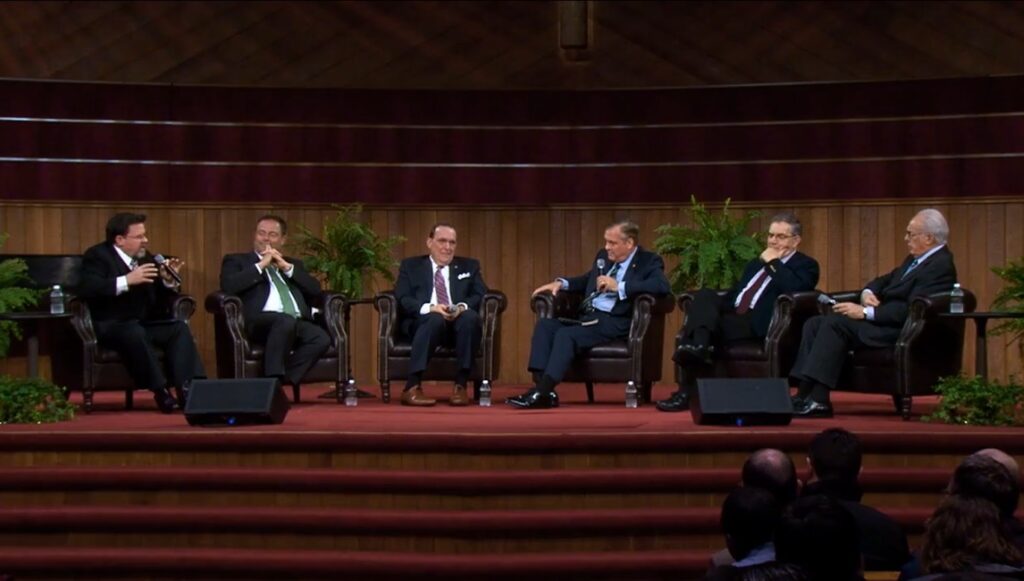
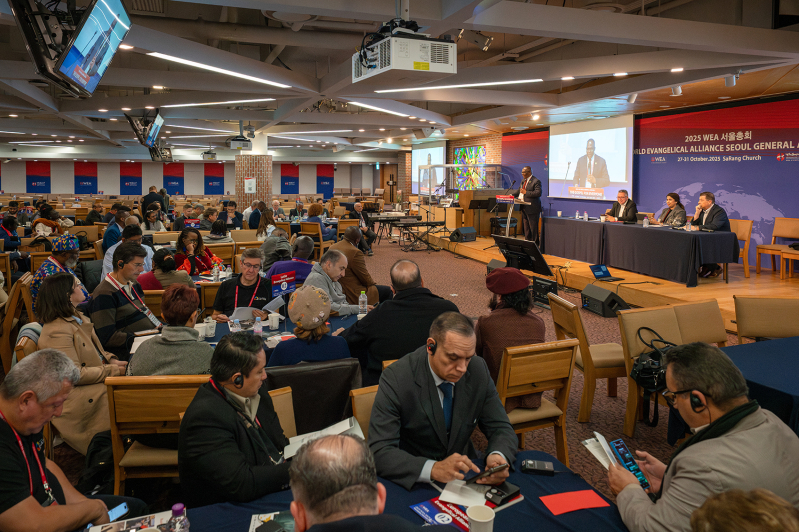
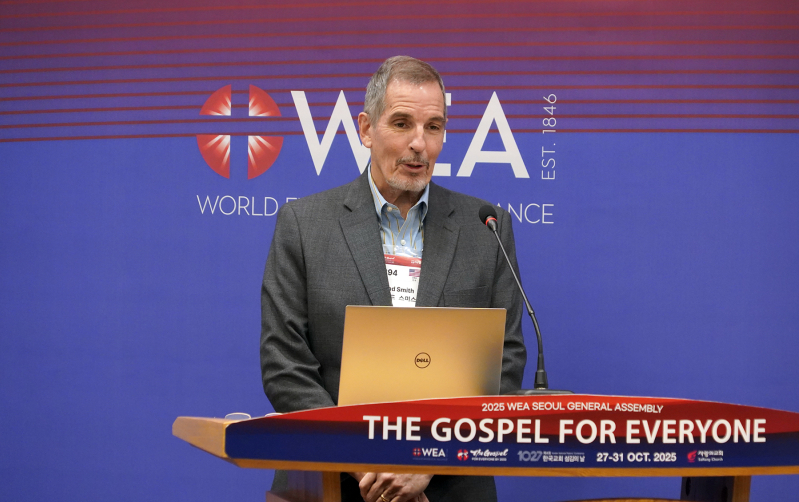
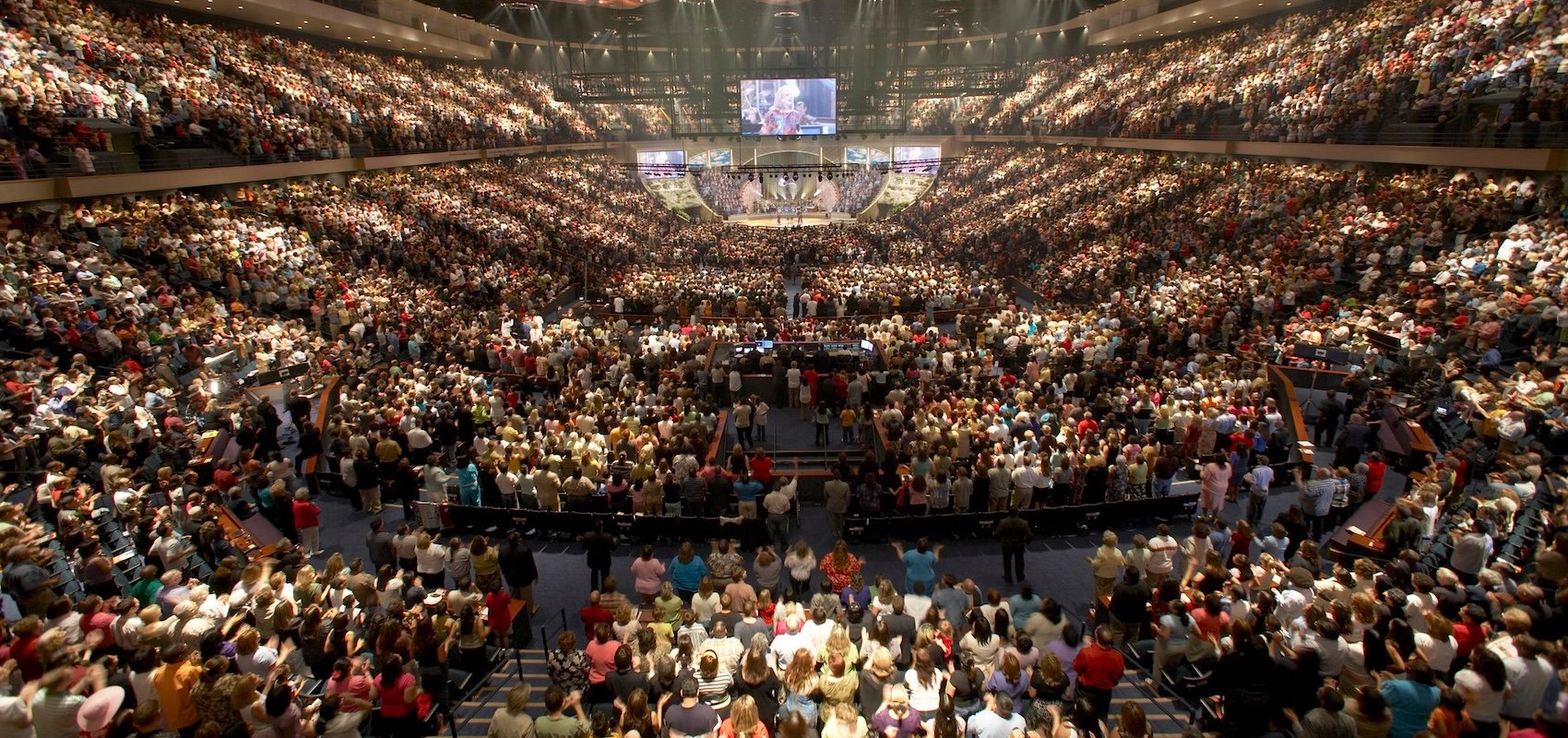




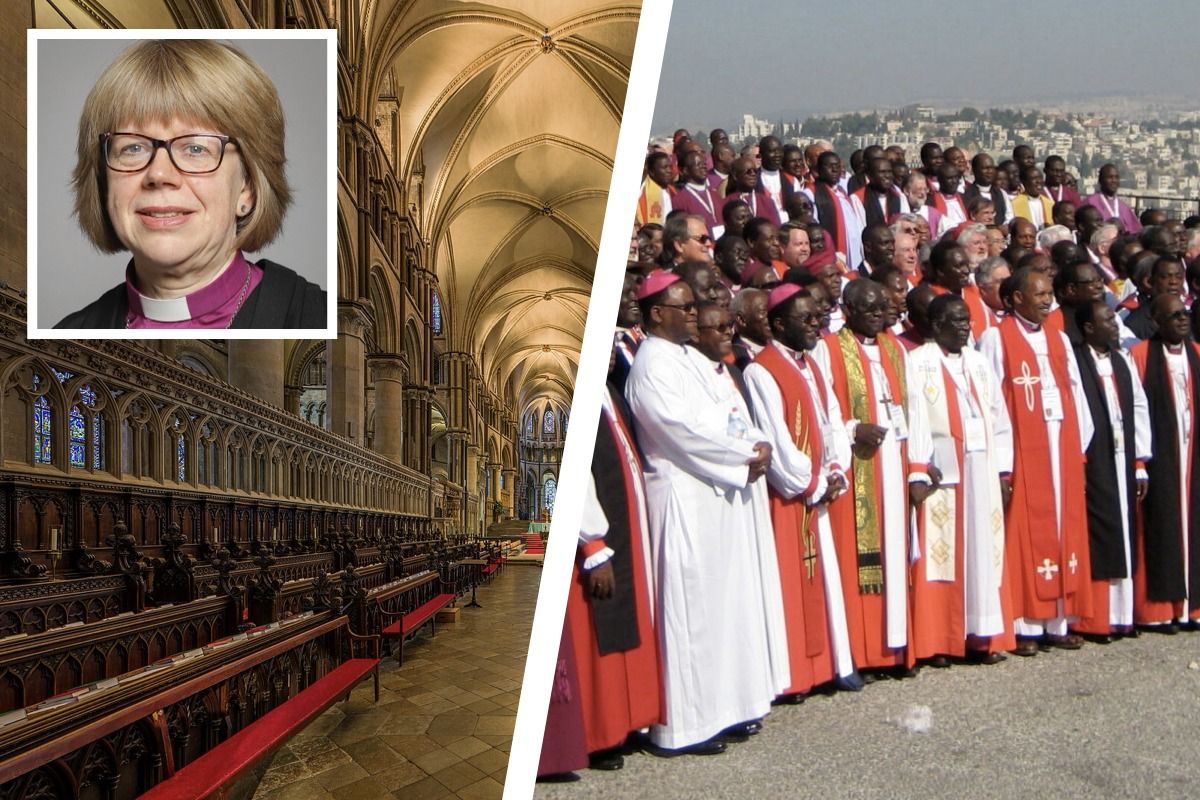


 by
by 

 Truth2Freedom's Blog