There are two ways to be fooled. One is to believe what isn’t true; the other is to refuse to believe what is true. —Soren Kierkegaard. "…truth is true even if nobody believes it, and falsehood is false even if everybody believes it. That is why truth does not yield to opinion, fashion, numbers, office, or sincerity–it is simply true and that is the end of it" – Os Guinness, Time for Truth, pg.39. “He that takes truth for his guide, and duty for his end, may safely trust to God’s providence to lead him aright.” – Blaise Pascal. "There is but one straight course, and that is to seek truth and pursue it steadily" – George Washington letter to Edmund Randolph — 1795. We live in a “post-truth” world. According to the dictionary, “post-truth” means, “relating to or denoting circumstances in which objective facts are less influential in shaping public opinion than appeals to emotion and personal belief.” Simply put, we now live in a culture that seems to value experience and emotion more than truth. Truth will never go away no matter how hard one might wish. Going beyond the MSM idealogical opinion/bias and their low information tabloid reality show news with a distractional superficial focus on entertainment, sensationalism, emotionalism and activist reporting – this blogs goal is to, in some small way, put a plug in the broken dam of truth and save as many as possible from the consequences—temporal and eternal. "The further a society drifts from truth, the more it will hate those who speak it." – George Orwell “There are two ways to be fooled. One is to believe what isn’t true; the other is to refuse to believe what is true.” ― Soren Kierkegaard
JERUSALEM, Israel — During Advent, many Christians sing the beloved hymn, “O Come, O Come Emmanuel.”
CBN News combined the music of this hymn, played by renowned violinist Maurice Sklar, with an explanation of the background and meaning of the song from Claire Pfann, dean of Academic Affairs at University of the Holy Land.
Pfann said that most people don’t realize that this hymn was composed to be an Advent song, not a Christmas carol.
“The hymn was originally taken from a series of sayings that we call antiphons,” she explained. “An antiphon is a saying or an acclimation that is made before the reading of a psalm or a canticle. And each one is based on the titles of the Messiah found in the Old Testament.”
‘O Come, O Come Emmanuel and ransom captive Israel ‘ – Emmanuel, of course, is the title given to the Messiah in Isaiah, chapter 7, where Isaiah prophesies that a virgin shall conceive and bear a son and will call His name Emmanuel. The Gospel of Matthew applies this very scripture to Jesus at His birth,” Pfann explained.
**Listen to renowned violinist Maurice Sklar play the hymn here:
Rod of Jesse
“Another one of the titles applied to the Messiah that is adapted into the song is the Rod of Jesse. ‘O Come thou Rod of Jesse, come,’ she said.
The Rod of Jesse, Pfann noted, is referenced in chapter 11 of Isaiah.
“The Rod of Jesse refers, of course, to the kingship, to the ruling,” she said. “Jesse was the father of David. And so when we sing of the Rod of Jesse we’re singing of the descendant of David, the Messiah, Jesus.”
“One of the verses of ‘O Come, O Come Emmanuel’ calls for the Dayspring from on high to arise. ‘O Come thou Dayspring, come and share our hearts,'” she said.
“The Dayspring refers to Malachi, chapter 4, where we read that the Son of Righteousness shall rise with healing in His wings,” Pfann explained.
“This verse does not refer so much to the kingship of the Messiah but it refers to His tenderness, to His personal-ness, to His compassion to those who are weary, for those who suffer and toil – crying out that the Dayspring, the Son of Righteousness will come with healing not only for our bodies but for our hearts, our souls, and our spirits,” she said.
Key of David
Pfann noted that many of the titles used in the hymn “O Come, O Come, Emmanuel” come from the book of Isaiah.
“Another one is the Key of David,” she said. “Come Thou Key of David, come and open up the way to our Heavenly home. The Key of David comes from Isaiah 22.”
“It speaks of that opening, that passage, that freedom of access that is echoed in the Book of Revelation when Jesus gives the Key of David, which opens doors that no man can shut,” she told CBN News.
Lord of Might
“Another very beautiful theme that is touched on in the hymn is when they refer to the Messiah as the Lord of Might,” Pfann continued.
“The Lord of Might of course comes from Isaiah when it speaks in Isaiah, chapter 11 that upon Him will rest the Spirit of counsel and wisdom and might and understanding,” she said.
“But the hymn reflects on the Lord of Might as being the One who gives the Word of the Lord – on Sinai’s height gave the law. And of course, the Word of the Lord is not simply the law but it’s really Jesus Himself. Jesus is the Word of God,” she explained.
Anticipation of His Coming
“The song ‘O Come, O Come, Emmanuel’ is evoking that longing and expectation that we have,” Pfann said. “We celebrate that Jesus has already come. But we know that something is not yet complete.”
“So it’s a very beautiful song because it has an echo of the past but a tremendous anticipation of that glorious coming when the Rod of Jesse, the Key of David, the One Who is Almighty, God with Us, will establish His Kingdom on earth,” she continued.
“I like to think of Emmanuel, God with me today, God perfectly present,” she said. “God who brings His salvation at this moment, God who became Jesus, who showed His love for us in laying down His life, who calls me by name, who calls each of us by name, who loves us as a Father, who loves us as a Shepherd, who loves us as a king.”
“Today He cries out for the salvation of each human being,” she said. “Today is the day of salvation. We don’t have to wait until tomorrow. We can celebrate Emmanuel, God with us, today.”
Let’s not deceive ourselves. “Your redemption is drawing near” (Luke 21:28), whether we know it or not, and the only question is: Are we going to let it come to us too, or are we going to resist it? Are we going to join in this movement that comes down from heaven to earth, or are we going to close ourselves off? Christmas is coming—whether it is with us or without us depends on each and every one of us. Such a true Advent happening now creates something different from the anxious, petty, depressed, feeble Christian spirit that we see again and again, and that again and again wants to make Christianity contemptible. This becomes clear from the two powerful commands that introduce our text: “Look up and raise your heads” (Luke 21:28 RSV). Advent creates people, new people. We too are supposed to become new people in Advent. Look up, you whose gaze is fixed on this earth, who are spellbound by the little events and changes on the face of the earth. Look up to these words, you who have turned away from heaven disappointed. Look up, you whose eyes are heavy with tears and who are heavy and who are crying over the fact that the earth has gracelessly torn us away. Look up, you who, burdened with guilt, cannot lift your eyes. Look up, your redemption is drawing near. Something different from what you see daily will happen. Just be aware, be watchful, wait just another short moment. Wait and something quite new will break over you: God will come.
You know what a mine disaster is. In recent weeks we have had to read about one in the newspapers. The moment even the most courageous miner has dreaded his whole life long is here. It is no use running into the walls; the silence all around him remains.… The way out for him is blocked. He knows the people up there are working feverishly to reach the miners who are buried alive. Perhaps someone will be rescued, but here in the last shaft? An agonizing period of waiting and dying is all that remains. But suddenly a noise that sounds like tapping and breaking in the rock can be heard. Unexpectedly, voices cry out, “Where are you, help is on the way!” Then the disheartened miner picks himself up, his heart leaps, he shouts, “Here I am, come on through and help me! I’ll hold out until you come! Just come soon!” A final, desperate hammer blow to his ear, now the rescue is near, just one more step and he is free. We have spoken of Advent itself. That is how it is with the coming of Christ: “Look up and raise your heads, because your redemption is drawing near.” Bonhoeffer’s Advent sermon in a London church, December 3, 1933
Now when these things begin to take place, stand up and raise your heads, because your redemption is drawing near. Luke 21:28
Bonhoeffer, D. (2010). God is in the Manger: Reflections on Advent and Christmas (J. Riess, Ed.; O. C. Dean Jr., Trans.; First edition, pp. 40–41). Westminster John Knox Press.
This Advent-time we remember Mary and Joseph, giving thanks for their faithfulness, courage and obedience, stepping out into the unknown in the strength of your Spirit, playing their part in the fulfilment of your plan to bring your prodigal people home again.
We pray that their example might be the pattern of our lives, that when your gentle whisper breaks through the clamour of this world and into our small corner, we might be ready to listen, and having listened, to act. Amen
Lord, in a season when every heart should be happy and light, Many of us are struggling with the heaviness of life —burdens that steal the joy right out of our stockings. Tragedy arrives as innocent victims suffer, and an inner voice whispers, “Be afraid!”
We need your peace, Jesus. We confess that our hearts are too often filled with wonder of a different kind: Wondering when the bills will be paid, when the terror will stop, when rest will come. Will it ever? Is the message still true? In a world where worry, not peace, prevails, stir up that good news again.
This Advent, make it real in our hearts. Never have we needed Your joy and peace more than now. Thank You for the gift of Jesus, our Immanuel, the Word made flesh. We not only need Your peace and joy; Lord, we crave it. You’ve promised rest for the weary, victory for the battle-scarred, peace for the anxious, and acceptance for the broken-hearted—not just at Advent, but every day of every year.
Your name is still called “Wonderful,” “Counselor,” “The Mighty God,” “ The Everlasting Father,” and “The Prince of Peace.”
We know that peace on earth can only come when hearts find peace with You. You are still our Joy. You are still our Peace. You are no longer a babe in the manger. You are Lord of lords and King of kings. And we still celebrate You as Lord—this Christmas and always. Amen
Your prophets, called to make known your Word Proclaiming justice, convicting sin Displaying fruits of your love and grace Comfort, comfort my people, says our God And the glory of the Lord will be revealed
Your prophets, called to forth tell your Word Unfolding a vision of your eternity Making straight a highway to walk along Comfort, comfort my people, says our God And the glory of the Lord will be revealed Amen
Michael Card is one of my favorite artists. He doesn’t do the CCA circuit.
Be people of hope. Let hope live in your heart and share the hope of Christ with all you meet. Share hope by noticing someone else’s humanity. Share hope by listening to someone’s story. Share hope by praying for our world. In this Advent season, we need to see, feel, and share hope. As you go out into the wonder of God’s creations, share hope with those you meet. Amen.
These three central colors of Advent are endowed with profound meaning. Improve your understanding and gratitude of the Advent season by knowing what each color signifies and why it is used on the Advent wreath.
Christianity.com
Updated Dec 02, 2025
Have you ever looked at an Advent wreath and wondered why there are three different candle colors used on it? The three Advent candle colors, purple, pink, and white, have deep spiritual symbolism and are representative of the faithful anticipation that believers partake to ready their hearts and minds for the birth or second coming of Jesus Christ.
The meaning of the season of Advent is to ready one’s heart for the arrival of Christ at Christmas. Through the four weeks of Advent, Christians use a wreath, typically consisting of evergreen branches, decorated with five candles to symbolize several sacred phases of preparation. The circular shape of the wreath represents eternity and the unending cycle of God’s love. It is usually made of evergreen branches, which symbolize the enduring life and hope brought by Jesus Christ. These candles are traditionally lit on each of the four Sundays of Advent, starting on the fourth Sunday before Christmas.
“But you, O Bethlehem Ephrathah, who are too little to be among the clans of Judah, from you shall come forth for me one who is to be ruler in Israel, whose coming forth is from of old, from ancient days.” ~ Micah 5:2
“For to us a child is born, to us a son is given; and the government shall be upon his shoulder, and his name shall be called Wonderful Counselor, Mighty God, Everlasting Father, Prince of Peace.” ~ Isaiah 9:6
These three central colors of Advent are endowed with profound themes and meaning. Improve your understanding and gratitude of the Advent season by knowing what each color signifies and why it is used on the Advent wreath.
Table of Contents
Purple Advent Candle Meaning and Symbolism
Purple has traditionally been the central color of Advent. This color signifies repentance and fasting. The Christian custom of withholding oneself food or some other desire is a practice wherein Christians demonstrate their devotion to God and sanctify their heart and body. Purple symbolizes the somber and reflective nature of this period as Christians prepare to commemorate the birth of Jesus.
Purple is also the liturgical color for Lent, which likewise incorporates a time of contemplation, repentance, and spiritual preparation. The use of purple during both Advent and Lent underscores the parallel themes of preparation and spiritual reflection.
Purple has historically been associated with royalty and kingship. The purple advent candle also symbolizes the supremacy and kingship of Christ, who is recognized as the “King of Kings.” So, purple in this use illustrates the expectation of and welcoming of our King celebrated during Advent. The following candles of the Advent wreath are traditionally purple:
The first Advent candle, known as the prophecy candle, or candle of hope.
The second Advent candle called the Bethlehem candle or the candle of peace.
The fourth Advent candle called the angel candle or the candle of love.
Get your FREE copy of 25 Days of Advent Devotionals and Readings! Print these and share them with family and friends to keep your mind’s attention and heart’s affection on Jesus this holiday season.
Pink Advent Candle Color Meaning and Symbolism
The third Advent candle color is pink, called the shepherd candle or candle of joy.
Pink is the color of Advent used during the third Sunday of Advent, known as Gaudete Sunday. The term “Gaudete” comes from the Latin word for “rejoice,” and it signifies a sense of joy and anticipation as Christmas approaches. Pink represents joy or triumph and this candle exhibits a transition in the season of Advent away from repentance and to a celebration. On Gaudete Sunday, a pink candle is typically lit in the Advent wreath to represent joy and the nearness of the birth of Jesus Christ.
The scripture readings for the pink candle may include passages that emphasize joy and rejoicing, such as Philippians 4:4-7 – “Rejoice in the Lord always. I will say it again: Rejoice! Let your gentleness be evident to all. The Lord is near. Do not be anxious about anything, but in every situation, by prayer and petition, with thanksgiving, present your requests to God. And the peace of God, which transcends all understanding, will guard your hearts and your minds in Christ Jesus.”
The white Christ candle is lit on the fourth Sunday of Advent, representing the completion and fulfillment of the Advent season as it transitions into the Christmas celebration. It signifies the culmination of the Advent journey and the anticipation of Christ’s birth. White is the Advent candle color symbolizing purity, light, restoration, and holiness. White is also a representation of victory.
This white candle at the center of the Advent wreath, which is often called the “Christ candle.” This white candle symbolizes the purity and light of Christ. It is typically lit on Christmas Eve or Christmas Day to represent the arrival of Jesus Christ, who is seen as the “Light of the World” and the embodiment of purity and holiness. Jesus Christ is the righteous, immaculate, pure Savior. He is the light come into a dark and depraved world. He is often described in the Bible wearing bright, profoundly white robes, like snow, and shining with the brightest of light. Daniel 7:9 is such an account:
“As I looked, thrones were placed, and the Ancient of Days took his seat; his clothing was white as snow, and the hair of his head like pure wool; his throne was fiery flames; its wheels were burning fire.” (Daniel 7:9, ESV).
Furthermore, those who accept Jesus Christ as Savior are cleansed of their sins and made whiter than snow. White can also symbolize hope and new beginnings in the Advent season. As Christians prepare for the birth of Jesus, the white candle can serve as a reminder of the hope and promise that Christ’s coming brings, ushering in a new era of salvation and redemption.
Observing the traditions and meaning of Advent holds the importance of Christ’s birth and salvation in our hearts and minds despite the commercialization of the modern Christmas season. As Learn Religions says, “Spiritually preparing one’s heart by focusing on the colors of Advent in the weeks leading up to Christmas is a great way for Christian families to keep Christ the center of Christmas, and for parents to teach their children the true meaning of Christmas.”
Christianity.com’s editorial staff is a team of writers with a background in the Christian faith and writing experience. We work to create relevant, inspiring content for our audience and update timely articles as necessary.
This article is part of our larger Advent resource library centered around the events leading up to the birth of Jesus Christ. We hope these articles help you understand the meaning and story behind important Christian holidays and dates and encourage you as you take time to reflect on all that God has done for us through his Son, Jesus Christ!
Some people may know that the Advent season focuses on expectation and think that it serves as an anticipation of Christ’s birth in the season leading up to Christmas. This is part of the story, but there’s more to Advent.
The History of Advent
The word “Advent” is derived from the Latin word adventus, meaning “coming,” which is a translation of the Greek word parousia. Scholars believe that during the 4th and 5th centuries in Spain and Gaul, Advent was a season of preparation for the baptism of new Christians at the January feast of Epiphany, the celebration of God’s incarnation represented by the visit of the Magi to the baby Jesus (Matthew 2:1–2), his baptism in the Jordan River by John the Baptist (John 1:29–33), and his first miracle at Cana (John 2:1–11). During this season of preparation, Christians would spend 40 days in penance, prayer, and fasting to prepare for this celebration; originally, there was little connection between Advent and Christmas.
By the 6th century, however, Roman Christians had tied Advent to the coming of Christ. But the “coming” they had in mind was not Christ’s first coming in the manger in Bethlehem, but his second coming in the clouds as the judge of the world. It was not until the Middle Ages that the Advent season was explicitly linked to Christ’s first coming at Christmas.
Advent Today
Today, the Advent season, which begins on the Sunday that falls between November 27th and December 3rd, lasts for four Sundays leading up to Christmas. At that time, the new Christian year begins with the twelve-day celebration of Christmastide, which lasts from Christmas Eve until Epiphany on January 6.
Advent symbolizes the present situation of the church in these “last days” (Acts 2:17, Hebrews 1:2), as God’s people wait for the return of Christ in glory to consummate his eternal kingdom. The church is in a similar situation to Israel at the end of the Old Testament: in exile, waiting and hoping in prayerful expectation for the coming of the Messiah. Israel looked back to God’s past gracious actions on their behalf in leading them out of Egypt in the Exodus, and on this basis they called for God once again to act for them. In the same way, the church, during Advent, looks back upon Christ’s coming in celebration while at the same time looking forward in eager anticipation to the coming of Christ’s kingdom when he returns for his people. In this light, the Advent hymn “O Come, O Come, Emmanuel” perfectly represents the church’s cry during the Advent season:
O come, O come, Emmanuel, And ransom captive Israel, That mourns in lonely exile here Until the Son of God appear.
Rejoice! Rejoice! Emmanuel shall come to thee, O Israel.
While Israel would have sung the song in expectation of Christ’s first coming, the church now sings the song in commemoration of that first coming and in expectation of the second coming in the future.
Advent Liturgy and Practice
To balance the two elements of remembrance and anticipation, the first two Sundays in Advent look forward to Christ’s second coming, and the last two Sundays look backward to remember Christ’s first coming. Over the course of the four weeks, Scripture readings move from passages about Christ’s return in judgment, to Old Testament passages about the expectation of the coming Messiah, to New Testament passages about the announcements of Christ’s arrival by John the Baptist and the Angels.
While it is difficult to keep in mind in the midst of holiday celebrations, shopping, lights and decorations, and joyful carols, Advent is intended to be a season of fasting, much like Lent, and there are a variety of ways that this time of mourning works itself out in the season. Reflection on the violence and evil in the world cause us to cry out to God to make things right—to put death’s dark shadows to flight. Our exile in the present makes us look forward to our future Exodus. And our own sinfulness and need for grace leads us to pray for the Holy Spirit to renew his work in conforming us into the image of Christ.
One catechism describes Advent spirituality beautifully: “When the Church celebrates the liturgy of Advent each year, she makes present this ancient expectancy of the Messiah, for by sharing in the long preparation for the Savior’s first coming, the faithful renew their ardent desire for his second coming. By celebrating the precursor’s birth and martyrdom, the Church unites herself to his desire: ‘He must increase, but I must decrease.’”
Advent Wreath and Candles
Three purple candles and one pink or purple candle stand around the outside of the wreath, and a white candle fills the center.
Prophecy Candle: In conjunction with the Scripture readings for the week, this purple candle represents hope and expectation for the coming Messiah. As the candle burns throughout the week and becomes smaller and smaller, it helps us remember that time continually passes and the return of Christ becomes nearer and nearer with each passing day.
Bethlehem Candle: This purple candle represents love—both God’s for us and ours for him and others—and symbolizes the manger where Jesus was born. The manger is a vivid reminder of the great lengths to which the King of Creation went, humbling himself for his people. He deserved a kingly procession into the city with much fanfare. Instead we see him born in a manger, living in poverty with no place to lay his head, and entering the city on a donkey as he makes his way to the cross. Lighting the second Advent candle reminds us of Jesus’ life of love for us.
Shepherd’s Candle or Joy Candle: This purple or pink candle represents joy, such as the joy the shepherds experienced when the angel told them that Christ was to be born. The Advent season is now half over, and Jesus’ coming—both his first coming, liturgically, and his second coming, historically—is nearer now than it was two weeks ago.
Angel Candle: This purple candle has been called the “Angel Candle” and represents the peace that Christ’s birth brings to earth. All four of the candles around the Advent Wreath are now burning, each at a different height.
Christ Candle: The white Christ Candle that is lit on Christmas Eve, representing the pure lamb of God who has come to take away the sins of the world.
Advent and the Christian Life
While Advent is certainly a time of celebration and anticipation of Christ’s birth, it is more than that. It is only in the shadow of Advent that the miracle of Christmas can be fully understood and appreciated; and it is only in the light of Christmas that the Christian life makes any sense. It is between the fulfilled promise of Christ’s first coming and the yet-to-be-fulfilled promise of his second coming that Karl Barth penned these words: “Unfulfilled and fulfilled promise are related to each other, as are dawn and sunrise. Both are promise and in fact the same promise. If anywhere at all, then it is precisely in the light of the coming of Christ that faith has become Advent faith, the expectation of future revelation. But faith knows for whom and for what it is waiting. It is fulfilled faith because it lays hold on the fulfilled promise.” The promise for Israel and the promise for the church is Jesus Christ; he has come, and he will come again. This is the essence of Advent.
“May He whose second coming in power and great glory we await, make you steadfast in faith, joyful in hope, and constant in love. Amen.” – The Book of Occasional Services, page 22.
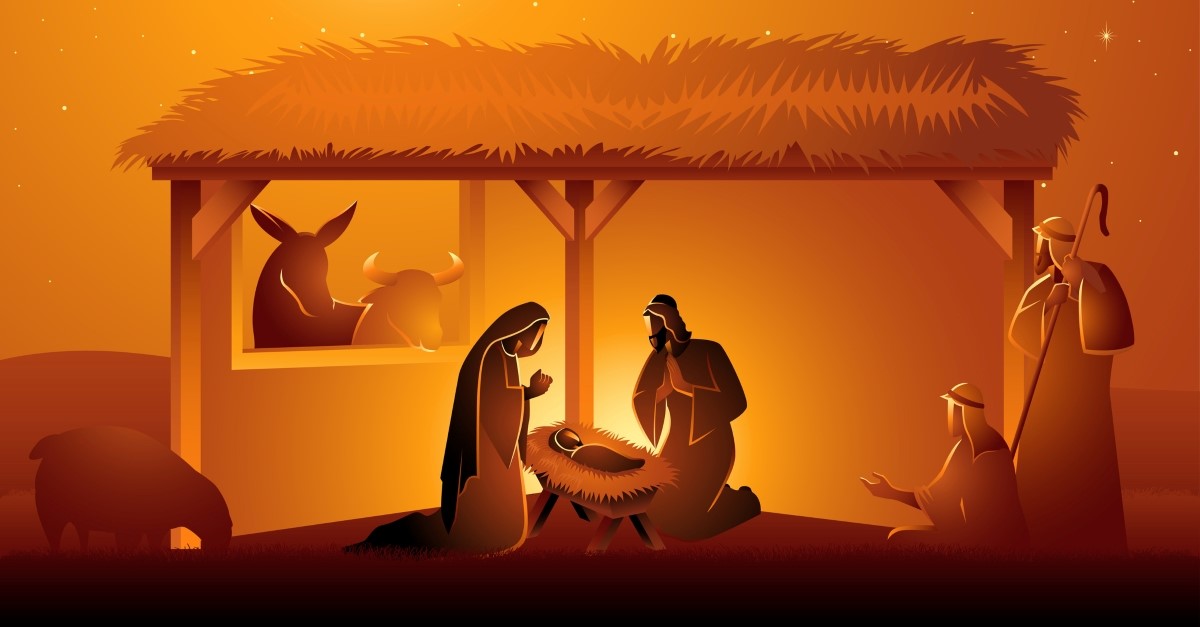
As you focus on the manger scene with your family, encourage each other with the bigger story of Genesis to the end of time, knowing that this little baby redeemed every moment in time. May your Christmas be big as your consider the grandeur of redemptive history on both sides of the manger!
Crosswalk.com Contributing Writer
Bigger Than a Stable
By: Katherine Britton
“In that day you will say: ‘Give thanks to the Lord, call on his name; make known among the nations what he has done, and proclaim that his name is exalted. Sing to the Lord, for he has done glorious things; let this be known to all the world.'” – Isaiah 12:4-5
My felt Advent tree gains one velcro ornament each day until Christmas. I love this calendar, because each unique ornament tells a little bit more about the story of redemption from Genesis onward. A grey felt heart stands for the Fall into sin. A beaded crown reminds of the Prince of Peace and Wonderful Counselor foretold in Isaiah. A fuzzy lamb represents John the Baptist‘s announcement of Christ’s purpose.
The calendar is paired with devotional readings for children, which have surprised me in their simplicity and breadth. Like the ornaments, these readings tell a continuing story, in which Christ’s life is not the beginning or the end, but the event that makes sense out of both. With this bigger context, an otherwise chaotic history becomes simple enough that a child can understand.
How often do we take time to contemplate the magnitude of this story, which began in the Garden of Eden and won’t finish until Christ’s second coming?
I think my Christmas cheer is too often confined to the stable. To use a loose analogy, I’m a bit like the dwarves in C. S. Lewis’s “The Last Battle,” who convince themselves that their dingy stable-prison could not possibly hold the miracle of a whole new Narnia. And so, the dwarves get left behind in their imaginary confinement with nothing to celebrate when everyone else begins to explore the beautiful new world. Like the dwarves, I can put my little Christmas story in a little room, and forget to see the whole miracle of redemption.
Sunday’s sermon about Herod’s massacre in Bethlehem reminded me why the grander picture is so vital. You’ll remember the story – only a short while after the angels announced “peace on earth,” Herod’s blazing temper led to the mass murder of baby boys in Bethlehem. The arbitrary deaths of these little ones seems so disconnected from what we celebrate, so outside the realm of God’s grace. That event – like so many other injustices – seems to overwhelm the baby sleeping peacefully.
We can compartmentalize Christmas so it remains untainted by such events, can’t we? But that’s just it – as the grey heart on my felt Advent tree me, Christmas has to begin with an understanding of sin. We have to see the world’s desperate need for grace before we understand why a baby requires such a hullaballoo, and we have to look back at God’s plan to see how a baby can redeem even those situations. Therein lies the astonishing glory of what happened at Christmas, and the beauty of what we proclaim to the world.
As the days go by and my calendar grows fuller with symbolic ornaments, I get more and more excited about Christmas Day. Into this world with so much baggage came a child who remained in it and not of it, who knew what we are and loved us anyway. By God’s grace, my understanding of Christmas keeps getting bigger – and with it, my reasons to “let [it] be known to the all the world” what he has done, is doing, and will continue to do!
Intersection of Faith and Life: Christ’s incarnate birth makes little sense if we forget why he had to come and what he came to do. As you focus on the manger scene with your family, encourage each other with the bigger story of Genesis to the end of time, knowing that this little baby redeemed every moment in time. May your Christmas be big as your consider the grandeur of redemptive history on both sides of the manger!
When the season feels heavy and hope seems far away, this prayer helps you lift your eyes and find steady peace in the God who never lets go.
A Prayer for Hope This Christmas Season By Vivian Bricker
Bible Reading: “May the God of hope fill you with all joy and peace as you trust in him, so that you may overflow with hope by the power of the Holy Spirit.” – Romans 15:13
Christmas often reminds us of hope because of the twinkling lights, the beautiful decorations, the smiling faces around us, and the remembrance that God sent His Son to the earth for us. However, for many, the holidays can feel anything but hopeful. Due to financial struggles, family trauma, or health concerns, Christmas is not so merry and bright.
I have personally struggled to feel hopeful this Christmas season. Both my physical and mental health have been a burden lately, which makes it difficult to indulge in the happiness that is supposed to come with the holidays. Although I have done my best to combat these symptoms, I continue to feel sorrowful, hopeless, and anxious about the upcoming Christmas season. I love Christmastime, but if you are always feeling incredibly sad or anxious, you won’t have the most joyful time.
Even with all the twinkling lights and beautifully wrapped presents, one can still feel empty and hollow at Christmastime. If you are feeling downtrodden this Christmas, know that it is okay, and you are not alone. It is not a personal shortcoming to struggle with hope during the Christmas season. All of us struggle from time to time, and it is important for us to extend grace to ourselves. Treat yourself as you would treat a friend, and don’t be so hard on yourself when you start to feel gloomy about the upcoming holiday season.
Once you have allowed yourself to sit in your feelings and fully express them, then it is time to turn to the Lord. He can renew your weary heart and give you the hope that you need. Think about what is making you feel hopeless this year and bring it to the Lord (Philippians 4:6-7). Never be afraid to be honest with the Lord and share the deepest and darkest struggles of your heart.
The Apostle Paul tells us, “May the God of hope fill you with all joy and peace as you trust in him, so that you may overflow with hope by the power of the Holy Spirit” (Romans 15:13). As Paul says in this passage, God is the God of hope. The hope the Bible speaks of is not wishful thinking, but rather, a steadfast promise.
There will be many bad things that occur in this world, but God is still the Giver of all good things (James 1:17). God Himself will fill us with joy and peace as we trust in Him, and we will overflow with hope through the power of the Holy Spirit. We need to hold onto this promise and know that God is good. He will help surround our hearts with the grace of His love and the hope of eternity.
Regardless of what you are facing this year, bring it to God. Allow His goodness to give you hope. He will wash away any doubt and ensure you are covered with hope, joy, and love. Even when you doubt Him, He will forever surround you with blessings. Trust in God and allow His hope to give you the steady grace that you need.
Let’s Pray:
Dear Lord, You are the God of all hope, and I praise You. I am lacking in hope this year, and I need help. Please help me to find hope in You and to let go of any feelings of doubt or hopelessness. Life has been heavy this year, and I don’t feel ready to celebrate or lift my voice in praise, but I know that You can transform my hope into something beautiful.
Bring hope into my heart by setting my eyes on You. Equip my heart to see You despite the pain I’m feeling and change my heart of hopelessness into a heart of hope. I trust that You can do all things, and the power of the Holy Spirit will soar in my life.
Vivian Bricker obtained a Bachelor of Arts in Ministry, followed by a Master of Arts with an emphasis in theology. She loves all things theology, mission work, and helping others learn about Jesus. Find more of her content at Cultivate: https://cultivatechristianity.wordpress.com/.
For many—both in the United States and all over the world—Advent is a reminder that the world is broken and in need of tremendous healing.
Every year at Advent, pastors and church leaders feel both the beauty and the weight of the Christmas season. Church services are full, the calendar is crowded, and the message of “God with us” feels more urgent than ever. Yet we know that something else is true: For many—both here in the United States and all over the world—Christmas is a reminder that the world is broken and in need of tremendous healing.
The poor, the widow, the orphan, and the foreigner (Zechariah 7:10)—those the Bible consistently call us to remember—often feel the pressures of life most intensely. Decorations and holiday cheer do very little for the millions marked by fear, displacement, loneliness, and economic struggle.
The longings of Advent echo loudly a line from Andrew Peterson’s song “Is He Worthy”: “Do you wish that you could see it all made new?”
We do. The Church does.
Seeing the First Advent From the Final Advent
Each year as churches reflect on Jesus’ birth narrative, it should be done in anticipation of the promises he will make good on upon his return. Revelation 22:1-4 gives us the vision of what Jesus’ second coming will bring the world, which will include the Tree of Life with leaves that are for “the healing of the nations.” Grounding Advent in both Jesus’ first and second coming takes us from Christmas as sentimental nostalgia to Christmas as realistic expectation of a world made new.
Our observance of Advent is the declaration that God stepped into the brokenness of the world to begin a global healing project through the Church. And if that’s true, then Advent is not only a time to remember Christ’s birth; it’s a time to participate in his work of mission—locally and globally. And pastors and church leaders have the sacred privilege of leading their churches into a world-wide endeavor that often starts with loving our neighbor.
Below are four invitations for this season, fueled by the hope, that leaders can use to remind churches that Jesus’ incarnation began a work that will be completed at his return:
1. Remind Your People That Jesus’ Coming Is God’s Answer to a Broken World
In verses 3-5, John sees a world finally healed: no curse, no night, no darkness—only the Lamb who is himself light and life. But he received that vision while still living in a world of exile, persecution, and pain.
Amid the holiday cheer, many people still feel the groaning of a world that is not yet healed—job loss, family brokenness, mental health struggles, war in the headlines, economic pressure, and the loneliness that quietly stalks so many.
One of your greatest gifts this season is to proclaim the same hope the angel gave John, “No longer will there be anything accursed” (v. 3). The Incarnation is God’s assurance that He sees every wound and has already started the work of undoing everything that is evil and a consequence of the curse in Genesis 3.
Christmas is a declaration that the healing of the nations has already begun because Christ was sent to the world. When you preach this, your people don’t just hear eschatology for the future—they hear hope for the present.
2. Lead Your Church to See the Vulnerable the Way God Sees Them
Throughout Scripture, God consistently identifies with the poor, the widow, the orphan, and the foreigner. Not as an act of charity but as an expression of his character. God doesn’t see by towering over them but by becoming one of them.
Christmas is the story of God Himself being born into poverty, in a borrowed stable, to a family who will soon have to seek asylum from King Herod. If there is any season when the vulnerable should be centered in the life of the church, it is this one.
But here’s the key: Caring for the vulnerable does not begin with strategies or programs—it begins with envisioning healing.
In Revelation 22, John sees and understands that the Tree of Life is for the “for the healing of the nations.” The Church is not the Healer, but we are the branches connected to the Vine who heals. When we see the vulnerable, we come alongside them and participate in the very work Jesus is doing to facilitate their healing.
This Christmas, consider helping your people answer these questions:
Who in our community is experiencing the weight of the season? A single mom, a senior living alone, a family struggling to buy groceries, a newcomer far from home?
Where is God already at work in our city, and how can we join Him? Food pantries, homeless ministries, foster care networks, ESL classes, community health clinics.
How do we go beyond news headlines of war and catastrophe to help people?
Organize prayer nights, connect with global churches, support relief and development efforts, participate in missions in a nation where there’s extreme poverty.
When people understand that acts of compassion are not peripheral to the gospel but intrinsic to it, a culture of Spirit-empowered mission takes root in your church’s DNA.
3. Sing Songs That Reflect God’s Heart for What’s Broken
Singing is one of the most formational elements of this season. The songs we choose do more than set a mood—they shape the imagination of our people. They teach theology. They reveal what we believe God cares about. And if Scripture is our model, then our worship must carry the same heartbeat God himself declares in Mary’s Magnificat recorded in Luke 1:51–53:
He has performed mighty deeds with his arm; he has scattered those who are proud in their inmost thoughts. He has brought down rulers from their thrones but has lifted up the humble. He has filled the hungry with good things but has sent the rich away empty.
Mary’s song is a proclamation that the arrival of Jesus is not only personal salvation—it is social reversal. God lifts the lowly, feeds the hungry, and brings justice to the oppressed. When our churches sing songs that reflect this biblical movement toward the vulnerable, we are discipling our people into the mission of God.
Encourage your worship leaders to select songs during Advent that remind the congregation that Christ’s coming compels us outward—toward the poor, the widow, the orphan, and the foreigner. These songs anchor our celebration in the reality of God’s compassion.
A powerful contemporary example already mentioned is Andrew Peterson’s “Is He Worthy?” This call-and-response anthem echoes Revelation 22 and invites the church to affirm that Jesus is the One who heals the world’s brokenness. Singing it during Advent helps congregations remember that Christmas hope is not sentimental—it is missional.
Although not a Christmas song, Jon Guerra’s “Let Us Be the Church“ is also a powerful reminder and prayer, “May the world see Christ through his people.”
Below are a few historic and modern Christmas songs that highlight God’s care for the poor and the oppressed. Incorporating songs like these can help your church worship in a way that reflects the gospel’s heart for the vulnerable:
O Holy Night Includes the prophetic line: “Chains shall he break, for the slave is our brother.” A powerful declaration of Christ’s liberating justice.
It Came Upon the Midnight Clear Calls the weary, burdened, and suffering to hear the song of peace the angels still sing.
I Heard the Bells on Christmas Day A lament that turns to hope, proclaiming that God’s justice is stronger than despair.
Canticle of the Turning (a contemporary paraphrase of the Magnificat) Directly celebrates the reversal Mary sings: the lifting up of the poor, the scattering of the proud, and God’s mercy for the lowly.
When we put songs like these on the lips of our people, we are forming a church that remembers what God remembers and loves what God loves.
4. Use Advent To Form a People of Mercy and Hospitality
Christmas is one of the most formational times of the year. People are emotionally open, spiritually curious, and looking for belonging. As church leaders, Advent gives you a unique discipleship window to shape the practices and culture of your church.
Here are three formation opportunities:
Preach Hospitality as a Christian Identity
Hospitality is not entertainment—it is a gospel practice. Encourage your church to make room for people who have no room: the widow who sits alone in the pew, the child in foster care, the neighbor from another country, the family struggling quietly.
Challenge your people: Who is one person or family you can invite to your table this season?
Mobilize Your Sunday Schools or Small Groups
Coming out of Advent, encourage community and ministry groups to embark on a missional activity together. They can start with learning opportunities such as prayer walking their neighborhoods to learn about needs or start a small study about global missions such as A World on the Move or Welcoming the Stranger.
Serve in Ways That Build Long-Term Relationship
Christmas outreaches are wonderful, but the greatest work happens after the season ends. Partner with local ministries that provide ongoing care so that December compassion becomes January faithfulness.
Your church can be a living preview of Revelation 22 and experience a discipleship journey where healing happens locally and globally, even in small and simple ways.
A Final Encouragement for Pastors
This season is demanding. You carry the burdens of many, and the expectations of Christmas can feel heavy. But the angel’s vision to John is also a vision for you.
One day, you will see Jesus face to face. One day, all your labor for the healing of the world will make sense. One day, the seeds of compassion you plant will bloom into the fruit of the Tree of Life.
Until then, lead boldly and gently. Proclaim hope courageously. Love the vulnerable joyfully.
Pray for the world fervently.
And participate in what Jesus came to do: Heal the nations.
Download World Relief’s Advent devotional Light for the Journey.
On my son’s fifth birthday, I sat in a cancer center six hundred miles away, watching chemotherapy flow from IV bags into my body. I was battling a rare form of cancer, and my need for a clinical trial took me away from my husband and three young kids for several months.
My worldly hope was gravely threatened. My good health was gone, and it took my energy, my hair, and my predictable future with it. Instead of caring for my family, my days were filled with waiting rooms, blood transfusions, medical tests, and naps. I missed precious milestones with my kids and didn’t know if I’d live to see more.
Through the trials of cancer and survivorship, I needed a hope that could withstand the roller coaster of my health struggles. Because of God’s mercy and grace, we have a better hope to which we can cling: our Lord and Savior, Jesus Christ. Peter wrote his first epistle to suffering Christians like you and me to assure us that our living hope in Christ will not be shaken by earthly trials and will endure to its glorious end.
Our Living Hope
Peter began his letter with the good news of our living hope:
Blessed be the God and Father of our Lord Jesus Christ! According to his great mercy, he has caused us to be born again to a living hope through the resurrection of Jesus Christ from the dead. (1 Peter 1:3)
We do not belong to a Savior whose body is still in the grave. He rose from the dead, declaring victory over sin and death (1 Cor. 15:54–57). Furthermore, His resurrection is only the beginning of the resurrection story. He is the firstfruits of the resurrection, and all who belong to Him will live forever because He is our living hope (1 Cor. 15:20–23).
When we suffer the effects of severe illness, it’s easy to grow weary and discouraged. We may lose hope that life will ever return to normal. In those dark moments, we can cling to our living hope, our Savior who has conquered the grave. We have a living hope because we have a living Savior.
Our Unshakeable Hope
Not only have we been born again to a living hope, but we’ve also been born again
to an inheritance that is imperishable, undefiled, and unfading, kept in heaven for you, who by God’s power are being guarded through faith for a salvation ready to be revealed in the last time. (1 Peter 1:4–5)
Those who belong to Christ can look beyond the suffering of this world to a secure inheritance. The illnesses that ruthlessly ravage our physical bodies can’t touch it. The circumstances that overwhelm us can’t diminish its eternal perfection and purity. Nothing can threaten what God is keeping in heaven for us.
How do we know with certainty that we will receive this unfading inheritance? Peter said we are being guarded by God’s power through faith. It doesn’t depend on our own power or the strength of our faith. We receive this inheritance by God’s mercy, and we keep it by God’s power. Our hope is unshakeable because God’s grip on us is unshakeable (John 10:27–29).
Our Glorious Hope
When Peter wrote about this living, unshakeable hope, he wasn’t oblivious to the trials of life. And yet, Peter encouraged us to rejoice even when we are grieved by suffering:
In this you rejoice, though now for a little while, if necessary, you have been grieved by various trials, so that the tested genuineness of your faith—more precious than gold that perishes though it is tested by fire—may be found to result in praise and glory and honor at the revelation of Jesus Christ. (1 Peter 1:6–7)
God’s promises lift our eyes from our temporary troubles to our everlasting glory. Because of God’s work in us, the testing of suffering proves our faith to be genuine. When Christ returns, the faith God has cultivated in us through these trials will “result in praise and glory and honor” (1 Peter 1:7). This glory may refer to Christ’s glory, the glory we receive with Him, or both. But we know our future with Christ will be glorious, and it is a reason to rejoice in the midst of suffering today.
Our hope in Christ is a steadfast refuge when pain consumes us, fear overwhelms us, and the changes to our bodies and our futures exhaust us. Because of our living, unshakeable, glorious hope, we can say with Peter: “Blessed be the God and Father of our Lord Jesus Christ!” (1 Peter 1:3).
If hope is longing for life, despair is longing for an end. Like Elijah under the broom tree (1 Kings 19:1–10), Job regretting his birth (Job 3), or Paul, so burdened by affliction that he despaired of his life (2 Cor. 1:8), believers born to a living hope can feel trapped in times of anguish.
The psalmist cried out,
All your breakers and your waves have gone over me. (Ps. 42:7)
Job lamented, “My spirit is broken; my days are extinct” (Job 17:1). These aren’t just poetic sentiments—they reflect a reality where suffering can stretch beyond what we’re wired to bear.
Despair doesn’t only come to those we might think are likely candidates: the gloomy ones, the discontent, or those of little understanding. No, even vibrant saints like Charles Spurgeon, Martyn Lloyd-Jones, and John Bunyan experienced seasons of deep anguish and agony. It doesn’t discriminate based on temperament or spiritual maturity.
A person in despair wants one thing: relief from it. The very nature of the struggle is the powerful illusion of defeat and meaninglessness without solution or escape. The psalmist described it this way:
I have come into deep waters, and the flood sweeps over me. (Ps. 69:2)
Like treading water in a turbulent sea, it can feel like we’re drowning in plain sight, just out of rescue’s reach.
Whether a slow descent or a sudden pushing of the mind and soul to the brink, despair distorts the reality of the believer’s hope and reduces the capacity of body, mind, and soul. Restoration, then, involves a restored perception and capacity as we lean on Christ in our weakness and exercise faith through “small” steps of obedience, patience, and hope that break despair’s momentum.
Interrupting Rumination
In Bunyan’s *The Pilgrim’s Progress *, when Christian languished in Giant Despair’s castle, the darkness wasn’t an illusion; it was a palpable, suffocating reality. Likewise, we may be in the midst of very bleak circumstances, but despair makes us cycle them endlessly while obfuscating our hope in Christ. Christian’s deliverance came not because the darkness ended but because he remembered to use the key of promise in his pocket.
God’s Word needs to regularly interrupt and reshape our thoughts. When abandonment looms, recall that He has promised never to leave or forsake you. When depths seem beyond God’s reach, remember that He descended into Sheol itself. When you don’t know what to pray, know that the Spirit groans on your behalf.
Caring for the Body
When Elijah felt overwhelmed, God provided him with food, rest, and His presence. We are created with finite capacities that need restoration when depleted. Humility, then, requires daily exercise, getting enough sleep, nourishing our bodies, soaking in sunlight, seeking medical care, and allowing ourselves to rest instead of pushing through responsibilities. While tending to our physical needs may seem insignificant or futile, it’’s actually a powerful act of obedience to honor the limits of our creatureliness and trust in God’s provision.
Turning Outward
Like a survival instinct, despair consumes every part of the sufferer, demanding self-focus and isolation. The powerful twist of distorted introspection can be diminished by the giving and receiving of time, care, and presence with others. It is good to let others in, not only to receive love but also to give it through conversation and attention. Small acts of caring prioritize others and act as strong countermeasures against the pull toward self-focus. Pray for those around you, send a note of encouragement, focus a conversation on them—all of these are freeing ways to restore an outward-looking posture toward God and neighbor.
Rescue of Routine
When despair strips us to life’s essentials, let us embrace the essentials as part of our rescue. Daily routines, no matter how small, bring order. Simple tasks like rising each morning, doing laundry, or mowing the lawn become lifelines of normalcy and purpose. Even if efforts feel robotic, embracing the next thing is an act of hope. Faithfulness in small things (Luke 16:10) rebuilds our capacity and affirms meaning and purpose, transforming the mundane into rescue.
Comfort of Creation
When dread looms large, remembering our smallness in light of God’s majesty and sovereignty brings relief. He holds all creation together, including us. Job’s despair turned to worship as God displayed His character and sovereignty in upholding everything from Orion’s belt in the sky to the gates of the ocean. Taking walks in nature, lying beneath the stars, planting flowers, caring for animals—the beauty of creation comforts us and reorients our perspective as He ministers to us through the natural world.
Persevere with Patience
When darkness persists and relief doesn’t come, remember that the progression from suffering to hope requires endurance. This implies time and trust. Living in the tension isn’t easy, but weakness and need are the prerequisites for learning total dependence on Christ. He has called us not only to share in His victory and resurrection power, but also in the fellowship of His sufferings (Phil. 3:10). Persevere in those faltering steps of faith—it is exactly the good work He prepared for you to do in this season.
Do not fear the shadows. Though they feel unending, the reality is that it’s just “a little while [until] the God of all grace, who has called you to his eternal glory in Christ, will himself restore, confirm, strengthen, and establish you” (1 Peter 5:10). The shadows may deepen still, but they can never claim those who have been rescued from the dominion of darkness and transferred to the kingdom of the Son (Col. 1:13).
1. PRIORITIES: “For I delivered to you as of first importance what I also received…” v3. It’s so easy for me to slide away from the big truths of Christianity, the really important truths, and into my own peculiar world of theological interests, spiritual side roads and churchy preferences that keep me from allowing God’s grace to marinate in my soul, prompting worship and openness to people. Easter, the resurrection of Jesus, jolts me out of my individual ghetto and invites me back into the large, open realm where He roams. Easter reminds us of what is really important.
2. GOSPEL: “Now I would remind you…of the gospel” v1. Easter is about the literal, physical resurrection of Jesus Christ from the dead and is not less than that, but it is more! As Paul reminds the Corinthians, Easter, and Palm Sunday, and Maundy Thursday, and Good Friday before that, all bring Christians back to meditate on Christ’s death, and why He died; His burial, the grave, death; and His resurrection, and how that impacts us receiving the righteousness of Christ (see Romans 4:25). Easter reminds me of the deep and wide Gospel—the whole Gospel.
3. STABILITY: “In which you stand” v1. The world is in chaos and our emotional lives often reflect that chaos. When bad news makes the ground under my feet unsteady, I can stand, firm in God’s promises that are proved reliable by the resurrection. Easter reminds me, us, that God can be trusted no matter what we face in life.
4. SALVATION: “And by which you are being saved” v2. Easter pulls us back to the core of the Gospel of God’s grace in Christ, and reminds us that we will be saved, that we are now being saved, and we will be saved by Christ and His work, and not by our own work. How easy it is to act as though God saved us and now we’re working really hard to keep ourselves saved! No! All is grace, and Easter reminds us even as we fail, that He will never fail us.
5. EVIDENCE: “And that he appeared to Cephas, then to the twelve” v5-7. Christians cannot get through Easter without recounting the litany of the many eyewitnesses who saw Jesus alive after seeing Him clearly die. That’s as it should be! Easter, the resurrection of Jesus from the dead, provides the evidential and rational basis for trusting our entire present and eternal life to Jesus, the King over death. Easter reminds us that we’re not foolish in following Jesus, and actually, that we would be foolish not to.
6. SCRIPTURES: “In accordance with the Scriptures” v3-4. The resurrection of Jesus was a part of the Triune God’s plan to redeem His people. As we reflect on the prophecies of Easter and their fulfillment, Christians are reminded that we can trust all of the Bible, on every subject, for all time! Easter reminds us that God’s Word never fails.
7. PAST: “Last of all, as to one untimely born, he appeared also to me” v8-9. God used Paul’s past, but Paul was not defined by his sordid past any more than we are defined by our past. God’s grace in Christ radically accepts us where we are and transforms us into what surprises even us. Easter reminds us of our past and the new life and freedom that we now have.
8. IMPACT: “But by the grace of God I am what I am” v10-11. When Paul met the resurrected Christ (Acts 9), he was never and could never be the same. Paul was fully immersed in God’s unconditional favor because of Jesus, and his life can only be called extraordinary after that. While our lives might not be as extensively impactful as Paul’s, Easter reminds us that grace raises the dead and stirs the world through them. Grace creates risk takers with nothing to lose and nothing to prove.
9. LOGIC: “Now if Christ is proclaimed as raised from the dead, how can…” v12-49. Since Jesus was raised from the dead, so will we be raised from the dead! This life in Christ is preparation for an eternity that is bigger and grander than we can ever imagine. The logic of Christ’s resurrection leading to our own opens up for us a whole new future which we are invited to explore. Easter pulls us out of a this only life into an eternal future that kills the despair of “is this all there is?”
10. HOPE: “I tell you this brothers…” v50-58. Jesus’ resurrection is a model for what ours will be like. An instantaneous change, an imperishable body; immortality; the death of death; victory, triumph, not on our own, but in Jesus. Easter reminds us to hope, and pulls us into hope over and over and over again. Soli Deo Gloria
       Do not remember the former things,
       Nor consider the things of old.
What happens when you can’t seem to let go of pain and hurt from past years? Bitterness is a common symptom, the refusal to forgive. Far more often, however, the refusal to move forward results in depression and even despair. When you dwell on pain, it’s not long before your entire experience of life is defined by that pain, and that clearly is not what God has intended for you as His child. There is another way, and it’s not any quick remedy or simple formula from a self-help book. The key is looking to God for encouragement and the gift of His renewal: “Do not call to mind the former things, Or ponder things of the past. Behold, I will do something new, Now it will spring forth; Will you not be aware of it? I will even make a roadway in the wilderness, Rivers in the desert. The beasts of the field will glorify Me … because I have given waters in the wilderness And rivers in the desert, To give drink to My chosen people. The people whom I formed for Myself, Will declare My praise” (Isa. 43:18–21 NASB). God is ready to do a work of renewal in your heart and life, and He asks you, “Will you not be aware of it?” You may be in the desert, and you may have been scorched too long by its hot, blowing sands. But God has prepared a river of relief for you if you will only ask Him to open your eyes to His refreshment.
Thank You, Lord, for Your river of relief. Open my eyes to Your refreshment.
Stanley, C. F. (2002). Seeking His face (p. 72). Thomas Nelson Publishers.
SCRIPTURE READING: John 17:24–26 KEY VERSE: Hebrews 13:5
Let your conduct be without covetousness, and be content with such things as you have. For He Himself has said, “I will never leave you nor forsake you.”
In Hebrews 13:5, God promises to never leave you or forsake you. And since God is truth and God is love, you can know without reservation that He will honor His promises. There is no shadow of turning in Him; He cannot defy His character of love. So why are so many people devastated by loneliness? Paul Little writes,
Isn’t it ironic that in an age of the greatest population explosion the world has ever known, more people are desperately lonely than ever before?… Even the high-rise apartments in our big cities are monuments to loneliness. There is aching loneliness behind those doors for many people. I know of those, both in the city and in the suburb, who go to the large shopping centers simply for the opportunity to talk to somebody in the store. At least the checker will speak to them as they go out.
Much of the basis for loneliness stems from people’s childhoods. Their parents were too busy, were too apathetic, or for some reason were never there for them when they were children. They have felt unloved and unneeded most of their lives, and as they wondered about the whereabouts of their parents, they also might have wondered about the whereabouts of God. God has always been there, even when people failed you. He always will be there, never leaving you, never forsaking you. It’s a promise.
Father, thank You for Your promise that You are always with me. You will never fail me or forsake me.
Stanley, C. F. (2002). Seeking His face (p. 35). Thomas Nelson Publishers.
Happiness is related to circumstances; joy is a gift from God.
Not long ago it was common to see bumper stickers proclaiming every conceivable source for happiness. One said, “Happiness is being married.” Another countered, “Happiness is being single.” One cynical sticker read, “Happiness is impossible!” For most people happiness is possible, but it’s also fickle, shallow, and fleeting. As the word itself implies, happiness is associated with happenings, happenstance, luck, and fortune. If circumstances are favorable, you’re happy; if not, you’re unhappy. Christian joy, however, is directly related to God and is the firm confidence that all is well, regardless of your circumstances. In Philippians 3:1 Paul says, “Rejoice in the Lord” (emphasis added). The Lord is both the source and object of Christian joy. Knowing Him brings joy that transcends temporal circumstances. Obeying Him brings peace and assurance. Joy is God’s gift to every believer. It is the fruit that His Spirit produces within you (Gal. 5:22) from the moment you receive the gospel (John 15:11). This joy increases as you study and obey God’s Word (1 John 1:4). Even severe trials needn’t rob you of your joy. James 1:2 says you should be joyful when you encounter various trials because trials produce spiritual endurance and maturity. They also prove that your faith is genuine, and a proven faith is the source of great joy (1 Peter 1:6–8). You live in a world corrupted by sin. But your hope is in a living God, not in a dying world. He is “able to keep you from stumbling and to make you stand in the presence of His glory blameless with great joy” (Jude 24). That’s your assurance of future glory and eternal joy! Until that time, don’t neglect His Word, despise trials, or lose sight of your eternal reward. These are key ingredients of your present joy.
✧✧✧
Suggestions for Prayer: Thank the Lord for any difficult circumstances you might be facing. Ask Him for continued grace to see them through His perspective and to not lose heart (Gal. 6:9). ✧ Be aware of any sinful attitudes or actions on your part that might diminish your joy. Confess them immediately.
For Further Study: Read Acts 16:11–40. ✧ What difficulties did Paul and Silas face in founding the Philippian church? ✧ How did God use their difficulties for His glory?
MacArthur, J. F., Jr. (1993). Drawing Near—Daily Readings for a Deeper Faith (p. 45). Crossway Books.
For I know the thoughts that I think toward you, says the Lord, thoughts of peace and not of evil, to give you a future and a hope.
Are you aware that God knows exactly where you are and what you are doing right now? What about tomorrow, or the next day, or the next? God is just as aware of what you will be doing at 10:42 A.M. on any random morning five years from now, as He is mindful of what you are doing now. Contrary to secular thought, we are not bouncing around haphazardly through time and space. The same God who created the universe and everything in it also has a specific plan for every single person on earth. Because He is the God of yesterday, today, and tomorrow, He alone knows the ultimate outcome of each decision we make. Therefore, only God can be trusted to guide our daily steps as we seek to follow Him. The Lord revealed through Jeremiah, “For I know the thoughts that I think toward you … thoughts of peace and not of evil, to give you a future and a hope” (Jeremiah 29:11). These two things—hope and the expectation of a bright future—are in short supply these days. However, we have the assurance of the almighty God that He already has a plan to provide us with both. In Christ, the hope for our eternal future is secure. However, God is still intimately interested in your day-to-day living as well. Invite Him into your decisions; only He knows how to get you where He wants to take you.
Father, I am so thankful that You are interested in my day-to-day living. I invite You to guide me in every decision and get me where You want to take me.
Stanley, C. F. (2006). Pathways to his presence (p. 18). Thomas Nelson Publishers.
Lord, You remember me, the kindness of my youth, the love of my betrothal, when I went after You in the wilderness. You will remember Your covenant with me in the days of my youth, and You will establish an everlasting covenant with me. You will visit me and perform Your good work toward me. For You know the thoughts that You think toward me, thoughts of peace and not of evil, to give me a future and a hope.
As the heavens are higher than the earth, so are Your ways higher than my ways, and Your thoughts than my thoughts. I would seek You, God, and to You I would commit my cause—who does great things, and unsearchable, marvelous things without number. Many, O Lord my God, are Your wonderful works which You have done; and Your thoughts toward me cannot be recounted to You in order; if I would declare and speak of them, they are more than can be numbered.
You see my sin more clearly than I do, yet You choose to remember me “for good.” I praise You for this mercy, this grace.
[Love] bears all things, believes all things, hopes all things, endures all things.
Love hopes all things.” Love that hopes has a confident expectation. It is a definite, persistent, absolute truth. There is no situation that divine love within us cannot face with full hope. That’s what love is all about. Love hopes.
Hope is not refusing to face the truth. Hope is having a confidence in God to see you through each difficult trial. Jesus was always the epitome of truth, but He never failed to bring hope to others. When He met the woman taken in adultery, He inspired her to hope again. When He met the thief on the cross, Jesus made sure that man left this life with hope. He told the story about the lost coin that was found, and the lost son who came home, and the lost sheep that was found. Over and over again, what Jesus said in His messages was, “There’s hope!” Though He was mocked, disbelieved, and crucified, He never doubted the glory that was yet to be, and He endured the cross for the joy that was set before Him. He had hope.
Love hangs on with tenacity when other hands let go in despair. To hope when faith has been disappointed is a greater thing than to have believed the sure thing. Love hopes all things.1
“Do not look for rest in any pleasure, because you were not created for pleasure: you were created for joy. And if you do not know the difference between pleasure and joy you have not yet begun to live.” – Thomas Merton1
“Everything if given to God can become your gateway to joy.” – Elisabeth Elliot
“Happiness depends on what happens; joy does not.” – Oswald Chambers
“Joy cannot be pursued. It comes from within. It is a state of being. It does not depend on circumstances, but triumphs over circumstances. It produces a gentleness of spirit and a magnetic personality.” – Billy Graham
“Though sin often brings immediate pleasure, it gives no lasting joy.” – R. C. Sproul
“The greatest joy of a Christian is to give joy to Christ.” – Charles Spurgeon
“Joy is increased by spreading it to others.” – Robert Murray M’Cheyne
“Joy is not necessarily the absence of suffering, it is the presence of God.” – Sam Storms
“Joy is distinctly a Christian word and a Christian thing. It is the reverse of happiness. Happiness is the result of what happens of an agreeable sort. Joy has its springs deep down inside. And that spring never runs dry, no matter what happens. Only Jesus gives that joy. He had joy, singing its music within, even under the shadow of the cross.” – S. D. Gordon
“Begin to rejoice in the Lord, and your bones will flourish like an herb, and your cheeks will glow with the bloom of health and freshness. Worry, fear, distrust, care-all are poisonous! Joy is balm and healing, and if you will but rejoice, God will give power.” – A. B. Simpson
“How divinely full of glory and pleasure shall that hour be when all the millions of mankind that have been redeemed by the blood of the Lamb of God shall meet together and stand around Him, with every tongue and every heart full of joy and praise! How astonishing will be the glory and the joy of that day when all the saints shall join together in one common song of gratitude and love, and of everlasting thankfulness to this Redeemer! With that unknown delight, and inexpressible satisfaction, shall all that are saved from the ruins of sin and hell address the Lamb that was slain, and rejoice in His presence!” – Isaac Watts
“There is no virtue in the Christian life which is not made radiant with joy; there is no circumstance and no occasion which is not illuminated with joy. A joyless life is not a Christian life, for joy is one constant recipe for Christian living.” – William Barclay
Oh, what great happiness and bliss, what exaltation it is to address oneself to the Eternal Father. Always, without fail, value this joy which has been accorded to you by God’s infinite grace. – John of Kronstadt
“No matter what the climate is, what the troubles are, what the difficulties are, there is joy for the child of God, because joy is produced supernaturally by the Holy Spirit in us.” – Billy Graham
“When we are powerless to do a thing, it is a great joy that we can come and step inside the ability of Jesus” – Corrie Ten Boom
“To rejoice in temporal comforts is dangerous, to rejoice in self is foolish, to rejoice in sin is fatal, but to rejoice in God is heavenly.” – Charles Spurgeon
“Joy—the kind of happiness that doesn’t depend on what happens.” – David Steindl-Rast
“The Christian living in disobedience also lives devoid of joy and hope. But when he begins to understand that Christ has delivered him from the reign of sin, when he begins to see that he is united to Him who has all power and authority and that it is possible to walk in obedience, he begins to have hope, and as he hopes in Christ, he begins to have joy. In the strength of this joy, he begins to overcome the sins that have so easily entangle him. He then finds that the joy of a holy walk is infinitely more satisfying than the fleeting pleasures of sin. But to experience this joy, we must make some choices. We must choose to forsake sin, not only because it is defeating to us but because it grieves the heart of God.” – Jerry Bridges
“Those who understand God’s sovereignty have joy even in the midst of suffering, a joy reflected on their very faces, for they see that their suffering is not without purpose.” – R. C. Sproul
1All of the following quotes are from the websites below:
The Lord is my rock and my fortress and my deliverer;
My God, my strength, in whom I will trust;
My shield and the horn of my salvation, my stronghold.
Hope from God is an anchor to the soul. It is not something worn lightly so that it is easily brushed aside. Hope that comes from Jesus Christ resides deep within your heart. It will never abandon you, and if you look for it, you will find it there to encourage you in mighty ways. Hope is the very thing that keeps you from giving up when all the odds are stacked against you.
It also is something God begins to train you how to use and depend upon from the first day you trust Him as your Savior. We often laugh about taking baby steps as young Christians. But this is exactly what we do. We crawl, then we begin to walk. Just like any toddler, we stumble, fall, even bump our heads and cry.
God, our heavenly Father, lifts us up into His arms not because it is His duty, but because He loves us. This is the essence of hope: We have felt the brush of His love across our hearts and emotions, and we are drawn to Him again and again.
Are you hopeful today? Many are not. They worry and fret and in doing so stumble in their emotions. Oh, that you could see how the loving hands of Jesus reach out to catch you whenever you fall.
Beloved, place your hope in God for every issue, and you will find a strong and mighty refuge for your weary heart (Ps. 18:2).
Lord, help me to place my hope in You for every issue. Thank You for providing a strong and mighty refuge for my weary heart.1
1 Stanley, C. F. (2002). Seeking His face (p. 4). Thomas Nelson Publishers.
There is a widespread fascination with the end of the world. Throughout history, we have witnessed the bold assertions of soothsayers, naysayers, and doomsdayers. Every day, self-proclaimed prophets of the end times make whimsical predictions about the future. Claiming to have biblical authority, they tout their cleverly devised schemes about the end of the world as we know it, and by reading between the lines of the Old Testament prophetical books, they carefully contort the words of sacred Scripture to fit their fictional fantasies about the second advent of Christ.
Christians throughout the world have become so enamored with some obscure aspect about the second advent of Christ that they construct their entire systems of doctrine upon what might happen—not upon what has happened. We are, indeed, called to live with eager expectation of the second advent of Christ, but we should only do so in light of the first advent of Christ. In remembrance of Christ’s first advent, it is not enough simply to wish Jesus a happy birthday. In fact, to do so borders on blasphemy. Instead, we are called to remember and to celebrate the incarnation of the Son of God, the second person of the Trinity, the eternal Logos.
At the first advent of Jesus Christ, the fullness of time had come and God sent forth His Son into this fallen world. As the prophets foretold, He was born of a virgin who was richly blessed of God. He was born under the law of God, not to abolish the Law but to fulfill it. As was necessary to redeem those under the Law, He fulfilled the righteous demands of the Law and took upon Himself the sins of His people, His sheep for whom He laid down His life.
As His people, we confess that Christ shall come again to judge the quick and the dead. We believe He will return to this world not as a babe in a manger but as the King of all the earth, in power and glory to manifest His reign over the new heavens and the new earth.
We confess His return because of what He taught us at His first advent and on account of the hope that is within us. For this reason, during the wonderful Advent season that comes each year, we should eagerly await the second advent of Christ as we celebrate the first advent of Christ. Nevertheless, let us always be mindful that although Christmas day comes only once a year, we are called to remember and celebrate the eternal work of Christ—past, present, and future—each day of our lives coram Deo, before the face of God.






 Vivian Bricker obtained a Bachelor of Arts in Ministry, followed by a Master of Arts with an emphasis in theology. She loves all things theology, mission work, and helping others learn about Jesus. Find more of her content at Cultivate:


 Truth2Freedom's Blog