Tag Archives: joshua

Devotional for June 23, 2025 | Monday: An Ordained Safety

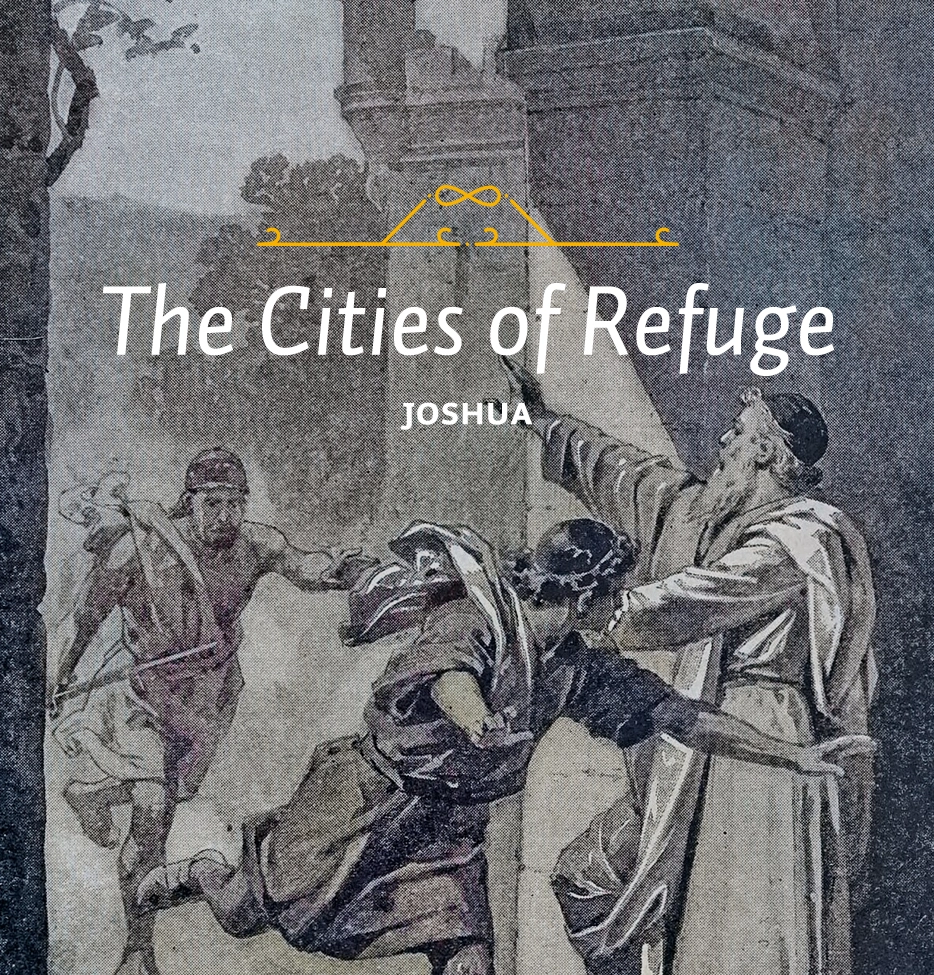
Cities of Refuge

Joshua 20:1-6 This week’s lessons teach us about the priestly cities of refuge, and how they point the way to our own refuge found only in the Lord Jesus Christ.

Theme

An Ordained Safety

I suppose it’s true to say that in some way or another, everyone is proud of the city or town in which he or she grew up, which is a way of saying that from the point of view of the native, every place is special in some way. I grew up in McKeesport, Pennsylvania, which is a mill town out in the western part of the state on the junction of the Monongahela and Youghiogheny rivers. Living in the shadow of the big city of Pittsburgh, McKeesport maybe was not known for a whole lot.  But we were proud of our football team, and every fall, everybody used to go over to watch the games. I have a very good feeling for the way Garrison Keillor feels when he writes about his mythical hometown of Lake Wobegon, the little town where “all the women are strong, all the men are good-looking, and all the children are above average.”

Sometimes cities try to capture their special flavor in a slogan.  Dallas is the “Big D.” New York is the “Big Apple.” Chicago is the “Windy City.” Way out in the middle of Kansas, there’s a place called “mid-America.” Everybody has a way of being proud about their own place.  

The Israelites had special cities, too, only their cities were special for very spiritual reasons. I’m sure in the sense of which I’ve already been speaking, all these towns of Israel were special to the people who lived there. We already know from the case of Caleb, for example, how he got his mind set on the town of Hebron in Judah in the south, and how when his role in the conquest was over, he asked if he could just have one more opportunity to prove the power of God. He said, “I want Hebron. Give me that place. I want that mountain.” And so, by the grace of God, he took it. And Joshua was certainly proud of Timnath-serah, the town which had been given to him. The other people fought for their cities. They drove out the inhabitants, taking the cities one by one. And when they looked over those cities, they would have said, “Well, this is now my city.”  

And yet, there were special cities even among all these other cities. They’re described in Joshua 20 and 21. Chapter 21 tells about the towns that were given to the Levites. The Levites, the priests, didn’t have any land of their own; they were not given a tribal territory. Instead, God scattered the priests throughout Israel as a blessing to the whole people. And they were given these priestly cities in which they lived. There were 48 of them, and chapter 21 lists them. And then at the very end, there’s a summation, which says, “The towns of the Levites and the territory held by the Israelites were 48 in all, together with their pasture lands.”

From those 48 cities, there were six that were picked out and made cities of refuge in the kind of arrangement that is described for us very carefully in chapter 20. Of these six cities, three of them were to the west of the Jordan River, and they’re listed first. Kadesh was up north in Galilee, in the hill country of Naphtali; Shechem was in the central part of the country, in the hill country of Ephraim; and finally, there was Kiriath-arba (that is, Hebron), which is to the south in Judah. There were also three cities on the east of the Jordan River.  In the desert to the south, within the tribe of Reuben, there was Bezer; in the middle part of the country was Ramoth in Gilead, which is in the tribe of Gad; and lastly there was Golan in Bashan, from the tribe of Manasseh.

These were very special cities, and the Old Testament describes them in several places. You find them in Exodus 21, verses 12 and following; and they are also mentioned briefly in Deuteronomy 4:41-43. There are also two passages which describe these cities at length, Numbers 35 and Deuteronomy 19. We can see here that their establishing and function was delineated carefully in the Old Testament law. So here in Joshua 20 is the fulfillment of what was already predetermined by God through revelation to Moses and recorded in the Jewish Scriptures.

Study Questions

  1. The lesson mentioned that the Israelites may have felt similarly about their cities in the Promised Land as we do about our own towns or cities. But in what ways were the Israelites’ experience different from our own?
  2. What significant thing do you notice about the location of these six cities?
  3. What important point does Dr. Boice make about the establishment and function of these cities?

Application

For Further Study: Download for free and listen to James Boice’s message, “Rock of Refuge.” (Discount will be applied at checkout.)

https://www.thinkandactbiblically.org/monday-an-ordained-safety/

Devotional for June 16, 2025 | Monday: Caleb’s History

Joshua 14:6-15 This week’s lessons teach us about Joshua’s companion in the conquest of Canaan, and what it was that made Caleb a great man.

Theme

Caleb’s History

The magnificent old man to which I am referring here in Joshua 14 is Caleb, who was Joshua’s companion and fellow soldier during all these long years of the conquest of Canaan. It’s often the case that in the presence of an outstanding leader, other people are overlooked. And it’s not because the other people are not great in themselves. Sometimes they’re even greater in some ways than the leader who’s getting all the attention. But, for one reason or another, perhaps just because he or she has a position of visibility, the leader gets the attention, and the other people are overshadowed.

That was true of Joshua himself when he was associated with Moses, because Moses was the one to whom everyone looked. Joshua was there to support him. And it was true of Caleb in his association with Joshua. Joshua was the general, at least the chief general. Caleb unfortunately was overlooked, because he was a really great man, as we’re going to see. He was greatly honored by God and by the people. We may forget him, but God didn’t forget him. And the people didn’t forget him either.

In this portion of Joshua that we’re studying, we find that as they came to the end of the seven years of fighting in the land and were about to divide up the land for settlement, Caleb came forward to claim a portion of the land that he had expressed an interest in 45 years earlier and which had been promised to him by Moses. God honored him for his service, and he was given the land. Now Caleb isn’t mentioned in a lot of places in the Old Testament—only a half dozen or a dozen passages. There are only three references in the book of Joshua (14:6-15; 15:13-19; 21:12).

But the first place we find Caleb in the Bible is not in the book of Joshua, but in Numbers 13, which contains the story of Moses’ choice of the 12 spies, who were initially sent into the land to bring back a report. Israel had only been in the wilderness two years after they had come out of Egypt, and Caleb was 40 years old at the time. Early on in Numbers 13, there’s a listing of these 12 spies and the tribes that they represented. In that chapter Caleb, who is the son of Jephunneh, is said to be from the tribe of Judah. But in Joshua 14 Caleb is referred to as the son of Jephunneh, the Kenizzite.

The interesting thing about that is that the Kenizzites were not Jews; they were people who lived in the land. As a matter of fact, if you go back to that first promise of the land to Abraham that you find in Genesis 15, you find that the Kenizzites are mentioned there as being among the people that the Jews at a later date were going to drive out. God said to Abraham, “To your descendants I give this land, from the river of Egypt to the great river, the Euphrates, the land of the Kenites, the Kenizzites, the Kadmonites, Hittites, Perizzites, Rephaites, Amorites, Canaanites, Girgashites, and Jebusites.”

So Caleb, or at least his father, was a foreigner. We don’t know how he got to be with the Jewish people. He may very well have gone down to Egypt for one reason or another, and suffered the same kind of abuse and perhaps imprisonment that they suffered, and so have fallen in with them that way. At some point in that long history, Jephunneh identified himself with the Jewish people. And Caleb, his son, picked up that identification and was a member of the tribe of Judah.

Study Questions

  1. Though serving in the shadow of Joshua, Caleb did not show bitterness or jealousy. What does this tell us about his view of God, and also about his view of himself?
  2. What interesting point is brought up about Caleb’s genealogy?

Application

Reflection: Have you ever felt discouraged because you often serve in ways that go largely unnoticed?  What does the Bible teach about this?  How can you glorify God in these specific labors?

Application: Not everyone is called to serve in prominent positions, but no service is ever forgotten by God.  How can you encourage others in your church in their work for the Lord?   

For Further Study: Download for free and listen to James Boice’s message, “The Faith of Joseph.” (Discount will be applied at checkout.

https://www.thinkandactbiblically.org/monday-calebs-history/

Devotional for May 28, 2025 | Wednesday: Focusing on the Long-term Goal

Southern Campaign

Joshua 10:16-43 This week’s lessons describe another part of the conquest of Canaan, and teach us important qualities of leadership from the life of Joshua.

Theme

Focusing on the Long-term Goal

I think this is a good point to look back over this campaign and its details and see what it teaches us about the characteristics of strong leadership, which Joshua showed. There probably are other things that can be said about Joshua on the basis of other texts. But just looking at this one campaign, I see at least six things that are worth mentioning and trying to apply to ourselves.

First of all, notice that Joshua did not let short-term gains deter him from long-range objectives. The reason I mention that is because this is precisely what was involved in the matter of the kings being discovered at the cave of Makkedah. To discover the kings of the opposing armies in a position where it was easy with one blow to capture them and kill them was undoubtedly a great temptation. It was certainly an enormous opportunity. When you’re fighting an opposing army, if you can capture the king, or the general, or whoever it may be who’s leading the forces, you have then won not only an enormous victory but you have a tremendous psychological advantage. It would have been a great temptation for Joshua to say, “Look, now, God is intervening on our behalf. God has sent the hail storm. God has prolonged the day. And now, he’s given these kings into our hands. Let’s just stop right where we are, get these kings, and deal with them. And then we’ll go on and fight the rest of this campaign.”

Joshua didn’t do that because he had a marvelous sense of priorities. When God acted miraculously in the battle, Joshua understood that it was not so he could deal with the five kings, but so he could win a tremendous victory over their five armies. Eventually they would deal with the kings, which is why Joshua wanted the cave sealed up until Israel was ready to deal with them. But they were going to carry out first of all what God had sent them to do.

I think that’s something that needs to be applied to Christians in general and to Christian leaders in particular. This is especially true in our day because it’s so easy to be turned aside after one short-term gain after another. This is not to say that short-term gains are unimportant; but it is to say that it’s very important if we’re to be successful as Christian leaders, or simply as Christians trying to serve the Lord, to get a sense of priorities and to pursue first of all those things of highest importance.

Sometime ago, I was in Glen Erie, Colorado. I was talking to Lorne Saney, who is the head of the Navigators. We were talking about leadership management, and he was sharing some of the management tools that he’s used in his own Christian life. He was saying that every year, usually about New Year’s, he spends some time usually setting aside a day or two to just examine his own life and what he hopes to achieve in the year to come. He writes down all these things on a pad of paper, and then he organizes them. He puts at the top of the list the things that he wants to achieve most of all and then, towards the bottom of the list, things that are of lesser importance that he would like to achieve if he finds that he has time. He does that not only yearly, but quarterly, and also monthly. This enables him to assess how he’s doing as the year goes along.

But what I found most interesting is that every Sunday night, as he prepares for his new work week, he gets out a pad of paper and writes down what he wants to achieve that week. From there he orders his list, putting first on the list what he most wants to achieve, and so on down his list. He’s found that in his position of management, with a great number of responsibilities and pressures, this has been enormously helpful in guiding him along the way. You see, it’s often the case that we fail not because we want to fail or because we don’t want to do what we ought to do, but simply because we get turned aside. In Joshua we have an example of a man with a firm idea of what God had sent him to do, and a determination to do that first of all, and deal with secondary matters later.

The second principle I see in Joshua that indicates his great leadership ability is that he understood the need that other people have for visible encouragement. Now this is what was taking place in this matter of calling his commanders to put their feet on the necks of these kings. It was a dramatic object lesson. We look at this and we might even be inclined to say, “Well, that’s kind of silly. I don’t know why in the world he did that.”

But you have to remember that these forces of the Israelite army had just come out of the desert, not very long before this. Before they began their march, they were slaves. And here they were invading a land that had been settled for centuries. It was protected by strong-walled cities and had an intricate military organization. And over it were these kings that in the eyes of these Jewish invaders must have seemed very, very important people. After all, the Israelites didn’t have any kings. Joshua said, “Look, they need to see that these kings that they think are so important are nothing before God. And so, he had each one of his commanders come and put their feet on the necks of those kings as an encouragement for the years of work that were before them.  Joshua knew these men needed to see in a visible way what God was going to do. There are all sorts of ways we can apply that. Whenever you have an opportunity to show what God is doing in a way that will encourage some other person, do it because they need the encouragement. And you and I need the encouragement as well.

Study Questions

  1. What are the first two principles of strong leadership seen from our passage?
  2. What are some examples of these first two principles that you have seen practiced by godly leaders around you?

Application

Reflection: Can you remember a time when you were tempted to allow a short-term gain to distract you from a long-range advantage?  How did you withstand this in order to pursue the long-range goal?  And if you did not withstand it, what lessons did you learn? 

Application: Look for opportunities to encourage fellow Christians around you.

For Further Study: Download for free and listen to James Boice’s message, “Strong in Grace.” (Discount will be applied at checkout.)

https://www.thinkandactbiblically.org/wednesday-focusing-on-the-long-term-goal/

Devotional for May 26, 2025 | Monday: A Change in the Story

Southern Campaign

Joshua 10:16-43 This week’s lessons describe another part of the conquest of Canaan, and teach us important qualities of leadership from the life of Joshua.

Theme

A Change in the Story

In the middle of Joshua 10 there’s an interesting change in the nature of the narrative that describes the Israelite conquest of Canaan. Up to this point in the story, there have only been three real battles. There was the attack on Jericho and the destruction of that city; the attack on Ai and its destruction; and then there was the battle at Gibeon that began outside the walls of the city and continued southward as the Jewish armies pursued the retreating armies of the southern coalition. And all of that’s been given in considerable detail.

For the battle against Jericho, we’re told of the details in the preparation, the march around the city, the fall of the walls, and the conquest of the city. And in the midst of that account of the battle, we have interwoven the whole story of Rahab and how she and her family were spared. The same thing has been true of the story of Ai. That also has been given in considerable detail. There was a first attack and a defeat, because of Achan and his taking of the things that were dedicated to God. There was a reassessment on the part of the people as to what had gone wrong. There was an examination and an uncovering of the sin. And then there was a second attack, and even the details of that attack were given in great detail. Various groupings of the army were set, there was an ambush, and so on. And the same thing is true of the story of Gibeon in this battle that took place outside its walls.

But as I say, at about the middle of the tenth chapter this changes. And from this point on, many important battles are given in what is a relatively short compass. If we look at the entire conquest, we recognize that it fell into three major campaigns. There was a first campaign, a phase of the battle that had to do with the crossing of the Jordan and the penetrating of the land as far as the high road that linked up all the mountain cities. It was a great military tactic, a brilliant maneuver, to drive a wedge into the heart of the enemy’s territory. The second was a southern campaign in which, having divided the country in two, Joshua turned south and defeated all of the major hill fortresses of that area. And then there was a third campaign, to which we’re yet to come in which he swung north and did the same thing.

And yet, of all that fighting, most of it is told here briefly in this middle section of the book. This means that chapters 10, 11, and 12, the last of which contains a summary of all the defeated kings, really describe the heart of this important and extensive conquest. Now the point to which we’ve come in our study of this book is the southern campaign. And it is already underway as the result of this attack on Gibeon by the coalition of the southern kings. The story begins with them at the beginning of chapter 10, when Adoni-zedek, the king of Jerusalem, got the other kings together and said, “Let’s go up and attack Gibeon because they have betrayed us. They’ve gone over to the Jewish side. And we’re never going to get anywhere in this campaign unless we hold everybody together.” So they attacked Gibeon.

Gibeon then sent word to Joshua to come and help them because they were allies. And Joshua, as we saw in our last study, instead of taking what we might regard as the easy way out or seeing this as an unparalleled opportunity to allow the Canaanites to attack and destroy each other at no cost to the Israelites, stood by his word to the Gibeonites and moved to their release. He traveled by night, and fell upon the armies unsuspectingly in the dawn and routed them completely.

Study Questions

  1. As we come to the middle of Joshua 10, what change does Dr. Boice mention?
  2. How does the book of Joshua divide up the work of the Israelite conquest?

Application

Reflection: How would you answer someone who questioned the value of studying a biblical book with so much description of warfare and military operations? 

For Further Study: Download for free and listen to James Boice’s message, “Strong in Grace.” (Discount will be applied at checkout.)

https://www.thinkandactbiblically.org/monday-a-change-in-the-story/

Devotional for May 23, 2025 | Friday: Faith in Action

The Longest Day

Joshua 10:1-15 This week’s lessons remind us of the unlimited power and ability of God to work for the good of all those who trust in Him.

Theme

Faith in Action

The second lesson is that we ought to expect great days of victory in our service of God. We don’t see them every day. There ought to be periods of great victory in our lives where, because God has given us a task to do and we believe that He’s going to be faithful to us in helping us accomplish that task, we really can call out for Him for powerful action and expect to see that powerful action bringing about victory in the battles we face in our own lives. I recognize that we can presume upon God at that point. We can call upon Him to do things that God has never promised to do and won’t do. At the same time, we also often fail to simply seize upon the promises He has already given.

I notice that Joshua had the promise. You see, God had said to Joshua in verse 8: “Do not be afraid of them. I have given them into your hand. Not one of them will be able to withstand you.” So Joshua knew that God intended this to be a great victory. And when he saw the victory slipping out of his hands as the day was waning and the troops of the enemy were escaping, he asked God to do something so that the victory would come. God heard his prayer and did it.

And as I mentioned earlier, Joshua was not afraid to say that openly. There are times when we are timid, and I think rightly timid, in our prayers. We say to God, “God, this is a real problem, and I don’t even know how to pray about it.” And we kind of go off by ourselves, and we mull it over. We ask God if it’s right for us to pray for this. We’re not sure, and so we’re tentative. But there are times when God has given us something to do when to be tentative about it is really a confession of unbelief. And in times like that we shouldn’t be afraid to stand not only before God, but before the people of God, and say, “God, now is the time to act on behalf of your people. Now is the time to intervene.” And when we do that, God does intervene and give a victory.

The final lesson I see is this. Although God intervened here in a great way and gave a marvelous victory to Joshua and the Jewish troops, I notice that this did not relieve Joshua of his own responsibilities. He didn’t cease to be a soldier because God was about to perform a miracle. He didn’t stop fighting just because God had sent the hail. Joshua was preeminently a soldier, and he was faithful in his responsibility from beginning to end. He was faithful to his covenant with the Gibeonites. When word came that the Gibeonites were being attacked by the southern confederacy, Joshua said, “We have to stand by our oath. And so, we’ve summoned the soldiers together.” And he moved up to relieve those who were besieged in Gibeon.

He was faithful in his strategy. He didn’t, as far as we can tell, ever do the same thing exactly the same way as he had done it before. Instead, he was creative in his thinking. He said, “Look, now is the time to march by night and attack in the morning when we’re not expected.” And so that’s precisely what he did. And when, in the midst of the battle he had the opportunity, he didn’t give up. He fought valiantly. And he carried through to the very end.

He was preeminently a faithful man as well as a man of faith. Let me say that this is generally the point at which we have to begin. We find ourselves engaged in spiritual battles constantly, and battles of all sorts at one time or another. But we need to be faithful in that. Sometimes it’s the case that God intervenes in a special way to help us. And many of us can look back at our lives and we can say, “Yes, there was a place where God did something that was entirely beyond anything that I could have done myself. That was the hand of God. I don’t doubt it for a moment, and I praise Him for it.”

But it is more often the case that the battles we win are won by faithfulness, by steady plodding, by carrying out moment by moment, and hour by hour, day by day, week by week, and sometimes year by year, the task that God has given. When we do that, it’s a joy to know that God is as much with us in situations like that as He is in the miraculous moments. And we can rejoice in it and can praise the God who is the God of victory.

Study Questions

  1. What is the second lesson we can learn from this story? What is one danger we need to be on guard against?
  2. What is the third lesson we can learn?  What are some ways you can seek to demonstrate this in your own life, and how might it impact others around you?

Application

Application: As you seek to apply this passage in your life, ask God to give you wisdom in knowing what to pray for, and then for the faithfulness in carrying out his revealed will.

For Further Study: Download for free and listen to Donald Barnhouse’s message, “Our Omnipotent God.” (Discount will be applied at checkout.)

https://www.thinkandactbiblically.org/friday-faith-in-action/

Devotional for May 19, 2025 | Monday: Preparing for the Attack

The Longest Day

Joshua 10:1-15 This week’s lessons remind us of the unlimited power and ability of God to work for the good of all those who trust in Him.

Theme

Preparing for the Attack

There’s a verse in the tenth chapter of Joshua that has been used to a great effect by Leland Wong, an evangelist out in California. It’s Joshua 10:13, which says, “The sun stood still.” At the top of his letterhead, Leland Wong has printed three verses. The first is this one from Joshua 10. The second is II Kings 6:6, which says, “The iron did float.” And the last is Psalm 48:14: “This God is our God.” I’ve often used those verses to stress that we believe in a powerful God, the great God of the Bible who is able to do miracles. But did the iron really float? Did the sun really stand still?

Miracles of this scope demand so many changes in the forces of nature as we know them that it is not surprising that they have been viewed as a problem, not only to liberal scholars who begin with a distrust of the ability of God, but even by conservative scholars who wonder whether something simpler than this might be an explanation of the account. I have found that so many people have been troubled by so many of these problems that I’ve even taken a special section of a chapter in a book of mine to deal with them. The book is Standing on the Rock, and the chapter is entitled, “Dealing with Bible Difficulties.” There I look at these miracles, and when we come to this particular miracle in Joshua 10, I understand the difficulties that are involved. If you’re driving along in a car at 60 miles an hour and you suddenly step on the brake, you fall forward. If you run into a truck, the same thing happens, only more dramatically. We know what would happen if the normal laws of physics prevail should God suddenly decide to stop the earth. Everything on it would fall over flat. And we can’t imagine that God would stop the sun and the moon in their passage in the heavens without similar kinds of effects taking place in the universe.

And yet at the same time, we are well aware that God is the omnipotent God. He can do what He will do, since He made the laws in the first place. He certainly is powerful enough to change them or override them if that’s what He chooses to do. But at the same time, we come to something like this, and we’re naturally just a bit puzzled by it.

Now, it’s an interesting story all in itself, and the geography of this particular battle is fascinating. As we saw in chapter 9, the Gibeonites had come to Joshua and the leaders of Israel, pretending to have come from a distant land. They did this because they sought out a treaty with Israel. And the Jewish leaders, failing to consult God, made the mistake of entering into a treaty with them. It was only shortly after that, three days later, in fact, that they discovered that they were actually very near at hand. They were from the town of Gibeon, which wasn’t far north of the city of Jerusalem—not far from where the Jewish troops were at the time. But they had made their treaty, and had taken an oath in the name of God. And so they stood by it, and thus the Gibeonites entered into a league with Israel and came under their protection.

We’re told in the next chapter that the other people of these hill fortresses, these cities of the hills, heard what had happened; and they were greatly distressed by it. We’re told that Adoni-zedek, the king of Jerusalem, heard that Joshua had taken Ai and that the Gibeonites had entered into this kind of treaty. So he rallied all of the other kings and peoples of these hill city fortresses and said, “Let’s go up against Gibeon because what we have here is treason. They’ve gone over to the side of the enemy. And unless we squelch this kind of treason, we’re never going to be able to stand in a united way against these invading forces.” And so he rallied all these armies together and they moved against Gibeon. Incidentally, it’s interesting to us that this is the first mention of the city of Jerusalem in all the Bible. That, of course, didn’t mean anything to Joshua. Joshua merely realized that if all of these troops were getting together and combining forces, for the first time now he was going to be up against a confederacy and would have to meet these armies of the Canaanites head on.

Study Questions

  1. When people object to the miracles recorded in the Bible, often they are claiming to do so on either scientific or historical grounds. But behind these reasons, what do such objections really show about their beliefs?  What assumptions do they already hold about the Bible that are faulty?
  2. Is there anything in the story to suggest whether or not Joshua anticipated such a united attack, and what his thoughts about it might have been?
  3. In terms of the Gibeonites and Israel’s action toward them, what does the story teach us about God?

Application

Application: Read the three chapters where the verses appear that were on Leland Wong’s letterhead.  What promises and reminders do they provide for you in whatever difficulties you may be facing this week? 

For Further Study: Download for free and listen to Donald Barnhouse’s message, “Our Omnipotent God.” (Discount will be applied at checkout.)

https://www.thinkandactbiblically.org/monday-preparing-for-the-attack/

Devotional for April 29, 2025 | Tuesday: The Way to Victory

Joshua 8:1-29 This week’s lessons recount Israel’s victory in their second attempt to conquer Ai.

Theme

The Way to Victory

It is interesting that they had to do it again. You know, in the Christian life when you and I run into difficulty, we have a tendency to think that probably what the Lord is teaching us is that this isn’t the way we should go. We should bypass the difficulty in order to find an easier road. I think younger people today are particularly susceptible to that kind of thinking, but it’s not that way in the Christian life. God’s way is a difficult way in some respects and easy in others. It’s easy if we depend upon Him because He prepares the way for us. He provides the victories, but He doesn’t shortcut the battles. These still have to be fought.

So even though Israel had investigated and dealt with the sin after their defeat, Ai was still up on the mountains. They still had to take this city before they could go forward. I pointed out some studies ago something of the geography of the land and how the military strategy unfolded. Palestine was a hilly country. The main road is a north/south road that runs along the high point of the country. Whoever can control that road can control the land. So taking that high road was obviously Joshua’s strategy. But to do that, he had to force a wedge with his army up from the lower Jordan Valley to the heights. Jericho stood at the base, and anybody who wanted to reach the high road had to take Jericho. And Ai, the smaller fortress, stood at the top. So, in order to take the road, divide the country, and proceed with the conquest, Joshua had to take Ai next.

As we come to chapter 8, we find God telling him to renew the attack. At this point, Joshua must have been discouraged and afraid because God tells him not to be. The Lord said to Joshua in verse 1, “Do not be afraid. Do not be discouraged. Take the whole army with you. And go up and attack Ai for I have delivered into your hands the king of Ai, his people, his city, and his land.” Joshua then proceeded with the conquest.

Now, as I study this, the first obvious thing that stands out about this campaign is that, unlike Jericho, it did not involve a miracle. Here was a city that had to be taken, and Joshua proceeded against it as any military commander might have, no doubt at God’s instruction. Joshua laid an ambush behind the city. He came up with his armies before it and feigned an attack. He then drew the defenders out as he and his armies fled back down the ravine toward the Jordan. When the city was emptied of its defenders and the gates were open, the men who were hidden in ambush went in and burned the city. As soon as Joshua saw the fire rise from the city, he raised his spear as a sign to advance. They turned around, caught the defenders of Ai in a squeeze, and annihilated the army.

Study Questions

  1. What was different about Israel’s experience with Ai than it had been with Jericho?
  2. Why did God need to provide encouragement to Joshua before the second attack?

Application

Application: Are you in a situation now where there are spiritual battles to be fought, but you wish God would simply provide the victory without the struggle?  What might God be trying to teach you through this difficult experience?  How can you use this to help others?

For Further Study: Download and listen for free to Donald Barnhouse’s message, “Victory over Sin.” (Discount will be applied at checkout.)

https://www.thinkandactbiblically.org/tuesday-the-way-to-victory/

Devotional for April 10, 2025 | Thursday: The Sin Uncovered

Sin in the Camp

Joshua 7:1-8:29 This week’s lessons show the consequences of Achan’s sin upon the nation of Israel, and how in the midst of God’s judgment, grace and blessing are offered.

Theme

The Sin Uncovered

Once the lot fell on Achan, Joshua pursued the matter: “My son, give glory to the Lord. Tell me what you have done. Do not hide it from me.” Achan, exposed now before Joshua and the people as well as before God, did confess his sin. He said, “It’s true. I’ve sinned against the Lord, the God of Israel. When I saw in the plunder a beautiful robe from Babylonia, 200 shekels of silver, and a wedge of gold weighing 50 shekels, I coveted them and took them. They are hidden in the ground inside my tent with the silver underneath.” Then the story goes on, and I think as I read it that this is the most frightening part of all because it has to do with all things being brought to light. It’s the exposure of the sin. So Joshua sent messengers, and they ran to the tent. Inside they found the things Achan had stolen.

They took the things from the tent, and brought them to Joshua and all the Israelites. They spread them out before the Lord. Hebrews 4:13 says, “All things are naked and open before the eyes of Him with whom we have to do.” This is what happened in the case of Achan. In the tumult of the conquest he thought, “Well, I can take these and nobody will know. I’ll hide them in my robe, slip off to my tent, and bury them in the sand. Later, when everything’s quiet, I’ll come back and dig them up.” Nobody in Israel saw what he was doing. But God saw. And God brought it to light.

It may be in your life and mine that there are times just like that, times when we do what we ought not to do. We know we shouldn’t do it. Certainly Achan knew he shouldn’t have taken those things. He knew it was wrong, which is why he hid them from everyone. But our sin is never hidden to God. God does not turn his back on sin; He brings it to light. We need to know that so that we might confess that sin before it brings about the death of which the apostle James speaks. Well, it brought about Achan’s death. When the stolen things were brought to light, we’re told that Joshua with all of Israel took Achan and his family and brought them to this valley, which later became the Valley of Achor, named after the incident. Joshua said to him, “You’ve brought disaster on us. Now God is going to bring disaster on you.” We’re told that they stoned him there. Judgment was meted out in order that the sin might be purged from the people and the blessing of God might return.

There’s a point at which Francis Schaeffer speaks of another of the great continuities that we find in the book of Joshua. Joshua, as I said at the beginning of these studies, is a bridge book. It’s a bridge from the early days of the patriarchs in the desert wandering to the years of settlement in the land. It’s a bridge between preparation and possession. And as a bridge book, it contains these great continuities. One is the written Word of God, which existed there in the desert as Moses wrote it down, and which Joshua used as they entered the land. The second great continuity is the supernatural power of God. It was with Moses and it was also with Joshua in the conquest. The third great continuity was the presence of the supernatural leader. God had led Moses in a supernatural way, and God was also present in the form of the commander of the hosts of the Lord to guide and bless Joshua. A fourth great continuity is the covenant. And here in this story of Achan’s sin is the fifth continuity of judgment. There is a simple sequence in all this: where there is sin, judgment follows; where there is obedience, blessing follows. It is always that way. As Francis Schaeffer explains it:

This simple, yet profound, process explains all the rest of the Old Testament. It explains the period of the judges, the period of the kings, the captivity under Assyria and Babylon, the Jews’ return from Babylon, and the Jews’ dispersion in A.D. 70 under Titus. It explains Romans 9 to 11, which speaks of the Jews’ turning away from God, and yet at a future date, coming back to God and, once more as a nation, being the people of God. First comes blessing, then sin enters, then comes judgment. If the people of God return to Him after the judgment, the blessing begins again and flows on.[1]

[1]Francis A. Schaeffer, Joshua and the Flow of Biblical History (Downers Grove, IL: InterVarsity, 1975), 113-114.


Study Questions

  1. What does Dr. Boice conclude is the most frightening part of this story?
  2. From the lesson, what is the fifth continuity in the book of Joshua? What are the other four that we have seen before in our studies?

Application

Reflection: What caused Achan to forget the simple fact that God most certainly saw his sin, and would act in judgment? In what ways do we do the same?

For Further Study: Download for free and listen to James Boice’s message, “Sin against Man, Sin against God.” (Discount will be applied at checkout.)

For Further Study: Because this devotional series was originally preached to a congregation, it could also be used for a Sunday school class or group study.  Order your paperback copy of James Boice’s Joshua, and receive 30% off the regular price.

https://www.thinkandactbiblically.org/thursday-the-sin-uncovered/

Devotional for April 9, 2025 | Wednesday: How Sin Progresses

Sin in the Camp

Joshua 7:1-8:29 This week’s lessons show the consequences of Achan’s sin upon the nation of Israel, and how in the midst of God’s judgment, grace and blessing are offered.

Theme

How Sin Progresses

Yesterday we looked at the first step in Achan’s sin, which was dissatisfaction with God. Today we look at the second and third steps.  The second is that sin progressed to the point of covetousness; that is, Achan began to desire that which was not his. Now according to the laws of war, the possessions of the conquered become the possessions of the conqueror. Achan was probably thinking along these lines. He was on the Lord’s side fighting with the armies of the people of Israel. He took part in the conquest. He must have said to himself, “Well, now, I’ve taken this town, and if I’ve taken this town then I’m the conqueror, and I can take what I want. At least I can take my share of it. I can take all I can carry.” He made a great error at that point, you see. Neither Achan nor the armies of Israel were the real conquerorsin this story. God was the conqueror. And God had said that the spoil of the battle belonged to Him. The precious metals—gold, silver, brass, and iron—were to be laid up in the treasury of the Lord. Everything else was to be destroyed, burnt, and utterly wiped out. When Achan saw the silver and the gold, as well as a Babylonian garment, he took them. What he was really doing, of course, was stealing from the Lord. This is why God describes the sin of Israel the way He does: “They have taken some of the devoted things. They have stolen. They have lied. And they have put them with their possessions.” But they were not their possessions. They were the things that belonged to God.

Francis Schaeffer has an interesting section in his commentary on Joshua in which he reflects on the nature of the things Achan took. He says there were two different kinds of things. One was the gold and silver. That was wealth; it represented materialism. And the other was this beautiful robe from Babylon, which represented success or sophistication. Babylon was a great city, even at this time. Later on, it became a great military power, too. And eventually, it was the city and the nation that grew up around it that overthrew the southern kingdom of Judah in 586 B.C. But even at this time it was a very impressive place. It represented the world and its fashions. And Achan, dissatisfied with what God was giving him, set his eye upon the gold which represented materialism and the garment which represented fashion, or success, or sophistication. He was coveting in a way that was destined to bring destruction to his own soul.

I don’t think we have to labor to apply those two temptations to our own day because materialism and success are also great sins of our time. They’re even the sins of Christians. We want to be like the world, and we want to have what the world has. But we need to remember that the words, “Thou shalt not covet,” are the tenth of the Ten Commandments. They come last because they’re a summation of everything that has gone before. Coveting lies at the root of all the other sins. If we don’t honor God and worship Him only, we’re coveting something else other than the true God. If we don’t give Him His day, we are coveting time for ourselves. If we steal, we are coveting what belongs to other people. So, we need to take that seriously. The Decalogue is given to warn us, so when it says, “Thou shalt not covet,” it’s warning us against one of the steps that led to Achan’s sin.

So the first step is dissatisfaction, and the second step is coveting. The third step is the action that flows from the dissatisfaction and coveting. That’s to say, Achan stole, he hid the items in his tent, and he lied about what he did. James has a section at the beginning of his letter that really applies here. He’s talking about temptation, and he says in verse 13, “When tempted, no one should say, ‘God is tempting me.’ For God cannot be tempted by evil nor does He tempt anyone. But each one is tempted when by his own evil desire, he is dragged away and enticed. Then after desire has conceived, it gives birth to sin. And sin, when it is full-grown, gives birth to death.” So it was in the case of Achan; and so it is in our lives if we allow sin to grow, and fester, and do not bring it to God for confession, forgiveness, and cleansing.

Now, that passage in James says that sin, when it is not confessed and forgiven, leads to death. And certainly that’s what happened with Achan. Israel was defeated at Ai. Joshua threw himself on his face before the Lord asking what had gone wrong. God said there sin in the camp. And then as God undoubtedly directed, they began to search out the source of that sin which had led to the defeat of the armies. They did so by casting lots. All of the tribes lined up, and I would presume there was a representative of each tribe. When the lots were drawn, the tribe of Judah was taken. Then they had all the clans of Judah come forward, and the clan of Zarah was chosen from the others. And then the families of Zarah came forward, and they drew lots among the families. From there, the lot fell on Zimri and his family. And they drew lots again, and the lot fell on Achan.

Study Questions

  1. What were the other two steps in sin’s progression in Achan?
  2. According to Francis Schaeffer, what did the items that Achan stole from God represent?
  3. From the lesson, how does coveting lie at the root of all the other sins in the Ten Commandments?

Application

Reflection: What things in our own culture represent what Achan sought to possess?

For Further Study: Download for free and listen to James Boice’s message, “Sin against Man, Sin against God.” (Discount will be applied at checkout.)

https://www.thinkandactbiblically.org/wednesday-how-sin-progresses/

Devotional for April 8, 2025 | Tuesday: How Sin Progresses

Sin in the Camp

Joshua 7:1-8:29 This week’s lessons show the consequences of Achan’s sin upon the nation of Israel, and how in the midst of God’s judgment, grace and blessing are offered.

Theme

How Sin Progresses

Not only do we learn that sin cannot be tolerated, but I think we learn something else, too. We learn something about the birth and progress of sin. It’s very seldom when we study the Bible and come across a chapter like this that talks about some great spiritual failure, or some sin on the part of an individual or nation, that we don’t find at the same time suggestions as to how sin comes about. Sin very seldom just springs full-blown into our lives. Generally, there’s a process by which it first insinuates itself, and then is nurtured, grows, and eventually breaks forth in destruction. Certainly that is the case with this man, Achan.

Let me suggest these steps in the growth of Achan’s sin. The first is that Achan was dissatisfied with what God had been doing in his life. Now, we could guess as much even if he didn’t say anything along those lines or do anything that would seem to carry his reaction to that dissatisfaction. We can imagine what Achan might have thought as he crossed the Jordan and entered the Promised Land along with the armies and people of the Lord. Achan knew that God had taken care of them throughout their wandering. He knew that God had provided water from the rock, manna from heaven, and had caused their clothes to not wear out during the long period of time. But he also might have been dissatisfied with how long it took to finally get to Canaan, or he might have grown tired of the manna day after day. As they were getting close to entering the Promised Land, Achan might have seen it as an opportunity to make up for all the hardship he experienced along the way.

May I suggest that sin always begins that way? Sin begins with dissatisfaction with what God is doing in our lives because, of course, if we’re satisfied, then we’re trusting Him. And when we are trusting Him, sin doesn’t have an opportunity to enter. But when we’re dissatisfied, we already are setting up a breach between ourselves and God, and we’re letting ourselves open for whatever else might come along. If you take the account of Satan’s fall that you have, I believe, in Isaiah 14, you find that Satan was dissatisfied with his position in the universe. God was the creator; he was the creature. But he was dissatisfied to be a creature. So he looked at God and said, “I will be like the Most High.” He wanted to push God out and take over for God. He wanted to be God because he was dissatisfied to be what God had made him.

Or you look at the story of Adam and Eve, where sin first entered into the human family. It was dissatisfaction that brought about their fall. Oh, I know there are a lot of parts to it, but it had dissatisfaction at its root. Satan suggested to the woman that if she ate of the fruit of the forbidden tree, she would be like God, knowing good and evil. And, of course, the insinuation is that she wasn’t like God, and she didn’t know good and evil. And, Satan suggested, that was something she really ought to be and to know. So by sowing dissatisfaction, Satan laid the groundwork for his eventual triumph.

It’s the same way with us. When we find ourselves dissatisfied with what God is doing, it may be that you have a desert experience. He’s making you wander, as it were, for 40 years. You look ahead to that Promised Land and you say, “Oh, I’d be happy and satisfied if I could be in the Promised Land.” But God isn’t doing that with you just now and so you say, “Well, I’m going to do what I can to improve my own situation.” Or you say, “Well, He hasn’t given me the kind of clothes I want or the kind of food I’d like to eat.” You say, “He’s not made me what I want to be. I’m not achieving success the way I’d like to achieve it.” So out of that, dissatisfaction and openness to further acts of sin and disobedience occur.

I know that there’s a proper kind of Christian ambition, and I don’t want to minimize that. The apostle Paul, when he was speaking of his aspirations in life, said in his letter to the Philippians, “Forgetting those things which are behind and pressing forth for those things which lie before, I strive toward the prize of the high calling of God in Christ Jesus.” That’s a healthy Christian aspiration. Bu the same Paul who said, “I press toward the mark for the high calling of God in Christ Jesus” says later in that very letter, “I have learned in whatever state I am to be content.” Paul said in writing to Timothy, “Godliness with contentment is great gain.” And when we’re content, we’re trusting God. We are glorying in His goodness, not fretting about what we are lacking.

Study Questions

  1. What is the first step that Dr. Boice mentions in the growth of Achan’s sin? What reasons might explain why this was the first step in Achan’s case?
  2. Can you recall a situation in your own life when you shared the first step in Achan’s experience? How did you come to be aware of it, so that you could confess it before God?

Application

Application: Dr. Boice said that sin generally follows a process of nurture, growth, and destruction. Pray that God would make you sensitive to how sin begins, and give you grace to avoid it before it can produce its disastrous effects.

For Further Study: Download for free and listen to James Boice’s message, “Sin against Man, Sin against God.” (Discount will be applied at checkout.)

https://www.thinkandactbiblically.org/tuesday-how-sin-progresses/

Devotional for April 7, 2025 | Monday: Victory and Defeat

Sin in the Camp

Joshua 7:1-8:29 This week’s lessons show the consequences of Achan’s sin upon the nation of Israel, and how in the midst of God’s judgment, grace and blessing are offered.

Theme

Victory and Defeat

Have you ever noticed in your life what a short step there often is between a great victory and a great defeat? One moment you’re riding high on the cloud of some great spiritual success, and the next moment you’re plunged into the valley of some grim spiritual failure.  One moment you’re like Elijah on Mt. Carmel, calling down the fire of God on the altar. And the next moment you’re like Elijah at Horeb, complaining to God and asking for death.

It’s like that in the book of Joshua. When most people think of Joshua, they think naturally of the great victory of the Jewish armies at Jericho, which we have in chapter 6. We think of the armies encircling the walls in silence day by day, repeating that action seven times on the last of the seven days and then sounding the trumpets and shouting, with the walls falling down and then marching in to take the city. We think of it as a great victory, which it certainly was. But it’s only a very short step between that great victory of Joshua 6 and the defeat we find in the very next chapter.

Chapter 7 of Joshua begins with the ominous word, “but.” Great victory, yes, but now, a great failure. What is it that can account for a change like that, and a change so rapid? Commentators have suggested a number of things. Some have said, “Well, the people failed because of self-confidence.” Certainly there is a lot of self-confidence evident in the story. The army sent spies up to this next city, the city of Ai, which lay up the mountainous ascent to the hill country. The spies came back with the report that in comparison to Jericho, it was a very small city. Jericho was a large, military fortress. It was surrounded by strong walls. Ai was a military fortress, too, but not nearly so large and not nearly so formidable. The report came back, “You don’t need the whole army. Two or three thousand men ought to be sufficient.” What they had forgotten is that it was not the size of their armies, whether great or small, that had given them Jericho. God had given them Jericho; but they were self-confident. They thought, “We can take it with a few.” But they lost.

People have also suggested that it was a lack of prayer, particularly on Joshua’s part. The earlier battle had been planned undoubtedly by the Lord Himself, the commander of the host. He had told them what to do. From a human point of view, it was senseless to march around the walls all those times. But that was God’s battle plan, and so Joshua carried it out. We sense, though it doesn’t say this explicitly in Joshua, that this consulting of God was overlooked when they came to Ai. The spies were sent, the report came back, and the plans were made on the basis of that report.

It’s possible that the commentators are right when they point to those two things as the causes of Israel’s failure—a great amount of self-confidence and a lack of prayer. But it is interesting that when the failure takes place, and Joshua along with the elders of the people prostrate themselves before the Ark of the Covenant to ask what has gone wrong, it is not self-confidence or a lack of prayer that God mentions. Instead God says that there is sin in the camp of Israel. Sin is the cause of the failure. It’s interesting how this exchange takes place. Joshua says, “Oh, sovereign Lord, why did you ever bring this people across the Jordan to deliver us into the hands of the Amorites to destroy us?” After he explains what’s wrong, God replies, “Stand up. What are you doing on your face? Israel has sinned. They have violated my commandment, which I commanded them to keep. They have taken some of the devoted things. They have stolen, they have lied, they have put them with their own possessions. That is why the Israelites cannot stand against their enemies.” If we learn nothing else from this great chapter of Joshua, we must learn that sin is what destroys victory in the life of God’s people, and for that reason sin cannot be tolerated.

Study Questions

  1. What are some reasons offered for why Israel lost the battle against Ai?
  2. What was the real reason?

Application

Reflection: Did you ever have a similar experience as Joshua, where you quickly went from a spiritual high to a spiritual low? What brought that change about? What lessons did you learn?

Key Point: If we learn nothing else from this great chapter of Joshua, we must learn that sin is what destroys victory in the life of God’s people, and for that reason sin cannot be tolerated.

For Further Study: Download for free and listen to James Boice’s message, “Sin against Man, Sin against God.” (Discount will be applied at checkout.)

https://www.thinkandactbiblically.org/monday-victory-and-defeat/

Devotional for March 31, 2025 | Monday: God’s Command of Destruction

The Cup of Judgement Full

Joshua 6:24-27 This week’s lessons show the importance of repentance in view of the certainty of a coming judgment, which in God’s mercy is being delayed.

Theme

God’s Command of Destruction

I suppose it’s not really possible to preach through the book of Joshua without dealing at some point with what some people have felt to be a great moral problem. The moral problem lies in the fact that at the direction of God, the Jewish people were commanded by Joshua to exterminate large blocks of the country God had given them to possess. People would call it genocide. It’s a bad thing and people have asked with some perception how it can be possible that in a book that pretends to present to us the character of a good and loving God we could have stories which show God directing His people to do such a thing. This is one of a class of problems that we find in the Bible, and it is the task of apologetics, that is, the defense of the faith, to answer these.

In a book of mine called Standing on the Rock, I have a chapter called “Dealing with Bible Difficulties” in which I deal with these and other difficulties. There are so-called historical problems in the Bible, things that create problems in our thinking when we compare what the Bible has to say about events with what perhaps some secular source has to say. There are so-called scientific problems where something in the Bible doesn’t seem to agree with the way we understand things today. 

There are problems that have to do with phenomenal language, that is, language that describes how things appear to us, as the observer, but not necessarily the way things are in themselves. An example of that would be the rising of the sun. We say the sun rises, and this is the language the Bible also uses. Of course, that isn’t the way things actually are. The sun doesn’t rise except from the point of view of an observer on earth. The way to handle that is to realize that we use phenomenal language as well, just as the Bible does.

Among these many categories of Bible difficulties are these moral problems. When we read through Joshua in any comprehensive study, we inevitably come to these and need to address them. Here at the very end of Joshua 6, at the end of the first great encounter in this historic invasion of the land, we read that the people in Joshua’s command burned the whole city of Jericho and everything in it. They put the silver and gold and bronze and iron in the treasury of the Lord, but they burned the rest. That is to say, they killed the people, the old, the young, male and female, adults and children.

People ask, “How can that happen?” The way that question is usually phrased is this, “How could God command the destruction of an innocent race?” Of course, as soon as you hear the question phrased that way, you have the first part of the answer to it. Innocent? The Canaanites were far from innocent. As a matter of fact, they were the most degenerate people. We have a record of some of the wicked things that went on from secular sources, but I find most interesting a description of Canaanite practices found in Deuteronomy 18:10: “Let no one be found among you who sacrifices his son or daughter in the fire, who practices divination or sorcery, interprets omens, engages in witchcraft or casts spells, or who is a medium or spiritist, or who consults the dead. Anyone who does these things is detestable to the Lord and because of these detestable practices, the Lord your God will drive out those nations before you. You must be blameless before the Lord.” These things that the Israelites were being warned against were actually practiced by the Canaanites.

Study Questions

  1. What is the moral problem which Dr. Boice mentions in this passage? What are some other examples of Bible difficulties he talks about?
  2. What mistake do people make when they object to God’s command to destroy the Canaanites? What do we know about them?

Application

Reflection: Have you ever heard of any other problems people claim to exist in Scripture? What do those claims reveal about people’s assumptions concerning God and his Word? How would you try to answer their criticisms?

For Further Study: Download for free and listen to James Boice’s message, “Once More the Judgment.” (Discount will be applied at checkout.)

Devotional for March 28, 2025 | Friday: Spiritual Battles and Promised Victory

Joshua 6:1-27 This week’s lessons teach us how Israel was going to achieve their victory over Jericho, and what things God wants from us as well.

Theme

Spiritual Battles and Promised Victory

Now I want to apply what I said in this way, first of all to Christians. First, while this was a literal, historical battle, now I’m going to talk about spiritual battles. But don’t think that our spiritual battles are any less literal or historical. We face spiritual challenges that are just as real. We go up against a different form of walled cities, strongholds of that one who is God’s and our enemy, the devil. Sometimes these are in the world. There are great bastions of evil power in this world. Sometimes they’re in the church. Sometimes they are within our own hearts. God is in the business of tearing down those strongholds, and He uses us as His soldiers.

One temptation we have is to try to do it God’s way, but then when we find that the victory is delayed, we then abandon God’s methods and instead begin to use the methodology of this world. We foolishly think that the way to win the world’s battles is by the world’s methods. Many churches have done this, having forgotten, of course, that it’s not the world’s battles but God’s battles. These battles are actually spiritual battles, and thus only God’s methods will suffice. What are God’s methods? The Bible tells us that these methods are prayer, the Word of God, and our testimony.

The Apostle Paul spoke of his weapons, which he said are not weak weapons but, rather, are powerful to the tearing down of strongholds. We read in the book of Revelation of the saints’ victory over the devil. And it says that “they overcame him by the blood of the Lamb and by the word of their testimony.” That’s how God operates. Oh, I’m not against writing letters to your congressman, or other things that we might do politically. After all, we’re citizens of this world, too, and we have political processes open to us. But that is not the way the spiritual battles are going to be won. They’re going to be won when we as God’s people silence our hearts before God, listen to Him, hear His voice, and obey Him to the very end. We are to pray that God will give the victory, we are to study and proclaim His Word, and we are to give testimony to the power of God to transform lives and, through transformed lives, to renew a degenerate society. That’s what we want. That’s what we pray for. That’s what God achieves through His people. And as He operates, we will see these strongholds of wickedness fall.

The second application is to those who are not Christians. This is a story of God’s judgment. It’s a story of God’s literal, historical judgment against a wicked people. When the city was overrun, the people were destroyed. And there’s an analogy between both the victory that the Israelites experienced and the destruction that befell the inhabitants of Jericho.  God is going to give victory in your life if you come to Him and find salvation through faith in Jesus Christ. But if you refuse to surrender to Him, you will most certainly experience His judgment. Apart from that surrender, your heart is a walled city. You have erected the barriers in your life, you have manned the walls of your own rebellion, and you are determined above all else not to let God in because you regard your life as your city. You’re going to run it your way, and so long as you are able you are going to keep the Almighty God outside. What a foolish thing that is! Do you really think that you, a weak creature, are able to stand against the power of Almighty God?

You see, the day is coming when God is going to batter those walls down. And if you’ve not come to terms with Him, the end for you is going to be the destruction God describes in Scripture as the lake of fire. The Bible says in Psalm 2, “Kiss the Son lest He be angry, and you perish in your way.” That’s the conclusion of the story for you. Make terms with God now. Make terms as Rahab did. It is interesting that in this story that tells about the destruction of this great city with its massive walls, nevertheless, in the midst of the battle, Joshua spared Rahab the prostitute, along with her family and all that belonged to her, because she hid the men Joshua had sent as spies to Jericho. She identified with Israel’s God. And Israel’s God, the God of the Lord Jesus Christ, preserved her in the day of destruction. She was no better or worse than you are. The offer of salvation that she heard is even clearer in your case. You know far more about it. Why should you perish in the day of God’s wrath when the opportunity of coming to God in faith is open before you now?

Study Questions

  1. What are some spiritual battles taking place in the world today? What are some spiritual battles going on in the church today? What are some right ways and wrong ways in dealing with each?
  2. From the lesson, what three things does the Bible tell us are God’s methods to do His work in His way? How does each one accomplish this?

Application

Application: Dr. Boice mentioned that there are great bastions of evil even in our own hearts. What areas do you need to fight against, and how can you seek to use God’s appointed methods to help you this week?

For Further Study: Download for free and listen to James Boice’s message, “Our Spiritual Warfare.” (Discount will be applied at checkout.)

For Further Study: Order your copy of James Boice’s book, Joshua, and receive 30% off the regular price.

https://www.thinkandactbiblically.org/friday-spiritual-battles-and-promised-victory/

Devotional for March 25, 2025 | Tuesday: The Importance of Preparation

Joshua 6:1-27 This week’s lessons teach us how Israel was going to achieve their victory over Jericho, and what things God wants from us as well.

Theme

The Importance of Preparation

That’s a most unusual set of instructions for taking a city. One might even say that it was utterly unreasonable to think that the walls of Jericho would fall in such a manner. But Joshua obeyed the Lord, and the people obeyed Joshua. The city was encircled according to God’s precise instructions. And on the seventh day at the end of the seventh encirclement, the horns were blown, the people shouted, the walls fell down, and the city was taken as God told Joshua it would be. It was a great victory. It was the time to shout. It’s interesting, however, as you read this story that even here in the sixth chapter of Joshua, we still find the people in a time of preparation. The people had been prepared in one way or another during 40 years of wandering in the wilderness. Certainly Joshua and Caleb had been prepared, going back that far. They were great men of faith. And they exercised their faith during that long delayed conquest. The armies were prepared. They had been prepared in the wilderness. And when the people had crossed the river, there was still further preparation that we looked at earlier, involving the rite of circumcision and the observance of the Passover. God was very concerned that the hearts of the people be right before Him before the assault began.

Sometimes preparation does take a very long time. I heard about a revival which was taking place in the South American country of Argentina. The Lord seems to be moving strongly. Thousands of people are being converted day by day, in response to effective preaching mostly in large, open-air meetings. One thing I was told impressed me a great deal. It is that those who were leaders in the church in Argentina began to prepare for the revival, not six months ago, or even six years ago, but about 20 years ago.

As they were praying about this, they said to one another, “What are we going to do when God finally does send revival to our land?” They then said, “After all, some preparation should be made. If we are praying for revival in faith, believing that God will send it, we should be starting to prepare for it. What are we going to do with all the people God is going to send? How are we going to disciple all those who become Christians through the preaching?”

And so they began to work on that. They began to prepare leaders because they said the church is going to need them. And especially they began to train families to work with other families because they said, “Not only are families an effective way of working with people, but we even have a facility problem. When all these people become Christians, our churches aren’t going to be able to hold them. The only place we’re going to be able to deal with them is in people’s homes.” The church in Argentina needed to prepare well in advance of the needs they would have because they believed God would answer their prayers for revival.

So here on the eve of the conquest before their first and greatest victory, we find that preparation is still going on because it can hardly fail to escape our notice that though they were in the presence of Jericho and were about to begin the assault, they still had to follow God’s directions in this conquest over a period of seven days. At this point we might wonder, “Well, what is it that God used to prepare them in this final week before the assault?”

Study Questions

  1. How was Israel to prepare for the battle against Jericho?
  2. From the lesson, why did God have the preparation extend over such a long period of time?

Application

Application: Think of a time when God caused you to go through a lengthy period of preparation for something He was planning for you. What lessons did you learn along the way?

For Further Study: Download for free and listen to James Boice’s message, “Our Spiritual Warfare.” (Discount will be applied at checkout.)

https://www.thinkandactbiblically.org/tuesday-the-importance-of-preparation/

MARCH 25.—MORNING. [Or June 16.]“Open thy mouth wide and I will fill it.”

WE shall now see what Caleb did with his inheritance in the land of promise.

JOSHUA 15:13–19

13 ¶ And unto Caleb the son of Jephunneh, he gave a part among the children of Judah, according to the commandment of the Lord to Joshua, even the city of Arba the father of Anak, which city is Hebron.
14 And Caleb drove thence the three sons of Anak, Sheshai, and Ahiman, and Talmai, the children of Anak. (These were giants, but their gigantic stature did not frighten Caleb from attacking them. He who fears God is not the man to fear anyone else.)
15 And he went up thence to the inhabitants of Debir: and the name of Debir before was Kirjath-sepher. (This Debir appears to have been mastered before, but the Canaanites had re-occupied it. Our sins are very apt to return upon us, and when they do so we must drive them out a second time. The ancient name of Debir is here given, but why it would be hard to say. Kirjath-sepher signifies the city of the book. Since learning was scarce in those days, it may be that this place was famed for its records. Anyhow it was a Canaanitish city, and it was to be captured. Ungodliness is none the better for being associated with education.)
16 ¶ And Caleb said, He that smiteth Kirjath-sepher, and taketh it, to him will I give Achsah my daughter to wife.
17 And Othniel the son of Kenaz, the brother of Caleb, took it: and he gave him Achsah his daughter to wife. (This exploit is recorded again in the book of Judges; probably because the hero of it, in after years was moved by the Spirit of God to become a judge arid deliverer of Israel. He was a worthy nephew of a noble man. The younger members of a family should never allow their elders to engross all the seal and faith. If there be one earnest Christian of our kin, let us endeavour to equal him.)
18 And it came to pass, as she came unto him, that she moved him to ask of her father a field: and she lighted off her ass: and Caleb said unto her, What wouldest thou?
19 Who answered, Give me a blessing; for thou hast given me a south land; give me also springs of water. And he gave her the upper springs and the nether springs. (If earthly parents thus give to their children what they desire, how much more will our heavenly Father bestow upon us more of his Holy Spirit. Some blessings we must fight for, as Othniel fought for Kirjath-sepher; others may be won by prayer, as Achsah gained the field of the abounding springs.)

CALEB having gained his promised inheritance appears to have shown a noble spirit by generously resigning the city of Hebron to the Levites. He was brave to win, but not greedy to hold.

JOSHUA 21:3; 10–13

3 And the children of Israel gave unto the Levites out of their inheritance, at the commandment of the LORD, these cities and their suburbs.
10 The children of Aaron, being of the families of the Kohathites, who were of the children of Levi, had the first lot.
11 And they gave them the city of Arba the father of Anak, which city is Hebron, in the hill country of Judah, with the suburbs thereof round about it.
12 But the fields of the city, and the villages thereof, gave they to Caleb the son of Jephunneh for his possession. (Thus Caleb had the Lord’s servants for near neighbours, and the very chief of them lived at his doors. It was well for them to have so valiant a defender, and well for him and his household to have such excellent instructors. God’s ministers are our best friends.)
13 ¶ Thus they gave to the children of Aaron the priest Hebron with her suburbs, to be a city of refuge for the slayer; and Libnah with her suburbs. (A double honour was thus put upon Caleb’s city. If the Lord will but use our property for his service we will cheerfully give him the best that we have.)

  O happy soldiers they who serve
     Beneath thy banner, Lord!
  And glad the task if thou but nerve
     Their arm to wield the sword.

  Though Satan fiercely rage without,
     And fears o’erwhelm within,
  Rings in the air Faith’s victor note
     “Against the world I’ll win.”

Spurgeon, C. H. (1964). The Interpreter: Spurgeon’s Devotional Bible (p. 171). Baker Book House.

Devotional for March 24, 2025 | Monday: The Challenge before Them

Joshua 6:1-27 This week’s lessons teach us how Israel was going to achieve their victory over Jericho, and what things God wants from us as well.

Theme

The Challenge before Them

A number of years ago, there was a teacher at the University of Pennsylvania who taught in the ROTC program in the area of military strategy. His name was Lieutenant Colonel Ferris Kirkland, and he would often speak to his students about the most stirring lecture he had ever heard. Kirkland had invited a guest lecturer to his class to talk about the strategy of an ancient military general. The guest described to the students how this man, even so many years ago, exercised techniques that soldiers have used many times since. Kirkland gave some examples, such as driving into the very center of the enemies’ territory and thus dividing his forces. Then, having divided the enemy army, one would then conduct a clean-up operation, first on the one side and then on the left. He also talked about surprise tactics and psychological warfare.     

After he got to the end of the lecture, he had the students reflect on who this general might be. They suggested a number of possibilities. Napoleon came first to mind for many, as well as Julius Caesar, Attila the Hun, Alexander the Great, and so on—all the great military conquerors of history. And none of these was the answer. When the guessing was all ended, the lecturer described who this ancient military genius was. It was Joshua, and the campaign he was describing was the campaign we have for us in the sixth through eleventh chapters of the book we have been studying.

Israel struck to the west from the desert, and then when they had divided the country, they conducted a campaign on either side. In Joshua’s case, they first went to the south in a series of battles that the Bible records, and then finally to the north, where the wrap-up operations began. The problem that confronted Joshua at the very beginning of the campaign was that this way of entering the country was obviously known to the defenders and, therefore, they had made elaborate precautions to defend it. At the easternmost approach to this way that led up to the high road that linked the country stood the great, ancient fortress of Jericho. Jericho really wasn’t much of a city in size. We speak of it as a city, but it was really more like a military outpost, not large but terribly well defended. It was surrounded by high, solid walls. And anyone who was attempting to invade the country from the east would obviously have to take Jericho first. You couldn’t bypass Jericho and simply make your way inland because that would leave a large military force at your rear, leaving that part of your army exposed.

On the other hand, because of the defenses it was very difficult to overpower this city. Undoubtedly those who lived within it were experienced in warfare, and any military leader approaching the country the way Joshua did must have pondered what was to be done about the city. Perhaps it was around this time, when Joshua was trying to figure out what to do, that the commander of the Lord’s host appeared to him with the instruction for the battle.

You notice that Joshua did not do what we would normally expect of a military commander.  Joshua did not assemble his war council to determine the best way to attack Jericho.  They did not try to take the city using the standard methods of the day. They did not try to construct siege ramps, nor did they try to cut off Jericho’s food supply and starve the city into surrender. Instead, the Lord specifically told Joshua how to go about the conquest of the city, as peculiar as the plan was from the standpoint of military strategy. And Joshua obeyed the Lord’s instructions. We read of it in Joshua 6, starting in verse 2: “The Lord said to Joshua, ‘See, I have delivered Jericho into your hands along with its king and its fighting men. March around the city once with all the armed men. Do this for six days. Have the seven priests carry trumpets on ram’s horns in front of the ark. On the seventh day, march around the city seven times with the priests blowing the trumpets. When you hear them sound a long blast on the trumpets, have all the people give a loud shout. Then the wall of the city will collapse. And the people will go up, every man straight in.’”

Study Questions

  1. What was it about Joshua’s conquest of the Promised Land that looked like the result of military planning? What about the taking of Jericho was surprising because it was not consistent with what an army would do?
  2. Why did Joshua handle Jericho the way he did? What lessons was it meant to teach?

Application

For Further Study: Download for free and listen to James Boice’s message, “Our Spiritual Warfare.” (Discount will be applied at checkout.)

https://www.thinkandactbiblically.org/monday-the-challenge-before-them/

MARCH 22.—MORNING. [Or June 10.]“By sure your sin will find you out.”

JOSHUA 7:16–26

SO Joshua rose up early in the morning, (It was a business not to be delayed. The sooner sin is found out and put away the better. Nobody would rest long if he knew his house to be on fire, but sin is a far worse evil than the devouring flame,) and brought Israel by their tribes; and the tribe of Judah was taken:
17, 18 And he brought the family of Judah; and he took the family of the Zarhites: and he brought the family of the Zarhites man by man; and Zabdi was taken: And he brought his household man by man; and Achan, the son of Carmi, the son of Zabdi, the son of Zerah, of the tribe of Judah, was taken. (Achan may at first have laughed at the idea of his being detected, but when the tribe of Judah was taken, he must have felt ill at ease; when the Zarhites were taken, fear must have seized him, and his terror must have been extreme when at last the lot fell on his father’s family. By some means sin will be brought home to the guilty individual, and what will be his horror when the finger of God points directly at him with a “thou art the man.”)
19 And Joshua said unto Achan, My son, give, I pray thee, glory to the LORD God of Israel, and make confession unto him; and tell me now what thou hast done; hide it not from me. (Joshua urged the criminal to confess. His detection was certain, and he gave him the wisest counsel a judge can give to a condemned man, namely, to do his best to justify God in punishing him by acknowledging his fault.)
20 And Achan answered Joshua, and said, Indeed I have sinned against the LORD God of Israel, and thus and thus have I done;
21 When I saw among the spoils a goodly Babylonish garment, and two hundred shekels of silver, and a wedge of gold of fifty shekels weight, then I coveted them and took them; and, behold, they are hid in the earth in the midst of my tent, and the silver under it. (He saw, he coveted, he took, he hid, he was detected, convicted, and condemned. See here in brief “the Sinner’s Progress.”)
22 ¶ So Joshua sent messengers, and they ran unto the tent; and, behold, it was hid in his tent, and the silver under it. (What use could buried gold and garments be? The man was foolish as well as wicked. Illgotten goods are not true riches.)
23 And they took them out of the midst of the tent, and brought them unto Joshua, and unto all the children of Israel, and laid them out before the LORD.
24 And Joshua, and all Israel with him, took Achan the son of Zerah, and the silver, and the garment, and the wedge of gold, and his sons, and his daughters, and his oxen, and his asses, and his sheep, and his tent, and all that he had: and they brought them unto the valley of Achor.
25 And Joshua said, Why hast thou troubled us? the LORD shall trouble thee this day. And all Israel stoned him with stones, and burned them with fire, after they had stoned them with stones. (This terrible punishment may have been the more needful, because at the outset of their history in Canaan it was necessary to impress the people with the fact that God would not be trifled with, but would have his laws respected.)
26 And they raised over him a great heap of stones unto this day. So the LORD turned from the fierceness of his anger. Wherefore the name of that place was called, The valley of Achor, unto this day. (Let this heap of stones be a monumental warning to us. Have we any hidden sin within our hearts? Are any of this household indulging evil passions or following wrong courses in secret? If so, be sure your sin will find you out. The only way of escape is a penitent confession to God, and a believing cry to the Lord Jesus for pardon.)

Sins and follies unforsaken,
  All will end in deep despair;
Formal prayers are unavailing,
  Fruitless is the worldling’s tear;
     Small the number
  Who to wisdom’s path repair.


  If, lurking in its inmost folds,
     I any sin conceal,
  Oh let a ray of light divine
     That secret guile reveal.

  If, tinctured with that odious gall,
     Unknowing I remain,
  Let grace, like a pure silver stream,
     Wash out the accursed stain.

Spurgeon, C. H. (1964). The Interpreter: Spurgeon’s Devotional Bible (p. 165). Baker Book House.

Devotional for March 21, 2025 | Friday: A Larger View of God

Joshua 5:13-15 This week’s lessons describe the mysterious encounter Joshua has with a man who identifies Himself as the commander of the Lord’s army.

Theme

A Larger View of God

I don’t mean to suggest by this quote that doctrine and forms are unimportant. But what I mean to say is that when Phillips titles his book, he is really making a point that speaks to us all, and comes from this response of the heavenly commander to Joshua. Even when we are trying to be most biblical, we are nevertheless in our thoughts limiting God in some way because our minds are finite; and we cannot comprehend the infinite. So, we have to hear that challenge and response personally. We say to God, “Are you for us or for our enemies?” What we mean is that God better be for us because we count ourselves as the faithful ones. And when we say this, we need to hear the kind of response that God gave to Joshua: “Neither—not if you approach it that way. But I’m your commander. And what I have come to do is command you and enlist you in my cause.”

Well, we have talked about this error of partiality as regarding God as our party leader, making God into a member of whatever tradition or denomination we happen to identify with. Let me say that while that is all too common, it is also the case that there are other kinds of people. They’re not people who are indifferent to doctrine. As a matter of fact, they’re very concerned about doctrine. And they’re certainly not indifferent to the way things are done in churches; they’re often very active in them. But when you talk to them, you’re aware that there is something else there. You’re aware that while they may be a Presbyterian, Baptist, Episcopalian, or something else, they are not primarily these things. Rather they give evidence of having a larger view of God—a view of God which fills their heart and mind, and motivates their actions.

This view of God enables them to embrace a wide variety of operations and people. And when you meet them, you wonder, “Well, why are they like that? What is the difference? How do they get this large view of God?” The answer is that they are people who have done what Joshua did. They have met God. God has told them to bow before Him, and they have done that. And then they have asked, “What message do you have for your servant?” And what they’re primarily interested in doing is carrying out that message in the world. That’s the kind of people we need. We need leaders like that because what makes them leaders is that they are following the leader. Because they’re following Him, they lead us not to narrow views of God that revolve around one’s particular denomination.  Instead they lead us to that great God who has revealed Himself in Jesus Christ and who will be the object of our learning, worship, and adoration throughout endless ages.

Study Questions

  1. Can you think of any examples from Scripture when the Israelites did put God in a box? How did they do it?  What were the results?
  2. Putting God in such a box shows the sins of pride and presumption.  What event coming up in the book of Joshua illustrated Israel’s pride?

Application

Reflection: Pray and ask God to show you any ways in which you might unknowingly be enlisting God for your cause, rather than being a humble servant in His.

Application: It is easy at times to assume that God is most pleased with one’s particular church or denomination.  Locate other Gospel-preaching churches in your community, and pray for God to be at work in their midst.

For Further Study: Download for free and listen to James Boice’s message, “Believing on Jesus.” (Discount will be applied at checkout.)

MARCH 19.—MORNING. [Or June 4.]“When thou passest through the waters I will be with thee.”

JOSHUA 3:1–13

AND Joshua rose early in the morning; (He did not serve God and his people in a dilatory manner. He who would accomplish great things, will never do them by lying in bed.) and they removed from Shittim, and came to Jordan, he and all the children of Israel, and lodged there before they passed over.
They had a promise that they should pass over, but they knew not how: nevertheless they went forward in faith. If we only know our duty up to a certain point, let us advance, even if we cannot see another inch beyond us. Let us do as we are bidden, and leave events with God.
2 And it came to pass after three days, that the officers went through the host;
3 And they commanded the people, saying, When ye see the ark of the covenant of the LORD your God, and the priests the Levites bearing it, then ye shall remove from your place, and go after it. (In former times the ark was in the centre of the host, but now it leads the van, as though the Lord defied his enemies, and went on before, alone and unattended to give them battle.)
4 Yet there shall be a space between you and it, about two thousand cubits by measure: come not near unto it, that ye may know the way by which ye must go: for ye have not passed this way heretofore. (The distance set was intended to enable the people to see the ark, and also as it were to shew that the Lord met his foes alone, keeping the armed ranks behind, and advancing unarmed against his foes. This day let us reflect that we shall tread a new road, but let us rejoice that our gracious covenant God goes before.)
5 And Joshua said unto the people, Sanctify yourselves: for to morrow the LORD will do wonders among you. (God always does wonders among a sanctified people. Our sins may put a restraint upon him, but we are not straitened in him.)
6 And Joshua spake unto the priests, saying, Take up the ark of the covenant, and pass over before the people. And they took up the ark of the covenant, and went before the people.
7 ¶ And the LORD said unto Joshua, This day will I begin to magnify thee in the sight of all Israel, that they may know that, as I was with Moses, so I will be with thee.
God would have his ministers honoured, and therefore works by them.
8 And thou shalt command the priests that bear the ark of the covenant, saying, When ye are come to the brink of the water of Jordan, ye shall stand still in Jordan.
9 ¶ And Joshua said unto the children of Israel, Come hither, and hear the words of the LORD your God.
10 And Joshua said, Hereby ye shall know that the living God is among you, and that he will without fail drive out from before you the Canaanites, and the Hittites, and the Hivites, and the Perizzites, and the Girgashites, and the Amorites, and the Jebusites.
11 Behold, the ark of the covenant of the Lord of all the earth passeth over before you into Jordan. (Thus the ark’s passage of the Jordan was both a token of the Lord’s presence, and a pledge of the conquest of Canaan. Every display of grace to us is a fresh assurance of our ultimate victory over all sin, and our entrance into the promised rest.)
12 Now therefore take you twelve men out of the tribes of Israel, out of every tribe a man.
13 And it shall come to pass, as soon as the soles of the feet of the priests that bear the ark of the LORD, the Lord of all the earth, shall rest in the waters of Jordan, that the waters of Jordan shall be cut off from the waters that come down from above; and they shall stand upon an heap. (Thus the Lord who was the Alpha of his people’s deliverance at the Red Sea, became the Omega of it, by a repetition of the miracle at Jordan. Fear not, for the Lord will also for us do as great things at the close of our days, as he did when he brought us out of the Egyptian bondage of our sins.)

  One army of the living God,
     To His command we bow;
  Part of His host have cross’d the flood,
     And part are crossing now.

  Ten thousand to their endless home
     This solemn moment fly;
  And we are to the margin come,
     And soon expect to die.

Spurgeon, C. H. (1964). The Interpreter: Spurgeon’s Devotional Bible (p. 159). Baker Book House.

Devotional for March 18, 2025 | Tuesday: The Divine Leader

Joshua 5:13-15 This week’s lessons describe the mysterious encounter Joshua has with a man who identifies Himself as the commander of the Lord’s army.

Theme

The Divine Leader

At this point, Joshua moves forward quickly and demands to know whether this man is for the host of Israel or for the nation’s enemies. The man replies, “Neither, but as commander of the army of the Lord, I am now come.” We’re told that upon hearing this, Joshua fell down on his face to the ground in reverence. He then asked for orders from this visitor: “What message does my Lord have for his servant?” The commander responds by telling him to take off his sandals, for the place where he’s standing is holy ground—exactly the same words that Joshua’s predecessor, Moses, heard from the burning bush on Mt. Sinai.

We can’t really have any doubt who it is who has confronted Joshua at this point. This is God Himself, perhaps in a pre-incarnate manifestation of the second person of the Trinity. Even though the story merely describes this individual as a man standing with a drawn sword in his hand, still the story itself suggests that this is no mere mortal. If the man were just a man, he would have repulsed Joshua’s attempts to worship him just as Paul and Barnabas rightly repulsed the citizens of Lystra, when they tried to worship them after they had done a miracle in Acts 14.   

Joshua rightly recognized that this was a divine visitation, and he acted correctly both in offering Him worship and also in asking what this commander’s instructions were for Joshua. When he asked for that message, I would think that the heavenly visitor gave him the plans for the battle, the very plans that are carried out in the next chapter.

This heavenly visitor identifies Himself as commander of the army of the Lord. Now, it’s natural to think that if He’s the commander of the army of the Lord, it means that He’s the commander of the Jewish troops. And no doubt He was. When He gave His word to Joshua, it would have to do with how the troops would be marshalled for the battle. When Joshua directed them to circle the city of Jericho once a day for seven days, and on the seventh day to circle it seven times, that wasn’t something Joshua dreamed up out of his own head. That must be something that this divine commander told him to do.

Study Questions

  1. It is not the commander’s appearance that reveals His true identity to Joshua. What happens that tells Joshua who this really is?
  2. The commander’s recorded message to Joshua is not what we would have expected. What connection is this making for Joshua, and why is that significant?

Application

Reflection: Joshua needed this divine appearance for his encouragement and direction.  What do Christians have today for God’s guidance that Joshua did not?

For Further Study: Download for free and listen to James Boice’s message, “Believing on Jesus.” (Discount will be applied at checkout.)