
Tag Archives: nasa

Are We Alone in the Universe? | Stand to Reason

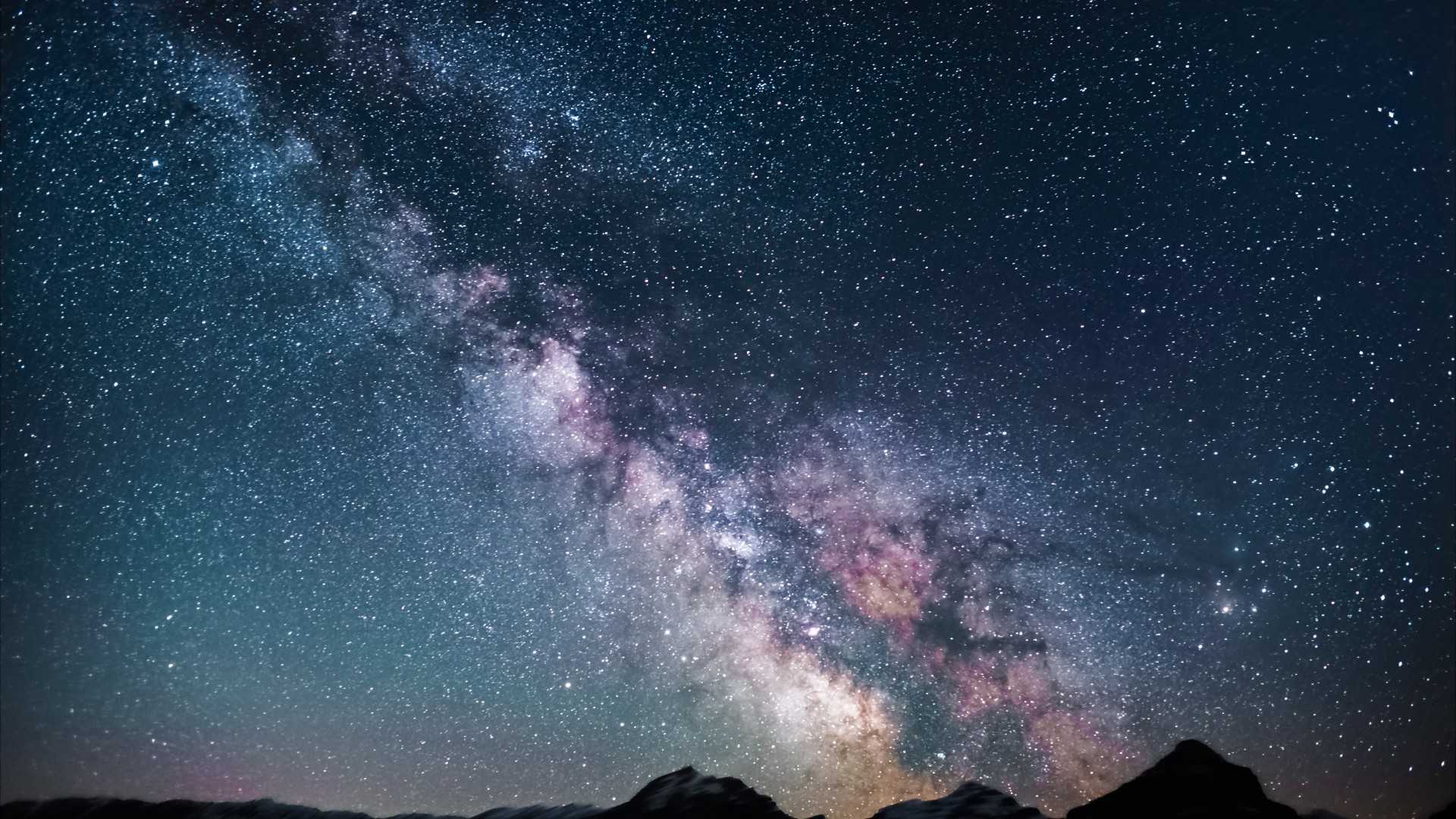
Four thousand years ago, when God made a covenant with Abraham, he led him outside and told him, “Now look toward the heavens, and count the stars, if you are able to count them…. So shall your descendants be” (Gen. 15:5). The stars in the night sky were innumerable, the heavens vast beyond measure.

More recently, the Hubble Space Telescope and James Webb Space Telescope have given us even clearer portraits of just how immense the heavens are, and they have helped shed light on some of the mysteries of the universe. This has also raised the age-old question: Are we alone in the universe?

Considering the vastness of the cosmos, many conclude there must be life out there. Just considering the Milky Way Galaxy alone, there are billions of planets roughly the same size as Earth. One science writer states that “the ingredients in the recipe for earthly life—water, elements associated with life, available sources of energy—appear to be almost everywhere we’ve looked…. While the chances of finding life elsewhere remain unknown, the odds can be said to be improving.”

Yet while advanced life exists on Earth, an incredible number of factors in the cosmos and on Earth are exquisitely fine-tuned for this to be possible. The more data we have, the more we find that the best location for life to exist in the vast cosmos is where Earth is located—in our particular solar system, in our particular galaxy, in our particular supercluster of galaxies, and in our particular super-supercluster. Conditions in outer space are hostile to complex life everywhere else we look.

For example, consider our galaxy. The Milky Way Galaxy is a spiral galaxy, which means it doesn’t experience gravitational disturbances from nearby stars and molecular clouds. The Milky Way Galaxy is the right size to prevent a supermassive black hole from forming in the nucleus, and the length of the co-rotation radius both allows for the formation of heavy metals in adequate quantities for the existence of life and prevents planetary systems from facing fatal radiation. Most galaxies have been found to resemble the Andromeda Galaxy, which has a significantly larger stellar mass and angular momentum than the Milky Way Galaxy, which affects the galaxies’ habitability. These are a few features that make the Milky Way Galaxy able to support life.

Further research is revealing that our planet specifically is unique in its habitability as well. When scientists search for planets in the “habitable zone,” what they’re often referring to is the liquid water habitable zone. Habitable zones refer to regions around a star where life could potentially exist. The liquid water habitable zone is the region around a star where liquid water can be sustained on a planet’s surface.

But much more than water is required for life. At least eleven known habitability zones must overlap in order for a planet to be hospitable to advanced life: the liquid water, ultraviolet, photosynthetic, ozone, planetary rotation rate, planetary rotation axis tilt, tidal, astrosphere, atmospheric electric field, Milankovitch cycles, and stellar magnetic wind habitable zones. No planet other than Earth is known to possess all these habitable zones. Astronomer Hugh Ross has concluded that “when one takes into account that the existence of aerobic complex life requires a planet that simultaneously resides in all eleven habitable zones, the number of planets in the universe capable of sustaining such life most probably is just one.” The degree of fine-tuning required for this overlap of habitable zones that permits the possibility of life is indicative of design, not “cosmic accident.”

Over 400 parameters of a planetary system and its galaxy must fall within a narrow range to permit the existence of complex life. Taking into account the parameters required for simple life, Ross calculated that the requirements for a planet to sustain bacteria for just a few months is less than 1 chance in 10311. When speaking of “intelligent physical life in a globally distributed high-technology civilization,” which is the popular picture we have of alien life (just think of Hollywood movies like Independence Day or Edge of Tomorrow), the chance of a life-supporting planet becomes less than 1 in 101032.

Such a vast amount of coincidences required to permit life exceeds the bounds of credibility. Instead, it speaks of design. The evidence we have suggests that advanced physical life doesn’t exist elsewhere in the universe—unless, of course, it’s the result of purposeful design.

Source: https://www.str.org/article-feed?p_p_id=com_liferay_journal_content_web_portlet_JournalContentPortlet_INSTANCE_VXWGAytvGtxR&p_p_lifecycle=0&_com_liferay_journal_content_web_portlet_JournalContentPortlet_INSTANCE_VXWGAytvGtxR_groupId=20123&_com_liferay_journal_content_web_portlet_JournalContentPortlet_INSTANCE_VXWGAytvGtxR_articleId=1017442

How many evidences do you know for the origin of the universe? | WINTERY KNIGHT

It’s very, very important to get a conversation about spiritual things started off on the right foot. My favorite place to start is with the origin of the universe. I always use the same 3 evidences, but I found an article that has even MORE. First, let me talk about the ones I like, then I’ll send you the link to the article with the bigger list. Once you get the beginning proved, the next question is: who caused it?

Here’s the article from J. Warner Wallace.

He writes this:

My career as a Cold Case Detective was built on being evidentially certain about the suspects I brought to trial. There are times when my certainty was established and confirmed by the cumulative and diverse nature of the evidence. Let me give you an example. It’s great when a witness sees the crime and identifies the suspect, but it’s even better if we have DNA evidence placing the suspect at the scene. If the behavior of the suspect (before and after the time of the crime) also betrays his involvement, and if his statements when interviewed are equally incriminating, the case is even better. Cases such as these become more and more reasonable as they grow both in depth and diversity. It’s not just that we now have four different evidences pointing to the same conclusion, it’s that these evidences are from four different categories. Eyewitness testimony, forensic DNA, behaviors and admissions all point to the same reasonable inference. When we have a cumulative, diverse case such as this, our inferences become more reasonable and harder to deny. Why did I take the time to describe this evidential approach to reasonable conclusions? Because a similar methodology can be used to determine whether everything in the universe (all space, time and matter) came from nothing. We have good reason to believe our universe had a beginning, and this inference is established by a cumulative, diverse evidential case.

Here is his list of evidences:

  1. Philosophical Evidence
  2. Theoretical Evidence
  3. Observational Evidence
  4. Thermal Evidence
  5. Quantitative Evidence
  6. Residual Evidence

Now, if you listened to our podcast with astronomer Guillermo Gonzalez, I mentioned the ones that I like, which are #3, #5 and #6. And I like these, because they are scientific, and because I have clever ways of explaining them using simple terms.

Here’s what he says:

3. Observational Evidence (from Astronomical Data)

Vesto Slipher, an American astronomer working at the Lowell Observatory in Flagstaff, Arizona, spent nearly ten years perfecting his understanding of spectrograph readings. His observations revealed something remarkable. If a distant object was moving toward Earth, its observable spectrograph colors shifted toward the blue end of the spectrum. If a distant object was moving away from Earth, its colors shifted toward the red end of the spectrum. Slipher identified several “nebulae” and observed a “redshift” in their spectrographic colors. If these “nebulae” were moving away from our galaxy (and one another) as Slipher observed, they must have once been tightly clustered together. By 1929, Astronomer Edwin Hubble published findings of his own, verifying Slipher’s observations and demonstrating the speed at which a star or galaxy moves away from us increases with its distance from the earth. This once again confirmed the expansion of the universe.

5. Quantitative Evidence (from the Abundance of Helium)

As Astronomer Sir Fred Hoyle studied the way elements are created within stars, he was able to calculate the amount of helium created if the universe came into being from nothing. Helium is the second most abundant element in the universe (Hydrogen is the first), but in order to form helium by nuclear fusion, temperatures must be incredibly high and conditions must be exceedingly dense. These would have been the conditions if the universe came into being from nothing. Hoyle’s calculations related to the formation of helium happen to coincide with our measurements of helium in the universe today. This, of course, is consistent with the universe having a moment of beginning.

6. Residual Evidence (from the Cosmic Background Radiation)

In 1964, two American physicists and radio astronomers, Arno Penzias and Robert Wilson detected what is now referred to as “echo radiation”, winning a Nobel Prize for their discovery in 1978. Numerous additional experiments and observations have since established the existence of cosmic background radiation, including data from the Cosmic Background Explorer satellite launched in 1989, and the Planck space observatory launched in 2009. For many scientists, this discovery alone solidified their belief the universe had a beginning. If the universe leapt into existence, expanding from a state of tremendous heat, density and expansion, we should expect find this kind of cosmic background radiation.

So, I’ve made simple analogies for these, so that I can explain them to people from every background.

For #5, for example, I use the story of leaving you in a room with beads and strings and then watching you make one necklace of beads, and timing you, and then leaving you for an hour, and coming back and estimating how many necklaces you will have made, and how many beads you have left. With respect to the beginning of the universe, at the very beginning, it’s all hydrogen (beads). But there is nuclear fusion going on, and the beads are being fused into heavier elements like helium and carbon and oxygen (necklaces). Well, astronomers made predictions about HOW MUCH helium you could fuse during the very hot period, according to the standard cosmology, and the prediction was for 75% hydrogen (beads) and 24% helium (necklaces), and that’s exactly what we see today.

And for #6, I talk about baking a cake. Suppose you heated up your oven and put a ban full of cake batter in there for an hour. You notice that the room is 68 Fahrenheit (20 Celsius) when the cake went in. Then you take the cake out to cool, but you leave the oven open. An hour later, you notice that the oven is cool, but the temperature of the room has gone up to 72 Fahrenheit (22 Celsius). When you have a source of heat in a small area, then you open it up in a bigger area, the smaller area cools down, and the bigger area warms up a bit. Astronomers made a prediction that the very hot creation event would leave a small 3 degrees Kelvin “cosmic microwave background radiation” everywhere in space, and when they were finally able to measure it, they found that the predicted 3 Kelvin temperature was found exactly as predicted.

So, if you don’t know all of these evidences for a beginning, read the article, pick your favorites, and be ready to explain them.