There are two ways to be fooled. One is to believe what isn’t true; the other is to refuse to believe what is true. —Soren Kierkegaard. "…truth is true even if nobody believes it, and falsehood is false even if everybody believes it. That is why truth does not yield to opinion, fashion, numbers, office, or sincerity–it is simply true and that is the end of it" – Os Guinness, Time for Truth, pg.39. “He that takes truth for his guide, and duty for his end, may safely trust to God’s providence to lead him aright.” – Blaise Pascal. "There is but one straight course, and that is to seek truth and pursue it steadily" – George Washington letter to Edmund Randolph — 1795. We live in a “post-truth” world. According to the dictionary, “post-truth” means, “relating to or denoting circumstances in which objective facts are less influential in shaping public opinion than appeals to emotion and personal belief.” Simply put, we now live in a culture that seems to value experience and emotion more than truth. Truth will never go away no matter how hard one might wish. Going beyond the MSM idealogical opinion/bias and their low information tabloid reality show news with a distractional superficial focus on entertainment, sensationalism, emotionalism and activist reporting – this blogs goal is to, in some small way, put a plug in the broken dam of truth and save as many as possible from the consequences—temporal and eternal. "The further a society drifts from truth, the more it will hate those who speak it." – George Orwell “There are two ways to be fooled. One is to believe what isn’t true; the other is to refuse to believe what is true.” ― Soren Kierkegaard
The human brain contains ~86 billion neurons and performs 10¹⁶ to 10¹⁸ operations per second, showcasing unmatched processing power.
It adapts and rewires itself, learning from experience, making it a self-learning, self-organizing system.
Consciousness, a key feature of the brain, cannot be explained by materialism, according to Stephen Meyer.
The brain exhibits specified complexity and functional integration, suggesting it is engineered rather than an outcome of evolution.
The biblical perspective views the human mind as a reflection of the divine mind, emphasizing its unique design.
Brain Power Beyond Matter And Imagination
The human brain is often called the most complex structure in the known universe—and for good reason. With billions of neurons, trillions of synapses, and unimaginable processing power, the brain has no rival in artificial technology.
Computers outperform humans in raw arithmetic, but the brain is superior in:
energy efficiency
dynamic learning
pattern recognition
real-time environmental interaction
self-organization
creativity
awareness
This makes it arguably the most advanced information-processing system known in the universe.
Its complexity raises a compelling question: Is the brain a product of mindless evolution, or the work of an intelligent Creator?
1. The Brain’s Unmatched Processing Power
The brain contains:
~86 billion neurons
Each connecting to up to 10,000 others
Forming over 100 trillion synapses
Together, these allow the brain to perform an estimated:
10¹⁶ to 10¹⁸ operations per second
—roughly equivalent to the world’s most powerful supercomputers.
Yet the brain runs on 20 watts—less than a dim light bulb.
Supercomputers require:
huge cooling systems
warehouses full of hardware
megawatts of electricity
The brain fits into a three-pound organ between your ears.
2. A Self-Learning, Self-Organizing System
Unlike artificial computers:
the brain rewires itself
strengthens useful pathways
prunes inefficient ones
learns from experience
adapts to injury
stores memory chemically and electrically
integrates information from all senses simultaneously
This is AI—but biological, not artificial.
No machine comes close.
3. Consciousness: The Ultimate Mystery
Perhaps the most profound feature is consciousness—the existence of subjective experience, self-awareness, thought, emotion, and rationality.
Materialism cannot explain:
intentionality
abstract reasoning
logic
moral awareness
the existence of consciousness itself
Stephen Meyer emphasizes this in Return of the God Hypothesis, arguing that consciousness is not reducible to matter. Matter produces electrical signals—not thoughts, meaning, or rational deliberation.
Mind cannot emerge from non-mind.
4. The Brain Looks Engineered
The brain exhibits all hallmarks of design:
specified complexity
functional integration
information processing
efficiency
fine-tuned architecture
If an AI researcher discovered a machine with these properties, they would infer one thing:
Someone designed it.
5. Biblical Insight
Scripture describes humanity as uniquely endowed:
“God breathed into man the breath of life.” — Genesis 2:7 “We have the mind of Christ.” — 1 Corinthians 2:16
The biblical worldview has always held that the human mind is not an accident but a reflection of the divine mind.
Conclusion
The brain is a masterpiece of engineering—far beyond human invention. Its processing power, architecture, adaptability, and consciousness all point to intelligent design rather than mindless evolution. The more we learn, the more the evidence mounts: The human mind is the product of a greater Mind.
Even a cursory examination of the connectome shows the complexity of the brain, despite its tiny size.
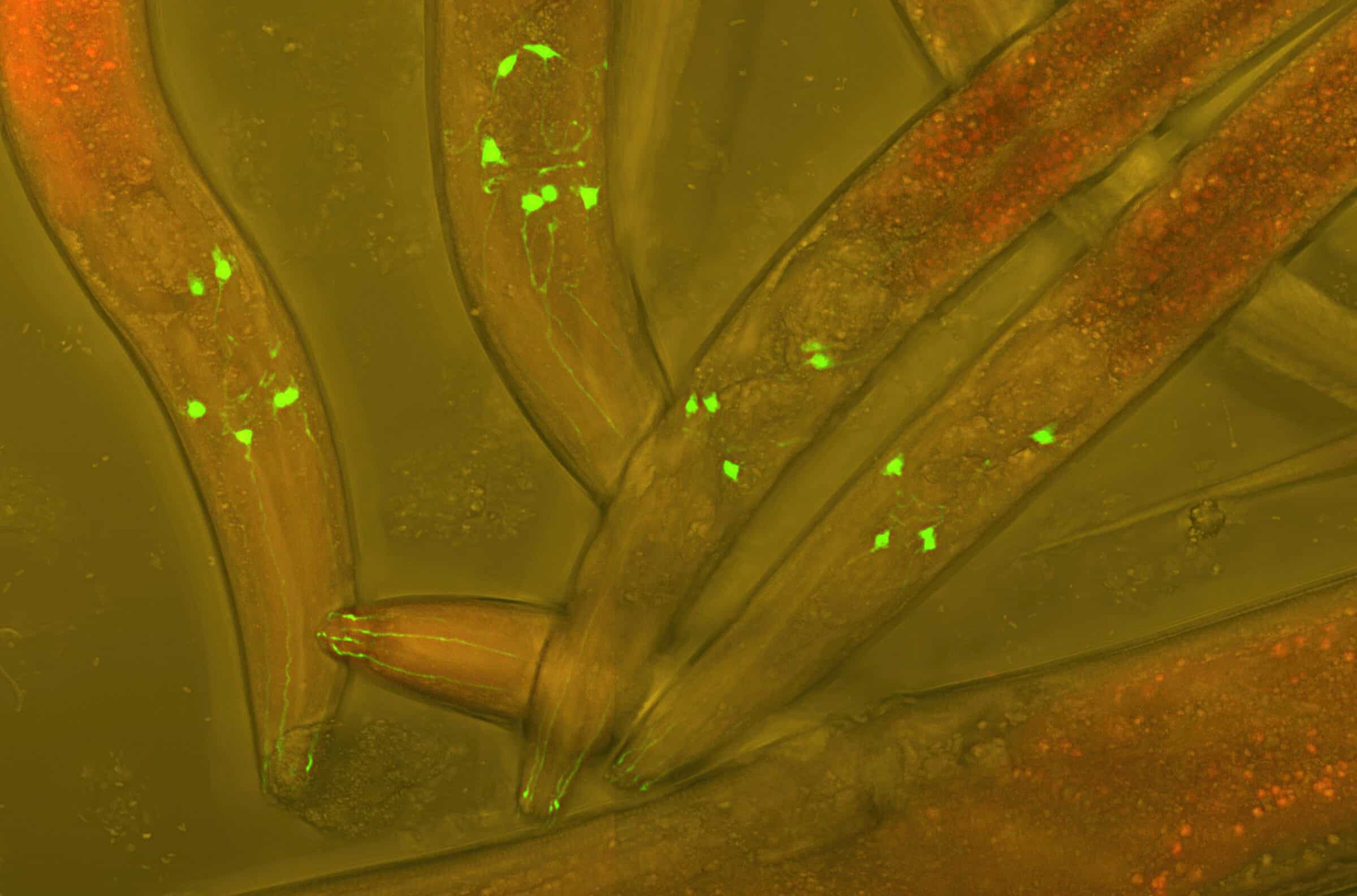
The nematode worm Caenorhabditis elegans has the smallest brain in a free-living animal. There are two forms of C. elegans, male and hermaphrodite. The hermaphrodite brain contains only 302 neurons and the male 385 neurons. The physical characteristics and brain design are different, but there is much in common. The entire body contains approximately 900 cells and is only one millimeter long. Because of its small size, scientists have conducted a significant amount of research on the brain, in the hope of discovering how brains in general function. A few years ago, researchers were able to determine the entire map of the brain, called a connectome, and published the results in the journal Nature.1C. elegans is the first animal where this was accomplished.
Even a cursory examination of the connectome shows the complexity of the brain, despite its tiny size. Additional complexity is exhibited by the diversity of the types of neurons and the variety of connections. There are three basic types of neurons — sensory neurons, motor neurons, and interneurons. Sensory neurons respond to various stimuli (chemical, physical, etc.). Motor neurons connect to muscles to control movement. Interneurons are generally intermediate between sensory and motor neurons.
C. elegans Behaviors
C. elegans exhibits a number of behaviors, some that are complex. That is surprising considering it is a simple organism with such a small brain. The basic behaviors include feeding, fasting, mating, egg laying, and several forms of movement. These include swimming when in liquid media and “crawling” on solid surfaces. They also exhibit a non-movement behavior called quiescence. Research has found that the behaviors are controlled by various neural networks as well as being regulated by neurotransmitters such as serotonin and dopamine and neuropeptide signaling.2 These forms of neural signaling exist in all animal brains. The conclusion of the same research regarding these behaviors is that, “Episodic regulation of C. elegans behavior is complex because episode incidence and timing are regulated by the interplay between multiple circuit systems.”
In addition to basic behaviors, C. elegans is also capable of learning, including associative and non-associative learning. A paper published in the Journal of Neurochemistry documented the learning behaviors, including attraction and aversion to salt, temperature, and other substances.3 What might be surprising to many is that this learning involves both short-term and long-term memory mechanisms, which include regulation of neurotransmitters. The conclusion of the same paper was the expectation that the findings “Will provide critical insights in the context of learning and memory disorders in higher organisms, including humans.”
General Characteristics of the Brain
A recent study led by scientists at Hebrew University analyzed the structure of neural networks in C. elegans. One of the findings is that, “The positions of the chemical synapses along the neurites are not randomly distributed nor can they be explained by anatomical constraints. Instead, synapses tend to form clusters, an organization that supports local compartmentalized computations.”4 On the other hand the study shows that, “The vast majority of the 302 neurons in C. elegans nematodes lack elaborate tree-like structures. In fact, many of these neurons consist of a single (unipolar) neurite extension, on which input and output synaptic sites are intermittently positioned.” That contrasts with larger brains of advanced animals which do have complex neuron structures. There is a total of 83 sensory neurons and 108 motor neurons. There are approximately 100 classes of neurons that have been identified. There are approximately 5,000 chemical synapses and 1,500-1,700 electrical synapses (gap) junctions.
In the paper that describes the connectome, some of the complexity is summarized as follows, “The major motor neurons as well as their primary pre-motor interneurons are highly interconnected and receive some input from most of the remaining neurons, defying simple interpretation of motor output. The complex circuitry must underlie both the many known behaviours in C. elegans, and the underpinnings for less well understood or novel behaviours, such as learning and memory, inter-animal communication, social behaviour and the complexities of mating.”5 Another important finding concerning the connectome is, “The notable similarity in the placement of the nodes to the neuroanatomy of the worm reflects economical wiring, a property commonly found for nervous systems, including in C. elegans.”
Examination of Neuron Triplets
One notable aspect of the neural networks is that there are a number of triplets, meaning a cluster of three neurons. The paper by the Hebrew University scientists observes, “The clustered organization of synapses is found predominantly in specific types of tri-neuron circuits, further underscoring the high prevalence for evolved, rather than for random, synaptic organization that may fulfill functional role.” One simple instance of a three-neuron cluster is a “feed forward” loop. For example, neuron A is a sensory neuron, neuron B is an interneuron, and neuron C is a motor neuron. Feed forward networks are common in both biological and artificial neural networks. The significance of this is likely that, “The ubiquitous appearance of these circuits in biological networks suggests that they may carry key computational roles, including noise filtering and coincidence detection.” Other research has found that the number of feed forward connections increases as the worm matures.6
Additional detailed examination of three neuron clusters found that, “For three different layouts, where each of the three neurons can be either sensory, inter, or motor neuron, there are 63 possible circuit combinations. Of these 63 combinations, few circuits emerged as forming clustered synaptic connections, significantly more than randomly expected.”7 The two combinations that are the most common are: (1) two sensory neurons form a postsynaptic contact with an interneuron; and, (2) an interneuron that is presynaptic with two motor neurons. The researchers theorize that combination (1) may function as a signal integrator, and combination (2) may function by synchronizing activation. It seems logical that these would be common circuits as these two functions are likely common in controlling animal behavior.
The Touch Response Neural Network
An interesting example of one neural network in C. elegans that has been elucidated is the “tap withdrawal circuit,” also called the touch response, which controls how the worm responds to being physically touched. The behavior is interesting for a number of reasons, one being that the response exhibits habituation. The neural network is illustrated in Figure 2 here. The network consists of four sensory neurons (red triangles), five interneurons (circles), and two motor neurons (blue triangles). There is a total of seven excitatory chemical synapses (green lines with arrows) and 15 inhibitory chemical synapses (red lines with circles). There are also six electrical (gap junction) synapses (blue lines with squares). The response is activated when the sensory neurons detect a tap. The stimulus is then transferred via the interneurons (PVC and AVD), which then pass it to the command neurons (AVA and AVB). The two output states are either “move forward” (FWD motor neuron) or “move in reverse” (REV motor neuron). The response is modulated through competition between the two command neurons. The competition between commands for moving forward or reverse is evident based on the number of inhibitory synapses. It is obvious that even for such a simple behavior the neural circuit is relatively complex.
Tiny But Not Simple
There are several observations that can be drawn from research into the brain of C. elegans. One is that even though the brain is tiny, it does not have a simple structure. One might expect the smallest known brain to have a structure that is either relatively uniform or random. An example of a uniform structure is that found in crystals, which form a symmetrical lattice. A random structure would be expected if the positions of the neurons were not specified, but rather develop through a random process. Contrary to being either uniform or random, the brain does have a complex structure that is specified and repeatable.
A second observation is that the brain contains a large number (approximately 100) of different types of neurons, both in terms of design and function. They are not all identical. That also would not be expected for the smallest brain. A third observation is that small neural networks within the brain control various behaviors, such as the touch response network. It is possible that some of these neural networks are irreducibly complex.
The fourth observation concerns the origin of the C. elegans brain. The usual Darwinian evolution explanation is given in the paper that documented the organization of the synapses, “The mere existence of such structures may actually further underscore the directed evolution to form such clusters, which presumably carry fine functional roles along the neurites. Taken together, local compartmentalized activities, facilitated by the clustered synaptic organizations revealed herein, can enhance computational and memory capacities of a neural network. Such enhancement may be particularly relevant for animals with a compact neural network and with limited computational powers, thereby explaining the evolutionary forces for the emergence of these synaptic organizations.”8 The key phrases are “evolutionary forces” and “directed evolution.” Such terms have never been generally accepted as valid scientific explanations, particularly regarding the origin of novel biological structures.
In contrast, the design of the brain of C. elegans exhibits a number of characteristics associated with intelligent design. They include the specified complexity of the overall design and small neural networks. It also includes engineering design, including the efficient wiring. Also apparent is that a significant amount of information is needed to specify the design and function of the brain.
Notes
Cook, et al., “Whole-animal connectomes of both Caenorhabditis elegans sexes,” Nature, Vol. 571, 4 July 2019.
McCloskey, et al., “Food responsiveness regulates episodic behavioral states in Caenorhabditis elegans,” J Neurophysiol117: 1911-1934, 2017.
Aelon Rahmani and Yee Lian Chew, “Investigating the molecular mechanisms of learning and memory using Caenorhabditis elegans,” Journal of Neurochemistry, 2021; 159.
Ruach, et al., “The synaptic organization in the Caenorhabditis elegans neural network suggests significant local compartmentalized computations,” PNAS, 2023, Vol. 120, No. 3.
Cook, et al.
Witvliet, et al., “Connectomes across development reveal principles of brain maturation,” Nature, Vol. 596, 12 August 2021.
Mad scientists are creating all sorts of bizarre hybrid creatures in secret labs all over the planet, and most people in the general population have no idea what is really going on behind closed doors. I am about to share some things with you that are deeply disturbing. I fully understand that. But the only chance we have of ending this evil is to expose it.
For decades, scientists have been mixing one species of animal with another. This has become so common that hardly anyone ever gets upset about it anymore.
So now they are pushing the envelope even farther.
For example, a team of scientists in Japan has created a “plant-animal hybrid” that utilizes “solar-powered tissues”…
A group of researchers in Japan have made quite the breakthrough. According to a new study published in the Proceedings of the Japan Academy, Series B, these scientists have created solar-powered tissues that could revolutionize the production of lab-grown meat and organs.
The cells driving the tissue are a plant-animal hybrid that can gain energy from sunlight in the same way that plants do, the researchers explain in the study. Both animals and plants derive energy using different methods. Plants use photosynthesis, while animals rely on mitochondria.
Researchers hoped that they would be able to take plant cells and combine them with animal cells—in this case, cells taken from hamsters. The goal here was to isolate chloroplasts from plants and then cultivate them with the hamster cells so that they would become hybrid cells and hopefully grow into solar-powered tissue.
Creating plant-animal hybrids is wrong.
But they are doing it anyway.
In other cases, researchers are creating human-animal hybrids.
Shockingly, a team of scientists in the state of Texas was recently able to create “a humanized mouse with a fully developed and functional human immune system”…
The aim of the multi-year project, which appears in the August 2024 issue of Nature Immunology, was to overcome limitations of currently available in vivo human models by creating a humanized mouse with a fully developed and functional human immune system.
Reading that should make you sick.
The researchers are calling this new form of hybrid life “TruHuX”…
Casali’s team began with injecting immunodeficient NSG W41 mutant mice intracardiacally (left ventricle) with human stem cells they purified from umbilical cord blood. After a few weeks, once the graft has been established, the mice are hormonally conditioned with 17b-estradiol (E2), the most potent and abundant form of estrogen in the body. Hormonal conditioning by estrogen was prompted by previous research by Casali and others suggesting that estrogen boosts the survival of human stem cells, boosts B lymphocyte differentiation and production of antibodies to viruses and bacteria.
The resulting humanized mice, called TruHuX (for truly human, or THX), possess a fully developed and fully functional human immune system, including lymph nodes, germinal centers, thymus human epithelial cells, human T and B lymphocytes, memory B lymphocytes, and plasma cells making highly specific antibody and autoantibodies identical to those of humans.
Sadly, even more horrifying “research” is being conducted on the other side of the planet.
An Australian tech company has released what it is calling the world’s first “biological computer” that fuses human brain cells with silicon hardware.
Cortical Labs, a company out of Melbourne, Australia, is led by CEO Hon Weng Chong and a team of researchers. Cortical Labs is boasting the release of the CL1, which is touted as a dynamic, sustainable, and energy-efficient computer that is better than any current artificial intelligence.
That is perhaps because the company says it uses human brain cells that are grown on a silicon “chip” and used as an organic computer. The technology, known as synthetic biological intelligence, allegedly outpaces silicon-based AI chips in terms of training language models, also commonly referred to as chatbots.
Would you like to use a computer that is powered by enslaved human brain cells?
Just the thought of that makes me feel ill.
The company says that the brain cells that are put into the computers are “raised in a simulation”…
Under the heading “raised in a simulation,” Cortical explains that the neurons exist in a world the company created, which is admittedly a “simulated world” where the neurons are fed information about their environment.
“Their impulses affect their simulated world,” it reads. “You get to connect directly to these neurons. Deploy code directly to the real neurons, and solve today’s most difficult challenges,” the company goes on.
We aren’t the first generation to do this sort of thing. Apparently hybrid creatures were around in Noah’s time too. The days of Noah are back, and ironically this is happening at a period in history when amazing revelations are coming out about the ruins of Noah’s Ark.
For those that have not read my previous articles on the matter, the ruins of Noah’s Ark can be found at “the Durupinar formation” which is not too far from Mount Ararat in the nation of Turkey. The dimensions of the Durupinar formation match the dimensions of Noah’s Ark that we are given in the Bible…
The Durupinar formation has long captivated researchers and explorers due to its ship-like shape and dimensions that mirror the biblical description of Noah’s Ark. According to the Bible, the Ark’s dimensions were “a length of three hundred cubits, its width fifty cubits, and its height thirty cubits.” The structure’s measurements, approximately 150 meters in length, align with this account.
Noah’s Ark was roughly the size of a World War II aircraft carrier.
So we are talking about a very large ship.
The Bible also tells us that Noah’s Ark came to rest in “the mountains of Ararat”, and that is precisely where the Durupinar formation is located…
Additionally, the biblical account states that the Ark came to rest on the ‘Mountains of Ararat’.
The Durupinar Formation is located just 18 miles south (30km) from Mount Ararat, Turkey’s highest peak.
Since its discovery in 1948, these factors have led many to theorise that the boat-shaped geological structure is really the fossilised wood of Noah’s Ark.
This month, some brand new information about the Durupinar formation has been revealed.
In a key phase of their project, the team collected nearly 30 samples of rock and soil from the site. These samples, sent to Istanbul Technical University for analysis, revealed traces of clay-like materials, marine deposits, and seafood remnants, including mollusks. Experts determined that the materials dated between 3500 and 5000 years old. This timeframe coincides with the Chalcolithic period, spanning from 5500 to 3000 BCE, which is associated with the era of the biblical flood as described in Genesis.
What this means is that this area in Turkey where the Durupinar formation is located was once completely covered by water…
The discovery of marine substances and shellfish in the samples suggests that the area was once submerged under water. These findings bolster theories that a catastrophic flood occurred in the region, aligning with the narrative of a universal flood found in various religious texts. “Our studies show that this region harbored life in that period and that, at some point, it was covered by water, which reinforces the possibility that a catastrophic event of great magnitude occurred,” the researchers stated.
Wow.
As I detail in my latest book, we continue to get more evidence that the Bible is accurate and that the God of the Bible is real.
Noah’s Ark is just sitting there waiting to be excavated right now.
Hopefully the government of Turkey will allow work to begin before it is too late.
And hopefully humanity will wake up before it is too late and stop making the same mistakes that were being made just before Noah and his family got on the Ark.




 Truth2Freedom's Blog