Tag Archives: psychology

The Personality Collapse | Cranach by Gene Veith

A study found that over the last ten years, while other age groups were relatively unchanged, for the 16-39 year old age group, the personality scores for conscientiousness, extroversion, and agreeableness plummeted dramatically, while neuroticism shot upward. But why?

Every old generation seems to complain about the failings of the “new generation,” how “kids these days got no respect,” “young people don’t have a sense of responsibility,” and the like.  We need to take that with a grain of salt.  The old generation used to be a new generation and was subject to the same complaints.

Now, though, some data has emerged that seems to suggest that we really are facing some generational problems today.  The Understanding America Study conducted by the Center for Economic and Social Research at the University of Southern California looked at five attributes of personality.  These are long-established traits used by psychologists in psychometric models:

  1.  Conscientiousness
  2. Openness
  3. Extroversion
  4. Agreeableness
  5. Neuroticism

The study looks at those personality qualities, as identified by self-reported surveys, for various generational cohorts from 2014-2024.  It found that over the last ten years,  while other age groups were relatively unchanged, for the 16-39 year old age group, the collective scores for conscientiousness, extroversion, and agreeableness plummeted–dramatically, by a lot–while neuroticism shot upward.    (For the relevant charts with the numbers, go here.)

The study and the lead report on its findings, an article by John Burn-Murdoch in the Financial Times entitled The troubling decline in conscientiousness, are both behind paywalls, so let’s hear from  John R. Puri of National Review, who wrote Young Adults May Be Losing Their Ability to Lead Good Lives:

Burn-Murdoch writes that conscientiousness, “the quality of being dependable and disciplined,” appears to be the most determinative trait for living well. “Of all personality types, conscientious people tend to fare best on a number of key measures. They live the longest, have the most career success and are less likely to go through divorce. They even manage to hold down a job during recessions.”

Unfortunately, conscientiousness is also the personality attribute that has fallen the most, especially among young adults. A  comprehensive study shows that “people in their twenties and thirties in particular report feeling increasingly easily distracted and careless, less tenacious and less likely to make and deliver on commitments.”

Also way down for young people in particular is agreeableness, a measure of politeness and compassion that indicates how kind and cooperative we are. Extroversion, which measures our aptitude for social interaction, has fallen across all age groups, but young people especially. The only personality trait that is up among young adults is neuroticism, a tendency toward negative emotions like anger and sadness, which is “a function of the much-discussed increase in anxiety.”

Why are young adults today so “easily distracted and careless” and “less tenacious”?  Why are they so impolite, uncompassionate, unkind, and uncooperative?  Why are they so bad at social interaction?  Why are they so neurotic, angry, sad, and anxious?

One obvious culprit is technology.  Colby Hall at Mediaite has no doubt about that, going so far as to write a fulminating article entitled Alarming New Study Finds Smartphones Ruining Our Brains at Unprecedented Speed.  He writes,

In less than 15 years, we’ve tethered billions of brains to an always-on, infinitely stimulating “meta-world” — a hybrid of the broader digital ecosystem, the AI-powered feed that tells you what is conventionally known, and social media platforms that distort reality by promoting the loudest, most self-promotional sliver of humanity. This is not a tool for quiet reflection; it’s a behavioral slot machine that lives in your hand.

And the cost is attention. Not just “I get distracted sometimes” attention, but the deep, sustained focus that conscientiousness requires. The skill of delaying gratification, resisting impulse, and staying the course is being replaced by an addiction to novelty, validation, and stimulation. The more we indulge, the less we can resist indulging — and the chart’s freefalling red line for young adults shows exactly where that road leads.

Technology is surely a factor, maybe the major factor.  But personality is shaped by lots of other things.  I wonder whether there are any mega-trends in parenting or lack of parenting that might have contributed to these neuroses.  What might be the effect of school culture and progressive education?  Have universities played a role in making their graduates hopeless and nihilistic?  I think a big factor might be the overall decline in religion among this cohort and their families, which has very likely led to declines in self-discipline, kindness, relationships with others, and the sense that their lives have meaning.

I have seen these characteristics in young adults I’ve known as a college professor.  And yet, to be honest,  I haven’t noticed these traits in homeschooled or classically-educated young adults or confessionally Christian young people.

Quite the contrary.  They tend to be very conscientious, very agreeable, and with few exceptions not neurotic.  They are not necessarily extroverted, any more than I am.  I’m not sure what the psychometric people mean by “openness,” a trait not mentioned in these reports.  Evidently, 16-39 year olds as a whole don’t have a problem with openness, which these social scientists consider to be a good thing.  I suspect they may be too open, which could lead to some of the other dysfunctions.

No wonder this troubled generation is starting to return to religion.


Illustration:  Psychology Identity by kalhh via Creazilla, Public Domain

Source: The Personality Collapse

Dr. Drew Pinsky Offers Some Real Psychological Analysis of Trump Derangement Syndrome (VIDEO) |The Gateway Pundit

Dr. Drew Pinsky, one of America’s favorite TV doctors, recently appeared on FOX News and offered a very real psychological profile of the mental disease known as Trump Derangement Syndrome.

TDS has been around for years, but recently Trump has been racking up so many wins that Democrats seem especially afflicted with it.

Pinsky is a real doctor, and while he is not a psychiatrist, his analysis is pretty darn good. He suggests that one of the main causes is narcissism. The sufferer thinks everything is all about him or her.

Transcript via Real Clear Politics:

RAYMOND ARROYO, FOX NEWS: Given the magnitude of this crisis, we brought in a professional. With his diagnosis is Dr. Drew Pinsky, host of Ask Doctor Drew on Rumble and YouTube. He’s also the wellness company’s chief patient officer.

Dr. Drew, what would you prescribe Congresswoman Britney Peterson who seems to be suffering from a bad case of TDS?

DR. DREW PINSKY, HOST OF ASK DR. DREW ON RUMBLE: She indeed does. I mean, let’s go over some of the symptomatology, right? The first thing is, this is happening to me, right? This is my problem. He’s — the president of the United States is directing all this towards me, and I’m so emotional because what happened to me? Narcissism.

Number two, it’s performance art as the Speaker Johnson just mentioned. The performance art is, I’m here. I’m here, buddy. You’ve got to see me. I have to show you what I’m going through.

And then finally, and this is the most narcissistic impulse of all. I have to show you that I care more than you, and you don’t care because I’m superior.

So, a little reality testing would be good. I think that — and a very — a long vacation maybe, and be kind to these people because they see everything out there outside of their body as happening inside their body.

ARROYO: A person’s —

PINSKY: And this is a very pathological state.

Watch the video:

He pretty much nailed it, didn’t he?

The post Dr. Drew Pinsky Offers Some Real Psychological Analysis of Trump Derangement Syndrome (VIDEO) appeared first on The Gateway Pundit.

Leaving the Democrat Party’s Echo Chamber Has Challenges But It’s Not Impossible | Discern Report

Have you ever felt like your political views were constantly reinforced, with dissenting opinions shut down before they could even be voiced? It’s a feeling many Americans share, especially when navigating today’s polarized climate. Matt Van Swol, a former liberal and Democrat voter, recently shared his experience of breaking free from the perceived liberal media echo chamber in a thought-provoking post on X. You can read his original post here. While the challenges are real, escaping this echo chamber is not only possible but essential for informed citizenship. Many find that facts alone might not be enough to change minds.

Video summary generated with the assistance of Artificial Intelligence.

The Echo Chamber’s Grip: A Game of Moral Superiority

What exactly is a “media echo chamber”? It’s an environment where information, ideas, or beliefs are amplified or reinforced by repetition inside a closed system. This can lead to a distorted or skewed perspective, as alternative viewpoints are excluded. Van Swol describes the left-leaning media as a “game of moral superiority.”

Understanding the Tactics

He explains that within this echo chamber, you are always the “winner,” even if your ideas fail. Why? Because your agreement with the prevailing narrative makes you a “better person” in the eyes of the group. As Van Swol puts it: “It’s a game of moral superiority in which you are always the winner, even if your idea is the loser, because it’s coming from YOU, and YOU are the better person because YOU agree with them and have the ‘experts’ on your side.” This creates intense peer pressure. “The volume of peer pressure weaponized to shame and silence any descending voices or even reasonable questions, is mind-blowing.”

The Illusion of Expertise

A key tactic in maintaining this echo chamber is the use of “experts.” These individuals are often presented as objective authorities, but their views may align with a specific agenda. It is important to critically evaluate information from all sources, including those presented as unbiased. These experts often display an anti-Trump, anti-America bias.

Real-World Wake-Up Calls: When the Narrative Fails

How can someone break free from this echo chamber? Often, it takes a personal experience that contradicts the established narrative.

Personal Experiences as a Catalyst

When real-life events don’t fit the story being told by the media, the illusion can shatter. Van Swol cites a “horrific hurricane and massive government failure” as his wake-up call. What experiences have challenged your own beliefs?

Seeing the “Storybook”

Van Swol realized that what he thought was “news” was actually a “handpicked, carefully crafted story.” “I saw that what I thought was just “news” was actually a handpicked, carefully crafted story to make me believe exactly one way. It wasn’t news. It was a storybook.” Once you recognize this, it becomes “impossible to unsee.”

The Shifting Landscape: Patriotism Under Attack

Have you noticed a change in how patriotism is viewed? There seems to be a shift.

Being pro-American can now lead to ridicule or even legal repercussions. “Today if you are if you are pro-American you have far greater chance of being exposed to to ridicule or violence or even legal repercussions in some cases.” For example, waving an American flag in public might draw more hostility than waving a flag representing another cause.

Breaking Free: A Call to Action

So, how do we encourage others to step outside the echo chamber?

Beyond Facts: The Need for Prayer

Facts alone might not be enough to break through the shield of superiority that some people have constructed. “We’re going to have to pray for them them being those people that are still stuck in the Democrat and Legacy Media Echo chamber pray that they’ll see the light pray that they’ll understand because facts alone apparently for many of them is just not enough to break through this this Shield of superiority that they think covers them.”

Conclusion

Escaping the Democrat party’s echo chamber presents challenges, but it’s essential for informed citizenship. Recognizing the tactics used to maintain the echo chamber, seeking diverse perspectives, and critically evaluating information are crucial steps. While facts are important, sometimes a shift in perspective requires something more. Share this post and start conversations with those who might be trapped in the echo chamber.

Source: Leaving the Democrat Party’s Echo Chamber Has Challenges But It’s Not Impossible

The Weaponization Of Information And Digital Tools To Occupy And Derail Your Mind | ZeroHedge

Authored by Chris Martenson via PeakProsperity.com,

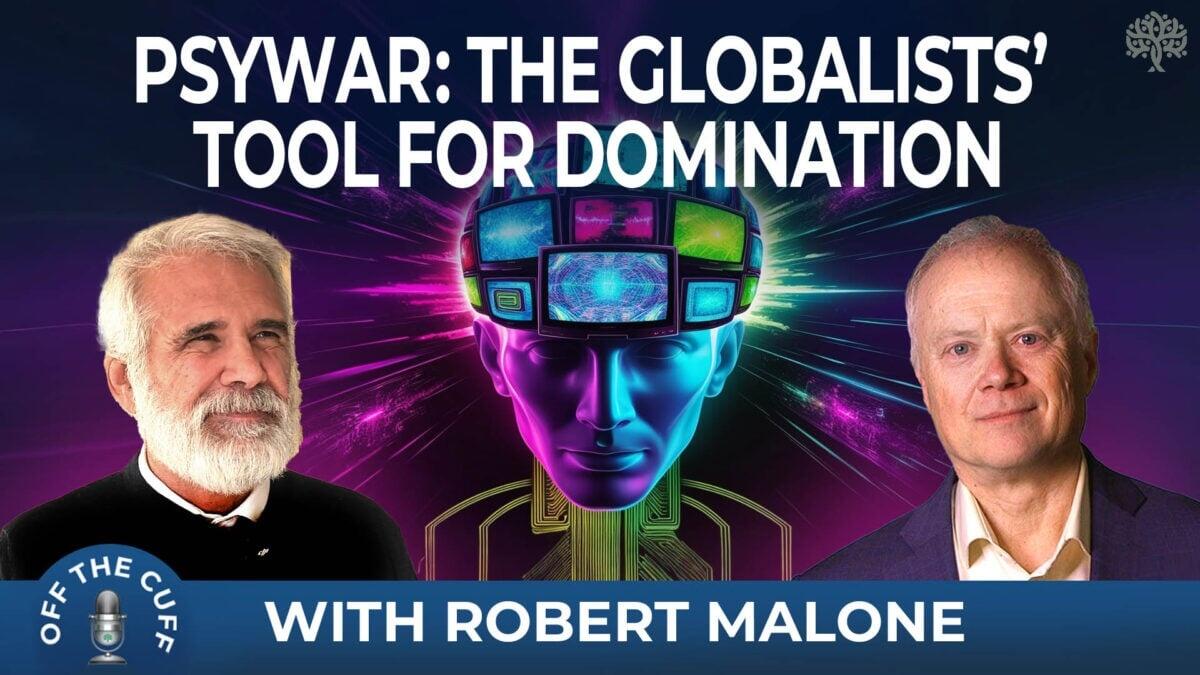
Dr. Robert Malone discusses his book “Psywar,” exploring fifth-generation warfare, psychological operations, narrative control, societal impacts, and the challenges of discerning reality in a manipulated information landscape.

Like all of us, Dr. Robert Malone and his wife Jill had to grope around for understanding during the early days of Covid.  What began as a diligent effort to help the world cope with a novel disease, soon turned into a disconcerting series of discoveries and unpleasant personal and professional experiences.

Dr. Malone’s journey toward understanding the true origins and purposes of Covid and into the public eye began with a phone call in early January 2020. A retired CIA operative alerted him to a novel coronavirus in Wuhan, prompting Malone to mobilize his team to assess the threat.

His rapid assessment of the coronavirus landscape revealed the bleak history of vaccine development for coronaviruses, promptly leading him to focus on drug repurposing as a more viable strategy.

However, Malone immediately encountered unprecedented resistance to publishing his findings on drug repurposing.  He recently told me in the podcast (lined here and below) that “it was exceedingly difficult to get anything published concerning drug repurposing for this particular virus,”

As our conversation unfolded, Malone shared how his realization of the broader forces at play developed.  One thing led to another, policies contradicted known facts, vaccine harms were buried, and there was no official curiosity in challenging any of this or doing better.

He soon discovered that these weren’t errors, but reflected a coordinated effort to control the narrative, a strategy that had been pre-planned, as evidenced by exercises like Event 201. This realization was a turning point for Malone, marking his entry into the realm of psychological operations, or “Psywar,” as he titled his latest book.

Covid, you see, was an opportunity for a hodge-podge of government agencies and affiliated private corporations to practice weaponized narrative control.  The tools of their trade are ridiculously powerful, especially when directed against people who are highly educated and/or utilize abstract thinking as part of their professional lives.

The entire suite of activities fits under the umbrella of 5th-generation warfare where the target is your mind, the very basis of perception.

The topics of ‘misinformation, disinformation, and malinformation’ are some of the terms of the trade, while nudging, shadowbanning, bad jacketing, sockpuppets, and censorship are a few of the tactics and tools.

Malone has done a deep dive into 5th-generation warfare illuminating coordinated efforts to delegitimize dissenting voices and how these tactics were being deployed globally, particularly against those questioning the mainstream COVID-19 narrative.

It was both impersonal and very personal. “It destroyed my consulting business,” he told me in our interview.

It both targeted everyone impersonally, but also specifically ruined the careers of many dissident voices.

Throughout our discussion, Malone emphasized the importance of understanding the tools and tactics of psychological warfare. “Does it provide immunity to know what’s being done to you?” he pondered, with the conclusion being that while awareness may not offer complete protection, it certainly helps in coping with immunizing against the psychological impact of such operations.

PsyWars are very real, ongoing, and certain to become ever more powerful as AI supercharges and shortens the learning cycle of the manipulators.   Much of their campaigns to distract, distort and confuse is either completely automatic, or soon will be.

And the effects are devastating.  Families have been torn apart as political differences are now juiced by weaponized information tactics.  Workplaces have fractured.  Trust is eroded and sometimes gone, as is the case with my own trust in the medical system.

None of that was organic, a point Robert and I discuss in this podcast.

Key Data

  • There are over 7,000 peer-reviewed publications on overcoming vaccine hesitancy, illustrating the extensive research into messaging strategies.
  • The Trusted News Initiative was reoriented in 2019 to manage disinformation about vaccines, highlighting preemptive narrative control efforts.

Implications

  • The deployment of psychological warfare technology against citizens challenges the concepts of free agency and consent to the governed.
  • Individuals may struggle to discern reality from manipulated narratives, leading to increased skepticism and distrust.

Recommendations

  • Be aware of the psychological tactics used in media and question the sources of information.
  • Engage in critical thinking and seek diverse perspectives to better understand complex issues.

Watch the Video

Source: The Weaponization Of Information And Digital Tools To Occupy And Derail Your Mind