There are two ways to be fooled. One is to believe what isn’t true; the other is to refuse to believe what is true. —Soren Kierkegaard. "…truth is true even if nobody believes it, and falsehood is false even if everybody believes it. That is why truth does not yield to opinion, fashion, numbers, office, or sincerity–it is simply true and that is the end of it" – Os Guinness, Time for Truth, pg.39. “He that takes truth for his guide, and duty for his end, may safely trust to God’s providence to lead him aright.” – Blaise Pascal. "There is but one straight course, and that is to seek truth and pursue it steadily" – George Washington letter to Edmund Randolph — 1795. We live in a “post-truth” world. According to the dictionary, “post-truth” means, “relating to or denoting circumstances in which objective facts are less influential in shaping public opinion than appeals to emotion and personal belief.” Simply put, we now live in a culture that seems to value experience and emotion more than truth. Truth will never go away no matter how hard one might wish. Going beyond the MSM idealogical opinion/bias and their low information tabloid reality show news with a distractional superficial focus on entertainment, sensationalism, emotionalism and activist reporting – this blogs goal is to, in some small way, put a plug in the broken dam of truth and save as many as possible from the consequences—temporal and eternal. "The further a society drifts from truth, the more it will hate those who speak it." – George Orwell “There are two ways to be fooled. One is to believe what isn’t true; the other is to refuse to believe what is true.” ― Soren Kierkegaard
As a doctoral student, Martin Luther finally had access to the university library. Here, for the first time in his life, he held a complete Bible in his hands.
The Bible was venerated in the medieval church, and portions of it were read from the lectionary used in worship services. But Bibles had to be copied by hand, so they were very expensive. Many churches did not even own one. And if they did, most people were illiterate, so they could not read it anyway.
No wonder the church had drifted from the Word of God. Yes, the medieval church taught that Jesus died for our sins, a salvation applied at baptism. But if you sinned after that, you had to pay. Each sin that you confessed before a priest could be forgiven, as long as you performed some kind of penance. Even forgiven sins, though, required a temporal punishment, if not in this life, then in purgatory. In the meantime, to be saved, a Christian needed to accumulate enough merit through good works and acts of devotion in order to deserve God’s grace and to earn a place in heaven.
Young Luther was no rebel. He took the church’s teaching seriously. Church vocations, with their vows of celibacy and other ascetic disciplines, were thought to be more spiritual and more likely to lead to heaven than the worldly lives of the laity. So Luther became a monk, then a priest. Still, he would agonize over his sins. Once he had access to a Bible, he read it voraciously, and a new picture of God, of Christ, and of salvation started to become clear.
The University of Wittenberg was one of the new Renaissance schools that stressed going back to the original sources. The medieval universities taught theology through the method known as scholasticism, using authoritative textbooks and rationalistic disputations. But the original source for Christianity is the Bible. And since Renaissance-style, classical education also taught Greek and Hebrew, it became possible to study the Bible in its original languages, whereas previously it had only been available in a Latin translation. When Luther earned his doctorate, the university put him on faculty and gave him the responsibility of teaching the Bible.
In preparing a lecture on the book of Romans, Luther struggled to understand this passage: “The righteous shall live by faith” (Rom. 1:17). Suddenly it hit him: We are justified by grace through faith in the atoning work of Jesus Christ! Luther said, “Here I felt that I was altogether born again and had entered paradise itself through open gates.”
Meanwhile, it became clearer that the medieval church thought otherwise. It was sponsoring a sale, promising to release Christians from purgatory if they would buy a certificate called an indulgence. People had been taught that they would suffer in penitential fire for seven years for every sin they committed, including those that had been forgiven. Christians were expecting to be in purgatory for thousands of years before they could enter heaven. Of course, they gladly bought indulgences.
For Luther, not only was this a cynical scam that exploited the poor (an indulgence cost workers about a week’s wages), it was a monstrous violation of God’s saving Word.
On October 31, 1517, Luther nailed to the church door a list of Ninety-Five Theses against the sale of indulgences, which he was willing to debate. Someone, using the newly invented printing press, printed hundreds of copies. Someone else translated them from scholarly Latin into popular German, selling thousands. They soon spread through all of Germany. They were then translated into French, Italian, and English. The Ninety-Five Theses, as we would say today, went viral.
The Vatican responded with treatises of its own, which Luther answered. The controversy escalated into other issues. Luther said that the Bible gives no support for indulgences. The Vatican replied that they are authorized by the pope. Luther responded that the Bible is a higher authority than the pope. The Vatican asked Luther how people could escape punishment for their sins and get to heaven without indulgences. Luther answered that Christians are justified by faith alone in Jesus Christ.
The pope excommunicated Luther. Notice that Luther didn’t “break away” from the Roman Catholic Church or “start his own church,” as is often said. He was trying to reform the church by bringing it back to its foundational gospel. For that, he was cast out.
Luther went on to translate the Bible into the language of the people, whereupon the Bible spread like wildfire. He then opened schools to teach people—including peasants, women, and everyone who wanted to learn—to read it.
He taught the doctrine of vocation—that farmers, craftsmen, husbands, wives, and parents all belong to “holy orders,” no less than priests and nuns—and that God Himself works through them as they love and serve their neighbors in their various callings. Luther himself got married and, with his wife, Katie, and their children, offered a model of the Christian family.
Luther would deal with many other issues, from “enthusiasts” who believed God spoke to them directly apart from God’s Word (which, to Luther, was exactly what the pope claimed) to other Reformers who believed Luther did not go far enough in reforming the church. Whenever he was thanked for launching the Reformation, Luther would deflect the praise. “I did nothing,” he would say. “The Word did everything.”
He was confronting two religious observances that promoted false saintliness and exploited people’s fear of judgment and purgatory. There’s a curious connection between Halloween and Reformation Day, and it’s more than just proximity on the calendar.
Halloween
Halloween (October 31) is celebrated by millions each year with costumes and candy. Halloween’s deepest roots are decidedly pagan, despite its Christianized name. Its origin is Celtic and has to do with summer sacrifices to appease Samhain, the lord of death, and evil spirits. Those doing the pagan rituals believed that Samhain sent evil spirits abroad to attack humans, who could escape only by assuming disguises and looking like evil spirits themselves. Christians tried to confront these pagan rites by offering a Christian alternative (All Hallows’ Day) that celebrated the lives of faithful Christian saints on November 1. In medieval England the festival was known as All Hallows, hence the name Halloween (All Hallows’ eve) for the preceding evening.
All Saints’ Day
All Hallows’ Day or All Saints’ Day (November 1) was first celebrated on May 13, 609, when Pope Boniface IV dedicated the Pantheon in Rome to the Virgin Mary. The date was later changed to November 1 by Pope Gregory III, who dedicated a chapel in honor of all saints in the Vatican Basilica. In 837, Pope Gregory IV (827-844) ordered its church-wide observance. Its origin lies earlier in the common commemorations of Christian martyrs. Over time these celebrations came to include not only the martyrs, but all saints. During the Reformation the Protestant churches came to understand “saints” in its New Testament usage as including all believers and reinterpreted the feast of All Saints as a celebration of the unity of the entire Church.
All Souls’ Day
All Souls’ Day or the Day of the Dead is normally celebrated, primarily by Roman Catholics, on November 2. This is a day dedicated to prayer and almsgiving in memory of ancestors who have died. People pray for the souls of the dead, in an effort to hasten their transition from purgatory to heaven by being purged and cleansed from their sins.
Reformation Day
Reformation Day (October 31) commemorates Luther’s posting of his 95 Theses on the door of the Castle Church in Wittenberg, Germany on October 31, 1517. This act triggered the Reformation, as they were immediately translated and distributed across Germany in a matter of weeks. The Protestant Reformation was the rediscovery of the doctrine of justification—salvation by grace alone through faith alone in Christ alone—and the protest against the corruption within the Roman Catholic Church. The century before the Reformation was marked by widespread dismay with the venality of the leaders in the Roman Catholic Church and with its false doctrines, biblical illiteracy, superstition, and corruption. Monks, priests, bishops, and popes in Rome taught unbiblical doctrines like the selling of indulgences, the treasury of merit, purgatory, and salvation through good works.
Treasury of Merit
Spiritually earnest people were told to justify themselves by charitable works, pilgrimages, and all kinds of religious performances and devotions. They were encouraged to acquire this “merit,” which was at the disposal of the church, by purchasing certificates of indulgence. This left them wondering if they had done or paid enough to appease God’s righteous anger and escape his judgment. This was the context that prompted Luther’s desire to refocus the church on salvation by grace through faith on account of Christ by imputation of Christ’s righteousness to us. To those spiritually oppressed by indulgences and not given assurance of God’s grace, Luther proclaimed free grace to God’s true saints:
God receives none but those who are forsaken, restores health to none but those who are sick, gives sight to none but the blind, and life to none but the dead. He does not give saintliness to any but sinners, nor wisdom to any but fools. In short: He has mercy on none but the wretched and gives grace to none but those who are in disgrace. Therefore no arrogant saint, or just or wise man can be material for God, neither can he do the work of God, but he remains confined within his own work and makes of himself a fictitious, ostensible, false, and deceitful saint, that is, a hypocrite (Luther W.A. 1.183ff).
Instead of the treasury of merit that was for sale, Luther protested, “The true treasure of the Church is the Most Holy Gospel of the glory and the grace of God” (Thesis 62). In celebration of Reformation Day, you should seriously read all 95 Theses—they’re really good.
By most accounts, the Reformation began when a young monk challenged ecclesiastical and academic authorities to debate a controversial practice that had developed in the late-medieval period.
Why do we continue to remember it roughly five hundred years later?
Why not indulge indulgences? Revisiting the rise of the Reformation
Waving off Martin Luther’s objections to the sale of indulgences, however, might reveal some misunderstandings about what was at stake.
Under the medieval system, as it had developed, a Christian was said to have been initially justified by his baptism. In the ordinary course of things, however, a Christian would not remain justified. This was because of their propensity to sin, which we inherited from Adam in his fall.
Thus, each Christian was obligated to go to confession, receive absolution from the priest or bishop, and to fulfill acts of penance. These penances might take the form of multiple fasts per week; or, for gross sins, some might last for as long as a decade (e.g., homosexuality or bestiality); or they might be “a hundred genuflexions [sic]” or “five blows of the rod or strap so as to wound.”1 Different penances were assigned according to the gravity of the sin. Failure to fulfill one’s penances, it was thought, added years (sometimes by the thousands) to one’s time in purgatory (i.e., the intermediate state between death and the beatific vision).
An indulgence, however, was a remission or forgiveness of such punishments that were due Christians after this life (otherwise satisfied in purgatory) for failing to fulfill their assigned acts of penance.
But just as the requirement for permits sometimes gives rise to corruption in modern secular life, so too the assignment of penances proved to be too great a temptation for the medieval church. If the church had authority to assign “temporal punishments” in this life and purgatory, and if she had authority to remit the same, why not monetize those remissions? So Urban II (c. 1035–1099) promised a plenary indulgence to crusaders who confessed their sins.2 Later, Pope Sixtus IV (1414–1484) extended plenary indulgences to the dead, and the Council of Constance (1414–1418) permitted the sale of indulgences.
That permission opened the door for the Dominican monk Joahnn Tetzel (c. 1464–1519) to travel across Germany selling indulgences for the living and on behalf of the dead, using the still-memorable jingle, “When the coin the coffer clinks, the soul from purgatory springs.” The funds raised by the sale of indulgences were meant to rebuild St. Peter’s Basilica in Rome. Thus, deliverance from punishment had become a commercial enterprise,3 not unlike what we see today in the health-and-wealth theology that purports to provide divine blessings, healings, and even wealth in exchange for certain financial considerations.
Enter an Augustinian monk: Martin Luther’s Reformation realizations
Martin Luther was a faithful son of the church who, through a series of interesting providences, had become a Augustinian monk. Yet as he tried to live out what the church taught, he found himself increasingly frustrated. His complaint about indulgences then was a symbol of his growing discontent with the theology, piety, and practice of the Western church.
God, he was taught, was all and utterly holy and righteous. Luther knew that he himself was not those things. His university professors had taught him that God had made a covenant not to deny grace to those who did what was in themselves. Yet, Luther found himself increasingly worried that he was not able to do what was “in himself.” He would confess his sins and then, before he could make it back to his cell, find himself sinning yet again.
The church classed some sins as venial (like how we have misdemeanors in secular criminal law) and others as mortal (like capital crimes in secular law). Yet Luther found it increasingly difficult to distinguish venial and mortal sins. Later, he would even declare that to “do what lies within us” for justification and salvation is to commit a mortal sin.4
Luther would arrive at (or rather, recover) five crucial insights that corrected the errors of Rome:
1. We are utterly sinful and utterly dependent on God’s saving grace
After Luther was assigned to the new university in Wittenberg, he began to lecture on the Psalms. As he did so, he read Augustine’s commentary on the Psalms. Yet Augustine did not speak as his university professors had. Augustine explained from the Psalms that we are not merely wounded by Adam’s fall into sin. Rather, we are spiritually dead by nature and utterly dependent upon God’s sovereign, unconditional favor for salvation. This teaching resonated with Luther so much that by 1515, Luther was “young, restless, and Augustinian” in his theology.
The early Protestants formulated this turn back to Augustine and Paul with the phrase sola gratia (“grace alone”). In our own time, we have witnessed a resurgence of interest in and passion for the Pauline and Augustinian doctrines of divine sovereignty, divine freedom, and unconditional grace to helpless sinners.
2. We are justified not by our righteousness, but by Christ’s
After his lectures on the Psalms, Luther lectured through Romans. He was much troubled by Paul’s expression in Romans 1:17, “the just shall live by faith.” To him, still, that expression signified that the “righteous shall live by their faithfulness,” and Luther knew that he was not sufficiently faithful to meet that test.
God imputes or credits or reckons Christ’s righteousness to believers, and it is Christ’s righteousness for us (and not our own) that is how we stand before God.
Yet as he lectured through chapter 4, he encountered Paul’s claim that the ground of Abraham’s righteousness before God was not, as Luther had been taught, Abraham’s inherent, personal righteousness accrued by divine favor in cooperation with God’s grace. Rather, Luther saw that God imputes or credits or reckons Christ’s righteousness to believers, and it is Christ’s righteousness for us (and not our own) that is how we stand before God.
3. We are saved not by our faithfulness, but by faith in Christ’s faithfulness
His next series of lectures took him through Galatians, Hebrews, and the Psalms again. At the end of this series of lectures, he realized he had been wrong about what Paul means by faith in Romans 1:17. Paul was not speaking about our faithfulness, but rather about trusting in Christ and his faithfulness, his obedience for us.5
Early in the Reformation, Protestant theologians used the expression sola fide (“faith alone”) to capture this truth.
4. Our final authority on these matters is God’s Word
In March 1521, a month before Luther would defend himself before the Church of Rome and the powers of this world at the Diet of Worms, he wrote a defense of his Ninety-Five Theses. In that defense, he articulated the principle that he would go on to make famous a month later: God’s Word is the final authority for the Christian faith and the Christian life. In the Reformation, this principle was called sola scriptura (“Scripture alone”).
The medieval church had arrogated to herself the authority to revise the number of sacraments. Until the thirteenth century, only the two sacraments instituted by our Lord were recognized in the Western church. Beginning in the thirteenth century, however, the Church of Rome imposed five additional sacraments on the grounds that she, the Church, had authority equal to that of Scripture.
As we have seen, Luther himself had labored under the growing number of burdens imposed on the faithful by the Church of Rome. Luther led the liberation of the church by restoring God’s Word to its rightful place as the final arbiter of Christian truth and the Christian life.
5. The gospel is not a new law
During this period, Luther made one more essential breakthrough: He gradually realized that the patristic and medieval church had erred when they described all of Scripture as old and new law. Rather, he realized that Augustine was on to something in his work, On the Spirit and the Letter, when he suggested that the law teaches us our sin and the gospel announces good news to sinners.6
Earlier, during his “time of temptation,” as he called it, Luther did indeed distinguish between law and gospel, but not in the way he eventually learned to as a result of his other discoveries from Scripture. Luther would go on to elaborate and clarify this distinction, concluding that “whoever knows well how to distinguish the Gospel from the Law should give thanks to God and know that he is a real theologian.”7
The Reformation is still transformative
These doctrines are still utterly transformative. This was driven home to me thirty years ago when, after telling Luther’s story to some undergraduates in an evangelical college, one of them came up to me after the lecture. With tears streaming down her face, she said that she had never heard about sola scriptura, the doctrines of grace, the imputed righteousness of Christ, sola fide, and the distinction between law and gospel. She had been taught to present herself to God, not on the basis of Christ’s righteousness received through faith alone, but on the basis of her own obedience.
The doctrine that the Scriptures alone are the final authority for life and doctrine is as vital—and scandalizing—now as it was when Luther recovered it in 1521.
How many Christians have been burdened with man-made regulations, such as what they may eat or drink (see Col 2:21–23)?
How many are trapped in cults who claim divine revelation in addition to Holy Scripture?
How often do Christians, less overtly, supplant Scripture with their claims to authoritative prophecies?
It is still just as powerful to believe Scripture is enough.
If you are like most Christians today, it is quite possible that you have never heard of the distinction between the two kinds of words in Scripture: law (“do this and live”; Luke 10:28) and gospel (“for God so loved the world”; John 3:16). And yet both Reformation traditions, the Lutherans and Reformed, considered this distinction essential to understanding God’s Word.
The other parts of the Reformation inheritance are equally valuable today: the doctrine of divine grace as unconditional favor to sinners, the doctrine of free justification with God on the basis of Christ’s righteousness imputed alone, and the doctrine of justification and salvation through faith trusting and resting in Christ alone. These indeed are as powerful and liberating today as they were when Luther rediscovered them five centuries ago.
R. Scott Clark’s recommended resources on the Reformation
Oberman, Heiko. A. Luther: Man Between God and the Devil (New Haven, 1989)
Related articles
John T. McNeill and Helena M. Gamer, Medieval Handbooks of Penance: A Translation of the Principal “libri poenitentiales” and Selections from Related Documents (Columbia University Press, 1938), 355.
Luther was not the only Reformer to rail against indulgences and their sale. John Calvin excoriated the practice and the theology behind it. See John Calvin, Institutes of the Christian Religion, ed. John T. McNeill, trans. Ford Lewis Battles, The Library of Christian Classics (Westminster, 1961), 3.5.2.
“Free will, after the fall, exists in name only, and as long as it does what it is able to do, it commits a mortal sin.” Martin Luther, Luther’s Works, Vol. 31: Career of the Reformer I, ed. Jaroslav Jan Pelikan, Hilton C. Oswald, and Helmut T. Lehmann (Fortress, 1999), 40.
For more on this see R. Scott Clark, “Iustitia Imputata Christi: Alien or Proper to Luther’s Doctrine of Justification?,” Concordia Theological Quarterly 70 (2006): 269–310.
Augustine, On The Spirit and the Letter, in Philip Schaff, ed. Saint Augustin: Anti-Pelagian Writings, vol. 5, A Select Library of the Nicene and Post-Nicene Fathers of the Christian Church, First Series (New York: Christian Literature Company, 1887). For more on this distinction, see R. Scott Clark, “Letter and Spirit: Law and Gospel in Reformed Preaching,” in R. Scott Clark, ed., Covenant, Justification and Pastoral Ministry: Essays by the Faculty of Westminster Seminary California (P&R, 2006), 331–63.
The rapid spread of the Protestant Reformation from Wittenberg, Germany, throughout Europe and across the Channel to England was not spawned by the efforts of a globe-trotting theological entrepreneur. On the contrary, for the most part Martin Luther’s entire career was spent teaching in the village of Wittenberg at the university there. Despite his fixed position, Luther’s influence spread from Wittenberg around the world in concentric circles—like when a stone is dropped into a pond. The rapid expanse of the Reformation was hinted at from the very beginning when the Ninety-Five Theses were posted on the church door (intended for theological discussion among the faculty). Without Luther’s knowledge and permission, his theses were translated from Latin into German and duplicated on the printing press and spread to every village in Germany within two weeks. This was a harbinger of things to come. Many means were used to spread Luther’s message to the continent and to England.
One of the most important factors was the influence of virtually thousands of students who studied at the University of Wittenberg and were indoctrinated into Lutheran theology and ecclesiology. Like Calvin’s academy in Geneva, Switzerland, the university became pivotal for the dissemination of Reformation ideas. Wittenberg and Geneva stood as epicenters for a worldwide movement.
The printing press made it possible for Luther to spread his ideas through the many books that he published, not to mention his tracts, confessions, catechisms, pamphlets, and cartoons (one of the most dramatic means of communication to the common people of the day was through messages encrypted in cartoons).
In addition to these methods of print, music was used in the Reformation to carry the doctrines and sentiments of Protestantism through the writing of hymns and chorales. Religious drama was used not in the churches but in the marketplace to communicate the central ideas of the movement—the recovery of the biblical gospel.
Another overlooked aspect of the expansion of the Reformation is the impact of the fine arts on the church. Woodcuts and portraitures were produced by the great artists of the time—Albrecht Dürer, Hans Holbein, Lucas Cranach the Elder, and Peter Vischer. The portraits of the Reformers made their message more recognizable, as it was associated with their visage in the art world.
Students from England who studied at Wittenberg also had a major impact in bringing the Reformation across the Channel to Great Britain. Probably the most important person in the English Reformation was William Tyndale, whose translation of the Bible into English was of cataclysmic importance. In 1524, he left England for the continent and studied for a period of time at Wittenberg. His first edition of the New Testament was published in Flanders in 1526, five years after the fated Diet of Worms during which Luther gave his famous “Here I Stand” speech. Thousands of these Bibles were smuggled into England. Many were burned as the work of a heretic, but still others escaped the fire and produced a theological fire of their own.
Another important person was Robert Barnes, an Augustinian monk from Cambridge who was burned at the stake in 1540. Seven years before his martyrdom, he had matriculated at the University of Wittenberg. There also was Martin Bucer, an important Reformer who was invited by the English Protestants to come to Britain and become a professor at the University of Cambridge in 1551.
In addition to those who influenced the English Reformation directly from Luther’s Germany, were those whose influence came by a more circuitous route, that is, via Geneva, Switzerland. John Calvin himself had to flee from Paris because of the views he learned from his friends who had been influenced by the teachings of Martin Luther. This Frenchman found his refuge in Geneva, where his pulpit and teaching ministry became known around the world. Geneva became a city of refuge for exiles who fled there for safety from all over Europe. Of the countries that sent exiles to Calvin’s Geneva, none was more important than England and the British Isles. John Knox, who led the Reformation in Scotland, spent some time in Switzerland at the feet of Calvin, learning his Reformation theology there. Though Calvin was twenty-six years younger than Luther, Luther’s views made a dramatic impact on the young Calvin’s life while he was still in his twenties. Though Calvin is usually associated with the doctrine of predestination, it is often overlooked that there was nothing in Calvin’s view of predestination and election that was not first articulated by Luther, especially in Luther’s famous work The Bondage of the Will.
When Calvin was teaching in Geneva, Bloody Mary came to the throne of England. Under her reign, many Protestants were burned at the stake. Those who survived the stake fled in large numbers to Geneva. Some of the exiles from England under Calvin’s tutelage set upon the task of translating the Bible into English. This Bible, called the Geneva Bible, was the first Bible to have theological notes printed in the margin, which notes were heavily influenced by Calvin’s preaching. This Bible was the predominant Bible among the English for the next hundred years before it was supplanted by the popular King James Version. It was the original, official version of the Scottish Presbyterian Church. It was the Bible of Shakespeare, the Bible the Pilgrims brought with them on the Mayflower to America, and it was the Bible of choice among America’s early colonists.
From Wittenberg directly to England, or from Wittenberg to Geneva to England, in this roundabout route, the seeds of the Reformation that were planted in Germany sprouted into full bloom as they made their way into the English empire. To trace the pathway from Wittenberg to London, one must follow a series of circuitous routes, but the origin of that movement in Wittenberg is unmistakable, and its influence continues even to this day.
On October 31, 1517, Martin Luther, now in his mid-thirties, made his way to the Castle Church in Wittenberg and posted his Ninety-Five Theses on the church door. Originally intended as propositions for public debate, the theses were written in Latin—the language of the scholar, not of the street. Luther could have had no idea that they would echo around Europe and become the catalyst for a spiritual revolution.
Many of those who saw the papers on the Castle Church door—which seems to have served as a public notice board—would not have been able to read Latin. But soon the theses were translated into German and thereafter spread throughout Europe like wildfire—indeed, like an “act of God.”
What were the Ninety-Five Theses? They were statements aimed directly at specific corruptions in the church of Luther’s day, many of them related to issues of pardon, purgatory, and the power of the pope. The first of them was particularly startling:
By saying “Repent,” our Lord and Master Jesus Christ willed that the whole of the life of believers should be repentance. (Dominus et magister noster Iesus Christus dicendo “Poenitentiam agite etc.” omnem vitam fidelium poenitentiam esse voluit.)
Luther had grasped that the Vulgate translation of “Repent” (poenitentiam agite) was open to the misinterpretation “Do penitence (or penance).” And he had also grasped a principle that John Calvin would later expound with great clarity: penitence or repentance is not the action of a moment; it is the turning around of a life—the rejection of sin effected by the gracious work of the Holy Spirit. It cannot therefore be a single act completed in a moment; it is a style of life that lasts until glory.
Luther led a full and adventurous life that only an extensive biography can well describe. He was a remarkable man with enormous God-given energy. His speech was direct and plain and not infrequently earthy. He was a teacher of theology, a preacher of the gospel, and an author of some of the most important books in the Reformation period. Notable among his early publications was his On the Babylonian Captivity of the Church, which exposed the church’s failures, while in On the Freedom of a Christian he explained how in Jesus Christ believers are set free both to love God and to serve their neighbor. Thus he wrote in a beautifully crafted sentence that captures the paradox of the gospel-centered life: “A Christian man is the most free lord of all, and subject to none; a Christian man is the most dutiful servant of all, and subject to everyone.”
By his preaching, by writing, and especially by his influence in the explanation of salvation by grace through faith in Christ, Luther was used by God to transform the Christian church. The leading Reformers in England and Scotland were influenced by his writings, often smuggled in by merchant sailors. In Scotland in particular, the martyrs of St. Andrews, Patrick Hamilton and George Wishart (whose bodyguard John Knox had been), were disciples of Luther’s teaching. Likewise in England, the heroic William Tyndale left a legacy not only in his English translation of the Bible but in an entire body of literature that echoed the German Reformer’s work.
But what did Luther teach? His chief emphases are aptly summarized in the well-known Reformation solas: (1) sola Scriptura: we come to know God through Scripture alone, not through the traditions of the church as such; (2) sola gratia: we come to receive forgiveness by God’s grace alone, not because we are able to earn merit; (3) sola fide: we receive justification by faith alone, and not by faith plus something else; (4) solus Christus: all of God’s riches are given to us in Christ alone; (5) soliDeo gloria: the goal of all of life is the glory of God alone.
These principles simply underlined the emphases Luther found in Scripture. But in context, what is most significant about them is not only what they stressed but what they bypassed. Neither Luther nor the other magisterial Reformers despised the church. But they saw the church as only a witness to and a powerful illustration of salvation by grace—not the dispenser of that salvation. In a sense, then, the church had not only failed to teach the gospel rightly; it had usurped the role of the Holy Spirit in salvation. It was the reestablishing of the Spirit’s ministry in the application of redemption that brought such a sense of the immediacy of God’s grace and the joy and relief of pardon and new life in Christ. It is to Christ alone and not to the mediation of the church that we need to turn for grace and salvation.
We have not discussed here the other great Reformers—Huldrych Zwingli and Heinrich Bullinger, John Calvin and John Knox, and many others. But even this brief glance at Luther and his influence shows that the sixteenth century was a monumental period in the history of the Christian church. It was not without its faults, nor without its failures. But Christians in those days were bursting with the power and the energy of this great discovery—that the burden of their sins had been taken by Jesus Christ and they, at last, could be set free. These were days, as Knox explained, when “God gave His Holy Spirit to simple men in great abundance.”
Martin Luther’s Declaration to his Countrymen – Martin Luther
Martin Luther – (1483-1546), German reformer
In 1510, Luther traveled as part of delegation from his monastery to Rome (he was not very impressed with what he saw.) In 1511, he transferred from the monastery in Erfurt to one in Wittenberg where, after receiving his doctor of theology degree, he became a professor of biblical theology at the newly founded University of Wittenberg.
In 1513, he began his first lectures on the Psalms. In these lectures, Luther’s critique of the theological world around him begins to take shape. Later, in lectures on Paul’s Epistle to the Romans (in 1515/16) this critique becomes more noticeable. It was during these lectures that Luther finally found the assurance that had evaded him for years. The discovery that changed Luther’s life ultimately changed the course of church history and the history of Europe. In Romans, Paul writes of the righteousness of God. Luther had always understood that term to mean that God was a righteous judge that demanded human righteousness. Now, Luther understood righteousness as a gift of God’s grace. He had discovered (or recovered) the doctrine of justification by grace alone. This discovery set him afire.
In 1517, he posted a sheet of theses for discussion on the University’s chapel door. These Ninety-Five Theses set out a devastating critique of the church’s sale of indulgences and explained the fundamentals of justification by grace alone. Luther also sent a copy of the theses Archbishop Albrecht of Mainz calling on him to end the sale of indulgences. Albrecht was not amused. In Rome, cardinals saw Luther’s theses as an attack on papal authority. In 1518 at a meeting of the Augustinian Order in Heidelberg, Luther set out his positions with even more precision. In the Heidelberg Disputation, we see the signs of a maturing in Luther’s thought and new clarity surrounding his theological perspective the Theology of the Cross.
After the Heidelberg meeting in October 1518, Luther was told to recant his positions by the Papal Legate, Thomas Cardinal Cajetan. Luther stated that he could not recant unless his mistakes were pointed out to him by appeals to scripture and right reason he would not, in fact, could not recant. Luther’s refusal to recant set in motion his ultimate excommunication.
Throughout 1519, Luther continued to lecture and write in Wittenberg. In June and July of that year, he participated in another debate on Indulgences and the papacy in Leipzig. Finally, in 1520, the pope had had enough. On June 15th the pope issued a bull (Exsurge Domini Arise O’ Lord) threatening Luther with excommunication. Luther received the bull on October 10th. He publicly burned it on December 10th.
In January 1521, the pope excommunicated Luther. In March, he was summonsed by Emperor Charles V to Worms to defend himself. During the Diet of Worms, Luther refused to recant his position. Whether he actually said, Here I stand, I can do no other is uncertain. What is known is that he did refuse to recant and on May 8th was placed under Imperial Ban.
This placed Luther and his duke in a difficult position. Luther was now a condemned and wanted man. Luther hid out at the Wartburg Castle until May of 1522 when he returned to Wittenberg. He continued teaching. In 1524, Luther left the monastery. In 1525, he married Katharina von Bora.
From 1533 to his death in 1546 he served as the Dean of the theology faculty at Wittenberg. He died in Eisleben on 18 February 1546.
1 John 5:18-21 In this week’s studies, we look at the last verses of John’s first Epistle, and consider three final affirmations that can serve as a summary of John’s teaching.
Theme
The Importance of Assertions
It is entirely appropriate that a book dealing with the subject of Christian assurance should end with three final affirmations, introduced by the repetitive phrase “we know” in verses 18, 19 and 20. In some ways these statements are a summary of much of what John has been teaching. In another sense they are a reminder of how important affirmations are to Christianity.
Not everybody believes this, of course. In fact, some would even try to eliminate affirmations in the interests of a greater, though less meaningful, harmony among Christians. Erasmus of Rotterdam was one. At the beginning of the Reformation, Erasmus was a partial supporter of Martin Luther, whom he regarded as being right in many things. But Erasmus, the humanist, did not have Luther’s spiritual undergirding. Consequently, as the Reformation developed, Erasmus became increasingly distressed by thoughts of a rupture within Christendom and horrified at what he regarded as Luther’s excessive dogmatism.
At last, encouraged by friends, he wrote a book defending the freedom of the human will in spiritual matters and attacking Luther for his convictions. Luther might have admitted humbly that he could be wrong. He might have qualified his teaching in view of Erasmus’ attack. But Luther did neither. Instead he replied, in The Bondage of the Will, with an able defense of Christian certainty and with a reaffirmation of the Reformed position. Luther declared, “Nothing is more familiar or characteristic among Christians than assertion. Take away assertions, and you take away Christianity… Why then do you—you!—assert that you find no satisfaction in assertions and that you prefer an undogmatic temper to any other?“1
It is hard to doubt that the apostle John would have been quite pleased with Luther’s argument, had he been there to hear it. For John too believed in assertions and would have maintained that it is impossible to have Christianity without them. Moreover, just as assertions were important and necessary in John’s time and in Luther’s time, so are they important and necessary in our time.
We therefore properly conclude a study of John’s book with a study of these three certainties. We should know: 1) that the one born of God does not sin; 2) that we are of God; and 3) that the Son of God has come and has given us knowledge of the true God.
1Martin Luther, The Bondage of the Will, trans. J. I. Packer and O. R. Johnston (Westwood, NJ: Revell, 1957), 67.
Study Questions
What are the three assertions John makes in our passage? Where else in his first Epistle do we see any of these themes?
What other passages can you find that talk about Christian assurance? What do you learn from these texts?
Application
Reflection: What are some Christian assertions that are challenged today, even by people who profess to be Christians?
For Further Study: Download for free and listen to James Boice’s message, “The Sermon on the ‘Unknown God.’” (Discount will be applied at checkout.)
Though 2024 is not yet over, it seems safe to declare this a year of anxiety. The aftereffects of the Covid pandemic are still being felt, the world economy seems unusually fragile, war rages in Ukraine and the Middle East, and Americans have endured one of the strangest and most bitter presidential campaigns in history. None of this has come as a complete shock: we knew at the beginning of 2024 that it would be an ordeal by fire.
The more things change, the more they stay the same. Half a millennium ago, as Europeans entered the year 1524, they were gazing at the heavens in trepidation, fearful of a Grand Conjunction that was set to occur. Johann Stöffler, a professor at the University of Tübingen who counted the reformer Philip Melanchthon among his former students, correctly predicted that in February all seven planets would align in the region of Pisces. He took this as proof that a great upheaval would soon strike the earth on the order of the deluge of Noah.
That will show an indubitable transformation, change, and reversal over nearly the entire world, the climate zones, empires, countries, cities and classes, in insensible creatures, the creatures of the sea, and everything born on earth, as forsooth has not been heard of for many years, neither by historians nor by the forefathers.
Many of Stöffler’s readers took this prediction with deadly seriousness. After all, the past few years had already brought a sea change in how they understood God, their institutions, and religious practice. They even viewed themselves differently, for they were being told that marital procreation was just as righteous as monastic celibacy.
But as spring turned to summer and summer to autumn, they were given a more pressing reason to fear, for the peasants of the German empire ceased harvesting wheat with their scythes and began cutting down men. By 1525, it was the largest popular rebellion in European history, with perhaps 100,000 peasants perishing at the hands of better armed princes while the words of apocalyptic preachers rang in their ears. Even theologians like Martin Luther suspected the end of the world was nigh. Writing to his brother-in-law at the height of the rebellion, Luther’s mood turned dark.
If it be God’s will, let us suffer it and call them lords, as the Scripture calls the devil prince and lord. May God keep all good Christians from honoring and worshiping them as the devil tried to make Christ worship him. Let us withstand them by word and deed as long as ever we can and then die for it in God’s name.
The crumbling of institutions, political radicalization, novel teaching on human sexuality! Though separated by half a millennium, our historical moment bears similarities to theirs. As if knowing he would later be seen as a predecessor of the global Left, Thomas Müntzer led the peasants into battle beneath a rainbow flag—only he meant it to symbolize the days of Noah when God destroyed the world with water and made it anew.
If history is the thing that rhymes, our moment is a paired couplet with the Reformation moment.
Losing Faith in Institutions
Perhaps you’ve heard a story like this: In the 1950s, Americans were joiners. They attended a church, played in a sports league, led a girl or boy scout troupe, and were card carrying members of a political party. Then over the course of seven decades, they stopped doing those things and embraced hyper individualism, coming home not to a warm meal prepared by their wife but an Uber Eats delivery and Netflix subscription.
The story gets repeated ad nauseam because it contains a significant amount of truth. As political scientist Robert D. Putnam famously observed in his 2000 book Bowling Alone: The Collapse and Revival of American Community, we are no longer joiners. But this social shift is not due to individualism or technological progress alone. People have also lost faith in institutions that have long defined American life.
Here we could point to innumerable scandals that sowed seeds of doubt in the public consciousness: clergy sexual abuse, the corruption at Enron and high stakes gambling at Lehman Brothers, one president forced to resign and two impeached (the second twice over), sexual abuse by boy scout leaders, the cynical profiteering of Purdue Pharma, etc. Whether we are talking about officials at FIFA, The Weinstein Company, The New York Times, or a major state university, few institutions have managed to escape scandal, and the public has noticed. Gallup’s annual poll measuring public confidence in U.S. institutions reached new lows in 2023.
The Reformation was characterized by similar loss of faith in institutions, and for people living in sixteenth century Europe, nearly every institution was somehow tied to the mother of them all. The Roman Church with its vast network of monasteries and cathedral schools is typically credited with keeping Western European society afloat during the Middle Ages, but the Reformation ended papal hegemony and brought the dissolution of much of the monastic system. This occurred not simply (or perhaps even chiefly) because average people had begun to doubt the church’s theology, but in response to a perceived web of corruption on which the Roman curia sat, seemingly eager to feed upon its victims.
The schism which characterized the Avignon papacy was followed by the sexual profligacy of the Borgias and the militant papacy of Julius II, even as the indulgence trade reached its apex. This all became fodder for propagandists employing Gutenberg’s new printing machine. The dawn of mass media increased awareness of corruption in the Church, the overarching institution of the day. Many concluded that the Roman Church could no longer be trusted, and that they would have to completely rebuild Christianity.
Deconstruction has a long history.
Political Radicalization
Martin Luther was a far more conservative figure than he is often portrayed. In the 1520s, his message of limited and targeted reform was increasingly drowned out by those who favored a complete revocation of historic tradition.
As the Anabaptist movement rose to prominence behind individuals like Thomas Müntzer, it called for an end to the feudal system, oathtaking, and many forms of civic participation. But though there were differences of opinion among the radicals on political issues, they were all certain of one thing: those who agreed with them were on God’s side, and their opponents were aligned with the devil.
This kind of “all or nothing” rhetoric increased the breakdown of relationships occurring due to the Reformation. Philip Melanchthon’s great-uncle, the famed Hebrew scholar Johannes Reuchlin, had already written the younger man out of his will due to religious differences. Now came a wave of political violence that threatened to sweep away the governing structures of the empire along with those of the Roman Church. Defunding the police would have been child’s play to these radicals who sought to destroy the entire political order. Being part of the wrong political faction led to persecution, imprisonment, and even execution.
Similarly, we find ourselves in 2024 bemoaning political radicalization as both Left and Right head for the extremes, not only in the United States, but throughout much of the Western world. Opponents are increasingly labeled “traitors” and “fascists,” and political rallies often carry the stench of violence, if not the substance thereof. Those on the Left are less likely to have any social dealings with those on the Right, and vice versa. Every election is cloaked in apocalyptic language as “the most important election of our lifetime” and “the last chance to save democracy.” Research by organizations like the Carnegie Endowment has demonstrated that our elected representatives are more polarized than they were a generation ago.
Politics has changed a lot over the past 500 years, but the sense of growing radicalization has not.
Rethinking Human Sexuality
Sitting in 2024, the sexual revolution seems to be driving on without end, leaving fallen kingdoms in its wake. While we have certainly seen partial reversals at times (The second Trump presidency may prove to be one of these), the overall trend has been toward greater libertinism, with consent the only remaining barrier around sexual activity. The rate at which Western society has decided first that homosexual activity should not be criminalized, then that same-sex marriage should be legal, then that transgenderism should be fully embraced has created a feeling of whiplash for many.
Of course, this progression has been neither as smooth nor as direct as the popular narrative suggests. Each step in that ideological evolution may seem inevitable to us now, but there have always been contingencies: moments when we could have concluded a certain step was a step too far. But at the heart of this movement toward libertinism, there has been the belief that sexual activity and identity are not linked to personal righteousness.
At the time of the Reformation, it was still widely assumed that sex was something a person did and certain sexual actions were unrighteous, such that to engage in them would make a person unrighteous and in need of spiritual cleansing. However, the Reformation brought an end to the more than one-thousand-year-old Christian assumption that a celibate life in holy orders was the height of personal righteousness, as opposed to taking up a secular vocation, marrying, and having children. Formal statements of celibacy’s superiority may have been less common in the medieval period, but there was a widespread belief that the real heroes of society were celibates who lived righteously on behalf of everyone else. Procreation was necessary for humanity’s survival (and thus that of the Church), but it ought to be strictly curtailed, or so the Church taught. To separate the sexual act from attempted procreation was believed to be sinful.
By contrast, the Protestant reformers taught that those in holy orders were not required to take vows of celibacy, they could not be righteous on behalf of others in any case, and secular vocations were just as valid as sacred ones. Martin Luther’s marriage in 1525 to Katharina von Bora, which led to the birth of six children, was seen as a model in this regard.
Western Europeans therefore had to adjust their expectations for themselves and their children. No longer would rich families gift one or more of their children to the Church as perpetual celibates. No longer would celibates spend their lives saying Mass on behalf of others. The treasury of merits stored up by mostly celibate saints was closed and the keys of the kingdom handed over to individual believers. The reformers even came to see sexual activity between spouses as useful not only for producing children and avoiding fornication, but also for the mutual pleasure and comfort it provided.
Therefore, the Reformation and sexual revolution are both watershed moments in the history of Western thought about sex and gender. The Reformation redefined what kind of sexual expression was righteous. The sexual revolution declared that righteousness had little or nothing to do with the matter.
Their Moment is Ours
I could list other ways the tumultuous years of the Reformation are like our own, but these will suffice for the moment. As we approach the close of 2024 and hope for a better 2025, it is helpful to remember that others have walked in our shoes (or something very like them). They endured earth shattering events, even as we will. The stories of their lives and how they persevered in faith are useful reminders as we seek to expand our own faith.
Fear not, beloved. The world is still turning, and God is still on the throne.
History of the Reformation in the Sixteenth Century, Volume 1 Jean-Henri Merle d’Aubigné (1794 – 1872) Translated by Henry Beveridge (1837 – 1929)
The History of the Reformation in the Sixteenth Century, by Jean-Henri Merle d’Aubigné, is a classic work on the great events that re-opened the Christian gospel to a needy world. It tells of how the twenty-year-old Martin Luther, browsing through books in the library at the University of Erfurt, takes down from the shelf a particular volume that has caught his interest. He has never seen anything like it. It is a Bible! He is astonished to find in this volume so much more than the fragments of gospels and epistles that were selected for public reading in churches. He had believed that these constituted all there was of the word of God. But here he has discovered, in its entirety, the inspired book from which they came. And it was this discovery, in a dusty university library, that changed the course of history.
D’Aubigné tells the story of outstanding people who had a love for God and his word, and who dared to present biblical truths which had been obscured for centuries. The book has helped and encouraged Christians through difficult times, and given them an understanding of the background from which our freedom in the faith has come.
The author was a Swiss Protestant pastor. He was also a historian with a great understanding of the Bible, along with a broad and deep knowledge of the Reformation. This great work of his is made up of five volumes. Volume 1, the subject of this recording, comprises four books: Book 1 – State of Matters before the Reformation; Book 2 – Youth, Conversion, and First Labours of Luther (1483-1517); Book 3 – The Indulgences and Theses; Book 4 – Luther before the Legate (May-December 1518).
The Protestant Reformation marked an explosive turning point in church history, as it recovered and proclaimed the gospel of saving grace. Its message was that God justifies men in his sight by faith alone. To be saved, a person must place their trust only in what Christ has done for them.
This quickly brought the Reformers into conflict with the leadership of the Catholic Church. As a result, Protestants also argued for the primacy of the Word of God contained in the holy Scriptures, above both church tradition and ecclesiastical authorities.
This wide-ranging movement transformed the church as well as ordinary life for men and women across Europe. Beyond the pulpit, important changes and new perspectives arose in liturgy, law, the arts, and education. The Reformation created major lines of division within the church, laid the foundation for modern denominations, and set the stage for our contemporary socio-political world order with sovereign nations, civil liberties, and international law.
We can’t say what the Reformation was without addressing when the Reformation was. But this is a tricky question.
One way to date the Protestant Reformation is to start with Martin Luther’s Ninety-Five Theses and conclude with the Peace of Augsburg. This is how the popular 2003 movie Luther treats the Reformation. But this only covers the years 1517 to 1555. An alternative conclusion is the end of the Roman Catholic Counter-Reformation with the Council of Trent in 1563. English and American points of view prefer to extend the Reformation into the reign of Queen Elizabeth or even the Mayflower voyage in 1620.
Additionally, scholars now refer to a “post-Reformation” era, a time when churches formed during the Reformation underwent development. In Anthony Milton’s recent book, England’s Second Reformation,1 he argues that 1662 concludes the Church of England’s founding. Gerald Bray’s Documents of the English Reformation notes that it was not until 1689 that Baptists completed one of their founding documents. Bray even identifies the 1701 Act of Settlement, which required that English monarchs be Protestant and members of the Church of England, as a “Reformation” document.2
While not as tricky, historians also debate the beginning of the Reformation. In 1517, Martin Luther posted his Ninety-Five Theses on an incredibly symbolic date. October 31 was the eve of All Saints’ Day, the start of a multi-day festival that focused on the Christian dead and the status of their souls. It provided the perfect occasion to protest false views of purgatory. But biographers of Luther commonly note that he had already been on a hugely important theological journey for a few years leading up to this point. Roland Bainton points to Luther’s study of the Psalms and Paul’s epistles to the Romans and the Galatians from 1513 to 1516 as the time when his views on salvation began to dramatically change.3
There is also good reason to see the Reformation as an outgrowth of the broader European Renaissance. In 1440, Gutenberg’s printing press allowed for the distribution of literature on a scale previously impossible.4The development of mining and military technology was also essential to create the material conditions for the Reformation.5 The rising bourgeois class and new Renaissance education in Geneva created conditions for clerical training and formation in the Reformation there.6 And regarding linguistics and textual criticism, the Reformers were quite simply carrying on the Renaissance work of humane learning. The Reformation would not have occurred without the educational and economic transformation that the Renaissance produced.
In addition to the cultural changes, developments in theology were gradually building up to the Reformation. The Ninety-Five Theses were not Luther’s first controversial work. A month earlier, he had written the Disputation Against Scholastic Theology. In this disputation, Luther defended Augustinian theology over and against later developments in medieval scholasticism. He was relying on a much longer history of theological development: An “Augustinian Renaissance” going back to the 1330s had shaped the theological environment which eventually produced Martin Luther. Key developments in the relationship between divine predestination and the doctrine of justification also occurred in the fifteenth century. Incredibly, at the Council of Constance in 1415, where the proto-Reformer John Hus was put to death, theologians debated whether the office of the Pope might become the antichrist.7
So while 1517 is still an attractive and simple year to mark the beginning of the Reformation, nearly all of its main elements had been coming together for at least a century prior.
The Reformation, then, should be understood as beginning around 1517 and continuing for about a century. But it did not stand in historical isolation. We can identify an extended prologue period which lasted for at least a century, and we can note another century after the Reformation where its ideas were more fully worked out.
The Reformation, then, can be roughly divided into at least four key periods:
The prologue to the Reformation, ranging from the middle of the fourteenth century until the early sixteenth century.
The early stage of the Reformation, which ran from 1517 to 1521, when Luther could still be understood as a member of the Roman Catholic Church and final divisions had not hardened between Protestants and Catholics.
The period of particularization and confessionalism, from 1521 through the Counter-Reformation Council of Trent in 1563, the 1580 Lutheran Book of Concord, and the 1619 Synod of Dort.
A post-Reformation era, lasting from 1619 to 1700, which established the enduring church bodies and denominations with which we are familiar today.
Seeing the Reformation in this way clarifies its various expressions and highlights its diverse causes and accomplishments.
What caused the Protestant Reformation?
While the history of the Reformation is complicated, it nonetheless centered on one key doctrinal idea: the question of salvation, specifically how a sinner might be forgiven and accepted by God. This was the essential cause of the Reformation.
Justification by faith alone is the central defining truth of the Protestant Reformation.
The doctrine of justification is what caused the definitive break between the hierarchical leadership of the Catholic Church and those who would become known as Protestants. This doctrine set the Protestant Reformation apart from the various moral and social reform movements which had preceded it. It also explains the fundamental change in how Protestants came to understand the sacraments and Christian worship.
Justification by faith alone is the central defining truth of the Protestant Reformation. Philip Schaff put the matter this way:
we must inquire after the material or life principle (principium essendi) of the Reformation. This, according to history, is no other than the great doctrine, which is presented by Paul especially as the entire sum of the gospel—the doctrine of the justification of the sinner before God by the merit of Christ Alone through faith. This doctrine was the fruit of Luther’s earnest spiritual conflicts already noticed; and it formed the proper soul, the polar star and center of his life from the commencement of his reformatory career on to his last breath.8
Sola fide
The event that kicked off the Reformation was indeed Luther’s challenge to the practice of selling indulgences on October 31, 1517. That was the initial topic of his Ninety-Five Theses. It is true he did not explicitly argue for the doctrine of justification by faith alone in those theses. But one must understand that Luther had already experienced his “evangelical awakening” before writing the Ninety-Five Theses, what Roland Bainton calls Luther’s “Damascus road.”9
Luther underwent a changing understanding of salvation beginning in 1513 with his focused studies on the Psalms, Paul’s epistle to the Romans, and Paul’s epistle to the Galatians. Although still developing, this newfound perspective immediately showed itself. Even in the Ninety-Five Theses, Luther can ask such suggestive questions as, “Why does not the pope empty purgatory for the sake of holy love?”10 Other thesis statements give the same emphasis: “Any truly repentant Christian has a right to full remission of penalty and guilt, even without indulgence letters,” and, “Any true Christian, whether living or dead, participates in all the blessings of Christ and the church; and this is granted him by God, even without indulgence letters.”11
In 1519, Luther preached that we are justified by an “alien righteousness … instilled from without” which is “the righteousness of Christ by which he justifies through faith.”12 By his 1520 Babylonian Captivity of the Church, Luther could write that the Mass is neither a “good work” nor an “opus operatum” nor a “sacrifice” but rather “a promise … to be approached, not with any work or strength or merit, but with faith alone.”13 Later in that same year, Luther wrote, “the soul … is justified by faith alone and not by any works.”14
Luther’s protest against indulgences was his critique of a symptom. The doctrine of justification was the underlying issue.
Justification by faith alone can be found in all of the Protestant confessions of faith. The Lutheran, Reformed, and Anglican churches all proclaim justification by faith alone as essential to the gospel, the means by which a sinner is accepted by God and so eternally saved. Luther’s Smalcald Articles call the doctrine “The First and Chief Article.” Article 11 of the Anglican Thirty-Nine Articles of Religion describes it as “a most wholesome doctrine, and very full of comfort.”
Sola Scriptura
The “five solas” are a popular way to summarize the main ideas of the Reformation. While catchy, the outline only goes back to the middle of the twentieth century.
The more historically accurate way to speak of Reformation “solas” is to focus on two: sola fide and sola Scriptura. The first of these was the “essential” or “material” principle of the Reformation, the doctrine of justification by faith alone. The second is what can be called the “formal” or “knowledge” principle.15 This is the doctrine of sola Scriptura, that the Scriptures are the only ultimate or infallible authority in matters of faith and doctrine.
For something to be considered doctrine—anything which must be believed to avoid sin or receive grace—it must be taught by the Scriptures.
The doctrine of sola Scriptura does not maintain that Christians should reject church tradition as unimportant. Neither is it opposed to reason or philosophy, as such. Instead, it asserts that for something to be considered doctrine—anything which must be believed to avoid sin or receive grace—it must be taught by the Scriptures and not any merely human authority. Article 6 of the Church of England’s Thirty-Nine Articles puts it this way,
Holy Scripture containeth all things necessary to salvation; so that whatsoever is not read therein, nor may be proved thereby, is not to be required of any man, that it should be believed as an article of the faith, or be thought requisite or necessary to salvation.
Sola Scriptura allowed for a new sense of equality between churches, as no single ecclesiastical corporation could claim the authority to define faith and practice. This commitment also inspired a widespread growth in biblical literacy, the mastery of the ancient languages of Hebrew and Greek, and even early forms of textual and historical criticism (as spurious documents and artifacts were identified and challenged).
Political conditions
In addition to these theological causes, the Reformation also had a number of social and political causes.
We’d be incorrect to explain these as incidental matters or “merely politics.” At the time, church and state, religion and politics, were fully intertwined, and the civil magistrate played a central role in the Reformation. This can be seen in the title of one of Luther’s important treatises, An Open Letter to the Christian Nobility of the German Nation Concerning the Reform of the Christian Estate. The Reformation in England began with what was called “the king’s great matter,” the controversy surrounding Henry VIII’s attempt to take a new wife in the hopes of producing a male heir to the throne.
This political aspect of the Reformation had its own historical pedigree. Conflicts between princes and popes had been common throughout European history. An extended saga, known as “the Investiture Controversy“—over who could select bishops, how church discipline was enforced, and whether the clergy were subordinate to or independent from the civil magistrates—had dragged on from the eleventh century into the fifteenth century. Luther directly appealed to this controversy, writing, “when pressed by the temporal power, they have made decrees and said that the temporal power has no jurisdiction over them, but, on the other hand, that the spiritual is above the temporal power.”16
The delicate relationship between the papacy and the Holy Roman Emperor was one major reason why Luther’s local prince, Frederick the Wise, was able to wield so much power. Frederick was one of the men who would elect the new emperor. This explains how he was able to softly defy the papacy’s request to condemn Luther and to delay action for a crucial amount of time.17 In response to this, Luther proclaimed, “Ultimately, even [Cardinal] Cajetan will have to learn that secular power also comes from God. … I am happy that the Elector has shown his patient and wise impatience in this matter.”18
Similar political support proved essential for the Reformation’s progress in Switzerland, the Netherlands, and especially in England. Lack of such support does much to help explain the Reformation’s failure in places like France.
The Reformation insisted that the Word of God must be translated into the common language of the people. This fit neatly with the emerging concept of the nation state. In Reformed lands, the clergy were not subjects of an international ecclesiastical empire, but rather citizens of their respective kingdoms. The Reformation’s interest in increasing biblical literacy also promoted national solidarity. In every Protestant country, the Scriptures were translated into the common language of the people. Vernacular Bibles often served as the primary way a unifying national language spread among the people. This served as an important early step towards the formation of popular culture and mass media. Incredibly, around two million copies of Luther’s writings were published in the German language during his lifetime.19
The political and doctrinal causes of the Reformation were not merely mutually supportive; sometimes they were entirely united. This can be seen in the idea of the Christian prince, the conviction that the civil magistrate held at least some jurisdiction over religion. Luther held this on account of the universal priesthood of believers. He wrote, “Since, then, the temporal authorities are baptized with the same baptism and have the same faith and Gospel as we, we must grant that they are priests and bishops, and count their office one which has a proper and useful place in the Christian community.”20 This was perhaps taken to its greatest extreme in England with the doctrine of the royal supremacy. Thomas Cranmer held to this policy. Shocking to modern ears, he wrote that God has delivered to “all Christian princes … the whole cure of all their subjects, as well concerning the administration of God’s word for the cure of souls, as concerning the ministration of things political and civil governance.”21
Study the Protestant Reformation, including key figures like Thomas Cranmer, using Logos’s Factbook.
Who were the key figures in the Protestant Reformation?
Protestant Reformers
Martin Luther (1483–1546) was without a doubt the single most important figure in the Reformation. His initial protest against indulgences and his subsequent debates about the nature of saving grace caused the Reformation to become what it did. Luther also popularized the Reformation by writing its battle hymn, “A Mighty Fortress Is Our God,” translating the Bible into the German language, and even using satirical political cartoons to spread his message to a mass audience.
Huldrych Zwingli (1484–1531) was one of the first Swiss Reformers. Often overlooked and not infrequently despised, Zwingli still deserves to be credited as a leading Reformation figure. Though not a singular “founding father” in the same way as Luther, Zwingli was a major founder of the “Reformed” branch of Protestantism. Known chiefly for his controversy with Luther over the nature of the presence of Christ in the sacrament of the Eucharist, Zwingli was also a forerunner of more radical expressions of the Reformation. He promoted a rigorous preaching ministry, one that focused on expository or exegetical preaching. Zwingli also occasionally promoted iconoclasm and even religious violence.
John Calvin (1509–1564) was an austere religious scholar who inspired an international network of Reformed thinkers. While in Geneva, Calvin was able to assert immense influence over ecclesiastical and civil affairs. He founded a university as well as schools for youth and ministerial training centers. Calvin wrote commentaries on almost every book of the Bible, which were widely translated and disseminated across Europe and later in North America.
Thomas Cranmer (1489–1556) was the father of the English Reformation. In addition to helping to form a Protestant national church in England, Cranmer also compiled the Book of Common Prayer. He was the Reformation’s liturgical genius, whose influence in this regard we still feel. Some of his services, like “the Solemnizaton of Matrimony,” became universal templates for English-speaking ceremonies well beyond the boundaries of Anglican churches. Cranmer was a politically subtle man who found himself in more than one compromising moment. While Cranmer began his career assisting Henry VIII in a quest to dissolve a marriage, his life ended at the hands of the daughter of Henry’s first marriage, Queen Mary.
John Knox (c. 1510–1572) was a Scottish firebrand who clashed with various Catholic and Protestant authorities. He spent time as a galley slave in a French ship and was exiled to England and then the European continent before returning to his native land to help found the Reformed Church of Scotland. Knox promoted a style of Protestantism that would eventually become Presbyterianism.
Roman Catholic leaders
While it’s only natural to emphasize the Protestant Reformers, several important personalities defended the Roman Catholic Church and its doctrine during the Reformation. Some of these were staunch opponents of the Reformation entirely, but others were themselves participants in the preliminary stages of the Reformation.
Desiderius Erasmus (1466–1536) was a Dutch priest, Renaissance humanist, and internationally renowned writer and thinker. Many of the later Protestant Reformers either worked directly with Erasmus or read his materials from a distance. Erasmus helped to produce new editions of the Greek New Testament and inspired later biblical translations and critical scholarship. He also lampooned the decadence and moral decline of the church in his day. Erasmus eventually came to reject the theology of Martin Luther, however, especially Luther’s insistence on divine predestination and his denial of free will in matters of salvation.
Thomas More (1478–1535) was an English lawyer and Renaissance humanist. His book Utopia explored modern ideas of liberty and civil rights. Having worked closely with Henry VIII for many years, More rejected Henry’s plan to separate from the Roman Catholic Church and was eventually executed for his protest. The Roman Catholic Church declared him a martyr and eventually a saint.
Johann Tetzel (1465–1519) was an infamous seller of indulgences who motivated Luther to write his Ninety-Five Theses. While comically corrupt, Tetzel held powerful positions, including that of Inquisitor in Saxony.
Johann Eck (1486–1543) was Luther’s early debate opponent. Sometimes portrayed as a stock villain, Eck was a formidable theologian, and he forced Luther to acknowledge aspects of longstanding church tradition which the Reformation undermined. Eck was also a participant at the Diet of Worms.
Thomas Cajetan (1469–1534) was a Roman Catholic Cardinal assigned to examine the teachings of Luther. A staunch defender of the papacy, Cajetan assisted in Luther’s excommunication.
Ignatius of Loyola (1491–1556) was a Spanish priest and the founder of the Jesuit order. Loyola expressed a radical commitment to the authority of the papacy. The Protestants saw the Jesuits as something like religious terrorists, especially in England, but they were also hugely instrumental in Roman Catholic foreign missions and the founding of the modern Catholic school system.
Anabaptists and the Radical Reformation
A third group at the time of the Reformation was neither Protestant nor Catholic. The Anabaptists, or “Radical Reformers,” followed after Luther’s protests but quickly took their arguments further, striking at foundational notions of the church, political society, and occasionally basic beliefs about the characteristics of God, Christ, and even certain moral laws.
Andreas Karlstadt (1486–1541) was the chancellor of the University of Wittenberg while Luther was a student and quickly joined Luther in the Reformation project. Karlstadt also debated Eck and was excommunicated in the same bull as Luther. Karlstadt began to promote a more rigorous and even violent form of Reformation, however, and he argued for a sort of spiritual presence of Christ in the sacrament which greatly disturbed Luther. Karlstadt later moved to Switzerland and served as an important influence on the Anbaptist leaders there.
Thomas Müntzer (1489–1525) was a radical German Reformer who promoted the peasants’ revolt. Müntzer also advocated continuing divine revelation and the imminent return of Christ. He founded a religious militia which eventually led to his arrest and execution by Lutheran authorities.
Menno Simons (1496–1561) was a Friesan priest turned Anabaptist leader. He promoted pacifism and rejected the practice of infant baptism. The Mennonite movement takes its name from Menno, and he is a key influence on several Anabaptist groups.
How did the Catholic Church respond to the Protestant Reformation?
The Roman Catholic Church responded to the Reformation with what is called the Counter-Reformation. The Church corrected certain moral matters and abusive practices. Importantly, it explicitly condemned the selling of offices, including those of priest and bishop. Nonetheless, it defended and codified as dogma most of the main doctrinal points challenged by Luther.
The Council of Trent was held from 1545 to 1563. It proclaimed that the institutional Church did indeed possess and distribute the treasury of merit acquired by the saints throughout the years. It upheld the use of indulgences. It codified the doctrine of purgatory and condemned the doctrine of justification by faith alone. The Council of Trent upheld a version of Augustinian theology but did not enshrine any particular position on predestination. The council also defended the veneration of relics and images, and it proclaimed as canonical the apocryphal books, which were disputed by Protestant theologians.
The Catholic response to the Reformation would form the primary identity for Roman Catholicism up until the Second Vatican Council in the 1960s.
What impact did the Protestant Reformation have?
The Protestant Reformation produced many important and lasting changes. The first was the existence of different kinds of Christian churches in the same area. Initially, the Reformation’s vision was limited to national churches, and religious diversity was still seen as problem. But continuing theological debates would lead to our modern “denominational landscape” and new understandings of religious liberty.
Another major result of the Reformation was the translation of the Bible into the common local language. Rather than a single Latin Bible, vernacular Bibles became fixtures of European, and eventually American, Christendom.
New hymns were also written in the languages of the various Reformed countries. “A Mighty Fortress Is Our God” and “We Gather Together” both have Reformation roots and continue to be sung in churches today. Additionally, several of the tunes in the Genevan Psalter have featured prominently in religious music across the centuries. The common tune for the Doxology, “Old One Hundred,” began as a metrical setting for Psalm 100.
As a product of Renaissance learning, the Reformation continued to promote education. It launched schools for youth and universities. The Academy of Genevan, the University of Edinburgh, and Leiden University were all founded during or shortly after the Reformation. Literacy improved dramatically in part thanks to the Reformation. Clerical education was entirely transformed, as ministers were expected to have a familiarity with Hebrew and Greek, as well as biblical and classical studies.
The Reformation doctrine of the priesthood of all believers led to what the philosopher Charles Taylor has called “the affirmation of Ordinary life.”22 This expression describes the new outlook that secular life, including mundane or domestic duties, could be just as pleasing to God as religious or clerical works. This sentiment is captured in the poetic words of George Herbert, who wrote:
A servant with this clause Makes drudgery divine: Who sweeps a room as for Thy laws, Makes that and th’ action fine.23
Wedgeworth’s top books on the Protestant Reformation
Martin Luther, Luther’s Works, Vol. 31: Career of the Reformer I, ed. Jaroslav Jan Pelikan, Hilton C. Oswald, and Helmut T. Lehmann (Philadelphia, PA: Fortress Press, 1999), 32.
Luther, Works, 28, 29.
Luther, Two Kinds of Righteousness, in Works, 297.
Martin Luther, Babylonian Captivity of the Church, in Three Treatises, trans. T. W. Steinhaeuser (Moscow, ID: Canon Press, 2021), 118, 120, 122.
Martin Luther, The Freedom of the Christian, trans. W. A. Lambert and Harold J. Grimm (Moscow, ID: Canon Press, 2021), 233.
Martin Luther, An Open Letter to the Christian Nobility, in Three Treatises, trans. C. M. Jacobs (Moscow, ID: Canon Press, 2021), 7.
See the discussion in Heiko Oberman, Luther: Man Between God and the Devil(New Haven, CT: Yale University Press, 2006), 20–29.
Quoted in Oberman, Luther, 24.
Pettegree, Brand Luther, 144.
Luther, Open Letter to the Christian Nobility, 9–10.
Quoted in Diarmaid MacCulloch, Thomas Cranmer (New Haven, CT: Yale University Press, 1996), 278.
Charles Taylor, Sources of the Self: The Making of the Modern Identity (Cambridge, MA: Harvard University Press, 1992), 215.
George Herbert, “The Elixir,” in The Country Parson and the Temple, ed. John N. Wall Jr., The Classics of Western Spirituality (New York: Paulist Press, 1981), 311.
I seldom encourage readers to avoid particular movies, fearing that the added attention may hurt more than it helps. But I want to urge you not to see Conclave, despite the acclaim and even Oscar “buzz” the film is receiving.
My warning stems from reading the book upon which the movie is based. Robert Harris is one of my favorite novelists; his blending of historical facts and plot twists has made him a bestselling author. But Conclave, which focuses on the event of that name during which a new pope is elected, could not be more disparaging of the Catholic Church (one Catholic reviewer called it “a mockery of our faith”). Or more “woke” in its wildly implausible ending.
But that’s not the main reason I hope you won’t see the film (or read the book).
“Take every thought captive to obey Christ”
Scripture urges us to guard our minds against deception:
“Whatever is true, whatever is honorable, whatever is just, whatever is pure, whatever is lovely, whatever is commendable, if there is any excellence, if there is anything worthy of praise, think about these things (Philippians 4:8).
“We destroy arguments and every lofty opinion raised against the knowledge of God, and take every thought captive to obey Christ” (2 Corinthians 10:5).
“Set your minds on things that are above, not on things that are on earth” (Colossians 3:2).
“Be transformed by the renewal of your mind” (Romans 12:2).
In this context, my primary concern with Conclave is that the book and movie are so well done that they are highly convincing and effectively deceptive. Like Dan Brown’s equally misleading and damaging novels/movies (The Da Vinci Code, Angels and Demons), we want the stories to be true. We feel compelled to believe the deceptions we are being told.
This is intentional. Edward Berger, who directed Conclave, told the New York Times:
In the end, not everything is known, but that gives you license to interpret and invent, and that’s what I love in filmmaking. It’s not necessarily the truth, but it resembles your interpretation of the truth, and ideally, I can take you on that journey and have you be engaged (my emphasis).
Remember: Christ is “the truth” (John 14:6, my emphasis). God’s word “is truth” (John 17:17; note the present tense). Jesus promised us, “If you abide in my word, you are truly my disciples, and you will know the truth, and the truth will set you free” (John 8:31–32, my emphases).
The most dangerous lies are the ones that seem closest to the truth. Why is this fact so urgent?
Four responses to our broken culture
Today is Halloween, the eve of All Saints Day, and Reformation Day. Let’s consider the spiritual differences between them.
Halloween is one of America’s most popular holidays; retailers expect us to spend more than $12 billion on it this year. It is also a secular holiday with little reference to biblically redemptive themes (as my wife’s latest blog humorously and effectively points out). In fact, while trick-or-treating can be innocent fun, we should also remember that we are prohibited by Scripture from engaging in the occult (Leviticus 19:31) or doing anything that would glorify Satan (John 8:44; 10:10). (For more, I invite you to listen to my podcast with Dr. Mark Turman, “Should Christians celebrate Halloween?”)
Tomorrow is All Saints Day, observed each year on November 1. (The term Halloween is derived from “All-Saints Eve.”) Catholics and other Christian traditions will use the day to remember the saints of Christian history and learn from their examples. Hebrews 11, with its famous “hall of faith,” is a biblical example of such inspiration.
October 31 is also Reformation Day, marking the day in 1517 when Martin Luther nailed his 95 Theses to the door of the Wittenberg Chapel in Germany. As Dr. Ryan Denison notes, Luther did not intend to lead a movement out of the church, but rather to help correct its abuses and faults. Only when the authorities rejected his call for reform was he forced into the movement that became the Protestant Reformation.
Our conversation to this point offers four ways to respond to our anti-Christian culture:
We can oppose the church and its message as persuasively and deceptively as possible.
We can ignore its teachings, focusing on secular traditions instead.
We can celebrate the best of the church without considering its weaknesses and faults.
We can seek to correct and reform the church—and ourselves—so that we are what God wants us to be.
The five “solas” of our faith
My wife and I attend a Bible study each Sunday morning at our church. Last Sunday, our teacher reminded the class of the five solas central to Luther’s Reformation:
Sola Scriptura: The Bible is our sole authority.
Sola Fide: Salvation is found by faith in Christ alone.
Solus Christus: Salvation is found in Christ alone.
Sola Gratia: Salvation is the gift of God’s grace, not the result of human merit.
Soli Deo Gloria: Salvation is the work of God for his glory.
Reformation Day is a good day to measure ourselves by these vital tenets of our faith. Are we thinking and living biblically at all personal costs? Are we claiming our status as God’s beloved solely on the basis of his grace and not our merits? Are we seeking his glory over our own?
If so, God will use us to continue reforming his church and proclaiming his truth to our deceived and deceiving culture. And we can claim the promise of Isaiah’s prayer:
“You keep him in perfect peace whose mind is stayed on you, because he trusts in you” (Isaiah 26:3).
*Denison Forum does not necessarily endorse the views expressed in these stories.
Quote for the day:
“The providence of God is the way in which he governs everything wisely, first for the glory of his own name, and second for the ultimate blessing of his children.” —Sinclair Ferguson
On October 31, 1517, something happened that sparked a firestorm of controversy that to this very hour continues to have great significance. The Roman Catholic Church was engaged in the sale of indulgences. This was the practice that allowed people to pay a fee to reduce their punishment for sins or to release a deceased loved one from purgatory.
A man named Johann Tetzel was commissioned by Pope Leo X to go and collect money from towns and villages. Apparently, Tetzel was a gifted communicator and a slick salesman. He would enter towns with the papal coat of arms and the papal bull (or proclamation of indulgences) on a gold-embroidered velvet cushion. He would stand adjacent to an erected cross and as people would gather, he would raise his voice and say, “When a coin in the coffer rings, a soul from Purgatory springs!” He would continue to exhort people with a stern proclamation that included stories about dead loved ones of these townspeople being in purgatory—in intense punishment. He would say things such as:
“Do not you hear the voice of your wailing dead parents and others who say, ‘Have mercy upon me, have mercy upon me, because we are in severe punishment and pain. From this you could redeem us with a small alms and yet you do not want to do so.’ Open your ears as the father says to the son and the mother to the daughter… ‘We created you, fed you, cared for you and left you our temporal goods. Why are you so cruel and harsh that you do not want to save us, though it only takes so little? You let us lie in flames so that only slowly do we come to the promised glory.’”
In Wittenberg, Germany in the year 1517, they did not have push button publication technology for blogs or smart phones with social media apps. Therefore, Martin Luther (an Augustinian monk) who taught theology in Wittenberg, wanted to engage in a public conversation regarding this practice of indulgences. In order to do so, he walked down to the door of the Schlosskirche (Castle Church) and nailed his document containing 95 pithy statements. Little did Luther know that his students would have that document typeset and printed. It would be distributed beyond the town of Wittenberg and soon people all around were discussing the fact that this professor of theology and Augustinian monk was calling into question the practices of the Roman Catholic Church.
Today is Reformation Day, and many people mark this moment of Luther’s 95-Theses as the explosion of the Protestant Reformation. While it’s certainly a significant day in history, I would refer to it as a spark. The explosion would happen about 4-years later.
The Trial at Worms in 1521
Martin Luther was an unconverted Augustinian monk and professor of theology when he famously nailed his Ninety-Five Theses to the door of the Castle Church in Wittenberg in 1517. His conversion, however, would not occur until 1519 as he contemplated the truths revealed in Romans 1:17. It was at that juncture that God illuminated to him the doctrine of the righteousness of Christ (a righteousness Luther would later call an alien righteousness), a righteousness imputed to believers by faith alone, starkly opposing the works-based righteousness taught within the Roman Catholic religion. This revelation marked a significant turning point in Luther’s life, intensifying his fervor as he began to write, preach, and openly challenge the established doctrines of the Roman Catholic Church.
Pope Leo X, in response to Luther’s growing influence, derogatorily referred to him as “a wild boar loose in God’s vineyard.” In 1521, Luther was summoned to appear at the Diet of Worms, where he would face imperial and ecclesiastical authorities. Defying expectations of a submissive approach, Luther made his way to Worms by preaching publicly in various villages along the route. He literally preached his way to Worms. His journey became a rallying point, drawing throngs of followers eager to see the defiant monk who was now challenging the entire authority of the Holy Roman Empire.
Luther arrived in Worms in a covered wagon, greeted by streets lined with onlookers. So dense was the crowd that people climbed rooftops just to catch a glimpse of him. Due to the crowd’s size, Luther’s companions were forced to lead him through a rear entrance into the assembly hall, where dignitaries awaited, including the emperor himself, Charles V. As Luther entered the chamber in his modest monastic habit, a noticeable tension filled the air. Charles V, observing Luther’s arrival, remarked beneath his breath, “He will not make a heretic out of me.”
Before Luther stood a table, upon which lay his published works. The emperor’s spokesman sternly instructed Luther to remain silent until given permission to speak. Pointing to the books, he then questioned the monk, “Are these writings yours? Do you wish to recant?” In a humble and composed manner, Luther acknowledged the authorship of all the books present. Yet, unexpectedly, he requested more time to contemplate his response to the request for him to recant.
This request, likely unexpected by the assembly, stemmed from the gravity of the demand—namely, that Luther renounce every word of his writings. Granting his request, the assembly allowed Luther one day to consider his response. The following evening, at 6:00 PM, Luther re-entered the emperor’s presence. The hall was crowded with clergy, nobility, and various dignitaries. The atmosphere was charged, the air stifling with tension.
Contrary to the expectations of many, who anticipated an apology or plea for mercy, Luther stood resolute. With a firm voice and unyielding confidence, he declared that he would retract none of his writings nor his critiques of the Roman Catholic Church. He insisted that his criticisms were rooted in the Roman Catholic Church’s doctrinal errors and that to recant would be a betrayal of the true Gospel of Christ. “Good God,” Luther exclaimed, “what sort of tool of evil and tyranny I then would be.”
The emperor, visibly agitated, vocally protested Luther’s statements. Yet, the Reformer remained steadfast, asserting that he would renounce his writings only if proven erroneous by the clear testimony of Scripture. At this, the emperor’s spokesman pressed him one final time: “Will you recant?” It was at this critical moment that Luther delivered his iconic reply:
I am bound by the Scriptures I have quoted and my conscience is captive to the Word of God. I cannot and I will not recant of anything since it is neither safe nor right to go against conscience. I cannot do otherwise. Here I stand – may God help me. AMEN.
This moment was the beginning of a massive fault-line between the Roman Catholic Church and the Protestant movement known more commonly throughout history as the Reformation. Immediately Luther’s friends sized him and whisked him away to the Wartburg Castle where he would remain in hiding for a season until the dust settled. It would be during that time that Luther would engage in a project that would turnout to be the true explosion of the historic Reformation.
The German Bible
The Roman Catholic Church had literally concealed the holy Scriptures away from the common people. As people would assemble in cathedrals throughout Europe, the priests would conduct the mass and lecture in Latin from the Scriptures which was a language the common people didn’t understand. R.C. Sproul observes:
By the time Luther stood before the Diet of Worms, the principle of sola Scriptura was already well established in his mind and work. Only the Scripture carries absolute normative authority. Why? For Luther the sola of sola Scriptura was inseparably related to the Scriptures’ unique inerrancy. It was because popes could and did err and because councils could and did err that Luther came to realize the supremacy of Scripture.1R.C. Sproul, Scripture Alone (Philllipsburg, N.J.: P&R, 2005), 17.
While hiding away at the Wartburg Castle, Luther wasn’t on vacation. He gave himself to the work of translating the Bible into the German language. He would work in a humble stone room at a wooden desk under the light of a candle at a relentless pace of 1,500 words per day until the Bible was completely translated into the German language. The New Testament was based on Erasmus’ Greek New Testament (1516), aiming for clarity and accessibility in the common language, making Scripture understandable to ordinary Germans. When completed in 1522, it was known as the “September Testament,” it sold out quickly and had a profound impact, promoting vernacular literacy and theological discussions among laypeople.
Luther continued translating the Old Testament with the help of colleagues, completing the entire Bible in 1534. His translation was based on Hebrew and Greek sources, reflecting a commitment to original languages. The language employed in his translation was intentionally colloquial, using idioms and expressions familiar to common people, which increased its acceptance and readability. Philip Schaff observes:
The Bible, heretofore a book of priests only, was now translated anew and better than ever into the vernacular tongues of Europe, and made a book of the people. Every Christian man could henceforth go to the fountain-head of inspiration, and sit at the feet of the Divine Teacher, without priestly permission and intervention.2Philip Schaff, History of the Christian Church, Vol. 7: The German Reformation (Grand Rapids: Eerdmans, 1910), 17.
Emerging from the Reformation era were five Latin slogans:
Sola Fide, by faith alone.
Sola Scriptura, by Scripture alone.
Solus Christus, through Christ alone.
Sola Gratia, by grace alone.
Soli Deo Gloria, glory to God alone.
The reformers were committed to bringing the Word of God to the people of God for the glory of God. The foundational principle that drove the Reformation onward was the little statement, sola Scriptura. R.C. Sproul argues that “at the center of the whole dispute was the question of authority, specifically the question of the authority of Scripture.”3R.C. Sproul, Are We Together? A Protestant Analyzes Roman Catholicism (Orlando, FL.: Reformation Trust, 2012), 11-12. It’s not the words of the Pope or councils, but the Word of God that has ultimate authority.
The Movement of the Bible Is the Movement of the Reformation
In Cambridge at a little tavern known as The White Horse Inn, a group of college students would gather together and talk theology. They began discuss the German Reformer’s writings, along with Erasmus’ recently completed Greek New Testament. Regular attendees of this group included Robert Barnes, Miles Coverdale, Nicholas Ridley, Hugh Latimer, Thomas Cranmer, Thomas Bilney, John Rogers and others. Another noteworthy name in this circle was William Tyndale. From this little group of friends emerged towering giants of the Reformation who gave their life’s blood for the sake of the gospel.
The significance of Luther’s impact upon William Tyndale must not be understated. Not only did the explosion of the Reformation impact the German speaking people, but it would spread across the sea as men like Tyndale would commit to the translation of the Bible in the English language. Luther’s works were circulated on campus and became a passion for Tyndale to read and consider. In 1521, Tyndale stepped away from academic atmosphere in order to pursue his thoughts on the Reformation.
During this time, he would be called upon to preach in small churches. He became a tutor and family chaplain for a very wealthy family where he would teach children lecture on theology. His beliefs were aligning with Luther and people began to notice it. During a conversation between Tyndale and another Catholic priest at the dinner table, Tyndale revealed his troubles with the Roman Catholic beliefs. Tyndale expressed his desire to have a printed Bible in the common language of the people. The priest made a startling statement:
“It would be better to be without God’s laws than without the Pope’s.”
This ignited a fire in the heart of Tyndale and he rightly responded with his famous words, “I defy the Pope and all his laws. . . . If God spare my life ere many years, I will cause a boy that driveth the plow, shall know more of the Scripture than thou dost.” That was the spark that ignited the heart of Tyndale which would result in the second major explosion of the Reformation as the Bible was translated into the English language. By 1526, the English New Testament was printed and smuggled down the Rhine River in bales of cotton on a boat.
As history records, William Tyndale was excommunicated from the Roman Catholic Church and hunted down like a criminal. October 6th, 1536, Tyndale was taken to a place of execution outside the southern gate of the town. He was given a moment to pray. He was asked to recant. He refused. The guards tied his feet to the bottom of a cross and his neck was tied with a chain. They packed straw and brush around the bottom of the cross. They added gun powder to the brush pile.
It was at this moment that Tyndale cried, “Lord, open the king of England’s eyes.” The executioner tightened the noose around Tyndale’s neck, strangling Tyndale. They took a wax torch and lit the brush and straw. The brush caught fire as Tyndale’s life was strangled from his body. As the fire grew, the gun powder exploded the body of Tyndale. The entire corpse eventually dropped into the glowing flames below.
Although they would attempt to stop the spread of the Bible, even to the extent of burning reformers publicly in the streets, the Word of God continued to spread far and wide and it was truly the impact of the Bible upon the hearts of the common populace that moved the Reformation onward. To this very day, when you find statues of the reformers throughout European countries, they’re often depicted with a Bible in their hand or an open Bible with their finger on the text of Scripture. That’s truly a fitting legacy. The reformers were marked out as men of the Book!
At the heart of the Reformation was the Bible, but not just the Bible translated, it was the Bible preached, taught, and explained. This was Luther’s commitment. According to Luther, “The Word of God is the greatest, most necessary, and most sublime part in Christendom.”4Martin Luther, Luther’s Works, Vol. 38, ed. Jaroslav Pelikan (St. Louis: Concordia, 1956), 189. The Reformer went on to say, “We can spare everything, except the Word.”5Luther, Luther’s Works, Vol. 53, 14.
As the Word of God was opened and the light of Scripture emerged—it would ignite the hearts of God’s people resulting in discipleship and God glorifying worship. The translation of the Bible into the common language of the people not only influenced private reading but also public worship, preaching, and hymnody. It made services more participatory, allowing congregants to follow and understand the liturgy, Scripture readings, and preaching. The Reformation was not a college student fad. It wasn’t a personality driven celebrity preacher movement. It was truly a Word driven movement that continues to this very hour.
We have moved from family heirloom Bibles on coffee tables to having such access to the Word of God that it’s literally everywhere we go in the cloud through the expansion of the information age and technological advancements. The Psalmist wrote many years before the Reformation era these words, “Your word is a lamp to my feet and a light to my path.”6Ps 119:105 We must continue to take our stand in our day as we protest against the false gospel of the Roman Catholic Church and uphold the light of the glorious gospel of Christ.
When the Bible is closed or marginalized, the hearts of the people grow cold and darkness prevails. Sin and schism abound in the darkness.
The world, the flesh, and the devil are constantly deforming our worldview and our worship of God. We stand in need of reformation today. In order for reform to grip the hearts of God’s people, there must be a firm commitment to the Word of God. All revivals of church history have been preceded by faithful preaching of the Word of God. When the Bible is closed or marginalized, the hearts of the people grow cold and darkness prevails. Sin and schism abound in the darkness. We must open the Bible and declare the truths of Scripture. The Reformation is not over.
Some may wonder what Reformation Day is all about and why it is considered such a big deal in Church history.
What Is Reformation Day and How Can Christians Remember It? By Lynette Kittle
Bible Reading “For it is by grace you have been saved, through faith—and this is not from yourselves, it is the gift of God.” – Ephesians 2:8
Some may wonder what Reformation Day is all about and why it is considered such a big deal in Church history. Commemorated on the same day as Halloween, why should we as Christians take time to remember it?
Who’s Behind the Reformation?
Born November 10, 1483, in Eisleben, Germany, Martin Luther grew up to be the catalyst for the Reformation. A thunderstorm is accredited to beginning his spiritual journey in 1505, while he was studying law at the University of Erfurt.
Some may call his experience a crisis of faith, where a bolt of lightning striking near him terrified him to the point of making a deal with God for divine protection by promising St. Anne he would become a monk if she would graciously spare his life.
Even though Luther’s father, a hard-working miner, strongly disapproved, Luther diligently pursued becoming a monk. Intense in his pursuit of holiness, Luther whipped himself raw in an attempt to appease the wrath of a holy God and feel worthy and deserving enough to go to heaven. He also regularly confessed his sins for up to six hours a day.
During Luther’s zealous study of the Scriptures, the Holy Spirit revealed to him that the just shall live by faith and that none of his self-afflictions would justify him before God but only come through faith in Jesus Christ.
How Did the Reformation Begin?
With Luther’s revelation concerning Salvation, came his disillusionment with the errors in the Church’s teaching and practices, involving selling indulgences to raise money and convincing individuals that their giving of money for their deceased relatives could release them from purgatory.
With hopes of sparking an academic debate and reform, on October 31, 1517, Luther wrote 95 theses against this revenue-generating scheme, along with other abuses he discovered within the Church, nailing his document on the Wittenberg, Germany, Cathedral door for all to see, a common practice at the time.
However, the Church didn’t approve of Luther spreading his findings via the newly invented printing press and wasn’t open to his corrections. Still, his ideas spread throughout Germany, stirring up much controversy, which led to the Church Council in 1521 demanding Luther recant his thesis.
Luther Ushers in the Reformation
However, Luther refused to recant his thesis, writing, “Unless I am convinced by the testimony of the Holy Scriptures or by evident reason—for I can believe neither pope nor councils alone, as it is clear that they have erred repeatedly and contradicted themselves—I consider myself convicted by the testimony of Holy Scripture, which is my bases: my conscience is captive to the Word of God. Thus, I cannot and will not recant because acting against one’s conscience is neither safe nor sound. God help me. Amen.”
Luther’s refusal to recant cost him dearly, leading to his being excommunicated from the Catholic Church in 1521 by Pope Leo X. His unwavering stand led him to be declared an outlaw and heretic, causing him to run for his life and find refuge with Fredrick the Wise at Wartburg Castle under an assumed name and disguise.
During his time there, Luther translated the Bible into German, which helped him to put the written word of God into the hands of the common people. His actions ushered in a new era, referred to as the Reformation, of placing God’s Word in the hands of individuals and giving birth to the Protestant Churches.
Luther’s efforts gave individuals the opportunity to read the Bible for themselves, leading to many lives being transformed by the Gospel of Jesus Christ. He understood how people need to read and study God’s Word on their own, believing wholeheartedly what 2 Timothy 3:16 teaches: “All Scripture is God-breathed and is useful for teaching, rebuking, correcting, and training in righteousness.”
Intersecting Faith & Life:
Ask God to help you spread the truth of Salvation, that it comes as a gift from God through faith and not through anything we do ourselves to attain it.
Lynette Kittle is married with four daughters. She enjoys writing about faith, marriage, parenting, relationships, and life. Her writing has been published by Focus on the Family, Decision, Today’s Christian Woman, kirkcameron.com, Ungrind.org, StartMarriageRight.com, and more. She has a M.A. in Communication from Regent University and serves as associate producer for Soul Check TV.
To understand the Reformation and its lasting influence, we have to imagine a very different world from our own. For one thing, the choices we enjoy in the twenty-first-century West were nonexistent. Life was controlled by financial constraints, geography, ignorance, and family ties. And then there was the church. The freedom to choose one’s own church was unheard of because before the mid 1500s, the Roman Catholic Church was the dominant religious force. In fact, in many parts of the world, it was essentially illegal to be anything but Roman Catholic or to read anything that didn’t agree with Roman Catholic teaching. Rome insisted that it alone could interpret and explain the Bible.
Over many centuries, the Roman Catholic Church also added teachings by way of tradition that weren’t in the Bible. One example was their teaching on purgatory, a place where departed souls, even the devout, spent countless years being refined by fire from residual sin committed during their lives. However, living relatives and friends of the departed could buy indulgences, which purportedly reduced the time the person spent in purgatory. So, if your mother had just died and was suffering agony in purgatory, you could buy an early release for her by dropping some coins into a box (or so they promised). This placed enormous emotional pressure on families, most of whom were poor and couldn’t afford indulgences. And of course, the whole idea was fictional.
These and other abuses were occurring throughout Europe until a German monk named Martin Luther dared to question the church’s teaching and practice. He decided to stand up to the forces of Rome by calling the authorities out and challenging their right to ask for indulgences. He did this by nailing ninety-five arguments to the door of his local Castle Church in Wittenberg. We might say his posting went viral, and it produced a major backlash. But by then, the spark had been lit. To many of the common people, Luther was a hero who had articulated everything they wanted to say but felt they couldn’t.
Luther’s revolt extended beyond indulgences and paved the way for the creation of what we now know as the Protestant movement, which spread all over Europe. It was characterized by three important features that differed from Roman Catholicism.
1. There was a rediscovery of the Bible as the final authority by which God could be known.
Luther quickly set about translating the Bible into the ordinary German language. With the invention of the printing press, Bibles quickly became available for common people to read. Protestants not only encouraged the reading of Scripture in their own languages but also taught that Scripture was its own interpreter, without the need for the Roman Catholic Church to dictate what it meant.
2. There was a rediscovery of what a simple faith meant.
The Roman Catholic Church taught that the only hope after death was the shortest possible time in purgatory. This could be achieved only if you obeyed their practices as devoutly as possible. Martin Luther, who started off as a monk, became deeply troubled by his continuous attempts to win God’s salvation by his own good works. But while reading the letter to the Romans, he was suddenly struck by the simplicity of the statement, “The just will live by faith” (Rom. 1:17). It dawned on him that, due to his sin, his salvation was never going to happen by keeping the church’s laws or by his attempts to keep God’s laws. Rather, God was offering forgiveness and peace as a gift to be received by faith alone in His Son who had died on the cross for his sins.
3. The Reformation brought about a return to simple Communion.
The Roman Catholic Church practiced the Mass, a ceremony in which the wafer was believed to be changed (or transubstantiated) into the body of Jesus. The Protestant movement rediscovered the simplicity of eating bread and drinking wine as pointing to the body and blood of Jesus. While there were varying views of how Christ is present in the Lord’s Supper among Protestants, they all rejected the view that the bread and wine substantially become the body and blood of Christ.
In rejecting the additional trappings of the Roman Catholic Church, the Reformers were not suggesting a free-for-all. On the contrary, they believed that the church was the context in which God’s Word was preached and people gathered for worship. But instead of church being a spectator event, in which ordinary people had to sit and watch priests and listen to choirs, they could now take part—by singing, listening to the Scriptures preached, and receiving the Lord’s Supper. Now, the Bible was being understood because preachers were allowing it to speak for itself. The people who were terrified beforehand of the prospect of thousands of years in purgatory were introduced to the gospel, where they could find instant forgiveness and assured peace with God.
In many of our churches today, we enjoy the simplicity of biblical worship, a Christ-centered gospel, and uncomplicated sacraments. These precious and simple blessings we often take for granted were not always accessible. They are a consequence of the courage of men like Martin Luther who found the joy of forgiveness not in the church’s impossible dictates, but by grace alone, through faith alone, in Christ alone, within the Bible alone, to the glory of God alone.
Five hundred years ago, the church in Western Europe was awash with cultural and scholarly forces that called for much-needed reform. Most of these forces flowed from the Renaissance, whose Christian scholars were weighing the contemporary church against what they found in the Bible and the writings of the early church fathers. The greatest of these scholars was Desiderius Erasmus of Rotterdam, who had in 1516 published a new critical edition of the Greek New Testament. It rapidly became a tool in the hands of reformers of all sorts. Prior to this, Erasmus had published new editions of many of the treatises of the church fathers and writings of his own critiquing contemporary Christianity in the name of a more biblical and more patristic faith. We cannot, for example, read Erasmus’ popular Handbook of the Militant Christian (1503) without seeing in it a vision of a reformed Christianity that trembles on the very verge of what we might call Protestant.
In the end, it fell not to Erasmus but to Martin Luther to catalyze these existing influences into an effective reform movement. Luther, a pastor-scholar of the Augustinian order of friars at the University of Wittenberg, had discovered in his own religious order the resources of an Augustinian theology of grace that he wanted to apply to the wider church. The prevailing theology taught in the Roman Catholic universities at that time (the so-called via moderna, or “modern way”) was anti-Augustinian, in that it placed all the emphasis on human free will and merit in securing salvation. To Luther, this was a doctrinal and pastoral disaster.
Traditionally, the start of the Reformation has been dated to Luther’s public protest on October 31, 1517, in his Ninety-Five Theses against the sale of indulgences. Simplifying a complex issue, indulgences were certificates of pardon authorized by the papacy that, it was thought, could shorten the time suffered in purgatory by the buyer or his deceased relatives. Although indulgences continue to be offered by the Roman church, it would be very hard to find even the most die-hard Roman Catholic who would now defend the horribly emotionally manipulative “indulgence preaching” of the Dominican friar Johann Tetzel, with his tasteless reassurances that anyone buying one of his indulgences would find mercy from God even if he had defiled the Virgin Mary. Only a degree less vulgar was Tetzel’s jingle “As soon as the coin in the money-box rings, a soul from purgatory springs!”
Had Luther’s protest against this monstrosity—initially made as a “Catholic reformer”—been better handled by the papacy, a very different story might have unfolded. We might all be praying to St. Martin Luther, patron of Roman Catholic reform. But Pope Leo X overreacted badly to Luther’s protest, bungled the whole affair, and succeeded in driving Luther, step by step, into an increasingly polemical stance, ultimately involving the basic issue of authority. By the time Luther stood as an accused heretic before the diet, or imperial assembly, at Worms in January 1521, he had rejected the supreme authority of the papacy within the church, affirming instead that Scripture possessed sole infallible authority for Christians. Later theologians would call this the “formal cause” of the Reformation: that which gives form, structure, and sense to Reformation teaching.
Although it did not figure at the Diet of Worms, a second principle—the “material cause” of the Reformation—soon became entangled with Luther’s movement for reform. This was justification by faith alone. When Luther and his fellow Reformers turned to Scripture as the church’s sole infallible authority, they found in its pages the teaching that sinners are justified (accepted as righteous by God) through faith alone in Jesus Christ alone. This was the gospel of the Reformation. Historians argue about when precisely Luther came to believe this; some place it as early as 1514, while others suggest a later date of 1519 (my preferred option). We do not find justification by faith in the Ninety-Five Theses, but we do find it in Luther’s watershed 1520 treatise On the Freedom of a Christian, where he expounds the doctrine with a lyrical, joyful eloquence.
Armed with the sole infallible authority of Scripture and justification by faith alone in Christ alone, Reformers all over Europe reformed their existing churches.
Armed with these two principles—the sole infallible authority of Scripture and justification by faith alone in Christ alone—Reformers all over Europe cast off the dead weight of papal authority and reformed their existing churches, sometimes at the city level, as in Calvin’s Geneva, and sometimes at the national level, as in Scotland under John Knox. This Reformation embraced not only theological teaching but also congregational worship and church government, which were reshaped to reflect the reality and implications of biblical authority and justification by faith. By the time the dust had settled, Europe found itself divided into a powerfully Protestant north and a reactionary Roman Catholic south, with some countries (notably France, Switzerland, and the Netherlands) internally divided.
In these ecumenical days, many lament this division. The present writer, however, sees it as a necessary consequence of the tragic rejection by southern Europe of the liberating and life-giving truth welcomed by the north. England, Scotland, Germany, the Dutch Republic, the whole of Scandinavia (Denmark, Sweden, Norway, Finland, and Iceland), and the Protestant portions of France and Switzerland were to enjoy a new and illustrious history as lands where the gospel was most fully known and most purely productive of moral, spiritual, and literary fruit. The Reformation is not something to be lamented but celebrated—and emulated.
Editor’s Note: This post was first published on October 11, 2017.
One of the defining moments of the Reformation came when Martin Luther stood before the Diet of Worms in 1521, facing pressure to recant his teachings. His response echoed through the ages: “Unless I am convinced by Scripture and plain reason—for I trust neither do popes and councils, for they have contradicted each other—my conscience is captive to the Word of God.”
With these words, Luther crystallized a foundational truth of the Reformation: Scripture alone (Sola Scriptura) is the ultimate authority for the Christian life.
But why is Scripture alone sufficient? For those new to Reformed theology, understanding Sola Scriptura isn’t just a matter of historical interest—it’s essential to living a life grounded in biblical truth.
Scripture Alone as the Final Authority
At the heart of Sola Scriptura is the conviction that God’s Word alone is the ultimate authority in matters of faith and practice. According to the London Baptist Confession of Faith (LBCF), “The Holy Scripture is the only sufficient, certain, and infallible rule of all saving knowledge, faith, and obedience.” (LBCF 1.1). This means that no tradition, no council, and no human authority can rise above Scripture.
The doctrine of Sola Scriptura doesn’t discard tradition but places it in its proper place—under the authority of God’s Word. The London Baptist Confession reminds us that “The authority of the Holy Scripture… depends not upon the testimony of any man or church, but wholly upon God (who is truth itself), the author thereof; therefore it is to be received, because it is the Word of God.” (LBCF 1.4). This principle ensures that the Bible governs the church, not the other way around.
Scripture’s Sufficiency and Clarity
Sola Scriptura also speaks to the sufficiency of Scripture. Scripture contains everything necessary for salvation and Christian living. As the LBCF notes, “The whole counsel of God concerning all things necessary for His own glory, man’s salvation, faith, and life, is either expressly set down or necessarily contained in the Holy Scripture.” (LBCF 1.6).
“Unless I am convinced by Scripture and plain reason—for I trust neither do popes and councils, for they have contradicted each other—my conscience is captive to the Word of God.” Martin Luther
2 Timothy 3:16-17 makes this clear when Paul writes, “All Scripture is breathed out by God and profitable for teaching, for reproof, for correction, and for training in righteousness, that the man of God may be complete, equipped for every good work.” Scripture is described as making the believer “complete,” signifying that nothing else is required to equip us for the Christian life.
Moreover, the clarity (or perspicuity) of Scripture means that it can be understood by all. While some parts of Scripture may require diligent study, the essential truths concerning salvation are accessible to everyone.
The LBCF affirms, “Those things which are necessary to be known, believed, and observed for salvation, are so clearly propounded and opened in some place of Scripture or other, that not only the learned, but the unlearned, in a due use of ordinary means, may attain unto a sufficient understanding of them.” (LBCF 1.7).
This clarity was crucial during the Reformation. The medieval church had asserted that Scripture was too complex for laypeople to understand without the guidance of the clergy. However, the Reformers insisted that Scripture was meant for all believers, not just the religious elite. As Luther famously translated the Bible into German, he empowered ordinary Christians to read and understand the Bible for themselves.
The Reformation and the Return to Scripture
At its core, the Reformation was a return to the authority of Scripture. The Roman Catholic Church had elevated tradition and papal authority to a level that eclipsed the authority of God’s Word. Practices like the selling of indulgences, where salvation was essentially being bought, were justified by these non-biblical traditions.
Martin Luther’s bold stand against such abuses was deeply rooted in his belief in Sola Scriptura. As he put it, “A simple layman armed with Scripture is to be believed above a pope or a council without it.” This conviction would ultimately lead to his break from Rome, but more importantly, it sparked a global return to the Bible as the church’s highest authority.
The London Baptist Confession of Faith echoes this reformational truth, stating, “In all controversies of religion, the Church is finally to appeal unto them [the Scriptures]” (LBCF 1.8). The Reformers recognized that the church can err, but God’s Word never will.
Inspiration, Inerrancy, and Sufficiency of Scripture
To fully grasp the doctrine of Sola Scriptura, one must understand three key aspects of the doctrine of Scripture: its inspiration, inerrancy, and sufficiency.
Inspiration: Scripture is “God-breathed,” meaning that its words come directly from God, though written by human authors. 2 Peter 1:21 reminds us, “For no prophecy was ever produced by the will of man, but men spoke from God as they were carried along by the Holy Spirit.” This divine authorship gives the Bible its authority. The LBCF affirms this, declaring, “All the books of the Old and New Testaments… are given by inspiration of God to be the rule of faith and life.”(LBCF 1.2).
Inerrancy: Because Scripture comes from God, who is perfect, it is without error. Jesus Himself declared in John 17:17, “Sanctify them in the truth; your word is truth.” The LBCF affirms that “the Scriptures are of divine authority, and in all controversies of religion the Church is finally to appeal to them.” (LBCF 1.10).
Sufficiency: The sufficiency of Scripture means that the Bible contains everything necessary for salvation and for living a godly life. 2 Timothy 3:16-17 clearly states, “All Scripture is breathed out by God and profitable for teaching, for reproof, for correction, and for training in righteousness,that the man of God may be complete, equipped for every good work.”
These three principles form the foundation for understanding why Scripture alone is sufficient for the Christian life.
Living Out Sola Scriptura: Practical Implications
Sola Scriptura has profound implications for how we live out our faith. If Scripture is the ultimate authority, it must shape every aspect of our lives. As Psalm 1:2 says, “His delight is in the law of the Lord, and on His law, he meditates day and night.” Our relationship with God’s Word should be central to our daily walk with Christ.
The Holy Scripture is the only sufficient, certain, and infallible rule of all saving knowledge, faith, and obedience.LBCF 1.1
Moreover, Sola Scriptura challenges us to test every teaching and practice against the Bible. In a world filled with competing ideologies, we must be like the Bereans, who “examined the Scriptures daily to see if these things were so” (Acts 17:11). This means holding everything—whether it’s a church tradition, a cultural norm, or a personal conviction—up to the light of God’s Word.
Finally, Sola Scriptura calls us to reject any teaching or tradition that contradicts Scripture. The Bible is its own best interpreter, and anything that deviates from its clear teaching must be set aside.
Conclusion: Trusting in the Sufficiency of Scripture
Sola Scriptura answers the question, “Is Scripture enough?” with a definitive yes. As the London Baptist Confession of Faith and the Reformers have taught us, Scripture is our only sufficient, infallible guide in all matters of faith and life.
John Owen is noted for saying, “If private revelations agree with Scripture, they are needless, and if they disagree, they are false.” In a world eager to supplement or supplant the authority of Scripture, we must remain steadfast in the truth that God’s Word suffices.
On October 31, much of the culture will be focused on candy and things that go bump in the night. Protestants, however, have something far more significant to celebrate on October 31. It’s Reformation day, which commemorates what was perhaps the greatest move of God’s Spirit since the days of the Apostles. But what is the significance of Reformation Day, and how should we consider the events it commemorates?
At the time, few would have suspected that the sound of a hammer striking the castle church door in Wittenberg, Germany, would soon be heard around the world and lead ultimately to the greatest transformation of Western society since the apostles first preached the Gospel throughout the Roman empire. Martin Luther’s nailing of his Ninety-Five Theses to the church door on October 31, 1517, provoked a debate that culminated finally in what we now call the Protestant Reformation.
An heir of Bishop Augustine of Hippo, Martin Luther is one of the most significant figures God has raised up since that time. This law student turned Augustinian monk became the center of a great controversy after his theses were copied and distributed throughout Europe. Initially protesting the pope’s attempt to sell salvation, Luther’s study of Scripture soon led him to oppose the church of Rome on issues including the primacy of the Bible over church tradition and the means by which we are found righteous in the sight of God.
This last issue is probably Luther’s most significant contribution to Christian theology. Though preached clearly in the New Testament and found in the writings of many of the church fathers, the medieval bishops and priests had largely forgotten the truth that our own good works can by no means merit God’s favor. Salvation is by grace alone through faith alone, and good works result from our faith, they are not added to it as the grounds for our right standing in the Lord’s eyes (Eph. 2:8-10). Justification, God’s declaration that we are not guilty, forgiven of sin, and righteous in His sight comes because through our faith alone the Father imputes, or reckons to our account, the perfect righteousness of Christ (2 Cor. 5:21).
Martin Luther’s rediscovery of this truth led to a whole host of other church and societal reforms and much of what we take for granted in the West would have likely been impossible had he never graced the scene. Luther’s translation of the Bible into German put the Word of God in the hands of the people, and today Scripture is available in the vernacular language of many countries, enabling lay people to study it with profit. He reformed the Latin mass by putting the liturgy in the common tongue so that non-scholars could hear and understand the preached word of God and worship the Lord with clarity. Luther lifted the unbiblical ban on marriage for the clergy and by his own teaching and example radically transformed the institution itself. He recaptured the biblical view of the priesthood of all believers, showing all people that their work had purpose and dignity because in it they can serve their Creator.
Today, Luther’s legacy lives on in the creeds and confessions of Protestant bodies worldwide. As we consider his importance this Reformation Day, let us equip ourselves to be knowledgeable proclaimers and defenders of biblical truth. May we be eager to preach the gospel of God to the world and thereby spark a new reformation of church and culture.
Editor’s Note: This article was originally published October 1, 2021.
The young, newly ordained Catholic priest stood in front of the church, ready to officiate his first mass. These priests were expected to have clean hearts before officiating—no sin unconfessed. No heart of stone unturned.
But as Martin Luther began to recite the introductory portion of the mass, with the bread and wine on the altar in front of him, he almost passed out. He later recounted, “I was utterly stupefied and terror-stricken. … Who am I, that I should lift up mine eyes or raise my hands to the divine Majesty?”[1]
On October 31, 1517—a decade after his ordination as a priest—Luther nailed his now famous Ninety-Five Theses to the door of the All Saints’ Church in Wittenberg, Germany. Of all these 95 affirmations and concerns, the main point was simple: you can’t buy God’s grace and you can’t trump the Bible. The Church missed this, and that’s a dangerous place to be. For Luther, unmitigated access to God’s revelation and God’s grace was of utmost importance.
He was frustrated because the Church had not felt the same level of reverence—terror!—when standing before God. It had begun selling indulgences, which were certificates from the Church that guaranteed to reduce the punishment of sins. As Luther saw it, money was also corrupting everyone in power. On top of that, the Church taught that the Pope could receive direct revelation from God—that he had the same power and access to God’s will as the Bible. These problems and more pushed Luther to the edge. Like any good leader, he took action. Like any good pastor, he cared for his people. He stepped out when, apparently, no one else would.
An Accidental Reformation?
It’s important to understand that Luther wanted to reform the Church, but he didn’t want to spark a divisive reformation. He wasn’t trying to start a new denomination—he was just trying to be faithful to God’s Word. As he once said, “I ask that men make no reference to my name; let them call themselves Christians not Lutherans.”[2] But his convictions were strong, and his concerns were legitimate. The gospel compelled him to ignore the dangers associated with stepping out on faith, even when the road wasn’t going to be easy. Proclaiming the truth meant more to him than the backlash he would receive for defending it. As he once said: “What is asserted without the Scriptures or proven revelation may be held as an opinion, but need not be believed.”[3]
The Church had moved dangerously into the territory of extrabiblical opinion and assertions. Luther couldn’t stand for it, because reading the Bible was the primary spark in his transformation from Catholic monk to revolutionary. So, he eventually stood before the leaders of the Church and proclaimed,
“I am bound by the Scriptures I have quoted and my conscience is captive to the Word of God. I cannot and will not recant anything, since it is neither safe nor right to go against conscience to the Word of God. I cannot and will not recant anything, since it is neither safe nor right to go against conscience.”[4]
“It is a glory which every preacher may claim, to be able to say with full confidence of heart: ‘This trust I have toward God in Christ, that what I teach and preach is truly the Word of God.’”[5]
Luther didn’t view Scripture’s authority as a piece of the Christian puzzle, or an important but not ultimate doctrine; it was the concrete slab on which the Christian house stood. For him, the preacher’s primary task was to preach God’s Word rightly because of its sheer power and unchangeable truth. So when the Pope exercised authority apart from Scripture or in contradiction to Scripture, Luther would have none of it. Scripture + anything else = truth mixed with error. Very quickly, his Reformation became a revolution.
Luther’s Bible: a Bible for Everyone
Luther understood the Bible’s power to change lives, because he himself had his life changed by it. His reading of Romans 1:17 changed the course of his life, and he was never the same. Not only that, but he loved the Word so much that he dedicated years of his life to translating the New Testament into German, his native language. When it was published in 1522, he was elated that people “might seize and taste the clear, pure Word of God itself and hold to it.”[6] Luther thought the Bible was more important than any book anyone could ever savor. The Church at the time didn’t allow massive access to the Bible. Most people only knew what the priests told them. But Luther knew that God had met him in its pages, and he longed for others to have that access.
To Luther, the Pope was more like a bad king than a good pastor. CLICK TO TWEETHe abused his power and sought to control the people. The Word of God no longer controlled the Church—its leader did. A Church with a minimized Word is not a Church at all; it’s a train without tracks, a winding mountain road without guardrails. With his translation, people could see the guardrails for themselves.
Luther’s convictions remind us that if God is the ultimate authority, then his words are good and true. He is perfect, so his Word is perfect. His commands are right, and our obedience to them is right. No pope or president or self-help book can outdo what God has to say to us. That also means that no matter what a leader does, even the Pope himself, God’s Word has the final say.
For Luther, the Bible’s truthfulness wasn’t about putting its claims into a Petri dish and seeing if it passed the test. He didn’t need a pope or a scientist or anyone else to authenticate its claims. He trusted Scripture because he trusted God. Believing in the authority of God’s Word takes action. The Word of God is alive, and it’s ready and able to change your life, if only you’ll submit to its authority the way Luther sought to.
The Reformation caused a massive split in the global Church. Protestants (literally, “the protesters”) were born. And Protestants are a people of the Bible first and foremost. It’s in the Bible that we find who God is and how he relates to his people. Following in the footsteps of Luther, Protestants believe that when Scripture speaks, God speaks.
If we believe nothing else, we should believe this: God’s Word is alive. The Bible is not some outdated, crusty book that fits better on a shelf than in our laps. No, it sits there rumbling like an earthquake, holding in the life-changing words of the God of the universe. It is applicable to your life now. Today. And tomorrow, too.
If we believe that Scripture truly is the Word of God, we will believe what it says. Like Luther, we will believe that a doctrine is true only if it’s found is in the Bible.
[1] Roland H. Bainton, Here I Stand: A Life of Martin Luther (New York, NY: Meridian, 1995), 30.
[2] Martin Luther, “A Sincere Admonition from Martin Luther to All Christians” (1522), in Luther’s Works 45, ed. Walther I. Brandt (Philadelphia, PA: Muhlenberg Press, 1962), 70.
[3] Quoted in Timothy George, Theology of the Reformers, 2nd Edition (Nashville, TN: B&H Academic, 2013), 81.
[4] Martin Brecht, Martin Luther, trans. James L. Schaaf (Philadelphia, PA: Fortress Press, 1985), 1:460.
[5] Martin Luther, Martin Luther’s Ninety-Five Theses and Selected Sermons (Jersey City, NJ: Start Publishing, 2012). This edition is in digital format without page numbers.
[6] Michael Reeves, The Unquenchable Flame: Discovering the Heart of the Reformation (Nashville, TN: B&H Academic, 2009), 55.
In terms of its effect on the development of worldwide Christianity, the Protestant Reformation in Europe was perhaps the single biggest event (or rather, series of events) in Christian history since the Edict of Milan, if not the death and resurrection of Jesus.
The upheaval brought by the simple act of a German monk nailing a list of grievances to a church door ultimately rewrote the theology of the church, redrew the map of Europe, and revolutionized how billions of Christians engaged with their faith.
Of course, such massive and complex histories take hundreds of pages to tell thoroughly. But for anyone looking for a short introduction to the Reformation, this post will provide quick hits on the major players, places, events, and ideas that defined the movement and its legacy.
Precursors to the Protestant Revolution
The Protestant Reformation was the result of a spark that blew a powder keg which had been building for centuries. Here are some of the early figures who laid the groundwork for later reforms — and paid the price.
Peter Waldo (ca. 1140 – 1205)
Peter Waldo was a wealthy merchant from Lyons in southern France. When he was in his 30s, inspired by reading the Bible and Church fathers, Waldo sold all he owned, annulled his marriage, and began living in “apostolic poverty.” He called on the Catholic clergy to do likewise, preaching against church corruption and what he viewed as dogmatic inventions.
Many were inspired by his example, and formed a movement known as the Waldensians — but the Catholic Church was less fond of his ideas, and excommunicated the lot of them in 1184. Nevertheless, he continued preaching until his (apparently natural) death in 1205, and the Waldensians (having aligned themselves with John Calvin during the Reformation) persist to this day.
John Wycliffe (ca. 1328 – 1384)
John Wycliffe was an English theologian and philosopher who believed the Bible should be accessible to everyone, not just clergy, and translated it into English so that common people could read and interpret it for themselves.
Like Waldo, Wycliffe criticized the Catholic Church’s wealthy lifestyle and corruption, calling for a return to simplicity and adherence to the teachings of Jesus. His followers became known as Lollards, a movement that spread throughout England in the 14th century.
Despite opposition from the church, Wycliffe managed to preach relatively unmolested until his death of a stroke in 1384. But he was later declared a heretic in 1415 (a testament to his enduring influence) and his works were banned.
Jan Hus (ca. 1369–1415)
Jan Hus was a Czech Catholic priest and theologian who, through his followers the Hussites, was largely responsible for the Bohemian Reformation, a movement that flourished a century before Western Europe’s own Reformation and was a major inspiration for Martin Luther.
Hus himself was influenced by John Wycliffe’s writings. Like Wycliffe and Waldo, Hus objected to church corruption — particularly “simony,” the practice of selling holy things (such as indulgences) for profit.
He was excommunicated for his views in 1409 but remained active without much interference until 1414, when he was asked to defend himself to the Church at the Council of Constance. Though promised safe conduct, Hus was immediately arrested and imprisoned. When he refused to recant, he was finally burned at the stake on July 6, 1415.
Key Figures of the Reformation
The central figure of the Protestant Reformation was indisputably Martin Luther, with John Calvin close behind. Meanwhile, Thomas Cranmer emerged as the dominant voice in England.
Martin Luther (1483-1546)
Martin Luther came from humble beginnings, but through his immense conviction and courage he became the face of the Protestant Reformation.
Luther was a German monk and theologian who gradually became disillusioned with the Catholic Church’s corrupt practices, particularly the selling of indulgences. Indulgences were “passes” that people could buy from the church to allegedly decrease their time in purgatory. Luther made his views known by nailing his “Ninety-Five Theses” to the door of the Castle Church in Wittenberg.
Luther was a towering intellect and complex figure. Among his many exploits, he translated the Bible into German vernacular (publicly wishing he could expunge the books of Revelation and James); composed an entire hymn book; married a former nun; disseminated violent polemics against Jews, Catholics, and other Christians with whom he disagreed; and infamously claimed to have hurled his feces at the Devil.
He traveled widely throughout Europe, particularly around Germany, throughout his life. But his health gradually deteriorated throughout the 1530s, and he died finally of a stroke in his home in Wittenburg in 1546.
John Calvin (1509-1564)
John Calvin was a French lawyer and, later, theologian and pastor whose influence on the Reform movement was second only to Martin Luther.
Unlike Luther, Calvin was not ordained and in fact seems not to have been particularly religious in his early life but underwent a kind of conversion sometime around his 30th birthday. Soon after, he began work on what would become his magnum opus, the Institutes of the Christian Religion.
Calvin’s objections to the Catholic Church were more theological in nature and less ecclesiastical than Luther’s — though he did deny the legitimacy of the Pope and any literal presence of Christ in the Eucharist.
His principal arguments revolved around the absolute sovereignty of God and “total depravity” of humankind. In other words, all people deserved damnation and could do nothing whatsoever to affect their salvation, but God predestined a certain “elect” group to be saved.
Calvin was forced to flee his native France when religious violence broke out, and ultimately settled in Basel, Switzerland, which had become a Protestant haven. He rose to political influence in the city, and though he traveled to promote his ideas throughout Europe, he made his permanent home there until his death in 1564.
Thomas Cranmer (1489 – 1556)
The Reformation in England was peculiar in that, unlike in Luther’s Germany or Calvin’s Switzerland, it began not because of theological or doctrinal disputes, but simply because King Henry VIII (r. 1509-1547) wanted a divorce, and the Pope wouldn’t give him one.
Into this predicament stepped Thomas Cranmer, a priest and liturgist whose early motives are not altogether clear. He seems to have been sympathetic to Luther’s views — but more pertinently, he ascribed to a position of “royal supremacy,” which held that the King (rather than the Pope) should oversee all matters of the church in his realm. This view may have been a largely practical one, given the geographical distance between England and Rome, which made communication between them slow and difficult.
Whatever the case, Cranmer helped Henry annul his marriage and develop statutes governing the doctrine and liturgy of the Church in England. The process was slow at first. But after Henry’s death, when Edward VI (r. 1547-1553) took the throne, Cranmer received more license to implement his vision. He completed the Book of Common Prayer in 1549, which served as a complete liturgy for the new church as well as a form of promulgating Cranmer’s Protestant views on the Eucharist, priestly celibacy, and other issues.
But Cranmer’s fortunes changed when the Catholic Queen Mary (r. 1553-1558) assumed power, fired all the reformers, and reinstituted Catholic clergy. Cranmer was charged with treason in November 1553 and sentenced to death, but instead remained in prison for nearly two years until he was given a chance to recant. Recant he did, professing full allegiance to the Pope and all Catholic teachings — but although Rome was satisfied, Mary was not, and determined to execute him anyway on March 21, 1556.
Immediately before being burnt at the stake, Cranmer was given the chance to express his remorse before God and man once more from the pulpit using a prepared statement — but at the last moment, he dramatically broke script, repudiated his recantations, and declared the Pope Antichrist.
Luther’s Ninety-Five Theses (1517)
The event that kickstarted the Protestant Reformation in full was the 95 Theses of Martin Luther, which he nailed to the door of the Castle Church in Wittenberg, Germany on October 31, 1517.
The Theses mainly revolved around a very particular issue: the sale of indulgences, documents sold by the Catholic Church that promised the holder a shortened stint in purgatory. Luther objected to the practice on both ethical and theological grounds, saying that the Pope had no power over purgatory, if indeed there is such a thing, and that it is the duty of every Christian to repent. There is no shortcut to salvation.
Luther intended the document to initiate a dialogue rather than a revolution — but of course that was exactly what happened. Almost immediately, the Theses became widely distributed through the new printing press — and hotly debated.
The Diet of Worms (1521)
Luther was called to recant his views at the fantastically named Diet of Worms (a “diet” was essentially a parliamentary gathering of the Holy Roman Empire, and Worms was where this one was held) in April 1521. Luther apologized for his occasionally harsh tone, but not for the content, which his conscience would not permit him to deny.
Here he made his famous declaration: “Here I stand. I can do no other. God help me, amen.”
Somewhat miraculously, Luther was allowed to leave the diet in peace. But a month later, the Holy Roman Emperor Charles I issued the Edict of Worms, which declared Luther a heretic and enemy of the state, banned his writings, and permitted any citizen to kill him on sight.
No one ever did, though, and Luther died of natural causes some 15 years later. By then, the Protestant Reformation was in full swing.
The Five Solae (or Solas)
The “Five Solae” (the Latin plural of “sola”) are a collection of theological statements expressing a distinction in Protestant thought against Catholic tradition. Though these statements were never made in such a format during the Reformation itself, they have come to succinctly represent its principal claims.
Of course, like all brief summaries, they paint with a broad brush, and overlook distinctions between Lutheranism, Calvinism, Anglicanism, and other Protestant movements. But they are helpful for understanding the Reformers’ overall disagreements with Catholicism.
Sola Scriptura (Scripture Alone)
Scripture alone is the authority on Christian doctrine. Often considered the central “sola” or principal of the Reformation, “sola scriptura” contrasts the Catholic (and Orthodox) view that church tradition — through councils, creeds, decrees, and other teachings — is intertwined with Scripture as the source of Christian truth.
Sola Fide (Faith Alone)
Justification by faith alone. Justification (how we are made righteous and cleansed of sin — not technically the same as salvation, which Christ granted to all people at Calvary, but often conflated) happens simply through trusting in Jesus’s sacrifice for us on the cross. This is in distinction to the traditional Catholic teaching that justification requires human participation in the acceptance of Divine Grace.
Sola Gratia (Grace Alone)
Salvation through grace alone. Closely related to sola fide, sola gratia means God’s free grace is sufficient for our salvation. There are no “good works” or charity we can do to make ourselves more worthy. (In fact, this view is shared by most Christian denominations, including Catholicism; it’s the justification part where they differ.)
Solus Christus (Christ Alone)
Christ alone mediates between God and humanity. Priests are not a separate class able to intervene on behalf of laypeople — only a direct relationship with Jesus Christ provides access to God the Father. People should therefore confess to God directly, not to priests, who cannot offer absolution.
Soli Deo Gloria (Glory to God Alone)
God alone deserves the glory of worship. This principle rejects any veneration of Mary, the saints, and angels. They may be worthy of admiration — but only because the Holy Spirit made them so. They are not worthy of devotion.
Major Centers of the Reformation
The Protestant Reformation began in Germany, but quickly spread to Switzerland, then to England and elsewhere in northern Europe. Meanwhile, southern Europe remained firmly Catholic.
Germany
Germany — then called the Holy Roman Empire — was the epicenter of the Reformation from the moment Luther nailed his Theses to the door.
There were two reasons why Luther succeeded where Hus had failed a hundred years earlier: the printing press, and the interest of the German princes.
Luther’s ideas spread — and caught on — quickly thanks to the printing press. Even once outlawed, it was relatively easy to circulate them in secret. And among Luther’s sympathizers were a number of German princes and nobles who resented the Catholic Church’s influence in their government.
In addition to Luther, scholars like Philip Melanchthon (who was instrumental in systematizing Luther’s sometimes scattered thinking into a cohesive theology) and various evangelical preachers helped the new movement spread among the educated, priestly classes as well as disaffected commoners.
Switzerland
Switzerland was one of the first places to establish itself as a Protestant haven, thanks in large part to the influence of Ulrich Zwingli.
Sometimes referred to as the “Third Man of the Reformation” (after Luther and Calvin), Zwingli had independently arrived at many of the same conclusions as Luther regarding the need for church reform. His efforts in Zurich and Basel laid the groundwork for the Swiss Reformation, which would later merge with Calvinism to form the Reformed tradition.
England
As discussed above, England’s Reformation began quite differently than on the continent. Initially the English Reformation seemed like a cynical, politically expedient opportunity seized by Henry VIII to annul his marriage after gazing across the Channel at the events unfolding in Germany and Switzerland. But it soon took on its own distinct flavor thanks to the vision of Thomas Cranmer and Thomas Cromwell.
While Cranmer advanced the theological and liturgical development of the new Church of England, Cromwell oversaw its ecclesial establishment by dissolving the monasteries and abolishing images of Mary and the saints. (He later fell afoul of the king, though, and was executed for unclear reasons along with other Protestants and Catholics alike.)
Things became complicated in England because of dueling influences of traditionalist Catholics, on the one hand, and radical Puritans on the other. Puritans, strongly influenced by Calvin, wanted to rid the church of all “papist” influence. The Church of England wavered between these influences, sometimes violently, but overall tried to strike a balance between traditional liturgy and reformed theology.
Catholic Strongholds
While the Reformation raged in western and northern Europe, eventually extending up through Holland and Scandinavia, its influence was much milder in the southern European countries around the Mediterranean.
There are many complex reasons for this division, which scholars continue to debate — but here are a few major factors:
Italy was the seat of Papal power and had been for centuries. One way of understanding the spread of Protestantism simply comes down to distance from Rome, which dominated much of Italy.
Spain and Portugal were also very close to Rome, both geographically and politically. The Spanish Inquisition commanded almost unchecked power in Iberia at the time, and was infamously ruthless in stamping out any whiff of heresy in the region.
France proved contentious and was one of the bloodiest theaters of the Reformation, with millions killed during the French Wars of Religion in the late 16th century. In the end Catholicism (barely) prevailed, and French Protestants (known as Huguenots) went underground or fled by the thousands for England, Switzerland, or elsewhere.
Poland-Lithuania remained relatively neutral throughout the Reformation. The Catholic king chose to tolerate Protestantism and even codified religious freedom in 1573 — long before most other Western countries. In practice, however, Protestants experienced intermittent persecution and distrust until at least the 18th century.
The Radical Reformation
Almost as soon as the Reformation coalesced under leaders like Luther and Calvin, it spawned splinter groups who felt those leaders didn’t go far enough in their rejection of Catholic influence.
Known collectively as the Radical Reformation, these smaller groups felt that the “Magisterial Reformation” (as Luther’s and Calvin’s movements had become known) was simply replacing the Catholic elite with a new elite. Instead, they rejected any larger church organization at all, and insisted that anyone who professed belief in Jesus Christ (and practiced his teachings) could minister in his name. This, they believed, was how the original church of the apostles was structured.
Because of this stringent commitment to the “original” church, the radical reformists typically took extreme (or “radical”) views on many issues — some of which proved influential on the wider Reformation. These included Biblical literalism, millenarianism, believer’s baptism (rather than infant baptism), shared communal possessions, strict nonviolence, and sometimes gender equality.
But despite their influence, since these “radical” groups objected equally to dominant Catholic and Protestant churches, they were often persecuted by both.
Anabaptists
The largest and most enduring of the Radical Reformation sects was the Anabaptist movement, which organized in 1527 around a statement of faith that strongly emphasized the importance of personal commitment in matters of faith and rejected any state involvement in religion.
Anabaptists practiced the believer’s baptism and strict adherence to the precepts of the Sermon on the Mount, including pacifism and forgiveness.
Today, Mennonites, Amish, and other groups are direct descendants of the Anabaptists. Though Baptists have a different lineage (from Rhode Islander Roger Williams), they have many shared beliefs.
The Catholic Counter-Reformation
As Luther and Calvin’s influence quickly gathered steam and it became clear this was not a matter that could be dealt with as efficiently as Wycliffe and Hus, the Catholic Church came together to articulate a united response to the Protestant Reformation.
It was a complicated project: the church was forced to acknowledge and address the issues that had generated such intense and widespread rebellion, while also affirming and defending its traditional stances. It had to simultaneously consolidate its power and eradicate corruption.
Council of Trent (1545 – 1563)
The Catholic Church undertook its reforms and recommitments in true Catholic fashion: through more than two dozen meets over a period of nearly 20 years (nobody can say the Church acts too rashly).
The Council of Trent was wide-ranging in scope, reexamining nearly every aspect of Catholic doctrine and liturgy. In each instance, the Church released a document stating its doctrine and condemning the (typically Protestant) alternatives.
Some of the topics the council addressed include:
The Bible: The Church, and not “every believer,” has the final say in the interpretation of Scripture. The Latin Vulgate is the official Bible of the Catholic Church, and the Apocrypha are equal canon to all other books.
The Church: Church tradition, through apostolic succession and the primacy of Peter, has equal authority to the Bible.
Faith vs. Works: “Faith alone” is insufficient; human effort is necessary to accept God’s free grace.
Eucharist: The Lord’s Supper is not symbolic but is transubstantiated (literally changed in substance) into the body and blood of Jesus.
Purgatory and Indulgences: The doctrine of purgatory was affirmed, as was the validity of indulgences, although the Church decreed that indulgences could not be sold for money.
Mary and the Saints: Veneration of Mary, the saints, and religious relics was also affirmed, as was the use of religious art for devotional purposes.
The Fallout: Political and Religious Upheavals
The popularity of Protestant grew quickly — but by no means peacefully. In fact, the decades following the 95 Theses were among the bloodiest in Europe’s history until the 20th century.
Though remembered as the European Wars of Religion, historians acknowledge the motive for most of these conflicts was only partially religious, and was also wrapped up in all the standard causes: land grabs, succession struggles, self-rule, etc.
Some of the bloodiest include:
Peasants’ War (Germany, 1524): It lasted only a year, but saw over a hundred thousand peasants (mostly Anabaptists) killed, as well as some Lutheran and Catholic landowners.
French Wars of Religion (1562-1598): Between 2-4 million people died in this struggle between Catholics and Calvinist Huguenots in France; it finally ended with the Edict of Nantes in more or less of a draw.
Thirty Years War (Germany, 1618-1648): Perhaps the most devastating conflict in European history until World War I, as many as 8 million people died in this struggle that began over how to divide the territories of the Holy Roman Empire into Lutheran, Calvinist, and Catholic sections, but then grew into questions of independence and self-rule across western and northern Europe.
In the British Isles, struggles were ongoing throughout this period as power was traded between Anglican, Catholic, and Puritan leaders, who often dispatched their predecessors and asserted their rule violently.
Legacy of the Reformation
The Protestant Reformation redrew the map of Christianity across the Western world. Later, through a combination of evangelical missions and colonial rule, it would also come to define much of the Christian faith around the globe.
Today, over one-third of Christians worldwide follow some form of Protestantism — second only to Catholicism, which still commands half of Christian adherents.
Protestant Denominations Today
The major streams of the Reformation — Lutheran, Calvinist (Reform), and Anglican — still represent the majority of Protestants, though they have since splintered into ever-increasing smaller denominations.
Lutheranism
Lutheranism today comprises around 85-90 million believers, mostly in the Lutheran World Federation. It remains popular (if declining) in Germany and Scandinavia, as well as the United States and parts of Africa (e.g., Ethiopia and Tanzania). Lutheranism retains a “high-church” liturgy similar to Catholicism, but with an emphasis on the “five solae,” especially faith, grace, and Scripture.
Calvinist/Reformed
The Reformed tradition derived from Calvin experienced the widest spread — and the most division — especially after intermingling with other streams of thought, especially in England. Its most direct descendants are the Reformed Churches, Presbyterians, and Congregationalists (formerly Puritans), which together count roughly 65 million members.
Anglican Communion
Thanks to England’s enormous colonial activity, Anglicanism became the third-largest individual communion of churches in the world (after Catholicism and Eastern Orthodoxy), with over 85 million members. Its churches still use Cranmer’s Book of Common Prayer, though it has since gone through several rounds of revision.
Other Protestant Denominations
Various groups of English dissenters grew out of a hodgepodge of Calvinist, Anglican, and Radical influence, as well as individual claims to direct revelation. The largest of these today is Baptism (around 75 million, themselves divided into many smaller churches), which couples Calvinist thought with Anabaptist influence.
Second is Methodism, with roughly 40-60 million members, which broke from the Anglican church through John Wesley’s unique theology centered around sanctification.
Anabaptists, though small in number, still exist primarily through the Mennonite World Conference, which includes about 2 million members.
Although not directly derived from the Reformation, Pentecostal and nondenominational churches would not have been possible without their Protestant forebears, as they trace their lineage back to them through Methodism and generally conform with the five solae. Pentecostalism emphasizes direct communion with God through the Holy Spirit. Though not a unified movement, affiliated churches claim some 280 million adherents.
The Reformation and the Bible: Making God’s Word Accessible
Aside from the breakup of Catholic hegemony through the creation of many new denominations, perhaps the most enduring practical effect of the Reformation was how it changed people’s relationship to the Bible.
Vernacular Translations and the Printing Press
Prior to the Reformation, most European Christians engaged with the Bible only when they heard it read in Mass — in Latin, a language few of them understood. The extent of their religious literacy would have been whatever they could glean from the artwork adorning their local churches and cathedrals.
Three things began to change that:
First, Luther and Calvin emphasized Scripture as the sole source of divine revelation and Christian truth.
Second, because of that, they advocated for (and Luther personally conducted) translation of the Bible into the actual spoken languages of the people.
And third — crucially — the advent of the new printing press made those new translations widely available in a way that had never before been possible.
Rediscovery of Hebrew and Reappraisal of the Apocrypha
This new focus on Bible reading didn’t just change how accessible the Bible was — it also changed how we think about canon. (Canon is the official collection of books determined to be divinely inspired and included in Scripture.)
When Protestants chose to translate the Bible into their native languages — from Luther’s German Bible to French Olivétan Bible to the English Geneva Bible and, later, King James Bible — they frequently chose to go back and translate from the original Hebrew Old Testament and Greek New Testament, rather than the Latin Vulgate that had been in use by the Catholic Church for over a thousand years.
When they did this, they found that the Hebrew Bible was missing quite a few of the books that were included in the Vulgate’s Old Testament. Furthermore, the Jewish writers of the New Testament era apparently didn’t approve or quote from these books. So the translators separated them into a secondary or even “false” category between the testaments — or left them out altogether.
Conclusion: The Enduring Influence of the Reformation
The Protestant Reformation reshaped Christianity throughout Europe and, ultimately, across the globe through the bold actions of figures like Martin Luther and John Calvin. Though precursors had been laying the groundwork for centuries, it was Luther’s “Ninety-Five Theses” that became the “shot heard ‘round the world,” and his subsequent courage at the Diet of Worms marked a point of no return for the movement.
Meanwhile, Calvin’s theological contributions (and use of the printing press) expanded the conversation beyond Germany and drew even further away from traditional liturgies, while England’s separation from Catholicism paved the way, through its later colonial efforts, for the massive spread of Protestant ideas worldwide.
Over decades of heated and often bloody struggle, the Reformation not only redefined Christian thought and worship but also transformed societies and governments. Its legacy endures in the ever-diversifying expressions of Christianity today — not least in how we engage with the Bible.
Want to go deeper into how the theology of the Reformation influences our understanding of the Bible today? Good news: not only is there a Study Bible for that, but there are several — and they’re available on Bible Gateway Plus for only a few dollars a month after a 14-day free trial!
Luther’s 95 Theses decried the sale of indulgences by developing a number of themes: First, the Christian life is to be one of repentance and daily turning from sin rather than doing things (penance) to obtain pardon and removal of penalty. Here he was critiquing the Roman Catholic sacrament of penance. Second, the Church, and particularly the pope, lacks the authority to forgive sins, only God can do this.
October 31st marks the 507th Anniversary of what historians widely regard as the beginning of the Reformation. Its beginning was rather humble and unassuming: a local scholar and monk hung a poster – written in Latin – inviting philosophical debate over 95 separate theses.
Martin Luther, did not intend to start anything of the kind. Luther merely posed the question of whether it was right for the church to be selling “indulgences” to those who could afford them. According to the Church of Rome, an “indulgence” is a removal of the penalty for sin. According to legend, Luther posted his theses on the church door, which functioned as an “academic bulletin board.” Luther was hoping for a scholastic debate on the legitimacy of this practice.
At that time, the Pope of Rome wanted money to build a new basilica and to finance it he authorized the sale of indulgences, which promised remission of the penalties of sins in exchange for money.
While Luther’s own prince banned the sale of these indulgences within his territory, Luther was outraged at the idea that his parishioners might be traveling to a neighboring town to buy them.
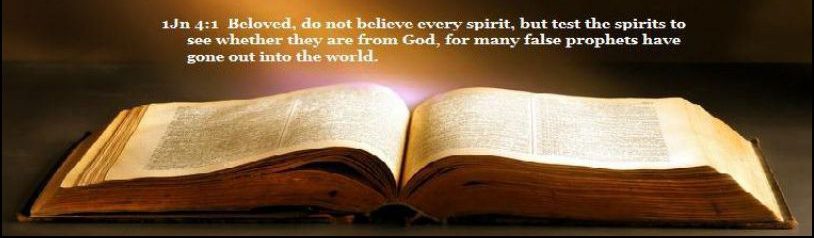






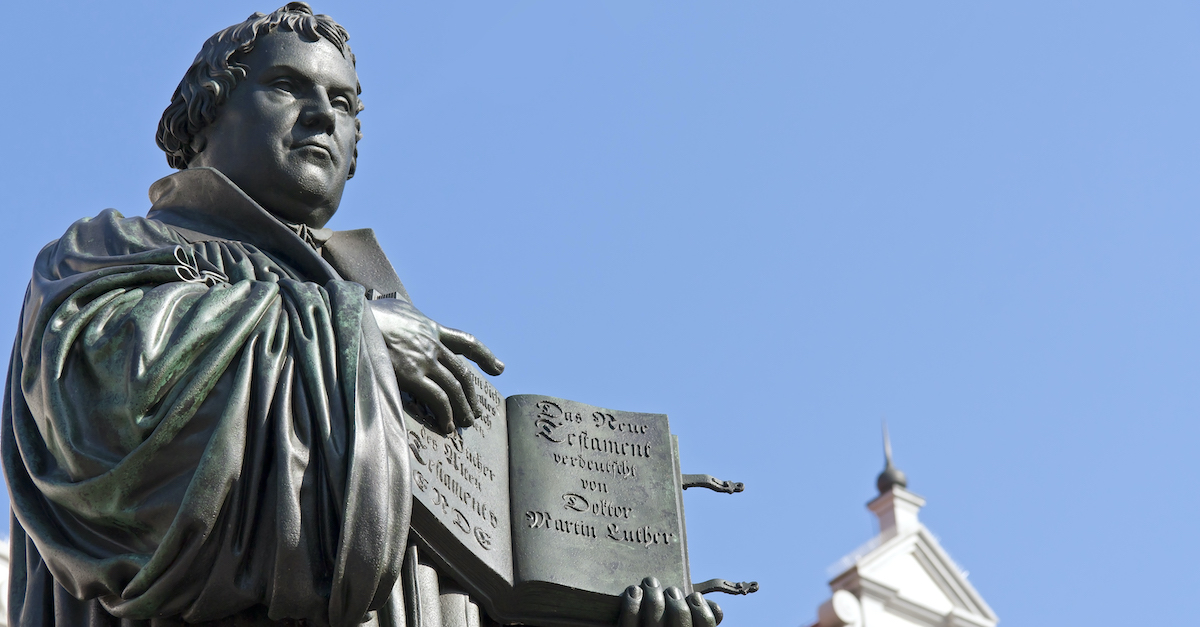



 Truth2Freedom's Blog