

TERROR
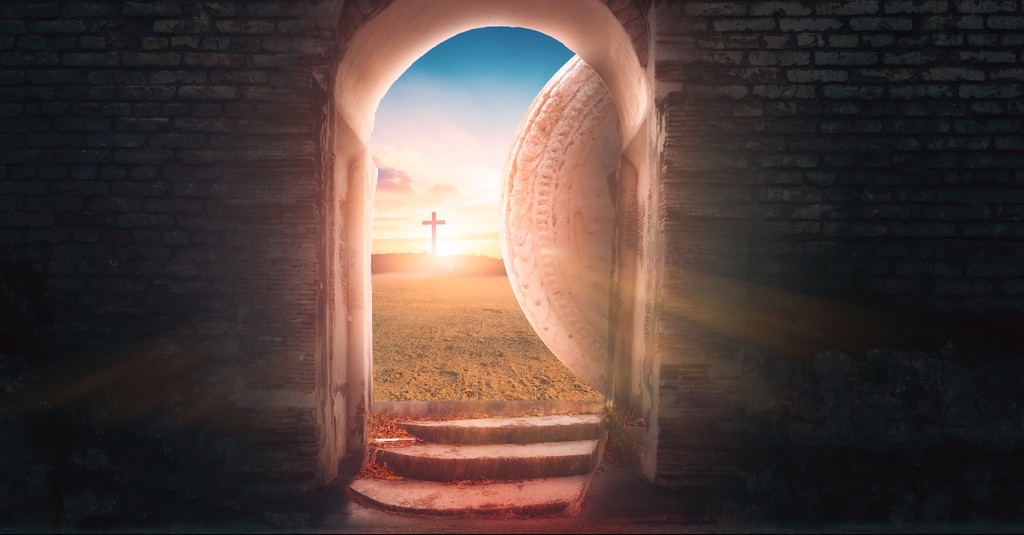
And behold, a severe earthquake had occurred, for an angel of the Lord descended from heaven and came and rolled away the stone and sat upon it. And his appearance was like lightning, and his garment as white as snow; and the guards shook for fear of him, and became like dead men. And the angel answered and said to the women, “Do not be afraid; for I know that you are looking for Jesus who has been crucified. He is not here, for He has risen, just as He said. Come, see the place where He was lying. And go quickly and tell His disciples that He has risen from the dead; and behold, He is going before you into Galilee, there you will see Him; behold, I have told you.” (28:2–7)
No sooner had the women reached the tomb than they found the stone had been moved aside by a severe earthquake. This was the second supernaturally caused earthquake in connection with Jesus’ death and burial, the first one having occurred at the moment of His death (Matt. 27:51).
God caused an earthquake on Mount Sinai just before He revealed the law to Moses (Ex. 19:18) and on Mount Horeb when He revealed Himself to Elijah (1 Kings 19:11). In the end times He will also send numerous earthquakes (Joel 2:10; Matt. 24:7; Rev. 6:12; 8:5; 11:13–19). Now, within three days, He caused two earthquakes just outside Jerusalem.
This earthquake had occurred when an angel of the Lord descended from heaven, causing the earth around the grave to tremble violently. The angel had come to open the secured and sealed grave, and when he arrived he rolled away the stone and sat upon it. Although it had probably taken several strong men some time to put the stone in place, the angel removed it in an instant.
The angel did not move the stone in order to let Jesus out of the tomb, as many Easter stories and paintings suggest. If Jesus had the power to raise Himself from the dead, which He did (John 10:18), He certainly had the relatively minor power required to escape a sealed grave. As He demonstrated during several postresurrection appearances, just as He was no longer bound by death, He was no longer bound by the limitations of the physical world or of time (see Luke 24:31; John 20:26). In His glorified form He could escape a closed grave just as easily as He could enter a closed room. In comparing the gospel accounts, it becomes clear that Jesus had already left the tomb when the stone was rolled away. The angel moved the stone not to let Jesus out but to let the women and the apostles in.
From John’s gospel it seems that Mary Magdalene apparently left the garden as soon as she “saw the stone already taken away from the tomb” (20:1). Before the angel appeared, “she ran and came to Simon Peter, and to the other disciple whom Jesus loved, and said to them, ‘They have taken away the Lord out of the tomb, and we do not know where they have laid Him’ ” (v. 2). Obviously she had missed the angel’s announcement of Jesus’ resurrection. She was so overwrought at discovering the tomb empty that she ran frantically to the two most prominent disciples, Peter and John, to tell them what she thought was terrible news. It did not occur to her that Jesus might be risen as He had predicted, and she assumed that someone had stolen the body and hidden it. It is obvious that Peter and John did not consider the possibility of resurrection either, and they immediately ran to the tomb to find out what they could (John 20:3–4).
Meanwhile the angel had manifested himself to those who were near the tomb, and his appearance was like lightning. The description suggests that God transmitted some of His own Shekinah glory to the angel, just as He had transmitted a measure of it to Moses on Sinai when the covenant was renewed (Ex. 34:29). In a similar way, the angel’s glistening garment that was as white as snow suggests God’s purity and holiness. The angel bore the very imprimatur of the character of God in order to make clear to the observers not only that he was a supernatural messenger but that he was an agent of God and not Satan.
The guards were so awestruck that at first they shook for fear of him. Shook translates a Greek term that has the same root as “earthquake” in verse 2, indicating that the soldiers experienced personal earthquakes of both mind and body. But after a brief moment of shaking, they then became like dead men, paralyzed with fear. The idea seems to be that they not only became rigid but unconscious, completely traumatized by what they saw.
The women were also frightened, but, unlike the soldiers, they received comfort from God’s messenger. Aware of their fright, the angel answered and said to the women, “Do not be afraid.” Perhaps a better translation than answered would be “explained,” because the women, too terrified to speak, had not asked a question.
The soldiers had good reason to be afraid. Not only was the angel’s appearance terrifying in itself but, because they had been charged with protecting the grave, an empty tomb could spell their death. The women, however, had no reason to fear, and the angel’s first words were meant to give them comfort and assurance.
They had not come expecting to find Jesus raised, but in His gracious mercy God overlooked their weak faith and their lack of understanding. Acknowledging their great love, God responded with great love. “I know that you are looking for Jesus who has been crucified,” the angel said to them; “He is not here, for He has risen, just as He said.”
Has risen translates a Greek aorist passive and can also be rendered, “has been raised.” Jesus Himself had power to give up His life and to take it up again (John 10:18). But Scripture makes clear that He also was raised by the power of the Father (Rom. 6:4; Gal. 1:1; 1 Pet. 1:3) and of the Holy Spirit (Rom. 8:11). The entire Trinity participated in the resurrection of Jesus.
The angel gently reminded the women that Jesus’ resurrection should not surprise them, because it happened just as He said. Luke reports that they then “remembered His words” (24:8).
Next the angel invited the women to come, see the place where He was lying. At this point the women went into the tomb and observed that it was indeed empty. The angel joined them in the tomb and reiterated the same basic message, saying, “Do not be amazed; you are looking for Jesus the Nazarene, who has been crucified. He has risen; He is not here; behold, here is the place where they laid Him” (Mark 16:6). Perhaps the message was repeated because the women found it so hard to believe, despite the fact that they now remembered Jesus’ predictions that He would rise on the third day.
When Peter and John entered the tomb a short while later, they “beheld the linen wrappings lying there, and the face-cloth, which had been on His head, not lying with the linen wrappings, but rolled up in a place by itself” (John 20:6–7). The burial clothes were just as they were when Joseph and Nicodemus laid the body to rest, except for the face-cloth, which was set to one side. Jesus did not have to be unwrapped any more than He had to have the stone removed. At one moment He was encased in the linen, and the next He was free, leaving the wrappings unchanged.
While the women were in the tomb, another angel joined the first, “one at the head, and one at the feet, where the body of Jesus had been lying” (John 20:12). Their positions are reminiscent of the two golden cherubim who were on either side of the Mercy Seat on the Ark of the Covenant (Ex. 25:18). The two angels in the garden were posted at either end of the tomb of Jesus, who, by the sacrifice He had just made of His own life, became the true and eternal Mercy Seat for sinful mankind.
The two angels gave still another reminder to the women. “Why do you seek the living One among the dead?” they asked. “He is not here, but He has risen. Remember how He spoke to you while He was still in Galilee, saying that the Son of Man must be delivered into the hands of the sinful men, and be crucified, and the third day rise again” (Luke 24:5–7). For a third time the women were told the glorious truth of Jesus’ resurrection, a truth whose fulfillment they should have been eagerly expecting.
One of the angels then said, “Go quickly and tell His disciples that He has risen from the dead.” The women’s fascination must quickly turn to proclamation. They did not have time to revel in the marvelous reality of the good news but were to go immediately and announce it to the cowering disciples, who were still hiding in Jerusalem.
It would seem more than justified for the Lord to have allowed the disciples to suffer in fear, despair, and agony for a week or so before telling them the good news. They had stubbornly refused to believe that Jesus would die and be raised, although He had told them of His death and resurrection many times. But in His gracious mercy God sent the women to tell the disciples as soon as possible, so they would not have to experience another moment of misery and grief. He did not rebuke them for their lack of faith and for their cowardice but rather sent them messengers with a gracious word of hope and comfort.
One wonders why God chose to reveal the truth of the resurrection first to those women rather than to the disciples. One commentator suggests that it was because God chooses the weak to confound the strong. Another suggests the women were rewarded for their faithful service to the Lord in Galilee. Another holds that, because death came by a woman in a garden, so new life was first announced to a woman in a garden. Others propose that it was because the deepest sorrow deserves the deepest joy or that supreme love deserves supreme privilege.
But Scripture offers no such explanations. It seems obvious that the women were the first to hear the angelic announcement of the resurrection simply because they were there. Had the disciples been there, they, too, would have heard the good news directly from the angel rather than indirectly from the women.
This is analogous to the reality that the closer a believer stays to the Lord and to His work, the more he is going to witness and experience the Lord’s power. Those who are there when the Lord’s people gather for worship and prayer, who are there when His Word is being taught, who are there when the lost are being won to Christ, who are there when others are being served in His name, who are regular in their times of private prayer-those are the ones who will most often experience first-hand the work of God.
The angel’s further instruction to the women was to tell Jesus’ disciples that “He is going before you into Galilee, there you will see Him; behold, I have told you.” Earlier in the week Jesus had told the eleven remaining disciples, “After I have been raised, I will go before you to Galilee” (Matt. 26:32). Being both Jewish and Gentile, Galilee represented the world at large. It was there that Jesus began His ministry, in “Galilee of the Gentiles,” where “the people who were sitting in darkness saw a great light” (Matt. 4:15–16). It would also be in Galilee that the disciples would receive the Great Commission from the Lord to “go therefore and make disciples of all the nations” (Matt. 28:19).
It was not that Jesus would first appear to the disciples in Galilee, because He manifested Himself to them several times before that. He appeared to Peter (Luke 24:34), to the two disciples on the road to Emmaus (Luke 24:15; cf. Mark 16:12), to ten of the disciples as they were assembled on resurrection evening (John 20:19), to all eleven disciples eight days later (John 20:26), and to seven of the disciples as they were fishing in the Sea of Galilee (John 21:1).
But Jesus’ supreme appearance to the disciples was to be in Galilee, where He “appeared to more than five hundred brethren at one time” (1 Cor. 15:6) and where He would commission the eleven to apostolic ministry.
MacArthur, J. F., Jr. (1985–1989). Matthew (Vol. 4, pp. 308–312). Moody Press.



 Truth2Freedom's Blog
