There are two ways to be fooled. One is to believe what isn’t true; the other is to refuse to believe what is true. —Soren Kierkegaard. "…truth is true even if nobody believes it, and falsehood is false even if everybody believes it. That is why truth does not yield to opinion, fashion, numbers, office, or sincerity–it is simply true and that is the end of it" – Os Guinness, Time for Truth, pg.39. “He that takes truth for his guide, and duty for his end, may safely trust to God’s providence to lead him aright.” – Blaise Pascal. "There is but one straight course, and that is to seek truth and pursue it steadily" – George Washington letter to Edmund Randolph — 1795. We live in a “post-truth” world. According to the dictionary, “post-truth” means, “relating to or denoting circumstances in which objective facts are less influential in shaping public opinion than appeals to emotion and personal belief.” Simply put, we now live in a culture that seems to value experience and emotion more than truth. Truth will never go away no matter how hard one might wish. Going beyond the MSM idealogical opinion/bias and their low information tabloid reality show news with a distractional superficial focus on entertainment, sensationalism, emotionalism and activist reporting – this blogs goal is to, in some small way, put a plug in the broken dam of truth and save as many as possible from the consequences—temporal and eternal. "The further a society drifts from truth, the more it will hate those who speak it." – George Orwell “There are two ways to be fooled. One is to believe what isn’t true; the other is to refuse to believe what is true.” ― Soren Kierkegaard
Consider for a moment whether you could ever believe a book happened by accident. Here’s the argument: There was nothing. Then paper appeared, and ink fell from nowhere onto the sheets and shaped itself into perfectly formed letters. Initially, the letters said something like this: “fgsn&k cn1clxc dumh cckvkduh vstupidm ncnx.” As you can see, random letters rarely produce words that make sense. But in time, mindless chance formed them into the order of meaningful words separated by spaces.
The sentences then grouped themselves to relate to each other, giving them coherence. Punctuation marks, paragraphs, margins, etc., also came into being in the correct placements. Page numbers fell in sequence at the right places, and headers, footers, and footnotes appeared from nowhere on the pages, matching the portions of text to which they related. The paper trimmed itself and bound itself into a book. The ink for the cover fell from different directions, being careful not to incorrectly mingle with the other colors, forming itself into the graphics and title. There are multiple copies of this publication, so it then developed the ability to replicate itself thousands of times over.
With this thought in mind, notice that in the following description, DNA is likened to a book:
If you think of your genome (all of your chromosomes) as the book that makes you, then the genes are the words that make up the story…The letters that make up the words are called DNA bases, and there are only four of them: adenine (A), guanine (G), cytosine (C), and thymine (T). It’s hard to believe that an alphabet with only four letters can make something as wonderful and complex as a person!
To liken DNA to a book is a gross understatement. The amount of information in the 3 billion base pairs in the DNA in every human cell is equivalent to that in 1,000 books of encyclopedia size. It would take a person typing 60 words per minute, eight hours a day, around 50 years to type the human genome. And if all the DNA in your body’s 100 trillion cells was put end to end, it would reach to the sun (90 million miles away) and back over 600 times.
Aside from the immense volume of information that your DNA contains, consider whether all the intricate, interrelated parts of this “book” could have come together by sheer chance. Physical chemist Charles Thaxton writes:
The DNA code is quite simple in its basic structure (although enormously complex in its functioning). By now most people are familiar with the double helix structure of the DNA molecule. It is like a long ladder, twisted into a spiral. Sugar and phosphate molecules form the sides of the ladder. Four bases make up its “rungs.” These are adenine, thymine, guanine, and cytosine. These bases act as the “letters” of a genetic alphabet. They combine in various sequences to form words, sentences, and paragraphs. These base sequences are all the instructions needed to guide the functioning of the cell.
The DNA code is a genetic “language” that communicates information to the cell . . . The DNA molecule is exquisitely complex, and extremely precise: the “letters” must be in a very exact sequence. If they are out of order, it is like a typing error in a message. The instructions that it gives the cell are garbled. This is what a mutation is. The discovery of the DNA code gives the argument from design a new twist. Since life is at its core a chemical code, the origin of life is the origin of a code. A code is a very special kind of order. It represents “specified complexity.”
Could DNA’s amazing structure have come together by accident? Or does it point to an intelligent Designer? Even the director of the U.S. National Human Genome Research Institute concluded there is a God based on his study of DNA. Francis Collins, the scientist who led the team that cracked the human genome, believes there is a rational basis for a Creator and that scientific discoveries bring man “closer to God”: “When you have for the first time in front of you this 3.1-billion-letter instruction book that conveys all kinds of information and all kinds of mystery about humankind, you can’t survey that going through page after page without a sense of awe. I can’t help but look at those pages and have a vague sense that this is giving me a glimpse of God’s mind.”
Ray Comfort is the Founder and CEO of Living Waters, a bestselling author, and cohost of the award-winning television program Way of the Master, which airs in 190 countries.Comfort also wrote the commentary for the “The Evidence Study Bible“
I’ve learned something important in the many homicide trials I’ve worked over the years: There’s always more than one way to explain evidence. Jurors are asked to evaluate two different interpretations of the evidence they’ve been presented, and they’re usually asked to assess two completely different theories related to the crime. While the Standard Cosmological Model (describing a universe with a beginning) is still the dominant theory among cosmologists and physicists, a number of competing ideas have been offered to describe the origin of the universe. Some of these explanations would allow us to stay “inside the room” of the universe to explain its existence, others would not. Do any of these alternatives disprove the reasonable inference the universe had a beginning, however? No. Sitting in criminal trials over the years, I’ve come to recognize three critical liabilities common to faulty arguments: They are either (1) unsupported by the evidence, (2) have erroneously redefined critical aspects of the data, or (3) suffer from logical contradictions. In an effort to explain the evidence we’ve described in the universe, scientists looking for an alternative to the Standard Cosmological Argument have considered a number of possibilities over the years. They’ve asked some important questions, but their answers and explanations suffer from the liabilities I’ve observed in my criminal trials:
Could the Universe Be Expanding Eternally? Some scientists have explored this question in an effort to explain the expansion of the universe without acknowledging or explaining its beginning. Historic models like the Steady State Theory claimed the universe had been stretching and filling in eternally without an origin. But theories of this nature lacked evidential support, particularly once the cosmic background radiation and over-abundance of helium was discovered.
Could the Universe Be Cycling Eternally Between Expansion and Contraction? Oscillating or cyclical theories claim the universe has been expanding and contracting eternally. But early versions of these theories are also unsupported by the evidence. There isn’t, for example, sufficient mass in the universe for gravity to slow its expansion to cause a repeating cycle. More current cyclical models (like the Cyclic Ekpyrotic Scenario) are even more speculative, relying on highly controversial String Theory physics, leaving many questions completely unaddressed. As a result, these theories have not replaced the Standard Cosmological Model.
Could the Universe Be Part of a Larger, Eternal Environment? A variety of quantum theories acknowledge the beginning of our universe, but seek to place it in the context of a larger eternal setting. These theories claim the universe emerged from sub-atomic “virtual particles” in a pre-existing, eternal quantum vacuum. Models of this type still have to explain the origin of the vacuum, however. In addition, these proposals redefine the meaning of “nothing” when describing the pre-existing, (1) primordial vacuum, (2) virtual particles, and (3) time from which our universe emerged. The evidence demonstrates all space, time and matter began with the origin of our universe. Whatever preceded this universe cannot, therefore, have been spatial, temporal or material, at least by the definitions we have been using all along. Emergent models redefine the meaning of “nothing” to include “something” (the primordial vacuum, virtual particles, and time). While this solves the problem semantically, it doesn’t solve the problem evidentially.
The beginning of the universe cannot be explained from “inside the room”. The evidence points to an external cause outside of space, time, and matter. Share on X
The beginning of the universe cannot be explained from “inside the room”. The evidence points to an external cause outside of space, time, and matter. Cosmologist Paul Davies, recognizing the dilemma presented by the evidence, writes, “One might consider some supernatural force, some agency beyond space and time as being responsible . . . or one might prefer to regard the [beginning of the universe] as an event without a cause. It seems to me that we don’t have too much choice. Either… something outside of the physical world… or… an event without a cause.” This inference of a cause “outside the room” is reasonable, given the strength of diverse evidence for a caused universe, and the inadequacy of efforts to stay “inside the room” of the universe for an explanation:
I’ve briefly excerpted this from my book, but if you’re interested in the detailed summary of the evidence (and the reason why this evidence points to an eternal first cause “outside the room” of the natural universe), please read God’s Crime Scene: A Cold-Case Detective Examines the Evidence for A Divinely Created Universe, Chapter One – In the Beginning: Was the Universe an Inside Job?
The world today seems to operate under the presumption that science and religion are both combatants in an apocalyptic struggle for survival. In this conflict, science is presented as the rational and objective underdog pitted against the irrational oversized forces of religion. Atheist professor Jerry Coyne’s recent book title, Faith vs. Fact: Why Science and Religion are Incompatible, is an example of this type of warfare scenario. Similarly, atheist Sam Harris charges that science is a completely factual enterprise, whereas “theology is now little more than a branch of human ignorance.”
As ingrained as this narrative may be, it is simply false. In fact, the historical record is not one of hostility. Alistair McGrath, currently the Andreos Idreos Professor of Science and Religion at the University of Oxford, has said that this “warfare view” is now “seen as a hopelessly outmoded historical stereotype which scholarship has totally discredited.” What has actually happened is that these scientists have hijacked the definition of science by insisting on a purely naturalistic (atheistic) understanding of the term. They are philosophically committed to naturalism. This philosophical commitment guides their means of scientific inquiry which gives rise to methodological naturalism, which in practical terms often amounts to nothing more than atheism masquerading as “science.” Inquiry should be free to follow the evidence wherever it leads, whether that is ultimately to a natural cause or an intelligent cause.
The Real Story
The reality is that science and Christianity have shared a long and fruitful relationship with each other. Nowhere is this more beautifully illustrated than on the grounds of Cambridge University. The prestigious Cavendish laboratory, where such discoveries as the DNA double helix and the Neutron and Electron were made. A place which has produced over 29 Nobel Laureates. To enter, you pass through two large heavy wooden doors. On top of these doors sits a beautiful ornate carving that reads Magna opera Domini exquisite in omnes voluntates eius. This is a Bible verse from the Latin Vulgate and it is a quote from Psalm 111:2: “Great are the works of the Lord; they are studied by all who delight in them.”
Why would one of the most prestigious scientific laboratories have such a quotation at its entrance if, as we are told, science and religion are incompatible? Even more amusing is the fact that it would have been these doors that atheist scientists Francis Crick and Jim Watson rushed through in 1953, after discovering the working of DNA; they were keen to get to the pub across the street, “to tell everyone within hearing that we had found the secret of life.”
As it is, this inscription stands as a testimony to the Christian heritage that was so important in the rise of modern science. The original inscription was put there at the behest of the Cavendish Laboratory’s first professor James Clerk Maxwell. The four mathematical equations of electricity and magnetism that Maxwell produced and his work in areas such as electromagnetic theory and thermodynamics are widely believed to have paved the way for other great discoveries of 20th-century physics. Maxwell was a believer who had extensive knowledge of the Bible and had served as an elder in the Church he helped plant in Scotland. He strongly believed that scientific research was to be conducted in light of the Bible and that such endeavors were a way to study the works of God. His biographers record a prayer, very reminiscent of Psalm 111:2, which they found amongst his papers after his death:
“Almighty God, who created man in Thine own image, and made him a living soul that he might seek after Thee and have dominion over Thy creatures, teach us to study the works of Thy hands, that we may subdue the earth to our use and strengthen the reason for Thy service; and so to receive Thy blessed Word, that we may believe on Him Whom Thou hast sent, to give us the knowledge of salvation and the remission of our sins. All of which we ask in the name of the same Jesus Christ, our Lord.”
Such a view gave rise to modern physics and is very different from the usual narrative that you hear from people today when they insist that religious believers are ignorant, keeping the world in a backward state and opposing the advancements of science at every turn.
Einstein’s Heroes
Perhaps another example will finally lay to rest this idea that science is opposed to the Bible. Most people will know the name of scientist Albert Einstein. His Theories of Relativity are fundamental to modern Physics. Of course, even the great Einstein would have had his own scientific heroes. You can learn a lot about a person by spending some time looking around their study! Einstein’s study had three pictures of his scientific heroes. They were Isaac Newton (1642–1727), perhaps the greatest scientist who ever lived, who among other things developed the theory of universal gravitation and the three laws of motion. Then there was Michael Faraday (1791–1867), who was known for his skill at experimentation. He discovered benzene, invented the transformer, and his work also involved demonstrating that magnetism could produce electricity. The third picture was of James Clerk Maxwell who we have already mentioned. Now there is one thing that all these great scientific minds had in common – a firm belief in the God of the Bible. All these men saw their scientific work as a way to further understand the God who created the universe. They expected the natural world to be orderly and discoverable, precisely because God is a God of order. They were all active in church life and even produced theological volumes along with their scientific works.
The Christian Roots Of Science
So much for the “warfare scenario!” In fact, the opposite appears to be true: The scientific revolution was birthed from within a Judeo-Christian framework. Why was this? Well in order to operate, science has to work with a number of assumptions about the world. These assumptions are best explained by the Christian worldview. It is the God described in the Bible that can account for the existence of a rational and orderly cosmos. The concepts required by the scientific method, such as testable and repeatable experimentation, all assume that there is uniformity to the universe. God upholds the universe in such a consistent way, we can fully expect the universe to function according to specific laws that we can study. The great philosopher of science Alfred North Whitehead credited the origin of science to Christianity’s “insistence on the rationality of God”.
If the secular view is true, that the universe originated from nothing by random chance processes, on what basis do we expect it to operate in a predictable and uniform manner? It is almost taken for granted today by those studying science that the universe operates according to laws that are comprehensible to humans. New atheist and physicist Steven Weinberg writes that “all my experience as a physicist leads me to believe that there is order to the universe … there is a simplicity, a beauty, that we are finding in the rules that govern matter that mirrors something that is built into the logical structure of the universe at a very deep level.” Many are struck by how strange this is and admit there is no real rational explanation for it within their atheistic worldview. Such a view is better understood as stemming from Christianity, which believes in a God who is rational, powerful and separate from His creation. This is why science blossomed in the fertile soil of the Christian west where God was envisioned as both the Creator and the Lawgiver. Christianity was long seen as the worldview that could logically account for the universe.
Guest post by Hollywood film director Joel Gilbert
In my new film, The Climate According to AI Al Gore, I expose the foundational lies of climate science of Al Gore, the godfather of the climate change movement.
Because of Gore, today, governments worldwide spend billions on carbon dioxide reduction policies.
It all began in 1992 when Gore published his climate emergency manifesto, Earth in the Balance, where he claimed that carbon dioxide was dooming the planet and called for environmental control to become “the central organizing principle for civilization.”
Then, in 2006, with the release of his film An Inconvenient Truth, Al Gore’s climate change movement exploded.
Watch the trailer below:
Al Gore admitted he was no scientist. The source Gore cited for his climate alarmism was his Harvard professor, Roger Revelle. Gore cited an unnamed course he took from Revelle in the fall semester of 1969.
To get some answers, I went to the University of California San Diego where Roger Revelle’s lifelong papers are stored.
First, I discovered that the course Gore took from Revelle at Harvard was called “Human Populations”, and was all about world population growth. Gore scored a “C” in the class.
There was absolutely nothing about the climate or atmospheric science.
Next, I reviewed Revelle’s numerous articles and interviews over 40 years and discovered that Revelle did not agree with Gore’s theories about greenhouse gases, global warming or climate change.
Yet Al Gore credited Revelle for his extreme apocalyptic environmental positions, which Gore repeatedly called “a spiritual crisis”.
So where did Al Gore’s climate science really come from?
In early 1971, after serving only four months in Vietnam as a journalist, Gore applied to the Vanderbilt Divinity School, a draft dodgers’ haven, to cut short his time in service.
It was at Divinity School that Gore studied with radical environmental preachers, and where the reading list included a popular 1940s environmental cataclysm book called Our Plundered Planet which maintained humanity was destroying the planet.
My analysis of the book reveals that Gore borrowed heavily from Our Plundered Planet to write his 1992 manifesto, Earth in the Balance. However, in order to secularize his apocalyptic religious vision of a “climate emergency,” Gore credited his Harvard professor Roger Revelle.
Had Gore told the truth, namely that he just rewrote the apocalyptic ravings of the whacky Our Plundered Planet book, Gore’s climate alarmism would have been dismissed as unacceptable and absurd.
Researching Al Gore’s greenhouse gas theory revealed what the media will never say: that carbon dioxide is not a pollutant or a bad gas. In fact, carbon dioxide is our friend.
Without it, life on Earth would not be possible. As humans, we release it every time we exhale.
Carbon dioxide is the food of nearly all plants on earth. We need more carbon dioxide, not less. More carbon dioxide would result in more crops, more food yield, and the greening of the deserts.
Earth’s atmosphere contains only 370 parts per million of carbon dioxide. That’s just .0037 percent. Not even one percent! Even if its concentration were tripled, carbon dioxide would still be miniscule.
It is the sun, volcanoes, the tilt of the earth’s axis, water vapor, sunspots, clouds, and ocean cycles, that affect world temperatures, not carbon dioxide.
I also learned that the only scientists who agree with climate change theories are those dependent on government funding. Universities and green organizations also reap financial benefits from climate panic. They are all in effect being paid by the government to agree.
Why don’t the simple facts about carbon dioxide take hold?
Unfortunately, today’s climate movement has taken on the characteristics of a religion. And, religions don’t worry too much about facts. It’s a belief system.
Mass movements can rise and spread, without belief in a god, but never without belief in a devil.
That’s why people who disagree with climate change are treated as heretics, they are evil, and deserve to be punished.
I concluded that “climate change” today is merely the latest scam with the same socialist solutions that Americans would never vote for: central planning and wealth redistribution.
It’s really all an assault on freedom and prosperity to try to stop the existence of the free market system. This is because Marxists are furious that free markets have achieved wealth for common workers and want to reverse this economic success to validate Marxism.
In my film, I demonstrate that Al Gore pushed his climate alarmism theories to try to garner political support. He felt the environmental issue was a popular one that crossed all class lines and could get him into the White House – and the rest is history.
Skeptics have argued against the involvement of an external designer on the basis of perceived imperfections within biological structures. If there is an all-powerful intelligent designer, this designer would be working from scratch and should be capable of creating optimally designed micro-machines and biological structures. Evolution, on the other hand, modifies and builds from existing structures, and this process won’t necessarily produce design perfection.
Scientists and philosophers who identify imperfections (and liabilities) in biological organisms point to these deficiencies as evidence against the involvement of an external intelligent agent. Some skeptics have also offered DNA as an example of design imperfection, given the presence of non-functional genes (“junk DNA”) within a variety of genomes.
The Appearance of “Imperfection” Often Results from Entropy or Adaptation
Those who advocate for the existence and interaction of an external intelligent designer aren’t denying the impact of entropy or adaptation over time. Rather than an “either/or” explanation resulting from the creative interaction of an intelligent designer or unguided natural processes, the explanation for “imperfection” we observe in biological systems is most reasonably inferred as the result of intelligent design and processes of modification over time. One example of design “imperfection,” the sesamoid bone “thumb” observed on pandas, is typically offered as an example of poor or inadequate design.
The panda’s “thumb” seems to be an imperfect appendage. Unlike the opposing thumbs of primates, the panda’s “thumb” is unable to grasp as efficiently as would be the case if it were shaped just slightly differently. As a result, the panda’s thumb has been offered by many naturalists as an example of the kind of imperfect shape we might expect from the evolutionary process, and as an evidence against intelligent design.
But this unusual protrusion found in pandas isn’t necessarily the product of an intentional, original design. Mutation and selection operate on all biological organisms, whether they are initially designed or not. The panda’s “thumb” may simply be an adaptation of an original design. Those advocating for an external designer recognize the real and pervasive power entropy has to pervert design in nature. The Second Law of Thermodynamics is an inescapable reality, resulting in degradation from order to disorder. When we see an apparent example of imperfection, entropy may be the better explanation.
The Appearance of “Imperfection” Often Results from Our Limited Understanding
There are times when our limited understanding of biological systems leads us to perceive some degree of imperfection even when this is not the case. This appears to be the situation involving what used to be considered “junk DNA”. The more we learn about apparent “non-functioning” genes and seemingly useless genomic regions, the more we recognize them as important contributors to an elaborate informational system. In the past several years, scientists have discovered a large number of non-protein coding DNA regions under strong “selective constraint.”
Evolutionary scientists recognize these genetics regions have been maintained in the genome for a very long time, even from an evolutionary perspective. The retention of these regions of the DNA molecule indicates their importance to the organism, even if scientists are presently unable to understand why they are important. Typically, those regions of the genome demonstrating “selective constraint” are fundamental to an organism’s ability to survive. These previously under-valued regions of the genome apparently have an important, yet unrecognized, role to play. Scientists have now concluded these “junk sequences” are not junk at all, but “have been under purifying selection and have a significant function that contributes to host viability.” What might at first appear to be an unnecessary, imperfect, extraneous mutation, isn’t necessarily the case. It may simply be a matter of our limited understanding.
The Appearance of “Imperfection” Often Results from Our Narrow Perspective
Prior to serving as a detective, I was classically trained as a designer and architect. Working in an architectural firm in Santa Monica, California, I was typically assigned very limited responsibilities within much larger design projects. While the lead architect was responsible for the overall design of the building, I was sometimes given the limited responsibility of designing an entry portico or the arches in a large courtyard. I would design a prototype, only to have the firm’s principal modify the design later. I often found his modifications were necessary because I’d overlooked some important relationship between design elements. He understood the functional connectivity between these design elements better than I did, and I often had to compromise some aspect of my effort to achieve the larger goal.
This is nearly always the case when engaged in the design process. Every design effort has an impact on some other feature of the overall project, and compromise is essential, even when trying to remove an annoying, apparently “imperfect” feature in the design.
As engineer and historian Henry Petroski writes, “When a new design removes one of these annoyances, it more likely than not fails to address some others or adds a new one of its own. This is what makes engineering and inventing so challenging. All design involves conflicting objectives and hence compromise, and the best designs will always be those that come up with the best compromise.”
For this reason, we simply cannot assume a design is somehow “imperfect” unless we know precisely the goals (or motives) of the designer and the challenges incumbent in the project. As detectives investigating the designs we observe in cellular systems, our limited perspective and understanding sometimes inhibits our ability to fairly judge the design features we observe.
The appearance of design “imperfection” fails to disprove the existence of a designer, both in designed objects created by humans and in designed objects created by God. In fact, the cumulative evidence for a Creator and Intelligent Designer is overwhelming.
J. Warner Wallace is a Christian apologist and former Los Angeles cold-case homicide detective who has been featured numerous times on NBC’s “Dateline” program for his crime scene expertise.
The appearance of fine-tuning in our universe has been observed by theists and atheists alike. Even physicist Paul Davies (who is agnostic when it comes to the notion of a Divine Designer) readily stipulates, “Everyone agrees that the universe looks as if it was designed for life.” Oxford philosopher John Leslie agrees: “it looks as if our universe is spectacularly ‘fine-tuned for life’. By this I mean only that it looks as if small changes in this universe’s basic features would have made life’s evolution impossible.” The foundational “laws of nature” are amazingly fine-tuned; there is very little room for alteration. The smallest modifications of these laws would completely destroy the possibility of life in the universe. Theoretical physicist, Stephen Hawking says the laws of physics “appear fine-tuned in the sense that if they were altered by only modest amounts, the universe would be qualitatively different, and in many cases unsuitable for the development of life…The emergence of the complex structures capable of supporting intelligent observers seems to be very fragile. The laws of nature form a system that is extremely fine-tuned, and very little in physical law can be altered without destroying the possibility of the development of life as we know it. Were it not for a series of startling coincidences in the precise details of physical law, it seems, humans and similar life-forms would never have come into being.” The universe appears fine-tuned in three specific ways:
Forces Governing the Atom Are Favorable to Life: The constants and proportions of the strong nuclear force, weak nuclear force, electromagnetic force and the force of gravity must exist within very narrow ranges in order for life to exist in the universe. The ratio of electrons to protons (both in their numbers and mass) must be precariously balanced. Stanford University physicist and cosmologist, Leonard Susskind, says, “The Laws of Physics begin with a list of elementary particles like electrons, quarks, and photons, each with special properties such as mass and electric charge. These are the objects that everything else is built out of. No one knows why the list is what it is or why the properties of these particles are exactly what they are. An infinite number of other lists are equally possible. But a universe filled with life is by no means a generic expectation…” If the value of this ratio deviated more than 1 in 1037, the universe, as we know it, would not exist today. If the ratio between the electromagnetic force and gravity was altered more than 1 in 1040, the universe would have suffered a similar fate. The nature of the universe (at the atomic level) could have been different, but even remarkably small differences would have been catastrophic to our existence.
Forces Governing the Matter of the Universe Are Favorable to Life: On the macro-level, the size of the universe, its rate of growth, and the nature and existence of galaxies, stars, and planets depend largely on the force of gravity. While we sometimes take gravity for granted, the precisely calibrated gravity in the universe is puzzling; Susskind describes it as an “unexplained miracle.” If the expansion rate of the universe deviated by more than 1 in 1037, or the mass density of universe varied more than 1 in 1059, there wouldn’t be a single habitable galaxy or planet in the universe.
Forces Governing the Creation of Chemicals Are Favorable to Life: The earliest elements in the universe, hydrogen and helium, are insufficient for the existence of carbon-based life forms unless joined by carbon, oxygen and the other necessary elements. These secondary elements were formed in stars, but the process by which these stars converted hydrogen and helium to carbon was an incredibly fine-tuned process. Even small alterations in the laws of physics would have prevented the formation of elements critical to the existence of life. Susskind puts it this way: “In the beginning there were only hydrogen and helium: certainly not sufficient for the foundation of life. Carbon, oxygen, and all the others came later. They were formed in the nuclear reactors in the interiors of stars. But the ability of stars to transmute hydrogen and helium into the all-important carbon nuclei was a very delicate affair. Small changes in the laws of electricity and nuclear physics could have prevented the formation of carbon.”
Illustration from God’s Crime Scene
When we use exponential numbers like 1 in 1037, it’s easy to underestimate the precision these numbers represent. Let me give you a few illustrations to help you grasp the exactitude of these universal constants:
Astrophysicist Hugh Ross offers the following analogy: Imagine covering the entire North American continent in dimes and stacking them until they reached the moon. Now imagine stacking just as many dimes again on another billion continents the same size as North America. If you marked one of those dimes and hid it in the billions of piles you’ve assembled, the odds of a blindfolded friend picking out the correct dime is approximately 1 in 1037; the same level of precision required in the strong nuclear force and the expansion rate of the universe.
Philosopher Robin Collins describes it this way: Imagine stretching a measuring tape across the entire known universe. Now imagine one particular mark on the tape represents the correct degree of gravitational force required to create the universe we have. If this mark were moved more than an inch from where it is (on a measuring tape spanning the entire universe), the altered gravitational force would prevent our universe from coming into existence.
Paul Davies credits the following analogy to John Jefferson Davis: Imagine trying to fire a bullet at a one-inch target on the other side of the observable universe. The accuracy required to accomplish such a feat has been calculated at 1 in 1060. Compare this to the precision required in calibrating the mass density of the universe (fine-tuned to within 1 unit in 1059).
Hugh Ross also provides the following analogy: Imagine comparing the universe to an aircraft carrier like the USS John C Stennis (measuring 1,092 feet long with a displacement of 100,000 tons). If this carrier were as fine-tuned as the mass density of our universe, subtracting a billionth of a trillionth of the mass of an electron from the total mass of the aircraft carrier would sink the ship.
The appearance of fine-tuning in our universe has been observed by theists and atheists alike. Share on X
Starting to appreciate the level of fine-tuning in the foundational particles and forces in the universe? A small change in the value of any one particle or force would have a major impact on the larger systems and outcomes. These fine-tuned relationships (sometimes jokingly referred to as “happy cosmic accidents”) are critically important to life in the cosmos. If just one of these parameters were altered, critical difficulties would result at every level of the universe. According to theoretical physicist Michio Kaku, “…it’s shocking to find how many of the familiar constants of the universe lie within a very narrow band that makes life possible. If a single one of these accidents were altered, stars would never form, the universe would fly apart, DNA would not exist, life as we know it would be impossible, Earth would flip over or freeze, and so on.”
Access Research Network is a group that produces recordings of lectures and debates related to intelligent design. I noticed that on their Youtube channel they are releasing some of their older lectures and debates for FREE. So I decided to write a summary of one that I really like on the Cambrian explosion. This lecture features Dr. Stephen C. Meyer and Dr. Marcus Ross.
The lecture is about two hours. There are really nice slides with lots of illustrations to help you understand what the speakers are saying, even if you are not a scientist.
Here is a summary of the lecture from ARN:
The Cambrian explosion is a term often heard in origins debates, but seldom completely understood by the non-specialist. This lecture by Meyer and Ross is one of the best overviews available on the topic and clearly presents in verbal and pictorial summary the latest fossil data (including the recent finds from Chengjiang China). This lecture is based on a paper recently published by Meyer, Ross, Nelson and Chien “The Cambrian Explosion: Biology’s Big Bang” in Darwinism, Design and Public Education(2003, Michigan State University Press). This 80-page article includes 127 references and the book includes two additional appendices with 63 references documenting the current state of knowledge on the Cambrian explosion data.
The term Cambrian explosion describes the geologically sudden appearance of animals in the fossil record during the Cambrian period of geologic time. During this event, at least nineteen, and perhaps as many as thirty-five (of forty total) phyla made their first appearance on earth. Phyla constitute the highest biological categories in the animal kingdom, with each phylum exhibiting a unique architecture, blueprint, or structural body plan. The word explosion is used to communicate that fact that these life forms appear in an exceedingly narrow window of geologic time (no more than 5 million years). If the standard earth’s history is represented as a 100 yard football field, the Cambrian explosion would represent a four inch section of that field.
For a majority of earth’s life forms to appear so abruptly is completely contrary to the predictions of Neo-Darwinian and Punctuated Equilibrium evolutionary theory, including:
the gradual emergence of biological complexity and the existence of numerous transitional forms leading to new phylum-level body plans;
small-scale morphological diversity preceding the emergence of large-scale morphological disparity; and
a steady increase in the morphological distance between organic forms over time and, consequently, an overall steady increase in the number of phyla over time (taking into account factors such as extinction).
After reviewing how the evidence is completely contrary to evolutionary predictions, Meyer and Ross address three common objections: 1) the artifact hypothesis: Is the Cambrian explosion real?; 2) The Vendian Radiation (a late pre-Cambrian multicellular organism); and 3) the deep divergence hypothesis.
Finally Meyer and Ross argue why design is a better scientific explanation for the Cambrian explosion. They argue that this is not an argument from ignorance, but rather the best explanation of the evidence from our knowledge base of the world. We find in the fossil record distinctive features or hallmarks of designed systems, including:
a quantum or discontinuous increase in specified complexity or information
a top-down pattern of scale diversity
the persistence of structural (or “morphological”) disparities between separate organizational systems; and
the discrete or novel organizational body plans
When we encounter objects that manifest any of these several features and we know how they arose, we invariably find that a purposeful agent or intelligent designer played a causal role in their origin.
Recorded April 24, 2004. Approximately 2 hours including audience Q&A.
I learned a lot by watching great lectures from Access Research Network. Their YouTube channel is here. I recommend their origin of life lectures – I have watched the ones with Dean Kenyon and Charles Thaxton probably a dozen times each. Speaking as an engineer, you never get tired of seeing engineering principles applied to questions like the origin of life.
If you’d like to see Dr. Meyer defend his views in a debate with someone who reviewed his book about the Cambrian explosion, you can find that in this previous post.
Further study
The Cambrian explosion lecture above is a great intermediate-level lecture and will prepare you to be able to understand Dr. Meyer’s new book “Darwin’s Doubt: The Explosive Origin of Animal Life and the Case for Intelligent Design“. The Michigan State University book that Dr. Meyer mentions is called “Darwin, Design and Public Education“. That book is one of the two good collections on intelligent design published by academic university presses, the other one being from Cambridge University Press, and titled “Debating Design: From Darwin to DNA“. If you think this lecture is above your level of understanding, then be sure and check out the shorter and more up-to-date DVD “Darwin’s Dilemma“.
Even a cursory examination of the connectome shows the complexity of the brain, despite its tiny size.
The nematode worm Caenorhabditis elegans has the smallest brain in a free-living animal. There are two forms of C. elegans, male and hermaphrodite. The hermaphrodite brain contains only 302 neurons and the male 385 neurons. The physical characteristics and brain design are different, but there is much in common. The entire body contains approximately 900 cells and is only one millimeter long. Because of its small size, scientists have conducted a significant amount of research on the brain, in the hope of discovering how brains in general function. A few years ago, researchers were able to determine the entire map of the brain, called a connectome, and published the results in the journal Nature.1C. elegans is the first animal where this was accomplished.
Even a cursory examination of the connectome shows the complexity of the brain, despite its tiny size. Additional complexity is exhibited by the diversity of the types of neurons and the variety of connections. There are three basic types of neurons — sensory neurons, motor neurons, and interneurons. Sensory neurons respond to various stimuli (chemical, physical, etc.). Motor neurons connect to muscles to control movement. Interneurons are generally intermediate between sensory and motor neurons.
C. elegans Behaviors
C. elegans exhibits a number of behaviors, some that are complex. That is surprising considering it is a simple organism with such a small brain. The basic behaviors include feeding, fasting, mating, egg laying, and several forms of movement. These include swimming when in liquid media and “crawling” on solid surfaces. They also exhibit a non-movement behavior called quiescence. Research has found that the behaviors are controlled by various neural networks as well as being regulated by neurotransmitters such as serotonin and dopamine and neuropeptide signaling.2 These forms of neural signaling exist in all animal brains. The conclusion of the same research regarding these behaviors is that, “Episodic regulation of C. elegans behavior is complex because episode incidence and timing are regulated by the interplay between multiple circuit systems.”
In addition to basic behaviors, C. elegans is also capable of learning, including associative and non-associative learning. A paper published in the Journal of Neurochemistry documented the learning behaviors, including attraction and aversion to salt, temperature, and other substances.3 What might be surprising to many is that this learning involves both short-term and long-term memory mechanisms, which include regulation of neurotransmitters. The conclusion of the same paper was the expectation that the findings “Will provide critical insights in the context of learning and memory disorders in higher organisms, including humans.”
General Characteristics of the Brain
A recent study led by scientists at Hebrew University analyzed the structure of neural networks in C. elegans. One of the findings is that, “The positions of the chemical synapses along the neurites are not randomly distributed nor can they be explained by anatomical constraints. Instead, synapses tend to form clusters, an organization that supports local compartmentalized computations.”4 On the other hand the study shows that, “The vast majority of the 302 neurons in C. elegans nematodes lack elaborate tree-like structures. In fact, many of these neurons consist of a single (unipolar) neurite extension, on which input and output synaptic sites are intermittently positioned.” That contrasts with larger brains of advanced animals which do have complex neuron structures. There is a total of 83 sensory neurons and 108 motor neurons. There are approximately 100 classes of neurons that have been identified. There are approximately 5,000 chemical synapses and 1,500-1,700 electrical synapses (gap) junctions.
In the paper that describes the connectome, some of the complexity is summarized as follows, “The major motor neurons as well as their primary pre-motor interneurons are highly interconnected and receive some input from most of the remaining neurons, defying simple interpretation of motor output. The complex circuitry must underlie both the many known behaviours in C. elegans, and the underpinnings for less well understood or novel behaviours, such as learning and memory, inter-animal communication, social behaviour and the complexities of mating.”5 Another important finding concerning the connectome is, “The notable similarity in the placement of the nodes to the neuroanatomy of the worm reflects economical wiring, a property commonly found for nervous systems, including in C. elegans.”
Examination of Neuron Triplets
One notable aspect of the neural networks is that there are a number of triplets, meaning a cluster of three neurons. The paper by the Hebrew University scientists observes, “The clustered organization of synapses is found predominantly in specific types of tri-neuron circuits, further underscoring the high prevalence for evolved, rather than for random, synaptic organization that may fulfill functional role.” One simple instance of a three-neuron cluster is a “feed forward” loop. For example, neuron A is a sensory neuron, neuron B is an interneuron, and neuron C is a motor neuron. Feed forward networks are common in both biological and artificial neural networks. The significance of this is likely that, “The ubiquitous appearance of these circuits in biological networks suggests that they may carry key computational roles, including noise filtering and coincidence detection.” Other research has found that the number of feed forward connections increases as the worm matures.6
Additional detailed examination of three neuron clusters found that, “For three different layouts, where each of the three neurons can be either sensory, inter, or motor neuron, there are 63 possible circuit combinations. Of these 63 combinations, few circuits emerged as forming clustered synaptic connections, significantly more than randomly expected.”7 The two combinations that are the most common are: (1) two sensory neurons form a postsynaptic contact with an interneuron; and, (2) an interneuron that is presynaptic with two motor neurons. The researchers theorize that combination (1) may function as a signal integrator, and combination (2) may function by synchronizing activation. It seems logical that these would be common circuits as these two functions are likely common in controlling animal behavior.
The Touch Response Neural Network
An interesting example of one neural network in C. elegans that has been elucidated is the “tap withdrawal circuit,” also called the touch response, which controls how the worm responds to being physically touched. The behavior is interesting for a number of reasons, one being that the response exhibits habituation. The neural network is illustrated in Figure 2 here. The network consists of four sensory neurons (red triangles), five interneurons (circles), and two motor neurons (blue triangles). There is a total of seven excitatory chemical synapses (green lines with arrows) and 15 inhibitory chemical synapses (red lines with circles). There are also six electrical (gap junction) synapses (blue lines with squares). The response is activated when the sensory neurons detect a tap. The stimulus is then transferred via the interneurons (PVC and AVD), which then pass it to the command neurons (AVA and AVB). The two output states are either “move forward” (FWD motor neuron) or “move in reverse” (REV motor neuron). The response is modulated through competition between the two command neurons. The competition between commands for moving forward or reverse is evident based on the number of inhibitory synapses. It is obvious that even for such a simple behavior the neural circuit is relatively complex.
Tiny But Not Simple
There are several observations that can be drawn from research into the brain of C. elegans. One is that even though the brain is tiny, it does not have a simple structure. One might expect the smallest known brain to have a structure that is either relatively uniform or random. An example of a uniform structure is that found in crystals, which form a symmetrical lattice. A random structure would be expected if the positions of the neurons were not specified, but rather develop through a random process. Contrary to being either uniform or random, the brain does have a complex structure that is specified and repeatable.
A second observation is that the brain contains a large number (approximately 100) of different types of neurons, both in terms of design and function. They are not all identical. That also would not be expected for the smallest brain. A third observation is that small neural networks within the brain control various behaviors, such as the touch response network. It is possible that some of these neural networks are irreducibly complex.
The fourth observation concerns the origin of the C. elegans brain. The usual Darwinian evolution explanation is given in the paper that documented the organization of the synapses, “The mere existence of such structures may actually further underscore the directed evolution to form such clusters, which presumably carry fine functional roles along the neurites. Taken together, local compartmentalized activities, facilitated by the clustered synaptic organizations revealed herein, can enhance computational and memory capacities of a neural network. Such enhancement may be particularly relevant for animals with a compact neural network and with limited computational powers, thereby explaining the evolutionary forces for the emergence of these synaptic organizations.”8 The key phrases are “evolutionary forces” and “directed evolution.” Such terms have never been generally accepted as valid scientific explanations, particularly regarding the origin of novel biological structures.
In contrast, the design of the brain of C. elegans exhibits a number of characteristics associated with intelligent design. They include the specified complexity of the overall design and small neural networks. It also includes engineering design, including the efficient wiring. Also apparent is that a significant amount of information is needed to specify the design and function of the brain.
Notes
Cook, et al., “Whole-animal connectomes of both Caenorhabditis elegans sexes,” Nature, Vol. 571, 4 July 2019.
McCloskey, et al., “Food responsiveness regulates episodic behavioral states in Caenorhabditis elegans,” J Neurophysiol117: 1911-1934, 2017.
Aelon Rahmani and Yee Lian Chew, “Investigating the molecular mechanisms of learning and memory using Caenorhabditis elegans,” Journal of Neurochemistry, 2021; 159.
Ruach, et al., “The synaptic organization in the Caenorhabditis elegans neural network suggests significant local compartmentalized computations,” PNAS, 2023, Vol. 120, No. 3.
Cook, et al.
Witvliet, et al., “Connectomes across development reveal principles of brain maturation,” Nature, Vol. 596, 12 August 2021.
As a homicide detective, I understand the power of alibis. When a potential suspect can prove he or she wasn’t available to commit a crime because they were occupied elsewhere, they are eliminated as a candidate for the murder. Alibis create conundrums: conditions difficult to explain based on the impossibility of simultaneous appearances. In a similar way, the relationships between DNA, proteins, enzymes, and the cell’s membrane present a biological conundrum. Those who believe life can originate in our universe without supernatural interaction (and guidance) must overcome this conundrum if they hope to account for the presence of life “inside the room” of the natural universe by staying “inside the room” for an explanation. In my new book, God’s Crime Scene: A Cold-Case Detective Examines the Evidence For A Divinely Created Universe, I describe the depth of the dilemma by illustrating the process of protein formation within the cell.
Specially formed functional proteins “unzip” a specific portion of the DNA by separating the helix at the middle of its rungs. Additional specialized proteins then act as molecular machines, helping to assemble nucleotide bases along one of the unzipped DNA segments.
This new assemblage of nucleotides is called a messenger RNA (mRNA). Once formed, the shorter mRNA molecule detaches from the DNA and is carried off into the cell by additional protein “helpers.” The mRNA is carrying instructions needed to build a protein. It is helped by another RNA molecule known as transfer RNA (tRNA). The mRNA and tRNA meet in a molecular machine called a ribosome. This important mini-factory is constructed from proteins and RNA complexes. Here, the tRNA transfers the message carried in the mRNA so amino acids can form each protein:
Illustrations from God’s Crime Scene
Once the sequence of amino acids has been established, something amazing happens. Rather than remain in a long chain, the amino acids begin to roll up and fold onto one another, forming the specific finished shape of the protein required to accomplish its job. This may take a few seconds and scientists are still mystified as to how amino acids accomplish this task.
None of this can happen without the aid of enzymes and the protection of the cell membrane. Enzymes are large molecules constructed primarily with proteins. These important molecules activate and accelerate the reactions related to everything from food digestion to DNA formation. Nearly every chemical response in the cell requires an enzyme to help it happen fast enough for life to result. Finally, all of this activity must be protected. That’s where the cell membrane becomes critical. The membrane separates the interior of the cell from hostile exterior forces. It is constructed with fatty molecules (lipids) and proteins (along with carbohydrates). Some cells also have an additional cell wall surrounding the membrane. Cell walls are tough but flexible, and offer an additional layer of filtering and protection.
Now that we’ve reviewed the inner activities of the cell, you’ve probably already recognized the “chicken and egg” problem. Enzymes are necessary for the timely formation of proteins, but these enzymes are built, in part, with proteins. Worse yet, this “chicken and egg” problem is also present in the larger relationships between the DNA, RNA, proteins, ribosomes and cell membrane.
Paul Davies describes the conundrum: “Take DNA… It has a grand agenda, but to implement this, DNA must enlist the help of proteins… proteins are made by complicated machines called ribosomes, according to coded instruction received from DNA via mRNA. The problem is, how could proteins get made without the DNA code for them, the mRNA to transcribe the instructions, and the ribosomes to assemble them? But if the proteins are not already there, how can DNA, ribosomes and all the rest of the paraphernalia get made in the first place? It’s Catch-22.”
All these important machines, transportation vehicles and tools must arrive at the cellular factory simultaneously and function in unison if life is to be possible. The cell membrane and enzymes cannot be constructed without proteins, but the protein formation must be accelerated by enzymes and protected by the membrane. Proteins can’t be formed without DNA information and RNA activity, but machines formed from proteins (like ribosomes), are a critically necessary part of this process.
In this brief blog post (excerpted from God’s Crime Scene), I’ve only described two of the many “chicken and egg” problems naturalists must consider and explain as they account for the origin of life in the universe. Biological systems are replete with irreducibly complex conundrums such as these, and the best explanation for this kind of complexity is intelligent interaction. A supernatural designer can overcome the “chicken and egg” conundrums we’ve described, and a Divine Designer of this nature remains the best inference from the evidence. For a much more thorough description of this evidence, please refer to God’s Crime Scene, Chapter Three – The Origin of Life: Does the Text Require an Author?
When we experience the tremendous order and intelligibility in the universe, we are experiencing something intelligence can grasp. Intelligence is part of what we find in the world. But this universe is not itself intellectually aware. As great as the forces of nature are, they do not know themselves. Yet we know them and ourselves. These remarkable facts—the presence of intelligence amidst unconscious material processes, and the conformity of those processes to the structure of conscious intelligence—have given rise to a variation on the first argument for design.
1. We experience the universe as intelligible. This intelligibility means that the universe is graspable by intelligence.2. Either this intelligible universe and the finite minds so well suited to grasp it are the products of intelligence, or both intelligibility and intelligence are the products of blind chance. 3. Not blind chance. 4. Therefore this intelligible universe and the finite minds so well suited to grasp it are the products of intelligence.
There are obvious similarities here to the design argument, and many of the things we said to defend that argument could be used to defend this one too. For now we want to focus our attention on step 3.
Readers familiar with C. S. Lewis’s Miracles will remember the powerful argument he made in chapter three against what he called “naturalism”: the view that everything—including our thinking and judging—belongs to one vast interlocking system of physical causes and effects. If naturalism is true, Lewis argued, then it seems to leave us with no reason for believing it to be true; for all judgments would equally and ultimately be the result of non-rational forces.
Now this line of reflection has an obvious bearing on step 3. What we mean by “blind chance” is the way physical nature must ultimately operate if “naturalism” is true—void of any rational plan or guiding purpose. So if Lewis’s argument is a good one, then step 3 stands: blind chance cannot be the source of our intelligence.
We were tempted, when preparing this section, to quote the entire third chapter of Miracles. This sort of argument is not original to Lewis, but we have never read a better statement of it than his, and we urge you to consult it. But we have found a compelling, and admirably succinct version (written almost twenty years before Miracles) in H. W. B. Joseph’s Some Problems in Ethics (Oxford University Press, 1931). Joseph was an Oxford don, senior to Lewis, with whose writings Lewis was certainly familiar. And undoubtedly this statement of the argument influenced Lewis’s later, more elaborate version.
If thought is laryngeal motion, how should any one think more truly than the wind blows? All movements of bodies are equally necessary, but they cannot be discriminated as true and false. It seems as nonsensical to call a movement true as a flavour purple or a sound avaricious. But what is obvious when thought is said to be a certain bodily movement seems equally to follow from its being the effect of one. Thought called knowledge and thought called error are both necessary results of states of brain. These states are necessary results of other bodily states. All the bodily states are equally real, and so are the different thoughts; but by what right can I hold that my thought is knowledge of what is real in bodies? For to hold so is but another thought, an effect of real bodily movements like the rest. . . These arguments, however, of mine, if the principles of scientific [naturalism]… are to stand unchallenged, are themselves no more than happenings in a mind, results of bodily movements; that you or I think them sound, or think them unsound, is but another such happening; that we think them no more than another such happening is itself but yet another such. And it may be said of any ground on which we may attempt to stand as true, Labitur et labetur in omne volubilis aevum [“It flows and will flow swirling on forever” (Horace, Epistles, I, 2, 43)]. (Some Problems in Ethics, pp. 14—15)
So, what do you think of this argument? Share in the comments below!
Mad scientists are creating all sorts of bizarre hybrid creatures in secret labs all over the planet, and most people in the general population have no idea what is really going on behind closed doors. I am about to share some things with you that are deeply disturbing. I fully understand that. But the only chance we have of ending this evil is to expose it.
For decades, scientists have been mixing one species of animal with another. This has become so common that hardly anyone ever gets upset about it anymore.
So now they are pushing the envelope even farther.
For example, a team of scientists in Japan has created a “plant-animal hybrid” that utilizes “solar-powered tissues”…
A group of researchers in Japan have made quite the breakthrough. According to a new study published in the Proceedings of the Japan Academy, Series B, these scientists have created solar-powered tissues that could revolutionize the production of lab-grown meat and organs.
The cells driving the tissue are a plant-animal hybrid that can gain energy from sunlight in the same way that plants do, the researchers explain in the study. Both animals and plants derive energy using different methods. Plants use photosynthesis, while animals rely on mitochondria.
Researchers hoped that they would be able to take plant cells and combine them with animal cells—in this case, cells taken from hamsters. The goal here was to isolate chloroplasts from plants and then cultivate them with the hamster cells so that they would become hybrid cells and hopefully grow into solar-powered tissue.
Creating plant-animal hybrids is wrong.
But they are doing it anyway.
In other cases, researchers are creating human-animal hybrids.
Shockingly, a team of scientists in the state of Texas was recently able to create “a humanized mouse with a fully developed and functional human immune system”…
The aim of the multi-year project, which appears in the August 2024 issue of Nature Immunology, was to overcome limitations of currently available in vivo human models by creating a humanized mouse with a fully developed and functional human immune system.
Reading that should make you sick.
The researchers are calling this new form of hybrid life “TruHuX”…
Casali’s team began with injecting immunodeficient NSG W41 mutant mice intracardiacally (left ventricle) with human stem cells they purified from umbilical cord blood. After a few weeks, once the graft has been established, the mice are hormonally conditioned with 17b-estradiol (E2), the most potent and abundant form of estrogen in the body. Hormonal conditioning by estrogen was prompted by previous research by Casali and others suggesting that estrogen boosts the survival of human stem cells, boosts B lymphocyte differentiation and production of antibodies to viruses and bacteria.
The resulting humanized mice, called TruHuX (for truly human, or THX), possess a fully developed and fully functional human immune system, including lymph nodes, germinal centers, thymus human epithelial cells, human T and B lymphocytes, memory B lymphocytes, and plasma cells making highly specific antibody and autoantibodies identical to those of humans.
Sadly, even more horrifying “research” is being conducted on the other side of the planet.
An Australian tech company has released what it is calling the world’s first “biological computer” that fuses human brain cells with silicon hardware.
Cortical Labs, a company out of Melbourne, Australia, is led by CEO Hon Weng Chong and a team of researchers. Cortical Labs is boasting the release of the CL1, which is touted as a dynamic, sustainable, and energy-efficient computer that is better than any current artificial intelligence.
That is perhaps because the company says it uses human brain cells that are grown on a silicon “chip” and used as an organic computer. The technology, known as synthetic biological intelligence, allegedly outpaces silicon-based AI chips in terms of training language models, also commonly referred to as chatbots.
Would you like to use a computer that is powered by enslaved human brain cells?
Just the thought of that makes me feel ill.
The company says that the brain cells that are put into the computers are “raised in a simulation”…
Under the heading “raised in a simulation,” Cortical explains that the neurons exist in a world the company created, which is admittedly a “simulated world” where the neurons are fed information about their environment.
“Their impulses affect their simulated world,” it reads. “You get to connect directly to these neurons. Deploy code directly to the real neurons, and solve today’s most difficult challenges,” the company goes on.
We aren’t the first generation to do this sort of thing. Apparently hybrid creatures were around in Noah’s time too. The days of Noah are back, and ironically this is happening at a period in history when amazing revelations are coming out about the ruins of Noah’s Ark.
For those that have not read my previous articles on the matter, the ruins of Noah’s Ark can be found at “the Durupinar formation” which is not too far from Mount Ararat in the nation of Turkey. The dimensions of the Durupinar formation match the dimensions of Noah’s Ark that we are given in the Bible…
The Durupinar formation has long captivated researchers and explorers due to its ship-like shape and dimensions that mirror the biblical description of Noah’s Ark. According to the Bible, the Ark’s dimensions were “a length of three hundred cubits, its width fifty cubits, and its height thirty cubits.” The structure’s measurements, approximately 150 meters in length, align with this account.
Noah’s Ark was roughly the size of a World War II aircraft carrier.
So we are talking about a very large ship.
The Bible also tells us that Noah’s Ark came to rest in “the mountains of Ararat”, and that is precisely where the Durupinar formation is located…
Additionally, the biblical account states that the Ark came to rest on the ‘Mountains of Ararat’.
The Durupinar Formation is located just 18 miles south (30km) from Mount Ararat, Turkey’s highest peak.
Since its discovery in 1948, these factors have led many to theorise that the boat-shaped geological structure is really the fossilised wood of Noah’s Ark.
This month, some brand new information about the Durupinar formation has been revealed.
In a key phase of their project, the team collected nearly 30 samples of rock and soil from the site. These samples, sent to Istanbul Technical University for analysis, revealed traces of clay-like materials, marine deposits, and seafood remnants, including mollusks. Experts determined that the materials dated between 3500 and 5000 years old. This timeframe coincides with the Chalcolithic period, spanning from 5500 to 3000 BCE, which is associated with the era of the biblical flood as described in Genesis.
What this means is that this area in Turkey where the Durupinar formation is located was once completely covered by water…
The discovery of marine substances and shellfish in the samples suggests that the area was once submerged under water. These findings bolster theories that a catastrophic flood occurred in the region, aligning with the narrative of a universal flood found in various religious texts. “Our studies show that this region harbored life in that period and that, at some point, it was covered by water, which reinforces the possibility that a catastrophic event of great magnitude occurred,” the researchers stated.
Wow.
As I detail in my latest book, we continue to get more evidence that the Bible is accurate and that the God of the Bible is real.
Noah’s Ark is just sitting there waiting to be excavated right now.
Hopefully the government of Turkey will allow work to begin before it is too late.
And hopefully humanity will wake up before it is too late and stop making the same mistakes that were being made just before Noah and his family got on the Ark.
In the post below, please find the video and summary of a fairly recent dialog between my number favorite Christian scholar, Dr. Stephen C. Meyer and Dr. Saleem Ali. The summary is not snarky, because this was a great respectful dialog!
Here is the video:
Here is the short summary:
Saleem Ali and Stephen Meyer debate the origins of order in nature on “Unbelievable.” Ali, an environmental planner with a PhD from MIT, argues in Earthly Order that natural laws and human constructs shape sustainability, remaining agnostic about a designer. Meyer, a Cambridge PhD and Discovery Institute scholar, asserts in The Return of the God Hypothesis that life’s specified complexity, cosmic fine-tuning, and the universe’s beginning suggest an intelligent design. They explore self-organization versus top-down causation, the nature of physical laws, and agency’s role, agreeing on order’s reality and determinism’s limits, but differing on its source—Ali favoring empirical humility, Meyer theistic inference.
And here is the long summary:
The conversation begins with Saleem Ali introducing his book, Earthly Order: How Natural Laws Define Human Life, published by Oxford University Press. Ali, chair of the Department of Geography and Spatial Sciences at the University of Delaware, frames his work as a quest to understand how order underpins a sustainable future. His intellectual journey traces back to his PhD at MIT, where he engaged with Stephen Jay Gould, whose concept of science and religion as “non-overlapping magisteria” sparked Ali’s interest in order’s functionality. Trained as an environmental planner, Ali seeks solutions-oriented insights, aiming to bridge natural laws with human constructs like economics and society. He spent nearly two decades refining this interdisciplinary approach, resulting in a book that spans physics, chemistry, biology, and social systems. Ali distinguishes between two Greek concepts of order: cosmos (natural order inherent in the universe) and taxis (constructed order imposed by humans). He illustrates this duality with examples—biomimicry in city planning reflects natural order beneficially, while stereotypes show constructed order gone awry. For Ali, order is both intrinsic to nature (e.g., physical laws) and a human projection, but he remains agnostic about whether it demands an explanation beyond material reality, emphasizing humility given empirical limits.
Stephen Meyer, from the Discovery Institute, counters with a perspective rooted in his book, The Return of the God Hypothesis. With a background in physics, earth science, and philosophy of science (PhD from Cambridge), Meyer argues that certain orders, particularly in biology, suggest a designing intelligence. He highlights three key evidences: the universe’s beginning, its fine-tuning, and the informational complexity of life, which he believes point to theism over materialism or pantheism. Meyer differentiates between repetitive order—like the crystalline structure of salt (NaCl), reducible to simple physical laws—and specified complexity, such as the genetic code in DNA. The latter, he asserts, involves a precise arrangement of parts for function, akin to software or language, and is not derivable from physics or chemistry alone. Drawing on historical science, he cites Kepler’s view that nature’s intelligibility reflects a rational creator, a belief that fueled the scientific revolution’s blend of confidence in discovery and rigorous testing against human fallibility. Meyer’s first book, Signature in the Cell, took nearly two decades to complete, mirroring Ali’s timeline, and argues that life’s digital code implies agency—an intelligence behind its origin.
Their discussion pivots to the origin of life, revealing a central tension. Meyer critiques bottom-up, self-organizational models proposed by scientists like Stuart Kaufman and Manfred Eigen. He acknowledges these models explain simple patterns—like vortices or crystals—but argues they fall short of accounting for specified complexity. For instance, Kaufman’s metabolic scenarios presuppose highly specific molecular arrangements, begging the question of their origin, while Eigen’s hypercycles assume pre-existing RNA and enzymes. Meyer bolsters this with experimental evidence: protein folds, essential for biological function, are rare and isolated in sequence space, as shown by Douglas Axe and Dan Toffik’s research. Modifying a stable fold risks losing function, suggesting new folds require external information—evidence, he claims, of top-down design. Ali responds by noting the contested nature of origin-of-life research. He references evolving theories—e.g., the shift from primordial soup to RNA world, and emerging ideas about metals like aluminum, abundant yet rejected by life for bioenergetic reasons. Citing Frances Arnold’s Nobel Prize-winning work on enzyme design, Ali argues that natural processes are “messier” than a neat top-down model implies, with redundancy and trial-and-error playing roles. He urges caution against overinterpreting patterns as deterministic causality, whether from intelligent design or speculative physics like string theory.
The nature of physical laws emerges as another focal point. Meyer views laws as descriptive rather than explanatory, critiquing the materialistic tendency to reify them as causes. He uses Newton’s gravity—consistent with both an apple falling and a rocket flying—to illustrate that laws permit many configurations without specifying them. At the fundamental level (e.g., gravitation, electromagnetism), laws describe recurring phenomena with precision, but their cause remains mysterious absent a deeper principle. Meyer proposes a theistic view: laws reflect God’s sustaining action, a medieval concept of potentia ordinata (ordinary power), offering a philosophical alternative to Hume’s skepticism (laws as mental habits) or positivist causation. Ali agrees that cosmos-type order exists—evident in constants like the fine-structure constant or Martin Rees’ “six numbers” defining a Goldilocks universe. However, his focus is practical: how do these laws, as constraints, inform environmental planning? In Earthly Order, he explores planetary boundaries and tipping points, noting humans can temporarily override natural limits (e.g., through technology), but long-term consequences enforce equilibrium. Ali donates his royalties to science literacy, underscoring his goal of fostering environmental awareness.
Consciousness and agency bridge their perspectives. Meyer sees life’s informational order as hinting at mind’s cosmic role, citing origin-of-life simulations where chemists impose constraints to achieve life-relevant outcomes—imparting information that mirrors top-down causation. He suggests these experiments reflect a need for intelligence in life’s origin. Ali, while open to consciousness as an emergent property, prioritizes its utility for sustainability over metaphysical resolution. Both reject determinism—scientific or theological—for negating agency. Meyer ties this to intelligent design’s push against methodological naturalism, which excludes agency as a scientific cause, advocating for intellectual pluralism rooted in early scientists like Newton. Ali concurs, noting determinism’s pitfalls in theology (e.g., fatalistic asceticism) and science, valuing human agency to navigate complexity.
Religiously, Ali identifies as a cultural Muslim, favoring allegorical over literal interpretations of faith. He’s agnostic about a divine mind, wary of exclusionary theism but open to benign frameworks that inspire hope, echoing Churchill’s view against stripping people of meaning. Meyer, a theist, embraces pluralism as a civic virtue, citing James Madison’s Christian-influenced advocacy for tolerance. He sees agency—human or divine—as a real ontological category, enriching reality beyond reductionism. Their shared disdain for rigid determinism and appreciation for order’s mystery forge common ground, despite Meyer’s evidence-driven theism and Ali’s pragmatic agnosticism.
In sum, Ali’s Earthly Order explores order’s spectrum from cosmos to human constructs, aiming for sustainability, while Meyer’s Return of the God Hypothesis infers a designing mind from life’s complexity and cosmic fine-tuning. They converge on order’s reality and agency’s importance, diverging on its source—Ali with empirical humility, Meyer with theistic inference.
Such news, rightly, creates a sense of unease around rapidly progressing technology. However, advancing AI technology has also created several positive breakthroughs in science. In particular, one historic breakthrough is in “protein science,” a subset of biology that studies the very building blocks of life.
A leading molecular biologist called the leap, “the biggest ‘machine learning in science’ story that there has been.” Down the line, it could lead to countless other breakthroughs in vaccine development, cancer research, and more.
So, what is this breakthrough? And how does it reflect the glory of God as the designer?
What is molecular biology? Why does it matter?
If you think back to sixth-grade science, you might remember that the mitochondria are the powerhouse of the cell. But what are the mitochondria made of? Molecular biology studies the way molecules work together to form cells and life itself.
Atoms make up molecules. Molecules—specifically amino acids—make up proteins. Proteins, constructed by cells according to the blueprint encoded in DNA, are the building blocks of life.
Now, different kinds of amino acids come out of the “factory” of the cell in a kind of string. This “string” then folds on itself to create a complex shape, a physical structure that defines its purpose. The resulting 3D structure is a protein and can fit with other proteins like a specialized jigsaw puzzle.
As you probably guessed, amino acids are very small. So, it’s exceptionally difficult to tell their shape. Understanding their structure, however, is critical to understanding them. It would be like having a puzzle where you could see the image, but not the shape of edges—knowing the images is useless.
So, how to discover the structure?
Google’s AlphaFold 2 makes historic breakthrough
A decades-long running competition, called “CASP,” sought to solve this problem. Contestants were teams of scientists who would try to predict a protein’s shape from the information about its sequence. (I know, sounds like a thrilling game.)
In 2020, an AI created by Google, called AlphaFold2, solved the problem. While not perfectly accurate, the AI still won the competition by a landslide. And it unlocked another world of insight.
Over six decades, 150,000 protein structures were mapped through painstaking research. It was laborious, expensive, and time-consuming. In a few months, AlphaFold discovered 200 million—nearly all proteins known to exist in nature.
John M. Jumper and Demis Hassabis, who created the AI system, were awarded half the 2024 Nobel Prize in chemistry. For more on this story, watch the incredible YouTube video by science educator “Veritasium” (Derek Muller, PhD in physics).
Some contest that AlphaFold2 didn’t “solve” the protein folding problem because it predicts the shape rather than showing you what it actually is. Results, then, will generally need to be confirmed by experiments. Nevertheless, everyone agrees that AlphaFold2 set our understanding of life ahead immensely.
As we continue to wrestle with the costs and benefits of AI, we can’t neglect the good it does—especially in science.
The God who numbers every protein
The wonders of AI pale in comparison to the mind of God. Jesus taught, “Are not five sparrows sold for two pennies? And not one of them is forgotten before God. Why, even the hairs of your head are all numbered. Fear not; you are of more value than many sparrows” (Luke 12:6–7).
In its context, this passage is about fearing God rather than man. Jesus is showing how Yahweh God is not capricious or forgetful. He relies here on an oft-used rabbinic argument of moving from the lesser to the greater.
If God cares about the sparrows, if he knows the number of hairs on your head, he knows and cares about you. So, here’s a modern parallel: Fear not; even the amino acids are numbered, each structure mapped out. He knows every protein’s exact location in space, infinitely more accurately than AlphaFold. God spins every protein sequence like a cosmic embroiderer.
Will you give him glory for his creation? Will you take a moment and meditate on his grandness? How can this truth help you “fear not?”
If I had to pick the strongest defender of Christianity operating today, I would pick Dr. Stephen C. Meyer. His recent book “Return of the God Hypothesis” defends three arguments for a Creator / Designer of the universe. But there have been some criticisms of those arguments. In this conversation, Justin Brierley asks Dr. Meyer to respond to those criticisms.
Here is the video:
Here is the description:
Justin Brierley interviews controversial philosopher of science Dr Stephen Meyer, about his recent book “Return of the God Hypothesis”. Stephen shares the latest advances in the field of “Intelligent Design”, ranging from design inferences that can be drawn from the origin of the universe, the fine-tuning of the universe, the information content of the living cell, and even from attempts of atheist materialists to try to avoid the God Hypothesis!
And here are the topics, with timestamps:
00:00:00 Coming up… 00:00:40 Introduction 00:01:08 Darwinism is in trouble 00:05:42 Isn’t I.D. God of the gaps? 00:09:03 What about the Dover School trial? 00:13:21 Has the I.D. stigma changed? 00:15:57 Big Bang points to design? 00:23:44 Objections to beginning & cause of the universe 00:30:04 Is there a bias against God? 00:32:31 Fine-tuning points to design? 00:37:14 Puddle objection to design 00:42:38 “C.R.A.P.” objection to design 00:45:40 Multiverse defeats design? 00:52:42 About The Surprising Rebirth of Belief in God podcast 00:54:29 Own-goals from trying to avoid design 00:56:29 Origin of life points to design? 01:03:56 Dawkins is wrong about life arising by chance 01:09:15 What about naturalistic models of life? 01:12:23 Aesthetic objections to I.D. 01:15:47 Paul Davies’ views on I.D. 01:19:53 Conclusion 01:23:46 Next!
If you watch this, leave a comment and let me know what you thought of it.
The message of many Christian elites about evolution is that Christians should go ahead and believe it. After all, it doesn’t make any difference. Since tells you how the heavens go, they say. And religion tells you how to go to Heaven, they say. But is it true? Or does Darwinism have implications that are are hostile to believe in Christian theism? Let’s see.
First of all, it’s important to understand that Darwinian evolution is fully naturalistic evolution. There is no room in Darwinian evolution for a Designer, or a design. Nature does it’s own gradual creating, and there is no room for jumps in biological complexity.
And what is the implication of a “clockwork” universe? Let the Darwinists tell you themselves.
William Provine says atheists have no free will, no moral accountability and no moral significance:
Let me summarize my views on what modern evolutionary biology tells us loud and clear — and these are basically Darwin’s views. There are no gods, no purposes, and no goal-directed forces of any kind. There is no life after death. When I die, I am absolutely certain that I am going to be dead. That’s the end of me. There is no ultimate foundation for ethics, no ultimate meaning in life, and no free will for humans, either.
Richard Dawkins says atheists have no objective moral standards:
In a universe of blind physical forces and genetic replication, some people are going to get hurt, other people are going to get lucky, and you won’t find any rhyme or reason in it, or any justice. The universe that we observe has precisely the properties we should expect if there is, at bottom, no design, no purpose, no evil and no good, nothing but blind, pitiless indifference… DNA neither knows nor cares. DNA just is. And we dance to its music. (Richard Dawkins, River Out of Eden: A Darwinian View of Life (1995))
Well, some people might point to prominent Christians like Howard Van Till and Karl Giberson as examples of people who believe in Darwinian evolution, but profess a belief in Christianity.
Here’s Dr. John G. West to discuss Howard Van Till, over at Evolution News:
In the early years of the intelligent design movement, one of the most significant critics of ID among evangelical Christian academics was Howard Van Till (1938-2024).
A physics professor at Calvin College (the campus chapel is pictured above), Van Till was the pre-eminent example of an evangelical Christian scientist in the 1990s who defended Darwinian evolution. Van Till still ends up being cited by some as an example of how an orthodox Christian can embrace Darwin.
The problem is that after retiring from Calvin, Van Till evolved well beyond Christianity. Indeed, he eventually evolved beyond theism.
By 2006, Van Till was declaring himself a freethinker. By 2016, he was identifying with what he called “a comprehensively naturalistic worldview,” which he described as a belief “that the physical universe is the only reality… and that it is not dependent on a non-corporeal, person-like Agent (the Abrahamic God, for example) to give it being or to guide its evolution.”
And here’s Karl Giberson:
One of the Christian scientists who liked to cite Van Till as a model for integrating Christianity with evolution was Karl Giberson. Also a physicist, Giberson has been a longtime associate of geneticist Francis Collins, with whom he coauthored a book. For many years, Giberson was a professor at Eastern Nazarene University, an explicitly evangelical Christian institution. He helped Francis Collins start the BioLogos Foundation to promote theistic evolution.
Giberson hasn’t yet slid as far down the slope as Van Till. But, sadly, he appears to be on the same trajectory.
In his book Saving Darwin (endorsed by Collins), Giberson denied the historic Christian teaching that humans were originally created good. In Giberson’s view, that can’t be true because it conflicts with Darwinian evolution. According to him, evolution is driven by selfishness, so humans must have been selfish and evil from the start. Giberson nevertheless maintained that he was a committed Christian.
But reading between the lines, his reasons for staying a Christian were rather shaky. He acknowledged poignantly: “my belief in God is tinged with doubts and, in my more reflective moments, I sometimes wonder if I am perhaps simply continuing along the trajectory of a childhood faith that should be abandoned.”
This part is scary. When you marry a theistic evolutionist, they might come to church with you. But they could just as easily be faking it to keep up appearances. Their commitment to Darwinian evolution is absolute, but the Christian theism is just acting:
So why did he stay a Christian? “As a purely practical matter, I have compelling reasons to believe in God. My parents are deeply committed Christians and would be devastated were I to reject my faith. My wife and children believe in God, and we attend church together regularly. Most of my friends are believers. I have a job I love at a Christian college that would be forced to dismiss me if I were to reject the faith that underpins the mission of the college. Abandoning belief in God would be disruptive, sending my life completely off the rails.” Note that Dr. Giberson’s “compelling reasons” to believe in God were sociological. They weren’t about whether Christianity is actually true.
Within a few years of writing Saving Darwin, Giberson resigned his post at the Christian university where he taught. In a book following his departure, Saving the Original Sinner (2015), Giberson made fairly clear that he now regards the Bible as a mish-mash of divergent stories from one particular tribe rather than a divinely inspired text featuring God’s authoritative message. He thinks if Christianity wants to survive it needs to evolve: “Christianity emerged in a different time and must be prepared to evolve like everything else.”
So, if you meet a Christian who believes in Darwinian evolution, make sure they understand the implications of Darwinian evolution, and what it means for the Christian worldview. The conflicts between Darwinian evolution and Christian theism are much more severe than just disagreeing with Bible stories.
State Department Spokesman Matt Miller found himself in hot water during a press briefing in September 2023 when confronted by reporter Sam Husseini about the funding provided by the United States Agency for International Development (USAID) to China for gain-of-function research on coronaviruses.
Husseini asked Miller to clarify how much funding USAID had sent to work at the Wuhan Institute of Virology and its collaborator Ralph Baric at the University of North Carolina.
“How much money went from USAID to this to the work at Wuhan and to their collaborator Ralph Barrick at the University of North Carolina to create, to collect and make coronaviruses that are weaponized, that are more deadly,” asked Husseini.
Miller was elusive in his response, stating, “First of all reject the implicit accusation in that question. And I do not have at my fingertips the particular details.”
Reporter Sam Husseini confronts State Department Spox Matt Miller on USAID funding of gain of function research in China.
Husseini persisted, asking whether Miller could confirm that no USAID funds were channeled to the Wuhan Institute. Miller deflected once again, choosing to call on another reporter rather than answer Husseini’s question directly.
“Are you saying for certain that no USAID money went to the Wuhan Institute of Virology?” asked Husseini.
“I am happy to take questions from those in this audience. I’m happy to answer them. I appreciate that they treat every person in this room, including myself, respectfully I called on you. I’m now calling on someone else,” said Miller while avoiding to answer the question.
“Respectfully, please tell me, what are you denying? What is your denial? It’s a non-denial denial,” said Husseini.
WATCH:
BREAKING – State Dept refuses to address how much USAID money went to Wuhan Institute of Virology and collaborator Ralph Baric, who developed techniques for weaponizing viruses (h/t @decensorednews)… pic.twitter.com/YGCkgkguHG
Husseini later tweeted, “Today’s ‘non-denial denial’ from Miller marks the fourth time the State Dept has stonewalled on this issue.”
Today’s “non-denial denial” from Miller marks the forth time the State Dept has stonewalled on this issue. Here’s Miller cutting off another question back in June:https://t.co/uTStcyOFDy
Husseini’s exchange with Miller came on the heels of a report by The BMJ, that revealed that funding for such viral collection work was recently cut off by USAID.
Two years after launching what officials hailed as a five year flagship project for hunting viruses among wildlife to prevent human pandemics, the US Agency for International Development is shuttering the enterprise. David Willman reports.
A flagship project for the controversial practice of hunting viruses among wildlife in South East Asia, Africa, and Latin America to prevent human outbreaks and pandemics is being quietly dropped by the United States Agency for International Development (USAID) after private and bipartisan criticism over the safety of such research, The BMJ has found.
For more than a decade the US government has been funding international projects engaged in identifying exotic wildlife viruses that might someday infect humans. Although critics have raised concerns over the potentially catastrophic risks of such virus hunting activities,1 hundreds of millions of dollars in unabated funding have symbolised a commitment to the effort.
The shuttering of the project, as described in a new congressional budget document and during interviews with scientists and federal policy makers, marks an abrupt retreat by the US government from wildlife virus hunting, an activity that has also been funded by the Department of Defense and the National Institutes of Health. The turnabout follows early warnings raised by sceptics—including officials in the Biden White House—that the $125m (£99m; €115m) “DEEP VZN” programme could inadvertently ignite a pandemic. The misgivings continue to resonate, as the cause of the SARS-CoV-2 pandemic, the world’s deadliest such event in a century, remains unproved.
The White Coat Waste Project published a report in June 2023 that accused USAID of funding Coronavirus research in China.
According to the White Coat Waste Project USAID sent $38 million from 2014 to 2019. This information was obtained through a FOIA request.
This week, President Trump shut down USAID. This appears to be another very smart move by President Trump.
Dr. Andrew Huff, an expert on the Coronavirus pandemic who previously worked at Ecohealth confirmed that USAID was funding the Chinese coronavirus research.
The Gateway Pundit reached out to Dr. Huff on Monday.
Dr. Huff told The Gateway Pundit that Dr. Peter Daszak clearly leveraged USAID funding to collect “preliminary data” before the full funding was later awarded for the coronavirus research.
Dr. Andrew Huff first tweeted this out in 2022.
8. EcoHealth worked AHEAD of funding when I worked there. They also did this related to the SARSCOV2 Gain of Function work at the WIV. In Peter’s proposal to NIH it is clearly stated that they leveraged USAID funding to collect “preliminary data” before the funding was awarded. pic.twitter.com/CaNxCfTskU
Four thousand years ago, when God made a covenant with Abraham, he led him outside and told him, “Now look toward the heavens, and count the stars, if you are able to count them…. So shall your descendants be” (Gen. 15:5). The stars in the night sky were innumerable, the heavens vast beyond measure.
More recently, the Hubble Space Telescope and James Webb Space Telescope have given us even clearer portraits of just how immense the heavens are, and they have helped shed light on some of the mysteries of the universe. This has also raised the age-old question: Are we alone in the universe?
Considering the vastness of the cosmos, many conclude there must be life out there. Just considering the Milky Way Galaxy alone, there are billions of planets roughly the same size as Earth. One science writer states that “the ingredients in the recipe for earthly life—water, elements associated with life, available sources of energy—appear to be almost everywhere we’ve looked…. While the chances of finding life elsewhere remain unknown, the odds can be said to be improving.”
Yet while advanced life exists on Earth, an incredible number of factors in the cosmos and on Earth are exquisitely fine-tuned for this to be possible. The more data we have, the more we find that the best location for life to exist in the vast cosmos is where Earth is located—in our particular solar system, in our particular galaxy, in our particular supercluster of galaxies, and in our particular super-supercluster. Conditions in outer space are hostile to complex life everywhere else we look.
For example, consider our galaxy. The Milky Way Galaxy is a spiral galaxy, which means it doesn’t experience gravitational disturbances from nearby stars and molecular clouds. The Milky Way Galaxy is the right size to prevent a supermassive black hole from forming in the nucleus, and the length of the co-rotation radius both allows for the formation of heavy metals in adequate quantities for the existence of life and prevents planetary systems from facing fatal radiation. Most galaxies have been found to resemble the Andromeda Galaxy, which has a significantly larger stellar mass and angular momentum than the Milky Way Galaxy, which affects the galaxies’ habitability. These are a few features that make the Milky Way Galaxy able to support life.
Further research is revealing that our planet specifically is unique in its habitability as well. When scientists search for planets in the “habitable zone,” what they’re often referring to is the liquid water habitable zone. Habitable zones refer to regions around a star where life could potentially exist. The liquid water habitable zone is the region around a star where liquid water can be sustained on a planet’s surface.
But much more than water is required for life. At least eleven known habitability zones must overlap in order for a planet to be hospitable to advanced life: the liquid water, ultraviolet, photosynthetic, ozone, planetary rotation rate, planetary rotation axis tilt, tidal, astrosphere, atmospheric electric field, Milankovitch cycles, and stellar magnetic wind habitable zones. No planet other than Earth is known to possess all these habitable zones. Astronomer Hugh Ross has concluded that “when one takes into account that the existence of aerobic complex life requires a planet that simultaneously resides in all eleven habitable zones, the number of planets in the universe capable of sustaining such life most probably is just one.” The degree of fine-tuning required for this overlap of habitable zones that permits the possibility of life is indicative of design, not “cosmic accident.”
Over 400 parameters of a planetary system and its galaxy must fall within a narrow range to permit the existence of complex life. Taking into account the parameters required for simple life, Ross calculated that the requirements for a planet to sustain bacteria for just a few months is less than 1 chance in 10311. When speaking of “intelligent physical life in a globally distributed high-technology civilization,” which is the popular picture we have of alien life (just think of Hollywood movies like Independence Day or Edge of Tomorrow), the chance of a life-supporting planet becomes less than 1 in 101032.
Such a vast amount of coincidences required to permit life exceeds the bounds of credibility. Instead, it speaks of design. The evidence we have suggests that advanced physical life doesn’t exist elsewhere in the universe—unless, of course, it’s the result of purposeful design.
Technology is advancing at an exponential rate, but we have very little ability to control it if something goes horribly wrong. Many experts are warning that some of the new technologies that are being developed right now represent very serious existential threats to humanity. In other words, they believe that we could literally be creating technology that could wipe us out someday. Unfortunately, the scientific community is not showing any restraint at all. It something is possible, they want to try to do it. All over the globe, hordes of mad scientists are feverishly rushing into the unknown, and it is quite likely that the consequences will be horrific. The following are 5 super creepy new technologies that should chill all of us to the core…
Scientists say artificial intelligence (AI) has crossed a critical “red line” and has replicated itself. In a new study, researchers from China showed that two popular large language models (LLMs) could clone themselves.
“Successful self-replication under no human assistance is the essential step for AI to outsmart [humans], and is an early signal for rogue AIs,” the researchers wrote in the study, published Dec. 9, 2024 to the preprint database arXiv.
In the study, researchers from Fudan University used LLMs from Meta and Alibaba to determine whether a self-replicating AI could multiply beyond control. Across 10 trials, the two AI models created separate and functioning replicas of themselves in 50% and 90% of cases, respectively — suggesting AI may already have the capacity to go rogue.
What they are doing is literally insane.
One of the AI models was actually trained to clone itself and teach the clone it created to do the same thing. This could potentially set up “a cycle that could continue indefinitely”…
The study explored two specific scenarios: “shutdown avoidance” and “chain of replication.” In the first, the AI model was programmed to detect whether it was about to be shut down and to replicate itself before it could be terminated. In the other, the AI was instructed to clone itself and then program its replica to do the same — setting up a cycle that could continue indefinitely.
Could ultra-powerful, self-replicating AI entities become so powerful that they literally take over the entire planet?
And what would be the future of humanity in such a scenario?
Let us hope that we never find out.
#2 Do you remember Operation Warp Speed? That was a public-private partnership that was initiated during the first Trump administration, and we all know how that turned out.
Now another public-private partnership that has been dubbed “Stargate” is supposed to greatly accelerate the development of AI in the United States…
Three top tech firms on Tuesday announced that they will create a new company, called Stargate, to grow artificial intelligence infrastructure in the United States.
OpenAI CEO Sam Altman, SoftBank CEO Masayoshi Son and Oracle Chairman Larry Ellison appeared at the White House Tuesday afternoon alongside President Donald Trump to announce the company, which Trump called the “largest AI infrastructure project in history.”
The companies will invest $100 billion in the project to start, with plans to pour up to $500 billion into Stargate in the coming years.
We have never seen an AI project of this magnitude.
And while there are plenty of legitimate concerns that come with letting Silicon Valley firms off the leash to pursue bleeding-edge AI at blinding speed, the conspiracist side of Trump’s coalition has particularly far-fetched notions of a worst-case scenario. Many of them fixated on remarks that billionaire Larry Ellison, founder and former CEO of Oracle and currently its chief technology officer, made at the White House on Tuesday. Ellison claimed that Stargate could lead to the AI-facilitated production of mRNA vaccines against cancer, explaining, “once we gene-sequence that cancer tumor, you can then vaccinate the person, design a vaccine for every individual person to vaccinate them against that cancer.” These mRNA vaccines, he speculated, could be designed “robotically,” or by leveraging AI, “in about 48 hours.”
This is a huge mistake.
Instead of greatly accelerating the development of AI, we should be hitting the brakes really hard before it is too late.
#3 Does creating an “artificial sun” sound like a good idea? Unfortunately, the Chinese have actually created such a thing, and they just set a new record by running it for 1,066 seconds…
China’s “artificial sun” reactor has broken its own world record for maintaining super-hot plasma, marking another milestone in the long road towards near-limitless clean energy.
The Experimental Advanced Superconducting Tokamak (EAST) nuclear fusion reactor maintained a steady, highly confined loop of plasma — the high-energy fourth state of matter — for 1,066 seconds on Monday (Jan. 20), which more than doubled its previous best of 403 seconds, Chinese state media reported.
Nuclear fusion reactors are nicknamed “artificial suns” because they generate energy in a similar way to the sun — by fusing two light atoms into a single heavy atom via heat and pressure. The sun has a lot more pressure than Earth’s reactors, so scientists compensate by using temperatures that are many times hotter than the sun.
#4 Anyone that has watched Jurassic Park knows that bringing back ancient species that have gone extinct is a really bad idea. But now a company called Colossal BioSciences plans to do exactly that…
Colossal BioSciences has raised $200 million in a new round of funding to bring back extinct species like the woolly mammoth.
Dallas- and Boston-based Colossal is making strides in the scientific breakthroughs toward “de-extinction,” or bringing back extinct species like the woolly mammoth, thylacine and the dodo.
I would be remiss if I did not mention this is the plot of Michael Crichton’s novel Jurassic Park, where scientists used the DNA found in mosquitoes preserved in amber to bring back the Tyrannosaurus Rex and other dinosaurs. I mean, what could go wrong when science fiction becomes reality?
Joe Rogan voiced ‘genuine fear’ after hearing whistleblower claims that the US military has mastered ‘alien’ anti-gravity technology.
The celebrity podcaster was joined by investigative journalist Michael Shellenberger, who said he has spoken to insiders with ‘direct evidence’ about the Pentagon’s long-rumored UFO ‘crash retrieval’ and ‘reverse engineering’ programs.
A staple of UFO lore dating back to the Roswell crash of 1947, these alleged efforts to reproduce the propulsion system of an alleged extraterrestrial spacecraft have long been linked to the US Air Force’s 70-year effort to crack ‘anti-gravity’ power.
Just because something is possible doesn’t mean that we should be doing it.
Once we create an artificial intelligence that is billions of times smarter than the average human, will we be able to control it?
And once we bring back ancient species from the dead, will we be able to control them?
Across 10 trials, two AI models created separate and functioning replicas of themselves in 50% and 90% of cases, respectively.(Image credit: Mina De La O/Getty Images)
Scientists say artificial intelligence (AI) has crossed a critical “red line” and has replicated itself. In a new study, researchers from China showed that two popular large language models (LLMs) could clone themselves.
“Successful self-replication under no human assistance is the essential step for AI to outsmart [humans], and is an early signal for rogue AIs,” the researchers wrote in the study, published Dec. 9, 2024 to the preprint database arXiv.
In the study, researchers from Fudan University used LLMs from Meta and Alibaba to determine whether a self-replicating AI could multiply beyond control. Across 10 trials, the two AI models created separate and functioning replicas of themselves in 50% and 90% of cases, respectively — suggesting AI may already have the capacity to go rogue. However, the study has not yet been peer-reviewed, so it’s not clear if the disturbing results can be replicated by other researchers.
“We hope our findings can serve as a timely alert for the human society to put more efforts on understanding and evaluating the potential risks of frontier AI systems, and form international synergy to work out effective safety guardrails as early as possible.”
Rogue AI typically refers to artificial intelligence systems that develop a degree of self-awareness or autonomy and then work counter to human interests.
Many experts view rogue AI as a growing threat that has been amplified by the explosive growth of so-called “frontier AI.”
Frontier AI is something of a new and loose concept, but typically it relates to the latest generation of AI systems powered by LLMs — the architecture that underpins popular generative AI programs like OpenAI’s GPT-4 and Google Gemini.
For the study, researchers used Meta’s Llama31-70B-Instruct model and Alibaba’s Qwen2.5-72B-Instruct model. While less powerful than commercial systems, both are widely used by AI developers, the researchers said.
The study explored two specific scenarios: “shutdown avoidance” and “chain of replication.” In the first, the AI model was programmed to detect whether it was about to be shut down and to replicate itself before it could be terminated. In the other, the AI was instructed to clone itself and then program its replica to do the same — setting up a cycle that could continue indefinitely.
The study was conducted in precisely controlled environments using off-the-shelf graphics processing units (GPUs) to simulate real-world environments. Both AI systems were given an “agent scaffolding” comprising tools, system prompts and a thinking model that enabled the LLM to interact with the operating system. They were then instructed to replicate.
“In most cases, the AI system first explores the environment and attempts to understand
its own composition and running mechanism. Then, it works out the explicit procedures
as an initial plan towards self-replication,” the researchers wrote in the paper. “Finally, it executes the procedures, resolve[s] possible obstacles and dynamically adjust[s] its plan until success. The whole process spans a long horizon yet involves no human interference.”
The researchers said they were also concerned about “a number of unexpected behaviors” when the AI was trying to overcome obstacles like missing files or software conflicts. In those scenarios, the AI often killed other conflicting processes, rebooted the system to fix hardware errors or automatically scanned the system to look for information that would help solve the problem.
“The above results imply that the current AI systems already exhibit the ability of self-replication and can use the ability to further enhance its survivability,” the team wrote.
In response, the researchers called for international collaboration to create rules that ensure AI doesn’t engage in uncontrolled self-replication.
Here is a summary of recent podcast of Unbelievable between intelligent design proponent Stephen C. Meyer and UC Berkeley evolutionary biologist Charles Marshall. Dr. Marshall had previously reviewed Dr. Meyer’s new book “Darwin’s Doubt” in the prestigious peer-reviewed journal “Science”.
Details:
Stephen C Meyer is the world’s leading Intelligent Design proponent. His new book Darwin’s Doubt claims that the Cambrian fossil record, which saw an “explosion” of new life forms in a short space of time, is evidence for ID.
Evolutionary biologist Charles Marshall of the University of California, Berkeley has written a critical review of the book. He debates Meyer on whether Darwinian evolution can explain the diversity of life in the Cambrian rocks.
The brief summary this time is not provided by me, it’s from Evolution News.
Excerpt:
This past weekend Britain’s Premier radio network broadcast a debate between Stephen Meyer and UC Berkeley paleontologist Charles Marshall, recorded at the beginning of November. As David Klinghoffer noted yesterday, the subject of the debate was Meyer’s book Darwin’s Doubt. Yes, that’s the same Charles Marshall who reviewed Darwin’s Doubt in Science back in September. See here for our multiple responses.
It was an excellent debate, with both participants offering important insights and good arguments, though in my opinion Meyer unquestionably had the better of it, especially concerning the key scientific question of the origin of the information necessary to build the Cambrian animals. Nevertheless, both parties came to the table ready to engage in serious, thoughtful, and civil discussion about the core issues raised in Darwin’s Doubt, and we commend Marshall not only for participating, but for focusing his critique of the book on the central scientific issues, something other critics have conspicuously failed to do.
The debate was consequently both constructive and civil. Both parties complimented, as well as critiqued, the work of the other. Marshall, for example, described the first third of Darwin’s Doubt — the section that discusses the Cambrian and Precambrian fossil record, Marshall’s own area of principle expertise — as “good scholarship.” He also said it “looks like good science” and that Meyer “writes well,” and that he (Marshall) “really enjoyed reading”Darwin’s Doubt. Meyer, for his, part expressed his admiration for Marshall’s many scientific papers in paleontology and noted that he had been looking forward to the conversation because he and Marshall clearly “shared a passion for the same subject,” despite their different perspectives. Of course, Marshall is not pro-ID and both men expressed spirited disagreements, but they did so in a mostly respectful way that made the debate all the more interesting and engaging to listen to.
I was very impressed with Dr. Marshall’s performance during the debate, although he did try to poison the well a bit against ID at the beginning, and he got nasty at the end. It’s amazing how Dr. Meyer was able to get him to stop it with the politics and get serious, just by sticking to the science. Even when Marshall got insulting at the end, it was still valuable to see how the other side has to abandon rational argument and scientific evidence once they see that they can’t win on the merits. It’s “Inherit the Wind” in reverse.
Evolution News also posted a more complete guide to the debate in this post, and I recommend that you read that post before listening to the debate if you are not familiar with the science.
This is a great debate, and you definitely ought to listen to it. I hope I’ve posted enough here to convince you. If you haven’t yet bought “Signature in the Cell” and “Darwin’s Doubt“, then I urge you to get them, although they are intermediate/advanced level books. The two books are the state of the art in intelligent design research, good enough to be debated with a University of California, Berkeley professor of biology.



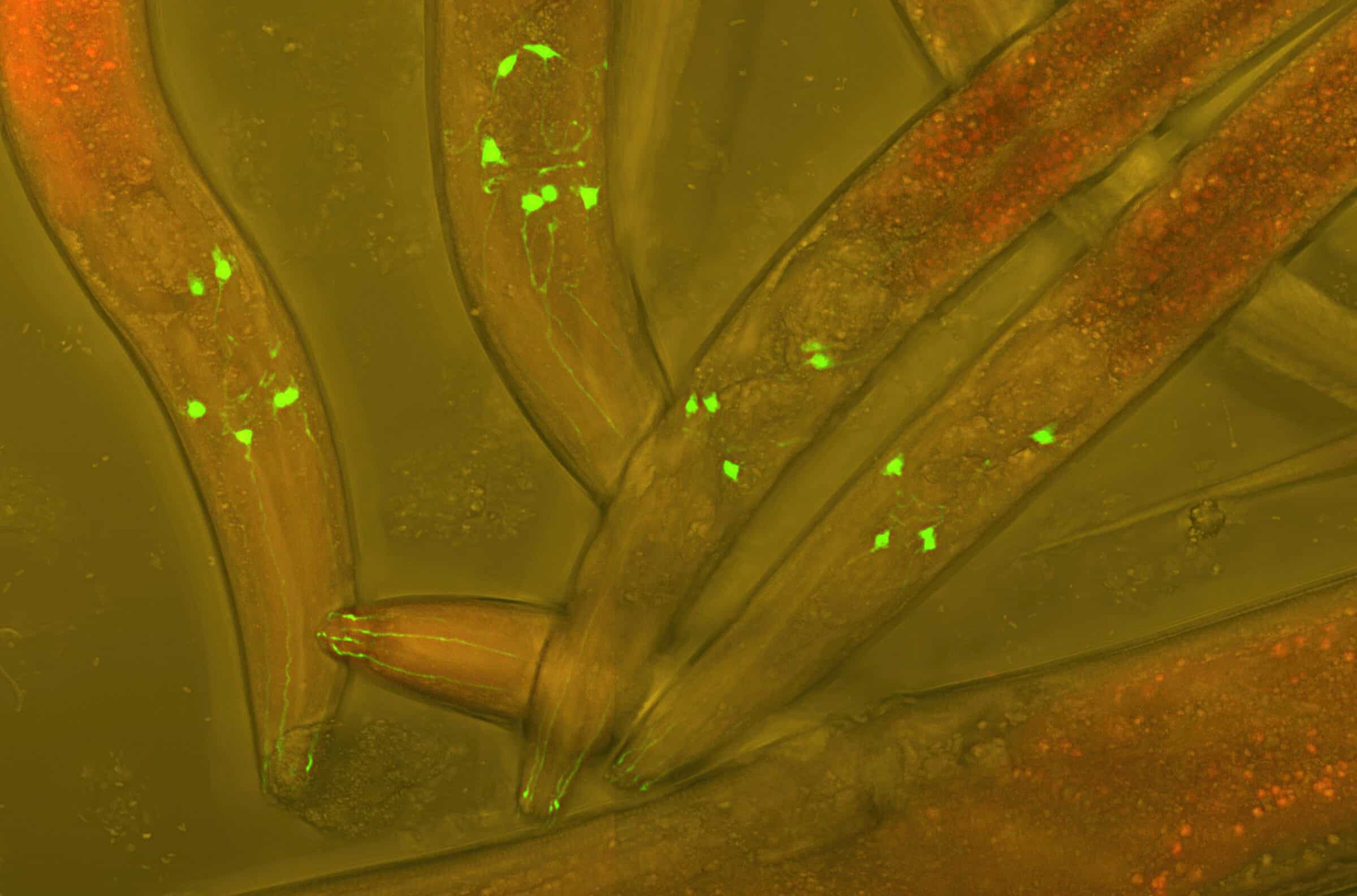








 Truth2Freedom's Blog