
Tag Archives: suicide

Americans Spend Nearly Half Of Their Days Online, And Young People Are More Suicidal Than Ever | End Of The American Dream

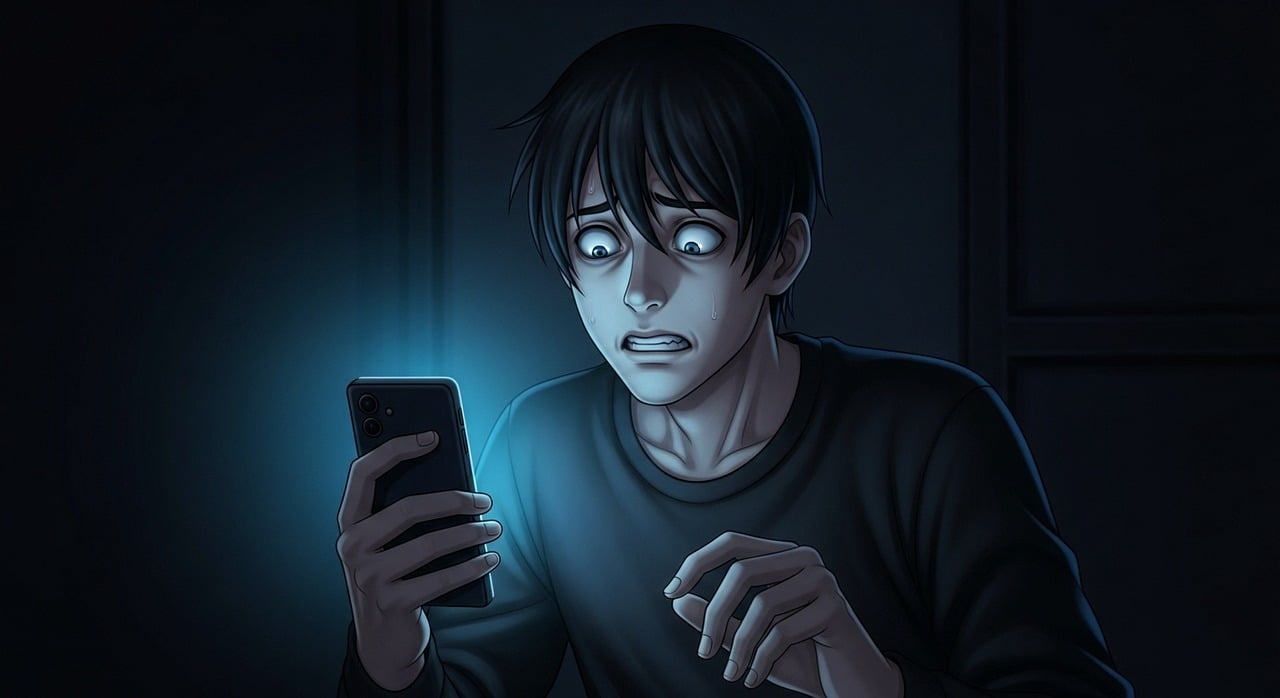
Our society is more addicted to the Internet than ever.  So how has that affected us?  Are we happier than we once were, or are we less happy?  Are we more mentally healthy than we once were, or are we less mentally healthy?  I don’t have to give you the answers to those questions, because you already know.  Our society has gone completely nuts, and our suicide rate has soared.  In particular, we are seeing historically high levels of suicide and depression among our young people.  We have a major national crisis on our hands, but hardly anyone is talking about it.

We were not designed to endlessly stare at our screens.

Life is supposed to be about so much more than that.

Yes, the Internet can be used to do really good things.  Personally, I use it to share the truth with large numbers of people all over the globe.  But the Internet also brings out the very worst in humanity.

At this stage, the Internet is absolutely teeming with just about every sort of evil that you can possibly imagine, and most of us are spending an enormous amount of time wading around in that cesspool.  In fact, a recent survey discovered that Americans with a home Internet subscription “spend nearly half their day online”

Wired Americans spend nearly half their day online — splitting that time almost evenly between watching videos or TV shows and working, browsing and shopping, according to a new survey.

“This new survey was eye-opening,” said Eric Bruno, senior vice president of product management for Optimum, whose telecommunications firm interviewed 2,000 US residents who have a home Internet subscription with any company for the poll.

Many of us would simply not be able to function if the Internet suddenly went away.

Thanks to our phones, we take it with us everywhere that we go, and when we are at home we use it in a multitude of different ways

They spend 5.4 of those hours browsing, working, gaming, looking at social media, reading email or paying bills, the survey found.

They spend another five hours streaming video or TV content.

I am not saying that the Internet is bad.

Ultimately, it is just another tool.

The problem comes when we get addicted, and young people are particularly susceptible.

One study that was just released discovered that the younger a girl is when she gets her first smartphone, the more likely she is to have suicidal thoughts when she gets older…

Nearly half of young women who received their first smartphone at age 5 or 6 now report having suicidal thoughts, compared to just over a quarter of those who waited until 13 to get their device. A sweeping new study tracking more than 100,000 young adults across the globe reveals a troubling pattern that should alarm every parent: the younger children are when they first own a smartphone, the worse their mental health becomes by early adulthood.

Kids in the United States are committing suicide in unprecedented numbers.

According to the CDC, in 2023 suicide “was the second leading cause of death for people ages 10-34”.

Reading that should absolutely horrify you.

Personally, it is my opinion that parents should delay giving smartphones to their children for as long as possible.

In addition to being more likely to have suicidal thoughts, those that get smartphones at an early age are also more likely to develop a whole host of other emotional problems

Early smartphone ownership correlates with a troubling range of symptoms in young adulthood beyond suicidal thoughts. Those who got phones before age 13 show higher rates of aggression, feelings of detachment from reality, and hallucinations. Among specific mental health functions, early smartphone users struggle more with self-image, self-worth, emotional control, and resilience – particularly females. Males show greater difficulties with stability, calmness, and empathy.

Other studies have come up with similar results.

Here is another example

A new study provides answers. Researchers at UC San Francisco found that as preteens used more social media, their depressive symptoms increased. Yet the reverse wasn’t true — a rise in depressive symptoms didn’t predict a later increase in social media use.

On average, kids’ social media use rose from seven to 73 minutes per day over the three years of the study and their depressive symptoms went up 35%. The study, which was supported by grants from the National Institutes of Health (NIH), was published in JAMA Network Open.

The research team, led by Jason Nagata, MD, MSc, associate professor in UCSF’s Department of Pediatrics, examined data following nearly 12,000 kids aged 9 to 10 years and then three years later at 12 to 13. The study is among the first to use within-person longitudinal data, meaning researchers could track changes over time in each child to accurately assess the link between social media and depression.

If you endlessly put garbage into your mind, you are going to get garbage out.

Of course if everyone was using the Internet to read the Bible and to focus on things that are true, things that are honest, things that are just, and things that are pure, we wouldn’t have a problem.

But that isn’t how most Americans use the Internet.

Most Americans spend countless hours consuming content that is overtly evil.

As a result, our society has become lawless.  Let me share yet another example of this with you…

In the shocking clip, a man in a white t-shirt is can be seen being shoved to ground by two men and repeatedly beaten as other members of the crowd jeer and join in.

The gang beat the man for nearly a minute as he lay in the middle of the street, seemingly stepping on his head multiple times.

When the barrage of attacks temporarily stopped, he is seen attempting to stand – but immediately fell over in apparent disorientation. One attacker yelled out ‘my man’s drunk’.

People are talking about this case all over the Internet.

At one point a woman rushed to help the man that had been beaten, and she was viciously attacked too

A woman in a black dress rushed to his aid, but was attacked by the crowd, suffering two blows to the face.

The impact caused her to fall, with her head slamming the pavement. She became unconscious as blood spewed from her mouth.

This is our society now.

Whether you like it or not, we have raised an entire generation that has embraced lawlessness.

If we had raised them differently, we would have gotten different results.

Sadly, we still have not learned our lesson.

Most of us continue to run after things we should not be running after, and that is a recipe for societal disaster.

Michael’s new book entitled “10 Prophetic Events That Are Coming Next” is available in paperback and for the Kindle on Amazon.com, and you can subscribe to his Substack newsletter at michaeltsnyder.substack.com.

About the Author: Michael Snyder’s new book entitled “10 Prophetic Events That Are Coming Next” is available in paperback and for the Kindle on Amazon.com. He has also written nine other books that are available on Amazon.com including “Chaos”“End Times”“7 Year Apocalypse”“Lost Prophecies Of The Future Of America”“The Beginning Of The End”, and “Living A Life That Really Matters”.  When you purchase any of Michael’s books you help to support the work that he is doing.  You can also get his articles by email as soon as he publishes them by subscribing to his Substack newsletter.  Michael has published thousands of articles on The Economic Collapse BlogEnd Of The American Dream and The Most Important News, and he always freely and happily allows others to republish those articles on their own websites.  These are such troubled times, and people need hope.  John 3:16 tells us about the hope that God has given us through Jesus Christ: “For God so loved the world, that he gave his only begotten Son, that whosoever believeth in him should not perish, but have everlasting life.”  If you have not already done so, we strongly urge you to invite Jesus Christ to be your Lord and Savior today.

The post Americans Spend Nearly Half Of Their Days Online, And Young People Are More Suicidal Than Ever appeared first on End Of The American Dream.

Euthanasia is now the fifth leading cause of death in Canada | Denison Forum

Pulling the plug on life support. By jefftakespics2/stock.adobe.com. Canada assisted suicide MAID

Canada recently released its updated statistics for how many people died last year from physician-assisted suicide, and the numbers continue an alarming trend. The country’s Medical Assistance in Dying (MAID) program was used by roughly 15,300 people to end their own lives. That makes it the fifth leading cause of death in 2023 and represents a 16 percent increase over the previous year. However, considering that 2022 saw an increase of 31 percent, I suppose you could say it’s an improvement in some respects. 

But while Canada is the country where the greatest number of people have chosen to end their lives through some form of physician-assisted suicide, they are far from the only place where a form of the procedure is legal. The United Kingdom, for example, took steps recently to join that list and will be discussed at greater length later in this article. However, Canada’s MAID laws are among the least restrictive you’re likely to find. 

What sets Canada apart?

While the premise behind most physician-assisted suicide programs is ostensibly to help facilitate a more peaceful end for those who are already on death’s doorstep, that is not always how it plays out in practice. 

The government in Quebec recently began allowing individuals to request euthanasia in advance when diagnosed with a potentially terminal illness. Efforts to extend access to people with mental illness have encountered more resistance than expected, but the rationale is that the country’s healthcare system is “not ready” rather than that their inclusion would be wrong on the merits. And in Alberta, a judge ruled earlier this year that an autistic woman could end her life despite efforts from her family to keep her from doing so. 

That last case in particular could be part of why the provincial government in Alberta recently announced that they are looking for citizen input regarding potential changes to the way their MAID program functions. Among the topics under consideration are:

  • Creating a new public agency, as well as additional legislation, to provide oversight.
  • Creating a way for “families and eligible others” to argue that a family member who has sought MAID should not qualify.
  • Implementing new limitations on who qualifies for MAID.

While MAID is technically a national law and some form of the program must be offered throughout the country, each province has a measure of discretion regarding how it is implemented. As such, there is a good bit of room for provincial governments to adjust how the law works in their jurisdiction. The recent trends outlined above have given rise to a growing concern that the law is not serving the purpose for which it was originally created.

That said, it should not come as a surprise that giving people a quick—and final—way to escape from their pain and distress has been abused. Couple that vulnerability with the fact that the legal protections meant to guard against abuse are increasingly ignored—in Ontario, for example, a quarter of MAID providers were found to have been out of compliance last year—and you get a cautionary tale of where such laws can lead. 

But, if that’s the case, why do assisted suicide laws seem to be growing in popularity? And what steps, if any, are being taken to guard against those abuses? 

A telling answer to both questions is found in the UK’s move to pass similar legislation, though with one key difference. 

Who gives the lethal dose?

This past November, the British Parliament voted to continue toward the legalization of assisted suicide. And while many steps remain in what the bill’s sponsor speculated would be at least a two-year process, signs point to the UK eventually joining the list of Western nations and states to allow doctors to help people end their own lives. 

The nature of that aid, however, provides a key distinction and points to an important truth on the nature of what many are looking for when they ask for doctors to help them die.

In the proposed bill—as in most places where assisted suicide is legal—doctors would be able to give a patient the necessary drugs to induce death, but the patient would have to be the one to take them. By contrast, in Canada and the Netherlands, doctors are allowed to administer the drugs as well. This distinction appears to have a profound effect on how often people are willing to utilize such laws. 

For example, California and Canada have similar populations, yet more than 15,000 people took advantage of the MAID laws to end their lives in 2023. By contrast, only 884 individuals in California did the same. And while the difference in who administers the life-ending drugs is not the only distinction—the health care system in Canada is so poor that the standard of care “makes assisted suicide seem more reasonable”—it’s a crucial part of the story. 

Overall, the statistics clearly demonstrate that people are substantially more willing to accept a doctor’s help to end their life when they don’t have to be the one to actually take it themselves. 

And that difference speaks to a principle that applies beyond assisted suicide.

Degrees of separation from sin

Much of the debate surrounding euthanasia typically comes down to the idea that, when faced with a situation where imminent death is all but certain, people should be given the opportunity to end their life on their terms. And the appeal of that idea is easy to understand. 

If you’ve ever walked with someone through a losing battle with cancer or been around a person whose mind, for all practical purposes, died long before their body, the idea of sparing them from that fate can seem merciful. On some level, maybe it is. But the Bible teaches that—with few exceptions—when a life ends is up to God, not us. 

Perhaps many of those who are ready to die but far less willing to take their own life recognize that truth to some extent. If so, gaining a degree of separation from the action by having a doctor facilitate that end could make it easier to accept. And the same is true in other areas of our lives as well.

It is often far easier to reject God’s plans when we can lay the ultimate blame for our sins on someone else. This temptation has existed since the Garden of Eden and is unlikely to go away anytime soon. However, God is not fooled, and just because others may share the blame does not absolve us of our guilt. 

So the next time you’re tempted to think that your sins are somehow lessened because someone else shared in them, remember that’s not how it works. We are each responsible for our own choices, regardless of who else plays a part.

Trusting God’s ways, even when his path is more difficult than what we would choose for ourselves, will always be the right choice. 

Where do you need that reminder today?

Wednesday news to know:

*Denison Forum does not necessarily endorse the views expressed in these stories.

Quote of the day:

“Your most profound and intimate experiences of worship will likely be in your darkest days—when your heart is broken, when you feel abandoned, when you’re out of options, when the pain is great—and you turn to God alone.” —Rick Warren

The post Euthanasia is now the fifth leading cause of death in Canada appeared first on Denison Forum.

Euthanasia Now Responsible for 1 in 20 Deaths in Canada | The Gateway Pundit

Voluntary euthanasia in Canada led to more than 15,000 deaths in 2023, according to a government report.

The procedures made up 4.7 percent of deaths in Canada last year, new government data shows, according to the BBC.

The report put the mean age of those who died via assisted suicide at just above 77.

About 96 percent of patients had what the report called “reasonably foreseeable” deaths due to cancer or other conditions.

The report noted that patients in a minority of cases wanted to die after a long illness they believed impacted their quality of life.

Canada legalized assisted death in 2016. Australia, New Zealand, Spain and Austria also have laws allowing people to partake in medically assisted suicide.

Canada requires two independent healthcare providers to support a patient’s request to die.

Quebec, which is home to about 22 percent of the Canadian population, accounted for about 37 percent of voluntary euthanasia deaths nationwide.

Canada created the medically assisted dying process for the terminally ill, but expanded the program to include people who believe their quality of life is severely impacted by an illness. They were planning to include the mentally ill this year, but delayed that step amid concerns about the scope of the expansion.

In October, a government committee showed that what was termed an “unmet social need” led to some deaths, according to the Associated Press.

“To finally have a government report that recognizes these cases of concern is extremely important,” Dr. Ramona Coelho, a member of the committee, said. “We’ve been gaslit for so many years when we raised fears about people getting MAiD because they were poor, disabled or socially isolated.”

The committee cited the case of an unemployed man in his 40s with bowel disease whose background included substance abuse and mental health issues. The man was called “socially vulnerable and isolated,” yet a psychiatrist suggested euthanasia as an option as part of a mental health assessment, raising eyebrows among panel members.

Trudo Lemmens, a professor of health law and policy at the University of Toronto, said Canadian medical and judicial authorities appeared “unwilling to curtail practices that appear ethically problematic.”

“Either the law is too broad, or the professional guidance not precise enough,” Lemmens remarked. “Or it is simply not seen as a priority to protect some of our most vulnerable citizens.”

https://twitter.com/cardusca/status/1867248471381606919


The group Cardus, which opposes voluntary euthanasia, said that voluntary euthanasia has become the fifth-leading cause of death in Canada.

“Assisted dying was not meant to become a routine way of dying,” the group wrote in a report on the rise in assisted deaths.

This article appeared originally on The Western Journal.

The post Euthanasia Now Responsible for 1 in 20 Deaths in Canada appeared first on The Gateway Pundit.

A Black Friday to Remember in the UK | The Daily Declaration

by Ann Farmer

MPs in the British Parliament have voted for Kim Leadbeater’s Assisted Dying Bill on its second reading by 330 votes for to 275 against.

Despite the warnings from around the world, members of both major parties voted for the Labour MP’s private member’s Bill to legalise what should more properly be called assisted suicide, but which would most likely have received much less support if it had not relied on cosy euphemisms for what is essentially the State helping dying people to kill themselves.

Indeed, the whole campaign for “assisted dying” has been so shrouded in fluffy phrases that many think it means merely helping patients to have a more comfortable and natural death. Most likely, this explains why a majority of the public has appeared to support such a measure – although, tellingly, that majority tends to shrink as the manifold problems are highlighted in detailed discussion.

But perhaps for this reason, when opponents raise the practical and ethical problems of this compassionate, autonomous process of de-lifing, in particular, the danger of slippery slopes – they are accused of “scaremongering”. However, that term might be more usefully directed at the practice of scaring vulnerable individuals into believing that they will “die in agony” if they do not have the choice that means the end of all choice.

Doublespeak

And there has been a strange, one might almost say eerie silence, in all this discussion, about ordinary suicides, which are known to rise in jurisdictions where assisted suicide is legal.

Indeed, despite the well-known fact that suggestion plays a significant role in suicide ideation, the constant talk about deliberate death being an answer to suffering may well move people who are not “dying anyway”, but who are suicidally inclined, to take that final, fatal step. But we are meant to believe that assisted dying is not suicide, therefore instead of engaging in suicide prevention, we must engage in suicide promotion.

As to slippery slopes, Ms Leadbeater’s Bill itself resembles a slope growing more slippery by the day. While stressing its “strict safeguards”, she herself has hinted at its broader application – even acknowledging that being a “burden” on others could be a legitimate reason for seeking assisted dying. In an interview on The News Agents podcast, she said:

“I know I wouldn’t want to be a burden to people, I can say that to you now in the clear light of day. But that’s very different to people saying, ‘I’m doing this because I feel like I’m being a burden’”.

As to “safeguards”, the ban on assisting a suicide could be seen as the “safeguard” that allowed Parliament to decriminalise suicide in 1961. It has taken a while, but finally, in 2024, we have come the long way round to dismantle that particular safeguard – arguably the most important. And among all the reasons why the Leadbeater Bill is so risky, according to former Chief Coroner Thomas Teague, is that “it removes the statutory duty to investigate suicides”.

https://twitter.com/ianbirrell/status/1861100416689160383

Abandoning the Vulnerable

Unlike other jurisdictions that have legalised assisted dying and now find themselves a long way down the slippery slope, our politicians have no such excuse – most seem to have decided to ignore the red flags, voting in favour of the Bill for ideological reasons instead of heeding the evil practical consequences and swerving at the last minute. This puts one in mind of lemmings, but in this case, it will most likely not be them who end up plunging over the cliff – rather, it will be the weakest and most vulnerable in society. With the legal guardrails torn down, there will be no protection – nothing to defend them from the siren voices of suicide.

As Conservative MP Danny Kruger, previously chair of the All-Party Parliamentary Group for Dying Well, concluded in his speech during the debate on the Second Reading:

“I’m talking about the people who lack agency: the people who know what it is to be excluded from power, to have decisions made for them by bigwigs in distant offices speaking a language they don’t understand. … Not the ones who write to us campaigning for a change in the law, but the people who come to our surgeries with their lives in tatters, or who the police and social workers tell us about, the people with complex needs.

“What are the safeguards for them? I will tell you. We are the safeguard. This place. This Parliament. You and me. We are the people who protect the most vulnerable in society from harm, and yet we stand on the brink of abandoning that role.”

It is highly appropriate that this Bill should have passed its second reading on “Black Friday”. But there is still time to raise our voices in warning against this disaster waiting to happen, while we still can command our voices – enabling our long island story to have a happy ending, rather than history recording that “they all died unhappily ever after”.

___

Republished with thanks to MercatorImage courtesy of Pexels.

The post A Black Friday to Remember in the UK appeared first on The Daily Declaration.

BLACKEST OF FRIDAYS | A Grain of Sand

Last Friday the House of Commons voted to begin the process whereby Parliament may legalise assisted suicide. This marked a significant change in the way our society thinks of the individual, the way we live together and our concept of care. There are immediate dangers which emerge from the change in underlying principle.

The legalisation of same-sex marriage and the acceptance of transgenderism are symptoms of a society in decline, one which lost its way when it deliberately rejected its Christian foundation. Same-sex marriage was a rejection of the natural order. The legal fiction that a man could become a woman and a woman a man by merely wishing it were so is a rejection of science. The acceptance of physician assisted suicide is a rejection of humanity’s most basic right, the right to life. The UK has taken one more step down the road towards paganism.

We live in a society where literally nothing is sacred. There is no moral order, no line which we dare not cross. We have rejected the God who gives us parameters for life and instead have embraced the great god Self, a greedy god who once worshipped knows no limits and makes ever greater demands.  

Like the Nazis, we have accepted the principle that there are certain lives not worth living. Many who voted for assisted suicide did so on compassionate grounds and out of sympathy for the very real suffering some encounter. Instead of bending every effort to help them and their loved ones in a dreadful situation, we have chosen out of ‘compassion’ to end their lives. That we in a liberal society have decided to take this road by democratic means does not make it any less wicked than when implemented by a totalitarian fascist regime.

A ‘compassion’ that demands we be allowed to help end the life of another, no matter how well intentioned, is misplaced. Life is, and remains, God’s gift. To deliberately end a life, either our own or that of another, is to reject the gift and the giver. Ultimately this proposed legislation is the adoption of a new religion, one which sees humanity as disposable instead of valuable.

For most of our history we have followed the Christian principle that we must make sacrifices for those less fortunate. Today we are moving into the contrary position where those less fortunate will be persuaded, either directly or by social pressure, to sacrifice themselves for the more fortunate.

If the Terminally ill Adults (End of Life) Bill progresses to become law we will have normalised the principle that state-sanctioned death is a final default position for treatment of the elderly, the vulnerable, the disabled. On the evidence of where right to die legislation has been enacted elsewhere, this could quickly slide into the treatment of those suffering from mental illness, Alzheimer’s disease, depression, and other conditions. 

The Bill which went forward on the legislative path placed restrictions on the practice, but experience teaches that restrictions never last.

Whatever the initial criteria are, there will inevitably be cases on the outer parameters of what is permitted. When these cases on the edge are resolved it will expand the parameters. They become the new criteria, and so it gradually expands further and further. Eventually you reach the situation in Canada where doctors are permitted and willing to offer to help those with depression to kill themselves when there are no hospital beds available. Nothing remains as it begins. 

We have seen this before. When abortion was legalised we were assured that it would be ‘legal, safe and rare’; today it has almost become a sanctioned means of late birth control. If things continue in the UK as they have elsewhere, once begun this process will not stop, and the vulnerable will become even more vulnerable

With the decrease of fertility rates In the West we inevitably face population decline. This means that a smaller proportion of the young and economically active will have to support a larger proportion of the elderly and economically dependent. It is wishful thinking to suppose that this will not result in social pressure on the old to commit state-sanctioned suicide.

Campaigners are concerned that the elderly may be ‘persuaded’ to commit suicide by heartless relatives. Only the naive would imagine that this would never happen. It works the other way as well. As a society we will move into a position where the elderly fear becoming a burden to their own children and grandchildren. Their children and grandchildren will have the appalling task of trying to convince elderly and ill parents and grandparents not to commit suicide: ‘No, granny, we want you to be with us. We love you and will take care of you.’

This proposed legislation sows mistrust throughout society, not only within families. Trust between doctor and patient will be eroded: the sustainers of life will have become also the takers of life. The most basic function of the state is to protect its citizens; can we trust the state to protect us when it sanctions our death?

*****************

I’ll now sign off for a wee while to allow my wonky hand to heal.