There are two ways to be fooled. One is to believe what isn’t true; the other is to refuse to believe what is true. —Soren Kierkegaard. "…truth is true even if nobody believes it, and falsehood is false even if everybody believes it. That is why truth does not yield to opinion, fashion, numbers, office, or sincerity–it is simply true and that is the end of it" – Os Guinness, Time for Truth, pg.39. “He that takes truth for his guide, and duty for his end, may safely trust to God’s providence to lead him aright.” – Blaise Pascal. "There is but one straight course, and that is to seek truth and pursue it steadily" – George Washington letter to Edmund Randolph — 1795. We live in a “post-truth” world. According to the dictionary, “post-truth” means, “relating to or denoting circumstances in which objective facts are less influential in shaping public opinion than appeals to emotion and personal belief.” Simply put, we now live in a culture that seems to value experience and emotion more than truth. Truth will never go away no matter how hard one might wish. Going beyond the MSM idealogical opinion/bias and their low information tabloid reality show news with a distractional superficial focus on entertainment, sensationalism, emotionalism and activist reporting – this blogs goal is to, in some small way, put a plug in the broken dam of truth and save as many as possible from the consequences—temporal and eternal. "The further a society drifts from truth, the more it will hate those who speak it." – George Orwell “There are two ways to be fooled. One is to believe what isn’t true; the other is to refuse to believe what is true.” ― Soren Kierkegaard
Should churches just sing psalms? Should they celebrate Christmas and Easter? Should they say the Pledge of Allegiance during worship? Can preachers use movie clips in corporate worship to illustrate a sermon’s main points? Should a church use instruments? Are reciting creeds permissible in church?
What should a corporate worship service consist of? And what should be excluded?
Let’s go to it. We need to think about the Regulative Principle of Worship (RPW).
Here’s the situation we’re not in: we’re not left without guidance about what the Lord has required of his people for our corporate worship. In other words, we’re not in the situation where we have to look at each other and say, “Well, we should gather together, I guess, because we’re Christians, but should we do? What should occupy the duration of our gathering?”
The Bible doesn’t say, “Worship the Lord however you think is best.”
Emphasized by the Reformers, the Regulative Principle of Worship can be simply defined like this: The word of God should regulate how the people of God conduct their worship of God.
To be honest, that principle ought to be something the people of God are eager to affirm! What kind of church leaders would be willing to say, “If God has instructed us what to do, we’re still free to disagree and ignore it”?
The RPW emphasizes what God commands, what Scripture prioritizes. We learn from Scripture not only that we are called to worship God, but also that we are to approach God as he has instructed.
The RPW is different from the Normative Principle of Worship, which teaches that whatever isn’t prohibited in Scripture is permissible for God’s people. The RPW and NPW can be compared like this:
Under the Normative Principle, the church asks: Is this prohibited? If not, then it may be allowed.
Under the Regulative Principle, the church asks: Has God commanded this? If not, then we exclude it.
Somebody might say, “But where in Scripture is the regulative principle taught?”
I’m glad you asked.
From the Old and New Testaments, theologians have deduced the validity of the RPW. All over the Scriptures, God is clear that his people are to worship as he has instructed them, and they are not to ignore his commands.
The following ten points show that God has given certainly commands and regulations that pertain to his people and that inform how and when they worship.
Exodus 20:4-5: “You shall not make for yourself a carved image, or any likeness of anything that is in heaven above, or that is in the earth beneath, or that is in the water under the earth. You shall not bow down to them or serve them.”
The setting apart of the Sabbath (Gen. 2:1–3; Exod. 20:8–11). This was a special day, unlike the other days. It was set apart by God for rest and remembrance.
The appointed feasts in Israel’s calendar. God determined the days and months of their festal gatherings (Num. 28–29).
Leviticus 10:1-3, where Nadab and Abihu offer unauthorized fire before the Lord. And they perished. Derek Rishmawy has said, “The Book of Leviticus is (among many other things), an extended proof of the Regulative Principle of Worship.”
Numbers 16–17, where we’re reminded that Aaron’s line from Levi’s tribe is the line of the priesthood—despite Korah and company’s objections and envy.
Deuteronomy 12:29-32: “When the Lord your God cuts off before you the nations whom you go in to dispossess, and you dispossess them and dwell in their land,take care that you be not ensnared to follow them, after they have been destroyed before you, and that you do not inquire about their gods, saying, ‘How did these nations serve their gods?—that I also may do the same.’You shall not worship the Lord your God in that way, for every abominable thing that the Lord hates they have done for their gods, for they even burn their sons and their daughters in the fire to their gods. Everything that I command you, you shall be careful to do. You shall not add to it or take from it.” [That last verse (Deut. 12:32) is especially key.]
In 1 Samuel 13, Saul had made an unlawful sacrifice. Samuel told Saul, “You have done foolishly. You have not kept the command of the LORD your God, with which he commanded you” (1 Sam. 13:13).
In Matthew 15:7-9, Jesus is critical of man-made traditions. Jesus told the religious leaders, “For the sake of your tradition you have made void the word of God” (Matt. 15:6). And he said, “In vain do they worship me, teaching as doctrines the commandments of men” (Matt. 15:9).
Paul told the Corinthians that “All things should be done decently and in order” (1 Cor. 14:40).
In his letter to the Colossians, Paul criticized man-made religion and worldly teachings, what he called “self-made religion” (Col. 2:23).
The above texts are examples to show that God is not indifferent to how his people worship him. In fact, the biblical record teaches us that God reveals not only truths about himself but also how he is to be approached.
The Reformed tradition has highlighted the follow core elements for corporate worship:
Scripture reading (1 Tim. 4:13)
Prayer (1 Tim. 2:1; Acts 2:42; 4:23–31)
Singing (Col. 3:12–17; Eph. 5:19)
Preaching (1 Tim. 4:13; 2 Tim. 4:1–2)
Ordinances (Baptism and Lord’s Supper; Matt. 28:19; 1 Cor. 11:23–34)
The RPW doesn’t answer all the practical questions about the carrying-out of these elements, so distinctions have been made between “elements” and “circumstances.” The “elements” are what the Word of God requires, and the “circumstances” are the ways in which those elements are honored and incorporated.
Regarding circumstances, think of: the time of the service, the duration of the service, the number of songs, the kind of lighting, the placement of pews or chairs, the presence or absence of instruments for accompaniment, the style of songs, the length of Scripture reading, the length of the sermon, etc.
Those circumstances will differ in churches which are seeking to be faithful to the Regulative Principle of Worship.
A few summary thoughts. In both the Old Testament and New Testament, God warns against man-made worship. In fact, our “good intentions” don’t justify unauthorized worship! (Remember Nadab and Abihu.) God knows what our souls need better than we do, and he has spoken in his Word about what the saints should prioritize when they gather together on the Lord’s Day. Church leaders should ponder the implications of Scripture’s authority and sufficiency for their worship.
Throughout history, people have loved singing. Whether at baseball games or birthday parties, we sing eagerly, sometimes publicly exposing our lack of native musical talent. Singing in groups—especially at Christmas—is a cultural institution. But why does singing carols and hymns, even if we’re doing it professionally and have no interest in the meaning of words, make such an impact on us?
Singing in worship has always challenged both pulpit and pew with how and why it should be done. In 1861, John Wesley wrote a set of “Directions for Singing” intended to instruct the Methodist community on that subject. Since its publication, it has influenced more than just the Methodists. Two of these directions are below:
Sing lustily – and with good courage. Beware of singing as if you were half-dead or half-asleep; but lift up your voice with strength. Be no more afraid of your voice now, nor more ashamed of its being heard, than when you sang the songs of Satan.
Sing modestly – do not bawl [to be] heard above or distinct from the rest of the congregation that you may not destroy the harmony but strive to unite your voices together so as to make one melodious sound.
Despite our limitations, it is at Christmas that we “lift our voice with strength.” It may be because we really know the songs. Indeed, familiarity is the glue that encourages participation. The Apostle Paul encouraged Christians to sing “with thankfulness in your hearts to God” no matter our level of skill (Col. 3:16).
One of the easiest places to begin learning how to sing is in church. We easily recall psalms, hymns, and spiritual songs for life. We never forget them as we age because the act of singing (according to experts) activates our brain’s threads of memorized words and pitch. At nursing homes during Christmas, previously uninvolved residents come alive to sing “Joy to the World” and “Silent Night.”
Besides just giving us pleasure, many Christmas songs teach—they are doctrinally rich. Martin Luther used song as a major component for growth in the young Lutheran churches established in the 1520s and beyond. They sang chorales and the catechism for good reason—song was a major teaching tool for the new churches.
Music continues to form us in Christian community. At Saint Andrew’s Chapel, R.C. Sproul often took time to explain the “why” of worship instead of merely doing it reflexively. After a song he asked, “Do you realize what you were just singing?” For him, singing was a vital enzyme in digesting the Word of God.
How does theology function in Christmas carols? Let’s look at some examples.
“Joy to the World, the Lord Is Come”
Sung to ANTIOCH, a tune “arranged from Handel” by Lowell Mason. Isaac Watts’ text explores themes of glory, sovereignty, holiness, truth, and grace. It is a catalog of God’s attributes for any preacher to quote.
“O Come, O Come, Emmanuel”
Sung to VENI EMMANUEL, a plainsong (early chant) melody. This hymn is a passionate plea for Immanuel’s arrival, beginning from Isaiah and moving through multiple references to the child Jesus’ nature and purpose.
“Comfort, Comfort Ye My People”
Sung to THIRSTING by Louis Bourgeois, a composer of the Genevan Psalter, based on Isaiah 40:1–2. This seventeenth-century text by Johannes Olearius offers Christian teaching on the Word’s prophetic power, plus God’s purpose in sending a Savior.
“O Little Town of Bethlehem”
Sung to ST. LOUIS by L.H. Redner. This nineteenth-century tune displays a clear fulfillment of a prophecy in Micah 5:2. Phillips Brooks’ 1868 text paraphrases Luke account of Jesus’ birth with a clear gospel prayer in verse 4:
O holy Child of Bethlehem, Descend to us, we pray; Cast out our sin, and enter in; Be born in us today. We hear the Christmas angels The great glad tidings tell; O come to us, abide with us, Our Lord Emmanuel.
“Thou Who Wast Rich”
Sung to QUELLE EST CETTE ODEUR AGREABLE, a French carol arranged by Charles H. Kitson, and text by Frank Houghton.
Thou who wast rich beyond all splendor, All for love’s sake becamest poor; Thrones for a manger didst surrender, Sapphire-paved courts for stable floor.
Thou who art God beyond all praising, All for love’s sake becamest man; Stooping so low, but sinners raising, Heav’n-ward by thine eternal plan.
Thou who art love beyond all telling, Savior and King, we worship thee. Emmanuel, within us dwelling, Make us what thou wouldst have us be.
Why do we sing Christmas songs? Surely, they provide joy, help us recall Jesus’ birth and life, and form us spiritually. Leading up to Christmas, we recite doctrines of creation, glory, incarnation, and atonement (to name just a few) in familiar hymns and carols. In the process, we are encouraged to daily live out the gospel of Christ.
Editor’s Note: This article was originally published on December 20, 2024.
In the liturgy of Christian worship, few elements are as profound yet often overlooked as the call to worship. For many, it may seem like a simple opening line or a liturgical formality—a way to begin the service and quiet the congregation. But from a Reformed and biblical perspective, the call to worship carries deep theological significance. It is not merely the pastor saying, “Let’s get started,” but rather God Himself summoning His people into His presence for worship in spirit and in truth.
The Biblical Foundation
The call to worship is grounded in Scripture. Throughout Scripture, God calls His people to gather before Him in worship. A few examples:
Oh come, let us worship and bow down; let us kneel before the Lord, our Maker! (Ps. 95:6)
Ascribe to the Lord the glory due his name; worship the Lord in the splendor of holiness. (Ps. 29:2)
Enter his gates with thanksgiving, and his courts with praise! (Ps. 100:4)
These passages do more than encourage personal devotion. They demonstrate that worship is a divine summons. It is not a human invention or a self-directed activity. Instead, worship is a covenantal dialogue—God initiates and speaks, and His people respond. The call to worship is therefore not the pastor’s idea, nor is it an optional “warm-up.” It is the recognition that the triune God has called His people together to meet with Him by His Word and Spirit.
The call to worship sets the tone for the entire service—it is God-centered, not man-centered. We are not attending a performance or religious event of our own design. We are responding to the living God who draws near in truth and grace.
God Speaks First
One of the hallmarks of Reformed worship is the conviction that God always initiates and speaks first. Just as God spoke creation into being, spoke His covenant promises to Abraham, and spoke His law at Sinai, so too He speaks to His church today. Our worship is always a response to divine initiative.
The call to worship reflects this principle. Before we sing God’s praises, pray, confess our sins, hear God’s Word, or commune at the Lord’s Supper, God summons us. This protects worship from becoming self-focused or entertainment. It reminds us that the church gathers to listen and respond to God’s voice. This is why the call to worship is appropriately read directly from Scripture rather than something composed by the pastor. God, through His Word, summons, declaring with authority: “Come before Me, My people, and offer acceptable worship with reverence, awe, and joy.”
Theological Significance
From a Reformed perspective, several key truths are embedded in the call to worship:
God is sovereign. Worship begins with His initiative, not ours. We gather because He calls.
Worship is corporate. The call is addressed to the gathered assembly of the people of God, not merely to isolated individuals. Worship is covenantal and communal.
Worship is a holy encounter. In the call, we are reminded that we stand before a holy God. We do not enter His presence casually, but reverently through Christ.
Worship is response. The call shapes the rest of the service. The prayers, songs, confessions, and preaching are all responses to God’s invitation and prescription.
Practical Outworking in Worship Services
In most Reformed congregations, the call to worship comes immediately after an opening greeting or prelude. The minister reads a passage of Scripture, such as Psalm 95, Psalm 96, Psalm 100, or Isaiah 12, and then he calls upon the Lord to inhabit the praises of the people.
Some churches use responsive calls, where the minister reads a verse and the congregation responds. Take Psalm 99:1–2, 5, 8–9 as an example:
Leader: The Lord reigns; let the peoples tremble! He sits enthroned upon the cherubim; let the earth quake! The Lord is great in Zion; he is exalted over all the peoples.
People: Exalt the Lord our God; worship at his footstool! Holy is he!
Leader: O Lord our God, you answered them; you were a forgiving God to them, but an avenger of their wrongdoings.
People: Exalt the Lord our God, and worship at his holy mountain; for the Lord our God is holy!
This practice reinforces the responsive and dialogical nature of worship. The people of God are not passive spectators but rather active participants in the dialogue.
The call to worship also serves a pastoral function. In a distracted world, it gathers scattered thoughts and hearts. It reminds believers that they are stepping into a sacred space and sacred time. It is similar to when God commanded Moses to remove his sandals at the burning bush because the place on which he was standing was “holy ground” (Ex. 3:5). It wasn’t the dirt itself that was holy, but rather God’s presence made it a holy place and holy time.
Christ, Our Worship Leader
Ultimately, the call to worship points us to Christ. Hebrews 2:12 pictures Jesus as the One who stands in the midst of His people, singing praise to the Father. He is the true worship leader, the Mediator who brings us into God’s presence.
When the call to worship is read, we are reminded that it is through Christ’s blood and righteousness that we can draw near with confidence before the throne of grace (Heb. 4:16; 10:19–22). The call to worship is not only a command, but an invitation to grace. In Christ, God is not a distant Judge but a loving Father who delights in the worship of His people.
The call to worship reminds us that worship is not our invention. Rather, it is God’s gracious initiative. It frames the service as covenant renewal, where God speaks and His people respond. Far from being a mere formality, the call to worship is an essential act of grace. It is the moment when the Lord of heaven and earth says to His redeemed people: “Come, draw near, and worship Me.” And by His Spirit and through His Son, we answer with obedience and joy.
Is worshiping alone or with one’s family is a valid replacement for regularly attending church? Worshiping alone and with one’s family is encouraged in Scripture and in the Reformed tradition. In fact, the Westminster Assembly produced a short Directory for Family Worship that explains both. We see the beginnings of family worship very early in Scripture during the patriarchal period under the leadership of men such as Abraham, who was required to circumcise the males in his household (Gen. 17). At the time of the exodus, each family was to observe the Passover in their home (Ex. 12:3, 26–27). All families were to teach their children the law (Deut. 6:6–7). Jewish worship became more institutionalized with the establishment of the tabernacle, the priesthood, and the sacrifices, but individual worship, family worship, and corporate worship were all observed. After the destruction of the temple, the synagogue was established as a form of corporate worship and was still in existence at the time of Christ and the early church (Matt. 4:23; 9:35; Acts 13:5; 17:7).
All three forms of worship are still to be practiced today. As individuals, we are to worship God in private prayer (Matt. 6:6). As families, we are to continue to worship together (Acts 16:15). But neither of these replaces corporate worship. Given the long Jewish history of corporate worship and the fact that the first converts to Christ were Jews (Acts 2:41), God would have to have stated clearly that a radical change had taken place in what He expected if corporate worship had suddenly been made optional for Christians. This did not happen. And the early church “devoted themselves to the apostles’ teaching and the fellowship, to the breaking of bread and the prayers” (Acts 2:42).
Paul’s writings assume corporate worship. In 1 Corinthians 11:18, he writes, “For, in the first place, when you come together as a church . . .” It is assumed that the Corinthian Christians will be coming together to meet as a church. The same is assumed in 1 Corinthians 14:23 when Paul discusses worship in the corporate gatherings. Corporate worship is required for differently gifted believers to build one another up. It is why the author to the Hebrews writes,
And let us consider how to stir up one another to love and good works, not neglecting to meet together, as is the habit of some, but encouraging one another, and all the more as you see the Day drawing near. (Heb. 10:24–25)
It is a sad but relatable story. A friend stopped at my house the other day, plopped himself down in a chair, and sighed. “I got nothing,” he said. I gave him a puzzled look. He said more: “I got nothing from Sunday. Nothing from Sunday school, nothing from morning worship, and nothing still from evening worship. I’m as dry and discouraged today on Monday as I was on Saturday. I did not hear the voice of my Lord Jesus speaking to me from the Word preached, read, sung, prayed, or seen on Sunday. Something is not right!”
And my friend is right; something is not right about this. Sunday is the market day of the soul, where we are invited by our Savior to come buy without money or cost and to eat of the gospel manna He supplies from above (Isa. 55:1). It is the day where our dead, lifeless bones come to life as we are joined together by the almighty power of the Spirit of God working through His Word (Ezek. 33). It is the day where many more than two gather to meet in His name. It is the day Jesus claimed as His own—the first day of the week, Sunday—when He rose from the grave victorious. Should we not expect great things in gathering on Sundays to worship the Lord?
Yes, we should. But then, how do we get more? How might we better avail ourselves of the grace the Lord offers us in His worship on Sundays? Here are four considerations for how Christians can make the most of Sunday worship.
1. Come Hungry
Just like our medical doctors tell us, hunger is a sign of health. It is right to come to worship on Sundays with a longing, a spiritual hunger and thirst for the milk and meat of the Word. We do so confidently, not only because Jesus tells us to do so—John 7:37, “If anyone thirsts, let him come to me and drink”—but also because we know that the hungry soul that comes to Him will be satisfied even with the crumbs that fall from the Master’s table (Matt. 15:27).
But what if we are not hungry? What if our soul does not thirst for the living God? Though not good, we need not despair, for our feeling of alarm is but the grace of His Spirit within us causing us to want what He wants. However, the greater danger in our spiritual health is when we feel no hunger or thirst at all, so we come indifferent, cold, and apathetic. When we find ourselves here, let us pray that our souls not lose their longing for the Lord. Come hungry to Him in worship.
2. Come Filled
Though it may seem contrary to the first point, this second tip clues us in to a reason why we may be having a hunger problem. Just like the junk food we eat before our main meals, filling up our soul with unhealthy snacks will dull and dampen our appetite for worship on Sundays. If we have been living all week long off the sugary highs of the lusts of the eyes and the flesh, will not we struggle to feast at the Lord’s Table? If we have joined the world and stuffed ourselves with the boastful pride of life, how will we be able to join in with our whole heart and sing the praises of our risen Lord and King?
No, we must learn the blessing of having the Word of Christ richly dwell within us all week long, of having trained our hearts to love the singing of the praises of our Lord through psalms and hymns and spiritual songs. As a result, when Sunday does come, our conditioned souls will rejoice at the greater banquet set before us. Yes, Christian, come filled to worship.
3. Come Humble
Though we must come hungry and filled to worship, we must also accept the humbling fact that the ways of our Lord are higher than ours and His thoughts are past finding out. We do not know in what way the Lord intends to meet with us in His worship. Though we may be wishing for a stellar sermon, a powerful prayer, or a holy hush among God’s people, we may have the opposite experience on Sunday. But this does not mean the Lord is somehow hindered in His means of ministry to you. No, nothing is impossible with God.
We must learn to look for the loving hand of our Lord even in the least likely of places—through the noisy child, the tumultuous trip to church, or the discovery of your least favorite preacher in the pulpit. What is God doing there? He is doing something new, something in His grace so wonderful that we can’t figure it out. But He is working, maybe even in the area of our greater sanctification. So, come humble.
4. Leave Thankful
We conclude our article with one last parting tip. If our God can do all things and no purpose of His may be thwarted, then we may leave the worship of Him with an attitude of gratitude despite all else (Job 42:2). This is not to turn a blind eye to any number of abuses or errors committed by our fellow man in a service of worship. Rather, it is to turn our eyes fully upon the Author and Finisher of our Faith, Jesus Christ. Trust Him wholly in the work He set out to do in us and His church, and thank Him for doing it. Let us leave worship thankful.
“I have worshiped an hour of uninterrupted sleep. I have worshiped a number on the scale. I have worshiped a number in my bank account. I have worshiped a pregnancy test, a tidy to-do list, a stocked pantry, a nicer vehicle, a certain number of social media followers, my reputation, positive book reviews, the way I look or didn’t look, perfect obedience from my kids, a certain home aesthetic. And on and on the list goes. I have a heart that loves to produce idols, and unfortunately, so do you…”
“You vote every day when you go to the grocery store or the gas station, pay your rent, purchase a washing machine or buy a latte. You are voting with your feet and sending important messages about your preferences and desires to the folks who are trying to give you what you want… The private voting we do through economic exchange is possibly the most important voting that we can do: It brings about change, it helps us express our values and it serves the public good in awe-inspiring ways.”
“The great danger is that we increasingly find real, flesh-and-blood people boring. It’s already the case that many ordinary human interactions, filled with quirks, annoyances, and complexities, struggle to compete with nonstop entertainment from our devices. AI promises to exponentially expand our options for distraction, drawing us even further from genuine relationships, but this time by successfully imitating human conversation.”
Reformed church leaders have, over the years, had several different reasons to oppose union membership, including the Marxian ideology that underlies adversarial negotiations, and the claims that are made on employment that amount to theft – i.e., when strikers prevent others from doing the work they’ve abandoned, they are acting as if they (and not their employer) own the job. Then, as the article above highlights, in Canada, compulsory union dues have been used to promote “abortion, euthanasia, special rights for LGBTQ, same-sex marriage and transgenderism.”
What about the higher wages that are supposed to come with unionization? That happens. But as the video below highlights, that often comes with a cost, too.
Psalm 119:147 I rise before dawn and cry for help; I hope in your words.
God’s grace doesn’t eliminate our spiritual practices. Grace energizes them. Our spirituality is actualized by the grace of God.
Do you see the same trend of downplaying morning devotions? I suspect a variety of reasons can be summed up in these four:
Undervaluing deliberate and undistracted time with God.
Laziness. Plain and simple.
Undisciplined. Morning devotions are a previous-night decision.
Misunderstanding the dynamics of grace and freedom.
When the question comes, “Should I meet with God to start my day?” my reply is, “Why not?” How we start our days is not inconsequential. Desires are declared. Needs are displayed. But do we realize how much we need him? And, do we want him?
Biblical Example
While we certainly aren’t required by law to wake up before dawn and hear from God’s Word and respond in prayer, it is a biblical pattern we are wise to imitate. There’s some wisdom in launching our days with communion with God.
Job got up early in the morning and worshiped God (Job 1:5).
Hannah and Elkanah rose early in the morning to worship God (1 Sam. 1:19).
Jesus would rise “very early in the morning, while it was still dark, he departed and went out to a desolate place, and there he prayed” (Mark 1:35).
Jesus even rose from the dead before the sun rose (Mark 16:2, 9; Luke 24:1; John 20:1).
Jesus went out to these “desolate” places—wilderness, desert, or uninhabited locales. Jesus would invite the disciples to join him in these places: “Come away by yourselves to a desolate place and rest a while” (Mark 6:31). The point of the desolate place isn’t its vibe. It’s about the lack of people. In the New Testament, “desolate” is meant to “focus primarily upon the lack of population rather than upon sparse vegetation, though the two features are closely related ecologically in the Middle East.”1 So, how can we do this in the suburbs, on a college campus, or in the urban sprawl?
Getting up before the sun—and kids, blenders churning, microwaves beeping, or TVs talking—is a way to make our own “desolate place.” Find the time and place in your space where the population is thinned out because they are asleep. Find your quiet “wilderness”—the couch, a desk, the porch. Or, pull a Susanna Wesley and put an apron over your head and pray.2 Make it a habit. Make it your thing. Prepare the night before. When I go to bed, I punch my ticket for the desolate place by:
Knowing what I’m reading in the Bible the next day.
A Worshipful Time
Like a priest preparing the altar for worship, prepare to meet with God for morning worship. And that may be one of the more helpful ways to think of “quiet times” (not my favorite phrase) and “morning devotions” (not bad). View this time as morning worship, as communion with God. Hear his voice from Scripture and let him hear your voice in prayer (aloud or written). Read a hymn, sing a worship song on a walk, worship as you read a work of theology. Whatever you do, worship God.
Be like the Psalmists and resolve:
I will pray in the mornings: “But I, O LORD, cry to you; in the morning my prayer comes before you.” (Psalm 88:13)
God will hear my voice and my worship in the mornings: “O LORD, in the morning you hear my voice; in the morning I prepare a sacrifice for you and watch.” (Psalm 5:3)
In the morning, I will read the word and hear of God’s love: “Let me hear in the morning of your steadfast love, for in you I trust. Make me know the way I should go, for to you I lift up my soul.” (Psalm 143:8)
In the morning, I will pray for God to satisfy me with his love: “Satisfy us in the morning with your steadfast love, that we may rejoice and be glad all our days.” (Psalm 90:14)
In the morning, I will respond to his love: “But I will sing of your strength; I will sing aloud of your steadfast love in the morning. For you have been to me a fortress and a refuge in the day of my distress.” (Psalm 59:16)
Let’s be the people that start our day crying out for God’s help for all the day holds. We need his help to turn from sin, to grow in godliness, to love others, to work for his glory, and on and on and on. As Spurgeon said, “Let us give to God the mornings of our days and the morning of our lives.”
Johannes P. Louw and Eugene Albert Nida, Greek-English Lexicon of the New Testament: Based on Semantic Domains(New York: United Bible Societies, 1996), 16.
PLACENTIA, CA — In a move lauded by progressive Christians, a local worship pastor revealed that he had made praise songs more accessible by removing all references to God and Jesus.
Fearing that theologically-focused worship music was filled with too much “Christianese” to be understood by people unfamiliar with the faith, Brennan Harper took it upon himself to get rid of any mention of God, Jesus, sin, and the Gospel in the new songs.
“I figured worship music can be easier to understand without all of that ‘God’ stuff,” Harper said. “When people come to a church, maybe for the first time in their lives, the last thing they need ot hear is a bunch of Bible lingo. They might be put off by people singing about Jesus and what He did by dying on the cross for the sins of the world and all that jazz. So, I scrubbed all of our songs of any mention of God or Jesus or anything like that. It really helps people focus more on the music and be able to connect, which is what it’s all about.”
Despite being applauded by some congregants, Harper’s new God-free worship songs were met with criticism from other members of the church. “I don’t know if he understands what ‘worship’ means,” said one attendee. “Honestly, his songs don’t quite make much sense. He tried singing a version of ‘In Christ Alone’, and it was just five minutes of him singing the word ‘In’ over and over, to the same tune. Oh, and you should hear his version of the Doxology.”
At publishing time, Harper revealed plans to do away with the opening prayer to keep anyone from feeling like they were at a church service.
These British police officers are keeping the streets safe from dangerous weapons.
and day and night they do not cease to say, “Holy, holy, holy is the Lord God, the Almighty, who was and who is and who is to come.” And when the living creatures give glory and honor and thanks to Him who sits on the throne, to Him who lives forever and ever, the twenty-four elders will fall down before Him who sits on the throne, and will worship Him who lives forever and ever, and will cast their crowns before the throne, saying, “Worthy are You, our Lord and our God, to receive glory and honor and power; for You created all things, and because of Your will they existed, and were created.” (4:8b–11)
Fittingly, the scene in heaven culminates in worship directed toward God on His throne. In this passage and in chapter 5 are five great hymns of praise, during the singing of which the size of the choir gradually increases. The hymns of praise begin in verse 8 with a quartet—the four living creatures. In verse 10, the twenty-four elders join in, and in 5:8, harps are added to the vocal praise. The rest of the angels add their voices in 5:11. Finally, in 5:13, all created beings in the universe join in the mighty chorus of praise to God. Worship is reserved for God alone, since there is no one in the universe like Him. In 1 Chronicles 17:20 David prayed, “O Lord, there is none like You, nor is there any God besides You” (cf. Pss. 86:8–10; 89:6–8). This mighty oratorio of praise and worship may be divided into two movements: the hymn of creation (chap. 4), and the hymn of redemption (chap. 5). The hymn of creation, the first movement, may be divided into several elements. The four living creatures begin the oratorio of worship by focusing on God’s holiness; day and night they do not cease to say, “Holy, holy, holy is the Lord God.” The threefold repetition of holy is also found in Isaiah 6:3; holiness is the only one of God’s attributes so repeated, since it is the summation of all that He is. God’s holiness is His utter and complete separation from evil in any and every form. He is absolutely untainted by any evil, error, or wrongdoing—unlike angels (some of whom sinned) or humans (all of whom sinned). In 1 Samuel 2:2 Hannah declared, “There is no one holy like the Lord,” because He alone is “majestic in holiness” (Ex. 15:11). The prophet Habakkuk praised God because “[His] eyes are too pure to approve evil, and [He] can not look on wickedness with favor” (Hab. 1:13). “God sits on His holy throne,” declared the psalmist (Ps. 47:8), while Psalm 111:9 adds, “Holy and awesome is His name.” In 1 Peter 1:16, God Himself declared, “You shall be holy, for I am holy.” But on this occasion, the praise is for God’s holiness specifically exhibited through judgment. Being holy, God hates sin, and pours out His wrath on it. “Will not His majesty terrify you?” Job asked his would-be counselors (Job 13:11). After God executed some of the men of Beth-shemesh for irreverently peering into the Ark, the survivors exclaimed, “Who is able to stand before the Lord, this holy God?” (1 Sam. 6:20). After Uzzah was executed for touching the Ark, “David was afraid of the Lord that day; and he said, ‘How can the ark of the Lord come to me?’ ” (2 Sam. 6:9). Overwhelmed by his vision of God’s majestic holiness Isaiah cried out, “Woe is me, for I am ruined! Because I am a man of unclean lips, and I live among a people of unclean lips” (Isa. 6:5). Because of His grace and mercy, God refrains from worldwide judgment on all sinners, as they deserve. But in the future time of Tribulation, the opportunity for mercy and grace will be past, and the sinful, rebellious world will feel the full fury of God’s wrath. So terrifying will that time be that unrepentant sinners will cry “to the mountains and to the rocks, ‘Fall on us and hide us from the presence of Him who sits on the throne, and from the wrath of the Lamb; for the great day of their wrath has come, and who is able to stand?’ ” (6:16–17). Not only is God’s holiness cause for worship, but also His power. In their song of praise, the four living creatures refer to God as the Almighty—a title by which God identified Himself to Abraham (Gen. 17:1). That term identifies God as the strongest, most powerful being, utterly devoid of any weakness, whose conquering power and overpowering strength none can oppose. Because God is Almighty, He can effortlessly do whatever His holy will purposes to do (cf. Isa. 40:28). In the midst of his trials Job affirmed, “If it is a matter of power, behold, He is the strong one!” (Job 9:19). The psalmist declared, “Our God is in the heavens; He does whatever He pleases” (Ps. 115:3). In Isaiah 46:10 God said, “My purpose will be established, and I will accomplish all My good pleasure.” After experiencing God’s devastating and humiliating judgment, King Nebuchadnezzar acknowledged, “He does according to His will in the host of heaven and among the inhabitants of earth; and no one can ward off His hand or say to Him, ‘What have You done?’ ” (Dan. 4:35). Jesus taught that “with God all things are possible” (Matt. 19:26). God’s power is seen in creation. Psalm 33:9 says, “He spoke, and it was done; He commanded, and it stood fast.” Having created the universe, God also controls it. In 1 Chronicles 29:11–12 David declared,
Yours, O Lord, is the greatness and the power and the glory and the victory and the majesty, indeed everything that is in the heavens and the earth; Yours is the dominion, O Lord, and You exalt Yourself as head over all. Both riches and honor come from You, and You rule over all, and in Your hand is power and might; and it lies in Your hand to make great and to strengthen everyone.
The phrase “He is able” expresses God’s power toward His elect, redeemed children. In Ephesians 3:20 Paul praises God for being “able to do [far more] abundantly beyond all that we ask or think, according to the power that works within us,” adding in 2 Corinthians 9:8, “God is able to make all grace abound to you, so that always having all sufficiency in everything, you may have an abundance for every good deed.” Paul wrote to Timothy expressing his confidence in God’s power working on his behalf: “I know whom I have believed and I am convinced that He is able to guard what I have entrusted to Him until that day” (2 Tim. 1:12). Hebrews 2:18 reveals that the Lord Jesus Christ “is able to come to the aid of those who are tempted,” while Hebrews 7:25 reassures believers that “He is able also to save forever those who draw near to God through Him, since He always lives to make intercession for them.” Jude closes his brief epistle with a doxology of praise: “Now to Him who is able to keep you from stumbling, and to make you stand in the presence of His glory blameless with great joy, to the only God our Savior, through Jesus Christ our Lord, be glory, majesty, dominion and authority, before all time and now and forever. Amen” (Jude 24–25). But as was the case with His holiness, the aspect of God’s power most clearly in view here is His power exhibited in judgment. For example, He judged Satan and the sinning angels, expelling them from heaven; drowned the world in the Flood; destroyed Sodom, Gomorrah, and the cities of the plain; drowned Pharaoh’s army; and shattered the most powerful king in the world, Nebuchadnezzar, reducing him to eating grass like an animal for seven years. Many times God’s power has destroyed the wicked. And it will be God’s power that unleashes the terrible, irresistible judgments on sinful mankind during the Tribulation before the Lord’s return. Speaking of God’s judgment power, the prophet Nahum declared, “Who can stand before His indignation? Who can endure the burning of His anger? His wrath is poured out like fire and the rocks are broken up by Him” (Nah. 1:6; cf. Mal. 3:2). God will judge those human rulers who foolishly think they can stand against Him (Ps. 2:2–6). “Who understands the power of Your anger,” asked Moses, “and Your fury, according to the fear that is due You?” (Ps. 90:11). “Wail, for the day of the Lord is near!” cried Isaiah. “It will come as destruction from the Almighty” (Isa. 13:6). In Joel 1:15 Joel also warned of God’s coming judgment: “Alas for the day! For the day of the Lord is near, and it will come as destruction from the Almighty.” The four living creatures also praise God for His eternity, extolling Him as He who was and who is and who is to come (cf. the discussion of this phrase in chaps. 1 and 2 of this volume), who lives forever and ever (cf. 10:6; 15:7; Dan. 4:34). Scripture repeatedly affirms God’s eternity, that He transcends time, having neither beginning nor ending (e.g., Pss. 90:2; 93:2; 102:24–27; Isa. 57:15; Mic. 5:2; Hab. 1:12; 1 Tim. 1:17; 6:15–16). That sets Him apart from animals, who have both a beginning and an ending, and angels and humans, who had a beginning, but will have no ending. To know that God is eternal provides comfort for His children, since, unlike a human father, He will always be there to take care of them. God’s eternity guarantees that our eternal life in heaven will never cease, that we will receive “an eternal weight of glory far beyond all comparison” (2 Cor. 4:17). But it also means that the punishment of the wicked in hell will last forever, that their weeping, wailing, and gnashing of teeth will never cease, that “the smoke of their torment goes up forever and ever” (Rev. 14:11). Such destruction of sinners is a vindication of the righteousness of God. The praise of the four living creatures, as they give glory and honor and thanks to Him who sits on the throne, triggers a response from the twenty-four elders. They will fall down before Him who sits on the throne, and will worship Him who lives forever and ever. This is the first of six times that the elders prostrate themselves before God (5:8, 14; 7:11; 11:16; 19:4). Such a posture is one of reverential worship, a natural response to the majestic, holy, awe-inspiring glory of God (cf. Gen. 17:3; Josh. 5:14; Ezek. 1:28; 3:23; 43:3; 44:4; Matt. 17:6; Acts 9:4). Amazingly, after prostrating themselves the twenty-four elders cast their crowns before the throne. They are not preoccupied with their own excellence. They are not concerned about their own holiness, honor, or reward. All those things pale into insignificance and become meaningless in light of the glory of God. The elders add their own note to the chorus of praise initiated by the four living beings, crying out, “Worthy are You, our Lord and our God, to receive glory and honor and power; for You created all things, and because of Your will they existed, and were created.” Axios (worthy) was used of the Roman emperor when he marched in a triumphal procession. The focus of the elders’ song is on God’s glory manifested in creation; He is presented as Creator throughout Scripture (cf. 10:6; Gen. 1:1; Ex. 20:11; Isa. 40:26, 28; Jer. 10:10–12; 32:17; Col. 1:16). The elders are acknowledging that God has the right both to redeem and to judge His creation. Their song anticipates paradise lost becoming paradise regained. This first movement of the oratorio of praise pictures God about to judge Satan, demons, and sinners and take back His creation. Both the living creatures and the twenty-four elders can only worship in awe and wonder as God prepares to bring about the glorious day of which Paul wrote:
For the anxious longing of the creation waits eagerly for the revealing of the sons of God. For the creation was subjected to futility, not willingly, but because of Him who subjected it, in hope that the creation itself also will be set free from its slavery to corruption into the freedom of the glory of the children of God. For we know that the whole creation groans and suffers the pains of childbirth together until now. (Rom. 8:19–22)
MacArthur, J. F., Jr. (1999). Revelation 1–11 (pp. 155–159). Moody Press.
9–11 The second hymn is sung by the twenty-four elders. When the living creatures confess the truth of God’s holy deeds, the response of the highest order of God’s heavenly creatures is to relinquish their crowns of honor before the feet of him who alone is “worthy” of “glory and honor and power” because he alone (no man, not even the emperor) is the source and stay of every created thing (Pss 33:6–9; 102:25; 136:5–9). The expression “by your will they were created and have their being” (v. 11), presents a translation difficulty because the Greek text has two different tenses—imperfect (ēsan, “they were” [NIV, “have their being”]) and aorist (ektisthēsan, “they were created”). Although a number of possible explanations have been advanced, Alford, 4:602–3, gives the best one: the imperfect tense describes the fact of their existence while the aorist captures the sense of the beginning of their existence. Consequently, the phrase might be translated thus: “Because of [not by] your will they continually exist and have come into being.”
Johnson, A. F. (2006). Revelation. In T. Longman III & D. E. Garland (Eds.), The Expositor’s Bible Commentary: Hebrews–Revelation (Revised Edition) (Vol. 13, p. 643). Zondervan.
“You are worthy, our Lord and God, to receive glory and honor and power, because you created all things, and because of your will they existed, that is, they were created.” a. “You are worthy, our Lord and God, to receive glory and honor and power.” Three successive songs in the Apocalypse have the adjective worthy as their opening word, which because of its position receives emphasis (4:11; 5:9, 12). No one in the entire universe is worthy of glory, honor, and power but God and the Lamb. God is worthy because of creation, and the Lamb is worthy because of his sacrificial death. Hence, the Lamb alone is worthy to execute God’s plan of salvation and to fill the role of king in his kingdom. There is a difference between the song of the four living creatures (v. 8) and the song of the twenty-four elders. The angelic beings glorify God’s holiness, exclusive power, and eternity, while the elders glorify God for his work of creation. Further, instead of the word thanks (v. 9), the song has the expression power. b. “Because you created all things.” God’s power is revealed in creating all things in this vast universe. We as human beings are unable to absorb everything that exists, for we are limited by time and space. The universe that God created is so boundless that we marvel at God’s power. The Creator has made all things from the smallest particle to the largest star. Thus, the work of creation is the reason for the elders expressing their praise to the Lord God. Notice that they call him “our Lord and God.” In a succeeding song they praise the Lord Christ for purchasing them for God (5:9). c. “And because of your will they existed, that is, they were created.” The work of creation depends entirely on God’s will; without his will nothing happens. In other words, this world did not come into being by evolving on its own, but God exercised his will (Heb. 11:3). Thus, humanity, the animal and plant worlds, and inanimate matter exist only because of the will of God. This means that everything created by God must serve him. The last part of this verse has been interpreted in various ways, because the logical sequence should be “they were created, that is, they existed.” Even that wording is imprecise, for the reading really ought to be in the present tense, “they exist,” which is a reading supported by some manuscripts (see NKJV). Still other witnesses delete the words “they were created” to alleviate the problem entirely. The most difficult reading is here, as often, likely the correct one; it forces us to accept the text as is and interpret it to the best of our ability. The explanation suggested by a number of commentators is that the expression they existed looks back to the fact of creation and the expression they were created has to do with the beginning of their existence. The will of God is the cause of creation, and the Lord Christ is the agent of creation (John 1:1; Col. 1:15–18; Heb. 1:3). This is a fitting conclusion to the account of God’s throne room: God is sovereign in his creation.
Kistemaker, S. J., & Hendriksen, W. (1953–2001). Exposition of the Book of Revelation (Vol. 20, pp. 194–195). Baker Book House.
For most of biblical history and church history, God’s people practiced what is sometimes called “covenant-renewal worship.”
This biblical theology of worship considers the Lord’s Day corporate gathering to be one in which God renews his covenant with his people through the gospel, and his people renew their covenant with him in responses of adoration, confession, thanksgiving, and dedication. This kind of covenant renewal glorifies God because it highlights the work that he has done, and it sanctifies his people to mature in how they live out the implications of that gospel covenant.
According to Scripture, corporate worship is not worshipers doing things to experience God’s presence; rather, in corporate worship, God renews his covenant promises to us and disciples us to live as worshipers unto his glory.
Covenant renewal worship is what we find modeled in Scripture, both in the Old and New Testaments. Where it is perhaps most clearly taught in the New Testament is in 1 Corinthians, where Paul chastises the Corinthian church for worship practices that were disorderly and experience-driven. In instructing the church for what they ought to do “when you come together as a church” (11:8), Paul articulates key principles of covenant renewal worship.
First, Paul describes gathered worship as a memorial. “Do this in remembrance of me”—literally, “do this as my memorial.” Worship as memorial had been established by God at Mt. Sinai and continues to describe our church gatherings. God calls these acts of worship “memorials,” meaning more than simply a passive remembrance of God’s atoning work, but actually a reenactment of what he has done to establish a covenant relationship with us.
Corporate worship that is a covenant memorial is dialogical, a conversation between God and his people. God always speaks first, and then his people respond appropriately to God’s revelation.
Corporate worship that is a covenant memorial is dialogical, a conversation between God and his people. God always speaks first, and then his people respond appropriately to God’s revelation. The order of the service reenacts the order of the gospel, the means God established to bring us into covenant relationship with him through his Son.
God reveals himself and calls his people to worship through his Word.
We respond with adoration and praise.
God calls us to confession of our sins against him.
We respond with confession.
God declares us pardoned through the atonement of his Son.
We respond with thanksgiving.
God speaks his Word to us.
We respond with commitment.
The whole service climaxes with a celebratory feast.
Where we eat and drink with the Lord and with one another.
God commissions and blesses us.
We depart to serve our God.
This gospel-shaped, covenant renewal worship permeates descriptions of worship in the Old and New Testaments, as well as the worship of heaven as described in Isaiah 6 and the book of Revelation. It’s not about somehow mystically experiencing God’s presence. Corporate worship is about reenacting our covenant relationship with God through Christ.
Second, in 1 Corinthians, Paul articulates the purpose for this covenant-renewal memorial: The biblical purpose of corporate worship is not primarily authentic experience; rather, the purpose of corporate worship is the disciplined formation of God’s people into those who will live lives of worship. As Paul stresses in 1 Corinthians 14, all things “when you come together” must be done for building up (vv. 3, 4, 5, 6, 9, 12, 17, 19, 26). A worship service is first and foremost a meeting that God has called with his people so that he might speak his Words to us for our upbuilding and edification.
A worship service is first and foremost a meeting that God has called with his people so that he might speak his Words to us for our upbuilding and edification.
In a corporate worship service, we are not the primary actors; corporate worship is not us performing for God—that is paganism. We do not call God down to us when we worship; he calls us up to him spiritually through faith—“assurance of things hoped for, conviction of things not seen.”
A properly God-centered theology of worship will recognize that in a corporate worship service, God is the primary actor. As Christ says to the Samaritan woman in John 4, God is the seeker. God is the initiator. It is God who calls us to draw near to him; we do not invite him to come down to us—“Let us draw near with a true heart in full assurance of faith” (Heb 10:22). It is God who speaks to us first; only then do we respond back to him—it is the Lord’s service.
God deserves our worship, but that’s true of all of life. The purpose of a corporate worship service is for God to form the kind of worshipers he deserves.
Our responses toward God are essential to true worship, but that is not where worship begins. Worship begins with God speaking through his Word. And furthermore, we need to recognize that our natural, “authentic” responses of worship need to be sanctified as God’s Word teaches us, reproves us, corrects us, and trains us in righteousness. Only as our responses are filled with and formed by God’s Word are we able to worship him acceptably.
This is the essence of covenant-renewal worship: disciplined formation.
And so one of the fundamental purposes of a corporate worship service is for that kind of sanctification to take place. The primary emphasis in a church gathering ought to be God’s Word forming us into acceptable worshipers. This is the commission given to churches by Christ, after all: make disciples.
This is the essence of covenant-renewal worship: disciplined formation. We come to worship to be built up by God’s Word, to be formed into the image of Christ by God’s Word, to have our affections sanctified anew by God’s Word. We come to a corporate worship service so that our responses of worship—our lives of worship—might be shaped by God’s Word.
And so our primary concern in a corporate worship service should not simply be authentic expression of worship toward God but rather how the service is maturing us, how it is cultivating our relationship with God and forming us to be the kind of mature disciple-worshipers Scripture commands.
This is why historic worship services, intentionally structured on the basis of this biblical theo-logic, has always followed a standard order: The service opens with God speaking to us. We do not come to worship of our own initiative, and we are not somehow “calling God down” or inviting him to join us. Rather, it is God who calls us to draw near to him, and thus the service begins with a scriptural call to worship.
When God reveals himself to us, two responses are inevitable. First, we respond with adoration and praise. This usually takes the form of a hymn, a prayer of praise, and a doxology.
Then, we recognize our sin and unworthiness, and so we confess our sins to God. We responded this way when we first believed, and we should continue to do so daily. Thus through a Scripture reading, a hymn, silent repentance, and a corporate prayer of confession, the congregation acknowledges our sin together before God.
As Christians, we find forgiveness and pardon in Christ, and so the service continues with celebrating that forgiveness. Through a Scripture affirmation and a hymn of praise for Christ’s sacrifice, we both rejoice in the gospel and proclaim it to any unbelievers who may be attending.
Next, we are ready to hear God’s instructions through the preaching of his Word. Our response is one of dedication and giving of our offerings.
The climax of the service is Communion with God. Worship is drawing near to God in communion through Christ, and this is what the whole service has been progressing towards. Coming boldly to the Throne of Grace (Heb 4:16) for supplication and eating at Christ’s Table means that we are welcome and that we have open access to him, despite our sin. This is possible only through Christ’s sacrifice on the cross, which is beautifully pictured in the Communion elements. Communion with God is the purpose of the gospel, and thus Communion is the climax of a worship service.
The service concludes with a word from God in which he sends us into the world to obey him and share the gospel to unbelievers, along with a word of blessing.
By ordering our corporate worship in this manner, through the course of the church’s life, we are being renewed in our gospel covenant with God and being progressively discipled by the gospel of Jesus Christ.
Leave your offering there before the altar and go; first be reconciled to your brother, and then come and present your offering.—MATT. 5:24
No matter who is responsible for a severed relationship—and often both sides bear some guilt—it’s essential to reconcile before going to God in worship. Even if you have nothing against the other person and the fault lies entirely with them, you should do everything possible to settle things. You can’t change another’s heart attitude, but you should desire to close the gap between yourself and the other person and hold no grudge against him or her—then you can enter freely and fully into divine worship. Better music, more eloquent prayers, or more classic architecture—none of these will enhance true worship. Even better or more biblical preaching will not of itself improve our worship experience. However, a contrite and righteous attitude toward God and our brothers and sisters will enhance genuine worship. Sometimes the drastic measure of staying away from church for a time until a broken or strained relationship is right is the only action that will make our worship God-honoring. Long before Jesus preached the Sermon on the Mount, Samuel said, “Has the Lord as much delight in burnt offerings and sacrifices as in obeying the voice of the Lord? Behold, to obey is better than sacrifice, and to heed than the fat of rams” (1 Sam. 15:22). After that the psalmist said, “If I regard wickedness in my heart, the Lord will not hear” (Ps. 66:18). If sin remains unconfessed and relationships broken, there will be no integrity in our worship.
ASK YOURSELF Again, you are responsible only for the condition of your own heart, not another’s. But can you honestly say today that you have made peace in your heart with those who have been at odds with you? Have you forgiven? Have you sought renewed relationship?
MacArthur, J. (2008). Daily readings from the life of Christ (p. 117). Moody Publishers.
Therefore if you are presenting your offering at the altar, and there remember that your brother has something against you … —MATT. 5:23
Outward acts of worship are unacceptable to God as long as we harbor internal sin. They are particularly offensive if we retain a hateful attitude toward a brother and yet attempt to come before God. Worship is important for most religious people today. They can spend much time in places of worship, offering prayers, giving tithes, and doing all sorts of religious activities. But, as with the scribes and Pharisees, none of it is meaningful if carried out with the wrong attitude. Presenting an offering at the altar was a familiar scene for Jesus’ listeners. On the Day of Atonement, for example, worshipers would bring animal sacrifices and give them to the priest as sin offerings. But that process must halt if the worshiper were to remember some hatred between himself and a brother. Unresolved conflict has priority over external ceremony and must be settled. Sin between us and other brethren must be resolved before we can bridge the gap of sin between us and God. The Lord told Israel, “What are your multiplied sacrifices to Me?… I have had enough of burnt offerings of rams and the fat of fed cattle; and I take no pleasure in the blood of bulls, lambs or goats.… Wash yourselves, make yourselves clean; remove the evil of your deeds from My sight. Cease to do evil, learn to do good” (Isa. 1:11, 16–17a). Not to be at peace with someone else and yet to attempt worship of God is a hindrance to genuine fellowship.
ASK YOURSELF This is a call for worship to matter, and for relationship with God to be taken seriously. More than a Sunday morning verse, it’s a principle demanding conciliatory action in the days prior to the Lord’s day. Is there such a matter occurring in your life situation right now?
MacArthur, J. (2008). Daily readings from the life of Christ (p. 116). Moody Publishers.
and they cry out with a loud voice, saying, “Salvation to our God who sits on the throne, and to the Lamb.” (7:10)
As do all in heaven, the redeemed martyrs constantly cry out with a loud voice (cf. 5:12; 6:10; 11:12, 15; 12:10; 14:7; 16:1; 19:1; 21:3) in joyous, exuberant worship. The Lord desires loud praise (Pss. 66:1; 100:1). Their prayers of intercession have ceased and they are glorifying and praising God, the One responsible for their triumph. Salvation is the theme of their worship, as it is throughout Revelation. In his vision of God’s throne recorded in 5:8–10 John noted:
When He had taken the book, the four living creatures and the twenty-four elders fell down before the Lamb, each one holding a harp and golden bowls full of incense, which are the prayers of the saints. And they sang a new song, saying, “Worthy are You to take the book and to break its seals; for You were slain, and purchased for God with Your blood men from every tribe and tongue and people and nation. You have made them to be a kingdom and priests to our God; and they will reign upon the earth.”
In 12:10 John “heard a loud voice in heaven, saying, ‘Now the salvation, and the power, and the kingdom of our God and the authority of His Christ have come, for the accuser of our brethren has been thrown down, he who accuses them before our God day and night.’ ” In 19:1 John wrote, “After these things I heard something like a loud voice of a great multitude in heaven, saying, ‘Hallelujah! Salvation and glory and power belong to our God.’ ” As in the worship recorded in 5:13ff., the occupation of those in heaven is continual, eternal praise of the Almighty God (whose sovereignty is indicated by the comment that He sits on the throne) and the Lamb. They identify God as our God, claiming, as do all the redeemed, God as their own.
MacArthur, J. F., Jr. (1999). Revelation 1–11 (pp. 226–227). Moody Press.
And they cried out with a loud voice, saying, “Salvation belongs to our God who is seated on the throne and to the Lamb.”
The saints in heaven sing a song with one accord, even though they came from many nations and spoke different languages. In heaven the confusion of Babel has ended and the speech of the saints is all the same. As in other places, John hears the dwellers in heaven speak in a loud voice, but here in jubilation. They sing a song in which the word salvation receives all the emphasis because of the work of redemption accomplished by the Lamb. The redeemed are standing before the throne and before the Lamb. God who is seated on the throne planned the work of saving his people and commissioned his Son to initiate, execute, and complete it. With their song they express praise and thanks to God and the Lamb, who died, rose from the grave, and ascended to heaven to take his place at the right hand of God. They sing a song of victory which resembles the “Hosanna” (Lord, grant help) the people sang when Jesus came to Jerusalem (Matt. 21:9). Whereas the people surrounding Jesus at his triumphal entry were asking for salvation, the saints in heaven praise him for answering this request.
Kistemaker, S. J., & Hendriksen, W. (1953–2001). Exposition of the Book of Revelation (Vol. 20, pp. 254–255). Baker Book House.
And every creature in heaven and on earth and under the earth and on the sea, and all things in them I heard saying, “To the one sitting on the throne and to the Lamb be thanksgiving and honor and glory and power forever and ever.”
After the four living beings and the twenty-four elders have sung and similarly the countless angels, a third group of creatures utters a song of praise. This third group sums up the rest of God’s created beings; the wording is a repetition of verse 3 with the addition of the two phrases “and on the sea, and all things in them” (see Exod. 20:11; Ps. 146:6). The last phrase comprises the totality of God’s creatures, for nothing has been left out. I interpret the phraseology to be poetic language designed to incorporate everything God has made, for we cannot expect Satan and his followers in hell to utter praises to God. All intelligent beings in God’s created universe sing his praises: the saints and angels in heaven, the birds in the sky, God’s people on earth, and all living beings on land and in the sea. The overwhelming chorus of all these voices, in praise to God and to the Lamb, defies human imagination. God is the King of creation who delegated the work of creation and redemption to his Son. As God receives tribute from his creatures, so does the Lamb, for he has completed the tasks that God assigned to him. All intelligent beings in the entire universe sing praises “to the one sitting on the throne and to the Lamb.” The names God and Jesus are not mentioned. Instead the appellations the one and the Lamb show full respect to the Deity. They emphasize, first, God’s absolute power over the universe and, second, the Lamb’s victory over death and the grave. The hymn they sing is an affirmation and summary of those sung earlier (4:11; 5:12). This doxology evokes an affirmative “amen” from the representatives that surround God’s throne.
Kistemaker, S. J., & Hendriksen, W. (1953–2001). Exposition of the Book of Revelation (Vol. 20, pp. 213–214). Baker Book House.
song. Every creature … in heaven and on the earth joins in heaping eternal blessing and honor and glory and power on God the Father and on the Lamb. This verse parallels Philippians 2:10 and 11, which insists that every knee will bow at the name of Jesus and every tongue confess Him Lord. No single, specific time is mentioned, but it will obviously be after the saved are raised to everlasting life and then after the unsaved are raised to everlasting judgment. Believers will have already acknowledged Jesus as Lord; unbelievers will then be compelled to honor Him. Universal homage to the Father and the Son is an assured fact.
MacDonald, W. (1995). Believer’s Bible Commentary: Old and New Testaments (A. Farstad, Ed.; p. 2363). Thomas Nelson.
† 5:13 — “Blessing and honor and glory and power be to Him who sits on the throne, and to the Lamb, forever and ever!” Throughout the Book of Revelation we see the Son and the Father honored and worshiped side-by-side. We see this even with titles; “the Alpha and the Omega” can refer to the Father (1:8) and to the Son (22:13).
Stanley, C. F. (2005). The Charles F. Stanley life principles Bible: New King James Version (Re 5:13). Nelson Bibles.
The Old Testament is full of prophecies regarding the coming Messiah – the greater Son of David. Isaiah has often been called ‘The Gospel According to Isaiah’ as it is so detailed in describing the birth, ministry, suffering, death and victory of God’s Son – the Servant King.
In the New Testament we see many references from the Psalms, to God’s promise working itself out in His coming to live amongst us. Psalm 22 stands out amongst these songs as particularly foretelling what Jesus Christ would experience in His suffering and death.
Hence, journeying through its verses will provide much encouraging reflection in this time of Lent, as we look forward to remembering the passion of Christ and His victory over sin and death and the devil. It is no surprise that Psalm 22 has become known as ‘The Psalm of the Cross.’
May you not only be humbled in seeing what He suffered for you but also appreciate the great comfort this good news brings to a world so full of bad news.
Reading the whole Psalm
Psalm 22:1-31 – To the choirmaster: according to the doe of the dawn. A Psalm of David
An elder was once reproached following a worship service where he had read a psalm. The man admonishing him was quite clear: “You didn’t read the whole psalm!” He replied he was sure he had read all the verses in the psalm. Then the man said, “But you didn’t read the title of the psalm. You know that’s a part of the psalm also, don’t you?”
He was right. The titles given at the beginning of many of the psalms are a part of what was originally written. In the Hebrew Scriptures these titles count as the first verse of those psalms. You will find an extra verse in many psalms, because their numbering begins with the title. It is the title that can give us an insight into the subject of that psalm. But let’s also note it tells us how it’s sung.
It is to be sung by a choir. In preparing the way for temple worship taking over from what God’s people had had in tabernacle worship, David set aside specific families within the Levitical priesthood to be singers. These are words especially for them as they led that ancient worship. Next it is given a tune to sing by – according to the doe of the dawn. These singers knew the tunes, and now they had the words to sing to that tune!
Finally, consider King David himself – used by the Lord to reinvigorate His people’s worship of Himself through the institution of Temple worship. How inspired wasn’t he as the Lord wrote these words through him?
Suggestions for prayer
Praise God for faithful congregations joyfully singing God’s Word. Pray that where there is no wholehearted looking to the Lord, His Spirit will bring it about through His Word.
Rev. Sjirk Bajema currently serves the RCNZ Oamaru, in Oamaru, New Zealand. Over the past thirty-eight years Rev. Bajema has been privileged to minister with four congregations in Australia and New Zealand. Get this devotional delivered directly to your phone each day via our RP App. This devotional is made available by the Nearer To God Devotional team, who also make available in print, for purchase, at NTGDevotional.com.
One of my favorite verses in Scripture is (Psalm 50:23): “Whoever offers praise glorifies Me…” The reason I love this verse is that it shows me that when I praise the Lord I actually glorify Him and for the Christian there can be no greater use of our time and energy than to glorify our God.
William Law offers us great insight here when he said: “God smiles when we praise and thank Him continually. Few things feel better than receiving heartfelt praise and appreciation from someone else. God loves it, too. An amazing thing happens when we offer praise and thanksgiving to God. When we give God enjoyment, our own hearts are filled with joy.”1
The Westminster Shorter Catechism asks the question, “What is the chief end of man?” It then goes on to answer the question as follows: “Man’s chief end is to glorify God, and to enjoy him forever.”
Just what is a catechism? Simply put it is a teaching designed to teach the Christian faith. The Westminster Shorter Catechism was developed to teach members of the church the doctrines of the Bible. The entire catechism consists of 107 of these teachings and each teaching has Scripture references for the student to study. And it is only fitting that the catechism’s first question is its most famous and I dare say most important: “What is the chief end of man?”
Have you ever wondered why God created you? It wasn’t that God was lonely or needed us. He was perfectly content and in sweet fellowship within the Trinity. I believe that God wanted to shower His awesome love on His creation and we became the objects of that love. The natural question to then ask is what is our purpose for living?
I believe when we truly comprehend just how special we are to God, just who we are in Christ, how wonderful it is to be a Christian, and how we will spend eternity, with a glorified body, with Jesus, then spending our waking hours glorifying God will not only prove a great privilege but a delight and joy!
One of the main reasons that Christians don’t experience more abundant joy in life is because they don’t glorify God enough. There is a wonderful verse that ties together glorifying God, enjoying His presence, and putting a smile on God’s face found in the book of Psalms that reads: “Delight yourself also in the Lord, And He shall give you the desires of your heart.” (Psalm 37:4). You see when we delight in the Lord, God’s desires become our desires, and our desires become God’s desires. I love what John Piper says: “God is most glorified in us when we are most satisfied in him.”2 When we are delighted in God we will be much more prone to do everything to the glory of God and this will bring us great satisfaction and joy, and yes, put a smile on God’s face!
My friends praising God as I shared in an earlier devotion this week is something we can do all the time – even when we are feeling down! For we read in (Psalm 150:2): “Praise Him for His mighty acts; Praise Him according to His excellent greatness!” You see the psalmist is telling us that we don’t just praise God based on how we feel but based on who He is. But you might say you mean we should praise Him even when we are feeling down and sad? Yes, for Jesus is always worthy to be praised for His greatness is literally off the charts!
And in closing I would like to share a secret with you. I have found that the Scriptures tell us that the best antidote to lift our spirits when we are feeling down and out is to praise the Lord. (Isaiah 61:3) is great medicine for the soul, for it reads: “To console those who mourn in Zion, To give them beauty for ashes, The oil of joy for mourning, The garment of praise for the spirit of heaviness; That they may be called trees of righteousness, The planting of the Lord, that He may be glorified.” Notice this verse says to put on “…The garment of praise for the spirit of heaviness…” Praising God when you don’t feel like doing it is the very best way to see your spirit soar and bring joy to your heart. Not only that, but I believe when we don’t feel like praising God, and do it, we put a big bright smile on the Lord’s face. And there is absolutely nothing more wonderful than seeing our actions bring enjoyment to the Lord!
I will pay my vows unto the LORD now in the presence of all his people. Psalm 116:14 SUGGESTED FURTHER READING: Deuteronomy 23:15–25
David’s steadfast piety now shines forth in his willingness to fulfill the vows he made to God when he was in the midst of danger. He did not forget those promises, as most people do. When the hand of God lies heavy upon them, many people ask for God’s help, but shortly after receiving that help they soon bury in oblivion the deliverance that they have received. In speaking of the true worship of God, the Holy Spirit properly connects by an indissoluble bond these two parts of worship: “Call upon me in the day of trouble” and, after your deliverance, glorify me (Ps. 50:15). If any regard it absurd for the faithful to enter into a covenant with God by making vows to him in hopes of procuring his approbation, I must explain that they do not promise the sacrifice of praise to soothe him by their flatteries, as if he were a mortal like themselves. Also, they do not attempt to bind God to themselves by proposing some reward, for David previously protested that he would not offer any recompense. The intent of vows, first, is that the children of God may have their hearts strengthened with the confidence of obtaining whatever they ask. Second, it is that they may be stimulated to offer up more gratitude to God for his mercies. The privilege of vowing may surely be conceded to the children of God in their infirmity, for by this means their most merciful Father allows them to enter into familiar conversation with him, provided they make their vows for the right purpose. Whatever happens, nothing may be attempted without God’s permission.
FOR MEDITATION: Many of us might be uncomfortable making vows to God, thinking of that as bargaining with the Almighty. But if we are able to leave behind the notion of repaying God (as David did), such vows can be a great stimulus for praise, worship, and service. How have you “paid” your vows “unto the LORD”?
Calvin, J., & Beeke, J. R. (2008). 365 Days with Calvin (p. 102). Day One Publications; Reformation Heritage Books.
 O come, let us sing for joy to the LORD,
 Let us shout joyfully to the rock of our salvation.
 Let us come before His presence with thanksgiving,
 Let us shout joyfully to Him with psalms.
 For the LORD is a great God
 And a great King above all gods,
 In whose hand are the depths of the earth,
 The peaks of the mountains are His also.
 The sea is His, for it was He who made it,
 And His hands formed the dry land.

 Come, let us worship and bow down,
 Let us kneel before the LORD our maker.
 For He is our God,
 And we are the people of His pasture and the sheep of His hand.
 Today, if you would hear His voice,
 Do not harden your hearts, as at Meribah,
 As in the day of Massah in the wilderness,
 When your fathers tested Me,
 They tried Me, though they had seen My work.
 For forty years I loathed that generation,
 And said they are a people who err in their heart,
 And they do not know My ways.
 Therefore I swore in My anger,
 Truly they shall not enter into My rest.
OUR FATHER, we offer praise to You with this psalm, which begins with a joyful shout to the rock of our salvation— but ends with a somber warning. The inspired psalmist moves from the joy of salvation, the love of thanksgiving, and the singing of praise (all celebrating the greatness of Your saving glory) to a threat of everlasting judgment—the forfeiture of eternal rest for those who stubbornly harden their hearts against You.
May we never be like those with Moses in the wilderness, who complained and put You to the test, even after they saw Your glory in an unparalleled display. Your Word shows us such a stark contrast between those who come to You in faith and those who refuse. For the faithful, there will be permanent joy, hope, and blessing. For the faithless, there is nothing to look forward to but hopelessness, judgment, and everlasting punishment. Hold us by Your grace, that we may be counted with the faithful.
We thank You for Your precious grace in saving us, Lord. You are both the source and the object of our highest joy. We sing out to You because our hearts cannot contain the gladness of salvation, and in exalting You, we are lifted even higher. You are our light and our salvation, the stronghold and sanctuary in whom we find refuge. You refresh our souls daily with joys we can neither fathom nor fully count.
We confess, however, with deep sadness, that we are rebellious by nature, so we do not always serve You as we should. We want to bask in the fullness of Your joy and find our deepest delight in the sunshine of Your glory. Yet we are prone to wander. We are too easily tempted. We are weak and worldly and wrong-hearted creatures, great debtors to Your mercy and in desperate need of Your grace.
And so, Lord, we thank You that You are faithful and just to forgive. We are prompted from hearts transformed at our salvation to run to You and embrace You with glad surrender. Help us, Lord, to be earnest and honest in self-examination, and in that exercise may Your Spirit testify together with our spirit that we are true children of our heavenly Father, born again to a living hope. Grant us grace that the fruit of regeneration will flourish and multiply in our lives. May our tears be tears of true repentance; may our hope be grounded solely in Your Word; may our works be energized by love; and may our faith endure to the end of time!
We rest in the promise that none could ever snatch us out of Your mighty hand. May we feel the firmness of Your grip on us, and may we reflect the passion of Your love. We ask these things humbly in the name of Christ. Amen.
MacArthur, J., Jr. (2014). A year of prayer: growing closer to god week after week (pp. 67–70). Harvest House Publishers.
Seven elements for worship prescribed by the Word of God O. PALMER ROBERTSON MAR 15, 2025
“Be sure you make it according to the pattern shown you on the mountain” (Exodus 25:40; 26:30; Hebrews 8:5)
Introduction
A certain worship service lasted for three hours. An estimated 1000 people were in attendance. During that lengthy service, no Scripture was read, no prayers for the congregation were offered, no confession of sin was made. There was no congregational singing, no preaching of a sermon, no celebration of the sacraments.
You may ask, “So what did they do for three hours?”
They had a group dancing on “stage” for 45 minutes; they received various offerings for 45 minutes; they climaxed the service with everyone coming forward and repeating over and over, “I am healed! I am healed! I am healed!” The pastor assured them that this repetitive statement constituted a “prophetic saying.” If they believed as they chanted, they would be healed.
What was the effect of this worship service on the people? In terms of experiencing the presence of God in worship, the effect was absolutely nil. Nothing happened. Certainly nothing happened positively. Negatively, worse than nothing happened.
Remember David and the ark? Remember Uzzah and his well-meant intervention? David intended to provide a model for dedicated worship before the people. Because the ark of the covenant symbolized God’s throne on earth, he determined to bring the ark to a position of prominence in Jerusalem next to his own throne. But on the way, well-meaning Uzzah steadied the ark when the oxen stumbled, and God struck Uzzah dead (2 Samuel 6:6–7).
Why? Why did the Lord take this drastic action?
Because their approach to a holy God contradicted the Lord’s own revealed way for worship, that’s why. Rather than having the Levites alone transport the ark on their shoulders by its permanently positioned carrying poles, they presumed their imaginative ways could excel the way God himself had determined for his worship (Exodus 25:10–15; Numbers 4:15; cf. 1 Chronicles 15:15). Though well-meaning, they forgot the precise directive given by God through Moses concerning worship at the time of the building of the tabernacle in the wilderness: “Be sure you make it according to the pattern shown you on the mountain” (Exodus 25:40; 26:30; cf. Hebrews 8:5).
But may we not expect greater tolerance from God when his ordained way of worship is not so perfectly respected today? After all, are not we frail human creatures now living under the greater grace of the new covenant era?
In response, should it not be noted that many more people died for worship-abuse among church members in Corinth than the single man Uzzah at the time of David’s abortive bringing up the Ark? According to the Apostle Paul, “That is why many among you are weak and sick, and a number of you have fallen asleep in death” (1 Corinthians 11:30).
Because of improper worship practices, Paul reports that many people in the Corinthian church had gotten sick, and a number had died.
In the words of the sons of the reformers,
The acceptable way of worshipping the true God is instituted by Himself, and so limited by His own revealed will, that He may not be worshipped according to the imaginations and devices of men, or the suggestions of Satan, under any visible representation, or any other way not prescribed in the Holy Scripture (Westminster Confession of Faith xxi, i).
So this matter of worship is a vital part of human life in relation to the Creator of heaven and earth that must not be treated lightly. As these biblical incidents indicate, proper worship is a life-and-death matter. It brings constant refreshment for life when done properly. But worship wrongly practiced removes life from the misdirected worshipper, no matter how devoted he may be. Absolutely critical is the consistent practice of true worship according to the Word by every individual and every congregation of professing believers.
So consider seven elements for worship prescribed by the Word. As often as possible, all seven of these elements should be present in every worship service. These seven biblical elements of worship are:
Singing
Reading Scripture
Prayer
Public Testimony and Profession of Faith
Preaching
The Sacraments
Offerings
Scriptural directions for each of these worship elements deserve specific attention.
Singing
Not just any singing. By the models of Scripture, singing should be congregational, substantial and edifying.
(1) Firstly, proper singing in worship should be congregational.
See that six-foot elder standing with his arms folded and his lips firmly set? By determination he never sings a note. He’s in church every Sunday, but his worship is deficient. See that clammed-up congregation? They have forfeited their right and their obligation to praise the Lord by worship in song. They’re letting the choir and the worship team do all the singing. So they fail to offer the sacrifice of praise to God that they owe.
Something unique happens when a human being sings. No other activity joins the right brain to the left, the mind to the heart, the body and soul in perfect harmony like singing. That’s why Scripture specifically states, “Let the word of Christ dwell in you richly with all wisdom, teaching and admonishing one another with psalms and hymns and spiritual songs, singing with thankfulness in your hearts to God” (Colossians 3:16). This verse does not necessarily lay down the rule that all singing must follow the wording of the book of Psalms in the Old Testament, though many saints have interpreted it that way. But it does present an unequivocal command that all worshippers are expected to sing.
Many hindrances new and old can stifle the singing of the congregation. Choirs can usurp the role of congregational singing. Indeed, choirs can offer great encouragement to the soul in worship. Uplifting music often elevates a person’s spirit. David organized choirs, wrote music and lyrics, appointed appropriate instrumental accompaniment and developed antiphonal responses (1 Samuel 16:18, 23; 2 Samuel 23:1; Amos 6:5; 1 Chronicles 23:5; 2 Chronicles 29:27, 30; Ezra 3:10; Nehemiah 12:24, 36). Yet as in everything else that is human, proper application tells the tale between blessing and curse. Without realizing it a choir can easily develop into a separate group in the church with its own agenda. Sometimes the greatest of choirs are so great that they stifle any and all singing by the person in the pew, while simultaneously overshadowing the sermon of the day.
Worship teams can encourage a congregation. But they can also overpower the singing of the people so that no voice can be heard but their own. They stand in front of the congregation, blasting with their loudspeakers, electronic keyboards, drums and guitars, while the congregation remains transfixed and numbed into silence. The worship team has practiced throughout the week. Its members are familiar with the words and tunes well before worship begins. So they regularly submerge the meagre effort of the “commoner” to praise the Lord in song.
Why huge amplifiers must magnify the music coming from the keyboard, the drums and the soloists is a great mystery. These amplifiers manufacture so many decibels of sound bites that they seriously threaten deafness to people sitting up front. “Do you not know that your body is the temple of the Holy Spirit,” including your bodily capacity to hear (1 Corinthians 6:19)? Furthermore, what’s the use of a member of the congregation singing when he cannot even hear his own voice, much less anybody else’s? A proper worship service will promote full participation of all the people in the singing of the service.
(2) Secondly, proper singing in worship must be substantial.
Mindless repetitions of musical phrases, no matter how God-glorifying they may be in themselves, quickly degenerate into vain repetitions. Would you actually stand before a dignitary such as your governor or a member of parliament and say, “Praise the Lord, praise the Lord, praise the Lord” fifty times over without interruption or explanatory comment? How can you expect to communicate with the Almighty God with that kind of repetitive rhetoric? What do you think he is? Is your God nothing more than a parrot who can absorb what you say only when you repeat it a hundred times over?
You may choose to sing hymns and choruses as well as the Psalms. But the Psalms of Scripture set the standard, the model for proper singing in worship. Consider the depth of their sin-confession, the height of their praise, the breadth of their petition for the worldwide spread of the gospel among all peoples, lands and nations. When you can match the psalms in substance and poetic beauty with your singing, then you are singing in a scriptural manner. Allow no lesser substitutes.
(3) Thirdly, proper singing must be edifying.
It must build up the saints in their most holy faith. It must take them beyond where they are to higher heights of glorifying God in worship. An old Jewish proverb says, “As a man sings, so is he.” If the church sings only songs capable of being sung by children, it will remain childish in its faith. No wonder the church continues so long in its infancy. It sings like a baby, refusing to savor strong meat in its music. But among the activities of biblical worship is the responsibility to “speak to one another in psalms and hymns and spiritual songs” (Colossians 3:16). By corporate singing each believer must build up others in their faith.
Have you ever seen a man, woman or child sing with such obvious enthusiasm that you instantly experience a great burst of blessing? Right now I can think of several people who bless me whenever I see or hear them sing to the Lord in worship!
So singing is one of the essential elements of Christian, biblical worship. From the song of Moses after the crossing of the Red Sea (Exodus 15) to the song of David at the bringing up of the ark-throne to Jerusalem (1 Chronicles 16; Psalm 96) to the song of the Lamb in Revelation (Revelation 15), God’s people have been a joyously singing community. No other religion can come close to matching it. Christianity at its core is a singing community.
It must never lose that distinctive. The Lord expects to hear us all singing when we come into his presence, for he himself is a singing God. As the prophet declares, “[The Lord] shall rejoice over you with singing” (Zephaniah 3:17).
Reading Scripture
Reading from the Bible obviously should be a part of every worship service. Yet it hardly ever is given its proper place as a vital part of worship these days. The preacher may read a few verses as his sermon text. But little or no place is given to the pure and purposeful reading of Scripture.
How strange! Here we have God’s inspired Word that contains everything necessary for fullness of life. Yet we give more time and attention in worship to announcements about meetings this coming week than to reading and hearing God’s own words. Does that really make sense?
Listen to these admonitions in the Bible that speak directly to the matter of the public reading of Scripture:
[Moses says]: “You shall read this law before them in their hearing. Assemble the people—men, women and children, and the aliens living in your towns—so they can listen and learn to fear the Lord your God and follow carefully all the words of this law. Their children, who do not know this law, must hear it and learn to fear the Lord your God as long as you live in the land you are crossing the Jordan to possess” (Deuteronomy 31:11–13).
When he commands that the people regularly read “this law” in their assemblies for worship, Moses refers to the entirety of the book of Deuteronomy. This book of the Bible would take several hours to read. Everyone in their community was required to be present throughout this reading, including men, women, children and aliens. Yet worshippers today would find it difficult to absorb even ten minutes of Scripture reading in a worship service.
A similar admonition recurs at the end of Old Testament history. God’s people are deeply involved in re-instituting their worship practices after seventy years of exile to Babylon:
Ezra the priest brought the Law before the assembly, which was made up of men and women and all who were able to understand. He read it aloud from daybreak till noon … in the presence of the men, women and others who could understand. And all the people listened attentively to the Book of the Law (Nehemiah 8:2–3).
Once more the whole congregation of God’s people assemble to hear the reading of the Word of God. Once more this reading involves an extended portion of Scripture, not merely a short selection. Ezra read “from daybreak to noon.” As much as six hours were taken up in nothing more and nothing less than reading the Word of God.
Of course, it would take time for a congregation to become accustomed to listening to Scripture being read for an extended period of time. Instant internet connections, coded text messages, one-line summaries of major news events do not prepare people today for listening attentively to a reading that continues “from daybreak to noon.” But even ten minutes of uninterrupted reading from Scripture in a worship service …? Fifteen minutes …?? Twenty …???
A third admonition directing the church in its reading of Scripture occurs in one of Paul’s letters:
Until I come, devote yourself to the public reading of Scripture, to preaching and to teaching (1 Timothy 4:13).
Right alongside “preaching” and “teaching” is the “public reading of Scripture.” Yet regularly in worship the preacher tends to “rush to the sermon,” to move on to the “real thing,” which he regards as his preaching. Indeed, preaching must be viewed as a focal moment in worship. But should not God also have a chance to speak? Reading Scripture (without comment) is the one moment in worship when the Lord has an opportunity to speak for himself. Yet the tendency is to minimize Scripture reading, to “get through it” and move on to what may be regarded as the more important aspects of worship. But what could be more relevant in worship than to have God himself speak directly to his assembled people?
One person memorized the whole gospel of Mark and then regularly recited the book in a single setting. His recitations were so effective that the hearers hardly noted the passage of time. Yet could not this same effect be duplicated in every reading of Scripture, even though on a smaller scale? On one occasion, a Bible teacher read a passage from the gospel of John with such meaningful inflection that no need remained for him to interpret the passage. The word of God spoke for itself.
So read Scripture in worship. Read longer passages. Read with understanding. Practice reading beforehand so you know the points needing emphasis or a change of tone in the voice. Treat the reading of Scripture as one of the most vital portions of every worship service.
Prayer
Prayer in worship must be with substance. Prayer in worship is not the time for parroting commonplace phrases that communicate little in terms of meaningful interaction with the Almighty. These prayers in worship should embrace all the essential elements of prayer, including praise, confession, thanksgiving, intercession, and petition. The “five-finger exercise in prayer” may aid a person in being sure all these basic elements are covered. Consider more fully these various elements of proper prayer:3
(1) Praise
Beginning with praise to God for who he is in his essence will have a serious impact on the remainder of your prayer. If you begin by praising God for his unlimited power, you will find it much easier to trust him for all your needs as you list your pressing concerns later. If you praise him for his holiness, you will not be so glib about confessing your sins. If you praise him for the wideness of his mercy, you will be prepared to forgive others even as he has forgiven you. For these and other reasons, open your prayers with praise. If you need help in this area, study—even memorize—models of praise from Scripture, such as 1 Chronicles 29:10–13, Psalms 146–150, and Ephesians 1:3–6.
(2) Confession
Praying without including confession of sin is like driving an automobile with four unpatched flat tires. People need to be led to the throne of grace that they may have their “flat tires” repaired through the forgiveness that is in Christ. Otherwise they may presume an acceptance with God without consciousness of the necessity for regular application of the blood of the Lamb.
After 70 years of chastening judgment, God’s people were on the brink of restoration after exile. But just before their return, Daniel offered a prayer of confession on behalf of the people:
We have sinned and done wrong. We have been wicked and have rebelled; we have turned away from your commands and laws. We have not listened to your servants the prophets … we are covered with shame … because we have sinned … we have rebelled against him; we have not obeyed the Lord … All Israel has transgressed your law and turned away, refusing to obey you … (Daniel 9:4–19).
Note well the thoroughness of Daniel’s confession. How seldom does this depth of acknowledgement of wrongdoing manifest itself in the corporate prayers of confession in worship. Many services of worship fail to include even the smallest prayer of confession for the people.
Jesus’ parable contrasting the prayers of the Pharisee and the tax collector underscores the necessity of confessing sin for acceptance with God. In essence, the tax collector prays: “O God, may your righteous wrath toward me, the sinner, be resolved in peace.” Says Jesus, “This man went away justified” (Luke 18:9–14); and apart from God’s justification of the sinner, there can be no acceptance, no fellowship with God. In what a sad condition is a congregation left, when none of the prayers in worship properly seek God’s forgiveness through meaningful confession that pleads the priceless blood of Christ as the grounds of forgiveness.
(3) Thanksgiving
“How sharper than a serpent’s tooth it is to have a thankless child” (Shakespeare, King Lear). If a human parent experiences pain over a child that never says “Thank you,” will God fail to notice thanklessness? “Where are the nine?” Jesus asked when nine out of ten healed lepers failed to return and thank him (Luke 17:17). Giving thanks to God in prayer is the one sacrifice that will always be acceptable to him. Could it be that nine out of ten times in prayer you fail to express genuine thanks to God for his limitless gifts?
(4) Intercession
“Every believer a priest” was one of the great truths re-discovered in the protestant reformation. But of what good use is a priest who does not intercede, who fails to mediate for others? As Samuel declared, “Far be it from me that I should sin against the Lord in ceasing to pray for you” (1 Samuel 12:23).
In ever-enlarging circles, pray for your household/church/ community/town or village/nation/world. Have a heart that feels the desperate need others have for the all-sufficiency of the gospel of Jesus Christ.
(5) Petition
Always the people of your church will have their special needs. Always you yourself will have your personal burdens. But a sign of God’s grace toward you may be manifest in your willingness to wait and pray last for your own needs. Yet these personal needs definitely must be expressed before the Lord. As Paul says:
Don’t be anxious for anything, but in everything make your desires known to God. Then the peace of God that passes all understanding will guard your hearts and minds in Christ Jesus (Philippians 4:6–7).
What forms the substance of your petitions offered for your church and yourself? It’s your desires, the things you desire for them and for yourself. Behind every sense of need, every anxiety, is a desire. Make those desires the object of your petitions. If the desire proves to be improper, the very process of forming it into a prayer will very likely expose its selfishness. At the same time, as you express your desire before your heavenly Father, you may come to recognize what you personally must do in order to realize that desire. But if it’s something totally beyond your control, expressing your desire to God enables you to turn it over altogether to Him.
A healthy dimension to your petitions may be derived from the form of the Lord’s Prayer. To teach his disciples how to pray, Jesus said, “When you pray say, ‘Our Father … give us this day our daily bread …’” (Matthew 6:9, 11). In other words, prayer should be expressed with equal concern for the needs of others as well as yourself. This model prayer of Jesus is deliberately designed to be prayed corporately, by a community of God’s people.
Indeed, not mindlessly as is the way of some, but sincerely as an expression of united piety before the Lord.
This praying the Lord’s Prayer in unison must not serve as a justification for everyone in a group praying simultaneously out loud, with each person voicing his own personal concerns, sometimes even in different languages. Such a cacophony of sound has no place in worship. Paul clearly corrected this error when he wrote to the Christians in Corinth. Praying, praising or prophesying must be done “one at a time” (1 Corinthians 14:27), since all the various gifts must always be exercised “for the edification of the church” (1 Corinthians 14:26). This edification can occur only if people understand what is being said. For how can others join in someone else’s thanksgiving if they cannot understand what is being spoken? (1 Corinthians 14:16–17). Otherwise if an unbeliever comes in when everyone in the church is simultaneously praying in their own distinctive words, will he not conclude you are out of your mind? (1 Corinthians 14:23).
As a crucial part of worship, prayer in all its various elements must have its proper place. But even prayer in its most fervent form must always be offered “decently and in order” (1 Corinthians 14:40).
Public Testimony and Profession of Faith
Most people immediately identify Philippians as the “book of joy” in the New Testament. After being thrown into prison, Paul writes, “Rejoice in the Lord always; and again I say, rejoice!” (Philippians 4:4). In every chapter of this little book, the imprisoned Apostle repeatedly calls on all believers in every circumstance to “rejoice in the Lord” (cf. Philippians 1:18; 2:17–18, 28–29; 3:1, 4:10).
But what is the “book of joy” in the Old Testament? Rather surprising is the fact that just behind Psalms and Isaiah as books of joy in the Old Testament is the lawbook of Deuteronomy! As the people are instructed regarding the lawful way of worship in the land, they are expected to rejoice (Deuteronomy 12:7, 12, 18; 14:26; 16:11; 26:11; cf. 32:43; 33:18). Even the curses of the covenant are anticipated “because you did not serve the Lord your God [in worship] joyfully and gladly” (Deuteronomy 28:47).
Especially significant as a factor of worship in Deuteronomy is the testimony to be offered by the worshipper as he comes before the priest:
Go to the place the Covenant Lord your God will choose as a dwelling for his Name and say to the priest in office at the time, “I declare today …” Then you shall declare before the Covenant Lord your God, “My father was a wandering Aramean, and he went down into Egypt … So the Lord brought us out of Egypt … He brought us to this place and gave us this land, a land flowing with milk and honey;” … and you and the Levites and the aliens among you shall rejoice in all the good things the Covenant Lord your God has given you and your household (Deuteronomy 26:1–11).
This personal testimony to God’s faithfulness in a worship context is as ancient as the initial worship practices of God’s people in the land of promise. The idea of personal testimony in worship is by no means a novel idea.
This testimony in worship includes not only a statement of personal experience regarding God’s faithfulness. It also involves the confession of the worshipper concerning what he believes about this God whom he professes. This Old Testament saint affirms that he was once a wandering alien. But the Covenant Lord redeemed him from bondage in Egypt and gave him a land flowing with milk and honey.
The New Testament also provides examples of personal testimony regarding faith that functioned within the worshipping community. Paul’s first letter to Pastor Timothy provides a prime example:
Without controversy the mystery that produces godliness is great: He
was manifest in the flesh,
was justified in the spirit,
was seen of angels,
was preached among the nations,
was believed on in the world,
was taken up into glory (1 Timothy 3:16).
In this Christological confession of faith, six succinct phrases with identical grammatical structure summarize the span of Christ’s redemptive activity from incarnation to glorification. Other likely summaries of early Christian confessions may be found in Philippians 2:6–11 and Colossians 1:15–20.
These sorts of personal and corporate testimonies clearly belong in the worship services of the church today. At times one of the classic creeds of Christian confession such as the Apostle’s Creed, the Nicene Creed, or portions from the Thirty-Nine Articles, the Westminster Confession of Faith or the Canons of Dort may serve to underscore the historic heart of the church’s faith. At other times, an individual’s testimony of salvation or provision by God’s grace may supply a personal touch to a sometimes impersonal service of worship. As the psalmist says:
I will declare your name to my brothers; in the congregation I will praise you (Psalm 22:22 NIV)
Let the redeemed of the Lord say so, whom he has redeemed from the hand of the enemy (Psalm 107:2 KJV).
I will give thanks to the Lord with my whole heart, in the company of the upright, in the congregation (Psalm 111:1 ESV).
Preaching
Preaching may be defined as: “the official, ministerial, public proclamation, explanation, illustration and application of the Word of God written as it reveals Christ to the church and to the world.” This definition has already been discussed in the previous materials of this book (pp. 23–48). At this point it is necessary only to underscore the importance of preaching as a vital part of every worship service.
Apart from preaching, worship is incomplete. Preaching may be regarded as the climax, the focal point of every worship service. For in preaching based on the written Word of God, the revealed word is declared and applied to the lives of the people. A single text from the last chapter penned by Paul and addressed to Pastor Timothy drives home this point. Says the Apostle:
“In the presence of God and of Christ Jesus …” No more solemn basis for a charge to a person responsible for leading God’s people in worship could be imagined.
“… who will judge the living and the dead …” The responsibility now being declared will provide the basis for the judgment of God’s servant both in this life and in that which is to come. How then will you stand before God as a worship leader? Not on the basis of the size of the congregation. Not according to the success of a church program. But according to how faithfully you preach the Word you shall be judged!
“… and in view of His appearing and His kingdom …” When Christ returns, he will first ask his servants about one matter in particular. That principal matter, as the Apostle’s words indicate, is how he preached.
“… I give you this charge …” One charge and only one provides the focus for Paul’s admonition. One indispensable task. What is it?
“Preach!” That’s it! That summarizes it all. Preach! Declare his glory among the nations.
“Preach the Word!” The Word, the whole Word, and nothing but the Word. Preach from Genesis to Revelation. Preach the law, the prophets and the writings. Preach the gospels, the Acts, the epistles and Revelation. Do not preach the same message over and over with slightly different packaging. Instead, preach the whole counsel of God.
“Correct, Rebuke, Encourage …” Never preach in a compromising and accommodating manner, but always in a way that is precisely tailored to the needs of the listeners.
“… in season and out of season …” Never let the whim of the populace determine the character of the message.
“… with great patience and careful instruction” (2 Timothy 4:1–2). Never try to get through the whole gospel in a hurry. Always take time to be sure the people understand each aspect of his Word.
With this admonition coming in the final chapter of the last book of the Apostle to the Nations, how could preaching be viewed in any way other than as a major focal point of every Christian worship service? How could preaching be so degenerated, so minimized, so casually treated? Worship properly done will always place preaching front and center of every service, for worship is never complete without a proper preaching of the Word.
The Sacraments
Jesus Christ while on earth instituted two and only two outward signs of grace that were to be received inwardly by faith: baptism and the Lord’s Supper. Both these outward signs had corresponding worship rituals under the old covenant, with circumcision anticipating baptism and the Passover anticipating the Lord’s Supper. Baptism, just as circumcision, now serves as the sign of entrance into the covenant. The closest possible connection between these two worship ceremonies is underscored by the Apostle Paul: “… by being buried with him in baptism, you were circumcised” (Colossians 2:11–12). Rather startlingly, the Apostle declares that Christians by the worshipful rite of baptism experience the essence of the cleansing ritual of circumcision.
Any and all arguments supporting the neglect of the baptismal “rite of passage” must be strongly opposed. Apart from circumcision under the old covenant, a person could not be regarded as a member of the people of God. He must be “cut off” from God’s people (Genesis 17:14). He must be denied the privilege of participating in the Passover (cf. Exodus 12:48). The same principle holds true today with respect to baptism in relation to the Lord’s Supper. A person may in fact be a Christian, a true and trusting believer in Christ. But apart from submitting to the worshipful act of baptism, the church should not allow him to enjoy the privileges of participating with them in the Lord’s Supper.
Sometimes people manifest an eager desire to be baptized “a second time.” Perhaps they have come to realize they were not truly believers in Christ at the time of their baptism. Perhaps they recently returned from Palestine with “holy water” taken from the Jordan River. Or perhaps they may have concluded that a wrong mode of baptism was used in their case.
But a legitimate act of baptism in worship cannot be enacted a second time any more than a second “circumcision” could have been experienced under the old covenant. A later coming to faith after having being baptized as an infant only displays the effectiveness of the initial baptism. For the effectiveness of the sacrament is not bound inseparably to the time of its experience.
Some people may desire to be “unbaptized.” They wish to renounce their baptism and regard themselves as people who have never been baptized. But a person cannot “unbaptize” himself any more than a person could “uncircumcise” himself under the old covenant. It simply cannot be done. Once baptism has been experienced, the person is sealed in covenant relation with God for life. Indeed, by renouncing his baptism a person may call down the curses of the covenant on himself. But he can never escape the bond of the covenant once it has been instituted.
If baptism symbolizes the cleansing necessary for entrance into the covenant, the Lord’s Supper serves as the sign of continuation in the covenant. Ongoing participation in the Passover meal identified a person as a member of the externally constituted people of God under the old covenant. In the same way, ongoing participation in the Lord’s Supper serves to identify a person as a member of the externally constituted people of God under the new covenant. Paul’s determination to exclude a man living in sexual immorality emphasizes this point while simultaneously connecting Passover with the Lord’s Supper. The Apostle says: “Get rid of the old yeast … For Christ our Passover lamb has been sacrificed. Therefore let us keep the Festival [of unleavened bread] … Expel the wicked man from among you” (1 Corinthians 5:7, 13).
May a sacrament be celebrated outside the worship services of the church? Not properly. These signs of the covenant are intended to be experienced in the corporate community of God’s people. A person enters into the fellowship of the body of believers by his baptism. How can he be initiated into this fellowship in the absence of the community? A person is sealed in his continuation in the body of believers by the Lord’s Supper. How can he receive the seal of continuation in this fellowship while being absent from the fellowship? If a person is sick or shut in, let a representative group of the church join with the pastor in a visitation. Let them join together with an abbreviated service of worship that can provide a proper framework for the celebration of the sacrament. But to treat the sacrament as a privilege to be experienced in private or by bride and groom alone at a wedding ceremony goes against its foundational nature as a celebration of participation in the body of Christ.
So the sacraments of baptism and the Lord’s Supper should be celebrated regularly as a vital part of the worship of believers. Their constant experience serves to regularly unite the whole body.
Giving
One final element of worship is commanded in Scripture: Giving. The role of giving must always retain its proper place in the worship of the church.
The psalmist repeats the song of David composed for celebration at the triumphal moment of his bringing the ark of the covenant to Jerusalem. This dramatic action symbolized the perpetual union of God’s throne with Messiah’s throne. David declares:
Ascribe to the Lord,
O families of nations
Ascribe to the Lord
glory and strength;
Ascribe to the Lord
the glory due to his name;
Bring an offering,
and come into his courts
(Psalm 96:7–8; cf. 1 Chronicles 16:28–29).
When you approach the Lord on his exalted throne in worship, give him the “glory” due to his name. This “glory” manifests itself concretely in his possession of unlimited riches, since he is the ultimate owner of the wealth of the world. In your worship, you can do no more and you should do no less than present to him a portion of what he already possesses. Yet how shameful to come before the Almighty Lord without proper tribute!
Whenever you come to worship, always present an offering to him. Never let the offering plate pass you without contributing something to honor him. It’s a vital part of every worship service. Just as you always listen with an active faith to every sermon and participate fully in every prayer during worship, so join with all the saints in every offering as an act of worship in which you present your tribute as a token symbolizing the consecration to him of all you are and have.
Paul was quite explicit in exercising his apostolic authority when he set the pattern for giving in the churches of the new covenant:
“Now about the collection for the saints. Do what I told the Galatian churches to do. On the first day of every week, each one of you should set aside a sum of money as his way has gone well, putting it in the treasury, so that when I come no collections will have to be made” (1 Corinthians 16:1–2).
Regularity in the presentation of offerings during worship on the first day of the week is the apostolic pattern set for all the churches in all places and in all ages. This principle applies to all God’s people, rich or poor. Proportionate giving by all on each and every Sunday is the universal way in which the Lordship of Christ is concretely acknowledged on his worship-day. This worshipful honoring of God will prove to be an economic blessing not only for your church and your community. It will also bring countless blessings to you yourself. For among other things, setting a priority on worshipping the Lord with your possessions is the surest way to maintain order in your personal finances. But more importantly, it sets a proper priority for all life’s experiences.
Conclusion
So these seven elements represent the proper way to “Worship According to the Word:”
Singing
Reading of Scripture
Prayer
Personal Testimony and Confession of Faith
Preaching
Sacraments
Giving
With these elements in place, little room will be left for the introduction of non-biblical patterns of worship. But the omission of any of these elements invites misdirected substitutes to rush in and fill the vacuum:
Is there no congregational singing of substantial psalms, hymns and spiritual songs comparable in richness to the message of the psalter? Then glitzy entertainment will fill the void.
Is there no rich and regular reading of Scripture? Then the personal pronouncements of the preacher’s pet program along with a plethora of congregational announcements will assume the Bible’s place of priority.
Is there no prayer that contains the elements of proper praise to God, confession of sin, expression of thanks, intercession for the world, and petition for the people’s needs? Then a shallow serving-up of short, childish, self-centered prayers will leave the church and the world untouched by the power of God.
Is there no public testimony and profession of the faith? Then an alien call will go forth for faith in a nebulous belief that easily embraces anything and everything while at the same time consists of nothing.
Is there no true and faithful preaching of the Word of God written? Then a popular preacher or a false prophet who pleases men rather than God will dominate the church.
Is there no proper celebration of the sacraments of baptism and the Lord’s Supper? Then superstition, witchcraft, immorality and disorder will find a foothold in the church.
Is there no orderly presentation and distribution of offerings to the Lord for the spread of the gospel and the building of his kingdom? Then a prosperity gospel that promotes personal wealth and health, particularly for the preacher, will prevail.
Worship According to the Word makes a huge difference in the life of every church. This difference will be clearly seen in the health of the church and its impact on the world. May the God of all grace enable his people to experience the fullness of his blessing as they gather for proper, biblical worship in every corner of each country throughout the world.
This excerpt is taken from Preaching Made Practical by O. Palmer Robertson (Evangelical Press, Welwyn Garden City, 2015), p. 181 – 207. It was previously posted on elder2elder.substack.com on October 11, 2023 under the title ‘Worship According to the Word.’
Permission is granted by the author to download, copy and distribute this article.
“His holy mountain, beautiful in elevation, is the joy of all the earth.” – Psalm 48:1b
Scripture reading: Psalm 48:1-3
In Psalm 46:4, it says, “There is a river whose streams make glad the city of God.” But the writer wasn’t talking about a literal river; He was talking about God. He’s saying, God Himself is the source of Jerusalem’s life; Jerusalem survives and flourishes because God lives there and pours out His blessings on His people.
We find the same sort of thing in the opening verses of Psalm 48. Jerusalem wasn’t especially beautiful in terms of physical beauty, or architecture. Jerusalem wasn’t built on the highest mountain, nor was it admired by “all the earth”. The beauty and significance of Jerusalem for Israel and all the earth was not based on what anyone could see, on geographical facts, architectural excellence or political importance.
You can only recognize the beauty and the glory of Zion when you see it by faith, when you know that God lives there and what God does there. “Within her citadels, God has made Himself known as a fortress.” (Psalm 48:3) God’s presence and saving work made Jerusalem beautiful and glorious.
You can’t see the beauty and the glory of the congregation with which you gather today, or see the beauty and glory of her worship, unless you see with the eyes of faith. But by faith, you will see that God’s presence and God’s saving work make His people beautiful and glorious.
Suggestions for prayer
Ask the Lord to help you to recognize the beauty and the glory of His saving presence in the church to which you belong and with which you worship today.
Rev. Dick Wynia graduated from the Canadian Reformed Theological Seminary in 1986, and was ordained to the ministry in 1987. He has served four congregations, in Aylmer ON, Calgary AB, Wyoming ON and in Beamsville ON. After almost 37 years in active ministry, he recently became a minister emeritus. Get this devotional delivered directly to your phone each day via our RP App. This devotional is made available by the Nearer To God Devotional team, who also make available in print, for purchase, at NTGDevotional.com.


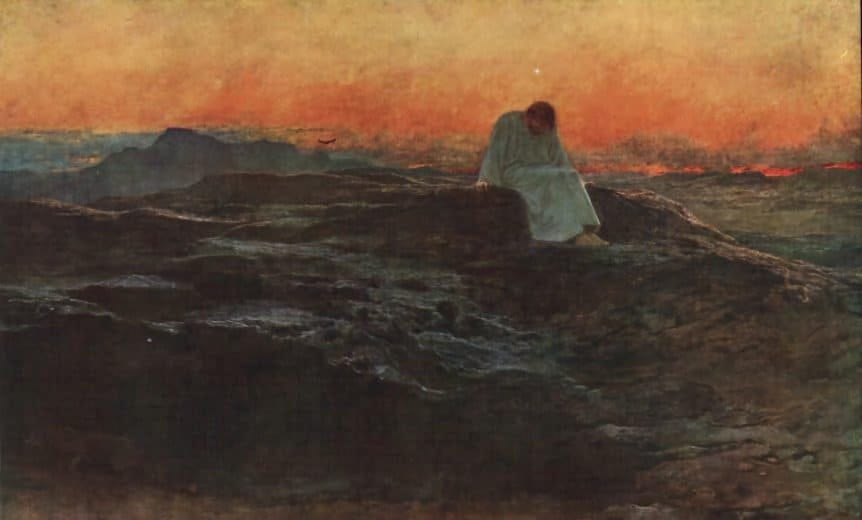


 Truth2Freedom's Blog