Tag Archives: wwii

Twenty military engagements that Christians and conservatives should know about | WINTERY KNIGHT

I was thinking hard on the weekend about whether to pre-order another solo wargame, because the deadline was approaching. The new game is about the attack on the Merville Battery, and it’s designed by the same guy who made the new Guadalcanal game in the “Valiant Defense” series, which I did pre-order. I loved the Lanzerath Ridge game. So I decided to see where Merville Battery fits on the list of most heroic actions by Western nations.In case you want to improve your character with a little humility and gratitude, you can find a good list of stories below. I also included a relevant book, movie or wargame where available.

  1. Battle off Samar (Taffy 3)
    Outmatched US Navy escort carriers and destroyer escorts of Taffy 3 aggressively charged and fought a desperate delaying action against Admiral Kurita’s vastly superior Center Force (including battleship Yamato) off Samar Island, Philippines, October 25, 1944.
    Highlight: Commander Ernest E. Evans (USS Johnston), Lieutenant Commander Robert Copeland (USS Samuel B. Roberts) and Admiral Clifton Sprague made the selfless choice to attack rather than flee, buying vital hours for the Leyte landings.
    Book: The Last Stand of the Tin Can Sailors by James D. Hornfischer (Goodreads: 4.36). Available on Audible.
    Solo wargame: Carrier Battles: Philippine Sea (Compass Games).
  2. Defense of Toktong Pass (Fox Company, 7th Marines)
    Captain William Barber’s Fox Company (~240 Marines) held a vital hilltop overlooking Toktong Pass during the Battle of Chosin Reservoir, Korea, November 27–December 2, 1950, against thousands of Chinese attackers in extreme cold.
    Highlight: Isolated and outnumbered, they endured five days of assaults with heavy casualties, refusing retreat to keep the escape route open for the 1st Marine Division—ultimate selfless stand that saved thousands; Barber earned the Medal of Honor.
    Book: On Desperate Ground: The Marines at The Reservoir, the Korean War’s Greatest Battle by Hampton Sides (Goodreads: 4.59). Available on Audible.
  3. USS Tang’s fifth patrol
    Under Cmdr. Richard O’Kane, Tang sank 10 ships in one patrol (including a daring night surface attack on a convoy), totaling ~93,000 tons—making her the top-scoring U.S. sub by tonnage in a single war patrol.
    Highlight: O’Kane’s aggressive maneuvering and precise torpedo work exemplified selfless risk for maximum damage in hostile waters; he earned the Medal of Honor for his overall command of Tang.
    Book: Clear the Bridge! The War Patrols of the USS Tang by Richard H. O’Kane (Goodreads: 4.43) – raw, firsthand memoir of the Silent Service’s most successful skipper.
    Solo wargame: Silent Victory: U.S. Submarines in the Pacific, 1941-45 (Consim Press, new edition by GMT).
  4. Guadalcanal Campaign (Henderson Field Defense)
    US Marines and Army forces landed on Guadalcanal in August 1942, seizing and defending Henderson Field against relentless Japanese assaults in jungle hell (disease, starvation, constant combat) until February 1943.
    Highlight: Isolated troops held critical airfield against overwhelming odds for months—ultimate selfless endurance and resolve; Sgt. John Basilone’s MoH stand on Bloody Ridge (manning guns alone, repulsing regiment-sized attack) exemplified genius under fire and sacrifice that turned the Pacific tide.
    Book: Midnight in the Pacific: Guadalcanal — The World War II Battle That Turned the Tide of War by Joseph Wheelan (Goodreads: 4.45). Available on Audible.
    Solo wargame: Guadalcanal (upcoming DVG solitaire game).
  5. Battle of Midway
    US Navy carriers and land-based aircraft decisively defeated the Japanese Combined Fleet off Midway Atoll, June 4–7, 1942, sinking four Japanese fleet carriers.
    Highlight: Outnumbered US forces used genius intelligence/codebreaking and selfless sacrifice by torpedo squadrons (drawing defenders low) to enable devastating dive-bomber attacks—turning the Pacific War from Japanese offensive dominance to Allied initiative.
    Book: The Battle of Midway (Pivotal Moments in American History) by Craig L. Symonds (Goodreads: 4.39). Available on Audible.
    Solo wargame: Pacific Chase (upcoming DVG solitaire game).
  6. Lanzerath Ridge defense
    18-man US I&R Platoon (plus 4 observers) ambushed and delayed a 500-man elite German paratrooper battalion on a key ridge in the Losheim Gap, Belgium, December 16, 1944.
    Highlight: Lt. Lyle Bouck’s genius lay in perfect ambush discipline—holding fire until point-blank range—disrupting the entire German northern thrust timetable.
    Book: The Longest Winter by Alex Kershaw (Goodreads: 4.23) – intense, platoon-focused classic. Available on Audible.
    Solo wargame: Lanzerath Ridge (DVG).
  7. MACV-SOG Covert Operations (Vietnam)
    Small MACV-SOG recon teams conducted high-risk cross-border missions into Laos, Cambodia, and North Vietnam throughout the war, 1964–1972.
    Highlight: Operators ran daring insertions and extractions against overwhelming odds, often deep behind enemy lines with minimal support, providing critical intelligence that shaped operations, suffering some of the highest casualty rates in U.S. units.
    Books: Uncommon Valor: The Recon Company That Earned Five Medals of Honor and Included the Most Decorated Green Beret by Stephen L. Moore (Goodreads: 4.42). Available on Audible. and Beyond the Call of Duty: The Life of Colonel Robert Howard, America’s Most Decorated Green Beret by Stephen L. Moore (Goodreads: 4.28). Available on Audible.
    Solo wargame: Warfighter: Vietnam Expansion – MACV-SOG #1 (DVG).
  8. St Nazaire Raid
    British Commandos and Royal Navy rammed an explosive-packed destroyer into the gates and destroyed the only large Atlantic dry dock at St Nazaire, France, March 28, 1942.
    Highlight: Commander Robert Ryder masterminded the precise ramming and commando assault, a selfless plan executed with foresight that denied the Tirpitz safe repair for the war’s duration.
    Book: The Greatest Raid of All by C.E. Lucas Phillips (Goodreads: 4.29) – the definitive account. Available on Audible.
    Solo wargame: Raid on St. Nazaire (Avalon Hill).
  9. Bruneval Raid (Operation Biting)
    British paratroopers (C Company, 2nd Parachute Battalion) plus radar expert Flt Sgt C.W.H. Cox dropped into occupied France to steal key parts of a German Würzburg radar set near Bruneval, February 27–28, 1942.
    Highlight: Maj. John Frost’s precise planning and split-second execution (parachute drop, ground fight, beach rendezvous) under extreme risk delivered crucial radar intel that shaped Allied air superiority.
    Book: The Bruneval Raid: Operation Biting 1942 by Ken Ford (Goodreads: 3.92) – solid, detailed account.
  10. USS Wahoo under Mush Morton (1942–1943 patrols)
    Lt. Cmdr. Dudley “Mush” Morton transformed Wahoo into one of the most aggressive submarines, sinking 20+ ships (60,000+ tons) across patrols, including bold surface gun actions and ramming convoys in confined waters like the Sea of Japan.
    Highlight: Morton’s fearless tactics (“Run silent, run deep” but attack aggressively) set the standard for the Silent Service and crippled Japanese supply lines; Wahoo was lost on her final patrol.
    Book: Wahoo: The Patrols of America’s Most Famous World War II Submarine by Richard H. O’Kane (Goodreads: 4.40) – firsthand account from Morton’s executive officer. Available on Audible.
    Solo wargame: Silent Victory: U.S. Submarines in the Pacific, 1941-45 (Consim Press, new edition by GMT).
  11. Merville Gun Battery assault
    150 men of the British 9th Parachute Battalion stormed and silenced a fortified German artillery battery near Merville, France, early hours of D-Day, June 6, 1944.
    Highlight: Lt. Col. Terence Otway, reduced to 25% strength with no heavy weapons, made the courageous call to press the attack, saving thousands on Sword Beach.
    Book: The Day the Devils Dropped In by Neil Barber (Goodreads: 4.43) – definitive 9th Para history.
    Solo wargame: Merville Battery (upcoming DVG solitaire game).
  12. Arnhem Bridge Defense (Frost’s Paratroopers)
    Lt. Col. John Frost’s 2nd Parachute Battalion (~750 men) held the north end of Arnhem bridge for 4 days against SS Panzer forces during Operation Market Garden, September 17–20, 1944.
    Highlight: Frost’s decision to dig in and fight despite being cut off tied down German reserves and exemplified selfless airborne resolve.
    Book: A Bridge Too Far by Cornelius Ryan (Goodreads: 4.28) – classic narrative of the operation.
    Solo wargame: The Devil’s Cauldron: The Battles for Arnhem and Nijmegen (Multi-Man Publishing).
  13. Norwegian Heavy Water Sabotage (Operation Gunnerside)
    Nine Norwegian commandos (SOE-trained) infiltrated and destroyed the heavy water production facility at Vemork, Norway, February 27–28, 1943, critically delaying the Nazi atomic program.
    Highlight: Joachim Rønneberg led a flawless, bloodless sabotage deep in occupied territory—pure tactical genius and restraint that likely prevented Hitler from acquiring nuclear capability.
    Book: The Winter Fortress by Neal Bascomb (Goodreads: 4.19) – epic, gripping mission narrative. Available on Audible.
    Note: Film: The Heroes of Telemark (1965); highly-rated miniseries The Heavy Water War (2015, IMDb 8.0).
  14. Pegasus Bridge capture
    Glider-borne D Company, Ox & Bucks Light Infantry seized intact bridges over the Caen Canal and Orne River near Bénouville, France, minutes after midnight on D-Day, June 6, 1944.
    Highlight: Maj. John Howard’s coup de main prevented immediate German counterattack.
    Book: Pegasus Bridge by Stephen E. Ambrose (Goodreads: 4.15) – concise and dramatic. Available on Audible.
    Note: Featured in The Longest Day (1962, IMDb 7.7).
  15. Los Baños Internment Camp Raid
    US 11th Airborne paratroopers, Rangers, and Filipino guerrillas liberated 2,147 civilian and military internees from Los Baños camp, Philippines, February 23, 1945.
    Highlight: Perfect multi-axis timing arrived minutes before a planned Japanese massacre, showcasing selfless risk for non-combatants.
    Book: Rescue at Los Baños by Bruce Henderson (Goodreads: 4.28) – daring prison camp raid account. Available on Audible.
    Note: TV documentary/special: Rescue at Dawn: The Los Baños Raid (2004).
  16. Cabanatuan Raid
    US 6th Ranger Battalion and Alamo Scouts rescued 513 Allied POWs near Cabanatuan City, Philippines, January 30, 1945.
    Highlight: Lt. Col. Henry Mucci coordinated the deep infiltration and lightning assault, saving lives just before a potential massacre.
    Book: Ghost Soldiers by Hampton Sides (Goodreads: 4.26) – gripping narrative. Available on Audible.
    Note: Film: The Great Raid (2005, IMDb 6.6).
  17. Operation Tidal Wave (Ploesti Raid)
    177 USAAF B-24 Liberators (with B-17 elements) flew ultra-low-level to bomb Romanian oil refineries fueling the German war machine, August 1, 1943.
    Highlight: Crews pressed through hellish flak, fighters, and balloons at treetop height in a genius low-altitude plan; immense selflessness amid 30% losses delayed Nazi fuel supply critically; multiple Medals of Honor awarded.
    Book: Ploesti: The Great Ground-Air Battle of 1 August 1943 by James Dugan & Carroll Stewart (Goodreads: 4.32).
    Solo wargame: B-17 Flying Fortress Leader (DVG).
  18. Imjin River stand
    British 1st Battalion, Gloucestershire Regiment fought overwhelming Chinese forces on Hill 235 along the Imjin River, South Korea, April 22–25, 1951.
    Highlight: Lt. Col. James Carne’s men held to near annihilation, covering the UN retreat.
    Book: To the Last Round by Andrew Salmon (Goodreads: ~4.3) – moving account.
    Note: Older film A Hill in Korea (1956) loosely inspired.
  19. Doolittle Raid
    Sixteen US Army Air Forces B-25 bombers launched from USS Hornet to strike Tokyo and other Japanese cities, April 18, 1942.
    Highlight: Lt. Col. Jimmy Doolittle led the daring carrier launch and low-level bombing, boosting US morale and forcing Japan to divert resources homeward.
    Book: Thirty Seconds Over Tokyo by Capt. Ted W. Lawson (Goodreads: 4.20) – iconic firsthand account. Available on Audible.
    Note: Highly-rated classic film: Thirty Seconds Over Tokyo (1944, IMDb 7.2).
    Solo wargame: Enemy Coast Ahead: The Doolittle Raid (GMT).
  20. USS Laffey Stand (Okinawa)
    The destroyer USS Laffey endured 22 kamikaze attacks in 80 minutes off Okinawa, April 16, 1945, taking 6 plane hits and bombs while fighting back.
    Highlight: Crew’s selfless damage control and gunnery kept the ship afloat and fighting—immense resolve under fire saved the vessel (“The Ship That Would Not Die”) and demonstrated US Navy tenacity in the final Pacific push.
    Book: Hell from the Heavens: The Epic Story of the USS Laffey and World War II’s Greatest Kamikaze Attack by John Wukovits (Goodreads: 4.41). Available on Audible.
    Solo wargame: Picket Duty: Kamikaze Attacks against U.S. Destroyers – Okinawa, 1945 (Legion Wargames LLC).

Many of the books are already done and dusted in my reading list, which might give you even more ideas!

Some of my favorite YouTube channels have excellent documentaries for these events, for example:

I also just discovered House of History, which has very good videos as well, like this one, which reminded me of the book “Air Apaches” by Jay Stout:

And I just watched this one from The Operations Room, which reminded me of the book “The Convoy: HG-76” by Angus Kostam:

Let me know if I missed anything important in the comments!
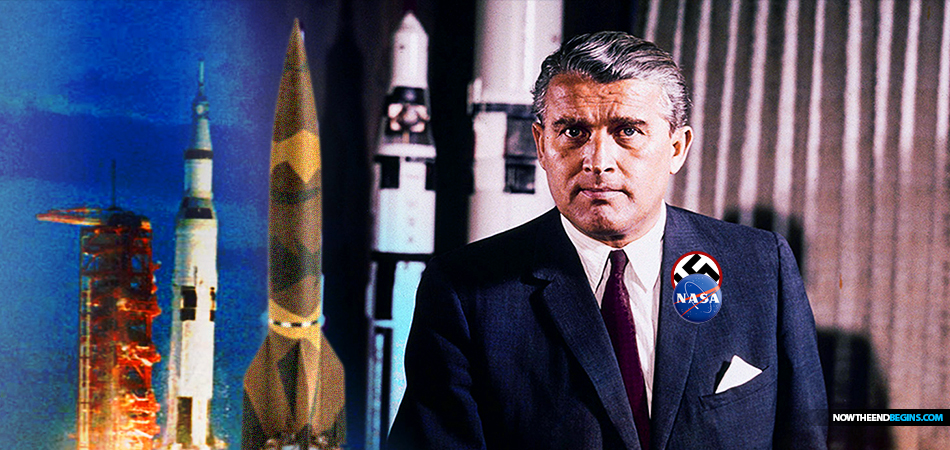
Think The Nazis Were Defeated In WWII? They Went On To Run NASA, The EU Commission, NATO And The United Nations So You Tell Me Who Won The War | Now The End Begins

The Allies may have defeated Hitler in WWII, but one thing that was not defeated was Nazi ideology which found its way into NASA, the EU Commission, NATO and the United Nations

How many times have you watched documentaries, movies and newsreels showing the great Allied victory over Nazi Germany and the Axis powers? Probably a lot, and you swell with pride watching the landing on the beaches on D-Day and all the other heroic things done and sacrificed to beat back the Nazis. Case closed, right? Wrong. After WWII, high-ranking and powerful Nazis went on to do things like creating NASA in America, heading up the EU Commission in Europe, being in charge of NATO, and running the United Nations in New York City.

“Behold ye among the heathen, and regard, and wonder marvellously: for I will work a work in your days, which ye will not believe, though it be told you.” Habakkuk 1:5 (KJB)

WERNHER VON BRAUN: For years dismissed as a conspiracy theory, Operation Paperclip eventually came to light and proved all the conspiracy theorists correct once again. The moon landing, whether you think it really happened or think it never happened, was created by a team of 1,600 Nazi scientists from Nazi Germany who were led by Wernher von Braun, Kurt Debus and Arthur Rudolph. All 3 of these men did work in Adolf Hitler’s concentration camps on thousands of victims who were the human fodder for their fiendish experiments. Not only did they never pay for their crimes, they were brought to America where they lived a nice, cushy lifestyle. Von Braun ran the V-2 assembly plant, called the Mittelwerk, that was in central Germany near Nordhausen, and it utilized enslaved labor from the attached Mittelbau-Dora concentration camp. Yet amazingly, NASA built a statue in his honor that remains to this day. Oy vey.

ONE OF MY FAVORITE BOOKS EVER HAVING TO DO WITH THE JEWS AND THE HOLOCAUST DURING THE TIME OF NAZIS, CLICK TO ORDER!!

WALTER HALLSTEIN: He was man who was the first president of the European Commission, the unelected executive body of Europe. Hallstein held this post between 1958 and 1967 and is described on the Brussels EU website as a “visionary leader” and a “diplomatic force” who propelled European integration. However, no mention whatsoever is given by the Brussels EU to the fact that before and during World War Two Hallstein was a member of official Nazi organizations. The Association of National Socialist German lawyers was founded in 1933, immediately after the Nazis had seized power. In 1936 it was converted into the notorious Nazi Association of Law Protectors. Membership of this second organization was restricted to those individuals showing uncompromising support for, and participation in, the implementation of Nazi ideology. In a memorandum sent by Hallstein to the representative of the Nazi government at the university of Rostock in Germany in 1935, Hallstein stated he was a member of both these organizations.

DON’T KNOW THE REAL CONNECTION BETWEEN THE ROMAN CATHOLIC JESUITS AND THE NAZIS? CLICK TO ORDER AND YOU WILL!!

ADOLF HEUSINGER: Heusinger played a key role in planning the Nazi occupation of Austria and, at the outbreak of World War II, in the Nazi invasion of Poland, Denmark, Norway, France, and the Netherlands. During the course of the war, Heusinger was appointed Brigadier General and later Major General. Heusinger was appointed Chairman of the NATO Military Committee, serving from 1961 to 1964 in Washington, D.C. In this capacity, he was the highest-ranking military officer in NATO, overseeing strategic military planning during a tense period of the Cold War.

KURT WALDHEIM: He was drafted into the German Wehrmacht in 1941. He served as an intelligence officer in the Balkans, primarily in Yugoslavia and Greece, as part of Army Group E. His unit was involved in brutal anti-partisan operations, including deportations of Jews and reprisals against civilians. None of that stopped Waldheim from becoming the Secretary General of the United Nations General Assembly.

The Nazi Party was taken down from power at the end of WWII, Adolf Hitler died ‘came to his end with none to help him’ as Daniel 11:45 alludes to, and the Allies won the battle. Yay! But the war started by the Nazis continues to be waged through the organizations the Nazis went on to create. These men were not heros, they were unrepentant Nazis who found fame and fortune doing for themselves what they had done for Hitler. There is no better example of covert Nazism in the 21st-century than the United Nations, sitting like a coiled serpent and waiting to strike again.

https://www.nowtheendbegins.com/allies-beat-hitler-but-nazis-popped-up-later-in-nasa-eu-commission-nato-united-nations/

REPORT: Evidence Suggests FDR Let Pearl Harbor Happen to Force America into WWII | The Gateway Pundit

83 years ago yesterday, America was brought into war with what was described then, and has been described consistently since, as a “sneak attack” by Imperial Japan.

Then-President Franklin Roosevelt gave a speech on December 8th before Congress where he described it as a “Day of Infamy” where America was suddenly and deliberately attacked.

What Roosevelt failed to mention is that he knew the attack was going to happen, the government had received copious warnings about what was going to happen, and those warnings were not only ignored but steps were taken to facilitate the Japanese attack.

A series of events and factual matters strongly suggest that Roosevelt not only wanted war, but employed his top officials to help him in that effort.

The Chief of Naval Operations, Lt. Cmdr. Arthur H. McCollum wrote the eight-action-points-memo on Oct. 7, 1940 to try to get Japan to attack the United States first.

You can read the entire important McCollum memo about baiting Japan into war here. This memo was originally uncovered by historian Robert Stinnett (1924-2018) and published in his 1999 work, “Day of Deceit.” Here’s the key section:

On October 10, 1940, Roosevelt brought in his Pacific commanders and informed them that he sought to go to war with Japan quietly and with economics. This left them ‘amazed’ according to later testimony by Admiral James O. Richardson.

In the winter of 1940, an American doctor who spent decades in Korea ends up in Hawaii. While there, Koreans keep identifying Japanese military spies on the island. The doctor relates this to the military, who tells him that they know all about it already and not to worry.

Ambassador Joseph Grew (1880-1965)

On January 27th, the State Department’s Ambassador to Japan Joseph Grew learns that the Japanese plan, in case of a conflict with the United States, is to launch a sneak attack on Pearl Harbor.

Lt. Cmdr. McCollum dictates a memo to the CINC Pacific Fleet on February 1, 1941 that in case of a Japanese sneak attack, it will most likely happen at Pearl HarborHere’s the memo:

Adm. Richardson had been replaced in February 1941 because he was concerned that the Japanese would start a war by attacking the Pacific Fleet at Pearl Harbor. He was opposed to rehoming the fleet from the West Coast of America in San Diego to Pearl Harbor. He was replaced with Adm. Kimmel.

In May 1941, Japanese diplomats are caught telling the Brazilians that they will be at war with the Americans soon.

Gen. Short replaced Maj. General Albert M. Jones in June 1941, as responsible for the ground defense of the islands.

In late July the press is complaining that FDR has been subsidizing the Japanese war effort because Roosevelt is selling cheap oil and cheap steel to Japan. Roosevelt says he is doing this because if he were to cut these exports off, it would cause war with Japan. A week later, Roosevelt cuts off oil and steel to Japan.

On July 31st, Washington seized 19 Japanese fishing vessels that were spying around Hawaii.

In August Lloyd’s of London started selling “bombing insurance” in Hawaii. A week later, they stopped selling the insurance.

Japanese Prime Minister Konoe in 1941.

In August, the Konoe government of Japan was begging Washington for a peace treaty. They told Washington they would accept any terms and proposed a peace summit in Hawaii.

Roosevelt demurred and deflected, and the response was that Japan would have to first make humiliating concessions to Washington first.

These actions ultimately caused the collapse of the Japanese government on October 16th and empowered the militarists.

In October, Washington ordered all commercial traffic in the Pacific sea lanes to stop. By clearing the sea lanes, there was a clear path for the Japanese fleet to get to Pearl Harbor. They made it so that no commercial craft would inadvertently alert Pearl Harbor to the incoming attack.

But some did anyway, as reported by the Chicago Tribune:

In mid-October, a Hearst reporter is repeatedly urging Admiral Glassford, the head of the Asiatic Fleetthat the Japanese will attack on or after December 6th. Adm. Glassford takes this seriously enough to personally relocate himself and the reporter to Manila.

On November 3rd, the State Department learns and discusses that the Japanese in Panama have told their allies and representatives that war with America is coming soon and inevitable. See below.

On November 6th, a military engineer named James E. Cassidy was instructed to have plans ready in one hour to build and deploy anti-aircraft regiments and batteries defending the northern island of Oahu, which is precisely the path that the Japanese attack happened from.

These plans were then given a 5-month build-time. Cassidy had no doubt that orders were given to warn of an incoming attack and were countermanded by higher-ups. He said as much in a confidential letter to the U.S. Senator investigating Pearl Harbor in 1945, here’s the excerpt of the letter:

On November 10th, the State Department is gloating that the embargo has brought Japan to its knees, and it will either have to pursue war or humiliating concessions from Washington. They estimate Japan has 10 months of oil for domestic consumption left, and 2 years worth of oil for their Navy stockpiled.

Former Secretary of State Cordell Hull (1871-1955), who served from 1933-1944.

On November 17th, the State Department said in private memos between the Ambassador to Japan Joseph Grew and the Secretary of State Cordell Hull that if war with Japan were to start, it would start with a sneak attackSee below.

On November 24, 1941 and again on December 2nd, the military brass knew that the Japanese fleet was outbound and was going to attack somewhere. They discussed over memos whether it would be a British or American possession and base that was attacked.

On November 27th, Washington ordered Adm. Kimmel and Gen. Short to set condition 1 across Hawaii, which was putting the entire area on alert for possible acts of sabotage with no threat from attack. Gen. Short was refused permission to distribute ammunition in order to defend the island.

On November 29, 1941, Australia offers to intervene to stop the impending war. They asked to mediate the fight to avoid a war. The response from the State Department and the Secretary of State Cordell Hull was that “the diplomatic stage was over…”

On November 30, 1941, national editorialist Walter Lippmann was explaining that if negotiations with Japan fail, the U.S. will not start a war, but Japan very likely will do so, “…but Japan may start a war in which we shall have to fight back.”

national journalist Walter Lippmann (1889-1974)

On November 30, 1941, the Honolulu Star-Advertiser announced in a screaming page one headline: the Japanese may strike over the weekend!

The week prior to the Pearl Harbor attack, the military was drafting an order declaring martial law.

The U.S.S. Enterprise

The carriers had been sent away. The U.S.S. Lexington was sent on November 28th on a training exercise to the southeast. The U.S.S. Enterprise was sent on December 5th west on a patrol mission. The U.S.S. Saratoga had been sent on November 28th to a mission in the South Pacific. The aged and obsolete battleships were left in port, with their port holes open.

Admiral Husband Kimmel (1882-1968)

The entire Pacific Fleet was brought into the harbor and lined up for a parade and review. Whereas previously the fleet was never gathered in one spot at one time like this, it was gathered on December 6th and prepared so that on Monday December 8th, it could be reviewed by Admiral Husband Kimmel. Kimmel gave leave to the sailors for December 7th, so many of them were hung over on that Sunday morning. According to several tipsters, Admiral Kimmel was as well.

A week prior the newspaper had warned of a possible impending Japanese attack.

Sailors later told their hometown newspapers that a state of war had existed for some time with Japan, and that it was well-known in the Pacific that the Japanese were firing upon U.S. ships. You can read one account of that here in 1942, from Pennsylvania sailor Joseph Purta:

On Dec. 2nd, the State Department was aware that the Japanese were trying to flee American-controlled Panama for Chile because “war was almost inevitable” between America and Japan.

From Dec. 2nd through Dec. 6th, Naval Intelligence officer Robert D. Ogg (1918-2006) was relaying movements of the Japanese fleet, the Kido Butai fleet that would attack Pearl Harbor, to his commander, Capt. Richard T. McCullough. McCullough was in touch with the Roosevelt White House giving them updates on where the Japanese fleet was at.

Prior to the attack, doctors and nurses were warned that an attack was coming, so they stockpiled supplies. On the day of the attack, according to witnesses writing to Senators years later, they noticed that no military reconnaissance planes were in the air anywhere on the island, which was not normal. They were told not to fire a shot without clearance from Washington.

On December 6th the Navy ordered the submarine nets protecting Pearl Harbor taken down for ‘regular maintenance.’

Dutch Admiral Johan Meijer-Ranneft (1886-1982)

On December 6th, Adm. Johan Ranneft (1886-1982) from the Dutch Navy serving as the attache in Washington is visiting friends in the Office of Naval Intelligence in Washington, D.C. and while there, he sees an incoming Japanese fleet steaming for Pearl Harbor.

He asks what’s going on and is told to forget what he’s seeing. He had previously seen the same force heading east on December 2nd. When he relates this story years later, he’s called a liar.

But years prior, he had submitted his diaries from those years to an archive. When the archive is checked, his diary noted that he had seen the incoming Japanese fleet on December 6th while at the Navy’s headquarters for military intelligence.

In the evening of December 6th, the men of the U.S.S. Wright see an aircraft carrier steaming towards Pearl Harbor. They cannot determine its nationality, and there is some dispute about whether or not they radio’ed the contact in.

G-2 Military Intelligence ordered the Opana Point radar operators, Privates Joseph Lockard and George Elliott, to turn off their radar at 7:00AM. Hawaii air defense radar had been on a 24/7 cycle, but were shifted by Washington into a cycle only covering the early mornings.

They disobeyed orders and kept the radar on anyway, to get extra practice time using the machines. When they turned them on at 7:02AM they were alarmed by the incoming fleet of planes, so they reported it immediately.

They were told “not to worry about it.” RepeatedlyNo fighters would be sent to intercept the large incoming swarm of planes even with an hour’s warning before the attack started.

Kermit Tyler served until 1961 and retired as a Lieutenant Colonel. He was cleared of all wrongdoing and was never disciplined.

This person who refused to take their warnings, Lt. Kermit Tyler (1913-2010), was never reprimanded for his role in negligently allowing the Pearl Harbor attack to happen.

If Lt. Tyler had sent up the fighters to intercept the first Japanese wave when they were first detected at 7:02AM, it’s very likely the U.S.S. Arizona and the U.S.S. Oklahoma would not have been sunk over an hour later. Whenever this is brought up, the court historians claim without evidence that it wouldn’t have mattered.

The Soviet Ambassador had caught the last plane out of Hawaii on Saturday night.

On December 7th, Washington had notice of the break in Japanese relations at noon eastern standard time, which was 6:30AM Hawaii-time. This was 90 minutes before the attack. Hawaii was not notified because of what they said were “technical difficulties” that included a malfunctioning communications device. The message was sent after the attack was over.

There is this meme that the U.S. was just absolutely surprised and shocked that the Japanese chose war.

It came as no surprise to anyone in power at the time.

Here’s a Virginian paper the day before December 7, 1941:

Roosevelt knew. And he could have done anything to stop it. But he didn’t want to stop it. He wanted to use it.

The post REPORT: Evidence Suggests FDR Let Pearl Harbor Happen to Force America into WWII appeared first on The Gateway Pundit.